EP4407748A1 - Verfahren zur synthese von hochsicherheits-positivelektrodenmaterial durch recycling von positivelektrodenresten und anwendung - Google Patents
Verfahren zur synthese von hochsicherheits-positivelektrodenmaterial durch recycling von positivelektrodenresten und anwendung Download PDFInfo
- Publication number
- EP4407748A1 EP4407748A1 EP22879939.1A EP22879939A EP4407748A1 EP 4407748 A1 EP4407748 A1 EP 4407748A1 EP 22879939 A EP22879939 A EP 22879939A EP 4407748 A1 EP4407748 A1 EP 4407748A1
- Authority
- EP
- European Patent Office
- Prior art keywords
- leftover materials
- cathode
- filtrate
- positive electrode
- safety
- Prior art date
- Legal status (The legal status is an assumption and is not a legal conclusion. Google has not performed a legal analysis and makes no representation as to the accuracy of the status listed.)
- Pending
Links
Images




Classifications
-
- H—ELECTRICITY
- H01—ELECTRIC ELEMENTS
- H01M—PROCESSES OR MEANS, e.g. BATTERIES, FOR THE DIRECT CONVERSION OF CHEMICAL ENERGY INTO ELECTRICAL ENERGY
- H01M10/00—Secondary cells; Manufacture thereof
- H01M10/54—Reclaiming serviceable parts of waste accumulators
-
- B—PERFORMING OPERATIONS; TRANSPORTING
- B01—PHYSICAL OR CHEMICAL PROCESSES OR APPARATUS IN GENERAL
- B01D—SEPARATION
- B01D11/00—Solvent extraction
- B01D11/02—Solvent extraction of solids
- B01D11/0288—Applications, solvents
-
- B—PERFORMING OPERATIONS; TRANSPORTING
- B01—PHYSICAL OR CHEMICAL PROCESSES OR APPARATUS IN GENERAL
- B01D—SEPARATION
- B01D9/00—Crystallisation
- B01D9/005—Selection of auxiliary, e.g. for control of crystallisation nuclei, of crystal growth, of adherence to walls; Arrangements for introduction thereof
- B01D9/0054—Use of anti-solvent
-
- B—PERFORMING OPERATIONS; TRANSPORTING
- B09—DISPOSAL OF SOLID WASTE; RECLAMATION OF CONTAMINATED SOIL
- B09B—DISPOSAL OF SOLID WASTE NOT OTHERWISE PROVIDED FOR
- B09B3/00—Destroying solid waste or transforming solid waste into something useful or harmless
- B09B3/40—Destroying solid waste or transforming solid waste into something useful or harmless involving thermal treatment, e.g. evaporation
-
- B—PERFORMING OPERATIONS; TRANSPORTING
- B09—DISPOSAL OF SOLID WASTE; RECLAMATION OF CONTAMINATED SOIL
- B09B—DISPOSAL OF SOLID WASTE NOT OTHERWISE PROVIDED FOR
- B09B3/00—Destroying solid waste or transforming solid waste into something useful or harmless
- B09B3/70—Chemical treatment, e.g. pH adjustment or oxidation
-
- C—CHEMISTRY; METALLURGY
- C01—INORGANIC CHEMISTRY
- C01G—COMPOUNDS CONTAINING METALS NOT COVERED BY SUBCLASSES C01D OR C01F
- C01G53/00—Compounds of nickel
- C01G53/40—Complex oxides containing nickel and at least one other metal element
- C01G53/42—Complex oxides containing nickel and at least one other metal element containing alkali metals, e.g. LiNiO2
- C01G53/44—Complex oxides containing nickel and at least one other metal element containing alkali metals, e.g. LiNiO2 containing manganese
- C01G53/50—Complex oxides containing nickel and at least one other metal element containing alkali metals, e.g. LiNiO2 containing manganese of the type (MnO2)n-, e.g. Li(NixMn1-x)O2 or Li(MyNixMn1-x-y)O2
- C01G53/502—Complex oxides containing nickel and at least one other metal element containing alkali metals, e.g. LiNiO2 containing manganese of the type (MnO2)n-, e.g. Li(NixMn1-x)O2 or Li(MyNixMn1-x-y)O2 containing lithium and cobalt
- C01G53/504—Complex oxides containing nickel and at least one other metal element containing alkali metals, e.g. LiNiO2 containing manganese of the type (MnO2)n-, e.g. Li(NixMn1-x)O2 or Li(MyNixMn1-x-y)O2 containing lithium and cobalt with the molar ratio of nickel with respect to all the metals other than alkali metals higher than or equal to 0.5, e.g. Li(MzNixCoyMn1-x-y-z)O2 with x ≥ 0.5
- C01G53/506—Complex oxides containing nickel and at least one other metal element containing alkali metals, e.g. LiNiO2 containing manganese of the type (MnO2)n-, e.g. Li(NixMn1-x)O2 or Li(MyNixMn1-x-y)O2 containing lithium and cobalt with the molar ratio of nickel with respect to all the metals other than alkali metals higher than or equal to 0.5, e.g. Li(MzNixCoyMn1-x-y-z)O2 with x ≥ 0.5 with the molar ratio of nickel with respect to all the metals other than alkali metals higher than or equal to 0.8, e.g. Li(MzNixCoyMn1-x-y-z)O2 with x ≥ 0.8
-
- C—CHEMISTRY; METALLURGY
- C22—METALLURGY; FERROUS OR NON-FERROUS ALLOYS; TREATMENT OF ALLOYS OR NON-FERROUS METALS
- C22B—PRODUCTION AND REFINING OF METALS; PRETREATMENT OF RAW MATERIALS
- C22B23/00—Obtaining nickel or cobalt
- C22B23/04—Obtaining nickel or cobalt by wet processes
- C22B23/0407—Leaching processes
- C22B23/0415—Leaching processes with acids or salt solutions except ammonium salts solutions
- C22B23/0423—Halogenated acids or salts thereof
-
- C—CHEMISTRY; METALLURGY
- C22—METALLURGY; FERROUS OR NON-FERROUS ALLOYS; TREATMENT OF ALLOYS OR NON-FERROUS METALS
- C22B—PRODUCTION AND REFINING OF METALS; PRETREATMENT OF RAW MATERIALS
- C22B23/00—Obtaining nickel or cobalt
- C22B23/04—Obtaining nickel or cobalt by wet processes
- C22B23/0407—Leaching processes
- C22B23/0415—Leaching processes with acids or salt solutions except ammonium salts solutions
- C22B23/043—Sulfurated acids or salts thereof
-
- C—CHEMISTRY; METALLURGY
- C22—METALLURGY; FERROUS OR NON-FERROUS ALLOYS; TREATMENT OF ALLOYS OR NON-FERROUS METALS
- C22B—PRODUCTION AND REFINING OF METALS; PRETREATMENT OF RAW MATERIALS
- C22B23/00—Obtaining nickel or cobalt
- C22B23/04—Obtaining nickel or cobalt by wet processes
- C22B23/0453—Treatment or purification of solutions, e.g. obtained by leaching
- C22B23/0461—Treatment or purification of solutions, e.g. obtained by leaching by chemical methods
-
- C—CHEMISTRY; METALLURGY
- C22—METALLURGY; FERROUS OR NON-FERROUS ALLOYS; TREATMENT OF ALLOYS OR NON-FERROUS METALS
- C22B—PRODUCTION AND REFINING OF METALS; PRETREATMENT OF RAW MATERIALS
- C22B3/00—Extraction of metal compounds from ores or concentrates by wet processes
- C22B3/04—Extraction of metal compounds from ores or concentrates by wet processes by leaching
- C22B3/06—Extraction of metal compounds from ores or concentrates by wet processes by leaching in inorganic acid solutions, e.g. with acids generated in situ; in inorganic salt solutions other than ammonium salt solutions
- C22B3/08—Sulfuric acid, other sulfurated acids or salts thereof
-
- C—CHEMISTRY; METALLURGY
- C22—METALLURGY; FERROUS OR NON-FERROUS ALLOYS; TREATMENT OF ALLOYS OR NON-FERROUS METALS
- C22B—PRODUCTION AND REFINING OF METALS; PRETREATMENT OF RAW MATERIALS
- C22B3/00—Extraction of metal compounds from ores or concentrates by wet processes
- C22B3/04—Extraction of metal compounds from ores or concentrates by wet processes by leaching
- C22B3/06—Extraction of metal compounds from ores or concentrates by wet processes by leaching in inorganic acid solutions, e.g. with acids generated in situ; in inorganic salt solutions other than ammonium salt solutions
- C22B3/10—Hydrochloric acid, other halogenated acids or salts thereof
-
- C—CHEMISTRY; METALLURGY
- C22—METALLURGY; FERROUS OR NON-FERROUS ALLOYS; TREATMENT OF ALLOYS OR NON-FERROUS METALS
- C22B—PRODUCTION AND REFINING OF METALS; PRETREATMENT OF RAW MATERIALS
- C22B3/00—Extraction of metal compounds from ores or concentrates by wet processes
- C22B3/04—Extraction of metal compounds from ores or concentrates by wet processes by leaching
- C22B3/16—Extraction of metal compounds from ores or concentrates by wet processes by leaching in organic solutions
- C22B3/1608—Leaching with acyclic or carbocyclic agents
- C22B3/1616—Leaching with acyclic or carbocyclic agents of a single type
- C22B3/165—Leaching with acyclic or carbocyclic agents of a single type with organic acids
-
- C—CHEMISTRY; METALLURGY
- C22—METALLURGY; FERROUS OR NON-FERROUS ALLOYS; TREATMENT OF ALLOYS OR NON-FERROUS METALS
- C22B—PRODUCTION AND REFINING OF METALS; PRETREATMENT OF RAW MATERIALS
- C22B3/00—Extraction of metal compounds from ores or concentrates by wet processes
- C22B3/20—Treatment or purification of solutions, e.g. obtained by leaching
- C22B3/205—Treatment or purification of solutions, e.g. obtained by leaching using adducts or inclusion complexes
-
- C—CHEMISTRY; METALLURGY
- C22—METALLURGY; FERROUS OR NON-FERROUS ALLOYS; TREATMENT OF ALLOYS OR NON-FERROUS METALS
- C22B—PRODUCTION AND REFINING OF METALS; PRETREATMENT OF RAW MATERIALS
- C22B3/00—Extraction of metal compounds from ores or concentrates by wet processes
- C22B3/20—Treatment or purification of solutions, e.g. obtained by leaching
- C22B3/22—Treatment or purification of solutions, e.g. obtained by leaching by physical processes, e.g. by filtration, by magnetic means, or by thermal decomposition
-
- C—CHEMISTRY; METALLURGY
- C22—METALLURGY; FERROUS OR NON-FERROUS ALLOYS; TREATMENT OF ALLOYS OR NON-FERROUS METALS
- C22B—PRODUCTION AND REFINING OF METALS; PRETREATMENT OF RAW MATERIALS
- C22B3/00—Extraction of metal compounds from ores or concentrates by wet processes
- C22B3/20—Treatment or purification of solutions, e.g. obtained by leaching
- C22B3/44—Treatment or purification of solutions, e.g. obtained by leaching by chemical processes
-
- C—CHEMISTRY; METALLURGY
- C22—METALLURGY; FERROUS OR NON-FERROUS ALLOYS; TREATMENT OF ALLOYS OR NON-FERROUS METALS
- C22B—PRODUCTION AND REFINING OF METALS; PRETREATMENT OF RAW MATERIALS
- C22B47/00—Obtaining manganese
-
- C—CHEMISTRY; METALLURGY
- C22—METALLURGY; FERROUS OR NON-FERROUS ALLOYS; TREATMENT OF ALLOYS OR NON-FERROUS METALS
- C22B—PRODUCTION AND REFINING OF METALS; PRETREATMENT OF RAW MATERIALS
- C22B7/00—Working up raw materials other than ores, e.g. scrap, to produce non-ferrous metals and compounds thereof; Methods of a general interest or applied to the winning of more than two metals
- C22B7/006—Wet processes
- C22B7/007—Wet processes by acid leaching
-
- H—ELECTRICITY
- H01—ELECTRIC ELEMENTS
- H01M—PROCESSES OR MEANS, e.g. BATTERIES, FOR THE DIRECT CONVERSION OF CHEMICAL ENERGY INTO ELECTRICAL ENERGY
- H01M4/00—Electrodes
- H01M4/02—Electrodes composed of, or comprising, active material
- H01M4/36—Selection of substances as active materials, active masses, active liquids
- H01M4/48—Selection of substances as active materials, active masses, active liquids of inorganic oxides or hydroxides
- H01M4/50—Selection of substances as active materials, active masses, active liquids of inorganic oxides or hydroxides of manganese
- H01M4/502—Selection of substances as active materials, active masses, active liquids of inorganic oxides or hydroxides of manganese for non-aqueous cells
-
- H—ELECTRICITY
- H01—ELECTRIC ELEMENTS
- H01M—PROCESSES OR MEANS, e.g. BATTERIES, FOR THE DIRECT CONVERSION OF CHEMICAL ENERGY INTO ELECTRICAL ENERGY
- H01M4/00—Electrodes
- H01M4/02—Electrodes composed of, or comprising, active material
- H01M4/36—Selection of substances as active materials, active masses, active liquids
- H01M4/48—Selection of substances as active materials, active masses, active liquids of inorganic oxides or hydroxides
- H01M4/50—Selection of substances as active materials, active masses, active liquids of inorganic oxides or hydroxides of manganese
- H01M4/505—Selection of substances as active materials, active masses, active liquids of inorganic oxides or hydroxides of manganese of mixed oxides or hydroxides containing manganese for inserting or intercalating light metals, e.g. LiMn2O4 or LiMn2OxFy
-
- H—ELECTRICITY
- H01—ELECTRIC ELEMENTS
- H01M—PROCESSES OR MEANS, e.g. BATTERIES, FOR THE DIRECT CONVERSION OF CHEMICAL ENERGY INTO ELECTRICAL ENERGY
- H01M4/00—Electrodes
- H01M4/02—Electrodes composed of, or comprising, active material
- H01M4/36—Selection of substances as active materials, active masses, active liquids
- H01M4/48—Selection of substances as active materials, active masses, active liquids of inorganic oxides or hydroxides
- H01M4/52—Selection of substances as active materials, active masses, active liquids of inorganic oxides or hydroxides of nickel, cobalt or iron
- H01M4/523—Selection of substances as active materials, active masses, active liquids of inorganic oxides or hydroxides of nickel, cobalt or iron for non-aqueous cells
-
- H—ELECTRICITY
- H01—ELECTRIC ELEMENTS
- H01M—PROCESSES OR MEANS, e.g. BATTERIES, FOR THE DIRECT CONVERSION OF CHEMICAL ENERGY INTO ELECTRICAL ENERGY
- H01M4/00—Electrodes
- H01M4/02—Electrodes composed of, or comprising, active material
- H01M4/36—Selection of substances as active materials, active masses, active liquids
- H01M4/48—Selection of substances as active materials, active masses, active liquids of inorganic oxides or hydroxides
- H01M4/52—Selection of substances as active materials, active masses, active liquids of inorganic oxides or hydroxides of nickel, cobalt or iron
- H01M4/525—Selection of substances as active materials, active masses, active liquids of inorganic oxides or hydroxides of nickel, cobalt or iron of mixed oxides or hydroxides containing iron, cobalt or nickel for inserting or intercalating light metals, e.g. LiNiO2, LiCoO2 or LiCoOxFy
-
- H—ELECTRICITY
- H01—ELECTRIC ELEMENTS
- H01M—PROCESSES OR MEANS, e.g. BATTERIES, FOR THE DIRECT CONVERSION OF CHEMICAL ENERGY INTO ELECTRICAL ENERGY
- H01M4/00—Electrodes
- H01M4/02—Electrodes composed of, or comprising, active material
- H01M4/36—Selection of substances as active materials, active masses, active liquids
- H01M4/58—Selection of substances as active materials, active masses, active liquids of inorganic compounds other than oxides or hydroxides, e.g. sulfides, selenides, tellurides, halogenides or LiCoFy; of polyanionic structures, e.g. phosphates, silicates or borates
- H01M4/5825—Oxygenated metallic salts or polyanionic structures, e.g. borates, phosphates, silicates, olivines
-
- B—PERFORMING OPERATIONS; TRANSPORTING
- B09—DISPOSAL OF SOLID WASTE; RECLAMATION OF CONTAMINATED SOIL
- B09B—DISPOSAL OF SOLID WASTE NOT OTHERWISE PROVIDED FOR
- B09B2101/00—Type of solid waste
- B09B2101/15—Electronic waste
- B09B2101/16—Batteries
-
- C—CHEMISTRY; METALLURGY
- C01—INORGANIC CHEMISTRY
- C01P—INDEXING SCHEME RELATING TO STRUCTURAL AND PHYSICAL ASPECTS OF SOLID INORGANIC COMPOUNDS
- C01P2002/00—Crystal-structural characteristics
- C01P2002/50—Solid solutions
- C01P2002/52—Solid solutions containing elements as dopants
- C01P2002/54—Solid solutions containing elements as dopants one element only
-
- C—CHEMISTRY; METALLURGY
- C01—INORGANIC CHEMISTRY
- C01P—INDEXING SCHEME RELATING TO STRUCTURAL AND PHYSICAL ASPECTS OF SOLID INORGANIC COMPOUNDS
- C01P2002/00—Crystal-structural characteristics
- C01P2002/70—Crystal-structural characteristics defined by measured X-ray, neutron or electron diffraction data
- C01P2002/72—Crystal-structural characteristics defined by measured X-ray, neutron or electron diffraction data by d-values or two theta-values, e.g. as X-ray diagram
-
- C—CHEMISTRY; METALLURGY
- C01—INORGANIC CHEMISTRY
- C01P—INDEXING SCHEME RELATING TO STRUCTURAL AND PHYSICAL ASPECTS OF SOLID INORGANIC COMPOUNDS
- C01P2002/00—Crystal-structural characteristics
- C01P2002/80—Crystal-structural characteristics defined by measured data other than those specified in group C01P2002/70
- C01P2002/88—Crystal-structural characteristics defined by measured data other than those specified in group C01P2002/70 by thermal analysis data, e.g. TGA, DTA, DSC
-
- C—CHEMISTRY; METALLURGY
- C01—INORGANIC CHEMISTRY
- C01P—INDEXING SCHEME RELATING TO STRUCTURAL AND PHYSICAL ASPECTS OF SOLID INORGANIC COMPOUNDS
- C01P2004/00—Particle morphology
- C01P2004/01—Particle morphology depicted by an image
- C01P2004/03—Particle morphology depicted by an image obtained by SEM
-
- C—CHEMISTRY; METALLURGY
- C01—INORGANIC CHEMISTRY
- C01P—INDEXING SCHEME RELATING TO STRUCTURAL AND PHYSICAL ASPECTS OF SOLID INORGANIC COMPOUNDS
- C01P2006/00—Physical properties of inorganic compounds
- C01P2006/40—Electric properties
-
- C—CHEMISTRY; METALLURGY
- C22—METALLURGY; FERROUS OR NON-FERROUS ALLOYS; TREATMENT OF ALLOYS OR NON-FERROUS METALS
- C22B—PRODUCTION AND REFINING OF METALS; PRETREATMENT OF RAW MATERIALS
- C22B21/00—Obtaining aluminium
- C22B21/0007—Preliminary treatment of ores or scrap or any other metal source
-
- C—CHEMISTRY; METALLURGY
- C22—METALLURGY; FERROUS OR NON-FERROUS ALLOYS; TREATMENT OF ALLOYS OR NON-FERROUS METALS
- C22B—PRODUCTION AND REFINING OF METALS; PRETREATMENT OF RAW MATERIALS
- C22B21/00—Obtaining aluminium
- C22B21/0015—Obtaining aluminium by wet processes
- C22B21/0023—Obtaining aluminium by wet processes from waste materials
-
- C—CHEMISTRY; METALLURGY
- C22—METALLURGY; FERROUS OR NON-FERROUS ALLOYS; TREATMENT OF ALLOYS OR NON-FERROUS METALS
- C22B—PRODUCTION AND REFINING OF METALS; PRETREATMENT OF RAW MATERIALS
- C22B26/00—Obtaining alkali, alkaline earth metals or magnesium
- C22B26/10—Obtaining alkali metals
-
- C—CHEMISTRY; METALLURGY
- C22—METALLURGY; FERROUS OR NON-FERROUS ALLOYS; TREATMENT OF ALLOYS OR NON-FERROUS METALS
- C22B—PRODUCTION AND REFINING OF METALS; PRETREATMENT OF RAW MATERIALS
- C22B26/00—Obtaining alkali, alkaline earth metals or magnesium
- C22B26/10—Obtaining alkali metals
- C22B26/12—Obtaining lithium
-
- H—ELECTRICITY
- H01—ELECTRIC ELEMENTS
- H01M—PROCESSES OR MEANS, e.g. BATTERIES, FOR THE DIRECT CONVERSION OF CHEMICAL ENERGY INTO ELECTRICAL ENERGY
- H01M4/00—Electrodes
- H01M4/02—Electrodes composed of, or comprising, active material
- H01M2004/026—Electrodes composed of, or comprising, active material characterised by the polarity
- H01M2004/028—Positive electrodes
-
- H—ELECTRICITY
- H01—ELECTRIC ELEMENTS
- H01M—PROCESSES OR MEANS, e.g. BATTERIES, FOR THE DIRECT CONVERSION OF CHEMICAL ENERGY INTO ELECTRICAL ENERGY
- H01M4/00—Electrodes
- H01M4/02—Electrodes composed of, or comprising, active material
- H01M4/13—Electrodes for accumulators with non-aqueous electrolyte, e.g. for lithium-accumulators; Processes of manufacture thereof
- H01M4/131—Electrodes based on mixed oxides or hydroxides, or on mixtures of oxides or hydroxides, e.g. LiCoOx
- H01M4/1315—Electrodes based on mixed oxides or hydroxides, or on mixtures of oxides or hydroxides, e.g. LiCoOx containing halogen atoms, e.g. LiCoOxFy
-
- Y—GENERAL TAGGING OF NEW TECHNOLOGICAL DEVELOPMENTS; GENERAL TAGGING OF CROSS-SECTIONAL TECHNOLOGIES SPANNING OVER SEVERAL SECTIONS OF THE IPC; TECHNICAL SUBJECTS COVERED BY FORMER USPC CROSS-REFERENCE ART COLLECTIONS [XRACs] AND DIGESTS
- Y02—TECHNOLOGIES OR APPLICATIONS FOR MITIGATION OR ADAPTATION AGAINST CLIMATE CHANGE
- Y02E—REDUCTION OF GREENHOUSE GAS [GHG] EMISSIONS, RELATED TO ENERGY GENERATION, TRANSMISSION OR DISTRIBUTION
- Y02E60/00—Enabling technologies; Technologies with a potential or indirect contribution to GHG emissions mitigation
- Y02E60/10—Energy storage using batteries
-
- Y—GENERAL TAGGING OF NEW TECHNOLOGICAL DEVELOPMENTS; GENERAL TAGGING OF CROSS-SECTIONAL TECHNOLOGIES SPANNING OVER SEVERAL SECTIONS OF THE IPC; TECHNICAL SUBJECTS COVERED BY FORMER USPC CROSS-REFERENCE ART COLLECTIONS [XRACs] AND DIGESTS
- Y02—TECHNOLOGIES OR APPLICATIONS FOR MITIGATION OR ADAPTATION AGAINST CLIMATE CHANGE
- Y02W—CLIMATE CHANGE MITIGATION TECHNOLOGIES RELATED TO WASTEWATER TREATMENT OR WASTE MANAGEMENT
- Y02W30/00—Technologies for solid waste management
- Y02W30/50—Reuse, recycling or recovery technologies
- Y02W30/84—Recycling of batteries or fuel cells
Definitions
- the present disclosure belongs to the technical field of batteries, and in particular relates to a method for synthesizing a high-safety cathode material by recycling cathode leftover materials, and use of the high-safety cathode material.
- LIBs lithium-ion batteries
- current secondary batteries which are widely used in portable electronic devices such as smart phones and notebook computers.
- LIBs promote the industrial upgrading and transformation in fields such as new energy vehicles and large-scale energy storage, and show potential advantages in various applications such as stationary energy storage, hybrid electric vehicles, and electric vehicles.
- the most widely used cathode materials in LIBs include: layered lithium cobalt oxide (LCO) (LiCoO 2 ) and lithium nickel cobalt manganese oxide (LNCMO) (LiCo x Ni y Mn z O 2 ), spinel lithium manganese oxide (LMO) (LiMn 2 O 4 ), and lithium iron phosphate (LFP) (LiFePO 4 ).
- LCO lithium cobalt oxide
- LNCMO lithium nickel cobalt manganese oxide
- LMO spinel lithium manganese oxide
- LFP lithium iron phosphate
- the safety of a cathode material for traction batteries is particularly important. Therefore, it is committed to developing cathode materials with high energy density, high power density, environmental friendliness, low price, and high safety performance.
- the commonly used cathode materials have low electron and ion conductivity, rapid decay of electrode capacity, poor structural stability and rate performance, and poor safety of material. Therefore, it is necessary to find an effective method to improve the electrochemical performance and safety of cathode materials.
- the current LIBs cannot be used in the aerospace field due to low safety performance. Therefore, LIBs used in the aerospace field must have high safety, super long cycling life, high energy density, small size, and the like. Batteries used in the aerospace field should have both high safety and high electrochemical performance for space exploration.
- the current process route of waste LIB recycling is to refine and recover metal elements in a cathode material and recycle graphite in an anode material separately, which is complicated and leads to low recovery rates.
- the present disclosure is intended to solve at least one of the technical problems existing in the prior art.
- the present disclosure provides a method for synthesizing a high-safety cathode material by recycling cathode leftover materials, and use of the high-safety cathode material.
- the method the one-step synthesis of a required cathode material from a waste material can be achieved, which can optimize the recovery rate and reduce the cost.
- a method for synthesizing a high-safety cathode material by recycling cathode leftover materials including the following steps:
- the solid phase obtained from the SLS in step S 1 should include acetylene black (a conductive agent), but the acetylene black (C) can be converted into a CO 2 gas during the high-temperature calcination in a pure oxygen atmosphere in step S4, and thus the acetylene black will not affect the material.
- the cathode leftover materials may be one selected from the group consisting of waste LIB cathode leftover materials, waste sodium-ion battery (NIB) cathode leftover materials, and lithium polymer battery (LPB) cathode leftover materials, and may preferably be waste LIB cathode leftover materials.
- the waste LIB cathode leftover materials may be one selected from the group consisting of waste nickel-cobalt-manganese ternary cathode leftover materials, waste lithium iron phosphate (LFP) leftover materials, waste lithium cobalt oxide (LCO) leftover materials, and waste lithium manganese oxide (LMO) leftover materials, and may preferably be waste nickel-cobalt-manganese ternary cathode leftover materials.
- the waste nickel-cobalt-manganese ternary cathode leftover materials may be one selected from the group consisting of NCM811, NCM523, NCM622, and NCM334, and may preferably be NCM811.
- the acid in step S1, may be one or more selected from the group consisting of hydrochloric acid, sulfuric acid, and citric acid, and may preferably be sulfuric acid.
- the reducing agent in step S1, may be one selected from the group consisting of glucose, hydrogen peroxide, and formic acid, and may preferably be hydrogen peroxide.
- a molar ratio of the aluminum ions to other transition metal ions in the second filtrate may be (0.01-0.03): (1-1.05).
- An amount of the aluminum ions remained in the filtrate can be controlled by adjusting the pH and time for the precipitation.
- the alkali may be one selected from the group consisting of potassium hydroxide, sodium hydroxide, and lithium hydroxide, and may preferably be sodium hydroxide.
- the pH in step S2, may be adjusted to 3.0 to 6.0 and preferably to 4.5.
- a specific process of the precipitation reaction in step S3 may be as follows: mixing an alkali and a complexing agent, and adding the second filtrate dropwise to a resulting mixture to allow a reaction for a specified time at a controlled pH and a controlled temperature; stopping to feed, conducting aging, and conducting SLS to obtain a precipitate; and washing and drying the precipitate to obtain the precursor.
- the alkali may be one or more selected from the group consisting of potassium hydroxide, sodium hydroxide, and lithium hydroxide, and may preferably be sodium hydroxide; optionally, the reaction may be conducted at 30 °C to 70 °C and preferably 50 °C; optionally, the reaction may be conducted for 12 h to 24 h and preferably 20 h; optionally, the pH may be 10 to 12 and preferably 11; optionally, the washing may be conducted sequentially with distilled water and an ethanol solution, and the ethanol solution may have a concentration preferably of 30% to 99.5%; optionally, the drying may refer to vacuum drying at 50 °C to 70 °C for 6 h to 18 h and preferably vacuum drying at 60 °C for 12 h; and optionally, the aging may be conducted for 12 h to 48 h.
- a specific process of the precipitation reaction in step S3 may be as follows: adding the second filtrate to a reactor, controlling a temperature in the reactor to allow a reaction for a specified time, and conducting aging with the temperature and stirring rate unchanged; and separating a resulting product in the reactor to obtain a solid, and washing and drying the solid to obtain the precursor.
- the temperature may be 170 °C to 190 °C
- the reaction may be conducted for 10 h to 13 h
- the aging may be conducted for 12 h to 48 h; and more preferably, the aging may be conducted for 24 h.
- the complexing agent may be one selected from the group consisting of ammonium hydroxide and urea, and may preferably be ammonium hydroxide.
- the lithium salt in step S4, may be one or more selected from the group consisting of lithium hydroxide, lithium carbonate, and lithium oxalate, and may preferably be lithium hydroxide.
- the precursor, the lithium salt, and the PVDF may have a molar ratio of (1-2): 1: (0.01-0.1) and preferably 1.05: 1: 0.04.
- the calcination may be conducted in two stages: a first-stage calcination and a second-stage calcination; the first-stage calcination may be conducted at 400 °C to 500 °C and the second-stage calcination may be conducted at 900 °C to 1,200 °C; a heating rate for the first-stage calcination and the second-stage calcination may be 2 °C/min to 7 °C/min; and preferably, the first-stage calcination may be conducted for 3 h to 5 h and the second-stage calcination may be conducted for 8 h to 24 h.
- the present disclosure also provides use of a high-safety cathode material prepared by the method described above in an aerospace battery.
- the present disclosure at least has the following beneficial effects.
- FIG. 7 is an EDS spectrum of the NCM ternary cathode material co-doped with Al and F obtained in this example. It can be seen that the material is doped with Al and F, and due to the calcination in a pure oxygen atmosphere, carbon is completely converted into a CO 2 gas, and thus there is no C in the material.
- FIG. 8 is an SEM image of the NCM ternary cathode material co-doped with Al and F obtained in this example. It can be seen from the figure that the material presents as a spherical secondary particle with a diameter of about 4 ⁇ m composed of small primary nanoparticles, the spherical shape is formed from the close connection of a plurality of nanoparticles, and thus a porous structure with high porosity is observed, which is conducive to the deintercalation/intercalation reaction of Li + and leads to prominent structural stability, thereby improving thermal stability.
- step (3) the precursor, the lithium hydroxide monohydrate, and the filter residue collected in step (1) had a molar ratio of 1: 1.05: 0.01; and the solid powder was heated to 450 °C at a heating rate of 5 °C/min and calcined at 450 °C for 4 h, and then heated to 700 °C at a heating rate of 5 °C/min and calcined at 700 °C for 8 h.
- step (3) the precursor, the lithium hydroxide monohydrate, and the filter residue collected in step (1) had a molar ratio of 1: 1.05: 0.02; and the solid powder was heated to 450 °C at a heating rate of 5 °C/min and calcined at 450 °C for 4 h, and then heated to 1,200 °C at a heating rate of 5 °C/min and calcined at 1,200 °C for 24 h.
- a method for synthesizing a cathode material co-doped with Al and F by recycling waste ternary leftover materials was provided in this example, which was different from Example 1 in that, in step (2), a pH in the reactor was controlled at 10 and a temperature in the reactor was controlled at 30 °C; the reaction was conducted for 12 h; and the aging was conducted for 12 h.
- a method for synthesizing a cathode material co-doped with Al and F by recycling waste ternary leftover materials was provided in this example, which was different from Example 1 in that, in step (2), a pH in the reactor was controlled at 12 and a temperature in the reactor was controlled at 70 °C; the reaction was conducted for 24 h; and the aging was conducted for 48 h.
- a method for synthesizing a ternary cathode material by recycling waste ternary leftover materials was provided in this comparative example, which was different from Example 1 in that, in step (3), no PVDF was added and a ternary cathode material doped with Al was obtained.
- a method for synthesizing a ternary cathode material by recycling waste ternary leftover materials was provided in this comparative example, which was different from Example 1 in that, in step (1), Al ions were completely precipitated to make no aluminum doped; and in step (3), no PVDF was added, and an undoped ternary cathode material was obtained.
- a method for synthesizing an LFP cathode material by recycling waste LFP leftover materials was provided in this comparative example, which was different from Example 6 in that, in step (1), Al ions were completely precipitated to make no aluminum doped; and in step (3), no PVDF was added, and an undoped LFP cathode material was obtained.
- the cathode materials obtained in Examples 1 to 6 and Comparative Examples 1 to 3 each were made into a button battery according to the following method: the cathode material (as a cathode active material), a conductive agent acetylene black, and a binder PVDF were weighed according to a mass ratio of 80: 10: 10; the acetylene black and the cathode material were thoroughly dry-mixed by stirring, then the PVDF was added, a resulting mixture was thoroughly dry-mixed by stirring, and then N-methyl-2-pyrrolidone (NMP) was added to form a slurry where a solid content of the slurry was controlled at 40% and a viscosity of the slurry was controlled at 4,500 cps, which was a cathode slurry; the cathode slurry was coated on an aluminum foil, and a resulting product was rolled on a roller and punched to obtain an electrode; and the electrode was used as a positive electrode, lithium metal
- the button battery After being laid aside for 12 h, the button battery was subjected to a rate performance test at 0.1 C, 0.5 C, 1 C, 2 C, 3 C, 5 C, and 10 C and a cycling performance test at 2 C.
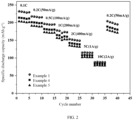
- FIG. 1 shows the rate performance comparison of Examples 1, 2, and 3 with Comparative Example 1. It can be seen from the figure that, compared with the electrode doped with Al (Comparative Example 1), the samples co-doped with Al and F (Examples 1, 2, and 3) all provide higher electric capacity and better rate performance at 0.1 C and 10 C, where Example 1 shows the optimal rate performance.
- FIG. 2 shows the rate performance comparison of Examples 4 and 5 with Example 1. It can be seen from the figure that, compared with Examples 4 and 5, Example 1 provides higher electric capacity and better rate performance at 0.1 C and 10 C.
- FIG. 3 shows the 1 C cycling performance comparison of Example 1 with Comparative Example 1. It can be seen from the figure that the sample co-doped with Al and F (Example 1) exhibits higher cycling performance than the sample doped with Al (Comparative Example 1).
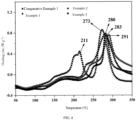
- FIG. 4 shows the safety performance comparison of Examples 1, 2, and 3 with Comparative Example 1. It can be seen from the figure that the samples co-doped with Al and F (Examples 1, 2, and 3) have a higher initial exothermic temperature and a lower heat release than the sample doped with Al, indicating that the samples co-doped with Al and F have better safety performance than the sample doped with Al, where Example 1 shows the optimal safety performance.
- FIG. 5 shows the safety performance comparison of Example 1 with Comparative Examples 1 and 2. It can be seen from the figure that the sample co-doped with Al and F (Example 1) and the sample doped with Al (Comparative Example 1) exhibit a higher initial exothermic temperature and a lower heat release than the undoped sample (Comparative Example 2), indicating that the sample co-doped with Al and F and the sample doped with Al have better safety performance.
- FIG. 6 shows the safety performance comparison of Examples 1 and 6 with Comparative Example 3. It can be seen from the figure that the LFP samples (Example 6 and Comparative Example 3) show better safety performance than the ternary NCM sample (Example 1), and the LFP co-doped with Al and F (Example 6) shows better safety performance than the undoped LFP (Comparative Example 3).
Landscapes
- Chemical & Material Sciences (AREA)
- Engineering & Computer Science (AREA)
- Chemical Kinetics & Catalysis (AREA)
- Organic Chemistry (AREA)
- Manufacturing & Machinery (AREA)
- Mechanical Engineering (AREA)
- General Chemical & Material Sciences (AREA)
- Materials Engineering (AREA)
- Metallurgy (AREA)
- Inorganic Chemistry (AREA)
- Environmental & Geological Engineering (AREA)
- Electrochemistry (AREA)
- Life Sciences & Earth Sciences (AREA)
- Geology (AREA)
- General Life Sciences & Earth Sciences (AREA)
- Geochemistry & Mineralogy (AREA)
- Crystallography & Structural Chemistry (AREA)
- Thermal Sciences (AREA)
- Physics & Mathematics (AREA)
- Health & Medical Sciences (AREA)
- General Health & Medical Sciences (AREA)
- Toxicology (AREA)
- Manufacture And Refinement Of Metals (AREA)
- Secondary Cells (AREA)
- Battery Electrode And Active Subsutance (AREA)
Applications Claiming Priority (2)
| Application Number | Priority Date | Filing Date | Title |
|---|---|---|---|
| CN202111186036.XA CN114069083B (zh) | 2021-10-12 | 2021-10-12 | 正极边角料回收合成高安全性正极材料的方法和应用 |
| PCT/CN2022/108665 WO2023060992A1 (zh) | 2021-10-12 | 2022-07-28 | 正极边角料回收合成高安全性正极材料的方法和应用 |
Publications (2)
| Publication Number | Publication Date |
|---|---|
| EP4407748A1 true EP4407748A1 (de) | 2024-07-31 |
| EP4407748A4 EP4407748A4 (de) | 2025-09-17 |
Family
ID=80234503
Family Applications (1)
| Application Number | Title | Priority Date | Filing Date |
|---|---|---|---|
| EP22879939.1A Pending EP4407748A4 (de) | 2021-10-12 | 2022-07-28 | Verfahren zur synthese von hochsicherheits-positivelektrodenmaterial durch recycling von positivelektrodenresten und anwendung |
Country Status (4)
| Country | Link |
|---|---|
| EP (1) | EP4407748A4 (de) |
| CN (1) | CN114069083B (de) |
| MX (1) | MX2024004498A (de) |
| WO (1) | WO2023060992A1 (de) |
Cited By (1)
| Publication number | Priority date | Publication date | Assignee | Title |
|---|---|---|---|---|
| KR102822212B1 (ko) * | 2024-12-24 | 2025-06-19 | 주식회사 에코앤드림 | 잔류 나트륨이 감소된, 코발트를 포함하지 않는 니켈-망간 폐전구체의 재생 방법 |
Families Citing this family (4)
| Publication number | Priority date | Publication date | Assignee | Title |
|---|---|---|---|---|
| CN114069083B (zh) * | 2021-10-12 | 2024-07-09 | 广东邦普循环科技有限公司 | 正极边角料回收合成高安全性正极材料的方法和应用 |
| JP2025518981A (ja) | 2022-05-11 | 2025-06-20 | リー インダストリーズ インコーポレイテッド | 電池廃棄物の規模拡大可能なダイレクトリサイクルのための方法およびシステム |
| KR20260028754A (ko) * | 2023-06-22 | 2026-03-04 | 리 인더스트리스 인코퍼레이티드 | 배터리 폐기물로부터 알루미늄 불순물의 제거 및 재활용을 위한 시스템 및 방법 |
| TW202518742A (zh) * | 2023-09-08 | 2025-05-01 | 美商鋰工科技股份有限公司 | 結合電極材料合成之系統與方法 |
Family Cites Families (12)
| Publication number | Priority date | Publication date | Assignee | Title |
|---|---|---|---|---|
| CN102347521A (zh) * | 2011-10-08 | 2012-02-08 | 佛山市邦普循环科技有限公司 | 一种电动汽车用动力型锰酸锂电池中锰和锂的回收方法 |
| CN103199320B (zh) * | 2013-03-28 | 2015-05-27 | 四川天齐锂业股份有限公司 | 镍钴锰三元正极材料回收利用的方法 |
| CN104868190B (zh) * | 2015-05-13 | 2017-09-12 | 中国科学院过程工程研究所 | 一种锂离子电池正极废料中金属的浸出及回收方法 |
| CN105633500A (zh) * | 2016-02-22 | 2016-06-01 | 四川天齐锂业股份有限公司 | 利用回收锂离子电池材料制备三元正极材料前驱体的方法 |
| CN105895879B (zh) * | 2016-05-20 | 2019-12-31 | 中国科学院青岛生物能源与过程研究所 | 一种氟掺杂碳包覆正极复合材料及其制备方法及应用 |
| CN105990577B (zh) * | 2016-06-15 | 2019-07-19 | 电子科技大学 | 一种锂离子电池正极材料LiNi0.6-xCo0.2Mn0.2AlxO2-yFy及其制备方法 |
| WO2018209164A1 (en) * | 2017-05-11 | 2018-11-15 | Worcester Polytechnic Institute | Method and apparatus for recycling lithium iron phosphate batteries |
| CN107653378A (zh) * | 2017-08-25 | 2018-02-02 | 金川集团股份有限公司 | 一种废旧镍钴锰锂离子电池中有价金属的回收方法 |
| CN107994223A (zh) * | 2017-12-11 | 2018-05-04 | 广东工业大学 | 一种铝氟共掺杂改性的复合材料及其制备方法和应用 |
| CN109721043B (zh) * | 2018-12-29 | 2021-09-17 | 宁德时代新能源科技股份有限公司 | 一种回收制备磷酸铁锂正极材料的方法 |
| CN112591737A (zh) * | 2020-12-16 | 2021-04-02 | 昆明理工大学 | 一种回收废旧锂离子电池负极石墨制备碳纳米角的方法 |
| CN114069083B (zh) * | 2021-10-12 | 2024-07-09 | 广东邦普循环科技有限公司 | 正极边角料回收合成高安全性正极材料的方法和应用 |
-
2021
- 2021-10-12 CN CN202111186036.XA patent/CN114069083B/zh active Active
-
2022
- 2022-07-28 WO PCT/CN2022/108665 patent/WO2023060992A1/zh not_active Ceased
- 2022-07-28 EP EP22879939.1A patent/EP4407748A4/de active Pending
- 2022-07-28 MX MX2024004498A patent/MX2024004498A/es unknown
Cited By (1)
| Publication number | Priority date | Publication date | Assignee | Title |
|---|---|---|---|---|
| KR102822212B1 (ko) * | 2024-12-24 | 2025-06-19 | 주식회사 에코앤드림 | 잔류 나트륨이 감소된, 코발트를 포함하지 않는 니켈-망간 폐전구체의 재생 방법 |
Also Published As
| Publication number | Publication date |
|---|---|
| MX2024004498A (es) | 2024-07-02 |
| CN114069083A (zh) | 2022-02-18 |
| EP4407748A4 (de) | 2025-09-17 |
| CN114069083B (zh) | 2024-07-09 |
| WO2023060992A1 (zh) | 2023-04-20 |
Similar Documents
| Publication | Publication Date | Title |
|---|---|---|
| EP4407748A1 (de) | Verfahren zur synthese von hochsicherheits-positivelektrodenmaterial durch recycling von positivelektrodenresten und anwendung | |
| Nie et al. | Recycled LiMn2O4 from the spent lithium ion batteries as cathode material for sodium ion batteries: Electrochemical properties, structural evolution and electrode kinetics | |
| Li et al. | Regeneration of high-performance Li1. 2Mn0. 54Ni0. 13Co0. 13O2 cathode material from mixed spent lithium-ion batteries through selective ammonia leaching | |
| CN102437311B (zh) | 一种磷酸铁锂复合材料、其制备方法和应用 | |
| CN105692721B (zh) | 一种钠离子电池正极材料及其制备方法和使用方法 | |
| US20240336493A1 (en) | Prelithiation reagent for lithium-ion battery (lib), and preparation method therefor and use thereof | |
| Tang et al. | Direct regeneration of LiNi0. 5Co0. 2Mn0. 3O2 cathode material from spent lithium-ion batteries | |
| US12548803B2 (en) | Regeneration of electrodes by recycling spent rechargeable lithium batteries | |
| CN101771145B (zh) | 一种锂离子电池多元正极材料制备方法 | |
| CN115347265B (zh) | 一种自废旧磷酸铁锂电池制备铜铝共掺杂改性磷酸铁锂正极材料的方法 | |
| CN103000903B (zh) | 一种掺杂碳纳米材料的前驱体及制备方法和球形锂金属氧化物正极材料及制备方法 | |
| CN114094089A (zh) | 一种正极补锂添加剂及其制备和在锂离子电池正极补锂中的应用 | |
| CN103633322A (zh) | 一种高密度球形磷酸铁锂材料的制备方法 | |
| Tang et al. | Recovery of valuable metals and modification of cathode materials from spent lithium-ion batteries | |
| CN116835551B (zh) | 一种以水合磷酸铁为原料快速热冲击合成磷酸铁锂正极材料的方法 | |
| US20250256964A1 (en) | Method for preparing lithium iron phosphate and use thereof | |
| CN115117469A (zh) | 一种碱金属氟化物/碳复合材料及其制备与应用 | |
| CN104743537A (zh) | 一种高倍率的磷酸铁锂/碳复合正极材料的制备方法 | |
| WO2024055519A1 (zh) | 一种磷酸锰铁锂的制备方法及其应用 | |
| Liu et al. | A green and facile hydrothermal synthesis of γ-MnOOH nanowires as a prospective anode material for high power Li-ion batteries | |
| CN111584840A (zh) | 碳布负载的碳包覆二硫化镍纳米片复合材料及其制备方法和应用 | |
| CN111682174A (zh) | 一种锑包覆的锂电池正极材料及其制备方法和应用 | |
| Cao et al. | Preparation of Li 3 V 2 (PO 4) 3 as cathode material for aqueous zinc ion batteries by a hydrothermal assisted sol–gel method and its properties | |
| CN113823790A (zh) | 钴铁硒化物/石墨烯纳米带复合负极材料及其制备方法 | |
| CN115602835B (zh) | 一种基于含钾普鲁士蓝正极材料的高电压水系锌基双离子电池及其制备方法 |
Legal Events
| Date | Code | Title | Description |
|---|---|---|---|
| STAA | Information on the status of an ep patent application or granted ep patent |
Free format text: STATUS: THE INTERNATIONAL PUBLICATION HAS BEEN MADE |
|
| PUAI | Public reference made under article 153(3) epc to a published international application that has entered the european phase |
Free format text: ORIGINAL CODE: 0009012 |
|
| STAA | Information on the status of an ep patent application or granted ep patent |
Free format text: STATUS: REQUEST FOR EXAMINATION WAS MADE |
|
| 17P | Request for examination filed |
Effective date: 20240423 |
|
| AK | Designated contracting states |
Kind code of ref document: A1 Designated state(s): AL AT BE BG CH CY CZ DE DK EE ES FI FR GB GR HR HU IE IS IT LI LT LU LV MC MK MT NL NO PL PT RO RS SE SI SK SM TR |
|
| DAX | Request for extension of the european patent (deleted) | ||
| RAV | Requested validation state of the european patent: fee paid |
Extension state: MA Effective date: 20240423 |
|
| A4 | Supplementary search report drawn up and despatched |
Effective date: 20250818 |