EP4406984A1 - Duroplastische giessmasse, hieraus hergestellter formkörper sowie verfahren zur herstellung eines solchen formkörpers - Google Patents
Duroplastische giessmasse, hieraus hergestellter formkörper sowie verfahren zur herstellung eines solchen formkörpers Download PDFInfo
- Publication number
- EP4406984A1 EP4406984A1 EP24153942.8A EP24153942A EP4406984A1 EP 4406984 A1 EP4406984 A1 EP 4406984A1 EP 24153942 A EP24153942 A EP 24153942A EP 4406984 A1 EP4406984 A1 EP 4406984A1
- Authority
- EP
- European Patent Office
- Prior art keywords
- casting compound
- compound according
- thermosetting
- filler particles
- derivatives
- Prior art date
- Legal status (The legal status is an assumption and is not a legal conclusion. Google has not performed a legal analysis and makes no representation as to the accuracy of the status listed.)
- Pending
Links
Images
Classifications
-
- B—PERFORMING OPERATIONS; TRANSPORTING
- B29—WORKING OF PLASTICS; WORKING OF SUBSTANCES IN A PLASTIC STATE IN GENERAL
- B29C—SHAPING OR JOINING OF PLASTICS; SHAPING OF MATERIAL IN A PLASTIC STATE, NOT OTHERWISE PROVIDED FOR; AFTER-TREATMENT OF THE SHAPED PRODUCTS, e.g. REPAIRING
- B29C39/00—Shaping by casting, i.e. introducing the moulding material into a mould or between confining surfaces without significant moulding pressure; Apparatus therefor
- B29C39/003—Shaping by casting, i.e. introducing the moulding material into a mould or between confining surfaces without significant moulding pressure; Apparatus therefor characterised by the choice of material
- B29C39/006—Monomers or prepolymers
-
- C—CHEMISTRY; METALLURGY
- C08—ORGANIC MACROMOLECULAR COMPOUNDS; THEIR PREPARATION OR CHEMICAL WORKING-UP; COMPOSITIONS BASED THEREON
- C08L—COMPOSITIONS OF MACROMOLECULAR COMPOUNDS
- C08L33/00—Compositions of homopolymers or copolymers of compounds having one or more unsaturated aliphatic radicals, each having only one carbon-to-carbon double bond, and only one being terminated by only one carboxyl radical, or of salts, anhydrides, esters, amides, imides or nitriles thereof; Compositions of derivatives of such polymers
- C08L33/04—Homopolymers or copolymers of esters
- C08L33/06—Homopolymers or copolymers of esters of esters containing only carbon, hydrogen and oxygen, which oxygen atoms are present only as part of the carboxyl radical
- C08L33/062—Copolymers with monomers not covered by C08L33/06
-
- C—CHEMISTRY; METALLURGY
- C08—ORGANIC MACROMOLECULAR COMPOUNDS; THEIR PREPARATION OR CHEMICAL WORKING-UP; COMPOSITIONS BASED THEREON
- C08F—MACROMOLECULAR COMPOUNDS OBTAINED BY REACTIONS ONLY INVOLVING CARBON-TO-CARBON UNSATURATED BONDS
- C08F265/00—Macromolecular compounds obtained by polymerising monomers on to polymers of unsaturated monocarboxylic acids or derivatives thereof as defined in group C08F20/00
- C08F265/04—Macromolecular compounds obtained by polymerising monomers on to polymers of unsaturated monocarboxylic acids or derivatives thereof as defined in group C08F20/00 on to polymers of esters
- C08F265/06—Polymerisation of acrylate or methacrylate esters on to polymers thereof
-
- B—PERFORMING OPERATIONS; TRANSPORTING
- B29—WORKING OF PLASTICS; WORKING OF SUBSTANCES IN A PLASTIC STATE IN GENERAL
- B29B—PREPARATION OR PRETREATMENT OF THE MATERIAL TO BE SHAPED; MAKING GRANULES OR PREFORMS; RECOVERY OF PLASTICS OR OTHER CONSTITUENTS OF WASTE MATERIAL CONTAINING PLASTICS
- B29B17/00—Recovery of plastics or other constituents of waste material containing plastics
- B29B17/04—Disintegrating plastics, e.g. by milling
-
- B—PERFORMING OPERATIONS; TRANSPORTING
- B29—WORKING OF PLASTICS; WORKING OF SUBSTANCES IN A PLASTIC STATE IN GENERAL
- B29C—SHAPING OR JOINING OF PLASTICS; SHAPING OF MATERIAL IN A PLASTIC STATE, NOT OTHERWISE PROVIDED FOR; AFTER-TREATMENT OF THE SHAPED PRODUCTS, e.g. REPAIRING
- B29C39/00—Shaping by casting, i.e. introducing the moulding material into a mould or between confining surfaces without significant moulding pressure; Apparatus therefor
- B29C39/02—Shaping by casting, i.e. introducing the moulding material into a mould or between confining surfaces without significant moulding pressure; Apparatus therefor for making articles of definite length, i.e. discrete articles
-
- B—PERFORMING OPERATIONS; TRANSPORTING
- B29—WORKING OF PLASTICS; WORKING OF SUBSTANCES IN A PLASTIC STATE IN GENERAL
- B29C—SHAPING OR JOINING OF PLASTICS; SHAPING OF MATERIAL IN A PLASTIC STATE, NOT OTHERWISE PROVIDED FOR; AFTER-TREATMENT OF THE SHAPED PRODUCTS, e.g. REPAIRING
- B29C39/00—Shaping by casting, i.e. introducing the moulding material into a mould or between confining surfaces without significant moulding pressure; Apparatus therefor
- B29C39/22—Component parts, details or accessories; Auxiliary operations
- B29C39/38—Heating or cooling
-
- B—PERFORMING OPERATIONS; TRANSPORTING
- B29—WORKING OF PLASTICS; WORKING OF SUBSTANCES IN A PLASTIC STATE IN GENERAL
- B29C—SHAPING OR JOINING OF PLASTICS; SHAPING OF MATERIAL IN A PLASTIC STATE, NOT OTHERWISE PROVIDED FOR; AFTER-TREATMENT OF THE SHAPED PRODUCTS, e.g. REPAIRING
- B29C70/00—Shaping composites, i.e. plastics material comprising reinforcements, fillers or preformed parts, e.g. inserts
- B29C70/58—Shaping composites, i.e. plastics material comprising reinforcements, fillers or preformed parts, e.g. inserts comprising fillers only, e.g. particles, powder, beads, flakes, spheres
-
- C—CHEMISTRY; METALLURGY
- C08—ORGANIC MACROMOLECULAR COMPOUNDS; THEIR PREPARATION OR CHEMICAL WORKING-UP; COMPOSITIONS BASED THEREON
- C08F—MACROMOLECULAR COMPOUNDS OBTAINED BY REACTIONS ONLY INVOLVING CARBON-TO-CARBON UNSATURATED BONDS
- C08F216/00—Copolymers of compounds having one or more unsaturated aliphatic radicals, each having only one carbon-to-carbon double bond, and at least one being terminated by an alcohol, ether, aldehydo, ketonic, acetal or ketal radical
- C08F216/02—Copolymers of compounds having one or more unsaturated aliphatic radicals, each having only one carbon-to-carbon double bond, and at least one being terminated by an alcohol, ether, aldehydo, ketonic, acetal or ketal radical by an alcohol radical
- C08F216/10—Carbocyclic compounds
-
- C—CHEMISTRY; METALLURGY
- C08—ORGANIC MACROMOLECULAR COMPOUNDS; THEIR PREPARATION OR CHEMICAL WORKING-UP; COMPOSITIONS BASED THEREON
- C08F—MACROMOLECULAR COMPOUNDS OBTAINED BY REACTIONS ONLY INVOLVING CARBON-TO-CARBON UNSATURATED BONDS
- C08F220/00—Copolymers of compounds having one or more unsaturated aliphatic radicals, each having only one carbon-to-carbon double bond, and only one being terminated by only one carboxyl radical or a salt, anhydride ester, amide, imide or nitrile thereof
- C08F220/02—Monocarboxylic acids having less than ten carbon atoms; Derivatives thereof
- C08F220/10—Esters
- C08F220/12—Esters of monohydric alcohols or phenols
- C08F220/14—Methyl esters, e.g. methyl (meth)acrylate
-
- C—CHEMISTRY; METALLURGY
- C08—ORGANIC MACROMOLECULAR COMPOUNDS; THEIR PREPARATION OR CHEMICAL WORKING-UP; COMPOSITIONS BASED THEREON
- C08F—MACROMOLECULAR COMPOUNDS OBTAINED BY REACTIONS ONLY INVOLVING CARBON-TO-CARBON UNSATURATED BONDS
- C08F220/00—Copolymers of compounds having one or more unsaturated aliphatic radicals, each having only one carbon-to-carbon double bond, and only one being terminated by only one carboxyl radical or a salt, anhydride ester, amide, imide or nitrile thereof
- C08F220/02—Monocarboxylic acids having less than ten carbon atoms; Derivatives thereof
- C08F220/10—Esters
- C08F220/12—Esters of monohydric alcohols or phenols
- C08F220/16—Esters of monohydric alcohols or phenols of phenols or of alcohols containing two or more carbon atoms
- C08F220/18—Esters of monohydric alcohols or phenols of phenols or of alcohols containing two or more carbon atoms with acrylic or methacrylic acids
- C08F220/1802—C2-(meth)acrylate, e.g. ethyl (meth)acrylate
-
- C—CHEMISTRY; METALLURGY
- C08—ORGANIC MACROMOLECULAR COMPOUNDS; THEIR PREPARATION OR CHEMICAL WORKING-UP; COMPOSITIONS BASED THEREON
- C08F—MACROMOLECULAR COMPOUNDS OBTAINED BY REACTIONS ONLY INVOLVING CARBON-TO-CARBON UNSATURATED BONDS
- C08F220/00—Copolymers of compounds having one or more unsaturated aliphatic radicals, each having only one carbon-to-carbon double bond, and only one being terminated by only one carboxyl radical or a salt, anhydride ester, amide, imide or nitrile thereof
- C08F220/02—Monocarboxylic acids having less than ten carbon atoms; Derivatives thereof
- C08F220/10—Esters
- C08F220/12—Esters of monohydric alcohols or phenols
- C08F220/16—Esters of monohydric alcohols or phenols of phenols or of alcohols containing two or more carbon atoms
- C08F220/18—Esters of monohydric alcohols or phenols of phenols or of alcohols containing two or more carbon atoms with acrylic or methacrylic acids
- C08F220/1811—C10or C11-(Meth)acrylate, e.g. isodecyl (meth)acrylate, isobornyl (meth)acrylate or 2-naphthyl (meth)acrylate
-
- C—CHEMISTRY; METALLURGY
- C08—ORGANIC MACROMOLECULAR COMPOUNDS; THEIR PREPARATION OR CHEMICAL WORKING-UP; COMPOSITIONS BASED THEREON
- C08F—MACROMOLECULAR COMPOUNDS OBTAINED BY REACTIONS ONLY INVOLVING CARBON-TO-CARBON UNSATURATED BONDS
- C08F222/00—Copolymers of compounds having one or more unsaturated aliphatic radicals, each having only one carbon-to-carbon double bond, and at least one being terminated by a carboxyl radical and containing at least one other carboxyl radical in the molecule; Salts, anhydrides, esters, amides, imides, or nitriles thereof
- C08F222/10—Esters
- C08F222/1006—Esters of polyhydric alcohols or polyhydric phenols
- C08F222/106—Esters of polycondensation macromers
- C08F222/1063—Esters of polycondensation macromers of alcohol terminated polyethers
-
- C—CHEMISTRY; METALLURGY
- C08—ORGANIC MACROMOLECULAR COMPOUNDS; THEIR PREPARATION OR CHEMICAL WORKING-UP; COMPOSITIONS BASED THEREON
- C08F—MACROMOLECULAR COMPOUNDS OBTAINED BY REACTIONS ONLY INVOLVING CARBON-TO-CARBON UNSATURATED BONDS
- C08F232/00—Copolymers of cyclic compounds containing no unsaturated aliphatic radicals in a side chain, and having one or more carbon-to-carbon double bonds in a carbocyclic ring system
- C08F232/02—Copolymers of cyclic compounds containing no unsaturated aliphatic radicals in a side chain, and having one or more carbon-to-carbon double bonds in a carbocyclic ring system having no condensed rings
- C08F232/04—Copolymers of cyclic compounds containing no unsaturated aliphatic radicals in a side chain, and having one or more carbon-to-carbon double bonds in a carbocyclic ring system having no condensed rings having one carbon-to-carbon double bond
-
- C—CHEMISTRY; METALLURGY
- C08—ORGANIC MACROMOLECULAR COMPOUNDS; THEIR PREPARATION OR CHEMICAL WORKING-UP; COMPOSITIONS BASED THEREON
- C08F—MACROMOLECULAR COMPOUNDS OBTAINED BY REACTIONS ONLY INVOLVING CARBON-TO-CARBON UNSATURATED BONDS
- C08F236/00—Copolymers of compounds having one or more unsaturated aliphatic radicals, at least one having two or more carbon-to-carbon double bonds
- C08F236/22—Copolymers of compounds having one or more unsaturated aliphatic radicals, at least one having two or more carbon-to-carbon double bonds the radical having three or more carbon-to-carbon double bonds
-
- C—CHEMISTRY; METALLURGY
- C08—ORGANIC MACROMOLECULAR COMPOUNDS; THEIR PREPARATION OR CHEMICAL WORKING-UP; COMPOSITIONS BASED THEREON
- C08K—Use of inorganic or non-macromolecular organic substances as compounding ingredients
- C08K11/00—Use of ingredients of unknown constitution, e.g. undefined reaction products
-
- C—CHEMISTRY; METALLURGY
- C08—ORGANIC MACROMOLECULAR COMPOUNDS; THEIR PREPARATION OR CHEMICAL WORKING-UP; COMPOSITIONS BASED THEREON
- C08K—Use of inorganic or non-macromolecular organic substances as compounding ingredients
- C08K3/00—Use of inorganic substances as compounding ingredients
- C08K3/18—Oxygen-containing compounds, e.g. metal carbonyls
- C08K3/24—Acids; Salts thereof
- C08K3/26—Carbonates; Bicarbonates
-
- C—CHEMISTRY; METALLURGY
- C08—ORGANIC MACROMOLECULAR COMPOUNDS; THEIR PREPARATION OR CHEMICAL WORKING-UP; COMPOSITIONS BASED THEREON
- C08K—Use of inorganic or non-macromolecular organic substances as compounding ingredients
- C08K3/00—Use of inorganic substances as compounding ingredients
- C08K3/34—Silicon-containing compounds
- C08K3/36—Silica
-
- B—PERFORMING OPERATIONS; TRANSPORTING
- B29—WORKING OF PLASTICS; WORKING OF SUBSTANCES IN A PLASTIC STATE IN GENERAL
- B29B—PREPARATION OR PRETREATMENT OF THE MATERIAL TO BE SHAPED; MAKING GRANULES OR PREFORMS; RECOVERY OF PLASTICS OR OTHER CONSTITUENTS OF WASTE MATERIAL CONTAINING PLASTICS
- B29B17/00—Recovery of plastics or other constituents of waste material containing plastics
- B29B17/04—Disintegrating plastics, e.g. by milling
- B29B2017/0424—Specific disintegrating techniques; devices therefor
- B29B2017/0468—Crushing, i.e. disintegrating into small particles
-
- B—PERFORMING OPERATIONS; TRANSPORTING
- B29—WORKING OF PLASTICS; WORKING OF SUBSTANCES IN A PLASTIC STATE IN GENERAL
- B29C—SHAPING OR JOINING OF PLASTICS; SHAPING OF MATERIAL IN A PLASTIC STATE, NOT OTHERWISE PROVIDED FOR; AFTER-TREATMENT OF THE SHAPED PRODUCTS, e.g. REPAIRING
- B29C39/00—Shaping by casting, i.e. introducing the moulding material into a mould or between confining surfaces without significant moulding pressure; Apparatus therefor
- B29C39/02—Shaping by casting, i.e. introducing the moulding material into a mould or between confining surfaces without significant moulding pressure; Apparatus therefor for making articles of definite length, i.e. discrete articles
- B29C39/026—Shaping by casting, i.e. introducing the moulding material into a mould or between confining surfaces without significant moulding pressure; Apparatus therefor for making articles of definite length, i.e. discrete articles characterised by the shape of the surface
-
- B—PERFORMING OPERATIONS; TRANSPORTING
- B29—WORKING OF PLASTICS; WORKING OF SUBSTANCES IN A PLASTIC STATE IN GENERAL
- B29K—INDEXING SCHEME ASSOCIATED WITH SUBCLASSES B29B, B29C OR B29D, RELATING TO MOULDING MATERIALS OR TO MATERIALS FOR MOULDS, REINFORCEMENTS, FILLERS OR PREFORMED PARTS, e.g. INSERTS
- B29K2001/00—Use of cellulose, modified cellulose or cellulose derivatives, e.g. viscose, as moulding material
-
- B—PERFORMING OPERATIONS; TRANSPORTING
- B29—WORKING OF PLASTICS; WORKING OF SUBSTANCES IN A PLASTIC STATE IN GENERAL
- B29K—INDEXING SCHEME ASSOCIATED WITH SUBCLASSES B29B, B29C OR B29D, RELATING TO MOULDING MATERIALS OR TO MATERIALS FOR MOULDS, REINFORCEMENTS, FILLERS OR PREFORMED PARTS, e.g. INSERTS
- B29K2021/00—Use of unspecified rubbers as moulding material
- B29K2021/006—Thermosetting elastomers
-
- B—PERFORMING OPERATIONS; TRANSPORTING
- B29—WORKING OF PLASTICS; WORKING OF SUBSTANCES IN A PLASTIC STATE IN GENERAL
- B29K—INDEXING SCHEME ASSOCIATED WITH SUBCLASSES B29B, B29C OR B29D, RELATING TO MOULDING MATERIALS OR TO MATERIALS FOR MOULDS, REINFORCEMENTS, FILLERS OR PREFORMED PARTS, e.g. INSERTS
- B29K2033/00—Use of polymers of unsaturated acids or derivatives thereof as moulding material
- B29K2033/04—Polymers of esters
-
- B—PERFORMING OPERATIONS; TRANSPORTING
- B29—WORKING OF PLASTICS; WORKING OF SUBSTANCES IN A PLASTIC STATE IN GENERAL
- B29K—INDEXING SCHEME ASSOCIATED WITH SUBCLASSES B29B, B29C OR B29D, RELATING TO MOULDING MATERIALS OR TO MATERIALS FOR MOULDS, REINFORCEMENTS, FILLERS OR PREFORMED PARTS, e.g. INSERTS
- B29K2101/00—Use of unspecified macromolecular compounds as moulding material
- B29K2101/10—Thermosetting resins
-
- B—PERFORMING OPERATIONS; TRANSPORTING
- B29—WORKING OF PLASTICS; WORKING OF SUBSTANCES IN A PLASTIC STATE IN GENERAL
- B29K—INDEXING SCHEME ASSOCIATED WITH SUBCLASSES B29B, B29C OR B29D, RELATING TO MOULDING MATERIALS OR TO MATERIALS FOR MOULDS, REINFORCEMENTS, FILLERS OR PREFORMED PARTS, e.g. INSERTS
- B29K2105/00—Condition, form or state of moulded material or of the material to be shaped
- B29K2105/0002—Condition, form or state of moulded material or of the material to be shaped monomers or prepolymers
-
- B—PERFORMING OPERATIONS; TRANSPORTING
- B29—WORKING OF PLASTICS; WORKING OF SUBSTANCES IN A PLASTIC STATE IN GENERAL
- B29K—INDEXING SCHEME ASSOCIATED WITH SUBCLASSES B29B, B29C OR B29D, RELATING TO MOULDING MATERIALS OR TO MATERIALS FOR MOULDS, REINFORCEMENTS, FILLERS OR PREFORMED PARTS, e.g. INSERTS
- B29K2105/00—Condition, form or state of moulded material or of the material to be shaped
- B29K2105/0085—Copolymers
-
- B—PERFORMING OPERATIONS; TRANSPORTING
- B29—WORKING OF PLASTICS; WORKING OF SUBSTANCES IN A PLASTIC STATE IN GENERAL
- B29K—INDEXING SCHEME ASSOCIATED WITH SUBCLASSES B29B, B29C OR B29D, RELATING TO MOULDING MATERIALS OR TO MATERIALS FOR MOULDS, REINFORCEMENTS, FILLERS OR PREFORMED PARTS, e.g. INSERTS
- B29K2105/00—Condition, form or state of moulded material or of the material to be shaped
- B29K2105/06—Condition, form or state of moulded material or of the material to be shaped containing reinforcements, fillers or inserts
- B29K2105/16—Fillers
-
- B—PERFORMING OPERATIONS; TRANSPORTING
- B29—WORKING OF PLASTICS; WORKING OF SUBSTANCES IN A PLASTIC STATE IN GENERAL
- B29K—INDEXING SCHEME ASSOCIATED WITH SUBCLASSES B29B, B29C OR B29D, RELATING TO MOULDING MATERIALS OR TO MATERIALS FOR MOULDS, REINFORCEMENTS, FILLERS OR PREFORMED PARTS, e.g. INSERTS
- B29K2105/00—Condition, form or state of moulded material or of the material to be shaped
- B29K2105/26—Scrap or recycled material
-
- B—PERFORMING OPERATIONS; TRANSPORTING
- B29—WORKING OF PLASTICS; WORKING OF SUBSTANCES IN A PLASTIC STATE IN GENERAL
- B29K—INDEXING SCHEME ASSOCIATED WITH SUBCLASSES B29B, B29C OR B29D, RELATING TO MOULDING MATERIALS OR TO MATERIALS FOR MOULDS, REINFORCEMENTS, FILLERS OR PREFORMED PARTS, e.g. INSERTS
- B29K2401/00—Use of cellulose, modified cellulose or cellulose derivatives, e.g. viscose, as filler
-
- B—PERFORMING OPERATIONS; TRANSPORTING
- B29—WORKING OF PLASTICS; WORKING OF SUBSTANCES IN A PLASTIC STATE IN GENERAL
- B29K—INDEXING SCHEME ASSOCIATED WITH SUBCLASSES B29B, B29C OR B29D, RELATING TO MOULDING MATERIALS OR TO MATERIALS FOR MOULDS, REINFORCEMENTS, FILLERS OR PREFORMED PARTS, e.g. INSERTS
- B29K2505/00—Use of metals, their alloys or their compounds, as filler
-
- B—PERFORMING OPERATIONS; TRANSPORTING
- B29—WORKING OF PLASTICS; WORKING OF SUBSTANCES IN A PLASTIC STATE IN GENERAL
- B29K—INDEXING SCHEME ASSOCIATED WITH SUBCLASSES B29B, B29C OR B29D, RELATING TO MOULDING MATERIALS OR TO MATERIALS FOR MOULDS, REINFORCEMENTS, FILLERS OR PREFORMED PARTS, e.g. INSERTS
- B29K2507/00—Use of elements other than metals as filler
- B29K2507/04—Carbon
-
- B—PERFORMING OPERATIONS; TRANSPORTING
- B29—WORKING OF PLASTICS; WORKING OF SUBSTANCES IN A PLASTIC STATE IN GENERAL
- B29K—INDEXING SCHEME ASSOCIATED WITH SUBCLASSES B29B, B29C OR B29D, RELATING TO MOULDING MATERIALS OR TO MATERIALS FOR MOULDS, REINFORCEMENTS, FILLERS OR PREFORMED PARTS, e.g. INSERTS
- B29K2509/00—Use of inorganic materials not provided for in groups B29K2503/00 - B29K2507/00, as filler
- B29K2509/02—Ceramics
-
- B—PERFORMING OPERATIONS; TRANSPORTING
- B29—WORKING OF PLASTICS; WORKING OF SUBSTANCES IN A PLASTIC STATE IN GENERAL
- B29L—INDEXING SCHEME ASSOCIATED WITH SUBCLASS B29C, RELATING TO PARTICULAR ARTICLES
- B29L2031/00—Other particular articles
- B29L2031/769—Sanitary equipment
- B29L2031/7692—Baths
-
- B—PERFORMING OPERATIONS; TRANSPORTING
- B29—WORKING OF PLASTICS; WORKING OF SUBSTANCES IN A PLASTIC STATE IN GENERAL
- B29L—INDEXING SCHEME ASSOCIATED WITH SUBCLASS B29C, RELATING TO PARTICULAR ARTICLES
- B29L2031/00—Other particular articles
- B29L2031/769—Sanitary equipment
- B29L2031/7696—Showers
-
- B—PERFORMING OPERATIONS; TRANSPORTING
- B29—WORKING OF PLASTICS; WORKING OF SUBSTANCES IN A PLASTIC STATE IN GENERAL
- B29L—INDEXING SCHEME ASSOCIATED WITH SUBCLASS B29C, RELATING TO PARTICULAR ARTICLES
- B29L2031/00—Other particular articles
- B29L2031/769—Sanitary equipment
- B29L2031/7698—Sinks
-
- C—CHEMISTRY; METALLURGY
- C08—ORGANIC MACROMOLECULAR COMPOUNDS; THEIR PREPARATION OR CHEMICAL WORKING-UP; COMPOSITIONS BASED THEREON
- C08K—Use of inorganic or non-macromolecular organic substances as compounding ingredients
- C08K3/00—Use of inorganic substances as compounding ingredients
- C08K3/18—Oxygen-containing compounds, e.g. metal carbonyls
- C08K3/20—Oxides; Hydroxides
- C08K3/22—Oxides; Hydroxides of metals
- C08K2003/2237—Oxides; Hydroxides of metals of titanium
- C08K2003/2241—Titanium dioxide
-
- C—CHEMISTRY; METALLURGY
- C08—ORGANIC MACROMOLECULAR COMPOUNDS; THEIR PREPARATION OR CHEMICAL WORKING-UP; COMPOSITIONS BASED THEREON
- C08K—Use of inorganic or non-macromolecular organic substances as compounding ingredients
- C08K3/00—Use of inorganic substances as compounding ingredients
- C08K3/18—Oxygen-containing compounds, e.g. metal carbonyls
- C08K3/24—Acids; Salts thereof
- C08K3/26—Carbonates; Bicarbonates
- C08K2003/265—Calcium, strontium or barium carbonate
-
- C—CHEMISTRY; METALLURGY
- C08—ORGANIC MACROMOLECULAR COMPOUNDS; THEIR PREPARATION OR CHEMICAL WORKING-UP; COMPOSITIONS BASED THEREON
- C08K—Use of inorganic or non-macromolecular organic substances as compounding ingredients
- C08K3/00—Use of inorganic substances as compounding ingredients
- C08K3/18—Oxygen-containing compounds, e.g. metal carbonyls
- C08K3/24—Acids; Salts thereof
- C08K3/26—Carbonates; Bicarbonates
- C08K2003/267—Magnesium carbonate
-
- C—CHEMISTRY; METALLURGY
- C08—ORGANIC MACROMOLECULAR COMPOUNDS; THEIR PREPARATION OR CHEMICAL WORKING-UP; COMPOSITIONS BASED THEREON
- C08K—Use of inorganic or non-macromolecular organic substances as compounding ingredients
- C08K2201/00—Specific properties of additives
- C08K2201/002—Physical properties
- C08K2201/005—Additives being defined by their particle size in general
-
- C—CHEMISTRY; METALLURGY
- C08—ORGANIC MACROMOLECULAR COMPOUNDS; THEIR PREPARATION OR CHEMICAL WORKING-UP; COMPOSITIONS BASED THEREON
- C08L—COMPOSITIONS OF MACROMOLECULAR COMPOUNDS
- C08L2203/00—Applications
- C08L2203/30—Applications used for thermoforming
-
- C—CHEMISTRY; METALLURGY
- C08—ORGANIC MACROMOLECULAR COMPOUNDS; THEIR PREPARATION OR CHEMICAL WORKING-UP; COMPOSITIONS BASED THEREON
- C08L—COMPOSITIONS OF MACROMOLECULAR COMPOUNDS
- C08L2205/00—Polymer mixtures characterised by other features
- C08L2205/02—Polymer mixtures characterised by other features containing two or more polymers of the same C08L -group
- C08L2205/025—Polymer mixtures characterised by other features containing two or more polymers of the same C08L -group containing two or more polymers of the same hierarchy C08L, and differing only in parameters such as density, comonomer content, molecular weight, structure
-
- C—CHEMISTRY; METALLURGY
- C08—ORGANIC MACROMOLECULAR COMPOUNDS; THEIR PREPARATION OR CHEMICAL WORKING-UP; COMPOSITIONS BASED THEREON
- C08L—COMPOSITIONS OF MACROMOLECULAR COMPOUNDS
- C08L2205/00—Polymer mixtures characterised by other features
- C08L2205/03—Polymer mixtures characterised by other features containing three or more polymers in a blend
-
- C—CHEMISTRY; METALLURGY
- C08—ORGANIC MACROMOLECULAR COMPOUNDS; THEIR PREPARATION OR CHEMICAL WORKING-UP; COMPOSITIONS BASED THEREON
- C08L—COMPOSITIONS OF MACROMOLECULAR COMPOUNDS
- C08L2207/00—Properties characterising the ingredient of the composition
- C08L2207/20—Recycled plastic
-
- Y—GENERAL TAGGING OF NEW TECHNOLOGICAL DEVELOPMENTS; GENERAL TAGGING OF CROSS-SECTIONAL TECHNOLOGIES SPANNING OVER SEVERAL SECTIONS OF THE IPC; TECHNICAL SUBJECTS COVERED BY FORMER USPC CROSS-REFERENCE ART COLLECTIONS [XRACs] AND DIGESTS
- Y02—TECHNOLOGIES OR APPLICATIONS FOR MITIGATION OR ADAPTATION AGAINST CLIMATE CHANGE
- Y02W—CLIMATE CHANGE MITIGATION TECHNOLOGIES RELATED TO WASTEWATER TREATMENT OR WASTE MANAGEMENT
- Y02W30/00—Technologies for solid waste management
- Y02W30/20—Waste processing or separation
-
- Y—GENERAL TAGGING OF NEW TECHNOLOGICAL DEVELOPMENTS; GENERAL TAGGING OF CROSS-SECTIONAL TECHNOLOGIES SPANNING OVER SEVERAL SECTIONS OF THE IPC; TECHNICAL SUBJECTS COVERED BY FORMER USPC CROSS-REFERENCE ART COLLECTIONS [XRACs] AND DIGESTS
- Y02—TECHNOLOGIES OR APPLICATIONS FOR MITIGATION OR ADAPTATION AGAINST CLIMATE CHANGE
- Y02W—CLIMATE CHANGE MITIGATION TECHNOLOGIES RELATED TO WASTEWATER TREATMENT OR WASTE MANAGEMENT
- Y02W30/00—Technologies for solid waste management
- Y02W30/50—Reuse, recycling or recovery technologies
- Y02W30/52—Mechanical processing of waste for the recovery of materials, e.g. crushing, shredding, separation or disassembly
-
- Y—GENERAL TAGGING OF NEW TECHNOLOGICAL DEVELOPMENTS; GENERAL TAGGING OF CROSS-SECTIONAL TECHNOLOGIES SPANNING OVER SEVERAL SECTIONS OF THE IPC; TECHNICAL SUBJECTS COVERED BY FORMER USPC CROSS-REFERENCE ART COLLECTIONS [XRACs] AND DIGESTS
- Y02—TECHNOLOGIES OR APPLICATIONS FOR MITIGATION OR ADAPTATION AGAINST CLIMATE CHANGE
- Y02W—CLIMATE CHANGE MITIGATION TECHNOLOGIES RELATED TO WASTEWATER TREATMENT OR WASTE MANAGEMENT
- Y02W30/00—Technologies for solid waste management
- Y02W30/50—Reuse, recycling or recovery technologies
- Y02W30/62—Plastics recycling; Rubber recycling
Definitions
- the present invention relates to a thermosetting casting compound which is suitable for molding at low temperatures (redox-induced cold hardening) and at high temperatures (heat-induced high-temperature hardening) and has excellent molding processability.
- the invention further relates to a molded article produced therefrom in the form of a kitchen sink, a shower tray, a washbasin or a bathtub with good appearance, high impact strength and good heat and temperature change resistance.
- the invention relates to a process for producing molded parts such as kitchen sinks, shower trays, washbasins and bathtubs.
- Molded parts in the form of kitchen sinks, shower trays, wash basins or bathtubs which are produced by compounding inorganic fillers such as quartz sand and organic fillers such as olive stones in a petrochemical or bio-based acrylic resin, have various outstanding functions and properties such as color variety, smooth and easy-to-clean surfaces, weather resistance and mechanical and thermal properties.
- the molded parts are usually produced by a casting process in which a casting compound is first prepared by dispersing inorganic and organic fillers in an acrylic syrup made of methyl methacrylate or a mixture of bio-based and/or recycled acrylic monomers and polymethyl methacrylate or a mixture of acrylates, polyesters, polyols and their copolymers.
- This casting compound is then filled into a mold and the mold is cured and polymerized at high temperature.
- the most important properties of such molded parts in the kitchen or sanitary area are their impact resistance (resistance to breakage during transport or assembly) and cleanability (kitchens and sanitary items must be able to be kept clean for a healthy life).
- Typical values for impact strength are in the range of 1.8 - 2.5 mJ/mm 2 and for the colour change (DE) after cleaning test (according to EN 14688) is in the range of 4.5 - 9.5.
- 6,841,253 molded plastic articles in the form of kitchen sinks, wash basins, bathtubs, shower trays, with excellent cleanability and abrasion resistance which are produced by a molding process, wherein the molding composition comprises quartz filler and polymer binder components of a methacrylate, cross-linking agents and fluoropolymer particles, and which is cured in a mold at 100°C and for 30 minutes.
- the fluoropolymers are known to be superhydrophobic [ Y. Huang et al. Materials and Design, 162 (2019) 285 ] and the use of fluoropolymers increases the hydrophobicity of the polymer surface. A higher hydrophobicity of the surface increases the cleaning barrier in the product.
- this casting compound contains fluoropolymer particles
- the use of such molded bodies in the kitchen or in sanitary rooms can cause fluoropolymer-associated respiratory diseases.
- molded parts such as kitchen sinks and other sanitary ware have been developed with an increased concentration of the cross-linking agent.
- the patent DE10 2004 055 365A1 a molded plastic body with an increased amount of the crosslinking agent which has a higher reactivity than methyl (meth)acrylate (MMA) and creates the thin film on the top of the plastic body which provides improved cleanability.
- MMA methyl (meth)acrylate
- the molding composition has an extremely high number of crosslinking agents, the molded part has a very high degree of crosslinking, which can lead to the generation of internal micro-stresses in the molded plastic body and thus a reduction in the impact resistance of the body.
- cyclic derivatives of methacrylate monomers such as isobornyl methacrylate (IBOMA) and cyclohexyl methacrylate (CHMA)
- IBOMA isobornyl methacrylate
- CHMA cyclohexyl methacrylate
- the patent application 2016 00108376 A1 a casting composition with a high proportion of IBOMA and CHMA and a molded part for kitchen and/or bathroom sinks with improved cleanability.
- PolylBOMA and PolyCHMA have a higher hydrophobicity compared to pure acrylic resin based on polymethyl methacrylate, which leads to improved cleanability.
- thermosetting casting compound according to the invention has the feature that it comprises at least one polymerizable terpene or contains a derivative in the polymer binder in addition to the mono- and polyfunctional acrylic/methacrylic monomers with dissolved polymers or copolymers and filler particles which are incorporated into the casting compound.
- Polymerizable terpenes and their derivatives can co-polymerize with (meth)acrylic monomers, thereby increasing the hydrophobicity of the surface, improving the cleanability (similar to fluoropolymers or incorporated cyclic methacrylic monomers), but at the same time increasing the flexibility of the hard and brittle acrylic resin.
- terpineol to the casting compound improves the demolding process of the molded parts after polymerization, especially from molds made of glass fiber composite materials (GRP molds).
- GRP molds glass fiber composite materials
- the addition of terpenes prevents the destruction of the release agent layers and the gel coat that are on the top of the GRP mold. During polymerization, these are attacked by the high temperature development and the acrylates used when the Trommsdorff effect occurs during the polymerization of methacrylate-based monomers.
- a further addition of polymerizable terpenes results in the molded part receiving improved impact strength due to the plasticizing effect during the copolymerization of the methacrylate-based monomers with terpineol.
- the casting compound contains only one polymerizable terpene, it can also contain a mixture of two or more polymerizable terpenes and their derivatives. This makes it possible to combine different properties of different terpenes through such a mixture and to give the casting compound and ultimately the cast part a wide range of properties required by the part.
- terpenes and their derivatives can be used.
- the terpenes or the two or more terpenes and their derivatives forming the mixture are preferably selected from, but are not limited to, ⁇ -terpineol, ⁇ -terpineol, ⁇ -terpineol, terpinen-4-ol and their mixtures, terpinolene as a menthadiene, (Z)-2,6-dimethyl-2,6-octadien-8-ol as acyclic monoterpene alcohol, myrcene as a monoterpene.
- the amount of the polymerizable terpene and its derivatives or the terpene mixture should be in the range of 0.1 - 20 wt.% based on the casting compound. This means that even a very small oil content is sufficient to bring about a significant improvement in the properties of the molded body.
- the terpene content or The terpene mixture content should preferably be 0.8 - 15 wt.%, preferably the content should be between 1 - 10 wt.%.
- Kitchen sinks and sanitary ware can be manufactured in different ways and using different casting compound compositions.
- the variety of possibilities is shown, for example, in DE 38 32 351 A1 , EN 10 2004 055 365 A1 or EN 10 2019 125 777 A1 described.
- the casting compounds of the DE 38 32 351 A1 , EN 10 2004 055 365 A1 or EN 10 2019 125 777 A1 be cured at room temperature.
- the casting compound according to the invention should then contain, in addition to polymerizable terpenes and their derivatives, a proportion of polyfunctional (meth)acrylic monomers of petrochemical origin that is freshly synthesized, i.e. not recycled, or of bio-based origin that is recycled, the proportion being in the range of 0.5 - 20 wt. %, preferably 0.8 - 15 wt. %, preferably 1 - 10 wt.
- a variation in the amount of polyfunctional monomers used to produce molded parts with different degrees of crosslinking is permissible in response to the specific requirements of different applications. For example, kitchen sinks require a harder surface compared to shower trays, which can be achieved by a higher degree of crosslinking. In contrast, the shower tray must be more flexible in order to respond to the stresses exerted by the human body when entering the tray.
- the dominant component of the thermosetting casting compound of the invention is filler particles.
- the filler particles of the invention can be inorganic filler particles that give the materials their hardness, organic filler particles that make the material lighter, and recyclates that make it possible to reuse rejects from production as well as kitchen sinks and other molded parts at the end of their life and reduce non-biodegradable plastic waste.
- the fillers can also be present as a mixture of several or all of the aforementioned particle types.
- the inorganic filler particles of the casting compound according to the invention are preferably selected from SiO 2 , Al 2 O 3 , TiO 2 , ZrO 2 , Fe 2 O 3 , ZnO, CrzO s, SiC, CaCO s, BaSO 4 , carbon, metals or metal alloys, whereby mixtures of two or more different types of filler particles can also be used.
- the mixing ratio can be any desired ratio.
- the organic filler particles of the casting compound according to the invention are preferably selected from ground olive kernels, almond kernels, peach kernels, cherry kernels, apricot kernels, avocado shells, argan shells, cocoa shells.
- the lightness of the molded part hardened from the thermosetting casting compound of the invention is a very important feature for kitchen sinks, wash basins and especially bathtubs, which can weigh hundreds of kilograms.
- organic filler particles such as fruit kernels play an important role in achieving high mechanical and thermal performance.
- Lignin and hardwood cellulose are the basis of olive kernels. Shear forces during the mixing of the casting mass open the fiber structure of lignin and cellulose, creating the type of core-hair particles that improve the filler-matrix interface. Lignin and cellulose fiber ends penetrate the polymer matrix and increase impact strength as well as resistance to thermal shock.
- Recyclates of the casting compound according to the invention are obtained in the form of ground particles from molded parts made of a thermosetting casting compound such as kitchen sink and sanitary waste according to EN 10 2021 127 484.2 or, for example, recycled wind turbine blades according to US 10 953 407 B2
- the recyclates are selected depending on the source material: quartz composites, artificial stone composites, mineral composites or glass fiber composites.
- the inorganic, organic and recycled filler particles of the casting compound according to the invention preferably have a particle size of 1 to 1200 ⁇ m, particularly preferably 25 to 1000 ⁇ m and in particular 50 to 800 ⁇ m.
- the invention further relates to a molded article produced using a casting compound according to the invention as described above.
- the molded article produced can be partially or completely bio-based.
- the terpenes and their derivatives are supplied from biological sources, thus the molded article produced according to the invention is a biocomposite-based molded part.
- thermosetting casting compound Various types can be produced from the thermosetting casting compound according to the invention.
- the molded part can be, for example, a kitchen sink, a shower tray, a washbasin or a bathtub.
- the invention further relates to a method for producing a molded body of the type described above, in which a casting compound of the type described above is introduced into an empty mold, where it is cold-curing polymerized using a redox-induced curing system.
- the casting composition is polymerized in the mold during redox-induced cold hardening at a temperature of 10 to 70°C, preferably 12 to 50°C, particularly preferably 15 to 30°C.
- the invention further relates to the molded part of the type described above, in which a casting compound of the type described above is placed in an empty mold, where it is polymerized using a heat-induced curing system as an alternative to cold curing.
- the casting compound is polymerized in the mold for the heat-induced curing process at a temperature of 70 to 120°C, preferably 80 to 110°C, particularly preferably 90 to 100°C.
- the kitchen sink or sanitary articles contain terpenes and their derivatives in a concentration of 0.1% by weight or more, up to a maximum of 20% by weight.
- Terpenes and their derivatives are a large group of volatile unsaturated hydrocarbon derivatives extracted from the essential oils of plants, in particular conifers and citrus trees.
- Terpenes form a large but also heterogeneous class of chemical compounds structurally based on isoprene units (C 3 H 8 ) n and the most common derivatives of which are alcohols. These substances can form a strong chemical or physical bond with the filler particles (quartz sand or fruit kernels, which have numerous hydroxyl groups on their surface).
- the presence of double bonds in the molecular structure allows terpineols to copolymerize with (meth)acrylic monomers of the binder, which improves the corresponding properties of the molded articles produced from the molding compound according to the invention even at low concentrations.
- Monofunctional bio-based monomers isobornyl methacrylate (IBOMA, Evonik Performance Materials GmbH), lauryl methacrylate, ethyl methacrylate (BCH Brühl Chemikalien Handel GmbH). These components are all of plant or animal origin, for example VISIOMER ® Terra IBOMA is made from pinewood resin.
- Monofunctional recycled monomer Monofunctional recycled monomer methacrylate (rec.-MMA, Monómeros del Vallés, S.L.).
- Polyethylene glycol 200 dimethacrylate (PEG200DMA) (Arkema France).
- Acrylic glass fine ground material XP 95 (recycled PMMA, Kunststoff- und Wegner-GmbH).
- SiO 2 quartz sand (Dorfner GmbH); quartz powder with a grain size of 0.1-0.70 ⁇ m (Quarzwerke GmbH), ground olive stones (Bio Powder), natural dyes (Kreidezeit).
- Bio-based dispersion additives (0.1%) (BYK Chemie GmbH) and thixotropic additives (0.1%) (BYK Chemie GmbH), internal release agent (Münzing).
- compositions for the production of polymer matrices are prepared by dissolving acrylic glass fine grinding material XP 95 (recycled PMMA, Kunststoff- und Weg-GmbH) in a mixture of monofunctional monomers from Table 1: Methyl methacrylate (Monomeros del Valles) isobornyl methacrylate (Evonik Performance Materials GmbH), ethyl methacrylate (BCH Brühl Chemikalien Handel GmbH). The reaction mixture was heated to 40°C to accelerate the solubility to 100 min and finally obtain a clear solution. After obtaining the clear solution of PMMA in the mixture of monofunctional monomers, the viscosity of the resulting composition is measured at 120 to 155 cPs (Brookfield Viscometer DVI Prime). Bio-(1,10-decanediol dimethacrylate) (Arkema) is then added.
- the casting compound produced in this way was stirred for 20 minutes (Dispermat AE-3M, VMA-Getzmann GmbH).
- a molded body in the shape of a kitchen sink was made from the casting compound by pouring the respective casting compound into a mold and polymerizing it for 35 minutes at 110°C.
- Table 2 ⁇ /u> Properties of the kitchen sinks from Table 1 Characteristics Pattern 1 Pattern 2 Comparison sample 1 Impact strength, mJ /mm 2 3.3 3.2 3.0 Taber abrasion, ⁇ g 16.2 19.6 21.2 Water vapor test, DE: Color change 0.46 0.74 1.03 Soil test, DE: Colour change 0.98 1.23 3.39
- the resistance to water vapor is carried out using the following procedure: a flat sample (100 mm ⁇ 100 mm) was cut from the manufactured kitchen sink and its color was measured spectrophotometrically using a Datacolor color measurement system. The sample was placed on the wide-neck Erlenmeyer flask filled with 270 ml of boiled distilled water, which remained on the slightly warming hotplate. The loading weight (1 kg) was placed on the sample, this prevents the sample from fluttering. After 60 min, the sample is removed from the wide-neck flask using crucible tongs and dried for 24 hours (at RT) before measurement. After 24 hours, the color measurement is repeated and the difference (DE) after and before steam treatment characterizes the water vapor resistance of the sample.
- DE difference
- the sample 100 ⁇ 150 mm was cut from the sink and its color was measured spectroscopically using a Datacolor color measurement system.
- the 5 drops of test soiling solution IPP 2, WFK Testgewebe GmbH
- 5 horizontal lines with a length of approx. 8 cm are drawn next to each other on the test body.
- 5 vertical lines are applied next to each other on the horizontal line.
- the sample is pre-cleaned with warm water ( ⁇ 60°C) and a slowed water jet at an angle of -80°. Then approx.
- Table 2 shows that the kitchen sinks of the present invention show a slight up to 10% increase in impact resistance compared to the terpene-free control sample. Addition of 0.6% by weight of terpineol to the formulation results in a 25% improvement in abrasion resistance. An increase in water vapor resistance was also observed in the kitchen sinks with the addition of terpineol. Even at the low concentration (0.2% by weight), a significant increase in soil resistance was observed.
- Example 2 The raw materials used are the same as described in Example 1, with the exception of the additional initiation system, where a redox accelerator is added in addition to the peroxide.
- Typical for redox-curing acrylic systems are amine-based reducing agents.
- the test series presented in Example 2 is ethoxylated p-toluidine (Pergan GmbH). All other components are from the same manufacturers/suppliers as described in Example 1, with the exception of the pigment. In the case of redox-cured casting compositions, titanium dioxide (Crystal International) was used as the white pigment.
- Example 2 various terpenes and their derivatives were used in Example 2: ⁇ -myrcene (Thermo Fisher Scientific), Nerol 900 (Interational Flavor and Fragrances), Terpinolene (ARAE), Geraniol (International Flavour and Fragrances).
- compositions for the preparation of polymer matrices were prepared by dissolving acrylic glass fine powder XP 95 (recycled PMMA, Kunststoff- und Wegner) in the mixture of methyl methacrylate (Monomeros del Valles) and polyethylene glycol (PEG)200 dimethacrylate (PEG200DMA). The reaction mixture was heated to 40°C to accelerate the solubility to 100 min to obtain a clear solution.
- the clear solution of acrylic glass fine grind XP95 was used to disperse a SiO 2 - containing mixture of inorganic and organic fillers as quartz sand (Dorfner GmbH), quartz flour (Quarzwerke GmbH) and white pigment particles (Crystal International).
- quartz sand Dioxide
- quartz flour Quartz flour
- Quartz flour Quantzwerke GmbH
- white pigment particles Crystal International
- bio-based dispersion additives 0.1 %) (BYK Chemie) and thixotropic additives (0.1 % (BYK Chemie) and internal release agent (Münzing) were added.
- the peroxide Pergan GmbH was added to the casting mass.
- the ethoxylated p-toluidine solution in the corresponding terpenes and their derivatives is added to the casting mass, the mass is stirred for 2 minutes and injected into the mold at room temperature for 30 minutes.
- the casting compound thus prepared was stirred for 20 minutes (Dispermat AE-3M, VMA-Getzmann GmbH). Immediately before casting, the ethoxylated p-toluidine solution in the respective terpenes and their derivatives is added to the casting compound, the compound is stirred for 2 minutes and poured into a mold at room temperature. The composition was polymerized for 35 minutes without external heating.
- the clear solution of acrylic glass fine grind XP95 was used to disperse a SiO 2 - containing mixture of inorganic and organic fillers as quartz sand (Dorfner GmbH), quartz flour (Quarzwerke GmbH) and white pigment particles (Crystal International).
- quartz sand Dioxide
- quartz flour Quartz flour
- Quartz flour Quantzwerke GmbH
- white pigment particles Crystal International
- bio-based dispersion additives 0.1 %) (BYK Chemie) and thixotropic additives (0.1 % (BYK Chemie) and internal release agent (Münzing) were added.
- the peroxide Pergan GmbH was added to the casting mass.
- the ethoxylated p-toluidine solution in the mixture of terpineol (International Flavors & Fragrances) and ⁇ -myrcene (Thermo Fisher Scientific) is added to the casting mass, the mass is stirred for 2 minutes and injected into the mold at room temperature for 30 minutes.
- the casting compound thus prepared was stirred for 20 minutes (Dispermat AE-3M, VMA-Getzmann GmbH). Immediately before casting, the ethoxylated p-toluidine solution in the respective terpenes and their derivatives is added to the casting compound, the compound is stirred for 2 minutes and poured into a mold at room temperature. The composition was polymerized for 35 minutes without external heating.
- Table 6 ⁇ /u> Properties of the patterns from Table 5 Characteristics Pattern 8 Comparison sample 1 Impact strength, mJ /mm 2 8.1 3.0 Taber abrasion, ⁇ g 18.4 21.2 Water vapor test DE: Color change 1.01 1.03 Cleanliness, DE: Colour change 1.24 3.39
- the casting compositions and molded parts were prepared according to the technology described in Example 2, using 6.0 and 2.0 parts of terpineol in samples 9 and 10, respectively.
- the casting compound thus prepared was stirred for 20 minutes (Dispermat AE-3M, VMA-Getzmann GmbH). Immediately before casting, the ethoxylated p-toluidine solution in the respective terpenes and their derivatives is added to the casting compound, the compound is stirred for 2 minutes and poured into a mold at room temperature. The composition was polymerized for 35 minutes without external heating.
- Table 8 ⁇ /u> Properties of the patterns from Table 7 Characteristics Pattern 9 Pattern 10 Comparison sample 2 Impact strength, mJ /mm 2 5.7 5.6 5.6 Taber abrasion, ⁇ g 18.6 18.7 18.4 Water vapor test, DE: Color change 1.11 1.02 0.93 Cleanability, DE: Colour change 1.24 1.56 3.07
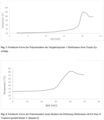
- Figure 1 shows the temperature profile during polymerization of the comparative sample 1, which was made only from the acrylic resin. The time is plotted along the abscissa, and the temperature in the polymerizing casting compound is plotted along the ordinate. The temperature maximum is at about 120 °C, which is much higher than the boiling point of methyl methacrylate (MMA). MMA vapors penetrate the micropores of the gelcoat and delaminate the coating.
- Figure 2 shows the temperature profile of the curing of sample 3 containing 8.0 wt.% terpineol. The time is plotted along the abscissa and the temperature in the polymerizing casting compound is plotted along the ordinate. As the diagram shows, the temperature does not rise above 80 °C, which significantly reduces the aggressive effect of the MMA vapors.
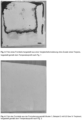
- Figure 3 shows the molded part of the comparison sample, which was subjected to the temperature profile according to Fig.1
- the white color of the surface of the molded part is partially covered with black spots of the gelcoat adhering to the mold.
- the gelcoat was destroyed by the MMA vapors, causing the gelcoat and possibly material from the mold to adhere or bake onto the molded part, which is evident in the form of black spots.
- Figure 4 shows the molded part, which during its production is subjected to the temperature profile Figure 2 The molded part could be demolded without leaving any residue, meaning that the separation from the mold was also ensured during polymerization and the gelcoat layer remained intact.
- polymerizable terpenes and their derivatives are their ability to use them in combination with recycled materials, such as ground kitchen sinks, sanitary ware or industrial waste of the ground forms, as well as recycled inorganic fillers.
- Example 11 The produced casting compound (sample 11) was stirred for 20 minutes (Dispermat AE-3M, VMA-Getzmann GmbH). Immediately before casting, the ethoxylated p-toluidine solution in the respective terpenes and their derivatives is added to the casting compound, the compound is stirred for 2 minutes and poured into a mold at room temperature. The composition was polymerized for 35 minutes without external heating. ⁇ u>Table 10: ⁇ /u> Properties of pattern 11 from Table 9 Characteristics Pattern 11 Impact strength, mJ /mm 2 2.6 Taber abrasion, ⁇ g 13.1 Water vapor test, DE: Color change 0.35 Cleanability, DE: Colour change 1.43
- the sample produced using the recycled material from a used kitchen sink and recycled calcium carbonate showed the properties comparable to the molded part made from conventional materials.
Landscapes
- Chemical & Material Sciences (AREA)
- Health & Medical Sciences (AREA)
- Chemical Kinetics & Catalysis (AREA)
- Medicinal Chemistry (AREA)
- Polymers & Plastics (AREA)
- Organic Chemistry (AREA)
- Engineering & Computer Science (AREA)
- Mechanical Engineering (AREA)
- Environmental & Geological Engineering (AREA)
- Composite Materials (AREA)
- Manufacture Of Macromolecular Shaped Articles (AREA)
- Compositions Of Macromolecular Compounds (AREA)
- Addition Polymer Or Copolymer, Post-Treatments, Or Chemical Modifications (AREA)
- Mold Materials And Core Materials (AREA)
Abstract
Duroplastische polymerisierbare Gießmasse, formuliert zur Herstellung von Küchenspülen und Sanitärartikeln umfassend:
(a) ein oder mehrere monofunktionelle Acryl- und/oder Methacrylmonomere, wobei ein oder mehrere Monomere aus recyceltem Material stammen und/oder ein oder mehrere Monomere pflanzlichen oder tierischen Ursprungs sind,
(b) ein oder mehrere polyfunktionelle Acryl- und/oder Methacryl-Biomonomere pflanzlichen oder tierischen Ursprungs,
(c) ein oder mehrere Polymere oder Copolymere, ausgewählt aus (Co)Polyacrylaten, (Co)Polymethacrylaten, Polyolen, Polyestern, Harzen auf Kolophoniumbasis, Polyterpenharzen, jeweils aus Recyclingmaterial oder pflanzlichen oder tierischen Ursprungs,
wobei die Stoffe gemäß (a) - (c) ein Polymerbindemittel bilden,
(d) anorganische und/oder organische Füllstoffpartikel natürlichen Ursprungs oder aus Recyclingmaterial,
wobei der Anteil des oder der monofunktionellen Acryl- und/oder Methacrylmonomere und des oder der polyfunktionellen Acryl- und Methacryl-Biomonomere 10-40 Gew.-% beträgt, der Anteil des oder der Polymere oder Copolymere 1-16 Gew.-% beträgt, der Anteil der anorganischen und/oder organischen Füllstoffpartikel 44-89 Gew.-% beträgt und das Polymerbindemittel ferner mindestens ein polymerisierbares Terpen oder dessen Derivate umfasst.
(a) ein oder mehrere monofunktionelle Acryl- und/oder Methacrylmonomere, wobei ein oder mehrere Monomere aus recyceltem Material stammen und/oder ein oder mehrere Monomere pflanzlichen oder tierischen Ursprungs sind,
(b) ein oder mehrere polyfunktionelle Acryl- und/oder Methacryl-Biomonomere pflanzlichen oder tierischen Ursprungs,
(c) ein oder mehrere Polymere oder Copolymere, ausgewählt aus (Co)Polyacrylaten, (Co)Polymethacrylaten, Polyolen, Polyestern, Harzen auf Kolophoniumbasis, Polyterpenharzen, jeweils aus Recyclingmaterial oder pflanzlichen oder tierischen Ursprungs,
wobei die Stoffe gemäß (a) - (c) ein Polymerbindemittel bilden,
(d) anorganische und/oder organische Füllstoffpartikel natürlichen Ursprungs oder aus Recyclingmaterial,
wobei der Anteil des oder der monofunktionellen Acryl- und/oder Methacrylmonomere und des oder der polyfunktionellen Acryl- und Methacryl-Biomonomere 10-40 Gew.-% beträgt, der Anteil des oder der Polymere oder Copolymere 1-16 Gew.-% beträgt, der Anteil der anorganischen und/oder organischen Füllstoffpartikel 44-89 Gew.-% beträgt und das Polymerbindemittel ferner mindestens ein polymerisierbares Terpen oder dessen Derivate umfasst.
Description
- Die vorliegende Erfindung betrifft eine duroplastische Gießmasse, die zum Formen bei niedriger Temperatur (redoxinduziertes Kalthärten) sowie bei hoher Temperatur (wärmeinduziertes Hochtemperaturhärten) geeignet ist und eine ausgezeichnete Formverarbeitbarkeit aufweist. Ferner betrifft die Erfindung einen hieraus hergestellten Formkörper in Form einer Küchenspüle, einer Duschwanne, eines Waschbeckens oder einer Badewanne mit gutem Aussehen, hoher Schlagfestigkeit sowie guter Wärme- und Temperaturwechselbeständigkeitchließlich betrifft die Erfindung ein Verfahren zur Herstellung von Formteilen wie z.B. Küchenspülen, Duschtassen, Waschbecken, Badewannen.
- Formkörper in Form von Küchenspülen, Duschwannen, Waschbecken oder Badewannen, die mittels Compoundierung von anorganischen Füllstoffen wie Quarzsand und organischen Füllstoffen wie Olivenkernen in einem petrochemischen oder biobasierten Acrylharz hergestellt werden, haben verschiedene herausragende Funktionen und Eigenschaften wie z.B. Farbvielfalt, glatte und gut zu reinigende Oberflächen, Witterungsbeständigkeit und mechanische und thermische Eigenschaften. Die Formteile werden üblicherweise durch ein Gießverfahren hergestellt, bei dem zunächst eine Gießmasse hergestellt wird, indem anorganische und organische Füllstoffe in einem Acrylsirup aus Methylmethacrylat oder einer Mischung aus biobasierten und/oder recycelten Acrylmonomeren und Polymethylmethacrylat oder einer Mischung aus Acrylaten, Polyestern, Polyolen und deren Copolymeren dispergiert werden. Anschließend wird diese Gießmasse in eine Form gefüllt und diese bei hoher Temperatur ausgehärtet und polymerisiert. Die wichtigsten Eigenschaften solcher Formteile in der Küche oder im Sanitärbereich sind ihre Schlagfestigkeit (Bruchsicherheit beim Transport oder bei der Montage) und Reinigungsfähigkeit (Küchen und Sanitärartikel müssen für ein gesundes Leben sauber gehalten werden können). Typische Werte für die Schlagzähigkeit (gemessen nach ISO 179) liegen im Bereich von 1,8 - 2,5 mJ/mm2 und für die Farbänderung (DE) nach Durchführung des Reinigungstests (nach EN 14688) liegt im Bereich von 4,5 - 9,5. Zum Beispiel offenbart das
US-Patent Nr. 6,841,253 geformte Kunststoffartikel in Form von Küchenspülen, Waschbecken, Badewannen, Duschwannen, mit ausgezeichneter Reinigungsfähigkeit und Abriebfestigkeit, die durch ein Gießverfahren hergestellt werden, wobei die Gießmassenzusammensetzung Quarzfüllstoff und Polymerbindemittelkomponenten umfasst aus einem Methacrylat, Vernetzungsmitteln und Fluorpolymerpartikeln, und die in einer Form bei 100°C und für 30 Minuten ausgehärtet wird. Es ist bekannt, dass die Fluorpolymere superhydrophob sind [Y. Huang und so. Materials and Design, 162 (2019) 285] und die Verwendung von Fluorpolymere die Hydrophobizität der Polymeroberfläche erhöht. Eine höhere Hydrophobizität der Oberfläche erhöht die Reinigungsbarriere im Produkt. - Da diese Vergussmasse jedoch die Fluorpolymerpartikel enthält, kann der Einsatz solcher Formkörper in der Küche oder in Sanitärräumen Fluorpolymer-assoziierte Atemwegserkrankungen hervorrufen. Es überwiegen akute Atemwegsbeschwerden, die von grippeähnlichen Symptomen begleitet werden (Hays & Spiller, Clinical Toxicology (2014), 52, 848-855).
- Um die Verwendung der gefährlichen Fluorpolymerverbindungen zu vermeiden, wurden Formteile wie z.B. Küchenspülen und andere Sanitärgegenstände mit einer erhöhten Konzentration des Vernetzungsmittels entwickelt. Beispielsweise offenbart das Patent
DE10 2004 055 365A1 einen geformten Kunststoffkörper mit einer erhöhten Menge des Vernetzungsmittels, das eine höhere Reaktivität als Methyl(meth)acrylat (MMA) hat und den dünnen Film auf der Oberseite des Kunststoffkörpers erzeugt, der eine verbesserte Reinigungsfähigkeit bereitstellt. Da jedoch die Gießmassenzusammensetzung eine extrem hohe Anzahl an Vernetzungsmitteln aufweist, hat das Formteil einen sehr hohen Vernetzungsgrad, was zur Erzeugung von inneren Mikrospannungen in dem geformten Kunststoffkörper und damit zu einer Verringerung der Schlagfestigkeit des Körpers führen kann. - Um die Herstellung von Formteilen mit reduzierter mechanischer Leistung zu verhindern, können cyclische Derivate von Methacrylat-Monomeren, beispielsweise Isobornylmethacrylat (IBOMA) und Cyclohexylmethacrylat (CHMA), in der Gießmasse verwendet werden. Beispielsweise offenbarte die Patentanmeldung
IT 2016 00108376 A1 - Der Erfindung liegt die Aufgabe zugrunde, eine verbesserte Gießmasse anzugeben, die die Herstellung von Formteilen insbesondere mit einem ästhetischen Aussehen, guten mechanischen und thermischen Eigenschaften und einer guten Reinigungsfähigkeit erlaubt. Zur Lösung des Problems wird eine duroplastische polymerisierbare Gießmasse formuliert zur Herstellung von Küchenspülen und Sanitärartikeln bereitgestellt, umfassend:
- (a) ein oder mehrere monofunktionelle Acryl- und/oder Methacrylmonomere, wobei ein oder mehrere Monomere aus recyceltem Material stammen und ein oder mehrere Monomere pflanzlichen oder tierischen Ursprungs sind,
- (b) ein oder mehrere polyfunktionelle Acryl- und/oder Methacryl-Biomonomere pflanzlichen oder tierischen Ursprungs,
- (c) ein oder mehrere Polymere oder Copolymere, ausgewählt aus (Co)Polyacrylaten, (Co)Polymethacrylaten, Polyolen, Polyestern, Harzen auf Kolophoniumbasis, Polyterpenharzen, jeweils aus Recyclingmaterial oder pflanzlichen oder tierischen Ursprungs, wobei die Stoffe gemäß (a) - (c) ein Polymerbindemittel bilden,
- (d) anorganischen und/oder organischen Füllstoffpartikel natürlichen Ursprungs oder aus gemahlenem Rezyklat,
- Die erfindungsgemäße duroplastische Gießmasse weist das Merkmal auf, dass sie im Polymerbindemittel zusätzlich zu den mono- und polyfunktionellen Acryl/MethacrylMonomeren mit gelösten Polymeren oder Copolymeren und Füllstoffpartikeln, die in die Gießmasse eingearbeitet sind, mindestens ein polymerisierbares Terpen umfasst oder ein Derivat enthält.
- Polymerisierbare Terpene und ihre Derivate können mit (Meth)acrylmonomeren co-polymerisieren, wodurch die Hydrophobizität der Oberfläche erhöht wird, die Reinigungsfähigkeit verbessert wird (ähnlich wie bei Fluorpolymeren oder eingefügten zyklischen Methacrylmonomeren), aber gleichzeitig die Flexibilität des harten und spröden Acrylharzes erhöht wird.
- Überraschend ist, dass die Zugabe von Terpineol in der Gießmasse insbesondere den Entformungsprozess der Formteile nach der Polymerisation insbesondere aus Formen aus Glasfaserverbundwerkstoffen (GFK-Formen) verbessert. Die Zugabe der Terpene verhindert die Zerstörung des Trennmittelschichten und des Gelcoats, die sich auf der Oberseite der GFK-Form befinden. Während der Polymerisation werden diese durch die hohe Temperaturentwicklung und die verwendeten Acrylate angegriffen, wenn es während der Polymerisation von Methacrylat-basierten Monomeren zum Trommsdorff-Effekt kommt. Eine weitere Zugabe von polymerisierbaren Terpenen führt dazu, dass das Formteil aufgrund der plastifizierenden Wirkung bei der Copolymerisation der Monomere auf Methacrylatbasis mit Terpineol eine verbesserte Schlagzähigkeit erhält.
- Neben der Möglichkeit, dass die Gießmasse nur ein polymerisierbares Terpen enthält, kann sie auch eine Mischung aus zwei oder mehr polymerisierbaren Terpenen und deren Derivaten enthalten. Dadurch ist es möglich, unterschiedliche Eigenschaften unterschiedlicher Terpene durch eine solche Mischung zu kombinieren und der Gießmasse und letztlich dem gegossenen Formteil ein breites Spektrum an Formteil-erforderlichen Eigenschaften zu verleihen.
- Eine Vielzahl von Terpenen und ihren Derivaten kann verwendet werden. Die Terpene oder die zwei oder mehr Terpene und ihre Derivate, die das Gemisch bilden, werden vorzugsweise ausgewählt, sind aber nicht beschränkt auf α-Terpineol, β-Terpineol, γ-Terpineol, Terpinen-4-ol und deren Gemische, Terpinolen als ein Menthadien, (Z)-2,6-Dimethyl-2,6-octadien-8-ol als acyclisches Monoterpenalkohol, Myrcen als Monoterpen. Alle diese polymerisierbaren Terpene und ihre Derivate co-polymerisieren mit (Meth)acrylmonomeren, wobei sie in die Harzstruktur die hydrophoben Segmente zur Verbesserung der Reinigungsfähigkeit sowie zur Plastifizierungswirkung einführen, wodurch das Harz stabiler gegen mechanischen und thermischen Schock wird.
- Die Menge des Anteils des polymerisierbaren Terpens und seiner Derivate oder der Terpenmischung sollte im Bereich von 0,1 - 20 Gew.-% liegen bezogen auf die Gießmasse. Das bedeutet, dass bereits ein sehr geringer Ölanteil ausreicht, um eine deutliche Verbesserung der Eigenschaften des Formkörpers zu bewirken. Der Terpenanteil bzw. Terpenmischungsanteil sollte vorzugsweise 0,8 - 15 Gew.-% betragen, bevorzugt sollte der Anteil zwischen 1 - 10 Gew.-% liegen.
- Küchenspülen und Sanitärartikel können auf unterschiedliche Weise und unter Verwendung unterschiedlicher Gießmassenzusammensetzungen hergestellt werden. Die Vielfalt der Möglichkeiten ist beispielsweise in
DE 38 32 351 A1 ,DE 10 2004 055 365 A1 oderDE 10 2019 125 777 A1 beschrieben. Bei Austausch des Initiatorsystems von hitzeaktivierten Peroxiden (Di-(4-tert.-butyl-cyclohexyl)-peroxidicarbonat und Laurylperoxid-Mischung) auf redoxaktiviert Initiatorsystem (Benzoylperoxid - ethoxyliertes p-Toluidin) können die Gießmassen derDE 38 32 351 A1 ,DE 10 2004 055 365 A1 oderDE 10 2019 125 777 A1 bei Raumtemperatur gehärtet werden. - Grundsätzlich können dann unterschiedliche Gießmassen zur Herstellung der Formteile verwendet werden. Es hat sich herausgestellt, dass sie eine Basis für die erfindungsgemäße Gießmasse darstellen können.
- In einer typischen Formulierung sollte dann beispielsweise die erfindungsgemäße Gießmasse neben polymerisierbaren Terpenen und deren Derivaten einen Anteil an polyfunktionellen (Meth)acryl-Monomeren petrochemischen Ursprungs, der frisch synthetisiert, also nichtrecycelt ist, oder biobasierten Ursprungs, der recycelt ist, enthalten, wobei der Anteil im Bereich von 0,5 - 20 Gew.-%, bevorzugt 0,8 - 15 Gew.-%, bevorzugt 1 - 10 Gew.-% liegt. Eine Variation der Menge an polyfunktionellen Monomeren, die zur Herstellung von Formteilen mit unterschiedlichem Vernetzungsgrad ist zulässig als Reaktion auf die spezifischen Anforderungen verschiedener Anwendungen. Beispielsweise benötigen Küchenspülen im Vergleich zu Duschwannen eine härtere Oberfläche, was durch einen höheren Vernetzungsgrad erreicht werden kann. Im Gegensatz dazu muss die Duschwanne flexibler sein, um auf die Belastungen zu reagieren, die durch den menschlichen Körper beim Betreten der Wanne ausgeübt werden.
- Die bezogen auf ihren Gewichtanteil dominante Komponente der duroplastische Gießmasse der Erfindung sind Füllstoffpartikel. Die Füllstoffpartikel der Erfindung können anorganische Füllpartikel sein, die den Materialien die Härte verleihen, organische Füllpartikel, die das Material leichter machen, und Rezyklate, die es ermöglichen, Ausschuss aus der Produktion sowie Küchenspülen und anderer Formteile am Ende ihrer Lebensdauer wiederzuverwenden und den biologisch nicht abbaubaren Kunststoffabfall zu reduzieren. Die Füllstoffe können auch als Mischung mehrerer oder aller der vorstehend genannten Partikelarten vorliegen.
- Die anorganischen Füllstoffpartikel der erfindungsgemäßen Gießmasse sind bevorzugt ausgewählt aus SiO2, Al2O3, TiOz, ZrO2, Fe2O3, ZnO, CrzOs, SiC, CaCOs, BaSO4, Kohlenstoff, Metallen oder Metalllegierungen, wobei auch Mischungen aus zwei oder mehreren unterschiedlichen Arten von Füllstoffpartikeln verwendet werden können. Das Mischungsverhältnis kann jedes gewünschte Verhältnis sein.
- Die organischen Füllstoffpartikel der erfindungsgemäßen Gießmasse sind bevorzugt ausgewählt aus gemahlenen Olivenkernen, Mandelkernen, Pfirsichkernen, Kirschkernen, Aprikosenkernen, Avocadoschalen, Arganschalen, Kakaoschalen. Die Leichtigkeit des aus der duroplastische Gießmasse der Erfindung gehärteten Formteils ist ein sehr wichtiges Merkmal für Küchenspülen, Waschbecken und insbesondere Badewannen, die Hunderte von Kilogramm wiegen können. Darüber hinaus spielen organische Füllstoffpartikel wie Fruchtkerne eine wichtige Rolle beim Erreichen einer hohen mechanischen und thermischen Leistung. Lignin und Hartholzzellulose sind die Basis der Olivenkerne. Scherkräfte beim Mischen der Gießmasse öffnen die Faserstruktur aus Lignin und Zellulose, wodurch die Art der Kern-Haare-Partikel entsteht, die die Füllstoff-Matrix-Grenzfläche verbessern. Lignin- und Zellulosefaserenden dringen in die Polymermatrix ein und erhöhen die Schlagfestigkeit sowie die Beständigkeit gegen Temperaturwechsel.
- Rezyklate der erfindungsgemäßen Gießmasse werden in Form von gemahlenen Partikeln aus Formteilen aus einer duroplastischen Gießmasse wie z.B. Küchenspülen- und Sanitärabfällen gemäß
DE 10 2021 127 484.2 oder beispielsweise recycelten Windradflügeln gemäßUS 10 953 407 B2 - Die anorganischen, organischen und recyclierten Füllstoffpartikel der erfindungsgemäßen Gießmasse weisen bevorzugt eine Partikelgröße von 1 bis 1200 µm, besonders bevorzugt 25 bis 1000 µm und insbesondere 50 bis 800 µm auf.
- Neben der erfindungsgemäßen Gießmasse betrifft die Erfindung ferner einen Formkörper hergestellt unter Verwendung einer erfindungsgemäßen Gießmasse wie vorstehend beschrieben. Abhängig von einer verwendeten Gießmasse in Bezug auf die anderen Bestandteile der Masse als das Terpen und seine Derivate kann der hergestellte Formkörper teilweise oder vollständig biobasiert sein. In jedem Fall werden die Terpene und deren Derivate aus biologischen Quellen geliefert, somit ist der erfindungsgemäß hergestellte Formkörper ein Formteil auf Biokomposit-Basis.
- Aus der erfindungsgemäßen duroplastischen Gießmasse können verschiedene Arten von Formkörpern hergestellt werden. Das Formteil kann beispielsweise eine Küchenspüle, eine Duschwanne, ein Waschbecken oder eine Badewanne sein.
- Die Erfindung betrifft ferner ein Verfahren zur Herstellung eines Formkörpers der oben beschriebenen Art, bei dem eine Gießmasse der oben beschriebenen Art in eine leere Form eingebracht wird, wo sie unter Verwendung eines redoxinduzierten Härtungssystems kalthärtend polymerisiert wird.
- Die Gießzusammensetzung wird in der Form bei dem redoxinduzierten Kalthärten bei einer Temperatur von 10 bis 70°C, vorzugsweise von 12 bis 50°C, besonders bevorzugt von 15 bis 30°C polymerisiert.
- Die Erfindung betrifft ferner das Formteil der oben beschriebenen Art, bei dem eine Gießmasse der oben beschriebenen Art in eine leere Form gegeben wird, wo sie, alternativ zur Kalthärtung, auch unter Verwendung eines wärmeinduzierten Härtungssystems polymerisiert wird.
- Die Gießmasse wird in der Form für das wärmeinduzierte Härtungsverfahren bei einer Temperatur von 70 bis 120°C, vorzugsweise von 80 bis 110°C, besonders bevorzugt von 90 bis 100°C polymerisiert.
- In der vorliegenden Erfindung weisen die Küchenspül- oder Sanitärartikel einen Gehalt an Terpenen und ihren Derivaten in einer Konzentration von 0,1 Gew.-% oder mehr, bis maximal 20 Gew.-% auf. Terpene und ihre Derivate sind eine große Gruppe flüchtiger ungesättigter Kohlenwasserstoffderivate, die aus den ätherischen Ölen von Pflanzen, insbesondere Nadel- und Zitrusbäumen, extrahiert werden. Terpene bilden eine große aber auch heterogene Klasse an chemischen Verbindungen, die strukturell auf Isopren-Einheiten (C3H8)n basieren und deren häufigste Derivate Alkohole sind. Diese Stoffe können mit den Füllstoffpartikeln (Quarzsand oder Fruchtkerne, die auf ihrer Oberfläche zahlreiche Hydroxylgruppen aufweisen) eine starke chemische oder physikalische Bindung eingehen. Andererseits ermöglicht das Vorhandensein von Doppelbindungen in der Molekülstruktur, dass Terpineole mit (Meth)acryl-Monomeren des Bindemittels copolymerisieren, was die entsprechenden Eigenschaften der aus der erfindungsgemäßen Gießmasse hergestellten Formkörper sogar bei niedrigen Konzentrationen verbessert.
- Nachfolgend geben wir einige Beispiele für den effizienten Einsatz der erfindungsgemäßen Gießmasse und damit des erfindungsgemäßen Formkörpers.
- Monofunktionelle biobasierte Monomere: Isobornylmethacrylat (IBOMA, Evonik Performance Materials GmbH), Laurylmethacrylat, Ethylmethacrylat (BCH Brühl Chemikalien Handel GmbH). Diese Komponenten sind alle pflanzlichen oder tierischen Ursprungs, beispielsweise wird VISIOMER® Terra IBOMA aus Kiefernholzharz hergestellt.
- Monofunktionales recyceltes Monomer: Monofunktionales recyceltes Monomermethacrylat (rec.-MMA, Monómeros del Vallés, S.L.).
- Terpineol (International Flavor and Fragrance).
- Polyethylenglycol 200 Dimethacrylat (PEG200DMA) (Arkema France).
- Acrylglas-Feinmahlgut XP 95 (recyceltes PMMA, Kunststoff- und Farben-GmbH).
- SiO2, Quarzsand (Dorfner GmbH); Quarzmehl der Körnung 0,1-0,70 µm (Quarzwerke GmbH), Olivenkerne gemahlen (Bio Powder), natürliche Farbstoffe (Kreidezeit).
- Biobasierte Dispersionsadditive (0,1 %) (BYK Chemie GmbH) und Thixotropieradditive (0,1 %) (BYK Chemie GmbH), internes Trennmittel (Münzing).
- Die Zusammensetzungen zur Herstellung von Polymermatrices werden hergestellt durch Auflösen von Acrylglas-FeinmahlgutXP 95 (recyceltes PMMA, Kunststoff- und Farben-GmbH) in einer Mischung aus monofunktionellen Monomeren der Tabelle 1: Methylmethacrylat (Monomeros del Valles) Isobornylmethacrylat (Evonik Performance Materials GmbH), Ethylmethacrylat (BCH Brühl Chemikalien Handel GmbH). Die Reaktionsmischung wurde auf 40°C erhitzt, um die Löslichkeit auf 100 min zu beschleunigen und final eine klare Lösung zu erhalten. Nach Erhalt der klaren Lösung von PMMA in der Mischung von monofunktionellen Monomeren wird die Viskosität der erhaltenen Zusammensetzung auf 120 bis 155 cPs (Brookfield Viscometer DVI Prime) gemessen. Anschließend erfolgt die Zugabe von Bio-(1,10-decandioldimethacrylat) (Arkema).
- Die klare Lösung von Acrylglas-Feinmahlgut XP95 in den Versuchen 1 - 3 mit Zusatz von Bio-PEG200DMA und Terpineol wurde verwendet, um eine Mischung aus anorganischen und organischen Füllstoffen (Quarzsand (Dorfner GmbH), Quarzmehl (Quarzwerke GmbH) , gemahlene Olivenkerne (Bio-Pulver) und natürliche Pigmentpartikel (Kreidezeit)) zu dispergieren. Außerdem wurden biobasierte Dispergieradditive (0,1 %) (BYK-Chemie) und Thixotropieradditive (0,1 %) (BYK-Chemie) und ein internes Trennmittel (Münzing) zugesetzt. Die quantitative Zusammensetzung der Gießmassen ist in Tabelle 1 zusammengefasst.
Tabelle 1: Formulierungen der Gießmasse für die wärmeinduzierte Polymerisation von Formteilen (Angaben in Gew.%) Bestandteile (mit Herstellerangabe) Formkörper der Erfindung Formkörper für Vergleich Muster 1 Muster 2 Vergleichsmuster 1 Methylmethacrylat, Monomeros del Valles 19,4 19,4 19,4 Polymethylmethacrylat, KF GMBH 5.7 5,7 5,7 Terpineol, International Flavour and Fragrances 0,6 0,2 0 Isobornylmethacrylat, Evonik 0,7 0,7 0,7 Ethylmethacrylate, BCH Brühl Chemikalien Handel 2,3 2,3 2,3 PEG(200)DMA, Arkema 1,5 1,5 1,5 Peroxides, Perqan 0,6 0,6 0,6 Dispergierungsadditiv, BYK-Chemie 0,2 0,2 0,2 Thixotropisches Addtiv, BYK-Chemie 0,1 0,1 0,1 Quarzsand, Dorfner 53,0 53-0 53,0 Quarzmehl, Quarzwerke 6,7 6,7 6,7 Organischefüllstoff, Bio Powder 6,0 6,0 6,0 Pigment, Kreidezeit 3,1 3,1 3,1 Interne Trennmittel, Münzing 0,1 0,1 0,1 - Die so hergestellte Gießmasse wurde 20 Minuten gerührt (Dispermat AE-3M, VMA-Getzmann GmbH). Aus der Gießmasse wurde jeweils ein Formkörper in Form einer Küchenspüle hergestellt, indem die jeweilige Gießmasse in eine Form gegossen und 35 Minuten bei 110°C polymerisiert wurde.
Tabelle 2: Eigenschaften der Küchenspülen aus Tabelle 1 Eigenschaften Muster 1 Muster 2 Vergleichsmuster 1 Schlagzähigkeit, mJ /mm2 3,3 3,2 3,0 Taber-Abrieb, µg 16,2 19,6 21,2 Wasserdampftest, DE: Farbänderung 0,46 0,74 1,03 Anschmutztest, DE: Farbänderung 0,98 1,23 3,39 - Für Schlagzähigkeitsmessungen wurden 12 Proben mit den Abmessungen 80 × 6 mm aus der Spüle geschnitten. Die Messungen wurden auf einem Pendelschlagmessgerät ZwickRoell HIT P Instrument durchgeführt. Für den Taber-Abriebtest wird eine Probe (100 × 100 mm) geschnitten und der Abriebtest auf einem Elcometer 1720-Gerät durchgeführt.
- Die Beständigkeit gegenüber Wasserdampf wird nachfolgendem Verfahren durchgeführt: Eine flache Probe (100 mm × 100 mm) wurde aus dem hergestellten Küchenspülbecken geschnitten und ihre Farbe wurde spektrophotometrisch mit einem Datacolor-Farbmesssystem gemessen. Die Probe wurde auf den mit 270 ml gekochtem destilliertem Wasser gefüllten Weithals-Erlenmeyer-Erlenmeyerkolben gegeben, der auf der sich leicht erwärmenden Heizplatte verbleibt. Das Belastungsgewicht (1 kg) wurde auf die Probe gelegt, dies verhindert ein Flattern der Probe. Nach 60 min wird die Probe mit einer Tiegelzange aus dem Weithalskolben entnommen und vor der Messung 24 Stunden (bei RT) getrocknet. Nach 24 Stunden wird die Farbmessung wiederholt und die Differenz (DE) nach und vor der Dampfbehandlung charakterisiert die Wasserdampfbeständigkeit der Probe.
- Für den Anschmutztest (EN 14688) wurde die Probe (100 × 150 mm) aus der Spüle geschnitten und ihre Farbe spektroskopisch unter Verwendung eines Datacolor-Farbmesssystems gemessen. Nach der Messung werden die 5 Tropfen Testschmutzlösung (IPP 2, WFK Testgewebe GmbH) in einem Becher mit dem angefeuchteten Pinsel vermischt. Mit diesem Pinsel werden 5 horizontale Striche mit einer Länge von ca. 8 cm nebeneinander auf dem Prüfkörper ausgeführt. Ebenso werden auf der horizontalen Linie 5 vertikale Striche nebeneinander aufgetragen. Nach einer Trocknungszeit von 1h bei Raumtemperatur wird die Probe mit warmem Wasser (~60°C) und einem abgebremsten Wasserstrahl in einem Winkel von -80° vorgereinigt. Anschließend werden ca. 5g Reinigungssuspension (Viss Cremereiniger Original) auf die Testverschmutzungsstelle aufgetragen, der mit einem neuen Schwamm versehene Reinigungskörper in das Rührwerk eingesetzt und mit einem Gewicht von 4kg durch Drehen auf die Testverschmutzungsstelle aufgesetzt den Laborständer hoch. Das Rührwerk (Buddeberg GmbH) beginnt, den Kugelhahnhebel an der Druckluftversorgung des Rührwerks zu drehen. Nach 25 Umdrehungen, ablesbar am mechanischen Zählwerk, wird die Probe unter fließendem kaltem Wasser gespült und anschließend getrocknet. Nach dem Trocknen über Nacht wird die an der Belastungsstelle gemessene Farbe und deren Ergebnis zusammen mit der anfänglichen Farbmessung protokolliert. Differenz des Farbwertes charakterisiert den Verschmutzungstest (Reinigungsfähigkeit) der Proben.
- Der in Tabelle 2 angegebene DE-Wert beschreibt die gesamte Farbänderung:

- Dabei ist:
- DL: Farbabweichung in der Helligkeit
- Da: Farbabweichung auf der Rot/Grün-Achse
- Db: Farbabweichung auf der Gelb/Blau-Achse
- Die Tabelle 2 zeigt, dass die Küchenspülen der vorliegenden Erfindung eine leichte bis zu 10%ige Erhöhung der Schlagfestigkeit zeigen, verglichen mit dem Terpen-freien Vergleichsmuster. Zugabe von 0,6 Gew.-% des Terpineols in die Formulierung führt zu einer 25 %igen Verbesserung der Abriebfestigkeit. Eine Erhöhung der Wasserdampfbeständigkeit wurde auch bei den Küchenspülen durch die Zugabe von Terpineol festgestellt. Auch bei der geringen Konzentration (0,2 Gew.-%) wurde eine deutliche Erhöhung der Schmutzresistenz festgestellt.
- Die zunehmende Zahl der wichtigen Eigenschaften für Küchenspülen und Sanitärartikeln wurde auch während der Durchführung der Redox-Härtung (Kalthärtung ohne Erhitzen) der Gießzusammensetzung der vorliegenden Erfindung gefunden.
- Die verwendeten Rohstoffe sind die gleichen wie zum Beispiel 1 beschrieben, mit Ausnahme des zusätzlichen Initiierungssystems, bei dem zusätzlich zum Peroxid ein Redoxbeschleuniger hinzugefügt wird. Typisch für redoxhärtende Acrylsysteme sind Reduktionsmittel auf Aminbasis. Bei der in Beispiel 2 vorgestellten Versuchsreihe handelt es sich um ethoxyliertes p-Toluidin (Pergan GmbH). Alle anderen Komponenten sind von denselben Herstellern/Lieferanten wie in Beispiel 1 beschrieben, mit Ausnahme des Pigments. Im Fall von redoxgehärteten Gießzusammensetzungen wurde Titandioxid (Crystal International) als weißes Pigment verwendet. Zusätzlich wurde in Beispiel 2 verschiedene Terpene und ihrer Derivate verwendet: β-Myrcene (Thermo Fisher Scientific), Nerol 900 (Interational Flavor and Fragrances), Terpinolene (ARAE), Geraniol (International Flavour and Fragrances).
- Die Zusammensetzungen zur Herstellung von Polymermatrices wurden durch Auflösen von Acrylglas-Feinmahlgut XP 95 (recyceltes PMMA, Kunststoff- und Farben-GmbH) in der Mischung aus Methylmethacrylat (Monomeros del Valles) und Polyethylenglycol (PEG)200 Dimethacrylat (PEG200DMA) hergestellt. Die Reaktionsmischung wurde auf 40°C erhitzt, um die Löslichkeit auf 100 min zu beschleunigen, um eine klare Lösung zu erhalten.
- Die klare Lösung von Acrylglas-Feinmahlgut XP95 wurde zum Dispergieren einer SiO2 - haltigen Mischung aus anorganischen und organischen Füllstoffen als Quarzsand (Dorfner GmbH), Quarzmehl (Quarzwerke GmbH)] und weißen Pigmentpartikeln (Crystal International) verwendet. Außerdem wurden biobasierte Dispersionsadditive (0,1 %) (BYK Chemie) und Thixotropieradditive (0,1 % (BYK Chemie) und internes Trennmittel (Münzing) zugesetzt. Nach Herstellung der stabilen Dispersion der Füllstoffpartikel wird das Peroxid (Pergan GmbH) wurde der Gießmasse zugesetzt.
- In einem separaten Gefäß wird das ethoxylierte p-Toluidin (Pergan GMBH) in dem jeweiligen Terpen und seinem Derivat gemäß Tabelle 3 gelöst.
- Unmittelbar vor dem Gießen wird die ethoxylierte p-Toluidin-Lösung in den entsprechenden Terpenen und deren Derivaten zu der Gießmasse gegeben, die Masse wird 2 Minuten lang gerührt und bei Raumtemperatur 30 Minuten lang in die Form eingespritzt.
- Die quantitative Zusammensetzung der Gießmassen ist in Tabelle 3 zusammengefasst.
Tabelle 3: Formulierungen der Gießmasse für die redoxinduzierte Polymerisation von Formteilen (Angaben in Gew.%) Bestandteile (mit Herstellerangabe) Muster 3 Muster 4 Muster 5 Muster 6 Muster 7 Methylmethacrylat, Monomeros del Valles 19,4 19,4 19,4 19,4 19,4 Polymethylmethacrylat, Kunstoff und Farben GMBH 5.7 5,7 5,7 5,7 5,7 Terpineol, International Flavours & Fraqrances 8,0 0 0 0 0 β-Myrcen, Thermo Fisher Scientific 0 8,0 0 0 0 Nerol 900, International Flavours & Fraqrances 0 0 8,0 0 0 Terpinolen, ARAE 0 0 0 8,0 0 Geraniol, International Flavours & Fraqrances 0 0 0 0 8,0 PEG(200)DMA, ARKEMA 4,0 4,0 4,0 4,0 4,0 Peroxid, Perqan GmbH 0,6 0,6 0,6 0,6 0,6 Redox Beschleuniger, Perqan GmbH 0,06 0,06 0,06 0,06 0,06 Dispergierungsadditiv, BYK-Chemie 0,2 0,2 0,2 0,2 0,2 Thixotropieadditiv, BYK-Chemie 0,1 0,1 0,1 0,01 0,1 Quarz Füllstoff, Quarzwerke 53,0 53,0 53,0 53,0 53,0 Organische Füllstoff, Bio-Powder 6,0 6,0 6,0 6,0 6,0 Pigment, Crystal International 3,1 3,1 3,1 3,1 3,1 Interne Trennmittel, Münzinq 0,1 0,1 0,1 0,1 0,1 - Die so hergestellte Gießmasse wurde 20 Minuten gerührt (Dispermat AE-3M, VMA-Getzmann GmbH). Unmittelbar vor dem Gießen wird die ethoxylierte p-Toluidinlösung in den jeweiligen Terpenen und deren Derivaten zu der Gießmasse gegeben, die Masse wird 2 Minuten lang gerührt und bei Raumtemperatur in eine Form gegossen. Die Zusammensetzung wurde 35 Minuten lang ohne äußere Erwärmung polymerisiert.
Tabelle 4: Eigenschaften der Muster aus Tabelle 3 Eigenschaften Muster 3 Muster 4 Muster 5 Muster 6 Muster 7 Vergleichsmuster 1 Schlagzähigkeit, mJ /mm2 5,4 6,1 5,0 6,0 6,3 3,0 Taber Abrieb, µg 20,6 19,9 27,9 20,5 19,6 21,2 Wasserdampftest DE: Farbänderung 1,05 1,27 0,42 0,88 1,61 1,03 Reinigbarkeit, DE: Farbänderung 1,12 1,52 0,90 0,91 1,16 3,39 - Alle Muster 3 - 7 zeigen insbesondere eine stark erhöhte, teilweise mehr als verdoppelte Schlagzähigkeit im Vergleich zum Vergleichsmuster (entsprechend der Formulierung aus Beispiel 1). Auch die Reinigbarkeit ist merklich verbessert.
- Die Verwendung von zwei oder mehr polymerisierbaren Terpenen und ihren Derivaten in der Gießmasse für die Formteilherstellung erfolgt unter den gleichen Bedingungen wie in Beispiel 2 beschrieben. Die Massen zur Herstellung von Polymermatrizes wurden durch Auflösen von Acrylglas-Feinmahlgut XP 95 (recycelt PMMA, Kunststoff- und Farben-GmbH) in der Mischung aus Methylmethacrylat (Monomeros del Valles) und Polyethylenglykol (PEG)200 Dimethacrylat (PEG200DMA). Die Reaktionsmischung wurde auf 40°C erhitzt, um die Löslichkeit auf 100 min zu beschleunigen, um eine klare Lösung zu erhalten.
- Die klare Lösung von Acrylglas-Feinmahlgut XP95 wurde zum Dispergieren einer SiO2 - haltigen Mischung aus anorganischen und organischen Füllstoffen als Quarzsand (Dorfner GmbH), Quarzmehl (Quarzwerke GmbH)] und weißen Pigmentpartikeln (Crystal International) verwendet. Außerdem wurden biobasierte Dispersionsadditive (0,1 %) (BYK Chemie) und Thixotropieradditive (0,1 % (BYK Chemie) und internes Trennmittel (Münzing) zugesetzt. Nach Herstellung der stabilen Dispersion der Füllstoffpartikel wird das Peroxid (Pergan GmbH) wurde der Gießmasse zugesetzt.
- In einem separaten Gefäß wird das ethoxylierte p-Toluidin (Pergan GMBH) in dem jeweiligen Terpen und seinem Derivat gemäß Tabelle 3 gelöst.
- Unmittelbar vor dem Gießen wird die ethoxylierte p-Toluidin-Lösung in der Mischung aus Terpineol (International Flavors & Fragrances) und β-Myrcene (Thermo Fisher Scientific) der Gießmasse zugesetzt, die Masse 2 Minuten gerührt und in die Form am Raum gespritzt Temperatur für 30 Minuten.
- Die quantitative Zusammensetzung der Gießmasse ist in Tabelle 5 zusammengefasst.
Tabelle 5: Formulierung der Gießmasse gemäß Muster 8 (Angaben in Gew.%) Bestandteile (mit Herstellerangabe) Muster 8 Methylmethacrylat, Monomeros del Valles 19,4 Polymethylmethacrylat,Kunststoff und Farben GmbH 5.7 Terpineol, International Flavours & Fragrances 8,0 ß-Myrcene, Thermo Fisher Scientific 5,0 PEG(200)DMA, ARKEMA 4,0 Peroxid, Perqan GmbH 0,6 Redox Beschleuniger, Perqan GmbH 0,06 Dispergierungsadditiv, BYK-Chemie 0,2 Thixotropieadditiv, BYK-Chemie 0,1 Quarzfüllstoff, Quarzwerke 53,0 Organische Füllstoff, Bio-Powder 6,0 Pigment, Crystal International 3,5 Interne Trennmittel, Münzing 0,1 - Die so hergestellte Gießmasse wurde 20 Minuten gerührt (Dispermat AE-3M, VMA-Getzmann GmbH). Unmittelbar vor dem Gießen wird die ethoxylierte p-Toluidinlösung in den jeweiligen Terpenen und deren Derivaten zu der Gießmasse gegeben, die Masse wird 2 Minuten lang gerührt und bei Raumtemperatur in eine Form gegossen. Die Zusammensetzung wurde 35 Minuten lang ohne äußere Erwärmung polymerisiert.
Tabelle 6: Eigenschaften der Muster aus Tabelle 5 Eigenschaften Muster 8 Vergleichsmuster 1 Schlagzähigkeit, mJ /mm2 8,1 3,0 Taber Abrieb, µg 18,4 21,2 Wasserdampftest DE: Farbänderung 1,01 1,03 Reiniqberkeit, DE: Farbänderung 1,24 3,39 - Die Verwendung der Mischung aus zwei polymerisierbaren Terpenen, Terpineol und β-Myrcen, führt zu der außergewöhnlichen Synergie in den mechanischen Eigenschaften des Formteils der Erfindung. Insbesondere ist eine extreme Zunahme der Schlagfestigkeit sowie Verbesserung der Reinigbarkeit festzustellen.
- Die Verwendung unterschiedlicher Konzentrationen des Terpineols zur Herstellung der Formteile durch redoxinduzierte Polymerisation wird in diesem Beispiel untersucht.
- Die Gießzusammensetzungen und Formteile wurden nach der in Beispiel 2 beschriebenen Technologie hergestellt, wobei 6,0 und 2,0 Teile des Terpineols in den Proben 9 bzw. 10 verwendet wurden. Eine Vergleichsprobe der Gießzusammensetzung und des geformten Teils, bei dem Terpineol durch äquivalente Teile Methylmethacrylat ersetzt wurde.
- Die quantitative Zusammensetzung ist in Tabelle 7 zusammengefasst.
Tabelle 7: Formulierungen der Gießmassen mit unterschiedlichen Terpen-Konzentrationen (Angaben in Gew.%) Bestandteile (mit Herstellerangabe) Muster 9 Muster 10 Vergleichsmuster 2 Methylmethacrylat, Monomeros del Valles 19,4 19,4 19,4 Polymethylmethacrylat, Kunststoff und Farben GMBH 5.7 5,7 5,7 Terpineol, International Flavours & Fraqrances 6,0 2,0 0 Methylmethacrylat, Monomeros del Valles 0 0 6,0 PEG(200)DMA, ARKEMA 4,0 4,0 4,0 Peroxid, Pergan GmbH 0,6 0,6 0,6 Redox Beschleuniger, Perqan GmbH 0,06 0,06 0,06 Dispergierungsadditiv, BYK-Chemie 0,2 0,2 0,2 Thixotropieadditiv, BYK-Chemie 0,1 0,1 0,1 Quarz Füllstoff, Quarzwerke 53,0 53,0 53,0 Organische Füllstoff, Bio-Powder 6,0 6,0 6,0 Pigment, Crystal International 3,5 3,5 3,5 Interne Trennmittel, Münzing 0,1 0,1 0,1 - Die so hergestellte Gießmasse wurde 20 Minuten gerührt (Dispermat AE-3M, VMA-Getzmann GmbH). Unmittelbar vor dem Gießen wird die ethoxylierte p-Toluidinlösung in den jeweiligen Terpenen und deren Derivaten zu der Gießmasse gegeben, die Masse wird 2 Minuten lang gerührt und bei Raumtemperatur in eine Form gegossen. Die Zusammensetzung wurde 35 Minuten lang ohne äußere Erwärmung polymerisiert.
Tabelle 8: Eigenschaften der Muster aus Tabelle 7 Eigenschaften Muster 9 Muster 10 Vergleichsmuster 2 Schlagzähigkeit, mJ /mm2 5,7 5,6 5,6 Taber Abrieb, µg 18,6 18,7 18,4 Wasserdampftest, DE: Farbänderung 1,11 1,02 0,93 Reinigbarkeit, DE: Farbänderung 1,24 1,56 3,07 - Die hergestellten Muster zeigen die vergleichbaren mechanischen und Oberflächeneigenschaften mit der Vergleichsprobe des Formteils, jedoch erhöht sich die Reinigbarkeit deutlich mit der Zugabe sogar einer geringen Menge des Terpineols.
- Außerdem wurde festgestellt, dass das Entformungsverfahren bei Verwendung der polymerisierbaren Terpene und ihrer Derivate einfacher ist. Es ist allgemein bekannt, dass während der Polymerisation von Monomeren auf Methacrylatbasis die Diffusionsbegrenzung des Kettenabbruchs zu einer signifikanten Beschleunigung der Polymerisation und einer Zunahme der Kettenlänge führt. Das führt zu einer extremen Temperaturerhöhung, dem so genannten Trommsdorff-Effekt. Bei der Aushärtung von Acrylat-Verbundwerkstoffen werden durch solche hohen Temperaturspitzen sowohl das Trennmittel als auch der Gelcoat auf den Formoberflächen zerstört, was die Form und das Formteil schädigen.
-
Figur 1 zeigt das Temperaturprofil während der Polymerisation der Vergleichsprobe 1, die nur aus dem Acrylharz hergestellt wurde. Längs der Abszisse ist die Zeit, längs der Ordinate die Temperatur in der polymerisierenden Gießmasse aufgetragen. Das Temperaturmaximum ist bei etwa 120 °C gegeben, was viel höher ist als der Siedepunkt von Methylmethacrylat (MMA). MMA-Dämpfe dringen in die Mikroporen des Gelcoats ein und delaminieren die Beschichtung.Figur 2 zeigt das Temperaturprofil der Aushärtung der Probe 3 enthaltend 8,0 Gew.% Terpineol. Längs der Abszisse ist die Zeit, längs der Ordinate die Temperatur in der polymerisierenden Gießmasse aufgetragen. Wie das Diagramm zeigt, steigt die Temperatur nicht höher als 80 °C, wodurch die aggressive Wirkung der MMA-Dämpfe deutlich verringert wird. -
Figur 3 zeigt das Formteil der Vergleichsprobe, die im Rahmen der Herstellung dem Temperaturprofil nachFig. 1 ausgesetzt war. Die weiße Farbe der Oberfläche des Formteils ist teilweise mit den schwarzen Flecken des anhaftenden Gelcoats der Form bedeckt. Der Gelcoat wurde durch die MMA-Dämpfe zerstört, so dass es zu einem Anhaften bzw. Anbacken des Gelcoats und gegebenenfalls Material der Form an dem Formkörper kommt, was sich in Form der schwarzen Flecken zeigt. - Dagegen verhindert die reduzierte Polymerisationstemperatur gemäß
Figur 2 eine Beschädigung der Formen und das Formteil wird ohne Anhaftungen abgeformt, wie inFigur 4 gezeigt ist.Figur 4 zeigt das Formteil, das bei seiner Herstellung dem Temperaturprofil nachFigur 2 ausgesetzt war. Das Formteil konnte ohne jeden Rückstand entformt werden, d.h., dass die Trennung zur Form auch während der Polymerisation gegeben war und die Gelcoatschicht intakt blieb. - Zusätzliche Merkmale bei der Verwendung der polymerisierbaren Terpene und ihrer Derivate ist ihre Fähigkeit, sie in Kombination mit recycelten Materialien zu verwenden, wie z.B. gemahlene Küchenspülen, Sanitärartikel oder Industrieabfälle der gemahlenen Formen, sowie recycelte anorganische Füllstoffe.
- Die Verwendung der Formulierung, die das recycelte Material aus einer hergestellten und anschließend gemahlenen Küchenspüle gemäß
DE 38 32 351 A1 enthält, wurde untersucht.Tabelle 9: Formulierungen der Gießmasse enthaltend recyceltes Füllmaterial (Angaben in Gew.%) Bestandteile (mit Herstellerangabe) Muster 11 Methylmethacrylat, Monomeros del Valles 21,2 Polymethylmethacrylat, Kunststoff und Farben GMBH 4,1 Terpineol, International Flavours & Fragrances 4,2 PEG(200)DMA, ARKEMA 2,9 Peroxid, Perqan GmbH 0,6 Redox Beschleiniger, Perqan GmbH 0,06 Recyceltes Kalziumcarbonat, Omya GmbH 7,2 Dolomit, JKSM Lipiński Sp. j. 21,6 Rezyklat aus gemahlenem Spülenabfall, Schock 38,2 - Die hergestellte Gießmasse (Muster 11) wurde 20 Minuten gerührt (Dispermat AE-3M, VMA-Getzmann GmbH). Unmittelbar vor dem Gießen wird die ethoxylierte p-Toluidinlösung in den jeweiligen Terpenen und deren Derivaten zu der Gießmasse gegeben, die Masse wird 2 Minuten lang gerührt und bei Raumtemperatur in eine Form gegossen. Die Zusammensetzung wurde 35 Minuten lang ohne äußere Erwärmung polymerisiert.
Tabelle 10: Eigenschaften des Musters 11 aus Tabelle 9 Eigenschaften Muster 11 Schlagzähigkeit, mJ /mm2 2,6 Taber Abrieb, µg 13,1 Wasserdampftest, DE: Farbänderung 0,35 Reinigbarkeit, DE: Farbänderung 1,43 - Die hergestellte Probe unter Verwendung des recycelten Materials aus einer ausgedienten Küchenspüle und recyceltem Calciumcarbonat zeigte die Eigenschaften, die mit dem Formteil aus konventionellen Materialien vergleichbar sind.
Claims (16)
- Duroplastische polymerisierbare Gießmasse, formuliert zur Herstellung von Küchenspülen und Sanitärartikeln umfassend:(a) ein oder mehrere monofunktionelle Acryl- und/oder Methacrylmonomere, wobei ein oder mehrere Monomere aus recyceltem Material stammen und/oder ein oder mehrere Monomere pflanzlichen oder tierischen Ursprungs sind,(b) ein oder mehrere polyfunktionelle Acryl- und/oder Methacryl-Biomonomere pflanzlichen oder tierischen Ursprungs,(c) ein oder mehrere Polymere oder Copolymere, ausgewählt aus (Co)Polyacrylaten, (Co)Polymethacrylaten, Polyolen, Polyestern, Harzen auf Kolophoniumbasis, Polyterpenharzen, jeweils aus Recyclingmaterial oder pflanzlichen oder tierischen Ursprungs,
wobei die Stoffe gemäß (a) - (c) ein Polymerbindemittel bilden,(d) anorganische und/oder organische Füllstoffpartikel natürlichen Ursprungs oder aus Recyclingmaterial,wobei der Anteil des oder der monofunktionellen Acryl- und/oder Methacrylmonomere und des oder der polyfunktionellen Acryl- und Methacryl-Biomonomere 10-40 Gew.-% beträgt, der Anteil des oder der Polymere oder Copolymere 1-16 Gew.-% beträgt, der Anteil der anorganischen und/oder organischen Füllstoffpartikel 44-89 Gew.-% beträgt und das Polymerbindemittel ferner mindestens ein polymerisierbares Terpen oder dessen Derivate umfasst. - Duroplastische Gießmasse nach Anspruch 1, wobei die Gießmasse eine Mischung aus zwei oder mehr polymerisierbaren Terpenen und ihren Derivaten umfasst.
- Duroplastische Gießmasse nach Anspruch 1 oder 2, wobei das oder die polymerisierbaren Terpene und ihre Derivate oder zwei oder mehr Terpene und ihre Derivate, die die Mischung bilden, ausgewählt sind aus α-Terpineol, β-Terpineol, γ-Terpineol, Terpinen-4-ol Terpinolen, (Z)-2,6-Dimethyl-2,6-octadien-8-ol und Myrcen.
- Duroplastische Gießmasse nach einem der vorangehenden Ansprüche, wobei der Anteil des Terpens und seiner Derivate oder Mischung der Terpene und seiner Derivate im Bereich von 0,1 - 20 Gew.-%, bevorzugt 0,8 - 15 Gew.-%, besonders bevorzugt 1 - 10 Gew.-% liegt.
- Duroplastische Gießmasse nach einem der vorangehenden Ansprüche, dadurch gekennzeichnet, dass der Anteil der polyfunktionellen (Meth)acryl-Monomere petrochemischer Herkunft und recycelt ist, oder biobasierter Herkunft und nichtrecycelt ist,und im Bereich von 0,5 - 20 Gew.-%, bevorzugt 0,8 - 15 Gew.-%, besonders bevorzugt 1-10 Gew.-% liegt.
- Duroplastische Gießmasse nach einem der vorangehenden Ansprüche, dadurch gekennzeichnet, dass die Füllstoffpartikel anorganische Füllstoffpartikel, organische Füllstoffpartikel, Rezyklat oder eine Kombination davon umfassen.
- Duroplastische Gießmasse nach Anspruch 6, wobei die anorganischen Füllstoffpartikel ausgewählt sind aus SiO2, Al2O3, TiO2, ZrO2, Fe2O3, ZnO, CrzOs, SiC, CaCOs, BaSO4, Kohlenstoff, Metallen oder Metalllegierungen oder Mischungen davon.
- Duroplastische Gießmasse nach Anspruch 6 oder 7, dadurch gekennzeichnet, dass die organischen Füllstoffpartikel ausgewählt sind aus gemahlenen Olivenkernen, Mandelkernen, Pfirsichkernen, Kirschkernen, Aprikosenkernen, Avocadoschalen, Arganschalen.
- Duroplastische Gießmasse nach einem der Ansprüche 6 bis 8, dadurch gekennzeichnet, dass das Rezyklat aus gemahlenen Formteilen aus einer duroplastischen Gießmasse hergestellt wird.
- Duroplastische Gießmasse nach einem der vorangehenden Ansprüche, dadurch gekennzeichnet, dass die anorganischen und organischen Füllstoffpartikel und das Rezyklat vorzugsweise eine Partikelgröße von 1 bis 1200 µm, besonders bevorzugt 25 bis 1000 µm und insbesondere 50 bis 800 µm aufweisen.
- Formkörper hergestellt unter Verwendung einer duroplastischen Gießmasse nach einem der vorangehenden Ansprüche.
- Formkörper nach Anspruch 11, dadurch gekennzeichnet, dass das Formteil eine Küchenspüle, eine Duschwanne, ein Waschbecken, eine Badewanne ist.
- Verfahren zur Herstellung eines Formkörpers, bei dem eine Gießmasse nach einem der Ansprüche 1 bis 10 verwendet und in eine Form eingebracht wird, in der die Gießmasse unter Verwendung des redoxinduzierten Härtungssystems kalthärtend polymerisiert wird.
- Verfahren zur Herstellung eines Formkörpers nach Anspruch 13, wobei die Gießmasse in der Form bei einer Temperatur von 10 bis 70 °C, vorzugsweise 12 bis 50 °C, besonders bevorzugt 15 bis 30 °C polymerisiert wird.
- Verfahren zur Herstellung eines Formkörpers, bei dem eine Gießmasse nach einem der Ansprüche 1 bis 10 verwendet und in eine Form eingebracht wird, in der die Gießmasse durch wärmeinduziertes Härtungssystem polymerisiert wird.
- Verfahren zur Herstellung eines Formkörpers nach Anspruch 15, dadurch gekennzeichnet, dass wobei die Gießmasse in der Form bei einer Temperatur von 70 bis 120 °C, bevorzugt 80 bis 110 °C, besonders bevorzugt 90 bis 100 °C polymerisiert wird.
Applications Claiming Priority (1)
| Application Number | Priority Date | Filing Date | Title |
|---|---|---|---|
| DE102023102130.3A DE102023102130A1 (de) | 2023-01-30 | 2023-01-30 | Duroplastische Gießmasse, hieraus hergestellter Formkörper sowie Verfahren zur Herstellung eines solchen Formkörpers |
Publications (1)
| Publication Number | Publication Date |
|---|---|
| EP4406984A1 true EP4406984A1 (de) | 2024-07-31 |
Family
ID=91465554
Family Applications (1)
| Application Number | Title | Priority Date | Filing Date |
|---|---|---|---|
| EP24153942.8A Pending EP4406984A1 (de) | 2023-01-30 | 2024-01-25 | Duroplastische giessmasse, hieraus hergestellter formkörper sowie verfahren zur herstellung eines solchen formkörpers |
Country Status (9)
| Country | Link |
|---|---|
| US (1) | US20240254325A1 (de) |
| EP (1) | EP4406984A1 (de) |
| JP (1) | JP2024108144A (de) |
| KR (1) | KR20240120680A (de) |
| CN (1) | CN118406192A (de) |
| CA (1) | CA3227670A1 (de) |
| DE (1) | DE102023102130A1 (de) |
| IL (1) | IL310459A (de) |
| MX (1) | MX2024001305A (de) |
Cited By (1)
| Publication number | Priority date | Publication date | Assignee | Title |
|---|---|---|---|---|
| DE102026101137A1 (de) | 2026-01-12 | 2026-03-05 | Blanco Gmbh + Co Kg | Verfahren zum Bereitstellen eines polymerbasierten Bindemittels sowie polymerbasiertes Bindemittel |
Citations (11)
| Publication number | Priority date | Publication date | Assignee | Title |
|---|---|---|---|---|
| US4183991A (en) * | 1977-05-02 | 1980-01-15 | Rohm And Haas Company | Process for preparing highly filled acrylic articles |
| DE3832351A1 (de) | 1988-09-23 | 1990-04-05 | Schock & Co Gmbh | Bauteil, insbesondere einbau-spuele sowie verfahren zu seiner herstellung |
| US6841253B2 (en) | 1999-10-14 | 2005-01-11 | Blanco Gmbh & Co. Kg | Curable molding composition and shaped plastics articles produced from said molding composition |
| DE102004055365A1 (de) | 2004-11-04 | 2006-05-11 | Schock Gmbh | Kunststoff-Formkörper und Verfahren zu dessen Herstellung |
| WO2015055316A1 (en) * | 2013-10-18 | 2015-04-23 | Samtastic Products GmbH | Polymeric material, article comprising said polymeric material, and method for producing the same |
| IT201600108376A1 (it) | 2016-10-27 | 2018-04-27 | Elleci Spa | Materiale composito termoindurente, particolarmente per la realizzazione di articoli sanitari, lavabi da bagno e lavelli da cucina. |
| US10953407B2 (en) | 2017-03-10 | 2021-03-23 | Gfsi Group Llc | Wind turbine blade recycling |
| DE102019125777A1 (de) | 2019-09-25 | 2021-03-25 | Schock Gmbh | Wärmeaushärtbare biobasierte Gießmasse, hieraus hergestellter Formkörper sowie Verfahren zur Herstellung eines solchen Formkörpers |
| DE102020122216A1 (de) * | 2020-08-25 | 2022-03-03 | Schock Gmbh | Wärmeaushärtbare Gießmasse, daraus hergestellter Formkörper, und Verfahren zur Herstellung des Formkörpers |
| EP4134219A1 (de) * | 2021-08-11 | 2023-02-15 | BLANCO GmbH + Co KG | Aushärtbare giessmasse zur herstellung von kunststoffformteilen |
| DE102021127484A1 (de) | 2021-10-22 | 2023-04-27 | Schock Gmbh | Verfahren zur Herstellung eines partikulären Rezyklats aus Quarzkomposit |
Family Cites Families (2)
| Publication number | Priority date | Publication date | Assignee | Title |
|---|---|---|---|---|
| DE102020119386A1 (de) * | 2020-07-22 | 2022-01-27 | Schock Gmbh | Wärmeaushärtbare biobasierte Gießmasse, hieraus hergestellter Formkörper sowie Verfahren zur Herstellung eines solchen Formkörpers |
| DE102021111384A1 (de) * | 2021-05-03 | 2022-11-03 | Schock Gmbh | Aushärtbare Gießmasse, daraus hergestellter Formkörper und Verfahren zur Herstellung des Formkörpers |
-
2023
- 2023-01-30 DE DE102023102130.3A patent/DE102023102130A1/de active Pending
-
2024
- 2024-01-24 JP JP2024008705A patent/JP2024108144A/ja active Pending
- 2024-01-25 EP EP24153942.8A patent/EP4406984A1/de active Pending
- 2024-01-26 MX MX2024001305A patent/MX2024001305A/es unknown
- 2024-01-28 IL IL310459A patent/IL310459A/en unknown
- 2024-01-29 KR KR1020240013496A patent/KR20240120680A/ko active Pending
- 2024-01-29 CN CN202410119832.9A patent/CN118406192A/zh active Pending
- 2024-01-30 CA CA3227670A patent/CA3227670A1/en active Pending
- 2024-01-30 US US18/426,767 patent/US20240254325A1/en active Pending
Patent Citations (11)
| Publication number | Priority date | Publication date | Assignee | Title |
|---|---|---|---|---|
| US4183991A (en) * | 1977-05-02 | 1980-01-15 | Rohm And Haas Company | Process for preparing highly filled acrylic articles |
| DE3832351A1 (de) | 1988-09-23 | 1990-04-05 | Schock & Co Gmbh | Bauteil, insbesondere einbau-spuele sowie verfahren zu seiner herstellung |
| US6841253B2 (en) | 1999-10-14 | 2005-01-11 | Blanco Gmbh & Co. Kg | Curable molding composition and shaped plastics articles produced from said molding composition |
| DE102004055365A1 (de) | 2004-11-04 | 2006-05-11 | Schock Gmbh | Kunststoff-Formkörper und Verfahren zu dessen Herstellung |
| WO2015055316A1 (en) * | 2013-10-18 | 2015-04-23 | Samtastic Products GmbH | Polymeric material, article comprising said polymeric material, and method for producing the same |
| IT201600108376A1 (it) | 2016-10-27 | 2018-04-27 | Elleci Spa | Materiale composito termoindurente, particolarmente per la realizzazione di articoli sanitari, lavabi da bagno e lavelli da cucina. |
| US10953407B2 (en) | 2017-03-10 | 2021-03-23 | Gfsi Group Llc | Wind turbine blade recycling |
| DE102019125777A1 (de) | 2019-09-25 | 2021-03-25 | Schock Gmbh | Wärmeaushärtbare biobasierte Gießmasse, hieraus hergestellter Formkörper sowie Verfahren zur Herstellung eines solchen Formkörpers |
| DE102020122216A1 (de) * | 2020-08-25 | 2022-03-03 | Schock Gmbh | Wärmeaushärtbare Gießmasse, daraus hergestellter Formkörper, und Verfahren zur Herstellung des Formkörpers |
| EP4134219A1 (de) * | 2021-08-11 | 2023-02-15 | BLANCO GmbH + Co KG | Aushärtbare giessmasse zur herstellung von kunststoffformteilen |
| DE102021127484A1 (de) | 2021-10-22 | 2023-04-27 | Schock Gmbh | Verfahren zur Herstellung eines partikulären Rezyklats aus Quarzkomposit |
Non-Patent Citations (1)
| Title |
|---|
| HAYSSPILLER, CLINICAL TOXICOLOGY, vol. 52, 2014, pages 848 - 855 |
Cited By (1)
| Publication number | Priority date | Publication date | Assignee | Title |
|---|---|---|---|---|
| DE102026101137A1 (de) | 2026-01-12 | 2026-03-05 | Blanco Gmbh + Co Kg | Verfahren zum Bereitstellen eines polymerbasierten Bindemittels sowie polymerbasiertes Bindemittel |
Also Published As
| Publication number | Publication date |
|---|---|
| DE102023102130A1 (de) | 2024-08-01 |
| MX2024001305A (es) | 2024-07-31 |
| CN118406192A (zh) | 2024-07-30 |
| CA3227670A1 (en) | 2025-04-09 |
| IL310459A (en) | 2024-08-01 |
| KR20240120680A (ko) | 2024-08-07 |
| US20240254325A1 (en) | 2024-08-01 |
| JP2024108144A (ja) | 2024-08-09 |
Similar Documents
| Publication | Publication Date | Title |
|---|---|---|
| DE3280452T2 (de) | Dentalzusammensetzungen. | |
| EP3797959A1 (de) | Wärmeaushärtbare biobasierte giessmasse, hieraus hergestellter formkörper sowie verfahren zur herstellung eines solchen formkörpers | |
| EP1706448B1 (de) | Giessmasse, insbesondere für die herstellung von küchenspülen, sanitärformkörpern, küchenarbeitsplatten oder dergleichen | |
| EP2328942B1 (de) | Aushärtbare giessmasse zur herstellung von kunststoffformteilen | |
| DE102021111384A1 (de) | Aushärtbare Gießmasse, daraus hergestellter Formkörper und Verfahren zur Herstellung des Formkörpers | |
| DE69921231T2 (de) | Dentalmasse und daraus hergestellter künstlicher Zahn | |
| EP3943269A1 (de) | Wärmeaushärtbare biobasierte giessmasse, hieraus hergestellter formkörper sowie verfahren zur herstellung eines solchen formkörpers | |
| WO2006048214A1 (de) | Kunststoff-formkörper und verfahren zu dessen herstellung | |
| EP4134219A1 (de) | Aushärtbare giessmasse zur herstellung von kunststoffformteilen | |
| EP2813541B1 (de) | Formteile aus pmma-pulver als einfache dosierhilfe bei der herstellung von dentalprothesen | |
| DE102023102130A1 (de) | Duroplastische Gießmasse, hieraus hergestellter Formkörper sowie Verfahren zur Herstellung eines solchen Formkörpers | |
| DE3853920T2 (de) | Gegossenes polymer mit hohem widerstand gegen wärmeschocks. | |
| EP0753017B1 (de) | Giessbare, aushärtbare masse, zur herstellung von kunststofformteilen | |
| DE4402100A1 (de) | Kalt-polymerisierende Zahnharzzusammensetzung | |
| WO1994018270A1 (de) | Aushärtbare giessmassen | |
| DE10335181B4 (de) | Künstliche Zähne mit hoher Abrasionsfestigkeit im Schmelz oder Schneidebereich | |
| EP3431245B1 (de) | Verfahren zur herstellung eines kunststoffformteils mit einem optisch strukturierten oberflächenbereich und hergestelltes kunststoffformteil | |
| DE19812123A1 (de) | Gießmassen für die Herstellung von Sanitärformteilen mit mehr als einer Sichtseite | |
| DE69225848T2 (de) | Selbstschmierendes abriebfestes Material und Gegenstände zum Gebrauch in der Zahnheilkunde | |
| EP3090723B1 (de) | Verfahren zur herstellung von dentalprothesen | |
| CH704864A2 (de) | Glaspulver mit verbesserter Korngrössenverteilung und Verfahren zu dessen Herstellung. | |
| EP0716097A1 (de) | Giessmasse | |
| DE102004015456C5 (de) | Kunststoffformkörper und Kunststoffgranulatkörner | |
| DE19635667C2 (de) | Dentaler lichthärtender Opaker | |
| DE2061585A1 (de) | Schrumpfbestandiges Polyesterharz |
Legal Events
| Date | Code | Title | Description |
|---|---|---|---|
| PUAI | Public reference made under article 153(3) epc to a published international application that has entered the european phase |
Free format text: ORIGINAL CODE: 0009012 |
|
| STAA | Information on the status of an ep patent application or granted ep patent |
Free format text: STATUS: THE APPLICATION HAS BEEN PUBLISHED |
|
| AK | Designated contracting states |
Kind code of ref document: A1 Designated state(s): AL AT BE BG CH CY CZ DE DK EE ES FI FR GB GR HR HU IE IS IT LI LT LU LV MC ME MK MT NL NO PL PT RO RS SE SI SK SM TR |
|
| STAA | Information on the status of an ep patent application or granted ep patent |
Free format text: STATUS: REQUEST FOR EXAMINATION WAS MADE |
|
| 17P | Request for examination filed |
Effective date: 20250130 |