EP4403433A2 - Véhicule et interface de commande de véhicule - Google Patents
Véhicule et interface de commande de véhicule Download PDFInfo
- Publication number
- EP4403433A2 EP4403433A2 EP24180847.6A EP24180847A EP4403433A2 EP 4403433 A2 EP4403433 A2 EP 4403433A2 EP 24180847 A EP24180847 A EP 24180847A EP 4403433 A2 EP4403433 A2 EP 4403433A2
- Authority
- EP
- European Patent Office
- Prior art keywords
- vehicle
- command
- brake pedal
- mode
- remarks
- Prior art date
- Legal status (The legal status is an assumption and is not a legal conclusion. Google has not performed a legal analysis and makes no representation as to the accuracy of the status listed.)
- Pending
Links
Images









Classifications
-
- B—PERFORMING OPERATIONS; TRANSPORTING
- B60—VEHICLES IN GENERAL
- B60W—CONJOINT CONTROL OF VEHICLE SUB-UNITS OF DIFFERENT TYPE OR DIFFERENT FUNCTION; CONTROL SYSTEMS SPECIALLY ADAPTED FOR HYBRID VEHICLES; ROAD VEHICLE DRIVE CONTROL SYSTEMS FOR PURPOSES NOT RELATED TO THE CONTROL OF A PARTICULAR SUB-UNIT
- B60W50/00—Details of control systems for road vehicle drive control not related to the control of a particular sub-unit, e.g. process diagnostic or vehicle driver interfaces
- B60W50/08—Interaction between the driver and the control system
- B60W50/087—Interaction between the driver and the control system where the control system corrects or modifies a request from the driver
-
- B—PERFORMING OPERATIONS; TRANSPORTING
- B60—VEHICLES IN GENERAL
- B60W—CONJOINT CONTROL OF VEHICLE SUB-UNITS OF DIFFERENT TYPE OR DIFFERENT FUNCTION; CONTROL SYSTEMS SPECIALLY ADAPTED FOR HYBRID VEHICLES; ROAD VEHICLE DRIVE CONTROL SYSTEMS FOR PURPOSES NOT RELATED TO THE CONTROL OF A PARTICULAR SUB-UNIT
- B60W10/00—Conjoint control of vehicle sub-units of different type or different function
- B60W10/04—Conjoint control of vehicle sub-units of different type or different function including control of propulsion units
- B60W10/06—Conjoint control of vehicle sub-units of different type or different function including control of propulsion units including control of combustion engines
-
- B—PERFORMING OPERATIONS; TRANSPORTING
- B60—VEHICLES IN GENERAL
- B60W—CONJOINT CONTROL OF VEHICLE SUB-UNITS OF DIFFERENT TYPE OR DIFFERENT FUNCTION; CONTROL SYSTEMS SPECIALLY ADAPTED FOR HYBRID VEHICLES; ROAD VEHICLE DRIVE CONTROL SYSTEMS FOR PURPOSES NOT RELATED TO THE CONTROL OF A PARTICULAR SUB-UNIT
- B60W60/00—Drive control systems specially adapted for autonomous road vehicles
- B60W60/001—Planning or execution of driving tasks
-
- B—PERFORMING OPERATIONS; TRANSPORTING
- B60—VEHICLES IN GENERAL
- B60W—CONJOINT CONTROL OF VEHICLE SUB-UNITS OF DIFFERENT TYPE OR DIFFERENT FUNCTION; CONTROL SYSTEMS SPECIALLY ADAPTED FOR HYBRID VEHICLES; ROAD VEHICLE DRIVE CONTROL SYSTEMS FOR PURPOSES NOT RELATED TO THE CONTROL OF A PARTICULAR SUB-UNIT
- B60W60/00—Drive control systems specially adapted for autonomous road vehicles
- B60W60/005—Handover processes
- B60W60/0051—Handover processes from occupants to vehicle
-
- B—PERFORMING OPERATIONS; TRANSPORTING
- B60—VEHICLES IN GENERAL
- B60R—VEHICLES, VEHICLE FITTINGS, OR VEHICLE PARTS, NOT OTHERWISE PROVIDED FOR
- B60R16/00—Electric or fluid circuits specially adapted for vehicles and not otherwise provided for; Arrangement of elements of electric or fluid circuits specially adapted for vehicles and not otherwise provided for
- B60R16/02—Electric or fluid circuits specially adapted for vehicles and not otherwise provided for; Arrangement of elements of electric or fluid circuits specially adapted for vehicles and not otherwise provided for electric constitutive elements
-
- B—PERFORMING OPERATIONS; TRANSPORTING
- B60—VEHICLES IN GENERAL
- B60T—VEHICLE BRAKE CONTROL SYSTEMS OR PARTS THEREOF; BRAKE CONTROL SYSTEMS OR PARTS THEREOF, IN GENERAL; ARRANGEMENT OF BRAKING ELEMENTS ON VEHICLES IN GENERAL; PORTABLE DEVICES FOR PREVENTING UNWANTED MOVEMENT OF VEHICLES; VEHICLE MODIFICATIONS TO FACILITATE COOLING OF BRAKES
- B60T17/00—Component parts, details, or accessories of power brake systems not covered by groups B60T8/00, B60T13/00 or B60T15/00, or presenting other characteristic features
- B60T17/18—Safety devices; Monitoring
- B60T17/22—Devices for monitoring or checking brake systems; Signal devices
- B60T17/221—Procedure or apparatus for checking or keeping in a correct functioning condition of brake systems
-
- B—PERFORMING OPERATIONS; TRANSPORTING
- B60—VEHICLES IN GENERAL
- B60T—VEHICLE BRAKE CONTROL SYSTEMS OR PARTS THEREOF; BRAKE CONTROL SYSTEMS OR PARTS THEREOF, IN GENERAL; ARRANGEMENT OF BRAKING ELEMENTS ON VEHICLES IN GENERAL; PORTABLE DEVICES FOR PREVENTING UNWANTED MOVEMENT OF VEHICLES; VEHICLE MODIFICATIONS TO FACILITATE COOLING OF BRAKES
- B60T7/00—Brake-action initiating means
- B60T7/02—Brake-action initiating means for personal initiation
- B60T7/04—Brake-action initiating means for personal initiation foot actuated
- B60T7/042—Brake-action initiating means for personal initiation foot actuated by electrical means, e.g. using travel or force sensors
-
- B—PERFORMING OPERATIONS; TRANSPORTING
- B60—VEHICLES IN GENERAL
- B60T—VEHICLE BRAKE CONTROL SYSTEMS OR PARTS THEREOF; BRAKE CONTROL SYSTEMS OR PARTS THEREOF, IN GENERAL; ARRANGEMENT OF BRAKING ELEMENTS ON VEHICLES IN GENERAL; PORTABLE DEVICES FOR PREVENTING UNWANTED MOVEMENT OF VEHICLES; VEHICLE MODIFICATIONS TO FACILITATE COOLING OF BRAKES
- B60T8/00—Arrangements for adjusting wheel-braking force to meet varying vehicular or ground-surface conditions, e.g. limiting or varying distribution of braking force
- B60T8/17—Using electrical or electronic regulation means to control braking
- B60T8/171—Detecting parameters used in the regulation; Measuring values used in the regulation
-
- B—PERFORMING OPERATIONS; TRANSPORTING
- B60—VEHICLES IN GENERAL
- B60T—VEHICLE BRAKE CONTROL SYSTEMS OR PARTS THEREOF; BRAKE CONTROL SYSTEMS OR PARTS THEREOF, IN GENERAL; ARRANGEMENT OF BRAKING ELEMENTS ON VEHICLES IN GENERAL; PORTABLE DEVICES FOR PREVENTING UNWANTED MOVEMENT OF VEHICLES; VEHICLE MODIFICATIONS TO FACILITATE COOLING OF BRAKES
- B60T8/00—Arrangements for adjusting wheel-braking force to meet varying vehicular or ground-surface conditions, e.g. limiting or varying distribution of braking force
- B60T8/17—Using electrical or electronic regulation means to control braking
- B60T8/172—Determining control parameters used in the regulation, e.g. by calculations involving measured or detected parameters
-
- B—PERFORMING OPERATIONS; TRANSPORTING
- B60—VEHICLES IN GENERAL
- B60T—VEHICLE BRAKE CONTROL SYSTEMS OR PARTS THEREOF; BRAKE CONTROL SYSTEMS OR PARTS THEREOF, IN GENERAL; ARRANGEMENT OF BRAKING ELEMENTS ON VEHICLES IN GENERAL; PORTABLE DEVICES FOR PREVENTING UNWANTED MOVEMENT OF VEHICLES; VEHICLE MODIFICATIONS TO FACILITATE COOLING OF BRAKES
- B60T8/00—Arrangements for adjusting wheel-braking force to meet varying vehicular or ground-surface conditions, e.g. limiting or varying distribution of braking force
- B60T8/17—Using electrical or electronic regulation means to control braking
- B60T8/1755—Brake regulation specially adapted to control the stability of the vehicle, e.g. taking into account yaw rate or transverse acceleration in a curve
- B60T8/17555—Brake regulation specially adapted to control the stability of the vehicle, e.g. taking into account yaw rate or transverse acceleration in a curve specially adapted for enhancing driver or passenger comfort, e.g. soft intervention or pre-actuation strategies
-
- B—PERFORMING OPERATIONS; TRANSPORTING
- B60—VEHICLES IN GENERAL
- B60T—VEHICLE BRAKE CONTROL SYSTEMS OR PARTS THEREOF; BRAKE CONTROL SYSTEMS OR PARTS THEREOF, IN GENERAL; ARRANGEMENT OF BRAKING ELEMENTS ON VEHICLES IN GENERAL; PORTABLE DEVICES FOR PREVENTING UNWANTED MOVEMENT OF VEHICLES; VEHICLE MODIFICATIONS TO FACILITATE COOLING OF BRAKES
- B60T8/00—Arrangements for adjusting wheel-braking force to meet varying vehicular or ground-surface conditions, e.g. limiting or varying distribution of braking force
- B60T8/32—Arrangements for adjusting wheel-braking force to meet varying vehicular or ground-surface conditions, e.g. limiting or varying distribution of braking force responsive to a speed condition, e.g. acceleration or deceleration
- B60T8/88—Arrangements for adjusting wheel-braking force to meet varying vehicular or ground-surface conditions, e.g. limiting or varying distribution of braking force responsive to a speed condition, e.g. acceleration or deceleration with failure responsive means, i.e. means for detecting and indicating faulty operation of the speed responsive control means
-
- B—PERFORMING OPERATIONS; TRANSPORTING
- B60—VEHICLES IN GENERAL
- B60T—VEHICLE BRAKE CONTROL SYSTEMS OR PARTS THEREOF; BRAKE CONTROL SYSTEMS OR PARTS THEREOF, IN GENERAL; ARRANGEMENT OF BRAKING ELEMENTS ON VEHICLES IN GENERAL; PORTABLE DEVICES FOR PREVENTING UNWANTED MOVEMENT OF VEHICLES; VEHICLE MODIFICATIONS TO FACILITATE COOLING OF BRAKES
- B60T8/00—Arrangements for adjusting wheel-braking force to meet varying vehicular or ground-surface conditions, e.g. limiting or varying distribution of braking force
- B60T8/32—Arrangements for adjusting wheel-braking force to meet varying vehicular or ground-surface conditions, e.g. limiting or varying distribution of braking force responsive to a speed condition, e.g. acceleration or deceleration
- B60T8/88—Arrangements for adjusting wheel-braking force to meet varying vehicular or ground-surface conditions, e.g. limiting or varying distribution of braking force responsive to a speed condition, e.g. acceleration or deceleration with failure responsive means, i.e. means for detecting and indicating faulty operation of the speed responsive control means
- B60T8/885—Arrangements for adjusting wheel-braking force to meet varying vehicular or ground-surface conditions, e.g. limiting or varying distribution of braking force responsive to a speed condition, e.g. acceleration or deceleration with failure responsive means, i.e. means for detecting and indicating faulty operation of the speed responsive control means using electrical circuitry
-
- B—PERFORMING OPERATIONS; TRANSPORTING
- B60—VEHICLES IN GENERAL
- B60T—VEHICLE BRAKE CONTROL SYSTEMS OR PARTS THEREOF; BRAKE CONTROL SYSTEMS OR PARTS THEREOF, IN GENERAL; ARRANGEMENT OF BRAKING ELEMENTS ON VEHICLES IN GENERAL; PORTABLE DEVICES FOR PREVENTING UNWANTED MOVEMENT OF VEHICLES; VEHICLE MODIFICATIONS TO FACILITATE COOLING OF BRAKES
- B60T8/00—Arrangements for adjusting wheel-braking force to meet varying vehicular or ground-surface conditions, e.g. limiting or varying distribution of braking force
- B60T8/32—Arrangements for adjusting wheel-braking force to meet varying vehicular or ground-surface conditions, e.g. limiting or varying distribution of braking force responsive to a speed condition, e.g. acceleration or deceleration
- B60T8/88—Arrangements for adjusting wheel-braking force to meet varying vehicular or ground-surface conditions, e.g. limiting or varying distribution of braking force responsive to a speed condition, e.g. acceleration or deceleration with failure responsive means, i.e. means for detecting and indicating faulty operation of the speed responsive control means
- B60T8/92—Arrangements for adjusting wheel-braking force to meet varying vehicular or ground-surface conditions, e.g. limiting or varying distribution of braking force responsive to a speed condition, e.g. acceleration or deceleration with failure responsive means, i.e. means for detecting and indicating faulty operation of the speed responsive control means automatically taking corrective action
-
- B—PERFORMING OPERATIONS; TRANSPORTING
- B60—VEHICLES IN GENERAL
- B60W—CONJOINT CONTROL OF VEHICLE SUB-UNITS OF DIFFERENT TYPE OR DIFFERENT FUNCTION; CONTROL SYSTEMS SPECIALLY ADAPTED FOR HYBRID VEHICLES; ROAD VEHICLE DRIVE CONTROL SYSTEMS FOR PURPOSES NOT RELATED TO THE CONTROL OF A PARTICULAR SUB-UNIT
- B60W10/00—Conjoint control of vehicle sub-units of different type or different function
- B60W10/18—Conjoint control of vehicle sub-units of different type or different function including control of braking systems
-
- B—PERFORMING OPERATIONS; TRANSPORTING
- B60—VEHICLES IN GENERAL
- B60W—CONJOINT CONTROL OF VEHICLE SUB-UNITS OF DIFFERENT TYPE OR DIFFERENT FUNCTION; CONTROL SYSTEMS SPECIALLY ADAPTED FOR HYBRID VEHICLES; ROAD VEHICLE DRIVE CONTROL SYSTEMS FOR PURPOSES NOT RELATED TO THE CONTROL OF A PARTICULAR SUB-UNIT
- B60W10/00—Conjoint control of vehicle sub-units of different type or different function
- B60W10/18—Conjoint control of vehicle sub-units of different type or different function including control of braking systems
- B60W10/184—Conjoint control of vehicle sub-units of different type or different function including control of braking systems with wheel brakes
-
- B—PERFORMING OPERATIONS; TRANSPORTING
- B60—VEHICLES IN GENERAL
- B60W—CONJOINT CONTROL OF VEHICLE SUB-UNITS OF DIFFERENT TYPE OR DIFFERENT FUNCTION; CONTROL SYSTEMS SPECIALLY ADAPTED FOR HYBRID VEHICLES; ROAD VEHICLE DRIVE CONTROL SYSTEMS FOR PURPOSES NOT RELATED TO THE CONTROL OF A PARTICULAR SUB-UNIT
- B60W30/00—Purposes of road vehicle drive control systems not related to the control of a particular sub-unit, e.g. of systems using conjoint control of vehicle sub-units
- B60W30/14—Adaptive cruise control
- B60W30/16—Control of distance between vehicles, e.g. keeping a distance to preceding vehicle
-
- B—PERFORMING OPERATIONS; TRANSPORTING
- B60—VEHICLES IN GENERAL
- B60W—CONJOINT CONTROL OF VEHICLE SUB-UNITS OF DIFFERENT TYPE OR DIFFERENT FUNCTION; CONTROL SYSTEMS SPECIALLY ADAPTED FOR HYBRID VEHICLES; ROAD VEHICLE DRIVE CONTROL SYSTEMS FOR PURPOSES NOT RELATED TO THE CONTROL OF A PARTICULAR SUB-UNIT
- B60W40/00—Estimation or calculation of non-directly measurable driving parameters for road vehicle drive control systems not related to the control of a particular sub unit, e.g. by using mathematical models
-
- B—PERFORMING OPERATIONS; TRANSPORTING
- B60—VEHICLES IN GENERAL
- B60W—CONJOINT CONTROL OF VEHICLE SUB-UNITS OF DIFFERENT TYPE OR DIFFERENT FUNCTION; CONTROL SYSTEMS SPECIALLY ADAPTED FOR HYBRID VEHICLES; ROAD VEHICLE DRIVE CONTROL SYSTEMS FOR PURPOSES NOT RELATED TO THE CONTROL OF A PARTICULAR SUB-UNIT
- B60W40/00—Estimation or calculation of non-directly measurable driving parameters for road vehicle drive control systems not related to the control of a particular sub unit, e.g. by using mathematical models
- B60W40/08—Estimation or calculation of non-directly measurable driving parameters for road vehicle drive control systems not related to the control of a particular sub unit, e.g. by using mathematical models related to drivers or passengers
-
- B—PERFORMING OPERATIONS; TRANSPORTING
- B60—VEHICLES IN GENERAL
- B60W—CONJOINT CONTROL OF VEHICLE SUB-UNITS OF DIFFERENT TYPE OR DIFFERENT FUNCTION; CONTROL SYSTEMS SPECIALLY ADAPTED FOR HYBRID VEHICLES; ROAD VEHICLE DRIVE CONTROL SYSTEMS FOR PURPOSES NOT RELATED TO THE CONTROL OF A PARTICULAR SUB-UNIT
- B60W40/00—Estimation or calculation of non-directly measurable driving parameters for road vehicle drive control systems not related to the control of a particular sub unit, e.g. by using mathematical models
- B60W40/10—Estimation or calculation of non-directly measurable driving parameters for road vehicle drive control systems not related to the control of a particular sub unit, e.g. by using mathematical models related to vehicle motion
- B60W40/105—Speed
-
- B—PERFORMING OPERATIONS; TRANSPORTING
- B60—VEHICLES IN GENERAL
- B60W—CONJOINT CONTROL OF VEHICLE SUB-UNITS OF DIFFERENT TYPE OR DIFFERENT FUNCTION; CONTROL SYSTEMS SPECIALLY ADAPTED FOR HYBRID VEHICLES; ROAD VEHICLE DRIVE CONTROL SYSTEMS FOR PURPOSES NOT RELATED TO THE CONTROL OF A PARTICULAR SUB-UNIT
- B60W50/00—Details of control systems for road vehicle drive control not related to the control of a particular sub-unit, e.g. process diagnostic or vehicle driver interfaces
- B60W50/02—Ensuring safety in case of control system failures, e.g. by diagnosing, circumventing or fixing failures
-
- B—PERFORMING OPERATIONS; TRANSPORTING
- B60—VEHICLES IN GENERAL
- B60W—CONJOINT CONTROL OF VEHICLE SUB-UNITS OF DIFFERENT TYPE OR DIFFERENT FUNCTION; CONTROL SYSTEMS SPECIALLY ADAPTED FOR HYBRID VEHICLES; ROAD VEHICLE DRIVE CONTROL SYSTEMS FOR PURPOSES NOT RELATED TO THE CONTROL OF A PARTICULAR SUB-UNIT
- B60W50/00—Details of control systems for road vehicle drive control not related to the control of a particular sub-unit, e.g. process diagnostic or vehicle driver interfaces
- B60W50/02—Ensuring safety in case of control system failures, e.g. by diagnosing, circumventing or fixing failures
- B60W50/0205—Diagnosing or detecting failures; Failure detection models
-
- B—PERFORMING OPERATIONS; TRANSPORTING
- B60—VEHICLES IN GENERAL
- B60W—CONJOINT CONTROL OF VEHICLE SUB-UNITS OF DIFFERENT TYPE OR DIFFERENT FUNCTION; CONTROL SYSTEMS SPECIALLY ADAPTED FOR HYBRID VEHICLES; ROAD VEHICLE DRIVE CONTROL SYSTEMS FOR PURPOSES NOT RELATED TO THE CONTROL OF A PARTICULAR SUB-UNIT
- B60W50/00—Details of control systems for road vehicle drive control not related to the control of a particular sub-unit, e.g. process diagnostic or vehicle driver interfaces
- B60W50/04—Monitoring the functioning of the control system
- B60W50/045—Monitoring control system parameters
-
- B—PERFORMING OPERATIONS; TRANSPORTING
- B60—VEHICLES IN GENERAL
- B60W—CONJOINT CONTROL OF VEHICLE SUB-UNITS OF DIFFERENT TYPE OR DIFFERENT FUNCTION; CONTROL SYSTEMS SPECIALLY ADAPTED FOR HYBRID VEHICLES; ROAD VEHICLE DRIVE CONTROL SYSTEMS FOR PURPOSES NOT RELATED TO THE CONTROL OF A PARTICULAR SUB-UNIT
- B60W50/00—Details of control systems for road vehicle drive control not related to the control of a particular sub-unit, e.g. process diagnostic or vehicle driver interfaces
- B60W50/08—Interaction between the driver and the control system
- B60W50/085—Changing the parameters of the control units, e.g. changing limit values, working points by control input
-
- B—PERFORMING OPERATIONS; TRANSPORTING
- B60—VEHICLES IN GENERAL
- B60W—CONJOINT CONTROL OF VEHICLE SUB-UNITS OF DIFFERENT TYPE OR DIFFERENT FUNCTION; CONTROL SYSTEMS SPECIALLY ADAPTED FOR HYBRID VEHICLES; ROAD VEHICLE DRIVE CONTROL SYSTEMS FOR PURPOSES NOT RELATED TO THE CONTROL OF A PARTICULAR SUB-UNIT
- B60W50/00—Details of control systems for road vehicle drive control not related to the control of a particular sub-unit, e.g. process diagnostic or vehicle driver interfaces
- B60W50/08—Interaction between the driver and the control system
- B60W50/10—Interpretation of driver requests or demands
-
- G—PHYSICS
- G08—SIGNALLING
- G08G—TRAFFIC CONTROL SYSTEMS
- G08G1/00—Traffic control systems for road vehicles
-
- B—PERFORMING OPERATIONS; TRANSPORTING
- B60—VEHICLES IN GENERAL
- B60T—VEHICLE BRAKE CONTROL SYSTEMS OR PARTS THEREOF; BRAKE CONTROL SYSTEMS OR PARTS THEREOF, IN GENERAL; ARRANGEMENT OF BRAKING ELEMENTS ON VEHICLES IN GENERAL; PORTABLE DEVICES FOR PREVENTING UNWANTED MOVEMENT OF VEHICLES; VEHICLE MODIFICATIONS TO FACILITATE COOLING OF BRAKES
- B60T2220/00—Monitoring, detecting driver behaviour; Signalling thereof; Counteracting thereof
- B60T2220/04—Pedal travel sensor, stroke sensor; Sensing brake request
-
- B—PERFORMING OPERATIONS; TRANSPORTING
- B60—VEHICLES IN GENERAL
- B60T—VEHICLE BRAKE CONTROL SYSTEMS OR PARTS THEREOF; BRAKE CONTROL SYSTEMS OR PARTS THEREOF, IN GENERAL; ARRANGEMENT OF BRAKING ELEMENTS ON VEHICLES IN GENERAL; PORTABLE DEVICES FOR PREVENTING UNWANTED MOVEMENT OF VEHICLES; VEHICLE MODIFICATIONS TO FACILITATE COOLING OF BRAKES
- B60T2270/00—Further aspects of brake control systems not otherwise provided for
- B60T2270/40—Failsafe aspects of brake control systems
-
- B—PERFORMING OPERATIONS; TRANSPORTING
- B60—VEHICLES IN GENERAL
- B60T—VEHICLE BRAKE CONTROL SYSTEMS OR PARTS THEREOF; BRAKE CONTROL SYSTEMS OR PARTS THEREOF, IN GENERAL; ARRANGEMENT OF BRAKING ELEMENTS ON VEHICLES IN GENERAL; PORTABLE DEVICES FOR PREVENTING UNWANTED MOVEMENT OF VEHICLES; VEHICLE MODIFICATIONS TO FACILITATE COOLING OF BRAKES
- B60T2270/00—Further aspects of brake control systems not otherwise provided for
- B60T2270/40—Failsafe aspects of brake control systems
- B60T2270/406—Test-mode; Self-diagnosis
-
- B—PERFORMING OPERATIONS; TRANSPORTING
- B60—VEHICLES IN GENERAL
- B60W—CONJOINT CONTROL OF VEHICLE SUB-UNITS OF DIFFERENT TYPE OR DIFFERENT FUNCTION; CONTROL SYSTEMS SPECIALLY ADAPTED FOR HYBRID VEHICLES; ROAD VEHICLE DRIVE CONTROL SYSTEMS FOR PURPOSES NOT RELATED TO THE CONTROL OF A PARTICULAR SUB-UNIT
- B60W50/00—Details of control systems for road vehicle drive control not related to the control of a particular sub-unit, e.g. process diagnostic or vehicle driver interfaces
- B60W2050/0001—Details of the control system
- B60W2050/0002—Automatic control, details of type of controller or control system architecture
-
- B—PERFORMING OPERATIONS; TRANSPORTING
- B60—VEHICLES IN GENERAL
- B60W—CONJOINT CONTROL OF VEHICLE SUB-UNITS OF DIFFERENT TYPE OR DIFFERENT FUNCTION; CONTROL SYSTEMS SPECIALLY ADAPTED FOR HYBRID VEHICLES; ROAD VEHICLE DRIVE CONTROL SYSTEMS FOR PURPOSES NOT RELATED TO THE CONTROL OF A PARTICULAR SUB-UNIT
- B60W50/00—Details of control systems for road vehicle drive control not related to the control of a particular sub-unit, e.g. process diagnostic or vehicle driver interfaces
- B60W50/02—Ensuring safety in case of control system failures, e.g. by diagnosing, circumventing or fixing failures
- B60W50/0205—Diagnosing or detecting failures; Failure detection models
- B60W2050/0215—Sensor drifts or sensor failures
-
- B—PERFORMING OPERATIONS; TRANSPORTING
- B60—VEHICLES IN GENERAL
- B60W—CONJOINT CONTROL OF VEHICLE SUB-UNITS OF DIFFERENT TYPE OR DIFFERENT FUNCTION; CONTROL SYSTEMS SPECIALLY ADAPTED FOR HYBRID VEHICLES; ROAD VEHICLE DRIVE CONTROL SYSTEMS FOR PURPOSES NOT RELATED TO THE CONTROL OF A PARTICULAR SUB-UNIT
- B60W2510/00—Input parameters relating to a particular sub-units
- B60W2510/18—Braking system
- B60W2510/182—Brake pressure, e.g. of fluid or between pad and disc
-
- B—PERFORMING OPERATIONS; TRANSPORTING
- B60—VEHICLES IN GENERAL
- B60W—CONJOINT CONTROL OF VEHICLE SUB-UNITS OF DIFFERENT TYPE OR DIFFERENT FUNCTION; CONTROL SYSTEMS SPECIALLY ADAPTED FOR HYBRID VEHICLES; ROAD VEHICLE DRIVE CONTROL SYSTEMS FOR PURPOSES NOT RELATED TO THE CONTROL OF A PARTICULAR SUB-UNIT
- B60W2520/00—Input parameters relating to overall vehicle dynamics
- B60W2520/10—Longitudinal speed
-
- B—PERFORMING OPERATIONS; TRANSPORTING
- B60—VEHICLES IN GENERAL
- B60W—CONJOINT CONTROL OF VEHICLE SUB-UNITS OF DIFFERENT TYPE OR DIFFERENT FUNCTION; CONTROL SYSTEMS SPECIALLY ADAPTED FOR HYBRID VEHICLES; ROAD VEHICLE DRIVE CONTROL SYSTEMS FOR PURPOSES NOT RELATED TO THE CONTROL OF A PARTICULAR SUB-UNIT
- B60W2520/00—Input parameters relating to overall vehicle dynamics
- B60W2520/10—Longitudinal speed
- B60W2520/105—Longitudinal acceleration
-
- B—PERFORMING OPERATIONS; TRANSPORTING
- B60—VEHICLES IN GENERAL
- B60W—CONJOINT CONTROL OF VEHICLE SUB-UNITS OF DIFFERENT TYPE OR DIFFERENT FUNCTION; CONTROL SYSTEMS SPECIALLY ADAPTED FOR HYBRID VEHICLES; ROAD VEHICLE DRIVE CONTROL SYSTEMS FOR PURPOSES NOT RELATED TO THE CONTROL OF A PARTICULAR SUB-UNIT
- B60W2540/00—Input parameters relating to occupants
- B60W2540/12—Brake pedal position
-
- B—PERFORMING OPERATIONS; TRANSPORTING
- B60—VEHICLES IN GENERAL
- B60Y—INDEXING SCHEME RELATING TO ASPECTS CROSS-CUTTING VEHICLE TECHNOLOGY
- B60Y2400/00—Special features of vehicle units
- B60Y2400/30—Sensors
- B60Y2400/301—Sensors for position or displacement
Definitions
- the present disclosure relates to a vehicle and a vehicle control interface.
- Japanese Patent Laying-Open No. 2018-132015 discloses an autonomous driving system that conducts centralized autonomous driving control for a vehicle.
- This autonomous driving system includes a camera, a laser device, a radar device, an operation device, a gradient sensor, autonomous driving equipment, and an autonomous-driving ECU (Electronic Control Unit).
- Japanese Patent Laying-Open No. 2018-132015 discloses, in a second modification, that at least one of a motive power function, a braking function, and a steering function of the autonomous driving equipment is restricted (see Figs. 7 and 8 ). Such a state where the autonomous control is inhibited is a state that can also be switched to driver's manual operation.
- the autonomous driving system may be attached externally to the body of the vehicle.
- a vehicle platform (described later herein) controls the vehicle in accordance with instructions from the autonomous driving system to thereby implement autonomous driving.
- an appropriate interface between the autonomous driving system and the vehicle platform In order for the autonomous driving system and the vehicle platform to work in cooperation with each other appropriately, it is preferable to provide an appropriate interface between the autonomous driving system and the vehicle platform.
- the importance of such an interface may particularly be high if the developer of the autonomous driving system is different from the developer of the vehicle platform, for example.
- the present disclosure is made to solve the above-described problem, and an object of the present disclosure is to provide an appropriate interface between the autonomous driving system and the vehicle platform.
- an autonomous driving kit is mounted on a MaaS vehicle (Mobility as a Service vehicle).
- the autonomous driving kit is a tool into which hardware and software for implementing autonomous driving are integrated, and is one form that implements the autonomous driving system (ADS).
- ADS autonomous driving system
- the type of the vehicle on which the autonomous driving kit can be mounted is not limited to the MaaS vehicle.
- the autonomous driving kit is applicable to all types of vehicles for which autonomous driving can be implemented.
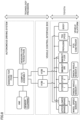
- Fig. 1 schematically shows a MaaS system in which a vehicle according to an embodiment of the present disclosure is used.
- this MaaS system includes a vehicle 1.
- Vehicle 1 includes a vehicle main body 2 and an autonomous driving kit (ADK) 3.
- Vehicle main body 2 includes a vehicle control interface 4, a vehicle platform (VP) 5, and a DCM (Data Communication Module) 6.
- the MaaS system includes, in addition to vehicle 1, a data server 7, a mobility service platform (MSPF) 8, and autonomous driving related mobility services 9.
- MSPF mobility service platform
- Vehicle 1 is capable of autonomous driving in accordance with a command from ADK 3 attached to vehicle main body 2.
- vehicle main body 2 is shown to be located separately from ADK 3 in Fig. 1 , actually ADK 3 is attached to a rooftop for example of vehicle main body 2.
- ADK 3 can also be detached from vehicle main body 2. While ADK 3 is not attached, vehicle main body 2 can be driven by a driver to travel. In this case, VP 5 conducts travel control (travel control in accordance with driver's operation) in a manual mode.
- travel control travel control in accordance with driver's operation
- Vehicle control interface 4 can communicate with ADK 3 through a CAN (Controller Area Network) for example. Vehicle control interface 4 executes a predetermined API (Application Program Interface) defined for each signal to be communicated, to thereby receive various commands from ADK 3 and output the state of vehicle main body 2 to ADK 3.
- CAN Controller Area Network
- API Application Program Interface
- vehicle control interface 4 receives a command from ADK 3, vehicle control interface 4 outputs, to VP 5, a control command corresponding to the received command. Vehicle control interface 4 also acquires various types of information about vehicle main body 2 from VP 5 and outputs the state of vehicle main body 2 to ADK 3. A configuration of vehicle control interface 4 is detailed later herein.
- VP 5 includes various systems and various sensors for controlling vehicle main body 2. In accordance with a command given from ADK 3 through vehicle control interface 4, VP 5 conducts vehicle control. Specifically, in accordance with a command from ADK 3, VP 5 conducts vehicle control to thereby implement autonomous driving of vehicle 1. A configuration of VP 5 is also detailed later herein.
- ADK 3 is a kind of autonomous driving system (ADS) for implementing autonomous driving of vehicle 1.
- ADS autonomous driving system
- ADK 3 prepares, for example, a driving plan for vehicle 1, and outputs various commands for causing vehicle 1 to travel following the prepared driving plan, to vehicle control interface 4 in accordance with an API defined for each command.
- ADK 3 also receives various signals indicating the state of vehicle main body 2, from vehicle control interface 4 in accordance with an API defined for each signal, and causes the received vehicle state to be reflected on preparation of the driving plan.
- a configuration of ADK 3 is also described later herein.
- DCM 6 includes a communication interface for vehicle main body 2 to communicate by radio with data server 7.
- DCM 6 outputs, to data server 7, various types of vehicle information such as speed, position, and state of autonomous driving, for example.
- DCM 6 also receives, from autonomous driving related mobility services 9 through MSPF 8 and data server 7, various types of data for managing travel of autonomous vehicles including vehicle 1 for autonomous driving related mobility services 9, for example.
- Data server 7 is configured to communicate by radio with various autonomous vehicles including vehicle 1, and configured to communicate also with MSPF 8.
- Data server 7 stores various types of data (data regarding the vehicle state and the vehicle control) for managing travel of the autonomous vehicle.
- MSPF 8 is an integrated platform to which various mobility services are connected.
- various mobility services that are not shown (for example, various mobility services provided by a ridesharing company, a car-sharing company, an insurance company, a rent-a-car company, a taxi company, and the like) may be connected to MSPF 8.
- Various mobility services including mobility services 9 can use various functions provided by MSPF 8 appropriately for respective services, using an API published on MSPF 8.
- Autonomous driving related mobility services 9 provide mobility services using autonomous vehicles including vehicle 1.
- mobility services 9 can acquire, from MSPF 8, drive control data for vehicle 1 communicating with data server 7 and/or information or the like stored in data server 7, for example.
- mobility services 9 also transmit, to MSPF 8, data or the like for managing autonomous vehicles including vehicle 1, for example.
- MSPF 8 publishes APIs for using various types of data regarding the vehicle state and the vehicle control necessary for development of the ADS.
- ADS companies can use, as the API, data regarding the vehicle state and the vehicle control necessary for development of the ADS, stored in data server 7.
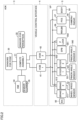
- Fig. 2 shows a configuration of vehicle 1 in more detail.
- ADK 3 includes a compute assembly 31, sensors for perception 32, sensors for pose 33, an HMI (Human Machine Interface) 34, and sensor cleaning 35.
- HMI Human Machine Interface
- compute assembly 31 uses various sensors (described later herein) to obtain the environment around the vehicle, as well as pose, behavior, and position of vehicle 1. Compute assembly 31 also obtains the state of vehicle 1 from VP 5 through vehicle control interface 4, and determines the next operation (acceleration, deceleration, turn, or the like) of vehicle 1. Compute assembly 31 outputs, to vehicle control interface 4, a command for implementing the determined next operation.
- Sensors for perception 32 perceive the environment around the vehicle.
- sensors for perception 32 include at least one of a LIDAR (Light Detection and Ranging), a millimeter-wave radar, and a camera, for example.
- LIDAR Light Detection and Ranging
- millimeter-wave radar a millimeter-wave radar
- the LIDAR illuminates a target (human, another vehicle, or obstacle, for example) with infrared pulsed laser light, and measures the distance to the target based on the time taken for the light to be reflected from the target and return to the LIDAR.
- the millimeter-wave radar applies millimeter wave to the target and detects the millimeter wave reflected from the target to measure the distance to the target and/or the direction of the target.
- the camera is placed on the back side of a room mirror in the vehicle compartment, for example, to take a picture of an area located forward of vehicle 1.
- the image taken by the camera can be subjected to image processing by an image processor equipped with artificial intelligence (AI).
- AI artificial intelligence
- the information obtained by sensors for perception 32 is output to compute assembly 31.
- Sensors for pose 33 detect the pose, the behavior, and the position of vehicle 1.
- sensors for pose 33 include an inertial measurement unit (IMU) and a GPS (Global Positioning System), for example.
- IMU inertial measurement unit
- GPS Global Positioning System
- the IMU detects, for example, the deceleration of vehicle 1 in the longitudinal direction, the transverse direction, and the vertical direction, as well as the angular velocity of vehicle 1 in the roll direction, the pitch direction, and the yaw direction.
- the GPS uses information received from a plurality of GPS satellites orbiting around the earth to detect the position of vehicle 1.
- the information acquired by sensors for pose 33 is also output to compute assembly 31.
- HMI 34 includes, for example, a display device, an audio output device, and an operation device.
- HMI 34 may include a touch panel display and/or a smart speaker (AI speaker).
- AI speaker During autonomous driving of vehicle 1, during driving in the manual mode, or during mode transition, for example, HMI 34 provides information to a user or receives user's operation.
- Sensor cleaning 35 is configured to remove dirt stuck to each sensor. More specifically, sensor cleaning 35 removes dirt on a camera lens, a laser emission part or a millimeter-wave emission part, for example, with a cleaning liquid or wiper, for example.
- Vehicle control interface 4 includes a vehicle control interface box (VCIB) 41 and a VCIB 42.
- VCIBs 41, 42 each include therein, a processor such as CPU (Central Processing Unit), and a memory such as ROM (Read Only Memory) and RAM (Random Access Memory).
- processor such as CPU (Central Processing Unit)
- memory such as ROM (Read Only Memory) and RAM (Random Access Memory).
- Each of VCIB 41 and VCIB 42 is connected communicatively to compute assembly 31 of ADK 3.
- VCIB 41 and VCIB 42 are connected to be capable of communicating with each other.
- Each of VCIB 41 and VCIB 42 relays various commands from ADK 3 and outputs each relayed command as a control command to VP 5. More specifically, each of VCIB 41 and VCIB 42 uses a program or the like stored in the memory to convert various commands that are output from ADK 3 into control commands to be used for controlling each system of VP 5, and outputs the control commands to a system to which it is connected. Moreover, each of VCIB 41 and VCIB 42 performs appropriate processing (including relaying) on the vehicle information that is output from VP 5, and outputs the resultant information as vehicle information to ADK 3.
- VCIB 41 and VCIB 42 differ from each other in terms of some of constituent parts of VP 5 to which VCIB 41 and VCIB 42 are connected, basically they have equivalent functions.
- VCIB 41 and VCIB 42 have equivalent functions regarding operation of the brake system and operation of the steering system for example, so that the control system between ADK 3 and VP 5 is made redundant (duplicated). Therefore, even when some fault occurs to a part of the systems, the control system can be switched or the control system to which the fault has occurred can be interrupted, for example, to maintain the functions (such as steering and braking) of VP 5.
- VP 5 includes a brake pedal 50, brake systems 511, 512, a wheel speed sensor 52, steering systems 531, 532, pinion angle sensors 541, 542, an EPB (Electric Parking Brake) system 551, a P (parking) lock system 552, a propulsion system 56, a PCS (Pre-Crash Safety) system 57, a camera/radar 58, and a body system 59.
- EPB Electrical Parking Brake
- P parking
- PCS Pre-Crash Safety
- VCIB 41 is connected communicatively with brake system 512, steering system 531, and P lock system 552, among a plurality of systems of VP 5 (namely EPB 551, propulsion system 56 and body system 59), through a communication bus.
- VCIB 42 is connected communicatively with brake system 511, steering system 532, P lock system 552, through a communication bus.
- Brake pedal 50 receives driver's operation (depression). Brake pedal 50 is equipped with a brake position sensor (not shown) that detects the amount of depression by which brake pedal 50 is depressed.
- Brake systems 511, 512 are configured to control a plurality of braking devices (not shown) provided for respective wheels of vehicle 1. These braking devices may include a disc brake system that operates using hydraulic pressure regulated by an actuator. Brake system 511 and brake system 512 may be configured to have equivalent functions. Alternatively, one of brake systems 511, 512 may be configured to control the braking force for each wheel independently while the vehicle is running, and the other may be configured to control the braking force so that the same braking force is generated for each wheel while the vehicle is running.
- each of brake systems 511, 512 generates a braking command for the braking device. Moreover, brake systems 511, 512 control the braking device, using the braking command generated by one of brake systems 511, 512, for example. Further, when a failure occurs to one of brake systems 511, 512, the braking command generated by the other is used to control the braking device.
- Wheel speed sensor 52 is connected to brake system 512 in this example. Wheel speed sensor 52 is mounted on each wheel of vehicle 1, for example. Wheel speed sensor 52 detects the rotational speed of the wheel and outputs the detected rotational speed to brake system 512. Brake system 512 outputs, to VCIB 41, the rotational speed of each wheel, as an information item among information items included in the vehicle information.
- Steering systems 531, 532 are configured to control the steering angle of the steering wheel of vehicle 1, using a steering device (not shown).
- the steering device includes, for example, a rack-and-pinion EPS (Electric Power Steering) system capable of adjusting the steering angle by an actuator.
- EPS Electrical Power Steering
- Steering system 531 and steering system 532 have equivalent functions. Each of steering systems 531, 532 generates a steering command for the steering device in accordance with a predetermined control command that is output from ADK 3 through vehicle control interface 4. Using the steering command generated by one of steering systems 531, 532, for example, steering systems 531, 532 control the steering device. When a failure occurs to one of steering systems 531, 532, the steering commend generated by the other steering system is used to control the steering device.
- Pinion angle sensor 541 is connected to steering system 531.
- Pinion angle sensor 542 is connected to steering system 532.
- Each of pinion angle sensors 541, 542 detects the rotational angle (pinon angle) of a pinion gear coupled to the rotational shaft of the actuator, and outputs the detected pinion angle to the associated steering system 531, 532.
- EPB system 551 is configured to control an EPB provided in a wheel of vehicle 1.
- the EPB is provided separately from the braking device of brake systems 511, 512, and fixes the wheel by an operation of an actuator.
- This actuator may be capable of regulating the hydraulic pressure to be applied to the braking device, separately from brake systems 511, 512.
- the EPB fixes a wheel by actuating, with the actuator, a drum brake for a parking brake, for example.
- P lock system 552 is configured to control a P lock device (not shown) provided for the transmission of vehicle 1. More specifically, a gear (lock gear) is provided to be coupled to a rotational element in the transmission. Further, a parking lock pole capable of adjusting the position by an actuator is also provided for a teeth portion of the lock gear. The P lock device fits a protrusion located on the head of the parking lock pole to thereby fix rotation of the output shaft of the transmission.
- a gear (lock gear) is provided to be coupled to a rotational element in the transmission.
- a parking lock pole capable of adjusting the position by an actuator is also provided for a teeth portion of the lock gear.
- the P lock device fits a protrusion located on the head of the parking lock pole to thereby fix rotation of the output shaft of the transmission.
- PCS system 57 conducts control for avoiding collision of vehicle 1 and/or reducing damages to vehicle 1, using camera/radar 58. More specifically, PCS system 57 is connected to brake system 512. PCS system 57 uses camera/radar 58 to detect a forward object, and determines whether there is a possibility of collision of vehicle 1 against the object, based on the distance to the object. When PCS system 57 determines that there is a possibility of collision, PCS system 57 outputs a braking command to brake system 512 so as to increase the braking force.
- Body system 59 is configured to control various constituent parts (direction indicator, horn or wiper, for example), depending on the running state or the running environment of vehicle 1, for example.
- Systems other than brake systems 511, 512 and steering systems 531, 532 are also configured to control respective associated devices, in accordance with a predetermined control command transmitted from ADK 3 through vehicle control interface 4.
- EPB system 551 receives a control command from ADK 3 through vehicle control interface 4, and controls the EPB in accordance with the control command.
- P lock system 552 receives a control command from ADK 3 through vehicle control interface 4, and controls the P lock device in accordance with the control command.
- Propulsion system 56 receives a control command from ADK 3 through vehicle control interface 4, and controls the shift device and the drive source, in accordance with the control command.
- Body system 59 receives a control command from ADK 3 through vehicle control interface 4, and controls the aforementioned constituent parts in accordance with the control command.
- an operation device that enables a user to perform manual operation may be provided separately.
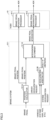
- Position calculator 511A receives, from the brake position sensor (not shown), a signal indicating an amount of depression of brake pedal 50 by a driver, and outputs, to VCIB 41 and intervention determiner 511C, a brake pedal position signal indicating the amount of depression of the brake pedal. Moreover, position calculator 511A outputs, to deceleration arbitrator 511B, a deceleration request in accordance with the amount of depression of brake pedal 50 by the driver.
- Deceleration arbitrator 511B receives the deceleration request from position calculator 511A, also receives a deceleration request from any of various systems, and conducts arbitration between the two deceleration requests. More specifically, deceleration arbitrator 511B calculates the sum of the two decelerations. Deceleration arbitrator 511B outputs, to intervention determiner 511C, the result of the arbitration between the two deceleration requests (the sum of the two decelerations in this example).
- the deceleration request from position calculator 511A is referred to as “driver deceleration request” and the deceleration request from any of various systems is referred to as “system deceleration request” in order to distinguish between them.
- the source of the system deceleration request is ADK 3 for example, the source is not limited to it but may be PCS system 57, for example.
- deceleration arbitrator 511B receives the system deceleration request through vehicle control interface 4.
- Intervention determiner 511C receives the brake pedal position signal from position calculator 511A and also receives the result of the arbitration from deceleration arbitrator 511B. Intervention determiner 511C generates a brake pedal intervention signal based on the brake pedal position signal and the result of the arbitration, and outputs the generated brake pedal intervention signal to VCIB 41.
- VCIB 41 includes a brake pedal position processor 411 and a brake pedal intervention processor 412. Although only VCIB 41 is shown in Fig. 3 , the other VCIB 42 provided for redundancy has similar functions as well.
- Brake pedal position processor 411 receives the brake pedal position signal from brake system 511 (position calculator 511A), and performs predetermined processing on the brake pedal position signal. Brake pedal position processor 411 outputs the processed brake pedal position signal to ADK 3.
- the brake pedal position signal which is output to ADK 3 provides the amount of depression of the brake pedal in accordance with the detected value of the brake position sensor.
- the amount of depression of the brake pedal is represented by a value in a range from 0% to 100%. It should be noted that the amount of depression of the brake pedal may exceed 100%, due to an assembly error of the brake pedal and/or the brake position sensor.
- the failsafe value is a value corresponding to a brake pedal depression amount of 100%, and is 0xFF, for example.
- Brake pedal intervention processor 412 receives the brake pedal intervention signal from intervention determiner 511C, and performs predetermined processing on the brake pedal intervention signal. Brake pedal intervention processor 412 outputs the processed brake pedal intervention signal to ADK 3. It should be noted that intervention determiner 511C may perform this processing, and brake pedal intervention processor 412 may only relay the brake pedal intervention signal from intervention determiner 511C to output the signal to ADK 3. In the following, what is indicated by the brake pedal intervention signal is described.
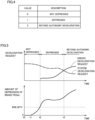
- Fig. 4 illustrates the brake pedal intervention signal.
- the brake pedal intervention signal assumes a value which is one of 0, 1, and 2.
- the brake pedal intervention signal assuming the value 0 indicates that brake pedal 50 is not depressed.
- the brake pedal intervention signal assuming the value 1 indicates that brake pedal 50 is depressed.
- the brake pedal intervention signal assuming the value 2 represents a condition where a deceleration request generated in accordance with depression of brake pedal 50 (driver deceleration request) is more than a deceleration request from ADK 3 for example (system deceleration request). This condition is herein referred to as "beyond autonomy deceleration.”
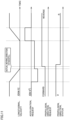
- Fig. 5 is a time chart showing an example of transition of the brake pedal intervention signal for vehicle 1.
- the horizontal axis represents the elapsed time
- the vertical axis represents the deceleration request for the upper one and the brake depression amount for the lower one.
- the brake depression amount is 0% at initial time t0.
- the value of the brake pedal intervention signal is 0, indicating that brake pedal 50 is not depressed.
- a driver starts depressing brake pedal 50.
- the brake depression amount becomes higher than a predetermined threshold value (BRK_INTV).
- BRK_INTV a predetermined threshold value for the so-called play of brake pedal 50, and defined as a few percent, for example.
- the brake depression amount (driver deceleration request) in accordance with the amount of depression of brake pedal 50 becomes higher than a system deceleration request. Then, the value of the brake pedal intervention signal changes from 1 to 2. The brake pedal intervention signal at this time indicates the beyond autonomy deceleration.
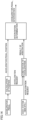
- Fig. 6 is a flowchart showing brake pedal control for vehicle 1.
- the process of the flowchart is performed for each elapse of a predetermined control period, for example.
- each step included in this flowchart is implemented basically by software processing by vehicle 1 (VP 5 or vehicle control interface 4), it may also be implemented by dedicated hardware (electrical circuitry) fabricated in VP 5 or vehicle control interface 4.
- the step is abbreviated as "S" herein.
- VP 5 and vehicle control interface 4 are referred to as vehicle 1 when they are not distinguished from each other. If the one that performs the process is described herein as vehicle 1, the process may be performed by either VP 5 or vehicle control interface 4.
- vehicle 1 acquires a brake depression amount indicated by the brake pedal position signal (S2).
- vehicle 1 determines whether the brake depression amount is more than threshold value BRK_INTV or not. When the brake depression amount is less than or equal to threshold value BRK_INTV (NO in S2), vehicle 1 sets the value of the brake pedal intervention signal to 0, so as to indicate that brake pedal 50 is not depressed (S7). Vehicle 1 thereafter causes the process to proceed to S6.
- vehicle 1 sets the value of the brake pedal intervention signal to 1, so as to indicate that brake pedal 50 is depressed (S3).
- vehicle 1 further determines whether the driver deceleration request based on the brake depression amount is more than the system deceleration request or not.
- vehicle 1 sets the value of the brake pedal intervention signal to 2, so as to indicate that the beyond autonomy deceleration has occurred (S5). Vehicle 1 thereafter causes the process to proceed to S6.
- vehicle 1 When the driver deceleration request is less than or equal to the system deceleration request (NO in S4), vehicle 1 skips the operation in S5 and causes the process to proceed to S6. In this case, the value of the brake pedal intervention signal remains 1 indicating that brake pedal 50 is depressed.
- vehicle 1 outputs, to ADK 3, the brake pedal intervention signal that is set to one of 0, 1, and 2.
- the present embodiment provides vehicle control interface 4 that serves as an interface between ADK 3 and VP 5.
- the brake pedal position signal and the brake pedal intervention signal are output from VP 5 to ADK 3 through vehicle control interface 4.
- the developer of ADK 3 it is therefore possible for the developer of ADK 3 to cause ADK 3 to perform communication following a procedure and a data format (API) for example that are defined for vehicle control interface 4, so that ADK 3 and VP 5 work in cooperation with each other, even when the developer does not have knowledge about details of the specification of VP 5.
- an appropriate interface can accordingly be provided between ADK 3 and VP 5.
- VP 5 may have an NVO (Non Vehicle Operation) mode in which vehicle 1 is capable of completely unmanned driving. During the NVO of VP 5, vehicle 1 may reject (invalidate) the driver deceleration request, regardless of the amount of depression of brake pedal 50. In this case, the value of the brake pedal intervention signal will never be 2.
- NVO Non Vehicle Operation
- This document is an API specification of Toyota Vehicle Platform and contains the outline, the usage and the caveats of the application interface.
- Vehicle control technology is being used as an interface for technology providers.
- the target vehicle will adopt the physical architecture of using CAN for the bus between ADS and VCIB.
- the CAN frames and the bit assignments are shown in the form of "bit assignment table" as a separate document.
- the ADS should create the driving plan, and should indicate vehicle control values to the VP.
- the Toyota VP should control each system of the VP based on indications from an ADS.
- CAN will be adopted as a communication line between ADS and VP. Therefore, basically, APIs should be executed every defined cycle time of each API by ADS.
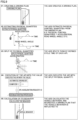
- a typical workflow of ADS of when executing APIs is as follows ( Fig. 9 ).
- the below diagram shows an example.
- Acceleration Command requests deceleration and makes the vehicle stop. After Actual_Moving_Direction is set to "standstill", any shift position can be requested by Propulsion Direction Command. (In the example below, "D” ⁇ "R”).
- Acceleration Command has to request deceleration.
- acceleration/deceleration is controlled based on Acceleration Command value ( Fig. 11 ).
- Immobilization Command "Release” is requested when the vehicle is stationary. Acceleration Command is set to Deceleration at that time.
- the vehicle is accelerated/decelerated based on Acceleration Command value ( Fig. 12 ).
- Tire Turning Angle Command is the relative value from Estimated_Road_Wheel_Angle_Actual.
- target vehicle deceleration is the sum of 1) estimated deceleration from the brake pedal stroke and 2) deceleration request from AD system.
- ADS confirms Propulsion Direction by Driver and changes shift position by using Propulsion Direction Command.
- the maximum is selected from
- Tire Turning Angle Command is not accepted if the driver strongly turns the steering wheel.
- the above-mentioned is determined by Steering_Wheel_Intervention flag.
- the mode may be able not to be transitioned to Autonomy mode. (e.g. In case that a failure occurs in the vehicle platform.)
- Brake_Pedal_Intervention This signal shows whether the brake pedal is depressed by a driver (intervention) T.B.D.
- Steering_Wheel_Intervention This signal shows whether the steering wheel is turned bv a driver (intervention) T.B.D.
- Shift_Lever_Intervention This signal shows whether the shift lever is controlled bv a driver (intervention) T.B.D.
- ⁇ Wheel Angle controller is designed within the acceleration range up to 2.94 m/s 2 .
- Wheel Angle controller is designed within the acceleration range up to 2.94 m/s 3 .
- this signal is filtered by smoothing process.
- This signal shows whether the accelerator pedal is depressed by a driver (intervention).
- This signal shows whether the brake pedal is depressed by a driver (intervention).
- This signal shows whether the steering wheel is turned by a driver (intervention).
- This signal shows whether the shift lever is controlled by a driver (intervention).
- Table 34 Signal Name Description Redundancy Turnsignallight_Mode_Command Command to control the turnsignallight mode of the vehicle platform N/A Headlight_Mode Command Command to control the headlight mode of the vehicle platform N/A Hazardlight_Mode_Command Command to control the hazardlight mode of the vehicle platform N/A Horn_Pattern_Command Command to control the pattern of horn ON-time and OFF-time per cycle of the vehicle platform N/A Horn_Number_of_Cycle_Command Command to control the Number of horn ON/OFF cycle of the vehicle platform N/A Horn_Continuous_Command Command to control of horn ON of the vehicle platform N/A Windshieldwiper Mode_Front_ Command Command to control the front windshield wiper of the vehicle platform N/A Windshieldwiper_Intermittent_ Wiping_Speed_Command Command to control the Windshield wiper actuation interval at the Intermittent mode N/A Windshieldwiper Mode_Rear_ Command Command to control the rear windshield
- Pattern 1 is assumed to use single short ON, Pattern 2 is assumed to use ON-OFF repeating. ⁇ Detail is under internal discussion.
- VCIB achieves the following procedure after Ready-ON. (This functionality will be implemented from the CV.)
- Table 55 Signal Name Description Redundancy Turnsignallight_Mode_Status Status of the current turnsignallight mode of the vehicle platform N/A Headlight_Mode_Status Status of the current headlight mode of the vehicle platform N/A Hazardlight_Mode_Status Status of the current hazardlight mode of the vehicle platform N/A Horn_Status Status of the current horn of the vehicle platform N/A Windshieldwiper_Mode_Front Status Status of the current front windshield wiper mode of the vehicle platform N/A Windshieldwiper_Mode_Rear Status Status of the current rear windshield wiper mode of the vehicle platform N/A Hvac_1 st _Status Status of activation of the 1 st row HVAC N/A Hvac_2 nd _Status Status of activation of the 2 nd row HVAC N/A Hvac_Temperature_1 st _Left_Status Status of set temperature of 1 st row left N/A
- Table 60 Value Description Remarks 0 OFF Front wiper stopped 1 Lo Front wiper being active in LO mode (also including being active in MIST, being active in coordination with washer, and being wiping at speed other than HI) 2 Hi Front wiper being active in HI mode 3 INT Front wiper being active in INT mode (also including motor stop while being active in INT mode and being active in INT mode owing to vehicle speed change function) 4-5 reserved 6 fail Front wiper failed 7 invalid Table 61 Value Description Remarks 0 OFF Front wiper is stopped. 1 Lo Front wiper is in LO mode (include in MIST mode, operation with washer, Medium speed). 2 Hi Front wiper is in HI mode.
- INT Front wiper is in INT mode (include motor stopped between INT mode, INT operation of vehicle speed change function). 4-5 reserved 6 fail Front wiper is fail. 7 invalid Remarks Fail Mode Conditions ⁇ detect signal discontinuity ⁇ cannot detect except the above failure.
- this signal When there is luggage on the seat, this signal may be set to "Occupied”.
- Vehicle power off condition In this mode, the high voltage battery does not supply power, and neither VCIB nor other VP ECUs are activated.
- VCIB is awake by the low voltage battery. In this mode, ECUs other than VCIB are not awake except for some of the body electrical ECUs.
- the high voltage battery supplies power to the whole VP and all the VP ECUs including VCIB are awake.
- Transmission interval is 100 ms within fuel cutoff motion delay allowance time (1 s) so that data can be transmitted more than 5 times. In this case, an instantaneous power interruption is taken into account.
- Table 93 Signal Name Description Redundancy 1st_Left_Door_Lock_Command Command to control each door lock of the vehicle platform N/A 1st_Right_Door_Lock_Command Lock command supports only ALL Door Lock. N/A Unlock command supports 1st-left Door unlock only, and ALL Door unlock. 2nd_Left_Door_Lock_Command N/A Trunk Door Lock/unlock command include in ALL Door lock/unlock 2nd_Right_Door_Lock_Command N/A Central_Vehicle_Lock_Exterior_ Command Command to control the all door lock of the vehicle platform N/A
- Vehicle platform refers to each door lock status, - in case any door unlocked, sends 0. -in case all door locked, sends 1.
- This document is an architecture specification of Toyota's MaaS Vehicle Platform and contains the outline of system in vehicle level.
- the representative vehicle with 19ePF is shown as follows.
- Table 106 Term Definition ADS Autonomous Driving System. ADK Autonomous Driving Kit VP Vehicle Platform. VCIB Vehicle Control Interface Box. This is an ECU for the interface and the signal converter between ADS and Toyota VP's sub systems.
- Vehicle control technology is being used as an interface for technology providers.
- the target vehicle of this document will adopt the physical architecture of using CAN for the bus between ADS and VCIB.
- the CAN frames and the bit assignments are shown in the form of "bit assignment chart" as a separate document.
- the power supply architecture as a premise is shown as follows ( Fig. 18 ).
- the blue colored parts are provided from an ADS provider. And the orange colored parts are provided from the VP.
- the power structure for ADS is isolate from the power structure for VP. Also, the ADS provider should install a redundant power structure isolated from the VP.
- the Braking System is designed to prevent the capability from becoming 0.3 G or less.
- the Steering System is designed to prevent the capability from becoming 0.3 G or less.
- any single failure on the Power Supply System doesn't cause loss of power supply functionality. However, in case of the primary power failure, the secondary power supply system keeps supplying power to the limited systems for a certain time.
- Toyota's MaaS vehicle adopts the security document issued by Toyota as an upper document.
- the entire risk includes not only the risks assumed on the base e-PF but also the risks assumed for the Autono-MaaS vehicle.
- the countermeasure for a remote attack is shown as follows.
- the autonomous driving kit communicates with the center of the operation entity, end-to-end security should be ensured. Since a function to provide a travel control instruction is performed, multi-layered protection in the autonomous driving kit is required. Use a secure microcomputer or a security chip in the autonomous driving kit and provide sufficient security measures as the first layer against access from the outside. Use another secure microcomputer and another security chip to provide security as the second layer. (Multi-layered protection in the autonomous driving kit including protection as the first layer to prevent direct entry from the outside and protection as the second layer as the layer below the former)
- the countermeasure for a modification is shown as follows.
- measures against a counterfeit autonomous driving kit For measures against a counterfeit autonomous driving kit, device authentication and message authentication are carried out. In storing a key, measures against tampering should be provided and a key set is changed for each pair of a vehicle and an autonomous driving kit. Alternatively, the contract should stipulate that the operation entity exercise sufficient management so as not to allow attachment of an unauthorized kit. For measures against attachment of an unauthorized product by an Autono-MaaS vehicle user, the contract should stipulate that the operation entity exercise management not to allow attachment of an unauthorized kit.
Landscapes
- Engineering & Computer Science (AREA)
- Mechanical Engineering (AREA)
- Transportation (AREA)
- Automation & Control Theory (AREA)
- Human Computer Interaction (AREA)
- Physics & Mathematics (AREA)
- Mathematical Physics (AREA)
- Chemical & Material Sciences (AREA)
- Combustion & Propulsion (AREA)
- General Physics & Mathematics (AREA)
- Regulating Braking Force (AREA)
- Control Of Driving Devices And Active Controlling Of Vehicle (AREA)
- Business, Economics & Management (AREA)
- Health & Medical Sciences (AREA)
- Artificial Intelligence (AREA)
- Evolutionary Computation (AREA)
- Game Theory and Decision Science (AREA)
- Medical Informatics (AREA)
- Aviation & Aerospace Engineering (AREA)
- Radar, Positioning & Navigation (AREA)
- Remote Sensing (AREA)
- Control Of Vehicle Engines Or Engines For Specific Uses (AREA)
Applications Claiming Priority (2)
| Application Number | Priority Date | Filing Date | Title |
|---|---|---|---|
| JP2020015722A JP7287299B2 (ja) | 2020-01-31 | 2020-01-31 | 車両および車両制御インターフェース |
| EP21154141.2A EP3858691B1 (fr) | 2020-01-31 | 2021-01-28 | Véhicule et interface de commande de véhicule |
Related Parent Applications (2)
| Application Number | Title | Priority Date | Filing Date |
|---|---|---|---|
| EP21154141.2A Division-Into EP3858691B1 (fr) | 2020-01-31 | 2021-01-28 | Véhicule et interface de commande de véhicule |
| EP21154141.2A Division EP3858691B1 (fr) | 2020-01-31 | 2021-01-28 | Véhicule et interface de commande de véhicule |
Publications (2)
| Publication Number | Publication Date |
|---|---|
| EP4403433A2 true EP4403433A2 (fr) | 2024-07-24 |
| EP4403433A3 EP4403433A3 (fr) | 2024-11-13 |
Family
ID=74505007
Family Applications (2)
| Application Number | Title | Priority Date | Filing Date |
|---|---|---|---|
| EP24180847.6A Pending EP4403433A3 (fr) | 2020-01-31 | 2021-01-28 | Véhicule et interface de commande de véhicule |
| EP21154141.2A Active EP3858691B1 (fr) | 2020-01-31 | 2021-01-28 | Véhicule et interface de commande de véhicule |
Family Applications After (1)
| Application Number | Title | Priority Date | Filing Date |
|---|---|---|---|
| EP21154141.2A Active EP3858691B1 (fr) | 2020-01-31 | 2021-01-28 | Véhicule et interface de commande de véhicule |
Country Status (7)
| Country | Link |
|---|---|
| US (2) | US12084074B2 (fr) |
| EP (2) | EP4403433A3 (fr) |
| JP (2) | JP7287299B2 (fr) |
| KR (1) | KR102594551B1 (fr) |
| CN (1) | CN113276875B (fr) |
| MY (1) | MY209622A (fr) |
| RU (1) | RU2754020C1 (fr) |
Families Citing this family (7)
| Publication number | Priority date | Publication date | Assignee | Title |
|---|---|---|---|---|
| JP7234955B2 (ja) * | 2020-01-31 | 2023-03-08 | トヨタ自動車株式会社 | 車両 |
| WO2023167939A1 (fr) * | 2022-03-01 | 2023-09-07 | Terraline, Inc. | Système et/ou procédé d'interface de véhicule |
| US20230399029A1 (en) * | 2022-06-09 | 2023-12-14 | Baidu Usa Llc | Operator brake detection for autonomous vehicles |
| CN115946673B (zh) * | 2022-12-28 | 2024-04-19 | 重庆赛力斯凤凰智创科技有限公司 | 一种汽车制动的故障诊断方法、系统、设备和介质 |
| CN116382146A (zh) * | 2023-01-29 | 2023-07-04 | 广州文远知行科技有限公司 | 车辆控制接口的检查方法、装置、电子设备和存储介质 |
| US12384333B2 (en) * | 2023-05-16 | 2025-08-12 | Ford Global Technologies, Llc. | Methods for providing correct brake request with a stuck e-pedal |
| KR20250084330A (ko) | 2023-12-01 | 2025-06-11 | 주식회사 무진 | 자동차 시트용 친환경 재생 폴리우레탄 폼 조성물, 이로부터 제조된 자동차 시트용 친환경 재생 폴리우레탄 폼 및 상기 자동차 시트용 친환경 재생 폴리우레탄 폼의 제조 방법 |
Citations (2)
| Publication number | Priority date | Publication date | Assignee | Title |
|---|---|---|---|---|
| JP2018132015A (ja) | 2017-02-16 | 2018-08-23 | 株式会社デンソー | 自動運転制御装置 |
| JP2020015722A (ja) | 2014-08-08 | 2020-01-30 | イルミナ ケンブリッジ リミテッド | 修飾ヌクレオチドリンカー |
Family Cites Families (38)
| Publication number | Priority date | Publication date | Assignee | Title |
|---|---|---|---|---|
| JP2002195076A (ja) * | 2000-12-27 | 2002-07-10 | Daihatsu Motor Co Ltd | 内燃機関の制御方法 |
| JP2005082041A (ja) * | 2003-09-09 | 2005-03-31 | Toyota Motor Corp | 車両用自動ブレーキ装置 |
| JP4869792B2 (ja) | 2006-06-02 | 2012-02-08 | 日野自動車株式会社 | 自動制動制御装置 |
| JP5014916B2 (ja) * | 2007-08-10 | 2012-08-29 | 日立オートモティブシステムズ株式会社 | ブレーキ制御装置 |
| KR20090061766A (ko) | 2007-12-12 | 2009-06-17 | 현대모비스 주식회사 | 차량의 브레이크 바이 와이어 시스템을 위한 페일-세이프구현 장치 |
| JP4456639B2 (ja) | 2008-01-08 | 2010-04-28 | 三菱電機株式会社 | ディジタル制御装置 |
| JP5715454B2 (ja) * | 2011-03-15 | 2015-05-07 | 富士重工業株式会社 | 車両の運転支援装置 |
| JP2012226680A (ja) | 2011-04-22 | 2012-11-15 | Internatl Business Mach Corp <Ibm> | 産業制御システムを管理する管理システム、管理方法および管理プログラム |
| US9409554B2 (en) * | 2011-07-19 | 2016-08-09 | Continental Teves Ag & Co. Ohg | Method for improving the driving stability |
| JP5857593B2 (ja) * | 2011-09-29 | 2016-02-10 | トヨタ自動車株式会社 | 車両の制動制御装置 |
| FR3005925B1 (fr) | 2013-05-27 | 2015-05-01 | Renault Sa | Procede de fonctionnement d'un vehicule en mode manuel et en mode autonome |
| US9925981B2 (en) * | 2014-02-05 | 2018-03-27 | Honda Motor Co., Ltd. | Stop-and-restart control of a vehicle engine |
| GB2523193B (en) * | 2014-02-18 | 2017-10-25 | Jaguar Land Rover Ltd | Control system and method |
| WO2015137012A1 (fr) * | 2014-03-12 | 2015-09-17 | 日産自動車株式会社 | Dispositif de conduite de véhicule |
| CA3162488A1 (fr) * | 2014-04-04 | 2015-10-08 | Superpedestrian, Inc. | Systemes, procedes et dispositifs pour le fonctionnement de vehicules a moteur electrique |
| GB2526143B (en) * | 2014-05-16 | 2018-02-28 | Jaguar Land Rover Ltd | Vehicle speed control system and method |
| WO2016100219A1 (fr) | 2014-12-15 | 2016-06-23 | Polaris Industires Inc. | Véhicule prêt autonome |
| JP6176263B2 (ja) * | 2015-01-19 | 2017-08-09 | トヨタ自動車株式会社 | 自動運転装置 |
| JP2016151815A (ja) | 2015-02-16 | 2016-08-22 | 株式会社デンソー | 運転支援装置 |
| US10379007B2 (en) | 2015-06-24 | 2019-08-13 | Perrone Robotics, Inc. | Automated robotic test system for automated driving systems |
| US10766472B2 (en) * | 2015-07-27 | 2020-09-08 | Volvo Truck Corporation | ABS strategy for hybrid brake actuators |
| JP6460008B2 (ja) * | 2016-02-25 | 2019-01-30 | トヨタ自動車株式会社 | 自動運転装置 |
| US20170247040A1 (en) * | 2016-02-25 | 2017-08-31 | Ford Global Technologies, Llc | Autonomous vehicle control transitioning |
| JP6964271B2 (ja) | 2016-03-31 | 2021-11-10 | パナソニックIpマネジメント株式会社 | 運転支援方法およびそれを利用した運転支援装置、自動運転制御装置、車両、プログラム |
| US9582003B1 (en) * | 2016-05-16 | 2017-02-28 | Uber Technologies, Inc. | Method for maintaining active control of an autonomous vehicle |
| GB2554897A (en) * | 2016-10-12 | 2018-04-18 | Ford Global Tech Llc | Method and system for controlling an autonomous vehicle |
| KR101906197B1 (ko) | 2016-11-07 | 2018-12-05 | 엘지전자 주식회사 | 차량 및 그 제어방법 |
| JP6447647B2 (ja) | 2017-03-09 | 2019-01-09 | オムロン株式会社 | 運転モード切替制御装置、方法およびプログラム |
| US20180326994A1 (en) * | 2017-05-12 | 2018-11-15 | Toyota Research Institute, Inc. | Autonomous control handover to a vehicle operator |
| JP2019001229A (ja) * | 2017-06-13 | 2019-01-10 | 日立オートモティブシステムズ株式会社 | ブレーキ制御装置およびブレーキ制御方法 |
| US10543853B2 (en) * | 2017-07-05 | 2020-01-28 | Toyota Motor Engineering & Manufacturing North America, Inc. | Systems and methods for providing collaborative control of a vehicle |
| JP6565988B2 (ja) * | 2017-08-25 | 2019-08-28 | トヨタ自動車株式会社 | 自動運転装置 |
| JP7159600B2 (ja) | 2017-10-24 | 2022-10-25 | 株式会社デンソー | 車両制御装置、インタフェース装置、およびコンピュータ |
| US10759362B2 (en) * | 2018-01-05 | 2020-09-01 | Byton Limited | Harness for assisted driving |
| DE102018212296A1 (de) * | 2018-06-21 | 2019-12-24 | Robert Bosch Gmbh | Verfahren zum Betreiben eines Fahrzeugs und Steuergerät |
| DE102018211551A1 (de) | 2018-07-11 | 2020-01-16 | Robert Bosch Gmbh | Verfahren und Steuergerät zum Betreiben eines Fahrerassistenzsystems eines Fahrzeugs |
| KR102049923B1 (ko) * | 2018-08-27 | 2019-11-28 | 현대모비스 주식회사 | 엠디피에스 시스템의 제어 장치 및 방법 |
| US10967873B2 (en) * | 2019-01-30 | 2021-04-06 | Cobalt Industries Inc. | Systems and methods for verifying and monitoring driver physical attention |
-
2020
- 2020-01-31 JP JP2020015722A patent/JP7287299B2/ja active Active
-
2021
- 2021-01-22 MY MYPI2021000370A patent/MY209622A/en unknown
- 2021-01-25 US US17/156,692 patent/US12084074B2/en active Active
- 2021-01-27 CN CN202110110592.2A patent/CN113276875B/zh active Active
- 2021-01-28 EP EP24180847.6A patent/EP4403433A3/fr active Pending
- 2021-01-28 EP EP21154141.2A patent/EP3858691B1/fr active Active
- 2021-01-28 KR KR1020210012161A patent/KR102594551B1/ko active Active
- 2021-01-29 RU RU2021102055A patent/RU2754020C1/ru active
-
2023
- 2023-05-24 JP JP2023085346A patent/JP7540544B2/ja active Active
-
2024
- 2024-07-31 US US18/790,762 patent/US20240391479A1/en active Pending
Patent Citations (2)
| Publication number | Priority date | Publication date | Assignee | Title |
|---|---|---|---|---|
| JP2020015722A (ja) | 2014-08-08 | 2020-01-30 | イルミナ ケンブリッジ リミテッド | 修飾ヌクレオチドリンカー |
| JP2018132015A (ja) | 2017-02-16 | 2018-08-23 | 株式会社デンソー | 自動運転制御装置 |
Also Published As
| Publication number | Publication date |
|---|---|
| EP3858691A1 (fr) | 2021-08-04 |
| EP3858691B1 (fr) | 2024-08-07 |
| CN113276875B (zh) | 2024-09-17 |
| US12084074B2 (en) | 2024-09-10 |
| MY209622A (en) | 2025-07-25 |
| JP2023105002A (ja) | 2023-07-28 |
| US20210245774A1 (en) | 2021-08-12 |
| RU2754020C1 (ru) | 2021-08-25 |
| US20240391479A1 (en) | 2024-11-28 |
| KR20210098864A (ko) | 2021-08-11 |
| JP7287299B2 (ja) | 2023-06-06 |
| CN113276875A (zh) | 2021-08-20 |
| JP2021123142A (ja) | 2021-08-30 |
| KR102594551B1 (ko) | 2023-10-27 |
| JP7540544B2 (ja) | 2024-08-27 |
| BR102021001558A2 (pt) | 2021-08-10 |
| EP4403433A3 (fr) | 2024-11-13 |
Similar Documents
| Publication | Publication Date | Title |
|---|---|---|
| EP3858701B1 (fr) | Véhicule | |
| EP3858712A1 (fr) | Véhicule | |
| EP3875329A1 (fr) | Véhicule et interface de commande de véhicule | |
| EP3871937B1 (fr) | Véhicule | |
| EP3871939B1 (fr) | Véhicule | |
| EP3858657A1 (fr) | Alimentation électrique pour un véhicule capable de conduite autonome | |
| EP3858691B1 (fr) | Véhicule et interface de commande de véhicule | |
| EP3858654B1 (fr) | Véhicule | |
| EP3858682B1 (fr) | Véhicule autonome | |
| EP3858700B1 (fr) | Véhicule | |
| EP3858711A1 (fr) | Véhicule | |
| EP3858699A1 (fr) | Véhicule | |
| EP3858558A1 (fr) | Véhicule |
Legal Events
| Date | Code | Title | Description |
|---|---|---|---|
| PUAI | Public reference made under article 153(3) epc to a published international application that has entered the european phase |
Free format text: ORIGINAL CODE: 0009012 |
|
| STAA | Information on the status of an ep patent application or granted ep patent |
Free format text: STATUS: REQUEST FOR EXAMINATION WAS MADE |
|
| 17P | Request for examination filed |
Effective date: 20240607 |
|
| AC | Divisional application: reference to earlier application |
Ref document number: 3858691 Country of ref document: EP Kind code of ref document: P |
|
| AK | Designated contracting states |
Kind code of ref document: A2 Designated state(s): AL AT BE BG CH CY CZ DE DK EE ES FI FR GB GR HR HU IE IS IT LI LT LU LV MC MK MT NL NO PL PT RO RS SE SI SK SM TR |
|
| REG | Reference to a national code |
Ref country code: DE Ref legal event code: R079 Free format text: PREVIOUS MAIN CLASS: B60W0060000000 Ipc: B60T0008172000 Ref country code: DE Ref legal event code: R079 Ref document number: 602021052389 Country of ref document: DE Free format text: PREVIOUS MAIN CLASS: B60W0060000000 Ipc: B60T0008172000 |
|
| PUAL | Search report despatched |
Free format text: ORIGINAL CODE: 0009013 |
|
| AK | Designated contracting states |
Kind code of ref document: A3 Designated state(s): AL AT BE BG CH CY CZ DE DK EE ES FI FR GB GR HR HU IE IS IT LI LT LU LV MC MK MT NL NO PL PT RO RS SE SI SK SM TR |
|
| RIC1 | Information provided on ipc code assigned before grant |
Ipc: B60T 8/92 20060101ALI20241007BHEP Ipc: B60T 8/88 20060101ALI20241007BHEP Ipc: B60W 60/00 20200101ALI20241007BHEP Ipc: B60W 50/10 20120101ALI20241007BHEP Ipc: B60T 8/172 20060101AFI20241007BHEP |
|
| GRAP | Despatch of communication of intention to grant a patent |
Free format text: ORIGINAL CODE: EPIDOSNIGR1 |
|
| STAA | Information on the status of an ep patent application or granted ep patent |
Free format text: STATUS: GRANT OF PATENT IS INTENDED |
|
| INTG | Intention to grant announced |
Effective date: 20251215 |
|
| RIN1 | Information on inventor provided before grant (corrected) |
Inventor name: SUZUKI, IKUMA Inventor name: OHASHI, YUTA |
|
| GRAS | Grant fee paid |
Free format text: ORIGINAL CODE: EPIDOSNIGR3 |
|
| GRAA | (expected) grant |
Free format text: ORIGINAL CODE: 0009210 |
|
| STAA | Information on the status of an ep patent application or granted ep patent |
Free format text: STATUS: THE PATENT HAS BEEN GRANTED |