EP4403155A1 - Befestigungselement, bettstützstruktur und bett - Google Patents
Befestigungselement, bettstützstruktur und bett Download PDFInfo
- Publication number
- EP4403155A1 EP4403155A1 EP22870010.0A EP22870010A EP4403155A1 EP 4403155 A1 EP4403155 A1 EP 4403155A1 EP 22870010 A EP22870010 A EP 22870010A EP 4403155 A1 EP4403155 A1 EP 4403155A1
- Authority
- EP
- European Patent Office
- Prior art keywords
- upper frame
- bed
- supported member
- fixed
- fixing
- Prior art date
- Legal status (The legal status is an assumption and is not a legal conclusion. Google has not performed a legal analysis and makes no representation as to the accuracy of the status listed.)
- Granted
Links
Images

Classifications
-
- A—HUMAN NECESSITIES
- A61—MEDICAL OR VETERINARY SCIENCE; HYGIENE
- A61G—TRANSPORT, PERSONAL CONVEYANCES, OR ACCOMMODATION SPECIALLY ADAPTED FOR PATIENTS OR DISABLED PERSONS; OPERATING TABLES OR CHAIRS; CHAIRS FOR DENTISTRY; FUNERAL DEVICES
- A61G7/00—Beds specially adapted for nursing; Devices for lifting patients or disabled persons
- A61G7/002—Beds specially adapted for nursing; Devices for lifting patients or disabled persons having adjustable mattress frame
- A61G7/012—Beds specially adapted for nursing; Devices for lifting patients or disabled persons having adjustable mattress frame raising or lowering of the whole mattress frame
-
- A—HUMAN NECESSITIES
- A61—MEDICAL OR VETERINARY SCIENCE; HYGIENE
- A61G—TRANSPORT, PERSONAL CONVEYANCES, OR ACCOMMODATION SPECIALLY ADAPTED FOR PATIENTS OR DISABLED PERSONS; OPERATING TABLES OR CHAIRS; CHAIRS FOR DENTISTRY; FUNERAL DEVICES
- A61G13/00—Operating tables; Auxiliary appliances therefor
- A61G13/02—Adjustable operating tables; Controls therefor
- A61G13/06—Adjustable operating tables; Controls therefor raising or lowering of the whole table surface
-
- A—HUMAN NECESSITIES
- A61—MEDICAL OR VETERINARY SCIENCE; HYGIENE
- A61G—TRANSPORT, PERSONAL CONVEYANCES, OR ACCOMMODATION SPECIALLY ADAPTED FOR PATIENTS OR DISABLED PERSONS; OPERATING TABLES OR CHAIRS; CHAIRS FOR DENTISTRY; FUNERAL DEVICES
- A61G7/00—Beds specially adapted for nursing; Devices for lifting patients or disabled persons
- A61G7/05—Parts, details or accessories of beds
-
- A—HUMAN NECESSITIES
- A61—MEDICAL OR VETERINARY SCIENCE; HYGIENE
- A61G—TRANSPORT, PERSONAL CONVEYANCES, OR ACCOMMODATION SPECIALLY ADAPTED FOR PATIENTS OR DISABLED PERSONS; OPERATING TABLES OR CHAIRS; CHAIRS FOR DENTISTRY; FUNERAL DEVICES
- A61G2203/00—General characteristics of devices
- A61G2203/30—General characteristics of devices characterised by sensor means
-
- A—HUMAN NECESSITIES
- A61—MEDICAL OR VETERINARY SCIENCE; HYGIENE
- A61G—TRANSPORT, PERSONAL CONVEYANCES, OR ACCOMMODATION SPECIALLY ADAPTED FOR PATIENTS OR DISABLED PERSONS; OPERATING TABLES OR CHAIRS; CHAIRS FOR DENTISTRY; FUNERAL DEVICES
- A61G2203/00—General characteristics of devices
- A61G2203/30—General characteristics of devices characterised by sensor means
- A61G2203/44—General characteristics of devices characterised by sensor means for weight
Definitions
- the present invention relates to a fixing member, a support structure for a bed, and a bed.
- a hospital In a hospital, a nursing facility, or the like, whether a patient or a resident is present on a bed is determined on the basis of detection of a load applied to the bed, and information such as a weight or a respiration rate of the patient or the like on the bed is acquired.
- Patent Document 1 discloses the arrangement of a plurality of load detectors between a lower frame of a bed and a raising/lowering support mechanism.
- Patent Document 1 JP 6078645 B
- a fixing member used in a support structure for a bed.
- the support structure includes a lower frame, an upper frame, a raising/lowering mechanism configured to raise and lower the upper frame with respect to the lower frame and including a support shaft extending in a width direction of the bed, and a supported member fixed to the upper frame and supported by the support shaft.
- the support shaft moves in a longitudinal direction of the bed while supporting the supported member when the upper frame is raised and lowered.
- the fixing member includes a plurality of fixing tools configured to fix the supported member to the upper frame.
- Each of the plurality of fixing tools includes a flexure element fixed to the upper frame at one end and fixed to the supported member at the other end, and a strain gauge attached to the flexure element.
- a support structure for a bed includes a lower frame, an upper frame, a raising/lowering mechanism configured to raise and lower the upper frame with respect to the lower frame and including a support shaft extending in a width direction of the bed, a supported member supported by the support shaft, and a fixing tool configured to fix the supported member to the upper frame.
- the fixing tool includes a flexure element fixed to the upper frame at one end and fixed to the supported member at the other end, and a strain gauge attached to the flexure element.
- the support shaft moves in a longitudinal direction of the bed while supporting the supported member when the upper frame is raised and lowered.
- a fixing member and a support structure for a bed of the present invention it is possible to easily manufacture a bed having a load detection function.
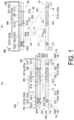
- a bed BD, a support structure 100, and a load sensor kit (fixing member) according to an embodiment of the present invention will be described with reference to FIG. 1 to FIG. 8 .
- the bed BD mainly includes the support structure 100 including a lower mechanism 10, an upper mechanism 20, and a raising/lowering mechanism 30, and a bed plate BP, a headboard HB, a footboard FB, and a pair of bed rails BR attached to the upper mechanism 20 of the support structure 100.
- a longitudinal direction of the bed BD is referred to as a vertical direction of the bed BD and the support structure 100
- a width direction of the bed BD is referred to as a horizontal direction of the bed BD and the support structure 100.
- a side where the headboard HB is positioned is referred to as a head side
- a side where the footboard FB is positioned is referred to as a leg side.
- a left side and a right side when the head side is viewed from the leg side in the vertical direction are referred to as a left side and a right side, respectively.
- a direction orthogonal to the vertical direction and the horizontal direction is referred to as an up-down direction.
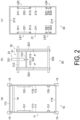
- the lower mechanism 10 mainly includes a lower frame (base frame) 11, sliding brackets 121, 122, fixed brackets 131, 132, an actuator support beam 14, and four caster parts 15.
- the lower frame 11 is a frame-shaped member having a rectangular shape in plan view, and includes a first portion 111 and a second portion 112 extending in the vertical direction of the support structure 100, and a third portion 113 and a fourth portion 114 extending in the horizontal direction of the support structure 100.
- Each of the first portion 111 to the fourth portion 114 is an elongated member having a rectangular cross section.
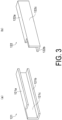
- the sliding bracket 121 is an elongated member and, as illustrated in FIG. 3(a) , has a shape of an upper plate part 121a, a lower plate part 121b, and a vertical plate part 121c, each being an elongated flat plate, coupled in a C-shape (U-shape) as viewed in the elongated direction.
- a size of the upper plate part 121a in the elongated direction is smaller than sizes of the lower plate part 121b and the vertical plate part 121c in the elongated direction.
- the sliding bracket 122 is also an elongated member and, as illustrated in FIG. 3(b) , has a shape of an upper plate part 122a, a lower plate part 122b, and a vertical plate part 122c, each being an elongated flat plate, coupled in a C-shape (U-shape) as viewed in the elongated direction.
- a size of the upper plate part 122a in the elongated direction is smaller than sizes of the lower plate part 122b and the vertical plate part 122c in the elongated direction.
- the sliding bracket 121 and the sliding bracket 122 are mirror-symmetrical with respect to a plane parallel to the vertical plate parts 121c, 122c.
- the sliding brackets 121, 122 are attached to the lower frame 11 at the head side of a central part of the support structure 100 in the vertical direction.
- the sliding brackets 121, 122 are fixed to the first portion 111 and the second portion 112, respectively, and thus the elongated direction of the sliding brackets 121, 122 coincides with the vertical direction of the support structure 100.
- an outer surface of the vertical plate part 121c of the sliding bracket 121 abuts against and is welded to an inner side surface 111i of the first portion 111
- an outer surface of the vertical plate part 122c of the sliding bracket 122 abuts against and is welded to an inner side surface 112i of the second portion 112.
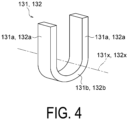
- the fixed bracket 131 includes a pair of flat plate parts 131a opposing each other, and a curved plate part 131b curved in an arc shape about an axis 131x and connecting lower end parts of the pair of flat plate parts 131a.
- the fixed bracket 13 is substantially U-shaped as viewed in the direction of the axis 131x.
- the fixed bracket 132 includes a pair of flat plate parts 132a opposing each other, and a curved plate part 132b curved in an arc shape about an axis 132x and connecting lower end parts of the pair of flat plate parts 132a.
- the fixed bracket 132 is substantially U-shaped as viewed in the direction of the axis 132x.
- the fixed brackets 131, 132 are attached to the lower frame 11 at positions on the leg side of the central part of the support structure 100 in the vertical direction.
- the fixed bracket 131 is fixed to the inner side surface 111i of the first portion 111 by welding with the axis 131x aligned with the horizontal direction of the support structure 100.
- the fixed bracket 132 is fixed to the inner side surface 112i of the second portion 112 by welding with the axis 132x aligned with the horizontal direction of the support structure 100.
- the actuator support beam 14 is an elongated member having a circular cross section and extending in the horizontal direction of the support structure 100.
- a left end part of the actuator support beam 14 is fixed to the first portion 111 of the lower frame 11 at the head side of the sliding bracket 121.
- a right end part of the actuator support beam 14 is fixed to the second portion 112 of the lower frame 11 at the head side of the sliding bracket 122.
- each of the four caster parts 15 includes a wheel support part WS attached to the lower frame 11 rotatably about a vertical axis, and a wheel W attached to the wheel support part WS rotatably about a horizontal axis.
- the upper mechanism 20 mainly includes an upper frame (center frame) 21, sliding brackets 221, 222, fixed brackets 231, 232, and a plurality of load sensors for attaching the sliding brackets 221, 222 and the fixed brackets 231, 232 to the upper frame 21.
- the upper frame 21 is a frame-shaped member having a rectangular shape in plan view, and includes a first portion 211 and a second portion 212 extending in the vertical direction of the support structure 100, and a third portion 213 and a fourth portion 214 extending in the horizontal direction of the support structure 100.
- Each of the first portion 211 to the fourth portion 214 is an elongated member having a rectangular cross section.
- the sliding bracket (supported member) 221 is an elongated member and, as illustrated in FIG. 5(a) , has a shape of an upper plate part 221a, a lower plate part 221b, and a vertical plate part 221c, each being an elongated flat plate, coupled in a C-shape (U-shape) as viewed in the elongated direction.
- a size of the lower plate part 221b in the elongated direction is smaller than sizes of the upper plate part 221a and the vertical plate part 221c in the elongated direction. Therefore, in the vicinity of one end part of the upper plate part 221a in the elongated direction, the lower plate part 221b opposing the upper plate part 221a is not present.
- the sliding bracket (supported member) 222 is also an elongated member and, as illustrated in FIG. 5(b) , has a shape of an upper plate part 222a, a lower plate part 222b, and a vertical plate part 222c, each being an elongated flat plate, coupled in a C-shape (U-shape) as viewed in the elongated direction.
- a size of the lower plate part 222b in the elongated direction is smaller than sizes of the upper plate part 222a and the vertical plate part 222c in the elongated direction. Therefore, in the vicinity of one end part of the upper plate part 222a in the elongated direction, the lower plate part 222b opposing the upper plate part 222a is not present.
- the sliding bracket 221 and the sliding bracket 222 are mirror-symmetrical with respect to a plane parallel to the vertical plate parts 221c, 222c.
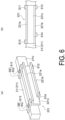
- the sliding bracket 221 is attached to the first portion 211 of the upper frame 21 by four load sensors (attachment tools) S11, S12, S13, S 14 at the head side of the central part of the support structure 100 in the vertical direction.
- Each of the load sensors S11 to S14 includes a flexure element SB having a beam shape and a strain gauge SG adhered to the flexure element SB.
- the sliding bracket 221 is attached to the upper frame 21 using the four load sensors S11 to S14 specifically as follows.
- the sliding bracket 221 is disposed with the elongated direction of the sliding bracket 221 aligned with the vertical direction of the support structure 100 (that is, the longitudinal direction of the bed BD). In this state, an upper surface of the first portion 211 of the upper frame 21 and an upper surface of the upper plate part 221a are flush, and a lower surface of the first portion 211 of the upper frame 21 and a lower surface of the lower plate part 221b are flush.
- the four load sensors S11, S12, S13, S14 are respectively provided at the sliding bracket 221 at an upper side of one end side in the elongated direction, a lower side of one end side in the elongated direction, an upper side of the other end side in the elongated direction, and a lower side of the other end side in the elongated direction.
- One end of the flexure element SB of the load sensor S11 is fixed to the upper plate part 221a at one end side of the sliding bracket 221 in the elongated direction, and the other end is fixed to the upper surface of the first portion 211.
- One end of the flexure element SB of the load sensor S12 is fixed to the lower plate part 221b at one end side of the sliding bracket 221 in the elongated direction, and the other end is fixed to the lower surface of the first portion 211.
- One end of the flexure element SB of the load sensor S13 is fixed to the upper plate part 221a at the other end side of the sliding bracket 221 in the elongated direction, and the other end is fixed to the upper surface of the first portion 211.
- One end of the flexure element SB of the load sensor S14 is fixed to the lower plate part 221b at the other end side of the sliding bracket 221 in the elongated direction, and the other end is fixed to the lower surface of the first portion 211.
- the inner side surface 211i of the first portion 211 and the vertical plate part 221c are disposed parallel to each other with a gap in the horizontal direction.
- the gap may be, for example, about 5 mm to 15 mm.
- the sliding bracket 222 is also, by the same mode as the mode of the sliding bracket 221, attached to the second portion 212 of the upper frame 21 by the four load sensors S11, S12, S13, S 14 at the head side of the central part of the support structure 100 in the vertical direction.
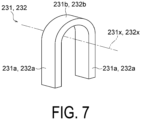
- the fixed bracket 231 (secondary supported member) includes a pair of flat plate parts 231a opposing each other, and a curved plate part 231b curved in an arc shape about an axis 231x and connecting upper end parts of the pair of flat plate parts 231a.
- the fixed bracket 231 is substantially U-shaped as viewed in the direction of the axis 231x.
- the fixed bracket (secondary supported member) 232 also includes a pair of flat plate parts 232a opposing each other, and a curved plate part 232b curved in an arc shape about an axis 232x and connecting upper end parts of the pair of flat plate parts 232a.
- the fixed bracket 232 is substantially U-shaped as viewed in the direction of the axis 232x.
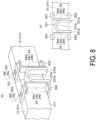
- the fixed bracket 231 is attached to the first portion 211 of the upper frame 21 via two couplers 24 and four load sensors (secondary attachment tools) S21, S22, S23, S24 at the leg side of the central part of the bed BD in the longitudinal direction.
- Each of the two couplers 24 is a member having a C-shape (U-shape) in a side view and including an upper plate part 24a, a lower plate part 24b opposing the upper plate part 24a, and a vertical plate part 24c connecting the upper plate part 24a and the lower plate part 24b.
- C-shape U-shape
- Each of the four load sensors S21 to S24 has the same structure as the structure of each of the load sensors S11 to S14 and includes the flexure element SB having a beam shape and the strain gauge SG adhered to the flexure element SB.
- the fixed bracket 231 is attached to the upper frame 21 using the two couplers 24 and the four load sensors S21 to S24 specifically as follows.
- the fixed bracket 231 and the two couplers 24 are disposed with the curved plate part 231b of the fixed bracket 231 protruding upward.
- the upper surface of the first portion 211 of the upper frame 21 and upper surfaces of the upper plate parts 24a of the two couplers 24 are flush, and the lower surface of the first portion 211 of the upper bracket 21 and lower surfaces of the lower plate parts 24b of the two couplers 24 are flush.
- the four load sensors S21, S22, S23, S24 are respectively provided at an upper side and a lower side of one coupler 24 and at an upper side and a lower side of the other coupler 24.
- One end of the flexure element SB of the load sensor S21 is fixed to the upper plate part 24a of one coupler 24, and the other end is fixed to the upper surface of the first portion 211.
- One end of the flexure element SB of the load sensor S22 is fixed to the lower plate part 24b of one coupler 24, and the other end is fixed to the lower surface of the first portion 211.
- One end of the flexure element SB of the load sensor S23 is fixed to the upper plate part 24a of the other coupler 24, and the other end is fixed to the upper surface of the first portion 211.
- One end of the flexure element SB of the load sensor S24 is fixed to the lower plate part 24b of the other coupler 24, and the other end is fixed to the lower surface of the first portion 211.
- the inner side surface 211i of the first portion 211 and the fixed bracket 231 are disposed parallel to each other with a gap in the horizontal direction.
- the gap may be, for example, about 5 mm to 15 mm.
- the fixed bracket 232 is also attached to the second portion 212 of the upper frame 21 via the two couplers 24 and the four load sensors S21, S22, S23, S24 at the leg side of the central part of the support structure 100 in the vertical direction.
- the raising/lowering mechanism 30 mainly includes an inner arm part 31, an outer arm part 32, and an actuator 33.
- the inner arm part 31 includes a lower shaft 311 (below an upper shaft 322 (described below) of the outer arm part 32 in FIG. 2(b) ; not illustrated), an upper shaft 312, a pair of inner arms 313, and an actuator coupling beam 314.
- the lower shaft 311 is an elongated member having a circular cross section and extending in the horizontal direction of the support structure 100.
- a left end part of the lower shaft 311 abuts against an upper surface of the curved plate part 131b of the fixed bracket 131 fixed to the first portion 111 of the lower frame 11, and is supported by the fixed bracket 131.
- a right end part of the lower shaft 311 abuts against an upper surface of a curved plate part 132b of the fixed bracket 132 fixed to the second portion 112 of the lower frame 11, and is supported by the fixed bracket 132.
- the upper shaft (support shaft) 312 is an elongated member having a circular cross section and extending in the horizontal direction of the support structure 100.
- a left end part of the upper shaft 312 abuts against a lower surface of the upper plate part 221a of the sliding bracket 221 fixed to the first portion 211 of the upper frame 21 and supports the upper mechanism 20 via the sliding bracket 221.
- a right end part of the upper shaft 312 abuts against a lower surface of the upper plate part 222a of the sliding bracket 222 fixed to the second portion 212 of the upper frame 21 and supports the upper mechanism 20 via the sliding bracket 222.
- Each of the pair of inner arms 313 is an elongated member having a rectangular cross section.
- One of the pair of inner arms 313 is connected to the vicinity of the left end part of the lower shaft 311 at one end part, and connected to the vicinity of the left end part of the upper shaft 312 at the other end part.
- the other of the pair of inner arms 313 is connected to the vicinity of the right end part of the lower shaft 311 at one end part, and connected to the vicinity of the right end part of the upper shaft 312 at the other end part.
- the actuator coupling beam 314 is an elongated member having a circular cross section and extending in the horizontal direction of the support structure 100.
- a left end part of the actuator coupling beam 314 is connected to one of the pair of inner arms 313 at a substantially intermediate part between a central part of the inner arm 313 in the longitudinal direction and a connection part between the inner arm 313 and the upper shaft 312.
- a right end part of the actuator coupling beam 314 is connected to the other of the pair of inner arms 313 at a substantially intermediate part between a central part of the inner arm 313 in the longitudinal direction and a connection part between the inner arm 313 and the upper shaft 312.
- the outer arm part 32 includes a lower shaft 321 (below the upper shaft 312 (described below) of the inner arm part 31 in FIG. 2(b) ; not illustrated), the upper shaft 322, and a pair of outer arms 323.
- the lower shaft 321 is an elongated member having a circular cross section and extending in the horizontal direction of the support structure 100.
- a left end part of the lower shaft 321 abuts against the lower plate part 121b of the sliding bracket 121 fixed to the first portion 111 of the lower frame 11, and is supported by the sliding bracket 121.
- a right end part of the lower shaft 321 abuts against an upper surface of the lower plate part 122b of the sliding bracket 122 fixed to the second portion 112 of the lower frame 11, and is supported by the sliding bracket 122.
- the upper shaft (secondary support shaft) 322 is an elongated member having a circular cross section and extending in the horizontal direction of the support structure 100.
- a left end part of the upper shaft 322 abuts against a lower surface of the curved plate part 231b of the fixed bracket 231 fixed to the first portion 211 of the upper frame 21, and supports the upper mechanism 20 via the fixed bracket 231.
- a right end part of the upper shaft 322 abuts against a lower surface of the curved plate part 232b of the fixed bracket 232 fixed to the second portion 212 of the upper frame 21, and supports the upper mechanism 20 via the fixed bracket 232.
- Each of the pair of outer arms 323 is an elongated member having a rectangular cross section.
- One of the pair of outer arms 323 is connected to the vicinity of the left end part of the lower shaft 321 at one end part, and connected to the vicinity of the left end part of the upper shaft 322 at the other end part.
- the other of the pair of outer arms 323 is connected to the vicinity of the right end part of the lower shaft 321 at one end part, and connected to the vicinity of the right end part of the upper shaft 322 at the other end part.
- the inner arm part 31 and the outer arm part 32 are pivotally coupled to each other. Specifically, in the horizontal direction of the support structure 100, the inner arm 313 and the outer arm 323 positioned at the left side are pivotally coupled by a horizontal pin P at respective central parts in the longitudinal direction, and the inner arm 313 and the outer arm 323 positioned at the right side are pivotally coupled by the horizontal pin P at respective central parts in the longitudinal direction.
- the actuator 33 includes a cylinder 331 and a rod 332 extended and contracted by the cylinder 331.
- the actuator 33 may be, for example, an electric actuator, a hydraulic actuator, or a pneumatic actuator.
- the cylinder 331 is pivotally supported by the actuator support beam 14 of the lower mechanism 10.
- a distal end part of the rod 332 is pivotally coupled to the actuator coupling beam 314 of the inner arm part 31.
- Each of the bed plate BP, the headboard HB, the footboard FB, and the pair of bed rails BR is detachably attached to the upper frame 21 via an attachment part (not illustrated) provided at the upper frame 21 of the upper mechanism 20 ( FIG. 1(a) and FIG. 1(b) ).
- a total of eight load sensors S11 to S14 for fixing the sliding brackets 221, 222 to the upper frame 21 and a total of eight load sensors S21 to S24 for fixing the fixed brackets 231, 232 to the upper frame 21 constitute a load sensor kit (fixing member).
- the upper mechanism 20 is raised and lowered as follows.
- the rod 332 of the actuator 33 is mostly accommodated in an interior of the cylinder 331.
- the actuator 33 is driven in this state, the rod 332 is pushed out from the cylinder 331, and the rod 332 presses the actuator coupling beam 314 of the inner arm part 31 obliquely upward.
- the pair of outer arms 323 pivotally coupled to the pair of inner arms 313 rotate about the upper shaft 322 supported by the fixed brackets 231, 232 of the upper mechanism 20, and the lower shaft 321 sliding in the sliding brackets 121, 122 of the lower mechanism 10 presses the sliding brackets 121, 122 downward.
- the upper shaft 322 presses the fixed brackets 231, 232 of the upper mechanism 20 upward.
- the load sensors S11 to S14 are provided outside a movable range of the upper shaft 312 of the sliding brackets 221, 222. That is, the load sensors S11, S12 attached to the sliding brackets 221, 222 at positions on the head side of the support structure 100 are disposed at the head side of a center of the upper shaft 312 when the upper mechanism 20 is in the lowered position (that is, points where the loads of the brackets 221, 222 act on the load sensors S 11, S12 are positioned at the head side of the center of the upper shaft 312).
- the load sensors S13, S14 attached to the sliding brackets 221, 222 at positions on the leg side of the support structure 100 are disposed at the leg side of the center of the upper shaft 312 when the upper mechanism 20 is in a raised position (that is, points where the loads of the brackets 221, 222 act on the load sensors S13, S14 are positioned at the leg side of the center of the upper shaft 312).
- the detected values of the load sensors S11 to S14 are added together (details described below).
- the detected values of the load sensors S11 to S14 are added with the load sensors S1 1 to S14 being disposed only at one side of the upper shaft 312 in the vertical direction, influences of placement deviation errors (errors occurring in the detected values of the load sensors according to distances between the load sensors and the subject) in the respective load sensors S11 to S14 are also added, making the value greater.
- the load sensors S11 to S14 are disposed at both sides of the upper shaft 312 regardless of the position of the upper shaft 312, and the influences of the placement deviation errors are canceled and suppressed.
- the load of a subject S on the bed BD is measured (detected) as follows.
- the load sensors S11 to S14 fixing the sliding bracket 221 to the upper frame 21 constitute a first load detection unit LS1.
- a calculation unit of the support structure 100 (not illustrated; attached to the upper frame 21, for example) acquires an output value of the first load detection unit LS1 by adding the output values of the load sensors S11 to S14 of the first load detection unit LS1.
- the load sensors S11 to S14 fixing the sliding bracket 222 to the upper frame 21 constitute a second load detection unit LS2, and the calculation unit acquires an output value of the second load detection unit LS2 by adding the output values of the load sensors S11 to S14 of the second load detection unit LS2.
- the load sensors S21 to S24 fixing the fixed bracket 231 to the upper frame 21 constitute a third load detection unit LS3, and the calculation unit acquires an output value of the third load detection unit LS3 by adding the output values of the load sensors S21 to S24 of the third load detection unit LS3.
- the load sensors S21 to S24 fixing the fixed bracket 232 to the upper frame 21 constitute a fourth load detection unit LS4, and the calculation unit acquires an output value of the fourth load detection unit LS4 by adding the output values of the load sensors S21 to S24 of the fourth load detection unit LS4.
- the calculation unit calculates a weight of the subject on the bed BD by adding the output values of the first load detection unit LS1 to the fourth load detection unit LS4.
- a center-of-gravity position of the subject on the bed BD is calculated using the output values of the first load detection unit LS1 to the fourth load detection unit LS4.
- the sliding brackets 221, 222 and the fixed brackets 231, 232 are fixed to the upper frame 21 using the load sensors S11 to S14 and S21 to S24, and thus a load detection unit detecting the load of the subject on the bed is built into the structure supporting the bed. Accordingly, the support structure for a bed having a load detection function can be easily manufactured without requiring the manufacture of a bracket or a load sensor having a special structure.
- the brackets using the load sensors S11 to S14 and S21 to S24 are fixed to the frame at the upper mechanism 20, not the lower mechanism 10. Accordingly, the entire load of the subject on the bed plate BP of the bed BD is transmitted to any one of the load sensors S11 to S14 and S21 to S24, making it possible to detect the load of the subject with high accuracy. If the brackets using the load sensors S11 to S14 and S21 to S24 were fixed to the frame at the lower mechanism 10, it would be difficult to detect the load of the subject with high accuracy. This is because a lower part of the cylinder 331 of the actuator 33 is supported by the lower mechanism 10, and a part of the load of the subject on the bed plate BP applied to the upper mechanism 20 is transmitted to the lower mechanism 10 via the actuator 33.
- the sizes of the upper plate parts 121a, 122a in the longitudinal direction are smaller than the sizes of the lower plate parts 121b, 122b in the longitudinal direction.
- the sizes of the lower plate parts 221b, 222b (the upper surface is a "second surface” in the present invention) in the longitudinal direction are smaller than the sizes of the upper plate parts 221a, 222a (the lower surface is a "first surface” in the present invention) in the longitudinal direction.
- the lower shaft 321 and the upper shaft 312 of the raising/lowering mechanism 30 can be easily arranged at the inside of the brackets via regions (introduction ports) of the sliding brackets 121, 122, 221, 222 where the upper plate parts 121a, 122a and the lower plate parts 221b, 222b do not exist.
- the regions (introduction ports) where the upper plate parts 121a, 122a and the lower plate parts 221b, 222b do not exist are positioned at the leg side of the support structure 100 in the vertical direction, but the regions (introduction ports) where the upper plate parts 121a, 122a and the lower plate parts 221b, 222b do not exist may be positioned at the head side.
- the load sensors S11 to S14 are provided outside the movable range of the upper shaft 312, it is possible to detect the load of the subject with high accuracy, regardless of the position of the upper shaft 312.
- the sliding brackets 221, 222 and the fixed brackets 231, 232 are all attached to the upper frame 21 using the load sensors, but the attachment is not limited to this. At least one of the sliding bracket 221 or 222 or at least one of the fixed bracket 231 or 232 may be attached to the upper frame 21 using the load sensors while the other brackets may be fixed to the upper frame 21 in a conventional manner, such as welding, for example.
- each of the sliding brackets 221, 222 and the fixed brackets 231, 232 is attached to the upper frame 21 using four load sensors, but the number is not limited to this.
- the sliding brackets 221, 222 and the fixed brackets 231, 232 may be attached to the upper frame 21 using any number of load sensors.
- the sliding bracket 221 may be attached to the upper frame 21 by the two load sensors of the load sensor S11 at an upper side of one end side and the load sensor S13 at an upper side of the other end side of the sliding bracket 221, or may be attached by the two load sensors of the load sensor S12 at a lower side of one end side and the load sensor S14 at a lower side of the other end side of the sliding bracket 221.
- the sliding bracket 221 may be fixed to the upper frame 21 by a single load sensor disposed at an upper side or a lower side of a central part of the sliding bracket 221 in the longitudinal direction.
- the load sensor kit includes a total of 16 load sensors, but the number is not limited to this.
- the number of load sensors (attachment tools, fixing tools) included in the load sensor kit may be changed as desired in accordance with the number used for attaching the brackets to the upper frame 21.
- stop plates extending in a plane orthogonal to the longitudinal direction of the sliding brackets 121, 122, 221, 222 may be provided at end parts of the sliding brackets 121, 122, 221, 222 in the longitudinal direction.
- rollers may be provided at both end parts of the upper shaft 312, and the rollers may be rolled in the sliding brackets 221, 222.
- the fixed brackets 231, 232 are attached to the upper frame 21 by the couplers 24, but attachment is not limited to this.
- end parts of the flexure elements SB of each load sensor S21 to S24 may be directly attached to the flat plate parts 231a, 232a of the fixed brackets 231, 232.
- the "flexure element fixed to the secondary supported member" includes both a mode with the flexure element directly fixed to the secondary support member and a mode with the flexure element fixed to the secondary support member via a member such as the coupler 24.
- the configurations of the load sensors S11 to S14 and S21 to S24 can be changed as desired.
- a flexure element having a plate shape may be provided instead of the flexure element SB having a beam shape.
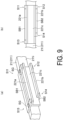
- the flexure elements of the plurality of load sensors may be integrally formed. For example, as illustrated in FIG. 9(a) and FIG.
- the flexure elements of the load sensor S11 and the load sensor S13 may be flexure elements SB1, each being a flat plate having a C-shape (U-shape) in plan view
- the flexure elements of the load sensor S12 and the load sensor S14 may be flexure elements SB2, each being a flat plate having a C-shape (U-shape) in plan view.
- the flexure elements of the load sensor S21 and the load sensor S23 may be flexure elements being flat plates having a C-shape (U-shape) in plan view
- the flexure elements of the load sensor S22 and the load sensor S24 may be flexure elements being flat plates having a C-shape (U-shape) in plan view.
Landscapes
- Health & Medical Sciences (AREA)
- Life Sciences & Earth Sciences (AREA)
- Animal Behavior & Ethology (AREA)
- General Health & Medical Sciences (AREA)
- Public Health (AREA)
- Veterinary Medicine (AREA)
- Nursing (AREA)
- Engineering & Computer Science (AREA)
- Biomedical Technology (AREA)
- Invalid Beds And Related Equipment (AREA)
Applications Claiming Priority (2)
| Application Number | Priority Date | Filing Date | Title |
|---|---|---|---|
| JP2021149825A JP7520786B2 (ja) | 2021-09-15 | 2021-09-15 | 固定部材、ベッド用の支持構造体、及びベッド |
| PCT/JP2022/034459 WO2023042863A1 (ja) | 2021-09-15 | 2022-09-14 | 固定部材、ベッド用の支持構造体、及びベッド |
Publications (3)
| Publication Number | Publication Date |
|---|---|
| EP4403155A1 true EP4403155A1 (de) | 2024-07-24 |
| EP4403155A4 EP4403155A4 (de) | 2024-11-27 |
| EP4403155B1 EP4403155B1 (de) | 2025-10-29 |
Family
ID=85602939
Family Applications (1)
| Application Number | Title | Priority Date | Filing Date |
|---|---|---|---|
| EP22870010.0A Active EP4403155B1 (de) | 2021-09-15 | 2022-09-14 | Befestigungselement, bettstützstruktur und bett |
Country Status (5)
| Country | Link |
|---|---|
| US (1) | US12193980B2 (de) |
| EP (1) | EP4403155B1 (de) |
| JP (1) | JP7520786B2 (de) |
| CN (1) | CN118234461B (de) |
| WO (1) | WO2023042863A1 (de) |
Cited By (1)
| Publication number | Priority date | Publication date | Assignee | Title |
|---|---|---|---|---|
| US20240398640A1 (en) * | 2021-09-15 | 2024-12-05 | Minebea Mitsumi Inc. | Fixing member, bed supporting structure, and bed |
Family Cites Families (13)
| Publication number | Priority date | Publication date | Assignee | Title |
|---|---|---|---|---|
| US6469263B1 (en) * | 1999-09-18 | 2002-10-22 | Raye's, Inc. | Hospital bed weighing system |
| JP5057387B2 (ja) * | 2008-03-04 | 2012-10-24 | パラマウントベッド株式会社 | Xリンク式昇降機構 |
| US20110296607A1 (en) | 2009-02-20 | 2011-12-08 | Koninklijke Philips Electronics N.V. | System and method for bed height adjustment |
| WO2013108503A1 (ja) * | 2012-01-20 | 2013-07-25 | 昭和電工株式会社 | 荷重検出機能付きベッド及びベッド用荷重検出器 |
| CN103330574A (zh) | 2013-07-10 | 2013-10-02 | 沈阳东软医疗系统有限公司 | 一种扫描床 |
| WO2015008677A1 (ja) * | 2013-07-16 | 2015-01-22 | 昭和電工株式会社 | 荷重検出機能付きベッド及びベッド用荷重検出器 |
| CA2902517C (en) | 2014-08-27 | 2021-07-20 | Umano Medical Inc. | Hospital bed with patient weight and displacement sensors |
| DE102014018584A1 (de) * | 2014-12-17 | 2016-06-23 | Prometheus Innovation Gmbh | Krankenhausbett mit Wägeeinrichtung |
| WO2017061590A1 (ja) * | 2015-10-08 | 2017-04-13 | パラマウントベッド株式会社 | ベッド用外付け荷重検出器及びベッド |
| JP6608667B2 (ja) * | 2015-10-20 | 2019-11-20 | パラマウントベッド株式会社 | 寝台装置 |
| US11139666B2 (en) * | 2017-10-24 | 2021-10-05 | Stryker Corporation | Energy harvesting and propulsion assistance techniques for a patient support apparatus |
| US10959898B2 (en) * | 2018-11-20 | 2021-03-30 | General Electric Company | Patient table and patient weight measuring system |
| JP7520786B2 (ja) * | 2021-09-15 | 2024-07-23 | ミネベアミツミ株式会社 | 固定部材、ベッド用の支持構造体、及びベッド |
-
2021
- 2021-09-15 JP JP2021149825A patent/JP7520786B2/ja active Active
-
2022
- 2022-09-14 US US18/690,772 patent/US12193980B2/en active Active
- 2022-09-14 CN CN202280071545.4A patent/CN118234461B/zh active Active
- 2022-09-14 EP EP22870010.0A patent/EP4403155B1/de active Active
- 2022-09-14 WO PCT/JP2022/034459 patent/WO2023042863A1/ja not_active Ceased
Cited By (2)
| Publication number | Priority date | Publication date | Assignee | Title |
|---|---|---|---|---|
| US20240398640A1 (en) * | 2021-09-15 | 2024-12-05 | Minebea Mitsumi Inc. | Fixing member, bed supporting structure, and bed |
| US12193980B2 (en) * | 2021-09-15 | 2025-01-14 | Minebea Mitsumi Inc. | Fixing member, bed supporting structure, and bed |
Also Published As
| Publication number | Publication date |
|---|---|
| EP4403155A4 (de) | 2024-11-27 |
| WO2023042863A1 (ja) | 2023-03-23 |
| EP4403155B1 (de) | 2025-10-29 |
| JP7520786B2 (ja) | 2024-07-23 |
| CN118234461A (zh) | 2024-06-21 |
| US12193980B2 (en) | 2025-01-14 |
| US20240398640A1 (en) | 2024-12-05 |
| CN118234461B (zh) | 2025-10-28 |
| JP2023042621A (ja) | 2023-03-28 |
Similar Documents
| Publication | Publication Date | Title |
|---|---|---|
| EP2805703A1 (de) | Bett mit lastenerkennungsfunktion und lastenerkennungsfunktion für ein bett | |
| JP6265556B2 (ja) | 荷重検出機能付きベッド及びベッド用荷重検出器 | |
| EP4065061B1 (de) | Patientenlagerungsvorrichtung mit kraftmesszellenanordnung | |
| EP2252248B1 (de) | Positionierungsmechanismus für ein bett | |
| EP4103129B1 (de) | Hebesysteme und lastzellen für eine patientenliegevorrichtung | |
| EP4403155A1 (de) | Befestigungselement, bettstützstruktur und bett | |
| EP2805702A1 (de) | Bett mit einer belastungserkennungsfunktion und belastungssensor für das bett | |
| CN105377208A (zh) | 带负荷检测功能的床以及床用负荷检测器 | |
| JP5086165B2 (ja) | ストレッチャー型体重計 | |
| JPS59131352A (ja) | 患者用ホイスト | |
| JP2020067384A (ja) | 荷重検出器、及び荷重検出器の較正装置 | |
| CA2757785A1 (en) | Lifting device with distributed-sensing scale | |
| KR101535650B1 (ko) | 착탈식 침대용 로드셀 조립체 | |
| JP7320557B2 (ja) | ベッド装置 | |
| EP4415672A1 (de) | Wägezellenanordnung für eine patientenliegevorrichtung | |
| JP5965716B2 (ja) | 荷重検出機能付きベッド及び荷重検出器 | |
| CN216764233U (zh) | 一种倾角放大机构及叉车 | |
| CN220558209U (zh) | 升降机构及医用电动病床 | |
| US20220267130A1 (en) | Forklift scale sensor attachment and mounting | |
| JP2025520305A (ja) | 産業資材取扱機器用アタッチメント | |
| EP4298412A1 (de) | Befestigung und befestigung eines gabelstaplerskalensensors | |
| CN121175260A (zh) | 用于确定空中升降机的工作平台上的载荷的方法和装置 | |
| CN120826365A (zh) | 用于升降车辆的具有地面支撑件的升降柱,具有这种升降柱的升降系统以及用于升降车辆的相关方法 |
Legal Events
| Date | Code | Title | Description |
|---|---|---|---|
| STAA | Information on the status of an ep patent application or granted ep patent |
Free format text: STATUS: THE INTERNATIONAL PUBLICATION HAS BEEN MADE |
|
| PUAI | Public reference made under article 153(3) epc to a published international application that has entered the european phase |
Free format text: ORIGINAL CODE: 0009012 |
|
| STAA | Information on the status of an ep patent application or granted ep patent |
Free format text: STATUS: REQUEST FOR EXAMINATION WAS MADE |
|
| 17P | Request for examination filed |
Effective date: 20240402 |
|
| AK | Designated contracting states |
Kind code of ref document: A1 Designated state(s): AL AT BE BG CH CY CZ DE DK EE ES FI FR GB GR HR HU IE IS IT LI LT LU LV MC MK MT NL NO PL PT RO RS SE SI SK SM TR |
|
| P01 | Opt-out of the competence of the unified patent court (upc) registered |
Free format text: CASE NUMBER: APP_52591/2024 Effective date: 20240919 |
|
| A4 | Supplementary search report drawn up and despatched |
Effective date: 20241028 |
|
| RIC1 | Information provided on ipc code assigned before grant |
Ipc: A47C 19/12 20060101ALI20241022BHEP Ipc: A47C 19/04 20060101ALI20241022BHEP Ipc: A61G 7/012 20060101AFI20241022BHEP |
|
| DAV | Request for validation of the european patent (deleted) | ||
| DAX | Request for extension of the european patent (deleted) | ||
| GRAP | Despatch of communication of intention to grant a patent |
Free format text: ORIGINAL CODE: EPIDOSNIGR1 |
|
| STAA | Information on the status of an ep patent application or granted ep patent |
Free format text: STATUS: GRANT OF PATENT IS INTENDED |
|
| INTG | Intention to grant announced |
Effective date: 20250627 |
|
| GRAS | Grant fee paid |
Free format text: ORIGINAL CODE: EPIDOSNIGR3 |
|
| GRAA | (expected) grant |
Free format text: ORIGINAL CODE: 0009210 |
|
| STAA | Information on the status of an ep patent application or granted ep patent |
Free format text: STATUS: THE PATENT HAS BEEN GRANTED |
|
| AK | Designated contracting states |
Kind code of ref document: B1 Designated state(s): AL AT BE BG CH CY CZ DE DK EE ES FI FR GB GR HR HU IE IS IT LI LT LU LV MC MK MT NL NO PL PT RO RS SE SI SK SM TR |
|
| REG | Reference to a national code |
Ref country code: CH Ref legal event code: F10 Free format text: ST27 STATUS EVENT CODE: U-0-0-F10-F00 (AS PROVIDED BY THE NATIONAL OFFICE) Effective date: 20251029 Ref country code: GB Ref legal event code: FG4D |
|
| REG | Reference to a national code |
Ref country code: IE Ref legal event code: FG4D |
|
| REG | Reference to a national code |
Ref country code: DE Ref legal event code: R096 Ref document number: 602022024172 Country of ref document: DE |
|
| REG | Reference to a national code |
Ref country code: NL Ref legal event code: MP Effective date: 20251029 |