EP4384145B1 - Pharmazeutische zusammensetzungen und orale darreichungsformen von ketaminderivaten - Google Patents
Pharmazeutische zusammensetzungen und orale darreichungsformen von ketaminderivaten Download PDFInfo
- Publication number
- EP4384145B1 EP4384145B1 EP22765317.7A EP22765317A EP4384145B1 EP 4384145 B1 EP4384145 B1 EP 4384145B1 EP 22765317 A EP22765317 A EP 22765317A EP 4384145 B1 EP4384145 B1 EP 4384145B1
- Authority
- EP
- European Patent Office
- Prior art keywords
- compound
- formula
- methyl
- oral dosage
- dosage form
- Prior art date
- Legal status (The legal status is an assumption and is not a legal conclusion. Google has not performed a legal analysis and makes no representation as to the accuracy of the status listed.)
- Active
Links
Images




Classifications
-
- A—HUMAN NECESSITIES
- A61—MEDICAL OR VETERINARY SCIENCE; HYGIENE
- A61K—PREPARATIONS FOR MEDICAL, DENTAL OR TOILETRY PURPOSES
- A61K31/00—Medicinal preparations containing organic active ingredients
- A61K31/13—Amines
- A61K31/135—Amines having aromatic rings, e.g. ketamine, nortriptyline
-
- A—HUMAN NECESSITIES
- A61—MEDICAL OR VETERINARY SCIENCE; HYGIENE
- A61K—PREPARATIONS FOR MEDICAL, DENTAL OR TOILETRY PURPOSES
- A61K31/00—Medicinal preparations containing organic active ingredients
- A61K31/21—Esters, e.g. nitroglycerine, selenocyanates
- A61K31/215—Esters, e.g. nitroglycerine, selenocyanates of carboxylic acids
- A61K31/22—Esters, e.g. nitroglycerine, selenocyanates of carboxylic acids of acyclic acids, e.g. pravastatin
- A61K31/222—Esters, e.g. nitroglycerine, selenocyanates of carboxylic acids of acyclic acids, e.g. pravastatin with compounds having aromatic groups, e.g. dipivefrine, ibopamine
-
- A—HUMAN NECESSITIES
- A61—MEDICAL OR VETERINARY SCIENCE; HYGIENE
- A61K—PREPARATIONS FOR MEDICAL, DENTAL OR TOILETRY PURPOSES
- A61K31/00—Medicinal preparations containing organic active ingredients
- A61K31/33—Heterocyclic compounds
- A61K31/335—Heterocyclic compounds having oxygen as the only ring hetero atom, e.g. fungichromin
- A61K31/337—Heterocyclic compounds having oxygen as the only ring hetero atom, e.g. fungichromin having four-membered rings, e.g. taxol
-
- A—HUMAN NECESSITIES
- A61—MEDICAL OR VETERINARY SCIENCE; HYGIENE
- A61K—PREPARATIONS FOR MEDICAL, DENTAL OR TOILETRY PURPOSES
- A61K9/00—Medicinal preparations characterised by special physical form
- A61K9/20—Pills, tablets, discs, rods
- A61K9/2004—Excipients; Inactive ingredients
- A61K9/2013—Organic compounds, e.g. phospholipids, fats
-
- A—HUMAN NECESSITIES
- A61—MEDICAL OR VETERINARY SCIENCE; HYGIENE
- A61K—PREPARATIONS FOR MEDICAL, DENTAL OR TOILETRY PURPOSES
- A61K9/00—Medicinal preparations characterised by special physical form
- A61K9/20—Pills, tablets, discs, rods
- A61K9/2004—Excipients; Inactive ingredients
- A61K9/2022—Organic macromolecular compounds
- A61K9/205—Polysaccharides, e.g. alginate, gums; Cyclodextrin
- A61K9/2054—Cellulose; Cellulose derivatives, e.g. hydroxypropyl methylcellulose
-
- A—HUMAN NECESSITIES
- A61—MEDICAL OR VETERINARY SCIENCE; HYGIENE
- A61P—SPECIFIC THERAPEUTIC ACTIVITY OF CHEMICAL COMPOUNDS OR MEDICINAL PREPARATIONS
- A61P25/00—Drugs for disorders of the nervous system
- A61P25/24—Antidepressants
-
- A—HUMAN NECESSITIES
- A61—MEDICAL OR VETERINARY SCIENCE; HYGIENE
- A61K—PREPARATIONS FOR MEDICAL, DENTAL OR TOILETRY PURPOSES
- A61K9/00—Medicinal preparations characterised by special physical form
- A61K9/0012—Galenical forms characterised by the site of application
- A61K9/0053—Mouth and digestive tract, i.e. intraoral and peroral administration
Definitions
- the invention relates to pharmaceutical compositions of a ketamine derivative and oral dosage forms comprising the pharmaceutical compositions.
- Solid oral dosage forms prepared from the pharmaceutical compositions exhibit a zero-order release profile in two-stage dissolution medium.
- Ketamine derivatives that provide ketamine in the systemic circulation of a patient following oral administration are disclosed in U.S. Application Publication No. 2020/0231540 A1 .
- Oral dosage forms containing the ketamine derivatives that provide a zero-order release profile in the gastrointestinal tract following ingestion are desired.
- WO2019/137381A1 discloses prodrugs of (S) -or (R) -ketamine, including isotopically labeled ketamine, composition and uses thereof for treating or preventing central nervous system diseases, more particularly, depression and pain.
- WO2017/180589A1 discloses deuterated ketamine derivatives, wherein each deuterium has deuterium enrichment of no less than about 10%, compositions containing these compounds, and methods of using these compounds for treating disorders.
- compositions comprise:
- oral dosage forms comprise a pharmaceutical composition according to the present invention, wherein the oral dosage form comprises a tablet.
- compositions according to the present invention, or oral dosage forms according to the present invention are for use in treating a disease in a patient, wherein the disease is selected from depression and pain.
- any numerical range recited herein is intended to include all sub-ranges subsumed therein.
- a range of "1 to 10" is intended to include all sub-ranges between (and including) the recited minimum value of 1 and the recited maximum value of 10, that is, having a minimum value equal to or greater than 1 and a maximum value of equal to or less than 10.
- Controlled release pharmaceutical compositions include modified release formulations, delayed release formulations, extended release, and sustained release formulation. These formulations are intended to release an API from the pharmaceutical composition at a desired rate and/or at a desired time following oral administration by a patient and/or at a certain location or locations with the gastrointestinal tract.
- the USP defines a modified release system as one in which the time course or location of drug release or both, are chosen to accomplish objectives of therapeutic effectiveness or convenience not fulfilled by conventional IR dosage forms. More specifically, MR solid oral dosage forms include extended release (ER) and delayed-release (DR) products.
- DR product is one that releases a drug all at once at a time other than promptly after administration.
- a modified release formulation can include delayed-release using enteric coatings, site-specific or timed release such as for colonic delivery, extended-release including, for example, formulations capable of providing zero-order, first-order, or biphasic release profiles, and programmed release such as pulsatile and delayed extended release.
- a dash (“-") that is not between two letters or symbols is used to indicate a point of attachment for a moiety or substituent.
- -CONH 2 is attached through the carbon atom.
- Alkyl refers to a saturated or unsaturated, branched, or straight-chain, monovalent hydrocarbon radical derived by the removal of one hydrogen atom from a single carbon atom of a parent alkane, alkene, or alkyne.
- alkyl groups include methyl; ethyls such as ethanyl, ethenyl, and ethynyl; propyls such as propan-1-yl, propan-2-yl, prop-1-en-1-yl, prop-1-en-2-yl, prop-2-en-1-yl (allyl), prop-1-yn-1-yl, prop-2-yn-1-yl, etc.; butyls such as butan-1-yl, butan-2-yl, 2-methyl-propan-1-yl, 2-methyl-propan-2-yl, but-1-en-1-yl, but-1-en-2-yl, 2-methyl-prop-1-en-1-yl, but-2-en-1-yl, but-2-en-2-yl, buta-1,3-dien-1-yl, buta-1,3-dien-2-yl, but-1-yn-1-yl, but-1-yn-3-yl, and but-3-yn-1-
- alkyl includes groups having any degree or level of saturation, i.e., groups having exclusively carbon-carbon single bonds, groups having one or more carbon-carbon double bonds, groups having one or more carbon-carbon triple bonds, and groups having combinations of carbon-carbon single, double, and triple bonds. Where a specific level of saturation is intended, the terms alkanyl, alkenyl, and alkynyl are used.
- An alkyl group can be, for example, C 1-6 alkyl, C 1-3 alkyl, C 1-4 alkyl, C 1-3 alkyl, ethyl or methyl.
- Alkoxy refers to a radical -OR where R is alkyl as defined herein. Examples of alkoxy groups include methoxy, ethoxy, propoxy, and butoxy. An alkoxy group can be C 1-6 alkoxy, C 1-3 alkoxy, C 1-4 alkoxy, C 1-3 alkoxy, ethoxy or methoxy.
- Arylalkyl refers to an acyclic alkyl radical in which one of the hydrogen atoms bonded to a carbon atom is replaced with an aryl group.
- arylalkyl groups include benzyl, 2-phenylethan-1-yl, 2-phenylethen-1-yl, naphthylmethyl, 2-naphthylethan-1-yl, 2-naphthylethen-1-yl, naphthobenzyl, and 2-naphthophenylethan-1-yl. Where specific alkyl moieties are intended, the nomenclature arylalkanyl, arylalkenyl, or arylalkynyl is used.
- An arylalkyl group can be C 7-16 arylalkyl, e.g., the alkanyl, alkenyl or alkynyl moiety of the arylalkyl group is C 1-6 and the aryl moiety is C 6-10 .
- An arylalkyl group can be C 7-16 arylalkyl, such as the alkanyl, alkenyl or alkynyl moiety of the arylalkyl group is C 1-6 and the aryl moiety is C 6-10 .
- An arylalkyl group can be C 7-9 arylalkyl, wherein the alkyl moiety is C 1-3 alkyl, and the aryl moiety is phenyl.
- An arylalkyl group can be C 7-16 arylalkyl, C 7-14 arylalkyl, C 7-12 arylalkyl, C 7-10 arylalkyl, C 7-8 arylalkyl, or benzyl.
- Bioavailability refers to the rate and amount of a drug that reaches the systemic circulation of a patient following administration of the drug or prodrug thereof to the patient and can be determined by evaluating, for example, the plasma or blood concentration-versus-time profile for a drug.
- Parameters useful in characterizing a plasma or blood concentration-versus-time curve include the area under the curve (AUC), the time to maximum concentration (T max ), and the maximum drug concentration (C max ), where C max is the maximum concentration of a drug in the plasma or blood of a patient following administration of a dose of the drug or form of drug to the patient, and T max is the time to the maximum concentration (C max ) of a drug in the plasma or blood of a patient following administration of a dose of the drug or form of drug to the patient.
- Oral bioavailability refers to the fraction of an oral administered drug that reaches systemic circulation. Oral bioavailability is a product of fraction absorbed, fraction escaping gut-wall elimination, and fraction escaping hepatic elimination; and the factors that influence bioavailability can be divided into physiological, physicochemical, and biopharmaceutical factors.
- Compounds and moieties disclosed herein include any specific compounds within the disclosed formula.
- a compound may be identified either by chemical structure and/or by chemical name. Compounds are named using the ChemDraw ® Ultra 17.1.0.105 (19) (CambridgeSoft, Cambridge, MA) nomenclature program. When the chemical structure and chemical name conflict, the chemical structure is determinative of the identity of the compound.
- the compounds described herein may comprise one or more stereogenic centers and/or double bonds and therefore may exist as stereoisomers such as double-bond isomers (i.e., geometric isomers), enantiomers, diastereomers, or atropisomers.
- any chemical structures within the scope of the specification depicted, in whole or in part, with a relative configuration encompass all possible enantiomers and stereoisomers of the illustrated compounds including the stereoisomerically pure form (e.g ., geometrically pure, enantiomerically pure, or diastereomerically pure) and enantiomeric and stereoisomeric mixtures.
- Enantiomeric and stereoisomeric mixtures may be resolved into their component enantiomers or stereoisomers using separation techniques or chiral synthesis techniques well known to the skilled in the art.
- Compounds and moieties disclosed herein include optical isomers of compounds and moieties, racemates thereof, and other mixtures thereof.
- the single enantiomers or diastereomers may be obtained by asymmetric synthesis or by resolution of the racemates.
- Resolution of the racemates may be accomplished, for example, by conventional methods such as crystallization in the presence of a resolving agent, or chromatography, using, for example a chiral high-pressure liquid chromatography (HPLC) column with chiral stationary phases.
- compounds include (Z)- and (E)-forms (or cis- and trans-forms) of compounds with double bonds either as single geometric isomers or mixtures thereof.
- Compounds and moieties may also exist in several tautomeric forms including the enol form, the keto form, and mixtures thereof. Accordingly, the chemical structures depicted herein encompass all possible tautomeric forms of the illustrated compounds. Compounds may exist in unsolvated forms as well as solvated forms, including hydrated forms. Certain compounds may exist in multiple crystalline, co-crystalline, or amorphous forms. Compounds include pharmaceutically acceptable salts thereof, or pharmaceutically acceptable solvates of the free acid form of any of the foregoing, as well as crystalline forms of any of the foregoing.
- Cycloalkyl refers to a saturated or partially unsaturated cyclic alkyl radical.
- a cycloalkyl group can be C 3-6 cycloalkyl, C 3-5 cycloalkyl, C 5-6 cycloalkyl, cyclopropyl, cyclopentyl, or cyclohexyl.
- a cycloalkyl can be selected from cyclopropyl, cyclobutyl, cyclopentyl, and cyclohexyl.
- Disease refers to a disease, disorder, condition, or symptom of any of the foregoing.
- Drug as defined under 21 U.S.C. ⁇ 321(g)(1) means "(A) articles recognized in the official United States Pharmacopoeia, official Homeopathic Pharmacopoeia of the United States, or official National Formulary, or any supplement to any of them; and (B) articles intended for use in the diagnosis, cure, mitigation, treatment, or prevention of disease in man or other animals; and (C) articles (other than food) intended to affect the structure or any function of the body of man or other animals . . ..”.
- the ketamine prodrug 1-(((( S )-1-(2-chlorophenyl)-2-oxocyclohexyl)(methyl)carbamoyl)oxy)ethyl acetylglycinate (3) has a molecular weight of 424.9 g/mol and the corresponding fractional equivalents of ketamine is 0.559 (237.7/424.9).
- 100 mg of 1-(((( S )-1-(2-chlorophenyl)-2-oxocyclohexyl)(methyl)carbamoyl)oxy)ethyl acetylglycinate represents 55.9 mg equivalents of ketamine.
- Compound (39) (((( S )-1-(2-chlorophenyl)-2-oxocyclohexyl)(methyl)carbamoyl)oxy)methyl dimethyl- L -valinate, has a molecular weight of 438 g/mol and 100 mg of compound (39) represents 54.2 mg equivalents of ketamine.
- Ketamine refers to (S)-ketamine, (R)-ketamine, and a racemic mixture thereof.
- Neketamine is a major active metabolite of ketamine and has the structure:
- Neketamine refers to the (S)-isomer, (noresketamine), the (R)-isomer, and a racemic mixture thereof.
- Hydrates refers to incorporation of water into to the crystal lattice of a compound described herein, in stoichiometric proportions, resulting in the formation of an adduct.
- Methods of making hydrates include, but are not limited to, storage in an atmosphere containing water vapor, dosage forms that include water, or routine pharmaceutical processing steps such as, for example, crystallization (i.e., from water or mixed aqueous solvents), lyophilization, wet granulation, aqueous film coating, or spray drying. Hydrates may also be formed, under certain circumstances, from crystalline solvates upon exposure to water vapor, or upon suspension of the anhydrous material in water. Hydrates may also crystallize in more than one form resulting in hydrate polymorphism.
- Metal intermediate refers to a compound that is formed in vivo by metabolism of a parent compound and that further undergoes reaction in vivo to release an active agent.
- Compounds of Formula (1) are acyloxyalkyl derivatives of ketamine that are metabolized in vivo to provide the corresponding metabolic intermediate. Metabolic intermediates undergo nucleophilic cyclization to release ketamine and one or more reaction products. It is desirable that the reaction products or metabolites thereof not be toxic.
- “Pharmaceutically acceptable” refers to approved or approvable by a regulatory agency of the Federal or a state government or listed in the U.S. Pharmacopoeia or other generally recognized pharmacopoeia for use in animals, and more particularly in humans.
- pharmaceutically acceptable salt includes hydrates and other solvates, as well as salts in crystalline or non-crystalline form. Where a particular pharmaceutically acceptable salt is disclosed, it is understood that the particular salt (e.g., a hydrochloride salt) is an example of a salt, and that other salts may be formed using techniques known to one of skill in the art. Additionally, one of skill in the art would be able to convert the pharmaceutically acceptable salt to the corresponding compound, free base and/or free acid, using techniques generally known in the art.
- “Pharmaceutically acceptable vehicle” refers to a pharmaceutically acceptable diluent, a pharmaceutically acceptable adjuvant, a pharmaceutically acceptable excipient, a pharmaceutically acceptable carrier, or a combination of any of the foregoing with which a compound provided by the present disclosure may be administered to a patient and which does not destroy the pharmacological activity thereof and which is non-toxic when administered in doses sufficient to provide a therapeutically effective amount of the compound.
- “Pharmaceutical composition” refers to a compound of Formula (1) or a pharmaceutically acceptable salt thereof and at least one pharmaceutically acceptable vehicle, with which the compound of Formula (1) or a pharmaceutically acceptable salt thereof is administered to a patient.
- Pharmaceutically acceptable vehicles are known in the art.
- C t refers to the concentration of an analyte a time at t hours following administration.
- C 4h refers to the concentration of an analyte 4 hours following administration.
- T max refers to the time to reach C max following administration of a dose to a subject
- AUC0-last refers to the area under the concentration-time curve from the time of administration (0 time) to the last quantifiable concentration.
- AUC 0-inf refers to the area under the concentration-time curve from the time of administration (0 time) extrapolated to infinity.
- AUC 0-t refers to the area under the concentration-time curve from the time of administration to a time t following administration.
- AUC 0-12h refers to the area under the concentration-time curve from the time of administration to 12 hours following administration.
- AUC t1-t2 refers to the area under the concentration-time curve during the time interval from t1 to t2.
- AUC 2h-6h refers to the area under the concentration-time curve from 2 hours to 6 hours following administration.
- t 1/2 refers to the apparent terminal half-life of the concentration-time curve.
- a pharmacokinetic profile of a pharmaceutical formulation is considered to be bioequivalent to that of a reference pharmacokinetic profile if pharmacokinetic parameters of the pharmacokinetic profile for the pharmaceutical formulation including the C max , T max , AUC 0-8 and AUC 0-0inf are within 80% to 125% of those of for the reference pharmacokinetic profile.
- Preventing refers to a reduction in risk of acquiring a disease or disorder (i.e., causing at least one of the clinical symptoms of the disease not to develop in a patient that may be exposed to or predisposed to the disease but does not yet experience or display symptoms of the disease).
- preventing refers to reducing symptoms of the disease by administering a compound provided by the present disclosure in a preventative fashion.
- the application of a therapeutic agent for preventing or prevention of a disease of disorder is referred to as "prophylaxis.”
- Compounds provided by the present disclosure can provide superior prophylaxis because of lower long-term side effects over long time periods.
- Prodrug refers to a derivative of a drug molecule that requires a transformation within the body to release the active drug. Prodrugs are frequently, although not necessarily, pharmacologically inactive until converted to the parent drug. Prodrugs may be obtained by bonding a promoiety typically via a functional group, to a drug. For example, referring to compounds of Formula (1), an acyloxyalkyl promoiety bonded to the drug ketamine, via the amide group of ketamine. Compounds of Formula (1) are prodrugs of ketamine that can be metabolized within a patient's body to release ketamine.
- Promoiety refers to a group bonded to a drug, typically to a functional group of the drug, via bond(s) that are cleavable under specified conditions of use.
- the bond(s) between the drug and promoiety may be cleaved by enzymatic or non-enzymatic means. Under the conditions of use, for example following administration to a patient, the bond(s) between the drug and promoiety may be cleaved to release the parent drug.
- the cleavage of the promoiety may proceed spontaneously, such as via a hydrolysis reaction, or it may be catalyzed or induced by another agent, such as by an enzyme, by light, by acid, or by a change of or exposure to a physical or environmental parameter, such as a change of temperature, pH, etc.
- the agent may be endogenous to the conditions of use, such as an enzyme present in the systemic circulation of a patient to which the prodrug is administered or the acidic conditions of the stomach or the agent may be supplied exogenously.
- Acyloxyalkyl derivatives provided by the present disclosure are prodrugs of ketamine.
- the acyloxyalkyl promoiety has the structure: For example, for a compound of Formula (1), an acyloxyalkyl promoiety has the structure: where R 1 and R 2 are defined as for Formula (1).
- the acyloxyalkyl promoiety is cleaved in the systemic circulation to release ketamine into the systemic circulation.
- Substituted refers to a group in which one or more hydrogen atoms are independently replaced with the same or different substituent(s).
- Each substituent can be independently selected from deuterio, halogen, -NH 2 , -OH, C 1-3 alkoxy, and C 1-3 alkyl, trifluoromethoxy, and trifluoromethyl.
- Each substituent can be independently selected, for example, from deuterio, -OH, methyl, ethyl, trifluoromethyl, methoxy, ethoxy, and trifluoromethoxy.
- Each substituent can be selected, for example, from deuterio, -OH, -NH 2 , C 1-3 alkyl, and C 1-3 alkoxy.
- Treating” or “treatment” of a disease refers to arresting or ameliorating a disease or at least one of the clinical symptoms of a disease or disorder, reducing the risk of acquiring a disease or at least one of the clinical symptoms of a disease, reducing the development of a disease or at least one of the clinical symptoms of the disease or reducing the risk of developing a disease or at least one of the clinical symptoms of a disease.
- Treating also refers to inhibiting the disease, either physically, (e.g., stabilization of a discernible symptom), physiologically, (e.g., stabilization of a physical parameter), or both, and to inhibiting at least one physical parameter or manifestation that may or may not be discernible to the patient.
- Treating also refers to delaying the onset of the disease or delaying the onset of at least one or more symptoms thereof in a patient who may be exposed to or predisposed to a disease or disorder even though that patient does not yet experience or display symptoms of the disease.
- “Therapeutically effective amount” refers to the amount of a compound that, when administered to a patient for treating a disease, or at least one of the clinical symptoms of a disease, is sufficient to affect such treatment of the disease or symptom thereof.
- the “therapeutically effective amount” may vary depending, for example, on the compound, the disease and/or symptoms of the disease, severity of the disease and/or symptoms of the disease or disorder, the age, weight, and/or health of the patient to be treated, and the judgment of the prescribing physician. An appropriate amount in any given instance may be ascertained by those skilled in the art or capable of determination by routine experimentation.
- “Therapeutically effective dose” refers to a dose that provides effective treatment of a disease or disorder in a patient.
- a therapeutically effective dose may vary from compound to compound, and from patient to patient, and may depend upon factors such as the condition of the patient and the route of delivery.
- a therapeutically effective dose may be determined in accordance with routine pharmacological procedures known to those skilled in the art.
- Vehicle refers to a diluent, excipient or carrier with which a compound is administered to a patient.
- a vehicle can be a pharmaceutically acceptable vehicle.
- Pharmaceutically acceptable vehicles are known in the art.
- Zero-order drug delivery systems have the potential to overcome issues associated with immediate-release and first-order systems by releasing drug at a constant rate, thereby facilitating maintaining drug concentrations within a therapeutic window for an extended period of time. Zero order drug release kinetics can limit adverse side effects, reduce dosing frequency, and potentially improve patient compliance.
- a pharmaceutical composition provided by the present disclosure can comprise granules comprising a ketamine derivative or a pharmaceutically acceptable salt thereof, a controlled release polymer, and an anionic sulfate/sulfonate surfactant.
- Solid oral dosage forms prepared from the pharmaceutical compositions exhibit a zero-order release profile in a simulated gastrointestinal environment.
- Including an anionic sulfate/sulfonate surfactant can increase the rate of dissolution of the ketamine derivative at high pH and reduce the dissolution rate at low pH.
- MDD Major Depressive Disorder
- TCA tricyclic antidepressants
- SSRIs selective serotonin reuptake inhibitors
- SNRIs serotonin-norepinephrine reuptake inhibitors
- Ketamine and esketamine have been shown to be effective in treating major depressive disorder. Ketamine and esketamine have demonstrated rapid-onset of antidepressant effects in patients with treatment-resistant depression. These studies utilized intravenous ketamine and intranasal esketamine which was approved in 2021 as SPRAVATO ® for use in Australia. These benefits are accompanied by acute, transient (approximately 2 hours) side effects of dissociation, sedation, and increased blood pressure which are associated with peak plasma concentrations of ketamine and esketamine. Because ketamine and esketamine have high first-pass enterohepatic metabolism these drugs are typically administered by rapid (40 minute) intravenous and intranasal routes of administration. In addition, the metabolites noresketamine/noresketamine and their hydroxyl metabolites are thought to have important roles in ketamine/esketamine antidepressant actions.
- Orally administered forms of esketamine in a modified release tablet formulation can improve safety and tolerability of ketamine therapy while maintaining the antidepressant actions. Controlled release of esketamine will also slow absorption and clearance of the drug.
- Ketamine prodrugs provided by the present disclosure are esketamine/promoiety conjugates designed for oral absorption, improved bioavailability, and formulation into a modified release tablet capable of release the ketamine prodrug without producing a high Cmax and releasing the drug over a duration of approximately 12 hours.
- Ketamine is currently used for the treatment of acute pain, chronic pain, major depression, bipolar disorder and suicidal behavior, and as an anti-inflammatory agent. Ketamine has poor oral bioavailability.
- Ketamine derivatives provided by the present disclosure are acyloxyalkyl prodrugs of ketamine.
- the ketamine acyloxyalkyl prodrugs exhibit enhanced ketamine oral bioavailability compared to ketamine.
- a promoiety is bonded to the amide group.
- the acyloxyalkyl promoiety is cleaved to release ketamine in the systemic circulation.
- Ketamine, 2-(2-chlorophenyl)-2-(methylamino)cyclohexan-1-one, has the structure: and both the (S)- and (R)-isomers are pharmacologically active.
- (S)-ketamine and (R)-ketamine have the structures:
- Ketamine has an oral bioavailability in humans of about 20% (%F). Ketamine derivatives provided by the present disclosure exhibit an oral bioavailability (%F) of ketamine greater than that of orally administered ketamine and exhibit an improved pharmacokinetic profile.
- the ketamine prodrugs can be used in controlled and modified release oral dosage forms.
- the ketamine derivatives can provide a therapeutically effective amount of ketamine in the systemic circulation of a patient.
- Metabolites of ketamine such as, for example, (S)-norketamine (noresketamine), (R)-norketamine (norketamine), (2S,6S)-hydroxynorketamine, and (2R,6R)-hydroxynorketamine are considered to be therapeutically effective for treating certain diseases.
- compound (39) ((((S)-1-(2-chlorophenyl)-2-oxocyclohexyl)(methyl)carbamoyl)oxy)methyl dimethyl-L-valinate, comprises esketamine conjugated to N,N-dimethyl-L-valine (DMV) to form a prodrug that releases esketamine, an N-methyl-D-aspartate-receptor (NMDA-receptor) antagonist and ⁇ -amino-3-hydroxy-5-methyl-4-isoxazolepropionic acid (AMPA) receptor activator in the systemic circulation.
- DMV N,N-dimethyl-L-valine
- NMDA-receptor N-methyl-D-aspartate-receptor
- AMPA ⁇ -amino-3-hydroxy-5-methyl-4-isoxazolepropionic acid
- compound (39) is metabolized by CYP2D6, CYP2C19 and CYP3A4 to release esketamine.
- Compound (1) is being developed for the treatment of major depressive disorder and chronic pain. Following oral administration, compound (39) is cleaved into 1 molar equivalent of esketamine, the active moiety, and DMV.
- Compound (39) and other ketamine prodrugs provided by the present disclosure can be formulated into a modified release oral tablet to obviate concentration-related side effects of dissociation, sedation and elevated blood pressure by lowering the Cmax compared to intranasal SPRAVATO ® and intravenously administered ketamine while delivering esketamine doses similar to or greater than those known to be exhibit antidepressant effects.
- compound (39) In preclinical pharmacokinetic studies, compound (39) exhibited rapid absorption and conversion to esketamine in mice, rats, dogs and monkeys. The systemic exposure, expressed as AUC, ranged from being less than to greater than dose proportional for compound (39), esketamine, and noresketamine. The preclinical pharmacokinetics of compound (39) suggests the drug will be absorbed orally and rapidly release esketamine. Accumulation of compound (39) and its metabolites were not observed following repeated dosing.
- a ketamine derivative can have the structure of Formula (1): or a pharmaceutically acceptable salt thereof, wherein,
- the carbon atom to which R 1 is bonded can be in the (S) configuration.
- the carbon atom to which R 1 is bonded can be in the (R) configuration.
- R 1 can be hydrogen
- R 1 can be selected from methyl, ethyl, n-propyl and isopropyl.
- R 3 can be hydrogen.
- R 3 can be C 1-6 alkyl.
- R 3 can be selected from methyl, ethyl, n-propyl, isopropyl, isobutyl, and 2-methylpropyl.
- R 3 can be C 7-12 arylalkyl.
- R 3 can be selected from benzyl and phenethyl.
- the carbon atom to which R 3 is bonded can be in the (S) configuration.
- the carbon atom to which R 3 is bonded can be in the (R) configuration.
- R 4 can be hydrogen.
- R 4 can be C 1-6 alkyl.
- R 4 can be selected from methyl, ethyl, n-propyl, and isopropyl.
- R 5 can be C 1-6 alkyl.
- R 5 can be selected from methyl, ethyl, n-propyl, and isopropyl.
- R 5 can be hydrogen.
- R 10 can be selected from C 1-6 alkyl and C 3-6 cycloalkyl.
- R 10 can be -CF 3 .
- R 10 can be C 1-6 alkyl
- R 10 can be selected from methyl, ethyl, n-propyl, and isopropyl.
- R 10 can be C 3-6 cycloalkyl
- R 10 can be selected from C 1-6 alkyl and C 3-6 cycloalkyl.
- R 10 can be C 1-6 alkyl
- R 10 can be selected from methyl, ethyl, n-propyl, and isopropyl.
- R 10 can be C 3-6 cycloalkyl
- R 10 can be -CF 3 .
- R 4 can be hydrogen and R 5 can be C 1-6 alkyl.
- R 4 can be C 1-6 alkyl and can be C 1-6 alkyl.
- R 2 can be a moiety having the structure of Formula (3).
- R 6 can be C 1-6 alkyl.
- R 6 can be selected from methyl, ethyl, n-propyl, and isopropyl.
- R 6 can be C 1-6 alkoxy.
- R 6 can be selected from methoxy, ethoxy, n-propoxy, and isopropoxy.
- R 2 can be a moiety having the structure of Formula (4).
- n can be 0, 1, 2, or 3.
- n 0.
- n 1
- R 9 can be hydrogen.
- R 9 can be selected from methyl, ethyl, n-propyl, and isopropyl.
- R 2 can be a moiety having the structure of Formula (5).
- R 2 can be piperidin-2-yl, piperidine-3-yl, and piperidin-4-yl.
- R 7 can be hydrogen.
- R 7 can be C 1-6 alkyl.
- R 11 can be selected from -NH 2 , C 1-6 alkyl, and C 3-6 cycloalkyl.
- R 11 can be -NH 2 .
- R 11 can be C 1-6 alkyl
- R 11 can be C 3-6 cycloalkyl
- R 10 can be selected from C 1-6 alkyl and C 3-6 cycloalkyl.
- R 10 can be C 1-6 alkyl
- R 10 can be selected from methyl, ethyl, n-propyl, and isopropyl.
- R 10 can be C 3-6 cycloalkyl
- a compound of Formula (1) can be the (R) isomer and can have the structure of Formula (1a):
- a compound of Formula (1) can be the (S) isomer and can have the structure of Formula (1b):
- a compound of Formula (1), a compound of Formula (1a), and a compound of Formula (1b) can be the free base.
- a compound of Formula (1), a compound of Formula (1a), and a compound of Formula (1b) can be a pharmaceutically acceptable salt.
- a compound of Formula (1), a compound of Formula (1a), and a compound of Formula (1b) can be the hydrochloride salt.
- a compound of Formula (1) can be a pharmaceutically acceptable salt of a compound of Formula (1), a hydrate thereof, or a solvate of any of the foregoing.
- a compound of Formula (1) can be selected from:
- a compound of Formula (1) can be 1-(((( S )-1-(2-chlorophenyl)-2-oxocyclohexyl)(methyl)carbamoyl)oxy)ethyl 2-aminonicotinate.
- a compound of Formula (1) can be selected from:
- a compound provided by the present disclosure can have the structure of Formula (1): or a pharmaceutically acceptable salt thereof, wherein,
- R 1 can be hydrogen.
- R 1 can be C 1-6 alkyl.
- R 1 can be selected from methyl, ethyl, propyl, and isopropyl.
- p can be 1.
- p can be 2.
- p can be 3.
- each R 8 can be hydrogen.
- each R 8 can independently be C 1-6 alkyl.
- each R 8 can independently be selected from methyl, ethyl, propyl, and isopropyl.
- each R 8 can independently be -NH 2 .
- the compound in which R 2 is a moiety of Formula (6), the compound can be selected from:
- the compound in a compound of Formula (1) in which R 2 is a moiety of Formula (6) the compound can comprise the hydrochloride salt.
- a compound of Formula (1) can have the structure of subgenus (2A), wherein,
- R 1 can be hydrogen
- R 1 can be methyl.
- the carbon atom to which R 1 is bonded can be in the (S) configuration.
- the carbon atom to which R 1 is bonded can be in the R configuration.
- R 3 can be hydrogen.
- R 3 can be C 1-3 alkyl.
- the carbon atom to which R 3 is bonded can be in the (S) configuration.
- R 4 can be hydrogen
- R 4 can be C 1-3 alkyl.
- a compound of subgenus (2A) can be C 1-3 alkyl.
- a compound of Formula (1) can have the structure of subgenus (4A), wherein,
- R 1 can be hydrogen
- R 1 can be methyl.
- the carbon atom to which R 1 is bonded can be in the (S) configuration.
- the carbon atom to which R 1 is bonded can be in the (R) configuration.
- R 3 can be hydrogen
- R 3 can be methyl
- a compound of Formula (1) can have the structure of subgenus (5A), wherein,
- R 1 can be hydrogen
- R 1 can be methyl.
- R 7 can be methyl.
- a compound of Formula (1) can have the structure of subgenus (6A), wherein,
- R 1 can be methyl.
- the carbon atom to which R 1 is bonded can be in the (S) configuration.
- a compound of Formula (1) or a pharmaceutically acceptable salt thereof can have a higher solubility in a 0.1N hydrochloride solution than in 50 mM acetate buffer at pH 4.5.
- a ketamine derivative can comprise ((((S)-1-(2-chlorophenyl)-2-oxocyclohexyl)(methyl)carbamoyl)oxy)methyl dimethyl-L-valinate (39): or a pharmaceutically acceptable salt thereof.
- the ketamine derivative of Formula (39) can be the hydrochloride salt.
- a compound of Formula (1) can be selected from 1-((((S)-1-(2-chlorophenyl)-2-oxocyclohexyl)(methyl)carbamoyl)oxy)ethyl acetylglycinate (3) and 1-(((R)-1-(2-chlorophenyl)-2-oxocyclohexyl)(methyl)carbamoyl)oxy)ethyl acetylglycinate (62): or a pharmaceutically acceptable salt thereof.
- the compound of Formula (1) can be selected from 1-((((S)-1-(2-chlorophenyl)-2-oxocyclohexyl)(methyl)carbamoyl)oxy)ethyl 2-(3-methyloxetan-3-yl)acetate (6) and 1-(((R)-1-(2-chlorophenyl)-2-oxocyclohexyl)(methyl)carbamoyl)oxy)ethyl 2-(3-methyloxetan-3-yl)acetate (63): or a pharmaceutically acceptable salt of any of the foregoing.
- the compound of Formula (1) can be selected from (S)-(((1-(2-chlorophenyl)-2-oxocyclohexyl)(methyl)carbamoyl)oxy)methyl 2-(3-methyloxetan-3-yl)acetate (22) and R)-(((1-(2-chlorophenyl)-2-oxocyclohexyl)(methyl)carbamoyl)oxy)methyl 2-(3-methyloxetan-3-yl)acetate (66): or a pharmaceutically acceptable salt of any of the foregoing.
- the compound of Formula (1) can be selected from (((S)-1-(2-chlorophenyl)-2-oxocyclohexyl)(methyl)carbamoyl)oxy)methyl dimethyl-L-valinate (39) and (((R)-1-(2-chlorophenyl)-2-oxocyclohexyl)(methyl)carbamoyl)oxy)methyl dimethyl-L-valinate (65): or a pharmaceutically acceptable salt of any of the foregoing.
- the compound of Formula (1) can be selected from 1-((((S)-1-(2-chlorophenyl)-2-oxocyclohexyl)(methyl)carbamoyl)oxy)ethyl acetyl-L-leucinate (57) and 1-(((R)-1-(2-chlorophenyl)-2-oxocyclohexyl)(methyl)carbamoyl)oxy)ethyl acetyl-L-leucinate (71): or a pharmaceutically acceptable salt of any of the foregoing.
- the compound of Formula (1) can be selected from 1-((((S)-1-(2-chlorophenyl)-2-oxocyclohexyl)(methyl)carbamoyl)oxy)ethyl acetyl-L-alloisoleucinate (58) and 1-(((R)-1-(2-chlorophenyl)-2-oxocyclohexyl)(methyl)carbamoyl)oxy)ethyl acetyl-L-alloisoleucinate (72): or a pharmaceutically acceptable salt of any of the foregoing.
- An uncoated granule can comprise a ketamine derivative of Formula (1) and a granule binder.
- An uncoated granule can comprise, for example, from 95.0 wt% to 99.5 wt% of a compound of Formula (1) or a pharmaceutically acceptable salt thereof, from 95.5 wt% to 99.0 wt%, from 96.0 wt% to 98.5 wt%, or from 96.5 wt% to 98.0 wt% of a compound of Formula (1) or a pharmaceutically acceptable salt thereof, wherein wt% is based on the total weight of the uncoated granule.
- An uncoated granule can comprise, for example, greater than 95 wt% of a compound of Formula (1) or a pharmaceutically acceptable salt thereof, such as greater than 96 wt%, greater than 97 wt%, greater than 98 wt%, or greater than 99 wt% of a compound of Formula (1) or a pharmaceutically acceptable salt thereof, wherein wt% is based on the total weight of the uncoated granule.
- An uncoated granule can comprise a granule binder or combination of granule binders.
- Suitable granule binders include polyvinyl pyrrolidone, copovidone carbomer, corn starch, pregelatinized starch, carboxymethyl cellulose, hydroxypropyl methyl cellulose, polyethylene glycol, hydroxyethyl cellulose, hydroxypropyl cellulose, hydroxyethyl methyl cellulose, calcium carboxymethyl cellulose, guar galactomannan, ethylcellulose, chitosan hydrochloride, dextrin, hydroxypropyl starch, ceratonia, inulin, magnesium aluminum silicate, maltodextrin, methylcellulose, dextrates, polyethylene oxide, povidone, sodium alginate, starch, liquid glucose, sucrose, compressible sugar, zein, gelatin, polymethacrylate, sorbitol, glucose, sodium alginate, acacia, and combinations of any of the foregoing.
- Suitable granule binders include hydroxypropylmethyl cellulose, hydroxypropylcellulose, polyvinylpyrrolidone, or a combination of any of the foregoing.
- a granule binder can comprise hydroxypropyl methylcellulose.
- a hydroxypropyl methylcellulose binder can have a viscosity, for example, from 2.4 mPa-sec to 3.6 mPa-sec, a 2910 substitution type, a methoxy content from 28% to 30%, and a hydroxypropyl content from 7% to 12%.
- a granule binder can comprise hydroxypropylmethyl cellulose E3. Hydroxypropylmethyl cellulose E3 is characterized by as 2910 substitution type and a viscosity of 3 mPa ⁇ sec in a 2 wt% aqueous solution at 20 °C.
- An example of a hydroxypropylmethyl cellulose E3 is Pharmacoat ® 603, available for Shin-Etsu Chemical Co., Ltd.
- An uncoated granule can comprise, for example, from 0.5 wt% to 5 wt% of a granule binder, from 1 wt% to 4 wt%, or from 1.5 wt% to 3.5 wt% of a granule binder, wherein wt% is based on the total weight of the uncoated granule.
- An uncoated granule can comprise, for example, less than 5 wt% of a granule binder, less than 4 wt%, less than 3 wt%, less than 2 wt%, or less than 1 wt% of a granule binder, where wt% is based on the total weight of the uncoated granule.
- An uncoated granule can comprise, for example, from 97 wt% to 99 wt% of a compound of Formula (1) or a pharmaceutically acceptable salt thereof; and from 1 wt% to 3 wt% of a granule binder, wherein wt% is based on the total weight of the uncoated granule.
- An uncoated granule can comprise, for example, a mean average diameter from 100 ⁇ m to 500 ⁇ m, from 150 ⁇ m to 400 ⁇ m or from 200 ⁇ m to 300 ⁇ m, where the mean average diameter is determined by laser diffraction or by sieve analysis.
- a pharmaceutical composition provided by the present disclosure can comprise, for example, from 35 wt% to 55 wt% of the uncoated granules, or from 40 wt% to 50 wt% of the uncoated granules, where wt% is based on the total weight of the pharmaceutical composition.
- a pharmaceutical composition provided by the present disclosure can comprise, for example, greater than 35 wt% of the uncoated granules, greater than 40 wt%, or greater than 50 wt% of the uncoated granules, where wt% is based on the total weight of the pharmaceutical composition.
- a pharmaceutical composition provided by the present disclosure can comprise, for example, less than 50 wt% of the uncoated granules, less than 45 wt%, or less than 40 wt% uncoated granules, where wt% is based on the total weight of the pharmaceutical composition.
- An uncoated granule can comprise, for example, less than 1.0 wt% water, less than 0.75 wt%, less than 0.5 wt%, less than 0.25 wt%, or less than 0.1 wt% water, where wt% is based on the total weight of the granules.
- An uncoated granule can comprise, for example, from 0.01 wt% to 1.0 wt% water, from 0.1 wt% to 0.75 wt% water, or from 0.1 wt% to 0.5 wt% water, or from 0.1 wt% to 0.4 wt% water, where wt% is based on the total weight of the uncoated granules.
- Uncoated granules can be prepared, for example, by (a) granulating a dry mixture of constituents to provide a dry granulation; and (b) adding solvent such as, for example, water, ethanol, isopropanol, and/or acetone to the dry granulation and granulating to provide a wet granulation.
- solvent such as, for example, water, ethanol, isopropanol, and/or acetone
- Dry blending the dry mixture can comprise, for example, granulating for from 5 minutes to 20 minutes such as from 5 minutes to 15 minutes or from 5 minutes to 10 minutes, at a mixer speed, for example, from 700 rpm to 1000 rpm, such as from 800 rpm to 900 rpm; and at a chopper speed, for example, from 3,000 rpm to 4,200 rpm, such as from 3,200 rpm to 4,000 rpm, or from 3,400 rpm to 3,800 rpm.
- the dry mixture obtained in step (a) can be wet granulated.
- water can be added to the dry mixture at a rate, for example, from 0.0025 wt%/min to 0.0075 wt%/min, where wt% is based on the total weight of the dry mixture.
- the wet granulation can be granulated, for example, for from 5 minutes to 20 minutes, such as from 5 minutes to 15 minutes, or from 5 minutes to 10 minutes.
- the mixer speed can be, for example, from 700 rpm to 1,000 rpm, such as from 800 rpm to 900 rpm; and the chopper speed can be, for example, from 3,000 rpm to 4,200 rpm, such as from 3,200 rpm to 4,000 rpm, or from 3,400 rpm to 3,800 rpm.
- the wet granulation can contain, for example, from 3 wt% to 15 wt% water, such as from 3 wt% to 12 wt%, from 3 wt% to 8 wt%, from 3.5 wt% to 6.5 wt%, or from 4 wt% water to 6 wt% water, where wt% is based on the total weight of the wet granulation.
- the amount of water added is determined by weighing the amount of water incorporated into/consumed by the dry mixture.
- the temperature of the wet granulation can be maintained, for example, between 20 °C and 25 °C.
- the wet granulation can then be wet massed to form smooth and high-density granules.
- Wet massing can be done, for example, at a mixer speed from 400 rpm to 700 rpm such as from 500 rpm to 600 rpm, and a chopper speed, for example, from 1,300 rpm to 2,300 rpm such as from 1,500 rpm to 2,100 rpm for from 20 minutes to 100 minutes such as from 30 minutes to 90 minutes, from 30 minutes to 80 minutes, or from 30 minutes to 60 minutes.
- a mixer speed from 400 rpm to 700 rpm such as from 500 rpm to 600 rpm
- a chopper speed for example, from 1,300 rpm to 2,300 rpm such as from 1,500 rpm to 2,100 rpm for from 20 minutes to 100 minutes such as from 30 minutes to 90 minutes, from 30 minutes to 80 minutes, or from 30 minutes to 60 minutes.
- Wet massing can be done, for example, using a granulation bowl with a mixer speed from 525 rpm to 575 rpm, and a chopper speed from 1,700 rpm to 1,900 rpm for from 20 minutes to 80 minutes such as from 25 minutes to 70 minutes, from 30 minutes to 60 minutes, or from 35 minutes to 55 minutes, at a temperature from 22 °C to 24 °C.
- the wet granulation can be dried.
- the wet granulation can be dried, for example, in an oven or in a fluid bed dryer until the loss on drying (LOD) or Karl Fischer analysis is less than 1.0 wt/wt%.
- LOD loss on drying
- Karl Fischer analysis is less than 1.0 wt/wt%.
- a coating can have an average thickness, for example, less than 300 ⁇ m, less than 200 ⁇ m, less than 150 ⁇ m, less than 100 ⁇ m, less than 50 ⁇ m, or less than 25 ⁇ m.
- a coated granule can comprise, for example, less than 50 wt%, less than 40 wt% of a coating, less than 30 wt%, less than 20 wt% or less than 10 wt% of a coating, where wt% is based on the total weight of the coated granule.
- Dosage forms containing a highly water-soluble active pharmaceutical ingredient can benefit by having a coating to reduce the release rate of the active pharmaceutical ingredient and/or to increase the stability of the active pharmaceutical ingredient by minimizing water ingress.
- a coating can comprise a pharmaceutically acceptable polymer, a plasticizing agent, an anti-tacking agent, a colorant or pigment, a glidant, a viscosity modifier, or a combination of any of the foregoing.
- a coating can comprise an immediate release coating, or a controlled-release coating.
- a controlled-release coating can comprise, for example, a delayed release coating, a pH-release coating, a sustained release coating, or a modified-release coating.
- a delayed release drug delivery system is designed to deliver drugs at a specified time or over a period of time following administration.
- a coating can comprise a water-soluble coating and can include polymers such as polyvinyl alcohol, hydroxypropyl methylcellulose, polyvinylpyrrolidone, hydroxypropyl cellulose, hydroxypropyl ethylcellulose, polyethylene glycol, hydroxyethyl cellulose, and combinations of any of the foregoing.
- a coating can comprise a water-insoluble coating or water-resistant coating to protect a dosage form from absorbing water during storage.
- suitable water-insoluble or water-resistant coatings can include polymers such as ethyl cellulose, poly-acrylates, polymethacrylates, and combinations of any of the foregoing.
- a coating can provide, for example a time-dependent release, a pH-dependent release, or sustained release.
- a coating can be applied to granules provided by the present disclosure by any suitable method such as by spraying a solution, suspension, or dispersion of the coating onto granules in a fluidized bed apparatus.
- a coating provided by the present disclosure can comprise a controlled release polymer or combination of controlled release polymers.
- Suitable controlled release polymers include carbomer copolymers. shellac, carbomer homopolymers, hypromellose (hydroxypropyl methylcellulose) polymers. carbomer interpolymers, carboxymethylcellulose sodium, carrageenan, cellaborate, ethylcellulose, glyceryl monooleate, pregelatinized modified starch, glyceryl monostearate, guar gum, hydroxypropyl betadex, hydroxypropyl cellulose, polyethylene oxide, polyvinyl acetate dispersion, sodium alginate, pregelatinized starch, xanthan gum, alginic acid, ethylacrylate/methyl methacrylate copolymers, acrylic acid/allyl sucrose polymers, acrylic acid/allyl pentaerythritol polymers, acrylic acid/alkyl acrylate/allyl pentaerythritol copolymers, and a combination of any of the foregoing.
- a controlled release polymer can comprise hydroxypropyl methylcellulose.
- a pharmaceutical composition provided by the present disclosure can comprise a compound of Formula (1), which can be in the form of an uncoated granule comprising the compound of Formula (1) and a granule binder; a controlled release polymer such as a water-soluble polymer; microcrystalline cellulose, a surfactant, and a lubricant.
- a pharmaceutical composition provided by the present disclosure can comprise, for example, from 30 wt% to 60 wt% of uncoated granules, from 35 wt% to 55 wt%, or from 40 wt% to 50 wt% of uncoated granules, where wt% is based on the total weight of the pharmaceutical composition.
- a pharmaceutical composition provided by the present disclosure can comprise, for example, greater than 30 wt% of uncoated granules, greater than 35 wt%, greater than 40 wt%, greater than 45 wt%, greater than 50 wt% or greater than 55 wt% of the uncoated granules, where wt% is based on the total weight of the pharmaceutical composition.
- a pharmaceutical composition provided by the present disclosure can comprise, for example, less than 60 wt%, less than 55 wt%, less than 50 wt%, less than 45 wt%, less than 40 wt%, or less than 35 wt% of the uncoated granules, where wt% is based on the total weight of the pharmaceutical composition.
- a pharmaceutical composition provided by the present disclosure can comprise a controlled release polymer or a combination of controlled release polymers.
- a controlled release polymer can be a water-soluble polymer.
- water-soluble polymers examples include hydroxypropyl cellulose, polyvinyl alcohol, hydroxypropylmethyl cellulose, hydroxypropylethyl cellulose, polyvinylpyrrolidone, polyethylene glycol, polyvinyl alcohol, povidone, copovidone, and poloxamer.
- a water-soluble polymer can comprise hydroxypropylmethyl cellulose or a combination of different hydroxypropylmethyl cellulose polymers.
- a hydroxypropyl methylcellulose-controlled release polymer can be characterized by a methoxyl content from 22% to 24%; a pH at 25 °C from 5 to 8 (2% in water); a hydroxypropyl content 7.5% to 8.5%; and a viscosity from 80 mPa-s (cP) to 120 mPa-s (Brookfield; 2% in water at 20 °C).
- a hydroxypropyl methylcellulose-controlled release polymer can be characterized by a methoxyl content from 22% to 24%; a pH at 25 °C from 5 to 8 (2% in water); a hydroxypropyl content 7.5% to 8.5%; and a viscosity from 2,600 mPa-s (cP) to 5,000 mPa-s (Brookfield; 2% in water at 20 °C).
- the hydroxypropylmethyl cellulose polymer can be selected from Methocel TM K100 Premium LV DC2, Methocel TM K4M Premium DC2, and a combination thereof.
- the Methocel TM products are available from Colorcon.
- Hydroxypropyl methyl cellulose can comprise, for example,
- Hydroxypropyl methyl cellulose can comprise, for example,
- a pharmaceutical composition provided by the present disclosure can comprise, for example, from 10 wt% to 60 wt% of a water-soluble polymer such as hydroxypropylmethyl cellulose, from 10 wt% to 50 wt%, from 20 wt% to 40 wt%, from 22 wt% to 38 wt%, from 24 wt% to 36 wt%, from 26 wt% to 34 wt%, or from 28 wt%$ to 32 wt% of a water- soluble polymer such as hydroxypropylmethyl cellulose, where wt% is based on the total weight of the pharmaceutical composition.
- a water-soluble polymer such as hydroxypropylmethyl cellulose
- a pharmaceutical composition provided by the present disclosure can comprise, for example, greater than 15 wt% of a water-soluble polymer such as hydroxypropylmethyl cellulose, greater than 20 wt%, greater than 25 wt%, greater than 30 wt%, or greater than 35 wt% of a water-soluble polymer, where wt% is based on the total weight of the pharmaceutical composition.
- a water-soluble polymer such as hydroxypropylmethyl cellulose
- a pharmaceutical composition provided by the present disclosure can comprise a surfactant or a combination of surfactants.
- a suitable surfactant can form micelles at a high pH such as at greater than pH 4, greater than pH 5, or greater than pH 6.
- a surfactant can comprise an anionic surfactant.
- suitable anionic surfactants include Typical anionic surfactants include soaps, alkylbenzene sulfonates, alkyl sulfonates, alkyl sulfonates, alkyl sulfates, salts of fluorinated fatty acids, silicones, fatty alcohol sulfates, polyoxyethylene fatty alcohol ether sulfates, ⁇ -olefin sulfonate, polyoxyethylene fatty alcohol phosphates ether, alkyl alcohol amide, alkyl sulfonic acid acetamide, alkyl succinate sulfonate salts, amino alcohol alkylbenzene sulfonates, naphthenates, alkylphenol sulfonate and polyoxyethylene monolaurate.
- anionic surfactants include sodium lauryl sulfate, sodium laureth sulfate, ammonium lauryl sulfate, ammonium laureth sulfate, sodium stearate, potassium cocoate, sodium myristyl, palmityl sulfate, and disodium lauryl sulfosuccinate.
- An anionic surfactant can comprise an anionic sulfate/sulfonate surfactant.
- anionic sulfate/surfactants include sodium lauryl sulfate, sodium laureth sulfate, ammonium lauryl sulfate, ammonium laureth sulfate, palmityl sulfate, and disodium lauryl sulfosuccinate.
- An anionic sulfate/sulfonate surfactant can comprise sodium lauryl sulfate.
- Sodium lauryl sulfate can be characterized by a critical micelle concentration, for example, from 1.5 g/L to 3.0 g/L such as from 1.7 g/L to 2.8 g/L or from 1.9 g/L to 2.6 g/L at 20 °C, where the critical micelle concentration is determined using a force tensiometer.
- a pharmaceutical composition provided by the present disclosure can comprise, for example, from 5 wt% to 15 wt% of an anionic sulfate/sulfonate surfactant, from 7 wt% to 13 wt%, or from 9 wt% to 11 wt% of an anionic sulfate/sulfonate surfactant, where wt% is based on the total weight of the pharmaceutical composition.
- a pharmaceutical composition provided by the present disclosure can comprise, for example, greater than 5 wt% of an anionic sulfate/sulfonate surfactant, greater than 7 wt%, greater than 9 wt%, greater than 11 wt%, or greater than 13 wt% of an anionic sulfate/sulfonate surfactant, where wt% is based on the total weight of the pharmaceutical composition.
- a pharmaceutical composition provided by the present disclosure can comprise, for example, less than 15 wt% of an anionic sulfate/sulfonate surfactant, less than 13 wt%, less than 11 wt%, less than 9 wt%, or less than 7 wt% of an anionic sulfate/sulfonate surfactant, where wt% is based on the total weight of the pharmaceutical composition.
- a pharmaceutical composition provided by the present disclosure can comprise, for example, from 30 wt% to 60 wt% of uncoated granules, from 10 wt% to 60 wt% of a controlled release polymer such as a water-soluble polymer, and from 5 wt% to 15 wt% of an anionic sulfate/sulfonate surfactant, where wt% is based on the total weight of the pharmaceutical composition.
- a pharmaceutical composition provided by the present disclosure can comprise, for example, from 35 wt% to 55 wt% of uncoated granules, from 15 wt% to 35 wt% of a controlled release polymer such as a water-soluble polymer, and from 7 wt% to 13 wt% of an anionic sulfate/sulfonate surfactant, where wt% is based on the total weight of the pharmaceutical composition.
- a pharmaceutical composition provided by the present disclosure can comprise, for example, from 40 wt% to 50 wt% of uncoated granules, from 20 wt% to 30 wt% of a controlled release polymer such as a water-soluble polymer, and from 9 wt% to 11 wt% of an anionic sulfate/sulfonate surfactant, wherein wt% is based on the total weight of the pharmaceutical composition.
- a pharmaceutical composition provided by the present disclosure can have a water content, for example, less than 3 wt%, less than 2.5 wt%, less than 2.0 wt%, less than 1.5 wt%, less than 1.0 wt%, or less than 0.5 wt%, where wt% is based on the total weight of the pharmaceutical composition.
- a pharmaceutical composition provided by the present disclosure can have a water content, for example, from 0.1 wt% to 3 wt%, from 0.1 wt% to 2 wt%, or from 0.1 wt% to 1.0 wt%, where wt% is based on the total weight of the composition.
- a pharmaceutical composition provided by the present disclosure can comprise a filler or combination of filler.
- suitable filler examples include microcrystalline cellulose, powdered cellulose, anhydrous lactose, lactose monohydrate, spray-dried lactose, mannitol, starch, pregelatinized starch, maize starch, corn starch, sorbitol, sucrose, compressible sugar, confectioner's sugar, sugar spheres, dextrate, dextrin, dextrose, calcium phosphate, dibasic, anhydrous, calcium carbonate, maltose, maltodextrin, kaolin, calcium phosphate, dibasic, dihydrate, tribasic calcium phosphate, calcium sulfate, cellaburate, calcium lactate, cellulose acetate, silicified microcrystalline cellulose, cellulose acetate, corn syrup, pregelatinized starch and corn starch, corn syrup, solids, erythritol, ethylcellulose, ethyl acrylate and methyl methacrylate copolymer dispersion, fructos
- a filler can comprise microcrystalline cellulose.
- Microcrystalline cellulose can have an average particle size, for example, from 80 ⁇ m to 120 ⁇ m or from 90 ⁇ m to 110 ⁇ m, as determined using sieve analysis or laser diffraction.
- Microcrystalline cellulose can comprise, for example, Avicel ® PH 102.
- a pharmaceutical composition provided by the present disclosure can comprise, for example, from 5 wt% to 35 wt% of a filler, from 10 wt% to 30 wt%, from 10 wt% to 20 wt%, from 25 wt% to 35 wt%, or from 15 wt% to 25 wt% of a filler, where wt% is based on the total weight of the pharmaceutical composition.
- a pharmaceutical composition provided by the present disclosure can comprise, for example, greater than 5 wt% of a filler, greater than 10 wt%, greater than 15 wt%, greater than 20 wt%, greater than 25 wt%, or greater than 30 wt% of a filler, where wt% is based on the total weight of the pharmaceutical composition.
- a pharmaceutical composition provided by the present disclosure can comprise, for example, less than 35 wt% of a filler, less than 30 wt% less than 25 wt%, less than 20 wt%, or less than 15 wt% of a filler, where wt% is based on the total weight of the pharmaceutical composition.
- a pharmaceutical composition provided by the present disclosure can comprise a lubricant or combination of lubricants.
- Suitable lubricants include magnesium stearate, magnesium silicate, calcium stearate, sodium lauryl sulfate, sodium stearyl fumarate, magnesium lauryl sulfate, stearic acid, calcium stearate, glyceryl behenate, behenoyl polyoxylglycerides, glyceryl dibehenate, lauric acid, glyceryl monostearate, glyceryl tristearate, myristic acid, palmitic acid, poloxamer, polyethylene glycol, polysorbate, polyoxyl 10 oleyl ether, polyoxyl 15 hydroxystearate, polysorbate, potassium benzoate, sodium benzoate, sorbitan monolaurate, sorbitan monooleate, sodium stearate, sorbitan monopalmitate, sorbitan monostearate, zinc stearate, sorbitan sequioleate, sorbitan trioleate, talc, and combinations of any of
- a lubricant can comprise magnesium stearate.
- a pharmaceutical composition provided by the present disclosure can comprise, for example, from 0.1 wt% to 3.5 wt% of a lubricant, from 0.2 wt% to 2.0 wt%, from 0.2 wt% to 1.0 wt%, or from 0.3 wt% to 0.7 wt% of a lubricant, where wt% is based on the total weight of the pharmaceutical composition.
- a pharmaceutical composition provided by the present disclosure can comprise, for example, greater than 0.1 wt% of a lubricant, greater than 0.25 wt%, greater than 0.5 wt%, or greater than 1.0 wt% of a lubricant, where wt% is based on the total weight of the pharmaceutical composition.
- a pharmaceutical composition provided by the present disclosure can comprise, for example, less than 1.5 wt% of a lubricant, less than 1.0 wt%, or less than 0.5 wt% of a lubricant, where wt% is based on the total weight of the pharmaceutical composition.
- a pharmaceutical composition provided by the present disclosure in the form of a granulation can be prepared as described in the examples.
- a pharmaceutical composition provided by the present disclosure in the form of a granulation can have a bulk density, for example, from 0.45 g/mL to 0.51 g/mL, from 0.46 g/mL to 0.50 g/mL, or from 0.47 g/mL to 0.49 g/mL, where bulk density is determined using a bulk density cylinder.
- a pharmaceutical composition provided by the present disclosure in the form of a granulation can have an angle of repose, for example, from 35 degrees to 45 degrees, from 36 degrees to 44 degrees, or from 38 degrees to 42 degrees.
- a pharmaceutical composition provided by the present disclosure in the form of a granulation can have an intrinsic flowability value, for example, from 7 to 14, from 8 to 13, or from 9 to 12, where the intrinsic flowability value is determined according to USP ⁇ 1174> using a Flodex TM instrument.
- a pharmaceutical composition provided by the present disclosure can comprise a diluent, a disintegrant, a glidant, a coloring agent, a flavoring agent, a sweetening agent, a release-modifying agent, or a combination of any of the foregoing.
- An oral dosage form provided by the present disclosure can comprise a pharmaceutical composition provided by the present disclosure.
- suitable oral dosage forms include tablets, lozenges, capsules, sachets, solutions, and suspensions.
- An oral dosage form can comprise, for example, a solid oral dosage form, such as a tablet.
- An oral dosage form can comprise, for example, an uncoated tablet, a coated tablet, an immediate-release coated tablet, an enteric-coated tablet, a dispersible tablet, a modified-release tablet such as a sustained release tablet, a delated release tablet, or a controlled release tablet, an effervescent tablet, a lozenge, or a sublingual tablet.
- An oral dosage form can provide a therapeutically effective amount of a compound of Formula (1) or a metabolite thereof for treating a disease in a patient.
- An oral dosage form provided by the present disclosure can comprise, for example, from 1 mg ketamine equivalents to 100 mg ketamine equivalents such as from 10 mg to 90 mg, from 20 mg to 80 mg, from 30 mg to 70 mg, or from 40 mg to 60 mg ketamine equivalents.
- An oral dosage form provided by the present disclosure can comprise, for example, greater than 10 mg ketamine equivalents, greater than 20 mg, greater than 40 mg, greater than 60 mg, or greater than 80 mg ketamine equivalents.
- An oral dosage form provided by the present disclosure can comprise, for example, less than 100 mg ketamine equivalents, less than 80 mg, less than 60 mg, less than 40 mg, or less than 20 mg ketamine equivalents.
- An oral dosage form can comprise, for example, from 10 mg to 500 mg of a compound of Formula (1), from 50 mg to 450 mg, from 100 mg to 400 mg, or from 150 mg to 350 mg of a compound of Formula (1).
- An oral dosage form can comprise, for example, greater than 10 mg of a compound of Formula (1), greater than 50 mg, greater than 100 mg, greater than 200 mg, greater than 300 mg, or greater than 400 mg of a compound of Formula (1).
- An oral dosage form can comprise, for example, from 1 mg to 500 mg equivalents ketamine, from 10 mg to 400 mg equivalents, or from 50 mg equivalents to 300 mg equivalents ketamine.
- An oral dosage form can comprise, for example, from 1 mg to 1,000 mg of a compound of Formula (1), from 20 mg to 800 mg, or from 100 mg to 600 mg of a compound of Formula (1).
- a solid oral dosage form such as a tablet can be prepared, for example, by compressing a pharmaceutical granulation provided by the present disclosure in a tablet press using 9 mm tooling, a press speed of 20 RPM, and a compression force of about 28 kN.
- a solid oral dosage form such as a tablet provided by the present disclosure can have a hardness, for example, from 4 kP to 10 kP, from 8 kP to 10 kP or from 8.5 kP to 9.5 kP, where hardness is determined according to USP ⁇ 1217> (Tablet Breaking Force).
- a solid oral dosage form such as a tablet provided by the present disclosure can have a thickness for example, from 5 mm to 10 mm, from 6 mm to 9 mm, or from 7 mm to 8 mm, where hardness is determined according to USP ⁇ 1217> using diametral compression.
- a solid oral dosage form such as a tablet provided by the present disclosure can have a weight, for example, from 245 mg to 255 mg.
- a solid oral dosage form such as a tablet provided by the present disclosure can have a weight, for example, of less than 0.2 such as about 0.1 where friability is determined using an ionic sifter.
- a tablet provided by the present disclosure can comprise an immediate release coating or a seal coating.
- An immediate release coating refers to a coating that completely dissolves to release ketamine, for example, in less than 10 minutes, less than 8 minutes, less than 6 minutes, less than 5 minutes, or less than 4 minutes, when tested in a USP Type 2 dissolution apparatus in a buffered solution at pH 4.5 at a temperature of 37 °C and a paddle speed of 100 rpm.
- An immediate release coating can comprise a water-soluble polymer such as, for example, hydroxypropylcellulose, polyvinyl alcohol, hydroxypropylmethylcellulose, hydroxypropylethylcellulose, polyvinylpyrrolidone, or polyethyleneglycol.
- a water-soluble polymer such as, for example, hydroxypropylcellulose, polyvinyl alcohol, hydroxypropylmethylcellulose, hydroxypropylethylcellulose, polyvinylpyrrolidone, or polyethyleneglycol.
- a solid oral dosage form such as a tablet provided by the present disclosure can exhibit a zero-order release profile of the compound of Formula (1) or a pharmaceutically acceptable salt thereof over at least 6 hours, at least 8 hours, or at least 10 hours in a two-stage dissolution medium as determined using a USP I dissolution apparatus with an agitation rate of 100 RPM at a temperature of 37 °C, wherein,
- a solid oral dosage form such as a tablet provided by the present disclosure can be characterized by a dissolution profile of a compound of Formula (1) or a pharmaceutically acceptable salt thereof in a two-stage dissolution medium as determined using a USP I dissolution apparatus with an agitation rate of 100 RPM and at a temperature of 37 °C, wherein,
- a solid oral dosage form provided by the present disclosure can be characterized by a dissolution profile of a compound of Formula (1) or a pharmaceutically acceptable salt thereof in a two-stage dissolution medium as determined using a USP I dissolution apparatus with an agitation rate of 100 RPM at a temperature of 37 °C, wherein,
- a solid oral dosage form provided by the present disclosure can be characterized by a dissolution profile of a compound of Formula (1) or a pharmaceutically acceptable salt thereof in a two-stage dissolution medium as determined using a USP I dissolution apparatus with an agitation rate of 100 RPM at a temperature of 37 °C, wherein,
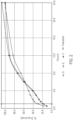
- a solid oral dosage form such as a tablet provided by the present disclosure can be characterized by a dissolution profile of a compound of Formula (1) or a pharmaceutically acceptable salt thereof in a two- stage dissolution medium as determined using a USP I dissolution apparatus with an agitation rate of 100 RPM at a temperature of 37 °C, that is bioequivalent to any one of the dissolution profiles shown in FIG. 1 , where the first stage comprises immersing the oral dosage form in 0.1N hydrochloric acid for 1 hour; the second stage comprises immersing the oral dosage form in a 50 mM acetate buffer at pH 4.5 for the duration.
- a solid oral dosage form such as a tablet provided by the present disclosure can be characterized by a dissolution profile of a compound of Formula (1) or a pharmaceutically acceptable salt thereof in a two-stage dissolution medium as determined using a USP I dissolution apparatus with an agitation rate of 100 RPM at a temperature of 37 °C, that is bioequivalent to any one of the dissolution profiles shown in FIG. 1 , where the first stage comprises immersing the oral dosage form in 0.1N hydrochloric acid for 1 hour; the second stage comprises immersing the oral dosage form in a 50 mM acetate buffer at pH 4.5 for the duration.
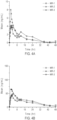
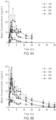
- the plasma esketamine concentration can be bioequivalent to any one of the pharmacokinetic profiles presented in FIGS. 4A , 5 , 6A , and 7A , and as summarized in any one of Tables 8-11.
- the plasma noresketamine concentration can be bioequivalent to any one of the pharmacokinetic profiles presented in FIGS. 4B , 5 , 6B , and 7B , and as summarized in any one of Tables 8-11.
- the Cmax of the mean plasma esketamine concentration can be, for example, from 5 ng/mL to 10 ng/mL, from 6 ng/mL to 9 ng/mL, or from 6.5 ng/mL to 8.5 ng/mL.
- the Cmax of the mean plasma noresketamine concentration can be, for example, from 40 ng/mL to 80 ng/mL, from 45 ng/mL to 75 ng/mL, from 50 ng/mL to 70 ng/mL, or from 55 ng/mL to 65 ng/mL.
- the Cmax of the mean plasma esketamine concentration can be, for example, less than 11 ng/mL, less than 9 ng/mL, less than 7 ng/mL or less than 5 ng/mL.
- the Cmax of the mean plasma noresketamine concentration can be, for example, less than 100 ng/mL, less than 80 ng/mL, or less than 60 ng/mL.
- the Tmax of the mean plasma esketamine concentration can be, for example, from 2 minutes to 6 minutes, from 2.5 minutes to 5.5 minutes, of from 3 minutes to 5 minutes.
- the Tmax of the mean plasma noresketamine concentration can be, for example, from 3 minutes to 6 minutes from 3.5 minutes to 5.5 minutes, or from 4 minutes to 5 minutes.
- the t1/2 of the mean plasma esketamine concentration can be, for example, from 5 minutes to 15 minutes, from 6 minutes to 12 minutes, from 7 minutes to 11 minutes, or from 8 to 10 minutes.
- the t1/2 of the mean plasma noresketamine concentration can be, for example, from 8 minutes to 12 minutes from 8.5 minutes to 11.5 minutes, or from 9 minutes to 11 minutes.
- the mean plasma esketamine AUCO-inf can be, for example, from 60 hr ⁇ ng/mL to 120 hr ⁇ ng/mL, from 70 hr ⁇ ng/mL to 110 hr ⁇ ng/mL, or from 80 hr ⁇ ng/mL to 100 hr ⁇ ng/mL.
- the mean plasma esketamine AUCO-inf can be, for example, greater than 50 hr ⁇ ng/mL, greater than 100 hr ⁇ ng/mL, greater than 150 hr ⁇ ng/mL, or greater than 200 hr ⁇ ng/mL.
- the mean plasma noresketamine AUCO-inf can be, for example, from 850 hr ⁇ ng/mL to 1,000 hr ⁇ ng/mL, from 875 hr ⁇ ng/mL to 975 hr ⁇ ng/mL, or from 850 hr ⁇ ng/mL to 950 hr ⁇ ng/mL.
- the mean plasma noresketamine AUCO-inf can be, for example, greater than 600 hr ⁇ ng/mL, greater than 800 hr ⁇ ng/mL, greater than 1,000 hr ⁇ ng/mL, or greater than 1,200 hr ⁇ ng/mL.
- the mean plasma esketamine AUC0-12 can be, for example, from 20 hr ⁇ ng/mL to 40 hr ⁇ ng/mL, from 22 38 hr ⁇ ng/mL to 38 hr ⁇ ng/mL, from 24 hr ⁇ ng/mL to 36 hr ⁇ ng/mL, or from 26 hr ⁇ ng/mL to 34 hr ⁇ ng/mL.
- the mean plasma esketamine AUC0-12 can be, for example, greater than 20 hr ⁇ ng/mL, greater than 30 hr ⁇ ng/mL, greater than 40 hr ⁇ ng/mL, or greater than 50 hr ⁇ ng/mL.
- the mean plasma noresketamine AUC0-12 can be, for example, greater than 200 hr ⁇ ng/mL, greater than 300 hr ⁇ ng/mL, greater than 400 hr ⁇ ng/mL, or greater than 500 hr ⁇ ng/mL.
- the mean plasma esketamine Cmax/Cave(0-12h) can be, for example, from 2 to 4, from 2.2 to 3.8, from 2.4 to 3.6, or from 2.6 to 3.4.
- the mean plasma noresketamine Cmax/Cave(0-12h) can be, for example, from, 1.5 to 3, from 1.7 to 2.8, from 1.9 to 2.6, or from 2.1 to 2.4.
- the mean plasma esketamine Cmax/Cave(0-12h) can be, for example, less than 4.0, less than 3.5, less than 3.0, or less than 2.5.
- the mean plasma noresketamine Cmax/Cave(0-12h) can be, for example, less than 3.0, less than 2.5, or less than 2.0.
- the Cmax of the mean plasma esketamine concentration can be, for example, from 5 ng/mL to 35 ng/mL, from 10 ng/mL to 30 ng/mL, or from 15 ng/mL to 25 ng/mL.
- the Cmax of the mean plasma noresketamine concentration is, for example, from 50 ng/mL to 300 ng/mL, from 100 ng/mL to 250 ng/mL, or from 100 ng/mL to 200 ng/mL.
- the Cmax of the mean plasma esketamine concentration can be, for example, less than 50 ng/mL, less than 40 ng/mL, less than 35 ng/mL, less than 30 ng/mL, less than 25 ng/mL, less than 20 ng/mL, or less than 15 ng/mL.
- the Cmax of the mean plasma noresketamine concentration is, for example, less than 350 ng/mL, less than 300 ng/mL, less than 250 ng/mL, less than 200 ng/mL, less than 150 ng/mL, less than 100, or less than 50 ng/mL.
- the Tmax of the mean plasma esketamine concentration can be, for example, from 2 minutes to 5 minutes, from 2.5 minutes to 5.0 minutes, of from 3.0 minutes to 4.0 minutes.
- the Tmax of the mean plasma noresketamine concentration can be, for example, from 3 minutes to 8 minutes from 3.0 minutes to 7.0 minutes, or from 3.0 minutes to 5.0 minutes.
- the t1/2 of the mean plasma esketamine concentration can be, for example, from 7 minutes to 11 minutes, from 6 minutes to 10 minutes, or from 7 to 9 minutes.
- the t1/2 of the mean plasma noresketamine concentration can be, for example, from 5.0 minutes to 12.0 minutes from 6.0 minutes to 11.0 minutes, or from 9.0 minutes to 11.0 minutes.
- the mean plasma esketamine AUCO-inf can be, for example, from 50 hr ⁇ ng/mL to 300 hr ⁇ ng/mL, from 100 hr ⁇ ng/mL to 250 hr ⁇ ng/mL, or from 150 hr ⁇ ng/mL to 200 hr ⁇ ng/mL.
- the mean plasma esketamine AUCO-inf can be, for example, greater than 50 hr ⁇ ng/mL, greater than 100 hr ⁇ ng/mL, greater than 150 hr ⁇ ng/mL, greater than 200 hr ⁇ ng/mL, or greater than 250 hr ⁇ ng/mL.
- the mean plasma noresketamine AUCO-inf can be, for example, from 500 hr ⁇ ng/mL to 3,500 hr ⁇ ng/mL, from 1,000 hr ⁇ ng/mL to 3,000 hr ⁇ ng/mL, or from 1,500 hr ⁇ ng/mL to 2,500 hr ⁇ ng/mL.
- the mean plasma noresketamine AUCO-inf can be, for example, greater than 500 hr ⁇ ng/mL, greater than 1,000 hr ⁇ ng/mL, greater than 1,500 hr ⁇ ng/mL, greater than 2,000 hr ⁇ ng/mL, greater than 2,500 hr ⁇ ng/mL, greater than 3,000 hr ⁇ ng/mL, or greater than 3,500 hr ⁇ ng/mL.
- the mean plasma esketamine AUC0-12 can be, for example, from 20 hr ⁇ ng/mL to 300 hr ⁇ ng/mL, from 50 hr ⁇ ng/mL to 200 hr ⁇ ng/mL, or from 100 hr ⁇ ng/mL to 150 hr ⁇ ng/mL.
- the mean plasma esketamine AUC0-12 can be, for example, greater than 20 hr ⁇ ng/mL, greater than 50 hr ⁇ ng/mL, greater than 100 hr ⁇ ng/mL, greater than 150 hr ⁇ ng/mL, or greater than 200 hr ⁇ ng/mL.
- the mean plasma noresketamine AUC0-12 can be, for example, from 200 hr ⁇ ng/mL to 2,500 hr ⁇ ng/mL, from 300 hr ⁇ ng/mL to 2,000 hr ⁇ ng/mL, or from 500 hr ⁇ ng/mL to 1,500 hr ⁇ ng/mL.
- the mean plasma noresketamine AUC0-12 can be, for example, greater than 200, greater than 500 hr ⁇ ng/mL, greater than 1,000 hr ⁇ ng/mL, greater than 1,500 hr ⁇ ng/mL, greater than 2,000 hr ⁇ ng/mL, or greater than 2,500 hr ⁇ ng/mL.
- the mean plasma esketamine Cmax/Cave(0-12h) can be, for example, from 1.0 to 4.0, from 1.4 to 3.6, from 1.8 to 3.2, or from 2.2 to 3.0.
- the mean plasma noresketamine Cmax/Cave(0-12h) can be, for example, from, 1.0 to 2.2, from 1.2 to 2.0, or from 1.4 to 1.8.
- the mean plasma esketamine Cmax/Cave(0-12h) can be, for example, less than 4.0, less than 3.5, less than 3.0, less than 2.5, or less than 2.
- the mean plasma noresketamine Cmax/Cave(0-12h) can be, for example, less than 2.5, less than 2.0, or less than 1.5.
- Oral dosage forms such as tablet dosage forms provided by the present disclosure can provide a dose-proportional amount of esketamine and noresketamine in the blood of a patient.
- Oral dosage forms such as tablet dosage forms provided by the present disclosure can provide a dose-proportional amount of esketamine in the blood of a patient such as from 10 hr ⁇ ng/mL to 1,000 hr ⁇ ng/mL, from 20 hr ⁇ ng/mL to 800 hr ⁇ ng/mL, or from 50 hr ⁇ ng/mL to 600 hr ⁇ ng/mL esketamine.
- Oral dosage forms such as tablet dosage forms provided by the present disclosure can provide a dose-proportional amount of noresketamine in the blood of a patient such as from 10 hr ⁇ ng/mL to 10,000 hr ⁇ ng/mL, from 50 hr ⁇ ng/mL to 8,000 hr ⁇ ng/mL, or from 100 hr ⁇ ng/mL to 6,000 hr ⁇ ng/mL noresketamine.
- a pharmaceutical composition and oral dosage form provided by the present disclosure can be used to treat a disease known to be treated by ketamine or determined to be treated by ketamine.
- a pharmaceutical composition and oral dosage form provided by the present disclosure can be used to treat a disease known to be or determined to be treated by ketamine and one or more additional therapeutic agents.
- a pharmaceutical composition and oral dosage form provided by the present disclosure can be used to treat a neurological disease, a psychiatric disease, or pain.
- a pharmaceutical composition and oral dosage form provided by the present disclosure can be used to treat a neurological disease such as a neurological disease of the central nervous system.
- suitable neurological diseases include Alzheimer's disease; amyotrophic lateral sclerosis; back pain; Bell's palsy; birth defects of the brain and spinal cord; brain aneurysm; brain injury; brain tumor; cerebral palsy; chronic fatigue syndrome; concussion; dementia; disk disease of the neck and lower back; dizziness; dystonia; epilepsy; Guillain-Barré syndrome; cluster headache; tension headache; migraine; motor neuron disease amyotrophic lateral sclerosis; multiple sclerosis; muscular dystrophy; neuralgia; neurofibromatosis; neuropathy; neuromuscular and related diseases; Parkinson's disease; progressive supranuclear palsy; psychiatric conditions such as severe depression, obsessive-compulsive disorder; sciatica; scoliosis; seizures; shingles; spinal cord injury; spinal deformity; spinal disorders; spine tumor; stroke; traumatic brain injury; and vertigo.
- a pharmaceutical composition and oral dosage form provided by the present disclosure can be used to treat a psychiatric disease.
- Example of suitable psychiatric diseases include alcohol or substance use disorder; anxiety disorders including generalized anxiety disorder, panic disorder, phobias, and social anxiety disorder; adult attention deficit/hyperactivity disorder; bipolar disorder including major depressive episode, hypomanic episode, manic episode, and mixed specifier (formerly mixed episode); depression including postpartum depression and seasonal affective disorder; eating disorders; obsessive-compulsive disorder; opioid use disorder symptoms; posttraumatic stress disorder; schizophrenia; dissociative disorders; feeding and eating disorders; sexual and paraphilic disorders; sleep and wake disorders; childhood mental disorders including autism spectrum disorder such as Asperger's disorder, autistic disorder, and Rett's disorder, attention deficit/hyperactivity disorder, and autism; personality disorders including antisocial personality disorder, avoidant personality disorder, borderline personality disorder, dependent personality disorder, histrionic personality disorder, multiple personality disorder, dissociative identity disorder, narcissistic personality disorder, obsessive-compulsive personality disorder, paranoid personality disorder, schizoid personality disorder, and schizotypal personality
- a psychiatric disease can be selected from an alcohol abuse disorder, a substance abuse disorder, an anxiety disorder, an adult attention deficit/hyperactivity disorder, a bipolar disorder, an obsessive-compulsive disorder, an opioid use disorder, posttraumatic stress disorder, schizophrenia, a dissociative disorder, a feeding and eating disorder, a sexual and paraphilic disorder, a sleep and wake disorder, a childhood mental disorder, and a personality disorder.
- a psychiatric disease can be selected from a mood disorder, a substance abuse disorder and suicidal ideation.
- a psychiatric disease can be a mood disorder selected from post-traumatic stress syndrome, anxiety, bipolar disorder, and obsessive-compulsive disorder.
- a pharmaceutical composition and oral dosage form provided by the present disclosure can be administered with another drug known to be useful in treating major depressive disorder.
- drugs known to be useful in treating major depressive disorder include selective serotonin reuptake inhibitors such as citalopram, escitalopram, and sertraline, and antidepressants such as bupropion, mirtazapine, imipramine, and nortriptyline; brexpiprazole, brintellix, budeprion, buproban, bupropion, citalopram, duloxetine, desvenlafaxine, venlafaxine, escitalopram, luomilnacipran, fluoxetine, milnacipran, mirtazapine, nefazodone, olanzapine, tranylcypromine, paroxetine, paroxetine mesylate, and trazodone.
- selective serotonin reuptake inhibitors such as citalopram, escitalopram, and sertraline
- antidepressants such as bupropion, mirtazapine, imipramine, and
- a pharmaceutical composition and oral dosage form provided by the present disclosure can be used to treat pain.
- pain examples include acute pain, addiction, advanced prostate cancer, AIDs-related pain, ankylosing spondylitis, arachnoiditis, arthritis, arthrofibrosis, ataxic cerebral palsy, autoimmune atrophic gastritis, autoimmune diseases, avascular necrosis, back pain, Bechet's disease (syndrome), breakthrough pain, burning mouth syndrome, bursitis, cerebral autosomal dominant arteriopathy, cancer pain, carpal tunnel, cauda equina syndrome, central pain syndrome, cerebral palsy, cerebrospinal fluid leaks, cervical stenosis, Charcot-Marie-Tooth disease, chronic fatigue syndrome, chronic functional abdominal pain, chronic pain, chronic pancreatitis, coccyx, collapsed lung (pneumothorax), complementary and alternative medicine, complex regional pain syndrome, corneal neuropathic pain, Crohn's disease, degenerative disc disease, dependence (physical), depression, Dercum's disease, dermatomyositis, diabetic peripheral neuropathy
- Ketamine is an NMDA (N-methyl-D-aspartate) receptor antagonist.
- NMDA N-methyl-D-aspartate
- a compound provided by the present disclosure which, following oral administration, releases ketamine into the systemic circulation can be useful in treating diseases for which ketamine and other NMDA receptor antagonists are useful in treating.
- NMDA receptor antagonists are known to be useful in treating or are believed to be useful in treating, for example, acute pain, acute traumatic pain, alcohol use disorder, Alzheimer's disease, anxiety disorders, anxious depression, autism spectrum disorder, bipolar depression, bipolar I disorder, bipolar II disorder, chronic pain, cancer pain, cognitive symptom, cortical spreading depolarization, cortical spreading depression, violent/aggressive behavior, depression, fracture pain, head and neck cancer, headache, Huntington's disease, intractable pain, major depression disorder, migraine, mood disorders, neuropathic pain, obsessive compulsive disorder, obstructive sleep apnea syndrome, pancreatic cancer pain, Parkinson's disease, perinatal depression, post-operative cognitive dysfunction, postoperative pain, postpartum depression, post-traumatic stress disorder, pressure ulcer, psychotic-like symptoms, refractory cancer pain, Rett syndrome, schizophrenia, sleep apnea, social anxiety disorder, stress disorders, subarachnoid hemorrhage, substance use disorders, suicide, su
- a pharmaceutical composition and oral dosage form provided by the present disclosure can be sued to treat an anxiety disorder, a seasonal affective disorder, mania, a bipolar disorder, obsessive-compulsive disorder, insomnia and fatigue resulting from jet lag, mental schizophrenia, seizure, panic attack, melancholia, alcohol addiction, drug addiction, alcoholism, substance abuse, drug addiction withdrawal symptoms, insomnia, a psychotic disorder, epilepsy, somnipathy, sleep disorder, sleep apnea syndrome, a mandatory eating disorder, fibromyalgia, stress, obesity, Parkinson's disease, a cognitive disorder, a memory disorder, premenstrual tension syndrome, a migraine headache, memory loss, Alzheimer silent disease or a disorder related to normal or pathological aging.
- a pharmaceutical composition or oral dosage form provided by the present disclosure can be used to treat a disease for which the etiology of the disease is associated with the NMDA receptor.
- a pharmaceutical composition or oral dosage form provided by the present disclosure can be administered to a patient in combination with a drug known to be useful in treating a side effective of ketamine.
- side effects of ketamine include sleepiness, dizziness, poor coordination, blurred vision, dissociative symptom, impairment of attention and concentration, anxiety, and confusion.
- Drugs known to be useful in treating a side effect of ketamine include, for example, clonidine.
- Methods provided by the present disclosure include providing a therapeutically effective amount of ketamine in the systemic circulation of a patient comprising administering to a pharmaceutical composition and oral dosage form provided by the present disclosure.
- a pharmaceutical composition and oral dosage form provided by the present disclosure can be administered orally.
- a pharmaceutical composition and oral dosage form provided by the present disclosure when orally administered, provide an enhanced oral bioavailability of ketamine compared to the oral bioavailability of orally administered ketamine.
- (S)-ketamine and (R)-ketamine has an oral bioavailability of about 18% with a C max of about 41 ng/mL, a T max of about 31 min, and an AUC o-inf ng ⁇ h/mL.
- (S)-ketamine and (R)-ketamine has an oral bioavailability of about 18% with a C max of about 41 ng/mL, a T max of about 31 min, and an AUC o-inf ng ⁇ h/mL.
- a compound of Formula (1) can exhibit a ketamine oral bioavailability (%F) of at least 10%, at least 20%, at least 30%, at least 40%, at least 50%, or at least 60%.
- a compound of Formula (1) can provide a ketamine oral availability, for example, from 5% to 90% from, 10% to 80%, from 15% to 70%, or from 20% to 60%.
- Single and multiple doses of ketamine for treating diseases such as depression can range, for example from 50 mg to 300 mg per day.
- a pharmaceutical composition and oral dosage form provided by the present disclosure can be administered in conjunction with an agent known or believed to be effective in treating the disease being treated with ketamine.
- a pharmaceutical composition and oral dosage form provided by the present disclosure can be co-administered with other NMDA receptor antagonists including, for example, competitive antagonists such as AP5 (APV, R-2-amino-5-phosphonopentanoate), AP7 (2-amino-7-phosphonoheptanoic acid), copene (3-[(R)-2-carboxypiperazin-4-yl]-prop-2-enyl-1-phosphonic acid), selfotel, and aspartame; uncompetitive channel blockers including minocycline, amantadine, atomoxetine, AZD6765, agmatine, chloroform, dextrallorphan, dextromethorphan, dextrorphan, diphenidine, dizocilpine (MK-801), ethanol, eticyclidine, gacyclidine, ketamine, magnesium, memantine, methoxetamine, nitromemantine, nitrous oxide,
- a dose of compound of Formula (1) and appropriate dosing intervals may be selected to maintain a sustained therapeutically effective concentration of the compound of ketamine in the blood of a patient, and in certain embodiments, without exceeding a minimum adverse concentration.
- a therapeutically effective concentration of ketamine in the blood or plasma of a patient can be less than an amount that causes unacceptable adverse effects including adverse effects to homeostasis.
- a therapeutically effective concentration of ketamine in the blood or plasma of a patient can be an amount sufficient to restore and/or maintain homeostasis in the patient.
- a therapeutically effective amount of ketamine can be maintained for greater than 1 hour, greater than 2 hours, greater than 3 hours, greater than 4 hours, greater than 5 hours, greater than 6 hours, greater than 7 hours, or greater than 8 hours.
- a therapeutically effective amount of ketamine can be maintained, for example, from 1 hour to 10 hours, from 2 hours to 8 hours, from 2 hours to 6 hours, or from 2 hours to 4 hours.
- a therapeutically effective plasma ketamine concentration of a patient can be, for example, greater than 5 ng/mL, greater than 10 ng/mL, greater than 20 ng/mL, greater than 50 ng/mL, greater than 100 ng/mL, greater than 150 ng/mL, or greater than 200 ng/mL, where the disease or condition, for example, is pain or depression.
- a therapeutically effective plasma ketamine concentration for treating, for example, pain or depression can range from 1 ng/mL to 250 ng/mL, form 5 ng/mL to 200 ng/mL, from 10 ng/mL to 175 ng/mL, or from 50 ng/mL to 175 ng/mL.
- a therapeutically effective AUC 0-inf plasma ketamine concentration for treating, for example, pain or depression can range, for example, from 10 ng ⁇ h/mL to 500 ng ⁇ h/mL, from 50 ng ⁇ h/mL to 400 ng ⁇ h/mL, or from 100 ng ⁇ h/mL to 300 ng ⁇ h/mL.
- a dose of a compound of Formula (1) for treating a disease such as, for example, pain or depression can range from 0.1 mg-equivalents ketamine/kg to 3 mg-equivalents/kg, from 0.5 mg-equivalents//kg to 2.5 mg/kg, or from 1 mg-equivalents//kg to 2 mg/kg.
- a dose of a compound of Formula (1) for treating a disease such as, for example, pain or depression can be greater than 0.1 mg-equivalents ketamine//kg, greater than 0.5 mg-equivalents/kg, greater than 1 mg-equivalents/kg, or greater than 2 mg-equivalents/kg.
- a dose of a compound of Formula (1) for treating a disease such as, for example, pain or depression can range from 10 mg-equivalents ketamine to 250 mg-equivalents, from 20 mg-equivalents to 200 mg-equivalents, or from 25 mg-equivalents to 100 mg-equivalents.
- a dose of a compound of Formula (1) for treating a disease such as, for example, pain or depression can be greater than 10 mg-equivalents ketamine, greater than 25 mg-equivalents, greater than 50 mg-equivalents, greater than 75 mg-equivalents, greater than 100 mg-equivalents, greater than 150 mg-equivalents, greater than 200 mg-equivalents, or greater than 250 mg-equivalents.
- An oral dosage form provided by the present disclosure can be administered at appropriate intervals for an appropriate duration to treat a disease.
- An oral dosage form can be determined, for example, once per day, twice per day, three times per day, or four times per day.
- a dosing interval and the dose administered can vary during the treatment.
- a pharmaceutical composition and oral dosage form provided by the present disclosure can be included in a kit that may be used to administer the pharmaceutical composition or oral dosage form to a patient for therapeutic purposes.
- a kit may include a pharmaceutical composition or oral dosage form comprising a compound of Formula (1) suitable for administration to a patient and instructions for administering the pharmaceutical composition or oral dosage form to the patient.
- a kit for use in treating a disease such as a psychiatric disease, a neurological disease or pain in a patient can comprise a pharmaceutical composition or oral dosage form provided by the present disclosure, a pharmaceutically acceptable vehicle for administering the pharmaceutical composition or oral dosage form, and instructions for administering the pharmaceutical composition or oral dosage form to a patient.
- kit Instructions supplied with a kit may be printed and/or supplied, for example, as an electronic-readable medium, a video cassette, an audiotape, a flash memory device, or may be published on an internet web site or distributed to a patient and/or health care provider as an electronic communication.
- ketamine derivative Compound (39) was formulated as the hydrochloride salt.
- the pharmacokinetic parameters disclosed in the present application were calculated using Phoenix ® WinNonlin ® version 8.2 software used for non-compartmental analysis, pharmacokinetic/pharmacodynamic, and toxicokinetic modeling, available from Certara Corporation, Menlo Park, CA. Pharmacokinetic parameters were computed for each subject based on actual rather than protocol-nominal elapsed times. Area-Under-the-Curve (AUC) parameters were computed using the linear trapezoidal rule from time zero to the target time point. For example, the AUC was computed for durations from time zero to 6 hours (AUC 0-6h ) and from time zero to infinity (AUC 0-inf ).
- AUC 0-inf AUC 0-last + C plast /slope, where AUC 0-last is the AUC from time zero to the time point of the last measurable concentration (C plast ) and slope is the half-life slope.
- the half-life slope was computed using linear regression on the terminal portion of the natural log concentration vs time profile.
- the dry materials were added to a GMX bowl and mixed for 1 min with an impeller speed of 870 RPM.
- Atomized water was added to the GMX bowl at 1.0 g/min while mixing with an impeller speed of 850 RPM and a chopper speed of 3600 rpm.
- the material was wet massed for 5 min between water additions at 560 rpm, and oven dried for about 14 hours at 40 °C, LOD 0.2%.
- the milled granules had a mean particle diameter of about 250 ⁇ m when sieved through a 30 mesh screen.
- the properties of a milled granulation are shown in Table 2. Table 2. Granulation properties.
- Property Value Bulk density 0.45 g/mL Tapped density 0.62 g/mL Compressibility Index 28.0 Angle of Repose 41.2° Flow through Orifice 16 mm
- compositions Containing Sodium Lauryl Sulfate
- compositions with and without sodium lauryl sulfate were prepared as described in Example 3 and tablets prepared as described in Example 4. The constituents of the tablets are provided in Table 3. Table 3. Pharmaceutical composition constituents. Material D (wt%) E (wt%) F (wt%) Compound (39) 44.38 43.38 43.38 2 Hydroxypropylmethyl cellulose 30.0 30.0 40.0 3 Microcrystalline cellulose 15.12 25.12 5.12 4 Sodium lauryl sulfate 10.0 0.0 10.0 5 Magnesium Stearate 0.5 0.5 0.5 1 Granules having 98 wt% ketamine derivative (39) from Example 1. 2 Methocel ® K100 Premium DC available from Colorcon, Inc.
- the two-stage dissolution profiles showing the amount of compound (39) released over time for the sodium lauryl sulfate-containing tablets are shown in FIG. 2 .
- the transition line indicates the time when the dissolution medium was changed from 0.1N HCl to a 50 mM pH 4.5 acetate buffer.
- sodium lauryl sulfate reduces the solubility of compound (39) in the acid stage.
- the dissolution rate is approximately independent of the amount of sodium lauryl sulfate suggesting that there is no ionic interaction between sodium lauryl sulfate and compound (39).
- HPMC K100 DC Methocel ® K100 Premium LV DC available from Colorcon, Inc.
- HPMC K4M DC Methocel ® K4M Premium DC2 available from Colorcon, Inc.
- Sodium lauryl sulfate Kolliphore ® SLS, available from BASF.
- Microcrystalline cellulose Avicel ® PH 102 available from Dupont.
- Magnesium stearate available from Mallinckrodt.
- a pharmaceutical composition was prepared be first passing the granulation and the sodium lauryl sulfate through a 35-mesh screen.
- the screened materials, the hydroxypropyl methylcellulose, and the microcrystalline cellulose were added to a 250 mL jar and attached to a V-blender.
- the formulation was blended for 5 minutes.
- Magnesium stearate, passed through a 35-mesh screen was added, and the formulation blended for an additional 1 minute to provide the pharmaceutical composition.
- Oral tablets were prepared by hand using a Piccola B/D tablet press equipped with a 9 mm round tooling by compacting the pharmaceutical composition of Example 2 with a compression force of 1700 PSI to provide oral tablets having an average hardness from about 8 kP to 10 kP.
- the oral tablets had a weight of about 250 mg, and a thickness of about 4.1 mm.
- a two-stage dissolution apparatus was used to measure the dissolution profile of the tablets.
- the dissolution medium was then immediately charged to a 50 mM acetate buffer at pH 4.5 immediately following 1 hour sampling via addition of 100 mM acetate buffer with appropriate pH and continued through 18 hours.
- the conditions of the dissolution apparatus are shown in Table 5. Table 5. Dissolution apparatus conditions.
- Dissolution profiles showing the amount of compound (39) released over time for tablets prepared using pharmaceutical compositions (A), (B), and (C) are shown in FIG. 1 .
- Modified release tablets were prepared by first preparing a granulation of Compound (39) and hydroxypropylmethyl cellulose E3 (Pharmacoat ® 603). The granulation included 98% of Compound (39). The granulation, hydroxypropylmethyl cellulose, sodium lauryl sulfate, and microcrystalline cellulose in the amounts listed in Table 6 were combined, mixed using a V-blender, and sieved through a 35-mesh screen. The sieved formulation was then blended for 20 minutes using a V-blender. Magnesium stearate was sieved through a 35-mesh screen and added to the blended formulation. The formulation with the added magnesium stearate was blended for an additional 2 minutes. Table 6. Constituents of modified release formulations.
- Intrinsic flowability was determined according to USP ⁇ 1174> using a Flodex TM instrument.
- Tablets were prepared using a Piccola B/D tablet press equipped with a 9 mm tooling, a press speed of 20 RPM, a compression force of 28 kN.
- the tablets had an average weight of 251 mg, an average hardness of from 6.3 kP to 6.5 kP, an average thickness from 3.63 mm to 3.75, and a friability of 0.1%.
- Hardness was determined according to USP ⁇ 1217> using diametral compression.
- Friability was determined using a sonic sifter.
- Each of the modified release tablets contained 43 wt% or 107.75 mg of Compound (39) equal to 58.3 mg equivalents of esketamine.
- FIG. 1 Two-stage dissolution profiles for the tablets are shown in FIG. 1 .
- the dissolution profiles exhibited a zero-order release profile.
- the plasma concentration of compound (39), esketamine and noresketamine was determined using validated liquid chromatography mass spectrometry.
- the first study was an open-label, sequential, crossover assessment of single 100 mg oral doses of compound (39) in immediate release (IR) and modified release (MR) prototype formulations. Twelve (12) healthy participants received 1 dose (either an IR capsule or one of three MR tablets MR1, MR2, and MR3)) every other day (48 hours between doses) in the morning. The 12 participants were randomly assigned to one of four formulation testing sequences (ABCD, BCDA, CDAB, DABC). Participants were dosed in the mornings of Day 1, 3, 5 and 7, for a total of 4 dosing days.
- IR immediate release
- MR modified release
- FIG. 4A The pharmacokinetic profiles for esketamine and noresketamine following oral administration of modified release tablets comprising 100 mg compound (39) are shown in FIG. 4A and in FIG. 4B , respectively.
- the pharmacokinetic parameters are summarized in FIG. 5 .
- Modified release tablets (MR1 tablet dosage forms) containing 100 mg, 200 mg, 300 mg, or 400 mg of compound (39) were administered to groups of 6 fasted, healthy subjects once a day for seven (7).
- the pharmacokinetic profiles for the mean (+/- SEM) plasma esketamine concentration following administration of a modified release tablet comprising 100 mg, 200 mg, 300 mg, or 400 mg of compound (39) during the first day are shown in FIG. 6A , and during day 7 of the study in FIG. 6B .
- the pharmacokinetic profiles for the mean (+/- SEM) plasma noresketamine concentration following administration of a modified release tablet comprising 200 mg of compound (39) during the first day are shown in FIG. 7A , and during day 7 of the study in FIG. 7B .
- the pharmacokinetic parameters for the plasma esketamine and plasma noresketamine concentration-time profiles shown in FIGS. 6A-7B are provided in Tables 8-11.
- Table 8 Summary of PK parameter for 100 mg dose of compound (39) in an MR1 tablet dosage form.
- Adverse events were monitored following oral administration of tablet dosage forms to subjects. Common adverse events observed when esketamine is administered intranasally include sedation, dissociation, increase in blood pressure, and cognitive impairment. The number of adverse events observed following oral administration of 100 mg compound (39) in IR, MR1, MR2, and MR3 tablets is shown in Table 12. The number of adverse events is associated with a higher Cmax and with immediate release tablets. Table 12. Total adverse events and mean pharmacokinetic parameters for 100 mg compound (39) dosage forms.
Landscapes
- Health & Medical Sciences (AREA)
- Life Sciences & Earth Sciences (AREA)
- Chemical & Material Sciences (AREA)
- Medicinal Chemistry (AREA)
- Pharmacology & Pharmacy (AREA)
- Animal Behavior & Ethology (AREA)
- General Health & Medical Sciences (AREA)
- Public Health (AREA)
- Veterinary Medicine (AREA)
- Epidemiology (AREA)
- Biophysics (AREA)
- Molecular Biology (AREA)
- Emergency Medicine (AREA)
- Neurosurgery (AREA)
- Psychiatry (AREA)
- Engineering & Computer Science (AREA)
- Bioinformatics & Cheminformatics (AREA)
- Biomedical Technology (AREA)
- Neurology (AREA)
- Pain & Pain Management (AREA)
- Chemical Kinetics & Catalysis (AREA)
- General Chemical & Material Sciences (AREA)
- Nuclear Medicine, Radiotherapy & Molecular Imaging (AREA)
- Organic Chemistry (AREA)
- Acyclic And Carbocyclic Compounds In Medicinal Compositions (AREA)
- Medicinal Preparation (AREA)
- Pharmaceuticals Containing Other Organic And Inorganic Compounds (AREA)
Claims (7)
- Pharmazeutische Zusammensetzung umfassend:35 Gew.-% bis 55 Gew.-% ((((S)-1-(2-Chlorphenyl)-2-oxocyclohexyl)(methyl)carbamoyl)oxy)methyldimethyl-L-valinat (39) oder eines pharmazeutisch akzeptablen Salzes davon;0,5 Gew.-% bis 1,5 Gew.-% Hydroxypropylmethylcellulose E3;20 Gew.-% bis 40 Gew.-% eines Polymers kontrollierter Freisetzung, wobei das Polymer kontrollierter Freisetzung Hydroxypropylmethylcellulose umfasst;10 Gew.-% bis 20 Gew.-% mikrokristalline Cellulose;5 Gew.-% bis 15 Gew.-% Natriumlaurylsulfat;0,1 Gew.-% bis 1,0 Gew.-% Magnesiumstearat; undwobei Gew.-% auf das Gesamtgewicht der pharmazeutischen Zusammensetzung bezogen ist.
- Pharmazeutische Zusammensetzung nach Anspruch 1, wobei die Hydroxypropylmethylcellulose des Polymers kontrollierter Freisetzung Folgendes umfasst:50 Gew.-% bis 100 Gew.-% einer Hydroxypropylmethylcellulose, die durch einen Methoxylgehalt von 22 % bis 24 %, einen pH-Wert in 2 % Wasser bei 25 °C von 5 bis 8, einen Hydroxypropoxylgehalt von 7,5 % bis 9,5 %, eine Viskosität von 80 mPa-s (cP) bis 120 mPa-s (cP) als 2 %-ige wässrigen Lösung bei 20 °C gekennzeichnet ist; und0 Gew.-% bis 50 Gew.-% einer Hydroxypropylmethylcellulose, die durch einen Methoxylgehalt von 22 % bis 24 %, einen pH-Wert in 2 % Wasser bei 25 °C von 5 bis 8, einen Hydroxypropoxylgehalt von 7,5 % bis 9,5 %, eine Viskosität (Brookfield) von 2 600 cP mPa-s bis 5 000 cP mPa-s als 2 %-ige wässrigen Lösung bei 20 °C gekennzeichnet ist;wobei Gew.-% auf das Gesamtgewicht der Hydroxypropylmethylcellulose bezogen ist.
- Orale Darreichungsform umfassend die pharmazeutische Zusammensetzung nach einem der Ansprüche 1 bis 2, wobei die orale Darreichungsform eine Tablette umfasst.
- Orale Darreichungsform nach Anspruch 3, wobei die orale Darreichungsform 25 mg bis 400 mg ((((S)-1-(2-Chlorphenyl)-2-oxocyclohexyl)(methyl)carbamoyl) oxy)methyldimethyl-L-valinat (39) oder eines pharmazeutisch akzeptablen Salzes davon umfasst.
- Orale Darreichungsform nach Anspruch 3, wobei:
die Hydroxypropylmethylcellulose des Polymers kontrollierter Freisetzung Folgendes umfasst:50 Gew.-% bis 100 Gew.-% einer Hydroxypropylmethylcellulose, die durch einen Methoxylgehalt von 22 % bis 24 %, einen pH-Wert in 2 % Wasser bei 25 °C von 5 bis 8, einen Hydroxypropoxylgehalt von 7,5 % bis 9,5 %, eine Viskosität von 80 mPa-s (cP) bis 120 mPa-s (cP) als 2 %-ige wässrigen Lösung bei 20 °C gekennzeichnet ist; und0 Gew.-% bis 50 Gew.-% einer Hydroxypropylmethylcellulose, die durch einen Methoxylgehalt von 22 % bis 24 %, einen pH-Wert in 2 % Wasser bei 25 °C von 5 bis 8, einen Hydroxypropoxylgehalt von 7,5 % bis 9,5 %, eine Viskosität (Brookfield) von 2 600 cP mPa-s bis 5 000 cP mPa-s als 2 %-ige wässrigen Lösung bei 20 °C gekennzeichnet ist;wobei Gew.-% auf das Gesamtgewicht der Hydroxypropylmethylcellulose bezogen ist. - Pharmazeutische Zusammensetzung nach einem der Ansprüche 1 bis 2 oder orale Darreichungsform nach einem der Ansprüche 3 bis 5 zur Verwendung beim Behandeln einer Krankheit bei einem Patienten, wobei die Krankheit unter Depressionen und Schmerzen ausgewählt wird.
- Pharmazeutische Zusammensetzung oder orale Darreichungsform zur Verwendung nach Anspruch 6, wobei die Depressionen schweres Depressionsleiden ist.
Priority Applications (1)
| Application Number | Priority Date | Filing Date | Title |
|---|---|---|---|
| EP25169852.8A EP4559522A3 (de) | 2021-08-13 | 2022-08-12 | Pharmazeutische zusammensetzungen und orale darreichungsformen von ketaminderivaten |
Applications Claiming Priority (2)
| Application Number | Priority Date | Filing Date | Title |
|---|---|---|---|
| US202163232717P | 2021-08-13 | 2021-08-13 | |
| PCT/US2022/040217 WO2023018966A1 (en) | 2021-08-13 | 2022-08-12 | Pharmaceutical compositions and oral dosage forms of ketamine derivatives |
Related Child Applications (1)
| Application Number | Title | Priority Date | Filing Date |
|---|---|---|---|
| EP25169852.8A Division EP4559522A3 (de) | 2021-08-13 | 2022-08-12 | Pharmazeutische zusammensetzungen und orale darreichungsformen von ketaminderivaten |
Publications (3)
| Publication Number | Publication Date |
|---|---|
| EP4384145A1 EP4384145A1 (de) | 2024-06-19 |
| EP4384145B1 true EP4384145B1 (de) | 2025-04-23 |
| EP4384145C0 EP4384145C0 (de) | 2025-04-23 |
Family
ID=83193220
Family Applications (2)
| Application Number | Title | Priority Date | Filing Date |
|---|---|---|---|
| EP25169852.8A Pending EP4559522A3 (de) | 2021-08-13 | 2022-08-12 | Pharmazeutische zusammensetzungen und orale darreichungsformen von ketaminderivaten |
| EP22765317.7A Active EP4384145B1 (de) | 2021-08-13 | 2022-08-12 | Pharmazeutische zusammensetzungen und orale darreichungsformen von ketaminderivaten |
Family Applications Before (1)
| Application Number | Title | Priority Date | Filing Date |
|---|---|---|---|
| EP25169852.8A Pending EP4559522A3 (de) | 2021-08-13 | 2022-08-12 | Pharmazeutische zusammensetzungen und orale darreichungsformen von ketaminderivaten |
Country Status (8)
| Country | Link |
|---|---|
| US (3) | US11690811B2 (de) |
| EP (2) | EP4559522A3 (de) |
| JP (2) | JP7737544B2 (de) |
| KR (1) | KR20240027792A (de) |
| CN (1) | CN117881394A (de) |
| AU (2) | AU2022326513B9 (de) |
| TW (1) | TWI844074B (de) |
| WO (1) | WO2023018966A1 (de) |
Families Citing this family (1)
| Publication number | Priority date | Publication date | Assignee | Title |
|---|---|---|---|---|
| DK3505157T3 (da) | 2017-12-29 | 2022-02-28 | Celon Pharma Sa | Tørpulver-ketaminsammensætning til pulmonal indgivelse ved behandlingsresistent depression |
Family Cites Families (27)
| Publication number | Priority date | Publication date | Assignee | Title |
|---|---|---|---|---|
| US5648087A (en) | 1993-03-09 | 1997-07-15 | Sanofi Sante Nutrition Animale | Anaesthetic pharmaceutical composition comprising a general anaesthetic and selegiline |
| CA2230690C (en) | 1995-08-30 | 2008-12-23 | Stuart L. Weg | Administration of ketamine to manage pain and to reduce drug dependency |
| WO1997020553A1 (en) | 1995-12-07 | 1997-06-12 | Javitt Daniel C | Treatment of negative and cognitive symptoms of schizophrenia with glycine uptake antagonists |
| US6248789B1 (en) | 1996-08-29 | 2001-06-19 | Stuart L. Weg | Administration of ketamine to manage pain and to reduce drug dependency |
| CA2506615A1 (en) | 2002-11-18 | 2004-06-03 | Yaupon Therapeutics, Inc. | Analgesic uses of norketamine and ketamine/norketamine prodrugs |
| CA2601800C (en) * | 2005-03-14 | 2013-12-03 | Nitin Bhalachandra Dharmadhikari | Oral drug delivery system |
| ES2524994T3 (es) | 2005-09-28 | 2014-12-16 | Auris Medical Ag | Composiciones farmacéuticas para el tratamiento de trastornos del oído interno. |
| CN101765582A (zh) * | 2007-04-26 | 2010-06-30 | 奥斯拜客斯制药有限公司 | 氘标记的氯胺酮 |
| JP5816635B2 (ja) | 2010-03-05 | 2015-11-18 | カリオファーム セラピューティクス,インコーポレイテッド | 核輸送調節剤およびその使用 |
| US20130237559A1 (en) * | 2010-06-30 | 2013-09-12 | Ronnie Ortiz | Sustained release composition comprising an amine as active agent and a salt of a cyclic organic acid |
| SG10201609097PA (en) | 2011-07-29 | 2016-12-29 | Karyopharm Therapeutics Inc | Nuclear transport modulators and uses thereof |
| JP6296985B2 (ja) | 2011-10-14 | 2018-03-20 | ザ ユナイテッド ステイツ オブ アメリカ, アズ リプレゼンテッド バイ ザ セクレタリー, デパートメント オブ ヘルス アンド ヒューマン サービシーズ | うつ病及び神経障害性疼痛の治療における(2r,6r)−ヒドロキシノルケタミン、(s)−デヒドロノルケタミン及び他の(r,s)−ケタミンの立体異性デヒドロ及びヒドロキシル化代謝生成物の使用 |
| LT2858991T (lt) | 2012-05-09 | 2018-11-26 | Biogen Ma Inc. | Branduolinio transporto moduliatoriai ir jų panaudojimas |
| WO2014020155A1 (en) | 2012-08-02 | 2014-02-06 | Clinpharm Reform Gmbh | Oral transmucosal adminstration forms of s-ketamine |
| KR20150065873A (ko) | 2012-10-08 | 2015-06-15 | 오클랜드 유니서비시즈 리미티드 | 케타민 유도체 |
| WO2014205393A1 (en) | 2013-06-21 | 2014-12-24 | Karyopharm Therapeutics Inc. | Nuclear transport modulators and uses thereof |
| EP3010892B8 (de) | 2013-06-21 | 2019-05-22 | Karyopharm Therapeutics Inc. | 1,2,4-triazole als nukleartransportmodulatoren und verwendungen davon |
| EP3377050A4 (de) | 2015-11-17 | 2019-11-20 | The Trustees of Columbia University in the City of New York | Pharmakologische prophylaktika gegen stressinduzierte affektive störungen und deren assoziierte symptome |
| WO2017087388A1 (en) | 2015-11-18 | 2017-05-26 | Mitchell Woods Pharmaceuticals, Inc. | Phenyl cyclohexanone derivatives and methods of making and using them |
| WO2017117529A1 (en) | 2015-12-31 | 2017-07-06 | Karyopharm Therapeutics Inc. | Nuclear transport modulators and uses thereof |
| AU2017250086A1 (en) * | 2016-04-11 | 2018-09-20 | Clexio Biosciences Ltd. | Deuterated ketamine derivatives |
| US20190380978A1 (en) | 2016-06-03 | 2019-12-19 | Small Pharma Ltd | Solid oral dosage forms of 2r,6r-hydroxynorketamine or derivatives thereof |
| US20190240184A1 (en) | 2016-10-27 | 2019-08-08 | National University Corporation Chiba University | Pharmaceutical applications for (s)-norketamine and salts thereof |
| US20180177744A1 (en) | 2016-12-22 | 2018-06-28 | Gary Jay | Method of treating pain and depression using a hybrid mixture of s-ketamine and r-ketamine |
| US11723883B2 (en) * | 2017-06-23 | 2023-08-15 | Ketabon Gmbh | Hydroxynorketamine for the use in the treatment of depression |
| US11471415B2 (en) | 2017-10-10 | 2022-10-18 | Douglas Pharmaceuticals, Ltd. | Extended release pharmaceutical formulation and methods of treatment |
| RU2756512C1 (ru) | 2018-01-10 | 2021-10-01 | ЭксДабл-ЮФАРМА ЛТД. | Пролекарства кетамина, его композиции и применения |
-
2022
- 2022-08-12 JP JP2024508480A patent/JP7737544B2/ja active Active
- 2022-08-12 WO PCT/US2022/040217 patent/WO2023018966A1/en not_active Ceased
- 2022-08-12 US US17/887,049 patent/US11690811B2/en active Active
- 2022-08-12 AU AU2022326513A patent/AU2022326513B9/en active Active
- 2022-08-12 EP EP25169852.8A patent/EP4559522A3/de active Pending
- 2022-08-12 TW TW111130478A patent/TWI844074B/zh active
- 2022-08-12 CN CN202280053892.4A patent/CN117881394A/zh active Pending
- 2022-08-12 KR KR1020247003495A patent/KR20240027792A/ko active Pending
- 2022-08-12 EP EP22765317.7A patent/EP4384145B1/de active Active
-
2023
- 2023-05-17 US US18/198,373 patent/US12396966B2/en active Active
-
2025
- 2025-08-01 US US19/288,895 patent/US20250352496A1/en active Pending
- 2025-08-29 JP JP2025143010A patent/JP2026000935A/ja active Pending
- 2025-10-15 AU AU2025252538A patent/AU2025252538A1/en active Pending
Non-Patent Citations (1)
| Title |
|---|
| YANAGIHARA ET AL., BIOPHARMACEUTICS & DRUG DISPOSITION, vol. 24, 2003, pages 37 - 43 * |
Also Published As
| Publication number | Publication date |
|---|---|
| EP4559522A3 (de) | 2025-07-16 |
| AU2025252538A1 (en) | 2025-11-06 |
| US12396966B2 (en) | 2025-08-26 |
| TW202312991A (zh) | 2023-04-01 |
| US20230098084A1 (en) | 2023-03-30 |
| JP2026000935A (ja) | 2026-01-06 |
| EP4384145C0 (de) | 2025-04-23 |
| JP2024531204A (ja) | 2024-08-29 |
| AU2022326513B2 (en) | 2025-07-24 |
| KR20240027792A (ko) | 2024-03-04 |
| JP7737544B2 (ja) | 2025-09-10 |
| US11690811B2 (en) | 2023-07-04 |
| US20230285325A1 (en) | 2023-09-14 |
| EP4384145A1 (de) | 2024-06-19 |
| CN117881394A (zh) | 2024-04-12 |
| EP4559522A2 (de) | 2025-05-28 |
| TWI844074B (zh) | 2024-06-01 |
| AU2022326513B9 (en) | 2025-10-23 |
| AU2022326513A1 (en) | 2024-02-15 |
| WO2023018966A1 (en) | 2023-02-16 |
| US20250352496A1 (en) | 2025-11-20 |
Similar Documents
| Publication | Publication Date | Title |
|---|---|---|
| AU2010297357B2 (en) | (Z)-2-cyano-3-hydroxy-but-2-enoic acid-(4'-trifluormethylphenyl)-amide tablet formulations with improved stability | |
| JP6173521B2 (ja) | ナルブフィンを含有する製剤及びそれらの使用 | |
| CN102341098A (zh) | 具有高负荷的加巴喷丁前药的口服剂型 | |
| US20250352496A1 (en) | Pharmaceutical compositions and oral dosage forms of ketamine derivatives | |
| TW202203904A (zh) | γ-羥基丁酸衍生物的醫藥組合物及藥物動力學 | |
| US20230157947A1 (en) | Oral pharmaceutical composition comprising carbamate compound and preparation method therefor | |
| CN102869350A (zh) | 稳定的药物组合物 | |
| HK40110972A (zh) | 氯胺酮衍生物的药物组合物和口服剂型 | |
| CA3217789A1 (en) | Fatty acid amide hydrolase (faah) cleavable prodrugs of thyromimetics and combination with peripherally restricted faah inhibitors | |
| US20070099931A1 (en) | Pharmaceutical dosage forms and compositions | |
| RU2829349C1 (ru) | Пероральная фармацевтическая композиция, включающая карбаматное соединение, и способ ее получения | |
| WO2012172413A1 (en) | Pharmaceutical composition comprising a combination of eperisone and diclofenac and process for preparing thereof | |
| JP2023551597A (ja) | フタラジノン誘導体を含む薬剤学的組成物 | |
| HK40088930A (zh) | 包括酞嗪酮衍生物的药物组合物 |
Legal Events
| Date | Code | Title | Description |
|---|---|---|---|
| STAA | Information on the status of an ep patent application or granted ep patent |
Free format text: STATUS: UNKNOWN |
|
| STAA | Information on the status of an ep patent application or granted ep patent |
Free format text: STATUS: THE INTERNATIONAL PUBLICATION HAS BEEN MADE |
|
| PUAI | Public reference made under article 153(3) epc to a published international application that has entered the european phase |
Free format text: ORIGINAL CODE: 0009012 |
|
| STAA | Information on the status of an ep patent application or granted ep patent |
Free format text: STATUS: REQUEST FOR EXAMINATION WAS MADE |
|
| 17P | Request for examination filed |
Effective date: 20240312 |
|
| AK | Designated contracting states |
Kind code of ref document: A1 Designated state(s): AL AT BE BG CH CY CZ DE DK EE ES FI FR GB GR HR HU IE IS IT LI LT LU LV MC MK MT NL NO PL PT RO RS SE SI SK SM TR |
|
| DAV | Request for validation of the european patent (deleted) | ||
| DAX | Request for extension of the european patent (deleted) | ||
| GRAP | Despatch of communication of intention to grant a patent |
Free format text: ORIGINAL CODE: EPIDOSNIGR1 |
|
| STAA | Information on the status of an ep patent application or granted ep patent |
Free format text: STATUS: GRANT OF PATENT IS INTENDED |
|
| INTG | Intention to grant announced |
Effective date: 20241121 |
|
| GRAS | Grant fee paid |
Free format text: ORIGINAL CODE: EPIDOSNIGR3 |
|
| GRAA | (expected) grant |
Free format text: ORIGINAL CODE: 0009210 |
|
| STAA | Information on the status of an ep patent application or granted ep patent |
Free format text: STATUS: THE PATENT HAS BEEN GRANTED |
|
| AK | Designated contracting states |
Kind code of ref document: B1 Designated state(s): AL AT BE BG CH CY CZ DE DK EE ES FI FR GB GR HR HU IE IS IT LI LT LU LV MC MK MT NL NO PL PT RO RS SE SI SK SM TR |
|
| REG | Reference to a national code |
Ref country code: GB Ref legal event code: FG4D |
|
| REG | Reference to a national code |
Ref country code: CH Ref legal event code: EP |
|
| REG | Reference to a national code |
Ref country code: DE Ref legal event code: R096 Ref document number: 602022013670 Country of ref document: DE |
|
| REG | Reference to a national code |
Ref country code: IE Ref legal event code: FG4D |
|
| U01 | Request for unitary effect filed |
Effective date: 20250515 |
|
| U07 | Unitary effect registered |
Designated state(s): AT BE BG DE DK EE FI FR IT LT LU LV MT NL PT RO SE SI Effective date: 20250521 |
|
| PG25 | Lapsed in a contracting state [announced via postgrant information from national office to epo] |
Ref country code: ES Free format text: LAPSE BECAUSE OF FAILURE TO SUBMIT A TRANSLATION OF THE DESCRIPTION OR TO PAY THE FEE WITHIN THE PRESCRIBED TIME-LIMIT Effective date: 20250423 |
|
| PG25 | Lapsed in a contracting state [announced via postgrant information from national office to epo] |
Ref country code: NO Free format text: LAPSE BECAUSE OF FAILURE TO SUBMIT A TRANSLATION OF THE DESCRIPTION OR TO PAY THE FEE WITHIN THE PRESCRIBED TIME-LIMIT Effective date: 20250723 Ref country code: GR Free format text: LAPSE BECAUSE OF FAILURE TO SUBMIT A TRANSLATION OF THE DESCRIPTION OR TO PAY THE FEE WITHIN THE PRESCRIBED TIME-LIMIT Effective date: 20250724 |
|
| PG25 | Lapsed in a contracting state [announced via postgrant information from national office to epo] |
Ref country code: PL Free format text: LAPSE BECAUSE OF FAILURE TO SUBMIT A TRANSLATION OF THE DESCRIPTION OR TO PAY THE FEE WITHIN THE PRESCRIBED TIME-LIMIT Effective date: 20250423 |
|
| PG25 | Lapsed in a contracting state [announced via postgrant information from national office to epo] |
Ref country code: HR Free format text: LAPSE BECAUSE OF FAILURE TO SUBMIT A TRANSLATION OF THE DESCRIPTION OR TO PAY THE FEE WITHIN THE PRESCRIBED TIME-LIMIT Effective date: 20250423 |
|
| PG25 | Lapsed in a contracting state [announced via postgrant information from national office to epo] |
Ref country code: RS Free format text: LAPSE BECAUSE OF FAILURE TO SUBMIT A TRANSLATION OF THE DESCRIPTION OR TO PAY THE FEE WITHIN THE PRESCRIBED TIME-LIMIT Effective date: 20250723 |
|
| PG25 | Lapsed in a contracting state [announced via postgrant information from national office to epo] |
Ref country code: IS Free format text: LAPSE BECAUSE OF FAILURE TO SUBMIT A TRANSLATION OF THE DESCRIPTION OR TO PAY THE FEE WITHIN THE PRESCRIBED TIME-LIMIT Effective date: 20250823 |
|
| U21 | Renewal fee for the european patent with unitary effect paid with additional fee |
Year of fee payment: 4 Effective date: 20251014 |
|
| PG25 | Lapsed in a contracting state [announced via postgrant information from national office to epo] |
Ref country code: SM Free format text: LAPSE BECAUSE OF FAILURE TO SUBMIT A TRANSLATION OF THE DESCRIPTION OR TO PAY THE FEE WITHIN THE PRESCRIBED TIME-LIMIT Effective date: 20250423 |
|
| PG25 | Lapsed in a contracting state [announced via postgrant information from national office to epo] |
Ref country code: CZ Free format text: LAPSE BECAUSE OF FAILURE TO SUBMIT A TRANSLATION OF THE DESCRIPTION OR TO PAY THE FEE WITHIN THE PRESCRIBED TIME-LIMIT Effective date: 20250423 |