EP4348024B1 - Verfahren zur begrenzung einer von mehreren adaptionswerten ausgeführten parameterkorrektur in einer motorsteuerung - Google Patents
Verfahren zur begrenzung einer von mehreren adaptionswerten ausgeführten parameterkorrektur in einer motorsteuerung Download PDFInfo
- Publication number
- EP4348024B1 EP4348024B1 EP22717644.3A EP22717644A EP4348024B1 EP 4348024 B1 EP4348024 B1 EP 4348024B1 EP 22717644 A EP22717644 A EP 22717644A EP 4348024 B1 EP4348024 B1 EP 4348024B1
- Authority
- EP
- European Patent Office
- Prior art keywords
- adaptives
- value
- overall impact
- calculated
- engine
- Prior art date
- Legal status (The legal status is an assumption and is not a legal conclusion. Google has not performed a legal analysis and makes no representation as to the accuracy of the status listed.)
- Active
Links
Images
Classifications
-
- F—MECHANICAL ENGINEERING; LIGHTING; HEATING; WEAPONS; BLASTING
- F02—COMBUSTION ENGINES; HOT-GAS OR COMBUSTION-PRODUCT ENGINE PLANTS
- F02D—CONTROLLING COMBUSTION ENGINES
- F02D41/00—Electrical control of supply of combustible mixture or its constituents
- F02D41/24—Electrical control of supply of combustible mixture or its constituents characterised by the use of digital means
- F02D41/2406—Electrical control of supply of combustible mixture or its constituents characterised by the use of digital means using essentially read only memories
- F02D41/2425—Particular ways of programming the data
- F02D41/2429—Methods of calibrating or learning
- F02D41/2451—Methods of calibrating or learning characterised by what is learned or calibrated
- F02D41/2454—Learning of the air-fuel ratio control
-
- F—MECHANICAL ENGINEERING; LIGHTING; HEATING; WEAPONS; BLASTING
- F02—COMBUSTION ENGINES; HOT-GAS OR COMBUSTION-PRODUCT ENGINE PLANTS
- F02D—CONTROLLING COMBUSTION ENGINES
- F02D41/00—Electrical control of supply of combustible mixture or its constituents
- F02D41/24—Electrical control of supply of combustible mixture or its constituents characterised by the use of digital means
- F02D41/2406—Electrical control of supply of combustible mixture or its constituents characterised by the use of digital means using essentially read only memories
- F02D41/2425—Particular ways of programming the data
- F02D41/2429—Methods of calibrating or learning
- F02D41/2477—Methods of calibrating or learning characterised by the method used for learning
- F02D41/248—Methods of calibrating or learning characterised by the method used for learning using a plurality of learned values
-
- F—MECHANICAL ENGINEERING; LIGHTING; HEATING; WEAPONS; BLASTING
- F02—COMBUSTION ENGINES; HOT-GAS OR COMBUSTION-PRODUCT ENGINE PLANTS
- F02D—CONTROLLING COMBUSTION ENGINES
- F02D41/00—Electrical control of supply of combustible mixture or its constituents
- F02D41/24—Electrical control of supply of combustible mixture or its constituents characterised by the use of digital means
- F02D41/2406—Electrical control of supply of combustible mixture or its constituents characterised by the use of digital means using essentially read only memories
- F02D41/2425—Particular ways of programming the data
- F02D41/2429—Methods of calibrating or learning
- F02D41/2477—Methods of calibrating or learning characterised by the method used for learning
- F02D41/2483—Methods of calibrating or learning characterised by the method used for learning restricting learned values
-
- F—MECHANICAL ENGINEERING; LIGHTING; HEATING; WEAPONS; BLASTING
- F02—COMBUSTION ENGINES; HOT-GAS OR COMBUSTION-PRODUCT ENGINE PLANTS
- F02D—CONTROLLING COMBUSTION ENGINES
- F02D13/00—Controlling the engine output power by varying inlet or exhaust valve operating characteristics, e.g. timing
- F02D13/02—Controlling the engine output power by varying inlet or exhaust valve operating characteristics, e.g. timing during engine operation
- F02D13/0203—Variable control of intake and exhaust valves
- F02D13/0215—Variable control of intake and exhaust valves changing the valve timing only
- F02D13/0219—Variable control of intake and exhaust valves changing the valve timing only by shifting the phase, i.e. the opening periods of the valves are constant
-
- F—MECHANICAL ENGINEERING; LIGHTING; HEATING; WEAPONS; BLASTING
- F02—COMBUSTION ENGINES; HOT-GAS OR COMBUSTION-PRODUCT ENGINE PLANTS
- F02D—CONTROLLING COMBUSTION ENGINES
- F02D41/00—Electrical control of supply of combustible mixture or its constituents
- F02D41/24—Electrical control of supply of combustible mixture or its constituents characterised by the use of digital means
- F02D41/2406—Electrical control of supply of combustible mixture or its constituents characterised by the use of digital means using essentially read only memories
- F02D41/2425—Particular ways of programming the data
- F02D41/2429—Methods of calibrating or learning
- F02D41/2451—Methods of calibrating or learning characterised by what is learned or calibrated
- F02D41/2464—Characteristics of actuators
- F02D41/2467—Characteristics of actuators for injectors
Definitions
- the invention relates to a method, implemented in a thermal engine engine control, for limiting a correction made by several adaptors on at least one parameter.
- This thermal engine is advantageously but not limited to a spark-ignition engine, in particular a gasoline fuel engine or a mixture containing gasoline and the correction limitation is done advantageously but not limited to limit the correction made by the adaptors on the richness of fuel injected into the thermal engine.
- the physical behavior of these actuators may differ from the behavior models integrated into the engine control.
- This mismatch in the actuator models particularly those relating to the air intake branch and the fuel injection branch, can lead to richness drifts, thus to overconsumption or an increase in pollutant emissions and can also have an impact on the driving pleasure experienced by the driver.
- the richness of a fuel mixture indicates the proportion value between air and fuel in the mixture admitted into the engine combustion chamber. The quality of combustion depends mainly on this dosage.
- the engine control system will therefore have to correct these variations in richness throughout the vehicle's life. This correction is carried out by a known richness regulation function which constantly corrects the injector control time based on the richness measurement provided by the richness sensor present in the exhaust.
- a method for correcting the richness in the event of exceeding a threshold value implemented in a thermal engine engine control comprising an injection device using a richness setpoint value to control the thermal engine.
- the method notably comprises a phase of calculating a difference between the estimated real richness value and the richness setpoint value, and, if the difference exceeds an error threshold, a phase of direct richness correction.
- This phase of direct richness correction is carried out by learning and iteratively updating the different richness adaptors.
- the adaptives can be of different nature: we can cite for example adaptives on the position models of the camshaft phasers, or adaptives on the modeling of physical parameters of the injector (such as for example the static gain or the injector control dead time).
- these adaptives are applied to the models in conditions different from those of the learning (for example, with respect to the engine water temperature), it may happen that the engine control strategy needs to temporarily limit the correction level of these adaptives in order to prevent unwanted effects of over-correction or under-correction wealth, and therefore risks related to polluting emissions and driving pleasure.
- the engine control strategy implements an independent saturation of each of the adaptives, in order to limit the richness correction carried out by the adaptives.
- the saturation value applied to each adaptive by such a method is for example defined as a function of the current operating point of the engine, to try to adapt the limitation to the effects of each adaptive on this current operating point.
- the document DE 10 2008 012607 A1 discloses a method for controlling the injection of an internal combustion engine. Lambda control is used to correct the air-fuel ratio. To do this, a deviation from the predefined setpoint value of the air-fuel ratio is determined. The determined deviation is determined and learned as an adaptation value depending on at least one operating parameter and the adaptation value is analyzed with regard to the cause and assigned to the air path and/or the fuel path.
- the document DE 102 44 539 A1 discloses a global adaptive correction of injected quantities and/or air mass measurement errors in internal combustion engines, which involves a polynomial-based recursive learning technique using information about current engine operation.
- the aim of the invention is to overcome the drawbacks of the prior art by proposing a method, implemented in an engine control, for limiting a correction carried out by several adaptors on at least one parameter, which is more exhaustive and more precise, and which makes it possible to control the limitation of the parameter at any point of operation of the engine and to take into account the possible interactions between adaptives, in particular when these adaptives are of a different nature.
- the method according to the invention is therefore an engine control function, which assists a known learning function by limiting the correction of a parameter such as the fuel richness carried out by adaptives of this learning function.
- the present invention can of course be adapted to engine control learning functions other than a richness correction learning function.
- the method according to the invention makes it possible to precisely limit the effects of the correction of the parameter by all the adaptives as a function of the current operating point of the engine.
- the correction limitation permitted by the method according to the invention is more exhaustive and more precise, because it takes into account the possible interactions between adaptives of different nature.
- the estimation of the corrective impact of the adaptives is directly defined as correction of the parameter that one seeks to control, which again contributes to a better precision of the limitation.
- the correction limitation permitted by the method according to the invention also contributes to the control of the richness and the polluting emissions of the engine.
- the estimation of the corrective impact of the adaptives carried out in the method according to the invention varies according to the current operating point of the engine. It is thus possible to define, for example, a fixed correction limit (for example +/- 3%) which will be followed at any operating point of the engine.
- the method according to the invention thus makes it possible to limit, during specific phases of the engine's life where confidence in the richness adaptors is not total, the risks of over-correction or under-correction of the richness and therefore the negative consequences on pollutant emissions and driving pleasure.
- the step of calculating, for each adaptive, an individual impact value of said adaptive on said at least one parameter consists of multiplying a current value of said adaptive by a predetermined transfer function between said at least one parameter and said adaptive, thus providing the individual impact value.
- a transfer function represents the sensitivity of the adaptive to the parameter.
- the step of calculating an overall impact value of all the adaptives on said at least one parameter consists of adding the individual impact values calculated for all the adaptives, thus providing the overall impact value.
- This step of calculating an overall impact value makes it possible to take into account the influence that the adaptives have on each other. For example, two adaptives of different nature can, depending on the operating point of the engine, compensate each other in terms of richness correction if they are of opposite signs.
- the step of comparing the calculated overall impact value to at least one predefined overall impact threshold value comprises a first phase consisting of comparing the calculated overall impact value to a minimum overall impact threshold value, and a second phase consisting of comparing the calculated overall impact value to a maximum overall impact threshold value, and the reduction factor to be applied is calculated if the calculated overall impact value is lower than the minimum overall impact threshold value or higher than the maximum overall impact threshold value.
- the step of applying, to each of the adaptives, the calculated reduction factor consists of multiplying, for each of the adaptives, the current value of said adaptive by the calculated reduction factor. This makes it possible to limit the correction on the parameter which is carried out by the different adaptives and to follow at any point of operation of the engine the limits fixed by the predefined global impact threshold value(s).
- the steps of calculating individual impact values, calculating an overall impact value, comparing, calculating a reduction factor to be applied and applying said calculated reduction factor are repeated for each current operating point of the engine. This makes it possible to make the correction limitation of the parameter dependent on the current operating point of the engine. The accuracy in the correction limitation of the parameter is therefore greatly improved.
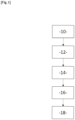
- Fig. 1 is a flowchart representing a method of limiting a correction carried out by several adaptives on at least one parameter according to the present invention.
- a first adaptive may be an adaptive on the position of an intake camshaft phase shifter
- a second adaptive may be an adaptive on the position of an exhaust camshaft phase shifter
- a third adaptive may be an adaptive on the modeling of the static gain of a fuel injector in the heat engine
- a fourth adaptive may be an adaptive on the modeling of the injector control dead time.
- one of the adaptives may also be an adaptive relating to an opening duration of at least one fuel injector in the heat engine.
- the method comprises a first step 10 during which the engine control calculates, for each of the adaptives, an individual impact value of the adaptive on the parameter for a current operating point of the engine.
- this calculation step 10 consists of multiplying, for each adaptive, a current value of the adaptive by a predetermined transfer function between the parameter and the adaptive. This multiplication then provides the individual impact value of the adaptive concerned, on the current operating point of the engine.
- This predetermined transfer function (and stored for example in memory means of the engine control) represents the sensitivity of the adaptive to the parameter.
- the transfer function can be determined beforehand by any known method, for example by mathematical calculations of derivatives of equations of the parameter of the system with respect to the adaptive considered, or by calculation of the local gradient of variation of the parameter for a variation of the adaptive.
- the engine control calculates an overall impact value of all the adaptives on the parameter for the current operating point of the engine.
- this calculation step 12 consists of adding the individual impact values calculated for all the adaptives during the previous step 10. This addition then provides the overall impact value of the adaptives, on the current operating point of the engine.
- the engine control compares the overall impact value calculated during the previous step 12 to at least one predefined overall impact threshold value.
- the comparison step 14 comprises for example a first phase consisting of comparing the overall impact value calculated to a minimum overall impact threshold value, and a second phase consisting of comparing the overall impact value calculated to a maximum overall impact threshold value.
- the first phase can be carried out before the second phase, or vice versa. Alternatively, the first and second phases are carried out simultaneously.
- the minimum and maximum overall impact threshold values are typically values that can be configured by a user or a manufacturer of the vehicle. Preferably, these values can be configured according to distinct life phases of the engine. This makes it possible to take into account different needs of the system to limit the correction of the adaptives according to of particular engine life phases.
- the parameter is the fuel richness
- the minimum and maximum overall impact threshold values can be calibrated to zero.
- the user or the vehicle manufacturer may, for example, wish to authorize the richness adaptors to only enrich the fuel setpoint and strictly prohibit any reduction of this setpoint quantity (to avoid under-richness and therefore a risk of engine stalling, for example).
- the minimum overall impact threshold value will be set to zero for this engine life phase.
- the engine control calculates, based on the result of the comparison carried out during the previous step 14, a reduction factor to be applied to the adaptives.
- the calculation of the reduction factor is carried out by the engine control if the overall impact value calculated during step 12 exceeds the predefined overall impact threshold value.
- this calculation step 16 consists of dividing the predefined overall impact threshold value by the overall impact value calculated during step 12. This division then provides a reduction factor to be applied to the adaptives.
- the previous comparison step 14 comprises the two aforementioned phases
- the calculation of the reduction factor is carried out by the engine control if the overall impact value calculated during step 12 is lower than the minimum overall impact threshold value or higher than the maximum overall impact threshold value.
- the engine control then divides the overall impact threshold value that was not respected, in other words the minimum or maximum overall impact threshold value as the case may be, by the overall impact value calculated during step 12.
- the engine control applies to each of the adaptors the reduction factor calculated during the previous step 16.
- this application step 18 consists of multiplying, for each of the adaptors, the current value of the adaptor by the calculated reduction factor.
- a set of adaptives is obtained which have been reduced via the reduction factor.
- Steps 10, 12, 14, 16 and 18 described above are repeated for each current operating point of the engine.
- the method according to the invention allows a more exhaustive and more precise limitation of the correction carried out by the adaptives, and makes it possible to control the limitation of the parameter at any point of operation of the engine and to take into account the possible interactions between adaptives, in particular when these adaptives are of a different nature.
Landscapes
- Engineering & Computer Science (AREA)
- Chemical & Material Sciences (AREA)
- Combustion & Propulsion (AREA)
- Mechanical Engineering (AREA)
- General Engineering & Computer Science (AREA)
- Electrical Control Of Air Or Fuel Supplied To Internal-Combustion Engine (AREA)
- Control Of Electric Motors In General (AREA)
Claims (10)
- In der Motorsteuerung eines Fahrzeugs implementiertes Verfahren zur Begrenzung einer durch mehrere adaptive Vorrichtungen durchgeführten Korrektur mindestens eines Parameters, dadurch gekennzeichnet, dass das Verfahren die folgenden Schritte umfasst:- eine Berechnung (10) für jedes Adaptiv eines individuellen Einflusswerts des Adaptivs auf den mindestens einen Parameter für einen aktuellen Betriebspunkt des Motors;- eine Berechnung (12) eines globalen Einflusswerts aller Anpassungen auf den mindestens einen Parameter für den aktuellen Betriebspunkt des Motors;- ein Vergleich (14) des berechneten globalen Auswirkungswerts mit mindestens einem vordefinierten globalen Auswirkungsschwellenwert;- eine Berechnung (16), basierend auf dem Ergebnis des Vergleichs (14), eines Reduktionsfaktors, der auf die Adaptives anzuwenden ist; Und- eine Anwendung (18) des berechneten Reduktionsfaktors auf jedes der Adaptives, wodurch ein Satz reduzierter Adaptives bereitgestellt wird.
- Verfahren nach Anspruch 1, dadurch gekennzeichnet, dass der mindestens eine Parameter der Kraftstoffgehalt ist.
- Verfahren nach Anspruch 1 oder 2, dadurch gekennzeichnet, dass der Schritt des Berechnens eines individuellen Einflusswerts des Adaptivs auf den mindestens einen Parameter für jedes Adaptiv darin besteht, einen aktuellen Wert des Adaptivs mit einer Funktion einer vorbestimmten Übertragung zwischen diesen zu multiplizieren mindestens einen Parameter und diesen adaptiv, wodurch der individuelle Schlagwert bereitgestellt wird .
- Verfahren nach einem der Ansprüche 1 bis 3, dadurch gekennzeichnet, dass der Schritt der Berechnung eines globalen Einflusswerts aller Adaptives auf den mindestens einen Parameter darin besteht, die einzelnen, für alle Adaptives berechneten Impact-Werte zu addieren und so den Gesamt-Impact-Wert bereitzustellen .
- Verfahren nach einem der Ansprüche 1 bis 4, dadurch gekennzeichnet, dass der Schritt des Vergleichens des berechneten globalen Auswirkungswerts mit mindestens einem vordefinierten globalen Auswirkungsschwellenwert eine erste Phase umfasst, die darin besteht, den Wert d globaler Auswirkung zu vergleichen, der bei einer minimalen globalen Auswirkung berechnet wurde Schwellenwert , und eine zweite Phase, die darin besteht, den berechneten globalen Auswirkungswert mit einem maximalen globalen Auswirkungsschwellenwert zu vergleichen, und dadurch, dass der anzuwendende Reduktionsfaktor berechnet wird, wenn der berechnete Gesamtauswirkungswert kleiner als dieser Wert ist minimaler globaler Auswirkungsschwellenwert oder größer als der maximale globale Auswirkungsschwellenwert.
- Verfahren nach einem der Ansprüche 1 bis 5, dadurch gekennzeichnet, dass der Schritt der Berechnung eines anzuwendenden Reduktionsfaktors darin besteht, den globalen Auswirkungsschwellenwert durch den berechneten globalen Auswirkungswert zu dividieren und so den anzuwendenden Reduktionsfaktor bereitzustellen.
- Verfahren nach einem der Ansprüche 1 bis 6, dadurch gekennzeichnet, dass der Schritt der Anwendung des berechneten Reduktionsfaktors auf jedes der Adaptive darin besteht, für jedes der Adaptive den aktuellen Wert des Adaptivs mit dem berechneten Reduktionsfaktor zu multiplizieren .
- Verfahren nach einem der Ansprüche 1 bis 7, dadurch gekennzeichnet, dass der mindestens eine globale Aufprallschwellenwert von einem Benutzer oder einem Fahrzeughersteller konfiguriert werden kann.
- Verfahren nach Anspruch 8, dadurch gekennzeichnet, dass der mindestens eine globale Aufprallschwellenwert in Abhängigkeit von bestimmten Lebensphasen des Motors konfiguriert werden kann.
- Verfahren nach einem der Ansprüche 1 bis 9, dadurch gekennzeichnet, dass die Schritte der Berechnung einzelner Stoßwerte, der Berechnung eines globalen Stoßwertes, des Vergleichs, der Berechnung eines anzuwendenden Reduktionsfaktors und der Anwendung des berechneten Reduktionsfaktors für jeden Strom erneut durchgeführt werden Betriebspunkt des Motors.
Applications Claiming Priority (2)
| Application Number | Priority Date | Filing Date | Title |
|---|---|---|---|
| FR2105501A FR3123386B1 (fr) | 2021-05-27 | 2021-05-27 | Procede de limitation d’une correction de parametre effectuee par plusieurs adaptatifs dans un controle moteur |
| PCT/FR2022/050595 WO2022248782A1 (fr) | 2021-05-27 | 2022-03-30 | Procede de limitation d'une correction de parametre effectuee par plusieurs adaptatifs dans un controle moteur |
Publications (2)
| Publication Number | Publication Date |
|---|---|
| EP4348024A1 EP4348024A1 (de) | 2024-04-10 |
| EP4348024B1 true EP4348024B1 (de) | 2025-04-23 |
Family
ID=77821816
Family Applications (1)
| Application Number | Title | Priority Date | Filing Date |
|---|---|---|---|
| EP22717644.3A Active EP4348024B1 (de) | 2021-05-27 | 2022-03-30 | Verfahren zur begrenzung einer von mehreren adaptionswerten ausgeführten parameterkorrektur in einer motorsteuerung |
Country Status (3)
| Country | Link |
|---|---|
| EP (1) | EP4348024B1 (de) |
| FR (1) | FR3123386B1 (de) |
| WO (1) | WO2022248782A1 (de) |
Family Cites Families (6)
| Publication number | Priority date | Publication date | Assignee | Title |
|---|---|---|---|---|
| FR2105501A5 (de) | 1970-09-09 | 1972-04-28 | Alimentation Zootechniqu | |
| JPH0678738B2 (ja) * | 1987-01-21 | 1994-10-05 | 株式会社ユニシアジェックス | 内燃機関の空燃比の学習制御装置 |
| DE10244539A1 (de) * | 2002-09-25 | 2004-04-08 | Robert Bosch Gmbh | Verfahren und Steuereinheit zur global-adaptiven Korrektur von Einspritzmengen- und/oder Luftmassenmessfehlern in einer Brennkraftmaschine insbesondere eines Kraftfahrzeuges |
| DE102008012607B4 (de) * | 2008-03-05 | 2013-03-14 | Continental Automotive Gmbh | Verfahren und Vorrichtung zur Ermittlung eines Adaptionswertes für die Einstellung eines Luft-Kraftstoff-Verhältnis eines Einspritzsystems eines Verbrennungsmotors |
| FR3073570B1 (fr) | 2017-11-10 | 2019-10-11 | Psa Automobiles Sa | Procede de correction de richesse moteur |
| FR3085721B1 (fr) | 2018-09-11 | 2020-09-04 | Psa Automobiles Sa | Procede d’apprentissage d’adaptatifs dans un controle moteur |
-
2021
- 2021-05-27 FR FR2105501A patent/FR3123386B1/fr not_active Expired - Fee Related
-
2022
- 2022-03-30 EP EP22717644.3A patent/EP4348024B1/de active Active
- 2022-03-30 WO PCT/FR2022/050595 patent/WO2022248782A1/fr not_active Ceased
Also Published As
| Publication number | Publication date |
|---|---|
| FR3123386B1 (fr) | 2023-04-14 |
| FR3123386A1 (fr) | 2022-12-02 |
| WO2022248782A1 (fr) | 2022-12-01 |
| EP4348024A1 (de) | 2024-04-10 |
Similar Documents
| Publication | Publication Date | Title |
|---|---|---|
| FR2516598A1 (fr) | Dispositif de correction du rapport air-combustible en fonction de la temperature de l'air a l'admission pour des moteurs a combustion interne | |
| EP1058781B1 (de) | Verfahren und einrichtung zum schnellen selbstanpassen des luft/kraftstoffverhältnisses in einer brennkraftmaschine | |
| EP4348025B1 (de) | Verfahren zur überwachung von adaptionswerten in einer motorsteuerung | |
| FR2847944A1 (fr) | Procede de regulation d'un melange air/carburant alimentant un moteur a combustion interne | |
| FR3123386A1 (fr) | Procede de limitation d’une correction de parametre effectuee par plusieurs adaptatifs dans un controle moteur | |
| FR2707348A1 (fr) | Procédé et dispositif de commande d'un moteur à combustion interne. | |
| FR3052189A1 (fr) | Procede de recalage des modeles de comportement d’actionneurs de lignes d’admission et d’injection de moteur a combustion interne | |
| FR3088965A1 (fr) | Procede de correction de commande d’un moteur thermique | |
| FR3073570B1 (fr) | Procede de correction de richesse moteur | |
| EP4281662B1 (de) | Verfahren zur verbesserung der zuverlässigkeit einer lernfunktion eines modells von verbrennungsmotoraktuatoren | |
| WO2016051044A1 (fr) | Moteur a combustion de véhicule automobile a pilotage de richesse améliore | |
| FR3085721A1 (fr) | Procede d’apprentissage d’adaptatifs dans un controle moteur | |
| EP2761153B1 (de) | Steuerung der kraftstoffeinspritzung beim start eines verbrennungsmotors | |
| WO2009004195A2 (fr) | Dispositif et procede d'estimation d'une quantite d'alcool contenue dans le carburant d'un moteur | |
| EP1760295B1 (de) | Regelvorrichtung für eine Diesel-Brennkraftmaschine mit Abgasrückführung | |
| FR2917462A1 (fr) | Procede de correction des derives des injecteurs d'un moteur | |
| FR3055667A1 (fr) | Procede de gestion de l’alimentation d’un moteur thermique, et calculateur mettant en œuvre ledit procede | |
| EP0636778B1 (de) | Verfahren und Vorrichtung zum korrigieren der Kraftstoffeinspritzungsdauer in Abhängigkeit des Durchflusses einer Tankentlüftungsanlage für einen Einspritzmotor | |
| EP1693559B1 (de) | Steuerungssystem zum Betreiben eines Dieselmotors mit Abgasrückführung | |
| EP4031759A1 (de) | Verfahren zur einstellung der fettheit in einem verbrennungsmotor mit kontrollierter zündung | |
| FR3095270A1 (fr) | Procédé de calibration des compensations de richesse en phase de transitoire de charge dans un groupe motopropulseur à moteur thermique | |
| EP0637685B1 (de) | Verfahren und Einrichtung zum Selbstanpassen des Luft/Kraftstoffverhältnisses in einer Innenbrennkraftmaschine mit Tankentlüftungssystem | |
| EP0987422B1 (de) | Einrichtung zur Steuerung der Anreicherung eines Kraftstoffluftgemisches in einer Einspritzbrennkraftmaschine | |
| FR2910549A1 (fr) | Procede de correction des derives des injecteurs d'un moteur | |
| WO2024047080A1 (fr) | Procede et systeme de controle d'un couple moteur d'un moteur a combustion interne |
Legal Events
| Date | Code | Title | Description |
|---|---|---|---|
| STAA | Information on the status of an ep patent application or granted ep patent |
Free format text: STATUS: UNKNOWN |
|
| STAA | Information on the status of an ep patent application or granted ep patent |
Free format text: STATUS: THE INTERNATIONAL PUBLICATION HAS BEEN MADE |
|
| PUAI | Public reference made under article 153(3) epc to a published international application that has entered the european phase |
Free format text: ORIGINAL CODE: 0009012 |
|
| STAA | Information on the status of an ep patent application or granted ep patent |
Free format text: STATUS: REQUEST FOR EXAMINATION WAS MADE |
|
| 17P | Request for examination filed |
Effective date: 20231018 |
|
| AK | Designated contracting states |
Kind code of ref document: A1 Designated state(s): AL AT BE BG CH CY CZ DE DK EE ES FI FR GB GR HR HU IE IS IT LI LT LU LV MC MK MT NL NO PL PT RO RS SE SI SK SM TR |
|
| DAV | Request for validation of the european patent (deleted) | ||
| DAX | Request for extension of the european patent (deleted) | ||
| GRAP | Despatch of communication of intention to grant a patent |
Free format text: ORIGINAL CODE: EPIDOSNIGR1 |
|
| STAA | Information on the status of an ep patent application or granted ep patent |
Free format text: STATUS: GRANT OF PATENT IS INTENDED |
|
| INTG | Intention to grant announced |
Effective date: 20241212 |
|
| GRAS | Grant fee paid |
Free format text: ORIGINAL CODE: EPIDOSNIGR3 |
|
| GRAA | (expected) grant |
Free format text: ORIGINAL CODE: 0009210 |
|
| STAA | Information on the status of an ep patent application or granted ep patent |
Free format text: STATUS: THE PATENT HAS BEEN GRANTED |
|
| AK | Designated contracting states |
Kind code of ref document: B1 Designated state(s): AL AT BE BG CH CY CZ DE DK EE ES FI FR GB GR HR HU IE IS IT LI LT LU LV MC MK MT NL NO PL PT RO RS SE SI SK SM TR |
|
| REG | Reference to a national code |
Ref country code: GB Ref legal event code: FG4D Free format text: NOT ENGLISH |
|
| REG | Reference to a national code |
Ref country code: CH Ref legal event code: EP |
|
| REG | Reference to a national code |
Ref country code: DE Ref legal event code: R096 Ref document number: 602022013572 Country of ref document: DE |
|
| REG | Reference to a national code |
Ref country code: IE Ref legal event code: FG4D Free format text: LANGUAGE OF EP DOCUMENT: FRENCH |
|
| REG | Reference to a national code |
Ref country code: DE Ref legal event code: R084 Ref document number: 602022013572 Country of ref document: DE |
|
| REG | Reference to a national code |
Ref country code: NL Ref legal event code: MP Effective date: 20250423 |
|
| PG25 | Lapsed in a contracting state [announced via postgrant information from national office to epo] |
Ref country code: NL Free format text: LAPSE BECAUSE OF FAILURE TO SUBMIT A TRANSLATION OF THE DESCRIPTION OR TO PAY THE FEE WITHIN THE PRESCRIBED TIME-LIMIT Effective date: 20250423 |
|
| REG | Reference to a national code |
Ref country code: AT Ref legal event code: MK05 Ref document number: 1787958 Country of ref document: AT Kind code of ref document: T Effective date: 20250423 |
|
| PG25 | Lapsed in a contracting state [announced via postgrant information from national office to epo] |
Ref country code: FI Free format text: LAPSE BECAUSE OF FAILURE TO SUBMIT A TRANSLATION OF THE DESCRIPTION OR TO PAY THE FEE WITHIN THE PRESCRIBED TIME-LIMIT Effective date: 20250423 Ref country code: ES Free format text: LAPSE BECAUSE OF FAILURE TO SUBMIT A TRANSLATION OF THE DESCRIPTION OR TO PAY THE FEE WITHIN THE PRESCRIBED TIME-LIMIT Effective date: 20250423 Ref country code: PT Free format text: LAPSE BECAUSE OF FAILURE TO SUBMIT A TRANSLATION OF THE DESCRIPTION OR TO PAY THE FEE WITHIN THE PRESCRIBED TIME-LIMIT Effective date: 20250825 |
|
| REG | Reference to a national code |
Ref country code: LT Ref legal event code: MG9D |
|
| PG25 | Lapsed in a contracting state [announced via postgrant information from national office to epo] |
Ref country code: GR Free format text: LAPSE BECAUSE OF FAILURE TO SUBMIT A TRANSLATION OF THE DESCRIPTION OR TO PAY THE FEE WITHIN THE PRESCRIBED TIME-LIMIT Effective date: 20250724 Ref country code: NO Free format text: LAPSE BECAUSE OF FAILURE TO SUBMIT A TRANSLATION OF THE DESCRIPTION OR TO PAY THE FEE WITHIN THE PRESCRIBED TIME-LIMIT Effective date: 20250723 |
|
| PG25 | Lapsed in a contracting state [announced via postgrant information from national office to epo] |
Ref country code: PL Free format text: LAPSE BECAUSE OF FAILURE TO SUBMIT A TRANSLATION OF THE DESCRIPTION OR TO PAY THE FEE WITHIN THE PRESCRIBED TIME-LIMIT Effective date: 20250423 |
|
| PG25 | Lapsed in a contracting state [announced via postgrant information from national office to epo] |
Ref country code: BG Free format text: LAPSE BECAUSE OF FAILURE TO SUBMIT A TRANSLATION OF THE DESCRIPTION OR TO PAY THE FEE WITHIN THE PRESCRIBED TIME-LIMIT Effective date: 20250423 |
|
| PG25 | Lapsed in a contracting state [announced via postgrant information from national office to epo] |
Ref country code: HR Free format text: LAPSE BECAUSE OF FAILURE TO SUBMIT A TRANSLATION OF THE DESCRIPTION OR TO PAY THE FEE WITHIN THE PRESCRIBED TIME-LIMIT Effective date: 20250423 |
|
| PG25 | Lapsed in a contracting state [announced via postgrant information from national office to epo] |
Ref country code: AT Free format text: LAPSE BECAUSE OF FAILURE TO SUBMIT A TRANSLATION OF THE DESCRIPTION OR TO PAY THE FEE WITHIN THE PRESCRIBED TIME-LIMIT Effective date: 20250423 |
|
| PG25 | Lapsed in a contracting state [announced via postgrant information from national office to epo] |
Ref country code: RS Free format text: LAPSE BECAUSE OF FAILURE TO SUBMIT A TRANSLATION OF THE DESCRIPTION OR TO PAY THE FEE WITHIN THE PRESCRIBED TIME-LIMIT Effective date: 20250723 |
|
| PG25 | Lapsed in a contracting state [announced via postgrant information from national office to epo] |
Ref country code: IS Free format text: LAPSE BECAUSE OF FAILURE TO SUBMIT A TRANSLATION OF THE DESCRIPTION OR TO PAY THE FEE WITHIN THE PRESCRIBED TIME-LIMIT Effective date: 20250823 |
|
| PG25 | Lapsed in a contracting state [announced via postgrant information from national office to epo] |
Ref country code: LV Free format text: LAPSE BECAUSE OF FAILURE TO SUBMIT A TRANSLATION OF THE DESCRIPTION OR TO PAY THE FEE WITHIN THE PRESCRIBED TIME-LIMIT Effective date: 20250423 |
|
| PG25 | Lapsed in a contracting state [announced via postgrant information from national office to epo] |
Ref country code: SM Free format text: LAPSE BECAUSE OF FAILURE TO SUBMIT A TRANSLATION OF THE DESCRIPTION OR TO PAY THE FEE WITHIN THE PRESCRIBED TIME-LIMIT Effective date: 20250423 Ref country code: DK Free format text: LAPSE BECAUSE OF FAILURE TO SUBMIT A TRANSLATION OF THE DESCRIPTION OR TO PAY THE FEE WITHIN THE PRESCRIBED TIME-LIMIT Effective date: 20250423 |
|
| PG25 | Lapsed in a contracting state [announced via postgrant information from national office to epo] |
Ref country code: CZ Free format text: LAPSE BECAUSE OF FAILURE TO SUBMIT A TRANSLATION OF THE DESCRIPTION OR TO PAY THE FEE WITHIN THE PRESCRIBED TIME-LIMIT Effective date: 20250423 |
|
| PG25 | Lapsed in a contracting state [announced via postgrant information from national office to epo] |
Ref country code: EE Free format text: LAPSE BECAUSE OF FAILURE TO SUBMIT A TRANSLATION OF THE DESCRIPTION OR TO PAY THE FEE WITHIN THE PRESCRIBED TIME-LIMIT Effective date: 20250423 |
|
| REG | Reference to a national code |
Ref country code: DE Ref legal event code: R097 Ref document number: 602022013572 Country of ref document: DE |
|
| PG25 | Lapsed in a contracting state [announced via postgrant information from national office to epo] |
Ref country code: SK Free format text: LAPSE BECAUSE OF FAILURE TO SUBMIT A TRANSLATION OF THE DESCRIPTION OR TO PAY THE FEE WITHIN THE PRESCRIBED TIME-LIMIT Effective date: 20250423 |
|
| PG25 | Lapsed in a contracting state [announced via postgrant information from national office to epo] |
Ref country code: IT Free format text: LAPSE BECAUSE OF FAILURE TO SUBMIT A TRANSLATION OF THE DESCRIPTION OR TO PAY THE FEE WITHIN THE PRESCRIBED TIME-LIMIT Effective date: 20250423 |
|
| PLBE | No opposition filed within time limit |
Free format text: ORIGINAL CODE: 0009261 |
|
| STAA | Information on the status of an ep patent application or granted ep patent |
Free format text: STATUS: NO OPPOSITION FILED WITHIN TIME LIMIT |
|
| REG | Reference to a national code |
Ref country code: CH Ref legal event code: L10 Free format text: ST27 STATUS EVENT CODE: U-0-0-L10-L00 (AS PROVIDED BY THE NATIONAL OFFICE) Effective date: 20260304 |
|
| 26N | No opposition filed |
Effective date: 20260126 |
|
| PGFP | Annual fee paid to national office [announced via postgrant information from national office to epo] |
Ref country code: DE Payment date: 20260219 Year of fee payment: 5 |
|
| PGFP | Annual fee paid to national office [announced via postgrant information from national office to epo] |
Ref country code: FR Payment date: 20260220 Year of fee payment: 5 |