EP4344922B1 - Work vehicle - Google Patents
Work vehicle Download PDFInfo
- Publication number
- EP4344922B1 EP4344922B1 EP23199198.5A EP23199198A EP4344922B1 EP 4344922 B1 EP4344922 B1 EP 4344922B1 EP 23199198 A EP23199198 A EP 23199198A EP 4344922 B1 EP4344922 B1 EP 4344922B1
- Authority
- EP
- European Patent Office
- Prior art keywords
- transmission
- motor
- case
- work
- travel
- Prior art date
- Legal status (The legal status is an assumption and is not a legal conclusion. Google has not performed a legal analysis and makes no representation as to the accuracy of the status listed.)
- Active
Links
Images





Classifications
-
- B—PERFORMING OPERATIONS; TRANSPORTING
- B60—VEHICLES IN GENERAL
- B60L—PROPULSION OF ELECTRICALLY-PROPELLED VEHICLES; SUPPLYING ELECTRIC POWER FOR AUXILIARY EQUIPMENT OF ELECTRICALLY-PROPELLED VEHICLES; ELECTRODYNAMIC BRAKE SYSTEMS FOR VEHICLES IN GENERAL; MAGNETIC SUSPENSION OR LEVITATION FOR VEHICLES; MONITORING OPERATING VARIABLES OF ELECTRICALLY-PROPELLED VEHICLES; ELECTRIC SAFETY DEVICES FOR ELECTRICALLY-PROPELLED VEHICLES
- B60L50/00—Electric propulsion with power supplied within the vehicle
- B60L50/50—Electric propulsion with power supplied within the vehicle using propulsion power supplied by batteries or fuel cells
- B60L50/60—Electric propulsion with power supplied within the vehicle using propulsion power supplied by batteries or fuel cells using power supplied by batteries
-
- B—PERFORMING OPERATIONS; TRANSPORTING
- B60—VEHICLES IN GENERAL
- B60K—ARRANGEMENT OR MOUNTING OF PROPULSION UNITS OR OF TRANSMISSIONS IN VEHICLES; ARRANGEMENT OR MOUNTING OF PLURAL DIVERSE PRIME-MOVERS IN VEHICLES; AUXILIARY DRIVES FOR VEHICLES; INSTRUMENTATION OR DASHBOARDS FOR VEHICLES; ARRANGEMENTS IN CONNECTION WITH COOLING, AIR INTAKE, GAS EXHAUST OR FUEL SUPPLY OF PROPULSION UNITS IN VEHICLES
- B60K1/00—Arrangement or mounting of electrical propulsion units
-
- B—PERFORMING OPERATIONS; TRANSPORTING
- B60—VEHICLES IN GENERAL
- B60K—ARRANGEMENT OR MOUNTING OF PROPULSION UNITS OR OF TRANSMISSIONS IN VEHICLES; ARRANGEMENT OR MOUNTING OF PLURAL DIVERSE PRIME-MOVERS IN VEHICLES; AUXILIARY DRIVES FOR VEHICLES; INSTRUMENTATION OR DASHBOARDS FOR VEHICLES; ARRANGEMENTS IN CONNECTION WITH COOLING, AIR INTAKE, GAS EXHAUST OR FUEL SUPPLY OF PROPULSION UNITS IN VEHICLES
- B60K17/00—Arrangement or mounting of transmissions in vehicles
- B60K17/04—Arrangement or mounting of transmissions in vehicles characterised by arrangement, location or kind of gearing
-
- B—PERFORMING OPERATIONS; TRANSPORTING
- B60—VEHICLES IN GENERAL
- B60K—ARRANGEMENT OR MOUNTING OF PROPULSION UNITS OR OF TRANSMISSIONS IN VEHICLES; ARRANGEMENT OR MOUNTING OF PLURAL DIVERSE PRIME-MOVERS IN VEHICLES; AUXILIARY DRIVES FOR VEHICLES; INSTRUMENTATION OR DASHBOARDS FOR VEHICLES; ARRANGEMENTS IN CONNECTION WITH COOLING, AIR INTAKE, GAS EXHAUST OR FUEL SUPPLY OF PROPULSION UNITS IN VEHICLES
- B60K17/00—Arrangement or mounting of transmissions in vehicles
- B60K17/28—Arrangement or mounting of transmissions in vehicles characterised by arrangement, location, or type of power take-off
-
- B—PERFORMING OPERATIONS; TRANSPORTING
- B60—VEHICLES IN GENERAL
- B60K—ARRANGEMENT OR MOUNTING OF PROPULSION UNITS OR OF TRANSMISSIONS IN VEHICLES; ARRANGEMENT OR MOUNTING OF PLURAL DIVERSE PRIME-MOVERS IN VEHICLES; AUXILIARY DRIVES FOR VEHICLES; INSTRUMENTATION OR DASHBOARDS FOR VEHICLES; ARRANGEMENTS IN CONNECTION WITH COOLING, AIR INTAKE, GAS EXHAUST OR FUEL SUPPLY OF PROPULSION UNITS IN VEHICLES
- B60K17/00—Arrangement or mounting of transmissions in vehicles
- B60K17/04—Arrangement or mounting of transmissions in vehicles characterised by arrangement, location or kind of gearing
- B60K17/10—Arrangement or mounting of transmissions in vehicles characterised by arrangement, location or kind of gearing of fluid gearing
-
- B—PERFORMING OPERATIONS; TRANSPORTING
- B60—VEHICLES IN GENERAL
- B60K—ARRANGEMENT OR MOUNTING OF PROPULSION UNITS OR OF TRANSMISSIONS IN VEHICLES; ARRANGEMENT OR MOUNTING OF PLURAL DIVERSE PRIME-MOVERS IN VEHICLES; AUXILIARY DRIVES FOR VEHICLES; INSTRUMENTATION OR DASHBOARDS FOR VEHICLES; ARRANGEMENTS IN CONNECTION WITH COOLING, AIR INTAKE, GAS EXHAUST OR FUEL SUPPLY OF PROPULSION UNITS IN VEHICLES
- B60K17/00—Arrangement or mounting of transmissions in vehicles
- B60K17/22—Arrangement or mounting of transmissions in vehicles characterised by arrangement, location, or type of main drive shafting, e.g. cardan shaft
-
- B—PERFORMING OPERATIONS; TRANSPORTING
- B60—VEHICLES IN GENERAL
- B60K—ARRANGEMENT OR MOUNTING OF PROPULSION UNITS OR OF TRANSMISSIONS IN VEHICLES; ARRANGEMENT OR MOUNTING OF PLURAL DIVERSE PRIME-MOVERS IN VEHICLES; AUXILIARY DRIVES FOR VEHICLES; INSTRUMENTATION OR DASHBOARDS FOR VEHICLES; ARRANGEMENTS IN CONNECTION WITH COOLING, AIR INTAKE, GAS EXHAUST OR FUEL SUPPLY OF PROPULSION UNITS IN VEHICLES
- B60K17/00—Arrangement or mounting of transmissions in vehicles
- B60K17/34—Arrangement or mounting of transmissions in vehicles for driving both front and rear wheels, e.g. four wheel drive vehicles
- B60K17/356—Arrangement or mounting of transmissions in vehicles for driving both front and rear wheels, e.g. four wheel drive vehicles having fluid or electric motor, for driving one or more wheels
-
- B—PERFORMING OPERATIONS; TRANSPORTING
- B60—VEHICLES IN GENERAL
- B60K—ARRANGEMENT OR MOUNTING OF PROPULSION UNITS OR OF TRANSMISSIONS IN VEHICLES; ARRANGEMENT OR MOUNTING OF PLURAL DIVERSE PRIME-MOVERS IN VEHICLES; AUXILIARY DRIVES FOR VEHICLES; INSTRUMENTATION OR DASHBOARDS FOR VEHICLES; ARRANGEMENTS IN CONNECTION WITH COOLING, AIR INTAKE, GAS EXHAUST OR FUEL SUPPLY OF PROPULSION UNITS IN VEHICLES
- B60K17/00—Arrangement or mounting of transmissions in vehicles
- B60K17/34—Arrangement or mounting of transmissions in vehicles for driving both front and rear wheels, e.g. four wheel drive vehicles
- B60K17/358—Arrangement or mounting of transmissions in vehicles for driving both front and rear wheels, e.g. four wheel drive vehicles all driven wheels being steerable
-
- B—PERFORMING OPERATIONS; TRANSPORTING
- B60—VEHICLES IN GENERAL
- B60K—ARRANGEMENT OR MOUNTING OF PROPULSION UNITS OR OF TRANSMISSIONS IN VEHICLES; ARRANGEMENT OR MOUNTING OF PLURAL DIVERSE PRIME-MOVERS IN VEHICLES; AUXILIARY DRIVES FOR VEHICLES; INSTRUMENTATION OR DASHBOARDS FOR VEHICLES; ARRANGEMENTS IN CONNECTION WITH COOLING, AIR INTAKE, GAS EXHAUST OR FUEL SUPPLY OF PROPULSION UNITS IN VEHICLES
- B60K1/00—Arrangement or mounting of electrical propulsion units
- B60K1/04—Arrangement or mounting of electrical propulsion units of the electric storage means for propulsion
- B60K2001/0405—Arrangement or mounting of electrical propulsion units of the electric storage means for propulsion characterised by their position
- B60K2001/0411—Arrangement in the front part of the vehicle
-
- B—PERFORMING OPERATIONS; TRANSPORTING
- B60—VEHICLES IN GENERAL
- B60L—PROPULSION OF ELECTRICALLY-PROPELLED VEHICLES; SUPPLYING ELECTRIC POWER FOR AUXILIARY EQUIPMENT OF ELECTRICALLY-PROPELLED VEHICLES; ELECTRODYNAMIC BRAKE SYSTEMS FOR VEHICLES IN GENERAL; MAGNETIC SUSPENSION OR LEVITATION FOR VEHICLES; MONITORING OPERATING VARIABLES OF ELECTRICALLY-PROPELLED VEHICLES; ELECTRIC SAFETY DEVICES FOR ELECTRICALLY-PROPELLED VEHICLES
- B60L2200/00—Type of vehicles
- B60L2200/40—Working vehicles
-
- B—PERFORMING OPERATIONS; TRANSPORTING
- B60—VEHICLES IN GENERAL
- B60Y—INDEXING SCHEME RELATING TO ASPECTS CROSS-CUTTING VEHICLE TECHNOLOGY
- B60Y2200/00—Type of vehicle
- B60Y2200/20—Off-Road Vehicles
- B60Y2200/22—Agricultural vehicles
- B60Y2200/221—Tractors
-
- B—PERFORMING OPERATIONS; TRANSPORTING
- B60—VEHICLES IN GENERAL
- B60Y—INDEXING SCHEME RELATING TO ASPECTS CROSS-CUTTING VEHICLE TECHNOLOGY
- B60Y2200/00—Type of vehicle
- B60Y2200/90—Vehicles comprising electric prime movers
- B60Y2200/91—Electric vehicles
-
- B—PERFORMING OPERATIONS; TRANSPORTING
- B60—VEHICLES IN GENERAL
- B60Y—INDEXING SCHEME RELATING TO ASPECTS CROSS-CUTTING VEHICLE TECHNOLOGY
- B60Y2400/00—Special features of vehicle units
- B60Y2400/61—Arrangements of controllers for electric machines, e.g. inverters
-
- B—PERFORMING OPERATIONS; TRANSPORTING
- B62—LAND VEHICLES FOR TRAVELLING OTHERWISE THAN ON RAILS
- B62D—MOTOR VEHICLES; TRAILERS
- B62D49/00—Tractors
- B62D49/06—Tractors adapted for multi-purpose use
- B62D49/0664—Light, simple, and economical tractors
- B62D49/0671—Light, simple, and economical tractors the driver riding on the tractor
-
- F—MECHANICAL ENGINEERING; LIGHTING; HEATING; WEAPONS; BLASTING
- F16—ENGINEERING ELEMENTS AND UNITS; GENERAL MEASURES FOR PRODUCING AND MAINTAINING EFFECTIVE FUNCTIONING OF MACHINES OR INSTALLATIONS; THERMAL INSULATION IN GENERAL
- F16H—GEARING
- F16H57/00—General details of gearing
- F16H57/02—Gearboxes; Mounting gearing therein
- F16H2057/02026—Connection of auxiliaries with a gear case; Mounting of auxiliaries on the gearbox
-
- F—MECHANICAL ENGINEERING; LIGHTING; HEATING; WEAPONS; BLASTING
- F16—ENGINEERING ELEMENTS AND UNITS; GENERAL MEASURES FOR PRODUCING AND MAINTAINING EFFECTIVE FUNCTIONING OF MACHINES OR INSTALLATIONS; THERMAL INSULATION IN GENERAL
- F16H—GEARING
- F16H57/00—General details of gearing
- F16H57/02—Gearboxes; Mounting gearing therein
- F16H2057/02039—Gearboxes for particular applications
- F16H2057/02043—Gearboxes for particular applications for vehicle transmissions
- F16H2057/02056—Gearboxes for particular applications for vehicle transmissions for utility vehicles, e.g. tractors or agricultural machines
Definitions
- the present invention relates to an electric work vehicle in which a motor drives a travel device, and a hybrid work vehicle in which an engine and a motor drive a travel device.
- JP 2013-141875A discloses an example of an electric work vehicle.
- JP 2013-141875A states that a transmission case that houses a transmission for travel is provided at a rear portion of the work vehicle, and a motor is joined to a front portion of the transmission case. Motive power from the motor is transmitted to the transmission, and is then transmitted from the transmission to front wheels (each of which corresponds to a travel device) and rear wheels (each of which corresponds to a travel device).
- Documents EP3987902 , US2019/200510 and US11413960 each disclose examples of known work vehicles.
- JP 2013-141875A discloses an example of related art.
- JP 2013-141875A the motor, which is a heavy object, is located at the center of the work vehicle in the front-back direction, and the motor hardly affects the front-back balance of the work vehicle.
- the weight of the work device is likely to change the front-back balance of the work vehicle since the work vehicle performs work travel with the work device supported by a front portion of the work vehicle or with the work device supported by a rear portion of the work vehicle.
- the present invention aims to configure a work vehicle such that a motor, which is a heavy object, being provided at an appropriate position improves the front-back balance of the work vehicle with the work device supported by the work vehicle.
- a work vehicle of the present invention includes: at least one travel device including a front travel device; a battery; a motor; an inverter configured to operate the motor; an operation section including an operator seat; a transmission case housing a transmission for travel; and a transmission shaft, wherein the motor is forward of the front travel device in a side view, and the motor, the transmission shaft, the transmission, and the travel device are connected to each other such that motive power from the motor is transmitted to the transmission via the transmission shaft and transmitted from the transmission to the travel device.
- the motor is relatively far forward from the center of the work vehicle in the front-back direction. This makes it easier for the motor to function as a balance weight with a work device having a relatively large weight supported by a rear portion of the work vehicle. This enables a work vehicle suitable for work travel with a work device having a relatively large weight supported by the rear portion of the work vehicle.
- outside air is more likely to hit the motor while the work vehicle moves forward, which is advantageous in terms of cooling the motor.
- the work vehicle further includes: a work device; a link mechanism disposed on the transmission case, configured to be raised and lowered, and joined to the work device; a hydraulic cylinder disposed on the transmission case and configured to raise and lower the link mechanism; a hydraulic pump configured to supply hydraulic oil to the hydraulic cylinder; and a pump motor configured to drive the hydraulic pump, wherein the transmission case is below the operator seat, and the pump motor is between the operator seat and the transmission case in a side view.
- the work vehicle further includes: a work device; a link mechanism disposed on the transmission case, configured to be raised and lowered, and joined to the work device; and a work motor configured to supply motive power to the work device, wherein the work motor is in the link mechanism.
- FIGS. 1 to 8 show electric tractors, each of which is an example of a work vehicle.
- F indicates the forward direction
- B indicates the rearward direction
- U indicates the upward direction
- D indicates the downward direction
- R indicates the rightward direction
- L indicates the leftward direction.
- left and right front wheels 1 (each of which corresponds to a front travel device) and left and right rear wheels 2 (each of which corresponds to a rear travel device) support a body 3 of the tractor.
- a hood 4 is provided at a front portion of the body 3, and an operation section 5 is provided at a rear portion of the body 3.
- the operation section 5 includes a steering wheel 6 for steering the front wheels 1, an operator seat 7, a floor 8, and a ROPS frame 9.
- the body 3 has left and right body frames 10, a transmission case 11, and so on.
- the transmission case 11 has a front case 12 and a rear case 13 that are joined to each other.
- the left and right body frames 10 are connected to the transmission case 11 and extend in the front-back direction below the operation section 5 (floor 8).
- the transmission case 11 is located below the operator seat 7 in the operation section 5.
- a front axle case 14 is supported by front portions of the body frames 10, and supports the left and right front wheels 1.
- the transmission case 11 (rear case 13) supports the left and right rear wheels 2.
- a top link 15 (which corresponds to a link mechanism) and left and right lower links 16 (each of which corresponds to a link mechanism) are provided at a rear portion of the transmission case 11 (rear case 13) in such a manner as to be swingable in the up-down direction.
- the top link 15 and the lower links 16 can be joined to a work device (not shown), such as a rotary cultivator.
- Left and right lift arms 17 are provided at the rear portion of the transmission case 11 (rear case 13), and a connecting rod 18 is connected to the lift arms 17 and the lower links 16.
- the top link 15 and the lower links 16 are raised and lowered and the work device is raised and lowered by swinging the lift arms 17 in the up-down direction.
- a pillar frame 19 is provided on the body frames 10 between the front wheels 1 and the operation section 5 (rear wheels 2).
- the pillar frame 19 is constituted by a folded plate material and has a right section 19a, a left section 19b, an upper section 19c, and a rear section 19d.
- the rear section 19d of the pillar frame 19 is flat and extends in the up-down direction and the left-right direction.
- the right section 19a of the pillar frame 19 is formed by bending forward a right portion of the rear section 19d of the pillar frame 19, and extends in the up-down direction and the front-back direction.
- the left section 19b of the pillar frame 19 is formed by bending forward a left portion of the rear section 19d of the pillar frame 19, and extends in the up-down direction and the front-back direction.
- the upper section 19c of the pillar frame 19 is formed by bending forward an upper portion of the rear section 19d of the pillar frame 19, and extends in the left-right direction and the front-back direction.
- the upper section 19c of the pillar frame 19 extends between upper portions of the right section 19a and the left section 19b of the pillar frame 19.
- the hood 4 is supported such that the hood 4 is openable and closable about a fulcrum in the left-right direction of the upper section 19c of the pillar frame 19, and can be operated from a closed position shown in FIG. 1 to an open position above the closed position.
- a power steering mechanism 20 is provided below a rear face portion of the rear section 19d of the pillar frame 19.
- a steering post 21 is attached to the power steering mechanism 20 and extends upward from the power steering mechanism 20.
- a steering wheel 6 is supported by an upper portion of the steering post 21, and a steering shaft 22 is connected to the steering wheel 6 and the power steering mechanism 20.
- the rotation of the steering wheel 6 is transmitted to the power steering mechanism 20 via the steering shaft 22, and the power steering mechanism 20 steers the front wheels 1 to the left and right.
- the steering wheel 6 for operating the front wheels 1 is provided at a front portion of the operation section 5, and the steering shaft 22 for operating the front wheels 1 (front travel devices) extends downward from the steering wheel 6, as shown in FIG. 1 .
- a support platform 23 is attached to front upper portions of the left and right body frames 10, as shown in FIGS. 1 and 2 .
- An inverter 24, which is provided on the support platform 23, has a rectangular case with a small dimension (dimension in the front-back direction) that houses various types of equipment.
- the inverter 24 extends in the up-down direction in a side view and extends in the left-right direction in a plan view (front view), and is attached to a rear portion of the support platform 23 so as to be in contact with a front face portion of the rear section 19d of the pillar frame 19.
- the tractor has a battery 25, which is constituted by multiple pairs of stacks (not shown) of connected battery modules (not shown) that are housed in a rectangular-parallelepiped case.
- the battery 25 is attached to the support platform 23, and the hood 4 at the closed position covers the inverter 24 and the battery 25. Maintenance work for the inverter 24 and the battery 25 can be performed by opening the hood 4.
- the inverter 24 is provided between the right section 19a and the left section 19b of the pillar frame 19 in a front view and overlaps the right section 19a and the left section 19b of the pillar frame 19 in a side view, as shown in FIGS. 1 and 2 .
- the inverter 24 is provided below the upper section 19c of the pillar frame 19 in a front view and overlaps the upper section 19c of the pillar frame 19 in a plan view.
- the battery 25 is provided forward of the operation section 5, and the inverter 24 is provided between the battery 25 and the operation section 5 in a side view.
- the inverter 24 is provided between the battery 25 and the steering shaft 22 in a side view.
- the pillar frame 19 is provided between the battery 25 and the operation section 5 in a side view, and the inverter 24 is provided between the battery 25 and the rear section 19d of the pillar frame 19 in a side view.
- Left and right mounting brackets 27 are joined to inner faces of the left and right body frames 10, and left and right portions of a motor 26 are joined to the left and right mounting brackets 27, as shown in FIGS. 1 and 2 .
- the inverter 24 converts DC power from the battery 25 to AC power and supplies the AC power to the motor 26 to operate the motor 26.
- Motive power from the motor 26 is supplied to the front wheels 1 and the rear wheels 2, as shown in FIG. 3 .
- the motor 26 is provided between the front wheels 1 (front travel devices) and the rear wheels 2 (rear travel devices) and below the steering wheel 6 in a side view, as shown in FIGS. 1 and 2 .
- the left body frame 10 and the right body frame 10 are disposed in the front-back direction below the operation section 5 (floor 8), and the motor 26 is provided between the left body frame 10 and the right body frame 10 in a plan view (front view).
- the motor 26 is provided below the pillar frame 19, the power steering mechanism 20, the inverter 24, and the rear portion of the battery 25 in a side view.
- the pillar frame 19, the power steering mechanism 20, and the inverter 24 are provided above the motor 26 in a side view.
- a hydrostatic continuously variable transmission 28 (which corresponds to a transmission for travel) is housed within the front case 12 of the transmission case 11, and motive power from the motor 26 is transmitted via a transmission shaft 29 to the continuously variable transmission 28, as shown in FIGS. 1 and 3 .
- the continuously variable transmission 28 is capable of steplessly changing forward and backward and is operated by a gearshift pedal (not shown) on the floor 8 of the operation section 5.
- An auxiliary transmission 30 (which corresponds to a transmission for travel), a rear wheel differential device 31, and a front wheel transmission 32 (which corresponds to a transmission for travel) are housed within the rear case 13 of the transmission case 11.
- Motive power subjected to speed change by the continuously variable transmission 28 is transmitted to the auxiliary transmission 30, and is then transmitted from the auxiliary transmission 30 to the rear wheels 2 via the rear wheel differential device 31.
- the front wheel transmission 32 drives the front wheels 1 and the rear wheels 2 at the same speed while the front wheels 1 are operated within the range of left and right set angles from a straight-ahead position.
- the front wheel transmission 32 drives the front wheels 1 at a higher speed than the rear wheels 2 while the front wheels 1 are steered leftward or rightward beyond the left and right setting angles.
- the tractor has the transmission case 11 (front case 12 and rear case 13) that houses the continuously variable transmission 28 (transmission for travel), the auxiliary transmission 30 (transmission for travel), and the front wheel transmission 32 (transmission for travel), as shown in FIG. 3 .
- Motive power from the motor 26 is transmitted via the transmission shaft 29 to the continuously variable transmission 28 (transmission for travel), the auxiliary transmission 30 (transmission for travel), and the front wheel transmission 32 (transmission for travel), and is then transmitted from the continuously variable transmission 28 (transmission for travel), the auxiliary transmission 30 (transmission for travel), and the front wheel transmission 32 (transmission for travel) to the front wheels 1(travel devices) and the rear wheels 2 (travel devices).
- a PTO transmission 35 is housed within the rear case 13 of the transmission case 11, and a PTO shaft 36 is provided at a rear portion of the rear case 13 of the transmission case 11, as shown in FIGS. 1 and 3 .
- a transmission shaft (not shown) is connected to the PTO shaft 36 and the work device in response to the work device being joined to the top link 15 and the lower links 16.
- While motive power from the motor 26 is transmitted to the continuously variable transmission 28 via the transmission shaft 29, motive power from the transmission shaft 29 (motive power that is not subjected to speed change by the continuously variable transmission 28) is transmitted to the PTO transmission 35, and motive power subjected to speed change by the PTO transmission 35 is transmitted to the PTO shaft 36 and then transmitted from the PTO shaft 36 to the work device.
- a single-acting hydraulic cylinder 37 is provided above the rear portion of the transmission case 11 (rear case 13), and the hydraulic cylinder 37 raises and lowers the lift arm 17, as shown in FIG. 3 .
- a hydraulic pump 38 and a control valve 39 are provided within the rear portion of the transmission case 11 (rear case 13).
- Lubricating oil that serves as hydraulic oil and stored in the transmission case 11 (rear case 13) is supplied to the hydraulic pump 38, and is then supplied from the hydraulic pump 38 to the control valve 39.
- a pump motor 40 is provided above the rear portion of the transmission case 11 (rear case 13) and drives the hydraulic pump 38.
- the inverter 24 converts DC power from the battery 25 to AC power and supplies the AC power to the pump motor 40 to operate the pump motor 40.
- Operations to supply and discharge the hydraulic oil to and from the hydraulic cylinder 37 are performed from the control valve 39, and the hydraulic cylinder 37 raises and lowers the lift arm 17.
- the hydraulic oil discharged from the hydraulic cylinder 37 is returned from control valve 39 to the transmission case 11 (rear case 13).
- the hydraulic cylinder 37 which raises and lowers the top link 15 (link mechanism) and the lower links 16 (link mechanism) to which the work device is joined, and the hydraulic pump 38, which supplies the hydraulic oil to the hydraulic cylinder 37, are provided in the transmission case 11 (rear case 13), as shown in FIGS. 1 and 3 .
- the pump motor 40 which drives the hydraulic pump 38, is located between the operator seat 7 in the operation section 5 and the transmission case 11 (rear case 13) in a side view.
- the motor 26 may be joined to the support platform 23 and supported by the body 3.
- the motor 26 may be joined to the pillar frame 19 and supported by the body 3.
- the inverter 24 may be joined to the pillar frame 19 and supported by the body 3.
- the inverter 24 may be provided between the operator seat 7 in the operation section 5 and the transmission case 11 (front case 12 and rear case 13) in a side view, as shown in FIG. 7 , which will be described later.
- the inverter 24 may be provided forward of the battery 25.
- the inverter 24 extends in the up-down direction in a side view and extends in the left-right direction in a plan view (front view), and is provided between a front portion of the hood 4 and a front portion of the battery 25.
- the motor 26 may be provided above the front axle case 14 (front wheels 1 (front travel devices)) in a side view, as shown in FIG. 5 .
- the motor 26 is provided below the front portion of the battery 25, and the position of the motor 26 is slightly higher.
- another support platform 41 need only be provided to the support platform 23 such that the battery 25 is attached to the support platform 41 to make the position of the battery 25 slightly higher.
- the motor 26 may be joined to the support platform 41 and supported by the body 3.
- the inverter 24 may be provided forward of the battery 25, as shown in FIG. 4 .
- the inverter 24 may be provided between the operator seat 7 in the operation section 5 and the transmission case 11 (front case 12 and rear case 13) in a side view, as shown in FIG. 7 , which will be described later.
- the motor 26 may be provided forward of the front axle case 14 (front wheels 1 (front travel devices)) in a side view, as shown in FIG. 6 .
- the motor 26 is located at a lower position.
- a transmission mechanism 42 of a gear transmission type need only be attached to a portion of an output shaft (not shown) of the motor 26 in such a manner as to extend upward from the motor 26.
- the transmission shaft 29 need only be connected to an output shaft (not shown) at an upper portion of the transmission mechanism 42 and the continuously variable transmission 28 (see FIG. 3 ) such that the transmission shaft 29 extends in the front-back direction above the front axle case 14.
- the motor 26 may be joined to the support platform 23 and supported by the body 3.
- the inverter 24 may be provided forward of the battery 25, as shown in FIG. 4 .
- the inverter 24 may be provided between the operator seat 7 in the operation section 5 and the transmission case 11 (front case 12 and rear case 13) in a side view, as shown in FIG. 7 , which will be described later.
- the motor 26 may be attached to the upper portion of the transmission case 11 (front case 12 and rear case 13) and provided between the operator seat 7 in the operation section 5 and the transmission case 11 (front case 12 and rear case 13) in a side view.
- the inverter 24 may be provided between the operator seat 7 in the operation section 5 and the transmission case 11 (front case 12 and rear case 13) in a side view by attaching the inverter 24 to a support frame 43 that is provided in the operation section 5 to support the operator seat 7.
- the motor 26 need only be attached to the upper portion of the transmission case 11 (front case 12 and rear case 13) such that an output shaft (not shown) of the motor 26 faces forward, and a transmission mechanism 44 of a gear transmission type need only be attached to the output shaft of the motor 26 and a forward-facing input shaft (not shown) of the continuously variable transmission 28 (see FIG. 3 ).
- Motive power from the output shaft of the motor 26 is transmitted to the transmission mechanism 44, then transmitted from an output shaft (not shown) at a lower portion of the transmission mechanism 44 to the continuously variable transmission 28 (see FIG. 3 ), and is transmitted to the front wheels 1 and the rear wheels 2.
- the inverter 24 is supported in a suspended manner by a lower portion of the support frame 43 and extends in the horizontal direction.
- the inverter 24 is disposed at a position upward of and away from the motor 26 and the pump motor 40, and is disposed at a position upward of and away from the upper portion of the transmission case 11 (front case 12 and rear case 13).
- a work motor 45 may be provided on the left and right lower links 16 (link mechanism), as shown in FIG. 8 .
- a transmission shaft (not shown) is connected to the work motor 45 and the work device.
- the inverter 24 converts DC power from the battery 25 to AC power, which is supplied to the work motor 45 to operate the work motor 45, and motive power from the work motor 45 is transmitted to the work device.
- the PTO transmission 35 and the PTO shaft 36 shown in FIGS. 1 and 3 may be eliminated.
- the work motor 45 may be provided on the top link 15 (link mechanism).
- the tractor may have a four-wheel steering structure in which the front wheels 1 and the rear wheels 2 are steered in the same and opposite phases by the steering wheel 6.
- Crawler-type travel devices may be provided instead of the front wheels 1 as the front travel devices.
- Crawler-type travel devices may be provided instead of the rear wheels 2 as the rear travel devices.
- One crawler-type travel device may be provided instead of the front wheels 1 and the rear wheels 2.
- the present invention can be applied to not only electric tractors in which a motor drives a travel device, but also to hybrid tractors in which an engine and a motor drive a travel device, and can be applied to not only tractors but also construction work vehicles and agricultural work vehicles.
Landscapes
- Engineering & Computer Science (AREA)
- Transportation (AREA)
- Mechanical Engineering (AREA)
- Combustion & Propulsion (AREA)
- Chemical & Material Sciences (AREA)
- Sustainable Energy (AREA)
- Power Engineering (AREA)
- Life Sciences & Earth Sciences (AREA)
- Sustainable Development (AREA)
- Arrangement Or Mounting Of Propulsion Units For Vehicles (AREA)
- Arrangement Of Transmissions (AREA)
- Motor Power Transmission Devices (AREA)
- Lifting Devices For Agricultural Implements (AREA)
Description
- The present invention relates to an electric work vehicle in which a motor drives a travel device, and a hybrid work vehicle in which an engine and a motor drive a travel device.
-
JP 2013-141875A JP 2013-141875A EP3987902 ,US2019/200510 andUS11413960 -
JP 2013-141875A - In
JP 2013-141875A - However, the weight of the work device is likely to change the front-back balance of the work vehicle since the work vehicle performs work travel with the work device supported by a front portion of the work vehicle or with the work device supported by a rear portion of the work vehicle.
- The present invention aims to configure a work vehicle such that a motor, which is a heavy object, being provided at an appropriate position improves the front-back balance of the work vehicle with the work device supported by the work vehicle.
- A work vehicle of the present invention includes: at least one travel device including a front travel device; a battery; a motor; an inverter configured to operate the motor; an operation section including an operator seat; a transmission case housing a transmission for travel; and a transmission shaft, wherein the motor is forward of the front travel device in a side view, and the motor, the transmission shaft, the transmission, and the travel device are connected to each other such that motive power from the motor is transmitted to the transmission via the transmission shaft and transmitted from the transmission to the travel device.
- According to the present invention, the motor is relatively far forward from the center of the work vehicle in the front-back direction. This makes it easier for the motor to function as a balance weight with a work device having a relatively large weight supported by a rear portion of the work vehicle. This enables a work vehicle suitable for work travel with a work device having a relatively large weight supported by the rear portion of the work vehicle.
- According to the present invention, outside air is more likely to hit the motor while the work vehicle moves forward, which is advantageous in terms of cooling the motor.
- In the present invention, it is preferable that the work vehicle further includes: a work device; a link mechanism disposed on the transmission case, configured to be raised and lowered, and joined to the work device; a hydraulic cylinder disposed on the transmission case and configured to raise and lower the link mechanism; a hydraulic pump configured to supply hydraulic oil to the hydraulic cylinder; and a pump motor configured to drive the hydraulic pump, wherein the transmission case is below the operator seat, and the pump motor is between the operator seat and the transmission case in a side view.
- In the present invention, it is preferable that the work vehicle further includes: a work device; a link mechanism disposed on the transmission case, configured to be raised and lowered, and joined to the work device; and a work motor configured to supply motive power to the work device, wherein the work motor is in the link mechanism.
-
-
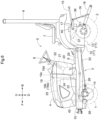
FIG. 1 is a left side view of a tractor not falling under the scope of the present invention. -
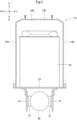
FIG. 2 is a longitudinal front view of a region around an inverter and a motor. -
FIG. 3 schematically shows a system for transmission from the motor to front and rear wheels. -
FIG. 4 is a left side view of a tractor according to a second variation not falling under the scope of the present invention. -
FIG. 5 is a left side view of a tractor according to a third variation not falling under the scope of the present invention. -
FIG. 6 is a left side view of a tractor according to a fourth variation of implementation of the present invention. -
FIG. 7 is a left side view of the tractor according to the fifth variation not falling under the scope of the present invention. -
FIG. 8 is a left side view of a tractor according to a seventh variation not falling under the scope of the present invention. -
FIGS. 1 to 8 show electric tractors, each of which is an example of a work vehicle. InFIGS. 1 to 8 , F indicates the forward direction, B indicates the rearward direction, U indicates the upward direction, D indicates the downward direction, R indicates the rightward direction, and L indicates the leftward direction. - As shown in
FIG. 1 , left and right front wheels 1 (each of which corresponds to a front travel device) and left and right rear wheels 2 (each of which corresponds to a rear travel device) support abody 3 of the tractor. Ahood 4 is provided at a front portion of thebody 3, and anoperation section 5 is provided at a rear portion of thebody 3. Theoperation section 5 includes asteering wheel 6 for steering thefront wheels 1, anoperator seat 7, afloor 8, and aROPS frame 9. - The
body 3 has left andright body frames 10, atransmission case 11, and so on. Thetransmission case 11 has afront case 12 and arear case 13 that are joined to each other. The left andright body frames 10 are connected to thetransmission case 11 and extend in the front-back direction below the operation section 5 (floor 8). Thetransmission case 11 is located below theoperator seat 7 in theoperation section 5. - A
front axle case 14 is supported by front portions of thebody frames 10, and supports the left and rightfront wheels 1. The transmission case 11 (rear case 13) supports the left and rightrear wheels 2. - A top link 15 (which corresponds to a link mechanism) and left and right lower links 16 (each of which corresponds to a link mechanism) are provided at a rear portion of the transmission case 11 (rear case 13) in such a manner as to be swingable in the up-down direction. The
top link 15 and thelower links 16 can be joined to a work device (not shown), such as a rotary cultivator. - Left and
right lift arms 17 are provided at the rear portion of the transmission case 11 (rear case 13), and a connectingrod 18 is connected to thelift arms 17 and thelower links 16. Thetop link 15 and thelower links 16 are raised and lowered and the work device is raised and lowered by swinging thelift arms 17 in the up-down direction. - As shown in
FIGS. 1 and2 , apillar frame 19 is provided on thebody frames 10 between thefront wheels 1 and the operation section 5 (rear wheels 2). Thepillar frame 19 is constituted by a folded plate material and has aright section 19a, aleft section 19b, anupper section 19c, and arear section 19d. - The
rear section 19d of thepillar frame 19 is flat and extends in the up-down direction and the left-right direction. Theright section 19a of thepillar frame 19 is formed by bending forward a right portion of therear section 19d of thepillar frame 19, and extends in the up-down direction and the front-back direction. Theleft section 19b of thepillar frame 19 is formed by bending forward a left portion of therear section 19d of thepillar frame 19, and extends in the up-down direction and the front-back direction. - The
upper section 19c of thepillar frame 19 is formed by bending forward an upper portion of therear section 19d of thepillar frame 19, and extends in the left-right direction and the front-back direction. Theupper section 19c of thepillar frame 19 extends between upper portions of theright section 19a and theleft section 19b of thepillar frame 19. - As shown in
FIG. 1 , thehood 4 is supported such that thehood 4 is openable and closable about a fulcrum in the left-right direction of theupper section 19c of thepillar frame 19, and can be operated from a closed position shown inFIG. 1 to an open position above the closed position. - A
power steering mechanism 20 is provided below a rear face portion of therear section 19d of thepillar frame 19. Asteering post 21 is attached to thepower steering mechanism 20 and extends upward from thepower steering mechanism 20. Asteering wheel 6 is supported by an upper portion of thesteering post 21, and asteering shaft 22 is connected to thesteering wheel 6 and thepower steering mechanism 20. - In response to the
steering wheel 6 being rotated, the rotation of thesteering wheel 6 is transmitted to thepower steering mechanism 20 via thesteering shaft 22, and thepower steering mechanism 20 steers thefront wheels 1 to the left and right. - With the above configuration, the
steering wheel 6 for operating the front wheels 1 (front travel devices) is provided at a front portion of theoperation section 5, and thesteering shaft 22 for operating the front wheels 1 (front travel devices) extends downward from thesteering wheel 6, as shown inFIG. 1 . - A
support platform 23 is attached to front upper portions of the left andright body frames 10, as shown inFIGS. 1 and2 . Aninverter 24, which is provided on thesupport platform 23, has a rectangular case with a small dimension (dimension in the front-back direction) that houses various types of equipment. - The
inverter 24 extends in the up-down direction in a side view and extends in the left-right direction in a plan view (front view), and is attached to a rear portion of thesupport platform 23 so as to be in contact with a front face portion of therear section 19d of thepillar frame 19. - As shown in
FIG. 1 , the tractor has abattery 25, which is constituted by multiple pairs of stacks (not shown) of connected battery modules (not shown) that are housed in a rectangular-parallelepiped case. Thebattery 25 is attached to thesupport platform 23, and thehood 4 at the closed position covers theinverter 24 and thebattery 25. Maintenance work for theinverter 24 and thebattery 25 can be performed by opening thehood 4. - With the above configuration, the
inverter 24 is provided between theright section 19a and theleft section 19b of thepillar frame 19 in a front view and overlaps theright section 19a and theleft section 19b of thepillar frame 19 in a side view, as shown inFIGS. 1 and2 . Theinverter 24 is provided below theupper section 19c of thepillar frame 19 in a front view and overlaps theupper section 19c of thepillar frame 19 in a plan view. - The
battery 25 is provided forward of theoperation section 5, and theinverter 24 is provided between thebattery 25 and theoperation section 5 in a side view. Theinverter 24 is provided between thebattery 25 and the steeringshaft 22 in a side view. - The
pillar frame 19 is provided between thebattery 25 and theoperation section 5 in a side view, and theinverter 24 is provided between thebattery 25 and therear section 19d of thepillar frame 19 in a side view. - Left and right mounting
brackets 27 are joined to inner faces of the left and right body frames 10, and left and right portions of amotor 26 are joined to the left and right mountingbrackets 27, as shown inFIGS. 1 and2 . - The
inverter 24 converts DC power from thebattery 25 to AC power and supplies the AC power to themotor 26 to operate themotor 26. Motive power from themotor 26 is supplied to thefront wheels 1 and therear wheels 2, as shown inFIG. 3 . - With the above configuration, the
motor 26 is provided between the front wheels 1 (front travel devices) and the rear wheels 2 (rear travel devices) and below thesteering wheel 6 in a side view, as shown inFIGS. 1 and2 . - The
left body frame 10 and theright body frame 10 are disposed in the front-back direction below the operation section 5 (floor 8), and themotor 26 is provided between theleft body frame 10 and theright body frame 10 in a plan view (front view). - The
motor 26 is provided below thepillar frame 19, thepower steering mechanism 20, theinverter 24, and the rear portion of thebattery 25 in a side view. Thepillar frame 19, thepower steering mechanism 20, and theinverter 24 are provided above themotor 26 in a side view. - A hydrostatic continuously variable transmission 28 (which corresponds to a transmission for travel) is housed within the
front case 12 of thetransmission case 11, and motive power from themotor 26 is transmitted via atransmission shaft 29 to the continuouslyvariable transmission 28, as shown inFIGS. 1 and3 . The continuouslyvariable transmission 28 is capable of steplessly changing forward and backward and is operated by a gearshift pedal (not shown) on thefloor 8 of theoperation section 5. - An auxiliary transmission 30 (which corresponds to a transmission for travel), a rear wheel
differential device 31, and a front wheel transmission 32 (which corresponds to a transmission for travel) are housed within therear case 13 of thetransmission case 11. Motive power subjected to speed change by the continuouslyvariable transmission 28 is transmitted to theauxiliary transmission 30, and is then transmitted from theauxiliary transmission 30 to therear wheels 2 via the rear wheeldifferential device 31. - Motive power diverted from between the
auxiliary transmission 30 and the rear wheeldifferential device 31 is transmitted to thefront wheel transmission 32, then transmitted from thefront wheel transmission 32 via thetransmission shaft 33 to the front wheeldifferential device 34 housed within thefront axle case 14, and is transmitted from the front wheeldifferential device 34 to thefront wheels 1. - The
front wheel transmission 32 drives thefront wheels 1 and therear wheels 2 at the same speed while thefront wheels 1 are operated within the range of left and right set angles from a straight-ahead position. Thefront wheel transmission 32 drives thefront wheels 1 at a higher speed than therear wheels 2 while thefront wheels 1 are steered leftward or rightward beyond the left and right setting angles. - With the above configuration, the tractor has the transmission case 11 (
front case 12 and rear case 13) that houses the continuously variable transmission 28 (transmission for travel), the auxiliary transmission 30 (transmission for travel), and the front wheel transmission 32 (transmission for travel), as shown inFIG. 3 . - Motive power from the
motor 26 is transmitted via thetransmission shaft 29 to the continuously variable transmission 28 (transmission for travel), the auxiliary transmission 30 (transmission for travel), and the front wheel transmission 32 (transmission for travel), and is then transmitted from the continuously variable transmission 28 (transmission for travel), the auxiliary transmission 30 (transmission for travel), and the front wheel transmission 32 (transmission for travel) to the front wheels 1(travel devices) and the rear wheels 2 (travel devices). - A
PTO transmission 35 is housed within therear case 13 of thetransmission case 11, and aPTO shaft 36 is provided at a rear portion of therear case 13 of thetransmission case 11, as shown inFIGS. 1 and3 . A transmission shaft (not shown) is connected to thePTO shaft 36 and the work device in response to the work device being joined to thetop link 15 and thelower links 16. - While motive power from the
motor 26 is transmitted to the continuouslyvariable transmission 28 via thetransmission shaft 29, motive power from the transmission shaft 29 (motive power that is not subjected to speed change by the continuously variable transmission 28) is transmitted to thePTO transmission 35, and motive power subjected to speed change by thePTO transmission 35 is transmitted to thePTO shaft 36 and then transmitted from thePTO shaft 36 to the work device. - A single-acting
hydraulic cylinder 37 is provided above the rear portion of the transmission case 11 (rear case 13), and thehydraulic cylinder 37 raises and lowers thelift arm 17, as shown inFIG. 3 . - A
hydraulic pump 38 and acontrol valve 39 are provided within the rear portion of the transmission case 11 (rear case 13). Lubricating oil that serves as hydraulic oil and stored in the transmission case 11 (rear case 13) is supplied to thehydraulic pump 38, and is then supplied from thehydraulic pump 38 to thecontrol valve 39. - A
pump motor 40 is provided above the rear portion of the transmission case 11 (rear case 13) and drives thehydraulic pump 38. Theinverter 24 converts DC power from thebattery 25 to AC power and supplies the AC power to thepump motor 40 to operate thepump motor 40. - Operations to supply and discharge the hydraulic oil to and from the
hydraulic cylinder 37 are performed from thecontrol valve 39, and thehydraulic cylinder 37 raises and lowers thelift arm 17. The hydraulic oil discharged from thehydraulic cylinder 37 is returned fromcontrol valve 39 to the transmission case 11 (rear case 13). - With the above configuration, the
hydraulic cylinder 37, which raises and lowers the top link 15 (link mechanism) and the lower links 16 (link mechanism) to which the work device is joined, and thehydraulic pump 38, which supplies the hydraulic oil to thehydraulic cylinder 37, are provided in the transmission case 11 (rear case 13), as shown inFIGS. 1 and3 . - The
pump motor 40, which drives thehydraulic pump 38, is located between theoperator seat 7 in theoperation section 5 and the transmission case 11 (rear case 13) in a side view. - In the configuration shown in
FIGS. 1 and2 , themotor 26 may be joined to thesupport platform 23 and supported by thebody 3. Themotor 26 may be joined to thepillar frame 19 and supported by thebody 3. - In the configuration shown in
FIGS. 1 and2 , theinverter 24 may be joined to thepillar frame 19 and supported by thebody 3. Theinverter 24 may be provided between theoperator seat 7 in theoperation section 5 and the transmission case 11 (front case 12 and rear case 13) in a side view, as shown inFIG. 7 , which will be described later. - If the
battery 25 is provided forward of theoperation section 5 as shown inFIG. 4 , theinverter 24 may be provided forward of thebattery 25. - According to the configuration shown in
FIG. 4 , theinverter 24 extends in the up-down direction in a side view and extends in the left-right direction in a plan view (front view), and is provided between a front portion of thehood 4 and a front portion of thebattery 25. - The
motor 26 may be provided above the front axle case 14 (front wheels 1 (front travel devices)) in a side view, as shown inFIG. 5 . - According to the configuration shown in
FIG. 5 , themotor 26 is provided below the front portion of thebattery 25, and the position of themotor 26 is slightly higher. Thus, anothersupport platform 41 need only be provided to thesupport platform 23 such that thebattery 25 is attached to thesupport platform 41 to make the position of thebattery 25 slightly higher. - In the configuration shown in
FIG. 5 , themotor 26 may be joined to thesupport platform 41 and supported by thebody 3. Theinverter 24 may be provided forward of thebattery 25, as shown inFIG. 4 . Theinverter 24 may be provided between theoperator seat 7 in theoperation section 5 and the transmission case 11 (front case 12 and rear case 13) in a side view, as shown inFIG. 7 , which will be described later. - The
motor 26 may be provided forward of the front axle case 14 (front wheels 1 (front travel devices)) in a side view, as shown inFIG. 6 . - According to the configuration shown in
FIG. 6 , themotor 26 is located at a lower position. Thus, atransmission mechanism 42 of a gear transmission type need only be attached to a portion of an output shaft (not shown) of themotor 26 in such a manner as to extend upward from themotor 26. Thetransmission shaft 29 need only be connected to an output shaft (not shown) at an upper portion of thetransmission mechanism 42 and the continuously variable transmission 28 (seeFIG. 3 ) such that thetransmission shaft 29 extends in the front-back direction above thefront axle case 14. - Motive power from the output shaft of the
motor 26 is transmitted to thetransmission mechanism 42, then transmitted the output shaft at the upper portion oftransmission mechanism 42 to the continuously variable transmission 28 (seeFIG. 3 ) via thetransmission shaft 29, and is transmitted to thefront wheels 1 and therear wheels 2. - In the configuration shown in
FIG. 6 , themotor 26 may be joined to thesupport platform 23 and supported by thebody 3. Theinverter 24 may be provided forward of thebattery 25, as shown inFIG. 4 . Theinverter 24 may be provided between theoperator seat 7 in theoperation section 5 and the transmission case 11 (front case 12 and rear case 13) in a side view, as shown inFIG. 7 , which will be described later. - As shown in
FIG. 7 , if the transmission case 11 (front case 12 and rear case 13) is provided below theoperator seat 7 in theoperation section 5, themotor 26 may be attached to the upper portion of the transmission case 11 (front case 12 and rear case 13) and provided between theoperator seat 7 in theoperation section 5 and the transmission case 11 (front case 12 and rear case 13) in a side view. - The
inverter 24 may be provided between theoperator seat 7 in theoperation section 5 and the transmission case 11 (front case 12 and rear case 13) in a side view by attaching theinverter 24 to asupport frame 43 that is provided in theoperation section 5 to support theoperator seat 7. - In the configuration shown in
FIG. 7 , themotor 26 need only be attached to the upper portion of the transmission case 11 (front case 12 and rear case 13) such that an output shaft (not shown) of themotor 26 faces forward, and atransmission mechanism 44 of a gear transmission type need only be attached to the output shaft of themotor 26 and a forward-facing input shaft (not shown) of the continuously variable transmission 28 (seeFIG. 3 ). - Motive power from the output shaft of the
motor 26 is transmitted to thetransmission mechanism 44, then transmitted from an output shaft (not shown) at a lower portion of thetransmission mechanism 44 to the continuously variable transmission 28 (seeFIG. 3 ), and is transmitted to thefront wheels 1 and therear wheels 2. - In the configuration shown in
FIG. 7 , theinverter 24 is supported in a suspended manner by a lower portion of thesupport frame 43 and extends in the horizontal direction. Theinverter 24 is disposed at a position upward of and away from themotor 26 and thepump motor 40, and is disposed at a position upward of and away from the upper portion of the transmission case 11 (front case 12 and rear case 13). - If the
motor 26 is provided between theoperator seat 7 in theoperation section 5 and the transmission case 11 (front case 12 and rear case 13) in a side view, as shown inFIG. 7 , theinverter 24 may be provided rearward of thebattery 25, as shown inFIG. 1 . Theinverter 24 may be provided forward of thebattery 25, as shown inFIG. 4 . - A
work motor 45 may be provided on the left and right lower links 16 (link mechanism), as shown inFIG. 8 . - According to the configuration shown in
FIG. 8 , with the work device joined to thetop link 15 and thelower links 16, a transmission shaft (not shown) is connected to thework motor 45 and the work device. Theinverter 24 converts DC power from thebattery 25 to AC power, which is supplied to thework motor 45 to operate thework motor 45, and motive power from thework motor 45 is transmitted to the work device. - In the configuration shown in
FIG. 8 , thePTO transmission 35 and thePTO shaft 36 shown inFIGS. 1 and3 may be eliminated. Thework motor 45 may be provided on the top link 15 (link mechanism). - The tractor may have a four-wheel steering structure in which the
front wheels 1 and therear wheels 2 are steered in the same and opposite phases by thesteering wheel 6. - Crawler-type travel devices (not shown) may be provided instead of the
front wheels 1 as the front travel devices. Crawler-type travel devices (not shown) may be provided instead of therear wheels 2 as the rear travel devices. One crawler-type travel device (not shown) may be provided instead of thefront wheels 1 and therear wheels 2. - The present invention can be applied to not only electric tractors in which a motor drives a travel device, but also to hybrid tractors in which an engine and a motor drive a travel device, and can be applied to not only tractors but also construction work vehicles and agricultural work vehicles.
-
- 1
- Front wheel (travel device)
- 2
- Rear wheel (travel device)
- 5
- Operation section
- 6
- Steering wheel
- 7
- Operator seat
- 10
- Body frame
- 11
- Transmission case
- 15
- Top link (link mechanism)
- 16
- Lower link (link mechanism)
- 24
- Inverter
- 25
- Battery
- 26
- Motor
- 28
- Continuously variable transmission (transmission for travel)
- 29
- Transmission shaft
- 30
- Auxiliary transmission (transmission for travel)
- 32
- Front wheel transmission (transmission for travel)
- 37
- Hydraulic cylinder
- 38
- Hydraulic pump
- 40
- Pump motor
- 45
- Work motor
Claims (3)
- A work vehicle comprising:at least one travel device (1, 2) including a front travel device (1);a battery (25);a motor (26);an inverter (24) configured to operate the motor (26);an operation section (5) including an operator seat (7);a transmission case (11) housing a transmission (28) for travel; anda transmission shaft (29),wherein the motor (26), the transmission shaft (29), the transmission (28), and the travel device (1, 2) are connected to each other such that motive power from the motor (26) is transmitted to the transmission via the transmission shaft (29) and transmitted from the transmission (28) to the travel device (1, 2), characterized in that the motor (26) is forward of the front travel device (1) in a side view.
- The work vehicle according to claim 1, further comprising:a work device;a link mechanism (15, 16) disposed on the transmission case (11), configured to be raised and lowered, and joined to the work device;a hydraulic cylinder (37) disposed on the transmission case (11) and configured to raise and lower the link mechanism (15, 16);a hydraulic pump (38) configured to supply hydraulic oil to the hydraulic cylinder (37); anda pump motor (40) configured to drive the hydraulic pump (38),wherein the transmission case (11) is below the operator seat (7), andthe pump motor (40) is between the operator seat (7) and the transmission case in a side view.
- The work vehicle according to claim 1, further comprising:a work device;a link mechanism (15, 16) disposed on the transmission case (11), configured to be raised and lowered, and joined to the work device; anda work motor (45) configured to supply motive power to the work device,wherein the work motor (45) is in the link mechanism (11).
Applications Claiming Priority (1)
| Application Number | Priority Date | Filing Date | Title |
|---|---|---|---|
| JP2022152768A JP7788980B2 (en) | 2022-09-26 | 2022-09-26 | Work vehicle |
Publications (2)
| Publication Number | Publication Date |
|---|---|
| EP4344922A1 EP4344922A1 (en) | 2024-04-03 |
| EP4344922B1 true EP4344922B1 (en) | 2025-06-11 |
Family
ID=88192077
Family Applications (1)
| Application Number | Title | Priority Date | Filing Date |
|---|---|---|---|
| EP23199198.5A Active EP4344922B1 (en) | 2022-09-26 | 2023-09-22 | Work vehicle |
Country Status (3)
| Country | Link |
|---|---|
| US (1) | US12377735B2 (en) |
| EP (1) | EP4344922B1 (en) |
| JP (1) | JP7788980B2 (en) |
Families Citing this family (1)
| Publication number | Priority date | Publication date | Assignee | Title |
|---|---|---|---|---|
| JP7792880B2 (en) * | 2022-09-26 | 2025-12-26 | 株式会社クボタ | Work vehicle |
Family Cites Families (20)
| Publication number | Priority date | Publication date | Assignee | Title |
|---|---|---|---|---|
| US3307431A (en) * | 1961-09-01 | 1967-03-07 | American Mach & Foundry | Garden tractor |
| JP3880464B2 (en) * | 2002-06-20 | 2007-02-14 | 株式会社クボタ | Passenger work vehicle |
| JP4826670B2 (en) * | 2009-11-06 | 2011-11-30 | 株式会社豊田自動織機 | Towing tractor |
| JP5826037B2 (en) * | 2012-01-10 | 2015-12-02 | 株式会社クボタ | Electric tractor |
| JP5974637B2 (en) * | 2012-05-30 | 2016-08-23 | 井関農機株式会社 | Electric work vehicle |
| JP2014133438A (en) * | 2013-01-08 | 2014-07-24 | Yanmar Co Ltd | Work machine |
| JP6471626B2 (en) * | 2015-06-22 | 2019-02-20 | 井関農機株式会社 | Tractor |
| EP3646694B1 (en) * | 2017-06-28 | 2023-10-11 | Kubota Corporation | Work management system for a working machine |
| JP6214806B1 (en) * | 2017-06-28 | 2017-10-18 | 株式会社クボタ | Spraying device |
| CN111278684B (en) * | 2017-12-18 | 2023-08-22 | 株式会社久保田 | Tractor and work vehicle |
| US20190200510A1 (en) * | 2017-12-29 | 2019-07-04 | Dcentralized Systems Llc | Implement attachment apparatus and power take-off |
| US10724618B2 (en) * | 2018-03-21 | 2020-07-28 | Deere & Company | Electric drive axle system |
| JP7001540B2 (en) * | 2018-05-18 | 2022-01-19 | 株式会社クボタ | Work platform |
| EP3816018A4 (en) * | 2018-06-27 | 2022-07-20 | Kubota Corporation | CONSTRUCTION MACHINE WITH DRIVER |
| JP7246264B2 (en) * | 2019-06-24 | 2023-03-27 | 株式会社クボタ | electric work vehicle |
| US11413960B2 (en) * | 2019-07-12 | 2022-08-16 | Deere & Company | Power shift transmission with electric power assist |
| JP7258737B2 (en) * | 2019-12-18 | 2023-04-17 | 株式会社クボタ | work vehicle |
| JP7597664B2 (en) * | 2021-07-15 | 2024-12-10 | 株式会社クボタ | Agricultural Tractors |
| CN114194012A (en) * | 2021-12-17 | 2022-03-18 | 东风襄阳旅行车有限公司 | A new energy vehicle drive motor suspension structure |
| DE102022105401A1 (en) * | 2022-03-08 | 2023-09-14 | Deere & Company | Drive train, agricultural vehicle and method for operating a drive train |
-
2022
- 2022-09-26 JP JP2022152768A patent/JP7788980B2/en active Active
-
2023
- 2023-09-22 EP EP23199198.5A patent/EP4344922B1/en active Active
- 2023-09-25 US US18/372,449 patent/US12377735B2/en active Active
Also Published As
| Publication number | Publication date |
|---|---|
| EP4344922A1 (en) | 2024-04-03 |
| US12377735B2 (en) | 2025-08-05 |
| JP7788980B2 (en) | 2025-12-19 |
| JP2024047246A (en) | 2024-04-05 |
| US20240100967A1 (en) | 2024-03-28 |
Similar Documents
| Publication | Publication Date | Title |
|---|---|---|
| US12139026B2 (en) | Work vehicle | |
| EP4342707B1 (en) | Work vehicle | |
| EP4344922A1 (en) | Work vehicle | |
| JP3400349B2 (en) | Tractor | |
| CN1110424C (en) | Vehicle having lifting arm, which can be used as agricultural machine | |
| EP3299264B1 (en) | Crawler tractor | |
| EP1886863B1 (en) | Traveling vehicle | |
| JP5658019B2 (en) | Farm tractor | |
| JP7789124B2 (en) | electric work vehicle | |
| US20220339979A1 (en) | Tractor | |
| US12622337B2 (en) | Agricultural vehicle combination | |
| JP2000053032A (en) | Tractor | |
| JP3694931B2 (en) | Tractor body | |
| JP3583590B2 (en) | Tractor hydraulic lifting device | |
| JP2005306156A (en) | External hydraulic take-out device for agricultural tractor | |
| JPH03200423A (en) | Transmission structure of manned operating machine | |
| JP3579224B2 (en) | Tractor | |
| JP2021101656A (en) | Work vehicle | |
| JPH1156008A (en) | Tractor hydraulic lifting device | |
| JP2021101657A (en) | Work vehicle | |
| JP2002127769A (en) | Tractor | |
| JPH092324A (en) | Loader frame such as front loader | |
| JP2000118258A (en) | External hydraulic take-out device for tractor | |
| JPH09275707A (en) | Passenger management work vehicle | |
| JP2000094983A (en) | External hydraulic take-out device for tractor |
Legal Events
| Date | Code | Title | Description |
|---|---|---|---|
| PUAI | Public reference made under article 153(3) epc to a published international application that has entered the european phase |
Free format text: ORIGINAL CODE: 0009012 |
|
| STAA | Information on the status of an ep patent application or granted ep patent |
Free format text: STATUS: REQUEST FOR EXAMINATION WAS MADE |
|
| 17P | Request for examination filed |
Effective date: 20230922 |
|
| AK | Designated contracting states |
Kind code of ref document: A1 Designated state(s): AL AT BE BG CH CY CZ DE DK EE ES FI FR GB GR HR HU IE IS IT LI LT LU LV MC ME MK MT NL NO PL PT RO RS SE SI SK SM TR |
|
| GRAP | Despatch of communication of intention to grant a patent |
Free format text: ORIGINAL CODE: EPIDOSNIGR1 |
|
| STAA | Information on the status of an ep patent application or granted ep patent |
Free format text: STATUS: GRANT OF PATENT IS INTENDED |
|
| RIC1 | Information provided on ipc code assigned before grant |
Ipc: B60K 1/04 20190101ALN20250205BHEP Ipc: B60K 1/00 20060101ALN20250205BHEP Ipc: F16H 57/02 20120101ALN20250205BHEP Ipc: B60K 17/28 20060101ALN20250205BHEP Ipc: B60K 17/10 20060101ALI20250205BHEP Ipc: B60K 17/04 20060101ALI20250205BHEP Ipc: B60K 17/356 20060101ALI20250205BHEP Ipc: B60K 17/34 20060101ALI20250205BHEP Ipc: B60K 17/30 20060101ALI20250205BHEP Ipc: B60K 17/22 20060101AFI20250205BHEP |
|
| INTG | Intention to grant announced |
Effective date: 20250219 |
|
| GRAS | Grant fee paid |
Free format text: ORIGINAL CODE: EPIDOSNIGR3 |
|
| GRAA | (expected) grant |
Free format text: ORIGINAL CODE: 0009210 |
|
| STAA | Information on the status of an ep patent application or granted ep patent |
Free format text: STATUS: THE PATENT HAS BEEN GRANTED |
|
| REG | Reference to a national code |
Ref country code: DE Ref legal event code: R081 Ref document number: 602023003936 Country of ref document: DE Owner name: KUBOTA CORPORATION, JP Free format text: FORMER OWNER: KUBOTA CORPORATION, OSAKA-SHI, OSAKA, JP |
|
| AK | Designated contracting states |
Kind code of ref document: B1 Designated state(s): AL AT BE BG CH CY CZ DE DK EE ES FI FR GB GR HR HU IE IS IT LI LT LU LV MC ME MK MT NL NO PL PT RO RS SE SI SK SM TR |
|
| REG | Reference to a national code |
Ref country code: GB Ref legal event code: FG4D |
|
| REG | Reference to a national code |
Ref country code: CH Ref legal event code: EP |
|
| REG | Reference to a national code |
Ref country code: IE Ref legal event code: FG4D |
|
| REG | Reference to a national code |
Ref country code: DE Ref legal event code: R096 Ref document number: 602023003936 Country of ref document: DE |
|
| PG25 | Lapsed in a contracting state [announced via postgrant information from national office to epo] |
Ref country code: ES Free format text: LAPSE BECAUSE OF FAILURE TO SUBMIT A TRANSLATION OF THE DESCRIPTION OR TO PAY THE FEE WITHIN THE PRESCRIBED TIME-LIMIT Effective date: 20250611 Ref country code: FI Free format text: LAPSE BECAUSE OF FAILURE TO SUBMIT A TRANSLATION OF THE DESCRIPTION OR TO PAY THE FEE WITHIN THE PRESCRIBED TIME-LIMIT Effective date: 20250611 |
|
| PGFP | Annual fee paid to national office [announced via postgrant information from national office to epo] |
Ref country code: DE Payment date: 20250916 Year of fee payment: 3 |
|
| REG | Reference to a national code |
Ref country code: LT Ref legal event code: MG9D |
|
| PG25 | Lapsed in a contracting state [announced via postgrant information from national office to epo] |
Ref country code: GR Free format text: LAPSE BECAUSE OF FAILURE TO SUBMIT A TRANSLATION OF THE DESCRIPTION OR TO PAY THE FEE WITHIN THE PRESCRIBED TIME-LIMIT Effective date: 20250912 Ref country code: NO Free format text: LAPSE BECAUSE OF FAILURE TO SUBMIT A TRANSLATION OF THE DESCRIPTION OR TO PAY THE FEE WITHIN THE PRESCRIBED TIME-LIMIT Effective date: 20250911 |
|
| REG | Reference to a national code |
Ref country code: NL Ref legal event code: MP Effective date: 20250611 |
|
| PG25 | Lapsed in a contracting state [announced via postgrant information from national office to epo] |
Ref country code: BG Free format text: LAPSE BECAUSE OF FAILURE TO SUBMIT A TRANSLATION OF THE DESCRIPTION OR TO PAY THE FEE WITHIN THE PRESCRIBED TIME-LIMIT Effective date: 20250611 |
|
| PG25 | Lapsed in a contracting state [announced via postgrant information from national office to epo] |
Ref country code: HR Free format text: LAPSE BECAUSE OF FAILURE TO SUBMIT A TRANSLATION OF THE DESCRIPTION OR TO PAY THE FEE WITHIN THE PRESCRIBED TIME-LIMIT Effective date: 20250611 |
|
| PGFP | Annual fee paid to national office [announced via postgrant information from national office to epo] |
Ref country code: AT Payment date: 20251020 Year of fee payment: 3 Ref country code: FR Payment date: 20250801 Year of fee payment: 3 |
|
| PG25 | Lapsed in a contracting state [announced via postgrant information from national office to epo] |
Ref country code: RS Free format text: LAPSE BECAUSE OF FAILURE TO SUBMIT A TRANSLATION OF THE DESCRIPTION OR TO PAY THE FEE WITHIN THE PRESCRIBED TIME-LIMIT Effective date: 20250911 |
|
| PG25 | Lapsed in a contracting state [announced via postgrant information from national office to epo] |
Ref country code: LV Free format text: LAPSE BECAUSE OF FAILURE TO SUBMIT A TRANSLATION OF THE DESCRIPTION OR TO PAY THE FEE WITHIN THE PRESCRIBED TIME-LIMIT Effective date: 20250611 |
|
| PG25 | Lapsed in a contracting state [announced via postgrant information from national office to epo] |
Ref country code: NL Free format text: LAPSE BECAUSE OF FAILURE TO SUBMIT A TRANSLATION OF THE DESCRIPTION OR TO PAY THE FEE WITHIN THE PRESCRIBED TIME-LIMIT Effective date: 20250611 |
|
| PG25 | Lapsed in a contracting state [announced via postgrant information from national office to epo] |
Ref country code: PT Free format text: LAPSE BECAUSE OF FAILURE TO SUBMIT A TRANSLATION OF THE DESCRIPTION OR TO PAY THE FEE WITHIN THE PRESCRIBED TIME-LIMIT Effective date: 20251013 |
|
| REG | Reference to a national code |
Ref country code: AT Ref legal event code: MK05 Ref document number: 1802093 Country of ref document: AT Kind code of ref document: T Effective date: 20250611 |
|
| PG25 | Lapsed in a contracting state [announced via postgrant information from national office to epo] |
Ref country code: IS Free format text: LAPSE BECAUSE OF FAILURE TO SUBMIT A TRANSLATION OF THE DESCRIPTION OR TO PAY THE FEE WITHIN THE PRESCRIBED TIME-LIMIT Effective date: 20251011 |
|
| PG25 | Lapsed in a contracting state [announced via postgrant information from national office to epo] |
Ref country code: SM Free format text: LAPSE BECAUSE OF FAILURE TO SUBMIT A TRANSLATION OF THE DESCRIPTION OR TO PAY THE FEE WITHIN THE PRESCRIBED TIME-LIMIT Effective date: 20250611 Ref country code: AT Free format text: LAPSE BECAUSE OF FAILURE TO SUBMIT A TRANSLATION OF THE DESCRIPTION OR TO PAY THE FEE WITHIN THE PRESCRIBED TIME-LIMIT Effective date: 20250611 |
|
| PG25 | Lapsed in a contracting state [announced via postgrant information from national office to epo] |
Ref country code: CZ Free format text: LAPSE BECAUSE OF FAILURE TO SUBMIT A TRANSLATION OF THE DESCRIPTION OR TO PAY THE FEE WITHIN THE PRESCRIBED TIME-LIMIT Effective date: 20250611 |
|
| PG25 | Lapsed in a contracting state [announced via postgrant information from national office to epo] |
Ref country code: PL Free format text: LAPSE BECAUSE OF FAILURE TO SUBMIT A TRANSLATION OF THE DESCRIPTION OR TO PAY THE FEE WITHIN THE PRESCRIBED TIME-LIMIT Effective date: 20250611 |
|
| PG25 | Lapsed in a contracting state [announced via postgrant information from national office to epo] |
Ref country code: EE Free format text: LAPSE BECAUSE OF FAILURE TO SUBMIT A TRANSLATION OF THE DESCRIPTION OR TO PAY THE FEE WITHIN THE PRESCRIBED TIME-LIMIT Effective date: 20250611 |
|
| PG25 | Lapsed in a contracting state [announced via postgrant information from national office to epo] |
Ref country code: SK Free format text: LAPSE BECAUSE OF FAILURE TO SUBMIT A TRANSLATION OF THE DESCRIPTION OR TO PAY THE FEE WITHIN THE PRESCRIBED TIME-LIMIT Effective date: 20250611 |
|
| REG | Reference to a national code |
Ref country code: DE Ref legal event code: R026 Ref document number: 602023003936 Country of ref document: DE |
|
| PLBI | Opposition filed |
Free format text: ORIGINAL CODE: 0009260 |
|
| REG | Reference to a national code |
Ref country code: CH Ref legal event code: L10 Free format text: ST27 STATUS EVENT CODE: U-0-0-L10-L00 (AS PROVIDED BY THE NATIONAL OFFICE) Effective date: 20260225 |
|
| PG25 | Lapsed in a contracting state [announced via postgrant information from national office to epo] |
Ref country code: RO Free format text: LAPSE BECAUSE OF FAILURE TO SUBMIT A TRANSLATION OF THE DESCRIPTION OR TO PAY THE FEE WITHIN THE PRESCRIBED TIME-LIMIT Effective date: 20250611 |
|
| PLAX | Notice of opposition and request to file observation + time limit sent |
Free format text: ORIGINAL CODE: EPIDOSNOBS2 |
|
| 26 | Opposition filed |
Opponent name: DEERE & COMPANY/JOHN DEERE GMBH & CO. KG Effective date: 20260218 |
|
| PG25 | Lapsed in a contracting state [announced via postgrant information from national office to epo] |
Ref country code: DK Free format text: LAPSE BECAUSE OF FAILURE TO SUBMIT A TRANSLATION OF THE DESCRIPTION OR TO PAY THE FEE WITHIN THE PRESCRIBED TIME-LIMIT Effective date: 20250611 |
|
| PG25 | Lapsed in a contracting state [announced via postgrant information from national office to epo] |
Ref country code: IT Free format text: LAPSE BECAUSE OF FAILURE TO SUBMIT A TRANSLATION OF THE DESCRIPTION OR TO PAY THE FEE WITHIN THE PRESCRIBED TIME-LIMIT Effective date: 20250611 |