EP4300330B1 - Verfahren, vorrichtung und computerprogramm zur herstellung eines speichermediums - Google Patents
Verfahren, vorrichtung und computerprogramm zur herstellung eines speichermediums Download PDFInfo
- Publication number
- EP4300330B1 EP4300330B1 EP22775596.4A EP22775596A EP4300330B1 EP 4300330 B1 EP4300330 B1 EP 4300330B1 EP 22775596 A EP22775596 A EP 22775596A EP 4300330 B1 EP4300330 B1 EP 4300330B1
- Authority
- EP
- European Patent Office
- Prior art keywords
- information
- security information
- map
- memory card
- temporary security
- Prior art date
- Legal status (The legal status is an assumption and is not a legal conclusion. Google has not performed a legal analysis and makes no representation as to the accuracy of the status listed.)
- Active
Links
Images





Classifications
-
- G—PHYSICS
- G06—COMPUTING OR CALCULATING; COUNTING
- G06F—ELECTRIC DIGITAL DATA PROCESSING
- G06F21/00—Security arrangements for protecting computers, components thereof, programs or data against unauthorised activity
- G06F21/70—Protecting specific internal or peripheral components, in which the protection of a component leads to protection of the entire computer
- G06F21/78—Protecting specific internal or peripheral components, in which the protection of a component leads to protection of the entire computer to assure secure storage of data
-
- G—PHYSICS
- G06—COMPUTING OR CALCULATING; COUNTING
- G06F—ELECTRIC DIGITAL DATA PROCESSING
- G06F21/00—Security arrangements for protecting computers, components thereof, programs or data against unauthorised activity
- G06F21/10—Protecting distributed programs or content, e.g. vending or licensing of copyrighted material ; Digital rights management [DRM]
-
- G—PHYSICS
- G06—COMPUTING OR CALCULATING; COUNTING
- G06F—ELECTRIC DIGITAL DATA PROCESSING
- G06F21/00—Security arrangements for protecting computers, components thereof, programs or data against unauthorised activity
- G06F21/10—Protecting distributed programs or content, e.g. vending or licensing of copyrighted material ; Digital rights management [DRM]
- G06F21/101—Protecting distributed programs or content, e.g. vending or licensing of copyrighted material ; Digital rights management [DRM] by binding digital rights to specific entities
- G06F21/1011—Protecting distributed programs or content, e.g. vending or licensing of copyrighted material ; Digital rights management [DRM] by binding digital rights to specific entities to devices
-
- G—PHYSICS
- G06—COMPUTING OR CALCULATING; COUNTING
- G06F—ELECTRIC DIGITAL DATA PROCESSING
- G06F21/00—Security arrangements for protecting computers, components thereof, programs or data against unauthorised activity
- G06F21/50—Monitoring users, programs or devices to maintain the integrity of platforms, e.g. of processors, firmware or operating systems
- G06F21/55—Detecting local intrusion or implementing counter-measures
- G06F21/554—Detecting local intrusion or implementing counter-measures involving event detection and direct action
-
- G—PHYSICS
- G06—COMPUTING OR CALCULATING; COUNTING
- G06F—ELECTRIC DIGITAL DATA PROCESSING
- G06F21/00—Security arrangements for protecting computers, components thereof, programs or data against unauthorised activity
- G06F21/60—Protecting data
- G06F21/602—Providing cryptographic facilities or services
-
- G—PHYSICS
- G06—COMPUTING OR CALCULATING; COUNTING
- G06F—ELECTRIC DIGITAL DATA PROCESSING
- G06F21/00—Security arrangements for protecting computers, components thereof, programs or data against unauthorised activity
- G06F21/70—Protecting specific internal or peripheral components, in which the protection of a component leads to protection of the entire computer
- G06F21/78—Protecting specific internal or peripheral components, in which the protection of a component leads to protection of the entire computer to assure secure storage of data
- G06F21/79—Protecting specific internal or peripheral components, in which the protection of a component leads to protection of the entire computer to assure secure storage of data in semiconductor storage media, e.g. directly-addressable memories
-
- G—PHYSICS
- G09—EDUCATION; CRYPTOGRAPHY; DISPLAY; ADVERTISING; SEALS
- G09B—EDUCATIONAL OR DEMONSTRATION APPLIANCES; APPLIANCES FOR TEACHING, OR COMMUNICATING WITH, THE BLIND, DEAF OR MUTE; MODELS; PLANETARIA; GLOBES; MAPS; DIAGRAMS
- G09B29/00—Maps; Plans; Charts; Diagrams, e.g. route diagram
Definitions
- the present invention relates to a method and an apparatus for producing a recording medium, and a computer program.
- Patent Document 1 discloses a map update system that can prohibit the unauthorized use of map data.
- a user records map data distributed from a distribution center in a recording medium and updates the map data of a navigation apparatus by connecting the recording medium to the navigation apparatus.
- the recording medium used for updating the map data a unique individual ID assigned to the navigation apparatus is recorded in advance.
- the personal computer transmits the individual ID stored in the recording medium to the distribution center.
- the distribution center adds the individual ID as attribute data to the map data for update and distributes the map data for update.
- the map data for update is written in the recording medium set in the personal computer.
- the device determines whether the individual ID added to the map data on the recording medium matches the individual ID of the device. If they match each other, the map data on the recording medium is copied to the hard disk; otherwise, the copying is prohibited. This makes it possible to effectively prevent the unauthorized use of the map data for update.
- Patent Document 1 JP 2005-331579 A
- An object of the present invention is to provide a technique for ensuring the proper use of a map or other contents duplicated to a recording medium.
- a production method is a method for producing a recording medium having a recording area in which content information indicating a content and security information for the security of the content information are recorded.
- content information indicating a content and security information for the security of the content information are recorded.
- medium specifying information for uniquely identifying the recording medium itself is recorded in advance.
- the method includes steps of (a) writing temporary security information and the content information in the recording area, the temporary security information including given information different from the medium specifying information, (b) reading the medium specifying information and the temporary security information from the recording area, (c) replacing the given information in the temporary security information with the medium specifying information, (d) encrypting the temporary security information in which the given information is replaced with the medium specifying information to generate the security information, and (e) causing the security information generated in the step (d) to be recorded in the recording area.
- a production method further includes, in the first disclosure, the step (f) copying the temporary security information and the content information from a host recording medium in which original copies of the temporary security information and the content information are recorded to a recording medium different from the recording medium.
- the step (a) is performed after the step (f).
- a production method further includes, in the second disclosure, a step (g) verifying whether the temporary security information written in the step (a) matches an original copy of the temporary security information and verifying whether the content information written in the step (a) matches the original copy.
- an error is notified when at least one of the verification results in the step (g) indicates a mismatch.
- the step (g) is retried.
- a production method further includes, in any one of the first to sixth disclosures, a step (h) reading the security information from the recording area of the recording medium and verifying whether or not the medium specifying information in the read security information matches the medium specifying information encrypted in the step (d).
- the step (h) is performed after the step (e).
- a production method according to an eighth disclosure is the production method according to the seventh disclosure.
- the verification result in step (h) indicates a mismatch, an error is notified.
- a production method according to a ninth disclosure is the production method according to the eighth disclosure.
- the step (h) is retried.
- a production method according to a 10th disclosure is the production method according to any one of the first to ninth disclosures.
- the content information is map information indicating a map as the content.
- a production method according to a 11th disclosure is the production method according to the 10th disclosure.
- the temporary security information written in the step (a) further includes vehicle specifying information for specifying a vehicle in which the map information is used and version information indicating the version of the map information.
- the vehicle specifying information and the version information are encrypted.
- a production method according to a 12th disclosure is the production method according to the 11th disclosure.
- the temporary security information is encrypted in advance.
- the method further includes a step (i) decrypting the encrypted temporary security information.
- the step (i) is performed after the step (b), and the step (c) is performed after the step (i).
- a production method is the production method according any one of the first to 12th disclosures.
- the recording medium is an SD memory card.
- the recording area includes a user area in which the user can rewrite data and a non-user area in which the user cannot rewrite data.
- the medium specifying information is recorded in advance in the non-user area.
- the temporary security information and the content information are written in the user area.
- a read command for reading the medium specifying information from the non-user area is transmitted to the recording medium, the medium specifying information transmitted from the recording medium in response to the read command is acquired to read the medium specifying information, and the temporary security information is read from the user area.
- a production method in any one of the first to 13th disclosures, further includes a step (j) receiving a notification indicating that preparation of the recording medium as a recording target has been completed. The method performs the step (a) after receiving the notification.
- a production method according to a 15th disclosure is the production method according to the 14th disclosure.
- the notification received in the step (j) is a signal indicating that preparation of a plurality of the recording media is completed.
- a production method according to a 16th disclosure is the production method according any one of the fourth, fifth, eighth, and ninth disclosures.
- the error notification includes information specifying the recording medium, among the plurality of recording media, in which the verification result indicates a mismatch.
- An apparatus includes a communications interface that communicates with an external device, a storage device, and an arithmetic circuit, and executes the production method according to any one of the first to 16th disclosures by using the arithmetic circuit.
- the storage device stores the content information and the temporary security information including the given information.
- the arithmetic circuit In response to reception of the signal, the arithmetic circuit reads the content information and the temporary security information from the storage device, transmits the content information and the temporary security information to a function inspection device via the communications interface, causes the function inspection device to execute the steps (a) and (b), receives the medium specifying information and the temporary security information from the function inspection device via the communications interface, executes the step (d), transmits the security information generated by executing the step (d) to the function inspection device via the communications interface, and causes the function inspection device to execute the step (e).
- a computer program according to an 18th disclosure is configured to cause the arithmetic circuit of the apparatus according to the 17th disclosure to execute a process of reading the content information and the temporary security information from the storage device, a process of causing the function inspection device to transmit the content information and the temporary security information via the communications interface, a process of causing the function inspection device to transmit a command for executing the steps (a) and (b), a process of receiving the medium specifying information and the temporary security information from the function inspection device via the communications interface, a process of executing the step (d), a process of causing the function inspection device to transmit the security information generated by executing the step (d) via the communications interface, and a process of causing the function inspection device to transmit a command for executing the step (e).
- the present inventors have conducted development assuming an application of updating existing map information used by a car navigation apparatus using a secure digital (SD) memory card.
- SD memory card stores map information for update in advance, and the user loads the SD memory card into the car navigation apparatus to update the existing map information.
- the present inventors have studied measures for making map information for update unusable even when the map information is duplicated by a person other than a map provider. Hereinafter, the measures will be specifically described.
- map information is not necessarily for update. Therefore, in the following description, information indicating a map will be described as "map information " regardless of whether it is for update.
- the map referred to herein may be, for example, a map of any country or region in the world, a map of a part of the country or region, or a map for updating only a region changed after a predetermined time.
- an SD memory card will be described below as an example, but the SD memory card is not essential, and any recording medium can be adopted.
- An SD memory card 100 includes a pin I/F 101, an I/F driver 102, an I/F controller 103, a power-on detector 104, a register group 105, a flash memory controller 106, and a flash memory 107.
- the pin I/F 101 includes 9 pins.
- the nine pins include, for example, a data input/output pin, a card detection pin, a ground pin, a power supply pin, and a clock signal pin.
- each of the nine pins is partitioned by a guard (not shown).
- the I/F driver 102 receives a command or an instruction and data from the host device in which SD memory card 100 is used and converts the command or the instruction and the data into an appropriate data format.
- the host device is a device loaded with the SD memory card 100, for example, a car navigation apparatus or a PC.
- the I/F driver 102 reads data in the flash memory 107 and information in a register, converts the data into an appropriate data format, and transmits the data to the host device via the pin group 101. Note that data is transmitted and received between the SD memory card 100 and the host device in synchronization with a clock signal supplied from the host device.
- the I/F controller 103 is connected to various elements constituting the SD memory card 100.
- the I/F controller 103 is connected to, for example, the I/F driver 102 and gives a command to the I/F driver 102 so that the I/F driver 102 performs the above-described operation.
- the I/F controller 103 is also connected to the register group 105, the power-on detector 104, and the flash memory controller 106, and can communicate with each of them.
- the power-on detector 104 determines whether the SD memory card 100 is connected to the host device and the power is turned on upon being attached to the host device.
- the register group 105 includes a plurality of registers.
- the register group 105 includes a card identification (CID) register 105 a.
- Information that can uniquely identify any SD memory card is stored in advance in the CID register 105 a.
- Such information is referred to as "CID” or “medium specifying information” in the present specification.
- “in advance” means at a point of time when the manufacturer of the SD memory card 100 completes the manufacturing.
- the CID is already stored in the SD memory card 100 at the time when the map information is recorded in the SD memory card 100 by the map vendor who is the sales supplier of the map information.
- the manufacturer of the SD memory card 100 will be simply referred to as the "manufacturer”.
- the CID is a set of various pieces of information.
- the CID includes an identification (ID) for identifying the manufacturer of the SD memory card 100 and the information of the name, revision, serial number, and manufacturing date of the product.
- ID an identification
- the CID is no longer changed after being written to each SD memory card 100 by the manufacturer and is only read out.
- the host device can read the CID by transmitting a special command to the SD memory card 100.
- the flash memory controller 106 performs control to write data to the flash memory 107 and performs control to read data from the flash memory 107.
- a recording area 120 of the SD memory card 100 is illustrated in Fig. 2 .
- the recording area 120 can be roughly divided into a non-user area 121 and a user area 122. Further, the non-user area 121 includes a firmware area 121a and a management area 121b.
- the recording area 120 need not be provided as a continuous memory space.
- the recording area in which the non-rewritable information is recorded is merely conceptually referred to as the "non-user area 121"
- the recording area in which the rewritable information is recorded is merely conceptually referred to as the "user area 122”.
- Firmware is recorded in the firmware area 121a of the non-user area 121.
- the firmware is a program for operating the flash memory controller 106.
- Various management information is recorded in the management area 121b.
- the management information includes information recorded in various registers constituting the register group 105. That is, the various registers constitute the management area 121b.
- the CID described above is an example of the management information.
- the user area 122 is an area secured in the flash memory 107.
- map information and the like are recorded in a readable/writable manner.
- the host device connected to the SD memory card 100 can read data in the user area 122 at any time but cannot normally access non-user area 121. Only the host device in which a command for reading the management information recorded in the management area 121b in the non-user area 121 is implemented can access the non-user area 121.
- the manufacturer of the SD memory card 100 owns a PC which is a host device in which such a command is implemented.
- a map vendor sells the SD memory card 100 in which the map information is recorded. Since the map information is recorded in the user area 122 of the SD memory card 100, the map information can be technically easily copied to another SD memory card by using a PC or the like. It is necessary to prevent such copied map information from being illegally used.
- the present inventors have studied a method of associating map information with the SD memory card 100 in which the map information is recorded. The use of the map information read from the SD memory card 100 associated with each other is permitted, and the use of non-associated map information is restricted. A mechanism for guaranteeing such operation is required.
- the present inventors have introduced a mechanism of generating security information obtained by encrypting the CID and the like of each SD memory card 100 in which the map information is recorded and determining whether or not to permit the use of the map information using the security information.
- a command to read the CID of the loaded recording medium is implemented, and it is determined whether the CID read using the command matches the CID encrypted in the map information. Then, the car navigation apparatus permits the use of the map information only when both the pieces of information coincide with each other.
- the temporary security information may further include vehicle specifying information for specifying a vehicle in which the map information is used and version information indicating the version of the map information.
- vehicle specifying information for specifying a vehicle in which the map information is used and version information indicating the version of the map information.
- vehicle specifying information common to all SD memory cards 100 may be allocated.
- Such common vehicle specifying information may be rewritten to vehicle specifying information that uniquely specifies the vehicle at a predetermined timing after the vehicle is used for the vehicle of each user after sale.
- the manufacturer needs to encrypt the CID of each SD memory card 100.
- the encryption method is fundamental to security, it is desirable to avoid disclosing a specific encryption method to the outside of the company as much as possible.
- the manufacturer can also avoid disclosing the CID itself of each SD memory card 100 or a command for reading the CID to the outside of the company. This makes it possible to encrypt the CIDs of the individual SD memory cards 100 while considering both businesses.
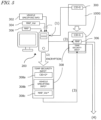
- the production system 1 includes a PC 2, a display 4, a function inspection device 6, and an indicator 8.
- the PC 2 is a computer system that executes processing described in a flowchart to be described later. The specific configuration of the PC 2 will be described later with reference to Fig. 4 .
- the PC 2 may be a computer in another form, for example, a workstation or a tablet terminal.
- a universal serial bus (USB) dongle 24 to be described later can be connected to the PC 2.
- USB universal serial bus
- an encryption program executed by the PC 2 is recorded in the USB dongle 24.
- the display 4 is connected to the PC 2 and displays video information output from the PC 2.
- the function inspection device 6 is connected to the PC 2 and used to inspect the SD memory card 100 together with the PC 2.
- the function inspection device 6 includes a central board 10, a tester base 12, and an SD tester 14.
- the central board 10 and the SD tester 14 are disposed on the tester base 12.
- the central board 10 of the function inspection device 6 is connected to the PC 2 and the indicator 8 and inspects the function of the SD memory card 100 loaded in the SD tester 14 according to a command from the PC 2.
- the central board 10 and the PC 2 are connected via, for example, a USB cable 18.
- the central board 10 and the indicator 8 are connected via, for example, an RJ-45 cable 20. Further, the indicator 8 and the PC 2 are connected via, for example, a USB cable 22.
- the SD tester 8 of the function inspection device 6 is provided with a plurality of terminals.
- each terminal of the SD tester 14 is communicably connected to each pin of the pin I/F 101 ( Fig. 1 ).
- An outline of the function inspection of the SD memory card 100 is as follows. First, when the SD memory card 100 is loaded, the central board 10 of the function inspection device 6 transmits a notification indicating that the preparation of the recording medium is completed to the PC 2 automatically upon detecting the loading or by a user operation. The PC 2 having received the notification transmits a write command or a read command to the central board 10. In response to the content of the command, the central board 10 writes information to the SD memory card 100 or reads information written to the SD memory card 100 via each terminal of the SD tester 14 and each pin of the SD memory card 100. The central board 10 sends the read information to the PC 2. The PC 2 verifies whether or not the information received from the SD tester 8 matches the information instructed to be written.
- the SD tester 14 has an arrangement frame (not illustrated) for loading a plurality of SD memory cards 100.
- a total of 32 SD memory cards 100 of 4 rows ⁇ 8 columns are loaded in the arrangement frame of the SD tester 14, and the above-described operation verification can be independently performed for each SD memory card 100.
- the PC 2 or the function inspection device 6 notifies an error using the indicator 8.
- the indicator 8 is a board-like device having a plurality of point light sources 16.
- Each point light source 16 is, for example, a light emitting diode (LED) or an incandescent light bulb.
- the plurality of point light sources 16 are arranged in the same numbers of rows and columns as the numbers of rows and columns of the arrangement frame of the SD tester 14.
- the indicator 8 notifies the user of the production system 1 of an error by turning on the point light source 16 at a position corresponding to the position of the SD memory card 100 whose verification result described above indicates a mismatch.
- the indicator 8 turns on the point light source 16 in the second row and the third column by a signal from the PC 2 or the function inspection device 6.
- a method of lighting the point light source 16 is arbitrary.
- the point light source 16 may be changed from the turn-off state to the turn-on state or may blink.
- the PC 2 or the CPU 202 exchanges information with an external device such as the function inspection device 6 and the indicator 8.
- the CPU 202 actually transmits information to the external device and instructs the communications I/F 206 or controls the communications I/F 206 to receive information from the external device.
- the storage device 204 is a secondary storage device such as a random access memory (RAM), a read only memory (ROM), and/or a hard disk drive.
- the storage device 204 stores a computer program 204a.
- the ROM which is the storage device 204 stores the computer program 204a.
- the computer program 204a is read by the CPU 202 and developed in the RAM that is also the storage device 204.
- the CPU 202 can execute the computer program 204a.
- the operation of the PC 2 described below is implemented by the computer program 204a installed and executed in the PC 2.
- the storage device 204 also stores map information and security information to be described later.
- the map information is an example of content information and is stored and distributed in the SD memory card 100.
- the security information is information used to determine whether to permit the use of the map information and is generated by encrypting at least the CID of the specific SD memory card 100 by a predetermined encryption method.
- the security information in addition to the CID, includes the initial value of the vehicle specifying information and encrypted version information indicating the version of the map information. A specific description of the encryption process will be given later.
- the "vehicle specifying information" is information for specifying a vehicle in which the map information is used and for example, a chassis number, a vehicle identification number (VIN), the manufacturing number of a device mounted on the vehicle, or the like can be used.
- VIN vehicle identification number
- the initial value of predetermined vehicle specifying information is written in security information. The initial value is rewritten to the vehicle specifying information of a specific vehicle after the specific vehicle starts to be used in the future.
- the vehicle specifying information, the CID, and the version information are written in the SD memory card 100 as one encrypted file.
- the file may also be referred to as a "vehicle specifying file".
- the map vendor sends map information indicating a map and security information used to determine whether to permit the use of the map to a manufacturer.
- the processing performed by the map vendor and the procedure of the processing are illustrated in Fig. 5 .
- the map vendor prepares a specific SD memory card whose CID is known.
- Fig. 5 illustrates the SD memory card as an SD memory card 100G in which a known CID-G 300 is recorded.
- SD memory card 100G can be, for example, the SD memory card 100 specifically provided by the manufacturer to the map vendor with information indicating the CID 300.
- the PC 200 of the map vendor encrypts the CID-G 300, the vehicle specifying information 302, and the map version information 304 by a predetermined encryption method.
- a predetermined encryption method for example, a reversible encryption method using a prepared private key, a reversible encryption method using a public encryption key acquired in advance from a manufacturer, and an irreversible encryption method using a hash function can be adopted.
- the private key and hash function prepared in advance are shared in advance between the map vendor and the manufacturer.
- the private key may also be referred to as a common key. Note that it is not essential to encrypt the CID-G 300, the vehicle specifying information 302, and the map version information 304.
- Temporary security information 308 is generated by encryption processing.
- the temporary security information 308 includes encrypted CID-G 308a, vehicle specifying information 308b, and map version information 308c.
- “*" is added to the name of information to indicate that the information is encrypted.
- the PC 200 of the map vendor executes process (3).
- the PC 200 of the map vendor duplicates the map information 306 and the generated temporary security information 308 to the user area 122 ( Fig. 2 ) of the SD memory card 100G.
- the CID-G 300 for uniquely identifying itself and the temporary security information 308 are recorded in the SD memory card 100G.
- the SD memory card 100G obtained by process (3) is also referred to as a "golden sample”.
- the memory card 100 G may be referred to as a "host recording medium”.
- the word "golden sample” as used in the manufacturing industry refers to a sample of a final product made by the manufacturer of the product.
- the “golden sample” as used in this specification is not strictly a sample of the final product. This is because the contents of the SD memory card 100G are not directly distributed to consumers as described later. In each SD memory card 100 sold to each consumer, the encrypted CID-G 308a in the security information 308 is rewritten and distributed using each CID.
- the CID-G 308a is included in the temporary security information 308 included in the golden sample, and any dummy data may be included. It is also not essential that it is encrypted. For example, any data having the same number of bits as the number of bits of the CID-G 300 of the SD memory card 100G may be used. This is because it is sufficient that the CID recorded in the non-user area and the encrypted CID in the security information correspond to each other on the SD memory card 100 at the time of distribution to the consumer.
- the map vendor sends the obtained SD memory card 100G to the manufacturer.
- the PC 2 of the manufacturer reads the map information 306 and the temporary security information 308 from the SD memory card 100G obtained from the map vendor and stores the map information 306 and the temporary security information 308 in the storage device 204. That is, the PC 2 copies the map information 306 and the temporary security information 308 from the SD memory card 100G which is a host recording medium to the storage device 204 which is a recording medium different from an SD memory card 100A to be described later.
- the PC 2 copies the map information 306 and the temporary security information 308 stored in the PC 2 to the new SD memory card 100A prepared by the manufacturer.
- a CID-A 320 of the SD memory card 100A is recorded in the management area 121b of the SD memory card 100A.
- the encrypted CID-G 308a, the vehicle specifying information 308b, and the map version information 308c are present in the temporary security information 308.
- the SD memory card 100A is loaded in the SD tester 14 of the function inspection device 6 ( Fig. 3 ).
- the operation of writing and/or reading information to and from the SD memory card 100A by the PC 2 is performed via the central board 10.
- the description of being performed via the central board 10 will be omitted, and the PC 2 will be described as reading and writing information.
- the PC 2 decrypts the temporary security information 308 stored in the SD memory card 100A.
- the decrypted CID-G 308a, vehicle specifying information 308b, and map version information 308c are obtained.
- the PC 2 reads the CID-A 320 from the SD memory card 100A. Specifically, the PC 2 transmits a command for reading the CID known to the PC 2 to the SD memory card 100A to acquire the CID-A 320. Then, the decrypted CID-G 308a obtained in process (7) is replaced with the read CID-A 320. As a result, security information 322 including CID-A 320, the vehicle specifying information 308b, and the map version information 308c is obtained.
- the CID-G 300 and the CID-A 320 are expressed by numerical strings of the same number of bits. Therefore, when the head bit of the read CID-A 320 is arranged at the head bit position of the CID-G 308a in the decrypted security information 308, and the CID-G 308a is subsequently replaced with the CID-A 320, the CID-G 308a can be replaced with the CID-A 320 without shifting from the original CID-G 308a by 1 bit.
- the security information 322 unique to the SD memory card 100A is obtained.
- the security information 308 is decrypted, but the security information can be rewritten even in an encrypted state.
- the CID-G 300, the vehicle specifying information 308b, and the map version information 308c are separably present, and the head bit position and the data length of each are fixed.
- the CID-A 320 is read and encrypted in advance.
- the PC 2 may write the encrypted CID-A 320 from the head bit position of the CID-G 308a.
- the data lengths of the encrypted CID-G 300 and CID-A 320 also need to match.
- the PC 2 encrypts the security information 322 by the encryption method designated by the map vendor.
- the map vendor provides the manufacturer with the USB dongle 24 storing software or a library for performing encryption by a predetermined encryption method.
- the encrypted security information 322 is output as a result of the processing.
- the PC 2 rewrites the temporary security information 308 already existing in the SD memory card 100A to the encrypted security information 322.
- the map information 306 is maintained as it is, and the CID-A 320 recorded in the non-rewritable non-user area 121 is also maintained as it is.
- the map information 306 is maintained as it is, and the CID-A 320 recorded in the non-rewritable non-user area 121 is also maintained as it is. As a result, the CID-A 320, the map information 306, and the encrypted security information 322 are recorded in the SD memory card 100A.
- the security information 322 of the SD memory card 100A newly prepared on the manufacturer side includes the CID-A 320 of the SD memory card 100A.
- processes (7) to (9) of creating the security information 322 described above each are an example, and various modifications can be considered.
- the PC 2 extracts the vehicle specifying information 308b and the map version information 308c from the security information 308 obtained by process (7).
- the PC 2 creates the security information 322 by arranging the CID-A 320, the vehicle specifying information 308b, and the map version information 308c on the memory, for example, in the order illustrated in Fig. 6 .
- the PC 2 may encrypt the security information 322 and rewrite the security information 308 in the SD memory card 100A to the encrypted security information 322.
- the encrypted temporary security information 308 in the SD memory card 100A obtained by process (6) is rewritten to the encrypted security information 322. Even if a method other than the above-described processing is adopted, it is within the scope of the present invention in a case where the encrypted temporary security information 308 is rewritten to the encrypted security information 322.
- the function inspection device 6 can be loaded with a plurality of SD memory cards 100, and information can be written and read independently and in parallel to each of the SD memory cards.
- Fig. 8 illustrates an arrangement example of a plurality of SD memory cards 100A to 100Z loaded in the SD tester 14. Further, the transition of information recorded in each of the SD memory cards 100A to 100Z is illustrated in Fig. 9 .
- the SD memory cards 100A to 100Z are in a state in which there is no information in each user area 122, that is, in a blank state 402.
- the common map information 306 and the temporary security information 308 are recorded in the user areas 122 of the SD memory cards 100A to 100Z.
- the SD memory cards 100A to 100Z transition to a state 404 in which the golden sample is simply duplicated.
- the temporary security information 308 of each of the SD memory cards 100A to 100Z is rewritten to a corresponding one of pieces of security information 322, 324,•••, and 326 respectively corresponding to the CIDs of the SD memory cards 100A to 100Z.
- the state transitions to a state 406 in which each of the pieces of security information 322, 324, •••, and 326 of the SD memory cards 100A to 100Z is recorded.
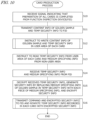
- step S10 the CPU 202 of the PC 2 receives a signal indicating that the preparation of all the cards is completed from the function inspection device 6.
- step S11 the CPU 202 transmits the content information of the golden sample and the temporary security information to the function inspection device 6.
- step S12 the CPU 202 transmits a command to the function inspection device 6 to write the content information of the golden sample and the temporary security information in the user area of each card. More specific processing in this step will be described later.
- step S13 the CPU 202 transmits a command for requesting the function inspection device 6 to read the temporary security information and the medium specifying information.
- the CPU 202 causes the function inspection device 6 to read the temporary security information from the user area of each card, read the medium specifying information from the non-user area, and transmit each piece of temporary security information and the medium specifying information to the PC 2.
- step S14 the CPU 202 receives the temporary security information and the medium specifying information from the function inspection device 6.
- step S15 the CPU 202 decrypts the received temporary security information, generates security information by replacing the medium specifying information of the golden sample in the temporary security information with each piece of medium specifying information, and encrypts the security information.
- the encryption uses software or a library for encryption provided by a map vendor.
- step S16 the CPU 202 transmits the command and the encrypted security information to the function inspection device 6 and rewrites the temporary security information recorded in each card with the encrypted security information.
- the PC 2 can record the map information 306 and the each of the pieces of security information 322, 324, and 326 rewritten according to the medium specifying information of each SD memory card 100 in each SD memory card 100 loaded in the function inspection device 6. Note that although it is preferable that step S10 described above is actually performed, it is not essential and can be omitted.
- steps S12 and S16 are processes for verifying that writing to the card has been appropriately performed.
- step S12 details of step S12 will be described with reference to Fig. 11 .
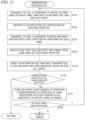
- step S121 the CPU 202 of the PC 2 transmits, to the function inspection device 6, a command to write to the user area 122 of each card, the map information 306 to be written, and the security information 308 of the golden sample.
- step S122 the CPU 202 receives a notification of completion of writing from the function inspection device 6.
- step S123 and subsequent steps are the processing of verifying whether information to be written has been correctly written.
- the CPU 202 transmits, to the function inspection device 6, a command to read the map information and the security information written in the user area 122 of each card.
- the read command includes a command to transmit the read information to the CPU 202.
- step S124 the CPU 202 receives the map information and the security information read from the user area 122 of each card from the function inspection device 6.
- step S125 the CPU 202 verifies whether or not the map information 306 transmitted to the function inspection device 6 matches the map information received from the function inspection device 6 for all the cards. Similarly, the CPU 202 verifies whether the security information 308 transmitted to the function inspection device 6 and the security information received from the function inspection device 6 match or mismatch for all the cards.
- step S126 the CPU 202 determines whether the verification results of all the cards indicate matches. If YES in step S126, the CPU 202 ends the processing in step S12 and proceeds to the processing in step S13 in Fig. 10 . In contrast to this, if even one verification result indicates a mismatch, the process proceeds to step S127.
- step S127 the CPU 202 acquires a notification of the position of the card indicating the mismatch from the function inspection device 6.
- the CPU 202 turns on the point light source 16 at the position corresponding to the position of the card indicating the notified mismatch in the indicator 8 to notify the user of the error.
- step S1208 the CPU 202 determines whether or not the error notification is the first time. In a case where the error notification is performed for the first time, that is, in a case where the error is notified for the first time, the process is retried from step S121. At this time, the manufacturer checks, for example, whether there is a contact failure between each terminal of the SD tester 14 and each pin of the card. Empirically, it has been found that a write error associated with a contact failure often occurs. Therefore, when the process is started again from step S121 after the contact failure is confirmed, the verification result indicates a match in many cases.
- the CPU 202 determines that an error is present in the card and stops the process.
- step S16 in FIG. 10 will be described with reference to Fig. 12 .
- step S161 the CPU 202 of the PC 2 transmits, to the function inspection device 6, an information rewrite command and encrypted security information of each card used for rewriting.
- the function inspection device 6 rewrites the temporary security information 308 to the encrypted security information 322 for each card.
- step S162 the CPU 202 receives a notification of completion of rewriting from the function inspection device 6.
- step S163 the CPU 202 transmits a command to read the security information of each card to the function inspection device 6.
- the function inspection device 6 reads the security information of each card.
- step S164 the CPU 202 receives the security information read from each card from the function inspection device 6.
- step S165 after transmitting information of all the cards to the function inspection device 6, the CPU 202 verifies whether or not the encrypted security information that has been held matches the security information received from the function inspection device 6.
- steps S166, S167, and S168 is the same as the processing in steps S126, S127, and S128 in Fig. 11 , respectively.
- step S167 the CPU 202 acquires a notification of the position of the card indicating the mismatch from the function inspection device 6.
- the CPU 202 turns on the point light source 16 at the position corresponding to the position of the card indicating the notified mismatch in the indicator 8 to notify the user of the error.
- step S168 the CPU 202 determines whether or not the error notification is the first time. In a case where the error notification is performed for the first time, that is, in a case where the error notification is performed for the first time, the process is retried from step S161. At this time, the manufacturer checks, for example, whether there is a contact failure between each terminal of the SD tester 14 and each pin of the card.
- the CPU 202 determines that an error is present in the card and stops the process.
- the map information and the security information are recorded in the user area 122 of the SD memory card 100 produced by the above processing.
- the security information includes the version information, the CID of each SD memory card 100, and the vehicle specifying information in an encrypted manner.
- the car navigation apparatus does not permit the use of the map information. This is because there is no security information including the CID of the SD memory card as the copy destination. Accordingly, even if the map information is distributed using SD memory cards, only the user who has properly purchased the map information from the map vendor can use the map information in the car navigation apparatus.
- the CID of the SD memory card 100 is recorded in the management area 121 b in the non-user area 121. Since the user cannot rewrite the data of the non-user area 121, when the CID is recorded in the management area 121b, falsification of the CID can be prevented, and security can be further maintained.
- a memory card may be configured such that such that the CID is stored in the memory card provided with only the user area in which the non-user area 121 does not exist and the user can rewrite the security information based on the CID.
- the present invention has been described above.
- the present invention is not limited to the above-described embodiments, and other embodiments in which changes, replacements, additions, omissions, and the like are appropriately made are also within the scope of the present invention.
- whether to permit the use of the map information recorded in an SD memory card is determined using the CID of the SD memory card in the security information. Therefore, the security information only needs to include at least the CID of an SD memory card and does not necessarily include the version information of a map and/or vehicle specifying information.
Landscapes
- Engineering & Computer Science (AREA)
- Theoretical Computer Science (AREA)
- Software Systems (AREA)
- Computer Security & Cryptography (AREA)
- Computer Hardware Design (AREA)
- General Engineering & Computer Science (AREA)
- Physics & Mathematics (AREA)
- General Physics & Mathematics (AREA)
- Multimedia (AREA)
- Technology Law (AREA)
- General Health & Medical Sciences (AREA)
- Health & Medical Sciences (AREA)
- Bioethics (AREA)
- Storage Device Security (AREA)
- Instructional Devices (AREA)
- Signal Processing For Digital Recording And Reproducing (AREA)
Claims (15)
- Verfahren zur Herstellung eines Aufzeichnungsmediums mit einem Aufzeichnungsbereich, in dem Inhaltsinformationen, die einen Inhalt anzeigen, und Sicherheitsinformationen zur Sicherheit für die Inhaltsinformationen aufgezeichnet werden,wobei in dem Aufzeichnungsbereich mediumspezifische Informationen zur eindeutigen Identifizierung des Aufzeichnungsmediums selbst vorab aufgezeichnet werden,wobei das Verfahren die folgenden Schritte umfasst:(a) Schreiben von temporären Sicherheitsinformationen und Inhaltsinformationen in den Aufzeichnungsbereich, wobei die temporären Sicherheitsinformationen gegebene Informationen enthalten, die von den mediumspezifischen Informationen verschieden sind;(b) Auslesen der mediumspezifischen Informationen und der temporären Sicherheitsinformationen aus dem Aufzeichnungsbereich;(c) Ersetzen der gegebenen Informationen in den temporären Sicherheitsinformationen durch die mediumspezifischen Informationen;(d) Verschlüsseln der temporären Sicherheitsinformationen, in denen die gegebenen Informationen durch die mediumspezifischen Informationen ersetzt sind, um die Sicherheitsinformationen zu erzeugen; und(e) Veranlassen, dass die in Schritt (d) erzeugten Sicherheitsinformationen in dem Aufzeichnungsbereich aufgezeichnet werden.
- Verfahren nach Anspruch 1, ferner umfassend einen Schritt (f) eines Kopierens der temporären Sicherheitsinformationen und der Inhaltsinformationen von einem Host-Aufzeichnungsmedium, auf dem Originalkopien der temporären Sicherheitsinformationen und der Inhaltsinformationen aufgezeichnet sind, auf ein von dem Aufzeichnungsmedium verschiedenes Aufzeichnungsmedium,
wobei Schritt (a) nach Schritt (f) ausgeführt wird. - Verfahren nach Anspruch 2, ferner umfassend einen Schritt (g) eines Überprüfens, ob die in dem Schritt (a) geschriebenen temporären Sicherheitsinformationen mit einer Originalkopie der temporären Sicherheitsinformationen übereinstimmen, und eines Überprüfens, ob die in Schritt (a) geschriebenen Inhaltsinformationen mit der Originalkopie übereinstimmen.
- Verfahren nach Anspruch 3, wobei ein Fehler gemeldet wird, wenn zumindest eines der Überprüfungsergebnisse in Schritt (g) eine Nichtübereinstimmung anzeigt.
- Verfahren nach Anspruch 4, wobei dann, wenn der Fehler gemeldet wird, Schritt (g) wiederholt wird.
- Verfahren nach Anspruch 3, wobei dann, wenn beide Überprüfungsergebnisse in Schritt (g) Übereinstimmung anzeigen, die Schritte (b) bis (e) ausgeführt werden.
- Verfahren nach einem der Ansprüche 1 bis 6, ferner umfassend einen Schritt (h) eines Auslesens der Sicherheitsinformationen aus dem Aufzeichnungsbereich des Aufzeichnungsmediums und eines Überprüfens, ob die mediumspezifischen Informationen in den ausgelesenen Sicherheitsinformationen mit den in Schritt (d) verschlüsselten mediumspezifischen Informationen übereinstimmen oder nicht,
wobei Schritt (h) nach Schritt (e) ausgeführt wird. - Verfahren nach Anspruch 7, wobei dann, wenn das Überprüfungsergebnis in Schritt (h) eine Nichtübereinstimmung anzeigt, ein Fehler gemeldet wird.
- Verfahren nach Anspruch 8, wobei dann, wenn der Fehler gemeldet wird, Schritt (h) wiederholt wird.
- Verfahren nach einem der Ansprüche 1 bis 9, wobei die Inhaltsinformationen Karteninformationen sind, die eine Karte als Inhalt angeben.
- Verfahren nach Anspruch 10, wobei die in Schritt (a) geschriebenen temporären Sicherheitsinformationen ferner fahrzeugspezifische Informationen zum Spezifizieren eines Fahrzeugs, in dem die Karteninformationen verwendet werden, und Versionsinformationen, die eine Version der Karteninformationen angeben, enthalten, und
in Schritt (d) die fahrzeugspezifischen Informationen und die Versionsinformationen verschlüsselt werden. - Verfahren nach Anspruch 11, wobei die temporären Sicherheitsinformationen vorab verschlüsselt werden,wobei das Verfahren ferner einen Schritt (i) eines Entschlüsselns der verschlüsselten temporären Sicherheitsinformationen umfasst,wobei Schritt (i) nach Schritt (b) ausgeführt wird und Schritt (c) nach Schritt (i) ausgeführt wird.
- Verfahren nach einem der Ansprüche 1 bis 12, wobei das Aufzeichnungsmedium eine SD-Speicherkarte ist,wobei der Aufzeichnungsbereich einen Benutzerbereich, in dem ein Benutzer Daten umschreiben kann, und einen Nicht-Benutzerbereich, in dem der Benutzer keine Daten umschreiben kann, aufweist,wobei die mediumspezifischen Informationen vorab in dem Nicht-Benutzerbereich aufgezeichnet werden,wobei in Schritt (a) die temporären Sicherheitsinformationen und die Inhaltsinformationen in den Benutzerbereich geschrieben werden, undwobei Schritt (b) ein Übertragen eines Lesebefehls zum Auslesen der mediumspezifischen Informationen aus dem Nicht-Benutzerbereich an das Aufzeichnungsmedium, ein Auslesen der mediumspezifischen Informationen durch Erfassen der von dem Aufzeichnungsmedium als Reaktion auf den Lesebefehl übertragenen mediumspezifischen Informationen, und ein Auslesen der temporären Sicherheitsinformationen aus dem Benutzerbereich umfasst.
- Verfahren nach einem der Ansprüche 1 bis 13, ferner umfassend einen Schritt (j) eines Empfangens einer Meldung, die anzeigt, dass eine Vorbereitung des zu bespielenden Aufzeichnungsmediums abgeschlossen ist,
wobei Schritt (a) nach dem Empfang der Meldung ausgeführt wird. - Gerät, aufweisend:eine Kommunikationsschnittstelle zur Kommunikation mit einer externen Vorrichtung;eine Speichervorrichtung; undeine Rechenschaltung,wobei das Gerät das in Anspruch 14 definierte Verfahren unter Verwendung der Rechenschaltung durchführt,wobei die in Schritt (j) empfangene Meldung ein Signal ist, das anzeigt, dass eine Vorbereitung einer Vielzahl von Aufzeichnungsmedien abgeschlossen ist,wobei die Speichervorrichtung die Inhaltsinformationen und die temporären Sicherheitsinformationen einschließlich der gegebenen Informationen abspeichert, undals Reaktion auf einen Empfang des Signals die Rechenschaltungdie Inhaltsinformationen und die temporären Sicherheitsinformationen aus der Speichervorrichtung ausliest,die Inhaltsinformationen und die temporären Sicherheitsinformationen über die Kommunikationsschnittstelle an die Funktionsprüfvorrichtung überträgt,die Funktionsprüfvorrichtung veranlasst, die Schritte (a) und (b) auszuführen,die medienspezifischen Informationen und die temporären Sicherheitsinformationen über die Kommunikationsschnittstelle von der Funktionsprüfvorrichtung empfängt,Schritt (d) ausführt,die durch Ausführung von Schritt (d) erzeugten Sicherheitsinformationen über die Kommunikationsschnittstelle an die Funktionsprüfvorrichtung überträgt, unddie Funktionsprüfvorrichtung veranlasst, Schritt (e) auszuführen.
Applications Claiming Priority (2)
| Application Number | Priority Date | Filing Date | Title |
|---|---|---|---|
| JP2021047471A JP7551547B2 (ja) | 2021-03-22 | 2021-03-22 | 記録媒体の生産方法、装置及びコンピュータプログラム |
| PCT/JP2022/013169 WO2022202813A1 (ja) | 2021-03-22 | 2022-03-22 | 記録媒体の生産方法、装置及びコンピュータプログラム |
Publications (4)
| Publication Number | Publication Date |
|---|---|
| EP4300330A1 EP4300330A1 (de) | 2024-01-03 |
| EP4300330A4 EP4300330A4 (de) | 2024-09-04 |
| EP4300330C0 EP4300330C0 (de) | 2025-05-21 |
| EP4300330B1 true EP4300330B1 (de) | 2025-05-21 |
Family
ID=83395636
Family Applications (1)
| Application Number | Title | Priority Date | Filing Date |
|---|---|---|---|
| EP22775596.4A Active EP4300330B1 (de) | 2021-03-22 | 2022-03-22 | Verfahren, vorrichtung und computerprogramm zur herstellung eines speichermediums |
Country Status (5)
| Country | Link |
|---|---|
| US (1) | US12437122B2 (de) |
| EP (1) | EP4300330B1 (de) |
| JP (1) | JP7551547B2 (de) |
| TW (1) | TWI868389B (de) |
| WO (1) | WO2022202813A1 (de) |
Family Cites Families (17)
| Publication number | Priority date | Publication date | Assignee | Title |
|---|---|---|---|---|
| JP4053009B2 (ja) | 1996-05-20 | 2008-02-27 | 富士通株式会社 | ソフトウェアコピー処理システムおよびソフトウェアコピー処理方法 |
| US5805699A (en) | 1996-05-20 | 1998-09-08 | Fujitsu Limited | Software copying system |
| JP3722584B2 (ja) * | 1997-04-09 | 2005-11-30 | 富士通株式会社 | 再生許可方法及び記録媒体 |
| JP2001307424A (ja) * | 2000-04-21 | 2001-11-02 | Pioneer Electronic Corp | 情報記録装置及び方法、情報再生装置及び方法並びに情報記録媒体 |
| US7613917B1 (en) * | 2000-09-18 | 2009-11-03 | Navteq North America, Llc | Method and system for mass distribution of geographic data for navigation systems |
| JP2003196922A (ja) | 2001-12-26 | 2003-07-11 | Pioneer Electronic Corp | 記録媒体、再生装置および記録装置、再生方法および記録方法、並びに、再生処理プログラムおよび記録処理プログラム |
| US20030142560A1 (en) | 2001-12-07 | 2003-07-31 | Pioneer Corporation | Data recording medium, reproduction apparatus, recording apparatus, reproducing method, recording method, computer-readable recorded medium in which reproducing program is recorded, and computer-readable recorded medium in which recording program is recorded |
| JP2004046452A (ja) | 2002-07-10 | 2004-02-12 | Yamaha Corp | 情報記録装置及び情報再生装置並びにそのプログラム |
| JP4201624B2 (ja) * | 2003-03-13 | 2008-12-24 | シャープ株式会社 | コンテンツ記録装置、コンテンツ利用装置、コンテンツ記録方法、コンテンツ利用方法、コンテンツ記録プログラム、およびコンテンツ利用プログラム |
| JP2005331579A (ja) | 2004-05-18 | 2005-12-02 | Denso Corp | 地図データ更新システム |
| JP2007304822A (ja) * | 2006-05-10 | 2007-11-22 | Sanyo Electric Co Ltd | コンテンツ管理方法及び装置 |
| JP2008234205A (ja) * | 2007-03-19 | 2008-10-02 | Ricoh Co Ltd | サーバ装置及びインストール情報作成方法 |
| JP5348503B2 (ja) | 2010-02-19 | 2013-11-20 | アイシン・エィ・ダブリュ株式会社 | ナビゲーションシステム |
| US8745749B2 (en) * | 2010-11-15 | 2014-06-03 | Media Ip, Llc | Virtual secure digital card |
| JP5764509B2 (ja) | 2012-02-28 | 2015-08-19 | 富士通フロンテック株式会社 | ラベル発行装置、ラベル発行プログラム、およびラベル発行方法 |
| US9395924B2 (en) | 2013-01-22 | 2016-07-19 | Seagate Technology Llc | Management of and region selection for writes to non-volatile memory |
| US20160292400A1 (en) * | 2015-03-30 | 2016-10-06 | Honeywell International Inc. | Sd card license mechanism |
-
2021
- 2021-03-22 JP JP2021047471A patent/JP7551547B2/ja active Active
- 2021-08-10 TW TW110129449A patent/TWI868389B/zh active
-
2022
- 2022-03-22 EP EP22775596.4A patent/EP4300330B1/de active Active
- 2022-03-22 WO PCT/JP2022/013169 patent/WO2022202813A1/ja not_active Ceased
-
2023
- 2023-09-22 US US18/371,759 patent/US12437122B2/en active Active
Also Published As
| Publication number | Publication date |
|---|---|
| TW202238542A (zh) | 2022-10-01 |
| JP2022146484A (ja) | 2022-10-05 |
| JP7551547B2 (ja) | 2024-09-17 |
| EP4300330C0 (de) | 2025-05-21 |
| US20240012949A1 (en) | 2024-01-11 |
| US12437122B2 (en) | 2025-10-07 |
| EP4300330A1 (de) | 2024-01-03 |
| WO2022202813A1 (ja) | 2022-09-29 |
| EP4300330A4 (de) | 2024-09-04 |
| TWI868389B (zh) | 2025-01-01 |
Similar Documents
| Publication | Publication Date | Title |
|---|---|---|
| US8600064B2 (en) | Apparatus, method, and computer program product for processing information | |
| USRE42398E1 (en) | Memory system | |
| CN103250163B (zh) | 用于加密和解密虚拟盘的计算机可读存储介质 | |
| EP2335181B1 (de) | Externes verschlüsselungs- und wiederherstellungsmanagement mit hardwareverschlüsselten speichervorrichtungen | |
| US6272560B1 (en) | Self-identifying peripheral device | |
| CN100578522C (zh) | 电子设备、用于电子设备的更新方法和集成电路 | |
| US20110126279A1 (en) | Information processing apparatus, software installing method, and recording medium | |
| ITTO990234A1 (it) | Procedimento e sistema per fornire un'immagine software personalizzataad un sistema di elaboratore. | |
| CN103995723A (zh) | 一种基于移动存储设备升级ivi系统固件的方法和装置 | |
| US20120284515A1 (en) | Copyright protection data processing system and reproduction device | |
| CN115080075A (zh) | 一种嵌入式硬件安全模块的固件部署系统及方法 | |
| EP4300330A1 (de) | Verfahren, vorrichtung und computerprogramm zur herstellung eines speichermediums | |
| JP2009272002A (ja) | 情報処理装置、ディスク、および情報処理方法、並びにプログラム | |
| CN102254155A (zh) | 准确的字体激活 | |
| CN101853345B (zh) | 用于处理存储在外部存储装置中的数据的方法和设备 | |
| US20110305342A1 (en) | Information processing apparatus, information processing method and program therefor | |
| JP5971820B2 (ja) | データを利用する方法及び装置 | |
| CN113010201A (zh) | 固件文件的识别方法、固件升级的配对方法和装置 | |
| US20090271875A1 (en) | Upgrade Module, Application Program, Server, and Upgrade Module Distribution System | |
| US20070077022A1 (en) | Data transfer method, data transfer source apparatus, data transfer destination apparatus, storage medium for recording data transfer program and storage medium for recording transferred-data recording program | |
| US8140675B2 (en) | Content reproduction apparatus | |
| US20110185187A1 (en) | Electronic device and method | |
| CN112131612B (zh) | 一种cf卡数据防篡改方法、装置、设备及介质 | |
| JP3964423B2 (ja) | コンテンツデータ作成装置、コンテンツデータ作成方法、コンテンツデータ作成用プログラム、および、コンテンツデータ表示装置 | |
| KR102878206B1 (ko) | Plc 및 plc의 제어방법 |
Legal Events
| Date | Code | Title | Description |
|---|---|---|---|
| STAA | Information on the status of an ep patent application or granted ep patent |
Free format text: STATUS: THE INTERNATIONAL PUBLICATION HAS BEEN MADE |
|
| PUAI | Public reference made under article 153(3) epc to a published international application that has entered the european phase |
Free format text: ORIGINAL CODE: 0009012 |
|
| STAA | Information on the status of an ep patent application or granted ep patent |
Free format text: STATUS: REQUEST FOR EXAMINATION WAS MADE |
|
| 17P | Request for examination filed |
Effective date: 20230927 |
|
| AK | Designated contracting states |
Kind code of ref document: A1 Designated state(s): AL AT BE BG CH CY CZ DE DK EE ES FI FR GB GR HR HU IE IS IT LI LT LU LV MC MK MT NL NO PL PT RO RS SE SI SK SM TR |
|
| DAV | Request for validation of the european patent (deleted) | ||
| DAX | Request for extension of the european patent (deleted) | ||
| A4 | Supplementary search report drawn up and despatched |
Effective date: 20240802 |
|
| RIC1 | Information provided on ipc code assigned before grant |
Ipc: G06F 21/79 20130101ALI20240729BHEP Ipc: G09B 29/00 20060101ALI20240729BHEP Ipc: G06F 21/60 20130101ALI20240729BHEP Ipc: G06F 21/10 20130101AFI20240729BHEP |
|
| GRAP | Despatch of communication of intention to grant a patent |
Free format text: ORIGINAL CODE: EPIDOSNIGR1 |
|
| STAA | Information on the status of an ep patent application or granted ep patent |
Free format text: STATUS: GRANT OF PATENT IS INTENDED |
|
| INTG | Intention to grant announced |
Effective date: 20241223 |
|
| GRAS | Grant fee paid |
Free format text: ORIGINAL CODE: EPIDOSNIGR3 |
|
| GRAA | (expected) grant |
Free format text: ORIGINAL CODE: 0009210 |
|
| STAA | Information on the status of an ep patent application or granted ep patent |
Free format text: STATUS: THE PATENT HAS BEEN GRANTED |
|
| AK | Designated contracting states |
Kind code of ref document: B1 Designated state(s): AL AT BE BG CH CY CZ DE DK EE ES FI FR GB GR HR HU IE IS IT LI LT LU LV MC MK MT NL NO PL PT RO RS SE SI SK SM TR |
|
| REG | Reference to a national code |
Ref country code: GB Ref legal event code: FG4D |
|
| REG | Reference to a national code |
Ref country code: CH Ref legal event code: EP |
|
| REG | Reference to a national code |
Ref country code: IE Ref legal event code: FG4D |
|
| U01 | Request for unitary effect filed |
Effective date: 20250521 |
|
| U07 | Unitary effect registered |
Designated state(s): AT BE BG DE DK EE FI FR IT LT LU LV MT NL PT RO SE SI Effective date: 20250526 |
|
| PG25 | Lapsed in a contracting state [announced via postgrant information from national office to epo] |
Ref country code: ES Free format text: LAPSE BECAUSE OF FAILURE TO SUBMIT A TRANSLATION OF THE DESCRIPTION OR TO PAY THE FEE WITHIN THE PRESCRIBED TIME-LIMIT Effective date: 20250521 |
|
| PG25 | Lapsed in a contracting state [announced via postgrant information from national office to epo] |
Ref country code: NO Free format text: LAPSE BECAUSE OF FAILURE TO SUBMIT A TRANSLATION OF THE DESCRIPTION OR TO PAY THE FEE WITHIN THE PRESCRIBED TIME-LIMIT Effective date: 20250821 Ref country code: GR Free format text: LAPSE BECAUSE OF FAILURE TO SUBMIT A TRANSLATION OF THE DESCRIPTION OR TO PAY THE FEE WITHIN THE PRESCRIBED TIME-LIMIT Effective date: 20250822 |
|
| PG25 | Lapsed in a contracting state [announced via postgrant information from national office to epo] |
Ref country code: PL Free format text: LAPSE BECAUSE OF FAILURE TO SUBMIT A TRANSLATION OF THE DESCRIPTION OR TO PAY THE FEE WITHIN THE PRESCRIBED TIME-LIMIT Effective date: 20250521 |
|
| PG25 | Lapsed in a contracting state [announced via postgrant information from national office to epo] |
Ref country code: HR Free format text: LAPSE BECAUSE OF FAILURE TO SUBMIT A TRANSLATION OF THE DESCRIPTION OR TO PAY THE FEE WITHIN THE PRESCRIBED TIME-LIMIT Effective date: 20250521 |
|
| PG25 | Lapsed in a contracting state [announced via postgrant information from national office to epo] |
Ref country code: RS Free format text: LAPSE BECAUSE OF FAILURE TO SUBMIT A TRANSLATION OF THE DESCRIPTION OR TO PAY THE FEE WITHIN THE PRESCRIBED TIME-LIMIT Effective date: 20250821 |
|
| PG25 | Lapsed in a contracting state [announced via postgrant information from national office to epo] |
Ref country code: IS Free format text: LAPSE BECAUSE OF FAILURE TO SUBMIT A TRANSLATION OF THE DESCRIPTION OR TO PAY THE FEE WITHIN THE PRESCRIBED TIME-LIMIT Effective date: 20250921 |
|
| PG25 | Lapsed in a contracting state [announced via postgrant information from national office to epo] |
Ref country code: SM Free format text: LAPSE BECAUSE OF FAILURE TO SUBMIT A TRANSLATION OF THE DESCRIPTION OR TO PAY THE FEE WITHIN THE PRESCRIBED TIME-LIMIT Effective date: 20250521 |
|
| PG25 | Lapsed in a contracting state [announced via postgrant information from national office to epo] |
Ref country code: CZ Free format text: LAPSE BECAUSE OF FAILURE TO SUBMIT A TRANSLATION OF THE DESCRIPTION OR TO PAY THE FEE WITHIN THE PRESCRIBED TIME-LIMIT Effective date: 20250521 |
|
| PG25 | Lapsed in a contracting state [announced via postgrant information from national office to epo] |
Ref country code: SK Free format text: LAPSE BECAUSE OF FAILURE TO SUBMIT A TRANSLATION OF THE DESCRIPTION OR TO PAY THE FEE WITHIN THE PRESCRIBED TIME-LIMIT Effective date: 20250521 |
|
| PLBE | No opposition filed within time limit |
Free format text: ORIGINAL CODE: 0009261 |
|
| STAA | Information on the status of an ep patent application or granted ep patent |
Free format text: STATUS: NO OPPOSITION FILED WITHIN TIME LIMIT |
|
| REG | Reference to a national code |
Ref country code: CH Ref legal event code: L10 Free format text: ST27 STATUS EVENT CODE: U-0-0-L10-L00 (AS PROVIDED BY THE NATIONAL OFFICE) Effective date: 20260402 |
|
| 26N | No opposition filed |
Effective date: 20260224 |
|
| U20 | Renewal fee for the european patent with unitary effect paid |
Year of fee payment: 5 Effective date: 20260330 |