EP4296293A1 - Dendritisches polymer und herstellungsverfahren dafür und anwendung davon - Google Patents
Dendritisches polymer und herstellungsverfahren dafür und anwendung davon Download PDFInfo
- Publication number
- EP4296293A1 EP4296293A1 EP22762488.9A EP22762488A EP4296293A1 EP 4296293 A1 EP4296293 A1 EP 4296293A1 EP 22762488 A EP22762488 A EP 22762488A EP 4296293 A1 EP4296293 A1 EP 4296293A1
- Authority
- EP
- European Patent Office
- Prior art keywords
- terminal hydroxyl
- hydroxyl groups
- monomer
- formula
- dendritic
- Prior art date
- Legal status (The legal status is an assumption and is not a legal conclusion. Google has not performed a legal analysis and makes no representation as to the accuracy of the status listed.)
- Granted
Links
Images

Classifications
-
- C—CHEMISTRY; METALLURGY
- C08—ORGANIC MACROMOLECULAR COMPOUNDS; THEIR PREPARATION OR CHEMICAL WORKING-UP; COMPOSITIONS BASED THEREON
- C08G—MACROMOLECULAR COMPOUNDS OBTAINED OTHERWISE THAN BY REACTIONS ONLY INVOLVING UNSATURATED CARBON-TO-CARBON BONDS
- C08G61/00—Macromolecular compounds obtained by reactions forming a carbon-to-carbon link in the main chain of the macromolecule
- C08G61/12—Macromolecular compounds containing atoms other than carbon in the main chain of the macromolecule
- C08G61/127—Macromolecular compounds containing atoms other than carbon in the main chain of the macromolecule derived from carbon dioxide, carbonyl halide, carboxylic acids or their derivatives
-
- C—CHEMISTRY; METALLURGY
- C08—ORGANIC MACROMOLECULAR COMPOUNDS; THEIR PREPARATION OR CHEMICAL WORKING-UP; COMPOSITIONS BASED THEREON
- C08G—MACROMOLECULAR COMPOUNDS OBTAINED OTHERWISE THAN BY REACTIONS ONLY INVOLVING UNSATURATED CARBON-TO-CARBON BONDS
- C08G63/00—Macromolecular compounds obtained by reactions forming a carboxylic ester link in the main chain of the macromolecule
- C08G63/02—Polyesters derived from hydroxycarboxylic acids or from polycarboxylic acids and polyhydroxy compounds
- C08G63/06—Polyesters derived from hydroxycarboxylic acids or from polycarboxylic acids and polyhydroxy compounds derived from hydroxycarboxylic acids
-
- C—CHEMISTRY; METALLURGY
- C08—ORGANIC MACROMOLECULAR COMPOUNDS; THEIR PREPARATION OR CHEMICAL WORKING-UP; COMPOSITIONS BASED THEREON
- C08F—MACROMOLECULAR COMPOUNDS OBTAINED BY REACTIONS ONLY INVOLVING CARBON-TO-CARBON UNSATURATED BONDS
- C08F283/00—Macromolecular compounds obtained by polymerising monomers on to polymers provided for in subclass C08G
- C08F283/02—Macromolecular compounds obtained by polymerising monomers on to polymers provided for in subclass C08G on to polycarbonates or saturated polyesters
-
- C—CHEMISTRY; METALLURGY
- C08—ORGANIC MACROMOLECULAR COMPOUNDS; THEIR PREPARATION OR CHEMICAL WORKING-UP; COMPOSITIONS BASED THEREON
- C08G—MACROMOLECULAR COMPOUNDS OBTAINED OTHERWISE THAN BY REACTIONS ONLY INVOLVING UNSATURATED CARBON-TO-CARBON BONDS
- C08G63/00—Macromolecular compounds obtained by reactions forming a carboxylic ester link in the main chain of the macromolecule
- C08G63/68—Polyesters containing atoms other than carbon, hydrogen and oxygen
- C08G63/685—Polyesters containing atoms other than carbon, hydrogen and oxygen containing nitrogen
- C08G63/6852—Polyesters containing atoms other than carbon, hydrogen and oxygen containing nitrogen derived from hydroxy carboxylic acids
-
- C—CHEMISTRY; METALLURGY
- C08—ORGANIC MACROMOLECULAR COMPOUNDS; THEIR PREPARATION OR CHEMICAL WORKING-UP; COMPOSITIONS BASED THEREON
- C08G—MACROMOLECULAR COMPOUNDS OBTAINED OTHERWISE THAN BY REACTIONS ONLY INVOLVING UNSATURATED CARBON-TO-CARBON BONDS
- C08G63/00—Macromolecular compounds obtained by reactions forming a carboxylic ester link in the main chain of the macromolecule
- C08G63/68—Polyesters containing atoms other than carbon, hydrogen and oxygen
- C08G63/685—Polyesters containing atoms other than carbon, hydrogen and oxygen containing nitrogen
- C08G63/6854—Polyesters containing atoms other than carbon, hydrogen and oxygen containing nitrogen derived from polycarboxylic acids and polyhydroxy compounds
- C08G63/6856—Dicarboxylic acids and dihydroxy compounds
-
- C—CHEMISTRY; METALLURGY
- C08—ORGANIC MACROMOLECULAR COMPOUNDS; THEIR PREPARATION OR CHEMICAL WORKING-UP; COMPOSITIONS BASED THEREON
- C08G—MACROMOLECULAR COMPOUNDS OBTAINED OTHERWISE THAN BY REACTIONS ONLY INVOLVING UNSATURATED CARBON-TO-CARBON BONDS
- C08G63/00—Macromolecular compounds obtained by reactions forming a carboxylic ester link in the main chain of the macromolecule
- C08G63/91—Polymers modified by chemical after-treatment
- C08G63/912—Polymers modified by chemical after-treatment derived from hydroxycarboxylic acids
-
- C—CHEMISTRY; METALLURGY
- C08—ORGANIC MACROMOLECULAR COMPOUNDS; THEIR PREPARATION OR CHEMICAL WORKING-UP; COMPOSITIONS BASED THEREON
- C08G—MACROMOLECULAR COMPOUNDS OBTAINED OTHERWISE THAN BY REACTIONS ONLY INVOLVING UNSATURATED CARBON-TO-CARBON BONDS
- C08G63/00—Macromolecular compounds obtained by reactions forming a carboxylic ester link in the main chain of the macromolecule
- C08G63/91—Polymers modified by chemical after-treatment
- C08G63/914—Polymers modified by chemical after-treatment derived from polycarboxylic acids and polyhydroxy compounds
- C08G63/916—Dicarboxylic acids and dihydroxy compounds
-
- C—CHEMISTRY; METALLURGY
- C09—DYES; PAINTS; POLISHES; NATURAL RESINS; ADHESIVES; COMPOSITIONS NOT OTHERWISE PROVIDED FOR; APPLICATIONS OF MATERIALS NOT OTHERWISE PROVIDED FOR
- C09K—MATERIALS FOR MISCELLANEOUS APPLICATIONS, NOT PROVIDED FOR ELSEWHERE
- C09K8/00—Compositions for drilling of boreholes or wells; Compositions for treating boreholes or wells, e.g. for completion or for remedial operations
- C09K8/02—Well-drilling compositions
- C09K8/03—Specific additives for general use in well-drilling compositions
- C09K8/035—Organic additives
-
- C—CHEMISTRY; METALLURGY
- C09—DYES; PAINTS; POLISHES; NATURAL RESINS; ADHESIVES; COMPOSITIONS NOT OTHERWISE PROVIDED FOR; APPLICATIONS OF MATERIALS NOT OTHERWISE PROVIDED FOR
- C09K—MATERIALS FOR MISCELLANEOUS APPLICATIONS, NOT PROVIDED FOR ELSEWHERE
- C09K8/00—Compositions for drilling of boreholes or wells; Compositions for treating boreholes or wells, e.g. for completion or for remedial operations
- C09K8/50—Compositions for plastering borehole walls, i.e. compositions for temporary consolidation of borehole walls
- C09K8/504—Compositions based on water or polar solvents
- C09K8/506—Compositions based on water or polar solvents containing organic compounds
- C09K8/508—Compositions based on water or polar solvents containing organic compounds macromolecular compounds
Definitions
- the present disclosure belongs to the technical field of petroleum engineering, and particularly relates to a dendritic polymer, and a preparation method and a use thereof.
- the filtrate loss reducer is one of the pivotal treating agents of the drilling fluids, its main function is to promote formation of a thin and dense filter cake with low permeability on the wellbore wall, thereby reducing invasion of filtrate into the stratum and lowering the probability of shale hydration and swelling in enhancing wellbore stability.
- the polymer filtrate loss reducers with resistance to high temperature and high salinity have been the focus and difficulty of researches.
- CN111171224A discloses a hyperbranched polymer and a preparation method thereof, and applications of the hyperbranched polymer in preparation of a drilling fluid.
- the hyperbranched polymer is prepared by an one-step copolymerization of an organic acid monomer, acrylamide, N,N-methylene bisacrylamide and a chain transfer agent;
- the N,N-methylene bisacrylamide contains two polymerizable carbon-carbon double bonds, it generates branching during the polymerization process;
- the organic acid monomer is one or more of 2-acrylamido-2-methylpropane sulfonic acid and 2-acryloyloxy-2-methylpropane sulfonic acid;
- the chain transfer agent is one or more of 4-cyanovaleric acid dithiobenzoate and (3-phenylmethylmercaptothiocarbonyl sulfide) propionic acid, and the mass ratio of the organic acid monomer to the acrylamide to the N,N-methylene bisacrylamide to the chain transfer agent is (24-66):(34-76):(0.1-5):(0.21-7);
- the hyperbranched polymer has a random hyperbranched structure.
- the present disclosure aims to provide a novel dendritic polymer for use in a drilling fluid, it not only has a desirable filtrate loss reduction effect, but also exhibits a sound blocking performance; thus the dendritic polymer can act as both a filtrate loss reducer and a blocking agent in some circumstances.
- a first aspect the present disclosure provides a dendritic polymer comprising a dendritic polyester as a core, and a plurality of arms obtained by means of polymerization of an alkenyl monomer; the root-mean-square radius of gyration of the dendritic polymer does not exceed 100 nm; the alkenyl monomer contains a non-ionic monomer and an anionic monomer.
- a second aspect of the present disclosure provides a method for preparing a filtration loss reducer comprising the following steps: contacting a dendritic polyester with an alkenyl monomer under the free radical polymerization reaction conditions, and removing the unreacted monomer and solvent, wherein the free radical polymerization conditions cause that the produced polymer has a weight average molecular weight of 30,000-1,000,000g/mol; and the alkenyl monomer contains a non-ionic monomer, an anionic monomer and optionally a cationic monomer.
- a third aspect of the present present disclosure provides a drilling fluid comprising the dendritic polymer and/or the filtrate loss reducer prepared with the aforesaid method.
- a fourth aspect of the present disclosure provides a use of the dendritic polymer and/or the filtrate loss reducer in the aspects of the blocking with a drilling fluid and the filtrate loss reduction.
- the dendritic polymer of the present disclosure contains a dendritic polyester as a core, and adopts an acrylamide which is generally used for synthesis of a filtrate loss reducer, a N-vinyl, and an anionic monomer containing a sulfonic acid group (e.g., 2-acrylamido-2-methylpropane sulfonic acid) as the monomers for forming the arms, and by means of the free radical polymerization (i.e., the arms are bonded to the core through carbon-carbon single bonds, thereby obtaining a dendritic polymer comprising a hydroxyl group-rich dendritic polyester as a core, and the polymer produced by copolymerization of a substituted amide type nonionic monomer, an anionic monomer containing a sulfonic acid group, and the like as the arms.
- an acrylamide which is generally used for synthesis of a filtrate loss reducer, a N-vinyl, and an anionic monomer
- the dendritic polymer of the present disclosure Compared with a linear polymer, in the case that the molecular weight is identical, the dendritic polymer of the present disclosure has a smaller root-mean-square radius of gyration, and is more compact in structure, so that the dendritic polymer is used in a drilling fluid, has a stronger filtrate loss reduction function, has a blocking performance, and also has better temperature resistance and salt resistance.
- the dendritic polymer of the present disclosure comprises a core and a plurality of arms bonded to the core by the C-C single bond, wherein the core is a dendritic polyester, and the arms are obtained by means of polymerization of an alkenyl monomer, such as a non-ionic monomer and an anionic monomer.
- the dendritic polyester contains a plurality of hydroxyl groups.
- the dendritic polyester produces a first generation dendritic polyester by performing esterification reaction or transesterification reaction with a carboxyl (-COO-)-containing compound B comprising two or more hydroxyl groups (-OH) and using a compound A having two or more hydroxyl groups (-OH) as a matrix; the first generation dendritic polyester contains two or more hydroxyl groups, thus can continue the esterification reaction or transesterification reaction with a carboxyl (-COO-)-containing compound B comprising two or more hydroxyl groups (-OH) to obtain a second generation of dendritic polyester; and so on, a third generation of dendritic polyester, a fourth generation of dendritic polyester and a fifth generation of dendritic polyester can be prepared accordingly.
- each generation of dendritic polyester at least contains three or more hydroxyl groups (-OH).
- the many generations of dendritic polyester can be prepared by controlling a molar ratio of the compound A and the compound B, the one-time feeding reaction, the method is also called a nucleated one-step process, which has an advantage of simple preparation.
- the esterification reaction produces an ester and water
- the transesterification reaction produces an ester and an alcohol.
- the produced alcohol is generally a small-molecule substance (the lower alcohols such as methanol, ethanol, propanol, butanol).
- the water or lower alcohols produced during the reaction process is removed by reduced pressure distillation without affecting the subsequent reaction.
- At least two of the -OH groups of the compound A are in the form of hydroxymethyl group (-CH 2 OH), i.e., in the form of terminal hydroxyl groups, thereby reducing steric hindrance of the hydroxyl groups and increasing reactivity.
- said compound A contains 3 or 4 or 5 or 6 hydroxymethyl groups (-CH 2 OH), and a plurality of hydroxymethyl groups (-CH 2 OH) may be linked to a single carbon atom or different carbon atoms.
- said compound A is preferably one or more selected from the group consisting of pentaerythritol, dipentaerythritol and trimethylolpropane.
- the compound B may be one or more of a monocarboxylic acid containing more than two terminal hydroxyl groups and esters thereof, the monocarboxylic acid, for example, contains 5-8 carbon atoms, the monobasic acid ester preferably contains 6-10 carbon atoms, the monobasic acid ester may contain one or more N atoms, preferably tertiary amine groups, and the alcohol forming the monobasic acid ester preferably has 1-4 carbon atoms.
- the present inventors have found that the presence of tertiary amine groups is conducive to enhancing the solubility of obtained dendritic polyester in water and the operation convenience during a synthesis process of said dendritic polymer, thus it is preferred in the present disclosure that the monobasic acid ester contains tertiary amine groups.
- the compound B is one or more selected from the group consisting of 2,2-dimethylolpropionic acid, 2,2-dimethylolbutyric acid, 2,2-dimethylolpropionate methyl ester, 2,2-dimethylolpropionate ethyl ester, 2,2-dimethylolpropionate propyl ester, 2,2-dimethylolpropionate butyl ester, 2,2-dimethylolbutyrate butyl ester, 2,2-dimethylolbutyrate propyl ester, 2,2-dimethylolbutyrate butyl ester, N,N-dihydroxyethyl-3-aminopropionate methyl ester, N,N-dihydroxyethyl-3-aminopropionate methyl ester and N,N-dihydroxyethyl-3-aminopropionate butyl ester.
- the dendritic polymer provided by the present disclosure comprises a terminal hydroxyl group dendritic polyester as a core, it is obtained by free radical polymerization of a terminal hydroxyl group dendritic polyester and an alkenyl monomer; said terminal hydroxyl group dendritic polyester is obtained by performing an esterification reaction between a polyol containing two or more terminal hydroxyl groups and a carboxylic acid containing two or more terminal hydroxyl groups, the carboxylic acid containing two or more terminal hydroxyl groups comprises or does not comprise a tertiary amine group; or said terminal hydroxyl group dendritic polyamine ester is obtained through a transesterification reaction between a polyol containing two or more terminal hydroxyl groups and a carboxylic acid ester containing two or more terminal hydroxyl groups, said carboxylic acid ester containing two or more terminal hydroxyl groups comprises or does not comprise a tertiary amine group.
- the dendritic polyester of the present disclosure is only composed of elements C, H, O, or merely composed of elements C, H, O, N, and constitutes a structure having a steric configuration composed of carbon-carbon bonds, carbon-oxygen bonds and carbon-nitrogen bonds, the presence of a hydrophobic cavity within the molecule, and the terminal hydroxyl groups distributed on the surface of outer layer, in order to ensure the structural stability of its center.
- the dendritic polymer has a grafting ratio of 50-100%, preferably 65-100%, more preferably 75-100%.
- the better effects of blocking and filtrate loss reduction can be achieved by controlling the grafting ratio within the preferred range.
- the concentration of the polymer in a solution prepared by dissolving the polymer in a solvent is limited during a measurement of the nuclear magnetic resonance hydrogen spectrum, the concentration of hydrogen on methine of the secondary alcohol and hydrogen on methylene group of the primary alcohol is relatively low, so that the measurement error may be large.
- the grafting ratio of the dendritic polymers obtained in examples of the present disclosure is between 65 and 95%.
- the dendritic polymer has a root-mean-square radius of gyration within a range of 20-100nm, preferably 25nm-50nm, more preferably 25-30nm.
- the root-mean-square radius of gyration is a constant that characterizes the molecular dimensions of polymers, it in general can be measured by the static laser light scattering method.
- the present disclosure uses a static type laser light scattering instrument to perform the measurement.
- the dendritic polymer of the present disclosure was formulated into a series of dilute solutions (with the concentrations of 10, 20, 30, 40, 50, 60, 70, 80, 90, 100mg/L) using distilled water as a solvent, the measurements and tests were performed on a HELEOS II laser light scattering instrument with a scan angle within a range of 30°-120°. Based on the collected data, the root-mean-square radius of gyration and the weighted average molecular weight of the dendritic polymer were calculated by the instrument with its built-in simulation software.
- the better effects of blocking and filtrate loss reduction can be achieved by controlling the root-mean-square radius of gyration of the dendritic polymer within the aforesaid range.
- the dendritic polymer of the present disclosure is obtained by free radical polymerization, that is, the carbon-carbon double bonds in an ethylene monomer are opened under the polymerization conditions, and grafted onto a core of dendritic polyester, and obtain long polymeric chain segments through the chain polymerization reaction, thus the dendritic polymer does not contain polymerizable carbon-carbon double bonds, it can be detected by a bromine water test, the dendritic polymer cannot discolor the bromine water, indicating that the polymerizable carbon-carbon double bonds are not contained in the dendritic polymer. It is demonstrated by a bromine water test that the polymer in the examples of the present disclosure does not comprise the polymerizable carbon-carbon double bonds.
- the dendritic polymer has a weight average molecular weight within a range of 30,000-1,000,000 g/mol, preferably 50,000-500,000 g/mol, more preferably 50,000-400,000 g/mol, better blocking and filtrate loss reduction effects can be achieved by controlling the molecular weight within the aforesaid ranges.
- a molar ratio of the dendritic polyester to the alkenyl monomer is within a range of 1:50 to 1:1,000.
- the better effects of blocking and filtrate loss reduction can be achieved by arranging the molar ratio within the preferred range.
- the dendritic polymer provided by the present disclosure is derived from free radical polymerization reaction of terminal hydroxyl dendritic polyester and an alkenyl monomer, thus the dendritic polymer contains a large number of hydroxyl groups (primary hydroxyl groups and secondary hydroxyl groups); in addition, by selecting an appropriate alkenyl monomer, the chain links constituting the arms may comprise a significant number of sulfonic acid groups.
- the dendritic polymer has a strong water solubility, preferably, an aqueous solution containing 1wt% of the dendritic polymer has an apparent viscosity within a range of 4-50mPa ⁇ s, preferably 8-35mPa ⁇ s, more preferably 10-20mPa ⁇ s.
- the desirable water solubility properties will allow the dendritic polymer, when used in a drilling fluid, to have the effects of convenient formulation, better filtrate loss reduction, and maintaining the colloidal stability of the drilling fluid system.
- the apparent viscosity of an aqueous solution containing 1wt% of the dendritic polymer was measured under room temperature condition according to the method stipulated in the National Standard GB/T16783.1 of China.
- the dendritic polymer of the present disclosure is obtained from the free radical polymerization reaction of a dendritic polyester and an alkenyl monomer.
- the generation number of the dendritic polyester is from the 1 st generation to the 5 th generation.
- the generation number is approximately determined by measuring the relative molecular weight of said dendritic polyester by the gel permeation chromatography and measuring the size of particles in the solution by the laser scattering method.
- the alkenyl monomers may be any kind of monomers which comprise unsaturated carbon-carbon double bonds and are capable of bonding to the dendritic polyester through the free radical polymerization reaction.
- the alkenyl monomers in the present disclosure comprise an anionic monomer and a non-ionic monomer.
- the non-ionic monomer may be one or more of various acrylamide monomer, chain or cyclic N-vinyl amide monomer.
- the non-ionic monomer is one or more selected from the group consisting of acrylamide, N,N-dimethylacrylamide, N-ethylacrylamide, N,N-diethylacrylamide, N-propylacrylamide, N-isopropylacrylamide, N-vinylformamide, N-vinylacetamide, N-vinyl-N-methylacetamide, N-vinylpyrrolidone and N-vinylcaprolactam;
- the anionic monomer may be any kind of polymerizable monomer having carboxyl-COOH and/or sulfonic acid groups-SO 3 H, such as one or more selected from the group consisting of acrylic acid, methacrylic acid, 2-acrylamido-2-methylpropane sulfonic acid and 2-acryloxy-2-methylpropane sulfonic acid.
- the anionic monomer contains 2-acrylamido-2-methylpropane sulfonic acid and/or 2-acryloxy-2-methylpropane sulfonic acid, in order to improve the temperature resistance and salt resistance of the polymer/drilling fluid.
- the alkenyl monomer may further comprise a cationic monomer, and the cationic monomer may be one or more selected from the group consisting of dimethyldiallyl ammonium chloride, acryloxyethyltrimethyl ammonium chloride and methacryloxyethyltrimethyl ammonium chloride.
- the present disclosure develops a novel polyester dendritic polymer comprising a dendritic polyester as a core and its surface grafted with a plurality of molecular chains having filtrate loss reduction effects; because the molecule as a whole has a three-dimensional steric configuration, and a plurality of long chains are grafted on the hydrophobic dendritic polyester core, which can alleviate or eliminate the effects that the chain polymer filtrate loss reducer suffers from a chain scission under the high temperature, and also weaken the molecular chain curling in an environment of high concentration of monovalent and divalent salt.
- the dendritic polymer prepared in the present disclosure has steric configuration and self-assembled micellar morphology, and exhibits strong resistance to high temperature and high salinity, and has excellent blocking performance.
- the dendritic polymer provided by the present disclosure has the structure shown in Formula I (Formula I illustrates a planar structure, which is exactly a three-dimensional solid structure), in the Formula I, the core of a dendritic polymer resides inside the dashed circle, the wavy lines outside the dashed line illustrate the arms grafted to the core, and the arms are grafted to the core after opening of the polymerizable carbon-carbon double bonds.
- the core has a structure represented by Formula (1) and/or a structure represented by Formula (2) and a structure corresponding to the 3 rd generation to the 5 th generation thereof;
- the arm is a polymeric segment comprising an anionic monomer structural unit and a non-ionic monomer structural unit and optionally a cationic monomer structural unit, wherein the anionic monomer structural unit is sulfonic acid (sulfonate) represented by Formula (3) and/or Formula (3') and/or carboxylic acid (carboxylate) represented by Formula (4);
- each of R 1 , R 4 , R 5 , R 7 , R 8 is H or C 1 -C 5 straight or branched chain alkyl
- R 6 is C 1 -C 5 straight or branched chain alkylene
- each of M 1 and M 2 is independently H, NH 4 or an alkali metal element
- Y is
- R 1 may be located at the ortho-position or meta-position of the group -SO 3 M 1 .
- the non-ionic monomer structural unit has one or more of the structures represented by Formulae (5)-(7);
- each of R 2 , R 3 , R 4 , R 5 , R 6 , R 7 , R 8 , R 9 , R 10 and R 11 is H or a C 1 -C 5 straight or branched chain alkyl.
- a molar ratio of the anionic monomer to the non-ionic monomer is 0.5-2.5:1, preferably 1-2:1.
- the anionic monomer structural units are either AMPS or AMPS and other sulfonic acid monomer structural units. It is further preferred in the present disclosure that a weight ratio of sulfonic acid (sulfonate) represented by Formula (3) and/or Formula (3') in the arm relative to the non-ionic monomer structural units other than the acrylamide monomer represented by Formula (5) with R 7 and R 8 being H is 4-1:1.
- Each arm per se may be a block copolymerization chain segment or a random copolymer.
- a second aspect of the present disclosure provides a method for preparing a filtration loss reducer comprising the following steps: contacting a dendritic polyester with an alkenyl monomer containing an anionic monomer and a non-ionic monomer under the free radical polymerization reaction conditions, the removing the unreacted monomer and solvent, the free radical polymerization conditions cause that the produced polymer has a weight average molecular weight of 30,000-1,000,000g/mol; the alkenyl monomer contains a non-ionic monomer and an anionic monomer.
- the chemical reaction formula for the above-described polymerization reaction is illustrated with reference to FIG. 1 .
- the product in FIG. 1 is a dendritic polymer
- the right-side structure in the polymer shows a chemical structure schematic diagram of a polymer molecule chain segments containing an alkenyl monomer
- the other polymer molecule chain segments containing an alkenyl monomer are represented by wavy lines.
- a preparation method of a dendritic polyester is exemplified by a second generation terminal hydroxyl dendritic polyester shown below.
- the structural formula of the second generation terminal hydroxyl dendritic polyester is shown below, the second generation terminal hydroxyl dendritic polyester contains trimethylolpropane as a core, wherein each of three hydroxyl groups in the trimethylolpropane is disposed at a terminal position, the three hydroxyl groups are subjected to esterification reaction with carboxyl groups of 2,2-dimethylolpropionic acid, a first generation of the terminal hydroxyl dendritic polyester is obtained after the esterification process.
- the terminal hydroxyl groups are introduced as a result of synthesizing a first generation terminal hydroxyl dendritic polyester, thus the terminal hydroxyl groups can carry out esterification reaction with another 2,2-dimethylolpropionic acid, to obtain a second generation terminal hydroxyl dendritic polyester as shown below in structural formula (8).
- the second generation terminal hydroxyl dendritic polyester can be denoted by HBPE-G2, wherein the HBPE represents a terminal hydroxyl dendritic polyester, and G2 represents a second generation.
- a preparation method of the present disclosure is described by taking another second generation hydroxyl dendritic polyamine ester (since its structure contains nitrogen atom N, the term "polyamine ester" is used to show the distinction) as an example, wherein the structural formula of the second generation terminal hydroxyl dendritic polyamine ester is shown below, the second generation terminal hydroxyl dendritic polyamine ester contains trimethylolpropane as a core, each of three hydroxyl groups in the trimethylolpropane is disposed at a terminal position, the three hydroxyl groups are subjected to transesterification reaction with N,N-dihydroxyethyl-3-aminopropionate methyl ester, a first generation of the terminal hydroxyl dendritic polyamine ester is obtained after the transesterification.
- the terminal hydroxyl groups are introduced as a result of synthesizing a first generation terminal hydroxyl dendritic polyamine ester, thus the terminal hydroxyl groups can carry out transesterification with another N,N-dihydroxyethyl-3-aminopropionate methyl ester, to obtain a second generation terminal hydroxyl dendritic polyamine ester as shown below in structural formula (9).
- the anionic monomer and non-ionic monomer may be various polymerizable monomers which can be used for preparing the filtrate loss reducer product; preferably, the anionic monomer is sulfonic acid (sulfonate) represented by Formula (I) and/or carboxylic acid (carboxylate) represented by Formula (II) below;
- each of R 1 , R 4 , R 5 , R 7 , R 8 is H or C 1 -C 5 straight or branched chain alkyl
- R 6 is C 1 -C 5 straight or branched chain alkylene
- M 1 and M 2 are each independently H, NH 4 or an alkali metal element
- Y is In Formula (3'), R 1 may be located at the ortho-position or meta-position of the group -SO 3 M 1 .
- the non-ionic monomer has one or more of the structures represented by Formulae (III)-(V) below;
- each of R 2 , R 3 , R 4 , R 5 , R 6 , R 7 , R 8 , R 9 , R 10 , and R 11 is H or C 1 -C 5 straight or branched chain alkyl.
- a molar ratio of the anionic monomer to the non-ionic monomer is 0.5-2.5:1, preferably 1-2:1; preferably, a weight ratio of sulfonic acid (sulfonate) represented by Formula (I) and/or Formula (I') relative to the non-ionic monomer other than the acrylamide monomer represented by Formula (II) with R 7 and R 8 being H is 4-1:1.
- the solvent of the polymerization reaction is water.
- the mode of initiating polymerization may be at least one of the initiator-initiated polymerization, ultraviolet light-initiated polymerization and microwave-initiated polymerization.
- the initiator in in the initiator-initiated polymerization may be one or more selected from the group consisting of tetravalent cerium (Ce 4+ ) compound, pentavalent vanadium (V 5+ ) compound, hexavalent chromium (Cr 6+ ) compound, trivalent manganese (Mn 3+ ) compound and divalent iron (Fe 2+ ) compound, more preferably a tetravalent cerium salt; for example, at least one of ammonium cerium nitrate, ammonium cerium sulfate, ammonium cerium phosphate and ceric sulfate.
- the polymerization reaction conditions comprise a pH of 5-8, an oxygen-free environment, a temperature of 10-70 °C and a time of 1-20 hours.
- oxygen-free means that the oxygen content is below 0.5mg/L, and an oxygen-free environment can be achieved by replacing oxygen gas with nitrogen gas and performing protection under nitrogen gas.
- Various methods can be used to remove unreacted monomers and solvents, such as removing the solvents by means of drying, or washing with ethanol.
- the reaction is stopped after the temperature in the reaction bottle is reduced to room temperature, so that a viscous solution or a gel is obtained; the viscous solution is treated with ethanol, then dried and pulverized to obtain a filtrate loss reducer product; the gel is subjected to a shearing, pelleting, drying, and grinding process to obtain a filtrate loss reducer product.
- the filtrate loss reducer product not only has the filtrate loss reduction function, but also exhibits desirable blocking performance.
- the dendritic polymer prepared by polymerization of a hydroxyl terminated dendritic poly(amine) ester with an alkenyl monomer is used in drilling fluids as plug filter loss reducer, its mass concentration is within a range of 0.2-5wt%, preferably 0.5-3wt%, can effectively decrease permeability of mud cakes, plug the micro-pores, and reduce the filtrate loss amount.
- the present disclosure has the following favorable effects:
- the reagents and materials in the following examples are commercially available; %w/w denotes a mass percent; unless otherwise specified, % refers to the mass percent. Since the dendritic polymers synthesized by the present disclosure are primarily used for blocking and performing filtrate loss reduction, the synthesized dendritic polymers are also referred to in the Examples as dendritic polymer blocking agent and filtrate loss reducer.
- HBPE-Gn HBPE denoted terminal hydroxyl polyester, G represented the "generation", n denoted the generation number
- HBPE-G2 2.68g of trimethylolpropane (with a molecular weight of 134) and 24.12g of 2,2-dimethylolpropionic acid (with a molecular weight of 134) were added into a three-neck flask with a volume of 250mL, the oxygen gas therein was purged by introducing nitrogen gas, the flask was heated, 0.5g of trifluoromethanesulfonic acid was added, a water knockout trap was installed, the temperature was raised to 130-150°C, the reaction was performed for 3 hours under the protection of nitrogen gas, the three-neck flask was evacuated and dehydrated, the temperature was decreased to below 70°C, tetrahydrofuran was added and stirred, n-hexane was used for precipitation
- the terminal hydroxyl dendritic polyester with a generation number of the third generation can be obtained by feeding trimethylolpropane and 2,2-dimethylolpropionic acid in a molar ratio of 1:21, thus the higher or lower generation terminal hydroxyl dendritic polyester may be prepared in a similar fashion.
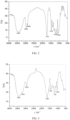
- the HBPE-G2 obtained in the present disclosure was purified for removing the unreacted raw materials and subjected to drying for removing solvents, and then subjected to an infrared spectroscopy test, the results were shown in FIG.
- HPAE-Gm HPAE denoted terminal hydroxyl polyamine ester, G represented the "generation", m denoted the generation number
- HPAE-G2 HPAE-G2 as an example: 1.34g of trimethylolpropane (with a molecular weight of 134) and 17.19g of N,N-dihydroxyethyl-3-aminopropionate methyl ester (with a molecular weight of 191, the compound was prepared by using the methyl acrylate and diethanolamine as the starting materials, and synthesized with reference to the method described in " Synthesis of A Terminal Hydroxyl Polyamide-amine Type Molecule" in Synthesis Chemistry, 2017, 25 (02 )) were added into a three-neck flask with a volume of 100mL, 0.25g of p-toluenesulfonic acid was added, nitrogen gas was introduced, the flask was heated to 120°C under a stirring condition, the reaction was performed for 2
- the terminal hydroxyl dendritic polyamine ester with a generation number of the third generation can be obtained by feeding trimethylolpropane and N,N-dihydroxyethyl-3-aminopropionate methyl ester in a molar ratio of 1:21, thus the higher or lower generation terminal hydroxyl dendritic polyamine ester may be prepared in a similar fashion.
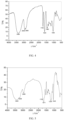
- the HPAE-G2 obtained in the present disclosure was purified for removing the unreacted raw materials and subjected to drying for removing solvents, and then subjected to an infrared spectroscopy test, the results were shown in FIG.
- the dendritic polymers were prepared according to the method in Example 1, except that the feedstock types, addition amounts and the reaction conditions were shown in Table 1 below.
- the dendritic polymer was prepared according to the method in Example 1, except that the feedstock type, addition amount and the reaction conditions were shown in Table 1 below.
- Table 1 Example Comparative Example 1 2 3 4 5 6 7 9 1 AMPS 20g 30g 30g 25g 10g 15g 20g 15g 15g Acrylic acid 5g 5g 5g Acrylamide 1.5g 2.5g 10g 10g 2.5g 10g N,N-dimethylacryl amide 10g 7.5g 5g N-vinylcarboxamid e 5g 5g N-vinyl-2-pyrrolidi none 10g 10g 5g 10g Acryloyloxyethyltri methyl ammonium chloride 2g HBPE-G1 6g HBPE-G2 3g 6g 4g 4g 4g HBPE-G3 6g HBPE-G4 6g Cerium ammonium nitrate 0.05g 0.1g 0.15g 0.2g 0.15g 0.15g 0.15g Ultraviolet rays ⁇ Note 1 pH 6.0
- the dendritic polymers were prepared according to the method in Example I, except that the feedstock types, addition amounts and the reaction conditions were shown in Table 3 below.
- the dendritic polymers were prepared according to the method in Example VI, except that the feedstock types, addition amounts and the reaction conditions were shown in Table 3 below.
- Table 3 Example Comparative Example I II III IV V VI VII VIII I II AMPS 10g 11g 12.5g 12.5g 10g 10g 10g 10g Sodium p-styrene sulfonate 1g Acrylic acid 4g 4g Acrylamide 2.5g 2.5g 3g 5g 5g 3g 17.5g N,N-dimethylacryla mide 5g 4g 5g 5g N-vinylcarboxamid e 2.5g 1.5g N-vinyl-2-pyrrolidi none 5g Acryloyloxyethyltri methyl ammonium chloride 2g HPAE-G1 2g HPAE-G2 2g 0.5g 1g 1g HPAE-G3 1g 1g HPAE-G4 2g 2g Cerium ammonium nitrate (g) 0.15 0.15 0.1 0.1 0.1 0.08 0.1 Ultra
- FL 0 denoted the volume of filtrate collected from the base drilling fluid (comprising bentonite in an amount of 4wt% and NaCl in an amount of 10wt%) at 30min, mL; FL denoted the volume of filtrate collected from the base drilling fluid added with sample at 30min, mL.
- Example 1 9.8 11.2 90.0
- Example 2 9.2 10.2 89.1
- Example 3 9.6 11.4 89.6
- Example 4 9.0 10.7 89.3
- Example 5 16.6 21.6 84.9
- Example 6 14.2 19.5 80.0
- Example 7 17.8 24.2 86.0
- Example 8 19.2 27.4 86.8 Comparative Example 1 42.8 78.4 64.1
- Example I 5.8 8.2 89.3
- Example III 5.6 7.8 89.7
- Example IV 6.0 8.0 89.5
- Example V 18.3 19.2 88.0
- Example VI 16.3 21.6 88.2
- Example VII 12.8 25.2 82.9
- Example VIII 11.2 17.4 85.3 Comparative Example I 25.4 48.4 56.8 Comparative Example II 36.3 67.8 65.0
- the filtrate loss reducer prepared by using a terminal hydroxyl dendritic polyester as a core was added into the bentonite slurry containing sodium chloride in an amount of 10%, the slurry was subjected hot-rolling at 180°C and 220°C for 16h, can significantly reduce the filtrate loss amount, and exhibit desirable blocking performance for the fine pores of ceramic sand pan, its blocking ratio to the ceramic filter disc may be 80% or more, much higher than the polymer filtrate loss reducer in the Comparative Examples without containing a dendritic polyester as a core.
Landscapes
- Chemical & Material Sciences (AREA)
- Organic Chemistry (AREA)
- Health & Medical Sciences (AREA)
- Chemical Kinetics & Catalysis (AREA)
- Medicinal Chemistry (AREA)
- Polymers & Plastics (AREA)
- Life Sciences & Earth Sciences (AREA)
- General Life Sciences & Earth Sciences (AREA)
- General Chemical & Material Sciences (AREA)
- Engineering & Computer Science (AREA)
- Materials Engineering (AREA)
- Polyesters Or Polycarbonates (AREA)
Applications Claiming Priority (3)
| Application Number | Priority Date | Filing Date | Title |
|---|---|---|---|
| CN202110226208.5A CN114989364B (zh) | 2021-03-01 | 2021-03-01 | 一种聚胺酯类树枝状聚合物及其制备方法和应用 |
| CN202110227412.9A CN114989438B (zh) | 2021-03-01 | 2021-03-01 | 一种聚酯类树枝状聚合物及其制备方法和应用 |
| PCT/CN2022/078349 WO2022184023A1 (zh) | 2021-03-01 | 2022-02-28 | 一种树枝状聚合物及其制备方法和应用 |
Publications (3)
| Publication Number | Publication Date |
|---|---|
| EP4296293A1 true EP4296293A1 (de) | 2023-12-27 |
| EP4296293A4 EP4296293A4 (de) | 2024-09-11 |
| EP4296293B1 EP4296293B1 (de) | 2025-08-27 |
Family
ID=83154708
Family Applications (1)
| Application Number | Title | Priority Date | Filing Date |
|---|---|---|---|
| EP22762488.9A Active EP4296293B1 (de) | 2021-03-01 | 2022-02-28 | Dendritisches polymer und herstellungsverfahren dafür und anwendung davon |
Country Status (4)
| Country | Link |
|---|---|
| US (1) | US20240174793A1 (de) |
| EP (1) | EP4296293B1 (de) |
| CA (1) | CA3212029A1 (de) |
| WO (1) | WO2022184023A1 (de) |
Families Citing this family (2)
| Publication number | Priority date | Publication date | Assignee | Title |
|---|---|---|---|---|
| CN119409899A (zh) * | 2024-10-24 | 2025-02-11 | 中国石油天然气集团有限公司 | 一种三维树枝状大分子增粘剂及其制备方法、包含其的钻井液 |
| CN120536797B (zh) * | 2025-06-17 | 2026-03-31 | 株洲金佰利硬质合金有限公司 | 一种钻具用硬质合金及其制备方法 |
Family Cites Families (8)
| Publication number | Priority date | Publication date | Assignee | Title |
|---|---|---|---|---|
| US4938803A (en) * | 1989-07-05 | 1990-07-03 | Nalco Chemical Company | Vinyl grafted lignite fluid loss additives |
| SE9200564L (sv) * | 1992-02-26 | 1993-03-15 | Perstorp Ab | Dendritisk makromolekyl av polyestertyp, foerfarande foer framstaellning daerav samt anvaendning daerav |
| JP2008120920A (ja) * | 2006-11-13 | 2008-05-29 | Toyobo Co Ltd | ハイパーブランチポリマーおよびそれを用いた電子写真用トナー |
| CN101993532A (zh) * | 2010-11-02 | 2011-03-30 | 东南大学 | 含羧基超支化聚(胺-酯)丙烯酸酯及其制备方法 |
| US9475894B2 (en) * | 2013-06-25 | 2016-10-25 | China Petroleum & Chemical Corporation | Dendritic polymer, dendritic polymer monomer, and hyperbranched copolymer |
| CN107674189B (zh) * | 2017-09-30 | 2019-08-06 | 合众(佛山)化工有限公司 | 一种高固分超支化硅改性不饱和聚酯树脂及其制备方法 |
| CN109134839B (zh) * | 2018-09-04 | 2020-12-22 | 济南大学 | 一种超支化型石蜡的制备及其在人造板中的应用 |
| CN111171224A (zh) | 2018-11-09 | 2020-05-19 | 中石化石油工程技术服务有限公司 | 一种超支化聚合物、其制备方法及其在制备钻井液中的应用 |
-
2022
- 2022-02-28 US US18/548,460 patent/US20240174793A1/en active Pending
- 2022-02-28 EP EP22762488.9A patent/EP4296293B1/de active Active
- 2022-02-28 CA CA3212029A patent/CA3212029A1/en active Pending
- 2022-02-28 WO PCT/CN2022/078349 patent/WO2022184023A1/zh not_active Ceased
Also Published As
| Publication number | Publication date |
|---|---|
| US20240174793A1 (en) | 2024-05-30 |
| CA3212029A1 (en) | 2022-09-09 |
| EP4296293A4 (de) | 2024-09-11 |
| WO2022184023A1 (zh) | 2022-09-09 |
| EP4296293B1 (de) | 2025-08-27 |
Similar Documents
| Publication | Publication Date | Title |
|---|---|---|
| Hwang et al. | Effects of water-soluble spacers on the hydrophobic association of fluorocarbon-modified poly (acrylamide) | |
| Sepehri et al. | Effect of synthetic water-soluble polymers on the properties of the heavy water-based drilling fluid at high pressure-high temperature (HPHT) conditions | |
| RU2265615C2 (ru) | Гелеобразная водная композиция, содержащая блок-сополимер, в котором имеется по меньшей мере один водорастворимый блок и один гидрофобный блок | |
| EP4296293A1 (de) | Dendritisches polymer und herstellungsverfahren dafür und anwendung davon | |
| US9080096B2 (en) | Oil displacement agent and process for preparing the same | |
| GB2484194A (en) | Random copolymers comprising acrylamide and their use as fluid loss additives for oil drilling fluids | |
| WO2012069942A1 (en) | Use of hydrophobically associating copolymer as additive in specific oilfield applications | |
| JPH04330932A (ja) | ゲル化可能な水性組成物 | |
| Qian et al. | A new visible light and temperature responsive diblock copolymer | |
| Wang et al. | Synthesis and mechanism analysis of filtrate loss reducing agents for anti-high temperature drilling fluids | |
| CN110950995B (zh) | 一种钻井液用低分子增稠剂及其制备方法 | |
| Lu et al. | A simple photocatalytic assisted strategy by MIL-100 (Fe) for fabrication of polymer based on H-bonding as filtrate reducer to resist salt and temperature in ultra-deep wells | |
| CN102029124B (zh) | 一种聚丙烯酰胺表面活性剂及其制备方法 | |
| Man et al. | Effect of butyl α-hydroxymethyl acrylate monomer structure on the morphology produced via aqueous emulsion polymerization-induced self-assembly | |
| CN102559156B (zh) | 一种钻井液用高温高盐降滤失剂及其制备方法 | |
| JP2021533217A (ja) | レオロジー修飾ポリマーの調製及びその使用のための合成方法 | |
| Sun et al. | Drug release property of a pH-responsive double-hydrophilic hyperbranched graft copolymer | |
| Zhao et al. | Synthesis of temperature and pH-responsive crosslinked micelles from polypeptide-based graft copolymer | |
| CN114989438B (zh) | 一种聚酯类树枝状聚合物及其制备方法和应用 | |
| CN114957545A (zh) | 一种高性能疏水缔合聚合物稠化剂的制备方法及应用 | |
| Mai-ngam et al. | Synthesis and phase separation of amine-functional temperature responsive copolymers based on poly (N-isopropylacrylamide) | |
| CN114989364B (zh) | 一种聚胺酯类树枝状聚合物及其制备方法和应用 | |
| CN109762102B (zh) | 一种高耐矿化水、低内聚能、具有自抗菌功能的聚丙烯酰胺及其制备方法 | |
| CN121554647B (zh) | 物理-化学自交联稠化剂及其制备方法 | |
| EP4612106B1 (de) | Fällungspolymerisationsverfahren zur herstellung von abbaubaren polymeren |
Legal Events
| Date | Code | Title | Description |
|---|---|---|---|
| STAA | Information on the status of an ep patent application or granted ep patent |
Free format text: STATUS: THE INTERNATIONAL PUBLICATION HAS BEEN MADE |
|
| PUAI | Public reference made under article 153(3) epc to a published international application that has entered the european phase |
Free format text: ORIGINAL CODE: 0009012 |
|
| STAA | Information on the status of an ep patent application or granted ep patent |
Free format text: STATUS: REQUEST FOR EXAMINATION WAS MADE |
|
| 17P | Request for examination filed |
Effective date: 20230921 |
|
| AK | Designated contracting states |
Kind code of ref document: A1 Designated state(s): AL AT BE BG CH CY CZ DE DK EE ES FI FR GB GR HR HU IE IS IT LI LT LU LV MC MK MT NL NO PL PT RO RS SE SI SK SM TR |
|
| DAV | Request for validation of the european patent (deleted) | ||
| DAX | Request for extension of the european patent (deleted) | ||
| A4 | Supplementary search report drawn up and despatched |
Effective date: 20240808 |
|
| RIC1 | Information provided on ipc code assigned before grant |
Ipc: C09K 8/508 20060101ALI20240802BHEP Ipc: C09K 8/035 20060101ALI20240802BHEP Ipc: C08F 283/02 20060101ALI20240802BHEP Ipc: C09K 8/56 20060101ALI20240802BHEP Ipc: C08G 63/91 20060101ALI20240802BHEP Ipc: C08G 63/685 20060101ALI20240802BHEP Ipc: C08G 63/06 20060101AFI20240802BHEP |
|
| GRAP | Despatch of communication of intention to grant a patent |
Free format text: ORIGINAL CODE: EPIDOSNIGR1 |
|
| STAA | Information on the status of an ep patent application or granted ep patent |
Free format text: STATUS: GRANT OF PATENT IS INTENDED |
|
| INTG | Intention to grant announced |
Effective date: 20250515 |
|
| GRAS | Grant fee paid |
Free format text: ORIGINAL CODE: EPIDOSNIGR3 |
|
| P01 | Opt-out of the competence of the unified patent court (upc) registered |
Free format text: CASE NUMBER: APP_28888/2025 Effective date: 20250617 |
|
| GRAA | (expected) grant |
Free format text: ORIGINAL CODE: 0009210 |
|
| STAA | Information on the status of an ep patent application or granted ep patent |
Free format text: STATUS: THE PATENT HAS BEEN GRANTED |
|
| AK | Designated contracting states |
Kind code of ref document: B1 Designated state(s): AL AT BE BG CH CY CZ DE DK EE ES FI FR GB GR HR HU IE IS IT LI LT LU LV MC MK MT NL NO PL PT RO RS SE SI SK SM TR |
|
| REG | Reference to a national code |
Ref country code: CH Ref legal event code: EP |
|
| REG | Reference to a national code |
Ref country code: DE Ref legal event code: R096 Ref document number: 602022020311 Country of ref document: DE |
|
| REG | Reference to a national code |
Ref country code: IE Ref legal event code: FG4D |
|
| REG | Reference to a national code |
Ref country code: NL Ref legal event code: MP Effective date: 20250827 |
|
| PG25 | Lapsed in a contracting state [announced via postgrant information from national office to epo] |
Ref country code: IS Free format text: LAPSE BECAUSE OF FAILURE TO SUBMIT A TRANSLATION OF THE DESCRIPTION OR TO PAY THE FEE WITHIN THE PRESCRIBED TIME-LIMIT Effective date: 20251227 |
|
| PG25 | Lapsed in a contracting state [announced via postgrant information from national office to epo] |
Ref country code: NO Free format text: LAPSE BECAUSE OF FAILURE TO SUBMIT A TRANSLATION OF THE DESCRIPTION OR TO PAY THE FEE WITHIN THE PRESCRIBED TIME-LIMIT Effective date: 20251127 |
|
| REG | Reference to a national code |
Ref country code: LT Ref legal event code: MG9D |
|
| PG25 | Lapsed in a contracting state [announced via postgrant information from national office to epo] |
Ref country code: PT Free format text: LAPSE BECAUSE OF FAILURE TO SUBMIT A TRANSLATION OF THE DESCRIPTION OR TO PAY THE FEE WITHIN THE PRESCRIBED TIME-LIMIT Effective date: 20251229 |
|
| PG25 | Lapsed in a contracting state [announced via postgrant information from national office to epo] |
Ref country code: FI Free format text: LAPSE BECAUSE OF FAILURE TO SUBMIT A TRANSLATION OF THE DESCRIPTION OR TO PAY THE FEE WITHIN THE PRESCRIBED TIME-LIMIT Effective date: 20250827 |
|
| PG25 | Lapsed in a contracting state [announced via postgrant information from national office to epo] |
Ref country code: HR Free format text: LAPSE BECAUSE OF FAILURE TO SUBMIT A TRANSLATION OF THE DESCRIPTION OR TO PAY THE FEE WITHIN THE PRESCRIBED TIME-LIMIT Effective date: 20250827 Ref country code: NL Free format text: LAPSE BECAUSE OF FAILURE TO SUBMIT A TRANSLATION OF THE DESCRIPTION OR TO PAY THE FEE WITHIN THE PRESCRIBED TIME-LIMIT Effective date: 20250827 |
|
| PG25 | Lapsed in a contracting state [announced via postgrant information from national office to epo] |
Ref country code: GR Free format text: LAPSE BECAUSE OF FAILURE TO SUBMIT A TRANSLATION OF THE DESCRIPTION OR TO PAY THE FEE WITHIN THE PRESCRIBED TIME-LIMIT Effective date: 20251128 |
|
| PG25 | Lapsed in a contracting state [announced via postgrant information from national office to epo] |
Ref country code: SE Free format text: LAPSE BECAUSE OF FAILURE TO SUBMIT A TRANSLATION OF THE DESCRIPTION OR TO PAY THE FEE WITHIN THE PRESCRIBED TIME-LIMIT Effective date: 20250827 |
|
| PG25 | Lapsed in a contracting state [announced via postgrant information from national office to epo] |
Ref country code: LV Free format text: LAPSE BECAUSE OF FAILURE TO SUBMIT A TRANSLATION OF THE DESCRIPTION OR TO PAY THE FEE WITHIN THE PRESCRIBED TIME-LIMIT Effective date: 20250827 |
|
| PG25 | Lapsed in a contracting state [announced via postgrant information from national office to epo] |
Ref country code: BG Free format text: LAPSE BECAUSE OF FAILURE TO SUBMIT A TRANSLATION OF THE DESCRIPTION OR TO PAY THE FEE WITHIN THE PRESCRIBED TIME-LIMIT Effective date: 20250827 Ref country code: PL Free format text: LAPSE BECAUSE OF FAILURE TO SUBMIT A TRANSLATION OF THE DESCRIPTION OR TO PAY THE FEE WITHIN THE PRESCRIBED TIME-LIMIT Effective date: 20250827 |
|
| PG25 | Lapsed in a contracting state [announced via postgrant information from national office to epo] |
Ref country code: RS Free format text: LAPSE BECAUSE OF FAILURE TO SUBMIT A TRANSLATION OF THE DESCRIPTION OR TO PAY THE FEE WITHIN THE PRESCRIBED TIME-LIMIT Effective date: 20251127 |
|
| PG25 | Lapsed in a contracting state [announced via postgrant information from national office to epo] |
Ref country code: ES Free format text: LAPSE BECAUSE OF FAILURE TO SUBMIT A TRANSLATION OF THE DESCRIPTION OR TO PAY THE FEE WITHIN THE PRESCRIBED TIME-LIMIT Effective date: 20250827 |
|
| REG | Reference to a national code |
Ref country code: AT Ref legal event code: MK05 Ref document number: 1829928 Country of ref document: AT Kind code of ref document: T Effective date: 20250827 |
|
| PG25 | Lapsed in a contracting state [announced via postgrant information from national office to epo] |
Ref country code: SM Free format text: LAPSE BECAUSE OF FAILURE TO SUBMIT A TRANSLATION OF THE DESCRIPTION OR TO PAY THE FEE WITHIN THE PRESCRIBED TIME-LIMIT Effective date: 20250827 |
|
| PGFP | Annual fee paid to national office [announced via postgrant information from national office to epo] |
Ref country code: GB Payment date: 20260209 Year of fee payment: 5 |
|
| PG25 | Lapsed in a contracting state [announced via postgrant information from national office to epo] |
Ref country code: DK Free format text: LAPSE BECAUSE OF FAILURE TO SUBMIT A TRANSLATION OF THE DESCRIPTION OR TO PAY THE FEE WITHIN THE PRESCRIBED TIME-LIMIT Effective date: 20250827 |
|
| PG25 | Lapsed in a contracting state [announced via postgrant information from national office to epo] |
Ref country code: AT Free format text: LAPSE BECAUSE OF FAILURE TO SUBMIT A TRANSLATION OF THE DESCRIPTION OR TO PAY THE FEE WITHIN THE PRESCRIBED TIME-LIMIT Effective date: 20250827 |
|
| PG25 | Lapsed in a contracting state [announced via postgrant information from national office to epo] |
Ref country code: IT Free format text: LAPSE BECAUSE OF FAILURE TO SUBMIT A TRANSLATION OF THE DESCRIPTION OR TO PAY THE FEE WITHIN THE PRESCRIBED TIME-LIMIT Effective date: 20250827 |
|
| PGFP | Annual fee paid to national office [announced via postgrant information from national office to epo] |
Ref country code: FR Payment date: 20260209 Year of fee payment: 5 |