EP4246799A1 - Gleichstrommotorantriebssystem und -verfahren - Google Patents
Gleichstrommotorantriebssystem und -verfahren Download PDFInfo
- Publication number
- EP4246799A1 EP4246799A1 EP22200278.4A EP22200278A EP4246799A1 EP 4246799 A1 EP4246799 A1 EP 4246799A1 EP 22200278 A EP22200278 A EP 22200278A EP 4246799 A1 EP4246799 A1 EP 4246799A1
- Authority
- EP
- European Patent Office
- Prior art keywords
- motor
- supply device
- power supply
- microprocessor
- driving system
- Prior art date
- Legal status (The legal status is an assumption and is not a legal conclusion. Google has not performed a legal analysis and makes no representation as to the accuracy of the status listed.)
- Pending
Links
Images



Classifications
-
- H—ELECTRICITY
- H02—GENERATION; CONVERSION OR DISTRIBUTION OF ELECTRIC POWER
- H02P—CONTROL OR REGULATION OF ELECTRIC MOTORS, ELECTRIC GENERATORS OR DYNAMO-ELECTRIC CONVERTERS; CONTROLLING TRANSFORMERS, REACTORS OR CHOKE COILS
- H02P23/00—Arrangements or methods for the control of AC motors characterised by a control method other than vector control
- H02P23/14—Estimation or adaptation of motor parameters, e.g. rotor time constant, flux, speed, current or voltage
-
- H—ELECTRICITY
- H02—GENERATION; CONVERSION OR DISTRIBUTION OF ELECTRIC POWER
- H02P—CONTROL OR REGULATION OF ELECTRIC MOTORS, ELECTRIC GENERATORS OR DYNAMO-ELECTRIC CONVERTERS; CONTROLLING TRANSFORMERS, REACTORS OR CHOKE COILS
- H02P7/00—Arrangements for regulating or controlling the speed or torque of electric DC motors
- H02P7/06—Arrangements for regulating or controlling the speed or torque of electric DC motors for regulating or controlling an individual DC dynamo-electric motor by varying field or armature current
- H02P7/18—Arrangements for regulating or controlling the speed or torque of electric DC motors for regulating or controlling an individual DC dynamo-electric motor by varying field or armature current by master control with auxiliary power
- H02P7/24—Arrangements for regulating or controlling the speed or torque of electric DC motors for regulating or controlling an individual DC dynamo-electric motor by varying field or armature current by master control with auxiliary power using discharge tubes or semiconductor devices
- H02P7/28—Arrangements for regulating or controlling the speed or torque of electric DC motors for regulating or controlling an individual DC dynamo-electric motor by varying field or armature current by master control with auxiliary power using discharge tubes or semiconductor devices using semiconductor devices
-
- H—ELECTRICITY
- H02—GENERATION; CONVERSION OR DISTRIBUTION OF ELECTRIC POWER
- H02P—CONTROL OR REGULATION OF ELECTRIC MOTORS, ELECTRIC GENERATORS OR DYNAMO-ELECTRIC CONVERTERS; CONTROLLING TRANSFORMERS, REACTORS OR CHOKE COILS
- H02P29/00—Arrangements for regulating or controlling electric motors, appropriate for both AC and DC motors
- H02P29/02—Providing protection against overload without automatic interruption of supply
- H02P29/032—Preventing damage to the motor, e.g. setting individual current limits for different drive conditions
Definitions
- the present disclosure relates to a motor driving system and method, and more particularly to a DC motor driving system and method.
- the DC motor is usually driven by a constant voltage. Under this driving condition, there is a specific relation curve between the rotational speed and the torque of the motor, as shown in FIG. 1 . Accordingly, the required torque can be obtained by adjusting the rotational speed. However, if the motor operates with the maximum torque, the torque of the motor cannot be further increased.
- the present disclosure provides a DC motor driving system and method. Based on the variable-voltage characteristic of the power supply device, the DC motor driving system and method varies the relation curve between the rotational speed and the torque of the DC motor through adjusting the motor voltage, thereby increasing the maximum torque of the DC motor. Consequently, the applicability of the DC motor is enhanced.
- a DC motor driving system includes a DC motor, a power supply device, a switch circuit, and a microprocessor.
- the power supply device is configured to provide an input electrical energy.
- the switch circuit is electrically connected between the power supply device and the DC motor for receiving the input electrical energy and outputting a motor electrical energy to the DC motor.
- the motor electrical energy includes a motor power and a motor voltage.
- the microprocessor is electrically connected to the switch circuit for controlling operation of switches in the switch circuit, and the microprocessor and the power supply device are in communication with each other.
- the DC motor driving system switchably works in a constant-voltage mode, a first variable-voltage mode, or a second variable-voltage mode.
- the input electrical energy provided by the power supply device remains unchanged.
- the microprocessor transmits a first adjusting signal to the power supply device, and the power supply device adjusts the input electrical energy according to the first adjusting signal for increasing the motor voltage and the motor power.
- the microprocessor transmits a second adjusting signal to the power supply device, and the power supply device adjusts the input electrical energy according to the second adjusting signal for decreasing the motor voltage and keeping the motor power unchanged.
- a DC motor driving method includes steps (a), (b), (c), and (d).
- a DC motor, a power supply device, a switch circuit, and a microprocessor are provided.
- the power supply device is configured to provide an input electrical energy.
- the switch circuit is electrically connected between the power supply device and the DC motor to receive the input electrical energy and output a motor electrical energy to the DC motor.
- the motor electrical energy includes a motor power and a motor voltage.
- the microprocessor is electrically connected to the switch circuit for controlling operation of switches in the switch circuit, and the microprocessor and the power supply device are in communication with each other.
- step (b) a constant-voltage mode is performed, and the input electrical energy provided by the power supply device is controlled to remain unchanged.
- step (c) a first variable-voltage mode is performed, the microprocessor is controlled to transmit a first adjusting signal to the power supply device, and the power supply device is controlled to adjust the input electrical energy according to the first adjusting signal for increasing the motor voltage and the motor power.
- step (d) a second variable-voltage mode is performed, the microprocessor is controlled to transmit a second adjusting signal to the power supply device, and the power supply device is controlled to adjust the input electrical energy according to the second adjusting signal for decreasing the motor voltage and keeping the motor power unchanged.
- a DC motor driving system is provided.
- the DC motor driving system is electrically connected to a power supply device configured to provide an input electrical energy.
- the DC motor driving system includes a DC motor, a power supply device, a switch circuit, and a microprocessor.
- the switch circuit is electrically connected between the power supply device and the DC motor for receiving the input electrical energy and outputting a motor electrical energy to the DC motor.
- the motor electrical energy includes a motor power and a motor voltage.
- the microprocessor is electrically connected to the switch circuit for controlling operation of switches in the switch circuit, and the microprocessor and the power supply device are in communication with each other.
- the DC motor driving system switchably works in a constant-voltage mode, a first variable-voltage mode, or a second variable-voltage mode.
- the input electrical energy provided by the power supply device remains unchanged.
- the microprocessor transmits a first adjusting signal to the power supply device, and the power supply device adjusts the input electrical energy according to the first adjusting signal for increasing the motor voltage and the motor power.
- the microprocessor transmits a second adjusting signal to the power supply device, and the power supply device adjusts the input electrical energy according to the second adjusting signal for decreasing the motor voltage and keeping the motor power unchanged.
- FIG. 2 is a schematic block diagram illustrating a DC motor driving system according to an embodiment of the present disclosure.
- the electrical energy transmission path is depicted by solid lines, and the signal transmission path is depicted by dashed lines.
- the DC motor driving system 1 includes a DC motor 11, a power supply device 12, a switch circuit 13, and a microprocessor 14.
- the power supply device 12 is configured to provide an input electrical energy.
- the power supply device 12 may adopt a USB PD (universal serial bus power delivery) standard, but not limited thereto.
- USB PD universal serial bus power delivery
- the switch circuit 13 is electrically connected between the power supply device 12 and the DC motor 11 to receive the input electrical energy from the power supply device 12 and output a motor electrical energy to the DC motor 11, and the motor electrical energy includes a motor power and a motor voltage.
- the microprocessor 14 is electrically connected to the switch circuit 13 for controlling the operation of the switches in the switch circuit 13. Further, the microprocessor 14 and the power supply device 12 are in communication with each other, namely there is a two-way communication between the microprocessor 14 and the power supply device 12.
- the DC motor driving system 1 switchably works in a constant-voltage mode, a first variable-voltage mode, or a second variable-voltage mode.
- the DC motor driving system 1 works in the constant-voltage mode, the input electrical energy provided by the power supply device 12 remains unchanged, and the motor electrical energy received by the DC motor 11 remains unchanged correspondingly.
- the relation between the rotational speed and the torque of the DC motor 11 is similar to that shown in FIG. 1 .
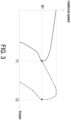
- FIG. 3 schematically shows a relation curve between the rotational speed and the torque of the DC motor 11 under the first variable-voltage mode.
- the relation curve before the power supply device 12 adjusting the input electrical energy is represented by a solid line
- the relation curve after the power supply device 12 adjusting the input electrical energy is represented by a dashed line.
- T1 represents the maximum torque of the DC motor 11 before the motor voltage increases
- T2 represents the maximum torque of the DC motor 11 after the motor voltage increases
- R1 represents the rotational speed of the DC motor 11 corresponding to the maximum torques T1 and T2.
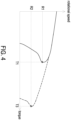
- FIG. 4 schematically shows a relation curve between the rotational speed and the torque of the DC motor 11 in the second variable-voltage mode.
- the relation curve before the power supply device 12 adjusting the input electrical energy is represented by a solid line
- the relation curve after the power supply device 12 adjusting the input electrical energy is represented by a dashed line.
- T1 represents the maximum torque of the DC motor 11 before the motor voltage decreases
- T3 represents the maximum torque of the DC motor 11 after the motor voltage decreases
- R1 represents the rotational speed of the DC motor 11 corresponding to the maximum torque T1
- R2 represents the rotational speed of the DC motor 11 corresponding to the maximum torque T2.
- the DC motor 11 reaches the maximum torque at a lower rotational speed.
- the maximum torque of the DC motor 11 can be increased by changing the relation curve between the rotational speed and the torque of the DC motor 11 through adjusting the motor voltage. Consequently, the applicability of the DC motor 11 is enhanced.
- the DC motor driving system 1 further includes an external control button 151, and the user may switch the DC motor driving system 1 to work in the constant-voltage mode, the first variable-voltage mode, or the second variable voltage mode through operating the external control button 151.
- the microprocessor 14 also can switch the work mode of the DC motor driving system 1 according to the work state of the DC motor 11. For example, the microprocessor 14 obtains the duty cycle of the DC motor 11 and compares the duty cycle of the DC motor 11 with a preset duty cycle. If the microprocessor 14 determines that the duty cycle of the DC motor 11 is less than the preset duty cycle, the DC motor driving system 1 works in the constant-voltage mode. If the microprocessor 14 determines that the duty cycle of the DC motor 11 is greater than or equal to the preset duty cycle, which means that the DC motor 11 requires high torque to output high torque force, the DC motor driving system 1 works in the first or second variable-voltage mode.
- the microprocessor 14 compares the motor power with a rated power of the DC motor 11. If the motor power is less than the rated power, there is still room for increase in the motor power. Therefore, the microprocessor 14 transmits the first adjusting signal to the power supply device 12 so that the DC motor driving system 1 works in the first variable-voltage mode. If the motor power is equal to the rated power, the motor power can't be further increased. Therefore, the microprocessor 14 transmits the second adjusting signal to the power supply device 12 so that the DC motor driving system 1 works in the second variable-voltage mode.
- the DC motor driving system 1 further includes a current sensor 152.
- the current sensor 152 is for example but not limited to a Hall sensor.
- the current sensor 152 is configured to sense the current of the DC motor 11 and transmit a sensing signal to the microprocessor 14 correspondingly.
- the microprocessor 14 obtains the duty cycle of the DC motor 11 according to the sensing signal.
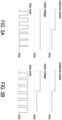
- FIG. 5A schematically shows a relation between the rotational speed, the motor voltage, and the duty cycle of the DC motor 11 driven by a constant voltage.
- FIG. 5B schematically shows a relation between the rotational speed, the motor voltage, and the duty cycle of the DC motor 11 driven by a variable voltage.
- FIG. 5A in the case that the DC motor 11 is driven by a constant voltage, when the rotational speed of the DC motor 11 decreases, the duty cycle of the DC motor 11 decreases since the motor voltage remains unchanged.
- FIG. 5A in the case that the DC motor 11 is driven by a constant voltage, when the rotational speed of the DC motor 11 decreases, the duty cycle of the DC motor 11 decreases since the motor voltage remains unchanged.
- the microprocessor 14 controls the power supply device 12 to adjust the input electrical energy through signal transmission, thereby decreasing the motor voltage and keeping the duty cycle of the DC motor 11 unchanged. It is noted that decreasing margin of the motor voltage depends on the decreasing margin of the rotational speed of the DC motor 11. Consequently, the DC motor 11 always achieves good duty cycle at different rotational speeds, thereby reducing harmonics and improving overall efficiency.
- the DC motor driving system 1 further includes a fuse 16 disposed on the electrical energy transmission path between the power supply device 12 and the switch circuit 13 to provide current protection.
- the DC motor driving system 1 further includes a voltage stabilizer 17 electrically connected between the power supply device 12 and the microprocessor 14.
- the DC motor driving system 1 further includes a driver 18, and the microprocessor 14 controls the switches in the switch circuit 13 through the driver 18.
- the DC motor driving system 1 further includes a shunt resistance 19 and an operational amplifier 20. The shunt resistance 19 is electrically connected to the current sensor 152, and the operational amplifier 20 is electrically connected between the shunt resistance 19 and the microprocessor 14.
- the power supply device 12 may be independent from the DC motor driving system 1. Under this circumstance, the DC motor driving system 1 is electrically connected to the power supply device 12. The power supply device 12 is configured to provide the input electrical energy, and the DC motor driving system 1 includes the DC motor 11, the switch circuit 13, and the microprocessor 14. Since the operation of the DC motor driving system 1 and the power supply device 12 are the same as that in the above embodiments, the detailed descriptions thereof are omitted herein.
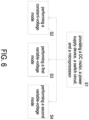
- FIG. 6 is a schematic flow chart illustrating a DC motor driving method according to an embodiment of the present disclosure.
- the DC motor driving method of the present application can be applied to the above-mentioned DC motor driving system 1.
- the DC motor driving method includes steps S1, S2, S3, and S4.
- a DC motor 11, a power supply device 12, a switch circuit 13, and a microprocessor 14 are provided.
- the power supply device 12 is configured to provide the input electrical energy.
- the switch circuit 13 is electrically connected between the power supply device 12 and the DC motor 11 to receive the input electrical energy and output the motor electrical energy to the DC motor 11, and the motor electrical energy includes the motor power and the motor voltage.
- the microprocessor 14 is electrically connected to the switch circuit 13 for controlling the operation of the switches in the switch circuit 13, and the microprocessor 14 and the power supply device 12 are in communication with each other.
- the constant-voltage mode is performed, and the input electrical energy provided by the power supply device 12 is controlled to remain unchanged.
- the first variable-voltage mode is performed, the microprocessor 14 is controlled to transmit the first adjusting signal to the power supply device 12, and the power supply device 12 is controlled to adjust the input electrical energy according to the first adjusting signal for increasing the motor voltage and the motor power.
- the second variable-voltage mode is performed, the microprocessor 14 is controlled to transmit the second adjusting signal to the power supply device 12, and the power supply device 12 is controlled to adjust the input electrical energy according to the second adjusting signal for decreasing the motor voltage and keeping the motor power unchanged.
- the steps S2, S3, and S4 are switchably performed, and the switching between the steps S2, S3, and S4 may be controlled by the user actively or may be controlled by the microprocessor 14 according to the operation state (e.g., the duty cycle) of the DC motor 11.
- the DC motor driving method further includes a step S5 of determining whether the duty cycle of the DC motor 11 is less than a preset duty cycle. If the determining result of the step S5 is satisfied, the step S2 is performed. If the determining result of the step S5 is not satisfied, the step S3 or S4 is performed.
- the DC motor driving method further includes a step S6 of determining whether the motor power is less than the rated power of the DC motor 11 when the determining result of the step S5 is not satisfied. If the determining result of the step S6 is satisfied, the step S3 is performed. If the determining result of the step S6 is not satisfied (i.e., the motor power equals the rated power), the step S4 is performed.
- the duty cycle of the DC motor 11 is obtained according to the sensing signal transmitted by the current sensor 152 sensing the current of the DC motor 11.
- the DC motor driving method further includes a step of controlling the microprocessor 14 to control the power supply device 12 to decrease the motor voltage when the rotational speed of the DC motor 11 decreases, so as to keep the duty cycle of the DC motor 11 unchanged.
- the present disclosure provides a DC motor driving system and method. Based on the variable-voltage characteristic of the power supply device, the DC motor driving system and method varies the relation curve between the rotational speed and the torque of the DC motor through adjusting the motor voltage, thereby increasing the maximum torque of the DC motor. Consequently, the applicability of the DC motor is enhanced. In addition, when the rotational speed of the DC motor decreases, the motor voltage is decreased to keep the duty cycle of the DC motor to unchanged. Consequently, the DC motor always achieves good duty cycle at different rotational speeds, thereby reducing harmonics and improving overall efficiency.
Landscapes
- Engineering & Computer Science (AREA)
- Power Engineering (AREA)
- Control Of Direct Current Motors (AREA)
Applications Claiming Priority (1)
| Application Number | Priority Date | Filing Date | Title |
|---|---|---|---|
| CN202210268737.6A CN116800140A (zh) | 2022-03-18 | 2022-03-18 | 直流马达驱动系统及方法 |
Publications (1)
| Publication Number | Publication Date |
|---|---|
| EP4246799A1 true EP4246799A1 (de) | 2023-09-20 |
Family
ID=83689328
Family Applications (1)
| Application Number | Title | Priority Date | Filing Date |
|---|---|---|---|
| EP22200278.4A Pending EP4246799A1 (de) | 2022-03-18 | 2022-10-07 | Gleichstrommotorantriebssystem und -verfahren |
Country Status (3)
| Country | Link |
|---|---|
| US (1) | US12021465B2 (de) |
| EP (1) | EP4246799A1 (de) |
| CN (1) | CN116800140A (de) |
Citations (2)
| Publication number | Priority date | Publication date | Assignee | Title |
|---|---|---|---|---|
| US20030234627A1 (en) * | 2002-06-20 | 2003-12-25 | Mark Reinhold | Motor with dynamic current draw |
| CN110601530A (zh) * | 2019-09-06 | 2019-12-20 | 佛山市至和智能科技有限公司 | 一种升压电路电机系统及其控制方法 |
Family Cites Families (13)
| Publication number | Priority date | Publication date | Assignee | Title |
|---|---|---|---|---|
| US5528485A (en) * | 1994-03-14 | 1996-06-18 | Devilbiss; Roger S. | Power control circuit for improved power application and control |
| JP4092811B2 (ja) | 1999-04-19 | 2008-05-28 | トヨタ自動車株式会社 | モータ制御装置および制御方法 |
| KR100460459B1 (ko) * | 2002-07-30 | 2004-12-08 | 삼성전자주식회사 | 향상된 테스트 모드를 갖는 반도체 메모리 장치 |
| TW200733539A (en) | 2006-02-17 | 2007-09-01 | Rexon Ind Corp Ltd | System of controlling motor speed |
| TW200929843A (en) | 2007-12-25 | 2009-07-01 | Univ Minghsin Sci & Tech | A wide speed controlling method of a brushless DC motor |
| JP4424427B2 (ja) | 2008-03-18 | 2010-03-03 | トヨタ自動車株式会社 | 車両の制御装置および制御方法 |
| CN102055387A (zh) | 2009-11-04 | 2011-05-11 | 宇泉能源科技股份有限公司 | 具有变速功能的马达控制系统及其方法 |
| EP2512021B1 (de) * | 2011-04-14 | 2017-07-19 | Nxp B.V. | Steuerung für einen Schaltstromwandler |
| TWI692931B (zh) | 2013-11-13 | 2020-05-01 | 布魯克斯自動機械公司 | 可變磁阻馬達負載映射裝置、對於可變磁阻馬達來定出決定馬達負載的力矩、電流、位置之間關係之特徵的方法、決定可變磁阻馬達的力矩、電流和位置之間關係之特徵的方法、無刷電力機器,及可變磁阻馬達控制器 |
| TWI520478B (zh) | 2014-03-14 | 2016-02-01 | 翌能科技股份有限公司 | 直流馬達控制方法及其裝置 |
| US11121650B2 (en) | 2019-11-17 | 2021-09-14 | Michael L Froelich | Direct current motor combinations for electric vehicles |
| JP6819412B2 (ja) | 2017-03-30 | 2021-01-27 | ブラザー工業株式会社 | 画像処理装置 |
| US10635150B2 (en) * | 2018-04-17 | 2020-04-28 | Aptiv Technologies Limited | Electrical power supply device and method of operating same |
-
2022
- 2022-03-18 CN CN202210268737.6A patent/CN116800140A/zh active Pending
- 2022-06-09 US US17/836,247 patent/US12021465B2/en active Active
- 2022-10-07 EP EP22200278.4A patent/EP4246799A1/de active Pending
Patent Citations (2)
| Publication number | Priority date | Publication date | Assignee | Title |
|---|---|---|---|---|
| US20030234627A1 (en) * | 2002-06-20 | 2003-12-25 | Mark Reinhold | Motor with dynamic current draw |
| CN110601530A (zh) * | 2019-09-06 | 2019-12-20 | 佛山市至和智能科技有限公司 | 一种升压电路电机系统及其控制方法 |
Also Published As
| Publication number | Publication date |
|---|---|
| US20230299701A1 (en) | 2023-09-21 |
| US12021465B2 (en) | 2024-06-25 |
| CN116800140A (zh) | 2023-09-22 |
Similar Documents
| Publication | Publication Date | Title |
|---|---|---|
| JP3102981B2 (ja) | 車両用交流発電機の出力制御装置 | |
| JP4561792B2 (ja) | 車両用発電制御装置 | |
| US7224148B2 (en) | Vehicle power-generation control unit | |
| EP2208660B1 (de) | Elektrisch betriebene servolenkvorrichtung | |
| US7466089B2 (en) | Methods and systems for controlling an electronically commutated motor | |
| JP2009198139A (ja) | 空気調和機の圧縮機用ブラシレスモータ駆動装置 | |
| US8305777B2 (en) | Control device for rectifier stations in a high-voltage DC transmission system | |
| US8217610B2 (en) | Power tools | |
| JP4316568B2 (ja) | 車両用発電機の制御システム | |
| EP3647602B1 (de) | Lüftersteuerverfahren und -system | |
| CN110945766B (zh) | 用于操控脉冲宽度调制变流器的方法、控制设备、变流装置和电驱动系统 | |
| JP4682901B2 (ja) | 発電制御システム | |
| EP4246799A1 (de) | Gleichstrommotorantriebssystem und -verfahren | |
| US5632000A (en) | Device for optimizing the speed control behavior of a subfractional horsepower motor | |
| US10243495B2 (en) | Controller for a separately excited electric generator in a vehicle electrical system of a motor vehicle | |
| TWI831151B (zh) | 直流馬達驅動系統及方法 | |
| US7095189B2 (en) | Method for controlling a brushless electric motor | |
| JP4658376B2 (ja) | アクチュエータの速度制御方法 | |
| JP3265994B2 (ja) | 電動コンプレッサの駆動装置 | |
| US6717384B2 (en) | Frequency changer protection circuit for controlling the acceleration of an electric vehicle | |
| EP2056443B1 (de) | Vorrichtung zur Steuerung der Stromerzeugung in Fahrzeugen | |
| US9825571B2 (en) | Device and method for operating an electric machine | |
| CN112758047A (zh) | 雨刮器装置以及车辆 | |
| JP4502153B2 (ja) | 電動ポンプの制御方法 | |
| EP1921744A1 (de) | Steuerung des generators für ein fahrzeug |
Legal Events
| Date | Code | Title | Description |
|---|---|---|---|
| PUAI | Public reference made under article 153(3) epc to a published international application that has entered the european phase |
Free format text: ORIGINAL CODE: 0009012 |
|
| STAA | Information on the status of an ep patent application or granted ep patent |
Free format text: STATUS: THE APPLICATION HAS BEEN PUBLISHED |
|
| AK | Designated contracting states |
Kind code of ref document: A1 Designated state(s): AL AT BE BG CH CY CZ DE DK EE ES FI FR GB GR HR HU IE IS IT LI LT LU LV MC ME MK MT NL NO PL PT RO RS SE SI SK SM TR |
|
| STAA | Information on the status of an ep patent application or granted ep patent |
Free format text: STATUS: REQUEST FOR EXAMINATION WAS MADE |
|
| 17P | Request for examination filed |
Effective date: 20240228 |
|
| RBV | Designated contracting states (corrected) |
Designated state(s): AL AT BE BG CH CY CZ DE DK EE ES FI FR GB GR HR HU IE IS IT LI LT LU LV MC ME MK MT NL NO PL PT RO RS SE SI SK SM TR |
|
| STAA | Information on the status of an ep patent application or granted ep patent |
Free format text: STATUS: EXAMINATION IS IN PROGRESS |
|
| 17Q | First examination report despatched |
Effective date: 20250813 |