EP4242802A1 - Zeicheneingabevorrichtung, zeicheneingabeverfahren und zeicheneingabeprogramm - Google Patents
Zeicheneingabevorrichtung, zeicheneingabeverfahren und zeicheneingabeprogramm Download PDFInfo
- Publication number
- EP4242802A1 EP4242802A1 EP23156454.3A EP23156454A EP4242802A1 EP 4242802 A1 EP4242802 A1 EP 4242802A1 EP 23156454 A EP23156454 A EP 23156454A EP 4242802 A1 EP4242802 A1 EP 4242802A1
- Authority
- EP
- European Patent Office
- Prior art keywords
- character string
- character
- input
- candidate
- finalized
- Prior art date
- Legal status (The legal status is an assumption and is not a legal conclusion. Google has not performed a legal analysis and makes no representation as to the accuracy of the status listed.)
- Withdrawn
Links
Images





Classifications
-
- G—PHYSICS
- G06—COMPUTING OR CALCULATING; COUNTING
- G06F—ELECTRIC DIGITAL DATA PROCESSING
- G06F3/00—Input arrangements for transferring data to be processed into a form capable of being handled by the computer; Output arrangements for transferring data from processing unit to output unit, e.g. interface arrangements
- G06F3/01—Input arrangements or combined input and output arrangements for interaction between user and computer
- G06F3/02—Input arrangements using manually operated switches, e.g. using keyboards or dials
- G06F3/023—Arrangements for converting discrete items of information into a coded form, e.g. arrangements for interpreting keyboard generated codes as alphanumeric codes, operand codes or instruction codes
- G06F3/0233—Character input methods
- G06F3/0237—Character input methods using prediction or retrieval techniques
-
- G—PHYSICS
- G06—COMPUTING OR CALCULATING; COUNTING
- G06F—ELECTRIC DIGITAL DATA PROCESSING
- G06F40/00—Handling natural language data
- G06F40/20—Natural language analysis
- G06F40/237—Lexical tools
- G06F40/242—Dictionaries
-
- G—PHYSICS
- G06—COMPUTING OR CALCULATING; COUNTING
- G06F—ELECTRIC DIGITAL DATA PROCESSING
- G06F40/00—Handling natural language data
- G06F40/10—Text processing
- G06F40/166—Editing, e.g. inserting or deleting
Definitions
- the present invention relates to a technique for supporting character input.
- JP 200241509A discloses a technique for extracting an input character (or input characters) and conversion candidates for the input character (or the input characters), for example.
- the input character(s) and the conversion candidates are associated with each other and stored in a conversion learning database.
- the conversion learning database is referred to, and conversion candidates are read out.
- JP 200241509A is an example of background art.
- the user uses a tool for creating a conversion learning dictionary database (hereinafter referred to as a dictionary tool).
- a dictionary tool for creating a conversion learning dictionary database
- the user needs to store, in the dictionary tool, the reading for the desired character string and the character string corresponding to the reading in association with each other.
- JP 200241509A may be inconvenient for the user.
- An object of the present invention is to provide a function by which a character input device can easily learn characters along the flow of character input performed by a user.
- a character input device is configured as follows.
- the character input device includes a character input section, a candidate obtainment unit, a finalization unit, and a registration unit.
- a character string is input to the character input section.
- the candidate obtainment unit obtains a candidate character string registered in the dictionary and corresponding to the character string input to the character input section.
- the finalization unit finalizes the candidate character string obtained by the candidate obtainment unit and selected by the user, as a finalized character string for the character string that has been input to the character input section. If a part of the finalized character string finalized by the finalization unit is deleted, the registration unit registers, in the dictionary, the remaining character string that remains without being deleted, in association with the character string that has been input to the character input section.
- the user can cause the character input device to learn a desired character along the flow of normal character input processing such as character input and character deletion.
- the registration unit of the character input device registers, in the dictionary, a character string finalized by the finalization unit as a candidate character string that follows the remaining character string that has been input to the character input section.
- the registration unit of the character input device registers, in the dictionary, the character string input to the character input section and a character string that is composed of the remaining character string obtained by deleting a part of the finalized character string finalized by the finalization unit for the character string input to the character input section and the candidate character string that is registered in the dictionary and follows the remaining character string, in association with each other.
- the character input device further includes a counting unit.
- the counting unit counts, for a combination of the character string that has been input to the character input section, the remaining character string obtained by deleting a part of the finalized character string finalized by the finalization unit for the character string that has been input to the character input unit, and the candidate character string that is registered in the dictionary and follows the remaining character string, the number of times of that combination.
- the registration unit registers, in the dictionary, the character string that has been input to the character input section, and a character string that is composed of the remaining character string obtained by deleting a part of the finalized character string finalized by the finalization unit for the character string input to the character input section and the candidate character string that is registered in the dictionary and follows the remaining character string, in association with each other.
- the registration unit of the character input device prohibits a process of registering the remaining character string in the dictionary.
- an object of the present invention is to provide a function by which a character input device can easily learn characters along the flow of character input performed by a user.
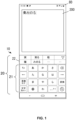
- FIG. 1 is a diagram illustrating how characters are input using a character input device 10.
- the user creates a mail using the character input device 10.
- the user inputs characters to the mail application.
- the character input device 10 is installed in an electronic device such as a smartphone, for example.
- the electronic device is not limited to a smartphone, and may also be any device to which the user can input characters, such as a tablet or a personal computer.
- a smartphone 80 includes a touch panel. The user activates an application installed in the smartphone 80.
- the user activates a mail application, for example.
- the user inputs a character string in an input field 200.
- a mail application is used in this example, the application is not limited to a mail application as long as the application has a function for inputting characters.
- the character input device 10 receives a result of the user operating the touch panel of the smartphone 80.
- the user activates a mail application and inputs characters to create a mail, for example.
- the character input device 10 detects an operation for starting Japanese character input performed by the user.
- the character input device 10 activates a display unit 20 (a character input section 21 and a candidate display section 22) by detecting the operation of the character input performed by the user.
- the user wants to input the character string " " (transcription: kana ( )-mi ( ), which is an example of Japanese person's name) in the input field 200.
- the user inputs the character string " "(transcription: ka ( )-na ( )-de ( )-ru ( )) in the input field 200 through the character input section 21.
- the character input device 10 outputs " " as a conversion candidate for " ".
- the user selects the candidate character string " " for the input character string " “”, and finalizes the character string “ “.”
- the user uses a delete button or the like and delete the character string " ", which is a part of the character string that has been finalized.
- the character input device 10 stores, in the dictionary database 50, the character string” " and the character “W”, which is a part of the character string " ", in association with each other.
- the user inputs the character string " " (transcription: mi ( )-no ( ))-ru ( )) through the character input section 21.
- the character input device 10 outputs " “ “ as a conversion candidate for " ".
- the user can register a desired character string in the dictionary database, along the flow of inputting characters and deleting unnecessary characters from the characters that the user has finalized. That is to say, the user can register, in the dictionary database, a desired character string in the dictionary database without intentionally registering the reading of the desired character string and a character string corresponding to the desired character string. Therefore, the user can efficiently input characters.
- FIG. 2 is a block diagram showing a character input device having the configuration disclosed in the first configuration example.
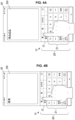
- FIGS. 3 (A) and 3 (B) are diagrams illustrating how characters are input through the character input device having the configuration disclosed in the first configuration example.
- FIGS. 4 (A) and 4 (B) are diagrams illustrating how characters are input through the character input device having the configuration disclosed in the first configuration example.
- the electronic device to which the character input device 10 is applied is not limited to a smartphone, but may be any electronic device that has a function for the user to input characters.
- the character input device 10 includes a display unit 20, an operation detection unit 30, a display control unit 35, a control unit 40, and a dictionary database 50.
- the display unit 20 includes the character input section 21 and the candidate display section 22.
- the character input section 21 and the candidate display section 22 are arranged on the screen of a smartphone 80, for example.
- Various keys for inputting characters are displayed in the character input section 21.
- Conversion candidates that have been obtained thorough a method described later and conversion candidates that have been narrowed down are displayed in the candidate display section 22.
- the character input section 21 is a software keyboard, for example.
- the smartphone 80 includes a touch panel.
- the touch panel detects operations performed by a user. More specifically, the touch panel detects operations on the input field 200 of the mail application, and the character input section 21 and the candidate display section 22 provided in the display unit 20.
- the detection of the operation includes, for example, an operation position, a time length during which the operation is performed, a temporal change in the operation position, and the like.
- the result of the detection of the operation is output to the operation detection unit 30.
- the operation detection unit 30 outputs the detection result to the display control unit 35 and the control unit 40, depending on the result of the detection of the operation performed by the user through the touch panel.
- the display control unit 35 outputs, to the display unit 20, a display corresponding to the result of the operation performed by the user.
- the control unit 40 includes a candidate obtainment unit 41, a finalization unit 42, and a registration unit 43.
- the control unit 40 includes a hardware CPU, a memory, and other electronic circuits.
- the hardware CPU operates as the candidate obtainment unit 41, the finalization unit 42, and the registration unit 43.
- the memory has an area for deploying the character input program according to the present invention and an area for temporarily storing data generated when the character input program is executed.
- the control unit 40 may also be an LSI in which the hardware CPU, the memory, and the like are integrated.
- the hardware CPU is a computer for executing the character input method according to the present invention.
- the candidate obtainment unit 41 searches the dictionary database 50, and obtains a plurality of conversion candidates that match the reading of the character string input by the user. At this time, the candidate obtainment unit 41 obtains the plurality of conversion candidates also in association with the priority of the conversion candidates that have been arranged in a normal manner.
- the priority of the conversion candidates that have been arranged in a normal manner is set based on the use history of the user and the general use frequency, and can be set by various known methods.
- the candidate obtainment unit 41 outputs the plurality of conversion candidates to the candidate display section 22, depending on the priority of the conversion candidates that have been arranged in a normal manner.
- the finalization unit 42 finalizes, as a finalized character string, a candidate character string selected by the user from the candidate character strings displayed on the candidate display section 22.
- the registration unit 43 associates the character string input by the user through the character input section 21 with a remaining character string obtained by deleting a part of the character string, and stores the character string and the remaining character string in the dictionary database 50. Details thereof will be described later.
- the dictionary database 50 stores the reading of the character string input by the user, conversion candidates for the reading, display priorities of the conversion candidates in normal conversion processing, and the like.
- the user inputs a character string " " (or “ ”) through the character input section 21.
- the candidate obtainment unit 41 searches the dictionary database 50, and obtains conversion candidates for the character string " ".
- the reading character string " " corresponds to a character string input by the user according to the present invention.
- the character input device 10 displays the conversion candidates " ", " ", “ “, and the like in the candidate display section 22.
- the candidate obtainment unit 41 outputs the reading character string " " to the registration unit 43.
- the operation detection unit 30 detects that the character string " " is selected by the user, and outputs the character string “ “ “ to the finalization unit 42.
- the finalization unit 42 outputs the character string " " to the display control unit 35 as a finalized character string. Then, the display control unit 35 displays the finalized character string " " in the input field 200.
- the user deletes the character string " ", which is a part of the finalized character string " " displayed in the input field 200. More specifically, the user taps the delete button arranged in the character input section 21. At this time, the operation detection unit 30 detects that "Z &" has been deleted, which is a part of the finalized character string " ".
- the character “W” is the remaining character obtained by deleting "Z &” from the finalized character string " ".
- the operation detection unit 30 outputs the remaining character "W” to the registration unit 43.
- the registration unit 43 stores, in the dictionary database 50, the read character string " " and the remaining character “W” in association with each other.
- the user inputs a character string " " " through the character input section 21.
- the candidate obtainment unit 41 searches the dictionary database 50, and obtains conversion candidates for the character string " ".
- the character input device 10 displays the conversion candidates " ", " “ (also this character has the reading "mi-no-ru” in Japanese), " ", and the like in the candidate display section 22. Then, the user selects the character " " displayed in the candidate display section 22.
- the character input device 10 outputs the character " " to the input field 200. In this manner, the user can obtain the desired character string " ".
- the operation detection unit 30 detects an operation of deleting "", which is a part of the finalized character string " ".
- the registration unit 43 stores the reading character string " " and the remaining characters " " in association with each other. Accordingly, the character input device 10 can easily learn characters without the user intentionally performing dictionary registration. In other words, the user can register a desired character string in the dictionary along the flow of normal character input. Therefore, the user can efficiently input characters.
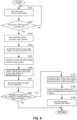
- FIG. 5 is a flowchart showing a flow of processing executed by the character input device 10 in the operation example. The processing flow of the character input device 10 will be described with reference to FIGS. 1 , 2 , 3(A), 3(B) , 4(A), 4(B) , and 5 .
- the user inputs a reading character string " " " through the character input section 21 (step S101).
- the candidate obtainment unit 41 searches the dictionary database 50, and obtains conversion candidates for the reading character string "".
- the character input device 10 displays the candidate character strings " “, “ “, “ “, and the like for the reading character string " " in the candidate display section 22.
- the character input device 10 determines whether or not the character string " " has been finalized (step S102). If the character input device 10 determines that the character string " " has been finalized (YES in step S102), the finalization unit 42 outputs the character string " " to the input field 200 as the finalized character string (step S103).
- the candidate obtainment unit 41 outputs the reading character string " " to the registration unit 43 (step S104).
- the user deletes the character string " ", which is a part of the finalized character string " “ displayed in the input field 200 (step S105). More specifically, the user taps the delete button arranged in the character input section 21. At this time, the operation detection unit 30 detects that "Z &" has been deleted, which is a part of the finalized character string " ". As a result, " " is obtained as the remaining character.
- step S106 In response to the operation detection unit 30 detecting that " " has been deleted, which is a part of the finalized character string " ", the remaining character “W” is output to the registration unit 43 (step S106).
- the registration unit 43 stores, in the dictionary database 50, the read character string " " and the remaining character “W” in association with each other (step S107).
- the user inputs a character string " " " through the character input section 21 (step S108).
- the candidate obtainment unit 41 searches the dictionary database 50, and obtains conversion candidates for the character string " ".
- the character input device 10 displays the conversion candidates " ", " “, “ “, and the like in the candidate display section 22.
- the user selects the character " " displayed in the candidate display section 22 (step S109). As shown in FIG. 4(B) , the character input device 10 outputs the character " " to the input field 200. In this manner, the user can obtain a desired character string " ".
- step S101 If the character input device 10 determines that the character string " " has not been finalized (No in step S102) by the user, the character input device 10 executes step S101 again.
- the character input device 10 can easily learn characters without the user intentionally performing dictionary registration. In other words, the user can register a desired character string in the dictionary along the flow of normal character input. Therefore, the user can efficiently input characters.
- the reading character string is " ".
- the reading character string may not be “ “”, but may also be a character or characters such as " ", " ", or " " for the user to obtain the predicted conversions to obtain the candidate character strings.
- the registration unit 43 may also store the finalized character string "W" in association with the reading character " ", for example.
- the character input device 10 executes processing in the order of Step S107 and Step S108.
- the character input device performs processing in the order of Step S108 and Step S107. Because the other features are the same as those of the character input device 10, the description thereof will be omitted.
- FIG. 6 is a flowchart showing a flow of processing executed by a character input device 10 according to the first modification example.
- the step S108 in the first configuration example corresponds to the step S201 in the first modification example
- the step S107 in the first configuration example corresponds to the step S202 in the first modification example.
- step S106 the operation detection unit 30 detects that " " has been deleted, which is a part of the finalized character string " ", and then the remaining character “W” is output to the registration unit 43.
- the user inputs a reading character string " " through the character input section 21 (step S201).
- the operation detection unit 30 detects that the character string " " has been input. As a result, the registration unit 43 stores, in the dictionary database 50, the reading character string " " and the remaining character “ " in association with each other (step S202).
- the user selects the character " " displayed in the candidate display section 22 (step S109).
- the character input device 10 outputs the character " " to the input field 200. In this manner, the user can obtain a desired character string " ".
- the character input device 10A can clearly recognize that the user wants to associate the remaining character “ “ with the character " ". Accordingly, it is possible to prevent the second character and the third character from being erroneously associated with each other, due to an operation error or the like by the user. In other words, an increase in the amount of data registered in the dictionary database 50 can be prevented.
- a character input device 10B according to the second modification example is different from the character input device 10 according to the first configuration example in that a control unit 40B of the character input device 10B includes a counting unit 44. Because the other features are the same as those of the character input device 10, the description thereof will be omitted.
- FIG. 7 is a block diagram showing a configuration of a character input device according to the second modification example.
- FIG. 8 is a flowchart showing a flow of processing executed by the character input device according to the second modification example.
- the control unit 40B includes the candidate obtainment unit 41, the finalization unit 42, the registration unit 43, and the counting unit 44.
- the counting unit 44 counts and records the number of times (hereinafter referred to as the number of times of occurrence) a combination of a reading character string and a remaining character string that has been obtained by the user deleting a part of the finalized character string has been created. In other words, the counting unit 44 counts and records the number of times a part of the finalized character string obtained based on the reading character string has been deleted.
- the counting unit 44 records the number of times of occurrence of deletion, and determines whether this number of times of occurrence is a predetermined number of times or more. If it is determined that the number of times of occurrence of deletion is the predetermined number of times (for example, three times) or more, the counting unit 44 outputs the determination result to the registration unit 43.
- the registration unit 43 associates the reading character string with the remaining character string, and stores, in the dictionary database 50, the reading character string and the remaining character string in association with each other.
- step S101 to step S106 is the same as that in the first configuration example, the description thereof will be omitted.
- the counting unit 44 counts and records the number of times (the number of times of occurrence) a combination of a reading character string and a remaining character string that has been obtained by the user deleting a part of a finalized character string has been created (step S301).
- the counting unit 44 determines whether the number of times of occurrence is a predetermined number of times or more (step S302).
- the predetermined number of times is three times, for example.
- the counting unit 44 If it is determined that the number of times of occurrence is three times or more (YES in step S302), the counting unit 44 outputs the determination result to the registration unit 43.
- the registration unit 43 stores, in the dictionary database 50, the reading character string and the remaining character string in association with each other (step S107).
- the user inputs a character string through the character input section 21 (step S108).
- the candidate obtainment unit 41 searches the dictionary database 50, and obtains conversion candidates for the character string that has been input by the user.
- the character input device 10 displays the conversion candidates in a candidate display section 22.
- the user selects one of the conversion candidates that are displayed in the candidate display section 22 (step S109).
- the character input device 10 outputs, to the input field 200, the conversion candidate that has been selected by the user.
- step S302 when the counting unit 44 determines that the number of times of occurrence three is times or less (NO in step S302), the counting unit 44 increments the number of times of occurrence by one and ends the processing.
- the character input device 10B can store the reading character string and the remaining character string in association with each other by the user repeating the process of deleting a part of the finalized character string. With this configuration, the character input device 10B can learn more as intended by user.
- the number of times of occurrence is three times or more.
- the number of times of occurrence is not limited to three times, and may be set to any number of times.
- the predetermined number of times set as a reference may also be a number of times in consideration of a history of an erroneous input or deletion of characters when the user inputs characters.
- the number of times of deletion when the number of times of deletion is large due to a habit of the user or the like, it may be determined, by increasing the predetermined number of times, whether the operation of deleting a part of the finalized character string by the user is an operation for generating an intended remaining character string. If it is determined that there is a tendency that the number of times of deletion at the time of character input is large, the predetermined number of times may be increased to five times, six times, or the like.
- a character input device according to the third modification is different from the character input device 10 according to the first configuration example in that a candidate character string that follows the remaining character string is obtained by inputting a reading character string. Because the other features are the same as those of the character input device 10, the description thereof will be omitted.
- FIG. 9 is a diagram illustrating how characters are input through a character input device 10C according to the third modification example.
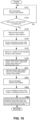
- FIG. 10 is a flowchart showing a flow of processing executed by the character input device 10C according to the third modification example.
- the candidate obtainment unit 41 obtains the desired character string " " (the remaining character and the candidate character that follows the remaining character) stored in the dictionary database 50 in association with the reading character string " ". Therefore, the user can obtain the desired character string " " by only inputting the reading character string " ".
- step S101 to step S106 in FIG. 10 is the same as that in the configuration example 1, description thereof will be omitted.
- the candidate obtainment unit 41 searches the dictionary database 50, and obtains a candidate character string that follows the remaining character "W” (step S401). In this case, the character input device 10 displays the conversion candidates " “ “, “ “, “ “, and the like in the candidate display section 22.
- the user selects the character " " displayed in the candidate display section 22 (step S402).
- the character input device 10 outputs the character " " to the input field 200.
- the operation detection unit 30 detects that the character " " displayed in the candidate display section 22 has been selected by the user, and outputs the character " " to the registration unit 43 (step S403).
- the registration unit 43 stores the reading character string, and the remaining character string and the candidate character string that follows the remaining character string in association with each other in the dictionary database 50 (step S404).
- the candidate obtainment unit 41 can obtain a candidate character string that follows the remaining character string.
- the candidate obtainment unit 41 obtains the character " " as a candidate character that follows the remaining character “ ".
- the user selects the character " ".
- the user can obtain the desired character string " " by inputting the reading character string " ".
- the character input device 10C can easily learn characters without the user intentionally performing dictionary registration. In other words, the user can register a desired character string in the dictionary along the flow of normal character input. Therefore, the user can efficiently input characters.
- the user can easily obtain a desired character string in which the remaining character string and the character string that follows the remaining character string are combined.
- a character input device according to the fourth modification example is different from the character input device 10 according to the first configuration example in that the registration unit counts the number of characters included in the remaining character string. Because the other features are the same as those of the character input device 10, the description thereof will be omitted.
- the registration unit 43 counts the number of characters included in the remaining character string. If the remaining character string is composed of one character, the registration unit 43 registers the remaining character in the dictionary database 50. In contrast, if the remaining character string is composed of 0 characters or two or more characters, the registration unit 43 does not register the remaining character string in the dictionary database 50.
- the dictionary database 50 can be updated more as intended by the user. More specifically, if it is determined that the remaining character string is composed of 0 characters, the registration unit 43 determines that the user's operation is an error and does not register the remaining character string in the dictionary database 50. Similarly, if it is determined that the remaining character string is composed of two or more characters, the registration unit 43 determines that the user's operation is an error and does not register the remaining character string in the dictionary database 50.
- the present invention is not limited to the above-described examples, and can be embodied by modifying the constituent elements without departing from the gist of the present invention in an implementation stage.
- various embodiments can be formed by appropriately combining a plurality of constituent elements disclosed in the above examples. Some components may also be deleted from all the components shown in the above examples, for example. Furthermore, constituent elements included in different examples may be appropriately combined.
- the character input device (10) includes the character input section (21), the candidate obtainment unit (41), the finalization unit (42), and the registration unit (43).
- a character string that is input by a user is input to the character input section (21).
- the candidate obtainment unit obtains a candidate character string registered in the dictionary and corresponding to the character string input to the character input section (21).
- the finalization unit (42) finalizes the candidate character string obtained by the candidate obtainment unit (41) and selected by the user as a finalized character string for the character string input to the character input section. If a part of the finalized character string finalized by the finalization unit (42) is deleted, the registration unit (43) registers, in the dictionary, the remaining character string that has not been deleted, in association with the character string input to the character input section.
Landscapes
- Engineering & Computer Science (AREA)
- Theoretical Computer Science (AREA)
- General Engineering & Computer Science (AREA)
- Physics & Mathematics (AREA)
- General Physics & Mathematics (AREA)
- Computational Linguistics (AREA)
- General Health & Medical Sciences (AREA)
- Health & Medical Sciences (AREA)
- Audiology, Speech & Language Pathology (AREA)
- Artificial Intelligence (AREA)
- Human Computer Interaction (AREA)
- Document Processing Apparatus (AREA)
- User Interface Of Digital Computer (AREA)
Applications Claiming Priority (1)
| Application Number | Priority Date | Filing Date | Title |
|---|---|---|---|
| JP2022034330A JP7844939B2 (ja) | 2022-03-07 | 2022-03-07 | 文字入力装置、文字入力方法、および文字入力プログラム |
Publications (1)
| Publication Number | Publication Date |
|---|---|
| EP4242802A1 true EP4242802A1 (de) | 2023-09-13 |
Family
ID=85239155
Family Applications (1)
| Application Number | Title | Priority Date | Filing Date |
|---|---|---|---|
| EP23156454.3A Withdrawn EP4242802A1 (de) | 2022-03-07 | 2023-02-14 | Zeicheneingabevorrichtung, zeicheneingabeverfahren und zeicheneingabeprogramm |
Country Status (3)
| Country | Link |
|---|---|
| US (1) | US12147762B2 (de) |
| EP (1) | EP4242802A1 (de) |
| JP (1) | JP7844939B2 (de) |
Citations (4)
| Publication number | Priority date | Publication date | Assignee | Title |
|---|---|---|---|---|
| JP2002041509A (ja) | 2000-07-27 | 2002-02-08 | Casio Comput Co Ltd | 文字入力装置 |
| EP1700291A2 (de) * | 2003-12-22 | 2006-09-13 | America Online, Inc. | Virtuelles tastatursystem mit automatischer korrektur |
| EP2722731A1 (de) * | 2012-10-18 | 2014-04-23 | Samsung Electronics Co., Ltd. | Anzeigevorrichtung und Verfahren zur Eingabe von Zeichen dafür |
| JP2022034330A (ja) | 2020-08-18 | 2022-03-03 | 三菱電機株式会社 | プリント端末及びプリントシステム |
Family Cites Families (5)
| Publication number | Priority date | Publication date | Assignee | Title |
|---|---|---|---|---|
| JPH0684968B2 (ja) * | 1986-12-29 | 1994-10-26 | 新日本製鐵株式会社 | セラミックス試験片への脆性予亀裂導入治具 |
| US5786776A (en) * | 1995-03-13 | 1998-07-28 | Kabushiki Kaisha Toshiba | Character input terminal device and recording apparatus |
| JP2003256416A (ja) | 2002-03-01 | 2003-09-12 | Toshiba Corp | 文章作成装置 |
| JP5187954B2 (ja) | 2008-05-27 | 2013-04-24 | ソニーモバイルコミュニケーションズ株式会社 | 文字入力装置、文字入力学習方法、及びプログラム |
| JP2016143224A (ja) | 2015-02-02 | 2016-08-08 | シャープ株式会社 | 電子機器、および制御方法 |
-
2022
- 2022-03-07 JP JP2022034330A patent/JP7844939B2/ja active Active
-
2023
- 2023-02-14 EP EP23156454.3A patent/EP4242802A1/de not_active Withdrawn
- 2023-02-24 US US18/174,314 patent/US12147762B2/en active Active
Patent Citations (4)
| Publication number | Priority date | Publication date | Assignee | Title |
|---|---|---|---|---|
| JP2002041509A (ja) | 2000-07-27 | 2002-02-08 | Casio Comput Co Ltd | 文字入力装置 |
| EP1700291A2 (de) * | 2003-12-22 | 2006-09-13 | America Online, Inc. | Virtuelles tastatursystem mit automatischer korrektur |
| EP2722731A1 (de) * | 2012-10-18 | 2014-04-23 | Samsung Electronics Co., Ltd. | Anzeigevorrichtung und Verfahren zur Eingabe von Zeichen dafür |
| JP2022034330A (ja) | 2020-08-18 | 2022-03-03 | 三菱電機株式会社 | プリント端末及びプリントシステム |
Also Published As
| Publication number | Publication date |
|---|---|
| US12147762B2 (en) | 2024-11-19 |
| JP7844939B2 (ja) | 2026-04-14 |
| JP2023129955A (ja) | 2023-09-20 |
| US20240020470A1 (en) | 2024-01-18 |
Similar Documents
| Publication | Publication Date | Title |
|---|---|---|
| JP5362095B2 (ja) | インプットメソッドエディタ | |
| US20100115402A1 (en) | System for data entry using multi-function keys | |
| EP2109046A1 (de) | Prädiktives Texteingabesystem und Verfahren mit zwei gleichrangigen Ordnungskriterien | |
| KR20070001023A (ko) | 합성 글자들의 자동 완성을 위한 방법 및 장치 | |
| JPH08314910A (ja) | 異種コード文字列転記装置および電子辞書 | |
| US12147762B2 (en) | Character input device, character input method, and computer-readable storage medium storing a character input program | |
| JPH11328166A (ja) | 文字入力装置及び文字入力処理プログラムを記録したコンピュータ読み取り可能な記録媒体 | |
| JP5168709B2 (ja) | 携帯端末装置、文字入力変換方法、プログラム | |
| JP5629543B2 (ja) | 文字列変換装置、文字列変換方法、コンピュータプログラムおよび記録媒体 | |
| CN117389424A (zh) | 字符输入装置、字符输入方法及计算机可读存储介质 | |
| JP6221275B2 (ja) | 文字入力用のプログラムおよび文字入力装置 | |
| EP4216039A1 (de) | Zeicheneingabevorrichtung, zeicheneingabeverfahren und zeicheneingabeprogramm | |
| JP7714966B2 (ja) | 文字入力装置、文字入力方法、および、文字入力プログラム | |
| JP4192142B2 (ja) | 辞書登録装置、辞書登録方法および辞書登録プログラム | |
| JP3035061B2 (ja) | スケジュール機能付仮名漢字変換装置 | |
| JP7476960B2 (ja) | 文字列入力装置、文字列入力方法、および文字列入力プログラム | |
| JP7721485B2 (ja) | 電子機器、電子機器の制御方法およびプログラム | |
| JPH10143501A (ja) | 文字列予測方法及びこの文字列予測方法を用いた文書作成装置 | |
| JP4847210B2 (ja) | 入力変換学習プログラム、入力変換学習方法及び入力変換学習装置 | |
| US20210286443A1 (en) | Character input device, character input method, and character input program stored on computer-readable storage medium | |
| JPH08161320A (ja) | 文書作成装置及びその表示処理方法 | |
| JP2025117131A (ja) | 情報処理装置、情報処理方法およびプログラム | |
| JP5261133B2 (ja) | 辞書検索機能付き文字列変換装置 | |
| JP2001282781A (ja) | データ入力方法、その方法を用いたデータ入力用の記録媒体ならびに演算処理装置 | |
| JPH08241158A (ja) | 情報入力装置 |
Legal Events
| Date | Code | Title | Description |
|---|---|---|---|
| PUAI | Public reference made under article 153(3) epc to a published international application that has entered the european phase |
Free format text: ORIGINAL CODE: 0009012 |
|
| STAA | Information on the status of an ep patent application or granted ep patent |
Free format text: STATUS: REQUEST FOR EXAMINATION WAS MADE |
|
| 17P | Request for examination filed |
Effective date: 20230214 |
|
| AK | Designated contracting states |
Kind code of ref document: A1 Designated state(s): AL AT BE BG CH CY CZ DE DK EE ES FI FR GB GR HR HU IE IS IT LI LT LU LV MC ME MK MT NL NO PL PT RO RS SE SI SK SM TR |
|
| STAA | Information on the status of an ep patent application or granted ep patent |
Free format text: STATUS: THE APPLICATION HAS BEEN WITHDRAWN |
|
| 18W | Application withdrawn |
Effective date: 20240226 |