EP4234536A2 - Aminoaryl-benzamid-verbindungen und verfahren zur verwendung davon - Google Patents
Aminoaryl-benzamid-verbindungen und verfahren zur verwendung davon Download PDFInfo
- Publication number
- EP4234536A2 EP4234536A2 EP23163130.0A EP23163130A EP4234536A2 EP 4234536 A2 EP4234536 A2 EP 4234536A2 EP 23163130 A EP23163130 A EP 23163130A EP 4234536 A2 EP4234536 A2 EP 4234536A2
- Authority
- EP
- European Patent Office
- Prior art keywords
- hpn
- amino
- sulfamoyl
- carboxamide
- biphenyl
- Prior art date
- Legal status (The legal status is an assumption and is not a legal conclusion. Google has not performed a legal analysis and makes no representation as to the accuracy of the status listed.)
- Pending
Links
Images















Classifications
-
- A—HUMAN NECESSITIES
- A61—MEDICAL OR VETERINARY SCIENCE; HYGIENE
- A61K—PREPARATIONS FOR MEDICAL, DENTAL OR TOILETRY PURPOSES
- A61K31/00—Medicinal preparations containing organic active ingredients
- A61K31/16—Amides, e.g. hydroxamic acids
- A61K31/18—Sulfonamides
-
- A—HUMAN NECESSITIES
- A61—MEDICAL OR VETERINARY SCIENCE; HYGIENE
- A61K—PREPARATIONS FOR MEDICAL, DENTAL OR TOILETRY PURPOSES
- A61K31/00—Medicinal preparations containing organic active ingredients
- A61K31/16—Amides, e.g. hydroxamic acids
- A61K31/17—Amides, e.g. hydroxamic acids having the group >N—C(O)—N< or >N—C(S)—N<, e.g. urea, thiourea, carmustine
-
- A—HUMAN NECESSITIES
- A61—MEDICAL OR VETERINARY SCIENCE; HYGIENE
- A61P—SPECIFIC THERAPEUTIC ACTIVITY OF CHEMICAL COMPOUNDS OR MEDICINAL PREPARATIONS
- A61P1/00—Drugs for disorders of the alimentary tract or the digestive system
- A61P1/16—Drugs for disorders of the alimentary tract or the digestive system for liver or gallbladder disorders, e.g. hepatoprotective agents, cholagogues, litholytics
Definitions
- the present invention relates to amino-aryl-benzamide compounds and preparation methods thereof.
- the present invention further relates to the treatment and/or reduction of nonalcoholic fatty liver disease (NAFLD) and nonalcoholic steatohepatitis (NASH) using such compositions.
- NAFLD nonalcoholic fatty liver disease
- NASH nonalcoholic steatohepatitis
- Nonalcoholic fatty liver disease is the most common chronic liver disease in the world and its incidence is increasing due to a close association with obesity and insulin resistance.
- NAFLD represents a spectrum of liver disease that includes simple steatosis (triacylglycerol (TAG) infiltration in > 5 percent of hepatocytes), fatty infiltration plus inflammation, and hepatocellular ballooning degeneration (nonalcoholic steatohepatitis, NASH), progressing to liver fibrosis and ultimately cirrhosis ( Hardy et al., 2016 Annual Reviews of Pathology ).
- NASH hepatocellular carcinoma
- NAFLD Spengler and Loomba, 2015 Mayo Clinic Proceedings
- NIDDK National Digestive Diseases Information Clearinghouse
- a recent prospective cohort study using ultrasound and liver biopsy approaches suggested the prevalence of NAFLD in asymptomatic middle-aged patients to be 46.0 percent and the prevalence of NASH to be 12.2 percent ( Williams et al., 2011 Gastroenterology ).
- NAFLD/NASH is poised to become the primary indication for liver transplantation globally ( Charlton et al., 2011 Gastroenterology ).
- HSCs hepatic stellate cells
- NAFLD/NASH treatments are reversing hepatic steatosis, as well as reducing progression to advanced fibrosis, cirrhosis and its sequelae, including HCC, metabolic diseases and cardiovascular diseases.
- NAFLD/NASH pharmacological therapies for NAFLD/NASH.
- the only treatment option is weight loss, associated with lifestyle modifications.
- such treatment methods require a great deal of commitment, and compliance can be difficult.
- the present invention addresses this need.
- the present disclosure provides a method of treating nonalcoholic fatty liver disease (NAFLD) in a subject, the method comprising administering to the subject a therapeutically effective amount of a compound selected from the group consisting of a compound of Formula I, Formula II, Formula III, Formula IV, or a prodrug, therapeutically active metabolite, hydrate, solvate, or pharmaceutically acceptable salt thereof,
- NAFLD nonalcoholic fatty liver disease
- the compound is administered in a dose of between about 1 mg/kg to about 100 mg/kg body weight of the subject/day.
- the compound is administered once per day.
- R1 is chloride
- R2 is SO 2 NH 2 .
- R3 is hydrogen
- R4 is hydrogen
- the method comprises using a compound of Formula I, or a prodrug, therapeutically active metabolite, hydrate, solvate, or pharmaceutically acceptable salt thereof.
- the method comprises using a compound of Formula II, or a prodrug, therapeutically active metabolite, hydrate, solvate, or pharmaceutically acceptable salt thereof.
- the method comprises using a compound of Formula III, or a prodrug, therapeutically active metabolite, hydrate, solvate, or pharmaceutically acceptable salt thereof.
- the method comprises using a compound of Formula IV, or a prodrug, therapeutically active metabolite, hydrate, solvate, or pharmaceutically acceptable salt thereof.
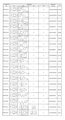
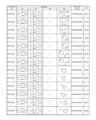
- the method comprises using a compound selected from the group consisting of HPN-01101-01133; HPN-01201-01224; HPN-01301-01322; HPN-01401-01430; HPN-01501-01506; HPN-01513-01520; HPN-01525-01527; HPN-01529-01534; HPN-01601-01630 and prodrugs, therapeutically active metabolites, hydrates, solvates, and pharmaceutically acceptable salts thereof.
- One embodiment of the invention is a compound of Formula I, Formula II, Formula III, Formula IV or a prodrug, therapeutically active metabolite, hydrate, solvate, or pharmaceutically acceptable salt thereof, for use in treating liver disease.
- the disease being treated is nonalcoholic fatty liver disease (NAFLD) in a subj ect.
- NAFLD nonalcoholic fatty liver disease
- kits for treating NAFLD comprising a compound of Formula I, Formula II, Formula III, Formula IV or a prodrug, therapeutically active metabolite, hydrate, solvate, or pharmaceutically acceptable salt thereof, and instructions for administering the compound to a subject having, or at risk for, NAFLD, or a related condition, such as, fatty deposit-related inflammation, non-alcoholic steatohepatitis (NASH), liver fibrosis, cirrhosis, or combinations thereof.
- NASH non-alcoholic steatohepatitis
- liver fibrosis cirrhosis
- One embodiment of the invention is a compound of Formula III, Formula IV, or a prodrug, therapeutically active metabolite, hydrate, solvate, or pharmaceutically acceptable salt thereof, wherein the compound is not Formula II.
- One embodiment of the invention is a pharmaceutical composition
- a pharmaceutical composition comprising a compound of Formula III, Formula IV, or a prodrug, therapeutically active metabolite, hydrate, solvate, or pharmaceutically acceptable salt thereof, wherein the compound is not Formula II.
- One embodiment of the invention is use of a compound of Formula III, Formula IV, or a prodrug, therapeutically active metabolite, hydrate, solvate, or pharmaceutically acceptable salt thereof, wherein the compound is not Formula II, or a pharmaceutical composition of the disclosure, in the preparation of a medicament for treating a subject having, or at risk for, NAFLD, or a related condition, such as, fatty deposit-related inflammation, non-alcoholic steatohepatitis (NASH), liver fibrosis, cirrhosis, or combinations thereof.
- NAFLD non-alcoholic steatohepatitis
- the present invention relates to a novel method for treating non-alcoholic fatty liver disease (NAFLD). More specifically, the present invention relates to a method of treating NAFLD by administering the 2-amino-arylbenzamide compound of the invention disclosed herein. It also relates to treating NAFLD-related conditions, such as, fatty deposit-related inflammation, non-alcoholic steatohepatitis (NASH), liver fibrosis, cirrhosis, and combinations thereof.
- NAFLD-related conditions such as, fatty deposit-related inflammation, non-alcoholic steatohepatitis (NASH), liver fibrosis, cirrhosis, and combinations thereof.
- Examples include, but are not limited to, humans and other primates, including non-human primates such as chimpanzees and other apes and monkey species; farm animals such as cattle, sheep, pigs, seals, goats and horses; domestic mammals such as dogs and cats; laboratory animals including rodents such as mice, rats and guinea pigs; birds, including domestic, wild and game birds such as chickens, turkeys and other gallinaceous birds, ducks, geese, and the like.
- individuals of any age are intended to be covered by the present disclosure and include, but are not limited to the elderly, adults, children, babies, infants, and toddlers.
- the methods of the present invention can be applied to any race, including, for example, Caucasian (white), African-American (black), Native American, Native Hawaiian, Hispanic, Latino, Asian, and European.
- a therapeutically effective amount of a compound, disclosed herein, or a derivative or salt thereof means an amount, that when administered to a subject is sufficient to treat the subject for NAFLD or related conditions such as NASH. Treating, treatment of, and the like, NAFLD, and related symptoms such as NASH, in a subject includes one or more of the following:
- a “therapeutically effective amount” of a compound disclosed herein, or a derivative or salt thereof may vary for a particular subject, depending on such factors as the overall health and physical conditions of the subject, the extent of the NAFLD, or related condition such as NASH, the sex of the subject, and the age of the subject. It will be further understood that the "therapeutically effective amount” may fall within a broad range, based on factors such as those disclosed above, that can be determined through routine trials, methods for which are known to those skilled in the art.
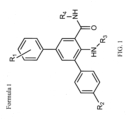
- a compound of Formula I of the invention refers to a chemical compound having the structure shown below and in Figure 1 : wherein R1 is a halogen, such as chlorine; R2 is a sulfoxide group, such as SO 2 NH 2 ; and R3 and R4 are independently hydrogen or lower alkyl.
- R1 is a halogen, such as chlorine
- R2 is a sulfoxide group, such as SO 2 NH 2
- R3 and R4 are independently hydrogen or lower alkyl.
- a second compound of Formula I is a compound having the structure of Formula II, but in which the chlorine atom is replaced with another atom, such as iodine.
- Methods of making such compounds are illustrated herein and based on the teaching herein are within the skill of the art.
- prodrugs are a compound that, following administration to a subject, is metabolized to pharmacologically active form of the administered compound. The use and production of prodrugs is known to those skilled in the art.
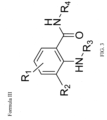
- Formula III of the invention refers to a chemical compound having the structure shown below and in Figure 3 , wherein:
- Formula III of the invention refers to a chemical compound having the structure shown above, wherein the structure does not include Formula II or alternatively, does not include Formula I.
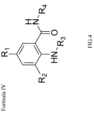
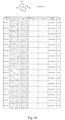
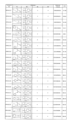
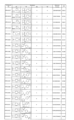
- Formula IV of the invention refers to a chemical compound having the structure shown below and in Figure 4 : wherein R1 is selected from the groups listed in Table 1; R2 is selected from the groups listed in Table 2; R3 is selected from the groups listed in Table 3; and R4 is selected from the groups listed in Table 4.
- Formula IV of the invention refers to a chemical compound having the structure shown above, wherein the structure does not include Formula II or alternatively, does not include Formula I.
- Preferred embodiments of Formula III are referred to herein as HPN-01101-01133; HPN-01201-01224; HPN-01301-01322; HPN-01401-01430; HPN-01501-01506; HPN-01513-01520; HPN-01525-01527; HPN-01529-01534; HPN-01601-01630 as described below in the Examples.
- Methods of making compounds of Formula III are illustrated herein and based on the teaching herein are within the skill of the art. Also within the scope of the invention is the use of prodrugs, therapeutically active metabolites, hydrates, solvates, and pharmaceutically acceptable salts of compounds of Formula III.
- Compounds of the invention also include stereoisomers, enantiomers, or diastereomers of compounds of Formula I, Formula II, Formula III and Formula IV.
- Carriers as used herein include pharmaceutically acceptable carriers, excipients, or stabilizers which are nontoxic to the cell or mammal being exposed thereto at the dosages and concentrations employed.
- a “pharmaceutically acceptable carrier” is an excipient that does not interfere with the effectiveness of the biological activity of a compound of the invention. Often the physiologically acceptable carrier is an aqueous pH buffered solution.
- physiologically acceptable carriers include buffers such as phosphate, citrate, and other organic acids, Hanks' solution, Ringer's solution, or physiological saline buffer; antioxidants including ascorbic acid; low molecular weight (less than about 10 residues) polypeptide; proteins, such as serum albumin, gelatin, or immunoglobulins; hydrophilic polymers such as polyvinylpyrrolidone; amino acids such as glycine, glutamine, asparagine, arginine or lysine; monosaccharides, disaccharides, and other carbohydrates including glucose, mannose, or dextrins; chelating agents such as EDTA; sugar alcohols such as mannitol or sorbitol; salt-forming counterions such as sodium; and/or nonionic surfactants such as TWEEN ® , polyethylene glycol (PEG), and PLURONICS ® .
- buffers such as phosphate, citrate, and other organic acids, Hanks' solution, Ringer's
- compositions of the invention may be added to compositions of the invention.
- Additional agents such as flavoring, coloring, sweetening, and/or thickening agents, may be added to compositions of the invention.
- compositions of the invention can be formulated in any suitable form, and, in large part, the form may be determined by the intended mode of administration.
- Compositions can be in the form of a solid, semi-solid or liquid.
- forms useful for practicing methods of the invention include, but are not limited to, tablets, capsules, powders, troches, lozenges, suspensions, gels, pastes, slurries, liquid compositions soft-gel capsules, and syrups.
- the compositions are produced in a unit dosage form suitable for administration of a precise dose.
- the dose administered to a subject in a method of the invention can be any dose suitable for treating, preventing, inhibiting, and/or reducing NAFLD or a related condition.
- those skilled in the art are capable of identifying a dose appropriate for the chosen formulation and method of delivery.
- the dose is in a range of between 0.01 mg/kg to about 100 mg/kg.
- Compounds and compositions of the invention can be administered by any route suitable for the subject being treated.
- routes of administration include, but are not limited to, injection, including intravenous, intraperitoneal, intramuscular, and subcutaneous injection, oral administration, transmucosal administration, transdermal administration, topical administration, nasal administration, ocular administration, or via suppository.
- One embodiment of the present invention is a method of treating non-alcoholic fatty liver disease (NAFLD) in a subject, the method comprising administering to the subject a therapeutically effective amount of a compound of Formula I, Formula II, Formula III, Formula IV, or a prodrug, therapeutically active metabolite, hydrate, solvate, or pharmaceutically acceptable salt thereof.
- the subject is at risk for developing NAFLD.
- the subject exhibits a form of NAFLD comprising fatty deposit-related inflammation, non-alcoholic steatohepatitis (NASH), liver fibrosis, cirrhosis, or combinations thereof.
- NASH non-alcoholic steatohepatitis
- the compound is administered as a composition comprising a pharmaceutically acceptable carrier. In certain embodiments, the compound is administered once in a 24-hour period. In certain embodiments, the compound is administered more than once in a 24-hour period. In certain embodiments, the compound is administered every 1 hour, every 2 hours, every 3 hours, every four hours, every 6 hours, or every 12 hours. In certain embodiments, the compound is administered continuously.
- a further embodiment of the invention is a compound of Formula I, Formula II, Formula III, Formula IV, or a prodrug, therapeutically active metabolite, hydrate, solvate, or pharmaceutically acceptable salt thereof for use in treating nonalcoholic fatty liver disease (NAFLD) in a subject.
- NAFLD nonalcoholic fatty liver disease
- kits for treating NAFLD, or a related condition such as, fatty deposit-related inflammation, non-alcoholic steatohepatitis (NASH), liver fibrosis, cirrhosis, or combinations thereof
- the kit comprising a compound of Formula I, Formula II, Formula III, Formula IV, or a prodrug, therapeutically active metabolite, hydrate, solvate, or pharmaceutically acceptable salt thereof, and instructions for administering the compound to a subject having, or at risk for, NAFLD, or a related condition, such as, fatty deposit-related inflammation, non-alcoholic steatohepatitis (NASH), liver fibrosis, cirrhosis, or combinations thereof, wherein the formulation of the compound, derivative thereof, or salt thereof, is suitable for administration to a subject for administration to a subject having NAFLD, or a related condition, such as, fatty deposit-related inflammation, non-alcoholic steatohepatitis (NASH), liver fibrosis, cirrhosis, or combinations thereof, where
- inventions include a compound of Formula I, Formula II, Formula III, Formula IV, or a prodrug, therapeutically active metabolite, hydrate, solvate, or pharmaceutically acceptable salt thereof.
- the invention includes a compound of Formula III, Formula IV, or a prodrug, therapeutically active metabolite, hydrate, solvate, or pharmaceutically acceptable salt thereof, wherein the compound is not Formula II and alternatively, is not Formula I.
- Further embodiments include pharmaceutical compositions comprising a compound of Formula I, Formula II, Formula III, Formula IV or a prodrug, therapeutically active metabolite, hydrate, solvate, or pharmaceutically acceptable salt thereof and a pharmaceutically acceptable carrier.
- the invention includes a pharmaceutical composition
- a pharmaceutical composition comprising a compound of Formula III, Formula IV, or a prodrug, therapeutically active metabolite, hydrate, solvate, or pharmaceutically acceptable salt thereof, wherein the compound is not Formula II and alternatively, is not Formula I.
- Still further embodiments of the invention include methods of making the compounds of the invention as described below in the Examples. Such methods include for example, synthesis of Compound II (Formula II) as described in Example 1; as well as synthesis of HPN-01101 - HPN-01133 as described in Example 18; synthesis of HPN-01201 - HPN-01224 as described in Example 19; synthesis of HPN-01301 - HPN-01311 and HPN-01321 - HPN-01322 as described in Example 20; synthesis of HPN-01312 - HPN-01320 as described in Example 21; synthesis of HPN-01401 - HPN-01430 as described in Example 22; synthesis of HPN-01501 - HPN-01506; HPN-01513 - HPN-01520; HPN-01525 - HPN-01527; HPN-01529 - HPN-01534 as described in Example 23; and synthesis of HPN-01602 - HPN-01630 as described in Example 24.
- Compound II Form II
- a powder X-ray diffraction pattern may be obtained with a measurement error that is dependent upon the measurement conditions employed.
- intensities in an X-ray powder diffraction pattern may fluctuate depending upon measurement conditions employed.
- relative intensities may also vary depending upon experimental conditions and, accordingly, the exact order of intensity should not be taken into account. Accordingly, the relative intensity of peaks in a diffractogram is not necessarily a limitation of the PXRD pattern because peak intensity can vary from sample to sample, e.g., due to crystalline impurities.
- a measurement error of diffraction angle for a conventional powder X-ray powder diffraction pattern is typically about 5% or less, and such degree of measurement error should be taken into account as pertaining to the aforementioned diffraction angles.
- the angles of each peak can vary by about +/- 0.1 degrees, or by about +/- 0.05.
- the entire pattern or most of the pattern peaks may also shift by about +/-0.1 degrees to about +/- 0.2 degrees due to differences in calibration, settings, and other variations from instrument to instrument and from operator to operator. All reported PXRD peaks in the Figures, Examples, and elsewhere herein are reported with an error of about ⁇ 0.3 degrees 2-theta.
- Example 1 Identification and synthesis of inhibitors of steatosis.
- HPN-01 (chemical formula: C 19 H 16 ClN 3 O 3 S), is a 2-amino-3,5-diarylbenzamide (CAS: 928655-63-4), the general structure of which is shown in Figure 1 .
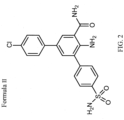
- the specific structure of HPN-01 (referred to herein as Compound II) is shown in Figure 2 .
- Compound II is 2-amino-3- (p-sulfonamidophenyl) -5- (p-chlorophenyl) benzamide.
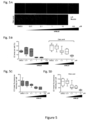
- Heptoma cell line Huh7 cells were treated with various amounts of HPN-01 for 24 h, either in the absence or in the presence of 400 ⁇ M oleic acid, and observed under a Zeiss confocal microscope.
- LD contents (stained with BODIPY 493/503, in green) were observed under a Zeiss confocal microscope.
- Fig. 5A Blue indicates cell nuclei.
- Fig. 5B LD size.
- Fig. 5C Mean fluorescence intensity. Values were measured using ZEN software by counting 300 cells under each treatment condition.
- Huh7 cells were treated with 1 ⁇ M of HPN-01 for 24 h, and the mRNA expression levels of various pivotal lipogenic enzymes were quantified by real-time qPCR.
- the results, which are shown in Figure 8 demonstrate that HPN-01 treatment significantly supressed de novo lipogenesis in hepatocytes. Folds of inhibition were as follows: SREBP-1: 2.98 ⁇ 0.23; SREBP-2: 4.01 ⁇ 0.31; FASN: 3.87 ⁇ 0.23; SCD1: 4.63 ⁇ 0.48; ACC: 4.12 ⁇ 0.34; ELOVL6: 2.84 ⁇ 0.22; LDLR: 3.02 ⁇ 0.11; FADS1: 3.06 ⁇ 0.17; DGAT1: 1.72 ⁇ 0.27; DGAT2: 3.77 ⁇ 0.45.
- Example 6 Effects of HPN-01 on expression of SREBP-1 and SREBP-2 in primary human hepatocytes.
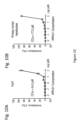
- Huh7 cells and primary human hepatocytes were cultured in the presence of varying concentrations of HPN-01, and the inhibition of cell growth was measured.
- the results of this analysis which are shown in Figures 10A and 10B , show that the cytotoxic concentration that will kill half of the treated cells (CC50) was 54.3 ⁇ M for Huh7 cells ( Fig. 10A ) and 77.2 ⁇ M for primary human hepatocytes ( Fig. 10B ).
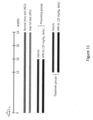
- mice Eight-week old C57BL/6 mice were divided into a test group and a control group.
- the control group mice were fed with normal chow diet (NCD) for 24 weeks.
- NCD normal chow diet
- the test group was further divided into a preventing group and a treatment group.
- preventing group mice were fed with high-fat diet (HFD) and simultaneously treated with 25 mg/kg of HPN-01 or vehicle daily for 16 weeks, after which time the mice were euthanized and evaluated for NAFLD/NASH development.
- HFD high-fat diet
- mice were fed with HFD for 12 weeks to stimulate the development of NAFLD/NASH, and then treated with 25 mg/kg of HPN-01 or vehicle daily for additional 12 weeks.
- the mice were then euthanized and evaluated for the presence of NAFLD/NASH.
- This study design is illustrated in Figure 11 .
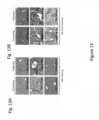
- H&E staining of liver tissue sections showed that there were substantial amounts of vacuole (LD) deposition and obvious inflammatory cells infiltration in HFD-fed mice in the vehicle treatment group. However, in both preventing and treatment groups, LD deposition and inflammatory infiltration were substantially diminished, suggesting that HPN-01 treatment significantly reversed the HFD-mediated hepatic steatosis.
- the H&E staining results were confirmed by Oil-red-O staining of liver tissue sections ( Figure 13B ).
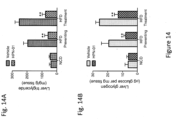
- liver tissues were isolated and prepared and the levels of hepatic triglyceride and glycogen were measured. The results of this analysis are shown in Figures 14A and 14B .
- HPN-01 treatment drastically reduced HFD-induced elevation of liver triglyceride ( Figure 14A ) and glycogen ( Figure 14B ) contents.
- Triglyceride level was found to be 67.2 ⁇ 28.3mg/g in HFD-fed mice with HPN-01 treatment in preventing group and 75.5 ⁇ 19.8mg/g in treatment group, compared with 193.7 ⁇ 32.5mg/g in HFD-fed mice with vehicle treatment in preventing group and 241.2 ⁇ 27.4mg/g in treatment group.
- Glycogen level was found to be 8.4 ⁇ 1.6 ⁇ g/mg in HFD-fed mice with HPN-01 treatment in preventing group and 13.3 ⁇ 3.5 ⁇ g/mg in treatment group, compared with 19.5 ⁇ 4.9 ⁇ g/mg in HFD-fed mice with vehicle treatment in preventing group and 26.0 ⁇ 3.1 ⁇ g/mg in treatment group.
- HPN-01 treatment drastically reduced HFD-induced elevation of liver triglyceride ( Fig. 14A ) and glycogen ( Fig. 14B ) contents, which are the most important indicators of hepatic fat synthesis and glucose metabolism, respectively.
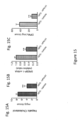
- mice from the study of Example 8 were also analysed for their levels of cholesterol, SREBP-1, and fatty acid synthesis.
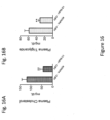
- This analysis the results of which are shown in Figures 15A-15C , showed that HPN-01 treatment significantly decreased HFD-induced elevation of hepatic cholesterol ( Figure 15A ), SREBP-1 ( Figure 15B ) and fatty acid synthesis ( Figure 15C ).
- the hepatic cholesterol level in HFD-fed mice with HPN-01 treatment was 3.9 ⁇ 1.1 mg per g tissue, compared with 7.5 ⁇ 0.7 mg per g tissue in HFD-fed mice receiving only vehicle, a decrease of about 1.92-fold ( Figure 15A ).
- plasma triglyceride levels were 31.2 ⁇ 4.5 mg/dL, in HFD-fed mice receiving HPN-01, compared with 58.4 ⁇ 11.7 mg/dL in HFD-fed mice receiving only vehicle, a decrease 1.87-fold, respectively.
- Liver tissues from mice in the study of Example 8 were analysed for the expression level of inflammatory cytokines.
- the results, shown in Figure 17 demonstrate that hepatic expression of ICAM1(CD54), IL-1B, IL-8, MCP-1, THF- ⁇ and LIF were significantly induced by HFD feeding. Further, the results show that this induction was substantially abrogated upon HPN-01 treatment.
- FIG. 18A shows the mRNA levels of ⁇ -smooth muscle actin ( ⁇ -SMA) in mice fed with normal chow diet (NCD), and in HFD-fed mice receiving vehicle or HPN-01.
- Figure 18B shows the mRNA levels of COL1A1 in mice fed with normal chow diet (NCD), and in HFD-fed mice receiving vehicle or HPN-01.
- liver tissues were then analysed to determine the levels of various pro-fibrotic cytokines.
- This analysis shows that HPN-01 treatment significantly suppressed the induction of ITGA2, LOX, TIMP1, IGFBP1, IGFBP2, IGFBP3, IGFBP5, IGFBP6 and FGF-21 by HFD feeding.
- Example 13 HPN-01 infra-red spectrogram.
- Test conditions KBr tableting press method.
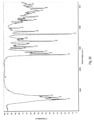
- Example 15 HPN-01 powder X-ray diffraction pattern.
- Test conditions Copper rake K ⁇ 1, operating voltage: 40KV / 40mA, step length: 0.02, scanning speed: 4.0 degrees /min.
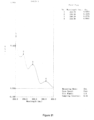
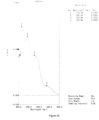
- Example 16 HPN-01 differential thermal analysis.
- Test conditions Heating rate: 10.0°C / min; Temperature range: 30-250 °C; Purge gas: nitrogen.
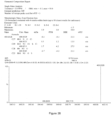
- Example 17 HPN-01 elementary composition.
- Test conditions are shown in Figure 26 .
- HPN-01 derivatives were obtained using the following synthetic process:
- HPN-01 derivatives were produced using the following synthetic process: The details of this synthesis are as follows:
- HPN-015 series compounds were isolated by silica gel column chromatography purification. The structural information of the HPN-015 series compounds is as follows:
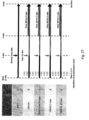
- Example 27 Efficacy of HPN-01 on streptozotocin (STZ) and high fat diet-induced NASH mice
- Telmisartan was orally administered once per day (QD) at a dosage of 10 mpk (mg/kg weight); this group served as a positive control.
- HPN-01 was administrated orally twice a day (BID) with either a lower (5 mpk) or a higher (15 mpk) dose. For each group, body weight and food intake were recorded daily.
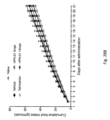
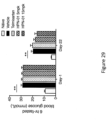
- Figure 28A shows body weight changes in untreated mice fed a normal chow diet (Naive; gray circles), vehicle-treated mice fed a high fat diet (Vehicle; black squares), telmisartan-treated mice fed a high fat diet (Telmisartan; gray upper arrow triangles), low-dose HPN-01-treated mice fed a high fat diet (HPN-01 5mpk; gray lower arrow triangles), and high-dose HPN-01-treated mice fed a high fat diet (HPN-01 15mpk; black diamonds).
- Figure 28B shows the daily, cumulative food intake recorded for each study group. The results show that treatment with HPN-01 had no effect on nSTZ+HFD NASH mice body weight or on daily food intake.
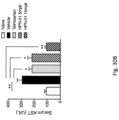
- Serum alanine aminotransferase (ALT) and aspartate aminotransferase (AST) levels are shown in Figures 30A and 30B , respectively.
- the data show that HPN-01 significantly reversed the elevation of serum ALT ( Fig. 30A ) and AST ( Fig. 30B ) levels in nSTZ+HFD NASH mice, in a dose-dependent manner.
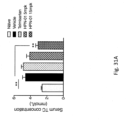
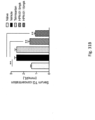
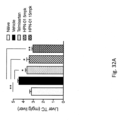
- Serum total cholesterol (TC) and triglyceride (TG) levels in nSTZ+HFD NASH mice are shown in Figures 31A and 31B , respectively.
- the data show that HPN-01 significantly abated the increase of serum TC ( Fig. 31A ) and TG ( Fig. 31B ) levels in NASH mice, in a dose-dependent manner.
- TC Total cholesterol
- TG triglyceride
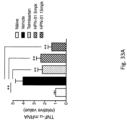
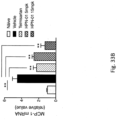
- TNF- ⁇ and MCP-1 mRNAs in the livers of mice treated as described above is shown in Figures 33A and 33B , respectively.
- the data show that both TNF- ⁇ ( Fig. 33A ) and MCP-1 ( Fig. 33B ) were significantly suppressed by HPN-01 treatment, in a dose-dependent manner.
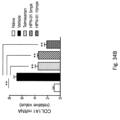
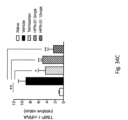
- Figures 34A-34C show that HPN-01 treatment reduced the levels of transforming growth factor beta 1 (TGF- ⁇ 1) ( Fig. 34A ), collagen type 1 alpha 1 (COL1A1) ( Fig. 34B ) and tissue inhibitor of metalloproteinase-1 (TIMP-1) ( Fig. 34C ), in a dose-dependent manner.
- TGF- ⁇ 1 transforming growth factor beta 1
- Fig. 34B collagen type 1 alpha 1
- TTIMP-1 tissue inhibitor of metalloproteinase-1
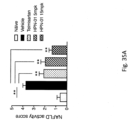
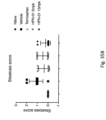
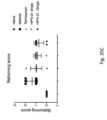
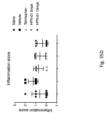
- liver tissues from various groups from the study shown in Figure 27 were observed under a microscope following Hematoxylin and Eosin (H&E) stain and Oil-red-O staining, and an NAFLD activity score determined. The result is shown in Figure 35A . Additional NAFLD/NASH pathology scores were also determined, including a hepatic steatosis score ( Fig. 35B ), a ballooning score ( Fig. 35C ) and an inflammation score ( Fig. 35D ).
Landscapes
- Health & Medical Sciences (AREA)
- Chemical & Material Sciences (AREA)
- Medicinal Chemistry (AREA)
- Pharmacology & Pharmacy (AREA)
- Life Sciences & Earth Sciences (AREA)
- Animal Behavior & Ethology (AREA)
- General Health & Medical Sciences (AREA)
- Public Health (AREA)
- Veterinary Medicine (AREA)
- Epidemiology (AREA)
- Gastroenterology & Hepatology (AREA)
- Engineering & Computer Science (AREA)
- Bioinformatics & Cheminformatics (AREA)
- Chemical Kinetics & Catalysis (AREA)
- General Chemical & Material Sciences (AREA)
- Nuclear Medicine, Radiotherapy & Molecular Imaging (AREA)
- Organic Chemistry (AREA)
- Pharmaceuticals Containing Other Organic And Inorganic Compounds (AREA)
- Acyclic And Carbocyclic Compounds In Medicinal Compositions (AREA)
- Organic Low-Molecular-Weight Compounds And Preparation Thereof (AREA)
Applications Claiming Priority (4)
| Application Number | Priority Date | Filing Date | Title |
|---|---|---|---|
| US201762502385P | 2017-05-05 | 2017-05-05 | |
| US201762539036P | 2017-07-31 | 2017-07-31 | |
| PCT/US2018/031072 WO2018204775A1 (en) | 2017-05-05 | 2018-05-04 | Amino-aryl-benzamide compounds and methods of use thereof |
| EP18793826.1A EP3619193B1 (de) | 2017-05-05 | 2018-05-04 | Aminoaryl-benzamid-verbindungen und verfahren zur verwendung davon |
Related Parent Applications (1)
| Application Number | Title | Priority Date | Filing Date |
|---|---|---|---|
| EP18793826.1A Division EP3619193B1 (de) | 2017-05-05 | 2018-05-04 | Aminoaryl-benzamid-verbindungen und verfahren zur verwendung davon |
Publications (2)
| Publication Number | Publication Date |
|---|---|
| EP4234536A2 true EP4234536A2 (de) | 2023-08-30 |
| EP4234536A3 EP4234536A3 (de) | 2023-10-25 |
Family
ID=64013883
Family Applications (2)
| Application Number | Title | Priority Date | Filing Date |
|---|---|---|---|
| EP23163130.0A Pending EP4234536A3 (de) | 2017-05-05 | 2018-05-04 | Aminoaryl-benzamid-verbindungen und verfahren zur verwendung davon |
| EP18793826.1A Active EP3619193B1 (de) | 2017-05-05 | 2018-05-04 | Aminoaryl-benzamid-verbindungen und verfahren zur verwendung davon |
Family Applications After (1)
| Application Number | Title | Priority Date | Filing Date |
|---|---|---|---|
| EP18793826.1A Active EP3619193B1 (de) | 2017-05-05 | 2018-05-04 | Aminoaryl-benzamid-verbindungen und verfahren zur verwendung davon |
Country Status (4)
| Country | Link |
|---|---|
| US (3) | US11000491B2 (de) |
| EP (2) | EP4234536A3 (de) |
| TW (1) | TWI762634B (de) |
| WO (1) | WO2018204775A1 (de) |
Families Citing this family (4)
| Publication number | Priority date | Publication date | Assignee | Title |
|---|---|---|---|---|
| EP4234536A3 (de) | 2017-05-05 | 2023-10-25 | Hepanova, Inc. | Aminoaryl-benzamid-verbindungen und verfahren zur verwendung davon |
| CA3139018A1 (en) * | 2019-05-31 | 2020-12-03 | Chiesi Farmaceutici S.P.A. | Amino quinazoline derivatives as p2x3 inhibitors |
| US20230278978A1 (en) * | 2020-07-24 | 2023-09-07 | Inipharm, Inc. | Thiophene hsd17b13 inhibitors and uses thereof |
| KR102852264B1 (ko) | 2020-11-13 | 2025-08-29 | 이니팜, 인크. | 디클로로페놀 hsd17b13 억제제 및 이의 용도 |
Family Cites Families (11)
| Publication number | Priority date | Publication date | Assignee | Title |
|---|---|---|---|---|
| US4044049A (en) | 1968-01-19 | 1977-08-23 | Merck & Co., Inc. | Phenyl benzoic acid compounds |
| GB0003154D0 (en) * | 2000-02-12 | 2000-04-05 | Astrazeneca Uk Ltd | Novel compounds |
| JP2005509645A (ja) | 2001-10-30 | 2005-04-14 | ファルマシア・コーポレーション | 炎症処置用のヘテロ芳香族カルボキサミド誘導体 |
| GB0507200D0 (en) | 2005-04-08 | 2005-05-18 | Smithkline Beecham Corp | Chemical compounds |
| US20090270418A1 (en) * | 2008-01-09 | 2009-10-29 | Marianne Sloss | Pyrazole pyrazine amine compounds as kinase inhibitors, compositions thereof and methods of treatment therewith |
| JP5957452B2 (ja) | 2010-07-28 | 2016-07-27 | オーキッド ケミカルズ アンド ファーマシューティカルズ リミテッド | 肝臓、肺の障害、糖尿病合併症および心血管疾患の処置のためのジフェニルエーテル化合物 |
| TWI554277B (zh) | 2012-03-28 | 2016-10-21 | 泰宗生物科技股份有限公司 | 預防及治療非酒精性脂肪肝之醫藥組成物 |
| RU2012112128A (ru) | 2012-03-29 | 2013-10-10 | Холин Максим Николаевич | ИНГИБИТОРЫ СИГНАЛЬНОГО ПУТИ PI3K/AKT/IKK/NF-kB, ИХ ФАРМАЦЕВТИЧЕСКИ ПРИЕМЛЕМЫЕ СОЛИ И СОДЕРЖАЩИЕ ИХ КОМПОЗИЦИИ ДЛЯ ПРОФИЛАКТИКИ И ЛЕЧЕНИЯ ВИРУСНЫХ ЗАБОЛЕВАНИЙ |
| KR102374499B1 (ko) | 2014-04-11 | 2022-03-14 | 사이머베이 쎄라퓨틱스, 인코퍼레이티드 | Nafld 및 nash 의 치료 |
| WO2016210289A1 (en) * | 2015-06-24 | 2016-12-29 | Duke University | Chemical modulators of signaling pathways and therapeutic use |
| EP4234536A3 (de) | 2017-05-05 | 2023-10-25 | Hepanova, Inc. | Aminoaryl-benzamid-verbindungen und verfahren zur verwendung davon |
-
2018
- 2018-05-04 EP EP23163130.0A patent/EP4234536A3/de active Pending
- 2018-05-04 TW TW107115339A patent/TWI762634B/zh active
- 2018-05-04 EP EP18793826.1A patent/EP3619193B1/de active Active
- 2018-05-04 US US15/971,496 patent/US11000491B2/en active Active
- 2018-05-04 WO PCT/US2018/031072 patent/WO2018204775A1/en not_active Ceased
-
2021
- 2021-04-16 US US17/232,527 patent/US12053443B2/en active Active
-
2024
- 2024-08-05 US US18/794,419 patent/US20250213506A1/en active Pending
Non-Patent Citations (6)
| Title |
|---|
| CHARLTON ET AL., GASTROENTEROLOGY, 2011 |
| EKSTEDT ET AL., HEPATOLOGY, 2006 |
| HARDY ET AL., ANNUAL REVIEWS OF PATHOLOGY, 2016 |
| RICHARDSON ET AL., GASTROENTEROLOGY, 2007 |
| SPENGLERLOOMBA, MAYO CLINIC PROCEEDINGS, 2015 |
| TARGHER ET AL., NEIM, 2010 |
Also Published As
| Publication number | Publication date |
|---|---|
| US12053443B2 (en) | 2024-08-06 |
| US20210338610A1 (en) | 2021-11-04 |
| EP3619193B1 (de) | 2023-03-22 |
| TWI762634B (zh) | 2022-05-01 |
| US20250213506A1 (en) | 2025-07-03 |
| WO2018204775A1 (en) | 2018-11-08 |
| EP3619193A1 (de) | 2020-03-11 |
| US11000491B2 (en) | 2021-05-11 |
| US20180318240A1 (en) | 2018-11-08 |
| EP3619193A4 (de) | 2021-01-06 |
| TW201843135A (zh) | 2018-12-16 |
| EP4234536A3 (de) | 2023-10-25 |
Similar Documents
| Publication | Publication Date | Title |
|---|---|---|
| US12053443B2 (en) | Amino-aryl-benzamide compounds and methods of use thereof | |
| KR101444489B1 (ko) | 심혈관 질환을 예방 및 치료하기 위한 화합물 | |
| KR101907573B1 (ko) | 비대칭적 유레아 및 그 의학적 용도 | |
| JP2004067629A (ja) | ミトコンドリア機能活性化剤及び新規なベンゾイミダゾール誘導体 | |
| KR20040030668A (ko) | 헤테로아릴설포닐 측쇄를 갖는 안트라닐산 아미드, 이의제조방법, 약제 또는 진단제로서의 이의 용도 및 당해화합물을 함유하는 약제학적 제제 | |
| CN105517549B (zh) | CaMKII抑制剂和其用途 | |
| JP2009501721A (ja) | レチノイン酸受容体における活性を伴う化合物 | |
| US20180250305A1 (en) | Nitric oxide-releasing prodrug molecule | |
| AU2020397245B2 (en) | Compounds for modulating activity of FXR and uses thereof | |
| US20200115357A1 (en) | Liver x receptors (lxr) modulators | |
| KR20130023335A (ko) | 피부 장애를 치료하는데 유용한 신규 퀴놀린 에스테르 | |
| RU2721283C2 (ru) | Замещенные бициклические гетероарильные соединения в качестве агонистов rxr | |
| KR102132744B1 (ko) | 당뇨병 치료에 유용한 이미다조피리딘 유도체들 | |
| EP3259256B1 (de) | Verbindungen und verfahren zur induktion der bräunung von weissem fettgewebe | |
| CN105814018B (zh) | 新型脲类化合物、制备方法及其用途 | |
| CN109748914A (zh) | 吡啶并嘧啶类化合物及其应用 | |
| CN114539267A (zh) | 一种吴茱萸碱衍生物及其应用 | |
| CN108785292B (zh) | 氨基-芳基-苯甲酰胺化合物及其使用方法 | |
| AU2001275081B2 (en) | Substituted stilbenes as glucose uptake enhancers | |
| US20070066577A1 (en) | Benzoxazole derivative or analogue thereof for inhibiting 5-lipoxygenase and pharmaceutical composition containing same | |
| WO2011100840A1 (en) | Substituted 2-imidazolidones and analogs | |
| EA018024B1 (ru) | Фенантреноновые соединения, композиции и способы | |
| CN115385854B (zh) | 一种喹啉巯乙酸磺酰胺类衍生物的制备及其应用 | |
| EP4506346A1 (de) | Thiobenzimidazolderivat oder pharmazeutisch unbedenkliches salz davon und verwendung davon | |
| CN102786468A (zh) | Gk和ppar双重激动活性的烟酸类衍生物 |
Legal Events
| Date | Code | Title | Description |
|---|---|---|---|
| PUAI | Public reference made under article 153(3) epc to a published international application that has entered the european phase |
Free format text: ORIGINAL CODE: 0009012 |
|
| STAA | Information on the status of an ep patent application or granted ep patent |
Free format text: STATUS: THE APPLICATION HAS BEEN PUBLISHED |
|
| AC | Divisional application: reference to earlier application |
Ref document number: 3619193 Country of ref document: EP Kind code of ref document: P |
|
| AK | Designated contracting states |
Kind code of ref document: A2 Designated state(s): AL AT BE BG CH CY CZ DE DK EE ES FI FR GB GR HR HU IE IS IT LI LT LU LV MC MK MT NL NO PL PT RO RS SE SI SK SM TR |
|
| REG | Reference to a national code |
Ref country code: DE Ref legal event code: R079 Free format text: PREVIOUS MAIN CLASS: C07C0311390000 Ipc: A61K0031170000 |
|
| PUAL | Search report despatched |
Free format text: ORIGINAL CODE: 0009013 |
|
| AK | Designated contracting states |
Kind code of ref document: A3 Designated state(s): AL AT BE BG CH CY CZ DE DK EE ES FI FR GB GR HR HU IE IS IT LI LT LU LV MC MK MT NL NO PL PT RO RS SE SI SK SM TR |
|
| RIC1 | Information provided on ipc code assigned before grant |
Ipc: C07C 311/39 20060101ALI20230918BHEP Ipc: C07C 237/42 20060101ALI20230918BHEP Ipc: C07C 237/30 20060101ALI20230918BHEP Ipc: A61P 1/16 20060101ALI20230918BHEP Ipc: A61K 31/18 20060101ALI20230918BHEP Ipc: A61K 31/17 20060101AFI20230918BHEP |
|
| STAA | Information on the status of an ep patent application or granted ep patent |
Free format text: STATUS: REQUEST FOR EXAMINATION WAS MADE |
|
| 17P | Request for examination filed |
Effective date: 20240424 |
|
| RBV | Designated contracting states (corrected) |
Designated state(s): AL AT BE BG CH CY CZ DE DK EE ES FI FR GB GR HR HU IE IS IT LI LT LU LV MC MK MT NL NO PL PT RO RS SE SI SK SM TR |
|
| STAA | Information on the status of an ep patent application or granted ep patent |
Free format text: STATUS: EXAMINATION IS IN PROGRESS |
|
| 17Q | First examination report despatched |
Effective date: 20251024 |