EP4221376A2 - Kommunikationssystem - Google Patents
Kommunikationssystem Download PDFInfo
- Publication number
- EP4221376A2 EP4221376A2 EP23157360.1A EP23157360A EP4221376A2 EP 4221376 A2 EP4221376 A2 EP 4221376A2 EP 23157360 A EP23157360 A EP 23157360A EP 4221376 A2 EP4221376 A2 EP 4221376A2
- Authority
- EP
- European Patent Office
- Prior art keywords
- cell
- signals
- discovery
- synchronisation
- signal
- Prior art date
- Legal status (The legal status is an assumption and is not a legal conclusion. Google has not performed a legal analysis and makes no representation as to the accuracy of the status listed.)
- Withdrawn
Links
- 238000004891 communication Methods 0.000 title abstract description 131
- 238000000034 method Methods 0.000 claims abstract description 78
- 238000010295 mobile communication Methods 0.000 abstract description 77
- 230000005540 biological transmission Effects 0.000 description 30
- 201000003042 peeling skin syndrome Diseases 0.000 description 25
- 229920001467 poly(styrenesulfonates) Polymers 0.000 description 25
- 238000005259 measurement Methods 0.000 description 20
- 230000011664 signaling Effects 0.000 description 7
- 208000021343 peeling skin syndrome 5 Diseases 0.000 description 6
- 230000010267 cellular communication Effects 0.000 description 4
- 238000004590 computer program Methods 0.000 description 4
- 238000010586 diagram Methods 0.000 description 4
- 230000004069 differentiation Effects 0.000 description 4
- 230000005059 dormancy Effects 0.000 description 4
- 239000008186 active pharmaceutical agent Substances 0.000 description 3
- 230000001413 cellular effect Effects 0.000 description 3
- 238000012986 modification Methods 0.000 description 3
- 230000004048 modification Effects 0.000 description 3
- 238000000926 separation method Methods 0.000 description 3
- 101100522042 Oryza sativa subsp. japonica PSS3 gene Proteins 0.000 description 2
- 230000009286 beneficial effect Effects 0.000 description 2
- 239000000969 carrier Substances 0.000 description 2
- 238000011161 development Methods 0.000 description 2
- 230000018109 developmental process Effects 0.000 description 2
- 230000000873 masking effect Effects 0.000 description 2
- 230000001186 cumulative effect Effects 0.000 description 1
- 230000001419 dependent effect Effects 0.000 description 1
- 230000007774 longterm Effects 0.000 description 1
- 230000000717 retained effect Effects 0.000 description 1
- 230000008054 signal transmission Effects 0.000 description 1
- 230000002123 temporal effect Effects 0.000 description 1
- 238000012546 transfer Methods 0.000 description 1
Images









Classifications
-
- H—ELECTRICITY
- H04—ELECTRIC COMMUNICATION TECHNIQUE
- H04W—WIRELESS COMMUNICATION NETWORKS
- H04W56/00—Synchronisation arrangements
- H04W56/001—Synchronization between nodes
- H04W56/0015—Synchronization between nodes one node acting as a reference for the others
-
- H—ELECTRICITY
- H04—ELECTRIC COMMUNICATION TECHNIQUE
- H04W—WIRELESS COMMUNICATION NETWORKS
- H04W48/00—Access restriction; Network selection; Access point selection
- H04W48/16—Discovering, processing access restriction or access information
-
- H—ELECTRICITY
- H04—ELECTRIC COMMUNICATION TECHNIQUE
- H04B—TRANSMISSION
- H04B7/00—Radio transmission systems, i.e. using radiation field
- H04B7/24—Radio transmission systems, i.e. using radiation field for communication between two or more posts
- H04B7/26—Radio transmission systems, i.e. using radiation field for communication between two or more posts at least one of which is mobile
- H04B7/2643—Radio transmission systems, i.e. using radiation field for communication between two or more posts at least one of which is mobile using time-division multiple access [TDMA]
- H04B7/2656—Radio transmission systems, i.e. using radiation field for communication between two or more posts at least one of which is mobile using time-division multiple access [TDMA] for structure of frame, burst
-
- H—ELECTRICITY
- H04—ELECTRIC COMMUNICATION TECHNIQUE
- H04J—MULTIPLEX COMMUNICATION
- H04J11/00—Orthogonal multiplex systems, e.g. using WALSH codes
- H04J11/0069—Cell search, i.e. determining cell identity [cell-ID]
-
- H—ELECTRICITY
- H04—ELECTRIC COMMUNICATION TECHNIQUE
- H04J—MULTIPLEX COMMUNICATION
- H04J11/00—Orthogonal multiplex systems, e.g. using WALSH codes
- H04J11/0069—Cell search, i.e. determining cell identity [cell-ID]
- H04J11/0073—Acquisition of primary synchronisation channel, e.g. detection of cell-ID within cell-ID group
-
- H—ELECTRICITY
- H04—ELECTRIC COMMUNICATION TECHNIQUE
- H04J—MULTIPLEX COMMUNICATION
- H04J11/00—Orthogonal multiplex systems, e.g. using WALSH codes
- H04J11/0069—Cell search, i.e. determining cell identity [cell-ID]
- H04J11/0076—Acquisition of secondary synchronisation channel, e.g. detection of cell-ID group
-
- H—ELECTRICITY
- H04—ELECTRIC COMMUNICATION TECHNIQUE
- H04W—WIRELESS COMMUNICATION NETWORKS
- H04W72/00—Local resource management
- H04W72/04—Wireless resource allocation
- H04W72/044—Wireless resource allocation based on the type of the allocated resource
- H04W72/0446—Resources in time domain, e.g. slots or frames
-
- H—ELECTRICITY
- H04—ELECTRIC COMMUNICATION TECHNIQUE
- H04W—WIRELESS COMMUNICATION NETWORKS
- H04W72/00—Local resource management
- H04W72/30—Resource management for broadcast services
-
- H—ELECTRICITY
- H04—ELECTRIC COMMUNICATION TECHNIQUE
- H04W—WIRELESS COMMUNICATION NETWORKS
- H04W84/00—Network topologies
- H04W84/02—Hierarchically pre-organised networks, e.g. paging networks, cellular networks, WLAN [Wireless Local Area Network] or WLL [Wireless Local Loop]
- H04W84/04—Large scale networks; Deep hierarchical networks
- H04W84/042—Public Land Mobile systems, e.g. cellular systems
- H04W84/045—Public Land Mobile systems, e.g. cellular systems using private Base Stations, e.g. femto Base Stations, home Node B
Definitions
- the present invention relates to mobile communications devices and networks, particularly but not exclusively those operating according to the 3 rd Generation Partnership Project (3GPP) standards or equivalents or derivatives thereof.
- 3GPP 3 rd Generation Partnership Project
- the invention has particular although not exclusive relevance to the Long Term Evolution (LTE) of UTRAN (called Evolved Universal Terrestrial Radio Access Network (E-UTRAN)).
- LTE Long Term Evolution
- E-UTRAN Evolved Universal Terrestrial Radio Access Network
- a base station i.e. evolved NodeB, eNB
- RAN Radio Access Network
- CN core network
- UEs User Equipment
- LPNs Low Power Nodes
- HeNBs Home eNBs
- HetNets Heterogeneous Networks
- TR 36.932 defines a low-power node as generally meaning a node whose transmit power is lower than that of macro node and base station classes. For example, as indicated above, both pico eNB and femto HeNBs are considered to be low power nodes.
- the average geographic density of macro cells is 5-7 macro cells per square kilometre. However, it is predicted that the number of small cells in urban areas will reach 40 small cells per square kilometre.
- the increasing geographic density of small cells presents challenges in achieving successful and efficient handover procedures in HetNets.
- UE user equipment
- a mobile ('cellular') telephone or other similar mobile device should detect and measure for the purposes of mobility management (e.g. management of the smooth transfer from one cell to another) can be much larger than that of other macro cell or less dense HetNet scenarios.
- Synchronisation Channels which consist of a Primary Synchronisation Channel (P-SCH) and a Secondary Synchronisation Channel (S-SCH) can be used to help the UE to search, acquire, and synchronise with an eNB
- P-SCH Primary Synchronisation Channel
- S-SCH Secondary Synchronisation Channel
- the SCHs will be unable to cope with such a densely populated cell deployment scenario.
- issues that need to be considered for a densely populated small cell environment including, for example: how to ensure efficient use of power; the speed of the search for/discovery of a small cell; the ability to identify the cells; and/or the ability to acquire measurement results for the purposes of handover.
- preferred embodiments of the present invention aim to provide methods and apparatus which overcome or at least alleviate one or more of the above issues.
- communication apparatus for communicating with a mobile communication device in a communication system which uses a plurality of radio frames wherein each radio frame is subdivided in the time domain into a plurality of subframes, each subframe is subdivided in the time domain into a plurality of slots, and each slot is subdivided in the time domain into a plurality of symbols
- said communication apparatus comprising: cell operating means for operating a communication cell; discovery signal generating means for generating discovery signals, for use in a cell search procedure, each discovery signal comprising a pair of synchronisation signals and at least one further signal; and transmitting means for transmitting each of said pair of synchronisation signals and said at least one further signal in a respective symbol of a radio frame; wherein said symbol in which said at least one further signal is transmitted separated, in the time domain, by no more than half a radio frame from at least one of said pair of synchronisation signals.
- the transmitting means may be operable to transmit said at least one further signal in a different subframe to said pair of synchronisation signals.
- the at least one further signal may comprise a plurality of further signals and wherein said transmitting means may be operable to transmit each of said plurality of further signals in a different respective subframe.
- the transmitting means may be operable to transmit said at least one further signal in the same subframe as said pair of synchronisation signals.
- the transmitting means may be operable to transmit said at least one further signal in a different slot to said pair of synchronisation signals.
- the transmitting means may be operable to transmit said at least one further signal at a separation, in the time domain, of a single slot from one of said pair of synchronisation signals.
- the transmitting means may be operable to transmit the, or at least one, further signal in a symbol that is adjacent, in the time domain, to the symbol in which one of said pair of synchronisation signals is transmitted.
- the at least one further signal may comprise a plurality of further signals and wherein said transmitting means may be operable to transmit each of said plurality of further signals in a symbol that is adjacent at least one other symbol in which one of said plurality of further signals is transmitted.
- the pair of synchronisation signals may comprise at least one of a primary synchronisation signal (PSS) and a secondary synchronisation signal (SSS).
- PSS primary synchronisation signal
- SSS secondary synchronisation signal
- the pair of synchronisation signals may comprise a primary synchronisation signal (PSS) and a secondary synchronisation signal (SSS).
- PSS primary synchronisation signal
- SSS secondary synchronisation signal
- the at least one further signal may comprise at least one of a primary synchronisation signal (PSS) and a secondary synchronisation signal (SSS).
- PSS primary synchronisation signal
- SSS secondary synchronisation signal
- the at least one further signal may comprise a primary synchronisation signal (PSS) and a secondary synchronisation signal (SSS).
- PSS primary synchronisation signal
- SSS secondary synchronisation signal
- the at least one further signal may comprise at least one signal that is different to a primary synchronisation signal (PSS) and/or a secondary synchronisation signal (SSS).
- PSS primary synchronisation signal
- SSS secondary synchronisation signal
- the cell operating means may be operable to operate said cell as one cell of a cluster of cells each cell of which shares a common cell identifier (or 'cluster identifier'); said discovery signal generating means is operable to encode an identifier for said one cell into at least one of said pair of synchronisation signals and said at least one further signal; and wherein said identifier for said one cell is unique at least within said cluster of cells.
- the discovery signal generating means may be operable to encode said common cell identifier (or 'cluster identifier') into at least one of said pair of synchronisation signals and said identifier for said one cell into said at least one further signal.
- the discovery signal generating means may be operable to encode said common cell identifier (or 'cluster identifier') into said pair of synchronisation signals by encoding a cell group identifier into a first of said pair of synchronisation signals and a physical layer cell identity (PCI), identifying the cell within a cell group represented by the cell group identifier, into a second of said pair of synchronisation signals.
- PCI physical layer cell identity
- the identifier for said one cell, said cell group identifier, and said PCI together may provide a global identifier for said one cell.
- the discovery signal generating means may be operable to encode said identifier for said one cell, as a global identifier for said one cell that does not depend on the common cell identifier, into at least one of said pair of synchronisation signals and said at least one further signal.
- Each of said radio frame may be divided, in the frequency domain into a plurality of resource blocks, each resource block being divided, in the frequency domain, into a plurality of sub-carriers, wherein at least one of said pair of synchronisation signals and said at least one further signal may extend across more than six resource blocks in the frequency domain.
- the at least one of said pair of synchronisation signals and said at least one further signal may extend into at least twelve resource blocks in the frequency domain.
- a communication apparatus for communicating with a mobile communication device in a communication system which uses a plurality of radio frames wherein each radio frame is subdivided in the time domain into a plurality of subframes, each subframe is subdivided in the time domain into a plurality of slots, and each slot is subdivided in the time domain into a plurality of symbols
- said communication apparatus comprising: means for operating a communication cell as one cell of a cluster of cells each cell of which shares a common cell group identifier, and a common physical cell identity (PCI), which cell group identifier and common PCI together form a shared common cell identifier (or 'cluster identifier'); discovery signal generating means for generating discovery signals, for use in a cell search procedure, each discovery signal comprising at least a pair of synchronisation signals and encoding an identifier for said one cell, wherein said identifier for said one cell is unique at least within said cluster of cells; and means for transmitting each of said pair
- the discovery signal generating means may be operable to encode said shared common cell identifier (or 'cluster identifier') into at least one of said pair of synchronisation signals and said identifier for said one cell into at least one further signal forming part of said discovery signal.
- the discovery signal generating means may be operable to encode said shared common cell identifier (or 'cluster identifier') into said pair of synchronisation signals by encoding a cell group identifier into a first of said pair of synchronisation signals and a physical layer cell identity (PCI), identifying the cell within a cell group represented by the cell group identifier, into a second of said pair of synchronisation signals.
- PCI physical layer cell identity
- the identifier for said one cell, said cell group identifier, and said PCI together may provide a global identifier for said one cell.
- the discovery signal generating means may be operable to encode said identifier for said one cell, as a global identifier for said one cell that does not depend on the common cell identifier, into said discovery signal.
- Communication apparatus for communicating with a mobile communication device in a communication system which uses a plurality of radio frames wherein each radio frame is subdivided in the time domain into a plurality of subframes, said communication apparatus comprising: means for operating a communication cell; means for generating discovery signals for use in a cell search procedure, each discovery signal comprising at least one synchronisation signal; configuring means for configuring a periodicity at which said communication apparatus should transmit said discovery signals wherein said configuring means is operable, when configuring said periodicity, to select said periodicity from any of a plurality of possible periodicities; and means for transmitting said discovery signals at said configured periodicity.
- the configuring means may be operable to configure a periodicity comprising a plurality of radio frames.
- the configuring means may be operable to configure a periodicity comprising a plurality of subframes.
- the configuring means may be operable, when configuring said periodicity, to select said periodicity from a range of possible periodicities.
- the range of possible periodicities may extend beyond 50 radio frames (or 50 subframes).
- a mobile communication device for communicating with communication apparatus in a cellular communication system using a plurality of radio frames wherein each radio frame is subdivided in the time domain into a plurality of subframes, each subframe is subdivided in the time domain into a plurality of slots, and each slot is subdivided in the time domain into a plurality of symbols
- said mobile communication device comprising: means for performing a cell search procedure to discover a communication cell controlled by said communication apparatus; means for receiving a discovery signal as part of said cell search procedure, wherein said discovery signal comprises a pair of synchronisation signals and at least one further signal, and wherein a symbol in which said at least one further signal is transmitted is separated, in the time domain, by no more than half a radio frame from at least one of said pair of synchronisation signals.; and means for identifying, and synchronising with, said cell based on said pair of synchronisation signals and said at least one further signal in said discovery signal.
- the mobile communication device may comprise means for performing frequency estimation based on said pair of synchronisation signals and at least one further signal in said discovery signal.
- a mobile communication device for communicating with communication apparatus in a cellular communication system using a plurality of radio frames wherein each radio frame is subdivided in the time domain into a plurality of subframes, each subframe is subdivided in the time domain into a plurality of slots, and each slot is subdivided in the time domain into a plurality of symbols
- said mobile communication device comprising: means for performing a cell search procedure to discover a communication cell, controlled by said communication apparatus, as one cell of a cluster of cells each cell of which shares a common cell group identifier, and a common physical cell identity (PCI), which cell group identifier and common PCI together form a shared common cell identifier (or 'cluster identifier'); means for receiving a discovery signal as part of said cell search procedure, wherein said discovery signal comprises at least a pair of synchronisation signals and encoding an identifier for said one cell, wherein said identifier for said one cell is unique at least within said cluster of cells; and means
- a communication system comprising at least one communication apparatus and at least one mobile communication device each according to one of the associated aspects disclosed herein.
- a computer program product which may comprise instructions operable to program a programmable processor to implement communication apparatus or a communication device.
- a method performed by communication apparatus for communicating in a communication system which uses a plurality of radio frames wherein each radio frame is subdivided in the time domain into a plurality of subframes said method comprising: operating a communication cell; generating discovery signals for use in a cell search procedure, each discovery signal comprising at least one synchronisation signal; configuring a periodicity at which said communication apparatus should transmit said discovery signals wherein, when configuring said periodicity, said periodicity is selected from a plurality of possible periodicities; and transmitting said discovery signals at said configured periodicity.
- PCI physical cell identity
- aspects of the invention extend to computer program products such as computer readable storage media having instructions stored thereon which are operable to program a programmable processor to carry out a method as described in the aspects and possibilities set out above or recited in the claims and/or to program a suitably adapted computer to provide the apparatus recited in any of the claims.
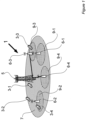
- FIG. 1 schematically illustrates a mobile (cellular) telecommunication system 1 in which a user of any of a plurality of mobile communication devices 3-1, 3-2, 3-3, 3-4, can communicate with other users via one or more of a plurality of base stations 5, 6-1, 6-2, 6-3, 6-4.
- each base station 5, 6 shown is an Evolved Universal Terrestrial Radio Access Network (E-UTRAN) base station capable of operating in a multi-carrier environment.
- E-UTRAN Evolved Universal Terrestrial Radio Access Network
- the base station labelled 5 comprises a so called 'macro' base station operating a relatively large 'macro' cell 7.
- the other base stations 6 shown in Figure 1 each comprises a so called small cell base station (possibly a so called 'pico' base station, ⁇ Remote Radio Head (RRH)', or other similar device capable of operating a small cell) operating a respective small cell 9-1, 9-2, 9-3, 9-4.
- RRH Remote Radio Head
- the power used to provide small cells 9 is low relative to the power used for the macro cell 7 and the small cells 9 are therefore small relative to the macro cell 7.
- the geographical coverage of each of the small cells 9 falls completely within the geographical coverage of the macro cell 7 although partially overlapping geographical coverage with the macro cell 7 is, of course, possible.
- the macro base station 5 is configured to provide discovery signals in each radio frame to allow a mobile communication device 3 to discover, and achieve synchronisation with, the macro base station 5. Specifically, the macro base station 5 transmits a discovery signal comprising a primary synchronisation signal (PSS) in a primary synchronisation channel (P-SCH) and a secondary synchronisation signal (SSS) in a secondary synchronisation channel (P-SCH), at predetermined fixed locations (in both frequency and time) within each radio frame, and hence at a fixed periodicity, as set out in 3GPP TS 36.211 V10.2.0.
- PSS primary synchronisation signal
- P-SCH primary synchronisation channel
- SSS secondary synchronisation signal
- the macro base station 5 is also configured to control operation of a 'cluster' comprising two small cell base stations 6-3 and 6-4 and hence their corresponding small cells 9-3, 9-4, that share a common physical cell identity (PCI), and group cell identity (and hence a common Cell ID which is defined by the PCI and group cell identity), although the macro base station 5, and each small cell base station 6-3, 6-4 of the cluster represent a different distinct transmission point.
- PCI physical cell identity
- group cell identity and hence a common Cell ID which is defined by the PCI and group cell identity
- Each small cell base station 6 is also configured to provide discovery signals on a physical discovery channel (PDCH) to allow a mobile communication device 3 to discover, and achieve synchronisation with, the small cell base station 6.
- PDCH physical discovery channel
- the discovery signals transmitted by each small base station 6 are not transmitted at a fixed periodicity but are, instead, transmitted at a flexible periodicity that can be configured, and reconfigured, by the small cell base station or the macro cell base station controlling the small cell base station 6.
- This extra flexibility is particularly beneficial because it allows a very wide range of periodicities (or 'repetition intervals') of anything from a few subframes to several hundred radio frames or greater to be configured thereby helping to ensure that small cell base stations can be configured to consume less power and the overhead introduced by discovery signals can be reduced in dependence on the configured periodicity. Further, even in the presence of a relatively dense population of small cell base stations 6 the chances of several respective PSS and SSS being transmitted at the same time (or within close temporal proximity to one another) for different small cell base stations, is relatively low.
- the discovery signals provided by each small cell base station 6 beneficially re-use the structure of the PSS and SSS used by the macro base station 5 thereby providing at least some backwards compatibility with legacy mobile communication devices.
- the discovery signals provided by each small cell base station 6 are, however, further enhanced: to reduce the size of the search window that the mobile communication device 3 needs to employ; to improve the speed with which a search can be carried out; to improve the reliability of a cell search procedure; to enhance time and/or frequency tracking; to allow measurement (e.g.
- RSRQ Reference Signal Received Quality
- RSRP Reference Signal Received Power
- the discovery signals are enhanced in the time domain by including additional PSS and/or SSS type signals in each subframe.
- the discovery signals are enhanced in the frequency domain by expanding the frequency range over which the PSS and/or SSS type signals are transmitted.
- the respective benefits of the different enhancements combine together to provide a greater cumulative benefit albeit at the expense of greater discovery signal overhead.
- the introduction of the new discovery signal (on the PDCH) therefore helps to facilitate the search for, acquisition of, and synchronisation with a small cell base station, by a mobile communication device 3.
- the new discovery signal is implemented, one or more of the following additional benefits arise compared, for example, with using a conventional P-SCH / S-SCH structure: power savings in mobile communication device and/or small cell base station; a relatively quick search for/discovery of a small cell; relatively rapid acquisition of measurement results for the purposes of handover, thereby facilitating rapid handover operations; and/or the support of a greater number of physical Cell IDs and/or dedicated transmission point identities.
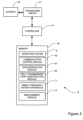
- FIG 2 is a block diagram illustrating the main components of a base station 5, 6 as shown in Figure 1 .
- the base station 5, 6 comprises an E-UTRAN multi-carrier capable base station comprising a transceiver circuit 31 which is operable to transmit signals to, and to receive signals from, the mobile communication devices 3 via at least one antenna 33.
- the base station 5, 6 is also operable to transmit signals to and to receive signals from: a core network via a network interface 35 (optionally via a small cell gateway or the like in the case of a small cell base station (not shown)); and other base stations 5, 6 in the vicinity via a base station (or so called ⁇ X2') interface 36.
- the operation of the transceiver circuit 31 is controlled by a controller 37 in accordance with software stored in memory 39.
- the software includes, among other things, an operating system 41, a communication control module 42, a synchronisation module 47, and a cell / transmission point identification module 49.
- the communication control module 42 is operable to control communication with the mobile communication devices 3 via the antenna 33 and with the core network and other base stations via the network interface 35 and the X2 interface 36 respectively.
- the synchronisation module 47 manages the generation and transmission of discovery signals at appropriate locations in a radio frame 210 (see Fig. 4 ) as required and, in the case of the small cell base station 6, the configuration and reconfiguration of the periodicity of the discovery signals, and the encoding of appropriate information into the discovery signal as appropriate.
- the cell / transmission point identification module 49 generates identification information for the cell / transmission point such as the Cell ID (cell group ID / physical cell ID (PCI)) and/or transmission point ID (e.g. for small cells sharing the same Cell ID as other cells in a cluster of cells) for encoding into the discovery signals by the synchronisation module 47.
- the Cell ID cell group ID / physical cell ID (PCI)
- PCI physical cell ID
- the base station 5 is described for ease of understanding as having a number of discrete modules. Whilst these modules may be provided in this way for certain applications, for example where an existing system has been modified to implement the invention, in other applications, for example in systems designed with the inventive features in mind from the outset, these modules may be built into the overall operating system or code and so these modules may not be discernible as discrete entities.
- FIG 3 is a block diagram illustrating the main components of the mobile communication devices 3 shown in Figure 1 .
- Each mobile communication device 3 comprises a mobile (or 'cell' telephone) capable of operating in a multi-carrier environment.
- the mobile communication device 3 comprises a transceiver circuit 51 which is operable to transmit signals to, and to receive signals from, the base stations 5, 6 via at least one antenna 53.
- the operation of the transceiver circuit 51 is controlled by a controller 57 in accordance with software stored in memory 59.
- the software includes, among other things, an operating system 51, a communication control module 62, a synchronisation module 67, a cell / transmission point identification module 69, a timing / frequency estimation module 71 and a measurement module 73.
- the communication control module 62 is operable for managing communication with the base stations 5, 6.
- the synchronisation module 67 manages synchronisation of the mobile communication device 3 with the radio frame / subframe timing of the base station 5, 6.
- the synchronisation module 67 also manages the identification of the discovery signal configuration such as the location of the PSS/SSS within each radio frame 210 (see Fig. 4 ) and the decoding of appropriate information from the discovery signal as appropriate.
- the cell / transmission point identification module 69 determines identification information for the cell / transmission point such as the Cell ID (cell group ID / PCI) and/or transmission point ID (e.g. for small cells sharing the same Cell ID as other cells in a cluster of cells) from the information encoded into the discovery signals by the synchronisation module 67.
- the timing / frequency estimation module 71 is configured for performing timing and/or frequency estimation using the discovery signals generated and transmitted by the small cell base station 6.
- the measurement module 73 is configured for performing measurements (e.g. RSRP / RSRQ measurements) on the discovery signals generated and transmitted by the small cell base station 6.
- the mobile communication device 3 is described for ease of understanding as having a number of discrete modules. Whilst these modules may be provided in this way for certain applications, for example where an existing system has been modified to implement the invention, in other applications, for example in systems designed with the inventive features in mind from the outset, these modules may be built into the overall operating system or code and so these modules may not be discernible as discrete entities.
- FIG 4 illustrates the structure of a radio frame 210 of the type used for communication by the base stations 5, 6 and mobile communication devices 3 of the mobile (cellular) telecommunication system 1.
- each base station 5 is configured to transmit control information and data to associated mobile communication devices using radio frames 210.
- Each radio frame 210 in this exemplary embodiment, is 10ms long and as seen in Figure 4 comprises a plurality of orthogonal frequency division multiplexing (OFDM) subframes 230 (in this exemplary embodiment ten 1ms subframes which are indexed '0' through '9' make up a radio frame 210).
- Each subframe comprises a pair of slots 232a and 232b (in this exemplary embodiment 0.5ms long).
- OFDM orthogonal frequency division multiplexing
- the slots 232 are typically referred to by index numbers ranging from '0' to '19' in chronological order (from left to right on Figure 4 ) with the first slot 232a of each subframe 230 having an even number and the second slot 232b having an odd number.
- Part of the first ('even numbered') slot of each subframe 230 comprises a so called 'control' region 231 that is generally reserved for the transmission of control information.
- the remainder of the first ('even numbered') slot of each subframe 230 and the second ( ⁇ odd numbered') slot of each subframe 230 comprises a so called 'data' region 233 that is generally used for the transmission of data, for example in a Physical Downlink Shared Channel (PDSCH).
- PDSCH Physical Downlink Shared Channel
- Figure 5 shows a resource grid for part of one of the OFDM subframes 230 of Figure 4 .
- the resource grid shown is for a resource block (RB) pair 310a, 310b (represented by hatched region) with each RB 3 10a, 310b of the pair having, for example, a resource grid similar to that described in section 6.2 of the 3 rd Generation Partnership Project (3GPP) Technical Standard (TS) 36.211 V10.2.0 and shown in Figure 6 . 2 .2-1 of that standard.
- 3GPP 3 rd Generation Partnership Project
- TS Technical Standard
- each resource block 310a and 310b is part of a respective slot 232a and 232b of the subframe 230.
- Each resource block 310a, 310b comprises a set of resource elements 335 defined in frequency by 12 subcarrier frequencies (rows) and in time by 7 symbols (columns).
- the control region 231 comprises the resource elements 335 of the first three OFDM symbols of the first slot 232a of each subframe 230.
- the remaining resource elements 335 of the first slot 232a and the resource elements 335 of the second slot 232b form the data region 333.
- each base station 5, 6 is configured to provide discovery signals at particular locations (in frequency and time) in corresponding radio frames 210 to allow the mobile communication device 3 to discover and achieve synchronisation with the base station 5, 6.
- Each discovery signal comprises a PSS that can be used by the mobile communication device 3 to synchronise receipt and transmission of each symbol, slot and subframe with the corresponding symbol, slot and/or subframe timings of the corresponding base station 5, 6. Further, the PSS is also used by the mobile communication device 3 to identify other information about the cell to which it relates, for example, cell identity information such as a physical layer cell identity (PCI).
- Each discovery signal also comprises an SSS that is used by the mobile communication device 3 to synchronise receipt and transmission of each radio frame 210 with the associated frame timings of the corresponding base station 5, 6: The SSS is also used by the mobile communication device 3 to identify other information about the cell to which they relate, for example cell group identity information such as the physical layer cell identity group for the base station 5, 6.
- Figure 6 illustrates how the discovery signals are configured in the radio frames 230 for the macro cell 7 of the macro base station 5.
- the macro base station 5 always provides the synchronisation signals (PSS/SSS) in the last two symbols of the first (even numbered) slot 232a in the first subframe 230 (subframe #0) and in the last two symbols of the first (even numbered) slot 232a in the sixth subframe 230 (subframe #5).
- PSS is transmitted in the last symbol of the first slot 232a of the first and sixth subframes
- SSS is transmitted in the second to last symbol of the first slot 232a of the first and sixth subframes 230 (i.e. the last symbol of slot #0 and slot #10).
- the PSS and SSS are each allocated the central 62 subcarriers belonging to symbols in which they are respectively located.
- the 5 resource elements above and below the synchronisation signals are not used for transmission and hence the PSS and SSS each account for the central 72 subcarriers (6 resource blocks).
- the PSS and SSS transmissions each use six resource blocks (with 10 resource elements left unused) and the indexes of the resource blocks (resource block numbers) within the frequency band covered by the macro cell 7 are always the same.
- the sequence d (0),..., d (61) used for the SSS comprises an interleaved concatenation of two length-31 binary sequences.
- the concatenated sequence is scrambled with a scrambling sequence given by the PSS.
- the indices m 0 and m 1 are derived from the physical-layer cell-identity group.
- the two PSS transmissions within a radio frame 210 are identical.
- the two SSS transmissions within each radio frame 210 (referred to as SS1 and SS2), however, use different sequences to allow the mobile communication device 3 to differentiate between the 1 st and 2 nd transmission thereby allowing the mobile communication device 3 to achieve frame synchronisation.
- each small cell base station 6 of this exemplary embodiment still provides discovery signals comprising synchronisation signals (PSS/SSS) encoded in the same manner as for the macro cell, the periodicity with which the small cell base station 6 transmits the discovery signals is individually configurable by each small cell base station 6.
- PSS/SSS synchronisation signals
- the periodicity 'T DS ' is set to a suitable number of radio frames (e.g. 50, 100, 200, 1000, 2000 or any other appropriate number). Accordingly, as seen in Figure 7 , when the first discovery signal is transmitted in radio fame number 'n', the next discovery signal is transmitted in radio fame number 'n + T DS ', the next in radio fame number ⁇ n + 2.T DS ' and so on. More specifically, the discovery signal is transmitted in radio fame number 'n + r.T DS ' where r is an integer that starts at zero for radio fame number 'n' and increments by one for each subsequent radio fame in which the discovery signal is transmitted.
- r is an integer that starts at zero for radio fame number 'n' and increments by one for each subsequent radio fame in which the discovery signal is transmitted.
- FIG. 7 shows a configuration based on a periodicity defined in terms of a number of radio frames
- a configuration based on a periodicity defined in terms of a number of subframes is also possible (e.g. where the first discovery signal is transmitted in subfame number 'n', the next discovery signal is transmitted in subfame number 'n + T SF DS ', the next in subfame number ⁇ n + 2. T SF DS ' and so on).
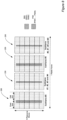
- Figure 8 illustrates an exemplary radio frame, transmitted by a small cell base station 6, in which the discovery signal is enhanced in the time domain.
- the discovery signal comprises a set of four extra PSSs (PSS2, ..., PSS5) that are transmitted in, and distributed throughout, each 5ms half of the 10ms radio frame in which the discovery signal is provided.
- the additional PSSs (PSS2, ..., PSS5) are transmitted at regular intervals in consecutive subframes.
- the additional PSSs (PSS2, ..., PSS5) are each shown to be transmitted in the last symbol of the first (even numbered) slot of a respective one of subframes #1 to #4 and then repeated in the last symbol of the first (even numbered) slot of a respective one of subframes #6 to #9. It will be appreciated, however, that the new PSSs could be transmitted in other symbols.
- each additional PSS (PSS2, ..., PSS5) has a respective Zadoff-Chu root sequence index to differentiate it from the legacy PSS (PSS1) transmitted in subframes #0 and #5. It will be appreciated, however, that any or all of the new PSSs could simply be a repetition of the existing PSS if differentiation is not required.
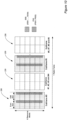
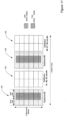
- Figures 9 and 10 each illustrates another exemplary radio frame, transmitted by a small cell base station 6, in which the discovery signal is enhanced in the time domain.
- the discovery signal comprises a second pair of synchronisation signals in the respective second (odd) slot of each of the first and sixth subframes, i.e., 0.5ms apart from the corresponding legacy pair of synchronisation signals.
- the close proximity of the legacy and the new synchronisation signals in this exemplary embodiment beneficially allows frequency estimation to be performed, using the discovery signal, without requiring the use of cell specific reference signals (CRS), thereby improving efficiency compared to current systems.
- CRS cell specific reference signals
- the second pair of synchronisation signals in each of the first and sixth subframes comprises a pair of PSSs (PSS2 & PSS3) whereas in the example of Figure 10 the second pair of synchronisation signals in each of the first and sixth subframes comprises an additional SSS (SSS3 & SSS4) followed by an additional PSS (PSS2).
- each additional PSS PSS2 / PSS3 and/or SSS (SSS3, SSS4) has a respective Zadoff-Chu root sequence index to differentiate it from its legacy counterpart. It will be appreciated, however, that any or all of the new synchronisation signals could simply be a repetition of the corresponding legacy synchronisation signal if differentiation is not required.
- the close proximity of the legacy and the new synchronisation signals beneficially allows frequency estimation to be performed, using the discovery signal, without requiring the use of cell specific reference signals (CRS), thereby improving efficiency compared to current systems.
- CRS cell specific reference signals
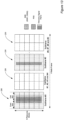
- Figure 11 illustrates another exemplary radio frame, transmitted by a small cell base station, in which the discovery signal is enhanced in the time domain.
- the discovery signal comprises a set of four extra PSSs (PSS2, ..., PSS5) that are transmitted over consecutive symbols following the respective legacy PSS (PSS1) in the respective second (odd) slot of each of the first and sixth subframes.
- This discovery signal format is particularly beneficial in helping a mobile communication device 3 to quickly detect the timing reference in a cell search process, and like the previous examples, helps to improve time and frequency estimation performance and measurement quality.
- each additional PSS (PSS2, ..., PSS5) has a respective Zadoff-Chu root sequence index to allow differentiation from its legacy counterpart. It will be appreciated, however, that any or all of the new synchronisation signals could simply be a repetition of the corresponding legacy synchronisation signal if differentiation is not required. It will be further appreciated that each SSS (SSS1 and SSS2) may use the same or a different Zadoff-Chu root sequence index.
- Figure 12 illustrates another exemplary radio frame, transmitted by a small cell base station 6, in which the discovery signal is enhanced in the time domain.
- the discovery signal in addition to the legacy PSS (PSS1) and SSS (SSS1) transmitted in the first (even) slot of the first subframe (#0), the discovery signal comprises a second discovery signal part comprising a pair of signals in the respective second (odd) slot of the first subframe, i.e., 0.5ms apart from the corresponding legacy pair of synchronisation signals in that subframe.
- the second set of signals in the example of Figure 12 is formed by wrapping/multiplexing an additional PSS/SSS (e.g. as described for the first subframe with reference to Figures 9 or 10 ) with a masking code such as an orthogonal code, or a cyclically shifted version of a Zadoff-Chu sequence, to encode a unique identifier for the small cell (e.g. a 'small cell ID' or 'transmission point ID') e.g. within a cluster of small cells having the same Cell ID encoded into the legacy PSS/SSS.
- a masking code such as an orthogonal code, or a cyclically shifted version of a Zadoff-Chu sequence
- a modified mobile communication device 3 can detect the Cell ID and also derive each small cell / transmission point ID within the cluster based on the second discovery signal part whilst a legacy mobile communication device can still detect the Cell ID.
- the second discovery signal part can also be used to identify the status of the detected cell, such as dormancy/cell load, e.g., by encoding cell dormancy (i.e., load zero) / cell load information together with appropriate identification information in the second discovery signal part.
- dormancy/cell load e.g., by encoding cell dormancy (i.e., load zero) / cell load information together with appropriate identification information in the the second discovery signal part.
- the two signals of the second discovery signal part can be the same or different.
- Figure 13 illustrates another exemplary radio frame, transmitted by a small cell base station 6, in which the discovery signal is enhanced in the time domain.
- the discovery signal comprises a second discovery signal part comprising a set of four extra signals that are transmitted over consecutive symbols following the legacy PSS (PSS) in the second (odd) slot of the first subframe.
- the second set of signals in the example of Figure 13 is formed by wrapping/multiplexing an additional PSS/SSS (e.g. as described for the first subframe with reference to Figures 9 or 10 ) with a masking code such as an orthogonal code, or a cyclically shifted version of a Zadoff-Chu sequence, to encode a unique identifier for the small cell (e.g. a ⁇ small cell ID' or 'transmission point ID') e.g. within a cluster of small cells having the same Cell ID encoded into the legacy PSS/SSS.
- a masking code such as an orthogonal code, or a cyclically shifted version of a Zadoff-Chu sequence
- a modified mobile communication device 3 can detect the Cell ID and also derive each small cell / transmission point ID within the cluster based on the second discovery signal part whilst a legacy mobile communication device can still detect the Cell ID.
- the enhancement beneficially allows time estimation, frequency estimation and RSRP/RSRQ measurements to be carried out in addition to fast cell discovery.
- timing estimation is performed by correlating in the frequency domain a transmitted signal with its replica at the receiver and accumulating the energy of the correlation over a number of OFDM symbols in the time-domain, and detecting the maximum peak of the accumulated correlator output among correct timing candidates within a pre-defined window of timing hypotheses.
- the close proximity of the synchronisation signals in the above exemplary discovery signals allows frequency estimation to be performed based on a pair of the signals forming the discovery signal (e.g. the PSS, SSS, and/or one or more of the signals forming the second part of the discovery signal) without the need to use other reference signals such as cell specific reference signals (CRS).
- a pair of the signals forming the discovery signal e.g. the PSS, SSS, and/or one or more of the signals forming the second part of the discovery signal
- CRS cell specific reference signals
- a set of frequency estimates may be calculated using the first and second SSS of one subframe, and another set of frequency estimates may be calculated using the first and second PSS in the same subframe. These estimates may then be combined to provide more reliable estimates, avoiding the need to use CRS for that purpose (and potentially improving on estimates using CRS).
- the additional reference signals (comprising synchronisation signals / other dedicated signals) in the discovery signals in the time domain allows such measurements to be performed more efficiently and reliably.
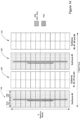
- Figures 14 and 15 each illustrate an exemplary radio frame, transmitted by a small cell base station 6, in which the discovery signal is enhanced in the frequency domain.
- the primary synchronisation signal is enhanced by transmitting it over 12 resource blocks rather than 6 resource blocks.
- the central 6 resource blocks in this case correspond to the legacy PSS (for example for use in identifying the Cell ID).
- both the primary synchronisation signal (PSS) and the secondary synchronisation signal (SSS) are enhanced by transmitting each over 12 resource blocks rather than 6 resource blocks.
- the central 6 resource blocks correspond to the respective legacy SSS and PSS (for example for use in identifying the Cell ID).
- the enhancement beneficially allows time estimation and RSRP/RSRQ measurements to be carried out in addition to fast cell discovery.
- the additional reference signals (comprising synchronisation signals / other dedicated signals) in the discovery signals in the frequency domain allows such measurements to be performed more efficiently and reliably.
- Figure 16 shows a flow chart illustrating one method by which a small cell base station 6 may generate and transmit a discovery signal for discovery by the mobile communication device 3 in a cell search procedure for cell discovery purposes in the above exemplary embodiments.
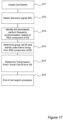
- Figure 17 shows a flow chart illustrating one method by which a mobile communication device 3 may use the discovery signal in a cell search procedure for cell discovery purposes in the above exemplary embodiments.
- Figure 18 shows a flow chart illustrating another, more detailed, method by which a small cell base station 6 may generate and transmit a discovery signal for discovery by the mobile communication device 3 in a cell search procedure for cell discovery purposes.
- the flow chart is particularly relevant to the examples of Figures 12 and 13 where Cell ID and small cell ID/TP ID are encoded separately.
- Figure 19 shows a flow chart illustrating another, more detailed, method by which a mobile communication device 3 may use the discovery signal in a cell search procedure for cell discovery purposes.
- the flow chart is particularly relevant to the examples of Figures 12 and 13 where Cell ID and small cell ID/TP ID are encoded separately.
- a discovery signal at the configured periodicity, comprising just one pair of PSS and SSS (e.g. not including the PCC / SSS2 typically sent in the sixth subframe).
- a discovery signal at the configured periodicity, comprising just one pair of PSS and SSS (e.g. not including the PCC / SSS2 typically sent in the sixth subframe).
- the discovery signal can carry the current Cell ID or a different ID such as a dedicated transmission point ID ( ⁇ TP ID') or ⁇ small cell ID' which can be used to distinguish different small cells within a small cell cluster having the the same Cell ID.
- a dedicated transmission point ID ⁇ TP ID'
- ⁇ small cell ID' which can be used to distinguish different small cells within a small cell cluster having the the same Cell ID.
- the macro cell can allocate a different ID to each small cell within the cluster, and the mobile communication device can detect and report it to the macro cell which can then identify which small cell the mobile communication device has detected based on the reported ID.
- the proposed structures can beneficially provide more physical Cell IDs than the 504 of the current system by introducing new code sequences for the discovery signal (first and second parts).
- the proposed structures do not depend on the size of the system bandwidth because the discovery signals are located in the central 6 or 12 RBs.
- the proposed structures beneficially provide backward compatibility for legacy mobile communication devices by keeping the existing PSS and SSS in the central 6 RBs.
- a dedicated small cell PSS/SSS configuration could be defined having any suitable PSS/SSS configuration, for example, a configuration in which the SSS and PSS were reversed.
- the PCI / cell group ID may be used to represent a small cell ⁇ Cluster ID' (e.g. which is equivalent to a Cell ID that is shared by the plurality of cells in the cluster) and may thus be transmitted on the existing PSS/SSS.
- a dedicated transmission point ID ('TP ID') or 'small cell ID' within the cluster may then be transmitted using the second part of the discovery signal. Therefore, a mobile communication device can detect a cluster ID first using only the legacy PSS/SSS signal and then can detect a TP ID within the cluster using the second part of the discovery signal.
- a single ⁇ global TP ID' or ⁇ global Cell ID' may be transmitted which the mobile communication device can detect in one step using all the transmitted discovery signals. This may, for example, be faster than the using separate a Cell ID/Cluster ID and TP ID / small cell ID, but the search complexity may be increased because there are more possible IDs to be searched.
- Part or all of a discovery signal could be transmitted on a different carrier frequency from that of the legacy PSS/SSS, for example on the same carrier as the macro cell. This would allow mobile communication devices camped on the macro cell to search for small cells using intra-frequency search and measurements instead of inter-frequency search and measurements, thus reducing mobile communication device complexity.
- the proposed discovery signals need not be used only for cell search, but also for other purposes such as time/frequency estimation and RSRP/RSRQ measurements, thus reducing mobile communication device complexity as well as downlink reference signal transmission overhead.
- the discovery signal can carry the status information of the detected cell, such as dormancy/cell load, e.g., by encoding cell dormancy (i.e., load zero) / cell load information together with appropriate identification information in the the second discovery signal part.
- Similar signalling structures may also be applied to device to device (D2D) and machine type communications (MTC) in order to identify other devices or TP (transmission point) / RP (reception point) in Coordinated Multi-Point (CoMP) transmission/reception scenarios.
- D2D device to device
- MTC machine type communications
- TP transmission point
- RP reception point
- CoMP Coordinated Multi-Point
- the communication system 1 is described in terms of base stations 5 operating as macro or small cell base stations, the same principles may be applied to base stations operating as femto base stations, relay nodes / UE-Relays providing elements of base station functionality, or other such communication nodes.
- a mobile telephone based telecommunications system was described.
- the signalling techniques described in the present application can be employed in other communications systems.
- Other communications nodes or devices may include user devices such as, for example, personal digital assistants, laptop computers, web browsers, etc.
- the system can be used to extend the coverage of base stations in a network having one or more fixed computing devices as well as or instead of the mobile communicating devices.
- the base stations 5, 6 and mobile communication devices 3 each include transceiver circuitry.
- this circuitry will be formed by dedicated hardware circuits.
- part of the transceiver circuitry may be implemented as software run by the corresponding controller.
- the software modules may be provided in compiled or un-compiled form and may be supplied to the base station or the relay station as a signal over a computer network, or on a recording medium. Further, the functionality performed by part or all of this software may be performed using one or more dedicated hardware circuits.
Landscapes
- Engineering & Computer Science (AREA)
- Computer Networks & Wireless Communication (AREA)
- Signal Processing (AREA)
- Databases & Information Systems (AREA)
- Computer Security & Cryptography (AREA)
- Mobile Radio Communication Systems (AREA)
- Time-Division Multiplex Systems (AREA)
Applications Claiming Priority (3)
| Application Number | Priority Date | Filing Date | Title |
|---|---|---|---|
| GB1308196.3A GB2513870A (en) | 2013-05-07 | 2013-05-07 | Communication system |
| EP14734250.5A EP2995142A2 (de) | 2013-05-07 | 2014-04-30 | Kommunikationssystem |
| PCT/JP2014/062417 WO2014181850A2 (en) | 2013-05-07 | 2014-04-30 | Communication system |
Related Parent Applications (1)
| Application Number | Title | Priority Date | Filing Date |
|---|---|---|---|
| EP14734250.5A Division EP2995142A2 (de) | 2013-05-07 | 2014-04-30 | Kommunikationssystem |
Publications (2)
| Publication Number | Publication Date |
|---|---|
| EP4221376A2 true EP4221376A2 (de) | 2023-08-02 |
| EP4221376A3 EP4221376A3 (de) | 2023-12-06 |
Family
ID=48627399
Family Applications (2)
| Application Number | Title | Priority Date | Filing Date |
|---|---|---|---|
| EP14734250.5A Ceased EP2995142A2 (de) | 2013-05-07 | 2014-04-30 | Kommunikationssystem |
| EP23157360.1A Withdrawn EP4221376A3 (de) | 2013-05-07 | 2014-04-30 | Kommunikationssystem |
Family Applications Before (1)
| Application Number | Title | Priority Date | Filing Date |
|---|---|---|---|
| EP14734250.5A Ceased EP2995142A2 (de) | 2013-05-07 | 2014-04-30 | Kommunikationssystem |
Country Status (6)
| Country | Link |
|---|---|
| US (3) | US9749976B2 (de) |
| EP (2) | EP2995142A2 (de) |
| JP (2) | JP6146600B2 (de) |
| CN (2) | CN110234153B (de) |
| GB (1) | GB2513870A (de) |
| WO (1) | WO2014181850A2 (de) |
Families Citing this family (20)
| Publication number | Priority date | Publication date | Assignee | Title |
|---|---|---|---|---|
| GB2513870A (en) | 2013-05-07 | 2014-11-12 | Nec Corp | Communication system |
| WO2015013103A1 (en) * | 2013-07-23 | 2015-01-29 | Zte Wistron Telecom Ab | Method and apparatus for transmitting an auxiliary cell identity |
| CN105745852B (zh) * | 2013-11-21 | 2019-05-24 | 华为技术有限公司 | 用于非蜂窝式无线接入的系统和方法 |
| CN105519064B (zh) * | 2014-08-13 | 2019-06-18 | 华为技术有限公司 | 同步信号发送和接收方法及装置 |
| KR102450241B1 (ko) * | 2014-09-02 | 2022-10-04 | 엘지전자 주식회사 | 무선 통신 시스템에서 장치 대 장치 단말의 동기 신호 전송 방법 및 장치 |
| WO2016043565A1 (ko) * | 2014-09-19 | 2016-03-24 | 엘지전자 주식회사 | 하향링크 동기를 획득하는 방법 및 mtc 기기 |
| ES2778204T3 (es) | 2014-11-13 | 2020-08-10 | Huawei Tech Co Ltd | Método y dispositivo de sincronización de señal para la comunicación de alta frecuencia |
| US10034253B2 (en) * | 2014-11-17 | 2018-07-24 | Telefonaktiebolaget Lm Ericsson (Publ) | Cell search procedure frame format |
| EP3251432A4 (de) * | 2015-01-29 | 2018-09-26 | Sierra Wireless, Inc. | Verfahren und system zur bereitstellung und verwendung eines verstärkten synchronisierungssignals für lte |
| CN106211312B (zh) * | 2015-04-30 | 2020-06-26 | 索尼公司 | 无线通信系统中的电子设备和无线通信方法 |
| US10165536B2 (en) * | 2015-06-19 | 2018-12-25 | Qualcomm Incorporated | System scanning and acquisition |
| CN114698121A (zh) * | 2015-08-11 | 2022-07-01 | 三菱电机株式会社 | 通信系统 |
| WO2017164700A2 (ko) * | 2016-03-24 | 2017-09-28 | 엘지전자 주식회사 | 동기 신호 전송 방법 및 기지국과, 동기 신호 수신 방법 및 사용자기기 |
| US10993260B2 (en) * | 2016-04-11 | 2021-04-27 | Telefonaktiebolaget Lm Ericsson (Publ) | Method for controlling LBT in a distributed system |
| CN107734633A (zh) * | 2016-08-12 | 2018-02-23 | 北京信威通信技术股份有限公司 | 一种传输同步信号的方法及装置 |
| WO2018129196A1 (en) | 2017-01-09 | 2018-07-12 | Intel IP Corporation | Synchronization signal transmission techniques |
| CN108307476B (zh) * | 2017-01-13 | 2021-04-06 | 上海诺基亚贝尔股份有限公司 | 无线接入网络中用于终端设备的初始接入的方法和设备 |
| CN110603756B (zh) * | 2017-03-22 | 2021-05-25 | Lg 电子株式会社 | 在无线通信系统中操作终端的方法和支持该方法的设备 |
| CN108632983B (zh) | 2017-03-24 | 2020-08-14 | 华为技术有限公司 | 传输信号的方法和装置 |
| US10764847B2 (en) | 2017-05-02 | 2020-09-01 | Sierra Wireless, Inc. | Method and system for using enhanced primary synchronization signal for resynchronization |
Family Cites Families (94)
| Publication number | Priority date | Publication date | Assignee | Title |
|---|---|---|---|---|
| TW506199B (en) * | 2000-04-06 | 2002-10-11 | Interdigital Tech Corp | Synchronization of time advance and deviation |
| CN1820437A (zh) * | 2003-08-04 | 2006-08-16 | 汤姆森许可贸易公司 | 通用移动电话系统接收机中小区搜索期间的频率同步 |
| US7171203B2 (en) * | 2004-01-07 | 2007-01-30 | Research In Motion Limited | Apparatus, and associated method, for facilitating selection by a mobile node of a network through which to communicate |
| US8134996B2 (en) * | 2005-07-21 | 2012-03-13 | Texas Instruments Incorporated | Downlink synchronization for a cellular OFDM communication system |
| KR100827064B1 (ko) * | 2006-01-18 | 2008-05-02 | 삼성전자주식회사 | Ofdm 기반 셀룰러 무선통신시스템의 동기 신호 송신 방법 및 장치 |
| WO2008037114A1 (en) * | 2006-09-25 | 2008-04-03 | Huawei Technologies Co., Ltd. | Information carrying synchronization code and method for frame timing synchronization |
| JP4814176B2 (ja) | 2007-05-01 | 2011-11-16 | 株式会社エヌ・ティ・ティ・ドコモ | 基地局装置および同期チャネル送信方法 |
| US20080316947A1 (en) * | 2007-06-21 | 2008-12-25 | Bengt Lindoff | METHOD AND APPARATUS FOR 3G LTE FDD and TDD DETECTION USING REFERENCE SIGNAL CORRELATION |
| KR100938756B1 (ko) * | 2007-07-06 | 2010-01-26 | 엘지전자 주식회사 | 무선통신 시스템에서 셀 탐색 과정을 수행하는 방법 |
| JP4904398B2 (ja) * | 2007-08-07 | 2012-03-28 | シャープ株式会社 | 基地局装置、移動局装置、通信システムおよび通信方法 |
| US8289946B2 (en) | 2007-08-14 | 2012-10-16 | Qualcomm Incorporated | Reference signal generation in a wireless communication system |
| EP2075973B1 (de) * | 2007-12-28 | 2018-08-15 | Telefonaktiebolaget LM Ericsson (publ) | Identifizierung einer sequenz von empfangener referenzsymbolen |
| JP4759088B2 (ja) * | 2008-01-29 | 2011-08-31 | シャープ株式会社 | 通信装置、通信方法 |
| ES2500615T3 (es) * | 2008-02-04 | 2014-09-30 | Huawei Technologies Co., Ltd. | Sistema de comunicación móvil, dispositivo de estación base, dispositivo de estación móvil y método de comunicación móvil |
| KR101215452B1 (ko) | 2008-06-24 | 2012-12-26 | 노키아 지멘스 네트웍스 오와이 | 셀 타입 검출을 위한 방법들, 장치들, 시스템 및 관련된 컴퓨터 프로그램 물건 |
| US8688112B2 (en) * | 2008-09-12 | 2014-04-01 | Qualcomm Incorporated | Neighboring cell search for mobile communication systems |
| US8260283B2 (en) | 2008-09-16 | 2012-09-04 | UEI Cayman, Inc. | Communicating codeset information as part of a native application |
| US7796278B2 (en) * | 2008-09-19 | 2010-09-14 | Gii Acquisition, Llc | Method for precisely measuring position of a part to be inspected at a part inspection station |
| EP2384042A4 (de) * | 2009-01-08 | 2016-07-13 | Ntt Docomo Inc | Mobiles kommunikationsverfahren und drahtlose basisstation |
| EP2386178B1 (de) * | 2009-01-12 | 2016-11-30 | Nokia Solutions and Networks Oy | Verfahren zum anpassen einer abwärtsstrecken-sendeleistung einer ersten basisstation, die zum versorgen einer geschlossenen teilnehmergruppe ausgelegt ist, bei anwesenheit einer zweiten basisstation |
| EP2211335A1 (de) * | 2009-01-21 | 2010-07-28 | Fraunhofer-Gesellschaft zur Förderung der angewandten Forschung e.V. | Vorrichtung, Verfahren und Computerprogramm zum Erhalt eines Parameters, der eine Variation einer Signaleigenschaft eines Signals beschreibt |
| JP5055319B2 (ja) * | 2009-03-31 | 2012-10-24 | 株式会社エヌ・ティ・ティ・ドコモ | 移動通信方法及び移動通信システム |
| US8675572B1 (en) * | 2009-04-14 | 2014-03-18 | Sprint Spectrum L.P. | Dynamic asynchronous-capsule timer for traffic channel assignment messages |
| US8948064B2 (en) * | 2009-04-20 | 2015-02-03 | Full Spectrum Inc. | Method and apparatus for long range private broadband wireless communication system |
| WO2010128908A1 (en) * | 2009-05-08 | 2010-11-11 | Telefonaktiebolaget L M Ericsson (Publ) | Allocation of primary and secondary synchronization code sequences to cells in a wireless communication system |
| KR101608782B1 (ko) * | 2009-06-05 | 2016-04-04 | 엘지전자 주식회사 | 단말의 CoMP 방식에서의 신호 전송 방법 |
| US8416891B2 (en) * | 2009-07-16 | 2013-04-09 | Telefonaktiebolaget L M Ericsson (Publ) | Optimized physical broadcast channel reception |
| EP2288209B1 (de) * | 2009-08-13 | 2012-10-10 | Mitsubishi Electric R&D Centre Europe B.V. | Übertragung einer Sequenz zur Identifizierung einer Heimbasisstation durch ein mobiles Endgerät |
| US8837350B2 (en) * | 2009-08-14 | 2014-09-16 | Alcatel Lucent | Method and apparatus for concerted signal transmission on multiple antennas |
| KR101708707B1 (ko) * | 2009-09-29 | 2017-02-21 | 삼성전자주식회사 | 이동통신 시스템에서 펨토 기지국에 등록된 단말의 펨토 기지국 측정을 위한 장치 및 방법 |
| WO2011043341A1 (ja) * | 2009-10-05 | 2011-04-14 | 住友電気工業株式会社 | 基地局装置 |
| US8437308B2 (en) * | 2009-11-05 | 2013-05-07 | Telefonaktiebolaget L M Ericsson (Publ) | Handover measurements in a mobile communication system |
| US8989086B2 (en) * | 2009-11-13 | 2015-03-24 | Samsung Electronics Co., Ltd. | Methods and apparatus to support interference management in multi-tier wireless communication systems |
| US8989069B2 (en) * | 2010-03-03 | 2015-03-24 | Qualcomm Incorporated | Method and apparatus for channel quality indicator (CQI) enhancements |
| EP2367385B1 (de) * | 2010-03-19 | 2012-05-16 | Telefonaktiebolaget L M Ericsson (publ) | Technik zur automatischen Verstärkungskontrolle in einem Mehrträger-Kommunikationssystem |
| KR101253197B1 (ko) * | 2010-03-26 | 2013-04-10 | 엘지전자 주식회사 | 참조신호 수신 방법 및 사용자기기, 참조신호 전송 방법 및 기지국 |
| US20110250919A1 (en) * | 2010-04-13 | 2011-10-13 | Qualcomm Incorporated | Cqi estimation in a wireless communication network |
| US9485069B2 (en) * | 2010-04-15 | 2016-11-01 | Qualcomm Incorporated | Transmission and reception of proximity detection signal for peer discovery |
| US8937937B2 (en) * | 2010-06-22 | 2015-01-20 | Telefonaktiebolaget Lm Ericsson (Publ) | Synchronization in heterogeneous networks |
| WO2011162654A1 (en) * | 2010-06-23 | 2011-12-29 | Telefonaktiebolaget L M Ericsson (Publ) | Method for handling handover in a communication network |
| US9277564B2 (en) * | 2010-08-05 | 2016-03-01 | Qualcomm Incorporated | Method and apparatus to facilitate support for multi-radio coexistence |
| CN102404848B (zh) * | 2010-09-15 | 2014-12-24 | 华为技术有限公司 | 一种异构网络中寻呼干扰的消除方法及基站 |
| US8954015B2 (en) * | 2010-09-30 | 2015-02-10 | Lg Electronics Inc. | Method and device for performing logged measurement in wireless communication system |
| WO2012041393A1 (en) * | 2010-10-01 | 2012-04-05 | Nokia Siemens Networks Oy | Muting data transmissions |
| US20130182630A1 (en) * | 2010-10-06 | 2013-07-18 | Sumitomo Electric Industries, Ltd. | Base station device |
| KR20120042138A (ko) * | 2010-10-22 | 2012-05-03 | 한국전자통신연구원 | 이동통신 시스템에서의 셀 탐색 방법 |
| US8681651B2 (en) * | 2010-11-05 | 2014-03-25 | Qualcomm Incorporated | Reference signal reception and channel state information determination for multiple nodes in a wireless communication network |
| US20130225192A1 (en) * | 2010-11-12 | 2013-08-29 | Sumitomo Electric Industries, Ltd. | Base station device, communication system, management device, and methods relating to the same |
| KR20120067856A (ko) * | 2010-12-16 | 2012-06-26 | 한국전자통신연구원 | 단말의 저전력 운용을 위한 무선 통신 시스템 및 무선 통신 시스템의 동작 방법 |
| US8948126B2 (en) * | 2010-12-23 | 2015-02-03 | Qualcomm Incorporated | Scheduling TDD-LTE measurement in TD-SCDMA systems |
| US8767708B2 (en) * | 2010-12-30 | 2014-07-01 | Motorola Mobility Llc | Methods for cell search in synchronous interference limited channels |
| JP5785452B2 (ja) * | 2011-07-08 | 2015-09-30 | 株式会社Nttドコモ | 中継局、無線通信システムおよび送信制御方法 |
| KR101896001B1 (ko) * | 2011-07-12 | 2018-09-06 | 한국전자통신연구원 | 이종 네트워크 환경에서 단말의 이동성 관리 방법 |
| US20130016630A1 (en) * | 2011-07-12 | 2013-01-17 | Qualcomm Incorporated | Beacons for user equipment relays |
| US9332516B2 (en) * | 2011-08-11 | 2016-05-03 | Blackberry Limited | Method and system for signaling in a heterogeneous network |
| CN102958151B (zh) * | 2011-08-15 | 2015-08-19 | 财团法人工业技术研究院 | 载波聚合的无线网络系统与基站、通信装置及同步方法 |
| KR101150846B1 (ko) * | 2011-09-05 | 2012-06-13 | 엘지전자 주식회사 | 셀 측정 방법 및 그를 위한 정보 전송 방법 |
| EP3713169B1 (de) * | 2011-09-16 | 2025-11-05 | NTT DoCoMo, Inc. | Erweiterungsträgererkennung für eine trägeraggregation |
| EP2761927A4 (de) * | 2011-09-30 | 2015-08-12 | Intel Corp | Verfahren zum gleichzeitigen transport von internetverkehr über mehrere drahtlose netzwerke |
| US9554368B2 (en) * | 2011-10-10 | 2017-01-24 | Lg Electronics Inc. | Method and apparatus for transceiving control information in a wireless communication system |
| CN103875280B (zh) * | 2011-10-14 | 2018-01-02 | 株式会社Ntt都科摩 | 无线通信系统、无线基站装置、用户终端以及无线通信方法 |
| GB2496383A (en) * | 2011-11-07 | 2013-05-15 | Nec Corp | Extension carriers having synchronisation signals with configurable locations |
| US9591492B2 (en) * | 2011-11-08 | 2017-03-07 | Qualcomm Incorporated | User equipment, base stations, and methods allowing for handling of colliding channel state information reports |
| US9094906B2 (en) * | 2011-11-11 | 2015-07-28 | Telefonaktiebolaget Lm Ericsson (Publ) | Multi-stage timing and frequency synchronization |
| EP2595425A1 (de) * | 2011-11-18 | 2013-05-22 | Panasonic Corporation | Aktiver Bandbreitenindikator für energiesparende UEs |
| WO2013081293A1 (en) * | 2011-12-02 | 2013-06-06 | Lg Electronics Inc. | Method for indicating control channel in wireless access system, and base station and user equipment for the same |
| KR20140126309A (ko) * | 2012-01-29 | 2014-10-30 | 엘지전자 주식회사 | 동기 신호 수신 방법 및 사용자기기와 동기 신호 전송 방법 및 기지국 |
| US9167519B2 (en) * | 2012-01-31 | 2015-10-20 | Apple Inc. | Methods and apparatus for power saving in discontinuous reception—adaptive neighbor cell search duration |
| US9491755B2 (en) * | 2012-03-09 | 2016-11-08 | Samsung Electronics Co., Ltd. | Methods and apparatus to transmit and receive synchronization signals in a mobile communication system |
| WO2013135295A1 (en) * | 2012-03-15 | 2013-09-19 | Nokia Siemens Networks Oy | Configuration of carrier-related reference signal transmission |
| US20150036609A1 (en) * | 2012-03-19 | 2015-02-05 | Lg Electronics Inc. | Method and apparatus for transmitting reference signal |
| US9572152B2 (en) * | 2012-03-23 | 2017-02-14 | Telefonaktiebolaget L M Ericsson (Publ) | Bandwidth adaptive reference signals |
| WO2013151339A1 (ko) * | 2012-04-03 | 2013-10-10 | 엘지전자 주식회사 | 캐리어 타입을 고려한 통신 방법 및 이를 위한 장치 |
| US8929882B2 (en) * | 2012-04-09 | 2015-01-06 | Qualcomm Incorporated | Measurement of cells arranged in groups of different priorities |
| US9510212B2 (en) * | 2012-04-27 | 2016-11-29 | Qualcomm Incorporated | Signal designs for densely deployed network |
| CN102711164B (zh) * | 2012-05-15 | 2015-05-13 | 上海交通大学无锡研究院 | 一种移动终端数据通信链路智能管理方法 |
| WO2014003308A1 (ko) * | 2012-06-28 | 2014-01-03 | 엘지전자 주식회사 | 무선 통신 시스템에 있어서 단말의 무선 자원 결정 방법 |
| JP6045843B2 (ja) | 2012-07-31 | 2016-12-14 | 株式会社Nttドコモ | 通信システム、基地局装置、移動端末装置及び通信方法 |
| US9451533B2 (en) * | 2012-07-31 | 2016-09-20 | Industrial Technology Research Institute | Small cell detection method and apparatuses using the same |
| JP2015531201A (ja) * | 2012-08-03 | 2015-10-29 | テレフオンアクチーボラゲット エル エム エリクソン(パブル) | ePDCCHサーチ空間のデザイン |
| US10075858B2 (en) * | 2012-09-20 | 2018-09-11 | Telefonaktiebolaget L M Ericsson (Publ) | Weighted RSRP measurement |
| US9113481B2 (en) * | 2012-09-27 | 2015-08-18 | Qualcomm Incorporated | Adaptive non-linear interference cancellation using side-band information |
| US9301291B2 (en) * | 2012-09-28 | 2016-03-29 | Telefonaktiebolaget L M Ericsson (Publ) | Methods of processing enhanced physical downlink control channel information including differentiating between sets of physical resource block pairs, and related network nodes and user equipments |
| US20140092758A1 (en) * | 2012-10-02 | 2014-04-03 | Research In Motion Limited | Processing for a carrier according to a carrier type |
| US20150351063A1 (en) * | 2012-10-12 | 2015-12-03 | Broadcom Corporation | Sch-linked rs configurations for new carrier type |
| US9713060B2 (en) * | 2012-11-07 | 2017-07-18 | Avago Technologies General Ip (Singapore) Pte. Ltd. | Small cell initial access and physical cell identity determination |
| US8837290B2 (en) * | 2012-12-04 | 2014-09-16 | Telefonaktiebolaget L M Ericsson (Publ) | Handover in a soft cell network |
| US9847863B2 (en) * | 2013-01-30 | 2017-12-19 | Telefonaktiebolaget Lm Ericsson (Publ) | Paging procedures using an enhanced control channel |
| US9313700B2 (en) * | 2013-03-15 | 2016-04-12 | Intel Deutschland Gmbh | Fast handover method for cross sector scenario in mobile communication systems |
| US9479218B2 (en) * | 2013-04-22 | 2016-10-25 | Mediatek Singapore Pte Ltd. | Methods for LTE cell search with large frequency offset |
| GB2513870A (en) * | 2013-05-07 | 2014-11-12 | Nec Corp | Communication system |
| CN103338497B (zh) * | 2013-06-14 | 2016-06-01 | 北京交通大学 | 一种d2d通信系统中自主设备发现方法 |
| WO2015024156A1 (en) * | 2013-08-19 | 2015-02-26 | Blackberry Limited | A wireless access network node having an off state |
| US9479216B2 (en) | 2014-07-28 | 2016-10-25 | Uvic Industry Partnerships Inc. | Spread spectrum method and apparatus |
-
2013
- 2013-05-07 GB GB1308196.3A patent/GB2513870A/en not_active Withdrawn
-
2014
- 2014-04-30 CN CN201910522230.7A patent/CN110234153B/zh active Active
- 2014-04-30 EP EP14734250.5A patent/EP2995142A2/de not_active Ceased
- 2014-04-30 JP JP2016509872A patent/JP6146600B2/ja active Active
- 2014-04-30 US US14/787,914 patent/US9749976B2/en active Active
- 2014-04-30 CN CN201480026061.3A patent/CN105191426B/zh active Active
- 2014-04-30 WO PCT/JP2014/062417 patent/WO2014181850A2/en not_active Ceased
- 2014-04-30 EP EP23157360.1A patent/EP4221376A3/de not_active Withdrawn
-
2017
- 2017-05-19 JP JP2017099527A patent/JP6460356B2/ja active Active
- 2017-07-05 US US15/641,565 patent/US10681658B2/en active Active
-
2020
- 2020-05-11 US US16/871,438 patent/US11197256B2/en active Active
Non-Patent Citations (1)
| Title |
|---|
| 3GPP TS 36.211 |
Also Published As
| Publication number | Publication date |
|---|---|
| JP2016521066A (ja) | 2016-07-14 |
| JP6460356B2 (ja) | 2019-01-30 |
| WO2014181850A3 (en) | 2015-02-26 |
| CN110234153B (zh) | 2021-10-29 |
| JP6146600B2 (ja) | 2017-06-14 |
| CN105191426A (zh) | 2015-12-23 |
| WO2014181850A2 (en) | 2014-11-13 |
| US11197256B2 (en) | 2021-12-07 |
| US20160066291A1 (en) | 2016-03-03 |
| GB201308196D0 (en) | 2013-06-12 |
| CN105191426B (zh) | 2019-07-09 |
| US20200275397A1 (en) | 2020-08-27 |
| JP2017139819A (ja) | 2017-08-10 |
| CN110234153A (zh) | 2019-09-13 |
| EP4221376A3 (de) | 2023-12-06 |
| EP2995142A2 (de) | 2016-03-16 |
| GB2513870A (en) | 2014-11-12 |
| US10681658B2 (en) | 2020-06-09 |
| US20170303226A1 (en) | 2017-10-19 |
| US9749976B2 (en) | 2017-08-29 |
Similar Documents
| Publication | Publication Date | Title |
|---|---|---|
| US11197256B2 (en) | Communication system | |
| EP2810388B1 (de) | Verfahren und vorrichtung für verbesserte verschlüsselungssequenzen | |
| EP2842367B1 (de) | Vorrichtung und verfahren zur angabe von zelleninformationen in einem drahtlosen netzwerk | |
| EP4243327A2 (de) | Kommunikationssystem | |
| KR20160128401A (ko) | 탐색 신호를 수신하기 위하여 제어 정보를 수신하는 방법 및 장치 | |
| US11895671B2 (en) | Method and apparatus for signal configuration in a wireless communication system | |
| CN109565842B (zh) | 用于信息传输和信息接收的方法和装置 | |
| KR101652929B1 (ko) | 무선통신 시스템의 동기신호 송수신 방법 및 장치 | |
| CN101958743A (zh) | 中继链路的同步信号映射方法及装置 | |
| EP4576621A1 (de) | Synchronisation | |
| EP4601367A1 (de) | Synchronisation | |
| EP4601254A1 (de) | Synchronisation | |
| CN120917814A (zh) | 用于蜂窝系统之间的动态频谱共享的同步 | |
| KR20210067919A (ko) | 무선통신 시스템에서 타겟 단말의 위치측정을 위한 방법 및 장치 | |
| HK1196204A (en) | Method and system for signaling in a heterogeneous network | |
| HK1196204B (en) | Method and system for signaling in a heterogeneous network |
Legal Events
| Date | Code | Title | Description |
|---|---|---|---|
| PUAI | Public reference made under article 153(3) epc to a published international application that has entered the european phase |
Free format text: ORIGINAL CODE: 0009012 |
|
| STAA | Information on the status of an ep patent application or granted ep patent |
Free format text: STATUS: REQUEST FOR EXAMINATION WAS MADE |
|
| 17P | Request for examination filed |
Effective date: 20230217 |
|
| AC | Divisional application: reference to earlier application |
Ref document number: 2995142 Country of ref document: EP Kind code of ref document: P |
|
| AK | Designated contracting states |
Kind code of ref document: A2 Designated state(s): AL AT BE BG CH CY CZ DE DK EE ES FI FR GB GR HR HU IE IS IT LI LT LU LV MC MK MT NL NO PL PT RO RS SE SI SK SM TR |
|
| PUAL | Search report despatched |
Free format text: ORIGINAL CODE: 0009013 |
|
| AK | Designated contracting states |
Kind code of ref document: A3 Designated state(s): AL AT BE BG CH CY CZ DE DK EE ES FI FR GB GR HR HU IE IS IT LI LT LU LV MC MK MT NL NO PL PT RO RS SE SI SK SM TR |
|
| RIC1 | Information provided on ipc code assigned before grant |
Ipc: H04B 7/26 20060101ALI20231030BHEP Ipc: H04W 56/00 20090101AFI20231030BHEP |
|
| RBV | Designated contracting states (corrected) |
Designated state(s): AL AT BE BG CH CY CZ DE DK EE ES FI FR GB GR HR HU IE IS IT LI LT LU LV MC MK MT NL NO PL PT RO RS SE SI SK SM TR |
|
| STAA | Information on the status of an ep patent application or granted ep patent |
Free format text: STATUS: THE APPLICATION HAS BEEN WITHDRAWN |
|
| 18W | Application withdrawn |
Effective date: 20240712 |