EP4220922A2 - Verfahren zur steuerung einer leistungsumwandlungsvorrichtung und leistungsumwandlungsvorrichtung - Google Patents
Verfahren zur steuerung einer leistungsumwandlungsvorrichtung und leistungsumwandlungsvorrichtung Download PDFInfo
- Publication number
- EP4220922A2 EP4220922A2 EP23180004.6A EP23180004A EP4220922A2 EP 4220922 A2 EP4220922 A2 EP 4220922A2 EP 23180004 A EP23180004 A EP 23180004A EP 4220922 A2 EP4220922 A2 EP 4220922A2
- Authority
- EP
- European Patent Office
- Prior art keywords
- impedance
- rectifier
- conversion device
- power conversion
- input
- Prior art date
- Legal status (The legal status is an assumption and is not a legal conclusion. Google has not performed a legal analysis and makes no representation as to the accuracy of the status listed.)
- Granted
Links
Images


Classifications
-
- H—ELECTRICITY
- H02—GENERATION; CONVERSION OR DISTRIBUTION OF ELECTRIC POWER
- H02M—APPARATUS FOR CONVERSION BETWEEN AC AND AC, BETWEEN AC AND DC, OR BETWEEN DC AND DC, AND FOR USE WITH MAINS OR SIMILAR POWER SUPPLY SYSTEMS; CONVERSION OF DC OR AC INPUT POWER INTO SURGE OUTPUT POWER; CONTROL OR REGULATION THEREOF
- H02M3/00—Conversion of DC power input into DC power output
- H02M3/22—Conversion of DC power input into DC power output with intermediate conversion into AC
- H02M3/24—Conversion of DC power input into DC power output with intermediate conversion into AC by static converters
- H02M3/28—Conversion of DC power input into DC power output with intermediate conversion into AC by static converters using discharge tubes with control electrode or semiconductor devices with control electrode to produce the intermediate AC
- H02M3/325—Conversion of DC power input into DC power output with intermediate conversion into AC by static converters using discharge tubes with control electrode or semiconductor devices with control electrode to produce the intermediate AC using devices of a triode or a transistor type requiring continuous application of a control signal
- H02M3/335—Conversion of DC power input into DC power output with intermediate conversion into AC by static converters using discharge tubes with control electrode or semiconductor devices with control electrode to produce the intermediate AC using devices of a triode or a transistor type requiring continuous application of a control signal using semiconductor devices only
- H02M3/33569—Conversion of DC power input into DC power output with intermediate conversion into AC by static converters using discharge tubes with control electrode or semiconductor devices with control electrode to produce the intermediate AC using devices of a triode or a transistor type requiring continuous application of a control signal using semiconductor devices only having several active switching elements
-
- H—ELECTRICITY
- H02—GENERATION; CONVERSION OR DISTRIBUTION OF ELECTRIC POWER
- H02M—APPARATUS FOR CONVERSION BETWEEN AC AND AC, BETWEEN AC AND DC, OR BETWEEN DC AND DC, AND FOR USE WITH MAINS OR SIMILAR POWER SUPPLY SYSTEMS; CONVERSION OF DC OR AC INPUT POWER INTO SURGE OUTPUT POWER; CONTROL OR REGULATION THEREOF
- H02M3/00—Conversion of DC power input into DC power output
- H02M3/02—Conversion of DC power input into DC power output without intermediate conversion into AC
- H02M3/04—Conversion of DC power input into DC power output without intermediate conversion into AC by static converters
- H02M3/10—Conversion of DC power input into DC power output without intermediate conversion into AC by static converters using discharge tubes with control electrode or semiconductor devices with control electrode
- H02M3/145—Conversion of DC power input into DC power output without intermediate conversion into AC by static converters using discharge tubes with control electrode or semiconductor devices with control electrode using devices of a triode or transistor type requiring continuous application of a control signal
- H02M3/155—Conversion of DC power input into DC power output without intermediate conversion into AC by static converters using discharge tubes with control electrode or semiconductor devices with control electrode using devices of a triode or transistor type requiring continuous application of a control signal using semiconductor devices only
- H02M3/156—Conversion of DC power input into DC power output without intermediate conversion into AC by static converters using discharge tubes with control electrode or semiconductor devices with control electrode using devices of a triode or transistor type requiring continuous application of a control signal using semiconductor devices only with automatic control of output voltage or current, e.g. switching regulators
-
- H—ELECTRICITY
- H02—GENERATION; CONVERSION OR DISTRIBUTION OF ELECTRIC POWER
- H02M—APPARATUS FOR CONVERSION BETWEEN AC AND AC, BETWEEN AC AND DC, OR BETWEEN DC AND DC, AND FOR USE WITH MAINS OR SIMILAR POWER SUPPLY SYSTEMS; CONVERSION OF DC OR AC INPUT POWER INTO SURGE OUTPUT POWER; CONTROL OR REGULATION THEREOF
- H02M1/00—Details of apparatus for conversion
- H02M1/0048—Circuits or arrangements for reducing losses
- H02M1/0054—Transistor switching losses
- H02M1/0058—Transistor switching losses by employing soft switching techniques, i.e. commutation of transistors when applied voltage is zero or when current flow is zero
-
- H—ELECTRICITY
- H02—GENERATION; CONVERSION OR DISTRIBUTION OF ELECTRIC POWER
- H02M—APPARATUS FOR CONVERSION BETWEEN AC AND AC, BETWEEN AC AND DC, OR BETWEEN DC AND DC, AND FOR USE WITH MAINS OR SIMILAR POWER SUPPLY SYSTEMS; CONVERSION OF DC OR AC INPUT POWER INTO SURGE OUTPUT POWER; CONTROL OR REGULATION THEREOF
- H02M1/00—Details of apparatus for conversion
- H02M1/32—Means for protecting converters other than automatic disconnection
-
- H—ELECTRICITY
- H02—GENERATION; CONVERSION OR DISTRIBUTION OF ELECTRIC POWER
- H02M—APPARATUS FOR CONVERSION BETWEEN AC AND AC, BETWEEN AC AND DC, OR BETWEEN DC AND DC, AND FOR USE WITH MAINS OR SIMILAR POWER SUPPLY SYSTEMS; CONVERSION OF DC OR AC INPUT POWER INTO SURGE OUTPUT POWER; CONTROL OR REGULATION THEREOF
- H02M1/00—Details of apparatus for conversion
- H02M1/32—Means for protecting converters other than automatic disconnection
- H02M1/327—Means for protecting converters other than automatic disconnection against abnormal temperatures
-
- H—ELECTRICITY
- H02—GENERATION; CONVERSION OR DISTRIBUTION OF ELECTRIC POWER
- H02M—APPARATUS FOR CONVERSION BETWEEN AC AND AC, BETWEEN AC AND DC, OR BETWEEN DC AND DC, AND FOR USE WITH MAINS OR SIMILAR POWER SUPPLY SYSTEMS; CONVERSION OF DC OR AC INPUT POWER INTO SURGE OUTPUT POWER; CONTROL OR REGULATION THEREOF
- H02M3/00—Conversion of DC power input into DC power output
- H02M3/01—Resonant DC/DC converters
-
- H—ELECTRICITY
- H02—GENERATION; CONVERSION OR DISTRIBUTION OF ELECTRIC POWER
- H02M—APPARATUS FOR CONVERSION BETWEEN AC AND AC, BETWEEN AC AND DC, OR BETWEEN DC AND DC, AND FOR USE WITH MAINS OR SIMILAR POWER SUPPLY SYSTEMS; CONVERSION OF DC OR AC INPUT POWER INTO SURGE OUTPUT POWER; CONTROL OR REGULATION THEREOF
- H02M3/00—Conversion of DC power input into DC power output
- H02M3/02—Conversion of DC power input into DC power output without intermediate conversion into AC
- H02M3/04—Conversion of DC power input into DC power output without intermediate conversion into AC by static converters
- H02M3/10—Conversion of DC power input into DC power output without intermediate conversion into AC by static converters using discharge tubes with control electrode or semiconductor devices with control electrode
- H02M3/145—Conversion of DC power input into DC power output without intermediate conversion into AC by static converters using discharge tubes with control electrode or semiconductor devices with control electrode using devices of a triode or transistor type requiring continuous application of a control signal
- H02M3/155—Conversion of DC power input into DC power output without intermediate conversion into AC by static converters using discharge tubes with control electrode or semiconductor devices with control electrode using devices of a triode or transistor type requiring continuous application of a control signal using semiconductor devices only
-
- H—ELECTRICITY
- H02—GENERATION; CONVERSION OR DISTRIBUTION OF ELECTRIC POWER
- H02M—APPARATUS FOR CONVERSION BETWEEN AC AND AC, BETWEEN AC AND DC, OR BETWEEN DC AND DC, AND FOR USE WITH MAINS OR SIMILAR POWER SUPPLY SYSTEMS; CONVERSION OF DC OR AC INPUT POWER INTO SURGE OUTPUT POWER; CONTROL OR REGULATION THEREOF
- H02M7/00—Conversion of AC power input into DC power output; Conversion of DC power input into AC power output
- H02M7/02—Conversion of AC power input into DC power output without possibility of reversal
- H02M7/04—Conversion of AC power input into DC power output without possibility of reversal by static converters
- H02M7/06—Conversion of AC power input into DC power output without possibility of reversal by static converters using discharge tubes without control electrode or semiconductor devices without control electrode
-
- H—ELECTRICITY
- H02—GENERATION; CONVERSION OR DISTRIBUTION OF ELECTRIC POWER
- H02M—APPARATUS FOR CONVERSION BETWEEN AC AND AC, BETWEEN AC AND DC, OR BETWEEN DC AND DC, AND FOR USE WITH MAINS OR SIMILAR POWER SUPPLY SYSTEMS; CONVERSION OF DC OR AC INPUT POWER INTO SURGE OUTPUT POWER; CONTROL OR REGULATION THEREOF
- H02M7/00—Conversion of AC power input into DC power output; Conversion of DC power input into AC power output
- H02M7/42—Conversion of DC power input into AC power output without possibility of reversal
- H02M7/44—Conversion of DC power input into AC power output without possibility of reversal by static converters
- H02M7/48—Conversion of DC power input into AC power output without possibility of reversal by static converters using discharge tubes with control electrode or semiconductor devices with control electrode
-
- H—ELECTRICITY
- H02—GENERATION; CONVERSION OR DISTRIBUTION OF ELECTRIC POWER
- H02M—APPARATUS FOR CONVERSION BETWEEN AC AND AC, BETWEEN AC AND DC, OR BETWEEN DC AND DC, AND FOR USE WITH MAINS OR SIMILAR POWER SUPPLY SYSTEMS; CONVERSION OF DC OR AC INPUT POWER INTO SURGE OUTPUT POWER; CONTROL OR REGULATION THEREOF
- H02M7/00—Conversion of AC power input into DC power output; Conversion of DC power input into AC power output
- H02M7/42—Conversion of DC power input into AC power output without possibility of reversal
- H02M7/44—Conversion of DC power input into AC power output without possibility of reversal by static converters
- H02M7/48—Conversion of DC power input into AC power output without possibility of reversal by static converters using discharge tubes with control electrode or semiconductor devices with control electrode
- H02M7/4815—Resonant converters
-
- Y—GENERAL TAGGING OF NEW TECHNOLOGICAL DEVELOPMENTS; GENERAL TAGGING OF CROSS-SECTIONAL TECHNOLOGIES SPANNING OVER SEVERAL SECTIONS OF THE IPC; TECHNICAL SUBJECTS COVERED BY FORMER USPC CROSS-REFERENCE ART COLLECTIONS [XRACs] AND DIGESTS
- Y02—TECHNOLOGIES OR APPLICATIONS FOR MITIGATION OR ADAPTATION AGAINST CLIMATE CHANGE
- Y02B—CLIMATE CHANGE MITIGATION TECHNOLOGIES RELATED TO BUILDINGS, e.g. HOUSING, HOUSE APPLIANCES OR RELATED END-USER APPLICATIONS
- Y02B70/00—Technologies for an efficient end-user side electric power management and consumption
- Y02B70/10—Technologies improving the efficiency by using switched-mode power supplies [SMPS], i.e. efficient power electronics conversion e.g. power factor correction or reduction of losses in power supplies or efficient standby modes
Definitions
- the present invention relates to a power conversion device including an alternating-current (AC) wave generation circuit for generating an AC wave and a rectifier circuit for rectifying the AC wave generated by the AC wave generation circuit with a configuration including a rectifier capacitor and a diode connected in parallel, and a method for controlling the power conversion device.
- AC alternating-current
- Circuits for rectifying an AC wave are known, such as a class-E rectifier circuit as disclosed in Patent Document 1.
- Patent Document 1 International Publication WO 2015/087396
- the capacitance value of the capacitor constituting the rectifier circuit changes depending on the temperature characteristics. For example, since the capacitance of the capacitor decreases as the temperature increases, a peak value of a voltage waveform subjected to half-wave rectification in the rectifier circuit increases in association with the decrease in the capacitance, leading to a decrease in impedance. After that, since the temperature of the capacitor rises further, the same phenomenon is repeated, and there is a problem that over temperature occurs beyond a rated temperature of components.
- the present invention provides a power conversion device capable of suppressing a change in impedance of a capacitor included in a rectifier circuit to prevent over temperature, and a method for controlling the power conversion device.
- an aspect of the present invention provides a power conversion device and a method for controlling the power conversion device configured to regulate an alternating-current wave input to a rectifier capacitor depending on a change in impedance of the rectifier capacitor so as to suppress the change in the impedance of the rectifier capacitor.
- the present invention can suppress a change in impedance of a rectifier capacitor included in a rectifier circuit to prevent over temperature in the rectifier capacitor.
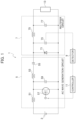
- Fig. 1 is a circuit diagram illustrating a configuration of a power conversion device according to the present embodiment.
- the power conversion device 1 includes an input power supply 3, an alternating-current (AC) wave generation circuit 5, a rectifier circuit 7, a detector 9, a controller 11, and a load 13.
- the power conversion device 1 converts direct current (DC) power input from the input power supply 3 into AC power, and supplies DC power rectified by the rectifier circuit 7 to the load 13.
- DC direct current
- the AC wave generation circuit 5 includes a choke coil 51, a resonant coil 53, a resonant capacitor 55, a switching element 57, and a shunt capacitor 59.
- the AC wave generation circuit 5 is a class-E inverter circuit that generates an AC wave from the DC power from the input power supply 3 depending on a drive frequency of the switching element 57.
- the choke coil 51 is connected between the input power supply 3 and the switching element 57.
- the resonant coil 53 and the resonant capacitor 55 form a resonant circuit connected to a connection point between the choke coil 51 and the switching element 57.
- the switching element 57 turns on/off the input to the resonant circuit.
- the shunt capacitor 59 is connected in parallel to the switching element 57.
- the rectifier circuit 7 is a class-E circuit that includes a diode 71, a rectifier capacitor 73, a filter coil 75, and a filter capacitor 77 to rectify an AC wave with a configuration in which the diode 71 and the rectifier capacitor 73 are connected in parallel.
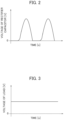
- the rectifier circuit 7 causes the diode 71 to subject the AC wave generated in the AC wave generation circuit 5 to half-wave rectification to charge the rectified energy to the rectifier capacitor 73.
- the rectifier circuit 7 transfers the charged energy to an LC filter implemented by the filter coil 75 and the filter capacitor 77 to transmit the power in a DC waveform to the load 13.
- a voltage waveform of the rectifier capacitor 73 has a shape subjected to half-wave rectification, the voltage waveform to be supplied to the load 13 via the LC filter becomes direct current, as illustrated in Fig. 3 .
- the detector 9 detects a change in impedance of the rectifier capacitor 73.
- the detector 9 detects a current value or a voltage value of the rectifier capacitor 73, and detects a degree of change in impedance of the rectifier capacitor 73 according to a change in the current value or the voltage value.
- the detector 9 may detect a temperature of the rectifier capacitor 73 so as to detect a degree of change in the impedance of the rectifier capacitor 73 according to a change in the temperature.
- the detector 9, when provided with any of an ammeter, a voltmeter, or a thermometer may detect a change in the impedance by calculating the amount of change in the value of any of the current, the voltage, or the temperature.
- the impedance of the rectifier capacitor 73 has a set value set so that the power conversion device 1 can execute optimum operations. The detector 9 thus detects how much the impedance of the rectifier capacitor 73 is changed from the set value.
- the controller 11 regulates the AC wave input to the rectifier capacitor 73 so as to suppress the change in the impedance of the rectifier capacitor 73, depending on the change in the impedance of the rectifier capacitor 73 detected by the detector 9.
- the controller 11 regulates the AC wave input to the rectifier capacitor 73 so as to decrease an output voltage of the power conversion device 1.
- the controller 11 regulates the AC wave input to the rectifier capacitor 73 so as to increase the output voltage of the power conversion device 1.
- the controller 11 changes the drive frequency of the switching element 57 to regulate a frequency of the AC wave generated in the AC wave generation circuit 5, so as to regulate the AC wave input to the rectifier capacitor 73.
- the controller 11 is fabricated by a multi-purpose electronic circuit including a microcomputer, a microprocessor, and a CPU, and peripheral components such as a memory, and has a function of controlling the AC wave generation circuit 5 and the rectifier circuit 7.
- the respective functions of the controller 11 can be implemented in single or plural processing circuits.
- the respective processing circuits include a programmed processing device, such as a processing device including an electric circuit, for example, and also include an application-specific integrated circuit (ASIC) configured to execute the functions described herein, and conventional circuit components.
- ASIC application-specific integrated circuit
- a method for controlling the power conversion device 1 according to the present embodiment is described below.
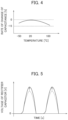
- a capacitance of the rectifier capacitor 73 included in the rectifier circuit 7 has the temperature characteristics as illustrated in Fig. 4 , and a capacitance value of the rectifier capacitor 73 thus decreases as the temperature of the rectifier capacitor 73 increases.
- the power conversion device 1 regulates the AC wave input to the rectifier capacitor 73 depending on the change in the impedance of the rectifier capacitor 73 detected by the detector 9 so as to suppress the change in the impedance of the rectifier capacitor 73.
- the controller 11 regulates the AC wave input to the rectifier capacitor 73 so as to decrease the output voltage of the power conversion device 1.
- the controller 11 regulates the AC wave input to the rectifier capacitor 73 so as to increase the output voltage of the power conversion device 1.
- the controller 11 changes the drive frequency of the switching element 57 to regulate the frequency of the AC wave generated in the AC wave generation circuit 5, so as to regulate the AC wave input to the rectifier capacitor 73.
- the impedance of the rectifier capacitor 73 is increased above the set value, and the voltage of the rectifier capacitor 73 is also increased, as given by the formula (1).
- the drive frequency of the switching element 57 is caused to increase above a predetermined value to increase the frequency of the AC wave generated by the AC wave generation circuit 5
- the frequency of the AC wave input to the rectifier circuit 7 is also increased.
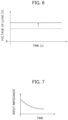
- the value ⁇ in the formula (1) is then increased, and the impedance of the rectifier capacitor 73 is decreased accordingly. This leads the peak value of the voltage waveform of the rectifier capacitor 73 to be decreased as illustrated in Fig.
- the predetermined value set for the drive frequency may be a frequency obtained upon the execution of an optimum operation so that the load 13 has a design value.
- the impedance of the rectifier capacitor 73 is decreased below the set value, and the voltage of the rectifier capacitor 73 is also decreased, as given by the formula (1).
- the drive frequency of the switching element 57 is caused to decrease below the predetermined value to decrease the frequency of the AC wave generated by the AC wave generation circuit 5
- the frequency of the AC wave input to the rectifier circuit 7 is also decreased.
- the value ⁇ in the formula (1) is then decreased, and the impedance of the rectifier capacitor 73 is increased accordingly. This leads the peak value of the voltage waveform of the rectifier capacitor 73 to be increased, and also leads the output voltage of the power conversion device 1 output to the load 13 to be increased.
- regulating the frequency of the AC wave input to the rectifier capacitor 73 suppresses the change in the impedance of the rectifier capacitor 73.
- This can control the input impedance, the input current, and the output voltage of the power conversion device 1 each to be constant, so as to prevent over temperature of the components caused by thermal runaway.
- the AC wave generation circuit 5 is the class-E inverter circuit that can achieve zero-voltage switching (ZVS) due to voltage resonance, so as to greatly suppress the switching loss. This can reduce the influence which increases the drive frequency to a small level accordingly.
- ZVS zero-voltage switching
- the rectifier circuit 7 is the class-E circuit in which the diode 71 and the rectifier capacitor 73 are connected in parallel.
- other rectifier circuits such as full-wave rectifier circuits with diode, do not have a rectifier capacitor to charge energy.
- the rectifier circuit 7 thus does not cause a change in the output voltage, the input current, or the input impedance because of a change in the temperature of the rectifier capacitor, so as to prevent over temperature that is the problem to be solved by the present embodiment.
- snubber circuits While typical snubber circuits also employ a configuration in which a diode and a capacitor are connected in parallel, the snubber circuits execute an operation of absorbing a surge voltage derived from high-speed switching by the capacitor, and thus have a different function from the rectifier circuit 7 according to the present embodiment.
- the AC wave generation circuit 5 may have any configuration that generates and outputs the AC wave, instead of the configuration illustrated in Fig. 1 , and may be a resonant circuit including a plurality of switches, such as a class-D inverter circuit.
- the filter of the rectifier circuit 7 is not limited to the LC filter, and may have any structure.
- a transformer for isolation may be arranged between the AC wave generation circuit 5 and the rectifier circuit 7.
- the power conversion device 1 regulates the AC wave input to the rectifier capacitor 73 so as to suppress a change in the impedance of the rectifier capacitor 73, depending on the change in the impedance of the rectifier capacitor 73. This can suppress the change in the input current, the output voltage, and the input impedance of the power conversion device 1, so as to prevent over temperature of the rectifier capacitor 73.
- the power conversion device 1 regulates the AC wave input to the rectifier capacitor 73 so as to decrease the output voltage of the power conversion device 1 when the impedance of the rectifier capacitor 73 is increased above the set value.
- the power conversion device 1 regulates the AC wave input to the rectifier capacitor 73 so as to increase the output voltage of the power conversion device 1 when the impedance of the rectifier capacitor 73 is decreased below the set value.
- the power conversion device 1 can suppress the change in the impedance of the rectifier capacitor 73, so as to prevent over temperature of the rectifier capacitor 73.
- the power conversion device 1 increases the frequency of the AC wave generated by the AC wave generation circuit 5 when the impedance of the rectifier capacitor 73 is increased above the set value.
- the power conversion device 1 decreases the frequency of the AC wave generated by the AC wave generation circuit 5 when the impedance of the rectifier capacitor 73 is decreased below the set value.
- the power conversion device 1 can suppress the change in the impedance of the rectifier capacitor 73 by regulating the frequency of the AC wave input to the rectifier capacitor 73, so as to prevent over temperature of the rectifier capacitor 73.
- the power conversion device 1 detects the change in the impedance of the rectifier capacitor 73. Since the power conversion device 1 directly detects the change in the impedance of the rectifier capacitor 73, the power conversion device 1 can immediately suppress the change in the impedance of the rectifier capacitor 73, so as to prevent over temperature of the rectifier capacitor 73 with a high accuracy.
- the power conversion device 1 includes the AC wave generation circuit 5 that includes the resonant circuit including the resonant coil 53 and the resonant capacitor 55, and the switching element 57 that turns on/off the input to the resonant circuit.
- the power conversion device 1 can easily regulate the AC wave input to the rectifier capacitor 73 by regulating the drive frequency of the switching element 57. This can suppress the change in the impedance of the rectifier capacitor 73, so as to prevent over temperature of the rectifier capacitor 73.
- the power conversion device 1 includes the AC wave generation circuit 5 that further includes the choke coil 51 connected between the input power supply 3 and the switching element 57, and the shunt capacitor 59 connected in parallel to the switching element 57.
- the resonant circuit is connected to the connection point between the choke coil 51 and the switching element 57. Since the AC wave generation circuit 5 can be implemented as the class-E inverter circuit, a switching loss can be reduced to a small level. This can not only suppress an influence caused by an increase in switching loss upon the increase in the drive frequency of the switching element 57 but also prevent over temperature of the rectifier capacitor 73.
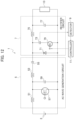
- Fig. 12 is a circuit diagram illustrating a configuration of a power conversion device according to the present embodiment. As illustrated in Fig. 12 , the power conversion device 1 according to the present embodiment differs from the first embodiment in further including a rectifier switch 79 as a switching element which turns on/off the AC wave input to the rectifier capacitor 73. The rectifier switch 79 is connected in series to the rectifier capacitor 73.
- a method for controlling the power conversion device 1 according to the present embodiment is described below.
- the controller 11 controls the on/off operation of the rectifier switch 79 so as to regulate the AC wave input to the rectifier capacitor 73.
- the controller 11 controls the rectifier switch 79 so as to decrease the period of time during which the AC wave is input to the rectifier capacitor 37.
- the controller 11 controls the rectifier switch 79 so as to increase the period of time during which the AC wave is input to the rectifier capacitor 37.
- an input stop period is provided at a point at which the voltage of the rectifier capacitor 73 starts increasing as illustrated in Fig. 13 .
- the input stop period is a period during which the rectifier switch 79 is turned off so as not to input the AC wave to the rectifier capacitor 73. After this period, the rectifier switch 79 is turned on so as to input the AC wave to the rectifier capacitor 73 (an AC wave input period).
- the AC wave input period is shorter as the input stop period is set to be longer, so as to set the period of time during which the AC wave is input to the rectifier capacitor 73 to be shorter than a predetermined time.
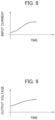
- the power to be charged to the rectifier capacitor 73 is thus reduced, so as to decrease the output voltage of the power conversion device 1 output to the load 13, as illustrated in Fig. 14 .
- the predetermined time may be set to a time upon the execution of an optimum operation so that the load 13 has a design value.
- the capacitance of the rectifier capacitor 73 is increased in association with a decrease in the temperature of the rectifier capacitor 73, the impedance of the rectifier capacitor 73 is decreased as given by the formula (1), and the voltage of the rectifier capacitor 73 is decreased.
- the input stop period as illustrated in Fig. 13 is decreased so as to set the period of time during which the AC wave is input to the rectifier capacitor 73 to be longer than the predetermined time. The power to be charged to the rectifier capacitor 73 is thus increased, so as to increase the output voltage of the power conversion device 1 output to the load 13.
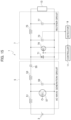
- the rectifier switch 79 may be connected in parallel to the rectifier capacitor 73, as illustrated in Fig. 15 . In this case, the operation of turning on/off the rectifier switch 79 is controlled reversely to the case of being connected in series as illustrated in Fig. 12 . In particular, when the rectifier switch 79 is connected in parallel to the rectifier capacitor 73, by turning on the rectifier switch 79, the input stop period during which the AC wave is not input to the rectifier capacitor 73 is set. The AC wave is input to the rectifier capacitor 73 when the rectifier switch 79 is turned off.
- the power conversion device 1 decreases the period of time during which the AC wave is input to the rectifier capacitor 73 when the impedance of the rectifier capacitor 73 is increased above the set value.
- the power conversion device 1 increases the period of time during which the AC wave is input to the rectifier capacitor 73 when the impedance of the rectifier capacitor 73 is decreased below the set value.
- the power conversion device 1 can suppress the change in the impedance of the rectifier capacitor 73 by regulating the period of time during which the AC wave is input to the rectifier capacitor 73. As a result, the power conversion device 1 can prevent over temperature of the rectifier capacitor 73.
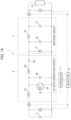
- Fig. 16 is a circuit diagram illustrating a configuration of a power conversion device according to the present embodiment.
- the power conversion device 1 according to the present embodiment differs from the first and second embodiments in detecting an input voltage, an input current, an output voltage, and an output current of the power conversion device 1.
- the detector 9 detects the input voltage Vi, the input current Ii, the output voltage Vo, and the output current Io of the power conversion device 1, instead of the change in the impedance of the rectifier capacitor 73. Since a typical power conversion device detects an input voltage, an input current, an output voltage, and an output current, these values may be detected by a general method such as installing a voltmeter or an ammeter in this embodiment,.
- the power conversion device 1 is controlled based on the input voltage Vi, the input current Ii, the output voltage Vo, and the output current Io of the power conversion device 1.
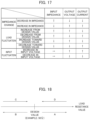
- the controller 11 determines whether the impedance of the rectifier capacitor 73 is increased above the set value or decreased below the set value, while referring to a table as illustrated in Fig. 17.
- Fig. 17 illustrates upward arrows indicating an increase, downward arrows indicating a decrease, and sideways arrows indicating no change.
- the controller 11 determines that the capacitance of the rectifier capacitor 73 is decreased and the impedance is increased above the set value.
- the controller 11 determines that the capacitance of the rectifier capacitor 73 is increased and the impedance is decreased below the set value.
- the set value for each of the input impedance, the output voltage, and the output current is a value when the power conversion device 1 executes an optimum operation.
- the controller 11 distinguishes between the case where the load 13 fluctuates and the case where the input voltage fluctuates based on the input impedance Zi, the output voltage Vo, and the output current Io.
- the controller 11 determines that this case corresponds to "change A" in which a resistance value of the load 13 is increased above the design value.
- the power conversion device 1 sets and determines the resistance value of the load 13 in optimum operation to 50 ⁇ as the design value, for example.
- the "change A” is a case in which the resistance value of the load 13 is increased in a direction away from the design value determined.
- the controller 11 determines that this case corresponds to "change B" as illustrated in Fig. 18 .
- the "change B” is a case in which the resistance value of the load 13 is decreased in the direction away from the design value.
- the controller 11 determines that this case corresponds to "change C" as illustrated in Fig. 18 .
- the "change C” is a case in which the resistance value of the load 13 is increased in the direction approaching the design value.
- the controller 11 determines that this case corresponds to "change D” as illustrated in Fig. 18 .
- the "change D” is a case in which the resistance value of the load 13 is decreased in the direction approaching the design value.
- the controller 11 determines that this case corresponds to an input fluctuation, and determines that the input voltage is increased when the output voltage Vo and the output current Io are increased above the set value. When the output voltage Vo and the output current Io are decreased below the set value, the controller 11 determines that input voltage is decreased.
- the controller 11 when determining the change in the impedance, controls the drive frequency of the switching element 57.
- the controller 11 when determining that the impedance of the rectifier capacitor 73 is increased above the set value, increases the drive frequency of the switching element 57 to decrease the impedance of the rectifier capacitor 73.
- Fig. 16 illustrates the case in which the power conversion device according to the present embodiment is applied to the power conversion device according to the first embodiment illustrated in Fig. 1
- the power conversion device according to the present embodiment may be applied to the power conversion device according to the second embodiment illustrated in Fig. 12 or Fig. 15 .
- the power conversion device 1 can determine all of the change in the impedance of the rectifier capacitor 73, the fluctuation in the load 13, and the fluctuation in the input voltage by use of the input impedance, the output voltage, and the output current of the power conversion device 1. It could be presumed that the impedance of the rectifier capacitor 73 is not necessarily changed even though the input impedance is changed, but the input impedance may be changed in response to the fluctuation in the load 13. In view of this, the power conversion device 1 according to the present embodiment accurately makes a determination of which case is caused, the change in the impedance of the rectifier capacitor 73, or the fluctuation in the input voltage or the fluctuation in the load 13, according to the table as illustrated in Fig. 17 .
- Another method could also be used that measures the temperature of the rectifier capacitor 73 and estimates the amount of change in the capacitance value according to the change in the temperature. This method, however, needs to add a measurement device for measuring the temperature at a specific point. Still another method could be used that accurately estimates the change in the capacitance value according to the value of the increase in the temperature. This method also needs to preliminarily measure the characteristics including a variation in each of capacitors, and further needs to add a checking process of acquiring a relationship between the temperature and the capacitance value for each of devices to be manufactured. This requires additional components for estimating the amount of change in the capacitance value according to the change in the temperature of the rectifier capacitor 73, impeding a reduction in size of the device or a reduction in cost.
- the power conversion device 1 detects the input voltage, the input current, the output voltage, and the output current of the power conversion device 1. Therefore, the power conversion device 1 only uses the voltage and the current of the input/output power which are typically detected. Thus, the power conversion device 1 can determine the change in the impedance of the rectifier capacitor 73 with no additional components provided for measuring the temperature. The power conversion device 1 thus can suppress the change in the impedance of the rectifier capacitor 73 with no addition of components or devices to prevent over temperature of the rectifier capacitor 73.
- the power conversion device 1 also calculates the input impedance according to the input voltage and the input current, and determines that the impedance of the rectifier capacitor 73 is increased above the set value when the input impedance is decreased below the set value and the output voltage and the output current are increased above the set value.
- the power conversion device 1 determines that the impedance of the rectifier capacitor 73 is decreased below the set value when the input impedance is increased above the set value and the output voltage and the output current are decreased below the set value.
- the power conversion device 1 can determine whether the impedance of the rectifier capacitor 73 is increased above or decreased below the set value, with no addition of components or devices. The power conversion device 1 thus can suppress the change in the impedance of the rectifier capacitor 73 based on this determination, so as to prevent over temperature of the rectifier capacitor 73.
- a method for controlling a power conversion device comprising an alternating-current wave generation circuit configured to generate an alternating-current wave, and a rectifier circuit configured to rectify the alternating-current wave generated by the alternating-current wave generation circuit with a configuration in which a rectifier capacitor and a diode are connected in parallel, the method comprising regulating the alternating-current wave input to the rectifier capacitor depending on a change in impedance of the rectifier capacitor so as to suppress the change in the impedance of the rectifier capacitor.
- a power conversion device comprising:
- the alternating-current wave generation circuit includes a resonant circuit including a resonant coil and a resonant capacitor, and a switching element configured to turn on or off an input to the resonant circuit.
Landscapes
- Engineering & Computer Science (AREA)
- Power Engineering (AREA)
- Rectifiers (AREA)
- Dc-Dc Converters (AREA)
- Inverter Devices (AREA)
Priority Applications (1)
| Application Number | Priority Date | Filing Date | Title |
|---|---|---|---|
| EP23180004.6A EP4220922B1 (de) | 2019-03-22 | 2019-03-22 | Verfahren zur steuerung einer leistungsumwandlungsvorrichtung und leistungsumwandlungsvorrichtung |
Applications Claiming Priority (3)
| Application Number | Priority Date | Filing Date | Title |
|---|---|---|---|
| EP19921261.4A EP3944482B1 (de) | 2019-03-22 | 2019-03-22 | Verfahren zur steuerung eines leistungswandlers und leistungswandler |
| EP23180004.6A EP4220922B1 (de) | 2019-03-22 | 2019-03-22 | Verfahren zur steuerung einer leistungsumwandlungsvorrichtung und leistungsumwandlungsvorrichtung |
| PCT/IB2019/000313 WO2020194007A1 (ja) | 2019-03-22 | 2019-03-22 | 電力変換装置の制御方法及び電力変換装置 |
Related Parent Applications (2)
| Application Number | Title | Priority Date | Filing Date |
|---|---|---|---|
| EP19921261.4A Division EP3944482B1 (de) | 2019-03-22 | 2019-03-22 | Verfahren zur steuerung eines leistungswandlers und leistungswandler |
| EP19921261.4A Division-Into EP3944482B1 (de) | 2019-03-22 | 2019-03-22 | Verfahren zur steuerung eines leistungswandlers und leistungswandler |
Publications (3)
| Publication Number | Publication Date |
|---|---|
| EP4220922A2 true EP4220922A2 (de) | 2023-08-02 |
| EP4220922A3 EP4220922A3 (de) | 2023-10-04 |
| EP4220922B1 EP4220922B1 (de) | 2024-12-11 |
Family
ID=72609868
Family Applications (2)
| Application Number | Title | Priority Date | Filing Date |
|---|---|---|---|
| EP23180004.6A Active EP4220922B1 (de) | 2019-03-22 | 2019-03-22 | Verfahren zur steuerung einer leistungsumwandlungsvorrichtung und leistungsumwandlungsvorrichtung |
| EP19921261.4A Active EP3944482B1 (de) | 2019-03-22 | 2019-03-22 | Verfahren zur steuerung eines leistungswandlers und leistungswandler |
Family Applications After (1)
| Application Number | Title | Priority Date | Filing Date |
|---|---|---|---|
| EP19921261.4A Active EP3944482B1 (de) | 2019-03-22 | 2019-03-22 | Verfahren zur steuerung eines leistungswandlers und leistungswandler |
Country Status (5)
| Country | Link |
|---|---|
| US (1) | US11616448B2 (de) |
| EP (2) | EP4220922B1 (de) |
| JP (1) | JP7129552B2 (de) |
| CN (1) | CN113557657B (de) |
| WO (1) | WO2020194007A1 (de) |
Families Citing this family (4)
| Publication number | Priority date | Publication date | Assignee | Title |
|---|---|---|---|---|
| CN113381622B (zh) * | 2021-05-21 | 2023-11-03 | 西安理工大学 | 一种用于无线输电高频e类整流器并联电路及控制方法 |
| EP4529005A4 (de) * | 2022-05-17 | 2025-07-23 | Nissan Motor | Leistungsumwandlungsvorrichtung und verfahren zur steuerung davon |
| WO2024201093A1 (ja) * | 2023-03-29 | 2024-10-03 | 日産自動車株式会社 | 電力変換装置 |
| WO2025046255A1 (ja) * | 2023-09-01 | 2025-03-06 | 日産自動車株式会社 | 電力変換装置の制御方法及び電力変換装置 |
Citations (1)
| Publication number | Priority date | Publication date | Assignee | Title |
|---|---|---|---|---|
| WO2015087396A1 (ja) | 2013-12-10 | 2015-06-18 | 三菱電機エンジニアリング株式会社 | 高周波電源用整流回路 |
Family Cites Families (14)
| Publication number | Priority date | Publication date | Assignee | Title |
|---|---|---|---|---|
| JP3551987B2 (ja) * | 1994-11-16 | 2004-08-11 | 真作 森 | 間引き制御方式を適用したe級整流器 |
| US20010019490A1 (en) * | 1997-12-03 | 2001-09-06 | Fuji Electric Co., Ltd. | Switching power supply |
| JP3465682B2 (ja) * | 2000-10-27 | 2003-11-10 | サンケン電気株式会社 | スイッチング電源 |
| JP4321408B2 (ja) * | 2004-08-26 | 2009-08-26 | 株式会社デンソー | パワースイッチング装置の制御電源装置用dc−dcコンバータ |
| US7576528B2 (en) * | 2006-10-04 | 2009-08-18 | Power Integrations, Inc. | Control circuit responsive to an impedance |
| JP2010197284A (ja) * | 2009-02-26 | 2010-09-09 | Mitsubishi Electric Corp | 電解コンデンサの異常検知装置 |
| JP2012023820A (ja) * | 2010-07-13 | 2012-02-02 | Daikin Ind Ltd | 電力変換装置 |
| US9318944B2 (en) * | 2013-04-29 | 2016-04-19 | Rockwell Automation Technologies, Inc. | Methods and apparatus for active front end filter capacitor degradation detection |
| KR20150080172A (ko) * | 2013-12-30 | 2015-07-09 | 주식회사 효성 | 전력변환 보상 회로 및 방법 |
| JP6321967B2 (ja) * | 2014-01-17 | 2018-05-09 | ルネサスエレクトロニクス株式会社 | 半導体集積回路およびその動作方法 |
| EP3111543B1 (de) * | 2014-02-27 | 2020-09-30 | Danmarks Tekniske Universitet | Burst-modus-betriebssteuerung |
| KR20170002447A (ko) | 2014-04-15 | 2017-01-06 | 덴마크스 텍니스케 유니버시테트 | 공진 dc-dc 파워 컨버터 어셈블리 |
| US11476748B2 (en) * | 2018-04-20 | 2022-10-18 | Nissan Motor Co., Ltd. | Method for controlling resonant power conversion device, and resonant power conversion device |
| KR102013118B1 (ko) * | 2018-06-05 | 2019-08-22 | (주)아이언디바이스 | 스피커 드라이버 및 그 동작 방법 |
-
2019
- 2019-03-22 EP EP23180004.6A patent/EP4220922B1/de active Active
- 2019-03-22 CN CN201980093885.5A patent/CN113557657B/zh active Active
- 2019-03-22 US US17/440,920 patent/US11616448B2/en active Active
- 2019-03-22 JP JP2021508081A patent/JP7129552B2/ja active Active
- 2019-03-22 WO PCT/IB2019/000313 patent/WO2020194007A1/ja not_active Ceased
- 2019-03-22 EP EP19921261.4A patent/EP3944482B1/de active Active
Patent Citations (1)
| Publication number | Priority date | Publication date | Assignee | Title |
|---|---|---|---|---|
| WO2015087396A1 (ja) | 2013-12-10 | 2015-06-18 | 三菱電機エンジニアリング株式会社 | 高周波電源用整流回路 |
Also Published As
| Publication number | Publication date |
|---|---|
| US20220166342A1 (en) | 2022-05-26 |
| WO2020194007A1 (ja) | 2020-10-01 |
| JPWO2020194007A1 (de) | 2020-10-01 |
| US11616448B2 (en) | 2023-03-28 |
| EP3944482A4 (de) | 2022-03-16 |
| EP3944482B1 (de) | 2024-01-17 |
| EP4220922A3 (de) | 2023-10-04 |
| EP4220922B1 (de) | 2024-12-11 |
| JP7129552B2 (ja) | 2022-09-01 |
| CN113557657B (zh) | 2023-06-13 |
| EP3944482A1 (de) | 2022-01-26 |
| CN113557657A (zh) | 2021-10-26 |
Similar Documents
| Publication | Publication Date | Title |
|---|---|---|
| US9479067B2 (en) | System and method for a switched-mode power supply | |
| US11165362B2 (en) | Accurate valley detection for secondary controlled flyback converter | |
| EP4220922A2 (de) | Verfahren zur steuerung einer leistungsumwandlungsvorrichtung und leistungsumwandlungsvorrichtung | |
| US8411397B2 (en) | Power supply apparatus and method | |
| US9812978B2 (en) | Circuit and method for driving synchronous rectifiers for high-frequency flyback converters | |
| US10056843B2 (en) | Method and device for supplying energy to a low-voltage load | |
| CN103780064B (zh) | 具备副边反馈电流检测的开关电源控制电路 | |
| US11336170B2 (en) | Frequency setting in a power supply device, power supply control device, and power supply control method | |
| EP1993197A2 (de) | Gleichstrom-/Wechselstrom-Wandler und Gleichstrom-/Wechselstrom-Umwandlungsverfahren damit | |
| JP2012023832A (ja) | 起動回路 | |
| TW201526492A (zh) | 電轉換裝置 | |
| JP5757454B2 (ja) | スイッチング電源装置 | |
| CN111492253A (zh) | 电压不平衡判断方法和电力转换装置 | |
| EP3582366B1 (de) | Energieübertragungsseitige vorrichtung | |
| JP6843094B2 (ja) | スイッチング電源装置 | |
| JPH01311864A (ja) | スイツチング方式安定化電源回路装置 | |
| EP3998699A1 (de) | Stromumwandlungsvorrichtung und verfahren zur steuerung davon | |
| US20150256098A1 (en) | Mains power converter, and methods of operating and equipment incorporating the same | |
| CN215897283U (zh) | 一种并联谐振感应加热系统及其漏电保护电路 | |
| CN118199397B (zh) | 一种准谐振开关元件的控制方法、电子设备及存储介质 | |
| EP2775604A1 (de) | Netzstromwandler sowie Betriebsverfahren und Anlage damit | |
| CN116449087B (zh) | 掉电检测方法、控制器及储能设备 | |
| US20250088115A1 (en) | Controller | |
| JP5188536B2 (ja) | 電源検査装置、電源検査方法、電源装置 | |
| KR20140116591A (ko) | 3상 입력 전원의 결상 검출 장치 |
Legal Events
| Date | Code | Title | Description |
|---|---|---|---|
| PUAI | Public reference made under article 153(3) epc to a published international application that has entered the european phase |
Free format text: ORIGINAL CODE: 0009012 |
|
| STAA | Information on the status of an ep patent application or granted ep patent |
Free format text: STATUS: REQUEST FOR EXAMINATION WAS MADE |
|
| 17P | Request for examination filed |
Effective date: 20230619 |
|
| AC | Divisional application: reference to earlier application |
Ref document number: 3944482 Country of ref document: EP Kind code of ref document: P |
|
| AK | Designated contracting states |
Kind code of ref document: A2 Designated state(s): AL AT BE BG CH CY CZ DE DK EE ES FI FR GB GR HR HU IE IS IT LI LT LU LV MC MK MT NL NO PL PT RO RS SE SI SK SM TR |
|
| PUAL | Search report despatched |
Free format text: ORIGINAL CODE: 0009013 |
|
| AK | Designated contracting states |
Kind code of ref document: A3 Designated state(s): AL AT BE BG CH CY CZ DE DK EE ES FI FR GB GR HR HU IE IS IT LI LT LU LV MC MK MT NL NO PL PT RO RS SE SI SK SM TR |
|
| RIC1 | Information provided on ipc code assigned before grant |
Ipc: H02M 1/32 20070101ALI20230825BHEP Ipc: H02M 3/00 20060101ALI20230825BHEP Ipc: H02M 1/00 20060101ALI20230825BHEP Ipc: H02M 3/156 20060101ALI20230825BHEP Ipc: H02M 7/48 20070101ALI20230825BHEP Ipc: H02M 7/06 20060101ALI20230825BHEP Ipc: H02M 3/155 20060101AFI20230825BHEP |
|
| RBV | Designated contracting states (corrected) |
Designated state(s): AL AT BE BG CH CY CZ DE DK EE ES FI FR GB GR HR HU IE IS IT LI LT LU LV MC MK MT NL NO PL PT RO RS SE SI SK SM TR |
|
| GRAP | Despatch of communication of intention to grant a patent |
Free format text: ORIGINAL CODE: EPIDOSNIGR1 |
|
| STAA | Information on the status of an ep patent application or granted ep patent |
Free format text: STATUS: GRANT OF PATENT IS INTENDED |
|
| RIC1 | Information provided on ipc code assigned before grant |
Ipc: H02M 1/32 20070101ALI20240912BHEP Ipc: H02M 3/00 20060101ALI20240912BHEP Ipc: H02M 1/00 20060101ALI20240912BHEP Ipc: H02M 3/156 20060101ALI20240912BHEP Ipc: H02M 7/48 20070101ALI20240912BHEP Ipc: H02M 7/06 20060101ALI20240912BHEP Ipc: H02M 3/155 20060101AFI20240912BHEP |
|
| GRAS | Grant fee paid |
Free format text: ORIGINAL CODE: EPIDOSNIGR3 |
|
| GRAA | (expected) grant |
Free format text: ORIGINAL CODE: 0009210 |
|
| STAA | Information on the status of an ep patent application or granted ep patent |
Free format text: STATUS: THE PATENT HAS BEEN GRANTED |
|
| INTG | Intention to grant announced |
Effective date: 20241010 |
|
| AC | Divisional application: reference to earlier application |
Ref document number: 3944482 Country of ref document: EP Kind code of ref document: P |
|
| AK | Designated contracting states |
Kind code of ref document: B1 Designated state(s): AL AT BE BG CH CY CZ DE DK EE ES FI FR GB GR HR HU IE IS IT LI LT LU LV MC MK MT NL NO PL PT RO RS SE SI SK SM TR |
|
| REG | Reference to a national code |
Ref country code: GB Ref legal event code: FG4D |
|
| RIN1 | Information on inventor provided before grant (corrected) |
Inventor name: INOUE, KEISUKE Inventor name: YAMAGAMI, SHIGEHARU Inventor name: KAI, TOSHIHIRO Inventor name: SAITO, KOUSUKE |
|
| REG | Reference to a national code |
Ref country code: CH Ref legal event code: EP |
|
| REG | Reference to a national code |
Ref country code: IE Ref legal event code: FG4D |
|
| REG | Reference to a national code |
Ref country code: DE Ref legal event code: R096 Ref document number: 602019063555 Country of ref document: DE |
|
| REG | Reference to a national code |
Ref country code: LT Ref legal event code: MG9D |
|
| PG25 | Lapsed in a contracting state [announced via postgrant information from national office to epo] |
Ref country code: HR Free format text: LAPSE BECAUSE OF FAILURE TO SUBMIT A TRANSLATION OF THE DESCRIPTION OR TO PAY THE FEE WITHIN THE PRESCRIBED TIME-LIMIT Effective date: 20241211 |
|
| PG25 | Lapsed in a contracting state [announced via postgrant information from national office to epo] |
Ref country code: FI Free format text: LAPSE BECAUSE OF FAILURE TO SUBMIT A TRANSLATION OF THE DESCRIPTION OR TO PAY THE FEE WITHIN THE PRESCRIBED TIME-LIMIT Effective date: 20241211 |
|
| PG25 | Lapsed in a contracting state [announced via postgrant information from national office to epo] |
Ref country code: BG Free format text: LAPSE BECAUSE OF FAILURE TO SUBMIT A TRANSLATION OF THE DESCRIPTION OR TO PAY THE FEE WITHIN THE PRESCRIBED TIME-LIMIT Effective date: 20241211 |
|
| REG | Reference to a national code |
Ref country code: NL Ref legal event code: MP Effective date: 20241211 |
|
| PG25 | Lapsed in a contracting state [announced via postgrant information from national office to epo] |
Ref country code: ES Free format text: LAPSE BECAUSE OF FAILURE TO SUBMIT A TRANSLATION OF THE DESCRIPTION OR TO PAY THE FEE WITHIN THE PRESCRIBED TIME-LIMIT Effective date: 20241211 |
|
| PG25 | Lapsed in a contracting state [announced via postgrant information from national office to epo] |
Ref country code: NO Free format text: LAPSE BECAUSE OF FAILURE TO SUBMIT A TRANSLATION OF THE DESCRIPTION OR TO PAY THE FEE WITHIN THE PRESCRIBED TIME-LIMIT Effective date: 20250311 |
|
| PG25 | Lapsed in a contracting state [announced via postgrant information from national office to epo] |
Ref country code: LV Free format text: LAPSE BECAUSE OF FAILURE TO SUBMIT A TRANSLATION OF THE DESCRIPTION OR TO PAY THE FEE WITHIN THE PRESCRIBED TIME-LIMIT Effective date: 20241211 Ref country code: GR Free format text: LAPSE BECAUSE OF FAILURE TO SUBMIT A TRANSLATION OF THE DESCRIPTION OR TO PAY THE FEE WITHIN THE PRESCRIBED TIME-LIMIT Effective date: 20250312 |
|
| PG25 | Lapsed in a contracting state [announced via postgrant information from national office to epo] |
Ref country code: RS Free format text: LAPSE BECAUSE OF FAILURE TO SUBMIT A TRANSLATION OF THE DESCRIPTION OR TO PAY THE FEE WITHIN THE PRESCRIBED TIME-LIMIT Effective date: 20250311 |
|
| PG25 | Lapsed in a contracting state [announced via postgrant information from national office to epo] |
Ref country code: NL Free format text: LAPSE BECAUSE OF FAILURE TO SUBMIT A TRANSLATION OF THE DESCRIPTION OR TO PAY THE FEE WITHIN THE PRESCRIBED TIME-LIMIT Effective date: 20241211 |
|
| REG | Reference to a national code |
Ref country code: AT Ref legal event code: MK05 Ref document number: 1751156 Country of ref document: AT Kind code of ref document: T Effective date: 20241211 |
|
| PG25 | Lapsed in a contracting state [announced via postgrant information from national office to epo] |
Ref country code: SM Free format text: LAPSE BECAUSE OF FAILURE TO SUBMIT A TRANSLATION OF THE DESCRIPTION OR TO PAY THE FEE WITHIN THE PRESCRIBED TIME-LIMIT Effective date: 20241211 |
|
| PG25 | Lapsed in a contracting state [announced via postgrant information from national office to epo] |
Ref country code: PL Free format text: LAPSE BECAUSE OF FAILURE TO SUBMIT A TRANSLATION OF THE DESCRIPTION OR TO PAY THE FEE WITHIN THE PRESCRIBED TIME-LIMIT Effective date: 20241211 |
|
| PG25 | Lapsed in a contracting state [announced via postgrant information from national office to epo] |
Ref country code: IS Free format text: LAPSE BECAUSE OF FAILURE TO SUBMIT A TRANSLATION OF THE DESCRIPTION OR TO PAY THE FEE WITHIN THE PRESCRIBED TIME-LIMIT Effective date: 20250411 |
|
| PG25 | Lapsed in a contracting state [announced via postgrant information from national office to epo] |
Ref country code: PT Free format text: LAPSE BECAUSE OF FAILURE TO SUBMIT A TRANSLATION OF THE DESCRIPTION OR TO PAY THE FEE WITHIN THE PRESCRIBED TIME-LIMIT Effective date: 20250411 |
|
| PG25 | Lapsed in a contracting state [announced via postgrant information from national office to epo] |
Ref country code: EE Free format text: LAPSE BECAUSE OF FAILURE TO SUBMIT A TRANSLATION OF THE DESCRIPTION OR TO PAY THE FEE WITHIN THE PRESCRIBED TIME-LIMIT Effective date: 20241211 |
|
| PG25 | Lapsed in a contracting state [announced via postgrant information from national office to epo] |
Ref country code: AT Free format text: LAPSE BECAUSE OF FAILURE TO SUBMIT A TRANSLATION OF THE DESCRIPTION OR TO PAY THE FEE WITHIN THE PRESCRIBED TIME-LIMIT Effective date: 20241211 Ref country code: RO Free format text: LAPSE BECAUSE OF FAILURE TO SUBMIT A TRANSLATION OF THE DESCRIPTION OR TO PAY THE FEE WITHIN THE PRESCRIBED TIME-LIMIT Effective date: 20241211 |
|
| PG25 | Lapsed in a contracting state [announced via postgrant information from national office to epo] |
Ref country code: SK Free format text: LAPSE BECAUSE OF FAILURE TO SUBMIT A TRANSLATION OF THE DESCRIPTION OR TO PAY THE FEE WITHIN THE PRESCRIBED TIME-LIMIT Effective date: 20241211 |
|
| PG25 | Lapsed in a contracting state [announced via postgrant information from national office to epo] |
Ref country code: CZ Free format text: LAPSE BECAUSE OF FAILURE TO SUBMIT A TRANSLATION OF THE DESCRIPTION OR TO PAY THE FEE WITHIN THE PRESCRIBED TIME-LIMIT Effective date: 20241211 |
|
| PG25 | Lapsed in a contracting state [announced via postgrant information from national office to epo] |
Ref country code: IT Free format text: LAPSE BECAUSE OF FAILURE TO SUBMIT A TRANSLATION OF THE DESCRIPTION OR TO PAY THE FEE WITHIN THE PRESCRIBED TIME-LIMIT Effective date: 20241211 |
|
| PG25 | Lapsed in a contracting state [announced via postgrant information from national office to epo] |
Ref country code: SE Free format text: LAPSE BECAUSE OF FAILURE TO SUBMIT A TRANSLATION OF THE DESCRIPTION OR TO PAY THE FEE WITHIN THE PRESCRIBED TIME-LIMIT Effective date: 20241211 |
|
| REG | Reference to a national code |
Ref country code: DE Ref legal event code: R097 Ref document number: 602019063555 Country of ref document: DE |
|
| PG25 | Lapsed in a contracting state [announced via postgrant information from national office to epo] |
Ref country code: DK Free format text: LAPSE BECAUSE OF FAILURE TO SUBMIT A TRANSLATION OF THE DESCRIPTION OR TO PAY THE FEE WITHIN THE PRESCRIBED TIME-LIMIT Effective date: 20241211 |
|
| PG25 | Lapsed in a contracting state [announced via postgrant information from national office to epo] |
Ref country code: MC Free format text: LAPSE BECAUSE OF FAILURE TO SUBMIT A TRANSLATION OF THE DESCRIPTION OR TO PAY THE FEE WITHIN THE PRESCRIBED TIME-LIMIT Effective date: 20241211 |
|
| PLBE | No opposition filed within time limit |
Free format text: ORIGINAL CODE: 0009261 |
|
| STAA | Information on the status of an ep patent application or granted ep patent |
Free format text: STATUS: NO OPPOSITION FILED WITHIN TIME LIMIT |
|
| REG | Reference to a national code |
Ref country code: CH Ref legal event code: L10 Free format text: ST27 STATUS EVENT CODE: U-0-0-L10-L00 (AS PROVIDED BY THE NATIONAL OFFICE) Effective date: 20251022 |
|
| REG | Reference to a national code |
Ref country code: CH Ref legal event code: H13 Free format text: ST27 STATUS EVENT CODE: U-0-0-H10-H13 (AS PROVIDED BY THE NATIONAL OFFICE) Effective date: 20251024 |
|
| PG25 | Lapsed in a contracting state [announced via postgrant information from national office to epo] |
Ref country code: LU Free format text: LAPSE BECAUSE OF NON-PAYMENT OF DUE FEES Effective date: 20250322 |
|
| 26N | No opposition filed |
Effective date: 20250912 |
|
| REG | Reference to a national code |
Ref country code: BE Ref legal event code: MM Effective date: 20250331 |
|
| PG25 | Lapsed in a contracting state [announced via postgrant information from national office to epo] |
Ref country code: BE Free format text: LAPSE BECAUSE OF NON-PAYMENT OF DUE FEES Effective date: 20250331 |
|
| PG25 | Lapsed in a contracting state [announced via postgrant information from national office to epo] |
Ref country code: CH Free format text: LAPSE BECAUSE OF NON-PAYMENT OF DUE FEES Effective date: 20250331 |
|
| PG25 | Lapsed in a contracting state [announced via postgrant information from national office to epo] |
Ref country code: IE Free format text: LAPSE BECAUSE OF NON-PAYMENT OF DUE FEES Effective date: 20250322 |
|
| PGFP | Annual fee paid to national office [announced via postgrant information from national office to epo] |
Ref country code: GB Payment date: 20260219 Year of fee payment: 8 |
|
| PGFP | Annual fee paid to national office [announced via postgrant information from national office to epo] |
Ref country code: DE Payment date: 20260219 Year of fee payment: 8 |
|
| PGFP | Annual fee paid to national office [announced via postgrant information from national office to epo] |
Ref country code: FR Payment date: 20260219 Year of fee payment: 8 |