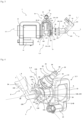
EP4200168B1 - Dispositif de projection de fluide pour le nettoyage d'une surface d'un véhicule automobile - Google Patents
Dispositif de projection de fluide pour le nettoyage d'une surface d'un véhicule automobile Download PDFInfo
- Publication number
- EP4200168B1 EP4200168B1 EP21752062.6A EP21752062A EP4200168B1 EP 4200168 B1 EP4200168 B1 EP 4200168B1 EP 21752062 A EP21752062 A EP 21752062A EP 4200168 B1 EP4200168 B1 EP 4200168B1
- Authority
- EP
- European Patent Office
- Prior art keywords
- fluid
- projection
- spraying
- fluid outlet
- spraying device
- Prior art date
- Legal status (The legal status is an assumption and is not a legal conclusion. Google has not performed a legal analysis and makes no representation as to the accuracy of the status listed.)
- Active
Links
Images



Classifications
-
- B—PERFORMING OPERATIONS; TRANSPORTING
- B05—SPRAYING OR ATOMISING IN GENERAL; APPLYING FLUENT MATERIALS TO SURFACES, IN GENERAL
- B05B—SPRAYING APPARATUS; ATOMISING APPARATUS; NOZZLES
- B05B1/00—Nozzles, spray heads or other outlets, with or without auxiliary devices such as valves, heating means
- B05B1/30—Nozzles, spray heads or other outlets, with or without auxiliary devices such as valves, heating means designed to control volume of flow, e.g. with adjustable passages
- B05B1/3013—Lift valves
-
- B—PERFORMING OPERATIONS; TRANSPORTING
- B05—SPRAYING OR ATOMISING IN GENERAL; APPLYING FLUENT MATERIALS TO SURFACES, IN GENERAL
- B05B—SPRAYING APPARATUS; ATOMISING APPARATUS; NOZZLES
- B05B1/00—Nozzles, spray heads or other outlets, with or without auxiliary devices such as valves, heating means
- B05B1/02—Nozzles, spray heads or other outlets, with or without auxiliary devices such as valves, heating means designed to produce a jet, spray, or other discharge of particular shape or nature, e.g. in single drops, or having an outlet of particular shape
- B05B1/04—Nozzles, spray heads or other outlets, with or without auxiliary devices such as valves, heating means designed to produce a jet, spray, or other discharge of particular shape or nature, e.g. in single drops, or having an outlet of particular shape in flat form, e.g. fan-like, sheet-like
- B05B1/044—Slits, e.g. narrow openings defined by two straight and parallel lips; Elongated outlets for producing very wide discharges, e.g. fluid curtains
-
- B—PERFORMING OPERATIONS; TRANSPORTING
- B05—SPRAYING OR ATOMISING IN GENERAL; APPLYING FLUENT MATERIALS TO SURFACES, IN GENERAL
- B05B—SPRAYING APPARATUS; ATOMISING APPARATUS; NOZZLES
- B05B1/00—Nozzles, spray heads or other outlets, with or without auxiliary devices such as valves, heating means
- B05B1/22—Spouts
-
- B—PERFORMING OPERATIONS; TRANSPORTING
- B05—SPRAYING OR ATOMISING IN GENERAL; APPLYING FLUENT MATERIALS TO SURFACES, IN GENERAL
- B05B—SPRAYING APPARATUS; ATOMISING APPARATUS; NOZZLES
- B05B1/00—Nozzles, spray heads or other outlets, with or without auxiliary devices such as valves, heating means
- B05B1/26—Nozzles, spray heads or other outlets, with or without auxiliary devices such as valves, heating means with means for mechanically breaking-up or deflecting the jet after discharge, e.g. with fixed deflectors; Breaking-up the discharged liquid or other fluent material by impinging jets
-
- B—PERFORMING OPERATIONS; TRANSPORTING
- B05—SPRAYING OR ATOMISING IN GENERAL; APPLYING FLUENT MATERIALS TO SURFACES, IN GENERAL
- B05B—SPRAYING APPARATUS; ATOMISING APPARATUS; NOZZLES
- B05B1/00—Nozzles, spray heads or other outlets, with or without auxiliary devices such as valves, heating means
- B05B1/30—Nozzles, spray heads or other outlets, with or without auxiliary devices such as valves, heating means designed to control volume of flow, e.g. with adjustable passages
- B05B1/3033—Nozzles, spray heads or other outlets, with or without auxiliary devices such as valves, heating means designed to control volume of flow, e.g. with adjustable passages the control being effected by relative coaxial longitudinal movement of the controlling element and the spray head
- B05B1/304—Nozzles, spray heads or other outlets, with or without auxiliary devices such as valves, heating means designed to control volume of flow, e.g. with adjustable passages the control being effected by relative coaxial longitudinal movement of the controlling element and the spray head the controlling element being a lift valve
- B05B1/3046—Nozzles, spray heads or other outlets, with or without auxiliary devices such as valves, heating means designed to control volume of flow, e.g. with adjustable passages the control being effected by relative coaxial longitudinal movement of the controlling element and the spray head the controlling element being a lift valve the valve element, e.g. a needle, co-operating with a valve seat located downstream of the valve element and its actuating means, generally in the proximity of the outlet orifice
- B05B1/3053—Nozzles, spray heads or other outlets, with or without auxiliary devices such as valves, heating means designed to control volume of flow, e.g. with adjustable passages the control being effected by relative coaxial longitudinal movement of the controlling element and the spray head the controlling element being a lift valve the valve element, e.g. a needle, co-operating with a valve seat located downstream of the valve element and its actuating means, generally in the proximity of the outlet orifice the actuating means being a solenoid
-
- B—PERFORMING OPERATIONS; TRANSPORTING
- B05—SPRAYING OR ATOMISING IN GENERAL; APPLYING FLUENT MATERIALS TO SURFACES, IN GENERAL
- B05B—SPRAYING APPARATUS; ATOMISING APPARATUS; NOZZLES
- B05B15/00—Details of spraying plant or spraying apparatus not otherwise provided for; Accessories
- B05B15/60—Arrangements for mounting, supporting or holding spraying apparatus
- B05B15/65—Mounting arrangements for fluid connection of the spraying apparatus or its outlets to flow conduits
-
- B—PERFORMING OPERATIONS; TRANSPORTING
- B05—SPRAYING OR ATOMISING IN GENERAL; APPLYING FLUENT MATERIALS TO SURFACES, IN GENERAL
- B05B—SPRAYING APPARATUS; ATOMISING APPARATUS; NOZZLES
- B05B9/00—Spraying apparatus for discharge of liquids or other fluent material, without essentially mixing with gas or vapour
- B05B9/03—Spraying apparatus for discharge of liquids or other fluent material, without essentially mixing with gas or vapour characterised by means for supplying liquid or other fluent material
- B05B9/04—Spraying apparatus for discharge of liquids or other fluent material, without essentially mixing with gas or vapour characterised by means for supplying liquid or other fluent material with pressurised or compressible container; with pump
- B05B9/0403—Spraying apparatus for discharge of liquids or other fluent material, without essentially mixing with gas or vapour characterised by means for supplying liquid or other fluent material with pressurised or compressible container; with pump with pumps for liquids or other fluent material
- B05B9/0423—Spraying apparatus for discharge of liquids or other fluent material, without essentially mixing with gas or vapour characterised by means for supplying liquid or other fluent material with pressurised or compressible container; with pump with pumps for liquids or other fluent material for supplying liquid or other fluent material to several spraying apparatus
-
- B—PERFORMING OPERATIONS; TRANSPORTING
- B60—VEHICLES IN GENERAL
- B60S—SERVICING, CLEANING, REPAIRING, SUPPORTING, LIFTING, OR MANOEUVRING OF VEHICLES, NOT OTHERWISE PROVIDED FOR
- B60S1/00—Cleaning of vehicles
- B60S1/02—Cleaning windscreens, windows or optical devices
- B60S1/46—Cleaning windscreens, windows or optical devices using liquid; Windscreen washers
- B60S1/48—Liquid supply therefor
- B60S1/481—Liquid supply therefor the operation of at least part of the liquid supply being controlled by electric means
-
- B—PERFORMING OPERATIONS; TRANSPORTING
- B60—VEHICLES IN GENERAL
- B60S—SERVICING, CLEANING, REPAIRING, SUPPORTING, LIFTING, OR MANOEUVRING OF VEHICLES, NOT OTHERWISE PROVIDED FOR
- B60S1/00—Cleaning of vehicles
- B60S1/02—Cleaning windscreens, windows or optical devices
- B60S1/46—Cleaning windscreens, windows or optical devices using liquid; Windscreen washers
- B60S1/48—Liquid supply therefor
- B60S1/52—Arrangement of nozzles; Liquid spreading means
-
- B—PERFORMING OPERATIONS; TRANSPORTING
- B60—VEHICLES IN GENERAL
- B60S—SERVICING, CLEANING, REPAIRING, SUPPORTING, LIFTING, OR MANOEUVRING OF VEHICLES, NOT OTHERWISE PROVIDED FOR
- B60S1/00—Cleaning of vehicles
- B60S1/02—Cleaning windscreens, windows or optical devices
- B60S1/56—Cleaning windscreens, windows or optical devices specially adapted for cleaning other parts or devices than front windows or windscreens
Definitions
- the present invention falls within the field of systems for cleaning optical sensors of motor vehicles, and relates more particularly to a device for projecting cleaning fluid, in particular equipped with a solenoid valve, integrated into such a cleaning system.
- Recent vehicles are regularly equipped with driver assistance systems, whether to assist the driver during parking maneuvers, when driving in traffic relative to other vehicles, or to replace the driver in autonomous driving vehicles.
- Each of these systems includes at least one sensor, allowing the vehicle's environment to be identified, the sensor being able to consist for example, and in a non-exhaustive manner, of a camera or a radar.
- Each sensor is configured to acquire data relating to the environment surrounding the vehicle and is therefore exposed to different types of projection or dirt which can subsequently penalize the reliability of the acquired data.
- these sensors are implemented as part of an autonomous driving function regardless of its degree of autonomy, it is essential for the safety of all road users that the acquired data is reliable.
- sensors are commonly equipped with cleaning installations, which can take different forms and among which we know installations comprising a system for projecting cleaning fluid onto the optical surface of the sensors.
- These cleaning fluid projection systems comprise at least one body arranged near the sensor to direct the fluid onto the optical surface and a conduit through which the cleaning fluid arrives in the body, from a storage tank.
- These projection systems may also comprise other components and in particular solenoid valves connected to an electronic control circuit for example, the control of these solenoid valves making it possible to block or authorize the arrival of the cleaning fluid in the body for its projection onto the optical surface.
- the large number of optical sensors installed on the vehicle, to carry out each of the driving assistance functions offered on the vehicle, requires the provision of a plurality of fluid projection devices, each being associated with a sensor and comprising a fluid projection member directed towards the optical surface to be cleaned of this sensor.
- each of these projection devices with a controlled solenoid valve to authorize or block the arrival of cleaning fluid towards the corresponding projection member, it being understood that it is desirable to be able to specifically clean this or that dirty sensor without cleaning the rest of the immaculate sensors, in order to save cleaning fluid.
- US2019270422 A1 discloses an example of a fluid projection device for cleaning a surface of a motor vehicle.
- the invention falls within this context and aims to improve the performance of such an architecture, and in particular the response time between the activation of the solenoid valve authorizing or blocking the passage of cleaning fluid towards the projection member and the projection, or the stopping of projection, actually observed at the outlet of the projection member. It should be understood that the reduction of this response time makes it possible to further refine the quality of the information acquired by the sensor.
- the main subject of the present invention is thus a fluid projection device for a system for cleaning a surface of a motor vehicle, the projection device comprising a solenoid valve configured to allow or block the passage of fluid towards a projection member, said solenoid valve comprising a hydraulic system and an electromagnetic system, the hydraulic system comprising at least one fluid distribution member which comprises at least one fluid inlet nozzle, a circulation chamber and a fluid outlet nozzle in fluid communication with the projection member, the electromagnetic system being configured to allow or block the passage of fluid through the circulation chamber, characterized in that the projection member comprises at least one connecting tube and a projection nozzle formed in one piece, the connecting tube being directly fixed to the fluid outlet nozzle.
- the present invention provides a particular projection device in that it comprises a solenoid valve on which the projection member is directly fixed without the intermediary of a flexible conduit.
- the response time in the implementation or blocking of the projection of cleaning fluid on the surface to be cleaned is improved, the fluid being allowed to pass within the solenoid valve located directly in the projection member at the outlet of the solenoid valve, without it being necessary to circulate within a flexible conduit.
- the solenoid valve is used to control the circulation of a cleaning fluid in a cleaning system, the fluid circulating in the hydraulic system by passing through the fluid inlet nozzle, the circulation chamber and the fluid outlet nozzle respectively before entering the projection member.
- the electromagnetic system can receive a command ordering the circulation of the fluid in the circulation chamber to be blocked or to allow this circulation to be free.
- the electromagnetic system comprises a member capable of receiving this command, processing it and inducing a mechanical action blocking or allowing the circulation of the fluid to be free.
- the cleaning fluid may be any type of fluid provided that it allows a cleaning action on the surface onto which it is projected, and may in particular consist of air, water, soapy water or any other product generally used for cleaning a surface.
- the surface onto which the fluid is projected may here consist of different types of surfaces of the vehicle and in particular glazed surfaces such as the optical surface of a sensor/transmitter, and for example an optical surface of an optical transmitting device or an optical receiving device.
- the connecting tube surrounds the fluid outlet nozzle on the one hand to allow continuity of the passage of cleaning fluid towards the projection nozzle provided at the end of the projection member and on the other hand to allow the projection member to be fixed directly to the solenoid valve, without an interposed flexible conduit.
- the distribution member and the connecting tube can be considered as rigid bodies in that these elements are not or only slightly elastically deformable so that they have the advantage of retaining their general shape once the projection device is assembled, despite the constraints which may be imposed on them in their standard condition of use.
- rigid connecting tube it is understood that the connecting tube is different from a flexible conduit.
- the connecting tube and the projection nozzle are formed as a single piece, which means that they form parts of a single single piece and cannot be separated from each other without destroying the projection member that they help to form.
- the projection member may comprise a distribution body interposed between the connection tube and the projection nozzle, in particular to give a bent profile to the projection member.
- the distribution body takes the form of a rigid pipe connected on the one hand to the connection tube and on the other hand to the projection nozzle, and each of these parts is configured to allow passage for the cleaning fluid so that it can circulate from the first end of the connection tube facing the solenoid valve to the projection nozzle.
- the projection member is fixed directly to the fluid outlet nozzle by reversible fixing means.
- the projection member can thus be mounted or dismounted from the fluid outlet nozzle and therefore from the solenoid valve.
- reversible we mean that the mounting and dismounting of the projection member does not cause the breakage of one of the elements of the solenoid valve, so that they can be carried out several times, and that this mounting and dismounting requires the intervention of a user, the vibrations that can occur under normal driving conditions cannot by themselves separate the projection member and the solenoid valve.
- snap-fastening means that one of the elements deforms slightly when a force is applied and then returns to its initial shape, locking the position of the spraying member and the rigid body. This snap-fastening system makes it possible to avoid the need for a specific attachment technique such as gluing, welding, or other.
- the reversible fixing means comprise a blocking element separate from the projection member and the fluid outlet nozzle, the blocking element being elastically deformable and capable of cooperating with at least one hole formed in the wall delimiting the connection tube.
- the projection device further comprises a keying device.
- the function of the projection member is to project a fluid onto a surface of the vehicle, and in particular an optical surface of a sensor/emitter near which the projection member is arranged.
- the projection nozzle must be positioned so that the jet of cleaning fluid emerging from the projection nozzle is correctly oriented towards the optical surface.
- the keying device makes it possible to offer only one possible mounting direction for the projection member on the distribution member so that the projection member, and by extension the projection nozzle, can thus only be positioned in one way on the distribution member, in order to limit a potential mounting error and thus ensure the correct positioning of the projection nozzle.
- the keying device comprises a plurality of positioning tabs projecting from the connection tube so as to at least partially cover the dispensing member and among which at least one positioning tab has a shape and/or dimensions different from those of the other positioning tabs, the keying device further comprising a wall formed on the periphery of the dispensing member to cooperate with the positioning tab of shape and/or dimensions different from those of the other positioning tabs.
- the foolproofing device may comprise a system for adjusting the position of the projection member.
- the device for coding the projection member only allows one possible direction of assembly and therefore fixes the position of the projection member relative to a reference frame of the solenoid valve, and for example a wall formed on the periphery of the distribution member.
- the system for adjusting the position of the projection member makes it possible to adapt the position of this reference frame, once the projection member is mounted on the distribution member or beforehand, to finally adjust the position of the projection member relative to the surface to be cleaned.
- the reference frame may be integral with a notched ring mounted on the distribution member of the solenoid valve and capable of being adjusted and then fixed in position to the nearest degree.
- the fluid outlet nozzle has a chamfered free end to facilitate the mounting of the projection member around this outlet nozzle.
- the spraying member is mounted on the fluid outlet nozzle, to be made integral with the solenoid valve, by sliding the connecting tube around the sleeve forming the fluid outlet nozzle.
- the chamfer at the end of the fluid outlet nozzle thus facilitates the penetration of the sleeve into the connecting tube.
- the projection member comprises a conveying duct, which extends within the projection member continuously from the connection tube to the projection nozzle, and into which the fluid outlet end piece is inserted, the conveying duct comprising a shoulder arranged between two segments of the conveying duct which have different passage sections, the shoulder forming a stop for the insertion of the fluid outlet end piece into the projection member.
- the present invention also relates to a system for cleaning a surface of a motor vehicle comprising a pump conveying a cleaning fluid through a conduit to at least one solenoid valve of a projection device as previously described, the solenoid valve being configured to authorize or block the projection of the fluid onto the surface via the projection member.
- a motor vehicle V is shown equipped with a cleaning system according to the invention, which allows the cleaning of at least one surface of the vehicle.
- a surface to be cleaned may consist, for example, of a windshield PB or a rear window of the vehicle, or it may consist of an optical surface of one of the optical sensors/transmitters 1 equipping the vehicle.
- the cleaning system comprises in particular a conduit, or hydraulic circulation bus, H capable of allowing the circulation of a cleaning fluid and devices 2 for projecting the cleaning fluid arranged in the vehicle while being respectively associated with one of the optical sensors/transmitters 1.
- a projection device 2 is specifically dedicated to cleaning a single glass surface, but it will be understood from reading the Figure 2 for example, several projection devices 2 can be dedicated to cleaning the same glass surface provided that, in accordance with what will be described, each projection device 2 comprises a dedicated solenoid valve on which a projection member is directly fixed.
- each of the projection devices 2 is hydraulically connected to the hydraulic distribution bus H, for example by supply hoses F partially shown in the Figure 2 , and these projection devices 2 are connected to this hydraulic distribution bus independently of one another, and in distinct and successive zones of the hydraulic distribution bus which here forms a bus common to the plurality of projection devices.
- a single hydraulic distribution bus ensures the supply of cleaning product to all of the projection devices 2 mounted on this vehicle.
- the cleaning system further comprises a pump P and a cleaning fluid storage tank S.
- the pump P is configured to recover the cleaning fluid from the storage tank and to continuously supply the hydraulic distribution bus H with cleaning fluid.
- projection devices 2 are intended both for cleaning an optical surface of a sensor/transmitter 1 used for automatic analysis of the road scene, i.e. an analysis by the vehicle electronics, in particular for controlling a device for assisting with driving and/or maneuvering this vehicle, and for cleaning a glass surface of the passenger compartment or an optical surface of a sensor/transmitter used solely for direct analysis by the driver of the vehicle.
- optical surface of a sensor/transmitter it should be understood that the cleaning system according to the invention is applicable both to the cleaning of optical transmitting devices, to the cleaning of optical receiving devices, or to the cleaning of optical transmitting/receiving devices.
- two projection devices 2 can be arranged in the vicinity of each other so that their respective projection members are oriented towards the same glass surface, as illustrated in the Figure 2 .
- Each of the projection devices is here arranged symmetrically with respect to one another along a plane perpendicular to the glass surface, so as to optimize the projection of cleaning fluid 162 here onto the optical surface 164 of an optical sensor 1.
- a cleaning fluid projection device 2 is arranged in the vicinity of an optical sensor/emitter 1 and its glass surface to be cleaned. It comprises in particular a solenoid valve 3 and a projection member 8, the projection device being configured according to the invention in that the member is directly fixed to the solenoid valve, in particular by reversible fixing means of the snap-fastening type with elastic deformation, without a flexible conduit being arranged between the solenoid valve and the projection member.
- a solenoid valve 3 and a projection member 8
- the projection device being configured according to the invention in that the member is directly fixed to the solenoid valve, in particular by reversible fixing means of the snap-fastening type with elastic deformation, without a flexible conduit being arranged between the solenoid valve and the projection member.
- the solenoid valve 3 comprises a hydraulic system 4, configured to allow the circulation in a sealed manner of the cleaning fluid from the supply hose F to the projection member 8 and therefore to the glazed surface of the associated sensor, and an electromagnetic system 5, configured to receive and process the instructions received from a control electronics and consequently influence the circulation of the cleaning fluid in the hydraulic system 4.
- the hydraulic system 4 here comprises a distribution member 6 secured to the electromagnetic system 5 and directly connected, according to the invention, to the projection member 8 directly fixed to the distribution member 6.
- the projection member 8 is in direct contact with the distribution member 6, that is to say that no element is interposed between these two objects.
- the electromagnetic system 5 comprises a housing 10 configured to house different electronic components and on a first face 12 of which open means cooperating with the distribution member 6.
- the housing 10 here has substantially the shape of a rectangular parallelepiped and thus has a plurality of faces, among which said first face 12.
- the housing 10 further comprises an electrical connection terminal 14 allowing the connection of the electromagnetic system, and more particularly of the components housed in the housing 10, to the electronic control unit.
- the electromagnetic system comprises, housed in the housing 10, electromagnetic components, which allow the movement along a longitudinal direction A of a locking device 18 capable of taking a release position, visible on the Figure 6 , in which the circulation of cleaning fluid in the hydraulic system 4 is permitted and a blocking position, in which the blocking device 18 prevents the circulation of fluid between the hydraulic system and the projection member.
- the electromagnetic system is here configured so that the locking device 18 comprises a piston 22 of which a free longitudinal end 26 is positioned partly outside the housing 10, in the distribution member of the hydraulic system 4, the piston 22 being able to pass through the first face 12 of the housing 10.
- the hydraulic system 4 comprises the distribution member 6 in contact with the electromagnetic system 5. All of the elements making up the hydraulic system 4 ensure sealing of the cleaning fluid circulating through this system.
- the distribution member 6 consists of a rigid body, not or only slightly elastically deformable so that it retains its original general shape during operation of the device.
- the circulation chamber 28 is arranged in the direct extension of the first face 12 of the housing 10, so that the free longitudinal end 26 of the piston 22 of the electromagnetic system 5 previously mentioned is able to extend into the circulation chamber 28 so as to be able to block or not the circulation of a cleaning fluid in this circulation chamber 28.
- the piston 22 of the electromagnetic system 5 is shown on the Figure 6 in a release position, that is to say a position in which the cleaning fluid can circulate from the fluid inlet nozzle 30 to the fluid outlet nozzle 32 through the circulation chamber 28. And it is understood that in the locking position of the piston 22, the free longitudinal end 26 of the latter is arranged to block the fluid outlet nozzle 32 of the distribution member 6.
- the fluid inlet 30 of the distribution member 6 is configured to be attached, via a flexible conduit, to a fluid storage tank or to a hydraulic distribution circuit common to all the cleaning fluid projection devices of the vehicle, as mentioned with reference to Figures 1 and 2 .
- the cleaning fluid is present continuously at the fluid inlet nozzle 30 and the circulation chamber 28, and depending on the configuration of the electromagnetic system 5 and as specified above, the cleaning fluid then circulates towards the fluid outlet nozzle 32 or is blocked at the circulation chamber 28 of the distribution member 6.
- the fluid inlet nozzle 30 generally takes the form of a cylindrical sleeve 34 with variable sections.
- variable sections is meant that the sleeve 34 is composed of different portions each having a different external diameter.
- the sleeve 34 comprises, at a free edge 36 of the sleeve 34, opposite the circulation chamber 28, an inlet orifice 38 allowing the arrival of cleaning fluid intended to open into the circulation chamber 28 via a circulation conduit 40 formed inside the sleeve 34.
- the sleeve 34 is configured to allow the sealed connection of a flexible conduit to allow the arrival of cleaning fluid and has in particular a chamfered portion 42, forming a ramp widening the sleeve from the free edge 36, an intermediate portion 44 and a portion for connection to a cylinder 280 opening onto the circulation chamber 28.
- the flexible conduit is fitted around the chamfered portion 42, the ramp shape of which makes it easier to fit, then at least around the intermediate portion 44, and a stop portion 46 formed at the junction between the chamfered portion 42 and the intermediate portion 44 makes it possible to hold the flexible conduit in position.
- the circulation chamber 28 is delimited in the distribution member 6 by a closed casing 48 and comprising three openings, among which a first opening 50 formed in the cylinder 280 and communicating with the fluid inlet endpiece 30, a second opening 52 communicating with the fluid outlet endpiece 32 and a third opening 54, arranged opposite the first face 12 of the housing 10 previously mentioned and dimensioned so that at least a part of the piston of the electromagnetic system 5 can extend into the circulation chamber 28.
- the third opening 54 and the second opening 52 are aligned along the longitudinal direction A, being arranged on either side of the circulation chamber 28.
- the longitudinal displacement movement of the piston makes it possible to bring the free longitudinal end 26 of this piston against the second opening 52, or at a distance from it and thus block or allow the circulation of cleaning fluid between the circulation chamber 28 and the fluid outlet nozzle 32.
- the casing 48 extends generally in the form of a cylindrical element centered on an axis parallel to the longitudinal direction A, and across which extends the cylinder 280 configured to communicate with the fluid inlet nozzle 30.
- the fluid inlet nozzle extends transversely to the rest of the solenoid valve which extends essentially along the longitudinal direction.
- the envelope 48 has a first longitudinal end edge 56 configured to be in contact with the electromagnetic system 5, this first edge 56 delimiting a first substantially discoid face 58 at the level of which the third opening 54 of the envelope 48 is located.
- the envelope 48 has a second longitudinal end edge 60 opposite the first edge 56 along the longitudinal direction A and delimiting a second face 62 which is substantially discoid and projects from which the fluid outlet nozzle 32 extends.
- the casing 48 thus has a peripheral wall 64 which is substantially cylindrical connecting the first and second edges 56, 60 of the casing 48 and which is extended transversely by the cylinder 280 allowing communication with the fluid inlet nozzle as mentioned previously.
- the fluid outlet nozzle 32 has a shape substantially equivalent to that of the fluid inlet nozzle 30 previously described, with a sleeve 66 projecting from the second face 62 of the casing 48 and configured to cooperate with the projection member 8.
- the sleeve 66 extends longitudinally, having a free longitudinal end 68 and being traversed longitudinally by a fluid outlet conduit 70 opening on the one hand into the circulation chamber 28 and on the other hand at the free end 68 of the sleeve 66.
- the fluid outlet conduit 70 may have a substantially constant internal diameter.
- the sleeve 66 is subdivided into several portions including, successively from the free end 68 to the casing 48, a first end portion 72, a chamfered portion 74, an intermediate portion 76 and a second end portion 78.
- the first end portion 72 comprises a flexible ring 80 forming a sealing element at the junction with the projection member, when the sleeve 66 is fitted into a corresponding orifice of the projection member.
- the chamfered portion 74 forms a ramp facilitating the fitting of the fluid outlet nozzle with the projection member, and as for the fluid inlet nozzle, this chamfered portion participates in defining, at its junction with the intermediate portion 76, a stop 84 extending radially relative to the sleeve 66 and participating in blocking the projection member 8 in the longitudinal position relative to the solenoid valve 3 once the latter is mounted on the fluid outlet nozzle 32.
- the second end portion 78 has in particular a cylindrical portion 86, arranged in the continuity of the intermediate portion 76, and a plate 88, of larger diameter than the cylindrical portion and forming a base capable of being pressed against the second face 62 of the dispensing member 6 and forming a support for complementary fixing means 90, for example a thread as visible for example on the Figure 10 illustrating another embodiment, making it possible to ensure the fixing of the sleeve 66 of the fluid outlet nozzle on the casing 48 of the distribution member 6.
- the fluid outlet nozzle 32 and more generally the distribution member 6, is intended to cooperate with the projection member 8, the latter being fixed directly to the member 6 of the solenoid valve 3.
- the projection member 8 comprises at least one connection tube 92 and a projection nozzle 94, as well as a distribution body 96 configured to fluidly connect the connection tube 92 to the projection nozzle 94.
- the connecting tube 92 forms the part of the projection member directly fixed to the sleeve 66 of the fluid outlet nozzle 32. More particularly, the connecting tube 92 extends essentially along the longitudinal direction A between a first longitudinal end 98 facing the distribution member 6 and a second longitudinal end 100 facing away from the distribution member 6 and secured to the distribution body 96.
- the distribution body 96 has the shape of a hollow tube whose function is to supply the projection nozzle with cleaning fluid after the latter has passed through the connection tube 92. As illustrated, the distribution body is distinguished from the connection tube by its general orientation, along a direction S intersecting the longitudinal direction A. This orientation of the distribution body 96, forming an angle with the longitudinal direction A, makes it possible to orient the projection nozzle 94 so that the cleaning fluid is optimally projected onto the surface to be cleaned, namely here the optical surface of a sensor/emitter. It is understood that the presence of this distribution body and its inclined orientation relative to the longitudinal direction might not be necessary if the projection nozzle 94 can be arranged directly in the extension of the connection tube 92.
- the connecting tube 92, the distribution body 96 and the projection nozzle 94 are hollowed out so as to form a conveying conduit 102 inside the projection member 8 which allows the fluid to be conveyed from the distribution member 6 to the projection nozzle 94.
- the projection nozzle projection here comprising a projection head 104 having a projection orifice 106, the conveying conduit 102 then extends to the projection orifice 106.
- the conveying duct 102 is delimited by a wall of each of the components of the projection member 8, each wall having an internal dimension, here an internal diameter when the conveying duct is generally cylindrical, different from one to the other and thus delimiting different segments of the conveying duct 102.
- the following segments can thus be distinguished in the conveying duct 102: a cooperation segment 108 with the fluid outlet nozzle 32, a connecting segment 110, a distribution segment 112 and a projection segment 114.
- the cooperation segment 108 of the connection tube 92 is delimited by a wall whose internal diameter is substantially equal to the external diameter of the sleeve 66 measured for example at the level of the stop 84. In this way, it is possible to achieve a tight mounting of the projection member 8 around the outlet nozzle 32 of the distribution member 6.
- the length of the cooperation segment 108 is substantially equivalent to a length of the sleeve 66, so that the free end of the sleeve 66 is positioned substantially at the level of a shoulder 116 forming a junction between the cooperation segment 108 and the connection segment 110.
- the connecting segment 110 also formed at the level of the connecting tube 92, is delimited by a wall having a reduced internal diameter compared to the internal diameter participating in defining the cooperation segment 108, and this reduction in diameter thus generates the shoulder 116 previously mentioned.
- the diameter of the connecting segment 110 is substantially the same as that of the fluid outlet conduit 70, so that the fluid can flow continuously and at constant pressure between the distribution member 6 and this part of the projection member 8.
- the distribution segment 112 extends the conveying conduit 102 from the connecting segment 110 to the projection nozzle 94 through the distribution body 96.
- the distribution segment 112 is delimited by a wall whose internal diameter decreases as it moves away from the connecting segment 110, thus forming a funnel profile as it moves closer to the projection orifice 106.
- the aim is thus to accelerate the pressure or flow rate of the cleaning fluid near the orifice projection, in order to project a cleaning fluid capable of stripping the optical surface of the associated sensor of the dirt covering it.
- the projection segment 114 present at the projection nozzle 94, has a smaller section than the sections of the other segments of the conveying conduit 102, ensuring the connection between the distribution segment 112 and the projection orifice 106.
- the aim is to accelerate the cleaning fluid at the outlet of the projection member.
- connection tube 92 is slid around the sleeve 66 along the longitudinal direction A, until the free end 68 of the sleeve 66, and in particular the flexible ring 80 arranged at this free end 68, comes into contact with the shoulder 116 delimiting the junction between the cooperation segment 108 and the connection segment 110.
- the cleaning fluid can circulate from the fluid inlet nozzle 30 of the distribution member 6 to the projection orifice 106, if the solenoid valve is in a configuration allowing the passage of fluid towards the projection member.
- the cleaning fluid circulates successively from the fluid inlet nozzle 30 through the circulation chamber 28, then through the fluid outlet nozzle 32, then finally, passing into the projection member 8, through the connection segment 110, the distribution segment 112, the projection segment 114 then the projection orifice 106 as they have just been described.
- the flexible ring 80 by its contact with the shoulder when the projection member is fitted around the fluid outlet nozzle, participates in the sealing of the projection device at the level of the cooperation segment 108, ensuring that all of the cleaning fluid flowing through the outlet nozzle 32 passes towards the distribution body 96 and the projection nozzle 94.
- the reduction in the internal diameter delimiting these different segments makes it possible to increase the circulation speed of the cleaning fluid through the conveying conduit 102 until this fluid reaches a speed necessary for its projection onto an optical surface to ensure its cleaning.
- the projection device comprises at least one device 124 for misplacing the mounting of the projection member 8 on the solenoid valve 3, in order to ensure the correct orientation of the projection nozzle 94 opposite the optical surface to be cleaned.
- the keying device 124 here takes the form of a first positioning tab 126 and a second positioning tab 128, each forming a projection from the connection tube 92 at its first longitudinal end 98 so as to cover the distribution member 6 when the projection member 8 is fixed to the latter.
- the positioning tabs forming the keying device are arranged on the edge delimiting the first longitudinal end 98 while being diametrically opposite each other.
- Each of the positioning tabs 126, 128 comprises a base wall 130 extending the connecting tube by extending along a transverse direction B, substantially perpendicular to the longitudinal direction A along which the connecting tube 92 mainly extends.
- each positioning tab comprises at least one first finger 132 extending the base wall 130 perpendicularly by extending along a direction substantially parallel to the longitudinal direction A, in the direction of the dispensing member 6, that is to say opposite the projection member 8.
- the base wall 130 of each of the positioning tabs 126, 128 may be extended by a second finger 134 which extends next to the first finger 132, substantially parallel to the longitudinal direction A.
- an intermediate wall 131 is formed between the base wall 130 and the fingers 132, 134 which extend it, in order to provide flexibility of bending to the fingers 132, 134.
- This intermediate wall 131 has an inclined orientation relative to the respective orientations of the base wall and the fingers, so that the intermediate wall 131 forms a chamfer zone of the corresponding positioning tab.
- the keying device 124 is formed by a structural difference between the first positioning tab 126 and the second positioning tab 128.
- the base wall 130 and/or the intermediate wall 131 of the first positioning tab 126 has a dimension transverse, measured along the transverse direction B, which is greater than the corresponding transverse dimension of the base wall 130 and/or the intermediate wall 131 of the second positioning tab 128.
- the positioning tabs differ in that the fingers 132, 134 of the first positioning tab 126 extend longitudinally at a distance from the axis of elongation of the projection member greater than the corresponding distance at which the fingers of the second positioning tab 128 extend.
- the casing 48 of the dispensing member comprises on its peripheral wall 64 a low wall 136 which forms a local outgrowth of the second longitudinal end edge 60 and which is integral with the cylinder 280.
- the low wall 136 is a parallelepiped block forming a projection from the casing 48 along the transverse direction B and of which a flat face 138 extends opposite the casing.
- the low wall 136 forming a local outgrowth, the transverse dimension of the casing 48 at the level of this low wall 136 is greater than the corresponding dimension of the casing 48 at a diametrically opposite point.
- This difference in transverse dimension implies that only the fingers 132, 134 of the first positioning lug 126 can be positioned against the flat face 138 of the wall 136 when the projection member 8 is mounted on the solenoid valve, the difference between the transverse dimension of the first positioning lug 126 and the transverse dimension of the second positioning lug 128 being substantially equal to the transverse dimension of the wall 136.
- the fingers of the second positioning lug 128 are then in contact with the casing 48 in an area diametrically opposite the wall 136.
- the keying device 124 could comprise a rib forming a local projection of the connection tube 92 and sized to cooperate with a groove made locally along an external face of the sleeve 66 or could comprise a finger emerging from the casing 48 of the distribution member 6 cooperating with a groove formed in an internal face of the connection tube 92, without however departing from the scope of the invention.
- the projection device comprises fixing means allowing direct fixing, that is to say without intermediate flexible conduit, of the projection member on the solenoid valve and in particular of the rigid connection tube 92 on the rigid distribution member 6.
- the projection device comprises reversible fixing means 140 allowing the direct fixing of the projection member on the sleeve 66 forming the fluid outlet nozzle 32. It is understood that these reversible fixing means 140 make it possible to directly fix the projection member 8 on the solenoid valve, while allowing the subsequent disassembly of the projection member 8 without causing breakage of the projection member 8 or the distribution member 6.
- These reversible fixing means 140 here comprise an additional part forming a locking element 148 and which is assembled once the projection member 8 is mounted on the outlet end piece of the distribution member 6.
- the locking element here consists of an elastic clamping ring, or circlip, which is fitted into an opening made in the projection member 8 to lock the longitudinal position of the outlet end piece inside the projection member.
- the connecting tube 92 of the projection member 8 comprises at least one first hole 146, which extends circumferentially on the wall of the connecting tube and which is configured to pass through the wall of the connecting tube and connect the conveying conduit 102, and more particularly the cooperation segment 108 of this conveying conduit, to the external environment through the wall of the connecting tube.
- the first hole 146 has a longitudinal dimension substantially equal to that of the blocking element 148, and it extends partially around the connecting tube 92.
- the first hole is formed at a distance from the first longitudinal end 98 such that the length between the first hole 146 and the shoulder 116 forming the junction between the cooperation segment 108 and the connection segment 110 inside the connection tube 92 is at least equal to or even greater than the length of the sleeve 66 measured between the free end 68 and the stop 84 arranged at the junction between the intermediate portion 76 of the chamfered portion 74.
- the locking element 148 is a circlip, here U-shaped, a first branch 150 of which is capable of being housed in the first hole 146 of the connecting tube 92.
- This first branch 150 of the circlip is then in contact with the intermediate portion 76 of the sleeve 66, and forms with the stop 84 means preventing the longitudinal movement of the sleeve 66 inside the projection member 8.
- the connecting tube 92 comprises a second hole 152 diametrically opposite the first hole 146 and a second branch 154 of the circlip is then housed through the second hole 152 in the cooperation segment 108 of the connecting tube 92 symmetrically to the housing of the first branch 150 in the first hole 146, the second branch 154 also being in contact with the intermediate portion 76 of the sleeve 66 and participating in the longitudinal locking of the sleeve via the stop 84 of the latter.
- the first and second branches 150, 154 of the circlip are spaced apart from each other, in an original shape of the circlip as visible on the Figure 5 , by a distance less than that of the diameter of the connecting tube, so that the branches are deformed away from each other when the circlip is arranged across the connecting tube.
- the elastic return effect of the circlip tends to engage each branch in the hole so as to allow the projection member 8 to be held in position on the sleeve 66 by blocking the chamfered portion 74 and the first end portion 72 of the sleeve 66 between the branches 150, 154 of the circlip and the shoulder 116 of the connecting tube 92.
- the vibrations of the projection device 2 during operation of the latter or when the vehicle is running are insufficient to separate the branches from each other so that the direct fixing between the projection member and the solenoid valve is reliable, and disassembly of the assembly is made possible by an action by a user who can separate the branches of the circlip from each other to disengage, if necessary, the projection member 8 from the solenoid valve.
- the projection nozzle 94 here has a simplified shape and here consists only of the projection orifice 106.
- the reversible fixing means 140 has, as previously, a first hole 146 formed in the connecting tube 92, as described above in the first embodiment.
- This hole 146 is configured to receive an elastically deformable element, in accordance with the first embodiment in which this elastically deformable element was formed by the circlip.
- the elastically deformable element capable of cooperating with the at least one hole is formed by the free end of the sleeve 66 of the fluid outlet nozzle, which is capable of deforming between its original shape and a retracted shape where the internal diameter of the fluid outlet conduit 70 is reduced.
- the elastically deformable element also comprises a latching finger 156, arranged at the junction of the chamfered portion 74 and the intermediate portion 76, over a longitudinal dimension substantially equal to the corresponding longitudinal dimension of the first hole 146.
- This latching finger 156 forms a radial projection of the sleeve of the fluid outlet nozzle which is capable of being housed in the first hole 146 when the fluid outlet nozzle is inserted up to the shoulder 116 inside the projection member 8.
- the latching finger 156 forms a radial projection of the sleeve in that it extends at a distance from the longitudinal axis A on which the sleeve 66 is centered which is greater than any other part of the sleeve intended to be inserted into the projection member 8.
- the first longitudinal end 98 of the connecting tube 92 has a chamfered edge making it easier to insert the latching finger 156 inside this connecting tube 92 of the projection member by initiating the deformation. elastic of the free end of the sleeve. It should be noted that a reverse elastic deformation of the connecting tube can take place, namely a separation of this connecting tube to allow passage for the latching finger.
- the projection member 8 is held in position around the sleeve 66, blocking any movement of the projection member 8 along the longitudinal direction A.
- This means of fixing the projection member 8 on the dispensing member 6 is also described as reversible because the user can dismantle the projection member 8 from the dispensing member 6 without causing breakage of one of the objects. If the user wishes to dismantle the projection member 8 from the dispensing member 6, he can exert pressure on the latching finger 156 to dislodge it from the first hole 146 and simultaneously pull longitudinally on the projection member 8 to move it away from the solenoid valve.
- the projection device it is appropriate for the projection device to be equipped with a keying device 124, which may take the same form as in the first embodiment. It would also be possible to dispense with the keying device in the form of the positioning tabs as previously described if a single latching finger and a single hole are provided, since the angular position of the projection nozzle 94 will necessarily be correct as soon as the latching finger and the single hole cooperate. However, even in this case, a keying device may be an additional means of ensuring that the latching finger and the hole are aligned and cooperate well together when the projection member is fully fitted onto the fluid outlet end piece of the solenoid valve.
- a third embodiment will now be described with reference to the Figures 11 and 12 which differs from the first embodiment in the form of the reversible fixing means 140.
- the connecting tube at the level of this block 158, comprises at least one protrusion 160 forming a radial projection across the cooperation segment 108 of the conveying duct 102.
- the protrusion 160 may in particular extend over the entire periphery of the wall delimiting this cooperation segment 108 of the conveying duct.
- the protrusion 160 has a first face forming a ramp facing the first end 98 of the sleeve 66 and a second straight face, facing away and capable of forming a longitudinal stop face.
- the protrusion 160 is dimensioned so that the transverse dimension of the conveying conduit 102 at the junction between the first face and the second face of the protrusion is substantially equal to the transverse dimension of the sleeve in its intermediate portion 76, which forms a clearance of material between the chamfered portion 74 and the second end portion 78.
- the protrusion 60 may have a similar shape, but in an opposite arrangement, to that of the chamfered portion 74 of the sleeve 66.
- the protrusion 160 is formed in the connecting tube 92 so that the length measured between the second face of the protrusion, forming a longitudinal abutment surface, and the shoulder 116 is slightly greater than the longitudinal dimension of the sleeve 66 between the free end 68 and the abutment 84 delimiting the intermediate portion 76 of the chamfered portion 74.
- the protrusion 160 is made of the same material constituting the connecting tube 92 but can alternatively be made of another material promoting its elastic deformation.
- the connecting tube 92 slides along the longitudinal direction A around the sleeve 66, thus bringing the protrusion 160 of the connecting tube 92 closer to the chamfered portion 74 of the sleeve 66.
- the longitudinal movement involves contact of the two surfaces forming a ramp respectively formed on the protrusion and on the chamfered portion 74, so that the longitudinal movement can be continued with less effort, at least one of its parts deforming elastically to allow the continuation of this longitudinal movement.
- the movement continues until the chamfered portion 74 is housed in the conveying duct 102 between the protrusion 160 and the shoulder 116 of the connecting tube 92.
- each of the parts returns to its original shape and the protrusion 160 comes to position itself in the clearance formed by the intermediate portion 76, blocking, by abutment against the chamfered portion 74, in this way any movement of the projection member 8 along the longitudinal direction A.
- a user To disassemble the projection member 8 from the dispensing member 6, a user must move the operating tabs apart from each other to deform the sleeve and enlarge the passage section at the level of the protrusion, so as to be able to free the chamfered portion 74 from the space delimited by the protrusion 160 and the shoulder 116 of the connection tube 92.
Landscapes
- Engineering & Computer Science (AREA)
- Mechanical Engineering (AREA)
- Water Supply & Treatment (AREA)
- Nozzles (AREA)
- Cleaning By Liquid Or Steam (AREA)
Description
- La présente invention s'inscrit dans le domaine des systèmes de nettoyage de capteur optique de véhicule automobile, et concerne plus particulièrement un dispositif de projection de fluide de nettoyage, notamment équipé d'une électrovanne, intégré à un tel système de nettoyage.
- Les véhicules récents sont régulièrement équipés de systèmes d'assistance à la conduite, que ce soit pour aider le conducteur lors de manœuvres de stationnement, lors de conduites dans le trafic par rapport aux autres véhicules, ou que ce soit pour remplacer le conducteur dans des véhicules à conduite autonome. Chacun de ces systèmes comportent au moins un capteur, permettant d'identifier l'environnement du véhicule, le capteur pouvant consister par exemple, et de manière non exhaustive, en une caméra ou un radar.
- Chaque capteur est configuré pour acquérir une donnée relative à l'environnement entourant le véhicule et est à cet effet exposé à différents types de projection ou salissures qui peuvent pénaliser par la suite la fiabilité des données acquises. Or, et notamment lorsque ces capteurs sont mis en œuvre dans le cadre d'une fonction de conduite autonome quel que soit son degré d'autonomie, il est essentiel pour la sécurité de l'ensemble des usagers de la route que les données acquises soient fiables.
- Dans ce contexte, les capteurs sont couramment équipés d'installations de nettoyages, qui peuvent prendre différentes formes et parmi lesquelles on connait des installations comprenant un système de projection de fluide de nettoyage sur la surface optique des capteurs.
- Ces systèmes de projection de fluide de nettoyage comportent au moins un corps agencé à proximité du capteur pour diriger le fluide sur la surface optique et un conduit par lequel le fluide de nettoyage arrive dans le corps, depuis un réservoir de stockage. Ces systèmes de projection peuvent comporter par ailleurs d'autres composants et notamment des électrovannes reliées à un circuit de commande électronique par exemple, le pilotage de ces électrovannes permettant de bloquer ou d'autoriser l'arrivée du fluide de nettoyage dans le corps pour sa projection sur la surface optique.
- Le nombre important de capteurs optiques implantés sur le véhicule, pour réaliser chacune des fonctions d'assistance de conduite proposées sur le véhicule, impose de prévoir une pluralité de dispositifs de projection de fluide, chacun étant associé à un capteur et comportant un organe de projection de fluide dirigé vers la surface optique à nettoyer de ce capteur.
- Il est connu d'équiper chacun de ces dispositifs de projection d'une électrovanne pilotée pour autoriser ou bloquer l'arrivée de fluide nettoyant en direction de l'organe de projection correspondant, étant compris qu'il est souhaitable de pouvoir nettoyer spécifiquement tel ou tel capteur sale sans pour autant nettoyer le reste des capteurs immaculés, dans un souci d'économie de fluide de nettoyage.
- Plus particulièrement, dans l'art antérieur, il est connu de disposer une batterie d'électrovannes les unes à côté des autres, au voisinage de l'unité électronique de commande permettant de les piloter, et de prévoir une liaison entre chaque électrovanne et l'organe de projection de fluide correspondant par un conduit flexible acheminant le fluide de nettoyage depuis l'électrovanne.
- Le document
US2019270422 A1 divulgue un exemple de dispositif de projection de fluide pour le nettoyage d'une surface d'un véhicule automobile. - L'invention s'inscrit dans ce contexte et vise à améliorer des performances d'une telle architecture, et notamment le temps de réponse entre l'activation de l'électrovanne autorisant ou bloquant le passage de fluide de nettoyage en direction de l'organe de projection et la projection, ou l'arrêt de projection, effectivement constaté au niveau de la sortie de l'organe de projection. Il convient de comprendre que la réduction de ce temps de réponse permet d'affiner encore la qualité des informations acquises par le capteur.
- La présente invention a ainsi pour principal objet un dispositif de projection de fluide pour un système de nettoyage d'une surface d'un véhicule automobile, le dispositif de projection comprenant une électrovanne configurée pour autoriser ou bloquer le passage de fluide en direction d'un organe de projection, ladite électrovanne comportant un système hydraulique et un système électromagnétique, le système hydraulique comprenant au moins un organe de distribution de fluide qui comporte au moins un embout d'entrée de fluide, une chambre de circulation et un embout de sortie de fluide en communication fluidique avec l'organe de projection, le système électromagnétique étant configuré pour autoriser ou bloquer le passage de fluide au travers de la chambre de circulation, caractérisée en ce que l'organe de projection comprend au moins un tube de raccordement et une buse de projection formés d'un seul tenant, le tube de raccordement étant directement fixé sur l'embout de sortie de fluide.
- En d'autres termes, la présente invention propose un dispositif de projection particulier en ce qu'il comprend une électrovanne sur laquelle l'organe de projection est directement fixé sans l'intermédiaire d'un conduit flexible. De la sorte, on améliore le temps de réponse dans la mise en œuvre ou le blocage de la projection de fluide de nettoyage sur la surface à nettoyer, le fluide étant autorisé à passer au sein de l'électrovanne se trouvant directement dans l'organe de projection en sortie de l'électrovanne, sans qu'il soit nécessaire de circuler au sein d'un conduit flexible.
- L'électrovanne permet de contrôler la circulation d'un fluide de nettoyage d'un système de nettoyage, le fluide circulant dans le système hydraulique en traversant respectivement l'embout d'entrée de fluide, la chambre de circulation et l'embout de sortie de fluide avant de pénétrer dans l'organe de projection. Le système électromagnétique peut recevoir une commande ordonnant de bloquer la circulation du fluide dans la chambre de circulation ou de laisser libre cette circulation. Pour cela, le système électromagnétique comprend un organe capable de recevoir cette commande, de la traiter et d'induire une action mécanique bloquant ou laissant libre la circulation du fluide.
- Le fluide de nettoyage peut être tout type de fluide dès lors qu'il permet une action de nettoyage de la surface sur laquelle il est projeté, et peut notamment consister en de l'air, de l'eau, de l'eau savonneuse ou tout autre produit utilisé généralement pour le nettoyage d'une surface. Par ailleurs, la surface sur laquelle est projeté le fluide peut ici consister en différents types de surfaces du véhicule et notamment des surfaces vitrées de type surface optique d'un capteur/émetteur, et par exemple une surface optique d'un dispositif optique émetteur ou d'un dispositif optique récepteur.
- Le tube de raccordement entoure l'embout de sortie de fluide d'une part pour permettre une continuité du passage de fluide de nettoyage en direction de la buse de projection ménagée en bout de l'organe de projection et d'autre part pour permettre la fixation de l'organe de projection directement sur l'électrovanne, sans conduit flexible interposé.
- L'organe de distribution et le tube de raccordement peuvent être considérés comme des corps rigides en ce que ces éléments ne sont pas ou peu déformables élastiquement de sorte qu'ils présentent l'avantage de garder leur forme générale une fois le dispositif de projection assemblé, malgré les contraintes qui peuvent leur être imposées dans leur condition d'utilisation standard. Notamment, par tube de raccordement rigide, on comprend que le tube de raccordement est différent d'un conduit flexible.
- Le tube de raccordement et la buse de projection sont formés d'un seul tenant, ce qui signifie qu'ils forment des parties d'une même pièce monobloc et qu'ils ne peuvent être écartés l'un de l'autre sans destruction de l'organe de projection qu'ils participent à former.
- Selon une caractéristique optionnelle de l'invention, l'organe de projection peut comprendre un corps de distribution interposé entre le tube de raccordement et la buse de projection, notamment pour donner un profil coudé à l'organe de projection. Il convient là encore de comprendre que chacune de ces parties participe à former l'organe de projection d'un seul tenant. Le corps de distribution prend la forme d'un tuyau rigide connecté d'une part au tube de raccordement et d'autre part à la buse de projection, et chacune de ces parties est configurée pour laisser passage au fluide de nettoyage afin qu'il puisse circuler depuis la première extrémité du tube de raccordement tournée vers l'électrovanne jusqu'à la buse de projection.
- Selon une caractéristique optionnelle de l'invention, l'organe de projection est fixé directement sur l'embout de sortie de fluide par des moyens de fixation réversible.
- L'organe de projection peut ainsi être monté ou démonté de l'embout de sortie de fluide et donc de l'électrovanne. On comprend par « réversible » que le montage et le démontage de l'organe de projection n'entraîne pas la casse de l'un des éléments de l'électrovanne, de sorte qu'ils peuvent être réalisés plusieurs fois, et que ce montage et démontage nécessite l'intervention d'un utilisateur, les vibrations pouvant avoir lieu dans des conditions normales de roulage ne pouvant désolidariser à elles seules l'organe de projection et l'électrovanne.
- Selon une série de caractéristiques de l'invention, prises seules ou en combinaison, on peut prévoir que :
- les moyens de fixation réversible sont portés respectivement par l'embout de sortie de fluide et par le tube de raccordement de l'organe de projection, au moins l'un parmi l'embout de sortie de fluide et le tube de raccordement étant apte à prendre différentes positions par déformation élastique ;
- les moyens de fixation réversible comportent un doigt d'encliquetage formant saillie d'une paroi délimitant un manchon formant l'embout de sortie de fluide, ledit doigt d'encliquetage étant configuré pour coopérer avec une trouée formée dans la paroi délimitant le tube de raccordement ;
- les moyens de fixation réversible comportent une excroissance formant saillie d'une paroi délimitant le tube de raccordement vers l'intérieur de ce tube de raccordement et configurée pour coopérer avec une butée formée en saillie d'un manchon formant l'embout de sortie de fluide, après déformation élastique de la paroi porteuse de l'excroissance et/ou du manchon porteur de la butée.
- Ces caractéristiques mettent notamment en œuvre un système d'encliquetage permettant la fixation de l'organe de projection sur l'électrovanne. On comprend par « encliquetage » qu'un des éléments se déforme légèrement sous l'application d'une force puis reprend sa forme initiale en bloquant la position de l'organe de projection et du corps rigide. Ce système d'encliquetage permet d'éviter d'avoir recours à une technique particulière de fixation telle qu'un collage, soudage ou autre.
- Selon une caractéristique optionnelle de l'invention, les moyens de fixation réversible comportent un élément de blocage distinct de l'organe de projection et de l'embout de sortie de fluide, l'élément de blocage étant déformable élastiquement et apte à coopérer avec au moins une trouée formée dans la paroi délimitant le tube de raccordement.
- Selon une autre caractéristique optionnelle de l'invention, le dispositif de projection comprend en outre un dispositif de détrompage.
- L'organe de projection a pour fonction de projeter un fluide sur une surface du véhicule, et notamment une surface optique d'un capteur/émetteur à proximité duquel est disposé l'organe de projection. Pour cela, la buse de projection doit être positionnée de sorte que le jet de fluide de nettoyage sortant de la buse de projection soit correctement orienté en direction de la surface optique. Le dispositif de détrompage permet de proposer un seul sens de montage possible de l'organe de projection sur l'organe de distribution de sorte que l'organe de projection, et par extension la buse de projection, ne peut ainsi être positionné que d'une manière sur l'organe de distribution, afin de limiter une erreur potentielle de montage et assurer ainsi le bon positionnement de la buse de projection.
- Selon une caractéristique optionnelle de l'invention, le dispositif de détrompage comporte une pluralité de pattes de positionnement formant saillie du tube de raccordement de manière à recouvrir au moins partiellement l'organe de distribution et parmi lesquelles au moins une patte de positionnement présente une forme et/ou des dimensions différentes de celles des autres pattes de positionnement, le dispositif de détrompage comportant en outre un muret formé en périphérie de l'organe de distribution pour coopérer avec la patte de positionnement de forme et/ou de dimensions différentes de celle des autres pattes de positionnement.
- Selon une autre caractéristique optionnelle de l'invention, le dispositif de détrompage peut comprendre un système de réglage de la position de l'organe de projection.
- On comprend que le dispositif de détrompage de l'organe de projection n'autorise qu'un sens de montage possible et fige donc la position de l'organe de projection par rapport à un référentiel de l'électrovanne, et par exemple un muret formé en périphérie de l'organe de distribution. Le système de réglage de la position de l'organe de projection permet d'adapter la position de ce référentiel, une fois l'organe de projection monté sur l'organe de distribution ou préalablement à ceci, pour ajuster au final la position de l'organe de projection par rapport à la surface à nettoyer. A titre d'exemple, le référentiel peut être solidaire d'une bague crantée montée sur l'organe de distribution de l'électrovanne et susceptible d'être réglée puis figée en position au degré près.
- Selon une autre caractéristique optionnelle de l'invention, l'embout de sortie de fluide présente une extrémité libre chanfreinée pour faciliter le montage de l'organe de projection autour de cet embout de sortie.
- L'organe de projection est monté sur l'embout de sortie de fluide, pour être rendu solidaire de l'électrovanne, en faisant coulisser le tube de raccordement autour du manchon formant l'embout de sortie de fluide. Le chanfrein à l'extrémité de l'embout de sortie de fluide facilite ainsi la pénétration du manchon dans le tube de raccordement.
- Selon une caractéristique optionnelle de l'invention, l'organe de projection comporte un conduit d'acheminement, qui s'étend au sein de l'organe de projection de manière continue depuis le tube de raccordement jusqu'à la buse de projection, et dans lequel est inséré l'embout de sortie de fluide, le conduit d'acheminement comportant un épaulement agencé entre deux segments du conduit d'acheminement qui présentent des sections de passage différentes, l'épaulement formant butée à l'insertion de l'embout de sortie de fluide dans l'organe de projection.
- La présente invention a également pour objet un système de nettoyage d'une surface d'un véhicule automobile comprenant une pompe acheminant un fluide de nettoyage à travers un conduit jusqu'à au moins une électrovanne d'un dispositif de projection tel que précédemment décrit, l'électrovanne étant configurée pour autoriser ou bloquer la projection du fluide sur la surface via l'organe de projection.
- D'autres caractéristiques, détails et avantages de l'invention ressortiront plus clairement à la lecture de la description qui suit d'une part, et de plusieurs exemples de réalisation donnés à titre indicatif et non limitatif en référence aux dessins schématiques annexés d'autre part, sur lesquels :
- [
Fig. 1 ] est une représentation schématique d'un véhicule automobile équipé d'un système d'assistance à la conduite comportant plusieurs capteurs, chaque capteur étant ici associé à un dispositif de projection de fluide de nettoyage selon l'invention, avec une électrovanne et un organe de projection solidaires sans conduit flexible interposé entre eux ; - [
Fig. 2 ] est une représentation schématique partielle, en perspective, d'un système de nettoyage équipé de deux dispositifs de projection de fluide de nettoyage selon l'invention configurés pour projeter du fluide de nettoyage sur une surface optique d'un capteur ; - [
Fig. 3 ] est une représentation en perspective d'un dispositif de projection de fluide de nettoyage selon un premier mode de réalisation de l'invention ; - [
Fig. 4 ] est une représentation selon un autre angle de perspective du dispositif de projection de fluide de nettoyage représenté sur lafigure 3 ; - [
Fig. 5 ] est une vue éclatée du dispositif de projection de fluide de nettoyage représenté sur lafigure 3 ; - [
Fig. 6 ] est une vue en coupe longitudinale du dispositif de projection de fluide de nettoyage représenté sur lafigure 3 ; - [
Fig. 7 ] est une vue en perspective donnant des détails de composants du dispositif de projection de fluide de nettoyage représenté sur lafigure 3 parmi lesquels un organe de distribution de l'électrovanne et un organe de projection ; - [
Fig. 8 ] est une vue en perspective de l'organe de projection de lafigure 7 ; - [
Fig. 9 ] est une représentation partielle, en perspective, d'un dispositif de projection selon un deuxième mode de réalisation, rendant ici visible l'organe de distribution de l'électrovanne et l'organe de projection ; - [
Fig. 10 ] est une coupe longitudinale d'une partie de l'organe de distribution et de l'organe de projection de lafigure 9 ; - [
Fig. 11 ] est une représentation partielle, en perspective, d'un dispositif de projection selon un troisième mode de réalisation, rendant ici visible l'organe de distribution de l'électrovanne et l'organe de projection ; - [
Fig. 12 ] est une coupe longitudinale d'une partie de l'organe de distribution et de l'organe de projection de lafigure 11 . - Les caractéristiques, variantes et les différentes formes de réalisation de l'invention peuvent être associées les unes avec les autres, selon diverses combinaisons, dans la mesure où elles ne sont pas incompatibles ou exclusives les unes par rapport aux autres. On pourra notamment imaginer des variantes de l'invention ne comprenant qu'une sélection de caractéristiques décrites par la suite de manière isolée des autres caractéristiques décrites, si cette sélection de caractéristiques est suffisante pour conférer un avantage technique et/ou pour différencier l'invention par rapport à l'état de la technique antérieur.
- A la
figure 1 , on a représenté un véhicule V automobile équipé d'un système de nettoyage selon l'invention, qui permet le nettoyage d'au moins une surface du véhicule. Une telle surface à nettoyer peut consister par exemple en un pare-brise PB ou bien une lunette arrière du véhicule, ou elle peut consister en une surface optique d'un des capteurs/émetteurs optiques 1 équipant le véhicule. - Le système de nettoyage comprend notamment un conduit, ou bus de circulation hydraulique, H apte à permettre la circulation d'un fluide de nettoyage et des dispositifs de projection 2 du fluide de nettoyage disposés dans le véhicule en étant respectivement associés à l'un des capteurs/émetteurs optiques 1. Dans l'exemple illustré sur la
figure 1 , un dispositif de projection 2 est spécifiquement dédié au nettoyage d'une unique surface vitrée, mais on comprendra à la lecture de lafigure 2 par exemple que plusieurs dispositifs de projection 2 peuvent être dédiés au nettoyage d'une même surface vitrée dès lors que conformément à ce qui va être décrit chaque dispositif de projection 2 comporte une électrovanne dédiée et sur laquelle est fixé directement un organe de projection. - Plus particulièrement, dans l'exemple illustré, chacun des dispositifs de projection 2 est relié hydrauliquement au bus de distribution hydraulique H, par exemple par des flexibles d'alimentation F partiellement représentés sur la
figure 2 , et ces dispositifs de projection 2 sont reliés à ce bus de distribution hydraulique de manière indépendante l'un de l'autre, et dans des zones distinctes et successives du bus de distribution hydraulique qui forme ici un bus commun à la pluralité des dispositifs de projection. Dans cet exemple, non limitatif, de mise en œuvre sur le véhicule, on comprend qu'un unique bus de distribution hydraulique assure l'alimentation en produit nettoyant de l'ensemble des dispositifs de projection 2 montés sur ce véhicule. - Le système de nettoyage comprend par ailleurs une pompe P et un réservoir de stockage de fluide de nettoyage S. La pompe P est configurée pour récupérer le fluide de nettoyage dans le réservoir de stockage et pour alimenter le bus de distribution hydraulique H de manière continue en fluide de nettoyage.
- Dans ce contexte, des dispositifs de projection 2 sont destinés aussi bien à nettoyer une surface optique d'un capteur/émetteur 1 servant à une analyse automatique de la scène de route, c'est-à-dire une analyse par l'électronique du véhicule pour notamment le pilotage d'un dispositif d'aide à la conduite et/ou à la manœuvre de ce véhicule, qu'à nettoyer une surface vitrée de l'habitacle ou une surface optique d'un capteur/émetteur servant uniquement à l'analyse directe par le conducteur du véhicule. Par surface optique d'un capteur/émetteur, il convient de comprendre que le système de nettoyage selon l'invention est applicable aussi bien au nettoyage des dispositifs optiques émetteurs, au nettoyage des dispositifs optiques récepteurs, ou au nettoyage des dispositifs optiques émetteurs/récepteurs.
- Pour optimiser le nettoyage d'une surface vitrée et par exemple d'une surface optique d'un capteur optique, deux dispositifs de projection 2 peuvent être agencés au voisinage l'un de l'autre pour que leurs organes de projection respectifs soient orientés vers une même surface vitrée, tel qu'illustré sur la
figure 2 . Chacun des dispositifs de projection est ici disposé symétriquement l'un par rapport à l'autre selon un plan perpendiculaire à la surface vitrée, de sorte à optimiser la projection de fluide de nettoyage 162 ici sur la surface optique 164 d'un capteur optique 1. - Un dispositif de projection 2 de fluide de nettoyage selon l'invention est disposé au voisinage d'un capteur/émetteur optique 1 et de sa surface vitrée à nettoyer. Il comporte notamment une électrovanne 3 et un organe de projection 8, le dispositif de projection étant configuré selon l'invention en ce que l'organe est directement fixé sur l'électrovanne, notamment par des moyens de fixation réversibles de type encliquetage à déformation élastique, sans qu'un conduit flexible soit agencé entre l'électrovanne et l'organe de projection. Dans la description qui va suivre, plusieurs dispositifs de projection vont être décrits avec des électrovannes et des organes de projection réalisés selon plusieurs modes de réalisation.
- On va dans un premier temps se référer aux
figures 3 à 6 , illustrant dans son ensemble un dispositif de projection selon un premier mode de réalisation. - L'électrovanne 3 comprend un système hydraulique 4, configuré pour permettre la circulation de façon étanche du fluide de nettoyage depuis le flexible d'alimentation F vers l'organe de projection 8 et donc vers la surface vitrée du capteur associé, et un système électromagnétique 5, configuré pour recevoir et traiter les instructions reçues d'une électronique de commande et influencer en conséquence la circulation du fluide de nettoyage dans le système hydraulique 4.
- Le système hydraulique 4 comprend ici un organe de distribution 6 solidaire du système électromagnétique 5 et relié directement, selon l'invention, à l'organe de projection 8 directement fixé sur l'organe de distribution 6. Tel que cela a pu être précisé précédemment, on comprend que l'organe de projection 8 est en contact direct avec l'organe de distribution 6, c'est-à-dire qu'aucun élément ne s'interpose entre ces deux objets.
- Le système électromagnétique 5 comprend un boîtier 10 configuré pour loger différents composants électroniques et sur une première face 12 duquel débouche des moyens coopérant avec l'organe de distribution 6. Selon un exemple non limitatif de l'invention, le boîtier 10 présente ici sensiblement la forme d'un parallélépipède rectangle et présente ainsi une pluralité de faces, parmi lesquelles ladite première face 12. Le boîtier 10 comprend par ailleurs une borne de raccordement électrique 14 permettant le raccordement du système électromagnétique, et plus particulièrement des composants logés dans le boîtier 10, à l'unité électronique de commande.
- Le système électromagnétique comporte, logés dans le boîtier 10, des composants électromagnétiques, qui permettent le déplacement le long d'une direction longitudinale A d'un dispositif de blocage 18 apte à prendre une position de dégagement, visible sur la
figure 6 , dans laquelle la circulation de fluide de nettoyage dans le système hydraulique 4 est permise et une position de blocage, dans laquelle le dispositif de blocage 18 empêche la circulation de fluide entre le système hydraulique et l'organe de projection. Tel qu'illustré sur la vue en coupe partielle de lafigure 6 , le système électromagnétique est ici configuré de sorte que le dispositif de blocage 18 comporte un piston 22 dont une extrémité longitudinale 26 libre se positionne en partie à l'extérieur du boîtier 10, dans l'organe de distribution du système hydraulique 4, le piston 22 étant apte à traverser la première face 12 du boîtier 10. Dans la position de dégagement, l'extrémité longitudinale 26 libre du piston est ramené vers la première face 12, en dégageant de la place pour le passage de fluide de nettoyage à l'intérieur de l'organe de distribution 6. Lorsque l'alimentation électrique des composants électromagnétiques est coupée, des moyens de rappel tendent à ramener le piston 22 et le dispositif de blocage 18 dans sa position de blocage apte à empêcher le passage de fluide à l'intérieur de l'organe de distribution. - Tel que cela a été précisé auparavant, le système hydraulique 4 comprend l'organe de distribution 6 en contact avec le système électromagnétique 5. L'ensemble des éléments composant le système hydraulique 4 assure une étanchéité du fluide de nettoyage circulant à travers ce système.
- L'organe de distribution 6 consiste en un corps rigide, pas ou peu déformable élastiquement de sorte qu'il garde sa forme générale d'origine en cours de fonctionnement du dispositif.
- L'organe de distribution 6 comporte une chambre de circulation 28 ménagée pour le passage de fluide de nettoyage, la chambre de circulation communiquant avec d'une part un embout d'entrée de fluide 30 et d'autre part un embout de sortie de fluide 32. Tel que cela est notamment visible sur la
figure 5 , l'embout d'entrée de fluide 30 forme une saillie d'une face latérale de l'organe de distribution 6 et l'embout de sortie de fluide 32 forme une saillie d'une face frontale de l'organe de distribution 6, à l'opposé du système électromagnétique 5. - La chambre de circulation 28 est agencée dans le prolongement direct de la première face 12 du boîtier 10, de sorte que l'extrémité longitudinale 26 libre du piston 22 du système électromagnétique 5 précédemment évoquée est apte à s'étendre dans la chambre de circulation 28 de sorte à pouvoir bloquer ou non la circulation d'un fluide de nettoyage dans cette chambre de circulation 28. Tel que cela a été évoqué précédemment, le piston 22 du système électromagnétique 5 est représenté sur la
figure 6 dans une position de dégagement, c'est-à-dire une position dans laquelle le fluide de nettoyage peut circuler depuis l'embout d'entrée de fluide 30 jusqu'à l'embout de sortie de fluide 32 à travers la chambre de circulation 28. Et on comprend que dans la position de blocage du piston 22, l'extrémité longitudinale 26 libre de ce dernier est agencée pour boucher l'embout de sortie de fluide 32 de l'organe de distribution 6. - L'entrée de fluide 30 de l'organe de distribution 6 est configurée pour être rattachée, via un conduit flexible à un réservoir de stockage de fluide ou à un circuit de distribution hydraulique commun à tous les dispositifs de projection de fluide de nettoyage du véhicule, tel qu'évoqué en référence aux
figures 1 et 2 . De la sorte, le fluide de nettoyage est présent de façon continue au niveau de l'embout d'entrée de fluide 30 et de la chambre de circulation 28, et selon la configuration du système électromagnétique 5 et comme précisé ci-dessus, le fluide de nettoyage circule ensuite vers l'embout de sortie de fluide 32 ou est bloqué au niveau de la chambre de circulation 28 de l'organe de distribution 6. - Comme plus particulièrement visible sur les
figures 4 et5 , l'embout d'entrée de fluide 30 prend globalement la forme d'un manchon 34 cylindrique à sections variables. On entend par sections variables que le manchon 34 se compose de différentes portions présentant chacune un diamètre externe différent. Plus particulièrement, le manchon 34 comprend, au niveau d'un bord libre 36 du manchon 34, à l'opposé de la chambre de circulation 28, un orifice d'entrée 38 permettant l'arrivé de fluide de nettoyage destiné à déboucher dans la chambre de circulation 28 via un conduit de circulation 40 formé à l'intérieur du manchon 34. - Le manchon 34 est configuré pour permettre le raccordement étanche d'un conduit flexible pour permettre l'arrivée de fluide de nettoyage et présente notamment une portion chanfreinée 42, formant une rampe élargissant le manchon depuis le bord libre 36, une portion intermédiaire 44 et une portion de raccordement à un cylindre 280 débouchant sur la chambre de circulation 28. Le conduit flexible est emmanché autour de la portion chanfreinée 42, dont la forme de rampe permet de faciliter l'emmanchement, puis au moins autour de la portion intermédiaire 44, et une portion de butée 46 formée à la jonction entre la portion chanfreinée 42 et la portion intermédiaire 44 permet de retenir en positon le conduit flexible.
- La chambre de circulation 28 est délimitée dans l'organe de distribution 6 par une enveloppe 48 fermée et comportant trois ouvertures, parmi lesquelles une première ouverture 50 formée dans le cylindre 280 et communiquant avec l'embout d'entrée de fluide 30, une deuxième ouverture 52 communiquant avec l'embout de sortie de fluide 32 et une troisième ouverture 54, disposée en regard de la première face 12 du boîtier 10 précédemment évoqué et dimensionnée pour qu'au moins une partie du piston du système électromagnétique 5 puisse s'étendre dans la chambre de circulation 28.
- Tel qu'illustré, la troisième ouverture 54 et la deuxième ouverture 52 sont alignées selon la direction longitudinale A, en étant ménagée de part et d'autre de la chambre de circulation 28. De la sorte, le mouvement de déplacement longitudinal du piston permet d'amener l'extrémité longitudinale 26 libre de ce piston contre la deuxième ouverture 52, ou à distance de celle-ci et ainsi bloquer ou autoriser la circulation de fluide de nettoyage entre la chambre de circulation 28 et l'embout de sortie de fluide 32.
- L'enveloppe 48 s'étend globalement sous la forme d'un élément cylindrique centré sur un axe parallèle à la direction longitudinale A, et en travers duquel s'étend le cylindre 280 configuré pour communiquer avec l'embout d'entrée de fluide 30. En d'autres termes, dans l'exemple illustré, l'embout d'entrée de fluide s'étend transversalement au reste de l'électrovanne qui s'étend essentiellement le long de la direction longitudinale.
- L'enveloppe 48 présente un premier bord d'extrémité longitudinale 56 configuré pour être en contact avec le système électromagnétique 5, ce premier bord 56 délimitant une première face 58 sensiblement discoïde au niveau de laquelle se trouve la troisième ouverture 54 de l'enveloppe 48. L'enveloppe 48 présente un deuxième bord d'extrémité longitudinale 60 opposé au premier bord 56 selon la direction longitudinale A et délimitant une deuxième face 62 sensiblement discoïde et en saillie de laquelle s'étend l'embout de sortie de fluide 32. L'enveloppe 48 présente ainsi une paroi périphérique 64 sensiblement cylindrique reliant les premier et deuxième bords 56, 60 de l'enveloppe 48 et qui est prolongé transversalement par le cylindre 280 permettant de communiquer avec l'embout d'entrée de fluide tel qu'évoqué précédemment.
- L'embout de sortie de fluide 32 présente une forme sensiblement équivalente à celle de l'embout d'entrée de fluide 30 précédemment décrit, avec un manchon 66 formant saillie de la deuxième face 62 de l'enveloppe 48 et configuré pour coopérer avec l'organe de projection 8. Le manchon 66 s'étend longitudinalement en présentant une extrémité longitudinale libre 68 et en étant traversé longitudinalement par un conduit de sortie de fluide 70 débouchant d'une part dans la chambre de circulation 28 et d'autre part au niveau de l'extrémité libre 68 du manchon 66. Tel qu'illustré sur la
figure 6 , le conduit de sortie de fluide 70 peut présenter un diamètre interne sensiblement constant. - Là encore, comme pour l'embout d'entrée de fluide, le manchon 66 se subdivise en plusieurs portions parmi lesquelles, successivement depuis l'extrémité libre 68 jusqu'à l'enveloppe 48, une première portion d'extrémité 72, une portion chanfreinée 74, une portion intermédiaire 76 et une deuxième portion d'extrémité 78.
- La première portion d'extrémité 72 comprend un anneau souple 80 formant élément d'étanchéité à la jonction avec l'organe de projection, lorsque le manchon 66 est emmanché dans un orifice correspondant de l'organe de projection.
- La portion chanfreinée 74 forme une rampe facilitant l'emmanchement de l'embout de sortie de fluide ave l'organe de projection, et comme pour l'embout d'entrée de fluide, cette portion chanfreinée participe à définir, à sa jonction avec la portion intermédiaire 76 une butée 84 s'étendant radialement par rapport au manchon 66 et participant à bloquer en position longitudinale l'organe de projection 8 par rapport à l'électrovanne 3 une fois celui-ci monté sur l'embout de sortie de fluide 32.
- La deuxième portion d'extrémité 78 présente notamment une portion cylindrique 86, agencée dans la continuité de la portion intermédiaire 76, et une platine 88, de diamètre plus important que la portion cylindrique et formant une embase apte à être plaquée contre le deuxième face 62 de l'organe de distribution 6 et formant support à des moyens de fixation complémentaires 90, par exemple un filetage tel que visible par exemple sur la
figure 10 illustrant un autre mode de réalisation, permettant d'assurer la fixation du manchon 66 de l'embout de sortie de fluide sur l'enveloppe 48 de l'organe de distribution 6. - Comme précisé ci-dessus, l'embout de sortie de fluide 32, et plus généralement l'organe de distribution 6, est destiné à coopérer avec l'organe de projection 8, ce dernier se fixant directement sur l'organe 6 de l'électrovanne 3.
- On va maintenant décrire plus en détails, et notamment en référence aux
figures 7 et 8 , l'organe de projection 8 selon le premier mode de réalisation de l'invention, en décrivant des moyens de coopération entre l'organe 6 et l'organe de projection 8. - L'organe de projection 8 comprend au moins un tube de raccordement 92 et une buse de projection 94, ainsi qu'un corps de distribution 96 configuré pour relier fluidiquement le tube de raccordement 92 à la buse de projection 94.
- Le tube de raccordement 92 forme la partie de l'organe de projection directement fixée sur le manchon 66 de l'embout de sortie de fluide 32. Plus particulièrement, le tube de raccordement 92 s'étend essentiellement le long de la direction longitudinale A entre une première extrémité longitudinale 98 en regard de l'organe de distribution 6 et une deuxième extrémité longitudinale 100 tournée à l'opposé de l'organe de distribution 6 et solidaire du corps de distribution 96.
- Le corps de distribution 96 présente la forme d'un tube creux qui a pour fonction d'alimenter la buse de projection en fluide de nettoyage après que celui-ci soit passé par le tube de raccordement 92. Tel qu'illustré, le corps de distribution se distingue du tube de raccordement par son orientation générale, le long d'une direction S sécante à la direction longitudinale A. Cette orientation du corps de distribution 96, formant un angle avec la direction longitudinale A, permet d'orienter la buse de projection 94 pour que le fluide de nettoyage soit projeté de façon optimale sur la surface à nettoyer, à savoir ici la surface optique d'un capteur/émetteur. On comprend que la présence de ce corps de distribution et son orientation inclinée par rapport à la direction longitudinale pourrait ne pas être nécessaire si la buse de projection 94 peut être agencée directement dans le prolongement du tube de raccordement 92.
- Comme plus particulièrement illustré sur la
figure 6 , le tube de raccordement 92, le corps de distribution 96 et la buse de projection 94 sont évidés de manière à former un conduit d'acheminement 102 à l'intérieur de l'organe de projection 8 qui permet l'acheminement du fluide depuis l'organe de distribution 6 jusqu'à la buse de projection 94. La buse de projection comportant ici une tête de projection 104 présentant un orifice de projection 106, le conduit d'acheminement 102 s'étend alors jusqu'à l'orifice de projection 106. - Le conduit d'acheminement 102 est délimité par une paroi de chacun des composants de l'organe de projection 8, chaque paroi présentant une dimension interne, ici un diamètre interne lorsque le conduit d'acheminement est globalement cylindrique, différente de l'une à l'autre et délimitant de la sorte différents segments du conduit d'acheminement 102. Depuis la première extrémité longitudinale 98 du tube de raccordement 92 jusqu'à l'orifice de projection 106 de la buse de projection 94, on peut distinguer de la sorte dans le conduit d'acheminement 102 les segments suivants : un segment de coopération 108 avec l'embout de sortie de fluide 32, un segment de raccordement 110, un segment de distribution 112 et un segment de projection 114.
- Le segment de coopération 108 du tube de raccordement 92 est délimité par une paroi dont le diamètre interne est sensiblement égal au diamètre externe du manchon 66 mesuré par exemple au niveau de la butée 84. De la sorte, on peut réaliser un montage serré de l'organe de projection 8 autour de l'embout de sortie 32 de l'organe de distribution 6. De plus, la longueur du segment de coopération 108 est sensiblement équivalente à une longueur du manchon 66, de sorte que l'extrémité libre du manchon 66 soit positionnée sensiblement au niveau d'un épaulement 116 formant jonction entre le segment de coopération 108 et le segment de raccordement 110.
- Le segment de raccordement 110, également formé au niveau du tube de raccordement 92, est délimité par une paroi présentant un diamètre interne réduit comparativement au diamètre interne participant à définir le segment de coopération 108, et cette réduction de diamètre génère de la sorte l'épaulement 116 précédemment évoqué. Tel que cela est visible de la
figure 6 , le diamètre du segment de raccordement 110 est sensiblement le même que celui du conduit de sortie de fluide 70, de sorte que le fluide peut s'écouler de façon continue et à pression constante entre l'organe de distribution 6 et cette partie de l'organe de projection 8. - Le segment de distribution 112 prolonge le conduit d'acheminement 102 depuis le segment de raccordement 110 jusqu'à la buse de projection 94 à travers le corps de distribution 96. Le segment de distribution 112 est délimité par une paroi dont le diamètre interne va en diminuant au fur et à mesure de son éloignement du segment de raccordement 110, formant ainsi un profil d'entonnoir au fur et à mesure du rapprochement de l'orifice de projection 106. On vise ainsi à accélérer pression ou débit du fluide de nettoyage à proximité de l'orifice de projection, afin de projeter un fluide de nettoyage susceptible de décaper la surface optique du capteur associé des salissures qui la recouvrent.
- Le segment de projection 114, présent au niveau de la buse de projection 94, présente une section plus petite que les sections des autres segments du conduit d'acheminement 102, en assurant la liaison entre le segment de distribution 112 et l'orifice de projection 106. Là encore, on vise à accélérer le fluide de nettoyage en sortie de l'organe de projection.
- Pour monter l'organe de projection 8 sur l'organe de distribution 6, le tube de raccordement 92 est coulissé autour du manchon 66 le long de la direction longitudinale A, jusqu'à ce que l'extrémité libre 68 du manchon 66, et notamment l'anneau souple 80 agencé à cette extrémité libre 68, entre en contact avec l'épaulement 116 délimitant la jonction entre segment de coopération 108 et segment de raccordement 110.
- Une fois que l'organe de projection 8 est monté sur l'organe de distribution 6 de l'électrovanne 3, le fluide de nettoyage peut circuler depuis l'embout d'entrée de fluide 30 de l'organe de distribution 6 jusqu'à l'orifice de projection 106, si l'électrovanne est dans une configuration permettant le passage de fluide en direction de l'organe de projection. Dans ce cas, le fluide de nettoyage circule successivement depuis l'embout d'entrée de fluide 30 à travers la chambre de circulation 28, puis à travers l'embout de sortie de fluide 32, puis enfin, en passant dans l'organe de projection 8, à travers le segment de raccordement 110, le segment de distribution 112, le segment de projection 114 puis l'orifice de projection 106 tels qu'ils viennent d'être décrits.
- L'anneau souple 80, par son contact avec l'épaulement lorsque l'organe de projection est emmanché autour de l'embout de sortie de fluide, participe à l'étanchéité du dispositif de projection au niveau du segment de coopération 108, assurant que l'intégralité du fluide de nettoyage s'écoulant à travers l'embout de sortie 32 passe en direction du corps de distribution 96 et de la buse de projection 94. Tel que cela a été précisé précédemment, la diminution du diamètre interne délimitant ces différents segments permet d'augmenter la vitesse de circulation du fluide de nettoyage à travers le conduit d'acheminement 102 jusqu'à ce que ce fluide atteigne une vitesse nécessaire à sa projection sur une surface optique pour assurer son nettoyage.
- On va maintenant décrire plus en détail des moyens de coopération entre l'organe de distribution 6 et l'organe de projection 8, notamment en référence aux
figures 5 à 8 , et qui consistent d'une part en des moyens de fixation permettant une fixation directe de l'organe de projection sur l'électrovanne et d'autre part en des moyens de détrompage permettant d'assurer un sens de montage approprié. - Le dispositif de projection selon l'invention comprend au moins un dispositif de détrompage 124 du montage de l'organe de projection 8 sur l'électrovanne 3, afin de s'assurer de l'orientation correcte de la buse de projection 94 en regard de la surface optique à nettoyer.
- Sur l'organe de projection 8, le dispositif de détrompage 124 prend ici la forme d'une première patte de positionnement 126 et d'une deuxième patte de positionnement 128, chacune formant saillie du tube de raccordement 92 au niveau de sa première extrémité longitudinale 98 de manière à venir en recouvrement de l'organe de distribution 6 lorsque l'organe de projection 8 est fixé sur ce dernier.
- Dans l'exemple illustré, les pattes de positionnement formant le dispositif de détrompage sont disposées sur le bord délimitant la première extrémité longitudinale 98 en étant diamétralement opposées l'une à l'autre.
- Chacune des pattes de positionnement 126, 128 comprend une paroi de base 130 prolongeant le tube de raccordement en s'étendant le long d'une direction transversale B, sensiblement perpendiculaire à la direction longitudinale A le long duquel s'étend principalement le tube de raccordement 92. A l'extrémité de cette paroi de base, chaque patte de positionnement comporte au moins un premier doigt 132 prolongeant perpendiculairement la paroi de base 130 en s'étendant le long d'une direction sensiblement parallèle à la direction longitudinale A, en direction de l'organe de distribution 6, c'est-à-dire à l'opposé de l'organe de projection 8. La paroi de base 130 de chacune des pattes de positionnement 126, 128 peut être prolongée par un deuxième doigt 134 qui s'étend à côté du premier doigt 132, sensiblement parallèlement à la direction longitudinale A.
- Dans l'exemple illustré, et tel que cela est notamment visible sur la
figure 7 , une paroi intermédiaire 131 est formée entre la paroi de base 130 et les doigts 132, 134 qui la prolongent, afin d'accorder une souplesse de fléchissement aux doigts 132, 134. Cette paroi intermédiaire 131 présente une orientation inclinée par rapport aux orientations respectives de la paroi de base et des doigts, de sorte que la paroi intermédiaire 131 forme une zone de chanfrein de la patte de positionnement correspondante. - Sur l'organe de projection, le dispositif de détrompage 124 est formé par une différence structurelle entre la première patte de positionnement 126 et la deuxième patte de positionnement 128. Tel qu'illustré sur les
figures 7 et 8 , la paroi de base 130 et/ou la paroi intermédiaire 131 de la première patte de positionnement 126 présente une dimension transversale, mesurée le long de la direction transversale B, qui est plus grande que la dimension transversale correspondante de la paroi de base 130 et/ou de la paroi intermédiaire 131 de la deuxième patte de positionnement 128. De la sorte, si l'on définit un axe d'allongement de l'organe de projection comme étant l'axe sur lequel le tube de raccordement est centré, les pattes de positionnement diffèrent en ce que les doigts 132, 134 de la première patte de positionnement 126 s'étendent longitudinalement à une distance de l'axe d'allongement de l'organe de projection plus grande que la distance correspondante à laquelle s'étendent les doigts de la deuxième patte de positionnement 128. - Cette différence structurelle permet de s'assurer que l'organe de projection est dans le bon sens, c'est-à-dire avec la buse de projection correctement orientée pour projeter du fluide sur la surface optique à nettoyer, au moment de la fixation directe de l'organe de projection 8 sur l'électrovanne 3.
- Tel que cela est notamment visible sur les
figures 5 et7 , l'enveloppe 48 de l'organe de distribution comporte sur sa paroi périphérique 64 un muret 136 qui forme une excroissance locale du deuxième bord d'extrémité longitudinale 60 et qui est solidaire du cylindre 280. Le muret 136 est un bloc parallélépipédique formant saillie de l'enveloppe 48 le long de la direction transversale B et dont une face plate 138 s'étend à l'opposé de l'enveloppe. Le muret 136 formant une excroissance locale, la dimension transversale de l'enveloppe 48 au niveau de ce muret 136 est plus grande que la dimension correspondante de l'enveloppe 48 au niveau d'un point diamétralement opposé. Cette différence de dimension transversale implique que seuls les doigts 132, 134 de la première patte de positionnement 126 peuvent se positionner contre la face plate 138 du muret 136 lorsque l'organe de projection 8 est monté sur l'électrovanne, la différence entre la dimension transversale de la première patte de positionnement 126 et la dimension transversale de la deuxième patte de positionnement 128 étant sensiblement égale à la dimension transversale du muret 136. Les doigts de la deuxième patte de positionnement 128 sont alors en contact avec l'enveloppe 48 dans une zone diamétralement opposée au muret 136. - On comprend que si l'organe de projection était monté à l'envers, c'est-à-dire avec la deuxième patte de positionnement 128 angulairement positionnée au niveau du muret 136, les doigts de cette deuxième patte de positionnement 128 entreraient en contact avec ce muret et empêcheraient l'insertion de l'organe de projection 8 suffisamment proche de l'organe de distribution 6 pour permettre sa fixation. La présence du muret 136 sur l'électrovanne et les formes et dimensions différentes des pattes de positionnement 126, 128 de l'organe de projection forment ainsi le dispositif de détrompage 124 de montage de l'organe de projection 8 sur l'organe de distribution 6.
- Dans des modes de réalisation alternatifs, ici non représentés, le dispositif de détrompage 124 pourrait comprendre une nervure formant saillie locale du tube de raccordement 92 et dimensionnée pour coopérer avec une saignée réalisée localement le long d'une face externe du manchon 66 ou pourrait comprendre un doigt émergeant de l'enveloppe 48 de l'organe de distribution 6 coopérant avec une rainure formée dans une face interne du tube de raccordement 92, sans pour autant sortir du cadre de l'invention.
- Tel que cela a été évoqué précédemment, le dispositif de projection selon l'invention comporte des moyens de fixation permettant la fixation directe, c'est-à-dire sans conduit flexible intermédiaire, de l'organe de projection sur l'électrovanne et notamment du tube de raccordement rigide 92 sur l'organe rigide de distribution 6.
- Selon le premier mode de réalisation de l'invention, le dispositif de projection comprend des moyens de fixation réversible 140 permettant la fixation directe de l'organe de projection sur le manchon 66 formant l'embout de sortie de fluide 32. On comprend que ces moyens de fixation réversible 140 permettent de pouvoir fixer directement l'organe de projection 8 sur l'électrovanne, tout en autorisant le démontage ultérieur de l'organe de projection 8 sans entraîner la casse de l'organe de projection 8 ou de l'organe de distribution 6.
- Ces moyens de fixation réversible 140 comportent ici une pièce additionnelle formant un élément de blocage 148 et qui est assemblé une fois l'organe de projection 8 monté sur l'embout de sortie de l'organe de distribution 6. L'élément de blocage consiste ici en un anneau élastique de serrage, ou circlip, qui vient être rapporté dans une ouverture réalisée dans l'organe de projection 8 pour bloquer la position longitudinale de l'embout de sortie à l'intérieur de l'organe de projection.
- Plus particulièrement, et tel qu'illustré sur les
figures 5 et 6 , le tube de raccordement 92 de l'organe de projection 8 comporte au moins une première trouée 146, qui s'étend circonférentiellement sur la paroi du tube de raccordement et qui est configurée pour traverser la paroi du tube de raccordement et relier le conduit d'acheminement 102, et plus particulièrement le segment de coopération 108 de ce conduit d'acheminement, au milieu extérieur à travers la paroi du tube de raccordement. La première trouée 146 présente une dimension longitudinale sensiblement égale à celle de l'élément de blocage 148, et elle s'étend partiellement autour du tube de raccordement 92. - La première trouée est formée à une distance de la première extrémité longitudinale 98 telle que la longueur entre la première trouée 146 et l'épaulement 116 formant la jonction entre le segment de coopération 108 et le segment de raccordement 110 à l'intérieur du tube de raccordement 92 est au moins égale voire supérieure à la longueur du manchon 66 mesurée entre l'extrémité libre 68 et la butée 84 agencée à la jonction entre la portion intermédiaire 76 de la portion chanfreinée 74.
- Ces dimensions longitudinales sont prévues de telle sorte que, lorsque le manchon 66 est inséré dans l'organe de projection, la butée 84 soit disposée à la limite de la première trouée, entre celle-ci et l'épaulement 116.
- Tel qu'évoqué précédemment, l'élément de blocage 148 est un circlip, ici en forme de U dont une première branche 150 est apte à être logé dans la première trouée 146 du tube de raccordement 92. Cette première branche150 du circlip est alors en contact avec la portion intermédiaire 76 du manchon 66, et forme avec la butée 84 des moyens empêchant le déplacement longitudinal du manchon 66 à l'intérieur de l'organe de projection 8.
- Dans l'exemple illustré, le tube de raccordement 92 comprend une deuxième trouée 152 diamétralement opposé à la première trouée 146 et une deuxième branche 154 du circlip est alors logée à travers la deuxième trouée 152 dans le segment de coopération 108 du tube de raccordement 92 de façon symétrique au logement de la première branche 150 dans la première trouée 146, la deuxième branche 154 étant également en contact avec la portion intermédiaire 76 du manchon 66 et participant au blocage longitudinal du manchon via la butée 84 de ce dernier.
- Les première et deuxième branches 150, 154 du circlip sont écartés l'un de l'autre, dans une forme d'origine du circlip telle que visible sur la
figure 5 , d'une distance inférieure à celle du diamètre du tube de raccordement, de sorte que les branches sont déformées en éloignement l'un de l'autre lorsque le circlip est agencé en travers du tube de raccordement. Une fois chaque branche en regard de la trouée correspondant, l'effet de rappel élastique du circlip tend à engager chaque branche dans la trouée de sorte à permettre le maintien en position l'organe de projection 8 sur le manchon 66 en bloquant la portion chanfreinée 74 et la première portion d'extrémité 72 du manchon 66 entre les branches 150, 154 du circlip et l'épaulement 116 du tube de raccordement 92. Les vibrations du dispositif de projection 2 lors du fonctionnement de ce dernier ou du roulage du véhicule sont insuffisantes pour écarter les branches l'une de l'autre de sorte que la fixation directe entre l'organe de projection et l'électrovanne est fiable, et un démontage de l'ensemble est rendu possible par une action d'un utilisateur qui peut écarter l'une de l'autre les branches du circlip pour désengager si nécessaire l'organe de projection 8 de l'électrovanne. - On va maintenant décrire, en référence aux
figures 9 et 10 , un deuxième mode de réalisation du dispositif de projection de fluide de nettoyage de l'invention, qui diffère notamment de ce qui précède dans la forme de la buse de projection 94 et dans la réalisation des moyens de fixation réversible 140 permettant la fixation directe de l'organe de projection 8 sur le manchon 66 formant l'embout de sortie de fluide 32. De la sorte, dans lesfigures 9 et 10 , seuls l'organe de projection 8 et l'organe de distribution 6 sont illustrés, le système électromagnétique 5 de l'électrovanne 3 pouvant être utilisé à l'identique de ce qui a été précédemment décrit. - La buse de projection 94 présente ici une forme simplifiée et consiste ici uniquement en l'orifice de projection 106.
- Les moyens de fixation réversible 140 présente comme précédemment une première trouée 146 formée dans le tube de raccordement 92, tel que décrit ci-dessus dans le premier mode de réalisation. Cette trouée 146 est configurée pour recevoir un élément déformable élastiquement, conformément au premier mode de réalisation dans lequel cet élément déformable élastiquement était formé par le circlip.
- Ici, l'élément déformable élastiquement apte à coopérer avec l'au moins une trouée est formé par l'extrémité libre du manchon 66 de l'embout de sortie de fluide, qui est apte à se déformer entre sa forme d'origine et une forme rétractée où le diamètre interne du conduit de sortie de fluide 70 est diminué. L'élément déformable élastiquement comporte également un doigt d'encliquetage 156, agencé à la jonction de la portion chanfreinée 74 et de la portion intermédiaire 76, sur une dimension longitudinale sensiblement égale à la dimension longitudinale correspondante de la première trouée 146. Ce doigt d'encliquetage 156 forme une saillie radiale du manchon de l'embout de sortie de fluide qui est apte à venir se loger dans la première trouée 146 lorsque l'embout de sortie de fluide est inséré jusqu'à l'épaulement 116 à l'intérieur de l'organe de projection 8. Le doigt d'encliquetage 156 forme une saillie radiale du manchon en ce qu'il s'étend à une distance de l'axe longitudinal A sur lequel est centré le manchon 66 qui est plus grande que n'importe quelle autre partie du manchon destinée à être insérée dans l'organe de projection 8.
- Tel que cela est visible, la première extrémité longitudinale 98 du tube de raccordement 92 présente un bord chanfreiné permettant de faciliter l'insertion du doigt d'encliquetage 156 à l'intérieur de ce tube de raccordement 92 de l'organe de projection en initiant la déformation élastique de l'extrémité libre du manchon. Il convient de noter qu'une déformation élastique inverse du tube de raccordement peut avoir lieu, à savoir un écartement de ce tube de raccordement pour laisser passage au doigt d'encliquetage. Une fois l'organe de projection 8 suffisamment emmanché autour de l'embout de sortie de fluide 32 pour que le doigt d'encliquetage 156 soit en regard de la première trouée 146, l'effet de rappel élastique, aussi bien celui du manchon 66 que celui du tube de raccordement, tend à ramener les composants dans leur forme d'origine et le doigt d'encliquetage 156 se loge dans la première trouée 146 du tube de raccordement 92.
- Une fois le doigt d'encliquetage 156 logé dans la première trouée 146 du tube de raccordement 92, l'organe de projection 8 est maintenu en position autour du manchon 66, bloquant tout mouvement de l'organe de projection 8 le long de la direction longitudinale A.
- Ce moyen de fixation de l'organe de projection 8 sur l'organe de distribution 6 est également qualifié de réversible car l'utilisateur peut démonter l'organe de projection 8 de l'organe de distribution 6 sans entraîner la casse de l'un des objets. Si l'utilisateur souhaite démonter l'organe de projection 8 de l'organe de distribution 6, il peut exercer une pression sur le doigt d'encliquetage 156 pour le déloger de la première trouée 146 et simultanément tirer longitudinalement sur l'organe de projection 8 pour l'éloigner de l'électrovanne.
- On comprend que cette fixation par encliquetage pourrait être mise en œuvre de façon équivalente avec deux trouées en opposition l'une de l'autre tel que décrit dans le premier mode de réalisation, et avec deux doigts d'encliquetage.
- Dans ce dernier cas, il convient que le dispositif de projection soit équipé d'un dispositif de détrompage 124, qui peut prendre la même forme que dans le premier mode de réalisation. On pourrait également prévoir de se passer du dispositif de détrompage sous la forme des pattes de positionnement telles que précédemment décrites si un seul doigt d'encliquetage et une seule trouée sont prévus, puisque la position angulaire de la buse de projection 94 sera forcément correcte dès lors que le doigt d'encliquetage et la trouée unique coopèrent. Toutefois, même dans ce cas, un dispositif de détrompage peut être un moyen supplémentaire de s'assurer que doigt d'encliquetage et trouée sont alignés et coopèrent bien ensemble lorsque l'organe de projection est emmanché à fond sur l'embout de sortie de fluide de l'électrovanne.
- On va maintenant décrire un troisième mode de réalisation en référence aux
figures 11 et 12 qui diffère du premier mode de réalisation dans la forme des moyens de fixation réversible 140. - L'organe de projection 8 comporte un bloc parallélépipédique 158 entourant en partie le tube de raccordement 92 depuis les pattes de positionnement 126, 128 vers le corps de distribution 96. La forme du bloc parallélépipédique n'est ici qu'illustrative et non limitative de l'invention, étant entendu que ce bloc a principalement pour fonction d'augmenter localement l'épaisseur du tube de raccordement pour pouvoir intégrer, dans la face interne de sa paroi délimitant le segment de coopération 108 du conduit d'acheminement 102, une excroissance formant doigt d'encliquetage.
- Plus particulièrement, et tel que cela est visible de la
figure 12 , le tube de raccordement, au niveau de ce bloc 158, comporte au moins une excroissance 160 formant saillie radiale en travers du segment de coopération 108 du conduit d'acheminement 102. L'excroissance 160 peut notamment s'étendre sur toute la périphérie de la paroi délimitant ce segment de coopération 108 du conduit d'acheminement. L'excroissance 160 présente une première face formant rampe tournée vers la première extrémité 98 du manchon 66 et une deuxième face droite, tournée à l'opposé et susceptible de former une face de butée longitudinale. L'excroissance 160 est dimensionnée de sorte que la dimension transversale du conduit d'acheminement 102 au niveau de la jonction entre première face et deuxième face de l'excroissance est sensiblement égale à la dimension transversale du manchon dans sa portion intermédiaire 76, qui forme un dégagement de matière entre la portion chanfreinée 74 et la deuxième portion d'extrémité 78. Tel qu'illustré, l'excroissance 60 peut présenter une forme semblable, mais dans un agencement opposé, à celle de la portion chanfreinée 74 du manchon 66. - De plus, l'excroissance 160 est formée dans le tube de raccordement 92 de sorte que la longueur mesurée entre la deuxième face de l'excroissance, formant surface de butée longitudinale, et l'épaulement 116 est légèrement plus grande que la dimension longitudinale du manchon 66 entre l'extrémité libre 68 et la butée 84 délimitant la portion intermédiaire 76 de la portion chanfreinée 74.
- L'excroissance 160 est constituée du même matériau constituant le tube de raccordement 92 mais peut alternativement être constitué d'un autre matériau favorisant sa déformation élastique.
- Lors du montage de l'organe de projection 8 sur l'organe de distribution 6, le tube de raccordement 92 coulisse le long de la direction longitudinale A autour du manchon 66 rapprochant ainsi l'excroissance 160 du tube de raccordement 92 de la portion chanfreinée 74 du manchon 66. Le mouvement longitudinal implique un contact des deux surfaces formant rampe respectivement formées sur l'excroissance et sur la portion chanfreinée 74, de sorte que le déplacement longitudinal peut être continué avec des efforts moindres, au moins l'une de ses pièces se déformant élastiquement pour permettre la continuation de ce mouvement longitudinal. Le mouvement se continue jusqu'à ce que la portion chanfreinée 74 se loge dans le conduit d'acheminement 102 entre l'excroissance 160 et l'épaulement 116 du tube de raccordement 92. Dès lors, chacune des pièces reprend sa forme d'origine et l'excroissance 160 vient se positionner dans le dégagement formé par la portion intermédiaire 76, en bloquant, par butée contre la portion chanfreinée 74, de la sorte tout mouvement de l'organe de projection 8 le long de la direction longitudinale A.
- Pour démonter l'organe de projection 8 de l'organe de distribution 6, un utilisateur doit écarter les pattes de fonctionnement l'une de l'autre pour déformer le manchon et agrandir la section de passage au niveau de l'excroissance, de manière à pouvoir libérer la portion chanfreinée 74 de l'espace délimité par l'excroissance 160 et l'épaulement 116 du tube de raccordement 92.
Claims (10)
- Dispositif de projection (2) de fluide pour un système de nettoyage d'une surface (164) d'un véhicule automobile, le dispositif de projection comprenant une électrovanne (3) configurée pour autoriser ou bloquer le passage de fluide en direction d'un organe de projection (8), ladite électrovanne comportant un système hydraulique (4) et un système électromagnétique (5), le système hydraulique (4) comprenant au moins un organe de distribution de fluide (6) qui comporte au moins un embout d'entrée de fluide (30), une chambre de circulation (28) et un embout de sortie de fluide (32) en communication fluidique avec l'organe de projection (8), le système électromagnétique (5) étant configuré pour autoriser ou bloquer le passage de fluide au travers de la chambre de circulation (28), caractérisée en ce que l'organe de projection (8) comprend au moins un tube de raccordement (92) et une buse de projection (94) formés d'un seul tenant, le tube de raccordement (92) étant directement fixé sur l'embout de sortie de fluide (32).
- Dispositif de projection de fluide selon la revendication 1, caractérisé en ce que l'organe de projection (8) est fixé directement sur l'embout de sortie de fluide (32) par des moyens de fixation réversible (140).
- Dispositif de projection de fluide selon la revendication précédente, caractérisé en ce que les moyens de fixation réversible (140) sont portés respectivement par l'embout de sortie de fluide (32) et par le tube de raccordement (92) de l'organe de projection (8), au moins l'un parmi l'embout de sortie de fluide (32) et le tube de raccordement (92) étant apte à prendre différentes positions par déformation élastique.
- Dispositif de projection de fluide selon la revendication 3, caractérisé en ce que les moyens de fixation réversible (140) comportent un doigt d'encliquetage (156) formant saillie d'une paroi délimitant un manchon (66) formant l'embout de sortie de fluide (32), ledit doigt d'encliquetage étant configuré pour coopérer avec une trouée (146) formée dans la paroi délimitant le tube de raccordement (92).
- Dispositif de projection de fluide selon la revendication 3, caractérisé en ce que les moyens de fixation réversible (140) comportent une excroissance (160) formant saillie d'une paroi délimitant le tube de raccordement (92) vers l'intérieur de ce tube de raccordement (92) et configurée pour coopérer avec une butée (84) formée en saillie d'un manchon (66) formant l'embout de sortie de fluide (32), après déformation élastique de la paroi porteuse de l'excroissance et/ou du manchon porteur de la butée.
- Dispositif de projection de fluide selon la revendication 2, caractérisé en ce que les moyens de fixation réversible comportent un élément de blocage (148) distinct de l'organe de projection (8) et de l'embout de sortie de fluide (32), l'élément de blocage étant déformable élastiquement et apte à coopérer avec au moins une trouée (146, 148) formée dans la paroi délimitant le tube de raccordement (92).
- Dispositif de projection de fluide selon l'une quelconque des revendications précédentes, caractérisé en ce qu'il comprend en outre un dispositif de détrompage (124).
- Dispositif de projection de fluide selon la revendication précédente, caractérisé en ce que le dispositif de détrompage (124) comporte une pluralité de pattes de positionnement (126, 128) formant saillie du tube de raccordement (92) de manière à recouvrir au moins partiellement l'organe de distribution (6) et parmi lesquelles au moins une patte de positionnement présente une forme et/ou des dimensions différentes de celles des autres pattes de positionnement, le dispositif de détrompage (124) comportant en outre un muret (136) formé en périphérie de l'organe de distribution (6) pour coopérer avec la patte de positionnement (126) de forme et/ou de dimensions différentes de celle des autres pattes de positionnement.
- Dispositif de projection de fluide selon l'une des revendications précédentes, caractérisé en ce que l'organe de projection (8) comporte un conduit d'acheminement (102), qui s'étend au sein de l'organe de projection de manière continue depuis le tube de raccordement (92) jusqu'à la buse de projection, et dans lequel est inséré l'embout de sortie de fluide (32), le conduit d'acheminement (102) comportant un épaulement (116) agencé entre deux segments du conduit d'acheminement (102) qui présentent des sections de passage différentes, l'épaulement (116) formant butée à l'insertion de l'embout de sortie de fluide (32) dans l'organe de projection (8).
- Système de nettoyage d'une surface (164) d'un véhicule automobile comprenant un dispositif de projection de fluide selon l'une des revendications précédentes et une pompe acheminant un fluide de nettoyage à travers un conduit jusqu'à au moins une électrovanne (3) dudit dispositif de projection, l'électrovanne (3) étant configurée pour autoriser ou bloquer la projection du fluide sur la surface (164) via l'organe de projection (8).
Applications Claiming Priority (2)
| Application Number | Priority Date | Filing Date | Title |
|---|---|---|---|
| FR2008626A FR3113467B1 (fr) | 2020-08-24 | 2020-08-24 | Dispositif de projection de fluide pour le nettoyage d’une surface d’un véhicule automobile. |
| PCT/EP2021/071407 WO2022043000A1 (fr) | 2020-08-24 | 2021-07-30 | Dispositif de projection de fluide pour le nettoyage d'une surface d'un véhicule automobile. |
Publications (2)
| Publication Number | Publication Date |
|---|---|
| EP4200168A1 EP4200168A1 (fr) | 2023-06-28 |
| EP4200168B1 true EP4200168B1 (fr) | 2025-05-14 |
Family
ID=73038232
Family Applications (1)
| Application Number | Title | Priority Date | Filing Date |
|---|---|---|---|
| EP21752062.6A Active EP4200168B1 (fr) | 2020-08-24 | 2021-07-30 | Dispositif de projection de fluide pour le nettoyage d'une surface d'un véhicule automobile |
Country Status (7)
| Country | Link |
|---|---|
| US (1) | US20230356240A1 (fr) |
| EP (1) | EP4200168B1 (fr) |
| JP (1) | JP7527475B2 (fr) |
| KR (1) | KR20230056733A (fr) |
| CN (1) | CN116034059A (fr) |
| FR (1) | FR3113467B1 (fr) |
| WO (1) | WO2022043000A1 (fr) |
Families Citing this family (2)
| Publication number | Priority date | Publication date | Assignee | Title |
|---|---|---|---|---|
| US20230364624A1 (en) * | 2022-05-12 | 2023-11-16 | Dlhbowles, Inc. | One piece spray cleaning nozzle |
| FR3152771B1 (fr) * | 2023-09-11 | 2025-11-07 | A Raymond Et Cie | Ensemble de distribution de fluide pour le nettoyage d'un capteur d'un véhicule |
Citations (1)
| Publication number | Priority date | Publication date | Assignee | Title |
|---|---|---|---|---|
| WO2022238790A1 (fr) * | 2021-05-10 | 2022-11-17 | A. Raymond Et Cie | Soupape de régulation de débit et système de nettoyage d'une surface de véhicule |
Family Cites Families (16)
| Publication number | Priority date | Publication date | Assignee | Title |
|---|---|---|---|---|
| DE19537790A1 (de) * | 1994-10-22 | 1996-04-25 | Volkswagen Ag | Scheibenwaschvorrichtung |
| KR100209057B1 (ko) * | 1996-10-18 | 1999-08-02 | 정몽규 | 배수구가 구비된 와셔노즐 |
| JP2004298778A (ja) * | 2003-03-31 | 2004-10-28 | Asmo Co Ltd | ウォッシャノズル及びホースジョイント |
| EP2321161B1 (fr) * | 2008-09-09 | 2015-02-25 | Kautex Textron CVS Limited | Dispositif de nettoyage de surfaces de véhicule |
| JP2011148348A (ja) | 2010-01-20 | 2011-08-04 | Stanley Electric Co Ltd | 車両用灯具洗浄装置の配管ジョイント構造 |
| JP5543608B2 (ja) * | 2010-10-05 | 2014-07-09 | 株式会社ニフコ | 流体分配バルブ並びにこれを備えた流体供給システム及びその制御方法 |
| JP5494743B2 (ja) * | 2011-10-14 | 2014-05-21 | 株式会社デンソー | カメラ洗浄装置 |
| WO2017080614A1 (fr) | 2015-11-13 | 2017-05-18 | Fico Transpar, S.A. | Système de nettoyage d'un capteur monté sur un véhicule |
| DE102015003836A1 (de) | 2015-03-25 | 2016-09-29 | Audi Ag | Ventil und Reinigungseinrichtung für ein Kraftfahrzeug |
| DE112017003772T5 (de) * | 2016-07-28 | 2019-04-11 | Dlhbowles, Inc. | Eigenständiges Kamerawaschsystem und -Verfahren |
| FR3056520B1 (fr) | 2016-09-28 | 2019-08-09 | Valeo Systemes D'essuyage | Dispositif de nettoyage d'un capteur optique d'un systeme de detection optique pour vehicule automobile |
| FR3056518B1 (fr) | 2016-09-28 | 2018-10-26 | Valeo Systemes D'essuyage | Dispositif de nettoyage d'un capteur optique d'un systeme de detection optique pour vehicule automobile |
| FR3070029B1 (fr) | 2017-08-09 | 2021-06-04 | Valeo Systemes Dessuyage | Systeme de nettoyage d'une surface vitree de vehicule |
| FR3085652A1 (fr) * | 2018-09-06 | 2020-03-13 | Valeo Systemes D'essuyage | Electrovanne d'un dispositif de nettoyage pour surface vitree |
| DE102018126091A1 (de) * | 2018-10-19 | 2020-04-23 | Wabco Gmbh | Reinigungsvorrichtung, Druckluftsystem, Fahrzeug und Reinigungsverfahren |
| JP2020094624A (ja) * | 2018-12-12 | 2020-06-18 | 株式会社小糸製作所 | 流路切替ボックスおよび車両用クリーナシステム |
-
2020
- 2020-08-24 FR FR2008626A patent/FR3113467B1/fr not_active Expired - Fee Related
-
2021
- 2021-07-30 CN CN202180051512.9A patent/CN116034059A/zh active Pending
- 2021-07-30 WO PCT/EP2021/071407 patent/WO2022043000A1/fr not_active Ceased
- 2021-07-30 US US18/042,699 patent/US20230356240A1/en active Pending
- 2021-07-30 EP EP21752062.6A patent/EP4200168B1/fr active Active
- 2021-07-30 JP JP2023513230A patent/JP7527475B2/ja active Active
- 2021-07-30 KR KR1020237009866A patent/KR20230056733A/ko not_active Abandoned
Patent Citations (1)
| Publication number | Priority date | Publication date | Assignee | Title |
|---|---|---|---|---|
| WO2022238790A1 (fr) * | 2021-05-10 | 2022-11-17 | A. Raymond Et Cie | Soupape de régulation de débit et système de nettoyage d'une surface de véhicule |
Also Published As
| Publication number | Publication date |
|---|---|
| JP2023539227A (ja) | 2023-09-13 |
| WO2022043000A1 (fr) | 2022-03-03 |
| KR20230056733A (ko) | 2023-04-27 |
| FR3113467A1 (fr) | 2022-02-25 |
| CN116034059A (zh) | 2023-04-28 |
| EP4200168A1 (fr) | 2023-06-28 |
| JP7527475B2 (ja) | 2024-08-02 |
| FR3113467B1 (fr) | 2023-05-12 |
| US20230356240A1 (en) | 2023-11-09 |
Similar Documents
| Publication | Publication Date | Title |
|---|---|---|
| EP3519260B1 (fr) | Dispositif de nettoyage destine a projeter au moins un fluide vers une surface a nettoyer d'un vehicule automobile | |
| EP2861471B1 (fr) | Balai d'essuyage comprenant un dispositif et un moyen de projection de liquide de lavage | |
| EP3414135B1 (fr) | Dispositif de nettoyage d'un système de détection optique d'un véhicule automobile | |
| EP4200168B1 (fr) | Dispositif de projection de fluide pour le nettoyage d'une surface d'un véhicule automobile | |
| EP2717987B1 (fr) | Filtre à liquide et sous-ensemble de moteur formant support de montage pour une cartouche filtrante | |
| WO2018059793A1 (fr) | Dispositif de nettoyage destiné à projeter au moins un fluide vers une surface à nettoyer d'un véhicule automobile | |
| EP3980300A1 (fr) | Dispositif de nettoyage d'une surface vitrée d'un capteur optique pour un véhicule automobile | |
| EP3250422B1 (fr) | Vanne de distribution de fluide pour un système de distribution de liquide lave-glace de véhicule | |
| WO2020136036A1 (fr) | Buse de projection de fluide pour dispositif de nettoyage d'un systeme de detection optique | |
| EP3519264B1 (fr) | Systeme de detection pour vehicule automobile | |
| EP3584127A1 (fr) | Module de nettoyage d'un dispositif de protection d'un élément optique et système d'assistance à la conduite associé | |
| FR3013288A1 (fr) | Balai d'essuie-glace d'une vitre d'un vehicule | |
| EP3519261B1 (fr) | Dispositif de nettoyage, destiné à projeter au moins un fluide vers une surface à nettoyer d'un véhicule automobile, tel qu'une surface optique d'un capteur d'un système de détection optique | |
| EP0518760B1 (fr) | Dispositif d'éjection de liquide de lave-glace monté sur un balai d'essuie-glace | |
| EP4111080A1 (fr) | Vanne pour systeme de projection | |
| FR3100186A1 (fr) | Bras pour système d’essuyage porteur d’un élément de projection | |
| EP4301636A1 (fr) | Dispositif de nettoyage d'une surface vitrée | |
| WO2020254094A1 (fr) | Balai d'essuie-glace et système d'essuyage | |
| FR2977848A1 (fr) | Adaptateur de conduite de liquide et dispositif de distribution de liquide de balais d'essuie-glace de vehicule automobile | |
| WO2022022897A1 (fr) | Support de pompe de nettoyage de véhicule automobile | |
| WO2024046925A1 (fr) | Connecteur d'un système d'essuyage. | |
| WO2025133117A1 (fr) | Bloc hydraulique et ensemble d'électrovannes pour véhicule automobile | |
| FR3139084A1 (fr) | Connecteur d’un système d’essuyage. | |
| WO2024003378A1 (fr) | Système de nettoyage d'une surface optique | |
| WO2024218152A1 (fr) | Dispositif de nettoyage d'une surface de détection d'un dispositif de détection |
Legal Events
| Date | Code | Title | Description |
|---|---|---|---|
| STAA | Information on the status of an ep patent application or granted ep patent |
Free format text: STATUS: UNKNOWN |
|
| STAA | Information on the status of an ep patent application or granted ep patent |
Free format text: STATUS: THE INTERNATIONAL PUBLICATION HAS BEEN MADE |
|
| PUAI | Public reference made under article 153(3) epc to a published international application that has entered the european phase |
Free format text: ORIGINAL CODE: 0009012 |
|
| STAA | Information on the status of an ep patent application or granted ep patent |
Free format text: STATUS: REQUEST FOR EXAMINATION WAS MADE |
|
| 17P | Request for examination filed |
Effective date: 20230227 |
|
| AK | Designated contracting states |
Kind code of ref document: A1 Designated state(s): AL AT BE BG CH CY CZ DE DK EE ES FI FR GB GR HR HU IE IS IT LI LT LU LV MC MK MT NL NO PL PT RO RS SE SI SK SM TR |
|
| DAV | Request for validation of the european patent (deleted) | ||
| DAX | Request for extension of the european patent (deleted) | ||
| GRAP | Despatch of communication of intention to grant a patent |
Free format text: ORIGINAL CODE: EPIDOSNIGR1 |
|
| STAA | Information on the status of an ep patent application or granted ep patent |
Free format text: STATUS: GRANT OF PATENT IS INTENDED |
|
| INTG | Intention to grant announced |
Effective date: 20240711 |
|
| GRAJ | Information related to disapproval of communication of intention to grant by the applicant or resumption of examination proceedings by the epo deleted |
Free format text: ORIGINAL CODE: EPIDOSDIGR1 |
|
| STAA | Information on the status of an ep patent application or granted ep patent |
Free format text: STATUS: REQUEST FOR EXAMINATION WAS MADE |
|
| GRAP | Despatch of communication of intention to grant a patent |
Free format text: ORIGINAL CODE: EPIDOSNIGR1 |
|
| STAA | Information on the status of an ep patent application or granted ep patent |
Free format text: STATUS: GRANT OF PATENT IS INTENDED |
|
| INTC | Intention to grant announced (deleted) | ||
| INTG | Intention to grant announced |
Effective date: 20241212 |
|
| GRAS | Grant fee paid |
Free format text: ORIGINAL CODE: EPIDOSNIGR3 |
|
| GRAA | (expected) grant |
Free format text: ORIGINAL CODE: 0009210 |
|
| STAA | Information on the status of an ep patent application or granted ep patent |
Free format text: STATUS: THE PATENT HAS BEEN GRANTED |
|
| AK | Designated contracting states |
Kind code of ref document: B1 Designated state(s): AL AT BE BG CH CY CZ DE DK EE ES FI FR GB GR HR HU IE IS IT LI LT LU LV MC MK MT NL NO PL PT RO RS SE SI SK SM TR |
|
| REG | Reference to a national code |
Ref country code: GB Ref legal event code: FG4D Free format text: NOT ENGLISH |
|
| REG | Reference to a national code |
Ref country code: CH Ref legal event code: EP |
|
| REG | Reference to a national code |
Ref country code: DE Ref legal event code: R096 Ref document number: 602021030813 Country of ref document: DE |
|
| REG | Reference to a national code |
Ref country code: IE Ref legal event code: FG4D Free format text: LANGUAGE OF EP DOCUMENT: FRENCH |
|
| REG | Reference to a national code |
Ref country code: NL Ref legal event code: MP Effective date: 20250514 |
|
| PG25 | Lapsed in a contracting state [announced via postgrant information from national office to epo] |
Ref country code: PT Free format text: LAPSE BECAUSE OF FAILURE TO SUBMIT A TRANSLATION OF THE DESCRIPTION OR TO PAY THE FEE WITHIN THE PRESCRIBED TIME-LIMIT Effective date: 20250915 Ref country code: FI Free format text: LAPSE BECAUSE OF FAILURE TO SUBMIT A TRANSLATION OF THE DESCRIPTION OR TO PAY THE FEE WITHIN THE PRESCRIBED TIME-LIMIT Effective date: 20250514 Ref country code: ES Free format text: LAPSE BECAUSE OF FAILURE TO SUBMIT A TRANSLATION OF THE DESCRIPTION OR TO PAY THE FEE WITHIN THE PRESCRIBED TIME-LIMIT Effective date: 20250514 |
|
| PGFP | Annual fee paid to national office [announced via postgrant information from national office to epo] |
Ref country code: DE Payment date: 20250711 Year of fee payment: 5 |
|
| REG | Reference to a national code |
Ref country code: LT Ref legal event code: MG9D |
|
| PG25 | Lapsed in a contracting state [announced via postgrant information from national office to epo] |
Ref country code: NO Free format text: LAPSE BECAUSE OF FAILURE TO SUBMIT A TRANSLATION OF THE DESCRIPTION OR TO PAY THE FEE WITHIN THE PRESCRIBED TIME-LIMIT Effective date: 20250814 Ref country code: GR Free format text: LAPSE BECAUSE OF FAILURE TO SUBMIT A TRANSLATION OF THE DESCRIPTION OR TO PAY THE FEE WITHIN THE PRESCRIBED TIME-LIMIT Effective date: 20250815 |
|
| PG25 | Lapsed in a contracting state [announced via postgrant information from national office to epo] |
Ref country code: NL Free format text: LAPSE BECAUSE OF FAILURE TO SUBMIT A TRANSLATION OF THE DESCRIPTION OR TO PAY THE FEE WITHIN THE PRESCRIBED TIME-LIMIT Effective date: 20250514 Ref country code: PL Free format text: LAPSE BECAUSE OF FAILURE TO SUBMIT A TRANSLATION OF THE DESCRIPTION OR TO PAY THE FEE WITHIN THE PRESCRIBED TIME-LIMIT Effective date: 20250514 |
|
| REG | Reference to a national code |
Ref country code: AT Ref legal event code: MK05 Ref document number: 1794547 Country of ref document: AT Kind code of ref document: T Effective date: 20250514 |
|
| PG25 | Lapsed in a contracting state [announced via postgrant information from national office to epo] |
Ref country code: BG Free format text: LAPSE BECAUSE OF FAILURE TO SUBMIT A TRANSLATION OF THE DESCRIPTION OR TO PAY THE FEE WITHIN THE PRESCRIBED TIME-LIMIT Effective date: 20250514 |
|
| PG25 | Lapsed in a contracting state [announced via postgrant information from national office to epo] |
Ref country code: HR Free format text: LAPSE BECAUSE OF FAILURE TO SUBMIT A TRANSLATION OF THE DESCRIPTION OR TO PAY THE FEE WITHIN THE PRESCRIBED TIME-LIMIT Effective date: 20250514 |
|
| PG25 | Lapsed in a contracting state [announced via postgrant information from national office to epo] |
Ref country code: AT Free format text: LAPSE BECAUSE OF FAILURE TO SUBMIT A TRANSLATION OF THE DESCRIPTION OR TO PAY THE FEE WITHIN THE PRESCRIBED TIME-LIMIT Effective date: 20250514 |
|
| PGFP | Annual fee paid to national office [announced via postgrant information from national office to epo] |
Ref country code: FR Payment date: 20250730 Year of fee payment: 5 |
|
| PG25 | Lapsed in a contracting state [announced via postgrant information from national office to epo] |
Ref country code: RS Free format text: LAPSE BECAUSE OF FAILURE TO SUBMIT A TRANSLATION OF THE DESCRIPTION OR TO PAY THE FEE WITHIN THE PRESCRIBED TIME-LIMIT Effective date: 20250814 |
|
| PG25 | Lapsed in a contracting state [announced via postgrant information from national office to epo] |
Ref country code: IS Free format text: LAPSE BECAUSE OF FAILURE TO SUBMIT A TRANSLATION OF THE DESCRIPTION OR TO PAY THE FEE WITHIN THE PRESCRIBED TIME-LIMIT Effective date: 20250914 |
|
| PG25 | Lapsed in a contracting state [announced via postgrant information from national office to epo] |
Ref country code: LV Free format text: LAPSE BECAUSE OF FAILURE TO SUBMIT A TRANSLATION OF THE DESCRIPTION OR TO PAY THE FEE WITHIN THE PRESCRIBED TIME-LIMIT Effective date: 20250514 |
|
| PG25 | Lapsed in a contracting state [announced via postgrant information from national office to epo] |
Ref country code: DK Free format text: LAPSE BECAUSE OF FAILURE TO SUBMIT A TRANSLATION OF THE DESCRIPTION OR TO PAY THE FEE WITHIN THE PRESCRIBED TIME-LIMIT Effective date: 20250514 Ref country code: SM Free format text: LAPSE BECAUSE OF FAILURE TO SUBMIT A TRANSLATION OF THE DESCRIPTION OR TO PAY THE FEE WITHIN THE PRESCRIBED TIME-LIMIT Effective date: 20250514 |
|
| PG25 | Lapsed in a contracting state [announced via postgrant information from national office to epo] |
Ref country code: CZ Free format text: LAPSE BECAUSE OF FAILURE TO SUBMIT A TRANSLATION OF THE DESCRIPTION OR TO PAY THE FEE WITHIN THE PRESCRIBED TIME-LIMIT Effective date: 20250514 |
|
| PG25 | Lapsed in a contracting state [announced via postgrant information from national office to epo] |
Ref country code: EE Free format text: LAPSE BECAUSE OF FAILURE TO SUBMIT A TRANSLATION OF THE DESCRIPTION OR TO PAY THE FEE WITHIN THE PRESCRIBED TIME-LIMIT Effective date: 20250514 |
|
| PG25 | Lapsed in a contracting state [announced via postgrant information from national office to epo] |
Ref country code: SK Free format text: LAPSE BECAUSE OF FAILURE TO SUBMIT A TRANSLATION OF THE DESCRIPTION OR TO PAY THE FEE WITHIN THE PRESCRIBED TIME-LIMIT Effective date: 20250514 |
|
| PG25 | Lapsed in a contracting state [announced via postgrant information from national office to epo] |
Ref country code: IT Free format text: LAPSE BECAUSE OF FAILURE TO SUBMIT A TRANSLATION OF THE DESCRIPTION OR TO PAY THE FEE WITHIN THE PRESCRIBED TIME-LIMIT Effective date: 20250514 |
|
| REG | Reference to a national code |
Ref country code: DE Ref legal event code: R097 Ref document number: 602021030813 Country of ref document: DE |
|
| REG | Reference to a national code |
Ref country code: CH Ref legal event code: H13 Free format text: ST27 STATUS EVENT CODE: U-0-0-H10-H13 (AS PROVIDED BY THE NATIONAL OFFICE) Effective date: 20260224 |
|
| PG25 | Lapsed in a contracting state [announced via postgrant information from national office to epo] |
Ref country code: RO Free format text: LAPSE BECAUSE OF FAILURE TO SUBMIT A TRANSLATION OF THE DESCRIPTION OR TO PAY THE FEE WITHIN THE PRESCRIBED TIME-LIMIT Effective date: 20250514 |
|
| PG25 | Lapsed in a contracting state [announced via postgrant information from national office to epo] |
Ref country code: LU Free format text: LAPSE BECAUSE OF NON-PAYMENT OF DUE FEES Effective date: 20250730 |
|
| PLBE | No opposition filed within time limit |
Free format text: ORIGINAL CODE: 0009261 |
|
| STAA | Information on the status of an ep patent application or granted ep patent |
Free format text: STATUS: NO OPPOSITION FILED WITHIN TIME LIMIT |
|
| REG | Reference to a national code |
Ref country code: CH Ref legal event code: L10 Free format text: ST27 STATUS EVENT CODE: U-0-0-L10-L00 (AS PROVIDED BY THE NATIONAL OFFICE) Effective date: 20260325 |
|
| REG | Reference to a national code |
Ref country code: BE Ref legal event code: MM Effective date: 20250731 |
|
| PG25 | Lapsed in a contracting state [announced via postgrant information from national office to epo] |
Ref country code: BE Free format text: LAPSE BECAUSE OF NON-PAYMENT OF DUE FEES Effective date: 20250731 |
|
| 26N | No opposition filed |
Effective date: 20260217 |
|
| PG25 | Lapsed in a contracting state [announced via postgrant information from national office to epo] |
Ref country code: CH Free format text: LAPSE BECAUSE OF NON-PAYMENT OF DUE FEES Effective date: 20250731 |