EP4199657A1 - Prioritätssteuerungssystem, prioritätssteuerung und aktuator - Google Patents
Prioritätssteuerungssystem, prioritätssteuerung und aktuator Download PDFInfo
- Publication number
- EP4199657A1 EP4199657A1 EP21855883.1A EP21855883A EP4199657A1 EP 4199657 A1 EP4199657 A1 EP 4199657A1 EP 21855883 A EP21855883 A EP 21855883A EP 4199657 A1 EP4199657 A1 EP 4199657A1
- Authority
- EP
- European Patent Office
- Prior art keywords
- priority level
- target device
- information
- operation target
- control
- Prior art date
- Legal status (The legal status is an assumption and is not a legal conclusion. Google has not performed a legal analysis and makes no representation as to the accuracy of the status listed.)
- Pending
Links
Images






Classifications
-
- G—PHYSICS
- G08—SIGNALLING
- G08C—TRANSMISSION SYSTEMS FOR MEASURED VALUES, CONTROL OR SIMILAR SIGNALS
- G08C17/00—Arrangements for transmitting signals characterised by the use of a wireless electrical link
-
- H—ELECTRICITY
- H05—ELECTRIC TECHNIQUES NOT OTHERWISE PROVIDED FOR
- H05B—ELECTRIC HEATING; ELECTRIC LIGHT SOURCES NOT OTHERWISE PROVIDED FOR; CIRCUIT ARRANGEMENTS FOR ELECTRIC LIGHT SOURCES, IN GENERAL
- H05B47/00—Circuit arrangements for operating light sources in general, i.e. where the type of light source is not relevant
- H05B47/10—Controlling the light source
- H05B47/175—Controlling the light source by remote control
-
- H—ELECTRICITY
- H05—ELECTRIC TECHNIQUES NOT OTHERWISE PROVIDED FOR
- H05B—ELECTRIC HEATING; ELECTRIC LIGHT SOURCES NOT OTHERWISE PROVIDED FOR; CIRCUIT ARRANGEMENTS FOR ELECTRIC LIGHT SOURCES, IN GENERAL
- H05B47/00—Circuit arrangements for operating light sources in general, i.e. where the type of light source is not relevant
- H05B47/10—Controlling the light source
- H05B47/155—Coordinated control of two or more light sources
-
- H—ELECTRICITY
- H05—ELECTRIC TECHNIQUES NOT OTHERWISE PROVIDED FOR
- H05B—ELECTRIC HEATING; ELECTRIC LIGHT SOURCES NOT OTHERWISE PROVIDED FOR; CIRCUIT ARRANGEMENTS FOR ELECTRIC LIGHT SOURCES, IN GENERAL
- H05B47/00—Circuit arrangements for operating light sources in general, i.e. where the type of light source is not relevant
- H05B47/10—Controlling the light source
- H05B47/175—Controlling the light source by remote control
- H05B47/18—Controlling the light source by remote control via data-bus transmission
- H05B47/183—Controlling the light source by remote control via data-bus transmission using digital addressable lighting interface [DALI] communication protocols
Definitions
- the present invention relates to a priority control system, a priority control device, and an operation device that are applicable to a lighting system and the like.
- PTL 1 discloses an invention related to a lighting control system capable of quickly control a plurality of lighting apparatuses.
- the invention includes: a first lighting apparatus; a second lighting apparatus having a function different from that of the first lighting apparatus; and a controller configured to send a control command to the first lighting apparatus and the second lighting apparatus, wherein the control command contains control information including a plurality of parameters and distinction information indicating whether each of the parameters is valid or invalid, the first lighting apparatus operates, if a first parameter to be reflected in control of the first lighting apparatus among the plurality of parameters is defined as valid by the distinction information, in accordance with the first parameter, and the second lighting apparatus operates, if a second parameter to be reflected in control of the second lighting apparatus among the plurality of parameters is defined as valid by the distinction information, in accordance with the second parameter.
- PTL 2 discloses an invention related to a switching device, a system for controlling a lamp, and a light control system for a building comprising at least one light.
- the invention introduces the concept of the order of priority to the DALI (digital addressable lighting interface) ® technology, and the switching device has two inputs and one output where each of the two inputs is connected to one DALI ® bus and the output is connected to one DALI ® bus.
- a data processing unit receives a plurality of signals arriving via the two inputs and allocates priorities to the signals on the basis of predetermined criteria, the signals being supplied to the output in dependence on their priority. Thus, the signals are finally forwarded to an electronic ballast.
- the switching device especially the data processing unit, determines which instruction is to be carried out by providing priorities in the event of collision conflicts between variously different instructions, for example central building control instructions and local control instructions.
- PTL 3 discloses an invention related to a method for configuring a device in a lighting system.
- a configuration system comprises: a memory arranged for storing one or more light settings defined by one or more light setting rules; a communication unit arranged for communicating with a first device; and a processor arranged for identifying the device property of the first device based on received from the first device via the communication unit, the processor being arranged for accessing the one or more light settings stored in the memory, and for determining if the device property 132 is compliant with at least one of the one or more light setting rules 112 of at least one of the one or more light settings, if so associating the first device with the one or more light settings, and for storing the association.
- PTL4 discloses a method and a device for granting control of a shared-access system.
- the method comprises: obtaining an identity of a user; obtaining a priority rating associated with the user, wherein the priority rating is updated in response to and based on one or more observed activities of the user, the one or more observed activities being linked to the shared-access system; comparing the priority rating with a threshold; granting control of at least a part of the shared-access system to the user if the priority rating is above the threshold.
- each user may have a respective 'strength of association' with the shared-access system or part thereof;
- the shared-access system may comprise one or more lighting units arranged to illuminate an environment, and a user who is present most often in the environment may be deemed to have the 'strongest association' with the shared-access system.
- PTL 5 discloses an invention of a system and a method for providing an alternative communication path for management of illumination network elements that can bypass a primary communication system and control communication in the luminaires of an illumination network.
- the invention is capable of communicating and controlling network elements by creating the alternative back-up path in cases when the primary communication and control path is unavailable or when direct control of individual or a plurality of luminaries is desired.
- this alternative path may provide for a direct interface for demand response utility programs for specialized control of the luminaires of the illumination network.
- the conventional techniques described above are not capable of detailed control in accordance with the mode of using a lighting apparatus, such as intending to differently control operation of a switch to turn on and off the lighting of the entire floor from a switch to turn on and off only a specific lighting area when an office on a floor of a building is divided into a plurality of lighting areas, and intending to invalidate an erroneous operation of turning on a lighting switch that is once turned off when a projector is used during a conference, for example.
- a first aspect of the present invention provides a priority control system for an operation target device, including: a plurality of operation devices configured to send operation request information to effect of exhibiting a function of an operation target device; a single or plurality of operation target devices configured to receive operation instruction information to effect of exhibiting the function and to exhibit the function in accordance with the operation instruction information; a control device configured to receive the operation request information from one of the operation devices, to generate or not to generate the operation instruction information triggered by the reception of the operation request information, and if the operation instruction information is generated, to send the generated operation instruction information to the operation target device; and a communication mechanism configured to communicate the operation request information and the operation instruction information, wherein a specific operation device priority level is set to each operation device, a dynamically variable operation target device priority level is set to the operation target device, and the control device refers to the operation device priority level and the operation target device priority level, and as a result of the reference, generates or does not generate the operation instruction information and retains or updates the operation target device priority
- the control device may determine whether the operation target device priority level is higher than the operation device priority level in response to the reception of the operation request information, and if the determination is true, does not generate the operation instruction information and retains the operation target device priority level. In this case, the control device may determine, in response to the reception of the operation request information, whether the operation request information is information to the effect of starting the function and whether the operation target device priority level is the operation device priority level or less, and if the determination is true, generates the operation instruction information to effect of starting the function and updates the operation target device priority level to the operation device priority level.
- control device may determine, in response to the reception of the operation request information, whether the operation request information is information to effect of stopping and whether the operation target device priority level is the operation device priority level or less, and if the determination is true, generates the operation instruction information to effect of stopping the function and updates the operation target device priority level to a lowest level.
- control device may determine, in response to the reception of the operation request information, whether the operation request information is information to effect of stopping the function and also maintaining the priority level and whether the operation target device priority level is the operation device priority level or less, and if the determination is true, generates the operation instruction information to effect of stopping the function and updates the operation target device priority level to the operation device priority level.
- Each operation device may have a reporting section configured to report that the operation device is in an operation lock state where operation is ignored, the control device may determine whether the operation target device priority level is higher than the operation device priority level in response to the reception of the operation request information, and if the determination is true, does not generate the operation instruction information and sends operation lock information to effect of not generating the operation instruction information back to the operation device having sent the operation request information, and the reporting section may report that the operation device is in the operation lock state when the operation device receives the operation lock information.
- the operation device may send the operation request information containing information to effect of releasing the operation lock state to the control device in response to an input to effect of releasing the operation lock state, and the control device may generate the operation instruction information to effect of reversing a current state of the function in response to the reception of the operation request information.
- the operation target device priority level may be updated to the operation device priority level if the operation instruction information is to effect of starting the function, and the operation target device priority level may be updated to a lowest level if the operation instruction information is to effect of stopping the function.
- the priority control system may have any configuration of: a first configuration in which each operation device has a storage section configured to store the operation device priority level, each storage section stores the operation device priority level specific to the operation device, the operation target device has a storage section configured to store the operation target device priority level, and the operation target device priority level is stored and updated in the storage section; a second configuration in which each operation device has a storage section configured to store the operation device priority level, each storage section stores the operation device priority level specific to the operation device, the control device has a storage section configured to store the operation target device priority level, and the operation target device priority level is stored and updated in the storage section; a third configuration in which the control device has a storage section configured to store each operation device priority level, the storage section stores the operation device priority level specific to each operation device, the operation target device has a storage section configured to store the operation target device priority level, and the operation target device priority level is stored and updated in the storage section; and a fourth configuration in which the control device has a storage section configured to store each operation device priority level and the operation
- An attribute code classified by an installation location, an intended use, and another attribute, in addition to the operation device priority level, of each operation device may be set to the operation device, and the control device may refer to the operation target device priority level and a combination of the attribute code with the operation device priority level, and as a result of the reference, generates or does not generate the operation instruction information and retains or updates the operation target device priority level.
- the operation target device may be a lighting device, the operation devices may be remote operation devices for the lighting device, and the operation request information and the operation instruction information may be configured with a command in accordance with DALI (digital addressable lighting interface) ® standard.
- DALI digital addressable lighting interface
- a second aspect of the present invention provides a priority control device for an operation target device, including: a receiving section configured to receive operation request information to effect of causing a single or plurality of operation target devices to exhibit a function from a plurality of operation devices; a sending section configured to send operation instruction information to effect of exhibiting the function to the operation target device; a priority level acquisition section configured to acquire an operation device priority level specifically set to each operation device and a dynamically variable operation target device priority level set to the operation target device; and a control section configured to refer to the operation device priority level of an operation device originating the operation request information and the operation target device priority level of a destination operation target device for the operation request information triggered by the reception of the operation request information, and as a result of the reference, to generate or not to generate the operation instruction information and to retain or update the operation target device priority level.
- the priority level acquisition section may have any configuration of: a first configuration to read and acquire each operation device priority level and the operation target device priority level from a storage section provided in the priority control device; a second configuration to read each operation device priority level from the storage section and to acquire the operation target device priority level from the operation target device via a communication mechanism; a third configuration to acquire the operation device priority level from each operation device via the communication mechanism and to read and acquire the operation target device priority level from the storage section; and a fourth configuration to acquire the operation device priority level from each operation device via the communication mechanism and to acquire the operation target device priority level from the operation target device via the communication mechanism.
- An attribute code classified by an installation location, an intended use, and another attribute, in addition to the operation device priority level, of each operation device may be set to the operation device, and the control section may refer to, triggered by the reception of the operation request information, the attribute code and the operation device priority level of the operation device originating the operation request information and the operation target device priority level of the destination operation target device for the operation request information, and as a result of the reference, generate or not generate the operation instruction information and retains or updates the operation target device priority level.
- the operation target device may be a lighting device, the operation devices may be remote operation devices for the lighting device, and the operation request information and the operation instruction information may be configured with a command in accordance with DALI (digital addressable lighting interface) ® standard.
- DALI digital addressable lighting interface
- a third aspect of the present invention provides an operation device, including: an operation section; a reporting section configured to perform light emission display, image display, sound generation, vibration generation, or another report; an operation request information generation section configured to generate operation request information to effect of causing an operation target device to exhibit a function of the operation target device triggered by operation of the operation section; a sending section configured to send the operation request information; a receiving section configured to receive response information to respond to the operation request information or control information sent from a control device having received the operation request information; and a control section configured to control the reporting section based on report control information contained in the response information or the control information.
- the operation device may further include a storage section including a reporting pattern storage section configured to store a single or plurality of reporting patterns and an index storage section configured to store an index associated with each reporting pattern, wherein the control section may generate the index referring to the report control information if the receiving section has received the response information or the control information, may write the index in the index storage section, and may control the reporting section in accordance with the reporting pattern associated with the index stored in the index storage section.
- the control section may control the reporting section to report that the operation device is in an operation lock state where the operation is ignored.
- the operation request information generation section may generate the operation request information containing information to effect of releasing the operation lock state in response to operation of the operation section to effect of releasing the operation lock state.
- the operation device may be capable of remote operation for a lighting device
- the operation target device may be a lighting device
- the operation request information, the response information, and the control information may be configured with a command in accordance with DALI (digital addressable lighting interface) ® standard.
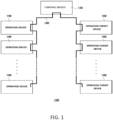
- Fig. 1 is a block diagram illustrating the entire priority control system 100.
- the priority control system 100 has a control device 120, a plurality of operation devices 140, a single or plurality of operation target devices 160, and a communication mechanism 180.
- Fig. 1 illustrates a plurality of operation target devices 160
- the operation target device 160 may be single.
- Fig. 1 illustrates the single control device 120
- the control device 120 may include a plurality of the control device 120 as long as the plurality of control devices 120 function in cooperation with each other.
- the operation devices 140 send operation request information to the effect of exhibiting a function of the operation target device 160, and the control device 120 generates or does not generate operation instruction information triggered by the reception of the operation request information from one of the operation devices 140, and if the operation instruction information is generated, sends the generated operation instruction information to the operation target device 160.
- the operation target device 160 receives the operation instruction information and exhibits the function in accordance with the operation instruction information.
- the communication mechanism 180 communicates the operation request information and the operation instruction information.
- a specific operation device priority level is set to each operation device 140, and a dynamically variable operation target device priority level is set to the operation target device 160. Then, the control device 120 refers to the operation device priority level and the operation target device priority level, and as a result of the reference, generates or does not generate operation instruction information and retains or updates the operation target device priority level.
- the setting of the operation device priority level to each operation device 140, the setting of the operation target device priority level to the operation target device 160, and the generation or non-generation of operation instruction information referring to the operation device priority level and the operation target device priority level allow control of the operation target device 160 in accordance with these priority levels.
- the retention or update of the operation target device priority level allows dynamic control in accordance with the situation and allows complex control adapting the mode of use of a user.
- the priority control system 100 may employ the DALI (digital addressable lighting interface) ® standard as the standard to be adhered to.
- DALI digital addressable lighting interface
- the adherence to the DALI ® standard allows provision of the operation devices 140 and the control device 120 that widely supports the operation target device 160 employing the standard.
- the adherence also allows complex control and reporting in the operation devices 140 and the operation target device 160 using control commands employed by the DALI ® standard. This allows a user to freely select the operation target device 160 in accordance with the DALI ® standard regardless of the manufacturer and the realization of complex control allows an increase in the convenience of users.
- Fig. 2 is a functional block diagram illustrating main components of the priority control system 100.
- the control device 120 has a control section 122, an initialization processing section 124, a priority level acquisition section 126, an operation instruction information generation section 128, a storage section 130, a receiving section 132, and a sending section 134.
- the storage section 130 stores an operation device priority level table 130a and an operation target device priority level table 130b.
- the control section 122 controls the control device 120 to exhibit a predetermined function.
- the initialization processing section 124 performs initialization process of the entire priority control system 100.
- the priority level acquisition section 126 acquires the operation device priority level and the operation target device priority level stored in the storage section 130.
- the operation instruction information generation section 128 generates operation instruction information referring to the operation device priority level and the operation target device priority level acquired by the priority level acquisition section 126.
- the operation device priority level for each operation device is recorded in the operation device priority level table 130a, and the operation target device priority level for each operation target device is recorded in the operation target device priority level table 130b.
- the storage section 130 also stores a control program for the control device 120 and other data.
- the receiving section 132 receives the operation request information from each operation device 140 and response information from the operation target device 160.
- the sending section 134 sends operation instruction information to the operation target device 160 and sends the response information or control information from the operation target device 160 to the operation devices 140.
- Each operation device 140 has a control section 142, an operation section 144, a reporting section 146, an operation request information generation section 148, a storage section 150, a receiving section 152, and a sending section 154.
- the storage section 150 has a reporting pattern storage section 150a and an index storage section 150b.
- the control section 142 controls the operation devices 140 to exhibit a predetermined function.
- the operation section 144 is subjected to operation by a user. Examples of the operation section 144 include a switch, a rotary encoder, and the like, for example.
- the reporting section 146 executes reporting based on report control information from the control section 122. Examples of the reporting section 146 include an LED, an RGB_LED, a liquid crystal display device, a sound generation device, and the like, for example.
- the operation request information generation section 148 generates operation request information upon the reception of a signal from the operation section 144.
- the storage section 150 has the reporting pattern storage section 150a and the index storage section 150b, where the reporting pattern storage section 150a stores a reporting pattern in the reporting section 146 and the index storage section 150b stores an index associated with each reporting pattern.
- the storage section 150 also stores a control program for the operation devices 140 and other data.
- the receiving section 152 receives the response information or the control information from the control device 120 and the sending section 154 sends the operation request information to the control device 120.
- the operation target device 160 has a control section 162, a functional section 164, a storage section 166, a sending section 168, and a receiving section 170.
- the control section 162 controls the operation target device 160 to exhibit a predetermined function.
- the functional section 164 exhibits a function of the operation target device 160. If the operation target device 160 is a lighting device, the functional section 164 may be exemplified by a light emitting section, such as a lamp.
- the storage section 166 stores a control program for the operation target device 160 and other data.
- the receiving section 170 receives the operation instruction information from the control device 120 and the sending section 168 sends the response information to the control device 120.
- Fig. 3 is a schematic diagram illustrating an example of hardware 200 used in the priority control system 100.
- the hardware configuration illustrated in Fig. 3 is the same as general computer systems and is applicable to each of the control device 120, the operation devices 140, and the operation target device 160.
- a CPU central processing unit
- the storage device 212 includes a RAM (random access memory) 212a and an EEPROM (electrically erasable programmable read-only memory) 212b.
- RAM random access memory
- EEPROM electrically erasable programmable read-only memory
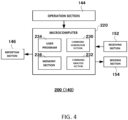
- Fig. 4 is a functional block diagram illustrating an example in the case of applying the hardware 200 to each operation device 140.
- the operation section 144, the reporting section 146, the receiving section 152, and the sending section 154 are as described earlier.
- a microcomputer 220 has a command generation section 230, a command analysis section 232, a user program 234, and a memory section 236.
- the operation section 144 is an example of the input device 206 to input an operation result to the microcomputer 220.
- the reporting section 146 is an example of the output device 208 to perform display controlled by the microcomputer 220.
- the receiving section 152 and the sending section 154 are an example of the input and output device 210 to receive and send the operation request information, the response information, and the like with the control device 120.
- the functions of the command generation section 230 and the command analysis section 232 are mainly realized by the CPU 204 and the user program 234, where the command generation section 230 generates a command (operation request information) in accordance with operation of the operation section 144 and the command analysis section 232 analyzes and executes a command received from the control device 120.
- the user program 234 is software to realize the function of the operation device 140 to be stored in the storage device 212.
- the memory section 236 is an example of the storage device 212 to store a reporting pattern and the like.
- Figs. 5 and 6 are diagrams illustrating examples of the appearance of each operation device 140.
- the operation device 140 illustrated in Fig. 5 is an example of arranging three rocker switches (tumbler switches) side by side as the operation section 144.
- Each rocker switch is a momentary contact type and has an LED embedded as the reporting section 146.
- the LED is capable of reporting the operation state of the operation target device 160 by its lighting, blinking, or a blinking pattern.
- the LED may be an RGB_LED to differentiate the reporting content by the color of the RGB_LED.
- the operation device 140 illustrated in Fig. 6 is an example of combining one rocker switch with a rotary encoder as the operation section 144.
- the rocker switch is the same as that in the case of Fig. 5 .
- an arc LED or RGB_LED is arranged as the reporting section 146.
- the operation state (e.g., output ratio (brightness) of the lighting device) of the operation target device 160 may be displayed by the lighting ratio on the arc of the LED and the lighting ratio and the color on the arc of the RGB_LED.
- the reporting pattern in the case of the above case, the lighting pattern of the LED or the lighting ratio or the color of the RGB_LED
- the reporting pattern may be specified by definition of the memory domain (bank domain) of the memory section 236. That is, the reporting pattern may be registered in a predetermined bank domain in advance to execute intended reporting (display) in actual reporting by defining the bank domain in which the reporting pattern intended to be displayed is registered.
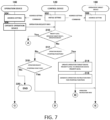
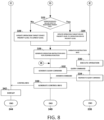
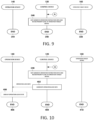
- Figs. 7 through 9 are flowcharts illustrating examples of the behavior of the priority control system 100.
- the control device 120 Upon starting or restarting of the priority control system 100, the control device 120 performs initial setting (step 302). In the initial setting, the control device 120 sends an address setting command to each of the operation devices 140 and the operation target device 160 and each of the operation devices 140 and the operation target device 160 perform address setting in accordance with the received address setting command (steps 304, 306). It should be noted that, in the initial setting, the lowest level (e.g., "0") is allocated as the initial value to the priority level (operation target device priority level) of the operation target device 160. Thus, in the first operation of the operation device 140, the highest priority basically is put on the operation device 140, causing the function of the operation target device 160 to be started or stopped.
- the lowest level e.g., "0”
- the operation device 140 When a user operates the operation section 144 in any of the operation devices 140, the operation device 140 generates operation request information and sends the information to the control device 120 (step 308).
- the control device 120 having received the operation request information compares the operation target device priority level of the subject with the operation device priority level of the request originator in response to the reception of the operation request information and determines whether the operation target device priority level is higher than the operation device priority level (step 310). If the determination is true (i.e., if the higher priority is put on the operation target device 160), the control device 120 does not generate operation instruction information and retains the operation target device priority level (step 346) to terminate the process (step 340).
- the control device 120 may generate operation lock information indicating that the operation is in the locked state (step 402) and send the information to the operation device 140.
- the operation device 140 having received the operation lock information may display that the operation device is in an operation lock state on the reporting section 146 (step 406).
- step 310 determines whether the operation request information is information to the effect of starting a function of the operation target device (step 312), and if the determination is true, updates the operation target device priority level to the operation device priority level (step 314) and also generates operation instruction information to the effect of starting the function (step 316) and sends the information to the operation target device 160.
- the operation target device 160 having received the operation instruction information executes the operation in accordance with the operation instruction information (step 330).
- control device 120 after sending the operation instruction information generates a query command to inquire the state of the operation target device 160 to the operation target device 160 (step 332) and sends the command to the operation target device 160.
- the operation target device 160 having received the query command generates an answer command to respond to the query command and sends the command to the control device 120 (step 334) to terminate the process (step 336).
- the control device 120 having received the answer command generates control information to reflect the answer command (step 338) and sends the information to the operation device 140 to terminate the process (step 340).
- the operation devices 140 having received the control information controls the reporting section 146 in accordance with the received control information and realizes the display (step 342), and then terminates the process (step 344).
- step 312 determines whether the operation request information is information to the effect of stopping the function of the operation target device (step 318), and if the determination in is false, terminates the process (step 320). If the determination in step 318 is true, the control device 120 determines whether the operation request information is information including the effect of maintaining the priority level (step 322), and updates the priority level of the operation target device to the priority level of the operation device if the determination is true or updates the priority level of the operation target device to the lowest level if the determination is false, and goes on to step 328. At step 328, the control device 120 generates operation instruction information to the effect of stopping the function of the operation target device (step 316) and sends the information to the operation target device 160. The process at step 330 and later is as described earlier.
- the above process is summarized as follows. That is, the process executed by the comparison between the priority level (operation device priority level) of the operation device 140 (e.g., switch for lighting) and the priority level (operation target device priority level) of the operation target device 160 (e.g., lighting device), the determination of whether the operation request is starting or stopping of the function, and the determination of whether the operation request contains maintenance of the priority level is classified into as below.
- the priority level operation device priority level
- operation target device priority level e.g., lighting device
- the process as just described allows appropriate setting of the operation device priority level and the operation target device priority level in accordance with the mode of use of a user to increase the convenience of the user.
- the operation device priority level and the operation target device priority level may be readily changed, and it is thus possible to flexibly cope with a change even when the mode of use of a user is changed.
- floor switches are installed near an entrance of the floor to turn on and off lighting devices (operation target devices) of the entire floor or some areas of the floor divided into each department or the like and an area switch to turn on and off each lighting device only for a specific area, such as a meeting space, on the floor is installed near the specific area, in some cases.
- an area switch to turn on and off each lighting device only for a specific area, such as a meeting space, on the floor is installed near the specific area, in some cases.
- the priority level of the floor switch low e.g., "1”
- the priority level of the area switch high e.g., "2”
- a handy switch to be operated by a presenter is sometimes provided in addition to an in-room switch provided near an entrance and the like of the conference room.
- the priority level of the in-room switch low e.g., "1”
- the priority level of the handy switch high e.g., "2”
- operation of the in-room switch it is possible to maintain the darkness in the room without turning on the lighting in the room even when the in-room switch is erroneously turned on during the presentation.
- the priority level of the in-room lighting apparatus is not “0” but is updated to "2", which is the priority level of the handy switch (process of (4) above). Even when the in-room switch is turned on in this state, the priority level of the in-room switch is "1", which is lower than the priority level of the lighting apparatus, and thus the operation of the in-room switch is invalid and the lighting is not turned on (process of (1) above). It is thus possible to prevent interruption of the presentation and the like due to erroneous operation of the in-room switch.
- the priority control system 100 in the present embodiment allows flexible management of lighting and the like in accordance with the mode of use of users and is capable of providing high convenience to users.
- operation device 140 is in the operation lock state, it is possible to operate the operation device 140 to release the locked state. That is, as illustrated in Fig. 11 , operation defined in advance is executed as lock release operation to the operation device 140 in the operation lock state (step 502).
- the lock release operation may be exemplified by, for example, holding down operation of a button switch, repeating operation of turning on and off in a short time.
- the operation device 140 subjected to the lock release operation sends operation request information including the effect of lock releasing to the control device 120 and the control device 120 having received the information generates operation instruction information to the effect of reversing the functional state of the operation target device (e.g., in the case of a lighting device, turns on the device in the light out state or turns off the device in the lighting state) (step 504) and sends the information to the operation target device 160.
- operation request information including the effect of lock releasing to the control device 120 and the control device 120 having received the information generates operation instruction information to the effect of reversing the functional state of the operation target device (e.g., in the case of a lighting device, turns on the device in the light out state or turns off the device in the lighting state) (step 504) and sends the information to the operation target device 160.
- the control device 120 updates the priority level of the operation target device 160 to the priority level of the operation device (step 510), or if receiving the operation request (operation instruction) of stopping (step 512), updates the priority level of the operation target device 160 to the lowest level (step 514). Meanwhile, the operation target device 160 subjected to the operation instruction information executes the operation (step 506).
- the process of steps 518 through 530 is the same as the process of steps 332 through 344. Such process allows the operation device 140 to readily release the operation lock state.
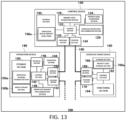
- the priority level (operation device priority level) of each operation device may be stored in a storage section 650 of the respective operation device 140 and the operation target device priority level may be stored in a storage section 630 of the control device 120.
- the priority level (operation target device priority level) of each operation target device may be stored in a storage section 766 of the respective operation target device 160 and the operation device priority level may be stored in a storage section 730 of the control device 120.
- Fig. 12 the priority level (operation device priority level) of each operation device may be stored in a storage section 650 of the respective operation device 140 and the operation target device priority level may be stored in a storage section 630 of the control device 120.
- the priority level (operation target device priority level) of each operation target device may be stored in a storage section 766 of the respective operation target device 160 and the operation device priority level may be stored in a storage section 730 of the control device 120.
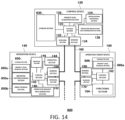
- the priority level (operation device priority level) of each operation device may be stored in a storage section 850 of the respective operation device 140 and the priority level (operation target device priority level) of each operation target device may be stored in a storage section 866 of the respective operation target device 160.
- the idea may be understood as a priority control device. That is, the idea may be understood as a priority control device including: a receiving section 132 configured to receive operation request information to effect of causing a single or plurality of operation target devices 160 to exhibit a function from a plurality of operation devices 140; a sending section 134 configured to send operation instruction information to effect of exhibiting the function to the operation target device 160; a priority level acquisition section 126 configured to acquire an operation device priority level specifically set to each operation device 140 and a dynamically variable operation target device priority level set to the operation target device 160; and a control section 122 configured to refer to the operation device priority level of an operation device 140 originating the operation request information and the operation target device priority level of a destination operation target device 160 for the operation request information triggered by the reception of the operation request information, and as a result of the reference, to generate or not to generate the operation instruction information and to retain or update the operation target device priority level.
- the idea according to the invention of the present disclosure may be understood as an operation device. That is, the idea may be understood as an operation device including: an operation section 144; a reporting section 146 configured to perform light emission display, image display, sound generation, vibration generation, or another report; an operation request information generation section 148 configured to generate operation request information to effect of causing an operation target device 160 to exhibit a function of the operation target device 160 triggered by operation of the operation section 144; a sending section 154 configured to send the operation request information; a receiving section 152 configured to receive response information to respond to the operation request information or control information sent from a control device 120 having received the operation request information; and a control section 142 configured to control the reporting section 146 based on report control information contained in the response information or the control information.
- control device 120 may refer to the operation target device priority level and a combination of the attribute code with the operation device priority level, and as a result of the reference, generate or not generate the operation instruction information and retain or update the operation target device priority level.
- the combination of the operation device priority level with the attribute code allows various kinds of control to provide a more convenient system to users.
Landscapes
- Engineering & Computer Science (AREA)
- Computer Networks & Wireless Communication (AREA)
- Physics & Mathematics (AREA)
- General Physics & Mathematics (AREA)
- Selective Calling Equipment (AREA)
- Circuit Arrangement For Electric Light Sources In General (AREA)
Applications Claiming Priority (2)
| Application Number | Priority Date | Filing Date | Title |
|---|---|---|---|
| JP2020136073 | 2020-08-11 | ||
| PCT/JP2021/028213 WO2022034804A1 (ja) | 2020-08-11 | 2021-07-29 | 優先制御システム、優先制御器および操作器 |
Publications (2)
| Publication Number | Publication Date |
|---|---|
| EP4199657A1 true EP4199657A1 (de) | 2023-06-21 |
| EP4199657A4 EP4199657A4 (de) | 2024-09-11 |
Family
ID=80247191
Family Applications (1)
| Application Number | Title | Priority Date | Filing Date |
|---|---|---|---|
| EP21855883.1A Pending EP4199657A4 (de) | 2020-08-11 | 2021-07-29 | Prioritätssteuerungssystem, prioritätssteuerung und aktuator |
Country Status (5)
| Country | Link |
|---|---|
| US (1) | US20240090106A1 (de) |
| EP (1) | EP4199657A4 (de) |
| JP (1) | JP7653595B2 (de) |
| TW (1) | TWI888618B (de) |
| WO (1) | WO2022034804A1 (de) |
Families Citing this family (2)
| Publication number | Priority date | Publication date | Assignee | Title |
|---|---|---|---|---|
| JP2024043283A (ja) * | 2022-09-16 | 2024-03-29 | パナソニックIpマネジメント株式会社 | 表示方法、プログラム、通信端末及び通信システム |
| JP2024102570A (ja) * | 2023-01-19 | 2024-07-31 | 東芝テック株式会社 | 操作制御装置及びコンピュータープログラム |
Family Cites Families (12)
| Publication number | Priority date | Publication date | Assignee | Title |
|---|---|---|---|---|
| JPH0254897A (ja) * | 1988-08-19 | 1990-02-23 | Mitsubishi Electric Corp | 照明制御システム |
| JP2002260871A (ja) * | 2001-02-28 | 2002-09-13 | Toshiba Lighting & Technology Corp | 照明制御システム |
| JP2003289528A (ja) | 2002-03-28 | 2003-10-10 | Toshiba Corp | 遠隔監視システムおよび同システムの監視制御方法 |
| JP4658566B2 (ja) * | 2004-10-29 | 2011-03-23 | シャープ株式会社 | 遠隔操作装置および遠隔制御システム |
| US8355713B1 (en) * | 2010-01-21 | 2013-01-15 | Sprint Spectrum L.P. | Use of femtocell to control wireless communication device priorities |
| US10321541B2 (en) * | 2011-03-11 | 2019-06-11 | Ilumi Solutions, Inc. | LED lighting device |
| EP2909977B1 (de) * | 2012-10-17 | 2019-08-21 | Signify Holding B.V. | Bereitstellung der steuerung eines gemeinsam genutzten systems |
| KR20150126501A (ko) * | 2014-05-02 | 2015-11-12 | 엘지전자 주식회사 | 조명 시스템 및 그 동작 방법 |
| EP3869922A1 (de) * | 2014-08-22 | 2021-08-25 | Lutron Technology Company LLC | Auf den standort eines insassen reagierendes laststeuerungssystem und mobile vorrichtungen |
| US10057965B2 (en) * | 2015-05-04 | 2018-08-21 | Fulham Company Limited | LED driver and lighting systems technologies |
| JP7065386B2 (ja) | 2017-10-31 | 2022-05-12 | パナソニックIpマネジメント株式会社 | 通信システム、機器制御システム、通信装置、通信制御方法及びプログラム |
| CN111065192B (zh) * | 2020-01-17 | 2021-12-17 | 四川众兴华业市政照明工程有限公司 | 一种基于智慧路灯的控制系统 |
-
2021
- 2021-07-29 WO PCT/JP2021/028213 patent/WO2022034804A1/ja not_active Ceased
- 2021-07-29 EP EP21855883.1A patent/EP4199657A4/de active Pending
- 2021-07-29 US US18/020,701 patent/US20240090106A1/en active Pending
- 2021-07-29 JP JP2022542628A patent/JP7653595B2/ja active Active
- 2021-08-09 TW TW110129324A patent/TWI888618B/zh active
Also Published As
| Publication number | Publication date |
|---|---|
| JP7653595B2 (ja) | 2025-03-31 |
| TWI888618B (zh) | 2025-07-01 |
| WO2022034804A1 (ja) | 2022-02-17 |
| JPWO2022034804A1 (de) | 2022-02-17 |
| EP4199657A4 (de) | 2024-09-11 |
| US20240090106A1 (en) | 2024-03-14 |
| TW202230148A (zh) | 2022-08-01 |
Similar Documents
| Publication | Publication Date | Title |
|---|---|---|
| US7480534B2 (en) | Computer assisted lighting control system | |
| CN101444144B (zh) | 集成的照明控制模块和电源开关 | |
| KR100313553B1 (ko) | 원격 감시 제어 시스템 | |
| KR101549041B1 (ko) | 스위치기어, 램프 제어 시스템, 및 적어도 하나의 광을 포함하는 건물에 대한 광 제어 시스템 | |
| US11064594B2 (en) | Pairing method and pairing device | |
| US10585406B2 (en) | Building control system to operate a building based on characteristics of selected groups of building sensor fixtures | |
| EP4199657A1 (de) | Prioritätssteuerungssystem, prioritätssteuerung und aktuator | |
| EP3302004B1 (de) | Verfahren und vorrichtung zur steuerung von leuchten eines beleuchtungssystems auf der basis eines aktuellen modus eines unterhaltungsgeräts | |
| KR20120003489A (ko) | 복수의 광원을 제어하기 위한 시스템 | |
| KR20110118693A (ko) | 주변 조명 조건들에 반응하는 조명 제어 시스템 | |
| US20190174606A1 (en) | Lighting control | |
| US20180206312A1 (en) | Method for configuring a device in a lighting system | |
| JP2019531578A (ja) | 照明制御 | |
| US7821210B2 (en) | Control system for a plurality of lamp-operating devices that are arranged in a distributed manner and method for initializing such a control system | |
| WO2021196608A1 (zh) | 一种显示场景的切换方法、智能显示屏及可读存储介质 | |
| JP2003045678A (ja) | 照明制御装置 | |
| JP2009169543A (ja) | 照明制御システム及び情報処理装置 | |
| US20210133638A1 (en) | Workspace Managing Method and Workspace Managing System Capable of Improving a Scheduling Efficiency | |
| JP6463072B2 (ja) | 照明制御システム及び照明制御装置 | |
| JP7806579B2 (ja) | 情報処理装置、中継装置及びシステム | |
| US12401542B2 (en) | Control module for controlling a smart home device | |
| JP2026020715A (ja) | 状態判定システム、状態判定方法、表示方法、及び、プログラム | |
| JP2010251983A (ja) | 区画空間の設備制御システム | |
| KR20110004298U (ko) | 전력선을 이용한 터치 스크린 조명 제어 시스템 |
Legal Events
| Date | Code | Title | Description |
|---|---|---|---|
| STAA | Information on the status of an ep patent application or granted ep patent |
Free format text: STATUS: THE INTERNATIONAL PUBLICATION HAS BEEN MADE |
|
| PUAI | Public reference made under article 153(3) epc to a published international application that has entered the european phase |
Free format text: ORIGINAL CODE: 0009012 |
|
| STAA | Information on the status of an ep patent application or granted ep patent |
Free format text: STATUS: REQUEST FOR EXAMINATION WAS MADE |
|
| 17P | Request for examination filed |
Effective date: 20230313 |
|
| AK | Designated contracting states |
Kind code of ref document: A1 Designated state(s): AL AT BE BG CH CY CZ DE DK EE ES FI FR GB GR HR HU IE IS IT LI LT LU LV MC MK MT NL NO PL PT RO RS SE SI SK SM TR |
|
| DAV | Request for validation of the european patent (deleted) | ||
| DAX | Request for extension of the european patent (deleted) | ||
| A4 | Supplementary search report drawn up and despatched |
Effective date: 20240808 |
|
| RIC1 | Information provided on ipc code assigned before grant |
Ipc: G08C 17/00 20060101ALI20240802BHEP Ipc: H05B 47/18 20200101AFI20240802BHEP |