EP4193013B1 - Vliesstoff mit fasern aus recyceltem kunststoff nach dem verbrauch - Google Patents
Vliesstoff mit fasern aus recyceltem kunststoff nach dem verbrauch Download PDFInfo
- Publication number
- EP4193013B1 EP4193013B1 EP21758951.4A EP21758951A EP4193013B1 EP 4193013 B1 EP4193013 B1 EP 4193013B1 EP 21758951 A EP21758951 A EP 21758951A EP 4193013 B1 EP4193013 B1 EP 4193013B1
- Authority
- EP
- European Patent Office
- Prior art keywords
- nonwoven fabric
- fibers
- staple fibers
- pcr
- following
- Prior art date
- Legal status (The legal status is an assumption and is not a legal conclusion. Google has not performed a legal analysis and makes no representation as to the accuracy of the status listed.)
- Active
Links
Images

Classifications
-
- D—TEXTILES; PAPER
- D04—BRAIDING; LACE-MAKING; KNITTING; TRIMMINGS; NON-WOVEN FABRICS
- D04H—MAKING TEXTILE FABRICS, e.g. FROM FIBRES OR FILAMENTARY MATERIAL; FABRICS MADE BY SUCH PROCESSES OR APPARATUS, e.g. FELTS, NON-WOVEN FABRICS; COTTON-WOOL; WADDING ; NON-WOVEN FABRICS FROM STAPLE FIBRES, FILAMENTS OR YARNS, BONDED WITH AT LEAST ONE WEB-LIKE MATERIAL DURING THEIR CONSOLIDATION
- D04H1/00—Non-woven fabrics formed wholly or mainly of staple fibres or like relatively short fibres
- D04H1/40—Non-woven fabrics formed wholly or mainly of staple fibres or like relatively short fibres from fleeces or layers composed of fibres without existing or potential cohesive properties
- D04H1/42—Non-woven fabrics formed wholly or mainly of staple fibres or like relatively short fibres from fleeces or layers composed of fibres without existing or potential cohesive properties characterised by the use of certain kinds of fibres insofar as this use has no preponderant influence on the consolidation of the fleece
- D04H1/4326—Condensation or reaction polymers
- D04H1/435—Polyesters
-
- D—TEXTILES; PAPER
- D04—BRAIDING; LACE-MAKING; KNITTING; TRIMMINGS; NON-WOVEN FABRICS
- D04H—MAKING TEXTILE FABRICS, e.g. FROM FIBRES OR FILAMENTARY MATERIAL; FABRICS MADE BY SUCH PROCESSES OR APPARATUS, e.g. FELTS, NON-WOVEN FABRICS; COTTON-WOOL; WADDING ; NON-WOVEN FABRICS FROM STAPLE FIBRES, FILAMENTS OR YARNS, BONDED WITH AT LEAST ONE WEB-LIKE MATERIAL DURING THEIR CONSOLIDATION
- D04H1/00—Non-woven fabrics formed wholly or mainly of staple fibres or like relatively short fibres
- D04H1/40—Non-woven fabrics formed wholly or mainly of staple fibres or like relatively short fibres from fleeces or layers composed of fibres without existing or potential cohesive properties
- D04H1/42—Non-woven fabrics formed wholly or mainly of staple fibres or like relatively short fibres from fleeces or layers composed of fibres without existing or potential cohesive properties characterised by the use of certain kinds of fibres insofar as this use has no preponderant influence on the consolidation of the fleece
- D04H1/425—Cellulose series
-
- D—TEXTILES; PAPER
- D04—BRAIDING; LACE-MAKING; KNITTING; TRIMMINGS; NON-WOVEN FABRICS
- D04H—MAKING TEXTILE FABRICS, e.g. FROM FIBRES OR FILAMENTARY MATERIAL; FABRICS MADE BY SUCH PROCESSES OR APPARATUS, e.g. FELTS, NON-WOVEN FABRICS; COTTON-WOOL; WADDING ; NON-WOVEN FABRICS FROM STAPLE FIBRES, FILAMENTS OR YARNS, BONDED WITH AT LEAST ONE WEB-LIKE MATERIAL DURING THEIR CONSOLIDATION
- D04H1/00—Non-woven fabrics formed wholly or mainly of staple fibres or like relatively short fibres
- D04H1/40—Non-woven fabrics formed wholly or mainly of staple fibres or like relatively short fibres from fleeces or layers composed of fibres without existing or potential cohesive properties
- D04H1/42—Non-woven fabrics formed wholly or mainly of staple fibres or like relatively short fibres from fleeces or layers composed of fibres without existing or potential cohesive properties characterised by the use of certain kinds of fibres insofar as this use has no preponderant influence on the consolidation of the fleece
- D04H1/425—Cellulose series
- D04H1/4258—Regenerated cellulose series
-
- D—TEXTILES; PAPER
- D04—BRAIDING; LACE-MAKING; KNITTING; TRIMMINGS; NON-WOVEN FABRICS
- D04H—MAKING TEXTILE FABRICS, e.g. FROM FIBRES OR FILAMENTARY MATERIAL; FABRICS MADE BY SUCH PROCESSES OR APPARATUS, e.g. FELTS, NON-WOVEN FABRICS; COTTON-WOOL; WADDING ; NON-WOVEN FABRICS FROM STAPLE FIBRES, FILAMENTS OR YARNS, BONDED WITH AT LEAST ONE WEB-LIKE MATERIAL DURING THEIR CONSOLIDATION
- D04H1/00—Non-woven fabrics formed wholly or mainly of staple fibres or like relatively short fibres
- D04H1/40—Non-woven fabrics formed wholly or mainly of staple fibres or like relatively short fibres from fleeces or layers composed of fibres without existing or potential cohesive properties
- D04H1/42—Non-woven fabrics formed wholly or mainly of staple fibres or like relatively short fibres from fleeces or layers composed of fibres without existing or potential cohesive properties characterised by the use of certain kinds of fibres insofar as this use has no preponderant influence on the consolidation of the fleece
- D04H1/4274—Rags; Fabric scraps
-
- D—TEXTILES; PAPER
- D04—BRAIDING; LACE-MAKING; KNITTING; TRIMMINGS; NON-WOVEN FABRICS
- D04H—MAKING TEXTILE FABRICS, e.g. FROM FIBRES OR FILAMENTARY MATERIAL; FABRICS MADE BY SUCH PROCESSES OR APPARATUS, e.g. FELTS, NON-WOVEN FABRICS; COTTON-WOOL; WADDING ; NON-WOVEN FABRICS FROM STAPLE FIBRES, FILAMENTS OR YARNS, BONDED WITH AT LEAST ONE WEB-LIKE MATERIAL DURING THEIR CONSOLIDATION
- D04H1/00—Non-woven fabrics formed wholly or mainly of staple fibres or like relatively short fibres
- D04H1/40—Non-woven fabrics formed wholly or mainly of staple fibres or like relatively short fibres from fleeces or layers composed of fibres without existing or potential cohesive properties
- D04H1/42—Non-woven fabrics formed wholly or mainly of staple fibres or like relatively short fibres from fleeces or layers composed of fibres without existing or potential cohesive properties characterised by the use of certain kinds of fibres insofar as this use has no preponderant influence on the consolidation of the fleece
- D04H1/4382—Stretched reticular film fibres; Composite fibres; Mixed fibres; Ultrafine fibres; Fibres for artificial leather
- D04H1/43825—Composite fibres
-
- D—TEXTILES; PAPER
- D04—BRAIDING; LACE-MAKING; KNITTING; TRIMMINGS; NON-WOVEN FABRICS
- D04H—MAKING TEXTILE FABRICS, e.g. FROM FIBRES OR FILAMENTARY MATERIAL; FABRICS MADE BY SUCH PROCESSES OR APPARATUS, e.g. FELTS, NON-WOVEN FABRICS; COTTON-WOOL; WADDING ; NON-WOVEN FABRICS FROM STAPLE FIBRES, FILAMENTS OR YARNS, BONDED WITH AT LEAST ONE WEB-LIKE MATERIAL DURING THEIR CONSOLIDATION
- D04H1/00—Non-woven fabrics formed wholly or mainly of staple fibres or like relatively short fibres
- D04H1/40—Non-woven fabrics formed wholly or mainly of staple fibres or like relatively short fibres from fleeces or layers composed of fibres without existing or potential cohesive properties
- D04H1/42—Non-woven fabrics formed wholly or mainly of staple fibres or like relatively short fibres from fleeces or layers composed of fibres without existing or potential cohesive properties characterised by the use of certain kinds of fibres insofar as this use has no preponderant influence on the consolidation of the fleece
- D04H1/4382—Stretched reticular film fibres; Composite fibres; Mixed fibres; Ultrafine fibres; Fibres for artificial leather
- D04H1/43835—Mixed fibres, e.g. at least two chemically different fibres or fibre blends
-
- D—TEXTILES; PAPER
- D04—BRAIDING; LACE-MAKING; KNITTING; TRIMMINGS; NON-WOVEN FABRICS
- D04H—MAKING TEXTILE FABRICS, e.g. FROM FIBRES OR FILAMENTARY MATERIAL; FABRICS MADE BY SUCH PROCESSES OR APPARATUS, e.g. FELTS, NON-WOVEN FABRICS; COTTON-WOOL; WADDING ; NON-WOVEN FABRICS FROM STAPLE FIBRES, FILAMENTS OR YARNS, BONDED WITH AT LEAST ONE WEB-LIKE MATERIAL DURING THEIR CONSOLIDATION
- D04H1/00—Non-woven fabrics formed wholly or mainly of staple fibres or like relatively short fibres
- D04H1/40—Non-woven fabrics formed wholly or mainly of staple fibres or like relatively short fibres from fleeces or layers composed of fibres without existing or potential cohesive properties
- D04H1/44—Non-woven fabrics formed wholly or mainly of staple fibres or like relatively short fibres from fleeces or layers composed of fibres without existing or potential cohesive properties the fleeces or layers being consolidated by mechanical means, e.g. by rolling
- D04H1/46—Non-woven fabrics formed wholly or mainly of staple fibres or like relatively short fibres from fleeces or layers composed of fibres without existing or potential cohesive properties the fleeces or layers being consolidated by mechanical means, e.g. by rolling by needling or like operations to cause entanglement of fibres
-
- D—TEXTILES; PAPER
- D04—BRAIDING; LACE-MAKING; KNITTING; TRIMMINGS; NON-WOVEN FABRICS
- D04H—MAKING TEXTILE FABRICS, e.g. FROM FIBRES OR FILAMENTARY MATERIAL; FABRICS MADE BY SUCH PROCESSES OR APPARATUS, e.g. FELTS, NON-WOVEN FABRICS; COTTON-WOOL; WADDING ; NON-WOVEN FABRICS FROM STAPLE FIBRES, FILAMENTS OR YARNS, BONDED WITH AT LEAST ONE WEB-LIKE MATERIAL DURING THEIR CONSOLIDATION
- D04H1/00—Non-woven fabrics formed wholly or mainly of staple fibres or like relatively short fibres
- D04H1/40—Non-woven fabrics formed wholly or mainly of staple fibres or like relatively short fibres from fleeces or layers composed of fibres without existing or potential cohesive properties
- D04H1/44—Non-woven fabrics formed wholly or mainly of staple fibres or like relatively short fibres from fleeces or layers composed of fibres without existing or potential cohesive properties the fleeces or layers being consolidated by mechanical means, e.g. by rolling
- D04H1/46—Non-woven fabrics formed wholly or mainly of staple fibres or like relatively short fibres from fleeces or layers composed of fibres without existing or potential cohesive properties the fleeces or layers being consolidated by mechanical means, e.g. by rolling by needling or like operations to cause entanglement of fibres
- D04H1/498—Non-woven fabrics formed wholly or mainly of staple fibres or like relatively short fibres from fleeces or layers composed of fibres without existing or potential cohesive properties the fleeces or layers being consolidated by mechanical means, e.g. by rolling by needling or like operations to cause entanglement of fibres entanglement of layered webs
-
- D—TEXTILES; PAPER
- D04—BRAIDING; LACE-MAKING; KNITTING; TRIMMINGS; NON-WOVEN FABRICS
- D04H—MAKING TEXTILE FABRICS, e.g. FROM FIBRES OR FILAMENTARY MATERIAL; FABRICS MADE BY SUCH PROCESSES OR APPARATUS, e.g. FELTS, NON-WOVEN FABRICS; COTTON-WOOL; WADDING ; NON-WOVEN FABRICS FROM STAPLE FIBRES, FILAMENTS OR YARNS, BONDED WITH AT LEAST ONE WEB-LIKE MATERIAL DURING THEIR CONSOLIDATION
- D04H1/00—Non-woven fabrics formed wholly or mainly of staple fibres or like relatively short fibres
- D04H1/40—Non-woven fabrics formed wholly or mainly of staple fibres or like relatively short fibres from fleeces or layers composed of fibres without existing or potential cohesive properties
- D04H1/54—Non-woven fabrics formed wholly or mainly of staple fibres or like relatively short fibres from fleeces or layers composed of fibres without existing or potential cohesive properties by welding together the fibres, e.g. by partially melting or dissolving
- D04H1/541—Composite fibres, e.g. sheath-core, sea-island or side-by-side; Mixed fibres
-
- D—TEXTILES; PAPER
- D04—BRAIDING; LACE-MAKING; KNITTING; TRIMMINGS; NON-WOVEN FABRICS
- D04H—MAKING TEXTILE FABRICS, e.g. FROM FIBRES OR FILAMENTARY MATERIAL; FABRICS MADE BY SUCH PROCESSES OR APPARATUS, e.g. FELTS, NON-WOVEN FABRICS; COTTON-WOOL; WADDING ; NON-WOVEN FABRICS FROM STAPLE FIBRES, FILAMENTS OR YARNS, BONDED WITH AT LEAST ONE WEB-LIKE MATERIAL DURING THEIR CONSOLIDATION
- D04H1/00—Non-woven fabrics formed wholly or mainly of staple fibres or like relatively short fibres
- D04H1/40—Non-woven fabrics formed wholly or mainly of staple fibres or like relatively short fibres from fleeces or layers composed of fibres without existing or potential cohesive properties
- D04H1/54—Non-woven fabrics formed wholly or mainly of staple fibres or like relatively short fibres from fleeces or layers composed of fibres without existing or potential cohesive properties by welding together the fibres, e.g. by partially melting or dissolving
- D04H1/56—Non-woven fabrics formed wholly or mainly of staple fibres or like relatively short fibres from fleeces or layers composed of fibres without existing or potential cohesive properties by welding together the fibres, e.g. by partially melting or dissolving in association with fibre formation, e.g. immediately following extrusion of staple fibres
-
- D—TEXTILES; PAPER
- D04—BRAIDING; LACE-MAKING; KNITTING; TRIMMINGS; NON-WOVEN FABRICS
- D04H—MAKING TEXTILE FABRICS, e.g. FROM FIBRES OR FILAMENTARY MATERIAL; FABRICS MADE BY SUCH PROCESSES OR APPARATUS, e.g. FELTS, NON-WOVEN FABRICS; COTTON-WOOL; WADDING ; NON-WOVEN FABRICS FROM STAPLE FIBRES, FILAMENTS OR YARNS, BONDED WITH AT LEAST ONE WEB-LIKE MATERIAL DURING THEIR CONSOLIDATION
- D04H1/00—Non-woven fabrics formed wholly or mainly of staple fibres or like relatively short fibres
- D04H1/40—Non-woven fabrics formed wholly or mainly of staple fibres or like relatively short fibres from fleeces or layers composed of fibres without existing or potential cohesive properties
- D04H1/58—Non-woven fabrics formed wholly or mainly of staple fibres or like relatively short fibres from fleeces or layers composed of fibres without existing or potential cohesive properties by applying, incorporating or activating chemical or thermoplastic bonding agents, e.g. adhesives
- D04H1/587—Non-woven fabrics formed wholly or mainly of staple fibres or like relatively short fibres from fleeces or layers composed of fibres without existing or potential cohesive properties by applying, incorporating or activating chemical or thermoplastic bonding agents, e.g. adhesives characterised by the bonding agents used
-
- D—TEXTILES; PAPER
- D04—BRAIDING; LACE-MAKING; KNITTING; TRIMMINGS; NON-WOVEN FABRICS
- D04H—MAKING TEXTILE FABRICS, e.g. FROM FIBRES OR FILAMENTARY MATERIAL; FABRICS MADE BY SUCH PROCESSES OR APPARATUS, e.g. FELTS, NON-WOVEN FABRICS; COTTON-WOOL; WADDING ; NON-WOVEN FABRICS FROM STAPLE FIBRES, FILAMENTS OR YARNS, BONDED WITH AT LEAST ONE WEB-LIKE MATERIAL DURING THEIR CONSOLIDATION
- D04H1/00—Non-woven fabrics formed wholly or mainly of staple fibres or like relatively short fibres
- D04H1/40—Non-woven fabrics formed wholly or mainly of staple fibres or like relatively short fibres from fleeces or layers composed of fibres without existing or potential cohesive properties
- D04H1/58—Non-woven fabrics formed wholly or mainly of staple fibres or like relatively short fibres from fleeces or layers composed of fibres without existing or potential cohesive properties by applying, incorporating or activating chemical or thermoplastic bonding agents, e.g. adhesives
- D04H1/64—Non-woven fabrics formed wholly or mainly of staple fibres or like relatively short fibres from fleeces or layers composed of fibres without existing or potential cohesive properties by applying, incorporating or activating chemical or thermoplastic bonding agents, e.g. adhesives the bonding agent being applied in wet state, e.g. chemical agents in dispersions or solutions
-
- D—TEXTILES; PAPER
- D04—BRAIDING; LACE-MAKING; KNITTING; TRIMMINGS; NON-WOVEN FABRICS
- D04H—MAKING TEXTILE FABRICS, e.g. FROM FIBRES OR FILAMENTARY MATERIAL; FABRICS MADE BY SUCH PROCESSES OR APPARATUS, e.g. FELTS, NON-WOVEN FABRICS; COTTON-WOOL; WADDING ; NON-WOVEN FABRICS FROM STAPLE FIBRES, FILAMENTS OR YARNS, BONDED WITH AT LEAST ONE WEB-LIKE MATERIAL DURING THEIR CONSOLIDATION
- D04H1/00—Non-woven fabrics formed wholly or mainly of staple fibres or like relatively short fibres
- D04H1/70—Non-woven fabrics formed wholly or mainly of staple fibres or like relatively short fibres characterised by the method of forming fleeces or layers, e.g. reorientation of fibres
- D04H1/72—Non-woven fabrics formed wholly or mainly of staple fibres or like relatively short fibres characterised by the method of forming fleeces or layers, e.g. reorientation of fibres the fibres being randomly arranged
- D04H1/732—Non-woven fabrics formed wholly or mainly of staple fibres or like relatively short fibres characterised by the method of forming fleeces or layers, e.g. reorientation of fibres the fibres being randomly arranged by fluid current, e.g. air-lay
-
- D—TEXTILES; PAPER
- D04—BRAIDING; LACE-MAKING; KNITTING; TRIMMINGS; NON-WOVEN FABRICS
- D04H—MAKING TEXTILE FABRICS, e.g. FROM FIBRES OR FILAMENTARY MATERIAL; FABRICS MADE BY SUCH PROCESSES OR APPARATUS, e.g. FELTS, NON-WOVEN FABRICS; COTTON-WOOL; WADDING ; NON-WOVEN FABRICS FROM STAPLE FIBRES, FILAMENTS OR YARNS, BONDED WITH AT LEAST ONE WEB-LIKE MATERIAL DURING THEIR CONSOLIDATION
- D04H3/00—Non-woven fabrics formed wholly or mainly of yarns or like filamentary material of substantial length
- D04H3/08—Non-woven fabrics formed wholly or mainly of yarns or like filamentary material of substantial length characterised by the method of strengthening or consolidating
- D04H3/16—Non-woven fabrics formed wholly or mainly of yarns or like filamentary material of substantial length characterised by the method of strengthening or consolidating with bonds between thermoplastic filaments produced in association with filament formation, e.g. immediately following extrusion
-
- D—TEXTILES; PAPER
- D04—BRAIDING; LACE-MAKING; KNITTING; TRIMMINGS; NON-WOVEN FABRICS
- D04H—MAKING TEXTILE FABRICS, e.g. FROM FIBRES OR FILAMENTARY MATERIAL; FABRICS MADE BY SUCH PROCESSES OR APPARATUS, e.g. FELTS, NON-WOVEN FABRICS; COTTON-WOOL; WADDING ; NON-WOVEN FABRICS FROM STAPLE FIBRES, FILAMENTS OR YARNS, BONDED WITH AT LEAST ONE WEB-LIKE MATERIAL DURING THEIR CONSOLIDATION
- D04H5/00—Non woven fabrics formed of mixtures of relatively short fibres and yarns or like filamentary material of substantial length
- D04H5/02—Non woven fabrics formed of mixtures of relatively short fibres and yarns or like filamentary material of substantial length strengthened or consolidated by mechanical methods, e.g. needling
-
- D—TEXTILES; PAPER
- D10—INDEXING SCHEME ASSOCIATED WITH SUBLASSES OF SECTION D, RELATING TO TEXTILES
- D10B—INDEXING SCHEME ASSOCIATED WITH SUBLASSES OF SECTION D, RELATING TO TEXTILES
- D10B2331/00—Fibres made from polymers obtained otherwise than by reactions only involving carbon-to-carbon unsaturated bonds, e.g. polycondensation products
- D10B2331/04—Fibres made from polymers obtained otherwise than by reactions only involving carbon-to-carbon unsaturated bonds, e.g. polycondensation products polyesters, e.g. polyethylene terephthalate [PET]
-
- D—TEXTILES; PAPER
- D10—INDEXING SCHEME ASSOCIATED WITH SUBLASSES OF SECTION D, RELATING TO TEXTILES
- D10B—INDEXING SCHEME ASSOCIATED WITH SUBLASSES OF SECTION D, RELATING TO TEXTILES
- D10B2401/00—Physical properties
- D10B2401/02—Moisture-responsive characteristics
- D10B2401/022—Moisture-responsive characteristics hydrophylic
-
- D—TEXTILES; PAPER
- D10—INDEXING SCHEME ASSOCIATED WITH SUBLASSES OF SECTION D, RELATING TO TEXTILES
- D10B—INDEXING SCHEME ASSOCIATED WITH SUBLASSES OF SECTION D, RELATING TO TEXTILES
- D10B2401/00—Physical properties
- D10B2401/13—Physical properties anti-allergenic or anti-bacterial
-
- D—TEXTILES; PAPER
- D10—INDEXING SCHEME ASSOCIATED WITH SUBLASSES OF SECTION D, RELATING TO TEXTILES
- D10B—INDEXING SCHEME ASSOCIATED WITH SUBLASSES OF SECTION D, RELATING TO TEXTILES
- D10B2509/00—Medical; Hygiene
-
- Y—GENERAL TAGGING OF NEW TECHNOLOGICAL DEVELOPMENTS; GENERAL TAGGING OF CROSS-SECTIONAL TECHNOLOGIES SPANNING OVER SEVERAL SECTIONS OF THE IPC; TECHNICAL SUBJECTS COVERED BY FORMER USPC CROSS-REFERENCE ART COLLECTIONS [XRACs] AND DIGESTS
- Y02—TECHNOLOGIES OR APPLICATIONS FOR MITIGATION OR ADAPTATION AGAINST CLIMATE CHANGE
- Y02W—CLIMATE CHANGE MITIGATION TECHNOLOGIES RELATED TO WASTEWATER TREATMENT OR WASTE MANAGEMENT
- Y02W30/00—Technologies for solid waste management
- Y02W30/50—Reuse, recycling or recovery technologies
- Y02W30/62—Plastics recycling; Rubber recycling
-
- Y—GENERAL TAGGING OF NEW TECHNOLOGICAL DEVELOPMENTS; GENERAL TAGGING OF CROSS-SECTIONAL TECHNOLOGIES SPANNING OVER SEVERAL SECTIONS OF THE IPC; TECHNICAL SUBJECTS COVERED BY FORMER USPC CROSS-REFERENCE ART COLLECTIONS [XRACs] AND DIGESTS
- Y10—TECHNICAL SUBJECTS COVERED BY FORMER USPC
- Y10T—TECHNICAL SUBJECTS COVERED BY FORMER US CLASSIFICATION
- Y10T442/00—Fabric [woven, knitted, or nonwoven textile or cloth, etc.]
- Y10T442/20—Coated or impregnated woven, knit, or nonwoven fabric which is not [a] associated with another preformed layer or fiber layer or, [b] with respect to woven and knit, characterized, respectively, by a particular or differential weave or knit, wherein the coating or impregnation is neither a foamed material nor a free metal or alloy layer
- Y10T442/2525—Coating or impregnation functions biologically [e.g., insect repellent, antiseptic, insecticide, bactericide, etc.]
-
- Y—GENERAL TAGGING OF NEW TECHNOLOGICAL DEVELOPMENTS; GENERAL TAGGING OF CROSS-SECTIONAL TECHNOLOGIES SPANNING OVER SEVERAL SECTIONS OF THE IPC; TECHNICAL SUBJECTS COVERED BY FORMER USPC CROSS-REFERENCE ART COLLECTIONS [XRACs] AND DIGESTS
- Y10—TECHNICAL SUBJECTS COVERED BY FORMER USPC
- Y10T—TECHNICAL SUBJECTS COVERED BY FORMER US CLASSIFICATION
- Y10T442/00—Fabric [woven, knitted, or nonwoven textile or cloth, etc.]
- Y10T442/20—Coated or impregnated woven, knit, or nonwoven fabric which is not [a] associated with another preformed layer or fiber layer or, [b] with respect to woven and knit, characterized, respectively, by a particular or differential weave or knit, wherein the coating or impregnation is neither a foamed material nor a free metal or alloy layer
- Y10T442/2762—Coated or impregnated natural fiber fabric [e.g., cotton, wool, silk, linen, etc.]
-
- Y—GENERAL TAGGING OF NEW TECHNOLOGICAL DEVELOPMENTS; GENERAL TAGGING OF CROSS-SECTIONAL TECHNOLOGIES SPANNING OVER SEVERAL SECTIONS OF THE IPC; TECHNICAL SUBJECTS COVERED BY FORMER USPC CROSS-REFERENCE ART COLLECTIONS [XRACs] AND DIGESTS
- Y10—TECHNICAL SUBJECTS COVERED BY FORMER USPC
- Y10T—TECHNICAL SUBJECTS COVERED BY FORMER US CLASSIFICATION
- Y10T442/00—Fabric [woven, knitted, or nonwoven textile or cloth, etc.]
- Y10T442/20—Coated or impregnated woven, knit, or nonwoven fabric which is not [a] associated with another preformed layer or fiber layer or, [b] with respect to woven and knit, characterized, respectively, by a particular or differential weave or knit, wherein the coating or impregnation is neither a foamed material nor a free metal or alloy layer
- Y10T442/2861—Coated or impregnated synthetic organic fiber fabric
-
- Y—GENERAL TAGGING OF NEW TECHNOLOGICAL DEVELOPMENTS; GENERAL TAGGING OF CROSS-SECTIONAL TECHNOLOGIES SPANNING OVER SEVERAL SECTIONS OF THE IPC; TECHNICAL SUBJECTS COVERED BY FORMER USPC CROSS-REFERENCE ART COLLECTIONS [XRACs] AND DIGESTS
- Y10—TECHNICAL SUBJECTS COVERED BY FORMER USPC
- Y10T—TECHNICAL SUBJECTS COVERED BY FORMER US CLASSIFICATION
- Y10T442/00—Fabric [woven, knitted, or nonwoven textile or cloth, etc.]
- Y10T442/20—Coated or impregnated woven, knit, or nonwoven fabric which is not [a] associated with another preformed layer or fiber layer or, [b] with respect to woven and knit, characterized, respectively, by a particular or differential weave or knit, wherein the coating or impregnation is neither a foamed material nor a free metal or alloy layer
- Y10T442/2861—Coated or impregnated synthetic organic fiber fabric
- Y10T442/2869—Coated or impregnated regenerated cellulose fiber fabric
-
- Y—GENERAL TAGGING OF NEW TECHNOLOGICAL DEVELOPMENTS; GENERAL TAGGING OF CROSS-SECTIONAL TECHNOLOGIES SPANNING OVER SEVERAL SECTIONS OF THE IPC; TECHNICAL SUBJECTS COVERED BY FORMER USPC CROSS-REFERENCE ART COLLECTIONS [XRACs] AND DIGESTS
- Y10—TECHNICAL SUBJECTS COVERED BY FORMER USPC
- Y10T—TECHNICAL SUBJECTS COVERED BY FORMER US CLASSIFICATION
- Y10T442/00—Fabric [woven, knitted, or nonwoven textile or cloth, etc.]
- Y10T442/60—Nonwoven fabric [i.e., nonwoven strand or fiber material]
- Y10T442/608—Including strand or fiber material which is of specific structural definition
- Y10T442/614—Strand or fiber material specified as having microdimensions [i.e., microfiber]
-
- Y—GENERAL TAGGING OF NEW TECHNOLOGICAL DEVELOPMENTS; GENERAL TAGGING OF CROSS-SECTIONAL TECHNOLOGIES SPANNING OVER SEVERAL SECTIONS OF THE IPC; TECHNICAL SUBJECTS COVERED BY FORMER USPC CROSS-REFERENCE ART COLLECTIONS [XRACs] AND DIGESTS
- Y10—TECHNICAL SUBJECTS COVERED BY FORMER USPC
- Y10T—TECHNICAL SUBJECTS COVERED BY FORMER US CLASSIFICATION
- Y10T442/00—Fabric [woven, knitted, or nonwoven textile or cloth, etc.]
- Y10T442/60—Nonwoven fabric [i.e., nonwoven strand or fiber material]
- Y10T442/608—Including strand or fiber material which is of specific structural definition
- Y10T442/614—Strand or fiber material specified as having microdimensions [i.e., microfiber]
- Y10T442/619—Including other strand or fiber material in the same layer not specified as having microdimensions
Definitions
- Embodiments of the presently-disclosed invention relate generally to nonwoven fabrics including post-consumer recycled polymer staple fibers (PCR-staple fibers) that are mechanically entangled with one or more additional fibers (e.g., cellulosic fibers, wettable staple fibers, etc.). Embodiments of the presently-disclosed invention also generally relate to methods of making such nonwoven fabrics.
- PCR-staple fibers post-consumer recycled polymer staple fibers
- additional fibers e.g., cellulosic fibers, wettable staple fibers, etc.
- Plastic recycling generally includes recovering scrap or waste plastic and reprocessing the material into useful products. Since the majority of plastic is non-biodegradable, recycling is part of global effort to reduce plastic waste that will either be burned, placed in a landfill, or find its way into one of the world's oceans. In some instances, the use of recycled plastics may be undesirably associated with products that exhibit reduced physical properties in comparison to products formed entirely from virgin plastics.
- a nonwoven fabric such as a wet wipe or a dry wipe, that includes fibers formed from post-consumer recycled (PCR) plastics.
- PCR post-consumer recycled
- WO96/06222 A1 US2019/153643A1 and WO2010/125545A2 disclose nonwoven fabrics.
- the present invention concerns a nonwoven fabric according to claim 1.
- Preferred embodiments are defined in claims 2 to 9.
- the present invention concerns a method for forming a nonwoven fabric according to claim 10.
- the presently-disclosed invention relates generally to nonwoven fabrics containing a plurality of fibers formed from post-consumer recycled (PCR) plastics.
- the nonwoven fabrics comprise PCR-staple fibers that are mechanically entangled (e.g., via hydroentanglement) with one or more additional fibers that are different than the PCR-staple fibers.
- the one or more additional fibers may comprises a different polymeric composition, different length, different linear density, and/or different type of fiber (e.g., spunbond, meltblown, electrospun, melt-fibrillated, etc.).
- the one or more additional fibers may comprises natural and/or synthetic cellulosic fibers (e.g., pulp, tissue, viscose, rayon, etc.).
- the nonwoven fabrics may also comprise a binder, such as a binder that prevents or mitigates a disinfectant (e.g., chlorine disinfectant, a quaternary ammonium disinfectant, etc.) from attaching to the nonwoven fabric.
- a disinfectant e.g., chlorine disinfectant, a quaternary ammonium disinfectant, etc.
- the nonwoven fabrics prevent or mitigate the depletion of disinfectant concentration of a cleaning or sanitizing composition and/or facilitate release or application of a disinfectant from the nonwoven fabric onto a surface to be sanitized.
- substantially may encompass the whole amount as specified, according to certain embodiments of the invention, or largely but not the whole amount specified (e.g., 95%, 96%, 97%, 98%, or 99% of the whole amount specified) according to other embodiments of the invention.
- polymer or “polymeric”, as used interchangeably herein, may comprise homopolymers, copolymers, such as, for example, block, graft, random, and alternating copolymers, terpolymers, etc., and blends and modifications thereof.
- polymer or “polymeric” shall include all possible structural isomers; stereoisomers including, without limitation, geometric isomers, optical isomers or enantionmers; and/or any chiral molecular configuration of such polymer or polymeric material. These configurations include, but are not limited to, isotactic, syndiotactic, and atactic configurations of such polymer or polymeric material.
- polymer or “polymeric” shall also include polymers made from various catalyst systems including, without limitation, the Ziegler-Natta catalyst system and the metallocene/single-site catalyst system.
- polymer or “polymeric” may also include, in according to certain embodiments of the invention, polymers produced by fermentation process or biosourced. Additionally or alternatively, the term “polymer” or “polymeric” may comprise a biopolymer, such as polylactic acid (PLA), polyhydroxyalkanoates (PHA), and poly(hydroxycarboxylic) acids.
- PLA polylactic acid
- PHA polyhydroxyalkanoates
- PHA poly(hydroxycarboxylic) acids
- cellulose fiber may comprise fibers including or formed from natural cellulose, regenerated cellulose (e.g., synthetic), and/or combinations thereof.
- a "cellulose fiber” may be derived from hardwood trees, softwood trees, or a combination of hardwood and softwood trees prepared for use in, for example, a papermaking furnish and/or fluff pulp furnish by any known suitable digestion, refining, and bleaching operations.
- the cellulose fibers may comprise recycled fibers and/or virgin fibers. Recycled fibers differ from virgin fibers in that the fibers have gone through the drying process at least once.
- the cellulose fibers may be provided from non-woody herbaceous plants including, but not limited to, kenaf, cotton, hemp, jute, flax, sisal, or abaca.
- Cellulose fibers may, in certain embodiments of the invention, comprise either bleached or unbleached pulp fiber such as high yield pulps and/or mechanical pulps such as thermo-mechanical pulping (TMP), chemical-mechanical pulp (CMP), and bleached chemical-thermo-mechanical pulp BCTMP.
- TMP thermo-mechanical pulping
- CMP chemical-mechanical pulp
- pulp bleached chemical-thermo-mechanical pulp BCTMP.
- pulp may comprise cellulose that has been subjected to processing treatments, such as thermal, chemical, and/or mechanical treatments.
- Cellulose fibers may comprise one or more pulp materials.
- the cellulose fibers may comprise a rayon, such as viscose.
- nonwoven and nonwoven web may comprise a web having a structure of individual fibers, filaments, and/or threads that are interlaid but not in an identifiable repeating manner as in a knitted or woven fabric.
- Nonwoven fabrics or webs may be formed by any process conventionally known in the art such as, for example, meltblowing processes, spunbonding processes, needle-punching, hydroentangling, air-laid, and bonded carded web processes.
- a "nonwoven web”, as used herein, may comprise a plurality of individual fibers that have not been subjected to a consolidating process.
- fabric and nonwoven fabric may comprise a web of fibers in which a plurality of the fibers are mechanically entangled or interconnected, fused together, and/or chemically bonded together.
- a nonwoven web of individually laid fibers may be subjected to a bonding or consolidation process to bond at least a portion of the individually fibers together to form a coherent (e.g., united) web of interconnected fibers.
- consolidated and “consolidation”, as used herein, may comprise the bringing together of at least a portion of the fibers of a nonwoven web into closer proximity or attachment there-between (e.g., thermally fused together, chemically bonded together, and/or mechanically entangled together) to form a bonding site, or bonding sites, which function to increase the resistance to external forces (e.g., abrasion and tensile forces), as compared to the unconsolidated web.
- the bonding site or bonding sites may comprise a discrete or localized region of the web material that has been softened or melted and optionally subsequently or simultaneously compressed to form a discrete or localized deformation in the web material.
- the term "consolidated” may comprise an entire nonwoven web that has been processed such that at least a portion of the fibers are brought into closer proximity or attachment there-between (e.g., thermally fused together, chemically bonded together, and/or mechanically entangled together), such as by thermal bonding or mechanical entanglement (e.g., hydroentanglement) as merely a few examples.
- a web may be considered a "consolidated nonwoven", “nonwoven fabric” or simply as a “fabric” according to certain embodiments of the invention.
- post-consumer recycled material may comprise a polymeric material that originated from post-consumer sources such as domestic, distribution, retail, industrial, and demolition.
- post-consumer recycled fibers may comprise fibers obtained from plastic consumer products that have been discarded for disposal or recovery after having completed their intended uses as a consumer product, including, for example, plastic containers (e.g., bottles) and plastic bags.
- staple fiber may comprise a cut fiber from a filament.
- any type of filament material may be used to form staple fibers.
- staple fibers may comprise cellulosic fibers, polymeric fibers, and/or elastomeric fibers.
- Non-limiting examples of materials may comprise polyolefins (e.g., a polypropylene or polypropylene-containing copolymer), polyethylene terephthalates, and polyamides. Additional non-limiting examples of materials may comprise nylon, cotton, rayon, and wool.
- the average length of staple fibers may comprise, by way of example only, from about 2 centimeter to about 15 centimeter.
- continuous fiber may comprise a filament that has a high length-to-diameter aspect ratio (i.e., length : diameter) such as, for example, exceeding about 500,000 : 1, exceeding about 750,000 : 1, or exceeding about 1,000,000 : 1.
- continuous fiber may comprise a filament that is essentially endless in length.
- spunbond may comprise fibers which are formed by extruding molten thermoplastic material as filaments from a plurality of fine, usually circular, capillaries of a spinneret with the diameter of the extruded filaments then being rapidly reduced.
- spunbond fibers are generally not tacky when they are deposited onto a collecting surface and may be generally continuous. It is noted that the spunbond used in certain composites of the invention may include a nonwoven described in the literature as SPINLACE ® .
- bicomponent fibers may comprise fibers formed from two different polymeric materials or compositions extruded from separate extruders but spun together to form one fiber.
- the polymeric materials or polymers are arranged in a substantially constant position in distinct zones across the cross-section of the multi-component fibers and extend continuously along the length of the multi-component fibers.
- the configuration of such a multi-component fibers may be, for example, a sheath/core arrangement wherein one polymer is surrounded by another, an eccentric sheath/core arrangement, a side-by-side arrangement, a pie arrangement, or an "islands-in-the-sea" arrangement, each as is known in the art of multicomponent, including bicomponent, fibers.
- microfiber may comprise a multicomponent fiber that has been partially split to provide a plurality of smaller fiber portions, in which the smaller fiber portions may have a decitex (dtex) of 1.0 or below.
- a microfiber may include at least a first group of split fibers or fiber portions and a second group of split fibers or fiber portions due to the complete or partial splitting or separation of individual segments from a pre-split multicomponent fiber, in which the "split fibers or fiber portions" may comprise the portion of an individual segment of the multicomponent fiber that has been separated or split from the original splittable multicomponent fiber (e.g., having a dtex value of below 5, 4, 3, 2, etc.).
- the first group of split staple fibers may comprise a first polymeric material and the second group of split staple fibers may comprise a second polymeric material that is different than the first polymeric material.
- microfibers have an increased surface area and a channel and/or pore containing structure that allows for capillary action to facilitate the uptake and/or absorption of fluid.
- Microfibers, as disclosed herein may be distinguished by the bi-component staple fibers described herein by one or more of an increased porosity due to the presence of micro-pores and/or micro-channels in the microfiber while the bi-component staple fibers described herein are devoid or substantially devoid of micro-pores and/or micro-channels.
- crimp or “crimped”, as used herein, may comprise a two- or three-dimensional curl or bend such as, for example, a folded or compressed portion having an "L” configuration, a wave portion having a "zig-zag” configuration, or a curl portion such as a helical configuration.
- the term “crimp” or “crimped” does not include random two-dimensional waves or undulations in a fiber, such as those associated with normal lay-down of fibers in a melt-spinning process.
- machine direction comprises the direction in which the fabric produced or conveyed.
- cross-direction comprises the direction of the fabric substantially perpendicular to the MD.
- layer may comprise a generally recognizable combination of similar material types and/or functions existing in the X-Y plane.
- a disclosure of from about 10 to about 15 includes the disclosure of intermediate ranges, for example, of: from about 10 to about 11; from about 10 to about 12; from about 13 to about 15; from about 14 to about 15; etc.
- all single decimal (e.g., numbers reported to the nearest tenth) end points that can create a smaller range within a given range disclosed herein are within the scope of certain embodiments of the invention.
- a disclosure of from about 1.5 to about 2.0 includes the disclosure of intermediate ranges, for example, of: from about 1.5 to about 1.6; from about 1.5 to about 1.7; from about 1.7 to about 1.8; etc.
- the invention provides a nonwoven fabric including a mechanically entangled blend of fibers comprising (a) post-consumer recycled polymer staple fibers (PCR-staple fibers) and (b) one or more additional fibers, in which the one or more additional fibers are different than the PCR-staple fibers.
- the PCR-staple fibers are mechanically entangled (e.g., hydroentangled, needle-punched, air-entangled, etc.) with the one or more additional fibers to define the nonwoven fabric.
- the nonwoven fabric includes a unique combination of PCR-staple fibers entangled with, for example, one or more types or groups of additional fibers that may comprise a different polymeric composition, different length, different linear density, and/or different type of fiber (e.g., spunbond, meltblown, electrospun, melt-fibrillated, etc.) than those of the PCR-staple fibers.
- the one or more additional fibers may comprises natural and/or synthetic cellulosic fibers (e.g., pulp, tissue, viscose, rayon, etc.).
- the nonwoven fabrics may also comprise a binder, such as a binder that prevents or mitigates a disinfectant (e.g., chlorine disinfectant, a quaternary ammonium disinfectant, etc.) from attaching to the nonwoven fabric.
- a disinfectant e.g., chlorine disinfectant, a quaternary ammonium disinfectant, etc.
- the nonwoven fabrics prevent or mitigate the depletion of disinfectant concentration of a cleaning or sanitizing composition and/or facilitate release or application of a disinfectant from the nonwoven fabric onto a surface to be sanitized.
- the nonwoven fabric may comprise a three-dimensional pattern on at least one surface of the nonwoven fabric.
- the three-dimensional pattern may comprise one or more recessed portions and a plurality of raised portions, in which the three-dimensional pattern may facilitate the sequestering or capture of loose debris located on a surface to be cleaned and/or sanitized.
- the nonwoven fabric may comprise a basis weight from about 20 grams-per-square-meter (gsm) to about 200 gsm, such as about at most about any of the following: 200, 175, 150, 125, 100, 75, 60, and 50 gsm, and/or at least about any of the following: 20, 25, 30, 35, 40, 45, 50, 60, 70, 80, 90, 100, and 125 gsm.
- gsm grams-per-square-meter
- the PCR-staple fibers may comprise a synthetic polymer or polymeric material.
- the PCR-staple fibers may comprise a polyethylene terephthalate (PET), a polyolefin, a polyamide, or any combination thereof.
- PET polyethylene terephthalate
- the PCR-staple fibers comprise a post-consumer recycled polyethylene terephthalate (PCR-PET).
- PCR-PET post-consumer recycled polyethylene terephthalate
- the PCR-staple fibers may comprise a polyolefin.
- suitable polyolefin polymers include a polyethylene, a polypropylene, a copolymer thereof, or other forms of those polymers or blends of those polymers.
- a polyethylene may comprise a low density polyethylene, a linear low density polyethylene, a medium density polyethylene, a high density polyethylene, or copolymers where ethylene is a major component.
- the polypropylene may comprise a polypropylene homopolymer and a polypropylene copolymer.
- the PCR-staple fibers may be provided by collecting, for example, municipal recyclable post-consumer waste (e.g., plastic bottles, synthetic nonwovens, etc.) and sorting the recyclable post-consumer waste into respective polymeric types of waste (e.g., PET in one pile, polypropylene in a second separate pile, etc.).
- the sorted recyclable post-consumer waste are subjected to chemical treatment and/or mechanical processing to break the recyclable post-consumer waste into a plurality of smaller components (e.g., a grinding operation to reduce the recyclable post-consumer waste into flakes).
- the smaller components (e.g., about 1/4" to about 2" flakes) of the recyclable post-consumer waste may then be melted and extruded into a plurality of fibers.
- the extruded fibers may be cut into staple fibers and/or subjected to crimping to impart one or more crimps into the fibers.
- the PCR-staple fibers may have an average length from about 20 to about 150 mm, such as at least about any of the following: 20, 25, 30, 35, 40, 45, 50, 60, 70, 80, and 90 mm, and/or at most about any of the following: 150, 125, 100, 90, and 80 mm.
- the average linear density of the PCR-staple fibers may range from about 1 to about 2.5 decitex (dtex), such as at least about any of the following: 1, 1.1, 1.2, 1.3, 1.4, 1.5, 1.6, 1.7, and 1.8 dtex, and/or at most about any of the following: 2.5, 2.4, 2.3, 2.2, 2.1, 2.0, 1.9, and 1.8 dtex.
- dtex decitex
- the PCR-staple fibers may comprise crimped PCR-staple fibers.
- the crimped PCR-staple fibers may comprise an average from about 3 to about 20 crimps per 25 mm of fiber length, such as at least about any of the following: 3, 4, 5, 6, 7, 8, 9, 10, 11, and 12 crimps per 25 mm of fiber length, and/or at most about any of the following: 20, 19, 18, 17, 16, 15, 14, 13, and 12 crimps per 25 mm of fiber length.
- the one or more additional fibers may comprise wettable staple fibers; bicomponent staple fibers, such as splittable bicomponent fibers or non-splittable bicomponent fibers; microfiber staple fibers; cellulosic fibers; meltblown fibers; continuous spunbond fibers; or any combination thereof.
- the one or more additional fibers comprise a plurality of wettable staple fibers.
- the wettable staple fibers comprise a hydrophilic-modified polyester staple fibers.
- the hydrophilic-modified polyester staple fibers comprise a hydrophilic finish coated thereon.
- the wettable staple fibers comprise hydrophilic-modified polyester staple fibers that are different from the PCR-staple fiber (e.g., PCR-PET staple fibers) of the nonwoven fabric, which are devoid of any hydrophilic modification (e.g., devoid of a hydrophilic finished coating thereon) and may be generally hydrophobic in nature.
- Hydrophilic-modified polyester staple fibers are commercially available from DAK Americas LLC under the trade name Delcron ® Hydrotec Fiber.
- the one or more additional fibers comprise a plurality of cellulosic fibers, such as natural and/or synthetic cellulosic fibers.
- the cellulosic fibers may comprise rayon, pulp (e.g., airlaid pulp), tissue, or any combination thereof.
- the nonwoven fabric may comprise PCR-staple fibers, wettable staple fibers, and cellulosic fibers (e.g., rayon) that are mechanically entangled with each other.
- the one or more additional fibers may comprise continuous fibers, such as continuous spunbond fibers formed from a synthetic polymer.
- the synthetic polymer may comprise a polyolefin, a polyester, a polyamide, or any combination thereof.
- the continuous fibers may be located more predominately on one or both of the outermost surfaces of the nonwoven fabric.
- the one or more continuous fibers may be located more predominately in the middle of the nonwoven fabric in the z-direction of the nonwoven fabric, which is perpendicular to the machine direction and cross-direction of the nonwoven fabric.
- the nonwoven fabric for example, may comprise a plurality of continuous fibers, such as spunbond fibers, mechanically entangled with at least the PCR-staple fibers via a hydroentanglement process to define the nonwoven fabric.
- the PCR-staple fibers comprise from about 10% to about 90% by weight of the nonwoven fabric, such as at least about any of the following: 10, 15, 20, 25, 30, 35, 40, 45, 50, 55, and 60% by weight of the nonwoven fabric, and/or at most about any of the following: 90, 85, 80, 75, 70, 65, and 60% by weight of the nonwoven fabric.
- the wettable staple fibers comprise from about 10% to about 90% by weight of the nonwoven fabric, such as at least about any of the following: 10, 15, 20, 25, 30, 35, 40, 45, 50, 55, and 60% by weight of the nonwoven fabric, and/or at most about any of the following: 90, 85, 80, 75, 70, 65, and 60% by weight of the nonwoven fabric.
- the plurality of cellulosic fibers comprise from about 10% to about 90% by weight of the nonwoven fabric, such as at least about any of the following: 10, 15, 20, 25, 30, 35, 40, 45, 50, 55, and 60% by weight of the nonwoven fabric, and/or at most about any of the following: 90, 85, 80, 75, 70, 65, and 60% by weight of the nonwoven fabric.
- the bicomponent staple fibers comprise from about 10% to about 90% by weight of the nonwoven fabric, such as at least about any of the following: 10, 15, 20, 25, 30, 35, 40, 45, 50, 55, and 60% by weight of the nonwoven fabric, and/or at most about any of the following: 90, 85, 80, 75, 70, 65, and 60% by weight of the nonwoven fabric.
- the microfiber staple fibers comprise from about 10% to about 90% by weight of the nonwoven fabric, such as at least about any of the following: 10, 15, 20, 25, 30, 35, 40, 45, 50, 55, and 60% by weight of the nonwoven fabric, and/or at most about any of the following: 90, 85, 80, 75, 70, 65, and 60% by weight of the nonwoven fabric.
- the nonwoven fabric in accordance with certain embodiments of the invention, may have a first ratio between the PCR-staple fibers in grams per square meter of the nonwoven fabric and the plurality of wettable staple fibers in grams per square meter of the nonwoven fabric from about 4:1 to about 1:4, such as at most about any of the following: 4:1, 3.5:1, 3:1, 2.5:1, 2:1, 1.5:1, and 1:1, and/or at least about any of the following: 1:4, 1:3.5, 1:3, 1:2.5, 1:2, 1:1.5, and 1:1.
- the nonwoven fabric in accordance with certain embodiments of the invention, may have a second ratio between the plurality of cellulosic fibers in grams per square meter of the nonwoven fabric and the PCR-staple fibers in grams per square meter of the nonwoven fabric from about 4:1 to about 1:4, such as at most about any of the following: 4:1, 3.5:1, 3:1, 2.5:1, 2:1, 1.5:1, and 1:1, and/or at least about any of the following: 1:4, 1:3.5, 1:3, 1:2.5, 1:2, 1:1.5, and 1:1.
- the nonwoven fabric in accordance with certain embodiments of the invention, may have a third ratio between the plurality of bicomonent fibers in grams per square meter of the nonwoven fabric and the PCR-staple fibers in grams per square meter of the nonwoven fabric from about 4:1 to about 1:4, such as at most about any of the following: 4:1, 3.5:1, 3:1, 2.5:1, 2:1, 1.5:1, and 1:1, and/or at least about any of the following: 1:4, 1:3.5, 1:3, 1:2.5, 1:2, 1:1.5, and 1:1.
- the nonwoven fabric in accordance with certain embodiments of the invention, may have a fourth ratio between the plurality of microfibers in grams per square meter of the nonwoven fabric and the PCR-staple fibers in grams per square meter of the nonwoven fabric from about 4:1 to about 1:4, such as at most about any of the following: 4:1, 3.5:1, 3:1, 2.5:1, 2:1, 1.5:1, and 1:1, and/or at least about any of the following: 1:4, 1:3.5, 1:3, 1:2.5, 1:2, 1:1.5, and 1:1.
- the nonwoven fabric may comprise a component weight ratio between the PCR-staple fibers in grams per square meter of the nonwoven fabric, the wettable staple fibers in grams per square meter of the nonwoven fabric, and the plurality of cellulosic fibers or the plurality of microfiber staple fibers in grams per square meter of the nonwoven fabric according to the formula A:B:C, wherein
- the microfiber staple fibers (if present) comprise natural fibers, synthetic fibers, or a combinations thereof.
- the microfiber staple fibers may comprise a denier value of 1 or less, such as at most about any of the following: 1.0, 0.9, 0.8, 0.7, 0.6, and 0.5 and/or at least about any of the following: 0.3, 0.4, 0.5, 0.6, 0.7, and 0.8.
- the nonwoven fabric may comprise a binder applied thereon.
- the binder may comprise a cationic binder, an anionic binder, or a non-ionic binder depending the one desired end-use of the nonwoven fabric.
- the binder may comprise a cationic polymer, such as a water-soluble cationic polymer.
- the cationic polymer may comprise a cationic polyamine including a backbone comprising a cationic amine group.
- the cationic polyamine may have a backbone comprising a cationic amine group.
- the cationic polyamine may have at least one side chain comprising a cationic amine group.
- the cationic additive may comprise a cationic polyamine blended with bis(hexamethylene)triamine (e.g., ASTRO FIX ® 727 from Astro American Chemical Company, 557 South Woods Dr., Fountain Inn, S.C. 29644).
- the cationic polymer may define a cationic coating.
- the binder may comprise a nonionic modified siloxane additive, which may be hydrophilic.
- the nonionic modified siloxane additive may comprise a nonionic modified polyorganosiloxane.
- the nonionic modified siloxane additive may comprise a polyoxyalkyl-modified polydimethyl siloxane.
- the nonionic modified siloxane additive may comprise a polyoxyalkyl (C2-C8) polydimethyl siloxane.
- the nonionic modified siloxane additive may comprise a polyoxyalkyl (C2-C4) polydimethyl siloxane (e.g., SILASTOL ® 186 F from Schill+Seilacher GmbH, Schönaicher Stra ⁇ e 205, 71032 Böblingen, Germany).
- the binder may be applied to the nonwoven fabric, by way of example only, via one or more of a spray nozzle, a foam applicator, a pad, or a kiss roll.
- Non-limiting examples of suitable binders include acrylic binders, styrene-butadiene binders, ethylene-vinyl-acetate binders, ethylene vinyl emulsions (e.g., Sunbond 140N, Dur-O-Set E-646, and Unibond 2850), or any combination thereof.
- the binder may comprise from about 1 to about 20 wt.% of the nonwoven fabric, such as at least about any of the following: 1, 3, 5, 6, 8, 9, 10, and 12 wt.% of the nonwoven fabric, and/or at most about any of the following: 20, 18, 16, 15, 12, and 10 wt.% of the nonwoven fabric.
- the nonwoven fabric may also comprise one or more antimicrobial compounds.
- the antimicrobial compound may be embedded within the binder or binder mix, topically applied to nonwoven fabric prior to application of the binder, or both.
- the antimicrobial compound may include, by way of example only, silver-based antimicrobials, copper-based antimicrobials, zinc-based antimicrobials, and any combinations thereof.
- the nonwoven fabric comprises a three-dimensional pattern formed on at least one surface of the nonwoven fabric.
- the three-dimensional pattern may comprise at least one recessed portion and a plurality of raised portions.
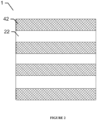
- the nonwoven fabric 1 may have a three-dimensional pattern comprising a single continuous recessed portion 20 and the plurality of raised portions 40 comprising islands within the single continuous recessed portion.
- the three-dimensional pattern comprises a plurality of recessed portions and a plurality of raised portions.
- a nonwoven fabric 1 may have a three-dimensional pattern comprising a plurality of recessed portions 22 and a plurality of raised portions 42.
- the plurality of recessed portions for example, may comprise a plurality of individual recessed portions being separate and distinct from each other.
- the three-dimensional pattern may comprise alternating ridges and recessed portions.
- the at least one recessed portion comprises an average depth from about 1.0 mm to about 3 mm, such as at most about any of the following: 3.0, 2.9, 2.8, 2.7, 2.6, 2.5, 2.4, 2.3, 2.2, 2.1, and 2.0 mm and/or at least about any of the following: 1.0, 1.1, 1.2, 1.3, 1.4, 1.5, 1.6, 1.7, 1.8, 1.9, and 2.0 mm.
- the average width (e.g., shortest dimension perpendicular to the z-direction of the nonwoven fabric) of the plurality of recessed portions may comprise from about 0.25 mm to about 1.8 mm, such as at most about any of the following: 1.8, 1.7, 1.6, 1.5, 1.4, 1.3, 1.2, 1.1, 1.0, 0.9, and 0.8 mm and/or at least about any of the following: 0.25, 0.3, 0.4, 0.5, 0.6, 0.7, 0.8, 0.9, 1.0, 1.1, 1.2, and 1.3 mm.
- the average length (e.g., longest dimension perpendicular to the z-direction of the nonwoven fabric) of the plurality of the recessed portions may extend continuously along the entire length of the nonwoven fabric (e.g., either in the machine direction or the cross-direction) or at least be from about 2 times, 3 times, 5 times, 10 times, 20 times, 50 times, or 100 times the average width of the plurality of recessed portions.
- the plurality of recessed portions may be separated by individual ridges (e.g., alternating ridges and recessed portions).
- the individual ridges may have an average ridge-width from about 1.5 mm to about 4.0 mm, such as at most about any of the following: 4.0, 3.8, 3.6, 3.4, 3.2, 3.0, 2.9, 2.8, 2.7, 2.6, 2.5, 2.4, 2.3, 2.2, 2.1, and 2.0 mm and/or at least about any of the following: 1.5, 1.6, 1.7, 1.8, 1.9, and 2.0 mm.
- the nonwoven fabric is provided in a form of individual wipes or a continuous wipe with a plurality of perforations denoting lines of weakness such that individual wipes may be separated from the continuous wipe, which may be disposed within a package.
- the at least one recessed portion may account for a recessed top plan area from about 10% to about 70% of the total top plan area of the nonwoven fabric, such as at most about any of the following: 70, 60, 50, 45, 40, 35, 30, 25, and 20% of the total top plan area of the nonwoven fabric and/or at least about any of the following: 10, 12, 14, 16, 18, 20, 22, 24, and 26% of the total top plan area of the nonwoven fabric.
- a top plan view is an orthographic projection of a 3-dimensional object (e.g., the nonwoven fabric described and disclosed herein) from the position of a horizontal plane through the object.
- the recessed top plan area comprises the 2-D area of the total top plan area that is occupied or accounted for by the plurality of recessed portions.
- the present invention provides a method of forming a nonwoven fabric.
- the method may comprise the following: (ia) forming or providing a carded web comprising a blend of fibers comprising (a) post-consumer recycled polymer staple fibers (PCR-staple fibers) and (b) one or more additional fibers, in which the one or more additional fibers is different from the PCR-staple fibers; or (ib) forming or providing a first layer of post-consumer recycled polymer staple fibers (PCR-staple fibers) and forming or providing a second layer of one or more additional fibers, in which the first layer and the second layer are adjacent to provide a multilayer nonwoven web; and (ii) mechanically entangling the PCR-staple fibers and the one or more additional fibers to define a nonwoven fabric as described and disclosed herein.
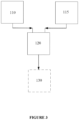
- Figure 3 illustrates a flow diagram for methods of making a nonwoven fabric in accordance with certain embodiments of the invention.
- the method may comprise a first step option 'a' 110 that comprises forming or providing a carded web comprising a blend of fibers comprising (a) post-consumer recycled polymer staple fibers (PCR-staple fibers) and (b) one or more additional fibers, in which the one or more additional fibers is different from the PCR-staple fibers.
- PCR-staple fibers post-consumer recycled polymer staple fibers
- the method may comprise a first step option 'b' 115 comprising forming or providing a first layer of post-consumer recycled polymer staple fibers (PCR-staple fibers) and forming or providing a second layer of one or more additional fibers, in which the first layer and the second layer are adjacent to provide a multilayer nonwoven web.
- the method may also include a subsequent step of mechanically entangling the PCR-staple fibers and the one or more additional fibers to define a nonwoven fabric as described and disclosed herein.
- the step of mechanically entangling may comprises hydroentangling to form a hydroentangled nonwoven fabric, needle-punching, and/or air-entangling.
- the method may include a coating step 130 comprising the application of a binder and/or an antimicrobial agent.
- the multilayer nonwoven web may comprise a first layer of the PCR-staple fibers, and a second layer of the one or more additional fibers comprising wettable staple fibers, bicomponent staple fibers, microfiber staple fibers, cellulosic fibers, meltblown fibers, continuous fibers, or any combination thereof.
- the method may also comprise forming or providing a third layer comprising a nonwoven web or nonwoven fabric of continuous fibers, such as spunbond fibers, and mechanically entangling the continuous fibers with the PCR-staple fibers and the one or more additional fibers.
- a carded web comprising the blend of fibers comprises PCR-staple fibers, and the one or more additional fibers comprising wettable staple fibers, bicomponent staple fibers, microfiber staple fibers, cellulosic fibers, meltblown fibers, continuous fibers, or any combination thereof is mechanically entangled to form a nonwoven fabric as described and disclosed herein.
- the method may further comprise imparting a three-dimensional image into at least a first outermost surface of the nonwoven fabric.
- the method may further comprise imparting a three-dimensional image onto or in at least one surface of the nonwoven fabric.
- the method may comprise positioning a first outermost surface of the nonwoven fabric directly or indirectly onto an image transfer device having a three-dimensional pattern and applying jets of fluid directly or indirectly to a second outermost surface of the nonwoven fabric to impart a three-dimensional pattern onto the nonwoven fabric.
- the image transfer device may comprise one or more drums or even one or more sleeves affixed to a corresponding drum.
- One or more water jets may be applied to a side of the nonwoven opposite to the side contacting the image transfer device.
- the one or more water jets and water directed through the nonwoven fabric causes the fibers of the nonwoven fabric to become displaced according to the image on the image transfer device such as the image formed on one or more drums or one or more sleeves affixed to a corresponding drum causing a three-dimensional pattern to be imaged throughout the nonwoven fabric according to such image.
- imaging techniques are further described in, for example, U.S. Patent Nos.
- the three-dimensional pattern may comprise at least one (e.g., a plurality) recessed portion configured to facilitate the capture of loose debris on a surface to be cleaned and/or sanitized.
- a control nonwoven fabric was formed (i.e., 6194 Control) and had a basis weight of 1.8 ounces per square yard (osy).
- the control nonwoven fabric comprised 47% by weight of PET staple fibers (0.85 osy), 47% by weight of wettable PET staple fibers (0/85 osy), and 6% by weight of a binder (0.1 osy).
- the binder was a non-ionic, self-crosslinking, vinyl acrylic emulsion (i.e., Sunbond 140N from Omnova Solutions (USA)).
- a first example nonwoven fabric (i.e., DE1036A) was formed in an identical manner as the control nonwoven fabric except the PET staple fibers were replaced with PCR-PET staple fibers from Kilop (USA).
- a second example nonwoven fabric (i.e., DE1038A) was formed in an identical manner as the control nonwoven fabric except the PET staple fibers were replaced with PCR-PET staple fibers from Stein Fibers (USA).
- Tables 1 and 2 provide a summary of the physical properties of the control nonwoven fabric and each of the example nonwoven fabrics.
- a control nonwoven fabric was formed (i.e., 6198 Control) and had a basis weight of 1.2 ounces per square yard (osy).
- the control nonwoven fabric comprised 46.7% by weight of PET staple fibers (0.56 osy), 46.7% by weight of wettable PET staple fibers (0.56 osy), and 6.7% by weight of a binder (0.08 osy).
- the binder was a non-ionic, self-crosslinking, vinyl acrylic emulsion (i.e., Sunbond 140N from Omnova Solutions (USA)).
- a first example nonwoven fabric (i.e., DE1036B) was formed in an identical manner as the control nonwoven fabric except the PET staple fibers were replaced with PCR-PET staple fibers from Kilop (USA).
- a second example nonwoven fabric (i.e., DE1038B) was formed in an identical manner as the control nonwoven fabric except the PET staple fibers were replaced with PCR-PET staple fibers from Stein Fibers (USA).
- Tables 3 and 4 provide a summary of the physical properties of the control nonwoven fabric and each of the example nonwoven fabrics.
- a second example nonwoven fabric (i.e., DE1038C) was formed in an identical manner as the control nonwoven fabric except the PET staple fibers were replaced with PCR-PET staple fibers from Stein Fibers (USA).
- Tables 5 and 6 provide a summary of the physical properties of the control nonwoven fabric and each of the example nonwoven fabrics.
- a control nonwoven fabric was formed (i.e., 6186 Control) and had a target basis weight of 2.1 ounces per square yard (osy).
- the control nonwoven fabric comprised 66% by weight of rayon fibers (1.39 osy), 25% by weight of PET staple fibers (0.53 osy), and 9% by weight of a binder (0.18 osy).
- the binder was a cationic, self-crosslinking, ethylene vinyl acetate emulsion (i.e., Unibond 2850).
- a first example nonwoven fabric i.e., DE1036D
- DE1036D was formed in an identical manner as the control nonwoven fabric except the PET staple fibers were replaced with PCR-PET staple fibers from Kilop (USA).
- a second example nonwoven fabric (i.e., DE1038D) was formed in an identical manner as the control nonwoven fabric except the PET staple fibers were replaced with PCR-PET staple fibers from Stein Fibers (USA).
- Tables 7 and 8 provide a summary of the physical properties of the control nonwoven fabric and each of the example nonwoven fabrics.
- control nonwoven fabric and each example nonwoven fabric from Example Set 1 were evaluated for their ability to prevent depletion of a control solution including a quat.
- the control solution had a concentration of 215 ppm.
- Each of the nonwoven fabrics were submerged within a respective disinfectant composition including a quat, in which the concentration of the quat was 215 ppm.
- the concentration of the respective disinfectant compositions was tested over the course of 96 hours as shown in Table 9.
- each of the example nonwoven fabrics performed as well as the control nonwoven fabric. After 96 hours, for instance, all nonwoven fabrics merely depleted the quat concentration from 215 ppm to 200 ppm (e.g., a 7% reduction in quat concentration).
Landscapes
- Engineering & Computer Science (AREA)
- Textile Engineering (AREA)
- Mechanical Engineering (AREA)
- Chemical & Material Sciences (AREA)
- Chemical Kinetics & Catalysis (AREA)
- Dispersion Chemistry (AREA)
- General Chemical & Material Sciences (AREA)
- Nonwoven Fabrics (AREA)
Claims (10)
- Vliesstoff, umfassend:eine mechanisch verschlungene Fasermischung, umfassend (a) aus einem synthetischen Polymermaterial gebildete recycelte Polymerstapelfasern (PCR-Stapelfasern), wobei die PCR-Stapelfasern keine hydrophile Endbeschichtung aufweisen, und (b) eine oder mehrere zusätzliche Fasern, ausgewählt aus einer Vielzahl von benetzbaren Stapelfasern, umfassend hydrophil modifizierte Polyesterstapelfasern, besitzend eine hydrophile Endbeschichtung, eine Vielzahl von Cellulosefasern, oder eine Kombination davon, und wobei die PCR-Stapelfasern ein Polyethylenterephthalat (PET), wie ein recyceltes Polyethylenterephthalat (PCR-PET), ein Polyolefin oder ein Polyamid umfassen;wobei die PCR-Stapelfasern mechanisch mit der einen oder den mehreren zusätzlichen Fasern verschlungen sind, um den Vliesstoff zu definieren, und wobei die PCR-Stapelfasern aus wiederverwertbarem Abfall gebildet sind, der einer chemischen Behandlung und/oder mechanischen Verarbeitung unterzogen wurde, um den wiederverwertbaren Abfall in eine Vielzahl kleinerer Komponenten zu brechen, bevor er geschmolzen und zu den PCR-Stapelfasem extrudiert wird.
- Der Vliesstoff nach Anspruch 1, wobei die PCR-Stapelfasern eine oder mehrere der folgenden besitzen:eine durchschnittliche Länge von etwa 20 bis etwa 150 mm, wie mindestens etwa eine der folgenden: 20, 25, 30, 35, 40, 45, 50, 60, 70, 80 und 90 mm, und/oder höchstens etwa eine der folgenden: 150, 125, 100, 90 und 80 mm;eine durchschnittliche lineare Dichte der PCT-Stapelfasern ist von 1 bis etwa 2,5 Dezitex (dtex), wie mindestens etwa eine der folgenden: 1, 1,1, 1,2, 1,3, 1,4, 1,5, 1,6, 1,7 und 1,8 dtex, und/oder höchstens etwa einer der folgenden: 2,5, 2,4, 2,3, 2,2, 2,1, 2, 1,9 und 1,8 dtex; unddurchschnittlich etwa 3 bis etwa 20 Kräuselungen pro 25 mm Faserlänge, wie mindestens etwa einer der folgenden: 3, 4, 5, 6, 7, 8, 9, 10, 11 und 12 Kräuselungen pro 25 mm Faserlänge, und/oder höchstens etwa eine der folgenden: 20, 19, 18, 17, 16, 15, 14, 13, und 12 Kräuselungen pro 25 mm Faserlänge.
- Der Vliesstoff nach den Ansprüchen 1-2, wobei die PCR-Stapelfasern etwa 10 bis etwa 90 Gew.-% des Vliesstoffs umfassen, wie beispielsweise mindestens etwa eines der folgenden: 10, 15, 20, 25, 30, 35, 40, 45, 50, 55 und 60 Gew.-% des Vliesstoffs, und/oder höchstens etwa eines der folgenden: 90, 85, 80, 75, 70, 65 und 60 Gew.-% des Vliesstoffs.
- Der Vliesstoff nach den Ansprüchen 1-3, wobei die eine oder die mehreren zusätzlichen Fasern eine Vielzahl von benetzbaren Stapelfasern umfassen, wobei die Vielzahl von benetzbaren Stapelfasern etwa 10 bis etwa 90 Gew.-% des Vliesstoffs umfassen, wie beispielsweise mindestens etwa eines der folgenden: 10, 15, 20, 25, 30, 35, 40, 45, 50, 55 und 60 Gew.-% des Vliesstoffs, und/oder höchstens etwa eines der folgenden: 90, 85, 80, 75, 70, 65 und 60 Gew.-% des Vliesstoffs, und wobei der Vliesstoff ein erstes Verhältnis zwischen den PCR-Stapelfasern in Gramm pro Quadratmeter des Vliesstoffs und der Vielzahl von benetzbaren Stapelfasern in Gramm pro Quadratmeter des Vliesstoffs von etwa 4:1 bis etwa 1:4 besitzt, wie höchstens etwa eines der folgenden: 4:1, 3,5:1, 3:1, 2,5:1, 2:1, 1,5:1 und 1:1, und/oder mindestens etwa eines der folgenden: 1:4, 1:3,5, 1:3, 1:2,5, 1:2, 1:1,5, und 1:1.
- Der Vliesstoff nach den Ansprüchen 1-4, wobei die eine oder die mehreren zusätzlichen Fasern eine Vielzahl von Cellulosefasern umfassen, wobei die Cellulosefasern etwa 10 bis etwa 90 Gew.-% des Vliesstoffs umfassen, wie beispielsweise mindestens etwa eines der folgenden: 10, 15, 20, 25, 30, 35, 40, 45, 50, 55 und 60 Gew.-% des Vliesstoffs, und/oder höchstens etwa eines der folgenden: 90, 85, 80, 75, 70, 65 und 60 Gew.-% des Vliesstoffs, und wobei der Vliesstoff ein zweites Verhältnis zwischen der Vielzahl von Cellulosefasern in Gramm pro Quadratmeter des Vliesstoffs und den PCR-Stapelfasern in Gramm pro Quadratmeter des Vliesstoffs von etwa 4:1 bis etwa 1:4 besitzt, wie höchstens etwa eines der folgenden: 4:1, 3,5:1, 3:1, 2,5:1, 2:1, 1,5:1 und 1:1, und/oder mindestens etwa eines der folgenden: 1:4, 1:3,5, 1:3, 1:2,5, 1:2, 1:1,5, und 1:1.
- Der Vliesstoff nach Anspruch 1-5, wobei die eine oder mehreren zusätzlichen Fasern eine Vielzahl von benetzbaren Stapelfasern und eine Vielzahl von Cellulosefasern umfassen, und wobei der Vliesstoff ein Komponentengewichtsverhältnis zwischen den PCR-Stapelfasern in Gramm pro Quadratmeter des Vliesstoffs, der Vielzahl von benetzbaren Stapelfasern in Gramm pro Quadratmeter des Vliesstoffs und der Vielzahl von Cellulosefasern in Gramm pro Quadratmeter des Vliesstoffs gemäß der Formel A:B:C umfasst, wobei(i) "A" die PCR-Stapelfasern in Gramm pro Quadratmeter des Vliesstoffs darstellt und einen Wert von etwa 0,2 bis etwa 0,8 umfasst, wie mindestens etwa einen der folgenden: 0,2, 0,25, 0,3, 0,35, 0,4 und 0,5 und/oder höchstens etwa einen der folgenden: 0,8, 0,75, 0,7, 0,65, 0,6, 0,55, und 0,5;(ii) "B" die Vielzahl der benetzbaren Stapelfasern in Gramm pro Quadratmeter des Vliesstoffs darstellt und einen Wert von etwa 0,2 bis etwa 0,8 umfasst, wie mindestens etwa einen der folgenden: 0,2, 0,25, 0,3, 0,35, 0,4 und 0,5 und/oder höchstens etwa einen der folgenden: 0,8, 0,75, 0,7, 0,65, 0,6, 0,55, und 0,5; und(iii) "C" die Vielzahl der Cellulosefasern oder die Vielzahl der Mikrofaser-Stapelfasern in Gramm pro Quadratmeter des Vliesstoffs darstellt und einen Wert von etwa 0,2 bis etwa 0,8 umfasst, wie mindestens etwa einen der folgenden: 0,2, 0,25, 0,3, 0,35, 0,4 und 0,5 und/oder höchstens etwa einen der folgenden: 0,8, 0,75, 0,7, 0,65, 0,6, 0,55, und 0,5.
- Der Vliesstoff nach den Ansprüchen 1-6, weiter umfassend ein Bindemittel, eine antimikrobielle Verbindung oder eine Kombination davon.
- Der Vliesstoff nach den Ansprüchen 1-7, wobei der Vliesstoff ein dreidimensionales Muster umfasst, gebildet auf mindestens einer Oberfläche des Vliesstoffs, wobei das dreidimensionale Muster mindestens einen vertieften Abschnitt und eine Vielzahl von erhabenen Abschnitten umfasst.
- Der Vliesstoff nach den Ansprüchen 1-8, wobei der Vliesstoff in Form einer Vielzahl von einzelnen Tüchern bereitgestellt wird, angeordnet in einer Verpackung.
- Verfahren zum Bilden eines Vliesstoffs, umfassend:(ia) Bilden oder Bereitstellen eines kardierten Vlieses, umfassend (a) aus einem synthetischen Polymermaterial gebildete recycelte Polymerstapelfasern (PCR-Stapelfasern), wobei die PCR-Stapelfasern keine hydrophile Endbeschichtung aufweisen, und (b) eine oder mehrere zusätzliche Fasern, ausgewählt aus einer Vielzahl von benetzbaren Stapelfasern, umfassend hydrophil modifizierte Polyesterstapelfasern, besitzend eine hydrophile Endbeschichtung, eine Vielzahl von Cellulosefasern, oder eine Kombination davon, und wobei die PCR-Stapelfasern ein Polyethylenterephthalat (PET), wie ein recyceltes Polyethylenterephthalat (PCR-PET), ein Polyolefin oder ein Polyamid umfassen; oder(ib) Bilden oder Bereitstellen einer ersten Schicht aus einem synthetischen Polymermaterial gebildete recycelte Polymerstapelfasern (PCR-Stapelfasern), wobei die PCR-Stapelfasem keine hydrophile Endbeschichtung aufweisen, und Bilden oder Bereitstellen einer zweiten Schicht aus einer oder mehreren zusätzlichen Fasern, ausgewählt aus einer Vielzahl von benetzbaren Stapelfasern, umfassend hydrophil modifizierte Polyesterstapelfasern besitzend eine hydrophile Endbeschichtung, eine Vielzahl von Cellulosefasern, oder eine Kombination davon, und wobei die PCR-Stapelfasern ein Polyethylenterephthalat (PET), wie ein recyceltes Polyethylenterephthalat (PCR-PET), ein Polyolefin oder ein Polyamid umfassen; und(ii) mechanisches Verschlingen der PCR-Stapelfasern und der einen oder mehreren zusätzlichen Fasern, um einen Vliesstoff zu definieren;wobei die PCR-Stapelfasern aus wiederverwertbarem Abfall gebildet sind, der einer chemischen Behandlung und/oder mechanischen Verarbeitung unterzogen wurde, um den wiederverwertbaren Abfall in eine Vielzahl kleinerer Komponenten zu brechen, bevor er geschmolzen und zu den PCR-Stapelfasern extrudiert wird.
Priority Applications (1)
| Application Number | Priority Date | Filing Date | Title |
|---|---|---|---|
| EP24203913.9A EP4481097A3 (de) | 2020-08-07 | 2021-08-03 | Vliesstoff mit fasern aus recyceltem kunststoff nach dem verbrauch |
Applications Claiming Priority (2)
| Application Number | Priority Date | Filing Date | Title |
|---|---|---|---|
| US202063062520P | 2020-08-07 | 2020-08-07 | |
| PCT/US2021/044247 WO2022031634A1 (en) | 2020-08-07 | 2021-08-03 | Nonwoven fabric including fibers formed from post-consumer recycled plastic |
Related Child Applications (1)
| Application Number | Title | Priority Date | Filing Date |
|---|---|---|---|
| EP24203913.9A Division EP4481097A3 (de) | 2020-08-07 | 2021-08-03 | Vliesstoff mit fasern aus recyceltem kunststoff nach dem verbrauch |
Publications (2)
| Publication Number | Publication Date |
|---|---|
| EP4193013A1 EP4193013A1 (de) | 2023-06-14 |
| EP4193013B1 true EP4193013B1 (de) | 2024-10-02 |
Family
ID=77448126
Family Applications (2)
| Application Number | Title | Priority Date | Filing Date |
|---|---|---|---|
| EP24203913.9A Pending EP4481097A3 (de) | 2020-08-07 | 2021-08-03 | Vliesstoff mit fasern aus recyceltem kunststoff nach dem verbrauch |
| EP21758951.4A Active EP4193013B1 (de) | 2020-08-07 | 2021-08-03 | Vliesstoff mit fasern aus recyceltem kunststoff nach dem verbrauch |
Family Applications Before (1)
| Application Number | Title | Priority Date | Filing Date |
|---|---|---|---|
| EP24203913.9A Pending EP4481097A3 (de) | 2020-08-07 | 2021-08-03 | Vliesstoff mit fasern aus recyceltem kunststoff nach dem verbrauch |
Country Status (7)
| Country | Link |
|---|---|
| US (2) | US12392065B2 (de) |
| EP (2) | EP4481097A3 (de) |
| JP (1) | JP2023537508A (de) |
| CN (1) | CN115917067B (de) |
| CA (1) | CA3189937A1 (de) |
| PL (1) | PL4193013T3 (de) |
| WO (1) | WO2022031634A1 (de) |
Families Citing this family (2)
| Publication number | Priority date | Publication date | Assignee | Title |
|---|---|---|---|---|
| GB202210083D0 (en) * | 2022-07-08 | 2022-08-24 | E Leather Ltd | Textile Waste |
| USD1119330S1 (en) * | 2024-01-11 | 2026-03-24 | J. Choo Limited | Sheet material |
Family Cites Families (18)
| Publication number | Priority date | Publication date | Assignee | Title |
|---|---|---|---|---|
| JP3175026B2 (ja) | 1992-04-24 | 2001-06-11 | 日清紡績株式会社 | 電磁弁装置 |
| SE503272C2 (sv) * | 1994-08-22 | 1996-04-29 | Moelnlycke Ab | Nonwovenmaterial framställt genom hydroentangling av en fiberbana samt förfarande för framställning av ett sådant nonwovenmaterial |
| US6314627B1 (en) | 1998-06-30 | 2001-11-13 | Polymer Group, Inc. | Hydroentangled fabric having structured surfaces |
| US7091140B1 (en) | 1999-04-07 | 2006-08-15 | Polymer Group, Inc. | Hydroentanglement of continuous polymer filaments |
| EP1341953A2 (de) * | 2000-11-10 | 2003-09-10 | Kimberly-Clark Worldwide, Inc. | Wasserstrahlverfestigte vliesstoffe mit synthesefaserrecyclat |
| US6735833B2 (en) | 2001-12-28 | 2004-05-18 | Polymer Group, Inc. | Nonwoven fabrics having a durable three-dimensional image |
| JP3771504B2 (ja) * | 2002-02-15 | 2006-04-26 | 呉羽テック株式会社 | 耐ドリップ性に優れた難燃性フィルター |
| US20060105154A1 (en) | 2004-11-12 | 2006-05-18 | Woven Image Pty Ltd | Single layer substrate |
| WO2010125545A2 (en) | 2009-04-30 | 2010-11-04 | Kimberly-Clark Worldwide, Inc. | Nonwoven composite including post-consumer recycled material |
| JP2011038223A (ja) * | 2009-08-17 | 2011-02-24 | Kuraray Kuraflex Co Ltd | 凹凸模様のある不織布 |
| EP2659041A4 (de) * | 2010-12-28 | 2014-09-10 | Kimberly Clark Co | Vliesverbundstoff mit regenerierten zellulosefasern |
| JP3175026U (ja) * | 2012-02-06 | 2012-04-19 | カネヨシ商事株式会社 | 使い捨ておしぼり |
| JP6253238B2 (ja) * | 2012-05-28 | 2017-12-27 | 花王株式会社 | 清掃用シート及びその製造方法 |
| WO2014132690A1 (ja) * | 2013-02-26 | 2014-09-04 | 東レ株式会社 | 不織布 |
| US9539357B2 (en) | 2013-11-01 | 2017-01-10 | The Procter & Gamble Company | Nonwoven web material including fibers formed of recycled polyester, and methods for producing |
| JP5811220B2 (ja) | 2014-03-28 | 2015-11-11 | 株式会社ニコン | 撮像モジュール |
| US20180274143A1 (en) | 2017-03-24 | 2018-09-27 | Purlin, Llc | Nonwoven recyclable fabric and associated methods |
| US11248323B2 (en) * | 2017-03-24 | 2022-02-15 | Purlin, Llc | Method for forming a non-woven recyclable fabric |
-
2021
- 2021-08-03 EP EP24203913.9A patent/EP4481097A3/de active Pending
- 2021-08-03 CA CA3189937A patent/CA3189937A1/en active Pending
- 2021-08-03 PL PL21758951.4T patent/PL4193013T3/pl unknown
- 2021-08-03 WO PCT/US2021/044247 patent/WO2022031634A1/en not_active Ceased
- 2021-08-03 JP JP2023508037A patent/JP2023537508A/ja active Pending
- 2021-08-03 EP EP21758951.4A patent/EP4193013B1/de active Active
- 2021-08-03 CN CN202180050056.6A patent/CN115917067B/zh active Active
- 2021-08-03 US US17/392,309 patent/US12392065B2/en active Active
-
2025
- 2025-07-09 US US19/263,885 patent/US20250333886A1/en active Pending
Also Published As
| Publication number | Publication date |
|---|---|
| CA3189937A1 (en) | 2022-02-10 |
| JP2023537508A (ja) | 2023-09-01 |
| CN115917067A (zh) | 2023-04-04 |
| EP4481097A2 (de) | 2024-12-25 |
| WO2022031634A1 (en) | 2022-02-10 |
| EP4193013A1 (de) | 2023-06-14 |
| US20220042222A1 (en) | 2022-02-10 |
| US20250333886A1 (en) | 2025-10-30 |
| PL4193013T3 (pl) | 2025-02-24 |
| US12392065B2 (en) | 2025-08-19 |
| EP4481097A3 (de) | 2025-01-01 |
| CN115917067B (zh) | 2025-01-21 |
Similar Documents
| Publication | Publication Date | Title |
|---|---|---|
| US20250333886A1 (en) | Nonwoven Fabric Including Fibers Formed from Post-Consumer Recycled Plastic | |
| AU2020213377B2 (en) | Nonwoven fabric with improved hand-feel | |
| EP4181849B1 (de) | Erfassungsverteilungsschicht | |
| JP7596366B2 (ja) | 捲縮連続繊維を含む水流交絡不織布 | |
| US11708653B2 (en) | Microfiber-containing nonwoven fabrics | |
| US20240084488A1 (en) | Biopolymer-Containing Nonwoven Fabric | |
| HK40091279A (zh) | 包含由消费後回收的塑料形成的纤维的非织造织物 | |
| HK40091279B (zh) | 包含由消费後回收的塑料形成的纤维的非织造织物 | |
| WO2025117679A1 (en) | Plant-based nonwoven fabric |
Legal Events
| Date | Code | Title | Description |
|---|---|---|---|
| STAA | Information on the status of an ep patent application or granted ep patent |
Free format text: STATUS: UNKNOWN |
|
| STAA | Information on the status of an ep patent application or granted ep patent |
Free format text: STATUS: THE INTERNATIONAL PUBLICATION HAS BEEN MADE |
|
| PUAI | Public reference made under article 153(3) epc to a published international application that has entered the european phase |
Free format text: ORIGINAL CODE: 0009012 |
|
| STAA | Information on the status of an ep patent application or granted ep patent |
Free format text: STATUS: REQUEST FOR EXAMINATION WAS MADE |
|
| 17P | Request for examination filed |
Effective date: 20230124 |
|
| AK | Designated contracting states |
Kind code of ref document: A1 Designated state(s): AL AT BE BG CH CY CZ DE DK EE ES FI FR GB GR HR HU IE IS IT LI LT LU LV MC MK MT NL NO PL PT RO RS SE SI SK SM TR |
|
| RAV | Requested validation state of the european patent: fee paid |
Extension state: MA Effective date: 20230124 |
|
| STAA | Information on the status of an ep patent application or granted ep patent |
Free format text: STATUS: EXAMINATION IS IN PROGRESS |
|
| 17Q | First examination report despatched |
Effective date: 20231116 |
|
| GRAP | Despatch of communication of intention to grant a patent |
Free format text: ORIGINAL CODE: EPIDOSNIGR1 |
|
| STAA | Information on the status of an ep patent application or granted ep patent |
Free format text: STATUS: GRANT OF PATENT IS INTENDED |
|
| INTG | Intention to grant announced |
Effective date: 20240426 |
|
| GRAS | Grant fee paid |
Free format text: ORIGINAL CODE: EPIDOSNIGR3 |
|
| GRAA | (expected) grant |
Free format text: ORIGINAL CODE: 0009210 |
|
| STAA | Information on the status of an ep patent application or granted ep patent |
Free format text: STATUS: THE PATENT HAS BEEN GRANTED |
|
| AK | Designated contracting states |
Kind code of ref document: B1 Designated state(s): AL AT BE BG CH CY CZ DE DK EE ES FI FR GB GR HR HU IE IS IT LI LT LU LV MC MK MT NL NO PL PT RO RS SE SI SK SM TR |
|
| REG | Reference to a national code |
Ref country code: GB Ref legal event code: FG4D |
|
| REG | Reference to a national code |
Ref country code: CH Ref legal event code: EP |
|
| REG | Reference to a national code |
Ref country code: DE Ref legal event code: R096 Ref document number: 602021019636 Country of ref document: DE |
|
| P01 | Opt-out of the competence of the unified patent court (upc) registered |
Free format text: CASE NUMBER: APP_52217/2024 Effective date: 20240917 |
|
| REG | Reference to a national code |
Ref country code: IE Ref legal event code: FG4D Ref country code: NL Ref legal event code: FP |
|
| REG | Reference to a national code |
Ref country code: LT Ref legal event code: MG9D |
|
| REG | Reference to a national code |
Ref country code: AT Ref legal event code: MK05 Ref document number: 1728570 Country of ref document: AT Kind code of ref document: T Effective date: 20241002 |
|
| PG25 | Lapsed in a contracting state [announced via postgrant information from national office to epo] |
Ref country code: PT Free format text: LAPSE BECAUSE OF FAILURE TO SUBMIT A TRANSLATION OF THE DESCRIPTION OR TO PAY THE FEE WITHIN THE PRESCRIBED TIME-LIMIT Effective date: 20250203 Ref country code: HR Free format text: LAPSE BECAUSE OF FAILURE TO SUBMIT A TRANSLATION OF THE DESCRIPTION OR TO PAY THE FEE WITHIN THE PRESCRIBED TIME-LIMIT Effective date: 20241002 Ref country code: IS Free format text: LAPSE BECAUSE OF FAILURE TO SUBMIT A TRANSLATION OF THE DESCRIPTION OR TO PAY THE FEE WITHIN THE PRESCRIBED TIME-LIMIT Effective date: 20250202 |
|
| PG25 | Lapsed in a contracting state [announced via postgrant information from national office to epo] |
Ref country code: FI Free format text: LAPSE BECAUSE OF FAILURE TO SUBMIT A TRANSLATION OF THE DESCRIPTION OR TO PAY THE FEE WITHIN THE PRESCRIBED TIME-LIMIT Effective date: 20241002 |
|
| PGFP | Annual fee paid to national office [announced via postgrant information from national office to epo] |
Ref country code: NL Payment date: 20250325 Year of fee payment: 5 |
|
| PG25 | Lapsed in a contracting state [announced via postgrant information from national office to epo] |
Ref country code: BG Free format text: LAPSE BECAUSE OF FAILURE TO SUBMIT A TRANSLATION OF THE DESCRIPTION OR TO PAY THE FEE WITHIN THE PRESCRIBED TIME-LIMIT Effective date: 20241002 |
|
| PG25 | Lapsed in a contracting state [announced via postgrant information from national office to epo] |
Ref country code: ES Free format text: LAPSE BECAUSE OF FAILURE TO SUBMIT A TRANSLATION OF THE DESCRIPTION OR TO PAY THE FEE WITHIN THE PRESCRIBED TIME-LIMIT Effective date: 20241002 |
|
| PG25 | Lapsed in a contracting state [announced via postgrant information from national office to epo] |
Ref country code: NO Free format text: LAPSE BECAUSE OF FAILURE TO SUBMIT A TRANSLATION OF THE DESCRIPTION OR TO PAY THE FEE WITHIN THE PRESCRIBED TIME-LIMIT Effective date: 20250102 |
|
| PG25 | Lapsed in a contracting state [announced via postgrant information from national office to epo] |
Ref country code: GR Free format text: LAPSE BECAUSE OF FAILURE TO SUBMIT A TRANSLATION OF THE DESCRIPTION OR TO PAY THE FEE WITHIN THE PRESCRIBED TIME-LIMIT Effective date: 20250103 Ref country code: AT Free format text: LAPSE BECAUSE OF FAILURE TO SUBMIT A TRANSLATION OF THE DESCRIPTION OR TO PAY THE FEE WITHIN THE PRESCRIBED TIME-LIMIT Effective date: 20241002 Ref country code: LV Free format text: LAPSE BECAUSE OF FAILURE TO SUBMIT A TRANSLATION OF THE DESCRIPTION OR TO PAY THE FEE WITHIN THE PRESCRIBED TIME-LIMIT Effective date: 20241002 |
|
| PGFP | Annual fee paid to national office [announced via postgrant information from national office to epo] |
Ref country code: BE Payment date: 20250324 Year of fee payment: 5 |
|
| PG25 | Lapsed in a contracting state [announced via postgrant information from national office to epo] |
Ref country code: CZ Free format text: LAPSE BECAUSE OF FAILURE TO SUBMIT A TRANSLATION OF THE DESCRIPTION OR TO PAY THE FEE WITHIN THE PRESCRIBED TIME-LIMIT Effective date: 20241002 |
|
| PGFP | Annual fee paid to national office [announced via postgrant information from national office to epo] |
Ref country code: FR Payment date: 20250326 Year of fee payment: 5 |
|
| PG25 | Lapsed in a contracting state [announced via postgrant information from national office to epo] |
Ref country code: RS Free format text: LAPSE BECAUSE OF FAILURE TO SUBMIT A TRANSLATION OF THE DESCRIPTION OR TO PAY THE FEE WITHIN THE PRESCRIBED TIME-LIMIT Effective date: 20250102 |
|
| PG25 | Lapsed in a contracting state [announced via postgrant information from national office to epo] |
Ref country code: SM Free format text: LAPSE BECAUSE OF FAILURE TO SUBMIT A TRANSLATION OF THE DESCRIPTION OR TO PAY THE FEE WITHIN THE PRESCRIBED TIME-LIMIT Effective date: 20241002 |
|
| REG | Reference to a national code |
Ref country code: DE Ref legal event code: R097 Ref document number: 602021019636 Country of ref document: DE |
|
| PGFP | Annual fee paid to national office [announced via postgrant information from national office to epo] |
Ref country code: PL Payment date: 20250403 Year of fee payment: 5 |
|
| PG25 | Lapsed in a contracting state [announced via postgrant information from national office to epo] |
Ref country code: DK Free format text: LAPSE BECAUSE OF FAILURE TO SUBMIT A TRANSLATION OF THE DESCRIPTION OR TO PAY THE FEE WITHIN THE PRESCRIBED TIME-LIMIT Effective date: 20241002 |
|
| PGFP | Annual fee paid to national office [announced via postgrant information from national office to epo] |
Ref country code: GB Payment date: 20250603 Year of fee payment: 5 |
|
| PG25 | Lapsed in a contracting state [announced via postgrant information from national office to epo] |
Ref country code: EE Free format text: LAPSE BECAUSE OF FAILURE TO SUBMIT A TRANSLATION OF THE DESCRIPTION OR TO PAY THE FEE WITHIN THE PRESCRIBED TIME-LIMIT Effective date: 20241002 |
|
| PG25 | Lapsed in a contracting state [announced via postgrant information from national office to epo] |
Ref country code: RO Free format text: LAPSE BECAUSE OF FAILURE TO SUBMIT A TRANSLATION OF THE DESCRIPTION OR TO PAY THE FEE WITHIN THE PRESCRIBED TIME-LIMIT Effective date: 20241002 |
|
| PG25 | Lapsed in a contracting state [announced via postgrant information from national office to epo] |
Ref country code: SK Free format text: LAPSE BECAUSE OF FAILURE TO SUBMIT A TRANSLATION OF THE DESCRIPTION OR TO PAY THE FEE WITHIN THE PRESCRIBED TIME-LIMIT Effective date: 20241002 |
|
| PG25 | Lapsed in a contracting state [announced via postgrant information from national office to epo] |
Ref country code: IT Free format text: LAPSE BECAUSE OF FAILURE TO SUBMIT A TRANSLATION OF THE DESCRIPTION OR TO PAY THE FEE WITHIN THE PRESCRIBED TIME-LIMIT Effective date: 20241002 |
|
| PLBE | No opposition filed within time limit |
Free format text: ORIGINAL CODE: 0009261 |
|
| STAA | Information on the status of an ep patent application or granted ep patent |
Free format text: STATUS: NO OPPOSITION FILED WITHIN TIME LIMIT |
|
| PG25 | Lapsed in a contracting state [announced via postgrant information from national office to epo] |
Ref country code: SE Free format text: LAPSE BECAUSE OF FAILURE TO SUBMIT A TRANSLATION OF THE DESCRIPTION OR TO PAY THE FEE WITHIN THE PRESCRIBED TIME-LIMIT Effective date: 20241002 |
|
| 26N | No opposition filed |
Effective date: 20250703 |
|
| PGFP | Annual fee paid to national office [announced via postgrant information from national office to epo] |
Ref country code: DE Payment date: 20250325 Year of fee payment: 5 |
|
| PGFP | Annual fee paid to national office [announced via postgrant information from national office to epo] |
Ref country code: CH Payment date: 20250901 Year of fee payment: 5 |
|
| PGFP | Annual fee paid to national office [announced via postgrant information from national office to epo] |
Ref country code: IE Payment date: 20250808 Year of fee payment: 5 |