EP4172361B1 - Detection of methylation status - Google Patents
Detection of methylation status Download PDFInfo
- Publication number
- EP4172361B1 EP4172361B1 EP21737437.0A EP21737437A EP4172361B1 EP 4172361 B1 EP4172361 B1 EP 4172361B1 EP 21737437 A EP21737437 A EP 21737437A EP 4172361 B1 EP4172361 B1 EP 4172361B1
- Authority
- EP
- European Patent Office
- Prior art keywords
- nucleic acid
- sequence
- nucleotide
- interest
- acid sequence
- Prior art date
- Legal status (The legal status is an assumption and is not a legal conclusion. Google has not performed a legal analysis and makes no representation as to the accuracy of the status listed.)
- Active
Links
Images






Classifications
-
- C—CHEMISTRY; METALLURGY
- C12—BIOCHEMISTRY; BEER; SPIRITS; WINE; VINEGAR; MICROBIOLOGY; ENZYMOLOGY; MUTATION OR GENETIC ENGINEERING
- C12Q—MEASURING OR TESTING PROCESSES INVOLVING ENZYMES, NUCLEIC ACIDS OR MICROORGANISMS; COMPOSITIONS OR TEST PAPERS THEREFOR; PROCESSES OF PREPARING SUCH COMPOSITIONS; CONDITION-RESPONSIVE CONTROL IN MICROBIOLOGICAL OR ENZYMOLOGICAL PROCESSES
- C12Q1/00—Measuring or testing processes involving enzymes, nucleic acids or microorganisms; Compositions therefor; Processes of preparing such compositions
- C12Q1/68—Measuring or testing processes involving enzymes, nucleic acids or microorganisms; Compositions therefor; Processes of preparing such compositions involving nucleic acids
- C12Q1/6813—Hybridisation assays
- C12Q1/6832—Enhancement of hybridisation reaction
-
- C—CHEMISTRY; METALLURGY
- C12—BIOCHEMISTRY; BEER; SPIRITS; WINE; VINEGAR; MICROBIOLOGY; ENZYMOLOGY; MUTATION OR GENETIC ENGINEERING
- C12Q—MEASURING OR TESTING PROCESSES INVOLVING ENZYMES, NUCLEIC ACIDS OR MICROORGANISMS; COMPOSITIONS OR TEST PAPERS THEREFOR; PROCESSES OF PREPARING SUCH COMPOSITIONS; CONDITION-RESPONSIVE CONTROL IN MICROBIOLOGICAL OR ENZYMOLOGICAL PROCESSES
- C12Q1/00—Measuring or testing processes involving enzymes, nucleic acids or microorganisms; Compositions therefor; Processes of preparing such compositions
- C12Q1/68—Measuring or testing processes involving enzymes, nucleic acids or microorganisms; Compositions therefor; Processes of preparing such compositions involving nucleic acids
- C12Q1/6876—Nucleic acid products used in the analysis of nucleic acids, e.g. primers or probes
- C12Q1/6883—Nucleic acid products used in the analysis of nucleic acids, e.g. primers or probes for diseases caused by alterations of genetic material
-
- C—CHEMISTRY; METALLURGY
- C12—BIOCHEMISTRY; BEER; SPIRITS; WINE; VINEGAR; MICROBIOLOGY; ENZYMOLOGY; MUTATION OR GENETIC ENGINEERING
- C12Q—MEASURING OR TESTING PROCESSES INVOLVING ENZYMES, NUCLEIC ACIDS OR MICROORGANISMS; COMPOSITIONS OR TEST PAPERS THEREFOR; PROCESSES OF PREPARING SUCH COMPOSITIONS; CONDITION-RESPONSIVE CONTROL IN MICROBIOLOGICAL OR ENZYMOLOGICAL PROCESSES
- C12Q2525/00—Reactions involving modified oligonucleotides, nucleic acids, or nucleotides
- C12Q2525/10—Modifications characterised by
- C12Q2525/113—Modifications characterised by incorporating modified backbone
-
- C—CHEMISTRY; METALLURGY
- C12—BIOCHEMISTRY; BEER; SPIRITS; WINE; VINEGAR; MICROBIOLOGY; ENZYMOLOGY; MUTATION OR GENETIC ENGINEERING
- C12Q—MEASURING OR TESTING PROCESSES INVOLVING ENZYMES, NUCLEIC ACIDS OR MICROORGANISMS; COMPOSITIONS OR TEST PAPERS THEREFOR; PROCESSES OF PREPARING SUCH COMPOSITIONS; CONDITION-RESPONSIVE CONTROL IN MICROBIOLOGICAL OR ENZYMOLOGICAL PROCESSES
- C12Q2525/00—Reactions involving modified oligonucleotides, nucleic acids, or nucleotides
- C12Q2525/10—Modifications characterised by
- C12Q2525/117—Modifications characterised by incorporating modified base
-
- C—CHEMISTRY; METALLURGY
- C12—BIOCHEMISTRY; BEER; SPIRITS; WINE; VINEGAR; MICROBIOLOGY; ENZYMOLOGY; MUTATION OR GENETIC ENGINEERING
- C12Q—MEASURING OR TESTING PROCESSES INVOLVING ENZYMES, NUCLEIC ACIDS OR MICROORGANISMS; COMPOSITIONS OR TEST PAPERS THEREFOR; PROCESSES OF PREPARING SUCH COMPOSITIONS; CONDITION-RESPONSIVE CONTROL IN MICROBIOLOGICAL OR ENZYMOLOGICAL PROCESSES
- C12Q2537/00—Reactions characterised by the reaction format or use of a specific feature
- C12Q2537/10—Reactions characterised by the reaction format or use of a specific feature the purpose or use of
- C12Q2537/164—Methylation detection other then bisulfite or methylation sensitive restriction endonucleases
-
- C—CHEMISTRY; METALLURGY
- C12—BIOCHEMISTRY; BEER; SPIRITS; WINE; VINEGAR; MICROBIOLOGY; ENZYMOLOGY; MUTATION OR GENETIC ENGINEERING
- C12Q—MEASURING OR TESTING PROCESSES INVOLVING ENZYMES, NUCLEIC ACIDS OR MICROORGANISMS; COMPOSITIONS OR TEST PAPERS THEREFOR; PROCESSES OF PREPARING SUCH COMPOSITIONS; CONDITION-RESPONSIVE CONTROL IN MICROBIOLOGICAL OR ENZYMOLOGICAL PROCESSES
- C12Q2563/00—Nucleic acid detection characterized by the use of physical, structural and functional properties
- C12Q2563/173—Nucleic acid detection characterized by the use of physical, structural and functional properties staining/intercalating agent, e.g. ethidium bromide
-
- C—CHEMISTRY; METALLURGY
- C12—BIOCHEMISTRY; BEER; SPIRITS; WINE; VINEGAR; MICROBIOLOGY; ENZYMOLOGY; MUTATION OR GENETIC ENGINEERING
- C12Q—MEASURING OR TESTING PROCESSES INVOLVING ENZYMES, NUCLEIC ACIDS OR MICROORGANISMS; COMPOSITIONS OR TEST PAPERS THEREFOR; PROCESSES OF PREPARING SUCH COMPOSITIONS; CONDITION-RESPONSIVE CONTROL IN MICROBIOLOGICAL OR ENZYMOLOGICAL PROCESSES
- C12Q2600/00—Oligonucleotides characterized by their use
- C12Q2600/118—Prognosis of disease development
-
- C—CHEMISTRY; METALLURGY
- C12—BIOCHEMISTRY; BEER; SPIRITS; WINE; VINEGAR; MICROBIOLOGY; ENZYMOLOGY; MUTATION OR GENETIC ENGINEERING
- C12Q—MEASURING OR TESTING PROCESSES INVOLVING ENZYMES, NUCLEIC ACIDS OR MICROORGANISMS; COMPOSITIONS OR TEST PAPERS THEREFOR; PROCESSES OF PREPARING SUCH COMPOSITIONS; CONDITION-RESPONSIVE CONTROL IN MICROBIOLOGICAL OR ENZYMOLOGICAL PROCESSES
- C12Q2600/00—Oligonucleotides characterized by their use
- C12Q2600/154—Methylation markers
Definitions
- Methylation is an example of an epigenetic modification of DNA where a methyl group is added to one of the four DNA bases. Most commonly, the methyl-group is added to cytosine in the 5 position of the nucleobase. DNA methylation in promotor regions is involved in regulation of the expression of genes.
- MGMT methylguanine-DNA methyltransferase
- Hydrophobic nucleotides for example Intercalating nucleic acids (INA TM ) comprise a hydrophobic moiety, such as an intercalator.
- An intercalator is a flat, conjugated aromatic or heteroaromatic ring system that can participate in the stacking of DNA or RNA duplexes. Hydrophobic nucleotides do not participate in the Watson Crick base paring.
- an oligonucleotide with an incorporated hydrophobic nucleotide is bound to a non-modified DNA sequence, the hydrophobic moiety position itself in the center of the DNA helix. The interaction between the hydrophobic nucleotide and DNA bases causes increased stability of double stranded DNA.
- a simple method for detection of epigenetic modifications of the nucleobases of a nucleic acid such as analysing for methylation of a nucleobase without conversion of the nucleic acid is beneficial due to faster detection of methylated nucleic acids, no loss of sample during a conversion step and no uncertainty based on conversion being incomplete or unspecific.
- early detection of epigenetic modifications such as the methylation status may lead to faster diagnosis of patients and hence to earlier start of treatment.
- a better method could potentially also better quantify the level of methylation and expand the use of methylation status, for example in treatment and monitoring or diagnosis of cancers.
- the present invention provides very fast methods for detection of epigenetic modifications in nucleic acids, for example for detection of methylated DNA.
- the methods are based on the finding that a synthetic oligonucleotide comprising at least one hydrophobic nucleotide can have a surprisingly high difference in affinity (melting temperature) towards DNA with an epigenetic modification in the nucleobase and DNA without said epigenetic modification, respectively, subject to the design. This is in particular the case, when the hydrophobic nucleotide is positioned within the synthetic oligonucleotide so that it would intercalate between the potentially epigenetically modified nucleotide (such as methylated) and the nucleotide immediately 3' thereof on the target nucleic acid.
- the methods of the invention can be used for detection of epigenetic modifications of any nucleotide in any kind of nucleic acid
- the methods are particularly useful for detection of cytosine methylation in DNA.
- the synthetic oligonucleotide is preferably designed in a manner so that the hydrophobic nucleotide is positioned so that it would intercalate between the potentially methylated cytosine and the nucleotide immediately 3' thereof (most often a guanine).
- nucleic acid methylation status can be detected by a simple PCR method.
- no pre-treatment of the nucleic acid is required for the methods of the invention.
- nucleic acid methylation can be detected in a one-step PCR by designing adequate primers comprising hydrophobic nucleotide(s).
- the methods are performed using a type of primers referred to as BasePrimers, which are described in more detail below.
- the present invention provides a method for determining the risk of whether an individual suffers from a clinical condition, or the risk of an individual to contract a clinical condition, wherein the clinical condition is associated with the methylation status of a NOI in a nucleic acid of interest, said method comprising
- the present invention provides a method for determining the likelihood of effect of a treatment of a clinical condition in an individual in need thereof, wherein the effect of said treatment of said clinical condition is associated with the methylation status of a NOI in a nucleic acid of interest, said method comprising
- an oligonucleotide comprising or consisting of the following general structure: 5'(N) n -HG-(N) m -HG-(N) p -3', wherein N is any nucleotide or nucleotide analogue; and
- an oligonucleotide comprising or consisting of the following general structure: 5'(N) n -CGH-(N) m -CGH-(N) p -3' , wherein N is any nucleotide or nucleotide analogue; and
- anchor sequence refers to a sequence comprised within an oligonucleotide, preferably within a BasePrimer.
- the anchor sequence comprises one or more hydrophobic nucleotides, which are positioned adjacent to the nucleotide complementary to the Nucleotide(s) Of Interest (NOI).
- NOI Nucleotide(s) Of Interest
- target anchor sequence The “anchor sequence” is abbreviated "An" herein.
- BasePrimer refers to an oligonucleotide comprising or consisting of an anchor sequence (An), a loop sequence (Lp) and a starter sequence (St). BasePrimers are described in more detail herein below. Whereas the anchor sequence and the starter sequence are at least partly complementary to the target nucleic acid sequence, and thus are capable of hybridising thereto, the loop sequence is not complementary to the target nucleic acid sequence. Typically, neither the loop sequence nor the starter sequence comprises a hydrophobic nucleotide. In the event that the BasePrimer comprises a hydrophobic nucleotide in between the anchor sequence and the loop sequence, such a hydrophobic nucleotide is considered to be part of the anchor sequence.
- the terms “loop sequence” and “protruding sequence” are used interchangeably herein.
- complementary refers to a consecutive sequence of nucleotides which are capable of base pairing with another consecutive sequence of nucleotides by Watson-Crick base pairs.
- hydrophobic nucleotide refers to the hydrophobic nucleotides described in detail herein below in the section "hydrophobic nucleotide”.
- a hydrophobic nucleotide according to the invention contains an intercalator connected to a nucleotide/nucleotide analogue/backbone monomer unit via a linker.
- melting temperature denotes the temperature in degrees centigrade at which 50% hybridised versus unhybridised forms of nucleic acid sequences capable of forming a duplex are present. Melting temperature may also be referred to as (T m ). Melting of nucleic acids refers to thermal separation of the two strands of a doublestranded nucleic acid molecule.
- the melting temperature is preferably determined as described in Example 1 below. It is preferred that the melting temperature is determined in the same solution (e.g. buffer) used to conduct the methods of the invention.
- methylation of a nucleotide refers to that the nucleobase of said nucleotide is covalently modified with an additional methyl group compared to what is normally (in the nucleic acid without any epigenetic modifications) present in said nucleobase.
- a preferred methylation is methylation of cytosine.
- the methyl group is added to the 5 th atom on the pyrimidine ring creating 5-methylcytosine (5-mC):
- CpG site a CpG dinucleotide
- CpG site Certain regions of the genome contain a large number of CpG sites. Such regions may be referred to as "CpG islands”.
- nucleotide refers to nucleotides, for example naturally occurring ribonucleotides or deoxyribonucleotides or naturally occurring derivatives of ribonucleotides or deoxyribonucleotides.
- Nucleotides include deoxyribonucleotides comprising one of the four nucleobases adenine (A), thymine (T), guanine (G) or cytosine (C), and ribonucleotides comprising one of the four nucleobases adenine (A), uracil (U), guanine (G) or cytosine (C).
- nucleotide comprising a particular nucleobase may herein simply be referred to by the name of said nucleobase.
- a nucleotide comprising cytosine (C) may also be referred to as "cytosine" or "C".
- nucleotide of interest refers to a nucleotide, wherein the methylation status of said nucleotide it is desirable to investigate.
- the nucleotide of interest may be any nucleotide, but preferably the nucleotide of interest is cytosine (C).
- C cytosine
- NOI nucleotide of interest
- oligonucleotide refers to oligomers of nucleotides and/or nucleotide analogous and/or hydrophobic nucleotides.
- oligonucleotide is an oligomer of nucleotides optionally comprising one or more hydrophobic nucleotides.
- Target nucleic acid sequence of interest refers to a nucleic acid sequence comprising a “target anchor sequence”, wherein said "target anchor sequence” comprises at least one NOI.
- Target anchor sequence refers to the part of the target nucleic acid sequence of interest comprising the NOls.
- anchor sequence is capable of hybridising to the target anchor sequence.
- Epigenetic changes refers to modifications that can happen naturally to the nucleobase of a nucleic acid, given that such modification changes the stacking efficiency of the nucleobase.
- epigenetic modification refers to a covalent modification of a nucleobase, which typically is inherited to daughter cells.
- Said epigenetic modification is preferably a methylation, however it could also be alkylation, acetylation, hydroxylation, methoxylation or other modifications of the nucleobases.
- non-modified refers to that a nucleic acid of interest has not undergone a step of modification or pre-treatment to convert unmethylated nucleotides to detectable moieties and/or to convert methylated nucleotides to detectable moieties.
- modifications or pre-treatments include bisulfite conversion, restriction enzyme digestion or TET enzymatic conversion.
- Non-modified as defined herein thus only refers to the absence of nucleic acid treatments or modifications that act selectively on either methylated or unmethylated nucleic acids.
- Pre-treatment steps or modifications that are not able to selectively act on or discern between either methylated or unmethylated nucleic acids such as dilution, DNA purification or enzymatic treatment that does not discern between methylated and unmethylated nucleic acids, are not covered by the term as used herein.
- the present invention relates to methods of determining the epigenetic (such as methylation) status of at least one NOI in a target nucleic acid sequence.
- the methods are based on use of oligonucleotides comprising an anchor sequence, said anchor sequence comprising one or more hydrophobic nucleotides.
- the oligonucleotide may be any of the oligonucleotides described herein below in the section "Oligonucleotide comprising anchor sequence".
- the oligonucleotides comprising an anchor sequence have significantly different affinity for the nucleic acid sequence with said epigenetic modification (e.g. methylation), than for nucleic acid sequences without said epigenetic modifications.
- the oligonucleotides comprising an anchor sequence have significantly higher affinity for methylated compared to unmethylated nucleic acids. This difference in affinity can be used to detect epigenetic modifications such as methylation in various manners as described below.
- the methods of the invention in general comprises a step b) of incubating said oligonucleotide with the target nucleic acid of interest at a temperature which is higher than the melting temperature between said oligonucleotide and the target nucleic acid sequence of interest when said NOI has an epigenetic modification pattern different from the pattern that is investigated.
- said temperature is selected so that the temperature is higher than the melting temperature between said oligonucleotide and the target nucleic acid sequence of interest when said NOI is unmethylated, and said temperature is max. 2°C higher, equal to or lower than the melting temperature between said oligonucleotide and the target nucleic acid sequence of interest when said NOI is methylated.
- said temperature is selected so that the temperature is at least 2°C higher than the melting temperature between said oligonucleotide and the target nucleic acid sequence of interest when said NOI is unmethylated, and said temperature is max. 2°C higher, equal to or lower than the melting temperature between said oligonucleotide and the target nucleic acid sequence of interest when said NOI is methylated.
- the difference in affinity, and hence epigenetic status such as methylation may be detected using various different methods. Very simply, the melting temperature between the oligonucleotide comprising an anchor sequence and the target nucleic acid sequence may be determined, and the epigenetic status can be determined on this basis.
- the methods comprise an amplification step, wherein said amplification is designed in a manner so that amplification only takes place when the NOI is methylated or alternatively that amplification only takes place when the NOI is not methylated.
- amplification is designed in a manner so that amplification only takes place when the NOI is methylated or alternatively that amplification only takes place when the NOI is not methylated.
- This can be achieved by designing an assay comprising one or more steps using a temperature allowing annealing of the oligonucleotide comprising anchor sequence to the methylated target nucleic acid, but which does not allow annealing of said oligonucleotide to unmethylated target sequence.
- Preferred methods are PCR based methods and in particular any of the PCR based methods described herein below in the section "PCR”.
- one advantage of the methods of the invention is that the methods do not require a pre-treatment of the target nucleic acid to convert unmethylated or methylated nucleotides to detectable moieties, such as bisulfite conversion, restriction enzyme digestion or TET enzymatic conversion.
- Bisulfite converts unmethylated cytosine to uracil. 5-methylcytosine remains unchanged. This creates a difference in the base pair sequence depending on the methylation status, allowing detection of differences between methylated and nonmethylated DNA, such as by PCR.
- Methylation-sensitive restriction enzymes can also be used to determine the methylation status of a sample.
- a methylation sensitive restriction enzyme is together with a methylation insensitive isoschizomer.
- An example of such set of enzymes is Hpall and Mspl both enzymes recognizing the sequence CCGG and cutting before the CG dinucleotide. Hpall does only cleave non-methylated CCGG and Mspl cleaves both methylated and non-methylated CCGG sites. Thereby, it is possible to detect a difference in digestion of methylated and non-methylated DNA, which can be analyzed by PCR.
- TET enzymatic conversion relies on two types of enzymes, APOBEC and TET2.
- TET2 converts 5-methylcytosine to 5-carboxycytosine. This conversion protects 5-methylcytosine from being converted by APOBEC, which then only deaminates unmethylated cytosine to uracil, allowing detection of differences between methylated and non-methylated DNA, such as by PCR.
- the target nucleic acid sequence of interest is non-modified. It is thus comprised within the invention, that the methods do not comprise a step of pre-treatment of nucleic acid of interest to convert unmethylated nucleotides to detectable moieties and/or to convert methylated nucleotides to detectable moieties.
- the target nucleic acid sequence of interest has not been subjected to treatment comprising bisulfite conversion, restriction enzyme digestion or TET enzymatic conversion prior to performing the method as disclosed herein. In particular, it is preferred that the methods do not comprise a step of bisulfite conversion.
- the target nucleic acid sequence may be any nucleic acid sequence comprising at least one nucleotide (NOI) of which the epigenetic such as the methylation status is desirable to determine.
- NOI nucleotide
- the target nucleic acid sequence is typically a longer nucleic acid sequence comprising a shorter sequence of interest, which herein is denoted "target anchor sequence”.
- the target anchor sequence comprises said at least one NOI.
- the nucleic acid is DNA, however the nucleic acid may also be other kinds of nucleic acids, such as RNA.
- the nucleic acid is genomic DNA. The present methods can advantageously be used to determine epigenetic modifications, in particular methylation of cytosines, of naturally occurring sequences.
- the epigenetic modification is a methylation, however it could also be alkylation, acetylation, hydroxylation, methoxylation or other modifications of the nucleobases.
- the target anchor sequence comprises one or more NOls.
- the anchor sequence of the oligonucleotides of the invention is selected in a manner, so that the anchor sequence can hybridise with the target anchor sequence.
- the anchor sequence is at least 50% complementary to the target anchor sequence.
- NOls which may or may not be modified, such as methylated are located in close proximity within the target nucleic acid sequence.
- the target nucleic acid sequence may be a nucleic acid sequence comprising one or more NOls of which the epigenetic modification status is associated with a clinical condition.
- the methylation status of said NOI may be associated with the presence of a clinical condition, the advancement of a clinical condition, the risk of acquiring a clinical condition, or the susceptibility to a certain method of treatment as described in more detail below in the section "Clinical condition”. That methylation status of an NOI is "associated with" a clinical condition does not imply that it is causative of said clinical condition, but rather that a given methylation status is more prevalent in relation to said clinical condition.
- the NOI may be any nucleotide where the epigenetic modification status is desirable to detect.
- the NOI is cytosine (C), and even more preferably the NOI is a cytosine positioned in a CpG site.
- the epigenetic modification of NOls is a methylation of a CpG site.
- the target nucleic acid may be comprised in any composition comprising said target nucleic acid sequence.
- the target nucleic acid is comprised within a nucleic acid sample.
- Said sample may have been obtained from any source in which it is desirable to determine the epigenetic status (e.g. methylations status).
- the sample may be obtained from a mammal, such as a human being.
- the sample may be at least partly purified, i.e. the sample may comprise at least partly purified nucleic acids.
- the target nucleic acid sequence of interest may be comprised in DNA purified from a sample.
- the target anchor sequence is at least partly complementary to the anchor sequence.
- the anchor sequence is usually at least partly identical to one strand of the DNA, and the target anchor sequence is positioned in the other strand of said DNA.
- the invention relates to methods for determining epigenetic such as the methylation status of at least one NOI, said methods employing use of an oligonucleotide comprising an anchor sequence (An), wherein the anchor sequence is a sequence at least 50% complementary to a section within the target nucleic acid sequence comprising the NOI herein denoted "target anchor sequence”.
- the anchor sequence preferably comprises at least one hydrophobic nucleotide (H) positioned between the nucleotide complementary to said NOI and the nucleotide in the oligonucleotide immediately 5' thereof.
- the anchor sequence accordingly preferably comprises the sequence -H-G-, wherein said G is complementary to the C of interest.
- the anchor sequence does not comprise two neighboring hydrophobic nucleotides.
- the anchor sequence may in particular comprise the sequence -N-H-G-, wherein N may be any nucleotide, and the sequence -N-G- is complementary to the cytosine of interest and its neighbouring nucleotide.
- N may be selected from the group consisting of C, G, A and T.
- the anchor sequence comprises the sequence -C-H-G-.
- the anchor sequence may comprise more than one hydrophobic nucleotide.
- the anchor sequence may comprise at least 2, such as at least 3, for example at least 4, such as in the range of 1 to 10, for example in the range of 2 to 10, such as in the range of 3 to 10, for example in the range of 4 to 10 hydrophobic nucleotides (H).
- the anchor sequence may in particular comprise one hydrophobic nucleotide per NOI.
- Said hydrophobic nucleotides are preferably all positioned between a nucleotide complementary to a NOI and the nucleotide in the oligonucleotide immediately 5' thereof.
- the anchor sequence may also comprise additional hydrophobic nucleotides.
- the anchor sequence may thus comprise more than one -N-H-G- sequences, wherein each N individually may be any nucleotide.
- said anchor sequence comprises one -N-H-G- sequence per NOI, which is C, wherein each -N-G- sequence is complementary to a cytosine of interest and its neighbouring nucleotide.
- the anchor sequence may comprise at least 2, such as at least 3, for example at least 4, such as in the range of 2 to 5, for example in the range of 3 to 5, such as in the range of 4 to 5 -N-H-G- sequences, wherein each N individually is any nucleotide, and each sequence -N-G- is complementary to a cytosine of interest and its neighbouring nucleotide.
- N may be selected from the group consisting of C, G, A and T.
- the anchor sequence may thus comprise one -C-H-G- sequence per NOI, which is a C positioned in a CpG site.
- the anchor sequence may comprise at least 2, such as at least 3, for example at least 4, such as in the range of 2 to 5, for example in the range of 3 to 5, such as in the range of 4 to 5 -C-H-G- sequences.
- the oligonucleotide comprises an anchor sequence consisting of the following general structure: 5'(N) n -HG-(N) m -HG-(N) p -3', wherein N is any nucleotide or nucleotide analogue; and
- the oligonucleotide comprises an anchor sequence consisting of the following general structure: 5'(N) n -HG-(N) m -HG-(N) p -HG-(N) q -3', wherein
- the oligonucleotide comprises an anchor sequence consisting of the following general structure: 5'(N) n -YG-(N) m -YG-(N) p -YG-(N) q -YG-(N) u -3', wherein
- Y denotes a C or a T according to the extended IUPAC code.
- n may for example be an integer in the range of 0 to 4, for example n may be 1, m may for example be an integer in the range of 1 to 8, for example in the range of 1 to 6, p may for example be an integer in the range of 1 to 50, such as in the range of 1 to 30, for example in the range of 1 to 10, for example in the range of 1 to 6, q may for example be is an integer in the range of 1 to 50, such as in the range of 1 to 30, for example in the range of 1 to 10, for example in the range of 1 to 6 , and u may for example be an integer in the range of 1 to 50, such as in the range of 1 to 30, for example in the range of 1 to 10, for example in the range of 1 to 6.
- the oligonucleotide is a BasePrimer as described below.
- the anchor sequence is linked to a loop sequence and a starter sequence, and in such embodiments the 3' part of the oligonucleotide is sufficiently long to contain both a loop sequence and a starter sequence.
- the NOI may be a cytosine positioned in a CpG site.
- the nucleotide located immediately 5' to at least one H is a cytosine (C).
- all NOls are cytosines positioned in CpG sites it is preferred that all nucleotides located immediately 5' to a H is a cytosine (C), when said H is adjacent to a G complementary to a NOI.
- the oligonucleotide comprising the anchor sequence anneals to the methylated target nucleic acid sequence with higher affinity than to the unmethylated target nucleic acid sequence.
- the melting temperature between said oligonucleotide and the methylated target nucleic acid sequence of interest is often at least 5°C higher, for example at least 6°C higher, such as in the range of 6 to 15°C higher, for example in the range of 6 to 12°C higher than the melting temperature between said oligonucleotide and the unmethylated target nucleic acid sequence of interest.
- the invention is based on the finding that the oligonucleotides described herein have a larger difference in affinity to methylated versus unmethylated target nucleic acid compared similar oligonucleotides not comprising hydrophobic nucleotides. This larger difference in affinity allows for successful detection of methylation by simple methods, such as PCR.
- the difference in melting temperature between the oligonucleotide of the invention and the methylated target nucleic acid sequence compared to an unmethylated target nucleic acid sequence of interest is preferably at least 1°C higher than the difference in melting temperature between an oligonucleotide of identical sequence except lacking the hydrophobic nucleotides and the methylated target nucleic acid sequence compared to an unmethylated target nucleic acid sequence.
- NOI methylation such as cytosine methylation, i.e. the presence of methylated cytosine(s) in a nucleic acid, such as a target nucleic acid of interest, results in a difference in melting temperature when said nucleic acid is hybridized to an oligonucleotide. Said difference is dependent on the number of methylated NOls and can be difficult to detect.
- the hydrophobic nucleotide of the oligonucleotide of the invention amplifies the difference in affinity for unmethylated vs. methylated NOls compared to an oligonucleotide otherwise identical but not comprising a hydrophobic nucleotide.
- the oligonucleotide of the invention thus provides a larger difference in melting temperature when hybridized to a target sequence of interest depending on the number of methylated NOls, such as methylated cytosines, compared to an identical oligonucleotide not comprising said hydrophobic nucleotide, thus facilitating detection of the presence of methylated NOls.
- methylated NOls such as methylated cytosines
- the anchor sequence (An) consists of the in range of 8 to 30, for example in the range of 8 to 20, such as in the range of 10 to 20, for example in the range of 15 to 20 nucleotides, wherein one or more of said nucleotides are hydrophobic nucleotide(s).
- the anchor sequence (An) is at least 50% complementary to the target anchor sequence, preferably the anchor sequence (An) is at least 85% complementary to the target anchor sequence. In some embodiments the anchor sequence may be 100% complementary to the target anchor sequence. However, in preferred embodiments, the anchor sequence is not 100% complementary to the target anchor sequence.
- the invention relates to methods for determining the epigenetic status such as the methylation status of at least one NOI, said methods employing use of an oligonucleotide comprising an anchor sequence (An).
- said oligonucleotide is a BasePrimer as described in this section.
- a BasePrimer according to the present invention is an oligonucleotide having the structure 5'-An-Lp-St-3', wherein
- the anchor sequence (An) is preferably a sequence at least 50% complementary to a section within the target nucleic acid sequence comprising the NOI herein denoted "target anchor sequence”.
- the anchor sequence preferably comprises at least one hydrophobic nucleotide (H) positioned between the nucleotide complementary to said NOI and the nucleotide in the oligonucleotide immediately 5' thereof.
- the anchor sequence may in particular be any of the anchor sequences described herein above in the section "Oligonucleotide comprising anchor sequence".
- the loop sequence (Lp) is a sequence, which does not hybridise to any significant extent to the target nucleic acid sequence. Thus, preferably Lp is not complementary to the nucleic acid sequence of interest.
- the loop sequence may consist of a single nucleic acid sequence capable of forming a protruding structure, or it may consist of two or more nucleic acid sequences capable of hybridising at least partly to one another to form a complex which is capable of forming a protruding structure.
- the protruding structure is a loop structure.
- the protruding structure is a stem structure.
- the oligonucleotide of the invention may thus consist of a first and a second nucleic acid sequences, wherein the first nucleic acid sequence comprises the anchor sequence (An) complementary to the target DNA and a first part of a loop sequence not complementary to the target nucleic sequence of interest, and the second nucleic acid sequence comprises a second part of the loop sequence, capable of hybridising at least partly to the first part of the loop sequence, said second nucleic acid sequence further comprising the starter sequence (St).
- the first and the second nucleic acids are capable of forming the protruding structure, such as a stem structure.
- the oligonucleotide of the invention may consist of a first, a second and a third nucleic acid sequences, wherein the first nucleic acid sequence comprises the anchor sequence (An) complementary to the target DNA and a first part of a loop sequence not complementary to the target nucleic sequence of interest, the second nucleic acid sequence comprises a second part of the loop sequence, capable of hybridising at least partly to the first part of the loop sequence, said second nucleic acid sequence further comprising the starter sequence (St), and said third nucleic acid sequence is capable of hybridizing at a first region to a part of the 3' end of the first oligonucleotide, and at a second region to a part of the 5' end of the second oligonucleotide.
- the first, the second and the third nucleic acids are capable of forming the protruding structure, such as a loop structure.
- the oligonucleotide of the invention is encoded as a single oligonucleotide. In some embodiments, the oligonucleotide of the invention is encoded as two or more separate oligonucleotides.
- the starter sequence (St) is a sequence, which can hybridise to the target nucleic acid sequence, but which does so with low affinity. Thus, under the conditions used for the methods of the invention, starter sequence preferably does not anneal to the target nucleic acid sequence unless the anchor sequence also anneals.
- the starter sequence (St) may preferably be capable of being elongated, thus the starter sequence should be able to serve as a primer.
- the starter sequence is preferably at least 90% complementary to a section of the target nucleic acid sequence, which herein is denoted "target starter sequence".
- the target starter sequence is a sequence of the target nucleic acid sequence, which is positioned 5' to the target anchor sequence.
- the target starter sequence may be positioned immediately 5' to the target anchor sequence, however, there may also be a space between said sequences.
- the target starter sequence may be separated from the target anchor sequence by in the range of 1 to 20 nucleotides, such as in the range of 2 to 10 nucleotides, for example in the range of 2 to 5 nucleotides.
- starter sequence is at least 90% complementary to the target starter sequence, but it may also be 100% complementary to target starter sequence.
- the BasePrimer is particularly useful for PCR based methods, wherein the BasePrimer is one primer of a primer pair, which can be used for amplification of the target nucleic acid sequence.
- the anchor sequence will anneal with high affinity to the methylated target nucleic acid sequence, which allows for annealing of the starter sequence as well.
- the BasePrimer can be elongated using a polymerase, such as by any DNA polymerase conventionally used for PCR.
- the first reverse transcription will typically end, when the polymerase encounters the first hydrophobic nucleotide at the product will thus lack at least part of the anchor sequence.
- the next round of PCR will still be able to use the BasePrimer as primer, because the loop sequence and the starter sequence can anneal to the product of the first round of amplification.
- the BasePrimer comprises a hydrophobic nucleotide between the anchor sequence and the loop sequence. Such as hydrophobic nucleotide is considered to be part of the anchor sequence.
- neither the starter sequence nor the loop sequence comprise a hydrophobic nucleotide.
- the nucleic acid sequence(s) not covalently linked to the starter sequence may comprise one or more hydrophobic nucleotides.
- the loop sequence and starter sequence serve as primer for the rounds after the first amplification from the target.
- the loop sequence and the starter sequence together should be designed in a manner allowing them to function as a primer.
- an oligonucleotide consisting of Lp-St would have a melting temperature to its complementary sequence of at least 50°C, for example at least 55°C, such as at least 65°C.
- the loop sequence and the starter sequence together consists of at least 15 nucleotides, for example at least 17 nucleotides, such as in the range of 15 to 45 nucleotide, for example in the range of 17 to 35 nucleotides, such as in the range of 17 to 25 nucleotides.
- the starter sequence should anneal to the target nucleic acid sequence with low affinity.
- the starter sequence is not too long.
- the starter sequence consists of in the range of 5 to 15, such as in the range of 8 to 14, such as in the range of 10 to 12 nucleotides.
- the BasePrimer may comprise additional moieties in addition to the anchor, loop and starter sequences.
- the BasePrimer may be linked to a detectable label.
- the BasePrimer consists of the anchor, loop and starter sequences.
- the invention in one embodiment also provides oligonucleotides, which have similar affinity to methylated and unmethylated target nucleic acid sequences, e.g. a difference in T m of at the most 3°C, such as at the most 2°C.
- oligonucleotides may comprise or consist of the following general structure: 5'(N) n -CGH-(N) m -CGH-(N) p -3', wherein N is any nucleotide or nucleotide analogue; and
- the oligonucleotide may in particular have the following general structure: 5'(N) n -CGH-(N) m -CGH-(N) p -CGH-(N) q -3', wherein
- such oligonucleotides comprises or consists of the following general structure: 5'(N) n -CGH-(N) m -CGH-(N) p -CGH-(N) q -CGH-(N) u -3', wherein
- the oligonucleotides to be used with the present invention comprises one or more hydrophobic nucleotides.
- a hydrophobic nucleotide according to the present invention has the following structure: X-Y-Q wherein
- the intercalator Q may be any intercalator.
- the term intercalator according to the present invention covers any molecular moiety comprising at least one essentially flat conjugated system, which is capable of co-stacking with nucleobases of a nucleic acid.
- an intercalator according to the present invention essentially consists of at least one essentially flat conjugated system, which is capable of co-stacking with nucleobases of a nucleic acid.
- An intercalator comprises at least one ⁇ (phi) electron system, which according to the present invention can interact with other molecules comprising a ⁇ electron system. These interactions can contribute in a positive or negative manner to the hydrophobic interactions of said intercalators.
- Hunter and Sanders (1990) J. Am Chem. Soc. 112: 5525-5534 have proposed a range of different orientations and conditions where two ⁇ electron systems can interact positively with each other.
- the intercalator may be any of the intercalators described in international patent application WO 2017/045689 in the section "Intercalator" on p. 30, l. 26 to p. 40, l. 3.
- the intercalator may have any of the structures depicted on p. 32-39 of said international patent application WO 2017/045689 .
- At least one, such as all intercalators, Q are selected from the group consisting of polyaromates and heteropolyaromates optionally substituted with one or more selected from the group consisting of hydroxyl, bromo, fluoro, chloro, iodo, mercapto, thio, cyano, alkylthio, heterocycle, aryl, heteroaryl, carboxyl, carboalkoyl, alkyl, alkenyl, alkynyl, nitro, amino, alkoxyl and amido.
- Said polyaromates or heteropolyaromates may consist of at least 3 rings, for example 4 rings.
- the intercalators may for example be selected from the group consisting of benzene, pentalene, indene, naphthalene, azulene, as-indacene, s-indacene, biphenylene, acenaphthylene, Phenalene, heptalene, phenanthrane, fluoranthene, phenanthroline, phenazine, phenanthridine, anthraquinone, pyrene, anthracene, napthene, phenanthrene, flurene, picene, chrysene, naphtacene, acridones, benzanthracenes, stilbenes, oxalo-pyridocarbazoles, azidobenzenes, porphyrins and psoralens and derivatives thereof thereof.
- At least one, such as all intercalators, Q are comprising or consisting of pyrene or pyrido[3',2':4,5]thieno[3,2-d]pyrimidin-4(1H)-one or 7,9-dimethyl-pyrido[3',2',4,5]thieno[3,2-d]pyrimidin-4(3H)-one.
- at least one, such as all intercalators may be pyrene.
- the backbone monomer unit of a nucleotide or a nucleotide analogue according to the present invention is the part of the nucleotide, which is involved in incorporation into the backbone of a nucleic acid or a nucleic acid analogue.
- the backbone monomer unit (X) is preferably covalently linked to a linker (Y), which is covalently linked to the intercalator. Any suitable backbone monomer unit may be employed for incorporating intercalator into the oligonucleotide analogues according to the present invention.
- the backbone monomer unit may be any of the backbone monomer units described in international patent application WO 2017/045689 in the section "Backbone monomer unit” on p. 40, l. 5 to p. 56, l. 3.
- the backbone monomer unit may also be any of the backbone monomer units described in international patent application WO03/052132 in the section "Backbone monomer unit” on p. 24, l. 27-p. 43, l.14.
- the hydrophobic nucleotide comprises a backbone monomer unit that comprises a phosphoramidite and more preferably the backbone monomer unit comprises a trivalent phosphoramidite or a pentavalent.
- Suitable trivalent phosphoramidites are trivalent or pentavalent phosphoramidites that may be incorporated into the backbone of a nucleic acid and/or a nucleic acid analogue.
- the amidite group per se may not be incorporated into the backbone of a nucleic acid, but rather the amidite group or part of the amidite group may serve as a leaving group and/ or protecting group.
- the backbone monomer unit comprises a phosphoramidite group, because such a group may facilitate the incorporation of the backbone monomer unit into a nucleic acid backbone.
- the linker of an intercalator nucleotide according to the present invention is a moiety connecting the intercalator and the backbone monomer of said hydrophobic nucleotide, preferably covalently linking said intercalator and the backbone monomer unit.
- the linker may comprise one or more atom(s) or bond(s) between atoms.
- the linker is the shortest path linking the backbone and the intercalators. If the intercalator is linked directly to the backbone, the linker is a bond.
- the linker usually consists of a chain of atoms or a branched chain of atoms. Chains can be saturated as well as unsaturated.
- the linker may also be a ring structure with or without conjugated bonds.
- the linker may comprise a chain of atoms selected from the group consisting of C, O, S, N. P, Se, Si, Ge, Sn and Pb, preferably from the group consisting of C, O, S, N and P, even more preferably they are C, wherein one end of the chain is connected to the intercalator and the other end of the chain is connected to the backbone monomer unit.
- the linker may for example be any of the linkers described in international patent application WO 2017/045689 in the section "Linker” on p. 56, l. 5 to p. 59, l. 10.
- the linker may also be any of the linkers described in WO03/052132 in the section "Linker” on p. 54, l. 15 to p. 58, l. 7.
- the methods of the invention preferably comprises the steps of (b) incubating an oligonucleotide of the invention with a target nucleic acid of interest at a temperature which is higher than the melting temperature between said oligonucleotide and the target nucleic acid sequence of interest when said NOI does not comprise the epigenetic modification status investigated, e.g. when said NOI is unmethylated, and (c) detecting whether said oligonucleotide anneals to said target nucleic acid of interest.
- Said steps may in preferred embodiments be performed as part of a polymerase chain reaction (PCR).
- Said PCR is preferably performed in a manner so that most, or even all steps of the PCR are conducted at a temperature, which is higher than the melting temperature between said oligonucleotide and the target nucleic acid sequence of interest when said does not comprise the epigenetic modification status of interest.
- a PCR typically comprises multiple cycles of incubation at
- the annealing and extension temperature may be the same or different temperatures.
- the PCR is performed in a manner so that the annealing and extension temperature in at least the first cycle, preferably in one or more cycles of said PCR, such as in most of the cycles of said PCR, for example in all cycles of said PCR is higher than the melting temperature between said oligonucleotide and the target nucleic acid sequence of interest when said NOI is unmethylated.
- Said temperature may in addition be chosen, so that it is at the most 2°C higher or lower than the melting temperature between said oligonucleotide and the target nucleic acid sequence of interest when said NOI is methylated.
- Said annealing temperature depends on the particular oligonucleotide, but it may for example be in the range of 55 to 80 °C.
- the length and/or the temperature of the steps of the PCR are changed during the PCR.
- the first cycles e.g. the first 1 to 5 cycles may be performed in a manner so that methylated DNA is amplified in a more specific manner.
- the PCR may comprise one or more epigenetic modification specific amplification cycles and one or more general amplification cycles, wherein the epigenetic modification specific amplification cycle(s) comprise the steps of
- the melting comprises incubation at a melting temperature, which is typically at least 90 °C.
- Annealing and extension under epigenetic modification specific conditions is usually performed at higher temperature than annealing and extension under general conditions, e.g. at a temperature at least 1°C higher, such as at least 2°C higher than the temperature used for annealing and extension under general conditions.
- the method may comprise any suitable number of epigenetic modification specific amplification cycles, for example in the range of 1 to 100 epigenetic modification specific amplification cycles.
- the step of incubating at the annealing (and extension) temperature may be performed for any suitable amount of time.
- at least the first cycle of said PCR may comprise incubation at the annealing temperature for in the range 5 to 120 sec, such as in the range of 10 to 90 sec.
- the annealing may also for example be performed in the range of 30 to 90 sec, such as for in the range of 45 to 75 sec, for example for approximately 60 sec.
- PCR in general involves use of a set of primers capable of amplifying the target nucleic acid sequence of interest.
- one of said primers is the oligonucleotide according to the invention, more preferably a BasePrimer. If the forward primer is an oligonucleotide according to the invention, e.g. a BasePrimer, then the reverse primer is typically a conventional primer and vice versa.
- a useful concentration of the oligonucleotide of the invention to be used with the PCR may be in the range of 300 to 700 nM, such as approximately 500 nM.
- the PCR may be performed in any suitable manner known to the skilled person.
- the PCR is a real-time PCR.
- Real-time PCR typically involves use of a detectable label, such as a dye.
- the PCR e.g. the real-time PCR uses a probe comprising a detectable label for detection of product.
- Said probe may be any oligonucleotide capable of binding the PCR product, however, preferably the probe is an oligonucleotide capable of binding the PCR product with at least the same affinity and preferably with higher affinity than each of the primers.
- the probe may comprise an oligonucleotide at least 90% complementary to a product of said PCR reaction and a detectable label.
- said probe comprises one or more hydrophobic nucleotides, because hydrophobic nucleotides increases the affinity of the probe.
- the outcome of the PCR may be determined as Ct.
- the target nucleic acid of interest may be considered to be methylated if Ct is below a given threshold.
- Said threshold may be predetermined or be determined using a relevant control.
- PCR will contain PCR reagents.
- PCR reagents in general comprises at least nucleotides and a polymerase.
- the PCR reagents also comprise suitable salts and buffer.
- the polymerase may be any polymerase useful for PCR, e.g. any DNA polymerase useful for PCR.
- the polymerase is a polymerase, which stops elongation at any hydrophobic nucleotide in the template. This is the case for most conventional DNA polymerases routinely used PCR.
- the methods of the invention may be used to detect methylation of a NOI, the methylation status of which is associated with a clinical condition.
- the methods of the invention may be used for determining the risk of whether an individual suffers from a clinical condition, or the risk of an individual to contract a clinical condition, wherein the clinical condition is associated with the methylation status of an NOI, e.g. a cytosine in a nucleic acid of interest.
- Such methods usually comprise determining the methylation status of said NOI in a sample obtained from said individual by performing the methods of the invention.
- a method for determining the risk of whether an individual suffers from a clinical condition, or the risk of an individual to contract a clinical condition, wherein the clinical condition is associated with the methylation status of a NOI in a nucleic acid of interest comprising determining the methylation status of said NOI in a sample obtained from said individual by performing the method according to any one of the preceding claims, wherein said methylation status is indicative of the presence of or risk of contracting said clinical condition.
- the methods of the invention may also be used for determining the likelihood of effect of a treatment of a clinical condition in an individual in need thereof, wherein the effect of said treatment of said clinical condition is associated with the methylation status of a cytosine in a nucleic acid of interest.
- Such methods usually comprise the step of determining the methylation status of said NOI in a sample obtained from said individual by performing the methods of the invention.
- a method for determining the likelihood of effect of a treatment of a clinical condition in an individual in need thereof, wherein the effect of said treatment of said clinical condition is associated with the methylation status of a NOI in a nucleic acid of interest comprising
- the NOI is a cytosine.
- methylation status of one or more NOls may be indicative of the presence of a clinical condition, the progression of a clinical condition, the seriousness of a clinical condition, the prognosis of a clinical condition, the risk of acquiring a clinical condition or the like.
- the effects of different treatment regimens have been shown to be associated with the methylation status of one or more NOls.
- the clinical condition may for example be cancer, e.g. glioblastoma.
- the methods as disclosed herein above do not involve a surgical step.
- the methods as disclosed herein are performed on a sample isolated from a patient.
- said sample is a body fluid sample.
- Said body fluid sample may be a blood, urine, sputum, breast milk, cerebrospinal fluid, cerumen (earwax), endolymph, perilymph, gastric juice, mucus, peritoneal fluid, pleural fluid, saliva, sebum (skin oil), semen, sweat, tears, vaginal secretion, or vomit sample including components or fractions thereof.
- Said body fluid samples may be mixed or pooled.
- a body fluid sample may be a mixture of blood and urine samples or a mixture of blood and cerebrospinal fluid samples.
- Said sample may also be homogenized, such as by filtration, dilution and/or centrifugation.
- the sample is skin, hair, cells, or tissue.
- sequence of interest of the MGMT promoter region is comprised herein as SEQ ID NO:1:
- the sequence is 129467120-129467385 Homo sapiens chromosome 10, GRCh38.p12.
- the four underlined CG in SEQ ID NO:1 are the CpG sites that this assay is designed to analyse the methylation status of.
- Three out of the selected four CpG sites are commonly used in methylation detection in commercial kits e.g. in Qiagen's pyrosequencing kit (Qiagen. (2014). EpiTect ® Fast Bisulfite Conversion Handbook For sample lysis and complete bisulfite Sample & Assay Technologies QIAGEN Sample and Assay Technologies. Sample & Assay Technologies ).
- the following design was used for the set-up of all PCR assays, except for Examples 12 and 13.
- the volumes are for a single PCR tube containing a total reaction volume of 25 ⁇ L:
- the volumes are for a single PCR tube containing a total reaction volume of 12 ⁇ L:
- the master mix consists of 2x Ampliqueen (available from PentaBase ApS).
- the concentration of MgCl 2 is 2.25 mM in working solution of Ampliqueen.
- PCR are carried out on either MyGo Pro (It-Is Life Science Itd), BaseCycler, or Base Typer (PentaBase ApS) real-time PCR instruments. RFU is determined using standard settings on said PCR instruments.
- the melting temperature of an oligonucleotide is found experimentally by incubating the oligonucleotide together with its complementary target at increasing temperature.
- the oligonucleotide is labelled with a fluorescent label in a manner so that the fluorescent signal is dependent on binding.
- the oligonucleotide may be linked to a fluorescent moiety in one end and to a quencher at the other end.
- the probe is bound to its target creating a duplex thereby enabling a fluorescence signal, which is measured as RFU.
- the RFU decreases, and when it reaches the T m of the duplex, a sudden drop in RFU can be detected. This is illustrated in figure 1A .
- Ct refers to the threshold cycle, i.e. the PCR cycle where a product is detected based on a predetermined criterion. In general, the Ct is determined based on a fluorescence threshold. If not stated otherwise, the default settings of the PCR machine MyGo Pro, BaseCycler or BaseTyper and their associated software are used. Threshold setting is done automatically by the software.
- ⁇ Ct Ct ref ⁇ Ct methyl
- the ⁇ Ct non.mC thus indicates the difference in Ct between the reference assay and a test assay when using a non-methylated DNA template.
- the ⁇ Ct non.mC is also referred to as ⁇ non.mC herein.
- the ⁇ Ct non.mC indicates the specificity of the assay and is preferably as high as possible.
- the ⁇ Ct mC indicates the difference in Ct between a reference assay and a methylation specific assay using a methylated DNA template.
- the ⁇ Ct mC is also referred to as ⁇ mC herein.
- the ⁇ Ct mC indicates the sensitivity of the assay as is preferably as low as possible.
- the ⁇ Ct is the difference between ⁇ Ct non.mC and ⁇ Ct mC , and this should preferably be as high as possible.
- the BasePrimer approach is based on a selective amplification of methylated DNA using hydrophobic nucleotides.
- the discrimination can be realized by a single primer, herein named a BasePrimer.
- a BasePrimer consists of three parts: an anchor, a loop, and a starter sequence.
- the anchor sequence contains the hydrophobic nucleotides.
- the anchor sequence has higher thermal stability when bound to methylated DNA compared to unmethylated DNA.
- the anchor sequence is used to create stability for the starter sequence that is placed in the 3'-end of the primer.
- the starter sequence should have low thermal stability, and therefore not bind to the DNA template if it does not get support from the anchor sequence ( Figure 4B).
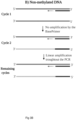
- the PCR will only start if the anchor sequence binds with high thermal stability, thus allowing the starter sequence to bind ( Figure 3A , "Cycle 1"). Note that the amplicons created during the PCR will not contain any methylated nucleotides as generally the polymerase adds dNTPs with nonmethylated nucleotides in PCR reactions.
- the anchor and the starter sequence are connected by a loop sequence.
- This sequence is beneficial because most polymerases cannot read over the hydrophobic nucleotides and therefore, the anchor sequence will be cut-off when the reverse primer binds and the complementary strand is made.
- the starter sequence is designed with a low thermal stability, so it cannot bind to the amplicons without an additional sequence.
- the loop sequence is therefore incorporated into the primer, thereby allowing the loop and starter sequence to work as a regular primer after the second cycle of methyl-specific amplification ( Figure 3A , "Remaining cycles").
- Oligonucleotides complementary to the region covering the four CpGs marked in SEQ ID NO:1 above were synthesized.
- the probes were dual-labelled with a FAM fluorophore in the 5'-end and a black-hole quencher (BHQ) in the 3'-end.
- BHQ black-hole quencher
- two different hydrophobic nucleotides were used of either type Z or E.
- hydrophobic nucleotide of type Z has the chemical name Phosphoramidite of 3-(1-O-(4,4'-dimethoxytriphenylmetyl)-2- O -( 2-cyanoethyl diisopropylamidophosphite)-1,2-butandiol)- 4- N -(7,9-Dimethyl-3H-pyrido[3',2':4,5]thieno[3,2-d]pyrimidin-4-one.
- the intercalator Q has the structure:
- hydrophobic nucleotides of type Z may simply be referred to as "Z".
- the hydrophobic nucleotide of type E has the chemical name Phosphoramidite of (S)-1-(4,4'-dimethoxytriphenylmetyloxy)-3-pyrenemethyloxy-2-propanol.
- the intercalator Q has the structure:
- hydrophobic nucleotides of type E may simply be referred to as "E".
- E Either Z or E were incorporated into the probe in a manner so they are positioned between the C and the G in the four CpGs of SEQ ID NO:1. This was done to test which of E and Z best discriminated between methylated DNA (referred to as "5-mC”) and nonmethylated DNA (referred to as “non.mC”).
- Probes comprising E positioned between the C and G in the CpGs are referred to as Probes of type E herein.
- Probes of type E2 Probes where E is positioned immediately before the CpGs upon annealing are referred to as probes of type E3.
- probes of type E3 As reference, a probe was made without E and Z. The sequences of the different probes are provided in table 1.
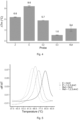
- the probes containing hydrophobic nucleotides type E and Z had a higher T m when bound to the fully methylated target (MGMT_1,2,3,4mC) compared to the non-methylated target (MGMT_0mC).
- the difference in melting temperature for 1,2,3,4mC and 0mC was ⁇ 6.6 °C for probe MGMT_Z and ⁇ 9.6 °C for probe MGMT_E.
- the reference probe (MGMT_Ref) also had a higher T m when hybridized to the methylated target with a difference between mC and non.mC target of 3.4 °C, see figure 4 and table 2.
- the position of the hydrophobic nucleotide type E was investigated. The best discrimination occurred when E was placed in between the C and the G in the CpGs (probe MGMT_E). When the hydrophobic nucleotide was placed after the CpG (probe MGMT_E3), lower discrimination was observed than for the reference probe.
- TM buffer comprises 0.02 M Na 2 HPO 4 , 0.02 M NaCl, and 2 mM EDTA.
- the melting temperature of the MGMT_E/1 ,2,3,4mC duplex was -78.5 °C and for MGMT_E/0mC duplex it was ⁇ 69.7 °C. It is first at 80 °C that the MGMT/0mC duplex is fully dissociated into two single strands. This is seen by the temperature after the melt peak, where -dF/dT is 0, see Figure 7 . Table 5.
- T m of MGMT_E melted with targets containing 0 or 4 methylation sites in TM Buffer and Ampliqueen master mix.
- TM Buffer Ampliqueen Probe Rep 0mC [°C] 1,2,3,4mC [°C] 0mC [°C] 1,2,3,4mC [°C] 1 76.06 82.76 69.61 78.49 MGMT_E 2 76.28 82.80 69.72 78.55 3 76.27 82.83
- BasePrimers Four different designs of BasePrimers were made (table 6).
- the primers were designed to have two different loop sequences, and two different lengths of the 3'-end starter sequence.
- the melting temperature is calculated based on the T m of the loop sequence and the 3'-end starter sequence as these sequences will work as one primer after the loop sequence has been incorporated into the amplicons.
- PCRs were set up using the BasePrimers of Table 6 as forward primers and reverse primer MGMT_Rev2C (Table 4).
- Reference assays used primer MGMT_Fw2C as forward primer and MGMT_Rev2C as reverse primer (Table 7).
- the methyl-specific assay was performed by mixing 700 nM of each BasePrimer of Table 7 with 700 nM MGMT_Rev2C and 500 nM MGMT_Probe2E (Table 7).
- the reference assay was made by mixing 700 nM MGMT_Fw2C with 700 nM MGMT_Rev2C and 500 nM MGMT_Probe2E.
- the PCR program is provided in table 8, whereas the optimization protocol for optimizing the PCR program is provided in table 9.
- MGMT_FwLoop4C was tested on a PCR program with methyl-specific pre-amplification (table 10).
- the methyl-specific assay was made by mixing 700 nM of MGMT_FwLoop4C with 700 nM MGMT_Rev2C.
- the reference assay was made by mixing 700 nM MGMT_Fw2C with 700 nM Rev2C. Master mix containing 1% ZUBR Green was used in both the reference and methyl-specific assay.
- the results were compared to the regular 2-step amplification with 79 °C for 20 sec as annealing settings. The same experimental set-up was used as in the example above.
- ⁇ Ct and ⁇ Ct were determined as described in Example 1 above.
- the methyl-specific pre-amplification cycling gave lower Ct values for the methylated DNA and higher Ct for non-methylated DNA on the methyl-specific assay and thereby improved the discrimination of methylation to a ⁇ Ct value of 9.93, see table 11.
- the PCR curves for the methyl-specific pre-amplification PCR are seen in figure 9 .
- the Ct values of the methylated DNA on the methyl-specific assay was still high with the pre-amplification, and it was assumed that the loop and starter sequence did not amplify well in the 2-step non-methyl-specific amplification.
- a BasePrimer was designed with a loop sequence with higher affinity for complementary sequence and 3'-end starter sequence to work at higher temperature in the 2-step amplification.
- the design is seen in Table 12.
- the affinity of the MGMT_Fw2C and MGMT_Rev2C was increased by adding a hydrophobic nucleotide in the 5' end of these primers instead of using regular primers.
- the new BasePrimer was first analyzed without the pre-amplification to find out optimal annealing time and temperature in the 2-step amplification.
- the assays were mixed as described in "Methyl-specific pre-amplification", but using MGMT_FwLoop5C as forward primer instead.
- PCR program D was modified according to table 13. The SW1088 cell line was used for this experiment and the next experiments as well.
- ⁇ Ct and ⁇ Ct were determined as described in Example 1 above.
- MGMT_FwLoop5C was titrated at concentrations of 500, 700 and 900 nM. Except for the variating concentrations, the assays were made as described in the section "Design of higher T m BasePrimer".
- the MGMT_FwLoop5C was analyzed using methyl-specific pre-amplification.
- 500 nM FwLoop5C was the optimal concentration for the BasePrimer.
- the ⁇ Ct was 12.6, and the ⁇ Ct of methylated DNA was 9.8. Higher concentrations lead to worse methyl-specific amplification, see results in table 14.
- MGMT_FwLoop5C was used to investigate a 1-step methyl-specific hold instead of methyl-specific pre-amplification.
- the assays were made as described in the section "Design of higher T m BasePrimer” with 500 nM FwLoop5C instead of 700 nM.
- PCR Program F was used (Table 15). The methyl-hold time was tested at 80 °C for 60 and 120 seconds. Table 15.
- PCR Program F. * acquiring stage (the stage where the fluorescence is acquired).
- the method was further validated using linearity and sensitivity studies and by evaluation of patient samples. All validation samples were tested in duplicates on PCR program F.
- the methyl-specific assay was made by mixing 500 nM of MGMT_FwLoop5C with 700 nM MGMT_Rev2C_suE.
- the reference assay was made by mixing 700 nM MGMT_Fw2C_suE with 700 nM Rev2C_suE. Master mix containing 1% ZUBR Green was used in both the reference and methyl-specific assay.
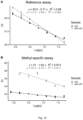
- q is initial number of DNA molecules in the sample.
- the linearity was better for the reference assay compared to the methyl-specific assay.
- the sensitivity of the methyl-specific assay was analyzed by mixing 2 ng/ ⁇ L of purified DNA from SW1088 with 2 ng/ ⁇ L of purified DNA from blood from a healthy patient. Following concentrations were made: 100%, 50%, 25%, 10%, 5%, 1% and 0% methylation. The sensitivity was carried out on a MyGo Pro instrument.
- a BasePrimer with a single mismatch in the anchor sequence was evaluated using a sensitivity study made on synthetic DNA from the MGMT promoter region.
- the synthetic DNA was methylated using CpG Methyltransferase (New England Biolabs Inc, Ipswich, MA, USA) following the manufactures protocol. Dilutions in a concentration of 500 copies/ ⁇ L of fully methylated DNA and unmethylated DNA were mixed to achieve 100%, 50%, 25%, 12.5%, 6.3%, 3.1%, and 0% methylated template.
- 700 nM MGMT_Fw2C, 700 nM MGMT_Rev2E, and 500 nM MGMT_Probe2E were used for the reference assay, and for the methyl-specific assay, 700 nM MGMT_FwLoop5D M5 was used instead of MGMT_Fw2C (see table 22 for sequences).
- the study was carried out on a BaseTyper TM real-time PCR instrument (PentaBase, Odense, Denmark) using PCR Program G (see table 23). Table 23.
- PCR Program G. * acquiring stage (the stage where the fluorescence is acquired).
- the lowest detected sample contained 6.3% methylated DNA, and a linear correlation was observed between ⁇ Ct and log(% methylation) (see figure 15 ). Based on the linear correlation, it is possible to quantify the degree of methylation based on the ACt-value.
- the starter sequences were complementary to the target sequence in the immediate 3'-end of the anchor sequence.
- New BasePrimers with a single mismatch in the anchor sequence were designed with a gap of nucleotides between the 3'-end of the anchor sequence and the 5'-end of the starter sequence on the complementary target sequence (see figure 16 ).
- the BasePrimers were designed with a gap of 0, 2, 4, 6 and 8 nucleotides with two lengths of starter sequences (A and B), see table 24.
- PCR was carried out using PCR Program H (see table 25) on a BaseTyper. Table 25.
- PCR Program H. * acquiring stage (the stage where the fluorescence is acquired).
- the methyl-discriminating primer complex consists of an assist primer comprising an anchor sequence and a stem sequence.
- the other part of the complex is a regular primer, partly complementary to the assist primer's stem sequence and partly complementary to the target sequence.
- the discrimination of methylated DNA over non-methylated DNA occurs by the same principle as the BasePrimers. However, after the PCR has initiated on methylated DNA, the regular primer is used for the remaining cycles. The principle is illustrated in figure 18 .
- the assisted primer complex was tested on the sequences shown in table 26.
- 700 nM MGMT_Fw2C, 700 nM MGMT_Rev2E, and 500 nM MGMT_Probe2E were used for the reference assay, and for the methyl-specific assay, 700 nM of MGMT_Primer_1D and 50 nM of MGMT_Assist_1A_E were used instead of MGMT_Fw2C.
- 500 copies/ ⁇ L of non-methylated and 100% methylated synthetic DNA were used as template.
- the PCR was carried out using PCR Program H (see Table 25) on a BaseTyper.
- the PCR curves are shown in Figure 19 .
- the ⁇ Ct was 5.6 for 100% methylated DNA and 9.5 for non-methylated DNA giving a ⁇ Ct of 3.9.
Landscapes
- Chemical & Material Sciences (AREA)
- Life Sciences & Earth Sciences (AREA)
- Organic Chemistry (AREA)
- Proteomics, Peptides & Aminoacids (AREA)
- Health & Medical Sciences (AREA)
- Zoology (AREA)
- Wood Science & Technology (AREA)
- Engineering & Computer Science (AREA)
- Genetics & Genomics (AREA)
- Analytical Chemistry (AREA)
- Molecular Biology (AREA)
- Bioinformatics & Cheminformatics (AREA)
- Immunology (AREA)
- Biotechnology (AREA)
- Biophysics (AREA)
- Physics & Mathematics (AREA)
- Biochemistry (AREA)
- Microbiology (AREA)
- General Engineering & Computer Science (AREA)
- General Health & Medical Sciences (AREA)
- Pathology (AREA)
- Chemical Kinetics & Catalysis (AREA)
- Measuring Or Testing Involving Enzymes Or Micro-Organisms (AREA)
- Signal Processing For Digital Recording And Reproducing (AREA)
- Sorption Type Refrigeration Machines (AREA)
- Transition And Organic Metals Composition Catalysts For Addition Polymerization (AREA)
Applications Claiming Priority (2)
| Application Number | Priority Date | Filing Date | Title |
|---|---|---|---|
| EP20182947 | 2020-06-29 | ||
| PCT/EP2021/067880 WO2022002958A1 (en) | 2020-06-29 | 2021-06-29 | Detection of methylation status |
Publications (3)
| Publication Number | Publication Date |
|---|---|
| EP4172361A1 EP4172361A1 (en) | 2023-05-03 |
| EP4172361B1 true EP4172361B1 (en) | 2024-08-07 |
| EP4172361C0 EP4172361C0 (en) | 2024-08-07 |
Family
ID=71401636
Family Applications (1)
| Application Number | Title | Priority Date | Filing Date |
|---|---|---|---|
| EP21737437.0A Active EP4172361B1 (en) | 2020-06-29 | 2021-06-29 | Detection of methylation status |
Country Status (8)
| Country | Link |
|---|---|
| US (1) | US20250346955A1 (https=) |
| EP (1) | EP4172361B1 (https=) |
| JP (1) | JP2023540161A (https=) |
| KR (1) | KR20230034959A (https=) |
| CN (1) | CN116209775A (https=) |
| AU (1) | AU2021302551A1 (https=) |
| CA (1) | CA3183054A1 (https=) |
| WO (1) | WO2022002958A1 (https=) |
Family Cites Families (8)
| Publication number | Priority date | Publication date | Assignee | Title |
|---|---|---|---|---|
| US6017704A (en) * | 1996-06-03 | 2000-01-25 | The Johns Hopkins University School Of Medicine | Method of detection of methylated nucleic acid using agents which modify unmethylated cytosine and distinguishing modified methylated and non-methylated nucleic acids |
| AU2002358464B2 (en) * | 2001-12-18 | 2006-04-27 | Human Genetic Signatures Pty Ltd | Pseudonucleotide comprising an intercalator |
| AU2003900368A0 (en) * | 2003-01-24 | 2003-02-13 | Human Genetic Signatures Pty Ltd | Assay for nucleic acid molecules |
| CA2645136C (en) * | 2006-03-16 | 2017-09-19 | Pentabase Aps | Oligonucleotides comprising signalling pairs and hydrophobic nucleotides, stemless beacons, for detection of nucleic acids, methylation status and mutants of nucleic acids |
| GB0714058D0 (en) * | 2007-07-19 | 2007-08-29 | Abertec Ltd | detection of methylation in nucleic acid sequences |
| WO2009105830A1 (en) * | 2008-02-27 | 2009-09-03 | Peter Maccallum Cancer Institute | Analysing methylation specific pcr by amplicon melting |
| KR20130113476A (ko) * | 2010-10-27 | 2013-10-15 | ?티백트 에이/에스 | 인터칼레이터 (intercalator) 분자를 포함하는 프로브에 의한 표적 DNA 및 RNA의 캡쳐 |
| EP3350347B1 (en) | 2015-09-14 | 2021-01-20 | Pentabase APS | Methods and materials for detection of mutations |
-
2021
- 2021-06-29 AU AU2021302551A patent/AU2021302551A1/en active Pending
- 2021-06-29 KR KR1020227044735A patent/KR20230034959A/ko active Pending
- 2021-06-29 CA CA3183054A patent/CA3183054A1/en active Pending
- 2021-06-29 EP EP21737437.0A patent/EP4172361B1/en active Active
- 2021-06-29 CN CN202180045918.6A patent/CN116209775A/zh active Pending
- 2021-06-29 JP JP2022580318A patent/JP2023540161A/ja active Pending
- 2021-06-29 US US18/001,601 patent/US20250346955A1/en active Pending
- 2021-06-29 WO PCT/EP2021/067880 patent/WO2022002958A1/en not_active Ceased
Also Published As
| Publication number | Publication date |
|---|---|
| WO2022002958A1 (en) | 2022-01-06 |
| KR20230034959A (ko) | 2023-03-10 |
| US20250346955A1 (en) | 2025-11-13 |
| AU2021302551A1 (en) | 2023-01-05 |
| JP2023540161A (ja) | 2023-09-22 |
| EP4172361A1 (en) | 2023-05-03 |
| EP4172361C0 (en) | 2024-08-07 |
| CN116209775A (zh) | 2023-06-02 |
| CA3183054A1 (en) | 2022-01-06 |
Similar Documents
| Publication | Publication Date | Title |
|---|---|---|
| JP4044290B2 (ja) | 高処理dnaメチル化解析のための方法 | |
| US20240392361A1 (en) | Polynucleotide sequence detection method | |
| US7175982B1 (en) | Method for the characterization of nucleic acid molecules involving generation of extendible upstream DNA fragments resulting from the cleavage of nucleic acid at an abasic site | |
| AU2015271641B2 (en) | Method for methylation analysis | |
| US20090155791A1 (en) | Method for detecting methylation status by using methylation-independent primers | |
| US20070092883A1 (en) | Methylation specific multiplex ligation-dependent probe amplification (MS-MLPA) | |
| CN101370945B (zh) | 用于鉴别大量野生型dna背景中多个dna突变标记的方法 | |
| US9863001B2 (en) | Method for the detection of cytosine methylations in DNA | |
| CN109385465B (zh) | 一种dna甲基化定量系统 | |
| EP2971172A1 (en) | Method for relative quantification of changes in dna methylation, using combined nuclease, ligation, and polymerase reactions | |
| US20180237853A1 (en) | Methods, Compositions and Kits for Detection of Mutant Variants of Target Genes | |
| US20230046513A1 (en) | Pcr method and pcr kit for increasing allelic discrimination | |
| WO2020019700A1 (zh) | 一种dna甲基化检测试剂、试剂盒及方法 | |
| JP2020534820A (ja) | メチル化分析のための方法 | |
| CN101796185B (zh) | 扩增甲基化核酸或非甲基化核酸的方法 | |
| EP4172361B1 (en) | Detection of methylation status | |
| RU2858659C2 (ru) | Определение статуса метилирования | |
| CA3164057C (en) | Pcr method and pcr kit for increasing allelic discrimination | |
| CN101983245B (zh) | 判断是否已适当进行非甲基化胞嘧啶转化处理的试剂盒和方法及用其分析甲基化dna的方法 | |
| EP3971302A1 (en) | Method for detecting 5-hydroxymethylated cytosine |
Legal Events
| Date | Code | Title | Description |
|---|---|---|---|
| STAA | Information on the status of an ep patent application or granted ep patent |
Free format text: STATUS: UNKNOWN |
|
| STAA | Information on the status of an ep patent application or granted ep patent |
Free format text: STATUS: THE INTERNATIONAL PUBLICATION HAS BEEN MADE |
|
| PUAI | Public reference made under article 153(3) epc to a published international application that has entered the european phase |
Free format text: ORIGINAL CODE: 0009012 |
|
| STAA | Information on the status of an ep patent application or granted ep patent |
Free format text: STATUS: REQUEST FOR EXAMINATION WAS MADE |
|
| 17P | Request for examination filed |
Effective date: 20230126 |
|
| AK | Designated contracting states |
Kind code of ref document: A1 Designated state(s): AL AT BE BG CH CY CZ DE DK EE ES FI FR GB GR HR HU IE IS IT LI LT LU LV MC MK MT NL NO PL PT RO RS SE SI SK SM TR |
|
| DAV | Request for validation of the european patent (deleted) | ||
| DAX | Request for extension of the european patent (deleted) | ||
| GRAP | Despatch of communication of intention to grant a patent |
Free format text: ORIGINAL CODE: EPIDOSNIGR1 |
|
| STAA | Information on the status of an ep patent application or granted ep patent |
Free format text: STATUS: GRANT OF PATENT IS INTENDED |
|
| INTG | Intention to grant announced |
Effective date: 20240304 |
|
| RAP3 | Party data changed (applicant data changed or rights of an application transferred) |
Owner name: PENTABASE A/S |
|
| GRAS | Grant fee paid |
Free format text: ORIGINAL CODE: EPIDOSNIGR3 |
|
| GRAA | (expected) grant |
Free format text: ORIGINAL CODE: 0009210 |
|
| STAA | Information on the status of an ep patent application or granted ep patent |
Free format text: STATUS: THE PATENT HAS BEEN GRANTED |
|
| AK | Designated contracting states |
Kind code of ref document: B1 Designated state(s): AL AT BE BG CH CY CZ DE DK EE ES FI FR GB GR HR HU IE IS IT LI LT LU LV MC MK MT NL NO PL PT RO RS SE SI SK SM TR |
|
| REG | Reference to a national code |
Ref country code: GB Ref legal event code: FG4D |
|
| REG | Reference to a national code |
Ref country code: CH Ref legal event code: EP |
|
| REG | Reference to a national code |
Ref country code: IE Ref legal event code: FG4D |
|
| REG | Reference to a national code |
Ref country code: DE Ref legal event code: R096 Ref document number: 602021016891 Country of ref document: DE |
|
| U01 | Request for unitary effect filed |
Effective date: 20240906 |
|
| U07 | Unitary effect registered |
Designated state(s): AT BE BG DE DK EE FI FR IT LT LU LV MT NL PT RO SE SI Effective date: 20240919 |
|
| PG25 | Lapsed in a contracting state [announced via postgrant information from national office to epo] |
Ref country code: NO Free format text: LAPSE BECAUSE OF FAILURE TO SUBMIT A TRANSLATION OF THE DESCRIPTION OR TO PAY THE FEE WITHIN THE PRESCRIBED TIME-LIMIT Effective date: 20241107 |
|
| PG25 | Lapsed in a contracting state [announced via postgrant information from national office to epo] |
Ref country code: PL Free format text: LAPSE BECAUSE OF FAILURE TO SUBMIT A TRANSLATION OF THE DESCRIPTION OR TO PAY THE FEE WITHIN THE PRESCRIBED TIME-LIMIT Effective date: 20240807 Ref country code: GR Free format text: LAPSE BECAUSE OF FAILURE TO SUBMIT A TRANSLATION OF THE DESCRIPTION OR TO PAY THE FEE WITHIN THE PRESCRIBED TIME-LIMIT Effective date: 20241108 |
|
| PG25 | Lapsed in a contracting state [announced via postgrant information from national office to epo] |
Ref country code: IS Free format text: LAPSE BECAUSE OF FAILURE TO SUBMIT A TRANSLATION OF THE DESCRIPTION OR TO PAY THE FEE WITHIN THE PRESCRIBED TIME-LIMIT Effective date: 20241207 |
|
| PG25 | Lapsed in a contracting state [announced via postgrant information from national office to epo] |
Ref country code: HR Free format text: LAPSE BECAUSE OF FAILURE TO SUBMIT A TRANSLATION OF THE DESCRIPTION OR TO PAY THE FEE WITHIN THE PRESCRIBED TIME-LIMIT Effective date: 20240807 |
|
| PG25 | Lapsed in a contracting state [announced via postgrant information from national office to epo] |
Ref country code: ES Free format text: LAPSE BECAUSE OF FAILURE TO SUBMIT A TRANSLATION OF THE DESCRIPTION OR TO PAY THE FEE WITHIN THE PRESCRIBED TIME-LIMIT Effective date: 20240807 Ref country code: RS Free format text: LAPSE BECAUSE OF FAILURE TO SUBMIT A TRANSLATION OF THE DESCRIPTION OR TO PAY THE FEE WITHIN THE PRESCRIBED TIME-LIMIT Effective date: 20241107 |
|
| PG25 | Lapsed in a contracting state [announced via postgrant information from national office to epo] |
Ref country code: RS Free format text: LAPSE BECAUSE OF FAILURE TO SUBMIT A TRANSLATION OF THE DESCRIPTION OR TO PAY THE FEE WITHIN THE PRESCRIBED TIME-LIMIT Effective date: 20241107 Ref country code: PL Free format text: LAPSE BECAUSE OF FAILURE TO SUBMIT A TRANSLATION OF THE DESCRIPTION OR TO PAY THE FEE WITHIN THE PRESCRIBED TIME-LIMIT Effective date: 20240807 Ref country code: NO Free format text: LAPSE BECAUSE OF FAILURE TO SUBMIT A TRANSLATION OF THE DESCRIPTION OR TO PAY THE FEE WITHIN THE PRESCRIBED TIME-LIMIT Effective date: 20241107 Ref country code: IS Free format text: LAPSE BECAUSE OF FAILURE TO SUBMIT A TRANSLATION OF THE DESCRIPTION OR TO PAY THE FEE WITHIN THE PRESCRIBED TIME-LIMIT Effective date: 20241207 Ref country code: HR Free format text: LAPSE BECAUSE OF FAILURE TO SUBMIT A TRANSLATION OF THE DESCRIPTION OR TO PAY THE FEE WITHIN THE PRESCRIBED TIME-LIMIT Effective date: 20240807 Ref country code: GR Free format text: LAPSE BECAUSE OF FAILURE TO SUBMIT A TRANSLATION OF THE DESCRIPTION OR TO PAY THE FEE WITHIN THE PRESCRIBED TIME-LIMIT Effective date: 20241108 Ref country code: ES Free format text: LAPSE BECAUSE OF FAILURE TO SUBMIT A TRANSLATION OF THE DESCRIPTION OR TO PAY THE FEE WITHIN THE PRESCRIBED TIME-LIMIT Effective date: 20240807 |
|
| PG25 | Lapsed in a contracting state [announced via postgrant information from national office to epo] |
Ref country code: SM Free format text: LAPSE BECAUSE OF FAILURE TO SUBMIT A TRANSLATION OF THE DESCRIPTION OR TO PAY THE FEE WITHIN THE PRESCRIBED TIME-LIMIT Effective date: 20240807 |
|
| PG25 | Lapsed in a contracting state [announced via postgrant information from national office to epo] |
Ref country code: CZ Free format text: LAPSE BECAUSE OF FAILURE TO SUBMIT A TRANSLATION OF THE DESCRIPTION OR TO PAY THE FEE WITHIN THE PRESCRIBED TIME-LIMIT Effective date: 20240807 |
|
| PG25 | Lapsed in a contracting state [announced via postgrant information from national office to epo] |
Ref country code: SK Free format text: LAPSE BECAUSE OF FAILURE TO SUBMIT A TRANSLATION OF THE DESCRIPTION OR TO PAY THE FEE WITHIN THE PRESCRIBED TIME-LIMIT Effective date: 20240807 |
|
| PLBE | No opposition filed within time limit |
Free format text: ORIGINAL CODE: 0009261 |
|
| STAA | Information on the status of an ep patent application or granted ep patent |
Free format text: STATUS: NO OPPOSITION FILED WITHIN TIME LIMIT |
|
| PGFP | Annual fee paid to national office [announced via postgrant information from national office to epo] |
Ref country code: GB Payment date: 20250616 Year of fee payment: 5 |
|
| 26N | No opposition filed |
Effective date: 20250508 |
|
| PGFP | Annual fee paid to national office [announced via postgrant information from national office to epo] |
Ref country code: IE Payment date: 20250616 Year of fee payment: 5 |
|
| U20 | Renewal fee for the european patent with unitary effect paid |
Year of fee payment: 5 Effective date: 20250623 |
|
| PGFP | Annual fee paid to national office [announced via postgrant information from national office to epo] |
Ref country code: CH Payment date: 20250701 Year of fee payment: 5 |
|
| PG25 | Lapsed in a contracting state [announced via postgrant information from national office to epo] |
Ref country code: MC Free format text: LAPSE BECAUSE OF FAILURE TO SUBMIT A TRANSLATION OF THE DESCRIPTION OR TO PAY THE FEE WITHIN THE PRESCRIBED TIME-LIMIT Effective date: 20240807 |