EP4156401A1 - Membran und batterie damit - Google Patents
Membran und batterie damit Download PDFInfo
- Publication number
- EP4156401A1 EP4156401A1 EP21868499.1A EP21868499A EP4156401A1 EP 4156401 A1 EP4156401 A1 EP 4156401A1 EP 21868499 A EP21868499 A EP 21868499A EP 4156401 A1 EP4156401 A1 EP 4156401A1
- Authority
- EP
- European Patent Office
- Prior art keywords
- separator
- ceramic coating
- separator according
- ceramic
- ranges
- Prior art date
- Legal status (The legal status is an assumption and is not a legal conclusion. Google has not performed a legal analysis and makes no representation as to the accuracy of the status listed.)
- Pending
Links
Images


Classifications
-
- H—ELECTRICITY
- H01—ELECTRIC ELEMENTS
- H01M—PROCESSES OR MEANS, e.g. BATTERIES, FOR THE DIRECT CONVERSION OF CHEMICAL ENERGY INTO ELECTRICAL ENERGY
- H01M50/00—Constructional details or processes of manufacture of the non-active parts of electrochemical cells other than fuel cells, e.g. hybrid cells
- H01M50/40—Separators; Membranes; Diaphragms; Spacing elements inside cells
- H01M50/409—Separators, membranes or diaphragms characterised by the material
- H01M50/449—Separators, membranes or diaphragms characterised by the material having a layered structure
- H01M50/451—Separators, membranes or diaphragms characterised by the material having a layered structure comprising layers of only organic material and layers containing inorganic material
-
- H—ELECTRICITY
- H01—ELECTRIC ELEMENTS
- H01M—PROCESSES OR MEANS, e.g. BATTERIES, FOR THE DIRECT CONVERSION OF CHEMICAL ENERGY INTO ELECTRICAL ENERGY
- H01M10/00—Secondary cells; Manufacture thereof
- H01M10/05—Accumulators with non-aqueous electrolyte
- H01M10/052—Li-accumulators
-
- H—ELECTRICITY
- H01—ELECTRIC ELEMENTS
- H01M—PROCESSES OR MEANS, e.g. BATTERIES, FOR THE DIRECT CONVERSION OF CHEMICAL ENERGY INTO ELECTRICAL ENERGY
- H01M10/00—Secondary cells; Manufacture thereof
- H01M10/05—Accumulators with non-aqueous electrolyte
- H01M10/052—Li-accumulators
- H01M10/0525—Rocking-chair batteries, i.e. batteries with lithium insertion or intercalation in both electrodes; Lithium-ion batteries
-
- H—ELECTRICITY
- H01—ELECTRIC ELEMENTS
- H01M—PROCESSES OR MEANS, e.g. BATTERIES, FOR THE DIRECT CONVERSION OF CHEMICAL ENERGY INTO ELECTRICAL ENERGY
- H01M50/00—Constructional details or processes of manufacture of the non-active parts of electrochemical cells other than fuel cells, e.g. hybrid cells
- H01M50/40—Separators; Membranes; Diaphragms; Spacing elements inside cells
- H01M50/403—Manufacturing processes of separators, membranes or diaphragms
-
- H—ELECTRICITY
- H01—ELECTRIC ELEMENTS
- H01M—PROCESSES OR MEANS, e.g. BATTERIES, FOR THE DIRECT CONVERSION OF CHEMICAL ENERGY INTO ELECTRICAL ENERGY
- H01M50/00—Constructional details or processes of manufacture of the non-active parts of electrochemical cells other than fuel cells, e.g. hybrid cells
- H01M50/40—Separators; Membranes; Diaphragms; Spacing elements inside cells
- H01M50/409—Separators, membranes or diaphragms characterised by the material
-
- H—ELECTRICITY
- H01—ELECTRIC ELEMENTS
- H01M—PROCESSES OR MEANS, e.g. BATTERIES, FOR THE DIRECT CONVERSION OF CHEMICAL ENERGY INTO ELECTRICAL ENERGY
- H01M50/00—Constructional details or processes of manufacture of the non-active parts of electrochemical cells other than fuel cells, e.g. hybrid cells
- H01M50/40—Separators; Membranes; Diaphragms; Spacing elements inside cells
- H01M50/409—Separators, membranes or diaphragms characterised by the material
- H01M50/411—Organic material
- H01M50/414—Synthetic resins, e.g. thermoplastics or thermosetting resins
-
- H—ELECTRICITY
- H01—ELECTRIC ELEMENTS
- H01M—PROCESSES OR MEANS, e.g. BATTERIES, FOR THE DIRECT CONVERSION OF CHEMICAL ENERGY INTO ELECTRICAL ENERGY
- H01M50/00—Constructional details or processes of manufacture of the non-active parts of electrochemical cells other than fuel cells, e.g. hybrid cells
- H01M50/40—Separators; Membranes; Diaphragms; Spacing elements inside cells
- H01M50/409—Separators, membranes or diaphragms characterised by the material
- H01M50/411—Organic material
- H01M50/414—Synthetic resins, e.g. thermoplastics or thermosetting resins
- H01M50/417—Polyolefins
-
- H—ELECTRICITY
- H01—ELECTRIC ELEMENTS
- H01M—PROCESSES OR MEANS, e.g. BATTERIES, FOR THE DIRECT CONVERSION OF CHEMICAL ENERGY INTO ELECTRICAL ENERGY
- H01M50/00—Constructional details or processes of manufacture of the non-active parts of electrochemical cells other than fuel cells, e.g. hybrid cells
- H01M50/40—Separators; Membranes; Diaphragms; Spacing elements inside cells
- H01M50/409—Separators, membranes or diaphragms characterised by the material
- H01M50/411—Organic material
- H01M50/414—Synthetic resins, e.g. thermoplastics or thermosetting resins
- H01M50/42—Acrylic resins
-
- H—ELECTRICITY
- H01—ELECTRIC ELEMENTS
- H01M—PROCESSES OR MEANS, e.g. BATTERIES, FOR THE DIRECT CONVERSION OF CHEMICAL ENERGY INTO ELECTRICAL ENERGY
- H01M50/00—Constructional details or processes of manufacture of the non-active parts of electrochemical cells other than fuel cells, e.g. hybrid cells
- H01M50/40—Separators; Membranes; Diaphragms; Spacing elements inside cells
- H01M50/409—Separators, membranes or diaphragms characterised by the material
- H01M50/431—Inorganic material
- H01M50/434—Ceramics
-
- H—ELECTRICITY
- H01—ELECTRIC ELEMENTS
- H01M—PROCESSES OR MEANS, e.g. BATTERIES, FOR THE DIRECT CONVERSION OF CHEMICAL ENERGY INTO ELECTRICAL ENERGY
- H01M50/00—Constructional details or processes of manufacture of the non-active parts of electrochemical cells other than fuel cells, e.g. hybrid cells
- H01M50/40—Separators; Membranes; Diaphragms; Spacing elements inside cells
- H01M50/409—Separators, membranes or diaphragms characterised by the material
- H01M50/443—Particulate material
-
- H—ELECTRICITY
- H01—ELECTRIC ELEMENTS
- H01M—PROCESSES OR MEANS, e.g. BATTERIES, FOR THE DIRECT CONVERSION OF CHEMICAL ENERGY INTO ELECTRICAL ENERGY
- H01M50/00—Constructional details or processes of manufacture of the non-active parts of electrochemical cells other than fuel cells, e.g. hybrid cells
- H01M50/40—Separators; Membranes; Diaphragms; Spacing elements inside cells
- H01M50/409—Separators, membranes or diaphragms characterised by the material
- H01M50/446—Composite material consisting of a mixture of organic and inorganic materials
-
- H—ELECTRICITY
- H01—ELECTRIC ELEMENTS
- H01M—PROCESSES OR MEANS, e.g. BATTERIES, FOR THE DIRECT CONVERSION OF CHEMICAL ENERGY INTO ELECTRICAL ENERGY
- H01M50/00—Constructional details or processes of manufacture of the non-active parts of electrochemical cells other than fuel cells, e.g. hybrid cells
- H01M50/40—Separators; Membranes; Diaphragms; Spacing elements inside cells
- H01M50/409—Separators, membranes or diaphragms characterised by the material
- H01M50/449—Separators, membranes or diaphragms characterised by the material having a layered structure
-
- H—ELECTRICITY
- H01—ELECTRIC ELEMENTS
- H01M—PROCESSES OR MEANS, e.g. BATTERIES, FOR THE DIRECT CONVERSION OF CHEMICAL ENERGY INTO ELECTRICAL ENERGY
- H01M50/00—Constructional details or processes of manufacture of the non-active parts of electrochemical cells other than fuel cells, e.g. hybrid cells
- H01M50/40—Separators; Membranes; Diaphragms; Spacing elements inside cells
- H01M50/409—Separators, membranes or diaphragms characterised by the material
- H01M50/449—Separators, membranes or diaphragms characterised by the material having a layered structure
- H01M50/457—Separators, membranes or diaphragms characterised by the material having a layered structure comprising three or more layers
-
- H—ELECTRICITY
- H01—ELECTRIC ELEMENTS
- H01M—PROCESSES OR MEANS, e.g. BATTERIES, FOR THE DIRECT CONVERSION OF CHEMICAL ENERGY INTO ELECTRICAL ENERGY
- H01M50/00—Constructional details or processes of manufacture of the non-active parts of electrochemical cells other than fuel cells, e.g. hybrid cells
- H01M50/40—Separators; Membranes; Diaphragms; Spacing elements inside cells
- H01M50/489—Separators, membranes, diaphragms or spacing elements inside the cells, characterised by their physical properties, e.g. swelling degree, hydrophilicity or shut down properties
-
- H—ELECTRICITY
- H01—ELECTRIC ELEMENTS
- H01M—PROCESSES OR MEANS, e.g. BATTERIES, FOR THE DIRECT CONVERSION OF CHEMICAL ENERGY INTO ELECTRICAL ENERGY
- H01M50/00—Constructional details or processes of manufacture of the non-active parts of electrochemical cells other than fuel cells, e.g. hybrid cells
- H01M50/40—Separators; Membranes; Diaphragms; Spacing elements inside cells
- H01M50/489—Separators, membranes, diaphragms or spacing elements inside the cells, characterised by their physical properties, e.g. swelling degree, hydrophilicity or shut down properties
- H01M50/491—Porosity
-
- Y—GENERAL TAGGING OF NEW TECHNOLOGICAL DEVELOPMENTS; GENERAL TAGGING OF CROSS-SECTIONAL TECHNOLOGIES SPANNING OVER SEVERAL SECTIONS OF THE IPC; TECHNICAL SUBJECTS COVERED BY FORMER USPC CROSS-REFERENCE ART COLLECTIONS [XRACs] AND DIGESTS
- Y02—TECHNOLOGIES OR APPLICATIONS FOR MITIGATION OR ADAPTATION AGAINST CLIMATE CHANGE
- Y02E—REDUCTION OF GREENHOUSE GAS [GHG] EMISSIONS, RELATED TO ENERGY GENERATION, TRANSMISSION OR DISTRIBUTION
- Y02E60/00—Enabling technologies; Technologies with a potential or indirect contribution to GHG emissions mitigation
- Y02E60/10—Energy storage using batteries
Definitions
- the present disclosure pertains to the field of technologies of lithium-ion batteries, and specifically relates to a separator and a battery including the separator.
- a separator as a key component of the lithium-ion secondary battery, directly affects safety performance, rate performance, cycling performance, low-temperature discharging performance, and the like of a lithium-ion secondary battery.
- an object of the present disclosure is to provide a separator and a battery including the separator.
- the separator includes a separator base layer and a ceramic coating disposed on a surface of the separator base layer. A large quantity of micropores are formed in a surface and/or an interior of the ceramic coating. In this way, a porosity of the separator can be improved, to improve a rate, a residual liquid volume, low-temperature discharging performance, and cycling performance of the battery. In addition, separator nail penetration strength, self-discharging performance, and safety performance may be ensured.
- a separator is provided.
- the separator includes a separator base layer and a ceramic coating disposed on a first surface of the separator base layer.
- the ceramic coating includes ceramic particles.
- One or more of a surface and an interior of the ceramic coating have micropores.
- a porosity of the ceramic coating ranges from 40% to 80%. In the micropores, a volume of pores with apertures greater than 0.1 microns occupies 45 %-90% of a total pore volume, and a volume of pores with apertures greater than 1.0 micron occupies 40%-80% of the total pore volume.
- the volume of the pores with the apertures greater than 0.1 microns occupies 45%-90% of the total pore volume, for example, 45%, 50%, 55%, 60%, 65%, 70%, 75%, 80%, 85%, or 90% of the total pore volume; and the volume of the pores with the apertures greater than 1.0 micron occupies 40%-80% of the total pore volume, for example, 40%, 45%, 50%, 55%, 60%, 65%, 70%, 75%, or 80% of the total pore volume.
- an aperture of the largest pore in the micropores does not exceed 10 microns.
- an aperture of the smallest pore in the micropores is not less than 0.01 microns.
- a total surface density of the separator ranges from 9.4 g/m 2 to 10.0 g/m 2 .
- a material system of the separator base layer is selected from at least one of polyethylene, polypropylene, polyethylene terephthalate, polybutylene terephthalate, polystyrene, a polynaphthalene system polymer, polyimide, polyamide, aromatic polyamide fiber, or poly (p-phenylenebenzobisoxazole).
- a porosity of the separator base layer ranges from 20% to 80%.
- the porosity of the separator base layer is 20%, 30%, 40%, 50%, 60%, 70% or 80%.
- a thickness of the separator base layer ranges from 5 ⁇ m to 50 ⁇ m.
- the thickness of the separator base layer is 5 ⁇ m, 10 ⁇ m, 15 ⁇ m, 20 ⁇ m, 25 ⁇ m, 30 ⁇ m, 40 ⁇ m, or 50 ⁇ m.
- an addition amount of the ceramic particles is 80wt%-97wt% of a total mass of the ceramic coating, for example, 80wt%, 82wt%, 85wt%, 88wt%, 90wt%, 92wt%, 94wt%, 95wt%, 96wt%, or 97wt%.
- the ceramic coating further includes an additive.
- the additive includes a binder, a thickener, and a dispersing agent.
- an addition amount of the binder is 1wt%-10wt% of the total mass of the ceramic coating, for example, 1wt%, 2wt%, 3wt%, 4wt%, 5wt%, 6wt%, 7wt%, 8wt%, 9wt%, or 10wt%.
- An addition amount of the thickener is 1wt%-10wt% of the total mass of the ceramic coating, for example, 1wt%, 2wt%, 3wt%, 4wt%, 5wt%, 6wt%, 7wt%, 8wt%, 9wt%, or 10wt%.
- An addition amount of the dispersing agent is 1wt%-5wt% of the total mass of the ceramic coating, for example, 1wt%, 2wt%, 3wt%, 4wt%, or 5wt%.
- the binder is selected from at least one of polytetrafluoroethylene, polyvinylidene fluoride, copolymerized modified poly(vinylidene fluoride-co-hexafluoropropylene), polyimide, polyacrylonitrile, poly(methyl methacrylate), aramid resin, polyacrylic acid, styrene-butadiene rubber (SBR), polyvinyl alcohol and copolymerized modified polyvinyl alcohol, polyvinyl acetate, polyacrylamide, phenol formaldehyde resin, epoxy resin, water-based polyurethane, ethylene-vinyl acetate copolymer, multicomponent acrylic copolymer, polystyrene lithium sulfonate, water-based organic silicone resin, butyronitrile-polyvinyl chloride blend, polyethylene oxide, styrene-acrylic latex, or benzene latex.
- polytetrafluoroethylene polyvinylidene fluoride
- the thickener is selected from at least one of benzyl butyl phthalate compound, sodium carboxymethyl cellulose, cellulose derivative, polyurethane, acrylate, or lithium carboxymethyl cellulose.
- the dispersing agent is selected from at least one of polyvinylpyrrolidone, polyethylene glycol, sodium polyacrylate, sodium silicate, polypropylene alcohol, or triammonium citrate.
- micropores exist in the surface and/or the interior of the ceramic coating. Formation of the micropores is adding thermosensitive polymer to slurry for preparing the ceramic coating, then performing heat treatment through a drying process.
- thermosensitive polymer is fused and then separated from a system in a heat treatment process, and a large quantity of micropores are formed in the surface and/or the interior of the ceramic coating.
- thermosensitive polymer is selected from at least one of polyethylene, polystyrene, poly(methyl methacrylate), poly(acrylic acid-co-butadiene-co-styrene), polylactic acid, polyvinyl chloride, polyvinyl butyral, a monomer-modified copolymerized polymer thereof, or the like.
- thermosensitive polymer is preferably thermosensitive polymer microspheres.
- a particle size of the thermosensitive polymer microsphere ranges from 0.01 ⁇ m to 10 ⁇ m.
- a melting point of the thermosensitive polymer ranges from 60°C to 150°C.
- the ceramic particle is selected from one or more of aluminium oxide, boehmite, magnesium oxide, magnesium hydroxide, barium sulfate, barium titanate, zinc oxide, calcium oxide, silicon dioxide, silicon carbide, and nickel oxide.
- a weight ratio of the thermosensitive polymer to the ceramic particles is (1-60):(99-40) in the slurry for preparing the ceramic coating, for example, (5-50):(95-50), (10-45):(90-55), (15-40):(85-60), or (20-30):(80-70).
- the separator may be used in the field of lithium-ion batteries.
- a thickness of the ceramic coating ranges from 1 ⁇ m to 10 ⁇ m, for example, from2 ⁇ m to 5 ⁇ m.
- the thickness of the ceramic coating is 1 ⁇ m, 2 ⁇ m, 3 ⁇ m, 4 ⁇ m, 5 ⁇ m, 6 ⁇ m, 7 ⁇ m, 8 ⁇ m, 9 ⁇ m, or 10 ⁇ m.
- the ceramic coating with the thickness may be obtained through one time of coating, or may be obtained through a plurality of times of coating.
- a median particle size of the ceramic particles ranges from 0.01 ⁇ m to 10 ⁇ m.
- the average particle size of the ceramic particles is 0.01 ⁇ m, 0.05 ⁇ m, 0.1 ⁇ m, 0.5 ⁇ m, 1 ⁇ m, 4 ⁇ m, 5 ⁇ m, 8 ⁇ m, or 10 ⁇ m.
- the separator further includes a first binder coating layer disposed on a surface of the ceramic coating.
- the separator further includes a second binder coating layer disposed on a second surface, opposite to a first surface, of the separator base layer.
- the first binder coating layer and the second binder coating layer have a same thickness or different thicknesses selected from a range of 1 ⁇ m-5 ⁇ m.
- a material system of the binder coating layer is selected from polytetrafluoroethylene, polyvinylidene fluoride, copolymerized modified poly(vinylidene fluoride-co-hexafluoropropylene), polyimide, polyacrylonitrile, poly(methyl methacrylate), aramid resin, polyacrylic acid, styrene-butadiene rubber (SBR), polyvinyl alcohol and copolymerized modified polyvinyl alcohol, polyvinyl acetate, polyacrylamide, phenol formaldehyde resin, epoxy resin, water-based polyurethane, ethylene-vinyl acetate copolymer, multicomponent acrylic copolymer, polystyrene lithium sulfonate, water-based organic silicone resin, butyronitrile-polyvinyl chloride blend, polyethylene oxide, styrene-acrylic latex, or benzene latex.
- SBR styrene-butadiene rubber
- the present disclosure further provides a method for preparing the foregoing separator.
- the method includes the following steps:
- the method further includes the following step: (d) Preparing slurry for forming the binder coating layer, and coating the second surface of the separator base layer, and/or the surface of the ceramic coating with the slurry of the binder coating layer.
- a mass ratio of the ceramic particles to the additive is (80-97):(3-20) in Step (a).
- the additive includes a binder, a thickener, and a dispersing agent in Step (a).
- thermosensitive polymer to the ceramic particles is (1-60):(99-40) in Step (b).
- a coating manner is, for example, spraying, dip coating, intaglio printing, extrusion coating, or transfer coating in Step (c).
- a drying temperature ranges from 40°C to 120°C, and a drying time ranges from 20s to 600s.
- a heat treatment temperature is 0°C-20°C higher than the melting point of the thermosensitive polymer, and a heat treatment time ranges from 2 min to 10 min.
- the present disclosure further provides a lithium-ion battery.
- the lithium-ion battery includes the foregoing separator.
- the lithium-ion battery further includes a positive electrode, a negative electrode, and an electrolyte.
- the present disclosure has the following beneficial effects:
- the present disclosure provides a separator and a battery including the separator.
- a large quantity of micropores are formed in a surface and/or an interior of a ceramic coating.
- a porosity of the separator is improved, and a rate of the battery, a residual liquid volume, low-temperature discharging performance, and long cycling performance are improved.
- separator nail penetration strength performance, self-discharging performance, and safety performance are not affected.
- thermosensitive polymer microspheres (a particle size of the thermosensitive polymer microsphere is 1.5 ⁇ m, and a thermosensitive temperature is 110°C) were added to 10 kg of the foregoing ceramic slurry to obtain modified ceramic slurry.
- Microgravure coating was performed on a first surface of a separator base layer by using the foregoing modified ceramic slurry, followed by drying at 60°C for 1 min and processing at a high temperature of 120°C for 5 min, to obtain a separator.
- a thickness of the separator base layer in the separator is 9 ⁇ m.
- a material system of the separator base layer is PE.
- a porosity is 40%.
- a thickness of a ceramic coating in the separator is 3 ⁇ m.
- One or more of a surface and an interior of the ceramic coating have micropores.
- a porosity of the ceramic coating is 55%. Pores with apertures greater than 0.1 ⁇ m occupy 85%, and pores with apertures greater than 1 ⁇ m occupy 45%.
- a total surface density of the separator is 10.0 g/m 2 .
- a lithium-ion battery cell was prepared by using a method such as stacking or winding the foregoing separator, a positive electrode, and a negative electrode.
- a lithium-ion battery with high performance was obtained after baking, electrolyte filling, formation, and packaging.
- thermosensitive polymer microspheres (a particle size of the thermosensitive polymer microsphere is 1.5 ⁇ m, and a thermosensitive temperature is 110°C) were added to 10 kg of the foregoing ceramic slurry to obtain modified ceramic slurry.
- Microgravure coating was performed on a first surface of a separator base layer by using the foregoing modified ceramic slurry, followed by drying at 60°C for 1 min and processing at a high temperature of 122°C for 5 min, to obtain a separator.
- a thickness of the separator base layer in the separator is 9 ⁇ m.
- a material system of the separator base layer is PE.
- a porosity is 40%.
- a thickness of a ceramic coating in the separator is 3 ⁇ m.
- One or more of a surface and an interior of the ceramic coating have micropores.
- a porosity of the ceramic coating is 63%. Pores with apertures greater than 0.1 ⁇ m occupy 87%, and pores with apertures greater than 1 ⁇ m occupy 55%.
- a total surface density of the separator is 9.7g/m 2 .
- a lithium-ion battery cell was prepared by using a method such as stacking or winding the foregoing separator, a positive electrode, and a negative electrode.
- a lithium-ion battery with high performance was obtained after baking, electrolyte filling, formation, and packaging.
- thermosensitive polymer microspheres (a particle size of the thermosensitive polymer microsphere is 1.5 ⁇ m, and a thermosensitive temperature is 110°C) were added to 10 kg of the foregoing ceramic slurry to obtain modified ceramic slurry.
- Microgravure coating was performed on a first surface of a separator base layer by using the foregoing modified ceramic slurry, followed by drying at 60°C for 1 min and processing at a high temperature of 124°C for 5 min, to obtain a separator.
- a thickness of the separator base layer in the separator is 9 ⁇ m.
- a material system of the separator base layer is PE.
- a porosity is 40%.
- a thickness of a ceramic coating in the separator is 3 ⁇ m.
- One or more of a surface and an interior of the ceramic coating have micropores.
- a porosity of the ceramic coating is 70%. Pores with apertures greater than 0.1 ⁇ m occupy 89%, and pores with apertures greater than 1 ⁇ m occupy 65%.
- a total surface density of the separator is 9.4 g/m 2 .
- a lithium-ion battery cell was prepared by using a method such as stacking or winding the foregoing separator, a positive electrode, and a negative electrode.
- a lithium-ion battery with high performance was obtained after baking, electrolyte filling, formation, and packaging.
- thermosensitive polymer microspheres (a particle size of the thermosensitive polymer microsphere is 1.0 ⁇ m, and a thermosensitive temperature is 110°C) were added to 10 kg of the foregoing ceramic slurry to obtain modified ceramic slurry.
- Microgravure coating was performed on a first surface of a separator base layer by using the foregoing modified ceramic slurry, followed by drying at 60°C for 1 min and processing at a high temperature of 120°C for 7 min, to obtain a separator.
- a thickness of the separator base layer in the separator is 9 ⁇ m.
- a material system of the separator base layer is PE.
- a porosity is 40%.
- a thickness of a ceramic coating in the separator is 3 ⁇ m.
- One or more of a surface and an interior of the ceramic coating have micropores.
- a porosity of the ceramic coating is 60%. Pores with apertures greater than 0.1 ⁇ m occupy 88%, and pores with apertures greater than 1 ⁇ m occupy 50%.
- a total surface density of the separator is 9.8g/m 2 .
- a lithium-ion battery cell was prepared by using a method such as stacking or winding the foregoing separator, a positive electrode, and a negative electrode.
- a lithium-ion battery with high performance was obtained after baking, electrolyte filling, formation, and packaging.
- thermosensitive polymer microspheres (a particle size of the thermosensitive polymer microsphere is 0.5 ⁇ m, and a thermosensitive temperature is 110°C) were added to 10 kg of the foregoing ceramic slurry to obtain modified ceramic slurry.
- Microgravure coating was performed on a first surface of a separator base layer by using the foregoing modified ceramic slurry, followed by drying at 60°C for 1 min and processing at a high temperature of 118°C for 9 min, to obtain a separator.
- a thickness of the separator base layer in the separator is 9 ⁇ m.
- a material system of the separator base layer is PE.
- a porosity is 40%.
- a thickness of a ceramic coating in the separator is 3 ⁇ m.
- One or more of a surface and an interior of the ceramic coating have micropores.
- a porosity of the ceramic coating is 72%. Pores with apertures greater than 0.1 ⁇ m occupy 90%, and pores with apertures greater than 1 ⁇ m occupy 55%.
- a total surface density of the separator is 9.5g/m 2 .
- a lithium-ion battery cell was prepared by using a method such as stacking or winding the foregoing separator, a positive electrode, and a negative electrode.
- a lithium-ion battery with high performance was obtained after baking, electrolyte filling, formation, and packaging.
- thermosensitive polymer microspheres (a particle size of the thermosensitive polymer microsphere is 1.0 ⁇ m, and a thermosensitive temperature is 100°C) were added to 10 kg of the foregoing ceramic slurry to obtain modified ceramic slurry.
- Microgravure coating was performed on a first surface of a separator base layer by using the foregoing modified ceramic slurry, followed by drying at 60°C for 1 min and processing at a high temperature of 120°C for 7 min, to obtain a separator.
- a thickness of the separator base layer in the separator is 9 ⁇ m.
- a material system of the separator base layer is PE.
- a porosity is 40%.
- a thickness of a ceramic coating in the separator is 3 ⁇ m.
- One or more of a surface and an interior of the ceramic coating have micropores.
- a porosity of the ceramic coating is 55%. Pores with apertures greater than 0.1 ⁇ m occupy 85%, and pores with apertures greater than 1 ⁇ m occupy 40%.
- a total surface density of the separator is 10.0 g/m 2 .
- a lithium-ion battery cell was prepared by using a method such as stacking or winding the foregoing separator, a positive electrode, and a negative electrode.
- a lithium-ion battery with high performance was obtained after baking, electrolyte filling, formation, and packaging.
- thermosensitive polymer microspheres (a particle size of the thermosensitive polymer microsphere is 1.0 ⁇ m, and a thermosensitive temperature is 120°C) were added to 10 kg of the foregoing ceramic slurry to obtain modified ceramic slurry.
- Microgravure coating was performed on a first surface of a separator base layer by using the foregoing modified ceramic slurry, followed by drying at 60°C for 1 min and processing at a high temperature of 130°C for 4 min, to obtain a separator.
- a thickness of the separator base layer in the separator is 9 ⁇ m.
- a material system of the separator base layer is PE.
- a porosity is 40%.
- a thickness of a ceramic coating in the separator is 3 ⁇ m.
- One or more of a surface and an interior of the ceramic coating have micropores.
- a porosity of the ceramic coating is 55%. Pores with apertures greater than 0.1 ⁇ m occupy 85%, and pores with apertures greater than 1 ⁇ m occupy 40%.
- a total surface density of the separator is 10.0 g/m 2 .
- a lithium-ion battery cell was prepared by using a method such as stacking or winding the foregoing separator, a positive electrode, and a negative electrode.
- a lithium-ion battery with high performance was obtained after baking, electrolyte filling, formation, and packaging.
- Microgravure coating was performed on a first surface of a separator base layer by using the foregoing modified ceramic slurry, followed by drying at 60°C for 1 min, to obtain a separator.
- a thickness of the separator base layer in the separator is 9 ⁇ m.
- a material system of the separator base layer is PE.
- a porosity is 40%.
- a thickness of a ceramic coating in the separator is 3 ⁇ m.
- One or more of a surface and an interior of the ceramic coating have micropores.
- a porosity of the ceramic coating is 30%. Pores with apertures greater than 0.1 ⁇ m occupy 60%, and pores with apertures greater than 1 ⁇ m occupy 15%.
- a total surface density of the separator is 10.0 g/m 2 .
- a lithium-ion battery cell was prepared by using a method such as stacking or winding the foregoing separator, a positive electrode, and a negative electrode.
- a lithium-ion battery with high performance was obtained after baking, electrolyte filling, formation, and packaging.
- a voltage test and an internal resistance test were performed on the lithium-ion batteries prepared in Examples 1 to 7 and Comparative Example 1.
- a test process was as follows: the lithium-ion batteries prepared in Examples 1 to 7 and Comparative Example 1 were fully charged and then placed in an environment at 25°C in 50% humidity.
- a voltage and internal resistance meter (Applent-Applent, Model: AT526B) was used to test a voltage and an internal resistance of the battery in a fully charged state. Results are shown in Table 1.
- Table 1 Results of the voltage test and internal resistance test for the lithium-ion batteries in Examples 1 to 7 and Comparative Example 1 Sample number Average voltage of the lithium-ion battery Internal resistance of the lithium-ion battery Example 1 4.2011 V 10.23 m ⁇ Example 2 4.2022 V 9.67 m ⁇ Example 3 4.2017 V 8.42 m ⁇ Example 4 4.2015 V 9.88 m ⁇ Example 5 4.2009 V 7.75 m ⁇ Example 6 4.2012 V 10.33 m ⁇ Example 7 4.2022 V 10.28 m ⁇ Comparative Example 1 4.2015 V 12.55 m ⁇
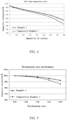
- a charge-discharge cycle test and a rate performance test were performed on the lithium-ion batteries prepared in Example 1 and Comparative Example 1.
- the charge-discharge cycle test was performed by using a 1C charging system/a 1C discharging system.
- the rate performance test was performed by using a 0.2C charging system/a 0.2C, 0.5C, 1C, 1.5C, or 2C discharging system. Results are shown in FIG. 4 and FIG. 5 . It may be learned from FIG. 4 and FIG. 5 that the battery in Example 1 may maintain a good capacity retention in a latter period of the cycle and may also maintain a good capacity retention during high rate discharging.
- Residual liquid volumes of the lithium-ion batteries prepared in Examples 1 to 7 and Comparative Example 1 were tested.
- a separator nail penetration strength and an ionic conductivity were tested for the separators of the lithium-ion batteries prepared in Examples 1 to 7 and Comparative Example 1.
- the residual liquid volume was mainly obtained through measuring a weight M1 of a battery cell before electrolyte filling, an edge trimming weight M2, and a weight M3 of the cell after a second time of packaging, to obtain the residual liquid volume M3+M2-M1.
- a method for measuring the nail penetration strength was as follows: penetrating the separator at a speed of 100 mm/min by using a steel nail including a spherical nail head with a diameter of 1 mm. In a penetration process, a maximum force was recorded as the nail penetration strength.
- a method for testing the ionic conductivity was as follows: placing a sample into an electrolyte at a temperature of 23 ⁇ 2°C, to keep sealed and soaked for 2 h; injecting the electrolyte into a resistance test mold, connecting the resistance test mold to a chemical workstation, and setting test parameters; placing one layer of a separator and testing impedance spectroscopy of this layer, placing another layer and testing impedance spectroscopy of this layer until four layers are placed, obtaining four impedance spectroscopy images through measurement, and separately reading resistance values R1, R2, R3, and R4 of the first layer to the fourth layer from the impedance spectroscopy images; and drawing a curve by using a layer number as a horizontal coordinate and a separator resistance value as a vertical coordinate, and obtaining a slope and a linear fitting degree of the curve.
- ⁇ denotes an ionic conductivity of a sample in units of siemens/centimeter (S/cm)
- d denotes a thickness of a sample in units of microns ( ⁇ m)
- k denotes a slope of a curve
- S denotes a test area of a separator in units of square centimeters (cm 2 ).
Landscapes
- Chemical & Material Sciences (AREA)
- Chemical Kinetics & Catalysis (AREA)
- Electrochemistry (AREA)
- General Chemical & Material Sciences (AREA)
- Engineering & Computer Science (AREA)
- Inorganic Chemistry (AREA)
- Manufacturing & Machinery (AREA)
- Materials Engineering (AREA)
- Ceramic Engineering (AREA)
- Composite Materials (AREA)
- Cell Separators (AREA)
Applications Claiming Priority (2)
| Application Number | Priority Date | Filing Date | Title |
|---|---|---|---|
| CN202010975419.4A CN112018312A (zh) | 2020-09-16 | 2020-09-16 | 一种隔膜及包括该隔膜的电池 |
| PCT/CN2021/116800 WO2022057674A1 (zh) | 2020-09-16 | 2021-09-06 | 一种隔膜及包括该隔膜的电池 |
Publications (2)
| Publication Number | Publication Date |
|---|---|
| EP4156401A1 true EP4156401A1 (de) | 2023-03-29 |
| EP4156401A4 EP4156401A4 (de) | 2024-12-25 |
Family
ID=73522988
Family Applications (1)
| Application Number | Title | Priority Date | Filing Date |
|---|---|---|---|
| EP21868499.1A Pending EP4156401A4 (de) | 2020-09-16 | 2021-09-06 | Membran und batterie damit |
Country Status (4)
| Country | Link |
|---|---|
| US (1) | US20230125852A1 (de) |
| EP (1) | EP4156401A4 (de) |
| CN (1) | CN112018312A (de) |
| WO (1) | WO2022057674A1 (de) |
Families Citing this family (9)
| Publication number | Priority date | Publication date | Assignee | Title |
|---|---|---|---|---|
| CN112018312A (zh) * | 2020-09-16 | 2020-12-01 | 珠海冠宇电池股份有限公司 | 一种隔膜及包括该隔膜的电池 |
| CN112787051B (zh) * | 2021-01-25 | 2022-10-21 | 远景动力技术(江苏)有限公司 | 一种提高电芯残液系数的方法 |
| CN114142167B (zh) * | 2021-11-30 | 2023-05-02 | 珠海冠宇电池股份有限公司 | 一种隔膜和含有该隔膜的锂离子电池 |
| CN114759312B (zh) * | 2022-06-15 | 2022-10-18 | 宁德卓高新材料科技有限公司 | 一种陶瓷隔膜及其制备方法及应用 |
| CN115347319B (zh) * | 2022-07-01 | 2024-03-26 | 上海兰钧新能源科技有限公司 | 一种改善jr变形的电池隔离膜及其制备方法和应用 |
| CN116333554B (zh) * | 2023-05-29 | 2023-11-03 | 宁德时代新能源科技股份有限公司 | 用于隔离膜的涂层组合物、复合隔离膜、电池单体、电池和用电设备 |
| TW202526394A (zh) * | 2023-11-08 | 2025-07-01 | 以色列商魯姆斯有限公司 | 折疊2d擴展光波導 |
| WO2026044080A1 (en) * | 2024-08-21 | 2026-02-26 | Sila Nanotechnologies, Inc. | Highly-porous elongate ceramic particles for transition metal gettering in batteries |
| CN119153896B (zh) * | 2024-11-12 | 2025-03-18 | 珠海冠宇动力电池有限公司 | 一种隔膜和电池 |
Family Cites Families (8)
| Publication number | Priority date | Publication date | Assignee | Title |
|---|---|---|---|---|
| TWI318018B (en) * | 2004-09-02 | 2009-12-01 | Lg Chemical Ltd | Organic/inorganic composite porous film and electrochemical device prepared thereby |
| KR100775310B1 (ko) * | 2004-12-22 | 2007-11-08 | 주식회사 엘지화학 | 유/무기 복합 다공성 분리막 및 이를 이용한 전기 화학소자 |
| CN103947008B (zh) * | 2011-11-15 | 2017-12-01 | 丰田自动车株式会社 | 非水电解液型二次电池 |
| KR102050024B1 (ko) * | 2015-03-10 | 2019-11-28 | 주식회사 엘지화학 | 이차전지용 분리막의 제조방법 및 이를 이용하여 제조한 분리막 |
| WO2019126977A1 (zh) * | 2017-12-26 | 2019-07-04 | 广州华创化工材料科技开发有限公司 | 电池隔膜及其制备方法和应用 |
| CN115528379A (zh) * | 2018-04-11 | 2022-12-27 | 宁德新能源科技有限公司 | 隔离膜及储能装置 |
| CN111224045A (zh) * | 2018-11-27 | 2020-06-02 | 佛山市盈博莱科技股份有限公司 | 一种具有热关断功能的陶瓷复合隔膜及其制备方法 |
| CN112018312A (zh) * | 2020-09-16 | 2020-12-01 | 珠海冠宇电池股份有限公司 | 一种隔膜及包括该隔膜的电池 |
-
2020
- 2020-09-16 CN CN202010975419.4A patent/CN112018312A/zh active Pending
-
2021
- 2021-09-06 WO PCT/CN2021/116800 patent/WO2022057674A1/zh not_active Ceased
- 2021-09-06 EP EP21868499.1A patent/EP4156401A4/de active Pending
-
2022
- 2022-12-27 US US18/146,598 patent/US20230125852A1/en active Pending
Also Published As
| Publication number | Publication date |
|---|---|
| US20230125852A1 (en) | 2023-04-27 |
| EP4156401A4 (de) | 2024-12-25 |
| CN112018312A (zh) | 2020-12-01 |
| WO2022057674A1 (zh) | 2022-03-24 |
Similar Documents
| Publication | Publication Date | Title |
|---|---|---|
| EP4156401A1 (de) | Membran und batterie damit | |
| EP4086982A1 (de) | Positivelektrodenplatte und lithium-ionen-batterie | |
| US11050052B2 (en) | Lithium ion battery and negative electrode material thereof | |
| US12388113B2 (en) | Diaphragm and high-voltage battery comprising same | |
| US11177475B2 (en) | Ternary positive electrode material, and lithium ion battery | |
| CN111653717B (zh) | 一种复合隔膜的制备方法、复合隔膜和锂离子电池 | |
| US12555778B2 (en) | Negative electrode plate and lithium-ion battery | |
| EP1994586B1 (de) | Lithium-sekundärbatterie mit verbessertem wärmewiderstand | |
| EP4274016A2 (de) | Organische/anorganische mikroporöse verbundstoffmembran und elektrochemische vorrichtung | |
| CN110416472B (zh) | 一种介孔二氧化硅微球锂离子电池隔膜及锂离子电池 | |
| CN113921986A (zh) | 一种复合隔膜及包括该复合隔膜的电池 | |
| US20210175483A1 (en) | Ceramic separator and method for manufacturing thereof | |
| WO2007094641A1 (en) | Organic/inorganic composite electrolyte and electrochemical device prepared thereby | |
| CN114024100A (zh) | 非水电解液锂二次电池用隔膜及非水电解液锂二次电池 | |
| TW201351758A (zh) | 電化學裝置隔離膜及其製備方法 | |
| CN112531291A (zh) | 一种陶瓷微球、含有该陶瓷微球的隔膜及含有该隔膜的锂离子电池 | |
| CN106848162A (zh) | 一种二次电池 | |
| CN116435713B (zh) | 一种隔膜及包括该隔膜的电池 | |
| CN108695475A (zh) | 锂离子电池隔膜及锂离子电池 | |
| CN108023051A (zh) | 一种隔离膜及含有该隔离膜的锂离子电池 | |
| CN105098161A (zh) | 一种锂离子电池镍基多元正极材料及其制备方法 | |
| CN112864352A (zh) | 一种极片和锂离子电池 | |
| CN114050225A (zh) | 一种电极极片及含有该电极极片的锂离子电池 | |
| CN112615110B (zh) | 一种金属-陶瓷微球、含有该金属-陶瓷微球的隔膜及含有该隔膜的锂离子电池 | |
| US12021257B2 (en) | Separator, method of manufacturing the separator, and electrochemical device including the separator |
Legal Events
| Date | Code | Title | Description |
|---|---|---|---|
| STAA | Information on the status of an ep patent application or granted ep patent |
Free format text: STATUS: THE INTERNATIONAL PUBLICATION HAS BEEN MADE |
|
| PUAI | Public reference made under article 153(3) epc to a published international application that has entered the european phase |
Free format text: ORIGINAL CODE: 0009012 |
|
| STAA | Information on the status of an ep patent application or granted ep patent |
Free format text: STATUS: REQUEST FOR EXAMINATION WAS MADE |
|
| 17P | Request for examination filed |
Effective date: 20221223 |
|
| AK | Designated contracting states |
Kind code of ref document: A1 Designated state(s): AL AT BE BG CH CY CZ DE DK EE ES FI FR GB GR HR HU IE IS IT LI LT LU LV MC MK MT NL NO PL PT RO RS SE SI SK SM TR |
|
| R17P | Request for examination filed (corrected) |
Effective date: 20221223 |
|
| RBV | Designated contracting states (corrected) |
Designated state(s): AL AT BE BG CH CY CZ DE DK EE ES FI FR GB GR HR HU IE IS IT LI LT LU LV MC MK MT NL NO PL PT RO RS SE SI SK SM TR |
|
| DAV | Request for validation of the european patent (deleted) | ||
| DAX | Request for extension of the european patent (deleted) | ||
| A4 | Supplementary search report drawn up and despatched |
Effective date: 20241121 |
|
| RIC1 | Information provided on ipc code assigned before grant |
Ipc: H01M 50/431 20210101ALI20241115BHEP Ipc: H01M 50/449 20210101ALI20241115BHEP Ipc: H01M 50/489 20210101ALI20241115BHEP Ipc: H01M 50/491 20210101AFI20241115BHEP |
|
| STAA | Information on the status of an ep patent application or granted ep patent |
Free format text: STATUS: EXAMINATION IS IN PROGRESS |
|
| 17Q | First examination report despatched |
Effective date: 20250711 |