EP4150147B1 - Verfahren und system zur herstellung von rezyklierten fasern für die mdf- oder hdf-produktion - Google Patents
Verfahren und system zur herstellung von rezyklierten fasern für die mdf- oder hdf-produktion Download PDFInfo
- Publication number
- EP4150147B1 EP4150147B1 EP21729909.8A EP21729909A EP4150147B1 EP 4150147 B1 EP4150147 B1 EP 4150147B1 EP 21729909 A EP21729909 A EP 21729909A EP 4150147 B1 EP4150147 B1 EP 4150147B1
- Authority
- EP
- European Patent Office
- Prior art keywords
- fibers
- mdf
- hdf
- recycled fibers
- coating
- Prior art date
- Legal status (The legal status is an assumption and is not a legal conclusion. Google has not performed a legal analysis and makes no representation as to the accuracy of the status listed.)
- Active
Links
Images

Classifications
-
- D—TEXTILES; PAPER
- D21—PAPER-MAKING; PRODUCTION OF CELLULOSE
- D21H—PULP COMPOSITIONS; PREPARATION THEREOF NOT COVERED BY SUBCLASSES D21C OR D21D; IMPREGNATING OR COATING OF PAPER; TREATMENT OF FINISHED PAPER NOT COVERED BY CLASS B31 OR SUBCLASS D21G; PAPER NOT OTHERWISE PROVIDED FOR
- D21H11/00—Pulp or paper, comprising cellulose or lignocellulose fibres of natural origin only
- D21H11/14—Secondary fibres
-
- B—PERFORMING OPERATIONS; TRANSPORTING
- B27—WORKING OR PRESERVING WOOD OR SIMILAR MATERIAL; NAILING OR STAPLING MACHINES IN GENERAL
- B27N—MANUFACTURE BY DRY PROCESSES OF ARTICLES, WITH OR WITHOUT ORGANIC BINDING AGENTS, MADE FROM PARTICLES OR FIBRES CONSISTING OF WOOD OR OTHER LIGNOCELLULOSIC OR LIKE ORGANIC MATERIAL
- B27N3/00—Manufacture of substantially flat articles, e.g. boards, from particles or fibres
- B27N3/007—Manufacture of substantially flat articles, e.g. boards, from particles or fibres and at least partly composed of recycled material
-
- B—PERFORMING OPERATIONS; TRANSPORTING
- B27—WORKING OR PRESERVING WOOD OR SIMILAR MATERIAL; NAILING OR STAPLING MACHINES IN GENERAL
- B27N—MANUFACTURE BY DRY PROCESSES OF ARTICLES, WITH OR WITHOUT ORGANIC BINDING AGENTS, MADE FROM PARTICLES OR FIBRES CONSISTING OF WOOD OR OTHER LIGNOCELLULOSIC OR LIKE ORGANIC MATERIAL
- B27N3/00—Manufacture of substantially flat articles, e.g. boards, from particles or fibres
- B27N3/04—Manufacture of substantially flat articles, e.g. boards, from particles or fibres from fibres
-
- B—PERFORMING OPERATIONS; TRANSPORTING
- B27—WORKING OR PRESERVING WOOD OR SIMILAR MATERIAL; NAILING OR STAPLING MACHINES IN GENERAL
- B27N—MANUFACTURE BY DRY PROCESSES OF ARTICLES, WITH OR WITHOUT ORGANIC BINDING AGENTS, MADE FROM PARTICLES OR FIBRES CONSISTING OF WOOD OR OTHER LIGNOCELLULOSIC OR LIKE ORGANIC MATERIAL
- B27N3/00—Manufacture of substantially flat articles, e.g. boards, from particles or fibres
- B27N3/08—Moulding or pressing
- B27N3/18—Auxiliary operations, e.g. preheating, humidifying, cutting-off
-
- D—TEXTILES; PAPER
- D21—PAPER-MAKING; PRODUCTION OF CELLULOSE
- D21B—FIBROUS RAW MATERIALS OR THEIR MECHANICAL TREATMENT
- D21B1/00—Fibrous raw materials or their mechanical treatment
- D21B1/04—Fibrous raw materials or their mechanical treatment by dividing raw materials into small particles, e.g. fibres
- D21B1/12—Fibrous raw materials or their mechanical treatment by dividing raw materials into small particles, e.g. fibres by wet methods, by the use of steam
-
- D—TEXTILES; PAPER
- D21—PAPER-MAKING; PRODUCTION OF CELLULOSE
- D21C—PRODUCTION OF CELLULOSE BY REMOVING NON-CELLULOSE SUBSTANCES FROM CELLULOSE-CONTAINING MATERIALS; REGENERATION OF PULPING LIQUORS; APPARATUS THEREFOR
- D21C1/00—Pretreatment of the finely-divided materials before digesting
- D21C1/02—Pretreatment of the finely-divided materials before digesting with water or steam
-
- D—TEXTILES; PAPER
- D21—PAPER-MAKING; PRODUCTION OF CELLULOSE
- D21C—PRODUCTION OF CELLULOSE BY REMOVING NON-CELLULOSE SUBSTANCES FROM CELLULOSE-CONTAINING MATERIALS; REGENERATION OF PULPING LIQUORS; APPARATUS THEREFOR
- D21C3/00—Pulping cellulose-containing materials
- D21C3/22—Other features of pulping processes
- D21C3/224—Use of means other than pressure and temperature
-
- D—TEXTILES; PAPER
- D21—PAPER-MAKING; PRODUCTION OF CELLULOSE
- D21C—PRODUCTION OF CELLULOSE BY REMOVING NON-CELLULOSE SUBSTANCES FROM CELLULOSE-CONTAINING MATERIALS; REGENERATION OF PULPING LIQUORS; APPARATUS THEREFOR
- D21C5/00—Other processes for obtaining cellulose, e.g. cooking cotton linters ; Processes characterised by the choice of cellulose-containing starting materials
- D21C5/02—Working-up waste paper
-
- D—TEXTILES; PAPER
- D21—PAPER-MAKING; PRODUCTION OF CELLULOSE
- D21C—PRODUCTION OF CELLULOSE BY REMOVING NON-CELLULOSE SUBSTANCES FROM CELLULOSE-CONTAINING MATERIALS; REGENERATION OF PULPING LIQUORS; APPARATUS THEREFOR
- D21C9/00—After-treatment of cellulose pulp, e.g. of wood pulp, or cotton linters ; Treatment of dilute or dewatered pulp or process improvement taking place after obtaining the raw cellulosic material and not provided for elsewhere
- D21C9/18—De-watering; Elimination of cooking or pulp-treating liquors from the pulp
-
- D—TEXTILES; PAPER
- D21—PAPER-MAKING; PRODUCTION OF CELLULOSE
- D21D—TREATMENT OF THE MATERIALS BEFORE PASSING TO THE PAPER-MAKING MACHINE
- D21D5/00—Purification of the pulp suspension by mechanical means; Apparatus therefor
- D21D5/02—Straining or screening the pulp
-
- Y—GENERAL TAGGING OF NEW TECHNOLOGICAL DEVELOPMENTS; GENERAL TAGGING OF CROSS-SECTIONAL TECHNOLOGIES SPANNING OVER SEVERAL SECTIONS OF THE IPC; TECHNICAL SUBJECTS COVERED BY FORMER USPC CROSS-REFERENCE ART COLLECTIONS [XRACs] AND DIGESTS
- Y02—TECHNOLOGIES OR APPLICATIONS FOR MITIGATION OR ADAPTATION AGAINST CLIMATE CHANGE
- Y02W—CLIMATE CHANGE MITIGATION TECHNOLOGIES RELATED TO WASTEWATER TREATMENT OR WASTE MANAGEMENT
- Y02W30/00—Technologies for solid waste management
- Y02W30/50—Reuse, recycling or recovery technologies
- Y02W30/64—Paper recycling
Definitions
- the invention relates to a method for producing recycled fibers from MDF or HDF containing material.
- MDF Medium Density Fiberboard
- HDF High Density Fiberboard
- MDF/HDF is used in various applications such as furniture and flooring.
- An object of the invention is to provide a method for recycling MDF or HDF containing material in order to produce fibers suitable for production of new MDF/HDF.
- a method for producing recycled fibers from MDF or HDF containing material for instance for use in MDF or HDF production or for use as strengthening fibers in containerboard.
- the method comprises steaming the MDF or HDF containing material for a predetermined time to obtain steamed material, subjecting the steamed material to a pulping process to obtain a slurry, screening the slurry to remove oversize particles to obtain a screened slurry, dewatering the screened slurry to obtain dewatered fibers and fluffing the dewatered fibers to obtain said recycled fibers.
- the MDF or HDF containing material refers to objects which at least partly consist of MDF or HDF, such as pieces or chips of recycled furniture, recycled flooring or raw board reject, i.e. pieces of MDF or HDF board which is rejected in an MDF or HDF sheet forming line.
- oversize particles include, but is not limited to, to non-fibrous material such as plastic, paper, metal or the like which are part of the raw material (MDF or HDF containing material). Also including wood pieces coming from other types of panelboards as well as water proof glued pieces of MDF and HDF.
- the method according to the first aspect of the invention is normally carried out continuously together with an MDF or HDF sheet forming line, supplying recycled fibers thereto. It is however possible to carry out the method batch-wise and supply recycled fibers to an MDF or HDF sheet forming line at a later time.
- the invention is based on the insight that recycled fibers suitable for MDF or HDF production can be surprisingly effectively released from MDF or HDF containing material, in particular recycled material, by steaming and pulping the material.
- the invention is furthermore based on the insight that such steaming and pulping leaves non-desirable particles such as plastic, paper or metal largely unaffected size-wise which allows these oversize particles to be removed by means of screening.
- the MDF or HDF containing material is provided in the form of chips having an area of less than 10 000 mm 2 , preferably less than 3600 mm 2 .
- the chips typically have a thickness which is substantially less than their length, but may be from 1,5 mm up to 60 mm.
- the method further comprises providing the MDF or HDF containing material by means of reducing the size of an MDF or HDF containing object, for instance into chips.
- the predetermined time is 1-30 min, preferably 5-20 min.
- the steaming may be carried out using steam having a temperature in the range of 95-105 °C.
- the steaming is normally carried out at atmospheric pressure, i.e. with 100°C steam, but it is understood that the steam could be slightly cooled off before reaching the MDF or HDF containing material.
- the steaming may alternatively be performed at slightly above 100 °C (i.e. at slight overpressure). Considering that MDF or HDF containing material from recycled furniture or flooring often comprises plastic, it is not suitable to use an excessively high steam temperature (much above 100 °C).
- the steaming is preferably carried out at 90 % consistency or more.
- the pulping process is performed at 60-95 °C.
- the pulping process may be performed at a consistency 2-8 %, preferably about 4 %.
- the screening comprises using a coarse screen and/or a fine screen, wherein the coarse screen has larger perforations than the fine screen.
- Coarse screening and/or fine screening may comprise more than one screens and/or screening stages.
- the coarse screen/-s may have holes having a diameter of 2-5 mm.
- the fine screen/-s may have slots having a width of 0.2-0.9 mm or holes having a diameter of 1-4 mm.
- the dewatering is carried out to a consistency of at least 30 %, preferably around 50 %.
- the fluffing comprises using a fluffer having a gap of 2-8 mm, preferably 3-5 mm, such as 4 mm.
- a method for producing MDF or HDF boards comprising producing recycled fibers using the method according first aspect of the invention or embodiments thereof, coating the recycled fibers with at least one binding agent, drying the coated recycled fibers, and after said drying, forming MDF or HDF sheets using the dried fibers, or in other words feeding the fibers to an MDF or HDF forming line.
- coating the fibers with at least one binding agent refers to applying a glue or adhesion or binding agent to the fibers to allow the fibers to adhere or bind to each other further downstream in the process.
- the method further comprises providing new biomass fibers from biomass material, coating the new biomass fibers with a binding agent, drying the coated new biomass fibers and mixing the new biomass fibers with the recycled fibers before said coating, or after said coating, or after said drying, such that new biomass fibers and recycled fibers are both fed to said MDF or HDF sheet forming line.
- the MDF/HDF production is based on recycled and new fibers.
- the method normally comprises producing the new biomass fibers from biomass such as tree material, bagasse, straw or any other type of biomass suitable to be used as basis for MDF/HDF production. Such process steps are well known in the art and will not be described in further detail here.
- the new fibers may be provided from another location and/or from a previous batch.
- the new biomass fibers are mixed with the recycled fibers before said coating, or after said coating, or after said drying.
- the new and recycled fibers are coated together (mixing before/during the coating) or that the fibers are dried together (mixing after said coating or during drying) or pre-treated separately (mixing after drying).
- the MDF/HDF production is based solely on recycled fibers.
- the coating is carried out using a blowline, in which said at least one binding agent is injected/sprayed.
- a system for producing recycled fibers from recycled MDF or HDF material for instance for use in MDF or HDF production or for use as strengthening fibers in containerboard.
- the system comprises a steaming apparatus provided with an inlet for said MDF or HDF containing material and at least one steam inlet connected to a source of steam to provide steam to said material, a pulping apparatus connected to an outlet of said steaming apparatus and being configured to subject the steamed material to a pulping process to provide a slurry, a screening system connected to an outlet of said pulping apparatus and being configured to remove oversize particles from said slurry, a dewatering apparatus connected to an outlet of said screening system and being configured to dewater the slurry, and a fluffer connected to an outlet of said dewatering apparatus and being configured to fluff the dewatered slurry to produce said recycled fibers.
- the steaming apparatus is an atmospheric steamer using low pressure steam or steaming to the pulping apparatus is in low steaming pressure.
- the screening system may comprise a coarse screen and/or a fine screen/-s, wherein the coarse screen has larger perforations than the fine screens. Such a screening system is known in the art and will not be described in further detail here.
- the dewatering apparatus may be a twin-roll press, a screw press, a twin-wire press, or any other suitable apparatus known to the person skilled in the art.
- the fluffer may be of the atmospheric/open type and may furthermore be of the low or high consistency type.
- a system for producing MDF or HDF boards comprising a system for producing recycled fibers according to the third aspect, coating means configured to coat the recycled fibers with at least one binding agent, drying means configured to dry the coated recycled fibers, an MDF or HDF sheet forming line connected to the drying means to receive dried coated recycled fibers.
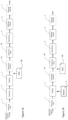
- Fig. 1A shows a flowchart of an embodiment of the method according to the first aspect of the invention.
- the method comprises reducing 1 the size of one or more provided MDF or HDF containing object into chips having an area of less than 10 000 mm 2 , preferably less than 3600 mm 2 , for instance 40x40 mm, and having a thickness less than their length/width.
- the reducing step is optional, since the MDF/HDF containing object may alternatively have been reduced in size to chips beforehand, such that pre-produced chips are provided to the steaming 2.
- the chips are steamed 2 for a predetermined time, preferably 5-20 minutes, preferably at atmospheric conditions with 100 °C steam, to obtain steamed material.
- the steaming can be done as pre-steaming before the pulping process in the pulping apparatus.
- the steaming is preferably carried out at 90 % consistency or more.
- the steamed material is thereafter subjected to a pulping process 3, preferably at a temperature of 60-90 °C and at a consistency of about 4 %, to obtain a slurry.
- the slurry is thereafter screened using a fine screening system 4b, optionally with a preceding coarse screening 4a, to remove oversize and undesired particles.
- the screened slurry is thereafter dewatered 5 to a consistency of at least 30 %, preferably around 50 %.
- the dewatered material is refined/fluffed 6 to obtain recycled fibers.
- the recycled fibers may optionally be coated 7 with at least one binding agent as part of the method.
- a high consistency cleaning (HCC) stage 3b in a high consistency cleaning (HCC) device 3b can be located.
- Fig. 1B flowchart of an embodiment of the method according to the first aspect of the invention and corresponds to the embodiment of the method as above referring to figure 1A but the steaming 2 has been omitted and the steaming is done by introducing steam S from a steam source S directly to the pulping process 3 in the pulping apparatus at the pulping consistency, due to which difference this embodiment of Fig.1B does not fall within the scope of the claim 1.
- the method comprises reducing 1 the size of one or more provided MDF or HDF containing object into chips having an area of less than 10 000 mm 2 , preferably less than 3600 mm 2 , for instance 40x40 mm, and having a thickness less than their length/width.
- the reducing step is optional, since the MDF/HDF containing object may alternatively have been reduced in size to chips beforehand, such that pre-produced chips are provided.
- the steaming is done by introducing steam S from a steam source S directly to the pulping process 3 in the pulping apparatus at the pulping consistency.
- the material is subjected to a pulping process 3, preferably at a temperature of 60-90 °C and at a consistency of about 4 %, to obtain a slurry.
- the slurry is thereafter screened using a fine screening system 4b, optionally with a preceding coarse screening 4a, to remove oversize and undesired particles.
- the screened slurry is thereafter dewatered 5 to a consistency of at least 30 %, preferably around 50 %.
- the dewatered material is fluffed 6 to obtain recycled fibers.
- the recycled fibers may optionally be coated 7 with at least one binding agent as part of the method.
- a high consistency cleaning (HCC) stage 3b in a high consistency cleaning (HCC) device 3b can be located.
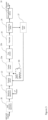
- Fig. 2 shows a flowchart of an embodiment of the method according to the second aspect of the invention.
- the method comprises the same method steps 1-6 as shown in fig. 1 and explained above.
- the method further comprises a coating step 9, which is similar to the coating 7 in fig. 1 in that at least one binding agent such as resin and wax is added, except that new biomass fibers may be provided 8 and optionally be mixed 14 with the recycled fibers.
- the new biomass fibers may be produced from biomass such as tree material, bagasse, straw or any other type of biomass suitable to be used as basis for MDF/HDF production.
- the process steps involved in producing the new biomass fibers are well known to the person skilled in the art and will not be described in further detail herein.
- the coated fibers are thereafter dried 10, and after said drying, fed to an MDF or HDF sheet forming line 11.
- the new biomass fibers may alternatively be subjected to a separate coating step 12 and be mixed 15 with the recycled fibers after coating 9 or may be subjected to separate coating and drying steps 12, 13, and be mixed 16 with the recycled fibers after the drying step 10.
- the process steps involved in an MDF or HDF sheet forming are well known to the person skilled in the art and will not be described in further detail here.
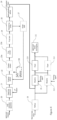
- Fig. 3 shows a schematic illustration of an embodiment of a system according to the third aspect.
- the system comprises an optional size reduction apparatus 20, for instance a hammermill, and a steaming apparatus 21 being an atmospheric steamer provided with an inlet for said MDF or HDF containing material and at least one steam inlet connected to a source of low-pressure steam to provide steam to said material.
- a pulping apparatus 22 is connected to an outlet of the steaming apparatus 21 and is configured to subject the steamed material to a pulping process to provide a slurry.
- An optional coarse screening system 23a is connected to an outlet of the pulping apparatus 22 and is configured to remove oversize particles from the slurry.
- a fine screening system 23b is connected to an outlet of the coarse screening system 23a or (in embodiments without a coarse screen) to the pulping apparatus 22 and is configured to remove smaller particles from the slurry.
- the coarse screen has holes with a diameter of 2-5 mm.
- the fine screen has slots having a width of 0.2-0.9 mm or holes having a diameter of 1-4 mm.
- the outlet of the fine screening system is connected to an optional pulp tank 24 in which the slurry may be stored prior to being fed to a dewatering apparatus 25, which is a screw press or similar.
- the water pressed out from the dewatering apparatus may be fed to an optional water tank 27 from which it is recycled for use in the pulping apparatus.
- An atmospheric refiner 26 is connected to an outlet of the dewatering apparatus 25 and is configured to refine the dewatered slurry to produce said recycled fibers.
- the refiner has a fillings gap of 3-5 mm, preferably about 4 mm.
- a high consistency cleaning (HCC) stage 3pb in a high consistency cleaning (HCC) device 3b can be located.
- Fig. 4 shows a schematic illustration of an embodiment of a system according to the fourth aspect.
- the system comprises the same devices and screening systems 20-27 as shown in fig. 3 and described above.
- the outlet of the refiner 26 is connected to a blowline 29, in which at least one binding agent is injected/sprayed to coat the recycled fibers while being conveyed to a dryer 210, being of a conventional type as used in MDF/HDF production lines.
- the outlet of the dryer 210 is connected to an MDF or HDF sheet forming line 211.
- new biomass fibers may be provided such that the MDF or HDF sheets are formed from a combination of new and recycled fibers.
- new biomass fibers are illustrated as being provided in the form of new biomass chips which are fed to a refiner/defibrator 28 for size reduction/refining.
- the system may furthermore comprise devices such as a debarker, chipper, screen and chip washer involved in the production of producing the biomass chips fed to the refiner 28.
- the refiner 28 is omitted, and new biomass fibers are supplied directly, for instance from a tank containing previously produced fibers.
- the new fibers may be added together with the recycled fibers to inlet of the blowline 29 such that the new and recycled fibers are coated/blown and dried together.
- the new biomass fibers may be fed to a separate (optional) blowline 212 and be fed together with the recycled fibers to the dryer 210 or may be fed to a separate (optional) dryer 213 and be mixed with the recycled fibers after drying by being fed together to the MDF or HDF sheet forming line 211.
- the devices and screening systems comprised in an MDF or HDF sheet forming line 211 are well known to the person skilled in the art and will not be described in further detail here.
Landscapes
- Life Sciences & Earth Sciences (AREA)
- Engineering & Computer Science (AREA)
- Wood Science & Technology (AREA)
- Manufacturing & Machinery (AREA)
- Forests & Forestry (AREA)
- Mechanical Engineering (AREA)
- Paper (AREA)
Claims (14)
- Verfahren zum Herstellen von wiederaufbereiteten Fasern aus MDF- oder HDF-haltigem Material, wobei das MDF- oder HDF-haltige Material in der Form von Schnitzeln bereitgestellt wird, die eine Fläche von weniger als 10 000 mm2, vorzugsweise weniger als 3 600 mm2, aufweisen, wobei das Verfahren Folgendes umfasst:- Bereitstellen des MDF- oder HDF-haltigen Materials auf dem Wege des Verringerns (1) der Größe eines MDF- oder HDF-haltigen Objekts zu den Schnitzeln,- Dämpfen (2) des MDF- oder HDF-haltigen Materials für eine vorbestimmte Zeit, um gedämpftes Material zu erhalten,- Unterwerfen des gedämpften Materials einem Aufschließungsprozess (3), um eine Aufschlämmung zu erhalten,- Sieben (4a, 4b) der Aufschlämmung, um übergroße Teilchen zu entfernen, um eine gesiebte Aufschlämmung zu erhalten,- Entwässern (5) der gesiebten Aufschlämmung, um entwässerte Fasern zu erhalten, und- Flocken (6) der entwässerten Fasern, um die wiederaufbereiteten Fasern zu erhalten.
- Verfahren nach Anspruch 1, wobei die vorbestimmte Zeit 1 bis 30 min, vorzugsweise 5 bis 20 min, beträgt.
- Verfahren nach Anspruch 1 oder 2, wobei das Dämpfen (2) unter Verwendung von Dampf ausgeführt wird, der eine Temperatur in dem Bereich von 95 bis 105 °C aufweist.
- Verfahren nach einem der vorhergehenden Ansprüche, wobei das Dämpfen (2) bei einer Konsistenz von 90 % oder mehr ausgeführt wird.
- Verfahren nach einem der vorhergehenden Ansprüche, wobei der Aufschließungsprozess (3) bei 60 bis 90 °C durchgeführt wird.
- Verfahren nach einem der vorhergehenden Ansprüche, wobei der Aufschließungsprozess (3) bei einer Konsistenz von 2 bis 8 %, vorzugsweise etwa 4 %, durchgeführt wird.
- Verfahren nach einem der vorhergehenden Ansprüche, wobei das Sieben (4a, 4b) das Verwenden eines groben Siebes und/oder von (einem) feinen Sieb(en) umfasst, wobei das grobe Sieb größere Perforationen aufweist als das/die feine(n) Sieb(e).
- Verfahren nach Anspruch 7, wobei das grobe Sieb Löcher aufweist, die einen Durchmesser von 2 bis 5 mm aufweisen.
- Verfahren nach Anspruch 7 oder 8, wobei das/die feine(n) Sieb(e) Schlitze, die eine Breite von 0,2 bis 0,9 mm aufweisen, oder Löcher, die einen Durchmesser von 1 bis 4 mm aufweisen, aufweist/aufweisen.
- Verfahren nach einem der vorhergehenden Ansprüche, wobei das Entwässern (5) bis zu einer Konsistenz von mindestens 30 %, vorzugsweise rund 50 %, ausgeführt wird.
- Verfahren nach einem der vorhergehenden Ansprüche, wobei das Flocken (6) das Verwenden einer Flockvorrichtung umfasst, die einen Spalt von 2 bis 8 mm, vorzugsweise 3 bis 5 mm, wie beispielsweise 4 mm, aufweist.
- Verfahren zum Herstellen von MDF- oder HDF-Platten, das Folgendes umfasst:- Herstellen wiederaufbereiteter Fasern unter Verwendung des Verfahrens nach einem der vorhergehenden Ansprüche,- Beschichten (9) der wiederaufbereiteten Fasern mit mindestens einem Bindemittel,- Trocknen (10) der beschichteten wiederaufbereiteten Fasern und- Formen (11) von MDF- oder HDF-Bahnen unter Verwendung der getrockneten Fasern.
- Verfahren nach Anspruch 12, das ferner Folgendes umfasst:- Bereitstellen (8) frischer Biomassefasern aus Biomassematerial,- Beschichten (9, 12) der frischen Biomassefasern mit einem Bindemittel,- Trocknen (10, 13) der beschichteten frischen Biomassefasern,- Mischen (14, 15, 16) der frischen Biomassefasern mit den wiederaufbereiteten Fasern vor dem Beschichten oder nach dem Beschichten oder nach dem Trocknen, so dass sowohl die frischen Biomassefasern als auch die wiederaufbereiteten Fasern der MDF- oder HDF-Bahnformanlage zugeführt werden.
- Verfahren nach Anspruch 12 oder 13, wobei das Beschichten (9, 12) unter Verwendung einer Blasanlage ausgeführt wird, in der das mindestens eine Bindemittel eingespritzt wird.
Applications Claiming Priority (2)
| Application Number | Priority Date | Filing Date | Title |
|---|---|---|---|
| SE2050556 | 2020-05-13 | ||
| PCT/FI2021/050338 WO2021229144A1 (en) | 2020-05-13 | 2021-05-07 | Method and system for producing recycled fibers for mdf or hdf production |
Publications (2)
| Publication Number | Publication Date |
|---|---|
| EP4150147A1 EP4150147A1 (de) | 2023-03-22 |
| EP4150147B1 true EP4150147B1 (de) | 2024-10-30 |
Family
ID=76269751
Family Applications (1)
| Application Number | Title | Priority Date | Filing Date |
|---|---|---|---|
| EP21729909.8A Active EP4150147B1 (de) | 2020-05-13 | 2021-05-07 | Verfahren und system zur herstellung von rezyklierten fasern für die mdf- oder hdf-produktion |
Country Status (4)
| Country | Link |
|---|---|
| US (1) | US20230118469A1 (de) |
| EP (1) | EP4150147B1 (de) |
| CN (1) | CN115516165A (de) |
| WO (1) | WO2021229144A1 (de) |
Families Citing this family (1)
| Publication number | Priority date | Publication date | Assignee | Title |
|---|---|---|---|---|
| EP4662039A2 (de) | 2023-02-07 | 2025-12-17 | Unilin, BV | Paneel und verfahren zur herstellung von paneelen |
Family Cites Families (11)
| Publication number | Priority date | Publication date | Assignee | Title |
|---|---|---|---|---|
| US5656129A (en) * | 1995-05-31 | 1997-08-12 | Masonite Corporation | Method of producing fibers from a straw and board products made therefrom |
| DE19858079A1 (de) * | 1998-12-16 | 2000-06-21 | Edmone Roffael | Verfahren zur Herstellung von mitteldichten Faserplatten (MDF) mit niedriger Dickenquellung und Wasseraufnahme |
| GB9928554D0 (en) * | 1999-12-02 | 2000-02-02 | Enigma Nv | Production of high added value products from wastes |
| JP2003311717A (ja) * | 2002-04-26 | 2003-11-05 | Eidai Co Ltd | 木質繊維板 |
| DE102008050428A1 (de) * | 2008-10-08 | 2010-06-10 | Roffael, Edmone, Prof. Dr.-Ing. | Verfahren zur Herstellung von mitteldichten Faserplatten (MDF) mit alkalisch härtenden Phenolformaldehydharzen |
| CN105568726B (zh) * | 2014-07-21 | 2017-08-04 | 江苏金沃机械有限公司 | 一种湿强废纸回收再利用双pH值化学机械制浆方法 |
| EP3059056A1 (de) * | 2015-02-23 | 2016-08-24 | Basf Se | Verfahren zur Herstellung von Holzfasern und Holzfaserplatten |
| KR102030498B1 (ko) * | 2017-12-22 | 2019-10-10 | 경북대학교 산학협력단 | 건식 폐 중밀도섬유판을 재활용하여 중밀도섬유판(mdf) 제조공정 라인에 직접 투입하여 중밀도섬유판(mdf)을 제조하는 방법 |
| CN109304787A (zh) * | 2018-11-07 | 2019-02-05 | 广西横县丽冠人造板有限责任公司 | 一种防火阻燃型中密度纤维衣柜专用板的生产方法 |
| CN109203172A (zh) * | 2018-11-07 | 2019-01-15 | 广西横县丽冠人造板有限责任公司 | 一种耐候低醛型中密度纤维办公桌专用板的生产方法 |
| CN109291184A (zh) * | 2018-11-08 | 2019-02-01 | 广西横县丽冠人造板有限责任公司 | 利用木材废料生产建筑用木质模板的方法 |
-
2021
- 2021-05-07 CN CN202180033575.1A patent/CN115516165A/zh active Pending
- 2021-05-07 US US17/911,999 patent/US20230118469A1/en not_active Abandoned
- 2021-05-07 EP EP21729909.8A patent/EP4150147B1/de active Active
- 2021-05-07 WO PCT/FI2021/050338 patent/WO2021229144A1/en not_active Ceased
Also Published As
| Publication number | Publication date |
|---|---|
| US20230118469A1 (en) | 2023-04-20 |
| EP4150147A1 (de) | 2023-03-22 |
| WO2021229144A1 (en) | 2021-11-18 |
| CN115516165A (zh) | 2022-12-23 |
Similar Documents
| Publication | Publication Date | Title |
|---|---|---|
| EP0764225B1 (de) | Entwässerungsfähiger, voluminöser chemimechanischer zellstoff mit niedrigem splitter- und feinstmaterialinhalt | |
| EP4114629B1 (de) | Verfahren für die produktion von spanplatten oder holzfaserplatten | |
| EP1255630B1 (de) | Herstellung von hochwertigen produkten aus abfällen | |
| Lubke et al. | A multi-stage cascade use of wood composite boards | |
| Ihnát et al. | Waste agglomerated wood materials as a secondary raw material for chipboards and fibreboards. Part II: Preparation and characterization of wood fibres in terms of their reuse | |
| CZ281548B6 (cs) | Způsob výroby vláknitých desek | |
| WO1989002952A1 (en) | Market paper pulp, process for making market paper pulp and use of such pulp in papermaking | |
| EP4150147B1 (de) | Verfahren und system zur herstellung von rezyklierten fasern für die mdf- oder hdf-produktion | |
| CA2440789C (en) | Method for producing pulp | |
| US3224925A (en) | Fibrous products from barking waste | |
| AU2002244309A1 (en) | Method for producing pulp | |
| US4173248A (en) | Medium density, high strength lignocellulose composition board including exhaustively hydrated cellulosic gel binder | |
| US6017415A (en) | Method for co-pulping waste cellulosic material and wood chips | |
| US4221630A (en) | Wet method of preparing fiberboard products in a substantially closed and balanced white water system | |
| EP4590892B1 (de) | Ctmp mit hoher sperrkraft | |
| US4411738A (en) | Press cycle reduction for wet pressed hardboard | |
| EP4590893B1 (de) | Verfahren zur herstellung von ht-ctmp mit hoher zugfestigkeit | |
| IE914553A1 (en) | Fibrous component for paper production, paper made therewith¹and use thereof and method for producing fibrous component¹and paper | |
| WO2025259170A1 (en) | Method for producing a high yield pulp and products based on high yield cellulose pulp | |
| WO2024133473A1 (en) | Preparation of maple wood for ctmp production | |
| WO2024133425A1 (en) | Two-step impregnation in production of ctmp from maple wood | |
| SE500841C2 (sv) | Förfarande vid tillverkning av fiberskivor | |
| PL157470B1 (pl) | Sposób wytwarzania plyt pilsniowych z uszlachetniona warstwa wierzchnia PL PL PL |
Legal Events
| Date | Code | Title | Description |
|---|---|---|---|
| STAA | Information on the status of an ep patent application or granted ep patent |
Free format text: STATUS: UNKNOWN |
|
| STAA | Information on the status of an ep patent application or granted ep patent |
Free format text: STATUS: THE INTERNATIONAL PUBLICATION HAS BEEN MADE |
|
| PUAI | Public reference made under article 153(3) epc to a published international application that has entered the european phase |
Free format text: ORIGINAL CODE: 0009012 |
|
| STAA | Information on the status of an ep patent application or granted ep patent |
Free format text: STATUS: REQUEST FOR EXAMINATION WAS MADE |
|
| 17P | Request for examination filed |
Effective date: 20220919 |
|
| AK | Designated contracting states |
Kind code of ref document: A1 Designated state(s): AL AT BE BG CH CY CZ DE DK EE ES FI FR GB GR HR HU IE IS IT LI LT LU LV MC MK MT NL NO PL PT RO RS SE SI SK SM TR |
|
| TPAC | Observations filed by third parties |
Free format text: ORIGINAL CODE: EPIDOSNTIPA |
|
| DAV | Request for validation of the european patent (deleted) | ||
| DAX | Request for extension of the european patent (deleted) | ||
| STAA | Information on the status of an ep patent application or granted ep patent |
Free format text: STATUS: EXAMINATION IS IN PROGRESS |
|
| TPAC | Observations filed by third parties |
Free format text: ORIGINAL CODE: EPIDOSNTIPA |
|
| 17Q | First examination report despatched |
Effective date: 20240202 |
|
| GRAP | Despatch of communication of intention to grant a patent |
Free format text: ORIGINAL CODE: EPIDOSNIGR1 |
|
| STAA | Information on the status of an ep patent application or granted ep patent |
Free format text: STATUS: GRANT OF PATENT IS INTENDED |
|
| INTG | Intention to grant announced |
Effective date: 20240715 |
|
| GRAS | Grant fee paid |
Free format text: ORIGINAL CODE: EPIDOSNIGR3 |
|
| GRAA | (expected) grant |
Free format text: ORIGINAL CODE: 0009210 |
|
| STAA | Information on the status of an ep patent application or granted ep patent |
Free format text: STATUS: THE PATENT HAS BEEN GRANTED |
|
| AK | Designated contracting states |
Kind code of ref document: B1 Designated state(s): AL AT BE BG CH CY CZ DE DK EE ES FI FR GB GR HR HU IE IS IT LI LT LU LV MC MK MT NL NO PL PT RO RS SE SI SK SM TR |
|
| REG | Reference to a national code |
Ref country code: GB Ref legal event code: FG4D |
|
| REG | Reference to a national code |
Ref country code: CH Ref legal event code: EP |
|
| REG | Reference to a national code |
Ref country code: IE Ref legal event code: FG4D |
|
| REG | Reference to a national code |
Ref country code: DE Ref legal event code: R096 Ref document number: 602021021018 Country of ref document: DE |
|
| REG | Reference to a national code |
Ref country code: LT Ref legal event code: MG9D |
|
| REG | Reference to a national code |
Ref country code: NL Ref legal event code: MP Effective date: 20241030 |
|
| PG25 | Lapsed in a contracting state [announced via postgrant information from national office to epo] |
Ref country code: PT Free format text: LAPSE BECAUSE OF FAILURE TO SUBMIT A TRANSLATION OF THE DESCRIPTION OR TO PAY THE FEE WITHIN THE PRESCRIBED TIME-LIMIT Effective date: 20250228 Ref country code: IS Free format text: LAPSE BECAUSE OF FAILURE TO SUBMIT A TRANSLATION OF THE DESCRIPTION OR TO PAY THE FEE WITHIN THE PRESCRIBED TIME-LIMIT Effective date: 20250228 Ref country code: HR Free format text: LAPSE BECAUSE OF FAILURE TO SUBMIT A TRANSLATION OF THE DESCRIPTION OR TO PAY THE FEE WITHIN THE PRESCRIBED TIME-LIMIT Effective date: 20241030 |
|
| PG25 | Lapsed in a contracting state [announced via postgrant information from national office to epo] |
Ref country code: FI Free format text: LAPSE BECAUSE OF FAILURE TO SUBMIT A TRANSLATION OF THE DESCRIPTION OR TO PAY THE FEE WITHIN THE PRESCRIBED TIME-LIMIT Effective date: 20241030 Ref country code: NL Free format text: LAPSE BECAUSE OF FAILURE TO SUBMIT A TRANSLATION OF THE DESCRIPTION OR TO PAY THE FEE WITHIN THE PRESCRIBED TIME-LIMIT Effective date: 20241030 |
|
| PG25 | Lapsed in a contracting state [announced via postgrant information from national office to epo] |
Ref country code: BG Free format text: LAPSE BECAUSE OF FAILURE TO SUBMIT A TRANSLATION OF THE DESCRIPTION OR TO PAY THE FEE WITHIN THE PRESCRIBED TIME-LIMIT Effective date: 20241030 |
|
| PG25 | Lapsed in a contracting state [announced via postgrant information from national office to epo] |
Ref country code: ES Free format text: LAPSE BECAUSE OF FAILURE TO SUBMIT A TRANSLATION OF THE DESCRIPTION OR TO PAY THE FEE WITHIN THE PRESCRIBED TIME-LIMIT Effective date: 20241030 |
|
| PG25 | Lapsed in a contracting state [announced via postgrant information from national office to epo] |
Ref country code: NO Free format text: LAPSE BECAUSE OF FAILURE TO SUBMIT A TRANSLATION OF THE DESCRIPTION OR TO PAY THE FEE WITHIN THE PRESCRIBED TIME-LIMIT Effective date: 20250130 |
|
| PG25 | Lapsed in a contracting state [announced via postgrant information from national office to epo] |
Ref country code: LV Free format text: LAPSE BECAUSE OF FAILURE TO SUBMIT A TRANSLATION OF THE DESCRIPTION OR TO PAY THE FEE WITHIN THE PRESCRIBED TIME-LIMIT Effective date: 20241030 Ref country code: GR Free format text: LAPSE BECAUSE OF FAILURE TO SUBMIT A TRANSLATION OF THE DESCRIPTION OR TO PAY THE FEE WITHIN THE PRESCRIBED TIME-LIMIT Effective date: 20250131 |
|
| PG25 | Lapsed in a contracting state [announced via postgrant information from national office to epo] |
Ref country code: PL Free format text: LAPSE BECAUSE OF FAILURE TO SUBMIT A TRANSLATION OF THE DESCRIPTION OR TO PAY THE FEE WITHIN THE PRESCRIBED TIME-LIMIT Effective date: 20241030 |
|
| PG25 | Lapsed in a contracting state [announced via postgrant information from national office to epo] |
Ref country code: RS Free format text: LAPSE BECAUSE OF FAILURE TO SUBMIT A TRANSLATION OF THE DESCRIPTION OR TO PAY THE FEE WITHIN THE PRESCRIBED TIME-LIMIT Effective date: 20250130 |
|
| PG25 | Lapsed in a contracting state [announced via postgrant information from national office to epo] |
Ref country code: SM Free format text: LAPSE BECAUSE OF FAILURE TO SUBMIT A TRANSLATION OF THE DESCRIPTION OR TO PAY THE FEE WITHIN THE PRESCRIBED TIME-LIMIT Effective date: 20241030 |
|
| PGFP | Annual fee paid to national office [announced via postgrant information from national office to epo] |
Ref country code: DE Payment date: 20250521 Year of fee payment: 5 |
|
| PG25 | Lapsed in a contracting state [announced via postgrant information from national office to epo] |
Ref country code: DK Free format text: LAPSE BECAUSE OF FAILURE TO SUBMIT A TRANSLATION OF THE DESCRIPTION OR TO PAY THE FEE WITHIN THE PRESCRIBED TIME-LIMIT Effective date: 20241030 |
|
| PG25 | Lapsed in a contracting state [announced via postgrant information from national office to epo] |
Ref country code: EE Free format text: LAPSE BECAUSE OF FAILURE TO SUBMIT A TRANSLATION OF THE DESCRIPTION OR TO PAY THE FEE WITHIN THE PRESCRIBED TIME-LIMIT Effective date: 20241030 |
|
| PG25 | Lapsed in a contracting state [announced via postgrant information from national office to epo] |
Ref country code: RO Free format text: LAPSE BECAUSE OF FAILURE TO SUBMIT A TRANSLATION OF THE DESCRIPTION OR TO PAY THE FEE WITHIN THE PRESCRIBED TIME-LIMIT Effective date: 20241030 |
|
| PGFP | Annual fee paid to national office [announced via postgrant information from national office to epo] |
Ref country code: AT Payment date: 20250721 Year of fee payment: 5 |
|
| PG25 | Lapsed in a contracting state [announced via postgrant information from national office to epo] |
Ref country code: SK Free format text: LAPSE BECAUSE OF FAILURE TO SUBMIT A TRANSLATION OF THE DESCRIPTION OR TO PAY THE FEE WITHIN THE PRESCRIBED TIME-LIMIT Effective date: 20241030 |
|
| PG25 | Lapsed in a contracting state [announced via postgrant information from national office to epo] |
Ref country code: CZ Free format text: LAPSE BECAUSE OF FAILURE TO SUBMIT A TRANSLATION OF THE DESCRIPTION OR TO PAY THE FEE WITHIN THE PRESCRIBED TIME-LIMIT Effective date: 20241030 |
|
| PG25 | Lapsed in a contracting state [announced via postgrant information from national office to epo] |
Ref country code: IT Free format text: LAPSE BECAUSE OF FAILURE TO SUBMIT A TRANSLATION OF THE DESCRIPTION OR TO PAY THE FEE WITHIN THE PRESCRIBED TIME-LIMIT Effective date: 20241030 |
|
| REG | Reference to a national code |
Ref country code: DE Ref legal event code: R097 Ref document number: 602021021018 Country of ref document: DE |
|
| PLBE | No opposition filed within time limit |
Free format text: ORIGINAL CODE: 0009261 |
|
| STAA | Information on the status of an ep patent application or granted ep patent |
Free format text: STATUS: NO OPPOSITION FILED WITHIN TIME LIMIT |
|
| PG25 | Lapsed in a contracting state [announced via postgrant information from national office to epo] |
Ref country code: SE Free format text: LAPSE BECAUSE OF FAILURE TO SUBMIT A TRANSLATION OF THE DESCRIPTION OR TO PAY THE FEE WITHIN THE PRESCRIBED TIME-LIMIT Effective date: 20241030 |
|
| 26N | No opposition filed |
Effective date: 20250731 |
|
| REG | Reference to a national code |
Ref country code: CH Ref legal event code: H13 Free format text: ST27 STATUS EVENT CODE: U-0-0-H10-H13 (AS PROVIDED BY THE NATIONAL OFFICE) Effective date: 20251223 |
|
| PG25 | Lapsed in a contracting state [announced via postgrant information from national office to epo] |
Ref country code: LU Free format text: LAPSE BECAUSE OF NON-PAYMENT OF DUE FEES Effective date: 20250507 |
|
| PG25 | Lapsed in a contracting state [announced via postgrant information from national office to epo] |
Ref country code: CH Free format text: LAPSE BECAUSE OF NON-PAYMENT OF DUE FEES Effective date: 20250531 |
|
| GBPC | Gb: european patent ceased through non-payment of renewal fee |
Effective date: 20250507 |
|
| REG | Reference to a national code |
Ref country code: BE Ref legal event code: MM Effective date: 20250531 |
|
| PG25 | Lapsed in a contracting state [announced via postgrant information from national office to epo] |
Ref country code: MC Free format text: LAPSE BECAUSE OF FAILURE TO SUBMIT A TRANSLATION OF THE DESCRIPTION OR TO PAY THE FEE WITHIN THE PRESCRIBED TIME-LIMIT Effective date: 20241030 |
|
| REG | Reference to a national code |
Ref country code: AT Ref legal event code: UEP Ref document number: 1736973 Country of ref document: AT Kind code of ref document: T Effective date: 20241030 |
|
| PG25 | Lapsed in a contracting state [announced via postgrant information from national office to epo] |
Ref country code: GB Free format text: LAPSE BECAUSE OF NON-PAYMENT OF DUE FEES Effective date: 20250507 |
|
| PG25 | Lapsed in a contracting state [announced via postgrant information from national office to epo] |
Ref country code: IE Free format text: LAPSE BECAUSE OF NON-PAYMENT OF DUE FEES Effective date: 20250507 |
|
| PG25 | Lapsed in a contracting state [announced via postgrant information from national office to epo] |
Ref country code: BE Free format text: LAPSE BECAUSE OF NON-PAYMENT OF DUE FEES Effective date: 20250531 |
|
| PG25 | Lapsed in a contracting state [announced via postgrant information from national office to epo] |
Ref country code: FR Free format text: LAPSE BECAUSE OF NON-PAYMENT OF DUE FEES Effective date: 20250531 |