EP4148043B1 - Verfahren zur desinfektion einer oberfläche mithilfe einer in situ erzeugten perameisensäurezusammensetzung. - Google Patents
Verfahren zur desinfektion einer oberfläche mithilfe einer in situ erzeugten perameisensäurezusammensetzung. Download PDFInfo
- Publication number
- EP4148043B1 EP4148043B1 EP22198472.7A EP22198472A EP4148043B1 EP 4148043 B1 EP4148043 B1 EP 4148043B1 EP 22198472 A EP22198472 A EP 22198472A EP 4148043 B1 EP4148043 B1 EP 4148043B1
- Authority
- EP
- European Patent Office
- Prior art keywords
- performic acid
- compositions
- acid
- pipe
- performic
- Prior art date
- Legal status (The legal status is an assumption and is not a legal conclusion. Google has not performed a legal analysis and makes no representation as to the accuracy of the status listed.)
- Active
Links
Images





Classifications
-
- A—HUMAN NECESSITIES
- A01—AGRICULTURE; FORESTRY; ANIMAL HUSBANDRY; HUNTING; TRAPPING; FISHING
- A01N—PRESERVATION OF BODIES OF HUMANS OR ANIMALS OR PLANTS OR PARTS THEREOF; BIOCIDES, e.g. AS DISINFECTANTS, AS PESTICIDES OR AS HERBICIDES; PEST REPELLANTS OR ATTRACTANTS; PLANT GROWTH REGULATORS
- A01N37/00—Biocides, pest repellants or attractants, or plant growth regulators containing organic compounds containing a carbon atom having three bonds to hetero atoms with at the most two bonds to halogen, e.g. carboxylic acids
- A01N37/36—Biocides, pest repellants or attractants, or plant growth regulators containing organic compounds containing a carbon atom having three bonds to hetero atoms with at the most two bonds to halogen, e.g. carboxylic acids containing at least one carboxylic group or a thio analogue, or a derivative thereof, and a singly bound oxygen or sulfur atom attached to the same carbon skeleton, this oxygen or sulfur atom not being a member of a carboxylic group or of a thio analogue, or of a derivative thereof, e.g. hydroxy-carboxylic acids
-
- A—HUMAN NECESSITIES
- A01—AGRICULTURE; FORESTRY; ANIMAL HUSBANDRY; HUNTING; TRAPPING; FISHING
- A01N—PRESERVATION OF BODIES OF HUMANS OR ANIMALS OR PLANTS OR PARTS THEREOF; BIOCIDES, e.g. AS DISINFECTANTS, AS PESTICIDES OR AS HERBICIDES; PEST REPELLANTS OR ATTRACTANTS; PLANT GROWTH REGULATORS
- A01N37/00—Biocides, pest repellants or attractants, or plant growth regulators containing organic compounds containing a carbon atom having three bonds to hetero atoms with at the most two bonds to halogen, e.g. carboxylic acids
- A01N37/16—Biocides, pest repellants or attractants, or plant growth regulators containing organic compounds containing a carbon atom having three bonds to hetero atoms with at the most two bonds to halogen, e.g. carboxylic acids containing the group; Thio analogues thereof
-
- A—HUMAN NECESSITIES
- A23—FOODS OR FOODSTUFFS; TREATMENT THEREOF, NOT COVERED BY OTHER CLASSES
- A23B—PRESERVATION OF FOODS, FOODSTUFFS OR NON-ALCOHOLIC BEVERAGES; CHEMICAL RIPENING OF FRUIT OR VEGETABLES
- A23B2/00—Preservation of foods or foodstuffs, in general
- A23B2/70—Preservation of foods or foodstuffs, in general by treatment with chemicals
- A23B2/725—Preservation of foods or foodstuffs, in general by treatment with chemicals in the form of liquids or solids
- A23B2/729—Organic compounds; Microorganisms; Enzymes
-
- A—HUMAN NECESSITIES
- A23—FOODS OR FOODSTUFFS; TREATMENT THEREOF, NOT COVERED BY OTHER CLASSES
- A23B—PRESERVATION OF FOODS, FOODSTUFFS OR NON-ALCOHOLIC BEVERAGES; CHEMICAL RIPENING OF FRUIT OR VEGETABLES
- A23B2/00—Preservation of foods or foodstuffs, in general
- A23B2/70—Preservation of foods or foodstuffs, in general by treatment with chemicals
- A23B2/725—Preservation of foods or foodstuffs, in general by treatment with chemicals in the form of liquids or solids
- A23B2/729—Organic compounds; Microorganisms; Enzymes
- A23B2/742—Organic compounds containing oxygen
-
- A—HUMAN NECESSITIES
- A23—FOODS OR FOODSTUFFS; TREATMENT THEREOF, NOT COVERED BY OTHER CLASSES
- A23B—PRESERVATION OF FOODS, FOODSTUFFS OR NON-ALCOHOLIC BEVERAGES; CHEMICAL RIPENING OF FRUIT OR VEGETABLES
- A23B2/00—Preservation of foods or foodstuffs, in general
- A23B2/70—Preservation of foods or foodstuffs, in general by treatment with chemicals
- A23B2/725—Preservation of foods or foodstuffs, in general by treatment with chemicals in the form of liquids or solids
- A23B2/729—Organic compounds; Microorganisms; Enzymes
- A23B2/742—Organic compounds containing oxygen
- A23B2/75—Organic compounds containing oxygen with doubly-bound oxygen
-
- B—PERFORMING OPERATIONS; TRANSPORTING
- B01—PHYSICAL OR CHEMICAL PROCESSES OR APPARATUS IN GENERAL
- B01J—CHEMICAL OR PHYSICAL PROCESSES, e.g. CATALYSIS OR COLLOID CHEMISTRY; THEIR RELEVANT APPARATUS
- B01J19/00—Chemical, physical or physico-chemical processes in general; Their relevant apparatus
- B01J19/18—Stationary reactors having moving elements inside
- B01J19/1812—Tubular reactors
-
- B—PERFORMING OPERATIONS; TRANSPORTING
- B01—PHYSICAL OR CHEMICAL PROCESSES OR APPARATUS IN GENERAL
- B01J—CHEMICAL OR PHYSICAL PROCESSES, e.g. CATALYSIS OR COLLOID CHEMISTRY; THEIR RELEVANT APPARATUS
- B01J19/00—Chemical, physical or physico-chemical processes in general; Their relevant apparatus
- B01J19/18—Stationary reactors having moving elements inside
- B01J19/1812—Tubular reactors
- B01J19/1818—Tubular reactors in series
-
- B—PERFORMING OPERATIONS; TRANSPORTING
- B01—PHYSICAL OR CHEMICAL PROCESSES OR APPARATUS IN GENERAL
- B01J—CHEMICAL OR PHYSICAL PROCESSES, e.g. CATALYSIS OR COLLOID CHEMISTRY; THEIR RELEVANT APPARATUS
- B01J19/00—Chemical, physical or physico-chemical processes in general; Their relevant apparatus
- B01J19/24—Stationary reactors without moving elements inside
- B01J19/2415—Tubular reactors
-
- C—CHEMISTRY; METALLURGY
- C07—ORGANIC CHEMISTRY
- C07C—ACYCLIC OR CARBOCYCLIC COMPOUNDS
- C07C407/00—Preparation of peroxy compounds
-
- C—CHEMISTRY; METALLURGY
- C07—ORGANIC CHEMISTRY
- C07C—ACYCLIC OR CARBOCYCLIC COMPOUNDS
- C07C51/00—Preparation of carboxylic acids or their salts, halides or anhydrides
- C07C51/347—Preparation of carboxylic acids or their salts, halides or anhydrides by reactions not involving formation of carboxyl groups
- C07C51/367—Preparation of carboxylic acids or their salts, halides or anhydrides by reactions not involving formation of carboxyl groups by introduction of functional groups containing oxygen only in singly bound form
-
- C—CHEMISTRY; METALLURGY
- C23—COATING METALLIC MATERIAL; COATING MATERIAL WITH METALLIC MATERIAL; CHEMICAL SURFACE TREATMENT; DIFFUSION TREATMENT OF METALLIC MATERIAL; COATING BY VACUUM EVAPORATION, BY SPUTTERING, BY ION IMPLANTATION OR BY CHEMICAL VAPOUR DEPOSITION, IN GENERAL; INHIBITING CORROSION OF METALLIC MATERIAL OR INCRUSTATION IN GENERAL
- C23F—NON-MECHANICAL REMOVAL OF METALLIC MATERIAL FROM SURFACE; INHIBITING CORROSION OF METALLIC MATERIAL OR INCRUSTATION IN GENERAL; MULTI-STEP PROCESSES FOR SURFACE TREATMENT OF METALLIC MATERIAL INVOLVING AT LEAST ONE PROCESS PROVIDED FOR IN CLASS C23 AND AT LEAST ONE PROCESS COVERED BY SUBCLASS C21D OR C22F OR CLASS C25
- C23F11/00—Inhibiting corrosion of metallic material by applying inhibitors to the surface in danger of corrosion or adding them to the corrosive agent
- C23F11/08—Inhibiting corrosion of metallic material by applying inhibitors to the surface in danger of corrosion or adding them to the corrosive agent in other liquids
- C23F11/10—Inhibiting corrosion of metallic material by applying inhibitors to the surface in danger of corrosion or adding them to the corrosive agent in other liquids using organic inhibitors
-
- A—HUMAN NECESSITIES
- A23—FOODS OR FOODSTUFFS; TREATMENT THEREOF, NOT COVERED BY OTHER CLASSES
- A23V—INDEXING SCHEME RELATING TO FOODS, FOODSTUFFS OR NON-ALCOHOLIC BEVERAGES AND LACTIC OR PROPIONIC ACID BACTERIA USED IN FOODSTUFFS OR FOOD PREPARATION
- A23V2002/00—Food compositions, function of food ingredients or processes for food or foodstuffs
-
- B—PERFORMING OPERATIONS; TRANSPORTING
- B01—PHYSICAL OR CHEMICAL PROCESSES OR APPARATUS IN GENERAL
- B01J—CHEMICAL OR PHYSICAL PROCESSES, e.g. CATALYSIS OR COLLOID CHEMISTRY; THEIR RELEVANT APPARATUS
- B01J2219/00—Chemical, physical or physico-chemical processes in general; Their relevant apparatus
- B01J2219/00049—Controlling or regulating processes
- B01J2219/00051—Controlling the temperature
-
- B—PERFORMING OPERATIONS; TRANSPORTING
- B01—PHYSICAL OR CHEMICAL PROCESSES OR APPARATUS IN GENERAL
- B01J—CHEMICAL OR PHYSICAL PROCESSES, e.g. CATALYSIS OR COLLOID CHEMISTRY; THEIR RELEVANT APPARATUS
- B01J2219/00—Chemical, physical or physico-chemical processes in general; Their relevant apparatus
- B01J2219/00049—Controlling or regulating processes
- B01J2219/00051—Controlling the temperature
- B01J2219/00074—Controlling the temperature by indirect heating or cooling employing heat exchange fluids
- B01J2219/00087—Controlling the temperature by indirect heating or cooling employing heat exchange fluids with heat exchange elements outside the reactor
- B01J2219/00094—Jackets
-
- B—PERFORMING OPERATIONS; TRANSPORTING
- B01—PHYSICAL OR CHEMICAL PROCESSES OR APPARATUS IN GENERAL
- B01J—CHEMICAL OR PHYSICAL PROCESSES, e.g. CATALYSIS OR COLLOID CHEMISTRY; THEIR RELEVANT APPARATUS
- B01J2219/00—Chemical, physical or physico-chemical processes in general; Their relevant apparatus
- B01J2219/00049—Controlling or regulating processes
- B01J2219/00051—Controlling the temperature
- B01J2219/00132—Controlling the temperature using electric heating or cooling elements
-
- B—PERFORMING OPERATIONS; TRANSPORTING
- B01—PHYSICAL OR CHEMICAL PROCESSES OR APPARATUS IN GENERAL
- B01J—CHEMICAL OR PHYSICAL PROCESSES, e.g. CATALYSIS OR COLLOID CHEMISTRY; THEIR RELEVANT APPARATUS
- B01J2219/00—Chemical, physical or physico-chemical processes in general; Their relevant apparatus
- B01J2219/00049—Controlling or regulating processes
- B01J2219/00051—Controlling the temperature
- B01J2219/00139—Controlling the temperature using electromagnetic heating
- B01J2219/00144—Sunlight; Visible light
-
- Y—GENERAL TAGGING OF NEW TECHNOLOGICAL DEVELOPMENTS; GENERAL TAGGING OF CROSS-SECTIONAL TECHNOLOGIES SPANNING OVER SEVERAL SECTIONS OF THE IPC; TECHNICAL SUBJECTS COVERED BY FORMER USPC CROSS-REFERENCE ART COLLECTIONS [XRACs] AND DIGESTS
- Y02—TECHNOLOGIES OR APPLICATIONS FOR MITIGATION OR ADAPTATION AGAINST CLIMATE CHANGE
- Y02W—CLIMATE CHANGE MITIGATION TECHNOLOGIES RELATED TO WASTEWATER TREATMENT OR WASTE MANAGEMENT
- Y02W10/00—Technologies for wastewater treatment
- Y02W10/30—Wastewater or sewage treatment systems using renewable energies
- Y02W10/37—Wastewater or sewage treatment systems using renewable energies using solar energy
Definitions
- Performic acid is considered an industrially important percarboxylic acid.
- Performic acid has an advantageous degree and range of microbiocidal properties compared to other peroxycarboxylic acids, such as peracetic and perproprionic acids, as disclosed by V. Merka et al in J. Hyg. Epidem. Microbiol. Immunol, 1965 (IX) 220 , as well as in European Patent Application No. 863,098,96 .
- Peroxycarboxylic acid compositions are generally made through an acid catalyzed equilibrium reaction. Most often, the peroxycarboxylic acids are generated in a chemical plant, and then shipped to customers for on-site use. Due to the limited storage stability of peroxycarboxylic acids, the peroxycarboxylic acids must be packed in special containers and shipped under strict Department of Transportation (DOT) guidelines. Further, excess amounts of reagents (e.g., acids, oxidizing agents, and stabilizers) are present in the compositions during shipping to prevent decomposition.
- DOT Department of Transportation
- Performic acid is formed by part of the original reagents and reaction products form an equilibrium mixture. However, such a mixture may be rather unstable and/or reactive in handling and in storage, typically having a relative short shelf life.
- performic acid is formed by reacting aqueous formic acid with aqueous hydrogen peroxide through an exothermic reaction in the present of a strong mineral acid catalyst, such as sulfuric acid.
- a strong mineral acid catalyst such as sulfuric acid. Due to its instability, performic acid solutions should be prepared in situ preferably at the point of use or directly before use depending on the properties of the reactants and reaction points.
- strong mineral acid such as sulfuric acid
- US 2008 095 677 A1 is directed to apparatus and methods for making a peroxycarboxylic acid.
- the apparatus includes a reaction catalyst and a guard column for pretreating one or more reagents, which can increase the life, activity, and/or safety of the reaction catalyst.
- the peroxycarboxylic acid compositions made by the method and apparatus can include one or more peroxycarboxylic acids.
- FATEMEH EBRAHIMI ET AL "Heterogeneously catalyzed synthesis of performic acid in a microstructured reactor", CHEMICAL ENGINEERING JOURNAL, vol. 179, 4 November 2011, pages 312-317, XP028345756, ISSN: 1385-8947, DOI: 10.1016/J.CEJ.2011.11.012 is directed to performic acid, which was synthesized in a packed bed microstructured reactor in the presence of a cation exchange resin as a heterogeneous catalyst.
- FR 143 27 73 A is directed to a process for the production of organic percarboxylic acids.
- an on-site generator apparatus for a continuous flow reaction with variable rates of generating performic acid.
- the object of the present invention is to provide a method of sanitizing and/or disinfecting a surface using an on-site generated performic acid composition.
- the method comprises generating a performic acid composition on-site using an adjustable biocide generator system comprising at least two inlets, a length of pipe, a heating device, and an outlet for dosing a performic acid composition from said length of pipe and applying said performic acid composition in an amount sufficient to sanitize and/or disinfect a surface in need thereof.
- the inlets are in fluid connection with said length of pipe and to supply reagents to produce said performic acid composition in said length of pipe, wherein each reagent enters the length of pipe via its individual inlet.
- the reagents comprise a formic acid source and an oxidizing agent.
- the length of pipe is in fluid connection with said outlet to dispense said performic acid composition.
- Heat is provided to the system through the use of the heating device in an amount sufficient to raise the temperature of the reagents to accelerate the reaction and to a temperature not exceeding the decomposition temperature of performic acid. The heat is used as the sole catalyst.
- the method according to the invention makes use of an adjustable biocide generator system for on-site performic acid forming composition generation.
- the generator system comprises at least two inlets, a length of pipe, a heating device, and an outlet for dosing a performic acid forming composition.
- the inlets are in fluid connection with the length of pipe and supply reagents to produce performic acid in the length of pipe.
- the reagents comprise a formic acid source and an oxidizing agent.
- the length of pipe is in fluid connection with the outlet to dispense the performic acid forming composition.
- a method of on-site generating performic acid forming composition comprising: providing a formic acid source to a length of pipe at a desired flow rate; providing an oxidizing agent to said length of pipe at a desired flow rate; contacting said formic acid source with an effective amount of said oxidizing agent within said length of pipe in the presence of a heating device to form a performic acid; delivering said performic acid to a downstream process.
- the method includes measuring variables including conductivity, temperature, product levels, concentrations, IR/UV/VIS spectroscopy, pressure, performic acid and/or oxidant concentrations, and/or flow rate and controlling the method using control software for operating said apparatus to generate a user- or system-inputted performic acid forming composition and said desired flow rate of said performic acid forming composition for on-site generation.
- control software for operating said apparatus to generate a user- or system-inputted performic acid forming composition and said desired flow rate of said performic acid forming composition for on-site generation.
- the present disclosure relates to performic acid formulator or generator systems for on-site performic acid generation, including mixed peracid compositions comprising performic acid, as well as methods of making and using such compositions.
- the compositions and systems for making the compositions disclosed herein have many advantages over conventional systems and methods for making performic acid compositions. For example, the system allow on-site, user-or system-controlled formulation, eliminating the step of storing unstable performic acid compositions. In addition, there are various advantages of the compositions, including having significantly lower reactant inputs, increased stability, and ability to be generated in situ or on site.
- cleaning means to perform or aid in soil removal, bleaching, microbial population reduction, or combination thereof.
- the term "disinfectant” refers to an agent that kills all vegetative cells including most recognized pathogenic microorganisms, using the procedure described in A.O. A.C. Use Dilution Methods, Official Methods of Analysis of the Association of Official Analytical Chemists, paragraph 955.14 and applicable sections, 15th Edition, 1990 (EPA Guideline 91-2).
- the term “high level disinfection” or “high level disinfectant” refers to a compound or composition that kills substantially all organisms, except high levels of bacterial spores, and is effected with a chemical germicide cleared for marketing as a sterilant by the Food and Drug Administration.
- intermediate-level disinfection or “intermediate level disinfectant” refers to a compound or composition that kills mycobacteria, most viruses, and bacteria with a chemical germicide registered as a tuberculocide by the Environmental Protection Agency (EPA).
- low-level disinfection or “low level disinfectant” refers to a compound or composition that kills some viruses and bacteria with a chemical germicide registered as a hospital disinfectant by the EPA.
- food processing surface refers to a surface of a tool, a machine, equipment, a structure, a building, or the like that is employed as part of a food processing, preparation, or storage activity.
- food processing surfaces include surfaces of food processing or preparation equipment (e . g ., slicing, canning, or transport equipment, including flumes), of food processing wares ( e . g ., utensils, dishware, wash ware, and bar glasses), and of floors, walls, or fixtures of structures in which food processing occurs.
- Food processing surfaces are found and employed in food anti-spoilage air circulation systems, aseptic packaging sanitizing, food refrigeration and cooler cleaners and sanitizers, ware washing sanitizing, blancher cleaning and sanitizing, food packaging materials, cutting board additives, third-sink sanitizing, beverage chillers and warmers, meat chilling or scalding waters, autodish sanitizers, sanitizing gels, cooling towers, food processing antimicrobial garment sprays, and non-to-low-aqueous food preparation lubricants, oils, and rinse additives.
- food product includes any food substance that might require treatment with an antimicrobial agent or composition and that is edible with or without further preparation.
- Food products include meat (e.g., red meat and pork), seafood, poultry, produce ( e.g. , fruits and vegetables), eggs, living eggs, egg products, ready to eat food, wheat, seeds, roots, tubers, leafs, stems, corns, flowers, sprouts, seasonings, or a combination thereof.
- the term “produce” refers to food products such as fruits and vegetables and plants or plant-derived materials that are typically sold uncooked and, often, unpackaged, and that can sometimes be eaten raw.
- fouling shall be understood to mean the undesirable presence of or any deposition of any organic or inorganic material in the applicable composition or chemistry.
- the term “free” or “substantially free” refers to a composition, mixture, or ingredient that does not contain a particular compound or to which a particular compound or a particular compound-containing compound has not been added. Should the particular compound be present through contamination and/or use in a minimal amount of a composition, mixture, or ingredients, the amount of the compound shall be less than about 3 wt-%. More preferably, the amount of the compound is less than 2 wt-%, less than 1 wt-%, and most preferably the amount of the compound is less than 0.5 wt-%.
- microorganism refers to any non-cellular or unicellular (including colonial) organism. Microorganisms include all prokaryotes. Microorganisms include bacteria (including cyanobacteria), spores, lichens, fungi, protozoa, virinos, viroids, viruses, phages, and some algae. As used herein, the term “microbe” is synonymous with microorganism.
- the terms “mixed” or “mixture” when used relating to "performic acids” or “performic acid composition” refer to a composition or mixture including performic acid and at least one other peroxycarboxylic acid.
- performic acid or “peroxyformic acid” refer to an acid having the formula of CH 2 O 3 and the structure:
- performic acid is generated by combining formic acid and hydrogen peroxide under acidic conditions to yield performic acid and water (as shown) and one skilled in the art will ascertain that additional carboxylic acids and percarboxylic acids could further be included in the generation steps according to the present invention.
- sanitizer refers to an agent that reduces the number of bacterial contaminants to safe levels as judged by public health requirements.
- sanitizers for use in this invention will provide at least a 99.999% reduction (5-log order reduction). These reductions can be evaluated using a procedure set out in Germicidal and Detergent Sanitizing Action of Disinfectants, Official Methods of Analysis of the Association of Official Analytical Chemists, paragraph 960.09 and applicable sections, 15th Edition, 1990 (EPA Guideline 91-2). According to this reference a sanitizer should provide a 99.999% reduction (5-log order reduction) within 30 seconds at room temperature, 25 +/- 2 °C, against several test organisms.
- successful microbial reduction is achieved when the microbial populations are reduced by at least about 50%, or by significantly more than is achieved by a wash with water. Larger reductions in microbial population provide greater levels of protection.
- Antimicrobial compositions can affect two kinds of microbial cell damage. The first is a lethal, irreversible action resulting in complete microbial cell destruction or incapacitation. The second type of cell damage is reversible, such that if the organism is rendered free of the agent, it can again multiply.
- the former is termed microbiocidal and the later, microbistatic.
- a sanitizer and a disinfectant are, by definition, agents which provide antimicrobial or microbiocidal activity.
- a preservative is generally described as an inhibitor or microbistatic composition.
- ware refers to items such as eating and cooking utensils, dishes, and other hard surfaces such as showers, sinks, toilets, bathtubs, countertops, windows, mirrors, transportation vehicles, and floors.
- warewashing refers to washing, cleaning, or rinsing ware. Ware also refers to items made of plastic.
- Types of plastics that can be cleaned with the compositions according to the invention include but are not limited to, those that include polycarbonate polymers (PC), acrylonitrile-butadiene-styrene polymers (ABS), and polysulfone polymers (PS).
- PC polycarbonate polymers
- ABS acrylonitrile-butadiene-styrene polymers
- PS polysulfone polymers
- Another exemplary plastic that can be cleaned using the compounds and compositions of the invention include polyethylene terephthalate (PET).
- weight percent refers to the concentration of a substance as the weight of that substance divided by the total weight of the composition and multiplied by 100. It is understood that, as used here, “percent,” “%,” and the like are intended to be synonymous with “weight percent,” “wt-%,” etc.
- the herein disclosed methods and apparatus for on-site generation of performic acid chemistries for use as cleaning agents including for example, antimicrobial applications, bleaching applications, and other cleaning and anti-scaling applications.
- the methods and apparatus are capable of on-site generation of performic acid chemistries according to user-specifications.
- performic acid chemistries are further understood to include mixed performic acid chemistries.
- the disclosed methods and apparatuses overcome the shortfalls of commercial-available performic acid by providing user-specific formulations with enhanced performance efficacy.
- the methods and apparatus use heat as the reaction catalyst, beneficially reducing the costs and hazards associated with transporting active chemistries, providing active chemistries with increased shelf-lives and reduction of waste of active chemistries as a result of on-site user-identified performic acid production according to the invention.
- the methods and apparatus overcome significant limitations of conventional methods of performic acid generation, typically acid catalyzed equilibrium reactions.
- the methods and apparatus overcome the many downsides to such conventional methods, including, but not limited to elimination of the use of excess amounts of reactants, and hazardous shipping conditions.
- the benefits afforded according to the invention result from the use of heat as the sole catalyst in the methods of the present invention for generating on site performic acid.
- the reacted performic acids are obtained in greater amounts than in equilibrium chemistry wherein greater amounts of oxidizing agent, e.g. hydrogen peroxide, and other reagents would be present.
- an aqueous solution of the performic acid(s) produced contains a relatively higher concentration of performic acid(s) compared to unreacted oxidizing agent, e.g. hydrogen peroxide component.
- the average performic acid concentration is at least 1 wt-%, at least 2 wt-%, at least 3 wt-%, at least 4 wt-%, at least 5 wt-%, at least 6 wt-%, at least 7 wt-%, at least 8 wt-%, at least 9 wt-%, at least 10 wt-%, at least 11 wt-%, at least 12 wt-%, at least 13 wt-%, at least 14 wt-%, or at least 15 wt-%. More preferably, the average performic acid concentration is at least 2 wt-%, and more preferably the average performic acid concentration is at least 5.5 wt-%.
- the average performic acid concentration will vary depending on heating, flow rate, temperatures, pressures, concentration of the reagents, etc.
- in situ generation of the performic acid composition allows the performic acid to be produced stoichiometrically through selecting the composition of the starting materials.
- the in situ systems therefore generate higher concentrations of the performic acids than are available in equilibrium systems.
- the systems generate higher concentrations of the performic acid and lower concentrations of hydrogen peroxide (e.g. unreacted reagents) than achieved in equilibrium systems.
- the average performic acid concentration is at least 1 wt-%. More preferably, the average performic acid concentration is at least 5 wt-%, and more preferably the average performic acid concentration is at least 5.5 wt-%.
- the average hydrogen peroxide concentration is less than 10 wt-%. More preferably, the average hydrogen peroxide concentration is less than 5 wt-% and more preferably, the average hydrogen peroxide concentration is less than 1 wt-%.
- the average concentration of performic acid and/or hydrogen peroxide will vary depending on heating, flow rate, temperatures, pressures, concentration of the reagents, etc.
- the methods of the present invention generate performic acid(s) without the need for additional chelating and/or stabilizing agents, although such agents are compatible with these systems they are not required components.
- chelating and/or stabilizing agents are suitable additional functional ingredients which may be included in the methods of generating the performic acid and/or added after completion of the reaction forming the performic acid compositions prior to use, and/or during generating a use solution of the performic acid compositions.
- the present invention requires acidic conditions.
- the pH of the system does not exceed 7. More preferably, the pH does not exceed 5. More preferably, the pH does not exceed 3. Still more preferably, the pH does not exceed 2.
- the performic acid compositions generated according to the invention may be further combined or produced in combination with additional chemistries, such as for example equilibrium chemistries, such as additional peroxycarboxylic acid compositions.
- the compositions disclosed herein are formed from a non-equilibrium reaction. Further, the composition disclosed herein can be used immediately after generation. Thus, many of the additional ingredients required in equilibrium based compositions do not need to be included in the present compositions. In some embodiments stabilizing agents are preferred for certain compositions and provide benefits. However, beneficially, the use of non-equilibrium chemistry optionally provides that the compositions can be free of, or substantially free of a stabilizing agent.
- Stabilizing agents are commonly added to equilibrium performic acid compositions to stabilize the performic acid and hydrogen peroxide and prevent the decomposition of these constituents within the compositions.
- Various embodiments of the invention do not require the use of at least one or more of such stabilizing agents.
- stabilizing agents may include for example, surfactants, couplers, hydrotropes, acid catalysts and the like that are conventionally used in equilibrium performic acid compositions to stabilize and improve shelf life of the composition.
- stabilizing agents include, for example, chelating agents or sequestrants.
- sequestrants include, but are not limited to, organic chelating compounds that sequester metal ions in solution, particularly transition metal ions.
- sequestrants include organic amino- or hydroxy-polyphosphonic acid complexing agents (either in acid or soluble salt forms), carboxylic acids (e.g., polymeric polycarboxylate), hydroxycarboxylic acids, aminocarboxylic acids, or heterocyclic carboxylic acids, e.g., pyridine-2,6-dicarboxylic acid (dipicolinic acid). Dipicolinic acid, 1-hydroxy ethylidene-1,1-diphosphonic acid (CH3C(PO3H2)2OH) (HEDP) are further example of stabilizing agents.
- CH3C(PO3H2)2OH 1-hydroxy ethylidene-1,1-diphosphonic acid
- HEDP 1-hydroxy ethylidene-1,1-diphosphonic
- Phosphonic acids and phosphonate salts include HEDP; ethylenediamine tetrakis methylenephosphonic acid (EDTMP); diethylenetriamine pentakis methylenephosphonic acid (DTPMP); cyclohexane-1,2-tetramethylene phosphonic acid; amino[tri(methylene phosphonic acid)]; (ethylene diamine[tetra methylene-phosphonic acid)]; 2-phosphene butane-1,2,4-tricarboxylic acid; or salts thereof, such as the alkali metal salts, ammonium salts, or alkyloyl amine salts, such as mono, di, or tetra-ethanolamine salts; picolinic, dipicolinic acid or mixtures thereof.
- organic phosphonates e.g.
- Exemplary commercially available food additive chelating agents include phosphonates sold under the trade name DEQUEST ® including, for example, 1-hydroxyethylidene-l,l-diphosphonic acid, available from Monsanto Industrial Chemicals Co., St. Louis, MO, as DEQUEST ® 2010; amino(tri(methylenephosphonic acid)), (N[CH 2 PO 3 H 2 ] 3 ), available from Monsanto as DEQUEST ® 2000; ethylenediamine[tetra(methylenephosphonic acid)] available from Monsanto as DEQUEST ® 2041; and 2-phosphonobutane-1,2,4-tricarboxylic acid available from Mobay Chemical Corporation, Inorganic Chemicals Division, Pittsburgh, PA, as Bayhibit AM.
- DEQUEST ® 1-hydroxyethylidene-l,l-diphosphonic acid, available from Monsanto Industrial Chemicals Co., St. Louis, MO, as DEQUEST ® 2010; amino(tri(methylenephosphonic acid)), (
- sequestrant can be or include aminocarboxylic acid type sequestrant.
- Suitable aminocarboxylic acid type sequestrants include the acids or alkali metal salts thereof, e.g., amino acetates and salts thereof.
- Suitable aminocarboxylates include N-hydroxyethylaminodiacetic acid; hydroxyethylenediaminetetraacetic acid, nitrilotriacetic acid (NTA); ethylenediaminetetraacetic acid (EDTA); N-hydroxyethyl-ethylenediaminetriacetic acid (HEDTA); diethylenetriaminepentaacetic acid (DTPA); and alanine-N,N-diacetic acid; and the like; and mixtures thereof.
- Still further sequestrants include polycarboxylates, including, for example, polyacrylic acid, maleic/olefin copolymer, acrylic/maleic copolymer, polymethacrylic acid, acrylic acid-methacrylic acid copolymers, hydrolyzed polyacrylamide, hydrolyzed polymethacrylamide, hydrolyzed polyamide-methacrylamide copolymers, hydrolyzed polyacrylonitrile, hydrolyzed polymethacrylonitrile, hydrolyzed acrylonitrile-methacrylonitrile copolymers, polymaleic acid, polyfumaric acid, copolymers of acrylic and itaconic acid, phosphino polycarboxylate, acid or salt forms thereof, mixtures thereof, and the like.
- polycarboxylates including, for example, polyacrylic acid, maleic/olefin copolymer, acrylic/maleic copolymer, polymethacrylic acid, acrylic acid-methacrylic acid copolymers, hydrolyze
- the present compositions can also be free of, or substantially free of surfactants. This is especially advantageous for compositions incorporating C5 to C18 peroxycarboxylic acids. That is, under perhydrolysis conditions, the C5-C18 peroxycarboxylic acid anions generated are water soluble. If the anions (e.g. peroxycarboxylic acid-forming compositions) are acidified for end use applications, the concentrations of peroxycarboxylic acids are below the water solubility limit of the peroxycarboxylic acids. Thus, couplers are not needed to couple the peroxycarboxylic acids in solution.
- compositions may also include additional functional ingredients.
- Additional functional ingredients suitable for use in the present compositions include, but are not limited to, acidulants, hydrotropes, dispersants, antimicrobial agents, optical tracers, solidification agent, aesthetic enhancing agent (i.e., colorant (e.g., pigment), odorant, or perfume), among any number of constituents which can be added to the composition.
- suitable functional ingredients for various embodiments of the invention are hydrotropes, which may be desired for producing clear compositions or dispersants which are more efficient in producing homogeneous dispersions.
- Such adjuvants can be preformulated with the present compositions or added to the compositions after formation, but prior to use.
- the present invention may include optional use of an acidity source either prior to the reaction or after the reaction's completion.
- an acidity source prior to the reaction would increase the kinetics of the reaction and/or decreases the heating requirements, while the addition of an acid source post-reaction would drive the pH of the performic acid below the pKa of formic acid, thus increasing the stability of the composition.
- the compositions can also contain any number of other constituents as necessitated by the application, which are known and which can facilitate the activity of the present compositions.
- the performic acid compositions may include a stabilizing agent, which is not required for formulation of the performic acid compositions but may provide benefits for mixed performic acid compositions according to the invention.
- a stabilizing agent including for example phosphonic acids and phosphonate salts such as HEDP, may be particularly suitable for use of the mixed performic acid compositions for use at high temperatures.
- the methods of the present invention make use of an adjustable generator apparatus or system for on-site generation of performic acid chemistries.
- the system produces performic acid forming compositions according to the disclosure presented herein.
- Performic acid forming compositions refer to the generation of performic acid (including mixed peracids comprising performic acid) in situ , in a non-equilibrium reaction.
- the system for on-site generation of performic acid forming compositions may comprise, consist of and/or consist essentially of an apparatus including at least two inlets, or at least three inlets, a length of pipe, at least one heating device, and an outlet for dosing the generated chemistry from the length of pipe.
- the system may optionally include a mixer or mixing device within the length of pipe.
- the system may optionally include a cooling segment or loop.
- the system may optionally include at least one measurement device.
- the system may optionally include a control system.
- the system may optionally include safety devices.
- the aspects consists of at least one inlet through which reagents are supplied to the length of pipe.
- the reagents are mixed prior to the inlet.
- each reagent enters the length of pipe via its individual inlet.
- the inlets may be separated by a length of pipe to allow sequential addition of the reagents.
- one of the inlets may further be used to flush the system with water.
- the formic acid source and the oxidizing agent are introduced to the length of pipe in a ratio from about 1:1 to about 5:1, preferably from about 2:1 to about 40:1, and preferably about 20:1.
- each reagent enters the length of pipe via its individual inlet as well as a third inlet used for flushing the system with water, adding a corrosion inhibitor, biocide or additional functional component to the length of pipe.
- the inlets may be separated by a length of pipe to allow sequential addition of the reagents.
- a first inlet doses formic acid to the reactor a second inlet doses the hydrogen peroxide source to the reactor, and a third inlet allows water to be flushed through the system and/or provides additional components such as a corrosion inhibitor or biocide.
- a third inlet may be placed upstream of the first and/or second inlets so as to flush the inlets and the remainder of the system with water.
- at least four inlets are present, wherein each reagent enters the length of pipe via its individual inlet as well as a third inlet used for an additional peroxycarboxylic acid, and a fourth inlet used for flushing the system with water, adding a corrosion inhibitor, biocide or additional functional component to the length of pipe.
- the inlets may be separated by a length of pipe to allow sequential addition of the reagents.
- the formic acid source and the oxidizing agent are introduced to the length of pipe in a ratio from about 1:1 to about 5:1, preferably from about 2:1 to about 40:1, and preferably about 20:1.
- the inlet temperature is approximately that of ambient temperature.
- a higher inlet temperature would reduce or eliminate the power required for heating and therefore reduce the risk of exceeding the decomposition temperature of the performic acid.
- the inlets may have different temperatures.
- the formic acid source inlet may have a higher inlet temperature than the hydrogen peroxide inlet.
- flow direction through the system may be upward, downward, or lateral.
- flow direction may be dependent on the process and stream variables such as density, temperature, and pressure, as well as external mechanical considerations such as pumping power.
- the second inlet which doses oxidizing agent to the system has a downward flow.
- the inlets may need to undergo degasification in order to remove dissolved gases from the liquid streams.
- degasification may need to occur for a number of reasons and without seeking to be limited to a particular theory of invention, gasification may occur in this application to remove dissolved gases from liquids that are possibly air- or -oxygen sensitive or to avoid cavitation of pumping systems in a downstream process.
- dilution of the reagents does not occur.
- the reaction occurs within a length of pipe which meets the hydraulic requirements of the performic acid reaction kinetics.
- the pipe refers generally to the length of a body within which the reaction occurs and is contained.
- Pipe should be understood to include a length of tubing or other receptacle suitable for containing the flow of the reaction for the performic acid reaction kinetics according to embodiments of the invention.
- the kinetics of the reaction according to the invention are pH, concentration, flow rate, and/or temperature dependent, and the reaction begins producing yield in the order of seconds to minutes.
- the reaction can produce at least about 2% performic acid instantaneously, at least about 4% performic acid within 1 minute, and at least about 8% performic acid within 2 minutes, and at least 15% performic acid within 30 minutes.
- the kinetics of the reaction according to the invention are pH, concentration, flow rate, and/or temperature dependent, and the reaction can reach maximum yield in the order of seconds to minutes. In some aspects the reaction can reach maximum performic acid yield within about 15 seconds, within about 30 seconds, within about 1 minute, or within about 2 to about 5 minutes.
- the length of pipe may be designed in a variety of ways, including for example shape, size, temperature, and material.
- the length of pipe may be of a given inner diameter and is constructed of a material that is not readily corroded and/or damaged by the presence of formic acid, hydrogen peroxide, and/or performic acid(s).
- the length of pipe is constructed of a material that is not readily corroded and/or damaged by the presence of formic acid, hydrogen peroxide, performic acid(s), additional peracids and corresponding carboxylic acids, and/or additional functional ingredients, such as optional stabilizers and additional functional ingredients within the formulation for generating the performic acid.
- the length of pipes do not include for example copper, chromium, brass, and/or iron. Certain varieties of stainless steel are also to be avoided, for example, SS304.
- the length of pipe is constructed from SS316 and/or SS316L.
- the length of pipe is constructed from Polytetrafluoroethylene (PTFE) which is a synthetic fluoropolymer of tetrafluoroethylene.
- PTFE Polytetrafluoroethylene
- the length of pipe is not effectively limited by pressure of the system due to the open system design of the generators according to embodiments of the invention.
- the pipe may be designed to accommodate the potential occurrence of a runaway reaction based upon the material of the pipe.
- the pipe is designed to accommodate pressures of at least 0.138 MPa (20 PSI), at least 0.276 MPa (40 PSI), at least 0.345 (50 PSI), at least 0.689 MPa (100 PSI), at least 1.034 MPa (150 PSI), at least 3.447 MPa (500 PSI), at least 6.895 MPa (1000 PSI), at least 13.790 MPa (2000 PSI), or greater, including all ranges therein.
- the pressure of the system is controlled so as not to exceed the burst pressure of any material employed for the length of pipe of the generator or apparatus of the invention.
- additional components of the generator or apparatus may optionally include pressure relief valves, rupture disks, or the like to control the pressure of the open system.
- the flow through the pipe occurs at a rate of about 0.1 mL/minute to about 100 mL/min, preferably about 10 mL/min to about 50 mL/min, preferably about 20 mL/min to about 40 mL/min.
- higher flow rates can be achieved by employing the apparatuses in parallel.
- higher flow rates can be achieved by turbulent flow systems.
- laminar flow systems are provided and may be combined with a mixer or mixing device contained within the length of pipe.
- it is preferred that flow through the pipe has a laminar flow pattern, i.e., flow have a Reynolds number of less than about 2040 in order to allow for uniform heating.
- the length of pipes may be increased to enhance the residence time of the reaction for generating the peroxyformic acid in the generator according to the invention.
- the length of the pipes may be at least 30.48 cm (1 foot), at least about 3.048 m (10 feet), at least about 15.24 m (50 feet), or at least about 27.432 m (90 feet).
- a coiled length of pipes provides for increased length and residence time for the reaction without occupying additional space for the length of pipes of the generator.
- heat is provided to the system through the use of at least one heating device.
- heat is provided to the system through the use of at least two heating devices.
- Suitable heating devices include for example, cartridge, heat exchanger, heat blanket, steam jacket, solar panels, steam preheat, an electrical source, a heat wrap, or combinations thereof, each of which may be referred to herein as heating device.
- heat is provided to the system in an amount sufficient to raise the temperature of the reagents to accelerate the reaction and to a temperature not exceeding the decomposition temperature of performic acid, or about 200°C. More preferably, heat is provided to the system in an amount sufficient to raise the temperature of the reagents to a temperature not exceeding 180°C.
- the temperature increase will increase the rate of reaction, however, as one skilled in the art will ascertain, the stability of the performic acid is not to be compromised by increasing the temperature, including at a temperature not exceeding 200°C.
- the location of the heating device(s) is within a section or sections of pipe. In some aspects, the location of the heating device(s) is wrapped in insulation to eliminate the amount of heat lost to the environment, which may be on the inside and/or outside of the length of pipe. In such aspects, the insulation heating device may span all or a portion of the length of pipe.
- a heating device includes a cartridge located within the length of pipe.
- Such cartridge has a diameter less than the inner diameter of the pipe.
- the system possesses a given cross sectional area that is available for heat transfer, defined as the inner cross sectional area of the pipe minus the cross sectional area of the cartridge heater.
- the optimal area available for heat transfer will depend on the temperature of the inlet(s), flow rate, heater length, etc.
- a larger cross sectional area is viable with a lower flow rate because the rate of heat transfer is lower, resulting in a lower temperature at the surface of the cartridge heater.
- heaters may be employed in series or in parallel in order to minimize the heater's temperature.
- the heat provided to the system is controlled via an electronic control system.
- the available volume of the pipe is affected.
- the available volume is thus defined as the volume held within the pipe at a given time minus the volume occupied by the heating cartridge.
- the volume of the system is increased by employing systems in parallel rather than increasing pipe size and or volume.
- uniform heating of the reagents within the length of pipe is desired, such uniform heating is influenced by the radial distance from the outside of the heater surface to the inner surface of the pipe, where a larger distance leads to a higher gradient, and the length of the heating zone, where longer contact with heater leads to a lower gradient.
- these influences have inverse effects on the heat gradient and will thus appreciate the weighing of these influences when determining the dimensions of the heating devices.
- uniform heating of the reagents within the length of pipe is not feasible and/or desired.
- staged heating may be employed such that in a first section of the length of pipe the temperature of the reagent(s) is increased at a desired increment (e.g. 5-10 degrees C), thereafter in a second section of the length of pipe the temperature of the reagent(s) is increased at a desired increment (e.g. 5-10 degrees C), and so on.
- the power required by the heating device and accompanying pumps preferably does not exceed about 100 watts for flow rates of 50 mL/min. More preferably, the power does not exceed 80 watts and more preferably, the power does not exceed 50 watts.
- Heating can also be controlled, irrespective of the power of the heater, through control cycles that involve cycles of time where the heater is on for cycles of time.
- the controlled cycles may include the heater being on for about 10-100% of the cycle of the generator.
- cycles of time can be from about 2 seconds to about 100 seconds.
- heating can also be controlled by PID loops with proportionality constants directly correlating to the flow rate.
- an outlet is present.
- the outlet provides the performic acid chemistries to a downstream process as desired by the controller and/or user.
- the outlet provides the performic acid chemistries to a storage reservoir.
- the outlet provides the performic acid chemistries to a cooling system.
- the concentration of the performic acid at the outlet is at least 1wt-%, more preferably at least 5wt-% at the outlet.
- At least one mixer or mixing device is present within the length of pipe.
- the mixed or mixing device can include any suitable forms for the mixer or mixing device, such as an impeller or any type of static mixer.
- the mixer or mixing device is present in the length of pipe at a point downstream from the addition of the hydrogen peroxide source.
- the combined reagents of at least the formic acid and the hydrogen peroxide source are combined via mixing.
- a laminar or turbulent flow systems employs a mixer or mixing device.
- the system may include a cooling system or a cooling loop / segment on the reaction vessels.
- a cooling system may be in combination with a safety mechanism and/or a measurement device of the system. It may be desirable to have components of the system under temperature controls. As one skilled in the art will appreciate, exothermic reactions may degrade the reagents according to the generation of the performic acid compositions.
- the cooling system stabilizes the performic acid composition and thereby increases shelf-life by lowering the temperature to a temperature to that of freezing or below freezing.
- the system has at least one mechanism to cool components of the system. Multiple cooling mechanisms may be used in either series or parallel.
- Such mechanisms may include, for example, a quenching mode, increased surface area, cooling jacket, venting systems, cold finger, and the like.
- the outlet of the performic acid(s) is cooled by using heat exchange, refrigeration sleeve, blower, cooled vessel, etc.
- the system for on-site generation of performic acid forming compositions may include at least one measurement device or a plurality of measurement.
- Such measurement devices are those suitable to measure one or more reaction kinetics or system operations for the generation of performic acid forming compositions, including for example devices to measure conductivity, weight, flow (e.g. flow meters or switches), pH, pressure, temperature and combinations thereof.
- Such measurement devices may measure the system's inlets, piping, outlets, etc.
- additional suitable measurement devices include, for example, conductivity sensors, thermometers, out of product alarms, peroxide monitors, IR/UV/VIS spectroscopy, NMR and pressure switches.
- temperature is monitored a various points in the apparatus to ensure consistent heating at a temperature not exceeding the flash point of the performic acid.
- pressure is monitored to ensure there is not an occurrence of a "runaway reaction.” This pressure monitoring could be accomplished by use of a differential pressure sensor within a feedback control loop, wherein in a pressure reading exceeding a set point would cause a safety release valve and/or rupture disk to be employed or venting to occur.
- temperature is monitored for indication of a run-away reaction. Temperature probes can be placed upstream and downstream of the reaction. If the downstream temperature is higher than the upstream temperature then run away reaction has occurred.
- flow rate is monitored with either a pressure sensor or an orifice plate/meter.
- conductivity may be monitored to determine the concentration of products in the stream and/or the concentration of the performic acid at the outlet.
- generation rates, temperatures, and concentrations can all be optimized via monitoring systems and/or controllers. Additionally, an embodiment of the invention would allow for rinsing of the apparatus so that residual chemistry does not remain in the system.
- a further suitable measurement device is an automatic titrator to measure the PFA active and Peroxide residual, such as disclosed in U.S. Patent No. 8,980,636 . Still further examples of suitable measurement devices are disclosed herein, in addition various embodiments of those disclosed in U.S. patent application Serial No. 12/108,202 , and U.S. Patent No. 7,547,421 , both entitled Apparatus and Method for Making Peroxycarboxylic Acid.
- the system for making on-site performic acid chemistry formulations further comprises an optional controller or software platform.
- the software platform provides a user or system to select a generation mode for a desired performic acid formulation for on-site generation.
- use of the system for on-site performic acid chemistry generation provides significant user flexibility to generate chemistries for particular user-identified purposes.
- the controller or control software for operation of the system may permit a user or system to select both the performic acid formulation and the desired volume and dosage concentration of the formulation for on-site generation.
- the control software may determine the timing, sequencing and/or selection of feeding raw materials (e . g . reagents) into the system, mixing time and total reaction time required for production of the user- or system-selected performic acid formulation.
- the control system includes the above-described measurement devices.
- the controller may further include a mechanism for manually starting/stopping any of the same functions, including for example a manual switch panel for the same.
- the controller preferably has buttons or other means for selecting particular embodiments according to option displayed by the control software platform.
- An embodiment of the controller may further include a display screen to assist a user in selecting a generation mode for a desired performic acid formulation and any other options for user selection as one skilled in the art will ascertain based upon the description of the invention. Concomitant with the control software are user-friendly instructions for use displayed on the display screen (or the like).
- control software utilizes a control software algorithm to maximize on-site active chemistry yield and provide safe operating conditions for the reactor vessel(s) of the system.
- the control software permits user-identified chemistry production to be run in one or multiple reaction vessels and to properly sequence reactions to obtain active chemistries.
- control software controls the temperature of the reaction to form the peroxyformic acid, namely controls the heating device of the on-site generator.
- the system may include a data output means for sharing information related to the performic acid forming compositions and/or performic acid formulations generated according to the system.
- a data output means for sharing information related to the performic acid forming compositions and/or performic acid formulations generated according to the system.
- an information backbone may be used to both collect and disseminate data from the process of generating the performic acid formulations including, for example, composition consumption, dispensing or usage, and additional formulation production-related data.
- Such data may be generated in real-time and/or provided in a historical log of operational data detectable or storable by a user or system.
- a user or system is able to monitor usage and performance, including for example, chemistry dispensing, managing chemistry distribution to various point-of-use applications, communication with system operators to control and monitor chemistry dispensing, allocation and/or formulation and the like.
- a user or system is able to control systems, including program systems, remotely. Control systems also include safety shut off of the heater and pumps at no flow and shut offs when monitoring devices indicate a run-away reaction.
- any system operations suitable for use with the invention may be controlled and/or monitored from a remote location.
- Remote system operations control and/or monitoring may further include the system updates and/or upgrades.
- updates and/or upgrades to system operations may be downloaded remotely.
- the data output for sharing information related to the compositions according to the system may coordinate multiple systems on at a single site.
- information sharing between the multiple systems may take places place using any communications network capable of coupling one or more systems according to the present invention, including for example, using a server computer and a database.
- the system may include a variety of safety mechanisms.
- exemplary on-site safety feedback mechanisms for a system are disclosed in further detail in U.S. Patent Publication No. 2009/0208365 .
- Various safety mechanisms can measure pressure, temperature, difference in pressure, difference in temperature, or a combination thereof and provide a perceptible signal if one or more of these increases above a predetermined level.
- the level of pressure, temperature, difference in pressure, difference in temperature, or a combination thereof at which safety system provides a perceptible signal can be selected to allow intervention to avoid undesirable or unsafe conditions.
- the system is designed to accommodate at least 5 times the pressure of the system ( i.e.
- the system is designed for explosion safety ratings, such as for example, according to the American Petroleum Institute (API).
- the system may include pressure relief valves and/or rupture discs to control the pressure of the system.
- a user or process controller input selects both the performic formulation and the flow rate and such input information is loaded into the system.
- Control software including a software algorithm, may be used to calculate the flow rates required for the particular concentration. Raw materials are fed into the system under controlled flow rates and reaction times.
- a user or process controller input e.g. peracid and volume selection
- an adjustable biocide formulator system according to the invention is employed to provide raw materials (reagents) to feed a length of pipe under heated conditions which are controlled reaction conditions.
- the depicted system may employ a variety of measurement devices providing feedback to the system.
- Measurement devices according to the invention may include devices suitable to measure one or more reaction kinetics or system operations for the generation of performic acid forming compositions, including for example, devices to measure conductivity, weight, flow, pH, pressure, temperature and combinations thereof.
- a further suitable measurement device is an automatic titrator to measure the PFA active and Peroxide residual, such as disclosed in U.S. Patent No.
- Such measurement devices may measure the system's inlets, pipes, outlets, heating devices, etc.
- Exemplary measurement devices may include the monitoring and reporting of the temperature and pressure of the length of pipe, the temperature and pressure of the materials at the inlet(s), the temperature and pressure of the materials at the outlet(s), and flow rate. Additional measurement devices may control: the flow rate; pH of raw materials and solutions in reaction; and the like. As one skilled in the art will ascertain, such regulators, measurement devices, sensors etc. are well known and not intended to limit the embodiments of the present invention.
- measurement devices may be used to activate alarms indicating the system and/or methods of generating the performic acid forming compositions are outside of desirable ranges; for example, measurement devices may be used to generate out of product alarms (e.g. indicating a raw starting material is 'low' or out of product entirely).
- An exemplary measurement device for such an alarm would measure the availability of a particular raw material (premix or the like) from the volume of such raw material in a drum.
- the stability of the reaction intermediates may be enhanced by adding an acid or aqueous acidic solution.
- the system provides the user or process controller the desired performic acid formulation for use in a cleaning process, including without limitation, antimicrobial, bleaching, and sanitizing and/or anti-scaling applications.
- various data output and information sharing methods may optionally be employed according to the methods and systems of the invention.
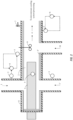
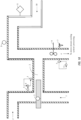
- reagents enter the length of pipe 2 through at least three depicted inlets 1, 1', 10.
- reagents include formic acid source and oxidizing agent.
- an inlet is employed for flushing a system with water as needed.
- a formic acid source is added at 1 or 1' (and a water flush is suitable for use at 1' or 1), and an oxidizing agent is added at 10.
- Such reagents are then contacted with at least one heating device 3, 3', which catalyzes the reaction of the performic acid source and the oxidizing agent to form the desired product.
- the heating device is shown in distinct forms, including a heating cartridge 3, which penetrates through one end of the length of pipe and is disposed through at least a portion of the inner diameter of the pipe 2.
- An additional heating device is shown 3' as an insulating heater to at least a portion of the length of pipe.
- the insulating heater 3' could in the alternative or addition be wrapped around the outside of the pipe 2 (e.g. on the outside of the insulation of the pipe 8).
- various optional measurement device(s) 5 which may be in connection with a control system 6. Any number of measurement device(s) 5 can be included in a system.
- the system may include safety devices 7 and/or insulation of the pipe 8 and/or a mixer 9.
- the mixed as depicted shows an impeller, however in many aspects a static mixer is employed.
- the depiction of 9 is a non-limiting depiction of a mixer.
- the performic acid forming compositions or performic acid compositions of the present invention are then supplied via an outlet 4 to either an optional downstream cooling system, storage reservoir or to the desired use.
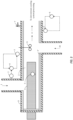
- reagents enter the length of pipe 2 through at least two depicted inlets 1, 10.
- reagents include formic acid source and oxidizing agent.
- a formic acid source is added at 1 and an oxidizing agent is added at 10.
- Such reagents are then contacted with at least one heating device 3, 3', shown as a heating cartridge 3 penetrating through one end of the length of pipe 2 and is disposed through at least a portion of the inner diameter of the pipe 2.
- An additional heating device is shown 3' as an insulating heater to at least a portion of the length of pipe.
- measurement device(s) 5 which may be in connection with a control system 6. Any number of measurement device(s) 5 can be included in a system. Additionally, the system may include safety devices 7 and/or insulation of the pipe 8 and/or a mixer 9. The performic acid forming compositions or performic acid compositions of the present invention are then supplied via an outlet 4 to either an optional downstream cooling system, storage reservoir or to the desired use.
- a staged heating system is set forth for use according to the invention.
- a length of pipe 2 with at least two depicted inlets 1, 10 and provided to add reagents including formic acid source at inlet 1 and oxidizing agent at inlet 10.
- Such reagents are then contacted with at least one heating device 3, 3', shown as a heating cartridge 3 penetrating through one end of the length of pipe 2 and is disposed through at least a portion of the inner diameter of the pipe 2.
- a series of three staged heating portions of the length of pipe are provided along with an insulating heating layer 3' to at least a portion of the length of pipe.
- measurement device(s) 5 which may be in connection with a control system 6. Any number of measurement device(s) 5 can be included in a system. Additionally, the system may include safety devices 7 and/or insulation of the pipe 8 and/or a mixer 9. The performic acid forming compositions or performic acid compositions of the present invention are then supplied via an outlet 4 to either an optional downstream cooling system, storage reservoir or to the desired use.
- reagents enter the length of pipe 2 through at least two depicted inlets 1, 10.
- reagents include a formic acid source and oxidizing agent.
- a formic acid source is added at 1 and an oxidizing agent is added at 10.
- the formic acid source is then contacted with at least one heating device 3, 3', shown as a heating cartridge 3 penetrating through one end of the length of pipe 2 and is disposed through at least a portion of the inner diameter of the pipe 2.
- An additional exemplary heating device is shown 3' as an insulating heater to at least a portion of the length of pipe (which can further extend through or along any desired length of the pipe 2, and depicted in this figure as extending only a portion of the pipe 2). Further depicted in the non-limiting embodiment shown in the figure are water inlet 1' which may be used to flush the inlets 1, 10 and the length of pipe 2 with water. Additionally, the system may include various optional measurement device(s) 5 which may be in connection with a control system 6. Any number of measurement device(s) 5 can be included in a system and situated in various locations throughout. Further, the system may include safety devices 7 and/or insulation of the pipe 8 and/or a mixer 9 which can be included in a system and situated in various locations throughout.
- the performic acid forming compositions or performic acid compositions are then supplied via an outlet 4 to either an optional downstream cooling system, storage reservoir or to a desired use.
- the generator employs a downward flow direction through the system to more readily contact the reagents for the in-situ reaction and enable the near instantaneous generation of performic acid.
- the depicted embodiment employing a downward flow direction of reagents, namely the oxidizing agent 10, adapts to the density of the reagent without requiring (or minimally requiring) external mechanical considerations such as pumping power.
- at least the second inlet (dosing the oxidizing agent 10) to the system has a downward flow.
- reagents enter the length of pipe 2 through at least two depicted inlets 1, 10.
- reagents include a formic acid source and oxidizing agent.
- a formic acid source is added at 1 and an oxidizing agent is added at 10.
- the formic acid source is then contacted with at least one heating device 3, as shown as a heating cartridge 3 penetrating through one end of the length of pipe 3 and is disposed through at least a portion of the pipe 2.
- water inlet 1' which may be used to flush the inlet 1 and the length of pipe 2 with water.
- Degasification may occur at 11 via any suitable method.
- the system may include various optional measurement device(s) 5 which may be in connection with a control system 6. Any number of measurement device(s) 5 can be included in a system and situated in various locations throughout.
- the system may include safety devices 7 and/or insulation of the pipe 8 and/or a mixer 9 which can be included in a system and situated in various locations throughout.
- the performic acid forming compositions or performic acid compositions are then supplied via an outlet 4 to either an optional downstream cooling system, storage reservoir or to a desired use.
- the generator employs a downward flow direction through the mixer 9 to more readily contact the reagents for the in-situ reaction and enable the near instantaneous generation of performic acid.
- the depicted embodiment employing a downward flow direction of reagents, which are mixed in stream prior to reaching the mixer 9 adapts to the density of the reagents without requiring (or minimally requiring) external mechanical considerations such as pumping power.
- reagents enter the length of pipe 2 through at least two depicted inlets 1, 10.
- a formic acid source is added at 1 and an oxidizing agent is added at 10.
- the formic acid source is then contacted with at least one heating device 3 disposed through at least a portion of the pipe 2.
- an outlet 4 is depicted in the non-limiting embodiment shown in FIG. 12 to either an optional downstream cooling system, storage reservoir or to a desired use.
- the generator employs a downward flow direction of the oxidizing agent through the mixer 9 to more readily contact the reagents for the in-situ reaction and enable the near instantaneous generation of performic acid.
- the depicted embodiment employing a downward flow direction of the oxidizing agent reagents, which are mixed in stream prior to reaching the mixer 9 adapts to the density of the reagents without requiring (or minimally requiring) external mechanical considerations such as pumping power.
- various additional inlets may be present, such as for example water inlets to flush an inlet and/or a length of pipe 2 with water, or inlets for providing additional components include biocides and/or corrosion inhibitors, or still further additional inlets for providing additional peroxycarboxylic acids (such as those which may contain formic acid). Still further, degasification may occur at 11 via any suitable method within any of the depicted embodiments.
- the systems may include various optional measurement device(s) 5 which may be in connection with a control system 6. Any number of measurement device(s) 5 can be included in a system and situated in various locations throughout.
- system may include safety devices 7 and/or insulation of the pipe 8 and/or a mixer 9 which can be included in a system and situated in various locations throughout.
- safety devices 7 and/or insulation of the pipe 8 and/or a mixer 9 which can be included in a system and situated in various locations throughout.
- Each of these components can be included in the generator, including in configurations depicted in each of the figures.
- the various inlets and outlets can be configured with an upward or lateral flow and still others configured with a downward flow.
- the system not according to the present invention produces performic acid forming compositions or the system produces performic acid compositions for use in a variety of cleaning application.
- the present disclosure relates to performic acid forming compositions. That is, the compositions are capable of generating performic acids in situ, in a non-equilibrium reaction.
- Performic acid generally has the formula CH 2 O 3 .
- the performic acid forming compositions comprise individual reagents combined according to the invention. These reagents are described herein individually and include at least source of formic acid and an oxidizing agent. Alternatively, as described herein, there may be benefits to providing the reagents in various premix formulations to decrease the number of reagents and/or increase the simplicity of the invention.
- the disclosed methods for producing performic acid forming compositions may comprise, consist of and/or consist essentially of providing a formic acid source, providing an oxidizing agent, contacting said formic acid source and oxidizing agent to form the reaction mixture, heating said reaction mixture at a given flow rate to form performic acid, and delivery said performic acid to a downstream process.
- the methods for producing performic acid forming compositions or performic acid compositions comprise cooling the performic acid.
- the disclosed methods for producing performic acid forming compositions or performic acid compositions comprise measuring variables including conductivity, temperature, product levels, concentration, IR/UV/VIS spectroscopy, pressure, flow rate, etc.
- the disclosed methods for producing performic acid forming compositions or performic acid compositions comprise controlling the system through use of a control system.
- the disclosed methods for producing performic acid forming compositions or performic acid compositions comprise employing safety devices.
- a formic acid source is provided to the system.
- the formic acid source used in the present methods can be provided in any suitable way.
- the formic acid before the contacting step, can be provided in a composition that comprises formic acid, e.g. , an aqueous solution that comprises formic acid and additional optional functional ingredients, such as a corrosion inhibitor.
- the formic acid before the contacting step, can be provided in a composition that comprises a substance that generates formic acid upon contact with an aqueous composition. Any suitable substance that generates formic acid can be used in the present methods.
- the formic acid source is an aqueous solution that comprises formic acid.
- the formic acid source is a salt of formic acid, such as formate, e.g., a sodium or ammonium salt of formate.
- the formic acid source is an ester alcohol, such as ethyl formate, propylene formate, glycerol formate, etc.
- the formic acid source is a composition that comprises formic acid (or a salt of formic acid) and additional optional functional ingredients, such as a corrosion inhibitor.
- additional optional functional ingredients such as a corrosion inhibitor.
- the formic acid and corrosion inhibitor systems provide a corrosion protected system.
- the concentration of the corrosion inhibitors will be less than 10% of the formic acid composition, preferably less than % of the formic acid composition.
- the corrosion inhibitor can be a phosphate ester, a derivative of the phosphate ester, a diacid, a derivative of the diacid, a quat amine, a derivative of the quat amine, an imidazoline, a derivative of the imidazoline, an alkyl pyridine, a derivative of the alkyl pyridine, a phosphonium salt, a derivative of the phosphonium salt, or a combination thereof.
- the formic acid source is a composition that comprises formic acid (or a salt of formic acid) and additional percarboxylic acids and/or carboxylic acids, such as C1-C22 percarboxylic acids and/or carboxylic acids, preferably C5-C22 percarboxylic acids and/or carboxylic acids, to beneficially provide a blended formic acid composition to provide synergistic antimicrobial efficacy against microorganisms.
- a mixture of peroxyformic acid, and additional percarboxylic acids and/or carboxylic acids, such as peracetic acid or peroctanoic acid, such as disclosed in U.S. Patent No. 5,314,687 are provided.
- the peracid mixture provides antimicrobial synergy.
- the synergy of a mixed peracid system allows the use of lower dosages of the peracids.
- the compositions also include an oxidizing agent.
- the oxidizing agent may include a peroxide source.
- the hydrogen peroxide is 1-50% w/v hydrogen peroxide.
- Oxidizing agents suitable for use with the compositions include the following types of compounds or sources of these compounds, or alkali metal salts including these types of compounds, or forming an adduct therewith: hydrogen peroxide, urea-hydrogen peroxide complexes or hydrogen peroxide donors of: group 1 (IA) oxidizing agents, for example lithium peroxide, sodium peroxide; group 2 (IIA) oxidizing agents, for example magnesium peroxide, calcium peroxide, strontium peroxide, barium peroxide; group 12 (IIB) oxidizing agents, for example zinc peroxide; group 13 (IIIA) oxidizing agents, for example boron compounds, such as perborates, for example sodium perborate hexahydrate of the formula Na 2 [B 2 (O 2 ) 2 (OH) 4
- the compositions employ one or more of the inorganic oxidizing agents listed above.
- suitable inorganic oxidizing agents include ozone, hydrogen peroxide, hydrogen peroxide adduct, group IIIA oxidizing agent, or hydrogen peroxide donors of group VIA oxidizing agent, group VA oxidizing agent, group VIIA oxidizing agent, or mixtures thereof.
- Suitable examples of such inorganic oxidizing agents include percarbonate, perborate, persulfate, perphosphate, persilicate, or mixtures thereof.
- the oxidizing agent includes hydrogen peroxide, or a source or donor of hydrogen peroxide. In other embodiments, the oxidizing agent includes a peroxide source selected from a percarbonate, a perborate urea hydrogen peroxide, PVP-peroxides and mixtures thereof.
- the reagents described herein may be combined with additional optional components.
- the additional components can include a corrosion inhibitor.
- Corrosion inhibitors are additional molecules used in oil and gas recovery operations. Corrosion inhibitors that may be employed in the present disclosure are disclosed in U.S. Patent No. 5,965,785 , U.S. Patent Publication No. 2010/0108566 , GB Patent No. 1,198,734 , WO/03/006581 , WO04/044266 , and WO08/005058 .
- the additional components can include an additional biocide.
- Additional biocides may include, for example, a quaternary ammonium compound as disclosed in U.S. Patent No. 6,627,657 .
- the additional biocide may include an oxidizer compatible phosphonium biocide, such as tributyl tetradecyl phosphonium chloride. The phosphonium biocide provides similar antimicrobial advantages as the quaternary ammonium compound in combination with the peracids.
- the phosphonium biocide is compatible with the anionic polymeric chemicals commonly used in the oil field applications, such as the methods of the fracking disclosed according to the invention.
- the additional biocide is Gluteraldehyde, THPS, quat amine, and/or TTPC.
- the additional components can include a friction reducer.
- Friction reducers are used in water or other water-based fluids used in hydraulic fracturing treatments for subterranean well formations in order to improve permeability of the desired gas and/or oil being recovered from the fluid-conductive cracks or pathways created through the fracking process. Examples of commonly used friction reducers include polyacrylamide polymers and copolymers.
- additional suitable friction reducers may include acrylamide-derived polymers and copolymers, such as polyacrylamide (sometime abbreviated as PAM), acrylamide-acrylate (acrylic acid) copolymers, acrylic acid-methacrylamide copolymers, partially hydrolyzed polyacrylamide copolymers (PHPA), partially hydrolyzed polymethacrylamide, acrylamide-methyl-propane sulfonate copolymers (AMPS) and the like.
- PAM polyacrylamide
- PHPA partially hydrolyzed polyacrylamide copolymers
- AMPS acrylamide-methyl-propane sulfonate copolymers
- Various derivatives of such polymers and copolymers e.g., quaternary amine salts, hydrolyzed versions, and the like, should be understood to be included with the polymers and copolymers described herein.
- the reagents described herein may be combined in a premix formulation to reduce the number of raw starting materials required for the methods and compositions and further simplify the methods of the invention.
- the providing of premix formulations ensures consistent and stable delivery of reagents.
- Premix formulations suitable for use according to the invention may comprise, consist of and/or consist essentially of at least formic acid source, a combination of formic and other C2-C18 carboxylic acids and, an oxidizing agent and mixtures thereof.
- premixes employs additional functional ingredients for purpose of stabilizing the premix concentrate for use in the compositions and methods according to the invention.
- hydrotropes, dispersing agents and/or other solvents may be desirable for maintaining the solubility and stability of a particular concentrated premix.
- the use of any couplers or dispersing agent (such as a surfactant) within a premix formulation is distinct from the use of surfactants in the conventional generation and storage of performic acid chemistries, wherein couplers are critical to establishing and maintaining a stable, clear solution of the generated performic acid chemistry.
- the use of dispersing agents alone within a concentrated premix formulation does not stabilize the premix composition. Rather the dispersing agents are provided in an amount suitable for providing meta-stable performic acid compositions generated from the premix after acidification, before further dilution for application.
- the most efficient dispersing agents were found to be anionic surfactants, and this type of surfactant is known to have high foaming profile. For applications which involves mechanical actions (e.g. CIP sanitizing), the high foam property of the composition is undesirable.
- less than about 10 ppm, preferably less than about 9 ppm, less than about 8 ppm, less than about 7 ppm, less than about 6 ppm, less than about 5 ppm, less than about 4 ppm, less than about 3 ppm, less than about 2 ppm, or less than about 1 ppm of a dispersing agent is included in the generated performic acid chemistry as a result of the use of a surfactant dispersing agent in a concentrated premix formulation according to the invention.
- solvents suitable for the concentrated premix formulations according to the invention include, for example, organic solvents such as alcohol, ether or ketone.
- the solvent is a water soluble alcohol, such as ethanol, methanol, propanol, isopropanol and/or butanol.
- the various isomers of the solvents, including alcohols are further included within the scope of the solvents suitable for use with the concentrated premix formulations of the invention.
- both the reagents and the performic acid compositions generated according to the invention provide sustainable chemistries as a result of the elimination of the use of various stabilizers and/or additional amounts of chemistry required to drive the formation of traditional performic acid chemistry.
- As a result of reduced input of reagents for the compositions according to the invention e . g . resulting from the use of a non-equilibrium reaction
- there is a significantly reduced waste stream e . g . any reagents and/or percentage of composition not impacting the micro-efficacy of the compositions.
- the present invention provides increased amounts of post-reaction products (e . g . performic acids) with decreased amounts of unreacted reagents.
- a premix formulation may deliver the formic acid source and the oxidizing agent.
- Suitable dispersing agents for use according to the concentrated premix formulations of the invention include polymers, surface active agents or any compounds which will help to achieve a meta-stable solution after the ester perhydrolysis through the interaction with the peroxy fatty acids generated through perhydrolysis. These may include, for example, sulfonated oleic acids (SOA), 1-octanesulfonic acid (NAS), sodium lauryl sulfonates (SLS) and the like.
- SOA sulfonated oleic acids
- NAS 1-octanesulfonic acid
- SLS sodium lauryl sulfonates
- a premix formulation includes an ester of a polyhydric alcohol and a carboxylic acid, an oxidizing agent and a solvent. Ethanol and methanol are examples of suitable solvents for use in stabilizing the concentrated premix formulation according to the invention.
- a premix formulation may include an ester of a polyhydric alcohol and a carboxylic acid, an oxidizing agent, a dispersing agent and a solvent.
- a dispersing agent and a solvent within a concentrated premix formulation reduces the overall need for a surfactant dispersing agent in the premix composition.
- the formic acid source and an oxidizing agent are combined to form a reaction mixture.
- the formic acid source and an oxidizing agent are provided to the length of pipe.
- the formic acid source and oxidizing agent are provided to a vessel located upstream of the inlet to the length of pipe and subsequently provided to the length of pipe.
- flow direction through the system may be upward, downward, or lateral. However, as one skilled in the art would appreciate, flow direction may be dependent on the process and stream variable such as density, temperature, and pressure, as well as external mechanical considerations such as pumping power.
- the second inlet which doses oxidizing agent to the system has a downward flow.
- the reaction mixture is not formed by a mechanical means of mixing.
- the reaction mixture is formed by a mechanical means of mixing, for example, such as an impeller, or the like as one skilled in the art will appreciate, for circulation within the reaction vessel, circulation pumps or be gravity-driven, employ additional holding vessels, reagent delivery sensors (e.g. proof of reagent and/or performic acid chemistry delivery sensor) or combinations of the same to meet the performic acid reaction kinetics of the system.
- the timing of the reaction is dependent on the flow rate and/or flow direction of the reagents, the amount of heat transfer available, and the desired concentration of performic acid.
- the kinetics of the reaction according to the invention are pH, concentration, flow rate, and/or temperature dependent, and the reaction begins producing yield in the order of seconds to minutes.
- the reaction can produce at least about 2% performic acid instantaneously, at least about 4% formic acid within about 1 minute, and at least about 8% performic acid within about 2 minutes.
- the duration of the reaction is preferably less than about 1 hour, preferably less than about 30 minutes, preferably less than about 15 minutes, and preferably less than about 10 minutes.
- the reaction is ran until completion, however as one skilled in the art can appreciate that there may be situations in which it may be desirable not to run the reaction to completion.
- the reaction mixture is heated within a length of pipe in order to effectuate the conversion of reagents to performic acid.
- the reaction occurs within a length of pipe which meets the hydraulic requirements of the performic acid reaction kinetics.
- the kinetics of the reaction according to the invention are pH, concentration, flow rate, and/or temperature dependent, and the reaction can reach maximum yield in the order of seconds to minutes.
- the kinetics of the reaction according to the invention are pH, concentration, flow rate, and/or temperature dependent, and the reaction begins producing yield in the order of seconds to minutes.
- the reaction can produce at least about 2% performic acid instantaneously, at least about 4% formic acid within about 1 minute, and at least about 8% performic acid within about 2 minutes. In some aspects, the reaction can reach maximum yield within about 15 seconds, or within about 30 seconds, within about 1 minute, or within about 2 to about 5 minutes.
- the length of pipe may be designed in a variety of ways, including for example shape, size, temperature, and material. According to an embodiment of the invention, the length of pipe may be of a given inner diameter and is constructed of a material that is not readily corroded and/or damaged by the presence of formic acid, hydrogen peroxide, and/or performic acid(s).
- Such piping materials to be avoided include, for example copper, chromium, brass, and/or iron. Certain varieties of stainless steel are also to be avoided, for example, SS304.
- the length of pipe is constructed from SS316 and/or SS316L. However, one skilled in the art will appreciate that other suitable materials are available.
- the length of pipe is limited by pressure of the system.
- the pipe may be designed to accommodate the potential occurrence of a runaway reaction.
- the pipe is designed to accommodate pressures of at least 0.138 MPa (20 PSI), at least 0.276 MPa (40 PSI), at least 0.345 (50 PSI), at least 0.689 MPa (100 PSI), at least 1.034 MPa (150 PSI), at least 3.447 MPa (500 PSI), at least 6.895 MPa (1000 PSI), , or greater, including all ranges therein.
- the pressure of the system is controlled so as not to exceed the burst pressure of any material employed for the length of pipe of the generator or apparatus of the invention.
- additional components of the generator or apparatus may optionally include pressure relief valves, rupture disks, or the like to control the pressure of the system.
- the flow through the pipe occurs at a rate of about 1 mL/minute to about 100 mL/min, preferably about 10 mL/min to about 50 mL/min, preferably about 20 mL/min to about 40 mL/min. In an aspect of the invention, higher flow rates can be achieved by employing the apparatuses in parallel. In an aspect of the invention, it is preferred that flow through the pipe has a laminar flow pattern, i.e., flow have a Reynolds number of less than about 2040 in order to allow for uniform heating.
- heat is provided to the system through the use of a cartridge, heat exchanger, steam jacket, steam preheat, an electrical source, a heat wrap or combinations thereof, which may be referred to herein as heating device.
- the location of the heating device within the section of pipe is further wrapped in insulation to eliminate the amount of heat lost to the environment.
- heat is provided to the system in an amount sufficient to raise the temperature of the reagents to accelerate the reaction and to a temperature not exceeding the decomposition temperature of performic acid, or about 200°C. More preferably, heat is provided to the system in an amount sufficient to raise the temperature of the reagents to a temperature not exceeding 180°C.
- the temperature increase will increase the rate of reaction, however, as one skilled in the art will ascertain, the stability of the performic acid is not to be compromised by increasing the temperature, including at a temperature not exceeding 200°C.
- a uniform heating of the reagents within the length of pipe is desired, such uniform heating is influenced by the radial distance from the outside of the heater surface to the inner surface of the pipe, where a larger distance leads to a higher gradient, and the length of the heating zone, where longer contact with heater leads to a lower gradient.
- these influences have inverse effects on the heat gradient and will thus appreciate the weighing of these influences when determining the dimensions of the heating devices.
- a staged heating of reagents within the length of pipe is desired.
- the available volume of the pipe is affected.
- the available volume is thus defined as the volume held within the pipe at a given time minus the volume occupied by the heating cartridge.
- the volume of the system is increased by employing systems in parallel rather than increasing pipe size and or volume.
- the power required by the heating device and accompanying pumps preferably does not exceed about 100 watts for flow rates of 50 mL/min. More preferably, the power does not exceed 80 watts and more preferably, the power does not exceed 50 watts.
- the performic acid is delivered to a downstream process via an outlet.
- the outlet provides the performic acid chemistries to a downstream process as desired by the controller and/or user.
- the outlet provides the performic acid chemistries to a storage reservoir.
- the outlet provides the performic acid chemistries to a cooling system.
- the concentration of the performic acid at the outlet is at least 1wt-%, more preferably at least 5wt-% at the outlet.
- the performic acid is cooled via a cooling loop/segment.
- a cooling system may be in combination with a safety mechanism and/or a measurement device of the system. It may be desirable to have components of the system under temperature controls. As one skilled in the art will appreciate, exothermic reactions may degrade the reagents according to the generation of the performic acid compositions of the invention.
- the cooling system stabilizes the performic acid composition and thereby increases shelf-life by lowering the temperature to a temperature to that of freezing or below freezing.
- the system has at least one mechanism to cool components of the system. Multiple cooling mechanisms may be used in either series or parallel.
- Such mechanisms may include, for example, a quenching mode, increased surface area, cooling jacket, venting systems, cold finger, and the like.
- the outlet of the performic acid(s) is cooled by using heat exchange, refrigeration sleeve, blower, cooled vessel, etc.
- the methods for producing performic acid forming compositions or performic acid compositions include measuring at least one value or a plurality of values. Such measuring is accomplished by the use of measurement devices.
- measurement devices are those suitable to measure one or more reaction kinetics or system operations for the generation of performic acid forming compositions, including for example devices to measure conductivity, weight, flow ( e . g . flow meters or switches), pH, pressure, temperature and combinations thereof.
- Such measurement devices may measure the system's inlets, piping, outlets, etc.
- additional suitable measurement devices include conductivity sensors, thermometers, out of product alarms, peroxide monitors, IR/UV/VIS spectroscopy and pressure switches.
- temperature is monitored a various points in the apparatus to ensure consistent heating at a temperature not exceeding the flash point of the performic acid.
- pressure is monitors to ensure there is not an occurrence of a "runaway reaction.” This pressure monitoring could be accomplished by use of a differential pressure sensor within a feedback control loop, wherein in a pressure reading exceeding a set point would cause a safety release valve to be employed or venting to occur.
- flow rate is monitored with either a pressure sensor or an orifice plate/meter.
- conductivity may be monitored to determine the concentration of products in the stream and/or the concentration of the performic acid at the outlet.
- generation rates, temperatures, and concentrations can all be optimized via monitoring systems and/or controllers.
- an embodiment of the invention would allow for rinsing of the apparatus so that residual chemistry does not remain in the system.
- suitable measurement devices are disclosed herein, in addition various embodiments of those disclosed in U.S. patent application 2008/0275132 A1 , and U.S. Patent No. 7,547,421 , both entitled Apparatus and Method for Making Peroxycarboxylic Acid.
- the methods for producing performic acid forming compositions or performic acid compositions includes controlling the method by use of an optional controller or software platform.
- the software platform provides a user or system to select a generation mode for a desired performic acid formulation for on-site generation.
- use of the system for on-site performic acid chemistry generation provides significant user flexibility to generate chemistries for particular user-identified purposes.
- the controller or control software for operation of the system may permit a user or system to select both the performic acid formulation and the desired volume of the formulation for on-site generation.
- the control software may determine the timing, sequencing and/or selection of feeding raw materials (e . g . reagents) into the system, mixing time and total reaction time required for production of the user- or system-selected performic acid formulation.
- the control system includes the above described measurement devices.
- the controller may further include a mechanism for manually starting/stopping any of the same functions, including for example a manual switch panel for the same.
- the controller preferably has buttons or other means for selecting particular embodiments according to option displayed by the control software platform.
- An embodiment of the controller may further include a display screen to assist a user in selecting a generation mode for a desired performic acid formulation and any other options for user selection as one skilled in the art will ascertain based upon the description of the invention. Concomitant with the control software are user-friendly instructions for use displayed on the display screen (or the like).
- control software utilizes a control software algorithm to maximize on-site active chemistry yield and provide safe operating conditions for the reactor vessel(s) of the system.
- the control software permits user-identified chemistry production to be run in one or multiple reaction vessels and to properly sequence reactions to obtain active chemistries.
- the system may include a data output means for sharing information related to the performic acid forming compositions and/or performic acid formulations generated according to the system.
- a data output means for sharing information related to the performic acid forming compositions and/or performic acid formulations generated according to the system.
- an information backbone may be used to both collect and disseminate data from the process of generating the performic acid formulations including, for example, composition consumption, dispensing or usage, and additional formulation production-related data.
- Such data may be generated in real-time and/or provided in a historical log of operational data detectable or storable by a user or system.
- any system operations suitable for use with the invention may be controlled and/or monitored from a remote location.
- Remote system operations control and/or monitoring may further include the system updates and/or upgrades.
- updates and/or upgrades to system operations may be downloaded remotely.
- the data output for sharing information related to the compositions according to the system may coordinate multiple systems on at a single site.
- information sharing between the multiple systems may take places place using any communications network capable of coupling one or more systems according to the present invention, including for example, using a server computer and a database.
- the system is designed for explosion safety ratings, such as for example, according to the American Petroleum Institute (API).
- API American Petroleum Institute
- the system may include pressure relief valves and/or rupture discs.
- the present disclosure includes methods of using the performic acid forming compositions disclosed herein.
- the methods of using the compositions employ a chemistry having a pH of from about 0 to about 5 for various antimicrobial and/or bleaching applications.
- the methods of using the compositions employ a chemistry having a pH of from about 5 to about 9 for various antimicrobial and/or bleaching applications.
- the methods of using the compositions employ a chemistry having a pH of from about 5 to about 14 for various bleaching applications.
- the present disclosure includes methods of using the performic acid forming compositions and/or performic acids disclosed herein.
- Performic acid compositions generated according to the embodiments of the invention may be used for a variety of user-identified biocidal and/or anti-microbial purposes.
- the on-site generated performic acid compositions may be employed for antimicrobial and/or bleaching methods of use.
- the on-site generated performic acid compositions may be employed for any sanitizing methods of use.
- the invention includes a method for reducing a microbial population, a method for reducing the population of a microorganism on skin, a method for treating a disease of skin, a method for reducing an odor, or a method for bleaching.
- These methods can operate on an object, surface, in a body or stream of water or a gas, or the like, by contacting the object, surface, body, or stream with a performic acid composition of the invention.
- Contacting can include any of numerous methods for applying a composition, such as spraying the composition, immersing the object in the composition, foam or gel treating the object with the composition, wiping the composition or a combination thereof
- a composition obtained according to the herein disclosed methods and apparatuses may include an amount of a performic acid composition effective for killing one or more of the food-borne pathogenic bacteria associated with a food product, including, but not limited to, Salmonella typhimurium , Salmonellajaviana , Campylobacterjejuni , Listeria monocytogenes , and Escherichia coli O157:H7, yeast, and mold.
- a performic acid composition effective for killing one or more of the food-borne pathogenic bacteria associated with a food product, including, but not limited to, Salmonella typhimurium , Salmonellajaviana , Campylobacterjejuni , Listeria monocytogenes , and Escherichia coli O157:H7, yeast, and mold.
- the compositions include an amount of a performic acid composition effective for killing one or more of the pathogenic bacteria associated with a health care surfaces and environments including, but not limited to, Salmonella typhimurium , Staphylococcus aureus , Salmonella choleraesurus , Pseudomonas aeruginosa , Escherichia coli , mycobacteria , yeast, and mold.
- compositions have activity against a wide variety of microorganisms such as Gram positive (for example, Listeria monocytogenes or Staphylococcus aureus ) and Gram negative (for example, Escherichia coli or Pseudomonas aeruginosa ) bacteria, yeast, molds, bacterial spores, viruses, etc.
- the compositions have activity against a wide variety of human pathogens.
- the present compositions can kill a wide variety of microorganisms on a food processing surface, on the surface of a food product, in water used for washing or processing of food product, on a health care surface, in a health care environment or the like.
- compositions can be used for a variety of domestic or industrial applications, e.g., to reduce microbial or viral populations on a surface or object or in a body or stream of water.
- the compositions can be applied in a variety of areas including kitchens, bathrooms, factories, hospitals, dental offices, restaurants, clean in place applications, laundry or textile applications and food plants, and can be applied to a variety of hard or soft surfaces having smooth, irregular or porous topography.
- Suitable hard surfaces include, for example, architectural surfaces (e.g., floors, walls, windows, sinks, tables, counters and signs); eating utensils; hard-surface medical or surgical instruments and devices; and hard-surface packaging.
- Such hard surfaces can be made from a variety of materials including, for example, ceramic, metal, glass, wood or hard plastic.
- Suitable soft surfaces include, for example, paper; filter media, hospital and surgical linens and garments; soft-surface medical or surgical instruments and devices; and soft-surface packaging. Such soft surfaces can be made from a variety of materials including, for example, paper, fiber, woven or nonwoven fabric, soft plastics and elastomers.
- the compositions can also be applied to soft surfaces such as food and skin ( e.g. , a hand).
- the present compositions can be employed as a foaming or nonfoaming environmental sanitizer or disinfectant.
- the performic acid compositions can be included in products such as sterilants, sanitizers, disinfectants, preservatives, deodorizers, antiseptics, fungicides, germicides, sporicides, virucides, detergents, bleaches, hard surface cleaners, hand soaps, waterless hand sanitizers, and pre- or post-surgical scrubs.
- compositions can also be used in veterinary products such as mammalian skin treatments or in products for sanitizing or disinfecting animal enclosures, pens, watering stations, and veterinary treatment areas such as inspection tables and operation rooms.
- veterinary products such as mammalian skin treatments or in products for sanitizing or disinfecting animal enclosures, pens, watering stations, and veterinary treatment areas such as inspection tables and operation rooms.
- the present compositions can be employed in an antimicrobial foot bath for livestock or people.
- the compositions can also be employed as an antimicrobial teat dip.
- the compositions can be employed for reducing the population of pathogenic microorganisms, such as pathogens of humans, animals, and the like.
- pathogenic microorganisms such as pathogens of humans, animals, and the like.
- the compositions exhibit activity against pathogens including fungi, molds, bacteria, spores, and viruses, for example, S. aureus , E. coli , Streptococci , Legionella , Pseudomonas aeruginosa , mycobacteria , tuberculosis , phages, or the like.
- compositions can reduce the population of microorganisms on skin or other external or mucosal surfaces of an animal.
- the present compositions can kill pathogenic microorganisms that spread through transfer by water, air, or a surface substrate.
- the composition need only be applied to the skin, other external or mucosal surfaces of an animal water, air, or surface.
- the performic acid compositions can also be used on foods and plant species to reduce surface microbial populations; used at manufacturing or processing sites handling such foods and plant species; or used to treat process waters around such sites.
- the compositions can be used on food transport lines (e.g. , as belt sprays); boot and hand-wash dip-pans; food storage facilities; anti-spoilage air circulation systems; refrigeration and cooler equipment; beverage chillers and warmers, blanchers, cutting boards, third sink areas, and meat chillers or scalding devices.
- the compositions can be used to treat produce transport waters such as those found in flumes, pipe transports, cutters, slicers, blanchers, retort systems, washers, and the like.
- compositions include, but are not limited to, eggs, meats, seeds, leaves, fruits and vegetables.
- Particular plant surfaces include both harvested and growing leaves, roots, seeds, skins or shells, stems, stalks, tubers, corms, fruit, and the like.
- the compositions may also be used to treat animal carcasses to reduce both pathogenic and non-pathogenic microbial levels.
- compositions can also be used to treat wastewater where both its antimicrobial function and its oxidant properties can be utilized. Aside from the microbial issues surrounding wastewater, it is often rich in malodorous compounds of reduced sulfur, nitrogen or phosphorous. A strong oxidant converts these compounds efficiently to their odor free derivatives e.g. the sulfates, phosphates and amine oxides. These same properties are very useful in the pulp and paper industry where the property of bleaching is also of great utility.
- the compositions are useful in the cleaning or sanitizing of containers, processing facilities, or equipment in the food service or food processing industries.
- the compositions have particular value for use on food packaging materials and equipment, and especially for cold or hot aseptic packaging.
- process facilities in which the composition can be employed include a milk line dairy, a continuous brewing system, food processing lines such as pumpable food systems and beverage lines, etc.
- Food service wares can be treated with an antimicrobial and/or disinfected with the compositions.
- the compositions can also be used on or in ware wash machines, dishware, bottle washers, bottle chillers, warmers, third sink washers, cutting areas ( e .
- Particular treatable surfaces include, but are not limited to, packaging such as cartons, bottles, films and resins; dish ware such as glasses, plates, utensils, pots and pans; ware wash machines; exposed food preparation area surfaces such as sinks, counters, tables, floors and walls; processing equipment such as tanks, vats, lines, pumps and hoses ( e . g ., dairy processing equipment for processing milk, cheese, ice cream and other dairy products); and transportation vehicles.
- Containers include glass bottles, PVC or polyolefin film sacks, cans, polyester, PEN or PET bottles of various volumes (100 ml to 2 liter, etc.), 3.81 (1 gallon) milk containers, paper board juice or milk containers, etc.
- compositions can also be used on or in other industrial equipment and in other industrial process streams such as heaters, cooling towers, boilers, retort waters, rinse waters, aseptic packaging wash waters, and the like.
- the compositions can be used to treat microbes and odors in recreational waters such as in pools, spas, recreational flumes and water slides, fountains, and the like.
- the composition can also be used in treating microbes found in aqueous systems associated with petroleum or LP gas recovery or fermentation processes and pulp and paper processes and the like.
- a filter containing performic acid compositions of the present invention can reduce the population of microorganisms in air and liquids. Such a filter can remove water and air-borne pathogens such as Legionella.
- compositions can be employed for reducing the population of microbes, fruit flies, or other insect larva on a drain or other surface.
- compositions can also be employed by dipping food processing equipment into the use solution, soaking the equipment for a time sufficient to sanitize or de-stain the equipment, and wiping or draining excess solution off the equipment.
- the compositions may be further employed by spraying or wiping food processing surfaces with the use solution, keeping the surfaces wet for a time sufficient to sanitize the surfaces, and removing excess solution by wiping, draining vertically, vacuuming, etc.
- compositions may also be used in a method of sanitizing hard surfaces such as institutional type equipment, utensils, dishes, health care equipment or tools, and other hard surfaces.
- compositions can also be used for laundry or textile applications.
- the compositions can be employed by rinsing laundry or textile surfaces with the use solution, keeping the surfaces wet for a sufficient time to wash, de-stain, sanitize, bleach and/or rinse the surface.
- the performic acid compositions can be applied to microbes or to soiled or cleaned surfaces using a variety of methods. These methods can operate on an object, surface, in a body or stream of water or a gas, or the like, by contacting the object, surface, body, or stream with a composition of the invention. Contacting can include any of numerous methods for applying a composition, such as spraying the composition, immersing the object in the composition, rinsing the composition, foam or gel treating the object with the composition, applying with a wipe system or a combination thereof.
- a concentrate or use concentration of a performic acid composition can be applied to or brought into contact with an object by any conventional method or apparatus for applying an antimicrobial or cleaning composition to an object.
- the object can be wiped with, sprayed with, foamed on, and/or immersed in the composition, or a use solution made from the composition.
- the compositions can be sprayed, foamed, or wiped onto a surface; the composition can be caused to flow over the surface, or the surface can be dipped into the composition.
- Contacting can be manual or by machine.
- Food processing surfaces, food products, food processing or transport waters, and the like can be treated with liquid, foam, gel, aerosol, gas, wax, solid, or powdered performic acid compositions, or solutions containing these compositions.
- compositions include clean-in-place systems (CIP), clean-out-of-place systems (COP), washer-decontaminators, sterilizers, textile laundry machines, ultra and nano-filtration systems and indoor air filters.
- CIP systems can include readily accessible systems including wash tanks, soaking vessels, mop buckets, holding tanks, scrub sinks, vehicle parts washers, non-continuous batch washers and systems, and the like.
- CIP systems include the internal components of tanks, lines, pumps and other process equipment used for processing typically liquid product streams such as beverages, milk, juices.
- a method of sanitizing substantially fixed in-place process facilities includes the following steps.
- a composition is introduced into the process facilities at a temperature in the range of about 4 °C to 60 °C.
- the solution is held in a container or circulated throughout the system for a time sufficient to sanitize the process facilities (e.g. , to kill undesirable microorganisms).
- the solution is drained.
- the system optionally may be rinsed with other materials such as potable water.
- the compositions can be circulated through the process facilities for 10 minutes or less.
- the present methods can include delivering the present composition via air delivery to the clean-in-place or other surfaces such as those inside pipes and tanks. This method of air delivery can reduce the volume of solution required.
- the present invention provides methods for contacting a food product with compositions employing any method or apparatus suitable for applying such compositions.
- the food product is contacted by the compositions with a spray of the compositions, by immersion in the compositions, by foam or gel treating with the compositions.
- Contact with a spray, a foam, a gel, or by immersion can be accomplished by a variety of methods known to those of skill in the art for applying antimicrobial agents to food. Contacting the food product can occur in any location in which the food product might be found, such as field, processing site or plant, vehicle, warehouse, store, restaurant, or home. These same methods can also be adapted to apply the compositions to other objects.
- the present methods require a certain minimal contact time of the compositions with food product for occurrence of significant antimicrobial effect.
- the contact time can vary with concentration of the use compositions, method of applying the use compositions, temperature of the use compositions, amount of soil on the food product, number of microorganisms on the food product, type of antimicrobial agent, or the like.
- the exposure time can be at least about 5 to about 15 seconds. In some embodiments, the exposure time is about 15 to about 30 seconds. In other embodiments, the exposure time is at least about 30 seconds.
- the method for washing a food product employs a pressure spray including compositions of the present invention.
- the surface of the food product can be moved with mechanical action, e . g ., agitated, rubbed, brushed, etc.
- Agitation can be by physical scrubbing of the food product, through the action of the spray solution under pressure, through sonication, or by other methods. Agitation increases the efficacy of the spray solution in killing micro-organisms, perhaps due to better exposure of the solution into the crevasses or small colonies containing the micro-organisms.
- the spray solution before application, can also be heated to a temperature of about 15 to 20 °C, for example, about 20 to 60 °C to increase efficacy.
- the spray stabilized compositions can be left on the food product for a sufficient amount of time to suitably reduce the population of microorganisms, and then rinsed, drained, or evaporated off the food product.
- Application of the material by spray can be accomplished using a manual spray wand application, an automatic spray of food product moving along a production line using multiple spray heads to ensure complete contact, or other spray apparatus.
- One automatic spray application involves the use of a spray booth.
- the spray booth substantially confines the sprayed compositions to within the booth.
- the production line moves the food product through the entryway into the spray booth in which the food product is sprayed on all its exterior surfaces with sprays within the booth. After a complete coverage of the material and drainage of the material from the food product within the booth, the food product can then exit the booth.
- the spray booth can include steam jets that can be used to apply the stabilized compounds of the invention.
- These steam jets can be used in combination with cooling water to ensure that the treatment reaching the food product surface is less than 65°C, e.g. , less than 60°C.
- the temperature of the spray on the food product is important to ensure that the food product is not substantially altered (cooked) by the temperature of the spray.
- the spray pattern can be virtually any useful spray pattern.
- a food product can be treated with a foaming version of the compositions of the present invention.
- the foam can be prepared by mixing foaming surfactants with the washing solution at time of use.
- the foaming surfactants can be nonionic, anionic or cationic in nature.
- useful surfactant types include but are not limited to the following: alcohol ethoxylates, alcohol ethoxylate carboxylate, amine oxides, alkyl sulfates, alkyl ether sulfate, sulfonates, including, for example, alkyl aryl sulfonates, quaternary ammonium compounds, alkyl sarcosines, betaines and alkyl amides.
- the foaming surfactant is typically mixed at time of use with the washing solution.
- Use solution levels of the foaming agents is from about 50 ppm to about 2.0 wt-%.
- compressed air can be injected into the mixture, then applied to the food product surface through a foam application device such as a tank foamer or an aspirated wall mounted foamer.
- a food product can be treated with a thickened or gelled version of the compositions of the present invention.
- the washing solution remains in contact with the food product surface for longer periods of time, thus increasing the antimicrobial efficacy.
- the thickened or gelled solution will also adhere to vertical surfaces.
- the compositions can be thickened or gelled using existing technologies such as: xanthan gum, polymeric thickeners, cellulose thickeners, or the like. Rod micelle forming systems such as amine oxides and anionic counter ions could also be used.
- the thickeners or gel forming agents can be used either in the concentrated product or mixing with the washing solution, at time of use. Typical use levels of thickeners or gel agents range from about 100 ppm to about 10 wt-%.
- compositions can be used in the manufacture of beverage, food, and pharmaceutical materials including fruit juice, dairy products, malt beverages, soybean-based products, yogurts, baby foods, bottled water products, teas, cough medicines, drugs, and soft drinks.
- the compositions can be used to sanitize, disinfect, act as a sporicide for, or sterilize bottles, pumps, lines, tanks and mixing equipment used in the manufacture of such beverages.
- the compositions can be used in aseptic, cold filling operations in which the interior of the food, beverage, or pharmaceutical container is sanitized or sterilized prior to filling.
- a container can be contacted with the compositions, typically using a spray, dipping, or filling device to intimately contact the inside of the container with the compositions, for a sufficient period of time to reduce microorganism populations within the container.
- the container can then be emptied of the amount of sanitizer or sterilant used. After emptying, the container can be rinsed with potable water or sterilized water and again emptied. After rinsing, the container can be filled with the beverage, food, or pharmaceutical.
- the container can then be sealed, capped or closed and then packed for shipment for ultimate sale.
- the sealed container can be autoclaved or retorted for added microorganism kill.
- fungal microorganisms of the genus Chaetomium or Arthrinium, and spores or bacteria of the genus Bacillus spp. can be a significant problem in bottling processes, particularly in cold aseptic bottling processes.
- the compositions can be used for the purpose of controlling or substantially reducing (by more than a 5 log 10 reduction) the number of Chaetomium or Arthrinium or Bacillus microorganisms in beverage or food or pharmaceutical bottling lines using cold aseptic bottling techniques.
- compositions can be used to sanitize the interior of beverage containers prior to filling with the carbonated (or noncarbonated) beverage.
- Typical carbonated beverages in this application include, but are not limited to, cola beverages, fruit beverages, ginger ale beverages, root beer beverages, iced tea beverages which may be non-carbonated, and other common beverages considered soft drinks.
- the compositions can be used to sanitize both the tanks, lines, pumps, and other equipment used for the manufacture and storage of the soft drink material and also used in the bottling or containers for the beverages.
- the compositions are useful for killing both bacterial and fungal microorganisms that can be present on the surfaces of the production equipment and beverage containers.
- liquid system refers to flood waters or an environment within at least one artificial artifact, containing a substantial amount of liquid that is capable of undergoing biological fouling, it includes but is not limited to industrial liquid systems, industrial water systems, liquid process streams, industrial liquid process streams, industrial process water systems, process water applications, process waters, utility waters, water used in manufacturing, water used in industrial services, aqueous liquid streams, liquid streams containing two or more liquid phases, and any combination thereof.
- this technology would be applicable to any process or utility liquid system where microorganisms are known to grow and are an issue, and biocides are added.
- examples of some industrial process water systems where the method of this invention could be applied are in process water applications (flume water, shower water, washers, thermal processing waters, brewing, fermentation, CIP (clean in place), hard surface sanitization, etc.), EthanolBio-fuels process waters, pretreatment and utility waters (membrane systems, ionexchange beds), water used in the process/manufacture of paper, ceiling tiles, fiber board, microelectronics, E-coat or electro deposition applications, process cleaning, oil exploration and energy services (completion and work over fluids, drilling additive fluids, fracturing fluids, flood waters, etc.; oil fields - oil and gas wells/flow line, water systems, gas systems, etc.), and in particular water systems where the installed process equipment exhibits lowered compatibility to halogenated biocides.
- Equipment configuration and software were developed for on-site generation of performic acid compositions, including performic acid forming compositions and performic acid for use as biocides.
- a reactor module meeting the hydraulic requirements of the reaction kinetics was developed to obtain precise and repeatable generation of active performic acid chemistry.
- a software algorithm was developed to run one or multiple reactor modules to sequence events appropriately to maximize active yield and safely operate the reactor module.
- FIG. 2 An exemplary single reaction module was configured according to FIG. 2 .
- performic acid were generated through the addition of formic acid and hydrogen peroxide.
- FIGS. 5 and 6 illustrate the relationship between fluid bulk temperature, cartridge heater skin temperature, and flow rate.
- the FIGS. were created using the SolidWorks Computational Fluid Dynamics (CFD) package SolidWorks Flow.
- CFD SolidWorks Computational Fluid Dynamics
- a simplified model was set up to analyze the heat transfer characteristics of the Formic acid flow into the generator up to the Hydrogen Peroxide inlet. The model was set up using standard pipe sizes 1.3 cm, 2.5 cm and 5.1 cm (1/2, 1 and 2 inches) using stainless steel material properties.
- a 0.6 cm (1/4 inches) diameter cartridge heater 15 cm (6 inches) long was inserted through a tee connector and into a 25 cm (10 inches) long straight pipe section.
- two inputs were used to generate the range of data: inlet flow rate and heater power.
- Formic acid entering the computational domain was set to a flow rate of either 20 or 40 mL/min.
- the cartridge heater was assumed to generate a uniform surface flux at various power levels to generate the range of data points.
- the cartridge skin temperature reported was the maximum temperature found on any part of the cartridge surface.
- the average outlet surface temperature was taken as an area average of the fluid temperature across a plane normal to the flow at the end of the 25 cm (10 inches) long pipe section.
- FIG. 5 there is an approximately linear relationship between the average outlet surface temperature and the skin temperature of the cartridge. Additionally, FIG. 6 indicates that the heater power divided by the flow rate is linearly related to the average outlet surface fluid temperature.
- FIG. 7 illustrates Heat Flow on a contour plot of Flow Rate vs. Inlet Temp.
- the depicted data comes from an equation that sets an outlet temperature of 50°C at the end of a heating element, and assumes all of the heat coming from the heating element in the performic acid generator is transferred into the fluid flowing past the heating element. This gives a minimum value for the amount of heat required.
- the figure shows the effect of reagent inlet temperature and heater power, in that the higher heater power is required for higher flow rates and low reagent temperatures may lead to thermal decomposition of the reagent. Such a problem may be resolved by employing staged heaters and/or adjusting the size of the heating element.
- An exemplary single reaction module is configured according to FIG. 2 .
- the control software maintained a set point temperature of 50°C at the point of adding the peroxide source to the warm formic acid.
- a formic acid to peroxide premix formulation of 5.21: 1 was used over a series of titrations.
- An iodometric titration procedure is utilized. Approximately 200 g of deionized ice water is added to an Erlenmeyer flask along with about 0.30 to about 0.50 grams of sample. The final sample size is recorded for later calculations.
- Table 1 shows the ratio of performic acid to hydrogen peroxide generated according to the in situ synthesis of performic acid in the apparatus of the invention.
- An exemplary single reaction module is configured according to FIG. 2 .
- a conductivity probe was used to take measurements of the reaction.
- Use of a conductivity probe provides an electroanalytical method to measure various parameters of a product.
- An exemplary conductivity sensors comprises two electrodes, and operates by applying a voltage across the two electrodes and measuring a resulting current. The relationship between the magnitudes of the current and the voltage allow the resistance and therefore conductivity of the product to be determined.
- FIG. 8 illustrates the results of the experiments. Conductivity of a solution of reactants and products is higher than a solution of reactants alone. Table 2 further illustrates the correlation between conductivity and performic acid concentration. Table 2: Conductivity Data % Performic Acid Conductivity ( ⁇ S/cm) 0 358 0.9 2120 4.49 2421 5.02 2631 7.44 2675 8.525 2920
- the system was assembled, including a downward flow of the oxidizing agent inlet.
- the system was operated with a 97% formic acid concentration inlet flow of 17.6 mL/min and a 35% hydrogen peroxide concentration inlet flow of 2.4 mL/min.
- Samples were collected at 2, 5, 10, and 15 minutes and tested according to the iodometric titration procedure according to Example 2 for performic acid concentration and hydrogen peroxide concentration. These results are shown in Table 3 and FIG. 11 .
- Table 3 Titration Data Elapsed Time (min) % Performic Acid % Hydrogen Peroxide 2 8.28 1.75 5 8.84 1.06 10 7.30 0.33 15 9.02 0.50
- the peroxyformic acid generator depicted in the figures having multiple inlets to provide formic acid blend (formic acid, catalyst and corrosion inhibitor) as well as hydrogen peroxide was evaluated under field conditions at a scale-up volume. The generator was used at a salt water disposal well.
- the increase in PFA generation is attributed to the modification of the high ambient temperatures coupled with the long residual time of the formic/ peroxide mixture provided by the tubing from the point of generation to the site of dosing (27.432 m (90 ft)).
- Peroxide flow and formic acid flow were monitored via flow meters.
- Product formation was monitored via conductivity as well as titration methods.
- Temperatures were monitored using probes in the generator. Flow of peroxide was challenged due to excessive heat as well as the pumps ceasing because of air, which are subject to modification through auto-priming valves as well as vent valves that will remove air from the tubing allowing for bubble free flow.
- the percentage reduction of microbial numbers compared to incoming water was also evaluated. Microbial numbers were monitored using traditional serial dilution bug bottles that select for SRB or APB populations. All results showed at least a 2-3 log reduction and in some case a 7 log reduction in microbial population.
- the iron oxidation potential of PFA was further evaluated as PFA is an oxidant and is capable of oxidizing FeS into iron oxide.
- Samples drawn from the incoming water, site of treatment (gun barrel) and disposal water (SWD) indicates a reduction in FeS concentration during treatment, as shown in FIG. 14 .
- a consequence of this is an increased oil production.
- disposal waters tested at the initial of PFA treatment and after 15 days of treatment and a reduction of FeS was observed.
- FeS can be oil wet and holds a lot of oil. Upon oxidation this oil is released.
- BS&W analysis provides a quantitative estimation on the amount of water, solids, emulsion and oil present in the samples. This analysis on the two samples indicates 97% oil which is 92% increase in the total recoverable oil before and after treatment with PFA.
Landscapes
- Chemical & Material Sciences (AREA)
- Life Sciences & Earth Sciences (AREA)
- Organic Chemistry (AREA)
- Engineering & Computer Science (AREA)
- Wood Science & Technology (AREA)
- Zoology (AREA)
- Chemical Kinetics & Catalysis (AREA)
- Food Science & Technology (AREA)
- Polymers & Plastics (AREA)
- Agronomy & Crop Science (AREA)
- Health & Medical Sciences (AREA)
- Dentistry (AREA)
- General Health & Medical Sciences (AREA)
- Environmental Sciences (AREA)
- Pest Control & Pesticides (AREA)
- Plant Pathology (AREA)
- Materials Engineering (AREA)
- Mechanical Engineering (AREA)
- Metallurgy (AREA)
- Oil, Petroleum & Natural Gas (AREA)
- Agricultural Chemicals And Associated Chemicals (AREA)
- Microbiology (AREA)
- Organic Low-Molecular-Weight Compounds And Preparation Thereof (AREA)
Claims (15)
- Verfahren zum Reinigen und/oder Desinfizieren einer Oberfläche unter Verwendung einer vor Ort erzeugten Peroxyameisensäurezusammensetzung, umfassend:Erzeugen einer Peroxyameisensäurezusammensetzung vor Ort unter Verwendung eines anpassbaren Biozidgeneratorsystems, umfassend mindestens zwei Einlässe (1, 1', 10), eine Rohrlänge (2), eine Heizvorrichtung (3) und einen Auslass (4) zum Dosieren einer Peroxyameisensäurezusammensetzung aus der Rohrlänge (2); wobei die Einlässe (1, 1', 10) in Fluidverbindung mit der Rohrlänge (2) stehen und Reagenzien zuführen, um die Peroxyameisensäurezusammensetzung in der Rohrlänge (2) herzustellen, wobei jedes Reagenz über seinen individuellen Einlass in die Rohrlänge eintritt;wobei die Reagenzien eine Ameisensäurequelle und ein Oxidationsmittel umfassen;wobei die Länge des Rohrs (2) mit dem Auslass (4) in Fluidverbindung steht, um die Peroxyameisensäurezusammensetzung abzugeben;wobei dem System durch die Verwendung der Heizvorrichtung Wärme in einer Menge bereitgestellt wird, die ausreicht, um die Temperatur der Reagenzien zu erhöhen, um die Reaktion zu beschleunigen, und auf eine Temperatur, die die Zersetzungstemperatur von Peroxyameisensäure oder etwa 200 °C nicht übersteigt, und wobei die Wärme als der einzige Katalysator verwendet wird;
undAuftragen der Peroxyameisensäurezusammensetzung in einer Menge, die ausreicht, um eine Oberfläche zu reinigen und/oder desinfizieren, die dies benötigt. - Verfahren nach Anspruch 1, wobei die Oberfläche ein Nahrungsmittel oder ein Pflanzenprodukt und/oder mindestens ein Anteil eines Mediums, eines Behälters, einer Ausrüstung, einer Membran, eines Systems oder einer Anlage zum Anbauen, Aufbewahren, Verarbeiten, Verpacken, Lagern, Transportieren, Zubereiten, Kochen oder Servieren des Nahrungsmittels oder des Pflanzenprodukts ist.
- Verfahren nach einem der Ansprüche 1 bis 2, wobei die Peroxyameisensäurezusammensetzung mittels eines Sprays, Eintauchens, Schaums oder Gels auf die Oberfläche aufgetragen wird.
- Verfahren nach einem der Ansprüche 1 bis 3, wobei der Auftragungsschritt mindestens 5 Sekunden dauert.
- Verfahren nach einem der Ansprüche 1 bis 4, wobei die Peroxyameisensäurezusammensetzung eine mikrobielle Population um mindestens drei log10 verringert.
- Verfahren nach Anspruch 1, wobei die Oberfläche eine Oberfläche von Ausrüstung ist, die in Kontakt mit flüssigen Systemen kommt.
- Verfahren nach Anspruch 1, wobei das anpassbare Biozidgeneratorsystem ferner mindestens eine Messvorrichtung (5) umfasst, wobei die Messvorrichtung (5) konstruiert ist, um eine oder mehrere Reaktionskinetiken oder Systemvorgänge für die Erzeugung der peroxyameisensäurebildenden Zusammensetzung zu messen.
- Verfahren nach Anspruch 7, wobei die Kinetiken oder Systemvorgänge aus der Gruppe ausgewählt sind, bestehend aus Leitfähigkeit, Gewicht, Durchfluss, pH-Wert, Druck, Temperatur, Titrimeter für Reagenzkonzentration und Kombinationen davon.
- Verfahren nach Anspruch 7, wobei die Heizvorrichtung (3, 3') konstruiert ist, um eine Temperatur aufrechtzuerhalten, die 180 °C für die Reagenzientemperatur nicht übersteigt.
- Verfahren nach einem der vorstehenden Ansprüche, wobei das Verfahren durch Verwenden einer Steuersoftware zum Betreiben des anpassbaren Biozidgeneratorsystems gesteuert wird, um eine von einem Benutzer oder System ausgewählte Peroxyameisensäurezusammensetzung und die gewünschte Durchflussrate der Peroxyameisensäurezusammensetzung für die Erzeugung vor Ort zu erzeugen.
- Verfahren nach Anspruch 10, wobei die Steuersoftware die Zeitsteuerung, die Reihenfolge und/oder die Auswahl einer Zufuhr der Rohmaterialien in das anpassbare Biozidgeneratorsystem, die Mischzeit und die gesamte Reaktionszeit bestimmt, die für die Herstellung der von dem Benutzer oder System ausgewählten Peroxyameisensäurezusammensetzung erforderlich sind.
- Verfahren nach einem der Ansprüche 1 bis 11, wobei das anpassbare Biozidgeneratorsystem ferner ein Sicherheitsablassventil und/oder eine Berstscheibe, um das System zu entlüften, umfasst.
- Verfahren nach einem der Ansprüche 1 bis 12, wobei das anpassbare Biozidgeneratorsystem ferner mindestens einen Mechanismus, um Komponenten des Systems zu kühlen, umfasst.
- Verfahren nach Anspruch 13, wobei derartige Mechanismen einen Quench-Modus, einen vergrößerten Oberflächenbereich, einen Kühlmantel, Entlüftungssysteme, einen Kühlfinger und/oder an dem Auslass einen Wärmetauscher, eine Kühlhülse, ein Gebläse, einen gekühlten Behälter oder Kombinationen davon umfassen.
- Verfahren nach Anspruch 14, wobei der Mechanismus ein Wärmetauscher, eine Kühlhülse, ein Gebläse und/oder ein gekühlter Behälter an dem Auslass ist.
Priority Applications (1)
| Application Number | Priority Date | Filing Date | Title |
|---|---|---|---|
| EP24202468.5A EP4477646A1 (de) | 2015-09-04 | 2016-09-02 | Generator und formulator für perameisensäure vor ort |
Applications Claiming Priority (4)
| Application Number | Priority Date | Filing Date | Title |
|---|---|---|---|
| US201562214340P | 2015-09-04 | 2015-09-04 | |
| US201662303746P | 2016-03-04 | 2016-03-04 | |
| PCT/US2016/050099 WO2017040920A1 (en) | 2015-09-04 | 2016-09-02 | Performic acid on-site generator and formulator |
| EP16843061.9A EP3344601B1 (de) | 2015-09-04 | 2016-09-02 | Vor-ort-generator von perameisensäure |
Related Parent Applications (2)
| Application Number | Title | Priority Date | Filing Date |
|---|---|---|---|
| EP16843061.9A Division-Into EP3344601B1 (de) | 2015-09-04 | 2016-09-02 | Vor-ort-generator von perameisensäure |
| EP16843061.9A Division EP3344601B1 (de) | 2015-09-04 | 2016-09-02 | Vor-ort-generator von perameisensäure |
Related Child Applications (2)
| Application Number | Title | Priority Date | Filing Date |
|---|---|---|---|
| EP24202468.5A Division EP4477646A1 (de) | 2015-09-04 | 2016-09-02 | Generator und formulator für perameisensäure vor ort |
| EP24202468.5A Division-Into EP4477646A1 (de) | 2015-09-04 | 2016-09-02 | Generator und formulator für perameisensäure vor ort |
Publications (3)
| Publication Number | Publication Date |
|---|---|
| EP4148043A1 EP4148043A1 (de) | 2023-03-15 |
| EP4148043B1 true EP4148043B1 (de) | 2024-11-27 |
| EP4148043C0 EP4148043C0 (de) | 2024-11-27 |
Family
ID=58188485
Family Applications (3)
| Application Number | Title | Priority Date | Filing Date |
|---|---|---|---|
| EP22198472.7A Active EP4148043B1 (de) | 2015-09-04 | 2016-09-02 | Verfahren zur desinfektion einer oberfläche mithilfe einer in situ erzeugten perameisensäurezusammensetzung. |
| EP16843061.9A Active EP3344601B1 (de) | 2015-09-04 | 2016-09-02 | Vor-ort-generator von perameisensäure |
| EP24202468.5A Pending EP4477646A1 (de) | 2015-09-04 | 2016-09-02 | Generator und formulator für perameisensäure vor ort |
Family Applications After (2)
| Application Number | Title | Priority Date | Filing Date |
|---|---|---|---|
| EP16843061.9A Active EP3344601B1 (de) | 2015-09-04 | 2016-09-02 | Vor-ort-generator von perameisensäure |
| EP24202468.5A Pending EP4477646A1 (de) | 2015-09-04 | 2016-09-02 | Generator und formulator für perameisensäure vor ort |
Country Status (7)
| Country | Link |
|---|---|
| US (5) | US10172351B2 (de) |
| EP (3) | EP4148043B1 (de) |
| AU (3) | AU2016318042B2 (de) |
| BR (1) | BR112018003971B1 (de) |
| CA (1) | CA2997140C (de) |
| SA (1) | SA518391043B1 (de) |
| WO (1) | WO2017040920A1 (de) |
Families Citing this family (29)
| Publication number | Priority date | Publication date | Assignee | Title |
|---|---|---|---|---|
| US9321664B2 (en) | 2011-12-20 | 2016-04-26 | Ecolab Usa Inc. | Stable percarboxylic acid compositions and uses thereof |
| US8835140B2 (en) | 2012-06-21 | 2014-09-16 | Ecolab Usa Inc. | Methods using peracids for controlling corn ethanol fermentation process infection and yield loss |
| US10165774B2 (en) | 2013-03-05 | 2019-01-01 | Ecolab Usa Inc. | Defoamer useful in a peracid composition with anionic surfactants |
| US20140256811A1 (en) | 2013-03-05 | 2014-09-11 | Ecolab Usa Inc. | Efficient stabilizer in controlling self accelerated decomposition temperature of peroxycarboxylic acid compositions with mineral acids |
| WO2016100700A1 (en) | 2014-12-18 | 2016-06-23 | Ecolab Usa Inc. | Methods for forming peroxyformic acid and uses thereof |
| CN117304086A (zh) | 2014-12-18 | 2023-12-29 | 艺康美国股份有限公司 | 通过多元醇甲酸酯生产过氧甲酸 |
| US10172351B2 (en) | 2015-09-04 | 2019-01-08 | Ecolab Usa Inc. | Performic acid on-site generator and formulator |
| EP3346836B1 (de) | 2015-09-10 | 2021-07-21 | Ecolab USA Inc. | Selbstanzeigende antimikrobielle chemie |
| WO2017083605A1 (en) * | 2015-11-12 | 2017-05-18 | Ecolab Usa Inc. | Identification and characterization of novel corrosion inhibitor molecules |
| US10737302B2 (en) | 2015-12-16 | 2020-08-11 | Ecolab Usa Inc. | Peroxyformic acid compositions for membrane filtration cleaning |
| WO2017181005A1 (en) | 2016-04-15 | 2017-10-19 | Ecolab Usa Inc. | Performic acid biofilm prevention for industrial co2 scrubbers |
| TWI750330B (zh) | 2017-02-27 | 2021-12-21 | 美商藝康美國公司 | 用於現場產生二氧化氯之方法 |
| WO2018175732A1 (en) * | 2017-03-24 | 2018-09-27 | Ecolab USA, Inc. | Low risk chlorine dioxide onsite generation system |
| CN107091832B (zh) * | 2017-05-09 | 2019-06-25 | 山东省城市供排水水质监测中心 | Uv/h2o2降解水中典型有机物反应速率常数的测定方法 |
| BR112019025085B1 (pt) | 2017-06-22 | 2023-02-07 | Ecolab Usa Inc | Método de higienização antimicrobiana e/ou desinfecção e branqueamento de roupa |
| CA3067095C (en) | 2017-06-22 | 2023-02-14 | Ecolab Usa Inc. | Bleaching using peroxyformic acid and an oxygen catalyst |
| US11231360B2 (en) * | 2017-06-29 | 2022-01-25 | Hydrite Chemical Co. | Automatic titration device |
| AR111541A1 (es) | 2017-08-17 | 2019-07-24 | Ecolab Usa Inc | Sistema de generación in situ de dióxido de cloro de bajo riesgo |
| WO2019241635A1 (en) | 2018-06-15 | 2019-12-19 | Ecolab Usa Inc. | On site generated performic acid compositions for teat treatment |
| US11970393B2 (en) | 2018-07-05 | 2024-04-30 | Ecolab Usa Inc. | Decomposition mediation in chlorine dioxide generation systems through sound detection and control |
| US11421191B1 (en) | 2018-11-15 | 2022-08-23 | Ecolab Usa Inc. | Acidic cleaner |
| EP3894671A1 (de) | 2018-12-10 | 2021-10-20 | King Abdullah University of Science and Technology | Mit perameisensäure oder ameisensäure betriebene motor- und leistungszyklen |
| US11185893B2 (en) | 2019-05-31 | 2021-11-30 | Ecolab Usa Inc. | Peracid compositions with conductivity monitoring capability |
| WO2021026410A1 (en) | 2019-08-07 | 2021-02-11 | Ecolab Usa Inc. | Polymeric and solid-supported chelators for stabilization of peracid-containing compositions |
| CN115334883B (zh) * | 2020-03-09 | 2024-11-29 | 凯米拉公司 | 过甲酸生产系统和方法 |
| BR112022017650A2 (pt) | 2020-03-31 | 2022-10-18 | Ecolab Usa Inc | Sistema para resfriar bruscamente reações de descontrole térmico de peróxido ou ácido peroxicarboxílico, e, método para resfriar bruscamente uma reação de descontrole térmico de uma composição de peróxido ou ácido peroxicarboxílico |
| EP4208870A4 (de) | 2020-09-04 | 2024-11-06 | Buckman Laboratories International, Inc. | Prädiktive systeme und verfahren für proaktive interventionen in chemischen prozessen |
| EP4211110A4 (de) | 2020-09-10 | 2024-05-15 | Symbient Environmental Technologies | Verfahren und vorrichtung zur herstellung von perameisensäure |
| US20250197248A1 (en) * | 2022-03-16 | 2025-06-19 | Kemira Oyj | Water treatment system |
Family Cites Families (102)
| Publication number | Priority date | Publication date | Assignee | Title |
|---|---|---|---|---|
| FR1432773A (fr) * | 1965-02-11 | 1966-03-25 | Melle Usines Sa | Procédé de fabrication d'acides organiques percarboxyliques |
| GB1198734A (en) | 1968-05-01 | 1970-07-15 | Nalco Chemical Co | Prevention of Control of Corrosion in Oil Refining Equipment |
| GB8531384D0 (en) | 1985-12-20 | 1986-02-05 | Unilever Plc | Sanitizing process |
| AU7067991A (en) | 1989-12-23 | 1991-07-24 | Interox Chemicals Limited | Peroxycarboxylic acids |
| DE4012769A1 (de) | 1990-04-21 | 1991-10-24 | Hoechst Ag | Stabile peroxicarbonsaeuregranulate |
| JPH0798816B2 (ja) * | 1990-04-25 | 1995-10-25 | 宇部興産株式会社 | ε―カプロラクトンの製造法 |
| US5037955A (en) * | 1990-06-07 | 1991-08-06 | The Dow Chemical Company | Method for heating a viscous polyethylene solution |
| GB9012876D0 (en) | 1990-06-08 | 1990-08-01 | Interox Chemicals Ltd | Peroxycompounds |
| GB9027975D0 (en) | 1990-12-22 | 1991-02-13 | Interox Chemicals Ltd | Peroxycarboxylic acid |
| TW291496B (de) | 1991-02-01 | 1996-11-21 | Hoechst Ag | |
| US5141731A (en) * | 1991-05-24 | 1992-08-25 | Degussa Aktiengesellschaft | Process for the generation of peroxyacids |
| US5200189A (en) | 1991-07-23 | 1993-04-06 | Ecolab Inc. | Peroxyacid antimicrobial composition |
| US5616281A (en) | 1991-12-13 | 1997-04-01 | The Procter & Gamble Company | Acylated citrate esters as peracid precursors |
| NL9300445A (nl) | 1993-03-12 | 1994-10-03 | Kemira Peroxides Bv | Werkwijze voor het ontsmetten van water zoals "drain water" in de tuinbouw, alsmede daarbij toe te passen inrichting. |
| GB9305863D0 (en) | 1993-03-22 | 1993-05-12 | Unilever Plc | Peroxyacids |
| FR2704726B1 (fr) | 1993-05-05 | 1995-06-16 | Chemoxal Sa | Composition aqueuse comportant un péroxyacide organique et ses utilisations comme agents désinfections. |
| NL9301339A (nl) | 1993-07-30 | 1995-02-16 | Tno Instituut Voor Reinigingst | Peroxyzuren of voorlopers daarvan voor de toepassing in het reinigen van textiel, alsmede werkwijzen en inrichtingen voor het reinigen van textiel met behulp van dergelijke peroxyzuren of voorlopers. |
| US5965785A (en) | 1993-09-28 | 1999-10-12 | Nalco/Exxon Energy Chemicals, L.P. | Amine blend neutralizers for refinery process corrosion |
| GB9325558D0 (en) | 1993-12-14 | 1994-02-16 | Solvay Interox Ltd | Percaboxylic acids |
| ES2131679T3 (es) * | 1994-03-09 | 1999-08-01 | Kemira Chemicals Bv | Procedimiento para la preparacion de soluciones acuosas que contienen acido performico, asi como su utilizacion. |
| GB9411495D0 (en) | 1994-06-08 | 1994-07-27 | Unilever Plc | Aqueous bleaching compositions comprising peroxy carboxylic acids |
| DE19530786A1 (de) | 1995-08-22 | 1997-02-27 | Hoechst Ag | Bleichmittelzusammensetzung enthaltend Polyoxometallate als Bleichkatalysator |
| US5576282A (en) | 1995-09-11 | 1996-11-19 | The Procter & Gamble Company | Color-safe bleach boosters, compositions and laundry methods employing same |
| EP0822183A3 (de) | 1996-07-31 | 1998-07-29 | The Procter & Gamble Company | Verfahren zur Herstellung von Persäuren und diese enthaltende Zusammensetzungen |
| US5817614A (en) | 1996-08-29 | 1998-10-06 | Procter & Gamble Company | Color-safe bleach boosters, compositions and laundry methods employing same |
| FI103899B (fi) * | 1996-11-06 | 1999-10-15 | Chempolis Oy | Menetelmä erityisen vaalean massan valmistamiseksi |
| GB9626637D0 (en) | 1996-12-21 | 1997-02-12 | Solvay Interox Ltd | Percarboxyilic acid solutions |
| GB9720287D0 (en) | 1997-09-25 | 1997-11-26 | Simms Robert A | Two pack system for the preparation of peracid compositions for teat-dips |
| DE19812589A1 (de) | 1998-03-23 | 1999-10-07 | Degussa | Perameisensäure enthaltendes wäßriges Desinfektionsmittel, Verfahren zu dessen Herstellung und deren Verwendung |
| EP0948892A1 (de) | 1998-04-08 | 1999-10-13 | The Procter & Gamble Company | Desinfektionsmittel und Verfahren zur Desinfektion von Flächen |
| US6083998A (en) | 1998-04-24 | 2000-07-04 | Betzdearborn Inc. | Defoamer and methods of use thereof |
| JP2000044509A (ja) | 1998-07-31 | 2000-02-15 | Sumitomo Chem Co Ltd | 含フッ素カルボン酸誘導体及びその製造方法 |
| GB2341553A (en) | 1998-09-15 | 2000-03-22 | Procter & Gamble | Peroxyacid treatment |
| US6068815A (en) * | 1998-10-01 | 2000-05-30 | Minntech Corporation | Endoscope reprocessing and sterilization system |
| WO2000027977A1 (en) | 1998-11-10 | 2000-05-18 | The Procter & Gamble Company | Bleaching compositions |
| FR2785768B1 (fr) | 1998-11-17 | 2001-02-23 | Henkel Ecolab Snc | Procede de traitement des pieds des mammiferes et en particulier des bovins |
| US6548470B1 (en) | 1998-12-14 | 2003-04-15 | The Procter & Gamble Company | Bleaching compositions |
| US6262013B1 (en) | 1999-01-14 | 2001-07-17 | Ecolab Inc. | Sanitizing laundry sour |
| EP1025759A1 (de) | 1999-02-02 | 2000-08-09 | SOLVAY (Société Anonyme) | Wässrige Desinfektionsmittel, Verfahren zu deren Herstellung und deren Verwendung |
| US6548467B2 (en) | 1999-09-02 | 2003-04-15 | The Procter & Gamble Company | Sanitizing compositions and methods |
| US6377868B1 (en) | 1999-10-28 | 2002-04-23 | Ecolab Inc. | Data processing system for managing chemical product usage |
| US6537958B1 (en) | 1999-11-10 | 2003-03-25 | The Procter & Gamble Company | Bleaching compositions |
| DE19962343A1 (de) | 1999-12-23 | 2001-07-05 | Henkel Ecolab Gmbh & Co Ohg | Desinfizierendes Waschen empfindlicher Textilien mit Persäuren |
| DE10106444C2 (de) | 2000-02-11 | 2002-12-12 | Kesla Forschung U Service Kg | Mittel zur viruziden Händedesinfektion |
| US6627657B1 (en) | 2000-03-22 | 2003-09-30 | Ecolab Inc. | Peroxycarboxylic acid compositions and methods of use against microbial spores |
| US20020161258A1 (en) | 2000-06-06 | 2002-10-31 | Miracle Gregory Scot | Mid-chain branched peracids and peracid precursors |
| US6593278B2 (en) | 2001-07-13 | 2003-07-15 | Exxonmobil Research And Engineering Company | Method for inhibiting corrosion using certain phosphorus and sulfur-free compounds |
| US6783767B2 (en) | 2002-02-08 | 2004-08-31 | Healthpoint, Ltd. | Low temperature disinfectant/sterilant for medical devices and topical applications |
| JP3962919B2 (ja) | 2002-11-12 | 2007-08-22 | 栗田工業株式会社 | 金属防食剤、金属防食方法、原油常圧蒸留装置における塩化水素発生防止剤および塩化水素発生防止方法 |
| US7682403B2 (en) | 2004-01-09 | 2010-03-23 | Ecolab Inc. | Method for treating laundry |
| DE102005034794A1 (de) | 2004-07-23 | 2006-02-23 | Ford Global Technologies, LLC, Dearborn | Verfahren zum Dämpfen von Vibrationen im Antriebsstrang eines hybridelektrischen Fahrzeugs |
| US7494963B2 (en) | 2004-08-11 | 2009-02-24 | Delaval Holding Ab | Non-chlorinated concentrated all-in-one acid detergent and method for using the same |
| US20060177518A1 (en) | 2005-02-04 | 2006-08-10 | Stevenson Randal D | Peracetic teat dip |
| US20070249712A1 (en) | 2005-02-04 | 2007-10-25 | Dee Alejandro O | Peracetic teat dip |
| ZA200707893B (en) | 2005-02-25 | 2008-12-31 | Solutions Biomed Llc | Aqueous disinfectants and sterilants |
| WO2007013324A1 (ja) | 2005-07-27 | 2007-02-01 | Mitsubishi Gas Chemical Company, Inc. | 有機過酸ポリマー組成物およびその製造方法 |
| EP1760141A1 (de) | 2005-09-06 | 2007-03-07 | SOLVAY (Société Anonyme) | Beschichtete Peroxycarbonsäuregranulate, deren Herstellung sowie Verwendung beim Waschen, Bleichen und Desinfizieren |
| FI118735B (fi) | 2005-09-13 | 2008-02-29 | Kemira Oyj | Menetelmä peroksihappojen valmistamiseksi |
| EP1780260A1 (de) | 2005-10-26 | 2007-05-02 | The Procter & Gamble Company | Verfahren zur Behandlung von Geweben |
| US7964378B2 (en) | 2005-12-13 | 2011-06-21 | E.I. Du Pont De Nemours And Company | Production of peracids using an enzyme having perhydrolysis activity |
| US9034390B2 (en) | 2006-05-02 | 2015-05-19 | Bioneutral Laboratories Corporation | Anti-microbial composition and method for making and using same |
| US20080001125A1 (en) | 2006-06-30 | 2008-01-03 | Baker Hughes Incorporated | Method and compositions for inhibition of naphthenic acid induced corrosion |
| US8075857B2 (en) | 2006-10-18 | 2011-12-13 | Ecolab Usa Inc. | Apparatus and method for making a peroxycarboxylic acid |
| US7547421B2 (en) | 2006-10-18 | 2009-06-16 | Ecolab Inc. | Apparatus and method for making a peroxycarboxylic acid |
| MY179534A (en) | 2007-06-28 | 2020-11-10 | Dow Brasil Sudeste Ind Ltda | Methods to control bacterial growth in fermentation processes |
| US20090175956A1 (en) | 2008-01-08 | 2009-07-09 | Buschmann Wayne E | Method of preparation and composition of antimicrobial ice |
| US8809392B2 (en) | 2008-03-28 | 2014-08-19 | Ecolab Usa Inc. | Sulfoperoxycarboxylic acids, their preparation and methods of use as bleaching and antimicrobial agents |
| US9150793B2 (en) | 2008-11-03 | 2015-10-06 | Nalco Company | Method of reducing corrosion and corrosion byproduct deposition in a crude unit |
| MX2011005207A (es) | 2008-11-20 | 2011-07-20 | Chata Biosystems Inc | Alfa-ceto peracidos y metodos para producir y utilizar los mismos. |
| WO2010080438A2 (en) | 2008-12-18 | 2010-07-15 | Minntech Corporation | Sporicidal hand sanitizing lotion |
| JP5523021B2 (ja) | 2009-08-25 | 2014-06-18 | キヤノン株式会社 | 複素環化合物及びこれを用いた有機発光素子 |
| US20120164236A1 (en) | 2009-09-07 | 2012-06-28 | Lion Corporation | Disinfectant composition and disinfecting method |
| WO2011038307A1 (en) * | 2009-09-25 | 2011-03-31 | Conyers Technology Group, Llc | Electrochemical processing of fluids |
| FI125089B (fi) | 2010-01-21 | 2015-05-29 | Kemira Oyj | Annostelulaitekokoonpano reaktiivisille kemikaaleille |
| DE102010028483A1 (de) | 2010-05-03 | 2011-11-03 | Henkel Ag & Co. Kgaa | Dosiersystem zur Freisetzung von bleichmittelhaltigen Zubereitungen während eines Waschprogramms einer Waschmaschine |
| IL225247A (en) | 2010-09-14 | 2017-10-31 | Pimi Agro Cleantech Ltd | Compositions and methods of treating edible matter and substrates therefor |
| ES2658650T3 (es) | 2010-10-08 | 2018-03-12 | Ecolab Usa Inc. | Composición detergente de lavandería para lavado y desinfección a baja temperatura |
| WO2012090125A2 (en) | 2010-12-29 | 2012-07-05 | Ecolab Usa Inc. | Sugar ester peracid on-site generator and formulator |
| ES3053941T3 (en) | 2010-12-29 | 2026-01-28 | Ecolab Usa Inc | Generation of peroxycarboxylic acids at alkaline ph, and their use as textile bleaching and antimicrobial agents |
| DE102011076417A1 (de) | 2011-05-24 | 2012-11-29 | Henkel Ag & Co. Kgaa | Aktivatorsysteme für Persauerstoffverbindungen |
| EP2591851A1 (de) * | 2011-11-08 | 2013-05-15 | Alfa Laval Corporate AB | Rohrmodul |
| US9321664B2 (en) | 2011-12-20 | 2016-04-26 | Ecolab Usa Inc. | Stable percarboxylic acid compositions and uses thereof |
| US9752105B2 (en) | 2012-09-13 | 2017-09-05 | Ecolab Usa Inc. | Two step method of cleaning, sanitizing, and rinsing a surface |
| US9012504B2 (en) | 2012-10-26 | 2015-04-21 | Ecolab Usa Inc. | Non-enzymatic removal of hydrogen peroxide from peracids |
| US20140121272A1 (en) | 2012-10-26 | 2014-05-01 | Ecolab Usa Inc. | Deodorization of peroxycarboxylic acids using chaotropic agents |
| US20140120179A1 (en) | 2012-10-26 | 2014-05-01 | Kim R. Smith | Stabilization of peroxycarboxylic acids using amine acid salts |
| US20150018319A1 (en) | 2013-01-14 | 2015-01-15 | Solutions International, Llc | Treatment of skin disease |
| US8822719B1 (en) | 2013-03-05 | 2014-09-02 | Ecolab Usa Inc. | Peroxycarboxylic acid compositions suitable for inline optical or conductivity monitoring |
| US20140256811A1 (en) | 2013-03-05 | 2014-09-11 | Ecolab Usa Inc. | Efficient stabilizer in controlling self accelerated decomposition temperature of peroxycarboxylic acid compositions with mineral acids |
| US8980636B2 (en) | 2013-03-15 | 2015-03-17 | Ecolab Usa Inc. | Automatic titrator |
| MX350446B (es) | 2013-09-30 | 2017-09-07 | Chemlink Laboratories Llc | Composiciones antimicrobianas ambientalmente preferidas. |
| GB201402257D0 (en) | 2014-02-10 | 2014-03-26 | Revolymer Ltd | Novel Peracid - containing particle |
| CN117304086A (zh) | 2014-12-18 | 2023-12-29 | 艺康美国股份有限公司 | 通过多元醇甲酸酯生产过氧甲酸 |
| WO2016100700A1 (en) | 2014-12-18 | 2016-06-23 | Ecolab Usa Inc. | Methods for forming peroxyformic acid and uses thereof |
| MX2017016839A (es) | 2015-07-07 | 2018-08-15 | Delaval Holding Ab | Detergente acido. |
| CN106254047B (zh) | 2015-08-31 | 2019-12-06 | 北京智谷技术服务有限公司 | 探测参考信号调度方法、发送方法、及其装置 |
| US10172351B2 (en) * | 2015-09-04 | 2019-01-08 | Ecolab Usa Inc. | Performic acid on-site generator and formulator |
| EP3346836B1 (de) | 2015-09-10 | 2021-07-21 | Ecolab USA Inc. | Selbstanzeigende antimikrobielle chemie |
| US9955698B2 (en) | 2015-10-28 | 2018-05-01 | Buckman Laboratories International, Inc. | Microbicidal compositions including a monochloramine and a peracid, and methods of using the same |
| KR101625375B1 (ko) | 2016-02-19 | 2016-05-30 | 주식회사 지티물류 | 림부가 개선된 차량용 방진휠 |
| MA45743A (fr) | 2016-02-25 | 2019-01-02 | Ecolab Usa Inc | Éther amines pour une meilleure performance sporicide |
| CN108697079B (zh) | 2016-03-22 | 2021-04-06 | 斯蒂潘公司 | 非α取代的过氧酸及其用途 |
-
2016
- 2016-09-01 US US15/254,559 patent/US10172351B2/en active Active
- 2016-09-02 EP EP22198472.7A patent/EP4148043B1/de active Active
- 2016-09-02 BR BR112018003971-3A patent/BR112018003971B1/pt active IP Right Grant
- 2016-09-02 CA CA2997140A patent/CA2997140C/en active Active
- 2016-09-02 EP EP16843061.9A patent/EP3344601B1/de active Active
- 2016-09-02 WO PCT/US2016/050099 patent/WO2017040920A1/en not_active Ceased
- 2016-09-02 AU AU2016318042A patent/AU2016318042B2/en active Active
- 2016-09-02 EP EP24202468.5A patent/EP4477646A1/de active Pending
-
2018
- 2018-03-01 SA SA518391043A patent/SA518391043B1/ar unknown
- 2018-11-07 US US16/183,571 patent/US10729131B2/en active Active
- 2018-12-13 AU AU2018278935A patent/AU2018278935B2/en active Active
-
2019
- 2019-07-24 AU AU2019208211A patent/AU2019208211B2/en active Active
-
2020
- 2020-06-25 US US16/946,513 patent/US11737460B2/en active Active
-
2023
- 2023-06-30 US US18/345,408 patent/US12268210B2/en active Active
-
2025
- 2025-03-05 US US19/071,520 patent/US20250194595A1/en active Pending
Also Published As
| Publication number | Publication date |
|---|---|
| EP3344601B1 (de) | 2024-01-10 |
| US11737460B2 (en) | 2023-08-29 |
| EP3344601C0 (de) | 2024-01-10 |
| AU2016318042A1 (en) | 2018-03-08 |
| US10729131B2 (en) | 2020-08-04 |
| EP4477646A1 (de) | 2024-12-18 |
| SA518391043B1 (ar) | 2023-11-05 |
| US10172351B2 (en) | 2019-01-08 |
| WO2017040920A1 (en) | 2017-03-09 |
| BR112018003971A2 (pt) | 2018-09-25 |
| US20250194595A1 (en) | 2025-06-19 |
| US20230337667A1 (en) | 2023-10-26 |
| CA2997140C (en) | 2022-01-11 |
| AU2019208211A1 (en) | 2019-08-22 |
| AU2018278935A1 (en) | 2019-01-17 |
| AU2016318042B2 (en) | 2018-10-04 |
| AU2018278935B2 (en) | 2019-05-16 |
| EP3344601A4 (de) | 2019-02-20 |
| CA2997140A1 (en) | 2017-03-09 |
| US12268210B2 (en) | 2025-04-08 |
| EP3344601A1 (de) | 2018-07-11 |
| EP4148043C0 (de) | 2024-11-27 |
| US20200323205A1 (en) | 2020-10-15 |
| AU2019208211B2 (en) | 2020-05-07 |
| BR112018003971B1 (pt) | 2021-02-17 |
| US20190069547A1 (en) | 2019-03-07 |
| US20170064949A1 (en) | 2017-03-09 |
| EP4148043A1 (de) | 2023-03-15 |
Similar Documents
| Publication | Publication Date | Title |
|---|---|---|
| US12268210B2 (en) | Performic acid on-site generator and formulator | |
| US12114656B2 (en) | Water temperature as a means of controlling kinetics of onsite generated peracids | |
| US8858895B2 (en) | Continuous on-line adjustable disinfectant/sanitizer/bleach generator | |
| US20190249121A1 (en) | Sulfoperoxycarboxylic acids, their preparation and methods of use as bleaching and antimicrobial agents |
Legal Events
| Date | Code | Title | Description |
|---|---|---|---|
| PUAI | Public reference made under article 153(3) epc to a published international application that has entered the european phase |
Free format text: ORIGINAL CODE: 0009012 |
|
| STAA | Information on the status of an ep patent application or granted ep patent |
Free format text: STATUS: EXAMINATION IS IN PROGRESS |
|
| 17P | Request for examination filed |
Effective date: 20220928 |
|
| AC | Divisional application: reference to earlier application |
Ref document number: 3344601 Country of ref document: EP Kind code of ref document: P |
|
| AK | Designated contracting states |
Kind code of ref document: A1 Designated state(s): AL AT BE BG CH CY CZ DE DK EE ES FI FR GB GR HR HU IE IS IT LI LT LU LV MC MK MT NL NO PL PT RO RS SE SI SK SM TR |
|
| GRAP | Despatch of communication of intention to grant a patent |
Free format text: ORIGINAL CODE: EPIDOSNIGR1 |
|
| STAA | Information on the status of an ep patent application or granted ep patent |
Free format text: STATUS: GRANT OF PATENT IS INTENDED |
|
| INTG | Intention to grant announced |
Effective date: 20240729 |
|
| GRAS | Grant fee paid |
Free format text: ORIGINAL CODE: EPIDOSNIGR3 |
|
| GRAA | (expected) grant |
Free format text: ORIGINAL CODE: 0009210 |
|
| STAA | Information on the status of an ep patent application or granted ep patent |
Free format text: STATUS: THE PATENT HAS BEEN GRANTED |
|
| AC | Divisional application: reference to earlier application |
Ref document number: 3344601 Country of ref document: EP Kind code of ref document: P |
|
| AK | Designated contracting states |
Kind code of ref document: B1 Designated state(s): AL AT BE BG CH CY CZ DE DK EE ES FI FR GB GR HR HU IE IS IT LI LT LU LV MC MK MT NL NO PL PT RO RS SE SI SK SM TR |
|
| REG | Reference to a national code |
Ref country code: GB Ref legal event code: FG4D |
|
| REG | Reference to a national code |
Ref country code: CH Ref legal event code: EP |
|
| REG | Reference to a national code |
Ref country code: DE Ref legal event code: R096 Ref document number: 602016090468 Country of ref document: DE |
|
| REG | Reference to a national code |
Ref country code: IE Ref legal event code: FG4D |
|
| U01 | Request for unitary effect filed |
Effective date: 20241219 |
|
| U07 | Unitary effect registered |
Designated state(s): AT BE BG DE DK EE FI FR IT LT LU LV MT NL PT RO SE SI Effective date: 20250113 |
|
| PG25 | Lapsed in a contracting state [announced via postgrant information from national office to epo] |
Ref country code: HR Free format text: LAPSE BECAUSE OF FAILURE TO SUBMIT A TRANSLATION OF THE DESCRIPTION OR TO PAY THE FEE WITHIN THE PRESCRIBED TIME-LIMIT Effective date: 20241127 Ref country code: IS Free format text: LAPSE BECAUSE OF FAILURE TO SUBMIT A TRANSLATION OF THE DESCRIPTION OR TO PAY THE FEE WITHIN THE PRESCRIBED TIME-LIMIT Effective date: 20250327 |
|
| PG25 | Lapsed in a contracting state [announced via postgrant information from national office to epo] |
Ref country code: ES Free format text: LAPSE BECAUSE OF FAILURE TO SUBMIT A TRANSLATION OF THE DESCRIPTION OR TO PAY THE FEE WITHIN THE PRESCRIBED TIME-LIMIT Effective date: 20241127 |
|
| PG25 | Lapsed in a contracting state [announced via postgrant information from national office to epo] |
Ref country code: NO Free format text: LAPSE BECAUSE OF FAILURE TO SUBMIT A TRANSLATION OF THE DESCRIPTION OR TO PAY THE FEE WITHIN THE PRESCRIBED TIME-LIMIT Effective date: 20250227 |
|
| PG25 | Lapsed in a contracting state [announced via postgrant information from national office to epo] |
Ref country code: GR Free format text: LAPSE BECAUSE OF FAILURE TO SUBMIT A TRANSLATION OF THE DESCRIPTION OR TO PAY THE FEE WITHIN THE PRESCRIBED TIME-LIMIT Effective date: 20250228 |
|
| PG25 | Lapsed in a contracting state [announced via postgrant information from national office to epo] |
Ref country code: PL Free format text: LAPSE BECAUSE OF FAILURE TO SUBMIT A TRANSLATION OF THE DESCRIPTION OR TO PAY THE FEE WITHIN THE PRESCRIBED TIME-LIMIT Effective date: 20241127 |
|
| PG25 | Lapsed in a contracting state [announced via postgrant information from national office to epo] |
Ref country code: RS Free format text: LAPSE BECAUSE OF FAILURE TO SUBMIT A TRANSLATION OF THE DESCRIPTION OR TO PAY THE FEE WITHIN THE PRESCRIBED TIME-LIMIT Effective date: 20250227 |
|
| PG25 | Lapsed in a contracting state [announced via postgrant information from national office to epo] |
Ref country code: SM Free format text: LAPSE BECAUSE OF FAILURE TO SUBMIT A TRANSLATION OF THE DESCRIPTION OR TO PAY THE FEE WITHIN THE PRESCRIBED TIME-LIMIT Effective date: 20241127 |
|
| PG25 | Lapsed in a contracting state [announced via postgrant information from national office to epo] |
Ref country code: SK Free format text: LAPSE BECAUSE OF FAILURE TO SUBMIT A TRANSLATION OF THE DESCRIPTION OR TO PAY THE FEE WITHIN THE PRESCRIBED TIME-LIMIT Effective date: 20241127 |
|
| PG25 | Lapsed in a contracting state [announced via postgrant information from national office to epo] |
Ref country code: CZ Free format text: LAPSE BECAUSE OF FAILURE TO SUBMIT A TRANSLATION OF THE DESCRIPTION OR TO PAY THE FEE WITHIN THE PRESCRIBED TIME-LIMIT Effective date: 20241127 |
|
| U20 | Renewal fee for the european patent with unitary effect paid |
Year of fee payment: 10 Effective date: 20250807 |
|
| PLBE | No opposition filed within time limit |
Free format text: ORIGINAL CODE: 0009261 |
|
| STAA | Information on the status of an ep patent application or granted ep patent |
Free format text: STATUS: NO OPPOSITION FILED WITHIN TIME LIMIT |
|
| REG | Reference to a national code |
Ref country code: CH Ref legal event code: L10 Free format text: ST27 STATUS EVENT CODE: U-0-0-L10-L00 (AS PROVIDED BY THE NATIONAL OFFICE) Effective date: 20251008 |
|
| 26N | No opposition filed |
Effective date: 20250828 |
|
| REG | Reference to a national code |
Ref country code: CH Ref legal event code: H13 Free format text: ST27 STATUS EVENT CODE: U-0-0-H10-H13 (AS PROVIDED BY THE NATIONAL OFFICE) Effective date: 20260504 |