EP4145416A1 - Verfahren und system zum selbstschutz eines fahrzeugs und autonom fahrendes fahrzeug mit system - Google Patents
Verfahren und system zum selbstschutz eines fahrzeugs und autonom fahrendes fahrzeug mit system Download PDFInfo
- Publication number
- EP4145416A1 EP4145416A1 EP20935317.6A EP20935317A EP4145416A1 EP 4145416 A1 EP4145416 A1 EP 4145416A1 EP 20935317 A EP20935317 A EP 20935317A EP 4145416 A1 EP4145416 A1 EP 4145416A1
- Authority
- EP
- European Patent Office
- Prior art keywords
- vehicle
- information
- cloud
- historical
- risk level
- Prior art date
- Legal status (The legal status is an assumption and is not a legal conclusion. Google has not performed a legal analysis and makes no representation as to the accuracy of the status listed.)
- Granted
Links
Images

Classifications
-
- B—PERFORMING OPERATIONS; TRANSPORTING
- B60—VEHICLES IN GENERAL
- B60W—CONJOINT CONTROL OF VEHICLE SUB-UNITS OF DIFFERENT TYPE OR DIFFERENT FUNCTION; CONTROL SYSTEMS SPECIALLY ADAPTED FOR HYBRID VEHICLES; ROAD VEHICLE DRIVE CONTROL SYSTEMS FOR PURPOSES NOT RELATED TO THE CONTROL OF A PARTICULAR SUB-UNIT
- B60W60/00—Drive control systems specially adapted for autonomous road vehicles
- B60W60/001—Planning or execution of driving tasks
- B60W60/0015—Planning or execution of driving tasks specially adapted for safety
-
- B—PERFORMING OPERATIONS; TRANSPORTING
- B60—VEHICLES IN GENERAL
- B60W—CONJOINT CONTROL OF VEHICLE SUB-UNITS OF DIFFERENT TYPE OR DIFFERENT FUNCTION; CONTROL SYSTEMS SPECIALLY ADAPTED FOR HYBRID VEHICLES; ROAD VEHICLE DRIVE CONTROL SYSTEMS FOR PURPOSES NOT RELATED TO THE CONTROL OF A PARTICULAR SUB-UNIT
- B60W60/00—Drive control systems specially adapted for autonomous road vehicles
- B60W60/001—Planning or execution of driving tasks
- B60W60/0015—Planning or execution of driving tasks specially adapted for safety
- B60W60/0016—Planning or execution of driving tasks specially adapted for safety of the vehicle or its occupants
-
- B—PERFORMING OPERATIONS; TRANSPORTING
- B60—VEHICLES IN GENERAL
- B60W—CONJOINT CONTROL OF VEHICLE SUB-UNITS OF DIFFERENT TYPE OR DIFFERENT FUNCTION; CONTROL SYSTEMS SPECIALLY ADAPTED FOR HYBRID VEHICLES; ROAD VEHICLE DRIVE CONTROL SYSTEMS FOR PURPOSES NOT RELATED TO THE CONTROL OF A PARTICULAR SUB-UNIT
- B60W50/00—Details of control systems for road vehicle drive control not related to the control of a particular sub-unit, e.g. process diagnostic or vehicle driver interfaces
- B60W50/0098—Details of control systems ensuring comfort, safety or stability not otherwise provided for
-
- B—PERFORMING OPERATIONS; TRANSPORTING
- B60—VEHICLES IN GENERAL
- B60W—CONJOINT CONTROL OF VEHICLE SUB-UNITS OF DIFFERENT TYPE OR DIFFERENT FUNCTION; CONTROL SYSTEMS SPECIALLY ADAPTED FOR HYBRID VEHICLES; ROAD VEHICLE DRIVE CONTROL SYSTEMS FOR PURPOSES NOT RELATED TO THE CONTROL OF A PARTICULAR SUB-UNIT
- B60W40/00—Estimation or calculation of non-directly measurable driving parameters for road vehicle drive control systems not related to the control of a particular sub unit, e.g. by using mathematical models
- B60W40/02—Estimation or calculation of non-directly measurable driving parameters for road vehicle drive control systems not related to the control of a particular sub unit, e.g. by using mathematical models related to ambient conditions
-
- B—PERFORMING OPERATIONS; TRANSPORTING
- B60—VEHICLES IN GENERAL
- B60W—CONJOINT CONTROL OF VEHICLE SUB-UNITS OF DIFFERENT TYPE OR DIFFERENT FUNCTION; CONTROL SYSTEMS SPECIALLY ADAPTED FOR HYBRID VEHICLES; ROAD VEHICLE DRIVE CONTROL SYSTEMS FOR PURPOSES NOT RELATED TO THE CONTROL OF A PARTICULAR SUB-UNIT
- B60W40/00—Estimation or calculation of non-directly measurable driving parameters for road vehicle drive control systems not related to the control of a particular sub unit, e.g. by using mathematical models
- B60W40/12—Estimation or calculation of non-directly measurable driving parameters for road vehicle drive control systems not related to the control of a particular sub unit, e.g. by using mathematical models related to parameters of the vehicle itself, e.g. tyre models
-
- B—PERFORMING OPERATIONS; TRANSPORTING
- B60—VEHICLES IN GENERAL
- B60W—CONJOINT CONTROL OF VEHICLE SUB-UNITS OF DIFFERENT TYPE OR DIFFERENT FUNCTION; CONTROL SYSTEMS SPECIALLY ADAPTED FOR HYBRID VEHICLES; ROAD VEHICLE DRIVE CONTROL SYSTEMS FOR PURPOSES NOT RELATED TO THE CONTROL OF A PARTICULAR SUB-UNIT
- B60W60/00—Drive control systems specially adapted for autonomous road vehicles
-
- B—PERFORMING OPERATIONS; TRANSPORTING
- B60—VEHICLES IN GENERAL
- B60W—CONJOINT CONTROL OF VEHICLE SUB-UNITS OF DIFFERENT TYPE OR DIFFERENT FUNCTION; CONTROL SYSTEMS SPECIALLY ADAPTED FOR HYBRID VEHICLES; ROAD VEHICLE DRIVE CONTROL SYSTEMS FOR PURPOSES NOT RELATED TO THE CONTROL OF A PARTICULAR SUB-UNIT
- B60W60/00—Drive control systems specially adapted for autonomous road vehicles
- B60W60/007—Emergency override
-
- G—PHYSICS
- G05—CONTROLLING; REGULATING
- G05D—SYSTEMS FOR CONTROLLING OR REGULATING NON-ELECTRIC VARIABLES
- G05D1/00—Control of position, course, altitude or attitude of land, water, air or space vehicles, e.g. using automatic pilots
- G05D1/0011—Control of position, course, altitude or attitude of land, water, air or space vehicles, e.g. using automatic pilots associated with a remote control arrangement
-
- G—PHYSICS
- G05—CONTROLLING; REGULATING
- G05D—SYSTEMS FOR CONTROLLING OR REGULATING NON-ELECTRIC VARIABLES
- G05D1/00—Control of position, course, altitude or attitude of land, water, air or space vehicles, e.g. using automatic pilots
- G05D1/0055—Control of position, course, altitude or attitude of land, water, air or space vehicles, e.g. using automatic pilots with safety arrangements
-
- G—PHYSICS
- G05—CONTROLLING; REGULATING
- G05D—SYSTEMS FOR CONTROLLING OR REGULATING NON-ELECTRIC VARIABLES
- G05D1/00—Control of position, course, altitude or attitude of land, water, air or space vehicles, e.g. using automatic pilots
- G05D1/0088—Control of position, course, altitude or attitude of land, water, air or space vehicles, e.g. using automatic pilots characterized by the autonomous decision making process, e.g. artificial intelligence, predefined behaviours
-
- B—PERFORMING OPERATIONS; TRANSPORTING
- B60—VEHICLES IN GENERAL
- B60W—CONJOINT CONTROL OF VEHICLE SUB-UNITS OF DIFFERENT TYPE OR DIFFERENT FUNCTION; CONTROL SYSTEMS SPECIALLY ADAPTED FOR HYBRID VEHICLES; ROAD VEHICLE DRIVE CONTROL SYSTEMS FOR PURPOSES NOT RELATED TO THE CONTROL OF A PARTICULAR SUB-UNIT
- B60W2420/00—Indexing codes relating to the type of sensors based on the principle of their operation
- B60W2420/40—Photo, light or radio wave sensitive means, e.g. infrared sensors
- B60W2420/403—Image sensing, e.g. optical camera
-
- B—PERFORMING OPERATIONS; TRANSPORTING
- B60—VEHICLES IN GENERAL
- B60W—CONJOINT CONTROL OF VEHICLE SUB-UNITS OF DIFFERENT TYPE OR DIFFERENT FUNCTION; CONTROL SYSTEMS SPECIALLY ADAPTED FOR HYBRID VEHICLES; ROAD VEHICLE DRIVE CONTROL SYSTEMS FOR PURPOSES NOT RELATED TO THE CONTROL OF A PARTICULAR SUB-UNIT
- B60W2555/00—Input parameters relating to exterior conditions, not covered by groups B60W2552/00, B60W2554/00
- B60W2555/20—Ambient conditions, e.g. wind or rain
-
- B—PERFORMING OPERATIONS; TRANSPORTING
- B60—VEHICLES IN GENERAL
- B60W—CONJOINT CONTROL OF VEHICLE SUB-UNITS OF DIFFERENT TYPE OR DIFFERENT FUNCTION; CONTROL SYSTEMS SPECIALLY ADAPTED FOR HYBRID VEHICLES; ROAD VEHICLE DRIVE CONTROL SYSTEMS FOR PURPOSES NOT RELATED TO THE CONTROL OF A PARTICULAR SUB-UNIT
- B60W2556/00—Input parameters relating to data
- B60W2556/10—Historical data
-
- B—PERFORMING OPERATIONS; TRANSPORTING
- B60—VEHICLES IN GENERAL
- B60W—CONJOINT CONTROL OF VEHICLE SUB-UNITS OF DIFFERENT TYPE OR DIFFERENT FUNCTION; CONTROL SYSTEMS SPECIALLY ADAPTED FOR HYBRID VEHICLES; ROAD VEHICLE DRIVE CONTROL SYSTEMS FOR PURPOSES NOT RELATED TO THE CONTROL OF A PARTICULAR SUB-UNIT
- B60W2556/00—Input parameters relating to data
- B60W2556/45—External transmission of data to or from the vehicle
-
- B—PERFORMING OPERATIONS; TRANSPORTING
- B60—VEHICLES IN GENERAL
- B60W—CONJOINT CONTROL OF VEHICLE SUB-UNITS OF DIFFERENT TYPE OR DIFFERENT FUNCTION; CONTROL SYSTEMS SPECIALLY ADAPTED FOR HYBRID VEHICLES; ROAD VEHICLE DRIVE CONTROL SYSTEMS FOR PURPOSES NOT RELATED TO THE CONTROL OF A PARTICULAR SUB-UNIT
- B60W2556/00—Input parameters relating to data
- B60W2556/45—External transmission of data to or from the vehicle
- B60W2556/50—External transmission of data to or from the vehicle of positioning data, e.g. GPS [Global Positioning System] data
Definitions
- This application relates to the autonomous driving field, and in particular, to a vehicle self-protection method and system, and an autonomous driving vehicle including the system.
- embodiments of this application provide a vehicle self-protection method and system, and an autonomous driving vehicle using the system.
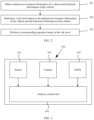
- a vehicle self-protection method includes: obtaining ambient environment information of a vehicle and historical information of the vehicle; determining a risk level based on at least the ambient environment information of the vehicle and the historical information of the vehicle; and performing a corresponding operation based on the risk level.
- the ambient environment information may include information such as a current location of the vehicle, a cabin temperature of the vehicle, an external temperature of the vehicle, a tire pressure of the vehicle, a water immersion depth, or intensity of a sound around the vehicle.
- the historical information of the vehicle includes historical driving information of the vehicle and historical parking information of the vehicle.
- the level of the risk faced by the vehicle can be determined, for example, a low risk level, a medium risk level, and a high risk level.
- a corresponding operation can be performed to avoid a vehicle risk.
- the corresponding operation includes but is not limited to the following. If the risk level is low, a notification is sent to a vehicle owner. If the risk level is high, the vehicle may enable autonomous driving to leave the current location. If the risk level is medium, the vehicle may enable autonomous driving to leave the current location when no response is received from the vehicle owner within a specified time range, or leave the current location under remote control of the vehicle owner.
- a risk level currently faced by the vehicle is determined by comprehensively evaluating the ambient environment information of the vehicle and the historical information of the vehicle, and a corresponding operation is performed based on different risk levels, so that the vehicle can perform a proper operation to avoid a risk faced by the vehicle, so that a property loss and a personal safety hazard can be further avoided.
- the risk level may be comprehensively determined based on information on the cloud, the ambient environment information of the vehicle, and the historical information of the vehicle.
- a cloud is communicatively connected to the vehicle, and the cloud may be, for example, a public cloud, a private cloud, or a hybrid cloud provided by a cloud computing service provider.
- the information on the cloud includes information uploaded by another vehicle to the cloud, related statistical information of a current location of the vehicle, and weather information at a current time. By introducing the information on the cloud, the level of the risk faced by the vehicle can be more accurately evaluated. Risk level determining may be completed on the vehicle end or on the cloud.
- a corresponding operation that may be selected includes but is not limited to: sending a notification to the vehicle owner, leaving the current location under remote control of the vehicle owner, or leaving the current location through autonomous driving. It should be understood that, usually, sending a notification to the vehicle owner is a preliminary warning or corresponds to a low-level risk. However, leaving the current location through autonomous driving corresponds to a high-level risk and a case in which no reply from the vehicle owner is obtained after the notification is sent. If no action is taken, vehicle damage may occur or even personal safety may be threatened.
- a notification is sent to the vehicle owner to notify the vehicle owner of a current location of the vehicle. In this way, the vehicle owner may know the current location of the vehicle.
- a target parking location is determined based on the historical information of the vehicle. For example, a parking area near a residential location or a working location of the vehicle owner may be determined as the target parking location. In this way, after the vehicle owner is notified, it may be convenient for the vehicle owner to get the vehicle.
- the vehicle may upload the ambient environment information of the vehicle, the risk level, and related information of the corresponding operation to the cloud to serve as a training dataset of the cloud, so that a machine learning model on the cloud can obtain more training data, to improve accuracy of determining and prediction.
- a vehicle self-protection system including a plurality of sensors such as a temperature sensor, a tire pressure sensor, a water immersion sensor, a sound sensor; a camera; a global navigation satellite system (Global Navigation Satellite System: GNSS), where the global navigation satellite system currently includes: a global positioning system (Global Position System) of the United States, a Glonass navigation system (GLONASS) of Russia, a Galileo satellite navigation system (Galileo Satellite Navigation System) of Europe, and a BeiDou navigation satellite system (BeiDou Navigation Satellite System) of China and the vehicle self-protection system may include one or more of the foregoing navigation systems; and an analysis control unit communicatively connected to the plurality of sensors, the camera, and the positioning apparatus, where the analysis control unit determines a risk level based on ambient environment information of the vehicle obtained from the plurality of sensors, the camera, and the GNSS and historical information of the vehicle obtained from the vehicle, and performs a corresponding operation
- a vehicle self-protection apparatus including a storage unit and a processing unit, where the storage unit is configured to store program instructions, and the processing unit is configured to execute the program instructions in the storage unit to implement various functions in the first aspect.
- the storage unit may be a memory, for example, a volatile memory, and is configured to cache these program instructions. These program instructions may be loaded from another non-volatile memory to the storage unit when the method provided in the first aspect is performed.
- the storage unit may alternatively be a non-volatile memory, and is also integrated inside a chip.
- the processing unit may be a processor, for example, one or more processing cores of the chip.
- a computer-readable storage medium stores program code.
- the program code is executed by a computer or a processor, various functions in the first aspect can be implemented.
- an autonomous driving vehicle including the vehicle self-protection system in the second aspect.
- Embodiments of this application provide a vehicle self-protection method and system, and an autonomous driving vehicle using the system.
- a level of a risk faced by a vehicle is determined by obtaining and analyzing ambient environment information of the vehicle and historical information of the vehicle, and a corresponding operation is performed based on the risk level.
- the corresponding operation may include: notifying a vehicle owner; leaving the current location under remote control of the vehicle owner when a remote control command from the vehicle owner is obtained; or leaving the current location through autonomous driving, and notifying the vehicle owner of a current location of the vehicle after the autonomous driving is completed.
- the vehicle when a vehicle faces an actual environment danger, the vehicle can independently perform a corresponding protection measure, so that property of an owner can be protected and a personal safety threat can be reduced.
- FIG. 1 is a functional block diagram of a vehicle according to an embodiment of this application.
- the vehicle 100 is configured to be in a fully autonomous driving mode or a partially autonomous driving mode.
- the vehicle 100 may further determine a current situation of the vehicle and an ambient environment of the vehicle through manual operations, determine a possible behavior of at least one vehicle in the ambient environment, determine a confidence level corresponding to a possibility that another vehicle is going to execute a possible behavior, and control the vehicle 100 based on the determined information.
- the vehicle 100 may be configured to operate without interacting with a person.
- the vehicle 100 may include various subsystems, for example, a travel system 102, a sensor system 104, a control system 106, one or more peripheral devices 108, a power supply 110, a computer system 112, and a user interface 116.
- the vehicle 100 may include more or fewer subsystems, and each subsystem may include a plurality of elements.
- all the subsystems and elements of the vehicle 100 may be interconnected in a wired or wireless manner.
- the travel system 102 may include a component providing power to the vehicle 100 for moving.
- the travel system 102 may include an engine 118, an energy source 119, a transmission apparatus 120, and wheels/tires 121.
- the engine 118 may be an internal combustion engine, an electric motor, an air compression engine, or a combination of other types of engines, for example, a hybrid engine including a gasoline engine and an electric motor, or a hybrid engine including an internal combustion engine and an air compression engine.
- the engine 118 converts the energy source 119 into mechanical energy.
- Examples of the energy source 119 include gasoline, diesel, other oil-based fuels, propane, other compressed gas-based fuels, ethanol, solar panels, batteries, and other power sources.
- the energy source 119 may also provide energy to another system of the vehicle 100.
- the transmission apparatus 120 may transmit mechanical power from the engine 118 to the wheels 121.
- the transmission apparatus 120 may include a gearbox, a differential, and a drive shaft.
- the transmission apparatus 120 may further include another component, for example, a clutch.
- the drive shaft may include one or more shafts that may be coupled to one or more wheels 121.
- the sensor system 104 may include several sensors that can sense information about the ambient environment of the vehicle 100.
- the sensor system 104 may include a positioning system 122 (for example, may be any one or more of a GPS system, a BeiDou system, a Galileo system, and a GLONASS system), an inertial measurement unit (inertial measurement unit, IMU) 124, radar 126, a laser rangefinder 128, and a camera 130.
- the sensor system 104 may further include a sensor (for example, an in-vehicle air quality monitor, a fuel gauge, or an engine oil thermometer) of an internal system of the monitored vehicle 100. Sensor data from one or more of these sensors can be used to detect an object and corresponding features (a position, a shape, a direction, a speed, and the like) of the object. Such detection and recognition are key functions of a safe operation of the autonomous vehicle 100.
- the positioning system 122 may be configured to estimate a geographic location of the vehicle 100.
- the IMU 124 is configured to sense location and orientation changes of the vehicle 100 based on an inertial acceleration.
- the IMU 124 may be a combination of an accelerometer and a gyroscope.
- the radar 126 may sense an object in the ambient environment of the vehicle 100 through a radio signal. In some embodiments, in addition to sensing an object, the radar 126 may further be configured to sense a speed and/or a moving direction of the object.
- the laser rangefinder 128 may sense, by using a laser, an object in an environment in which the vehicle 100 is located.
- the laser rangefinder 128 may include one or more laser sources, a laser scanner, one or more detectors, and another system component.
- the camera 130 may be configured to capture a plurality of images of the ambient environment of the vehicle 100.
- the camera 130 may be a static camera or a video camera.
- the control system 106 controls operations of the vehicle 100 and components of the vehicle 100.
- the control system 106 may include various elements, including a steering system 132, a throttle 134, a braking unit 136, a computer vision system 140, a route control system 142, and an obstacle avoidance system 144.
- the steering system 132 may be operated to adjust a moving direction of the vehicle 100.
- the steering system 132 may be a steering wheel system.
- the throttle 134 is configured to control an operating speed of the engine 118 and further control a speed of the vehicle 100.
- the braking unit 136 is configured to control the vehicle 100 to decelerate.
- the braking unit 136 may use friction to slow down the wheels 121.
- the braking unit 136 may convert kinetic energy of the wheels 121 into a current.
- the braking unit 136 may reduce a rotational speed of the wheels 121 in another form to control the speed of the vehicle 100.
- the computer vision system 140 may be operated to process and analyze an image captured by the camera 130, to recognize an object and/or a feature in the ambient environment of the vehicle 100.
- the object and/or the feature may include a traffic signal, a road boundary, and an obstacle.
- the computer vision system 140 may use an object recognition algorithm, a structure from motion (structure from motion, SFM) algorithm, video tracking, and another computer vision technology.
- the computer vision system 140 may be configured to draw a map for an environment, track an object, estimate a speed of the object, and the like.
- the route control system 142 is configured to determine a driving route of the vehicle 100.
- the route control system 142 may combine data from the sensor, the global positioning system (global positioning system, GPS) 122, and one or more predetermined maps to determine the driving route of the vehicle 100.
- the global positioning system global positioning system, GPS
- the obstacle avoidance system 144 is configured to identify, evaluate, and avoid or bypass, in another manner, a potential obstacle in the environment of the vehicle 100.
- control system 106 may add or alternatively include components in addition to those shown and described. Alternatively, the control system 106 may remove some of the components shown above.
- the vehicle 100 interacts with an external sensor, another vehicle, another computer system, or a user by using the peripheral device 108.
- the peripheral device 108 may include a wireless communications system 146, a vehicle-mounted computer 148, a microphone 150, and/or a speaker 152.
- the peripheral device 108 provides a means for a user of the vehicle 100 to interact with the user interface 116.
- the vehicle-mounted computer 148 may provide information to the user of the vehicle 100.
- the user interface 116 may further operate the vehicle-mounted computer 148 to receive an input from the user.
- the vehicle-mounted computer 148 may perform an operation by using a touchscreen.
- the peripheral device 108 may provide a means for the vehicle 100 to communicate with another device located in the vehicle.
- the microphone 150 may receive audio (for example, a voice command or another audio input) from the user of the vehicle 100.
- the speaker 152 may output audio to the user of the vehicle 100.
- the wireless communications system 146 may wirelessly communicate with one or more devices directly or through a communications network.
- the wireless communications system 146 may use 3G cellular communication such as code division multiple access (code division multiple access, CDMA), EVD0, global system for mobile communications (global system for mobile communications, GSM)/general packet radio service (general packet radio service, GPRS), or 4G cellular communication such as LTE, or 5G cellular communication.
- the wireless communications system 146 may communicate with a wireless local area network (wireless local area network, WLAN) by using wireless fidelity (wireless fidelity, Wi-Fi).
- the wireless communications system 146 may directly communicate with a device by using an infrared link, Bluetooth, or a ZigBee (ZigBee) protocol.
- ZigBee ZigBee
- wireless protocols for example, various vehicle communications systems, such as the wireless communications system 146, may include one or more dedicated short range communications (dedicated short range communications, DSRC) devices, and these devices may include public and/or private data communication between the vehicle and/or roadside stations.
- DSRC dedicated short range communications
- the power supply 110 may provide power to various components of the vehicle 100.
- the power supply 110 may be a rechargeable lithium-ion or lead-acid battery.
- One or more battery packs of such batteries may be configured as the power supply to supply power to the components of the vehicle 100.
- the power supply 110 and the energy source 119 may be implemented together, for example, in some pure electric vehicles.
- the computer system 112 may include at least one processor 113.
- the processor 113 executes instructions 115 stored in a non-transient computer-readable medium such as a data storage apparatus 114.
- the computer system 112 may alternatively be a plurality of computing devices that control an individual component or a subsystem of the vehicle 100 in a distributed manner.
- the processor 113 may be any conventional processor, such as a commercially available central processing unit (central processing unit, CPU).
- the processor may be an application-specific integrated circuit (application-specific integrated circuit, ASIC) for specialized applications or another dedicated device such as a hardware-based processor.
- a person of ordinary skill in the art should understand that the processor, the computer, or the memory may actually include a plurality of processors, computers, or memories that may or may not be stored in a same physical housing.
- the memory may be a hard disk drive or another storage medium located in a housing different from that of the computer.
- a reference to the processor or the computer includes a reference to a set of processors or computers or memories that may or may not operate in parallel.
- some components such as a steering component and a deceleration component, each may include a respective processor that performs only computation related to a component-specific function.
- the processor may be located far away from the vehicle and communicate wirelessly with the vehicle.
- some processes described herein are performed on a processor disposed inside the vehicle, while others are performed by a remote processor, including taking steps necessary for single manipulation.
- the data storage apparatus 114 may include the instructions 115 (for example, program logic), and the instructions 115 may be executed by the processor 113 to perform various functions of the vehicle 100, including the functions described above.
- the data storage apparatus 114 may further include additional instructions, including instructions for sending data to, receiving data from, interacting with, and/or controlling one or more of the travel system 102, the sensor system 104, the control system 106, and the peripheral device 108.
- the data storage apparatus 114 may further store data, such as a road map, route information, a location, a direction, a speed, and other vehicle data of the vehicle, and other information. Such information may be used by the vehicle 100 and the computer system 112 when the vehicle 100 operates in an autonomous mode, a semi-autonomous mode, and/or a manual mode.
- the user interface 116 is used to provide information for or receive information from the user of the vehicle 100.
- the user interface 116 may include one or more input/output devices in a set of peripheral devices 108, for example, the wireless communications system 146, the vehicle-mounted computer 148, the microphone 150, and the speaker 152.
- the computer system 112 may control functions of the vehicle 100 based on input received from various subsystems (for example, the travel system 102, the sensor system 104, and the control system 106) and from the user interface 116. For example, the computer system 112 may access and use input from the control system 106 to control the steering unit 132 to avoid an obstacle detected by the sensor system 104 and the obstacle avoidance system 144. In some embodiments, the computer system 112 may be operated to provide control over many aspects of the vehicle 100 and the subsystems of the vehicle 100.
- various subsystems for example, the travel system 102, the sensor system 104, and the control system 106
- the computer system 112 may access and use input from the control system 106 to control the steering unit 132 to avoid an obstacle detected by the sensor system 104 and the obstacle avoidance system 144.
- the computer system 112 may be operated to provide control over many aspects of the vehicle 100 and the subsystems of the vehicle 100.
- one or more of the foregoing components may be installed separately from or associated with the vehicle 100.
- the data storage apparatus 114 may exist partially or completely separate from the vehicle 100.
- the foregoing components may be communicatively coupled together in a wired and/or wireless manner.
- the foregoing components are merely examples. In actual application, components in the foregoing modules may be added or deleted based on an actual requirement. FIG. 4 should not be understood as any limitation on embodiments of this application.
- An autonomous vehicle traveling on a road may identify an object in an ambient environment of the vehicle 100 to determine to adjust a current speed.
- the object may be another vehicle, a traffic control device, or another object of another type.
- the autonomous vehicle may separately consider each identified obstacle, and determine an adjusted speed of the autonomous vehicle (this autonomous vehicle) based on characteristics of each identified obstacle such as a current speed, an acceleration, and a distance between the autonomous vehicle and the obstacle.
- the autonomous vehicle 100 or a computing device associated with the autonomous vehicle 100 may predict a behavior of an identified obstacle based on characteristics of the identified obstacle and statuses of the ambient environment (for example, traffic, rain, or ice on the road).
- each of the identified obstacles depends on a behavior of each other, and therefore a behavior of a single identified obstacle may be predicted by considering behavior of all identified obstacles.
- the vehicle 100 can adjust its speed based on the predicted behavior of the identified object.
- the autonomous vehicle can determine, based on the predicted behavior of the object, a specific adjustment (for example, acceleration, deceleration, or stop).
- another factor for example, a transverse location of the vehicle 100 on a road on which the vehicle 100 moves, a curvature of the road, or proximity between static and dynamic objects, may also be considered, to determine the speed of the vehicle 100.
- the computing device may further provide an instruction for modifying a steering angle of the vehicle 100, so that the autonomous vehicle can follow a given track and/or maintain safe horizontal and vertical distances from an obstacle (for example, a vehicle in a neighboring lane on the road) near the autonomous vehicle.
- an obstacle for example, a vehicle in a neighboring lane on the road
- the vehicle 100 may be a car, a truck, a motorcycle, a bus, a boat, an airplane, a helicopter, a lawn mower, a recreational vehicle, a playground vehicle, a construction device, a trolley, a golf cart, a train, a handcart, or the like. This is not specifically limited in this embodiment of this application.
- FIG. 2 is a schematic flowchart of a vehicle self-protection method according to an embodiment of this application. The method includes the following steps.
- the ambient environment information of the vehicle may include: a location of the vehicle (the location may be obtained by using, for example, a GNSS), a cabin temperature of the vehicle, an external temperature of the vehicle, a tire pressure of the vehicle, whether the vehicle is in a water accumulation area, a depth of water accumulation around the vehicle if the vehicle is in a water accumulation area, intensity of a sound around the vehicle, image and video information around the vehicle, and the like.
- a location of the vehicle the location may be obtained by using, for example, a GNSS
- a cabin temperature of the vehicle the vehicle is obtained by using, for example, a GNSS
- an external temperature of the vehicle a tire pressure of the vehicle
- whether the vehicle is in a water accumulation area a depth of water accumulation around the vehicle if the vehicle is in a water accumulation area
- intensity of a sound around the vehicle image and video information around the vehicle, and the like.
- the ambient environment information of the vehicle is generally information obtained when the vehicle is parked statically.
- the historical driving information of the vehicle may include a driving record of the vehicle in a time period (for example, one week).
- the historical parking information of the vehicle may include parking information of the vehicle in a time period (for example, one week). For example, a vehicle departs from a residential location of a vehicle owner at about 8:00 a.m. every day from Monday to Friday, travels to a parking lot of a working location of the vehicle owner, parks in the parking lot of the working location for about 10 hours, and then travels back to the residential location of the vehicle owner at about 6:00 p.m. from the working location of the vehicle owner.
- a risk level based on the ambient environment information of the vehicle and the historical information of the vehicle. After the ambient environment information of the vehicle and the historical information of the vehicle are obtained, a risk of the environment in which the vehicle is currently located may be determined based on the information. For example, if the vehicle is currently parked in a high-temperature environment, the vehicle may face a risk of tire burst. For another example, if the vehicle is currently parked in a water accumulation area, the accumulated water is deep, and it is still raining, the vehicle may face a risk of being flooded.
- the vehicle may be in an environment in which fireworks and firecrackers are set off, and the vehicle may face a risk of being ignited by fireworks and firecrackers.
- the vehicle is a pure electric vehicle and the vehicle is in a high-temperature environment for a long time, a battery of the vehicle may have a risk of spontaneous combustion due to overheating.
- a voltage of a battery pack of the pure electric vehicle is usually high and if the battery pack encounters water immersion, electricity leakage may occur, and personal safety of people around the vehicle may be threatened.
- Historical information of a vehicle should be considered to evaluate a risk level.
- the information may include whether the parking lot at the working location is an open parking lot (which may be obtained by analyzing an image obtained by a camera of the vehicle) and whether the vehicle owner parks the vehicle for a long time every day. If the parking lot is an open parking lot, the vehicle (or a battery of the vehicle) is prone to encounter self-ignition due to overheating when the vehicle is parked in the open parking lot for a long time in summer.
- the determined risk level may include: a low risk level, a medium risk level, and a high risk level.
- Logic for determining the risk level may be formulated in advance according to a rule, or may be obtained based on big data learning by using, for example, a machine learning method.
- Some examples of risk level determining scenarios may include but are not limited to: if a vehicle is currently in a high-temperature environment, but a tire pressure of the vehicle is not high and a current time is close to the evening, it may be determined that a risk of tire burst of the vehicle is low; or if the vehicle is currently in a high-temperature environment, and the tire pressure of the vehicle is very high and a current time is at noon, it may be determined that a risk of tire burst of the vehicle is high.
- the corresponding operation may include: sending a notification to a vehicle owner, leaving a current location under remote control of the vehicle owner, or leaving the current location through autonomous driving. Details are described below.
- an alarm notification may be sent to the vehicle owner, and the alarm notification may be sent to a mobile phone of the vehicle owner.
- the vehicle may send an alarm notification to the mobile phone of the vehicle owner, or an alarm notification may be sent to the mobile phone of the vehicle owner through a cloud.
- the vehicle owner may determine, based on an alarm status, an operation to be performed or choose to ignore the notification. If the vehicle is a vehicle with an autonomous driving function, the vehicle owner may choose to remotely control the vehicle to leave the current location.
- the vehicle may face a very high vehicle loss risk if the vehicle does not move away from the current location as soon as possible.
- the vehicle may enable the autonomous driving function to leave the current location, or leave the current location under control of the cloud by sending instructions.
- the vehicle owner may also send a location of the vehicle owner to the vehicle, and the vehicle moves to the location of the vehicle owner through autonomous driving.
- a permission needs be obtained in a form of authorization by the vehicle owner.
- the vehicle may leave the current location through autonomous driving.
- the permission may be one-time, or may be valid within a period of time.
- historical information of the vehicle may be further used.
- the vehicle may enable an autonomous driving function and select a parking location included in the historical information of the vehicle as a destination, for example, may select a parking lot near a residential location or a working location of the vehicle owner as the destination.
- a speed limiting measure is taken on the vehicle.
- a vehicle speed may be limited to less than 30 km/h, to reduce a risk.
- a pure electric vehicle because a voltage of a power battery pack of the vehicle is high, a person or an animal around the vehicle may encounter an electric shock and face a life hazard if the vehicle is immersed in water. Therefore, for a pure electric vehicle, if it is determined that a risk level of water immersion is medium, and no reply or feedback from the vehicle owner is obtained within a short time range (for example, 30 minutes), the vehicle may enable an autonomous driving function to leave the current location. However, if a determined risk level of tire burst is medium, and no reply or feedback from the vehicle owner is obtained within a short time range (for example, 30 minutes), the vehicle does not need to enable an autonomous driving function to leave the current location immediately.
- the vehicle may communicate with a cloud, the ambient environment information of the vehicle and the historical information of the vehicle may be transmitted to the cloud, and the information on the cloud may also be transmitted to the vehicle. Therefore, the vehicle may obtain the ambient environment information and the information on the cloud.
- the information on the cloud includes but is not limited to:
- the information on the cloud may be transmitted to the vehicle, and the vehicle may determine a risk based on the ambient environment information of the vehicle, the historical information of the vehicle, and the obtained information from the cloud. Because the information on the cloud is available, a risk level can be evaluated more accurately. For example, the foregoing example is used again. If a vehicle is currently in a high-temperature environment, but a tire pressure of the vehicle is already very high and a current time is at noon, it may be determined that a risk of tire burst of the vehicle is high based on only these pieces of information.
- the information on the cloud includes a weather condition, and the weather condition shows that there is a high probability of rainfall at a location of the vehicle in the next two hours, it may be determined that the risk of tire burst of the vehicle is medium.
- more scenario-based evaluations may be further performed on the level of the risk faced by the vehicle based on the ambient environment information of the vehicle, the historical information of the vehicle, and the information on the cloud. For example, if the historical information of the vehicle shows that the vehicle is parked at a fixed parking location for a long time (for example, from 8:00 p.m. to 12:00 p.m.) every Saturday night in the past month, when the vehicle is parked at this location on Saturday night, related statistical information of the current location of the vehicle on the cloud shows that a public security situation near the location is poor recently, and there are many vehicle theft cases, it can be determined that the vehicle is currently facing a high-level risk of being stolen.
- the vehicle may upload the obtained ambient environment information and historical information of the vehicle to the cloud.
- the cloud determines, based on the ambient environment information of the vehicle, the level of the risk faced by the vehicle. After the cloud completes evaluation, the cloud transmits the risk level to the vehicle by using a communications network.
- the vehicle may upload the obtained ambient environment information and historical information of the vehicle to the cloud, and the cloud comprehensively determines the level of the risk faced by the vehicle with reference to the ambient environment information of the vehicle and the information on the cloud.
- the cloud may evaluate, based on big data analysis by using a machine learning method or the like, the level of the risk currently faced by the vehicle, and transmit the risk level to the vehicle by using a communications network after the cloud completes the evaluation.
- the alarm notification sent to the vehicle owner may include a picture or a video that is of the ambient environment of the vehicle and that is obtained based on a camera.
- the vehicle owner may learn a current situation of the vehicle based on the picture and the video of the ambient environment of the vehicle, and may have an objective determining basis for the alarm notification.
- the vehicle may upload the ambient environment information of the vehicle, the risk level, and related information of the corresponding operation to the cloud to serve as a training dataset of the cloud, so that a machine learning model on the cloud can obtain more training data, to improve accuracy of determining and prediction.
- privacy-related data is encrypted and filtered when the information in the foregoing embodiments is uploaded to the cloud.
- the vehicle is a pure electric vehicle.
- the risk level is determined based on the ambient environment information of the vehicle. After the ambient environment information of the vehicle is obtained, if the ambient environment of the vehicle is rainy and there is a large amount of accumulated water around the vehicle, it is determined that the vehicle faces a medium risk.
- the medium risk has two meanings. First, a battery and an electrical system of the vehicle may be damaged due to water immersion. Second, a high-voltage part of a battery pack of the pure electric vehicle (a voltage of the battery pack of the pure electric vehicle is usually high, about hundreds of volts) may cause electricity leakage due to water immersion, which further threatens the safety of life bodies (humans or animals) near the vehicle.
- the pure electric vehicle may perform one or more of the following operations: (1) Sending a warning to the surroundings in a form of flash or sound, indicating that the surroundings of the vehicle are dangerous areas and should be avoided; (2) Sending a notification to a traffic management department to notify the (medium) potential risk of the vehicle; (3) Sending a notification to the vehicle owner to notify that immediate action should be taken to avoid risks.
- the pure electric vehicle After the pure electric vehicle performs one or more of the foregoing operations, for example, performs (3), if no reply or remote control vehicle moving instruction is received from the vehicle owner within a predetermined time range (for example, half an hour), and the pure electric vehicle is still in a rainy environment, the pure electric vehicle raises a risk level to a high level, and enables an autonomous driving function to leave the current environment.
- the vehicle When determining a destination parking location, the vehicle preferably selects, based on map information, a non-open parking lot such as an indoor parking lot or an underground parking lot. The selected parking lot may be determined based on the historical information of the vehicle stored in the vehicle. For example, an underground parking lot of a community in which the owner's family is living may be selected.
- an underground parking lot of a shopping mall near the community in which the owner's family is living may be selected.
- the vehicle sends a notification to the vehicle owner to notify the vehicle owner of a current location of the vehicle.
- the vehicle performs (2) and (3) and does not receive a reply or a remote control vehicle moving instruction from the vehicle owner within a predetermined time range (for example, 20 minutes)
- the vehicle further sends a request to the traffic management department, notifying the traffic management department that the potential risk faced by the vehicle is a high level risk, and requesting the traffic management department to contact the vehicle owner.
- the vehicle If the vehicle does not receive a reply from the traffic management department or a reply from the vehicle owner within a predetermined time range (for example, 10 minutes) after sending the request to the traffic management department, the vehicle further performs the foregoing autonomous driving process to leave the current location and search for a proper destination parking location.
- a predetermined time range for example, 10 minutes
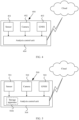
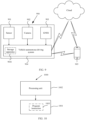
- FIG. 3 shows a vehicle self-protection system 300 based on some embodiments.
- the vehicle self-protection system 300 may be a vehicle-mounted system.
- the vehicle self-protection system 300 includes: a sensor 301, where the sensor may include a temperature sensor, a tire pressure sensor, a water immersion sensor, a sound sensor, and the like; a camera 302, where there may be a plurality of cameras; a GNSS 303; and an analysis control unit 304 communicatively connected to the sensor 301, the camera 302, and the GNSS 303.
- the sensor 301 is configured to obtain temperature information, tire pressure information, water immersion information, and sound information of the vehicle.
- the camera is configured to obtain image and video information inside and outside the vehicle.
- the GNSS is configured to obtain location information of the vehicle.
- information obtained by the sensor 301, the camera 302, and the GNSS 303 may be transmitted to the analysis control unit 304.
- the analysis control unit 304 may further obtain historical information of the vehicle from the vehicle (for example, obtain the historical information from a storage apparatus disposed on the vehicle to record a historical behavior of the vehicle). After obtaining the foregoing ambient environment information of the vehicle and/or historical information of the vehicle, the analysis control unit 304 may evaluate a current risk level of the vehicle either individually or in combination with these pieces of information. The evaluation process is consistent with various implementations in step 202. After the evaluation is completed, the analysis control unit may further perform an operation corresponding to the risk level.
- a vehicle self-protection system 400 that is the same as that in the embodiment shown in FIG. 3 may communicate with a cloud.
- Information for example, current location information of the vehicle and/or historical information of the vehicle
- the vehicle may obtain the ambient environment information, the historical information of the vehicle, and the information on the cloud.
- Both the vehicle and the cloud may determine the risk level based on the foregoing information (including the current location information of the vehicle, the historical information of the vehicle, and the information on the cloud).
- a process in which the vehicle interacts with the cloud and a process in which the risk level is determined are consistent with the implementations recorded in step 202.
- the analysis control unit or the cloud may further perform an operation corresponding to the risk level.
- a vehicle self-protection system 500 further includes a storage apparatus 5041 disposed on an analysis control unit 504.
- the storage apparatus 5041 may store historical information of the vehicle.
- the vehicle self-protection system 500 shown in FIG. 5 may implement a function consistent with that of the vehicle self-protection system 400 in the foregoing embodiment.
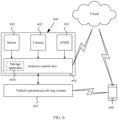
- a vehicle self-protection system 600 is communicatively connected to an autonomous driving system 605.
- the autonomous driving system 605 is communicatively connected to a mobile phone 606 of the vehicle owner, and the vehicle self-protection system 600 or the cloud may send risk level information of the vehicle to the mobile phone 606 of the vehicle owner.
- the vehicle self-protection system 600 may perform a corresponding operation based on the risk level.
- the corresponding operation is consistent with various implementations recorded in step 203.
- the autonomous driving operation of the vehicle may be performed by the autonomous driving system 605.
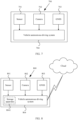
- a vehicle self-protection system 700 includes: a sensor 701, where the sensor may include a temperature sensor, a tire pressure sensor, a water immersion sensor, a sound sensor, and the like; a camera 702, where there may be a plurality of cameras; a GNSS 703; and an autonomous driving system 704 communicatively connected to the sensor 701, the camera 702, and the GNSS 703.
- the sensors 701 are configured to obtain temperature information, tire pressure information, water immersion information, and sound information of the vehicle.
- the camera is configured to obtain image and video information inside and outside the vehicle.
- the GNSS is configured to obtain location information of the vehicle.
- the ambient environment information of the vehicle obtained by the sensor 701, the camera 702, and the GNSS 703 may be transmitted to an autonomous driving system 704.
- the autonomous driving system 704 may further obtain historical information of the vehicle from the vehicle (for example, obtain from a storage apparatus disposed on the vehicle to record a historical behavior of the vehicle).
- the autonomous driving system 704 determines a current risk level of the vehicle based on the obtained ambient environment information of the vehicle and/or the historical information of the vehicle, and performs a corresponding operation based on the risk level.
- the determining of the risk level and the corresponding operation are basically the same as the processes described in embodiments of step 202.
- a vehicle self-protection system 800 that is the same as the vehicle self-protection system 700 in FIG. 7 may communicate with the cloud.
- Information for example, current location information of the vehicle and/or historical information of the vehicle
- a process in which the vehicle self-protection system 800 interacts with the cloud and a process in which the risk level is determined are consistent with the implementations recorded in step 202.
- the autonomous driving system of the vehicle or the cloud may further perform an operation corresponding to the risk level.
- the determining of the risk level and the corresponding operation are basically the same as the processes described in embodiments of step 202.
- a vehicle self-protection system 900 is communicatively connected to a mobile phone 905 of the vehicle owner.
- the vehicle or the cloud may send risk level information of the vehicle to the mobile phone 905 of the vehicle owner.
- the vehicle self-protection system 900 may perform a corresponding operation based on the risk level.
- the corresponding operation is consistent with various implementations recorded in step 203.
- an autonomous vehicle is provided.
- the autonomous vehicle may include the vehicle self-protection system provided in the foregoing embodiments, and implement functions implemented in the foregoing embodiments.
- a vehicle self-protection apparatus 1000 is provided.
- the vehicle self-protection apparatus 1000 includes a storage unit 1001 and a processing unit 1002.
- the storage unit 1001 is configured to store program instructions 1003, and the processing unit 1002 is configured to execute the program instructions 1003 in the storage unit 1001 to implement functions implemented in the foregoing embodiments.
- a computer-readable storage medium stores program code.
- the program code is executed by a computer or a processor, various functions in the foregoing embodiments can be implemented.
- the computer-readable storage medium may be the storage unit 1001 shown in FIG. 10 .
- Embodiments of this application provide a vehicle self-protection method and system, and an autonomous driving vehicle.
- a level of a risk faced by a vehicle is determined by obtaining and analyzing ambient environment information of the vehicle and historical information of the vehicle, and a corresponding operation is performed based on the risk level.
- the corresponding operation may include: notifying a vehicle owner; leaving the current location under remote control of the vehicle owner when a remote control command from the vehicle owner is obtained; or leaving the current location through autonomous driving when the vehicle owner cannot be reached, and notifying the vehicle owner of a current location of the vehicle after the autonomous driving is completed.
- the vehicle when a vehicle faces an actual environment danger, the vehicle can independently perform a corresponding protection measure, so that property of an owner can be protected and a personal safety threat in some cases can be reduced.
- the technical solutions of this application have positive significance for property and personal protection in a trend of autonomous driving and electrification.
- safety of the battery pack is greatly affected by an environment.
- the battery pack is prone to spontaneous combustion in a case of overheat, and electricity leakage may occur in the battery pack when the vehicle is immersed in water.
- the technical solutions of this application can better prevent risks that may occur in the battery pack in various environments, to reduce a property loss and a personal safety risk, and have a positive effect on promotion and popularization of autonomous driving.
- the disclosed system, apparatus, and method may be implemented in another manner.
- the described apparatus embodiments are merely examples.
- division into units is merely logical service division and may be other division during actual implementation.
- a plurality of units or components may be combined or integrated into another system, or some features may be ignored or not performed.
- the displayed or discussed mutual couplings or direct couplings or communication connections may be implemented through some interfaces.
- the indirect couplings or communication connections between the apparatuses or the units may be implemented in electrical, mechanical, or other forms.
- the units described as separate parts may or may not be physically separate, and parts displayed as units may or may not be physical units, may be located in one location, or may be distributed on a plurality of network units. Some or all of the units may be selected based on actual requirements to achieve the objective of the solutions of embodiments.
- service units in embodiments of this application may be integrated into one processing unit, or each of the units may exist alone physically, or two or more units may be integrated into one unit.
- the integrated unit may be implemented in a form of hardware, or may be implemented in a form of a software service unit.
- the integrated unit When the integrated unit is implemented in a form of a software service unit and sold or used as an independent product, the integrated unit may be stored in a computer-readable storage medium.
- the computer software product is stored in a storage medium, and includes several instructions for instructing a computer device (which may be a personal computer, a server, or a network device) to perform all or some of the steps of the methods described in embodiments of this application.
- the storage medium includes any medium that can store program code, such as a USB flash drive, a removable hard disk, a read-only memory (ROM, Read-Only Memory), a random access memory (RAM, Random Access Memory), a magnetic disk, or an optical disc.
- the services described in this application may be implemented by hardware, software, firmware, or any combination thereof.
- the foregoing services may be stored in a computer-readable medium or transmitted as one or more instructions or code in the computer-readable medium.
- the computer-readable medium includes a computer storage medium and a communications medium.
- the communications medium includes any medium that enables a computer program to be transmitted from one place to another place.
- the storage medium may be any available medium accessible to a general-purpose computer or a special-purpose computer.
Landscapes
- Engineering & Computer Science (AREA)
- Automation & Control Theory (AREA)
- Transportation (AREA)
- Mechanical Engineering (AREA)
- Physics & Mathematics (AREA)
- Human Computer Interaction (AREA)
- Radar, Positioning & Navigation (AREA)
- Aviation & Aerospace Engineering (AREA)
- Remote Sensing (AREA)
- General Physics & Mathematics (AREA)
- Mathematical Physics (AREA)
- Business, Economics & Management (AREA)
- Health & Medical Sciences (AREA)
- Artificial Intelligence (AREA)
- Evolutionary Computation (AREA)
- Game Theory and Decision Science (AREA)
- Medical Informatics (AREA)
- Traffic Control Systems (AREA)
Priority Applications (1)
| Application Number | Priority Date | Filing Date | Title |
|---|---|---|---|
| EP24196131.7A EP4494967A3 (de) | 2020-05-11 | 2020-05-11 | Verfahren und system zum selbstschutz eines fahrzeugs und autonom fahrendes fahrzeug mit system |
Applications Claiming Priority (1)
| Application Number | Priority Date | Filing Date | Title |
|---|---|---|---|
| PCT/CN2020/089523 WO2021226773A1 (zh) | 2020-05-11 | 2020-05-11 | 一种车辆自我保护方法、系统以及包括该系统的自动驾驶车辆 |
Related Child Applications (1)
| Application Number | Title | Priority Date | Filing Date |
|---|---|---|---|
| EP24196131.7A Division EP4494967A3 (de) | 2020-05-11 | 2020-05-11 | Verfahren und system zum selbstschutz eines fahrzeugs und autonom fahrendes fahrzeug mit system |
Publications (4)
| Publication Number | Publication Date |
|---|---|
| EP4145416A1 true EP4145416A1 (de) | 2023-03-08 |
| EP4145416A4 EP4145416A4 (de) | 2023-07-05 |
| EP4145416C0 EP4145416C0 (de) | 2024-08-28 |
| EP4145416B1 EP4145416B1 (de) | 2024-08-28 |
Family
ID=76384127
Family Applications (2)
| Application Number | Title | Priority Date | Filing Date |
|---|---|---|---|
| EP24196131.7A Pending EP4494967A3 (de) | 2020-05-11 | 2020-05-11 | Verfahren und system zum selbstschutz eines fahrzeugs und autonom fahrendes fahrzeug mit system |
| EP20935317.6A Active EP4145416B1 (de) | 2020-05-11 | 2020-05-11 | Verfahren und system zum selbstschutz eines fahrzeugs und autonom fahrendes fahrzeug mit system |
Family Applications Before (1)
| Application Number | Title | Priority Date | Filing Date |
|---|---|---|---|
| EP24196131.7A Pending EP4494967A3 (de) | 2020-05-11 | 2020-05-11 | Verfahren und system zum selbstschutz eines fahrzeugs und autonom fahrendes fahrzeug mit system |
Country Status (4)
| Country | Link |
|---|---|
| US (1) | US12337871B2 (de) |
| EP (2) | EP4494967A3 (de) |
| CN (1) | CN113015667B (de) |
| WO (1) | WO2021226773A1 (de) |
Families Citing this family (12)
| Publication number | Priority date | Publication date | Assignee | Title |
|---|---|---|---|---|
| US11926282B2 (en) * | 2021-03-16 | 2024-03-12 | Ford Global Technologies, Llc | Systems and methods for random vehicle movement for vehicle safety |
| CN113753030A (zh) * | 2021-09-17 | 2021-12-07 | 北京百度网讯科技有限公司 | 用于泊车的方法、装置、电子设备和介质 |
| US11807050B2 (en) | 2021-11-24 | 2023-11-07 | Here Global B.V. | Apparatus and methods for predicting locations inducing tire pressure changes |
| CN116453365A (zh) * | 2022-01-07 | 2023-07-18 | 广州小鹏汽车科技有限公司 | 反馈方法、车辆及计算机可读存储介质 |
| CN114915971B (zh) * | 2022-04-08 | 2024-08-13 | 北京集度科技有限公司 | 车辆控制方法、装置、存储介质及车辆 |
| CN114604199A (zh) * | 2022-04-08 | 2022-06-10 | 中国第一汽车股份有限公司 | 一种车辆保护系统及方法 |
| CN116101319A (zh) * | 2022-12-05 | 2023-05-12 | 小米汽车科技有限公司 | 车辆控制方法、装置、车辆及存储介质 |
| DE102022132551A1 (de) | 2022-12-07 | 2024-06-13 | Audi Aktiengesellschaft | Steuereinrichtung und Verfahren zum Einleiten einer Reaktion auf einen Fehlerzustand eines Hochvoltbordnetzes eines Kraftfahrzeugs |
| CN116153018A (zh) * | 2022-12-27 | 2023-05-23 | 安徽江淮汽车集团股份有限公司 | 基于超算平台的车辆涉水预警方法 |
| US20250153537A1 (en) * | 2023-11-10 | 2025-05-15 | Deere & Company | Systems and methods for cab noise level reduction using object intelligence detection |
| CN119348786B (zh) * | 2024-12-19 | 2025-03-28 | 河北鑫业船务有限公司 | 一种基于船舶智能机器人的信息提醒方法及系统 |
| CN119636637A (zh) * | 2025-01-03 | 2025-03-18 | 中国重汽集团济南动力有限公司 | 车辆燃油防盗方法、装置、设备、介质及产品 |
Family Cites Families (37)
| Publication number | Priority date | Publication date | Assignee | Title |
|---|---|---|---|---|
| TWI253420B (en) * | 2004-05-24 | 2006-04-21 | Sin Etke Technology Co Ltd | Wireless identification vehicle burglar-alarm system |
| DE102005042079B4 (de) * | 2004-09-06 | 2013-12-24 | Denso Corporation | Antidiebstahlsystem für Fahrzeuge |
| JP4403985B2 (ja) * | 2005-02-22 | 2010-01-27 | トヨタ自動車株式会社 | 車両遠隔操作装置 |
| US8606512B1 (en) * | 2007-05-10 | 2013-12-10 | Allstate Insurance Company | Route risk mitigation |
| CN201405780Y (zh) | 2009-03-18 | 2010-02-17 | 宋宝刚 | 汽车自我保护用雷达 |
| US8914173B2 (en) * | 2010-12-21 | 2014-12-16 | GM Global Technology Operations LLC | Method and system for conditioning an energy storage system (ESS) for a vehicle |
| CN103057519B (zh) * | 2013-01-09 | 2015-08-05 | 浙江吉利汽车研究院有限公司杭州分公司 | 汽车远程防盗系统 |
| JP2014211756A (ja) * | 2013-04-18 | 2014-11-13 | トヨタ自動車株式会社 | 運転支援装置 |
| US10831204B1 (en) * | 2014-11-13 | 2020-11-10 | State Farm Mutual Automobile Insurance Company | Autonomous vehicle automatic parking |
| JP6497915B2 (ja) * | 2014-12-08 | 2019-04-10 | 株式会社デンソーテン | 運転支援システム |
| CN107848488A (zh) | 2015-08-03 | 2018-03-27 | 深圳市好航科技有限公司 | 多用途车辆智能监控系统及方法 |
| CN105491141A (zh) * | 2015-12-15 | 2016-04-13 | 重庆联导金宏电子有限公司 | 车辆远程控制系统 |
| US20170329346A1 (en) * | 2016-05-12 | 2017-11-16 | Magna Electronics Inc. | Vehicle autonomous parking system |
| US10202103B2 (en) * | 2016-12-29 | 2019-02-12 | Intel Corporation | Multi-modal context based vehicle theft prevention |
| WO2018147041A1 (ja) * | 2017-02-09 | 2018-08-16 | ソニーセミコンダクタソリューションズ株式会社 | 走行支援装置と走行支援管理装置およびその方法と走行支援システム |
| EP3665601A4 (de) * | 2017-08-10 | 2021-04-21 | Argus Cyber Security Ltd | System und verfahren zur detektion der ausnutzung einer mit einem fahrzeuginternen netzwerk verbundenen komponente |
| CN107592504A (zh) * | 2017-09-22 | 2018-01-16 | 上海闻泰信息技术有限公司 | 一种实现智能监测车辆异常并进行录像的系统及方法 |
| CN108357496A (zh) * | 2018-02-12 | 2018-08-03 | 北京小马智行科技有限公司 | 自动驾驶控制方法及装置 |
| WO2019180700A1 (en) * | 2018-03-18 | 2019-09-26 | Liveu Ltd. | Device, system, and method of autonomous driving and tele-operated vehicles |
| WO2019233766A1 (de) * | 2018-06-07 | 2019-12-12 | Volkswagen Aktiengesellschaft | Kraftfahrzeug und verfahren eines kraftfahrzeugs zum durchführen eines autonomen umparkvorgangs |
| DE102018218845A1 (de) * | 2018-11-05 | 2020-05-07 | Volkswagen Aktiengesellschaft | Kraftfahrzeug |
| CN109064002A (zh) * | 2018-07-26 | 2018-12-21 | 阿里巴巴集团控股有限公司 | 车辆风险评估方法、装置及设备 |
| CN110807565A (zh) * | 2018-08-06 | 2020-02-18 | 宝沃汽车(中国)有限公司 | 服务器、车辆及其停车风险的识别方法、装置 |
| US20200062249A1 (en) * | 2018-08-22 | 2020-02-27 | Cubic Corporation | Connected and Autonomous Vehicle (CAV) Behavioral Adaptive Driving |
| US11132900B2 (en) * | 2018-11-08 | 2021-09-28 | International Business Machines Corporation | Vehicular parking location identification |
| KR102683742B1 (ko) * | 2019-01-09 | 2024-07-12 | 현대자동차주식회사 | 차량 및 그 제어방법 |
| CN209336671U (zh) | 2019-01-15 | 2019-09-03 | 袁立新 | 一种紧急状态下汽车自救系统 |
| CN110259321B (zh) * | 2019-01-17 | 2021-01-12 | 合肥工业大学智能制造技术研究院 | 一种车窗控制系统及方法 |
| US20210331678A1 (en) * | 2019-07-12 | 2021-10-28 | Lg Electronics Inc. | Method of providing vehicle refuge information in disaster situation and apparatus therefor |
| US11263884B2 (en) * | 2019-08-02 | 2022-03-01 | Boris GRINBERG | Early warning forecasting life-threatening temperature method and system |
| US11225247B2 (en) * | 2019-08-21 | 2022-01-18 | Zoox, Inc. | Collision prediction and avoidance for vehicles |
| US11493351B2 (en) * | 2019-09-03 | 2022-11-08 | Allstate Insurance Company | Systems and methods of connected driving based on dynamic contextual factors |
| CN110673599A (zh) * | 2019-09-29 | 2020-01-10 | 北京邮电大学 | 基于传感器网络的自动驾驶车辆环境感知系统 |
| CN110796834B (zh) * | 2019-11-01 | 2021-10-08 | 广州小鹏汽车科技有限公司 | 车辆淹水的报警方法及系统、车辆和可读存储介质 |
| CN110816441A (zh) * | 2019-11-22 | 2020-02-21 | 奇瑞汽车股份有限公司 | 一种雨天主动上报车内外状况的车辆网系统 |
| US11385648B2 (en) * | 2019-12-27 | 2022-07-12 | Intel Corporation | Inclement weather condition avoidance |
| US12175415B2 (en) * | 2020-02-14 | 2024-12-24 | Zoox, Inc. | Mobile delivery vehicle management and routing |
-
2020
- 2020-05-11 WO PCT/CN2020/089523 patent/WO2021226773A1/zh not_active Ceased
- 2020-05-11 EP EP24196131.7A patent/EP4494967A3/de active Pending
- 2020-05-11 EP EP20935317.6A patent/EP4145416B1/de active Active
- 2020-05-11 CN CN202080004430.4A patent/CN113015667B/zh active Active
-
2022
- 2022-11-10 US US17/984,565 patent/US12337871B2/en active Active
Also Published As
| Publication number | Publication date |
|---|---|
| EP4145416C0 (de) | 2024-08-28 |
| EP4494967A3 (de) | 2025-04-09 |
| US20230068712A1 (en) | 2023-03-02 |
| CN113015667B (zh) | 2022-07-29 |
| US12337871B2 (en) | 2025-06-24 |
| WO2021226773A1 (zh) | 2021-11-18 |
| CN113015667A (zh) | 2021-06-22 |
| EP4494967A2 (de) | 2025-01-22 |
| EP4145416A4 (de) | 2023-07-05 |
| EP4145416B1 (de) | 2024-08-28 |
Similar Documents
| Publication | Publication Date | Title |
|---|---|---|
| US12337871B2 (en) | Vehicle self-protection method and system, and autonomous driving vehicle including system | |
| US12280805B2 (en) | Operational design domain (ODD) determining method and apparatus and related device | |
| US20220332348A1 (en) | Autonomous driving method, related device, and computer-readable storage medium | |
| US20240094734A1 (en) | Power management, dynamic routing and memory management for autonomous driving vehicles | |
| CN114056347B (zh) | 车辆运动状态识别方法及装置 | |
| CN114255275B (zh) | 一种构建地图的方法及计算设备 | |
| CN114179812B (zh) | 一种辅助驾驶的控制方法及装置 | |
| US10457289B2 (en) | Acceleration learning/prediction from learned deceleration area | |
| CN114792149A (zh) | 一种轨迹预测方法、装置及地图 | |
| WO2021065626A1 (ja) | 交通制御システム、交通制御方法及び制御装置 | |
| EP4307251A1 (de) | Mapping-verfahren, fahrzeug, computerlesbares speichermedium, und chip | |
| JP5018534B2 (ja) | 車両セキュリティシステム | |
| CN115202234B (zh) | 仿真测试方法、装置、存储介质和车辆 | |
| EP4394325A1 (de) | Navigationsverfahren und zugehörige vorrichtung | |
| EP4664159A1 (de) | Datenverarbeitungsverfahren, lesbares speichermedium und elektronische vorrichtung | |
| CN115407344B (zh) | 栅格地图创建方法、装置、车辆及可读存储介质 | |
| CN114771539A (zh) | 车辆变道决策方法、装置、存储介质及车辆 | |
| CN115116161A (zh) | 车辆数据采集方法、装置、存储介质以及车辆 | |
| US20250269819A1 (en) | Strategic parking to improve safety of a parked vehicle according to location selection and battery life optimization | |
| WO2021057662A1 (zh) | 地图级别指示方法、地图级别获取方法及相关产品 | |
| CN112639910B (zh) | 交通元素的观测方法和装置 | |
| WO2025211082A1 (ja) | 監視サーバ、監視装置、及び監視システム | |
| CN119269895A (zh) | 一种天线检测电路、方法、车载设备及车辆 |
Legal Events
| Date | Code | Title | Description |
|---|---|---|---|
| STAA | Information on the status of an ep patent application or granted ep patent |
Free format text: STATUS: THE INTERNATIONAL PUBLICATION HAS BEEN MADE |
|
| PUAI | Public reference made under article 153(3) epc to a published international application that has entered the european phase |
Free format text: ORIGINAL CODE: 0009012 |
|
| STAA | Information on the status of an ep patent application or granted ep patent |
Free format text: STATUS: REQUEST FOR EXAMINATION WAS MADE |
|
| 17P | Request for examination filed |
Effective date: 20221202 |
|
| AK | Designated contracting states |
Kind code of ref document: A1 Designated state(s): AL AT BE BG CH CY CZ DE DK EE ES FI FR GB GR HR HU IE IS IT LI LT LU LV MC MK MT NL NO PL PT RO RS SE SI SK SM TR |
|
| A4 | Supplementary search report drawn up and despatched |
Effective date: 20230602 |
|
| RIC1 | Information provided on ipc code assigned before grant |
Ipc: B60W 60/00 20200101ALI20230529BHEP Ipc: B60W 50/00 20060101ALI20230529BHEP Ipc: G08B 21/18 20060101AFI20230529BHEP |
|
| DAV | Request for validation of the european patent (deleted) | ||
| DAX | Request for extension of the european patent (deleted) | ||
| GRAP | Despatch of communication of intention to grant a patent |
Free format text: ORIGINAL CODE: EPIDOSNIGR1 |
|
| RIC1 | Information provided on ipc code assigned before grant |
Ipc: B60W 60/00 20200101ALI20240314BHEP Ipc: B60W 50/00 20060101ALI20240314BHEP Ipc: G08B 21/18 20060101AFI20240314BHEP |
|
| STAA | Information on the status of an ep patent application or granted ep patent |
Free format text: STATUS: GRANT OF PATENT IS INTENDED |
|
| INTG | Intention to grant announced |
Effective date: 20240418 |
|
| GRAS | Grant fee paid |
Free format text: ORIGINAL CODE: EPIDOSNIGR3 |
|
| GRAA | (expected) grant |
Free format text: ORIGINAL CODE: 0009210 |
|
| STAA | Information on the status of an ep patent application or granted ep patent |
Free format text: STATUS: THE PATENT HAS BEEN GRANTED |
|
| AK | Designated contracting states |
Kind code of ref document: B1 Designated state(s): AL AT BE BG CH CY CZ DE DK EE ES FI FR GB GR HR HU IE IS IT LI LT LU LV MC MK MT NL NO PL PT RO RS SE SI SK SM TR |
|
| REG | Reference to a national code |
Ref country code: CH Ref legal event code: EP |
|
| REG | Reference to a national code |
Ref country code: DE Ref legal event code: R096 Ref document number: 602020036880 Country of ref document: DE |
|
| REG | Reference to a national code |
Ref country code: IE Ref legal event code: FG4D |
|
| U01 | Request for unitary effect filed |
Effective date: 20240828 |
|
| U07 | Unitary effect registered |
Designated state(s): AT BE BG DE DK EE FI FR IT LT LU LV MT NL PT RO SE SI Effective date: 20240905 |
|
| RAP2 | Party data changed (patent owner data changed or rights of a patent transferred) |
Owner name: SHENZHEN YINWANG INTELLIGENTTECHNOLOGIES CO., LTD. |
|
| U1K | Transfer of rights of the unitary patent after the registration of the unitary effect |
Owner name: SHENZHEN YINWANG INTELLIGENTTECHNOLOGIES CO., LTD.; CN |
|
| PG25 | Lapsed in a contracting state [announced via postgrant information from national office to epo] |
Ref country code: NO Free format text: LAPSE BECAUSE OF FAILURE TO SUBMIT A TRANSLATION OF THE DESCRIPTION OR TO PAY THE FEE WITHIN THE PRESCRIBED TIME-LIMIT Effective date: 20241128 |
|
| PG25 | Lapsed in a contracting state [announced via postgrant information from national office to epo] |
Ref country code: PL Free format text: LAPSE BECAUSE OF FAILURE TO SUBMIT A TRANSLATION OF THE DESCRIPTION OR TO PAY THE FEE WITHIN THE PRESCRIBED TIME-LIMIT Effective date: 20240828 Ref country code: GR Free format text: LAPSE BECAUSE OF FAILURE TO SUBMIT A TRANSLATION OF THE DESCRIPTION OR TO PAY THE FEE WITHIN THE PRESCRIBED TIME-LIMIT Effective date: 20241129 |
|
| PG25 | Lapsed in a contracting state [announced via postgrant information from national office to epo] |
Ref country code: IS Free format text: LAPSE BECAUSE OF FAILURE TO SUBMIT A TRANSLATION OF THE DESCRIPTION OR TO PAY THE FEE WITHIN THE PRESCRIBED TIME-LIMIT Effective date: 20241228 |
|
| PG25 | Lapsed in a contracting state [announced via postgrant information from national office to epo] |
Ref country code: HR Free format text: LAPSE BECAUSE OF FAILURE TO SUBMIT A TRANSLATION OF THE DESCRIPTION OR TO PAY THE FEE WITHIN THE PRESCRIBED TIME-LIMIT Effective date: 20240828 |
|
| PG25 | Lapsed in a contracting state [announced via postgrant information from national office to epo] |
Ref country code: RS Free format text: LAPSE BECAUSE OF FAILURE TO SUBMIT A TRANSLATION OF THE DESCRIPTION OR TO PAY THE FEE WITHIN THE PRESCRIBED TIME-LIMIT Effective date: 20241128 Ref country code: ES Free format text: LAPSE BECAUSE OF FAILURE TO SUBMIT A TRANSLATION OF THE DESCRIPTION OR TO PAY THE FEE WITHIN THE PRESCRIBED TIME-LIMIT Effective date: 20240828 |
|
| PG25 | Lapsed in a contracting state [announced via postgrant information from national office to epo] |
Ref country code: RS Free format text: LAPSE BECAUSE OF FAILURE TO SUBMIT A TRANSLATION OF THE DESCRIPTION OR TO PAY THE FEE WITHIN THE PRESCRIBED TIME-LIMIT Effective date: 20241128 Ref country code: PL Free format text: LAPSE BECAUSE OF FAILURE TO SUBMIT A TRANSLATION OF THE DESCRIPTION OR TO PAY THE FEE WITHIN THE PRESCRIBED TIME-LIMIT Effective date: 20240828 Ref country code: NO Free format text: LAPSE BECAUSE OF FAILURE TO SUBMIT A TRANSLATION OF THE DESCRIPTION OR TO PAY THE FEE WITHIN THE PRESCRIBED TIME-LIMIT Effective date: 20241128 Ref country code: IS Free format text: LAPSE BECAUSE OF FAILURE TO SUBMIT A TRANSLATION OF THE DESCRIPTION OR TO PAY THE FEE WITHIN THE PRESCRIBED TIME-LIMIT Effective date: 20241228 Ref country code: HR Free format text: LAPSE BECAUSE OF FAILURE TO SUBMIT A TRANSLATION OF THE DESCRIPTION OR TO PAY THE FEE WITHIN THE PRESCRIBED TIME-LIMIT Effective date: 20240828 Ref country code: GR Free format text: LAPSE BECAUSE OF FAILURE TO SUBMIT A TRANSLATION OF THE DESCRIPTION OR TO PAY THE FEE WITHIN THE PRESCRIBED TIME-LIMIT Effective date: 20241129 Ref country code: ES Free format text: LAPSE BECAUSE OF FAILURE TO SUBMIT A TRANSLATION OF THE DESCRIPTION OR TO PAY THE FEE WITHIN THE PRESCRIBED TIME-LIMIT Effective date: 20240828 |
|
| PG25 | Lapsed in a contracting state [announced via postgrant information from national office to epo] |
Ref country code: SM Free format text: LAPSE BECAUSE OF FAILURE TO SUBMIT A TRANSLATION OF THE DESCRIPTION OR TO PAY THE FEE WITHIN THE PRESCRIBED TIME-LIMIT Effective date: 20240828 |
|
| PG25 | Lapsed in a contracting state [announced via postgrant information from national office to epo] |
Ref country code: CZ Free format text: LAPSE BECAUSE OF FAILURE TO SUBMIT A TRANSLATION OF THE DESCRIPTION OR TO PAY THE FEE WITHIN THE PRESCRIBED TIME-LIMIT Effective date: 20240828 |
|
| PG25 | Lapsed in a contracting state [announced via postgrant information from national office to epo] |
Ref country code: SK Free format text: LAPSE BECAUSE OF FAILURE TO SUBMIT A TRANSLATION OF THE DESCRIPTION OR TO PAY THE FEE WITHIN THE PRESCRIBED TIME-LIMIT Effective date: 20240828 |
|
| U20 | Renewal fee for the european patent with unitary effect paid |
Year of fee payment: 6 Effective date: 20250527 |
|
| PLBE | No opposition filed within time limit |
Free format text: ORIGINAL CODE: 0009261 |
|
| STAA | Information on the status of an ep patent application or granted ep patent |
Free format text: STATUS: NO OPPOSITION FILED WITHIN TIME LIMIT |
|
| 26N | No opposition filed |
Effective date: 20250530 |
|
| REG | Reference to a national code |
Ref country code: CH Ref legal event code: H13 Free format text: ST27 STATUS EVENT CODE: U-0-0-H10-H13 (AS PROVIDED BY THE NATIONAL OFFICE) Effective date: 20251223 |