EP4136268B1 - Superlegierung auf nickelbasis zur generativen fertigung - Google Patents
Superlegierung auf nickelbasis zur generativen fertigung Download PDFInfo
- Publication number
- EP4136268B1 EP4136268B1 EP20720000.7A EP20720000A EP4136268B1 EP 4136268 B1 EP4136268 B1 EP 4136268B1 EP 20720000 A EP20720000 A EP 20720000A EP 4136268 B1 EP4136268 B1 EP 4136268B1
- Authority
- EP
- European Patent Office
- Prior art keywords
- nickel alloy
- powder form
- dimensional object
- less
- powder
- Prior art date
- Legal status (The legal status is an assumption and is not a legal conclusion. Google has not performed a legal analysis and makes no representation as to the accuracy of the status listed.)
- Active
Links
Images

Classifications
-
- C—CHEMISTRY; METALLURGY
- C22—METALLURGY; FERROUS OR NON-FERROUS ALLOYS; TREATMENT OF ALLOYS OR NON-FERROUS METALS
- C22C—ALLOYS
- C22C19/00—Alloys based on nickel or cobalt
- C22C19/03—Alloys based on nickel or cobalt based on nickel
- C22C19/05—Alloys based on nickel or cobalt based on nickel with chromium
-
- B—PERFORMING OPERATIONS; TRANSPORTING
- B22—CASTING; POWDER METALLURGY
- B22F—WORKING METALLIC POWDER; MANUFACTURE OF ARTICLES FROM METALLIC POWDER; MAKING METALLIC POWDER; APPARATUS OR DEVICES SPECIALLY ADAPTED FOR METALLIC POWDER
- B22F10/00—Additive manufacturing of workpieces or articles from metallic powder
- B22F10/10—Formation of a green body
-
- B—PERFORMING OPERATIONS; TRANSPORTING
- B22—CASTING; POWDER METALLURGY
- B22F—WORKING METALLIC POWDER; MANUFACTURE OF ARTICLES FROM METALLIC POWDER; MAKING METALLIC POWDER; APPARATUS OR DEVICES SPECIALLY ADAPTED FOR METALLIC POWDER
- B22F10/00—Additive manufacturing of workpieces or articles from metallic powder
-
- B—PERFORMING OPERATIONS; TRANSPORTING
- B22—CASTING; POWDER METALLURGY
- B22F—WORKING METALLIC POWDER; MANUFACTURE OF ARTICLES FROM METALLIC POWDER; MAKING METALLIC POWDER; APPARATUS OR DEVICES SPECIALLY ADAPTED FOR METALLIC POWDER
- B22F10/00—Additive manufacturing of workpieces or articles from metallic powder
- B22F10/20—Direct sintering or melting
- B22F10/28—Powder bed fusion, e.g. selective laser melting [SLM] or electron beam melting [EBM]
-
- C—CHEMISTRY; METALLURGY
- C22—METALLURGY; FERROUS OR NON-FERROUS ALLOYS; TREATMENT OF ALLOYS OR NON-FERROUS METALS
- C22C—ALLOYS
- C22C19/00—Alloys based on nickel or cobalt
- C22C19/03—Alloys based on nickel or cobalt based on nickel
- C22C19/05—Alloys based on nickel or cobalt based on nickel with chromium
- C22C19/051—Alloys based on nickel or cobalt based on nickel with chromium and Mo or W
- C22C19/055—Alloys based on nickel or cobalt based on nickel with chromium and Mo or W with the maximum Cr content being at least 20% but less than 30%
-
- C—CHEMISTRY; METALLURGY
- C22—METALLURGY; FERROUS OR NON-FERROUS ALLOYS; TREATMENT OF ALLOYS OR NON-FERROUS METALS
- C22F—CHANGING THE PHYSICAL STRUCTURE OF NON-FERROUS METALS AND NON-FERROUS ALLOYS
- C22F1/00—Changing the physical structure of non-ferrous metals or alloys by heat treatment or by hot or cold working
- C22F1/10—Changing the physical structure of non-ferrous metals or alloys by heat treatment or by hot or cold working of nickel or cobalt or alloys based thereon
-
- B—PERFORMING OPERATIONS; TRANSPORTING
- B33—ADDITIVE MANUFACTURING TECHNOLOGY
- B33Y—ADDITIVE MANUFACTURING, i.e. MANUFACTURING OF THREE-DIMENSIONAL [3-D] OBJECTS BY ADDITIVE DEPOSITION, ADDITIVE AGGLOMERATION OR ADDITIVE LAYERING, e.g. BY 3-D PRINTING, STEREOLITHOGRAPHY OR SELECTIVE LASER SINTERING
- B33Y10/00—Processes of additive manufacturing
-
- B—PERFORMING OPERATIONS; TRANSPORTING
- B33—ADDITIVE MANUFACTURING TECHNOLOGY
- B33Y—ADDITIVE MANUFACTURING, i.e. MANUFACTURING OF THREE-DIMENSIONAL [3-D] OBJECTS BY ADDITIVE DEPOSITION, ADDITIVE AGGLOMERATION OR ADDITIVE LAYERING, e.g. BY 3-D PRINTING, STEREOLITHOGRAPHY OR SELECTIVE LASER SINTERING
- B33Y70/00—Materials specially adapted for additive manufacturing
-
- Y—GENERAL TAGGING OF NEW TECHNOLOGICAL DEVELOPMENTS; GENERAL TAGGING OF CROSS-SECTIONAL TECHNOLOGIES SPANNING OVER SEVERAL SECTIONS OF THE IPC; TECHNICAL SUBJECTS COVERED BY FORMER USPC CROSS-REFERENCE ART COLLECTIONS [XRACs] AND DIGESTS
- Y02—TECHNOLOGIES OR APPLICATIONS FOR MITIGATION OR ADAPTATION AGAINST CLIMATE CHANGE
- Y02P—CLIMATE CHANGE MITIGATION TECHNOLOGIES IN THE PRODUCTION OR PROCESSING OF GOODS
- Y02P10/00—Technologies related to metal processing
- Y02P10/25—Process efficiency
Definitions
- the invention concerns a specific nickel alloy in powder form comprising at least 40 wt.-% Ni, about 20.0 to 25.0 wt.-% Cr, about 5.0 to 25.0 wt.-% Co and about 1.5 to 5.0 wt.-% Ti, wherein the alloy contains less than 40 ppmw B (i.e. boron, ppmw means ppm by weight).
- the invention further concerns processes for the manufacture of such nickel alloy powders, processes and devices for the manufacture of three-dimensional objects, three-dimensional objects prepared by such processes and devices and the use of such a nickel alloy in powder form for minimizing and/or suppressing micro-crack formation in a three dimensional object and/or improving the creep ductility.
- a superalloy, or high-performance alloy is an alloy that exhibits several key characteristics: excellent mechanical strength, resistance to thermal creep deformation, good surface stability, and resistance to corrosion and/or oxidation.
- Inconel 939 A particular useful superalloy, which has heretofore been employed in the aerospace and energy sector, is Inconel 939 (IN-939). This alloy was developed in the 1960s and 1970s and shows excellent oxidation resistance and high creep strength at elevated temperatures, which is thought to be caused by coherent ⁇ '- precipitates present after solution annealing and single-step aging of the cast material. IN-939 is currently used mainly as a material for hot-gas path components in industrial gas turbines, which are typically manufactured by precision casting. Using standard manufacturing techniques, the alloy cannot be used in the "as-manufactured" condition, because the constituents thereof tend to segregate after casting and suffer from insufficient mechanical performance.
- a disadvantage of the preparation of components by casting is that casting is time consuming and relatively imprecise, so that cast component may have to be subjected to post-processing to bring the component into its final form.
- casting has limitations as to the forms which can be prepared, so that it may be necessary to cast certain parts of a component as a bulk material and to later mill the part from the bulk to its desired final form.
- processing is both slow and produces a lot of waste material.
- Direct Metal Laser Sintering also known as Laser-Powder Bed Fusion.
- DMLS Direct Metal Laser Sintering
- net shape parts can be fabricated in a single process and complex parts can be produced directly from 3D-CAD models by layer-wise solidification of metal powder layers in portions of the layer corresponding to the cross-section of the three-dimensional part in the respective layer.
- This process is described in detail for example in Juha Kotila et al., Steel-based Metal Powder Blend for Direct Metal Laser Sintering Process, Advances in Powder Metallurgy & Particular Materials - 1999, Vol.2 Part 5, p. 87-93 and in T. Syvänen et al., New Innovations in Direct Metal Laser Sintering Process - A Step Forward in Rapid Prototyping and Manufacturing, Laser Materials Processing, Vol. 87, 1999, p. 68 to 76 .
- a method for producing a three-dimensional object by selective laser sintering or selective laser melting as well as an apparatus for carrying out this method are described, for example, in EP 1 762 122 A1 .
- Another recently developed process for the preparation of metal three-dimensional objects via additive manufacturing employs a binding agent, which is sprayed on distinct parts of a powder bed, layer by layer, to provide a preform of the three dimensional object. This preform is subsequently sintered while at the same time the binding agent is burned off.
- modified nickel alloys and in particular a modified IN-939 superalloy which when processed by additive manufacturing, significantly alleviates or even fully supresses the formation of micro-cracks and provides components with adequate ductility in creep conditions.
- the present invention concerns a nickel alloy in powder form comprising at least 40 wt.-% Ni, about 20.0 to 25.0 wt.-% Cr, about 5.0 to 25.0 wt.-% Co and about 1.5 to 5.0 wt.-% Ti, wherein the alloy contains B (i.e. boron) in an amount of less than 40 ppmw.
- B i.e. boron
- Such nickel alloys are generally described in US 3,898,109; the improvement over this document is primarily the low content of boron.
- the nickel alloy in powder form comprises at least 40 wt.-% Ni, at least about 22.0 wt.-% and/or up to about 23.0 wt.-% Cr, at least about 18.0 and/or up to about 20.0 wt.-% Co and at least about 3.0 and/or up to about 4.5 wt.-% Ti, wherein the alloy contains B (i.e. boron) in an amount of less than 40 ppmw.
- B i.e. boron
- the nickel alloy in powder form comprises at least 40 wt.-% Ni, about 22.0 to 23.0 wt.-% Cr, about 18.0 to 20.0 wt.-% Co and about 3.0 to 4.5 wt.-% Ti, wherein the alloy contains B (i.e. boron) in an amount of less than 40 ppmw.
- the nickel alloy in powder form comprises at least 40 wt.-% Ni, about 22.0 to 22.6 wt.-% Cr, about 18.5 to 19.4 wt.-% Co and about 3.6 to 3.8 wt.-% Ti, wherein the alloy contains B (i.e. boron) in an amount of less than 40 ppmw.
- the Ni content in this alloy is preferably at least 42 wt.-%, more preferably at least 44 wt.-% and even more preferably at least 46 wt.-%.
- the Ni content is preferably 55 wt.-% or less, more preferably 52 wt.-% or less and even more preferably 50 wt.-% or less.
- the Ni content is 48 ⁇ 1 wt.-% as in IN-939.
- the inventive nickel alloy in powder form may comprise other elements such as in particular W, Al, Ta, Nb, Zr and carbon.
- W the content of this element is generally at least 1.5 wt.-%, preferably at least 1.7 wt.-%, and/or up to 2.5 wt.-%, preferably up to 2.3 wt.-%.
- Particularly preferred inventive nickel alloys contain 2.0 ⁇ 0.2 wt.-% W.
- the inventive nickel alloy contains Al, the content of this element is generally at least 1.5 wt.-%, preferably at least 1.7 wt.-%, and/or up to 2.5 wt.-%, preferably up to 2.3 wt.-%.
- Particularly preferred inventive nickel alloys contain 2.0 ⁇ 0.2 wt.-% Al. If the inventive nickel alloy contains Ta, the content of this element is generally at least 1.0 wt.-%, preferably at least 1.2 wt.-%, and/or up to 1.5 wt.-%, preferably up to 1.45 wt.-%. Particularly preferred inventive nickel alloys contain 1.35 ⁇ 0.1 wt.-% Ta. If the inventive nickel alloy contains Nb, the content of this element is generally at least 0.8 wt.-%, preferably at least 0.9 wt.-%, and/or up to 1.2 wt.-%, preferably up to 1.1 wt.-%. Particularly preferred inventive nickel alloys contain about 1.0 wt.-% Nb.
- the content of Zr in the inventive nickel alloy is regularly much smaller than for the above mentioned elements.
- an amount of at most 0.12 wt.-% and more preferably at most 0.07 wt.-% can be mentioned.
- the content of carbon (C) in the inventive nickel alloy is preferably up to 0.17 wt.-% and/or at least 0.05 wt.-% and more preferably 0.13 ⁇ 0.02 wt.-%.
- the inventive nickel alloy comprises W, Al, Ta, Nb, Zr and carbon in either of the more or less preferred amounts as indicated above.
- the amount of boron is critical for the inventive nickel alloy to ensure that cracking is supressed and/or sufficient creep ductility is achieved when a three dimensional object is formed from the powder, so that the amount of this element in the inventive nickel alloy is less than 40 ppmw.
- the inventive nickel alloy in powder form comprises less than or equal to 35 ppmw B, in a more preferred embodiment less than or equal to 30 ppmw B, in an even more preferred embodiment less than or equal to 20 ppmw B, in an even more preferred embodiment less than or equal to 10 ppmw B and most preferably less than or equal 8 ppmw B.
- inventive nickel alloy in powder form should not comprise non-metal elements except for those discussed above (i.e. C and B) such as N, O, P or S in amounts (of the respective element) of more than 100 ppmw.
- the amount of each of N, O, P or S in the inventive nickel alloy in powder form is less than 50 ppmw and for O and S even more preferably less than 25 ppmw.
- the particles of the nickel alloy in powder form should conventionally have a particle size which is suitable for processing via additive manufacturing and in particular a laser sintering or laser melting process.
- a particle size with a distribution d50 of from 0.1 to 500 ⁇ m, preferably at least 20 ⁇ m and/or at most 100 ⁇ m and more preferably at least 25 ⁇ m and/or at most 50 ⁇ m can be mentioned.
- the d50 designates the size where the amount of the particles by weight, which have a smaller diameter than the size indicated, is 50% of a sample's mass.
- the particle size distribution is determined by laser scattering or laser diffraction, e.g. according to ISO 13320:2009, e.g. with a HELOS device from Sympatec GmbH.
- the nickel accounts for the balance to 99 wt.-% with all other metal ingredients of the respective alloy as mentioned above (i.e. at most 1 wt.-% is other undefined elements), with an amount to the balance of 99.5 wt.-% or even to the balance of 100 wt.-% being even more preferred.
- the metal alloy which is described above with the indication "comprising” is also described herein as a metal alloy which "consists of" the indicated elements, except for unavoidable impurities.
- the particles of the nickel alloy in powder form are substantially spherical. In another preferred embodiment, the particles of the nickel alloy in powder form are substantially irregular.
- a second aspect of the present invention concerns a process for the manufacture of a three-dimensional object, which comprises providing a nickel alloy in powder form as defined above, and preparing the object by applying the nickel alloy in powder form layer on layer and selectively solidifying the alloy powder.
- a three-dimensional object with reduced micro-cracks and/or improved ductility in creep conditions compared to the same three-dimensional object, which is prepared with a nickel alloy powder comprising ⁇ 40 ppmw B can be manufactured.
- the solidification is achieved by application of electromagnetic radiation, at positions in each layer, which correspond to the cross section of the object in this layer, wherein the positions are scanned with an interaction zone, in particular with a radiation interaction zone of an energy beam bundle.
- a preform of the three-dimensional object is prepared by applying a binding agent to predetermined parts of a powder bed, layer by layer, and wherein the preform is subsequently solidified by sintering in an oven or similar equipment.
- solidifying means that the powder is consolidated from a free flowing powder to a compact body or object.
- nickel alloy powder and “nickel alloy in powder form” are used interchangeably within this specification.
- the three-dimensional object may be an object of a single material (i.e. the inventive nickel alloy) or an object of different materials. If the three-dimensional object is an object of different materials, this object can be produced, for example, by applying the nickel alloy powder of the invention, for example, to a base body or pre-form of the other material.
- the temperature may suitably be adapted.
- the nickel alloy powder of the invention is heated, suitably via heating of the building platform to which the powder mixture is applied, prior to solidifying, with a heating to a temperature of at least 100°C being preferred, preheating to a temperature of at least 130°C being more preferred, and preheating to a temperature of at least 150°C may be specified as still more preferred.
- preheating to very high temperatures places considerable demands on the apparatus for producing the three-dimensional objects, i.e.
- the maximum temperature for preheating is 250°C or less, more preferably 220°C or less and even more preferably 200°C or less.
- the temperatures given for preheating each indicate the temperature to which the building platform to which the powder mixture is applied and by which the powder bed formed by the powder mixture is heated.
- the nickel alloy powder of the invention is not heated, and the process is conducted at ambient temperature (20 ⁇ 5°C).
- the inventive process preferably further includes a step of subjecting the three-dimensional object initially prepared to a heat treatment, preferably at a temperature from 950°C to 1250°C, and/or for a time of 3 to 15 h.
- a heat treatment preferably at a temperature from 950°C to 1250°C, and/or for a time of 3 to 15 h.
- a range of 1000 °C to 1200 °C can be mentioned.
- Particularly preferred time frames for the heat treatment are 3.5 to 12 h and especially at least 4 h and/or 10 h or less.
- the three dimensional object is subjected to a four step heat treatment at about 1160°C for about 4 h, followed by about 6 h at about 1000°C, followed by about 24 h at about 900°C and about 16 h at about 700°C.
- the three dimensional object is subjected to a two step heat treatment at about 1160°C for about 4h followed by about 16 h at about 850°C.
- the three dimensional object is subjected to air cooling.
- suitable heat treatment condition reference is made to US 3,898,109 , in particular col. 2 thereof (hereby incorporated by reference), which can suitably be employed in this invention.
- the individual layers which are subsequently subjected at least in part to treatment with electromagnetic radiation, are applied at a thickness of 10 ⁇ m or more, preferably 20 ⁇ m or more and more preferably 30 ⁇ m or more.
- the layers are applied at a thickness of preferably 100 ⁇ m or less, more preferably 80 ⁇ m or less and even more preferably 60 ⁇ m or less.
- the thickness, in which the layers are applied is in the range of 10 to 100 ⁇ m.
- the process for the production of a nickel alloy in powder form according to a third aspect of the invention is a process for the production of a nickel alloy in powder form for use in the manufacture of a three-dimensional object by means of an additive manufacturing method.
- the nickel alloy in powder form of the present invention can be prepared by any method known to those skilled in the art of preparing powdered alloys. A particularly convenient method involves atomizing the liquid nickel alloy, wherein the nickel alloy is molten and then atomized in an appropriate device. For atomization, the nickel alloy should have a temperature of >1000°C, preferably >1200°C and more preferably >1250°C. Temperatures of more than 1500°C are not required for the atomization and due to the higher energy requirements less useful.
- the three-dimensional object according to a fourth aspect of the invention is a three dimensional object manufactured from a nickel alloy in powder form by selective layer-wise solidification of the powder mixture by means of an electromagnetic and/or particle radiation at positions that correspond to a cross-section of the object in a respective layer, wherein the nickel alloy in powder form is as described above.
- the three-dimensional object may comprise or consist of the nickel alloy as described above and has, for example, reduced or no micro-cracks compared to the same three-dimensional object, which is prepared with an equivalent nickel alloy in powder form comprising 40 ppmw or more of B.
- the three-dimensional object is a component for use in a gas turbine or aeroplane turbine.
- the three-dimensional object of the above aspect it is preferred that it has a relative density of 98% or more, preferably 99% or more and more preferably 99.5 % or more, wherein the relative density is defined as the ratio of the measured density and the theoretical density of the same alloy.
- the measured density is the density of the three-dimensional object as determined by the Archimedes Principle according to ISO 3369:2006.
- the theoretical density can e.g. be determined from a test body of the same alloy, which has been prepared by casting.
- the present invention concerns the use of a nickel alloy in powder form as described above for minimizing and/or suppressing crack formation in a three-dimensional object and/or for providing improved ductility in creep conditions of the three-dimensional object, wherein the three-dimensional object is prepared in a process involving the step- and layerwise build-up of the three dimensional by additive manufacturing.
- the additive manufacturing is by laser sintering or laser melting.
- the present invention concerns a device for implementing a process as described above in the second aspect, wherein the device comprises a radiation source, a process chamber having an open container with a container wall, a support, which is inside the process chamber, wherein process chamber and support are moveable against each other in vertical direction, a storage container and a recoater, which is moveable in horizontal direction, and wherein the storage container is at least partially filled with a nickel alloy in powder form as described in the first aspect.
- the device represented in Figure 1 is a laser sintering or laser melting apparatus 1 for the manufacture of a three-dimensional object 2.
- the apparatus 1 contains a process chamber 3 having a chamber wall 4.
- a container 5 being open at the top and having a container wall 6 is arranged in the process chamber 3.
- the opening at the top of the container 5 defines a working plane 7.
- the portion of the working plane 7 lying within the opening of the container 5, which can be used for building up the object 2, is referred to as building area 8.
- a support 10 Arranged in the container 5, there is a support 10, which can be moved in a vertical direction V, and on which a base plate 11 which closes the container 5 toward the bottom and therefore forms the base of the container 5 is attached.
- the base plate 11 may be a plate which is formed separately from the support 10 and is fastened on the support 10, or may be formed so as to be integral with the support 10.
- a building platform 12 on which the object 2 is built may also be attached to the base plate 11. However, the object 2 may also be built on the base plate 11, which then itself serves as the building platform.
- the object 2 to be manufactured is shown in an intermediate state. It consists of a plurality of solidified layers and is surrounded by building material 13 which remains unsolidified.
- the apparatus 1 furthermore contains a storage container 14 for building material 15 in powder form, which can be solidified by electromagnetic radiation, for example a laser, and/or particle radiation, for example an electron beam.
- the apparatus 1 also comprises a recoater 16, which is movable in a horizontal direction H, for applying layers of building material 15 within the building area 8.
- a radiation heater 17 for heating the applied building material 15, e.g. an infrared heater, may be arranged in the process chamber.
- the device in Figure 1 furthermore contains an irradiation device 20 having a laser 21, which generates a laser beam 22 that is deflected by means of a deflecting device 23 and focused onto the working plane 7 by means of a focusing device 24 via an entrance window 25, which is arranged at the top side of the process chamber 3 in the chamber wall 4.
- an irradiation device 20 having a laser 21, which generates a laser beam 22 that is deflected by means of a deflecting device 23 and focused onto the working plane 7 by means of a focusing device 24 via an entrance window 25, which is arranged at the top side of the process chamber 3 in the chamber wall 4.
- the device in Figure 1 furthermore contains a control unit 29, by means of which the individual component parts of the apparatus 1 are controlled in a coordinated manner for carrying out a method for the manufacture of a three-dimensional object.
- the control unit 29 may contain a CPU, the operation of which is controlled by a computer program (software).
- a computer program software
- the following steps are repeatedly carried out: For each layer, the support 10 is lowered by a height which preferably corresponds to the desired thickness of the layer of the building material 15.
- the recoater 16 is moved to the storage container 14, from which it receives an amount of building material 15 that is sufficient for the application of at least one layer.
- the recoater 16 is then moved over the building area 8 and applies a thin layer of the building material 15 in powder form on the base plate 11 or on the building platform 12 or on a previously applied layer.
- the layer is applied at least across the cross-section of the object 2, preferably across the entire building area 8.
- the building material 15 is heated to an operation temperature by means of at least one radiation heater 17.
- the cross-section of the object 2 to be manufactured is then scanned by the laser beam 22 in order to selectively solidify this area of the applied layer. These steps are carried out until the object 2 is completed.
- the object 2 can then be removed from the container 5.
- a nickel alloy in powder form is used as building material 15.
- the nickel alloy powder is processed by the direct metal laser sintering (DMLS) method.
- DMLS direct metal laser sintering
- small portions of a whole volume of powder required for manufacturing an object are heated up simultaneously to a temperature which allows a sintering and/or melting of these portions.
- This way of manufacturing an object can typically be characterized as a continuous and/or - on a micro-level - frequently gradual process, whereby the object is acquired through a multitude of heating cycles of small powder volumes. Solidification of these small powder portions is carried through selectively, i.e. at selected positions of a powder reservoir, which positions correspond to portions of an object to be manufactured.
- the process of solidification is usually carried through layer by layer, where the solidified powder in each layer is identical with a cross-section of the object that is to be built. Due to the small volume or mass of powder which is solidified in a given time span, e.g. 1 mm 3 per second or less, and due to conditions in a process chamber of such additive manufacturing machines, which can favour a rapid cool-down below a critical temperature, the material normally solidifies quickly after heating.
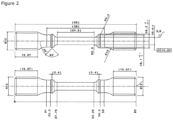
- Example 1 Preparation of test bodies from a conventional and inventive Ni alloy
- test bodies were investigated for their mechanical properties. Stress testing was performed at 816°C using an Instron 5982 electromechanical machine equipped with a SF16 furnace and an Instron 7361C extensometer (gauge length 12.5mm). Temperature was measured by a Type-K thermocouple attached to the specimen and kept within ⁇ 2°C during the tests. The control mode during the testing was at constant speed of the cross head of the machine, the strain was measured with an axial extensometer up to 5% total strain when the extensometer was removed. After 5% total strain the extension of the crosshead was used for the recalculation of the strain and strain rate. For each material, three different nominal strain rates were used: 8x10 -3 , 1x10 -5 and 1x10 -6 s -1 .
- the flow stress decreases with decreasing strain rate. This can be attributed to the creep effect during slow strain rate testing. Also, the elongation at fracture decreases with decreasing strain rate, which may be attributable to more accumulated creep damage during tests with lower strain rates. Finally, when comparing the samples A at comparable strain rates, the elongation at fracture is lower for the non-inventive samples B than for the inventive samples A. In micrographs of crosscuts of test bodies prepared from non-inventive samples a number of microcracks could be observed, which were not present in crosscuts of corresponding test bodies prepared from inventive samples.
- test bodies prepared from the inventive nickel alloy by additive manufacturing On comparison of test bodies prepared from the inventive nickel alloy by additive manufacturing with test bodies which were prepared from conventional IN939 by means of casting, the performance in the stress strain behaviours was found to be comparable.
Landscapes
- Chemical & Material Sciences (AREA)
- Engineering & Computer Science (AREA)
- Materials Engineering (AREA)
- Manufacturing & Machinery (AREA)
- Mechanical Engineering (AREA)
- Metallurgy (AREA)
- Organic Chemistry (AREA)
- Physics & Mathematics (AREA)
- Thermal Sciences (AREA)
- Crystallography & Structural Chemistry (AREA)
- Plasma & Fusion (AREA)
- Powder Metallurgy (AREA)
Claims (14)
- Nickellegierung in Pulverform, umfassend mindestens 40 Gew.-% Ni, 20,0 bis 25,0 Gew.-% Cr, 5,0 bis 25,0 Gew.-% Co und 1,5 bis 5,0 Gew.-% Ti und optional eines oder mehrere von bis zu 2,5 Gew.-% W, bis zu 2,5 Gew.-% Al, bis zu 1,5 Gew.-% Ta, bis zu 1,2 Gew.-% Nb, bis zu 0,17 Gew.-% C und bis zu 0,12 Gew.-% Zr, wobei der Rest Nickel und unvermeidbare Verunreinigungen sind, dadurch gekennzeichnet, dass die Legierung B in einer Menge von weniger als 40 ppmw enthält.
- Nickellegierung in Pulverform nach Anspruch 1, die 22,0 bis 23,0 Gew.-% Cr, 18,0 bis 20,0 Gew.-% Co und 3,0 bis 4,5 Gew.-% Ti umfasst.
- Nickellegierung in Pulverform nach Anspruch 1 oder 2, wobei die Legierung mindestens 1,5 Gew.-% W und/oder mindestens 1,5 Gew.-% Al und/oder mindestens 1,0 Gew.-% Ta und/oder mindestens 0,8 Gew.-% Nb umfasst.
- Nickellegierung in Pulverform nach einem der Ansprüche 1 bis 3, umfassend weniger als oder gleich 35 ppmw B, bevorzugt weniger als oder gleich 30 ppmw B, weiter bevorzugt weniger als oder gleich 20 ppmw B, weiter bevorzugt weniger als oder gleich 10 ppmw B und am meisten bevorzugt weniger als oder gleich 8 ppmw B.
- Nickellegierung in Pulverform nach einem der Ansprüche 1 bis 4, umfassend mindestens 42 und/oder bis zu 55 Gew.-% Ni, bevorzugt mindestens 44 und/oder bis zu 52 Gew.-% Ni und weiter bevorzugt mindestens 46 und/oder bis zu 50 Gew.-% Ni.
- Nickellegierung in Pulverform nach einem der Ansprüche 1 bis 5, wobei das Pulver eine Partikelgröße d50 von 2 bis 200 µm, bevorzugt 20 bis 100 µm und bevorzugt 25 bis 50 µm aufweist, wie gemäß ISO 13320 durch Laserstreuung oder Laserbeugung bestimmt.
- Verfahren zur Fertigung eines dreidimensionalen Objekts, umfassendBereitstellen einer Nickellegierung in Pulverform nach einem der Ansprüche 1 bis 6,und Herstellen des Objekts durch Aufbringen der Nickellegierung in Pulverform Schicht auf Schicht und selektives Erstarren des Legierungspulvers, insbesondere durch Anwendung von elektromagnetischer Strahlung, an Positionen in jeder Schicht, die dem Querschnitt des Objekts in dieser Schicht entsprechen, wobei die Positionen mit einer Interaktionszone, insbesondere mit einer Strahlungsinteraktionszone eines Energiestrahlbündels, abgetastet werden.
- Verfahren zur Fertigung eines dreidimensionalen Objekts nach Anspruch 7, wobei die Nickellegierung in Pulverform vor dem Erstarren auf eine Temperatur von 100 °C oder mehr, bevorzugt 130°C oder mehr und weiter bevorzugt 150°C oder mehr und/oder 300°C oder weniger, bevorzugt 250°C oder weniger und weiter bevorzugt 220 °C oder weniger erhitzt wird.
- Verfahren zur Fertigung eines dreidimensionalen Objekts nach Anspruch 7 oder 8, ferner beinhaltend einen Schritt, in dem das eingangs hergestellte dreidimensionale Objekt einer Wärmebehandlung, bevorzugt bei einer Temperatur von 950 °C bis 1250 °C und/oder für eine Zeit von 3 bis 15 h, unterzogen wird.
- Verfahren zur Herstellung einer Nickellegierung in Pulverform, insbesondere einer Nickellegierung in Pulverform zur Verwendung in einem Verfahren nach Anspruch 7 bis 9, wobei eine geschmolzene Nickellegierung, die eine Zusammensetzung wie in einem der Ansprüche 1 bis 6 definiert aufweist, in einer geeigneten Vorrichtung zerstäubt wird.
- Dreidimensionales Objekt, hergestellt unter Verwendung einer Nickellegierung in Pulverform, insbesondere hergestellt gemäß dem in Anspruch 10 beschriebenen Verfahren, wobei die Nickellegierung in Pulverform eine Nickellegierung in Pulverform nach einem der Ansprüche 1 bis 6 ist und wobei das dreidimensionale Objekt eine solche Nickellegierung umfasst oder daraus besteht.
- Dreidimensionales Objekt nach Anspruch 11, wobei das dreidimensionale Objekt eine Gasturbinenkomponente ist.
- Verwendung einer Nickellegierung in Pulverform nach den Ansprüchen 1 bis 6 zum Minimieren und/oder Unterdrücken von Rissbildung in einem dreidimensionalen Objekt und/oder zum Bereitstellen einer verbesserten Duktilität unter Kriechbedingungen des dreidimensionalen Objekts, wobei das dreidimensionale Objekt in einem Verfahren hergestellt wird, der den schritt- und schichtweisen Aufbau des dreidimensionalen Objekts durch additive Fertigung, bevorzugt durch Lasersintern oder Laserschmelzen, miteinbezieht.
- Vorrichtung zum Durchführen eines Verfahrens nach Anspruch 7 bis 9, wobei die Vorrichtung eine Strahlungsquelle, eine Prozesskammer, die einen offenen Behälter mit einer Behälterwand aufweist, einen Träger, der sich innerhalb der Prozesskammer befindet, wobei die Prozesskammer und der Träger in vertikaler Richtung gegeneinander bewegbar sind, einen Lagerbehälter und einen Nachbeschichter, der in horizontaler Richtung bewegbar ist, umfasst und wobei der Lagerbehälter mindestens teilweise mit einer Nickellegierung in Pulverform nach einem der Ansprüche 1 bis 6 gefüllt ist.
Applications Claiming Priority (1)
| Application Number | Priority Date | Filing Date | Title |
|---|---|---|---|
| PCT/EP2020/060652 WO2021209130A1 (en) | 2020-04-16 | 2020-04-16 | Nickel base superalloy for additive manufacturing |
Publications (2)
| Publication Number | Publication Date |
|---|---|
| EP4136268A1 EP4136268A1 (de) | 2023-02-22 |
| EP4136268B1 true EP4136268B1 (de) | 2025-03-12 |
Family
ID=70295125
Family Applications (1)
| Application Number | Title | Priority Date | Filing Date |
|---|---|---|---|
| EP20720000.7A Active EP4136268B1 (de) | 2020-04-16 | 2020-04-16 | Superlegierung auf nickelbasis zur generativen fertigung |
Country Status (4)
| Country | Link |
|---|---|
| US (1) | US12371761B2 (de) |
| EP (1) | EP4136268B1 (de) |
| CN (1) | CN116134166A (de) |
| WO (1) | WO2021209130A1 (de) |
Families Citing this family (3)
| Publication number | Priority date | Publication date | Assignee | Title |
|---|---|---|---|---|
| CN114606420B (zh) * | 2022-03-01 | 2023-08-29 | 中广核三角洲(江苏)塑化有限公司 | 一种提高挤出机效率的双螺杆表面激光熔覆材料及方法 |
| CN114921687B (zh) * | 2022-04-25 | 2023-07-04 | 西安工业大学 | 通过调控锆和碳组分含量制备的改性的高温合金及方法 |
| CN116377286B (zh) * | 2023-03-09 | 2024-08-23 | 山东大学 | 一种高塑性增材制造专用沉淀硬化型镍基高温合金及其设计与制备方法 |
Citations (4)
| Publication number | Priority date | Publication date | Assignee | Title |
|---|---|---|---|---|
| US4039330A (en) | 1971-04-07 | 1977-08-02 | The International Nickel Company, Inc. | Nickel-chromium-cobalt alloys |
| US4810467A (en) | 1987-08-06 | 1989-03-07 | General Electric Company | Nickel-base alloy |
| WO2001021847A2 (en) | 1999-08-11 | 2001-03-29 | Siemens Westinghouse Power Corporation | Superalloys with improved weldability for high temperature applications |
| US20030136811A1 (en) | 2002-01-24 | 2003-07-24 | Siemens Westinghouse Power Corporation | Liquid phase diffusion bonding to a superalloy component |
Family Cites Families (10)
| Publication number | Priority date | Publication date | Assignee | Title |
|---|---|---|---|---|
| GB1417474A (en) | 1973-09-06 | 1975-12-10 | Int Nickel Ltd | Heat-treatment of nickel-chromium-cobalt base alloys |
| WO1997038144A1 (en) * | 1996-04-10 | 1997-10-16 | The Penn State Research Foundation | Improved superalloys with improved oxidation resistance and weldability |
| AT408665B (de) * | 2000-09-14 | 2002-02-25 | Boehler Edelstahl Gmbh & Co Kg | Nickelbasislegierung für die hochtemperaturtechnik |
| DE102005024790A1 (de) | 2005-05-26 | 2006-12-07 | Eos Gmbh Electro Optical Systems | Strahlungsheizung zum Heizen des Aufbaumaterials in einer Lasersintervorrichtung |
| US20150354358A1 (en) * | 2012-12-21 | 2015-12-10 | United Technologies Corporation | Post-Peen Grinding of Disk Alloys |
| EP2886225B1 (de) * | 2013-12-23 | 2017-06-07 | Ansaldo Energia IP UK Limited | Ausscheidungsgehärteten Gamma-Prime-Superlegierung auf Nickelbasis zur Verwendung in Verfahren zur Herstellung pulverbasierter Additive |
| US20170088918A1 (en) * | 2014-09-19 | 2017-03-30 | General Electric Company | Materials for direct metal laser melting |
| US20160348216A1 (en) * | 2014-12-16 | 2016-12-01 | Honeywell International Inc. | Nickel-based superalloys and additive manufacturing processes using nickel-based superalloys |
| DE102015222104A1 (de) * | 2015-11-10 | 2017-05-11 | Eos Gmbh Electro Optical Systems | Vorrichtung und Verfahren zum Herstellen eines dreidimensionalen Objekts |
| JP6931545B2 (ja) * | 2017-03-29 | 2021-09-08 | 三菱重工業株式会社 | Ni基合金積層造形体の熱処理方法、Ni基合金積層造形体の製造方法、積層造形体用Ni基合金粉末、およびNi基合金積層造形体 |
-
2020
- 2020-04-16 EP EP20720000.7A patent/EP4136268B1/de active Active
- 2020-04-16 WO PCT/EP2020/060652 patent/WO2021209130A1/en not_active Ceased
- 2020-04-16 CN CN202080099818.7A patent/CN116134166A/zh active Pending
- 2020-04-16 US US17/918,711 patent/US12371761B2/en active Active
Patent Citations (4)
| Publication number | Priority date | Publication date | Assignee | Title |
|---|---|---|---|---|
| US4039330A (en) | 1971-04-07 | 1977-08-02 | The International Nickel Company, Inc. | Nickel-chromium-cobalt alloys |
| US4810467A (en) | 1987-08-06 | 1989-03-07 | General Electric Company | Nickel-base alloy |
| WO2001021847A2 (en) | 1999-08-11 | 2001-03-29 | Siemens Westinghouse Power Corporation | Superalloys with improved weldability for high temperature applications |
| US20030136811A1 (en) | 2002-01-24 | 2003-07-24 | Siemens Westinghouse Power Corporation | Liquid phase diffusion bonding to a superalloy component |
Non-Patent Citations (14)
| Title |
|---|
| "Bachelor's Thesis, KTH Stockholm", 1 January 2016, article STRAND EMIL, WÄRNHEIM ALEXANDER: "A study of micro-and surface structures of additive manufactured selective laser melted nickel based superalloys", XP093347273 |
| "Master's Thesis, Chalmers University of Technology", 1 January 2018, article SHAIKH ABDUL SHAAFI: "Development of a γ' Precipitation Hardening Ni-Base Superalloy for Additive Manufacturing", XP093347279 |
| AVAILABILITY DOCUMENTATION A9 |
| BIBLIOGRAPHIC DATA - STRAND ET WÄRNHEIM |
| DOWNLOAD DOCUMENTATION - STRAND ET WÄRNHEIM |
| FORMENTI A, ELIASSON A, FREDRIKSSON H: "On the Dendritic Growth and Microsegregation in Ni-Base Superalloys In718, In625 and In939", HIGH TEMPERATURE MATERIALS AND PROCESSES, vol. 24, no. 4, 1 January 2005 (2005-01-01), pages 221 - 238, XP093347264 |
| FORMENTI A., ELIASSON A., MITCHELL A., FREDRIKSSON H.: "Solidification sequence and carbide precipitation in Ni-base superalloys IN718, IN625 and IN939", HIGH TEMPERATURE MATERIALS AND PROCESSES, WALTER DE GRUYTER GMBH, DE, vol. 24, no. 4, 1 January 2005 (2005-01-01), DE , pages 239 - 258, XP093347267, ISSN: 0334-6455, DOI: 10.1515/HTMP.2005.24.4.239 |
| GOOGLE SEARCH STRING FOR A9 |
| GOOGLE SEARCH STRING FOR STRAND ET WÄRNHEIM |
| MENTION OF PUBLICATION OF A9 ON RESEARCH GATE |
| PUBLICATION DOCUMENTATION A9 |
| SEARCH STRING CHALMERS ODR FOR A9 |
| SHAW S W K: "RESPONSE OF IN-939 TO PROCESS VARIATIONS", SUPERALLOYS 1980: PROCEEDINGS OF THE 4. INTERNATIONAL SYMPOSIUM ON SUPERALLOYS, SEPTEMBER 21 - 25, 1980, SEVEN SPRINGS MOUNTAIN RESORT, CHAMPION, PENNSYLVANIA, US, TMS, 21 September 1980 (1980-09-21) - 25 September 1980 (1980-09-25), pages 275 - 284, XP009178670, ISBN: 978-0-87170-102-2, DOI: 10.7449/1980/Superalloys_1980_275_284 |
| ZHU GUOLIANG, PAN WEITAO, WANG RUI, WANG DONGHONG, SHU DA, ZHANG LIANG, DONG ANPING, SUN BAODE: "Microstructures and mechanical properties of GTD222 superalloy fabricated by selective laser melting", MATERIALS SCIENCE, ELSEVIER, AMSTERDAM, NL, vol. 807, 1 March 2021 (2021-03-01), AMSTERDAM, NL, pages 140668, XP093347271, ISSN: 0921-5093, DOI: 10.1016/j.msea.2020.140668 |
Also Published As
| Publication number | Publication date |
|---|---|
| EP4136268A1 (de) | 2023-02-22 |
| US12371761B2 (en) | 2025-07-29 |
| US20230147621A1 (en) | 2023-05-11 |
| CN116134166A (zh) | 2023-05-16 |
| WO2021209130A1 (en) | 2021-10-21 |
Similar Documents
| Publication | Publication Date | Title |
|---|---|---|
| US10821518B2 (en) | Additive manufacturing method and apparatus | |
| JP7116495B2 (ja) | 高炭素コバルト系合金 | |
| Guo et al. | Effects of scanning parameters on material deposition during Electron Beam Selective Melting of Ti-6Al-4V powder | |
| Vrancken | Study of residual stresses in selective laser melting | |
| JP7314184B2 (ja) | アルミニウム合金からなる部品の製造方法 | |
| CN107096923B (zh) | 基于激光增材制造的高熔点高熵合金球形粉末的制备方法 | |
| EP4136268B1 (de) | Superlegierung auf nickelbasis zur generativen fertigung | |
| CN111386164B (zh) | 高硬度3d打印钢产品 | |
| JP2021504579A (ja) | 付加製造等の用途のための多成分アルミニウム合金 | |
| CH705662A1 (de) | Prozess zur Herstellung von Gegenständen aus einer durch Gamma-Prime-Ausscheidung verfestigten Superlegierung auf Nickelbasis durch selektives Laserschmelzen (SLM). | |
| US20220281006A1 (en) | Metal alloys with improved processability for direct metal laser sintering | |
| JP2019516017A (ja) | チタン、アルミニウム、ニオビウム、バナジウム、及びモリブデンのbcc材料、並びにそれから製造される生成物 | |
| Mostafaei | Powder bed binder jet 3D printing of Alloy 625: Microstructural evolution, densification kinetics and mechanical properties | |
| Siddiqui et al. | Selective laser melting (SLM) of Ni-based superalloys: A mechanics of materials review | |
| WO2020224760A1 (en) | Composition for suppressing the cracking behaviour of h13 steel in direct metal laser sintering processes | |
| US20200406345A1 (en) | Powder and Additive Production Method for a Workpiece Made of Said Powder | |
| US20250376743A1 (en) | Ni-base superalloy | |
| EP4215298A1 (de) | Werkzeugstahlpulver zur generativen fertigung | |
| Simchi et al. | Binder Jet 3d Printing of Biomedical Grade Ti-6al-4v Alloy: The Role of Particle Size, Microstructural Features, and Mechanical Properties | |
| CN116689783A (zh) | 基于高铬镍基高温合金的3d打印方法 | |
| Gonzalez et al. | Characterization of Inconel 625 Fabricated Using | |
| Thomas | Robustness Versus Performance Assessment for Different Gamma-TiAl Processing Routes |
Legal Events
| Date | Code | Title | Description |
|---|---|---|---|
| STAA | Information on the status of an ep patent application or granted ep patent |
Free format text: STATUS: UNKNOWN |
|
| STAA | Information on the status of an ep patent application or granted ep patent |
Free format text: STATUS: THE INTERNATIONAL PUBLICATION HAS BEEN MADE |
|
| PUAI | Public reference made under article 153(3) epc to a published international application that has entered the european phase |
Free format text: ORIGINAL CODE: 0009012 |
|
| STAA | Information on the status of an ep patent application or granted ep patent |
Free format text: STATUS: REQUEST FOR EXAMINATION WAS MADE |
|
| 17P | Request for examination filed |
Effective date: 20220922 |
|
| AK | Designated contracting states |
Kind code of ref document: A1 Designated state(s): AL AT BE BG CH CY CZ DE DK EE ES FI FR GB GR HR HU IE IS IT LI LT LU LV MC MK MT NL NO PL PT RO RS SE SI SK SM TR |
|
| DAV | Request for validation of the european patent (deleted) | ||
| DAX | Request for extension of the european patent (deleted) | ||
| GRAP | Despatch of communication of intention to grant a patent |
Free format text: ORIGINAL CODE: EPIDOSNIGR1 |
|
| STAA | Information on the status of an ep patent application or granted ep patent |
Free format text: STATUS: GRANT OF PATENT IS INTENDED |
|
| INTG | Intention to grant announced |
Effective date: 20241002 |
|
| TPAC | Observations filed by third parties |
Free format text: ORIGINAL CODE: EPIDOSNTIPA |
|
| GRAS | Grant fee paid |
Free format text: ORIGINAL CODE: EPIDOSNIGR3 |
|
| GRAA | (expected) grant |
Free format text: ORIGINAL CODE: 0009210 |
|
| STAA | Information on the status of an ep patent application or granted ep patent |
Free format text: STATUS: THE PATENT HAS BEEN GRANTED |
|
| AK | Designated contracting states |
Kind code of ref document: B1 Designated state(s): AL AT BE BG CH CY CZ DE DK EE ES FI FR GB GR HR HU IE IS IT LI LT LU LV MC MK MT NL NO PL PT RO RS SE SI SK SM TR |
|
| REG | Reference to a national code |
Ref country code: GB Ref legal event code: FG4D |
|
| REG | Reference to a national code |
Ref country code: CH Ref legal event code: EP |
|
| REG | Reference to a national code |
Ref country code: DE Ref legal event code: R096 Ref document number: 602020047566 Country of ref document: DE |
|
| REG | Reference to a national code |
Ref country code: IE Ref legal event code: FG4D |
|
| REG | Reference to a national code |
Ref country code: NL Ref legal event code: FP |
|
| PGFP | Annual fee paid to national office [announced via postgrant information from national office to epo] |
Ref country code: NL Payment date: 20250418 Year of fee payment: 6 |
|
| PG25 | Lapsed in a contracting state [announced via postgrant information from national office to epo] |
Ref country code: RS Free format text: LAPSE BECAUSE OF FAILURE TO SUBMIT A TRANSLATION OF THE DESCRIPTION OR TO PAY THE FEE WITHIN THE PRESCRIBED TIME-LIMIT Effective date: 20250612 |
|
| PG25 | Lapsed in a contracting state [announced via postgrant information from national office to epo] |
Ref country code: FI Free format text: LAPSE BECAUSE OF FAILURE TO SUBMIT A TRANSLATION OF THE DESCRIPTION OR TO PAY THE FEE WITHIN THE PRESCRIBED TIME-LIMIT Effective date: 20250312 |
|
| PGFP | Annual fee paid to national office [announced via postgrant information from national office to epo] |
Ref country code: DE Payment date: 20250422 Year of fee payment: 6 |
|
| PG25 | Lapsed in a contracting state [announced via postgrant information from national office to epo] |
Ref country code: ES Free format text: LAPSE BECAUSE OF FAILURE TO SUBMIT A TRANSLATION OF THE DESCRIPTION OR TO PAY THE FEE WITHIN THE PRESCRIBED TIME-LIMIT Effective date: 20250312 |
|
| PGFP | Annual fee paid to national office [announced via postgrant information from national office to epo] |
Ref country code: GB Payment date: 20250423 Year of fee payment: 6 |
|
| REG | Reference to a national code |
Ref country code: LT Ref legal event code: MG9D |
|
| PG25 | Lapsed in a contracting state [announced via postgrant information from national office to epo] |
Ref country code: NO Free format text: LAPSE BECAUSE OF FAILURE TO SUBMIT A TRANSLATION OF THE DESCRIPTION OR TO PAY THE FEE WITHIN THE PRESCRIBED TIME-LIMIT Effective date: 20250612 |
|
| PG25 | Lapsed in a contracting state [announced via postgrant information from national office to epo] |
Ref country code: HR Free format text: LAPSE BECAUSE OF FAILURE TO SUBMIT A TRANSLATION OF THE DESCRIPTION OR TO PAY THE FEE WITHIN THE PRESCRIBED TIME-LIMIT Effective date: 20250312 |
|
| PG25 | Lapsed in a contracting state [announced via postgrant information from national office to epo] |
Ref country code: LV Free format text: LAPSE BECAUSE OF FAILURE TO SUBMIT A TRANSLATION OF THE DESCRIPTION OR TO PAY THE FEE WITHIN THE PRESCRIBED TIME-LIMIT Effective date: 20250312 |
|
| PGFP | Annual fee paid to national office [announced via postgrant information from national office to epo] |
Ref country code: FR Payment date: 20250506 Year of fee payment: 6 |
|
| PG25 | Lapsed in a contracting state [announced via postgrant information from national office to epo] |
Ref country code: BG Free format text: LAPSE BECAUSE OF FAILURE TO SUBMIT A TRANSLATION OF THE DESCRIPTION OR TO PAY THE FEE WITHIN THE PRESCRIBED TIME-LIMIT Effective date: 20250312 Ref country code: GR Free format text: LAPSE BECAUSE OF FAILURE TO SUBMIT A TRANSLATION OF THE DESCRIPTION OR TO PAY THE FEE WITHIN THE PRESCRIBED TIME-LIMIT Effective date: 20250613 |
|
| REG | Reference to a national code |
Ref country code: AT Ref legal event code: MK05 Ref document number: 1775061 Country of ref document: AT Kind code of ref document: T Effective date: 20250312 |
|
| PG25 | Lapsed in a contracting state [announced via postgrant information from national office to epo] |
Ref country code: SE Free format text: LAPSE BECAUSE OF FAILURE TO SUBMIT A TRANSLATION OF THE DESCRIPTION OR TO PAY THE FEE WITHIN THE PRESCRIBED TIME-LIMIT Effective date: 20250312 |
|
| PG25 | Lapsed in a contracting state [announced via postgrant information from national office to epo] |
Ref country code: SM Free format text: LAPSE BECAUSE OF FAILURE TO SUBMIT A TRANSLATION OF THE DESCRIPTION OR TO PAY THE FEE WITHIN THE PRESCRIBED TIME-LIMIT Effective date: 20250312 |
|
| PG25 | Lapsed in a contracting state [announced via postgrant information from national office to epo] |
Ref country code: PT Free format text: LAPSE BECAUSE OF FAILURE TO SUBMIT A TRANSLATION OF THE DESCRIPTION OR TO PAY THE FEE WITHIN THE PRESCRIBED TIME-LIMIT Effective date: 20250714 |
|
| PG25 | Lapsed in a contracting state [announced via postgrant information from national office to epo] |
Ref country code: PL Free format text: LAPSE BECAUSE OF FAILURE TO SUBMIT A TRANSLATION OF THE DESCRIPTION OR TO PAY THE FEE WITHIN THE PRESCRIBED TIME-LIMIT Effective date: 20250312 |
|
| PGFP | Annual fee paid to national office [announced via postgrant information from national office to epo] |
Ref country code: IT Payment date: 20250627 Year of fee payment: 6 |
|
| PG25 | Lapsed in a contracting state [announced via postgrant information from national office to epo] |
Ref country code: AT Free format text: LAPSE BECAUSE OF FAILURE TO SUBMIT A TRANSLATION OF THE DESCRIPTION OR TO PAY THE FEE WITHIN THE PRESCRIBED TIME-LIMIT Effective date: 20250312 |
|
| PG25 | Lapsed in a contracting state [announced via postgrant information from national office to epo] |
Ref country code: EE Free format text: LAPSE BECAUSE OF FAILURE TO SUBMIT A TRANSLATION OF THE DESCRIPTION OR TO PAY THE FEE WITHIN THE PRESCRIBED TIME-LIMIT Effective date: 20250312 Ref country code: CZ Free format text: LAPSE BECAUSE OF FAILURE TO SUBMIT A TRANSLATION OF THE DESCRIPTION OR TO PAY THE FEE WITHIN THE PRESCRIBED TIME-LIMIT Effective date: 20250312 |
|
| PG25 | Lapsed in a contracting state [announced via postgrant information from national office to epo] |
Ref country code: RO Free format text: LAPSE BECAUSE OF FAILURE TO SUBMIT A TRANSLATION OF THE DESCRIPTION OR TO PAY THE FEE WITHIN THE PRESCRIBED TIME-LIMIT Effective date: 20250312 |
|
| PG25 | Lapsed in a contracting state [announced via postgrant information from national office to epo] |
Ref country code: SK Free format text: LAPSE BECAUSE OF FAILURE TO SUBMIT A TRANSLATION OF THE DESCRIPTION OR TO PAY THE FEE WITHIN THE PRESCRIBED TIME-LIMIT Effective date: 20250312 |
|
| PG25 | Lapsed in a contracting state [announced via postgrant information from national office to epo] |
Ref country code: IS Free format text: LAPSE BECAUSE OF FAILURE TO SUBMIT A TRANSLATION OF THE DESCRIPTION OR TO PAY THE FEE WITHIN THE PRESCRIBED TIME-LIMIT Effective date: 20250712 |
|
| REG | Reference to a national code |
Ref country code: CH Ref legal event code: H13 Free format text: ST27 STATUS EVENT CODE: U-0-0-H10-H13 (AS PROVIDED BY THE NATIONAL OFFICE) Effective date: 20251125 |
|
| REG | Reference to a national code |
Ref country code: DE Ref legal event code: R026 Ref document number: 602020047566 Country of ref document: DE |
|
| PG25 | Lapsed in a contracting state [announced via postgrant information from national office to epo] |
Ref country code: LU Free format text: LAPSE BECAUSE OF NON-PAYMENT OF DUE FEES Effective date: 20250416 |