EP4130288A1 - Staining method, microscopic observation method, staining agent and staining kit - Google Patents
Staining method, microscopic observation method, staining agent and staining kit Download PDFInfo
- Publication number
- EP4130288A1 EP4130288A1 EP21782016.6A EP21782016A EP4130288A1 EP 4130288 A1 EP4130288 A1 EP 4130288A1 EP 21782016 A EP21782016 A EP 21782016A EP 4130288 A1 EP4130288 A1 EP 4130288A1
- Authority
- EP
- European Patent Office
- Prior art keywords
- staining
- sample
- fluorescence
- compound
- reactive group
- Prior art date
- Legal status (The legal status is an assumption and is not a legal conclusion. Google has not performed a legal analysis and makes no representation as to the accuracy of the status listed.)
- Withdrawn
Links
Images









Classifications
-
- G—PHYSICS
- G01—MEASURING; TESTING
- G01N—INVESTIGATING OR ANALYSING MATERIALS BY DETERMINING THEIR CHEMICAL OR PHYSICAL PROPERTIES
- G01N1/00—Sampling; Preparing specimens for investigation
- G01N1/28—Preparing specimens for investigation including physical details of (bio-)chemical methods covered elsewhere, e.g. G01N33/50, C12Q
- G01N1/30—Staining; Impregnating ; Fixation; Dehydration; Multistep processes for preparing samples of tissue, cell or nucleic acid material and the like for analysis
-
- C—CHEMISTRY; METALLURGY
- C09—DYES; PAINTS; POLISHES; NATURAL RESINS; ADHESIVES; COMPOSITIONS NOT OTHERWISE PROVIDED FOR; APPLICATIONS OF MATERIALS NOT OTHERWISE PROVIDED FOR
- C09B—ORGANIC DYES OR CLOSELY-RELATED COMPOUNDS FOR PRODUCING DYES, e.g. PIGMENTS; MORDANTS; LAKES
- C09B57/00—Other synthetic dyes of known constitution
- C09B57/02—Coumarine dyes
-
- C—CHEMISTRY; METALLURGY
- C09—DYES; PAINTS; POLISHES; NATURAL RESINS; ADHESIVES; COMPOSITIONS NOT OTHERWISE PROVIDED FOR; APPLICATIONS OF MATERIALS NOT OTHERWISE PROVIDED FOR
- C09K—MATERIALS FOR MISCELLANEOUS APPLICATIONS, NOT PROVIDED FOR ELSEWHERE
- C09K11/00—Luminescent materials, e.g. electroluminescent or chemiluminescent
- C09K11/06—Luminescent materials, e.g. electroluminescent or chemiluminescent containing organic luminescent materials
-
- G—PHYSICS
- G01—MEASURING; TESTING
- G01N—INVESTIGATING OR ANALYSING MATERIALS BY DETERMINING THEIR CHEMICAL OR PHYSICAL PROPERTIES
- G01N1/00—Sampling; Preparing specimens for investigation
- G01N1/02—Devices for withdrawing samples
- G01N1/04—Devices for withdrawing samples in the solid state, e.g. by cutting
- G01N1/06—Devices for withdrawing samples in the solid state, e.g. by cutting providing a thin slice, e.g. microtome
-
- G—PHYSICS
- G01—MEASURING; TESTING
- G01N—INVESTIGATING OR ANALYSING MATERIALS BY DETERMINING THEIR CHEMICAL OR PHYSICAL PROPERTIES
- G01N1/00—Sampling; Preparing specimens for investigation
- G01N1/28—Preparing specimens for investigation including physical details of (bio-)chemical methods covered elsewhere, e.g. G01N33/50, C12Q
- G01N1/36—Embedding or analogous mounting of samples
-
- G—PHYSICS
- G01—MEASURING; TESTING
- G01N—INVESTIGATING OR ANALYSING MATERIALS BY DETERMINING THEIR CHEMICAL OR PHYSICAL PROPERTIES
- G01N21/00—Investigating or analysing materials by the use of optical means, i.e. using sub-millimetre waves, infrared, visible or ultraviolet light
- G01N21/62—Systems in which the material investigated is excited whereby it emits light or causes a change in wavelength of the incident light
- G01N21/63—Systems in which the material investigated is excited whereby it emits light or causes a change in wavelength of the incident light optically excited
- G01N21/64—Fluorescence; Phosphorescence
- G01N21/6428—Measuring fluorescence of fluorescent products of reactions or of fluorochrome labelled reactive substances, e.g. measuring quenching effects, using measuring "optrodes"
-
- G—PHYSICS
- G01—MEASURING; TESTING
- G01N—INVESTIGATING OR ANALYSING MATERIALS BY DETERMINING THEIR CHEMICAL OR PHYSICAL PROPERTIES
- G01N33/00—Investigating or analysing materials by specific methods not covered by groups G01N1/00 - G01N31/00
- G01N33/48—Biological material, e.g. blood, urine; Haemocytometers
- G01N33/50—Chemical analysis of biological material, e.g. blood, urine; Testing involving biospecific ligand binding methods; Immunological testing
-
- G—PHYSICS
- G01—MEASURING; TESTING
- G01N—INVESTIGATING OR ANALYSING MATERIALS BY DETERMINING THEIR CHEMICAL OR PHYSICAL PROPERTIES
- G01N33/00—Investigating or analysing materials by specific methods not covered by groups G01N1/00 - G01N31/00
- G01N33/48—Biological material, e.g. blood, urine; Haemocytometers
- G01N33/50—Chemical analysis of biological material, e.g. blood, urine; Testing involving biospecific ligand binding methods; Immunological testing
- G01N33/58—Chemical analysis of biological material, e.g. blood, urine; Testing involving biospecific ligand binding methods; Immunological testing involving labelled substances
- G01N33/581—Chemical analysis of biological material, e.g. blood, urine; Testing involving biospecific ligand binding methods; Immunological testing involving labelled substances with enzyme label (including co-enzymes, co-factors, enzyme inhibitors or substrates)
-
- G—PHYSICS
- G01—MEASURING; TESTING
- G01N—INVESTIGATING OR ANALYSING MATERIALS BY DETERMINING THEIR CHEMICAL OR PHYSICAL PROPERTIES
- G01N33/00—Investigating or analysing materials by specific methods not covered by groups G01N1/00 - G01N31/00
- G01N33/48—Biological material, e.g. blood, urine; Haemocytometers
- G01N33/50—Chemical analysis of biological material, e.g. blood, urine; Testing involving biospecific ligand binding methods; Immunological testing
- G01N33/58—Chemical analysis of biological material, e.g. blood, urine; Testing involving biospecific ligand binding methods; Immunological testing involving labelled substances
- G01N33/582—Chemical analysis of biological material, e.g. blood, urine; Testing involving biospecific ligand binding methods; Immunological testing involving labelled substances with fluorescent label
-
- C—CHEMISTRY; METALLURGY
- C09—DYES; PAINTS; POLISHES; NATURAL RESINS; ADHESIVES; COMPOSITIONS NOT OTHERWISE PROVIDED FOR; APPLICATIONS OF MATERIALS NOT OTHERWISE PROVIDED FOR
- C09K—MATERIALS FOR MISCELLANEOUS APPLICATIONS, NOT PROVIDED FOR ELSEWHERE
- C09K2211/00—Chemical nature of organic luminescent or tenebrescent compounds
- C09K2211/10—Non-macromolecular compounds
- C09K2211/1018—Heterocyclic compounds
-
- G—PHYSICS
- G01—MEASURING; TESTING
- G01N—INVESTIGATING OR ANALYSING MATERIALS BY DETERMINING THEIR CHEMICAL OR PHYSICAL PROPERTIES
- G01N1/00—Sampling; Preparing specimens for investigation
- G01N1/28—Preparing specimens for investigation including physical details of (bio-)chemical methods covered elsewhere, e.g. G01N33/50, C12Q
- G01N1/30—Staining; Impregnating ; Fixation; Dehydration; Multistep processes for preparing samples of tissue, cell or nucleic acid material and the like for analysis
- G01N2001/302—Stain compositions
-
- G—PHYSICS
- G01—MEASURING; TESTING
- G01N—INVESTIGATING OR ANALYSING MATERIALS BY DETERMINING THEIR CHEMICAL OR PHYSICAL PROPERTIES
- G01N1/00—Sampling; Preparing specimens for investigation
- G01N1/28—Preparing specimens for investigation including physical details of (bio-)chemical methods covered elsewhere, e.g. G01N33/50, C12Q
- G01N1/36—Embedding or analogous mounting of samples
- G01N2001/364—Embedding or analogous mounting of samples using resins, epoxy
-
- G—PHYSICS
- G01—MEASURING; TESTING
- G01N—INVESTIGATING OR ANALYSING MATERIALS BY DETERMINING THEIR CHEMICAL OR PHYSICAL PROPERTIES
- G01N21/00—Investigating or analysing materials by the use of optical means, i.e. using sub-millimetre waves, infrared, visible or ultraviolet light
- G01N21/62—Systems in which the material investigated is excited whereby it emits light or causes a change in wavelength of the incident light
- G01N21/63—Systems in which the material investigated is excited whereby it emits light or causes a change in wavelength of the incident light optically excited
- G01N21/64—Fluorescence; Phosphorescence
- G01N21/6428—Measuring fluorescence of fluorescent products of reactions or of fluorochrome labelled reactive substances, e.g. measuring quenching effects, using measuring "optrodes"
- G01N2021/6439—Measuring fluorescence of fluorescent products of reactions or of fluorochrome labelled reactive substances, e.g. measuring quenching effects, using measuring "optrodes" with indicators, stains, dyes, tags, labels, marks
Definitions
- the present invention relates to a staining method, a microscopic observation method, a staining agent, and a staining kit.
- the present application claims priority based on Japanese Patent Application No. 2020-066711 filed on April 2, 2020 , and the contents of the Japanese patent application are incorporated herein by reference.
- Correlative light and electron microscopy method in which observation with a fluorescence microscope and observation with an electron microscope are used in combination has been used to date as a method for observing living tissue or a microstructure such as a cell organelle or a membrane structure of a microorganism or the like (for example, PTL 1).
- fluorescent dyes used for staining have low resistance to preliminary treatment for electron microscopic observation, using, for example, osmium tetroxide and an epoxy compound. Therefore, when a section sample stained with a fluorescent dye is subjected to osmium treatment and epoxy-resin embedding in order to observe the section sample with an electron microscope, there is a problem in that the fluorescent dye in the section sample is subjected to a structural change, resulting in disappearance of fluorescence.
- the present invention provides a staining method in which a single section sample is subjected to fluorescence staining, osmium treatment, and epoxy resin embedding treatment in advance and can then be subjected to fluorescence microscopic observation and electron microscopic observation, a method for microscopic observation of a section sample obtained by the staining method, and a staining agent and a staining kit that are useful for the staining method.
- the inventors of the present invention have found that a coumarin fluorescent dye is unlikely to be decomposed even when subjected to osmium tetroxide treatment and epoxy resin embedding treatment and completed the present invention.
- osmium treatment and epoxy resin embedding treatment can be further performed.
- fluorescence microscopic observation and electron microscopic observation can be continuously performed for the identical section sample without performing treatment necessary for the existing CLEM method (such as osmium treatment and epoxy resin embedding treatment performed for a sample that has already been used for fluorescence microscopic observation).
- a staining method according to the present invention is applicable to biological samples such as cells, living tissue, microorganisms, and viruses.
- the sample In order to observe a stained sample by the CLEM method, the sample needs to be prepared as a section with a thickness suitable for electron microscopic observation.
- the sample provided for the staining method according to the present invention may be prepared, in advance, as a section such as a paraffin-embedded section or a frozen section or may be prepared as a section by a routine method after being subjected to fluorescence staining described later.
- deparaffinization treatment is preferably performed by, for example, a publicly known method in which the paraffin-embedded section is sequentially immersed in xylene, ethanol, and ion-exchanged water.
- a first embodiment of the present invention is a staining method including a fluorescent staining step and an epoxy resin embedding step.
- the fluorescent staining step is a step of staining a biological sample with a coumarin fluorescent dye represented by formula (I) below to provide a fluorescent-stained sample.
- the epoxy resin embedding step is a step of bringing the fluorescent-stained sample into contact with osmium tetroxide, further embedding the sample in an epoxy resin, and subsequently slicing the sample to provide a section sample including the fluorescent-stained sample.
- a stain solution containing a coumarin fluorescent dye and a biological sample which is a staining object, are brought into contact with each other to bind the coumarin fluorescent dye to a target substance contained in the biological sample either directly or indirectly.
- a coumarin fluorescent dye represented by formula (I) below may be hereinafter referred to as a compound (I).
- R 1 to R 6 are each independently a hydrogen atom or any substituent
- the aromatic ring may be a monovalent or divalent monocyclic ring or a monovalent or divalent polycyclic ring.
- the aromatic ring may be a monovalent or divalent aromatic hydrocarbon or a monovalent or divalent aromatic heterocycle.
- the functional group capable of forming a chemical bond with an aldehyde is, for example, an amino group (-NH 2 ), a hydrazide group (-CONH-NH 2 ), or an aminoxy group (-O-NH 2 ).
- the functional group capable of forming a chemical bond with an amine is, for example, an N-hydroxysuccinimidyl group (NHS group) represented by formula (Q-1) below and an imidoester group represented by formula (Q-2) below.
- NHS group N-hydroxysuccinimidyl group
- Q-2 imidoester group
- the functional group capable of forming a chemical bond with a thiol is, for example, a maleimide group represented by formula (Q-3) below.
- * represents binding to another atom
- X represents a hydrogen atom or a sulfonate (e.g., Na sulfonate)
- Y represents a methyl group or an ethyl group.
- the reactive group may be directly bound to the coumarin ring structure to which R 1 to R 6 are bound or may be indirectly bound to the coumarin ring structure through a linker.
- the linker is a divalent organic group.
- the linker can link the reactive group to the coumarin ring structure either directly or indirectly.
- linker examples include linear aliphatic hydrocarbon groups having 1 to 10 carbon atoms.
- One or more methylene groups constituting any of the aliphatic hydrocarbon groups may be substituted with a cyclic aliphatic hydrocarbon group having 5 to 8 carbon atoms.
- This cyclic group is a divalent group formed by removing any two hydrogen atoms bound to a cyclic aliphatic hydrocarbon.
- a trivalent carbon atom (-CH ⁇ ) which constitutes this cyclic group and from which the hydrogen atom has been removed may be substituted with a nitrilo group (-N ⁇ ).
- the substituents may each be independently, for example, a linear or branched aliphatic saturated hydrocarbon group having 1 to 10 carbon atoms, a linear or branched aliphatic unsaturated hydrocarbon group having 1 to 8 carbon atoms, a sulfonic group (-SO 3 H), a carboxylic group (-COOH), an acetyl group (-COCH 3 ), an alkoxy group having 1 to 4 carbon atoms, a halogen atom, or a hydroxyl group.
- the acid group may form a salt such as a sodium salt or a potassium salt.
- the substituent has a positive charge (for example, has a nitrogen atom constituting a quaternary ammonium)
- the positive charge may form a salt with any counter anion or may form an inner salt with any other substituent having a negative charge.
- a hydrogen atom of the substituent may be substituted with a halogen atom.
- the substituent does not include a carboxylic group having a negative charge.
- the acid group is not included, it is possible to prevent the acid group from reacting with an epoxy compound provided from the outside.
- one or more hydrogen atoms bound to the aromatic ring included in R 1 may be substituted with substituent R 11 .
- Substituent R 11 has a linker which is a divalent organic group and the described reactive group bound to an end of this linker. Examples of the linker of substituent R 11 include the divalent organic groups mentioned.
- One or more hydrogen atoms bound to the aromatic ring may be substituted with any substituent other than substituent R 11 .
- Substituent R 11 may be, for example, -(CH 2 ) r -Q.
- Q represents any of the above reactive groups and r represents an integer of 0 to 10.
- substituents R 11 when a plurality of substituents R 11 are present, the substituents R 11 may be the same or different from each other.
- the compound (I) is preferably a compound represented by the following formulae (I-A) to (I-H) from the viewpoint that it sufficiently exhibits resistance to osmium treatment and epoxy resin embedding treatment and the fluorescence characteristics are excellent.
- Q represents the reactive group
- L represents the linker
- Ar represents a divalent aromatic ring.
- An "-L-Q" group in formula (I-G) below may replace any hydrogen atom of Ar or may be bound to a heteroatom constituting Ar.
- the heteroatom may have a positive charge, and (Z - ) represents any counter anion to this positive charge.
- (Z - ) need not be present.
- the heteroatom having a positive charge and any acid group in the molecule may form an inner salt. Also in such a case, (Z - ) need not be present.
- Ar represents an aromatic heterocycle having a nitrogen atom, and an "-L-Q" group is bound to this nitrogen atom.
- the nitrogen atom has a positive charge, and (Z - ) represents any counter anion.
- Examples of the counter anion include monovalent anions such as a halide ion, a sulfonate anion, a hexafluorophosphate anion, a tetrafluoroborate anion, a p-chlorobenzenesulfonate anion, a p-toluenesulfonate anion, a benzenesulfonate anion, a trifluoromethanesulfonate anion, and a trifluoroacetate anion.
- the nitrogen atom having a positive charge and any acid group in the molecule may form an inner salt. In such a case, (Z - ) need not be present.
- Suitable specific examples of the compound (I) include compounds represented by formulae (1) to (17) below.
- Compounds represented by Formulae (1) and (4) below are NKX-4023 and NKX-4190, respectively, used in Examples described later.
- Reference compounds represented by formulae (101) to (112) below do not correspond to the compound (I) in that they do not have the reactive group; however, the reference compounds have a coumarin ring structure similar to that of the compound (I). Accordingly, by binding the reactive group to any of the reference compounds shown as examples here or another reference compound having a similar coumarin ring structure, the compound (I) according to the present invention can be provided.
- the reactive group may be directly bound to the reference compound or may be bound via the linker.
- the reactive group and the linker that is optionally interposed may be bound to the reference compound by replacing a hydrogen atom of the reference compound or may be bound to a heteroatom of the reference compound.
- the compound (I) When a stain solution containing at least one compound (I) is brought into contact with a biological sample, which is a staining object, to perform staining (hereinafter referred to as fluorescence staining), the compound (I) can be bound to a desired substance contained in the biological sample depending on the type of the reactive group.
- the compound (I) When a reactive group of the compound (I) binds to an aldehyde group, the compound (I) can be bound to a substance having an aldehyde group and contained in a biological sample.
- a biological sample may be subjected to preliminary treatment in advance to form an aldehyde group in a desired molecule in advance.
- a preliminary treatment may be performed by treating a tissue section including the cells with periodic acid to oxidize the polysaccharide contained in the cells, thereby oxidizing hydroxyl groups in the molecule of the polysaccharide to aldehyde groups. This preliminary treatment is publicly known as treatment in PAS staining.
- the polysaccharide is not particularly limited as long as the polysaccharide is oxidized by an oxidizing agent to produce an aldehyde group, and examples thereof include polysaccharides having glucose as a constitutional unit. Specific examples thereof include glycogen, mucus proteins, glycoproteins, and glycolipids. The glycoproteins also include antibodies in which the Fc region is modified with a polysaccharide.
- a reductive amination reagent may be used in order to stabilize the formed bond (Schiff base).
- An example of the reductive amination reagent is 2-picoline borane.
- the reductive amination reagent can be added in an appropriate concentration in advance to the compound (I)-containing stain solution used in fluorescence staining.
- the compound (I) When a reactive group of the compound (I) binds to an amino group, the compound (I) can be bound to a substance having an amino group in a biological sample.
- Typical examples of the substance having an amino group include proteins having a lysine (Lys) residue or an arginine (Arg) residue.
- the compound (I) When a biological sample is contacted with a stain solution containing the compound (I) having a reactive group that binds to an amino group, the compound (I) is non-specifically bound to a protein contained in the biological sample.
- an antibody that binds to the target protein it is preferable to use an antibody that binds to the target protein. That is, a labeled antibody is prepared by binding in advance the compound (I) to an amino group of an antibody to be used as a reagent, and the labeled antibody is bound to the target protein contained in a biological sample by using the antigenic specificity of this labeled antibody.
- the compound (I) can be bound to the target protein through the labeled antibody.
- the compound (I) When a reactive group of the compound (I) binds to a thiol group, the compound (I) can be bound to a substance having a thiol group in a biological sample.
- Typical examples of the substance having a thiol group include proteins having a cysteine (Cys) residue or a disulfide bond (-S-S-).
- the disulfide bond can be converted to a thiol group by reducing with dithiothreitol (DTT) or ⁇ -mercaptoethanol.
- the compound (I) When a stain solution containing the compound (I) having a reactive group that binds to a thiol group is brought into contact with a biological sample, the compound (I) is non-specifically bound to a protein contained in the biological sample.
- an antibody that binds to the target protein is preferably used. That is, a labeled antibody is prepared by binding in advance the compound (I) to a thiol group of an antibody to be used as a reagent, and the labeled antibody is bound to the target protein contained in a biological sample by using the antigenic specificity of this labeled antibody.
- the compound (I) can be bound to the target protein through the labeled antibody.
- fluorescence staining for example, a primary labeled antibody in which a first compound (I) is bound to a primary antibody and a secondary labeled antibody in which a second compound (I) is bound to a secondary antibody are prepared respectively, and these two kinds of labeled antibodies can be used for multiple fluorescent staining of the sample.
- the fluorescence wavelengths of each compound (I) are preferably different, and the antigen specificities of each antibody is preferably also different.
- the antibody that can be labeled with the compound (I) may be a primary antibody, or a secondary antibody, and furthermore, it may be other molecules that specifically binds to a primary antibody either directly or indirectly.
- the compound (I) is also applicable to a labeling system that uses specific binding properties of avidin and biotin (avidin-biotin system).
- a secondary antibody is labeled with biotin in advance, and avidin to be bound to this secondary antibody is labeled with the compound (I) in advance.
- avidin to be bound to this secondary antibody is labeled with the compound (I) in advance.
- a complex of "antigen + primary antibody + secondary antibody + plural biotin molecules + plural avidin molecules + plural molecules of the compound (I)” is formed, and the target antigen can be subjected to fluorescence staining.
- a plurality of avidin molecules can be bound to each secondary antibody molecule.
- a large number of molecules of the compound (I) can be indirectly bound to the target antigen.
- streptavidin may be used instead of avidin.
- the compound (I) is also applicable to a signal amplification system using an enzyme, which is called a catalyzed reporter deposition (CARD) method.
- CARD catalyzed reporter deposition
- a CARD method using a peroxidase derived from horseradish (HRP) and a tyramide substrate is known.
- HRP horseradish
- tyramide substrate is converted into a highly reactive radical intermediate to non-specifically form a covalent bond with a tyrosine residue or a tryptophan residue in proteins present in the vicinity of the secondary antibody.
- fluorescence staining can be performed on or near the target antigen.
- a section of a biological sample is immersed in a stain solution containing at least one compound (I) in any concentration at room temperature for about 15 to 60 minutes and then taken out, and excessive compounds are washed with water.
- a stain solution containing at least one compound (I) in any concentration at room temperature for about 15 to 60 minutes and then taken out, and excessive compounds are washed with water.
- the total concentration of the compound (I) contained in the stain solution may be the same as a concentration of a fluorescent dye used in existing fluorescence staining and is, for example, 0.01 g/L to 0.2 g/L.
- the concentration of the compound (I) contained in the stain solution is appropriately determined according to the concentration of the antibody, avidin, tyramide substrate, or the like.
- the biological sample is preferably an individually separated sample prepared by separating a sample into individual pieces (blocks) in advance or a sliced section sample.
- the thickness of the section sample can be, for example, about 1 ⁇ m to 50 ⁇ m.
- a sectioning of the biological sample is carried out by a routine method, for example, the method in which the biological sample is embedded in paraffin or frozen and then sliced with a microtome or the like.
- the fluorescent-stained sample prepared by subjecting a biological sample to fluorescence staining in this step is provided to the following epoxy resin embedding step.
- the fluorescent-stained sample obtained in the previous step is subjected to publicly known fixation treatment and resin embedding treatment that are performed for a sample to be observed with a transmission electron microscope.
- the fluorescent-stained sample may be brought into contact with a reducing agent solution containing glutaraldehyde or formaldehyde to perform prefixation.
- This prefixation is an optional treatment, and can be fixed by denaturing the protein contained in the fluorescent-stained sample.
- the antibody or avidin bound to an antigen or biotin can be fixed.
- the compound (I) having a coumarin ring skeleton can maintain its chemical structure to such an extent that fluorescence observation can be performed later.
- prefixation is an optional treatment, and osmium tetroxide treatment may be performed without prefixation, but the cellular structures can be sufficiently maintained by performing prefixation, and the accuracy of electron microscopic observation can be improved.
- the prefixation may be performed at about 4°C for about one hour to one night.
- the fluorescent-stained sample is brought into contact with an oxidizing agent solution containing osmium tetroxide to perform postfixation.
- postfixation is performed subsequent to the prefixation, cellular structures can be sufficiently maintained to improve the accuracy of electron microscopic observation.
- the postfixation may be performed at a temperature of cooling with ice (0°C to 4°C) for about 15 minutes to one hour.
- the fluorescent-stained sample that has been subjected to postfixation is preferably brought into contact with a heavy metal solution containing uranyl acetate to perform staining. Since a heavy metal preferentially adsorbs to proteins and some of lipids contained in the fluorescent-stained sample, the contrast of these can be enhanced in electron microscopic observation.
- the fluorescent-stained sample may be subjected to lead staining instead of uranyl acetate staining or in addition to uranyl acetate staining.
- the lead staining can be performed by a routine method.
- the fluorescent-stained sample that has been subjected to heavy metal staining is brought into contact with a water-soluble organic solvent such as ethanol or acetone to dehydrate water contained in the fluorescent-stained sample.
- a water-soluble organic solvent such as ethanol or acetone
- the fluorescent-stained sample is first brought into contact with a 50% to 70% aqueous ethanol solution, and the aqueous ethanol solution is gradually substituted with aqueous ethanol solutions having increased ethanol concentrations and finally substituted with 100% ethanol.
- the embedded sample is a piece of epoxy resin and thus can be sliced into, by a routine method, a section having a thickness suitable for transmission electron microscopic observation, for example, 50 nm to 120 nm.
- the section sample obtained in the steps described above has been subjected to both fluorescence staining for fluorescence observation and osmium treatment for electron microscopic observation.
- the compound (I) bound to the section sample is excited by light and then emits fluorescence. Observation of this fluorescence with a fluorescence microscope or the like enables examination of, for example, the distribution of a substance having an aldehyde group in the section sample and the localization of an antigen that specifically binds to an antibody.
- the wavelength of fluorescence emitted by the compound (I) is dominated by the coumarin ring structure of the compound (I), and the fluorescence wavelength changes depending on the substituent.
- the compound (I) is excited at a wavelength of around 320 nm to 530 nm, at a wavelength of around 340 nm to 450 nm, or at a wavelength of around 365 nm to 405 nm and can be observed as fluorescence with a wavelength in the visible region.
- a heavy metal such as osmium or uranium that binds to the section sample changes the direction of an electron beam applied to the section sample
- regions of the section sample where the heavy metal adsorbs are detected as shadow-like dark regions through which a less number of electrons transmit.
- light atoms such as hydrogen, carbon, oxygen, and nitrogen that constitute a living body do not significantly affect the transmission of electrons
- regions where these atoms are present are detected as bright regions through which a large number of electrons transmit. Consequently, this provides an image in which proteins and some of lipids to which the heavy metal is likely to adsorb are observed as a shadow.
- the compound (I) is used as a fluorescent labeling substance, fluorescence observation can be sufficiently performed even after the treatment for electron microscopic observation is performed. Therefore, observation with a fluorescence microscope and observation with an electron microscope can be continuously performed for the identical section sample.
- the publicly known CLEM method can be applied.
- a section sample is first subjected to fluorescence staining, and if a position to be carefully examined is specified, the section sample is subjected to fixation treatment and epoxy resin embedding treatment, and a thinner section is then cut out in order to perform electron microscopic observation.
- the thickness of the section sample that has been subjected to fluorescence observation and the thickness of the section sample that has been subjected to electron microscopic observation are different from each other, and shear stress and torsional stress are applied when the section is thinly cut out, a physical state other than the thickness also changes in a precise sense. Therefore, there may occur a situation where a substance or biological structural information included in the section sample for fluorescence observation is not included in the section sample for an electron microscope. Accordingly, there is a concern that accurate pathological diagnosis is not necessarily performed by the existing method.
- a second embodiment of the present invention is a microscopic observation method including observing a section sample obtained by the staining method of the first embodiment with both a fluorescence microscope and an electron microscope.
- a publicly known fluorescence microscope including a light source that excites the compound (I) and a detector that receives fluorescence of the compound (I) is applicable to the fluorescence microscope used.
- a publicly known transmission electron microscope is applicable to the electron microscope used.
- a publicly known method is applicable to a specific observation method.
- fluorescence microscopic observation after fluorescence microscopic observation is performed, electron microscopic observation may be performed, after electron microscopic observation is performed, fluorescence microscopic observation may be performed, or fluorescence microscopic observation and electron microscopic observation may be simultaneously performed if a device that can simultaneously perform fluorescence microscopic observation and electron microscopic observation is provided.
- fluorescence microscopic observation is performed at a relatively low magnification to specify a position to be observed in more detail, and the specified position is then subjected to electron microscopic observation.
- the superimposed image provides information related to the distribution and localization of the compound (I) in the electron microscopic image.
- the superimposition of the images is performed by making observation regions (coordinates) of the images coincide. Publicly known image processing is applicable to specific superimposition of the images.
- the operation of the microscopes and the image processing can be carried out as in the publicly known CLEM method.
- both fluorescence microscopic observation and electron microscopic observation cannot be performed for an identical section sample.
- both fluorescence microscopic observation and electron microscopic observation can be performed for an identical section sample without adding any additional treatment.
- a third embodiment of the present invention is a staining agent containing a coumarin fluorescent dye (compound (I)) represented by the formula (I).
- the staining agent of this embodiment is used in an application for staining a biological sample provided for electron microscopic observation.
- a fourth embodiment of the present invention is a staining agent containing a labeled substance to which a reactive group of a coumarin fluorescent dye (compound (I)) represented by the formula (I) is chemically bound.
- the staining agent of this embodiment is used in an application for staining a biological sample provided for electron microscopic observation.
- the staining method of the first embodiment and the microscopic observation method of the second embodiment can be performed.
- the compound (I) contained in the staining agent may be one compound or two or more compounds.
- the form of the staining agent may be a solid such as a powder or tablet containing the compound (I) or a liquid in which the compound (I) is dissolved or dispersed in any solvent at any concentration.
- the solvent is not particularly limited as long as the solvent can dissolve or disperse the compound (I).
- the solvent include purified water, primary alcohols such as methanol, ethanol, and isopropanol, and other organic solvents such as acetonitrile, DMSO, and hexane.
- examples of the labeled substance to which a reactive group of the compound (I) is chemically bound include a substance in which at least one compound (I) is chemically bound to a primary antibody or a secondary antibody, a substance in which at least one compound (I) is chemically bound to avidin or streptavidin, and a substance in which at least one compound (I) is chemically bound to a tyramide substrate, as described above.
- a fifth embodiment of the present invention is a staining kit including the staining agent of the third embodiment or the fourth embodiment.
- examples thereof include the following staining kit A and staining kit B.
- the staining kit A is a staining kit for a biological sample provided for electron microscopic observation, the staining kit including the staining agent of the third embodiment, and at least one reagent that directly or indirectly binds the compound (I) to any primary antibody that binds to a biological sample.
- the staining kit B is a staining kit including the staining agent of the fourth embodiment, and at least one reagent that indirectly binds the labeled substance contained in the staining agent to any primary antibody that binds to a biological sample.
- the staining kit B preferably includes, as the reagent, a secondary antibody that has biotin and that binds to the primary antibody, and avidin or streptavidin to which the reactive group of the compound (I) is chemically bound.
- a secondary antibody that has biotin and that binds to the primary antibody, and avidin or streptavidin to which the reactive group of the compound (I) is chemically bound.
- the phrase "secondary antibody has biotin” means that the secondary antibody is labeled with biotin, that is, biotin is bound to the secondary antibody.
- the binding between biotin and the antibody is formed by a publicly known method.
- the staining kit B preferably includes, as the reagent, a secondary antibody that has peroxidase and that binds to the primary antibody, a tyramide compound to which the reactive group of the compound (I) is chemically bound, and hydrogen peroxide.
- a secondary antibody that has peroxidase and that binds to the primary antibody
- a tyramide compound to which the reactive group of the compound (I) is chemically bound and hydrogen peroxide.
- hydrogen peroxide hydrogen peroxide.
- the phrase "secondary antibody has peroxidase” means that a peroxidase is bound to the secondary antibody.
- the form of binding between the peroxidase and the antibody is not particularly limited, and a publicly known conjugation method can be applied. For example, when biotin is bound to the secondary antibody, and avidin or streptavidin is bound to the peroxidase, the form of binding of "secondary antibody-biotin-avidin or streptavidin-peroxidase
- the staining kit A and the staining kit B may include any primary antibody that binds to the biological sample.
- NKX-4190 represented by the formula (4) was dissolved to prepare a dye DMSO solution.
- the concentrated solution was transferred to a 1.5 mL Eppendorf tube, 0.1 M sodium bicarbonate buffer (pH 8.4) was added thereto to adjust the amount of solution to 200 ⁇ L.
- 0.1 M sodium bicarbonate buffer pH 8.4
- the reaction solution was transferred to a centrifugal ultrafiltration filter cartridge and concentrated by centrifuging at 14,000G for 10 minutes, 200 ⁇ L of a PBS buffer was added thereto, and the resulting solution was again centrifuged at 14,000G for 10 minutes to obtain a concentrated solution.
- the concentrated solution was charged into a gel filtration column (Micro Bio-Spin Column 6, manufacturer: Bio-Rad, product number: 732-6221) equilibrated with a PBS buffer and eluted with the PBS buffer to remove excessive NKX-4190 that did not bind to the antibody.
- an NKX-4190 fluorescent-labeled antibody solution was prepared.
- 2% aqueous osmium tetroxide solution (2.5 mL), 0.2 M phosphate buffer (5 mL), and distilled water (2.5 mL) were mixed to prepare 0.5% osmium tetroxide/0.1 M phosphate buffer (10 mL).
- deparaffinization treatment was performed by a publicly known method including immersing in xylene, ethanol, and ion-exchanged water in this order to prepare a tissue section.
- the tissue section was immersed in 0.5% aqueous sodium periodate solution at room temperature for 10 minutes and then washed with water. At least some of hydroxyl groups of a polysaccharide in the tissue section were changed to aldehyde groups by this oxidation treatment.
- the tissue section was immersed in 50 mL of the fluorescent staining agent (1) at room temperature for five minutes and then washed with water.
- a fluorescent-stained sample in which NKX-4023 bound to the polysaccharide, which formed aldehyde groups was obtained by this fluorescence staining.
- the fluorescent-stained sample was immersed in 10 mL of an aqueous osmium tetroxide solution on ice for 10 minutes to perform postfixation. Subsequently, the fluorescent-stained sample was immersed in ascending series of ethanol at room temperature for three minutes in each ethanol solution to perform dehydration and then immersed in propylene oxide at room temperature for five minutes. Subsequently, the sample was embedded in an epoxy resin, and the resulting fluorescent-stained sample was placed in a thermostatic chamber at 60°C for 24 hours to obtain an embedded sample prepared by curing the epoxy resin.
- the section sample prepared as described above was observed by the CLEM method, and an image A1 obtained by fluorescence microscopic observation, an image B1 obtained by electron microscopic observation, and an image C1 obtained by superimposing the image A1 and the image B1 are shown in Figs. 1, 2 , and 3 , respectively.
- NKX-4023 is not subjected to a structural change due to the fixation treatment and other treatment.
- Regions where fluorescence was observed by fluorescence microscopic observation were confirmed to be mucus or specific cells by electron microscopic observation, and detailed cellular structures and the like were made clear at a high magnification. These images had high quality to the extent that information useful for, pathological diagnosis can be extracted and the like.
- a section sample was obtained as in Example 1 except that a frozen section prepared by immersing tissue in sucrose and then freezing and slicing the tissue was used instead of the paraffin-embedded section, and the fluorescent staining agent (2) was used instead of the fluorescent staining agent (1).
- This section sample was observed by the CLEM method, and an image A2 obtained by fluorescence microscopic observation, an image B2 obtained by electron microscopic observation, and an image C2 obtained by superimposing the image A2 and the image B2 are shown in Figs. 4 , 5, and 6 , respectively.
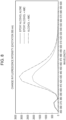
- NKX-4023 represented by the formula (1)
- AMC represented by the formula (14)
- FITC Fluorescein isothiocyanate isomer-I
- NKX-4023 has a sufficient fluorescence intensity even after coming in contact with the epoxy compound, and coincide with the results of Example 1. Accordingly, it is considered that coumarin fluorescent dyes that do not lose fluorescence in similar reference experiments, can be used as the compound (I) of the present invention.
- the solid line represents the measurement results of the solution in which propylene oxide was dissolved in alcohol (ethanol).
- the broken line represents the measurement results of the solution in which NKX-4023 was dissolved in alcohol (ethanol) containing propylene oxide.
- the two-dot chain line represents the measurement results of the solution in which NKX-4023 was dissolved in alcohol (ethanol).
- the vertical axis represents the fluorescence intensity (arbitrary unit), and the horizontal axis represents the fluorescence wavelength (nm).
- the solid line represents the measurement results of the solution in which propylene oxide was dissolved in alcohol (ethanol).
- the broken line represents the measurement results of the solution in which AMC was dissolved in alcohol (ethanol) containing propylene oxide.
- the two-dot chain line represents the measurement results of the solution in which AMC was dissolved in alcohol (ethanol).
- the vertical axis represents the fluorescence intensity (arbitrary unit), and the horizontal axis represents the fluorescence wavelength (nm).
- the solid line represents the measurement results of the solution in which propylene oxide was dissolved in alcohol (ethanol).
- the broken line represents the measurement results of the solution in which FITC was dissolved in alcohol (ethanol) containing propylene oxide.
- the two-dot chain line represents the measurement results of the solution in which FITC was dissolved in alcohol (ethanol).
- the vertical axis represents the fluorescence intensity (arbitrary unit), and the horizontal axis represents the fluorescence wavelength (nm).
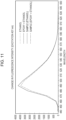
- the reference compound 101 was subjected to a certain fluorescence-intensity reduction effect by contact with the epoxy compound, but the loss of fluorescence intensity did not occur. Accordingly, the reference compound 101 can be used as the compound (I) of the present invention if the reactive group is introduced therein.
- the two-dot chain line represents the measurement results of ethanol alone.
- the broken line represents the measurement results of the solution in which propylene oxide, which is an epoxy compound, was dissolved in ethanol.
- the solid line represents the measurement results of the solution in which the reference compound serving as a sample was dissolved in ethanol.
- the one-dot chain line represents the measurement results of the solution in which the reference compound serving as a sample was dissolved in ethanol containing propylene oxide.
- the vertical axis represents the fluorescence intensity (arbitrary unit), and the horizontal axis represents the fluorescence wavelength (nm).
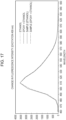
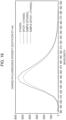
- Figs. 11 to 20 also show measurement results in the same manner.
- the reference compound 102 has a strong fluorescence intensity even after coming in contact with the epoxy compound. Accordingly, the reference compound 102 can be used as the compound (I) of the present invention if the reactive group is introduced therein.
- the reference compound 103 has a strong fluorescence intensity even after coming in contact with the epoxy compound. Accordingly, the reference compound 103 can be used as the compound (I) of the present invention if the reactive group is introduced therein.
- the reference compound 104 has a strong fluorescence intensity even after coming in contact with the epoxy compound. Accordingly, the reference compound 104 can be used as the compound (I) of the present invention if the reactive group is introduced therein.
- Reference Experiment 8 Into a test tube, 3 mL of a solution prepared by dissolving 0.5 g of propylene oxide in 10 mL of ethanol was poured, and a fluorescence spectrum was measured at an excitation wavelength of 387 nm. Subsequently, 3 ⁇ L of a solution (1 mg/mL) of the reference compound 105 represented by the formula (105) was added to the solution in the test tube, and a fluorescence spectrum was measured in the same manner.
- the reference compound 105 has a strong fluorescence intensity even after coming in contact with the epoxy compound. Accordingly, the reference compound 105 can be used as the compound (I) of the present invention if the reactive group is introduced therein.
- the reference compound 106 has a strong fluorescence intensity even after coming in contact with the epoxy compound. Accordingly, the reference compound 106 can be used as the compound (I) of the present invention if the reactive group is introduced therein.
- the reference compound 107 has a strong fluorescence intensity even after coming in contact with the epoxy compound. Accordingly, the reference compound 107 can be used as the compound (I) of the present invention if the reactive group is introduced therein.
- the reference compound 108 has a strong fluorescence intensity even after coming in contact with the epoxy compound. Accordingly, the reference compound 108 can be used as the compound (I) of the present invention if the reactive group is introduced therein.
- Reference Experiment 12 Into a test tube, 3 mL of a solution prepared by dissolving 0.5 g of propylene oxide in 10 mL of ethanol was poured, and a fluorescence spectrum was measured at an excitation wavelength of 435 nm. Subsequently, 3 ⁇ L of a solution (1 mg/mL) of the reference compound 109 represented by the formula (109) was added to the solution in the test tube, and a fluorescence spectrum was measured in the same manner.
- the reference compound 109 has a strong fluorescence intensity even after coming in contact with the epoxy compound. Accordingly, the reference compound 109 can be used as the compound (I) of the present invention if the reactive group is introduced therein.
- the reference compound 111 has a strong fluorescence intensity even after coming in contact with the epoxy compound. Accordingly, the reference compound 111 can be used as the compound (I) of the present invention if the reactive group is introduced therein.
- Reference Experiment 14 Into a test tube, 3 mL of a solution prepared by dissolving 0.5 g of propylene oxide in 10 mL of ethanol was poured, and a fluorescence spectrum was measured at an excitation wavelength of 528 nm. Subsequently, 3 ⁇ L of a solution (1 mg/mL) of the reference compound 112 represented by the formula (112) was added to the solution in the test tube, and a fluorescence spectrum was measured in the same manner.
- the reference compound 112 has a strong fluorescence intensity even after coming in contact with the epoxy compound. Accordingly, the reference compound 112 can be used as the compound (I) of the present invention if the reactive group is introduced therein.
- the reference experiments described above are each a useful method for simply examining, when a section sample provided for electron microscopic observation is embedded in an epoxy resin, whether a fluorescent dye contained in the section sample is subjected to a structural change by an epoxy compound. If a fluorescent dye maintains the structure that emits fluorescence after the fluorescent dye is brought into contact with an epoxy compound in a test tube, the fluorescent dye is considered to have resistance to epoxy resin embedding treatment in a section sample provided for electron microscopic observation. That is, the fluorescent dye having the resistance is a preferred fluorescent dye that can be used in the microscopic observation method according to the present invention.
- Two paraffin-embedded sections of human skin tissue were prepared by a routine method. The two skin sections were cut out from substantially the same position in the skin tissue.
- one skin section was subjected to immunofluorescence staining using a labeled antibody solution of the fluorescent staining agent (3).
- the other skin section was subjected to DAB staining using an antibody labeled with a commercially available peroxidase enzyme.
- deparaffinization treatment was performed by a publicly known method including immersing in xylene, ethanol, and ion-exchanged water in this order to prepare a tissue section. Furthermore, the tissue section was immersed in a 10 mM citric acid buffer (pH 6.0) heated at 95°C in a hot bath, incubated for 45 minutes, and allowed to stand at room temperature for 30 minutes to perform antigen retrieval treatment.
- a 10 mM citric acid buffer pH 6.0
- the tissue section was immersed, at room temperature for 30 minutes, in a blocking reagent prepared by dissolving 4 g of a blocking agent (manufacturer: DS Pharma Biomedical Co., Ltd., product number: UK-B80) in 100 mL of a PBS buffer.
- a blocking reagent prepared by dissolving 4 g of a blocking agent (manufacturer: DS Pharma Biomedical Co., Ltd., product number: UK-B80) in 100 mL of a PBS buffer.
- a primary antibody solution was prepared by diluting an anti-cytokeratin antibody solution (manufacturer: DAKO, product number: Z0622) 500-fold with the above blocking reagent.
- the tissue section that had been subjected to the blocking treatment was immersed in this solution at 4°C overnight to react with the primary antibody, and the tissue section was then washed with PBS buffer.
- a secondary antibody solution was prepared by diluting the labeled antibody solution of the fluorescent staining agent (3) 100-fold with the above blocking reagent.
- the tissue section was immersed in this solution at room temperature for four hours to react with the secondary antibody, and the tissue section was then washed with PBS buffer to prepare an immunofluorescent-stained sample.
- the immunofluorescent-stained sample was immersed in 10 mL of 0.5% aqueous glutaraldehyde solution at room temperature for five minutes, washed with PBS buffer, subsequently immersed in 10 mL of 0.5% aqueous osmium tetroxide solution at room temperature for two minutes, and washed with water.
- the immunofluorescent-stained sample that had been subjected to a series of this treatment (postfixation) was immersed in ascending series of ethanol at room temperature for three minutes in each ethanol solution to perform dehydration.
- the dehydrated immunofluorescent-stained sample was immersed in propylene oxide at room temperature for five minutes, and the immunofluorescent-stained sample impregnated with propylene oxide was placed in a thermostatic chamber at 60°C for 24 hours to obtain a sample (embedded sample) embedded in an epoxy resin formed by curing propylene oxide.
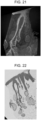
- FIG. 21 An image A3 obtained by observing this section sample with a fluorescence microscope is shown in Fig. 21 .
- the observation was performed at an excitation wavelength of 385 nm using a filter or the like used for fluorescence observation of DAPI, which is a publicly known dye.
- DAPI a publicly known dye.
- strong blue fluorescence was shown in regions where keratin was considered to be present and the morphology of the tissue was highlighted.
- the blue fluorescence is derived from NKX-4190 bound to the labeled antibody.
- DAB staining as described above was performed using the other skin section in accordance with a routine method with an automatic immunostaining device (manufactured by Leica Biosystems: BOND MAX). In this case, a color development kit (BOND Polymer Refine Detection, product code: DS9800) was used.
- a color development kit BOND Polymer Refine Detection, product code: DS9800
- DAB which is a substrate of the enzyme, is brought into contact with the section sample obtained as described above, regions where the anti-keratin antibody and the enzyme-labeled antibody are present are stained brown.
- FIG. 22 An image B3 obtained by observing the section sample subjected to DAB staining with a microscope is shown in Fig. 22 . It is publicly known that the anti-keratin antibody specifically binds to keratin, and thus it is obvious that regions where keratinocytes (cornified cells having keratin) are present are stained brown.
- Fig. 23 shows the results of an image C3 obtained by superimposing the fluorescence observation image A3 shown in Fig. 21 and the observation image B3 of DAB staining shown in Fig. 22 .
- this image C3 regions where fluorescence is observed and regions where brown is observed match very well. Accordingly, it was confirmed that, in the section sample of the skin tissue, the secondary antibody labeled with NKX-4190 binds to the anti-keratin antibody, thereby showing, by fluorescence, the regions where keratinocytes are present.
- the section sample used in this fluorescence observation has already been subjected to preliminary treatment (fixation with glutaraldehyde, postfixation with osmium tetroxide, and embedding in an epoxy resin) for performing electron microscopic observation, the section sample can be observed with an electron microscope without performing another preliminary treatment.
- NKX-4190 is not subjected to a structural change even after the preliminary treatment for performing electron microscopic observation, and the fluorescence is not deactivated.
- the present invention is widely applicable to technical fields in which cells or tissue sections are stained, for example, medical science and medical fields such as pathological diagnosis and studies on cytology and histology.
Landscapes
- Health & Medical Sciences (AREA)
- Life Sciences & Earth Sciences (AREA)
- Chemical & Material Sciences (AREA)
- Immunology (AREA)
- Engineering & Computer Science (AREA)
- Physics & Mathematics (AREA)
- Pathology (AREA)
- General Physics & Mathematics (AREA)
- General Health & Medical Sciences (AREA)
- Analytical Chemistry (AREA)
- Biochemistry (AREA)
- Biomedical Technology (AREA)
- Molecular Biology (AREA)
- Hematology (AREA)
- Urology & Nephrology (AREA)
- Medicinal Chemistry (AREA)
- Food Science & Technology (AREA)
- Microbiology (AREA)
- Cell Biology (AREA)
- Biotechnology (AREA)
- Organic Chemistry (AREA)
- Chemical Kinetics & Catalysis (AREA)
- Optics & Photonics (AREA)
- Nuclear Medicine, Radiotherapy & Molecular Imaging (AREA)
- Materials Engineering (AREA)
- Investigating Or Analysing Biological Materials (AREA)
Applications Claiming Priority (2)
| Application Number | Priority Date | Filing Date | Title |
|---|---|---|---|
| JP2020066711 | 2020-04-02 | ||
| PCT/JP2021/014173 WO2021201233A1 (ja) | 2020-04-02 | 2021-04-01 | 染色方法及び顕微鏡観察方法、並びに染色剤及び染色キット |
Publications (1)
| Publication Number | Publication Date |
|---|---|
| EP4130288A1 true EP4130288A1 (en) | 2023-02-08 |
Family
ID=77929215
Family Applications (1)
| Application Number | Title | Priority Date | Filing Date |
|---|---|---|---|
| EP21782016.6A Withdrawn EP4130288A1 (en) | 2020-04-02 | 2021-04-01 | Staining method, microscopic observation method, staining agent and staining kit |
Country Status (4)
| Country | Link |
|---|---|
| US (1) | US20230134948A1 (https=) |
| EP (1) | EP4130288A1 (https=) |
| JP (1) | JPWO2021201233A1 (https=) |
| WO (1) | WO2021201233A1 (https=) |
Families Citing this family (1)
| Publication number | Priority date | Publication date | Assignee | Title |
|---|---|---|---|---|
| CN117417737A (zh) * | 2023-10-23 | 2024-01-19 | 河南赛诺特生物技术有限公司 | 一种酪酰胺信号放大系统用荧光增强组合物和荧光增强液 |
Family Cites Families (18)
| Publication number | Priority date | Publication date | Assignee | Title |
|---|---|---|---|---|
| US4279992A (en) * | 1978-03-13 | 1981-07-21 | Miles Laboratories, Inc. | Specific binding assay employing an enzyme-cleavable substrate as label |
| US4261974A (en) * | 1979-11-13 | 1981-04-14 | Miles Laboratories, Inc. | Valproic acid immunogen conjugates and antibodies thereto |
| US4292425A (en) * | 1979-11-13 | 1981-09-29 | Miles Laboratories, Inc. | βGalactosyl-umbelliferone valproic acid conjugates |
| DE4302459A1 (de) * | 1993-01-29 | 1994-08-04 | Bayer Ag | Sulfocumarinhaltige Nukleotide und deren Verwendung in Nachweisverfahren für Nukleinsäuren |
| US5986076A (en) * | 1994-05-11 | 1999-11-16 | Trustees Of Boston University | Photocleavable agents and conjugates for the detection and isolation of biomolecules |
| AU1325201A (en) * | 1999-07-16 | 2001-02-05 | Board Of Regents, The University Of Texas System | Detection system based on an analyte reactive particle |
| US7022517B1 (en) * | 1999-07-16 | 2006-04-04 | Board Of Regents, The University Of Texas System | Method and apparatus for the delivery of samples to a chemical sensor array |
| US20050069962A1 (en) * | 2001-10-12 | 2005-03-31 | Archer Robert M | Antibody complexes and methods for immunolabeling |
| JP2007309872A (ja) * | 2006-05-22 | 2007-11-29 | Nitto Denko Corp | 透過型電子顕微鏡用試料の調製方法 |
| US8772047B2 (en) * | 2007-05-22 | 2014-07-08 | Becton, Dickinson And Company | Dyes having ratiometric fluorescence response for detecting metabolites |
| US8153103B2 (en) * | 2008-07-01 | 2012-04-10 | Board Of Regents, The University Of Texas System | Conjugates of photo-activatable dyes |
| AU2011248607B2 (en) * | 2010-04-27 | 2015-02-05 | Ventana Medical Systems, Inc. | Antibody-nanoparticle conjugates and methods for making and using such conjugates |
| CN103201609A (zh) * | 2010-09-21 | 2013-07-10 | Fei公司 | 制备供电子显微镜和荧光显微镜观察的生物样品的方法 |
| WO2013035681A1 (ja) * | 2011-09-06 | 2013-03-14 | 学校法人久留米大学 | 電子顕微鏡用包埋樹脂組成物及び当該組成物を用いた電子顕微鏡による試料の観察方法 |
| JP6357354B2 (ja) * | 2014-06-02 | 2018-07-11 | 日本電子株式会社 | 電子顕微鏡観察用染色剤および電子顕微鏡観察用試料の染色方法 |
| JP6607486B2 (ja) | 2015-06-24 | 2019-11-20 | 国立研究開発法人情報通信研究機構 | 細胞内膜構造形成方法および細胞内膜構造観察方法 |
| JP6950922B2 (ja) * | 2017-03-24 | 2021-10-13 | 公立大学法人名古屋市立大学 | 染色方法、染色剤、及び染色キット |
| JP2020066711A (ja) | 2018-10-26 | 2020-04-30 | セイコーエプソン株式会社 | 捺染インクジェットインク組成物および記録方法 |
-
2021
- 2021-04-01 JP JP2022511134A patent/JPWO2021201233A1/ja active Pending
- 2021-04-01 US US17/915,376 patent/US20230134948A1/en not_active Abandoned
- 2021-04-01 EP EP21782016.6A patent/EP4130288A1/en not_active Withdrawn
- 2021-04-01 WO PCT/JP2021/014173 patent/WO2021201233A1/ja not_active Ceased
Also Published As
| Publication number | Publication date |
|---|---|
| WO2021201233A1 (ja) | 2021-10-07 |
| US20230134948A1 (en) | 2023-05-04 |
| JPWO2021201233A1 (https=) | 2021-10-07 |
Similar Documents
| Publication | Publication Date | Title |
|---|---|---|
| Zheng et al. | Simultaneous dual-colour tracking lipid droplets and lysosomes dynamics using a fluorescent probe | |
| US12228481B2 (en) | Expansion microscopy compatible anchorable HandE staining for histopathology | |
| CN109641922B (zh) | 点击化学用于ihc和ish测定中的信号扩增的应用 | |
| Shang et al. | Fluorogenic protein labeling using a genetically encoded unstrained alkene | |
| Dilek et al. | Rapid formation of a stable boron–nitrogen heterocycle in dilute, neutral aqueous solution for bioorthogonal coupling reactions | |
| JP5058676B2 (ja) | 生体標本の作製方法 | |
| KR101309789B1 (ko) | 티로신 산화물이 결합된 바이오 물질을 포함하는 단백질 검출용 조성물 | |
| Mei et al. | Sensitive and selective detection of zinc ions in neuronal vesicles using PYDPY1, a simple turn-on dipyrrin | |
| Kim et al. | A ratiometric two-photon probe for Ca2+ in live tissues and its application to spinal cord injury model | |
| Yang et al. | Rational design of a new near-infrared fluorophore and apply to the detection and imaging study of cysteine and thiophenol | |
| JP5323261B2 (ja) | 細胞又は組織試料の固定のためのビス−マレイン酸無水物架橋剤の使用 | |
| Allo et al. | Clickable and high-sensitivity metal-containing tags for mass cytometry | |
| EP4130288A1 (en) | Staining method, microscopic observation method, staining agent and staining kit | |
| CN118995884A (zh) | 一种改进原位邻位连接技术检测效率的方法 | |
| JP6950922B2 (ja) | 染色方法、染色剤、及び染色キット | |
| US9354237B2 (en) | Methods for isolating proteins | |
| de Rezende et al. | A Review of the Synthetic Strategies for the Development of BODIPY Dyes for Conjugation with Proteins. | |
| WO2020058339A1 (en) | Coumarin-based crosslinking reagents | |
| CN110885675A (zh) | 纳米荧光探针及制备方法与其在检测高尔基体中hno的应用 | |
| CN112457360A (zh) | 一种肝靶向的过氧亚硝酸根荧光探针及制备方法和应用 | |
| Peng et al. | Single and dual functionalization of proteins using site-specific nucleophilic carbon ligations | |
| EP3914892A1 (en) | Contrast solution for the characterisation of biological samples by electron or correlative microscopy | |
| WO1983004255A1 (en) | Reporter compounds | |
| Say et al. | Investigation of photosensitively bioconjugated targeted quantum dots for the labeling of Cu/Zn superoxide dismutase in fixed cells and tissue sections | |
| US20250172462A1 (en) | Low Temperature Processing of Cryoprotected Tissues |
Legal Events
| Date | Code | Title | Description |
|---|---|---|---|
| STAA | Information on the status of an ep patent application or granted ep patent |
Free format text: STATUS: THE INTERNATIONAL PUBLICATION HAS BEEN MADE |
|
| PUAI | Public reference made under article 153(3) epc to a published international application that has entered the european phase |
Free format text: ORIGINAL CODE: 0009012 |
|
| STAA | Information on the status of an ep patent application or granted ep patent |
Free format text: STATUS: REQUEST FOR EXAMINATION WAS MADE |
|
| 17P | Request for examination filed |
Effective date: 20221005 |
|
| AK | Designated contracting states |
Kind code of ref document: A1 Designated state(s): AL AT BE BG CH CY CZ DE DK EE ES FI FR GB GR HR HU IE IS IT LI LT LU LV MC MK MT NL NO PL PT RO RS SE SI SK SM TR |
|
| DAV | Request for validation of the european patent (deleted) | ||
| DAX | Request for extension of the european patent (deleted) | ||
| STAA | Information on the status of an ep patent application or granted ep patent |
Free format text: STATUS: THE APPLICATION HAS BEEN WITHDRAWN |
|
| 18W | Application withdrawn |
Effective date: 20240228 |