EP4130255B1 - Rekombinanter vektor zur transformation zur verbesserung der glutaminproduktivität und stamm damit - Google Patents
Rekombinanter vektor zur transformation zur verbesserung der glutaminproduktivität und stamm damit Download PDFInfo
- Publication number
- EP4130255B1 EP4130255B1 EP21780977.1A EP21780977A EP4130255B1 EP 4130255 B1 EP4130255 B1 EP 4130255B1 EP 21780977 A EP21780977 A EP 21780977A EP 4130255 B1 EP4130255 B1 EP 4130255B1
- Authority
- EP
- European Patent Office
- Prior art keywords
- glna
- strain
- vector
- glutamine
- primer
- Prior art date
- Legal status (The legal status is an assumption and is not a legal conclusion. Google has not performed a legal analysis and makes no representation as to the accuracy of the status listed.)
- Active
Links
Images

Classifications
-
- C—CHEMISTRY; METALLURGY
- C07—ORGANIC CHEMISTRY
- C07K—PEPTIDES
- C07K14/00—Peptides having more than 20 amino acids; Gastrins; Somatostatins; Melanotropins; Derivatives thereof
- C07K14/195—Peptides having more than 20 amino acids; Gastrins; Somatostatins; Melanotropins; Derivatives thereof from bacteria
- C07K14/34—Peptides having more than 20 amino acids; Gastrins; Somatostatins; Melanotropins; Derivatives thereof from bacteria from Corynebacterium (G)
-
- C—CHEMISTRY; METALLURGY
- C12—BIOCHEMISTRY; BEER; SPIRITS; WINE; VINEGAR; MICROBIOLOGY; ENZYMOLOGY; MUTATION OR GENETIC ENGINEERING
- C12N—MICROORGANISMS OR ENZYMES; COMPOSITIONS THEREOF; PROPAGATING, PRESERVING, OR MAINTAINING MICROORGANISMS; MUTATION OR GENETIC ENGINEERING; CULTURE MEDIA
- C12N1/00—Microorganisms; Compositions thereof; Processes of propagating, maintaining or preserving microorganisms or compositions thereof; Processes of preparing or isolating a composition containing a microorganism; Culture media therefor
- C12N1/20—Bacteria; Culture media therefor
-
- C—CHEMISTRY; METALLURGY
- C12—BIOCHEMISTRY; BEER; SPIRITS; WINE; VINEGAR; MICROBIOLOGY; ENZYMOLOGY; MUTATION OR GENETIC ENGINEERING
- C12N—MICROORGANISMS OR ENZYMES; COMPOSITIONS THEREOF; PROPAGATING, PRESERVING, OR MAINTAINING MICROORGANISMS; MUTATION OR GENETIC ENGINEERING; CULTURE MEDIA
- C12N15/00—Mutation or genetic engineering; DNA or RNA concerning genetic engineering, vectors, e.g. plasmids, or their isolation, preparation or purification; Use of hosts therefor
- C12N15/09—Recombinant DNA-technology
- C12N15/11—DNA or RNA fragments; Modified forms thereof; Non-coding nucleic acids having a biological activity
- C12N15/52—Genes encoding for enzymes or proenzymes
-
- C—CHEMISTRY; METALLURGY
- C12—BIOCHEMISTRY; BEER; SPIRITS; WINE; VINEGAR; MICROBIOLOGY; ENZYMOLOGY; MUTATION OR GENETIC ENGINEERING
- C12N—MICROORGANISMS OR ENZYMES; COMPOSITIONS THEREOF; PROPAGATING, PRESERVING, OR MAINTAINING MICROORGANISMS; MUTATION OR GENETIC ENGINEERING; CULTURE MEDIA
- C12N15/00—Mutation or genetic engineering; DNA or RNA concerning genetic engineering, vectors, e.g. plasmids, or their isolation, preparation or purification; Use of hosts therefor
- C12N15/09—Recombinant DNA-technology
- C12N15/63—Introduction of foreign genetic material using vectors; Vectors; Use of hosts therefor; Regulation of expression
- C12N15/74—Vectors or expression systems specially adapted for prokaryotic hosts other than E. coli, e.g. Lactobacillus, Micromonospora
- C12N15/77—Vectors or expression systems specially adapted for prokaryotic hosts other than E. coli, e.g. Lactobacillus, Micromonospora for Corynebacterium; for Brevibacterium
-
- C—CHEMISTRY; METALLURGY
- C12—BIOCHEMISTRY; BEER; SPIRITS; WINE; VINEGAR; MICROBIOLOGY; ENZYMOLOGY; MUTATION OR GENETIC ENGINEERING
- C12N—MICROORGANISMS OR ENZYMES; COMPOSITIONS THEREOF; PROPAGATING, PRESERVING, OR MAINTAINING MICROORGANISMS; MUTATION OR GENETIC ENGINEERING; CULTURE MEDIA
- C12N9/00—Enzymes; Proenzymes; Compositions thereof; Processes for preparing, activating, inhibiting, separating or purifying enzymes
- C12N9/93—Ligases (6)
-
- C—CHEMISTRY; METALLURGY
- C12—BIOCHEMISTRY; BEER; SPIRITS; WINE; VINEGAR; MICROBIOLOGY; ENZYMOLOGY; MUTATION OR GENETIC ENGINEERING
- C12P—FERMENTATION OR ENZYME-USING PROCESSES TO SYNTHESISE A DESIRED CHEMICAL COMPOUND OR COMPOSITION OR TO SEPARATE OPTICAL ISOMERS FROM A RACEMIC MIXTURE
- C12P13/00—Preparation of nitrogen-containing organic compounds
- C12P13/04—Alpha- or beta- amino acids
- C12P13/14—Glutamic acid; Glutamine
-
- C—CHEMISTRY; METALLURGY
- C12—BIOCHEMISTRY; BEER; SPIRITS; WINE; VINEGAR; MICROBIOLOGY; ENZYMOLOGY; MUTATION OR GENETIC ENGINEERING
- C12R—INDEXING SCHEME ASSOCIATED WITH SUBCLASSES C12C - C12Q, RELATING TO MICROORGANISMS
- C12R2001/00—Microorganisms ; Processes using microorganisms
- C12R2001/01—Bacteria or Actinomycetales ; using bacteria or Actinomycetales
- C12R2001/15—Corynebacterium
-
- C—CHEMISTRY; METALLURGY
- C12—BIOCHEMISTRY; BEER; SPIRITS; WINE; VINEGAR; MICROBIOLOGY; ENZYMOLOGY; MUTATION OR GENETIC ENGINEERING
- C12Y—ENZYMES
- C12Y603/00—Ligases forming carbon-nitrogen bonds (6.3)
- C12Y603/01—Acid-ammonia (or amine)ligases (amide synthases)(6.3.1)
- C12Y603/01002—Glutamate-ammonia ligase (6.3.1.2)
Definitions
- the present invention relates to a recombinant vector for transformation that increases glutamine productivity, and a strain into which the same has been introduced.
- the activity of glutamine synthetase is regulated by glutamine synthetase adenylyltransferase (ATase, glnE).
- ATase regulates the activity of GS by catalyzing adenylation and deadenylation of GS, and is affected by the nitrogen concentration in medium.
- the activity of ATase is regulated by PII (nitrogen regulatory protein P-II gene, glnB).
- FIG. 1 shows a mechanism in which the activity of GS is inhibited by the activation of PII and ATase when the nitrogen concentration is high.
- Japanese Patent No. JP4898441 discloses a strain in which glutamine production is increased by inhibiting the activities of glnB and glnE genes involved in the inhibition of GS activity, but there is still room for improvement.
- Patent Document 0001 Japanese Patent No. JP 4898441 B2 (January 6, 2012 )
- One embodiment provides a glutamine-producing strain comprising a vector containing a nucleotide sequence encoding a glutamine synthetase (GS) consisting of the amino acid sequence of SEQ ID NO: 1.
- GS glutamine synthetase
- One aspect provides a vector for transformation containing a nucleotide sequence encoding a glutamine synthetase (GS) consisting of the amino acid sequence of SEQ ID NO: 1.
- GS glutamine synthetase
- the glutamine synthetase is an enzyme that synthesizes glutamine from glutamate and ammonia. Since the extent to which the activity of the glutamine synthetase consisting of the amino acid sequence of SEQ ID NO: 1 is inhibited by ATase is lower than that of a glutamine synthetase consisting of another sequence is inhibited by ATase, the glutamine synthetase having the amino acid sequence of SEQ ID NO: 1 may increase glutamine productivity.
- the nucleotide sequence encoding the glutamine synthetase may consist of the nucleotide sequence of SEQ ID NO: 2.
- the glutamine synthetase consisting of the amino acid sequence of SEQ ID NO: 1 and the glnA gene consisting of the nucleotide sequence of SEQ ID NO: 2 may be derived from a Corynebacterium glutamicum strain deposited under accession number KFCC10694.
- KFCC10694 a Corynebacterium glutamicum strain deposited under accession number
- nucleotide sequence homology was only 88.2% and the amino acid sequence homology between glutamine synthetases expressed from the genes was only 93.7%.
- the extent to which the activity of the glutamine synthetase derived from KFCC10694 is inhibited by ATase may differ from the extent to which the activity of the glutamine synthetase consisting of the other sequence is inhibited by ATase.
- the vector for transformation may contain a promoter operably linked to the nucleotide sequence encoding the glutamine synthetase.
- operably linked means that a gene to be expressed is functionally linked to regulatory sequence(s) therefor in a manner that allows for expression of the gene.
- the promoter may be a constitutive promoter or an inducible promoter.
- the constitutive promoter may be P cspB , P aprE , P 180 , P sod , P dapA , P porB , P ilvC , P L10 , P L26 , P I16 , P I51 , P H30 , or P H36
- the inducible promoter may be P lacUV5 , P tac , P trc , P popB , P aceA/aceB , P gntP/gntK , P CJ1OX2 , P tac-M , P malE1 , or P BAD .
- the promoter may be a superoxide dismutase (P sod ) promoter.
- the vector for transformation may contain an expression regulatory sequence such as an enhancer.
- the vector for transformation may contain a transcription terminator sequence operably linked to the nucleotide sequence encoding the glutamine synthetase.
- the transcription terminator sequence may be an rrnBT1T2 sequence.
- the vector for transformation vector may contain, as a selection marker, an antibiotic (e.g., neomycin, carbenicillin, kanamycin, spectinomycin or hygromycin, etc.) resistance gene (e.g., neomycin phosphotransferase (nptII) or hygromycin phosphotransferase (hpt), etc.).
- an antibiotic e.g., neomycin, carbenicillin, kanamycin, spectinomycin or hygromycin, etc.
- resistance gene e.g., neomycin phosphotransferase (nptII) or hygromycin phosphotransferase (hpt), etc.
- the vector examples include, but are not limited to, a plasmid vector, a cosmid vector, a bacteriophage vector, a viral vector, and the like.
- Another aspect provides a strain transformed with the vector for transformation.
- the transformed strain may be a strain in which the native glnA gene has been inactivated.
- the term “native” refers to a gene naturally possessed by the microorganism.
- the term “inactivation” refers to any genetic modification resulting in the impairment of transcription or translation of the gene of interest or activity of the gene product, and may include inactivation of a promoter.
- This gene-specific inactivation may be performed by a method established in the art. For example, the gene-specific inactivation may be performed by gene deletion, gene truncation by insertion of a heterogeneous sequence, nonsense mutation, frameshift mutation, missense mutation, or the like.
- the transformed strain may be a strain in which the native glnE gene has been inactivated.
- the expression of the native glnE gene is reduced or lost, the expression of ATase, which inhibits the activity of the glutamine synthetase, is reduced, and thus the glutamine productivity may be increased.
- the transformed strain may be a Corynebacterium sp. strain, for example, a Corynebacterium glutamicum strain deposited under accession number KFCC10694.
- the transformation may be performed using a suitable vector introduction technique selected depending on the host cell, as is known in the art.
- vector introduction may be performed by electroporation, heat shock, calcium phosphate (CaPO 4 ) precipitation, calcium chloride (CaCl 2 ) precipitation, microinjection, polyethylene glycol (PEG) method, DEAE-dextran method, cationic liposome method, lithium acetate-DMSO method, or combinations thereof.
- Still another aspect provides a method for producing glutamine comprising a step of culturing the transformed strain.
- the culturing may be performed using a suitable medium and culture conditions known in the art, and any person skilled in the art may easily adjust and use the medium and the culture conditions.
- the medium may be a liquid medium, without being limited thereto.
- Examples of the culturing method include, but are not limited to, batch culture, continuous culture, fed-batch culture, or combinations thereof.
- the medium should meet the requirements of a specific strain in a proper manner, and may be appropriately modified by a person skilled in the art.
- the culture medium for the Corynebacterium sp. strain reference may be made to a known document ( Manual of Methods for General Bacteriology, American Society for Bacteriology, Washington D.C., USA, 1981 ).
- the medium may contain various carbon sources, nitrogen sources, and trace element components.
- carbon sources examples include: saccharides and carbohydrates such as glucose, sucrose, lactose, fructose, maltose, starch, and cellulose; oils and fats such as soybean oil, sunflower oil, castor oil, and coconut oil; fatty acids such as palmitic acid, stearic acid, and linoleic acid; alcohols such as glycerol and ethanol; and organic acids such as acetic acid. These substances may be used individually or as a mixture.
- saccharides and carbohydrates such as glucose, sucrose, lactose, fructose, maltose, starch, and cellulose
- oils and fats such as soybean oil, sunflower oil, castor oil, and coconut oil
- fatty acids such as palmitic acid, stearic acid, and linoleic acid
- alcohols such as glycerol and ethanol
- organic acids such as acetic acid.
- nitrogen sources examples include peptone, yeast extract, meat extract, malt extract, corn steep liquor, soybean meal, urea, or inorganic compounds such as ammonium sulfate, ammonium chloride, ammonium phosphate, ammonium carbonate, and ammonium nitrate.
- the nitrogen sources may also be used individually or as a mixture.
- phosphorus sources examples include potassium dihydrogen phosphate or dipotassium hydrogen phosphate or the corresponding sodium-containing salts.
- the culture medium may contain metal salts such as magnesium sulfate or iron sulfate, which are required for growth.
- the culture medium may contain essential growth substances such as amino acids and vitamins.
- suitable precursors may be used in the culture medium.
- the medium or individual components may be added to the culture medium batchwise or in a continuous manner by a suitable method during culturing.
- the pH of the culture medium may be adjusted by adding compounds such as ammonium hydroxide, potassium hydroxide, ammonia, phosphoric acid and sulfuric acid to the microorganism culture medium in an appropriate manner during the culturing.
- foaming may be suppressed using an antifoaming agent such as a fatty acid polyglycol ester.
- oxygen or an oxygen-containing gas for example, air
- the temperature of the culture medium may be generally 20°C to 45°C, for example, 25°C to 40°C.
- the culturing may be continued until a desired amount of L-glutamine is produced. For example, the culturing time may be 10 hours to 160 hours.
- the method for producing glutamine may comprise a step of recovering L-glutamine from the cultured microorganism or the medium.
- the method for recovering L-glutamine is not particularly limited, and L-glutamine may be recovered using a suitable method known in the art depending on the culture method. Examples of the method for recovering L-glutamine include centrifugation, filtration, anion exchange chromatography, crystallization, HPLC, and the like.
- the glutamine synthetase expressed by the strain according to one embodiment is less feedback-inhibited by ATase, it may significantly increase glutamine production.
- Example 1 Construction of vectors for deletion of glnA and glnE genes on KFCC-10694 chromosome
- Wizard genomic DNA purification kit Promega, USA
- PrimeSTAR Max DNA polymerase Takara, Japan
- DNA ligation kit Takara, Japan
- HindIII and BamHI NEB, England
- PCR was performed with primer 1 and primer 2 to obtain an amplification product of the left arm of glnA of KFCC-10694. Similarly, PCR was performed with primer 3 and primer 4 to obtain an amplification product of the right arm of glnA.
- the amplification products of the left arm and right arm of glnA were subjected to crossover PCR with a combination of primer 1 and primer 4 to obtain an amplification product in which the left arm and the right arm were ligated together.
- the obtained amplification product was inserted into the BamHI site of a pK19mobSacB vector.
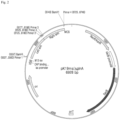
- the constructed vector for deletion of glnA was named pK19ms/ ⁇ glnA (see FIG. 2 ).
- PCR was performed with a combination of primer 5 and primer 6 to obtain an amplification product of the left arm of glnE of KFCC-10694, and PCR was performed with a combination of primer 7 and primer 8 to obtain an amplification product of the right arm of glnE.
- the amplification products of the left arm and right arm of glnE were amplified by crossover PCR using a combination of primer 5 and primer 8 to obtain an amplification product in which the left arm and the right arm were ligated together.
- the amplification product was inserted into the HindIII site of a pK19mobSacB vector.
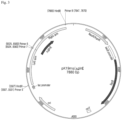
- the constructed vector for deletion of glnE was named pK19ms/ ⁇ glnE (see FIG. 3 ).
- Table 1 shows information on the glnA of KFCC-10694, the glnE of KFCC-10694, and the nucleotide sequences of primers 1 to 8.
- Primer SEQ ID NO Sequence (5' ⁇ 3') Primer 1 5 G GGATCC ATACCCAAGATGGCATGG Primer 2 6 GCTGGAGGATTTAGATTTGGTGACTCCTCATTGACA Primer 3 7 TGTCAATGAGGAGTCACCAAATCTAAATCCTCCAGC Primer 4 8 G GGATCC CTTAAAAAGCTTTTCGAC Primer 5 9 GG AAGCTT CTTGACCTGCATGATCTCG Primer 6 10 GCCAATCGAGAACGCATGCCCACTACTTTACGGTCA Primer 7 11 ATGACCGTAAAGTAGTGGGCATGCGTTCTCGATTGGC Primer 8 12 GG AAGCTT TACACCAACCACAACTGC
- PCR was performed with a combination of primer 9 and primer 10 to obtain a glnA(AT) amplification product.
- PCR was performed with a combination of primer 11 and primer 12 to obtain a glnA(KF) amplification product.
- a first sod promoter amplification product was obtained by amplifying the chromosomal DNA of ATCC13032 as a template using a combination of primer 13 (forward) and primer 14 (backward), and a second sod promoter amplification product was obtained by amplifying the chromosomal DNA of ATCC13032 as a template using a combination of primer 13 (forward) and primer 15 (backward).
- primers 14 and 15 were used separately as the reverse primers (backward) is because of the difference in the glnA sequence, and the sod promoter sequences are the same (see gggtaaaaaatcctttcg in Table 3 below).
- rrnBT1T2 transcription terminator sequences As rrnBT1T2 transcription terminator sequences, a first rrnBT1T2 amplification product was obtained by amplifying the chromosomal DNA of E. coli DH5a as a template using a combination of primer 16 (forward) and primer 17 (backward), and a second 2 rrnBT1T2 amplification product was obtained by amplifying the chromosomal DNA of E. coli DH5a using a combination of primer 18 (backward) and primer 17 (backward).
- primers 16 and 18 were used separately as the forward primers is because of the difference in the glnA sequence, and the transcription terminator sequences are the same (see agaatttgcctggcggca in Table 3 below).
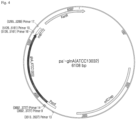
- the first sod promoter amplification product, glnA(AT), and the first rrnBT1T2 terminator amplification product were inserted into the BamHI site in a pa' vector, which is an E. coli-Corynebacterium shuttle vector, by performing crossover PCR using a combination of primer 13 and primer 17, thereby constructing a pa'-glnA(AT) vector (see FIG. 4 ).
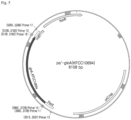
- the second sod promoter amplification product, glnA(KF), and the second rrnBT1T2 terminator amplification product were inserted into the BamHI site in a pa' vector, which is an E. coli-Corynebacterium shuttle vector, by performing crossover PCR using a combination of primer 13 and primer 17, thereby constructing a pa'-glnA(KF) vector (see FIG. 5 ).
- Example 2 Experimental materials used in Example 2 were PrimeSTAR Max DNA Polymerase (Takara, Japan), DNA ligation kit (Takara, Japan), and BamHI (NEB, England).
- primers 9 to 18 are shown in Table 3 below.
- Table 3 Primer SEQ ID NO Sequence (5' ⁇ 3') Primer 9 13 CGAAAGGATTTTTTACCCGTGGCGTTTGAAACCCCG Primer 10 14 TGCCGCCAGGCAAATTCTTTAGCAGTCGAAGTACAA Primer 11 15 CGAAAGGATTTTTTACCCGTGGCGTTTAATACCCCGG Primer 12 16 CTGCCGCCAGGCAAATTCTTTAGCAGTCGAAGTACAT Primer 13 17 GGGATCCAGCTGCCAATTATTCCGGG Primer 14 18 CGGGGTTTCAAACGCCAC GGGTAAAAAATCCTTTCG Primer 15 19 CCGGGGTATTAAACGCCAC GGGTAAAAAATCCTTTCG Primer 16 20 TTGTACTTCGACTGCTAA AGAATTTGCCTGGCGGCA Primer 17 21 GGGATCCTTCGTTTTATTTGATGCC Primer 18 22 ATGTACTTCGACTGCTAA AGAATTTGCCTGGCGGCAG
- Example 3 Construction of KFCC10694 strain containing deletion of glnA gene and/or glnE gene
- the pK19ms/ ⁇ glnA vector constructed in Example 1 was introduced by electroporation into competent cells of the KFCC10694 strain, and the cells were plated on 2YT KM AGAR medium, and then cultured in an incubator at 30°C for 4 days to obtain colonies. Among the colonies in which the first homologous recombination was induced, the transformed colonies were cultured in 2YT liquid medium for 12 hours, and then plated on 2YT sucrose GM agar medium, and the antibiotic marker was removed by the second homologous recombination. Whether the glnA gene was removed as intended was finally checked by subjecting the selected colony to PCR and sequencing. The glnA gene-deleted strain constructed through the above-described process was named D 10694A.
- Example 2 the pK19ms/ ⁇ glnE vector constructed in Example 1 was introduced into the D10694A strain, thereby constructing a strain containing deletion of both glnA and glnE genes.
- the medium used in this experiment contained glutamine at a concentration of 100 mg/L.
- Example 3 Experimental materials used in Example 3 were 2YT agar (16 g/L tryptone, 10 g/L yeast extract, 5 g/L NaCl, 1.5% agar), 2YT KM agar (2YT agar, 15 mg/L kanamycine), 2YT sucrose GM agar (2YT agar, 100 g/L sucrose, 100 mg/L glutamine), and electrophorator (BIO-RAD, USA).
- Example 4 Construction of strain into which pa'-glnA(AT) vector or pa'-glnA(KF) vector has been introduced
- Example 2 Each of the pa'-glnA(ATCC13032) vector and pa'-glnA(KFCC10694) vector constructed in Example 2 was introduced by electroporation into each of the D10694A and D10694AE strains constructed in Example 3. Each of the strains into which each of the vectors has been introduced was plated on 2YT KM AGAR medium and cultured for 3 days in an incubator at 30°C to obtain colonies. The strains constructed through the above-described process were named D10694A/pa-glnA(AT), D10694A/pa-glnA(KF), D10694AE/pa-glnA(AT), and D10694AE/pa-glnA(KF), respectively.
- Example 4 Experimental materials used in Example 4 were 2YT agar (16 g/L tryptone, 10 g/L yeast extract, 5 g/L NaCl, 1.5% agar), 2YT KM agar (2YT agar, 15 mg/L kanamycine), and electrophorator (BIO-RAD, USA).
- Example 5 Analysis of glutamine productivities of strains constructed in Example 4.
- the D10694A/Pa-glnA(KF) strain showed an increase in productivity of about 47% compared to the parent strain, and the D10694AE/Pa-glnA(KF) strain showed an increase in productivity of about 49% compared to the parent strain.
- productivity difference between D10694A/Pa-glnA(KF) and D10694AE/Pa-glnA(KF) compared to the parent strain was only 2%, which was insignificant.
- D10694AE/Pa-glnA(KF) additionally lacked the glnE gene involved in the feedback inhibition of GS
- the increase in glutamine productivity of D10694AE/Pa-glnA(KF) from that of the parent strain was only 2% compared to the increase in glutamine productivity of D10694A/Pa-glnA(KF) from that of the parent strain, indicating that the difference in glutamine productivity depending on the presence or absence of ATase activity was not significant.
- This suggests that the increase in productivity by introduction of glnA(KF) was not simply due to contribution of the sod promoter, but was due to contribution of the resistance of glnA(KF) to feedback inhibition.
Landscapes
- Health & Medical Sciences (AREA)
- Life Sciences & Earth Sciences (AREA)
- Chemical & Material Sciences (AREA)
- Genetics & Genomics (AREA)
- Engineering & Computer Science (AREA)
- Organic Chemistry (AREA)
- Zoology (AREA)
- Wood Science & Technology (AREA)
- Bioinformatics & Cheminformatics (AREA)
- General Engineering & Computer Science (AREA)
- Biotechnology (AREA)
- Biomedical Technology (AREA)
- Biochemistry (AREA)
- General Health & Medical Sciences (AREA)
- Microbiology (AREA)
- Molecular Biology (AREA)
- Biophysics (AREA)
- Medicinal Chemistry (AREA)
- Physics & Mathematics (AREA)
- Plant Pathology (AREA)
- General Chemical & Material Sciences (AREA)
- Chemical Kinetics & Catalysis (AREA)
- Tropical Medicine & Parasitology (AREA)
- Virology (AREA)
- Proteomics, Peptides & Aminoacids (AREA)
- Gastroenterology & Hepatology (AREA)
- Micro-Organisms Or Cultivation Processes Thereof (AREA)
- Preparation Of Compounds By Using Micro-Organisms (AREA)
Claims (8)
- Vektor zur Transformation, enthaltend eine Nukleotidsequenz, die eine Glutaminsynthetase codiert, die aus der Aminosäuresequenz unter SEQ ID NO: 1 besteht.
- Vektor nach Anspruch 1, wobei die Nukleotidsequenz, die die Glutaminsynthetase codiert, aus SEQ ID NO: 2 besteht.
- Vektor nach Anspruch 1, enthaltend einen Promotor in operativer Verknüpfung mit der Nukleotidsequenz, die die Glutaminsynthetase codiert.
- Vektor nach Anspruch 1, enthaltend eine Transkriptionsterminatorsequenz in operativer Verknüpfung mit der Nukleotidsequenz, die die Glutaminsynthetase codiert.
- Stamm, transformiert mit dem Vektor zur Transformation gemäß Anspruch 1.
- Stamm nach Anspruch 5, wobei die Expression eines nativen glnE-Gens in dem Stamm inaktiviert wurde.
- Stamm nach Anspruch 5, bei dem es sich um Corynebacterium glutamicum handelt.
- Verfahren zur Herstellung von Glutamin, umfassend einen Schritt, bei dem der Stamm nach Anspruch 5 kultiviert wird.
Applications Claiming Priority (2)
| Application Number | Priority Date | Filing Date | Title |
|---|---|---|---|
| KR1020200038628A KR102216450B1 (ko) | 2020-03-30 | 2020-03-30 | 글루타민 생산능을 향상시키는 형질전환용 재조합 벡터 및 이를 도입한 균주 |
| PCT/KR2021/003633 WO2021201489A1 (ko) | 2020-03-30 | 2021-03-24 | 글루타민 생산능을 향상시키는 형질전환용 재조합 벡터 및 이를 도입한 균주 |
Publications (3)
| Publication Number | Publication Date |
|---|---|
| EP4130255A1 EP4130255A1 (de) | 2023-02-08 |
| EP4130255A4 EP4130255A4 (de) | 2024-04-24 |
| EP4130255B1 true EP4130255B1 (de) | 2024-12-04 |
Family
ID=74731394
Family Applications (1)
| Application Number | Title | Priority Date | Filing Date |
|---|---|---|---|
| EP21780977.1A Active EP4130255B1 (de) | 2020-03-30 | 2021-03-24 | Rekombinanter vektor zur transformation zur verbesserung der glutaminproduktivität und stamm damit |
Country Status (7)
| Country | Link |
|---|---|
| US (1) | US12454709B2 (de) |
| EP (1) | EP4130255B1 (de) |
| JP (1) | JP7415041B2 (de) |
| KR (1) | KR102216450B1 (de) |
| CN (1) | CN115349012B (de) |
| ES (1) | ES3009768T3 (de) |
| WO (1) | WO2021201489A1 (de) |
Families Citing this family (1)
| Publication number | Priority date | Publication date | Assignee | Title |
|---|---|---|---|---|
| KR102216450B1 (ko) * | 2020-03-30 | 2021-02-17 | 대상 주식회사 | 글루타민 생산능을 향상시키는 형질전환용 재조합 벡터 및 이를 도입한 균주 |
Family Cites Families (11)
| Publication number | Priority date | Publication date | Assignee | Title |
|---|---|---|---|---|
| KR920005975B1 (ko) * | 1990-06-30 | 1992-07-25 | 미원식품주식회사 | 미생물에 의한 l-글루타민의 제조방법 |
| JP3091270B2 (ja) | 1990-09-28 | 2000-09-25 | 協和醗酵工業株式会社 | 美白化粧料 |
| KR20070087034A (ko) * | 1999-06-25 | 2007-08-27 | 바스프 악티엔게젤샤프트 | 대사 경로 단백질을 코딩하는 코리네박테리움 글루타미쿰유전자 |
| JP4560998B2 (ja) * | 2001-02-05 | 2010-10-13 | 味の素株式会社 | 発酵法によるl−グルタミンの製造法及びl−グルタミン生産菌 |
| EP1424397B1 (de) * | 2002-11-26 | 2011-01-19 | Ajinomoto Co., Inc. | Methode für die Produktion von L-Glutamin und L-Glutamin-produzierendes Bakterium |
| CN101065477B (zh) * | 2004-06-25 | 2011-10-05 | 协和发酵生化株式会社 | 物质的制备方法 |
| US20060075522A1 (en) * | 2004-07-31 | 2006-04-06 | Jaclyn Cleveland | Genes and uses for plant improvement |
| KR101481782B1 (ko) | 2012-12-28 | 2015-01-13 | 대상 주식회사 | Gogat의 불활성화에 의한 아미노산 고생산능 변이 균주 |
| JP6623690B2 (ja) * | 2015-10-30 | 2019-12-25 | 味の素株式会社 | グルタミン酸系l−アミノ酸の製造法 |
| CN106635946A (zh) | 2016-12-29 | 2017-05-10 | 廊坊梅花生物技术开发有限公司 | 一种谷氨酸棒杆菌及其构建方法与应用 |
| KR102216450B1 (ko) * | 2020-03-30 | 2021-02-17 | 대상 주식회사 | 글루타민 생산능을 향상시키는 형질전환용 재조합 벡터 및 이를 도입한 균주 |
-
2020
- 2020-03-30 KR KR1020200038628A patent/KR102216450B1/ko active Active
-
2021
- 2021-03-24 EP EP21780977.1A patent/EP4130255B1/de active Active
- 2021-03-24 ES ES21780977T patent/ES3009768T3/es active Active
- 2021-03-24 CN CN202180026206.XA patent/CN115349012B/zh active Active
- 2021-03-24 WO PCT/KR2021/003633 patent/WO2021201489A1/ko not_active Ceased
- 2021-03-24 US US17/916,331 patent/US12454709B2/en active Active
- 2021-03-24 JP JP2022560115A patent/JP7415041B2/ja active Active
Also Published As
| Publication number | Publication date |
|---|---|
| JP2023521310A (ja) | 2023-05-24 |
| CN115349012B (zh) | 2023-07-18 |
| US20230220430A1 (en) | 2023-07-13 |
| EP4130255A4 (de) | 2024-04-24 |
| US12454709B2 (en) | 2025-10-28 |
| CN115349012A (zh) | 2022-11-15 |
| WO2021201489A1 (ko) | 2021-10-07 |
| EP4130255A1 (de) | 2023-02-08 |
| ES3009768T3 (en) | 2025-03-31 |
| KR102216450B1 (ko) | 2021-02-17 |
| JP7415041B2 (ja) | 2024-01-16 |
Similar Documents
| Publication | Publication Date | Title |
|---|---|---|
| EP2801611B1 (de) | Mikroorganismus zur produktion von l-aminosäure sowie verfahren zur produktion von l-aminosäuren damit | |
| US20220049212A1 (en) | Mutant strain having enhanced l-glutamic acid producing ability, and l-glutamic acid preparation method using same | |
| EP3404101A2 (de) | Verfahren zur herstellung von l-lysin mithilfe von mikroorganismen mit fähigkeit zur herstellung von l-lysin | |
| EP2801612B1 (de) | Chinolinsäure-produzierende rekombinante mikroorganismen und verfahren zur herstellung von chinolinsäure damit | |
| KR20240017394A (ko) | L-시트룰린 생산능이 향상된 코리네박테리움 글루타미쿰 변이주 및 이를 이용한 l-시트룰린의 생산 방법 | |
| EP4130255B1 (de) | Rekombinanter vektor zur transformation zur verbesserung der glutaminproduktivität und stamm damit | |
| EP4056675A1 (de) | Mutante von corynebacterium glutamicum mit erhöhter l-lysin-produktivität und verfahren zur herstellung von l-lysin unter verwendung davon | |
| EP4446417A1 (de) | Corynebacterium glutamicum-variante mit verbesserter l-lysin-produktionsfähigkeit und verfahren zur herstellung von l-lysin damit | |
| KR20230165734A (ko) | L-라이신 생산능이 향상된 코리네박테리움 글루타미쿰 변이주 및 이를 이용한 l-라이신의 생산 방법 | |
| EP3964572A1 (de) | Mutante von corynebacterium glutamicum mit erhöhter l-lysinproduktivität und verfahren zur herstellung von l-lysin damit | |
| EP4417696A1 (de) | Corynebacterium glutamicum-variante mit verbesserter l-lysin-produktionsfähigkeit und verfahren zur herstellung von l-lysin damit | |
| KR20150028121A (ko) | Nad+ 의존성 포르메이트 데히드로게나제 유전자를 포함하는 코리네박테리움 및 이를 이용한 c4 디카르복실산 생산 방법 | |
| EP4353827A2 (de) | Mutanter stamm aus corynebacterium glutamicum mit erhöhter llysinproduktivität und verfahren zur herstellung von l-lysin damit | |
| EP4332229A1 (de) | Corynebacterium glutamicum-variante mit verbesserter l-lysin-produktionsfähigkeit und verfahren zur herstellung von l-lysin damit | |
| EP4332230A1 (de) | Corynebacterium glutamicum-variante mit verbesserter l-lysin-produktionsfähigkeit und verfahren zur herstellung von l-lysin damit | |
| KR20220126610A (ko) | L-라이신 생산능이 향상된 코리네박테리움 글루타미쿰 변이주 및 이를 이용한 l-라이신의 생산 방법 | |
| KR20150018227A (ko) | 외인성 푸마라아제 유전자를 포함하는 코리네박테리움 및 이를 이용한 c4 디카르복실산의 생산 방법 | |
| KR20250093171A (ko) | 포스포트랜스아세틸라제 및 아세트산 인산화효소 오페론의 활성이 강화된 미생물 및 이의 용도 |
Legal Events
| Date | Code | Title | Description |
|---|---|---|---|
| STAA | Information on the status of an ep patent application or granted ep patent |
Free format text: STATUS: THE INTERNATIONAL PUBLICATION HAS BEEN MADE |
|
| PUAI | Public reference made under article 153(3) epc to a published international application that has entered the european phase |
Free format text: ORIGINAL CODE: 0009012 |
|
| STAA | Information on the status of an ep patent application or granted ep patent |
Free format text: STATUS: REQUEST FOR EXAMINATION WAS MADE |
|
| 17P | Request for examination filed |
Effective date: 20221031 |
|
| AK | Designated contracting states |
Kind code of ref document: A1 Designated state(s): AL AT BE BG CH CY CZ DE DK EE ES FI FR GB GR HR HU IE IS IT LI LT LU LV MC MK MT NL NO PL PT RO RS SE SI SK SM TR |
|
| DAV | Request for validation of the european patent (deleted) | ||
| DAX | Request for extension of the european patent (deleted) | ||
| A4 | Supplementary search report drawn up and despatched |
Effective date: 20240322 |
|
| RIC1 | Information provided on ipc code assigned before grant |
Ipc: C12R 1/15 20060101ALI20240315BHEP Ipc: C12N 15/52 20060101ALI20240315BHEP Ipc: C12P 13/14 20060101ALI20240315BHEP Ipc: C12N 15/77 20060101ALI20240315BHEP Ipc: C07K 14/34 20060101ALI20240315BHEP Ipc: C12N 9/00 20060101AFI20240315BHEP |
|
| GRAP | Despatch of communication of intention to grant a patent |
Free format text: ORIGINAL CODE: EPIDOSNIGR1 |
|
| STAA | Information on the status of an ep patent application or granted ep patent |
Free format text: STATUS: GRANT OF PATENT IS INTENDED |
|
| RIC1 | Information provided on ipc code assigned before grant |
Ipc: C12R 1/15 20060101ALI20240618BHEP Ipc: C12N 15/52 20060101ALI20240618BHEP Ipc: C12P 13/14 20060101ALI20240618BHEP Ipc: C12N 15/77 20060101ALI20240618BHEP Ipc: C07K 14/34 20060101ALI20240618BHEP Ipc: C12N 9/00 20060101AFI20240618BHEP |
|
| INTG | Intention to grant announced |
Effective date: 20240705 |
|
| GRAS | Grant fee paid |
Free format text: ORIGINAL CODE: EPIDOSNIGR3 |
|
| GRAA | (expected) grant |
Free format text: ORIGINAL CODE: 0009210 |
|
| STAA | Information on the status of an ep patent application or granted ep patent |
Free format text: STATUS: THE PATENT HAS BEEN GRANTED |
|
| AK | Designated contracting states |
Kind code of ref document: B1 Designated state(s): AL AT BE BG CH CY CZ DE DK EE ES FI FR GB GR HR HU IE IS IT LI LT LU LV MC MK MT NL NO PL PT RO RS SE SI SK SM TR |
|
| REG | Reference to a national code |
Ref country code: CH Ref legal event code: EP |
|
| REG | Reference to a national code |
Ref country code: DE Ref legal event code: R096 Ref document number: 602021022935 Country of ref document: DE |
|
| REG | Reference to a national code |
Ref country code: IE Ref legal event code: FG4D |
|
| REG | Reference to a national code |
Ref country code: NL Ref legal event code: FP |
|
| REG | Reference to a national code |
Ref country code: LT Ref legal event code: MG9D |
|
| REG | Reference to a national code |
Ref country code: ES Ref legal event code: FG2A Ref document number: 3009768 Country of ref document: ES Kind code of ref document: T3 Effective date: 20250331 |
|
| PG25 | Lapsed in a contracting state [announced via postgrant information from national office to epo] |
Ref country code: HR Free format text: LAPSE BECAUSE OF FAILURE TO SUBMIT A TRANSLATION OF THE DESCRIPTION OR TO PAY THE FEE WITHIN THE PRESCRIBED TIME-LIMIT Effective date: 20241204 |
|
| PGFP | Annual fee paid to national office [announced via postgrant information from national office to epo] |
Ref country code: DE Payment date: 20250328 Year of fee payment: 5 |
|
| PG25 | Lapsed in a contracting state [announced via postgrant information from national office to epo] |
Ref country code: FI Free format text: LAPSE BECAUSE OF FAILURE TO SUBMIT A TRANSLATION OF THE DESCRIPTION OR TO PAY THE FEE WITHIN THE PRESCRIBED TIME-LIMIT Effective date: 20241204 |
|
| PGFP | Annual fee paid to national office [announced via postgrant information from national office to epo] |
Ref country code: NL Payment date: 20250328 Year of fee payment: 5 |
|
| PG25 | Lapsed in a contracting state [announced via postgrant information from national office to epo] |
Ref country code: BG Free format text: LAPSE BECAUSE OF FAILURE TO SUBMIT A TRANSLATION OF THE DESCRIPTION OR TO PAY THE FEE WITHIN THE PRESCRIBED TIME-LIMIT Effective date: 20241204 |
|
| PG25 | Lapsed in a contracting state [announced via postgrant information from national office to epo] |
Ref country code: NO Free format text: LAPSE BECAUSE OF FAILURE TO SUBMIT A TRANSLATION OF THE DESCRIPTION OR TO PAY THE FEE WITHIN THE PRESCRIBED TIME-LIMIT Effective date: 20250304 |
|
| PG25 | Lapsed in a contracting state [announced via postgrant information from national office to epo] |
Ref country code: LV Free format text: LAPSE BECAUSE OF FAILURE TO SUBMIT A TRANSLATION OF THE DESCRIPTION OR TO PAY THE FEE WITHIN THE PRESCRIBED TIME-LIMIT Effective date: 20241204 Ref country code: GR Free format text: LAPSE BECAUSE OF FAILURE TO SUBMIT A TRANSLATION OF THE DESCRIPTION OR TO PAY THE FEE WITHIN THE PRESCRIBED TIME-LIMIT Effective date: 20250305 |
|
| PGFP | Annual fee paid to national office [announced via postgrant information from national office to epo] |
Ref country code: GB Payment date: 20250328 Year of fee payment: 5 |
|
| PG25 | Lapsed in a contracting state [announced via postgrant information from national office to epo] |
Ref country code: RS Free format text: LAPSE BECAUSE OF FAILURE TO SUBMIT A TRANSLATION OF THE DESCRIPTION OR TO PAY THE FEE WITHIN THE PRESCRIBED TIME-LIMIT Effective date: 20250304 |
|
| REG | Reference to a national code |
Ref country code: AT Ref legal event code: MK05 Ref document number: 1748195 Country of ref document: AT Kind code of ref document: T Effective date: 20241204 |
|
| PG25 | Lapsed in a contracting state [announced via postgrant information from national office to epo] |
Ref country code: SM Free format text: LAPSE BECAUSE OF FAILURE TO SUBMIT A TRANSLATION OF THE DESCRIPTION OR TO PAY THE FEE WITHIN THE PRESCRIBED TIME-LIMIT Effective date: 20241204 |
|
| PG25 | Lapsed in a contracting state [announced via postgrant information from national office to epo] |
Ref country code: PL Free format text: LAPSE BECAUSE OF FAILURE TO SUBMIT A TRANSLATION OF THE DESCRIPTION OR TO PAY THE FEE WITHIN THE PRESCRIBED TIME-LIMIT Effective date: 20241204 |
|
| PGFP | Annual fee paid to national office [announced via postgrant information from national office to epo] |
Ref country code: ES Payment date: 20250429 Year of fee payment: 5 |
|
| PG25 | Lapsed in a contracting state [announced via postgrant information from national office to epo] |
Ref country code: IS Free format text: LAPSE BECAUSE OF FAILURE TO SUBMIT A TRANSLATION OF THE DESCRIPTION OR TO PAY THE FEE WITHIN THE PRESCRIBED TIME-LIMIT Effective date: 20250404 |
|
| PG25 | Lapsed in a contracting state [announced via postgrant information from national office to epo] |
Ref country code: PT Free format text: LAPSE BECAUSE OF FAILURE TO SUBMIT A TRANSLATION OF THE DESCRIPTION OR TO PAY THE FEE WITHIN THE PRESCRIBED TIME-LIMIT Effective date: 20250404 |
|
| PG25 | Lapsed in a contracting state [announced via postgrant information from national office to epo] |
Ref country code: EE Free format text: LAPSE BECAUSE OF FAILURE TO SUBMIT A TRANSLATION OF THE DESCRIPTION OR TO PAY THE FEE WITHIN THE PRESCRIBED TIME-LIMIT Effective date: 20241204 |
|
| PG25 | Lapsed in a contracting state [announced via postgrant information from national office to epo] |
Ref country code: RO Free format text: LAPSE BECAUSE OF FAILURE TO SUBMIT A TRANSLATION OF THE DESCRIPTION OR TO PAY THE FEE WITHIN THE PRESCRIBED TIME-LIMIT Effective date: 20241204 Ref country code: AT Free format text: LAPSE BECAUSE OF FAILURE TO SUBMIT A TRANSLATION OF THE DESCRIPTION OR TO PAY THE FEE WITHIN THE PRESCRIBED TIME-LIMIT Effective date: 20241204 |
|
| PG25 | Lapsed in a contracting state [announced via postgrant information from national office to epo] |
Ref country code: SK Free format text: LAPSE BECAUSE OF FAILURE TO SUBMIT A TRANSLATION OF THE DESCRIPTION OR TO PAY THE FEE WITHIN THE PRESCRIBED TIME-LIMIT Effective date: 20241204 |
|
| PG25 | Lapsed in a contracting state [announced via postgrant information from national office to epo] |
Ref country code: CZ Free format text: LAPSE BECAUSE OF FAILURE TO SUBMIT A TRANSLATION OF THE DESCRIPTION OR TO PAY THE FEE WITHIN THE PRESCRIBED TIME-LIMIT Effective date: 20241204 |
|
| PG25 | Lapsed in a contracting state [announced via postgrant information from national office to epo] |
Ref country code: IT Free format text: LAPSE BECAUSE OF FAILURE TO SUBMIT A TRANSLATION OF THE DESCRIPTION OR TO PAY THE FEE WITHIN THE PRESCRIBED TIME-LIMIT Effective date: 20241204 |
|
| REG | Reference to a national code |
Ref country code: DE Ref legal event code: R097 Ref document number: 602021022935 Country of ref document: DE |
|
| PG25 | Lapsed in a contracting state [announced via postgrant information from national office to epo] |
Ref country code: SE Free format text: LAPSE BECAUSE OF FAILURE TO SUBMIT A TRANSLATION OF THE DESCRIPTION OR TO PAY THE FEE WITHIN THE PRESCRIBED TIME-LIMIT Effective date: 20241204 |
|
| PG25 | Lapsed in a contracting state [announced via postgrant information from national office to epo] |
Ref country code: DK Free format text: LAPSE BECAUSE OF FAILURE TO SUBMIT A TRANSLATION OF THE DESCRIPTION OR TO PAY THE FEE WITHIN THE PRESCRIBED TIME-LIMIT Effective date: 20241204 |
|
| PLBE | No opposition filed within time limit |
Free format text: ORIGINAL CODE: 0009261 |
|
| STAA | Information on the status of an ep patent application or granted ep patent |
Free format text: STATUS: NO OPPOSITION FILED WITHIN TIME LIMIT |
|
| PG25 | Lapsed in a contracting state [announced via postgrant information from national office to epo] |
Ref country code: MC Free format text: LAPSE BECAUSE OF FAILURE TO SUBMIT A TRANSLATION OF THE DESCRIPTION OR TO PAY THE FEE WITHIN THE PRESCRIBED TIME-LIMIT Effective date: 20241204 |
|
| REG | Reference to a national code |
Ref country code: CH Ref legal event code: L10 Free format text: ST27 STATUS EVENT CODE: U-0-0-L10-L00 (AS PROVIDED BY THE NATIONAL OFFICE) Effective date: 20251015 |
|
| REG | Reference to a national code |
Ref country code: CH Ref legal event code: H13 Free format text: ST27 STATUS EVENT CODE: U-0-0-H10-H13 (AS PROVIDED BY THE NATIONAL OFFICE) Effective date: 20251023 |
|
| 26N | No opposition filed |
Effective date: 20250905 |
|
| PG25 | Lapsed in a contracting state [announced via postgrant information from national office to epo] |
Ref country code: LU Free format text: LAPSE BECAUSE OF NON-PAYMENT OF DUE FEES Effective date: 20250324 |
|
| REG | Reference to a national code |
Ref country code: BE Ref legal event code: MM Effective date: 20250331 |
|
| PG25 | Lapsed in a contracting state [announced via postgrant information from national office to epo] |
Ref country code: FR Free format text: LAPSE BECAUSE OF NON-PAYMENT OF DUE FEES Effective date: 20250331 |
|
| PG25 | Lapsed in a contracting state [announced via postgrant information from national office to epo] |
Ref country code: BE Free format text: LAPSE BECAUSE OF NON-PAYMENT OF DUE FEES Effective date: 20250331 |
|
| PG25 | Lapsed in a contracting state [announced via postgrant information from national office to epo] |
Ref country code: CH Free format text: LAPSE BECAUSE OF NON-PAYMENT OF DUE FEES Effective date: 20250331 |
|
| PG25 | Lapsed in a contracting state [announced via postgrant information from national office to epo] |
Ref country code: IE Free format text: LAPSE BECAUSE OF NON-PAYMENT OF DUE FEES Effective date: 20250324 |