EP4119359B1 - Reifen - Google Patents
Reifen Download PDFInfo
- Publication number
- EP4119359B1 EP4119359B1 EP21766932.4A EP21766932A EP4119359B1 EP 4119359 B1 EP4119359 B1 EP 4119359B1 EP 21766932 A EP21766932 A EP 21766932A EP 4119359 B1 EP4119359 B1 EP 4119359B1
- Authority
- EP
- European Patent Office
- Prior art keywords
- outside
- shoulder
- groove
- main groove
- sipe
- Prior art date
- Legal status (The legal status is an assumption and is not a legal conclusion. Google has not performed a legal analysis and makes no representation as to the accuracy of the status listed.)
- Active
Links
Images


Classifications
-
- B—PERFORMING OPERATIONS; TRANSPORTING
- B60—VEHICLES IN GENERAL
- B60C—VEHICLE TYRES; TYRE INFLATION; TYRE CHANGING; CONNECTING VALVES TO INFLATABLE ELASTIC BODIES IN GENERAL; DEVICES OR ARRANGEMENTS RELATED TO TYRES
- B60C11/00—Tyre tread bands; Tread patterns; Anti-skid inserts
- B60C11/03—Tread patterns
- B60C11/0306—Patterns comprising block rows or discontinuous ribs
-
- B—PERFORMING OPERATIONS; TRANSPORTING
- B60—VEHICLES IN GENERAL
- B60C—VEHICLE TYRES; TYRE INFLATION; TYRE CHANGING; CONNECTING VALVES TO INFLATABLE ELASTIC BODIES IN GENERAL; DEVICES OR ARRANGEMENTS RELATED TO TYRES
- B60C11/00—Tyre tread bands; Tread patterns; Anti-skid inserts
- B60C11/03—Tread patterns
- B60C11/0302—Tread patterns directional pattern, i.e. with main rolling direction
-
- B—PERFORMING OPERATIONS; TRANSPORTING
- B60—VEHICLES IN GENERAL
- B60C—VEHICLE TYRES; TYRE INFLATION; TYRE CHANGING; CONNECTING VALVES TO INFLATABLE ELASTIC BODIES IN GENERAL; DEVICES OR ARRANGEMENTS RELATED TO TYRES
- B60C11/00—Tyre tread bands; Tread patterns; Anti-skid inserts
- B60C11/03—Tread patterns
- B60C11/0304—Asymmetric patterns
-
- B—PERFORMING OPERATIONS; TRANSPORTING
- B60—VEHICLES IN GENERAL
- B60C—VEHICLE TYRES; TYRE INFLATION; TYRE CHANGING; CONNECTING VALVES TO INFLATABLE ELASTIC BODIES IN GENERAL; DEVICES OR ARRANGEMENTS RELATED TO TYRES
- B60C11/00—Tyre tread bands; Tread patterns; Anti-skid inserts
- B60C11/03—Tread patterns
- B60C11/11—Tread patterns in which the raised area of the pattern consists only of isolated elements, e.g. blocks
-
- B—PERFORMING OPERATIONS; TRANSPORTING
- B60—VEHICLES IN GENERAL
- B60C—VEHICLE TYRES; TYRE INFLATION; TYRE CHANGING; CONNECTING VALVES TO INFLATABLE ELASTIC BODIES IN GENERAL; DEVICES OR ARRANGEMENTS RELATED TO TYRES
- B60C11/00—Tyre tread bands; Tread patterns; Anti-skid inserts
- B60C11/03—Tread patterns
- B60C11/12—Tread patterns characterised by the use of narrow slits or incisions, e.g. sipes
- B60C11/1204—Tread patterns characterised by the use of narrow slits or incisions, e.g. sipes with special shape of the sipe
-
- B—PERFORMING OPERATIONS; TRANSPORTING
- B60—VEHICLES IN GENERAL
- B60C—VEHICLE TYRES; TYRE INFLATION; TYRE CHANGING; CONNECTING VALVES TO INFLATABLE ELASTIC BODIES IN GENERAL; DEVICES OR ARRANGEMENTS RELATED TO TYRES
- B60C11/00—Tyre tread bands; Tread patterns; Anti-skid inserts
- B60C11/03—Tread patterns
- B60C11/12—Tread patterns characterised by the use of narrow slits or incisions, e.g. sipes
- B60C11/1236—Tread patterns characterised by the use of narrow slits or incisions, e.g. sipes with special arrangements in the tread pattern
-
- B—PERFORMING OPERATIONS; TRANSPORTING
- B60—VEHICLES IN GENERAL
- B60C—VEHICLE TYRES; TYRE INFLATION; TYRE CHANGING; CONNECTING VALVES TO INFLATABLE ELASTIC BODIES IN GENERAL; DEVICES OR ARRANGEMENTS RELATED TO TYRES
- B60C11/00—Tyre tread bands; Tread patterns; Anti-skid inserts
- B60C11/03—Tread patterns
- B60C2011/0337—Tread patterns characterised by particular design features of the pattern
- B60C2011/0339—Grooves
- B60C2011/0341—Circumferential grooves
-
- B—PERFORMING OPERATIONS; TRANSPORTING
- B60—VEHICLES IN GENERAL
- B60C—VEHICLE TYRES; TYRE INFLATION; TYRE CHANGING; CONNECTING VALVES TO INFLATABLE ELASTIC BODIES IN GENERAL; DEVICES OR ARRANGEMENTS RELATED TO TYRES
- B60C11/00—Tyre tread bands; Tread patterns; Anti-skid inserts
- B60C11/03—Tread patterns
- B60C2011/0337—Tread patterns characterised by particular design features of the pattern
- B60C2011/0339—Grooves
- B60C2011/0358—Lateral grooves, i.e. having an angle of 45 to 90 degees to the equatorial plane
- B60C2011/0365—Lateral grooves, i.e. having an angle of 45 to 90 degees to the equatorial plane characterised by width
-
- B—PERFORMING OPERATIONS; TRANSPORTING
- B60—VEHICLES IN GENERAL
- B60C—VEHICLE TYRES; TYRE INFLATION; TYRE CHANGING; CONNECTING VALVES TO INFLATABLE ELASTIC BODIES IN GENERAL; DEVICES OR ARRANGEMENTS RELATED TO TYRES
- B60C11/00—Tyre tread bands; Tread patterns; Anti-skid inserts
- B60C11/03—Tread patterns
- B60C2011/0337—Tread patterns characterised by particular design features of the pattern
- B60C2011/0339—Grooves
- B60C2011/0358—Lateral grooves, i.e. having an angle of 45 to 90 degees to the equatorial plane
- B60C2011/0372—Lateral grooves, i.e. having an angle of 45 to 90 degees to the equatorial plane with particular inclination angles
-
- B—PERFORMING OPERATIONS; TRANSPORTING
- B60—VEHICLES IN GENERAL
- B60C—VEHICLE TYRES; TYRE INFLATION; TYRE CHANGING; CONNECTING VALVES TO INFLATABLE ELASTIC BODIES IN GENERAL; DEVICES OR ARRANGEMENTS RELATED TO TYRES
- B60C11/00—Tyre tread bands; Tread patterns; Anti-skid inserts
- B60C11/03—Tread patterns
- B60C11/12—Tread patterns characterised by the use of narrow slits or incisions, e.g. sipes
- B60C11/1204—Tread patterns characterised by the use of narrow slits or incisions, e.g. sipes with special shape of the sipe
- B60C2011/1213—Tread patterns characterised by the use of narrow slits or incisions, e.g. sipes with special shape of the sipe sinusoidal or zigzag at the tread surface
-
- B—PERFORMING OPERATIONS; TRANSPORTING
- B60—VEHICLES IN GENERAL
- B60C—VEHICLE TYRES; TYRE INFLATION; TYRE CHANGING; CONNECTING VALVES TO INFLATABLE ELASTIC BODIES IN GENERAL; DEVICES OR ARRANGEMENTS RELATED TO TYRES
- B60C11/00—Tyre tread bands; Tread patterns; Anti-skid inserts
- B60C11/03—Tread patterns
- B60C11/12—Tread patterns characterised by the use of narrow slits or incisions, e.g. sipes
- B60C11/1236—Tread patterns characterised by the use of narrow slits or incisions, e.g. sipes with special arrangements in the tread pattern
- B60C2011/1254—Tread patterns characterised by the use of narrow slits or incisions, e.g. sipes with special arrangements in the tread pattern with closed sipe, i.e. not extending to a groove
Definitions
- the present invention relates to a tire for traveling on an ice and snow roads.
- the studless tire is required to have high performance on an ice and snow roads, and at the same time, it has been sought to enhance performance on a dry road.
- Patent Literature 1 Japanese Unexamined Patent Application Publication No. 2014 -531365
- German Publication DE112017000739T5 discloses a pneumatic tire including at least four main circumferential groves extending in a tire circumferential direction, and at least five land sections defined by the main circumferential grooves.
- EP3251877A1 discloses a pneumatic tire having a tread part partitioned by four main grooves into a center land part, an outer intermediate land part, an inner intermediate land part, an outer shoulder land part, and an inner shoulder land part.
- US Patent Publication US2018162170 discloses a pneumatic tire having a land portion formed in a tread surface of a tread portion on an outermost side in a tire lateral direction by a circumferential grove extending in a tire circumferential direction and a ground contact edge present in the land portion.
- the following disclosure has been made in view of such a situation, and it is an object of the present invention to provide a tire having improved grounding property, water removing performance and draining performance, and further improved on-ice performance.
- One aspect of the present invention is a tire including a tread (tread 20), wherein an outside first circumferential main groove (circumferential main groove 31) located closest to an outside shoulder (outside shoulder SHout), an inside first circumferential main groove (circumferential main groove 41) located closest to an inside shoulder (inside shoulder SHin), an outside second circumferential main groove (circumferential main groove 32) adjacent to the outside first circumferential main groove and located closer to the outside shoulder than an tire equatorial line, and an inside second circumferential main groove (circumferential main groove 42) adjacent to the inside first circumferential main groove and located closer to the inside shoulder than the tire equatorial line are formed on the tread.
- a plurality of outside shoulder land portions are provided on a side of the outside shoulder than the outside first circumferential main groove
- a plurality of outside second land portions are provided between the outside first circumferential main groove and the outside second circumferential main groove
- a plurality of inside shoulder land portions are provided on a side of the inside shoulder than the inside first circumferential main groove
- a plurality of inside second land portions are provided between the inside first circumferential main groove and the inside second circumferential main groove
- a center land portion (center land portion 300) across the tire equatorial line is provided between the outside second circumferential main groove and the inside second circumferential main groove.
- the outside first circumferential main groove, the inside first circumferential main groove, the outside second circumferential main groove, and the inside second circumferential main groove include a see-through portion (see-through portion P) which has line of sight and each groove has an equivalent groove width, an outside shoulder lug groove (outside shoulder lug groove 31) formed between the outside shoulder land portions and an outside shoulder sipe (outside shoulder sipe 41) formed on the outside shoulder land portion are inclined to a first predetermined direction with respect to a tire width direction, and an outside second lug groove (outside second lug groove 126) formed between the outside second land portions and an outside second sipe (outside second sipe 127) formed on the outside second land portion are inclined to a second predetermined direction opposite to the first predetermined direction with respect to the tire width direction, a center lug groove (center lug groove 316) formed between the center land portions is inclined to the second predetermined direction, a center sipe (center sipe 317) formed on the center land portion is inclined in the first predetermined direction, an inside second lug groove
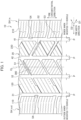
- FIG. 1 is a partial plan view of a tread of the pneumatic tire 10 according to the present embodiment.
- the pneumatic tire 10 is a tire suitable for traveling on an ice and snow roads and is called a studless tire or the like.
- the studless tire may be referred to as a snow tire or a winter tire.
- the pneumatic tire 10 may be a so-called all-season tire usable not only in winter but also in all seasons.
- the type of vehicle to which the pneumatic tire 10 is mounted is not particularly limited, it can be suitably used in general standard passenger car (which may include minivans and light passenger cars).
- outside (OUT side) and inside (IN side) are designated when the pneumatic tire 10 is mounted on a vehicle.
- the OUT side is located on outside visible from the side of the vehicle when the tire is mounted, and the IN side is located on inside not visible from the side of the vehicle when the tire is mounted.
- the OUT side and IN side are referred to simply as an outside and an inside when appropriate.
- the tread 20 is portion in contact with the road surface.
- the tread 20 is provided with a plurality of land portions (which may be referred to as blocks or land blocks).
- a plurality of circumferential main grooves extending in the tire circumferential direction are formed on the tread 20. Specifically, four circumferential main grooves are formed.
- the circumferential main groove 31 is located closest to an outside shoulder SHout.
- the circumferential main groove 31 constitutes an outside first circumferential main groove.
- the circumferential main groove 41 is located closest to an inside shoulder SHin.
- the circumferential main groove 41 constitutes an inside first circumferential main groove.
- the circumferential main groove 32 is adjacent to the circumferential main groove 31 in the tire width direction and located closer to the outside shoulder SHout than the tire equatorial line CL.
- the circumferential main groove 32 constitutes an outside second circumferential main groove.
- the circumferential main groove 42 is adjacent to the circumferential main groove 41 in the tire width direction and located closer to the inside shoulder SHin than the tire equatorial line CL.
- the circumferential main groove 42 constitutes an inside second circumferential main groove.
- the circumferential main groove 31, the circumferential main groove 32, the circumferential main groove 41, and the circumferential main groove 42 are linear in a tread surface view.
- the circumferential main groove 31, the circumferential main groove 32, the circumferential main groove 41 and the circumferential main groove 42 are parallel to the tire circumferential direction.
- the circumferential main groove 31, the circumferential main groove 32, the circumferential main groove 41 and the circumferential main groove 42 include a see-through portion P which can be viewed (has line of sight).
- the see-through portion P may be interpreted as a portion that can be viewed to the front without being obstructed by a side wall or the like of the land portion when the circumferential main groove is developed on a plane.
- the see-through portion P may be formed within the ground contacted surface of the pneumatic tire 10. Since the see-through portion P is formed in the ground contacted surface, drainability can be improved.
- the circumferential main groove 31, the circumferential main groove 32, the circumferential main groove 41 and the circumferential main groove 42 have the same (equivalent) groove width.
- the groove width means the width of the circumferential main groove along a direction (tire width direction) orthogonal to the extending direction (tire circumferential direction) of the circumferential main groove.
- the equivalent groove widths may be in a range of groove widths that do not differ substantially (a difference of approximately not more than a few millimeters, depending on the tire size).
- the allowable deviation of the groove widths of the four circumferential main grooves may be within ⁇ 20% of the reference value (average or the like) of the groove widths.
- An outside shoulder land portion 110 is provided on the outside shoulder SHout side of the circumferential main groove 31.
- the outside shoulder land portion 110 is the land portion provided most in outside.
- the land portion means a portion provided on the tread 20 and in contact with the road surface. However, a part of the land portion close to the shoulder may not necessarily come into contact with the road surface at the time of normal load.
- the normal load is the maximum load capacity (maximum load) corresponding to the maximum load capacity in the JATMA (Japan Automobile Tire Manufacturers Association) YearBook. Further, ETRTO in Europe, TRA in the U.S., and other tire standards in other countries may also be referred.
- the outside shoulder land portion 110 is block shaped and a plurality of the outside shoulder land portions 110 are provided along the tire circumferential direction.
- the size of outside shoulder land portion 110 along the tire circumferential direction, the sipe interval and the number of sipes formed in outside shoulder land portion 110 may be changed according to the variation of the pitch applied to the pneumatic tire 10 (the same applies to other land portions).
- An outside second land portion 120 is provided between the circumferential main groove 31 and the circumferential main groove 32.
- the outside second land portion 120 is adjacent to the outside shoulder land portion 110 in the tire width direction.
- a plurality of the outside second land portions 120 are also provided along the tire circumferential direction.
- the outside second land portion 120 is not clearly divided by a lug groove as the outside shoulder land portion 110, and at the time of grounding, a plurality of adjacent outside second land portions 120 in the tire circumferential direction are connected and can function as a rib-like land portion.
- An inside shoulder land portion 210 is provided on the inside shoulder SHin side of the circumferential main groove 41.
- the inside shoulder land portion 210 is the land portion provided most in inside.
- the inside shoulder land portions 210 are block shaped and a plurality of the inside shoulder land portions 210 are provided along the tire circumferential direction.
- An inside second land portion 220 is provided between the circumferential main groove 41 and the circumferential main groove 42.
- the inside second land portion 220 is adjacent to the inside shoulder land portion 210 in the tire width direction.
- a plurality of the inside second land portions 220 are also provided along the tire circumferential direction.
- a center land portion 300 is provided between the circumferential main groove 32 and the circumferential main groove 42.
- the center land portion 300 is provided so as to across the tire equatorial line CL.
- the outside of the center land portion 300 is provided with the outside second land portion 120 via the circumferential main groove 32.
- the inside second land portion 220 is provided in inside of the center land portion 300 via the circumferential main groove 42.
- a plurality of center land portions 300 are provided along the tire circumferential direction.
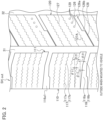
- FIG. 2 is a plan view of OUT side tread 20. As shown in FIG. 2 , an outside shoulder lug grooves 116 are formed between the outside shoulder land portions 110 adjacent in the tire circumferential direction.
- the outside shoulder lug groove 116 extends along the tire width direction.
- the expression "extending along the tire width direction” may mean that the angle formed by the outside shoulder lug groove 116 with the tire width direction is 45 degrees or less.
- the angle may mean an angle on the acute angle side formed by the extending direction of the outside shoulder lug groove 116 and the tire width direction in the tread surface view (the same applies to other directions).
- the outside shoulder lug groove 116 includes a shoulder side portion 116 a and a main groove side portion 116 b.
- the shoulder side portion 116 a is a portion on the outside shoulder SHout side.
- the main groove side portion 116 a is a portion located on the circumferential main groove 31 side.
- the shoulder side portion 116 a has a wide portion 116 a1 having a wide groove width. Specifically, the wide portion 116 a1 is formed on the outside shoulder SHout side. The wide portion 116 a1 is thus formed, and a step is formed in the outside shoulder lug groove 116.
- a plurality of outside shoulder sipes 117 are formed on the outside shoulder land portion 110.
- the outside shoulder sipe 117 extends along the tire width direction.
- the outside shoulder sipe 117 has a zigzag shape in which the amplitude in the tire circumferential direction is repeated.
- the outside shoulder sipe 117 may be a so-called three-dimensional sipe which repeats the amplitude in the tire circumferential direction in the depth direction, or a so-called two-dimensional sipe which becomes linear without having the amplitude in the tire circumferential direction in the depth direction (tire radial direction).
- the outside shoulder sipe 117 includes a shoulder side portion 117 a and a main groove side portion 117 b.
- the shoulder side portion 117 a is a portion on the outside shoulder SHout side.
- the main groove side portion 117 a is a portion located on the circumferential main groove 31 side.
- the outside shoulder sipe 117 may be divided in the tire width direction. Specifically, of the divided outside shoulder sipes 117, the outside shoulder SHout side may be distinguished from the shoulder side portion 117 a, and the circumferential main groove 31 side may be distinguished from the main groove side portion 117 b.
- the side wall of the outside shoulder land portion 110 on the side of the circumferential main groove 31 is provided with a projection 111 that projects toward the tire equatorial line CL (see FIG. 1 ) side.
- the projection portion 111 is provided at the tire circumferential end of the outside shoulder land portion 110 and protrudes toward the circumferential main groove 31 in a tread surface view.
- the outside shoulder sipe 117 is formed at the corner portion (end portion in the tire circumferential direction) of the projection 111 so that the end portions of the outside shoulder sipe 117 (main groove side portion 117 b) do not overlap.
- An outside second lug groove 126 is formed between the outside second land portions 120 adjacent in the tire circumferential direction.
- the outside second lug groove 126 extends along the tire width direction.
- An one end 126 a of the outside second lug groove 126 in the tire width direction is opened to the circumferential main groove 32 on the tire equator side. That is, the outside second lug groove 126 communicates with the circumferential main groove 32.
- Another end 126 b of the outside second lug groove 126 communicates with the lug groove communicating sipe 128.
- the lug groove communicating sipe 128 is also formed in the outside second land portion 120 and extends along the tire width direction.
- the angle formed by the outside second lug groove 126 in the tire width direction is preferably 0 to 45 degrees.
- a plurality of outside second sipes 127 are formed in the outside second land portion 120.
- the outside second sipe 127 extends along the tire width direction.
- the outside second sipe 127 has a zigzag shape in which the amplitude in the tire circumferential direction is repeated.
- the outside second sipe 127 opens to the circumferential main groove 31 and the circumferential main groove 32. That is, the outside second sipe 127 communicates with the circumferential main groove 31 and the circumferential main groove 32.
- the angle formed by the outside second sipe 127 and the lug groove communicating sipe 128 in the tire width direction is also preferably 0 to 45 degrees.
- the outside second sipe 127 may be a three-dimensional sipe or a two-dimensional sipe, similarly to the outside shoulder sipe 117.
- the outside second sipe 127 A formed closest to the outside second lug groove 126 communicating with the lug groove communicating sipe 128 in the tire circumferential direction opens only to the circumferential main groove 31. That is, one end of the outside second sipe 127 A opens to the circumferential main groove 31, while the other end of the outside second sipe 127 A terminates in the outside second land portion 120.
- a plurality of pinhole sipes 129 are formed on the extension line of the outside second sipe 127 A.
- the pinhole sipe 129 is a cylindrical sipe with a small diameter along the tire radial direction, and the block rigidity of the outside second land portion 120 is not significantly lowered than that of the outside second sipe 127 A.
- the outside shoulder lug groove 116 and the outside shoulder sipe 117 are inclined in the direction D1 (first predetermined direction, see FIG. 1 ) with respect to the tire width direction. That is, the outside shoulder lug groove 116 and the outside shoulder sipe 117 are not parallel to the tire width direction but have a constant angle with respect to the tire width direction. As shown in FIG. 2 , when the OUT side is located on the left side and the IN side is located on the right side, the outside shoulder lug groove 116 and the outside shoulder sipe 117 may be expressed as a right shoulder downward.
- outside second lug groove 126 (including the lug groove communicating sipe 128) and the outside second sipe 127 (including outside second sipe 127 A) are inclined in a direction D2 (second predetermined direction, see FIG. 1 ) which is opposite to the first predetermined direction with respect to the tire width direction.
- the outside second lug groove 126 and the outside second sipe 127 are not parallel to the tire width direction but have a constant angle with respect to the tire width direction. As shown in FIG. 2 , when the OUT side is located on the left side and the IN side is located on the right side, the outside second lug groove 126 and the outside second sipe 127 may be expressed as right shoulder upward.
- the inclination angle ⁇ 21 of the main groove side portion 116 b and the main groove side portion 117 b in the tire width direction is larger than the inclination angle ⁇ 11 of the shoulder side portion 116 a and the shoulder side portion 117 a in the tire width direction.
- the inclination angle ⁇ 11 is preferably 0 to 25 degrees
- the inclination angle ⁇ 21 is preferably 0 to 35 degrees.
- the difference between the inclination angle ⁇ 11 and the inclination angle ⁇ 21 need not be so large.
- the difference between the inclination angle ⁇ 11 and the inclination angle ⁇ 21 may be 10 degrees or less.
- the inclination angle ⁇ 21 of the main groove side portion 116 b and the main groove side portion 117 b may be equal to the inclination angle of the outside second lug groove 126 and the outside second sipe 127.
- FIG. 3 is a plan view of IN side tread 20.
- an inside shoulder lug grooves 216 are formed between the inside shoulder land portions 210 adjacent in the tire circumferential direction.
- the inside shoulder lug groove 216 extends along the tire width direction.
- the inside shoulder lug groove 216 includes a shoulder side portion 216 a and a main groove side portion 216 b.
- the shoulder side portion 216 a is a portion on the inside shoulder SHin side.
- the main groove side portion 216 a is a portion located on the circumferential main groove 41 side.
- the shoulder side portion 216 a has a wide portion 216 a1 having a wide groove width. Specifically, the wide portion 216 a1 is formed on the inside shoulder SHin side.
- a plurality of inside shoulder sipes 217 are formed in the inside shoulder land portion 210.
- the inside shoulder sipe 217 extends along the tire width direction.
- the inside shoulder sipe 217 has a zigzag shape in which the amplitude in the tire circumferential direction is repeated.
- the inside shoulder sipe 217 may be a three-dimensional sipe or a two-dimensional sipe, similarly to the outside shoulder sipe 117 or the like.
- the inside shoulder sipe 217 includes a shoulder side portion 217 a and a main groove side portion 217 b.
- the shoulder side portion 217 a is a portion on the inside shoulder SHin side.
- the main groove side portion 217 a is a portion located on the circumferential main groove 41 side.
- a circumferential sipe 218 is formed in the inside shoulder land portion 210 so as to divide the inside shoulder sipe 217.
- the circumferential sipe 218 extends along the tire circumferential direction.
- the circumferential sipe 218 has a zigzag shape which repeats the amplitude in the tire width direction.
- the circumferential sipe 218 may be a three-dimensional sipe or a two-dimensional sipe.
- the inside shoulder sipes 217 may communicate with the circumferential sipe 218.
- the shoulder side portion 217 a may communicate with the circumferential sipe 218, and the main groove side portion 217 b may communicate with the circumferential sipe 218.
- the side wall of the inside shoulder land portion 210 on the side of the circumferential main groove 41 is provided with a projection 211 that projects toward the tire equatorial line CL (see FIG. 1 ) side.
- the projection 211 is provided at the tire circumferential end of the inside shoulder land portion 210 and protrudes toward the circumferential main groove 41 in a tread surface view.
- the inside shoulder lug groove 216 and the inside shoulder sipe 217 are inclined in the direction D1 (see FIG. 1 ) with respect to the tire width direction.
- the inside shoulder lug groove 216 and the inside shoulder sipe 217 are not parallel to the tire width direction but have a constant angle with respect to the tire width direction. As shown in FIG. 3 , when the OUT side is located on the left side and the IN side is located on the right side, the inside shoulder lug groove 216 and the inside shoulder sipe 217 may be expressed as a right shoulder downward.
- the inclination angle ⁇ 22 of the main groove side portion 216 b and the main groove side portion 217 b in the tire width direction is larger than the inclination angle ⁇ 12 of the shoulder side portion 216 a and the shoulder side portion 217 a in the tire width direction. While satisfying such a relationship, the inclination angle ⁇ 12 is preferably 0 to 25 degrees, and the inclination angle ⁇ 22 is preferably 0 to 35 degrees.
- An inside second lug groove 226 is formed between the inside second land portions 220 adjacent in the tire circumferential direction.
- the inside second lug groove 226 extends along the tire width direction and communicates with the circumferential main groove 41 and the circumferential main groove 42.
- a plurality of inside second sipes 227 are formed in the inside second land portion 220.
- the inside second sipe 227 extends along the tire width direction.
- the inside second sipe 227 has a zigzag shape in which the amplitude in the tire circumferential direction is repeated.
- the inside second sipe 227 may be a three-dimensional sipe or a two-dimensional sipe, similarly to the outside second sipe 127 and the like.
- An one end 227 e1 of the inside second sipe 227 is opened to the circumferential main groove 42.
- another end 227 e2 of the inside second sipe 227 terminates in the inside second land portion 220.
- An one end of the inside second sipe 227 may be opened to one of the circumferential main groove 41, the circumferential main groove 42, or the inside second lug groove 226. Further, both ends may be opened to either of the circumferential main groove 41, the circumferential main groove 42 or the inside second lug groove 226 as in the inside second sipe 227 A.
- An inclined narrow groove 228 is formed in the inside second land portion 220 to divide the inside second land portion 220 into two portions. Like the inside second sipe 227, the inclined narrow groove 228 is inclined in the tire width direction.
- the inclined narrow groove 228 has a groove width wider than that of the sipe, but has a groove width narrower than that of the lug groove.
- the inclination angles of the inside second sipe 227 and the inclined narrow groove 228 are substantially the same. That is, the inclined narrow groove 228 is formed in parallel with the inside second sipe 227.
- a notch portion 221 is formed at an end in the tire circumferential direction of the inside second land portion 220.
- the notch portions 221 may be formed at both ends of the inside second land portion 220 in the tire circumferential direction.
- the notch portion 221 has a shape in which an apex in the tire circumferential direction of the parallelogram inside second land portion 220 is notched in a tread surface view. Thus, an acute angle portion is eliminated as the whole inside second land portion 220.
- the notch portion 221 is formed to widen the groove width of the end portion of inside second lug groove 226. That is, the inside second lug groove 226 has a shape in which the groove width gradually increases toward the end portion in the tire width direction.
- the inside second lug groove 226 is inclined in the direction D1 (see FIG. 1 ) with respect to the tire width direction.
- the inside second sipe 227 is inclined in the direction D2 with respect to the tire width direction. That is, the inside second lug groove 226 and the inside second sipe 227 are not parallel to the tire width direction but have a constant angle with respect to the tire width direction.
- the inside second lug groove 226 and the inside shoulder lug groove 216 are formed by offsetting in the tire circumferential direction. That is, the position in the tire circumferential direction where the inside second lug groove 226 is formed and the position in the tire circumferential direction where the inside shoulder lug groove 216 is formed are different and the phase is inconsistent.
- FIG. 4 is a plan view of the tread 20 in a center region including the tire equatorial line CL. As shown in FIG. 4 , center lug grooves 316 are formed between adjacent center land portions 300 in the tire circumferential direction. The center lug groove 316 extends along the tire width direction.
- a plurality of center sipes 317 are formed in the center land portion 300.
- the center sipe 317 extends along the tire width direction.
- the center sipe 317 has a zigzag shape which repeats the amplitude in the tire circumferential direction.
- the center sipe 317 may be a three-dimensional sipe or a two-dimensional sipe, similarly to the outside shoulder sipe 117 or the like.
- An one end 317 e1 of the center sipe 317 is opened to the circumferential main groove 42.
- another end 317 e2 of the center sipe 317 terminates in the center land portion 300.
- An one end of the center sipe 317 may be opened to one of the circumferential main groove 42, the circumferential main groove 32, or the center lug groove 316. Further, both ends may be opened to either of the circumferential main groove 42, the circumferential main groove 32 or the center lug groove 316 as in the center sipe 317 A.
- the center lug groove 316 is inclined in the direction D2 (see FIG. 1 ) with respect to the tire width direction.
- the center sipe 317 is inclined in the direction D1 with respect to the tire width direction. That is, the center lug groove 316 and the center sipe 317 are not parallel to the tire width direction, have a constant angle with respect to the tire width direction, and are inclined in the opposite direction with respect to the tire width direction as a reference.
- a notch portion 311 is formed at one end of the center land portion 300 on the side of the circumferential main groove 42 in the tire circumferential direction.
- the notched portion 311 has a shape in which one apex in the tire circumferential direction of the parallelogram center land portion 300 is notched in a tread surface view.
- an acute angle portion is eliminated as an end portion of the center land portion 300 on the circumferential main groove 42 side, that is, on the inside second land portion 220 side.
- the groove width W2 of the inside second lug groove 226 is wider than the groove width W1 of the center lug groove 316.
- the ratio of the groove width W1 to the groove width W2 is not particularly limited, it is preferable that the groove width W2 be about 20% or more wider than the groove width W1 in consideration of draining performance.
- the circumferential main groove 31, the circumferential main groove 32, the circumferential main groove 41 and the circumferential main groove 42 have the same groove widths. Therefore, since the groove widths of the four circumferential main grooves become uniform, the contact pressure distribution of the outside shoulder land portion 110, the outside second land portion 120, the inside shoulder land portion 210, and the inside second land portion 220 adjacent to the circumferential main grooves can be made uniform.
- the circumferential main groove 31, the circumferential main groove 32, the circumferential main groove 41 and the circumferential main groove 42 include a see-through portion P. Therefore, sufficient drainability along the tire circumferential direction can be ensured.
- the outside shoulder lug groove 116 and the outside shoulder sipe 117 are inclined in the direction D1 (when the OUT side is located on the left side and the IN side is located on the right side, right shoulder downward).
- the outside second lug groove 126 and the outside second sipe 127 are inclined in the direction D2 (when the OUT side is located on the left side and the IN side is located on the right side, right shoulder upward). Therefore, since the lug groove and sipe are inclined toward one side of the circumferential main groove 31 in the tire circumferential direction, the draining property along the tire circumferential direction can be further enhanced.
- the center lug groove 316 is inclined in the direction D2 (right shoulder upward), and the center sipe 317 is inclined in the direction D1 (right shoulder downward).
- the inside second lug groove 226 is inclined (rightward downward) in the direction D1
- the inside second sipe 227 is inclined (rightward upward) in the direction D2. Therefore, since the lug groove and sipe are inclined toward one side of the circumferential main groove 42 in the tire circumferential direction, the draining property along the tire circumferential direction can be further enhanced.
- the inside shoulder lug groove 216 and the inside shoulder sipe 217 are inclined in the direction D1 (right shoulder downward).
- the inside second lug groove 226 and the inside shoulder lug groove 216 are offset in the tire circumferential direction.
- the grounding property, the water removing performance and the draining performance can be improved, and the on-ice performance can be further improved.
- a part of the sipes formed in the land portion terminate in the land portion without communicating with the lug groove or the like.
- the edge component by the end portion in the tire circumferential direction of the land portion is increased, and the water removing performance of the water screen placed between the tread 20 and the road surface can be effectively enhanced.
- the amount of digging up snow increases and the on-snow performance can be improved.
- region S4 by providing the projection portions in the circumferential main groove 31 and the circumferential main groove 41, it is reduced that the water flow in the circumferential main groove enters the sipe formed in the land portion, so that drainability through the sipe from the land portion can be secured.
- the one end 126 a of the outside second lug groove 126 is opened in the circumferential main groove 32, and another end 126 b of the outside second lug groove 126 communicates with the lug groove communicating sipe 128. Therefore, when the outside second land portion 120 contacts the ground, the lug groove communicating sipe 128 is closed, and the adjacent outside second land portion 120 can form a rib-like land portion in the tire circumferential direction, so that the grounding property can be improved. This will also ensure a sufficient steering stability.
- outside second sipe 127 A formed closest to the outside second lug groove 126 communicating with the lug groove communicating sipe 128 in the tire circumferential direction opens only to the circumferential main groove 31. Therefore, the other end of the outside second sipe 127 A terminates in the outside second land portion 120, and in particular, a decrease in the block rigidity of the outside second land portion 120 near the outside second lug groove 126 can be avoided.
- the one end 317 e1 of the center sipe 317 opens to the circumferential main groove 42, and another end 317 e2 of the center sipe 317 terminates in the center land portion 300 (see region S1).
- the one end 227 e1 of the inside second sipe 227 opens to the circumferential main groove 42, and another end 227 e2 of the inside second sipe 227 terminates in the inside second land portion 220 (see region S2).
- the water removing performance of the water screen placed between the tread 20 and the road surface can be effectively enhanced.
- the inclination angle ⁇ 21 of the main groove side portion 116 b and the main groove side portion 117 b in the tire width direction is larger than the inclination angle ⁇ 11 of the shoulder side portion 116 a and the shoulder side portion 117 a in the tire width direction.
- the inclination angle ⁇ 22 of the main groove side portion 216 b and the main groove side portion 217 b in the tire width direction is larger than the inclination angle ⁇ 12 of the shoulder side portion 216 a and the shoulder side portion 217 a in the tire width direction.
- the groove width W2 of the inside second lug groove 226 is wider than the groove width W1 of the center lug groove 316. Therefore, it contributes to improvement of drainage from the center land portion 300 via the inside second lug groove 226, and as described above, the amount of snow dug up by the inside second lug groove 226 is increased (see region S3), and snow performance can also be improved.
- the sipes formed in the respective land portions are zigzag in the tread surface view, but are not necessarily limited to zigzag.
- the sipe may be wavy or linear, for example.
- the description has been made on the assumption that the OUT side and the IN side are used when the tire is mounted to the vehicle in the above-described embodiment, the description is not necessarily limited to the case where the tire is mounted to the vehicle, and it is possible to simply interpret one shoulder of the tread 20 as outside (OUT side) and the other shoulder of the tread 20 as inside (IN side).
Landscapes
- Engineering & Computer Science (AREA)
- Mechanical Engineering (AREA)
- Tires In General (AREA)
Claims (8)
- Reifen (10), der eine Lauffläche umfasst, wobeieine äußere erste umlaufende Hauptrille (31), die sich am nächsten zu einer äußeren Schulter (SHout) befindet;eine innere erste umlaufende Hauptrille (41), die sich am nächsten zu einer inneren Schulter (SHin) befindet;eine äußere zweite umlaufende Hauptrille (32), angrenzend an die äußere erste umlaufende Hauptrille und näher zu der äußeren Schulter befindlich als eine Reifenäquatorlinie; undeine innere zweite umlaufende Hauptrille (42), angrenzend an die innere erste umlaufende Hauptrille und näher zu der inneren Schulter befindlich als die Reifenäquatorlinie;auf der Lauffläche gebildet sind, wobeieine Vielzahl von äußeren Schulterstegabschnitten (110) auf einer Seite der äußeren Schulter als die äußere erste umlaufende Hauptrille bereitgestellt wird;eine Vielzahl von äußeren zweiten Stegabschnitten (120) zwischen der äußeren ersten umlaufenden Hauptrille und der äußeren zweiten umlaufenden Hauptrille bereitgestellt wird;eine Vielzahl von inneren Schulterstegabschnitten (210) auf einer Seite der inneren Schulter als die innere erste umlaufende Hauptrille bereitgestellt wird;eine Vielzahl von inneren zweiten Stegabschnitten (220) zwischen der inneren ersten umlaufenden Hauptrille und der inneren zweiten umlaufenden Hauptrille bereitgestellt wird; undein mittiger Stegabschnitt (300) über die Reifenäquatoriallinie zwischen der äußeren zweiten umlaufenden Hauptrille und der inneren zweiten umlaufenden Hauptrille bereitgestellt wird; wobeidie äußere erste umlaufende Hauptrille, die innere erste umlaufende Hauptrille, die äußere zweite umlaufende Hauptrille und die innere zweite umlaufende Hauptrille einen durchsichtigen Abschnitt (P) einschließen, der eine Sichtlinie aufweist, und jede Rille eine äquivalente Rillenbreite aufweist,eine äußere Schulterstollenrille (31), die zwischen den äußeren Schulterstegabschnitten gebildet ist, und eine äußere Schulterlamelle (41), die auf dem äußeren Schulterstegabschnitt gebildet ist, zu einer ersten vorbestimmten Richtung in Bezug auf eine Reifenbreitenrichtung geneigt sind, undeine äußere zweite Stollenrille (126), die zwischen den äußeren zweiten Stegabschnitten gebildet ist, und eine äußere zweite Lamelle (127), die auf dem äußeren zweiten Stegabschnitt gebildet ist, zu einer zweiten vorbestimmten Richtung, entgegengesetzt zu der ersten vorbestimmten Richtung, in Bezug auf die Reifenbreitenrichtung geneigt sind;eine mittige Stollenrille (316), die zwischen den mittigen Stegabschnitten gebildet ist, zu der zweiten vorbestimmten Richtung geneigt ist,eine mittige Lamelle (317), die auf dem mittigen Stegabschnitt gebildet ist, in der ersten vorbestimmten Richtung geneigt ist,eine innere zweite Stollenrille (226), die zwischen den inneren zweiten Stegabschnitten gebildet ist, in der ersten vorbestimmten Richtung geneigt ist,eine innere zweite Lamelle (227), die auf dem inneren zweiten Stegabschnitt gebildet ist, zu der zweiten vorbestimmten Richtung geneigt ist, undeine innere Schulterstollenrille (216), die zwischen dem inneren Schulterstegabschnitt gebildet ist, und eine innere Schulterlamelle (217), die auf dem inneren Schulterstegabschnitt gebildet ist, zu der ersten vorbestimmten Richtung geneigt sind, wobeidie innere zweite Stollenrille und die innere Schulterstollenrille durch Versetzen in einer Reifenumfangsrichtung gebildet sind.
- Reifen nach Anspruch 1, wobeiein Ende der äußeren zweiten Stollenrille in der Reifenbreitenrichtung zu der äußeren zweiten umlaufenden Hauptrille geöffnet ist; undein anderes Ende der äußeren zweiten Stollenrille in der Reifenbreitenrichtung auf dem äußeren zweiten Stegabschnitt gebildet ist und mit einer Stollenrillen-Verbindungslamelle in Verbindung steht, die zu der zweiten vorbestimmten Richtung geneigt ist.
- Reifen nach Anspruch 2, wobei sich die äußere zweite Lamelle, die am nächsten zu der äußeren zweiten Stollenrille gebildet ist, die mit der Stollenrillen-Verbindungslamelle in der Reifenumfangsrichtung in Verbindung steht, nur zu der äußeren ersten umlaufenden Hauptrille öffnet.
- Reifen nach einem der Ansprüche 1 bis 3, wobei
der mittige Stegabschnitt die mittige Lamelle einschließt, von der ein Ende in entweder der äußeren zweiten umlaufenden Hauptrille, der inneren zweiten umlaufenden Hauptrille oder der mittigen Stollenrille geöffnet ist, und ein anderes Ende der mittigen Lamelle in dem mittigen Stegabschnitt beendet wird. - Reifen nach einem der Ansprüche 1 bis 4, wobei
der innere zweite Stegabschnitt die innere zweite Lamelle einschließt, von der ein Ende in entweder der inneren ersten umlaufenden Hauptrille, der inneren zweiten umlaufenden Hauptrille oder der inneren zweiten Stollenrille geöffnet ist, und ein anderes Ende der inneren zweiten Lamelle in dem inneren zweiten Stegabschnitt beendet wird. - Reifen nach einem der Ansprüche 1 bis 5, wobei ein Neigungswinkel eines Hauptrillenseitenabschnitts, der sich auf einer Seite der äußeren ersten umlaufenden Hauptrille der äußeren Schulterstollenrille und der äußeren Schulterlamelle in Bezug auf die Reifenbreitenrichtung befindet, größer ist als ein Neigungswinkel eines Schulterseitenabschnitts, der sich auf einer Seite der äußeren Schulter der äußeren Schulterstollenrille und der äußeren Schulterlamelle in Bezug auf die Reifenbreitenrichtung befindet.
- Reifen nach einem der Ansprüche 1 bis 6, wobei ein Neigungswinkel eines Hauptrillenseitenabschnitts, der sich auf einer Seite der inneren ersten umlaufenden Hauptrille der inneren Schulterstollenrille und der inneren Schulterlamelle in Bezug auf die Reifenbreitenrichtung befindet, größer ist als ein Neigungswinkel eines Schulterseitenabschnitts, der sich auf einer Seite der inneren Schulter der inneren Schulterstollenrille und der inneren Schulterlamelle in Bezug auf die Reifenbreitenrichtung befindet.
- Reifen nach einem der Ansprüche 1 bis 7, wobei eine Rillenbreite der inneren zweiten Stollenrille breiter ist als eine Rillenbreite der mittigen Stollenrille.
Applications Claiming Priority (2)
| Application Number | Priority Date | Filing Date | Title |
|---|---|---|---|
| JP2020040318A JP7460401B2 (ja) | 2020-03-09 | 2020-03-09 | タイヤ |
| PCT/JP2021/008472 WO2021182301A1 (ja) | 2020-03-09 | 2021-03-04 | タイヤ |
Publications (3)
| Publication Number | Publication Date |
|---|---|
| EP4119359A1 EP4119359A1 (de) | 2023-01-18 |
| EP4119359A4 EP4119359A4 (de) | 2023-08-23 |
| EP4119359B1 true EP4119359B1 (de) | 2024-10-23 |
Family
ID=77667656
Family Applications (1)
| Application Number | Title | Priority Date | Filing Date |
|---|---|---|---|
| EP21766932.4A Active EP4119359B1 (de) | 2020-03-09 | 2021-03-04 | Reifen |
Country Status (6)
| Country | Link |
|---|---|
| US (1) | US20230094643A1 (de) |
| EP (1) | EP4119359B1 (de) |
| JP (1) | JP7460401B2 (de) |
| CN (1) | CN115210084B (de) |
| FI (1) | FI4119359T3 (de) |
| WO (1) | WO2021182301A1 (de) |
Families Citing this family (3)
| Publication number | Priority date | Publication date | Assignee | Title |
|---|---|---|---|---|
| JP7651919B2 (ja) * | 2021-04-05 | 2025-03-27 | 住友ゴム工業株式会社 | タイヤ |
| JP7651920B2 (ja) * | 2021-04-05 | 2025-03-27 | 住友ゴム工業株式会社 | タイヤ |
| CN119610948B (zh) * | 2024-11-29 | 2025-11-04 | 风神轮胎股份有限公司 | 一种用于提升中长途运输里程的低噪声胎面花纹上的刀槽花纹及胎面花纹及轮胎 |
Family Cites Families (26)
| Publication number | Priority date | Publication date | Assignee | Title |
|---|---|---|---|---|
| CN101618664B (zh) * | 2008-07-02 | 2012-08-29 | 青岛黄海橡胶股份有限公司 | 载重汽车轮胎胎面 |
| JP2010208507A (ja) | 2009-03-10 | 2010-09-24 | Bridgestone Corp | 空気入りタイヤ |
| JP2011105104A (ja) | 2009-11-16 | 2011-06-02 | Bridgestone Corp | タイヤ |
| JP5823153B2 (ja) | 2011-04-08 | 2015-11-25 | 東洋ゴム工業株式会社 | 空気入りタイヤ |
| KR20140080505A (ko) | 2011-09-29 | 2014-06-30 | 미쉐린 러쉐르슈 에 떼크니크 에스.에이. | 개선된 스노우 및 드라이 접지력을 갖는 트레드를 가진 타이어 |
| RU2599856C1 (ru) * | 2013-03-06 | 2016-10-20 | Дзе Йокогама Раббер Ко., Лтд. | Пневматическая шина |
| JP5603966B2 (ja) * | 2013-03-26 | 2014-10-08 | 株式会社ブリヂストン | タイヤ |
| JP5890361B2 (ja) * | 2013-08-30 | 2016-03-22 | 株式会社ブリヂストン | 空気入りタイヤ |
| JP5886816B2 (ja) * | 2013-12-06 | 2016-03-16 | 住友ゴム工業株式会社 | 重荷重用タイヤ |
| JP6084195B2 (ja) * | 2014-11-27 | 2017-02-22 | 住友ゴム工業株式会社 | 空気入りタイヤ |
| JP6065033B2 (ja) * | 2015-01-29 | 2017-01-25 | 横浜ゴム株式会社 | 空気入りタイヤ |
| EP3498498B1 (de) | 2015-01-30 | 2021-03-24 | Bridgestone Corporation | Luftreifen |
| JP2017024537A (ja) * | 2015-07-22 | 2017-02-02 | 横浜ゴム株式会社 | 空気入りタイヤ |
| JP6424765B2 (ja) * | 2015-07-31 | 2018-11-21 | 横浜ゴム株式会社 | 空気入りタイヤ |
| CN108349324B (zh) | 2015-11-12 | 2021-01-05 | 株式会社普利司通 | 轮胎 |
| JP6206517B2 (ja) * | 2016-02-10 | 2017-10-04 | 横浜ゴム株式会社 | 空気入りタイヤ |
| JP2017197111A (ja) | 2016-04-28 | 2017-11-02 | 横浜ゴム株式会社 | 空気入りタイヤ |
| JP2017210170A (ja) | 2016-05-27 | 2017-11-30 | 横浜ゴム株式会社 | 空気入りタイヤ |
| JP6852408B2 (ja) * | 2017-01-18 | 2021-03-31 | 住友ゴム工業株式会社 | タイヤ |
| JP6798347B2 (ja) * | 2017-02-21 | 2020-12-09 | 住友ゴム工業株式会社 | タイヤ |
| JP6878971B2 (ja) | 2017-03-15 | 2021-06-02 | 住友ゴム工業株式会社 | タイヤ |
| DE112018002345B4 (de) * | 2017-06-06 | 2022-12-08 | The Yokohama Rubber Co., Ltd. | Luftreifen |
| JP7004556B2 (ja) * | 2017-12-04 | 2022-01-21 | Toyo Tire株式会社 | 空気入りタイヤ |
| JP7172561B2 (ja) * | 2018-12-20 | 2022-11-16 | 住友ゴム工業株式会社 | タイヤ |
| DE112019006381T5 (de) * | 2019-01-23 | 2021-09-02 | The Yokohama Rubber Co., Ltd. | Luftreifen |
| CN110696559A (zh) * | 2019-10-22 | 2020-01-17 | 陈敬平 | 一种低噪音高操控性suv专用轮胎 |
-
2020
- 2020-03-09 JP JP2020040318A patent/JP7460401B2/ja active Active
-
2021
- 2021-03-04 US US17/910,033 patent/US20230094643A1/en not_active Abandoned
- 2021-03-04 FI FIEP21766932.4T patent/FI4119359T3/fi active
- 2021-03-04 CN CN202180018766.0A patent/CN115210084B/zh active Active
- 2021-03-04 EP EP21766932.4A patent/EP4119359B1/de active Active
- 2021-03-04 WO PCT/JP2021/008472 patent/WO2021182301A1/ja not_active Ceased
Also Published As
| Publication number | Publication date |
|---|---|
| EP4119359A1 (de) | 2023-01-18 |
| JP7460401B2 (ja) | 2024-04-02 |
| JP2021138346A (ja) | 2021-09-16 |
| US20230094643A1 (en) | 2023-03-30 |
| CN115210084A (zh) | 2022-10-18 |
| CN115210084B (zh) | 2024-07-26 |
| EP4119359A4 (de) | 2023-08-23 |
| WO2021182301A1 (ja) | 2021-09-16 |
| FI4119359T3 (fi) | 2024-11-25 |
Similar Documents
| Publication | Publication Date | Title |
|---|---|---|
| US11305590B2 (en) | Tire | |
| KR101602462B1 (ko) | 공기입 타이어 | |
| EP2239153B1 (de) | Luftreifen | |
| US8267133B2 (en) | Pneumatic tire | |
| EP3388257A1 (de) | Reifen | |
| KR101475670B1 (ko) | 공기입 타이어 | |
| US10696099B2 (en) | Pneumatic tire | |
| EP4119359B1 (de) | Reifen | |
| CN108688411B (zh) | 充气轮胎 | |
| EP3015288A1 (de) | Luftreifen | |
| CN108382134A (zh) | 轮胎 | |
| US11407255B2 (en) | Pneumatic tire | |
| US11027579B2 (en) | Pneumatic tire | |
| EP3693187B1 (de) | Reifen | |
| KR20180025808A (ko) | 공기 타이어 | |
| CN107921824B (zh) | 充气轮胎 | |
| EP3738792B1 (de) | Reifen | |
| US7814951B2 (en) | Pneumatic tire having tread including convexly curved fine grooves | |
| CN104512205B (zh) | 充气轮胎 | |
| US20210379935A1 (en) | Pneumatic Tire | |
| WO2018034088A1 (ja) | 空気入りタイヤ | |
| CN113442660B (zh) | 充气轮胎 | |
| RU2788756C1 (ru) | Шина | |
| US11040575B2 (en) | Pneumatic tire | |
| EP4344903B1 (de) | Reifen |
Legal Events
| Date | Code | Title | Description |
|---|---|---|---|
| STAA | Information on the status of an ep patent application or granted ep patent |
Free format text: STATUS: THE INTERNATIONAL PUBLICATION HAS BEEN MADE |
|
| PUAI | Public reference made under article 153(3) epc to a published international application that has entered the european phase |
Free format text: ORIGINAL CODE: 0009012 |
|
| STAA | Information on the status of an ep patent application or granted ep patent |
Free format text: STATUS: REQUEST FOR EXAMINATION WAS MADE |
|
| 17P | Request for examination filed |
Effective date: 20221005 |
|
| AK | Designated contracting states |
Kind code of ref document: A1 Designated state(s): AL AT BE BG CH CY CZ DE DK EE ES FI FR GB GR HR HU IE IS IT LI LT LU LV MC MK MT NL NO PL PT RO RS SE SI SK SM TR |
|
| DAV | Request for validation of the european patent (deleted) | ||
| DAX | Request for extension of the european patent (deleted) | ||
| A4 | Supplementary search report drawn up and despatched |
Effective date: 20230721 |
|
| RIC1 | Information provided on ipc code assigned before grant |
Ipc: B60C 11/11 20060101ALI20230717BHEP Ipc: B60C 11/13 20060101ALI20230717BHEP Ipc: B60C 11/12 20060101ALI20230717BHEP Ipc: B60C 11/03 20060101ALI20230717BHEP Ipc: B60C 5/00 20060101AFI20230717BHEP |
|
| GRAP | Despatch of communication of intention to grant a patent |
Free format text: ORIGINAL CODE: EPIDOSNIGR1 |
|
| STAA | Information on the status of an ep patent application or granted ep patent |
Free format text: STATUS: GRANT OF PATENT IS INTENDED |
|
| INTG | Intention to grant announced |
Effective date: 20240613 |
|
| P01 | Opt-out of the competence of the unified patent court (upc) registered |
Free format text: CASE NUMBER: APP_41316/2024 Effective date: 20240712 |
|
| GRAS | Grant fee paid |
Free format text: ORIGINAL CODE: EPIDOSNIGR3 |
|
| GRAA | (expected) grant |
Free format text: ORIGINAL CODE: 0009210 |
|
| STAA | Information on the status of an ep patent application or granted ep patent |
Free format text: STATUS: THE PATENT HAS BEEN GRANTED |
|
| AK | Designated contracting states |
Kind code of ref document: B1 Designated state(s): AL AT BE BG CH CY CZ DE DK EE ES FI FR GB GR HR HU IE IS IT LI LT LU LV MC MK MT NL NO PL PT RO RS SE SI SK SM TR |
|
| REG | Reference to a national code |
Ref country code: GB Ref legal event code: FG4D |
|
| REG | Reference to a national code |
Ref country code: CH Ref legal event code: EP |
|
| REG | Reference to a national code |
Ref country code: DE Ref legal event code: R096 Ref document number: 602021020703 Country of ref document: DE |
|
| REG | Reference to a national code |
Ref country code: IE Ref legal event code: FG4D |
|
| REG | Reference to a national code |
Ref country code: FI Ref legal event code: FGE |
|
| REG | Reference to a national code |
Ref country code: SE Ref legal event code: TRGR |
|
| REG | Reference to a national code |
Ref country code: LT Ref legal event code: MG9D |
|
| REG | Reference to a national code |
Ref country code: NL Ref legal event code: MP Effective date: 20241023 |
|
| REG | Reference to a national code |
Ref country code: AT Ref legal event code: MK05 Ref document number: 1734555 Country of ref document: AT Kind code of ref document: T Effective date: 20241023 |
|
| PG25 | Lapsed in a contracting state [announced via postgrant information from national office to epo] |
Ref country code: NL Free format text: LAPSE BECAUSE OF FAILURE TO SUBMIT A TRANSLATION OF THE DESCRIPTION OR TO PAY THE FEE WITHIN THE PRESCRIBED TIME-LIMIT Effective date: 20241023 |
|
| PG25 | Lapsed in a contracting state [announced via postgrant information from national office to epo] |
Ref country code: NL Free format text: LAPSE BECAUSE OF FAILURE TO SUBMIT A TRANSLATION OF THE DESCRIPTION OR TO PAY THE FEE WITHIN THE PRESCRIBED TIME-LIMIT Effective date: 20241023 |
|
| PG25 | Lapsed in a contracting state [announced via postgrant information from national office to epo] |
Ref country code: IS Free format text: LAPSE BECAUSE OF FAILURE TO SUBMIT A TRANSLATION OF THE DESCRIPTION OR TO PAY THE FEE WITHIN THE PRESCRIBED TIME-LIMIT Effective date: 20250223 Ref country code: PT Free format text: LAPSE BECAUSE OF FAILURE TO SUBMIT A TRANSLATION OF THE DESCRIPTION OR TO PAY THE FEE WITHIN THE PRESCRIBED TIME-LIMIT Effective date: 20250224 Ref country code: HR Free format text: LAPSE BECAUSE OF FAILURE TO SUBMIT A TRANSLATION OF THE DESCRIPTION OR TO PAY THE FEE WITHIN THE PRESCRIBED TIME-LIMIT Effective date: 20241023 |
|
| PG25 | Lapsed in a contracting state [announced via postgrant information from national office to epo] |
Ref country code: BG Free format text: LAPSE BECAUSE OF FAILURE TO SUBMIT A TRANSLATION OF THE DESCRIPTION OR TO PAY THE FEE WITHIN THE PRESCRIBED TIME-LIMIT Effective date: 20241023 |
|
| PG25 | Lapsed in a contracting state [announced via postgrant information from national office to epo] |
Ref country code: ES Free format text: LAPSE BECAUSE OF FAILURE TO SUBMIT A TRANSLATION OF THE DESCRIPTION OR TO PAY THE FEE WITHIN THE PRESCRIBED TIME-LIMIT Effective date: 20241023 |
|
| PG25 | Lapsed in a contracting state [announced via postgrant information from national office to epo] |
Ref country code: NO Free format text: LAPSE BECAUSE OF FAILURE TO SUBMIT A TRANSLATION OF THE DESCRIPTION OR TO PAY THE FEE WITHIN THE PRESCRIBED TIME-LIMIT Effective date: 20250123 |
|
| PG25 | Lapsed in a contracting state [announced via postgrant information from national office to epo] |
Ref country code: LV Free format text: LAPSE BECAUSE OF FAILURE TO SUBMIT A TRANSLATION OF THE DESCRIPTION OR TO PAY THE FEE WITHIN THE PRESCRIBED TIME-LIMIT Effective date: 20241023 Ref country code: GR Free format text: LAPSE BECAUSE OF FAILURE TO SUBMIT A TRANSLATION OF THE DESCRIPTION OR TO PAY THE FEE WITHIN THE PRESCRIBED TIME-LIMIT Effective date: 20250124 Ref country code: AT Free format text: LAPSE BECAUSE OF FAILURE TO SUBMIT A TRANSLATION OF THE DESCRIPTION OR TO PAY THE FEE WITHIN THE PRESCRIBED TIME-LIMIT Effective date: 20241023 |
|
| PG25 | Lapsed in a contracting state [announced via postgrant information from national office to epo] |
Ref country code: PL Free format text: LAPSE BECAUSE OF FAILURE TO SUBMIT A TRANSLATION OF THE DESCRIPTION OR TO PAY THE FEE WITHIN THE PRESCRIBED TIME-LIMIT Effective date: 20241023 |
|
| PG25 | Lapsed in a contracting state [announced via postgrant information from national office to epo] |
Ref country code: RS Free format text: LAPSE BECAUSE OF FAILURE TO SUBMIT A TRANSLATION OF THE DESCRIPTION OR TO PAY THE FEE WITHIN THE PRESCRIBED TIME-LIMIT Effective date: 20250123 |
|
| PG25 | Lapsed in a contracting state [announced via postgrant information from national office to epo] |
Ref country code: SM Free format text: LAPSE BECAUSE OF FAILURE TO SUBMIT A TRANSLATION OF THE DESCRIPTION OR TO PAY THE FEE WITHIN THE PRESCRIBED TIME-LIMIT Effective date: 20241023 |
|
| PG25 | Lapsed in a contracting state [announced via postgrant information from national office to epo] |
Ref country code: DK Free format text: LAPSE BECAUSE OF FAILURE TO SUBMIT A TRANSLATION OF THE DESCRIPTION OR TO PAY THE FEE WITHIN THE PRESCRIBED TIME-LIMIT Effective date: 20241023 |
|
| PG25 | Lapsed in a contracting state [announced via postgrant information from national office to epo] |
Ref country code: EE Free format text: LAPSE BECAUSE OF FAILURE TO SUBMIT A TRANSLATION OF THE DESCRIPTION OR TO PAY THE FEE WITHIN THE PRESCRIBED TIME-LIMIT Effective date: 20241023 |
|
| PG25 | Lapsed in a contracting state [announced via postgrant information from national office to epo] |
Ref country code: RO Free format text: LAPSE BECAUSE OF FAILURE TO SUBMIT A TRANSLATION OF THE DESCRIPTION OR TO PAY THE FEE WITHIN THE PRESCRIBED TIME-LIMIT Effective date: 20241023 |
|
| REG | Reference to a national code |
Ref country code: DE Ref legal event code: R097 Ref document number: 602021020703 Country of ref document: DE |
|
| PG25 | Lapsed in a contracting state [announced via postgrant information from national office to epo] |
Ref country code: SK Free format text: LAPSE BECAUSE OF FAILURE TO SUBMIT A TRANSLATION OF THE DESCRIPTION OR TO PAY THE FEE WITHIN THE PRESCRIBED TIME-LIMIT Effective date: 20241023 |
|
| PG25 | Lapsed in a contracting state [announced via postgrant information from national office to epo] |
Ref country code: CZ Free format text: LAPSE BECAUSE OF FAILURE TO SUBMIT A TRANSLATION OF THE DESCRIPTION OR TO PAY THE FEE WITHIN THE PRESCRIBED TIME-LIMIT Effective date: 20241023 |
|
| PG25 | Lapsed in a contracting state [announced via postgrant information from national office to epo] |
Ref country code: IT Free format text: LAPSE BECAUSE OF FAILURE TO SUBMIT A TRANSLATION OF THE DESCRIPTION OR TO PAY THE FEE WITHIN THE PRESCRIBED TIME-LIMIT Effective date: 20241023 |
|
| PLBE | No opposition filed within time limit |
Free format text: ORIGINAL CODE: 0009261 |
|
| STAA | Information on the status of an ep patent application or granted ep patent |
Free format text: STATUS: NO OPPOSITION FILED WITHIN TIME LIMIT |
|
| 26N | No opposition filed |
Effective date: 20250724 |
|
| PG25 | Lapsed in a contracting state [announced via postgrant information from national office to epo] |
Ref country code: MC Free format text: LAPSE BECAUSE OF FAILURE TO SUBMIT A TRANSLATION OF THE DESCRIPTION OR TO PAY THE FEE WITHIN THE PRESCRIBED TIME-LIMIT Effective date: 20241023 |
|
| REG | Reference to a national code |
Ref country code: CH Ref legal event code: H13 Free format text: ST27 STATUS EVENT CODE: U-0-0-H10-H13 (AS PROVIDED BY THE NATIONAL OFFICE) Effective date: 20251024 |
|
| PG25 | Lapsed in a contracting state [announced via postgrant information from national office to epo] |
Ref country code: LU Free format text: LAPSE BECAUSE OF NON-PAYMENT OF DUE FEES Effective date: 20250304 |
|
| GBPC | Gb: european patent ceased through non-payment of renewal fee |
Effective date: 20250304 |
|
| REG | Reference to a national code |
Ref country code: BE Ref legal event code: MM Effective date: 20250331 |
|
| PG25 | Lapsed in a contracting state [announced via postgrant information from national office to epo] |
Ref country code: GB Free format text: LAPSE BECAUSE OF NON-PAYMENT OF DUE FEES Effective date: 20250304 |
|
| PG25 | Lapsed in a contracting state [announced via postgrant information from national office to epo] |
Ref country code: BE Free format text: LAPSE BECAUSE OF NON-PAYMENT OF DUE FEES Effective date: 20250331 |
|
| PG25 | Lapsed in a contracting state [announced via postgrant information from national office to epo] |
Ref country code: CH Free format text: LAPSE BECAUSE OF NON-PAYMENT OF DUE FEES Effective date: 20250331 |
|
| PG25 | Lapsed in a contracting state [announced via postgrant information from national office to epo] |
Ref country code: IE Free format text: LAPSE BECAUSE OF NON-PAYMENT OF DUE FEES Effective date: 20250304 |
|
| PGFP | Annual fee paid to national office [announced via postgrant information from national office to epo] |
Ref country code: SE Payment date: 20260319 Year of fee payment: 6 |
|
| PGFP | Annual fee paid to national office [announced via postgrant information from national office to epo] |
Ref country code: DE Payment date: 20260319 Year of fee payment: 6 |
|
| PGFP | Annual fee paid to national office [announced via postgrant information from national office to epo] |
Ref country code: FI Payment date: 20260323 Year of fee payment: 6 |
|
| PGFP | Annual fee paid to national office [announced via postgrant information from national office to epo] |
Ref country code: FR Payment date: 20260323 Year of fee payment: 6 |