EP4113142A1 - Isolationsüberwachungsverfahren, system und vorrichtung für eine strombatterie - Google Patents
Isolationsüberwachungsverfahren, system und vorrichtung für eine strombatterie Download PDFInfo
- Publication number
- EP4113142A1 EP4113142A1 EP20922198.5A EP20922198A EP4113142A1 EP 4113142 A1 EP4113142 A1 EP 4113142A1 EP 20922198 A EP20922198 A EP 20922198A EP 4113142 A1 EP4113142 A1 EP 4113142A1
- Authority
- EP
- European Patent Office
- Prior art keywords
- insulation resistance
- insulation
- traction battery
- res
- value
- Prior art date
- Legal status (The legal status is an assumption and is not a legal conclusion. Google has not performed a legal analysis and makes no representation as to the accuracy of the status listed.)
- Granted
Links
Images


Classifications
-
- G—PHYSICS
- G01—MEASURING; TESTING
- G01R—MEASURING ELECTRIC VARIABLES; MEASURING MAGNETIC VARIABLES
- G01R31/00—Arrangements for testing electric properties; Arrangements for locating electric faults; Arrangements for electrical testing characterised by what is being tested not provided for elsewhere
- G01R31/36—Arrangements for testing, measuring or monitoring the electrical condition of accumulators or electric batteries, e.g. capacity or state of charge [SoC]
- G01R31/392—Determining battery ageing or deterioration, e.g. state of health
-
- G—PHYSICS
- G01—MEASURING; TESTING
- G01R—MEASURING ELECTRIC VARIABLES; MEASURING MAGNETIC VARIABLES
- G01R31/00—Arrangements for testing electric properties; Arrangements for locating electric faults; Arrangements for electrical testing characterised by what is being tested not provided for elsewhere
- G01R31/50—Testing of electric apparatus, lines, cables or components for short-circuits, continuity, leakage current or incorrect line connections
- G01R31/52—Testing for short-circuits, leakage current or ground faults
-
- B—PERFORMING OPERATIONS; TRANSPORTING
- B60—VEHICLES IN GENERAL
- B60L—PROPULSION OF ELECTRICALLY-PROPELLED VEHICLES; SUPPLYING ELECTRIC POWER FOR AUXILIARY EQUIPMENT OF ELECTRICALLY-PROPELLED VEHICLES; ELECTRODYNAMIC BRAKE SYSTEMS FOR VEHICLES IN GENERAL; MAGNETIC SUSPENSION OR LEVITATION FOR VEHICLES; MONITORING OPERATING VARIABLES OF ELECTRICALLY-PROPELLED VEHICLES; ELECTRIC SAFETY DEVICES FOR ELECTRICALLY-PROPELLED VEHICLES
- B60L3/00—Electric devices on electrically-propelled vehicles for safety purposes; Monitoring operating variables, e.g. speed, deceleration or energy consumption
- B60L3/0023—Detecting, eliminating, remedying or compensating for drive train abnormalities, e.g. failures within the drive train
- B60L3/0046—Detecting, eliminating, remedying or compensating for drive train abnormalities, e.g. failures within the drive train relating to electric energy storage systems, e.g. batteries or capacitors
-
- B—PERFORMING OPERATIONS; TRANSPORTING
- B60—VEHICLES IN GENERAL
- B60L—PROPULSION OF ELECTRICALLY-PROPELLED VEHICLES; SUPPLYING ELECTRIC POWER FOR AUXILIARY EQUIPMENT OF ELECTRICALLY-PROPELLED VEHICLES; ELECTRODYNAMIC BRAKE SYSTEMS FOR VEHICLES IN GENERAL; MAGNETIC SUSPENSION OR LEVITATION FOR VEHICLES; MONITORING OPERATING VARIABLES OF ELECTRICALLY-PROPELLED VEHICLES; ELECTRIC SAFETY DEVICES FOR ELECTRICALLY-PROPELLED VEHICLES
- B60L3/00—Electric devices on electrically-propelled vehicles for safety purposes; Monitoring operating variables, e.g. speed, deceleration or energy consumption
- B60L3/0023—Detecting, eliminating, remedying or compensating for drive train abnormalities, e.g. failures within the drive train
- B60L3/0069—Detecting, eliminating, remedying or compensating for drive train abnormalities, e.g. failures within the drive train relating to the isolation, e.g. ground fault or leak current
-
- B—PERFORMING OPERATIONS; TRANSPORTING
- B60—VEHICLES IN GENERAL
- B60L—PROPULSION OF ELECTRICALLY-PROPELLED VEHICLES; SUPPLYING ELECTRIC POWER FOR AUXILIARY EQUIPMENT OF ELECTRICALLY-PROPELLED VEHICLES; ELECTRODYNAMIC BRAKE SYSTEMS FOR VEHICLES IN GENERAL; MAGNETIC SUSPENSION OR LEVITATION FOR VEHICLES; MONITORING OPERATING VARIABLES OF ELECTRICALLY-PROPELLED VEHICLES; ELECTRIC SAFETY DEVICES FOR ELECTRICALLY-PROPELLED VEHICLES
- B60L58/00—Methods or circuit arrangements for monitoring or controlling batteries or fuel cells, specially adapted for electric vehicles
- B60L58/10—Methods or circuit arrangements for monitoring or controlling batteries or fuel cells, specially adapted for electric vehicles for monitoring or controlling batteries
-
- B—PERFORMING OPERATIONS; TRANSPORTING
- B60—VEHICLES IN GENERAL
- B60L—PROPULSION OF ELECTRICALLY-PROPELLED VEHICLES; SUPPLYING ELECTRIC POWER FOR AUXILIARY EQUIPMENT OF ELECTRICALLY-PROPELLED VEHICLES; ELECTRODYNAMIC BRAKE SYSTEMS FOR VEHICLES IN GENERAL; MAGNETIC SUSPENSION OR LEVITATION FOR VEHICLES; MONITORING OPERATING VARIABLES OF ELECTRICALLY-PROPELLED VEHICLES; ELECTRIC SAFETY DEVICES FOR ELECTRICALLY-PROPELLED VEHICLES
- B60L58/00—Methods or circuit arrangements for monitoring or controlling batteries or fuel cells, specially adapted for electric vehicles
- B60L58/10—Methods or circuit arrangements for monitoring or controlling batteries or fuel cells, specially adapted for electric vehicles for monitoring or controlling batteries
- B60L58/16—Methods or circuit arrangements for monitoring or controlling batteries or fuel cells, specially adapted for electric vehicles for monitoring or controlling batteries responding to battery ageing, e.g. to the number of charging cycles or the state of health [SoH]
-
- G—PHYSICS
- G01—MEASURING; TESTING
- G01R—MEASURING ELECTRIC VARIABLES; MEASURING MAGNETIC VARIABLES
- G01R27/00—Arrangements for measuring resistance, reactance, impedance, or electric characteristics derived therefrom
- G01R27/02—Measuring real or complex resistance, reactance, impedance, or other two-pole characteristics derived therefrom, e.g. time constant
- G01R27/025—Measuring very high resistances, e.g. isolation resistances, i.e. megohm-meters
-
- G—PHYSICS
- G01—MEASURING; TESTING
- G01R—MEASURING ELECTRIC VARIABLES; MEASURING MAGNETIC VARIABLES
- G01R31/00—Arrangements for testing electric properties; Arrangements for locating electric faults; Arrangements for electrical testing characterised by what is being tested not provided for elsewhere
- G01R31/12—Testing dielectric strength or breakdown voltage ; Testing or monitoring effectiveness or level of insulation, e.g. of a cable or of an apparatus, for example using partial discharge measurements; Electrostatic testing
- G01R31/1227—Testing dielectric strength or breakdown voltage ; Testing or monitoring effectiveness or level of insulation, e.g. of a cable or of an apparatus, for example using partial discharge measurements; Electrostatic testing of components, parts or materials
-
- G—PHYSICS
- G01—MEASURING; TESTING
- G01R—MEASURING ELECTRIC VARIABLES; MEASURING MAGNETIC VARIABLES
- G01R31/00—Arrangements for testing electric properties; Arrangements for locating electric faults; Arrangements for electrical testing characterised by what is being tested not provided for elsewhere
- G01R31/36—Arrangements for testing, measuring or monitoring the electrical condition of accumulators or electric batteries, e.g. capacity or state of charge [SoC]
- G01R31/3644—Constructional arrangements
- G01R31/3648—Constructional arrangements comprising digital calculation means, e.g. for performing an algorithm
-
- G—PHYSICS
- G01—MEASURING; TESTING
- G01R—MEASURING ELECTRIC VARIABLES; MEASURING MAGNETIC VARIABLES
- G01R31/00—Arrangements for testing electric properties; Arrangements for locating electric faults; Arrangements for electrical testing characterised by what is being tested not provided for elsewhere
- G01R31/36—Arrangements for testing, measuring or monitoring the electrical condition of accumulators or electric batteries, e.g. capacity or state of charge [SoC]
- G01R31/382—Arrangements for monitoring battery or accumulator variables, e.g. SoC
-
- G—PHYSICS
- G01—MEASURING; TESTING
- G01R—MEASURING ELECTRIC VARIABLES; MEASURING MAGNETIC VARIABLES
- G01R31/00—Arrangements for testing electric properties; Arrangements for locating electric faults; Arrangements for electrical testing characterised by what is being tested not provided for elsewhere
- G01R31/36—Arrangements for testing, measuring or monitoring the electrical condition of accumulators or electric batteries, e.g. capacity or state of charge [SoC]
- G01R31/389—Measuring internal impedance, internal conductance or related variables
-
- B—PERFORMING OPERATIONS; TRANSPORTING
- B60—VEHICLES IN GENERAL
- B60L—PROPULSION OF ELECTRICALLY-PROPELLED VEHICLES; SUPPLYING ELECTRIC POWER FOR AUXILIARY EQUIPMENT OF ELECTRICALLY-PROPELLED VEHICLES; ELECTRODYNAMIC BRAKE SYSTEMS FOR VEHICLES IN GENERAL; MAGNETIC SUSPENSION OR LEVITATION FOR VEHICLES; MONITORING OPERATING VARIABLES OF ELECTRICALLY-PROPELLED VEHICLES; ELECTRIC SAFETY DEVICES FOR ELECTRICALLY-PROPELLED VEHICLES
- B60L2240/00—Control parameters of input or output; Target parameters
- B60L2240/80—Time limits
-
- B—PERFORMING OPERATIONS; TRANSPORTING
- B60—VEHICLES IN GENERAL
- B60L—PROPULSION OF ELECTRICALLY-PROPELLED VEHICLES; SUPPLYING ELECTRIC POWER FOR AUXILIARY EQUIPMENT OF ELECTRICALLY-PROPELLED VEHICLES; ELECTRODYNAMIC BRAKE SYSTEMS FOR VEHICLES IN GENERAL; MAGNETIC SUSPENSION OR LEVITATION FOR VEHICLES; MONITORING OPERATING VARIABLES OF ELECTRICALLY-PROPELLED VEHICLES; ELECTRIC SAFETY DEVICES FOR ELECTRICALLY-PROPELLED VEHICLES
- B60L2250/00—Driver interactions
- B60L2250/10—Driver interactions by alarm
-
- G—PHYSICS
- G01—MEASURING; TESTING
- G01R—MEASURING ELECTRIC VARIABLES; MEASURING MAGNETIC VARIABLES
- G01R31/00—Arrangements for testing electric properties; Arrangements for locating electric faults; Arrangements for electrical testing characterised by what is being tested not provided for elsewhere
- G01R31/005—Testing of electric installations on transport means
- G01R31/006—Testing of electric installations on transport means on road vehicles, e.g. automobiles or trucks
-
- G—PHYSICS
- G01—MEASURING; TESTING
- G01R—MEASURING ELECTRIC VARIABLES; MEASURING MAGNETIC VARIABLES
- G01R31/00—Arrangements for testing electric properties; Arrangements for locating electric faults; Arrangements for electrical testing characterised by what is being tested not provided for elsewhere
- G01R31/36—Arrangements for testing, measuring or monitoring the electrical condition of accumulators or electric batteries, e.g. capacity or state of charge [SoC]
Definitions
- the disclosure relates to the field of battery insulation monitoring technologies, and in particular, to an insulation monitoring method and system for a traction battery and an apparatus.
- a traction battery in a high-voltage system of an electric vehicle needs to have good electrical insulation performance to ensure safety of the traction battery and passengers in the electric vehicle. For example, when insulation deterioration occurs on the traction battery, a cell inside the traction battery may be short-circuited, and a temperature of the short-circuited cell may be increased due to an excessive short-circuit current. If the temperature of the short-circuited cell is too high, other surrounding cells may also be short-circuited with an increasing temperature, resulting in an increasing temperature of the entire traction battery, which increases a risk of thermal runaway of the traction battery.
- An early warning about battery failures such as thermal runaway may be provided by monitoring the insulation performance of the traction battery, which may prompt a user to repair the traction battery to prevent the battery failures.
- insulation deterioration of the traction battery can be detected and an alarm can be given only when the traction battery is actually in a state of insulation deterioration.
- battery failures such as thermal runaway probably have occurred on the traction battery due to insulation deterioration.
- this method cannot provide a reliable and effective warning about failures in the traction battery.
- the disclosure proposes an insulation monitoring method and system for a traction battery and an apparatus, to solve or at least partially solve the problem of how to accurately predict a risk of insulation deterioration of the traction battery before the insulation deterioration occurs on the traction battery, so as to provide an early warning about failures in the traction battery.
- an insulation monitoring method for a traction battery includes: obtaining, by taking a current moment as a starting time, each insulation resistance value of the traction battery that is received within a first preset time period before the current moment; collecting data statistics on the obtained insulation resistance values, and analyzing, based on a data statistical result, whether the traction battery has a risk of insulation deterioration; and if the traction battery has the risk of insulation deterioration, outputting first alarm information.
- the step of "collecting data statistics on the obtained insulation resistance values, and analyzing, based on a data statistical result, whether the traction battery has a risk of insulation deterioration” specifically includes: separately performing mean and variance calculations on the insulation resistance values received within the first preset time period, to obtain a mean insulation resistance value res_avg and an insulation resistance value variance res_std ; arranging, in ascending order, the insulation resistance values received within the first preset time period, and calculating a cumulative percentage corresponding to each arranged insulation resistance value; obtaining an insulation resistance value res_Npct corresponding to a cumulative percentage whose percentage value is a preset value N; and analyzing, based on res_avg , res_std , and res_Npct , whether the traction battery has the risk of insulation deterioration, specifically including the following case: if ⁇ res _ avg ⁇ res _ avg _ set re
- the method further includes: step S1: determining whether a quantity of the obtained insulation resistance values reaches a preset quantity threshold; and if the quantity of the obtained insulation resistance values reaches the preset quantity threshold, performing the step of "collecting data statistics on the obtained insulation resistance values”; or if the quantity of the obtained insulation resistance values does not reach the preset quantity threshold, performing step S2; and step S2: extending the current first preset time period based on a preset extension time, re-obtaining, by taking the current moment as the starting time, insulation resistance values received within the extended first preset time period before the current moment, and then performing step S1.
- the method further includes: obtaining, by taking the current moment as the starting time, each insulation resistance value of the traction battery that is received within a second preset time period before the current moment, and arranging the insulation resistance values in chronological order of reception to obtain an insulation resistance value array; performing a regression fitting calculation on the insulation resistance values in the insulation resistance value array, to obtain an insulation resistance fitting value corresponding to each insulation resistance value in the insulation resistance value array, and arranging, in the chronological order of reception, the insulation resistance fitting values respectively corresponding to all the insulation resistance values, to obtain an insulation resistance fitting value array; performing a first-order difference calculation on the insulation resistance fitting values in the insulation resistance fitting value array to obtain a first-order difference corresponding to each insulation resistance fitting value; and comparing each first-order difference with a preset difference threshold, analyzing a risk level of insulation deterioration of the traction battery based on a comparison result, and outputting corresponding second alarm information, where the second preset time period is
- the method further includes: when the risk level of insulation deterioration of the traction battery is the low risk level, outputting prompt information about a detection failure of the insulation resistance value of the traction battery.
- an insulation monitoring system for a traction battery includes: a data obtaining apparatus configured to obtain, by taking a current moment as a starting time, each insulation resistance value of the traction battery that is received within a first preset time period before the current moment; and a data analysis apparatus configured to: collect data statistics on the insulation resistance values obtained by the data obtaining apparatus, and analyze, based on a data statistical result, whether the traction battery has a risk of insulation deterioration; and if the traction battery has the risk of insulation deterioration, output first alarm information.
- the data analysis apparatus includes a mean/variance calculation module, a percentile calculation module, and a data analysis module; the mean/variance calculation module is configured to separately perform mean and variance calculations on the insulation resistance values received within the first preset time period, to obtain a mean insulation resistance value res_avg and an insulation resistance value variance res_std ; the percentile calculation module is configured to: arrange, in ascending order, the insulation resistance values received within the first preset time period, and calculate a cumulative percentage corresponding to each arranged insulation resistance value; and obtain an insulation resistance value res_Npct corresponding to a cumulative percentage whose percentage value is a preset value N; and the data analysis module is configured to analyze, based on res_avg , res_std , and res_Npct , whether the traction battery has the risk of insulation deterioration, specifically including the following case: if ⁇ res _ avg ⁇ res _ avg
- the data analysis apparatus is further configured to perform the following operations: step S1: determining whether a quantity of the obtained insulation resistance values reaches a preset quantity threshold; and if the quantity of the obtained insulation resistance values reaches the preset quantity threshold, performing the step of "collecting data statistics on the obtained insulation resistance values"; or if the quantity of the obtained insulation resistance values does not reach the preset quantity threshold, performing step S2; and step S2: extending the current first preset time period based on a preset extension time, re-obtaining, by taking the current moment as the starting time, insulation resistance values received within an extended first preset time period before the current moment, and then performing step S1.
- the system further includes a battery insulation deterioration risk analysis apparatus, and the battery insulation deterioration risk level analysis apparatus includes a data obtaining module, a regression fitting calculation module, a first-order difference calculation module, and an insulation deterioration risk level analysis module;
- the data obtaining module is configured to obtain, by taking the current moment as the starting time, each insulation resistance value received within a second preset time period before the current moment, and arrange the insulation resistance values in chronological order of reception to obtain an insulation resistance value array;
- the regression fitting calculation module is configured to: perform a regression fitting calculation on the insulation resistance values in the insulation resistance value array, to obtain an insulation resistance fitting value corresponding to each insulation resistance value in the insulation resistance value array, and arrange, in the chronological order of reception, the insulation resistance fitting values respectively corresponding to all the insulation resistance values, to obtain an insulation resistance fitting value array;
- the first-order difference calculation module is configured to perform a first-order difference calculation on the insulation resistance fitting values in the insulation resistance fitting value array to obtain a first-order difference corresponding to each insulation resistance
- the insulation deterioration risk level analysis module is further configured to perform the following operations: when the risk level of insulation deterioration of the traction battery is the low risk level, outputting prompt information about a detection failure of the insulation resistance value of the traction battery.
- a storage apparatus storing a plurality of pieces of program codes, where the program codes are adapted to be loaded and run by a processor to perform the insulation monitoring method for a traction battery described in any one of the above.
- a control apparatus including a processor and a storage apparatus, where the storage apparatus is adapted to store a plurality of pieces of program codes, and the program codes are adapted to be loaded and run by the processor to perform the insulation monitoring method for a traction battery described in any one of the above.
- insulation resistance values received within a relatively long period of time are extracted, data statistics on these insulation resistance values are collected, and whether the traction battery has the risk of insulation deterioration is determined by analysis based on a data statistical result; and if the traction battery has the risk of insulation deterioration, alarm information is output.
- a battery management system of an electric vehicle detects an insulation resistance value of a traction battery in real time, and sends detected insulation resistance values to a backend server connected to the electric vehicle via a network.
- the backend server receives and stores the insulation resistance value corresponding to each traction battery.
- the backend server After determining, by performing the foregoing operations, that the traction battery has the risk of insulation deterioration, the backend server outputs the alarm information to the electric vehicle to prompt a user of the electric vehicle that the traction battery has the risk of insulation deterioration.
- data statistics on a large amount of insulation resistance values within a long period of time are collected, and whether the traction battery has the risk of insulation deterioration is determined by analysis based on the data statistical result. Therefore, insulation deterioration can be predicted before the insulation deterioration occurs on the traction battery. This allows the user to perform battery maintenance in time before the insulation deterioration occurs on the traction battery, so as to prevent traction battery failures.
- the following steps may be performed to further determine, by analysis, a risk level of insulation deterioration of the traction battery. Specifically: First, extract insulation resistance received within a period of time (such as 50 hours) longer than the foregoing relatively long period of time, and perform a regression fitting calculation on these insulation resistance values, to obtain an insulation resistance fitting value corresponding to each insulation resistance value.
- the regression fitting calculation is performed on a large amount of insulation resistance values obtained within a long period of time, and a regression fitting calculation result may be used to represent a change trend of the insulation resistance; and the risk level of insulation deterioration of the traction battery may be accurately evaluated by performing a first-order difference calculation on the regression fitting calculation result and comparing each first-order difference with the preset difference threshold.
- 11 Data obtaining apparatus; 12: Data analysis apparatus; 21: Electric vehicle; 22: Backend server.
- a “module” or “processor” may include hardware, software, or a combination thereof.
- a module may include a hardware circuit, various suitable sensors, a communication port, and a memory, or may include a software part, such as program code, or may be a combination of software and hardware.
- the processor may be a central processing unit, a microprocessor, a digital signal processor, or any other suitable processor.
- the processor has a data and/or signal processing function.
- the processor may be implemented in software, hardware, or a combination thereof.
- a non-transitory computer-readable storage medium includes any suitable medium that can store program code, such as a magnetic disk, a hard disk, an optical disc, a flash memory, a read-only memory, or a random access memory.
- a and/or B indicates all possible combinations of A and B, for example, only A, only B, or A and B.
- the term "at least one of A or B” or “at least one of A and B” has a meaning similar to “A and/or B” and may include only A, only B, or A and B.
- the terms “a/an” and “this” in the singular form may also include the plural form.
- the insulation resistance of the traction battery refers to the resistance that can limit a leakage voltage of the traction battery to a small range, and is one of the important indexes of the insulation performance of the traction battery.
- the insulation deterioration of the traction battery refers to an irreversible decline of the insulation performance of the traction battery. For example, there is an irreversible drop in the insulation resistance of the traction battery.
- Failures of the traction battery mainly include a performance failure and a safety failure of the traction battery.
- the performance failure refers to that the capacity and service life of the traction battery cannot meet preset use requirements
- the safety failure refers to that the traction battery has some safety risks due to improper use and other factors. For example, when thermal runaway occurs on the traction battery, the traction battery has a safety risk, and the traction battery has a safety failure.
- insulation resistance values received within a relatively long period of time are extracted, data statistics on these insulation resistance values are collected, and whether the traction battery has the risk of insulation deterioration is determined by analysis based on a data statistical result; and if the traction battery has the risk of insulation deterioration, alarm information is output.
- a battery management system of an electric vehicle detects an insulation resistance value of a traction battery in real time, and sends detected insulation resistance values to a backend server connected to the electric vehicle via a network.
- the backend server receives and stores the insulation resistance value corresponding to each traction battery.
- the backend server After determining, by performing the foregoing operations, that the traction battery has the risk of insulation deterioration, the backend server outputs the alarm information to the electric vehicle to prompt a user of the electric vehicle that the traction battery has the risk of insulation deterioration.
- data statistics on a large amount of insulation resistance values within a long period of time are collected, and whether the traction battery has the risk of insulation deterioration is determined by analysis based on the data statistical result. Therefore, insulation deterioration can be predicted before the insulation deterioration occurs on the traction battery. This allows the user to perform battery maintenance in time before the insulation deterioration occurs on the traction battery, so as to prevent traction battery failures.
- the following steps may be performed to further determine, by analysis, the risk level of insulation deterioration of the traction battery. Specifically: First, extract insulation resistance received within a period of time (such as 50 hours) longer than the foregoing relatively long period of time, and perform a regression fitting calculation on these insulation resistance values, to obtain an insulation resistance fitting value corresponding to each insulation resistance value.
- the regression fitting calculation is performed on a large amount of insulation resistance values obtained within a long period of time, and a regression fitting calculation result may be used to represent a change trend of the insulation resistance; and the risk level of insulation deterioration of the traction battery may be accurately evaluated by performing a first-order difference calculation on the regression fitting calculation result and comparing each first-order difference with the preset difference threshold.
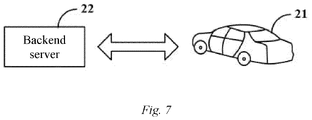
- FIG. 7 is a schematic diagram of an application scenario of an embodiment involved in the technical solutions of the disclosure.
- the electric vehicle 21 is provided with a communication apparatus, a traction battery, and a battery management system (Battery Management System, BMS) capable of detecting the insulation resistance value of the traction battery.
- BMS Battery Management System
- the electric vehicle 21 establishes a communication connection with a backend server 22 through the communication apparatus (including but not limited to: a WIFI communication apparatus and a 4G communication apparatus (a communication apparatus based on the 4th Generation Mobile Communication and technologies thereof)).
- the battery management system detects an insulation resistance value of the traction battery in real time, and the electric vehicle 21 sends detected insulation resistance values to the backend server 22 in real time through the communication apparatus.
- the backend server 22 performs data analysis on the received insulation resistance values, and after determining, by analysis, that the traction battery has the risk of insulation deterioration and determining a corresponding risk level, the backend server 22 may send alarm information (for example, the current traction battery has a high risk of insulation deterioration) to the electric vehicle 21, so as to prompt the driver in the electric vehicle 21 to repair the traction battery in time. Further, the backend server 22 may also establish a communication connection with a terminal (including but not limited to: a mobile phone and a tablet computer) of the user of the electric vehicle 21 and/or a terminal (including but not limited to: a computer device) of a service provider of the electric vehicle.
- a terminal including but not limited to: a mobile phone and a tablet computer
- the backend server 22 After determining, by analysis, that the traction battery has the risk of insulation deterioration and determining a corresponding risk level, the backend server 22 sends alarm information to the terminal of the user and/or sends, based on an identification code of the current traction battery (including but not limited to: an ID number of the traction battery), alarm information (for example, the traction battery with the ID number of "Battery111" has a high risk of insulation deterioration) to the terminal of the service provider of the electric vehicle, to prompt the service provider of the electric vehicle to repair the traction battery in time.
- an identification code of the current traction battery including but not limited to: an ID number of the traction battery
- alarm information for example, the traction battery with the ID number of "Battery111" has a high risk of insulation deterioration
- FIG. 1 is a schematic flowchart of main steps of an insulation monitoring method for a traction battery according to an embodiment of the disclosure. As shown in FIG. 1 , the insulation monitoring method for a traction battery according to this embodiment of the disclosure mainly includes the following steps.
- Step S101 Obtain, by taking a current moment as a starting time, each insulation resistance value of the traction battery that is received within a first preset time period before the current moment.
- the current moment refers to a current moment of performing insulation monitoring on the traction battery rather than a current moment of receiving the insulation resistance value.
- each insulation resistance value of the traction battery that is received within a first preset time period before the current moment refers to each insulation resistance value of the traction battery that is received within 2 hours between 6:00 pm and 8:00 pm.
- an insulation resistance value of the traction battery that is detected and sent by an insulation resistance detection apparatus such as a battery management system may be directly received, and an insulation resistance value of the traction battery that is sent by other apparatuses connected to the insulation resistance detection apparatus via a network may also be received.
- These apparatuses can receive/store the insulation resistance values of the traction battery that are detected by the insulation resistance detection apparatus.
- the insulation resistance values of the traction battery that are sent by the battery management system in the electric vehicle are directly received; and as another example, the insulation resistance values of the traction battery that are sent by an onboard control apparatus of the electric vehicle are received, where the onboard control apparatus is connected to the battery management system via a network and can receive/store the insulation resistance values of the traction battery that are detected by the battery management system.
- this step specifically includes:
- Step S1021 Determine, after obtaining the insulation resistance values received within the first preset time period before the current moment, whether a quantity of the obtained insulation resistance values reaches a preset quantity threshold; and if the quantity of the obtained insulation resistance values reaches the preset quantity threshold, there is no need to re-obtain insulation resistance values, and perform step S103; or if the quantity of the obtained insulation resistance values reaches the preset quantity threshold, there is a need to re-obtain insulation resistance values, and perform step S1022.
- Step S1022 Extend the current first preset time period based on a preset extension time, re-obtain, by taking the current moment as the starting time, insulation resistance values received within an extended first preset time period before the current moment, and then perform step S1021.
- a step of determining whether to re-obtain insulation resistance values specifically includes:
- Step 1 After obtaining each insulation resistance value received within 2 hours between 6:00 pm and 8:00 pm, determine that the quantity of the insulation resistance values received during this time period is less than 30, then delay the first preset time period by 1 hour, and re-obtain each insulation resistance value received within 2 hours between 5:00 pm and 8:00 pm.
- Step 2 After obtaining each insulation resistance value received within 3 hours between 5:00 pm and 8:00 pm, determine that the quantity of insulation resistance values received during this time period is still less than 30, then delay the first preset time period by 1 hour again, and re-obtain each insulation resistance value received within 4 hours between 4:00 pm and 8:00 pm.
- Step 3 After obtaining each insulation resistance value received within 4 hours between 4:00 pm and 8:00 pm, determine that the quantity of insulation resistance values received during this time period is greater than 30, and therefore there is no need to re-obtain insulation resistance values.
- data statistics on a large amount of insulation resistance values within a long period of time are collected, and whether the traction battery has the risk of insulation deterioration may be accurately determined by analysis based on a data statistical result.
- a data statistical result due to different insulation resistance detection frequencies or insulation resistance transmitting frequencies of different insulation resistance detection apparatuses or other reasons, there is a great difference in quantities of insulation resistance values received within a same first preset time period by a traction battery using different insulation resistance detection apparatuses. If the quantity of the received insulation resistance values is too small, the accuracy of the data statistical analysis result is seriously affected, thereby further affecting the accuracy of risk analysis of insulation deterioration.
- the insulation resistance values after the insulation resistance values are received within the first preset time period, it is also necessary to determine whether the quantity of obtained insulation resistance values is sufficient (whether the quantity of the insulation resistance values is greater than or equal to the preset quantity threshold), and whether high accuracy of the insulation deterioration analysis of the traction battery can be ensured; and if the quantity of the obtained insulation resistance values is small (the quantity of the insulation resistance values is less than the preset quantity threshold), the first preset time period is extended and insulation resistance values are re-obtained until the quantity of the insulation resistance values is large enough to ensure the high accuracy of the insulation deterioration analysis of the traction battery.
- Step S102 Collect data statistics on the obtained insulation resistance values.
- the mean value, the variance, and the percentile of the insulation resistance values during this time period may be obtained by collecting data statistics on n insulation resistance values ⁇ res 1 ,res 2 , ..., resi ,..., resn ⁇ obtained within the first preset time period before the current moment.
- res_avg ⁇ i n resi n
- resi in the formula (1) represents the i th insulation resistance value received within the first preset time period before the current moment.
- res_std ⁇ i n res i ⁇ res _ avg 2 n ⁇ 1
- the percentile of the insulation resistance values may be obtained according to the following steps: First, arrange, in ascending order, the insulation resistance values received within the first preset time period before the current moment, and calculate a cumulative percentage corresponding to each arranged insulation resistance value; and then obtain an insulation resistance value res_Npct corresponding to a cumulative percentage whose percentage value is a preset value N. As an example, an insulation resistance value res_90pct corresponding to a cumulative percentage of 90% is obtained.
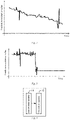
- Step S103 Analyze, based on a data statistical result, whether the traction battery has a risk of insulation deterioration. Specifically, if it is determined, by analysis, that the traction battery has the risk of insulation deterioration, step S104 is performed; or if it is determined, by analysis, that the traction battery does not have the risk of insulation deterioration (for example, the traction battery is in a state of changes in the insulation resistance value as shown in FIG. 2 ), step S 106 is performed.
- the mean value res_avg , the variance res_std , and the percentile res_Npct of n insulation resistance values ⁇ res 1, res 2, ..., resi, ..., resn ⁇ within the first preset time period before the current moment are obtained by collecting data statistics on the insulation resistance values during this time period, if ⁇ res _ avg ⁇ res _ avg _ set res _ Npct ⁇ res _ avg _ set res _ std ⁇ res _ std _ set , it is determined that the traction battery has the risk of insulation deterioration.
- res_avg_set represents a preset value for the mean value of the insulation resistance values
- res_std_set represents a preset value for the variance of the insulation resistance values.
- a voltage range of a high-voltage system of the electric vehicle is 300 V to 500 V
- the value range of res_avg_set is 500 Ohm to 30000 Ohm
- a value range of res_std_set is 500 Ohm to 10000 Ohm.
- data quantification information (the mean value, the variance, and the percentile) that can represent the state of changes in the insulation resistance value during this time period is obtained by collecting data statistics on a large amount of insulation resistance values within a long period of time. Then, the data quantification information is used to be compared with the threshold, and whether the traction battery has the risk of insulation deterioration is determined based on a comparison result.
- the insulation resistance value may be a normal fluctuation value of the insulation resistance, and the traction battery actually does not have the insulation deterioration.
- the insulation resistance value is less than the resistance threshold, it may be determined by mistake that the traction battery has the insulation deterioration; and further, when the set value of the resistance threshold is low, if it is detected that the insulation resistance value is less than the resistance threshold, battery failures such as thermal runaway probably have occurred on the traction battery due to insulation deterioration. Therefore, this method cannot provide a reliable warning about insulation deterioration before the battery failure.
- a relatively high threshold condition is set, and a value range of res_avg_set is between 500 and 30000, such that some battery data with good insulation but large fluctuations during use enter a data pool suspected to be problematic. Therefore, it is necessary to make a further determination in a second stage to clarify the risk level of insulation deterioration, and to locate the faulty battery.
- this step specifically includes:
- Step S1031 Obtain, by taking the current moment as the starting time, each insulation resistance value of the traction battery that is received within a second preset time period before the current moment, and arrange the insulation resistance values in chronological order of reception to obtain an insulation resistance value array ⁇ resA 1, resA 2, ..., resAj, ..., resAm ⁇ .
- resAj represents the j th insulation resistance value in the insulation resistance value array, namely, the j th insulation resistance value received within the second preset time period before the current moment.
- the "current moment” in this implementation is a same moment as the "current moment” in step S101.
- the second preset time period is much greater than the first preset time period in step S101, and a quantity of the insulation resistance values received within the second preset time period is also much greater than a quantity of the insulation resistance values received within the first preset time period ( m » n ).
- Step S1032 Perform a regression fitting calculation on the insulation resistance values in the insulation resistance value array, to obtain an insulation resistance fitting value corresponding to each insulation resistance value in the insulation resistance value array, and arrange, in the chronological order of reception in step S 1032, the insulation resistance fitting values respectively corresponding to all the insulation resistance values, to obtain an insulation resistance fitting value array ⁇ resA _1, resA _2, ..., resA_j, ..., resA_m ⁇ .
- resA_j represents an insulation resistance fitting value corresponding to the j th insulation resistance value in the insulation resistance fitting value array, namely, an insulation resistance fitting value corresponding to the j th insulation resistance value that is received within the second preset time period before the current moment.
- regression algorithms such as a tree regression (Tree Regression) algorithm, a ridge regression (Ridge Regression or Tikhonov Regularization) algorithm, a linear regression (Linear Regression) algorithm, and the like may be used to perform a regression fitting calculation on each insulation resistance value received within the second preset time period before the current moment.
- Step S1033 Perform a first-order difference calculation on the insulation resistance fitting values in the insulation resistance fitting value array to obtain a first-order difference ⁇ resA_diff_ 1, resA_diff _2, ... ,resA_diff_j, ... , resA_diff_m ⁇ corresponding to each insulation resistance fitting value.
- resA_diff_j represents a first-order difference corresponding to the j th insulation resistance fitting value in the insulation resistance fitting value array.
- Step S1034 Compare each first-order difference with a preset difference threshold, analyze a risk level of insulation deterioration of the traction battery based on a comparison result, and output corresponding second alarm information.
- a regression fitting calculation is performed on a large amount of insulation resistance values obtained within a long period of time, and a regression fitting calculation result may be used to represent a change trend of the insulation resistance. Therefore, the risk level of insulation deterioration of the traction battery may be accurately evaluated by performing a first-order difference calculation on the regression fitting calculation result and comparing each first-order difference with the preset difference threshold.
- the risk level of insulation deterioration of the traction battery may be determined by analysis according to the following steps:
- count_up 0 indicates that there is no large difference between two adjacent insulation resistance values in the insulation resistance values (the insulation resistance value array) received within the second preset time period before the current moment (there is no large fluctuation in the change trend of the insulation resistance values), and count_down ⁇ 2 indicates that there are rare cases in which two adjacent insulation resistance values approach each other (there is no relatively stable stage in the change trend of the insulation resistance values). Therefore, it may be concluded that the insulation resistance values of the traction battery during this time period are low and present a small fluctuation (shown by a change process of the low insulation resistance values on the right side of FIG. 3 ).
- the second alarm information indicating that the risk level of insulation deterioration of the traction battery is relatively high may further be output.
- count_down > 2 and count_up 0, the risk level of insulation deterioration of the traction battery is a medium risk level.
- count_down > 2 indicates that there are many cases in which two adjacent insulation resistance values approach each other, and it is known that the traction battery is in a state of low insulation resistance value. Therefore, during this time period, the insulation resistance value of the traction battery is mainly in a gradually decreasing state (shown by a change process of the insulation resistance values in FIG. 4 ) rather than a gradually increasing state.
- the second alarm information indicating that the risk level of insulation deterioration of the traction battery is the medium risk level may further be output.
- the second alarm information indicating that the risk level of insulation deterioration of the traction battery is the low risk level may further be output.
- the first quantity count_down of first-order differences whose difference values are less than a preset lower difference value limit and the second quantity count_up of first-order differences whose difference values are greater than a preset upper difference value limit are counted, the fluctuation state of the insulation resistance values of the traction battery (or a development trend of the insulation resistance values) may be determined by analysis, and then the risk level of insulation deterioration of the traction battery may be further determined.
- the insulation resistance value of the traction battery cannot be detected due to a failure in the insulation resistance detection apparatus such as the battery management system. Therefore, when it is determined, by analysis, that the risk level of insulation deterioration of the traction battery is the low risk level, prompt information about a detection failure of the insulation resistance value of the traction battery may be output to prompt a user or an electric vehicle service provider to repair the insulation resistance detection apparatus such as the battery management system in time.
- Step S104 Output first alarm information.
- the first alarm information refers to prompt information that the traction battery has a risk of insulation deterioration.
- the content of the first alarm information may be "The current traction battery has the risk of insulation deterioration, please repair it in time”.
- Step S106 Do not output the alarm information.
- FIG. 6 is a schematic diagram of a main structure of an insulation monitoring system for a traction battery according to an embodiment of the disclosure.
- the insulation monitoring system for a traction battery mainly includes a data obtaining apparatus 11 and a data analysis apparatus 12.
- the processor and the memory are not shown in FIG. 6 , those skilled in the art may understand that the insulation monitoring system for a traction battery may be part of the processor and/or the memory.
- one or more of the data obtaining apparatus 11 and the data analysis apparatus 12 may be part of the processor.
- these apparatuses may respectively correspond to a part of electronic circuits in the processor that perform signal or data processing, and may also correspond to related program codes stored in a computer-readable medium (such as a memory).
- the data obtaining apparatus 11 and the data analysis apparatus 12 may alternatively not be a part of the current processor, but a part of another processor different from the current processor.
- one or more of the data obtaining apparatus 11 and the data analysis apparatus 12 may be combined into one apparatus.
- the data obtaining apparatus 11 may be configured to obtain, by taking a current moment as a starting time, each insulation resistance value of the traction battery that is received within a first preset time period before the current moment.
- each insulation resistance value of the traction battery that is received within a first preset time period before the current moment.
- the data analysis apparatus 12 may be configured to collect data statistics on the insulation resistance values obtained by the data obtaining apparatus 11, and analyze, based on a data statistical result, whether the traction battery has a risk of insulation deterioration; and if the traction battery has the risk of insulation deterioration, output first alarm information.
- the data analysis apparatus 12 includes a mean/variance calculation module, a percentile calculation module, and a data analysis module.
- the mean/variance calculation module may be configured to separately perform mean and variance calculations on the insulation resistance values received within the first preset time period, to obtain a mean insulation resistance value res_avg and an insulation resistance value variance res_std.
- the percentile calculation module may be configured to: arrange, in ascending order, the insulation resistance values received within the first preset time period, and calculate a cumulative percentage corresponding to each arranged insulation resistance value; and obtain an insulation resistance value res_Npct corresponding to a cumulative percentage whose percentage value is a preset value N.
- the data analysis module may be configured to analyze, based on res_avg , res_std , and res_Npct , whether the traction battery has the risk of insulation deterioration, specifically including the following case: if ⁇ res _ avg ⁇ res _ avg _ set res _ Npct ⁇ res _ avg _ set res _ std ⁇ res _ std _ set , the traction battery has the risk of insulation deterioration, where res_avg_set is a preset value for the mean insulation resistance value, and res_std_set is a preset value for the insulation resistance value variance.
- res_avg_set is a preset value for the mean insulation resistance value
- res_std_set is a preset value for the insulation resistance value variance.
- the insulation monitoring system for a traction battery may further include a battery insulation deterioration risk level analysis apparatus
- the battery insulation deterioration risk level analysis apparatus may include a data obtaining module, a regression fitting calculation module, a first-order difference calculation module, and an insulation deterioration risk level analysis module.
- the data obtaining module may be configured to: obtain, by taking the current moment as the starting time, each insulation resistance value that is received within a second preset time period before the current moment, and arrange the insulation resistance values in chronological order of reception to obtain an insulation resistance value array.
- the regression fitting calculation module may be configured to: perform a regression fitting calculation on the insulation resistance values in the insulation resistance value array, to obtain an insulation resistance fitting value corresponding to each insulation resistance value in the insulation resistance value array, and arrange, in the chronological order of reception, the insulation resistance fitting values respectively corresponding to all the insulation resistance values, to obtain an insulation resistance fitting value array.
- the first-order difference calculation module may be configured to perform a first-order difference calculation on the insulation resistance fitting values in the insulation resistance fitting value array to obtain a first-order difference corresponding to each insulation resistance fitting value.
- the insulation deterioration risk level analysis module may be configured to: compare each first-order difference with a preset difference threshold, analyze a risk level of insulation deterioration of the traction battery based on a comparison result, and output corresponding second alarm information.
- the second preset time period is much greater than the first preset time period, and a quantity of the insulation resistance values received within the second preset time period is much greater than a quantity of the insulation resistance values received within the first preset time period.
- the insulation deterioration risk level analysis module may be configured to perform the following operations:
- resA_std is an insulation resistance fitting value variance obtained by performing a variance calculation on the insulation resistance fitting values corresponding to all the insulation resistance values received within the second preset time period.
- the foregoing insulation monitoring system for a traction battery is configured to implement the embodiment of the insulation monitoring method for a traction battery shown in FIG. 1 .
- the technical principles of, technical problems solved by, and technical effects provided by the insulation monitoring system are similar to those of the insulation monitoring method, and those skilled in the art may clearly understand that, for ease and simplicity of the description, for a specific process and a related description of the insulation monitoring system for a traction battery, reference may be made to the description of the embodiments of the insulation monitoring method for a traction battery, and details are not described herein again.
- the disclosure further provides an embodiment of a storage apparatus.
- the storage apparatus stores a plurality of pieces of program codes, and the program codes are adapted to be loaded and run by a processor to perform the insulation monitoring method for a traction battery described in the foregoing method embodiment.
- the storage apparatus stores a plurality of pieces of program codes, and the program codes are adapted to be loaded and run by a processor to perform the insulation monitoring method for a traction battery described in the foregoing method embodiment.
- the disclosure further provides an embodiment of a control apparatus.
- the apparatus includes a processor and a storage apparatus, the storage apparatus stores a plurality of pieces of program codes, and the program codes are adapted to be loaded and run by the processor to perform the insulation monitoring method for a traction battery described in the foregoing method embodiment.
- the apparatus includes a processor and a storage apparatus, the storage apparatus stores a plurality of pieces of program codes, and the program codes are adapted to be loaded and run by the processor to perform the insulation monitoring method for a traction battery described in the foregoing method embodiment.
- the computer program may be stored in a computer-readable storage medium, and when the computer program is executed by a processor, the steps of the foregoing method embodiments can be implemented.
- the computer program includes computer program code, which may be in a source code form, an object code form, an executable file form, some intermediate forms, and the like.
- the computer-readable medium may include: any entity or apparatus that can carry the computer program code, such as a medium, a USB flash drive, a removable hard disk, a magnetic disk, an optical disc, a computer memory, a read-only memory, a random access memory, an electrical carrier signal, a telecommunications signal, and a software distribution medium.
- a medium such as a medium, a USB flash drive, a removable hard disk, a magnetic disk, an optical disc, a computer memory, a read-only memory, a random access memory, an electrical carrier signal, a telecommunications signal, and a software distribution medium.
- the content included in the computer-readable medium may be appropriately added or deleted depending on requirements of the legislation and patent practice in a jurisdiction.
- the computer-readable medium does not include an electrical carrier signal and a telecommunications signal.
- modules since the configuration of the modules is merely intended to illustrate functional units of a system of the disclosure, a physical device corresponding to these modules may be a processor itself, or part of software, part of hardware, or part of a combination of software and hardware in the processor. Therefore, the number of modules in the figure is merely illustrative.
- modules in the system may be adaptively split or combined. Such a split or combination of specific modules does not cause the technical solutions to depart from the principle of the disclosure. Therefore, technical solutions after any such split or combination shall all fall within the scope of protection of the disclosure.
- insulation resistance values received within a relatively long period of time are extracted, data statistics on these insulation resistance values are collected, and whether the traction battery has the risk of insulation deterioration is determined by analysis based on a data statistical result; and if the traction battery has the risk of insulation deterioration, alarm information is output.
- a battery management system of an electric vehicle detects an insulation resistance value of a traction battery in real time, and sends detected insulation resistance values to a backend server connected to the electric vehicle via a network.
- the backend server receives and stores the insulation resistance value corresponding to each traction battery.
- the backend server After determining, by performing the foregoing operations, that the traction battery has the risk of insulation deterioration, the backend server outputs the alarm information to the electric vehicle to prompt a user of the electric vehicle that the traction battery has the risk of insulation deterioration.
- data statistics on a large amount of insulation resistance values within a long period of time are collected, and whether the traction battery has the risk of insulation deterioration is determined by analysis based on the data statistical result. Therefore, insulation deterioration can be predicted before the insulation deterioration occurs on the traction battery. This allows the user to perform battery maintenance in time before the insulation deterioration occurs on the traction battery, so as to prevent traction battery failures.
Landscapes
- Engineering & Computer Science (AREA)
- Physics & Mathematics (AREA)
- General Physics & Mathematics (AREA)
- Power Engineering (AREA)
- Life Sciences & Earth Sciences (AREA)
- Sustainable Development (AREA)
- Sustainable Energy (AREA)
- Transportation (AREA)
- Mechanical Engineering (AREA)
- Charge And Discharge Circuits For Batteries Or The Like (AREA)
- Secondary Cells (AREA)
- Measurement Of Resistance Or Impedance (AREA)
Applications Claiming Priority (2)
| Application Number | Priority Date | Filing Date | Title |
|---|---|---|---|
| CN202010113762.8A CN111308376B (zh) | 2020-02-24 | 2020-02-24 | 动力电池绝缘监测方法、系统以及装置 |
| PCT/CN2020/135577 WO2021169489A1 (zh) | 2020-02-24 | 2020-12-11 | 动力电池绝缘监测方法、系统以及装置 |
Publications (3)
| Publication Number | Publication Date |
|---|---|
| EP4113142A1 true EP4113142A1 (de) | 2023-01-04 |
| EP4113142A4 EP4113142A4 (de) | 2023-08-30 |
| EP4113142B1 EP4113142B1 (de) | 2024-08-14 |
Family
ID=71161876
Family Applications (1)
| Application Number | Title | Priority Date | Filing Date |
|---|---|---|---|
| EP20922198.5A Active EP4113142B1 (de) | 2020-02-24 | 2020-12-11 | Isolationsüberwachungsverfahren, system und vorrichtung für eine strombatterie |
Country Status (5)
| Country | Link |
|---|---|
| US (1) | US12282070B2 (de) |
| EP (1) | EP4113142B1 (de) |
| CN (1) | CN111308376B (de) |
| TW (1) | TWI766584B (de) |
| WO (1) | WO2021169489A1 (de) |
Families Citing this family (16)
| Publication number | Priority date | Publication date | Assignee | Title |
|---|---|---|---|---|
| CN111308376B (zh) * | 2020-02-24 | 2026-01-20 | 武汉蔚来能源有限公司 | 动力电池绝缘监测方法、系统以及装置 |
| CN112557930A (zh) * | 2020-11-30 | 2021-03-26 | 蜂巢能源科技有限公司 | 电池包绝缘性能监测方法、装置及车辆 |
| CN112986765A (zh) * | 2021-02-22 | 2021-06-18 | 北京车和家信息技术有限公司 | 一种车辆绝缘监控方法和装置 |
| KR20230031065A (ko) * | 2021-08-26 | 2023-03-07 | 현대자동차주식회사 | 차량의 절연 저항 측정 장치 및 방법 |
| CN115825790B (zh) * | 2022-01-29 | 2023-10-17 | 宁德时代新能源科技股份有限公司 | 电池绝缘故障的预警方法、装置、系统和计算机设备 |
| CN114594349B (zh) * | 2022-03-04 | 2023-10-24 | 福建时代星云科技有限公司 | 一种储能系统中直流绝缘监测方法及终端 |
| CN114740266B (zh) * | 2022-04-08 | 2023-06-13 | 东方电气集团东方电机有限公司 | 绝缘监测方法、装置、电子设备和存储介质 |
| CN115294745B (zh) * | 2022-05-23 | 2023-09-29 | 电子科技大学 | 一种基于神经网络与数据差分的锂电池热失控分层预警方法 |
| CN116047164B (zh) * | 2022-12-30 | 2025-09-05 | 章鱼博士智能技术(上海)有限公司 | 一种电动汽车绝缘电阻异常的检测方法和检测装置 |
| CN116027110B (zh) * | 2023-02-20 | 2023-06-23 | 中汽数据有限公司 | 新能源汽车在线预警方法、介质、设备 |
| CN116401585B (zh) * | 2023-04-19 | 2023-11-10 | 江苏果下科技有限公司 | 一种基于大数据的储能电池失效风险评估方法 |
| CN118897191A (zh) * | 2023-05-05 | 2024-11-05 | 沃尔沃汽车公司 | 对电池绝缘故障进行预警的方法、装置和存储介质 |
| CN117154249A (zh) * | 2023-08-29 | 2023-12-01 | 上海橙川储能科技有限公司 | 一种储能电池云端系统安全管理方法和系统 |
| US20250187443A1 (en) * | 2023-12-06 | 2025-06-12 | GM Global Technology Operations LLC | Rechargeable energy storage system isolation detection |
| CN117554766B (zh) * | 2024-01-09 | 2024-03-26 | 成都瑞讯物联科技有限公司 | 一种绝缘在线监测方法及监测装置 |
| CN119936706A (zh) * | 2025-04-10 | 2025-05-06 | 宁德时代新能源科技股份有限公司 | 电池绝缘失效检测方法、装置、终端及存储介质 |
Family Cites Families (31)
| Publication number | Priority date | Publication date | Assignee | Title |
|---|---|---|---|---|
| JPS5052414U (de) | 1973-09-12 | 1975-05-20 | ||
| JPS6057127U (ja) | 1983-09-28 | 1985-04-20 | 株式会社日立製作所 | 電子線描画装置 |
| JP2002323526A (ja) * | 2001-04-25 | 2002-11-08 | Japan Storage Battery Co Ltd | 絶縁抵抗劣化検出方法及びその装置 |
| JP4668015B2 (ja) * | 2004-09-29 | 2011-04-13 | プライムアースEvエナジー株式会社 | 二次電池の状態検出方法および二次電池の状態検出装置 |
| JP5052414B2 (ja) | 2008-05-28 | 2012-10-17 | ダイハツ工業株式会社 | 車両用絶縁抵抗測定装置 |
| US20090323233A1 (en) * | 2008-06-26 | 2009-12-31 | Shoemaker Jim M | Apparatus and method of determining insulation resistance in an ungrounded mobile vehicle electrical bus system |
| JP5613408B2 (ja) * | 2009-10-13 | 2014-10-22 | 矢崎総業株式会社 | 絶縁計測装置 |
| CN202330670U (zh) * | 2011-12-02 | 2012-07-11 | 北京普莱德新能源电池科技有限公司 | 电动车动力电池系统的绝缘检测电路 |
| US9046559B2 (en) * | 2012-05-09 | 2015-06-02 | Curtis Instruments, Inc. | Isolation monitor |
| KR101361285B1 (ko) * | 2012-09-12 | 2014-02-11 | 기아자동차주식회사 | 자동차의 누전 검출 방법 |
| JP6057127B2 (ja) | 2013-02-06 | 2017-01-11 | トヨタ自動車株式会社 | 電池パックの絶縁抵抗検査方法 |
| CN105717404B (zh) * | 2014-12-03 | 2018-06-15 | 广州汽车集团股份有限公司 | 动力电池系统绝缘故障检测方法及装置 |
| US9579977B2 (en) * | 2015-01-28 | 2017-02-28 | Ford Global Technologies, Llc | Bus leakage resistance estimation for electric vehicle |
| CN105277787B (zh) | 2015-09-30 | 2018-09-11 | 上海凌翼动力科技有限公司 | 电动汽车绝缘电阻故障预测方法及系统 |
| CN105629136B (zh) * | 2015-12-28 | 2019-02-26 | 国网甘肃省电力公司金昌供电公司 | 电缆绝缘状态在线自动监测与诊断系统 |
| CN105738701A (zh) * | 2016-01-08 | 2016-07-06 | 深圳市沃特玛电池有限公司 | 一种车体绝缘电阻的测试方法 |
| CN106324462B (zh) | 2016-08-17 | 2020-04-28 | 重庆长安新能源汽车科技有限公司 | 一种绝缘检测方法、电路及新能源汽车 |
| JP2018048884A (ja) * | 2016-09-21 | 2018-03-29 | Ntn株式会社 | 二次電池の劣化判定装置 |
| KR101960293B1 (ko) | 2017-02-14 | 2019-03-20 | 에스케이이노베이션 주식회사 | 절연저항 측정방법 및 측정장치 |
| CN107215228B (zh) * | 2017-06-14 | 2019-11-15 | 上海蔚来汽车有限公司 | 加电优化方法及装置、终端、设施、设备、存储介质 |
| CN109212385B (zh) * | 2017-06-29 | 2020-11-13 | 宝沃汽车(中国)有限公司 | 电动汽车的整车电路绝缘检测方法和装置 |
| CN207601183U (zh) | 2017-08-18 | 2018-07-10 | 深圳市朗能动力技术有限公司 | 高压对低压的绝缘电阻的检测电路 |
| US10969437B2 (en) * | 2017-08-25 | 2021-04-06 | Guangdong Oppo Mobile Telecommunications Corp., Ltd. | Electronic device, and battery abnormality monitoring method and monitoring system thereof |
| CN107884686B (zh) * | 2017-10-16 | 2020-10-02 | 四川电之盾安全技术有限公司 | 一种l-n线绝缘劣化监测方法 |
| CN108490359B (zh) * | 2018-03-19 | 2020-11-17 | 东软睿驰汽车技术(上海)有限公司 | 一种检测动力电池包绝缘性的设备、动力系统及汽车 |
| CN109324261A (zh) * | 2018-10-11 | 2019-02-12 | 中国电力科学研究院有限公司 | 一种配电网电缆线路过热风险预警方法和系统 |
| CN110174625B (zh) * | 2019-05-23 | 2021-06-15 | 海南大学 | 一种动力电池组电阻绝缘监测系统及监测算法 |
| CN110501645B (zh) * | 2019-08-02 | 2021-11-30 | 华人运通(江苏)技术有限公司 | 绝缘故障检测方法、装置、电动汽车和计算机存储介质 |
| CN110426556B (zh) * | 2019-08-14 | 2021-12-07 | 江铃控股有限公司 | 整车绝缘电阻测试方法 |
| CN110488167A (zh) * | 2019-08-30 | 2019-11-22 | 武汉力行远方电源科技有限公司 | 一种带接触器粘连判断的纯电动汽车绝缘检测系统及方法 |
| CN111308376B (zh) | 2020-02-24 | 2026-01-20 | 武汉蔚来能源有限公司 | 动力电池绝缘监测方法、系统以及装置 |
-
2020
- 2020-02-24 CN CN202010113762.8A patent/CN111308376B/zh active Active
- 2020-12-11 WO PCT/CN2020/135577 patent/WO2021169489A1/zh not_active Ceased
- 2020-12-11 US US17/801,761 patent/US12282070B2/en active Active
- 2020-12-11 EP EP20922198.5A patent/EP4113142B1/de active Active
-
2021
- 2021-02-20 TW TW110106006A patent/TWI766584B/zh active
Also Published As
| Publication number | Publication date |
|---|---|
| TW202132799A (zh) | 2021-09-01 |
| WO2021169489A1 (zh) | 2021-09-02 |
| CN111308376B (zh) | 2026-01-20 |
| EP4113142A4 (de) | 2023-08-30 |
| EP4113142B1 (de) | 2024-08-14 |
| US12282070B2 (en) | 2025-04-22 |
| US20230109419A1 (en) | 2023-04-06 |
| TWI766584B (zh) | 2022-06-01 |
| CN111308376A (zh) | 2020-06-19 |
Similar Documents
| Publication | Publication Date | Title |
|---|---|---|
| EP4113142B1 (de) | Isolationsüberwachungsverfahren, system und vorrichtung für eine strombatterie | |
| CN111413629B (zh) | 动力电池内单体电池的短路监测方法、系统以及装置 | |
| JP2023503185A (ja) | セル内部短絡故障の検出方法、装置、デバイス及び媒体 | |
| CN113310647A (zh) | 电池包泄露检测的方法、装置、电子设备及存储介质 | |
| CN110931899A (zh) | 锂离子动力电池组的故障诊断及失效处理系统以及方法 | |
| CN113687234A (zh) | 电池异常识别方法、装置、设备、介质及程序产品 | |
| CN118641988B (zh) | 电池电压异常检测方法、装置、电子设备及存储介质 | |
| CN119179008A (zh) | 电池的析锂检测方法、装置、电子设备及存储介质 | |
| CN215297603U (zh) | 一种铅酸蓄电池状态监控系统 | |
| CN114264965A (zh) | 电池短路故障预警信息生成方法和装置、设备、介质 | |
| CN112540301A (zh) | 电池检测方法、装置及存储介质 | |
| CN116106757B (zh) | 电芯检测方法、装置、存储介质及电子设备 | |
| CN117970151A (zh) | 车辆电池故障的检测方法、装置、电子设备及存储介质 | |
| CN116626492A (zh) | 电池故障诊断方法、装置及车辆 | |
| CN118011243A (zh) | 一种动力电池soc的修正方法及装置 | |
| HK40032405A (en) | Power battery insulation monitoring method, system and device | |
| CN115840153B (zh) | 电池检测方法、装置存储介质及电子设备 | |
| HK40033632A (en) | Short-circuit monitoring method, system and device for single battery in power battery | |
| KR102925209B1 (ko) | 배터리 데이터 관리 장치 및 그것의 동작 방법 | |
| KR102920007B1 (ko) | 배터리 관리 장치 및 그것의 동작 방법 | |
| KR20240162236A (ko) | 배터리 관리 장치 및 그것의 동작 방법 | |
| CN120103175B (zh) | 电池内短路检测方法、装置、终端及计算机可读存储介质 | |
| KR20250010974A (ko) | 배터리 관리 장치 및 그것의 동작 방법 | |
| HK40033632B (zh) | 动力电池内单体电池的短路监测方法、系统以及装置 | |
| KR20250010435A (ko) | 배터리 관리 장치 및 그것의 동작 방법 |
Legal Events
| Date | Code | Title | Description |
|---|---|---|---|
| STAA | Information on the status of an ep patent application or granted ep patent |
Free format text: STATUS: THE INTERNATIONAL PUBLICATION HAS BEEN MADE |
|
| PUAI | Public reference made under article 153(3) epc to a published international application that has entered the european phase |
Free format text: ORIGINAL CODE: 0009012 |
|
| STAA | Information on the status of an ep patent application or granted ep patent |
Free format text: STATUS: REQUEST FOR EXAMINATION WAS MADE |
|
| 17P | Request for examination filed |
Effective date: 20220922 |
|
| AK | Designated contracting states |
Kind code of ref document: A1 Designated state(s): AL AT BE BG CH CY CZ DE DK EE ES FI FR GB GR HR HU IE IS IT LI LT LU LV MC MK MT NL NO PL PT RO RS SE SI SK SM TR |
|
| DAV | Request for validation of the european patent (deleted) | ||
| DAX | Request for extension of the european patent (deleted) | ||
| A4 | Supplementary search report drawn up and despatched |
Effective date: 20230731 |
|
| RIC1 | Information provided on ipc code assigned before grant |
Ipc: G01R 31/52 20200101ALI20230725BHEP Ipc: G01R 31/36 20200101ALI20230725BHEP Ipc: G01R 31/00 20060101ALI20230725BHEP Ipc: B60L 58/16 20190101ALI20230725BHEP Ipc: B60L 58/10 20190101ALI20230725BHEP Ipc: B60L 3/00 20190101ALI20230725BHEP Ipc: G01R 31/12 20200101ALI20230725BHEP Ipc: G01R 27/02 20060101ALI20230725BHEP Ipc: G01R 31/382 20190101ALI20230725BHEP Ipc: G01R 31/392 20190101AFI20230725BHEP |
|
| GRAP | Despatch of communication of intention to grant a patent |
Free format text: ORIGINAL CODE: EPIDOSNIGR1 |
|
| STAA | Information on the status of an ep patent application or granted ep patent |
Free format text: STATUS: GRANT OF PATENT IS INTENDED |
|
| RIC1 | Information provided on ipc code assigned before grant |
Ipc: G01R 31/52 20200101ALI20240403BHEP Ipc: G01R 31/36 20200101ALI20240403BHEP Ipc: G01R 31/00 20060101ALI20240403BHEP Ipc: B60L 58/16 20190101ALI20240403BHEP Ipc: B60L 58/10 20190101ALI20240403BHEP Ipc: B60L 3/00 20190101ALI20240403BHEP Ipc: G01R 31/12 20200101ALI20240403BHEP Ipc: G01R 27/02 20060101ALI20240403BHEP Ipc: G01R 31/382 20190101ALI20240403BHEP Ipc: G01R 31/392 20190101AFI20240403BHEP |
|
| INTG | Intention to grant announced |
Effective date: 20240426 |
|
| GRAS | Grant fee paid |
Free format text: ORIGINAL CODE: EPIDOSNIGR3 |
|
| GRAA | (expected) grant |
Free format text: ORIGINAL CODE: 0009210 |
|
| STAA | Information on the status of an ep patent application or granted ep patent |
Free format text: STATUS: THE PATENT HAS BEEN GRANTED |
|
| AK | Designated contracting states |
Kind code of ref document: B1 Designated state(s): AL AT BE BG CH CY CZ DE DK EE ES FI FR GB GR HR HU IE IS IT LI LT LU LV MC MK MT NL NO PL PT RO RS SE SI SK SM TR |
|
| REG | Reference to a national code |
Ref country code: GB Ref legal event code: FG4D |
|
| REG | Reference to a national code |
Ref country code: CH Ref legal event code: EP |
|
| REG | Reference to a national code |
Ref country code: DE Ref legal event code: R096 Ref document number: 602020035990 Country of ref document: DE |
|
| REG | Reference to a national code |
Ref country code: IE Ref legal event code: FG4D |
|
| REG | Reference to a national code |
Ref country code: LT Ref legal event code: MG9D |
|
| REG | Reference to a national code |
Ref country code: NL Ref legal event code: MP Effective date: 20240814 |
|
| PG25 | Lapsed in a contracting state [announced via postgrant information from national office to epo] |
Ref country code: NO Free format text: LAPSE BECAUSE OF FAILURE TO SUBMIT A TRANSLATION OF THE DESCRIPTION OR TO PAY THE FEE WITHIN THE PRESCRIBED TIME-LIMIT Effective date: 20241114 |
|
| REG | Reference to a national code |
Ref country code: AT Ref legal event code: MK05 Ref document number: 1713774 Country of ref document: AT Kind code of ref document: T Effective date: 20240814 |
|
| PG25 | Lapsed in a contracting state [announced via postgrant information from national office to epo] |
Ref country code: FI Free format text: LAPSE BECAUSE OF FAILURE TO SUBMIT A TRANSLATION OF THE DESCRIPTION OR TO PAY THE FEE WITHIN THE PRESCRIBED TIME-LIMIT Effective date: 20240814 Ref country code: NL Free format text: LAPSE BECAUSE OF FAILURE TO SUBMIT A TRANSLATION OF THE DESCRIPTION OR TO PAY THE FEE WITHIN THE PRESCRIBED TIME-LIMIT Effective date: 20240814 Ref country code: PL Free format text: LAPSE BECAUSE OF FAILURE TO SUBMIT A TRANSLATION OF THE DESCRIPTION OR TO PAY THE FEE WITHIN THE PRESCRIBED TIME-LIMIT Effective date: 20240814 Ref country code: GR Free format text: LAPSE BECAUSE OF FAILURE TO SUBMIT A TRANSLATION OF THE DESCRIPTION OR TO PAY THE FEE WITHIN THE PRESCRIBED TIME-LIMIT Effective date: 20241115 Ref country code: PT Free format text: LAPSE BECAUSE OF FAILURE TO SUBMIT A TRANSLATION OF THE DESCRIPTION OR TO PAY THE FEE WITHIN THE PRESCRIBED TIME-LIMIT Effective date: 20241216 |
|
| PG25 | Lapsed in a contracting state [announced via postgrant information from national office to epo] |
Ref country code: BG Free format text: LAPSE BECAUSE OF FAILURE TO SUBMIT A TRANSLATION OF THE DESCRIPTION OR TO PAY THE FEE WITHIN THE PRESCRIBED TIME-LIMIT Effective date: 20240814 |
|
| PG25 | Lapsed in a contracting state [announced via postgrant information from national office to epo] |
Ref country code: LV Free format text: LAPSE BECAUSE OF FAILURE TO SUBMIT A TRANSLATION OF THE DESCRIPTION OR TO PAY THE FEE WITHIN THE PRESCRIBED TIME-LIMIT Effective date: 20240814 |
|
| PG25 | Lapsed in a contracting state [announced via postgrant information from national office to epo] |
Ref country code: AT Free format text: LAPSE BECAUSE OF FAILURE TO SUBMIT A TRANSLATION OF THE DESCRIPTION OR TO PAY THE FEE WITHIN THE PRESCRIBED TIME-LIMIT Effective date: 20240814 Ref country code: IS Free format text: LAPSE BECAUSE OF FAILURE TO SUBMIT A TRANSLATION OF THE DESCRIPTION OR TO PAY THE FEE WITHIN THE PRESCRIBED TIME-LIMIT Effective date: 20241214 |
|
| PG25 | Lapsed in a contracting state [announced via postgrant information from national office to epo] |
Ref country code: HR Free format text: LAPSE BECAUSE OF FAILURE TO SUBMIT A TRANSLATION OF THE DESCRIPTION OR TO PAY THE FEE WITHIN THE PRESCRIBED TIME-LIMIT Effective date: 20240814 |
|
| PG25 | Lapsed in a contracting state [announced via postgrant information from national office to epo] |
Ref country code: RS Free format text: LAPSE BECAUSE OF FAILURE TO SUBMIT A TRANSLATION OF THE DESCRIPTION OR TO PAY THE FEE WITHIN THE PRESCRIBED TIME-LIMIT Effective date: 20241114 Ref country code: ES Free format text: LAPSE BECAUSE OF FAILURE TO SUBMIT A TRANSLATION OF THE DESCRIPTION OR TO PAY THE FEE WITHIN THE PRESCRIBED TIME-LIMIT Effective date: 20240814 |
|
| PG25 | Lapsed in a contracting state [announced via postgrant information from national office to epo] |
Ref country code: RS Free format text: LAPSE BECAUSE OF FAILURE TO SUBMIT A TRANSLATION OF THE DESCRIPTION OR TO PAY THE FEE WITHIN THE PRESCRIBED TIME-LIMIT Effective date: 20241114 Ref country code: PT Free format text: LAPSE BECAUSE OF FAILURE TO SUBMIT A TRANSLATION OF THE DESCRIPTION OR TO PAY THE FEE WITHIN THE PRESCRIBED TIME-LIMIT Effective date: 20241216 Ref country code: PL Free format text: LAPSE BECAUSE OF FAILURE TO SUBMIT A TRANSLATION OF THE DESCRIPTION OR TO PAY THE FEE WITHIN THE PRESCRIBED TIME-LIMIT Effective date: 20240814 Ref country code: NO Free format text: LAPSE BECAUSE OF FAILURE TO SUBMIT A TRANSLATION OF THE DESCRIPTION OR TO PAY THE FEE WITHIN THE PRESCRIBED TIME-LIMIT Effective date: 20241114 Ref country code: NL Free format text: LAPSE BECAUSE OF FAILURE TO SUBMIT A TRANSLATION OF THE DESCRIPTION OR TO PAY THE FEE WITHIN THE PRESCRIBED TIME-LIMIT Effective date: 20240814 Ref country code: LV Free format text: LAPSE BECAUSE OF FAILURE TO SUBMIT A TRANSLATION OF THE DESCRIPTION OR TO PAY THE FEE WITHIN THE PRESCRIBED TIME-LIMIT Effective date: 20240814 Ref country code: IS Free format text: LAPSE BECAUSE OF FAILURE TO SUBMIT A TRANSLATION OF THE DESCRIPTION OR TO PAY THE FEE WITHIN THE PRESCRIBED TIME-LIMIT Effective date: 20241214 Ref country code: HR Free format text: LAPSE BECAUSE OF FAILURE TO SUBMIT A TRANSLATION OF THE DESCRIPTION OR TO PAY THE FEE WITHIN THE PRESCRIBED TIME-LIMIT Effective date: 20240814 Ref country code: GR Free format text: LAPSE BECAUSE OF FAILURE TO SUBMIT A TRANSLATION OF THE DESCRIPTION OR TO PAY THE FEE WITHIN THE PRESCRIBED TIME-LIMIT Effective date: 20241115 Ref country code: FI Free format text: LAPSE BECAUSE OF FAILURE TO SUBMIT A TRANSLATION OF THE DESCRIPTION OR TO PAY THE FEE WITHIN THE PRESCRIBED TIME-LIMIT Effective date: 20240814 Ref country code: ES Free format text: LAPSE BECAUSE OF FAILURE TO SUBMIT A TRANSLATION OF THE DESCRIPTION OR TO PAY THE FEE WITHIN THE PRESCRIBED TIME-LIMIT Effective date: 20240814 Ref country code: BG Free format text: LAPSE BECAUSE OF FAILURE TO SUBMIT A TRANSLATION OF THE DESCRIPTION OR TO PAY THE FEE WITHIN THE PRESCRIBED TIME-LIMIT Effective date: 20240814 Ref country code: AT Free format text: LAPSE BECAUSE OF FAILURE TO SUBMIT A TRANSLATION OF THE DESCRIPTION OR TO PAY THE FEE WITHIN THE PRESCRIBED TIME-LIMIT Effective date: 20240814 |
|
| PG25 | Lapsed in a contracting state [announced via postgrant information from national office to epo] |
Ref country code: RO Free format text: LAPSE BECAUSE OF FAILURE TO SUBMIT A TRANSLATION OF THE DESCRIPTION OR TO PAY THE FEE WITHIN THE PRESCRIBED TIME-LIMIT Effective date: 20240814 Ref country code: SM Free format text: LAPSE BECAUSE OF FAILURE TO SUBMIT A TRANSLATION OF THE DESCRIPTION OR TO PAY THE FEE WITHIN THE PRESCRIBED TIME-LIMIT Effective date: 20240814 Ref country code: DK Free format text: LAPSE BECAUSE OF FAILURE TO SUBMIT A TRANSLATION OF THE DESCRIPTION OR TO PAY THE FEE WITHIN THE PRESCRIBED TIME-LIMIT Effective date: 20240814 |
|
| PG25 | Lapsed in a contracting state [announced via postgrant information from national office to epo] |
Ref country code: EE Free format text: LAPSE BECAUSE OF FAILURE TO SUBMIT A TRANSLATION OF THE DESCRIPTION OR TO PAY THE FEE WITHIN THE PRESCRIBED TIME-LIMIT Effective date: 20240814 |
|
| PG25 | Lapsed in a contracting state [announced via postgrant information from national office to epo] |
Ref country code: CZ Free format text: LAPSE BECAUSE OF FAILURE TO SUBMIT A TRANSLATION OF THE DESCRIPTION OR TO PAY THE FEE WITHIN THE PRESCRIBED TIME-LIMIT Effective date: 20240814 |
|
| PG25 | Lapsed in a contracting state [announced via postgrant information from national office to epo] |
Ref country code: SK Free format text: LAPSE BECAUSE OF FAILURE TO SUBMIT A TRANSLATION OF THE DESCRIPTION OR TO PAY THE FEE WITHIN THE PRESCRIBED TIME-LIMIT Effective date: 20240814 Ref country code: IT Free format text: LAPSE BECAUSE OF FAILURE TO SUBMIT A TRANSLATION OF THE DESCRIPTION OR TO PAY THE FEE WITHIN THE PRESCRIBED TIME-LIMIT Effective date: 20240814 |
|
| REG | Reference to a national code |
Ref country code: DE Ref legal event code: R097 Ref document number: 602020035990 Country of ref document: DE |
|
| PLBE | No opposition filed within time limit |
Free format text: ORIGINAL CODE: 0009261 |
|
| STAA | Information on the status of an ep patent application or granted ep patent |
Free format text: STATUS: NO OPPOSITION FILED WITHIN TIME LIMIT |
|
| PG25 | Lapsed in a contracting state [announced via postgrant information from national office to epo] |
Ref country code: MC Free format text: LAPSE BECAUSE OF FAILURE TO SUBMIT A TRANSLATION OF THE DESCRIPTION OR TO PAY THE FEE WITHIN THE PRESCRIBED TIME-LIMIT Effective date: 20240814 |
|
| 26N | No opposition filed |
Effective date: 20250515 |
|
| REG | Reference to a national code |
Ref country code: CH Ref legal event code: PL |
|
| PG25 | Lapsed in a contracting state [announced via postgrant information from national office to epo] |
Ref country code: LU Free format text: LAPSE BECAUSE OF NON-PAYMENT OF DUE FEES Effective date: 20241211 |
|
| PG25 | Lapsed in a contracting state [announced via postgrant information from national office to epo] |
Ref country code: SE Free format text: LAPSE BECAUSE OF FAILURE TO SUBMIT A TRANSLATION OF THE DESCRIPTION OR TO PAY THE FEE WITHIN THE PRESCRIBED TIME-LIMIT Effective date: 20240814 |
|
| REG | Reference to a national code |
Ref country code: BE Ref legal event code: MM Effective date: 20241231 |
|
| PG25 | Lapsed in a contracting state [announced via postgrant information from national office to epo] |
Ref country code: BE Free format text: LAPSE BECAUSE OF NON-PAYMENT OF DUE FEES Effective date: 20241231 |
|
| PG25 | Lapsed in a contracting state [announced via postgrant information from national office to epo] |
Ref country code: CH Free format text: LAPSE BECAUSE OF NON-PAYMENT OF DUE FEES Effective date: 20241231 |
|
| PG25 | Lapsed in a contracting state [announced via postgrant information from national office to epo] |
Ref country code: IE Free format text: LAPSE BECAUSE OF NON-PAYMENT OF DUE FEES Effective date: 20241211 |
|
| PGFP | Annual fee paid to national office [announced via postgrant information from national office to epo] |
Ref country code: DE Payment date: 20251211 Year of fee payment: 6 |
|
| PGFP | Annual fee paid to national office [announced via postgrant information from national office to epo] |
Ref country code: GB Payment date: 20251219 Year of fee payment: 6 |
|
| PGFP | Annual fee paid to national office [announced via postgrant information from national office to epo] |
Ref country code: FR Payment date: 20251229 Year of fee payment: 6 |