EP4086563B1 - Integrierte wärmeverwaltungseinheit, integriertes wärmemanagementsystem und fahrzeug - Google Patents
Integrierte wärmeverwaltungseinheit, integriertes wärmemanagementsystem und fahrzeug Download PDFInfo
- Publication number
- EP4086563B1 EP4086563B1 EP21195394.8A EP21195394A EP4086563B1 EP 4086563 B1 EP4086563 B1 EP 4086563B1 EP 21195394 A EP21195394 A EP 21195394A EP 4086563 B1 EP4086563 B1 EP 4086563B1
- Authority
- EP
- European Patent Office
- Prior art keywords
- interface
- water
- way valve
- connect
- port
- Prior art date
- Legal status (The legal status is an assumption and is not a legal conclusion. Google has not performed a legal analysis and makes no representation as to the accuracy of the status listed.)
- Active
Links
Images




Classifications
-
- B—PERFORMING OPERATIONS; TRANSPORTING
- B60—VEHICLES IN GENERAL
- B60H—ARRANGEMENTS OF HEATING, COOLING, VENTILATING OR OTHER AIR-TREATING DEVICES SPECIALLY ADAPTED FOR PASSENGER OR GOODS SPACES OF VEHICLES
- B60H1/00—Heating, cooling or ventilating [HVAC] devices
- B60H1/00007—Combined heating, ventilating, or cooling devices
- B60H1/00021—Air flow details of HVAC devices
- B60H1/00028—Constructional lay-out of the devices in the vehicle
-
- B—PERFORMING OPERATIONS; TRANSPORTING
- B60—VEHICLES IN GENERAL
- B60H—ARRANGEMENTS OF HEATING, COOLING, VENTILATING OR OTHER AIR-TREATING DEVICES SPECIALLY ADAPTED FOR PASSENGER OR GOODS SPACES OF VEHICLES
- B60H1/00—Heating, cooling or ventilating [HVAC] devices
- B60H1/32—Cooling devices
- B60H1/3204—Cooling devices using compression
- B60H1/3227—Cooling devices using compression characterised by the arrangement or the type of heat exchanger, e.g. condenser, evaporator
-
- B—PERFORMING OPERATIONS; TRANSPORTING
- B60—VEHICLES IN GENERAL
- B60H—ARRANGEMENTS OF HEATING, COOLING, VENTILATING OR OTHER AIR-TREATING DEVICES SPECIALLY ADAPTED FOR PASSENGER OR GOODS SPACES OF VEHICLES
- B60H1/00—Heating, cooling or ventilating [HVAC] devices
- B60H1/00271—HVAC devices specially adapted for particular vehicle parts or components and being connected to the vehicle HVAC unit
- B60H1/00278—HVAC devices specially adapted for particular vehicle parts or components and being connected to the vehicle HVAC unit for the battery
-
- B—PERFORMING OPERATIONS; TRANSPORTING
- B60—VEHICLES IN GENERAL
- B60H—ARRANGEMENTS OF HEATING, COOLING, VENTILATING OR OTHER AIR-TREATING DEVICES SPECIALLY ADAPTED FOR PASSENGER OR GOODS SPACES OF VEHICLES
- B60H1/00—Heating, cooling or ventilating [HVAC] devices
- B60H1/32—Cooling devices
- B60H1/3204—Cooling devices using compression
- B60H1/3229—Cooling devices using compression characterised by constructional features, e.g. housings, mountings, conversion systems
-
- B—PERFORMING OPERATIONS; TRANSPORTING
- B60—VEHICLES IN GENERAL
- B60H—ARRANGEMENTS OF HEATING, COOLING, VENTILATING OR OTHER AIR-TREATING DEVICES SPECIALLY ADAPTED FOR PASSENGER OR GOODS SPACES OF VEHICLES
- B60H1/00—Heating, cooling or ventilating [HVAC] devices
- B60H1/00271—HVAC devices specially adapted for particular vehicle parts or components and being connected to the vehicle HVAC unit
- B60H2001/00307—Component temperature regulation using a liquid flow
Definitions
- the present invention relates to the field of vehicle technology, and more particular, to an integrated thermal management unit, an integrated thermal management system, and a vehicle.
- DE102020113711A1 relates to an integrated thermal management module may include a first pump for flowing coolant of an indoor heating line for connecting a first heat exchanger heat-exchanged with a condenser of a refrigerant line and an indoor air-conditioning heating core, a second pump for flowing coolant of an indoor cooling line for connecting a second heat exchanger heat-exchanged with an evaporator of a refrigerant line and an indoor air-conditioning cooling core, a fourth pump for flowing coolant of a battery line for connecting a high-voltage battery core and a third radiator, a first valve simultaneously connected to a second radiator line for connecting the first heat exchanger and a second radiator, the indoor heating line, and the battery line to change flow direction of the coolant, and a second valve simultaneously connected to the indoor cooling line and the battery line to change flow direction of the coolant.
- CN210744096U relates to an integrated battery heat exchange device and an electric automobile.
- the power battery is arranged in the battery temperature control system loop;
- the integrated battery heat exchange device is provided with a heating water inlet, a passenger compartment heating water outlet, a battery heating water outlet, a temperature control water inlet, a temperature control water outlet and a refrigerant inlet, and when the refrigerant inlet, the temperature control water inlet and the temperature control water outlet are opened and the battery heating water outlet is closed, the battery temperature control system loop is a battery cooling loop; and when the heating water inlet, the battery heating water outlet, the temperature control water inlet and the temperature control water outlet are opened and the refrigerant inlet is closed, the battery temperature control system loop is a battery heating loop.
- US2009/205346A1 relates to an air conditioning system for a vehicle including a primary refrigerant loop and a secondary liquid loop.
- the primary refrigerant loop includes a compressor configured to be selectively driven by the engine, a condenser, an expansion device and a refrigerant-to-liquid heat exchanger.
- the secondary liquid loop includes the refrigerant-to-liquid heat exchanger, a thermal storage reservoir within which the refrigerant-to-liquid heat exchanger is mounted, a pump configured to pump a liquid through the refrigerant-to-liquid heat exchanger, a liquid-to-air heat exchanger configured to mount in a HVAC module and receive the liquid from the refrigerant-to-liquid heat exchanger, and a liquid flow valve configured to selectively direct the liquid directly to the pump or through the thermal storage reservoir to the pump.
- the thermal management system comprises a battery, a first pump and a first heat exchange device which are arranged on a first loop, and a driving component, a second pump and a radiator which are arranged on a second loop, wherein the radiator is used for cooling liquid in the second loop.
- the thermal management system further comprises a compressor, a second heat exchange device and a third heat exchange device which are arranged on a refrigerant loop, wherein the second heat exchange device can be further connected with the second loop, and the first heat exchange device is further connected to the refrigerant loop.
- the present invention is directed to an integrated thermal management unit as set out in claim 1, an integrated thermal management system as set out in claim 13, and a vehicle as set out in claim 14. Other aspects of the invention can be found in the dependent claims.
- components of the vehicle comprising the pump assembly, the valve assembly, the water-cooling condenser, the water-water heat exchanger and the battery cooler, are all integrated on the flow channel plate, thereby saving arrangement space and wiring pipelines and reducing the cost.
- first, second and the like are used for illustration purposes only, and are not to be construed as indicating or implying relative importance or implying the number of technical features following these terms. Accordingly, a feature following a term like “first” or “second” may comprise one or more of such features either explicitly or implicitly.
- the term "a plurality of" or “multiple” means two or more.
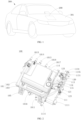
- a vehicle 300 comprises a vehicle body 301 and a thermal management system 200 according to an embodiment of the present invention.
- the thermal management system 200 is mounted on the vehicle body 301.
- the vehicle 300 may be, for example, a hybrid vehicle or an electric vehicle.
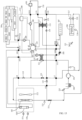
- the thermal management system 200 comprises: a compressor 201, an outdoor heat exchanger 202, a radiator 203, an electric drive component 204, a traction battery 205, an evaporator 206, a heater core 207, a liquid heater 208, a gas-liquid separator 209 and an integrated thermal management unit 100 of the present invention.
- the compressor 201 is configured to compress and deliver coolant
- the gas-liquid separator 209 is connected to an inlet of the compressor 201
- the outdoor heat exchanger 202 is configured to allow coolant to flow in and to exchange heat with the air outside the vehicle 300
- the evaporator 206 is configured to allow coolant to flow in and to cool the passenger compartment of the vehicle 300
- the heater core 207 is configured to warm the passenger compartment of the vehicle 300 by air conditioning
- the liquid heater 208 is configured to heat a cooling liquid.
- the radiator 203 is configured to cool a cooling liquid passing therethrough.
- the electric drive component 204 may comprise a drive motor, a speed reducer, a charging and power distribution module, and a vehicle controller of the vehicle 300.
- the drive motor may be plural in number.
- the drive motor may comprise, such as, a front motor and a rear motor.
- the speed reducer may comprise a front speed reducer and a rear speed reducer.
- the vehicle controller may comprise electric control elements such as a processor, a screen controller, a front motor controller and a rear motor controller, and a self-driving controller.
- the drive motor is connected to the traction battery 205 to drive the vehicle 300 by electrical energy.
- the various elements in the electric drive component 204 are connected through a cooling liquid pipeline.
- the cooling liquid in the cooling liquid pipeline may be provided to heat or cool the electric drive component 204.
- the outdoor heat exchanger 202 and the radiator 203 may collectively form a front heat radiating module of the vehicle 300.
- the thermal management system 200 may further comprise an electronic fan 212, which may be provided corresponding to the outdoor heat exchanger 202 and the radiator 203.
- the electronic fan 212 is configured to form an air flow flowing through the outdoor heat exchanger 202 and the radiator 203 to allow sufficient heat exchange between the air and the coolant in the outdoor heat exchanger 202 and between air and the cooling liquid in the radiator 203.
- the heater core 207 and the evaporator 206 may collectively form an air conditioning module of the vehicle 300.
- the heater core 207 may be configured to heat the passenger compartment, and the evaporator 206 may be configured to cool the passenger compartment.
- the heater core 207 and the evaporator 206 may also have respective electronic fans to provide hot air and cold air.
- the heater core 207 and the evaporator 206 may share a fan or may utilize two separate fans. The arrangement of a fan or fans is not limited herein.
- an air quality sensor 221 and an outside temperature sensor 220 may be provided to the front heat radiating module of the vehicle 300 formed by the outdoor heat exchanger 202 and the radiator 203, to detect the air quality and the temperature outside the cabin of the occupant respectively.
- an outdoor heat exchanger outlet temperature sensor 213 is provided at the outlet of the outdoor heat exchanger 202 for measuring the temperature at the outlet of the outdoor heat exchanger 202.
- a compressor exhaust temperature sensor 214 is provided at the outlet of the compressor 201 for detecting the temperature at the outlet of the compressor 201.
- a low pressure sensor 215 is provided at the inlet of the gas-liquid separator 209 or at the inlet of the gas-liquid separator 209 and of the compressor 201, which is configured to detect the pressure of the coolant back into the gas-liquid separator 209 and the compressor 201.
- a surface temperature sensor 216 is also provided on the surface of the evaporator 206 for detecting the temperature of the surface of the evaporator 206.
- a first water temperature sensor 218 is also provided at the outlet of the traction battery 205, for detecting the temperature of cooling liquid exiting the traction battery 205 to feed back the temperature of the traction battery 205.
- a second water temperature sensor 219 is also provided at the inlet of the electric drive component 204, for detecting the temperature of the cooling liquid exiting the electric drive component 204.
- the thermal management system 200 may also comprise a house sensor 222 for detecting the humidity in the passenger compartment of the vehicle and the temperature of the window glass of the vehicle.
- the integrated thermal management unit 100 comprises a flow channel plate 101, a pump assembly 106, a valve assembly 110, a water-cooling condenser 111, a water-water heat exchanger 112, and a battery cooler 113.
- a plurality of flow channels are formed in the flow channel plate 101.
- the pump assembly 106 and the valve assembly 110 are integrated on the flow channel plate 101.
- the pump assembly 106 comprises a heating water pump 107, a battery water pump 108, and a motor water pump 109, the inlets of the heating water pump 107, the battery water pump 108, and the motor water pump 109 each is connected to the valve assembly 110 through a flow channel.
- the water-cooling condenser 111, the water-water heat exchanger 112, and the battery cooler 113 are also integrated on the flow channel plate 101.
- the water-cooling condenser 111 comprises a cooling liquid input 1113 and a cooling liquid output 1114.
- the cooling liquid input 1113 of the water-cooling condenser 111 is connected to the outlet of the heating water pump 107 through a flow channel in the flow channel plate 101.
- the cooling liquid output 1114 of the water-cooling condenser 111 is configured to connect to the inlet of the liquid heater 208.
- the water-cooling condenser 111 further comprises a coolant input 1111 and a coolant output 1112.
- the coolant input 1111 of the water-cooling condenser 111 is configured to connect to the outlet of the compressor 201, and the coolant output 1112 of the water-cooling condenser 111 is configured to connect to the inlet of the outdoor heat exchanger 202.
- the battery cooler 113 comprises a coolant input 1133 configured to connect to the outlet of the outdoor heat exchanger 202 and a coolant output 1133 configured to connect to the inlet of the gas-liquid separator 209 and the outlet of the evaporator 206.
- the coolant output of the battery cooler 113 may comprise a first coolant output 1134 configured to connect to an inlet of the gas-liquid separator 209 of the vehicle 300 and a second coolant output 1135 configured to connect to an outlet of the evaporator 206.
- the battery cooler 113 further comprises a cooling liquid input 1131 and a cooling liquid output 1132.
- the water-water heat exchanger 112 comprises a first cooling liquid input 1121 and a first cooling liquid output 1122, and comprises a second cooling liquid input 1123 and a second cooling liquid output 1124.
- the cooling liquid input 1131 of the battery cooler 113 is connected with the first cooling liquid input 1121 and the first cooling liquid output 1122 of the water-water heat exchanger 112.
- the first cooling liquid output 1122 of the water-water heat exchanger 112 is connected to the valve assembly 110 through a flow channel in the flow channel plate 101.
- the cooling liquid input 1131 of the battery cooler 113 is configured to connect to the outlet of the traction battery 205, and the outlet of the battery water pump 108 is configured to connect to the inlet of the traction battery 205.
- the second cooling liquid input 1123 of the water-water heat exchanger 112 is configured to connect to the outlet of the liquid heater 208 and the inlet of the heater core 207 through a flow channel in the flow channel plate 101.
- the second cooling liquid output 1124 of the water-water heat exchanger 112 is connected to the valve assembly 110 through a flow channel.
- the valve assembly 110 is also configured to connect to the electric drive component 204 and the radiator 203 of the vehicle 300, and is configured to control the flow direction of the cooling liquid in the integrated thermal management unit 100.
- components of the vehicle 300 such as the pump assembly 106, the valve assembly 110, the water-cooling condenser 111, the water-water heat exchanger 112 and the battery cooler 113, are all integrated on the flow channel plate 101.
- the components such as the pump assembly 106, the valve assembly 110, the water-cooling condenser 111, the water-water heat exchanger 112 and the battery cooler 113, are all communicated through the flow channels provided in the flow channel plate 101. This saves external pipelines, and the shorter flowing path avoids pressure loss that may be otherwise caused by the coolant and the cooling liquid flowing a long path, improving cooling and heating effects.
- various modes may be achieved by controlling connection of valve ports of the valve assembly 110.
- various modes of the vehicle 300 may be achieved, such as cooling by air conditioning, forced cooling of the traction battery, heating by air conditioning, heating of the traction battery, natural heat dissipation of the electric drive component, heat preservation of the battery with heat from the electric drive component, dehumidification of the passenger compartment, heating of the passenger compartment with heat from the electric drive component, de-icing mode, and the like.
- the integrated thermal management unit 100 further comprises a water tank 114 integrated on the flow channel plate 101.
- the water tank 114 is disposed at the top of the flow channel plate 101.
- the pump assembly 106 and the valve assembly 110 are integrated at the bottom of the flow channel plate 101.
- the battery cooler 113, the water-water heat exchanger 112 and the water-cooling condenser 111 are integrated at a side or sides of the flow channel plate 101.
- the space at the top, bottom and sides of the flow channel plate 101 can be fully utilized to integrate components such as the water tank 114, the pump assembly 106, the valve assembly 110 and the battery cooler 113, which further saves the arrangement space and improves integration level.
- the flow channel plate 101 comprises an upper plate 102 and a lower plate 103.
- the upper plate 102 has a plurality of flow channel grooves 104 formed thereon.
- the upper plate 102 and the lower plate 103 are hermetically engaged to enclose the flow channel grooves 104 to form a plurality of flow channels.
- the lower plate 103 may serve as a body carrying structure.
- the pump assembly 106 and the valve assembly 110 are integrated at the bottom of the lower plate 103 of the flow channel plate 101.
- the lower plate 103 has several openings formed therein.
- the heating water pump 107, the battery water pump 108, the motor water pump 109, and the valve ports of the valve assembly 110 may be connected with the flow channels of the flow channel plate 101 through the openings in the lower plate 103.
- the battery cooler 113, the water-water heat exchanger 112, and the water-cooling condenser 111 are integrated on the side or sides of the lower plate 103.
- the water tank 114 may be disposed at the top of the upper plate 102.
- the upper plate may have openings therein that are connected with the heating water pump 107, the battery water pump 108 and the motor water pump 109.
- Each of the heating water pump 107, the battery water pump 108 and the motor water pump 109 is connected with the water tank 114 through a flow channel and the openings in the upper plate 102.
- the pump assembly 106 and the valve assembly 110 are provided at the bottom of the flow channel plate 101.
- the water-cooling condenser 111, the water-water heat exchanger 112 and a battery cooling medium are provided at the sides of the flow channel plate 101.
- the lower plate 103 may have a plurality of flow channel grooves 104 formed therein, or both the lower plate 103 and the upper plate 102 may have flow channel grooves 104 formed therein.
- the present invention is not limited in this aspect.
- the water tank 114 is provided to store cooling liquid, such as cooling water.
- the water tank 114 may be plural or single in number. It is possible that each pump corresponds to one water tank 114, or multiple pumps correspond to one water tank 114, or multiple water tanks 114 correspond to one pump.
- the present invention is not limited to any particular arrangement of the water tank and the pumps.
- a connection port is provided on the top of the flow channel plate 101.
- the water tank 114 is mounted on the flow channel plate 101 and is connected with the flow channels in the flow channel plate 101 through the connection port,
- the water tank 114 is connected with the heating water pump 107, the battery water pump 108 and the motor water pump 109 through the flow channels, such that the heating water pump 107, the battery water pump 108 and the motor water pump 109 can each draw cooling liquid from the water tank 114 to be pumped to other parts of the integrated thermal management unit 100.
- the water tank 114 may be an expansion water tank.
- a water inlet 1141 is formed on the water tank 114.
- the water inlet 1141 may be sealed by a water inlet cap 1142. A user may unscrew the water inlet cap 1142 to fill the water tank 114 with water through the water inlet 1141.
- the lower plate 103 of the flow channel plate 101 has a plurality of fixing connectors 105 formed thereon.
- the fixing connectors 105 are provided on the lower plate 103 of the flow channel plate 101 and protrude therefrom.
- the fixing connectors 105 are configured to connect to the vehicle body 301 of the vehicle 300 to mount the entire integrated thermal management unit 100 integrally on the vehicle body 301, so as to eliminate the need to mount a plurality of parts separately on the vehicle, thereby simplifying the mounting process and saving mounting space.
- 4 fixing connectors 105 may be provided, which are separately located at four corners of the flow channel plate 101.
- the number of fixing connectors 105 may be less than 4 or greater than 4, such as 3 or 5.
- the number of fixing connectors 105 may be set to be no less than 3 in order to improve mounting stability.
- the battery cooler 113 and the water-water heat exchanger 112 are integrally arranged.
- the cooling liquid output 1132 of the battery cooler 113 is mated to the first cooling liquid input 1121 of the water-water heat exchanger 112, and the battery cooler 113 and the water-water heat exchanger 112 share a cooling liquid flow pipeline. That is, the battery cooler 113 and the water-water heat exchanger 112 are integrally formed, and a cooling liquid flowing pipeline for the battery cooler 113 is reused as one of the cooling liquid flowing pipelines for the water-water heat exchanger 112.
- Such an arrangement of the battery cooler 113 and the water-water heat exchanger 112 can improve the integration level without the need for external connection pipelines for connection, which saves the cost and shortens routing of the cooling liquid to avoid pressure and heat loss.
- the integrated thermal management unit 100 further comprises a mounting base 115 integrally mounted on the water-cooling condenser 111 and the battery cooler 113.
- the mounting base 115 has an inlet, a first coolant interface 116, a second coolant interface 117, a third coolant interface 118 and an outlet formed therein. Channels are formed in the mounting base 115 for connection between the inlet, the first coolant interface 116, the second coolant interface 117, the third coolant interface 118 and the outlet.
- the inlet is matched and connected with the coolant output 1112 of the water-cooling condenser 111.
- the first coolant interface 116 and the second coolant interface 117 are connected to the inlet in parallel.
- the third coolant interface 118 is connected with the outlet and the second coolant interface 117.
- the first coolant interface 116 is connected to the coolant output 1112 of the water-cooling condenser 111.
- the second coolant interface 117 is connected to the coolant output 1112 of the water-cooling condenser 111 and is connected in parallel with the first coolant interface 116.
- the first coolant interface 116 is configured to connect to the inlet of the outdoor heat exchanger 202 of the vehicle 300.
- the second coolant interface 117 is configured to connect to the inlet of the evaporator 206 of the vehicle 300.
- the third coolant interface 118 is configured to mate at one end with the coolant input 1133 of the battery cooler 113 and to connect at the other end with the outlet of the outdoor heat exchanger 202.
- the integrated thermal management unit 100 further comprises a first throttle 119, a shutoff valve 121 and a one-way valve 122.
- the first throttle 119 is mounted on the mounting base 115 and connected in series with the first coolant interface 116.
- the first throttle 119 may be a coolant throttling element such as an electronic expansion valve for regulating the flow of a coolant entering the outdoor heat exchanger 202 and for throttling a coolant before entering the outdoor heat exchanger 202.
- the first throttle 119 can also be integrated on the flow channel plate 101 through the mounting base 115, further saving the mounting space and improving the integration level.
- the water-cooling condenser 111 is indirectly connected to the outdoor heat exchanger 202 through the mounting base 115.
- the shutoff valve 121 is also mounted on the mounting base 115.
- the shutoff valve 121 is connected in series between the inlet of the mounting base 115 and the second coolant interface 117 and configured to connect the second coolant interface 117 with the coolant output 1112 of the water-cooling condenser 111 and isolating the second coolant interface 117 from the coolant output 1112 of the water-cooling condenser 111.
- the second coolant interface 117 is configured to connect to the inlet of the evaporator 206 of the vehicle 300.
- the integral mounting of the shutoff valve 121 on the mounting base 115 may further save mounting space to improve the integration level; and on the other hand, the cooperation of the first throttle 119 with the shutoff valve 121 can control whether the coolant flows first through the outdoor heat exchanger 202 or first through the evaporator 206 to achieve cooling and heating functions.
- the third coolant interface 118 on the mounting base 115 is connected with the coolant input 1133 of the battery cooler 113 and the second coolant interface 117.
- a one-way valve 122 is installed at the third coolant interface 118.
- the first coolant output 1134 of the battery cooler 113 is configured to connect to the gas-liquid separator 209 of the vehicle 300, and the gas-liquid separator 209 is connected to the compressor 201.
- the second coolant output 1135 of the battery cooler 113 is configured to connect to the outlet of the evaporator 206.
- provision of the one-way valve 122 allows the coolant to only flow in one direction, i.e., from the third coolant interface 118 to the integrated thermal management unit 100, and not flow back to the third coolant interface 118; and on the other hand, the integrating the one-way valve 122 on the mounting base 115 can further save the mounting space to improve the integration level.
- the integrated thermal management unit 100 further comprises a second throttle 120 and a temperature sensor 124, both of which are integrated on the battery cooler 113.
- the second throttle 120 is positioned at the coolant input 1133 of the battery cooler 113, and the temperature sensor 124 is positioned at the coolant outputs of the battery cooler 113 (which comprise the first coolant output 1134 and the second coolant output 1135).
- the second throttle 120 may also be a coolant throttling element such as an electronic expansion valve.
- the flow of coolant entering the battery cooler 113 may be regulated and coolant before entering the battery cooler 113 may be throttled by the second throttle 120, while the temperature of coolant exiting the battery cooler 113 may be monitored by the temperature sensor 124.
- the integration of the second throttle 120 and the temperature sensor 124 on the battery cooler 113 may further improve the integration level, save mounting space, and eliminate the need for external connecting lines to reduce cost.
- the outlet of the outdoor heat exchanger 202 is further connected to the gas-liquid separator 209, and an external shutoff valve 211 is provided between the outlet of the outdoor heat exchanger 202 and the gas-liquid separator 209.
- An end of the third coolant interface 118 may be connected between the outlet of the outdoor heat exchanger 202 and the external shutoff valve 211.
- the external shutoff valve 211 and the second throttle 120 can be utilized to control whether coolant exiting the outdoor heat exchanger 202 flows through the battery cooler 113 and the evaporator 206 or directly flows back into the gas-liquid separator 209.
- a third throttle 210 which may also be a coolant throttling element such as an electronic expansion valve, is provided at the inlet of the evaporator 206, for regulating the flow of coolant entering the evaporator 206 and for throttling coolant before entering the evaporator 206.
- the integrated thermal management unit 100 further comprises a pressure-temperature sensor 123 mounted at the coolant output 1112 of the water-cooling condenser 111.
- the pressure-temperature sensor 123 is also directly integrated on the water-cooling condenser 111, further improving the integration level.
- the pressure-temperature sensor 123 is configured to monitor the pressure and temperature of coolant at the coolant output 1112 of the water-cooling condenser 111.
- the integrated thermal management unit 100 further comprises an electrical control connection element 125, which may comprise a number of connectors 126 and a number of wires 127.
- the connectors 126 may be configured to join the heating water pump 107, the battery water pump 108, the motor water pump 109, the valve assembly 110, the first throttle 119, the second throttle 120, the shutoff valve 121, the pressure-temperature sensor 123, and the temperature sensor 124.
- the connectors 126 are connected to each other through the wires 127.
- electrical components e.g., the pump assembly and the valve assembly, etc.
- the integrated thermal management unit 100 may be directly connected to control components of the vehicle 300 (e.g., an vehicle controller,) through the electrical control connection element 125 to enable control of the integrated thermal management unit 100, without having to be separately connected to different electrical control components using multiple interfaces, thereby increasing the integration level.
- FIG. 3 is a schematic diagram illustrating the scheme of the integrated thermal management unit 100 and the thermal management system 200 according to an embodiment of the present invention.
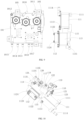
- FIGS. 2 and 4 to 7 are schematic diagrams illustrating the structure of the integrated thermal management unit 100 according to an embodiment of the present invention.
- the flow channel plate 101 has formed thereon a first interface 1011, a second interface 1012, a third interface 1013, a fourth interface 1014, a fifth interface 1015, a sixth interface 1016, a seventh interface 1017, and an eighth interface 1018.
- the valve assembly 110 may comprise a first five-way valve 136 and a second five-way valve 137.
- the first port a1 of the first five-way valve 136 is connected to the eighth interface 1018 through a flow channel, and the eighth interface 1018 is configured to connect to the outlet of the heater core 207.
- the second port a2 of the first five-way valve 136 is connected with the heating water pump 107 through a flow channel.
- the third port a3 of the first five-way valve 136 is connected with the first interface 1011 through a flow channel, and the first interface 1011 is configured to connect to the outlet of the radiator 203.
- the fourth port a4 of the first five-way valve 136 is connected to the fifth port b5 of the second five-way valve 137 through a flow channel.
- the fifth port a5 of the first five-way valve 136 is connected to the second cooling liquid output 1124 of the water-water heat exchanger 112 through a flow channel.
- the first port b1 of the second five-way valve 137 is connected to the second interface 1012 and the third interface 1013 through a flow channel, and the second interface 1012 is connected with the third interface 1013.
- the second interface 1012 is configured to connect to the inlet of the radiator 203
- the third interface 1013 is configured to connect to the outlet of the electric drive component 204.
- the second port b2 of the second five-way valve 137 is connected to the inlet of the motor water pump 109 through a flow channel.
- the motor water pump 109 is connected to the fourth interface 1014 through a flow channel, and the fourth interface 1014 is configured to connect to the inlet of the electric drive component 204.
- the third port b3 of the second five-way valve 137 is connected to the first cooling liquid output 1122 of the water-water heat exchanger 112 through a flow channel.
- the fourth port b4 of the second five-way valve 137 is connected to the inlet of the battery water pump 108 through a flow channel, the battery water pump 108 is connected with the fifth interface 1015 through a flow channel, and the fifth interface 1015 is configured to connect to the inlet of the traction battery 205.
- the fifth port b5 of the second five-way valve 137 is connected to the fourth port a4 of the first five-way valve 136.
- the second cooling liquid input 1123 of the water-water heat exchanger 112 is connected to the sixth interface 1016 and the seventh interface 1017 through a flow channel, and the sixth interface 1016 is connected with the seventh interface 1017.
- the sixth interface 1016 is configured to connect to the inlet of the heater core 207
- the seventh interface 1017 is configured to connect to the outlet of the liquid heater 208.
- the mode of the forced cooling of the traction battery 205 can be enabled by controlling the connection of the five-way valves.
- the compressor 201 and the battery water pump 108 are activated; the shutoff valve 121 of the integrated thermal management unit 100 is in a closed position; the first throttle 119 is in a fully open position; the external shutoff valve 211 is in a closed position; the second throttle 120 is in a throttling position; the third throttle 210 is in a closed position; and the third port b3 and the fourth port b4 of the second five-way valve 137 are connected .
- the compressor 201 outputs coolant.
- the coolant flows through the water-cooling condenser 111 (the heating water pump 107 is not activated, and heat exchange is generally not occurred in the water-cooling condenser 111), then enters the outdoor heat exchanger 202 through the first throttle 119 to cool and release heat, and then enters the battery cooler 113 through the one-way valve 122.
- the battery water pump 108 is in an activated position, and the cooling liquid is cyclically delivered to the traction battery 205 by the battery water pump 108 to take away heat generated by the traction battery 205.
- the taken away heat causes the coolant, in the battery cooler 113, to absorb heat and evaporate through heat exchange between the cooling liquid and the coolant.
- the evaporated coolant exits from the first coolant output 1134 of the battery cooler 113, enters the gas-liquid separator 209, and at last returns to the compressor 201 for the next cycle.
- the modes of cooling by air conditioning and cooling of the battery can be enabled by controlling connection of the various ports of the five-way valves.
- the compressor 201 and the battery water pump 108 are activated; the shutoff valve 121 of the integrated thermal management unit 100 is in the closed position; the first throttle 119 is in the fully open position; the external shutoff valve 211 is in the closed position; the second throttle 120 is in the throttling position; the third throttle 210 is in a throttling position; and the third port b3 and the fourth port b4 of the second five-way valve 137 are connected.
- the compressor 201 outputs coolant.
- the coolant flows through the water-water condenser (the heating water pump 107 is not activated, and heat exchange is generally not occurred in the water-cooling condenser 111), then enters the outdoor heat exchanger 202 through the first throttle 119 to cool and release heat, and then enters the one-way valve 122 from the third coolant interface 118 and passes through the one-way valve 122. After that, a part of the coolant flows into the battery cooler 113, and the other part flows into the evaporator 206 through the second coolant interface 117.
- the coolant flowing into the battery cooler 113 exchanges heat with the cooling liquid to absorb heat and evaporate so as to cool the traction battery 205, and the evaporated coolant exits from the first coolant output 1134 of the battery cooler 113.
- the coolant flowing into the evaporator 206 exchanges heat, in the evaporator 206, with the air in the passenger compartment of the vehicle to absorb heat and evaporate so as to cool the air in the vehicle, and the evaporated coolant flows into the first coolant output 1134 from the second coolant output 1135 of the battery cooler 113.
- the two flows of the coolant converge at the first coolant output 1134, flow into the gas-liquid separator 209, and then enter the compressor 201 for the next cycle.
- the cooling liquid is delivered by the motor water pump 109 to the electric drive component 204 and then flows from the third interface 1013 of the flow channel plate 101 into the radiator 203 and then flows back to the motor water pump 109 from the first interface 1011, the third port a3 and the fourth port a4 of the first five-way valve 136, and the fifth port b5 and the second port b2 of the second five-way valve 137.
- the first five-way valve 136 may be replaced with a first four-way valve and a first three-way valve
- the second five-way valve 137 may be replaced with a second four-way valve and a second three-way valve.
- the first port c1 of the first four-way valve 138 is connected to the third port d3 of the first three-way valve 140.
- the first port d1 of the first three-way valve is connected to the eighth interface 1018 through a flow channel
- the second port d2 of the first three-way valve 140 is connected to the second cooling liquid output 1124 of the water-water heat exchanger 112 through a flow channel.
- the second port c2 of the first four-way valve 138 is connected with the heating water pump 107 through a flow channel.
- the third port c3 of the first four-way valve 138 is connected with the first interface 1011 through a flow channel, and the first interface 1011 is configured to connect to the outlet of the radiator 203.
- the fourth port c4 of the first four-way valve 138 is connected with the second port e2 of the second three-way valve 141 through a flow channel.
- the first port e1 of the second three-way valve 141 is connected to the second interface 1012 and the third interface 1013.
- the second interface 1012 and the third interface 1013 are connected, the second interface 1012 is configured to connect to the inlet of the radiator 203, and the third interface 1013 is configured to connect to the outlet of the electric drive component 204.
- the third port e3 of the second three-way valve 141 is connected with the first port f1 of the second four-way valve 139.
- the second port f2 of the second four-way valve 139 is connected to the inlet of the motor 109 through a flow channel, and the inlet of the motor water pump 109 is connected with fourth interface 1014 that is configured to connect to the inlet of the electric drive component 204.
- the third port f3 of the second four-way valve 139 is connected to the first cooling liquid output 1122 of the water-water heat exchanger 112 through a flow channel.
- the fourth port f4 of the second four-way valve 139 is connected to the inlet of the battery water pump 108, and the battery water pump 108 is connected with the fifth interface 1015 through a flow channel.
- the fifth interface 1015 is configured to connect to the inlet of the traction battery 205.
- the second cooling liquid input 1123 of the water-water heat exchanger 112 is connected to the sixth interface 1016 and the seventh interface 1017.
- the sixth interface 1016 and the seventh 1017 are connected, and the sixth interface 1016 is configured to connect to the inlet of the heater core 207, and the seventh interface 1017 is configured to connect to the outlet of the liquid heater 208.
- a four-way valve and a three-way valve are employed to serve as a five-way valve.
- a port of the four-way valve is connected with a port of the three-way valve, and the four-way valve and the three-way valve as a whole have only five ports connected with external components.
- an eight-way valve may be used in place of the first and second five-way valves 136, 137.
- the first port g1 of the eight-way valve 142 is connected to the eighth interface 1018 through a flow channel, and the eighth interface 1018 is configured to connect to the outlet of the heater core 207.
- the second port g2 of the eight-way valve 142 is connected with the heating water pump 107 through a flow channel.
- the third port g3 of the eight-way valve 142 is connected with the first interface 1011 through a flow channel, and the first interface 1011 is configured to connect to the outlet of the radiator 203.
- the fourth port g4 of the eight-way valve 142 is connected to the second interface 1012 and the third interface 1013 through a flow channel.
- the second interface 1012 is configured to connect to the inlet of the radiator 203
- the third interface 1013 is configured to connect to the outlet of the electric drive component 204.
- the fifth port g5 of the eight-way valve 142 is connected with the inlet of the motor water pump 109 through a flow channel.
- the motor water pump 109 pump is connected to the fourth interface 1014 through a channel, and the fourth interface 1014 is configured to connect to the inlet of the electric drive component 204.
- the sixth port g6 of the eight-way valve 142 is connected to the inlet of the battery water pump 108 through a flow channel.
- the battery water pump 108 is connected with the fifth interface 1015 through a flow channel, and the fifth interface 1015 is configured to connect to the inlet of the traction battery 205.
- the seventh port g7 of the eight-way valve 142 is connected to the first cooling liquid output 1122 of the water-water heat exchanger 112 through a flow channel.
- the eighth port g8 of the eight-way valve 142 is connected to the second cooling liquid output 1124 of the water-water heat exchanger 112.
- the second cooling liquid input 1123 of the water-water heat exchanger 112 is connected to the sixth interface 1016 and the seventh interface 1017.
- the sixth interface 1016 is connected with the seventh interface 1017, and the sixth interface 1016 is configured to connect to the inlet of the heater core 207, and the seventh interface 1017 is configured to connect to the outlet of the liquid heater 208.
- an eight-way valve is employed to serve as two five-way valves. Two ports, each from one of the two five-way valves, are connected, such that there are only eight ports are connected with external components.
- Such a configuration of two five-way valves is equivalent to one eight-way valve.
- the integrated thermal management unit 100 of the present invention can achieve modes of the vehicle 300 other than those described above, such as cooling by air conditioning, heating by air conditioning, heating of the traction battery 205, natural heat dissipation of the electric drive component 204, heat preservation of the battery with heat from the electric drive component 204, dehumidification of the passenger compartment, heating of the passenger compartment with heat from the electric drive component 204, de-icing mode, etc., which will not be described herein.
Landscapes
- Physics & Mathematics (AREA)
- Thermal Sciences (AREA)
- Engineering & Computer Science (AREA)
- Mechanical Engineering (AREA)
- Air-Conditioning For Vehicles (AREA)
- Cooling, Air Intake And Gas Exhaust, And Fuel Tank Arrangements In Propulsion Units (AREA)
Claims (14)
- Integrierte Wärmemanagementeinheit (100) für ein Fahrzeug (300), umfassend:eine Strömungskanalplatte (101) mit einer Mehrzahl von darin gebildeten Strömungskanälen;eine Pumpenanordnung (106) und eine Ventilanordnung (110), die auf der Strömungskanalplatte (101) integriert sind, wobei die Pumpenanordnung (106) eine Heizwasserpumpe (104), eine Batteriewasserpumpe (108) und eine Motorwasserpumpe (109) umfasst, wobei Einlässe der Heizwasserpumpe (107), der Batteriewasserpumpe (108) und der Motorwasserpumpe (109) durch die Strömungskanäle mit der Ventilanordnung (110) verbunden sind; undeinen Wasserkühlungskondensator (111), einen Wasser-Wasser-Wärmetauscher (112) und einen Batteriekühler (113), die auf der Strömungskanalplatte (101) integriert sind, wobei der Wasserkühlungskondensator (111) mit der Pumpenanordnung (106) verbunden ist,wobei das integrierte Fahrzeug-Wärmemanagementsystem (100) dadurch gekennzeichnet ist, dass der Wasser-Wasser-Wärmetauscher (112) mit der Pumpenanordnung (106) und der Ventilanordnung (110) verbunden ist, der Batteriekühler (113) mit dem Wasser-Wasser-Wärmetauscher (112) verbunden ist, und die Ventilanordnung (110) zum Steuern einer Strömungsrichtung von Kühlflüssigkeit in der integrierten Wärmemanagementeinheit (100) konfiguriert ist, wobei:ein Kühlflüssigkeitseingang des Wasserkühlungskondensators (111) durch die Strömungskanäle mit einem Auslass der Heizwasserpumpe (107) verbunden ist, ein Kühlflüssigkeitsausgang des Wasserkühlungskondensators (111) mit einem Einlass einer Flüssigkeitsheizung (208) verbunden werden kann, ein Kühlmitteleingang des Wasserkühlungskondensators (111) mit einem Kompressor (201) verbunden werden kann und ein Kühlmittelausgang (1112) des Wasserkühlungskondensators (111) mit einem Außenwärmetauscher (202) und dem Einlass eines Verdampfers (206) verbunden werden kann;ein Kühlmitteleingang des Batteriekühlers (113) mit dem Außenwärmetauscher (202) und dem Einlass eines Verdampfers (206) verbunden werden kann, ein Kühlmittelausgang des Batteriekühlers (113) mit einem Gas-Flüssigkeits-Abscheider (209) und einem Auslass eines Verdampfers (206) verbunden werden kann, ein Kühlflüssigkeitseingang des Batteriekühlers (113) mit einem ersten Kühlflüssigkeitseingang und einem ersten Kühlflüssigkeitsausgang des Wasser-Wasser-Wärmetauschers (112) verbunden ist, der erste Kühlflüssigkeitsausgang des Wasser-Wasser-Wärmetauschers (112) durch die Strömungskanäle mit der Ventilanordnung (110) verbunden ist, der Kühlflüssigkeitseingang des Batteriekühlers (113) mit einem Auslass einer Traktionsbatterie (205) verbunden werden kann und ein Auslass der Batteriewasserpumpe (108) mit einem Einlass der Traktionsbatterie (205) verbunden werden kann; undein zweiter Kühlflüssigkeitseingang des Wasser-Wasser-Wärmetauschers (112) mit einem Auslass der Flüssigkeitsheizung (208) und einem Einlass eines Heizungskerns (207) verbunden werden kann, ein zweiter Kühlflüssigkeitsausgang des Wasser-Wasser-Wärmetauschers (112) durch die Strömungskanäle mit der Ventilanordnung (110) verbunden ist und die Ventilanordnung (110) ferner zum Verbinden mit einer Elektroantriebskomponente (204) und einem Kühler (203) des Fahrzeugs konfiguriert ist, wobei die Ventilanordnung (10) ferner mit dem Auslass des Heizungskerns (207) verbunden werden kann.
- Integrierte Wärmemanagementeinheit (100) nach Anspruch 1, ferner umfassend einen Wasserbehälter (114), der auf der Strömungskanalplatte (101) integriert ist, wobei der Wasserbehälter (114) auf einem oberen Teil der Strömungskanalplatte (101) bereitgestellt ist, wenn er in das genannte Fahrzeug (300) eingebaut ist, und wobei die Heizwasserpumpe (107), die Batteriewasserpumpe (108) und die Motorwasserpumpe (109) durch die Strömungskanäle mit dem Wasserbehälter (114) verbunden sind.
- Integrierte Wärmemanagementeinheit (100) nach Anspruch 1, wobei die Pumpenanordnung (106) und die Ventilanordnung (110) an einem unteren Teil der Strömungskanalplatte (101) bereitgestellt sind und der Batteriekühler (113), der Wasser-Wasser-Wärmetauscher (112) und der Wasserkühlungskondensator (111) an einem Seitenteil der Strömungskanalplatte (101) bereitgestellt sind.
- Integrierte Wärmemanagementeinheit (100) nach Anspruch 1, wobei:die Strömungskanalplatte (101) daran ausgebildete erste bis achte Schnittstellen aufweist und die Ventilanordnung (110) ein erstes Fünf-Wege-Ventil (136) und ein zweites Fünf-Wege-Ventil (137) umfasst;ein erster Anschluss (a1) des ersten Fünf-Wege-Ventils (136) durch die Strömungskanäle mit der achten Schnittstelle verbunden ist und die achte Schnittstelle mit einem Auslass des Heizungskerns (207) verbunden werden kann;ein zweiter Anschluss (a2) des ersten Fünf-Wege-Ventils (136) durch die Strömungskanäle mit der Heizwasserpumpe (107) verbunden ist;ein dritter Anschluss (a3) des ersten Fünf-Wege-Ventils (136) durch die Strömungskanäle mit der ersten Schnittstelle verbunden ist, die erste Schnittstelle mit einem Auslass des Kühlers (203) verbunden werden kann;ein vierter Anschluss (a4) des ersten Fünf-Wege-Ventils (136) durch die Strömungskanäle mit einem fünften Anschluss (b5) des zweiten Fünf-Wege-Ventils (137) verbunden ist;ein fünfter Anschluss (a5) des ersten Fünf-Wege-Ventils (136) durch die Strömungskanäle mit dem zweiten Kühlflüssigkeitsausgang des Wasser-Wasser-Wärmetauschers (112) verbunden ist;ein erster Anschluss (b1) des zweiten Fünf-Wege-Ventils (137) durch die Strömungskanäle mit der zweiten Schnittstelle und der dritten Schnittstelle verbunden ist, die zweite Schnittstelle mit der dritten Schnittstelle verbunden ist, die zweite Schnittstelle mit einem Einlass des Kühlers (203) verbunden werden kann und die dritte Schnittstelle mit einem Auslass der Elektroantriebskomponente (204) verbunden werden kann;ein zweiter Anschluss (b2) des zweiten Fünf-Wege-Ventils (137) durch die Strömungskanäle mit dem Einlass der Motorwasserpumpe (109) verbunden ist, die Motorwasserpumpe (109) durch die Strömungskanäle mit der vierten Schnittstelle verbunden ist und die vierte Schnittstelle mit einem Einlass der Elektroantriebskomponente (204) verbunden werden kann;ein dritter Anschluss (b3) des zweiten Fünf-Wege-Ventils (137) durch die Strömungskanäle mit dem ersten Kühlflüssigkeitsausgang des Wasser-Wasser-Wärmetauschers (112) verbunden ist;ein vierter Anschluss (b4) des zweiten Fünf-Wege-Ventils (137) durch die Strömungskanäle mit dem Einlass der Batteriewasserpumpe (108) verbunden ist, die Batteriewasserpumpe (108) durch die Strömungskanäle mit der fünften Schnittstelle verbunden ist und die fünfte Schnittstelle mit dem Einlass der Traktionsbatterie (205) verbunden werden kann;der fünfte Anschluss (b5) des zweiten Fünf-Wege-Ventils (137) mit dem vierten Anschluss (a4) des ersten Fünf-Wege-Ventils (136) verbunden ist; undder zweite Kühlflüssigkeitseingang des Wasser-Wasser-Wärmetauschers (112) mit der sechsten Schnittstelle und der siebten Schnittstelle verbunden ist, die sechste Schnittstelle mit der siebten Schnittstelle verbunden ist, die sechste Schnittstelle mit dem Einlass des Heizungskerns (207) verbunden werden kann und die siebte Schnittstelle mit dem Auslass der Flüssigkeitsheizung (208) verbunden werden kann.
- Integrierte Wärmemanagementeinheit (100) nach Anspruch 1, wobei:die Strömungskanalplatte (101) erste bis achte daran ausgebildete Schnittstellen aufweist und die Ventilanordnung (110) ein erstes Vier-Wege-Ventil (138), ein zweites Vier-Wege-Ventil (139), ein erstes Drei-Wege-Ventil (140) und ein zweites Drei-Wege-Ventil (141) umfasst;ein erster Anschluss (c1) des ersten Vier-Wege-Ventils (138) mit einem dritten Anschluss (d3) des ersten Drei-Wege-Ventils (140) verbunden ist, ein erster Anschluss (d1) des ersten Drei-Wege-Ventils (140) durch die Strömungskanäle mit der achten Schnittstelle verbunden ist und ein zweiter Anschluss (d2) des ersten Drei-Wege-Ventils (140) durch die Strömungskanäle mit dem zweiten Kühlflüssigkeitsausgang des Wasser-Wasser-Wärmetauschers (112) verbunden ist;ein zweiter Anschluss (c2) des ersten Vier-Wege-Ventils (138) durch die Strömungskanäle mit der Heizwasserpumpe (107) verbunden ist;ein dritter Anschluss (c3) des ersten Vier-Wege-Ventils (138) durch die Strömungskanäle mit der ersten Schnittstelle verbunden ist und die erste Schnittstelle mit einem Auslass des Kühlers (203) verbunden werden kann;ein vierter Anschluss (c4) des ersten Vier-Wege-Ventils (138) durch die Strömungskanäle mit einem zweiten Anschluss (e2) des zweiten Drei-Wege-Ventils (141) verbunden ist;ein erster Anschluss (e1) des zweiten Drei-Wege-Ventils (141) durch die Strömungskanäle mit der zweiten Schnittstelle und der dritten Schnittstelle verbunden ist, die zweite Schnittstelle mit der dritten Schnittstelle verbunden ist, die zweite Schnittstelle mit einem Einlass des Kühlers (203) verbunden werden kann und die dritte Schnittstelle mit einem Auslass der Elektroantriebskomponente (204) verbunden werden kann;ein dritter Anschluss (e3) des zweiten Drei-Wege-Ventils (141) mit einem ersten Anschluss (f1) des zweiten Vier-Wege-Ventils (139) verbunden ist,ein zweiter Anschluss (f2) des zweiten Vier-Wege-Ventils (139) durch die Strömungskanäle mit dem Einlass der Motorwasserpumpe (109) verbunden ist, der Einlass der Motorwasserpumpe (109) durch die Strömungskanäle mit der vierten Schnittstelle verbunden ist und die vierte Schnittstelle mit einem Einlass der Elektroantriebskomponente (204) verbunden werden kann;ein dritter Anschluss (f3) des zweiten Vier-Wege-Ventils (139) durch die Strömungskanäle mit dem ersten Kühlflüssigkeitsausgang des Wasser-Wasser-Wärmetauschers (112) verbunden ist;ein vierter Anschluss (f4) des zweiten Vier-Wege-Ventils (139) durch die Strömungskanäle mit dem Einlass der Batteriewasserpumpe (108) verbunden ist, die Batteriewasserpumpe (108) durch die Strömungskanäle mit der fünften Schnittstelle verbunden ist und die fünfte Schnittstelle mit dem Einlass der Traktionsbatterie (205) verbunden werden kann; undder zweite Kühlflüssigkeitseingang des Wasser-Wasser-Wärmetauschers (112) mit der sechsten Schnittstelle und der siebten Schnittstelle verbunden ist, die sechste Schnittstelle mit der siebten Schnittstelle verbunden ist, die sechste Schnittstelle mit dem Einlass des Heizungskerns (207) verbunden werden kann und die siebte Schnittstelle mit dem Auslass der Flüssigkeitsheizung (208) verbunden werden kann.
- Integrierte Wärmemanagementeinheit (100) nach Anspruch 1, wobei:die Strömungskanalplatte (101) erste bis achte daran ausgebildete Schnittstellen aufweist und die Ventilanordnung (110) ein Acht-Wege-Ventil (142) umfasst;ein erster Anschluss (g1) des Acht-Wege-Ventils (142) durch die Strömungskanäle mit der achten Schnittstelle verbunden ist und die achte Schnittstelle mit einem Auslass des Heizungskerns (207) verbunden werden kann;ein zweiter Anschluss (g2) des Acht-Wege-Ventils (142) durch die Strömungskanäle mit der Heizwasserpumpe (107) verbunden ist;ein dritter Anschluss (g3) des Acht-Wege-Ventils (142) durch die Strömungskanäle mit der ersten Schnittstelle verbunden ist und die erste Schnittstelle mit einem Auslass des Kühlers (203) verbunden werden kann;ein vierter Anschluss (g4) des Acht-Wege-Ventils (142) durch die Strömungskanäle mit der zweiten Schnittstelle und der dritten Schnittstelle verbunden ist, die zweite Schnittstelle mit der dritten Schnittstelle verbunden ist, die zweite Schnittstelle mit einem Einlass des Kühlers (203) verbunden werden kann und die dritte Schnittstelle mit einem Auslass der Elektroantriebskomponente (204) verbunden werden kann;ein fünfter Anschluss (g5) des Acht-Wege-Ventils (142) durch die Strömungskanäle mit dem Einlass der Motorwasserpumpe (109) verbunden ist, die Motorwasserpumpe (109) durch die Strömungskanäle mit der vierten Schnittstelle verbunden ist und die vierte Schnittstelle mit einem Einlass der Elektroantriebskomponente (204) verbunden werden kann;ein sechster Anschluss (g6) des Acht-Wege-Ventils (142) durch die Strömungskanäle mit dem Einlass der Batteriewasserpumpe (108) verbunden ist, die Batteriewasserpumpe (108) durch die Strömungskanäle mit der fünften Schnittstelle verbunden ist und die fünfte Schnittstelle mit dem Einlass der Traktionsbatterie (205) verbunden werden kann;ein siebter Anschluss (g7) des Acht-Wege-Ventils (142) durch die Strömungskanäle mit dem ersten Kühlflüssigkeitsausgang des Wasser-Wasser-Wärmetauschers (112) verbunden ist; undein achter Anschluss (g8) des Acht-Wege-Ventils (142) durch die Strömungskanäle mit dem zweiten Kühlflüssigkeitsausgang des Wasser-Wasser-Wärmetauschers (112) verbunden ist, der zweite Kühlflüssigkeitseingang des Wasser-Wasser-Wärmetauschers (112) mit der sechsten Schnittstelle und der siebten Schnittstelle verbunden ist, die sechste Schnittstelle mit der siebten Schnittstelle verbunden ist, die sechste Schnittstelle mit dem Einlass des Heizungskerns (207) verbunden werden kann und die siebte Schnittstelle mit dem Auslass der Flüssigkeitsheizung (208) verbunden werden kann.
- Integrierte Wärmemanagementeinheit (100) nach Anspruch 1, ferner umfassend eine Montagebasis (115) und eine erste Drossel (119), wobei die Montagebasis (115) einstückig am Wasserkühlungskondensator (111) und am Batteriekühler (113) montiert ist und eine daran ausgebildete erste Kühlmittelschnittstelle (116) aufweist, die erste Kühlmittelschnittstelle (116) mit dem Kühlmittelausgang (1112) des Wasserkühlungskondensators (111) verbunden ist und zum Verbinden mit einem Einlass eines Außenwärmetauschers (202) konfiguriert ist; und die erste Drossel (119) an der Montagebasis (115) montiert ist und mit der ersten Kühlmittelschnittstelle (116) in Reihe geschaltet ist.
- Integrierte Wärmemanagementeinheit (100) nach Anspruch 7, ferner umfassend einen Druck-Temperatur-Sensor (123), der am Kühlmittelausgang des Wasserkühlungskondensators (111) montiert ist.
- Integrierte Wärmemanagementeinheit (100) nach Anspruch 7, ferner umfassend ein Absperrventil (121), das an der Montagebasis (115) montiert ist, wobei die Montagebasis (115) ferner eine daran ausgebildete zweite Kühlmittelschnittstelle (117) aufweist, die zweite Kühlmittelschnittstelle (117) mit dem Kühlmittelausgang des Wasserkühlungskondensators (111) verbunden ist und mit der ersten Kühlmittelschnittstelle parallel geschaltet ist; das Absperrventil (121) mit der zweiten Kühlmittelschnittstelle (117) in Reihe geschaltet ist und die zweite Kühlmittelschnittstelle (117) und den Kühlmittelausgang des Wasserkühlungskondensators (111) verbinden und trennen kann und die zweite Kühlmittelschnittstelle (117) mit einem Einlass eines Verdampfers (206) des Fahrzeugs (300) verbunden werden kann.
- Integrierte Wärmemanagementeinheit (100) nach Anspruch 9, wobei:der Batteriekühler (113) und der Wasser-Wasser-Wärmetauscher (112) einstückig bereitgestellt sind und der zweite Kühlflüssigkeitsausgang des Wasser-Wasser-Wärmetauschers (112) mit der Ventilanordnung (110) verbunden ist;die Montagebasis ferner eine daran ausgebildete dritte Kühlmittelschnittstelle aufweist, wobei die dritte Kühlmittelschnittstelle mit dem Kühlmitteleingang des Batteriekühlers (113) und der zweiten Kühlmittelschnittstelle verbunden ist, ein Ein-Weg-Ventil (122) an der dritten Kühlmittelschnittstelle montiert ist; undder Batteriekühler (113) einen ersten Kühlmittelausgang, der zum Verbinden mit einem Gas-Flüssigkeits-Abscheider (209) des Fahrzeugs (300) konfiguriert ist, und einen zweiten Kühlmittelausgang, der zum Verbinden mit dem Auslass des Verdampfers (206) konfiguriert ist, umfasst, wobei der Gas-Flüssigkeits-Abscheider (209) mit dem Kompressor (201) verbunden ist.
- Integrierte Wärmemanagementeinheit (100) nach Anspruch 10, ferner umfassend eine zweite Drossel (120) und einen Temperatursensor (124), die beide auf dem Batteriekühler (113) integriert sind, wobei die Drossel am Kühlmitteleingang des Batteriekühlers (113) positioniert ist und der Temperatursensor (124) am Kühlmittelausgang des Batteriekühlers (113) positioniert ist.
- Integrierte Wärmemanagementeinheit (100) nach Anspruch 1, wobei die Strömungskanalplatte (101) Folgendes umfasst:eine obere Platte (102) und eine untere Platte (103), wobei mindestens eine von der oberen Platte (102) und der unteren Platte (103) eine Mehrzahl von daran ausgebildeten Strömungskanalnuten aufweist und die obere Platte (102) mit der unteren Platte (103) zusammenwirkt, um die Strömungskanalnuten (104) einzuschließen, um die Mehrzahl von Strömungskanälen zu bilden; und vorzugsweiseBefestigungsverbinder (105), die daran ausgebildet und zum Verbinden mit einer Fahrzeugkarosserie (301) des Fahrzeugs (300) konfiguriert sind.
- Wärmemanagementsystem (200) für ein Fahrzeug (300), umfassend:einen Kompressor (201);einen Außenwärmetauscher (202);einen Kühler (203);eine Elektroantriebskomponente (204);eine Traktionsbatterie (205);einen Verdampfer (206);einen Heizungskern (207);eine Flüssigkeitsheizung (208);einen Gas-Flüssigkeits-Abscheider (209); undeine integrierte Wärmemanagementeinheit (100) nach einem der Ansprüche 1 bis 12.
- Fahrzeug (300), umfassend:eine Fahrzeugkarosserie (301); undein an der Fahrzeugkarosserie (301) montiertes Wärmemanagementsystem (200) nach Anspruch 13.
Applications Claiming Priority (1)
| Application Number | Priority Date | Filing Date | Title |
|---|---|---|---|
| CN202110666209.1A CN113276628A (zh) | 2021-06-16 | 2021-06-16 | 热管理集成单元、热管理系统和车辆 |
Publications (3)
| Publication Number | Publication Date |
|---|---|
| EP4086563A1 EP4086563A1 (de) | 2022-11-09 |
| EP4086563B1 true EP4086563B1 (de) | 2025-05-07 |
| EP4086563C0 EP4086563C0 (de) | 2025-05-07 |
Family
ID=77284739
Family Applications (1)
| Application Number | Title | Priority Date | Filing Date |
|---|---|---|---|
| EP21195394.8A Active EP4086563B1 (de) | 2021-06-16 | 2021-09-07 | Integrierte wärmeverwaltungseinheit, integriertes wärmemanagementsystem und fahrzeug |
Country Status (2)
| Country | Link |
|---|---|
| EP (1) | EP4086563B1 (de) |
| CN (1) | CN113276628A (de) |
Families Citing this family (29)
| Publication number | Priority date | Publication date | Assignee | Title |
|---|---|---|---|---|
| DE102022114003B4 (de) * | 2021-06-22 | 2025-11-06 | Illinois Tool Works Inc. | Gehäuseeinrichtung für einen Kühlmittelkreislauf eines Kraftfahrzeugs |
| FR3126757B1 (fr) * | 2021-09-03 | 2023-08-11 | Valeo Systemes Thermiques | Dispositif de gestion thermique pour plateforme modulaire d’un châssis de véhicule automobile électrique |
| KR20230041517A (ko) * | 2021-09-17 | 2023-03-24 | 현대자동차주식회사 | 유체흐름용 플레이트구조 |
| EP4344913B1 (de) * | 2021-09-27 | 2025-07-16 | Zhejiang Geely Holding Group Co., Ltd. | Wärmeverwaltungssystem, fahrzeug und wärmeverwaltungsverfahren |
| CN116135563A (zh) * | 2021-11-17 | 2023-05-19 | 浙江三花汽车零部件有限公司 | 流体控制组件以及热管理系统 |
| CN116136268A (zh) * | 2021-11-17 | 2023-05-19 | 浙江三花汽车零部件有限公司 | 流体管理装置及热管理系统 |
| CN114198537B (zh) * | 2021-12-23 | 2024-02-20 | 博耐尔汽车电气系统有限公司 | 一种集成水阀机构 |
| CN116417712B (zh) * | 2021-12-30 | 2025-09-02 | 法雷奥汽车空调湖北有限公司动力总成热系统分公司 | 热管理组件和电池热管理系统 |
| CN114750646B (zh) * | 2022-04-06 | 2025-02-14 | 西安天泰电子有限公司 | 新能源汽车电池热管理装置 |
| CN114851802B (zh) * | 2022-04-29 | 2024-07-19 | 岚图汽车科技有限公司 | 一种集成式热管理装置及系统 |
| CN118404946A (zh) * | 2022-04-29 | 2024-07-30 | 华为技术有限公司 | 冷却液基板、热管理部件和车辆 |
| CN115388193A (zh) * | 2022-05-06 | 2022-11-25 | 浙江吉利控股集团有限公司 | 一种集成式阀芯及其多通阀、阀泵装置和车身热管理系统 |
| CN117168207B (zh) * | 2022-05-26 | 2025-03-11 | 比亚迪股份有限公司 | 流道集成装置和具有其的车辆 |
| CN115179712A (zh) * | 2022-07-07 | 2022-10-14 | 浙江吉利控股集团有限公司 | 一种纯电动汽车热管理集成模块及方法 |
| KR20240010250A (ko) * | 2022-07-15 | 2024-01-23 | 한온시스템 주식회사 | 기액분리기 일체형 매니폴드 유체 모듈 |
| CN115257285A (zh) * | 2022-07-25 | 2022-11-01 | 合众新能源汽车有限公司 | 一种水路流道板结构及车辆 |
| CN115303020A (zh) * | 2022-08-30 | 2022-11-08 | 四川芯智热控技术有限公司 | 一种高集成高可靠性的热管理模块结构 |
| CN115139750B (zh) * | 2022-09-05 | 2023-01-10 | 浙江凌昇动力科技有限公司 | 热管理集成模块及电动汽车 |
| CN117818286A (zh) * | 2022-09-29 | 2024-04-05 | 比亚迪股份有限公司 | 集成模块和具有其的热管理系统、车辆 |
| CN115782506B (zh) * | 2022-10-25 | 2025-07-01 | 浙江凌昇动力科技有限公司 | 一种热管理集成模块 |
| CN120152863A (zh) * | 2022-11-24 | 2025-06-13 | 宁德时代(上海)智能科技有限公司 | 流道集成组件及其制造方法、热管理系统以及车辆 |
| WO2024108495A1 (zh) * | 2022-11-24 | 2024-05-30 | 宁德时代(上海)智能科技有限公司 | 热管理集成设备、热管理系统以及车辆 |
| DE102023133823A1 (de) * | 2022-12-08 | 2024-06-13 | Hanon Systems | Wärmemanagement-fluidmodul für ein fahrzeug |
| CN116141907B (zh) * | 2022-12-09 | 2025-06-27 | 上海马勒热系统有限公司 | 热管理模块 |
| DE102022213593A1 (de) | 2022-12-14 | 2024-06-20 | Robert Bosch Gesellschaft mit beschränkter Haftung | Zentralanschlussvorrichtung und Anbindungseinheit |
| US20240317017A1 (en) * | 2023-03-24 | 2024-09-26 | Stant Usa Corp. | Thermal management system |
| CN116198284B (zh) * | 2023-05-04 | 2023-10-03 | 威晟汽车科技(宁波)有限公司 | 一种热管理集成模块 |
| JP2025083220A (ja) * | 2023-11-20 | 2025-05-30 | トヨタ自動車株式会社 | ハイブリッド車両 |
| US20250293346A1 (en) * | 2024-03-15 | 2025-09-18 | Cooper-Standard Automotive Inc. | Modular thermal management system |
Family Cites Families (6)
| Publication number | Priority date | Publication date | Assignee | Title |
|---|---|---|---|---|
| US8931299B2 (en) * | 2008-02-14 | 2015-01-13 | GM Global Technology Operations LLC | Air conditioning system having integrated chiller and thermal storage |
| CN110345656A (zh) * | 2018-12-30 | 2019-10-18 | 浙江吉智新能源汽车科技有限公司 | 一种热泵系统、热管理方法及车辆 |
| KR102699010B1 (ko) * | 2019-08-19 | 2024-08-26 | 현대자동차주식회사 | 차량의 통합 열관리 모듈 |
| CN210744096U (zh) * | 2019-09-02 | 2020-06-12 | 广州小鹏汽车科技有限公司 | 集成式电池换热装置及电动汽车 |
| CN116001513B (zh) * | 2020-09-22 | 2024-03-01 | 华为技术有限公司 | 一种阀体组件、控制方法、热管理系统及电动汽车 |
| CN112886089B (zh) * | 2021-01-07 | 2022-10-14 | 广州橙行智动汽车科技有限公司 | 热管理系统和车辆 |
-
2021
- 2021-06-16 CN CN202110666209.1A patent/CN113276628A/zh active Pending
- 2021-09-07 EP EP21195394.8A patent/EP4086563B1/de active Active
Also Published As
| Publication number | Publication date |
|---|---|
| CN113276628A (zh) | 2021-08-20 |
| EP4086563C0 (de) | 2025-05-07 |
| EP4086563A1 (de) | 2022-11-09 |
Similar Documents
| Publication | Publication Date | Title |
|---|---|---|
| EP4086563B1 (de) | Integrierte wärmeverwaltungseinheit, integriertes wärmemanagementsystem und fahrzeug | |
| EP3943322B1 (de) | Wärmemanagementsystem für ein fahrzeug und steuerverfahren für dessen betrieb | |
| CN113212104B (zh) | 热管理系统及其控制方法和车辆 | |
| EP3925814B1 (de) | Wärmemanagementsystem, verfahren zu seiner steuerung und fahrzeug | |
| CN113246688B (zh) | 热管理系统、控制方法和车辆 | |
| CN115626023B (zh) | 一种热管理系统及电动汽车 | |
| CN113232487B (zh) | 热管理系统、控制方法和车辆 | |
| CN112406494B (zh) | 用于汽车的热管理系统以及基于该系统的热管理方法 | |
| EP3571070B1 (de) | Wärmeverwaltungseinheit und -system | |
| CN113232488A (zh) | 热管理系统及其控制方法和车辆 | |
| CN113246687A (zh) | 热管理系统、控制方法和车辆 | |
| US12366196B2 (en) | Component housing unit and a vehicle thermal management system comprising a component housing unit | |
| CN113246689A (zh) | 热管理系统及其控制方法和车辆 | |
| EP4299344A1 (de) | Integriertes ventilsatzmodul für wärmeverwaltungssystem, fahrzeugwärmeverwaltungssystem und fahrzeug | |
| US20180037086A1 (en) | Vehicle apparatus | |
| CN115042582B (zh) | 一种集成式换热阀模块、车辆热管理系统及其控制方法 | |
| JP2013010500A (ja) | 自動車の空調用の熱交換器ユニット | |
| CN219534643U (zh) | 动力电池温控板及车辆 | |
| CN111834694A (zh) | 用于冷却车辆电池的装置 | |
| CN115698477A (zh) | 包括混合管线的多回路热管理系统及车辆 | |
| WO2022234269A1 (en) | A heating and cooling system for a vehicle | |
| JPS63203411A (ja) | 車両用空調装置 | |
| CN113212103A (zh) | 热管理系统及其控制方法和车辆 | |
| CN114905930A (zh) | 一种集成式热管理模块和热管理系统 | |
| CN220555302U (zh) | 直冷直热式热管理系统及汽车 |
Legal Events
| Date | Code | Title | Description |
|---|---|---|---|
| PUAI | Public reference made under article 153(3) epc to a published international application that has entered the european phase |
Free format text: ORIGINAL CODE: 0009012 |
|
| STAA | Information on the status of an ep patent application or granted ep patent |
Free format text: STATUS: THE APPLICATION HAS BEEN PUBLISHED |
|
| AK | Designated contracting states |
Kind code of ref document: A1 Designated state(s): AL AT BE BG CH CY CZ DE DK EE ES FI FR GB GR HR HU IE IS IT LI LT LU LV MC MK MT NL NO PL PT RO RS SE SI SK SM TR |
|
| STAA | Information on the status of an ep patent application or granted ep patent |
Free format text: STATUS: REQUEST FOR EXAMINATION WAS MADE |
|
| 17P | Request for examination filed |
Effective date: 20221124 |
|
| RBV | Designated contracting states (corrected) |
Designated state(s): AL AT BE BG CH CY CZ DE DK EE ES FI FR GB GR HR HU IE IS IT LI LT LU LV MC MK MT NL NO PL PT RO RS SE SI SK SM TR |
|
| STAA | Information on the status of an ep patent application or granted ep patent |
Free format text: STATUS: EXAMINATION IS IN PROGRESS |
|
| 17Q | First examination report despatched |
Effective date: 20230323 |
|
| GRAP | Despatch of communication of intention to grant a patent |
Free format text: ORIGINAL CODE: EPIDOSNIGR1 |
|
| STAA | Information on the status of an ep patent application or granted ep patent |
Free format text: STATUS: GRANT OF PATENT IS INTENDED |
|
| INTG | Intention to grant announced |
Effective date: 20250205 |
|
| GRAS | Grant fee paid |
Free format text: ORIGINAL CODE: EPIDOSNIGR3 |
|
| GRAA | (expected) grant |
Free format text: ORIGINAL CODE: 0009210 |
|
| STAA | Information on the status of an ep patent application or granted ep patent |
Free format text: STATUS: THE PATENT HAS BEEN GRANTED |
|
| AK | Designated contracting states |
Kind code of ref document: B1 Designated state(s): AL AT BE BG CH CY CZ DE DK EE ES FI FR GB GR HR HU IE IS IT LI LT LU LV MC MK MT NL NO PL PT RO RS SE SI SK SM TR |
|
| REG | Reference to a national code |
Ref country code: GB Ref legal event code: FG4D |
|
| REG | Reference to a national code |
Ref country code: CH Ref legal event code: EP |
|
| REG | Reference to a national code |
Ref country code: IE Ref legal event code: FG4D |
|
| U01 | Request for unitary effect filed |
Effective date: 20250507 |
|
| U07 | Unitary effect registered |
Designated state(s): AT BE BG DE DK EE FI FR IT LT LU LV MT NL PT RO SE SI Effective date: 20250513 |
|
| PG25 | Lapsed in a contracting state [announced via postgrant information from national office to epo] |
Ref country code: ES Free format text: LAPSE BECAUSE OF FAILURE TO SUBMIT A TRANSLATION OF THE DESCRIPTION OR TO PAY THE FEE WITHIN THE PRESCRIBED TIME-LIMIT Effective date: 20250507 |
|
| PG25 | Lapsed in a contracting state [announced via postgrant information from national office to epo] |
Ref country code: NO Free format text: LAPSE BECAUSE OF FAILURE TO SUBMIT A TRANSLATION OF THE DESCRIPTION OR TO PAY THE FEE WITHIN THE PRESCRIBED TIME-LIMIT Effective date: 20250807 Ref country code: GR Free format text: LAPSE BECAUSE OF FAILURE TO SUBMIT A TRANSLATION OF THE DESCRIPTION OR TO PAY THE FEE WITHIN THE PRESCRIBED TIME-LIMIT Effective date: 20250808 |
|
| PG25 | Lapsed in a contracting state [announced via postgrant information from national office to epo] |
Ref country code: PL Free format text: LAPSE BECAUSE OF FAILURE TO SUBMIT A TRANSLATION OF THE DESCRIPTION OR TO PAY THE FEE WITHIN THE PRESCRIBED TIME-LIMIT Effective date: 20250507 |
|
| PG25 | Lapsed in a contracting state [announced via postgrant information from national office to epo] |
Ref country code: HR Free format text: LAPSE BECAUSE OF FAILURE TO SUBMIT A TRANSLATION OF THE DESCRIPTION OR TO PAY THE FEE WITHIN THE PRESCRIBED TIME-LIMIT Effective date: 20250507 |
|
| PG25 | Lapsed in a contracting state [announced via postgrant information from national office to epo] |
Ref country code: RS Free format text: LAPSE BECAUSE OF FAILURE TO SUBMIT A TRANSLATION OF THE DESCRIPTION OR TO PAY THE FEE WITHIN THE PRESCRIBED TIME-LIMIT Effective date: 20250807 |
|
| PG25 | Lapsed in a contracting state [announced via postgrant information from national office to epo] |
Ref country code: IS Free format text: LAPSE BECAUSE OF FAILURE TO SUBMIT A TRANSLATION OF THE DESCRIPTION OR TO PAY THE FEE WITHIN THE PRESCRIBED TIME-LIMIT Effective date: 20250907 |
|
| U20 | Renewal fee for the european patent with unitary effect paid |
Year of fee payment: 5 Effective date: 20250930 |