EP4083104B1 - Tackifier for adhesive composition - Google Patents
Tackifier for adhesive composition Download PDFInfo
- Publication number
- EP4083104B1 EP4083104B1 EP21170900.1A EP21170900A EP4083104B1 EP 4083104 B1 EP4083104 B1 EP 4083104B1 EP 21170900 A EP21170900 A EP 21170900A EP 4083104 B1 EP4083104 B1 EP 4083104B1
- Authority
- EP
- European Patent Office
- Prior art keywords
- radiation
- polyester
- bis
- adhesive composition
- amount
- Prior art date
- Legal status (The legal status is an assumption and is not a legal conclusion. Google has not performed a legal analysis and makes no representation as to the accuracy of the status listed.)
- Active
Links
Images
Classifications
-
- C—CHEMISTRY; METALLURGY
- C08—ORGANIC MACROMOLECULAR COMPOUNDS; THEIR PREPARATION OR CHEMICAL WORKING-UP; COMPOSITIONS BASED THEREON
- C08G—MACROMOLECULAR COMPOUNDS OBTAINED OTHERWISE THAN BY REACTIONS ONLY INVOLVING UNSATURATED CARBON-TO-CARBON BONDS
- C08G63/00—Macromolecular compounds obtained by reactions forming a carboxylic ester link in the main chain of the macromolecule
- C08G63/02—Polyesters derived from hydroxycarboxylic acids or from polycarboxylic acids and polyhydroxy compounds
- C08G63/12—Polyesters derived from hydroxycarboxylic acids or from polycarboxylic acids and polyhydroxy compounds derived from polycarboxylic acids and polyhydroxy compounds
- C08G63/123—Polyesters derived from hydroxycarboxylic acids or from polycarboxylic acids and polyhydroxy compounds derived from polycarboxylic acids and polyhydroxy compounds the acids or hydroxy compounds containing carbocyclic rings
- C08G63/137—Acids or hydroxy compounds containing cycloaliphatic rings
-
- C—CHEMISTRY; METALLURGY
- C08—ORGANIC MACROMOLECULAR COMPOUNDS; THEIR PREPARATION OR CHEMICAL WORKING-UP; COMPOSITIONS BASED THEREON
- C08G—MACROMOLECULAR COMPOUNDS OBTAINED OTHERWISE THAN BY REACTIONS ONLY INVOLVING UNSATURATED CARBON-TO-CARBON BONDS
- C08G63/00—Macromolecular compounds obtained by reactions forming a carboxylic ester link in the main chain of the macromolecule
- C08G63/02—Polyesters derived from hydroxycarboxylic acids or from polycarboxylic acids and polyhydroxy compounds
- C08G63/12—Polyesters derived from hydroxycarboxylic acids or from polycarboxylic acids and polyhydroxy compounds derived from polycarboxylic acids and polyhydroxy compounds
- C08G63/16—Dicarboxylic acids and dihydroxy compounds
- C08G63/18—Dicarboxylic acids and dihydroxy compounds the acids or hydroxy compounds containing carbocyclic rings
- C08G63/199—Acids or hydroxy compounds containing cycloaliphatic rings
-
- C—CHEMISTRY; METALLURGY
- C09—DYES; PAINTS; POLISHES; NATURAL RESINS; ADHESIVES; COMPOSITIONS NOT OTHERWISE PROVIDED FOR; APPLICATIONS OF MATERIALS NOT OTHERWISE PROVIDED FOR
- C09J—ADHESIVES; NON-MECHANICAL ASPECTS OF ADHESIVE PROCESSES IN GENERAL; ADHESIVE PROCESSES NOT PROVIDED FOR ELSEWHERE; USE OF MATERIALS AS ADHESIVES
- C09J11/00—Features of adhesives not provided for in group C09J9/00, e.g. additives
- C09J11/08—Macromolecular additives
-
- C—CHEMISTRY; METALLURGY
- C09—DYES; PAINTS; POLISHES; NATURAL RESINS; ADHESIVES; COMPOSITIONS NOT OTHERWISE PROVIDED FOR; APPLICATIONS OF MATERIALS NOT OTHERWISE PROVIDED FOR
- C09J—ADHESIVES; NON-MECHANICAL ASPECTS OF ADHESIVE PROCESSES IN GENERAL; ADHESIVE PROCESSES NOT PROVIDED FOR ELSEWHERE; USE OF MATERIALS AS ADHESIVES
- C09J167/00—Adhesives based on polyesters obtained by reactions forming a carboxylic ester link in the main chain; Adhesives based on derivatives of such polymers
-
- C—CHEMISTRY; METALLURGY
- C08—ORGANIC MACROMOLECULAR COMPOUNDS; THEIR PREPARATION OR CHEMICAL WORKING-UP; COMPOSITIONS BASED THEREON
- C08G—MACROMOLECULAR COMPOUNDS OBTAINED OTHERWISE THAN BY REACTIONS ONLY INVOLVING UNSATURATED CARBON-TO-CARBON BONDS
- C08G2170/00—Compositions for adhesives
-
- C—CHEMISTRY; METALLURGY
- C09—DYES; PAINTS; POLISHES; NATURAL RESINS; ADHESIVES; COMPOSITIONS NOT OTHERWISE PROVIDED FOR; APPLICATIONS OF MATERIALS NOT OTHERWISE PROVIDED FOR
- C09J—ADHESIVES; NON-MECHANICAL ASPECTS OF ADHESIVE PROCESSES IN GENERAL; ADHESIVE PROCESSES NOT PROVIDED FOR ELSEWHERE; USE OF MATERIALS AS ADHESIVES
- C09J2433/00—Presence of (meth)acrylic polymer
Definitions
- the present invention relates to use of a polyester as a tackifier of a radiation curable adhesive composition.
- the present invention further relates to a radiation curable adhesive composition comprising such tackifier and a radiation-curable composition.
- the present invention further relates to an article comprising parts adhered to each other by the adhesive composition.
- tackifiers include rosins, rosin esters, hydrogenated rosin esters, pure monomer resins, styrene-based resins, and hydrogenated hydrocarbon resins.
- US2005/0182150 discloses a radiation-curable adhesive composition comprising at least one tackifier resin and at least one radiation-curable composition.
- the tackifier resin comprises monomer repeating units from at least one aromatic monomer and at least one acrylate monomer, more specifically may comprise repeating units from at least one monomer selected from styrene, acrylic acid, and 2-ethylhexyl acrylate.
- the problem of rosins that they are skin sensitizers is solved by the tackifier resin described.
- the tackifier resin gives a peel adhesion and a loop tack to an adhesive composition comparable to a rosin and has a higher UV radiation absorption at the curing wave length than a rosin.
- WO-A-01/60939 deals with polyester-based tackifiers for arylate-based adhesive compositions.
- a tackifier which gives good adhesion properties to an adhesive composition, which preferably has a low UV radiation absorption and which preferably is not a skin sensitizer. It is also desirable that the tackifier has a good compatibility with the radiation-curable composition in the adhesive composition.
- the present invention provides use of a polyester comprising monomer repeating units from (A) a hydrogenated bisphenol, (B) a diol and (C) a dicarboxylic acid or its anhydride as a tackifier of a radiation curable adhesive composition, wherein (C) comprises (C1) an aliphatic dicarboxylic acid or its anhydride.
- the present invention further provides a radiation-curable adhesive composition
- a radiation-curable adhesive composition comprising a tackifier and a radiation-curable composition
- the tackifier comprises or is a polyester comprising monomer repeating units from (A) a hydrogenated bisphenol, (B) a diol and (C) a dicarboxylic acid or its anhydride, wherein (C) comprises (C1) an aliphatic dicarboxylic acid or its anhydride.
- the polyester used in the present invention as a tackifier gives good adhesion properties to an adhesive composition, has a low UV radiation absorption and is not a skin sensitizer.
- JP2011225751 discloses a similar polyester. However, JP2011225751 relates to an ink comprising 10-40 wt% of a polyester, 30-75 wt% of a UV curable compound and 5-15 wt% of an initiator and not an adhesive composition. Suitable examples of (A) a hydrogenated bisphenol, (B) a diol and (C) a dicarboxylic acid or its anhydride used in the present invention are mentioned in JP2011225751 , incorporated herein by reference.
- an adhesive composition is different from an ink.
- An ink requires colorants and is not optically clear.
- the adhesive composition according to the invention is optically clear.
- the term "optically clear" may refer to a material that has a luminous transmission of at least 80% and particularly at least 90% and a haze of at most 5% and particularly at most 2% in the wavelength range of 400 to 700 nm.
- the luminous transmission and the haze can be determined using, for example, ASTM-D 1003-95. It may also be defined by an opacity of at most 1 % in the wavelength range of 400 to 700 nm as determined by ASTM-D 1003-95.
- the adhesive composition according to the invention may also be defined by it being substantially free of colorants, i.e. the adhesive composition comprises at most 0.1 wt% or 0 wt% of colorants.
- tackifier means a composition which is useful to impart tack to an adhesive composition or to increase tack to a predetermined desired level, or modify peel adhesion.
- ASTM D-1878-1T defines tack as "the property of a material which enables it to form a bond of measurable strength immediately on contact with another surface".
- radiation-curable composition means a composition which is curable upon exposure to actinic and/or ionizing radiation.
- radiation is used herein to include actinic radiation such as ultraviolet radiation and ionizing radiation created by the emission of electrons or highly accelerated nuclear particles such as neutrons, alpha-particles etc.
- Suitable examples of the hydrogenated bisphenol include hydrides of Bisphenol A (2,2-bis (4-hydroxyphenyl) propane), Bisphenol F (bis (hydroxyphenyl) methane), Bisphenol E (2,2-bis (4-hydroxyphenyl) ethane), Bisphenol B (2,2-bis (4-hydroxyphenyl) butane), Bisphenol S (bis (4-hydroxyphenyl) sulfone), 2,2-Bis (4-hydroxyphenyl) -4-methylpentane, 1,1-bis (4-hydroxyphenyl) -2-methylpropane, Bis (4-hydroxyphenyl) phenylmethane, Bis (4-hydroxy-3,5-dimethylphenyl) methane, 1,1-bis (4-hydroxy-3,5-dimethylphenyl) ethane, 2,2-bis (4-hydroxy-3,5-dimethylphenyl) propane, 2,2-bis (4-hydroxy-3,5-dimethylphenyl) butane, 2,2-Bis (4-hydroxy-3-methylphenyl) butane
- hydrogenated bisphenol examples include ethylene oxide and propylene oxide adducts of the examples of the hydrogenated bisphenol mentioned herein.
- the hydrogenated bisphenol is a hydride of bisphenol A (2,2-bis (4-hydroxyphenyl) propane).
- the amount of (A) in the polyester is 10 to 50 wt%, preferably 25 to 40 wt% with respect to the polyester.
- the diol is a diol having a branched alkyl group or an ether group.
- diol having a branched alkyl group examples include 2,2-dimethylpropane-1,3-diol (neopentyl glycol), 2-methyl-2,4-pentanediol, 3-methyl-1,5-pentanediol, 2-methyl-2-propyl-1,3-propanediol, 2,4-dimethyl-2,4-dimethylpentanediol , 2,2-diethyl-1,3-propanediol, 2,2,4-trimethyl-1,3-pentanediol, dimethylol octane, 2-ethyl-1,3-hexanediol, 2,5- Diol-2,5-hexanediol, 2-methyl-1,8-octanediol, 2-butyl-2-ethyl-1,3-propanediol and 2,4-diethyl-1,5-pentane
- the diol is neopentyl glycol.
- the amount of (B) in the polyester is 10 to 50 wt%, preferably 10 to 35 wt%, with respect to the polyester.
- the amount of (B) in the polyester is smaller than the amount of (A) in the polyester.
- the dicarboxylic acid or its anhydride comprises (C1) an aliphatic dicarboxylic acid or its anhydride.
- (C1) contains a cyclohexene or cyclohexane structure.
- Suitable examples of (C1) include 1,2,3,6-tetrahydrophthalic acid, 3-methyl-1,2,3,6-tetrahydrophthalic acid, 4-methyl-1,2,3,6-tetrahydrophthalic acid, hexahydrophthalic acid, 3-Methylhexahydrophthalic acid and 4-methylhexahydrophthalic acid their anhydrides.
- (C1) is 1 ,2,3,6-tetrahydrophthalic acid.
- (C) consists of (C1).
- (C1) may further comprise (C2) an aromatic dicarboxylic acid or its anhydride, such as phthalic anhydride. It was found that the presence of (C2) leads to lower adhesion properties as well as a higher UV radiation absorption at the curing wave length.
- the amount of (C1) with respect to (C) may be less than 50 wt%, e.g. less than 50 wt% and at least 10 wt%, at least 20 wt%, at least 30 wt% or at least 40%.
- the amount of (C1) with respect to (C) is at least 50 wt%, at least 60 wt%, at least 70 wt%, at least 80 wt%, at least 90 wt%, at least 95 wt%, at least 99 wt% or 100 wt%
- the amount of (C2) with respect to (C) is less than 50 wt%, less than 40 wt%, less than 30 wt%, less than 20 wt%, less than 10 wt%, less than 5 wt% or less than 1 wt%.
- the amount of (C) in the polyester is 20 to 60 wt%, preferably 30 to 50 wt% with respect to the polyester.
- the weight amount of (C) in the polyester is larger than the weight amount of (A) in the polyester.
- the weight amount of (C) in the polyester is larger than the weight amount of (B) in the polyester.
- the weight amount of (C) in the polyester is smaller than the total of the weight amount of (A) in the polyester and the weight amount of (B) in the polyester.
- the amount of (A) with respect to the total amount of (A) and (C) is 30 to 80 wt%, more preferably 35 to 75 wt%.
- the amount of (A) with respect to the total of (A) and (B) is at most 70 wt%, more preferably 30 to 65 wt%. This leads to a particularly good compatibility with other components in the adhesive composition.
- the amount of (A) with respect to the total of (A) and (B) is at least 40 wt%. This leads to a high adhesive property of the adhesive composition.
- the polyester used according to the invention may consist of monomer repeating units from (A), (B) and (C). Alternatively, the polyester used according to the invention may further comprise monomer repeating units from compounds different from (A), (B) or (C). Preferably, the total of the amounts of (A), (B) and (C) is 90 to 100 mol% of the polyester.
- the amount of (A), (B), (C) in the polyester means the respective amount of (A) (B), (C) used for preparing the polyester with respect to the total amount of monomers used for preparing the polyester.
- the polyester used according to the invention may further comprise monomer repeating units from a monohydric alcohol, a dihydric alcohol, a trihydric or higher alcohol, which may be linear or cyclic.
- the polyester used according to the invention may further comprise monomer repeating units from an acid compound such as monobasic acids and polybasic acids (aliphatic polybasic acids and aromatic polybasic acids).
- the polyester used according to the invention has a molar ratio of the OH group to the COOH group in the total of (A), (B) and (C) of at least 1.3. This leads to a good compatibility with the radiation-curable composition.
- the molar ratio of the OH group to the COOH group is at most 1.9.
- the polyester used according to the invention has a molar ratio of the OH group to the COOH group in the total of (A), (B) and (C) of at most 0.7.
- the polyester used according to the invention has an acid value of at least 60 mgKOH/g. More preferably, the polyester used according to the invention has an acid value of at least 70 mgKOH/g, at least 80 mgKOH/g, at least 100 mgKOH/g or at least 120 mgKOH/g, determined according to ASTM D465-05(2010).
- the polyester used according to the invention has an OH value of at least 60 mgKOH/g determined according to ASTM D4274-99. More preferably, the polyester used according to the invention has an OH value of at least 70 mgKOH/g, at least 80 mgKOH/g or at least 90 mgKOH/g, determined according to ASTM D4274-99. Such high OH value was found to lead to a good compatibility with other components in the adhesive composition.
- the polyester has an OH value of at least 70 mgKOH/g determined according to ASTM D4274-99 and the amount of (A) with respect to the total of (A) and (C) is less than 70 wt%.
- Such polyester has a particularly good compatibility with other components in the adhesive composition.
- the amount of (A) with respect to the total of (A) and (C) is at least 40 wt% and the amount of (C1) with respect to (C) is at least 50 wt%.
- Such polyester has a particularly good adhesive property.
- the present invention further provides a radiation-curable adhesive composition comprising or consisting of a tackifier comprising the polyester herein described and a radiation-curable composition.
- the amount of the tackifier with respect to the total radiation-curable adhesive composition is 0.1 to 50 wt%, more preferably 1 to 25 wt%.
- the tackifier in the radiation-curable adhesive composition may consist of the polyester or may further comprise one or more compounds known as a tackifier.
- the amount of the polyester with respect to the total radiation-curable adhesive composition is 0.1 to 50 wt%, more preferably 1 to 25 wt%.
- the amount of the radiation-curable composition with respect to the total radiation-curable adhesive composition is 50 to 99.9 wt%, more preferably 75 to 99 wt%.
- the radiation-curable composition comprises an acrylic polymer.
- Acrylic polymers include both homopolymers, copolymers, and terpolymers.
- the copolymers can be random, block or graft.
- the acrylic polymer may comprise repeating units from an acrylic monomer selected from the group consisting of methyl acrylate, acrylic acid, methacrylic acid, methyl methacrylate, ethyl acrylate, ethyl methacrylate, butyl acrylate, butyl methacrylate, isobutyl acrylate, isobutyl methacrylate, n-hexyl acrylate, n-hexyl methacrylate, ethylhexyl acrylate, ethylhexyl methacrylate, n-heptyl acrylate, n-heptyl methacrylate, 2-methylheptyl(meth)acrylate, octyl acrylate, octyl methacrylate, isooctyl(meth)acrylate, n-nonyl(meth)acrylate, isononyl(meth)acrylate, decyl(meth)acrylate,
- An acrylic copolymer may be produced by copolymerizing acrylic monomers with polar copolymerizable monomers.
- polar copolymerizable monomers include cyanoalkyl acrylates, acrylamides, substituted acrylamides, N-vinyl pyrrolidone, N-vinyl caprolactam, acrylonitrile, vinyl chloride, vinylidene chloride and diallyl phthalate.
- the amount of the polar copolymerizable monomer may e.g. be 0 to 50 wt%, preferably 1 to 30 wt%, of the acrylic copolymer.
- the amount of the acrylic monomer may e.g. be 50 to 100 wt%, preferably 70 to 99 wt%, of the acrylic copolymer.
- the amount of the acrylic polymer with respect to the radiation curable composition is at least 75 wt%, more preferably 80 to 99.9 wt%, more preferably 90 to 99.5 wt%.
- the radiation-curable adhesive composition may further comprise a photo-initiator and/or a crosslinking agent.
- photo-initiators examples include aldehydes, such as benzaldehyde, acetaldehyde, and their substituted derivatives; ketones, such as, acetophenone, benzophenone and their substituted derivatives; quinines, such as, benzoquinones, anthraquinone and their substituted derivatives; thioxanthones, such as, 2-isopropylthioxanthone and 2-dodecylthioxanthone; and certain chromophore-substituted vinyl halomethyl-sym-triazines, such as, 2-4-bis-(trichloromethyl)-6-(3',4'-dimethoxyphenyl)-sym-triazine.
- aldehydes such as benzaldehyde, acetaldehyde, and their substituted derivatives
- ketones such as, acetophenone, benzophenone and their substituted derivatives
- the amount of the photo-initiator with respect to the radiation curable composition is 0.05 to 6.0 wt%, more preferably 0.1 to 2.0 wt%, more preferably 0.5 to 1.5 wt%.
- crosslinking agent examples include substituted triazines such as 2,4-bis(trichloromethyl)-6-p-methoxystyryl-s-triazine and the chromophore-substituted halomethyl-s-triazines disclosed in U.S. Pat. No. 4,329,384 , and No. 4,330,590 ; herein incorporated by reference.
- crosslinking agents include multi-functional alkyl acrylate monomers, such as, but not limited to, trimethylolpropane triacrylate, pentaerythritol tetraacrylate, 1,2-ethylene glycol diacrylate, 1,6 hexanediol diacrylate, and 1,12-dodecanediol diacrylate.
- multi-functional alkyl acrylate monomers such as, but not limited to, trimethylolpropane triacrylate, pentaerythritol tetraacrylate, 1,2-ethylene glycol diacrylate, 1,6 hexanediol diacrylate, and 1,12-dodecanediol diacrylate.
- the amount of the crosslinking agent with respect to the radiation curable composition is 0.05 to 25 wt%, more preferably 0.1 to 10 wt%.
- the radiation-curable composition comprising an acrylic polymer is ultraviolet light reactive, solvent free and has a Tg of at most -32°C and a viscosity of at most 24000 mPa ⁇ s at 120°C.
- Radiation-curable compositions comprising an acrylic polymer and a photoinitiator are commercially available.
- Examples of commercially available radiation-curable composition include acResin ® produced by BASF, for example acResin ® A 204UV.
- the radiation-curable composition may further comprise at least one additive selected from the group consisting of reinforcing agents, fire retardants, foaming agents, plasticizers, oils, antioxidants and fillers.
- the radiation-curable composition is substantially free of colorants.
- the invention further provides a process for adhering a first part and a second part, comprising contacting the radiation-curable adhesive composition according to the invention with the first part and the second part and curing the radiation-curable adhesive composition by a radiation.
- the invention further provides an article comprising a first part and a second part, wherein the first part and the second part are adhered to each other by a process comprising contacting the radiation-curable adhesive composition according to the invention with the first part and the second part and curing the radiation-curable adhesive composition by a radiation.
- the radiation is selected from ultraviolet light, electron beam, gamma ray and X-ray.
- the ultraviolet light has an effective ultraviolet wavelength ranging from about 100 nm to about 400 nm, preferably 220 nm to 280 nm, preferably 255 nm.
- the radiation is electron beam radiation in an amount ranging from about 1 megarads (Mrads) to about 30 Mrads.
- the first part and/or the second part is made of a material selected from the group consisting of polyethylene terephthalate, biaxially oriented polypropylene, woven fabrics, non-woven fabrics, metals, metal foils, paper, glass, ceramics, and composite materials comprising laminates of one or more of these materials.
- the term 'comprising' does not exclude the presence of other elements.
- a description on a product/composition comprising certain components also discloses a product/composition consisting of these components.
- the product/composition consisting of these components may be advantageous in that it offers a simpler, more economical process for the preparation of the product/composition.
- a description on a process comprising certain steps also discloses a process consisting of these steps. The process consisting of these steps may be advantageous in that it offers a simpler, more economical process.
- HBA Bisphenol A (2,2-bis (4-hydroxyphenyl) propane)
- NPG neopentyl glycol
- THPA 1,2,3,6-tetrahydrophthalic acid
- Acid number was determined according to ASTM D465-05(2010).
- Hydroxyl number was determined according to ASTM D4274-99.
- the polyester obtained and a radiation-curable adhesive composition comprising an acrylic polymer (acResin 204UV) were mixed at a weight ratio of 20:80 at 100 °C. The mixture was subsequently cooled to room temperature and its clarity was visually inspected. When it is clear, it is determined that the polyester is compatible with the radiation-curable adhesive composition (indicated with O). When it is not clear, it is determined that the polyester is not compatible with the radiation-curable adhesive composition (indicated with X).
- the polyester obtained and a radiation-curable adhesive composition comprising an acrylic polymer (acResin 204UV) were ) were mixed at a weight ratio of 20:80.
- the mixture was dissolved in ethyl acetate (50% solution).
- the solution was coated on a PET substrate and dried in an oven at 110 °C.
- the dried coating weighed 80 g/m 2 . Strips of 1 inch by 7 inch were made from the coated substrate and were cured with UV-C (74 mJ)
- Loop tack was determined according to FINAT-9.
- polyesters according to the invention (Examples 1 and 2) have a good compatibility with an acrylic polymer and have good adhesion properties.
- the polyester of CEx 3 has a bad compatibility.
- the polyester of CEx 4 has poor adhesion properties.
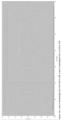
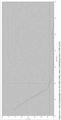
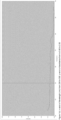
- UV absorption was measured for polyester 1 and polyester 2 (structures shown below) and Foral 85.
- polyester 1 The UV absorption spectrum for polyester 1, polyester 2 and Foral 85 is shown in Figure 1(a) , 1(b) and 1(c) , respectively. It can be understood that polyester 1 according to the invention has a very low absorption in the UV wavelength.
Landscapes
- Chemical & Material Sciences (AREA)
- Organic Chemistry (AREA)
- Chemical Kinetics & Catalysis (AREA)
- Health & Medical Sciences (AREA)
- Medicinal Chemistry (AREA)
- Polymers & Plastics (AREA)
- Adhesives Or Adhesive Processes (AREA)
- Polyesters Or Polycarbonates (AREA)
Priority Applications (8)
| Application Number | Priority Date | Filing Date | Title |
|---|---|---|---|
| EP21170900.1A EP4083104B1 (en) | 2021-04-28 | 2021-04-28 | Tackifier for adhesive composition |
| PL21170900.1T PL4083104T3 (pl) | 2021-04-28 | 2021-04-28 | Środek klejący do kompozycji klejowej |
| BR112023022403A BR112023022403A2 (pt) | 2021-04-28 | 2022-04-25 | Uso de um poliéster, composição adesiva curável por radiação, processo e artigo |
| CN202280031812.5A CN117242115A (zh) | 2021-04-28 | 2022-04-25 | 用于粘合剂组合物的增粘剂 |
| EP22721616.5A EP4330309A1 (en) | 2021-04-28 | 2022-04-25 | Tackifier for adhesive composition |
| JP2023566715A JP2024516243A (ja) | 2021-04-28 | 2022-04-25 | 接着剤組成物用の粘着付与剤 |
| US18/557,732 US12091500B2 (en) | 2021-04-28 | 2022-04-25 | Tackifier for adhesive composition |
| PCT/US2022/026112 WO2022232009A1 (en) | 2021-04-28 | 2022-04-25 | Tackifier for adhesive composition |
Applications Claiming Priority (1)
| Application Number | Priority Date | Filing Date | Title |
|---|---|---|---|
| EP21170900.1A EP4083104B1 (en) | 2021-04-28 | 2021-04-28 | Tackifier for adhesive composition |
Publications (3)
| Publication Number | Publication Date |
|---|---|
| EP4083104A1 EP4083104A1 (en) | 2022-11-02 |
| EP4083104B1 true EP4083104B1 (en) | 2023-08-16 |
| EP4083104C0 EP4083104C0 (en) | 2023-08-16 |
Family
ID=75977573
Family Applications (2)
| Application Number | Title | Priority Date | Filing Date |
|---|---|---|---|
| EP21170900.1A Active EP4083104B1 (en) | 2021-04-28 | 2021-04-28 | Tackifier for adhesive composition |
| EP22721616.5A Withdrawn EP4330309A1 (en) | 2021-04-28 | 2022-04-25 | Tackifier for adhesive composition |
Family Applications After (1)
| Application Number | Title | Priority Date | Filing Date |
|---|---|---|---|
| EP22721616.5A Withdrawn EP4330309A1 (en) | 2021-04-28 | 2022-04-25 | Tackifier for adhesive composition |
Country Status (7)
| Country | Link |
|---|---|
| US (1) | US12091500B2 (pl) |
| EP (2) | EP4083104B1 (pl) |
| JP (1) | JP2024516243A (pl) |
| CN (1) | CN117242115A (pl) |
| BR (1) | BR112023022403A2 (pl) |
| PL (1) | PL4083104T3 (pl) |
| WO (1) | WO2022232009A1 (pl) |
Family Cites Families (8)
| Publication number | Priority date | Publication date | Assignee | Title |
|---|---|---|---|---|
| US4330590A (en) | 1980-02-14 | 1982-05-18 | Minnesota Mining And Manufacturing Company | Photoactive mixture of acrylic monomers and chromophore-substituted halomethyl-2-triazine |
| US4329384A (en) | 1980-02-14 | 1982-05-11 | Minnesota Mining And Manufacturing Company | Pressure-sensitive adhesive tape produced from photoactive mixture of acrylic monomers and polynuclear-chromophore-substituted halomethyl-2-triazine |
| US5097006A (en) * | 1990-11-21 | 1992-03-17 | U C B S.A. | Weatherable powder coating compositions |
| DE60112404T2 (de) * | 2000-02-17 | 2006-06-01 | Akzo Nobel N.V. | Klebrigmachender polyester und klebstoffmischung |
| US7238732B2 (en) | 2004-02-18 | 2007-07-03 | Eastman Chemical Company | Radiation-curable adhesive compositions |
| JP2011225748A (ja) * | 2010-04-21 | 2011-11-10 | Toyo Ink Sc Holdings Co Ltd | 活性エネルギー線硬化型平版印刷インキおよびその印刷物 |
| JP5540862B2 (ja) | 2010-04-21 | 2014-07-02 | 東洋インキScホールディングス株式会社 | Uv硬化型平版印刷インキおよびその印刷物 |
| WO2019167976A1 (ja) * | 2018-02-28 | 2019-09-06 | 株式会社大阪ソーダ | 活性エネルギー線硬化型インクジェットインキ組成物 |
-
2021
- 2021-04-28 EP EP21170900.1A patent/EP4083104B1/en active Active
- 2021-04-28 PL PL21170900.1T patent/PL4083104T3/pl unknown
-
2022
- 2022-04-25 US US18/557,732 patent/US12091500B2/en active Active
- 2022-04-25 BR BR112023022403A patent/BR112023022403A2/pt unknown
- 2022-04-25 CN CN202280031812.5A patent/CN117242115A/zh active Pending
- 2022-04-25 JP JP2023566715A patent/JP2024516243A/ja active Pending
- 2022-04-25 EP EP22721616.5A patent/EP4330309A1/en not_active Withdrawn
- 2022-04-25 WO PCT/US2022/026112 patent/WO2022232009A1/en not_active Ceased
Also Published As
| Publication number | Publication date |
|---|---|
| JP2024516243A (ja) | 2024-04-12 |
| EP4083104A1 (en) | 2022-11-02 |
| PL4083104T3 (pl) | 2023-09-25 |
| WO2022232009A1 (en) | 2022-11-03 |
| EP4083104C0 (en) | 2023-08-16 |
| EP4330309A1 (en) | 2024-03-06 |
| US20240228697A1 (en) | 2024-07-11 |
| BR112023022403A2 (pt) | 2024-01-09 |
| CN117242115A (zh) | 2023-12-15 |
| US12091500B2 (en) | 2024-09-17 |
Similar Documents
| Publication | Publication Date | Title |
|---|---|---|
| EP0573570B1 (en) | Multi-stage irradiation process for production of acrylic based compositions and compositions made thereby | |
| JP5954972B2 (ja) | 粘着剤組成物、粘着剤、およびそれを用いてなる粘着シート | |
| JP4975965B2 (ja) | 硬化性の感圧接着剤組成物 | |
| KR101243658B1 (ko) | 점착부여제, 아크릴계 점착제 및 이의 제조 방법 | |
| JP2005530025A (ja) | 輻射線硬化性、無溶剤型および印刷可能な接着剤前駆物質 | |
| EP0305161B1 (en) | Unified pressure-sensitive adhesive tape | |
| JP2009046620A (ja) | 粘着シート | |
| EP4083104B1 (en) | Tackifier for adhesive composition | |
| EP2734558B1 (en) | Process for the preparation of radiation curable compositions | |
| DE3935097A1 (de) | Verfahren zur herstellung von dicken haftklebeschichten | |
| JP6032695B2 (ja) | 粘着剤組成物、粘着剤、およびそれを用いてなる粘着シート | |
| JP6132463B2 (ja) | 粘着剤組成物、粘着剤、およびそれを用いてなる粘着シート | |
| KR101804598B1 (ko) | 광중합에 의한 용제형 점착제 조성물 제조방법 | |
| JP7211713B2 (ja) | 接着剤樹脂組成物 | |
| JP2005048095A (ja) | 情報記録媒体接着用活性エネルギー線硬化型樹脂組成物 | |
| CN116057143B (zh) | 双面棉纸带材和相关制品 | |
| JP2021147541A (ja) | 活性エネルギー線硬化性剥離型粘着剤組成物および剥離型粘着シート | |
| JP7463101B2 (ja) | 接着剤 | |
| JP2006111698A (ja) | 光反応性ホットメルト接着剤組成物及びそれを用いた塗装、接着物品 | |
| WO2026013470A1 (en) | Compositions and articles comprising (meth)acrylate polymer and monomer | |
| KR101694867B1 (ko) | 광학용 점착제 조성물 | |
| KR20250028675A (ko) | 광개시제, 점착제 조성물, 점착필름 및 이의 제조방법 | |
| JP2004018590A (ja) | 遮光性アプリケーションフィルム、紫外線硬化型粘着フィルム及びそのフィルムを使用した貼付け方法 | |
| JPS61225262A (ja) | 活性エネルギ−線硬化塗料組成物 | |
| HK1008044B (en) | Multi-stage irradiation process for production of acrylic based compositions and compositions made thereby |
Legal Events
| Date | Code | Title | Description |
|---|---|---|---|
| PUAI | Public reference made under article 153(3) epc to a published international application that has entered the european phase |
Free format text: ORIGINAL CODE: 0009012 |
|
| STAA | Information on the status of an ep patent application or granted ep patent |
Free format text: STATUS: THE APPLICATION HAS BEEN PUBLISHED |
|
| AK | Designated contracting states |
Kind code of ref document: A1 Designated state(s): AL AT BE BG CH CY CZ DE DK EE ES FI FR GB GR HR HU IE IS IT LI LT LU LV MC MK MT NL NO PL PT RO RS SE SI SK SM TR |
|
| STAA | Information on the status of an ep patent application or granted ep patent |
Free format text: STATUS: REQUEST FOR EXAMINATION WAS MADE |
|
| 17P | Request for examination filed |
Effective date: 20221213 |
|
| RBV | Designated contracting states (corrected) |
Designated state(s): AL AT BE BG CH CY CZ DE DK EE ES FI FR GB GR HR HU IE IS IT LI LT LU LV MC MK MT NL NO PL PT RO RS SE SI SK SM TR |
|
| GRAP | Despatch of communication of intention to grant a patent |
Free format text: ORIGINAL CODE: EPIDOSNIGR1 |
|
| STAA | Information on the status of an ep patent application or granted ep patent |
Free format text: STATUS: GRANT OF PATENT IS INTENDED |
|
| RAP3 | Party data changed (applicant data changed or rights of an application transferred) |
Owner name: LAWTER, INC. |
|
| INTG | Intention to grant announced |
Effective date: 20230220 |
|
| GRAS | Grant fee paid |
Free format text: ORIGINAL CODE: EPIDOSNIGR3 |
|
| GRAA | (expected) grant |
Free format text: ORIGINAL CODE: 0009210 |
|
| STAA | Information on the status of an ep patent application or granted ep patent |
Free format text: STATUS: THE PATENT HAS BEEN GRANTED |
|
| AK | Designated contracting states |
Kind code of ref document: B1 Designated state(s): AL AT BE BG CH CY CZ DE DK EE ES FI FR GB GR HR HU IE IS IT LI LT LU LV MC MK MT NL NO PL PT RO RS SE SI SK SM TR |
|
| REG | Reference to a national code |
Ref country code: CH Ref legal event code: EP Ref country code: DE Ref legal event code: R096 Ref document number: 602021004252 Country of ref document: DE |
|
| REG | Reference to a national code |
Ref country code: IE Ref legal event code: FG4D |
|
| U01 | Request for unitary effect filed |
Effective date: 20230816 |
|
| U07 | Unitary effect registered |
Designated state(s): AT BE BG DE DK EE FI FR IT LT LU LV MT NL PT SE SI Effective date: 20230822 |
|
| PG25 | Lapsed in a contracting state [announced via postgrant information from national office to epo] |
Ref country code: GR Free format text: LAPSE BECAUSE OF FAILURE TO SUBMIT A TRANSLATION OF THE DESCRIPTION OR TO PAY THE FEE WITHIN THE PRESCRIBED TIME-LIMIT Effective date: 20231117 |
|
| PG25 | Lapsed in a contracting state [announced via postgrant information from national office to epo] |
Ref country code: IS Free format text: LAPSE BECAUSE OF FAILURE TO SUBMIT A TRANSLATION OF THE DESCRIPTION OR TO PAY THE FEE WITHIN THE PRESCRIBED TIME-LIMIT Effective date: 20231216 |
|
| PG25 | Lapsed in a contracting state [announced via postgrant information from national office to epo] |
Ref country code: RS Free format text: LAPSE BECAUSE OF FAILURE TO SUBMIT A TRANSLATION OF THE DESCRIPTION OR TO PAY THE FEE WITHIN THE PRESCRIBED TIME-LIMIT Effective date: 20230816 Ref country code: NO Free format text: LAPSE BECAUSE OF FAILURE TO SUBMIT A TRANSLATION OF THE DESCRIPTION OR TO PAY THE FEE WITHIN THE PRESCRIBED TIME-LIMIT Effective date: 20231116 Ref country code: IS Free format text: LAPSE BECAUSE OF FAILURE TO SUBMIT A TRANSLATION OF THE DESCRIPTION OR TO PAY THE FEE WITHIN THE PRESCRIBED TIME-LIMIT Effective date: 20231216 Ref country code: HR Free format text: LAPSE BECAUSE OF FAILURE TO SUBMIT A TRANSLATION OF THE DESCRIPTION OR TO PAY THE FEE WITHIN THE PRESCRIBED TIME-LIMIT Effective date: 20230816 Ref country code: GR Free format text: LAPSE BECAUSE OF FAILURE TO SUBMIT A TRANSLATION OF THE DESCRIPTION OR TO PAY THE FEE WITHIN THE PRESCRIBED TIME-LIMIT Effective date: 20231117 |
|
| U20 | Renewal fee for the european patent with unitary effect paid |
Year of fee payment: 4 Effective date: 20240306 |
|
| PG25 | Lapsed in a contracting state [announced via postgrant information from national office to epo] |
Ref country code: ES Free format text: LAPSE BECAUSE OF FAILURE TO SUBMIT A TRANSLATION OF THE DESCRIPTION OR TO PAY THE FEE WITHIN THE PRESCRIBED TIME-LIMIT Effective date: 20230816 |
|
| PG25 | Lapsed in a contracting state [announced via postgrant information from national office to epo] |
Ref country code: SM Free format text: LAPSE BECAUSE OF FAILURE TO SUBMIT A TRANSLATION OF THE DESCRIPTION OR TO PAY THE FEE WITHIN THE PRESCRIBED TIME-LIMIT Effective date: 20230816 Ref country code: RO Free format text: LAPSE BECAUSE OF FAILURE TO SUBMIT A TRANSLATION OF THE DESCRIPTION OR TO PAY THE FEE WITHIN THE PRESCRIBED TIME-LIMIT Effective date: 20230816 Ref country code: ES Free format text: LAPSE BECAUSE OF FAILURE TO SUBMIT A TRANSLATION OF THE DESCRIPTION OR TO PAY THE FEE WITHIN THE PRESCRIBED TIME-LIMIT Effective date: 20230816 Ref country code: CZ Free format text: LAPSE BECAUSE OF FAILURE TO SUBMIT A TRANSLATION OF THE DESCRIPTION OR TO PAY THE FEE WITHIN THE PRESCRIBED TIME-LIMIT Effective date: 20230816 Ref country code: SK Free format text: LAPSE BECAUSE OF FAILURE TO SUBMIT A TRANSLATION OF THE DESCRIPTION OR TO PAY THE FEE WITHIN THE PRESCRIBED TIME-LIMIT Effective date: 20230816 |
|
| REG | Reference to a national code |
Ref country code: DE Ref legal event code: R097 Ref document number: 602021004252 Country of ref document: DE |
|
| PLBE | No opposition filed within time limit |
Free format text: ORIGINAL CODE: 0009261 |
|
| STAA | Information on the status of an ep patent application or granted ep patent |
Free format text: STATUS: NO OPPOSITION FILED WITHIN TIME LIMIT |
|
| 26N | No opposition filed |
Effective date: 20240517 |
|
| PG25 | Lapsed in a contracting state [announced via postgrant information from national office to epo] |
Ref country code: MC Free format text: LAPSE BECAUSE OF FAILURE TO SUBMIT A TRANSLATION OF THE DESCRIPTION OR TO PAY THE FEE WITHIN THE PRESCRIBED TIME-LIMIT Effective date: 20230816 |
|
| PG25 | Lapsed in a contracting state [announced via postgrant information from national office to epo] |
Ref country code: MC Free format text: LAPSE BECAUSE OF FAILURE TO SUBMIT A TRANSLATION OF THE DESCRIPTION OR TO PAY THE FEE WITHIN THE PRESCRIBED TIME-LIMIT Effective date: 20230816 |
|
| REG | Reference to a national code |
Ref country code: CH Ref legal event code: PL |
|
| PG25 | Lapsed in a contracting state [announced via postgrant information from national office to epo] |
Ref country code: CH Free format text: LAPSE BECAUSE OF NON-PAYMENT OF DUE FEES Effective date: 20240430 |
|
| PG25 | Lapsed in a contracting state [announced via postgrant information from national office to epo] |
Ref country code: IE Free format text: LAPSE BECAUSE OF NON-PAYMENT OF DUE FEES Effective date: 20240428 |
|
| U20 | Renewal fee for the european patent with unitary effect paid |
Year of fee payment: 5 Effective date: 20250423 |
|
| PGFP | Annual fee paid to national office [announced via postgrant information from national office to epo] |
Ref country code: PL Payment date: 20250417 Year of fee payment: 5 |
|
| PGFP | Annual fee paid to national office [announced via postgrant information from national office to epo] |
Ref country code: GB Payment date: 20250423 Year of fee payment: 5 |
|
| PG25 | Lapsed in a contracting state [announced via postgrant information from national office to epo] |
Ref country code: CY Free format text: LAPSE BECAUSE OF FAILURE TO SUBMIT A TRANSLATION OF THE DESCRIPTION OR TO PAY THE FEE WITHIN THE PRESCRIBED TIME-LIMIT; INVALID AB INITIO Effective date: 20210428 |
|
| U1N | Appointed representative for the unitary patent procedure changed after the registration of the unitary effect |
Representative=s name: EP&C; NL |
|
| PG25 | Lapsed in a contracting state [announced via postgrant information from national office to epo] |
Ref country code: HU Free format text: LAPSE BECAUSE OF FAILURE TO SUBMIT A TRANSLATION OF THE DESCRIPTION OR TO PAY THE FEE WITHIN THE PRESCRIBED TIME-LIMIT; INVALID AB INITIO Effective date: 20210428 |