EP4074784A1 - Zusammensetzung zur herstellung von beschichtungen mit verbesserten leuchtstoffen - Google Patents
Zusammensetzung zur herstellung von beschichtungen mit verbesserten leuchtstoffen Download PDFInfo
- Publication number
- EP4074784A1 EP4074784A1 EP21167984.0A EP21167984A EP4074784A1 EP 4074784 A1 EP4074784 A1 EP 4074784A1 EP 21167984 A EP21167984 A EP 21167984A EP 4074784 A1 EP4074784 A1 EP 4074784A1
- Authority
- EP
- European Patent Office
- Prior art keywords
- composition according
- phosphor
- group
- spp
- sio
- Prior art date
- Legal status (The legal status is an assumption and is not a legal conclusion. Google has not performed a legal analysis and makes no representation as to the accuracy of the status listed.)
- Withdrawn
Links
Images



Classifications
-
- C—CHEMISTRY; METALLURGY
- C09—DYES; PAINTS; POLISHES; NATURAL RESINS; ADHESIVES; COMPOSITIONS NOT OTHERWISE PROVIDED FOR; APPLICATIONS OF MATERIALS NOT OTHERWISE PROVIDED FOR
- C09K—MATERIALS FOR MISCELLANEOUS APPLICATIONS, NOT PROVIDED FOR ELSEWHERE
- C09K11/00—Luminescent materials, e.g. electroluminescent or chemiluminescent
- C09K11/08—Luminescent materials, e.g. electroluminescent or chemiluminescent containing inorganic luminescent materials
- C09K11/77—Luminescent materials, e.g. electroluminescent or chemiluminescent containing inorganic luminescent materials containing rare earth metals
- C09K11/77062—Silicates
-
- C—CHEMISTRY; METALLURGY
- C09—DYES; PAINTS; POLISHES; NATURAL RESINS; ADHESIVES; COMPOSITIONS NOT OTHERWISE PROVIDED FOR; APPLICATIONS OF MATERIALS NOT OTHERWISE PROVIDED FOR
- C09D—COATING COMPOSITIONS, e.g. PAINTS, VARNISHES OR LACQUERS; FILLING PASTES; CHEMICAL PAINT OR INK REMOVERS; INKS; CORRECTING FLUIDS; WOODSTAINS; PASTES OR SOLIDS FOR COLOURING OR PRINTING; USE OF MATERIALS THEREFOR
- C09D5/00—Coating compositions, e.g. paints, varnishes or lacquers, characterised by their physical nature or the effects produced; Filling pastes
- C09D5/14—Paints containing biocides, e.g. fungicides, insecticides or pesticides
-
- C—CHEMISTRY; METALLURGY
- C09—DYES; PAINTS; POLISHES; NATURAL RESINS; ADHESIVES; COMPOSITIONS NOT OTHERWISE PROVIDED FOR; APPLICATIONS OF MATERIALS NOT OTHERWISE PROVIDED FOR
- C09D—COATING COMPOSITIONS, e.g. PAINTS, VARNISHES OR LACQUERS; FILLING PASTES; CHEMICAL PAINT OR INK REMOVERS; INKS; CORRECTING FLUIDS; WOODSTAINS; PASTES OR SOLIDS FOR COLOURING OR PRINTING; USE OF MATERIALS THEREFOR
- C09D175/00—Coating compositions based on polyureas or polyurethanes; Coating compositions based on derivatives of such polymers
- C09D175/04—Polyurethanes
-
- C—CHEMISTRY; METALLURGY
- C09—DYES; PAINTS; POLISHES; NATURAL RESINS; ADHESIVES; COMPOSITIONS NOT OTHERWISE PROVIDED FOR; APPLICATIONS OF MATERIALS NOT OTHERWISE PROVIDED FOR
- C09D—COATING COMPOSITIONS, e.g. PAINTS, VARNISHES OR LACQUERS; FILLING PASTES; CHEMICAL PAINT OR INK REMOVERS; INKS; CORRECTING FLUIDS; WOODSTAINS; PASTES OR SOLIDS FOR COLOURING OR PRINTING; USE OF MATERIALS THEREFOR
- C09D5/00—Coating compositions, e.g. paints, varnishes or lacquers, characterised by their physical nature or the effects produced; Filling pastes
- C09D5/22—Luminous paints
-
- C—CHEMISTRY; METALLURGY
- C09—DYES; PAINTS; POLISHES; NATURAL RESINS; ADHESIVES; COMPOSITIONS NOT OTHERWISE PROVIDED FOR; APPLICATIONS OF MATERIALS NOT OTHERWISE PROVIDED FOR
- C09D—COATING COMPOSITIONS, e.g. PAINTS, VARNISHES OR LACQUERS; FILLING PASTES; CHEMICAL PAINT OR INK REMOVERS; INKS; CORRECTING FLUIDS; WOODSTAINS; PASTES OR SOLIDS FOR COLOURING OR PRINTING; USE OF MATERIALS THEREFOR
- C09D7/00—Features of coating compositions, not provided for in group C09D5/00; Processes for incorporating ingredients in coating compositions
- C09D7/40—Additives
- C09D7/60—Additives non-macromolecular
- C09D7/61—Additives non-macromolecular inorganic
-
- C—CHEMISTRY; METALLURGY
- C09—DYES; PAINTS; POLISHES; NATURAL RESINS; ADHESIVES; COMPOSITIONS NOT OTHERWISE PROVIDED FOR; APPLICATIONS OF MATERIALS NOT OTHERWISE PROVIDED FOR
- C09K—MATERIALS FOR MISCELLANEOUS APPLICATIONS, NOT PROVIDED FOR ELSEWHERE
- C09K11/00—Luminescent materials, e.g. electroluminescent or chemiluminescent
- C09K11/08—Luminescent materials, e.g. electroluminescent or chemiluminescent containing inorganic luminescent materials
- C09K11/77—Luminescent materials, e.g. electroluminescent or chemiluminescent containing inorganic luminescent materials containing rare earth metals
- C09K11/7766—Luminescent materials, e.g. electroluminescent or chemiluminescent containing inorganic luminescent materials containing rare earth metals containing two or more rare earth metals
- C09K11/77742—Silicates
-
- A—HUMAN NECESSITIES
- A61—MEDICAL OR VETERINARY SCIENCE; HYGIENE
- A61L—METHODS OR APPARATUS FOR STERILISING MATERIALS OR OBJECTS IN GENERAL; DISINFECTION, STERILISATION OR DEODORISATION OF AIR; CHEMICAL ASPECTS OF BANDAGES, DRESSINGS, ABSORBENT PADS OR SURGICAL ARTICLES; MATERIALS FOR BANDAGES, DRESSINGS, ABSORBENT PADS OR SURGICAL ARTICLES
- A61L2/00—Disinfection or sterilisation of materials or objects, in general; Accessories therefor
- A61L2/02—Disinfection or sterilisation of materials or objects, in general; Accessories therefor using physical processes
- A61L2/08—Radiation
- A61L2/10—Ultraviolet [UV] radiation
-
- A—HUMAN NECESSITIES
- A61—MEDICAL OR VETERINARY SCIENCE; HYGIENE
- A61L—METHODS OR APPARATUS FOR STERILISING MATERIALS OR OBJECTS IN GENERAL; DISINFECTION, STERILISATION OR DEODORISATION OF AIR; CHEMICAL ASPECTS OF BANDAGES, DRESSINGS, ABSORBENT PADS OR SURGICAL ARTICLES; MATERIALS FOR BANDAGES, DRESSINGS, ABSORBENT PADS OR SURGICAL ARTICLES
- A61L2/00—Disinfection or sterilisation of materials or objects, in general; Accessories therefor
- A61L2/16—Disinfection or sterilisation of materials or objects, in general; Accessories therefor using chemical substances
- A61L2/23—Solid materials, e.g. granules, powders, blocks or tablets
- A61L2/232—Solid materials, e.g. granules, powders, blocks or tablets layered or coated
-
- A—HUMAN NECESSITIES
- A61—MEDICAL OR VETERINARY SCIENCE; HYGIENE
- A61L—METHODS OR APPARATUS FOR STERILISING MATERIALS OR OBJECTS IN GENERAL; DISINFECTION, STERILISATION OR DEODORISATION OF AIR; CHEMICAL ASPECTS OF BANDAGES, DRESSINGS, ABSORBENT PADS OR SURGICAL ARTICLES; MATERIALS FOR BANDAGES, DRESSINGS, ABSORBENT PADS OR SURGICAL ARTICLES
- A61L2101/00—Chemical composition of materials used in disinfecting, sterilising or deodorising
- A61L2101/02—Inorganic materials
- A61L2101/12—Inorganic materials containing silicon
-
- A—HUMAN NECESSITIES
- A61—MEDICAL OR VETERINARY SCIENCE; HYGIENE
- A61L—METHODS OR APPARATUS FOR STERILISING MATERIALS OR OBJECTS IN GENERAL; DISINFECTION, STERILISATION OR DEODORISATION OF AIR; CHEMICAL ASPECTS OF BANDAGES, DRESSINGS, ABSORBENT PADS OR SURGICAL ARTICLES; MATERIALS FOR BANDAGES, DRESSINGS, ABSORBENT PADS OR SURGICAL ARTICLES
- A61L2101/00—Chemical composition of materials used in disinfecting, sterilising or deodorising
- A61L2101/02—Inorganic materials
- A61L2101/16—Inorganic materials containing phosphorus
-
- C—CHEMISTRY; METALLURGY
- C08—ORGANIC MACROMOLECULAR COMPOUNDS; THEIR PREPARATION OR CHEMICAL WORKING-UP; COMPOSITIONS BASED THEREON
- C08K—Use of inorganic or non-macromolecular organic substances as compounding ingredients
- C08K3/00—Use of inorganic substances as compounding ingredients
- C08K3/34—Silicon-containing compounds
- C08K3/36—Silica
Definitions
- the invention relates to a curable composition for producing coatings with antimicrobial properties, their use and coatings produced therefrom and objects coated therewith.
- microorganisms such as bacteria, fungi and viruses. Many of these microorganisms are useful or even necessary. Nevertheless, in addition to the more harmless representatives, there are also disease-causing or even deadly bacteria, fungi and viruses.
- Microorganisms can be transmitted through daily contact with other people and contact with objects that others have used.
- the antimicrobial finish of surfaces is particularly important in hygiene-sensitive areas. Areas of application are primarily surfaces of medical devices and commodities in hospitals and in outpatient health and social care facilities. There are also surfaces in public spaces, in the food sector and in animal husbandry.
- the spread of pathogenic microorganisms is now a major problem in the care sector and in medicine, and also wherever many people are in a confined space. A particular risk is currently the increased occurrence of so-called multi-resistant germs, which have become insensitive to common antibiotics.
- antimicrobial technologies and materials are used to reduce the risk of spreading pathogens via touched surfaces.
- Chemical substances or the use of physical processes can critically affect the proliferation process of microorganisms.
- the physical methods include B. heat, cold, radiation or ultrasound, etc.
- halogens, metal ions, organic compounds and dyes, toxic gases, etc. are known.
- the current methods for generating such antimicrobial properties mainly use active ingredients such as silver particles, copper particles, their metal oxides or quaternary ammonium compounds that are incorporated into the material.
- active ingredients such as silver particles, copper particles, their metal oxides or quaternary ammonium compounds that are incorporated into the material.
- the antimicrobial metals, metal oxides or metal oxide mixtures are often processed into nanoparticles and then mixed into paints, varnishes or polymer materials.
- the widespread use of metal particles is questionable, since the long-term effects of this heavy metal on people and the environment can hardly be estimated.
- the WO 2019/197076 Particles equipped with a layer containing both antimony tin oxide and manganese oxide.
- the antimicrobial surfaces are produced due to the electrochemical behavior of metals, which develop microgalvanic cells in the presence of moisture and have a germ-killing effect due to the microelectric fields.
- UV radiation in medicine or in hygiene, for example to disinfect water, gases or surfaces. UV radiation has long been used in drinking water treatment to reduce the number of potentially pathogenic microorganisms in the water.
- UV-C radiation in the wavelength range between 200 nm and 280 nm is preferably used.
- electromagnetic radiation with different wavelengths should take into account the different absorption of the various proteins, the amino/nucleic acids (e.g. DNA or RNA) contained in microorganisms, tissues or cells, as well as peptide bonds between the individual acids.
- DNA/RNA absorbs electromagnetic radiation well within the wavelength range between 200 nm and 300 nm and particularly well between 250 nm and 280 nm, so that this radiation is particularly suitable for inactivating DNA/RNA. So it can be pathogenic Microorganisms (viruses, bacteria, yeasts, molds, etc.) are inactivated with such an irradiation. Depending on the duration and intensity of the radiation, the structure of DNA or RNA can be destroyed. Thus, metabolically active cells are inactivated and/or their ability to reproduce can be eliminated.
- the advantage of exposure to UV radiation is that the microorganisms cannot develop any resistance to it. However, these physical methods require special equipment and usually have to be repeated regularly by trained personnel, which makes it difficult for these methods to be used widely.
- phosphor particles are used with which electromagnetic radiation with wavelengths above the UV radiation, in particular visible light or infrared radiation, can be converted into electromagnetic radiation with a shorter wavelength, so that the emission of radiation acting in the desired form can be achieved by the individual phosphor particles .
- DE 10 2015 102 427 relates to a body emitting electromagnetic radiation in the wavelength range of UV light.
- phosphor particles are embedded in a region close to the surface within the material from which the body is formed or a coating on the body. It is only generally stated here that the phosphor particles are added directly to a coating to be formed on the material during processing, and the respective material should have a suitable consistency or viscosity.
- suitable polymers and additives is silent DE 10 2015 102 427 .
- U.S. 2009/0130169 A1 or. WO 2009/064845 A2 describes phosphors that can be introduced into polyvinyl chloride, acrylbutadiene, polyolefins, polycarbonates, polystyrene or nylon, which kill pathogenic microorganisms through the up-conversion property of the phosphors. These are phosphors that are produced at a temperature of 1800 - 2900 °C. the U.S. 2009/0130169 A1 or. WO 2009/064845 A2 discloses a composition containing said phosphors with an alleged antimicrobial effect, but shows neither evidence of the up-conversion property nor microbiological investigations. The method disclosed there does not lead to a phosphor that has an up-conversion property, but to an amorphous and glass-like product.
- paint or color coatings have two tasks or functions, the protective and the decorative function. If only the term “varnish coating” is mentioned below, both types of coating are meant. They beautify, protect and preserve materials such as wood, metal or plastic. Accordingly, on the one hand brilliant and smooth paint layers are required, on the other hand a closed paint layer to ensure chemical and mechanical resistance, a certain sliding ability of the paint or a special feel.
- Such phosphors can, when irradiated with electromagnetic radiation with lower energy and higher wavelength in the range from 2000 nm to 400 nm, in particular in the range from 800 nm to 400 nm, electromagnetic radiation with higher energy or shorter wavelength in the range from 400 nm to 100 nm , Emit preferably in the range from 300 nm to 200 nm, so that they are suitable to be used as anti-microbial phosphors in paint coatings.
- EP21157055.1 a composition containing at least one film-forming polymer, at least one up-conversion phosphor according to the teaching of EP19202910.6 and PCT/EP2020/077798 , optionally at least one additive and optionally at least one hardener. It could be shown that paint coatings containing these phosphors have an antimicrobial effect and without the other properties, in particular the storage stability, being significantly impaired.
- the object of the invention is to provide a curable composition of the type mentioned at the outset, with which coatings can be produced in which protection against microorganisms is provided, the up-conversion phosphors being used which have a homogeneous particle size distribution and also show a higher intensity of the emission.
- the prior art has disclosed numerous fluxes of all types, such as halides, carbonates, sulfates, oxides and borates of each, where applicable, ammonium, lithium, Sodium, potassium, rubidium, cesium, magnesium, calcium, strontium, barium, lead, lanthanum, lutetium, aluminum, bismuth and boric acid, known to those skilled in the art. Also known are their areas of application in the field of metallurgy, for example to accelerate crystal growth or to prevent the formation of foreign phases.
- Flux is translated as "flux" in English-speaking countries; hence the term flux agent is also known.
- the treatment with flux is also called fluxing or the product has been fluxed.
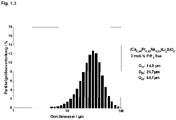
- the particle size distribution of the fluxed phosphor according to the invention resembles a Gaussian distribution, which indicates homogeneity of the particle size, so that advantageously their incorporation into a paint matrix can be carried out much more easily. It is believed that this improved paint properties such as paint surface appearance, e.g. gloss, feel and touch.
- the intensity of the emission of the up-conversion phosphors could also be achieved by a simple technical implementation of the synthesis.
- a further subject matter of the invention is therefore also a method for producing these up-conversion phosphors and up-conversion phosphors obtainable therewith.
- At least one substance from the group of ammonium halides, alkali metal halides, alkaline earth metal halides and lanthanide halides is preferably used as the halogen-containing flux.
- Halides of these groups have surprising showed that up-conversion phosphors produced with it have a higher emission intensity than with other fluxes.
- the halides are preferably fluorides or chlorides.
- the alkali metals are preferably potassium, sodium or lithium.
- the lanthanide is preferably praseodymium.
- the alkaline earth metals are preferably calcium or strontium.
- the phosphor used in the composition of the invention is doped with praseodymium.
- the phosphor is preferably doped with praseodymium and co-doped with gadolinium for the composition according to the invention.
- the phosphor is at least partially crystalline. It is thus preferred that the phosphor is partially or fully crystalline. The phosphor is therefore preferably at least not completely amorphous. It is therefore preferred that the phosphor is not an amorphously solidified melt (glass).
- the phosphor is preferably a solidified melt of crystalline silicates or of crystalline silicates doped with lanthanide ions, comprising at least one alkali metal ion and at least one alkaline earth metal ion.
- B* serves to equalize the charge on the silicate anions.
- A can therefore be for (Ca 0.9 Sr 0.1 ).
- Ln 1 is used for doping.
- Praesodymium is preferably used for the doping.
- Ln 2 is used for optional co-doping.
- Gadolinium is preferably used for the optional co-doping.
- the phosphor is preferably not co-doped, ie Ln preferably represents a single element from the group consisting of praseodymium, gadolinium, erbium and neodymium.
- the phosphor is Ca 0.98 Pr 0.01 Na 0.01 Li 2 SiO 4 .
- the up-conversion phosphor according to the invention preferably has a halogen, corresponding to the halide of the flux.
- the phosphor is preferably one that, when irradiated with electromagnetic radiation with lower energy and longer wavelength in the range from 2000 nm to 400 nm, in particular in the range from 800 nm to 400 nm, electromagnetic radiation with higher energy and shorter wavelength im Emits in the range from 400 nm to 100 nm, preferably in the range from 300 nm to 200 nm. It is also preferred that the intensity of the emission maximum of the electromagnetic radiation with higher energy and shorter wavelength has an intensity of at least 1 ⁇ 10 3 counts/(mm 2* s), preferably higher than 1 ⁇ 10 4 counts/(mm 2* s), particularly preferably higher than 1•10 5 counts/(mm 2* s). To determine these parameters, the emission is preferably excited by means of a laser, in particular a laser with a power of 75 mW at 445 nm and/or a power of 150 mW at 488 nm.
- the phosphor according to formula (II) preferably has XRPD signals in the range from 23° 2 ⁇ to 27° 2 ⁇ and from 34° 2 ⁇ to 39.5° 2 ⁇ , the signals being determined using the Bragg-Brentano geometry and the Cu-K ⁇ radiation . Details of the measurement method can be found in the as yet unpublished European patent applications EP19202910.6 and PCT/EP2020/077798 be removed.
- the known method could be modified in an elegant way, which also leads to optimized up-conversion phosphors with unusual and unexpected properties in terms of particle size distribution and increase in emission intensity.
- 0.01% by weight - 3.5% by weight preferably 0.5 - 3.5% by weight, particularly preferably 1.0 - 3.5% by weight of flux, based on the total amount of the starting materials are used.
- the phosphors according to the invention produced based on the teaching of EP19202910.6 and PCT/EP2020/077798 have the required up-conversion properties that are responsible for the antimicrobial effect. i.e. these phosphors can emit electromagnetic radiation with wavelengths above UV radiation, in particular visible light or infrared light, into electromagnetic radiation with shorter wavelengths, specifically in the range in which, for example, the DNA or RNA of the microorganisms can be destroyed or mutated. Accordingly, these phosphors are very well suited for the composition according to the invention.
- the first calcination is carried out in a furnace at 850°C for 12 h with aeration and the second calcination at 850°C performed for 6 h under 95/5 N 2 /H 2 .
- the end product is then ground in an agate mortar.
- Another object of the invention is to select film-forming polymers which can be used for the curable composition having antimicrobial property.
- all film-forming polymers known from the prior art can be used.
- the film-forming polymer preferably has functional groups, preferably acidic hydrogens, which are reactive with an isocyanate-containing hardener and are optionally catalyzed with a catalyst.
- the film-forming polymer is advantageously selected from the group consisting of hydroxy-functional acrylate polymers, hydroxy-functional polyester polymers and/or hydroxy-functional polyether polymers, hydroxy-functional cellulose derivatives, amino-functional aspartic polymer or polyester polymers which react with an isocyanate-containing hardener.
- the film-forming polymer is low in resonance.
- the person skilled in the art is familiar with the physical interactions at the surface. Depending on the material and its material surface, a variety of effects appear on the surface when exposed to light. Some of the incident light is absorbed, some is reflected and, depending on the material surface, also scattered. Light can also be first absorbed and then emitted again. In the case of opaque, semi-transparent or translucent materials, the light can also penetrate through the body (transmission). In some cases, the light is even polarized or diffracted at the surface. Some objects can even emit light (illuminated displays, LED segments, screens), fluoresce in a different color of light, or phosphorescent (afterglow). In the context of this invention, low resonance means that the film-forming polymer has low absorption, reflection, remission and scattering in the UV range. On the other hand, the transmission should preferably be pronounced.
- the film-forming polymers according to the invention which are low-resonance, have an improved antimicrobial effect, due to the fact that more electromagnetic radiation with lower energy and longer wavelengths in the range from 2000 nm to 400 nm, especially in the range from 800 nm to 400 nm, is transmitted and as a result can emit more electromagnetic radiation with higher energy and shorter wavelength in the range from 400 nm to 100 nm, preferably in the range from 300 nm to 200 nm.
- the transmittance of the film-forming polymer is preferably at least 75%, preferably at least 80% and particularly preferably at least 85%, measured at a wavelength of 260 nm.
- the transmittance of the film-forming polymer is preferably at least 75%, preferably at least 80% and particularly preferably at least 85%, measured at a wavelength of 500 nm.
- the transmission can be defined at a different wavelength, see illustration 1 .
- the wavelengths of 260 nm were selected as an example for the emitted wavelength and 500 nm as an example for the excitation wavelength, which are responsible for the up-conversion on the one hand and significantly for the antimicrobial effect on the other.
- polymers exhibiting 0% transmission are not suitable for the curable composition of the present invention. They do not transmit lower energy, higher wavelength electromagnetic radiation and consequently phosphors included in the composition cannot convert and emit this electromagnetic radiation into higher energy, shorter wavelength electromagnetic radiation necessary for the antimicrobial effect.
- composition according to the invention preferably has a transmission of at least 75%, preferably at least 80% and particularly preferably at least 85% measured at 260 nm.
- composition according to the invention preferably has a transmission of at least 75%, preferably at least 80% and particularly preferably at least 85% measured at 500 nm.
- the transmission curves are preferably measured with a "Specord 200 Plus" UV/VIS double-beam spectrometer from Analytik Jena.
- An internal wavelength calibration is carried out with a holmium oxide filter.
- the samples are irradiated with monochromatized light from a deuterium (UV range) or a tungsten-halogen lamp (visible range).
- the spectral bandwidth is 1.4 nm.
- the monochromatized light is divided into a measuring and a reference channel and enables direct measurement against a reference sample.
- the radiation transmitted through the sample is detected by a photodiode and processed into electrical signals.
- compositions with a low transmission of less than 70% they may also have an antimicrobial effect, but the degree of effectiveness is very moderate.
- various additives can preferably be added.
- the additives are preferably selected from the group of dispersants, rheology assistants, leveling agents, wetting agents, defoamers and UV stabilizers.
- the composition according to the invention preferably has a transmission of at least 70%, preferably at least 75% and particularly preferably at least 80%, measured at 260 nm.
- the composition according to the invention preferably has a transmission of at least 70%, preferably at least 75% and particularly preferably at least 80%, measured at 500 nm.
- composition according to the invention preferably has a hardener which is selected from the group of aliphatic or cycloaliphatic isocyanates.
- isocyanate hardeners are monomeric isocyanates, polymeric isocyanates and isocyanate prepolymers. Polyisocyanates are preferred over monomeric isocyanates because of their lower toxicity. Examples of polyisocyanates are isocyanurates, uretdiones and buiretes based on diphenylmethane diisocyanate (MDI), toluene diisocyanate (TDI), hexamethylene diisocyanate (HDI) and isophorone diisocyanate (IPDI). Examples of commercially available products are under the brand name DESMODUR® from Covestro or VESTANAT from Evonik Industries.
- Well-known products are DESMODUR ® N3400, DESMODUR ® N3300, DESMODUR ® N3600 DESMODUR ® N75, DESMODUR ® XP2580, DESMODUR ® Z4470, DESMODUR ® XP2565 and DESMODUR ® VL, from Covestro. Further examples are VESTANAT® HAT 2500 LV, VESTANAT® HB 2640 LV or VESTANAT® T 1890E from Evonik Industries. Examples of isocyanate prepolymers are DESMODUR® E XP 2863, DESMODUR® XP 2599 or DESMODUR® XP 2406 from Covestro. Other isocyanate prepolymers known to those skilled in the art can be used.
- Catalysts are preferably selected from the group of organotin catalysts, titanates or zirconates, organometallic compounds of aluminum, iron, calcium, magnesium, zinc or bismuth, Lewis acids or organic acids/bases, linear or cyclic amidines, guanidines or amines or a mixture thereof deployed.
- Vorzugseise Eatat als Härtungs-Katalysatoren organische Zinntagen, wie zB Dibutylzinndilaurat, Dibutylzinndiacetylacetonat, Dibutylzinndiacetat, Dibutylzinndioctoat, oder Dioctylzinndilaurat, Dioctylzinndiacetylacetonat, Dioctylzinndiketanoat, Dioctylstannoxan, Dioctylzinndicarboxylat, Dioctylzinnoxid, facedzugt Dioctylzinndiacetylacetonat, Dioctylzinndilaurat, Dioctylzinndiketanoat, Dioctylstannoxan, Dioctylzinndicarboxylat, Dioctylzinnoxid, subjectchez Dioctylzinndiacetylacet
- zinc salts such as zinc octoate, zinc acetylacetonate and zinc 2-ethylcaproate, or tetraalkylammonium compounds such as N,N,N-trimethyl-N-2-hydroxypropyl-ammonium hydroxide, N,N,N-trimethyl-N-2 -hydroxypropylammonium 2-ethylhexanoate or choline 2-ethylhexanoate can be used.
- the use of zinc octoate (zinc 2-ethylhexanoate) and the tetraalkylammonium compounds is preferred, particularly preferably that of zinc octoate.
- bismuth catalysts eg TIB Kat (TIB Mannheim) or Borchi® catalysts
- titanates eg titanium(IV) isopropylate, iron(III) compounds, eg iron(III) acetylacetonate, aluminum compounds such as aluminum triisopropylate, aluminum trisecbutylate and other alcoholates as well as aluminum acetylacetonate, calcium compounds such as calcium disodium ethylenediamine tetraacetate or calcium diacetylacetonate, or also amines, for example triethylamine, tributylamine, 1,4-diazabicyclo[2.2.2]octane, 1,8-diazabicyclo[5.4.0]undec- 7-ene, 1,5-diazabicyclo[4.3.0]non-5-ene, N,N-bis(N,N-dimethyl-2-aminoethyl)methylamine, N,N-dimethylcyclohexylamine
- organic or inorganic Brönsted acids such as acetic acid, trifluoroacetic acid, methanesulfonic acid, p-toluenesulfonic acid or benzoyl chloride, hydrochloric acid, phosphoric acid and their mono- and/or diesters, such as butyl phosphate, (iso)propyl phosphate, dibutyl phosphate, etc. , are preferred as catalysts.
- Organic and organosilicon compounds bearing guanidine groups are further preferred. Of course, combinations of several catalysts can also be used will.
- photolatent bases can also be used as catalysts, as in the WO 2005/100482 are described.
- the curing catalyst is preferably used in amounts of 0.01 to 5.0% by weight, preferably 0.05 to 4.0% by weight and particularly preferably 0.1 to 3% by weight, based on the total weight of the curable composition deployed.
- composition according to the invention can preferably be used in 1K coating systems or 2K coating systems, in melamine baking systems, room or high-temperature systems.
- Coatings produced from the composition according to the invention preferably have an antimicrobial effect against bacteria, yeasts, moulds, algae, parasites and viruses.
- Up-conversion phosphors and phosphors are used as synonyms.
- a further object is the use of the composition according to the invention for the production of dispersions, ground stock, adhesives, fillers, plasters, paints, varnishes or printing inks, inkjets, grinding resins or pigment concentrates.
- composition according to the invention for the production of coatings with antimicrobial properties is preferred.
- a coating with an antimicrobial effect or antimicrobial property means that the coating has an antimicrobial surface that limits or prevents the growth and multiplication of microorganisms.
- the coatings according to the invention have chemical and mechanical resistance. Chemical and mechanical resistance is particularly important as antimicrobial coatings are often used in areas that require regular disinfection and other hygiene measures.
- the substrate is preferably metal, mineral substrates (such as concrete, natural stone or glass), cellulose-containing substrates, wood and hybrids thereof, dimensionally stable plastics and/or duromers.
- dimensionally stable plastics includes the following, but not exhaustive, polymers: acrylonitrile butadiene styrene (ABS), polyamide (PA), polylactate (PLA), Polymethyl methacrylate (PMMA), polycarbonate (PC), polyethylene terephthalate (PET), polystyrene (PS), polyetheretherketone PEEK), polyvinyl chloride (PVC). Polypropylene (PP), Polyethylene (PE).
- a primer composition can be applied to the substrate prior to application of the curable film-forming composition.
- the curable composition according to the invention is preferably used for coating substrates in hygiene facilities, hospitals and in the food industry.
- a further invention is the article which is at least partially, preferably completely, coated with the curable composition according to the invention.
- the object according to the invention can preferably also have an antimicrobial effect without the release of an antimicrobial agent if the coating contains special phosphors as described in the claims. In this way, a physical path is taken in which the microorganisms are then killed. Therefore, such materials do not fall under the Biocidal Products Regulation (Regulation (EU), No. 528/2012 of the European Parliament and Council of May 22, 2012 in the current version of 2019).
- EU Biocidal Products Regulation
- Powder XRDP The X-ray powder diffractograms of the samples were recorded with a Panalytical X'Pert PRO MPD diffractometer operating in the Bragg-Brentano geometry, using Cu-K ⁇ radiation and a linescan CCD detector. The integration time was 20 s, while the step size was 0.017°.
- the emission spectra were recorded using an Edinburgh Instruments FLS920 spectrometer equipped with a 488 nm continuous-wave OBIS laser from Coherent and a Peltier-cooled (-20 °C) single-photon counting photomultiplier from Hamamatsu (R2658P). Edge filters were used to suppress the second and higher order reflections caused by the monochromators.
- Figure 1.1 shows an X-ray powder diffractogram (X-ray diffraction pattern) of the phosphor from Example 1 (upper diagram) in comparison to a non-fluxed reference phosphor (lower normalized X-ray powder diffraction pattern). It could be shown that the desired phosphor was produced with the desired doping.
- Figure 1.2 shows an emission spectrum of Example 1 (dashed line) compared to a comparison phosphor that was not fluxed with PrF 3 .
- the comparison phosphor black line
- the spectrum clearly shows that the intensity in the desired wavelength range can be increased by adding flux.
- Figure 2.1 shows an X-ray powder diffractogram (X-ray diffraction pattern) of the phosphor from Example 2 (upper diagram) in comparison to a non-fluxed reference phosphor (lower normalized X-ray diagram). It could be shown that the desired phosphor was produced with the desired doping.
- Figure 2.2 shows an emission spectrum of Example 2 (dashed line) compared to a comparison phosphor that was not fluxed with CaF 2 .
- the comparison phosphor black line
- the spectrum clearly shows that the intensity in the desired wavelength range can be increased by adding flux.
- the particle size of the phosphor according to the invention ( Figure 1.3 ) is more homogeneous due to the flux than the particle size of the comparison phosphor ( Figure 2.4 ).
- the phosphor according to the invention can thus be incorporated more easily into the coating matrix, which can possibly lead to improved coating properties, such as the appearance of the coating surface, for example the gloss, the haptics and the touch.
- Example 3 Comparative example with a different flux, (Ca 0.98 Pr 0.01 Na 0.01 )Li 2 SiO 4 with 1 wt% H 3 BO 3
- Figure 3.1 shows an X-ray powder diffractogram (X-ray diffraction pattern) of the phosphor from Example 3 (upper diagram) in comparison to a non-fluxed reference phosphor (lower normalized X-ray diagram). It could be shown that the desired phosphor was produced with the desired doping.
- Figure 3.2 shows an emission spectrum of Example 2 (dashed line) compared to a comparison phosphor that was not fluxed with H 3 BO 3 .
- the comparison phosphor black line
- the spectrum clearly shows that the intensity of the phosphor according to example 3 was reduced in the desired wavelength range by the addition of H 3 BO 3 . This flux does not seem to be suitable.
- Figure 4.1 shows an image of the phosphor CaLi 2 SiO 4 :Pr 3+ ,Na + (1%), without flux.
- the recording was made with a BSE detector at 15 kV, at a magnification of 1000x.
- Figure 4.2 shows an image acquisition of the phosphor CaLi 2 SiO 4 :Pr 3+ ,Na + (1%), with NaF as flux.
- the recording was made with a BSE detector at 15 kV, at a magnification of 1000x.
- the fluxed phosphors from II.3.1 were each formulated into a curable composition Z. They were produced according to the information in Table 1. 50 g of glass beads were added to the respective composition and ground in a speed mixer at 2000 rpm for 5 min. After the glass beads had been filtered off, the respective composition was applied to a high-gloss aluminum panel and crosslinked to form a film which had a dry layer thickness of 50 ⁇ m. A coating is now on the substrate, the coating surface of which is supposed to have an antimicrobial effect, as well as its reference without the expected antimicrobial effect. Comparative example VZ contains no phosphors.
- Bacillus subtilits which is used in the DVGW (German Gas and Water Association), worksheet W 294 "UV devices for disinfection in the water supply" for biodosimetric testing of UV systems.
- DVGW German Gas and Water Association
- a gram-positive spore-forming bacterium it is particularly insensitive to UV radiation and is therefore well suited as a "worst case” for testing the antimicrobial effect of UV radiation.
- Bacillus subtilis subsp. spizizenii DSM 347, ATCC 6633. 1 ml of a B. subtilis suspension with a final concentration of 10 7 cells/mL was evenly distributed on a sterile CASO agar plate to ensure confluent coverage of the nutrient agar.
- the bacterial suspension applied was equilibrated on the nutrient agar for 300 ⁇ 30 seconds at room temperature (22 ⁇ 2° C.).
- the bacterial suspension was prepared by diluting precultures of the respective bacterial strain. Diluted in sterile deionized water.
- the precultures of the test organisms were prepared in sterilized CASO broth.
- the preculture of B. subtilis was incubated for 16 ⁇ 1 h at 30 °C with constant shaking in a shaking water bath.
- the cell titer of the precultures was determined microscopically using a haemocytometer (counting chamber according to Thoma).
- the aim of the transfer method is to simulate the antimicrobial effect of the coating surface under realistic conditions on a dry inanimate surface.
- the coatings obtained as described above were cut to a size of 2.5 cm ⁇ 4 cm and pressed onto a nutrient agar plate confluently inoculated with B. subtilis with a defined weight of 90 ⁇ 1 g for 60 ⁇ 5 seconds. This step transferred the bacteria semi-dry to the surface of the coating.
- the substrates were then placed in an empty Petri dish with the coated and inoculated side facing up and incubated under illumination at room temperature for 0 h, 1 h, 2 h, 3 h, 5 h.
- the coated and inoculated side of the substrates were also incubated in the dark at room temperature for 0 h, 1 h, 2 h, 3 h, 5 h.
- the detection of the antimicrobial effect after the corresponding incubation time is carried out by determining the culturability with a contact test ( illustration 1 the EP21157055.1 ).
- the coated and inoculated side of the substrates was pressed onto a sterile nutrient agar plate for 60 ⁇ 5 seconds after the incubation period of 0, 1, 2, 3, 5 h with a defined weight of 90 ⁇ 1 g.
- the nutrient agar was then incubated statically for 24 ⁇ 1 h at 30 °C. The resulting bacterial colonies were qualitatively evaluated visually.
- a growth-inhibiting effect on the bacteria can be explained by a decrease in the culturability of B . be subtly checked.
- the phosphor according to the invention from Examples 2 and 4 bring about a significant reduction in the culturability of B . subtilis compared to VZ and the samples incubated in the dark (Table 1).
- the culturability of the adherent bacteria on the coating surface of the comparison samples of the curable composition VZ showed a significant inhibition of growth with increasing incubation time. This reduction could already be measured after 1 h of incubation under constant lighting. The decrease in culturability increases up to the incubation time of 5 hours with constant lighting.
- the compositions incubated in the dark showed no reduction in culturability over the 5 hour incubation period.
- the polymeric matrices showed no genuine contamination. This was checked by squeezing test pieces without prior transfer of bacteria to them.
Landscapes
- Chemical & Material Sciences (AREA)
- Life Sciences & Earth Sciences (AREA)
- Engineering & Computer Science (AREA)
- Materials Engineering (AREA)
- Organic Chemistry (AREA)
- Wood Science & Technology (AREA)
- Inorganic Chemistry (AREA)
- Plant Pathology (AREA)
- Luminescent Compositions (AREA)
- Agricultural Chemicals And Associated Chemicals (AREA)
- Paints Or Removers (AREA)
- Disinfection, Sterilisation Or Deodorisation Of Air (AREA)
Priority Applications (5)
| Application Number | Priority Date | Filing Date | Title |
|---|---|---|---|
| EP21167984.0A EP4074784A1 (de) | 2021-04-13 | 2021-04-13 | Zusammensetzung zur herstellung von beschichtungen mit verbesserten leuchtstoffen |
| EP22164426.3A EP4079814A1 (de) | 2021-04-13 | 2022-03-25 | Zusammensetzung zur herstellung von beschichtungen mit verbesserten leuchtstoffen |
| JP2022062370A JP2022162986A (ja) | 2021-04-13 | 2022-04-04 | 改良されたリン光体からなる、コーティング製造用組成物 |
| US17/658,681 US12577460B2 (en) | 2021-04-13 | 2022-04-11 | Composition for production of coatings comprising improved phosphors |
| CN202210385685.0A CN115216171A (zh) | 2021-04-13 | 2022-04-13 | 用于产生包含改进的磷光体的涂层的组合物 |
Applications Claiming Priority (1)
| Application Number | Priority Date | Filing Date | Title |
|---|---|---|---|
| EP21167984.0A EP4074784A1 (de) | 2021-04-13 | 2021-04-13 | Zusammensetzung zur herstellung von beschichtungen mit verbesserten leuchtstoffen |
Publications (1)
| Publication Number | Publication Date |
|---|---|
| EP4074784A1 true EP4074784A1 (de) | 2022-10-19 |
Family
ID=75497819
Family Applications (2)
| Application Number | Title | Priority Date | Filing Date |
|---|---|---|---|
| EP21167984.0A Withdrawn EP4074784A1 (de) | 2021-04-13 | 2021-04-13 | Zusammensetzung zur herstellung von beschichtungen mit verbesserten leuchtstoffen |
| EP22164426.3A Pending EP4079814A1 (de) | 2021-04-13 | 2022-03-25 | Zusammensetzung zur herstellung von beschichtungen mit verbesserten leuchtstoffen |
Family Applications After (1)
| Application Number | Title | Priority Date | Filing Date |
|---|---|---|---|
| EP22164426.3A Pending EP4079814A1 (de) | 2021-04-13 | 2022-03-25 | Zusammensetzung zur herstellung von beschichtungen mit verbesserten leuchtstoffen |
Country Status (4)
| Country | Link |
|---|---|
| US (1) | US12577460B2 (https=) |
| EP (2) | EP4074784A1 (https=) |
| JP (1) | JP2022162986A (https=) |
| CN (1) | CN115216171A (https=) |
Families Citing this family (3)
| Publication number | Priority date | Publication date | Assignee | Title |
|---|---|---|---|---|
| JP7698427B2 (ja) | 2020-02-18 | 2025-06-25 | エボニック オペレーションズ ゲーエムベーハー | 抗菌性を有するコーティングを作製するための組成物 |
| EP4074783A1 (de) | 2021-04-13 | 2022-10-19 | Evonik Operations GmbH | Wasserbasierte härtbare zusammensetzung zur herstellung von beschichtungen mit leuchtstoffen |
| JP2023138393A (ja) | 2022-03-17 | 2023-10-02 | エボニック オペレーションズ ゲーエムベーハー | アップコンバージョン蛍リン光体の調製方法 |
Citations (7)
| Publication number | Priority date | Publication date | Assignee | Title |
|---|---|---|---|---|
| WO2005100482A1 (de) | 2004-04-14 | 2005-10-27 | Henkel Kommanditgesellschaft Auf Aktien | Durch strahlung und feuchtigkeit härtende zusammensetzungen auf basis silan-terminierter polymere, deren herstellung und verwendung |
| JP2008095091A (ja) * | 2006-09-15 | 2008-04-24 | Mitsubishi Chemicals Corp | 蛍光体及びその製造方法、蛍光体含有組成物、発光装置、並びに画像表示装置及び照明装置 |
| US20090130169A1 (en) | 2007-11-16 | 2009-05-21 | Bernstein Eric F | Sterilizing compositions comprising phosphors for converting electromagnetic radiation to uvc radiation and methods for using the same |
| US20110171062A1 (en) * | 2010-01-13 | 2011-07-14 | The Penn State Research Foundation | Up-conversion luminescent coatings/materials for antimicrobial applications |
| EP2415848A1 (en) * | 2009-03-31 | 2012-02-08 | Mitsubishi Chemical Corporation | Phosphor, method for produicng phosphor, phosphor-containing composition, light-emitting device, illuminating device, and image display device |
| DE102015102427B3 (de) | 2015-02-20 | 2016-05-19 | Fraunhofer-Gesellschaft zur Förderung der angewandten Forschung e.V. | Elektromagnetische Strahlung im Wellenlängenbereich des UV-Lichts emittierender Körper, Verfahren zur Bestrahlung mit einem Körper sowie Verwendungen des Körpers |
| WO2019197076A1 (de) | 2018-04-13 | 2019-10-17 | Siemens Aktiengesellschaft | Partikel mit einer antimikrobiellen oberfläche, werkstoff zur herstellung einer beschichtung mit solchen partikeln sowie herstellungsverfahren für solche partikel |
Family Cites Families (41)
| Publication number | Priority date | Publication date | Assignee | Title |
|---|---|---|---|---|
| JP4526004B2 (ja) * | 2002-03-05 | 2010-08-18 | 大日本印刷株式会社 | 希土類元素含有微粒子およびそれを用いた蛍光プローブ |
| DE10216896A1 (de) | 2002-04-17 | 2003-11-13 | Goldschmidt Ag Th | Wässrige Polysiloxan-Polyurethan-Dispersion, ihre Herstellung und Verwendung in Beschichtungsmitteln |
| DE10238399A1 (de) * | 2002-08-22 | 2004-02-26 | Philips Intellectual Property & Standards Gmbh | Vorrichtung zur Erzeugung von Strahlung |
| US8906262B2 (en) * | 2005-12-02 | 2014-12-09 | Lightscape Materials, Inc. | Metal silicate halide phosphors and LED lighting devices using the same |
| DE102006008590A1 (de) | 2006-02-24 | 2007-08-30 | Goldschmidt Gmbh | Polymere aus organisch modifizierten Siloxanharzen mit Trenneffekt |
| US20110147661A1 (en) * | 2009-12-21 | 2011-06-23 | Sam Joseph Camardello | Novel aluminosilicate based blue persistent phosphors |
| JP5490083B2 (ja) * | 2011-12-22 | 2014-05-14 | 住友金属鉱山株式会社 | アルカリ土類金属シリケート蛍光体の製造方法およびアルカリ土類金属シリケート蛍光体 |
| US9796876B2 (en) | 2012-06-20 | 2017-10-24 | Evonik Degussa Gmbh | Coating material with high scratch resistance |
| JP5578739B2 (ja) | 2012-07-30 | 2014-08-27 | 住友金属鉱山株式会社 | アルカリ土類金属シリケート蛍光体及びその製造方法 |
| WO2014135353A1 (de) | 2013-03-04 | 2014-09-12 | Evonik Industries Ag | Herstellung definierter nanoskaliger beschichtungen |
| DE102013204395A1 (de) | 2013-03-13 | 2014-09-18 | Evonik Industries Ag | Oberflächenvergütung auf Basis von vernetzbaren Fluorpolymeren |
| DE102013208356A1 (de) | 2013-05-07 | 2014-11-13 | Evonik Industries Ag | Vernetzung von IPMS Addukten mit Aminosilanen |
| DE102013218981A1 (de) | 2013-09-20 | 2015-03-26 | Evonik Industries Ag | Raumtemperaturhärtendes Silikon-Polyester-Bindemittel |
| DE102013218976A1 (de) | 2013-09-20 | 2015-04-16 | Evonik Industries Ag | Hydroxylgruppenhaltiges Silikon-Polyester-Acrylat-Bindemittel |
| CA2937969C (en) * | 2013-12-31 | 2023-10-03 | Dentsply International Inc. | Dental compositions containing upconversion phosphors and methods of use |
| EP2905296B1 (de) | 2014-02-10 | 2015-12-23 | Evonik Degussa GmbH | Copolymere aus Isocyanatoalkyltrialkoxysilanen und Urethandiolen |
| CN103865538A (zh) * | 2014-02-23 | 2014-06-18 | 复旦大学 | 一种Nd3+敏化的上/下转换双模荧光纳米材料及其合成方法 |
| DE102014208415A1 (de) | 2014-05-06 | 2015-11-12 | Evonik Degussa Gmbh | Herstellung eines auf Stahl und Polyurethan basierenden Faserverbundbauteils |
| DE102014208423A1 (de) | 2014-05-06 | 2015-11-12 | Evonik Degussa Gmbh | Herstellung eines auf Aluminium und Polyurethan basierenden Faserverbundbauteils |
| DE102014218292A1 (de) | 2014-09-12 | 2016-03-17 | Evonik Degussa Gmbh | Flüssige Beschichtungszusammensetzungen, Verfahren zu ihrer Herstellung und ihre Verwendung |
| DK3078723T3 (en) | 2015-04-09 | 2019-02-25 | Evonik Degussa Gmbh | ADDUCTORS OF ISOCYANATOALKYL TRIMETHOXYSILANES AND WITH THEIR REACTIVE FLAMMIT PROTECTORS |
| WO2017055418A1 (de) | 2015-09-30 | 2017-04-06 | Evonik Degussa Gmbh | Mit silikonharzen modifizierte isocyanatoalkylalkoxysilan-addukte und ihre verwendung |
| WO2018001889A1 (de) | 2016-06-28 | 2018-01-04 | Evonik Degussa Gmbh | Zusammensetzung auf basis von polysiloxanen |
| ES2808800T3 (es) | 2016-12-22 | 2021-03-01 | Evonik Operations Gmbh | Compuestos a base de aductos con isocianatos para composiciones de revestimiento |
| EP3470475B1 (de) | 2017-10-13 | 2021-01-27 | Evonik Operations GmbH | Härtbare zusammensetzung für beschichtungen mit anti-adhäsiver eigenschaft |
| ES3061994T3 (en) | 2018-02-08 | 2026-04-08 | Evonik Operations Gmbh | Aqueous polyorganosiloxane hybrid resin dispersion |
| EP3784121A1 (en) | 2018-04-23 | 2021-03-03 | Evonik Operations GmbH | Methods to estimate the blood pressure and the arterial stiffness based on photoplethysmographic (ppg) signals |
| JP2020037637A (ja) * | 2018-09-03 | 2020-03-12 | 富士ゼロックス株式会社 | 表面保護樹脂部材、積層樹脂部材、及び液セット |
| EP3719076A1 (de) | 2019-04-01 | 2020-10-07 | Evonik Operations GmbH | Wässrige polyorganosiloxanhybridharz-dispersion |
| US20220403238A1 (en) | 2019-10-14 | 2022-12-22 | Evonik Operations Gmbh | Blue to UV Up-Converter Comprising Lanthanide Ions such as Pr3+ Activated Garnet and its Application for Surface Disinfection Purposes |
| US20220403239A1 (en) | 2019-10-14 | 2022-12-22 | Evonik Operations Gmbh | Blue to UV Up-Converter Comprising Lanthanide Ions such as Pr3+ Activated and optionally Gd3+ Co-Activated Silicates and its Application for Surface Disinfection Purposes |
| EP3816247B1 (de) | 2019-10-28 | 2022-12-07 | Evonik Operations GmbH | Härtermischung |
| JP7698427B2 (ja) * | 2020-02-18 | 2025-06-25 | エボニック オペレーションズ ゲーエムベーハー | 抗菌性を有するコーティングを作製するための組成物 |
| WO2021249850A1 (en) | 2020-06-09 | 2021-12-16 | Evonik Operations Gmbh | Wearable device |
| EP3929253A1 (de) | 2020-06-26 | 2021-12-29 | Evonik Operations GmbH | Zusammensetzung zur herstellung von beschichtungen mit antimikrobieller eigenschaft |
| EP3954213A1 (de) | 2020-08-10 | 2022-02-16 | Evonik Operations GmbH | Verwendung von härtbaren zusammensetzungen auf basis von polysiloxanen |
| EP3954743A1 (de) | 2020-08-12 | 2022-02-16 | Evonik Operations GmbH | Verwendung von siliziumdioxid zur verbesserung der leitfähigkeit von beschichtungen |
| EP4011992A1 (de) | 2020-12-09 | 2022-06-15 | Evonik Operations GmbH | Härtbare kondensationsverbindungen auf basis von alkoxyfunktionellen polysiloxanen |
| EP4074783A1 (de) | 2021-04-13 | 2022-10-19 | Evonik Operations GmbH | Wasserbasierte härtbare zusammensetzung zur herstellung von beschichtungen mit leuchtstoffen |
| JP2023138394A (ja) | 2022-03-17 | 2023-10-02 | エボニック オペレーションズ ゲーエムベーハー | フラックス処理アップコンバージョン蛍リン光体の調製方法 |
| JP2023138393A (ja) | 2022-03-17 | 2023-10-02 | エボニック オペレーションズ ゲーエムベーハー | アップコンバージョン蛍リン光体の調製方法 |
-
2021
- 2021-04-13 EP EP21167984.0A patent/EP4074784A1/de not_active Withdrawn
-
2022
- 2022-03-25 EP EP22164426.3A patent/EP4079814A1/de active Pending
- 2022-04-04 JP JP2022062370A patent/JP2022162986A/ja active Pending
- 2022-04-11 US US17/658,681 patent/US12577460B2/en active Active
- 2022-04-13 CN CN202210385685.0A patent/CN115216171A/zh active Pending
Patent Citations (8)
| Publication number | Priority date | Publication date | Assignee | Title |
|---|---|---|---|---|
| WO2005100482A1 (de) | 2004-04-14 | 2005-10-27 | Henkel Kommanditgesellschaft Auf Aktien | Durch strahlung und feuchtigkeit härtende zusammensetzungen auf basis silan-terminierter polymere, deren herstellung und verwendung |
| JP2008095091A (ja) * | 2006-09-15 | 2008-04-24 | Mitsubishi Chemicals Corp | 蛍光体及びその製造方法、蛍光体含有組成物、発光装置、並びに画像表示装置及び照明装置 |
| US20090130169A1 (en) | 2007-11-16 | 2009-05-21 | Bernstein Eric F | Sterilizing compositions comprising phosphors for converting electromagnetic radiation to uvc radiation and methods for using the same |
| WO2009064845A2 (en) | 2007-11-16 | 2009-05-22 | Bernstein Eric F | Sterilizing compositions comprising phosphors for converting electromagnetic radiation to uvc radiation and methods for using the same |
| EP2415848A1 (en) * | 2009-03-31 | 2012-02-08 | Mitsubishi Chemical Corporation | Phosphor, method for produicng phosphor, phosphor-containing composition, light-emitting device, illuminating device, and image display device |
| US20110171062A1 (en) * | 2010-01-13 | 2011-07-14 | The Penn State Research Foundation | Up-conversion luminescent coatings/materials for antimicrobial applications |
| DE102015102427B3 (de) | 2015-02-20 | 2016-05-19 | Fraunhofer-Gesellschaft zur Förderung der angewandten Forschung e.V. | Elektromagnetische Strahlung im Wellenlängenbereich des UV-Lichts emittierender Körper, Verfahren zur Bestrahlung mit einem Körper sowie Verwendungen des Körpers |
| WO2019197076A1 (de) | 2018-04-13 | 2019-10-17 | Siemens Aktiengesellschaft | Partikel mit einer antimikrobiellen oberfläche, werkstoff zur herstellung einer beschichtung mit solchen partikeln sowie herstellungsverfahren für solche partikel |
Non-Patent Citations (1)
| Title |
|---|
| KANG H S ET AL: "Eu-doped barium strontium silicate phosphor particles prepared from spray solution containing NH"4Cl flux by spray pyrolysis", MATERIALS SCIENCE AND ENGINEERING: B, ELSEVIER, AMSTERDAM, NL, vol. 121, no. 1-2, 25 July 2005 (2005-07-25), pages 81 - 85, XP027791945, ISSN: 0921-5107, [retrieved on 20050725] * |
Also Published As
| Publication number | Publication date |
|---|---|
| CN115216171A (zh) | 2022-10-21 |
| JP2022162986A (ja) | 2022-10-25 |
| US12577460B2 (en) | 2026-03-17 |
| US20220325177A1 (en) | 2022-10-13 |
| EP4079814A1 (de) | 2022-10-26 |
Similar Documents
| Publication | Publication Date | Title |
|---|---|---|
| EP3929254B1 (de) | Zusammensetzung zur herstellung von beschichtungen mit antimikrobieller eigenschaft | |
| EP3868840A1 (de) | Zusammensetzung zur herstellung von beschichtungen mit antimikrobieller eigenschaft | |
| EP4079814A1 (de) | Zusammensetzung zur herstellung von beschichtungen mit verbesserten leuchtstoffen | |
| EP4245827A1 (de) | Verfahren zur herstellung von gefluxten up-conversion leuchtstoffen | |
| EP4074785A1 (de) | Wasserbasierte härtbare zusammensetzung zur herstellung von beschichtungen mit leuchtstoffen | |
| JP2022162987A5 (https=) | ||
| JP2001199822A (ja) | 抗菌防カビ剤及び抗菌防カビ組成物 | |
| JP2022162986A5 (https=) | ||
| WO2022218663A1 (de) | Kunststofferzeugnisse mit leuchtstoffen | |
| WO2020076177A1 (en) | Doped titania or zinc oxide additive for ceramic glazes, ceramic glaze, activation method and process for producing the additive | |
| EP4245826A1 (de) | Verfahren zur herstellung von up-conversion leuchtstoffen | |
| EP4323469A1 (de) | Kunststofferzeugnisse mit leuchtstoffen | |
| EP3684428A1 (en) | Photocatalytic method for disinfection of interior surfaces | |
| KR100441296B1 (ko) | 자외선 차단 및 방충 기능을 갖는 코팅용 수분산폴리우레탄 에멀젼 | |
| PICĂ et al. | Decorative antimicrobial coating materials based on silver nanoparticles |
Legal Events
| Date | Code | Title | Description |
|---|---|---|---|
| PUAI | Public reference made under article 153(3) epc to a published international application that has entered the european phase |
Free format text: ORIGINAL CODE: 0009012 |
|
| STAA | Information on the status of an ep patent application or granted ep patent |
Free format text: STATUS: THE APPLICATION HAS BEEN PUBLISHED |
|
| AK | Designated contracting states |
Kind code of ref document: A1 Designated state(s): AL AT BE BG CH CY CZ DE DK EE ES FI FR GB GR HR HU IE IS IT LI LT LU LV MC MK MT NL NO PL PT RO RS SE SI SK SM TR |
|
| STAA | Information on the status of an ep patent application or granted ep patent |
Free format text: STATUS: THE APPLICATION IS DEEMED TO BE WITHDRAWN |
|
| 18D | Application deemed to be withdrawn |
Effective date: 20230420 |