EP4063333A1 - Herstellung einer metallform zur nachbildung eines bauteils mit vorbestimmter dreidimensionaler form - Google Patents
Herstellung einer metallform zur nachbildung eines bauteils mit vorbestimmter dreidimensionaler form Download PDFInfo
- Publication number
- EP4063333A1 EP4063333A1 EP21165146.8A EP21165146A EP4063333A1 EP 4063333 A1 EP4063333 A1 EP 4063333A1 EP 21165146 A EP21165146 A EP 21165146A EP 4063333 A1 EP4063333 A1 EP 4063333A1
- Authority
- EP
- European Patent Office
- Prior art keywords
- glass
- moldable
- nanocomposite
- manufacturing
- mold
- Prior art date
- Legal status (The legal status is an assumption and is not a legal conclusion. Google has not performed a legal analysis and makes no representation as to the accuracy of the status listed.)
- Granted
Links
Images

Classifications
-
- B—PERFORMING OPERATIONS; TRANSPORTING
- B22—CASTING; POWDER METALLURGY
- B22C—FOUNDRY MOULDING
- B22C7/00—Patterns; Manufacture thereof so far as not provided for in other classes
-
- B—PERFORMING OPERATIONS; TRANSPORTING
- B29—WORKING OF PLASTICS; WORKING OF SUBSTANCES IN A PLASTIC STATE IN GENERAL
- B29C—SHAPING OR JOINING OF PLASTICS; SHAPING OF MATERIAL IN A PLASTIC STATE, NOT OTHERWISE PROVIDED FOR; AFTER-TREATMENT OF THE SHAPED PRODUCTS, e.g. REPAIRING
- B29C33/00—Moulds or cores; Details thereof or accessories therefor
- B29C33/38—Moulds or cores; Details thereof or accessories therefor characterised by the material or the manufacturing process
-
- B—PERFORMING OPERATIONS; TRANSPORTING
- B29—WORKING OF PLASTICS; WORKING OF SUBSTANCES IN A PLASTIC STATE IN GENERAL
- B29C—SHAPING OR JOINING OF PLASTICS; SHAPING OF MATERIAL IN A PLASTIC STATE, NOT OTHERWISE PROVIDED FOR; AFTER-TREATMENT OF THE SHAPED PRODUCTS, e.g. REPAIRING
- B29C33/00—Moulds or cores; Details thereof or accessories therefor
- B29C33/38—Moulds or cores; Details thereof or accessories therefor characterised by the material or the manufacturing process
- B29C33/3842—Manufacturing moulds, e.g. shaping the mould surface by machining
- B29C33/3857—Manufacturing moulds, e.g. shaping the mould surface by machining by making impressions of one or more parts of models, e.g. shaped articles and including possible subsequent assembly of the parts
-
- B—PERFORMING OPERATIONS; TRANSPORTING
- B29—WORKING OF PLASTICS; WORKING OF SUBSTANCES IN A PLASTIC STATE IN GENERAL
- B29C—SHAPING OR JOINING OF PLASTICS; SHAPING OF MATERIAL IN A PLASTIC STATE, NOT OTHERWISE PROVIDED FOR; AFTER-TREATMENT OF THE SHAPED PRODUCTS, e.g. REPAIRING
- B29C33/00—Moulds or cores; Details thereof or accessories therefor
- B29C33/38—Moulds or cores; Details thereof or accessories therefor characterised by the material or the manufacturing process
- B29C33/3842—Manufacturing moulds, e.g. shaping the mould surface by machining
- B29C33/3857—Manufacturing moulds, e.g. shaping the mould surface by machining by making impressions of one or more parts of models, e.g. shaped articles and including possible subsequent assembly of the parts
- B29C33/3892—Preparation of the model, e.g. by assembling parts
-
- C—CHEMISTRY; METALLURGY
- C03—GLASS; MINERAL OR SLAG WOOL
- C03B—MANUFACTURE, SHAPING, OR SUPPLEMENTARY PROCESSES
- C03B19/00—Other methods of shaping glass
- C03B19/06—Other methods of shaping glass by sintering, e.g. by cold isostatic pressing of powders and subsequent sintering, by hot pressing of powders, by sintering slurries or dispersions not undergoing a liquid phase reaction
- C03B19/066—Other methods of shaping glass by sintering, e.g. by cold isostatic pressing of powders and subsequent sintering, by hot pressing of powders, by sintering slurries or dispersions not undergoing a liquid phase reaction for the production of quartz or fused silica articles
-
- B—PERFORMING OPERATIONS; TRANSPORTING
- B29—WORKING OF PLASTICS; WORKING OF SUBSTANCES IN A PLASTIC STATE IN GENERAL
- B29K—INDEXING SCHEME ASSOCIATED WITH SUBCLASSES B29B, B29C OR B29D, RELATING TO MOULDING MATERIALS OR TO MATERIALS FOR MOULDS, REINFORCEMENTS, FILLERS OR PREFORMED PARTS, e.g. INSERTS
- B29K2905/00—Use of metals, their alloys or their compounds, as mould material
Definitions
- the present invention relates to a method of manufacturing a metal mold for replicating a component having a predetermined three-dimensional shape. Further, the present invention relates to a method of replicating a component having a predetermined three-dimensional shape.
- Polymeric components i.e. components made of a polymeric material
- replication processes such as injection molding, for instance, allow the fast and scalable manufacturing of polymeric components as they do not require any shape-defining step during the manufacturing. That is, in these replication processes, a thermoplastic or a resin is injected into a molding tool and then hardened, with the molding tool already defining the final three-dimensional shape of the polymeric component.
- resins can result in a crosslinked structure when hardened.
- thermoplastic As mentioned above, in order to obtain the polymeric component, the thermoplastic or the resin which is in a moldable state when injected into the molding tool needs to be hardened.
- hardening is achieved upon cooling, which turns the softened thermoplastic into the polymeric component having the final three-dimensional shape.
- resins hardening is achieved upon curing or polymerizing initiated by an external stimulus such as heat or irradiation, which turns the liquid constituent(s) of the resin into the polymeric component having the final three-dimensional shape. Since the final three-dimensional shape of the polymeric component is determined in advance by the shape of the molding tool, it is commonly referred to as predetermined three-dimensional shape.
- the shape of the molding tool is the inverse of the final three-dimensional shape of the polymeric component.
- the molding tool has the predetermined three-dimensional shape inverted.
- Replication processes like injection molding, for instance, allow the shaping of very intricate structures which are only limited by the surface properties of the molding tool.
- metal molds have been proven to be particularly suitable as molding tools, since they have sufficient durability so that they can be used over a long period of time for manufacturing thousands of polymeric components using the same molding tool.
- metal molds With costs of over 10,000 EUR to several million EUR per molding tool, the manufacturing of metal molds is the cost-relevant step in the manufacturing of polymeric components by replication processes. At present, most of the metal molds used in industry are obtained by subtractive manufacturing, in particular CNC machining techniques such as milling, drilling or grinding. Additive manufacturing has gained increased popularity in fast mold manufacturing, a process which is commonly referred to as rapid tooling. However, given the inadequate surface properties, e.g. high roughness and presence of defects, which usually result from additive manufacturing of metals, rapid tooling is not widely applicable on an industrial scale as of yet.
- the technical problem underlying the present invention is to provide a method of manufacturing a metal mold, which should allow the provision of a metal mold in a cost-efficient manner so as to be extendible to an industrial scale, and at the same time, which should allow the provision of a metal mold having adequate surface properties, e.g. low roughness and absence of defects.
- the present invention provides a method of manufacturing a metal mold for replicating a component having a predetermined three-dimensional shape, the manufacturing method according to the present invention comprising:
- the manufacturing method according to the present invention which is characterized by the above-defined process steps allows the provision of a metal mold in a cost-efficient manner so as to be extendible to an industrial scale.
- the reason therefore lies in the glass-based mold obtained in step (a), which is subsequently replicated into the metal mold in step (b).
- the manufacturing of the metal mold itself is a replication process, i.e. step (b) may be repeated several times, as required, thereby obtaining more than one metal mold using the same or a different glass-based mold.
- the manufacturing method according to the present invention does not suffer from the drawbacks which are particularly known from CNC machining techniques such as low throughput.
- the manufacturing method according to the present invention which is characterized by the above-defined process steps also allows the provision of a metal mold having adequate surface properties, e.g. low roughness and absence of defects.
- the reason therefore lies in the use of a moldable nanocomposite comprising an organic binder and glass particles dispersed therein for fabricating the glass-based mold. Since the glass particles of the moldable nanocomposite are not molten, i.e. only the organic binder of the moldable nanocomposite needs to be in a moldable state, the glass-based mold can be fabricated in step (a) at comparatively low temperatures. For example, when fabricating the glass-based mold by means of a replication process using a template made of a polymeric material, the template is not degraded.
- the template is neither exposed to molten glass nor exposed to molten metal.
- the glass-based mold obtained in step (a) is resistant towards high temperatures so that it can be contacted with molten metal in step (b). Since the metal mold is a direct replicate of the glass-based mold, which means that the metal mold has the shape of the glass-based mold inverted, the surface properties of the metal mold are substantially only affected by the surface properties of the glass-based mold. As a result, the manufacturing method according to the present invention does not suffer from the drawbacks which are particularly known from rapid tooling such as low resolution and inferior surface quality.
- a glass-based mold is fabricated by using a moldable nanocomposite comprising an organic binder and glass particles dispersed therein.
- the glass-based mold obtained in step (a) has the predetermined three-dimensional shape.
- the nanocomposite used for fabricating the glass-based mold is moldable, which means that the organic binder thereof is in a moldable state. With the organic binder being in a moldable state, the moldable nanocomposite can be shaped so as to fabricate the glass-based mold having the predetermined three-dimensional shape.
- the glass-based mold is obtained in step (a) by the above-defined steps (i) to (iv).
- steps (i) to (iv) Before discussing steps (i) to (iv) in more detail, the composition of the moldable nanocomposite with the organic binder and the glass particles dispersed therein as essential parts is described first:
- the organic binder of the moldable nanocomposite is not further limited as long as it is in a moldable state, i.e. as long as it is transferable to a moldable state, so that the moldable nanocomposite can be shaped in order to fabricate the glass-based mold.
- the organic binder of the moldable nanocomposite is a thermoplastic which can be hardened upon cooling. Accordingly, cooling turns the softened thermoplastic into a solid so that the organic binder is no longer in a moldable state.
- the primary structure obtained in step (i) as described further below maintains its shape.
- the organic binder is a thermoplastic
- it may be selected from polyesters based on aromatic or aliphatic dicarboxylic acids and diols and/or hydroxycarboxylic acids, polycarbonates based on aliphatic or aromatic diols, polyolefins such as polyethylene, polypropylene, polybutene, polymethylpentene, polyisobutene, poly(ethylene-vinyl acetate), ethylene propylene rubber (EPR), poly(ethylene propylene diene), poly(vinyl butyral) (PVB), polyacrylates and polymethacrylates, cycloolefin polymers, as well as polyamides, polyacetals such as polyoxymethylene, polyethers such as polyethylene glycol (PEG), including aromatic polyethers based on bisphenols, or polyurethanes, or a combination thereof, without, however, being limited thereto.
- polyolefins such as polyethylene, polypropylene, polybutene, polymethyl
- the organic binder of the moldable nanocomposite is a resin which can be hardened upon curing or polymerizing initiated by an external stimulus.
- an external stimulus heat or irradiation, in particular UV irradiation, may be mentioned.
- mixing may be even sufficient as the external stimulus, e.g. in two-part resins, where the liquid constituents of the resin exhibit a sufficient reactivity towards each other.
- the external stimulus may include an initiator added to the organic binder for facilitating curing or polymerizing of the organic binder. Suitable initiators are known to the skilled person, such as acetophenones, e.g.
- DMPAP 2,2-dimethoxy-2-phenylacetophenone
- azo compounds e.g. azobisisobutyronitrile (AIBN)
- benzophenone derivatives fluorescein and its derivatives, e.g. rose bengal, quinones, e.g. camphorquinone, and phosphine derivatives, e.g. diphenyl(2,4,6-trimethylbenzoyl)phosphine oxide, without, however, being limited thereto. Accordingly, curing or polymerizing initiated by the external stimulus turns the liquid constituent(s) of the resin into a solid so that the organic binder is no longer in a moldable state.
- AIBN azobisisobutyronitrile
- benzophenone derivatives fluorescein and its derivatives, e.g. rose bengal
- quinones e.g. camphorquinone
- phosphine derivatives e.g. diphenyl(2,4,6-trimethylbenzo
- the resin When exposed to the external stimulus, depending on the resin used, the resin is either cured which leads to a crosslinked structure or it is polymerized which leads to a non-crosslinked structure.
- the term "resin” as used herein not only encompasses thermosetting resins but also encompasses thermoplastic resins. That is, as the resin, any monomeric and/or oligomeric and/or polymeric composition may be mentioned herein without limitation.
- the primary structure obtained in step (i) as described further below maintains its shape.
- the organic binder is a resin
- it may be selected from acrylate resins and methacrylate resins, unsaturated polyester resins, vinyl ester resins, epoxy resins, thiol-ene resins, or polyurethane resins, without, however, being limited thereto.
- the organic binder is a resin
- 2-hydroxyethyl methacrylate (HEMA) or a mixture of 2-hydroxyethyl methacrylate and tetraethylene glycol diacrylate (TEGDA) may be mentioned as the organic binder.
- the moldable nanocomposite comprises glass particles as an essential part.
- the glass particles are dispersed in the organic binder. Dispersion of the glass particles can be achieved by any means known in the art, depending on the organic binder used. In case a thermoplastic is used as the organic binder, the thermoplastic may be softened or it may be dissolved in a suitable organic solvent or gas phase before adding the glass particles thereto. In case a resin is used as the organic binder, the glass particles may be directly added to the liquid constituent(s) of the resin.
- the glass particles of the moldable nanocomposite are fused silica glass particles.
- Fused silica glass is characterized in that it consists of high-purity amorphous silicon dioxide.
- fused silica glass is to be understood as glass with a mass fraction of silicon dioxide being at least 99% based on the total mass of the glass, with typical impurities such as Al, Ca, Cu, Fe, Na, K, Li and Mg amounting to less than 15 ppm, respectively. That is, fused silica glass does not substantially contain any ingredients which are typically added to other sorts of glass with the intention to lower the melting point thereof. As such, fused silica glass exhibits high thermal stability so that it can withstand the temperatures when contacted with molten metal in step (b) as described further below.
- the glass particles of the moldable nanocomposite typically comprise glass particles having a diameter in the range from 5 nm to 500 nm, preferably in the range from 7 nm to 400 nm. These glass particles are also referred to as the first type of glass particles. It is the first type of glass particles having a diameter in the nanometer range which makes the moldable composite comprising the organic binder and the glass particles dispersed therein a moldable nanocomposite.
- the glass particles of the moldable nanocomposite may comprise glass particles having a diameter in the range from 2 ⁇ m to 50 ⁇ m, preferably in the range from 2 ⁇ m to 40 ⁇ m.
- These glass particles are also referred to herein as the second type of glass particles.
- the glass particles comprise the first type of glass particles and the second type of glass particles, i.e. comprise a bimodal mixture of glass particles, the glass particles having the smaller diameter can fill the interstices between the glass particles having the larger diameter.
- the glass particles may further comprise any other type of glass particles with a diameter different from that of the first type of glass particles and different from that of the second type of glass particles.
- Such multimodal mixtures of glass particles are also within the scope of the present invention.
- the diameter of the first, second and any other type of glass particles is to be understood as the mean average diameter which is measured in accordance with ISO 9276-2. According to the present invention, it is not required that the glass particles are (perfectly) spherical. That is, the glass particles may also be spheroidal, i.e. they may be sphere-like.
- these glass particles may substantially have no dimension in which the diameter is smaller than 5 nm, preferably no dimension in which the diameter is smaller than 7 nm, and substantially no dimension in which the diameter is larger than 500 nm, preferably no dimension in which the diameter is larger than 400 nm.
- the content of the glass particles in the moldable nanocomposite is at least 5 parts per volume, preferably at least 30 parts per volume, and more preferably at least 50 parts per volume based on 100 parts per volume of the organic binder.
- the content of the glass particles in the moldable nanocomposite with respect to the organic binder is rather high, e.g. 55 parts per volume or more based on 100 parts per volume of the organic binder, it is still possible to shape the moldable nanocomposite in order to fabricate the glass-based mold.
- the moldable nanocomposite may comprise one or more additional agents, as required, which facilitate the fabrication of the glass-based mold and the replication thereof into the metal mold.
- the content of any additional agents taken as a whole in the moldable nanocomposite does not amount to more than 20 mass-%, more preferably not more than 15 mass-%, even more preferably not more than 10 mass-%, still even more preferably not more than 5 mass-%, with the total mass of the moldable nanocomposite being 100 mass-%.
- the moldable nanocomposite according to the present invention essentially consists of the organic binder and the glass particles dispersed therein, including any initiator added to the organic binder.
- the term “essentially consists of” means that the content of the organic binder and the glass particles dispersed therein, including any initiator added to the organic binder, preferably amounts to at least 80 mass-%, more preferably at least 85 mass-%, even more preferably at least 90 mass-%, still even more preferably at least 95 mass-%, with the total mass of the moldable nanocomposite being 100 mass-%.
- a dispersion agent may be added.
- the dispersion agent alcohols, nonionic surfactants, e.g. polyoxyethylene alkyl ether or polyoxymethylene, and anionic surfactants, e.g. fatty acids and their salts or aliphatic carboxylic acids and their salts, such as stearic acid and its salts or oleic acid and its salts, may be mentioned herein without limitation.
- a dispersion agent which may be suitably used in the present invention is 2-[2-(2-methoxyethoxy)ethoxy]acetic acid. According to the present invention, it is not necessary that a dispersion agent is present. That is, the present invention also encompasses embodiments, where the moldable nanocomposite does not contain any dispersion agent.
- the moldable nanocomposite preferably further comprises a phase-forming agent dispersed in the organic binder.
- the phase-forming agent which is solid or viscous at room temperature, which is understood herein as a temperature of 25 °C, forms an internal phase in the organic binder.
- the phase-forming agent include alcohols, ethers and silicone oils as well as combinations thereof, with these substances having a sufficiently high molecular weight and/or having appropriate functionalization so as to be solid or viscous at room temperature.
- phase-forming agent may be removed from the organic binder before or during debinding of the primary structure in step (ii) as described further below, e.g. by means of thermal treatment which leads to the evaporation or sublimation of the phase-forming agent, or which leads to its decomposition. Further, the phase-forming agent may be removed by means of solvent or gas phase extraction.
- phenoxyethanol may be mentioned as the phase-forming agent.
- POE phenoxyethanol
- PEG and 2-[2-(2-methoxyethoxy)eth-oxy]acetic acid mentioned above may also act as the phase-forming agent.
- the organic binder is in a solid state (not a liquid, gel, or paste-like state).
- the moldable nanocomposite does not contain any thickening agent nor does it contain any solvents like water.
- the moldable nanocomposite neither contains triglycerides, waxes, and paraffin nor contains any plasticizer such as phthalates and any derivatives thereof.
- the moldable nanocomposite may further comprise a powder of a ceramic material or a precursor of a ceramic material dispersed in the organic binder.
- the term "powder of the ceramic material” means that the particles comprised in the powder are made of the ceramic material.
- the particles comprised in the powder need to have a suitable diameter, i.e. a suitable size, further to what has been outlined above for the glass particles.
- the term "precursor of the ceramic material” means that the ceramic material is formed from the precursor during sintering in step (iv) as described further below.
- the precursor is at least one metal-containing compound which may be selected from the group consisting of organometallic compounds, metal complexes and metal salts, or a combination of two or more thereof. That is, the precursor of the ceramic material acts as the metal source for the ceramic material.
- the means outlined above for dispersing the glass particles in the organic binder are equally applicable here.
- step (i) the moldable nanocomposite which has been described above in detail is shaped into the predetermined three-dimensional shape before, during and/or after hardening of the organic binder.
- a primary structure also referred to as green body.
- hardening is either accomplished upon cooling or upon curing or polymerizing initiated by an external stimulus.
- the shape of the primary structure obtained in step (i) already reflects the shape of the glass-based mold obtained in step (iv) as described further below.
- Shaping of the moldable nanocomposite into the predetermined three-dimensional shape can be accomplished by any suitable means known in the art.
- the moldable nanocomposite may be shaped in step (i) by means of a subtractive manufacturing process, an additive manufacturing process, a replication process, or a combination thereof.
- the organic binder with the glass particles dispersed therein is hardened before, during and/or after shaping of the moldable nanocomposite.
- the organic binder with the glass particles dispersed therein is hardened before shaping of the moldable nanocomposite.
- the moldable nanocomposite is shaped into the predetermined three-dimensional shape after hardening of the organic binder.
- Suitable subtractive manufacturing processes include but are not limited to laser-based structuring techniques as well as CNC machining techniques such as milling, drilling, grinding, sawing, lathing, and polishing.
- the organic binder with the glass particles dispersed therein is hardened during shaping of the moldable nanocomposite.
- the moldable nanocomposite is shaped into the predetermined three-dimensional shape during hardening of the organic binder.
- Suitable additive manufacturing processes include but are not limited to selective laser sintering and selective laser melting, fused filament fabrication, also referred to as fused deposition modeling, stereolithography, two-photon polymerization, inkjet printing as well as volumetric printing techniques.
- the organic binder with the glass particles dispersed therein is hardened after shaping of the moldable nanocomposite.
- the moldable nanocomposite is shaped into the predetermined three-dimensional shape before hardening of the organic binder.
- Suitable replication processes include but are not limited to casting, injection molding, (injection) compression molding, extrusion, thermoforming, cold or hot drawing, hot embossing, nanoimprinting as well as blow molding.
- the moldable nanocomposite is shaped in step (i) by casting the moldable nanocomposite against a template, followed by hardening.
- the template has the predetermined three-dimensional shape inverted. That is, the shape of the template is the inverse of the final three-dimensional shape of the component to be replicated. As such, the template has the shape of a molding tool for replicating the component. Accordingly, in this embodiment, the moldable nanocomposite is shaped in step (i) by means of a replication process.
- the present invention is not further limited. Since the template is neither exposed to molten glass nor exposed to molten metal, as mentioned above, there are no particular limitations with respect to the temperature resistance of the material as long as the template can be replicated into the glass-based mold in step (i).
- the template is made of a polymeric material.
- the polymeric material may be derived from a thermoplastic or may be derived from a resin.
- the polymeric material is to be understood as not only encompassing carbon-based polymers.
- the polymeric material also encompasses silicon-based polymers, e.g. polysiloxanes, also referred to as silicones.
- the polymeric material may be at least partially crosslinked. Partial crosslinking may be achieved by using a thermosetting resin, e.g. a suitable silicone resin which has, at least to some extent, three or more reactive functional groups per molecule.
- the template may be obtained in advance by means of a subtractive manufacturing process, an additive manufacturing process, a replication process, or a combination thereof.
- a subtractive manufacturing process an additive manufacturing process
- a replication process or a combination thereof.
- the means outlined above for shaping of the moldable nanocomposite are equally applicable here.
- the template may be obtained in advance by means of microlithography.
- a photoresist on a substrate which is covered with a mask is irradiated.
- the photoresist can be either positive-type or negative-type.
- a negative-type photoresist is insoluble in developing solutions when having been irradiated before, i.e. those areas of the photoresist which have been irradiated through the mask are retained on the substrate and form the template.
- a positive-type photoresist is insoluble in developing solutions when not having been irradiated before, i.e. those areas of the photoresist which have not been irradiated through the mask are retained on the substrate and form the template.
- Suitable subtractive manufacturing processes include the CNC machining techniques as mentioned above, laser cutting and water jet cutting, without, however, being limited thereto.
- Suitable additive manufacturing processes include selective laser sintering and fused filament fabrication as mentioned above, two-photon polymerization, direct laser writing, and lithography, in particular stereolithography, without, however, being limited thereto.
- the template is replicated from an existing component having the predetermined three-dimensional shape.
- the existing component may be identical with the component to be replicated.
- the existing component may be made of a polymeric material.
- the existing component may be obtained in advance by means of a subtractive manufacturing process, an additive manufacturing process, a replication process, or a combination thereof.
- the considerations outlined above for the template are equally applicable to the existing component.
- the existing component may be replicated into the template by using a thermoplastic or a resin. In order to do so, the softened thermoplastic or the liquid constituent(s) of the resin is/are cast against the existing component. Hardening then yields a template made of a polymeric material.
- the polymeric material not only encompasses carbon-based polymers, but also encompasses silicon-based polymers, for instance.
- one or more subtractive manufacturing processes, additive manufacturing processes, and replication processes may be combined.
- subtractive or additive manufacturing processes may be applied to the primary structure as post-processing.
- post-processing may be readily applied. Suitable means for post-processing are known to the skilled person, including the CNC machining techniques as mentioned above, without, however, being limited thereto. The above considerations are equally applicable to the template and to the existing component.
- step (ii) the primary structure obtained in step (i) is debound by removing the organic binder. Thereby, a secondary structure, also referred to as brown body, is obtained. As a result of debinding, i.e. removing the organic binder, the secondary structure has cavities formed therein.
- the primary structure obtained in step (i) may be debound in step (ii) by means of thermal treatment, chemical reaction, reduced pressure, solvent or gas phase extraction, or a combination thereof.
- the primary structure may be first immersed in a solvent for carrying out solvent extraction before being thermally treated.
- any means may be applied which can remove the organic binder without adversely affecting the glass particles, and, if present, the powder and/or precursor of a ceramic material, which form the secondary structure.
- a person skilled in the art routinely selects appropriate conditions to be applied for removing the organic binder in step (ii).
- the temperature applied during debinding is typically in the range from 100 °C to 600 °C, e.g. in the range from 150 °C to 550 °C
- the heating rate is typically in the range from 0.1 °C/min to 5 °C/min, e.g. in the range from 0.5 °C/min to 1 °C/min
- the holding time is typically in the range from 2 minutes to 12 hours, depending on the size of the glass-based mold to be obtained. In case the size thereof is rather small, already a few seconds may be sufficient for debinding the primary structure in step (ii).
- Thermal treatment may also be carried out in a stepwise manner.
- debinding by means of thermal treatment can be further facilitated by means of reduced pressure, i.e. sub-atmospheric pressure, which renders the organic binder more volatile.
- the glass particles, and, if present, the powder and/or precursor of a ceramic material adhere together due to hydrogen bonds. Thereby, mechanical stability is imparted to the secondary structure. Taking account of the size of the glass particles, the diameter of which lies in the nanometer range, the glass particles have a high specific surface area which allows for sufficient interaction to keep the secondary structure mechanically stable.
- phase-forming agent Before the organic binder is removed in step (ii), or during the removal of the organic binder, the phase-forming agent, if present, is removed from the primary structure, e.g. by evaporation or sublimation, or by decomposition. Removal of the phase-forming agent, if present, can also be accomplished by means of solvent or gas phase extraction. In principle, the same means may be applied as described above in connection with the removal of the organic binder.
- step (ii) debinding of the primary structure in step (ii) is facilitated.
- the reason therefore is that the internal phase formed by the phase-forming agent in the organic binder generates pores in the primary structure when it is removed. Through these pores, the organic binder which remains can then be removed in a more controlled manner. Thereby, the secondary structure is more easily prevented from being damaged, in particular when it adopts a thick structure.
- debinding may be accomplished sequentially. In this case, after having removed the first binder component, i.e. the binder component with the lowest decomposition temperature, the removal of the further binder component(s) is facilitated due to the pores generated in the primary structure after removal of the first binder component.
- the cavities of the secondary structure obtained in step (ii) may be filled with at least one glass-forming precursor.
- the at least one glass-forming precursor also referred to as filler, necessarily has a suitable size so that it can be introduced into the cavities formed in the secondary structure.
- shrinkage of the secondary structure during sintering in step (iv) as described further below can be reduced.
- the at least one glass-forming precursor is not further limited and may be selected in an appropriate manner based on the intended purpose.
- silicon-based glass-forming precursors like tetraethyl orthosilicate (Si(OC 2 H 5 ) 4 ), also referred to as TEOS, may be used, for instance.
- glass-forming precursors may be used herein which form glass that is not distinguishable from that of the glass particles in the moldable nanocomposite.
- the moldable nanocomposite comprises fused silica glass particles as the glass particles
- a titanium-based glass-forming precursor like tetraethyl orthotitanate (Ti(OC 2 H 5 ) 4
- Other metal alkoxides which may be used herein include titanium isopropoxide, titanium ethoxide, zirconium ethoxide, aluminium isopropoxide, vanadyl isopropoxide, niobium ethoxide, tantalum ethoxide, and potassium tert-butoxide.
- Further suitable glass-forming precursors are known to the skilled person. These may be used herein as well.
- the glass particles in the moldable nanocomposite are fused silica glass particles and the cavities of the secondary structure are filled with a silicon-based glass-forming precursor like TEOS
- a glass-based mold made of highly pure fused silica glass having a density comparable to conventionally processed fused silica glass can be obtained.
- the glass-based mold obtained in step (a) is particularly resistant towards high temperatures.
- the secondary structure is not filled with a glass-forming precursor in step (iii)
- the Vickers hardness of the glass-based mold obtained after sintering in step (iv) is comparable to conventionally processed fused silica glass.
- the cavities of the secondary structure may be filled with the at least one glass-forming precursor in step (iii) by immersing the secondary structure in a solution containing the at least one glass-forming precursor, exposing the secondary structure to physical or chemical vapor deposition in an atmosphere containing or generating the at least one glass-forming precursor, or a combination thereof.
- any other filling process may be applied in this respect as well.
- the secondary structure may be first immersed in a solution containing one of the glass-forming precursors, and may then be exposed to physical or chemical vapor deposition containing or generating another one of the glass-forming precursors.
- the cavities of the secondary structure may be filled with the at least one glass-forming precursor even before debinding of the primary structure is completed. In this case, it is the partially debound primary structure which is filled with the at least one glass-forming precursor.
- step (iv) the secondary structure obtained in step (ii) optionally filled with at least one glass-forming precursor in step (iii) is sintered. Thereby, the glass-based mold is obtained.
- Suitable sintering conditions are known to the skilled person and are routinely selected as appropriate.
- the temperature applied during sintering is typically in the range from 700 °C to 1600 °C
- the heating rate is typically in the range from 1 °C/min to 10 °C/min, e.g. 5 °C/min
- the holding time is typically in the range from 0.5 hours to 8 hours, e.g. 4 hours, depending on the size of the glass-based mold to be obtained.
- the secondary structure may be pre-sintered at an intermediate temperature in order to convert the precursor of the ceramic material into the ceramic material, and/or in order to convert the glass-forming precursor into glass.
- pre-sintering may be carried out at a temperature in the range from 400 °C to 700 °C.
- the glass particles dispersed in the moldable nanocomposite are fused silica glass particles, it is possible to select both a comparatively high heating rate as well as a comparatively high cooling rate, taking account of the low coefficient of thermal expansion and taking account of the high thermal shock resistance of fused silica glass.
- sintering does not require the application of pressure.
- sintering in step (iv) can be suitably carried out at a pressure below atmospheric pressure, e.g. at a pressure of at most 0.1 mbar, preferably at most 0.01 mbar, and particularly preferably at most 0.001 mbar. Since sintering can be carried out at atmospheric pressure or even below, there are no particular requirements to be complied with in the present invention regarding the sintering furnace.
- the obtained glass-based mold can be cooled to room temperature and subsequently replicated into the metal mold in step (b) as described further below.
- step (b) of the manufacturing method according to the present invention the glass-based mold obtained in step (a) by carrying out steps (i) to (iv) is replicated by melting a metal inside the glass-based mold or by melting a metal outside the glass-based mold and pouring it onto or into the glass-based mold, followed by cooling, or by pressing the glass-based mold into a malleable metal substrate.
- the metal mold for replicating the component is obtained.
- the metal mold has the predetermined three-dimensional shape of the component to be replicated inverted.
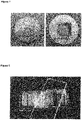
- a metal mold obtained by pouring molten metal onto a glass-based mold in accordance with the present invention is shown in Figure 1 .
- the present invention is not further limited.
- the metal may be selected from the group consisting of nickel, aluminum, copper, zinc, and tin, or may be an alloy of these or other metals, such as brass, bronze, or AlMg 7 Si 3 Mn which is a multicomponent alloy.
- the metal may be molten inside the glass-based mold or may be molten outside the glass-based mold and poured onto or into the glass-based mold. After completion thereof, the metal is solidified by cooling.
- the glass-based mold may be pressed into a metal substrate. In order to do so, the metal substrate needs to be malleable, either at room temperature or at elevated temperature. Metals which can be suitably pressed include but are not limited to aluminum and copper.
- the metal mold can be used as obtained and does not require any post-processing. However, the metal mold may be subjected to post-processing, e.g. by means of subtractive or additive manufacturing processes, in order to remove features present in the template or in order to add features not present in the template used for fabricating the glass-based mold, for instance.
- the present invention provides a method of replicating a component having a predetermined three-dimensional shape.
- the metal mold obtained by the manufacturing method according to the present invention as described above is used for replicating the component.
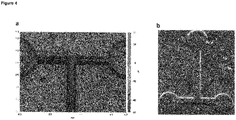
- a replicated component is shown in Figure 2 along with the metal mold used for replicating the component.
- the component may be replicated by any replication process known in the art using the metal mold obtained in accordance with the present invention.
- the component may be replicated by means of injection molding, blow molding, hot embossing, thermoforming, or injection compression molding, without, however, being limited thereto.
- the present invention is not further limited, either.
- the replicated component is made of a polymeric material.
- the polymeric material may be derived from a thermoplastic or may be derived from a resin in the same manner as outlined above for the template.
- the present invention with the above-described manufacturing method allows the provision of a metal mold in a cost-efficient manner so as to be extendible to an industrial scale, and at the same time, allows the provision of a metal mold having adequate surface properties, e.g. low roughness and absence of defects.
- the predetermined three-dimensional shape of the component to be replicated is transferred into the metal mold without the need of any shape-defining step as it is required in subtractive or additive manufacturing.
- the transfer of the predetermined three-dimensional shape can be accomplished on the basis of a glass-based mold having the predetermined three-dimensional shape, which is obtained during the manufacturing. Once the glass-based mold has been obtained, the step of replicating the glass-based mold into the metal mold may be repeated several times, as required, using the same or a different glass-based mold.
- the present invention with the above-described replication method allows the provision of a replicated component which can be suitably used in various technical fields.
- the latter is particularly suited in the field of optics, e.g. as a lens, where high precision is essential.
- the present invention is further illustrated by the following Working Example without, however, being limited thereto.
- a microfluidic channel as the component to be replicated was obtained by means of microlithography.
- a two-part resin based on polydimethylsiloxane was cast against the microfluidic channel, followed by hardening, i.e. curing which was initiated by mixing as the external stimulus, leading to a crosslinked structure.
- the template was replicated using a moldable nanocomposite comprising an organic binder and glass particles dispersed therein.
- a moldable nanocomposite a commercially available product was used ("Glassomer L50", a room-temperature liquid fused silica nanocomposite which can be hardened upon curing with UV irradiation).
- the moldable nanocomposite was cast against the template, followed by hardening, i.e. curing with UV irradiation. After debinding by means of thermal treatment and after sintering, a glass-based mold made of highly pure fused silica glass was obtained.
- the moldable nanocomposite used herein allowed the facile replication of the template into a temperature-stable glass-based mold.
- nickel was molten at a temperature of 920 °C and poured onto the glass-based mold for replicating the glass-based mold into a metal mold. After cooling to room temperature, a high-quality metal mold was obtained which could be used as obtained for replicating the microfluidic channel as the component to be replicated.
Landscapes
- Engineering & Computer Science (AREA)
- Mechanical Engineering (AREA)
- Manufacturing & Machinery (AREA)
- Chemical & Material Sciences (AREA)
- Dispersion Chemistry (AREA)
- Materials Engineering (AREA)
- Organic Chemistry (AREA)
- Moulds For Moulding Plastics Or The Like (AREA)
- Moulds, Cores, Or Mandrels (AREA)
Priority Applications (8)
| Application Number | Priority Date | Filing Date | Title |
|---|---|---|---|
| EP21165146.8A EP4063333B1 (de) | 2021-03-26 | 2021-03-26 | Herstellung einer metallform zur nachbildung eines bauteils mit vorbestimmter dreidimensionaler form |
| AU2022242780A AU2022242780A1 (en) | 2021-03-26 | 2022-03-28 | Manufacturing of a metal mold for replicating a component having a predetermined three-dimensional shape |
| CN202280024830.0A CN117098736A (zh) | 2021-03-26 | 2022-03-28 | 用于复制具有预定的三维形状的组件的金属模具的制造 |
| CA3212590A CA3212590A1 (en) | 2021-03-26 | 2022-03-28 | Manufacturing of a metal mold for replicating a component having a predetermined three-dimensional shape |
| US18/549,117 US12285886B2 (en) | 2021-03-26 | 2022-03-28 | Manufacturing of a metal mold for replicating a component having a predetermined three-dimensional shape |
| PCT/EP2022/058114 WO2022200628A1 (en) | 2021-03-26 | 2022-03-28 | Manufacturing of a metal mold for replicating a component having a predetermined three-dimensional shape |
| KR1020237036156A KR20230162648A (ko) | 2021-03-26 | 2022-03-28 | 미리 결정된 3차원 형상을 갖는 부품을 복제하기 위한 금속 금형의 제조 |
| JP2023558433A JP7723439B2 (ja) | 2021-03-26 | 2022-03-28 | 予め決められた三次元形状を有する構成要素を複製するための金型の製造 |
Applications Claiming Priority (1)
| Application Number | Priority Date | Filing Date | Title |
|---|---|---|---|
| EP21165146.8A EP4063333B1 (de) | 2021-03-26 | 2021-03-26 | Herstellung einer metallform zur nachbildung eines bauteils mit vorbestimmter dreidimensionaler form |
Publications (3)
| Publication Number | Publication Date |
|---|---|
| EP4063333A1 true EP4063333A1 (de) | 2022-09-28 |
| EP4063333C0 EP4063333C0 (de) | 2025-01-01 |
| EP4063333B1 EP4063333B1 (de) | 2025-01-01 |
Family
ID=75377633
Family Applications (1)
| Application Number | Title | Priority Date | Filing Date |
|---|---|---|---|
| EP21165146.8A Active EP4063333B1 (de) | 2021-03-26 | 2021-03-26 | Herstellung einer metallform zur nachbildung eines bauteils mit vorbestimmter dreidimensionaler form |
Country Status (8)
| Country | Link |
|---|---|
| US (1) | US12285886B2 (de) |
| EP (1) | EP4063333B1 (de) |
| JP (1) | JP7723439B2 (de) |
| KR (1) | KR20230162648A (de) |
| CN (1) | CN117098736A (de) |
| AU (1) | AU2022242780A1 (de) |
| CA (1) | CA3212590A1 (de) |
| WO (1) | WO2022200628A1 (de) |
Family Cites Families (30)
| Publication number | Priority date | Publication date | Assignee | Title |
|---|---|---|---|---|
| GB1356919A (en) * | 1970-04-17 | 1974-06-19 | Ici Ltd | Glass reinforced polymer composites |
| US5085938A (en) * | 1989-11-29 | 1992-02-04 | Ppg Industries, Inc. | Chemically treated fibers and method of preparing and method of using to reinforce polymers |
| JP4198149B2 (ja) * | 1997-05-28 | 2008-12-17 | 三菱エンジニアリングプラスチックス株式会社 | 熱可塑性樹脂成形用の金型組立体及び成形品の製造方法 |
| DE60043233D1 (de) | 1999-02-18 | 2009-12-10 | Corning Inc | Durch extrusion von siliziumdioxid erhaltene wabenstruktur aus titanhaltigem quarzglas |
| JP4671500B2 (ja) * | 2000-12-26 | 2011-04-20 | 京セラ株式会社 | 配線基板の製造方法 |
| JP2005097103A (ja) * | 2003-09-22 | 2005-04-14 | Heraeus Quarzglas Gmbh & Co Kg | 複合材料からキャスティングを製造する方法とセラミックもしくはガラス質の複合材料のキャスティング |
| US7051783B1 (en) * | 2005-01-31 | 2006-05-30 | Ndm Tooling Associates Inc. | Precision molding method |
| US20070154666A1 (en) * | 2005-12-31 | 2007-07-05 | Coonan Everett W | Powder injection molding of glass and glass-ceramics |
| JP5326121B2 (ja) * | 2010-12-27 | 2013-10-30 | トーカロ株式会社 | 溶融ガラス塊成形用金型およびその製造方法 |
| CN102397986A (zh) * | 2011-11-01 | 2012-04-04 | 昆明理工大学 | 一种利用陶瓷模型制备金属磨球模具的方法 |
| DE102012020509A1 (de) * | 2012-10-19 | 2014-06-12 | Ask Chemicals Gmbh | Formstoffmischungen auf der Basis anorganischer Bindemittel und Verfahren zur Herstellung von Formen und Kerne für den Metallguss |
| DE102012113073A1 (de) * | 2012-12-22 | 2014-07-10 | Ask Chemicals Gmbh | Formstoffmischungen enthaltend Aluminiumoxide und/oder Aluminium/Silizium-Mischoxide in partikulärer Form |
| JP6587136B2 (ja) * | 2015-11-09 | 2019-10-09 | 国立研究開発法人産業技術総合研究所 | 成形型及び成形体の製造方法 |
| KR101746128B1 (ko) * | 2015-11-18 | 2017-06-13 | 경일대학교산학협력단 | MgAl2O4 Spinel 성형체의 제조방법 |
| US12351718B2 (en) * | 2016-06-06 | 2025-07-08 | Lawrence Livermore National Security, Llc | Engineered feedstocks for additive manufacture of glass |
| DE102016012003A1 (de) * | 2016-10-06 | 2018-04-12 | Karlsruher Institut für Technologie | Zusammensetzung und Verfahren zur Herstellung eines Formkörpers aus hochreinem, transparentem Quarzglas mittels additiver Fertigung |
| US11735413B2 (en) * | 2016-11-01 | 2023-08-22 | Versum Materials Us, Llc | Precursors and flowable CVD methods for making low-k films to fill surface features |
| DE102018200607A1 (de) * | 2018-01-15 | 2019-07-18 | Reinsicht Gmbh | Verfahren zur Erzeugung von für die Herstellung von Faserverbundkörpern oder Gussteilen aus Metall oder Kunststoff geeigneten Formen und Kernen, bei dem Verfahren einsetzbare Formgrundstoffe und Binder sowie gemäß dem Verfahren hergestellte Formen und Kerne |
| CN108516818B (zh) * | 2018-05-25 | 2021-03-26 | 江苏师范大学 | 一种基于改进的Isobam凝胶体系制备YAG透明陶瓷的方法 |
| EP3894371A1 (de) * | 2018-12-14 | 2021-10-20 | Fraunhofer-Gesellschaft zur Förderung der angewandten Forschung e.V. | Verfahren zur herstellung von dünnen transparenten keramischen teilen und dünne transparente keramische teile |
| CN109650853B (zh) * | 2019-02-27 | 2021-08-17 | 湖南英捷高科技有限责任公司 | 一种透明陶瓷自锁托槽的制备方法 |
| WO2020200424A1 (en) * | 2019-04-02 | 2020-10-08 | Emery Oleochemicals Gmbh | Sinterable feedstock for use in 3d printing devices |
| JP7210370B2 (ja) * | 2019-04-26 | 2023-01-23 | 日本山村硝子株式会社 | 硝子成形用型の製造方法 |
| US10940639B1 (en) * | 2020-01-29 | 2021-03-09 | The Florida International University Board Of Trustees | Glass scintillators and methods of manufacturing the same |
| CN111499371A (zh) * | 2020-04-08 | 2020-08-07 | 哈尔滨工业大学 | 一种镁铝尖晶石透明陶瓷的制备方法 |
| CN111454067B (zh) * | 2020-05-30 | 2022-07-01 | 浙江昶研新材料有限公司 | 一种透明陶瓷正畸托槽及其制备方法 |
| EP3967666A1 (de) * | 2020-09-14 | 2022-03-16 | Glassomer GmbH | Herstellung und thermische formgebung von transparentem glas |
| CN112299828A (zh) * | 2020-11-09 | 2021-02-02 | 新沂市锡沂高新材料产业技术研究院有限公司 | 一种应用于5g太阳能手机的透明陶瓷背板的制备方法 |
| EP4063118A1 (de) * | 2021-03-26 | 2022-09-28 | Glassomer GmbH | Material und verfahren zur herstellung und formgebung von transparentem mehrkomponentenquarzglas |
| EP4063337A1 (de) * | 2021-03-26 | 2022-09-28 | Glassomer GmbH | Material und verfahren zur herstellung und formgebung von transparenten keramiken |
-
2021
- 2021-03-26 EP EP21165146.8A patent/EP4063333B1/de active Active
-
2022
- 2022-03-28 JP JP2023558433A patent/JP7723439B2/ja active Active
- 2022-03-28 AU AU2022242780A patent/AU2022242780A1/en active Pending
- 2022-03-28 WO PCT/EP2022/058114 patent/WO2022200628A1/en not_active Ceased
- 2022-03-28 US US18/549,117 patent/US12285886B2/en active Active
- 2022-03-28 CN CN202280024830.0A patent/CN117098736A/zh active Pending
- 2022-03-28 KR KR1020237036156A patent/KR20230162648A/ko active Pending
- 2022-03-28 CA CA3212590A patent/CA3212590A1/en active Pending
Non-Patent Citations (3)
| Title |
|---|
| KOTZ F ET AL: "High-throughput thermal replication of transparent fused silica glass", PROGRESS IN BIOMEDICAL OPTICS AND IMAGING, SPIE - INTERNATIONAL SOCIETY FOR OPTICAL ENGINEERING, BELLINGHAM, WA, US, vol. 10875, 4 March 2019 (2019-03-04), pages 1087503 - 1087503, XP060119554, ISSN: 1605-7422, ISBN: 978-1-5106-0027-0, DOI: 10.1117/12.2506155 * |
| RICHTER CHRISTIANE ET AL: "Fast and cheap fabrication of molding tools for polymer replication", PROGRESS IN BIOMEDICAL OPTICS AND IMAGING, SPIE - INTERNATIONAL SOCIETY FOR OPTICAL ENGINEERING, BELLINGHAM, WA, US, vol. 10061, 28 February 2017 (2017-02-28), pages 100610D - 100610D, XP060084981, ISSN: 1605-7422, ISBN: 978-1-5106-0027-0, DOI: 10.1117/12.2249831 * |
| SCHILARDI P.L. ET AL: "Microtransfer molding using metallic stamps", THE JOURNAL OF THE ARGENTINE CHEMICAL SOCIETY, vol. 91, no. 1, 31 December 2003 (2003-12-31), pages 143 - 152, XP055836396 * |
Also Published As
| Publication number | Publication date |
|---|---|
| CA3212590A1 (en) | 2022-09-29 |
| US20240157608A1 (en) | 2024-05-16 |
| JP7723439B2 (ja) | 2025-08-14 |
| US12285886B2 (en) | 2025-04-29 |
| JP2024511435A (ja) | 2024-03-13 |
| KR20230162648A (ko) | 2023-11-28 |
| WO2022200628A1 (en) | 2022-09-29 |
| AU2022242780A1 (en) | 2023-08-31 |
| EP4063333C0 (de) | 2025-01-01 |
| CN117098736A (zh) | 2023-11-21 |
| EP4063333B1 (de) | 2025-01-01 |
Similar Documents
| Publication | Publication Date | Title |
|---|---|---|
| EP4063118A1 (de) | Material und verfahren zur herstellung und formgebung von transparentem mehrkomponentenquarzglas | |
| EP4063337A1 (de) | Material und verfahren zur herstellung und formgebung von transparenten keramiken | |
| CN109996767A (zh) | 用于通过增材制造由高纯度透明石英玻璃生产模制品的组合物和方法 | |
| AU2019444497B2 (en) | Formulations for additive manufacturing of three-dimensional objects containing sinterable materials | |
| JP7765101B2 (ja) | 透明ガラスの製造及び熱成形 | |
| JP6862241B2 (ja) | 焼結シリカ部品の製造方法 | |
| CN111825333B (zh) | 一种玻璃浆料及其制备方法和3d打印玻璃器件的方法 | |
| US12285886B2 (en) | Manufacturing of a metal mold for replicating a component having a predetermined three-dimensional shape | |
| US20220193765A1 (en) | Stereolithography process for manufacturing a copper part having a low resistivity | |
| US12492140B2 (en) | Fabrication and thermal shaping of transparent glass | |
| TW202449060A (zh) | 具有鈍化奈米顆粒與材料之壓印組成物及其製造製程 | |
| Hassanin et al. | Net-Shape Manufacturing of Freestanding Ceramic Microcomponents via Soft Lithography | |
| WO1998032712A1 (de) | Verfahren zur herstellung von keramischen oder pulvermetallurgischen bauteilen | |
| KR20040051879A (ko) | 유리 성형용 초경합금제 마이크로 몰드인서트 및 그 제조방법 |
Legal Events
| Date | Code | Title | Description |
|---|---|---|---|
| PUAI | Public reference made under article 153(3) epc to a published international application that has entered the european phase |
Free format text: ORIGINAL CODE: 0009012 |
|
| STAA | Information on the status of an ep patent application or granted ep patent |
Free format text: STATUS: THE APPLICATION HAS BEEN PUBLISHED |
|
| AK | Designated contracting states |
Kind code of ref document: A1 Designated state(s): AL AT BE BG CH CY CZ DE DK EE ES FI FR GB GR HR HU IE IS IT LI LT LU LV MC MK MT NL NO PL PT RO RS SE SI SK SM TR |
|
| STAA | Information on the status of an ep patent application or granted ep patent |
Free format text: STATUS: REQUEST FOR EXAMINATION WAS MADE |
|
| 17P | Request for examination filed |
Effective date: 20221027 |
|
| RBV | Designated contracting states (corrected) |
Designated state(s): AL AT BE BG CH CY CZ DE DK EE ES FI FR GB GR HR HU IE IS IT LI LT LU LV MC MK MT NL NO PL PT RO RS SE SI SK SM TR |
|
| RIC1 | Information provided on ipc code assigned before grant |
Ipc: B29C 33/38 20060101ALI20240613BHEP Ipc: B22C 7/00 20060101ALI20240613BHEP Ipc: C03B 19/06 20060101AFI20240613BHEP |
|
| GRAP | Despatch of communication of intention to grant a patent |
Free format text: ORIGINAL CODE: EPIDOSNIGR1 |
|
| STAA | Information on the status of an ep patent application or granted ep patent |
Free format text: STATUS: GRANT OF PATENT IS INTENDED |
|
| INTG | Intention to grant announced |
Effective date: 20240723 |
|
| GRAS | Grant fee paid |
Free format text: ORIGINAL CODE: EPIDOSNIGR3 |
|
| GRAA | (expected) grant |
Free format text: ORIGINAL CODE: 0009210 |
|
| STAA | Information on the status of an ep patent application or granted ep patent |
Free format text: STATUS: THE PATENT HAS BEEN GRANTED |
|
| AK | Designated contracting states |
Kind code of ref document: B1 Designated state(s): AL AT BE BG CH CY CZ DE DK EE ES FI FR GB GR HR HU IE IS IT LI LT LU LV MC MK MT NL NO PL PT RO RS SE SI SK SM TR |
|
| REG | Reference to a national code |
Ref country code: GB Ref legal event code: FG4D |
|
| REG | Reference to a national code |
Ref country code: CH Ref legal event code: EP |
|
| REG | Reference to a national code |
Ref country code: DE Ref legal event code: R096 Ref document number: 602021024093 Country of ref document: DE |
|
| REG | Reference to a national code |
Ref country code: IE Ref legal event code: FG4D |
|
| U01 | Request for unitary effect filed |
Effective date: 20250129 |
|
| U07 | Unitary effect registered |
Designated state(s): AT BE BG DE DK EE FI FR IT LT LU LV MT NL PT RO SE SI Effective date: 20250204 |
|
| RAP4 | Party data changed (patent owner data changed or rights of a patent transferred) |
Owner name: ALBERT-LUDWIGS-UNIVERSITAET FREIBURG Owner name: GLASSOMER GMBH |
|
| U1H | Name or address of the proprietor changed after the registration of the unitary effect |
Owner name: ALBERT-LUDWIGS-UNIVERSITAET FREIBURG; DE Owner name: GLASSOMER GMBH; DE |
|
| PGFP | Annual fee paid to national office [announced via postgrant information from national office to epo] |
Ref country code: GB Payment date: 20250326 Year of fee payment: 5 |
|
| U20 | Renewal fee for the european patent with unitary effect paid |
Year of fee payment: 5 Effective date: 20250326 |
|
| PG25 | Lapsed in a contracting state [announced via postgrant information from national office to epo] |
Ref country code: PL Free format text: LAPSE BECAUSE OF FAILURE TO SUBMIT A TRANSLATION OF THE DESCRIPTION OR TO PAY THE FEE WITHIN THE PRESCRIBED TIME-LIMIT Effective date: 20250101 |
|
| PG25 | Lapsed in a contracting state [announced via postgrant information from national office to epo] |
Ref country code: ES Free format text: LAPSE BECAUSE OF FAILURE TO SUBMIT A TRANSLATION OF THE DESCRIPTION OR TO PAY THE FEE WITHIN THE PRESCRIBED TIME-LIMIT Effective date: 20250101 |
|
| PG25 | Lapsed in a contracting state [announced via postgrant information from national office to epo] |
Ref country code: NO Free format text: LAPSE BECAUSE OF FAILURE TO SUBMIT A TRANSLATION OF THE DESCRIPTION OR TO PAY THE FEE WITHIN THE PRESCRIBED TIME-LIMIT Effective date: 20250401 Ref country code: IS Free format text: LAPSE BECAUSE OF FAILURE TO SUBMIT A TRANSLATION OF THE DESCRIPTION OR TO PAY THE FEE WITHIN THE PRESCRIBED TIME-LIMIT Effective date: 20250501 |
|
| PG25 | Lapsed in a contracting state [announced via postgrant information from national office to epo] |
Ref country code: HR Free format text: LAPSE BECAUSE OF FAILURE TO SUBMIT A TRANSLATION OF THE DESCRIPTION OR TO PAY THE FEE WITHIN THE PRESCRIBED TIME-LIMIT Effective date: 20250101 |
|
| PG25 | Lapsed in a contracting state [announced via postgrant information from national office to epo] |
Ref country code: GR Free format text: LAPSE BECAUSE OF FAILURE TO SUBMIT A TRANSLATION OF THE DESCRIPTION OR TO PAY THE FEE WITHIN THE PRESCRIBED TIME-LIMIT Effective date: 20250402 |
|
| PGFP | Annual fee paid to national office [announced via postgrant information from national office to epo] |
Ref country code: CH Payment date: 20250401 Year of fee payment: 5 |
|
| PG25 | Lapsed in a contracting state [announced via postgrant information from national office to epo] |
Ref country code: CZ Free format text: LAPSE BECAUSE OF FAILURE TO SUBMIT A TRANSLATION OF THE DESCRIPTION OR TO PAY THE FEE WITHIN THE PRESCRIBED TIME-LIMIT Effective date: 20250101 |
|
| PG25 | Lapsed in a contracting state [announced via postgrant information from national office to epo] |
Ref country code: SM Free format text: LAPSE BECAUSE OF FAILURE TO SUBMIT A TRANSLATION OF THE DESCRIPTION OR TO PAY THE FEE WITHIN THE PRESCRIBED TIME-LIMIT Effective date: 20250101 |
|
| PG25 | Lapsed in a contracting state [announced via postgrant information from national office to epo] |
Ref country code: MC Free format text: LAPSE BECAUSE OF FAILURE TO SUBMIT A TRANSLATION OF THE DESCRIPTION OR TO PAY THE FEE WITHIN THE PRESCRIBED TIME-LIMIT Effective date: 20250101 |
|
| PG25 | Lapsed in a contracting state [announced via postgrant information from national office to epo] |
Ref country code: SK Free format text: LAPSE BECAUSE OF FAILURE TO SUBMIT A TRANSLATION OF THE DESCRIPTION OR TO PAY THE FEE WITHIN THE PRESCRIBED TIME-LIMIT Effective date: 20250101 |
|
| PLBE | No opposition filed within time limit |
Free format text: ORIGINAL CODE: 0009261 |
|
| STAA | Information on the status of an ep patent application or granted ep patent |
Free format text: STATUS: NO OPPOSITION FILED WITHIN TIME LIMIT |