EP4043973B1 - Erzeugung von ausführungsprotokollen zur durchführung von standardbetriebsverfahren in industriellen anlagen - Google Patents
Erzeugung von ausführungsprotokollen zur durchführung von standardbetriebsverfahren in industriellen anlagen Download PDFInfo
- Publication number
- EP4043973B1 EP4043973B1 EP21156885.2A EP21156885A EP4043973B1 EP 4043973 B1 EP4043973 B1 EP 4043973B1 EP 21156885 A EP21156885 A EP 21156885A EP 4043973 B1 EP4043973 B1 EP 4043973B1
- Authority
- EP
- European Patent Office
- Prior art keywords
- sop
- measurement data
- worker
- plant
- instruction
- Prior art date
- Legal status (The legal status is an assumption and is not a legal conclusion. Google has not performed a legal analysis and makes no representation as to the accuracy of the status listed.)
- Active
Links
Images

Classifications
-
- G—PHYSICS
- G06—COMPUTING OR CALCULATING; COUNTING
- G06Q—INFORMATION AND COMMUNICATION TECHNOLOGY [ICT] SPECIALLY ADAPTED FOR ADMINISTRATIVE, COMMERCIAL, FINANCIAL, MANAGERIAL OR SUPERVISORY PURPOSES; SYSTEMS OR METHODS SPECIALLY ADAPTED FOR ADMINISTRATIVE, COMMERCIAL, FINANCIAL, MANAGERIAL OR SUPERVISORY PURPOSES, NOT OTHERWISE PROVIDED FOR
- G06Q10/00—Administration; Management
- G06Q10/06—Resources, workflows, human or project management; Enterprise or organisation planning; Enterprise or organisation modelling
- G06Q10/063—Operations research, analysis or management
- G06Q10/0631—Resource planning, allocation, distributing or scheduling for enterprises or organisations
- G06Q10/06311—Scheduling, planning or task assignment for a person or group
- G06Q10/063112—Skill-based matching of a person or a group to a task
-
- G—PHYSICS
- G05—CONTROLLING; REGULATING
- G05B—CONTROL OR REGULATING SYSTEMS IN GENERAL; FUNCTIONAL ELEMENTS OF SUCH SYSTEMS; MONITORING OR TESTING ARRANGEMENTS FOR SUCH SYSTEMS OR ELEMENTS
- G05B19/00—Program-control systems
- G05B19/02—Program-control systems electric
- G05B19/418—Total factory control, i.e. centrally controlling a plurality of machines, e.g. direct or distributed numerical control [DNC], flexible manufacturing systems [FMS], integrated manufacturing systems [IMS] or computer integrated manufacturing [CIM]
- G05B19/41875—Total factory control, i.e. centrally controlling a plurality of machines, e.g. direct or distributed numerical control [DNC], flexible manufacturing systems [FMS], integrated manufacturing systems [IMS] or computer integrated manufacturing [CIM] characterised by quality surveillance of production
-
- G—PHYSICS
- G05—CONTROLLING; REGULATING
- G05B—CONTROL OR REGULATING SYSTEMS IN GENERAL; FUNCTIONAL ELEMENTS OF SUCH SYSTEMS; MONITORING OR TESTING ARRANGEMENTS FOR SUCH SYSTEMS OR ELEMENTS
- G05B19/00—Program-control systems
- G05B19/02—Program-control systems electric
- G05B19/418—Total factory control, i.e. centrally controlling a plurality of machines, e.g. direct or distributed numerical control [DNC], flexible manufacturing systems [FMS], integrated manufacturing systems [IMS] or computer integrated manufacturing [CIM]
- G05B19/41865—Total factory control, i.e. centrally controlling a plurality of machines, e.g. direct or distributed numerical control [DNC], flexible manufacturing systems [FMS], integrated manufacturing systems [IMS] or computer integrated manufacturing [CIM] characterised by job scheduling, process planning, material flow
-
- G—PHYSICS
- G06—COMPUTING OR CALCULATING; COUNTING
- G06Q—INFORMATION AND COMMUNICATION TECHNOLOGY [ICT] SPECIALLY ADAPTED FOR ADMINISTRATIVE, COMMERCIAL, FINANCIAL, MANAGERIAL OR SUPERVISORY PURPOSES; SYSTEMS OR METHODS SPECIALLY ADAPTED FOR ADMINISTRATIVE, COMMERCIAL, FINANCIAL, MANAGERIAL OR SUPERVISORY PURPOSES, NOT OTHERWISE PROVIDED FOR
- G06Q10/00—Administration; Management
- G06Q10/06—Resources, workflows, human or project management; Enterprise or organisation planning; Enterprise or organisation modelling
-
- G—PHYSICS
- G06—COMPUTING OR CALCULATING; COUNTING
- G06Q—INFORMATION AND COMMUNICATION TECHNOLOGY [ICT] SPECIALLY ADAPTED FOR ADMINISTRATIVE, COMMERCIAL, FINANCIAL, MANAGERIAL OR SUPERVISORY PURPOSES; SYSTEMS OR METHODS SPECIALLY ADAPTED FOR ADMINISTRATIVE, COMMERCIAL, FINANCIAL, MANAGERIAL OR SUPERVISORY PURPOSES, NOT OTHERWISE PROVIDED FOR
- G06Q10/00—Administration; Management
- G06Q10/06—Resources, workflows, human or project management; Enterprise or organisation planning; Enterprise or organisation modelling
- G06Q10/063—Operations research, analysis or management
- G06Q10/0631—Resource planning, allocation, distributing or scheduling for enterprises or organisations
- G06Q10/06312—Adjustment or analysis of established resource schedule, e.g. resource or task levelling, or dynamic rescheduling
-
- G—PHYSICS
- G05—CONTROLLING; REGULATING
- G05B—CONTROL OR REGULATING SYSTEMS IN GENERAL; FUNCTIONAL ELEMENTS OF SUCH SYSTEMS; MONITORING OR TESTING ARRANGEMENTS FOR SUCH SYSTEMS OR ELEMENTS
- G05B2219/00—Program-control systems
- G05B2219/30—Nc systems
- G05B2219/31—From computer integrated manufacturing till monitoring
- G05B2219/31449—Monitor workflow, to optimize business, industrial processes
Definitions
- the invention relates to facilitating the execution of not fully automatable standard operating procedures, SOP, in industrial plants.
- SOPs For many safety-critical industrial plants, especially chemical plants, certain tasks are to be performed according to standard operating procedures, SOPs. These SOPs have been devised to ensure safe and reliable operation of the plant. For example, an SOP may specify what exactly to do in order to start the plant up, to shut the plant down, or to perform maintenance work on the plant or any part thereof. These and other tasks for which SOPs are mandated are frequently not fully automatable; rather, they require the enlisting of one or more human workers who have to execute the SOPs. The SOPs are frequently part of a certification or other licensing of plant operation, so adherence to SOPs is crucial.
- EP 1 413 937 A1 discloses a control system for controlling an apparatus and/or a process based on a finite state machine. Information made available to an operator is enhanced by a graphical representation of the finite state machine on a display. The graphical representation comprises at least two states and at least one allowed transition between these two states.
- US 2017/322 536 A1 discloses methods, systems and computer programs for optimizing the standard operating procedure for a control system. Specifically, based on a recorded sequence of control system operator actions, the standard operating procedure is optimized so as to reduce deviations between the recorded sequence of control system operator actions and the standard operating procedure.
- US 2015/363 518 A1 discloses a method to determine an operating procedure for responding to an emergency event.
- the performance of a first operating procedure can be monitored.
- the performance can be simulated.
- EP 3 361 330 A1 discloses a method for determining a manual operation procedure from log data of a manual operation event in an industrial plant. From the log data, manual operation sequences are extracted, and from these sequences, a manual operation procedure is constructed.
- the invention provides a computer-implemented method for generating and/or augmenting an execution protocol for at least one standard operating procedure, SOP, in an industrial plant.
- the term "protocol” is not to be construed limiting in the sense that this is the only way to execute the SOP and everything has to be done exactly according to this protocol. Rather, instructions in the protocol may allow some degree of freedom, such as "close all valves leading to a particular vessel” without specifying in which order the valves are to be closed. Also, there may be multiple distinct ways to execute the SOP. This might even be desirable from a reliability point of view. If the only way forward presumes the availability of a certain piece of equipment, and this piece of equipment fails, then this is a single point of failure, and execution of the SOP cannot continue. But if there is an alternative way of accomplishing the same result, using other pieces of equipment, there is no single point of failure anymore.
- the method starts from at least one SOP of the plant that is provided.
- the SOP comprises a plurality of steps.
- step is not to be construed limiting in the sense that there is only one single sequence of steps leading from start to finish of the SOP. Rather, one or more steps in the SOP may optional, and at any point during execution of the SOP, there may be a choice between two or more alternative steps.
- measurement data that has been acquired during multiple executions of the at least one SOP is provided.
- This measurement data is indicative of actions performed in the plant that modify the state and/or the behavior of the plant or any part thereof for executing the SOP.
- Examples of such measurement data include:
- a subset of the measurement data that is indicative of actions performed for the purpose of executing this particular step of the SOP is determined. That is, the measurement data may be split according to the steps of the SOP to which they pertain, and measurement data that is not relevant for execution of the SOP at all may be ignored.
- the subset of the measurement data determined for each step of the SOP is aggregated into at least one instruction for executing this particular step of the SOP.
- This instruction is part of the sought protocol for executing the SOP as a whole.
- SOPs are highly relevant for the plant operation, they are often specified in an early stage of the plant on a very abstract level. Therefore, they do not always contain later adjustments or the knowledge of people who have much experience with this specific plant. Much of this knowledge is hard to put in writing. Therefore, it is often only present in the brains of the workers who execute the SOP. Also, the abstract specification of the SOP may be open to interpretation to some degree.
- the new or amended protocol for executing the SOP contains richer detail that is particularly useful for aiding novices who have little experience with the plant. For example, if it has been logged that a worker who executes a particular step of the SOP always walks to a certain place within the plant, then the protocol for executing the SOP, which might previously just have mentioned a certain piece of equipment by name or by a relative term like "leftmost pump", will now contain a concrete location on the plant floor that cannot be mistaken for anything else. By contrast, the relative term "leftmost pump” might lead a novice who enters the building through the back door, rather than through the front door, to the wrong place.
- An SOP may also refer to a technical location, e.g., a tag indicating a specific position, that can be hard to find.
- a technical location e.g., a tag indicating a specific position
- the position indicated on the tag may need to be translated into a physical location in the plant by means of a piping and instrumentation diagram at least by a novice worker. But after having been there for a number of times, an experienced worker will remember the physical location without having to consult the diagram again.
- Log data may, for example, be obtained from a plant historian that captures an audit trail of plant operation and sensor values.
- the log data may specifically be indicative of one or more of:
- Monitoring data that is indicative of the location, and/or of the behavior, of at least one worker who participates in executing the SOP may, for example, comprise one or more of:
- a factory floor may be monitored by video surveillance to track where the worker is going in the plant.
- the location of the worker may also be obtained from a video stream that is captured with a camera worn by the worker.
- the latter, as well as a gaze direction of the worker, may also be used to monitor to what the worker is actually paying attention.
- Radio or audio recordings of the voice of the worker may yield information as to which communication between this worker and other workers in the plant is necessary for executing the step of the SOP. For example, if the SOP for maintenance of a certain piece of equipment mandates disconnecting this equipment from the mains and securing it against reconnection, this may entail communicating with a central control room by two-way radio in order to have the power disconnected and the respective switch tagged and locked out.
- Interactions between the worker and a human-machine interface may yield information as to which information a worker is looking up in this interface.
- the SOP may specify that before a certain vessel is opened, the temperature and/or pressure inside must be verified.
- the interactions with the human-machine interface may augment the specification in the SOP with the information where the required information may be found.
- the determining of a subset of the measurement data that relates to a step of the SOP comprises filtering, from the measurement data, a portion that relates to one or more of:
- Equipment that is relevant for executing a step of the SOP may, for example, be extracted from the SOP description by suitable heuristics. Likewise, roles of workers who need to participate in executing the steps of the SOP may be extracted from the SOP description as well. Timeslots in which steps of the SOP was performed may be extracted from the measurement data itself in combination with the SOP description. For example, completion of certain steps of the SOP may manifest itself in some signature in the measurement data, such as records of the closing of a valve or of a flow dropping to zero.
- Each single filtering criterion applied to the measurement data may be considered to be a "weak learner" that gives some notion, but no unambiguous decision, about the relevancy of a record of measurement data for a particular step of the SOP. But the combination of multiple such "weak learners" may provide for a much more accurate assessment of whether a certain record of measurement data is relevant for executing a particular step of an SOP. Therefore, in a particularly advantageous embodiment, the measurement data is filtered according to multiple criteria. A relevancy score is assigned to each record of measurement data. This relevancy score increases with the number of criteria that this particular record of measurement data fulfils. A record of measurement data may then be included in the subset that relates to a particular step of the SOP in response to the relevancy score exceeding a predetermined threshold.
- the method further comprises determining, from the measurement data, from the already determined subsets, and/or from the already determined instructions, at least one directed sequence of actions that results in execution of the complete SOP as the sought protocol.
- the method can not only fill in an execution protocol for the SOP with more details, but also elucidate one or more ways to traverse the SOP as a whole.
- the SOP itself may not be clear on the order in which certain actions need to be performed.
- the method may attach one single graph of actions that is derived from the measurements to the SOP, but there may be multiple ways to traverse this graph.
- the SOP may just call for the powering on of a machine, and this machine may be controlled by a separate control unit.
- power on the machine first power on the control unit and then power on the machine, or first power on the machine and then power on the control unit.
- Powering on the control unit first ensures that the machine will not have power without being under the control of the control unit.
- Powering on the machine first ensures that the control unit will not be confused because the machine is "missing" when the control unit is starting up. From the measurement data, the method may learn which of the two reasons is deemed to be more compelling in the context of this particular plant.
- instructions and/or more detailed support communicated to a worker may to some extent be dynamic as a result of traversing the action graph differently. For example, no matter whether the worker is powering up the machine or the control unit first, he may always receive dynamic support for operating the piece of the equipment that he has chosen to start up first.
- an SOP can be executed on multiple different paths.
- the existence of multiple such paths may even be desirable for safety reasons. For example, relieving the pressure inside a vessel might normally be performed by an automatically controlled valve, but in case this valve is stuck or there is a power failure, it may become necessary to relieve the pressure using a manually operated valve.
- multiple sequences of actions that result in execution of the complete SOP are combined into a directed graph of these actions.
- the method can learn all available alternatives for proceeding further in the SOP. This includes alternatives that were not foreseen at the time of establishing of the SOP. For example, in case of a malfunction of a certain piece of equipment, plant personnel may find a creative way of substituting the missing function by repurposing other equipment.
- a different port of the reaction vessel might be repurposed to transport the acid to another vessel somewhere else in the plant, so it can be neutralized there and safely discharged.
- each edge connecting a first action and a subsequent second action is assigned a probability that the second action will be executed given the first action, based on the provided measurement data.
- a path through the graph that selects, at each action that is connected to two or more possible next actions, the next action with the higher probability is determined as an execution protocol for the SOP.
- one standard way may be produced that should be used unless there is a compelling reason (such as a malfunction) for deviating from this.
- Having one standard way increases the probability that the SOP will be performed correctly because the potential for errors is reduced. For example, if a first worker who performs the SOP the one way watches a second worker performing a particular step differently, he may adopt this behavior even though this is wrong in the context of the path that the first worker is following. I.e., the adoption of multiple different execution protocols by different workers may give rise to an intermixing of the different execution protocols that violates the SOP.
- the invention also provides a computer-implemented method for orchestrating the execution of at least one standard operating procedure, SOP, in an industrial plant.
- At least one execution protocol for the SOP that has been generated and/or augmented by the method described before is provided.
- This generating and/or augmenting may have been performed by the same entity that is orchestrating the execution of the SOP, or it may have been performed at least in part by a different entity.
- a company who owns a plant where the SOP is to be performed might enlist the help of another company who provides the generation of the execution protocol from the measurement data as a service.
- Measurement data is obtained that is indicative of at least one activity that at least one worker who is to participate in executing the SOP is performing.
- this measurement data may be indicative of the location or gaze direction of the worker, or of what this worker is presently seeing.
- the measurement data may also, for example, relate to a state of a plant or any part thereof. For example, if the worker has already opened or closed a valve that is to be opened or closed, the measurement data may so indicate.
- At least one instruction that this worker is to carry out is selected from the execution protocol.
- the instruction to perform the at least one action is communicated to the worker.
- This communicating may be performed in any suitable manner.
- the information may be overlaid onto an augmented reality display that the worker is using.
- the worker may be guided to a location where the action is to be performed.
- the equipment that the worker should handle may then be highlighted in this augmented reality display.
- the worker in the course of selecting an instruction, it is determined whether the worker has already carried out an instruction, and/or is already at a location where this instruction is to be carried out. If this is the case, the instruction, and/or a direction to navigate to the location where this instruction is to be carried out, is suppressed. In this manner, the worker is not overloaded with unnecessary information. Such unnecessary information that is safe to ignore might cause the worker to ignore other, more safety relevant information as well.
- a skill level of the worker is determined based on current and/or past measurement data.
- the level of detail of the instruction is based on this skill level. For example, a worker who is already familiar with the plant might only need the instruction to go to a piece of equipment with a particular name or other label, while a novice worker might step-by-step instructions how to find that piece of equipment. For example, if a worker has always gone to the right place when instructed to go to a particular piece of equipment, the level of detail of the instructions may gradually decrease.
- the computer implementation of the methods described above implies that the methods may be embodied in a computer program.
- the invention therefore also provides a computer program with machine-readable instructions that, when executed by one or more computers, cause the one or more computers to perform one of the methods described above.
- the invention also provides a non-transitory machine-readable storage medium, and/or a download product, with the computer program.
- a download product is a product that may be sold in an online shop for immediate fulfillment by download.
- the invention also provides one or more computers with the computer program, and/or with the non-transitory machine-readable storage medium and/or download product.
- Figure 1 is a schematic flow chart of an embodiment of the method 100 for generating and/or augmenting an execution protocol 4 for an SOP 2.
- step 110 at least one SOP 2 that comprises a plurality of steps 2a-2g is provided.
- step 120 measurement data 3 is provided. This measurement data 3 has been acquired during multiple executions of the at least one SOP 2. It is indicative of actions performed in the plant 1 that modify the state and/or the behavior of the plant 1 or any part thereof for the purpose of executing the SOP 2.
- step 130 for each step 2a-2g of the SOP 2, a subset 3a-3g of the measurement data 3 that is indicative of actions performed for the purpose of executing this particular step 2a-2g of the SOP is determined.
- this determining 130 may specifically comprise "fuzzy filtering" from the measurement data according to one or more criteria, each of which may be a "weak learner".
- the measurement data 3 may be filtered according to multiple criteria.
- each record of measurement data 3 may be assigned a relevancy score, which increases with the number of criteria that this particular record of measurement data 3 fulfils. In response to this relevancy score exceeding a predetermined threshold, a record of measurement data 3 may be included in the subset 3a-3g according to block 131c.
- step 140 the subset 3a-3g of the measurement data 3 determined for each step 2a-2g of the SOP 2 is aggregated into at least one instruction 4a-4g for executing this particular step 2a-2g of the SOP.
- This instruction 4a-4g is part of the sought protocol 4.
- a directed sequence of actions that results in execution of the complete SOP 2 may be determined as the sought protocol 4 from the measurement data 3, from the subsets 3a-3g, and/or from the instructions 4a-4g.
- the actions may correspond to the instructions 4a-5g, but one or more of the instructions 4a-4g may also be broken down into more granular sub-actions.
- multiple sequences of actions that result in execution of the complete SOP 2 may be combined into a directed graph of these actions.
- a probability that the second action will be executed given the first action may be assigned.
- a path through the graph that selects, at each action that is connected to two or more possible next actions, the next action with the higher probability may be determined as an execution protocol 4 for the SOP 2.
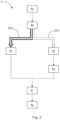
- Figure 2 is an example of an execution protocol 4 for an SOP 2.
- the execution protocol 4 is in the form of a directed graph and comprises instructions 4a-4g that correspond to steps 2a-2g of the SOP 2.
- the second step 4b there are two options.
- the first option is to carry out instruction 4c.
- the second option is to carry out the combination of instructions 4d and 4e. Both options arrive at the same result that puts the plant 1 in a state where the next instruction 4f, and then finally instruction 4g, may be carried out.
- instruction 4c may relate to a straight-forward way of achieving the needed result
- the combination of instructions 4d and 4e may relate to an indirect way of achieving the same result. Therefore, as shown in Figure 2 , according to the measurement data 3, the direct way is followed with a probability of 80 %, whereas the indirect way is followed with a probability of 20 %.
- the indirect way may, for example, be useful as a backup in case a piece of equipment that is necessary for the direct way is not available.
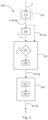
- Figure 3 is a schematic flow chart of an exemplary embodiment of the method 200 for orchestrating the execution of at least one SOP 2.
- step 210 at least one execution protocol 4 with instructions 4a-4g that has been generated and/or augmented by the method 100 described above.
- step 220 measurement data 3 is obtained. This measurement data 3 is indicative of at least one activity that at least one worker 5 is performing. The worker 5 is to participate in executing the SOP 2.
- step 230 based at least in part on the measurement data 3, at least one instruction 4a-5g that the worker 5 is to carry out is selected from the execution protocol 4.
- it may be determined whether the worker 5 has already carried out an instruction 4a-4g and/or is already at a location where this instruction 4a-4g is to be carried out. If this is the case (truth value 1), according to block 232, the instruction 4a-4g, and/or a direction to navigate to the location where this instruction 4a-4g is to be carried out, may be suppressed.
- step 240 the instruction 4a-4g is communicated to the worker 5.
- a skill level of the worker 5 may be determined based on current and/or past measurement data 3.
- the level of detail of the instruction may be adjusted based on this skill level.
Landscapes
- Business, Economics & Management (AREA)
- Human Resources & Organizations (AREA)
- Engineering & Computer Science (AREA)
- Economics (AREA)
- Strategic Management (AREA)
- Entrepreneurship & Innovation (AREA)
- Quality & Reliability (AREA)
- Physics & Mathematics (AREA)
- General Physics & Mathematics (AREA)
- Educational Administration (AREA)
- Development Economics (AREA)
- Game Theory and Decision Science (AREA)
- Marketing (AREA)
- Operations Research (AREA)
- Tourism & Hospitality (AREA)
- General Business, Economics & Management (AREA)
- Theoretical Computer Science (AREA)
- Automation & Control Theory (AREA)
- Manufacturing & Machinery (AREA)
- General Engineering & Computer Science (AREA)
- Testing And Monitoring For Control Systems (AREA)
Claims (16)
- Ein computer-implementiertes Verfahren (100) zum Erzeugen und/oder Erweitern eines Ausführungsprotokolls (4) für mindestens ein Standardbetriebsverfahren, SOP (2), in einer Industrieanlage (1), umfassend die Schritte:• Bereitstellen (110) mindestens eines SOP (2) der Industrieanlage (1), wobei das besagte SOP (2) eine Mehrzahl von Schritten (2a-2g) aufweist;• Bereitstellen (120) von Messdaten (3), die während mehrerer Ausführungen des mindestens einen SOP (2) aufgenommen wurden und auf in der Industrieanlage (1) vorgenommene Aktionen hindeuten, die den Zustand und/oder das Verhalten der Industrieanlage (1) oder irgendeines Teils hiervon verändern mit dem Zweck, das SOP (2) auszuführen;
wobei das Verfahren durch die Schritte charakterisiert ist,• für jeden Schritt (2a-2g) des SOP (2) aus den Messdaten (3) eine Teilmenge (3a-3g) der Messdaten (3) auszuwerten, die auf Aktionen hindeuten, die zum Zweck der Ausführung dieses bestimmten Schritts (2a-2g) der SOP vorgenommen wurden; und• die für jeden Schritt (2a-2g) des SOP (2) ermittelte Teilmenge (3a-3g) der Messdaten (3) zu mindestens einer Anweisung (4a-4g) für die Ausführung dieses bestimmten Schritts (2a-2g) der SOP zu aggregieren (140), wobei diese Anweisung (4a-4g) Teil des gesuchten Protokolls (4) ist. - Verfahren (100) nach Anspruch 1, wobei die Messdaten (3) eine oder mehrere der folgenden umfassen:• Log-Daten, die darauf hindeuten, dass mindestens eine Anweisung zum Ändern des Verhaltens der Industrieanlage (1) oder irgendeines Teils hiervon in ein verteiltes Steuerungssystem der Industrieanlage eingegeben wurde;• Messdaten (3), die von mindestens einem Feldgerät geliefert wurden, das in direkter Beziehung mit einem von der Industrieanlage (1) ausgeführten industriellen Prozess ist; und• Überwachungsdaten, die auf die Position und/oder auf das Verhalten, mindestens eines an der Ausführung des SOP (2) beteiligten Arbeiters (5) hindeuten.
- Verfahren (100) nach Anspruch 2, wobei die Log-Daten speziell auf eine oder mehreren der folgenden hindeuten:• das Setzen eines neuen Sollwerts für einen untergeordneten Regler in der Industrieanlage (1);• das Öffnen oder Schließen mindestens eines Ventils in der Industrieanlage (1);• das Starten oder Stoppen mindestens eines Geräts in der Industrieanlage (1); und• das Ansteuern irgendeines anderen Aktuators, der den Zustand oder das Verhalten der Industrieanlage (1) oder irgendeines Teils hiervon verändert.
- Verfahren (100) nach einem der Ansprüche 2 bis 3, wobei die Überwachungsdaten eine oder mehrere der folgenden umfassen:• mindestens einen Video-Datenstrom, der mindestens einen Arbeiter (5) zeigt, der an der Ausführung des SOP (2) beteiligt ist, und/oder von einer durch diesen Arbeiter (5) mitgeführten Kamera aufgezeichnet wird;• Daten, die auf die Blickrichtung mindestens eines an der Ausführung des SOP (2) beteiligten Arbeiters (5) hindeuten;• Radio- oder Audioaufnahmen der Stimme mindestens eines an der Ausführung des SOP (2) beteiligten Arbeiters (5); und• Interaktionen, wie Cursorbewegungen und Menüauswahlen, zwischen mindestens einem an der Ausführung des SOP (2) beteiligten Arbeiter (5) und einer Mensch-Maschine-Schnittstelle des verteilten Steuerungssystems der Industrieanlage (1).
- Verfahren (100) nach einem der Ansprüche 1 bis 4, wobei das Ermitteln (130) einer Teilmenge (3a-3g) der Messdaten (3), die sich auf den Schritt (2a-2g) des SOP (2) bezieht, spezifisch umfasst, aus den Messdaten (3) einen Anteil zu filtern (131), der sich auf eins oder mehrere der folgenden bezieht:• einen Zeitslot, in dem der Schritt (2a-2g) des SOP (2) ausgeführt wurde;• Geräte, die für die Ausführung des Schritts (2a-2g) des SOP (2) relevant sind;• eine Position in der Industrieanlage (1), die für die Ausführung des Schritts (2a-2g) des SOP (2) relevant ist;• einen Arbeiter (5), der die Rolle zugewiesen bekommt, sich an der Ausführung des Schritts (2a-2g) des SOP (2) zu beteiligen; und• Komponenten einer graphischen Benutzeroberfläche, die eine hohe Relevanz für die Ausführung haben.
- Verfahren(100) nach Anspruch 5, weiterhin umfassend:• Filtern (131a) der Messdaten (3) nach mehreren Kriterien;• Zuweisen (131b) eines Relevanz-Scores zu jedem Record von Messdaten (3), wobei dieser Relevanz-Score mit der Anzahl von Kriterien, die genau dieser Record von Messdaten (3) erfüllt, zunimmt; und• Aufnehmen (131c) eines Records von Messdaten (3) in die Teilmenge (3a-3g) in Antwort darauf, dass der Relevanz-Score einen vorgegebenen Schwellwert überschreitet.
- Verfahren (100) nach einem der Ansprüche 1 bis 6, weiterhin umfassend: Ermitteln (150) mindestens einer gerichteten Sequenz von Aktionen, aus der die Ausführung des vollständigen SOP (2) resultiert, als das gesuchte Protokoll (4) aus den Messdaten (3), aus den Teilmengen (3a-3g), und/oder aus den Anweisungen (4a-4g).
- Verfahren (100) nach Anspruch 7, weiterhin umfassend: Kombinieren (151) mehrerer Sequenzen von Aktionen, aus denen die Ausführung des vollständigen SOP (2) resultiert, in einen gerichteten Graphen dieser Aktionen.
- Verfahren (100) nach Anspruch 8, weiterhin umfassend: Zuweisen (151a) einer Wahrscheinlichkeit, dass nach einer gegebenen ersten Aktion eine zweite Aktion ausgeführt wird, zur jeweiligen Kante, die die erste Aktion und die nachfolgende zweite Aktion verbindet, basierend auf den bereitgestellten Messdaten (3).
- Verfahren (100) nach Anspruch 9, weiterhin umfassend: Ermitteln (151b) eines Pfades durch den Graphen, der bei jeder Aktion, die mit zwei oder mehr nächsten möglichen Aktionen verbunden ist, die nächste Aktion mit der höheren Wahrscheinlichkeit auswählt, als ein Ausführungsprotokoll (4) für das SOP (2).
- Computer-implementiertes Verfahren (200) zum Orchestrieren der Ausführung mindestens eines Standardbetriebsverfahrens, SOP (2), in einer Industrieanlage (1), umfassend die Schritte:• Bereitstellen (210) mindestens eine Ausführungsprotokolls (4) für das SOP (2), das mit dem Verfahren (100) nach einem der Ansprüche 1 bis 10 erzeugt und/oder erweitert wurde;• Erwerben (220) von Messdaten (3), die auf mindestens eine Aktivität hindeuten, die ein Arbeiter (5) vornimmt, der sich an der Ausführung des SOP (2) beteiligen soll;• Auswählen (230) mindestens einer Anweisung (4a-4g) aus dem Ausführungsprotokoll (4), die dieser Arbeiter (5) ausführen soll, basierend mindestens teilweise auf diesen Messdaten (3), und• Kommunizieren (240) der Anweisung (4a-4g) an den Arbeiter (5).
- Verfahren (200) nach Anspruch 11, wobei das Auswählen mindestens einer Anweisung umfasst:• Ermitteln (231), ob der Arbeiter (5) schon eine Anweisung (4a-4g) ausgeführt hat, und/oder schon an einer Position ist, wo diese Anweisung (4a-4g) ausgeführt werden soll; und• wenn dies der Fall ist, Unterdrücken (232) dieser Anweisung (4a-4g), und/oder einer Anweisung, zu der Position, an der diese Anweisung (4a-4g) auszuführen ist, zu navigieren.
- Verfahren (200) nach Anspruch 11 oder 12, wobei das Kommunizieren (240) der Anweisung (4a-4g) umfasst:• Ermitteln (241) eines Fähigkeits-Levels des Arbeiters (5), basierend auf aktuellen und/oder vergangenen Messdaten (3), und• Anpassen (242) des Detaillierungs-Levels der Anweisung (242) basierend auf dem Fähigkeits-Level.
- Computerprogramm, umfassend maschinenlesbare Anweisungen, die, wenn sie auf einem oder mehreren Computern ausgeführt werden, die ein oder mehreren Computer veranlassen, ein Verfahren (100, 200) nach einem der Ansprüche 1 bis 13 auszuführen.
- Nichtflüchtiges maschinenlesbares Speichermedium, auf dem das Computerprogramm nach Anspruch 14 gespeichert ist.
- Ein oder mehrere Computer, umfassend Mittel, das Verfahren nach einem der Ansprüche 1-13 auszuführen.
Priority Applications (6)
| Application Number | Priority Date | Filing Date | Title |
|---|---|---|---|
| EP21156885.2A EP4043973B1 (de) | 2021-02-12 | 2021-02-12 | Erzeugung von ausführungsprotokollen zur durchführung von standardbetriebsverfahren in industriellen anlagen |
| CN202280014613.3A CN116848478A (zh) | 2021-02-12 | 2022-01-11 | 用于在工业工厂中执行标准操作程序的实行协议的生成 |
| PCT/EP2022/050400 WO2022171371A1 (en) | 2021-02-12 | 2022-01-11 | Generating execution protocols for performing standard operating procedures in industrial plants |
| CA3207873A CA3207873A1 (en) | 2021-02-12 | 2022-01-11 | Generating execution protocols for performing standard operating procedures in industrial plants |
| JP2023548681A JP7721657B2 (ja) | 2021-02-12 | 2022-01-11 | 産業プラントにおける標準作業手順を実行するための実行プロトコルの生成 |
| US18/448,535 US20240005232A1 (en) | 2021-02-12 | 2023-08-11 | Generating Execution Protocols for Performing Standard Operating Procedures in Industrial Plants |
Applications Claiming Priority (1)
| Application Number | Priority Date | Filing Date | Title |
|---|---|---|---|
| EP21156885.2A EP4043973B1 (de) | 2021-02-12 | 2021-02-12 | Erzeugung von ausführungsprotokollen zur durchführung von standardbetriebsverfahren in industriellen anlagen |
Publications (2)
| Publication Number | Publication Date |
|---|---|
| EP4043973A1 EP4043973A1 (de) | 2022-08-17 |
| EP4043973B1 true EP4043973B1 (de) | 2023-07-26 |
Family
ID=74595191
Family Applications (1)
| Application Number | Title | Priority Date | Filing Date |
|---|---|---|---|
| EP21156885.2A Active EP4043973B1 (de) | 2021-02-12 | 2021-02-12 | Erzeugung von ausführungsprotokollen zur durchführung von standardbetriebsverfahren in industriellen anlagen |
Country Status (6)
| Country | Link |
|---|---|
| US (1) | US20240005232A1 (de) |
| EP (1) | EP4043973B1 (de) |
| JP (1) | JP7721657B2 (de) |
| CN (1) | CN116848478A (de) |
| CA (1) | CA3207873A1 (de) |
| WO (1) | WO2022171371A1 (de) |
Families Citing this family (1)
| Publication number | Priority date | Publication date | Assignee | Title |
|---|---|---|---|---|
| JP2024120509A (ja) * | 2023-02-24 | 2024-09-05 | 三菱重工業株式会社 | 自動制御システム、自動制御方法、及び、自動制御プログラム |
Family Cites Families (18)
| Publication number | Priority date | Publication date | Assignee | Title |
|---|---|---|---|---|
| US4630110A (en) * | 1984-02-15 | 1986-12-16 | Supervision Control Systems, Inc. | Surveillance system |
| JP4004222B2 (ja) * | 2000-11-15 | 2007-11-07 | トヨタ自動車株式会社 | 作業用ロボットシステムの保全支援方法及び保全支援装置 |
| EP1413937A1 (de) | 2002-10-21 | 2004-04-28 | ABB Schweiz AG | Anzeige eines endlichen Automaten zur Bedienerführung |
| US8442766B2 (en) * | 2008-10-02 | 2013-05-14 | Certusview Technologies, Llc | Marking apparatus having enhanced features for underground facility marking operations, and associated methods and systems |
| JP5503321B2 (ja) * | 2010-02-10 | 2014-05-28 | 株式会社日立製作所 | 運用管理方法、プログラムおよび運用管理システム |
| US11112925B2 (en) * | 2013-03-15 | 2021-09-07 | Fisher-Rosemount Systems, Inc. | Supervisor engine for process control |
| US20160132046A1 (en) * | 2013-03-15 | 2016-05-12 | Fisher-Rosemount Systems, Inc. | Method and apparatus for controlling a process plant with wearable mobile control devices |
| US20150363518A1 (en) * | 2014-06-11 | 2015-12-17 | International Business Machines Corporation | Dynamic operating procedures for emergency response |
| US11437125B2 (en) * | 2014-06-13 | 2022-09-06 | University Hospitals Cleveland Medical Center | Artificial-intelligence-based facilitation of healthcare delivery |
| JP6710913B2 (ja) * | 2015-08-24 | 2020-06-17 | 富士電機株式会社 | 情報提供装置、情報提供方法、及びプログラム |
| CN105159678B (zh) * | 2015-09-11 | 2018-05-29 | 中国石油化工股份有限公司青岛安全工程研究院 | 一种化工装置开停车过程sop图形化建模方法 |
| US10248097B2 (en) * | 2016-05-09 | 2019-04-02 | Yokogawa Electric Corporation | Method and apparatus for optimizing process control systems |
| JP6601433B2 (ja) * | 2017-02-08 | 2019-11-06 | 横河電機株式会社 | イベント解析装置、イベント解析システム、イベント解析方法、イベント解析プログラム及び記録媒体 |
| JP7109395B2 (ja) * | 2019-03-08 | 2022-07-29 | 株式会社日立製作所 | 作業支援システム、作業支援装置、及び作業支援方法 |
| US20200411169A1 (en) * | 2019-06-28 | 2020-12-31 | University Hospitals Cleveland Medical Center | Machine-learning framework for coordinating and optimizing healthcare resource utilization and delivery of healthcare services across an integrated healthcare system |
| US20230214743A1 (en) * | 2021-12-16 | 2023-07-06 | RAMwright Consulting Co., LLC | Computer-based integrated, real time, digital, technical procedure scoping, writing, modifying, scheduling, executing, and managing platform |
| US12475419B2 (en) * | 2023-01-03 | 2025-11-18 | Oracle International Corporation | Task management with image-capture monitoring of user actions |
| US20250087342A1 (en) * | 2023-09-11 | 2025-03-13 | riskLD Inc. | Artificial-intelligence-based facilitation of healthcare delivery |
-
2021
- 2021-02-12 EP EP21156885.2A patent/EP4043973B1/de active Active
-
2022
- 2022-01-11 CN CN202280014613.3A patent/CN116848478A/zh active Pending
- 2022-01-11 JP JP2023548681A patent/JP7721657B2/ja active Active
- 2022-01-11 CA CA3207873A patent/CA3207873A1/en active Pending
- 2022-01-11 WO PCT/EP2022/050400 patent/WO2022171371A1/en not_active Ceased
-
2023
- 2023-08-11 US US18/448,535 patent/US20240005232A1/en active Pending
Also Published As
| Publication number | Publication date |
|---|---|
| US20240005232A1 (en) | 2024-01-04 |
| EP4043973A1 (de) | 2022-08-17 |
| JP7721657B2 (ja) | 2025-08-12 |
| CN116848478A (zh) | 2023-10-03 |
| JP2024506190A (ja) | 2024-02-09 |
| CA3207873A1 (en) | 2022-08-18 |
| WO2022171371A1 (en) | 2022-08-18 |
Similar Documents
| Publication | Publication Date | Title |
|---|---|---|
| EP3882725B1 (de) | Verfahren und system für zuverlässige fehlerdiagnose in echtzeit und schutz für autonome fahrzeuge | |
| EP3270243B1 (de) | Verfahren und systeme zur kontextbasierten bedienerunterstützung für steuerungssysteme | |
| US10768188B2 (en) | Diagnostic device and method for monitoring operation of a technical system | |
| CN101628628A (zh) | 适用于航天器系统的自修正冗余切换机制及其验证方法 | |
| CN113678150B (zh) | 用于动作确定的系统 | |
| WO2009105356A1 (en) | Apparatus and method for alarm suppression in a monitoring system | |
| US20240005232A1 (en) | Generating Execution Protocols for Performing Standard Operating Procedures in Industrial Plants | |
| CN107479528A (zh) | 农用智能装置的故障告警系统及故障处理方法 | |
| CN104249275A (zh) | 用于机器人系统的控制方法和机器人系统 | |
| CN105320872A (zh) | 基于虹膜识别的机器人操作权限设定方法 | |
| JP5918514B2 (ja) | 分散制御システムの訓練システム | |
| Cheng et al. | Human errors and influencing factors in digital control rooms: A review and some suggestions | |
| US20110299646A1 (en) | System for supporting nuclear power plant operation | |
| CN110253587B (zh) | 一种机器人控制方法、系统、存储介质及机器人 | |
| US20220046339A1 (en) | Data collection device, data collection method, and program | |
| CN112631249A (zh) | 一种故障仿真方法、装置、设备及计算机可读存储介质 | |
| JP2017173882A (ja) | プラント運転監視制御システムおよびプラント運転監視制御方法 | |
| AU2021302559B2 (en) | Operating system multiplexing device | |
| CN213068176U (zh) | 一种风门耐久试验控制电路及风门耐久试验装置 | |
| JP2019067167A (ja) | プラント機器監視制御装置のファイル更新システム | |
| JP2005284673A (ja) | プラント監視制御装置 | |
| CN121870733A (zh) | 一种具身智能配网带电作业机器人作业系统、方法、设备及存储介质 | |
| JP4904174B2 (ja) | プラントの運転管理支援システム | |
| JP6064979B2 (ja) | 発電所設備の操作装置および操作プログラム | |
| CN121353011A (zh) | 一种煤矿开采的仿真系统 |
Legal Events
| Date | Code | Title | Description |
|---|---|---|---|
| PUAI | Public reference made under article 153(3) epc to a published international application that has entered the european phase |
Free format text: ORIGINAL CODE: 0009012 |
|
| STAA | Information on the status of an ep patent application or granted ep patent |
Free format text: STATUS: THE APPLICATION HAS BEEN PUBLISHED |
|
| AK | Designated contracting states |
Kind code of ref document: A1 Designated state(s): AL AT BE BG CH CY CZ DE DK EE ES FI FR GB GR HR HU IE IS IT LI LT LU LV MC MK MT NL NO PL PT RO RS SE SI SK SM TR |
|
| STAA | Information on the status of an ep patent application or granted ep patent |
Free format text: STATUS: REQUEST FOR EXAMINATION WAS MADE |
|
| 17P | Request for examination filed |
Effective date: 20230110 |
|
| RBV | Designated contracting states (corrected) |
Designated state(s): AL AT BE BG CH CY CZ DE DK EE ES FI FR GB GR HR HU IE IS IT LI LT LU LV MC MK MT NL NO PL PT RO RS SE SI SK SM TR |
|
| GRAP | Despatch of communication of intention to grant a patent |
Free format text: ORIGINAL CODE: EPIDOSNIGR1 |
|
| STAA | Information on the status of an ep patent application or granted ep patent |
Free format text: STATUS: GRANT OF PATENT IS INTENDED |
|
| INTG | Intention to grant announced |
Effective date: 20230303 |
|
| GRAS | Grant fee paid |
Free format text: ORIGINAL CODE: EPIDOSNIGR3 |
|
| GRAA | (expected) grant |
Free format text: ORIGINAL CODE: 0009210 |
|
| STAA | Information on the status of an ep patent application or granted ep patent |
Free format text: STATUS: THE PATENT HAS BEEN GRANTED |
|
| AK | Designated contracting states |
Kind code of ref document: B1 Designated state(s): AL AT BE BG CH CY CZ DE DK EE ES FI FR GB GR HR HU IE IS IT LI LT LU LV MC MK MT NL NO PL PT RO RS SE SI SK SM TR |
|
| REG | Reference to a national code |
Ref country code: CH Ref legal event code: EP |
|
| REG | Reference to a national code |
Ref country code: IE Ref legal event code: FG4D |
|
| REG | Reference to a national code |
Ref country code: DE Ref legal event code: R096 Ref document number: 602021003676 Country of ref document: DE |
|
| REG | Reference to a national code |
Ref country code: CH Ref legal event code: PK Free format text: BERICHTIGUNGEN |
|
| RIN2 | Information on inventor provided after grant (corrected) |
Inventor name: BERNING, MATTHIAS Inventor name: GOPALAKRISHNAN, GAYATHRI Inventor name: K R, CHANDRIKA Inventor name: SHARMA, DIVYASHEEL Inventor name: GAERTLER, MARCO Inventor name: HALLSTADIUS LINGE, SIMON Inventor name: ZIOBRO, DAWID Inventor name: MACZEY, SYLVIA Inventor name: KOTRIWALA, ARZAM Inventor name: ABUKWAIK, HADIL Inventor name: DIX, MARCEL Inventor name: BORRISON, REUBEN Inventor name: KLOEPPER, BENJAMIN Inventor name: RODRIGUEZ, PABLO Inventor name: DOPPELHAMER, JENS Inventor name: SCHMIDT, BENEDIKT |
|
| REG | Reference to a national code |
Ref country code: NO Ref legal event code: T2 Effective date: 20230726 |
|
| REG | Reference to a national code |
Ref country code: NL Ref legal event code: FP |
|
| REG | Reference to a national code |
Ref country code: SE Ref legal event code: TRGR |
|
| REG | Reference to a national code |
Ref country code: LT Ref legal event code: MG9D |
|
| REG | Reference to a national code |
Ref country code: AT Ref legal event code: MK05 Ref document number: 1592650 Country of ref document: AT Kind code of ref document: T Effective date: 20230726 |
|
| PG25 | Lapsed in a contracting state [announced via postgrant information from national office to epo] |
Ref country code: GR Free format text: LAPSE BECAUSE OF FAILURE TO SUBMIT A TRANSLATION OF THE DESCRIPTION OR TO PAY THE FEE WITHIN THE PRESCRIBED TIME-LIMIT Effective date: 20231027 |
|
| PG25 | Lapsed in a contracting state [announced via postgrant information from national office to epo] |
Ref country code: IS Free format text: LAPSE BECAUSE OF FAILURE TO SUBMIT A TRANSLATION OF THE DESCRIPTION OR TO PAY THE FEE WITHIN THE PRESCRIBED TIME-LIMIT Effective date: 20231126 |
|
| PG25 | Lapsed in a contracting state [announced via postgrant information from national office to epo] |
Ref country code: RS Free format text: LAPSE BECAUSE OF FAILURE TO SUBMIT A TRANSLATION OF THE DESCRIPTION OR TO PAY THE FEE WITHIN THE PRESCRIBED TIME-LIMIT Effective date: 20230726 Ref country code: PT Free format text: LAPSE BECAUSE OF FAILURE TO SUBMIT A TRANSLATION OF THE DESCRIPTION OR TO PAY THE FEE WITHIN THE PRESCRIBED TIME-LIMIT Effective date: 20231127 Ref country code: LV Free format text: LAPSE BECAUSE OF FAILURE TO SUBMIT A TRANSLATION OF THE DESCRIPTION OR TO PAY THE FEE WITHIN THE PRESCRIBED TIME-LIMIT Effective date: 20230726 Ref country code: LT Free format text: LAPSE BECAUSE OF FAILURE TO SUBMIT A TRANSLATION OF THE DESCRIPTION OR TO PAY THE FEE WITHIN THE PRESCRIBED TIME-LIMIT Effective date: 20230726 Ref country code: IS Free format text: LAPSE BECAUSE OF FAILURE TO SUBMIT A TRANSLATION OF THE DESCRIPTION OR TO PAY THE FEE WITHIN THE PRESCRIBED TIME-LIMIT Effective date: 20231126 Ref country code: HR Free format text: LAPSE BECAUSE OF FAILURE TO SUBMIT A TRANSLATION OF THE DESCRIPTION OR TO PAY THE FEE WITHIN THE PRESCRIBED TIME-LIMIT Effective date: 20230726 Ref country code: GR Free format text: LAPSE BECAUSE OF FAILURE TO SUBMIT A TRANSLATION OF THE DESCRIPTION OR TO PAY THE FEE WITHIN THE PRESCRIBED TIME-LIMIT Effective date: 20231027 Ref country code: FI Free format text: LAPSE BECAUSE OF FAILURE TO SUBMIT A TRANSLATION OF THE DESCRIPTION OR TO PAY THE FEE WITHIN THE PRESCRIBED TIME-LIMIT Effective date: 20230726 Ref country code: AT Free format text: LAPSE BECAUSE OF FAILURE TO SUBMIT A TRANSLATION OF THE DESCRIPTION OR TO PAY THE FEE WITHIN THE PRESCRIBED TIME-LIMIT Effective date: 20230726 |
|
| PG25 | Lapsed in a contracting state [announced via postgrant information from national office to epo] |
Ref country code: PL Free format text: LAPSE BECAUSE OF FAILURE TO SUBMIT A TRANSLATION OF THE DESCRIPTION OR TO PAY THE FEE WITHIN THE PRESCRIBED TIME-LIMIT Effective date: 20230726 |
|
| PG25 | Lapsed in a contracting state [announced via postgrant information from national office to epo] |
Ref country code: ES Free format text: LAPSE BECAUSE OF FAILURE TO SUBMIT A TRANSLATION OF THE DESCRIPTION OR TO PAY THE FEE WITHIN THE PRESCRIBED TIME-LIMIT Effective date: 20230726 |
|
| REG | Reference to a national code |
Ref country code: DE Ref legal event code: R097 Ref document number: 602021003676 Country of ref document: DE |
|
| PG25 | Lapsed in a contracting state [announced via postgrant information from national office to epo] |
Ref country code: SM Free format text: LAPSE BECAUSE OF FAILURE TO SUBMIT A TRANSLATION OF THE DESCRIPTION OR TO PAY THE FEE WITHIN THE PRESCRIBED TIME-LIMIT Effective date: 20230726 Ref country code: RO Free format text: LAPSE BECAUSE OF FAILURE TO SUBMIT A TRANSLATION OF THE DESCRIPTION OR TO PAY THE FEE WITHIN THE PRESCRIBED TIME-LIMIT Effective date: 20230726 Ref country code: ES Free format text: LAPSE BECAUSE OF FAILURE TO SUBMIT A TRANSLATION OF THE DESCRIPTION OR TO PAY THE FEE WITHIN THE PRESCRIBED TIME-LIMIT Effective date: 20230726 Ref country code: EE Free format text: LAPSE BECAUSE OF FAILURE TO SUBMIT A TRANSLATION OF THE DESCRIPTION OR TO PAY THE FEE WITHIN THE PRESCRIBED TIME-LIMIT Effective date: 20230726 Ref country code: DK Free format text: LAPSE BECAUSE OF FAILURE TO SUBMIT A TRANSLATION OF THE DESCRIPTION OR TO PAY THE FEE WITHIN THE PRESCRIBED TIME-LIMIT Effective date: 20230726 Ref country code: CZ Free format text: LAPSE BECAUSE OF FAILURE TO SUBMIT A TRANSLATION OF THE DESCRIPTION OR TO PAY THE FEE WITHIN THE PRESCRIBED TIME-LIMIT Effective date: 20230726 Ref country code: SK Free format text: LAPSE BECAUSE OF FAILURE TO SUBMIT A TRANSLATION OF THE DESCRIPTION OR TO PAY THE FEE WITHIN THE PRESCRIBED TIME-LIMIT Effective date: 20230726 |
|
| PLBE | No opposition filed within time limit |
Free format text: ORIGINAL CODE: 0009261 |
|
| STAA | Information on the status of an ep patent application or granted ep patent |
Free format text: STATUS: NO OPPOSITION FILED WITHIN TIME LIMIT |
|
| 26N | No opposition filed |
Effective date: 20240429 |
|
| PG25 | Lapsed in a contracting state [announced via postgrant information from national office to epo] |
Ref country code: SI Free format text: LAPSE BECAUSE OF FAILURE TO SUBMIT A TRANSLATION OF THE DESCRIPTION OR TO PAY THE FEE WITHIN THE PRESCRIBED TIME-LIMIT Effective date: 20230726 |
|
| PG25 | Lapsed in a contracting state [announced via postgrant information from national office to epo] |
Ref country code: MC Free format text: LAPSE BECAUSE OF FAILURE TO SUBMIT A TRANSLATION OF THE DESCRIPTION OR TO PAY THE FEE WITHIN THE PRESCRIBED TIME-LIMIT Effective date: 20230726 |
|
| REG | Reference to a national code |
Ref country code: CH Ref legal event code: PL |
|
| PG25 | Lapsed in a contracting state [announced via postgrant information from national office to epo] |
Ref country code: LU Free format text: LAPSE BECAUSE OF NON-PAYMENT OF DUE FEES Effective date: 20240212 |
|
| PG25 | Lapsed in a contracting state [announced via postgrant information from national office to epo] |
Ref country code: CH Free format text: LAPSE BECAUSE OF NON-PAYMENT OF DUE FEES Effective date: 20240229 |
|
| PG25 | Lapsed in a contracting state [announced via postgrant information from national office to epo] |
Ref country code: LU Free format text: LAPSE BECAUSE OF NON-PAYMENT OF DUE FEES Effective date: 20240212 Ref country code: CH Free format text: LAPSE BECAUSE OF NON-PAYMENT OF DUE FEES Effective date: 20240229 |
|
| PG25 | Lapsed in a contracting state [announced via postgrant information from national office to epo] |
Ref country code: BG Free format text: LAPSE BECAUSE OF FAILURE TO SUBMIT A TRANSLATION OF THE DESCRIPTION OR TO PAY THE FEE WITHIN THE PRESCRIBED TIME-LIMIT Effective date: 20230726 |
|
| PG25 | Lapsed in a contracting state [announced via postgrant information from national office to epo] |
Ref country code: BG Free format text: LAPSE BECAUSE OF FAILURE TO SUBMIT A TRANSLATION OF THE DESCRIPTION OR TO PAY THE FEE WITHIN THE PRESCRIBED TIME-LIMIT Effective date: 20230726 |
|
| REG | Reference to a national code |
Ref country code: BE Ref legal event code: MM Effective date: 20240229 |
|
| PG25 | Lapsed in a contracting state [announced via postgrant information from national office to epo] |
Ref country code: BE Free format text: LAPSE BECAUSE OF NON-PAYMENT OF DUE FEES Effective date: 20240229 |
|
| PG25 | Lapsed in a contracting state [announced via postgrant information from national office to epo] |
Ref country code: IE Free format text: LAPSE BECAUSE OF NON-PAYMENT OF DUE FEES Effective date: 20240212 |
|
| PG25 | Lapsed in a contracting state [announced via postgrant information from national office to epo] |
Ref country code: IE Free format text: LAPSE BECAUSE OF NON-PAYMENT OF DUE FEES Effective date: 20240212 Ref country code: BE Free format text: LAPSE BECAUSE OF NON-PAYMENT OF DUE FEES Effective date: 20240229 |
|
| PG25 | Lapsed in a contracting state [announced via postgrant information from national office to epo] |
Ref country code: CY Free format text: LAPSE BECAUSE OF FAILURE TO SUBMIT A TRANSLATION OF THE DESCRIPTION OR TO PAY THE FEE WITHIN THE PRESCRIBED TIME-LIMIT; INVALID AB INITIO Effective date: 20210212 |
|
| PG25 | Lapsed in a contracting state [announced via postgrant information from national office to epo] |
Ref country code: HU Free format text: LAPSE BECAUSE OF FAILURE TO SUBMIT A TRANSLATION OF THE DESCRIPTION OR TO PAY THE FEE WITHIN THE PRESCRIBED TIME-LIMIT; INVALID AB INITIO Effective date: 20210212 |
|
| GBPC | Gb: european patent ceased through non-payment of renewal fee |
Effective date: 20250212 |
|
| PG25 | Lapsed in a contracting state [announced via postgrant information from national office to epo] |
Ref country code: TR Free format text: LAPSE BECAUSE OF FAILURE TO SUBMIT A TRANSLATION OF THE DESCRIPTION OR TO PAY THE FEE WITHIN THE PRESCRIBED TIME-LIMIT Effective date: 20230726 |
|
| PG25 | Lapsed in a contracting state [announced via postgrant information from national office to epo] |
Ref country code: GB Free format text: LAPSE BECAUSE OF NON-PAYMENT OF DUE FEES Effective date: 20250212 |
|
| PGFP | Annual fee paid to national office [announced via postgrant information from national office to epo] |
Ref country code: NL Payment date: 20260218 Year of fee payment: 6 |
|
| PGFP | Annual fee paid to national office [announced via postgrant information from national office to epo] |
Ref country code: SE Payment date: 20260218 Year of fee payment: 6 |
|
| PGFP | Annual fee paid to national office [announced via postgrant information from national office to epo] |
Ref country code: NO Payment date: 20260220 Year of fee payment: 6 Ref country code: DE Payment date: 20260218 Year of fee payment: 6 |
|
| PGFP | Annual fee paid to national office [announced via postgrant information from national office to epo] |
Ref country code: IT Payment date: 20260224 Year of fee payment: 6 |
|
| PGFP | Annual fee paid to national office [announced via postgrant information from national office to epo] |
Ref country code: FR Payment date: 20260219 Year of fee payment: 6 |