EP4041400B1 - Für sting und il-12 kodierende messenger-rnas und ihre verwendung bei der behandlung von krebs - Google Patents
Für sting und il-12 kodierende messenger-rnas und ihre verwendung bei der behandlung von krebs Download PDFInfo
- Publication number
- EP4041400B1 EP4041400B1 EP20800417.6A EP20800417A EP4041400B1 EP 4041400 B1 EP4041400 B1 EP 4041400B1 EP 20800417 A EP20800417 A EP 20800417A EP 4041400 B1 EP4041400 B1 EP 4041400B1
- Authority
- EP
- European Patent Office
- Prior art keywords
- mrna
- composition
- administration
- lipid
- mrnas
- Prior art date
- Legal status (The legal status is an assumption and is not a legal conclusion. Google has not performed a legal analysis and makes no representation as to the accuracy of the status listed.)
- Active
Links
Images
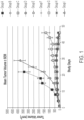
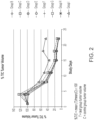
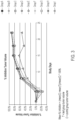
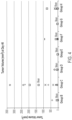







Classifications
-
- A—HUMAN NECESSITIES
- A61—MEDICAL OR VETERINARY SCIENCE; HYGIENE
- A61K—PREPARATIONS FOR MEDICAL, DENTAL OR TOILETRY PURPOSES
- A61K31/00—Medicinal preparations containing organic active ingredients
- A61K31/70—Carbohydrates; Sugars; Derivatives thereof
- A61K31/7088—Compounds having three or more nucleosides or nucleotides
- A61K31/7105—Natural ribonucleic acids, i.e. containing only riboses attached to adenine, guanine, cytosine or uracil and having 3'-5' phosphodiester links
-
- A—HUMAN NECESSITIES
- A61—MEDICAL OR VETERINARY SCIENCE; HYGIENE
- A61K—PREPARATIONS FOR MEDICAL, DENTAL OR TOILETRY PURPOSES
- A61K38/00—Medicinal preparations containing peptides
- A61K38/16—Peptides having more than 20 amino acids; Gastrins; Somatostatins; Melanotropins; Derivatives thereof
- A61K38/17—Peptides having more than 20 amino acids; Gastrins; Somatostatins; Melanotropins; Derivatives thereof from animals; from humans
- A61K38/1703—Peptides having more than 20 amino acids; Gastrins; Somatostatins; Melanotropins; Derivatives thereof from animals; from humans from vertebrates
- A61K38/1709—Peptides having more than 20 amino acids; Gastrins; Somatostatins; Melanotropins; Derivatives thereof from animals; from humans from vertebrates from mammals
-
- A—HUMAN NECESSITIES
- A61—MEDICAL OR VETERINARY SCIENCE; HYGIENE
- A61K—PREPARATIONS FOR MEDICAL, DENTAL OR TOILETRY PURPOSES
- A61K38/00—Medicinal preparations containing peptides
- A61K38/16—Peptides having more than 20 amino acids; Gastrins; Somatostatins; Melanotropins; Derivatives thereof
- A61K38/17—Peptides having more than 20 amino acids; Gastrins; Somatostatins; Melanotropins; Derivatives thereof from animals; from humans
- A61K38/19—Cytokines; Lymphokines; Interferons
-
- A—HUMAN NECESSITIES
- A61—MEDICAL OR VETERINARY SCIENCE; HYGIENE
- A61K—PREPARATIONS FOR MEDICAL, DENTAL OR TOILETRY PURPOSES
- A61K38/00—Medicinal preparations containing peptides
- A61K38/16—Peptides having more than 20 amino acids; Gastrins; Somatostatins; Melanotropins; Derivatives thereof
- A61K38/17—Peptides having more than 20 amino acids; Gastrins; Somatostatins; Melanotropins; Derivatives thereof from animals; from humans
- A61K38/19—Cytokines; Lymphokines; Interferons
- A61K38/193—Colony stimulating factors [CSF]
-
- A—HUMAN NECESSITIES
- A61—MEDICAL OR VETERINARY SCIENCE; HYGIENE
- A61K—PREPARATIONS FOR MEDICAL, DENTAL OR TOILETRY PURPOSES
- A61K38/00—Medicinal preparations containing peptides
- A61K38/16—Peptides having more than 20 amino acids; Gastrins; Somatostatins; Melanotropins; Derivatives thereof
- A61K38/17—Peptides having more than 20 amino acids; Gastrins; Somatostatins; Melanotropins; Derivatives thereof from animals; from humans
- A61K38/19—Cytokines; Lymphokines; Interferons
- A61K38/20—Interleukins [IL]
- A61K38/2013—IL-2
-
- A—HUMAN NECESSITIES
- A61—MEDICAL OR VETERINARY SCIENCE; HYGIENE
- A61K—PREPARATIONS FOR MEDICAL, DENTAL OR TOILETRY PURPOSES
- A61K38/00—Medicinal preparations containing peptides
- A61K38/16—Peptides having more than 20 amino acids; Gastrins; Somatostatins; Melanotropins; Derivatives thereof
- A61K38/17—Peptides having more than 20 amino acids; Gastrins; Somatostatins; Melanotropins; Derivatives thereof from animals; from humans
- A61K38/19—Cytokines; Lymphokines; Interferons
- A61K38/20—Interleukins [IL]
- A61K38/208—IL-12
-
- A—HUMAN NECESSITIES
- A61—MEDICAL OR VETERINARY SCIENCE; HYGIENE
- A61K—PREPARATIONS FOR MEDICAL, DENTAL OR TOILETRY PURPOSES
- A61K45/00—Medicinal preparations containing active ingredients not provided for in groups A61K31/00 - A61K41/00
- A61K45/06—Mixtures of active ingredients without chemical characterisation, e.g. antiphlogistics and cardiaca
-
- A—HUMAN NECESSITIES
- A61—MEDICAL OR VETERINARY SCIENCE; HYGIENE
- A61K—PREPARATIONS FOR MEDICAL, DENTAL OR TOILETRY PURPOSES
- A61K48/00—Medicinal preparations containing genetic material which is inserted into cells of the living body to treat genetic diseases; Gene therapy
- A61K48/0008—Medicinal preparations containing genetic material which is inserted into cells of the living body to treat genetic diseases; Gene therapy characterised by an aspect of the 'non-active' part of the composition delivered, e.g. wherein such 'non-active' part is not delivered simultaneously with the 'active' part of the composition
- A61K48/0025—Medicinal preparations containing genetic material which is inserted into cells of the living body to treat genetic diseases; Gene therapy characterised by an aspect of the 'non-active' part of the composition delivered, e.g. wherein such 'non-active' part is not delivered simultaneously with the 'active' part of the composition wherein the non-active part clearly interacts with the delivered nucleic acid
- A61K48/0041—Medicinal preparations containing genetic material which is inserted into cells of the living body to treat genetic diseases; Gene therapy characterised by an aspect of the 'non-active' part of the composition delivered, e.g. wherein such 'non-active' part is not delivered simultaneously with the 'active' part of the composition wherein the non-active part clearly interacts with the delivered nucleic acid the non-active part being polymeric
-
- A—HUMAN NECESSITIES
- A61—MEDICAL OR VETERINARY SCIENCE; HYGIENE
- A61K—PREPARATIONS FOR MEDICAL, DENTAL OR TOILETRY PURPOSES
- A61K9/00—Medicinal preparations characterised by special physical form
- A61K9/0012—Galenical forms characterised by the site of application
- A61K9/0019—Injectable compositions; Intramuscular, intravenous, arterial, subcutaneous administration; Compositions to be administered through the skin in an invasive manner
-
- A—HUMAN NECESSITIES
- A61—MEDICAL OR VETERINARY SCIENCE; HYGIENE
- A61K—PREPARATIONS FOR MEDICAL, DENTAL OR TOILETRY PURPOSES
- A61K9/00—Medicinal preparations characterised by special physical form
- A61K9/0012—Galenical forms characterised by the site of application
- A61K9/007—Pulmonary tract; Aromatherapy
-
- A—HUMAN NECESSITIES
- A61—MEDICAL OR VETERINARY SCIENCE; HYGIENE
- A61K—PREPARATIONS FOR MEDICAL, DENTAL OR TOILETRY PURPOSES
- A61K9/00—Medicinal preparations characterised by special physical form
- A61K9/0012—Galenical forms characterised by the site of application
- A61K9/007—Pulmonary tract; Aromatherapy
- A61K9/0073—Sprays or powders for inhalation; Aerolised or nebulised preparations generated by other means than thermal energy
- A61K9/0078—Sprays or powders for inhalation; Aerolised or nebulised preparations generated by other means than thermal energy for inhalation via a nebulizer such as a jet nebulizer, ultrasonic nebulizer, e.g. in the form of aqueous drug solutions or dispersions
-
- A—HUMAN NECESSITIES
- A61—MEDICAL OR VETERINARY SCIENCE; HYGIENE
- A61K—PREPARATIONS FOR MEDICAL, DENTAL OR TOILETRY PURPOSES
- A61K9/00—Medicinal preparations characterised by special physical form
- A61K9/10—Dispersions; Emulsions
- A61K9/127—Synthetic bilayered vehicles, e.g. liposomes or liposomes with cholesterol as the only non-phosphatidyl surfactant
-
- A—HUMAN NECESSITIES
- A61—MEDICAL OR VETERINARY SCIENCE; HYGIENE
- A61K—PREPARATIONS FOR MEDICAL, DENTAL OR TOILETRY PURPOSES
- A61K9/00—Medicinal preparations characterised by special physical form
- A61K9/10—Dispersions; Emulsions
- A61K9/127—Synthetic bilayered vehicles, e.g. liposomes or liposomes with cholesterol as the only non-phosphatidyl surfactant
- A61K9/1271—Non-conventional liposomes, e.g. PEGylated liposomes or liposomes coated or grafted with polymers
-
- A—HUMAN NECESSITIES
- A61—MEDICAL OR VETERINARY SCIENCE; HYGIENE
- A61K—PREPARATIONS FOR MEDICAL, DENTAL OR TOILETRY PURPOSES
- A61K9/00—Medicinal preparations characterised by special physical form
- A61K9/48—Preparations in capsules, e.g. of gelatin, of chocolate
- A61K9/50—Microcapsules having a gas, liquid or semi-solid filling; Solid microparticles or pellets surrounded by a distinct coating layer, e.g. coated microspheres, coated drug crystals
- A61K9/51—Nanocapsules; Nanoparticles
-
- A—HUMAN NECESSITIES
- A61—MEDICAL OR VETERINARY SCIENCE; HYGIENE
- A61P—SPECIFIC THERAPEUTIC ACTIVITY OF CHEMICAL COMPOUNDS OR MEDICINAL PREPARATIONS
- A61P35/00—Antineoplastic agents
-
- A—HUMAN NECESSITIES
- A01—AGRICULTURE; FORESTRY; ANIMAL HUSBANDRY; HUNTING; TRAPPING; FISHING
- A01K—ANIMAL HUSBANDRY; AVICULTURE; APICULTURE; PISCICULTURE; FISHING; REARING OR BREEDING ANIMALS, NOT OTHERWISE PROVIDED FOR; NEW BREEDS OF ANIMALS
- A01K2207/00—Modified animals
- A01K2207/12—Animals modified by administration of exogenous cells
-
- A—HUMAN NECESSITIES
- A01—AGRICULTURE; FORESTRY; ANIMAL HUSBANDRY; HUNTING; TRAPPING; FISHING
- A01K—ANIMAL HUSBANDRY; AVICULTURE; APICULTURE; PISCICULTURE; FISHING; REARING OR BREEDING ANIMALS, NOT OTHERWISE PROVIDED FOR; NEW BREEDS OF ANIMALS
- A01K2227/00—Animals characterised by species
- A01K2227/10—Mammal
- A01K2227/105—Murine
-
- A—HUMAN NECESSITIES
- A01—AGRICULTURE; FORESTRY; ANIMAL HUSBANDRY; HUNTING; TRAPPING; FISHING
- A01K—ANIMAL HUSBANDRY; AVICULTURE; APICULTURE; PISCICULTURE; FISHING; REARING OR BREEDING ANIMALS, NOT OTHERWISE PROVIDED FOR; NEW BREEDS OF ANIMALS
- A01K2267/00—Animals characterised by purpose
- A01K2267/03—Animal model, e.g. for test or diseases
- A01K2267/0331—Animal model for proliferative diseases
Definitions
- Cancer is the most common cause of death in many parts of the world and more than 2.5 million cancer cases are diagnosed worldwide each year. Recent advances in our understanding of the molecular biology of cancer have shown that cancer is a genetic disorder that causes abnormal growth of diseased cells. Many cancer treatments exist, including surgery, chemotherapy, radiation therapy, gene therapy, and small and protein molecules. However, these treatments often function by non-specific interactions with cellular targets, produce undesirable side effects, and do not treat the root of the disease. Cancer still remains highly resistant to currently available therapies.
- lipid nanoparticles that deliver interleukin 12 (IL-12) messenger RNA and suppress tumorigenesis in MYC oncogene-driven hepatocellular carcinoma.
- WO 2017/201325A1 relates to compositions and methods for the preparation, manufacture and therapeutic use of combinations of immunomodulatory polynucleotides (e.g ., mRNAs) encoding an immune response primer polypeptide (e. g., an interleukin 23 polypeptide or an interleukin 36 ⁇ polypeptide), and an immune response co- stimulatory signal polypeptide (e.g ., an OX40L polypeptide).
- immunomodulatory polynucleotides e.g ., mRNAs
- an immune response primer polypeptide e. g., an interleukin 23 polypeptide or an interleukin 36 ⁇ polypeptide
- an immune response co- stimulatory signal polypeptide e.g ., an OX40L polypeptide
- WO 2018/144775A1 discloses immunomodulatory therapeutic compositions of an mRNA encoding an activating oncogene mutation peptide and an mRNA encoding a polypeptide that enhances immune responses to the activating oncogene mutation peptide, for example an mRNA encoding an immune potentiator.
- WO 2013/185069A1 discloses compositions comprising mRNA formulated for pulmonary administration and related methods for delivery of the mRNA to a non-lung cell or tissue.
- WO 2018/081459A1 discloses isolated mRNAs encoding a polypeptide that enhances immune responses to an antigen(s) of interest, such as polypeptides that activate Type I interferon pathway signaling or NF ⁇ B signaling.
- WO 2018/213731A1 relates to polynucleotides encoding tethered IL-12 polypeptides comprising an IL-12 polypeptide and a membrane domain.
- WO 2016/170176A1 relates to RNA containing compositions for use in the treatment or prophylaxis of tumor and/or cancer diseases, to a pharmaceutical composition, to a kit and to uses of the RNA containing compositions for the treatment or prophylaxis of tumor and/or cancer diseases.
- WO 2019/183578A1 discloses compositions comprising extracellular vesicles, e.g., exosomes, encapsulated STING agonists and methods of producing such compositions. Chang et al. (Hepatology.
- WO 2018/160540A1 relates to the field of therapeutic RNAs for treatment of solid tumor cancers.
- the present invention provides improved mRNA therapeutics for the treatment for cancer as set out in the appended claims.
- the present invention provides a composition comprising two or more mRNAs each encoding a protein or a peptide encapsulated within one or more lipid nanoparticle(s) for use in a method of treating cancer, wherein the method comprises administering the composition to a subject in need thereof, wherein two of the two or more mRNAs encode stimulator of interferon genes (STING) and interleukin 12 (IL-12), respectively, and wherein the one or more lipid nanoparticle(s) each comprise a cationic lipid, a non-cationic lipid, a cholesterol-based lipid, and a PEG-modified lipid at a molar ratio of 30-60:25-35:20-30:1:15, respectively.
- STING interferon genes
- IL-12 interleukin 12
- the two or more mRNAs comprise a first mRNA encoding a first protein or peptide encapsulated within a first lipid nanoparticle and a second mRNA encoding a second protein or peptide encapsulated with a second lipid nanoparticle.
- the two or more mRNAs comprise at least three mRNAs that encode STING, IL-12, and granulocyte-macrophage colony-stimulating factor (GM-CSF), respectively. In some embodiments, the two or more mRNAs comprise at least four mRNAs that encode STING, IL-12, FMS-like tyrosine kinase 3 ligand (FLT-3L), and GM-CSF, respectively. In some embodiments, the two or more mRNAs comprise at least four mRNAs that encode STING, IL-12, NLR family pyrin domain containing 3 (NLRP3), and GM-CSF, respectively. In some embodiments, the two or more mRNAs comprise at least four mRNAs that encode STING, IL-12, interleukin 2 (IL-2), and GM-CSF, respectively.
- IL-2 interleukin 2
- GM-CSF granulocyte-macrophage colony-stimulating factor
- the STING is a mutant form of the STING. In some embodiments, the mutant form allows the STING to be constitutively active.
- the administration of the composition results in a percent tumor growth inhibition of greater than 50% relative to a control 7 days after administration of an initial dose. In some embodiments, the administration of the composition results in a percent tumor growth inhibition of greater than 60% relative to a control 10 days after administration of an initial dose. In some embodiments, the administration of the composition results in a percent tumor growth inhibition of greater than 70% relative to a control 10 days after administration of an initial dose. In some embodiments, the administration of the composition results in a percent tumor growth inhibition of greater than 80% relative to a control 10 days after administration of an initial dose. In some embodiments, the administration of the composition results in a percent tumor growth inhibition of greater than 80% relative to a control 20 days after administration of an initial dose.
- the administration of the composition results in a percent tumor growth inhibition of greater than 85% relative to a control 20 days after administration of an initial dose. In some embodiments, the administration of the composition results in a percent tumor growth inhibition of greater than 90% relative to a control 20 days after administration of an initial dose.
- the administration of the composition results in a percent change of body weight in the subject of less than 15% relative to a control. In some embodiments, the administration of the composition results in a percent change of body weight in the subject of less than 10% relative to a control. In some embodiments, the administration of the composition results in a percent change of body weight in the subject of less than 5% relative to a control.
- control is a subject with the same disease status without treatment. In some embodiments, the control is a body weight of the subject prior to the administration of the composition.
- the first lipid nanoparticle comprises a first cationic lipid and the second lipid nanoparticle comprises a second cationic lipid, wherein the first cationic lipid is different from the second cationic lipid.
- the cationic lipid is selected from the group consisting of cKK-E12, OF-02, C12-200, MC3, DLinDMA, DLinkC2DMA, ICE (Imidazol-based), HGT5000, HGT5001, HGT4003, DODAC, DDAB, DMRIE, DOSPA, DOGS, DODAP, DODMA and DMDMA, DODAC, DLenDMA, DMRIE, CLinDMA, CpLinDMA, DMOBA, DOcarbDAP, DLinDAP, DLincarbDAP, DLinCDAP, KLin-K-DMA, DLin-K-XTC2-DMA, 3-(4-(bis(2-hydroxydodecyl)amino)butyl)-6-(4-((2-hydroxydodecyl)(2-hydroxyundecyl)amino)butyl)-1,4-dioxane-2,5-dione (Tar
- the composition is administered intratumorally. In some embodiments, the composition is administered subcutaneously. In some embodiments, the composition is administered intradermally. In some embodiments, the composition is administered intravenously. In some embodiments, the composition is administered by pulmonary administration. In some embodiments, the composition is administered by nebulization.
- the administration of the composition comprises injecting a single dose. In some embodiments, the administration of the composition comprises injecting multiple doses periodically. In some embodiments, the single dose or the multiple doses range from 0.1 ⁇ g - 100 mg mRNA. In some embodiments, the single dose or the multiple doses range from 0.1 ⁇ g - 50 mg mRNA. In some embodiments, the single dose or the multiple doses range from 0.1 ⁇ g - 25 mg mRNA. In some embodiments, the single dose or the multiple doses range from 0.1 ⁇ g - 10 mg mRNA. In some embodiments, the single dose or the multiple doses range from 1 ⁇ g - 1 mg. In some embodiments, the single dose or the multiple doses range from 1 ⁇ g - 100 ⁇ g mRNA.
- the single dose is or the multiple doses are 0.1 ⁇ g. In some embodiments, the single dose is or the multiple doses are 0.3 ⁇ g. In some embodiments, the single dose is or the multiple doses are 0.5 ⁇ g. In some embodiments, the single dose is or the multiple doses are 1 ⁇ g. In some embodiments, the single dose is or the multiple doses are 5 ⁇ g. In some embodiments, the single dose is or the multiple doses are 10 ⁇ g. In some embodiments, the single dose is or the multiple doses are 25 ⁇ g. In some embodiments, the single dose is or the multiple doses are 50 ⁇ g. In some embodiments, the single dose is or the multiple doses are 100 ⁇ g.
- the single dose or the multiple doses range from 0.01 ⁇ g mRNA/kg body weight - 10 mg mRNA /kg body weight. In some embodiments, the single dose or the multiple doses range from 0.01 ⁇ g mRNA /kg body weight - 8 mg /kg body weight. In some embodiments, the single dose or the multiple doses range from 0.01 ⁇ g mRNA /kg body weight - 6 mg mRNA /kg body weight. In some embodiments, the single dose or the multiple doses range from 0.01 ⁇ g mRNA /kg body weight - 5 mg mRNA /kg body weight.
- the single dose or the multiple doses range from 0.1 ⁇ g mRNA /kg body weight - 5 mg mRNA /kg body weight. In some embodiments, the single dose or the multiple doses range from 0.1 ⁇ g mRNA /kg body weight - 1 mg mRNA /kg body weight. In some embodiments, the single dose or the multiple doses range from 0.1 ⁇ g mRNA /kg body weight - 0.5 mg mRNA /kg body weight.
- each of the multiple doses comprise the same dosage amount of mRNA. In some embodiments, each of the multiple doses comprise a different dosage amount of mRNA.
- each of the multiple doses are injected 1 day to 3 weeks apart. In some embodiments, each of the multiple doses are injected daily. In some embodiments, each of the multiple doses are injected 3 days apart. In some embodiments, each of the multiple doses are injected weekly. In some embodiments, each of the multiple doses are injected 10 days apart. In some embodiments, each of the multiple doses are injected bi-weekly. In some embodiments, each of the multiple doses are injected monthly. In some embodiments, each of the multiple doses are injected bi-monthly.
- the mRNA comprises one or more modified nucleotides. In some embodiments, the mRNA comprises a 5' untranslated region (5' UTR) and/or a 3' untranslated region (3' UTR). In some embodiments, the mRNA comprises a 5' untranslated region (5' UTR). In some embodiments, the mRNA comprises a 3' untranslated region (3' UTR).
- the administration of the composition activates T cells in the subject.
- the subject is further administered a composition comprising a check point inhibitor.
- the subject is not administered a composition comprising a check point inhibitor.
- the check point inhibitor inhibits PD1, PD-L1, CTLA-4, B7, BTLA, HVEM, TIM-3, GAL-9, LAG3, VISTA, KIR, 2B4, CD160, CGEN-15049, CHK1, CHK2, A2aR, or a combination thereof.
- the check point inhibitor inhibits PD1.
- the check point inhibitor inhibits PD-L1.
- the check point inhibitor inhibits CTLA-4.
- the check point inhibitor inhibits B7. In some embodiments, the check point inhibitor inhibits BTLA. In some embodiments, the check point inhibitor inhibits HVEM. In some embodiments, the check point inhibitor inhibits TIM-3. In some embodiments, the check point inhibitor inhibits GAL-9. In some embodiments, the check point inhibitor inhibits LAG3. In some embodiments, the check point inhibitor inhibits VISTA. In some embodiments, the check point inhibitor inhibits KIR. In some embodiments, the check point inhibitor inhibits 2B4. In some embodiments, the check point inhibitor inhibits CD160. In some embodiments, the check point inhibitor inhibits CGEN-15049. In some embodiments, the check point inhibitor inhibits CHK1. In some embodiments, the check point inhibitor inhibits CHK2. In some embodiments, the check point inhibitor inhibits A2aR.
- the two or more mRNAs are encapsulated within the same lipid nanoparticle. In some embodiments, the two or more mRNAs are encapsulated within separate lipid nanoparticles.
- the present invention provides a pharmaceutical composition
- a pharmaceutical composition comprising two or more mRNAs each encoding a protein or a peptide encapsulated within one or more lipid nanoparticle(s) for treating cancer, wherein two of the two or more mRNAs encode IL-12 and STING, respectively, wherein the one or more lipid nanoparticles each comprise a cationic lipid, a non-cationic lipid, a cholesterol-based lipid, and a PEG-modified lipid at a molar ratio of 30-60:25-35:20-30:1-15, respectively, and at least one of the one or more lipid nanoparticle(s) comprise(s) cKK-E12, OF-00, OF-01, OF-02, or OF-03 as a cationic lipid.
- the two or more mRNAs encode STING, IL-12, and GM-CSF. In some embodiments, the two or more mRNAs encode STING, IL-12, FLT-3L, and GM-CSF. In some embodiments, the two or more mRNAs encode STING, IL-12, NLRP3, and GM-CSF. In some embodiments, the two or more mRNAs encode STING, IL-12, IL-2, and GM-CSF.
- the pharmaceutical composition further comprises an additional mRNA encoding a check point inhibitor.
- the check point inhibitor inhibits PD1, PD-L1, CTLA-4, B7, BTLA, HVEM, TIM-3, GAL-9, LAG3, VISTA, KIR, 2B4, CD160, CGEN-15049, CHK1, CHK2, A2aR, or a combination thereof.
- the administration of the composition may result in an ascopal effect.
- the administration of the composition may result in an abscopal effect.
- the administration of the composition may result in a percent tumor growth inhibition of an untreated tumor greater than 50% relative to a control 7 days after administration of an initial dose.
- the administration of the composition may result in a percent tumor growth inhibition of an untreated tumor greater than 60%, greater than 70%, or greater than 80% relative to a control 10 days after administration of an initial dose.
- the administration of the composition may result in a percent tumor growth inhibition of an untreated tumor greater than 80%, greater than 85%, or greater than 90% relative to a control 20 days after administration of an initial dose.
- the administration of the composition may increase survival of a subject who has cancer.
- animal refers to any member of the animal kingdom. In some embodiments, “animal” refers to humans, at any stage of development. In some embodiments, “animal” refers to non-human animals, at any stage of development. In certain embodiments, the non-human animal is a mammal (e.g., a rodent, a mouse, a rat, a rabbit, a monkey, a dog, a cat, a sheep, cattle, a primate, and/or a pig). In some embodiments, animals include, but are not limited to, mammals, birds, reptiles, amphibians, fish, insects, and/or worms. In some embodiments, an animal may be a transgenic animal, genetically-engineered animal, and/or a clone.
- mammal e.g., a rodent, a mouse, a rat, a rabbit, a monkey, a dog, a cat, a sheep, cattle, a primate, and/or a pig.
- delivery encompasses both local and systemic delivery.
- delivery of mRNA encompasses situations in which an mRNA is delivered to a target tissue and the encoded protein is expressed and retained within the target tissue (also referred to as “local distribution” or “local delivery”), and situations in which an mRNA is delivered to a target tissue and the encoded protein is expressed and secreted into patient's circulation system (e.g., serum) and systematically distributed and taken up by other tissues (also referred to as “systemic distribution” or “systemic delivery).
- patient's circulation system e.g., serum
- Encapsulation As used herein, the term “encapsulation,” or grammatical equivalent, refers to the process of confining an individual mRNA molecule within a nanoparticle.
- expression refers to translation of an mRNA into a polypeptide, assemble multiple polypeptides into an intact protein (e.g., enzyme) and/or post-translational modification of a polypeptide or fully assembled protein (e.g., enzyme).
- intact protein e.g., enzyme
- post-translational modification e.g., enzyme
- Half-life is the time required for a quantity such as nucleic acid or protein concentration or activity to fall to half of its value as measured at the beginning of a time period.
- improve As used herein, the terms “improve,” “increase” or “reduce,” or grammatical equivalents, indicate values that are relative to a baseline measurement, such as a measurement in the same individual prior to initiation of the treatment described herein, or a measurement in a control subject (or multiple control subject) in the absence of the treatment described herein.
- a “control subject” is a subject afflicted with the same form of disease as the subject being treated, who is about the same age as the subject being treated.
- in vitro refers to events that occur in an artificial environment, e.g., in a test tube or reaction vessel, in cell culture, etc., rather than within a multi-cellular organism.
- in vivo refers to events that occur within a multi-cellular organism, such as a human and a non-human animal. In the context of cellbased systems, the term may be used to refer to events that occur within a living cell (as opposed to, for example, in vitro systems).
- Local distribution or delivery refers to tissue specific delivery or distribution.
- local distribution or delivery requires a protein (e.g., enzyme) encoded by mRNAs be translated and expressed intracellularly or with limited secretion that avoids entering the patient's circulation system.
- Messenger RNA As used herein, the term "messenger RNA (mRNA)" refers to a polynucleotide that encodes at least one polypeptide. mRNA as used herein encompasses both modified and unmodified RNA. mRNA may contain one or more coding and non-coding regions. mRNA can be purified from natural sources, produced using recombinant expression systems and optionally purified, chemically synthesized, etc. Where appropriate, e.g ., in the case of chemically synthesized molecules, mRNA can comprise nucleoside analogs such as analogs having chemically modified bases or sugars, backbone modifications, etc. An mRNA sequence is presented in the 5' to 3' direction unless otherwise indicated.
- an mRNA is or comprises natural nucleosides (e.g ., adenosine, guanosine, cytidine, uridine); nucleoside analogs (e.g ., 2-aminoadenosine, 2-thiothymidine, inosine, pyrrolo-pyrimidine, 3-methyl adenosine, 5-methylcytidine, C-5 propynyl-cytidine, C-5 propynyl-uridine, 2-aminoadenosine, C5-bromouridine, C5-fluorouridine, C5-iodouridine, C5-propynyl-uridine, C5-propynyl-cytidine, C5-methylcytidine, 2-aminoadenosine, 7-deazaadenosine, 7-deazaguanosine, 8-oxoadenosine, 8-oxoguanosine,
- a patient refers to any organism to which a provided composition may be administered, e.g ., for experimental, diagnostic, prophylactic, cosmetic, and/or therapeutic purposes.
- Typical patients include animals (e.g. , mammals such as mice, rats, rabbits, non-human primates, and/or humans).
- animals e.g. , mammals such as mice, rats, rabbits, non-human primates, and/or humans.
- a patient is a human.
- a human includes pre- and post-natal forms.
- pharmaceutically acceptable refers to substances that, within the scope of sound medical judgment, are suitable for use in contact with the tissues of human beings and animals without excessive toxicity, irritation, allergic response, or other problem or complication, commensurate with a reasonable benefit/risk ratio.
- Subject refers to a human or any non-human animal (e.g. , mouse, rat, rabbit, dog, cat, cattle, swine, sheep, horse or primate).
- a human includes pre- and post-natal forms.
- a subject is a human being.
- a subject can be a patient, which refers to a human presenting to a medical provider for diagnosis or treatment of a disease.
- the term “subject” is used herein interchangeably with “individual” or "patient.”
- a subject can be afflicted with or is susceptible to a disease or disorder but may or may not display symptoms of the disease or disorder.
- the term “substantially” refers to the qualitative condition of exhibiting total or near-total extent or degree of a characteristic or property of interest.
- One of ordinary skill in the biological arts will understand that biological and chemical phenomena rarely, if ever, go to completion and/or proceed to completeness or achieve or avoid an absolute result.
- the term “substantially” is therefore used herein to capture the potential lack of completeness inherent in many biological and chemical phenomena.
- systemic distribution or delivery refers to a delivery or distribution mechanism or approach that affect the entire body or an entire organism. Typically, systemic distribution or delivery is accomplished via body's circulation system, e.g., blood stream. Compared to the definition of "local distribution or delivery.”
- Target tissues refers to any tissue that is affected by a disease to be treated.
- target tissues include those tissues that display disease-associated pathology, symptom, or feature.
- therapeutically effective amount of a therapeutic agent means an amount that is sufficient, when administered to a subject suffering from or susceptible to a disease, disorder, and/or condition, to treat, diagnose, prevent, and/or delay the onset of the symptom(s) of the disease, disorder, and/or condition. It will be appreciated by those of ordinary skill in the art that a therapeutically effective amount is typically administered via a dosing regimen comprising at least one unit dose.
- Treating refers to any method used to partially or completely alleviate, ameliorate, relieve, inhibit, prevent, delay onset of, reduce severity of and/or reduce incidence of one or more symptoms or features of a particular disease, disorder, and/or condition. Treatment may be administered to a subject who does not exhibit signs of a disease and/or exhibits only early signs of the disease for the purpose of decreasing the risk of developing pathology associated with the disease.
- the present invention provides improved mRNA therapeutics for the treatment for cancer as set out in the appended claims.
- the present invention provides a composition comprising two or more mRNAs each encoding a protein or a peptide encapsulated within one or more lipid nanoparticle(s) for use in a method of treating cancer, wherein the method comprises administering the composition to a subject in need thereof, wherein two of the two or more mRNAs encode STING and IL-12, respectively, and wherein the one or more lipid nanoparticle(s) each comprise a cationic lipid, a non-cationic lipid, a cholesterol-based lipid, and a PEG-modified lipid at a molar ratio of 30-60:25-35:20-30:1:15, respectively.
- the present invention also provides a pharmaceutical composition
- a pharmaceutical composition comprising two or more mRNAs each encoding a protein or a peptide encapsulated within one or more lipid nanoparticle(s) for treating cancer, wherein two of the two or more mRNAs encode IL-12 and STING, respectively, wherein the one or more lipid nanoparticles each comprise a cationic lipid, a non-cationic lipid, a cholesterol-based lipid, and a PEG-modified lipid at a molar ratio of 30-60:25-35:20-30:1-15, respectively, and at least one of the one or more lipid nanoparticle(s) comprise(s) cKK-E12, OF-00, OF-01, OF-02, or OF-03 as a cationic lipid.
- Such compositions are effective in reducing or decreasing size, mass, and/or volume of a tumor or inhibiting or delaying the tumor growth in a subject in need thereof when administered, at an effective dose and an administration interval
- Cancerous cells express antigens that are not commonly expressed by non-cancerous cells or tissues. These cancer antigens are not presented by antigen presenting cells (APCs) in a manner similar to viral antigens, i.e. in association with the MHC-1 molecule categorizing the antigen as foreign, but cytotoxic T cells are able to differentiate and identify mutated self-antigens and possess an inherent property to seek and destroy cells that bear the mutated antigens. Therefore, one objective of cancer immunotherapy is to achieve optimum activation of cytotoxic T cells directed against the mutated antigens.
- the compositions of the present invention are effective in inducing a subject's own cytotoxic T cells to generate the necessary immune response to destroy tumor cells.
- the normal tissue homeostasis is a highly regulated cell proliferation and cell death process.
- An imbalance of either cell or cell death proliferation can become a cancerous state (Solyanik et al. , 1995; Stokke et al. , 1997; Mumbyand Walter, 1991; Natoli et al. , 1998; Magi-Galluzzi et al., 1998).
- cervical cancer, kidney, lung, pancreatic, colorectal and brain are just a few examples of the many cancers that can result (Erlandsson, 1998; Kölmel, 1998; Mangrayand King, 1998; Gertig and Hunter, 1997; Mougin et al., 1998).
- the occurrence of cancer is so high that over 500,000 deaths per year are attributed to cancer in the United States.
- Proto-oncogene can encode proteins that induce cellular proliferation (e.g., sis, erbB, src, ras and myc) , proteins that inhibit cellular proliferation (e.g., Rb, p53, NF1 and WT1) or proteins that regulate death programmed cell (e.g., bcl - 2) (Ochi et al., 1998; Johnson and Hamdy, 1998; Liebermann et al., 1998).
- bcl - 2 proteins that regulate death programmed cell
- genetic rearrangements or mutations to these proto-oncogenes results in the conversion of a protooncogene into a potent cancer causing oncogene.
- a single point mutation is enough to transform a proto-oncogene into an oncogene.
- a mutation in codon 12 or 13 in the K-ras gene can convert the proto-oncogene into an oncogene.
- Radiation therapy involves a precise targeting of high-energy radiation to destroy cancer and much like surgery way cells, it is effective primarily in the treatment of localized cancer cells, not metastasized. Side effects of radiation therapy include skin irritation, difficulty swallowing, dry mouth, nausea, diarrhea, hair loss and loss of energy (Curran, 1998; Brizel, 1998).
- Chemotherapy cancer treatment with anti-cancer drugs
- the effectiveness of anticancer drug therapy is often limited because of the difficulty of achieving drug administration in all the (el-Kareh and Secomb, 1997) solid tumors.
- the Chemotherapeutic strategies are based on the growth of a solid tumor, wherein the anticancer drug selected as target cancer cells are rapidly dividing.
- Most chemotherapy approaches include the combination of more than one anti-cancer drug, which has been shown to increase the response rate of a wide variety of cancers.
- a major side effect of chemotherapy drugs is that they also affect normal tissue cells, with the cells is more likely to be affected rapidly dividing (e.g., bone marrow, gastrointestinal tract, reproductive system and hair follicles).
- chemotherapy drugs are sores in the mouth, difficulty swallowing, dry mouth, nausea, diarrhea, vomiting, fatigue, bleeding, hair loss and infection.
- Other forms of chemotherapy can be used to treat non-cancerous hyperproliferative disorders. These include the use of conventional chemotherapeutics such as methotrexate and cyclophosphamide for hyperproliferative diseases such as rheumatoid arthritis and psoriasis.
- Chemotherapy hyperproliferative diseases can also include immunosuppressive agents such as steroids, azathioprine, cyclosporine and immunomodulatory agents such as fumaric acid derivatives.
- Immunotherapy rapidly evolving area in cancer research, is yet another option for treating certain types of cancers.
- the immune system identifies tumor cells as foreign and therefore, are selected as target for destruction by the immune system.
- the answer is usually not enough to prevent most tumor growths.
- Rb tumor suppressors, p53, NF1 and WT1 are essential for the maintenance of non-tumorigenic phenotype of cells (reviewed by Soddu and Sacchi, 1998). It has been found that approximately 50% of all cancers are associated with mutations of the p53 gene, resulting in the loss of the properties as tumor suppressor p53 (Levine et al., 1991; Vogelstein and Kinzler, 1992; Hartmann et al, 1996a;. Hartmann et al, 1996b). The high incidence of mutations of the p53 gene in cancer has prompted many research groups to investigate p53 as a route of cancer treatment via gene transfer or replacement.
- the cancer is head cancer, neck cancer, ovarian cancer, breast cancer, colon cancer, prostate cancer, liver cancer, leukemia, glioma, melanoma, pancreatic cancer, testicular cancer, melanoma, bladder cancer, lung cancer, sarcoma, squamous cell carcinoma, small cell lung cancer, a mammary gland ductal carcinoma, breast infiltrating carcinoma of lobular type, breast intraductal carcinoma, breast mucinous carcinoma, promyleocytic leukemia in the peripheral blood, an ovarian adenocarcinoma, an ovarian adenocarcinoma that has migrated into the abdominal cavity, a prostate adenocarinoma, a transitional cell carcinoma of the bladder, an epitheliod carcinoma in a pancreatic duct, an adenocarcinoma in a pancreatic duct, an adenocarcinoma in the cervical epithelium, cervical cancer, gastrointestinal cancer, urogen
- the present invention provides compositions for treating cancer.
- the compositions are effective in reducing or decreasing size, mass, and/or volume of a tumor or inhibiting or delaying the tumor growth in a subject in need thereof when administered, at an effective dose and an administration interval.
- the compositions may also be effective in increasing survival of a subject.
- the compositions may increase the survival of a subject suffering from a cancer by between about 1 month and 12 months; 1 year and 5 years; 5 years and 10 years; 10 years and 15 years.
- the compositions may be effective in reducing the size of a tumor in a subject in need thereof as compared to a control.
- the control may be an untreated subject with same disease status.
- the control may be the subject prior to the administration.
- the administration of the composition may reduce the size of a tumor by at least 5% to 99% as compared to a control.
- the administration of the composition may reduce the size of a tumor by at least 5% as compared to a control.
- the administration of the composition may reduce the size of a tumor by at least 10% as compared to a control.
- the administration of the composition may reduce the size of a tumor by at least 15% as compared to a control.
- the administration of the composition may reduce the size of a tumor by at least 20% as compared to a control.
- the administration of the composition may reduce the size of a tumor by at least 25% as compared to a control.
- the administration of the composition may reduce the size of a tumor by at least 30% as compared to a control.
- the administration of the composition may reduce the size of a tumor by at least 35% as compared to a control.
- the administration of the composition may reduce the size of a tumor by at least 40% as compared to a control.
- the administration of the composition may reduce the size of a tumor by at least 45% as compared to a control.
- the administration of the composition may reduce the size of a tumor by at least 50% as compared to a control.
- the administration of the composition may reduce the size of a tumor by at least 60% as compared to a control.
- the administration of the composition may reduce the size of a tumor by at least 70% as compared to a control.
- the administration of the composition may reduce the size of a tumor by at least 80% as compared to a control.
- the administration of the composition may reduce the size of a tumor by at least 85% as compared to a control.
- the administration of the composition may reduce the size of a tumor by at least 90% as compared to a control.
- the administration of the composition may reduce the size of a tumor by at least 95% as compared to a control.
- the administration of the composition may reduce the size of a tumor by at least 99% as compared to a control.
- the administration of the composition may result in disappearance of a tumor.
- the administration of the composition may reduce the size of a tumor 1 day post administration.
- the administration of the composition may reduce the size of a tumor 2 days post administration.
- the administration of the composition may reduce the size of a tumor 4 days post administration.
- the administration of the composition may reduce the size of a tumor 5 days post administration.
- the administration of the composition may reduce the size of a tumor 7 days post administration.
- the administration of the composition may reduce the size of a tumor 10 days post administration.
- the administration of the composition may reduce the size of a tumor 12 days post administration.
- the administration of the composition may reduce the size of a tumor 15 days post administration.
- the administration of the composition may reduce the size of a tumor 18 days post administration.
- the administration of the composition may reduce the size of a tumor 20 days post administration.
- the administration of the composition may reduce the size of a tumor 25 days post administration.
- the administration of the composition may reduce the size of a tumor 30 days post administration.
- the administration of the composition may result in a reduced tumor size as compared to the control throughout the treatment period.
- the administration of the composition may result in a reduced tumor size as compared to the control for 5 days.
- the administration of the composition may result in a reduced tumor size as compared to the control for 7 days.
- the administration of the composition may result in a reduced tumor size as compared to the control for 10 days.
- the administration of the composition may result in a reduced tumor size as compared to the control for 15 days.
- the administration of the composition may result in a reduced tumor size as compared to the control for 20 days.
- the administration of the composition may result in a reduced tumor size as compared to the control for 25 days.
- the administration of the composition may result in a reduced tumor size as compared to the control for 30 days.
- the administration of the composition may result in a reduced tumor size as compared to the control for 35 days.
- the administration of the composition may result in a reduced tumor size as compared to the control for 40 days.
- the administration of the composition may result in a reduced tumor size as compared to the control for 45 days.
- the compositions for treating cancer may be effective in inhibiting or delaying the growth of tumor. Percent tumor growth inhibition is calculated by as follows: (mean(C)-mean(T))/mean(C) * 100%, wherein T is the test group tumor volume and C is the control group tumor volume, wherein the control is the subject without treatment.
- the administration of the composition may result in a percent tumor growth inhibition of greater than 5% to 99% relative to a control.
- the administration of the composition may result in a percent tumor growth inhibition of greater than 5% relative to a control.
- the administration of the composition may result in a percent tumor growth inhibition of greater than 10% relative to a control.
- the administration of the composition may result in a percent tumor growth inhibition of greater than 15% relative to a control.
- the administration of the composition may result in a percent tumor growth inhibition of greater than 20% relative to a control.
- the administration of the composition may result in a percent tumor growth inhibition of greater than 25% relative to a control.
- the administration of the composition may result in a percent tumor growth inhibition of greater than 30% relative to a control.
- the administration of the composition may result in a percent tumor growth inhibition of greater than 35% relative to a control.
- the administration of the composition may result in a percent tumor growth inhibition of greater than 40% relative to a control.
- the administration of the composition may result in a percent tumor growth inhibition of greater than 45% relative to a control.
- the administration of the composition may result in a percent tumor growth inhibition of greater than 50% relative to a control.
- the administration of the composition may result in a percent tumor growth inhibition of greater than 60% relative to a control.
- the administration of the composition may result in a percent tumor growth inhibition of greater than 70% relative to a control.
- the administration of the composition may result in a percent tumor growth inhibition of greater than 75% relative to a control.
- the administration of the composition may result in a percent tumor growth inhibition of greater than 80% relative to a control.
- the administration of the composition may result in a percent tumor growth inhibition of greater than 85% relative to a control.
- the administration of the composition may result in a percent tumor growth inhibition of greater than 90% relative to a control.
- the administration of the composition may result in a percent tumor growth inhibition of greater than 95% relative to a control.
- the administration of the composition may result in a percent tumor growth inhibition of greater than 99% relative to a control.
- the administration of the composition may result in inhibition of tumor growth 1 day after administration of an initial dose.
- the administration of the composition may result in inhibition of tumor growth 3 days after administration of an initial dose.
- the administration of the composition may result in inhibition of tumor growth 5 days after administration of an initial dose.
- the administration of the composition may result in inhibition of tumor growth 7 days after administration of an initial dose.
- the administration of the composition may result in inhibition of tumor growth 10 days after administration of an initial dose.
- the administration of the composition may result in inhibition of tumor growth 15 days after administration of an initial dose.
- the administration of the composition may result in inhibition of tumor growth 20 days after administration of an initial dose.
- the administration of the composition may result in inhibition of tumor growth 25 days after administration of an initial dose.
- the administration of the composition may result in inhibition of tumor growth 30 days after administration of an initial dose.
- the administration of the composition may result in inhibition of tumor growth as compared to a control throughout the treatment period.
- the administration of the composition may result in inhibition of tumor growth as compared to a control 1 days.
- the administration of the composition may result in inhibition of tumor growth as compared to a control 5 days.
- the administration of the composition may result in inhibition of tumor growth as compared to a control 7 days.
- the administration of the composition may result in inhibition of tumor growth as compared to a control 10 days.
- the administration of the composition may result in inhibition of tumor growth as compared to a control 15 days.
- the administration of the composition may result in inhibition of tumor growth as compared to a control 20 days.
- the administration of the composition may result in inhibition of tumor growth as compared to a control 25 days.
- the administration of the composition may result in inhibition of tumor growth as compared to a control 30 days.
- the administration of the composition may result in inhibition of tumor growth as compared to a control 35 days.
- the administration of the composition may result in inhibition of tumor growth as compared to a control 40 days.
- the administration of the composition may result in inhibition of tumor growth as compared to a control 45 days.
- the administration of the composition may result in a percent tumor growth inhibition of greater than 50% relative to a control 5 days after administration of an initial dose.
- the administration of the composition may result in a percent tumor growth inhibition of greater than 50% relative to a control 7 days after administration of an initial dose.
- the administration of the composition may result in a percent tumor growth inhibition of greater than 60% relative to a control 5 days after administration of an initial dose.
- the administration of the composition may result in a percent tumor growth inhibition of greater than 60% relative to a control 7 days after administration of an initial dose.
- the administration of the composition may result in a percent tumor growth inhibition of greater than 50% relative to a control 10 days after administration of an initial dose.
- the administration of the composition may result in a percent tumor growth inhibition of greater than 70% relative to a control 5 days after administration of an initial dose.
- the administration of the composition may result in a percent tumor growth inhibition of greater than 70% relative to a control 7 days after administration of an initial dose.
- the administration of the composition may result in a percent tumor growth inhibition of greater than 70% relative to a control 10 days after administration of an initial dose.
- the administration of the composition may result in a percent tumor growth inhibition of greater than 80% relative to a control 5 days after administration of an initial dose.
- the administration of the composition may result in a percent tumor growth inhibition of greater than 80% relative to a control 7 days after administration of an initial dose.
- the administration of the composition may result in a percent tumor growth inhibition of greater than 80% relative to a control 10 days after administration of an initial dose.
- the administration of the composition may results in a percent tumor growth inhibition of greater than 80% relative to a control 15 days after administration of an initial dose.
- the administration of the composition may result in a percent tumor growth inhibition of greater than 80% relative to a control 20 days after administration of an initial dose.
- the administration of the composition may result in a percent tumor growth inhibition of greater than 80% relative to a control 25 days after administration of an initial dose.
- the administration of the composition may result in a percent tumor growth inhibition of greater than 85% relative to a control 7 days after administration of an initial dose.
- the administration of the composition may result in a percent tumor growth inhibition of greater than 85% relative to a control 15 days after administration of an initial dose.
- the administration of the composition may result in a percent tumor growth inhibition of greater than 85% relative to a control 20 days after administration of an initial dose.
- the administration of the composition may result in a percent tumor growth inhibition of greater than 85% relative to a control 25 days after administration of an initial dose.
- the administration of the composition may result in a percent tumor growth inhibition of greater than 90% relative to a control 7 days after administration of an initial dose.
- the administration of the composition may result in a percent tumor growth inhibition of greater than 90% relative to a control 15 days after administration of an initial dose.
- the administration of the composition may result in a percent tumor growth inhibition of greater than 90% relative to a control 20 days after administration of an initial dose.
- the administration of the composition may result in a percent tumor growth inhibition of greater than 90% relative to a control 25 days after administration of an initial dose.
- the administration of the composition may result in a percent tumor growth inhibition of greater than 95% relative to a control 7 days after administration of an initial dose.
- the administration of the composition may result in a percent tumor growth inhibition of greater than 95% relative to a control 15 days after administration of an initial dose.
- the administration of the composition may result in a percent tumor growth inhibition of greater than 95% relative to a control 20 days after administration of an initial dose.
- the administration of the composition may result in a percent tumor growth inhibition of greater than 95% relative to a control 25 days after administration of an initial dose.
- the administration of the composition may induce T cell proliferation, induce T cell infiltration in a tumor, induce a memory T cell response, increasing the number of T cells, etc...
- the administering of the compositions may activate T cells in the subject.
- T cell activation can be characterized in any way known in the art.
- the activated T cells may express CD4.
- the activated T cells may express CD8.
- the activated T cells may express CD4 and CD8.
- the activated T cells may comprise CD4 + T cells, CD8 + T cells, or both CD4 + T cells and CD8 + T cells.
- T cell activation may comprise increasing the number of tumor-infiltrating T cells.
- the number of tumor-infiltrating T cells in the tumor may increase by at least about 2 fold, at least about 3 fold, at least about 4 fold, at least about 5 fold, at least about 6 fold, at least about 7 fold, at least about 8 fold, at least about 9 fold, at least about 10 fold, at least about 20 fold, at least about 30 fold, at least about 50 fold, or at least about 100 fold, as compared to the number of tumor infiltrating T cells in the tumor prior to the administration of the composition.
- Weight loss is common among subjects with cancer. Relieving side effects including weight loss is an important part of cancer care and treatment.
- the administration of the composition may result in a percent change of body weight in the subject of less than 60% to 1% relative to a control.
- the control is a body weight of the subject prior to the administration of the composition.
- the administration of the composition may result in a percent change of body weight in the subject of less than 60% relative to a control.
- the administration of the composition may result in a percent change of body weight in the subject of less than 50% relative to a control.
- the administration of the composition may result in a percent change of body weight in the subject of less than 40% relative to a control.
- the administration of the composition may result in a percent change of body weight in the subject of less than 30% relative to a control.
- the administration of the composition may result in a percent change of body weight in the subject of less than 25% relative to a control.
- the administration of the composition may result in a percent change of body weight in the subject of less than 20% relative to a control.
- the administration of the composition may result in a percent change of body weight in the subject of less than 15% relative to a control.
- the administration of the composition may result in a percent change of body weight in the subject of less than 10% relative to a control.
- the administration of the composition may result in a percent change of body weight in the subject of less than 5% relative to a control.
- the administration of the composition may result in a percent change of body weight in the subject of less than 1% relative to a control.
- the administration of the composition may result in substantially no change of body weight in the subject relative to a control.
- the administration of the composition may result in complete remission, partial remission, stable disease, partial response, or complete response.
- the complete response means that signs of cancer has disappeared or the inhibition of tumor growth has been maintained.
- partial response refers to a degree of damage of multiple tumors has reduced in response to the treatment.
- the complete response rate is the percentage of subjects who exhibit complete response after the administration of the composition. The complete response rate is greater than 50%. The complete response rate is greater than 60%. The complete response rate is greater than 70%. The complete response rate is greater than 80%. The complete response rate is greater than 85%. The complete response rate is greater than 90%. The complete response rate is greater than 95%. The complete response rate is greater than 99%.
- a therapeutically effective amount is largely based on the total amount of the mRNA contained in the compositions of the present invention. Generally, a therapeutically effective amount is sufficient to achieve a meaningful benefit to the subject (e.g., treating, modulating, curing, inhibiting preventing and/or delaying cancer or its symptoms). For example, a therapeutically effective amount may be an amount sufficient to achieve a desired therapeutic and/or prophylactic effect.
- the amount of a therapeutic agent e.g., mRNA encoding a protein or a peptide
- administered to a subject in need thereof will depend upon the characteristics of the subject. Such characteristics include the condition, disease severity, general health, age, sex and body weight of the subject.
- characteristics include the condition, disease severity, general health, age, sex and body weight of the subject.
- objective and subjective assays may optionally be employed to identify optimal dosage ranges.
- a delivery vehicle comprising mRNA may be administered and dosed in accordance with current medical practice, taking into account the clinical condition of the subject, the site and method of administration (e.g., local and systemic, including intratumoral, intravenous, and via injection), the scheduling of administration, the subject's age, sex, body weight, and other factors relevant to clinicians of ordinary skill in the art.
- the "effective amount" for the purposes herein may be determined by such relevant considerations as are known to those of ordinary skill in experimental clinical research, pharmacological, clinical and medical arts.
- the amount administered may be effective to achieve at least some stabilization, improvement or elimination of symptoms (e.g., reduction in tumor size and/or inhibition of tumor growth) and other indicators as are selected as appropriate measures of cancer progress, regression or improvement by those of skill in the art.
- administration of the composition comprises injecting a single dose. In some embodiments, administration of the composition comprises injecting multiple doses periodically.
- a suitable dose ranges from 0.1 ⁇ g - 100 mg mRNA. In some embodiments, the single dose or the multiple doses range from 0.1 ⁇ g - 50 mg. In some embodiments, the single dose or the multiple doses range from 0.1 ⁇ g - 25 mg. In some embodiments, the single dose or the multiple doses range from 0.1 ⁇ g - 10 mg. In some embodiments, the single dose or the multiple doses range from 1 ⁇ g - 1 mg. In some embodiments, the single dose or the multiple doses range from 1 ⁇ g - 100 ⁇ g mRNA. In some embodiments, the single dose or the multiple dose is 0.1 ⁇ g. In some embodiments, the single dose or the multiple dose is 0.3 ⁇ g.
- the single dose or the multiple dose is 0.5 ⁇ g. In some embodiments, the single dose or the multiple dose is 1 ⁇ g. In some embodiments, the single dose or the multiple dose is 5 ⁇ g. In some embodiments, the single dose or the multiple dose is 7.5 ⁇ g. In some embodiments, the single dose or the multiple dose is 10 ⁇ g. In some embodiments, the single dose or the multiple dose is 15 ⁇ g. In some embodiments, the single dose or the multiple dose is 20 ⁇ g. In some embodiments, the single dose or the multiple dose is 25 ⁇ g. In some embodiments, the single dose or the multiple dose is 30 ⁇ g. In some embodiments, the single dose or the multiple dose is 40 ⁇ g.
- the single dose or the multiple dose is 50 ⁇ g. In some embodiments, the single dose or the multiple dose is 100 ⁇ g. In some embodiments, the single dose or the multiple dose is 1 mg. In some embodiments, the single dose or the multiple dose is 5 mg. In some embodiments, the single dose or the multiple dose is 7.5 mg. In some embodiments, the single dose or the multiple dose is 10 mg. In some embodiments, the single dose or the multiple dose is 20 mg. In some embodiments, the single dose or the multiple dose is 30 mg. In some embodiments, the single dose or the multiple dose is 50 mg. In some embodiments, the single dose or the multiple dose is 100 mg.
- the therapeutically effective dose ranges from about 0.005 mg/kg to 500 mg/kg body weight. In some embodiments, the therapeutically effective dose ranges from about 0.005 mg/kg to 400 mg/kg body weight. In some embodiments, the therapeutically effective dose ranges from about 0.005 mg/kg to 300 mg/kg body weight. In some embodiments, the therapeutically effective dose ranges from about 0.005 mg/kg to 200 mg/kg body weight. In some embodiments, the therapeutically effective dose ranges from about 0.005 mg/kg to 100 mg/kg body weight. In some embodiments, the therapeutically effective dose ranges from about 0.005 mg/kg to 90 mg/kg body weight.
- the therapeutically effective dose ranges from about 0.005 mg/kg to 80 mg/kg body weight. In some embodiments, the therapeutically effective dose ranges from about 0.005 mg/kg to 70 mg/kg body weight. In some embodiments, the therapeutically effective dose ranges from about 0.005 mg/kg to 60 mg/kg body weight. In some embodiments, the therapeutically effective dose ranges from about 0.005 mg/kg to 50 mg/kg body weight. In some embodiments, the therapeutically effective dose ranges from about 0.005 mg/kg to 40 mg/kg body weight. In some embodiments, the therapeutically effective dose ranges from about 0.005 mg/kg to 30 mg/kg body weight.
- the therapeutically effective dose ranges from about 0.005 mg/kg to 25 mg/kg body weight. In some embodiments, the therapeutically effective dose ranges from about 0.005 mg/kg to 20 mg/kg body weight. In some embodiments, the therapeutically effective dose ranges from about 0.005 mg/kg to 15 mg/kg body weight. In some embodiments, the therapeutically effective dose ranges from about 0.005 mg/kg to 10 mg/kg body weight.
- the therapeutically effective dose of the composition is greater than about 0.1 mg/kg body weight. In some embodiments, the therapeutically effective dose of the composition is greater than about 0.5 mg/kg body weight. In some embodiments, the therapeutically effective dose of the composition is greater than about 1.0 mg/kg body weight. In some embodiments, the therapeutically effective dose of the composition is greater than about 3 mg/kg body weight. In some embodiments, the therapeutically effective dose of the composition is greater than about 5 mg/kg body weight. In some embodiments, the therapeutically effective dose of the composition is greater than about 10 mg/kg body weight. In some embodiments, the therapeutically effective dose of the composition is greater than about 15 mg/kg body weight.
- the therapeutically effective dose of the composition is greater than about 20 mg/kg body weight. In some embodiments, the therapeutically effective dose of the composition is greater than about 30 mg/kg body weight. In some embodiments, the therapeutically effective dose of the composition is greater than about 40 mg/kg body weight. In some embodiments, the therapeutically effective dose of the composition is greater than about 50 mg/kg body weight. In some embodiments, the therapeutically effective dose of the composition is greater than about 60 mg/kg body weight. In some embodiments, the therapeutically effective dose of the composition is greater than about 70 mg/kg body weight. In some embodiments, the therapeutically effective dose of the composition is greater than about 80 mg/kg body weight. In some embodiments, the therapeutically effective dose of the composition is greater than about 90 mg/kg body weight.
- the therapeutically effective dose of the composition is greater than about 100 mg/kg body weight. In some embodiments, the therapeutically effective dose of the composition is greater than about 150 mg/kg body weight. In some embodiments, the therapeutically effective dose of the composition is greater than about 200 mg/kg body weight. In some embodiments, the therapeutically effective dose of the composition is greater than about 250 mg/kg body weight. In some embodiments, the therapeutically effective dose of the composition is greater than about 300 mg/kg body weight. In some embodiments, the therapeutically effective dose of the composition is greater than about 350 mg/kg body weight. In some embodiments, the therapeutically effective dose of the composition is greater than about 400 mg/kg body weight.
- the therapeutically effective dose of the composition is greater than about 450 mg/kg body weight. In some embodiments, the therapeutically effective dose of the composition is greater than about 500 mg/kg body weight. In some embodiments, the therapeutically effective dose is 1.0 mg/kg body weight. In some embodiments, the therapeutically effective dose of 1.0 mg/kg body weight is administered subcutaneously, intramuscularly or intravenously.
- a therapeutically effective amount of a composition of the present invention may be administered in a single as well as multiple administrations.
- the composition may be administered at regular intervals, depending on the nature, severity and extent of the subject's condition, such as size of tumor, metastasis progress, or stage of cancer.
- a therapeutically effective amount of the composition of the present invention may be administered periodically at regular intervals (e.g., daily, twice a week, once every four days, weekly, once every 10 days, biweekly, monthly, bimonthly, twice a month, once every 30 days, once every 28 days or continuously.
- provided liposomes and/or compositions are formulated such that they are suitable for extended-release of the mRNA contained therein.
- Such extended-release compositions may be conveniently administered to a subject at extended dosing intervals.
- the compositions of the present invention are administered to a subject twice a day.
- the composition is administered to a subject twice a day.
- the composition is administered to a subject daily.
- the composition is administered to a subject every other day.
- the composition is administered to a subject twice a week.
- the composition is administered to a subject once a week.
- the composition is administered to a subject once every 7 days.
- the composition is administered to a subject once every 10 days. In some embodiments, the composition is administered to a subject once every 14 days. In some embodiments, the composition is administered to a subject once every 28 days. In some embodiments, the composition is administered to a subject once every 30 days. In some embodiments, the composition is administered to a subject once every two weeks. In some embodiments, the composition is administered to a subject once every three weeks. In some embodiments, the composition is administered to a subject once every four weeks. In some embodiments, the composition is administered to a subject once a month. In some embodiments, the composition is administered to a subject twice a month. In some embodiments, the composition is administered to a subject once every six weeks.
- the composition is administered to a subject once every eight weeks. In some embodiments, the composition is administered to a subject once every other month. In some embodiments, the composition is administered to a subject once every three months. In some embodiments, the composition is administered to a subject once every four months. In some embodiments, the composition is administered to a subject once every six months. In some embodiments, the composition is administered to a subject once every eight months. In some embodiments, the composition is administered to a subject once every nine months. In some embodiments, the composition is administered to a subject annually.
- compositions and liposomes which are formulated for depot administration (e.g., intramuscularly, subcutaneously, intravitreally) to either deliver or release mRNA over extended periods of time.
- depot administration e.g., intramuscularly, subcutaneously, intravitreally
- the extended-release means employed are combined with modifications made to the mRNA to enhance stability.
- a therapeutically effective amount is commonly administered in a dosing regimen that may comprise multiple unit doses.
- a therapeutically effective amount and administration interval may vary, for example, depending on route of administration, on combination with other pharmaceutical agents.
- the specific therapeutically effective amount (and/or unit dose) for any particular patient may depend upon a variety of factors including the disorder being treated and the severity of the disorder; the activity of the specific vaccine agent employed; the specific composition employed; the age, body weight, general health, sex and diet of the patient; the time of administration, route of administration, and/or rate of excretion or metabolism of the specific protein employed; the duration of the treatment; and like factors as is well known in the medical arts.
- an initial dose and the subsequent dose or doses are same in amount. In some embodiments, an initial dose and the subsequent dose or doses are different in amount. In some embodiments, an initial dose is greater than the subsequent dose or doses. In some embodiments, an initial dose is less than the subsequent dose or doses. In some embodiments each of the multiple doses comprise the same dosage amount of mRNA. In some embodiments, each of the multiple doses comprise a different dosage amount of mRNA.
- the present invention relates to a composition
- a composition comprising two or more mRNAs each encoding a protein or a peptide encapsulated within one or more lipid nanoparticle(s) for use in a method of treating cancer, wherein the method comprises administering the composition to a subject in need thereof, wherein two of the two or more mRNAs encode STING and IL-12, respectively, and wherein the one or more lipid nanoparticle(s) each comprise a cationic lipid, a non-cationic lipid, a cholesterol-based lipid, and a PEG-modified lipid at a molar ratio of 30-60:25-35:20-30:1:15, respectively.
- the present invention provides a pharmaceutical composition
- a pharmaceutical composition comprising two or more mRNAs each encoding a protein or a peptide encapsulated within one or more lipid nanoparticle(s) for treating cancer, wherein two of the two or more mRNAs encode IL-12 and STING, respectively, wherein the one or more lipid nanoparticles each comprise a cationic lipid, a non-cationic lipid, a cholesterol-based lipid, and a PEG-modified lipid at a molar ratio of 30-60:25-35:20-30:1-15, respectively, and at least one of the one or more lipid nanoparticle(s) comprise(s) cKK-E12, OF-00, OF-01, OF-02, or OF-03 as a cationic lipid.
- the pharmaceutical composition further comprises two or more mRNAs encoding one or more check point inhibitors.
- the two or more mRNAs encode additional immune modulating proteins or peptides that are useful in immune-oncology (IO).
- Additional immune modulating proteins or peptides include Interleukin 1 (IL-1), IL-2, IL-3, IL-4, IL-5, IL-6, IL-7, IL-8, IL-10, IL-11, IL-13, IL-15/15R, IL-18, IL-21, IL-27, macrophage inflammatory protein (MIP)-I ⁇ , MIP-la, monocyte chemoattractant protein (MCP)-1, MCP-3, macrophage colony-stimulating factor (M-CSF), granulocyte-macrophage colony-stimulating factor (GM-CSF), RANTES (CCL5), Interferon (IFN)- ⁇ , tumor necrosis factor (TNF)- ⁇ , granulocyte colony-stimulating factor (G-CSF), cluster of differentiation (CD) 80, CD86, EFN ⁇ , I
- the two or more mRNAs are codon optimized.
- the protein or the peptide encoded by the mRNAs are wild-type.
- the protein or the peptide encoded by the mRNAs contain a mutation or modification.
- STING contains a R293M mutation.
- NLRP3 contains a D301N mutation.
- the two or more mRNAs encode STING, IL-12, and GM-CSF. In some embodiments, the two or more mRNAs encode STING, IL-12, FLT-3L, and GM-CSF. In some embodiments, the two or more mRNAs encode STING, IL-12, NLRP3, and GM-CSF. In some embodiments, the two or more mRNAs encode STING, IL-12, IL-2, and GM-CSF.
- the two or more mRNAs additionally encode an immune modulating enzyme and/or a check point inhibitor.
- a check point inhibitor inhibits PD1, PD-L1, CTLA-4, B7, BTLA, HVEM, TIM-3, GAL-9, LAG3, VISTA, KIR, 2B4, CD160, CGEN-15049, CHK1, CHK2, A2aR, or a combination thereof.
- the suitable check point inhibitor inhibits PD1.
- the suitable check point inhibitor inhibits PD-L1.
- the suitable check point inhibitor inhibits CTLA-4.
- the suitable check point inhibitor inhibits B7.
- the suitable check point inhibitor inhibits BTLA.
- the suitable check point inhibitor inhibits HVEM. In some embodiments, the suitable check point inhibitor inhibits TIM-3. In some embodiments, the suitable check point inhibitor inhibits GAL-9. In some embodiments, the suitable check point inhibitor inhibits LAG3. In some embodiments, the suitable check point inhibitor inhibits VISTA. In some embodiments, the suitable check point inhibitor inhibits KIR. In some embodiments, the suitable check point inhibitor inhibits 2B4. In some embodiments, the suitable check point inhibitor inhibits CD160. In some embodiments, the suitable check point inhibitor inhibits CGEN-15049. In some embodiments, the suitable check point inhibitor inhibits CHK1. In some embodiments, the suitable check point inhibitor inhibits CHK2. In some embodiments, the suitable check point inhibitor inhibits A2aR.
- the check point inhibitor is an antagonist against PD1, PD-L1, CTLA-4, B7, BTLA, HVEM, TIM-3, GAL-9, LAG3, VISTA, KIR, 2B4, CD160, CGEN-15049, CHK1, CHK2, A2aR, or a combination thereof.
- the check point inhibitor is an antibody or a fragment thereof.
- the antibody or a fragment thereof is humanized.
- the composition comprises a checkpoint inhibitor.
- mRNAs may be synthesized according to any of a variety of known methods.
- mRNAs may be synthesized via in vitro transcription (IVT).
- IVT in vitro transcription
- a linear or circular DNA template containing a promoter, a pool of ribonucleotide triphosphates, a buffer system that may include DTT and magnesium ions, and an appropriate RNA polymerase (e.g., T3, T7, or SP6 RNA polymerase), DNAse I, pyrophosphatase, and/or RNAse inhibitor.
- RNA polymerase e.g., T3, T7, or SP6 RNA polymerase
- a DNA template is transcribed in vitro.
- a suitable DNA template typically has a promoter, for example a T3, T7 or SP6 promoter, for in vitro transcription, followed by desired nucleotide sequence for desired mRNA and a termination signal.
- the mRNA may be produced using SP6 RNA Polymerase.
- SP6 RNA Polymerase is a DNA-dependent RNA polymerase with high sequence specificity for SP6 promoter sequences.
- the SP6 polymerase catalyzes the 5' ⁇ 3' in vitro synthesis of RNA on either single-stranded DNA or double-stranded DNA downstream from its promoter; it incorporates native ribonucleotides and/or modified ribonucleotides and/or labeled ribonucleotides into the polymerized transcript. Examples of such labeled ribonucleotides include biotin-, fluorescein-, digoxigenin-, aminoallyl-, and isotope-labeled nucleotides.
- An SP6 RNA polymerase can be any enzyme having substantially the same polymerase activity as bacteriophage SP6 RNA polymerase.
- SP6 RNA polymerase may be modified from SEQ ID NO: 4.
- a suitable SP6 RNA polymerase may contain one or more amino acid substitutions, deletions, or additions.
- a suitable SP6 RNA polymerase may have an amino acid sequence about 99%, 98%, 97%, 96%, 95%, 94%, 93%, 92%, 91%, 90%, 89%, 88%, 87%, 86%, 85%, 84%, 83%, 82%, 81%, 80%, 75%, 70%, 65%, or 60% identical or homologous to SEQ ID NO: 4.
- a suitable SP6 RNA polymerase may be a truncated protein (from N-terminus, C-terminus, or internally) but retain the polymerase activity.
- a suitable SP6 RNA polymerase may be a fusion protein.
- An SP6 RNA polymerase may be a commercially-available product, e.g., from Aldevron, Ambion, New England Biolabs (NEB), Promega, and Roche.
- the SP6 may be ordered and/or custom designed from a commercial source or a non-commercial source according to the amino acid sequence of SEQ ID NO: 4 or a variant of SEQ ID NO: 4 as described herein.
- the SP6 may be a standard-fidelity polymerase or may be a high-fidelity/high-efficiency/high-capacity which has been modified to promote RNA polymerase activities, e.g., mutations in the SP6 RNA polymerase gene or post-translational modifications of the SP6 RNA polymerase itself. Examples of such modified SP6 include SP6 RNA Polymerase-Plus TM from Ambion, HiScribe SP6 from NEB, and RiboMAX TM and Riboprobe ® Systems from Promega.
- a suitable SP6 RNA polymerase may be a fusion protein.
- an SP6 RNA polymerase may include one or more tags to promote isolation, purification, or solubility of the enzyme.
- a suitable tag may be located at the N-terminus, C-terminus, and/or internally.
- Non-limiting examples of a suitable tag include Calmodulin-binding protein (CBP); Fasciola hepatica 8-kDa antigen (Fh8); FLAG tag peptide; glutathione-S-transferase (GST); Histidine tag (e.g., hexahistidine tag (His6)); maltose-binding protein (MBP); N-utilization substance (NusA); small ubiquitin related modifier (SUMO) fusion tag; Streptavidin binding peptide (STREP); Tandem affinity purification (TAP); and thioredoxin (TrxA).
- CBP Calmodulin-binding protein
- Fh8 Fasciola hepatica 8-kDa antigen
- FLAG tag peptide e.g., hexahistidine tag (His6)
- maltose-binding protein (MBP) N-utilization substance
- NusA small ubiquitin related modifier
- STREP Tandem affinity
- an SP6 promoter comprises 5' ATTTAGGTGACACTATAG-3' (SEQ ID NO: 5). Variants of the SP6 promoter have been discovered and/or created to optimize recognition and/or binding of SP6 to its promoter.
- Non-limiting variants include but are not limited to : 5'-ATTTAGGGGACACTATAGAAGAG-3'; 5'-ATTTAGGGGACACTATAGAAGG-3'; 5'-ATTTAGGGGACACTATAGAAGGG-3'; 5'-ATTTAGGTGACACTATAGAA-3 ; 5'-ATTTAGGTGACACTATAGAAGA-3'; 5'-ATTTAGGTGACACTATAGAAGAG-3 ; 5'-ATTTAGGTGACACTATAGAAGG-3'; 5'-ATTTAGGTGACACTATAGAAGGG-3 ; 5'-ATTTAGGTGACACTATAGAAGGG-3 ; 5'-ATTTAGGTGACACTATAGAAGNG-3'; and 5'-CATACGATTTAGGTGACACTATAG-3' (SEQ ID NO: 6 to SEQ ID NO: 15).
- a suitable SP6 promoter may be about 95%, 90%, 85%, 80%, 75%, or 70% identical or homologous to any one of SEQ ID NO: 5 to SEQ ID NO: 15.
- an SP6 promoter may include one or more additional nucleotides 5' and/or 3' to any of the promoter sequences described herein.
- a DNA template is either entirely double-stranded or mostly single-stranded with a double-stranded SP6 promoter sequence.
- Linearized plasmid DNA (linearized via one or more restriction enzymes), linearized genomic DNA fragments (via restriction enzyme and/or physical means), PCR products, and/or synthetic DNA oligonucleotides can be used as templates for in vitro transcription with SP6, provided that they contain a double-stranded SP6 promoter upstream (and in the correct orientation) of the DNA sequence to be transcribed.
- the linearized DNA template may have a blunt-end.
- the DNA sequence to be transcribed may be optimized to facilitate more efficient transcription and/or translation.
- the DNA sequence may be optimized regarding cis-regulatory elements (e.g., TATA box, termination signals, and protein binding sites), artificial recombination sites, chi sites, CpG dinucleotide content, negative CpG islands, GC content, polymerase slippage sites, and/or other elements relevant to transcription;
- the DNA sequence may be optimized regarding cryptic splice sites, mRNA secondary structure, stable free energy of mRNA, repetitive sequences, RNA instability motif, and/or other elements relevant to mRNA processing and stability;
- the DNA sequence may be optimized regarding codon usage bias, codon adaptability, internal chi sites, ribosomal binding sites (e.g., IRES), premature polyA sites, Shine-Dalgarno (SD) sequences, and/or other elements relevant to translation; and/or the DNA sequence may be optimized regarding codon context, codon-anticodon interaction, translational pause
- the DNA template may include a 5' and/or 3' untranslated region.
- a 5' untranslated region may include one or more elements that affect an mRNA's stability or translation, for example, an iron responsive element.
- a 5' untranslated region may be between about 50 and 500 nucleotides in length.
- a 3' untranslated region may include one or more of a polyadenylation signal, a binding site for proteins that affect an mRNA's stability of location in a cell, or one or more binding sites for miRNAs.
- a 3' untranslated region may be between 50 and 500 nucleotides in length or longer.
- Exemplary 3' and/or 5' UTR sequences can be derived from mRNA molecules which are stable (e.g., globin, actin, GAPDH, tubulin, histone, or citric acid cycle enzymes) to increase the stability of the sense mRNA molecule.
- a 5' UTR sequence may include a partial sequence of a CMV immediate-early 1 (IE1) gene, or a fragment thereof to improve the nuclease resistance and/or improve the half-life of the polynucleotide.
- IE1 immediate-early 1
- hGH human growth hormone
- modifications improve the stability and/or pharmacokinetic properties (e.g., half-life) of the polynucleotide relative to their unmodified counterparts, and include, for example modifications made to improve such polynucleotides' resistance to in vivo nuclease digestion.
- At least 100 mg, 150 mg, 200 mg, 300 mg, 400 mg, 500 mg, 600 mg, 700 mg, 800 mg, 900 mg, 1 g, 5 g, 10 g, 25 g, 50 g, 75 g, 100 g, 250 g, 500 g, 750 g, 1 kg, 5 kg, 10 kg, 50 kg, 100 kg, 1000 kg, or more at a single batch of mRNA can be synthesized.
- the term "batch" refers to a quantity or amount of mRNA synthesized at one time, e.g., produced according to a single manufacturing setting.
- a batch may refer to an amount of mRNA synthesized in one reaction that occurs via a single aliquot of enzyme and/or a single aliquot of DNA template for continuous synthesis under one set of conditions. mRNA synthesized at a single batch would not include mRNA synthesized at different times that are combined to achieve the desired amount.
- a reaction mixture includes SP6 RNA polymerase, a linear DNA template, and an RNA polymerase reaction buffer (which may include ribonucleotides or may require addition of ribonucleotides).
- 1-100 mg of SP6 polymerase is typically used per gram (g) of mRNA produced. About 1-90 mg, 1-80 mg, 1-60 mg, 1-50 mg, 1-40 mg, 10-100 mg, 10-80 mg, 10-60 mg, 10-50 mg of SP6 polymerase may be used per gram of mRNA produced. About 5-20 mg of SP6 polymerase may be used to produce about 1 gram of mRNA. About 0.5 to 2 grams of SP6 polymerase may be used to produce about 100 grams of mRNA. About 5 to 20 grams of SP6 polymerase may be used to about 1 kilogram of mRNA. At least 5 mg of SP6 polymerase may be used to produce at least 1 gram of mRNA.
- At least 500 mg of SP6 polymerase may be used to produce at least 100 grams of mRNA. At least 5 grams of SP6 polymerase may be used to produce at least 1 kilogram of mRNA. About 10 mg, 20 mg, 30 mg, 40 mg, 50 mg, 60 mg, 70 mg, 80 mg, 90 mg, or 100 mg of plasmid DNA may be used per gram of mRNA produced. About 10-30 mg of plasmid DNA may be used to produce about 1 gram of mRNA. About 1 to 3 grams of plasmid DNA may be used to produce about 100 grams of mRNA. About 10 to 30 grams of plasmid DNA may be used to produce about 1 kilogram of mRNA.
- At least 10 mg of plasmid DNA may be used to produce at least 1 gram of mRNA. At least 1 gram of plasmid DNA may be used to produce at least 100 grams of mRNA. At least 10 grams of plasmid DNA may be used to produce at least 1 kilogram of mRNA.
- the concentration of the SP6 RNA polymerase in the reaction mixture may be from about 1 to 100 nM, 1 to 90 nM, 1 to 80 nM, 1 to 70 nM, 1 to 60 nM, 1 to 50 nM, 1 to 40 nM, 1 to 30 nM, 1 to 20 nM, or about 1 to 10 nM.
- the concentration of the SP6 RNA polymerase may be from about 10 to 50 nM, 20 to 50 nM, or 30 to 50 nM.
- a concentration of 100 to 10000 Units/ml of the SP6 RNA polymerase may be used, as examples, concentrations of 100 to 9000 Units/ml, 100 to 8000 Units/ml, 100 to 7000 Units/ml, 100 to 6000 Units/ml, 100 to 5000 Units/ml, 100 to 1000 Units/ml, 200 to 2000 Units/ml, 500 to 1000 Units/ml, 500 to 2000 Units/ml, 500 to 3000 Units/ml, 500 to 4000 Units/ml, 500 to 5000 Units/ml, 500 to 6000 Units/ml, 1000 to 7500 Units/ml, and 2500 to 5000 Units/ml may be used.
- the concentration of each ribonucleotide (e.g., ATP, UTP, GTP, and CTP) in a reaction mixture is between about 0.1 mM and about 10 mM, e.g., between about 1 mM and about 10 mM, between about 2 mM and about 10 mM, between about 3 mM and about 10 mM, between about 1 mM and about 8 mM, between about 1 mM and about 6 mM, between about 3 mM and about 10 mM, between about 3 mM and about 8 mM, between about 3 mM and about 6 mM, between about 4 mM and about 5 mM.
- each ribonucleotide e.g., ATP, UTP, GTP, and CTP
- each ribonucleotide may be at about 5 mM in a reaction mixture.
- the total concentration of rNTPs (for example, ATP, GTP, CTP and UTPs combined) used in the reaction may range between 1 mM and 40 mM.
- the total concentration of rNTPs (for example, ATP, GTP, CTP and UTPs combined) used in the reaction may range between 1 mM and 30 mM, or between 1 mM and 28 mM, or between 1 mM to 25 mM, or between 1 mM and 20 mM.
- the total rNTPs concentration may be less than 30 mM.
- the total rNTPs concentration may be less than 25 mM.
- the total rNTPs concentration may be less than 20 mM.
- the total rNTPs concentration may be less than 15 mM.
- the total rNTPs concentration may be less than 10 mM.
- the RNA polymerase reaction buffer typically includes a salt/buffering agent, e.g., Tris, HEPES, ammonium sulfate, sodium bicarbonate, sodium citrate, sodium acetate, potassium phosphate sodium phosphate, sodium chloride, and magnesium chloride.
- a salt/buffering agent e.g., Tris, HEPES, ammonium sulfate, sodium bicarbonate, sodium citrate, sodium acetate, potassium phosphate sodium phosphate, sodium chloride, and magnesium chloride.
- the pH of the reaction mixture may be between about 6 to 8.5, from 6.5 to 8.0, from 7.0 to 7.5.
- the pH may be 7.5.
- Linear or linearized DNA template (e.g ., as described above and in an amount/concentration sufficient to provide a desired amount of RNA), the RNA polymerase reaction buffer, and SP6 RNA polymerase may be combined to form the reaction mixture.
- the reaction mixture may be incubated at between about 37 °C and about 42 °C for thirty minutes to six hours, e.g ., about sixty to about ninety minutes.
- RNA polymerase reaction buffer final reaction mixture pH of about 7.5
- a reaction mixture may contain linearized double stranded DNA template with an SP6 polymerase-specific promoter, SP6 RNA polymerase, RNase inhibitor, pyrophosphatase, 29 mM NTPs, 10 mM DTT and a reaction buffer (when at 10x is 800 mM HEPES, 20 mM spermidine, 250 mM MgCl 2 , pH 7.7) and quantity sufficient (QS) to a desired reaction volume with RNase-free water; this reaction mixture may be then incubated at 37 °C for 60 minutes.
- the polymerase reaction may be then quenched by addition of DNase I and a DNase I buffer (when at 10x is 100 mM Tris-HCl, 5 mM MgCl 2 and 25 mM CaCl 2 , pH 7.6) to facilitate digestion of the double-stranded DNA template in preparation for purification. This process has been shown to be sufficient to produce 100 grams of mRNA.
- a reaction mixture may include NTPs at a concentration ranging from 1-10 mM, DNA template at a concentration ranging from 0.01 - 0.5 mg/ml, and SP6 RNA polymerase at a concentration ranging from 0.01 - 0.1 mg/ml, e.g., the reaction mixture may comprise NTPs at a concentration of 5 mM, the DNA template at a concentration of 0.1 mg/ml, and the SP6 RNA polymerase at a concentration of 0.05 mg/ml.
- An mRNA is or comprises natural nucleosides (e.g., adenosine, guanosine, cytidine, uridine); nucleoside analogs (e.g., 2-aminoadenosine, 2-thiothymidine, inosine, pyrrolo-pyrimidine, 3-methyl adenosine, 5-methylcytidine, C-5 propynyl-cytidine, C-5 propynyl-uridine, 2-aminoadenosine, C5-bromouridine, C5-fluorouridine, C5-iodouridine, C5-propynyl-uridine, C5-propynyl-cytidine, C5-methylcytidine, 2-aminoadenosine, 7-deazaadenosine, 7-deazaguanosine,
- methylated bases e.g. , methylated bases); intercalated bases; modified sugars (e.g. , 2'-fluororibose, ribose, 2'-deoxyribose, arabinose, and hexose); and/or modified phosphate groups (e.g ., phosphorothioates and 5'- N -phosphoramidite linkages).
- modified sugars e.g. , 2'-fluororibose, ribose, 2'-deoxyribose, arabinose, and hexose
- modified phosphate groups e.g ., phosphorothioates and 5'- N -phosphoramidite linkages.
- the mRNA comprises one or more nonstandard nucleotide residues.
- the nonstandard nucleotide residues may include, e.g ., 5-methylcytidine ("5mC"), pseudouridine (“ ⁇ U”), and/or 2-thio-uridine (“2sU”). See, e.g., U.S. Patent No. 8,278,036 or WO2011012316 for a discussion of such residues and their incorporation into mRNA.
- the mRNA may be RNA, which is defined as RNA in which 25% of U residues are 2-thio-uridine and 25% of C residues are 5-methylcytidine.
- RNA may comprise one or more nonstandard nucleotide residues chosen from isocytosine, pseudoisocytosine, 5-bromouracil, 5-propynyluracil, 6-aminopurine, 2-aminopurine, inosine, diaminopurine and 2-chloro-6-aminopurine cytosine, as well as combinations of these modifications and other nucleobase modifications.
- RNAs may be complexed or hybridized with additional polynucleotides and/or peptide polynucleotides (PNA).
- PNA polynucleotides and/or peptide polynucleotides
- such modification may include, but are not limited to a 2'-deoxy-2'-fluoro modification, a 2'-O-methyl modification, a 2'-O-methoxyethyl modification and a 2'-deoxy modification.
- any of these modifications may be present in 0-100% of the nucleotides-for example, more than 0%, 1%, 10%, 25%, 50%, 75%, 85%, 90%, 95%, or 100% of the constituent nucleotides individually or in combination.
- a 5' cap and/or a 3' tail may be added after the synthesis.
- the presence of the cap is important in providing resistance to nucleases found in most eukaryotic cells.
- the presence of a "tail” serves to protect the mRNA from exonuclease degradation.
- a 5' cap is typically added as follows: first, an RNA terminal phosphatase removes one of the terminal phosphate groups from the 5' nucleotide, leaving two terminal phosphates; guanosine triphosphate (GTP) is then added to the terminal phosphates via a guanylyl transferase, producing a 5'5'5 triphosphate linkage; and the 7-nitrogen of guanine is then methylated by a methyltransferase.
- Examples of cap structures include, but are not limited to, m7G(5')ppp (5'(A,G(5')ppp(5')A and G(5')ppp(5')G. Additional cap structures are described in published US Application No. US 2016/0032356 and U.S. Provisional Application 62/464,327, filed February 27, 2017 .
- a tail structure includes a poly(A) and/or poly(C) tail.
- a poly-A or poly-C tail on the 3' terminus of mRNA typically includes at least 50 adenosine or cytosine nucleotides, at least 150 adenosine or cytosine nucleotides, at least 200 adenosine or cytosine nucleotides, at least 250 adenosine or cytosine nucleotides, at least 300 adenosine or cytosine nucleotides, at least 350 adenosine or cytosine nucleotides, at least 400 adenosine or cytosine nucleotides, at least 450 adenosine or cytosine nucleotides, at least 500 adenosine or cytosine nucleotides, at least 550 adenosine or cytosine nucleotides, at least 600 adenosine
- a poly A or poly C tail may be about 10 to 800 adenosine or cytosine nucleotides (e.g., about 10 to 200 adenosine or cytosine nucleotides, about 10 to 300 adenosine or cytosine nucleotides, about 10 to 400 adenosine or cytosine nucleotides, about 10 to 500 adenosine or cytosine nucleotides, about 10 to 550 adenosine or cytosine nucleotides, about 10 to 600 adenosine or cytosine nucleotides, about 50 to 600 adenosine or cytosine nucleotides, about 100 to 600 adenosine or cytosine nucleotides, about 150 to 600 adenosine or cytosine nucleotides, about 200 to 600 adenosine or cytosine nucleotides, about 250 to
- a tail structure includes is a combination of poly (A) and poly (C) tails with various lengths described herein.
- a tail structure includes at least 50%, 55%, 65%, 70%, 75%, 80%, 85%, 90%, 92%, 94%, 95%, 96%, 97%, 98%, or 99% adenosine nucleotides.
- a tail structure includes at least 50%, 55%, 65%, 70%, 75%, 80%, 85%, 90%, 92%, 94%, 95%, 96%, 97%, 98%, or 99% cytosine nucleotides.
- the addition of the 5' cap and/or the 3' tail facilitates the detection of abortive transcripts generated during in vitro synthesis because without capping and/or tailing, the size of those prematurely aborted mRNA transcripts can be too small to be detected.
- the 5' cap and/or the 3' tail may be added to the synthesized mRNA before the mRNA is tested for purity (e.g., the level of abortive transcripts present in the mRNA).
- the 5' cap and/or the 3' tail may be added to the synthesized mRNA before the mRNA is purified as described herein.
- the 5' cap and/or the 3' tail may be added to the synthesized mRNA after the mRNA is purified as described herein.
- Synthesized mRNA as described herein may be used without further purification.
- such mRNA may be used without a step of removing shortmers.
- synthesized mRNA may be further purified.
- Various methods may be used to purify the synthesized mRNA.
- purification of mRNA can be performed using centrifugation, filtration and /or chromatographic methods.
- the synthesized mRNA may be purified by ethanol precipitation or filtration or chromatography, or gel purification or any other suitable means.
- the mRNA may be purified by HPLC.
- the mRNA may be extracted in a standard phenol: chloroform : isoamyl alcohol solution, well known to one of skill in the art.
- the mRNA may be purified using Tangential Flow Filtration. Suitable purification methods include those described in US 2016/0040154 , US 2015/0376220 , PCT application PCT/US18/19954 entitled “METHODS FOR PURIFICATION OF MESSENGER RNA” filed on February 27, 2018 , and PCT application PCT/US18/19978 entitled “METHODS FOR PURIFICATION OF MESSENGER RNA” filed on February 27, 2018 , all of which may be used when practicing the invention as claimed.
- the mRNA may be purified before capping and tailing.
- the mRNA may be purified after capping and tailing.
- the mRNA may be purified both before and after capping and tailing.
- the mRNA may be purified either before or after or both before and after capping and tailing, by centrifugation.
- the mRNA may be purified either before or after or both before and after capping and tailing, by filtration.
- the mRNA may be purified either before or after or both before and after capping and tailing, by Tangential Flow Filtration (TFF).
- TFF Tangential Flow Filtration
- the mRNA may be purified either before or after or both before and after capping and tailing by chromatography.
- Full-length or abortive transcripts of mRNA may be detected and quantified using any methods available in the art.
- the synthesized mRNA molecules may be detected using blotting, capillary electrophoresis, chromatography, fluorescence, gel electrophoresis, HPLC, silver stain, spectroscopy, ultraviolet (UV), or UPLC, or a combination thereof, or other detection methods known in the art.
- the synthesized mRNA molecules may be detected using UV absorption spectroscopy with separation by capillary electrophoresis.
- the mRNA may be first denatured by a Glyoxal dye before gel electrophoresis ("Glyoxal gel electrophoresis").
- the synthesized mRNA may be characterized before capping or tailing.
- the synthesized mRNA may be characterized after capping and tailing.
- mRNA generated by a method disclosed herein may comprise less than 10%, less than 9%, less than 8%, less than 7%, less than 6%, less than 5%, less than 4%, less than 3%, less than 2%, less than 1%, less than 0.5%, less than 0.1% impurities other than full length mRNA.
- the impurities may include IVT contaminants, e.g., proteins, enzymes, free nucleotides and/or shortmers.
- mRNA produced as described herein may be substantially free of shortmers or abortive transcripts.
- such mRNA may contain levels of shortmers or abortive transcripts undetectable by capillary electrophoresis or Glyoxal gel electrophoresis.
- the term “shortmers” or “abortive transcripts” refers to any transcripts that are less than full-length.
- the “shortmers” or “abortive transcripts” may be less than 100 nucleotides in length, less than 90, less than 80, less than 70, less than 60, less than 50, less than 40, less than 30, less than 20, or less than 10 nucleotides in length. Shortmers may be detected or quantified after adding a 5'-cap, and/or a 3'-poly A tail.
- the two or more mRNAs are encapsulated within one or more lipid nanoparticle(s) that each comprise a cationic lipid, a non-cationic lipid, a cholesterol-based lipid, and a PEG-modified lipid at a molar ratio of 30-60:25-35:20-30:1:15, respectively.
- lipid nanoparticle that each comprise a cationic lipid, a non-cationic lipid, a cholesterol-based lipid, and a PEG-modified lipid at a molar ratio of 30-60:25-35:20-30:1:15, respectively.
- Delivery vehicles can be formulated in combination with one or more additional nucleic acids, carriers, targeting ligands or stabilizing reagents, or in pharmacological compositions where it is mixed with suitable excipients. Techniques for formulation and administration of drugs may be found in " Remington's Pharmaceutical Sciences,” Mack Publishing Co., Easton, Pa ., latest edition. A particular delivery vehicle is selected based upon its ability to facilitate the transfection of a nucleic acid to a target cell.
- a delivery vehicle comprising the two or more mRNAs is administered by intravenous, intratumoral, intradermal, subcutaneous, intramuscular, intraperitoneal, epideural, intrathecal, or pulmonary delivery, e.g., comprising nebulization.
- the mRNA may be expressed in the tissue in which the delivery vehicle was administered. Additional teaching of pulmonary delivery and nebulization are described in the related international application PCT/US17/61 100 filed November 10, 2017 by Applicant entitled "NOVEL ICE-BASED LIPID NANOPARTICLE FORMULATION FOR DELIVERY OF MRNA", and the U. S. Provisional Application USSN 62/507,061 .
- the two or more mRNAs are encapsulated within the same lipid nanoparticles. In some embodiments, the two or more mRNAs are encapsulated within separate lipid nanoparticles.
- liposomal delivery vehicles/lipid nanoparticles are usually characterized as microscopic vesicles having an interior aqua space sequestered from an outer medium by a membrane of one or more bilayers.
- Bilayer membranes of liposomes are typically formed by amphiphilic molecules, such as lipids of synthetic or natural origin that comprise spatially separated hydrophilic and hydrophobic domains ( Lasic, Trends Biotechnol., 16: 307-321, 1998 ).
- Bilayer membranes of the liposomes can also be formed by amphiphilic polymers and surfactants (e.g., polymerosomes, niosomes, etc.).
- a liposomal delivery vehicle typically serves to transport a desired mRNA to a target cell or tissue.
- the lipid nanoparticle delivery vehicle is a liposome.
- cationic lipid refers to any of a number of lipid species that have a net positive charge at a selected pH, such as physiological pH.
- a selected pH such as physiological pH.
- cationic lipids have been described in the literature, many of which are commercially available.
- An example of suitable cationic lipids for use in the compositions of the invention include those described in international patent publications WO 2010/053572 (for example, CI 2-200 described at paragraph [00225]) and WO 2012/170930 .
- the compositions of the invention employ a lipid nanoparticles comprising an ionizable cationic lipid described in U.S.
- provided liposomes include a cationic lipid described in WO 2013/063468 and in U.S. provisional application entitled “Lipid Formulations for Delivery of Messenger RNA” filed concurrently with the present application on even date.
- a cationic lipid comprises a compound of formula I-c1- a: or a pharmaceutically acceptable salt thereof, wherein:
- each R 2 independently is hydrogen, methyl or ethyl. In some embodiments, each R 2 independently is hydrogen or methyl. In some embodiments, each R 2 is hydrogen.
- each q independently is 3 to 6. In some embodiments, each q independently is 3 to 5. In some embodiments, each q is 4.
- each R' independently is hydrogen, methyl or ethyl. In some embodiments, each R' independently is hydrogen or methyl. In some embodiments, each R' independently is hydrogen.
- each R L independently is C 8-12 alkyl. In some embodiments, each R L independently is n -C 8-12 alkyl. In some embodiments, each R L independently is C 9-11 alkyl. In some embodiments, each R L independently is n -C 9-11 alkyl. In some embodiments, each R L independently is C 10 alkyl. In some embodiments, each R L independently is n -C 10 alkyl.
- each R 2 independently is hydrogen or methyl; each q independently is 3 to 5; each R' independently is hydrogen or methyl; and each R L independently is C 8-12 alkyl.
- each R 2 is hydrogen; each q independently is 3 to 5; each R' is hydrogen; and each R L independently is C 8-12 alkyl.
- each R 2 is hydrogen; each q is 4; each R' is hydrogen; and each R L independently is C 8-12 alkyl.
- a cationic lipid comprises a compound of formula I-g: or a pharmaceutically acceptable salt thereof, wherein each R L independently is C 8-12 alkyl. In some embodiments, each R L independently is n -C 8-12 alkyl. In some embodiments, each R L independently is C 9-11 alkyl. In some embodiments, each R L independently is n -C 9-11 alkyl. In some embodiments, each R L independently is C 10 alkyl. In some embodiments, each R L is n -C 10 alkyl.
- provided liposomes include a cationic lipid cKK-E12, or (3,6-bis(4-(bis(2-hydroxydodecyl)amino)butyl)piperazine-2,5-dione).
- cKK-E12 a cationic lipid cKK-E12, or (3,6-bis(4-(bis(2-hydroxydodecyl)amino)butyl)piperazine-2,5-dione).
- the structure of cKK-E12 is shown below:
- Additional exemplary cationic lipids include those of formula I: and pharmaceutically acceptable salts thereof, wherein,
- the cationic lipid may be N-[1-(2,3-dioleyloxy)propyl]-N,N,N-trimethylammonium chloride or "DOTMA" ( Feigner et al. (Proc. Nat'l Acad. Sci. 84, 7413 (1987 ); U.S. Pat. No. 4,897,355 ).
- DOTMA can be combined with the neutral lipid, dioleoylphosphatidyl-ethanolamine or "DOPE" or other non-cationic lipids into a liposomal transfer vehicle or a lipid nanoparticle, and such liposomes can be used to enhance the delivery of nucleic acids into target cells.
- Suitable cationic lipids include, for example, 5-carboxyspermylglycinedioctadecylamide or "DOGS,” 2,3-dioleyloxy-N-[2(spermine-carboxamido)ethyl]-N,N-dimethyl-l-propanaminium or "DOSPA" ( Behr et al. Proc. Nat.'l Acad. Sci. 86, 6982 (1989 ); U.S. Pat. No. 5,171,678 ; U.S. Pat. No. 5,334,761 ), l,2-Dioleoyl-3-Dimethylammonium-Propane or "DODAP", l,2-Dioleoyl-3-Trimethylammonium-Propane or "DOTAP".
- DOSPA 2,3-dioleyloxy-N-[2(spermine-carboxamido)ethyl]-N,N-dimethyl-l-propanamin
- Additional exemplary cationic lipids also include l,2-distearyloxy-N,N-dimethyl-3-aminopropane or "DSDMA", 1,2-dioleyloxy-N,N-dimethyl-3-aminopropane or "DODMA", 1 ,2-dilinoleyloxy-N,N-dimethyl-3-aminopropane or "DLinDMA", l,2-dilinolenyloxy-N,N-dimethyl-3-aminopropane or "DLenDMA", N-dioleyl-N,N-dimethylammonium chloride or "DODAC", N,N-distearyl-N,N-dimethylamrnonium bromide or "DDAB", N-(l,2-dimyristyloxyprop-3-yl)-N,N-dimethyl-N-hydroxyethyl ammonium bromide or "DMRIE", 3-dimethylamino-2-
- the cationic lipid comprises at least one of an imidazole, dialkylamino, or guanidinium moiety.
- the cationic lipid may be chosen from XTC (2,2-Dilinoley1-4-dimethylaminoethy1-[1,3]-dioxolane), MC3 (((6Z,9Z,28Z,31Z)-heptatriaconta-6,9,28,31-tetraen-19-yl 4-(dimethylamino)butanoate), ALNY-100 ((3aR,5s,6aS)-N,N-dimethyl-2,2-di((9Z,12Z)-octadeca-9,12-dienyl)tetrahydro-3aH-cyclopenta[d] [1 ,3]dioxol-5-amine)), NC98-5 (4,7,13-tris(3-oxo-3-(undecylamino)propyl)-N1,N16-diundecyl-4,7,10,13-tetraazahexa
- Provisional Patent Application No. 61/617,468 ) or HGT5001 (cis or trans) Provisional Patent Application No. 61/617,468 ), aminoalcohol lipidoids such as those disclosed in WO2010/053572 , DOTAP (1,2-dioleyl-3-trimethylammonium propane), DOTMA (1,2-di-O-octadecenyl-3-trimethylammonium propane), DLinDMA ( Heyes, J.; Palmer, L.; Bremner, K.; MacLachlan, I. "Cationic lipid saturation influences intracellular delivery of encapsulated nucleic acids" J. Contr. Rel.
- sterol-based cationic lipids are dialkylamino-, imidazole-, and guanidinium-containing sterol-based cationic lipids.
- certain embodiments are directed to a composition comprising a sterol-based cationic lipid comprising an imidazole, for example, the imidazole cholesterol ester or "ICE" lipid (3S, 10R, 13R, 17R)-10, 13-dimethyl-17-((R)-6-methylheptan-2-yl)-2, 3, 4, 7, 8, 9, 10, 11, 12, 13, 14, 15, 16, 17-tetradecahydro-1H-cyclopenta[a]phenanthren-3-yl 3-(1H-imidazol-4-yl)propanoate, as represented by structure (II) below.
- imidazole cholesterol ester or "ICE" lipid 3S, 10R, 13R, 17R)-10, 13-dimethyl-17-((R)-6-methylheptan-2-yl)-2, 3, 4,
- a lipid nanoparticle for delivery of RNA may comprise an imidazole-based cationic lipid, for example, the imidazole cholesterol ester or "ICE" lipid (3S, 10R, 13R, 17R)-10, 13-dimethyl-17-((R)-6-methylheptan-2-yl)-2, 3, 4, 7, 8, 9, 10, 11, 12, 13, 14, 15, 16, 17-tetradecahydro-1H-cyclopenta[a]phenanthren-3-yl 3-(1H-imidazol-4-yl)propanoate, as represented by structure (II).
- imidazole cholesterol ester or "ICE" lipid 3S, 10R, 13R, 17R)-10, 13-dimethyl-17-((R)-6-methylheptan-2-yl)-2, 3, 4, 7, 8, 9, 10, 11, 12, 13, 14, 15, 16, 17-tetradecahydro-1H-cyclopenta[a]phenanthren-3-yl 3-(1H-imidazol-4-yl)propanoate
- the percentage of cationic lipid in a liposome may be greater than 30%, greater than 40%, or greater than 50%,.
- cationic lipid constitutes about 30-50 % (e.g., about 30-45%, about 30-40%, about 35-50%, about 35-45%, or about 35-40%) of the liposome by weight.
- the cationic lipid e.g., ICE lipid
- the cationic lipid constitutes about 30%, about 35%, about 40 %, about 45%, or about 50% of the liposome by molar ratio.
- non-cationic lipid refers to any neutral, zwitterionic or anionic lipid.
- anionic lipid refers to any of a number of lipid species that carry a net negative charge at a selected H, such as physiological pH.
- Non-cationic lipids include, but are not limited to, distearoylphosphatidylcholine (DSPC), dioleoylphosphatidylcholine (DOPC), dipalmitoylphosphatidylcholine (DPPC), dioleoylphosphatidylglycerol (DOPG), dipalmitoylphosphatidylglycerol (DPPG), dioleoylphosphatidylethanolamine (DOPE), palmitoyloleoylphosphatidylcholine (POPC), palmitoyloleoyl-phosphatidylethanolamine (POPE), dioleoyl-phosphatidylethanolamine 4-(N-maleimidomethyl)-cyclohexane-l-carboxylate (DOPE-mal), dipalmitoyl phosphatidyl ethanolamine (DPPE), dimyristoyl phosphoethanolamine (DMPE), distearoyl-phosphatidyl-ethanolamine (
- the provided liposomes comprise a cholesterol-based lipid.
- suitable cholesterol-based cationic lipids include, for example, DC-Choi (N,N-dimethyl-N-ethylcarboxamidocholesterol), l,4-bis(3-N-oleylamino-propyl)piperazine ( Gao, et al. Biochem. Biophys. Res. Comm. 179, 280 (1991 ); Wolf et al. BioTechniques 23, 139 (1997 ); U.S. Pat. No. 5,744,335 ), or ICE.
- the cholesterol-based lipid may be at a molar ratio of 30% or 20% of the total lipid present in a liposome.
- PEG-modified phospholipids and derivatized lipids such as derivatized ceramides (PEG-CER), including N-Octanoyl-Sphingosine-1-[Succinyl(Methoxy Polyethylene Glycol)-2000] (C8 PEG-2000 ceramide) are included in combination with the other lipids in the transfer vehicle (i.e., the lipid nanoparticle).
- Contemplated PEG-modified lipids include, but are not limited to, a polyethylene glycol chain of up to S kDa in length covalently attached to a lipid with alkyl chain(s) of C 6 -C 20 length.
- Such components may prevent complex aggregation and may also provide a means for increasing circulation lifetime and increasing the delivery of the lipid-nucleic acid composition to the target tissues, ( Klibanov et al. (1990) FEBS Letters, 268 (1): 235-237 ), or they may be selected to rapidly exchange out of the formulation in vivo (see U.S. Pat. No. 5,885,613 ).
- Particularly useful exchangeable lipids are PEG-ceramides having shorter acyl chains (e.g., C14 or C18).
- the PEG-modified phospholipid and derivitized lipids of the present invention may comprise a molar ratio from about 4% to about 10%, or about 2% of the total lipid present in the liposomal transfer vehicle.
- the selection of the cationic, non-cationic and PEG-modified lipids which are comprised in the lipid nanoparticle, as well as the relative molar ratio of such lipids to each other, is based upon the characteristics of the selected lipid(s) and the nature of the intended target cells. Additional considerations include, for example, the saturation of the alkyl chain, as well as the size, charge, pH, pKa, fusogenicity and toxicity of the selected lipid(s). Thus, the molar ratios may be adjusted accordingly.
- a suitable liposome formulation may include a combination selected from cKK-E12, DOPE, cholesterol and DMG-PEG2K; C12-200, DOPE, cholesterol and DMG-PEG2K; HGT4003, DOPE, cholesterol and DMG-PEG2K; or ICE, DOPE, cholesterol and DMG-PEG2K.
- the cationic lipid (e.g., cKK-E12, C12-200, ICE, or HGT4003) constitutes about 30-60 % ( e.g., about 30-55%, about 30-50%, about 30-45%, about 30-40%, about 35-50%, about 35-45%, or about 35-40%) of the liposome by molar ratio.
- the percentage of the cationic lipid (e.g., cKK-E12, C12-200, ICE, or HGT4003) is or greater than about 30%, about 35%, about 40 %, about 45%, about 50%, about 55% of the liposome by molar ratio.
- the ratio of cationic lipid to non-cationic lipid to cholesterol-based lipid to PEG-modified lipid is approximately 40:30:20:10, respectively. In some embodiments, the ratio of cationic lipid to non-cationic lipid to cholesterol-based lipid to PEG-modified lipid is approximately 40:30:25:5, respectively. In some embodiments, the ratio of cationic lipid to non-cationic lipid to cholesterol-based lipid to PEG-modified lipid is approximately 40:32:25:3, respectively. In some embodiments, the ratio of cationic lipid to non-cationic lipid to cholesterol-based lipid to PEG-modified lipid is approximately 50:25:20:5.
- the liposomal transfer vehicles for use in the compositions of the invention can be prepared by various techniques which are presently known in the art.
- the liposomes for use in provided compositions can be prepared by various techniques which are presently known in the art.
- multilamellar vesicles may be prepared according to conventional techniques, such as by depositing a selected lipid on the inside wall of a suitable container or vessel by dissolving the lipid in an appropriate solvent, and then evaporating the solvent to leave a thin film on the inside of the vessel or by spray drying. An aqueous phase may then be added to the vessel with a vortexing motion which results in the formation of MLVs.
- Unilamellar vesicles can then be formed by homogenization, sonication or extrusion of the multilamellar vesicles.
- unilamellar vesicles can be formed by detergent removal techniques.
- compositions comprise a liposome wherein the mRNA is associated on both the surface of the liposome and encapsulated within the same liposome.
- cationic liposomes may associate with the mRNA through electrostatic interactions.
- cationic liposomes may associate with the mRNA through electrostatic interactions.
- the compositions of the invention comprise the two or more mRNAs encapsulated in a liposome.
- the two or more mRNA species may be encapsulated in the same liposome.
- the two or more mRNA species may be encapsulated in different liposomes.
- the two or more mRNAs are encapsulated in one or more liposomes, which differ in their lipid composition, molar ratio of lipid components, size, charge (zeta potential), targeting ligands and/or combinations thereof.
- the process of incorporation of a desired mRNA into a liposome is often referred to as "loading". Exemplary methods are described in Lasic, et al., FEBS Lett., 312: 255-258, 1992 .
- the liposome-incorporated nucleic acids may be completely or partially located in the interior space of the liposome, within the bilayer membrane of the liposome, or associated with the exterior surface of the liposome membrane.
- the incorporation of a nucleic acid into liposomes is also referred to herein as "encapsulation" wherein the nucleic acid is entirely contained within the interior space of the liposome.
- a transfer vehicle such as a liposome
- a suitable delivery vehicle is capable of enhancing the stability of the mRNA contained therein and/or facilitate the delivery of mRNA to the target cell or tissue.
- Suitable liposomes may be made in various sizes.
- provided liposomes may be made smaller than previously known mRNA encapsulating liposomes.
- decreased size of liposomes is associated with more efficient delivery of mRNA. Selection of an appropriate liposome size may take into consideration the site of the target cell or tissue and to some extent the application for which the liposome is being made.
- an appropriate size of liposome is selected to facilitate systemic distribution of antibody encoded by the mRNA.
- a liposome may be sized such that its dimensions are smaller than the fenestrations of the endothelial layer lining hepatic sinusoids in the liver; in such cases the liposome could readily penetrate such endothelial fenestrations to reach the target hepatocytes.
- a liposome may be sized such that the dimensions of the liposome are of a sufficient diameter to limit or expressly avoid distribution into certain cells or tissues.
- the size of the liposomes may be determined by quasi-electric light scattering (QELS) as described in Bloomfield, Ann. Rev. Biophys. Bioeng., 10:421-150 (1981 ). Average liposome diameter may be reduced by sonication of formed liposomes. Intermittent sonication cycles may be alternated with QELS assessment to guide efficient liposome synthesis.
- QELS quasi-electric light scattering
- Example 1 Formulation of mRNA-loaded LNPs for treatment of cancer
- This example provides exemplary mRNA-loaded lipid nanoparticles (LNPs) used in in vivo efficacy study of treating cancer.
- LNPs mRNA-loaded lipid nanoparticles
- RNAs encoding codon-optimized, wild-type, or mutated IL-2, IL-12, STING, GM-CSF, FLT-3L, NLRP3, or a combination thereof, as shown in Table 1, were prepared and encapsulated within LNPs comprising cKK-E12.
- As a negative control firefly luciferase (FFL) mRNA was encapsulated within LNP. Table 1.
- mRNA constructs used in in vivo study mRNA Structure Size (including tail/Cap1) bp Cap1 (%) 1 CO-mscIL-12 2284 - 2 Chimeric H9 IL-2 1054 100 3 CO-mSTING (R283M) 1578 100 4 mGM-CSF 828 100 5 CO-mFLT3L 1142 100 6 CO-mNLRP3 (D301N) 4000 100 *CO: Codon-optimized; msc:mesenchymal stem cells; m: mouse; in parenthesis: mutation
- This example describes a study design for pre-clinically evaluating the in vivo therapeutic efficacy of mRNA-LNPs in the treatment of the subcutaneous MC38 murine colon cancer syngeneic mouse model.
- mice MC-38 (mouse colorectal cancer cell line) tumors were implanted subcutaneously in immune competent mice. Serum was collected 3-4 days prior to tumor inoculation and at sacrifice. When the implanted tumors grew to a size of 60-80 (mm 3 ) (day 1; d1), mice were injected intratumorally with various mRNA-LNPs prepared as described in Example 1. The injections took six times over the 20 day period at 4-day interval as shown in Table 2. Groups B and C received single agent whereas Groups D-H received a combination of drugs. Group A and I received saline and FFL mRNA-LNP, respectively, as negative controls.
- mice were monitored and tumor volume was measured throughout the study until day 46 or until the tumor size exceeded 3000 mm 3 .
- Table 2. Study design of MC-38 Colorectal Cancer Mouse Model Group Targets Number of mice Dose Amount ( ⁇ g) Frequency Stock A Saline (negative control) 10 0 d1, d4, d8, d12, d16, d20 - B IL-12sc 10 7.5 d1, d4, d8, d12, d16, d20 250 ⁇ g/ml C IL-2f 10 7.5 d1, d4, d8, d12, d16, d20 250 ⁇ g/ml D STING*/IL-12sc 10 7.5 d1, d4, d8, d12, d16, d20 250 ⁇ g/ml E STING*/IL-12sc/GM-CSF 10 7.5 d1, d4, d8, d12, d16, d20 250 ⁇ g/ml F STING*
- This example demonstrates an in vivo efficacy of mRNA-LNPs made according to the present invention in decreasing tumor size and inhibiting tumor growth.
- Tumor volume was measured at the indicated time points as shown in FIG. 1 and Table 3. Endpoints in the study were either death of the animal or a tumor volume reaching 3000 mm 3 .
- FIG. 1 shows that mean tumor volume of mice in Groups B-H was significantly smaller than that of mice in Groups A or I. Most of the mice in Group A and I died or had tumor volume greater than 3000 mm 3 before the study was completed. At the end of the study (d46), complete response (CR) rate was 100% for Group B, 30% Group C, 90% for Group D, 80% for Group E, 90% for Group F, 70% for Group G, and 70% for Group H (See FIG. 5B-5G ). Notably, tumor growth was delayed significantly in mice of Group B-H as compared to the negative controls. See Tables 3-6. Additionally, percent change in body weight of Group B-H, as compared to Group A or I, was significantly lower ( FIG. 6 ). Table 3.
- Mean tumor volume in each group was compared to a control group (Group A). Specifically, tumor volume in test group (T) was divided by control group (C) at each time point and its percentage was plotted as shown in FIG 2 . Additionally, % Inhibition of tumor volume was calculated for each group as follows: (mean(C)-mean (T))/mean(C)) x 100% and plotted as shown in FIG. 3 and Table 4. Tumor volume of each mouse in Groups B-H as measured at Day 46 was plotted as shown in FIG.4 . A mean value of each group is indicated. Table 4.
- this example demonstrates that mRNA-LNPs made according to the present invention were effective for the anti-tumor activity in vivo and treatment for cancer.
- the animal models were subsequently administered lipid-encapsulated mRNA comprising codon-optimized, constitutively active STING.
- the lipid nanoparticles were formulated with a cationic lipid of formula I (shown in description above) and 1.5% PEG.
- the animals received an intratumoral dose every four days of 5 ⁇ g of the lipid-encapsulated mRNA.
- FIG. 7 The data from these studies is shown in FIG. 7 . As shown in FIG.
Landscapes
- Health & Medical Sciences (AREA)
- Life Sciences & Earth Sciences (AREA)
- Chemical & Material Sciences (AREA)
- Veterinary Medicine (AREA)
- Medicinal Chemistry (AREA)
- Pharmacology & Pharmacy (AREA)
- Animal Behavior & Ethology (AREA)
- General Health & Medical Sciences (AREA)
- Public Health (AREA)
- Epidemiology (AREA)
- Engineering & Computer Science (AREA)
- Bioinformatics & Cheminformatics (AREA)
- Gastroenterology & Hepatology (AREA)
- Proteomics, Peptides & Aminoacids (AREA)
- Immunology (AREA)
- Zoology (AREA)
- Dispersion Chemistry (AREA)
- Pulmonology (AREA)
- Organic Chemistry (AREA)
- Nuclear Medicine, Radiotherapy & Molecular Imaging (AREA)
- General Chemical & Material Sciences (AREA)
- Otolaryngology (AREA)
- Chemical Kinetics & Catalysis (AREA)
- Dermatology (AREA)
- Biochemistry (AREA)
- Molecular Biology (AREA)
- Marine Sciences & Fisheries (AREA)
- Physics & Mathematics (AREA)
- Nanotechnology (AREA)
- Optics & Photonics (AREA)
- Biotechnology (AREA)
- Genetics & Genomics (AREA)
- Biomedical Technology (AREA)
- Pharmaceuticals Containing Other Organic And Inorganic Compounds (AREA)
- Medicines That Contain Protein Lipid Enzymes And Other Medicines (AREA)
- Medicinal Preparation (AREA)
- Medicines Containing Material From Animals Or Micro-Organisms (AREA)
Claims (12)
- Zusammensetzung zur Verwendung in einem Verfahren zur Behandlung von Krebs, aufweisend zwei oder mehr mRNAs, die für jeweils ein Protein oder ein Peptid codieren, und die in einem oder mehreren Lipidnanopartikel(n) eingekapselt sind, wobei das Verfahren das Verabreichen der Zusammensetzung an ein Subjekt, das dies benötigt, aufweist wobei zwei der zwei oder mehr mRNAs jeweils für STING und IL-12 codieren und wobei das eine oder die mehreren Lipid-Nanopartikel(n) jeweils ein kationisches Lipid, ein nicht-kationisches Lipid, ein cholesterinbasiertes Lipid, und ein PEG-modifiziertes Lipid in einem Molverhältnis von jeweils 30 - 60 : 25 - 35 : 20 - 30 : 1 : 15 aufweist(en).
- Zusammensetzung zur Verwendung nach Anspruch 1, wobei:a. die zwei oder mehr mRNAs eine erste mRNA aufweisen, die für ein erstes Protein oder Peptid codiert und die in einem ersten Lipidnanopartikel eingekapselt ist, und eine zweite mRNA, die für ein zweites Protein oder Peptid codiert und die mit einem zweiten Lipidnanopartikel eingekapselt ist; oderb. ein erstes Lipidnanopartikel ein erstes kationisches Lipid aufweist und ein zweites Lipidnanopartikel ein zweites kationisches Lipid aufweist, wobei sich das erste kationische Lipid von dem zweiten kationischen Lipid unterscheidet.
- Zusammensetzung zur Verwendung nach einem der vorhergehenden Ansprüche, wobei:a. die zwei oder mehr mRNAs mindestens drei mRNAs aufweisen, die jeweils für STING, IL-12 und GM-CSF kodieren; oderb. die zwei oder mehr mRNAs mindestens vier mRNAs aufweisen, die jeweils für STING, IL-12, FLT-3L und GM-CSF kodieren; oderc. die zwei oder mehr mRNAs mindestens vier mRNAs aufweisen, die jeweils für STING, IL-12, NLRP3 und GM-CSF kodieren; oderd. die zwei oder mehr mRNAs mindestens vier mRNAs aufweisen, die jeweils für STING, IL-12, IL-2 und GM-CSF kodieren;optional, wobei das STING eine mutierte Form des STINGs ist, optional wobei die mutierte Form es ermöglicht, dass das STING konstitutiv aktiv ist.
- Zusammensetzung zur Verwendung nach einem der vorhergehenden Ansprüche, wobei das eine oder die mehreren Lipid-Nanopartikel mindestens ein Lipid-Nanopartikel aufweisen, das ein kationisches Lipid aufweist, das ausgewählt ist aus cKK-E12, OF-00, OF-01, OF-02 und OF-03.
- Zusammensetzung zur Verwendung nach einem der vorhergehenden Ansprüche, wobei:a. die Zusammensetzung intratumoral verabreicht wird und/oderb. die Zusammensetzung subkutan verabreicht wird und/oderc. die Zusammensetzung intradermal verabreicht wird, und/oderd. die Zusammensetzung intravenös verabreicht wird, und/odere. die Zusammensetzung durch pulmonale Verabreichung verabreicht wird und/oderf. die Zusammensetzung durch Vernebelung verabreicht wird.
- Zusammensetzung zur Verwendung nach einem der vorhergehenden Ansprüche, wobei das Verfahren das Injizieren einer Einzeldosis oder das periodische Injizieren mehrerer Dosen aufweist, wobei optional:a. die Einzeldosis oder die mehreren Dosen im Bereich von 0,1 µg - 100 mg mRNA liegen, oderb. die Einzeldosis oder die mehreren Dosen im Bereich von von 0,1 µg - 50 mg, 0,1 µg - 25 mg, 0,1 µg - 10 mg, 1 µg - 1 mg oder 1 µg - 100 µg mRNA liegen, oderc. die Einzeldosis oder die mehreren Dosen ausgewählt sind aus 0.1 µg, 0,3 µg, 0,5 µg, 1 µg, 5 µg, 10 µg, 25 µg, 50 µg oder 100 µg oderd. die Einzeldosis oder die mehreren Dosen im Bereich von 0,01 µg mRNA/kg Körpergewicht - 10 mg mRNA/kg Körpergewicht liegen, odere. die Einzeldosis oder die mehreren Dosen im Bereich von 0,01 µg mRNA/kg Körpergewicht - 8 mg mRNA/kg Körpergewicht, 0,01 µg mRNA/kg Körpergewicht-6 mg mRNA/kg Körpergewicht, 0,01 µg mRNA/kg Körpergewicht- 5 mg mRNA/kg Körpergewicht, 0,1 µg mRNA/kg Körpergewicht - 5 mg mRNA/kg Körpergewicht, 0,1 µg mRNA/kg Körpergewicht- 1 mg mRNA/kg Körpergewicht oder 0,1 µg mRNA/kg Körpergewicht- 0,5 mg/kg Körpergewicht liegen und/oderwobei jede der mehreren Dosen die gleiche Dosismenge an mRNA aufweist, und/oderwobei jede der mehreren Dosen eine unterschiedliche Dosierungsmenge an mRNA aufweist, und/oderwobei jede der mehreren Dosen im Abstand von 1 Tag bis 3 Wochen injiziert wird, und/oderwobei jede der mehreren Dosen wöchentlich injiziert wird.
- Zusammensetzung zur Verwendung nach einem der vorhergehenden Ansprüche, wobei:a. die mRNA ein oder mehrere modifizierte Nukleotide aufweist und/oderb. die mRNA eine 5' untranslatierte Region (5' UTR) und/oder eine 3' untranslatierte Region (3' UTR) aufweist.
- Zusammensetzung zur Verwendung nach einem der vorhergehenden Ansprüche, wobei:a. das Verfahren ferner das Verabreichen einer Zusammensetzung, die einen Prüfpunktinhibitor aufweist, an das Subjekt aufweist wobei der Prüfpunktinhibitor optional PD1, PD-L1, CTLA-4, B7, BTLA, HVEM, TIM-3, GAL-9, LAG3, VISTA, KIR, 2B4, CD160, CGEN-15049, CHK1, CHK2, A2aR oder eine Kombination davon hemmt; oderb. das Verfahren das Verabreichen einer Zusammensetzung, die einen Checkpoint-Inhibitor aufweist, an das Subjekt nicht aufweist.
- Pharmazeutische Zusammensetzung zur Behandlung von Krebs, die zwei oder mehr mRNAs aufweist, die jeweils für ein Protein oder ein Peptid codieren, und die in einem oder mehreren Lipidnanopartikel(n) eingekapselt sind, wobei zwei der zwei oder mehr mRNAs jeweils für IL-12 und STING codieren, wobei das eine oder die mehreren Lipidnanopartikel jeweils ein kationisches Lipid, ein nicht-kationisches Lipid, ein cholesterinbasiertes Lipid und ein PEG-modifiziertes Lipid in einem Molverhältnis von jeweils 30-60:25-35:20-30:1-15 aufweist(en) und wobei zumindest eines der ein oder mehreren Lipidnanopartikel als kationische Lipid cKK-E12, OF-00, OF-01, OF-02 oder OF-03 aufweist(en).
- Pharmazeutische Zusammensetzung nach Anspruch 9, wobei die Zusammensetzung ferner eine zusätzliche mRNA aufweist, die für einen Checkpoint-Inhibitor codiert, optional wobei der Checkpoint-Inhibitor PD1, PD-L1, CTLA-4, B7, BTLA, HVEM, TIM-3, GAL-9, LAG3, VISTA, KIR, 2B4, CD160, CGEN-15049, CHK1, CHK2, A2aR oder eine Kombination davon hemmt.
- Pharmazeutische Zusammensetzung nach Anspruch 9 oder 10, wobei die zwei oder mehr mRNAs Folgendes aufweisen:a. mindestens drei mRNAs, die jeweils für STING, IL-12 und GM-CSF codieren, oderb. mindestens vier mRNAs, die jeweils für STING, IL-12, FLT-3L und GM-CSF codieren.c. mindestens vier mRNAs, die jeweils für STING, IL-12, NLRP3 und GM-CSF codieren, oderd. mindestens vier mRNAs, die jeweils für STING, IL-12, IL-2 und GM-CSF codieren;optional, wobei das STING eine mutierte Form des STINGs ist, optional, wobei die mutierte Form es ermöglicht, dass das STING konstitutiv aktiv ist.
- Pharmazeutische Zusammensetzung nach einem der Ansprüche 9-11, die ferner ein zweites Lipidnanopartikel aufweist, das kein cKK-E12, OF-00, OF-01, OF-02, oder OF-03 aufweist und das ein kationisches Lipid aufweist, ausgewählt aus der Gruppe bestehend aus C12-200, MC3, DLinDMA, DLinkC2DMA, ICE (Imidazol-basiert), HGT5000, HGT5001, HGT4003, DODAC, DDAB, DMRIE, DOSPA, DOGS, DODAP, DODMA und DMDMA, DODAC, DLenDMA, DMRIE, CLinDMA, CpLinDMA, DMOBA, DOcarbDAP, DLinDAP, DLincarbDAP, DLinCDAP, KLin-K-DMA, DLin-K-XTC2-DMA, 3-(4-(bis(2-Hydroxydodecyl)amino)butyl)-6-(4-((2-hydroxydodecyl)(2- hydroxyundecyl)amino)butyl)-l,4-dioxan-2,5-dion (Target 23), 3-(5-(bis(2- Hydroxydodecyl)amino)pentan-2-yl)-6-(5-((2-hydroxydodecyl)(2-hydroxyundecyl)amino)pentan-2-yl)-l,4-dioxan-2,5-dion (Target 24) und Kombinationen davon.
Priority Applications (1)
| Application Number | Priority Date | Filing Date | Title |
|---|---|---|---|
| EP24217517.2A EP4529928A3 (de) | 2019-10-09 | 2020-10-09 | Zusammensetzung, methoden und verwendung von messenger-rna |
Applications Claiming Priority (2)
| Application Number | Priority Date | Filing Date | Title |
|---|---|---|---|
| US201962913035P | 2019-10-09 | 2019-10-09 | |
| PCT/US2020/054952 WO2021072172A1 (en) | 2019-10-09 | 2020-10-09 | Compositions, methods and uses of messenger rna |
Related Child Applications (2)
| Application Number | Title | Priority Date | Filing Date |
|---|---|---|---|
| EP24217517.2A Division EP4529928A3 (de) | 2019-10-09 | 2020-10-09 | Zusammensetzung, methoden und verwendung von messenger-rna |
| EP24217517.2A Division-Into EP4529928A3 (de) | 2019-10-09 | 2020-10-09 | Zusammensetzung, methoden und verwendung von messenger-rna |
Publications (3)
| Publication Number | Publication Date |
|---|---|
| EP4041400A1 EP4041400A1 (de) | 2022-08-17 |
| EP4041400C0 EP4041400C0 (de) | 2025-02-26 |
| EP4041400B1 true EP4041400B1 (de) | 2025-02-26 |
Family
ID=73040270
Family Applications (2)
| Application Number | Title | Priority Date | Filing Date |
|---|---|---|---|
| EP24217517.2A Pending EP4529928A3 (de) | 2019-10-09 | 2020-10-09 | Zusammensetzung, methoden und verwendung von messenger-rna |
| EP20800417.6A Active EP4041400B1 (de) | 2019-10-09 | 2020-10-09 | Für sting und il-12 kodierende messenger-rnas und ihre verwendung bei der behandlung von krebs |
Family Applications Before (1)
| Application Number | Title | Priority Date | Filing Date |
|---|---|---|---|
| EP24217517.2A Pending EP4529928A3 (de) | 2019-10-09 | 2020-10-09 | Zusammensetzung, methoden und verwendung von messenger-rna |
Country Status (6)
| Country | Link |
|---|---|
| US (2) | US12076438B2 (de) |
| EP (2) | EP4529928A3 (de) |
| JP (2) | JP7650873B2 (de) |
| CN (1) | CN114728176A (de) |
| ES (1) | ES3028783T3 (de) |
| WO (1) | WO2021072172A1 (de) |
Families Citing this family (4)
| Publication number | Priority date | Publication date | Assignee | Title |
|---|---|---|---|---|
| CA3195281A1 (en) * | 2020-10-13 | 2022-04-21 | Hamideh Parhiz | In vivo targeting of cd4+-t cells for mrna therapeutics |
| CN115960906A (zh) * | 2022-05-07 | 2023-04-14 | 苏州科锐迈德生物医药科技有限公司 | 用于抗肿瘤免疫治疗的rna组合物、rna制剂及用途 |
| WO2024164006A2 (en) * | 2023-02-03 | 2024-08-08 | The Regents Of The University Of California | Self-amplifying rna form of a constitutively-active sting protein for enhancing t-cell response to antigenpresenting cells |
| WO2024240962A1 (en) * | 2023-05-25 | 2024-11-28 | Ethris Gmbh | Gm-csf-encoding nucleic acids, pharmaceutical compositions, methods and uses thereof |
Family Cites Families (30)
| Publication number | Priority date | Publication date | Assignee | Title |
|---|---|---|---|---|
| US4897355A (en) | 1985-01-07 | 1990-01-30 | Syntex (U.S.A.) Inc. | N[ω,(ω-1)-dialkyloxy]- and N-[ω,(ω-1)-dialkenyloxy]-alk-1-yl-N,N,N-tetrasubstituted ammonium lipids and uses therefor |
| US4737323A (en) | 1986-02-13 | 1988-04-12 | Liposome Technology, Inc. | Liposome extrusion method |
| FR2645866B1 (fr) | 1989-04-17 | 1991-07-05 | Centre Nat Rech Scient | Nouvelles lipopolyamines, leur preparation et leur emploi |
| US5334761A (en) | 1992-08-28 | 1994-08-02 | Life Technologies, Inc. | Cationic lipids |
| US5885613A (en) | 1994-09-30 | 1999-03-23 | The University Of British Columbia | Bilayer stabilizing components and their use in forming programmable fusogenic liposomes |
| US5744335A (en) | 1995-09-19 | 1998-04-28 | Mirus Corporation | Process of transfecting a cell with a polynucleotide mixed with an amphipathic compound and a DNA-binding protein |
| JP4796062B2 (ja) | 2004-06-07 | 2011-10-19 | プロチバ バイオセラピューティクス インコーポレイティッド | 脂質封入干渉rna |
| ES2937245T3 (es) | 2005-08-23 | 2023-03-27 | Univ Pennsylvania | ARN que contiene nucleósidos modificados y métodos de uso del mismo |
| PL2350043T3 (pl) | 2008-10-09 | 2014-09-30 | Tekmira Pharmaceuticals Corp | Ulepszone aminolipidy i sposoby dostarczania kwasów nukleinowych |
| WO2010053572A2 (en) | 2008-11-07 | 2010-05-14 | Massachusetts Institute Of Technology | Aminoalcohol lipidoids and uses thereof |
| EP3165234B1 (de) | 2009-07-31 | 2019-04-03 | ethris GmbH | Rna mit einer kombination aus unmodifizierten und modifizierten nucleotiden zur proteinexpression |
| US8326547B2 (en) | 2009-10-07 | 2012-12-04 | Nanjingjinsirui Science & Technology Biology Corp. | Method of sequence optimization for improved recombinant protein expression using a particle swarm optimization algorithm |
| RS58405B1 (sr) | 2009-12-01 | 2019-04-30 | Translate Bio Inc | Stereoidni derivati za isporuku irnk u humanim genetskim oboljenjima |
| JP6184945B2 (ja) | 2011-06-08 | 2017-08-23 | シャイアー ヒューマン ジェネティック セラピーズ インコーポレイテッド | mRNA送達のための脂質ナノ粒子組成物および方法 |
| ES2987057T3 (es) | 2011-06-08 | 2024-11-13 | Translate Bio Inc | Lípidos escindibles |
| PE20181541A1 (es) | 2011-10-27 | 2018-09-26 | Massachusetts Inst Technology | Derivados de aminoacidos funcionalizados en la terminal n capaces de formar microesferas encapsuladoras de farmaco |
| BR112014030677A2 (pt) * | 2012-06-08 | 2022-07-19 | Shire Human Genetic Therapies | distribuição pulmonar de mrna para células-alvo não-pulmonares |
| EP2970955B1 (de) | 2013-03-14 | 2018-11-14 | Translate Bio, Inc. | Verfahren zur reinigung von messenger-rna |
| EA201591283A1 (ru) | 2013-03-14 | 2016-02-29 | Шир Хьюман Дженетик Терапис, Инк. | Количественная оценка эффективности кэп матричной рнк |
| CN112656954A (zh) * | 2013-10-22 | 2021-04-16 | 夏尔人类遗传性治疗公司 | 用于递送信使rna的脂质制剂 |
| SG11201608725YA (en) | 2014-04-25 | 2016-11-29 | Shire Human Genetic Therapies | Methods for purification of messenger rna |
| JP6912384B2 (ja) | 2015-04-22 | 2021-08-04 | キュアバック アーゲー | 癌疾患の処置のための、rna含有組成物 |
| LT3458474T (lt) * | 2016-05-18 | 2022-10-10 | Modernatx, Inc. | Imunitetą moduliuojančius polipeptidus koduojančių mrnr deriniai ir jų naudojimas |
| CN110402145A (zh) | 2016-10-26 | 2019-11-01 | 莫得纳特斯公司 | 用于增强免疫应答的信使核糖核酸及其使用方法 |
| US20190351039A1 (en) * | 2017-02-01 | 2019-11-21 | Modernatx, Inc. | Immunomodulatory therapeutic mrna compositions encoding activating oncogene mutation peptides |
| CN110337305A (zh) * | 2017-02-28 | 2019-10-15 | 赛诺菲 | 治疗性rna |
| CA3063723A1 (en) * | 2017-05-18 | 2018-11-22 | Modernatx, Inc. | Polynucleotides encoding tethered interleukin-12 (il12) polypeptides and uses thereof |
| CA3093849A1 (en) * | 2018-03-23 | 2019-09-26 | Codiak Biosciences, Inc. | Extracellular vesicles comprising sting-agonist |
| ES2960939T3 (es) | 2018-04-25 | 2024-03-07 | Ethris Gmbh | Agentes crioprotectores para formulaciones particuladas |
| WO2020102172A2 (en) * | 2018-11-12 | 2020-05-22 | Translate Bio, Inc. | Methods for inducing immune tolerance |
-
2020
- 2020-10-09 EP EP24217517.2A patent/EP4529928A3/de active Pending
- 2020-10-09 US US17/066,919 patent/US12076438B2/en active Active
- 2020-10-09 ES ES20800417T patent/ES3028783T3/es active Active
- 2020-10-09 CN CN202080082786.XA patent/CN114728176A/zh active Pending
- 2020-10-09 WO PCT/US2020/054952 patent/WO2021072172A1/en not_active Ceased
- 2020-10-09 JP JP2022521307A patent/JP7650873B2/ja active Active
- 2020-10-09 EP EP20800417.6A patent/EP4041400B1/de active Active
-
2024
- 2024-07-24 US US18/782,767 patent/US20250057765A1/en active Pending
-
2025
- 2025-03-11 JP JP2025038216A patent/JP2025090723A/ja active Pending
Also Published As
| Publication number | Publication date |
|---|---|
| EP4529928A2 (de) | 2025-04-02 |
| US12076438B2 (en) | 2024-09-03 |
| US20210106527A1 (en) | 2021-04-15 |
| EP4041400C0 (de) | 2025-02-26 |
| WO2021072172A1 (en) | 2021-04-15 |
| JP7650873B2 (ja) | 2025-03-25 |
| EP4529928A3 (de) | 2025-05-28 |
| ES3028783T3 (en) | 2025-06-20 |
| EP4041400A1 (de) | 2022-08-17 |
| US20250057765A1 (en) | 2025-02-20 |
| CN114728176A (zh) | 2022-07-08 |
| JP2025090723A (ja) | 2025-06-17 |
| JP2022552286A (ja) | 2022-12-15 |
Similar Documents
| Publication | Publication Date | Title |
|---|---|---|
| AU2021232818B2 (en) | Mrna therapy for pompe disease | |
| KR102475301B1 (ko) | 다량체 코딩 핵산 및 그 용도 | |
| US20250057765A1 (en) | Compositions, methods and uses of messenger rna | |
| AU2017283479B2 (en) | Messenger RNA therapy for the treatment of ornithine transcarbamylase deficiency | |
| AU2019222931A1 (en) | Mrna therapy for argininosuccinate synthetase deficiency | |
| EP3574923A1 (de) | Mrna-therapie für phenylketonurie | |
| AU2014340083A1 (en) | mRNA therapy for phenylketonuria | |
| AU2018224326A1 (en) | Novel codon-optimized CFTR mRNA | |
| JP7789103B2 (ja) | 原発性線毛機能不全症の治療のための組成物および方法 | |
| JP2023527875A (ja) | フェニルアラニンヒドロキシラーゼバリアント及びその使用 | |
| JP2023545128A (ja) | mRNA搭載脂質ナノ粒子を製造する改善された方法 | |
| HK40103984A (en) | Mrna therapy for argininosuccinate synthetase deficiency | |
| EA042676B1 (ru) | Терапевтическое средство на основе матричной рнк для лечения недостаточности орнитинтранскарбамилазы |
Legal Events
| Date | Code | Title | Description |
|---|---|---|---|
| STAA | Information on the status of an ep patent application or granted ep patent |
Free format text: STATUS: UNKNOWN |
|
| STAA | Information on the status of an ep patent application or granted ep patent |
Free format text: STATUS: THE INTERNATIONAL PUBLICATION HAS BEEN MADE |
|
| PUAI | Public reference made under article 153(3) epc to a published international application that has entered the european phase |
Free format text: ORIGINAL CODE: 0009012 |
|
| STAA | Information on the status of an ep patent application or granted ep patent |
Free format text: STATUS: REQUEST FOR EXAMINATION WAS MADE |
|
| 17P | Request for examination filed |
Effective date: 20220425 |
|
| AK | Designated contracting states |
Kind code of ref document: A1 Designated state(s): AL AT BE BG CH CY CZ DE DK EE ES FI FR GB GR HR HU IE IS IT LI LT LU LV MC MK MT NL NO PL PT RO RS SE SI SK SM TR |
|
| DAV | Request for validation of the european patent (deleted) | ||
| DAX | Request for extension of the european patent (deleted) | ||
| STAA | Information on the status of an ep patent application or granted ep patent |
Free format text: STATUS: EXAMINATION IS IN PROGRESS |
|
| 17Q | First examination report despatched |
Effective date: 20230313 |
|
| GRAP | Despatch of communication of intention to grant a patent |
Free format text: ORIGINAL CODE: EPIDOSNIGR1 |
|
| STAA | Information on the status of an ep patent application or granted ep patent |
Free format text: STATUS: GRANT OF PATENT IS INTENDED |
|
| INTG | Intention to grant announced |
Effective date: 20240510 |
|
| GRAS | Grant fee paid |
Free format text: ORIGINAL CODE: EPIDOSNIGR3 |
|
| GRAA | (expected) grant |
Free format text: ORIGINAL CODE: 0009210 |
|
| STAA | Information on the status of an ep patent application or granted ep patent |
Free format text: STATUS: THE PATENT HAS BEEN GRANTED |
|
| AK | Designated contracting states |
Kind code of ref document: B1 Designated state(s): AL AT BE BG CH CY CZ DE DK EE ES FI FR GB GR HR HU IE IS IT LI LT LU LV MC MK MT NL NO PL PT RO RS SE SI SK SM TR |
|
| REG | Reference to a national code |
Ref country code: GB Ref legal event code: FG4D |
|
| REG | Reference to a national code |
Ref country code: CH Ref legal event code: EP |
|
| REG | Reference to a national code |
Ref country code: DE Ref legal event code: R096 Ref document number: 602020046857 Country of ref document: DE |
|
| REG | Reference to a national code |
Ref country code: IE Ref legal event code: FG4D |
|
| U01 | Request for unitary effect filed |
Effective date: 20250319 |
|
| U07 | Unitary effect registered |
Designated state(s): AT BE BG DE DK EE FI FR IT LT LU LV MT NL PT RO SE SI Effective date: 20250325 |
|
| REG | Reference to a national code |
Ref country code: ES Ref legal event code: FG2A Ref document number: 3028783 Country of ref document: ES Kind code of ref document: T3 Effective date: 20250620 |
|
| PG25 | Lapsed in a contracting state [announced via postgrant information from national office to epo] |
Ref country code: RS Free format text: LAPSE BECAUSE OF FAILURE TO SUBMIT A TRANSLATION OF THE DESCRIPTION OR TO PAY THE FEE WITHIN THE PRESCRIBED TIME-LIMIT Effective date: 20250526 |
|
| PG25 | Lapsed in a contracting state [announced via postgrant information from national office to epo] |
Ref country code: PL Free format text: LAPSE BECAUSE OF FAILURE TO SUBMIT A TRANSLATION OF THE DESCRIPTION OR TO PAY THE FEE WITHIN THE PRESCRIBED TIME-LIMIT Effective date: 20250226 |
|
| PG25 | Lapsed in a contracting state [announced via postgrant information from national office to epo] |
Ref country code: NO Free format text: LAPSE BECAUSE OF FAILURE TO SUBMIT A TRANSLATION OF THE DESCRIPTION OR TO PAY THE FEE WITHIN THE PRESCRIBED TIME-LIMIT Effective date: 20250526 Ref country code: IS Free format text: LAPSE BECAUSE OF FAILURE TO SUBMIT A TRANSLATION OF THE DESCRIPTION OR TO PAY THE FEE WITHIN THE PRESCRIBED TIME-LIMIT Effective date: 20250626 |
|
| PG25 | Lapsed in a contracting state [announced via postgrant information from national office to epo] |
Ref country code: HR Free format text: LAPSE BECAUSE OF FAILURE TO SUBMIT A TRANSLATION OF THE DESCRIPTION OR TO PAY THE FEE WITHIN THE PRESCRIBED TIME-LIMIT Effective date: 20250226 |
|
| PG25 | Lapsed in a contracting state [announced via postgrant information from national office to epo] |
Ref country code: GR Free format text: LAPSE BECAUSE OF FAILURE TO SUBMIT A TRANSLATION OF THE DESCRIPTION OR TO PAY THE FEE WITHIN THE PRESCRIBED TIME-LIMIT Effective date: 20250527 |
|
| PG25 | Lapsed in a contracting state [announced via postgrant information from national office to epo] |
Ref country code: SM Free format text: LAPSE BECAUSE OF FAILURE TO SUBMIT A TRANSLATION OF THE DESCRIPTION OR TO PAY THE FEE WITHIN THE PRESCRIBED TIME-LIMIT Effective date: 20250226 |
|
| U20 | Renewal fee for the european patent with unitary effect paid |
Year of fee payment: 6 Effective date: 20250909 |
|
| PGFP | Annual fee paid to national office [announced via postgrant information from national office to epo] |
Ref country code: GB Payment date: 20250904 Year of fee payment: 6 |
|
| PG25 | Lapsed in a contracting state [announced via postgrant information from national office to epo] |
Ref country code: CZ Free format text: LAPSE BECAUSE OF FAILURE TO SUBMIT A TRANSLATION OF THE DESCRIPTION OR TO PAY THE FEE WITHIN THE PRESCRIBED TIME-LIMIT Effective date: 20250226 |
|
| PG25 | Lapsed in a contracting state [announced via postgrant information from national office to epo] |
Ref country code: SK Free format text: LAPSE BECAUSE OF FAILURE TO SUBMIT A TRANSLATION OF THE DESCRIPTION OR TO PAY THE FEE WITHIN THE PRESCRIBED TIME-LIMIT Effective date: 20250226 |
|
| REG | Reference to a national code |
Ref country code: CH Ref legal event code: U11 Free format text: ST27 STATUS EVENT CODE: U-0-0-U10-U11 (AS PROVIDED BY THE NATIONAL OFFICE) Effective date: 20251101 |