EP4031393B1 - Thermomanagementsystem und fahrzeug - Google Patents
Thermomanagementsystem und fahrzeug Download PDFInfo
- Publication number
- EP4031393B1 EP4031393B1 EP20767799.8A EP20767799A EP4031393B1 EP 4031393 B1 EP4031393 B1 EP 4031393B1 EP 20767799 A EP20767799 A EP 20767799A EP 4031393 B1 EP4031393 B1 EP 4031393B1
- Authority
- EP
- European Patent Office
- Prior art keywords
- coolant
- pressure
- oil
- management system
- thermal management
- Prior art date
- Legal status (The legal status is an assumption and is not a legal conclusion. Google has not performed a legal analysis and makes no representation as to the accuracy of the status listed.)
- Active
Links
Images


Classifications
-
- B—PERFORMING OPERATIONS; TRANSPORTING
- B60—VEHICLES IN GENERAL
- B60H—ARRANGEMENTS OF HEATING, COOLING, VENTILATING OR OTHER AIR-TREATING DEVICES SPECIALLY ADAPTED FOR PASSENGER OR GOODS SPACES OF VEHICLES
- B60H1/00—Heating, cooling or ventilating devices
- B60H1/00271—HVAC devices specially adapted for particular vehicle parts or components and being connected to the vehicle HVAC unit
- B60H1/00278—HVAC devices specially adapted for particular vehicle parts or components and being connected to the vehicle HVAC unit for the battery
-
- B—PERFORMING OPERATIONS; TRANSPORTING
- B60—VEHICLES IN GENERAL
- B60H—ARRANGEMENTS OF HEATING, COOLING, VENTILATING OR OTHER AIR-TREATING DEVICES SPECIALLY ADAPTED FOR PASSENGER OR GOODS SPACES OF VEHICLES
- B60H1/00—Heating, cooling or ventilating devices
- B60H1/00321—Heat exchangers for air-conditioning devices
- B60H1/00342—Heat exchangers for air-conditioning devices of the liquid-liquid type
-
- B—PERFORMING OPERATIONS; TRANSPORTING
- B60—VEHICLES IN GENERAL
- B60K—ARRANGEMENT OR MOUNTING OF PROPULSION UNITS OR OF TRANSMISSIONS IN VEHICLES; ARRANGEMENT OR MOUNTING OF PLURAL DIVERSE PRIME-MOVERS IN VEHICLES; AUXILIARY DRIVES FOR VEHICLES; INSTRUMENTATION OR DASHBOARDS FOR VEHICLES; ARRANGEMENTS IN CONNECTION WITH COOLING, AIR INTAKE, GAS EXHAUST OR FUEL SUPPLY OF PROPULSION UNITS IN VEHICLES
- B60K11/00—Arrangement in connection with cooling of propulsion units
- B60K11/02—Arrangement in connection with cooling of propulsion units with liquid cooling
-
- H—ELECTRICITY
- H02—GENERATION; CONVERSION OR DISTRIBUTION OF ELECTRIC POWER
- H02K—DYNAMO-ELECTRIC MACHINES
- H02K9/00—Arrangements for cooling or ventilating
- H02K9/19—Arrangements for cooling or ventilating for machines with closed casing and closed-circuit cooling using a liquid cooling medium, e.g. oil
-
- B—PERFORMING OPERATIONS; TRANSPORTING
- B60—VEHICLES IN GENERAL
- B60H—ARRANGEMENTS OF HEATING, COOLING, VENTILATING OR OTHER AIR-TREATING DEVICES SPECIALLY ADAPTED FOR PASSENGER OR GOODS SPACES OF VEHICLES
- B60H1/00—Heating, cooling or ventilating devices
- B60H1/00271—HVAC devices specially adapted for particular vehicle parts or components and being connected to the vehicle HVAC unit
- B60H2001/00307—Component temperature regulation using a liquid flow
-
- B—PERFORMING OPERATIONS; TRANSPORTING
- B60—VEHICLES IN GENERAL
- B60K—ARRANGEMENT OR MOUNTING OF PROPULSION UNITS OR OF TRANSMISSIONS IN VEHICLES; ARRANGEMENT OR MOUNTING OF PLURAL DIVERSE PRIME-MOVERS IN VEHICLES; AUXILIARY DRIVES FOR VEHICLES; INSTRUMENTATION OR DASHBOARDS FOR VEHICLES; ARRANGEMENTS IN CONNECTION WITH COOLING, AIR INTAKE, GAS EXHAUST OR FUEL SUPPLY OF PROPULSION UNITS IN VEHICLES
- B60K1/00—Arrangement or mounting of electrical propulsion units
- B60K2001/003—Arrangement or mounting of electrical propulsion units with means for cooling the electrical propulsion units
-
- B—PERFORMING OPERATIONS; TRANSPORTING
- B60—VEHICLES IN GENERAL
- B60K—ARRANGEMENT OR MOUNTING OF PROPULSION UNITS OR OF TRANSMISSIONS IN VEHICLES; ARRANGEMENT OR MOUNTING OF PLURAL DIVERSE PRIME-MOVERS IN VEHICLES; AUXILIARY DRIVES FOR VEHICLES; INSTRUMENTATION OR DASHBOARDS FOR VEHICLES; ARRANGEMENTS IN CONNECTION WITH COOLING, AIR INTAKE, GAS EXHAUST OR FUEL SUPPLY OF PROPULSION UNITS IN VEHICLES
- B60K1/00—Arrangement or mounting of electrical propulsion units
- B60K2001/003—Arrangement or mounting of electrical propulsion units with means for cooling the electrical propulsion units
- B60K2001/005—Arrangement or mounting of electrical propulsion units with means for cooling the electrical propulsion units the electric storage means
-
- B—PERFORMING OPERATIONS; TRANSPORTING
- B60—VEHICLES IN GENERAL
- B60K—ARRANGEMENT OR MOUNTING OF PROPULSION UNITS OR OF TRANSMISSIONS IN VEHICLES; ARRANGEMENT OR MOUNTING OF PLURAL DIVERSE PRIME-MOVERS IN VEHICLES; AUXILIARY DRIVES FOR VEHICLES; INSTRUMENTATION OR DASHBOARDS FOR VEHICLES; ARRANGEMENTS IN CONNECTION WITH COOLING, AIR INTAKE, GAS EXHAUST OR FUEL SUPPLY OF PROPULSION UNITS IN VEHICLES
- B60K1/00—Arrangement or mounting of electrical propulsion units
- B60K2001/003—Arrangement or mounting of electrical propulsion units with means for cooling the electrical propulsion units
- B60K2001/006—Arrangement or mounting of electrical propulsion units with means for cooling the electrical propulsion units the electric motors
Definitions
- the invention relates to a thermal management system for a vehicle.
- the invention further relates to a vehicle with such a thermal management system.
- a vehicle is any type of vehicle that includes a battery that needs to be tempered and an electric motor or e-motor that needs to be tempered to drive the vehicle.
- the battery can be air-cooled and/or coolant-, coolant-, or water-cooled.
- the e-motor on the other hand, can either be just oil-cooled or both coolant-, coolant-, or water-cooled and oil-cooled. This can be a partially electric or fully electric vehicle, but in particular a passenger car and/or commercial vehicle.
- thermal management system which has a first coolant circuit for controlling the temperature of a battery and a second coolant circuit for controlling the temperature of an electric motor and power electronics.
- One object underlying the invention is to improve such a thermal management system.
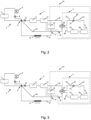
- the thermal management system 1 of a vehicle illustrates a first coolant circuit 2 for a battery 7 and a second coolant circuit 3 for an electric motor 13 for driving the vehicle, as well as a coolant circuit 4 of an air conditioning system, which will not be discussed in more detail below.
- the vehicle can be a battery-electric vehicle (Battery Electric Vehicle (BEV), a hybrid electric vehicle (HEV) or a fuel cell vehicle (FCEV).
- BEV Battery Electric Vehicle
- HEV hybrid electric vehicle
- FCEV fuel cell vehicle
- Such a coolant is a mixture of water with a cooling additive.
- the coolant not only has the task of absorbing and transporting waste heat.
- the cooling additive is intended to protect the water from freezing, protect the two coolant circuits from corrosion, lubricate the moving parts in the two coolant circuits and protect plastic and/or rubber elements in the two coolant circuits from dissolving.
- the electric motor 13 and power electronics 12 should be operated at a coolant or cooling water temperature of approximately 80 to a maximum of 85°C.
- the coolant has a temperature of approximately 55°C at the inlet to the power electronics 12 and a temperature of approximately 65°C at the inlet to the electric motor 13. At the outlet of the electric motor 13, the coolant then has a temperature of approximately 80 to a maximum of 85°C.
- the battery 7 or the battery cells should be operated in a coolant or cooling water temperature window between approx. 20°C and approx. 40°C, as this ensures an optimal operating temperature range for the battery 7.
- the temperature of the battery 7 or the individual battery cells themselves can certainly exceed the temperature threshold of approx. 40°C.
- Both coolant circuits 2, 3 must be able to both absorb and release heat. While the battery coolant circuit 2 has a heat exchanger 6 (also called a chiller; see Fig.
- the electric motor coolant circuit 3 can be cooled compared to the environment via a radiator or cooler 17 and compared to the battery coolant circuit 2 via a multi-way valve 9 described below (also called Coolant Flow Control Valve, in short: CFCV), whereby the multi-way valve 9 forms an interface between the battery coolant circuit 2 and the electric motor coolant circuit 3 and which assumes a corresponding valve position so that the coolant flows of the two coolant circuits 2, 3 can mix with each other as required.
- CFCV Coolant Flow Control Valve
- the battery coolant circuit 2 can also be cooled via the radiator or cooler 17 if the multi-way valve 9 is in the appropriate valve position. However, since the battery coolant should not exceed a temperature of 40 °C, the cooling via the radiator 17 is usually not sufficient, so that heat must be dissipated via the heat exchanger 6.
- a charging device 11 also called a charger
- a temperature sensor (not shown) is provided for regulating the coolant circuits 2, 3.
- a resistance heater (not shown) is also provided in the battery coolant circuit 2 in order to be able to supply electrical heat for a short time.
- the thermal management system 1 can be operated in different modes using the multi-way valve 9.
- the multi-way valve 9 is part of a so-called actuator unit - also called a cooling water valve unit, cooling water control valve unit or cooling water regulating valve unit - which as such also includes a drive unit with an electric actuator and a control unit for controlling the electric actuator.
- the coolant circuit 2 can be connected in series with the coolant circuit 3.
- coolant flows via an inlet or inlet a and an outlet or outlet c from the coolant circuit 3 into the coolant circuit 2 and finally via an inlet or input d and an outlet or output b from the coolant circuit 2 back into the coolant circuit 3.
- This series connection causes rapid heating of the battery coolant circuit 2 by utilizing the waste heat from the electric motor 13 and the power electronics 12.
- the electric motor coolant circuit 3 thus also has the function of a heating circuit.
- UC3 mixed mode M with selective heat recovery
- the multi-way valve 9 is switched to an intermediate position - i.e. a third valve position - in which the coolant flows of the two coolant circuits 2, 3 mix with each other as required.
- Such a mixed mode allows both the coolant temperature of the battery coolant circuit 2 and the coolant temperature of the electric motor coolant circuit 13 to be regulated more precisely.
- large pressure and temperature jumps in the two coolant circuits 2, 3 are avoided, since frequent switching between the series connection mode R and the parallel connection mode P is avoided.
- the multi-way valve 9 is designed as a 5/3-way valve.
- a valve that is located at the level of the Fig. 1 outstanding inflow or inlet e of the 5/3-way valve which as such is fluidically connected via a bypass path 16 to a node 14 (or its outflow a I ) downstream of the electric motor 13, wherein the node 14 is connected to both the bypass path 16 and a parallel Path 15 with a radiator 17 originates.
- the radiator path 15 fluidically connects the node 14 (or its outflow c I ) with the inflow or inlet a of the 5/3-way valve.
- a multi-way valve in the form of a 4/2-way valve could also be used, via which the previously described system modes and valve positions can also be set or controlled.
- the coolant circuit 3 downstream of the electric motor 13 - instead of the previously mentioned node - another multi-way valve in the form of a 3/2-way valve is to be provided, which is fluidically connected to the inflow or inlet a of the 4/2-way valve.
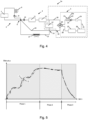
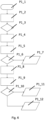
- the thermal management system 1 further comprises an oil cooling system 5a with an oil cooling circuit 5 (cf. Fig. 2, Fig. 3 , Fig. 4 ) for additional cooling of the electric motor 13.
- the oil cooling circuit 5 is thermally connected to the coolant circuit 3 by means of a heat exchanger 20.
- the oil cooling circuit 5 comprises, in addition to part of the heat exchanger 20, the rotor 27 of the electric motor 13 and a gear or reduction and/or transmission gear 26, e.g. in the form of a three-stage gear, which forms an electric motor-gear drive unit with the electric motor 13 (or stator 13 I and rotor 27).
- the oil cooling circuit 5 also comprises an oil pump 23, an oil filter 24 fluidically connected upstream of the oil pump 23 and two temperature sensors 25, 28 (cf. Fig. 2, Fig. 3 , Fig. 4 ).
- stator 13 I of the electric motor 13 is included in the coolant circuit 3, i.e. the stator 13 I is coolant- or water-cooled.
- the waste heat of the electric motor 13 - or stator 13 I and rotor 27 - absorbed by the oil cooling circuit 5 is fed to the coolant circuit 3 via the heat exchanger 20.
- the heat exchanger 20 is arranged fluidically parallel to the coolant- or water-cooled stator 13 I.
- a first supply line 18 leads from a node of the coolant circuit 3 upstream of the stator 13 I to the heat exchanger 20 and a second supply line 19 from the heat exchanger 20 to the said node 14 downstream of the stator 13 I .
- An oil which is also used for lubricating and cooling the gear 26, is conveyed through a shaft of the rotor 27 to at least one outlet point of the rotor 27. From this outlet point, the oil is thrown against the windings of the stator 13 I due to centrifugal force, whereby the oil is distributed over the rotor 27 and also reaches the two bearing points of the rotor shaft. The oil finally flows into an oil pan which is attached to the stator 13 I and which collects it. The oil pump 23 sucks the oil from the oil pan and conveys it.
- the oil cools the electric motor 13 in addition to the coolant of the electric motor coolant circuit by absorbing the waste heat of the stator 13 I and the rotor 27 and at the same time lubricates the aforementioned bearing points of the rotor shaft.
- the oil cooling circuit 5 also includes a monitoring system for monitoring the oil flow.
- the monitoring system includes a pressure sensor 21.
- an additional pressure sensor 22 is proposed in order to be able to determine pressure differences using recorded pressures.
- the two pressure sensors 21, 22 are preferably arranged upstream of the heat exchanger 20 and downstream of the oil pump 23.
- Fig. 3 are the two pressure sensors 21, 22 in contrast to Fig. 2 integral part of a sensor module 20a.
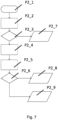
- pressure difference values between the two pressure curves are determined for the individual phases I to III . These pressure difference values are then compared with a predeterminable and phase-related comparison value - also called a threshold value or reference value - for the pressure difference in order to check for an error, whereby an error is detected if the comparison value is exceeded.
- a predeterminable and phase-related comparison value - also called a threshold value or reference value - for the pressure difference in order to check for an error, whereby an error is detected if the comparison value is exceeded.
- phase I Before the oil pump 23 and thus the oil cooling circuit 5 are put into operation or activated - ie before the pressure build-up phase (phase I) is initiated - it is recommended to check for an electrical fault in the monitoring system (or sensor fault), ie for a short circuit or cable break (see steps P1_1 to P1_7 in Fig. 6 ).
- step P1_1, Fig. 6 a minimum time or debounce time must elapse (see step P1_2, Fig. 6 ) to ensure that the oil cooling circuit 5 is at a standstill and the pressure within the oil cooling circuit 5 has been reduced.
- This condition is checked in step P1_3.
- the signals from the pressure sensors 21, 22 are then discretely recorded at at least one point in time and a pressure difference value is determined for this point in time (see step P1_4, Fig. 6 ).
- This pressure difference value is then compared in step P1_5 with a predeterminable first pressure comparison value SW1. If the pressure difference value exceeds the pressure threshold value SW1 in step P1_6, a such electrical faults of the monitoring system (or sensor faults) are detected (see step P1_7, Fig. 6 Otherwise, the monitoring system is faultless.
- step P1_8 the oil pump 23 and thus the oil cooling circuit 5 are put into operation or activated, whereby the pressure build-up phase (phase I) is initiated.
- the signals of the pressure sensors 21, 22 are recorded discretely for at least one pressure stroke of the oil pump 23 - which is a positive displacement pump (see step P1_8, Fig. 6 ).
- Such a pressure stroke during the pressure build-up phase (Phase I) is in Fig. 5 clearly identified.
- at least one pressure difference value is determined (see step P1_8, Fig. 6 ) and the pressure difference value is then compared with a predeterminable, second pressure comparison value SW2 (phase-related comparison value for the pressure difference) (see step P1_9, Fig. 6 ).
- the time until the pressure stroke is reached can also be compared with a predefined time comparison value.
- phase II After initiating the operational phase (Phase II, see step P2_1, Fig. 7 ), which follows the pressure build-up phase (phase I), the signals of the pressure sensors 21, 22 are again recorded discretely, ie at at least one point in time, and a pressure difference value is determined from the two sensor signals for this point in time (see step P2_2, Fig. 7 ).
- This pressure difference value is then compared with a predeterminable third pressure comparison value SW3 (phase-related comparison value for the pressure difference) (see also step P2_2, Fig. 7 ) to check for an electrical fault in the monitoring system (or sensor fault). If the determined pressure difference value exceeds the pressure comparison value SW3 (see step P2_3, Fig. 7 ), such an electrical fault of the monitoring system (or sensor fault) is detected (see step P2_7, Fig. 7 ).
- an average value is calculated from the discretely recorded signals of the two pressure sensors 21, 22 (see step P2_4, Fig. 7 ) and this mean value or pressure mean value is then compared with a predeterminable fourth pressure comparison value (phase-related comparison value for the pressure difference) (see step P2_5, Fig. 7 ) to check for an error in the operating phase (Phase II). If this mean pressure value exceeds the comparison value in step P2_6, such an error in the operating phase (Phase II) is detected (see step P2_8, Fig. 7 ). Otherwise, an error-free operating phase (Phase II) is present (see step P2_9, Fig. 7 ).
- step P3_1, Fig. 8 After deactivation or decommissioning of the oil pump 23 (see step P3_1, Fig. 8 ), with which the pressure reduction phase (phase III) is initiated, the signals of the pressure sensors 21, 22 are again discretely recorded at least once (see step P3_2, Fig. 8 ). A pressure difference value is then determined for this point in time and this pressure difference value is then compared with a predeterminable, fifth pressure comparison value SW5 (phase-related comparison value for the pressure difference) (see also step P3_2, Fig. 8 ) to check for an electrical fault in the monitoring system (or sensor fault). If this pressure difference value exceeds the pressure comparison value in step P3_3, such an electrical fault in the monitoring system (or sensor fault) is detected (see step P3_4, Fig. 8 Otherwise, the monitoring system is faultless.
- SW5 phase-related comparison value for the pressure difference
- a pressure drop is monitored by switching off the pressure sensor after a preset time or debounce time (see step P3_5, Fig. 8 ) regarding the initiation of the pressure reduction phase (phase III), the two discretely recorded pressures or pressure sensor values are compared with a predeterminable target value related to the debounce time (sixth pressure comparison value SW6; phase-related comparison value for the pressure difference) in order to check for an error in the pressure reduction phase (phase III). If this target value is exceeded (see step P3_7, Fig. 8 ), is transferred to a such errors are detected in the pressure reduction phase (Phase III) (see step P3_8, Fig. 8 ). Otherwise, the pressure reduction phase (Phase III) is error-free (see step P3_9, Fig. 8 ).
- phase-related comparison values mentioned above can vary depending on the phase, i.e. be phase-specific.
Landscapes
- Engineering & Computer Science (AREA)
- Mechanical Engineering (AREA)
- Chemical & Material Sciences (AREA)
- Combustion & Propulsion (AREA)
- Transportation (AREA)
- Physics & Mathematics (AREA)
- Thermal Sciences (AREA)
- Power Engineering (AREA)
- Electric Propulsion And Braking For Vehicles (AREA)
- Motor Or Generator Cooling System (AREA)
Description
- Die Erfindung betrifft ein Thermomanagementsystem für ein Fahrzeug. Die Erfindung betrifft ferner ein Fahrzeug mit einem solchen Thermomanagementsystem.
- Unter einem Fahrzeug ist dabei jede Art von Fahrzeug zu verstehen, welches eine zu temperierende Batterie sowie einen zu temperierenden Elektromotor bzw. E-Motor zum Antrieb des Fahrzeugs umfasst. Die Batterie kann dabei luftgekühlt und/oder kühlmittel- bzw. kühlflüssigkeits- bzw. wassergekühlt sein. Der E-Motor hingegen kann dabei entweder nur ölgekühlt oder sowohl kühlmittel- bzw. kühlflüssigkeits- bzw. wassergekühlt als auch ölgekühlt sein. Dabei kann es sich um ein teilelektrisches oder vollelektrisches Fahrzeug handeln, insbesondere aber um Personenkraftwagen und/oder Nutzfahrzeuge.
- Aus der
EP 2392486 B1 ist ein Thermomanagementsystem bekannt, welches einen ersten Kühlmittelkreis zur Temperierung einer Batterie und einen zweiten Kühlmittelkreis zur Temperierung eines Elektromotors und einer Leistungselektronik aufweist. - Aus der
DE 102017107384 A1 ist ein Fahrzeugdiagnosesystem für eine Frontkühleinheit bekannt. - Aus der
DE 102018002072 A1 ist ein System zur Überwachung eines Gasbehälters bekannt. - Aus der
DE 102017006366 A1 ist ein Ölkühlkreislauf zur Kühlung eines Elektromotors eines Fahrzeugs bekannt. - Eine der Erfindung zugrunde liegende Aufgabe ist es, ein solches Thermomanagementsystem zu verbessern.
- Diese Aufgabe wird durch ein gemäß Anspruch 1 unter Schutz gestelltes Thermomanagementsystem gelöst. Vorteilhafte Ausführungsformen der Erfindung sind Gegenstand der Unteransprüche.
- Im Weiteren wird die Erfindung unter Bezugnahme auf Figurendarstellungen im Einzelnen erläutert. Aus den Unteransprüchen und der nachfolgenden Beschreibung bevorzugter Ausführungen ergeben sich weitere vorteilhafte Weiterbildungen der Erfindung. Hierzu zeigen:
- Fig. 1
- ein Thermomanagementsystem in einer vorgeschlagenen ersten Ausgestaltung,
- Fig. 2
- das in
Fig. 1 gezeigte Thermomanagementsystem in Verbindung mit einem Ölkühlkreis in einer ersten Ausgestaltung, - Fig. 3
- das in
Fig. 1 gezeigte Thermomanagementsystem in Verbindung mit einem Ölkühlkreis in einer zweiten Ausgestaltung, - Fig. 4
- das in
Fig. 1 gezeigte Thermomanagementsystem in Verbindung mit einem Ölkühlkreis in einer dritten Ausgestaltung, - Fig. 5
- Öl-Druckverläufe korrespondierend zu verschiedenen Phasen des Ölkühlkreises,
- Fig. 6
- ein erstes Flussdiagramm korrespondierend zu einer vorgeschlagenen Überwachung des Ölkühlkreises in einer Druckaufbauphase,
- Fig. 7
- ein zweites Flussdiagramm korrespondierend zu einer vorgeschlagenen Überwachung des Ölkühlkreises in einer Betriebsphase sowie
- Fig. 8
- ein drittes Flussdiagramm korrespondierend zu einer vorgeschlagenen Überwachung des Ölkühlkreises in einer Druckabbauphase.
- Das Thermomanagementsystem 1 eines Fahrzeugs nach
Fig. 1 veranschaulicht einen ersten Kühlmittelkreis 2 für eine Batterie 7 und einen zweiten Kühlmittelkreis 3 für einen E-Motor 13 zum Antrieb des Fahrzeugs, sowie einen Kältemittelkreis 4 einer Klimaanlage, auf den aber im Folgenden nicht näher eingegangen wird. Bei dem Fahrzeug kann es sich dabei um ein batterieelektrisches Fahrzeug (Battery Electric Vehicle, kurz: BEV), ein Hybridelektrokraftfahrzeug (Hybrid Electric Vehicle, kurz: HEV) oder ein Brennstoffzellenfahrzeug (Fuel Cell Electric Vehicle, kurz: FCEV) handeln. Diese drei Kühlkreise 2, 3, 4 verschmelzen dabei gewissermaßen miteinander. In den beiden Kühlmittelkreisen 2, 3 wird die jeweilige Kühlflüssigkeit mittels einer eigenen elektrischen Pumpe 8, 10 gefördert. - Unter einer solchen Kühlflüssigkeit ist dabei eine Mischung von Wasser mit einem Kühlzusatzmittel zu verstehen. Die Kühlflüssigkeit hat dabei nicht nur die Aufgabe, Abwärme aufzunehmen und zu transportieren. Das Kühlzusatzmittel soll dabei das Wasser vor dem Durchfrieren schützen, die beiden Kühlmittelkreise vor Korrosion schützen, die beweglichen Teile in den beiden Kühlmittelkreisen schmieren sowie Kunststoff- und/oder Gummielemente in den beiden Kühlmittelkreisen vor Auflösung schützen.
- Der E-Motor 13 und eine Leistungselektronik 12 sollen bei einer Kühlflüssigkeits- bzw. Kühlwassertemperatur von ca. 80 bis maximal 85°C betrieben werden. Dabei hat die Kühlflüssigkeit am Eingang in die Leistungselektronik 12 eine Temperatur von etwa 55°C und am Eingang in den E-Motor 13 eine Temperatur von etwa 65°C. Am Ausgang des E-Motors 13 hat die Kühlflüssigkeit dann eine Temperatur von ca. 80 bis maximal 85°C.
- Die Batterie 7 bzw. die Batteriezellen hingegen sollen in einem Kühlflüssigkeits- bzw. Kühlwassertemperaturfenster zwischen ca. 20°C und ca. 40 °C betrieben werden, denn dies stellt einen optimalen Betriebstemperaturbereich der Batterie 7 sicher. Die Temperatur der Batterie 7 bzw. der einzelnen Batteriezellen selbst kann dabei die Temperaturschwelle von ca. 40°C durchaus überschreiten. Beide Kühlmittelkreise 2, 3 müssen Wärme sowohl aufnehmen als auch abgeben können. Während der Batteriekühlmittelkreis 2 über einen Wärmetauscher 6 (auch Chiller genannt; vgl.
Fig. 1 ) gegenüber dem Kältemittelkreis 4 entwärmt wird, kann der E-Motorkühlmittelkreis 3 über einen Radiator bzw. Kühler 17 gegenüber der Umgebung entwärmt werden sowie gegenüber dem Batteriekühlmittelkreis 2 über ein im Folgenden beschriebenes Mehrwegeventil 9 (auch Coolant Flow Control Valve genannt, kurz: CFCV), wobei das Mehrwegeventil 9 eine Schnittstelle zwischen dem Batteriekühlmittelkreis 2 und dem E-Motorkühlmittelkreis 3 darstellt und welches dazu eine entsprechende Ventilstellung einnimmt, so dass sich die Kühlflüssigkeitsströme der beiden Kühlmittelkreise 2, 3 miteinander bedarfsgerecht vermischen können. - Die Entwärmung des Batteriekühlmittelkreises 2 kann auch bei einer entsprechenden Ventilstellung des Mehrwegeventils 9 über den Radiator bzw. Kühler 17 erfolgen. Da aber die Batteriekühlflüssigkeit eine Temperatur von 40 °C nicht überschreiten soll, reicht meist die Entwärmung über den Radiator 17 nicht aus, so dass Wärme über den Wärmtauscher 6 abgeführt werden muss. Im E-Motorkühlmittelkreis 3 ist neben dem E-Motor 13 und der Leistungselektronik 12 auch noch ein Ladegerät 11 (auch Charger genannt) zu kühlen. Zur Regelung der Kühlmittelkreise 2, 3 ist je ein - nicht dargestellter - Temperatursensor vorgesehen. Im Batteriekühlmittelkreis 2 ist ferner ein - nicht dargestellter - Widerstandsheizer vorgesehen, um kurzfristig elektrisch Wärme zuführen zu können.
- Mittels des Mehrwegeventils 9 lässt sich das Thermomanagementsystem 1 in unterschiedlichen Modi betreiben. Das Mehrwegeventil 9 ist dabei Teil einer sog. Aktuatoreinheit - auch Kühlwasserventileinheit, Kühlwassersteuerventileinheit oder Kühlwasserregelventileinheit genannt -, die als solche auch eine Antriebseinheit mit einem Elektrostellmotor sowie eine Steuereinheit zur Steuerung des Elektrostellmotors umfasst.
- In Sachen dieser Modi wird der Vollständigkeit halber auf die deutsche Patentanmeldung mit dem Aktenzeichen 10 2019 210 577.7 verwiesen, die darauf detailliert eingeht.
- In einem ersten Modus des Systems (Use Case 1, kurz: UC1 = Reihenschaltung R mit maximaler Wärmerückgewinnung) und in einer ersten Ventilstellung des Mehrwegeventils 9 lässt sich der Kühlmittelkreis 2 in Reihe zum Kühlmittelkreis 3 schalten. Dabei strömt bezüglich des Mehrwegeventils 9 Kühlflüssigkeit über einen Zufluss bzw. Eingang a und einen Abfluss bzw. Ausgang c vom Kühlmittelkreis 3 in den Kühlmittelkreis 2 und schließlich über einen Zufluss bzw. Eingang d und einen Abfluss bzw. Ausgang b vom Kühlmittelkreis 2 zurück in den Kühlmittelkreis 3.
- Diese Reihenschaltung bewirkt eine schnelle Erwärmung des Batteriekühlmittelkreises 2 unter Ausnutzung der Abwärme des E-Motors 13 sowie der Leistungselektronik 12. Der E-Motorkühlmittelkreis 3 hat somit auch die Funktion eines Heizkreises.
- In einem zweiten Modus des Systems (Use Case 2, kurz: UC2 = Parallelschaltung P mit Überhitzungsschutz) und in einer zweiten Ventilstellung des Mehrwegeventils 9 lässt sich der Kühlmittelkreis 2 parallel zum Kühlmittelkreis 3 schalten, so dass die beiden Kühlmittelkreise 2, 3 fluidisch voneinander getrennt sind. Diese Trennung schützt die Batterie 7 vor einer Überhitzung.
- Darüber hinaus wird auch ein dritter Modus des Systems (Use Case 3, kurz: UC3 = Mischmodus M mit selektiver Wärmerückgewinnung) vorgeschlagen, in welchem das Mehrwegeventil 9 in eine Zwischenstellung - d.h. eine dritte Ventilstellung - geschaltet ist, in welcher sich die Kühlflüssigkeitsströme der beiden Kühlmittelkreise 2, 3 miteinander bedarfsweise vermischen.
- Durch einen solchen Mischmodus lässt sich sowohl die Kühlflüssigkeitstemperatur des Batteriekühlmittelkreises 2 als auch die Kühlflüssigkeitstemperatur des E-Motorkühlmittelkreises 13 genauer regeln. Es unterbleiben dabei vorteilhafterweise hohe Druck- und Temperatursprünge in den beiden Kühlmittelkreisen 2, 3, da ein häufiges Umschalten zwischen dem Reihenschaltungsmodus R und dem Parallelschaltungsmodus P unterbleibt.
- In der hier vorgeschlagenen Ausführung (vgl. z.B.
Fig. 1 ) ist das Mehrwegeventil 9 in Gestalt eines 5/3-Wegeventils ausgebildet. Dabei muss man sich auch einen aus der Ebene derFig. 1 herausragenden Zufluss bzw. Eingang e des 5/3-Wegeventils vorstellen, der als solcher über einen Bypass-Pfad 16 mit einem Knotenpunkt 14 (bzw. dessen Abfluss aI) stromabwärts des E-Motors 13 fluidisch verbunden ist, wobei dem Knotenpunkt 14 sowohl der Bypass-Pfad 16 als auch ein dazu paralleler Pfad 15 mit einem Radiator 17 entspringt. Der Radiatorpfad 15 verbindet den Knotenpunkt 14 (bzw. dessen Abfluss cI) fluidisch mit dem Zufluss bzw. Eingang a des 5/3-Wegeventils. - Anstelle des besagten 5/3-Wegeventils ließe sich auch ein Mehrwegeventil in Gestalt eines 4/2-Wegeventils verwenden, über welches sich die zuvor beschriebenen Systemmodi und Ventilstellungen ebenfalls einstellen bzw. ansteuern lassen. Dabei ist im Kühlmittelkreis 3 stromabwärts des E-Motors 13 - anstelle des zuvor genannten Knotenpunktes - ein weiteres Mehrwegeventil in Gestalt eines 3/2-Wegeventils vorzusehen, welches mit dem Zufluss bzw. Eingang a des 4/2-Wegeventils fluidisch verbunden ist.
- In Sachen dieser alternativen Ausgestaltung wird der Vollständigkeit halber ebenfalls auf die deutsche Patentanmeldung mit dem Aktenzeichen
10 2019 210 577.7 verwiesen, die darauf detailliert eingeht. - Das Thermomanagementsystem 1 umfasst ferner ein Ölkühlsystem 5a mit einem Ölkühlkreis 5 (vgl.
Fig. 2, Fig. 3 ,Fig. 4 ) zur zusätzlichen Kühlung des E-Motors 13. Der Ölkühlkreis 5 ist dabei mittels eines Wärmetauschers 20 an den Kühlmittelkreis 3 thermisch angebunden. Der Ölkühlkreis 5 umfasst neben einem Teil des Wärmetauschers 20 den Rotor 27 des E-Motors 13 sowie ein Getriebe bzw. Untersetzungs- und/oder Übersetzungsgetriebe 26, z.B. in Gestalt eines dreistufigen Getriebes, welches mit dem E-Motor 13 (bzw. Stator 13I und Rotor 27), eine E-Motor-Getriebe-Antriebseinheit bildet. Der Ölkühlkreis 5 umfasst ferner eine Ölpumpe 23, einen der Ölpumpe 23 fluidisch vorgeschalteten Ölfilter 24 sowie zwei Temperatursensoren 25, 28 (vgl.Fig. 2, Fig. 3 ,Fig. 4 ). - Der Stator 13I des E-Motors 13 hingegen ist vom Kühlmittelkreis 3 umfasst, d.h., dass der Stator 13I kühlflüssigkeits- bzw. wassergekühlt ist.
- Über den Wärmetauscher 20 wird die vom Ölkühlkreis 5 aufgenommene Abwärme des E-Motors 13 - bzw. Stators 13I und Rotors 27 - dem Kühlmittelkreis 3 zugeführt. Dabei ist der Wärmetauscher 20 fluidisch parallel zum kühlflüssigkeits- bzw. wassergekühlten Stator 13I angeordnet.
- Eine erste Zuleitung 18 führt dabei von einem Knotenpunkt des Kühlmittelkreises 3 stromaufwärts des Stators 13I zum Wärmetauscher 20 und eine zweite Zuleitung 19 vom Wärmetauscher 20 zum besagten Knotenpunkt 14 stromabwärts des Stators 13I.
- Durch eine Welle des Rotors 27 wird ein Öl, welches auch zur Schmierung und Kühlung des Getriebes 26 verwendet wird, bis zu mindestens einer Austrittsstelle des Rotors 27 gefördert. Von dieser Austrittsstelle wird das Öl fliehkraftbedingt gegen die Wicklungen des Stators 13I geschleudert, wobei sich das Öl über den Rotor 27 verteilt und dabei auch bis zu den beiden Lagerstellen der Rotorwelle gelangt. Das Öl fließt schließlich bis in eine Ölwanne, die am Stator 13I angebracht ist und von der es aufgenommen wird. Die Ölpumpe 23 saugt das Öl aus der Ölwanne an und fördert es.
- Das Öl kühlt dabei den E-Motor 13 zusätzlich zur Kühlflüssigkeit des E-Motorkühlmittelkreises, indem es die Abwärme des Stators 13I und des Rotors 27 aufnimmt, und schmiert zugleich die besagten Lagerstellen der Rotorwelle.
- Der Ölkühlkreis 5 umfasst zudem ein Überwachungssystem zur Überwachung des Ölflusses. Das Überwachungssystem umfasst dabei einen Drucksensor 21. Erfindunngsgemäß wird ein zusätzlicher Drucksensor 22 vorgeschlagen, um mittels erfasster Drücke Druckdifferenzen ermitteln zu können. Durch die Verwendung der beiden Drucksensoren 21, 22 lassen sich die Kosten eines solchen Überwachungssystems signifikant reduzieren. Dabei wird vorgeschlagen, die beiden Drucksensoren 21, 22 vorzugsweise stromaufwärts des Wärmetauschers 20 und stromabwärts der Ölpumpe 23 anzuordnen. In
Fig. 3 sind die beiden Drucksensoren 21, 22 im Unterschied zurFig. 2 integraler Bestandteil eines Sensormoduls 20a. -
Fig. 5 veranschaulicht mittels der beiden Drucksensoren 21, 22 erfasste Druckverläufe korrespondierend zum Ölfluss im Ölkühlkreis 5 in drei aufeinanderfolgenden Phasen, und zwar: - in einer Druckaufbauphase (Phase I),
- in einer Betriebsphase (Phase II), welche auf die Druckaufbauphase folgt, und
- in einer Druckabbauphase (Phase III), welche auf die Betriebsphase folgt.
- Zur Überwachung des Ölflusses werden dabei bezüglich der einzelnen Phasen I bis III Druck-Differenzwerte zwischen den beiden Druckverläufen ermittelt. Diese Druck-Differenzwerte werden dann mit einem vorgebbaren und phasenbezogenen Vergleichswert - auch Schwellwert bzw. Referenzwert genannt - für die Druck-Differenz verglichen, um auf einen Fehler zu überprüfen, wobei bei einer Überschreitung des Vergleichswertes auf einen Fehler erkannt wird.
- Noch bevor die Ölpumpe 23 und somit der Ölkühlkreis 5 in Betrieb genommen bzw. aktiviert wird - d.h. noch vor Einleitung der Druckaufbauphase (Phase I) -, wird vorgeschlagen, auf einen elektrischen Fehler des Überwachungssystems (bzw. Sensorfehler), d.h. z.B. auf einen Kurzschluss oder Kabelbruch zu überprüfen (vgl. dazu die Schritte P1_1 bis P1_7 in
Fig. 6 ). - Dazu lässt man ab dem Zeitpunkt der Einleitung dieser Überprüfung (vgl. Schritt P1_1,
Fig. 6 ) eine Mindestzeit bzw. Entprellzeit verstreichen (vgl. Schritt P1_2,Fig. 6 ), um sicherzustellen, dass der Ölkühlkreis 5 stillsteht und der Druck innerhalb des Ölkühlkreises 5 abgebaut ist. Im Schritt P1_3 wird diese Bedingung überprüft. Danach werden die Signale der Drucksensoren 21, 22 zu mindestens einem Zeitpunkt diskret erfasst und für diesen Zeitpunkt ein Druckdifferenzwert ermittelt (vgl. Schritt P1_4,Fig. 6 ). Dieser Druckdifferenzwert wird dann im Schritt P1_5 mit einem vorgebbaren, ersten Druck-Vergleichswert SW1 verglichen. Überschreitet der Druckdifferenzwert den Druck-Schwellwert SW1 in Schritt P1_6, so wird auf einen solchen elektrischen Fehler des Überwachungssystems (bzw. Sensorfehler) erkannt (vgl. Schritt P1_7,Fig. 6 ). Andernfalls liegt ein fehlerfreies Überwachungssystem vor. - In Schritt P1_8 wird die Ölpumpe 23 und somit der Ölkühlkreis 5 in Betrieb genommen bzw. aktiviert, wodurch die Druckaufbauphase (Phase I) eingeleitet wird. Dabei werden die Signale der Drucksensoren 21, 22 zu mindestens einem Druckhub der Ölpumpe 23 - bei der es sich um eine Verdränger-Pumpe handelt - diskret erfasst (vgl. Schritt P1_8,
Fig. 6 ). Ein solcher Druckhub während der Druckaufbauphase (Phase I) ist inFig. 5 eindeutig zu erkennen. Alsdann wird zumindest ein Druck-Differenzwert ermittelt (vgl. Schritt P1_8,Fig. 6 ) und der Druck-Differenzwert dann mit einem vorgebbaren, zweiten Druck-Vergleichswert SW2 (phasenbezogener Vergleichswert für die Druck-Differenz) verglichen (vgl. Schritt P1_9,Fig. 6 ). Zusätzlich dazu kann auch die Zeit bis zum Erreichen des Druckhubs mit einem vorgebbaren Zeit-Vergleichswert verglichen werden. - Für den Fall, dass der ermittelte Druckdifferenzwert einerseits sowie ggf. auch der ermittelte Zeitwert andererseits den jeweils zugeordneten Vergleichswert überschreiten (vgl. Schritt P1_10,
Fig. 6 ), wird auf einen solchen Fehler in der Druckaufbauphase (Phase I) erkannt (vgl. Fehlerausgabe in Schritt P1_11,Fig. 6 ). Andernfalls liegt eine fehlerfreie Druckaufbauphase (Phase I) vor (vgl. Schritt P1_12,Fig. 6 ). - Nach einer Einleitung der Betriebsphase (Phase II, vgl. Schritt P2_1,
Fig. 7 ), die auf die Druckaufbauphase (Phase I) folgt, werden die Signale der Drucksensoren 21, 22 erneut diskret, d.h. zu mindestens einem Zeitpunkt erfasst und für diesen Zeitpunkt ein Druckdifferenzwert aus den beiden Sensorsignalen ermittelt (vgl. Schritt P2_2,Fig. 7 ). Dieser Druckdifferenzwert wird dann mit einem vorgebbaren, dritten Druck-Vergleichswert SW3 (phasenbezogener Vergleichswert für die Druck-Differenz) verglichen (vgl. auch Schritt P2_2,Fig. 7 ), um auf einen elektrischen Fehler des Überwachungssystems (bzw. Sensorfehler) zu überprüfen. Überschreit der ermittelte Druckdifferenzwert den Druck-Vergleichswert SW3 (vgl. Schritt P2_3,Fig. 7 ), so wird auf einen solchen elektrischen Fehler des Überwachungssystems (bzw. Sensorfehler) erkannt (vgl. Schritt P2_7,Fig. 7 ). - Im Anschluss daran wird aus den diskret erfassten Signalen der beiden Drucksensoren 21, 22 ein Mittelwert gebildet (vgl. Schritt P2_4,
Fig. 7 ) und dieser Mittelwert bzw. Druckmittelwert dann mit einem vorgebbaren, vierten Druck-Vergleichswert (phasenbezogener Vergleichswert für die Druck-Differenz) verglichen (vgl. Schritt P2_5,Fig. 7 ), um auf einen Fehler in der Betriebsphase (Phase II) zu überprüfen. Überschreitet dieser Druckmittelwert in Schritt P2_6 den Vergleichswert, so wird auf einen solchen Fehler in der Betriebsphase (Phase II) erkannt (vgl. Schritt P2_8,Fig. 7 ). Andernfalls liegt eine fehlerfreie Betriebsphase (Phase II) vor (vgl. Schritt P2_9,Fig. 7 ). - Nach einer Deaktivierung bzw. Außerbetriebnahme der Ölpumpe 23 (vgl. Schritt P3_1,
Fig. 8 ), mit welcher die Druckabbauphase (Phase III) eingeleitet wird, werden die Signale der Drucksensoren 21, 22 zu mindestens einem Zeitpunkt erneut diskret erfasst (vgl. Schritt P3_2,Fig. 8 ). Alsdann wird für diesen Zeitpunkt ein Druck-Differenzwert ermittelt und dieser Druck-Differenzwert dann mit einem vorgebbaren, fünften Druck-Vergleichswert SW5 (phasenbezogener Vergleichswert für die Druck-Differenz) verglichen (vgl. auch Schritt P3_2,Fig. 8 ), um auf einen elektrischen Fehler des Überwachungssystems (bzw. Sensorfehler) zu überprüfen. Überschreitet dieser Druck-Differenzwert in Schritt P3_3 den Druck-Vergleichswert, wird auf einen solchen elektrischen Fehler des Überwachungssystems (bzw. Sensorfehler) erkannt (vgl. Schritt P3_4,Fig. 8 ). Andernfalls liegt ein fehlerfreies Überwachungssystem vor. - Danach wird ein Druckabfall überwacht, indem nach einer vorgebbaren Zeit bzw. Entprellzeit (vgl. Schritt P3_5,
Fig. 8 ) bezüglich der Einleitung der Druckabbauphase (Phase III) die beiden diskret erfassten Drücke bzw. Drucksensorwerte mit einem vorgebbaren, auf die Entprellzeit bezogenen Zielwert (sechster Druck-Vergleichswert SW6; phasenbezogener Vergleichswert für die Druck-Differenz) verglichen werden, um auf einen Fehler in der Druckabbauphase (Phase III) zu überprüfen. Wird dieser Zielwert überschritten (vgl. Schritt P3_7,Fig. 8 ), wird auf einen solchen Fehler in der Druckabbauphase (Phase III) erkannt (vgl. Schritt P3_8,Fig. 8 ). Andernfalls liegt eine fehlerfreie Druckabbauphase (Phase III) vor (vgl. Schritt P3_9,Fig. 8 ). - In Bezug auf die einzelnen Phasen I, II, III wird vorgeschlagen, die Drucksensorwerte z.B. alle 10 bis 100ms zu erfassen. Die zuvor genannten phasenbezogenen Vergleichswerte können dabei phasenbezogen variieren, d.h. phasenspezifisch sein.
- Obwohl in der vorhergehenden Beschreibung exemplarische Ausführungen erläutert werden, sei darauf hingewiesen, dass eine Vielzahl von Abwandlungen im Rahmen des nur durch die beigefügten Ansprüche definierten Schutzbereichs möglich ist. Außerdem sei darauf hingewiesen, dass es sich bei den exemplarischen Ausführungen lediglich um Beispiele handelt, die den Schutzbereich, die Anwendungen und den Aufbau in keiner Weise einschränken sollen. Vielmehr wird dem Fachmann durch die vorausgehende Beschreibung ein Leitfaden für die Umsetzung von mindestens einer exemplarischen Ausführung gegeben, wobei diverse Änderungen, insbesondere im Hinblick auf die Funktion und Anordnung der beschriebenen Bestandteile, vorgenommen werden können, ohne den Schutzbereich (NUR durch die beigefügten Ansprüche definiert) zu verlassen.
Claims (7)
- Thermomanagementsystem für ein Fahrzeug mit einer zu temperierenden Batterie (7) und einem zu temperierenden Elektromotor (13, 13I, 27) zum Antrieb des Fahrzeug, wobei der Elektromotor (13, 13I, 27) zumindest ölgekühlt ist, wobei das Thermomanagementsystem ein Überwachungssystem zur Überwachung eines mittels einer Ölpumpe (23) erzeugten Ölflusses in einem den Elektromotor (13, 13I, 27) umfassenden Ölkühlkreis (5) aufweist, wobei das Überwachungssystem an einer ersten Stelle des Ölkühlkreises einen ersten Drucksensor (21) und an einer zweiten Stelle des Ölkühlkreises einen zweiten Drucksensor (22) aufweist, um mittels erfasster Drücke Druckdifferenzen zu ermitteln und diese Druckdifferenzen mit einem vorgebbaren und phasenbezogenen Vergleichswert für die Druckdifferenz zu vergleichen und dabei auf einen Fehler zu überprüfen, wobei bei einer Überschreitung des Vergleichswertes auf einen Fehler erkannt wird.
- Thermomanagementsystem (1) nach Anspruch 1, wobei der Stator (13I) des Elektromotors (13) von einem Kühlmittelkreis (3) umfasst ist, wohingegen der Rotor (27) des Elektromotors (13) vom Ölkühlkreis (5) umfasst ist, wobei der Ölkühlkreis (5) über einen Wärmetauscher (20) an den Kühlmittelkreis (3) thermisch angebunden ist.
- Thermomanagementsystem (1) nach Anspruch 1 oder 2, wobei der erste Drucksensor (21) und der zweite Drucksensor (22) stromaufwärts eines/des Wärmetauschers (20) und stromabwärts der Ölpumpe (23) angeordnet sind.
- Thermomanagementsystem (1) nach Anspruch 2 oder 3, wobei der Wärmetauscher (20) fluidisch parallel zum kühlmittelgekühlten Stator (13I) angeordnet ist.
- Thermomanagementsystem (1) nach Anspruch 4, wobei eine erste Zuleitung (18) von einem Knotenpunkt des Kühlmittelkreises (3) stromaufwärts des Stators (13I) zum Wärmetauscher (20) führt und eine zweite Zuleitung (19) vom Wärmetauscher (20) zu einem Knotenpunkt (18) des Kühlmittelkreises (3) stromabwärts des Stators (13I).
- Fahrzeug mit einem Thermomanagementsystem (1) nach einem der Ansprüche 1 bis 5.
- Verwendung eines ersten Drucksensors (21) an einer ersten Stelle eines Ölkühlkreises (5) und eines zweiten Drucksensors (22) an einer zweiten Stelle des Ölkühlkreises (5) zur Überwachung eines mittels der Ölpumpe (23) erzeugten Ölflusses in einem einen Elektromotor (13, 13I, 27) umfassenden Ölkühlkreis (5) eines Thermomanagementsystems nach einem der vorhergehenden Ansprüche 1 bis 5, wobei mittels erfasster Drücke Druckdifferenzen ermittelt werden, wobei diese Druckdifferenzen mit einem vorgebbaren und phasenbezogenen Vergleichswert für die Druckdifferenz verglichen werden, um auf einen Fehler zu überprüfen, wobei bei einer Überschreitung des Vergleichswertes auf einen Fehler erkannt wird.
Applications Claiming Priority (2)
| Application Number | Priority Date | Filing Date | Title |
|---|---|---|---|
| DE102019214079.3A DE102019214079A1 (de) | 2019-09-16 | 2019-09-16 | Thermomanagementsystem und Fahrzeug |
| PCT/EP2020/074834 WO2021052786A1 (de) | 2019-09-16 | 2020-09-04 | Thermomanagementsystem und fahrzeug |
Publications (2)
| Publication Number | Publication Date |
|---|---|
| EP4031393A1 EP4031393A1 (de) | 2022-07-27 |
| EP4031393B1 true EP4031393B1 (de) | 2025-01-08 |
Family
ID=72381100
Family Applications (1)
| Application Number | Title | Priority Date | Filing Date |
|---|---|---|---|
| EP20767799.8A Active EP4031393B1 (de) | 2019-09-16 | 2020-09-04 | Thermomanagementsystem und fahrzeug |
Country Status (5)
| Country | Link |
|---|---|
| US (1) | US12240289B2 (de) |
| EP (1) | EP4031393B1 (de) |
| CN (1) | CN114206651B (de) |
| DE (1) | DE102019214079A1 (de) |
| WO (1) | WO2021052786A1 (de) |
Families Citing this family (7)
| Publication number | Priority date | Publication date | Assignee | Title |
|---|---|---|---|---|
| US11506306B2 (en) * | 2019-09-17 | 2022-11-22 | Ford Global Technologies, Llc | Thermal management system for electrified vehicle |
| JP7831103B2 (ja) * | 2022-04-01 | 2026-03-17 | マツダ株式会社 | 電動車両用冷却システム |
| DE102022205000A1 (de) * | 2022-05-19 | 2023-11-23 | Vitesco Technologies GmbH | Verfahren zum Betrieb eines Ölkühlkreislaufs, Computerprogramm, Computerprogrammprodukt, Ölkühlkreislauf und Fahrzeug |
| JP7741030B2 (ja) * | 2022-06-03 | 2025-09-17 | 株式会社クボタ | 作業車 |
| JP7770255B2 (ja) * | 2022-06-03 | 2025-11-14 | 株式会社クボタ | 作業車 |
| JP7770994B2 (ja) * | 2022-06-03 | 2025-11-17 | 株式会社クボタ | 作業車 |
| CN115027205B (zh) * | 2022-06-21 | 2024-05-14 | 智己汽车科技有限公司 | 一种整车热管理系统 |
Family Cites Families (23)
| Publication number | Priority date | Publication date | Assignee | Title |
|---|---|---|---|---|
| JP2000186553A (ja) * | 1998-12-24 | 2000-07-04 | Aisin Seiki Co Ltd | 車両用冷却装置 |
| JP3886697B2 (ja) | 1999-04-27 | 2007-02-28 | アイシン・エィ・ダブリュ株式会社 | 駆動装置 |
| DE19956893A1 (de) | 1999-11-26 | 2001-05-31 | Daimler Chrysler Ag | Kühlkreis für einen Verbrennungsmotor |
| DE10155387A1 (de) * | 2001-11-10 | 2003-05-22 | Bosch Gmbh Robert | Proportionalventil |
| US7395803B2 (en) * | 2006-11-03 | 2008-07-08 | Ford Global Technologies, Llc | Electric oil pump system and controls for hybrid electric vehicles |
| JP5014358B2 (ja) * | 2009-01-28 | 2012-08-29 | 日立建機株式会社 | 走行減速機用潤滑油の冷却装置 |
| US8080909B2 (en) * | 2009-05-19 | 2011-12-20 | Ford Global Technologies, Llc | Cooling system and method for an electric motor |
| DE102010008021A1 (de) * | 2010-02-08 | 2011-08-11 | Dr. Ing. h.c. F. Porsche Aktiengesellschaft, 70435 | Ölkühlsystem eines Hybridfahrzeugs |
| US8336319B2 (en) * | 2010-06-04 | 2012-12-25 | Tesla Motors, Inc. | Thermal management system with dual mode coolant loops |
| US8432074B2 (en) * | 2010-08-23 | 2013-04-30 | Remy Technologies, L.L.C. | Disk style centrifugal pump |
| FR2973743A1 (fr) | 2011-04-06 | 2012-10-12 | Peugeot Citroen Automobiles Sa | Vehicule hybride muni d'un systeme de regulation thermique des chaines de traction |
| KR20130124789A (ko) * | 2012-05-07 | 2013-11-15 | 현대자동차주식회사 | 연료전지 차량의 냉각계 수위 감지 장치 및 방법 |
| US9844995B2 (en) * | 2015-04-28 | 2017-12-19 | Atieva, Inc. | EV muti-mode thermal control system |
| PL3465889T3 (pl) * | 2016-06-07 | 2021-10-25 | Tesla, Inc. | Zabezpieczenie przed wyładowaniem rotora silnika elektrycznego |
| SE541765C2 (en) * | 2016-07-13 | 2019-12-10 | Scania Cv Ab | An oil system for lubrication and cooling in a vehicle driven at least partly by an electrical machine |
| WO2018064054A1 (en) * | 2016-09-27 | 2018-04-05 | Rivian Automotive, LLC | Electric vehicle thermal management system with battery heat storage |
| JP6686839B2 (ja) * | 2016-10-17 | 2020-04-22 | トヨタ自動車株式会社 | 車両用冷却システム |
| CN106525107A (zh) * | 2016-11-23 | 2017-03-22 | 江苏四五安全科技有限公司 | 一种通过仲裁方式鉴定传感器失效的方法 |
| SE1750379A1 (de) * | 2017-03-30 | 2018-10-01 | ||
| DE102017107384B4 (de) * | 2017-04-06 | 2019-03-07 | Otto Altmann | Fahrzeugdiagnosesystem für Frontkühleinheiten, Kraftfahrzeug mit einem solchen Fahrzeugdiagnosesystem und Fahrzeugdiagnoseverfahren für Frontkühleinheiten |
| JP6630385B2 (ja) * | 2018-02-21 | 2020-01-15 | 本田技研工業株式会社 | 駆動装置の冷却構造 |
| RU182694U1 (ru) * | 2018-03-23 | 2018-08-28 | Акционерное общество "ВНИКТИ" | Система охлаждения двигателя внутреннего сгорания |
| CN109910592A (zh) * | 2019-04-09 | 2019-06-21 | 冯志成 | 一种混合动力车辆集成散热的冷却系统及其控制方法 |
-
2019
- 2019-09-16 DE DE102019214079.3A patent/DE102019214079A1/de not_active Ceased
-
2020
- 2020-09-04 US US17/641,962 patent/US12240289B2/en active Active
- 2020-09-04 WO PCT/EP2020/074834 patent/WO2021052786A1/de not_active Ceased
- 2020-09-04 CN CN202080056835.2A patent/CN114206651B/zh active Active
- 2020-09-04 EP EP20767799.8A patent/EP4031393B1/de active Active
Also Published As
| Publication number | Publication date |
|---|---|
| WO2021052786A1 (de) | 2021-03-25 |
| EP4031393A1 (de) | 2022-07-27 |
| CN114206651A (zh) | 2022-03-18 |
| US20220314733A1 (en) | 2022-10-06 |
| CN114206651B (zh) | 2024-12-03 |
| US12240289B2 (en) | 2025-03-04 |
| DE102019214079A1 (de) | 2021-03-18 |
Similar Documents
| Publication | Publication Date | Title |
|---|---|---|
| EP4031393B1 (de) | Thermomanagementsystem und fahrzeug | |
| EP4031755B1 (de) | Thermomanagementsystem und fahrzeug | |
| EP3844009B1 (de) | Verfahren zur überwachung eines ölflusses in einem ölkühlkreis | |
| DE112019001881B4 (de) | Elektronische steuereinheit und diagnoseverfahren dafür | |
| EP3999367B1 (de) | Thermomanagementsystem, fahrzeug und verfahren zum betreiben zweier kühlkreisläufe eines thermomanagementsystems | |
| DE112011104043B4 (de) | Antriebsstrangkühlsystem für ein Hybridfahrzeug | |
| DE112011105006B4 (de) | Fahrzeugkühlsystem | |
| DE102005052359B4 (de) | Steuersystem für eine Kupplung zur Leistungsentnahme | |
| DE102021126471A1 (de) | Kühlanordnung, Kraftfahrzeugbatterie und Verfahren zum Betreiben von Kühleinheiten | |
| DE102014112101A1 (de) | Ansteuerschaltung für elektromotor | |
| DE102008011225A1 (de) | Diagnoseverfahren und Antriebssteuerung | |
| DE112019004927T5 (de) | Hochspannungsgerät-steuervorrichtung | |
| DE102007042586A1 (de) | Verfahren und Vorrichtung zum Regeln eines Betriebs eines Halbleiter-Bauelements | |
| DE112021008247T5 (de) | Verfahren zur Steuerung eines Steer-by-Wire-Lenksystems eines Kraftfahrzeuges mit erhöhtem Rückkopplungsdrehmoment nach Ausfall des Lenksystems | |
| DE102017222797B4 (de) | Verfahren und Vorrichtung zum Betreiben eines Spannungswandlers | |
| DE102012200823A1 (de) | Bordnetz mit Gleichspannungswandler, Steuereinrichtung und zugehöriges Betriebsverfahren | |
| WO2023222743A1 (de) | Verfahren zum betrieb eines ölkühlkreislaufs, computerprogramm, computerprogrammprodukt, ölkühlkreislauf und fahrzeug | |
| WO2007042159A1 (de) | Ansteursystem für eine elektrische maschine | |
| DE102022210733A1 (de) | Thermisch optimiertes Verfahren zum Durchführen eines Ladevorgangs einer fahrzeugseitigen Batterie | |
| DE102023125428B4 (de) | Elektrofahrzeug und Verfahren zum Betrieb desselben | |
| DE19741864C1 (de) | Einrichtung zur Überwachung eines einen Lüfter aufweisenden Kühlsystems | |
| AT526159B1 (de) | Segmentiertes Hochvolt-Batteriesystem | |
| DE102008017326A1 (de) | Verfahren zur Steuerung eines Motorkühlgebläses | |
| EP1227377A2 (de) | Verfahren zum Schutz eines Stellantriebs vor Überlastung | |
| DE102023205916A1 (de) | Traktionsbatterie |
Legal Events
| Date | Code | Title | Description |
|---|---|---|---|
| STAA | Information on the status of an ep patent application or granted ep patent |
Free format text: STATUS: UNKNOWN |
|
| STAA | Information on the status of an ep patent application or granted ep patent |
Free format text: STATUS: THE INTERNATIONAL PUBLICATION HAS BEEN MADE |
|
| PUAI | Public reference made under article 153(3) epc to a published international application that has entered the european phase |
Free format text: ORIGINAL CODE: 0009012 |
|
| STAA | Information on the status of an ep patent application or granted ep patent |
Free format text: STATUS: REQUEST FOR EXAMINATION WAS MADE |
|
| 17P | Request for examination filed |
Effective date: 20220419 |
|
| AK | Designated contracting states |
Kind code of ref document: A1 Designated state(s): AL AT BE BG CH CY CZ DE DK EE ES FI FR GB GR HR HU IE IS IT LI LT LU LV MC MK MT NL NO PL PT RO RS SE SI SK SM TR |
|
| DAV | Request for validation of the european patent (deleted) | ||
| DAX | Request for extension of the european patent (deleted) | ||
| P01 | Opt-out of the competence of the unified patent court (upc) registered |
Effective date: 20230530 |
|
| GRAP | Despatch of communication of intention to grant a patent |
Free format text: ORIGINAL CODE: EPIDOSNIGR1 |
|
| STAA | Information on the status of an ep patent application or granted ep patent |
Free format text: STATUS: GRANT OF PATENT IS INTENDED |
|
| INTG | Intention to grant announced |
Effective date: 20240904 |
|
| GRAS | Grant fee paid |
Free format text: ORIGINAL CODE: EPIDOSNIGR3 |
|
| GRAA | (expected) grant |
Free format text: ORIGINAL CODE: 0009210 |
|
| STAA | Information on the status of an ep patent application or granted ep patent |
Free format text: STATUS: THE PATENT HAS BEEN GRANTED |
|
| AK | Designated contracting states |
Kind code of ref document: B1 Designated state(s): AL AT BE BG CH CY CZ DE DK EE ES FI FR GB GR HR HU IE IS IT LI LT LU LV MC MK MT NL NO PL PT RO RS SE SI SK SM TR |
|
| REG | Reference to a national code |
Ref country code: GB Ref legal event code: FG4D Free format text: NOT ENGLISH |
|
| REG | Reference to a national code |
Ref country code: CH Ref legal event code: EP |
|
| REG | Reference to a national code |
Ref country code: DE Ref legal event code: R096 Ref document number: 502020010165 Country of ref document: DE |
|
| REG | Reference to a national code |
Ref country code: IE Ref legal event code: FG4D Free format text: LANGUAGE OF EP DOCUMENT: GERMAN |
|
| REG | Reference to a national code |
Ref country code: DE Ref legal event code: R081 Ref document number: 502020010165 Country of ref document: DE Owner name: SCHAEFFLER TECHNOLOGIES AG & CO. KG, DE Free format text: FORMER OWNER: VITESCO TECHNOLOGIES GMBH, 93055 REGENSBURG, DE |
|
| RAP2 | Party data changed (patent owner data changed or rights of a patent transferred) |
Owner name: SCHAEFFLER TECHNOLOGIES AG & CO. KG |
|
| REG | Reference to a national code |
Ref country code: LT Ref legal event code: MG9D |
|
| REG | Reference to a national code |
Ref country code: NL Ref legal event code: MP Effective date: 20250108 |
|
| PG25 | Lapsed in a contracting state [announced via postgrant information from national office to epo] |
Ref country code: NL Free format text: LAPSE BECAUSE OF FAILURE TO SUBMIT A TRANSLATION OF THE DESCRIPTION OR TO PAY THE FEE WITHIN THE PRESCRIBED TIME-LIMIT Effective date: 20250108 |
|
| PG25 | Lapsed in a contracting state [announced via postgrant information from national office to epo] |
Ref country code: RS Free format text: LAPSE BECAUSE OF FAILURE TO SUBMIT A TRANSLATION OF THE DESCRIPTION OR TO PAY THE FEE WITHIN THE PRESCRIBED TIME-LIMIT Effective date: 20250408 |
|
| PG25 | Lapsed in a contracting state [announced via postgrant information from national office to epo] |
Ref country code: FI Free format text: LAPSE BECAUSE OF FAILURE TO SUBMIT A TRANSLATION OF THE DESCRIPTION OR TO PAY THE FEE WITHIN THE PRESCRIBED TIME-LIMIT Effective date: 20250108 |
|
| PG25 | Lapsed in a contracting state [announced via postgrant information from national office to epo] |
Ref country code: PL Free format text: LAPSE BECAUSE OF FAILURE TO SUBMIT A TRANSLATION OF THE DESCRIPTION OR TO PAY THE FEE WITHIN THE PRESCRIBED TIME-LIMIT Effective date: 20250108 |
|
| PG25 | Lapsed in a contracting state [announced via postgrant information from national office to epo] |
Ref country code: ES Free format text: LAPSE BECAUSE OF FAILURE TO SUBMIT A TRANSLATION OF THE DESCRIPTION OR TO PAY THE FEE WITHIN THE PRESCRIBED TIME-LIMIT Effective date: 20250108 |
|
| PG25 | Lapsed in a contracting state [announced via postgrant information from national office to epo] |
Ref country code: NO Free format text: LAPSE BECAUSE OF FAILURE TO SUBMIT A TRANSLATION OF THE DESCRIPTION OR TO PAY THE FEE WITHIN THE PRESCRIBED TIME-LIMIT Effective date: 20250408 Ref country code: IS Free format text: LAPSE BECAUSE OF FAILURE TO SUBMIT A TRANSLATION OF THE DESCRIPTION OR TO PAY THE FEE WITHIN THE PRESCRIBED TIME-LIMIT Effective date: 20250508 |
|
| PG25 | Lapsed in a contracting state [announced via postgrant information from national office to epo] |
Ref country code: HR Free format text: LAPSE BECAUSE OF FAILURE TO SUBMIT A TRANSLATION OF THE DESCRIPTION OR TO PAY THE FEE WITHIN THE PRESCRIBED TIME-LIMIT Effective date: 20250108 |
|
| PG25 | Lapsed in a contracting state [announced via postgrant information from national office to epo] |
Ref country code: PT Free format text: LAPSE BECAUSE OF FAILURE TO SUBMIT A TRANSLATION OF THE DESCRIPTION OR TO PAY THE FEE WITHIN THE PRESCRIBED TIME-LIMIT Effective date: 20250508 Ref country code: LV Free format text: LAPSE BECAUSE OF FAILURE TO SUBMIT A TRANSLATION OF THE DESCRIPTION OR TO PAY THE FEE WITHIN THE PRESCRIBED TIME-LIMIT Effective date: 20250108 |
|
| PG25 | Lapsed in a contracting state [announced via postgrant information from national office to epo] |
Ref country code: GR Free format text: LAPSE BECAUSE OF FAILURE TO SUBMIT A TRANSLATION OF THE DESCRIPTION OR TO PAY THE FEE WITHIN THE PRESCRIBED TIME-LIMIT Effective date: 20250409 Ref country code: BG Free format text: LAPSE BECAUSE OF FAILURE TO SUBMIT A TRANSLATION OF THE DESCRIPTION OR TO PAY THE FEE WITHIN THE PRESCRIBED TIME-LIMIT Effective date: 20250108 |
|
| PG25 | Lapsed in a contracting state [announced via postgrant information from national office to epo] |
Ref country code: SE Free format text: LAPSE BECAUSE OF FAILURE TO SUBMIT A TRANSLATION OF THE DESCRIPTION OR TO PAY THE FEE WITHIN THE PRESCRIBED TIME-LIMIT Effective date: 20250108 |
|
| PG25 | Lapsed in a contracting state [announced via postgrant information from national office to epo] |
Ref country code: SM Free format text: LAPSE BECAUSE OF FAILURE TO SUBMIT A TRANSLATION OF THE DESCRIPTION OR TO PAY THE FEE WITHIN THE PRESCRIBED TIME-LIMIT Effective date: 20250108 |
|
| REG | Reference to a national code |
Ref country code: DE Ref legal event code: R097 Ref document number: 502020010165 Country of ref document: DE |
|
| PG25 | Lapsed in a contracting state [announced via postgrant information from national office to epo] |
Ref country code: DK Free format text: LAPSE BECAUSE OF FAILURE TO SUBMIT A TRANSLATION OF THE DESCRIPTION OR TO PAY THE FEE WITHIN THE PRESCRIBED TIME-LIMIT Effective date: 20250108 |
|
| PGFP | Annual fee paid to national office [announced via postgrant information from national office to epo] |
Ref country code: DE Payment date: 20250930 Year of fee payment: 6 |
|
| PGFP | Annual fee paid to national office [announced via postgrant information from national office to epo] |
Ref country code: FR Payment date: 20250922 Year of fee payment: 6 |
|
| PG25 | Lapsed in a contracting state [announced via postgrant information from national office to epo] |
Ref country code: CZ Free format text: LAPSE BECAUSE OF FAILURE TO SUBMIT A TRANSLATION OF THE DESCRIPTION OR TO PAY THE FEE WITHIN THE PRESCRIBED TIME-LIMIT Effective date: 20250108 Ref country code: EE Free format text: LAPSE BECAUSE OF FAILURE TO SUBMIT A TRANSLATION OF THE DESCRIPTION OR TO PAY THE FEE WITHIN THE PRESCRIBED TIME-LIMIT Effective date: 20250108 |
|
| PG25 | Lapsed in a contracting state [announced via postgrant information from national office to epo] |
Ref country code: RO Free format text: LAPSE BECAUSE OF FAILURE TO SUBMIT A TRANSLATION OF THE DESCRIPTION OR TO PAY THE FEE WITHIN THE PRESCRIBED TIME-LIMIT Effective date: 20250108 |
|
| PG25 | Lapsed in a contracting state [announced via postgrant information from national office to epo] |
Ref country code: SK Free format text: LAPSE BECAUSE OF FAILURE TO SUBMIT A TRANSLATION OF THE DESCRIPTION OR TO PAY THE FEE WITHIN THE PRESCRIBED TIME-LIMIT Effective date: 20250108 |
|
| PLBE | No opposition filed within time limit |
Free format text: ORIGINAL CODE: 0009261 |
|
| STAA | Information on the status of an ep patent application or granted ep patent |
Free format text: STATUS: NO OPPOSITION FILED WITHIN TIME LIMIT |
|
| 26N | No opposition filed |
Effective date: 20251009 |
|
| PG25 | Lapsed in a contracting state [announced via postgrant information from national office to epo] |
Ref country code: IT Free format text: LAPSE BECAUSE OF FAILURE TO SUBMIT A TRANSLATION OF THE DESCRIPTION OR TO PAY THE FEE WITHIN THE PRESCRIBED TIME-LIMIT Effective date: 20250108 |