EP4028232B1 - Verfahren zur rückgewinnung und entvulkanisierung von vernetztem kautschuk - Google Patents
Verfahren zur rückgewinnung und entvulkanisierung von vernetztem kautschuk Download PDFInfo
- Publication number
- EP4028232B1 EP4028232B1 EP20781400.5A EP20781400A EP4028232B1 EP 4028232 B1 EP4028232 B1 EP 4028232B1 EP 20781400 A EP20781400 A EP 20781400A EP 4028232 B1 EP4028232 B1 EP 4028232B1
- Authority
- EP
- European Patent Office
- Prior art keywords
- screw extruder
- twin
- rubber
- process according
- screws
- Prior art date
- Legal status (The legal status is an assumption and is not a legal conclusion. Google has not performed a legal analysis and makes no representation as to the accuracy of the status listed.)
- Active
Links
Images
Classifications
-
- B—PERFORMING OPERATIONS; TRANSPORTING
- B29—WORKING OF PLASTICS; WORKING OF SUBSTANCES IN A PLASTIC STATE IN GENERAL
- B29B—PREPARATION OR PRETREATMENT OF THE MATERIAL TO BE SHAPED; MAKING GRANULES OR PREFORMS; RECOVERY OF PLASTICS OR OTHER CONSTITUENTS OF WASTE MATERIAL CONTAINING PLASTICS
- B29B17/00—Recovery of plastics or other constituents of waste material containing plastics
- B29B17/02—Separating plastics from other materials
-
- B—PERFORMING OPERATIONS; TRANSPORTING
- B29—WORKING OF PLASTICS; WORKING OF SUBSTANCES IN A PLASTIC STATE IN GENERAL
- B29B—PREPARATION OR PRETREATMENT OF THE MATERIAL TO BE SHAPED; MAKING GRANULES OR PREFORMS; RECOVERY OF PLASTICS OR OTHER CONSTITUENTS OF WASTE MATERIAL CONTAINING PLASTICS
- B29B17/00—Recovery of plastics or other constituents of waste material containing plastics
- B29B17/04—Disintegrating plastics, e.g. by milling
-
- B—PERFORMING OPERATIONS; TRANSPORTING
- B29—WORKING OF PLASTICS; WORKING OF SUBSTANCES IN A PLASTIC STATE IN GENERAL
- B29B—PREPARATION OR PRETREATMENT OF THE MATERIAL TO BE SHAPED; MAKING GRANULES OR PREFORMS; RECOVERY OF PLASTICS OR OTHER CONSTITUENTS OF WASTE MATERIAL CONTAINING PLASTICS
- B29B7/00—Mixing; Kneading
- B29B7/74—Mixing; Kneading using other mixers or combinations of mixers, e.g. of dissimilar mixers ; Plant
- B29B7/7461—Combinations of dissimilar mixers
-
- B—PERFORMING OPERATIONS; TRANSPORTING
- B29—WORKING OF PLASTICS; WORKING OF SUBSTANCES IN A PLASTIC STATE IN GENERAL
- B29B—PREPARATION OR PRETREATMENT OF THE MATERIAL TO BE SHAPED; MAKING GRANULES OR PREFORMS; RECOVERY OF PLASTICS OR OTHER CONSTITUENTS OF WASTE MATERIAL CONTAINING PLASTICS
- B29B7/00—Mixing; Kneading
- B29B7/74—Mixing; Kneading using other mixers or combinations of mixers, e.g. of dissimilar mixers ; Plant
- B29B7/7476—Systems, i.e. flow charts or diagrams; Plants
- B29B7/748—Plants
-
- B—PERFORMING OPERATIONS; TRANSPORTING
- B29—WORKING OF PLASTICS; WORKING OF SUBSTANCES IN A PLASTIC STATE IN GENERAL
- B29B—PREPARATION OR PRETREATMENT OF THE MATERIAL TO BE SHAPED; MAKING GRANULES OR PREFORMS; RECOVERY OF PLASTICS OR OTHER CONSTITUENTS OF WASTE MATERIAL CONTAINING PLASTICS
- B29B7/00—Mixing; Kneading
- B29B7/74—Mixing; Kneading using other mixers or combinations of mixers, e.g. of dissimilar mixers ; Plant
- B29B7/7476—Systems, i.e. flow charts or diagrams; Plants
- B29B7/7495—Systems, i.e. flow charts or diagrams; Plants for mixing rubber
-
- B—PERFORMING OPERATIONS; TRANSPORTING
- B29—WORKING OF PLASTICS; WORKING OF SUBSTANCES IN A PLASTIC STATE IN GENERAL
- B29B—PREPARATION OR PRETREATMENT OF THE MATERIAL TO BE SHAPED; MAKING GRANULES OR PREFORMS; RECOVERY OF PLASTICS OR OTHER CONSTITUENTS OF WASTE MATERIAL CONTAINING PLASTICS
- B29B9/00—Making granules
- B29B9/02—Making granules by dividing preformed material
-
- B—PERFORMING OPERATIONS; TRANSPORTING
- B29—WORKING OF PLASTICS; WORKING OF SUBSTANCES IN A PLASTIC STATE IN GENERAL
- B29B—PREPARATION OR PRETREATMENT OF THE MATERIAL TO BE SHAPED; MAKING GRANULES OR PREFORMS; RECOVERY OF PLASTICS OR OTHER CONSTITUENTS OF WASTE MATERIAL CONTAINING PLASTICS
- B29B9/00—Making granules
- B29B9/16—Auxiliary treatment of granules
-
- B—PERFORMING OPERATIONS; TRANSPORTING
- B29—WORKING OF PLASTICS; WORKING OF SUBSTANCES IN A PLASTIC STATE IN GENERAL
- B29C—SHAPING OR JOINING OF PLASTICS; SHAPING OF MATERIAL IN A PLASTIC STATE, NOT OTHERWISE PROVIDED FOR; AFTER-TREATMENT OF THE SHAPED PRODUCTS, e.g. REPAIRING
- B29C48/00—Extrusion moulding, i.e. expressing the moulding material through a die or nozzle which imparts the desired form; Apparatus therefor
- B29C48/022—Extrusion moulding, i.e. expressing the moulding material through a die or nozzle which imparts the desired form; Apparatus therefor characterised by the choice of material
-
- B—PERFORMING OPERATIONS; TRANSPORTING
- B29—WORKING OF PLASTICS; WORKING OF SUBSTANCES IN A PLASTIC STATE IN GENERAL
- B29C—SHAPING OR JOINING OF PLASTICS; SHAPING OF MATERIAL IN A PLASTIC STATE, NOT OTHERWISE PROVIDED FOR; AFTER-TREATMENT OF THE SHAPED PRODUCTS, e.g. REPAIRING
- B29C48/00—Extrusion moulding, i.e. expressing the moulding material through a die or nozzle which imparts the desired form; Apparatus therefor
- B29C48/03—Extrusion moulding, i.e. expressing the moulding material through a die or nozzle which imparts the desired form; Apparatus therefor characterised by the shape of the extruded material at extrusion
- B29C48/07—Flat, e.g. panels
-
- B—PERFORMING OPERATIONS; TRANSPORTING
- B29—WORKING OF PLASTICS; WORKING OF SUBSTANCES IN A PLASTIC STATE IN GENERAL
- B29C—SHAPING OR JOINING OF PLASTICS; SHAPING OF MATERIAL IN A PLASTIC STATE, NOT OTHERWISE PROVIDED FOR; AFTER-TREATMENT OF THE SHAPED PRODUCTS, e.g. REPAIRING
- B29C48/00—Extrusion moulding, i.e. expressing the moulding material through a die or nozzle which imparts the desired form; Apparatus therefor
- B29C48/25—Component parts, details or accessories; Auxiliary operations
- B29C48/30—Extrusion nozzles or dies
- B29C48/305—Extrusion nozzles or dies having a wide opening, e.g. for forming sheets
-
- B—PERFORMING OPERATIONS; TRANSPORTING
- B29—WORKING OF PLASTICS; WORKING OF SUBSTANCES IN A PLASTIC STATE IN GENERAL
- B29C—SHAPING OR JOINING OF PLASTICS; SHAPING OF MATERIAL IN A PLASTIC STATE, NOT OTHERWISE PROVIDED FOR; AFTER-TREATMENT OF THE SHAPED PRODUCTS, e.g. REPAIRING
- B29C48/00—Extrusion moulding, i.e. expressing the moulding material through a die or nozzle which imparts the desired form; Apparatus therefor
- B29C48/25—Component parts, details or accessories; Auxiliary operations
- B29C48/36—Means for plasticising or homogenising the moulding material or forcing it through the nozzle or die
- B29C48/375—Plasticisers, homogenisers or feeders comprising two or more stages
- B29C48/385—Plasticisers, homogenisers or feeders comprising two or more stages using two or more serially arranged screws in separate barrels
-
- B—PERFORMING OPERATIONS; TRANSPORTING
- B29—WORKING OF PLASTICS; WORKING OF SUBSTANCES IN A PLASTIC STATE IN GENERAL
- B29C—SHAPING OR JOINING OF PLASTICS; SHAPING OF MATERIAL IN A PLASTIC STATE, NOT OTHERWISE PROVIDED FOR; AFTER-TREATMENT OF THE SHAPED PRODUCTS, e.g. REPAIRING
- B29C48/00—Extrusion moulding, i.e. expressing the moulding material through a die or nozzle which imparts the desired form; Apparatus therefor
- B29C48/25—Component parts, details or accessories; Auxiliary operations
- B29C48/36—Means for plasticising or homogenising the moulding material or forcing it through the nozzle or die
- B29C48/50—Details of extruders
- B29C48/69—Filters or screens for the moulding material
-
- C—CHEMISTRY; METALLURGY
- C08—ORGANIC MACROMOLECULAR COMPOUNDS; THEIR PREPARATION OR CHEMICAL WORKING-UP; COMPOSITIONS BASED THEREON
- C08J—WORKING-UP; GENERAL PROCESSES OF COMPOUNDING; AFTER-TREATMENT NOT COVERED BY SUBCLASSES C08B, C08C, C08F, C08G or C08H
- C08J11/00—Recovery or working-up of waste materials
- C08J11/04—Recovery or working-up of waste materials of polymers
- C08J11/06—Recovery or working-up of waste materials of polymers without chemical reactions
-
- B—PERFORMING OPERATIONS; TRANSPORTING
- B29—WORKING OF PLASTICS; WORKING OF SUBSTANCES IN A PLASTIC STATE IN GENERAL
- B29B—PREPARATION OR PRETREATMENT OF THE MATERIAL TO BE SHAPED; MAKING GRANULES OR PREFORMS; RECOVERY OF PLASTICS OR OTHER CONSTITUENTS OF WASTE MATERIAL CONTAINING PLASTICS
- B29B17/00—Recovery of plastics or other constituents of waste material containing plastics
- B29B17/02—Separating plastics from other materials
- B29B2017/0213—Specific separating techniques
- B29B2017/0217—Mechanical separating techniques; devices therefor
- B29B2017/0224—Screens, sieves
-
- B—PERFORMING OPERATIONS; TRANSPORTING
- B29—WORKING OF PLASTICS; WORKING OF SUBSTANCES IN A PLASTIC STATE IN GENERAL
- B29B—PREPARATION OR PRETREATMENT OF THE MATERIAL TO BE SHAPED; MAKING GRANULES OR PREFORMS; RECOVERY OF PLASTICS OR OTHER CONSTITUENTS OF WASTE MATERIAL CONTAINING PLASTICS
- B29B17/00—Recovery of plastics or other constituents of waste material containing plastics
- B29B17/04—Disintegrating plastics, e.g. by milling
- B29B2017/0424—Specific disintegrating techniques; devices therefor
- B29B2017/0464—Solid state shear extrusion pulverisation
-
- B—PERFORMING OPERATIONS; TRANSPORTING
- B29—WORKING OF PLASTICS; WORKING OF SUBSTANCES IN A PLASTIC STATE IN GENERAL
- B29B—PREPARATION OR PRETREATMENT OF THE MATERIAL TO BE SHAPED; MAKING GRANULES OR PREFORMS; RECOVERY OF PLASTICS OR OTHER CONSTITUENTS OF WASTE MATERIAL CONTAINING PLASTICS
- B29B17/00—Recovery of plastics or other constituents of waste material containing plastics
- B29B17/04—Disintegrating plastics, e.g. by milling
- B29B2017/0424—Specific disintegrating techniques; devices therefor
- B29B2017/0484—Grinding tools, roller mills or disc mills
-
- B—PERFORMING OPERATIONS; TRANSPORTING
- B29—WORKING OF PLASTICS; WORKING OF SUBSTANCES IN A PLASTIC STATE IN GENERAL
- B29B—PREPARATION OR PRETREATMENT OF THE MATERIAL TO BE SHAPED; MAKING GRANULES OR PREFORMS; RECOVERY OF PLASTICS OR OTHER CONSTITUENTS OF WASTE MATERIAL CONTAINING PLASTICS
- B29B7/00—Mixing; Kneading
- B29B7/30—Mixing; Kneading continuous, with mechanical mixing or kneading devices
- B29B7/34—Mixing; Kneading continuous, with mechanical mixing or kneading devices with movable mixing or kneading devices
- B29B7/38—Mixing; Kneading continuous, with mechanical mixing or kneading devices with movable mixing or kneading devices rotary
- B29B7/46—Mixing; Kneading continuous, with mechanical mixing or kneading devices with movable mixing or kneading devices rotary with more than one shaft
-
- B—PERFORMING OPERATIONS; TRANSPORTING
- B29—WORKING OF PLASTICS; WORKING OF SUBSTANCES IN A PLASTIC STATE IN GENERAL
- B29K—INDEXING SCHEME ASSOCIATED WITH SUBCLASSES B29B, B29C OR B29D, RELATING TO MOULDING MATERIALS OR TO MATERIALS FOR MOULDS, REINFORCEMENTS, FILLERS OR PREFORMED PARTS, e.g. INSERTS
- B29K2105/00—Condition, form or state of moulded material or of the material to be shaped
- B29K2105/24—Condition, form or state of moulded material or of the material to be shaped crosslinked or vulcanised
-
- C—CHEMISTRY; METALLURGY
- C08—ORGANIC MACROMOLECULAR COMPOUNDS; THEIR PREPARATION OR CHEMICAL WORKING-UP; COMPOSITIONS BASED THEREON
- C08J—WORKING-UP; GENERAL PROCESSES OF COMPOUNDING; AFTER-TREATMENT NOT COVERED BY SUBCLASSES C08B, C08C, C08F, C08G or C08H
- C08J2317/00—Characterised by the use of reclaimed rubber
-
- C—CHEMISTRY; METALLURGY
- C08—ORGANIC MACROMOLECULAR COMPOUNDS; THEIR PREPARATION OR CHEMICAL WORKING-UP; COMPOSITIONS BASED THEREON
- C08J—WORKING-UP; GENERAL PROCESSES OF COMPOUNDING; AFTER-TREATMENT NOT COVERED BY SUBCLASSES C08B, C08C, C08F, C08G or C08H
- C08J2319/00—Characterised by the use of rubbers not provided for in groups C08J2307/00 - C08J2317/00
-
- Y—GENERAL TAGGING OF NEW TECHNOLOGICAL DEVELOPMENTS; GENERAL TAGGING OF CROSS-SECTIONAL TECHNOLOGIES SPANNING OVER SEVERAL SECTIONS OF THE IPC; TECHNICAL SUBJECTS COVERED BY FORMER USPC CROSS-REFERENCE ART COLLECTIONS [XRACs] AND DIGESTS
- Y02—TECHNOLOGIES OR APPLICATIONS FOR MITIGATION OR ADAPTATION AGAINST CLIMATE CHANGE
- Y02W—CLIMATE CHANGE MITIGATION TECHNOLOGIES RELATED TO WASTEWATER TREATMENT OR WASTE MANAGEMENT
- Y02W30/00—Technologies for solid waste management
- Y02W30/20—Waste processing or separation
-
- Y—GENERAL TAGGING OF NEW TECHNOLOGICAL DEVELOPMENTS; GENERAL TAGGING OF CROSS-SECTIONAL TECHNOLOGIES SPANNING OVER SEVERAL SECTIONS OF THE IPC; TECHNICAL SUBJECTS COVERED BY FORMER USPC CROSS-REFERENCE ART COLLECTIONS [XRACs] AND DIGESTS
- Y02—TECHNOLOGIES OR APPLICATIONS FOR MITIGATION OR ADAPTATION AGAINST CLIMATE CHANGE
- Y02W—CLIMATE CHANGE MITIGATION TECHNOLOGIES RELATED TO WASTEWATER TREATMENT OR WASTE MANAGEMENT
- Y02W30/00—Technologies for solid waste management
- Y02W30/50—Reuse, recycling or recovery technologies
- Y02W30/52—Mechanical processing of waste for the recovery of materials, e.g. crushing, shredding, separation or disassembly
-
- Y—GENERAL TAGGING OF NEW TECHNOLOGICAL DEVELOPMENTS; GENERAL TAGGING OF CROSS-SECTIONAL TECHNOLOGIES SPANNING OVER SEVERAL SECTIONS OF THE IPC; TECHNICAL SUBJECTS COVERED BY FORMER USPC CROSS-REFERENCE ART COLLECTIONS [XRACs] AND DIGESTS
- Y02—TECHNOLOGIES OR APPLICATIONS FOR MITIGATION OR ADAPTATION AGAINST CLIMATE CHANGE
- Y02W—CLIMATE CHANGE MITIGATION TECHNOLOGIES RELATED TO WASTEWATER TREATMENT OR WASTE MANAGEMENT
- Y02W30/00—Technologies for solid waste management
- Y02W30/50—Reuse, recycling or recovery technologies
- Y02W30/62—Plastics recycling; Rubber recycling
Definitions
- This invention refers to a process for the recovery and devulcanization of cross-linked rubber.
- the rubber to be recovered is made up of industrial processing waste and/or articles that have reached the end of their useful life, coming from specialized collection centers and/or landfills.
- Vulcanized rubber thus has a structure similar to that of a thermosetting polymer and may not be reused as such in the production cycle.
- Plants are known that administer to the cross-linked rubber a quantity of energy such as to break the chemical bonds created by the sulfur, so that the elastomeric material returns to its original physical-chemical state prior to the vulcanization treatment and is ready to be reused in the production cycle.
- the rubber collected to undergo devulcanization treatments usually contains particles of other substances that pollute the devulcanized rubber finally obtained, compromising the properties thereof.
- CN 102 344 592 A discloses a method for preparing a regenerated rubber sheet by continually cooling and mixing desulfurized rubber powder.
- EP 3 178 628 A1 discloses a method for producing a rubber mixture, in which an input rubber mixture is fed into an outwardly sealed, pressure-tight and gas-tight unit at a pressure of at least 6.3 MPa and a temperature of at least 31° C.
- EP 2 995 436 A1 discloses a process for producing a filled polymeric composite material by an apparatus comprising first and second extrusion devices.
- US 2013/119 575 A1 discloses a process for recycling plastic waste material, including shredding washing, drying and agglomerating such waste material.
- JP 2013 035272 A discloses a method for producing a pellet for a molding material using a laminated film of a hardly recyclable material which has an aluminum deposition layer.
- EP 2 601 249 A1 discloses a process for recycling and de-vulcanizing vulcanized rubber, by using a two-screw co-rotating extruder having a L/D ratio of 64 or more.
- An object of this invention is therefore to provide a process to overcome this drawback due to the impurities inevitably present in the vulcanized rubber to be processed.
- This invention satisfies the needs currently felt on the market regarding the purity of devulcanized rubbers, making it possible to carry out a non-degrading recovery process which requires a reduced energy input and produces a final plastics material, devulcanized and substantially free from impurities and pollutants.
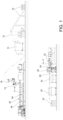
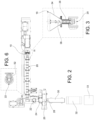
- a plant for the recovery and devulcanization of vulcanized rubber 10 comprises ( Fig. 1 and 2 ) a mill 12 for the grinding and devulcanization of the rubber 10, downstream of which mill 12 a homogenizer 14 and a gravimetric/volumetric dosing unit 16 is located, which feeds the rubber particles produced in the mill 12 to a device 18 which forcibly feeds said particles into a twin-screw devulcanization extruder 20.
- a single-screw extruder 22 Downstream of the twin-screw extruder 20 there is a single-screw extruder 22, equipped with a gear pump 24, a filter 26 for the devulcanized rubber and an extrusion die 28 shaped like a slot, from which devulcanized rubber emerges in the form of a strip or sheet.
- a tank 30 Downstream of the extrusion die 28 there are a tank 30 containing cooling water, a water removal and drying tunnel 32 and a device 33 for collecting the strip or sheet of devulcanized rubber.
- the forced feeding device 18 is known per se and allows an easy introduction into the twin-screw extruder 20 of vulcanized rubber particles having different shape, particle size and apparent density.
- the device is typically formed ( Fig. 3 ) of a hopper 34 and a cylinder 36 within which one or more screws 38 with conical or cylindrical geometry rotate; it is positioned vertically relative to the extruder (or laterally in embodiments not shown) and may have mechanical, electrical or pneumatic drive, so as to force the vulcanized rubber particles into the twin-screw extruder 20.
- the shear rate (or geometric shear rate) is kept constant within the extruder 20 for its entire length, allowing the cross bonds between the molecular chains of the rubber to break and the possible degradation of the devulcanized rubber to be avoided.
- the high filling rate of the extruder 20, determined by the forced feeding device 18, ensures that in each zone there is a constant presence of material so as to make the advancement, as well as the stresses imparted, uniform. Conversely, in the absence of the forced feeding device 18, the processed material would be subjected, due to its shape and density, to different shear rates within the extruder 20, which could degrade it. Likewise, in the transition from vulcanized rubber to devulcanized rubber, the high filling rate facilitates cooling which is also capable of counteracting degradation.
- the forced feeding device 18 increases the operating flexibility of the plant by allowing particles with different particle size in the form of powders or granules with a size between 0.2 and 15 mm to be processed.
- the twin-screw extruder 20 is advantageously comprised of cylindrical modules normally having a length equal to 4 times the outer diameter of the screws and mounted in series so as to form a continuous cylinder.
- the twin-screw extruder 20 has a length at least equal to 64 times the outer diameter of the screws, and preferably not greater than 80 times the outer diameter of the screws.
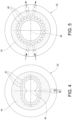
- the extruder 20 is provided with a thermostatting device which on one hand comprises a plurality of electrical resistors attached to the outer surface of the cylinder, and on the other ( Fig. 4 ) a water cooling circuit formed of a plurality of tubular holes 40 obtained as a labyrinth that extend parallel to the longitudinal axis 42 of the extruder in the wall 44 of the relative cylinder about the central cavity thereof.
- a thermostatting device which on one hand comprises a plurality of electrical resistors attached to the outer surface of the cylinder, and on the other ( Fig. 4 ) a water cooling circuit formed of a plurality of tubular holes 40 obtained as a labyrinth that extend parallel to the longitudinal axis 42 of the extruder in the wall 44 of the relative cylinder about the central cavity thereof.
- the ratio between the outer and inner diameter of the screws is between 1.22 and 1.78 and preferably between 1.55 and 1.78.
- sequences of conveying and mixing elements are individually configured on the multi-row shafts of the screws, in particular having a geometric profile so as to make the filling uniform, as described in EP-1 136 228 B1 , which allow the shear stresses imparted to the rubber, and therefore the specific energy absorbed by said rubber, to be kept uniform and under control.
- the torque density is between 11 and 18 Nm/cm 3 and ensures, together with a rotation speed of the screws between 15 and 600 rpm, a high filling rate of the screws with a shear rate remaining low and constant for the entire length of the extruder 20.
- the final result is greater productivity, with top values up to 40-60% and a lower operating temperature with respect to the case wherein an extruder having similar geometric parameters with the same rotation speed of the screws but with a lower torque density is used.
- the single-screw extruder 22 comprises in a manner known per se a cylinder and a main motor mechanically connected to a speed reducer in turn connected to a plasticizing screw which rotates inside the cylinder, the length of which is typically equal to 8 to 20 times the diameter of the respective screw.
- the extruder 22 is provided with a thermostatting device which on one hand comprises a plurality of electrical resistors fixed on the outer surface of the cylinder, and on the other a water cooling circuit formed ( Fig. 5 ) with a plurality of tubular holes 46 obtained as a labyrinth that extends parallel to the longitudinal axis 48 of the extruder 22 in the wall 50 of the cylinder in the form of a circular crown about the central cavity thereof.
- the screw for conveying the material inside the cylinder may be of the type with forced cooling by internal water circulation.
- the filter 26 with which the extruder 22 is provided includes a conventional grid and may be of the semiautomatic or automatic type, both types allowing a continuous flow of the molten material on two distinct channels. It goes without saying that, unlike the semiautomatic type, the automatic type may ensure a continuous production without the operators' technical supervision.
- the presence of the filter 26 increases the resistance that the rubber encounters to proceed along the extruder 22 causing an increase in pressure and consequently in temperature, which could cause a degradation thereof.
- thermostatting device in particular by the preferably double water cooling circuit, together with the mixing action exerted by the screw, which makes the temperature uniform by gradually bringing new portions of rubber into contact with the cooled surfaces of the screw and cylinder.
- the combination of these measures thus succeeds in significantly lowering the temperature of the devulcanized rubber.
- the die 28 at the outlet from the extruder 22 has a variable geometry, so as to allow the dimensions of the extruded devulcanized rubber strip or sheet to be determined in a desired manner.
- the plant further comprises means for allowing the devulcanized rubber to pass from the twin-screw extruder 20 to the single-screw extruder 22.
- Fig. 6 illustrates a connecting element 52 for the direct connection of the twin-screw extruder 20 to the single-screw extruder 22.
- the aforesaid means for allowing the devulcanized rubber to pass from the twin-screw extruder 20 to the single-screw extruder 22 may include:
- elastomers having substantially any chemical nature and previously used to make up any type of articles, such as in particular tires for cars, heavy vehicles and airplanes.
- elastomers that may be devulcanized are natural rubber (NR), butadiene rubber (BR), ethylene propylene rubber (EPR), styrene butadiene rubber (SBR), nitrile rubber (NBR), ethylene propylene diene monomer rubber (EPDM), isoprene rubber (IR), chloroprene rubber (CR), acrylic rubber, silicone rubber, as well as polyurethanes and chlorosulfonated polyethylenes.
- NR natural rubber
- BR butadiene rubber
- EPR ethylene propylene rubber
- SBR styrene butadiene rubber
- NBR nitrile rubber
- EPDM ethylene propylene diene monomer rubber
- IR isoprene rubber
- CR chloroprene rubber
- acrylic rubber silicone rubber
- silicone rubber as well as poly
- thermoplastic materials or process additives which consequently reduces process costs as well as the environmental impact associated with the use thereof.
- the vulcanized rubber is sent to the mill 12, which reduces it into particles of the desired size, and then to the homogenizer 14.
- the rubber particles thus obtained are then introduced through the dispenser 16 into the forced feeding device 18 which feeds them into the twin-screw extruder 20 which carries out the devulcanization of the rubber.
- the extruder 20 operates at a temperature between 35 and 450°C, with a rotation speed of the screws between 15 and 600 rpm, and a torque density between 11 and 18 Nm/cm 3 , resulting in a high filling rate of the screws and a substantially constant shear rate for the entire longitudinal development of the twin-screw extruder.
- the cooling of the material may be facilitated by the injection of water at one or more points 54 of the twin-screw extruder 20 located at a distance equal to at least 32 times the outer diameter of the screws from the initial section, i.e. only after the devulcanization has taken place.
- the quantity of injected water may be between 1 and 30% by weight with respect to the quantity of rubber processed.
- the injected and subsequently vaporized water, as well as other gaseous components produced by devulcanization may be removed in a manner known per se by degassing means 56 such as extraction screws or suction pumps located in one or more discharge ducts which branch transversely from the extruder cylinder 20.
- degassing means 56 such as extraction screws or suction pumps located in one or more discharge ducts which branch transversely from the extruder cylinder 20.
- the distance between a water injection point 54 and the subsequent degassing point 56 is preferably between 4 and 24 times the outer diameter of the screws, and even more preferably between 8 and 16 times the
- the injection of water allows the temperature of the rubber to be lowered by about 20-30°C relative to operating in anhydrous conditions, so as to prevent degradation phenomena induced by temperature and to reduce the odor of the devulcanized rubber produced due to the stripping action exerted by the vapor on the substances that generate this odor.
- the injection of water which suddenly cools the rubber immediately after devulcanization also has the effect of increasing its Mooney viscosity by about 6%.
- the devulcanized rubber exiting the twin-screw extruder 20 is then guided through the connecting element 52 into the single-screw extruder 22 where its temperature is reduced by about 15-30°C.
- the rubber is finally extruded through the die 28 in the form of a strip or sheet, which is passed by immersion into the tank 30 to be further cooled by the water contained therein.
- the water may contain anti-packing additives.
- the strip or sheet coming out of the tank 30 is then made to pass into the drying tunnel 32 and finally sent to the collection device 33.
Landscapes
- Engineering & Computer Science (AREA)
- Mechanical Engineering (AREA)
- Environmental & Geological Engineering (AREA)
- Manufacturing & Machinery (AREA)
- Chemical & Material Sciences (AREA)
- Chemical Kinetics & Catalysis (AREA)
- Health & Medical Sciences (AREA)
- Sustainable Development (AREA)
- Life Sciences & Earth Sciences (AREA)
- Medicinal Chemistry (AREA)
- Polymers & Plastics (AREA)
- Organic Chemistry (AREA)
- Processing And Handling Of Plastics And Other Materials For Molding In General (AREA)
- Extrusion Moulding Of Plastics Or The Like (AREA)
- Separation, Recovery Or Treatment Of Waste Materials Containing Plastics (AREA)
- Addition Polymer Or Copolymer, Post-Treatments, Or Chemical Modifications (AREA)
- Polysaccharides And Polysaccharide Derivatives (AREA)
Claims (10)
- Verfahren zur Rückgewinnung und Entvulkanisierung von vulkanisiertem Kautschuk (10) unter Verwendung einer Anlage, umfassend:- eine Mühle (12) zum Mahlen des vulkanisierten Kautschuks in Partikel,- einen Doppelschneckenextruder (20) zur Entvulkanisierung, der mit einer Vorrichtung (18) zum zwingenden Zuführen der besagt vulkanisierten Kautschukpartikel und einer Thermostat-Vorrichtung ausgestattet ist,- einen Einschneckenextruder (22), der stromabwärts des Doppelschneckenextruders (20) angeordnet ist und mit einer Thermostat-Vorrichtung, einem Filter (26) für den entvulkanisierten Kautschuk und einer Extrusionsdüse (28) in Schlitzform ausgestattet ist, aus der der entvulkanisierte Kautschuk in Bandform oder in Folienform austritt, und- eine Kühlvorrichtung für das Band oder die Folie aus entvulkanisiertem Kautschuk, wobei der Doppelschneckenextruder (20) bei einer Temperatur zwischen 35 und 450 °C, einer Schneckendrehzahl zwischen 15 und 600 U/min und einer Drehmomentdichte zwischen 11 und 18 Nm/cm3 betrieben wird, so dass die Schergeschwindigkeit über die gesamte Längserstreckung des Doppelschneckenextruders (20) im Wesentlichen konstant bleibt.
- Verfahren nach Anspruch 1, wobei das Verhältnis zwischen dem Außendurchmesser und dem Innendurchmesser der Schnecken des Doppelschneckenextruders (20) zwischen 1,22 und 1,78 und vorzugsweise zwischen 1,55 und 1,78 liegt.
- Verfahren nach einem der vorhergehenden Ansprüche, wobei der Doppelschneckenextruder (20) eine Länge von mindestens 64-mal der Außendurchmesser der Schnecken und vorzugsweise nicht mehr als 80-mal der Außendurchmesser der Schnecken aufweist.
- Verfahren nach einem der vorhergehenden Ansprüche, wobei die Anlage ferner zum Übertragen des entvulkanisierten Kautschuks aus dem Doppelschneckenextruder (20) in den Einschneckenextruder (22) umfasst:- ein Verbindungselement (52) zum direkten Verbinden des Doppelschneckenextruders (20) mit dem Einschneckenextruder (22); oder- einen Trichter, der den entvulkanisierten Kautschuk aus dem Doppelschneckenextruder (20) sammelt und in den Einschneckenextruder (22) zuführt; oder- mindestens ein Paar gegenüberliegender Druckwalzen, die ein aus dem Doppelschneckenextruder (20) kommendes Band aus entvulkanisiertem Kautschuk in den Einschneckenextruder (22) übertragen
- Verfahren nach einem der vorhergehenden Ansprüche, wobei die Düse (28) eine veränderliche Geometrie aufweist.
- Verfahren nach einem der vorhergehenden Ansprüche, wobei die Kühlvorrichtung aus einem mit Wasser gefüllten Tank (30) besteht, in dem das Band oder die Folie aus entvulkanisiertem Kautschuk eingetaucht wird.
- Verfahren nach einem der vorhergehenden Ansprüche, wobei Wasser an mindestens einem Punkt des Doppelschneckenextruders (20) eingespritzt wird, der sich in einem Abstand vom Einlass befindet, die mindestens 32-mal der Außendurchmesser der Schnecken ist.
- Verfahren nach Anspruch 7, wobei der Doppelschneckenextruder (20) mit Entgasungsmitteln ausgestattet ist, um Gase und/oder Dämpfe zu entfernen, die darin gebildet werden.
- Verfahren nach Anspruch 8, wobei der Abstand zwischen dem Wassereinspritzpunkt und dem folgenden Punkt, an dem sich die Entgasungsmittel befinden, zwischen 4-und 24-mal der Außendurchmesser der Schnecken ist.
- Verfahren nach Anspruch 9, wobei der Abstand zwischen dem Wassereinspritzpunkt und dem folgenden Punkt, an dem sich die Entgasungsmittel befinden, zwischen 8-und 16-mal der Außendurchmesser der Schnecken ist.
Applications Claiming Priority (2)
| Application Number | Priority Date | Filing Date | Title |
|---|---|---|---|
| IT102019000016061A IT201900016061A1 (it) | 2019-09-11 | 2019-09-11 | Impianto per il recupero e la devulcanizzazione di gomma reticolata e procedimento di devulcanizzazione |
| PCT/IB2020/058373 WO2021048756A1 (en) | 2019-09-11 | 2020-09-09 | Process for the recovery and devulcanization of cross-linked rubber |
Publications (2)
| Publication Number | Publication Date |
|---|---|
| EP4028232A1 EP4028232A1 (de) | 2022-07-20 |
| EP4028232B1 true EP4028232B1 (de) | 2025-01-22 |
Family
ID=69375698
Family Applications (1)
| Application Number | Title | Priority Date | Filing Date |
|---|---|---|---|
| EP20781400.5A Active EP4028232B1 (de) | 2019-09-11 | 2020-09-09 | Verfahren zur rückgewinnung und entvulkanisierung von vernetztem kautschuk |
Country Status (13)
| Country | Link |
|---|---|
| US (1) | US20220305697A1 (de) |
| EP (1) | EP4028232B1 (de) |
| JP (1) | JP7618272B2 (de) |
| KR (1) | KR102885667B1 (de) |
| CN (1) | CN114616084B (de) |
| AU (1) | AU2020347565A1 (de) |
| CA (1) | CA3150435A1 (de) |
| ES (1) | ES3023757T3 (de) |
| IT (1) | IT201900016061A1 (de) |
| MX (1) | MX2022003012A (de) |
| PL (1) | PL4028232T3 (de) |
| WO (1) | WO2021048756A1 (de) |
| ZA (1) | ZA202202871B (de) |
Families Citing this family (1)
| Publication number | Priority date | Publication date | Assignee | Title |
|---|---|---|---|---|
| LU502091B1 (en) * | 2022-05-13 | 2023-11-13 | saperatec GmbH | Method and apparatus for removing low molecular impurities from an impure extrudable material |
Citations (1)
| Publication number | Priority date | Publication date | Assignee | Title |
|---|---|---|---|---|
| EP2601249B1 (de) * | 2010-08-05 | 2016-11-30 | F.LLI Maris S.P.A. | Verfahren zum recyclen und devulkanisieren von gummi |
Family Cites Families (27)
| Publication number | Priority date | Publication date | Assignee | Title |
|---|---|---|---|---|
| US133369A (en) * | 1872-11-26 | Improvement in car-couplings | ||
| US4448737A (en) * | 1982-12-30 | 1984-05-15 | Mobil Oil Corporation | Method and apparatus for producing foamed products from a mix of reclaimed plastic foam material and foamable virgin plastic resin |
| FR2602710B1 (fr) * | 1986-08-12 | 1989-02-24 | Rhone Poulenc Chimie | Procede de preparation en continu de melanges-maitres pour elastomeres silicones vulcanisables a chaud |
| DE19536289C2 (de) * | 1995-09-29 | 1999-01-07 | Krupp Werner & Pfleiderer Gmbh | Verfahren zur Durchführung von kontinuierlichen Aufbereitungsprozessen mit gleichsinnig drehenden, dicht kämmenden Doppelschneckenextrudern |
| JPH11140222A (ja) * | 1997-11-11 | 1999-05-25 | Toyoda Gosei Co Ltd | 加硫ゴム再生ラインの脱臭装置及び脱臭方法 |
| IT1319996B1 (it) | 2000-03-23 | 2003-11-12 | Maris Flli Spa | Elemento di miscelazione per vite di estrusore bivite corotante edestrusore che lo comprende. |
| AU2001280961A1 (en) * | 2000-08-01 | 2002-02-13 | Kimberly-Clark Worldwide, Inc. | Blend compositions of an unmodified polyvinyl alcohol and a filler |
| US7053151B2 (en) * | 2000-12-29 | 2006-05-30 | Kimberly-Clark Worldwide, Inc. | Grafted biodegradable polymer blend compositions |
| US6552124B2 (en) * | 2000-12-29 | 2003-04-22 | Kimberly-Clark Worldwide, Inc. | Method of making a polymer blend composition by reactive extrusion |
| CN201040408Y (zh) | 2006-08-29 | 2008-03-26 | 马如琦 | 一种橡胶脱硫的装置 |
| US20080114091A1 (en) * | 2006-11-15 | 2008-05-15 | Sealed Air Corporation (Us) | Apparatus and Method for Preparing a UV-Induced Crosslinked Foam |
| CN101168600B (zh) * | 2007-09-20 | 2010-08-18 | 南京工业大学 | 一种废旧轮胎胶高剪切应力诱导脱硫及改性方法 |
| KR100901561B1 (ko) | 2007-11-21 | 2009-06-08 | 현대자동차주식회사 | 연속 압출 방식에 의한 폐고무의 탈황처리 방법 |
| US8091808B2 (en) * | 2008-06-02 | 2012-01-10 | Entyrecycle, Llc | Redundant tire and rubber compound reprocessing |
| DE102008037709B3 (de) * | 2008-08-14 | 2009-12-17 | Benteler Automobiltechnik Gmbh | Verbindung zwischen einem Rohrprofil aus Stahl und einem Bauteil aus Aluminium |
| JP5357299B2 (ja) * | 2011-07-08 | 2013-12-04 | 東和ケミカル株式会社 | アルミニウム蒸着層を有する積層フィルムを用いた成形用材料ペレットの製造方法 |
| CN102344592B (zh) * | 2011-07-22 | 2012-11-07 | 常州大学 | 连续冷却混炼脱硫胶粉直接制备再生胶片的装置及方法 |
| US20130119575A1 (en) * | 2011-11-11 | 2013-05-16 | Nextlife Enterprises, Llc | Plastic Waste Recycling Apparatus and System |
| FR2991687B1 (fr) * | 2012-06-08 | 2014-06-06 | Plymouth Francaise Sa | Regeneration des caoutchoucs vulcanises |
| CN104507653B (zh) * | 2013-01-09 | 2017-05-17 | 聚合物粉末有限公司 | 用于聚合物粉碎挤压的方法和设备 |
| ES2625736T3 (es) * | 2014-09-10 | 2017-07-20 | Starlinger & Co. Gesellschaft M.B.H. | Dispositivo y procedimiento para la producción de un material compuesto polimérico relleno |
| CN104974376B (zh) * | 2015-07-22 | 2018-05-15 | 南京顺长塑料机械有限公司 | 一种硫化橡胶废弃物的回收工艺 |
| DE102015224957A1 (de) * | 2015-12-11 | 2017-06-14 | Continental Reifen Deutschland Gmbh | Verfahren und Vorrichtung zur Herstellung einer modifizierten Kautschukmischung |
| CN106142382A (zh) * | 2016-01-27 | 2016-11-23 | 舟山富德斯机械有限公司 | 环保型再生橡胶脱硫挤出机 |
| WO2018172993A1 (pt) * | 2017-03-24 | 2018-09-27 | Universidade Da Beira Interior | Dispositivo e método para produção de filamento |
| CN107936331B (zh) * | 2017-11-10 | 2020-10-02 | 北京化工大学 | 一种多阶螺杆连续脱硫制备再生橡胶的方法 |
| CN108822337B (zh) * | 2018-06-07 | 2021-03-23 | 青岛科技大学 | 一种废橡胶再生工艺及其制备方法 |
-
2019
- 2019-09-11 IT IT102019000016061A patent/IT201900016061A1/it unknown
-
2020
- 2020-09-09 CN CN202080064093.8A patent/CN114616084B/zh active Active
- 2020-09-09 ES ES20781400T patent/ES3023757T3/es active Active
- 2020-09-09 CA CA3150435A patent/CA3150435A1/en active Pending
- 2020-09-09 PL PL20781400.5T patent/PL4028232T3/pl unknown
- 2020-09-09 JP JP2022516109A patent/JP7618272B2/ja active Active
- 2020-09-09 MX MX2022003012A patent/MX2022003012A/es unknown
- 2020-09-09 EP EP20781400.5A patent/EP4028232B1/de active Active
- 2020-09-09 AU AU2020347565A patent/AU2020347565A1/en active Pending
- 2020-09-09 KR KR1020227011895A patent/KR102885667B1/ko active Active
- 2020-09-09 WO PCT/IB2020/058373 patent/WO2021048756A1/en not_active Ceased
- 2020-09-09 US US17/641,933 patent/US20220305697A1/en active Pending
-
2022
- 2022-03-09 ZA ZA2022/02871A patent/ZA202202871B/en unknown
Patent Citations (1)
| Publication number | Priority date | Publication date | Assignee | Title |
|---|---|---|---|---|
| EP2601249B1 (de) * | 2010-08-05 | 2016-11-30 | F.LLI Maris S.P.A. | Verfahren zum recyclen und devulkanisieren von gummi |
Also Published As
| Publication number | Publication date |
|---|---|
| PL4028232T3 (pl) | 2025-06-09 |
| ZA202202871B (en) | 2022-10-26 |
| KR20220072839A (ko) | 2022-06-02 |
| CN114616084B (zh) | 2025-04-15 |
| WO2021048756A1 (en) | 2021-03-18 |
| ES3023757T3 (en) | 2025-06-03 |
| KR102885667B1 (ko) | 2025-11-13 |
| JP7618272B2 (ja) | 2025-01-21 |
| MX2022003012A (es) | 2022-06-02 |
| CN114616084A (zh) | 2022-06-10 |
| BR112022004307A2 (pt) | 2022-06-21 |
| JP2022547584A (ja) | 2022-11-14 |
| IT201900016061A1 (it) | 2021-03-11 |
| AU2020347565A1 (en) | 2022-03-31 |
| EP4028232A1 (de) | 2022-07-20 |
| CA3150435A1 (en) | 2021-03-18 |
| US20220305697A1 (en) | 2022-09-29 |
Similar Documents
| Publication | Publication Date | Title |
|---|---|---|
| EP2601249B1 (de) | Verfahren zum recyclen und devulkanisieren von gummi | |
| CN107936331A (zh) | 一种多阶螺杆连续脱硫制备再生橡胶的方法 | |
| US20160243744A1 (en) | Extrusion system, for making molded plastic parts | |
| US12391821B2 (en) | Method for the devulcanization of a vulcanized rubber mixture, device for carrying out the method and use of the device for the devulcanization of a vulcanized rubber mixture | |
| EP4028232B1 (de) | Verfahren zur rückgewinnung und entvulkanisierung von vernetztem kautschuk | |
| CN214447919U (zh) | Pvc片材生产过程中的片材边角料在线回收装置 | |
| CN106243380A (zh) | 超临界co2与微波辅助多段双螺杆挤出绿色断硫再生设备 | |
| US20150328801A1 (en) | Method and device for polymer pulverisation extrusion | |
| RU2816255C1 (ru) | Способ восстановления и девулканизации сшитого каучука | |
| EP3814080B1 (de) | Mischverfahren zur herstellung einer elastomeren zusammensetzung | |
| CA2856320C (en) | Apparatus for processing scrap cross-linked thermoset elastomeric material | |
| CN211440734U (zh) | 一种废旧橡胶回收用塑化装置 | |
| BR112022004307B1 (pt) | Processo para a recuperação e desvulcanização de borracha | |
| KR101278570B1 (ko) | 회수된 폐 폴리머를 리사이클링하기 위한 장치 및 상기 장치를 사용한 리사이클 방법 | |
| US20240326291A1 (en) | Device and method for processing plastic material | |
| Kimura et al. | Twin‐Screw Extrusion of Polyethylene | |
| CN107009538A (zh) | 一种再生胶物理脱硫工艺与生产线 | |
| CN206486460U (zh) | 一种可回收多种橡胶的环保塑化系统 | |
| JP2024144367A (ja) | プラスチック材料を調製する装置及び方法 | |
| CN121608367A (zh) | 一种回收塑料的再生及改性的连续处理设备及其连续处理方法 | |
| CN117986689A (zh) | 一种利用废乳胶制备的液体橡胶及其制备方法 | |
| DE19722584A1 (de) | Verfahren zur Aufbereitung von Altkunststoffen oder Altkunststoffgemischen | |
| CN113290729A (zh) | 一种节能环保的方形塑料颗粒生产方法 | |
| CN110815646A (zh) | 一种废旧橡胶回收用塑化装置 | |
| CN108247976A (zh) | 双螺杆挤出生产线及其制造pet合金板的方法 |
Legal Events
| Date | Code | Title | Description |
|---|---|---|---|
| STAA | Information on the status of an ep patent application or granted ep patent |
Free format text: STATUS: UNKNOWN |
|
| STAA | Information on the status of an ep patent application or granted ep patent |
Free format text: STATUS: THE INTERNATIONAL PUBLICATION HAS BEEN MADE |
|
| PUAI | Public reference made under article 153(3) epc to a published international application that has entered the european phase |
Free format text: ORIGINAL CODE: 0009012 |
|
| STAA | Information on the status of an ep patent application or granted ep patent |
Free format text: STATUS: REQUEST FOR EXAMINATION WAS MADE |
|
| 17P | Request for examination filed |
Effective date: 20220404 |
|
| AK | Designated contracting states |
Kind code of ref document: A1 Designated state(s): AL AT BE BG CH CY CZ DE DK EE ES FI FR GB GR HR HU IE IS IT LI LT LU LV MC MK MT NL NO PL PT RO RS SE SI SK SM TR |
|
| DAV | Request for validation of the european patent (deleted) | ||
| DAX | Request for extension of the european patent (deleted) | ||
| P01 | Opt-out of the competence of the unified patent court (upc) registered |
Effective date: 20230530 |
|
| REG | Reference to a national code |
Ref legal event code: R079 Ipc: B29B0007740000 Ref country code: DE Ref legal event code: R079 Ref document number: 602020045205 Country of ref document: DE Free format text: PREVIOUS MAIN CLASS: B29B0017020000 Ipc: B29B0007740000 |
|
| RIC1 | Information provided on ipc code assigned before grant |
Ipc: B29K 105/24 20060101ALN20240725BHEP Ipc: B29B 7/46 20060101ALN20240725BHEP Ipc: B29C 48/69 20190101ALI20240725BHEP Ipc: B29C 48/385 20190101ALI20240725BHEP Ipc: B29C 48/305 20190101ALI20240725BHEP Ipc: B29C 48/07 20190101ALI20240725BHEP Ipc: B29C 48/00 20190101ALI20240725BHEP Ipc: B29B 17/04 20060101ALI20240725BHEP Ipc: B29B 17/02 20060101ALI20240725BHEP Ipc: B29B 9/16 20060101ALI20240725BHEP Ipc: B29B 9/02 20060101ALI20240725BHEP Ipc: B29B 7/74 20060101AFI20240725BHEP |
|
| GRAP | Despatch of communication of intention to grant a patent |
Free format text: ORIGINAL CODE: EPIDOSNIGR1 |
|
| STAA | Information on the status of an ep patent application or granted ep patent |
Free format text: STATUS: GRANT OF PATENT IS INTENDED |
|
| INTG | Intention to grant announced |
Effective date: 20240903 |
|
| GRAS | Grant fee paid |
Free format text: ORIGINAL CODE: EPIDOSNIGR3 |
|
| GRAA | (expected) grant |
Free format text: ORIGINAL CODE: 0009210 |
|
| STAA | Information on the status of an ep patent application or granted ep patent |
Free format text: STATUS: THE PATENT HAS BEEN GRANTED |
|
| AK | Designated contracting states |
Kind code of ref document: B1 Designated state(s): AL AT BE BG CH CY CZ DE DK EE ES FI FR GB GR HR HU IE IS IT LI LT LU LV MC MK MT NL NO PL PT RO RS SE SI SK SM TR |
|
| REG | Reference to a national code |
Ref country code: GB Ref legal event code: FG4D |
|
| REG | Reference to a national code |
Ref country code: CH Ref legal event code: EP |
|
| REG | Reference to a national code |
Ref country code: IE Ref legal event code: FG4D |
|
| REG | Reference to a national code |
Ref country code: DE Ref legal event code: R096 Ref document number: 602020045205 Country of ref document: DE |
|
| REG | Reference to a national code |
Ref country code: NL Ref legal event code: MP Effective date: 20250122 |
|
| REG | Reference to a national code |
Ref country code: ES Ref legal event code: FG2A Ref document number: 3023757 Country of ref document: ES Kind code of ref document: T3 Effective date: 20250603 |
|
| PG25 | Lapsed in a contracting state [announced via postgrant information from national office to epo] |
Ref country code: NL Free format text: LAPSE BECAUSE OF FAILURE TO SUBMIT A TRANSLATION OF THE DESCRIPTION OR TO PAY THE FEE WITHIN THE PRESCRIBED TIME-LIMIT Effective date: 20250122 |
|
| PG25 | Lapsed in a contracting state [announced via postgrant information from national office to epo] |
Ref country code: RS Free format text: LAPSE BECAUSE OF FAILURE TO SUBMIT A TRANSLATION OF THE DESCRIPTION OR TO PAY THE FEE WITHIN THE PRESCRIBED TIME-LIMIT Effective date: 20250422 |
|
| PG25 | Lapsed in a contracting state [announced via postgrant information from national office to epo] |
Ref country code: FI Free format text: LAPSE BECAUSE OF FAILURE TO SUBMIT A TRANSLATION OF THE DESCRIPTION OR TO PAY THE FEE WITHIN THE PRESCRIBED TIME-LIMIT Effective date: 20250122 |
|
| REG | Reference to a national code |
Ref country code: LT Ref legal event code: MG9D |
|
| PG25 | Lapsed in a contracting state [announced via postgrant information from national office to epo] |
Ref country code: NO Free format text: LAPSE BECAUSE OF FAILURE TO SUBMIT A TRANSLATION OF THE DESCRIPTION OR TO PAY THE FEE WITHIN THE PRESCRIBED TIME-LIMIT Effective date: 20250422 Ref country code: IS Free format text: LAPSE BECAUSE OF FAILURE TO SUBMIT A TRANSLATION OF THE DESCRIPTION OR TO PAY THE FEE WITHIN THE PRESCRIBED TIME-LIMIT Effective date: 20250522 |
|
| PG25 | Lapsed in a contracting state [announced via postgrant information from national office to epo] |
Ref country code: HR Free format text: LAPSE BECAUSE OF FAILURE TO SUBMIT A TRANSLATION OF THE DESCRIPTION OR TO PAY THE FEE WITHIN THE PRESCRIBED TIME-LIMIT Effective date: 20250122 |
|
| PG25 | Lapsed in a contracting state [announced via postgrant information from national office to epo] |
Ref country code: LV Free format text: LAPSE BECAUSE OF FAILURE TO SUBMIT A TRANSLATION OF THE DESCRIPTION OR TO PAY THE FEE WITHIN THE PRESCRIBED TIME-LIMIT Effective date: 20250122 Ref country code: PT Free format text: LAPSE BECAUSE OF FAILURE TO SUBMIT A TRANSLATION OF THE DESCRIPTION OR TO PAY THE FEE WITHIN THE PRESCRIBED TIME-LIMIT Effective date: 20250522 |
|
| PG25 | Lapsed in a contracting state [announced via postgrant information from national office to epo] |
Ref country code: BG Free format text: LAPSE BECAUSE OF FAILURE TO SUBMIT A TRANSLATION OF THE DESCRIPTION OR TO PAY THE FEE WITHIN THE PRESCRIBED TIME-LIMIT Effective date: 20250122 Ref country code: GR Free format text: LAPSE BECAUSE OF FAILURE TO SUBMIT A TRANSLATION OF THE DESCRIPTION OR TO PAY THE FEE WITHIN THE PRESCRIBED TIME-LIMIT Effective date: 20250423 |
|
| PG25 | Lapsed in a contracting state [announced via postgrant information from national office to epo] |
Ref country code: SE Free format text: LAPSE BECAUSE OF FAILURE TO SUBMIT A TRANSLATION OF THE DESCRIPTION OR TO PAY THE FEE WITHIN THE PRESCRIBED TIME-LIMIT Effective date: 20250122 |
|
| PG25 | Lapsed in a contracting state [announced via postgrant information from national office to epo] |
Ref country code: SM Free format text: LAPSE BECAUSE OF FAILURE TO SUBMIT A TRANSLATION OF THE DESCRIPTION OR TO PAY THE FEE WITHIN THE PRESCRIBED TIME-LIMIT Effective date: 20250122 |
|
| PG25 | Lapsed in a contracting state [announced via postgrant information from national office to epo] |
Ref country code: DK Free format text: LAPSE BECAUSE OF FAILURE TO SUBMIT A TRANSLATION OF THE DESCRIPTION OR TO PAY THE FEE WITHIN THE PRESCRIBED TIME-LIMIT Effective date: 20250122 |
|
| PGFP | Annual fee paid to national office [announced via postgrant information from national office to epo] |
Ref country code: DE Payment date: 20250923 Year of fee payment: 6 |
|
| PGFP | Annual fee paid to national office [announced via postgrant information from national office to epo] |
Ref country code: TR Payment date: 20250901 Year of fee payment: 6 Ref country code: PL Payment date: 20250826 Year of fee payment: 6 Ref country code: IT Payment date: 20250806 Year of fee payment: 6 |
|
| PGFP | Annual fee paid to national office [announced via postgrant information from national office to epo] |
Ref country code: GB Payment date: 20250919 Year of fee payment: 6 |
|
| PGFP | Annual fee paid to national office [announced via postgrant information from national office to epo] |
Ref country code: AT Payment date: 20250917 Year of fee payment: 6 Ref country code: FR Payment date: 20250829 Year of fee payment: 6 |
|
| PG25 | Lapsed in a contracting state [announced via postgrant information from national office to epo] |
Ref country code: EE Free format text: LAPSE BECAUSE OF FAILURE TO SUBMIT A TRANSLATION OF THE DESCRIPTION OR TO PAY THE FEE WITHIN THE PRESCRIBED TIME-LIMIT Effective date: 20250122 Ref country code: CZ Free format text: LAPSE BECAUSE OF FAILURE TO SUBMIT A TRANSLATION OF THE DESCRIPTION OR TO PAY THE FEE WITHIN THE PRESCRIBED TIME-LIMIT Effective date: 20250122 |
|
| REG | Reference to a national code |
Ref country code: DE Ref legal event code: R097 Ref document number: 602020045205 Country of ref document: DE |
|
| PGFP | Annual fee paid to national office [announced via postgrant information from national office to epo] |
Ref country code: RO Payment date: 20250804 Year of fee payment: 6 |
|
| PG25 | Lapsed in a contracting state [announced via postgrant information from national office to epo] |
Ref country code: SK Free format text: LAPSE BECAUSE OF FAILURE TO SUBMIT A TRANSLATION OF THE DESCRIPTION OR TO PAY THE FEE WITHIN THE PRESCRIBED TIME-LIMIT Effective date: 20250122 |
|
| PLBE | No opposition filed within time limit |
Free format text: ORIGINAL CODE: 0009261 |
|
| STAA | Information on the status of an ep patent application or granted ep patent |
Free format text: STATUS: NO OPPOSITION FILED WITHIN TIME LIMIT |
|
| 26N | No opposition filed |
Effective date: 20251023 |
|
| PGFP | Annual fee paid to national office [announced via postgrant information from national office to epo] |
Ref country code: ES Payment date: 20251001 Year of fee payment: 6 |