EP4009942B1 - Compound for combination treatment - Google Patents
Compound for combination treatment Download PDFInfo
- Publication number
- EP4009942B1 EP4009942B1 EP20751149.4A EP20751149A EP4009942B1 EP 4009942 B1 EP4009942 B1 EP 4009942B1 EP 20751149 A EP20751149 A EP 20751149A EP 4009942 B1 EP4009942 B1 EP 4009942B1
- Authority
- EP
- European Patent Office
- Prior art keywords
- compound
- age
- treatment
- male
- erectile dysfunction
- Prior art date
- Legal status (The legal status is an assumption and is not a legal conclusion. Google has not performed a legal analysis and makes no representation as to the accuracy of the status listed.)
- Active
Links
Images












Classifications
-
- A—HUMAN NECESSITIES
- A61—MEDICAL OR VETERINARY SCIENCE; HYGIENE
- A61K—PREPARATIONS FOR MEDICAL, DENTAL OR TOILETRY PURPOSES
- A61K31/00—Medicinal preparations containing organic active ingredients
- A61K31/33—Heterocyclic compounds
- A61K31/395—Heterocyclic compounds having nitrogen as a ring hetero atom, e.g. guanethidine or rifamycins
- A61K31/435—Heterocyclic compounds having nitrogen as a ring hetero atom, e.g. guanethidine or rifamycins having six-membered rings with one nitrogen as the only ring hetero atom
- A61K31/46—8-Azabicyclo [3.2.1] octane; Derivatives thereof, e.g. atropine, cocaine
-
- A—HUMAN NECESSITIES
- A61—MEDICAL OR VETERINARY SCIENCE; HYGIENE
- A61P—SPECIFIC THERAPEUTIC ACTIVITY OF CHEMICAL COMPOUNDS OR MEDICINAL PREPARATIONS
- A61P15/00—Drugs for genital or sexual disorders; Contraceptives
-
- A—HUMAN NECESSITIES
- A61—MEDICAL OR VETERINARY SCIENCE; HYGIENE
- A61P—SPECIFIC THERAPEUTIC ACTIVITY OF CHEMICAL COMPOUNDS OR MEDICINAL PREPARATIONS
- A61P15/00—Drugs for genital or sexual disorders; Contraceptives
- A61P15/10—Drugs for genital or sexual disorders; Contraceptives for impotence
-
- A—HUMAN NECESSITIES
- A61—MEDICAL OR VETERINARY SCIENCE; HYGIENE
- A61P—SPECIFIC THERAPEUTIC ACTIVITY OF CHEMICAL COMPOUNDS OR MEDICINAL PREPARATIONS
- A61P25/00—Drugs for disorders of the nervous system
- A61P25/22—Anxiolytics
-
- A—HUMAN NECESSITIES
- A61—MEDICAL OR VETERINARY SCIENCE; HYGIENE
- A61P—SPECIFIC THERAPEUTIC ACTIVITY OF CHEMICAL COMPOUNDS OR MEDICINAL PREPARATIONS
- A61P25/00—Drugs for disorders of the nervous system
- A61P25/24—Antidepressants
-
- C—CHEMISTRY; METALLURGY
- C07—ORGANIC CHEMISTRY
- C07D—HETEROCYCLIC COMPOUNDS
- C07D451/00—Heterocyclic compounds containing 8-azabicyclo [3.2.1] octane, 9-azabicyclo [3.3.1] nonane, or 3-oxa-9-azatricyclo [3.3.1.0<2,4>] nonane ring systems, e.g. tropane or granatane alkaloids, scopolamine; Cyclic acetals thereof
- C07D451/02—Heterocyclic compounds containing 8-azabicyclo [3.2.1] octane, 9-azabicyclo [3.3.1] nonane, or 3-oxa-9-azatricyclo [3.3.1.0<2,4>] nonane ring systems, e.g. tropane or granatane alkaloids, scopolamine; Cyclic acetals thereof containing not further condensed 8-azabicyclo [3.2.1] octane or 3-oxa-9-azatricyclo [3.3.1.0<2,4>] nonane ring systems, e.g. tropane; Cyclic acetals thereof
- C07D451/04—Heterocyclic compounds containing 8-azabicyclo [3.2.1] octane, 9-azabicyclo [3.3.1] nonane, or 3-oxa-9-azatricyclo [3.3.1.0<2,4>] nonane ring systems, e.g. tropane or granatane alkaloids, scopolamine; Cyclic acetals thereof containing not further condensed 8-azabicyclo [3.2.1] octane or 3-oxa-9-azatricyclo [3.3.1.0<2,4>] nonane ring systems, e.g. tropane; Cyclic acetals thereof with hetero atoms directly attached in position 3 of the 8-azabicyclo [3.2.1] octane or in position 7 of the 3-oxa-9-azatricyclo [3.3.1.0<2,4>] nonane ring system
- C07D451/06—Oxygen atoms
Definitions
- the present invention relates to a compound for use in the treatment of a combination of erectile dysfunction and depression.
- Anxiety and depression are mood disorders that cause fear and worries in anxiety or a persistent feeling of sadness and loss of interest, and the disease affects feelings, thoughts, and behaviour which leads to a variety of emotional and physical illnesses. If left untreated, depression may result in significantly lowered quality of life or even premature death from medical conditions or suicide.
- a variety of factors including inherited genetic traits, hormonal changes, and physical changes in the brain may contribute to anxiety and depression. Numerous areas of the brain show altered activity in patients with major depressive disorder, and these imbalances in the brain affect specifically the neurotransmitters serotonin, noradrenaline, and dopamine.
- the main treatments for depression in the state of the art are drugs, which selectively inhibit the reuptake of serotonin (SSRI), of serotonin and noradrenaline (SNRI), or the degradation of serotonin, noradrenaline, and dopamine by inhibition of monoamine oxidase.
- SSRI serotonin
- SNRI noradrenaline
- Sexual or erectile dysfunction in men is the persistent inability to attain and maintain an erection sufficient to allow satisfactory sexual performance. Erection involves different central and peripheral neural and/or humoral mechanisms. Central neurotransmitters and neuropeptides controlling penile erection can either facilitate (e.g. dopamine) or inhibit (e.g. opioid peptides) penile erection by acting in several brain areas. Serotonin can exert both facilitatory and inhibitory effects, depending on the receptor subtype involved. Increased sexual dysfunction is common in major depression, and an explanation is decreased monoamine levels in the brain areas involved in regulation of erectile function.
- Major depressive disorder is one of the main causes of disability worldwide due to its high prevalence and associated impairments. Lifetime prevalence is 14.3% in high-income countries. The Global Burden of Disease study showed a 37.5% burden increase due to major depressive disorder from 1990 to 2010, and major depressive disorder is the second expected leading cause of Disability Adjusted life years in 2020. Anxiety, characterized by excessive fear response and/or worry that interferes with functioning or causes distress has a lifetime prevalence of 16.6% worldwide and woman are twice as much likely to be affected as men. The assessment of treatment outcomes in anxiety and depression has traditionally focused on impairment of mood symptoms. Therefore, SSRI and SNRI are recommended first-line treatment for anxiety and major depressive disorder according to international guidelines. However, patients report that a return to normal level of daily life functioning is more important than symptom-related outcomes. The impairment of functioning may persist after the resolution of mood symptoms, and the persistence of functional disability including sexual dysfunction may increase the risk of experiencing future episodes of major depressive order.
- Ejaculation disorders are classified as premature ejaculation and delayed ejaculation, the first defined as lifelong premature ejaculation (less than 1 min ejaculation with vaginal penetration) and acquired premature ejaculation (less than 3 min ejaculation with vaginal penetration). The second defined as two times plus the normal mean of intravaginal ejaculation latency, around 25 min. Ejaculatory disorders will develop from an array of causes as genetic, psychological, iatrogenic (pelvic surgery), and diseases that could affect prolactin and testosterone (diabetes, depression, etc).
- Erectile dysfunction is a highly prevalent, age-related global disease estimated to affect 300 million men in 2025. Ejaculatory disorders are mainly represented by premature ejaculation worldwide rates of 5% in men of all ages and 1-4% with delayed ejaculation. In patients with major depressive disorder up to 68% present with comorbid sexual dysfunction, which resolves with antidepressant treatment in only 5% to 30% of patients. Medications of central nervous system disorders with antidepressants also have a negative impact on the erectile function, ability to achieve orgasm, and sexual desire with a predisposition to affect more men than women.
- Ejaculation disorders are in lack of treatments. Premature ejaculation is treated with SSRI or dapoxetine. There is no approved treatment for delayed ejaculation.
- antidepressants are also used to treat neuropathic pain, therefore sexual dysfunction induced by antidepressants affects a more wide population. When the patients are better treated for their depression and sexual dysfunction, and thereby become healthy, they will typically have a better quality of life.
- the current treatment for sexual dysfunction in patients with depression is to use one of the atypical antidepressants as add-on to antidepressive treatment with SSRI or SNRI.
- An alternative is to change the antidepressive treatment to monotherapy with vortioxetine with the risk that the effect on depression decreases.
- the recommended treatment consists in phosphodiesterase type 5 inhibitors as add-on to the antidepressive treatment, and in case of vardenafil only 38% of the patients obtained normal erectile function compared to 13% in the placebo group. Therefore, there is still a large group of patients with co-morbidity of depression and erectile dysfunction with unmet need for treatment.
- Bupropion is a noradrenaline-dopamine reuptake inhibitor and nicotinic receptor antagonist, while mirtazapine antagonizes ⁇ 2-adrenoceptors and serotonin receptors (5-HT 2 and 5-HT 3 ) and increases dopamine in the prefrontal cortex. Bupropion and mirtazapine are used as add-on to strengthen the antidepressive effect and counteract the devastating effects of other anti-depressive drugs on sexual function.
- Vortioxetine is an atypical antidepressant, which inhibits serotonin (5-hydroxytryptamine) reuptake and the noradrenaline reuptake as well as agonist on some 5-hydroxytryptamine (5-HT 1A , and 5-HT 1B ) and antagonist on other 5-hydroxytryptamine receptors (5-HT 1D , 5-HT 3 , and 5-HT 7 ).
- serrotonin 5-hydroxytryptamine
- 5-HT 1D 5-hydroxytryptamine receptors
- 5-HT 3 5-HT 3
- 5-HT 7 5-hydroxytryptamine receptors
- US 2011/207722 A1 relates to a compound of formula (I), i.e exo-7-(8-H-8-azabicyclo[3.2.1]oct-3-yloxy)-chromen-2-one for use in the treatment of anxiety.
- WO 2006/035034 A1 relates to chromen-2-one derivatives as monoamine neurotransmitter re-uptake inhibitors for use in the treatemtn of e.g sexual dysfunction, anxiety or depression and discloses the compound of present formula (I).
- WO 2008/074798 A1 relates to chromen-2-one derivatives as monoamine neurotransmitter re-uptake inhibitors for use in the treatment of e.g. sexual dysfunction, anxiety or depression.
- US 2014/235669 A1 relates to the use of a monoamine re-uptake inhibitor for use in the treatment of e.g. anxiety, depression or sexual dysfunction.
- Ichimaru Y. et al. (Jpn. J. Pharmacol., 1995-05-01, p. 65-70 ) relates to the effect of fluvoxamine, a selective serotonin reuptake inhibitor, on marble-burying behavior in mice.
- Simonsen Ulf et al. (Basic and clinical pharmacology & Toxicology, vol. 119, 2016-10-01, p. 63-74 ) reviews the possibility of modulating the dopaminergic pathways to treat erectile dysfunction.
- a compound capable of effecting penile erection while simultaneously treating major depressive disorder, but lacking the adverse effects of typical antidepressants, is highly desired.
- the calming effect of typical SSRIs is undesirable for patients wishing to attain and maintain erection.
- the present disclosure thus provides a compound according to formula (I) for use in treatment of major depressive disorder and erectile dysfunction.
- the present disclosure provides a compound according to formula (I) for use in the treatment of major depressive disorder and erectile dysfunction in a patient suffering from both.
- the inventors have surprisingly found that the compound has effects on erections in rats.
- the inventors found both duration and frequency of erectile responses to be higher in adults compared to young rats, while the magnitude of the erectile response was higher in young rats compared to the adults.
- the inventors have surprisingly also found that the erectile response is higher at lower doses, with 0.001 to 0.1 mg/kg doses effecting much more frequent responses than a dose of 1.0 mg/kg.
- the inventors have surprisingly also found that the compound has an antidepressive effect in two different animal models, namely mouse and rat. These findings demonstrate a completely new way to treat erectile dysfunction and major depressive disorder as a monotherapy using the compound of the present disclosure. In contrast to the state of the art, the compound of the present disclosure is capable of treating both major depressive disorder and erectile dysfunction. These findings could potentially lead to significantly improved quality-of-life for patients suffering from major depressive disorder and erectile dysfunction, major depressive disorder treatment-emergent erectile dysfunction, or erectile dysfunction caused by major depressive disorder.
- a compound of formula (I) is provided: or a pharmaceutically acceptable salt thereof, for use in the treatment, prevention, and/or alleviation of a combination of erectile dysfunction and depression in a mammal.
- a method for increasing the magnitude of erectile response in a subject in need thereof, the method comprising administering to the subject a therapeutically effective amount of a compound of formula (I) or a pharmaceutically acceptable salt thereof.
- a method for increasing the duration of an erectile response in a subject in need thereof, the method comprising administering to the subject a therapeutically effective amount of a compound of formula (I) or a pharmaceutically acceptable salt thereof.
- a method for increasing the frequency of erectile responses in a subject in need thereof, the method comprising administering to the subject a therapeutically effective amount of a compound of formula (I) or a pharmaceutically acceptable salt thereof.
- a method for inducing relaxation of the corpus cavernosum in a subject in need thereof comprising administering to the subject a therapeutically effective amount of a compound of formula (I) or a pharmaceutically acceptable salt thereof.
- a method for increasing penile blood flow in a subject in need thereof comprising administering to the subject a therapeutically effective amount of a compound of formula (I) or a pharmaceutically acceptable salt thereof.
- the present disclosure relates to a compound of formula (I) (compound (I)) for use in the treatment of a disease or disorder, or a group of diseases or disorders, involving erectile dysfunction and depression. Treatment of such diseases or disorders by administration of said compound is herein demonstrated. More specifically, it is demonstrated that compound (I) acts as an antidepressant in mice and rats. It is also demonstrated that compound (I) induce erection in rats, and has anxiolytic effects.
- “Pharmaceutically acceptable” means that which is useful in preparing a pharmaceutical composition that is generally safe, non-toxic, and neither biologically nor otherwise undesirable and includes that which is acceptable for veterinary as well as human pharmaceutical use.
- pharmaceutically acceptable salt of a compound refers to a salt that is pharmaceutically acceptable, as defined herein, and that possesses the desired pharmacological activity of the parent compound.
- Pharmaceutically acceptable salts include acid addition salts formed with inorganic acids, e.g. hydrochloric acid, hydrobromic acid, sulfuric acid, nitric acid, phosphoric acid; or formed with organic acids, e.g.
- a metal ion
- Acceptable organic bases include e.g. diethanolamine, ethanolamine, N-methylglucamine, triethanolamine, morpholine, and tromethamine.
- Acceptable inorganic bases include e.g. ammonia, aluminum hydroxide, calcium hydroxide, potassium hydroxide, sodium carbonate and sodium hydroxide.
- “Therapeutically effective amount” means an amount of a compound that, when administered to a subject for treating a disease state, is sufficient to effect such treatment for the disease state.
- the “therapeutically effective amount” will vary depending on the disease or disorder state being treated, the severity of the disorder treated, the age and relative health of the subject, the route and form of administration, the judgment of the attending medical or veterinary practitioner, etc.
- treatment is an approach for obtaining beneficial or desired results including clinical results.
- beneficial or desired clinical results can include, but are not limited to, alleviation or amelioration of one or more symptoms or conditions, diminishment of extent of disease or disorder, stabilized (i.e., not worsening) state of disease or disorder, prevention of the disease or disorder, delay or slowing of disease or disorder progression, amelioration or palliation of the disease state, and remission (whether partial or total) whether detectable or undetectable.
- any asymmetric carbon atom may be present in the (R)- or (S)-configuration, and the compound may be present as a mixture of its stereoisomers, e.g. a racemic mixture, or one stereoisomer only.
- substituents may be attached in an endo configuration, an exo configuration, or both. It is intended that all stereoisomers associated with that bicyclic moiety are encompassed by the structure, unless otherwise specified.
- the compound of the invention may exist in a tautomeric form. Any such tautomer is considered to be within the scope of the invention.
- any hydrogen atom may be replaced by a deuterium ( 2 H), and any such deuterated compound of formula (I), comprising one or more deuterium atoms in place of the corresponding number of hydrogen atoms, is considered to be within the scope of the invention.
- IP2018 means “compound (I)”, and “compound of formula (I)” are used synonymously herein.
- a compound of formula (I) (compound (I)) is provided, or a pharmaceutically acceptable salt thereof, for use in the treatment, prevention, or alleviation of a combination of erectile dysfunction and depression.
- the studies outlined in the examples section revealed a positive effect of the compound on erectile function in rats, while the use of the compound for treatment of depression has been established.
- the compound of formula (I) or a pharmaceutically acceptable salt thereof is used for treatment, prevention, or alleviation of erectile dysfunction caused by depression.
- the compound of formula (I) or a pharmaceutically acceptable salt thereof is used for treatment, prevention, or alleviation of erectile dysfunction and depression, wherein the erectile dysfunction is treatment-emergent erectile dysfunction.
- treatment-emergent erectile dysfunction is meant an erectile dysfunction where the erectile dysfunction is caused by the treatment of another disease, disorder, or condition.
- the treatment-emergent erectile dysfunction is drug-induced erectile dysfunction, wherein a medicament used for treatment of another disease, disorder, or condition in the subject causes erectile dysfunction as an adverse effect.
- An adverse effect of the medicament is for instance psychological in nature, such as lowered libido, which can lead to difficulties achieving or maintaining erection.
- the adverse effect of the medicament is physiological in nature, such as hormonal, which can lead to difficulties achieving or maintaining erection.
- psychological aspects of a mental disorder such as feelings of sadness, anxiety, or indifference, can lower the libido of the person suffering from depression, thus affecting the person's ability to attain and maintain erection.
- the present invention relates to treatment of depression and erectile dysfunction, depression treatment-emergent erectile dysfunction, or erectile dysfunction caused by depression, by administration of the compound of formula (I) to a subject in need thereof.
- the compound of formula (I) or a pharmaceutically acceptable salt thereof is used for treatment, prevention, or alleviation of erectile dysfunction, where the erectile dysfunction is treatment-emergent erectile dysfunction caused by a medicament which is an antidepressant, an NSAID, finasteride, an antiepileptic, or a neuroleptic.
- the compound of formula (I) or a pharmaceutically acceptable salt thereof is used for treatment, prevention, or alleviation of erectile dysfunction, wherein the erectile dysfunction is treatment-emergent erectile dysfunction caused by a medicament which is an antidepressant.
- the compound of formula (I) or a pharmaceutically acceptable salt thereof is used for treatment, prevention, or alleviation of erectile dysfunction, wherein the erectile dysfunction is treatment-emergent erectile dysfunction caused by treatment of depression with an antidepressant.
- the antidepressant is for instance an SSRI or an SNRI.
- the compound of formula (I) is a dual serotonin/dopamine reuptake inhibitor, the compound is useful in the treatment of both the erectile dysfunction and the depression.
- treatment with said antidepressant is stopped, and the compound of formula (I) is instead administered to treat both the erectile dysfunction and the depression.
- treatment with the antidepressant is not stopped, but the compound of the present disclosure is administered to alleviate the symptoms of the treatment-emergent erectile dysfunction caused by the antidepressant.
- the compound of formula (I) or a pharmaceutically acceptable salt thereof is used for treatment, prevention, or alleviation of erectile dysfunction and depression caused by said erectile dysfunction.
- the compound is considered especially useful for the treatment of depression caused by erectile dysfunction, as it is a dual serotonin/dopamine reuptake inhibitor.
- the compound of formula (I) or a pharmaceutically acceptable salt thereof is used for treatment, prevention, or alleviation of a combination of erectile dysfunction and depression.
- the compound of the present disclosure is administered to a subject in need thereof to treat a combination of erectile dysfunction and depression.
- the subject is a mammal.
- the mammal is human.
- the human is male.
- the compound of formula (I) is a dual serotonin/dopamine reuptake inhibitor. Accordingly, in one embodiment of the disclosure, the compound of formula (I) is used for treatment, prevention, or alleviation of a combination of erectile dysfunction and depression. The compound of formula (I) is especially useful for treatment, prevention, or alleviation for any of the combinations of the above diseases or disorders because it is a dual serotonin/dopamine reuptake inhibitor.
- the compound of the disclosure may be comprised within a pharmaceutical composition.
- the composition may be administered by any convenient route, which suits the desired therapy.
- Preferred routes of administration include oral administration, in particular in tablet, in capsule, in dragee, in powder, or in liquid form, and parenteral administration, in particular cutaneous, subcutaneous, intramuscular, or intravenous injection.
- the compound of formula (I) is useful for the treatment of diseases or disorders such as erectile dysfunction and depression. Accordingly, one embodiment of the present disclosure provides for a therapeutically effective amount of the compound of formula (I) for use in the treatment, prevention, or alleviation of a combination of erectile dysfunction and depression, in a subject in need thereof.
- compound (I) induces erection in both young and adult rats.
- compound (I) is capable of increasing the magnitude of the erectile response, increase the duration of the erectile response, and/or increase the frequency of the erectile response.
- one embodiment of the present disclosure provides for a method for increasing the magnitude of erectile response in a subject in need thereof, the method comprising administering to the subject a therapeutically effect amount of a compound of formula (I).
- the increased magnitude of the erectile response was especially pronounced in young test animals.
- the subject is a young male.
- the male is below 40 years old, such as below 35 years old, such as below 30 years old, such as below 25 years old, such as below 20 years old.
- Another embodiment of the disclosure provides for a method for increasing the duration of an erectile response in a subject in need thereof, the method comprising administering to the subject a therapeutically effective amount of a compound of formula (I).
- the increased duration of the erectile response was particularly pronounced in adult test animals.
- the subject is an adult male.
- the subject is an adult male over the age of 20, such as an adult male over the age of 25, such as an adult male over the age of 30, such as an adult male over the age of 35, such as an adult male over the age of 40, such as an adult male over the age of 45, such as an adult male over the age of 50, such as an adult male over the age of 55, such as an adult male over the age of 60, such as an adult male over the age of 65, such as an adult male over the age of 70, such as an adult male over the age of 75.
- Another embodiment of the present disclosure provides for a method for increasing the frequency of erectile responses in a subject in need thereof, the method comprising administering to the subject a therapeutically effect amount of a compound of formula (I).
- the subject is an adult male.
- the subject is an adult male over the age of 20, such as an adult male over the age of 25, such as an adult male over the age of 30, such as an adult male over the age of 35, such as an adult male over the age of 40, such as an adult male over the age of 45, such as an adult male over the age of 50, such as an adult male over the age of 55, such as an adult male over the age of 60, such as an adult male over the age of 65, such as an adult male over the age of 70, such as an adult male over the age of 75.
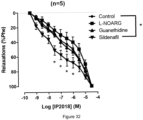
- compound (I) can induce relaxation in the corpus cavernosum. Accordingly, in one embodiment of the present disclosure, a method is provided for inducing relaxation of the corpus cavernosum in a subject in need thereof, the method comprising administration to the subject a therapeutically effective amount of a compound of formula (I).
- one embodiment of the present disclosure provides for a method for increasing penile blood flow in a subject in need thereof, the method comprising administering to the subject a therapeutically effective amount of a compound of formula (I).
- any of the uses or methods described above for the treatment of erectile dysfunction and/or related side-effects such as reduced magnitude of erectile response, reduced duration of erectile response, reduced frequency of erectile response, impaired relaxation of the corpus cavernosum, or reduced penile blood flow may be further useful for the treatment of a subject suffering from erectile dysfunction and/or the above-mentioned relates side-effects in combination with depression.
- one embodiment of the present disclosure provides the Compound of formula (I) for use in a method for treating, preventing, or alleviating erectile dysfunction, for increasing the magnitude of erectile response, for increasing the duration of an erectile response, for increasing the frequency of erectile responses, for inducing relaxation of the corpus cavernosum, and/or for increasing penile blood flow in a subject in need thereof, wherein the subject further suffers from depression.
- Compound (I) shows good stability in solution over a range of pH values but is sensitive to oxidation and to light. In the solid state, compound (I) is stable over 26 days.
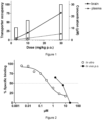
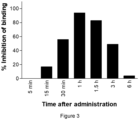
- Compound (I) has been characterized as a monoamine reuptake inhibitor, based on the profile in a series of functional assays (Table 2). A good correlation between human and rat systems was observed in binding assays for 5-HT but to a lesser extend for NA transporters (Table 3). Table 2. Monoamine reuptake inhibition by compound (I). Transporter 3 H-uptake rat IC 50 (nM) 3 H-uptake human IC 50 (nM) pK I on human transporter Human transporter ratio 5-HT 0.45 1.8 8.7 1 NA 85 46 7.3 26 DA 260 100 7.0 56 Table 3. Binding assays for citalopram and nisoxetine. 3 H-Citalopram binding K i (nM) 3 H-Nisoxetine binding K i (nM) Rat Human Rat Human 0.28 0.24 1,300 270
- Compound (I) is a potent inhibitor of 5-HT transporters with a 26 and a 56 fold lower affinity for human NA and DA transporters, respectively.
- the 5-HT:NA:DA ratio is dependent on the assay system used (see also Table 4).
- Compound (I) showed affinity in the micromolar range for nicotinic acetylcholine receptors and for 5-HT 3 receptors (Table 5). Table 5. Affinity of compound (I) to selected off-targets Receptor K i (nM) Separation to transporter (K i , nM) hSERT hNET hDAT 0.37 594 155 Nicotinic acetylcholine 5.050 x13.648 x8.5 x32 5-HT3 1.040 x2.810 x1.7 x6.7
- Compound (I) is very selective for the intended receptors SERT, NET, and DAT, while only binding to a few other receptors with substantially lower inhibition.
- the purpose of the present study was to examine, by in vivo microdialysis technique, the effects after administration of compound (I) on brain levels of serotonin, noradrenalin and dopamine within the ventral hippocampus (Hipp), prefrontal cortex (PFC), striatum (STR) and nucleus accumbens (N.Acc) of anaesthetized rats and mice.
- Compound (I) represents dual acting serotonin/dopamine reuptake inhibitors and was tested in comparison to citalopram a selective serotonin uptake inhibitor.
- Compound (I) was tested following subcutaneous injections at dose levels between 0.25-30 mg/kg.
- Compound (I) produced a dose dependent increase of serotonin (5-HT) in PFC shown as an area under curve (AUC 0-160min ) in Table 6 below: the 0.25 mg/kg dose induced an 190 ⁇ 15 % increase, and almost maximal increase at 1 mg/kg up to an (AUC 0-160min ) 252 ⁇ 48%, since the 10 mg/kg dose induced no further increase i.e. 263 ⁇ 47%.
- Pretreatment with the 5-HT 1A autoreceptor antagonist WAY-100635 induced a further minor increase of the compound (I) (0.25 mg/kg) induced increase in the PFC level of 5-HT.
- Compound (I) at 10 mg/kg produced only a moderate 135 ⁇ 4 % increase of noradrenaline (NA) in PFC (AUC 0-160min ).
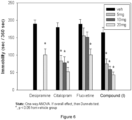
- Compound (I) at 10 - 30 mg/kg produced a dose dependent and marked increase of DA in the N.Acc. to levels of 192 ⁇ 42 and 604 ⁇ 88%, respectively.
- Compound (I) tested at 3 and 10 mg/kg s.c. produced only marginal effects on DA in the striatum (AUC 0-160min ) 137 ⁇ 21 and 134 ⁇ 43 %, respectively.
- Compound (I) at 3 mg/kg s.c. markedly increased the 5-HT level (AUC 0-160min ) 433 ⁇ 53 %, but less efficiently the levels of noradrenaline (AUC 0-160min ) 138 ⁇ 13 % and dopamine (AUC 0-160min ) 142 ⁇ 36 %.
- compound (I) represent a potent in vivo serotonin and dopamine reuptake inhibitor with a well balanced increase in the 5-HT and DA level in PFC together with only a minor influence on the NA levels.
- Example 5 Neurochemical mechanism of action in vivo - the MPTP model of DAT inhibition
- Compound (I) has potency as an inhibitor of the dopamine transporter (DAT) in the C57 mouse striatal tissue.
- Example 7 In vivo transporter occupancy
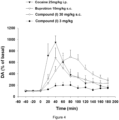
- the calculations were based on ED 50 values in ex vivo uptake of 5-HT and NA and WIN in vivo binding. The results are shown in Table 8.
- Model DOSE mg/kg
- 5-HT RO% 1 NA RO% 2 DA RO% 3 mFST NMRI mice
- Example 9 In vivo pharmacological activity - in vivo efficacy on depression, and mechanism thereof
- Compound (I) was tested in two of the most widely used behavioural screens for predicting antidepressant effects in the clinic: the mouse forced swim test (mFST) and mouse tail suspension test (mTST). These paradigms display a high degree of pharmacological validity as evidenced by their sensitivity to major classes of antidepressant treatments: tricyclic compounds, monoamine oxidase inhibitors, atypical antidepressants, selective serotonin reuptake inhibitors (SSRIs), serotonin-noradrenaline reuptake inhibitors (SNRls) and electroconvulsive shock.
- SSRIs selective serotonin reuptake inhibitors
- SNRls serotonin-noradrenaline reuptake inhibitors
- electroconvulsive shock electroconvulsive shock.
- compound (I) significantly increased swim distance and reduced immobility time in the mFST and mTST, respectively, when compared to vehicle-treated mice. These effects are indicative of potential antidepressant-like activity.
- the effects of compound (I) were more potent than those obtained following treatment with reference compounds (mFST: compound (I) > citalopram > duloxetine).
- Table 9 Summary of animal models of depression.
- mFST NMRI 0.3, 1, 3 mg/kg (p.o. 60 min) 1 mg/kg mTST (C57) 5, 10, 20 mg/kg (i.p. 30 min) ⁇ 5 mg/kg
- Duloxetine mFST NMRI
- 10, 30 mg/kg (p.o. 60 min) 30 mg/kg mTST C57
- Citalopram mFST NMRI
- Compound (I) was tested in a classical test often used to measure the ability of a compound to block the reuptake of 5-HT in vivo: nialamide-induced 5-HT syndrome (m5-HT).
- compound (I) was tested in a locomotor activity paradigm (mLA) as a measure of its ability to block the reuptake of DA and therefore induce motility. It is generally accepted that >60 % DA transporter blockade is needed to induce increased motility in this test.
- mLA locomotor activity paradigm
- compound (I) potently enhanced 5-HT syndrome-like behaviour in nialamide pre-treated mice, activity indicative of in vivo 5-HT reuptake inhibition.
- Compound (I) was tested in three widely used behavioural screens for predicting anxiolytic effects in the clinic: the mouse marble burying test (mMB), mouse zero maze (mZM) and mouse stress-induced hyperthermia test (mSIH). Table 12.
- Example 11 Preclinical safety pharmacology - HERG channel testing
- a HEK293 cell line stably expressing Kv11.3 for hERG and KCNE1 (minK) was established.
- the effect of compound (I) on the amount of current carried by hERG channels was assessed in whole-cell patch clamp experiments.
- the channels were activated by a voltage protocol designed to simulate a human cardiac action potential.
- compound (I) blocked the current with an estimated Ki of >10 ⁇ M.
- Example 12 Preclinical safety pharmacology - cardiovascular safety in anaesthetised dogs
- the PR interval and QRS duration were relatively unaffected by the administration of 1, 3, 10 and 30 mg/kg compound (I), with the exception of the PR interval were was a potential shortening of this interval following the administration of 30 mg/kg compound (I).
- No consistent changes in the QT interval were observed following the administration of 1, 3, 10 and 30 mg/kg compound (I).
- Table 13 Total plasma concentrations of compound (I).
- Rats could not tolerate 10 mg/kg i.v. because of exaggerated dopaminergic effects.
- NA Not applicable, plasma concentrations close to limit of quantification.
- Compound (I) Mouse Rat p.o. dose (clear solution) 10 mg/kg 5 mg/kg i.v. dose (clear solution) 10 mg/kg 2.5 mg/kg* Bioavailability 74% 3% T1 ⁇ 2 i.v. 0.8 h 0.6 h T1 ⁇ 2 p.o. 1.1 h NA Vd 3.5 L/kg 5.6 L/kg Clearance 4.3 L/h/kg 8.2 L/h/kg AUC (0- ⁇ ) p.o .
- the i.v. dose which was given 7 days later, was chosen as 0.5 mg/kg in order to prevent observable CNS effects. The difference between the p.o. and the i.v. dose might overestimate the bioavailability to a certain extent.
- T1 ⁇ 2 is in the same range in the two dogs and after both p.o. and i.v. administration (1.4-1.7 h).
- Table 15 PK parameters from bioavailability studies in dog.
- Example 15 Linearity studies in mouse and rat after single dose
- PK data from dosing rats s.c. in relatively low doses show very nice linear kinetics, when depicted as AUC versus dose.
- PK data from dosing mice in relatively high doses p.o. show a tendency to sub-linear kinetics.
- Compound (I) was dosed to mouse at 30 and 60 mg/kg p.o. Plasma samples were withdrawn up to 24 h. The results are summarised in Table 16 and Figure 21 . Table 16. Compound (I) dosed to mouse 10, 30, and 60 mg/kg p.o. as a single dose. *: compared to 10 mg/kg i.v. Compound (I) Mouse (female NMRI) p.o. doses (clear solution) 10 mg/kg p.o. 30 mg/kg p.o. 60 mg/kg p.o.
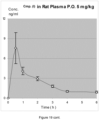
- Compound (I) was dosed to rat at 1, 5 and 10 mg/kg s.c. Plasma samples were withdrawn up to 24 h and analysed. The results are summarised in Table 17 and Figure 22 . Table 17. Compound (I) dosed to rat 1, 5 and 10 mg/kg s.c. as a single dose. *: compared to 10 mg/kg i.v. dosed in same vehicle. Compound (I) Rat (male Wistar) s.c. doses (clear solution) 1 mg/kg s.c. 5 mg/kg s.c. 10 mg/kg s.c.
- Example 16 Linearity after repeat dosing in mouse and rat
- mice seem to exhibit a tendency to sub-linear kinetics, whereas the rats show a slight tendency to supra-linear kinetics. This difference might be a result of the inherent difference in the way of administration. It should be noted that the compound in these studies was dosed in 5% glucose (clear solution) and not in Tween 80 as in the single dose studies.
- Compound (I) was dosed 15, 30, 60 and 90 mg/kg p.o. for 14 days. Samples were taken 2 h post last dose. Mice seem to exhibit a tendency to sub-linear kinetics after repeat dosing. Especially the male mice show a considerable rise in plasma concentration in the last dose of 90 mg/kg p.o. At doses 15 to 60 mg/kg, the female mice show higher plasma concentrations than male, but at 90 mg/kg the curves cross and the male mice show higher concentrations ( Figure 23 ).
- Compound (I) was dosed 5, 10, 15 and 25 mg/kg s.c. for 14 days. Samples were taken 2 h post last dose. Both male and female rats show a slight tendency to supra-linear kinetics after repeat dosing. The male rats exhibit higher concentrations in plasma compared to female. This picture persists from 5 to 25 mg/kg ( Figure 24 ).
- Compound (I) was dosed to female NMRI mice 10 mg/kg p.o. Plasma was taken 0.5, 1, 2, 4, 6 and 24 post dose. Brain, liver and lung were taken 1, 4 and 24 hours post dose.
- the plasma profile was essentially the same as for the bioavailability study (Table 20), showing the same T1 ⁇ 2 of 1.1 h.
- AUC and T1 ⁇ 2 were calculated for plasma and organs, even though the data are very sparse for the organs.
- Compound (I) shows a remarkable preference for liver and lung in mouse, whereas the ratio to brain is optimal.
- Table 18. Tissue distribution in mouse after single dose.
- Compound (I) was dosed to male Wistar rats 5 mg/kg s.c. Plasma was taken 0.5, 1, 2, 4, 6 and 24 post dose. Brain, liver and lung were taken 1, 4 and 24 hours post dose.
- the plasma profile was again essentially the same as for the single dose study showing the same T1 ⁇ 2 of 0.8 h.
- AUC and T1 ⁇ 2 were calculated for plasma and organs, even though the data are very sparse for the organs.
- Compound (I) was dosed 15, 30 and 60 mg/kg p.o. to male and female NMRI mice for 14 days. Plasma, brain and liver were taken 2 h post last dose.
- the ratio to brain remain in the same ballpark figures comparing single and repeat dosing.
- the ratio to liver is also the same as for single dose, except for the low dose to male mice. There is no single dose data from male mice.
- Table 20 Tissue distribution in mouse after repeat dosing Compound (I) dosed p.o. to mice for 14 days.
- Compound (I) was dosed 5, 10 and 15 mg/kg s.c. to male and female Wistar rats for 14 days. Plasma, brain and liver were taken 2 h post last dose.
- Example 19 Metabolism - metabolic stability in liver microsomes
- Example 20 Metabolism - metabolic stability in human hepatocytes
- Compound (I) was tested for CYP450 inhibition using a cocktail of selective substrates.
- the IC50 was determined as the concentration of compound (I), which inhibited the formation of metabolites by 50% (Table 23).
- CYP1A2 is the only one, which is significantly inhibited by compound (I). This might be addressed later in a clinical study.
- Table 23 CYP450 inhibition of compound (I).
- Compound (I) dosed at 60 mg/kg (Group 4), produced an increase in activity in both male and female, significant decrease in body weight in the female group and a significant decrease in relative liver weight in both sexes.
- the 90 mg/kg (Group 5) produced an increase in activity in both male and female, significant decrease in body weight and in relative liver weight in both sexes.
- mice treated p.o. for 14 days at dose levels from 15 up to 90 mg/kg/day showed treatment related significant changes in body weight and in relative liver weight, but no treatment-related macroscopic findings were seen in male or female.
- Compound (I) dosed at 15mg/kg (Group 4), produced an increased activity in both males and females. No changes in body weight gain were observed in the female rats, but a tendency to increased bodyweight in the group 4 males. At termination no treatment-related macroscopic findings were seen, but the relative liver weights were reduced in group 4 females and increased in group 4 males. Group 5 (25 mg/kg), produced an increased activity in both male and female and a minimal decreased body weight. No changes in liver weight were seen in group 5.
- Compound (I) was tested for genotoxicity in the Ames screening test using Salmonella typhimurium strains TA 100 and TA 98. Compound (I) was tested at dose levels of 1.6 to 5000 ⁇ g/plate in the presence or absence of S-9 mix. It was concluded that compound (I) did not show any evidence of mutagenic activity in this test.
- Example 25 Induction of erection in rats
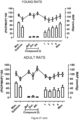
- Compound (I) was administered to rats at 1mg/kg, leading to improved erectile function as outlined in Figure 25 .
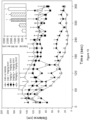
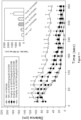
- Vehicle and compound (I) were administered after establishing the maximal (10 Hz, 1 ms, 6 V) and submaximal (submax) responses (10 Hz, 1 ms, 0.6 - 1.55 V) to cavernous nerve stimulation for 30 s.
- Submaximal stimulation was repeated 3, 13, 23, and 33 min after drug or vehicle administration ( Figure 27 ).
- Compound (I) was found to induce erection in both young and adult rats.
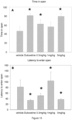
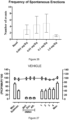
- Compound (I) was administered intravenously to rats in dosages of 0.001, 0.01, 0.1, and 1.0 mg/kg, and the number of spontaneous erections was measured. The number of events increased with increasing dosage from 0.001 to 0.1 mg/kg, but decreased abruptly at a dose of 1.0 mg/kg ( Figure 26 ). Thus, compound (I) is more efficient at inducing erection in rats at low concentrations.
- a laser doppler flow probe was positioned in situ in mice erectile tissue for measurement of penile basal flow in the absence and the presence of compound (I). Penile flow markedly increased by infusion of compound (I) (1 mg/kg) ( Figure 33 ). These results strongly suggest that compound (I) may be administered locally to or near the penis, such as transdermally or intracavernous.
Landscapes
- Health & Medical Sciences (AREA)
- Chemical & Material Sciences (AREA)
- Organic Chemistry (AREA)
- Veterinary Medicine (AREA)
- Public Health (AREA)
- General Health & Medical Sciences (AREA)
- Animal Behavior & Ethology (AREA)
- Life Sciences & Earth Sciences (AREA)
- Pharmacology & Pharmacy (AREA)
- Medicinal Chemistry (AREA)
- Chemical Kinetics & Catalysis (AREA)
- Bioinformatics & Cheminformatics (AREA)
- General Chemical & Material Sciences (AREA)
- Nuclear Medicine, Radiotherapy & Molecular Imaging (AREA)
- Engineering & Computer Science (AREA)
- Reproductive Health (AREA)
- Biomedical Technology (AREA)
- Neurology (AREA)
- Endocrinology (AREA)
- Neurosurgery (AREA)
- Epidemiology (AREA)
- Emergency Medicine (AREA)
- Gynecology & Obstetrics (AREA)
- Pain & Pain Management (AREA)
- Psychiatry (AREA)
- Pharmaceuticals Containing Other Organic And Inorganic Compounds (AREA)
- Medicinal Preparation (AREA)
- Nitrogen Condensed Heterocyclic Rings (AREA)
- Medicines Containing Plant Substances (AREA)
- Steroid Compounds (AREA)
Priority Applications (1)
| Application Number | Priority Date | Filing Date | Title |
|---|---|---|---|
| EP23183643.8A EP4241839A3 (en) | 2019-08-06 | 2020-08-06 | Compound for combination treatment |
Applications Claiming Priority (2)
| Application Number | Priority Date | Filing Date | Title |
|---|---|---|---|
| EP19190224 | 2019-08-06 | ||
| PCT/EP2020/072092 WO2021023805A1 (en) | 2019-08-06 | 2020-08-06 | Compound for combination treatment |
Related Child Applications (2)
| Application Number | Title | Priority Date | Filing Date |
|---|---|---|---|
| EP23183643.8A Division-Into EP4241839A3 (en) | 2019-08-06 | 2020-08-06 | Compound for combination treatment |
| EP23183643.8A Division EP4241839A3 (en) | 2019-08-06 | 2020-08-06 | Compound for combination treatment |
Publications (2)
| Publication Number | Publication Date |
|---|---|
| EP4009942A1 EP4009942A1 (en) | 2022-06-15 |
| EP4009942B1 true EP4009942B1 (en) | 2023-08-09 |
Family
ID=67551141
Family Applications (2)
| Application Number | Title | Priority Date | Filing Date |
|---|---|---|---|
| EP20751149.4A Active EP4009942B1 (en) | 2019-08-06 | 2020-08-06 | Compound for combination treatment |
| EP23183643.8A Pending EP4241839A3 (en) | 2019-08-06 | 2020-08-06 | Compound for combination treatment |
Family Applications After (1)
| Application Number | Title | Priority Date | Filing Date |
|---|---|---|---|
| EP23183643.8A Pending EP4241839A3 (en) | 2019-08-06 | 2020-08-06 | Compound for combination treatment |
Country Status (16)
| Country | Link |
|---|---|
| US (1) | US20220288052A1 (https=) |
| EP (2) | EP4009942B1 (https=) |
| JP (1) | JP7605825B2 (https=) |
| KR (1) | KR20220054593A (https=) |
| CN (1) | CN114430679A (https=) |
| AU (1) | AU2020326244B2 (https=) |
| BR (1) | BR112022002169A2 (https=) |
| CA (1) | CA3146837A1 (https=) |
| DK (1) | DK4009942T3 (https=) |
| ES (1) | ES2962648T3 (https=) |
| FI (1) | FI4009942T3 (https=) |
| IL (1) | IL290319B2 (https=) |
| MX (1) | MX2022000356A (https=) |
| PL (1) | PL4009942T3 (https=) |
| WO (1) | WO2021023805A1 (https=) |
| ZA (1) | ZA202200723B (https=) |
Families Citing this family (2)
| Publication number | Priority date | Publication date | Assignee | Title |
|---|---|---|---|---|
| EP4646204A1 (en) * | 2023-01-03 | 2025-11-12 | Initiator Pharma A/S | Compound for treatment of erectile dysfunction |
| WO2025051846A1 (en) | 2023-09-05 | 2025-03-13 | Initiator Pharma A/S | Compound for treatment of female sexual dysfunction |
Family Cites Families (6)
| Publication number | Priority date | Publication date | Assignee | Title |
|---|---|---|---|---|
| MXPA04012693A (es) * | 2002-06-20 | 2005-03-23 | Lundbeck & Co As H | Terapia de combinacion en donde se utiliza un inhibidor de recaptacion de serotonina. |
| RU2354377C2 (ru) * | 2003-07-11 | 2009-05-10 | Берингер Ингельхайм Ветмедика Гмбх | Способ лечения или предупреждения заболеваний центральной нервной системы с использованием соединений, обладающих селективностью в отношении альфа-3-субъединицы бензодиазепинового рецептора |
| BRPI0515261A (pt) * | 2004-09-30 | 2008-07-15 | Neurosearch As | composto ou um sal farmaceuticamente aceitável do mesmo, composição farmacêutica, uso do composto quìmico ou de qualquer um de seus isÈmeros ou de qualquer mistura de seus isÈmeros, ou um sal farmaceuticamente aceitável do mesmo, e, método para o tratamento, a prevenção ou o alìvio de uma doença ou de um distúrbio ou de uma condição de um corpo de animal vivo |
| WO2008074798A1 (en) * | 2006-12-20 | 2008-06-26 | Neurosearch A/S | Novel chromen-2-one derivatives and their use as monoamine neurotransmitter re-uptake inhibitors |
| BRPI0917802A2 (pt) * | 2008-08-21 | 2016-03-01 | Neurosearch As | método para tratar um distúrbio de ansiedade, composição farmacêutica, uso do composto, uso de uma combinação, kit de partes, método para tratar, prevenir ou aliviar um distúrbio de ansiedade de um corpo de animal vivo, e, combinação |
| US20130040985A1 (en) | 2010-01-29 | 2013-02-14 | Neurosearch A/S | Chromen-2-one derivatives and their use as monoamine neurotransmitter re-uptake inhibitors |
-
2020
- 2020-08-06 WO PCT/EP2020/072092 patent/WO2021023805A1/en not_active Ceased
- 2020-08-06 CA CA3146837A patent/CA3146837A1/en active Pending
- 2020-08-06 EP EP20751149.4A patent/EP4009942B1/en active Active
- 2020-08-06 US US17/632,323 patent/US20220288052A1/en active Pending
- 2020-08-06 KR KR1020227005609A patent/KR20220054593A/ko active Pending
- 2020-08-06 PL PL20751149.4T patent/PL4009942T3/pl unknown
- 2020-08-06 AU AU2020326244A patent/AU2020326244B2/en active Active
- 2020-08-06 CN CN202080056000.7A patent/CN114430679A/zh active Pending
- 2020-08-06 DK DK20751149.4T patent/DK4009942T3/da active
- 2020-08-06 JP JP2022506360A patent/JP7605825B2/ja active Active
- 2020-08-06 BR BR112022002169A patent/BR112022002169A2/pt unknown
- 2020-08-06 ES ES20751149T patent/ES2962648T3/es active Active
- 2020-08-06 EP EP23183643.8A patent/EP4241839A3/en active Pending
- 2020-08-06 MX MX2022000356A patent/MX2022000356A/es unknown
- 2020-08-06 FI FIEP20751149.4T patent/FI4009942T3/fi active
-
2022
- 2022-01-14 ZA ZA2022/00723A patent/ZA202200723B/en unknown
- 2022-02-03 IL IL290319A patent/IL290319B2/en unknown
Non-Patent Citations (2)
| Title |
|---|
| ICHIMARU Y ET AL: "5-HT1A-receptor subtype mediates the effect of fluvoxamine, a selective serotonin reuptake inhibitor, on marble-burying behavior in mice", JPN J PHARMACOL., 1 May 1995 (1995-05-01), pages 65 - 70, XP055814225, Retrieved from the Internet <URL:https://pubmed.ncbi.nlm.nih.gov/7494384/> [retrieved on 20210615], DOI: 10.1254/jjp.68.65. PMID: 7494384 * |
| SIMONSEN ULF ET AL: "Modulation of Dopaminergic Pathways to Treat Erectile Dysfunction", BASIC & CLINICAL PHARMACOLOGY & TOXICOLOGY, vol. 119, 1 October 2016 (2016-10-01), COPENHAGEN, DK, pages 63 - 74, XP055814318, ISSN: 1742-7835, Retrieved from the Internet <URL:https://api.wiley.com/onlinelibrary/tdm/v1/articles/10.1111%2Fbcpt.12653> DOI: 10.1111/bcpt.12653 * |
Also Published As
| Publication number | Publication date |
|---|---|
| WO2021023805A1 (en) | 2021-02-11 |
| MX2022000356A (es) | 2022-05-11 |
| FI4009942T3 (fi) | 2023-09-26 |
| CN114430679A (zh) | 2022-05-03 |
| ES2962648T3 (es) | 2024-03-20 |
| BR112022002169A2 (pt) | 2022-06-07 |
| AU2020326244B2 (en) | 2025-06-05 |
| AU2020326244A1 (en) | 2022-03-17 |
| IL290319A (en) | 2022-04-01 |
| IL290319B2 (en) | 2023-06-01 |
| DK4009942T3 (da) | 2023-10-23 |
| EP4009942A1 (en) | 2022-06-15 |
| CA3146837A1 (en) | 2021-02-11 |
| ZA202200723B (en) | 2022-08-31 |
| EP4241839A2 (en) | 2023-09-13 |
| JP7605825B2 (ja) | 2024-12-24 |
| US20220288052A1 (en) | 2022-09-15 |
| JP2022544463A (ja) | 2022-10-19 |
| PL4009942T3 (pl) | 2024-04-08 |
| EP4241839A3 (en) | 2023-11-15 |
| KR20220054593A (ko) | 2022-05-03 |
Similar Documents
| Publication | Publication Date | Title |
|---|---|---|
| RU2458691C2 (ru) | Лечение посттравматического стрессового расстройства | |
| EP2217073B1 (en) | Method of treating metabolic disorders and depression with dopamine receptor agonists | |
| US20230233537A1 (en) | Compositions and Kits of Parts Comprising N,N-Dimethyltryptamine and Harmine and Their Use in Therapy | |
| AU2016222412B2 (en) | Methods and Compositions for Treating Depression Using Cyclobenzaprine | |
| EP4009942B1 (en) | Compound for combination treatment | |
| CN117202907A (zh) | 用于延迟人类男性的射精的方法 | |
| US7465729B2 (en) | Methods of treatment of menopause and perimenopause using eszopiclone | |
| KR20100098491A (ko) | 파킨슨병의 운동 합병증 또는 정신증상을 개선하는 약제 | |
| HK40099487A (en) | Compound for combination treatment | |
| HK40071713A (en) | Compound for combination treatment | |
| HK40071713B (en) | Compound for combination treatment | |
| KR100614504B1 (ko) | 임상적 우울증 치료를 위한 디옥시페가닌의 용도 | |
| BR112020017026A2 (pt) | 3ss-(4-metoxibenziloxi)pregn-5-en-20-ona para uso no tratamento de transtornos relacionados a canabinoides | |
| US20250302802A1 (en) | Methods and compositions | |
| JP2010222347A (ja) | Pde5阻害剤及びカルニチンを含有する医薬組成物 | |
| Haddley | Lu-AA-21004 | |
| CN101189043A (zh) | 肾上腺素能α2B拮抗剂用于治疗血管舒缩症状的应用 | |
| HK1155063A (en) | Treatment of post-traumatic stress disorder | |
| NZ624056A (en) | Compositions of buprenorphine and mu-opioid receptor antagonists | |
| HK1128226B (en) | Pharmaceutical combinations comprising testosterone in the treatment of female sexual dysfunction | |
| HK1128226A1 (en) | Pharmaceutical combinations comprising testosterone in the treatment of female sexual dysfunction | |
| NZ624056B2 (en) | Compositions of buprenorphine and mu-opioid receptor antagonists |
Legal Events
| Date | Code | Title | Description |
|---|---|---|---|
| STAA | Information on the status of an ep patent application or granted ep patent |
Free format text: STATUS: UNKNOWN |
|
| STAA | Information on the status of an ep patent application or granted ep patent |
Free format text: STATUS: THE INTERNATIONAL PUBLICATION HAS BEEN MADE |
|
| PUAI | Public reference made under article 153(3) epc to a published international application that has entered the european phase |
Free format text: ORIGINAL CODE: 0009012 |
|
| STAA | Information on the status of an ep patent application or granted ep patent |
Free format text: STATUS: REQUEST FOR EXAMINATION WAS MADE |
|
| 17P | Request for examination filed |
Effective date: 20220223 |
|
| AK | Designated contracting states |
Kind code of ref document: A1 Designated state(s): AL AT BE BG CH CY CZ DE DK EE ES FI FR GB GR HR HU IE IS IT LI LT LU LV MC MK MT NL NO PL PT RO RS SE SI SK SM TR |
|
| DAV | Request for validation of the european patent (deleted) | ||
| DAX | Request for extension of the european patent (deleted) | ||
| REG | Reference to a national code |
Ref country code: HK Ref legal event code: DE Ref document number: 40071713 Country of ref document: HK |
|
| GRAP | Despatch of communication of intention to grant a patent |
Free format text: ORIGINAL CODE: EPIDOSNIGR1 |
|
| STAA | Information on the status of an ep patent application or granted ep patent |
Free format text: STATUS: GRANT OF PATENT IS INTENDED |
|
| INTG | Intention to grant announced |
Effective date: 20230109 |
|
| RIN1 | Information on inventor provided before grant (corrected) |
Inventor name: PETERS, DAN Inventor name: COMERMA-STEFFENSEN, SIMON Inventor name: SIMONSEN, ULF |
|
| GRAJ | Information related to disapproval of communication of intention to grant by the applicant or resumption of examination proceedings by the epo deleted |
Free format text: ORIGINAL CODE: EPIDOSDIGR1 |
|
| STAA | Information on the status of an ep patent application or granted ep patent |
Free format text: STATUS: REQUEST FOR EXAMINATION WAS MADE |
|
| REG | Reference to a national code |
Ref country code: DE Ref legal event code: R079 Free format text: PREVIOUS MAIN CLASS: A61K0009000000 Ipc: A61K0031460000 Ref country code: DE Ref legal event code: R079 Ref document number: 602020015522 Country of ref document: DE Free format text: PREVIOUS MAIN CLASS: A61K0009000000 Ipc: A61K0031460000 |
|
| GRAP | Despatch of communication of intention to grant a patent |
Free format text: ORIGINAL CODE: EPIDOSNIGR1 |
|
| STAA | Information on the status of an ep patent application or granted ep patent |
Free format text: STATUS: GRANT OF PATENT IS INTENDED |
|
| GRAS | Grant fee paid |
Free format text: ORIGINAL CODE: EPIDOSNIGR3 |
|
| INTC | Intention to grant announced (deleted) | ||
| RIC1 | Information provided on ipc code assigned before grant |
Ipc: A61P 15/10 20060101ALI20230524BHEP Ipc: C07D 451/06 20060101ALI20230524BHEP Ipc: A61P 25/24 20060101ALI20230524BHEP Ipc: A61P 25/22 20060101ALI20230524BHEP Ipc: A61P 15/00 20060101ALI20230524BHEP Ipc: A61K 9/00 20060101ALI20230524BHEP Ipc: A61K 31/46 20060101AFI20230524BHEP |
|
| INTG | Intention to grant announced |
Effective date: 20230612 |
|
| GRAA | (expected) grant |
Free format text: ORIGINAL CODE: 0009210 |
|
| STAA | Information on the status of an ep patent application or granted ep patent |
Free format text: STATUS: THE PATENT HAS BEEN GRANTED |
|
| AK | Designated contracting states |
Kind code of ref document: B1 Designated state(s): AL AT BE BG CH CY CZ DE DK EE ES FI FR GB GR HR HU IE IS IT LI LT LU LV MC MK MT NL NO PL PT RO RS SE SI SK SM TR |
|
| REG | Reference to a national code |
Ref country code: GB Ref legal event code: FG4D |
|
| REG | Reference to a national code |
Ref country code: CH Ref legal event code: EP |
|
| REG | Reference to a national code |
Ref country code: DE Ref legal event code: R096 Ref document number: 602020015522 Country of ref document: DE |
|
| REG | Reference to a national code |
Ref country code: IE Ref legal event code: FG4D |
|
| P01 | Opt-out of the competence of the unified patent court (upc) registered |
Effective date: 20230728 |
|
| REG | Reference to a national code |
Ref country code: FI Ref legal event code: FGE |
|
| REG | Reference to a national code |
Ref country code: NO Ref legal event code: T2 Effective date: 20230809 |
|
| REG | Reference to a national code |
Ref country code: NL Ref legal event code: FP |
|
| REG | Reference to a national code |
Ref country code: DK Ref legal event code: T3 Effective date: 20231016 |
|
| REG | Reference to a national code |
Ref country code: SE Ref legal event code: TRGR |
|
| REG | Reference to a national code |
Ref country code: LT Ref legal event code: MG9D |
|
| PG25 | Lapsed in a contracting state [announced via postgrant information from national office to epo] |
Ref country code: GR Free format text: LAPSE BECAUSE OF FAILURE TO SUBMIT A TRANSLATION OF THE DESCRIPTION OR TO PAY THE FEE WITHIN THE PRESCRIBED TIME-LIMIT Effective date: 20231110 |
|
| PG25 | Lapsed in a contracting state [announced via postgrant information from national office to epo] |
Ref country code: IS Free format text: LAPSE BECAUSE OF FAILURE TO SUBMIT A TRANSLATION OF THE DESCRIPTION OR TO PAY THE FEE WITHIN THE PRESCRIBED TIME-LIMIT Effective date: 20231209 |
|
| PG25 | Lapsed in a contracting state [announced via postgrant information from national office to epo] |
Ref country code: RS Free format text: LAPSE BECAUSE OF FAILURE TO SUBMIT A TRANSLATION OF THE DESCRIPTION OR TO PAY THE FEE WITHIN THE PRESCRIBED TIME-LIMIT Effective date: 20230809 Ref country code: PT Free format text: LAPSE BECAUSE OF FAILURE TO SUBMIT A TRANSLATION OF THE DESCRIPTION OR TO PAY THE FEE WITHIN THE PRESCRIBED TIME-LIMIT Effective date: 20231211 Ref country code: LV Free format text: LAPSE BECAUSE OF FAILURE TO SUBMIT A TRANSLATION OF THE DESCRIPTION OR TO PAY THE FEE WITHIN THE PRESCRIBED TIME-LIMIT Effective date: 20230809 Ref country code: LT Free format text: LAPSE BECAUSE OF FAILURE TO SUBMIT A TRANSLATION OF THE DESCRIPTION OR TO PAY THE FEE WITHIN THE PRESCRIBED TIME-LIMIT Effective date: 20230809 Ref country code: IS Free format text: LAPSE BECAUSE OF FAILURE TO SUBMIT A TRANSLATION OF THE DESCRIPTION OR TO PAY THE FEE WITHIN THE PRESCRIBED TIME-LIMIT Effective date: 20231209 Ref country code: HR Free format text: LAPSE BECAUSE OF FAILURE TO SUBMIT A TRANSLATION OF THE DESCRIPTION OR TO PAY THE FEE WITHIN THE PRESCRIBED TIME-LIMIT Effective date: 20230809 Ref country code: GR Free format text: LAPSE BECAUSE OF FAILURE TO SUBMIT A TRANSLATION OF THE DESCRIPTION OR TO PAY THE FEE WITHIN THE PRESCRIBED TIME-LIMIT Effective date: 20231110 |
|
| REG | Reference to a national code |
Ref country code: ES Ref legal event code: FG2A Ref document number: 2962648 Country of ref document: ES Kind code of ref document: T3 Effective date: 20240320 |
|
| PG25 | Lapsed in a contracting state [announced via postgrant information from national office to epo] |
Ref country code: RO Free format text: LAPSE BECAUSE OF FAILURE TO SUBMIT A TRANSLATION OF THE DESCRIPTION OR TO PAY THE FEE WITHIN THE PRESCRIBED TIME-LIMIT Effective date: 20230809 Ref country code: EE Free format text: LAPSE BECAUSE OF FAILURE TO SUBMIT A TRANSLATION OF THE DESCRIPTION OR TO PAY THE FEE WITHIN THE PRESCRIBED TIME-LIMIT Effective date: 20230809 Ref country code: CZ Free format text: LAPSE BECAUSE OF FAILURE TO SUBMIT A TRANSLATION OF THE DESCRIPTION OR TO PAY THE FEE WITHIN THE PRESCRIBED TIME-LIMIT Effective date: 20230809 Ref country code: SM Free format text: LAPSE BECAUSE OF FAILURE TO SUBMIT A TRANSLATION OF THE DESCRIPTION OR TO PAY THE FEE WITHIN THE PRESCRIBED TIME-LIMIT Effective date: 20230809 Ref country code: SK Free format text: LAPSE BECAUSE OF FAILURE TO SUBMIT A TRANSLATION OF THE DESCRIPTION OR TO PAY THE FEE WITHIN THE PRESCRIBED TIME-LIMIT Effective date: 20230809 |
|
| REG | Reference to a national code |
Ref country code: DE Ref legal event code: R097 Ref document number: 602020015522 Country of ref document: DE |
|
| PLBE | No opposition filed within time limit |
Free format text: ORIGINAL CODE: 0009261 |
|
| STAA | Information on the status of an ep patent application or granted ep patent |
Free format text: STATUS: NO OPPOSITION FILED WITHIN TIME LIMIT |
|
| REG | Reference to a national code |
Ref country code: AT Ref legal event code: UEP Ref document number: 1596704 Country of ref document: AT Kind code of ref document: T Effective date: 20230809 |
|
| 26N | No opposition filed |
Effective date: 20240513 |
|
| PG25 | Lapsed in a contracting state [announced via postgrant information from national office to epo] |
Ref country code: SI Free format text: LAPSE BECAUSE OF FAILURE TO SUBMIT A TRANSLATION OF THE DESCRIPTION OR TO PAY THE FEE WITHIN THE PRESCRIBED TIME-LIMIT Effective date: 20230809 |
|
| PG25 | Lapsed in a contracting state [announced via postgrant information from national office to epo] |
Ref country code: BG Free format text: LAPSE BECAUSE OF FAILURE TO SUBMIT A TRANSLATION OF THE DESCRIPTION OR TO PAY THE FEE WITHIN THE PRESCRIBED TIME-LIMIT Effective date: 20230809 |
|
| PG25 | Lapsed in a contracting state [announced via postgrant information from national office to epo] |
Ref country code: BG Free format text: LAPSE BECAUSE OF FAILURE TO SUBMIT A TRANSLATION OF THE DESCRIPTION OR TO PAY THE FEE WITHIN THE PRESCRIBED TIME-LIMIT Effective date: 20230809 |
|
| PG25 | Lapsed in a contracting state [announced via postgrant information from national office to epo] |
Ref country code: LU Free format text: LAPSE BECAUSE OF NON-PAYMENT OF DUE FEES Effective date: 20240806 |
|
| PG25 | Lapsed in a contracting state [announced via postgrant information from national office to epo] |
Ref country code: MC Free format text: LAPSE BECAUSE OF FAILURE TO SUBMIT A TRANSLATION OF THE DESCRIPTION OR TO PAY THE FEE WITHIN THE PRESCRIBED TIME-LIMIT Effective date: 20230809 |
|
| PGFP | Annual fee paid to national office [announced via postgrant information from national office to epo] |
Ref country code: NL Payment date: 20250716 Year of fee payment: 6 |
|
| PGFP | Annual fee paid to national office [announced via postgrant information from national office to epo] |
Ref country code: ES Payment date: 20250905 Year of fee payment: 6 Ref country code: FI Payment date: 20250717 Year of fee payment: 6 |
|
| PGFP | Annual fee paid to national office [announced via postgrant information from national office to epo] |
Ref country code: DE Payment date: 20250717 Year of fee payment: 6 Ref country code: DK Payment date: 20250827 Year of fee payment: 6 |
|
| PGFP | Annual fee paid to national office [announced via postgrant information from national office to epo] |
Ref country code: NO Payment date: 20250820 Year of fee payment: 6 |
|
| PGFP | Annual fee paid to national office [announced via postgrant information from national office to epo] |
Ref country code: TR Payment date: 20250718 Year of fee payment: 6 Ref country code: IT Payment date: 20250718 Year of fee payment: 6 Ref country code: PL Payment date: 20250718 Year of fee payment: 6 |
|
| PGFP | Annual fee paid to national office [announced via postgrant information from national office to epo] |
Ref country code: BE Payment date: 20250718 Year of fee payment: 6 Ref country code: GB Payment date: 20250819 Year of fee payment: 6 |
|
| PGFP | Annual fee paid to national office [announced via postgrant information from national office to epo] |
Ref country code: FR Payment date: 20250819 Year of fee payment: 6 Ref country code: AT Payment date: 20250717 Year of fee payment: 6 |
|
| PGFP | Annual fee paid to national office [announced via postgrant information from national office to epo] |
Ref country code: CH Payment date: 20250901 Year of fee payment: 6 Ref country code: SE Payment date: 20250819 Year of fee payment: 6 |
|
| PGFP | Annual fee paid to national office [announced via postgrant information from national office to epo] |
Ref country code: IE Payment date: 20250819 Year of fee payment: 6 |
|
| PG25 | Lapsed in a contracting state [announced via postgrant information from national office to epo] |
Ref country code: CY Free format text: LAPSE BECAUSE OF FAILURE TO SUBMIT A TRANSLATION OF THE DESCRIPTION OR TO PAY THE FEE WITHIN THE PRESCRIBED TIME-LIMIT; INVALID AB INITIO Effective date: 20200806 |
|
| PG25 | Lapsed in a contracting state [announced via postgrant information from national office to epo] |
Ref country code: HU Free format text: LAPSE BECAUSE OF FAILURE TO SUBMIT A TRANSLATION OF THE DESCRIPTION OR TO PAY THE FEE WITHIN THE PRESCRIBED TIME-LIMIT; INVALID AB INITIO Effective date: 20200806 |