EP4008621B1 - Mehrfachritzelanordnung für fahrräder - Google Patents
Mehrfachritzelanordnung für fahrräder Download PDFInfo
- Publication number
- EP4008621B1 EP4008621B1 EP21020547.2A EP21020547A EP4008621B1 EP 4008621 B1 EP4008621 B1 EP 4008621B1 EP 21020547 A EP21020547 A EP 21020547A EP 4008621 B1 EP4008621 B1 EP 4008621B1
- Authority
- EP
- European Patent Office
- Prior art keywords
- pinion
- sprocket
- damping body
- assembly
- damping member
- Prior art date
- Legal status (The legal status is an assumption and is not a legal conclusion. Google has not performed a legal analysis and makes no representation as to the accuracy of the status listed.)
- Active
Links
Images



Classifications
-
- B—PERFORMING OPERATIONS; TRANSPORTING
- B62—LAND VEHICLES FOR TRAVELLING OTHERWISE THAN ON RAILS
- B62M—RIDER PROPULSION OF WHEELED VEHICLES OR SLEDGES; POWERED PROPULSION OF SLEDGES OR SINGLE-TRACK CYCLES; TRANSMISSIONS SPECIALLY ADAPTED FOR SUCH VEHICLES
- B62M9/00—Transmissions characterised by use of an endless chain, belt, or the like
- B62M9/04—Transmissions characterised by use of an endless chain, belt, or the like of changeable ratio
- B62M9/06—Transmissions characterised by use of an endless chain, belt, or the like of changeable ratio using a single chain, belt, or the like
- B62M9/10—Transmissions characterised by use of an endless chain, belt, or the like of changeable ratio using a single chain, belt, or the like involving different-sized wheels, e.g. rear sprocket chain wheels selectively engaged by the chain, belt, or the like
-
- B—PERFORMING OPERATIONS; TRANSPORTING
- B62—LAND VEHICLES FOR TRAVELLING OTHERWISE THAN ON RAILS
- B62M—RIDER PROPULSION OF WHEELED VEHICLES OR SLEDGES; POWERED PROPULSION OF SLEDGES OR SINGLE-TRACK CYCLES; TRANSMISSIONS SPECIALLY ADAPTED FOR SUCH VEHICLES
- B62M9/00—Transmissions characterised by use of an endless chain, belt, or the like
- B62M9/04—Transmissions characterised by use of an endless chain, belt, or the like of changeable ratio
- B62M9/06—Transmissions characterised by use of an endless chain, belt, or the like of changeable ratio using a single chain, belt, or the like
- B62M9/10—Transmissions characterised by use of an endless chain, belt, or the like of changeable ratio using a single chain, belt, or the like involving different-sized wheels, e.g. rear sprocket chain wheels selectively engaged by the chain, belt, or the like
- B62M9/12—Transmissions characterised by use of an endless chain, belt, or the like of changeable ratio using a single chain, belt, or the like involving different-sized wheels, e.g. rear sprocket chain wheels selectively engaged by the chain, belt, or the like the chain, belt, or the like being laterally shiftable, e.g. using a rear derailleur
- B62M9/121—Rear derailleurs
-
- B—PERFORMING OPERATIONS; TRANSPORTING
- B62—LAND VEHICLES FOR TRAVELLING OTHERWISE THAN ON RAILS
- B62M—RIDER PROPULSION OF WHEELED VEHICLES OR SLEDGES; POWERED PROPULSION OF SLEDGES OR SINGLE-TRACK CYCLES; TRANSMISSIONS SPECIALLY ADAPTED FOR SUCH VEHICLES
- B62M9/00—Transmissions characterised by use of an endless chain, belt, or the like
- B62M9/04—Transmissions characterised by use of an endless chain, belt, or the like of changeable ratio
- B62M9/06—Transmissions characterised by use of an endless chain, belt, or the like of changeable ratio using a single chain, belt, or the like
- B62M9/10—Transmissions characterised by use of an endless chain, belt, or the like of changeable ratio using a single chain, belt, or the like involving different-sized wheels, e.g. rear sprocket chain wheels selectively engaged by the chain, belt, or the like
- B62M9/12—Transmissions characterised by use of an endless chain, belt, or the like of changeable ratio using a single chain, belt, or the like involving different-sized wheels, e.g. rear sprocket chain wheels selectively engaged by the chain, belt, or the like the chain, belt, or the like being laterally shiftable, e.g. using a rear derailleur
- B62M9/121—Rear derailleurs
- B62M9/128—Accessories, e.g. protectors
-
- F—MECHANICAL ENGINEERING; LIGHTING; HEATING; WEAPONS; BLASTING
- F16—ENGINEERING ELEMENTS AND UNITS; GENERAL MEASURES FOR PRODUCING AND MAINTAINING EFFECTIVE FUNCTIONING OF MACHINES OR INSTALLATIONS; THERMAL INSULATION IN GENERAL
- F16F—SPRINGS; SHOCK-ABSORBERS; MEANS FOR DAMPING VIBRATION
- F16F15/00—Suppression of vibrations in systems; Means or arrangements for avoiding or reducing out-of-balance forces, e.g. due to motion
- F16F15/10—Suppression of vibrations in rotating systems by making use of members moving with the system
-
- B—PERFORMING OPERATIONS; TRANSPORTING
- B60—VEHICLES IN GENERAL
- B60B—VEHICLE WHEELS; CASTORS; AXLES FOR WHEELS OR CASTORS; INCREASING WHEEL ADHESION
- B60B2200/00—Type of product being used or applied
- B60B2200/40—Articles of daily use
- B60B2200/47—Physical activity equipment, e.g. leisure or sports articles
-
- B—PERFORMING OPERATIONS; TRANSPORTING
- B60—VEHICLES IN GENERAL
- B60B—VEHICLE WHEELS; CASTORS; AXLES FOR WHEELS OR CASTORS; INCREASING WHEEL ADHESION
- B60B27/00—Hubs
- B60B27/02—Hubs adapted to be rotatably arranged on axle
- B60B27/04—Hubs adapted to be rotatably arranged on axle housing driving means, e.g. sprockets
-
- B—PERFORMING OPERATIONS; TRANSPORTING
- B60—VEHICLES IN GENERAL
- B60B—VEHICLE WHEELS; CASTORS; AXLES FOR WHEELS OR CASTORS; INCREASING WHEEL ADHESION
- B60B2900/00—Purpose of invention
- B60B2900/10—Reduction of
- B60B2900/131—Vibrations
-
- B—PERFORMING OPERATIONS; TRANSPORTING
- B60—VEHICLES IN GENERAL
- B60B—VEHICLE WHEELS; CASTORS; AXLES FOR WHEELS OR CASTORS; INCREASING WHEEL ADHESION
- B60B2900/00—Purpose of invention
- B60B2900/10—Reduction of
- B60B2900/133—Noise
-
- F—MECHANICAL ENGINEERING; LIGHTING; HEATING; WEAPONS; BLASTING
- F16—ENGINEERING ELEMENTS AND UNITS; GENERAL MEASURES FOR PRODUCING AND MAINTAINING EFFECTIVE FUNCTIONING OF MACHINES OR INSTALLATIONS; THERMAL INSULATION IN GENERAL
- F16F—SPRINGS; SHOCK-ABSORBERS; MEANS FOR DAMPING VIBRATION
- F16F2232/00—Nature of movement
- F16F2232/02—Rotary
-
- F—MECHANICAL ENGINEERING; LIGHTING; HEATING; WEAPONS; BLASTING
- F16—ENGINEERING ELEMENTS AND UNITS; GENERAL MEASURES FOR PRODUCING AND MAINTAINING EFFECTIVE FUNCTIONING OF MACHINES OR INSTALLATIONS; THERMAL INSULATION IN GENERAL
- F16H—GEARING
- F16H55/00—Elements with teeth or friction surfaces for conveying motion; Worms, pulleys or sheaves for gearing mechanisms
- F16H55/02—Toothed members; Worms
- F16H55/30—Chain-wheels
Definitions
- the present invention relates to a multiple pinion arrangement for bicycles. Such a multiple pinion arrangement can be attached to a rear wheel axle arrangement of a bicycle. In addition, the present invention relates to a rear wheel axle arrangement of a bicycle with such a multiple pinion arrangement.
- a bicycle may be equipped with a drive arrangement, such as a chain drive.
- Bicycle drive assemblies may serve to transfer torque from a rider to a rear wheel of the bicycle to propel the bicycle.
- a drive arrangement may transfer torque from a front sprocket assembly via a chain to a rear sprocket to drive a rear wheel.
- Such a drive arrangement may be referred to as a drivetrain.
- Sprocket assemblies for bicycles may include a single sprocket or multiple individual sprockets.
- the front sprockets are commonly referred to as chainrings.
- Chainrings may be attached using a variety of fastening devices.
- a chainring may be attached using chainring bolts or mounted directly to the crank of a bicycle.
- the rear sprockets are often referred to as pinions.
- a plurality of rear sprockets or pinions may be referred to as a multiple sprocket assembly, pinion assembly, cassette, pinion cassette, or pinion pack.
- Such a multiple sprocket assembly or cassette is typically configured to be attachable to a freewheel body of a rear wheel.
- the drive assembly may further include a rear derailleur that can be used to shift the chain between the individual sprockets of the multiple sprocket assembly.
- the derailleur can thus engage different gear stages or gears, the respective gear stage depending on which sprocket of the multiple sprocket assembly the chain is on.
- the multiple pinion arrangement for attachment to a rear wheel axle arrangement of a bicycle comprises at least one first pinion, at least one second pinion, and at least one damping body.
- the at least one damping body extends from the at least one first pinion in the direction of the at least one second pinion, wherein the at least one damping body rests against at least one axial side surface of the first pinion.
- the at least one damping body serves to improve the acoustics of the multiple pinion arrangement.
- the at least one damping body improves the acoustics in that vibrations and/or noise can be dampened with the at least one damping body.
- the at least one damping body is in contact with at least one axial side surface of a pinion of the multiple pinion arrangement for vibration and/or noise dampening.
- the at least one damping body can be supported at least on the axial side surface of the first pinion.
- the at least one damping body can be attached at least on the axial side surface of the first pinion.
- the at least one damping body can contact the at least one second pinion at least in the radial direction.
- the at least one damping body can be supported on at least one further pinion of the multiple pinion arrangement in the radial direction, wherein the at least one further pinion can be a pinion adjacent to the first pinion or a pinion further away from the first pinion in the axial direction.
- the at least one damping body can contact a radially inner edge or a radially inner surface of the corresponding pinion at least in sections. The radial contact between the at least Damping body and the at least one second pinion can contribute to the centering of the at least one damping body during assembly.
- the at least one damping body can be supported in the axial direction at least on the axial side surfaces of the first pinion and the second pinion that face each other.
- the at least one damping body can also be supported on another pinion and/or a pinion assembly of the multiple pinion arrangement. It is also conceivable for the at least one damping body to be supported on another component, such as a closure body, of the multiple pinion arrangement.
- the at least one damping body can be supported in particular in the axial direction at least on the axial side surfaces of the first pinion and the second pinion.
- the at least one damping body can have axial side surfaces and/or axial end surfaces with which it can be supported on the axial side surfaces of the pinions.
- the first pinion and the second pinion may be pinions arranged in an axially central region of the multiple pinion arrangement.
- the at least one first pinion may have a diameter that is smaller than the diameter of the largest pinion but larger than the diameter of the smallest pinion.
- the second pinion may have a diameter that is larger or smaller than the diameter of the first pinion.
- At least the at least one first pinion of the multiple pinion arrangement can be designed for torque-transmitting coupling of the multiple pinion arrangement to the rear axle of the bicycle.
- the multiple pinion arrangement can be supported on the rear axle of the bicycle at least via the at least one first pinion.
- the at least one first pinion can, for example, be coupled to a driver body on the rear axle of the bicycle in a torque-transmitting manner and be supported on this driver body.
- several pinions of the multiple pinion arrangement can be coupled to the rear axle of the bicycle and in particular to a driver body in a torque-transmitting manner.
- the at least one first pinion can form a final pinion of the multiple pinion arrangement.
- the at least one first pinion can be the largest pinion, ie the pinion with the largest number of teeth and/or the largest diameter.
- Such a final pinion can form the multiple pinion arrangement with the rear wheel axle assembly of the bicycle in a torque-transmitting manner.
- the multiple pinion assembly can be supported in a radial direction on the rear wheel axle assembly of the bicycle via the final pinion.
- the at least one damping body can be held between the at least one first pinion and the at least one second pinion via a press fit.
- the at least one damping body can have an oversize in the axial direction.
- the axial extent of the damping body can be greater than the axial distance between the axial side surfaces of the first pinion and the second pinion.
- the at least one damping body has an oversize in the radial direction.
- the outer diameter of the at least one damping body can be at least partially larger than the inner diameter of at least one pinion of the multiple pinion arrangement.
- the at least one damping body can be permanently connected to the first pinion and/or the second pinion. With a permanently fixed connection of the damping body to the first pinion and/or the second pinion, a contact surface between the damping body and at least one of the first pinion or the second pinion can be enlarged, so that the damping effect of the at least one damping body can be further increased.
- the at least one damping body can be glued to the first pinion and/or the second pinion.
- the at least one damping body can be glued to an axial side surface of the first pinion, for example, and extend from this axial side surface in the direction of an axial side surface of the second pinion.
- the at least one damping body can only be attached to the axial side surface of the at least one first pinion. It is also conceivable that the damping body only contacts the axial side surface of the first pinion.
- the at least one damping body can be glued to the axial side surfaces of the first pinion and the second pinion.
- the at least one damping body can be glued to an axial side surface of the first pinion and extend from this axial side surface in the direction of a radially inner edge or a radially inner surface of the second pinion.
- the at least one damping body can rest against this radially inner edge or this radially inner surface at least in sections.
- the at least one damping body can rest against the radially inner edge or the radially inner surface of the second pinion, for example with its radially outer surface.
- the at least one first pinion can have a toothed ring, a coupling opening and a connecting region that connects the toothed ring to the coupling opening.
- the coupling opening can be designed for torque-transmitting coupling of the multiple pinion arrangement to a rear wheel axle of the bicycle.
- the coupling opening can have a torque-transmitting contour that can be coupled to a complementary contour on the rear wheel axle arrangement or a driver body of the rear wheel axle arrangement.
- the toothed ring extends radially outward around the coupling opening and is connected to the coupling opening via the connecting region.
- the connecting region between the toothed ring and the coupling opening can be formed by one pinion arm or several pinion arms.
- the at least one damping body can be arranged on the toothed ring of the first pinion.
- the at least one damping body can in this case be arranged on a radially outer region (but radially inside the teeth of the pinion) of the first pinion.
- the second pinion can, for example, be the next smaller pinion.
- the at least one damping body can be arranged between the first pinion and the second pinion, which is formed by the next smaller pinion.
- the at least one damping body can be arranged on the connection area of the first pinion.
- the connection area can be located radially inside the toothed ring.
- the at least one damping body can be arranged in the radial direction between the toothed ring and the coupling opening of the first pinion.
- the at least one damping body can be arranged in a middle area of the radial extension of the first pinion.
- the at least one damping body can extend from the connection area of the first pinion in the direction of the second pinion, which is located in the axial direction in a middle area of the multiple pinion arrangement or represents one of the medium-sized pinions of the multiple pinion arrangement.
- the at least one The contact area between the damping body and the first pinion and/or the damping body and the second pinion can be enlarged so that the damping effect of the at least one damping body can be further increased.
- dirt can be pushed out of the multiple pinion arrangement in a radial direction by the chain, thereby avoiding switching errors due to foreign bodies.
- the damping body arranged further inward in a radial direction can be protected from mechanical stress from the outside, such as from a high-pressure cleaner or from foreign bodies/dirt.
- the at least one damping body can extend in the axial direction along at least one further pinion to the second pinion.
- the at least one damping body can extend from the first pinion radially inside the at least one further pinion to the second pinion.
- the at least one damping body can be designed such that it does not contact the at least one further pinion.
- the at least one damping body can be ring-shaped.
- the at least one damping body can have axial side surfaces and/or axial end surfaces.
- the at least one damping body can have a predetermined axial extension.
- the at least one damping body can have at least one radially outer surface and at least one radially inner surface.
- the radially inner surface and/or the radially outer surface of the at least one damping body can be in contact with at least the at least one second pinion or another component of the multiple pinion arrangement in the radial direction.
- the at least one radially outer surface and the at least one radially inner surface are not in contact with the multiple pinion arrangement or a pinion, or are only in contact in some areas. In this case, continuous or surface contact can only be present between the at least one damping body and at least one axial side surface of the first pinion and/or the second pinion.
- the at least one damping body can have at least one recess on at least one radially outer surface or a radially outer edge and/or on at least one radially inner surface or a radially inner edge.
- the at least one recess can be provided, for example, for the bolts for connecting two adjacent pinions.
- the at least one damping body can rest against the bolts in the area of the recesses.
- the at least one recess on the radially inner surface of the at least one damping body can be provided for one of the pinion arms.
- the at least one damping body can be made from an elastic plastic or from an elastic plastic foam.
- the at least one damping body can be made from a polyurethane foam, for example.
- the damping body can be made from a plastic foam, for example, which is sold under the name Cellasto ® .
- the damping body can also be made from a plastic, for example, which is sold under the name Sylomer ® .
- the plastic foam can be closed-cell in order to reduce the absorption of moisture and dirt.
- the multiple pinion arrangement can be made up of several individual pinions that are connected to one another via pins or bolts.
- the multiple pinion arrangement can also have pinion assemblies of pinions that are integrally formed with one another or pinions that are welded together.
- the smallest pinions of a multiple pinion arrangement can form such a pinion assembly.
- These pinion assemblies can be connected to individual pinions or to another pinion assembly via bolts or pins.
- only the final pinion of the multiple pinion arrangement can be designed as a single pinion and the remaining pinions of the multiple pinion arrangement can form a pinion assembly of the type described above.
- the present invention further relates to a rear wheel assembly for a bicycle.
- the rear wheel assembly comprises a rear wheel with a rear wheel axle which is designed for attachment to a bicycle frame, a driver body rotatably mounted on the rear wheel axle, and a multiple pinion assembly of the type described above which can be coupled to the driver body in a drive direction.
- the driver body can be coupled to the rear wheel axle via a freewheel device.
- the driver body can also be referred to as a "freewheel body”.
- the spokes and/or the composite surfaces of a rear wheel can contribute to the generation of vibrations and/or sound emissions that can lead to undesirable noises when riding a bicycle.
- the air pressure of the rear wheel tires can also play a role in the development of these undesirable noises.
- FIG. 1 shows an example of a bicycle 10.
- the bicycle 10 comprises a bicycle frame 12, a front wheel 14, a rear wheel 16, a handlebar 18, a saddle 20 and a drive assembly 22.
- the drive assembly 22 comprises a chain 24, a derailleur 26, a front sprocket 28 and a rear multiple pinion assembly 30 with a plurality of pinions 32.
- Each pinion 32 has a plurality of teeth on its outer circumference that can be brought into engagement with the chain 24.
- the front sprocket 28 is connected to a crank assembly 34. Pedals are provided on the crank assembly 34.
- the direction information right/left and front/back used below refers to a bicycle 10 in the direction of travel, i.e. corresponds to the rider’s perspective on the bicycle 10.
- the front wheel 14 is coupled to the bicycle frame 12 via a front fork 35.
- the front fork 35 is connected to the handlebar 16.
- the bicycle frame 12 typically has a left and a right rear dropout or frame eye between which the rear wheel 16 is mounted.
- the rear wheel 16 rotates together with the multiple pinion assembly 30 about the axis of rotation A.
- the term "axial" refers here to the axis of rotation A of the multiple pinion assembly 30 or a direction parallel thereto, which in Fig. 1 perpendicular to the plane of the drawing.
- the diameter of the pinions 32 decreases outwards in the axial direction of the axis A, ie the largest pinion is axially further inwards than the smaller pinions.
- the above explanations refer to a bicycle with both a known pinion arrangement and a pinion arrangement according to the invention.
- the multiple pinion arrangement 30 is coupled to a driver body (not shown) of the axle arrangement on the rear wheel 16 of the bicycle 10 in a torque-transmitting manner and is fastened to this driver body.
- a torque can be transmitted to the axle arrangement on the rear wheel 16 and thus to the rear wheel 16 of the bicycle 10 via the multiple pinion arrangement 30.
- the rear derailleur 26 can shift the chain 24 between the individual pinions 32 of the multiple pinion arrangement 30, i.e. the chain 24 can be moved from one pinion 32 to the next by means of the rear derailleur 26. Different gear stages or gears can thus be engaged with the rear derailleur 26, the respective gear stage depending on which pinion 32 of the multiple pinion arrangement 30 the chain 24 is located on.
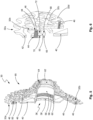
- the Figures 2, 3 and 4 show different views of a multiple pinion arrangement 30 according to a first embodiment, wherein Figure 3 a sectional view along the section line III-III in Figure 2 and Figure 4 a sectional view along the section line IV-IV in Figure 3
- the multiple pinion arrangement 30 has a final pinion 32a.
- the final pinion 32a serves to transmit torque from the multiple pinion arrangement 30 to the axle arrangement on the rear wheel 14 (see Figure 1 ).
- the multiple pinion arrangement 30 can be supported on the rear wheel axle via the final pinion 32a.
- the final pinion 32a is the pinion with the largest diameter of the multiple pinion arrangement 30.
- Several further pinions 32b to 32l are connected to the final pinion 32a (see Figure 3 ). The diameter of the pinions 32b to 32l is reduced in the axial outward direction starting from the final pinion 32a.
- the final pinion 32a has a coupling opening 36 with which the multiple pinion arrangement 30 can be plugged onto an axle arrangement on the rear wheel 16.
- the coupling opening 36 has a torque transmission contour on its inner circumference, via which the multiple pinion arrangement 30 can be coupled in a torque-transmitting manner to a driver body (not shown) of the axle arrangement on the rear wheel 16.
- the torque transmission contour comprises a plurality of projections 38 which extend radially inwards.
- the driver body of the axle arrangement on the rear wheel 16 has a contour on its outer surface which is complementary to the torque transmission contour on the coupling opening 36 of the final pinion 32a.
- the final pinion 32a also has pinion arms 40 which extend between the coupling opening 36 and a toothed ring 42 with the pinion teeth on the outer circumference.
- the pinion arms 40 connect the coupling opening 36 with the radially outer toothed ring 42, i.e. the pinion arms 40 are formed in a connecting region between the toothed ring 42 and the coupling opening 36.
- Openings 44 are formed in the toothed ring 42, into which pins or bolts 46 are inserted for connection to the next smaller pinion 32b.
- the toothed ring 42 also has several openings 48.
- the openings 48 contribute, among other things, to the weight saving 30.
- several of the pinions 32b to 32l have identical or similar openings 48.
- the openings 48 are formed between the openings 44 for the bolts 46.
- the multiple pinion arrangement 30 has a damping body 50.
- the damping body 50 serves to dampen vibrations and noise.
- the damping body 50 can improve the acoustics of the multiple pinion arrangement 30, i.e. unwanted noises that occur during operation of the multiple pinion arrangement 30 can be reduced.
- the damping body 50 is arranged between the final pinion 32a and the next smaller pinion 32b.
- the damping body 50 rests on an axial side surface of the final pinion 32a and on an axial side surface of the next smaller pinion 32b.
- the axial surface of the next smaller pinion 32b faces the final pinion 32a.
- the damping body 50 protrudes radially inwards over the toothed ring 42 of the final pinion 32a.
- the shape of the damping body 50 is particularly Figure 4 recognizable in which the damping body 50 along the section line IV-IV according to Figure 3 is shown in section.
- the damping body 50 is essentially ring-shaped.
- the damping body 50 extends along the pinion 32b.
- the radial extent of the damping body 50 is smaller than the radial extent of the ring-shaped pinion 23b.
- the damping body 50 rests against the pinion 32b.
- the damping body 50 has recesses 52 in which the bolts 46 for connecting the final pinion 32a and the pinion 32b extend.
- the recesses 52 are formed on the radially outer edge of the damping body 50.
- the damping body 50 also has further recesses 54.
- the recesses 54 are provided on the radially inner edge of the damping body 50.
- the recesses 54 are formed at positions on the damping body 50 at which the pinion arms 40 extend from the toothed ring 42 in the direction of the coupling opening 36. According to this embodiment, six recesses 54 are provided because the final pinion 32a has six pinion arms 40.
- the damping body 50 can be attached to the multiple pinion arrangement 30 via a press fit.
- the damping body 50 can be inserted between the final pinion 32a and the next smaller pinion 32b and compressed. In this way, the damping body 50 is attached to the multiple pinion arrangement 30 via a press fit.
- the damping body 50 Before attachment or assembly, the damping body 50 has a larger axial extension that is larger than the axial distance between the final pinion 32a and the next smaller pinion 32b.
- the damping body 50 has In its initial state, it therefore has an axial oversize before it is compressed during assembly.
- the multiple pinion arrangement 30 further comprises a closure body or closure tube 56.
- the closure body 56 serves to connect the multiple pinion arrangement 30 to a driver body (not shown) which is rotatably mounted on the rear wheel axle A.
- the closure body 56 has an internal thread 58.
- the multiple pinion arrangement 30 can be screwed to the driver body via the internal thread 58.
- the closure body 56 also has a section 60 which contacts the final pinion 32a. When the closure body 56 is screwed to a driver body, the section 60 holds the final pinion 32a and thus the entire multiple pinion arrangement 30 in the axial direction in its predetermined position on the driver body.
- the closure body 56 also has support projections 62 that extend in the axial direction.
- the support projections 62 support the multiple pinion arrangement 30 in the radial direction.
- the support projections 62 can contact the pinions 32k and 32l.
- the support projections 62 extend radially inside the two pinions 32k and 32l.
- the two pinions 32k and 32l represent the "smallest" pinions of the multiple pinion arrangement 30, i.e. the pinions 32k and 32l have the smallest number of teeth of the multiple pinion arrangement, with the pinion 32l having the fewest teeth.
- a groove is provided on the outer circumference of the closure body 56, in which a snap ring 64 is arranged for axially fixing the pinion cluster 65 on the closure body 56.
- the snap ring 64 engages behind the smallest pinion 321.
- the pinions 32b to 32h are, like the final pinion 32a, single pinions.
- the final pinion 32a and the pinions 32b to 32h are connected to each other via the bolts 46, as shown in particular in Figure 3 can be seen.
- the pinions 32j, 32k and 32l can be formed integrally with one another or welded together. The pinions 32j, 32k and 32l thus form a pinion assembly which is connected to the adjacent pinion 32i via bolts 46.
- Figure 5 shows a perspective view of the multiple pinion arrangement 30.
- the damping body 50 is arranged between the final pinion 32a and the next smaller pinion 32b.
- the damping body 50 is press-fitted between the final pinion 32a and the pinion 32b.
- the final pinion 32a and the pinion 32b represent individual pinions that are connected to one another via the bolts 46.
- the damping body 50 rests with its radially outer edge or its radially outer surface on the bolts 46.
- FIG 6 shows an enlarged section of Figure 5 .
- the final pinion 32a and the next smaller pinion 32b are shown, which are connected via the bolts 46.
- Both pinions 32a and 32b each have openings 44 through which a bolt 46 extends to connect the two pinions 32a, 32b.
- the damping body 50 extends radially inwards from the area in which the bolts 46 are arranged.
- the damping body 50 rests with the axial side surfaces 66, 68 at least partially on the axial side surface 70 of the first pinion 32a and at least partially on the axial side surface 72 of the second pinion 32b.
- the axial side surfaces 70, 72 of the pinions 32a, 32b face each other.
- the press fit for fastening the damping body 50 is thus produced via the axial side surfaces 70, 72 of the pinions 32a and 32b.
- the damping body 50 at least partially fills the space between the two pinions 32a and 32b.
- Figure 7 shows a sectional view of a multiple pinion arrangement 30 according to a second embodiment.
- Figure 8 shows a partially broken away, perspective view of the multiple pinion assembly 30 according to the second embodiment.
- the basic structure of the multiple pinion arrangement 30 according to the second embodiment corresponds to the basic structure of the multiple pinion arrangement 30 according to the first embodiment, which is described with reference to Figures 2 to 6
- the above statements regarding the first embodiment therefore also apply analogously to the multiple pinion arrangement 30 according to the second embodiment.
- the multiple pinion arrangement 30 has a damping body 74.
- the damping body 74 is arranged between the final pinion 32a and the third largest pinion 32d of the multiple pinion arrangement 30, which here forms the second pinion of the damping structure consisting of the final pinion 32a, damping body 74 and pinion 32d.
- the pinion 32d is one of the medium-sized pinions of the multiple pinion arrangement 30, ie the pinion 32d is arranged in the axial direction approximately in a middle area of the multiple pinion arrangement 30.
- the damping body 74 extends between the mutually facing axial side surfaces 76, 78 of the final pinion 32a and the pinion 32d. Unlike in the first embodiment, the damping body 74 is not arranged between the final pinion 32a and the next smaller pinion 32b, but between the final pinion 32a and the pinion 32d, which has a smaller diameter than the pinion 32b.
- the damping body 74 is arranged radially inside the toothed ring 42 of the final pinion 32a.
- the damping body 74 is arranged on the pinion arms 40, i.e. on the connection area defined by the pinion arms 40 between the toothed ring 42 and the coupling opening 36 of the final pinion 32a.
- the damping body 74 is supported on the pinion arms 40.
- the damping body 74 extends from the axial side surface 76 of the pinion 32a in the direction of the pinion 32d.
- the damping body 74 is also supported on the axial side surface 78 of the pinion 32d.
- the damping body 74 is held by a press fit between the final pinion 32a and the pinion 32d.
- the damping body 74 contacts exclusively the axial side surface 76 of the first pinion 32a and the axial side surface 78 of the pinion 32d of the multiple pinion arrangement 32.
- the damping body 74 extends from the final pinion 32a radially inside the pinion 32b, i.e. the next smaller pinion 32b after the final pinion 32a, and the pinion 32c to the second pinion 32d. The damping body 74 does not contact the pinions 32b and 32c.
- the damping body 74 is ring-shaped.
- the damping body 74 has a predetermined axial extension.
- the damping body 74 has two end faces 80 and 82. With the end face 80, the damping body 74 rests on the axial side face 76 of the final pinion 32a in the area of the pinion arms 40. With the end face 82, the damping body 74 rests on the pinion 32d. In the radial direction, the damping body 74 protrudes beyond the inner circumference of the pinion 32d.
- the damping body 50, 72 serves to improve the acoustics of the multiple pinion arrangement 30, since vibrations and/or noise can be dampened with the damping body 50, 74.
Landscapes
- Engineering & Computer Science (AREA)
- Mechanical Engineering (AREA)
- Chemical & Material Sciences (AREA)
- Combustion & Propulsion (AREA)
- Transportation (AREA)
- General Engineering & Computer Science (AREA)
- Physics & Mathematics (AREA)
- Acoustics & Sound (AREA)
- Aviation & Aerospace Engineering (AREA)
- Gears, Cams (AREA)
Description
- Die vorliegende Erfindung betrifft eine Mehrfach-Ritzelanordnung für Fahrräder. Eine solche Mehrfach-Ritzelanordnung kann an einer Hinterradachsanordnung eines Fahrrads befestigt werden. Zudem betrifft die vorliegende Erfindung eine Hinterradachsanordnung eines Fahrrads mit einer solchen Mehrfach-Ritzelanordnung.
- Ein Fahrrad kann mit einer Antriebsanordnung, wie z.B. einem Kettenantrieb, ausgestattet sein. Fahrrad-Antriebsanordnungen können dazu dienen, das Drehmoment von einem Fahrer auf ein hinteres Laufrad des Fahrrads zu übertragen, um das Fahrrad anzutreiben. Eine Antriebsanordnung kann zum Beispiel das Drehmoment von einer vorderen Kettenradanordnung über eine Kette auf ein hinteres Kettenrad übertragen, um ein hinteres Laufrad anzutreiben. Eine solche Antriebsanordnung kann als Antriebsstrang bezeichnet werden.
- Kettenradbaugruppen für Fahrräder können ein Kettenrad oder mehrere einzelne Kettenräder aufweisen. Die vorderen Kettenräder werden allgemein als Kettenblätter bezeichnet. Kettenblätter können mit Hilfe verschiedenartiger Befestigungsvorrichtungen befestigt werden. Ein Kettenblatt kann z.B. mit Kettenblattschrauben befestigt oder direkt an der Kurbel eines Fahrrades montiert werden. Die hinteren Kettenräder werden häufig als Ritzel bezeichnet. Eine Mehrzahl von hinteren Kettenrädern oder Ritzeln kann als Mehrfach-Ritzelanordnung, Ritzelanordnung, Kassette, Ritzelkassette oder Ritzelpaket bezeichnet werden. Eine solche Mehrfach-Ritzelanordnung oder Kassette ist typischerweise so konfiguriert, dass sie an einem Freilaufkörper eines hinteren Laufrades befestigt werden kann. Die Antriebsanordnung kann ferner ein hinteres Schaltwerk umfassen, mit dem die Kette zwischen den einzelnen Ritzeln der Mehrfach-Ritzelanordnung geschaltet werden kann. Mit dem Schaltwerk können somit verschiedene Gangstufen oder Gänge eingelegt werden, wobei die jeweilige Gangstufe davon abhängt, an welchem Ritzel der Mehrfach-Ritzelanordnung sich die Kette befindet.
- Mehrfach-Ritzelanordnungen sind beispielsweise aus
US 10 112 681 B2 EP 2 319 752 A2 bekannt. DokumentEP2487100A1 zeigt die Präambel des Anspruchs 1. - Es ist eine Aufgabe der vorliegenden Erfindung, eine Mehrfach-Ritzelanordnung bereitzustellen, mit der die im Betrieb der Mehrfach-Ritzelanordnung auftretenden Geräusche reduziert werden können.
- Diese Aufgabe wird mit einer Mehrfach-Ritzelanordnung mit den Merkmalen des Anspruchs 1 gelöst. Weitere Ausführungsformen sind in den beigefügten abhängigen Ansprüchen angegeben.
- Die Mehrfach-Ritzelanordnung zur Befestigung an einer Hinterradachsanordnung eines Fahrrads umfasst wenigstens ein erstes Ritzel, wenigstens ein zweites Ritzel, und wenigstens einen Dämpfungskörper. Der wenigstens eine Dämpfungskörper erstreckt sich ausgehend von dem wenigstens einen ersten Ritzel in Richtung des wenigstens einen zweiten Ritzels, wobei sich der wenigstens eine Dämpfungskörper zumindest an eine axiale Seitenfläche des ersten Ritzels anlegt.
- Der wenigstens eine Dämpfungskörper dient zur Verbesserung der Akustik der Mehrfach-Ritzelanordnung. Der wenigstens eine Dämpfungskörper verbessert die Akustik dadurch, dass Schwingungen und/oder Schall mit dem wenigstens einen Dämpfungskörper gedämpft werden können. Der wenigstens eine Dämpfungskörper steht zur Schwingungs-/oder Schalldämpfung zumindest mit einer axialen Seitenfläche eines Ritzels der Mehrfach-Ritzelanordnung in Kontakt.
- Der wenigstens eine Dämpfungskörper kann sich zumindest an der axialen Seitenfläche des ersten Ritzels abstützen. Der wenigstens eine Dämpfungskörper kann zumindest an der axialen Seitenfläche des ersten Ritzels angebracht sein.
- Der wenigstens eine Dämpfungskörper kann das wenigstens eine zweite Ritzel zumindest in radialer Richtung kontaktieren. Der wenigstens eine Dämpfungskörper kann sich zumindest an einem weiteren Ritzel der Mehrfach-Ritzelanordnung in radialer Richtung abstützen, wobei das zumindest eine weitere Ritzel ein dem ersten Ritzel benachbartes Ritzel oder ein von dem ersten Ritzel in axialer Richtung weiter entferntes Ritzel sein kann. Der wenigstens eine Dämpfungskörper kann einen radial inneren Rand oder eine radial innere Fläche des entsprechenden Ritzels zumindest abschnittsweise kontaktieren. Der radiale Kontakt zwischen dem wenigstens Dämpfungskörper und dem wenigstens einen zweiten Ritzel kann zur Zentrierung des wenigstens einen Dämpfungskörpers bei der Montage beitragen.
- Der wenigstens eine Dämpfungskörper kann sich in axialer Richtung zumindest an den einander zugewandten axialen Seitenflächen des ersten Ritzels und des zweiten Ritzels abstützen. Der wenigstens eine Dämpfungskörper kann sich neben dem ersten Ritzel und dem zweiten Ritzel auch an einem weiteren Ritzel und/oder einer Ritzelbaugruppe der Mehrfach-Ritzelanordnung abstützen. Es ist auch denkbar, dass sich der wenigstens eine Dämpfungskörper an einer weiteren Komponente, wie zum Beispiel einem Verschlusskörper, der Mehrfach-Ritzelanordnung abstützt. Der wenigstens eine Dämpfungskörper kann sich insbesondere in axialer Richtung zumindest an den axialen Seitenflächen des ersten Ritzels und des zweiten Ritzels abstützen. Der wenigstens eine Dämpfungskörper kann axiale Seitenflächen und/oder axialen Stirnflächen aufweisen, mit denen er sich an den axialen Seitenflächen der Ritzel abstützen kann.
- Das erste Ritzel und das zweiten Ritzel können Ritzel sein, die in axialer Richtung in einem mittleren Bereich der Mehrfach-Ritzelanordnung angeordnet sind. Das wenigstens eine erste Ritzel kann einen Durchmesser haben, der kleiner als der Durchmesser des größten Ritzels, aber größer als der Durchmesser des kleinsten Ritzels ist. Das zweite Ritzel kann einen Durchmesser haben, der größer oder kleiner als der Durchmesser des ersten Ritzels ist.
- Zumindest das wenigstens eine erste Ritzel der Mehrfach-Ritzelanordnung kann zur drehmomentübertragenden Kopplung der Mehrfach-Ritzelanordnung mit der Hinterachse des Fahrrads ausgebildet sein. Zumindest über das wenigstens eine erste Ritzel kann sich die Mehrfach-Ritzelanordnung an der Hinterachse des Fahrrads abstützen. Das wenigstens eine erste Ritzel kann beispielsweise mit einem Antreiberkörper an der Hinterachse des Fahrrads drehmomentübertragend koppelbar sein und sich an diesem Antreiberkörper abstützen. Es ist jedoch auch denkbar, dass mehrere Ritzel der Mehrfach-Ritzelanordnung drehmomentübertragend mit der Hinterachse des Fahrrads und insbesondere mit einem Antreiberkörper koppelbar sind.
- Das wenigstens eine erste Ritzel kann ein Abschlussritzel der Mehrfach-Ritzelanordnung bilden. In diesem Fall kann das wenigstens eine erste Ritzel das größte Ritzel, d. h. das Ritzel mit der größten Zahnanzahl und/oder dem größten Durchmesser sein. Ein solches Abschlussritzel kann die Mehrfach-Ritzelanordnung mit der Hinterradachsanordnung des Fahrrads drehmomentübertragend koppeln. Die Mehrfach-Ritzelanordnung kann sich über das Abschlussritzel in radialer Richtung an der Hinterradachsanordnung des Fahrrads abstützen.
- Der wenigstens eine Dämpfungskörper kann zwischen dem wenigstens einen ersten Ritzel und dem wenigstens einen zweiten Ritzel über einen Presssitz gehalten werden. Der wenigstens eine Dämpfungskörper kann in axialer Richtung ein Übermaß aufweisen. Die axiale Erstreckung des Dämpfungskörpers kann größer als der axiale Abstand der axialen Seitenflächen des ersten Ritzels und des zweiten Ritzels sein. Bei der Montage wird der wenigstens eine Dämpfungskörper eingesetzt, bevor das erste Ritzel und das zweite Ritzel beispielsweise über Stifte oder Bolzen miteinander verbunden werden. Der Dämpfungskörper wird dementsprechend bei der Verbindung des ersten Ritzels und des zweiten Ritzels zusammengedrückt bzw. komprimiert, sodass er zwischen dem ersten Ritzel und dem zweiten Ritzel über einen Presssitz gehalten wird.
- Der wenigstens eine Dämpfungskörper weist in radialer Richtung ein Übermaß auf.
- Beispielsweise kann der Außendurchmesser des wenigstens einen Dämpfungskörpers zumindest bereichsweise größer sein, als der Innendurchmesser wenigstens eines Ritzels der Mehrfach-Ritzelanordnung.
- Der wenigstens eine Dämpfungskörper kann mit dem ersten Ritzel und/oder dem zweiten Ritzel dauerhaft fest verbunden sein. Bei einer dauerhaft festen Verbindung des Dämpfungskörpers mit dem ersten Ritzel und/oder dem zweiten Ritzel kann ein Kontaktfläche zwischen dem Dämpfungskörper und wenigstens einem von ersten Ritzel oder zweiten Ritzel vergrößert werden, sodass die Dämpfungswirkung des wenigstens einen Dämpfungskörper weiter verstärkt werden kann.
- Der wenigstens eine Dämpfungskörper kann mit dem ersten Ritzel und/oder dem zweiten Ritzel verklebt sein. Der wenigstens eine Dämpfungskörper kann beispielsweise mit einer axialen Seitenfläche des ersten Ritzels verklebt sein und sich ausgehend von dieser axialen Seitenfläche in Richtung einer axialen Seitenfläche des zweiten Ritzels erstrecken. In diesem Fall kann der wenigstens eine Dämpfungskörper nur an der axialen Seitenfläche des wenigstens einen ersten Ritzels befestigt sein. Es ist auch denkbar, dass der Dämpfungskörper nur die axiale Seitenfläche des ersten Ritzels kontaktiert. Ferner kann der wenigstens eine Dämpfungskörper mit den axialen Seitenflächen des ersten Ritzels und des zweiten Ritzels verklebt sein. Der wenigstens eine Dämpfungskörper kann beispielsweise mit einer axialen Seitenfläche des ersten Ritzels verklebt sein und sich ausgehend von dieser axialen Seitenfläche in Richtung eines radial inneren Rands oder einer radial inneren Fläche des zweiten Ritzels erstrecken. Der wenigstens eine Dämpfungskörper kann sich an diesen radial inneren Rand oder diese radial innere Fläche zumindest abschnittsweise anlegen. Der wenigstens eine Dämpfungskörper kann sich beispielsweise mit seiner radial äußeren Fläche an den radial inneren Rand oder die radial innere Fläche des zweiten Ritzels anlegen.
- Das wenigstens eine erste Ritzel kann einen Zahnring, eine Koppelöffnung und einen Verbindungsbereich aufweisen, der den Zahnring mit der Koppelöffnung verbindet. Die Koppelöffnung kann zur drehmomentübertragenden Kopplung der Mehrfach-Ritzelanordnung mit einer Hinterradachse des Fahrrads ausgebildet sein. Die Koppelöffnung kann dazu eine Drehmomentübertragungskontur haben, die mit einer komplementären Kontur an der Hinterradachsanordnung bzw. einem Antreiberkörper der Hinterradachsanordnung gekoppelt werden kann. Der Zahnring erstreckt sich radial außen um die Koppelöffnung herum und wird über den Verbindungsbereich mit der Koppelöffnung verbunden. Der Verbindungsbereich zwischen dem Zahnring und der Koppelöffnung kann von einem Ritzelarm oder mehreren Ritzelarmen gebildet werden.
- Der wenigstens eine Dämpfungskörper kann an dem Zahnring des ersten Ritzels angeordnet sein. Der wenigstens eine Dämpfungskörper kann in diesem Fall an einem radial äußeren Bereich (aber radial innerhalb der Zähne des Ritzels) des ersten Ritzels angeordnet sein. Das zweite Ritzel kann beispielsweise das nächstkleinere Ritzel sein. Der wenigstens eine Dämpfungskörper kann zwischen dem ersten Ritzel und dem zweiten Ritzel angeordnet sein, das von dem nächstkleineren Ritzel gebildet wird.
- Der wenigstens eine Dämpfungskörper kann an dem Verbindungsbereich des ersten Ritzels angeordnet sein. Der Verbindungsbereich kann sich radial innerhalb des Zahnrings befinden. Der wenigstens eine Dämpfungskörper kann in radialer Richtung zwischen dem Zahnring und der Koppelöffnung des ersten Ritzels angeordnet sein. Der wenigstens eine Dämpfungskörper kann in einem mittleren Bereich der radialen Erstreckung des ersten Ritzels angeordnet sein. Der wenigstens eine Dämpfungskörper kann sich ausgehend von dem Verbindungsbereich des ersten Ritzels in Richtung des zweiten Ritzels erstrecken, das sich in axialer Richtung in einem mittleren Bereich der Mehrfach-Ritzelanordnung befindet bzw. eines der mittelgroßen Ritzel der Mehrfach-Ritzelanordnung darstellt. Die wenigstens eine Kontaktfläche zwischen dem Dämpfungskörper und dem ersten Ritzel und/oder dem Dämpfungskörper und dem zweiten Ritzel kann vergrößert werden, sodass die Dämpfungswirkung des wenigstens einen Dämpfungskörpers weiter verstärkt werden kann. Zudem können Verschmutzungen durch die Kette in radialer Richtung nach innen der Mehrfach-Ritzelanordnung heraus gedrückt werden, wodurch Schaltfehler aufgrund von Fremdkörpern vermieden werden können. Der in radialer Richtung weiter innen angeordnete Dämpfungskörper kann vor mechanischen Belastungen von außen, wie zum Beispiel aufgrund eines Hochdruckreinigers, oder aufgrund von Fremdkörpern/Schmutz geschützt werden.
- Der wenigstens eine Dämpfungskörper kann sich in axialer Richtung entlang zumindest eines weiteren Ritzels zu dem zweiten Ritzel erstrecken. Der wenigstens eine Dämpfungskörper kann sich ausgehend von dem ersten Ritzel radial innerhalb des zumindest einen weiteren Ritzels zu dem zweiten Ritzel erstrecken. Der wenigstens eine Dämpfungskörper kann derart ausgebildet sein, dass er das zumindest eine weitere Ritzel nicht kontaktiert.
- Der wenigstens eine Dämpfungskörper kann ringförmig ausgebildet sein. Der wenigstens eine Dämpfungskörper kann axiale Seitenflächen und/oder axiale Stirnflächen aufweisen. Der wenigstens eine Dämpfungskörper kann eine vorbestimmte axiale Erstreckung aufweisen.
- Der wenigstens eine Dämpfungskörper kann wenigstens eine radial äußere Fläche und wenigstens eine radial innere Fläche aufweisen. Die radial innere Fläche und/oder die radial äußere Fläche des wenigstens einen Dämpfungskörpers können zumindest mit dem wenigstens einen zweiten Ritzel oder einer weiteren Komponente der Mehrfach-Ritzelanordnung in radialer Richtung in Kontakt stehen. Es kann ein durchgängiger oder abschnittweiser radialer Kontakt zwischen der radial inneren Fläche und/oder der radial äußeren Fläche des wenigstens einen Dämpfungskörpers und dem wenigstens einen zweiten Ritzel oder einer weiteren Komponente der Mehrfach-Ritzelanordnung vorliegen.
- Es ist ferner auch denkbar, dass die wenigstens eine radial äußere Fläche und die wenigstens eine radial innere Fläche nicht oder nur bereichsweise mit der Mehrfach-Ritzelanordnung oder einem Ritzel in Kontakt stehen. Ein durchgängiger oder flächiger Kontakt kann in diesem Fall nur zwischen dem wenigstens einen Dämpfungskörper und zumindest einer axialen Seitenfläche des ersten Ritzels und/oder des zweiten Ritzels vorliegen.
- Der wenigstens eine Dämpfungskörper kann an wenigstens einer radial äußeren Fläche oder einem radial äußeren Rand und/oder an wenigstens einer radial inneren Fläche oder einem radial inneren Rand wenigstens eine Aussparung aufweisen. Die wenigstens eine Aussparung kann beispielsweise für die Bolzen zur Verbindung zweier benachbarter Ritzel vorgesehen sein. Der wenigstens eine Dämpfungskörper kann sich im Bereich der Aussparungen an die Bolzen anlegen. Ferner kann die wenigstens eine Aussparung an der radial inneren Fläche des wenigstens einen Dämpfungskörpers für einen der Ritzelarme vorgesehen sein.
- Der wenigstens eine Dämpfungskörper kann aus einem elastischen Kunststoff oder aus einem elastischen Kunststoffschaum hergestellt sein. Der wenigstens eine Dämpfungskörper kann beispielsweise aus einem Polyurethanschaum hergestellt sein. Der Dämpfungskörper kann beispielsweise aus einem Kunststoffschaum hergestellt sein, der unter dem Namen Cellasto® vertrieben wird. Der Dämpfungskörper kann beispielsweise auch aus einem Kunststoff hergestellt sein, der unter dem Namen Sylomer® vertrieben wird. Der Kunststoffschaum kann geschlossenzellig ausgeführt sein, um die Aufnahme von Feuchtigkeit und Schmutz zu verringern.
- Die Mehrfach-Ritzelanordnung kann sich aus mehreren Einzelritzeln zusammensetzen, die über Stifte oder Bolzen miteinander verbunden sind. Die Mehrfach-Ritzelanordnung kann auch Ritzelbaugruppen von einstückig miteinander ausgebildeten Ritzeln oder miteinander verschweißten Ritzeln aufweisen. Beispielsweise können die kleinsten Ritzel einer Mehrfach-Ritzelanordnung eine solche Ritzelbaugruppe bilden. Diese Ritzelbaugruppen können mit Einzelritzeln oder einer weiteren Ritzelbaugruppe über Bolzen oder Stifte verbunden sein. Ferner kann nur das Abschlussritzel der Mehrfach-Ritzelanordnung als Einzelritzel ausgeführt sein und die übrigen Ritzel der Mehrfach-Ritzelanordnung eine Ritzelbaugruppe der voranstehend beschriebenen Art bilden.
- Die vorliegende Erfindung betrifft ferner eine Hinterradanordnung für ein Fahrrad. Die Hinterradanordnung umfasst ein Hinterrad mit einer Hinterradachse, die zur Befestigung an einem Fahrradrahmen ausgebildet ist, einen an der Hinterradachse drehbar gelagerten Antreiberkörper, und eine Mehrfach-Ritzelanordnung der voranstehend beschriebenen Art, die mit dem Antreiberkörper in einer Antriebsrichtung koppelbar.
- Der Antreiberkörper kann über eine Freilaufeinrichung mit der Hinterradachse gekoppelt sein. Der Antreiberkörper kann auch als "Freilaufkörper" bezeichnet werden.
- Die Speichen und/oder die Composite-Oberflächen eines Hinterrads können zur Entstehung von Schwingungen und/oder Schallabstrahlungen beitragen, die zu unerwünschten Geräuschen bei der Fahrt mit einem Fahrrad führen können. Auch der Luftdruck der Hinterradreifen kann einen Anteil an der Entwicklung dieser unerwünschten Geräusche haben. Mit dem wenigstens einen Dämpfungskörper bzw. mit der vorstehend genannten Hinterradanordnung können derartige Schwingungen und/oder Schallabstrahlungen gedämpft und damit die unerwünschten Geräusche verhindert werden.
- Im Folgenden werden beispielhafte Ausführungsformen der Erfindung mit Bezug auf die beigefügten Figuren beschrieben. Es stellen dar:
- Figur 1
- eine schematische Ansicht eines Fahrrads;
- Figur 2
- eine Draufsicht auf eine Mehrfach-Ritzelanordnung gemäß einer Ausführungsform;
- Figur 3
- eine Schnittansicht entlang der Schnittlinie II-II in
Figur 2 ; - Figur 4
- eine Schnittansicht entlang der Schnittlinie III-III in
Figur 3 ; - Figur 5
- eine teilweise aufgebrochene perspektivische Ansicht der Ritzelanordnung gemäß der
Figuren 2 bis 4 ; - Figur 6
- eine Ansicht eines vergrößerten Ausschnitts aus
Figur 5 ; - Figur 7
- eine Schnittansicht einer Mehrfach-Ritzelanordnung gemäß einer weiteren Ausführungsform; und
- Figur 8
- eine teilweise aufgebrochene perspektivische Ansicht der Mehrfach-Ritzelanordnung gemäß
Figur 7 . -
Figur 1 zeigt exemplarisch ein Fahrrad 10. Das Fahrrad 10 umfasst einen Fahrradrahmen 12, ein Vorderrad 14, ein Hinterrad 16, einen Lenker 18, einen Sattel 20 und eine Antriebsanordnung 22. Die Antriebsanordnung 22 umfasst eine Kette 24, ein Schaltwerk 26, ein vorderes Kettenrad 28 und eine hintere Mehrfach-Ritzelanordnung 30 mit mehreren Ritzeln 32. Jedes Ritzel 32 hat an seinem Außenumfang eine Mehrzahl an Zähnen, die mit der Kette 24 in Eingriff gebracht werden können. Das vordere Kettenrad 28 ist mit einer Kurbelanordnung 34 verbunden. An der Kurbelanordnung 34 sind Pedale vorgesehen. - Die im Folgenden verwendeten Richtungsangaben rechts/links und vorne/hinten beziehen sich auf ein Fahrrad 10 in Fahrtrichtung, entsprechen also der Fahrerperspektive auf dem Fahrrad 10.
- Das Vorderrad 14 ist über eine Vorderradgabel 35 mit dem Fahrradrahmen 12 gekoppelt. Die Vorderradgabel 35 ist mit dem Lenker 16 verbunden. Der Fahrradrahmen 12 hat typischerweise ein linkes und ein rechtes hinteres Ausfallende oder Rahmenauge, zwischen denen das Hinterrad 16 montiert ist. Das Hinterrad 16 dreht sich zusammen mit der Mehrfach-Ritzelanordnung 30 um die Drehachse A. Der Begriff "axial" bezieht sich hier auf die Drehachse Ader Mehrfach-Ritzelanordnung 30 oder eine hierzu parallele Richtung, die in
Fig. 1 senkrecht zur Zeichenebene verläuft. Der Durchmesser der Ritzel 32 nimmt in axialer Richtung der Achse A nach außen ab, d.h. das größte Ritzel ist axial weiter innen als die kleineren Ritzel. Die vorstehenden Erläuterungen beziehen sich auf ein Fahrrad sowohl mit einer bekannten wie auch mit einer erfindungsgemäßen Ritzelanordnung. - Die Mehrfach-Ritzelanordnung 30 ist mit einem Antreiberkörper (nicht gezeigt) der Achsanordnung an dem Hinterrad 16 des Fahrrads 10 drehmomentübertragend gekoppelt und an diesem Antreiberkörper befestigt. Über die Mehrfach-Ritzelanordnung 30 kann ein Drehmoment auf die Achsanordnung an dem Hinterrad 16 und damit auf das Hinterrad 16 des Fahrrads 10 übertragen werden. Das Schaltwerk 26 kann die Kette 24 zwischen den einzelnen Ritzeln 32 der Mehrfach-Ritzelanordnung 30 verlagern, d. h. die Kette 24 kann mittels des Schaltwerks 26 von einem Ritzel 32 zum nächsten bewegt werden. Mit dem Schaltwerk 26 können somit verschiedene Gangstufen oder Gänge eingelegt werden, wobei die jeweilige Gangstufe davon abhängt, an welchem Ritzel 32 der Mehrfach-Ritzelanordnung 30 sich die Kette 24 befindet.
- Die
Figuren 2, 3 und 4 zeigen verschiedene Ansichten einer Mehrfach-Ritzelanordnung 30 gemäß einer ersten Ausführungsform, wobeiFigur 3 eine Schnittansicht entlang der Schnittlinie III-III inFigur 2 und Figur 4 eine Schnittansicht entlang der Schnittlinie IV-IV inFigur 3 zeigt. Die Mehrfach-Ritzelanordnung 30 weist ein Abschlussritzel 32a auf. Das Abschlussritzel 32a dient zur Drehmomentübertragung von der Mehrfach-Ritzelanordnung 30 auf die Achsanordnung an dem Hinterrad 14 (sieheFigur 1 ). Über das Abschlussritzel 32a kann sich die Mehrfach-Ritzelanordnung 30 an der Hinterradachse abstützen. Das Abschlussritzel 32a stellt das Ritzel mit dem größten Durchmesser der Mehrfach-Ritzelanordnung 30 dar. An das Abschlussritzel 32a schließen sich mehrere weitere Ritzel 32b bis 32l an (sieheFigur 3 ). Der Durchmesser der Ritzel 32b bis 32l reduziert sich ausgehend von dem Abschlussritzel 32a in axialer Richtung nach außen. - Das Abschlussritzel 32a hat eine Koppelöffnung 36, mit der die Mehrfach-Ritzelanordnung 30 auf eine Achsanordnung an dem Hinterrad 16 aufgesteckt werden kann. Die Koppelöffnung 36 weist an ihrem Innenumfang eine Drehmomentübertragungskontur auf, über die die Mehrfach-Ritzelanordnung 30 drehmomentübertragend mit einem Antreiberkörper (nicht gezeigt) der Achsanordnung an dem Hinterrad 16 gekoppelt werden kann. Die Drehmomentübertragungskontur umfasst mehrere Vorsprünge 38, die sich in radialer Richtung nach innen erstrecken. Der Antreiberkörper der Achsanordnung an dem Hinterrad 16 hat an seiner Außenfläche eine Kontur, die zu der Drehmomentübertragungskontur an der Koppelöffnung 36 des Abschlussritzels 32a komplementär ausgebildet ist. Das Abschlussritzel 32a weist ferner Ritzelarme 40 auf, die sich zwischen der Koppelöffnung 36 und einem Zahnring 42 mit den Ritzelzähnen am Außenumfang erstrecken. Die Ritzelarme 40 verbinden die Koppelöffnung 36 mit dem radial außenliegenden Zahnring 42, d.h. die Ritzelarme 40 sind in einem Verbindungsbereich zwischen dem Zahnring 42 und der Koppelöffnung 36 ausgebildet.
- In dem Zahnring 42 sind Öffnungen 44 ausgebildet, in die Stifte oder Bolzen 46 zur Verbindung mit dem nächstkleineren Ritzel 32b eingesetzt sind. Der Zahnring 42 weist ferner mehrere Öffnungen 48 auf. Die Öffnungen 48 tragen unter anderem zur Gewichtsersparnis 30 bei. Wie in den
Figuren 2 und 4 erkennbar ist, weisen mehrere der Ritzel 32b bis 32l identische oder ähnliche Öffnungen 48 auf. Die Öffnungen 48 sind zwischen den Öffnungen 44 für die Bolzen 46 ausgebildet. - Die Mehrfach-Ritzelanordnung 30 weist einen Dämpfungskörper 50 auf. Der Dämpfungskörper 50 dient zur Schwingungs- und Schalldämpfung. Durch den Dämpfungskörper 50 kann die Akustik der Mehrfach-Ritzelanordnung 30 verbessert werden, d. h. es können im Betrieb der Mehrfach-Ritzelanordnung 30 auftretende, unerwünschte Geräusche reduziert werden. Der Dämpfungskörper 50 ist zwischen dem Abschlussritzel 32a und dem nächstkleineren Ritzel 32b angeordnet. Der Dämpfungskörper 50 liegt an einer axialen Seitenfläche des Abschlussritzels 32a und an einer axialen Seitenfläche des nächstkleineren Ritzels 32b an. Die axiale Fläche des nächstkleineren Ritzels 32b ist dem Abschlussritzel 32a zugewandt. Der Dämpfungskörper 50 steht in radialer Richtung nach innen über den Zahnring 42 des Abschlussritzels 32a vor.
- Die Form des Dämpfungskörpers 50 ist insbesondere in
Figur 4 erkennbar, in welcher der Dämpfungskörper 50 entlang der Schnittlinie IV-IV gemäßFigur 3 geschnitten dargestellt ist. Der Dämpfungskörper 50 ist im Wesentlichen ringförmig ausgebildet. Der Dämpfungskörper 50 erstreckt sich entlang des Ritzels 32b. Die radiale Erstreckung des Dämpfungskörpers 50 ist kleiner als die radiale Erstreckung des ringförmigen Ritzels 23b. Der Dämpfungskörper 50 liegt an dem Ritzel 32b an. - Der Dämpfungskörper 50 weist Aussparungen 52 auf, in denen sich die Bolzen 46 zur Verbindung des Abschlussritzels 32a und des Ritzels 32b erstrecken. Die Aussparungen 52 sind am radial äußeren Rand des Dämpfungskörper 50 ausgebildet. Der Dämpfungskörper 50 weist ferner weitere Aussparungen 54 auf. Die Aussparungen 54 sind am radial inneren Rand des Dämpfungskörper 50 vorgesehen. Die Aussparungen 54 sind an Positionen an dem Dämpfungskörper 50 ausgebildet, an denen sich die Ritzelarme 40 ausgehend von dem Zahnring 42 in Richtung der Koppelöffnung 36 erstrecken. Es sind gemäß dieser Ausführungsform sechs Aussparungen 54 vorgesehen, da das Abschlussritzel 32a sechs Ritzelarme 40 hat.
- Der Dämpfungskörper 50 kann über einen Presssitz an der Mehrfach-Ritzelanordnung 30 befestigt sein. Bei der Montage der Mehrfach-Ritzelanordnung 30 kann der Dämpfungskörper 50 zwischen das Abschlussritzel 32a und das nächstkleineren Ritzel 32b eingesetzt und komprimiert werden. Auf diese Weise wird der Dämpfungskörper 50 über einen Presssitz an der Mehrfach-Ritzelanordnung 30 befestigt. Der Dämpfungskörper 50 hat vor der Befestigung bzw. Montage eine größere axiale Erstreckung, die größer als der axiale Abstand zwischen dem Abschlussritzel 32a und dem nächstkleineren Ritzel 32b ist. Der Dämpfungskörper 50 weist im Ausgangszustand somit ein axiales Übermaß auf, bevor er bei der Montage komprimiert wird.
- Die Mehrfach-Ritzelanordnung 30 umfasst ferner einen Verschlusskörper bzw. Verschlussrohr 56. Der Verschlusskörper 56 dient zur Verbindung der Mehrfach-Ritzelanordnung 30 mit einem Antreiberkörper (nicht gezeigt), der drehbar an der Hinterradachse A gelagert ist. Der Verschlusskörper 56 weist ein Innengewinde 58 auf. Über das Innengewinde 58 kann die Mehrfach-Ritzelanordnung 30 mit dem Antreiberkörper verschraubt werden. Der Verschlusskörper 56 hat ferner einen Abschnitt 60, der das Abschlussritzel 32a kontaktiert. Im mit einem Antreiberkörper verschraubten Zustand des Verschlusskörper 56 hält der Abschnitt 60 das Abschlussritzel 32a und damit die gesamte Mehrfach-Ritzelanordnung 30 in axialer Richtung in seiner vorbestimmten Position an dem Antreiberkörper. In dieser vorbestimmten Position steht die Drehmomentübertragungskontur an der Koppelöffnung 36 des Abschlussritzels 32a mit einer komplementären Kontur an dem Antreiberkörper in drehmomentübertragenden Eingriff. Der Verschlusskörper 56 hat ferner Stützvorsprünge 62, die sich in axialer Richtung erstrecken. Die Stützvorsprünge 62 stützen die Mehrfach-Ritzelanordnung 30 in radialer Richtung ab. Dazu können die Stützvorsprünge 62 die Ritzel 32k und 32l kontaktieren. Die Stützvorsprünge 62 erstrecken sich radial innerhalb der beiden Ritzel 32k und 321. Die beiden Ritzel 32k und 32l stellen die "kleinsten" Ritzel der Mehrfach-Ritzelanordnung 30 dar, d. h. die Ritzel 32k und 32l haben die geringste Zahnanzahl der Mehrfach-Ritzelanordnung, wobei das Ritzel 32l die wenigstens Zähne hat. Im Bereich der Stützvorsprünge 62 ist am Außenumfang des Verschlusskörpers 56 eine Nut vorgesehen, in welcher ein Sprengring 64 zur axialen Fixierung des Ritzelclusters 65 auf dem Verschlusskörper 56 angeordnet ist. Der Sprengring 64 hintergreift das kleinste Ritzel 321.
- Die Ritzel 32b bis 32h sind wie das Abschlussritzel 32a Einzelritzel. Das Abschlussritzel 32a und die Ritzel 32b bis 32h sind untereinander über die Bolzen 46 miteinander verbunden, wie insbesondere in
Figur 3 erkennbar ist. Die Ritzel 32j, 32k und 32l können einstückig miteinander ausgebildet oder miteinander verschweißt sein. Die Ritzel 32j, 32k und 32l bilden somit eine Ritzelbaugruppe, die über Bolzen 46 mit dem benachbarten Ritzel 32i verbunden ist. -
Figur 5 zeigt eine perspektivische Ansicht der Mehrfach-Ritzelanordnung 30. Der Dämpfungskörper 50 ist zwischen dem Abschlussritzel 32a und dem nächstkleineren Ritzel 32b angeordnet. Der Dämpfungskörper 50 wird über einen Presssitz zwischen dem Abschlussritzel 32a und dem Ritzel 32b gehalten. Das Abschlussritzel 32a und das Ritzel 32b stellen Einzelritzel dar, die über die Bolzen 46 miteinander verbunden sind. Der Dämpfungskörper 50 liegt mit seinem radial äußeren Rand oder seiner radial äußeren Fläche an den Bolzen 46 an. -
Figur 6 zeigt einen vergrößerten Ausschnitt ausFigur 5 . InFigur 6 sind insbesondere das Abschlussritzel 32a und das nächstkleineren Ritzel 32b gezeigt, die über die Bolzen 46 verbunden sind. Beide Ritzel 32a und 32b weisen jeweils Öffnungen 44 auf, durch die sich ein Bolzen 46 zur Verbindung der beiden Ritzel 32a, 32b erstreckt. Der Dämpfungskörper 50 erstreckt sich ausgehend von dem Bereich, in dem die Bolzen 46 angeordnet sind, radial nach innen. Der Dämpfungskörper 50 liegt mit den axialen Seitenflächen 66, 68 zumindest bereichsweise an der axialen Seitenfläche 70 des ersten Ritzels 32a und zumindest bereichsweise an der axialen Seitenfläche 72 des zweiten Ritzels 32b an. Die axialen Seitenflächen 70, 72 der Ritzel 32a, 32b sind einander zugewandt. Der Presssitz zur Befestigung des Dämpfungskörper 50 wird somit über die axialen Seitenflächen 70, 72 der Ritzel 32a und 32b hergestellt. Der Dämpfungskörper 50 füllt zumindest teilweise den Zwischenraum zwischen den beiden Ritzeln 32a und 32b aus. -
Figur 7 zeigt eine Schnittansicht einer Mehrfach-Ritzelanordnung 30 gemäß einer zweiten Ausführungsform.Figur 8 zeigt eine teilweise aufgebrochene, perspektivische Ansicht der Mehrfach-Ritzelanordnung 30 gemäß der zweiten Ausführungsform. - Die Grundstruktur der Mehrfach-Ritzelanordnung 30 gemäß der zweiten Ausführungsform entspricht der Grundstruktur der Mehrfach-Ritzelanordnung 30 gemäß der ersten Ausführungsform, die mit Bezug auf die
Figuren 2 bis 6 beschrieben wurde. Die voranstehenden Ausführungen bezüglich der ersten Ausführungsform gelten somit analog auch für die Mehrfach-Ritzelanordnung 30 gemäß der zweiten Ausführungsform. - Die Mehrfach-Ritzelanordnung 30 weist einen Dämpfungskörper 74 auf. Der Dämpfungskörper 74 ist zwischen dem Abschlussritzel 32a und dem drittgrößten Ritzel 32d der Mehrfach-Ritzelanordnung 30 angeordnet, das hier das zweite Ritzel der Dämpfungsstruktur aus Abschlussritzel 32a, Dämpfungskörper 74 und Ritzel 32d bildet. Das Ritzel 32d ist eines der mittelgroßen Ritzel der Mehrfach-Ritzelanordnung 30, d. h. das Ritzel 32d ist in axialer Richtung näherungsweise in einem mittleren Bereich der Mehrfach-Ritzelanordnung 30 angeordnet. Aufgrund der Erstreckung des Dämpfungskörpers 74 näherungsweise bis in einen mittleren Bereich der Mehrfach-Ritzelanordnung 30 bzw. des Ritzelclusters 65 lassen sich akustische Schwingungen des hier aus den Ritzeln 32b bis 32j mittels der Bolzen 46 zusammengesetzten, freitragenden Ritzelclusters 65 besonders wirksam dämpfen. Dies gilt analog auch für (in den Figuren nicht dargestellte) beispielsweise einstückige oder durch Verschweißen mehrerer Ritzelringe zusammengesetzte Ritzelcluster 65.
- Der Dämpfungskörper 74 erstreckt sich zwischen den einander zugewandten axialen Seitenflächen 76, 78 des Abschlussritzels 32a und des Ritzels 32d. Anders als bei der ersten Ausführungsform ist der Dämpfungskörper 74 nicht zwischen dem Abschlussritzel 32a und dem nächstkleineren Ritzel 32b, sondern zwischen dem Abschlussritzel 32a und dem Ritzel 32d angeordnet, das einen kleineren Durchmesser als das Ritzel 32b aufweist.
- Der Dämpfungskörper 74 ist radial innerhalb des Zahnrings 42 des Abschlussritzels 32a angeordnet. Der Dämpfungskörper 74 ist an den Ritzelarmen 40, d. h. an dem von den Ritzelarmen 40 definierten Verbindungsbereich zwischen dem Zahnring 42 und der Koppelöffnung 36 des Abschlussritzels 32a angeordnet. Der Dämpfungskörper 74 stützt sich an den Ritzelarmen 40 ab. Der Dämpfungskörper 74 erstreckt sich ausgehend von der axialen Seitenfläche 76 des Ritzels 32a in Richtung des Ritzels 32d. Der Dämpfungskörper 74 stützt sich auch an der axialen Seitenfläche 78 des Ritzels 32d ab. Der Dämpfungskörper 74 wird über einen Presssitz zwischen dem Abschlussritzel 32a und dem Ritzel 32d gehalten. Der Dämpfungskörper 74 kontaktiert ausschließlich die axiale Seitenfläche 76 des ersten Ritzels 32a und die axiale Seitenfläche 78 des Ritzels 32d der Mehrfach-Ritzelanordnung 32.
- Der Dämpfungskörper 74 erstreckt sich ausgehend von dem Abschlussritzel 32a radial innerhalb des Ritzels 32b, d. h. dem nach dem Abschlussritzel 32a nächstkleineren Ritzels 32b, und dem Ritzel 32c zu dem zweiten Ritzel 32d. Der Dämpfungskörper 74 kontaktiert die Ritzel 32b und 32c nicht.
- Der Dämpfungskörper 74 ist ringförmig ausgebildet. Der Dämpfungskörper 74 weist eine vorbestimmte axiale Erstreckung auf. Der Dämpfungskörper 74 hat zwei Stirnflächen 80 und 82. Mit der Stirnflächen 80 liegt der Dämpfungskörper 74 im Bereich der Ritzelarme 40 an der axialen Seitenfläche 76 des Abschlussritzels 32a an. Mit der Stirnfläche 82 liegt der Dämpfungskörper 74 an dem Ritzel 32d an. In radialer Richtung steht der Dämpfungskörper 74 über den Innenumfang des Ritzels 32d vor.
- Der Dämpfungskörper 50, 72 dient zur Verbesserung der Akustik der Mehrfach-Ritzelanordnung 30, da Schwingungen und/oder Schall mit dem Dämpfungskörper 50, 74 gedämpft werden können.
Claims (12)
- Mehrfach-Ritzelanordnung (30) zur Befestigung an einerHinterradachsanordnung eines Fahrrads, umfassend:- wenigstens ein erstes Ritzel (32a),- wenigstens ein zweites Ritzel (32b, 32d), und- wenigstens einen Dämpfungskörper (50, 74),wobei der wenigstens eine Dämpfungskörper (50, 74) sich ausgehend von dem wenigstens einen ersten Ritzel (32a) in Richtung des wenigstens einen zweiten Ritzels (32b, 32d) erstreckt, wobei sich der wenigstens eine Dämpfungskörper (50, 74) zumindest an eine axiale Seitenfläche (70, 76) des ersten Ritzels (32a) anlegt,dadurch gekennzeichnet, dassder wenigstens eine Dämpfungskörper (50, 74) zwischen dem wenigstens einen ersten Ritzel (32a) und dem wenigstens einen zweiten Ritzel (32b, 32d) über einen Presssitz gehalten wird, wobei der wenigstens eine Dämpfungskörper (50, 74) in axialer Richtung ein Übermaß aufweist,wobei die axiale Erstreckung des Dämpfungskörpers größer ist als ein axialer Abstand der axialen Seitenflächen des ersten Ritzels und des zweiten Ritzels.
- Mehrfach-Ritzelanordnung (30) nach Anspruch 1,
wobei sich der wenigstens eine Dämpfungskörper (50, 74) zumindest an den einander zugewandten axialen Seitenflächen (70, 72, 76, 78) des ersten Ritzels (32a) und des zweiten Ritzels (32b, 32d) abstützt. - Mehrfach-Ritzelanordnung nach Anspruch 1 oder 2,
wobei der wenigstens eine Dämpfungskörper (50, 74) das wenigstens eine zweite Ritzel (32b, 32d) zumindest in radialer Richtung kontaktiert. - Mehrfach-Ritzelanordnung (30) nach einem der Ansprüche 1 bis 3,
wobei zumindest das erste Ritzel (32a) zur drehmomentübertragenden Kopplung der Mehrfach-Ritzelanordnung (30) mit der Hinterradachsanordnung des Fahrrads (10) ausgebildet ist. - Mehrfach-Ritzelanordnung (30) nach einem der Ansprüche 1 bis 4,
wobei der wenigstens eine Dämpfungskörper (50, 74) mit dem ersten Ritzel (32a) und/oder dem zweiten Ritzel (32b, 32d) dauerhaft fest verbunden ist. - Mehrfach-Ritzelanordnung (30) nach einem der Ansprüche 1 bis 5,
wobei das wenigstens eine erste Ritzel (32a) einen Zahnring (42), eine Koppelöffnung (36) und einen Verbindungsbereich (40) aufweist, der den Zahnring (42) mit der Koppelöffnung (36) verbindet. - Mehrfach-Ritzelanordnung (30) nach Anspruch 6,
wobei der wenigstens eine Dämpfungskörper (50, 74) an dem Zahnring (42) des ersten Ritzels (42) angeordnet ist. - Mehrfach-Ritzelanordnung (30) nach Anspruch 6,
wobei der wenigstens eine Dämpfungskörper (50, 74) in dem Verbindungsbereich (40) des ersten Ritzels (32a) angeordnet ist. - Mehrfach-Ritzelanordnung (30) nach einem der Ansprüche 1 bis 8,
wobei der wenigstens eine Dämpfungskörper (50, 74) ringförmig ausgebildet ist. - Mehrfach-Ritzelanordnung (30) nach einem der Ansprüche 1 bis 9,
wobei der wenigstens eine Dämpfungskörper (50, 74) an wenigstens einer radial äußeren Fläche und/oder an wenigstens einer radial inneren Fläche wenigstens eine Aussparung (52, 54) aufweist. - Mehrfach-Ritzelanordnung (30) nach einem der Ansprüche 1 bis 10,
wobei der wenigstens eine Dämpfungskörper (50, 74) aus einem Kunststoff oder aus einem Kunststoffschaum hergestellt ist. - Hinterradanordnung für ein Fahrrad (10) umfassend:ein Hinterrad mit einer Hinterradachse (A), die zur Befestigung an einem Fahrradrahmen (12) ausgebildet ist,einen an der Hinterradachse (A) drehbar gelagerten Antreiberkörper, und eine Mehrfach-Ritzelanordnung (30) nach einem der vorangehenden Ansprüche, die mit dem Antreiberkörper in einer Antriebsrichtung koppelbar ist.
Applications Claiming Priority (1)
| Application Number | Priority Date | Filing Date | Title |
|---|---|---|---|
| DE102020131862.6A DE102020131862A1 (de) | 2020-12-01 | 2020-12-01 | Mehrfachritzelanordnung für Fahrräder |
Publications (2)
| Publication Number | Publication Date |
|---|---|
| EP4008621A1 EP4008621A1 (de) | 2022-06-08 |
| EP4008621B1 true EP4008621B1 (de) | 2024-10-23 |
Family
ID=78528579
Family Applications (1)
| Application Number | Title | Priority Date | Filing Date |
|---|---|---|---|
| EP21020547.2A Active EP4008621B1 (de) | 2020-12-01 | 2021-11-04 | Mehrfachritzelanordnung für fahrräder |
Country Status (5)
| Country | Link |
|---|---|
| US (1) | US20220169336A1 (de) |
| EP (1) | EP4008621B1 (de) |
| CN (1) | CN114572336B (de) |
| DE (1) | DE102020131862A1 (de) |
| TW (1) | TWI908930B (de) |
Families Citing this family (1)
| Publication number | Priority date | Publication date | Assignee | Title |
|---|---|---|---|---|
| US12420889B1 (en) * | 2024-03-22 | 2025-09-23 | Sram, Llc | Sprocket assembly |
Family Cites Families (19)
| Publication number | Priority date | Publication date | Assignee | Title |
|---|---|---|---|---|
| US975938A (en) * | 1910-05-31 | 1910-11-15 | David H Downey | Sprocket-gear. |
| US2953930A (en) * | 1956-05-24 | 1960-09-27 | Daimler Benz Ag | Chain driving mechanism |
| US3057219A (en) * | 1961-06-05 | 1962-10-09 | Charles D Montgomery | Drive sprocket construction |
| JPS5811673Y2 (ja) * | 1979-01-29 | 1983-03-04 | 川崎重工業株式会社 | オ−トバイ用スプロケット |
| JPH09119508A (ja) * | 1995-10-27 | 1997-05-06 | Tsubakimoto Chain Co | 低騒音スプロケット |
| US6805645B2 (en) * | 2001-10-15 | 2004-10-19 | Apex Bicycle Components Corporation Ltd. | Tooth contour structure for large sprocket set of bicycle |
| AU2003234487A1 (en) * | 2002-05-06 | 2003-11-11 | Cloyes Gear And Products, Inc. | Cushioned sprocket and improved inverted tooth chain for use with same |
| CA2510153A1 (en) * | 2002-12-19 | 2004-07-15 | Cloyes Gear And Products, Inc. | Asymmetric sprocket assembly with metal cushion rings |
| US7032983B2 (en) * | 2003-09-17 | 2006-04-25 | Ta Ya Chain Co., Ltd. | Silent and reduced vibration chainwheel |
| ATE437324T1 (de) * | 2005-09-29 | 2009-08-15 | Cloyes Gear & Products Inc | Kettenradanordnung mit mehreren dämpfungsringen |
| US20090093329A1 (en) * | 2006-03-21 | 2009-04-09 | Borgwarner Inc | Chain noise reduction device |
| DE102010027228B4 (de) * | 2009-11-04 | 2021-12-09 | Sram Deutschland Gmbh | Mehrfach-Ritzelanordnung für Fahrräder |
| JP5207413B2 (ja) * | 2010-06-04 | 2013-06-12 | 株式会社椿本チエイン | スプロケット |
| DE102011010855B4 (de) * | 2011-02-10 | 2021-04-01 | Sram Deutschland Gmbh | Mehrfach-Ritzelanordnung mit einer Dämpfungseinrichtung |
| TWM442978U (en) * | 2012-04-25 | 2012-12-11 | Shimano Kk | A bicycle sprocket and a bicycle sprocket assembly |
| CN202807013U (zh) * | 2012-08-21 | 2013-03-20 | 宁波力盟工业有限公司 | 一种八速卡式飞轮 |
| CN202807031U (zh) * | 2012-08-21 | 2013-03-20 | 宁波力盟工业有限公司 | 一种自行车用六速变速操作装置 |
| DE202013101023U1 (de) | 2013-03-08 | 2013-04-25 | Campagnolo S.R.L. | Rechte Kurbelarm-Baugruppe für ein Fahrrad |
| US10112681B2 (en) | 2016-07-21 | 2018-10-30 | Shimano Inc. | Bicycle sprocket supporting member and bicycle sprocket assembly |
-
2020
- 2020-12-01 DE DE102020131862.6A patent/DE102020131862A1/de active Pending
-
2021
- 2021-11-04 EP EP21020547.2A patent/EP4008621B1/de active Active
- 2021-11-30 TW TW110144605A patent/TWI908930B/zh active
- 2021-11-30 CN CN202111438594.0A patent/CN114572336B/zh active Active
- 2021-11-30 US US17/537,649 patent/US20220169336A1/en active Pending
Also Published As
| Publication number | Publication date |
|---|---|
| CN114572336A (zh) | 2022-06-03 |
| TW202222635A (zh) | 2022-06-16 |
| EP4008621A1 (de) | 2022-06-08 |
| US20220169336A1 (en) | 2022-06-02 |
| CN114572336B (zh) | 2026-04-28 |
| TWI908930B (zh) | 2025-12-21 |
| DE102020131862A1 (de) | 2022-06-02 |
Similar Documents
| Publication | Publication Date | Title |
|---|---|---|
| DE102017008222A1 (de) | Fahrradvorderzahnkranzanordnung | |
| DE102007006852B4 (de) | Fahrradkettenradbaugruppe | |
| DE102004027963B4 (de) | Vernietetes Zahnkranzpaket | |
| DE60319321T3 (de) | Mehrstufiger Hinterradzusammenbau für ein Fahrrad | |
| DE102018009525A1 (de) | Kettenradbaugruppe | |
| DE69816188T2 (de) | Hinterradaufhängung für ein Fahrrad | |
| EP3960605B1 (de) | Elektrofahrrad-antriebseinheits-befestigungsanordnung | |
| DE102020200385A1 (de) | Elektrofahrrad mit geräuschisoliertem Mittelmotor | |
| DE102016225531A1 (de) | Fahrradantriebssystem und zugehörige Baueinheit aus mehreren hinteren Kettenrädern | |
| DE112011101658T5 (de) | Hinterachsensystem für ein Fahrrad | |
| DE102008009122A1 (de) | Planetengetriebe mit einem speziellen Planetenrad | |
| DE102007044887A1 (de) | Kraftübertragungseinrichtung vom Wellenantriebstyp von einem Fahrzeug | |
| DE10121333A1 (de) | Mehrschichtiges flexibles Antriebskettenrad | |
| DE102020005373A1 (de) | Mehrfachritzelanordnung für eine Hinterradbaugruppe für ein Fahrrad und Hinterradbaugruppe | |
| DE102010004540A1 (de) | Kraftfahrzeug | |
| DE102008063209B4 (de) | Antriebswellenvorrichtung | |
| DE102019104920A1 (de) | Fahrradkettenrad | |
| DE102018101591A1 (de) | Fahrradkettenanordnung | |
| EP4008621B1 (de) | Mehrfachritzelanordnung für fahrräder | |
| DE102004052922A1 (de) | Halter für Lenkungszahnstangengehäuse | |
| DE102019211401A1 (de) | Fahrradkettenradanordnung | |
| DE102012001891A1 (de) | Welle-Nabe Verbindungselement mit elastischen Zentrierelementen | |
| DE202010002653U1 (de) | Fahrradkettenblatt | |
| DE202005021837U1 (de) | Fahrradkurbeleinheit | |
| EP4368411B1 (de) | Nabe insbesondere für fahrräder |
Legal Events
| Date | Code | Title | Description |
|---|---|---|---|
| PUAI | Public reference made under article 153(3) epc to a published international application that has entered the european phase |
Free format text: ORIGINAL CODE: 0009012 |
|
| STAA | Information on the status of an ep patent application or granted ep patent |
Free format text: STATUS: THE APPLICATION HAS BEEN PUBLISHED |
|
| AK | Designated contracting states |
Kind code of ref document: A1 Designated state(s): AL AT BE BG CH CY CZ DE DK EE ES FI FR GB GR HR HU IE IS IT LI LT LU LV MC MK MT NL NO PL PT RO RS SE SI SK SM TR |
|
| STAA | Information on the status of an ep patent application or granted ep patent |
Free format text: STATUS: REQUEST FOR EXAMINATION WAS MADE |
|
| 17P | Request for examination filed |
Effective date: 20221207 |
|
| STAA | Information on the status of an ep patent application or granted ep patent |
Free format text: STATUS: EXAMINATION IS IN PROGRESS |
|
| 17Q | First examination report despatched |
Effective date: 20231009 |
|
| GRAP | Despatch of communication of intention to grant a patent |
Free format text: ORIGINAL CODE: EPIDOSNIGR1 |
|
| STAA | Information on the status of an ep patent application or granted ep patent |
Free format text: STATUS: GRANT OF PATENT IS INTENDED |
|
| INTG | Intention to grant announced |
Effective date: 20240604 |
|
| GRAS | Grant fee paid |
Free format text: ORIGINAL CODE: EPIDOSNIGR3 |
|
| GRAA | (expected) grant |
Free format text: ORIGINAL CODE: 0009210 |
|
| STAA | Information on the status of an ep patent application or granted ep patent |
Free format text: STATUS: THE PATENT HAS BEEN GRANTED |
|
| AK | Designated contracting states |
Kind code of ref document: B1 Designated state(s): AL AT BE BG CH CY CZ DE DK EE ES FI FR GB GR HR HU IE IS IT LI LT LU LV MC MK MT NL NO PL PT RO RS SE SI SK SM TR |
|
| REG | Reference to a national code |
Ref country code: GB Ref legal event code: FG4D Free format text: NOT ENGLISH |
|
| REG | Reference to a national code |
Ref country code: CH Ref legal event code: EP |
|
| P01 | Opt-out of the competence of the unified patent court (upc) registered |
Free format text: CASE NUMBER: APP_54583/2024 Effective date: 20241003 |
|
| REG | Reference to a national code |
Ref country code: DE Ref legal event code: R096 Ref document number: 502021005538 Country of ref document: DE |
|
| REG | Reference to a national code |
Ref country code: IE Ref legal event code: FG4D Free format text: LANGUAGE OF EP DOCUMENT: GERMAN |
|
| REG | Reference to a national code |
Ref country code: LT Ref legal event code: MG9D |
|
| REG | Reference to a national code |
Ref country code: NL Ref legal event code: MP Effective date: 20241023 |
|
| PG25 | Lapsed in a contracting state [announced via postgrant information from national office to epo] |
Ref country code: NL Free format text: LAPSE BECAUSE OF FAILURE TO SUBMIT A TRANSLATION OF THE DESCRIPTION OR TO PAY THE FEE WITHIN THE PRESCRIBED TIME-LIMIT Effective date: 20241023 |
|
| PG25 | Lapsed in a contracting state [announced via postgrant information from national office to epo] |
Ref country code: NL Free format text: LAPSE BECAUSE OF FAILURE TO SUBMIT A TRANSLATION OF THE DESCRIPTION OR TO PAY THE FEE WITHIN THE PRESCRIBED TIME-LIMIT Effective date: 20241023 |
|
| PG25 | Lapsed in a contracting state [announced via postgrant information from national office to epo] |
Ref country code: PT Free format text: LAPSE BECAUSE OF FAILURE TO SUBMIT A TRANSLATION OF THE DESCRIPTION OR TO PAY THE FEE WITHIN THE PRESCRIBED TIME-LIMIT Effective date: 20250224 Ref country code: IS Free format text: LAPSE BECAUSE OF FAILURE TO SUBMIT A TRANSLATION OF THE DESCRIPTION OR TO PAY THE FEE WITHIN THE PRESCRIBED TIME-LIMIT Effective date: 20250223 Ref country code: HR Free format text: LAPSE BECAUSE OF FAILURE TO SUBMIT A TRANSLATION OF THE DESCRIPTION OR TO PAY THE FEE WITHIN THE PRESCRIBED TIME-LIMIT Effective date: 20241023 |
|
| PG25 | Lapsed in a contracting state [announced via postgrant information from national office to epo] |
Ref country code: FI Free format text: LAPSE BECAUSE OF FAILURE TO SUBMIT A TRANSLATION OF THE DESCRIPTION OR TO PAY THE FEE WITHIN THE PRESCRIBED TIME-LIMIT Effective date: 20241023 |
|
| PG25 | Lapsed in a contracting state [announced via postgrant information from national office to epo] |
Ref country code: BG Free format text: LAPSE BECAUSE OF FAILURE TO SUBMIT A TRANSLATION OF THE DESCRIPTION OR TO PAY THE FEE WITHIN THE PRESCRIBED TIME-LIMIT Effective date: 20241023 |
|
| PG25 | Lapsed in a contracting state [announced via postgrant information from national office to epo] |
Ref country code: ES Free format text: LAPSE BECAUSE OF FAILURE TO SUBMIT A TRANSLATION OF THE DESCRIPTION OR TO PAY THE FEE WITHIN THE PRESCRIBED TIME-LIMIT Effective date: 20241023 |
|
| PG25 | Lapsed in a contracting state [announced via postgrant information from national office to epo] |
Ref country code: NO Free format text: LAPSE BECAUSE OF FAILURE TO SUBMIT A TRANSLATION OF THE DESCRIPTION OR TO PAY THE FEE WITHIN THE PRESCRIBED TIME-LIMIT Effective date: 20250123 |
|
| PG25 | Lapsed in a contracting state [announced via postgrant information from national office to epo] |
Ref country code: LV Free format text: LAPSE BECAUSE OF FAILURE TO SUBMIT A TRANSLATION OF THE DESCRIPTION OR TO PAY THE FEE WITHIN THE PRESCRIBED TIME-LIMIT Effective date: 20241023 Ref country code: GR Free format text: LAPSE BECAUSE OF FAILURE TO SUBMIT A TRANSLATION OF THE DESCRIPTION OR TO PAY THE FEE WITHIN THE PRESCRIBED TIME-LIMIT Effective date: 20250124 |
|
| PG25 | Lapsed in a contracting state [announced via postgrant information from national office to epo] |
Ref country code: PL Free format text: LAPSE BECAUSE OF FAILURE TO SUBMIT A TRANSLATION OF THE DESCRIPTION OR TO PAY THE FEE WITHIN THE PRESCRIBED TIME-LIMIT Effective date: 20241023 |
|
| PG25 | Lapsed in a contracting state [announced via postgrant information from national office to epo] |
Ref country code: RS Free format text: LAPSE BECAUSE OF FAILURE TO SUBMIT A TRANSLATION OF THE DESCRIPTION OR TO PAY THE FEE WITHIN THE PRESCRIBED TIME-LIMIT Effective date: 20250123 |
|
| REG | Reference to a national code |
Ref country code: CH Ref legal event code: PL |
|
| PG25 | Lapsed in a contracting state [announced via postgrant information from national office to epo] |
Ref country code: SM Free format text: LAPSE BECAUSE OF FAILURE TO SUBMIT A TRANSLATION OF THE DESCRIPTION OR TO PAY THE FEE WITHIN THE PRESCRIBED TIME-LIMIT Effective date: 20241023 |
|
| PG25 | Lapsed in a contracting state [announced via postgrant information from national office to epo] |
Ref country code: MC Free format text: LAPSE BECAUSE OF FAILURE TO SUBMIT A TRANSLATION OF THE DESCRIPTION OR TO PAY THE FEE WITHIN THE PRESCRIBED TIME-LIMIT Effective date: 20241023 |
|
| PG25 | Lapsed in a contracting state [announced via postgrant information from national office to epo] |
Ref country code: DK Free format text: LAPSE BECAUSE OF FAILURE TO SUBMIT A TRANSLATION OF THE DESCRIPTION OR TO PAY THE FEE WITHIN THE PRESCRIBED TIME-LIMIT Effective date: 20241023 |
|
| PG25 | Lapsed in a contracting state [announced via postgrant information from national office to epo] |
Ref country code: LU Free format text: LAPSE BECAUSE OF NON-PAYMENT OF DUE FEES Effective date: 20241104 |
|
| REG | Reference to a national code |
Ref country code: CH Ref legal event code: PL |
|
| PG25 | Lapsed in a contracting state [announced via postgrant information from national office to epo] |
Ref country code: EE Free format text: LAPSE BECAUSE OF FAILURE TO SUBMIT A TRANSLATION OF THE DESCRIPTION OR TO PAY THE FEE WITHIN THE PRESCRIBED TIME-LIMIT Effective date: 20241023 |
|
| PG25 | Lapsed in a contracting state [announced via postgrant information from national office to epo] |
Ref country code: CH Free format text: LAPSE BECAUSE OF NON-PAYMENT OF DUE FEES Effective date: 20241130 |
|
| PG25 | Lapsed in a contracting state [announced via postgrant information from national office to epo] |
Ref country code: RO Free format text: LAPSE BECAUSE OF FAILURE TO SUBMIT A TRANSLATION OF THE DESCRIPTION OR TO PAY THE FEE WITHIN THE PRESCRIBED TIME-LIMIT Effective date: 20241023 |
|
| REG | Reference to a national code |
Ref country code: DE Ref legal event code: R097 Ref document number: 502021005538 Country of ref document: DE |
|
| PG25 | Lapsed in a contracting state [announced via postgrant information from national office to epo] |
Ref country code: SK Free format text: LAPSE BECAUSE OF FAILURE TO SUBMIT A TRANSLATION OF THE DESCRIPTION OR TO PAY THE FEE WITHIN THE PRESCRIBED TIME-LIMIT Effective date: 20241023 |
|
| PG25 | Lapsed in a contracting state [announced via postgrant information from national office to epo] |
Ref country code: CZ Free format text: LAPSE BECAUSE OF FAILURE TO SUBMIT A TRANSLATION OF THE DESCRIPTION OR TO PAY THE FEE WITHIN THE PRESCRIBED TIME-LIMIT Effective date: 20241023 |
|
| PG25 | Lapsed in a contracting state [announced via postgrant information from national office to epo] |
Ref country code: IT Free format text: LAPSE BECAUSE OF FAILURE TO SUBMIT A TRANSLATION OF THE DESCRIPTION OR TO PAY THE FEE WITHIN THE PRESCRIBED TIME-LIMIT Effective date: 20241023 |
|
| REG | Reference to a national code |
Ref country code: BE Ref legal event code: MM Effective date: 20241130 |
|
| PLBE | No opposition filed within time limit |
Free format text: ORIGINAL CODE: 0009261 |
|
| STAA | Information on the status of an ep patent application or granted ep patent |
Free format text: STATUS: NO OPPOSITION FILED WITHIN TIME LIMIT |
|
| PG25 | Lapsed in a contracting state [announced via postgrant information from national office to epo] |
Ref country code: SE Free format text: LAPSE BECAUSE OF FAILURE TO SUBMIT A TRANSLATION OF THE DESCRIPTION OR TO PAY THE FEE WITHIN THE PRESCRIBED TIME-LIMIT Effective date: 20241023 |
|
| 26N | No opposition filed |
Effective date: 20250724 |
|
| PG25 | Lapsed in a contracting state [announced via postgrant information from national office to epo] |
Ref country code: BE Free format text: LAPSE BECAUSE OF NON-PAYMENT OF DUE FEES Effective date: 20241130 |
|
| PG25 | Lapsed in a contracting state [announced via postgrant information from national office to epo] |
Ref country code: IE Free format text: LAPSE BECAUSE OF NON-PAYMENT OF DUE FEES Effective date: 20241104 |
|
| PGFP | Annual fee paid to national office [announced via postgrant information from national office to epo] |
Ref country code: DE Payment date: 20251113 Year of fee payment: 5 |
|
| PGFP | Annual fee paid to national office [announced via postgrant information from national office to epo] |
Ref country code: AT Payment date: 20260113 Year of fee payment: 5 |
|
| PGFP | Annual fee paid to national office [announced via postgrant information from national office to epo] |
Ref country code: FR Payment date: 20251126 Year of fee payment: 5 |
|
| PG25 | Lapsed in a contracting state [announced via postgrant information from national office to epo] |
Ref country code: HU Free format text: LAPSE BECAUSE OF FAILURE TO SUBMIT A TRANSLATION OF THE DESCRIPTION OR TO PAY THE FEE WITHIN THE PRESCRIBED TIME-LIMIT; INVALID AB INITIO Effective date: 20211104 |
|
| PG25 | Lapsed in a contracting state [announced via postgrant information from national office to epo] |
Ref country code: CY Free format text: LAPSE BECAUSE OF FAILURE TO SUBMIT A TRANSLATION OF THE DESCRIPTION OR TO PAY THE FEE WITHIN THE PRESCRIBED TIME-LIMIT; INVALID AB INITIO Effective date: 20211104 |