EP3993977B1 - Verfahren zur herstellung eines bauelements - Google Patents
Verfahren zur herstellung eines bauelements Download PDFInfo
- Publication number
- EP3993977B1 EP3993977B1 EP20743176.8A EP20743176A EP3993977B1 EP 3993977 B1 EP3993977 B1 EP 3993977B1 EP 20743176 A EP20743176 A EP 20743176A EP 3993977 B1 EP3993977 B1 EP 3993977B1
- Authority
- EP
- European Patent Office
- Prior art keywords
- crushed
- concrete
- elastic member
- mould
- coating elements
- Prior art date
- Legal status (The legal status is an assumption and is not a legal conclusion. Google has not performed a legal analysis and makes no representation as to the accuracy of the status listed.)
- Active
Links
Images


Classifications
-
- B—PERFORMING OPERATIONS; TRANSPORTING
- B28—WORKING CEMENT, CLAY, OR STONE
- B28B—SHAPING CLAY OR OTHER CERAMIC COMPOSITIONS; SHAPING SLAG; SHAPING MIXTURES CONTAINING CEMENTITIOUS MATERIAL, e.g. PLASTER
- B28B23/00—Arrangements specially adapted for the production of shaped articles with elements wholly or partly embedded in the moulding material; Production of reinforced objects
- B28B23/0062—Arrangements specially adapted for the production of shaped articles with elements wholly or partly embedded in the moulding material; Production of reinforced objects forcing the elements into the cast material, e.g. hooks into cast concrete
-
- B—PERFORMING OPERATIONS; TRANSPORTING
- B28—WORKING CEMENT, CLAY, OR STONE
- B28B—SHAPING CLAY OR OTHER CERAMIC COMPOSITIONS; SHAPING SLAG; SHAPING MIXTURES CONTAINING CEMENTITIOUS MATERIAL, e.g. PLASTER
- B28B19/00—Machines or methods for applying the material to surfaces to form a permanent layer thereon
- B28B19/0053—Machines or methods for applying the material to surfaces to form a permanent layer thereon to tiles, bricks or the like
- B28B19/0061—Means for arranging or fixing the tiles, bricks or the like in the mould
-
- B—PERFORMING OPERATIONS; TRANSPORTING
- B28—WORKING CEMENT, CLAY, OR STONE
- B28B—SHAPING CLAY OR OTHER CERAMIC COMPOSITIONS; SHAPING SLAG; SHAPING MIXTURES CONTAINING CEMENTITIOUS MATERIAL, e.g. PLASTER
- B28B19/00—Machines or methods for applying the material to surfaces to form a permanent layer thereon
- B28B19/0007—Machines or methods for applying the material to surfaces to form a permanent layer thereon for producing articles with exposed aggregate
-
- B—PERFORMING OPERATIONS; TRANSPORTING
- B28—WORKING CEMENT, CLAY, OR STONE
- B28B—SHAPING CLAY OR OTHER CERAMIC COMPOSITIONS; SHAPING SLAG; SHAPING MIXTURES CONTAINING CEMENTITIOUS MATERIAL, e.g. PLASTER
- B28B23/00—Arrangements specially adapted for the production of shaped articles with elements wholly or partly embedded in the moulding material; Production of reinforced objects
- B28B23/0056—Means for inserting the elements into the mould or supporting them in the mould
-
- B—PERFORMING OPERATIONS; TRANSPORTING
- B28—WORKING CEMENT, CLAY, OR STONE
- B28B—SHAPING CLAY OR OTHER CERAMIC COMPOSITIONS; SHAPING SLAG; SHAPING MIXTURES CONTAINING CEMENTITIOUS MATERIAL, e.g. PLASTER
- B28B23/00—Arrangements specially adapted for the production of shaped articles with elements wholly or partly embedded in the moulding material; Production of reinforced objects
- B28B23/0075—Arrangements specially adapted for the production of shaped articles with elements wholly or partly embedded in the moulding material; Production of reinforced objects for decorative purposes
-
- B—PERFORMING OPERATIONS; TRANSPORTING
- B28—WORKING CEMENT, CLAY, OR STONE
- B28B—SHAPING CLAY OR OTHER CERAMIC COMPOSITIONS; SHAPING SLAG; SHAPING MIXTURES CONTAINING CEMENTITIOUS MATERIAL, e.g. PLASTER
- B28B23/00—Arrangements specially adapted for the production of shaped articles with elements wholly or partly embedded in the moulding material; Production of reinforced objects
- B28B23/02—Arrangements specially adapted for the production of shaped articles with elements wholly or partly embedded in the moulding material; Production of reinforced objects wherein the elements are reinforcing members
- B28B23/022—Means for inserting reinforcing members into the mould or for supporting them in the mould
-
- B—PERFORMING OPERATIONS; TRANSPORTING
- B28—WORKING CEMENT, CLAY, OR STONE
- B28B—SHAPING CLAY OR OTHER CERAMIC COMPOSITIONS; SHAPING SLAG; SHAPING MIXTURES CONTAINING CEMENTITIOUS MATERIAL, e.g. PLASTER
- B28B7/00—Moulds; Cores; Mandrels
- B28B7/0064—Moulds characterised by special surfaces for producing a desired surface of a moulded article, e.g. profiled or polished moulding surfaces
- B28B7/007—Moulds characterised by special surfaces for producing a desired surface of a moulded article, e.g. profiled or polished moulding surfaces with moulding surfaces simulating natural effets, e.g. wood or stone
-
- B—PERFORMING OPERATIONS; TRANSPORTING
- B28—WORKING CEMENT, CLAY, OR STONE
- B28B—SHAPING CLAY OR OTHER CERAMIC COMPOSITIONS; SHAPING SLAG; SHAPING MIXTURES CONTAINING CEMENTITIOUS MATERIAL, e.g. PLASTER
- B28B7/00—Moulds; Cores; Mandrels
- B28B7/36—Linings or coatings, e.g. removable, absorbent linings, permanent anti-stick coatings; Linings becoming a non-permanent layer of the moulded article
- B28B7/362—Linings or coatings, e.g. removable, absorbent linings, permanent anti-stick coatings; Linings becoming a non-permanent layer of the moulded article specially for making moulded articles from concrete with exposed aggregate
-
- B—PERFORMING OPERATIONS; TRANSPORTING
- B28—WORKING CEMENT, CLAY, OR STONE
- B28B—SHAPING CLAY OR OTHER CERAMIC COMPOSITIONS; SHAPING SLAG; SHAPING MIXTURES CONTAINING CEMENTITIOUS MATERIAL, e.g. PLASTER
- B28B7/00—Moulds; Cores; Mandrels
- B28B7/36—Linings or coatings, e.g. removable, absorbent linings, permanent anti-stick coatings; Linings becoming a non-permanent layer of the moulded article
- B28B7/364—Linings or coatings, e.g. removable, absorbent linings, permanent anti-stick coatings; Linings becoming a non-permanent layer of the moulded article of plastic material or rubber
-
- B—PERFORMING OPERATIONS; TRANSPORTING
- B32—LAYERED PRODUCTS
- B32B—LAYERED PRODUCTS, i.e. PRODUCTS BUILT-UP OF STRATA OF FLAT OR NON-FLAT, e.g. CELLULAR OR HONEYCOMB, FORM
- B32B1/00—Layered products having a non-planar shape
-
- B—PERFORMING OPERATIONS; TRANSPORTING
- B32—LAYERED PRODUCTS
- B32B—LAYERED PRODUCTS, i.e. PRODUCTS BUILT-UP OF STRATA OF FLAT OR NON-FLAT, e.g. CELLULAR OR HONEYCOMB, FORM
- B32B13/00—Layered products comprising a a layer of water-setting substance, e.g. concrete, plaster, asbestos cement, or like builders' material
- B32B13/04—Layered products comprising a a layer of water-setting substance, e.g. concrete, plaster, asbestos cement, or like builders' material comprising such water setting substance as the main or only constituent of a layer, which is next to another layer of the same or of a different material
-
- B—PERFORMING OPERATIONS; TRANSPORTING
- B32—LAYERED PRODUCTS
- B32B—LAYERED PRODUCTS, i.e. PRODUCTS BUILT-UP OF STRATA OF FLAT OR NON-FLAT, e.g. CELLULAR OR HONEYCOMB, FORM
- B32B13/00—Layered products comprising a a layer of water-setting substance, e.g. concrete, plaster, asbestos cement, or like builders' material
- B32B13/04—Layered products comprising a a layer of water-setting substance, e.g. concrete, plaster, asbestos cement, or like builders' material comprising such water setting substance as the main or only constituent of a layer, which is next to another layer of the same or of a different material
- B32B13/12—Layered products comprising a a layer of water-setting substance, e.g. concrete, plaster, asbestos cement, or like builders' material comprising such water setting substance as the main or only constituent of a layer, which is next to another layer of the same or of a different material of synthetic resin
-
- B—PERFORMING OPERATIONS; TRANSPORTING
- B32—LAYERED PRODUCTS
- B32B—LAYERED PRODUCTS, i.e. PRODUCTS BUILT-UP OF STRATA OF FLAT OR NON-FLAT, e.g. CELLULAR OR HONEYCOMB, FORM
- B32B27/00—Layered products comprising a layer of synthetic resin
- B32B27/40—Layered products comprising a layer of synthetic resin comprising polyurethanes
-
- B—PERFORMING OPERATIONS; TRANSPORTING
- B32—LAYERED PRODUCTS
- B32B—LAYERED PRODUCTS, i.e. PRODUCTS BUILT-UP OF STRATA OF FLAT OR NON-FLAT, e.g. CELLULAR OR HONEYCOMB, FORM
- B32B9/00—Layered products comprising a layer of a particular substance not covered by groups B32B11/00 - B32B29/00
- B32B9/002—Layered products comprising a layer of a particular substance not covered by groups B32B11/00 - B32B29/00 comprising natural stone or artificial stone
-
- B—PERFORMING OPERATIONS; TRANSPORTING
- B32—LAYERED PRODUCTS
- B32B—LAYERED PRODUCTS, i.e. PRODUCTS BUILT-UP OF STRATA OF FLAT OR NON-FLAT, e.g. CELLULAR OR HONEYCOMB, FORM
- B32B9/00—Layered products comprising a layer of a particular substance not covered by groups B32B11/00 - B32B29/00
- B32B9/04—Layered products comprising a layer of a particular substance not covered by groups B32B11/00 - B32B29/00 comprising such particular substance as the main or only constituent of a layer, which is next to another layer of the same or of a different material
-
- E—FIXED CONSTRUCTIONS
- E04—BUILDING
- E04C—STRUCTURAL ELEMENTS; BUILDING MATERIALS
- E04C2/00—Building elements of relatively thin form for the construction of parts of buildings, e.g. sheet materials, slabs, or panels
- E04C2/02—Building elements of relatively thin form for the construction of parts of buildings, e.g. sheet materials, slabs, or panels characterised by specified materials
- E04C2/04—Building elements of relatively thin form for the construction of parts of buildings, e.g. sheet materials, slabs, or panels characterised by specified materials of concrete or other stone-like material; of asbestos cement; of cement and other mineral fibres
- E04C2/041—Building elements of relatively thin form for the construction of parts of buildings, e.g. sheet materials, slabs, or panels characterised by specified materials of concrete or other stone-like material; of asbestos cement; of cement and other mineral fibres composed of a number of smaller elements, e.g. bricks, also combined with a slab of hardenable material
-
- E—FIXED CONSTRUCTIONS
- E04—BUILDING
- E04C—STRUCTURAL ELEMENTS; BUILDING MATERIALS
- E04C2/00—Building elements of relatively thin form for the construction of parts of buildings, e.g. sheet materials, slabs, or panels
- E04C2/02—Building elements of relatively thin form for the construction of parts of buildings, e.g. sheet materials, slabs, or panels characterised by specified materials
- E04C2/04—Building elements of relatively thin form for the construction of parts of buildings, e.g. sheet materials, slabs, or panels characterised by specified materials of concrete or other stone-like material; of asbestos cement; of cement and other mineral fibres
- E04C2/041—Building elements of relatively thin form for the construction of parts of buildings, e.g. sheet materials, slabs, or panels characterised by specified materials of concrete or other stone-like material; of asbestos cement; of cement and other mineral fibres composed of a number of smaller elements, e.g. bricks, also combined with a slab of hardenable material
- E04C2/042—Apparatus for handling the smaller elements or the hardenable material; bricklaying machines for prefabricated panels
-
- E—FIXED CONSTRUCTIONS
- E04—BUILDING
- E04F—FINISHING WORK ON BUILDINGS, e.g. STAIRS, FLOORS
- E04F13/00—Coverings or linings, e.g. for walls or ceilings
- E04F13/07—Coverings or linings, e.g. for walls or ceilings composed of covering or lining elements; Sub-structures therefor; Fastening means therefor
- E04F13/08—Coverings or linings, e.g. for walls or ceilings composed of covering or lining elements; Sub-structures therefor; Fastening means therefor composed of a plurality of similar covering or lining elements
- E04F13/14—Coverings or linings, e.g. for walls or ceilings composed of covering or lining elements; Sub-structures therefor; Fastening means therefor composed of a plurality of similar covering or lining elements stone or stone-like materials, e.g. ceramics concrete; of glass or with an outer layer of stone or stone-like materials or glass
-
- B—PERFORMING OPERATIONS; TRANSPORTING
- B32—LAYERED PRODUCTS
- B32B—LAYERED PRODUCTS, i.e. PRODUCTS BUILT-UP OF STRATA OF FLAT OR NON-FLAT, e.g. CELLULAR OR HONEYCOMB, FORM
- B32B2250/00—Layers arrangement
- B32B2250/03—3 layers
-
- B—PERFORMING OPERATIONS; TRANSPORTING
- B32—LAYERED PRODUCTS
- B32B—LAYERED PRODUCTS, i.e. PRODUCTS BUILT-UP OF STRATA OF FLAT OR NON-FLAT, e.g. CELLULAR OR HONEYCOMB, FORM
- B32B2260/00—Layered product comprising an impregnated, embedded, or bonded layer wherein the layer comprises an impregnation, embedding, or binder material
- B32B2260/02—Composition of the impregnated, bonded or embedded layer
-
- B—PERFORMING OPERATIONS; TRANSPORTING
- B32—LAYERED PRODUCTS
- B32B—LAYERED PRODUCTS, i.e. PRODUCTS BUILT-UP OF STRATA OF FLAT OR NON-FLAT, e.g. CELLULAR OR HONEYCOMB, FORM
- B32B2260/00—Layered product comprising an impregnated, embedded, or bonded layer wherein the layer comprises an impregnation, embedding, or binder material
- B32B2260/04—Impregnation, embedding, or binder material
- B32B2260/044—Water-setting substance, e.g. concrete, plaster
-
- B—PERFORMING OPERATIONS; TRANSPORTING
- B32—LAYERED PRODUCTS
- B32B—LAYERED PRODUCTS, i.e. PRODUCTS BUILT-UP OF STRATA OF FLAT OR NON-FLAT, e.g. CELLULAR OR HONEYCOMB, FORM
- B32B2260/00—Layered product comprising an impregnated, embedded, or bonded layer wherein the layer comprises an impregnation, embedding, or binder material
- B32B2260/04—Impregnation, embedding, or binder material
- B32B2260/046—Synthetic resin
-
- B—PERFORMING OPERATIONS; TRANSPORTING
- B32—LAYERED PRODUCTS
- B32B—LAYERED PRODUCTS, i.e. PRODUCTS BUILT-UP OF STRATA OF FLAT OR NON-FLAT, e.g. CELLULAR OR HONEYCOMB, FORM
- B32B2264/00—Composition or properties of particles which form a particulate layer or are present as additives
- B32B2264/10—Inorganic particles
-
- B—PERFORMING OPERATIONS; TRANSPORTING
- B32—LAYERED PRODUCTS
- B32B—LAYERED PRODUCTS, i.e. PRODUCTS BUILT-UP OF STRATA OF FLAT OR NON-FLAT, e.g. CELLULAR OR HONEYCOMB, FORM
- B32B2264/00—Composition or properties of particles which form a particulate layer or are present as additives
- B32B2264/10—Inorganic particles
- B32B2264/101—Glass
-
- B—PERFORMING OPERATIONS; TRANSPORTING
- B32—LAYERED PRODUCTS
- B32B—LAYERED PRODUCTS, i.e. PRODUCTS BUILT-UP OF STRATA OF FLAT OR NON-FLAT, e.g. CELLULAR OR HONEYCOMB, FORM
- B32B2264/00—Composition or properties of particles which form a particulate layer or are present as additives
- B32B2264/10—Inorganic particles
- B32B2264/107—Ceramic
-
- B—PERFORMING OPERATIONS; TRANSPORTING
- B32—LAYERED PRODUCTS
- B32B—LAYERED PRODUCTS, i.e. PRODUCTS BUILT-UP OF STRATA OF FLAT OR NON-FLAT, e.g. CELLULAR OR HONEYCOMB, FORM
- B32B2419/00—Buildings or parts thereof
Definitions
- the present invention relates to methods for producing construction elements, in particular to methods for producing construction elements comprising an outermost surface coated with natural stones or the like.
- US 5,624,615 and US 9,975,272 disclose methods for producing reinforced construction elements, wherein natural stones are loaded on a bottom of a mould. Slits between the natural stones are filled with sand prior to installing reinforcing structures and to pouring concrete to the mould.
- FI 124044 discloses an alternative method for producing construction elements comprising mounting an arrangement comprising stone-based coating material pre-assembled on reinforcement means onto uncured self-compacting concrete.
- SE 8800445L discloses a mould wherein natural unworked stones are pushed into a pliable foam rubber layer on the insides of the mould.
- One challenge of the methods cited above is how to avoid leaking of wet concrete on the outermost surface of the construction element. This is a particular challenge when self-compacting concrete is used. Furthermore, the methods are suitable for producing construction elements wherein only one of their outermost surfaces is coated with natural stones. For making a two-sided stone wall by using construction elements produced by the methods described above, two construction elements has to be placed back to back.
- US 3839519A discloses a method of making building panels adapted to form exterior enclosure of prefabricated homes.
- the building panels are a sandwich composed of masonry elements such as bricks, synthetic polyester mortar, reinforced wire mesh, a polymer foam, and a suitable inner facing layer, all held together by the mortar and foam.
- US 5236975A discloses a method for producing a concrete product with surface decorations produced by affixing a concrete non-cure material the surface of the decorative material.
- DE 2604227A1 discloses a method for producing patterned paving slabs with many ornamentations and divisions wherein the top layer of the slab is made up from a group of stones, or tiles. It discloses a method for producing a construction element, the method comprising steps of
- GB 1429377A discloses a method of producing outer layers in the surface of concrete bodies, wherein the method comprises releasably securing particles to a flexible carrier by partially embedding the particles in a synthetic resin material while it is in a soft or liquid state.
- the present invention relates to a method for producing a construction element which outermost surfaces comprise coating elements such as stones.
- the method comprises the following steps
- an admixture comprising self-compacting concrete is poured to the mould 100 to produce a concrete layer 101.
- the admixture may consist of self-compacting concrete, or it can comprise a mixture of self-compacting concrete and one or more basic concretes.
- Self-compacting concrete is liquid, cohesive concrete with the ability to condense without gravity and without traditional concrete vibration (The European Guidelines for Self-Compacting Concrete. Specification, Production and Use; http://www.efnarc.org/pdf/SCCGuidelinesMay2005.pdf).
- a particular self-compacting concrete comprises aluminate cement.
- the self-compacting concrete forms also a surface suitable for forming the first outermost surface of the construction element.
- the concrete layer may comprise two or more concrete sublayers, but the uppermost sublayer in the mould comprises self-compacting concrete.
- the method comprises pouring to the mould prior to step c) an admixture comprising basic concrete.
- a basic concrete comprises general purpose cement, such as general-purpose Portland cement or general-purpose blended cement.
- General-purpose blended cements contain typically Portland cement and more than 5% of either fly ash, ground slag, amorphous silica or a combination of these.
- Other components of the basic concrete are water and aggregates such as sand and crushed rocks.
- the method comprises
- the concrete layer 101 consists of two concrete sublayers 101a and 101b comprising basic concrete and self-compacting concrete, respectively.
- the use of a layer of basic concrete below a layer of self-compacting concrete is preferable when the second outermost surface of the construction element is not modified.
- recycled material is admixed the concrete of step b) and/or c).
- exemplary recycled material include crushed rubber, crushed plastics, crushed burned clinker, crushed asphalt, crushed concrete and crushed bricks.
- various crushed polymers, preferably crushed recycled polymers can be admixed to the concrete.
- the concrete layer 102 comprises two concrete sublayers 102a, 102b, and a heat insulating means 103 therebetween.
- the concrete layers are engaged to each other with plurality of shafts, one of which is presented in figure 1B with reference number 104.
- the method comprises for producing the concrete layer 102
- the first concrete layer and the second concrete layer can be made of same or different type of concrete.
- At least the second concrete sublayer 102b comprises self-compacting concrete.
- the first outermost surface of the construction element comprises coating elements such as stones, preferably natural stones. Accordingly, slits between the coating elements cannot be avoided.
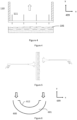
- Figure 2 shows an arrangement 105 comprising coating elements 106 such as stones layered on reinforcement means 107 and an elastic member 108 arranged on the layered coating elements and protruded to slits between the coating elements.
- coating elements 106 such as stones layered on reinforcement means 107
- an elastic member 108 arranged on the layered coating elements and protruded to slits between the coating elements.
- the elastic member is pressed between the layered coating elements and a non-elastic member 109.
- the arrangement is preferably provided in the aid of a lifting means 110 comprising the non-elastic member and plurality of rods adapted to be engaged to the reinforcement means.
- One of the rods is marked in figure 2 with reference number 111.
- the rods can be engaged to the reinforcement means mechanically or magnetically.
- the lifting means includes preferably an electromagnet, and the rods and the reinforcement means are made of ferromagnetic material such as steel or iron.
- the magnet is a permanent magnet such as neodymium magnet.
- the providing of the arrangement 105 comprises the following steps:
- the pulling direction is shown in figure 2 also with an arrow.
- the lifting means comprises an electromagnet and the plurality of rods and the reinforcement means are made of ferromagnetic material such as iron or steel. Accordingly, the engaging and releasing the plurality of rods from the reinforcement means is performed by switching on and off the electromagnet, respectively.
- the coating elements are preferably stones, more preferably natural stones.
- Exemplary natural stones are marble, granite, diabase, feldspar, flintstone and basalt.
- a preferable natural stone is slate.
- artificial stones made from recycled materials such as recycled glass, crushed bricks and crushed concrete can be used as coating elements.
- the reinforcement means is preferably made of ferromagnetic material such as iron or steel.
- An exemplary reinforcement means is a typical reinforcement mesh.
- Another exemplary reinforcement means is a fiber, preferably steel fiber or plastic fiber.
- the elastic member may be made of any elastic material such as foam plastic, silicone and Styrofoam.
- a particular elastic material is foam plastic.
- the non-elastic member may be made of any material which is less elastic than the elastic material.
- Preferable non-elastic materials are steel, aluminum and iron.
- Further exemplary non-elastic members are plates made of plastic and plywood. According to a particular embodiment the non-elastic member is part of the lifting means. According to another particular embodiment also the elastic member is part of the lifting means.
- the next stage comprises mounting the arrangement 105 on the concrete layer 101 using the lifting means 110.
- the mounting is performed before the concrete has cured.
- the arrangement is submerged to predetermined depth d to the concrete layer by moving the lifting means in (-)-y-direction of the coordinate system 399. Since the elastic member fills any slits between the layered coating elements, the uncured concrete does not leak to the first outermost surface of the construction element.
- the next stage comprises moving the lifting means 110 in y-direction of the coordinate system 499, releasing the rods 111 from the reinforcement means, and removing the elastic member from the first outermost surface.
- Final steps of the method include removing the construction element from the mould and cleaning the construction element e.g. by brushing and/or washing. An exemplary finishing by washing is shown in figure 5 .
- the method of the present invention is applicable also for producing construction elements wherein the second outermost surface is modified. Modification of the second outermost surface, i.e. the surface which is towards the bottom of the mould can be done by one of more methods known in the art.
- the concrete is poured into a mould comprising 3D patterns.
- the 3D patterns of the mould are reproduced to the second outermost surface of the construction element.
- a membrane such as a raster fabric comprising the desired pattern or image and a surface retarder is placed in the mould followed by pouring of the admixture comprising self-compacting concrete.
- the surface retarder is a material adapted to retard hydradation reaction of the concrete.
- an area of the membrane comprising the pattern or image comprises the surface retarder.
- the area of the membrane not comprising the pattern or image comprises the surface retarder.
- stones recycled materials such as crushed glass or pigments such as iron oxide is layered to the mould prior to step a). After the concrete is cured and the construction element has been removed from the mould, the material layered on the bottom of the mould is exposed.
- the final steps of the method comprise typically removing the construction element from the mould, transferring to vertical arrangement and washing the outermost surfaces with water.
- the washing shown in figure 5 removes any filler materials or membranes or the like from the outermost surfaces.
- the washing can be done e.g. by using high pressure cleaners.
- the mould does not need to be straight as in the embodiments disclosed above, but also non-straight moulds such as curved, concave and convex moulds can be used.
- non-straight moulds such as curved, concave and convex moulds can be used.
- all materials e.g. the coating elements, non-elastic members, elastic members, admixtures comprising self-compacting concrete and the reinforcement means disclosed above can be applied.
- the use of non-straight mould in the method has been demonstrated by exemplary non-limiting embodiments shown in figures 6-8 .
- Figure 6 shows an embodiment wherein an admixture comprising self-compacting concrete 601 has been poured into a curved mould 600.
- the mould has been covered by a curved lid 612, and the admixture has been poured to the mould through ends of the mould.
- the pouring direction is shown in figure 6 with arrows.
- the first outermost surface is mounted on the concrete layer.
- Figure 7 shows an exemplary curved arrangement 705 comprising coating elements 706 such as stones layered on reinforcement means 707 and an elastic member 708 is arranged on the layered first coating elements and protruded to the slits between the coating elements.
- the elastic member has been pressed between the layered coating elements and a non-elastic member 709.
- the figure shows also the mounting of the arrangement 705 on the curved concrete layer 701 using the lifting means 710. The mounting is performed before the concrete has cured.
- the arrangement is submerged to predetermined depth to the concrete layer by moving the lifting means in (-)-y-direction of the coordinate arrangement 799. Since the elastic member fills any slits between the layered coating elements, the uncured concrete does not leak to the first outermost surface of the construction element.
- Figure 8 shows another curved arrangement 805 comprising the coating elements 806 such as stones layered on reinforcement means 807 and an elastic member 808 arranged on the layered coating elements and protruded to the slits between the coating elements.
- the elastic member has been pressed between the layered coating elements and a non-elastic member 809, and the arrangement has been mounted on a curved concrete layer 801.
- the present disclosure concerns an arrangement 105 comprising
- the coating elements of the arrangement are preferably stones, more preferably natural stones.
- Exemplary natural stones are marble, granite, diabase, feldspar, flintstone and basalt.
- a preferable natural stone is slate.
- artificial stones made from recycled materials such as recycled glass, crushed bricks and crushed concrete can be used as coating elements.
- the reinforcement means of the arrangement is preferably made of ferromagnetic material such as iron or steel.
- An exemplary reinforcement means is a typical reinforcement mesh.
- Another exemplary reinforcement means is a fiber, preferably steel fiber or plastic fiber.
- the elastic member of the arrangement may be made of any elastic material such as foam plastic, silicone and Styrofoam.
- a particular elastic material is foam plastic.
- the arrangement can be straight such as 105, or non-straight such as 705 or 805.
- the use of an arrangement in the method has advantages.
- the elastic member of the arrangement prevents the self-compacting concrete from leaking to the outermost surface of the construction element during assembly. Furthermore, it prevents the coating elements from moving on the reinstatement means during transportation, mounting, vibrating and the like. This is important in particular when producing non-straight, such as curved, concave and convex construction elements. Still another advantage of the use of the arrangements is that they do not need to be assembled in the same site as the entire construction element. According to an exemplary embodiment plurality of arrangements are prepared on a quarry, stacked on each other, bundled, and transported to the final production site, where the bundles are removed, and the arrangements are used one by one in the method for producing construction elements as described above.
- the present disclosure concerns a lifting means suitable for use in the method.
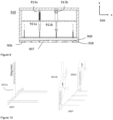
- An exemplary lifting means is shown in figure 9
- its exemplary encaging means are shown in figure 10 .
- the lifting means 910 comprises plurality of rods, two of them are marked with reference numbers 911a and 911b.
- the rods are adapted to be engaged to the reinforcement means as described above.
- the lifting means comprises typically also means adapted to move the rods in ⁇ y-direction of the coordinate system 999. The movement can be performed e.g. by threads 913a or by means 913b adapted to operate with pressurized gas or hydraulics.
- the rods 1011a and the reinforcement means 1007 is made of ferromagnetic material such as steel or metal, and the lifting means comprises an electromagnet.
- the electromagnet is not shown in the figure.
- the engaging and releasing is performed by switching on and off the electromagnet.
- An exemplary engaging means of this type is shown in figure 10A.
- Another exemplary magnet is a neodymium magnet.
- rods 1011b, 1011c are engaged to the reinforcement means 1007 mechanically.
- An exemplary mechanical engaging means is shown in figure 10B.
- the lifting means comprises means for adjusting how deeply the arrangement is submerged to the concrete layer.
- the means is exemplified in figure 10 by the numbered markings in the rod 1011a.
- the finished construction elements can be used not only as vertical structures as walls pillars and fences but also in various horizontal structures such as stairs, walkways and driveways.
Landscapes
- Engineering & Computer Science (AREA)
- Ceramic Engineering (AREA)
- Mechanical Engineering (AREA)
- Chemical & Material Sciences (AREA)
- Manufacturing & Machinery (AREA)
- Architecture (AREA)
- Structural Engineering (AREA)
- Civil Engineering (AREA)
- Wood Science & Technology (AREA)
- Life Sciences & Earth Sciences (AREA)
- Revetment (AREA)
- Road Paving Structures (AREA)
- Producing Shaped Articles From Materials (AREA)
Claims (12)
- Verfahren zum Herstellen eines Bauelements, wobei das Verfahren die folgenden Schritte umfasst:a) Bereitstellen einer Form (100, 700, 800),b) optionales Gießen einer Beimischung, die Basisbeton umfasst, in die Form,c) Gießen einer Beimischung, die selbstverdichtenden Beton umfasst, in die Form, um eine Betonschicht (101, 102, 701, 801) herzustellen, wobeid) zum Bilden einer ersten äußersten Oberfläche des Bauelements:∘ Bereitstellen einer Anordnung (105, 705, 805), umfassend• Verkleidungselemente (106, 706, 806) wie beispielsweise Steine, die auf Verstärkungsmittel (107, 707, 807) geschichtet werden,• ein elastisches Bauteil (108, 708, 808), das auf den geschichteten Verkleidungselementen angeordnet ist und in Schlitze zwischen den Verkleidungselementen hineinragt,∘ Befestigen der Anordnung auf der Betonschicht, und∘ Entfernen des elastischen Bauteils.
- Verfahren nach Anspruch 1, wobei die Beimischung aus Schritt b) Universalzement wie beispielsweise Portlandzement, Wasser und Zuschlagstoffe umfasst.
- Verfahren nach Anspruch 1 oder 2, wobei das Bereitstellen des Schritts d) Folgendes umfasst:∘ Schichten der Verkleidungselemente (106, 706, 806), wie beispielsweise Steine auf den Verstärkungsmitteln (107, 707, 807),∘ Anordnen des elastischen Bauteils (108, 708, 808) auf den Verkleidungselementen,∘ Bereitstellen eines Hebemittels (110, 710, 910), das ein nicht elastisches Bauteil (109, 709, 809, 909) und eine Vielzahl von Stäben (111, 711, 911a, 911b) umfasst,∘ Ineingriffbringen der Vielzahl von Stäben mit den Verstärkungsmitteln, und∘ Pressen des elastischen Bauteils zwischen den geschichteten Verkleidungselementen und dem nicht elastischen Bauteil, indem die Vielzahl von Stäben in eine Richtung eines nicht elastischen Bauteils in der y-Richtung des Koordinatensystems (299, 799, 999) gezogen wird, so dass das elastische Bauteil über die Schlitze zwischen den Verkleidungselementen hinausragt.
- Verfahren nach Anspruch 3, wobei das Hebemittel einen Elektromagneten umfasst, die Vielzahl von Stäben aus ferromagnetischem Material hergestellt ist und die Verstärkungsmittel aus ferromagnetischem Material hergestellt sind, und wobei das Ineingriffbringen das Einschalten des Elektromagneten umfasst.
- Verfahren nach einem der Ansprüche 1-4, wobei das Befestigen das Eintauchen der Anordnung bis zu einer vorbestimmten Tiefe d in die Betonschicht umfasst.
- Verfahren nach einem der Ansprüche 1-5, wobei das elastische Bauteil Schaumstoff, Styropor oder Silikon, vorzugsweise Schaumstoff, umfasst.
- Verfahren nach einem der Ansprüche 1-6, wobei die Verkleidungselemente aus Natursteinen, die vorzugsweise aus Marmor, Granit, Diabas, Feldspat, Feuerstein und Basalt ausgewählt sind, oder aus künstlichen Steinen ausgewählt sind, die aus recycelten Materialien wie beispielsweise recyceltem Glas, recyceltem zerkleinertem Beton oder recycelten zerkleinerten Ziegeln hergestellt sind.
- Verfahren nach einem der Ansprüche 1-7, wobei die Beimischung aus Schritt b) und/oder die Beimischung aus Schritt c) ein oder mehrere recycelte Materialien umfasst, die vorzugsweise aus zerkleinertem Gummi, zerkleinertem Kunststoff, zerkleinertem gebranntem Klinker, zerkleinertem Asphalt, zerkleinerten Ziegeln, zerkleinertem recyceltem Beton und zerkleinertem recyceltem Polymer ausgewählt sind.
- Verfahren nach einem der Ansprüche 1-8, wobei die Form 3D-Muster umfasst.
- Verfahren nach einem der Ansprüche 1-8, das vor dem Schritt c) und dem optionalen Schritt b) das Schichten eines oder mehrerer Steine und/oder von recyceltem Material, das vorzugsweise aus zerkleinertem Gummi, zerkleinertem Kunststoff, zerkleinertem gebranntem Klinker, zerkleinertem Asphalt und zerkleinerten Ziegeln, zerkleinertem recyceltem Polymer ausgewählt ist, in die Form umfasst.
- Verfahren nach einem der Ansprüche 1-8, das vor dem Schritt c) und dem optionalen Schritt b) das Schichten einer Membran, die ein Muster oder Bild und einen Oberflächenverzögerer umfasst, in die Form umfasst.
- Verfahren nach einem der Ansprüche 1-11, das das Entfernen des Bauelements aus der Form und vorzugsweise das Reinigen des Bauelements umfasst.
Applications Claiming Priority (2)
| Application Number | Priority Date | Filing Date | Title |
|---|---|---|---|
| FI20195594A FI128528B (en) | 2019-07-01 | 2019-07-01 | Method for producing construction element, an arrangement and a lifting means for use in the method |
| PCT/FI2020/050450 WO2021001598A1 (en) | 2019-07-01 | 2020-06-24 | Method for producing construction element, an arrangement and a lifting means for use in the method |
Publications (3)
| Publication Number | Publication Date |
|---|---|
| EP3993977A1 EP3993977A1 (de) | 2022-05-11 |
| EP3993977C0 EP3993977C0 (de) | 2024-12-18 |
| EP3993977B1 true EP3993977B1 (de) | 2024-12-18 |
Family
ID=71526502
Family Applications (1)
| Application Number | Title | Priority Date | Filing Date |
|---|---|---|---|
| EP20743176.8A Active EP3993977B1 (de) | 2019-07-01 | 2020-06-24 | Verfahren zur herstellung eines bauelements |
Country Status (4)
| Country | Link |
|---|---|
| EP (1) | EP3993977B1 (de) |
| ES (1) | ES3002687T3 (de) |
| FI (1) | FI128528B (de) |
| WO (1) | WO2021001598A1 (de) |
Families Citing this family (1)
| Publication number | Priority date | Publication date | Assignee | Title |
|---|---|---|---|---|
| CN114905601B (zh) * | 2022-04-08 | 2023-12-08 | 山西美川大唐新型建材有限公司 | 一种混合土预制板制作设备 |
Family Cites Families (7)
| Publication number | Priority date | Publication date | Assignee | Title |
|---|---|---|---|---|
| US3839519A (en) * | 1971-01-11 | 1974-10-01 | G Weiner | Method of making building panel |
| NO129989B (de) * | 1972-07-10 | 1974-06-24 | Grubstad Alfred | |
| DE2604227A1 (de) * | 1976-02-04 | 1977-08-11 | Bernd Peters | Gehplatte sowie vorrichtung und verfahren zu ihrer herstellung |
| SE8800445L (en) | 1988-02-10 | 1989-08-11 | Christer Franzen | Mould casting walls with unworked - has inside surfaces provided with lining of foam rubber |
| US5236975A (en) * | 1989-06-01 | 1993-08-17 | Kabushiki Kaisha Zokei | Concrete non-cure coating material, as well as concrete products or concrete structural products with surface pattern or decoration using said material and production process therefore |
| US5624615A (en) | 1995-08-29 | 1997-04-29 | Sandorff; Daniel R. | Method of manufacturing modular stone panels |
| US9975272B1 (en) | 2009-04-28 | 2018-05-22 | Natural Stone Wall Solutions | Stone wall construction method |
-
2019
- 2019-07-01 FI FI20195594A patent/FI128528B/en active IP Right Grant
-
2020
- 2020-06-24 WO PCT/FI2020/050450 patent/WO2021001598A1/en not_active Ceased
- 2020-06-24 ES ES20743176T patent/ES3002687T3/es active Active
- 2020-06-24 EP EP20743176.8A patent/EP3993977B1/de active Active
Also Published As
| Publication number | Publication date |
|---|---|
| FI128528B (en) | 2020-07-15 |
| WO2021001598A1 (en) | 2021-01-07 |
| EP3993977A1 (de) | 2022-05-11 |
| ES3002687T3 (en) | 2025-03-07 |
| FI20195594A1 (en) | 2020-07-15 |
| EP3993977C0 (de) | 2024-12-18 |
Similar Documents
| Publication | Publication Date | Title |
|---|---|---|
| Fowler | Polymers in concrete: a vision for the 21st century | |
| US20130084424A1 (en) | Composite panel based on cementitious mortar with properties of transparency | |
| WO2012051611A1 (en) | Prefabricated compound masonry units | |
| US12460409B2 (en) | Lightweight blocks with stone-like appearance | |
| CN101446078A (zh) | 再生骨料高速公路隔声屏障板及其制作、安装方法 | |
| KR101030221B1 (ko) | 천연 석재 층과 이 천연 석재 층의 이면에 시멘트 몰탈층이 일체로 부착되어 이루어진 복합석재블록 및 그제조방법 | |
| CN106968378A (zh) | 一种配筋式纤维编织网混凝土楼板及其制作方法和安装方法 | |
| EP3993977B1 (de) | Verfahren zur herstellung eines bauelements | |
| EP3993976B1 (de) | Verfahren zur herstellung eines konstruktionselements | |
| JP4781290B2 (ja) | 埋設型枠用ボード | |
| US20250178235A1 (en) | Method for manufacturing architectural blocks with stone-like appearance | |
| CN207110169U (zh) | 一种配筋式纤维编织网混凝土楼板 | |
| JP4330774B2 (ja) | 着色化粧コンクリート部材の製造方法 | |
| CN108018986A (zh) | 一种结构与节能一体化半装配式预制外墙板及其施工方法 | |
| JP2536227Y2 (ja) | 土木・建築用構造体 | |
| Gilbert | GFRC–30 Years of High Fiber Cement Composite Applications Worldwide | |
| JPH08216126A (ja) | 凹凸模様を有するコンクリート板の製法 | |
| KR20020037637A (ko) | 조립식 콘크리트블록 및 황토 패널 제조 방법 | |
| JPH0463179B2 (de) | ||
| CN108789808A (zh) | 一种预制空心墙板及其制备方法 | |
| AU2004202568B2 (en) | Fiber cement construction panel | |
| JP2000094553A (ja) | タイル様凹凸模様を有するプラスチックブロックの製造 方法 | |
| CN210086707U (zh) | 一种装配式复合装饰墙板 | |
| JP3057885U (ja) | タイル様凹凸模様を有するプラスチックブロック | |
| JP3065893U (ja) | 化粧不焼成タイル |
Legal Events
| Date | Code | Title | Description |
|---|---|---|---|
| STAA | Information on the status of an ep patent application or granted ep patent |
Free format text: STATUS: UNKNOWN |
|
| STAA | Information on the status of an ep patent application or granted ep patent |
Free format text: STATUS: THE INTERNATIONAL PUBLICATION HAS BEEN MADE |
|
| PUAI | Public reference made under article 153(3) epc to a published international application that has entered the european phase |
Free format text: ORIGINAL CODE: 0009012 |
|
| STAA | Information on the status of an ep patent application or granted ep patent |
Free format text: STATUS: REQUEST FOR EXAMINATION WAS MADE |
|
| 17P | Request for examination filed |
Effective date: 20211210 |
|
| AK | Designated contracting states |
Kind code of ref document: A1 Designated state(s): AL AT BE BG CH CY CZ DE DK EE ES FI FR GB GR HR HU IE IS IT LI LT LU LV MC MK MT NL NO PL PT RO RS SE SI SK SM TR |
|
| DAV | Request for validation of the european patent (deleted) | ||
| DAX | Request for extension of the european patent (deleted) | ||
| STAA | Information on the status of an ep patent application or granted ep patent |
Free format text: STATUS: EXAMINATION IS IN PROGRESS |
|
| 17Q | First examination report despatched |
Effective date: 20231013 |
|
| RIC1 | Information provided on ipc code assigned before grant |
Ipc: B32B 27/40 20060101ALI20240704BHEP Ipc: B32B 13/12 20060101ALI20240704BHEP Ipc: B32B 13/04 20060101ALI20240704BHEP Ipc: B32B 9/04 20060101ALI20240704BHEP Ipc: B32B 9/00 20060101ALI20240704BHEP Ipc: B32B 1/00 20060101ALI20240704BHEP Ipc: B28B 23/02 20060101ALI20240704BHEP Ipc: B28B 23/00 20060101ALI20240704BHEP Ipc: B28B 7/36 20060101ALI20240704BHEP Ipc: B28B 7/00 20060101AFI20240704BHEP |
|
| GRAP | Despatch of communication of intention to grant a patent |
Free format text: ORIGINAL CODE: EPIDOSNIGR1 |
|
| STAA | Information on the status of an ep patent application or granted ep patent |
Free format text: STATUS: GRANT OF PATENT IS INTENDED |
|
| INTG | Intention to grant announced |
Effective date: 20240826 |
|
| GRAS | Grant fee paid |
Free format text: ORIGINAL CODE: EPIDOSNIGR3 |
|
| GRAA | (expected) grant |
Free format text: ORIGINAL CODE: 0009210 |
|
| STAA | Information on the status of an ep patent application or granted ep patent |
Free format text: STATUS: THE PATENT HAS BEEN GRANTED |
|
| AK | Designated contracting states |
Kind code of ref document: B1 Designated state(s): AL AT BE BG CH CY CZ DE DK EE ES FI FR GB GR HR HU IE IS IT LI LT LU LV MC MK MT NL NO PL PT RO RS SE SI SK SM TR |
|
| REG | Reference to a national code |
Ref country code: CH Ref legal event code: EP |
|
| REG | Reference to a national code |
Ref country code: DE Ref legal event code: R096 Ref document number: 602020043355 Country of ref document: DE |
|
| REG | Reference to a national code |
Ref country code: IE Ref legal event code: FG4D |
|
| U01 | Request for unitary effect filed |
Effective date: 20241231 |
|
| U07 | Unitary effect registered |
Designated state(s): AT BE BG DE DK EE FI FR IT LT LU LV MT NL PT RO SE SI Effective date: 20250114 |
|
| REG | Reference to a national code |
Ref country code: ES Ref legal event code: FG2A Ref document number: 3002687 Country of ref document: ES Kind code of ref document: T3 Effective date: 20250307 |
|
| PG25 | Lapsed in a contracting state [announced via postgrant information from national office to epo] |
Ref country code: HR Free format text: LAPSE BECAUSE OF FAILURE TO SUBMIT A TRANSLATION OF THE DESCRIPTION OR TO PAY THE FEE WITHIN THE PRESCRIBED TIME-LIMIT Effective date: 20241218 |
|
| PG25 | Lapsed in a contracting state [announced via postgrant information from national office to epo] |
Ref country code: NO Free format text: LAPSE BECAUSE OF FAILURE TO SUBMIT A TRANSLATION OF THE DESCRIPTION OR TO PAY THE FEE WITHIN THE PRESCRIBED TIME-LIMIT Effective date: 20250318 |
|
| PG25 | Lapsed in a contracting state [announced via postgrant information from national office to epo] |
Ref country code: GR Free format text: LAPSE BECAUSE OF FAILURE TO SUBMIT A TRANSLATION OF THE DESCRIPTION OR TO PAY THE FEE WITHIN THE PRESCRIBED TIME-LIMIT Effective date: 20250319 |
|
| PG25 | Lapsed in a contracting state [announced via postgrant information from national office to epo] |
Ref country code: RS Free format text: LAPSE BECAUSE OF FAILURE TO SUBMIT A TRANSLATION OF THE DESCRIPTION OR TO PAY THE FEE WITHIN THE PRESCRIBED TIME-LIMIT Effective date: 20250318 |
|
| PG25 | Lapsed in a contracting state [announced via postgrant information from national office to epo] |
Ref country code: SM Free format text: LAPSE BECAUSE OF FAILURE TO SUBMIT A TRANSLATION OF THE DESCRIPTION OR TO PAY THE FEE WITHIN THE PRESCRIBED TIME-LIMIT Effective date: 20241218 |
|
| PG25 | Lapsed in a contracting state [announced via postgrant information from national office to epo] |
Ref country code: PL Free format text: LAPSE BECAUSE OF FAILURE TO SUBMIT A TRANSLATION OF THE DESCRIPTION OR TO PAY THE FEE WITHIN THE PRESCRIBED TIME-LIMIT Effective date: 20241218 |
|
| U20 | Renewal fee for the european patent with unitary effect paid |
Year of fee payment: 6 Effective date: 20250603 |
|
| PG25 | Lapsed in a contracting state [announced via postgrant information from national office to epo] |
Ref country code: IS Free format text: LAPSE BECAUSE OF FAILURE TO SUBMIT A TRANSLATION OF THE DESCRIPTION OR TO PAY THE FEE WITHIN THE PRESCRIBED TIME-LIMIT Effective date: 20250418 |
|
| PG25 | Lapsed in a contracting state [announced via postgrant information from national office to epo] |
Ref country code: SK Free format text: LAPSE BECAUSE OF FAILURE TO SUBMIT A TRANSLATION OF THE DESCRIPTION OR TO PAY THE FEE WITHIN THE PRESCRIBED TIME-LIMIT Effective date: 20241218 |
|
| PG25 | Lapsed in a contracting state [announced via postgrant information from national office to epo] |
Ref country code: CZ Free format text: LAPSE BECAUSE OF FAILURE TO SUBMIT A TRANSLATION OF THE DESCRIPTION OR TO PAY THE FEE WITHIN THE PRESCRIBED TIME-LIMIT Effective date: 20241218 |
|
| PGFP | Annual fee paid to national office [announced via postgrant information from national office to epo] |
Ref country code: ES Payment date: 20250731 Year of fee payment: 6 |
|
| PLBE | No opposition filed within time limit |
Free format text: ORIGINAL CODE: 0009261 |
|
| STAA | Information on the status of an ep patent application or granted ep patent |
Free format text: STATUS: NO OPPOSITION FILED WITHIN TIME LIMIT |
|
| 26N | No opposition filed |
Effective date: 20250919 |