EP3976504B1 - Anordnung und verfahren zur lagerung von artikeln - Google Patents
Anordnung und verfahren zur lagerung von artikeln Download PDFInfo
- Publication number
- EP3976504B1 EP3976504B1 EP20742853.3A EP20742853A EP3976504B1 EP 3976504 B1 EP3976504 B1 EP 3976504B1 EP 20742853 A EP20742853 A EP 20742853A EP 3976504 B1 EP3976504 B1 EP 3976504B1
- Authority
- EP
- European Patent Office
- Prior art keywords
- vertical
- racks
- item
- rack
- walls
- Prior art date
- Legal status (The legal status is an assumption and is not a legal conclusion. Google has not performed a legal analysis and makes no representation as to the accuracy of the status listed.)
- Active
Links
Images



Classifications
-
- B—PERFORMING OPERATIONS; TRANSPORTING
- B65—CONVEYING; PACKING; STORING; HANDLING THIN OR FILAMENTARY MATERIAL
- B65G—TRANSPORT OR STORAGE DEVICES, e.g. CONVEYORS FOR LOADING OR TIPPING, SHOP CONVEYOR SYSTEMS OR PNEUMATIC TUBE CONVEYORS
- B65G1/00—Storing articles, individually or in orderly arrangement, in warehouses or magazines
- B65G1/02—Storage devices
-
- B—PERFORMING OPERATIONS; TRANSPORTING
- B65—CONVEYING; PACKING; STORING; HANDLING THIN OR FILAMENTARY MATERIAL
- B65G—TRANSPORT OR STORAGE DEVICES, e.g. CONVEYORS FOR LOADING OR TIPPING, SHOP CONVEYOR SYSTEMS OR PNEUMATIC TUBE CONVEYORS
- B65G1/00—Storing articles, individually or in orderly arrangement, in warehouses or magazines
- B65G1/02—Storage devices
- B65G1/04—Storage devices mechanical
- B65G1/10—Storage devices mechanical with relatively movable racks to facilitate insertion or removal of articles
-
- B—PERFORMING OPERATIONS; TRANSPORTING
- B65—CONVEYING; PACKING; STORING; HANDLING THIN OR FILAMENTARY MATERIAL
- B65G—TRANSPORT OR STORAGE DEVICES, e.g. CONVEYORS FOR LOADING OR TIPPING, SHOP CONVEYOR SYSTEMS OR PNEUMATIC TUBE CONVEYORS
- B65G1/00—Storing articles, individually or in orderly arrangement, in warehouses or magazines
- B65G1/02—Storage devices
- B65G1/04—Storage devices mechanical
- B65G1/0485—Check-in, check-out devices
-
- B—PERFORMING OPERATIONS; TRANSPORTING
- B65—CONVEYING; PACKING; STORING; HANDLING THIN OR FILAMENTARY MATERIAL
- B65G—TRANSPORT OR STORAGE DEVICES, e.g. CONVEYORS FOR LOADING OR TIPPING, SHOP CONVEYOR SYSTEMS OR PNEUMATIC TUBE CONVEYORS
- B65G1/00—Storing articles, individually or in orderly arrangement, in warehouses or magazines
- B65G1/02—Storage devices
- B65G1/04—Storage devices mechanical
- B65G1/137—Storage devices mechanical with arrangements or automatic control means for selecting which articles are to be removed
- B65G1/1373—Storage devices mechanical with arrangements or automatic control means for selecting which articles are to be removed for fulfilling orders in warehouses
-
- B—PERFORMING OPERATIONS; TRANSPORTING
- B65—CONVEYING; PACKING; STORING; HANDLING THIN OR FILAMENTARY MATERIAL
- B65G—TRANSPORT OR STORAGE DEVICES, e.g. CONVEYORS FOR LOADING OR TIPPING, SHOP CONVEYOR SYSTEMS OR PNEUMATIC TUBE CONVEYORS
- B65G1/00—Storing articles, individually or in orderly arrangement, in warehouses or magazines
- B65G1/02—Storage devices
- B65G1/04—Storage devices mechanical
- B65G1/137—Storage devices mechanical with arrangements or automatic control means for selecting which articles are to be removed
- B65G1/1373—Storage devices mechanical with arrangements or automatic control means for selecting which articles are to be removed for fulfilling orders in warehouses
- B65G1/1378—Storage devices mechanical with arrangements or automatic control means for selecting which articles are to be removed for fulfilling orders in warehouses the orders being assembled on fixed commissioning areas remote from the storage areas
-
- B—PERFORMING OPERATIONS; TRANSPORTING
- B25—HAND TOOLS; PORTABLE POWER-DRIVEN TOOLS; MANIPULATORS
- B25J—MANIPULATORS; CHAMBERS PROVIDED WITH MANIPULATION DEVICES
- B25J9/00—Program-controlled manipulators
- B25J9/16—Program controls
- B25J9/1679—Program controls characterised by the tasks executed
-
- B—PERFORMING OPERATIONS; TRANSPORTING
- B65—CONVEYING; PACKING; STORING; HANDLING THIN OR FILAMENTARY MATERIAL
- B65G—TRANSPORT OR STORAGE DEVICES, e.g. CONVEYORS FOR LOADING OR TIPPING, SHOP CONVEYOR SYSTEMS OR PNEUMATIC TUBE CONVEYORS
- B65G1/00—Storing articles, individually or in orderly arrangement, in warehouses or magazines
- B65G1/02—Storage devices
- B65G1/04—Storage devices mechanical
- B65G1/12—Storage devices mechanical with separate article supports or holders movable in a closed circuit to facilitate insertion or removal of articles the articles being books, documents, forms or the like
- B65G1/133—Storage devices mechanical with separate article supports or holders movable in a closed circuit to facilitate insertion or removal of articles the articles being books, documents, forms or the like the circuit being confined in a horizontal plane
-
- B—PERFORMING OPERATIONS; TRANSPORTING
- B65—CONVEYING; PACKING; STORING; HANDLING THIN OR FILAMENTARY MATERIAL
- B65G—TRANSPORT OR STORAGE DEVICES, e.g. CONVEYORS FOR LOADING OR TIPPING, SHOP CONVEYOR SYSTEMS OR PNEUMATIC TUBE CONVEYORS
- B65G2203/00—Indexing code relating to control or detection of the articles or the load carriers during conveying
- B65G2203/02—Control or detection
- B65G2203/0208—Control or detection relating to the transported articles
-
- B—PERFORMING OPERATIONS; TRANSPORTING
- B65—CONVEYING; PACKING; STORING; HANDLING THIN OR FILAMENTARY MATERIAL
- B65G—TRANSPORT OR STORAGE DEVICES, e.g. CONVEYORS FOR LOADING OR TIPPING, SHOP CONVEYOR SYSTEMS OR PNEUMATIC TUBE CONVEYORS
- B65G2203/00—Indexing code relating to control or detection of the articles or the load carriers during conveying
- B65G2203/02—Control or detection
- B65G2203/0208—Control or detection relating to the transported articles
- B65G2203/0216—Codes or marks on the article
-
- B—PERFORMING OPERATIONS; TRANSPORTING
- B65—CONVEYING; PACKING; STORING; HANDLING THIN OR FILAMENTARY MATERIAL
- B65G—TRANSPORT OR STORAGE DEVICES, e.g. CONVEYORS FOR LOADING OR TIPPING, SHOP CONVEYOR SYSTEMS OR PNEUMATIC TUBE CONVEYORS
- B65G2203/00—Indexing code relating to control or detection of the articles or the load carriers during conveying
- B65G2203/04—Detection means
- B65G2203/042—Sensors
-
- G—PHYSICS
- G05—CONTROLLING; REGULATING
- G05B—CONTROL OR REGULATING SYSTEMS IN GENERAL; FUNCTIONAL ELEMENTS OF SUCH SYSTEMS; MONITORING OR TESTING ARRANGEMENTS FOR SUCH SYSTEMS OR ELEMENTS
- G05B2219/00—Program-control systems
- G05B2219/30—Nc systems
- G05B2219/40—Robotics, robotics mapping to robotics vision
- G05B2219/40006—Placing, palletize, un palletize, paper roll placing, box stacking
Definitions
- the present invention relates to an arrangement and a method for storing items.
- the present invention finds particular application in the storage of packages, such as postal packages.
- postal packages are continuously received at post offices, which packages must be stored until the recipient comes to collect them, and therefore delivered to the recipient himself/herself.
- the very different sizes of the packages to be stored can lead to high inefficiency in space management.
- Document EP 1 672 830 describes a storage arrangement which comprises vertical racks, among which a plurality of shelves of arranged. These shelves are arranged at different distances from each other in the vertical direction, thus defining corresponding compartments of different height.
- the storage arrangement provides that the dimensions of the items to be stored are measured, so that items of height appropriate with respect to the height of the corresponding compartment are arranged on a shelf and that a plurality of items are arranged on said shelf until it is completely filled in width.
- the shelves define compartments of defined and unchangeable heights. Consequently, while providing for the shelves to be mounted at different distances from one another, the versatility of the storage arrangement described above is limited.
- Document WO 2016/103154 disclosing the preamble of claim 1, describes a storage arrangement which comprises vertical racks provided with a plurality of supports, on which trays carrying respective items can be positioned.
- Document EP 1 273 531 describes a storage arrangement for storing items to be distributed, e.g. postal packages.
- Said storage arrangement comprises one or more vertical racks, of the type commonly used, for example, in canteens for storing trays at the end of the meal.
- said storage arrangement further comprises a plurality of trays on which the items to be stored can be placed and which can be inserted on the supports of one of said vertical racks, at a height that takes into account the items already present on the rack and which is adequate with respect to the height of the item to be stored.
- the aforementioned storage arrangement comprises a sensor system for determining the size of a received object, in particular its height, and a control system that allows to determine, based on the output of the aforementioned sensor system and on the data contained in a memory unit and related to the items already present in the warehouse, in which rack to place the new item and at what height of said rack to insert the tray that carries the item.
- the storage arrangement may be flexible, meaning that items may be periodically reorganized within the storage arrangement, so as to further improve the utilization of space.
- the object of the present invention is therefore to overcome the limitations of the prior art by providing an arrangement and a method for storing items that allow to effectively optimize the use of space in an environment intended for storing items.
- the arrangement and method for storing items provide for detecting the size of an item to be stored and placing said item in a storage structure so that said item is stored in a sufficient, but not excessive, space.
- At least two dimensions of the item in directions perpendicular to each other are taken into account in determining the space in which the item is to be stored.
- three dimensions of the item in directions perpendicular to each other are taken into account in determining the space in which the item is to be stored
- the storage structure comprises a plurality of vertical racks, each comprising at least a pair of parallel and facing vertical walls that carry, on the facing faces, a plurality of supports adapted to receive removable supporting elements that carry the items to be stored.
- Each removable support element once inserted on the supports of two vertical walls facing a vertical rack, defines with said vertical walls a compartment for storing an item, which is delimited below by said supporting element and laterally by said vertical walls, and which may possibly be delimited above by a supporting element subsequently inserted in the same vertical rack.
- said plurality of racks comprises two or more rack groupsgroups in which the distance between respective parallel vertical walls is different from one groupgroup to another, so that two or more rack groupsgroups having compartments of different width from one groupgroup to another are definable.
- the storage structure comprising two or more groups of vertical racks in which main vertical walls are placed at different distances from each other.
- each rack comprises, in addition to the main vertical walls of the supporting frame, also a vertical bulkhead removably arranged between and parallel to the main vertical walls of said rack.
- rack groups can be obtained with compartments of different widths, suitably arranging said vertical bulkheads between the main vertical walls of the racks of one or more rack groups.
- the storage structure of the storage arrangement comprises two or more groups of vertical racks in which compartments having different depths from one group to another are definable.
- a storage structure comprising two or more rack groups in which the main vertical walls of the supporting frame have an extension in a direction transverse to height different from one group to another may be provided.
- each rack comprises a vertical bulkhead arranged between and perpendicular to the vertical walls of said rack, so as to define compartments of reduced depth.
- the storage structure comprises at least one rack group in which each rack comprises a vertical bulkhead arranged between and perpendicular to the vertical walls of said rack, and the racks of said at least one rack group are mounted on respective rotatable platforms, so that said platforms can be rotated 180° to access the compartments of a first face or the compartments of an opposite second face of said racks.
- the position of said transverse vertical bulkheads may be changed so as to change the subdivision of the overall depth of the racks.
- rotatable platforms can also be adopted to increase warehouse capacity without a significant increase in the overall dimensions.
- the storage arrangement according to the invention comprises at least one rack group comprising a first row of racks and a second row of racks facing each other and said rack group is mounted on a rotatable platform, with the two rows of racks arranged on opposite sides of the rotation axis of the rotatable platform.
- these rotatable platforms can be removable and transportable, so that they can only be used in case of need (for example, in the case where the items to be stored are postal packages, during the Christmas holidays).
- the storage arrangement comprises a sensor system for detecting the size of the items to be stored and a control device provided with a memory unit in which the geometry of the storage structure and the arrangement of the items already present in the warehouse are stored.
- the control unit determines on which rack and in which position to place a new item to be stored.
- control unit is configured to analyse data from the sensor system and to evaluate whether to store the item in the current position, in a rotated position (rotated about a vertical axis) or in a tilted position (rotated about a horizontal axis) and to store the item in question in a position that minimizes the unused space.
- the storage arrangement will comprise means for turning and/or tilting the items.
- the storage arrangement will comprise a safety arrangement to prevent damaging the handled items, such as a safety arrangement to prevent fragile items from being tilted.
- the stored items are preferably postal packages.
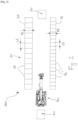
- a postal package storage arrangement according to a first embodiment of the invention is schematically shown in a plan view.
- the storage arrangement 100 comprises a loading station 10, in which the packages to be stored are delivered and taken charge of by the arrangement, a storage structure 30, in which the packages are stored, and an unloading station 50, in which the packages are returned to be collected by the recipient.
- the loading station 10 and the unloading station 50 may be separated, as in the illustrated example, but may also be coincident.
- the storage structure 30 comprises a plurality of vertical racks 32, 34, each comprising a supporting frame comprising a pair of main vertical walls 33 arranged parallel and facing each other.
- Said vertical racks 32 are preferably arranged in one or more arrays, arranged along the walls of the environment in which the storage arrangement is installed.
- FIG. 5a An example of a main vertical wall 33 for a rack of the storage structure 30 is shown in Figures 5a , 5b .
- each main vertical wall 33 is formed by a flat plate that carries on at least one of the surfaces thereof a plurality of supports 35 oriented horizontally (i.e. parallel to the plane on which the wall 33 rests) and distributed along the height of the vertical wall 33.
- the supports 35 are all the same and are evenly distributed along the height of the vertical wall 33.
- the supports 35 are made in the shape of "C"-section guides, but other shapes may also be possible.
- said supports could be made in the form of cantilevered slats mounted on at least one surface of the plate forming the vertical wall 33.
- Each rack is formed by arranging a pair of equal main vertical walls 33 parallel and facing each other, arranged with the respective surfaces carrying the supports 35 facing each other. Note that the racks can be made with main vertical walls that differ in size and/or the spacing of the supports provided thereon.
- the supports 35 of the vertical walls 33 of the vertical racks 32, 34 are adapted to accommodate and support removable supporting elements in which the packages are received and which will be described in detail in the following.
- a package - on its supporting element - can be inserted in a vertical rack by selecting the most advantageous supports to ensure sufficient space for the package and at the same time minimize unused space; in other words, said package will be placed on the free supports immediately above an underlying package already present in the storage structure.
- At least two dimensions of the package to be stored in directions perpendicular to each other are taken into account in determining the space in which the item is to be stored.
- the storage structure 30 of Figure 1 comprises a first group of vertical racks 32 whose main vertical walls are arranged at a first distance L1 from each other and a second group of vertical racks 34 whose main vertical walls are arranged at a second distance L2 from each other, different from - and for example greater than - said first distance L1.
- the number of groups and the values of the selected widths can be selected from time to time depending on the specific applications.
- each rack comprises a vertical bulkhead removably arranged between and parallel to the main vertical walls of said rack.
- a first column of compartments having a first certain width defined by the distance between a first main vertical wall and the additional vertical wall consisting of said vertical bulkhead and a second column of compartments having a second certain width defined by the distance between said additional vertical wall consisting of said vertical bulkhead and the second main vertical wall would be defined in the vertical rack.
- said parallel vertical bulkhead can be selectively positioned at a plurality of different positions between the main vertical walls of the corresponding rack, thus greatly increasing the number of possible widths for the compartments that accommodate the packages.
- the removable supporting elements 12, 14 that accommodate the packages to be stored are made in the form of trays or drawers whose edges are adapted to be inserted and slide inside the "C" supports 35 of the vertical wals 33 of the vertical racks 32,34.
- removable supporting elements with different widths will be provided in the loading station 10, in as many as the different widths of the different groups of vertical racks.
- the loading station will be provided with trays or drawers 12 having said first width L1 of said first vertical rack group 32 and trays or drawers 14 having said second width L2 of said first vertical rack group 34.
- the edges of the removable supporting elements may be provided with magnets and the supports may be made of ferromagnetic material, or vice versa.
- measuring the package size and evaluating the most suitable location may be done manually.
- the storage arrangement 100 comprises:
- the sensor system may include sensors adapted to determine the package size.
- each package is provided with a code in which information relating to its size is stored; in this embodiment, the sensor system will comprise a tool for reading said code.
- the storage arrangement 100 may further comprise a robotic handling device 70, provided with gripping means 72 for grasping the trays 12, 14 and controlled by said control system, which transfers the packages from the loading station 10 to the storage structure 30 and thereafter from the latter to the unloading station 50.
- a robotic handling device 70 provided with gripping means 72 for grasping the trays 12, 14 and controlled by said control system, which transfers the packages from the loading station 10 to the storage structure 30 and thereafter from the latter to the unloading station 50.
- control system communicates the most advantageous configuration (e.g. by displaying them on a screen or similar display means) to an operator so that the operator can arrange the package on the appropriate tray in the suggested position.
- the robotic handling device 70 itself is provided with means for turning the package, i.e. for rotating it about a vertical axis, and/or means for tilting the package, i.e. for rotating it about a horizontal axis, and for transferring it in this turned and/or tilted position to the storage structure.
- the storage arrangement preferably comprises a safety system, comprising for example a code shown on the package and detectable by the sensor system, to prevent packages with fragile contents from being rotated (in particular tilted).
- a safety system comprising for example a code shown on the package and detectable by the sensor system, to prevent packages with fragile contents from being rotated (in particular tilted).
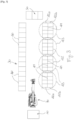
- the storage structure 30 comprises a first group of vertical racks 36 whose main vertical walls are arranged at a first distance L1 from each other and have a first depth P1 (understood as extension in a direction perpendicular to the height of said main vertical walls) and a second group of vertical racks 38 whose main vertical walls are arranged at a second distance L2 from each other, different from - and for example greater than - said first distance L1 and have a second depth P2 (understood as extension in a direction perpendicular to the height of said main vertical walls) different from - for example greater than - said first depth P1.
- the number of groups and the values of the selected widths and depths can be selected from time to time depending on the specific applications.
- the storage structure 30 provides a first group of vertical racks 40 of given width and depth.
- compartments of different depths are formed by providing between the main vertical walls of each rack 42 a vertical bulkhead 41 arranged between and perpendicular to the main vertical walls of said rack, so as to define two columns of compartments 42a, 42b of reduced depth.
- the racks 42 of this second group of vertical racks are mounted on rotatable platforms 43, which can be rotated about a vertical axis (in particular 180°) to alternatively provide the operator or robotic handling system 70 access to the compartments of either of said compartment columns 42a, 42b
- rotatable platforms are used to increase the capacity of the warehouse without a considerable increase in the overall dimensions.
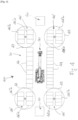
- the storage structure 30 comprises a first vertical rack group comprising vertical racks 44 with a first width and a first depth, a second vertical rack group comprising vertical racks 46 with a second width and a second depth, a third vertical rack group comprising vertical racks 44' with said first width and said first depth and arranged on rotatable platforms 45 on a first row of racks 44'a and a second row of racks 44'b arranged on opposite sides of the rotation axis of the corresponding rotatable platform 45, and a fourth vertical rack group comprising vertical racks 46' with said second width and said second depth and arranged on rotatable platforms 47 on a first row of racks 46'a and a second row of racks 46'b arranged on opposite sides of the rotation axis of the corresponding rotatable platform 47.
- the method according to the invention could provide the step of:
Landscapes
- Engineering & Computer Science (AREA)
- Mechanical Engineering (AREA)
- Warehouses Or Storage Devices (AREA)
- Mobile Radio Communication Systems (AREA)
- Container Filling Or Packaging Operations (AREA)
Claims (12)
- Anordnung zur Lagerung von Artikeln (100), mit einer Ladestation (10), einer Lagerstruktur (30) und einer Entladestation (50), wobei die Lagerstruktur (30) mehrere vertikale Regale (32, 34, 36, 38, 40, 42, 44, 46, 44', 46') aufweist, die jeweils wenigstens ein Paar vertikaler Wände (33) aufweisen, die parallel angeordnet und sich zugewandt sind und an wenigstens einer ihrer Seiten, mit denen sie einander zugewandt sind, mit mehreren Trägern (35) versehen sind, die in unterschiedlichen Höhen angeordnet und dafür ausgelegt sind, abnehmbare Tragelemente (12, 14) aufzunehmen, welche die zu lagernden Artikel tragen, wobei die abnehmbaren Tragelemente in der Form von Tablets oder Schubladen (12, 14) ausgeführt sind, die jeweils in die Träger (35) eines Paars von sich zugewandten vertikalen Wänden eines der vertikalen Regale (32, 34, 36, 38, 40, 42, 44, 46, 44', 46') eingesetzt und aus ihnen entnommen werden können, wobei jedes abnehmbare Tragelemente, sobald es in die entsprechenden Träger der sich zugewandten vertikalen Wände des vertikalen Regals eingesetzt ist, mit den vertikalen Wänden ein Fach zum Lagern eines Artikels bildet, wobei jedes abnehmbare Trageelement (12, 14) dafür ausgelegt ist, einen einzelnen Artikel zu tragen und jedes Fach folglich dafür ausgelegt ist, einen einzelnen Artikel zu lagern, unddie Lagerstruktur (30) wenigstens zwei vertikale Regalgruppen (32, 34, 36, 38, 40, 42, 44, 46, 44', 46') aufweist, wobei der Abstand zwischen den vertikalen Wänden (33), die parallel zueinander und einander zugewandt angeordnet sind, der vertikalen Regale einer der vertikalen Regalgruppen anders ist als der Abstand zwischen den vertikalen Wänden (33), die parallel und einander zugewandt angeordnet sind, der vertikalen Regale einer anderen der vertikalen Regalgruppen ist,dadurch gekennzeichnet, dass die Lageranordnung ein Sensorsystem aufweist, um die Größe eines zu lagernden Artikels zu ermitteln, wobei wenigstens zwei zueinander senkrechte Abmessungen des Artikels berücksichtigt werden, um den Raum zu bestimmen, in dem der Artikel gelagert werden soll, und ein Steuersystem aufweist, das mit einer Speichereinheit vorgesehen ist, in der die Geometrie der Lagerstruktur (30) und die Anordnung der bereits in der Lagerstruktur vorhandenen Artikel gespeichert sind, und dafür ausgelegt ist, auf der Basis der Ausgabe des Sensorsystems und der in der Speichereinheit gespeicherten Daten zu bestimmen, in welchem vertikalen Regal und auf welcher Trägern dieses vertikalen Regals der Artikel gelagert werden soll.
- Anordnung zur Lagerung von Artikeln (100) nach Anspruch 1, wobei die vertikalen Regale einen tragenden Rahmen aufweisen, der ein Paar vertikaler Hauptwände (33) aufweist, die parallel und einander zugewandt angeordnet sind und an wenigstens eine ihrer einander zugewandten Seiten mit mehreren Trägern (35) versehen sind, und wobei die Lagerstruktur (30) wenigstens eine erste Gruppe vertikaler Regale (32, 36, 44) aufweist, deren vertikale Hauptwände (33) in einem ersten Abstand (L1) voneinander angeordnet sind und eine zweite Gruppe vertikaler Regale (34, 38, 46) deren vertikale Hauptwände (33) in einem zweiten Abstand (L2) voneinander angeordnet sind, der sich von dem ersten Abstand (L1) unterscheidet.
- Anordnung zur Lagerung von Artikeln (100) nach Anspruch 1, wobei die vertikalen Regale einen tragenden Rahmen aufweisen, der ein Paar vertikaler Hauptwände (33) aufweist, die parallel und einander zugewandt angeordnet sind und an wenigstens einer ihrer aneinander zugewandten Seiten mit mehreren Trägern (35) versehen sind, wobei die vertikalen Hauptwände (33) von allen vertikalen Regalen im selben Abstand voneinander angeordnet sind, und wobei die Lagerungsstruktur (30) wenigstens eine erste vertikale Regalgruppe aufweist, die vertikale Regale aufweisen zwischen deren vertikalen Wänden (33) eine zusätzliche vertikale Wand angeordnet ist, die aus einer vertikalen Trennwand besteht, die parallel zu den vertikalen Hauptwänden angeordnet ist, wobei die vertikale Trennwand auf beiden gegenüberliegenden Seiten mit Trägern (35) versehen ist, und eine zweite vertikale Regalgruppe aufweisen, die vertikale Regale ohne die zusätzliche vertikale Wand aufweist.
- Anordnung zur Lagerung von Artikeln (100) nach Anspruch 1 oder 2 oder 3, wobei die Lagerstruktur (30) wenigstens eine vertikale Regalgruppe (36, 44), deren vertikale Hauptwände (33) eine erste Tiefe (P1) haben, und eine vertikale Regalgruppe (38, 46), deren vertikale Wände (33) eine zweite Tiefe (P2) haben, die sich von der ersten Tiefe (P1) unterscheidet, aufweist.
- Anordnung zur Lagerung von Artikeln (100) nach Anspruch 1 oder 2 oder 3, wobei die Lagerstruktur (30) wenigstens eine vertikale Regalgruppe (42), die vertikale Regale aufweist, zwischen deren Hauptwänden (33) eine vertikale Trennwand (41) angeordnet ist, die senkrecht zu den vertikalen Hauptwänden ausgerichtet ist, und eine vertikale Regalgruppe (40) aufweist, die vertikale Regale ohne die senkrechte vertikale Trennwand (41), die senkrecht zu den vertikalen Hauptwänden angeordnet ist, aufweist.
- Anordnung zur Lagerung von Artikeln (100) nach Anspruch 5, wobei die vertikalen Regale (42), zwischen derer vertikalen Hauptwände (33) eine vertikale Trennwand (41) die senkrecht zu den vertikalen Hauptwänden angeordnet ist, auf drehbaren Bühnen (43) montiert sind, die um eine vertikale Achse drehbar sind, um wahlweise Zugang zu den an einer ersten oder einer gegenüberliegenden zweiten Seite der vertikalen Trennwand (41) ausgebildeten Fächer zu ermöglichen.
- Anordnung zur Lagerung von Artikeln (100) nach Anspruch 1 oder 2 oder 3, wobei die Lagerstruktur (30) wenigstens eine Gruppe vertikaler Regale aufweist, die vertikale Regale (44') mit vertikalen Wänden aufweisen, die einander zugewandt in einem ersten Abstand voneinander angeordnet sind, die auf drehbaren Bühnen (45) montiert und in einer ersten Reihe von Regalen (44'a) und einer zweiten Reihe von Regalen (44'b) auf entgegengesetzten Seiten der Drehachse der drehbaren Bühnen (45) montiert sind, und eine Gruppe vertikaler Regale aufweist, die vertikale Regale (46') mit vertikalen Wänden aufweisen, die einander zugewandt in einem zweiten Abstand voneinander angeordnet sind, der sich von dem ersten Abstand unterscheidet, die auf drehbaren Bühnen (47) montiert und auf entgegengesetzten Seiten der Drehachse der drehbaren Bühne (47) in einer ersten Reihe von Regalen (46') und in einer zweiten Reihe von Regalen (46'b) angeordnet sind.
- Anordnung zur Lagerung von Artikeln (100) nach Anspruch 1, wobei das Steuersystem dafür ausgelegt ist, basierend auf der Ausgabe des Sensorsystems und der in der Speichereinheit gespeicherten Daten zu ermitteln, ob der zu lagernde Artikel in der derzeitigen Position nach Drehung um 90° um eine senkrechte und/oder um eine horizontale Achse gelagert werden soll.
- Anordnung zur Lagerung von Artikeln nach Anspruch 1, wobei die abnehmbaren Tragelemente (12, 14) mechanisch an die Träger (35) gekoppelt sind, insbesondere durch komplementäre Formen zwischen den lateralen Rändern der abnehmbaren Tragelemente und ihrer Träger.
- Anordnung zur Lagerung von Artikeln nach Anspruch 1, wobei abnehmbare Tragelemente (12, 14) magnetisch an die Träger (35) gekoppelt sind, insbesondere durch magnetische Kopplung zwischen den seitlichen Rändern der abnehmbaren Tragelemente und ihrer Träger.
- Verfahren zur Lagerung von Artikeln mit den Schritten:- Bereitstellen einer Lageranordnung (100) nach einem der Ansprüche 1 bis 10;- Messen eines zu lagernden Artikels in wenigstens zwei, vorzugsweise drei, verschiedenen, zueinander senkrechten Richtungen;- Vergleichen der gemessenen Breite mit den Werten der verschiedenen Breiten der in der Lageranordnung vorhanden vertikalen Regale, wobei die Breiten durch den Abstand zwischen den sich zugewandten vertikalen Wänden der Regale definiert sind;- Auswählen der vertikalen Regalgruppen, die breit genug sind, um den Artikel aufzunehmen, und unter diesen vertikalen Regalgruppen auswählen der vertikalen Regalgruppe mit der kleinsten Breite;- Auswählen eines vertikalen Regals aus der so ausgewählten vertikalen Regalgruppe auf der Grundlage der Höhe des zu lagernden Artikels und der Höhe der Artikel, die bereits in den vertikalen Regalen der ausgewählten vertikalen Regalgruppe gelagert sind;- Auswählen der Träger des so ausgewählten vertikalen Regals, die unmittelbar über dem Artikel positioniert sind, der von den bereits gelagerten Artikeln in dem ausgewählten vertikalen Regal in der obersten Position gelagert ist;- Auswählen eines abnehmbaren Tragelements einer Breite, die der Breite der ausgewählten Regalgruppe entspricht;- Anordnen des zu lagernden Artikels auf dem ausgewählten abnehmbaren Tragelement;- Transferierendes zu lagerndem Artikel in die Lagerstruktur, indem das abnehmbare Tragelement in die ausgewählten Stützen des ausgewählten vertikalen Regals eingesetzt wird.
- Verfahren zur Lagerung von Artikeln nach Anspruch 11, wobei die Lagerstruktur (30) wenigstens eine vertikale Regalgruppe (36, 44), deren vertikalen Hauptwände (33) eine erste tiefe (P1) haben, und eine vertikale Regalgruppe (38, 46) deren vertikale Wände eine zweite Tiefe (P2) haben, die sich der ersten Tiefe (P1) unterscheidet, aufweist oder die Lagerstruktur (30) wenigstens eine vertikale Regalgruppe (42) mit vertikalen Regalen, zwischen deren vertikalen Hauptwände (33) eine vertikale Trennwand (41) angeordnet ist, die senkrecht zu den vertikalen Hauptwänden ausgerichtet ist, und eine vertikale Regalgruppe (40) mit vertikalen Regalen ohne die senkrechte vertikale Trennwand (41), die senkrecht zu den vertikalen Hauptwänden angeordnet ist, aufweist und wobei das Verfahren die Schritte aufweist:- Messen eines zu lagernden Artikels in drei zueinander senkrechten Richtungen;- Vergleichen der gemessenen Breite mit den Werten der verschiedenen Breiten der in der Lagerstruktur vorhandenen vertikalen Regale, wobei die Breiten durch den Abstand zwischen den einander zugewandten vertikalen Wänden der Regale definiert sind;- Auswählen der vertikalen Regalgruppen, die breit genug sind, um den Artikel aufzunehmen, und unter diesen vertikalen Regalgruppen auswählen der vertikalen Regalgruppen mit der kleinsten Breite;- unter den so ausgewählten vertikalen Regalgruppen Auswählen der vertikalen Regalgruppen, die tief genug sind, um den Artikel aufzunehmen, und unter diesen vertikalen Regalgruppen zusätzlich Auswählen der vertikalen Regalgruppe mit der geringsten Tiefe;- Auswählen eines vertikalen Regals der so ausgewählten vertikalen Regalgruppe auf der Basis der Höhe des zu lagernden Artikels und der bereits in den vertikalen Regalen der ausgewählten vertikalen Regalgruppe gelagerten Artikel;- Auswählen der Träger der so ausgewählten vertikalen Regale, die unmittelbar über dem Artikel angeordnet sind, der von den bereits in dem ausgewählten vertikalen Regal gelagerten Artikel in der obersten Position ist;- Auswählen eines abnehmbaren Tragelements einer Breite und Tiefe, die der Breite und Tiefe der ausgewählten Regalgruppe entspricht,- Anordnen des zu lagernden Artikels auf dem ausgewählten abnehmbaren Tragelement;- Befördern des zu lagernden Artikels zu der Lagerstruktur, indem das abnehmbare Tragelement in die ausgewählten Träger des so gewählten vertikalen Regals eingesetzt wird.
Applications Claiming Priority (2)
| Application Number | Priority Date | Filing Date | Title |
|---|---|---|---|
| IT102019000007797A IT201900007797A1 (it) | 2019-05-31 | 2019-05-31 | Sistema e metodo per l'immagazzinamento di articoli |
| PCT/IB2020/054624 WO2020240326A1 (en) | 2019-05-31 | 2020-05-15 | Arrangement and method for storing items |
Publications (3)
| Publication Number | Publication Date |
|---|---|
| EP3976504A1 EP3976504A1 (de) | 2022-04-06 |
| EP3976504B1 true EP3976504B1 (de) | 2025-01-22 |
| EP3976504C0 EP3976504C0 (de) | 2025-01-22 |
Family
ID=67998667
Family Applications (1)
| Application Number | Title | Priority Date | Filing Date |
|---|---|---|---|
| EP20742853.3A Active EP3976504B1 (de) | 2019-05-31 | 2020-05-15 | Anordnung und verfahren zur lagerung von artikeln |
Country Status (6)
| Country | Link |
|---|---|
| US (1) | US11459175B2 (de) |
| EP (1) | EP3976504B1 (de) |
| CN (1) | CN113924260B (de) |
| CA (1) | CA3140606C (de) |
| IT (1) | IT201900007797A1 (de) |
| WO (1) | WO2020240326A1 (de) |
Families Citing this family (1)
| Publication number | Priority date | Publication date | Assignee | Title |
|---|---|---|---|---|
| JP7260595B2 (ja) * | 2021-06-30 | 2023-04-18 | 日本金銭機械株式会社 | 物品運搬システム |
Citations (1)
| Publication number | Priority date | Publication date | Assignee | Title |
|---|---|---|---|---|
| DE102010042617A1 (de) * | 2010-10-19 | 2012-04-19 | Hänel GmbH & Co. KG | Lagereinrichtung und Verfahren zum Einlagern |
Family Cites Families (18)
| Publication number | Priority date | Publication date | Assignee | Title |
|---|---|---|---|---|
| US5065872A (en) * | 1990-10-05 | 1991-11-19 | White Storage & Retrieval Systems, Inc. | Dual access storage and retrieval system |
| EP1273531A1 (de) | 2001-07-02 | 2003-01-08 | Crisplant A/S | EIn Lagersystem für die Lagerung der zu verteilenden Gegenstände |
| SE0402030L (sv) * | 2004-08-16 | 2006-02-17 | Moving Ab | System och förfarande för lagerhantering |
| DE102004058216B4 (de) | 2004-11-29 | 2007-08-02 | Topik Didaktik Gmbh | Kommissionieranordnung, insbesondere für eine Apotheke |
| FR2879383A1 (fr) | 2004-12-14 | 2006-06-16 | St Microelectronics Sa | Masquage de mots binaires traites par un circuit integre |
| US8740538B2 (en) * | 2009-04-10 | 2014-06-03 | Symbotic, LLC | Storage and retrieval system |
| US9321591B2 (en) * | 2009-04-10 | 2016-04-26 | Symbotic, LLC | Autonomous transports for storage and retrieval systems |
| CN201602367U (zh) * | 2009-10-30 | 2010-10-13 | 达阳国际科技有限公司 | 平板分层储置柜 |
| US9907220B2 (en) * | 2014-12-22 | 2018-02-27 | Essegi System Service S.R.L. | Storage unit |
| EP3192616B1 (de) * | 2016-01-14 | 2024-09-25 | Jungheinrich AG | Roboter zum aufnehmen und transportieren von objekten und verfahren zur verwendung solch eines roboters |
| CN206197590U (zh) * | 2016-08-27 | 2017-05-31 | 杭州东城电子有限公司 | 一种仓储式存取设备的货架 |
| CN206994987U (zh) * | 2017-01-16 | 2018-02-13 | 嘉曼服饰(天津)有限公司 | 可调式储货架 |
| US10957144B2 (en) | 2017-02-27 | 2021-03-23 | Noam Naaman | Storing cabinet |
| CN207355863U (zh) * | 2017-04-14 | 2018-05-15 | 柏赛塑胶科技(珠海保税区)有限公司 | 一种载物层角度可调的货架组件 |
| CN207046209U (zh) * | 2017-08-10 | 2018-02-27 | 周口师范学院 | 一种存储高度自由调节式立体仓库 |
| CN208080986U (zh) * | 2017-10-12 | 2018-11-13 | 北京西南物流中心有限公司 | 货架 |
| CN208103028U (zh) | 2018-04-24 | 2018-11-16 | 宁波凯嘉亿智能科技有限公司 | 保管箱铝型材内盒货架 |
| CN208802416U (zh) * | 2018-08-07 | 2019-04-30 | 南京信息工程大学 | 智能快递柜 |
-
2019
- 2019-05-31 IT IT102019000007797A patent/IT201900007797A1/it unknown
-
2020
- 2020-05-15 CN CN202080040648.5A patent/CN113924260B/zh active Active
- 2020-05-15 WO PCT/IB2020/054624 patent/WO2020240326A1/en not_active Ceased
- 2020-05-15 US US17/612,448 patent/US11459175B2/en active Active
- 2020-05-15 CA CA3140606A patent/CA3140606C/en active Active
- 2020-05-15 EP EP20742853.3A patent/EP3976504B1/de active Active
Patent Citations (1)
| Publication number | Priority date | Publication date | Assignee | Title |
|---|---|---|---|---|
| DE102010042617A1 (de) * | 2010-10-19 | 2012-04-19 | Hänel GmbH & Co. KG | Lagereinrichtung und Verfahren zum Einlagern |
Also Published As
| Publication number | Publication date |
|---|---|
| CA3140606C (en) | 2022-06-21 |
| CA3140606A1 (en) | 2020-12-03 |
| CN113924260A (zh) | 2022-01-11 |
| US20220204267A1 (en) | 2022-06-30 |
| US11459175B2 (en) | 2022-10-04 |
| IT201900007797A1 (it) | 2020-12-01 |
| EP3976504C0 (de) | 2025-01-22 |
| CN113924260B (zh) | 2023-07-14 |
| EP3976504A1 (de) | 2022-04-06 |
| WO2020240326A1 (en) | 2020-12-03 |
Similar Documents
| Publication | Publication Date | Title |
|---|---|---|
| CN111942787B (zh) | 一种自助杂货存取的终端及其内移动杂货箱的装置 | |
| US5473545A (en) | Method for storing individual pieces | |
| US9371182B2 (en) | Specimen archive | |
| US6738687B2 (en) | Storage shelf | |
| US20120213617A1 (en) | Angular load support as well as storage and order-picking system having an angular load support being applicable universally | |
| US12297043B2 (en) | Picking device for storing medicine bottles and method for retrieval | |
| JPH10504270A (ja) | オーダピッキングのための方法および装置 | |
| JPH05170311A (ja) | デュアルアクセス保管・取出装置 | |
| US20250026533A1 (en) | Tray for transporting a load in an order-picking system, unloading device and loading device | |
| JP2003012119A (ja) | 自動倉庫の入出庫制御装置及び入出庫制御方法 | |
| EP3976504B1 (de) | Anordnung und verfahren zur lagerung von artikeln | |
| ES3044926T3 (en) | Method for storing a plurality of storage objects of different storage-object types in a storage rack unit, and a rack storage system for this purpose | |
| EP1446340B1 (de) | System zur automatischen speicherung und entnahme von gegenständen, und transfereinrichtung für gegenstände zur verwendung in dem system | |
| EP1196338B1 (de) | System zum lagern und auslagern | |
| CN210618879U (zh) | 仓储静电箱结构及带有该结构的自动仓储系统 | |
| EP4424614A1 (de) | System und verfahren zum versenden von lagerhäusern | |
| US4247245A (en) | Method for storing and transporting mixed cargo | |
| JP3349676B2 (ja) | 図書保管管理装置 | |
| US20170243155A1 (en) | Rack of an inventory management system for providing products | |
| JP2013170079A (ja) | 物品収納設備 | |
| JPH0358965B2 (de) | ||
| AU2009212907B2 (en) | Combined storage system | |
| JP2005059997A (ja) | 図書入出庫方法及び自動書庫 | |
| AU2019248729B2 (en) | Order picking apparatus for storing medicine bottles, and method for taking out of storage | |
| JP2021160932A (ja) | 自動倉庫システム |
Legal Events
| Date | Code | Title | Description |
|---|---|---|---|
| STAA | Information on the status of an ep patent application or granted ep patent |
Free format text: STATUS: UNKNOWN |
|
| STAA | Information on the status of an ep patent application or granted ep patent |
Free format text: STATUS: THE INTERNATIONAL PUBLICATION HAS BEEN MADE |
|
| PUAI | Public reference made under article 153(3) epc to a published international application that has entered the european phase |
Free format text: ORIGINAL CODE: 0009012 |
|
| STAA | Information on the status of an ep patent application or granted ep patent |
Free format text: STATUS: REQUEST FOR EXAMINATION WAS MADE |
|
| 17P | Request for examination filed |
Effective date: 20211115 |
|
| AK | Designated contracting states |
Kind code of ref document: A1 Designated state(s): AL AT BE BG CH CY CZ DE DK EE ES FI FR GB GR HR HU IE IS IT LI LT LU LV MC MK MT NL NO PL PT RO RS SE SI SK SM TR |
|
| DAV | Request for validation of the european patent (deleted) | ||
| DAX | Request for extension of the european patent (deleted) | ||
| GRAP | Despatch of communication of intention to grant a patent |
Free format text: ORIGINAL CODE: EPIDOSNIGR1 |
|
| STAA | Information on the status of an ep patent application or granted ep patent |
Free format text: STATUS: GRANT OF PATENT IS INTENDED |
|
| INTG | Intention to grant announced |
Effective date: 20240909 |
|
| GRAS | Grant fee paid |
Free format text: ORIGINAL CODE: EPIDOSNIGR3 |
|
| GRAA | (expected) grant |
Free format text: ORIGINAL CODE: 0009210 |
|
| STAA | Information on the status of an ep patent application or granted ep patent |
Free format text: STATUS: THE PATENT HAS BEEN GRANTED |
|
| AK | Designated contracting states |
Kind code of ref document: B1 Designated state(s): AL AT BE BG CH CY CZ DE DK EE ES FI FR GB GR HR HU IE IS IT LI LT LU LV MC MK MT NL NO PL PT RO RS SE SI SK SM TR |
|
| REG | Reference to a national code |
Ref country code: GB Ref legal event code: FG4D |
|
| REG | Reference to a national code |
Ref country code: CH Ref legal event code: EP |
|
| REG | Reference to a national code |
Ref country code: DE Ref legal event code: R096 Ref document number: 602020045144 Country of ref document: DE |
|
| REG | Reference to a national code |
Ref country code: IE Ref legal event code: FG4D |
|
| U01 | Request for unitary effect filed |
Effective date: 20250211 |
|
| U07 | Unitary effect registered |
Designated state(s): AT BE BG DE DK EE FI FR IT LT LU LV MT NL PT RO SE SI Effective date: 20250217 |
|
| U20 | Renewal fee for the european patent with unitary effect paid |
Year of fee payment: 6 Effective date: 20250509 |
|
| PG25 | Lapsed in a contracting state [announced via postgrant information from national office to epo] |
Ref country code: RS Free format text: LAPSE BECAUSE OF FAILURE TO SUBMIT A TRANSLATION OF THE DESCRIPTION OR TO PAY THE FEE WITHIN THE PRESCRIBED TIME-LIMIT Effective date: 20250422 |
|
| PG25 | Lapsed in a contracting state [announced via postgrant information from national office to epo] |
Ref country code: PL Free format text: LAPSE BECAUSE OF FAILURE TO SUBMIT A TRANSLATION OF THE DESCRIPTION OR TO PAY THE FEE WITHIN THE PRESCRIBED TIME-LIMIT Effective date: 20250122 |
|
| PG25 | Lapsed in a contracting state [announced via postgrant information from national office to epo] |
Ref country code: ES Free format text: LAPSE BECAUSE OF FAILURE TO SUBMIT A TRANSLATION OF THE DESCRIPTION OR TO PAY THE FEE WITHIN THE PRESCRIBED TIME-LIMIT Effective date: 20250122 |
|
| PGFP | Annual fee paid to national office [announced via postgrant information from national office to epo] |
Ref country code: GB Payment date: 20250520 Year of fee payment: 6 |
|
| PG25 | Lapsed in a contracting state [announced via postgrant information from national office to epo] |
Ref country code: NO Free format text: LAPSE BECAUSE OF FAILURE TO SUBMIT A TRANSLATION OF THE DESCRIPTION OR TO PAY THE FEE WITHIN THE PRESCRIBED TIME-LIMIT Effective date: 20250422 Ref country code: IS Free format text: LAPSE BECAUSE OF FAILURE TO SUBMIT A TRANSLATION OF THE DESCRIPTION OR TO PAY THE FEE WITHIN THE PRESCRIBED TIME-LIMIT Effective date: 20250522 |
|
| PG25 | Lapsed in a contracting state [announced via postgrant information from national office to epo] |
Ref country code: HR Free format text: LAPSE BECAUSE OF FAILURE TO SUBMIT A TRANSLATION OF THE DESCRIPTION OR TO PAY THE FEE WITHIN THE PRESCRIBED TIME-LIMIT Effective date: 20250122 |
|
| PG25 | Lapsed in a contracting state [announced via postgrant information from national office to epo] |
Ref country code: GR Free format text: LAPSE BECAUSE OF FAILURE TO SUBMIT A TRANSLATION OF THE DESCRIPTION OR TO PAY THE FEE WITHIN THE PRESCRIBED TIME-LIMIT Effective date: 20250423 |
|
| PG25 | Lapsed in a contracting state [announced via postgrant information from national office to epo] |
Ref country code: SM Free format text: LAPSE BECAUSE OF FAILURE TO SUBMIT A TRANSLATION OF THE DESCRIPTION OR TO PAY THE FEE WITHIN THE PRESCRIBED TIME-LIMIT Effective date: 20250122 |
|
| PG25 | Lapsed in a contracting state [announced via postgrant information from national office to epo] |
Ref country code: CZ Free format text: LAPSE BECAUSE OF FAILURE TO SUBMIT A TRANSLATION OF THE DESCRIPTION OR TO PAY THE FEE WITHIN THE PRESCRIBED TIME-LIMIT Effective date: 20250122 |
|
| PG25 | Lapsed in a contracting state [announced via postgrant information from national office to epo] |
Ref country code: SK Free format text: LAPSE BECAUSE OF FAILURE TO SUBMIT A TRANSLATION OF THE DESCRIPTION OR TO PAY THE FEE WITHIN THE PRESCRIBED TIME-LIMIT Effective date: 20250122 |
|
| PLBE | No opposition filed within time limit |
Free format text: ORIGINAL CODE: 0009261 |
|
| STAA | Information on the status of an ep patent application or granted ep patent |
Free format text: STATUS: NO OPPOSITION FILED WITHIN TIME LIMIT |
|
| REG | Reference to a national code |
Ref country code: CH Ref legal event code: L10 Free format text: ST27 STATUS EVENT CODE: U-0-0-L10-L00 (AS PROVIDED BY THE NATIONAL OFFICE) Effective date: 20251203 |
|
| REG | Reference to a national code |
Ref country code: CH Ref legal event code: H13 Free format text: ST27 STATUS EVENT CODE: U-0-0-H10-H13 (AS PROVIDED BY THE NATIONAL OFFICE) Effective date: 20251223 |
|
| 26N | No opposition filed |
Effective date: 20251023 |
|
| PG25 | Lapsed in a contracting state [announced via postgrant information from national office to epo] |
Ref country code: CH Free format text: LAPSE BECAUSE OF NON-PAYMENT OF DUE FEES Effective date: 20250531 |
|
| PG25 | Lapsed in a contracting state [announced via postgrant information from national office to epo] |
Ref country code: MC Free format text: LAPSE BECAUSE OF FAILURE TO SUBMIT A TRANSLATION OF THE DESCRIPTION OR TO PAY THE FEE WITHIN THE PRESCRIBED TIME-LIMIT Effective date: 20250122 |
|
| PG25 | Lapsed in a contracting state [announced via postgrant information from national office to epo] |
Ref country code: IE Free format text: LAPSE BECAUSE OF NON-PAYMENT OF DUE FEES Effective date: 20250515 |