EP3973901A1 - Elektrisches impulsablationsinstrument zur verwendung in einem endoskop - Google Patents
Elektrisches impulsablationsinstrument zur verwendung in einem endoskop Download PDFInfo
- Publication number
- EP3973901A1 EP3973901A1 EP19929732.6A EP19929732A EP3973901A1 EP 3973901 A1 EP3973901 A1 EP 3973901A1 EP 19929732 A EP19929732 A EP 19929732A EP 3973901 A1 EP3973901 A1 EP 3973901A1
- Authority
- EP
- European Patent Office
- Prior art keywords
- electrode
- pulse
- motor
- cylindrical
- displacement
- Prior art date
- Legal status (The legal status is an assumption and is not a legal conclusion. Google has not performed a legal analysis and makes no representation as to the accuracy of the status listed.)
- Granted
Links
Images

Classifications
-
- A—HUMAN NECESSITIES
- A61—MEDICAL OR VETERINARY SCIENCE; HYGIENE
- A61B—DIAGNOSIS; SURGERY; IDENTIFICATION
- A61B18/00—Surgical instruments, devices or methods for transferring non-mechanical forms of energy to or from the body
- A61B18/04—Surgical instruments, devices or methods for transferring non-mechanical forms of energy to or from the body by heating
- A61B18/12—Surgical instruments, devices or methods for transferring non-mechanical forms of energy to or from the body by heating by passing a current through the tissue to be heated, e.g. high-frequency current
-
- A—HUMAN NECESSITIES
- A61—MEDICAL OR VETERINARY SCIENCE; HYGIENE
- A61B—DIAGNOSIS; SURGERY; IDENTIFICATION
- A61B18/00—Surgical instruments, devices or methods for transferring non-mechanical forms of energy to or from the body
- A61B18/04—Surgical instruments, devices or methods for transferring non-mechanical forms of energy to or from the body by heating
- A61B18/12—Surgical instruments, devices or methods for transferring non-mechanical forms of energy to or from the body by heating by passing a current through the tissue to be heated, e.g. high-frequency current
- A61B18/14—Probes or electrodes therefor
- A61B18/1477—Needle-like probes
-
- A—HUMAN NECESSITIES
- A61—MEDICAL OR VETERINARY SCIENCE; HYGIENE
- A61B—DIAGNOSIS; SURGERY; IDENTIFICATION
- A61B18/00—Surgical instruments, devices or methods for transferring non-mechanical forms of energy to or from the body
- A61B18/04—Surgical instruments, devices or methods for transferring non-mechanical forms of energy to or from the body by heating
- A61B18/12—Surgical instruments, devices or methods for transferring non-mechanical forms of energy to or from the body by heating by passing a current through the tissue to be heated, e.g. high-frequency current
- A61B18/14—Probes or electrodes therefor
- A61B18/1492—Probes or electrodes therefor having a flexible, catheter-like structure, e.g. for heart ablation
-
- A—HUMAN NECESSITIES
- A61—MEDICAL OR VETERINARY SCIENCE; HYGIENE
- A61B—DIAGNOSIS; SURGERY; IDENTIFICATION
- A61B1/00—Instruments for performing medical examinations of the interior of cavities or tubes of the body by visual or photographical inspection, e.g. endoscopes; Illuminating arrangements therefor
- A61B1/00064—Constructional details of the endoscope body
- A61B1/00071—Insertion part of the endoscope body
- A61B1/0008—Insertion part of the endoscope body characterised by distal tip features
-
- A—HUMAN NECESSITIES
- A61—MEDICAL OR VETERINARY SCIENCE; HYGIENE
- A61B—DIAGNOSIS; SURGERY; IDENTIFICATION
- A61B17/00—Surgical instruments, devices or methods
- A61B2017/00367—Details of actuation of instruments, e.g. relations between pushing buttons, or the like, and activation of the tool, working tip, or the like
- A61B2017/00398—Details of actuation of instruments, e.g. relations between pushing buttons, or the like, and activation of the tool, working tip, or the like using powered actuators, e.g. stepper motors, solenoids
-
- A—HUMAN NECESSITIES
- A61—MEDICAL OR VETERINARY SCIENCE; HYGIENE
- A61B—DIAGNOSIS; SURGERY; IDENTIFICATION
- A61B18/00—Surgical instruments, devices or methods for transferring non-mechanical forms of energy to or from the body
- A61B2018/00053—Mechanical features of the instrument of device
- A61B2018/00059—Material properties
- A61B2018/00071—Electrical conductivity
- A61B2018/00083—Electrical conductivity low, i.e. electrically insulating
-
- A—HUMAN NECESSITIES
- A61—MEDICAL OR VETERINARY SCIENCE; HYGIENE
- A61B—DIAGNOSIS; SURGERY; IDENTIFICATION
- A61B18/00—Surgical instruments, devices or methods for transferring non-mechanical forms of energy to or from the body
- A61B2018/00053—Mechanical features of the instrument of device
- A61B2018/00184—Moving parts
- A61B2018/00196—Moving parts reciprocating lengthwise
-
- A—HUMAN NECESSITIES
- A61—MEDICAL OR VETERINARY SCIENCE; HYGIENE
- A61B—DIAGNOSIS; SURGERY; IDENTIFICATION
- A61B18/00—Surgical instruments, devices or methods for transferring non-mechanical forms of energy to or from the body
- A61B2018/00571—Surgical instruments, devices or methods for transferring non-mechanical forms of energy to or from the body for achieving a particular surgical effect
- A61B2018/00577—Ablation
-
- A—HUMAN NECESSITIES
- A61—MEDICAL OR VETERINARY SCIENCE; HYGIENE
- A61B—DIAGNOSIS; SURGERY; IDENTIFICATION
- A61B18/00—Surgical instruments, devices or methods for transferring non-mechanical forms of energy to or from the body
- A61B2018/00636—Sensing and controlling the application of energy
- A61B2018/00696—Controlled or regulated parameters
- A61B2018/00702—Power or energy
-
- A—HUMAN NECESSITIES
- A61—MEDICAL OR VETERINARY SCIENCE; HYGIENE
- A61B—DIAGNOSIS; SURGERY; IDENTIFICATION
- A61B18/00—Surgical instruments, devices or methods for transferring non-mechanical forms of energy to or from the body
- A61B2018/00982—Surgical instruments, devices or methods for transferring non-mechanical forms of energy to or from the body combined with or comprising means for visual or photographic inspections inside the body, e.g. endoscopes
-
- A—HUMAN NECESSITIES
- A61—MEDICAL OR VETERINARY SCIENCE; HYGIENE
- A61B—DIAGNOSIS; SURGERY; IDENTIFICATION
- A61B18/00—Surgical instruments, devices or methods for transferring non-mechanical forms of energy to or from the body
- A61B18/04—Surgical instruments, devices or methods for transferring non-mechanical forms of energy to or from the body by heating
- A61B18/12—Surgical instruments, devices or methods for transferring non-mechanical forms of energy to or from the body by heating by passing a current through the tissue to be heated, e.g. high-frequency current
- A61B18/14—Probes or electrodes therefor
- A61B2018/1405—Electrodes having a specific shape
-
- A—HUMAN NECESSITIES
- A61—MEDICAL OR VETERINARY SCIENCE; HYGIENE
- A61B—DIAGNOSIS; SURGERY; IDENTIFICATION
- A61B18/00—Surgical instruments, devices or methods for transferring non-mechanical forms of energy to or from the body
- A61B18/04—Surgical instruments, devices or methods for transferring non-mechanical forms of energy to or from the body by heating
- A61B18/12—Surgical instruments, devices or methods for transferring non-mechanical forms of energy to or from the body by heating by passing a current through the tissue to be heated, e.g. high-frequency current
- A61B18/14—Probes or electrodes therefor
- A61B2018/1405—Electrodes having a specific shape
- A61B2018/1425—Needle
-
- A—HUMAN NECESSITIES
- A61—MEDICAL OR VETERINARY SCIENCE; HYGIENE
- A61B—DIAGNOSIS; SURGERY; IDENTIFICATION
- A61B18/00—Surgical instruments, devices or methods for transferring non-mechanical forms of energy to or from the body
- A61B18/04—Surgical instruments, devices or methods for transferring non-mechanical forms of energy to or from the body by heating
- A61B18/12—Surgical instruments, devices or methods for transferring non-mechanical forms of energy to or from the body by heating by passing a current through the tissue to be heated, e.g. high-frequency current
- A61B18/14—Probes or electrodes therefor
- A61B2018/1467—Probes or electrodes therefor using more than two electrodes on a single probe
-
- A—HUMAN NECESSITIES
- A61—MEDICAL OR VETERINARY SCIENCE; HYGIENE
- A61B—DIAGNOSIS; SURGERY; IDENTIFICATION
- A61B18/00—Surgical instruments, devices or methods for transferring non-mechanical forms of energy to or from the body
- A61B18/04—Surgical instruments, devices or methods for transferring non-mechanical forms of energy to or from the body by heating
- A61B18/12—Surgical instruments, devices or methods for transferring non-mechanical forms of energy to or from the body by heating by passing a current through the tissue to be heated, e.g. high-frequency current
- A61B18/14—Probes or electrodes therefor
- A61B2018/1475—Electrodes retractable in or deployable from a housing
-
- A—HUMAN NECESSITIES
- A61—MEDICAL OR VETERINARY SCIENCE; HYGIENE
- A61B—DIAGNOSIS; SURGERY; IDENTIFICATION
- A61B90/00—Instruments, implements or accessories specially adapted for surgery or diagnosis and not covered by any of the groups A61B1/00 - A61B50/00, e.g. for luxation treatment or for protecting wound edges
- A61B90/36—Image-producing devices or illumination devices not otherwise provided for
- A61B90/37—Surgical systems with images on a monitor during operation
- A61B2090/378—Surgical systems with images on a monitor during operation using ultrasound
-
- A—HUMAN NECESSITIES
- A61—MEDICAL OR VETERINARY SCIENCE; HYGIENE
- A61B—DIAGNOSIS; SURGERY; IDENTIFICATION
- A61B90/00—Instruments, implements or accessories specially adapted for surgery or diagnosis and not covered by any of the groups A61B1/00 - A61B50/00, e.g. for luxation treatment or for protecting wound edges
- A61B90/36—Image-producing devices or illumination devices not otherwise provided for
- A61B90/37—Surgical systems with images on a monitor during operation
- A61B2090/378—Surgical systems with images on a monitor during operation using ultrasound
- A61B2090/3782—Surgical systems with images on a monitor during operation using ultrasound transmitter or receiver in catheter or minimal invasive instrument
-
- A—HUMAN NECESSITIES
- A61—MEDICAL OR VETERINARY SCIENCE; HYGIENE
- A61B—DIAGNOSIS; SURGERY; IDENTIFICATION
- A61B8/00—Diagnosis using ultrasonic, sonic or infrasonic waves
- A61B8/12—Diagnosis using ultrasonic, sonic or infrasonic waves in body cavities or body tracts, e.g. by using catheters
Definitions
- the present application relates to the technical field of pulse ablation, in particular to an electric pulse ablatograph for an endoscope.
- the clinical treatment of tumors is mainly radical surgical excision.
- areas such as pancreas, bile ducts and hepatic ducts with dense ducts
- the trauma of cavity opening operation is large, the wound healing time is long, and the wound cannot touch water during wound healing, thus bringing inconvenience to the daily life of patients.
- a medical endoscope can enter a human body through a natural channel of the human body, or through a small incision made by surgery. Through the endoscope for examination, the human body is less traumatic. Some endoscopes even have working channels, which can carry special apparatuses and have many functions such as lighting, surgery, flushing and suction. This kind of endoscopes with working channels undoubtedly provides the possibility for the application of electric pulse ablation technology.
- the current ablation apparatus using double needle parallel electrodes has the problems that the distance between the two electrodes is fixed, the size of the generated electric field is fixed, and the size of the electric field cannot be adjusted with the ablation cross section of the tumor in the process of electrode advancement, such that the multiple operations are needed to achieve the effect and the ablation effect is poor.
- the working personnel in this field urgently need a device that can deliver the electrodes of the electric pulse ablation apparatus into the body with the help of the endoscope, can adjust the size of the electric field and can realize accurate treatment, so as to reduce the trauma to the human body when treating tumors in areas such as pancreas, bile ducts and hepatic ducts with dense ducts.
- the technical problem to be solved by the present application is to overcome the defects in the prior art, and provide an electric pulse ablatograph for an endoscope, which can precisely control the entry of electrodes, generate a variable electric field, release energy evenly and decrease the trauma to the human body.
- an electric pulse ablatograph for an endoscope including: an electrode assembly including a central electrode and a cylindrical electrode and configured to pass through a working channel of the endoscope into a body and transmit a pulse to tissues in use; a pulse waveform generator coupled to the electrode assembly and configured to transmit pulse voltage to the electrode assembly; an electrode driving device configured to drive the central electrode and the cylindrical electrode; a parameter input device configured to configure coordinate information of an ablation region; and a control device in signal connection with the parameter input device and in control connection with the electrode driving device, wherein the control device respectively controls the displacement of the central electrode and cylindrical electrode according to preset coordinate information through the electrode driving device; when a discharging end of the electrode assembly reaches a preset position, the control device controls the pulse waveform generator to be connected with the electrode assembly; when the electrode assembly is connected with the pulse waveform generator, an ablation electric field is generated between the discharging end of the central electrode and the cylindrical electrode, and the size or radius of
- the electrode assembly is delivered to a complex area of the human body for ablation through a natural channel of the human body, so as to decrease the trauma to the human body;
- the control device controls the central electrode and the cylindrical electrode to produce a displacement difference during movement, and the size of the electric field is adjusted through the displacement difference, such that the size of the electric field can be adjusted with the (tumor) ablation cross section to ensure that the electric field energy on the unit area of the cross section at different positions is similar, the treatment effect is good, and the treatment times are decreased.
- a front end of the fixed part is abutted with an inlet end of the working channel of the endoscope, the electrode assembly is placed in the working channel of the endoscope, a tail end of the outer sheath tube is fixedly connected with the fixed part, a tail end of the cylindrical electrode is fixedly connected with the displacement part, and the first electric actuator drives the displacement part to drive the cylindrical electrode to extend and retract in the outer sheath tube,
- the fixed part is in a needle tube shape, and a front end of the fixed part is provided with an interface for abutting the endoscope;
- the outer sheath tube is provided on the fixed part in a penetrating manner, one end of the outer sheath tube extends into the endoscope through the interface, and a tail end of the outer sheath tube and the fixed part are fastened through a cap in interference fit;
- the displacement part is cylindrical, sleeves the fixed part and is slidably provided relative to the fixed part in an axial direction; a tail end of the displacement part is provided with a cylindrical electrode tube seat for fixing the cylindrical electrode.
- the first driving device and/or the second driving device includes a motor screw-nut mechanism or a linear motor.
- the first driving mechanism is a motor screw-nut mechanism and includes a first motor, a screw and a nut; the first motor is fixedly provided on the fixed part, the nut sleeves the screw and is fixedly connected with the displacement part, and the first motor is in drive connection with the nut through the screw; the control device controls the extending and retraction displacement and speed of the cylindrical electrode in the outer sheath tube by controlling the number of turns and the revolving speed of the first motor.
- the second driving mechanism is a linear motor and includes a second motor and a push rod; the second motor is fixedly provided on the displacement part, the second motor is in drive connection with one end of the push rod, and the other end of the push rod is connected with the central electrode through a connector; the control device controls the extending and retraction displacement and speed of the central electrode in the cylindrical electrode by controlling the number of turns and the revolving speed of the second motor.
- the parameter input device includes an ultrasonic probe for detecting a tissue boundary and an electrode position, and a touch screen for imaging;
- the coordinate information of the ablation region includes a long axis and a short axis for determining the size of the ablation region, and the long axis and the short axis are determined by clicking an image on the touch screen.
- the central electrode includes a working section at an end and a conducting section at a rear end for conducting voltage; during working, a pulse electric field is generated between the working section and the cylindrical electrode; the insulating layer is plated outside the conducting section.
- the central electrode is tubular and is hollow inside to form a medicine delivery channel for delivering medicine; a front end of the working section is provided with a sharp part.
- the present application has the following beneficial effects: on the one hand, the electrode assembly is delivered to a complex area of the human body for ablation through a natural channel of the human body, so as to decrease the trauma to the human body; on the other hand, the control device controls the central electrode and the cylindrical electrode to produce a displacement difference during movement, and the size of the electric field is adjusted through the displacement difference, such that the size of the electric field can be adjusted with the (tumor) ablation cross section to ensure that the electric field energy on the unit area of the cross section at different positions is similar, the treatment effect is good, and the treatment times are decreased.
- 1-electrode assembly 11-central electrode; 13-cylindrical electrode; 14-outer sheath tube; 2-pulse waveform generator; 31-fixed part; 32-displacement part; 33-cap; 34-tube seat; 51-first motor; 52-screw; 53-nut; 54-second motor; 55-push rod; 56-connector.
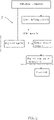
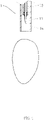
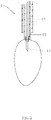
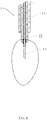
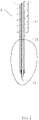
- FIG. 1 , FIG. 2 , FIG. 3 and FIG. 4 illustrate an electric pulse ablatograph for an endoscope, which mainly includes an electrode assembly 1, a pulse waveform generator 2, an electrode driving device, a parameter input device and a control device.
- the electrode assembly 1 includes a central electrode 11 and a cylindrical electrode 13 and is configured to pass through a working channel of the endoscope into a body and transmit a pulse to tissues in use.
- the electrode assembly 1 is a layered structure, and the central electrode 11 includes a working section at an end and a conducting section at a rear end for conducting voltage. During working, a pulse electric field is generated between the working section and the cylindrical electrode 13. The insulating layer is plated outside the conducting section. The working section of the central electrode 11 covered with the insulating layer is exposed out of the cylindrical electrode 13. The central electrode 11 is retractably provided in the cylindrical electrode 13, and the cylindrical electrode 13 is retractably provided in an outer sheath tube 14.
- the central electrode 11 is tubular and is hollow inside to form a medicine delivery channel for delivering medicine, and a front end of the working section is provided with a sharp part to facilitate piercing tissues.
- the pulse waveform generator 2 is coupled to the electrode assembly 1 and configured to transmit pulse voltage to the electrode assembly 1.
- the working principle of the pulse waveform generator 2 is the prior art, which will not be described here in detail one by one.
- the electrode driving device is fixedly provided on the endoscope and is configured to drive the central electrode 11 and the cylindrical electrode 13.
- the electrode driving device includes a fixed part 31 and a displacement part 32 capable of producing a relative displacement, a first electric actuator provided on the fixed part 31 and configured to drive the cylindrical electrode 13, and a second electric actuator provided on the displacement part 32 and configured to drive the central electrode 11.
- the fixed part 31 is in a needle tube shape, and a front end of the fixed part 31 is provided with an interface for abutting the endoscope.
- the outer sheath tube 14 is provided on the fixed part 31 in a penetrating manner, one end of the outer sheath tube 14 extends into the endoscope through the interface, and a tail end of the outer sheath tube 14 and the fixed part 31 are fastened through a cap 33 in interference fit.
- the displacement part 32 is cylindrical, sleeves the fixed part 31 and is slidably provided relative to the fixed part 31 in an axial direction.
- a tail end of the displacement part 32 is provided with a cylindrical electrode 13 tube seat for fixing the cylindrical electrode 13 and a cylindrical electrode 13 wiring seat.
- the first driving device and/or the second driving device includes a motor screw-nut mechanism or a linear motor.
- the first driving mechanism includes a first motor 51, a screw 52 and a nut 53; the first motor 51 is fixedly provided on the fixed part 31, the nut 53 sleeves the screw 52 and is fixedly connected with the displacement part 32, the first motor 51 is in drive connection with the nut 53 through the screw 52, and the displacement part 32 is driven to drive the cylindrical electrode 13 to extend and retract in the outer sheath tube 14.
- the second driving mechanism includes a second motor 54 and a push rod 55; the second motor 54 is fixedly provided on the displacement part 32, the second motor 54 is in drive connection with one end of the push rod 55, the other end of the push rod 55 is connected with the central electrode 11 through a connector 56, and the extending and retraction displacement and speed of the central electrode 11 in the cylindrical electrode 13 are controlled through the extension and retraction of the push rod 55.
- the control device respectively and indirectly control the extending and retraction displacement and speed of the cylindrical electrode 13 in the outer sheath tube 14 and of the central electrode 11 in the cylindrical electrode 13 by controlling the number of turns and the revolving speed of the first motor 51 and the second motor 54.
- the parameter input device is configured to configure coordinate information of an ablation region.
- the parameter input device includes an ultrasonic probe for detecting a tissue boundary and an electrode position, and a touch screen for imaging.
- the control device is in signal connection with the parameter input device and in control connection with the first motor 51 and the second motor 54 in the electrode driving device (in connection with the first motor 51 and the second motor 54 through a motor driving circuit).
- the control device respectively controls the displacement of the central electrode 11 and cylindrical electrode 13 according to preset coordinate information through the electrode driving device.
- the control device includes an embedded computer, and various input and output devices connected with the embedded computer, the input devices include buttons (switches) and an ultrasonic probe, and the input and output device includes a touch screen.
- the control device controls the pulse waveform generator 2 to be connected with the electrode assembly 1.
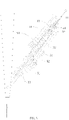
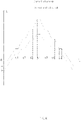
- the ablation electric field forms the ablation region after moving according to a preset path, and the ablation region is elliptical.
- the control device adjusts the size of the ablation electric field by changing the displacement difference between the cylindrical electrode 13 and the central electrode 11, such that the size (or radius) of the ablation electric field firstly changes from small to large and then changes from large to small.
- the selection of the ablation region decides the displacement of the two electrodes and the extreme values of the displacement difference in the moving process.
- the ablation region is elliptical, so the coordinate information of the ablation region at least includes a long axis and a short axis for determining the size of the ablation region,.
- the long axis and the short axis are determined by clicking an image displayed on the touch screen.
- step 5 the ablation region is divided into several ablation layers in advance, so as to ensure that the energy released by the ablation electric field and received by each ablation layer in unit area (unit volume) is equal as far as possible, and is generally 80%-120% of the preset value.
Landscapes
- Health & Medical Sciences (AREA)
- Surgery (AREA)
- Engineering & Computer Science (AREA)
- Life Sciences & Earth Sciences (AREA)
- Biomedical Technology (AREA)
- Molecular Biology (AREA)
- Nuclear Medicine, Radiotherapy & Molecular Imaging (AREA)
- Plasma & Fusion (AREA)
- Physics & Mathematics (AREA)
- Heart & Thoracic Surgery (AREA)
- Medical Informatics (AREA)
- Otolaryngology (AREA)
- Animal Behavior & Ethology (AREA)
- General Health & Medical Sciences (AREA)
- Public Health (AREA)
- Veterinary Medicine (AREA)
- Cardiology (AREA)
- Surgical Instruments (AREA)
Applications Claiming Priority (2)
| Application Number | Priority Date | Filing Date | Title |
|---|---|---|---|
| CN201910415844.5A CN110151301B (zh) | 2019-05-18 | 2019-05-18 | 一种用于内窥镜的电脉冲消融仪 |
| PCT/CN2019/101290 WO2020232851A1 (zh) | 2019-05-18 | 2019-08-19 | 一种用于内窥镜的电脉冲消融仪 |
Publications (4)
| Publication Number | Publication Date |
|---|---|
| EP3973901A1 true EP3973901A1 (de) | 2022-03-30 |
| EP3973901A4 EP3973901A4 (de) | 2022-07-13 |
| EP3973901B1 EP3973901B1 (de) | 2025-10-08 |
| EP3973901C0 EP3973901C0 (de) | 2025-10-08 |
Family
ID=67631377
Family Applications (1)
| Application Number | Title | Priority Date | Filing Date |
|---|---|---|---|
| EP19929732.6A Active EP3973901B1 (de) | 2019-05-18 | 2019-08-19 | Elektrisches impulsablationsinstrument zur verwendung in einem endoskop |
Country Status (4)
| Country | Link |
|---|---|
| US (1) | US12161388B2 (de) |
| EP (1) | EP3973901B1 (de) |
| CN (1) | CN110151301B (de) |
| WO (1) | WO2020232851A1 (de) |
Families Citing this family (6)
| Publication number | Priority date | Publication date | Assignee | Title |
|---|---|---|---|---|
| CN111938806A (zh) * | 2020-07-15 | 2020-11-17 | 杭州睿笛生物科技有限公司 | 一种适形消融针 |
| CN112890948B (zh) * | 2021-01-26 | 2022-03-01 | 四川大学华西医院 | 一种可协同给药的电脉冲消融装置 |
| CN113633372B (zh) * | 2021-10-18 | 2022-03-01 | 北京智愈医疗科技有限公司 | 一种用于组织切除的消融工具阵列装置及其控制方法 |
| CN116196081B (zh) * | 2023-02-07 | 2024-02-23 | 上海玮启医疗器械有限公司 | 一种用于脉冲消融导管的电路切换系统和方法 |
| CN116077178B (zh) * | 2023-04-04 | 2023-06-27 | 浙江伽奈维医疗科技有限公司 | 陡脉冲肿瘤治疗仪的模拟布针方法、系统及治疗仪 |
| CN116616889B (zh) * | 2023-05-12 | 2025-11-28 | 重庆大学 | 一种人体体内移动电极坐标定位和射频消融系统 |
Family Cites Families (18)
| Publication number | Priority date | Publication date | Assignee | Title |
|---|---|---|---|---|
| US5976129A (en) * | 1991-10-18 | 1999-11-02 | Desai; Ashvin H. | Endoscopic surgical instrument |
| JP4175693B2 (ja) * | 1998-06-15 | 2008-11-05 | オリンパス株式会社 | 内視鏡用処置具挿抜装置 |
| GB0614557D0 (en) | 2006-07-21 | 2006-08-30 | Emcision Ltd | Tissue Ablator |
| US7655004B2 (en) * | 2007-02-15 | 2010-02-02 | Ethicon Endo-Surgery, Inc. | Electroporation ablation apparatus, system, and method |
| US8105230B2 (en) * | 2007-07-09 | 2012-01-31 | Olympus Medical Systems Corp. | Medical system |
| WO2011080666A1 (en) * | 2009-12-30 | 2011-07-07 | Koninklijke Philips Electronics N.V. | Dynamic ablation device |
| US20110160514A1 (en) * | 2009-12-31 | 2011-06-30 | Ethicon Endo-Surgery, Inc. | Electrical ablation devices |
| CN103025261A (zh) * | 2010-06-24 | 2013-04-03 | 艾姆西森有限公司 | 改进的消融器械 |
| US9254169B2 (en) * | 2011-02-28 | 2016-02-09 | Ethicon Endo-Surgery, Inc. | Electrical ablation devices and methods |
| US20170360502A1 (en) * | 2012-06-06 | 2017-12-21 | Peter Osypka | Electrode catheter device |
| CN103251452B (zh) | 2013-05-24 | 2015-04-08 | 常承忠 | 用于治疗肿瘤的双极消融电极 |
| AU2015259303B2 (en) * | 2014-05-12 | 2021-10-28 | Arena, Christopher B. | Selective modulation of intracellular effects of cells using pulsed electric fields |
| WO2016126778A1 (en) * | 2015-02-04 | 2016-08-11 | Rfemb Holdings, Llc | Radio-frequency electrical membrane breakdown for the treatment of benign prostatic hyperplasia |
| CN207804370U (zh) * | 2017-06-16 | 2018-09-04 | 北京博莱德光电技术开发有限公司 | 一种射频消融电极装置、内窥镜 |
| CN108013931A (zh) * | 2018-01-04 | 2018-05-11 | 成都美创医疗科技股份有限公司 | 一种低温等离子体手术电极 |
| CN108272503B (zh) * | 2018-03-07 | 2024-04-19 | 南微医学科技股份有限公司 | 一种可双通道注液的双极高频电刀 |
| CN109157280A (zh) * | 2018-08-10 | 2019-01-08 | 重庆大学 | 不可逆电穿孔组织消融效果动态实时评估设备 |
| CN210749473U (zh) * | 2019-05-18 | 2020-06-16 | 杭州睿笛生物科技有限公司 | 一种用于内窥镜的电脉冲消融仪 |
-
2019
- 2019-05-18 CN CN201910415844.5A patent/CN110151301B/zh active Active
- 2019-08-19 US US17/600,473 patent/US12161388B2/en active Active
- 2019-08-19 WO PCT/CN2019/101290 patent/WO2020232851A1/zh not_active Ceased
- 2019-08-19 EP EP19929732.6A patent/EP3973901B1/de active Active
Also Published As
| Publication number | Publication date |
|---|---|
| EP3973901B1 (de) | 2025-10-08 |
| EP3973901C0 (de) | 2025-10-08 |
| US20220175442A1 (en) | 2022-06-09 |
| EP3973901A4 (de) | 2022-07-13 |
| WO2020232851A1 (zh) | 2020-11-26 |
| CN110151301A (zh) | 2019-08-23 |
| CN110151301B (zh) | 2024-07-19 |
| US12161388B2 (en) | 2024-12-10 |
Similar Documents
| Publication | Publication Date | Title |
|---|---|---|
| EP3973901B1 (de) | Elektrisches impulsablationsinstrument zur verwendung in einem endoskop | |
| US9089340B2 (en) | Ultrasound guided tissue ablation | |
| EP1428477B1 (de) | Steuerung für eine automatische Biopsie-Vorrichtung | |
| CN114209417B (zh) | 可视化深度消融导管 | |
| JP2017501000A (ja) | 生体組織内へ電磁エネルギーおよび/または熱プラズマを供給する能力を有する外科用スネア | |
| CN105078569B (zh) | 交感神经标测消融装置及系统 | |
| US20150126994A1 (en) | Puncture tool and ultrasound endoscope | |
| GB2590315A (en) | System for independent of simultaneous control of multiple radiofrequency probes during an ablation procedure | |
| WO2019177987A1 (en) | Moving electrodes for the application of electrical therapy within a tissue | |
| CN112022338A (zh) | 电穿孔消融电极针及使用其的治疗系统 | |
| CN210749473U (zh) | 一种用于内窥镜的电脉冲消融仪 | |
| CN110638511B (zh) | 一种内置式电磁遥控颌骨牵张成骨牵张器及操作方法 | |
| KR20200076977A (ko) | 핸드 피스, rf 치료 장치 및 rf 치료 장치의 제어 방법 | |
| CN210811492U (zh) | 一种用于引导电极的穿刺针及电极输送装置 | |
| CN211131328U (zh) | 一种内置式电磁遥控颌骨牵张成骨牵张器 | |
| US20220023651A1 (en) | Rf treatment device, medical rf device, and control methods therefor | |
| US20220080215A1 (en) | Rf therapeutic device and method for controlling same | |
| CN217244778U (zh) | 一种肾动脉消融系统 | |
| CN117138210A (zh) | 一种导管装置及其控制方法 | |
| CN116350320A (zh) | 一种超声引导下血管内穿刺方法 | |
| CN119326491B (zh) | 一种带测温功能的纳米刀双极灭弧消融针 | |
| CN115192871A (zh) | 一种具有超声检测功能的脉冲球囊扩张导管 | |
| CN223464077U (zh) | 可调弯冲击波微导管 | |
| JP7590319B2 (ja) | 画像診断用装置、及び作動方法 | |
| CN221106018U (zh) | 一种消融电极装置 |
Legal Events
| Date | Code | Title | Description |
|---|---|---|---|
| STAA | Information on the status of an ep patent application or granted ep patent |
Free format text: STATUS: THE INTERNATIONAL PUBLICATION HAS BEEN MADE |
|
| PUAI | Public reference made under article 153(3) epc to a published international application that has entered the european phase |
Free format text: ORIGINAL CODE: 0009012 |
|
| STAA | Information on the status of an ep patent application or granted ep patent |
Free format text: STATUS: REQUEST FOR EXAMINATION WAS MADE |
|
| 17P | Request for examination filed |
Effective date: 20210930 |
|
| AK | Designated contracting states |
Kind code of ref document: A1 Designated state(s): AL AT BE BG CH CY CZ DE DK EE ES FI FR GB GR HR HU IE IS IT LI LT LU LV MC MK MT NL NO PL PT RO RS SE SI SK SM TR |
|
| A4 | Supplementary search report drawn up and despatched |
Effective date: 20220613 |
|
| RIC1 | Information provided on ipc code assigned before grant |
Ipc: A61B 18/14 20060101ALI20220608BHEP Ipc: A61B 18/12 20060101AFI20220608BHEP |
|
| DAV | Request for validation of the european patent (deleted) | ||
| DAX | Request for extension of the european patent (deleted) | ||
| GRAP | Despatch of communication of intention to grant a patent |
Free format text: ORIGINAL CODE: EPIDOSNIGR1 |
|
| STAA | Information on the status of an ep patent application or granted ep patent |
Free format text: STATUS: GRANT OF PATENT IS INTENDED |
|
| RIC1 | Information provided on ipc code assigned before grant |
Ipc: A61B 18/14 20060101ALI20250325BHEP Ipc: A61B 18/12 20060101AFI20250325BHEP |
|
| INTG | Intention to grant announced |
Effective date: 20250411 |
|
| GRAS | Grant fee paid |
Free format text: ORIGINAL CODE: EPIDOSNIGR3 |
|
| GRAA | (expected) grant |
Free format text: ORIGINAL CODE: 0009210 |
|
| STAA | Information on the status of an ep patent application or granted ep patent |
Free format text: STATUS: THE PATENT HAS BEEN GRANTED |
|
| AK | Designated contracting states |
Kind code of ref document: B1 Designated state(s): AL AT BE BG CH CY CZ DE DK EE ES FI FR GB GR HR HU IE IS IT LI LT LU LV MC MK MT NL NO PL PT RO RS SE SI SK SM TR |
|
| REG | Reference to a national code |
Ref country code: GB Ref legal event code: FG4D Ref country code: CH Ref legal event code: F10 Free format text: ST27 STATUS EVENT CODE: U-0-0-F10-F00 (AS PROVIDED BY THE NATIONAL OFFICE) Effective date: 20251008 |
|
| REG | Reference to a national code |
Ref country code: DE Ref legal event code: R096 Ref document number: 602019076764 Country of ref document: DE |