EP3971286A2 - Pseudotypisierte lentiviren mit nipah-virus-hülle und verfahren zur verwendung - Google Patents
Pseudotypisierte lentiviren mit nipah-virus-hülle und verfahren zur verwendung Download PDFInfo
- Publication number
- EP3971286A2 EP3971286A2 EP21165722.6A EP21165722A EP3971286A2 EP 3971286 A2 EP3971286 A2 EP 3971286A2 EP 21165722 A EP21165722 A EP 21165722A EP 3971286 A2 EP3971286 A2 EP 3971286A2
- Authority
- EP
- European Patent Office
- Prior art keywords
- niv
- glycoprotein
- cells
- nipah virus
- ephrinb2
- Prior art date
- Legal status (The legal status is an assumption and is not a legal conclusion. Google has not performed a legal analysis and makes no representation as to the accuracy of the status listed.)
- Pending
Links
- 241000526636 Nipah henipavirus Species 0.000 title claims abstract description 59
- 238000000034 method Methods 0.000 title claims abstract description 15
- 241000713666 Lentivirus Species 0.000 title claims description 53
- 108010003533 Viral Envelope Proteins Proteins 0.000 title description 5
- 108090000288 Glycoproteins Proteins 0.000 claims abstract description 38
- 102000003886 Glycoproteins Human genes 0.000 claims abstract description 38
- 108090000765 processed proteins & peptides Proteins 0.000 claims abstract description 29
- 206010028980 Neoplasm Diseases 0.000 claims abstract description 28
- 239000002245 particle Substances 0.000 claims abstract description 27
- 201000011510 cancer Diseases 0.000 claims abstract description 17
- 230000004927 fusion Effects 0.000 claims abstract description 5
- 210000004027 cell Anatomy 0.000 claims description 106
- 150000001413 amino acids Chemical group 0.000 claims description 22
- 235000001014 amino acid Nutrition 0.000 claims description 21
- 108090000623 proteins and genes Proteins 0.000 claims description 20
- 238000010361 transduction Methods 0.000 claims description 13
- 210000005220 cytoplasmic tail Anatomy 0.000 claims description 10
- 102000039446 nucleic acids Human genes 0.000 claims description 10
- 108020004707 nucleic acids Proteins 0.000 claims description 10
- 150000007523 nucleic acids Chemical class 0.000 claims description 10
- 230000026683 transduction Effects 0.000 claims description 10
- 230000035772 mutation Effects 0.000 claims description 9
- 230000003612 virological effect Effects 0.000 claims description 8
- 235000018102 proteins Nutrition 0.000 claims description 7
- 102000004169 proteins and genes Human genes 0.000 claims description 7
- 238000000338 in vitro Methods 0.000 claims description 6
- 238000012217 deletion Methods 0.000 claims description 4
- 230000037430 deletion Effects 0.000 claims description 4
- 230000004988 N-glycosylation Effects 0.000 claims description 3
- DCXYFEDJOCDNAF-UHFFFAOYSA-N Asparagine Natural products OC(=O)C(N)CC(N)=O DCXYFEDJOCDNAF-UHFFFAOYSA-N 0.000 claims description 2
- DCXYFEDJOCDNAF-REOHCLBHSA-N L-asparagine Chemical compound OC(=O)[C@@H](N)CC(N)=O DCXYFEDJOCDNAF-REOHCLBHSA-N 0.000 claims description 2
- 125000000539 amino acid group Chemical group 0.000 claims description 2
- 229960001230 asparagine Drugs 0.000 claims description 2
- 235000009582 asparagine Nutrition 0.000 claims description 2
- 239000012634 fragment Substances 0.000 claims description 2
- ZDXPYRJPNDTMRX-UHFFFAOYSA-N glutamine Natural products OC(=O)C(N)CCC(N)=O ZDXPYRJPNDTMRX-UHFFFAOYSA-N 0.000 claims description 2
- 102000004196 processed proteins & peptides Human genes 0.000 abstract description 11
- 230000000694 effects Effects 0.000 abstract description 3
- 208000015114 central nervous system disease Diseases 0.000 abstract 1
- 208000015181 infectious disease Diseases 0.000 description 22
- 229940024606 amino acid Drugs 0.000 description 19
- 239000013598 vector Substances 0.000 description 18
- 102000005962 receptors Human genes 0.000 description 16
- 108020003175 receptors Proteins 0.000 description 16
- 230000011664 signaling Effects 0.000 description 12
- 230000014509 gene expression Effects 0.000 description 11
- 210000004185 liver Anatomy 0.000 description 10
- 238000001415 gene therapy Methods 0.000 description 9
- 230000003993 interaction Effects 0.000 description 9
- 210000001178 neural stem cell Anatomy 0.000 description 9
- 229920001184 polypeptide Polymers 0.000 description 9
- 102100031573 Hematopoietic progenitor cell antigen CD34 Human genes 0.000 description 8
- 101000777663 Homo sapiens Hematopoietic progenitor cell antigen CD34 Proteins 0.000 description 8
- 230000004069 differentiation Effects 0.000 description 8
- 210000002304 esc Anatomy 0.000 description 8
- 210000003958 hematopoietic stem cell Anatomy 0.000 description 7
- 238000001727 in vivo Methods 0.000 description 7
- 210000000130 stem cell Anatomy 0.000 description 7
- 102000050554 Eph Family Receptors Human genes 0.000 description 6
- 108091008815 Eph receptors Proteins 0.000 description 6
- 206010027476 Metastases Diseases 0.000 description 6
- 210000004978 chinese hamster ovary cell Anatomy 0.000 description 6
- 102000012803 ephrin Human genes 0.000 description 6
- 108060002566 ephrin Proteins 0.000 description 6
- 108091008598 receptor tyrosine kinases Proteins 0.000 description 6
- 102000027426 receptor tyrosine kinases Human genes 0.000 description 6
- 102100031983 Ephrin type-B receptor 4 Human genes 0.000 description 5
- 238000012413 Fluorescence activated cell sorting analysis Methods 0.000 description 5
- 210000003169 central nervous system Anatomy 0.000 description 5
- 239000000047 product Substances 0.000 description 5
- 230000008685 targeting Effects 0.000 description 5
- 241000699666 Mus <mouse, genus> Species 0.000 description 4
- 102000008730 Nestin Human genes 0.000 description 4
- 108010088225 Nestin Proteins 0.000 description 4
- 238000004458 analytical method Methods 0.000 description 4
- 230000002491 angiogenic effect Effects 0.000 description 4
- 230000002457 bidirectional effect Effects 0.000 description 4
- 230000008499 blood brain barrier function Effects 0.000 description 4
- 210000001218 blood-brain barrier Anatomy 0.000 description 4
- 210000002889 endothelial cell Anatomy 0.000 description 4
- 230000001605 fetal effect Effects 0.000 description 4
- 230000006870 function Effects 0.000 description 4
- 230000002068 genetic effect Effects 0.000 description 4
- 230000001965 increasing effect Effects 0.000 description 4
- 239000003446 ligand Substances 0.000 description 4
- 239000003550 marker Substances 0.000 description 4
- 230000009401 metastasis Effects 0.000 description 4
- 239000000203 mixture Substances 0.000 description 4
- 210000005055 nestin Anatomy 0.000 description 4
- 230000001537 neural effect Effects 0.000 description 4
- 210000002569 neuron Anatomy 0.000 description 4
- 102100034349 Integrase Human genes 0.000 description 3
- 241000700605 Viruses Species 0.000 description 3
- 210000004369 blood Anatomy 0.000 description 3
- 239000008280 blood Substances 0.000 description 3
- 210000003995 blood forming stem cell Anatomy 0.000 description 3
- 230000030944 contact inhibition Effects 0.000 description 3
- 238000011161 development Methods 0.000 description 3
- 230000018109 developmental process Effects 0.000 description 3
- 210000001671 embryonic stem cell Anatomy 0.000 description 3
- 238000000684 flow cytometry Methods 0.000 description 3
- 238000002347 injection Methods 0.000 description 3
- 239000007924 injection Substances 0.000 description 3
- 230000033001 locomotion Effects 0.000 description 3
- 210000004924 lung microvascular endothelial cell Anatomy 0.000 description 3
- 230000001404 mediated effect Effects 0.000 description 3
- 239000002609 medium Substances 0.000 description 3
- 230000009467 reduction Effects 0.000 description 3
- 230000002441 reversible effect Effects 0.000 description 3
- 230000019491 signal transduction Effects 0.000 description 3
- 239000000126 substance Substances 0.000 description 3
- 210000001519 tissue Anatomy 0.000 description 3
- 238000001890 transfection Methods 0.000 description 3
- 206010006187 Breast cancer Diseases 0.000 description 2
- 208000026310 Breast neoplasm Diseases 0.000 description 2
- 241000699802 Cricetulus griseus Species 0.000 description 2
- 108010055323 EphB4 Receptor Proteins 0.000 description 2
- 102000030797 EphB4 Receptor Human genes 0.000 description 2
- 102100023721 Ephrin-B2 Human genes 0.000 description 2
- 108010044090 Ephrin-B2 Proteins 0.000 description 2
- 101000851007 Homo sapiens Vascular endothelial growth factor receptor 2 Proteins 0.000 description 2
- LRQKBLKVPFOOQJ-YFKPBYRVSA-N L-norleucine Chemical compound CCCC[C@H]([NH3+])C([O-])=O LRQKBLKVPFOOQJ-YFKPBYRVSA-N 0.000 description 2
- 108060001084 Luciferase Proteins 0.000 description 2
- 239000005089 Luciferase Substances 0.000 description 2
- 241000699670 Mus sp. Species 0.000 description 2
- 206010060862 Prostate cancer Diseases 0.000 description 2
- 208000000236 Prostatic Neoplasms Diseases 0.000 description 2
- 108020004459 Small interfering RNA Proteins 0.000 description 2
- 102100033177 Vascular endothelial growth factor receptor 2 Human genes 0.000 description 2
- 230000033115 angiogenesis Effects 0.000 description 2
- 230000004888 barrier function Effects 0.000 description 2
- UCMIRNVEIXFBKS-UHFFFAOYSA-N beta-alanine Chemical compound NCCC(O)=O UCMIRNVEIXFBKS-UHFFFAOYSA-N 0.000 description 2
- 230000015572 biosynthetic process Effects 0.000 description 2
- 210000004556 brain Anatomy 0.000 description 2
- 238000004113 cell culture Methods 0.000 description 2
- 150000001875 compounds Chemical class 0.000 description 2
- 230000003247 decreasing effect Effects 0.000 description 2
- 201000010099 disease Diseases 0.000 description 2
- 208000037265 diseases, disorders, signs and symptoms Diseases 0.000 description 2
- 210000002242 embryoid body Anatomy 0.000 description 2
- 230000012202 endocytosis Effects 0.000 description 2
- 239000012737 fresh medium Substances 0.000 description 2
- 238000011534 incubation Methods 0.000 description 2
- 230000009545 invasion Effects 0.000 description 2
- 239000012528 membrane Substances 0.000 description 2
- 210000004925 microvascular endothelial cell Anatomy 0.000 description 2
- 230000004766 neurogenesis Effects 0.000 description 2
- NQDJXKOVJZTUJA-UHFFFAOYSA-N nevirapine Chemical compound C12=NC=CC=C2C(=O)NC=2C(C)=CC=NC=2N1C1CC1 NQDJXKOVJZTUJA-UHFFFAOYSA-N 0.000 description 2
- 230000002018 overexpression Effects 0.000 description 2
- 239000013612 plasmid Substances 0.000 description 2
- 229920000642 polymer Polymers 0.000 description 2
- 239000003419 rna directed dna polymerase inhibitor Substances 0.000 description 2
- 230000004083 survival effect Effects 0.000 description 2
- 230000001225 therapeutic effect Effects 0.000 description 2
- 238000012546 transfer Methods 0.000 description 2
- 230000005747 tumor angiogenesis Effects 0.000 description 2
- 230000004614 tumor growth Effects 0.000 description 2
- UKAUYVFTDYCKQA-UHFFFAOYSA-N -2-Amino-4-hydroxybutanoic acid Natural products OC(=O)C(N)CCO UKAUYVFTDYCKQA-UHFFFAOYSA-N 0.000 description 1
- NVKAWKQGWWIWPM-ABEVXSGRSA-N 17-β-hydroxy-5-α-Androstan-3-one Chemical compound C1C(=O)CC[C@]2(C)[C@H]3CC[C@](C)([C@H](CC4)O)[C@@H]4[C@@H]3CC[C@H]21 NVKAWKQGWWIWPM-ABEVXSGRSA-N 0.000 description 1
- 108010068327 4-hydroxyphenylpyruvate dioxygenase Proteins 0.000 description 1
- 102100035875 C-C chemokine receptor type 5 Human genes 0.000 description 1
- 101710149870 C-C chemokine receptor type 5 Proteins 0.000 description 1
- 241000283707 Capra Species 0.000 description 1
- OKTJSMMVPCPJKN-UHFFFAOYSA-N Carbon Chemical compound [C] OKTJSMMVPCPJKN-UHFFFAOYSA-N 0.000 description 1
- 206010009944 Colon cancer Diseases 0.000 description 1
- 208000001333 Colorectal Neoplasms Diseases 0.000 description 1
- 101710121417 Envelope glycoprotein Proteins 0.000 description 1
- 108010055334 EphB2 Receptor Proteins 0.000 description 1
- 229940122293 Ephrin antagonist Drugs 0.000 description 1
- 102100031968 Ephrin type-B receptor 2 Human genes 0.000 description 1
- 102100023733 Ephrin-B3 Human genes 0.000 description 1
- 108010044085 Ephrin-B3 Proteins 0.000 description 1
- 108090000331 Firefly luciferases Proteins 0.000 description 1
- HVLSXIKZNLPZJJ-TXZCQADKSA-N HA peptide Chemical compound C([C@@H](C(=O)N[C@@H](CC(O)=O)C(=O)N[C@@H](C(C)C)C(=O)N1[C@@H](CCC1)C(=O)N[C@@H](CC(O)=O)C(=O)N[C@@H](CC=1C=CC(O)=CC=1)C(=O)N[C@@H](C)C(O)=O)NC(=O)[C@H]1N(CCC1)C(=O)[C@@H](N)CC=1C=CC(O)=CC=1)C1=CC=C(O)C=C1 HVLSXIKZNLPZJJ-TXZCQADKSA-N 0.000 description 1
- 229920000209 Hexadimethrine bromide Polymers 0.000 description 1
- 241000725303 Human immunodeficiency virus Species 0.000 description 1
- 241000713772 Human immunodeficiency virus 1 Species 0.000 description 1
- PMMYEEVYMWASQN-DMTCNVIQSA-N Hydroxyproline Chemical compound O[C@H]1CN[C@H](C(O)=O)C1 PMMYEEVYMWASQN-DMTCNVIQSA-N 0.000 description 1
- QUOGESRFPZDMMT-UHFFFAOYSA-N L-Homoarginine Natural products OC(=O)C(N)CCCCNC(N)=N QUOGESRFPZDMMT-UHFFFAOYSA-N 0.000 description 1
- ZGUNAGUHMKGQNY-ZETCQYMHSA-N L-alpha-phenylglycine zwitterion Chemical compound OC(=O)[C@@H](N)C1=CC=CC=C1 ZGUNAGUHMKGQNY-ZETCQYMHSA-N 0.000 description 1
- QUOGESRFPZDMMT-YFKPBYRVSA-N L-homoarginine Chemical compound OC(=O)[C@@H](N)CCCCNC(N)=N QUOGESRFPZDMMT-YFKPBYRVSA-N 0.000 description 1
- UKAUYVFTDYCKQA-VKHMYHEASA-N L-homoserine Chemical compound OC(=O)[C@@H](N)CCO UKAUYVFTDYCKQA-VKHMYHEASA-N 0.000 description 1
- FFEARJCKVFRZRR-BYPYZUCNSA-N L-methionine Chemical compound CSCC[C@H](N)C(O)=O FFEARJCKVFRZRR-BYPYZUCNSA-N 0.000 description 1
- QEFRNWWLZKMPFJ-ZXPFJRLXSA-N L-methionine (R)-S-oxide Chemical compound C[S@@](=O)CC[C@H]([NH3+])C([O-])=O QEFRNWWLZKMPFJ-ZXPFJRLXSA-N 0.000 description 1
- QEFRNWWLZKMPFJ-UHFFFAOYSA-N L-methionine sulphoxide Natural products CS(=O)CCC(N)C(O)=O QEFRNWWLZKMPFJ-UHFFFAOYSA-N 0.000 description 1
- 241001465754 Metazoa Species 0.000 description 1
- 206010033128 Ovarian cancer Diseases 0.000 description 1
- 108091030071 RNAI Proteins 0.000 description 1
- 230000010799 Receptor Interactions Effects 0.000 description 1
- 108700008625 Reporter Genes Proteins 0.000 description 1
- 241000710960 Sindbis virus Species 0.000 description 1
- 229930006000 Sucrose Natural products 0.000 description 1
- CZMRCDWAGMRECN-UGDNZRGBSA-N Sucrose Chemical compound O[C@H]1[C@H](O)[C@@H](CO)O[C@@]1(CO)O[C@@H]1[C@H](O)[C@@H](O)[C@H](O)[C@@H](CO)O1 CZMRCDWAGMRECN-UGDNZRGBSA-N 0.000 description 1
- 238000012338 Therapeutic targeting Methods 0.000 description 1
- 230000009471 action Effects 0.000 description 1
- 230000004913 activation Effects 0.000 description 1
- 239000008186 active pharmaceutical agent Substances 0.000 description 1
- 230000001154 acute effect Effects 0.000 description 1
- 125000003277 amino group Chemical group 0.000 description 1
- 239000005557 antagonist Substances 0.000 description 1
- 230000006907 apoptotic process Effects 0.000 description 1
- 238000013459 approach Methods 0.000 description 1
- 230000008901 benefit Effects 0.000 description 1
- 229940000635 beta-alanine Drugs 0.000 description 1
- 230000004071 biological effect Effects 0.000 description 1
- 230000033228 biological regulation Effects 0.000 description 1
- 230000000903 blocking effect Effects 0.000 description 1
- 230000003925 brain function Effects 0.000 description 1
- 229910000389 calcium phosphate Inorganic materials 0.000 description 1
- 239000001506 calcium phosphate Substances 0.000 description 1
- 235000011010 calcium phosphates Nutrition 0.000 description 1
- 229910052799 carbon Inorganic materials 0.000 description 1
- 125000003178 carboxy group Chemical group [H]OC(*)=O 0.000 description 1
- UHBYWPGGCSDKFX-UHFFFAOYSA-N carboxyglutamic acid Chemical compound OC(=O)C(N)CC(C(O)=O)C(O)=O UHBYWPGGCSDKFX-UHFFFAOYSA-N 0.000 description 1
- 239000002458 cell surface marker Substances 0.000 description 1
- 230000001413 cellular effect Effects 0.000 description 1
- 230000036755 cellular response Effects 0.000 description 1
- 238000005119 centrifugation Methods 0.000 description 1
- 239000003153 chemical reaction reagent Substances 0.000 description 1
- 239000003795 chemical substances by application Substances 0.000 description 1
- 238000012937 correction Methods 0.000 description 1
- 231100000433 cytotoxic Toxicity 0.000 description 1
- 230000001472 cytotoxic effect Effects 0.000 description 1
- 230000003013 cytotoxicity Effects 0.000 description 1
- 231100000135 cytotoxicity Toxicity 0.000 description 1
- 230000002950 deficient Effects 0.000 description 1
- 230000001419 dependent effect Effects 0.000 description 1
- 230000001627 detrimental effect Effects 0.000 description 1
- PMMYEEVYMWASQN-UHFFFAOYSA-N dl-hydroxyproline Natural products OC1C[NH2+]C(C([O-])=O)C1 PMMYEEVYMWASQN-UHFFFAOYSA-N 0.000 description 1
- 230000002222 downregulating effect Effects 0.000 description 1
- 239000003814 drug Substances 0.000 description 1
- 210000003981 ectoderm Anatomy 0.000 description 1
- 206010014599 encephalitis Diseases 0.000 description 1
- 210000001900 endoderm Anatomy 0.000 description 1
- 108010048367 enhanced green fluorescent protein Proteins 0.000 description 1
- 230000002708 enhancing effect Effects 0.000 description 1
- 230000007613 environmental effect Effects 0.000 description 1
- 238000002474 experimental method Methods 0.000 description 1
- 210000004700 fetal blood Anatomy 0.000 description 1
- 210000003754 fetus Anatomy 0.000 description 1
- 210000002950 fibroblast Anatomy 0.000 description 1
- 238000009472 formulation Methods 0.000 description 1
- 108020001507 fusion proteins Proteins 0.000 description 1
- 102000037865 fusion proteins Human genes 0.000 description 1
- 230000030279 gene silencing Effects 0.000 description 1
- 230000009368 gene silencing by RNA Effects 0.000 description 1
- 238000010353 genetic engineering Methods 0.000 description 1
- 210000001654 germ layer Anatomy 0.000 description 1
- 125000000404 glutamine group Chemical class N[C@@H](CCC(N)=O)C(=O)* 0.000 description 1
- 230000013595 glycosylation Effects 0.000 description 1
- 238000006206 glycosylation reaction Methods 0.000 description 1
- 230000036541 health Effects 0.000 description 1
- 210000001320 hippocampus Anatomy 0.000 description 1
- 238000009396 hybridization Methods 0.000 description 1
- 229910052739 hydrogen Inorganic materials 0.000 description 1
- 239000001257 hydrogen Substances 0.000 description 1
- 125000004435 hydrogen atom Chemical group [H]* 0.000 description 1
- 229960002591 hydroxyproline Drugs 0.000 description 1
- 238000003384 imaging method Methods 0.000 description 1
- 230000003116 impacting effect Effects 0.000 description 1
- 230000001771 impaired effect Effects 0.000 description 1
- 230000002779 inactivation Effects 0.000 description 1
- 230000006698 induction Effects 0.000 description 1
- 230000002458 infectious effect Effects 0.000 description 1
- 230000005764 inhibitory process Effects 0.000 description 1
- 239000002054 inoculum Substances 0.000 description 1
- 230000010354 integration Effects 0.000 description 1
- 230000000968 intestinal effect Effects 0.000 description 1
- 230000004807 localization Effects 0.000 description 1
- 239000011159 matrix material Substances 0.000 description 1
- 230000034217 membrane fusion Effects 0.000 description 1
- 229930182817 methionine Natural products 0.000 description 1
- LSDPWZHWYPCBBB-UHFFFAOYSA-O methylsulfide anion Chemical compound [SH2+]C LSDPWZHWYPCBBB-UHFFFAOYSA-O 0.000 description 1
- 108091005601 modified peptides Proteins 0.000 description 1
- 238000010369 molecular cloning Methods 0.000 description 1
- 239000000178 monomer Substances 0.000 description 1
- 238000002703 mutagenesis Methods 0.000 description 1
- 231100000350 mutagenesis Toxicity 0.000 description 1
- 229960000689 nevirapine Drugs 0.000 description 1
- 239000002773 nucleotide Substances 0.000 description 1
- 125000003729 nucleotide group Chemical group 0.000 description 1
- 238000005457 optimization Methods 0.000 description 1
- 210000000056 organ Anatomy 0.000 description 1
- 210000001672 ovary Anatomy 0.000 description 1
- 238000004806 packaging method and process Methods 0.000 description 1
- 210000003668 pericyte Anatomy 0.000 description 1
- BZQFBWGGLXLEPQ-REOHCLBHSA-N phosphoserine Chemical compound OC(=O)[C@@H](N)COP(O)(O)=O BZQFBWGGLXLEPQ-REOHCLBHSA-N 0.000 description 1
- 230000035479 physiological effects, processes and functions Effects 0.000 description 1
- 239000002243 precursor Substances 0.000 description 1
- 230000035755 proliferation Effects 0.000 description 1
- 230000001737 promoting effect Effects 0.000 description 1
- 210000002307 prostate Anatomy 0.000 description 1
- 230000001172 regenerating effect Effects 0.000 description 1
- 238000011160 research Methods 0.000 description 1
- 238000013207 serial dilution Methods 0.000 description 1
- 230000007781 signaling event Effects 0.000 description 1
- 238000002741 site-directed mutagenesis Methods 0.000 description 1
- 239000007787 solid Substances 0.000 description 1
- 210000001988 somatic stem cell Anatomy 0.000 description 1
- 238000010561 standard procedure Methods 0.000 description 1
- 238000007619 statistical method Methods 0.000 description 1
- 210000002536 stromal cell Anatomy 0.000 description 1
- 238000006467 substitution reaction Methods 0.000 description 1
- 239000005720 sucrose Substances 0.000 description 1
- 239000006228 supernatant Substances 0.000 description 1
- 238000003786 synthesis reaction Methods 0.000 description 1
- 238000007910 systemic administration Methods 0.000 description 1
- 210000003478 temporal lobe Anatomy 0.000 description 1
- 238000012360 testing method Methods 0.000 description 1
- 238000002560 therapeutic procedure Methods 0.000 description 1
- 230000009772 tissue formation Effects 0.000 description 1
- 231100000331 toxic Toxicity 0.000 description 1
- 230000002588 toxic effect Effects 0.000 description 1
- 231100000419 toxicity Toxicity 0.000 description 1
- 230000001988 toxicity Effects 0.000 description 1
- FGMPLJWBKKVCDB-UHFFFAOYSA-N trans-L-hydroxy-proline Natural products ON1CCCC1C(O)=O FGMPLJWBKKVCDB-UHFFFAOYSA-N 0.000 description 1
- 230000031998 transcytosis Effects 0.000 description 1
- 238000003146 transient transfection Methods 0.000 description 1
- 238000002054 transplantation Methods 0.000 description 1
- QORWJWZARLRLPR-UHFFFAOYSA-H tricalcium bis(phosphate) Chemical compound [Ca+2].[Ca+2].[Ca+2].[O-]P([O-])([O-])=O.[O-]P([O-])([O-])=O QORWJWZARLRLPR-UHFFFAOYSA-H 0.000 description 1
- 230000010415 tropism Effects 0.000 description 1
- 238000007492 two-way ANOVA Methods 0.000 description 1
- 238000005199 ultracentrifugation Methods 0.000 description 1
- 230000006426 vascular sprouting Effects 0.000 description 1
- 210000003462 vein Anatomy 0.000 description 1
Images


Classifications
-
- C—CHEMISTRY; METALLURGY
- C12—BIOCHEMISTRY; BEER; SPIRITS; WINE; VINEGAR; MICROBIOLOGY; ENZYMOLOGY; MUTATION OR GENETIC ENGINEERING
- C12N—MICROORGANISMS OR ENZYMES; COMPOSITIONS THEREOF; PROPAGATING, PRESERVING, OR MAINTAINING MICROORGANISMS; MUTATION OR GENETIC ENGINEERING; CULTURE MEDIA
- C12N7/00—Viruses; Bacteriophages; Compositions thereof; Preparation or purification thereof
-
- A—HUMAN NECESSITIES
- A61—MEDICAL OR VETERINARY SCIENCE; HYGIENE
- A61K—PREPARATIONS FOR MEDICAL, DENTAL OR TOILETRY PURPOSES
- A61K48/00—Medicinal preparations containing genetic material which is inserted into cells of the living body to treat genetic diseases; Gene therapy
- A61K48/0008—Medicinal preparations containing genetic material which is inserted into cells of the living body to treat genetic diseases; Gene therapy characterised by an aspect of the 'non-active' part of the composition delivered, e.g. wherein such 'non-active' part is not delivered simultaneously with the 'active' part of the composition
-
- A—HUMAN NECESSITIES
- A61—MEDICAL OR VETERINARY SCIENCE; HYGIENE
- A61K—PREPARATIONS FOR MEDICAL, DENTAL OR TOILETRY PURPOSES
- A61K39/00—Medicinal preparations containing antigens or antibodies
- A61K39/12—Viral antigens
-
- A—HUMAN NECESSITIES
- A61—MEDICAL OR VETERINARY SCIENCE; HYGIENE
- A61K—PREPARATIONS FOR MEDICAL, DENTAL OR TOILETRY PURPOSES
- A61K48/00—Medicinal preparations containing genetic material which is inserted into cells of the living body to treat genetic diseases; Gene therapy
-
- A—HUMAN NECESSITIES
- A61—MEDICAL OR VETERINARY SCIENCE; HYGIENE
- A61K—PREPARATIONS FOR MEDICAL, DENTAL OR TOILETRY PURPOSES
- A61K48/00—Medicinal preparations containing genetic material which is inserted into cells of the living body to treat genetic diseases; Gene therapy
- A61K48/0075—Medicinal preparations containing genetic material which is inserted into cells of the living body to treat genetic diseases; Gene therapy characterised by an aspect of the delivery route, e.g. oral, subcutaneous
-
- A—HUMAN NECESSITIES
- A61—MEDICAL OR VETERINARY SCIENCE; HYGIENE
- A61P—SPECIFIC THERAPEUTIC ACTIVITY OF CHEMICAL COMPOUNDS OR MEDICINAL PREPARATIONS
- A61P35/00—Antineoplastic agents
-
- C—CHEMISTRY; METALLURGY
- C12—BIOCHEMISTRY; BEER; SPIRITS; WINE; VINEGAR; MICROBIOLOGY; ENZYMOLOGY; MUTATION OR GENETIC ENGINEERING
- C12N—MICROORGANISMS OR ENZYMES; COMPOSITIONS THEREOF; PROPAGATING, PRESERVING, OR MAINTAINING MICROORGANISMS; MUTATION OR GENETIC ENGINEERING; CULTURE MEDIA
- C12N15/00—Mutation or genetic engineering; DNA or RNA concerning genetic engineering, vectors, e.g. plasmids, or their isolation, preparation or purification; Use of hosts therefor
- C12N15/09—Recombinant DNA-technology
- C12N15/63—Introduction of foreign genetic material using vectors; Vectors; Use of hosts therefor; Regulation of expression
- C12N15/79—Vectors or expression systems specially adapted for eukaryotic hosts
- C12N15/85—Vectors or expression systems specially adapted for eukaryotic hosts for animal cells
- C12N15/86—Viral vectors
-
- C—CHEMISTRY; METALLURGY
- C12—BIOCHEMISTRY; BEER; SPIRITS; WINE; VINEGAR; MICROBIOLOGY; ENZYMOLOGY; MUTATION OR GENETIC ENGINEERING
- C12N—MICROORGANISMS OR ENZYMES; COMPOSITIONS THEREOF; PROPAGATING, PRESERVING, OR MAINTAINING MICROORGANISMS; MUTATION OR GENETIC ENGINEERING; CULTURE MEDIA
- C12N2740/00—Reverse transcribing RNA viruses
- C12N2740/00011—Details
- C12N2740/10011—Retroviridae
- C12N2740/15011—Lentivirus, not HIV, e.g. FIV, SIV
- C12N2740/15021—Viruses as such, e.g. new isolates, mutants or their genomic sequences
-
- C—CHEMISTRY; METALLURGY
- C12—BIOCHEMISTRY; BEER; SPIRITS; WINE; VINEGAR; MICROBIOLOGY; ENZYMOLOGY; MUTATION OR GENETIC ENGINEERING
- C12N—MICROORGANISMS OR ENZYMES; COMPOSITIONS THEREOF; PROPAGATING, PRESERVING, OR MAINTAINING MICROORGANISMS; MUTATION OR GENETIC ENGINEERING; CULTURE MEDIA
- C12N2740/00—Reverse transcribing RNA viruses
- C12N2740/00011—Details
- C12N2740/10011—Retroviridae
- C12N2740/15011—Lentivirus, not HIV, e.g. FIV, SIV
- C12N2740/15032—Use of virus as therapeutic agent, other than vaccine, e.g. as cytolytic agent
-
- C—CHEMISTRY; METALLURGY
- C12—BIOCHEMISTRY; BEER; SPIRITS; WINE; VINEGAR; MICROBIOLOGY; ENZYMOLOGY; MUTATION OR GENETIC ENGINEERING
- C12N—MICROORGANISMS OR ENZYMES; COMPOSITIONS THEREOF; PROPAGATING, PRESERVING, OR MAINTAINING MICROORGANISMS; MUTATION OR GENETIC ENGINEERING; CULTURE MEDIA
- C12N2740/00—Reverse transcribing RNA viruses
- C12N2740/00011—Details
- C12N2740/10011—Retroviridae
- C12N2740/15011—Lentivirus, not HIV, e.g. FIV, SIV
- C12N2740/15041—Use of virus, viral particle or viral elements as a vector
-
- C—CHEMISTRY; METALLURGY
- C12—BIOCHEMISTRY; BEER; SPIRITS; WINE; VINEGAR; MICROBIOLOGY; ENZYMOLOGY; MUTATION OR GENETIC ENGINEERING
- C12N—MICROORGANISMS OR ENZYMES; COMPOSITIONS THEREOF; PROPAGATING, PRESERVING, OR MAINTAINING MICROORGANISMS; MUTATION OR GENETIC ENGINEERING; CULTURE MEDIA
- C12N2740/00—Reverse transcribing RNA viruses
- C12N2740/00011—Details
- C12N2740/10011—Retroviridae
- C12N2740/15011—Lentivirus, not HIV, e.g. FIV, SIV
- C12N2740/15041—Use of virus, viral particle or viral elements as a vector
- C12N2740/15043—Use of virus, viral particle or viral elements as a vector viral genome or elements thereof as genetic vector
-
- C—CHEMISTRY; METALLURGY
- C12—BIOCHEMISTRY; BEER; SPIRITS; WINE; VINEGAR; MICROBIOLOGY; ENZYMOLOGY; MUTATION OR GENETIC ENGINEERING
- C12N—MICROORGANISMS OR ENZYMES; COMPOSITIONS THEREOF; PROPAGATING, PRESERVING, OR MAINTAINING MICROORGANISMS; MUTATION OR GENETIC ENGINEERING; CULTURE MEDIA
- C12N2740/00—Reverse transcribing RNA viruses
- C12N2740/00011—Details
- C12N2740/10011—Retroviridae
- C12N2740/15011—Lentivirus, not HIV, e.g. FIV, SIV
- C12N2740/15071—Demonstrated in vivo effect
-
- C—CHEMISTRY; METALLURGY
- C12—BIOCHEMISTRY; BEER; SPIRITS; WINE; VINEGAR; MICROBIOLOGY; ENZYMOLOGY; MUTATION OR GENETIC ENGINEERING
- C12N—MICROORGANISMS OR ENZYMES; COMPOSITIONS THEREOF; PROPAGATING, PRESERVING, OR MAINTAINING MICROORGANISMS; MUTATION OR GENETIC ENGINEERING; CULTURE MEDIA
- C12N2760/00—MICROORGANISMS OR ENZYMES; COMPOSITIONS THEREOF; PROPAGATING, PRESERVING, OR MAINTAINING MICROORGANISMS; MUTATION OR GENETIC ENGINEERING; CULTURE MEDIA ssRNA viruses negative-sense
- C12N2760/00011—Details
- C12N2760/18011—Paramyxoviridae
- C12N2760/18211—Henipavirus, e.g. hendra virus
- C12N2760/18222—New viral proteins or individual genes, new structural or functional aspects of known viral proteins or genes
-
- C—CHEMISTRY; METALLURGY
- C12—BIOCHEMISTRY; BEER; SPIRITS; WINE; VINEGAR; MICROBIOLOGY; ENZYMOLOGY; MUTATION OR GENETIC ENGINEERING
- C12N—MICROORGANISMS OR ENZYMES; COMPOSITIONS THEREOF; PROPAGATING, PRESERVING, OR MAINTAINING MICROORGANISMS; MUTATION OR GENETIC ENGINEERING; CULTURE MEDIA
- C12N2760/00—MICROORGANISMS OR ENZYMES; COMPOSITIONS THEREOF; PROPAGATING, PRESERVING, OR MAINTAINING MICROORGANISMS; MUTATION OR GENETIC ENGINEERING; CULTURE MEDIA ssRNA viruses negative-sense
- C12N2760/00011—Details
- C12N2760/18011—Paramyxoviridae
- C12N2760/18211—Henipavirus, e.g. hendra virus
- C12N2760/18232—Use of virus as therapeutic agent, other than vaccine, e.g. as cytolytic agent
-
- C—CHEMISTRY; METALLURGY
- C12—BIOCHEMISTRY; BEER; SPIRITS; WINE; VINEGAR; MICROBIOLOGY; ENZYMOLOGY; MUTATION OR GENETIC ENGINEERING
- C12N—MICROORGANISMS OR ENZYMES; COMPOSITIONS THEREOF; PROPAGATING, PRESERVING, OR MAINTAINING MICROORGANISMS; MUTATION OR GENETIC ENGINEERING; CULTURE MEDIA
- C12N2760/00—MICROORGANISMS OR ENZYMES; COMPOSITIONS THEREOF; PROPAGATING, PRESERVING, OR MAINTAINING MICROORGANISMS; MUTATION OR GENETIC ENGINEERING; CULTURE MEDIA ssRNA viruses negative-sense
- C12N2760/00011—Details
- C12N2760/18011—Paramyxoviridae
- C12N2760/18211—Henipavirus, e.g. hendra virus
- C12N2760/18234—Use of virus or viral component as vaccine, e.g. live-attenuated or inactivated virus, VLP, viral protein
-
- C—CHEMISTRY; METALLURGY
- C12—BIOCHEMISTRY; BEER; SPIRITS; WINE; VINEGAR; MICROBIOLOGY; ENZYMOLOGY; MUTATION OR GENETIC ENGINEERING
- C12N—MICROORGANISMS OR ENZYMES; COMPOSITIONS THEREOF; PROPAGATING, PRESERVING, OR MAINTAINING MICROORGANISMS; MUTATION OR GENETIC ENGINEERING; CULTURE MEDIA
- C12N2760/00—MICROORGANISMS OR ENZYMES; COMPOSITIONS THEREOF; PROPAGATING, PRESERVING, OR MAINTAINING MICROORGANISMS; MUTATION OR GENETIC ENGINEERING; CULTURE MEDIA ssRNA viruses negative-sense
- C12N2760/00011—Details
- C12N2760/18011—Paramyxoviridae
- C12N2760/18211—Henipavirus, e.g. hendra virus
- C12N2760/18241—Use of virus, viral particle or viral elements as a vector
-
- C—CHEMISTRY; METALLURGY
- C12—BIOCHEMISTRY; BEER; SPIRITS; WINE; VINEGAR; MICROBIOLOGY; ENZYMOLOGY; MUTATION OR GENETIC ENGINEERING
- C12N—MICROORGANISMS OR ENZYMES; COMPOSITIONS THEREOF; PROPAGATING, PRESERVING, OR MAINTAINING MICROORGANISMS; MUTATION OR GENETIC ENGINEERING; CULTURE MEDIA
- C12N2760/00—MICROORGANISMS OR ENZYMES; COMPOSITIONS THEREOF; PROPAGATING, PRESERVING, OR MAINTAINING MICROORGANISMS; MUTATION OR GENETIC ENGINEERING; CULTURE MEDIA ssRNA viruses negative-sense
- C12N2760/00011—Details
- C12N2760/18011—Paramyxoviridae
- C12N2760/18211—Henipavirus, e.g. hendra virus
- C12N2760/18241—Use of virus, viral particle or viral elements as a vector
- C12N2760/18245—Special targeting system for viral vectors
-
- C—CHEMISTRY; METALLURGY
- C12—BIOCHEMISTRY; BEER; SPIRITS; WINE; VINEGAR; MICROBIOLOGY; ENZYMOLOGY; MUTATION OR GENETIC ENGINEERING
- C12N—MICROORGANISMS OR ENZYMES; COMPOSITIONS THEREOF; PROPAGATING, PRESERVING, OR MAINTAINING MICROORGANISMS; MUTATION OR GENETIC ENGINEERING; CULTURE MEDIA
- C12N2760/00—MICROORGANISMS OR ENZYMES; COMPOSITIONS THEREOF; PROPAGATING, PRESERVING, OR MAINTAINING MICROORGANISMS; MUTATION OR GENETIC ENGINEERING; CULTURE MEDIA ssRNA viruses negative-sense
- C12N2760/00011—Details
- C12N2760/18011—Paramyxoviridae
- C12N2760/18211—Henipavirus, e.g. hendra virus
- C12N2760/18271—Demonstrated in vivo effect
-
- C—CHEMISTRY; METALLURGY
- C12—BIOCHEMISTRY; BEER; SPIRITS; WINE; VINEGAR; MICROBIOLOGY; ENZYMOLOGY; MUTATION OR GENETIC ENGINEERING
- C12N—MICROORGANISMS OR ENZYMES; COMPOSITIONS THEREOF; PROPAGATING, PRESERVING, OR MAINTAINING MICROORGANISMS; MUTATION OR GENETIC ENGINEERING; CULTURE MEDIA
- C12N2810/00—Vectors comprising a targeting moiety
- C12N2810/50—Vectors comprising as targeting moiety peptide derived from defined protein
- C12N2810/60—Vectors comprising as targeting moiety peptide derived from defined protein from viruses
- C12N2810/6027—Vectors comprising as targeting moiety peptide derived from defined protein from viruses ssDNA viruses
-
- C—CHEMISTRY; METALLURGY
- C12—BIOCHEMISTRY; BEER; SPIRITS; WINE; VINEGAR; MICROBIOLOGY; ENZYMOLOGY; MUTATION OR GENETIC ENGINEERING
- C12N—MICROORGANISMS OR ENZYMES; COMPOSITIONS THEREOF; PROPAGATING, PRESERVING, OR MAINTAINING MICROORGANISMS; MUTATION OR GENETIC ENGINEERING; CULTURE MEDIA
- C12N2810/00—Vectors comprising a targeting moiety
- C12N2810/50—Vectors comprising as targeting moiety peptide derived from defined protein
- C12N2810/60—Vectors comprising as targeting moiety peptide derived from defined protein from viruses
- C12N2810/6072—Vectors comprising as targeting moiety peptide derived from defined protein from viruses negative strand RNA viruses
Definitions
- Lentiviruses are common vectors used in gene therapy because they can transduce non-dividing cells and offer stable integration into a target cell's genome.
- the host range of lentivirus vectors can be altered by pseudotyping with glycoproteins derived from enveloped viruses.
- Current gene therapy typically employs lentiviral vectors pseudotyped with the VSV-G envelope proetin (VSV-Gpp), which has a ubiquitous host cell receptor, thereby allowing transduction of most cell types.
- VSV-G envelope proetin
- VSV-Gpp VSV-G envelope proetin
- VSV-Gpp VSV-G envelope proetin
- VSV-G itself is known to be cytotoxic and the envelope cytotoxicity limits the amount of VSV-Gpp that can be concentrated and used for cell transduction.
- VSV-G envelope has great stability in the vector particle, and can be concentrated to high titers via ultracentrifugation, the toxicity of VSV-G itself limits the viral titer that can be used as too high a concentration of VSV-Gpp applied to the target cell population results in apoptotic cell death.
- VSV-Gpp canot be targeted to specific populations of cells.
- VSV-Gpp is administered intravenously to mice, the majority is trapped in the liver, sometimes termed the "liver sink" effect, which is detrimental to the gene therapy unless the desired target cells reside in the liver.
- VSV-Gpp To overcome these shortcomings of VSV-Gpp, other strategies have been devised for targeted lentiviral gene therapy.
- One common strategy involves pseudotyping lentiviral vectors with a modified Sindbis virus envelope that has been mutated to remove its own receptor binding site and engineered to dsiplay a "ZZ" motif from proteinA - a motif that binds to the Fc region of most antibodies.
- Incubation of the Sindbis-ZZ pseudotyped vectors with a specific monoclonal antibody theoretically should target the lentiviral particles to the cell-type in question. (See Morizono K et al., 2005, Nat Med Vol 11(3):346-52 ).
- Sindbis-ZZ pseudoptyped vector is still trapped in the liver, regardless of the antibody used. As such, improved methods of overcoming the shortcomings of VSV-Gpp are still needed.
- Nipah virus is an emerging paramyxovirus that causes acute fatal encephalitis.
- Two envelope glycoproteins mediate cellular entry of Nipah virus.
- the attachment protein, NiV-G functions in recognition of the receptor (EphrinB2 and EphrinB3). Binding of the receptor to NiV-G triggers a series of conformational changes that eventually lead to the triggering of NiV-F, which exposes the fusion peptide of NiV-F, allowing another series of conformational changes that lead to virus-cell membrane fusion.
- EphrinB2 was previously identified as the primary NiV receptor (Negrete et al., 2005), as well as ephrinB3 as an alternate receptor (Negrete et al., 2006).
- NiV-G NiV attachment glycoprotein
- Ephrin receptor-ligand pairs are membrane associated receptor tyrosine kinases (RTKs) with well-established roles in development; they regulate cell boundaries during tissue formation, and provide guidance cues during neurogenesis and angiogenesis.
- RTKs membrane associated receptor tyrosine kinases
- Cognate interactions activate both the Eph receptor (forward signaling) and ephrin ligand (reverse signaling) on opposing cells.
- EphrinB-ephB receptor-ligand interactions are a common regulator of multiple somatic stem cells, e.g., intestinal crypt stem cells and hematopoietic stem cells ( Pasquale (2008) Cell 133:38-52 ; Poliakov et al. (2004) Dev. Cell. 7:465-480 ), where differentiation is a carefully choreographed molecular and cellular response to local environmental determinants.
- EphrinB2 in particular, has been identified as a molecular stem cell signature common to human embryonic, neural, and hematopoietic stem cells (hESC, hNSC and hHSC) ( Ivanova et al. (2002) Science 298:601-604 ).
- EphB4 Its cognate receptor, EphB4, has also been shown to affect mouse ESC fate. Despite much evidence from model systems that ephrinB2/ephB4 axis may be intimately involved in ESC fate (survival, self-renewal, and pluripotency), this particular axis has not been carefully studied in human ESC.
- ephB4 inactivation results in bias against differentiation: ephB4-deficient mouse ESCs appear to remain in a more primitive state and are impaired in embryoid body (EB) formation in general and mesodermal differentiation in particular.
- EB embryoid body
- ephB4-deficient mouse ESCs appear to remain in a more primitive state and are impaired in embryoid body (EB) formation in general and mesodermal differentiation in particular.
- EB embryoid body
- EphrinB-ephB ligand-receptor interactions are promiscuous, and the lack of highly specific yet versatile reagents to interrogate this axis has hampered the understanding of ephrinB2/ephB4's role in hESC fate (pluirpotency, survival and self-renewal) and HSC lineage commitment. Understanding the regulation of this signaling axis could improve the culture of hESCs and the efficiency of HSC lineage differentiation, both previously key barriers in the field.
- EphB4 and ephrinB2 are both expressed in ESC and likely contribute to some aspect of stem cell fate. However, while ephrinB2 is clearly also involved in ectoderm and endoderm differentiation, ephB4 is unique amongst ephB receptors for not being expressed in the central nervous system. Thus, ephrinB2 "reverse” signaling and ephB4 "forward" signaling likely play overlapping but distinct roles in germ layer commitment and differentiation. Understanding the relative contribution of each signaling pathway may result in more optimal conditions for directing the differentiation of specific cell types.
- ephrinB-ephB usually follows a gradient of ligand-receptor interactions, and expression of ephrinB2 is indeed heterogeneous within an ESC colony. Understanding the basis for the heterogeneity seen in human ES cell cultures will lead to more robust culture conditions that give rise to more homogenous population of cells suitable for regenerative medicine.
- Eph-ephrin RTK expression is dysregulated in multiple cancers, and various members of this RTK family have been implicated in cancer development, progression, and subsequent metastases (See Pasquale EB. Eph receptors and ephrins in cancer: bidirectional signaling and beyond. Nat Rev Cancer. 2010;10:165-180 ).
- Eph signaling activities in cancer is confounded by the promiscuity of interactions between Eph-ephrin receptor-ligand pairs, and the complexity of the resultant signaling cascades. Nevertheless, the centrality of ephrinB2 in facilitating tumor angiogenesis and promoting invasion and metastasis is supported by a slew of studies that provide a sound mechanistic basis for its action (See Pasquale EB. Eph receptors and ephrins in cancer: bidirectional signaling and beyond. Nat Rev Cancer. 2010;10:165-180 ).
- soluble EphB4 inhibits tumor growth in multiple xenograft models (see Kertesz N, Krasnoperov V, Reddy R, et al.
- the soluble extracellular domain of EphB4(sEphB4) antagonizes EphB4-EphrinB2 interaction, modulates angiogenesis, and inhibits tumor growth.
- Nipah virus in conjunction with a lentivirus vector has heretofor been hampered by the fact that paramyxoviral envelopes are known not to pseudotype functionally onto lentiviral particles, presumbly due to some incompatibility of the cytoplasmic tail of the fusion and attachment glycoproteins with the matrix (gag) protein of HIV.
- the present inventors have successfully pseudotyped NiV glycoproteins onto lentiviral particles (NiVpp) by using appropriate cytoplasmic tail truncations.
- the inventors found that efficient functional pseudotyping requires only truncation of the F protein cytoplasmic tail, while full-length NiV-G can be used. Additional variations can also be introduced into the NiV-F or NiV-G peptide sequence to impact the properties of the resulting NiVpp lentivirus, e.g., increasing or decreasing infectivity of the NiVpp lentivirus. Codon-optimization of the NiV-F and G genes also allows for high-level expression of F and G, which enables efficient pseudotyping of NiV-F/G onto lentiviral particles (NiVpp).
- NiVpp can be specifically targeted to various ephrinB2 expressing primary cells.
- EphB4 another membrane assocaited receptor-tyrosine kinase
- NiVpp targeted to endothelial cells may also be transcytosed across the blood-brain barrier to deliver gene-therapeutic payloads globally across the CNS. This could be useful, for example, in the treatment of Hungtington's disease, which requires global correction of the gene at issue.
- ephrinB2-ephB4 axis is dysregulated in many cancers.
- tumor angiogenic vessels that supply the breast cancer stroma over express ephrinB2 while in other cancers (e.g., prostate), over expression of ephrinB2 has been implicated in the loss of contact inhibition of locomotion and thus may be responsible for metastasis.
- NiVpp could be used to target cancer cells or angiogenic vessels, for example, to treat or otherwise impact various tunors or cancers.
- EphrinB2 has been implicated as a molecular signature of stemness ( Ivanova, NB et al., 2002, Science, 298, 601 ), and the inventors have confirmed that NiVpp can specifically target subpopulations of human embryonic stem cells (SSEA4+), human neuroprogenitor stem cells (nestin+), and human hematopoietic stem cells (CD34+).
- SSEA4+ human embryonic stem cells
- nestin+ human neuroprogenitor stem cells
- CD34+ human hematopoietic stem cells
- NiVpp pseudotyped lentivirus has many potential uses, including but not limited to: (1) To deliver any gene to neurons or endothelial cells, which overexpress ephrinB2; (2) To deliver any gene to ephrinB2+ neural and hematopoietic stem cell populations; (3) To target tumors over-expressing ephrinB2; (4) To target ephrinB2+ cell populations in vivo or in vitro, e.g., for better transduction of neural stem cells for eventual transplantation; (5) To deliver therapeutic genes across the blood-brain barrier to the CNS.
- the invention is directed to a Nipah virus envelope pseudotyped lentivirus.
- the invention is directed to Nipah virus (NiV) glycoproteins pseudotyped onto lentiviral particles (NiVpp).
- the invention is directed to a method for specifically targeting or delivering a gene or peptide product to ephrinB2+ cells or cell populations using the foregoing pseudotyped lentivirus. Such methods may be used, for example, to treat cancer or to combat angiogenic vessels.
- the ephrinB2+ cells comprise neural or hematopoietic stem cells.
- the invention is directed to a method for delivering or transporting a gene or peptide product across the blood-brain barrier using the foregoing pseudotyped lentivirus.
- the invention is directed to a method for altering brain function in a subject comprising injection of NiVpp into specific areas of said subject's brain.
- the invention is directed to a method for delivering any gene or peptide product to neurons or endothelial cells which overexpress ephrinB2 using the foregoing pseudotyped lentivirus.
- the invention is directed to a method for targeting tumors using the foregoing pseudotyped lentivirus.
- polypeptide refers to a polymer in which the monomers are amino acids that are joined together through amide bonds. Additionally, unnatural amino acids, for example, ⁇ -alanine, phenylglycine, and homoarginine are also included. Amino acids that are not gene-encoded can also be used with the technology disclosed herein. Furthermore, amino acids that have been modified to include reactive groups, glycosylation sites, polymers, therapeutic moieties, biomolecules, and the like can also be used. All of the amino acids used herein can be either the D- or L- isomer. The L-isomer is generally preferred. As used herein, "polypeptide,” “peptide,” and “protein” refer to both glycosylated and unglycosylated forms.
- amino acid refers to naturally occurring and synthetic amino acids, as well as amino acid analogs and amino acid mimetics that function in a manner similar to the naturally occurring amino acids.
- Naturally occurring amino acids are those encoded by the genetic code, as well as those amino acids that are later modified, e.g., hydroxyproline, ⁇ -carboxyglutamate, and O-phosphoserine.
- Amino acid analogs refers to compounds that have the same basic chemical structure as a naturally occurring amino acid, i.e., an ⁇ carbon that is bound to a hydrogen, a carboxyl group, an amino group, and an R group, e.g.
- amino acid mimetics refers to chemical compounds that have a structure that is different from the general chemical structure of an amino acid, but that function in a manner similar to a naturally occurring amino acid.
- NiVpp As used herein, "NiVpp,” “NiVpp lentivirus,” “NiVpp pseudotyped lentivirus,” NiV pseudotyped lentivirus,” or the like refers to a lentivirus particle which has been pseudotyped using Nipah virus envelope glycoproteins NiV-F and NiV-G.
- the NiV-F glycoprotein on such NiVpp lentivirus particles is a variant form which has been modified such that it possesses a cytoplasmic tail truncation.
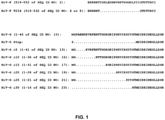
- the truncation will be a deletion of amino acid residues 525-544 of the NiV-F peptide, which will be referred to herein as the "T5F” or “T234F” form of the NiV-F glycoprotein (see FIG. 1 ).
- the NiV-F glycoprotein will further include a mutation to an N-linked glycosylation site, more specifically a substitution of glutamine (Q) for asparagine (N) at amino acid position 99 of the NiV-F peptide, which will be referred to herein as the "DeltaN3" or " ⁇ N3" form of the NiV-F glycoprotein.
- the NiV-G glycoprotein can be either a wild-type form or a modified or variant form of the protein, such as a truncated NiV-G.
- Deletions of 5, 10, 15, 20, 25, and 30 amino acids at or near the N-terminus of the NiV-G peptide were constructed, which are referred to herein as " ⁇ 5G,” “ ⁇ 10G,” “ ⁇ 15G,” “ ⁇ 20G,” “ ⁇ 25G,” and “ ⁇ 30G,” respectively.
- ⁇ 5G amino acid sequence of the NiV-F and NiV-G peptides showing each one of these variations is shown in FIG. 1 .
- NiVpp can be used to deliver agents that antagonize EphB-ephrinB2 mediated signaling specifically to ephrinB2-expressing target cells.
- NiVpp is the first demonstration of any lentiviral vector administered intravenously that can bypass the liver sink, which allows for targeting of specific ephrinB2+ populations in vivo.
- the natural tropism of NiVpp can be altered by mutating the natural receptor binding site to make it more ephrinB2 or B3 specific, depending on the clinical context of its use.
- NiVpp opens up the possibility for therapeutic targeting of ephrinB2-overexpressing cells common in various solid cancers or their tumor angiogenic vessels (see E.Pasquale, 2011).
- EphrinB2 and its endogenous receptor, EphB4, are both receptor tyrosine kinases that undergo bi-directional signaling as well as bidirectional endocytosis upon interaction with each other.
- NiVpp can take advantage of this biological property for transcytosis across the blood brain barrier. This is a critical barrier in CNS targeted gene therapy (by systemic administration). NiVpp can transcytose across functional microvascular endothelial cell layers to infect target cells at the bottom of the transwell chamber.
- NiVpp can transduce Nestin+ neural stem cells even more efficiently than VSV-Gpp
- NiVpp transduction can be improved by engineering hyperfusogenic mutations in one or both of NiV-F and NiV-G.
- mutations have been previously described (see, e.g., Lee at al, 2011, Trends in Microbiology). This could be useul, for example, for maintaining the specificity and picomolar affinity of NiV-G for ephrinB2 and/or B3 while independently enhancing the entry efficiency of NiVpp.
- mutations in NiV-G that completely abrogate ephrinB2 and B3 binding, but that do not impact the association of this NiV-G with NiV-F have been identified. This could allow for specific targeting of other desired cell types that are not ephrinB2+ through the addition of a single chain variable fragment (scFV) directed against a different cell surface molecule
- scFV single chain variable fragment
- the inventors have generated several mutants of the NiV fusion protein (NiV-F), and have also generated stepwise truncations in the cytoplasmic tail of the attachment protein (NiV-G), and screened each in combination with the NiV-F variant(s) for the ability to pseudotype lentivirus. Infectivity has been examined using a variety of cell types, including 293T and CHO-B2 cells, both of which express the NiV primary receptor, ephrinB2.
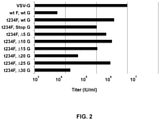
- NiV-F variant and wild-type NiV-G While many of the G-truncations were expressed and could be pseudotyped onto lentiviruses, the highest increase in viral transduction titers ( ⁇ 100-fold) was obtained with the NiV-F variant and wild-type NiV-G, indicating that only truncations in the cytoplasmic tail of NiV-F are critical for efficient pseudotyping. Infection was blocked using soluble ephrinB2, confirming specificity of NiV pseudotyped lentivirus for ephrinB2+ cells. Moreover, NiV pseudotyped lentiviruses can suitably transduce primary human neurons and microvascular endothelial cells. Thus, lentivirus pseudotyped with NiV envelope may be used for targeted gene therapy in situations where ephrinB2/B3 is upregulated in the diseased tissue, thereby overcoming limitations of current gene therapy.
- NiVpp psuedotyped lentivirus vectors disclosed herein could be used to deliver any desired nucleic acid encoding for any desired peptide to any cell that expresses an appropriate receptor for NiV.
- these nucleic acid "payloads" will be delivered to cells expressing ephrin, for example ephrinB2 or ephrin B3.
- the payload may be a nucleic acid encoding for a peptide product that is absent from the gene, such as is commonly done in gene therapy. This could be useful, for example, for targeting a genetic payload to neural stem cells.
- the payload may be a nucleic acid or peptide that is toxic to the cell, for example to combat cancer cells.
- the payload may be an ephrin antagonist, such as a soluble ephrinB2 or a nucleic acid capable of silencing or downregulating ephrinB2, such as an siRNA. Delivery of such ephrinB2 antagonists may be useful, for example, for impacting cell pluripotency or development, or for decreasing metastasis of certain cancer cells.
- NiV-F and NiV-G were produced using a QuickChange site directed mutagenesis kit (Stratagene, Cedar Creek, TX) with primers designed to correspond to the desired deletions.
- a NiV-F variant termed T5F or T234F, with a truncation of the cytoplasmic tail, as discussed above, was produced (see, e.g., Aguilar et al. (2007) J. Virol. 81:4520-4532 ).
- NiV-G variants were produced by making stepwise truncations of the cytoplasmic tail of NiV-G.
- FIG. 1 shows the variant forms of NiV-F and NiV-G that were produced.
- NiVpp lentiviral vectors were created using various combinations of these variant NiV-F and NiV-G glycoproteins. All lentiviral vectors were produced by calcium phosphate-mediated transient transfection of 293T cells. One day prior to transfection, 1.6 x 10 7 293T cells were seeded in a T175 flask. 7 ⁇ g of NiV-F (wild-type of variant), 7 ⁇ g of NiV-G (wild-type or variant), 125 ⁇ g of the packaging plasmid pCMV ⁇ R8.9, and 12.5 ⁇ g of the lentiviral transfer vector plasmid FG12-GFP or FUhLucW were transfected into cells. After 8h, the transfection medium was removed and fresh medium was added.
- the viral supernatant was harvested and concentrated by centrifugation at 28,000rpm at 4°C for 2h over a 20% sucrose cushion.
- serial dilutions of concentrated viral stocks were added to 293T cells and incubated at 37°C for 2h. 3 days post-infection, the cells were analyzed by flow cytometry for eGFP expression. Titers are expressed as infectious units per mL (IU/mL).
- NiV-G truncation variants produced extremely low titers (data not shown), indicating that truncations in NiV-F are critical for efficient pseudotyping.
- concentration titers of ⁇ 10 8 -10 9 were obtained, compared to 10 10 for VSV-G (data not shown).
- These high titer NiV pseudotyped lentiviruses can be used for efficient infection of ephrinB2+ cells, including for infection of hESCs, to deliver marker genes to tag ephrinB2+ hESCs, or to deliver siRNAs or other genes to antagonize the ephrinB2-ephB4 axis on hESCs.
- Virus based on MOI or p24 equivalent
- 10 nM of soluble ephrinB2 R&D Systems
- 5 ⁇ M of nevirapine NBP; a reverse transcriptase inhibitor
- 4 ng/ml of polybrene 4 ng/ml was added. Following an overnight incubation with virus, the infection medium was removed and replaced with fresh medium. 72 hours post-infection, the cells were harvested and analyzed by flow cytometry for eGFP expression.
- the cells were harvested, stained with the mouse W6/32 anti-human HLA-ABC monoclonal antibody (eBioscience), followed by Alexa 647-conjugated goat anti-mouse secondary antibodies. Samples were fixed and then analyzed by dual-color flow cytometry for human HLA and eGFP expression.
- CHO, CHO-B2, and CHO-B3 cells were infected with 0.01 ng, 0.1 ng, and 1 ng (p24 equivalents) of NiVpp or VSV-Gpp lentiviral pseudotypes carrying the GFP reporter gene ( FIG. 3 , panels A-D). Infectivity was determined by the percent of GFP+ cells at 48h post-infection via FACS analysis. The % GFP+ cells in each of the CHO cell lines infected by VSV-Gpp at maximal viral input (1 ng) was set at 100%, and all other infections in that cell line were normalized to this value.
- VSV-G infected 20.2% of CHO, 22.7% of CHO-B2, and 21.6% of CHO-B3 cells.
- U87 cells and HMVECs were infected with T5F/wt G and T5F ⁇ N3/wt G pseudotypes as described for panels A-C but normalized to VSV-Gpp infection of the same cell line (U87 or HMVECs) at maximal viral input (1 ng) ( FIG. 3 , panels E & F).
- VSV-G infected 36.5% of U87 cells and 14.4% of HMVECs.
- EphrinB2 is a functional marker of human embryonic, neural, and hematopoietic stem cells (hESC, hNSC and hHSC). To confirm that ephrinB2 is functionally expressed on hESC, hNSC and hHSC, and to confirm that T234F/wtG pseudotype can mediate transfer into these ephrinB2+ cells, we transduced human ESCs, HSCs, and NSCs with NiVpp pseudotyped lentiviruses carrying a marker gene for EGFP. FIG.
- FIG. 4 shows that NiV pseudotypes infected SSEA-4+ hESC (H1 line) (panel A), hNSC (Nestin+) (panel B), and a subpopulation of purified CD34+ cells from human fetal liver (panel C). More specifically, in panel A of FIG. 4 , increasing amounts of NiVpp were added to H9 hESCs. Cells were stained for the cell-surface pluripotency marker, SSEA-4, and examined for GFP expression 72h post-transduction by FACS analysis. 1x10 8 IU of NiVpp produced an infection rate of approximately 36% of SSEA-4+ hESC ( FIG. 4 , panel A). For panel B of FIG.
- progenitor cells derived from the medial temporal lobe of a 17-week human fetus were infected with NiVpp. 72h post-transduction, cells were stained for nestin and GFP expression was quantified by FACS analysis. The results of this analysis suggest that the NiV pseudotypes may infect NSC more efficiently than VSV-G pseudotypes.
- panel C of FIG. 4 purified CD34 + cells from human fetal liver were infected with NiVpp. 72h post-transduction, cells were stained for the cell-surface marker CD34 and analyzed for GFP expression by FACS analysis.
- T234F/wtG pseudotypes specifically transduced ⁇ 12% of purified CD34+ cells from human fetal liver. Moreover, this infection was inhibited with soluble ephrinB2 (10nM) in all cases (data only shown for fetal liver CD34+ cells, which shows a reduction from ⁇ 12% to ⁇ 1% infection in the presence of soluble ephrinB2).
- U87:CHO ratios 1:1, 1:10, 1:100, and 1:1000
- cells were infected with 1 or 10 ng of NiV T5F/wt G, T5F ⁇ N3/wt G, and VSV-G pseudotypes.
- 72h post-infection the cells were harvested and stained with the W6/32 anti-human HLA-ABC monoclonal antibody and the infection rate (GFP-positive cells) was determined by FACS analysis.
- a U87 SI of >1 indicates a selective preference for infecting U87 over CHO cells.
- the U87 SI at 1 and 10 ng is 5.14 and 1.93, respectively. This likely reflects the receptor-independent preference for U87 over CHO cells due to the HIV-1 based vector backbone alone.
- the reduction in U87 SI at a higher inoculum of VSV-Gpp is also consistent with the known ability of VSV-G-delivered gag to saturate non-human post-entry restriction factors.
- VSV-G is not known to have a cell-type specific receptor
- EphrinB2 SI the "NiV receptor-specific selectivity index” as the VSV-G or NiV Env specific U87 SI divided by the U87 SI for VSV-G. This normalizes for differences in the intrinsic permissiveness of U87 over CHO cells for lentiviral transduction.
- This formulation now allows one to evaluate the selectivity of NiVpp for infecting ephrinB2-expressing cells relative to VSV-Gpp under all conditions analysed.
- the EphrinB2 Selectivity Index calculated for VSV-Gpp, and NiVpp bearing T5F or T5F- ⁇ N3 for all the indicated conditions is shown in FIG. 5 .
- Data shown are averages ⁇ standard deviations for triplicates done at 1 ng, and average ⁇ range for duplicates done at 10 ng.
- the NiVpp pseudotyped lentivirus vectors have a greatly increased specificity for EphrinB2 bearing cells as compared to VSV-Gpp pseudotyped lentivirus.
- the FvcFlw (firefly luciferase) vector was pseudotyped with VSV-G and two variant NiV pseudotypes, T234F and T234F ⁇ N3, as discussed above, as discussed above. 10ng of p24 equivalents of each pseudotyped lentivirus was injected into C57/BL6 mice through the tail vein. At 5 days post-injection, luciferase expression was imaged. Following whole-body imaging (see FIG. 6 ), each organ was isolated to image luciferase expression (see FIG. 7 ). As the images demonstrate, the NiVpp pseudotyped lentivirus is able to avoid the liver sink and to effectively infect cells and deliver genetic payloads in other tissues.
Landscapes
- Health & Medical Sciences (AREA)
- Life Sciences & Earth Sciences (AREA)
- Chemical & Material Sciences (AREA)
- Genetics & Genomics (AREA)
- Engineering & Computer Science (AREA)
- General Health & Medical Sciences (AREA)
- Biotechnology (AREA)
- Organic Chemistry (AREA)
- Bioinformatics & Cheminformatics (AREA)
- Zoology (AREA)
- Wood Science & Technology (AREA)
- Medicinal Chemistry (AREA)
- Veterinary Medicine (AREA)
- Pharmacology & Pharmacy (AREA)
- Public Health (AREA)
- Animal Behavior & Ethology (AREA)
- General Engineering & Computer Science (AREA)
- Biomedical Technology (AREA)
- Virology (AREA)
- Microbiology (AREA)
- Molecular Biology (AREA)
- Epidemiology (AREA)
- Biochemistry (AREA)
- Immunology (AREA)
- Biophysics (AREA)
- Physics & Mathematics (AREA)
- Plant Pathology (AREA)
- Mycology (AREA)
- Nuclear Medicine, Radiotherapy & Molecular Imaging (AREA)
- General Chemical & Material Sciences (AREA)
- Chemical Kinetics & Catalysis (AREA)
- Micro-Organisms Or Cultivation Processes Thereof (AREA)
- Medicines That Contain Protein Lipid Enzymes And Other Medicines (AREA)
- Medicines Containing Material From Animals Or Micro-Organisms (AREA)
- Peptides Or Proteins (AREA)
Applications Claiming Priority (3)
| Application Number | Priority Date | Filing Date | Title |
|---|---|---|---|
| US201261615534P | 2012-03-26 | 2012-03-26 | |
| PCT/US2013/032197 WO2013148327A1 (en) | 2012-03-26 | 2013-03-15 | Nipah virus envelope psuedotyped lentiviruses and methods of their use |
| EP13769106.9A EP2844746A4 (de) | 2012-03-26 | 2013-03-15 | Pseudotypisierte lentiviren mit nipah-virus-hüllen und verfahren zu deren verwendung |
Related Parent Applications (1)
| Application Number | Title | Priority Date | Filing Date |
|---|---|---|---|
| EP13769106.9A Division EP2844746A4 (de) | 2012-03-26 | 2013-03-15 | Pseudotypisierte lentiviren mit nipah-virus-hüllen und verfahren zu deren verwendung |
Publications (2)
| Publication Number | Publication Date |
|---|---|
| EP3971286A2 true EP3971286A2 (de) | 2022-03-23 |
| EP3971286A3 EP3971286A3 (de) | 2022-04-20 |
Family
ID=49261077
Family Applications (2)
| Application Number | Title | Priority Date | Filing Date |
|---|---|---|---|
| EP13769106.9A Withdrawn EP2844746A4 (de) | 2012-03-26 | 2013-03-15 | Pseudotypisierte lentiviren mit nipah-virus-hüllen und verfahren zu deren verwendung |
| EP21165722.6A Pending EP3971286A3 (de) | 2012-03-26 | 2013-03-15 | Pseudotypisierte lentiviren mit nipah-virus-hülle und verfahren zur verwendung |
Family Applications Before (1)
| Application Number | Title | Priority Date | Filing Date |
|---|---|---|---|
| EP13769106.9A Withdrawn EP2844746A4 (de) | 2012-03-26 | 2013-03-15 | Pseudotypisierte lentiviren mit nipah-virus-hüllen und verfahren zu deren verwendung |
Country Status (3)
| Country | Link |
|---|---|
| US (4) | US9486539B2 (de) |
| EP (2) | EP2844746A4 (de) |
| WO (1) | WO2013148327A1 (de) |
Cited By (2)
| Publication number | Priority date | Publication date | Assignee | Title |
|---|---|---|---|---|
| US12319938B2 (en) | 2020-07-24 | 2025-06-03 | The General Hospital Corporation | Enhanced virus-like particles and methods of use thereof for delivery to cells |
| US12351815B2 (en) | 2019-06-13 | 2025-07-08 | The General Hospital Corporation | Engineered human-endogenous virus-like particles and methods of use thereof for delivery to cells |
Families Citing this family (35)
| Publication number | Priority date | Publication date | Assignee | Title |
|---|---|---|---|---|
| EP2844746A4 (de) * | 2012-03-26 | 2016-07-20 | Univ California | Pseudotypisierte lentiviren mit nipah-virus-hüllen und verfahren zu deren verwendung |
| EP3235908A1 (de) * | 2016-04-21 | 2017-10-25 | Ecole Normale Superieure De Lyon | Verfahren zur selektiven modulierung der aktivität von unterschiedlichen subtypen von zellen |
| WO2018115507A2 (en) * | 2016-12-23 | 2018-06-28 | Curevac Ag | Henipavirus vaccine |
| KR102758204B1 (ko) | 2017-10-30 | 2025-01-23 | 밀테니 비오텍 비.브이. & 씨오. 케이지 | 표적 세포의 선택적 형질도입을 위한 어댑터-기반 레트로바이러스 벡터 시스템 |
| CN112955174A (zh) | 2018-07-09 | 2021-06-11 | 旗舰先锋创新V股份有限公司 | 融合剂脂质体组合物和其用途 |
| AU2019325514A1 (en) * | 2018-08-21 | 2021-04-08 | The Wistar Institute Of Anatomy And Biology | Vaccines against Nipah virus, and methods of using same |
| CN113631718A (zh) | 2018-11-14 | 2021-11-09 | 旗舰先锋创新V股份有限公司 | 用于特定隔室货物递送的组合物和方法 |
| CA3152525A1 (en) | 2019-09-03 | 2021-03-11 | Sana Biotechnology, Inc. | Cd24-associated particles and related methods and uses thereof |
| AU2021213735A1 (en) | 2020-01-30 | 2022-09-22 | Umoja Biopharma, Inc. | Bispecific transduction enhancer |
| CA3178308A1 (en) | 2020-03-31 | 2021-10-07 | Sana Biotechnology, Inc. | Targeted lipid particles and compositions and uses thereof |
| US20230190871A1 (en) | 2020-05-20 | 2023-06-22 | Sana Biotechnology, Inc. | Methods and compositions for treatment of viral infections |
| WO2022047316A1 (en) | 2020-08-28 | 2022-03-03 | Sana Biotechnology, Inc. | Modified anti-viral binding agents |
| MX2023008081A (es) | 2021-01-11 | 2023-09-12 | Sana Biotechnology Inc | Uso de vectores virales dirigidos a cd8. |
| AU2022212952A1 (en) | 2021-01-27 | 2023-08-10 | Umoja Biopharma, Inc. | Lentivirus for generating cells expressing anti-cd19 chimeric antigen receptor |
| KR20240028975A (ko) | 2021-04-08 | 2024-03-05 | 사나 바이오테크놀로지, 인크. | Cd8-특이적 항체 구조체들 및 이의 조성물 |
| JP2024521811A (ja) | 2021-05-28 | 2024-06-04 | サナ バイオテクノロジー,インコーポレイテッド | 短縮型ヒヒ内在性レトロウイルス(BaEV)エンベロープ糖タンパク質を含む脂質粒子、ならびに関連する方法及び使用 |
| EP4381081A1 (de) | 2021-08-04 | 2024-06-12 | Sana Biotechnology, Inc. | Verwendung von auf cd4 gerichteten viralen vektoren |
| WO2023114698A2 (en) * | 2021-12-13 | 2023-06-22 | Interius Biotherapeutics, Inc. | Engineered viral particles and uses of the same |
| WO2023114949A1 (en) | 2021-12-16 | 2023-06-22 | Sana Biotechnology, Inc. | Methods and systems of particle production |
| WO2023115041A1 (en) | 2021-12-17 | 2023-06-22 | Sana Biotechnology, Inc. | Modified paramyxoviridae attachment glycoproteins |
| US20250059239A1 (en) | 2021-12-17 | 2025-02-20 | Sana Biotechnology, Inc. | Modified paramyxoviridae fusion glycoproteins |
| EP4472646A1 (de) | 2022-02-01 | 2024-12-11 | Sana Biotechnology, Inc. | Auf cd3 abzielende lentivirale vektoren und verwendungen davon |
| WO2023193015A1 (en) | 2022-04-01 | 2023-10-05 | Sana Biotechnology, Inc. | Cytokine receptor agonist and viral vector combination therapies |
| GB202211935D0 (en) * | 2022-08-16 | 2022-09-28 | Oxford Biomedica Ltd | envelope proteins |
| US20260055146A1 (en) | 2022-08-24 | 2026-02-26 | Sana Biotechnology, Inc. | Delivery of heterologous proteins |
| WO2024064838A1 (en) | 2022-09-21 | 2024-03-28 | Sana Biotechnology, Inc. | Lipid particles comprising variant paramyxovirus attachment glycoproteins and uses thereof |
| WO2024081820A1 (en) | 2022-10-13 | 2024-04-18 | Sana Biotechnology, Inc. | Viral particles targeting hematopoietic stem cells |
| WO2024119157A1 (en) | 2022-12-02 | 2024-06-06 | Sana Biotechnology, Inc. | Lipid particles with cofusogens and methods of producing and using the same |
| WO2024220560A1 (en) | 2023-04-18 | 2024-10-24 | Sana Biotechnology, Inc. | Engineered protein g fusogens and related lipid particles and methods thereof |
| EP4698666A1 (de) | 2023-04-18 | 2026-02-25 | Sana Biotechnology, Inc. | Universelle protein-g-fusogene und adaptersysteme davon sowie zugehörige lipidpartikel und verwendungen |
| WO2024220597A2 (en) | 2023-04-18 | 2024-10-24 | Sana Biotechnology, Inc. | Digital droplet based assay for detecting replication competent lentiviral vector |
| WO2024220598A2 (en) | 2023-04-18 | 2024-10-24 | Sana Biotechnology, Inc. | Lentiviral vectors with two or more genomes |
| EP4716750A1 (de) | 2023-05-23 | 2026-04-01 | Sana Biotechnology, Inc. | Tandem-fusogene und verwandte lipidpartikel |
| WO2025054202A1 (en) | 2023-09-05 | 2025-03-13 | Sana Biotechnology, Inc. | Method of screening a sample comprising a transgene with a unique barcode |
| WO2025184529A1 (en) | 2024-03-01 | 2025-09-04 | Sana Biotechnology, Inc. | Viral particles with fusogen display and related compositions and methods |
Family Cites Families (5)
| Publication number | Priority date | Publication date | Assignee | Title |
|---|---|---|---|---|
| DE69333115D1 (de) | 1992-09-22 | 2003-08-28 | Biofocus Discovery Ltd | Rekombinante viren, die an ihrer äusseren oberfläche ein nichtvirales polypeptid präsentieren |
| RS51324B (sr) | 2005-04-25 | 2010-12-31 | Merial Ltd. | Vakcine protiv nipah virusa |
| WO2007005244A1 (en) * | 2005-07-05 | 2007-01-11 | The Regents Of The University Of California | Henipavirus receptor and uses thereof |
| RS53257B2 (sr) | 2009-07-24 | 2018-06-29 | Immune Design Corp | Lentiviralni vektori pseudotipizirani sa omotačem od glikobelančevine iz sindbis-virusa |
| EP2844746A4 (de) * | 2012-03-26 | 2016-07-20 | Univ California | Pseudotypisierte lentiviren mit nipah-virus-hüllen und verfahren zu deren verwendung |
-
2013
- 2013-03-15 EP EP13769106.9A patent/EP2844746A4/de not_active Withdrawn
- 2013-03-15 EP EP21165722.6A patent/EP3971286A3/de active Pending
- 2013-03-15 US US14/387,371 patent/US9486539B2/en active Active
- 2013-03-15 WO PCT/US2013/032197 patent/WO2013148327A1/en not_active Ceased
-
2016
- 2016-11-07 US US15/330,826 patent/US10064958B2/en active Active
-
2018
- 2018-08-31 US US16/120,055 patent/US11576982B2/en active Active
-
2023
- 2023-01-06 US US18/151,174 patent/US20230285591A1/en active Pending
Non-Patent Citations (31)
| Title |
|---|
| AGUILAR ET AL., J. VIROL., vol. 81, 2007, pages 4520 - 4532 |
| AN DSDONAHUE REKAMATA M ET AL.: "Stable reduction of CCR5 by RNAi through hematopoietic stem cell transplant in non-human primates", PROC NATL ACAD SCI U S A, vol. 104, 2007, pages 13110 - 13115, XP002606227, DOI: 10.1073/PNAS.0705474104 |
| ARVANITIS DDAVY A: "Eph/ephrin signaling: networks", GENES DEV., vol. 22, 2008, pages 416 - 429 |
| ASTIN JWBATSON JKADIR S ET AL.: "Competition amongst Eph receptors regulates contact inhibition of locomotion and invasiveness in prostate cancer cells", NAT CELL BIOL., vol. 12, 2010, pages 1194 - 1204 |
| BERGES BKAKKINA SRFOLKVORD JMCONNICK EAKKINA R: "Mucosal transmission of R5 and X4 tropic HIV-1 via vaginal and rectal routes in humanized Rag2-/- gammac -/- (RAG-hu) mice", VIROLOGY, vol. 373, 2008, pages 342 - 351, XP022537464, DOI: 10.1016/j.virol.2007.11.020 |
| BOWDEN TAARICESCU ARGILBERT RJGRIMES JMJONES EYSTUART DI: "Structural basis of Nipah and Hendra virus attachment to their cell-surface receptor ephrin-B2", NAT STRUCT MOL BIOL., vol. 15, 2008, pages 567 - 572 |
| BRANCO-PRICE CJOHNSON RS: "Tumor vessels are Eph-ing complicated", CANCER CELL, vol. 17, 2010, pages 533 - 534 |
| DAMOISEAUX RSHERMAN SPALVA JAPETERSON CPYLE AD: "Integrated chemical genomics reveals modifiers of survival in human embryonic stem cells", STEM CELLS, vol. 27, 2009, pages 533 - 542 |
| FORTUNEL NOOTU HHNG HH ET AL.: "Comment on '' 'Sternness': transcriptional profiling of embryonic and adult stem cells'' and ''a stem cell molecular signature", SCIENCE, vol. 302, 2003, pages 393, XP002430532, DOI: 10.1126/science.1086384 |
| GRAF TSTADTFELD M: "Heterogeneity of embryonic and adult stem cells", CELL STEM CELL, vol. 3, 2008, pages 480 - 483 |
| HOUGH SRLASLETT ALGRIMMOND SBKOLLE GPERA MF: "A continuum of cell states spans pluripotency and lineage commitment in human embryonic stem cells", PLOS ONE, vol. 4, 2009, pages e7708 |
| IVANOVA, NB ET AL., SCIENCE, vol. 298, 2002, pages 601 - 604 |
| KERTESZ NKRASNOPEROV VREDDY R: "The soluble extracellular domain of EphB4(sEphB4) antagonizes EphB4-EphrinB2 interaction, modulates angiogenesis, and inhibits tumor growth", BLOOD, vol. 107, 2006, pages 2330 - 2338, XP002380293, DOI: 10.1182/blood-2005-04-1655 |
| KULLANDER KKLEIN R: "Mechanisms and functions of Eph and ephrin signalling", NAT REV MOL CELL BIOL., vol. 3, 2002, pages 475 - 486, XP009152563 |
| KUMAR SRSCEHNET JSLEY EJ ET AL.: "Preferential induction of EphB4 over EphB2 and its implication in colorectal cancer progression", CANCER RES., vol. 69, 2009, pages 3736 - 3745 |
| LEVRONEY ELAGUILAR HCFULCHER JA ET AL.: "Novel innate immune functions for galectin- 1: galectin-1 inhibits cell fusion by Nipah virus envelope glycoproteins and augments dendritic cell secretion of proinflammatory cytokines", J IMMUNOL., vol. 175, 2005, pages 413 - 420 |
| MORIZONO K ET AL., NAT MED, vol. 11, no. 3, 2005, pages 346 - 52 |
| NG ESDAVIS RPAZZOLA LSTANLEY EGELEFANTY AG: "Forced aggregation of defined numbers of human embryonic stem cells into embryoid bodies fosters robust, reproducible hematopoietic differentiation", BLOOD, vol. 106, 2005, pages 1601 - 1603, XP002501115, DOI: 10.1182/BLOOD-2005-03-0987 |
| PALMER AKLEIN R: "Multiple roles of ephrins in morphogenesis, neuronal networking, and brain function", GENES DEV., vol. 17, 2003, pages 1429 - 1450 |
| PASQUALE EB: "Eph receptors and ephrins in cancer: bidirectional signaling and beyond", NAT REV CANCER, vol. 10, no. 0, 2010, pages 165 - 180, XP009162732, DOI: 10.1038/nrc2806 |
| PASQUALE EB: "Eph-ephrin bidirectional signaling in physiology and disease", CELL, vol. 133, 2008, pages 38 - 52, XP028935518, DOI: 10.1016/j.cell.2008.03.011 |
| PASQUALE, CELL, vol. 133, 2008, pages 38 - 52 |
| POLIAKOV ET AL., DEV. CELL, vol. 7, 2004, pages 465 - 480 |
| PYLE ADLOCK LFDONOVAN PJ: "Neurotrophins mediate human embryonic stem cell survival", NAT BIOTECHNOL., vol. 24, 2006, pages 344 - 350, XP008119791, DOI: 10.1038/nbt1189 |
| SAWAMIPHAK SSEIDEL SESSMANN CL ET AL.: "Ephrin-B2 regulates VEGFR2 function in developmental and tumor angiogenesis", NATURE, vol. 465, 2010, pages 487 - 491, XP037159345, DOI: 10.1038/nature08995 |
| SCEHNET JSLEY EJKRASNOPEROV V ET AL.: "The role of Ephs, Ephrins, and growth factors in Kaposi sarcoma and implications of EphrinB2 blockade", BLOOD, vol. 113, 2009, pages 254 - 263 |
| SHIMIZU SKAMATA MKITTIPONGDAJA P ET AL.: "Characterization of a potent non-cytotoxic shRNA directed to the HIV-1 co-receptor CCR5", GENET VACCINES THER., vol. 7, 2009, pages 8, XP021059080, DOI: 10.1186/1479-0556-7-8 |
| SPANNUTH WAMANGALA LSSTONE RL ET AL.: "Converging evidence for efficacy from parallel EphB4-targeted approaches in ovarian carcinoma", MOL CANCER THER., vol. 9, 2010, pages 2377 - 2388 |
| WANG B: "Cancer cells exploit the eph-ephrin system to promote invasion and metastasis: tales of unwitting partners", SCI SIGNAL, vol. 4, 2011, pages e28 |
| WANG ET AL., BLOOD, vol. 103, 2004, pages 100 - 109 |
| WANG ET AL., BLOOD, vol. 99, 2002, pages 2740 - 2747 |
Cited By (4)
| Publication number | Priority date | Publication date | Assignee | Title |
|---|---|---|---|---|
| US12351815B2 (en) | 2019-06-13 | 2025-07-08 | The General Hospital Corporation | Engineered human-endogenous virus-like particles and methods of use thereof for delivery to cells |
| US12351814B2 (en) | 2019-06-13 | 2025-07-08 | The General Hospital Corporation | Engineered human-endogenous virus-like particles and methods of use thereof for delivery to cells |
| US12404525B2 (en) | 2019-06-13 | 2025-09-02 | The General Hospital Corporation | Engineered human-endogenous virus-like particles and methods of use thereof for delivery to cells |
| US12319938B2 (en) | 2020-07-24 | 2025-06-03 | The General Hospital Corporation | Enhanced virus-like particles and methods of use thereof for delivery to cells |
Also Published As
| Publication number | Publication date |
|---|---|
| EP2844746A1 (de) | 2015-03-11 |
| US20190125898A1 (en) | 2019-05-02 |
| EP3971286A3 (de) | 2022-04-20 |
| US11576982B2 (en) | 2023-02-14 |
| US20170296677A1 (en) | 2017-10-19 |
| US20150050242A1 (en) | 2015-02-19 |
| US9486539B2 (en) | 2016-11-08 |
| WO2013148327A1 (en) | 2013-10-03 |
| US20230285591A1 (en) | 2023-09-14 |
| EP2844746A4 (de) | 2016-07-20 |
| US10064958B2 (en) | 2018-09-04 |
Similar Documents
| Publication | Publication Date | Title |
|---|---|---|
| US20230285591A1 (en) | Nipah virus envelope pseudotyped lentiviruses and methods of their use | |
| JP6062485B2 (ja) | 遺伝子治療ベクターおよびシトシンデアミナーゼ | |
| Palomares et al. | Nipah virus envelope-pseudotyped lentiviruses efficiently target ephrinB2-positive stem cell populations in vitro and bypass the liver sink when administered in vivo | |
| EP2963118B1 (de) | Verfahren zur gezielten genabgabe über virale vektoren | |
| JP4910077B2 (ja) | 腫瘍の療法のためのlcmv−gpシュードタイプ化vsvベクターおよび腫瘍浸潤性ウイルス産生細胞 | |
| JP6014020B2 (ja) | 組み換えベクターを用いたがんの治療 | |
| CA2723320C (en) | Il-12 immunotherapy for cancer | |
| JP2018526007A (ja) | 2aペプチドを含む組換えベクター | |
| US20110091973A1 (en) | Modified and fusion enhanced erythrocytes, cells and uses thereof | |
| HK40073007A (en) | Nipah virus envelope pseudotyped lentiviruses and methods of use | |
| Tada et al. | Vectored immunoprophylaxis and treatment of SARS-CoV-2 infection | |
| CN116917328A (zh) | 用于癌症免疫治疗的武装双car-t组合物和方法 | |
| Podschwadt et al. | A detailed analysis of F-MuLV-and SFFV-infected cells in Friend virus-infected mice reveals the contribution of both F-MuLV-and SFFV-infected cells to the interleukin-10 host response | |
| CN120924501B (zh) | 双基因工程化的间充质干细胞及其应用 | |
| Budak-Alpdogan et al. | Functional assessment of the engraftment potential of gammaretrovirus-modified CD34+ cells, using a short serum-free transduction protocol | |
| Fichter | Development of Novel Transient Delivery Systems for Gene Therapy | |
| Wurm et al. | Improved lentiviral gene transfer into human embryonic stem cells grown in co-culture with murine feeder and stroma cells. | |
| WO2023038055A1 (ja) | レトロウイルスベクター製造用の核酸 | |
| EP3197503A2 (de) | Zellbasierte gezielte abgabe von pseudonomas exotoxin | |
| Lee et al. | Reduction of N-tropic mutant porcine endogenous retrovirus infectivity by human tripartite motif-containing 5-isoform alpha | |
| Zielske | Transduction of hematopoietic stem cells using lentiviral vectors in models of drug resistance gene therapy: Determinants of transduction and selection | |
| Kastberger | Creating universality for cancer gene therapy in applying Adenovirus vectors with altered tropism: designing Adenovirus particles using K-Coil/E-Coil technology to control receptor specificity | |
| Li et al. | 8. Potent Inhibition of HIV-1 Replication by Lentiviral Vectors Carrying Anti-Vif siRNA | |
| Von Messling et al. | 328. Paramyxovirus Fusion Protein Trimers: Partial Membrane-Proximal Ectodomain Cleavage Enhances Function | |
| Virus | RNA VIRUS VECTORS: NOVEL VIRUSES |
Legal Events
| Date | Code | Title | Description |
|---|---|---|---|
| PUAI | Public reference made under article 153(3) epc to a published international application that has entered the european phase |
Free format text: ORIGINAL CODE: 0009012 |
|
| STAA | Information on the status of an ep patent application or granted ep patent |
Free format text: STATUS: REQUEST FOR EXAMINATION WAS MADE |
|
| PUAL | Search report despatched |
Free format text: ORIGINAL CODE: 0009013 |
|
| 17P | Request for examination filed |
Effective date: 20210329 |
|
| AC | Divisional application: reference to earlier application |
Ref document number: 2844746 Country of ref document: EP Kind code of ref document: P |
|
| AK | Designated contracting states |
Kind code of ref document: A2 Designated state(s): AL AT BE BG CH CY CZ DE DK EE ES FI FR GB GR HR HU IE IS IT LI LT LU LV MC MK MT NL NO PL PT RO RS SE SI SK SM TR |
|
| AK | Designated contracting states |
Kind code of ref document: A3 Designated state(s): AL AT BE BG CH CY CZ DE DK EE ES FI FR GB GR HR HU IE IS IT LI LT LU LV MC MK MT NL NO PL PT RO RS SE SI SK SM TR |
|
| RIC1 | Information provided on ipc code assigned before grant |
Ipc: C12N 7/00 20060101ALI20220315BHEP Ipc: C12N 15/86 20060101ALI20220315BHEP Ipc: A61P 35/00 20060101ALI20220315BHEP Ipc: A61K 39/12 20060101ALI20220315BHEP Ipc: C12N 7/01 20060101AFI20220315BHEP |
|
| REG | Reference to a national code |
Ref country code: HK Ref legal event code: DE Ref document number: 40073007 Country of ref document: HK |
|
| P01 | Opt-out of the competence of the unified patent court (upc) registered |
Effective date: 20230510 |