EP3960157A1 - Pharmaceutical compositions comprising rpl554 in hfa-134a for administration by inhalation - Google Patents
Pharmaceutical compositions comprising rpl554 in hfa-134a for administration by inhalation Download PDFInfo
- Publication number
- EP3960157A1 EP3960157A1 EP21198029.7A EP21198029A EP3960157A1 EP 3960157 A1 EP3960157 A1 EP 3960157A1 EP 21198029 A EP21198029 A EP 21198029A EP 3960157 A1 EP3960157 A1 EP 3960157A1
- Authority
- EP
- European Patent Office
- Prior art keywords
- pharmaceutical composition
- liquid pharmaceutical
- rpl554
- use according
- particles
- Prior art date
- Legal status (The legal status is an assumption and is not a legal conclusion. Google has not performed a legal analysis and makes no representation as to the accuracy of the status listed.)
- Pending
Links
- 0 CC(*(CC[*@@](C(*(CCc(c1c2)cc(OC)c2OC)C1=C1)=O)C1=*c1c(C)cc(C)cc1C)=C)=O Chemical compound CC(*(CC[*@@](C(*(CCc(c1c2)cc(OC)c2OC)C1=C1)=O)C1=*c1c(C)cc(C)cc1C)=C)=O 0.000 description 1
Images
Classifications
-
- A—HUMAN NECESSITIES
- A61—MEDICAL OR VETERINARY SCIENCE; HYGIENE
- A61K—PREPARATIONS FOR MEDICAL, DENTAL OR TOILETRY PURPOSES
- A61K31/00—Medicinal preparations containing organic active ingredients
- A61K31/33—Heterocyclic compounds
- A61K31/395—Heterocyclic compounds having nitrogen as a ring hetero atom, e.g. guanethidine or rifamycins
- A61K31/435—Heterocyclic compounds having nitrogen as a ring hetero atom, e.g. guanethidine or rifamycins having six-membered rings with one nitrogen as the only ring hetero atom
- A61K31/47—Quinolines; Isoquinolines
- A61K31/4738—Quinolines; Isoquinolines ortho- or peri-condensed with heterocyclic ring systems
- A61K31/4745—Quinolines; Isoquinolines ortho- or peri-condensed with heterocyclic ring systems condensed with ring systems having nitrogen as a ring hetero atom, e.g. phenantrolines
-
- A—HUMAN NECESSITIES
- A61—MEDICAL OR VETERINARY SCIENCE; HYGIENE
- A61K—PREPARATIONS FOR MEDICAL, DENTAL OR TOILETRY PURPOSES
- A61K31/00—Medicinal preparations containing organic active ingredients
- A61K31/33—Heterocyclic compounds
- A61K31/395—Heterocyclic compounds having nitrogen as a ring hetero atom, e.g. guanethidine or rifamycins
- A61K31/495—Heterocyclic compounds having nitrogen as a ring hetero atom, e.g. guanethidine or rifamycins having six-membered rings with two or more nitrogen atoms as the only ring heteroatoms, e.g. piperazine or tetrazines
- A61K31/505—Pyrimidines; Hydrogenated pyrimidines, e.g. trimethoprim
- A61K31/519—Pyrimidines; Hydrogenated pyrimidines, e.g. trimethoprim ortho- or peri-condensed with heterocyclic rings
-
- A—HUMAN NECESSITIES
- A61—MEDICAL OR VETERINARY SCIENCE; HYGIENE
- A61K—PREPARATIONS FOR MEDICAL, DENTAL OR TOILETRY PURPOSES
- A61K47/00—Medicinal preparations characterised by the non-active ingredients used, e.g. carriers or inert additives; Targeting or modifying agents chemically bound to the active ingredient
- A61K47/06—Organic compounds, e.g. natural or synthetic hydrocarbons, polyolefins, mineral oil, petrolatum or ozokerite
-
- A—HUMAN NECESSITIES
- A61—MEDICAL OR VETERINARY SCIENCE; HYGIENE
- A61K—PREPARATIONS FOR MEDICAL, DENTAL OR TOILETRY PURPOSES
- A61K9/00—Medicinal preparations characterised by special physical form
- A61K9/0012—Galenical forms characterised by the site of application
- A61K9/007—Pulmonary tract; Aromatherapy
- A61K9/0073—Sprays or powders for inhalation; Aerolised or nebulised preparations generated by other means than thermal energy
- A61K9/008—Sprays or powders for inhalation; Aerolised or nebulised preparations generated by other means than thermal energy comprising drug dissolved or suspended in liquid propellant for inhalation via a pressurized metered dose inhaler [MDI]
-
- A—HUMAN NECESSITIES
- A61—MEDICAL OR VETERINARY SCIENCE; HYGIENE
- A61K—PREPARATIONS FOR MEDICAL, DENTAL OR TOILETRY PURPOSES
- A61K9/00—Medicinal preparations characterised by special physical form
- A61K9/10—Dispersions; Emulsions
-
- A—HUMAN NECESSITIES
- A61—MEDICAL OR VETERINARY SCIENCE; HYGIENE
- A61P—SPECIFIC THERAPEUTIC ACTIVITY OF CHEMICAL COMPOUNDS OR MEDICINAL PREPARATIONS
- A61P11/00—Drugs for disorders of the respiratory system
- A61P11/08—Bronchodilators
Definitions
- the present invention relates to a liquid pharmaceutical composition comprising a respiratory drug and a pressurised metered dose inhaler (pMDI) comprising the liquid pharmaceutical composition.
- pMDI pressurised metered dose inhaler
- RPL554 (9,10-dimethoxy-2-(2,4,6-trimethylphenylimino)-3-(N-carbamoyl-2-aminoethyl)-3,4,6,7-tetrahydro-2H-pyrimido[6,1-a]isoquinolin-4-one) is a dual PDE3/PDE4 inhibitor and is described in WO 00/58308 .
- RPL554 has both anti-inflammatory and bronchodilatory activity and is useful in the treatment of respiratory disorders such as asthma and chronic obstructive pulmonary disease (COPD).
- COPD chronic obstructive pulmonary disease
- RPL554 is typically administered by inhalation in view of its efficacy in the treatment of respiratory disorders.
- Administration of RPL554 by nebulizer is known ( WO 2016/042313 ).
- pMDI formulations comprising salts of RPL554 are envisaged in WO 2015/173551 .
- a pMDI formulation comprising a combination of RPL554 with a second active agent and a surfactant is described in WO 2014/140648 .
- pMDI formulations may include one or more propellants such as alkanes (for instance propane, n-butane, isobutane, n-pentane, isopentane, neopentane), hydrofluoroalkanes (HFAs, for instance HFA-227, HFA-134a and HFA 152a), ethers (for instance dimethylether) and hydrofluoro-olefins (HFOs, for instance HFO-1234ze and HFO-1234yf).
- propellants such as alkanes (for instance propane, n-butane, isobutane, n-pentane, isopentane, neopentane), hydrofluoroalkanes (HFAs, for instance HFA-227, HFA-134a and HFA 152a), ethers (for instance dimethylether) and hydrofluoro-olefins (HFOs, for instance HFO-1234ze and HFO-1234
- Co-solvents such as ethanol and water are commonly included in pMDI formulations.
- Excipients which are commonly included in pMDI formulations include antioxidants, preservatives, wetting agents, chelating agents, emulsifiers, flavourings, buffers, lubricants, suspending agents and tonicity adjusting agents.
- Drugs which have low solubility in diluents are often formulated as suspensions.
- an important consideration is uniform dispersion of the drug particles. Agglomeration, phase separation and flocculation can lead to variability in the metered dose. Additional excipients such as surfactants and co-solvents are therefore commonly used in suspension formulations to improve suspension properties.
- a further consideration for suspension formulations is that of particle size distribution. The particle size distribution of the drug is usually maintained in the respirable range (typically less than 5 ⁇ m).
- Each of the components included in pMDI can have a number of effects on formulation stability and efficacy which are highly dependent on the identity of the drug to be formulated. Such effects cannot reliably be predicted in advance. Correct formulation of a drug for use in a pMDI is critical to ensure that the formulation can be used successfully in a clinical setting.
- a liquid pharmaceutical composition comprising particles of RPL554 and HFA-134a (1,1,1,2-tetrafluoroethane) as a diluent/propellant and which is substantially free of a surfactant is particularly advantageous for delivery of RPL554 by a pressurised metered dose inhaler.
- a number of benefits have been found to be associated with the liquid pharmaceutical composition.
- the specific combination of RPL554 and HFA-134a has been found to lead to a suspension pMDI formulation which has favourable suspension characteristics and reduced flocculation. It has also been found that a chemically and physically stable formulation may be achieved without requiring the presence of surfactants.
- the ability to omit surfactants from the composition of the invention is highly advantageous. That is because RPL554 is likely to be used in patients suffering from conditions such as COPD and asthma, who are at increased risk of an allergic inflammatory reaction to excipients such as surfactants. Further, given the teaching in WO 2014/140648 which suggests that a surfactant is necessary to achieve an adequate pMDI, it is surprising that adequate long term stability, without aggregation or flocculation of the particles of active ingredient, can be achieved without a surfactant.
- particles of RPL554 are vulnerable to Ostwald ripening (growth of particles during suspension) in the presence of co-solvents such as ethanol. It is important to avoid Ostwald ripening as an increase in particle size can reduce the respirable fraction of particles present in the formulation.
- the liquid pharmaceutical formulations of the invention are found to avoid Ostwald ripening of the RPL554 particles.
- the present invention provides a liquid pharmaceutical composition suitable for administration by inhalation comprising: (i) a suspension of particles comprising 9,10-dimethoxy-2-(2,4,6-trimethylphenylimino)-3-(N-carbamoyl-2-aminoethyl)-3,4,6,7-tetrahydro-2H-pyrimido[6,1-a]isoquinolin-4-one (RPL554); and (ii) a diluent which is 1,1,1,2-tetrafluoroethane (HFA-134a), wherein the liquid pharmaceutical composition is substantially free of surfactant.
- the invention further provides a pressurised metered dose inhaler comprising a liquid pharmaceutical composition according to the invention.
- the invention also provides a liquid pharmaceutical composition according to the invention for use in the treatment of the human or animal body.
- a liquid pharmaceutical composition according to the invention may be used in the treatment or prevention of a disease or condition selected from asthma, allergic asthma, hay fever, allergic rhinitis, bronchitis, emphysema, bronchiectasis, chronic obstructive pulmonary disease (COPD), adult respiratory distress syndrome (ARDS), steroid resistant asthma, severe asthma, paediatric asthma, cystic fibrosis, lung fibrosis, pulmonary fibrosis, interstitial lung disease, skin disorders, atopic dermatitis, psoriasis, ocular inflammation, cerebral ischaemia, inflammatory diseases and auto-immune diseases.
- COPD chronic obstructive pulmonary disease
- ARDS adult respiratory distress syndrome
- steroid resistant asthma severe asthma, paediatric asthma, cystic fibrosis, lung fibrosis, pulmonary fibrosis, interstitial lung disease
- the invention also provides a method of treating or preventing a disease or condition as defined herein in a subject, which method comprises administering to said subject an effective amount of a liquid pharmaceutical composition according according to the invention.
- the liquid pharmaceutical composition of the invention comprises a suspension of particles of 9,10-dimethoxy-2-(2,4,6-trimethylphenylimino)-3-(N-carbamoyl-2-aminoethyl)-3,4,6,7-tetrahydro-2H-pyrimido[6,1-a]isoquinolin-4-one (RPL554).
- RPL554 is in free-base form. While the majority of the particles present in the liquid pharmaceutical composition are typically in suspension in the diluent, it is also the case that some or all of the particles in the liquid pharmaceutical composition according to the invention may have settled to the bottom of a receptacle containing the liquid pharmaceutical composition, for instance after storage for a period of time.
- the particles may be re-suspended in any suitable way, for instance by agitation of the liquid pharmaceutical composition (for instance by shaking a canister comprising the liquid pharmaceutical composition).
- the diluent in the liquid pharmaceutical composition is 1,1,1,2-tetrafluoroethane which is known as HFA-134a and has the formula CH 2 FCF 3 .
- the diluent also acts as the propellant.
- HFA-134a is the sole diluent in the liquid pharmaceutical composition.
- the liquid pharmaceutical composition comprises a diluent which comprises greater than 90 wt% of HFA-134a relative to the total weight of diluent in the liquid pharmaceutical composition.
- the diluent may comprise greater than 95 wt% of HFA-134a, greater than 98 wt% or greater than 99.5 wt% of HFA-134a, relative to the total weight of diluent in the liquid pharmaceutical composition.
- the diluent may consist essentially of HFA-134a.
- a composition which consists essentially of a component typically comprises only that component and any other components which do not materially affect the essential characteristics of the component of which the composition essentially consists.
- the diluent consists of HFA-134a.
- the diluent corresponds to the liquid component of the liquid pharmaceutical composition.
- the liquid pharmaceutical composition is substantially free of surfactant.
- a composition is "substantially free" of a specified component if it contains less that 0.5 % by weight, preferably less than 0.1 % by weight, more preferably less than 0.01 % by weight of the specified component relative to the total weight to the composition, for instance less than 0.001 % by weight of the specified component.
- the liquid pharmaceutical composition does not comprise a surfactant.
- the liquid pharmaceutical composition is therefore substantially free of lecithin, oleic acid, polyvinyl pyrrolidone K25, polyvinyl alcohol, oligolactic acid, sodium dioctyl sulfosuccinate, polyoxyethylene glycol alkyl ethers (for instance PEG 300, PEG 600, PEG 1000, Brij 30, Brij 35, Brij 56, Brij 76 and Brij 97), polypropylene glycol (for instance PPG 2000), glucoside alkyl ethers, polyoxyethylene glycol octylphenol ethers, polyoxyethylene glycol alkylphenol ethers, glycerol alkyl esters, polyoxyethylene glycol sorbitan alkyl esters (polysorbates, for instance polysorbate 20, polysorbate 60 and polysorbate 80), sorbitan
- liquid pharmaceutical composition of the invention is substantially free of ethanol.
- the liquid pharmaceutical composition is substantially free of any additional excipient selected from a co-solvent and a surfactant.
- the liquid pharmaceutical composition more typically does not comprise any co-solvent and does not comprise any surfactant.
- co-solvents examples include ethanol, pentane, water, isopropanol, glycerol and propylene glycol.
- the liquid pharmaceutical composition is substantially free of any additional excipient.
- the additional excipient may for example be a surfactant or co-solvent as described above, or an excipient selected from antioxidants, preservatives, wetting agents, solubilizers, emulsifiers, flavouring agents, chelating agents, humectants, tonicity adjusting agents, pH adjusters, dispersion agents and suspending aids.
- the liquid pharmaceutical composition may contain less than 0.2 % by weight of said surfactant or said additional excipient, relative to the total weight of the composition.
- the liquid pharmaceutical composition may contain less than 0.1 % by weight of said surfactant or said additional excipient, relative to the total weight of the composition.
- the liquid pharmaceutical composition may for instance contain less than 0.05 %, less than 0.01 % or less than 0.001 % by weight of said surfactant or said additional excipient, relative to the total weight of the composition.
- At least 50% by weight, more preferably at least 90% by weight, more preferably at least 99% by weight of the active pharmaceutical ingredient (API) in the liquid composition of the invention is RPL554, based on the total weight of all APIs.
- RPL554 is the sole active agent in the liquid pharmaceutical composition.
- the liquid pharmaceutical composition of the invention is substantially free from other active agents (for instance a muscarinic receptor antagonist or a beta-adrenergic receptor agonist).
- the liquid pharmaceutical composition consists essentially of (i) RPL554 and (ii) 1,1,1,2-tetrafluoroethane. More typically, the liquid pharmaceutical composition comprises at least 99.5 % by weight of (i) RPL554 and (ii) 1,1,1,2-tetrafluoroethane relative to the total weight of the composition.
- the liquid pharmaceutical composition may for instance consist of (i) RPL554 and (ii) 1,1,1,2-tetrafluoroethane.
- a liquid pharmaceutical composition according to the invention may for instance comprise: (i) RPL554 in an amount of 0.005 to 5 % by weight and (ii) 1,1,1,2-tetrafluoroethane (HFA-134a) in an amount of from 95 to 99.995 % by weight, wherein the weight % is relative to the total weight of the liquid pharmaceutical.
- RPL554 and HFA-134a is at least 99 % by weight relative to the total weight of the composition.
- the particles of RPL554 may be of any suitable size for a use in a liquid pharmaceutical composition suitable for inhalation.
- the particles of RPL554 are micronized particles.
- the particles of RPL554 may have a Dv50 (median particle size by volume) value of less than or equal to 10 ⁇ m or from about 0.1 ⁇ m to about 8 ⁇ m.
- the particles have a particle size distribution with a Dv50 value of from about 0.2 ⁇ m to about 5 ⁇ m. More typically, the particles of RPL554 have a particle size distribution with a Dv50 value of from about 0.7 ⁇ m to about 3.0 ⁇ m. For instance, the particles of RPL554 may have a particle size distribution with a Dv50 value of from 0.9 ⁇ m to 2.7 ⁇ m Often, the particles of RPL554 have a particle size distribution with a Dv50 value of from about 1.1 ⁇ m to about 2.1 ⁇ m.
- the Dv50 value is the median particle size for a volume distribution.
- half the volume of the particles is comprised in particles having diameters of less than the Dv50 value and half the volume of the particles is comprised in particles having diameters of greater than the Dv50 value. This is a well known manner in which to describe particle size distributions.
- the particles typically have a particle size distribution with a Dv10 value of from about 0.4 ⁇ m to about 1.0 ⁇ m.
- the particles typically have a particle size distribution with a Dv90 value of from about 2.0 ⁇ m to about 4.0 ⁇ m.
- the Dv10 value reflects the particle diameter where 10% of the volume of the sample is in particles having a particle diameter less than the Dv10 value.
- the Dv90 value reflects the particle diameter where 90% of the volume of the sample is in particles having a particle diameter less than the Dv90 value.
- the technique used to measure the Dv50 value is typically laser diffraction.
- the RPL554 particles typically have a particle size distribution with a Dv50 value of from about 0.2 ⁇ m to about 5 ⁇ m as measured by laser diffraction.
- the particle size distribution analysis can be performed by laser diffraction using the Malvern Spraytec in conjunction with a wet dispersion cell.
- the instrument parameters for the Malvern Spraytec are as follows:
- the particles of RPL554 may be produced by any pharmaceutically acceptable size reduction process or particle size controlled production process.
- the particles may be produced by spray-drying a solution of RPL554, by controlled crystallisation, or by size reduction of a solid form of RPL554, for example by air jet milling, mechanical micronisation or media milling.
- the concentration of the particles comprising RPL554 in the liquid pharmaceutical composition may be varied based on the intended dosage of the active compound per actuation of an inhaler. For instance, the concentration of particles may be such that the dose of RPL554 delivered per actuation of an inhaler comprising the liquid pharmaceutical composition is from 5 ⁇ g/actuation to 1500 ⁇ g/actuation. The concentration of particles may be such that the dose of RPL554 delivered per actuation from 50 ⁇ g/actuation to 1000 ⁇ g/actuation.
- the concentration of the particles comprising RPL554 in the liquid pharmaceutical composition may be from about 0.01 mg/mL to about 400 mg/mL.
- the concentration of the particles comprising RPL554 in the liquid pharmaceutical composition is typically from about 0.1 mg/mL to about 200 mg/mL. More typically, the concentration of particles of RPL554 in the liquid pharmaceutical composition is from about 0.5 mg/mL to about 20 mg/mL.
- the concentration of particles of RPL554 in the liquid pharmaceutical composition may be from about 0.1 mg/mL to about 3.0 mg/mL or from about 0.5 mg/mL to about 2.0 mg/mL.
- the concentration of particles of RPL554 in the liquid pharmaceutical composition may be from about 5.0 mg/mL to about 20 mg/mL or from about 6.0 mg/mL to about 10 mg/mL.
- the concentration of the particles comprising RPL554 in the liquid pharmaceutical composition may be from about 0.01 % w/w to about 5.0 % w/w.
- the concentration of the particles comprising RPL554 in the liquid pharmaceutical composition is typically from about 0.05 % w/w to about 2.0 % w/w.
- the liquid pharmaceutical composition is typically suitable for administration by inhalation.
- the liquid pharmaceutical composition is more typically suitable for administration by pressurised metered dose inhaler.
- a pressurised metered dose inhaler is an inhaler which delivers an aerosolised dose of a liquid pharmaceutical composition using a pressurised liquefied propellant.
- a pressurised metered dose inhaler typically comprises a canister (or vial) which comprises a liquid pharmaceutical composition, a metering valve, an actuator and a mouthpiece.
- the invention provides a pressurised metered dose inhaler comprising a liquid pharmaceutical composition as defined herein.
- pMDIs are well known to those of ordinary skill in the art, and many such devices are commercially available, with representative devices including AeroBid Inhaler System (Forest Pharmaceuticals), Atrovent Inhalation Aerosol (Boehringer Ingelheim), Flovent RTM (GlaxoSmithKline), Maxair Inhaler (3M), Proventil RTM Inhaler (Schering) and Serevent RTM Inhalation Aerosol (GlaxoSmithKline).
- the pressurised metered dose inhaler comprising a liquid pharmaceutical composition may be configured to provide upon actuation an aerosol of the liquid pharmaceutical composition which has a median mass aerodynamic diameter (MMAD) of from 1.0 ⁇ m to 5.0 ⁇ m.
- MMAD median mass aerodynamic diameter
- the MMAD may be as measured using the Next Generation Impactor as per compendial requirements (European Pharmacopoeia (Ph. Eur.) Method Chapter 2.9.18 & & US Pharmacopeia Chapter ⁇ 601>).
- the invention provides a liquid pharmaceutical composition defined herein for use in the treatment of the human or animal body.
- the liquid pharmaceutical composition is administered by inhalation.
- the liquid pharmaceutical composition is typically for use in the treatment or prevention of a disease or condition selected from asthma, allergic asthma, hay fever, allergic rhinitis, bronchitis, emphysema, bronchiectasis, chronic obstructive pulmonary disease (COPD), adult respiratory distress syndrome (ARDS), steroid resistant asthma, severe asthma, paediatric asthma, cystic fibrosis, lung fibrosis, pulmonary fibrosis, interstitial lung disease, skin disorders, atopic dermatitis, psoriasis, ocular inflammation, cerebral ischaemia, inflammatory diseases and auto-immune diseases.
- a disease or condition selected from asthma, allergic asthma, hay fever, allergic rhinitis, bronchitis, emphysema, bronchiectasis, chronic obstructive pulmonary disease (COPD), adult respiratory distress syndrome (ARDS), steroid resistant asthma, severe asthma, paediatric asthma, cystic fibrosis, lung
- the liquid pharmaceutical composition is administered by inhalation with a metered nominal dose of from 5 ⁇ g to 1000 ⁇ g per actuation from a pMDI comprising the liquid pharmaceutical composition.
- a metered nominal dose per actuation may be from 10 ⁇ g to 500 ⁇ g.
- two actuations of the pMDI may be inhaled in succession to provide a single dose.
- the emitted dose from a pMDI comprising the liquid pharmaceutical composition is from 80% to 95% of the metered nominal dose.
- the liquid pharmaceutical composition is administered to the patient via 2 to 8 actuations of the pMDI per day.
- Borosilicate glass vials with a metal foil lined polypropylene closure VWR, Part number 215-3905.
- Glass vials 15 ml pressure rated clear glass vials (Neville & Moore, Part No 0771C3/A3).
- Valves Bespak and Aptar 63 ⁇ l valves.
- Cans Presspart 14 ml can.
- Actuators Presspart actuator.
- the analytical test methods used during analysis are as follows.
- Samples were made by adding the required amounts of RPL554 (see Table 3) to 15 ml pressure rated clear glass vials.
- the propellant, HFA-134a, HFA-227ea or combinations of the two (see Table 4) was added through the valve and the samples were mixed in an ultrasonic bath for 30 seconds.
- the same target fill weight of 11.6 g ( ⁇ 0.5 g) was used for all samples.
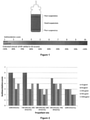
- the appearance of the API particles in the propellants was assessed with regards to both the sedimentation rate and flocculation behaviour (see Figure 1 ).
- the sedimentation rate of the formulations was visually assessed after suspension agitation by recording images of the glass vials using a high-speed camera.
- the suspension quality was determined by assigning a sedimentation score of from 1 to 10 based on the amount of active particles which had settled or floated in 30 seconds, with 1 being the fastest to sediment/cream (i.e. undesirable) and 10 being the slowest to sediment/cream (i.e. acceptable).
- Table 3 Quantities of RPL554 used for formulations of HFA-134a, HFA-227ea and mixtures thereof Product strength ( ⁇ g/actuation) Mass of RPL554 (mg/vial) 10 1.5 50 7.5 150 22.5 500 75.0 1000 150.0
- the RPL554 formulation in HFA-134a was readily suspended on shaking, with rapid flocculation and gradual sedimentation observed after shaking was stopped.
- the formulations in HFA-227ea and blends of HFA-134a/HFA-227ea (50/50) were also readily suspended on shaking. However, creaming was observed after the cessation of shaking for both HFA-227ea containing formulations.
- the HFA-227ea formulations showed evidence of particle adhesion to the container walls together with more distinct, larger flocs after shaking.
- Table 5 Sedimentation scores for formulations prepared with HFA-134a and HFA-227ea and mixtures thereof Product strength ( ⁇ g/actuation) HFA-134a % w/w HFA-227ea % w/w Score 10 100 0 6 50 6 150 5 500 3 1000 4 10 75 25 6 50 6 150 3 500 3 1000 4 10 50 50 4 50 3 150 3 500 2 1000 3 10 25 75 5 50 4 150 4 500 3 1000 4 10 0 100 3 50 3 150 3 500 2 1000 2
- HFA-134a may advantageously be used as the sole diluent for a liquid pharmaceutical composition comprising a suspension of particles of RPL554.
- formulations further comprising a surfactant (oleic acid, Ph. Eur./BP) and a co-solvent (ethanol, 100% USP-NF) were prepared.
- a surfactant oleic acid, Ph. Eur./BP
- a co-solvent ethanol, 100% USP-NF
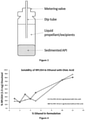
- RPL554 was originally deemed to be practically insoluble in ethanol, according to USP/BP solubility criteria presented in Table 7. However, the observations of dissolution and recrystallisation with the lowest product strength (10 ⁇ g/actuation) prompted further investigations into the solubility of RPL554 in ethanol in the presence of oleic acid.
- Table 7 - USP and BP solubility criteria Descriptive term Part of solvent required per part of solute Very soluble less than 1 Freely soluble from 1 to 10 Soluble from 10 to 30 Sparingly soluble from 30 to 100 Slightly soluble from 100 to 1000 Very slightly soluble from 1000 to 10,000 Practically insoluble more than 10,000
- Samples were prepared by adding 1.5 mg of RPL554 to plain 14 mL aluminium canisters, with ethanol, oleic acid and HFA-134a. Excipients were added to the canisters to maintain an ethanol/oleic acid ratio of a 50:1 (see Table 8). Corresponding canisters were also produced containing RPL554, ethanol and HFA-134a only. The canisters were crimped with 63 ⁇ L pMDI valves, with shortened dip tubes ( Figure 3 ), and filled to 11.6 g with HFA-134a through the valve. The length of the dip tubes was sufficient to extend into the liquid propellant/co-solvent phase only (i.e. after the API particles had settled).
- each canister was fired five times, in an upright position (through a cannula fitted to the valve stem) into a 10.0 cm 3 volumetric flask.
- the flask was made up to volume with dehydrated ethanol and the solution was analysed using UV/Visible spectroscopy (Perkin Elmer, Model Lambda 35).
- the concentration of RPL554 was calculated, quantitatively, against a three point standard curve.
- the solubility of the API in the co-solvent/propellant mix should be minimal to avoid potential issues with chemical and physical instability. Any benefits associated with the use of oleic acid and ethanol as excipients was found to be significantly outweighed by the vulnerability towards dissolution of RPL554 and Ostwald ripening of the RPL554 particles. It was therefore established that the most promising pMDI formulation for RPL554 was a suspension formulation of RPL554 in HFA-134a only.
- HFA-134a only formulations were further assessed to ensure that the RPL554 was sufficiently suspended for delivery via a pMDI, by preparing samples in pressure rated glass vials. Three product strengths (50, 150 and 500 ⁇ g/actuation) were selected. Visual assessment of these formulations indicated comparable suspension quality and sedimentation rates to commercially available HFA-134a only pMDI product.
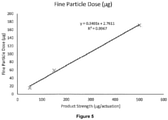
- the product performance attributes of the RPL554 HFA-134a only suspension based formulations were further assessed by preparing laboratory samples in 14 mL plain aluminium canisters, at 3 strengths (50, 150 and 500 ⁇ g/actuation), which were crimped with Aptar 63 ⁇ L valves. The samples were mixed for 30 seconds in an ultrasonic bath before being stored, inverted, for 4 days prior to analysis for Delivered Dose Uniformity (DDU) and Aerodynamic Particle Size Distribution (APSD) by Next Generation Impaction (NGI).
- DDU Delivered Dose Uniformity
- APSD Aerodynamic Particle Size Distribution
- NTI Next Generation Impaction
- the shot weight was measured at the beginning, middle and end of canister life to assess product performance through life.
- the theoretical shot weight for 63 ⁇ L of HFA-134a is 77.2 mg.
- Example data are presented for RPL554 HFA-134a pMDI, 500 ⁇ g/actuation product in Table 10 and Table 11 for stability studies conducted at 25°C/60 and 40°C/75% RH respectively. The data show consistent performance over the 6 month stability duration.
Landscapes
- Health & Medical Sciences (AREA)
- Chemical & Material Sciences (AREA)
- Animal Behavior & Ethology (AREA)
- Life Sciences & Earth Sciences (AREA)
- Veterinary Medicine (AREA)
- Public Health (AREA)
- Medicinal Chemistry (AREA)
- Pharmacology & Pharmacy (AREA)
- General Health & Medical Sciences (AREA)
- Epidemiology (AREA)
- Engineering & Computer Science (AREA)
- Bioinformatics & Cheminformatics (AREA)
- Pulmonology (AREA)
- General Chemical & Material Sciences (AREA)
- Chemical Kinetics & Catalysis (AREA)
- Oil, Petroleum & Natural Gas (AREA)
- Otolaryngology (AREA)
- Dispersion Chemistry (AREA)
- Nuclear Medicine, Radiotherapy & Molecular Imaging (AREA)
- Organic Chemistry (AREA)
- Pharmaceuticals Containing Other Organic And Inorganic Compounds (AREA)
- Medicinal Preparation (AREA)
- Acyclic And Carbocyclic Compounds In Medicinal Compositions (AREA)
Applications Claiming Priority (3)
| Application Number | Priority Date | Filing Date | Title |
|---|---|---|---|
| GB1816447.5A GB2578093B (en) | 2018-10-09 | 2018-10-09 | Liquid pharmaceutical composition comprising RPL554 and HFA-134A |
| EP19790718.1A EP3820446B1 (en) | 2018-10-09 | 2019-10-09 | Pharmaceutical compositions comprising rpl554 in hfa-134a for administration by inhalation |
| PCT/GB2019/052863 WO2020074894A1 (en) | 2018-10-09 | 2019-10-09 | Pharmaceutical compositions comprising rpl554 in hfa-134a for administration by inhalation |
Related Parent Applications (2)
| Application Number | Title | Priority Date | Filing Date |
|---|---|---|---|
| EP19790718.1A Division EP3820446B1 (en) | 2018-10-09 | 2019-10-09 | Pharmaceutical compositions comprising rpl554 in hfa-134a for administration by inhalation |
| EP19790718.1A Division-Into EP3820446B1 (en) | 2018-10-09 | 2019-10-09 | Pharmaceutical compositions comprising rpl554 in hfa-134a for administration by inhalation |
Publications (1)
| Publication Number | Publication Date |
|---|---|
| EP3960157A1 true EP3960157A1 (en) | 2022-03-02 |
Family
ID=64394831
Family Applications (2)
| Application Number | Title | Priority Date | Filing Date |
|---|---|---|---|
| EP21198029.7A Pending EP3960157A1 (en) | 2018-10-09 | 2019-10-09 | Pharmaceutical compositions comprising rpl554 in hfa-134a for administration by inhalation |
| EP19790718.1A Active EP3820446B1 (en) | 2018-10-09 | 2019-10-09 | Pharmaceutical compositions comprising rpl554 in hfa-134a for administration by inhalation |
Family Applications After (1)
| Application Number | Title | Priority Date | Filing Date |
|---|---|---|---|
| EP19790718.1A Active EP3820446B1 (en) | 2018-10-09 | 2019-10-09 | Pharmaceutical compositions comprising rpl554 in hfa-134a for administration by inhalation |
Country Status (27)
| Country | Link |
|---|---|
| US (2) | US20210379053A1 (enExample) |
| EP (2) | EP3960157A1 (enExample) |
| JP (2) | JP7578587B2 (enExample) |
| KR (1) | KR20210073532A (enExample) |
| CN (1) | CN112912064B (enExample) |
| AU (1) | AU2019358585B2 (enExample) |
| BR (1) | BR112021006712A2 (enExample) |
| CA (1) | CA3113167A1 (enExample) |
| CY (1) | CY1124943T1 (enExample) |
| DK (1) | DK3820446T3 (enExample) |
| ES (1) | ES2899744T3 (enExample) |
| GB (1) | GB2578093B (enExample) |
| HR (1) | HRP20220053T1 (enExample) |
| HU (1) | HUE057780T2 (enExample) |
| IL (1) | IL282032A (enExample) |
| LT (1) | LT3820446T (enExample) |
| MX (2) | MX2021003599A (enExample) |
| MY (1) | MY207302A (enExample) |
| PH (1) | PH12021550767A1 (enExample) |
| PL (1) | PL3820446T3 (enExample) |
| PT (1) | PT3820446T (enExample) |
| RS (1) | RS62775B1 (enExample) |
| SG (1) | SG11202102567UA (enExample) |
| SI (1) | SI3820446T1 (enExample) |
| SM (1) | SMT202200044T1 (enExample) |
| WO (1) | WO2020074894A1 (enExample) |
| ZA (1) | ZA202102039B (enExample) |
Families Citing this family (7)
| Publication number | Priority date | Publication date | Assignee | Title |
|---|---|---|---|---|
| PL3231444T3 (pl) | 2014-05-12 | 2020-05-18 | Verona Pharma Plc | Nowe leczenie |
| GB201502260D0 (en) | 2015-02-11 | 2015-04-01 | Verona Pharma Plc | Salt of Pyrimido[6,1-A]Isoquinolin-4-one compound |
| GB2594480A (en) * | 2020-04-28 | 2021-11-03 | Verona Pharma Plc | New treatment |
| GB202202297D0 (en) | 2022-02-21 | 2022-04-06 | Verona Pharma Plc | Formulation production process |
| KR20250087621A (ko) * | 2022-10-28 | 2025-06-16 | 지앙수 헨그루이 파마슈티컬스 컴퍼니 리미티드 | 이소퀴놀리논계 화합물을 포함하는 약학적 조성물 및 이의 제조 방법 |
| EP4378942A1 (en) | 2022-12-02 | 2024-06-05 | Sandoz AG | Crystal form of a pde3/4 inhibitor |
| US12194045B1 (en) | 2023-06-26 | 2025-01-14 | Verona Pharma Plc | Particulate composition |
Citations (5)
| Publication number | Priority date | Publication date | Assignee | Title |
|---|---|---|---|---|
| WO2000058308A1 (en) | 1999-03-31 | 2000-10-05 | Vernalis Limited | DERIVATIVES OF PYRIMIDO[6,1-a]ISOQUINOLIN-4-ONE |
| WO2014140647A1 (en) * | 2013-03-15 | 2014-09-18 | Verona Pharma Plc | Drug combination |
| WO2015173551A1 (en) | 2014-05-12 | 2015-11-19 | Verona Pharma Plc | New treatment |
| WO2016042313A1 (en) | 2014-09-15 | 2016-03-24 | Verona Pharma Plc | Liquid inhalation formulation comprising rpl554 |
| WO2016128742A1 (en) * | 2015-02-11 | 2016-08-18 | Verona Pharma Plc | Salt of a pyrimido[6,1-a]isoquinolin-4-one compound |
Family Cites Families (2)
| Publication number | Priority date | Publication date | Assignee | Title |
|---|---|---|---|---|
| MX345802B (es) * | 2010-08-09 | 2017-02-16 | Verona Pharma Plc * | Forma cristalina de compuesto pirimido [6, 1-a] isoquinolin-4-ona. |
| RU2697862C2 (ru) * | 2012-02-28 | 2019-08-21 | Айсьютика Холдингз Инк. | Ингаляционные фармацевтические композиции |
-
2018
- 2018-10-09 GB GB1816447.5A patent/GB2578093B/en active Active
-
2019
- 2019-10-09 MX MX2021003599A patent/MX2021003599A/es unknown
- 2019-10-09 SI SI201930145T patent/SI3820446T1/sl unknown
- 2019-10-09 DK DK19790718.1T patent/DK3820446T3/da active
- 2019-10-09 HU HUE19790718A patent/HUE057780T2/hu unknown
- 2019-10-09 BR BR112021006712-4A patent/BR112021006712A2/pt unknown
- 2019-10-09 EP EP21198029.7A patent/EP3960157A1/en active Pending
- 2019-10-09 MY MYPI2021001479A patent/MY207302A/en unknown
- 2019-10-09 HR HRP20220053TT patent/HRP20220053T1/hr unknown
- 2019-10-09 PT PT197907181T patent/PT3820446T/pt unknown
- 2019-10-09 US US17/280,452 patent/US20210379053A1/en not_active Abandoned
- 2019-10-09 CA CA3113167A patent/CA3113167A1/en active Pending
- 2019-10-09 AU AU2019358585A patent/AU2019358585B2/en active Active
- 2019-10-09 WO PCT/GB2019/052863 patent/WO2020074894A1/en not_active Ceased
- 2019-10-09 JP JP2021517866A patent/JP7578587B2/ja active Active
- 2019-10-09 EP EP19790718.1A patent/EP3820446B1/en active Active
- 2019-10-09 ES ES19790718T patent/ES2899744T3/es active Active
- 2019-10-09 SG SG11202102567UA patent/SG11202102567UA/en unknown
- 2019-10-09 PL PL19790718T patent/PL3820446T3/pl unknown
- 2019-10-09 KR KR1020217010706A patent/KR20210073532A/ko not_active Ceased
- 2019-10-09 CN CN201980065895.8A patent/CN112912064B/zh active Active
- 2019-10-09 RS RS20211599A patent/RS62775B1/sr unknown
- 2019-10-09 SM SM20220044T patent/SMT202200044T1/it unknown
- 2019-10-09 LT LTEPPCT/GB2019/052863T patent/LT3820446T/lt unknown
-
2021
- 2021-03-25 ZA ZA2021/02039A patent/ZA202102039B/en unknown
- 2021-03-26 MX MX2024001499A patent/MX2024001499A/es unknown
- 2021-04-04 IL IL282032A patent/IL282032A/en unknown
- 2021-04-06 PH PH12021550767A patent/PH12021550767A1/en unknown
-
2022
- 2022-02-02 CY CY20221100086T patent/CY1124943T1/el unknown
-
2024
- 2024-03-26 US US18/616,878 patent/US20250049781A1/en active Pending
- 2024-06-05 JP JP2024091837A patent/JP2024113096A/ja active Pending
Patent Citations (6)
| Publication number | Priority date | Publication date | Assignee | Title |
|---|---|---|---|---|
| WO2000058308A1 (en) | 1999-03-31 | 2000-10-05 | Vernalis Limited | DERIVATIVES OF PYRIMIDO[6,1-a]ISOQUINOLIN-4-ONE |
| WO2014140647A1 (en) * | 2013-03-15 | 2014-09-18 | Verona Pharma Plc | Drug combination |
| WO2014140648A1 (en) | 2013-03-15 | 2014-09-18 | Verona Pharma Plc | Drug combination |
| WO2015173551A1 (en) | 2014-05-12 | 2015-11-19 | Verona Pharma Plc | New treatment |
| WO2016042313A1 (en) | 2014-09-15 | 2016-03-24 | Verona Pharma Plc | Liquid inhalation formulation comprising rpl554 |
| WO2016128742A1 (en) * | 2015-02-11 | 2016-08-18 | Verona Pharma Plc | Salt of a pyrimido[6,1-a]isoquinolin-4-one compound |
Also Published As
Similar Documents
| Publication | Publication Date | Title |
|---|---|---|
| US20250049781A1 (en) | Pharmaceutical compositions comprising rpl554 in hfa-134a for administration by inhalation | |
| EP2435024B1 (en) | Compositions for respiratory delivery of active agents and associated methods and systems | |
| EP1248597B1 (en) | Pharmaceutical aerosol formulation of salmeterol and fluticasone propionate | |
| US20060257324A1 (en) | Pharmaceutical solution formulations for pressurised metered dose inhalers | |
| US20050154013A1 (en) | Pressurised metered dose inhalers containing solutions of beta-2 agonists | |
| CN103998039A (zh) | 包含噻托溴铵的可吸入药物 | |
| JP2007508283A (ja) | カルボン酸界面活性剤を含むエアロゾル製剤 | |
| DK2727582T3 (en) | Pharmaceutical aerosol formulations of formoterol and beclomethasone dipropionate | |
| HK40061834A (en) | Pharmaceutical compositions comprising rpl554 in hfa-134a for administration by inhalation | |
| WO2017089404A1 (en) | Pharmaceutical composition | |
| US20200163955A1 (en) | Sterile compositions of indacaterol suitable for nebulization | |
| RU2813959C2 (ru) | Фармацевтические композиции, содержащие RPL554 в HFA-134A для введения посредством ингаляции | |
| HK40042852A (en) | Pharmaceutical compositions comprising rpl554 in hfa-134a for administration by inhalation | |
| HK40042852B (en) | Pharmaceutical compositions comprising rpl554 in hfa-134a for administration by inhalation | |
| US20090180969A1 (en) | Pharmaceutical formulation comprising an anticholinergic drug | |
| WO2004080382A2 (en) | Novel compositions containing fentanyl | |
| HK1169027B (en) | Compositions for respiratory delivery of active agents and associated methods and systems | |
| HK1228797B (en) | Compositions for respiratory delivery of active agents and associated methods and systems | |
| HK1169307B (en) | Respiratory delivery of active agents |
Legal Events
| Date | Code | Title | Description |
|---|---|---|---|
| PUAI | Public reference made under article 153(3) epc to a published international application that has entered the european phase |
Free format text: ORIGINAL CODE: 0009012 |
|
| STAA | Information on the status of an ep patent application or granted ep patent |
Free format text: STATUS: THE APPLICATION HAS BEEN PUBLISHED |
|
| AC | Divisional application: reference to earlier application |
Ref document number: 3820446 Country of ref document: EP Kind code of ref document: P |
|
| AK | Designated contracting states |
Kind code of ref document: A1 Designated state(s): AL AT BE BG CH CY CZ DE DK EE ES FI FR GB GR HR HU IE IS IT LI LT LU LV MC MK MT NL NO PL PT RO RS SE SI SK SM TR |
|
| REG | Reference to a national code |
Ref country code: HK Ref legal event code: DE Ref document number: 40061834 Country of ref document: HK |
|
| STAA | Information on the status of an ep patent application or granted ep patent |
Free format text: STATUS: REQUEST FOR EXAMINATION WAS MADE |
|
| 17P | Request for examination filed |
Effective date: 20220706 |
|
| RBV | Designated contracting states (corrected) |
Designated state(s): AL AT BE BG CH CY CZ DE DK EE ES FI FR GB GR HR HU IE IS IT LI LT LU LV MC MK MT NL NO PL PT RO RS SE SI SK SM TR |
|
| P01 | Opt-out of the competence of the unified patent court (upc) registered |
Free format text: CASE NUMBER: APP_50696/2024 Effective date: 20240906 |
|
| STAA | Information on the status of an ep patent application or granted ep patent |
Free format text: STATUS: EXAMINATION IS IN PROGRESS |
|
| 17Q | First examination report despatched |
Effective date: 20251119 |