EP3950418B1 - Fahrzeugsitz - Google Patents
Fahrzeugsitz Download PDFInfo
- Publication number
- EP3950418B1 EP3950418B1 EP21186418.6A EP21186418A EP3950418B1 EP 3950418 B1 EP3950418 B1 EP 3950418B1 EP 21186418 A EP21186418 A EP 21186418A EP 3950418 B1 EP3950418 B1 EP 3950418B1
- Authority
- EP
- European Patent Office
- Prior art keywords
- backrest
- vehicle seat
- seat
- horizontal
- partial backrest
- Prior art date
- Legal status (The legal status is an assumption and is not a legal conclusion. Google has not performed a legal analysis and makes no representation as to the accuracy of the status listed.)
- Active
Links
Images




Classifications
-
- B—PERFORMING OPERATIONS; TRANSPORTING
- B60—VEHICLES IN GENERAL
- B60N—SEATS SPECIALLY ADAPTED FOR VEHICLES; VEHICLE PASSENGER ACCOMMODATION NOT OTHERWISE PROVIDED FOR
- B60N2/00—Seats specially adapted for vehicles; Arrangement or mounting of seats in vehicles
- B60N2/02—Seats specially adapted for vehicles; Arrangement or mounting of seats in vehicles the seat or part thereof being movable, e.g. adjustable
- B60N2/22—Seats specially adapted for vehicles; Arrangement or mounting of seats in vehicles the seat or part thereof being movable, e.g. adjustable the back-rest being adjustable
- B60N2/2222—Seats specially adapted for vehicles; Arrangement or mounting of seats in vehicles the seat or part thereof being movable, e.g. adjustable the back-rest being adjustable the back-rest having two or more parts
-
- B—PERFORMING OPERATIONS; TRANSPORTING
- B60—VEHICLES IN GENERAL
- B60N—SEATS SPECIALLY ADAPTED FOR VEHICLES; VEHICLE PASSENGER ACCOMMODATION NOT OTHERWISE PROVIDED FOR
- B60N2/00—Seats specially adapted for vehicles; Arrangement or mounting of seats in vehicles
- B60N2/02—Seats specially adapted for vehicles; Arrangement or mounting of seats in vehicles the seat or part thereof being movable, e.g. adjustable
- B60N2/20—Seats specially adapted for vehicles; Arrangement or mounting of seats in vehicles the seat or part thereof being movable, e.g. adjustable the back-rest being tiltable, e.g. to permit easy access
- B60N2/206—Seats specially adapted for vehicles; Arrangement or mounting of seats in vehicles the seat or part thereof being movable, e.g. adjustable the back-rest being tiltable, e.g. to permit easy access to a position in which it can be used as a support for objects, e.g. as a tray
-
- B—PERFORMING OPERATIONS; TRANSPORTING
- B60—VEHICLES IN GENERAL
- B60N—SEATS SPECIALLY ADAPTED FOR VEHICLES; VEHICLE PASSENGER ACCOMMODATION NOT OTHERWISE PROVIDED FOR
- B60N2/00—Seats specially adapted for vehicles; Arrangement or mounting of seats in vehicles
- B60N2/24—Seats specially adapted for vehicles; Arrangement or mounting of seats in vehicles for particular purposes or particular vehicles
- B60N2/30—Non-dismountable or dismountable seats storable in a non-use position, e.g. foldable spare seats
- B60N2/3002—Non-dismountable or dismountable seats storable in a non-use position, e.g. foldable spare seats back-rest movements
- B60N2/3004—Non-dismountable or dismountable seats storable in a non-use position, e.g. foldable spare seats back-rest movements by rotation only
- B60N2/3009—Non-dismountable or dismountable seats storable in a non-use position, e.g. foldable spare seats back-rest movements by rotation only about transversal axis
-
- B—PERFORMING OPERATIONS; TRANSPORTING
- B60—VEHICLES IN GENERAL
- B60N—SEATS SPECIALLY ADAPTED FOR VEHICLES; VEHICLE PASSENGER ACCOMMODATION NOT OTHERWISE PROVIDED FOR
- B60N2/00—Seats specially adapted for vehicles; Arrangement or mounting of seats in vehicles
- B60N2/24—Seats specially adapted for vehicles; Arrangement or mounting of seats in vehicles for particular purposes or particular vehicles
- B60N2/30—Non-dismountable or dismountable seats storable in a non-use position, e.g. foldable spare seats
- B60N2/3038—Cushion movements
- B60N2/304—Cushion movements by rotation only
- B60N2/3045—Cushion movements by rotation only about transversal axis
-
- B—PERFORMING OPERATIONS; TRANSPORTING
- B60—VEHICLES IN GENERAL
- B60N—SEATS SPECIALLY ADAPTED FOR VEHICLES; VEHICLE PASSENGER ACCOMMODATION NOT OTHERWISE PROVIDED FOR
- B60N2/00—Seats specially adapted for vehicles; Arrangement or mounting of seats in vehicles
- B60N2/24—Seats specially adapted for vehicles; Arrangement or mounting of seats in vehicles for particular purposes or particular vehicles
- B60N2/32—Seats specially adapted for vehicles; Arrangement or mounting of seats in vehicles for particular purposes or particular vehicles convertible for other use
-
- B—PERFORMING OPERATIONS; TRANSPORTING
- B60—VEHICLES IN GENERAL
- B60N—SEATS SPECIALLY ADAPTED FOR VEHICLES; VEHICLE PASSENGER ACCOMMODATION NOT OTHERWISE PROVIDED FOR
- B60N2/00—Seats specially adapted for vehicles; Arrangement or mounting of seats in vehicles
- B60N2/58—Seat coverings
- B60N2/60—Removable protective coverings
- B60N2/6009—Removable protective coverings covering more than only the seat
-
- B—PERFORMING OPERATIONS; TRANSPORTING
- B60—VEHICLES IN GENERAL
- B60N—SEATS SPECIALLY ADAPTED FOR VEHICLES; VEHICLE PASSENGER ACCOMMODATION NOT OTHERWISE PROVIDED FOR
- B60N3/00—Arrangements or adaptations of other passenger fittings, not otherwise provided for
- B60N3/001—Arrangements or adaptations of other passenger fittings, not otherwise provided for of tables or trays
-
- B—PERFORMING OPERATIONS; TRANSPORTING
- B60—VEHICLES IN GENERAL
- B60N—SEATS SPECIALLY ADAPTED FOR VEHICLES; VEHICLE PASSENGER ACCOMMODATION NOT OTHERWISE PROVIDED FOR
- B60N3/00—Arrangements or adaptations of other passenger fittings, not otherwise provided for
- B60N3/001—Arrangements or adaptations of other passenger fittings, not otherwise provided for of tables or trays
- B60N3/002—Arrangements or adaptations of other passenger fittings, not otherwise provided for of tables or trays of trays
- B60N3/004—Arrangements or adaptations of other passenger fittings, not otherwise provided for of tables or trays of trays of foldable trays mounted on the back-rest
Definitions
- the invention relates to a vehicle seat, in particular a motor vehicle seat, particularly preferably a seat and/or passenger seat in the driver's cab of a commercial vehicle, and to a vehicle with such a vehicle seat.
- a vehicle seat in particular a motor vehicle seat, particularly preferably a seat and/or passenger seat in the driver's cab of a commercial vehicle, and to a vehicle with such a vehicle seat.
- document EP 1 932 713 B1 discloses a middle seat for a motor vehicle rear seat, comprising a seat part and a backrest connected to the seat part, wherein the backrest is divided into an upper part and a lower part connected to the upper part in an articulated manner such that the middle seat can be moved completely from an upright position to a horizontal position in the region of the upper part.
- a bed is arranged to be deployed longitudinally within the cab in the direction of travel and includes a continuous mattress.
- the bed further has a vertical stowage position near a rear wall of the cab and a deployed position extending between the rear wall and the cab windshield.
- document KR 970 036 660 A discloses a vehicle seat with a split backrest, wherein an upper backrest is connected to a lower backrest by means of a Tilt mechanism can be folded down.
- a rear panel of the upper backrest extends to the center of the lower backrest and forms a table when the upper backrest is folded down to a horizontal position.
- a motor vehicle is equipped with several seats, although during normal operation, not all of them are occupied and therefore necessary.
- the situation often arises where only the driver is in the cab of the commercial vehicle, leaving the passenger seat unused. It would be desirable to use the vehicle seat, e.g., the passenger seat, and/or the space occupied by the vehicle seat for other purposes, thus making more efficient use of the cab's interior.
- the invention is therefore based on the object of providing an alternative and/or improved vehicle seat that can be configured for different application situations.
- a vehicle seat preferably a motor vehicle seat
- the vehicle seat comprises a seat part and a backrest.
- the backrest comprises a lower partial backrest and an upper partial backrest, which is pivotably attached to the lower partial backrest about a horizontal pivot axis.
- the upper partial backrest can be pivoted about the horizontal first pivot axis toward the seat part into a horizontal folding position.
- a use surface Arranged on its rear side (i.e., on the rear side of the upper partial backrest) is a use surface that can be used as a table in the horizontal folding position.
- the vehicle seat according to the invention can be configured as a table, which can be used, for example, by passengers during breaks in the journey.
- This configurability is particularly advantageous for commercial vehicles, since it is common practice for commercial vehicles to use the driver's cab as a living and sleeping area during breaks and rest periods.
- the vehicle seat according to the invention allows the space within the driver's cab to be used more efficiently as living space by the driver, since no additional installation of a table is not necessary, but the vehicle seat that is not being used anyway, especially a passenger seat, can be used as a table.
- the upper part of the backrest can be a section of the backrest facing away from the seat part.
- the horizontal first pivot axis can be a backrest transverse axis or parallel to the backrest transverse axis.
- the horizontal first pivot axis can preferably run in the transverse direction of the vehicle.
- the horizontal first pivot axis can preferably run transversely to a viewing direction of a driver or passenger in a normal seating position on the vehicle seat.
- the orientation of the horizontal folding position of the upper backrest refers, for example, to the front or back of the upper backrest. In the normal position of the upper backrest, it is approximately vertically aligned or tilted relative to the seat section, allowing the driver or passenger to rest their back against the front of the upper backrest in a normal, upright sitting position. In the horizontal folding position, the front and back are aligned horizontally.
- the working surface is formed by a cover, preferably a plastic cover or plate, attached to the rear of the upper partial backrest.
- a cover preferably a plastic cover or plate
- the working surface can be implemented simply and efficiently using such a cover, whereby no additional, particularly wear-prone, components are required besides the cover and corresponding fastening means.
- the cover can completely cover the back of the upper partial backrest, thereby increasing the available table surface.
- the cover can have a peripheral contour that corresponds in shape to the peripheral contour of the upper partial backrest.
- the cover can have a raised portion along a perimeter of the cover to form an edge. The formation of the edge can prevent or at least impede the sliding of objects placed on the surface.
- the upper partial backrest can taper in an upper end region to form a headrest.
- the cover can extend into the upper end region, i.e., to the headrest, and optionally further have a recess, preferably a cylindrical recess, in the upper end region to form a beverage bottle holder.
- the back of the headrest can also advantageously be used as a surface.
- the cover comprises at least one cover section which at least partially covers at least one side surface of the upper partial backrest and an upper fitting system by means of which the upper partial backrest is pivotably attached to the lower partial backrest.
- the at least one cover section may be configured to at least partially cover the at least one side surface of the upper partial backrest and the upper fitting system in any position of the upper partial backrest.
- the cover may extend beyond the rear of the upper partial backrest at an end region where the upper impact system is located.
- the cover can be removable, for example, as an adapter.
- an adapter can be mounted for attaching luggage or other items.
- the use surface can be formed by a plate attached to the back of the upper partial backrest.
- the use surface can be formed by a hinged panel mounted on the rear side of the upper partial backrest.
- the hinged panel can have at least two partial panels that can be pivoted relative to one another.
- the partial panels form a stack of the partial panels that can be fixed and/or is releasably fixed to the upper partial backrest by a hinge and a releasable locking device.
- the hinge and the releasable locking device can be arranged on opposite sides of the stack.
- a panel can thus be provided which, when unfolded, has a usable surface with a larger area than the rear side of the upper partial backrest, i.e., can extend beyond at least one end region of the rear side, preferably the end region where the headrest is formed.
- the foldable panel can, for example, be rectangular.
- the releasable relocation device can be a rotatable hook attached to the back of the upper partial backrest in such a way that the stack of partial panels can be clamped between the hook and the upper partial backrest and thus secured.
- the locking device can secure the hinged plate in a statically determined or statically overdetermined manner in the folded state compared to the unfolded state.
- a pivotable connection between two partial plates can be designed such that the two partial plates are locked when they are arranged in alignment with each other.
- a first partial panel of the partial panels can have a projection that is connected to the joint. Furthermore, the first partial panel can be arranged on a side of the stack facing away from the rear side of the upper backrest part when folded.
- the hinge ensures that the partial panels are always connected at least on one side to the rear of the upper backrest section, even when the locking device is released.
- the sub-plates can be identical or similar in design, with the exception that the first sub-plate additionally has the overhang.
- the projection may be designed such that it rests against a side surface of the upper partial backrest when the first partial plate is deflected perpendicular to the upper partial backrest.
- a first retaining element can be arranged at the upper end region of the rear side of the upper partial backrest.
- the first retaining element can be configured to cooperate with a second retaining element arranged on a folded-out partial panel at the rear of the use surface in order to fix the folded-out partial panel to the rear side of the upper partial backrest.
- the stability of the unfolded plate can be ensured when used as a work surface and, for example, unwanted back and forth movement of the plate can be avoided.
- the first and second holding elements and/or the joint can be designed such that, when the unfolded partial panel is fixed to the rear side of the upper partial backrest, the use surface is aligned parallel to the rear side of the upper partial backrest.
- the vehicle seat can further comprise a substructure, preferably designed as a console or box-shaped, on which the lower partial backrest is mounted in an inclination-adjustable manner.
- the lower partial backrest can be mounted on the substructure in an inclination-adjustable manner by means of a lower fitting system.
- the upper partial backrest can be pivotably attached to the lower partial backrest by means of an upper fitting system.
- the upper and lower fitting systems can be formed by fitting systems known from the prior art.
- the upper fitting system can have two fittings arranged along the horizontal first pivot axis on two opposite sides of the upper partial backrest.
- the lower fitting system can have two fittings arranged along a pivot axis parallel to the horizontal first pivot axis on two opposite sides of the lower partial backrest.
- the lower fitting system and the upper fitting system can each have a stop that defines a maximum pivoting position.
- the stops can each be set such that, when the lower partial backrest and the upper partial backrest are in the maximum pivoting position, the upper partial backrest is in the horizontal folding position.
- the upper backrest can be adjusted to the horizontal position with simple hand movements and without the need for lengthy adjustment of the inclination of both backrests.
- the backrest can be converted into a folding position by simply swivelling the lower and upper backrests to their respective stops.
- the pivoting position of the lower partial backrest and/or upper partial backrest can be variably adjustable, e.g. by designing the fittings and the possible pivoting angles, so that the upper partial backrest can always be aligned horizontally, regardless of the position of the vehicle or the driver's cab.
- the lower partial backrest and/or upper partial backrest can be designed to be continuously pivotable, or to be pivotable in a grid-like manner, for example by means of a recliner, or to be pivotable by an electric motor.
- the seat part can be pivoted about a horizontal pivot axis, hereinafter referred to as the horizontal second pivot axis, between a horizontal normal position and a non-horizontal, preferably vertical, folding position.
- the horizontal second pivot axis can be parallel to the backrest transverse axis.
- the horizontal second pivot axis can preferably run in the transverse direction of the vehicle.
- the horizontal second pivot axis can preferably run transversely to the viewing direction of a driver or passenger in a normal seating position on the vehicle seat.
- the orientation of the horizontal normal position and the non-horizontal folding position of the seat part refers, for example, to a seat surface of the seat part.
- the seat surface In the horizontal normal position, the seat surface is aligned horizontally, on which the driver or passenger can rest the normal sitting position.
- the seat In the vertical folding position, the seat is aligned vertically.
- the seat part can be pivotably mounted on the base by means of a pivot connection about the horizontal second pivot axis.
- the base can form a cavity open toward the seat part.
- the pivot connection can be arranged at a distance from an end region of the seat part that faces the lower backrest in the normal horizontal position, so that when the seat part is pivoted from the normal horizontal position to its folded position, this end region can be inserted into the cavity of the base.
- the position of the pivot connection can be selected such that, when the upper backrest part is in the horizontal folding position and the seat part is in its folding position, the upper backrest part can rest on the seat part.
- a width of the seat part in the end region which in the normal horizontal position lies between the horizontal second pivot axis and the lower partial backrest, can be smaller than a width of the seat part in a front region.
- the width of the front region can be larger, and the width of the end region can be smaller than a width of the cavity of the base.
- the front section of the seat can rest on the base in the normal horizontal position, thus providing appropriate stability for the seat surface, especially when the driver or passenger is sitting on the vehicle seat.
- the end section allows the seat to be immersed in the base.
- the vehicle seat can further comprise a locking device for releasably locking the seat part in the folded position. This advantageously ensures stability of the vehicle seat with the seat part and upper backrest in the respective folded position, and prevents the seat part from accidentally pivoting back to the normal horizontal position.
- the locking device can be designed as a clamping device, comprising a receptacle or clamp arranged in the substructure for receiving one or more Clamping part or receptacle arranged on the underside of the seat part.
- a clamp and/or receptacle can be positioned such that when the seat part is pivoted from the horizontal normal position into its folded position, the end region of the seat part that extends into the cavity is locked to the clamp and/or receptacle, preferably in that a tubular section of a support frame of the seat part can be locked to the clamp and/or receptacle.
- the vehicle seat can be arranged or can be arranged so as to be horizontally displaceable on its underside along a rail arrangement.
- the vehicle seat can be displaced along the rail arrangement in the longitudinal direction of the rail arrangement.
- the longitudinal direction of the rail arrangement can be the longitudinal direction of the vehicle.
- the rail arrangement can comprise at least one floor rail and a seat rail that is displaceable in the longitudinal direction relative to this floor rail.
- the vehicle seat can be mounted on a rotating device, preferably a turntable-like rotating device, by means of which the vehicle seat can be pivoted about a vertical axis of rotation.
- the seat part can comprise a seat cushion support and a seat cushion arranged on the seat cushion support.
- the upper partial backrest can comprise an upper back cushion support and an upper back cushion arranged on the upper back cushion support.
- the lower partial backrest can comprise a lower back cushion support and a lower back cushion arranged on the lower back cushion support.
- the vehicle seat can be a passenger seat for a driver's cab of a commercial vehicle.
- a vehicle preferably a commercial vehicle
- a vehicle seat as disclosed herein.
- a commercial vehicle is a vehicle whose design and configuration are adapted for transporting people, transporting goods, or towing trailers.
- the vehicle may be a truck, a semi-trailer truck, and/or a bus.
- reference numeral 14 designates in all embodiments of the Figures 1-10 the seat part, which can be designed differently depending on the design and variant.
- the directions indicated in the figures refer to preferred vehicle directions when the vehicle seat 10, 50, 60 is in the installed state, namely the vehicle longitudinal direction (X direction), the vehicle transverse direction (Y direction) and the vehicle vertical direction (Z direction).
- the Figures 1-2B show the vehicle seat 10 according to the invention according to a first embodiment.
- the vehicle seat 10 comprises a seat part 14 and a backrest 12.
- the backrest 12 is characterized in that it comprises two partial backrests: a lower partial backrest 12B and an upper partial backrest 12A pivotably mounted on the lower partial backrest 12B about a horizontal first pivot axis S2.
- the upper partial backrest 12A is made of a - in the Figures 1A and 1B shown - normal sitting position, in which the upper part of the backrest 12A is aligned approximately vertically, in order to move the horizontal first pivot axis S2 in the direction of the seat part 14 into a - in the Figures 2A and 2B
- the backrest 12C of the upper backrest 12A is provided with a surface that can be used as a table in the horizontal folding position.
- the horizontal first pivot axis S2 is preferably oriented in the Y direction.
- the use surface is formed by a cover 30 attached to the rear side 12C of the upper partial backrest 12A.
- the cover 30 is a plastic cover or plate.
- the cover 30 may be formed as a rectangular plate that partially covers the back 12C. Alternatively, the cover 30 may completely cover the back 12C.
- the cover 30 may be formed such that it has a peripheral contour which is designed to correspond in shape to the peripheral contour of the upper partial backrest 12A, and/or has an elevation along a circumference of the cover 30 to form an edge.
- the upper partial backrest 12A can taper in an upper end region to form a headrest.
- the cover 30 can extend into the upper end region and also cover the headrest, thereby having the same circumferential contour as the headrest (not shown here) and optionally further having a recess, preferably a cylindrical recess, in the upper end region to form a beverage bottle holder.
- the cover 30, as shown here by way of example, comprises at least one laterally arranged cover section 30A, which at least partially covers at least one side surface of the upper partial backrest 12A and an upper fitting system 24, by means of which the upper partial backrest 12A is pivotally attached to the lower partial backrest 12B.
- the upper fitting system 24 is completely covered laterally by the cover section 30A.
- the vehicle seat 10 may further comprise a base 18, which is preferably designed as a console or box-shaped, on which the lower partial backrest 12B is mounted in an inclination-adjustable manner.
- the lower partial backrest 12B may be mounted in an inclination-adjustable manner on the base 18 by means of a lower fitting system 26.
- the upper partial backrest 12A may be pivotably attached to the lower partial backrest 12B by means of an upper fitting system 24.
- the lower fitting system 26 and the upper fitting system 24 may each have a stop that defines a maximum pivoting position. The stops may each be set such that when the lower partial backrest 12B and the upper partial backrest 12A are in the maximum pivoting position, the upper partial backrest 12A is in the horizontal folded position.
- the maximum pivoting position of the lower backrest part 12B can correspond to a vertical orientation of the lower backrest part 12B, ie no inclination angle of the lower backrest part 12B in the range of 90° in the direction of the seat part 14 can be set.
- the maximum pivoting position of the upper backrest part 12A can correspond to a vertical orientation relative to the lower backrest part 12B, so that the upper backrest part 12A can maximum pivoting position of the lower part backrest 12B and the upper part backrest 12A in the horizontal folding position.
- FIGS. 3A-9 12C show the vehicle seat 50 according to a second embodiment, which is not part of the invention.
- the second embodiment differs from the first embodiment in that the use surface is not formed by the cover 30, but by a hinged plate 32 mounted on the rear side 12C.
- the hinged plate 32 has two partial plates 32A, 32B that can be pivoted relative to one another and, when folded, form a stack of partial plates 32A, 32B.
- the stack can be secured to the upper partial backrest 12A by a hinge 36 and a releasable locking device 38, which are arranged on opposite sides of the stack.
- the hinged plate 32 can also have more than two partial plates 32A, 32B that can be pivoted relative to one another.
- a first partial plate 32B has a projection which is connected to the joint 36 and, in the folded state, is arranged on a side of the stack facing away from the rear side 12C of the upper backrest part 12A.
- FIGS 5A and 6-9 illustrate the opening of the hinged plate 32.
- the second partial plate 32A which is not connected to the joint 36, is deflected.
- the second partial plate 32A is the partial plate that, in the folded state, is arranged on a side of the stack facing the rear side 12C, i.e., in the folded state, rests against the rear side 12C.
- the second partial plate 32A is pivoted outward toward the rear side 12C and deflected until it is aligned with the first partial plate 32B, and thus the two partial plates 32A, 32B form the plate 32 ( Figures 6 and 7 ).
- the pivotable connection 32' between the two partial plates 32A, 32B can be designed such that a locking action occurs between the two partial plates 32A, 32B when they are arranged in alignment with one another.
- the plate 32 is guided back towards the rear side 12C by means of the joint 36 until a second holding element arranged on the unfolded partial flap 32A at the rear of the use surface can cooperate with a first holding element 34 arranged at the upper end region of the rear side 12C in order to fix the unfolded partial plate 32A to the rear side 12C of the upper partial backrest 12A ( Figures 8 and 9 ).
- Figure 5B shows the vehicle seat 50 of the second embodiment with the upper back cushion removed.
- the first retaining element 34 and the hinge 36 can be formed on the upper back cushion support 12A' or as part of the upper back cushion support 12A', respectively.
- the Figure 10 shows the vehicle seat 60 according to the invention according to a third embodiment.
- This third embodiment differs from the first embodiment in that the seat part 14 can be pivoted about a horizontal second pivot axis S1 between a horizontal normal position and a non-horizontal, preferably vertical, folding position.
- the horizontal second pivot axis S1 is preferably aligned in the Y direction and parallel to the horizontal first pivot axis S2.
- the base 18 forms a cavity 18A open towards the seat part 14. Furthermore, the seat part 14 is fixed to the base 18 by means of a Swivel connection 28 is pivotally mounted about the horizontal second pivot axis S1.
- the pivot connection 28 is arranged at a distance from an end region 14B of the seat part 14, which faces the backrest 12 in the normal horizontal position. Accordingly, this end region 14B can be inserted into the cavity 18A of the base 18 when the seat part 14 is pivoted from the normal horizontal position to its folded position.
- the substructure 18 can have a box shape open towards the seat part 14. Furthermore, a width of the seat part 14 in the end region 14B, which in the horizontal normal position lies between the horizontal second pivot axis S1 and the backrest 12, can be smaller than a width of the seat part 14 in a front region 14A, wherein preferably the width of the front region 14A is greater and the width of the end region 14B is smaller than a width of the cavity 18A of the substructure 18.
- the respective widths refer to the respective dimensions in the Y direction.
- the seat part 14 can also be releasably locked in the folded position by means of a locking device (not shown).
- the locking device can be designed, for example, as a clamping device, comprising a receptacle or clamp arranged in the base 18 for receiving a clamping part or receptacle arranged on the underside 14C of the seat part 14.
- the clamp and/or receptacle can be positioned in the base 18 such that when the seat part 14 is pivoted from the horizontal normal position into its folded position, the end region 14B of the seat part 14 that extends into the cavity 18A is locked to the clamp and/or receptacle, preferably by locking a tubular section of a support frame of the seat part 14 to the clamp and/or receptacle.
Landscapes
- Engineering & Computer Science (AREA)
- Transportation (AREA)
- Mechanical Engineering (AREA)
- Aviation & Aerospace Engineering (AREA)
- Seats For Vehicles (AREA)
Description
- Die Erfindung betrifft einen Fahrzeugsitz, insbesondere einen Kraftfahrzeugsitz, besonders bevorzugt einen Sitz und/oder Beifahrersitz im Führerhaus eines Nutzfahrzeuges, sowie ein Fahrzeug mit einem solchen Fahrzeugsitz.
- Dokument
GB 2 395 118 A - Dokument
EP 1 932 713 B1 offenbart einen Mittelsitz für eine Kraftfahrzeug-Rücksitzbank, mit einem Sitzteil und einer mit dem Sitzteil verbundenen Rückenlehne, wobei die Rückenlehne in ein Oberteil und ein gelenkig mit dem Oberteil verbundenes Unterteil derart aufgeteilt ist, dass der Mittelsitz im Bereich des Oberteils vollständig von einer aufrechten Position in eine horizontale Position bewegbar ist. - Dokument
US 2005/248200 A1 offenbart einen Fahrzeugsitz, umfassend einen Sitz und eine Sitzlehne mit einem unteren Abschnitt, der schwenkbar an dem Sitz über einen ersten Scharniermechanismus angebracht ist, und einen oberen Abschnitt, der schwenkbar an dem unteren Abschnitt über einen zweiten Scharniermechanismus angebracht ist. - Dokument
DE 11 2011 105 252 T5 offenbart eine Fahrerkabine für einen Schwerlastkraftwagen. Eine Liege ist so angeordnet, dass sie in Längsrichtung in der Kabine in Fahrtrichtung aufzustellen ist und eine durchgehende Matratze aufweist. Die Liege weist ferner eine vertikale Verstauposition in der Nähe einer hinteren Wand der Kabine und eine aufgestellte Position auf, die sich zwischen der hinteren Wand und der Kabinenwindschutzscheibe erstreckt. - Dokument
KR 970 036 660 A - Im Allgemeinen sind in einem Kraftfahrzeug mehrere Fahrzeugsitze verbaut, wobei im normalen Betrieb oft nicht alle Fahrzeugsitze besetzt und daher notwendig sind. Insbesondere in einem Nutzfahrzeug ergibt sich oft die Situation, dass sich nur der Fahrer im Fahrerhaus des Nutzfahrzeugs befindet und der Beifahrersitz unbenutzt ist. Es wäre wünschenswert, den Fahrzeugsitz, z.B. den Beifahrersitz, und/oder den Raum, der von dem Fahrzeugsitz eingenommen wird, für andere Zwecke zu verwenden und so den Innenraum des Fahrerhauses effizienter zu nutzen.
- Daher besteht Bedarf für einen alternativen und/oder verbesserten Fahrzeugsitz, der für verschiedene Anwendungssituationen konfigurierbar ist, wenn dieser nicht als Sitzplatz notwendig ist.
- Der Erfindung liegt somit die Aufgabe zu Grunde, einen alternativen und/oder verbesserten Fahrzeugsitz, der für verschiedene Anwendungssituationen konfigurierbar ist, bereitzustellen.
- Die Aufgabe wird gelöst durch die Merkmale des Anspruchs 1. Vorteilhafte Weiterbildungen sind in den abhängigen Ansprüchen und der Beschreibung angegeben.
- Gemäß einem allgemeinen Aspekt der Erfindung wird ein Fahrzeugsitz, vorzugsweise ein Kraftfahrzeugsitz, bereitgestellt. Der Fahrzeugsitz umfasst ein Sitzteil und eine Rückenlehne. Die Rückenlehne umfasst eine untere Teilrückenlehne und eine obere Teilrückenlehne, die um eine horizontale Schwenkachse schwenkbar an der unteren Teilrückenlehne angebracht ist. Die obere Teilrückenlehne ist um die horizontale erste Schwenkachse in Richtung des Sitzteils in eine horizontale Klappstellung verschwenkbar. Auf deren Rückseite (d. h. auf der Rückseite der oberen Teilrückenlehne) ist eine Gebrauchsfläche angeordnet, die in der horizontalen Klappstellung als Tisch nutzbar ist.
- Vorteilhaft ist der erfindungsmäßige Fahrzeugsitz als Tisch konfigurierbar, der z. B. von den Passagieren während Fahrpausen verwendet werden kann. Diese Konfigurierbarkeit ist insbesondere für Nutzfahrzeuge von Vorteil, da es bei Nutzfahrzeugen üblich ist, das Fahrerhaus während Fahrpausen und Ruhepausen als Wohn- und Schlafraum zu nutzen. Durch den erfindungsgemäßen Fahrzeugsitz kann der Raum innerhalb des Fahrerhauses vom Fahrer effizienter als Wohnraum genutzt werden, da keine zusätzliche Installation eines Tisches notwendig ist, sondern der ohnehin nicht genutzte Fahrzeugsitz, insbesondere ein Beifahrersitz, entsprechend als Tisch genutzt werden kann.
- Die obere Teilrückenlehne kann ein vom Sitzteil abgewandter Abschnitt der Rückenlehne sein.
- Die horizontale erste Schwenkachse kann eine Rückenlehnenquerachse oder parallel zur Rückenlehnenquerachse sein. In einem eingebauten Zustand des Fahrzeugsitzes in einem Fahrzeug kann die horizontale erste Schwenkachse vorzugsweise in Querrichtung des Fahrzeugs verlaufen. Die horizontale erste Schwenkachse kann vorzugsweise quer zu einer Blickrichtung eines Fahrers bzw. Mitfahrers in einer normalen Sitzposition auf dem Fahrzeugsitz verlaufen.
- Die Ausrichtung der horizontalen Klappstellung der oberen Teilrückenlehne bezieht sich z. B. auf eine Vorderseite oder Rückseite der oberen Teilrückenlehne. In einer Normalstellung der oberen Teilrückenlehne ist diese in etwa vertikal ausgerichtet bzw. weist eine Neigung relativ zum Sitzteil auf, sodass sich der Fahrer bzw. Mitfahrer in der normalen und aufrechten Sitzposition mit seinem Rücken auf der Vorderseite der oberen Teilrückenlehne anlehnen kann. In der horizontalen Klappstellung ist die Vorderseite und die Rückseite horizontal ausgerichtet.
- Erfindungsgemäß ist die Gebrauchsfläche durch eine an der Rückseite der oberen Teilrückenlehne angebrachte Abdeckung, vorzugsweise eine Kunststoffabdeckung oder Platte, gebildet. Vorteilhaft kann die Gebrauchsfläche mittels einer solchen Abdeckung auf einfache und effiziente Weise umgesetzt werden, wobei neben der Abdeckung und entsprechender Befestigungsmittel keine zusätzlichen, insbesondere verschleißanfälligen, Komponenten notwendig sind.
- Gemäß einer bevorzugten Variante kann die Abdeckung die Rückseite der oberen Teilrückenlehne vollständig abdecken, was die verfügbare Tischfläche vergrößert. Alternativ oder ergänzend kann die Abdeckung eine Umfangskontur aufweisen, die formkorrespondierend zur Umfangskontur der oberen Teilrückenlehne ausgeführt ist. Ferner alternativ oder ergänzend kann die Abdeckung eine Erhebung entlang eines Umfangs der Abdeckung zur Ausbildung einer Kante aufweisen. Durch die Ausbildung der Kante kann ein Herunterrutschen von auf der Gebrauchsfläche abgelegten Gegenständen vermieden oder zumindest erschwert werden.
- Gemäß einer weiteren Ausführungsform kann sich die obere Teilrückenlehne in einem oberen Endbereich zur Ausbildung einer Kopfstütze verjüngen. Die Abdeckung kann sich bis in den oberen Endbereich, d.h. bis zur Kopfstütze, erstrecken und in dem oberen Endbereich optional ferner eine Vertiefung, vorzugsweise zylinderförmige Vertiefung, zur Ausbildung einer Getränkeflaschenhalterung aufweisen. Vorteilhaft kann somit auch die Rückseite der Kopfstütze als Gebrauchsfläche benutzt werden.
- Erfindungsgemäß umfasst die Abdeckung mindestens einen Abdeckungsabschnitt, der mindestens eine Seitenfläche der oberen Teilrückenlehne und ein oberes Beschlagsystem, mittels dessen die obere Teilrückenlehne verschwenkbar an der unteren Teilrückenlehne angebracht ist, zumindest teilweise abdeckt.
- Der mindestens eine Abdeckungsabschnitt kann ausgebildet sein, die mindestens eine Seitenfläche der oberen Teilrückenlehne und das obere Beschlagsystem in jeder Stellung der oberen Teilrückenlehne zumindest teilweise abzudecken.
- Die Abdeckung kann die Rückseite der oberen Teilrückenlehne an einem Endbereich, an dem das obere Schlagsystem angeordnet ist, überragen.
- Die Abdeckung kann abnehmbar, z. B. als ein Adapter, ausgebildet sein. Anstelle der Abdeckung kann z. B. auch ein Adapter für die Befestigung von Gepäckstücken oder anderen Utensilien montiert werden.
- Gemäß einer weiteren Ausführungsform kann die Gebrauchsfläche durch eine an der Rückseite der oberen Teilrückenlehne angebrachte Platte gebildet sein.
- Die Gebrauchsfläche kann durch eine an der Rückseite der oberen Teilrückenlehne gehalterte, aufklappbare Platte gebildet sein. Die aufklappbare Platte kann mindestens zwei zueinander verschwenkbare Teilplatten aufweisen, die einem zusammengeklappten Zustand einen Stapel der Teilplatten bilden, der durch ein Gelenk und eine lösbare Verriegelungsvorrichtung an der oberen Teilrückenlehne fixierbar ist und/oder lösbar fixiert ist. Das Gelenk und die lösbare Verriegelungsvorrichtung können an gegenüberliegenden Seiten des Stapels angeordnet sein.
- Vorteilhaft kann somit eine Platte bereitgestellt werden, die im aufgeklappten Zustand eine Gebrauchsfläche mit größerer Fläche als die Rückseite der oberen Teilrückenlehne aufweist, also über zumindest ein Endbereich der Rückseite, vorzugsweise der Endbereich, an dem die Kopfstütze ausgebildet ist, hinausragen kann. Die aufklappbare Platte kann beispielsweise rechteckig ausgebildet sein.
- Aus dem Stand der Technik sind bereits zahlreiche Verriegelungsmechanismen bekannt, die für die lösbare Verriegelungsvorrichtung umgesetzt werden können. Lediglich beispielhaft kann die lösbare Verlegungsvorrichtung ein drehbarer Haken sein, der an der Rückseite der oberen Teilrückenlehne derart befestigt ist, dass der Stapel der Teilplatten zwischen dem Haken und der oberen Teilrückenlehne eingeklemmt und so fixiert werden kann.
- Die Verriegelungsvorrichtung kann die aufklappbare Platte im zusammengeklappten Zustand statisch bestimmt bzw. statisch überbestimmt sichern im Vergleich zum ausgeklappten Zustand.
- Eine schwenkbare Verbindung zwischen zwei Teilplatten kann so ausgebildet sein, dass die zwei Teilplatten arretiert sind, wenn diese fluchtend zueinander angeordnet sind.
- Gemäß einer Variante kann eine erste Teilplatte der Teilplatten einen Überstand aufweisen, der mit dem Gelenk verbunden ist. Ferner kann die erste Teilplatte im zusammengeklappten Zustand an einer der Rückseite des oberen Rückenlehnenteils abgewandten Seite des Stapels angeordnet sein.
- Vorteilhaft kann so sichergestellt werden, dass der Stapel der Teilplatten durch das Gelenk auf der einen Seite und das lösbare Verriegelungsvorrichtung auf der anderen Seite des Stapels sicher fixiert ist. Ferner stellt das Gelenk sicher, dass die Teilplatten auch bei gelöster Verriegelungsvorrichtung immer zumindest einseitig an der Rückseite des oberen Rückenlehnenteils verbunden sind.
- Die Teilplatten können identisch oder ähnlich ausgebildet sein, mit der Ausnahme, dass die erste Teilplatte zusätzlich den Überstand aufweist.
- Der Überstand kann derart ausgebildet sein, dass dieser an einer Seitenfläche der oberen Teilrückenlehne anliegt, wenn die erste Teilplatte senkrecht zur oberen Teilrückenlehne ausgelenkt ist.
- Gemäß einer weiteren Variante kann am oberen Endbereich der Rückseite der oberen Teilrückenlehne ein erstes Halteelement angeordnet sein. Das erste Halteelement kann ausgebildet sein, mit einem an einer ausgeklappten Teilpatte rückseitig zur Gebrauchsfläche angeordneten zweiten Halteelement zusammenzuwirken, um die ausgeklappte Teilplatte an der Rückseite der oberen Teilrückenlehne zu fixieren.
- Vorteilhaft kann die Stabilität der aufgeklappten Platte bei der Nutzung als Gebrauchsfläche gewährleistet und z. B. ein ungewolltes Hin- und Herbewegen der Platte vermieden werden.
- Das erste und zweite Halteelement und/oder das Gelenk können so ausgebildet sein, dass, wenn die ausgeklappte Teilplatte an der Rückseite der oberen Teilrückenlehne fixiert ist, die Gebrauchsfläche parallel zur Rückseite der oberen Teilrückenlehne ausgerichtet ist.
- Gemäß einer weiteren Ausführungsform kann der Fahrzeugsitz ferner einen Unterbau, der vorzugsweise als Konsole oder kastenförmig ausgebildet ist, umfassen, an dem die untere Teilrückenlehne neigungsverstellbar gehaltert ist. Die untere Teilrückenlehne kann am Unterbau mittels eines unteren Beschlagsystems neigungsverstellbar gehaltert sein. Die obere Teilrückenlehne kann mittels eines oberen Beschlagsystem verschwenkbar an der unteren Teilrückenlehne angebracht sein.
- Das obere und untere Beschlagsystem können durch aus dem Stand der Technik bekannte Beschlagsysteme ausgebildet sein. Das obere Beschlagsystem kann zwei Beschläge aufweisen, die entlang der horizontalen ersten Schwenkachse auf zwei gegenüberliegenden Seiten der oberen Teilrückenlehne angeordnet sind. Das untere Beschlagsystem kann zwei Beschläge aufweisen, die entlang einer parallel zur horizontalen ersten Schwenkachse ausgebildeten Schwenkachse auf zwei gegenüberliegenden Seiten der unteren Teilrückenlehne angeordnet sind.
- Gemäß einer weiteren Variante kann das untere Beschlagsystem und das obere Beschlagsystem jeweils einen Anschlag aufweisen, der jeweils eine maximale Verschwenkstellung festlegt. Die Anschläge können jeweils so festgelegt sein, dass sich bei maximaler Verschwenkstellung der unteren Teilrückenlehne und der oberen Teilrückenlehne die obere Teilrückenlehne in der horizontalen Klappstellung befindet.
- Vorteilhaft kann die obere Teilrückenlehne durch einfache Handgriffe und ohne, dass die Neigungen beider Teilrückenlehnen langwierig verstellt werden müssen, in die horizontalen Klappstellung überführt werden, indem die untere und obere Teilrückenlehne jeweils einfach bis zum jeweiligen Anschlag verschwenkt werden.
- Alternativ kann die Verschwenkstellung der unteren Teilrückenlehne und/oder oberen Teilrückenlehne derart variabel einstellbar sein, z. B. durch Auslegung der Beschläge und der möglichen Verschwenkwinkel, dass die obere Teilrückenlehne immer horizontal ausgerichtet werden kann, unabhängig von der Lage des Fahrzeugs oder des Fahrerhauses.
- Gemäß einer weiteren Ausführungsvariante können die untere Teilrückenlehne und/oder obere Teilrückenlehne stufenlos verschwenkbar ausgeführt sein, oder gerastert, beispielsweise mittels eines Recliners, verschwenkbar ausgeführt sein, oder elektro-motorisch verschwenkbar ausgeführt sein.
- Gemäß einer weiteren Ausführungsform kann das Sitzteil um eine horizontale Schwenkachse, nachfolgend als horizontale zweite Schwenkachse bezeichnet, zwischen einer horizontalen Normalstellung und einer nicht-horizontalen, vorzugsweise vertikalen, Klappstellung verschwenkbar sein.
- In einer weiteren Variante können das Sitzteil und die Teilrückenlehne so dimensioniert sein und/oder die erste und zweite Schwenkachse so angeordnet sein, dass wenn sich die obere Teilrückenlehne in der horizontalen Klappstellung und das Sitzteil in dessen Klappstellung befinden, die obere Teilrückenlehne das Sitzteil überragt und/oder auf dem Sitzteil aufliegt. Vorteilhaft kann das Sitzteil als zusätzliche Stütze der oberen Teilrückenlehne und damit der Gebrauchsfläche dienen und somit zu einer zusätzlichen Stabilität der Gebrauchsfläche bei der Nutzung als Tisch dienen.
- Die horizontale zweite Schwenkachse kann parallel zur Rückenlehnenquerachse sein. In einem eingebauten Zustand des Fahrzeugsitzes in einem Fahrzeug kann die horizontale zweite Schwenkachse vorzugsweise in Querrichtung des Fahrzeugs verlaufen. Die horizontale zweite Schwenkachse kann vorzugsweise quer zu einer Blickrichtung eines Fahrers bzw. Mitfahrers in einer normalen Sitzposition auf dem Fahrzeugsitz verlaufen.
- Die Ausrichtung der horizontalen Normalstellung und der nicht-horizontalen Klappstellung des Sitzteils bezieht sich z. B. auf eine Sitzfläche des Sitzteils. In der horizontalen Normalstellung ist die Sitzfläche horizontal ausgerichtet, auf der der Fahrer bzw. Mitfahrer die normale Sitzposition einnehmen kann. In der vertikalen Klappstellung ist die Sitzfläche vertikal ausgerichtet.
- Gemäß einer weiteren Ausführungsvariante kann das Sitzteil auf dem Unterbau mittels einer Schwenkverbindung um die horizontale zweite Schwenkachse schwenkbar gehaltert sein. Der Unterbau kann einen zum Sitzteil hin offenen Hohlraum ausbilden. Die Schwenkverbindung kann beabstandet zu einem Endbereich des Sitzteils, der der unteren Teilrückenlehne in der horizontalen Normalstellung zugewandt ist, angeordnet sein, so dass beim Verschwenken des Sitzteils von der horizontalen Normalstellung in dessen Klappstellung dieser Endbereich in den Hohlraum des Unterbaus eintauchen kann.
- Vorteilhaft kann die Position der Schwenkverbindung so gewählt sein, dass, wenn sich die obere Teilrückenlehne in der horizontalen Klappstellung und das Sitzteil in dessen Klappstellung befinden, die obere Teilrückenlehne auf dem Sitzteil aufliegen kann.
- Die Schwenkverbindung kann - in Längsrichtung des Fahrzeugs gesehen - an einem mittleren Bereich des Unterbaus angeordnet sein.
- Gemäß einer weiteren Variante kann eine Breite des Sitzteils in dem Endbereich, der in der horizontalen Normalstellung zwischen der horizontalen zweiten Schwenkachse und der unteren Teilrückenlehne liegt, kleiner sein als eine Breite des Sitzteils in einem Vorderbereich. Die Breite des Vorderbereichs kann größer und die Breite des Endbereichs kann kleiner als eine Breite des Hohlraums des Unterbaus sein.
- Vorteilhaft kann der Vorderbereich des Sitzteils in der horizontalen Normalstellung auf dem Unterbau aufliegen und damit eine entsprechende Stabilität der Sitzfläche erzielen, insbesondere, wenn sich der Fahrer bzw. Mitfahrer auf den Fahrzeugsitz sitzt. Gleichzeitig ermöglicht der Endbereich das Eintauchen in den Unterbau.
- Gemäß einer weiteren Ausführungsvariante kann der Fahrzeugsitz ferner eine Arretiervorrichtung zur lösbaren Arretierung des Sitzteils in der Klappstellung umfassen. Vorteilhaft kann eine Stabilität des Fahrzeugsitzes mit Sitzteil und oberer Teilrückenlehne in jeweiliger Klappstellung erzielt und ein unbeabsichtigtes Zurückschwenken des Sitzteils in die horizontale Normalstellung verhindert werden.
- Die Arretiervorrichtung kann als Klemmvorrichtung ausgeführt sein, aufweisend eine im Unterbau angeordnete Aufnahme oder Klemme zur Aufnahme eines oder einer an der Unterseite des Sitzteils angeordneten Klemmteils oder Aufnahme. Zur Ausbildung der Arretiervorrichtung im Unterbau kann eine Klemme und/oder Aufnahme so positioniert sein, dass beim Verschwenken des Sitzteils von der horizontalen Normalstellung in dessen Klappstellung der in den Hohlraum eintauchende Endbereich des Sitzteils an der Klemme und/oder Aufnahme arretiert wird, vorzugsweise in dem ein Rohrabschnitt eines Traggestells des Sitzteils an der Klemme und/oder Aufnahme arretiert werden kann.
- Vorteilhaft ist keine zusätzliche Vorrichtung am Sitzteil zu Arretierung notwendig.
- Gemäß einer weiteren Variante kann der Fahrzeugsitz unterseitig entlang einer Schienenanordnung horizontal verschiebbar angeordnet oder anordbar sein. Vorzugsweise kann der Fahrzeugsitz entlang der Schienenanordnung in Längsrichtung der Schienenanordnung verschoben werden. Im eingebauten Zustand des Fahrzeugsitzes kann die Längsrichtung der Schienenanordnung die Längsrichtung des Fahrzeugs sein. Die Schienenanordnung kann mindestens eine Bodenschiene und eine gegenüber dieser Bodenschiene in Längsrichtung verschiebbare Sitzschiene umfassen.
- Alternativ oder ergänzend kann der Fahrzeugsitz auf einer Dreheinrichtung, vorzugsweise einer drehtellerartigen Dreheinrichtung, gelagert sein, mittels derer der Fahrzeugsitz um eine vertikale Drehachse verschwenkbar ist.
- Gemäß einer weiteren Ausführungsform kann das Sitzteil einen Sitzpolsterträger und ein auf dem Sitzpolsterträger angeordnetes Sitzpolster umfassen. Alternativ oder ergänzend kann die obere Teilrückenlehne einen oberen Rückenpolsterträger und ein auf dem oberen Rückenpolsterträger angeordnetes oberes Rückenpolster umfassen. Alternativ oder ergänzend kann die untere Teilrückenlehne einen unteren Rückenpolsterträger und ein auf dem unteren Rückenpolsterträger angeordnetes unteres Rückenpolster umfassen.
- Gemäß einer weiteren Ausführungsform kann der Fahrzeugsitz ein Beifahrersitz für ein Fahrerhaus eines Nutzfahrzeugs sein.
- Gemäß einem weiteren allgemeinen Aspekt der Erfindung wird ein Fahrzeug, vorzugsweise ein Nutzfahrzeug, mit einem Fahrzeugsitz wie hierin offenbart bereitgestellt. Ein Nutzfahrzeug ist ein Fahrzeug, das durch seine Bauart und Einrichtung zur Beförderung von Personen, zum Transport von Gütern oder zum Ziehen von Anhängerfahrzeugen ausgelegt ist. So kann das Fahrzeug z. B. ein Lastkraftwagen, ein Sattelzug und/oder ein Omnibus sein.
- Die zuvor beschriebenen Ausführungsformen, Varianten und Merkmale der Erfindung sind beliebig miteinander kombinierbar. Weitere Einzelheiten und Vorteile der Erfindung werden im Folgenden unter Bezug auf die beigefügten Zeichnungen beschrieben. Es zeigen:
- Figur 1A
- eine erste schematische Schrägansicht eines erfindungsgemäßen Fahrzeugsitzes gemäß einer ersten Ausführungsform in einer Sitzkonfiguration;
- Figur 1B
- eine zweite schematische Schrägansicht des erfindungsgemäßen Fahrzeugsitzes gemäß
Figur 1A ; - Figur 2A
- eine schematische Schrägansicht des erfindungsgemäßen Fahrzeugsitzes gemäß der ersten Ausführungsform mit oberer Teilrückenlehne in horizontaler Klappstellung;
- Figur 2B
- eine schematische Seitenansicht des erfindungsgemäßen Fahrzeugsitzes gemäß
Figur 2A ; - Figur 3A
- eine erste schematische Schrägansicht des Fahrzeugsitzes gemäß einer zweiten Ausführungsform, die nicht Teil der Erfindung ist, in einer Sitzkonfiguration;
- Figur 3B
- eine zweite schematische Schrägansicht des Fahrzeugsitzes gemäß
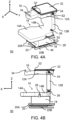
Figur 3A ; - Figur 4A
- eine schematische Schrägansicht des Fahrzeugsitzes gemäß der zweiten Ausführungsform mit oberer Teilrückenlehne in horizontaler Klappstellung;
- Figur 4B
- eine schematische Seitenansicht des Fahrzeugsitzes gemäß
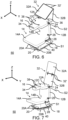
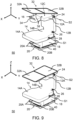
Figur 4A ; - Figuren 5A, 6-9
- schematische Schrägansichten des Fahrzeugsitzes der zweiten Ausführungsform mit oberer Teilrückenlehne in horizontaler Klappstellung und aufklappbarer Platte in verschiedenen Aufklappstadien;
- Figur 5B
- eine schematische Schrägansicht des Fahrzeugsitzes gemäß
Figur 5A mit entferntem oberen Rückenpolster; und - Figur 10
- eine schematische Seitenansicht des erfindungsgemäßen Fahrzeugsitzes gemäß einer dritten Ausführungsform mit oberer Teilrückenlehne in horizontaler Klappstellung und Sitzteil in vertikaler Klappstellung.
- Gleiche oder funktional äquivalente Elemente sind in allen Figuren mit denselben Bezugszeichen bezeichnet und sind zum Teil nicht gesondert beschrieben. So bezeichnet beispielsweise das Bezugszeichen 14 in allen Ausführungsformen der
Figuren 1-10 das Sitzteil, dass je nach Ausführungsform und Variante verschieden ausgeführt sein kann. - Die in den Figuren angegebenen Richtungen beziehen sich auf bevorzugte Fahrzeugrichtungen, wenn sich der Fahrzeugsitz 10, 50, 60 im eingebauten Zustand befindet, nämlich die Fahrzeuglängsrichtung (X-Richtung), die Fahrzeugquerrichtung (Y-Richtung) und die Fahrzeughochrichtung (Z-Richtung).
- Die
Figuren 1-2B zeigen den erfindungsgemäßen Fahrzeugsitz 10 gemäß einer ersten Ausführungsform. - Der Fahrzeugsitz 10 umfasst ein Sitzteil 14 und eine Rückenlehne 12.
- Die Rückenlehne 12 zeichnet sich dadurch aus, dass sie zwei Teilrückenlehnen umfasst: eine untere Teilrückenlehne 12B und eine um eine horizontale erste Schwenkachse S2 schwenkbar an der unteren Teilrückenlehne 12B angebrachte obere Teilrückenlehne 12A. Die obere Teilrückenlehne 12A ist aus einer - in den
Figuren 1A und 1B gezeigten - normalen Sitzstellung, in der die obere Teilrückenlehne 12A in etwa vertikal ausgerichtet ist, um die horizontal erste Schwenkachse S2 in Richtung des Sitzteils 14 in eine - in denFiguren 2A und 2B gezeigten - horizontale Klappstellung verschwenkbar. Auf der Rückseite 12C der oberen Teilrückenlehne 12A ist eine Gebrauchsfläche angeordnet, die in der horizontalen Klappstellung als Tisch nutzbar ist. Die horizontale erste Schwenkachse S2 ist vorzugsweise in Y-Richtung ausgerichtet. - In der ersten Ausführungsform ist die Gebrauchsfläche durch eine an der Rückseite 12C der oberen Teilrückenlehne 12A angebrachte Abdeckung 30 gebildet. Vorzugsweise ist die Abdeckung 30 eine Kunststoffabdeckung oder Platte.
- Wie in den
Figuren 1-2B gezeigt, kann die Abdeckung 30 als rechteckige Platte ausgebildet sein, welche die Rückseite 12C teilweise abgedeckt. Alternativ kann die Abdeckung 30 die Rückseite 12C vollständig abdecken. Die Abdeckung 30 kann derart ausgebildet sein, dass sie eine Umfangskontur aufweist, die formkorrespondierend zur Umfangskontur der oberen Teilrückenlehne 12A ausgeführt ist, und/oder eine Erhebung entlang eines Umfangs der Abdeckung 30 zur Ausbildung einer Kante aufweist. - Die obere Teilrückenlehne 12A kann sich in einem oberen Endbereich zur Ausbildung einer Kopfstütze verjüngen. Die Abdeckung 30 kann sich bis in den oberen Endbereich erstreckenden und auch die Kopfstütze abdecken und hierbei die gleiche Umfangskontur wie die Kopfstütze aufweisen (hier nicht dargestellt) und in dem oberen Endbereich optional ferner eine Vertiefung, vorzugsweise zylinderförmige Vertiefung, zur Ausbildung einer Getränkeflaschenhalterung aufweisen.
- Die Abdeckung 30, wie hier beispielhaft dargestellt, umfasst mindestens einen seitlich angeordneten Abdeckungsabschnitt 30A, der mindestens eine Seitenfläche der oberen Teilrückenlehne 12A und ein oberes Beschlagsystem 24, mittels dessen die obere Teilrückenlehne 12A verschwenkbar an der unteren Teilrückenlehne 12B angebracht ist, zumindest teilweise abdeckt. In der gezeigten Ausführungsform ist das obere Beschlagsystem 24 durch den Abdeckungsabschnitt 30A seitlich vollständig abgedeckt.
- Der Fahrzeugsitz 10 kann ferner einen Unterbau 18 umfassen, der vorzugsweise als Konsole oder kastenförmig ausgebildet ist, an dem die untere Teilrückenlehne 12B neigungsverstellbar gehaltert ist. Die untere Teilrückenlehne 12B kann am Unterbau 18 mittels eines unteren Beschlagsystems 26 neigungsverstellbar gehaltert sein. Ferner kann die obere Teilrückenlehne 12A mittels eines oberen Beschlagsystem 24 verschwenkbar an der unteren Teilrückenlehne 12B angebracht sein. Das untere Beschlagsystem 26 und das obere Beschlagsystem 24 können jeweils einen Anschlag aufweisen, der jeweils eine maximale Verschwenkstellung festlegt. Die Anschläge können jeweils so festgelegt sein, dass sich bei maximaler Verschwenkstellung der unteren Teilrückenlehne 12B und der oberen Teilrückenlehne 12A die obere Teilrückenlehne 12A in der horizontalen Klappstellung befindet.
- Wie z. B. in den
Figuren 2A und 2B dargestellt, kann die maximale Verschwenkstellung der unteren Teilrückenlehne 12B einer vertikalen Ausrichtung der unteren Teilrückenlehne 12B entsprechen, d. h. es kann kein Neigungswinkel der unteren Teilrückenlehne 12B im Bereich von 90° in Richtung des Sitzteils 14 eingestellt werden. Ferner kann die maximale Verschwenkstellung der oberen Teilrückenlehne 12A eine relativ zur unteren Teilrückenlehne 12B senkrechten Ausrichtung entsprechen, sodass sich die obere Teilrückenlehne 12A bei maximaler Verschwenkstellung der unteren Teilrückenlehne 12B und der oberen Teilrückenlehne 12A in der horizontalen Klappstellung befindet. - Optional kann der Fahrzeugsitz 10 unterseitig entlang einer Schienenanordnung 20 horizontal verschiebbar angeordnet oder anordbar sein. Die Schienenanordnung 20 kann mindestens eine Bodenschiene 20B und eine gegenüber dieser Bodenschiene 20B in einer Längsverstellrichtung L verschiebbare Sitzschiene 20A umfassen, wobei die Bodenschiene 20B mit der Sitzschiene 20A mittels einer lösbaren Verriegelungseinrichtung lösbar verriegelt werden kann. Die in
Figur 1 angegebene Längsverstellrichtung L entspricht der X-Richtung. Ferner optional kann der Fahrzeugsitz 10 unterseitig auf einer Dreheinrichtung 40 gelagert sein. Die Dreheinrichtung 40 kann als drehtellerartige Dreheinrichtung 40 ausgeführt sein, mittels derer der Fahrzeugsitz 10 um eine vertikale Drehachse verschwenkbar ist. - Die
Figuren 3A-9 zeigen den Fahrzeugsitz 50 gemäß einer zweiten Ausführungsform, die nicht Teil der Erfindung ist. Die zweite Ausführungsform unterscheidet sich von der ersten Ausführungsform dadurch, dass die Gebrauchsfläche nicht durch die Abdeckung 30 gebildet ist, sondern durch eine an der Rückseite 12C gehalterte, aufklappbare Platte 32. - Die aufklappbare Platte 32 weist zwei zueinander verschwenkbare Teilplatten 32A, 32B auf, die in einem zusammengeklappten Zustand einen Stapel der Teilplatten 32A, 32B bilden. Der Stapel kann durch ein Gelenk 36 und eine lösbare Verriegelungsvorrichtung 38, die an gegenüberliegenden Seiten des Stapels angeordnet sind, an der oberen Teilrückenlehne 12A fixierbar werden. Die aufklappbare Platte 32 kann auch mehr als zwei zueinander verschwenkbare Teilplatten 32A, 32B aufweisen.
- Eine erste Teilplatte 32B weist einen Überstand auf, der mit dem Gelenk 36 verbunden ist, und im zusammengeklappten Zustand an einer der Rückseite 12C des oberen Rückenlehnenteils 12A abgewandten Seite des Stapels angeordnet ist.
- Die
Figuren 5A und6-9 illustrieren das Aufklappen der aufklappbaren Platte 32. - Zunächst wird die Verriegelungsvorrichtung 38 gelöst und der Stapel der Teilplatten 32A, 32B ausgelenkt, vorzugsweise bis der Überstand der ersten Teilplatte 32A an einer Seitenfläche der oberen Teilrückenlehne 12A anliegt und/oder der Stapel in etwa senkrecht zur Rückseite 12C des oberen Rückenlehnenteils 12A ausgelenkt ist (
Figur 5A ). - Dann wird die zweite Teilplatte 32A, welche nicht mit dem Gelenk 36 verbunden ist, ausgelenkt. Bei der zweiten Teilplatte 32A handelt es sich um die Teilplatte, die im zusammengeklappten Zustand an einer der Rückseite 12C zugewandten Seite des Stapels angeordnet ist, also im zusammengeklappten Zustand an der Rückseite 12C anliegt. Die zweite Teilplatte 32A wird in Richtung der Rückseite 12C ausgeschwenkt und soweit ausgelenkt, bis sie fluchtend zur ersten Teilplatte 32B angeordnet ist, und so die beiden Teilplatten 32A, 32B die Platte 32 ausbilden (
Figuren 6 und 7 ). Die schwenkbare Verbindung 32' zwischen den beiden Teilplatten 32A,32B kann so ausgebildet sein, dass eine Arretierung zwischen den beiden Teilplatten 32A, 32B erfolgt, wenn diese fluchtend zueinander angeordnet sind. - Anschließend wird die Platte 32 mittels des Gelenks 36 wieder in Richtung der Rückseite 12C zurückgelenkt, bis ein an der ausgeklappten Teilpatte 32A rückseitig zur Gebrauchsfläche angeordnetes zweites Halteelement mit einem am oberen Endbereich der Rückseite 12C angeordnetes erstes Halteelement 34 zusammenwirken kann, um die ausgeklappte Teilplatte 32A an der Rückseite 12C der oberen Teilrückenlehne 12A zu fixieren (
Figuren 8 und 9 ). -
Figur 5B zeigt den Fahrzeugsitz 50 der zweiten Ausführungsform, wobei das obere Rückenpolster entfernt ist. Wie zu erkennen ist, können das erstes Halteelement 34 und das Gelenk 36 am oberen Rückenpolsterträger 12A' bzw. als Teil des oberen Rückenpolsterträgers 12A' ausgebildet sein. - Die
Figur 10 zeigt den erfindungsgemäßen Fahrzeugsitz 60 gemäß einer dritten Ausführungsform. Diese dritte Ausführungsform unterscheidet sich von der ersten Ausführungsform dadurch, dass das Sitzteil 14 um eine horizontale zweite Schwenkachse S1 zwischen einer horizontalen Normalstellung und einer nicht-horizontalen, vorzugsweise vertikalen, Klappstellung verschwenkbar ist. Die horizontale zweite Schwenkachse S1 ist vorzugsweise in Y-Richtung und parallel zur horizontalen ersten Schwenkachse S2 ausgerichtet. - Sind - wie in
Figur 10 gezeigt - sowohl die obere Teilrückenlehne 12A als auch das Sitzteil 14 verschwenkt, so kann die obere Teilrückenlehne 12A das Sitzteil 14 überragen und/oder auf dem Sitzteil aufliegen. - Gemäß der dritten Ausführungsform bildet der Unterbau 18 einen zum Sitzteil 14 hin offenen Hohlraum 18A aus. Ferner ist das Sitzteil 14 auf dem Unterbau 18 mittels einer Schwenkverbindung 28 um die horizontale zweite Schwenkachse S1 schwenkbar gehaltert.
- Wie zu erkennen ist, ist die Schwenkverbindung 28 beabstandet zu einem Endbereich 14B des Sitzteils 14, der der Rückenlehne 12 in der horizontalen Normalstellung zugewandt ist, angeordnet. Entsprechend kann dieser Endbereich 14B beim Verschwenken des Sitzteils 14 von der horizontalen Normalstellung in dessen Klappstellung in den Hohlraum 18A des Unterbaus 18 eintauchen.
- Um dieses Eintauchen des Endbereich 14B in den Hohlraum 18A des Unterbaus 18 zu gewährleisten, kann der Unterbau 18 eine zum Sitzteil 14 hin offene Kastenform aufweisen. Ferner kann eine Breite des Sitzteils 14 in dem Endbereich 14B, der in der horizontalen Normalstellung zwischen der horizontalen zweiten Schwenkachse S1 und der Rückenlehne 12 liegt, kleiner sein als eine Breite des Sitzteils 14 in einem Vorderbereich 14A, wobei vorzugsweise die Breite des Vorderbereichs 14A größer und die Breite des Endbereichs 14B kleiner als eine Breite des Hohlraums 18A des Unterbaus 18 ist. Die jeweiligen Breiten beziehen sich hierbei auf die jeweiligen Maße in Y-Richtung.
- Das Sitzteil 14 kann ferner mittels einer Arretiervorrichtung (nicht gezeigt) lösbar in der Klappstellung arretiert werden. Die Arretiervorrichtung kann z. B. als Klemmvorrichtung ausgeführt sein, aufweisend eine im Unterbau 18 angeordnete Aufnahme oder Klemme zur Aufnahme eines oder einer an der Unterseite 14C des Sitzteils 14 angeordneten Klemmteils oder Aufnahme. Dazu kann die Klemme und/oder Aufnahme im Unterbau 18 so positioniert ist, dass beim Verschwenken des Sitzteils 14 von der horizontalen Normalstellung in dessen Klappstellung der in den Hohlraum 18A eintauchende Endbereich 14B des Sitzteils 14 an der Klemme und/oder Aufnahme arretiert wird, vorzugsweise in dem ein Rohrabschnitt eines Traggestells des Sitzteils 14 an der Klemme und/oder Aufnahme arretiert wird.
- Die Erfindung ist nicht auf die vorstehend beschriebenen bevorzugten Ausführungsformen beschränkt. Vielmehr ist eine Vielzahl von Varianten und Abwandlungen möglich, solange der resultierende Gegenstand zum Schutzumfang gehört, der durch die Ansprüche definiert ist.
-
- 10, 50, 60
- Fahrzeugsitz
- 12
- Rückenlehne
- 12A
- Obere Teilrückenlehne
- 12B
- Untere Teilrückenlehne
- 12C
- Rückseite der oberen Teilrückenlehne
- 14
- Sitzteil
- 14A
- Vorderbereich des Sitzteils
- 14B
- Endbereich des Sitzteils
- 16
- Kopfstütze
- 18
- Unterbau
- 20
- Längsverstellvorrichtung
- 20A
- Sitzschiene
- 20B
- Bodenschiene
- 24
- Oberes Beschlagsystem
- 26
- Unteres Beschlagsystem
- 28
- Schwenkverbindung
- 30
- Abdeckung
- 30A
- Abdeckungsabschnitt
- 32
- Platte
- 32A, 32B
- Teilplatte
- 32'
- Schwenkbare Verbindung der Teilplatten
- 34
- Erstes Halteelement
- 36
- Gelenk
- 38
- Verriegelungsvorrichtung
- 40
- Dreheinrichtung
- S1
- Horizontale zweite Schwenkachse
- S2
- Horizontale erste Schwenkachse
- L
- Längsverstellrichtung
Claims (12)
- Fahrzeugsitz (10; 60), vorzugsweise Kraftfahrzeugsitz, umfassenda) ein Sitzteil (14), undb) eine Rückenlehne (12), umfassend eine untere Teilrückenlehne (12B) und eine um eine horizontale erste Schwenkachse (S2) schwenkbar an der unteren Teilrückenlehne (12B) angebrachte obere Teilrückenlehne (12A), wobei die obere Teilrückenlehne (12A) um die erste Schwenkachse (S2) in Richtung des Sitzteils (14) in eine horizontale Klappstellung verschwenkbar ist und auf deren Rückseite (12C) eine Gebrauchsfläche angeordnet ist, die in der horizontalen Klappstellung als Tisch nutzbar ist, und wobei die Gebrauchsfläche durch eine an der Rückseite (12C) der oberen Teilrückenlehne (12A) angebrachte Abdeckung (30), vorzugsweise eine Kunststoffabdeckung oder Platte, gebildet ist,dadurch gekennzeichnet, dass
die Abdeckung (30) mindestens einen Abdeckungsabschnitt (30A) umfasst, der mindestens eine Seitenfläche der oberen Teilrückenlehne (12A) und ein oberes Beschlagsystem (24), mittels dessen die obere Teilrückenlehne (12A) verschwenkbar an der unteren Teilrückenlehne (12B) angebracht ist, zumindest teilweise abdeckt. - Fahrzeugsitz (10) nach Anspruch 1, wobei die Abdeckung (30)a) die Rückseite (12C) der oberen Teilrückenlehne (12A) vollständig abdeckt;
und/oderb) eine Umfangskontur aufweist, die formkorrespondierend zur Umfangskontur der oberen Teilrückenlehne (12A) ausgeführt ist; und/oderc) eine Erhebung entlang eines Umfangs der Abdeckung (30) aufweist zur Ausbildung einer Kante. - Fahrzeugsitz (10) nach Anspruch 1 oder 2, wobei die obere Teilrückenlehne (12A) sich in einem oberen Endbereich zur Ausbildung einer Kopfstütze (16) verjüngt und die Abdeckung (30) sich bis in den oberen Endbereich erstreckt und in dem oberen Endbereich eine Vertiefung, vorzugsweise zylinderförmige Vertiefung, zur Ausbildung einer Getränkeflaschenhalterung aufweist.
- Fahrzeugsitz (10) nach einem der vorherigen Ansprüche, wobei die Gebrauchsfläche durch eine an der Rückseite (12C) der oberen Teilrückenlehne (12A) angebrachte Platte (32) gebildet ist.
- Fahrzeugsitz (10; 60) nach einem der vorherigen Ansprüche, ferner umfassend einen Unterbau (18), der vorzugsweise als Konsole oder kastenförmig ausgebildet ist, an dem die untere Teilrückenlehne (12B) neigungsverstellbar gehaltert ist,a) wobei die untere Teilrückenlehne (12B) am Unterbau (18) mittels eines unteren Beschlagsystems (26) neigungsverstellbar gehaltert ist; undb) wobei die obere Teilrückenlehne (12A) mittels eines oberen Beschlagsystems (24) verschwenkbar an der unteren Teilrückenlehne (12B) angebracht ist.
- Fahrzeugsitz (10; 60) nach Anspruch 5, wobei das untere und das obere Beschlagsystem (24, 26) jeweils einen Anschlag aufweisen, der jeweils eine maximale Verschwenkstellung festlegt, wobei die Anschläge vorzugsweise jeweils so festgelegt sind, dass sich bei maximaler Verschwenkstellung der unteren Teilrückenlehne (12B) und der oberen Teilrückenlehne (12A) die obere Teilrückenlehne (12A) in der horizontalen Klappstellung befindet.
- Fahrzeugsitz (10; 60) nach Anspruch 5 oder 6, wobei die untere Teilrückenlehne (12B) und/oder obere Teilrückenlehne (12A)a) stufenlos, oderb) gerastert, beispielsweise mittels eines Recliners, oderc) elektro-motorisch verschwenkbar ausgeführt sind.
- Fahrzeugsitz (60) nach einem der vorherigen Ansprüche, wobei das Sitzteil (14) um eine horizontale zweite Schwenkachse (S1) zwischen einer horizontalen Normalstellung und einer nicht-horizontalen, vorzugsweise vertikalen, Klappstellung verschwenkbar ist; und wobei, wenn sich die obere Teilrückenlehne (12A) in der horizontalen Klappstellung und das Sitzteil (14) in dessen Klappstellung befinden, die obere Teilrückenlehne (12A) das Sitzteil (14) überragt und/oder auf dem Sitzteil (14) aufliegt.
- Fahrzeugsitz (60) nach Anspruch 8, umfassend den Unterbau (18) gemäß Anspruch 5, wobeia) das Sitzteil (14) auf dem Unterbau (18) mittels einer Schwenkverbindung (28) um die horizontale zweite Schwenkachse (S1) schwenkbar gehaltert ist,b) der Unterbau (18) einen zum Sitzteil (14) hin offenen Hohlraum ausbildet, undc) die Schwenkverbindung (28) beabstandet zu einem Endbereich (14B) des Sitzteils (14), der der unteren Teilrückenlehne (12B) in der horizontalen Normalstellung zugewandt ist, angeordnet ist, so dass beim Verschwenken des Sitzteils (14) von der horizontalen Normalstellung in dessen Klappstellung dieser Endbereich (14B) in den Hohlraum des Unterbaus (18) eintaucht.
- Fahrzeugsitz (10; 60) nach einem der vorhergehenden Ansprüche, wobei der Fahrzeugsitz (10) unterseitiga) entlang einer Schienenanordnung (20) horizontal verschiebbar angeordnet oder anordbar ist; und/oderb) auf einer Dreheinrichtung (40), vorzugsweise einer drehtellerartigen Dreheinrichtung, gelagert ist, mittels derer der Fahrzeugsitz um eine vertikale Drehachse verschwenkbar ist.
- Fahrzeugsitz (10; 60) nach einem der vorhergehenden Ansprüche, wobei der Fahrzeugsitz ein Beifahrersitz für ein Fahrerhaus eines Nutzfahrzeugs ist.
- Fahrzeug, vorzugsweise Nutzfahrzeug, mit einem Fahrzeugsitz (10; 60) gemäß einem der vorhergehenden Ansprüche.
Applications Claiming Priority (1)
| Application Number | Priority Date | Filing Date | Title |
|---|---|---|---|
| DE102020120852.9A DE102020120852A1 (de) | 2020-08-07 | 2020-08-07 | Fahrzeugsitz |
Publications (3)
| Publication Number | Publication Date |
|---|---|
| EP3950418A1 EP3950418A1 (de) | 2022-02-09 |
| EP3950418B1 true EP3950418B1 (de) | 2025-06-25 |
| EP3950418C0 EP3950418C0 (de) | 2025-06-25 |
Family
ID=76971745
Family Applications (1)
| Application Number | Title | Priority Date | Filing Date |
|---|---|---|---|
| EP21186418.6A Active EP3950418B1 (de) | 2020-08-07 | 2021-07-19 | Fahrzeugsitz |
Country Status (2)
| Country | Link |
|---|---|
| EP (1) | EP3950418B1 (de) |
| DE (1) | DE102020120852A1 (de) |
Citations (3)
| Publication number | Priority date | Publication date | Assignee | Title |
|---|---|---|---|---|
| US2963078A (en) * | 1959-11-19 | 1960-12-06 | Charles H Ferrelle | Folding table for motor vehicles |
| KR20160062238A (ko) * | 2014-11-24 | 2016-06-02 | 대원강업주식회사 | 차량용 컵홀더 일체형 헤드레스트 |
| WO2021029840A1 (en) * | 2019-08-09 | 2021-02-18 | Assan Hani̇l Otomoti̇v Sanayi̇ Ve Ti̇caret Anoni̇m Şi̇rketi̇ | Foldable seat back remaining in parallel level |
Family Cites Families (15)
| Publication number | Priority date | Publication date | Assignee | Title |
|---|---|---|---|---|
| US557406A (en) | 1896-03-31 | linn x | ||
| KR0173275B1 (ko) * | 1995-12-28 | 1999-02-18 | 김태구 | 자동차의 2중 홀딩 시트 |
| JP2971404B2 (ja) | 1996-09-27 | 1999-11-08 | 本田技研工業株式会社 | 車両のシート構造 |
| DE19956404C1 (de) | 1999-11-24 | 2001-02-08 | Faure Bertrand Sitztech Gmbh | Kraftfahrzeugsitz mit vorklappbarer Rückenlehne |
| DE10057450A1 (de) | 2000-11-20 | 2002-05-23 | Lear Corp Gmbh & Co Kg | Sitzelement und Ablage- und Aufbewahrungssystem |
| FR2817811B1 (fr) | 2000-12-12 | 2004-11-26 | Faurecia Sieges Automobile | Siege de vehicule transformable |
| DE20100008U1 (de) | 2001-01-03 | 2002-05-08 | Johnson Controls GmbH, 51399 Burscheid | Schwenkbare Armauflage |
| GB0226218D0 (en) * | 2002-11-09 | 2002-12-18 | Ford Global Tech Inc | A seat assembly for a motor vehicle |
| DE10257171B4 (de) | 2002-12-03 | 2014-09-11 | Volkswagen Ag | Variable Hintersitzlehne mit Multifunktionsklappe |
| FR2869849B1 (fr) * | 2004-05-10 | 2006-07-28 | Faurecia Sieges Automobile | Siege de vehicule |
| DE102006058480A1 (de) * | 2006-12-12 | 2008-06-19 | GM Global Technology Operations, Inc., Detroit | Mittelsitz für eine Kraftfahrzeugrücksitzbank |
| WO2012158071A1 (en) * | 2011-05-18 | 2012-11-22 | Volvo Lastvagnar Ab | A driver's cab for a heavy truck |
| CN202439580U (zh) * | 2012-02-29 | 2012-09-19 | 许洋 | 公交车座椅 |
| FR3008935B1 (fr) * | 2013-07-23 | 2017-01-13 | Peugeot Citroen Automobiles Sa | Tablette d'ecriture pour siege de vehicule avec espace de rangement |
| DE102014013955B4 (de) | 2014-09-19 | 2024-03-07 | Isringhausen Gmbh & Co. Kg | Fahrzeugsitz, insbesondere für ein Nutzfahrzeug oder ein Campingmobil |
-
2020
- 2020-08-07 DE DE102020120852.9A patent/DE102020120852A1/de active Pending
-
2021
- 2021-07-19 EP EP21186418.6A patent/EP3950418B1/de active Active
Patent Citations (3)
| Publication number | Priority date | Publication date | Assignee | Title |
|---|---|---|---|---|
| US2963078A (en) * | 1959-11-19 | 1960-12-06 | Charles H Ferrelle | Folding table for motor vehicles |
| KR20160062238A (ko) * | 2014-11-24 | 2016-06-02 | 대원강업주식회사 | 차량용 컵홀더 일체형 헤드레스트 |
| WO2021029840A1 (en) * | 2019-08-09 | 2021-02-18 | Assan Hani̇l Otomoti̇v Sanayi̇ Ve Ti̇caret Anoni̇m Şi̇rketi̇ | Foldable seat back remaining in parallel level |
Also Published As
| Publication number | Publication date |
|---|---|
| EP3950418A1 (de) | 2022-02-09 |
| EP3950418C0 (de) | 2025-06-25 |
| DE102020120852A1 (de) | 2022-02-10 |
Similar Documents
| Publication | Publication Date | Title |
|---|---|---|
| DE102013225832B4 (de) | Falt- und klappanordnung für eine fahrzeugsitzanordnung | |
| EP3507133B1 (de) | Innenraum eines fahrzeugs | |
| EP1142750B1 (de) | Sitzanordnung für Fahrzeuge | |
| EP0211248B1 (de) | Sitzverstellung in einem Kraftwagen | |
| DE102022113889A1 (de) | Fahrzeug mit umwandelbarem rücksitz | |
| DE102017117343B4 (de) | Selbsteinrastende scharnierbaugruppe für schwingende tischfläche eines fahrzeugs | |
| DE202020104560U1 (de) | Fahrzeugsitz | |
| WO2017157838A1 (de) | Fahrzeug mit einer mittelsitzposition | |
| EP2910412B1 (de) | Sitz, insbesondere Fahrgastsitz | |
| DE202023104382U1 (de) | Fahrzeugsitzbaugruppe mit einer Schwenkneigung | |
| EP3950418B1 (de) | Fahrzeugsitz | |
| DE102017214076A1 (de) | Fahrzeugsitzanordnung mit einem Fahrzeugsitz und einer zusätzlichen Funktionseinheit | |
| EP3950419B1 (de) | Fahrzeugsitz | |
| DE202020104559U1 (de) | Fahrzeugsitz | |
| DE102012018351A1 (de) | Fahrzeugsitz sowie Verfahren zum Verbringen eines Fahrzeugsitzes | |
| DE3529735A1 (de) | Lagerung einer kraftfahrzeug-hintersitzlehne | |
| DE102022117840B4 (de) | Anordnung von Sitzen in einem Fahrzeug | |
| DE102015005669A1 (de) | Fondsitz mit einer Armlehne für ein Fahrzeug | |
| DE102023118651A1 (de) | Fahrzeug, aufweisend eine ausklappbare arbeitsstation | |
| DE19925900C1 (de) | Sitzbankanordnung | |
| DE10239199A1 (de) | Ausfahrbarer Sitz für ein Fahrzeug sowie Fahrzeug mit einem ausfahrbaren Sitz | |
| DE102009033798A1 (de) | Innenausstattung für einen Innenraum eines Kraftwagens | |
| DE102011054408B4 (de) | Wegklappbarer Sitz für ein Kraftfahrzeug | |
| DE10105768B4 (de) | Hintersitzanordnung eines Fahrzeuges | |
| EP1754623B1 (de) | Fahrzeug mit verstellbarem Rücksitz |
Legal Events
| Date | Code | Title | Description |
|---|---|---|---|
| PUAI | Public reference made under article 153(3) epc to a published international application that has entered the european phase |
Free format text: ORIGINAL CODE: 0009012 |
|
| STAA | Information on the status of an ep patent application or granted ep patent |
Free format text: STATUS: THE APPLICATION HAS BEEN PUBLISHED |
|
| AK | Designated contracting states |
Kind code of ref document: A1 Designated state(s): AL AT BE BG CH CY CZ DE DK EE ES FI FR GB GR HR HU IE IS IT LI LT LU LV MC MK MT NL NO PL PT RO RS SE SI SK SM TR |
|
| STAA | Information on the status of an ep patent application or granted ep patent |
Free format text: STATUS: REQUEST FOR EXAMINATION WAS MADE |
|
| 17P | Request for examination filed |
Effective date: 20220718 |
|
| RBV | Designated contracting states (corrected) |
Designated state(s): AL AT BE BG CH CY CZ DE DK EE ES FI FR GB GR HR HU IE IS IT LI LT LU LV MC MK MT NL NO PL PT RO RS SE SI SK SM TR |
|
| STAA | Information on the status of an ep patent application or granted ep patent |
Free format text: STATUS: EXAMINATION IS IN PROGRESS |
|
| 17Q | First examination report despatched |
Effective date: 20230803 |
|
| GRAP | Despatch of communication of intention to grant a patent |
Free format text: ORIGINAL CODE: EPIDOSNIGR1 |
|
| STAA | Information on the status of an ep patent application or granted ep patent |
Free format text: STATUS: GRANT OF PATENT IS INTENDED |
|
| INTG | Intention to grant announced |
Effective date: 20250122 |
|
| GRAS | Grant fee paid |
Free format text: ORIGINAL CODE: EPIDOSNIGR3 |
|
| GRAA | (expected) grant |
Free format text: ORIGINAL CODE: 0009210 |
|
| STAA | Information on the status of an ep patent application or granted ep patent |
Free format text: STATUS: THE PATENT HAS BEEN GRANTED |
|
| AK | Designated contracting states |
Kind code of ref document: B1 Designated state(s): AL AT BE BG CH CY CZ DE DK EE ES FI FR GB GR HR HU IE IS IT LI LT LU LV MC MK MT NL NO PL PT RO RS SE SI SK SM TR |
|
| REG | Reference to a national code |
Ref country code: GB Ref legal event code: FG4D Free format text: NOT ENGLISH |
|
| REG | Reference to a national code |
Ref country code: CH Ref legal event code: EP |
|
| REG | Reference to a national code |
Ref country code: DE Ref legal event code: R096 Ref document number: 502021007820 Country of ref document: DE |
|
| REG | Reference to a national code |
Ref country code: CH Ref legal event code: EP |
|
| REG | Reference to a national code |
Ref country code: IE Ref legal event code: FG4D Free format text: LANGUAGE OF EP DOCUMENT: GERMAN |
|
| U01 | Request for unitary effect filed |
Effective date: 20250714 |
|
| U07 | Unitary effect registered |
Designated state(s): AT BE BG DE DK EE FI FR IT LT LU LV MT NL PT RO SE SI Effective date: 20250718 |
|
| U20 | Renewal fee for the european patent with unitary effect paid |
Year of fee payment: 5 Effective date: 20250825 |
|
| PG25 | Lapsed in a contracting state [announced via postgrant information from national office to epo] |
Ref country code: NO Free format text: LAPSE BECAUSE OF FAILURE TO SUBMIT A TRANSLATION OF THE DESCRIPTION OR TO PAY THE FEE WITHIN THE PRESCRIBED TIME-LIMIT Effective date: 20250925 Ref country code: GR Free format text: LAPSE BECAUSE OF FAILURE TO SUBMIT A TRANSLATION OF THE DESCRIPTION OR TO PAY THE FEE WITHIN THE PRESCRIBED TIME-LIMIT Effective date: 20250926 |
|
| PG25 | Lapsed in a contracting state [announced via postgrant information from national office to epo] |
Ref country code: HR Free format text: LAPSE BECAUSE OF FAILURE TO SUBMIT A TRANSLATION OF THE DESCRIPTION OR TO PAY THE FEE WITHIN THE PRESCRIBED TIME-LIMIT Effective date: 20250625 |
|
| PG25 | Lapsed in a contracting state [announced via postgrant information from national office to epo] |
Ref country code: RS Free format text: LAPSE BECAUSE OF FAILURE TO SUBMIT A TRANSLATION OF THE DESCRIPTION OR TO PAY THE FEE WITHIN THE PRESCRIBED TIME-LIMIT Effective date: 20250925 |
|
| PG25 | Lapsed in a contracting state [announced via postgrant information from national office to epo] |
Ref country code: IS Free format text: LAPSE BECAUSE OF FAILURE TO SUBMIT A TRANSLATION OF THE DESCRIPTION OR TO PAY THE FEE WITHIN THE PRESCRIBED TIME-LIMIT Effective date: 20251025 |
|
| PG25 | Lapsed in a contracting state [announced via postgrant information from national office to epo] |
Ref country code: SM Free format text: LAPSE BECAUSE OF FAILURE TO SUBMIT A TRANSLATION OF THE DESCRIPTION OR TO PAY THE FEE WITHIN THE PRESCRIBED TIME-LIMIT Effective date: 20250625 |
|
| PG25 | Lapsed in a contracting state [announced via postgrant information from national office to epo] |
Ref country code: CZ Free format text: LAPSE BECAUSE OF FAILURE TO SUBMIT A TRANSLATION OF THE DESCRIPTION OR TO PAY THE FEE WITHIN THE PRESCRIBED TIME-LIMIT Effective date: 20250625 |
|
| PG25 | Lapsed in a contracting state [announced via postgrant information from national office to epo] |
Ref country code: PL Free format text: LAPSE BECAUSE OF FAILURE TO SUBMIT A TRANSLATION OF THE DESCRIPTION OR TO PAY THE FEE WITHIN THE PRESCRIBED TIME-LIMIT Effective date: 20250625 |
|
| PG25 | Lapsed in a contracting state [announced via postgrant information from national office to epo] |
Ref country code: SK Free format text: LAPSE BECAUSE OF FAILURE TO SUBMIT A TRANSLATION OF THE DESCRIPTION OR TO PAY THE FEE WITHIN THE PRESCRIBED TIME-LIMIT Effective date: 20250625 |
|
| PG25 | Lapsed in a contracting state [announced via postgrant information from national office to epo] |
Ref country code: ES Free format text: LAPSE BECAUSE OF FAILURE TO SUBMIT A TRANSLATION OF THE DESCRIPTION OR TO PAY THE FEE WITHIN THE PRESCRIBED TIME-LIMIT Effective date: 20250625 |
|
| REG | Reference to a national code |
Ref country code: CH Ref legal event code: H13 Free format text: ST27 STATUS EVENT CODE: U-0-0-H10-H13 (AS PROVIDED BY THE NATIONAL OFFICE) Effective date: 20260224 |
|
| PG25 | Lapsed in a contracting state [announced via postgrant information from national office to epo] |
Ref country code: MC Free format text: LAPSE BECAUSE OF FAILURE TO SUBMIT A TRANSLATION OF THE DESCRIPTION OR TO PAY THE FEE WITHIN THE PRESCRIBED TIME-LIMIT Effective date: 20250625 |
|
| PG25 | Lapsed in a contracting state [announced via postgrant information from national office to epo] |
Ref country code: CH Free format text: LAPSE BECAUSE OF NON-PAYMENT OF DUE FEES Effective date: 20250731 |
|
| PLBE | No opposition filed within time limit |
Free format text: ORIGINAL CODE: 0009261 |
|
| STAA | Information on the status of an ep patent application or granted ep patent |
Free format text: STATUS: NO OPPOSITION FILED WITHIN TIME LIMIT |