EP3919967B1 - Polymerisierbare zusammensetzung für optisches material, polymerisierbare prepolymerzusammensetzung für optisches material, gehärtetes produkt und verfahren zur herstellung von optischem material - Google Patents
Polymerisierbare zusammensetzung für optisches material, polymerisierbare prepolymerzusammensetzung für optisches material, gehärtetes produkt und verfahren zur herstellung von optischem material Download PDFInfo
- Publication number
- EP3919967B1 EP3919967B1 EP21748375.9A EP21748375A EP3919967B1 EP 3919967 B1 EP3919967 B1 EP 3919967B1 EP 21748375 A EP21748375 A EP 21748375A EP 3919967 B1 EP3919967 B1 EP 3919967B1
- Authority
- EP
- European Patent Office
- Prior art keywords
- optical material
- mass
- polymerizable composition
- different monomers
- parts
- Prior art date
- Legal status (The legal status is an assumption and is not a legal conclusion. Google has not performed a legal analysis and makes no representation as to the accuracy of the status listed.)
- Active
Links
Images
Classifications
-
- C—CHEMISTRY; METALLURGY
- C08—ORGANIC MACROMOLECULAR COMPOUNDS; THEIR PREPARATION OR CHEMICAL WORKING-UP; COMPOSITIONS BASED THEREON
- C08G—MACROMOLECULAR COMPOUNDS OBTAINED OTHERWISE THAN BY REACTIONS ONLY INVOLVING UNSATURATED CARBON-TO-CARBON BONDS
- C08G18/00—Polymeric products of isocyanates or isothiocyanates
- C08G18/06—Polymeric products of isocyanates or isothiocyanates with compounds having active hydrogen
- C08G18/70—Polymeric products of isocyanates or isothiocyanates with compounds having active hydrogen characterised by the isocyanates or isothiocyanates used
- C08G18/72—Polyisocyanates or polyisothiocyanates
- C08G18/74—Polyisocyanates or polyisothiocyanates cyclic
- C08G18/75—Polyisocyanates or polyisothiocyanates cyclic cycloaliphatic
- C08G18/758—Polyisocyanates or polyisothiocyanates cyclic cycloaliphatic containing two or more cycloaliphatic rings
-
- C—CHEMISTRY; METALLURGY
- C08—ORGANIC MACROMOLECULAR COMPOUNDS; THEIR PREPARATION OR CHEMICAL WORKING-UP; COMPOSITIONS BASED THEREON
- C08G—MACROMOLECULAR COMPOUNDS OBTAINED OTHERWISE THAN BY REACTIONS ONLY INVOLVING UNSATURATED CARBON-TO-CARBON BONDS
- C08G18/00—Polymeric products of isocyanates or isothiocyanates
- C08G18/06—Polymeric products of isocyanates or isothiocyanates with compounds having active hydrogen
- C08G18/08—Processes
- C08G18/10—Prepolymer processes involving reaction of isocyanates or isothiocyanates with compounds having active hydrogen in a first reaction step
-
- C—CHEMISTRY; METALLURGY
- C08—ORGANIC MACROMOLECULAR COMPOUNDS; THEIR PREPARATION OR CHEMICAL WORKING-UP; COMPOSITIONS BASED THEREON
- C08G—MACROMOLECULAR COMPOUNDS OBTAINED OTHERWISE THAN BY REACTIONS ONLY INVOLVING UNSATURATED CARBON-TO-CARBON BONDS
- C08G18/00—Polymeric products of isocyanates or isothiocyanates
- C08G18/06—Polymeric products of isocyanates or isothiocyanates with compounds having active hydrogen
- C08G18/08—Processes
- C08G18/16—Catalysts
-
- C—CHEMISTRY; METALLURGY
- C08—ORGANIC MACROMOLECULAR COMPOUNDS; THEIR PREPARATION OR CHEMICAL WORKING-UP; COMPOSITIONS BASED THEREON
- C08G—MACROMOLECULAR COMPOUNDS OBTAINED OTHERWISE THAN BY REACTIONS ONLY INVOLVING UNSATURATED CARBON-TO-CARBON BONDS
- C08G18/00—Polymeric products of isocyanates or isothiocyanates
- C08G18/06—Polymeric products of isocyanates or isothiocyanates with compounds having active hydrogen
- C08G18/08—Processes
- C08G18/16—Catalysts
- C08G18/18—Catalysts containing secondary or tertiary amines or salts thereof
-
- C—CHEMISTRY; METALLURGY
- C08—ORGANIC MACROMOLECULAR COMPOUNDS; THEIR PREPARATION OR CHEMICAL WORKING-UP; COMPOSITIONS BASED THEREON
- C08G—MACROMOLECULAR COMPOUNDS OBTAINED OTHERWISE THAN BY REACTIONS ONLY INVOLVING UNSATURATED CARBON-TO-CARBON BONDS
- C08G18/00—Polymeric products of isocyanates or isothiocyanates
- C08G18/06—Polymeric products of isocyanates or isothiocyanates with compounds having active hydrogen
- C08G18/08—Processes
- C08G18/16—Catalysts
- C08G18/22—Catalysts containing metal compounds
- C08G18/24—Catalysts containing metal compounds of tin
-
- C—CHEMISTRY; METALLURGY
- C08—ORGANIC MACROMOLECULAR COMPOUNDS; THEIR PREPARATION OR CHEMICAL WORKING-UP; COMPOSITIONS BASED THEREON
- C08G—MACROMOLECULAR COMPOUNDS OBTAINED OTHERWISE THAN BY REACTIONS ONLY INVOLVING UNSATURATED CARBON-TO-CARBON BONDS
- C08G18/00—Polymeric products of isocyanates or isothiocyanates
- C08G18/06—Polymeric products of isocyanates or isothiocyanates with compounds having active hydrogen
- C08G18/08—Processes
- C08G18/16—Catalysts
- C08G18/22—Catalysts containing metal compounds
- C08G18/24—Catalysts containing metal compounds of tin
- C08G18/242—Catalysts containing metal compounds of tin organometallic compounds containing tin-carbon bonds
-
- C—CHEMISTRY; METALLURGY
- C08—ORGANIC MACROMOLECULAR COMPOUNDS; THEIR PREPARATION OR CHEMICAL WORKING-UP; COMPOSITIONS BASED THEREON
- C08G—MACROMOLECULAR COMPOUNDS OBTAINED OTHERWISE THAN BY REACTIONS ONLY INVOLVING UNSATURATED CARBON-TO-CARBON BONDS
- C08G18/00—Polymeric products of isocyanates or isothiocyanates
- C08G18/06—Polymeric products of isocyanates or isothiocyanates with compounds having active hydrogen
- C08G18/28—Polymeric products of isocyanates or isothiocyanates with compounds having active hydrogen characterised by the compounds used containing active hydrogen
- C08G18/30—Low-molecular-weight compounds
- C08G18/32—Polyhydroxy compounds; Polyamines; Hydroxyamines
- C08G18/3203—Polyhydroxy compounds
-
- C—CHEMISTRY; METALLURGY
- C08—ORGANIC MACROMOLECULAR COMPOUNDS; THEIR PREPARATION OR CHEMICAL WORKING-UP; COMPOSITIONS BASED THEREON
- C08G—MACROMOLECULAR COMPOUNDS OBTAINED OTHERWISE THAN BY REACTIONS ONLY INVOLVING UNSATURATED CARBON-TO-CARBON BONDS
- C08G18/00—Polymeric products of isocyanates or isothiocyanates
- C08G18/06—Polymeric products of isocyanates or isothiocyanates with compounds having active hydrogen
- C08G18/28—Polymeric products of isocyanates or isothiocyanates with compounds having active hydrogen characterised by the compounds used containing active hydrogen
- C08G18/30—Low-molecular-weight compounds
- C08G18/32—Polyhydroxy compounds; Polyamines; Hydroxyamines
- C08G18/3225—Polyamines
-
- C—CHEMISTRY; METALLURGY
- C08—ORGANIC MACROMOLECULAR COMPOUNDS; THEIR PREPARATION OR CHEMICAL WORKING-UP; COMPOSITIONS BASED THEREON
- C08G—MACROMOLECULAR COMPOUNDS OBTAINED OTHERWISE THAN BY REACTIONS ONLY INVOLVING UNSATURATED CARBON-TO-CARBON BONDS
- C08G18/00—Polymeric products of isocyanates or isothiocyanates
- C08G18/06—Polymeric products of isocyanates or isothiocyanates with compounds having active hydrogen
- C08G18/28—Polymeric products of isocyanates or isothiocyanates with compounds having active hydrogen characterised by the compounds used containing active hydrogen
- C08G18/30—Low-molecular-weight compounds
- C08G18/38—Low-molecular-weight compounds having heteroatoms other than oxygen
- C08G18/3855—Low-molecular-weight compounds having heteroatoms other than oxygen having sulfur
-
- C—CHEMISTRY; METALLURGY
- C08—ORGANIC MACROMOLECULAR COMPOUNDS; THEIR PREPARATION OR CHEMICAL WORKING-UP; COMPOSITIONS BASED THEREON
- C08G—MACROMOLECULAR COMPOUNDS OBTAINED OTHERWISE THAN BY REACTIONS ONLY INVOLVING UNSATURATED CARBON-TO-CARBON BONDS
- C08G18/00—Polymeric products of isocyanates or isothiocyanates
- C08G18/06—Polymeric products of isocyanates or isothiocyanates with compounds having active hydrogen
- C08G18/28—Polymeric products of isocyanates or isothiocyanates with compounds having active hydrogen characterised by the compounds used containing active hydrogen
- C08G18/30—Low-molecular-weight compounds
- C08G18/38—Low-molecular-weight compounds having heteroatoms other than oxygen
- C08G18/3855—Low-molecular-weight compounds having heteroatoms other than oxygen having sulfur
- C08G18/3876—Low-molecular-weight compounds having heteroatoms other than oxygen having sulfur containing mercapto groups
-
- C—CHEMISTRY; METALLURGY
- C08—ORGANIC MACROMOLECULAR COMPOUNDS; THEIR PREPARATION OR CHEMICAL WORKING-UP; COMPOSITIONS BASED THEREON
- C08G—MACROMOLECULAR COMPOUNDS OBTAINED OTHERWISE THAN BY REACTIONS ONLY INVOLVING UNSATURATED CARBON-TO-CARBON BONDS
- C08G18/00—Polymeric products of isocyanates or isothiocyanates
- C08G18/06—Polymeric products of isocyanates or isothiocyanates with compounds having active hydrogen
- C08G18/70—Polymeric products of isocyanates or isothiocyanates with compounds having active hydrogen characterised by the isocyanates or isothiocyanates used
- C08G18/72—Polyisocyanates or polyisothiocyanates
- C08G18/74—Polyisocyanates or polyisothiocyanates cyclic
- C08G18/76—Polyisocyanates or polyisothiocyanates cyclic aromatic
-
- G—PHYSICS
- G02—OPTICS
- G02B—OPTICAL ELEMENTS, SYSTEMS OR APPARATUS
- G02B1/00—Optical elements characterised by the material of which they are made; Optical coatings for optical elements
- G02B1/04—Optical elements characterised by the material of which they are made; Optical coatings for optical elements made of organic materials, e.g. plastics
-
- G—PHYSICS
- G02—OPTICS
- G02B—OPTICAL ELEMENTS, SYSTEMS OR APPARATUS
- G02B1/00—Optical elements characterised by the material of which they are made; Optical coatings for optical elements
- G02B1/04—Optical elements characterised by the material of which they are made; Optical coatings for optical elements made of organic materials, e.g. plastics
- G02B1/041—Lenses
-
- G—PHYSICS
- G02—OPTICS
- G02C—SPECTACLES; SUNGLASSES OR GOGGLES INSOFAR AS THEY HAVE THE SAME FEATURES AS SPECTACLES; CONTACT LENSES
- G02C7/00—Optical parts
- G02C7/10—Filters, e.g. for facilitating adaptation of the eyes to the dark; Sunglasses
Definitions
- the present invention relates to a polymerizable composition for an optical material, a polymerizable prepolymer composition for an optical material, a cured product, and a method of producing an optical material.
- Examples of methods of producing resins used for an optical material for plastic lenses include a casting polymerization method in which a polymerizable composition containing a monomer is cast into a mold and heat cured.
- the polymerizable composition is cast into a mold, undergoes heat curing (polymerization reaction), a product is removed from the mold (mold release), and annealing is performed to obtain an optical material (such as a lens or a semi-finished blank).
- Patent Document 1 it is described that a mold cast with a polymerizable composition was gradually heated up from 10°C to 120°C and polymerized in 20 hours to obtain a molded body.
- EP 2 924 056 A1 is inter alia concerned with a process for producing a polyurethane resin.
- the process includes a step (i) of obtaining a prepolymer by adding an alcohol (B) to isocyanate (A) such that a ratio of hydroxyl groups to isocyanato groups of the isocyanate (A) falls into a range of 10 mol% to 20 mol%, and reacting the isocyanate (A) with the alcohol (B) in the presence of an acidic phosphoric acid ester (C) and a hindered amine-based compound (D); a step (ii) of obtaining a polymerizable composition in a manner in which the alcohol (B) is further added to and mixed with the prepolymer at a temperature of equal to or less than 30°C; and a step (iii) of polymerizing the prepolymer and the alcohol (B) contained in the polymerizable composition.
- the isocyanate (A) is one or more kinds of isocyanate having two or more isocyanato groups, which contains aromatic isocyanate.
- the alcohol (B) includes one or more kinds of alcohol having two or more hydroxyl groups. In the alcohol (B), a ratio of secondary hydroxyl groups to a total molar number of primary and secondary hydroxyl groups is equal to or greater than 50 mol%.
- EP 3 109 268 A1 inter alia describes a process for producing an optical material.
- the process includes a step of mixing di- or higher-functional thiol compounds (A) having one or more sulfide bonds and/or one or more ester bonds with an imidazole-based curing catalyst (B) to prepare a mixed solution; a step of mixing the mixed solution with an isocyanate compound (C) including at least one kind of a di- or higher-functional alicyclic isocyanate compound (c1) and/or a di- or higher-functional aliphatic isocyanate compound (c2) to prepare a polymerizable composition for optical materials; a step of injecting the polymerizable composition for optical materials into a mold; and a step of polymerization-curing the polymerizable composition for optical materials in the mold.
- EP 3 533 817 A1 inter alia provides a polymerizable composition for an optical material.
- the composition includes: at least one amine compound (A) selected from a compound (a1) represented by Formula (1) and a compound (a2) represented by Formula (2); an iso(thio)cyanate compound (B) which contains two or more iso(thio)cyanate groups; and a polythiol compound (C) which contains a dithiol compound (c1) containing two mercapto groups and a polythiol compound (c2) containing three or more mercapto groups.
- a problem to be solved by the present invention is to provide a method of producing an optical material in which the quality of the optical material to be obtained can be maintained and the production time of the optical material can be shortened.
- a problem to be solved by the present invention is to provide a polymerizable composition for an optical material used in a method of producing an optical material in which the quality of the optical material to be obtained can be maintained and the production time of the optical material can be shortened.
- the present invention relates to a polymerizable composition for an optical material containing two or more different monomers for an optical material, and a polymerization catalyst, wherein at least one of the two or more different monomers for an optical material is an isocyanate compound containing no aromatic rings, the two or more different monomers for an optical material comprise at least one active hydrogen compound selected from the group consisting of a polythiol compound containing two or more mercapto groups, and a hydroxythiol compound containing one or more mercapto groups and one or more hydroxyl groups, a content of the polymerization catalyst with respect to a total of 100 parts by mass of the two or more different monomers for an optical material is from more than 0.05 parts by mass to 2.0 parts by mass, and a viscosity measured by a B-type viscometer at 25°C and 60 rpm is from 10 mPa ⁇ s to 1,000 mPa ⁇ s.
- the present invention relates to a polymerizable prepolymer composition for an optical material containing a polymerization catalyst and a prepolymer that is a polymer of two or more different monomers for an optical material and that contains a polymerizable functional group, wherein: at least one of the two or more different monomers for an optical material is an isocyanate compound containing no aromatic rings, the two or more different monomers for an optical material comprise at least one active hydrogen compound selected from the group consisting of a polythiol compound containing two or more mercapto groups, and a hydroxythiol compound containing one or more mercapto groups and one or more hydroxyl groups, and a viscosity measured with a B-type viscometer at 25°C and 60 rpm is from 10 mPa ⁇ s to 2,000 mPa ⁇ s.
- the present invention relates to a cured product of the polymerizable composition for an optical material or of the polymerizable prepolymer composition for an optical material.
- the present invention relates to a method of producing an optical material, the method including: a preparation process of preparing a polymerizable composition for an optical material containing two or more different monomers for an optical material, and a polymerization catalyst, wherein at least one of the two or more different monomers for an optical material is an isocyanate compound containing no aromatic rings, the two or more different monomers for an optical material comprise at least one active hydrogen compound selected from the group consisting of a polythiol compound containing two or more mercapto groups, and a hydroxythiol compound containing one or more mercapto groups and one or more hydroxyl groups, and a content of the polymerization catalyst with respect to a total of 100 parts by mass of the two or more different monomers for an optical material is from more than 0.05 parts by mass to 2.0 parts by mass; a cast molding process in which a viscosity of the polymerizable composition for an optical material, measured with a B-type viscometer at 25°C and 60 r
- the present invention relates to a method of producing an optical material, the method including: a preparation process of preparing a total of 100 parts by mass of two or more different monomers for an optical material and from 0.010 parts by mass to 2.0 parts by mass of a polymerization catalyst; a prepolymerization process of obtaining, by obtaining a prepolymer by mixing a portion of the two or more different monomers for an optical material and at least a portion of the polymerization catalyst and polymerizing at least a portion in the portion of the two or more different monomers for an optical material, a mixture containing the prepolymer; a process of producing a polymerizable composition for an optical material in which, by further adding at least a balance of the two or more different monomers for an optical material to the mixture containing the prepolymer, a polymerizable composition for an optical material containing the two or more different monomers for an optical material, the prepolymer, and the polymerization catalyst is obtained; and a curing process in which
- a method of producing an optical material that can maintain the quality of an optical material to be obtained and that can favorably shorten the production time of the optical material can be provided.
- a polymerizable composition for an optical material used in a method of producing an optical material that can maintain the quality of an optical material to be obtained and that can favorably shorten the production time of the optical material can be provided.
- a method of producing an optical material in which the quality of the optical material to be obtained can be maintained and the production time of the optical material can be shortened can be provided.
- a polymerizable composition for an optical material used in a method of producing an optical material in which the quality of the optical material to be obtained can be maintained and the production time of the optical material can be shortened can be provided.
- a method of producing an optical material in which striae in the optical material to be obtained can be suppressed and the production time of the optical material can be shortened can be provided.
- a polymerizable composition for an optical material used in a method of producing an optical material in which striae in the optical material to be obtained can be suppressed and the production time of the optical material can be shortened can be provided.
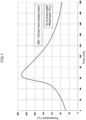
- Fig. 1 is a graph illustrating the relationship between the elapsed time of a polymerization reaction and the temperature inside a heat-insulated container in Example 8A.
- each numerical range specified using “(from) ... to ...” represents a range including the numerical values noted before and after “to” as the minimum value and the maximum value, respectively.
- the amount of each component in a composition means the total amount of the plurality of substances present in the composition, unless otherwise specified, when there is more than one substance corresponding to each component in the composition.
- the upper limit value or the lower limit value described in one numerical range may be replaced with the upper limit value or the lower limit value of another stepwise numerical range.
- upper limit values or lower limit values of the numerical value ranges may be replaced with values described in Examples.
- process includes not only independent processes, but also processes that are not clearly distinguishable from other processes, as long as a desired purpose of the process is achieved.
- the disclosure includes a first embodiment and a second embodiment.
- the polymerizable composition for an optical material of the first embodiment is a polymerizable composition for an optical material containing two or more different monomers for an optical material, and a polymerization catalyst, wherein at least one of the two or more different monomers for an optical material is an isocyanate compound containing no aromatic rings, the content of the polymerization catalyst with respect to the total of 100 parts by mass of the two or more different monomers for an optical material is from more than 0.05 parts by mass to 2.0 parts by mass, and the viscosity measured by a B-type viscometer at 25°C and 60 rpm is from 10 mPa ⁇ s to 1,000 mPa ⁇ s.
- the polymerizable composition for an optical material of the first embodiment includes the above-described configuration, the quality of an optical material to be obtained can be maintained, and the production time of an optical material can be favorably reduced.
- the polymerizable composition for an optical material of the first embodiment is an isocyanate compound that contains two or more different optical material monomers, wherein at least one of the optical material monomers is an isocyanate compound containing no aromatic rings.
- the monomer for an optical material may be any monomer that is used for optical applications, and is not particularly restricted.
- monomers used to produce an optical material that have any of the following properties may be used.
- An optical material obtained by using monomers for an optical material may have a total light transmittance of 10% or higher.
- the total light transmittance of the above-described an optical material may be measured in accordance with JIS K 7361-1 (1997).
- An optical material obtained using a monomer for an optical material may have a haze (or total haze) of 10% or less, preferably 1% or less, and still more preferably 0.5% or less.
- the haze of the optical material is a value measured at 25°C using a haze meter [TC-HIII DPK manufactured by Tokyo Denshoku Co., Ltd.] in accordance with JIS-K7105.
- An optical material obtained by using monomers for an optical material preferably have a refractive index of 1.58 or higher.
- An optical material obtained by using a monomer for an optical material may have a refractive index of 1.80 or less, or 1.75 or less.
- the refractive index of the optical material may be measured in accordance with JIS K7142 (2014).
- the shape of an optical material obtained by using a monomer for an optical material is not particularly limited, and may be plate, cylinder, rectangular, or the like.
- Examples of a monomer for an optical material include a polymerizable monomer that polymerizes when the polymerization catalyst described below is used.
- Specific examples of the polymerizable monomer include an isocyanate compound, a polythiol compound containing two or more mercapto groups, a hydroxythiol compound containing one or more mercapto groups and one or more hydroxyl groups, a polyol compound containing two or more hydroxyl groups, and an amine compound.
- the two or more different monomers for an optical material contain at least one active hydrogen compound selected from the group consisting of a polythiol compound containing two or more mercapto groups, and a hydroxythiol compound containing one or more mercapto groups and one or more hydroxyl groups.
- isocyanate compound examples include an aliphatic isocyanate compound, an alicyclic isocyanate compound, an aromatic isocyanate compound, and a heterocyclic isocyanate compound, and one or more of these compounds are used in a mixture.
- isocyanate compounds may include a dimer, a trimer, or a prepolymer.
- examples of these isocyanate compounds include compounds as illustrated in WO2011/055540 .
- the isocyanate compound a halogen-substituted (for example, chlorine-substituted, or bromine-substituted), alkyl-substituted, alkoxy-substituted, carbodiimide-modified, urea-modified, or burette-modified compound of the above-described compound;
- These compounds may be used singly or in a mixture of two or more kinds thereof.
- an alicyclic isocyanate compound refers to an isocyanate compound that may contain an alicyclic structure and may contain a structure other than an alicyclic structure, such as a heterocyclic structure.
- An aromatic isocyanate compound refers to an isocyanate compound that contains an aromatic structure and may contain any one or a combination of an aliphatic structure, an alicyclic structure, and a heterocyclic structure.
- a heterocyclic isocyanate compound refers to an isocyanate compound that contains a heterocyclic structure and does not contain an alicyclic structure or an aromatic structure.
- An aliphatic isocyanate compound refers to an isocyanate compound that does not contain an aromatic structure, an alicyclic structure, or a heterocyclic structure.
- the isocyanate compound preferably contains at least one selected from the group consisting of an aliphatic isocyanate compound, an alicyclic isocyanate compound, an aromatic isocyanate compound, and a heterocyclic isocyanate compound.
- At least one of the monomers for an optical material in the first embodiment is an isocyanate compound containing no aromatic rings.
- the isocyanate compound containing no aromatic rings include an alicyclic isocyanate compound containing no aromatic rings, a heterocyclic isocyanate compound, and an aliphatic isocyanate compound.
- Alicyclic isocyanate compounds containing no aromatic rings, heterocyclic isocyanate compounds, and aliphatic isocyanate compounds are preferable because a polymerization reaction is not too fast compared to isocyanate compounds containing an aromatic ring, and the polymerization reaction can be easily controlled.
- a monomer for an optical material may contain an isocyanate compound other than an isocyanate compound containing no aromatic rings.
- the ratio of isocyanate compounds containing no aromatic rings to isocyanate compounds containing an aromatic ring in terms of the molar ratio of isocyanate groups is preferably within the range of from 7:3 to 10:0, and more preferably within the range of from 8:2 to 10:0.
- the isocyanate compound other than isocyanate compounds containing no aromatic rings is not particularly restricted, and examples thereof include an isocyanate compound containing an aromatic ring.
- the number of moles of isocyanate groups in the isocyanate compound containing no aromatic rings is preferably more than the number of moles of isocyanate groups in the isocyanate compound containing an aromatic ring.
- the isocyanate compound preferably contains at least one selected from the group consisting of isophorone diisocyanate, 2,5-bis(isocyanatomethyl)bicyclo-[2.2.
- Examples of the active hydrogen compound include a polythiol compound containing two or more mercapto groups, a hydroxythiol compound containing one or more mercapto groups and one or more hydroxyl groups, a polyol compound containing two or more hydroxyl groups, and an amine compound.
- an oligomer of the active hydrogen compound or a halogen-substituted compound of the active hydrogen compound for example, a chlorine-substituted compound, or a bromine-substituted compound
- a halogen-substituted compound of the active hydrogen compound for example, a chlorine-substituted compound, or a bromine-substituted compound
- the active hydrogen compounds may be used singly or in a mixture of two or more kinds thereof.
- polythiol compound containing two or more mercapto groups examples include compounds as illustrated in WO2016/125736 .
- the polythiol compound preferably contains at least one species selected from the group consisting of 4-mercaptomethyl-1,8-dimercapto-3,6-dithiaoctane,
- Examples of the active hydrogen compound also include a polythiol compound containing three or more mercapto groups.
- the polymerizable composition for an optical material of the first embodiment includes a polythiol compound containing three or more mercapto groups as an active hydrogen compound, from the viewpoint of promoting a polymerization reaction, it is preferable to contain a compound (also referred to as compound (N1)) in which at least one mercapto group among the three or more mercapto groups contained in the polythiol compound containing three or more mercapto groups is replaced by a group represented by the following Formula (N1).
- a compound (also referred to as compound (N1)) in which at least one mercapto group among the three or more mercapto groups contained in the polythiol compound containing three or more mercapto groups is replaced by a group represented by the following Formula (N1).
- the peak area of the compound (N1) with respect to the peak area 100 of the polythiol compound containing three or more mercapto groups is preferably 3.0 or less, and more preferably 1.5 or less.
- the peak area of the compound (N1) with respect to the peak area 100 of the polythiol compound containing three or more mercapto groups is preferably 0.01 or more.
- the peak area by high performance liquid chromatography can be measured by the method described in paragraph 0146 and the like of WO2014/027665 .
- Examples of the thiol compound containing a hydroxy group include 2-mercaptoethanol, 3-mercapto-1,2-propanediol, glycerin bis(mercaptoacetate), 4-mercaptophenol, 2,3-dimercapto-1-propanol, pentaerythritol tris(3-mercaptopropionate), pentaerythritol tris(thioglycolate), but are not limited to only these illustrated compounds.
- polyol compound examples include one or more aliphatic or alicyclic alcohols. Examples thereof include a linear or branched aliphatic alcohol, an alicyclic alcohol, and an alcohol to which at least one alcohol selected from the group consisting of ethylene oxide, propylene oxide, and ⁇ -caprolactone has been added. More specific examples thereof include the compounds as illustrated in WO2016/125736 .
- the above-described polyol compound is preferably at least one selected from the group consisting of ethylene glycol, diethylene glycol, triethylene glycol, propylene glycol, 1,3-propanediol, 1,2-cyclopentanediol, 1,3-cyclopentanediol, 1,2-cyclohexanediol, 1,3-cyclohexanediol, and 1,4-cyclohexanediol.
- amine compound examples include a primary polyamine compound such as ethylenediamine, 1,2- or 1,3-diaminopropane, 1,2-, 1,3-, or 1,4-diaminobutane, 1,5-diaminopentane, 1,6-diaminohexane, 1,7-diaminoheptane, 1,8-diamino-octane, 1,10-diamino-decane, 1,2-, 1,3-, or 1,4-diaminocyclohexane, o- , m- , or p -diaminobenzene, 3,4- or 4,4'-diaminobenzophenone, 3,4- or 4,4'-diaminodiphenyl ether, 4,4'-diaminodiphenylmethane, 4,4'-diaminodiphenyl sulfide, 3,3' or 4,4'-diamino
- an active hydrogen compound preferably includes a polythiol compound containing two or more mercapto groups.
- the content of the polythiol compound containing two or more mercapto groups with respect to the total mass of the active hydrogen compound is preferably 60% by mass or more, more preferably 70% by mass or more, and still more preferably 80% by mass or more.
- the total content of 4-mercaptomethyl-1,8-dimercapto-3,6-dithiaoctane the total content of 4-mercaptomethyl-1,8-dimercapto-3,6-dithiaoctane
- the molar ratio (NCO groups / (OH groups + SH groups)) of isocyanate groups (NCO groups) in the isocyanate compound to the sum of hydroxyl groups (OH groups) and mercapto groups (SH groups) in the active hydrogen compound is preferably 0.8 or more, more preferably 0.85 or more, and still more preferably 0.9 or more.
- the molar ratio (NCO groups / (OH groups + SH groups)) of isocyanate groups (NCO groups) in the isocyanate compound to the sum of hydroxyl groups (OH groups) and mercapto groups (SH groups) in the active hydrogen compound is preferably 1.2 or less, more preferably 1.15 or less, and still more preferably 1.1 or less.
- the polymerizable composition for an optical material of the first embodiment contains at least one polymerization catalyst.
- the polymerization catalyst is not particularly restricted, and for example, a basic catalyst, an organometallic catalyst, a zinc carbamate, an ammonium salt, a sulfonic acid, or the like can be used.
- polymerization catalysts may be used singly, or two or more kinds thereof may be used in an appropriate combination.
- Examples of the basic catalyst include an amine catalyst (including an imidazole catalyst).
- Examples thereof include a tertiary amine catalyst such as triethylenediamine, N , N -dimethylethanolamine, triethylamine, or N -ethylmorpholine; 2-methylpyrazine, pyridine, ⁇ -picoline, ⁇ -picoline, ⁇ -picoline, 2,6-lutidine, 3,5-lutidine, 2,4,6-collidine, 3-chloropyridine, N , N -diethylaniline, N , N -dimethylaniline, hexamethylenetetramine, quinoline, isoquinoline, N , N -dimethyl- p -toluidine, N , N -dimethylpiperazine, quinaldine, 4-methylmorpholine, triallylamine, trioctylamine, 1.2-dimethylimidazole, and 1-benzyl-2-methylimidazole.
- a tertiary amine catalyst such as triethylene
- an amine catalyst is preferable as a basic catalyst.
- amine catalyst examples include 3,5-lutidine; 2,4,6-collidine; and a tertiary amine catalyst such as triethylenediamine, N , N -dimethylethanolamine, triethylamine, or N -ethylmorpholine.
- the above-described amine catalyst preferably contains at least one selected from the group consisting of 3,5-lutidine, 2,4,6-collidine, triethylenediamine, N , N -dimethylethanolamine, and N -ethylmorpholine.
- the basic catalyst also preferably contains a compound represented by the following Formula (2) and/or a compound represented by the following Formula (3).
- R 1 represents a linear alkyl group having from 1 to 20 carbon atoms, a branched alkyl group having from 3 to 20 carbon atoms, a cycloalkyl group having from 3 to 20 carbon atoms, or a halogen atom, and a plurality of R 1 s may be the same or different.
- Q represents a carbon atom or a nitrogen atom.
- m is an integer from 0 to 5.
- R 2 , R 3 , and R 4 each independently represent a linear alkyl group having from 3 to 20 carbon atoms, a branched alkyl group having from 3 to 20 carbon atoms, a cycloalkyl group having from 3 to 20 carbon atoms, an allyl group, or a hydrocarbon group containing a hydroxyl group.
- the basic catalyst preferably has a pKa value of 1 or higher, more preferably has a pKa value of 3 or higher, and still more preferably has a pKa value of 4 or higher.
- the basic catalyst preferably has a pKa value of 9 or less, and more preferably has a value of 8 or less.
- the pKa value (acid dissociation index) can be measured by, for example, (a) a method described in The Journal of Physical Chemistry vol. 68, number 6, page 1560 (1964 ), or (b) a method using a potentiometric automatic titrator (AT-610 (trade name) or the like) manufactured by Kyoto Electronics Manufacturing Co., Ltd., and (c) the acid dissociation index described in the Chemical Handbook edited by the The Chemical Society of Japan (revised 3rd edition, published by Maruzen Corporation on June 25, 1984 ) can be used.
- AT-610 potentiometric automatic titrator
- organometallic catalyst examples include an organotin catalyst; an organic acid salt of iron, nickel, zinc, or the like; an acetylacetonate complex; a catalyst composition composed of a carboxylic acid metal compound and a quaternary ammonium salt compound; a catalyst composition composed of a bicyclic tertiary amine compound; and a metal catalyst in which an alkoxy group, carboxy group, or the like is coordinated to titanium or aluminum.
- an organotin catalyst is preferable.
- organotin catalyst examples include dibutyltin dichloride (DBC), dimethyltin dichloride (DMC), dibutyltin dilaurate (DBTDL), and dibutyltin diacetate.
- DBC dibutyltin dichloride
- DMC dimethyltin dichloride
- DBTDL dibutyltin dilaurate
- dibutyltin diacetate examples include dibutyltin dichloride (DBC), dimethyltin dichloride (DMC), dibutyltin dilaurate (DBTDL), and dibutyltin diacetate.
- the above-described organotin catalyst preferably contains at least one selected from the group consisting of dibutyltin dichloride, dimethyltin dichloride, dibutyltin dilaurate, and dibutyltin diacetate.
- the polymerization catalyst preferably contains at least one selected from the group consisting of a basic catalyst having a pKa value of from 4 to 8, and an organometallic catalyst.
- the polymerization catalyst also preferably contains at least one selected from the group consisting of an amine catalyst and an organotin catalyst.
- the polymerization catalyst preferably contains at least one selected from the group consisting of 3,5-lutidine, 2,4,6-collidine, triethylenediamine, N , N -dimethylethanolamine, N-ethylmorpholine, dibutyltin dichloride, dimethyltin dichloride, dibutyltin dilaurate, and dibutyltin diacetate.
- the polymerizable composition for an optical material of the first embodiment has a content of the polymerization catalyst with respect to a total of 100 parts by mass of the two or more different monomers for an optical material of from more than 0.05 parts by mass to 2.0 parts by mass.
- the content of the polymerization catalyst in the first embodiment is a large amount compared to a conventional method of producing an optical material.
- reaction heat or heat from self-heating
- the reaction heat (or heat from self-heating) of the polymerizable composition for an optical material to be generated in a short time when monomers for an optical material in a polymerizable composition for an optical material are polymerized in a curing process.
- a polymerization reaction can be favorably promoted, and high-quality an optical material can be obtained in a shorter time than before, while increasing the viscosity of the polymerizable composition and suppressing thermal convection, which is presumed to cause striae, as described below.
- the content of the polymerization catalyst to the total of 100 parts by mass of the two or more different monomers for an optical material is more than 0.05 parts by mass, a polymerization reaction can be promoted well, and therefore a high-quality optical material can be obtained in a short time.
- the mold release property when a cured product is removed from a mold can be improved.
- the content of the polymerization catalyst to the total of 100 parts by mass of the two or more different monomers for an optical material is preferably 0.08 parts by mass or more, preferably 0.10 parts by mass or more, more preferably 0.13 parts by mass or more, and still more preferably 0.17 parts by mass or more.
- the handling property when casting the polymerizable composition for an optical material into a mold can be improved.
- the content of the polymerization catalyst to the total of 100 parts by mass of the two or more different monomers for an optical material is preferably 1.8 parts by mass or less, more preferably 1.5 parts by mass or less, still more preferably 1.0 parts by mass or less, particularly preferably 0.5 parts by mass or less, and still more preferably 0.3 parts by mass or less.
- the content of the polymerization catalyst may be set appropriately depending on the type of polymerization catalyst, the type and amount of monomers (isocyanate compounds, active hydrogen compounds, other components, and the like) to be used, and a desired shape of a molded body.
- the range of polymerization catalyst content described above may be appropriately changed depending on the type of monomer for an optical material and polymerization catalyst.
- a monomer for an optical material contains dicyclohexylmethane diisocyanate and a mixture of 5,7-dimercaptomethyl-1,11-dimercapto-3,6,9-trithiaundecane, 4,7-dimercaptomethyl-1,11-dimercapto-3,6,9-trithiaundecane, and 4,8-dimercaptomethyl-1,11-dimercapto-3,6,9-trithiaundecane, and the polymerization catalyst contains 3,5-lutidine
- the polymerization catalyst is used, with respect to 100 parts by mass of two or more different monomers for an optical material, preferably at 1.0 part by mass or more, and more preferably at 1.5 parts by mass or more.
- the polymerization catalyst is used, with respect to 100 parts by mass of two or more different monomers for an optical material, preferably at 0.03 parts by mass or more, and more preferably at 0.07 parts by mass or more.
- the polymerization catalyst preferably satisfies the following Condition 1.
- Ea The value of Ea is calculated by the following method.
- the calculated Ea is used to determine whether the polymerization catalyst satisfies Condition 1 or not.
- the polymerizable composition for an optical material of the first embodiment may include an optional additive.
- Examples of the optional additive include a photochromic compound, an internal mold release agent, a bluing agent, and an ultraviolet absorber.
- Photochromic compounds are compounds whose molecular structure is reversibly changed by light irradiation at a specific wavelength, and whose absorption characteristics (absorption spectrum) are changed accordingly.
- Examples of the photochromic compound used in the first embodiment include a compound whose absorption characteristics (absorption spectrum) changes depending on the specific wavelength of light.
- the photochromic compound is not particularly restricted, and any conventionally known compound that can be used for photochromic lenses can be selected and used as appropriate.
- any conventionally known compound that can be used for photochromic lenses can be selected and used as appropriate.
- one or more of the following compounds can be used depending on the desired coloration: a spiropyran compound, a spirooxazine compound, a fulgidic compound, a naphthopyran compound, and a bisimidazole compound.
- Examples of the internal mold release agent include an acid phosphate ester.
- Examples of the acid phosphate ester include a phosphoric acid monoester and a phosphoric acid diester, which can be used singly or in a mixture of two or more kinds thereof.
- Examples of a bluing agent include a substance that has an absorption band in the orange to yellow wavelength region of the visible light range and has a function of adjusting the hue of an optical material made of a resin. Specific examples of the bluing agent further include a substance that exhibits a blue to violet color.
- Examples of the ultraviolet absorber to be used include a benzophenone ultraviolet absorber such as 2,2'-dihydroxy-4-methoxybenzophenone; a triazine ultraviolet absorber such as 2-[4-[(2-hydroxy-3-dodecyloxypropyl)oxy]-2-hydroxyphenyl]4,6-bis(2,4-dimethylphenyl)-1, 3,5-triazine; and a benzotriazole ultraviolet absorber such as 2-(2 H -benzotriazol-2-yl)-4-methylphenol, or 2-(2 H -benzotriazol-2-yl)-4- tert -octylphenol, and preferable examples thereof include a benzotriazole ultraviolet absorber such as 2-(2 H -benzotriazol-2-yl)-4- tert -octylphenol or 2-(5-chloro-2 H -benzotriazol-2-yl)-4-methyl-6- tert -butylphenol.
- the polymerizable composition for an optical material of the first embodiment has a viscosity measured with a B-type viscometer at 25°C and 60 rpm of 10 mPa ⁇ s or more, and preferably 40 mPa ⁇ s or more, more preferably 70 mPa ⁇ s or more, still more preferably 80 mPa ⁇ s or more, particularly preferably 100 mPa ⁇ s or more, and still more preferably 120 mPa ⁇ s or more.
- the polymerizable composition for an optical material of the first embodiment has a viscosity measured with a B-type viscometer at 25°C and 60 rpm of 1,000 mPa ⁇ s or less, preferably 700 mPa ⁇ s or less, and more preferably 400 mPa ⁇ s or less.
- the viscosity of the polymerizable composition for an optical material of the first embodiment may be adjusted depending on the application of a cured product to be obtained.
- the end face (or the injection port) is narrow (for example, from 1 mm to 3 mm), and therefore, the polymerizable composition for an optical material of the first embodiment preferably has the viscosity of from 10 mPa ⁇ s to 100 mPa ⁇ s from the viewpoint of suppressing striae.
- the end face (or the injection port) is wide (for example, from 5 mm to 15 mm), and therefore, the polymerizable composition for an optical material of the first embodiment preferably has the above-described viscosity of from 10 mPa ⁇ s to 1,000 mPa ⁇ s, and more preferably from 100 mPa ⁇ s to 1,000 mPa ⁇ s, from the viewpoint of suppressing striae.
- thermal convection due to the temperature difference between the inside and outside of the composition can be suppressed when heat is applied to the composition from the outside, thereby reducing striae derived from thermal convection.
- the rate of thickening during polymerization is not sufficient, and the maximum temperature difference is not large enough to suppress thermal convection, and therefore, the temperature cannot be increased rapidly in a short time. Furthermore, the time required to complete the polymerization is also longer.
- the disclosure allows the viscosity of the composition as a whole to be increased more rapidly by increasing the amount of catalyst to an optimum range, taking into account the reactivity of the isocyanate compound containing no aromatic rings. As a result, thermal convection due to rapid temperature rise can be suppressed while controlling unevenness in polymerization, and polymerization can proceed in a short time.
- the polymerizable composition for an optical material of the first embodiment preferably has a thixotropy ratio of 1.3 or less, more preferably 1.2 or less, and still more preferably 1.1 or less.
- the composition can be quickly filled into a polymerization container, such as a mold as described below, and thermal convection during polymerization can be suppressed to further prevent generation of striae or the like in the monomer for an optical material. As a result, generation of striae or the like can be suppressed in an optical material to be obtained, and favorable quality can be maintained.
- the polymerizable composition for an optical material of the first embodiment preferably has a thixotropy ratio of 0.9 or higher, more preferably 0.95 or higher, and still more preferably 1.0 or higher.
- the thixotropy ratio is calculated by dividing a viscosity ⁇ 1 measured with a B-type viscometer at 25°C and a rotation speed of 6 rpm by a viscosity ⁇ 2 measured at a rotation speed of 60 rpm.
- the thixotropy ratio can be reduced, for example, by reducing the molecular weight of two or more monomers for an optical material, by restricting the degree of polymerization of a prepolymer to below a certain level, or by reducing the ratio of the structure that gives elasticity in a monomer.
- the polymerizable composition for an optical material of the first embodiment preferably contains two or more different monomers for an optical material, a polymerization catalyst, and a prepolymer that is a polymer of two or more different monomers for an optical material and contains a polymerizable functional group.
- a prepolymer is a polymer of two or more different monomers for an optical material and contains a polymerizable functional group.
- a cured product obtained by polymerizing a prepolymer and two or more different monomers for an optical material can be used as an optical material.
- Examples of the prepolymer include a polymer in which polymerizable functional groups of two of the monomers for an optical material are not polymerized at an equivalent ratio of 1:1, and a polymer in which two of the monomers for an optical material are polymerized at an unbalanced equivalent ratio.
- the above-described polymerizable functional group is a functional group capable of polymerizing with another polymerizable functional group, and specific examples thereof include a functional group containing an active hydrogen, such as an isocyanate group or a mercapto group as described below.
- Polymerization at an equivalent ratio of 1:1 means, for example, that when polymerizing using an isocyanate compound and a polythiol compound, isocyanate groups of the isocyanate compound and mercapto groups of the polythiol compound are polymerized at a molar ratio of 1:1.
- the polymerizable prepolymer composition for an optical material of the first embodiment is a polymerizable prepolymer composition for an optical material that contains a prepolymer that is a polymer of two or more different monomers for an optical material and that contains a polymerizable functional group, a polymerization catalyst, wherein at least one of the two or more different monomers for an optical material is an isocyanate compound containing no aromatic rings, the two or more different monomers for an optical material comprise at least one active hydrogen compound selected from the group consisting of a polythiol compound containing two or more mercapto groups, and a hydroxythiol compound containing one or more mercapto groups and one or more hydroxyl groups, and the viscosity measured with a B-type viscometer at 25°C and 60 rpm is from 10 mPa ⁇ s to 2,000 mPa ⁇ s.
- Prepolymer compositions preferably have a viscosity that is difficult to change over time (that is stable).
- the polymerizable prepolymer composition for an optical material does not contain components with other polymerizable functional groups that tend to polymerize and react with the polymerizable functional groups contained in the prepolymer as described below.
- Stable viscosity of a prepolymer composition means that when the prepolymer composition is stored at 20°C for 24 hours, the change in viscosity is 10% or less before and after storage.
- preferable specific examples, preferable aspects, and the like for monomers for an optical material of polymerizable prepolymer compositions for an optical material and polymerization catalysts are the same as the specific examples, preferable specific examples, preferable aspects, and the like for monomers for an optical material and polymerization catalysts described in the section on the polymerizable compositions for an optical material.
- prepolymer of the polymerizable prepolymer composition for an optical material is the same as the definition of prepolymer described in the section on the polymerizable composition for an optical material.
- the polymerizable prepolymer composition for an optical material of the first embodiment preferably has a content of the polymerization catalyst with respect to a total of 100 parts by mass of the two or more different monomers for an optical material of from 0.1 parts by mass to 4.0 parts by mass.
- the content of the polymerization catalyst to the total of 100 parts by mass of the two or more different monomers for an optical material is 0.1 parts by mass or more, a polymerization reaction can be promoted favorably, and therefore a high-quality optical material can be obtained in a short time.
- the mold release property when a cured product is removed from a mold can be improved.
- the content of the polymerization catalyst to the total of 100 parts by mass of the two or more different monomers for an optical material is preferably 0.15 parts by mass or more, and more preferably 0.20 parts by mass or more.
- the handling property when casting the polymerizable composition for an optical material into a mold can be improved.
- the content of the polymerization catalyst to the total of 100 parts by mass of the two or more different monomers for an optical material is preferably 3.0 parts by mass or less, more preferably 2.0 parts by mass or less, and still more preferably 1.0 parts by mass or less.
- the thixotropy ratio of the polymerizable prepolymer composition for an optical material of the first embodiment is preferably 1.3 or less, more preferably 1.2 or less, and still more preferably 1.1 or less.
- the composition can be quickly filled into a polymerization container, such as a mold as described below, and heat convection during polymerization can be suppressed to further prevent generation of striae, or the like, in the monomer for an optical material.
- a polymerization container such as a mold as described below
- heat convection during polymerization can be suppressed to further prevent generation of striae, or the like, in the monomer for an optical material.
- generation of striae and the like can be suppressed in an optical material to be obtained, and favorable quality can be maintained.
- the polymerizable composition for an optical material of the first embodiment preferably has a thixotropy ratio of 0.9 or higher, more preferably 0.95 or higher, and still more preferably 1.0 or higher.
- the measurement method of the thixotropy ratio is as described above.
- a prepolymer may preferably contain an isocyanate group.
- the prepolymer contains an isocyanate group
- the prepolymer contains more isocyanate compound than other monomers for an optical material that can polymerize with the isocyanate compound
- the viscosity of the polymerizable prepolymer composition for an optical material can be kept low when the viscosity of the other monomer for an optical material is high, which facilitates handling of the composition.
- a prepolymer contains substantially no isocyanate groups.
- a prepolymer contains substantially no isocyanate groups means that almost all of isocyanate groups have been polymerized.
- a prepolymer contains substantially no isocyanate groups means that the content of isocyanate groups in the prepolymer is below the detection limit when measured with an IR spectrometer.
- a prepolymer contains substantially no isocyanate groups, there are substantially no highly reactive isocyanate groups, and therefore, the stability of the polymerizable prepolymer composition for an optical material can be improved.
- the value obtained by subtracting the refractive index B of the prepolymer raw material composition, which is a composition before forming a prepolymer and which is a composition containing two or more different monomers for an optical material and a polymerization catalyst, from the refractive index A of the polymerizable prepolymer composition for an optical material is preferably more than 0, more preferably more than 0.003, and still more preferably more than 0.010.
- the refractive index A is the refractive index of the polymerizable prepolymer composition for an optical material after polymerization of a monomer and a polymerization catalyst to obtain a prepolymer
- the refractive index B is the refractive index of the prepolymer raw material composition before polymerization of a monomer and a polymerization catalyst to obtain a prepolymer.
- the refractive index A - refractive index B is within the above-described range, it becomes easy to adjust the viscosity of the polymerizable composition for an optical material to a predetermined level. It becomes easy to stabilize the quality (for example, refractive index, or appearance) of a cured product of the polymerizable composition for an optical material.
- the refractive index A - refractive index B may be 0.020 or less, or 0.018 or less.
- the refractive index A - refractive index B is preferably 0.005 or more, and more preferably 0.010 or more.
- the refractive index A - refractive index B is preferably 0.030 or less, and more preferably 0.020 or less.
- the refractive index A - refractive index B is preferably 0.003 or more, and more preferably 0.005 or more.
- the refractive A - refractive index B is preferably 0.020 or less, and more preferably 0.015 or less.
- the cured product of the first embodiment is a cured product of the polymerizable composition for an optical material of the first embodiment or the polymerizable prepolymer composition for an optical material of the first embodiment.
- the content of amine in the cured product of the first embodiment is preferably 0.03% by mass or more, more preferably 0.05% by mass or more, and still more preferably 0.07% by mass or more.
- the content of amine in the cured product of the first embodiment is preferably 2.5% by mass or less, more preferably 2.0% by mass or less, and still more preferably 1.5% by mass or less.
- the content of the above-described amines is the content of amines measured by gas chromatography-mass spectrometry from the dichloromethane composition obtained by dispersing a cured product in dichloromethane and by ultrasonic extraction.
- the cured product of the first embodiment preferably has a tin content of 0.05% by mass or more, more preferably 0.1% by mass or more, and still more preferably 0.2% by mass or more.
- the content of tin of the cured product of the first embodiment is preferably 2.5% by mass or less, more preferably 2.0% by mass or less, and still more preferably 1.5% by mass or less.
- the measurement method of the amine content in a cured product is as follows.
- dichloromethane was added to the obtained supernatant liquid to make the total volume 10 mL.
- GC-MS gas chromatography-mass spectrometry
- a calibration curve of the peak area value derived from the obtained amine and the amount of amine is prepared to determine the content of amine in the cured product.
- the above-described amine means an amine compound that can be used as a polymerization catalyst, or an amine compound derived from the above-described amine compound.
- the degree of opacity of the cured product of the first embodiment is preferably less than 50, and more preferably less than 35.
- the degree of opacity is measured by the following method.
- Light from a light source (for example, LUMINAR ACE LA-150A manufactured by HAYASHI-REPIC CO., LTD.) is transmitted through a cured product in a dark place.
- An image of the light transmitted through the cured product is input into an image processing device (for example, an image processing device manufactured by Ube Information Systems Inc.), shading processing is performed on the input image, the degree of shading in the processed image is quantified for each pixel, and the value calculated as the average of the numerical values of the degree of shading in the respective pixels is used as the degree of opacity.
- an image processing device for example, an image processing device manufactured by Ube Information Systems Inc.
- the cured product of the first embodiment preferably has no striae with a length of 1.0 mm or more within a radius of 15 mm from the center of a cured product, and more preferably has no striae with a length of 1.0 mm or more within and outside a radius of 15 mm from the center of a cured product.
- the cured product of the first embodiment may be more specifically a cured product of two or more different optical monomers, where at least one of the two or more different optical material monomers is an isocyanate compound containing no aromatic rings, in which there are no striae of a length of 1.0 mm or more within a radius of 15 mm from the center of the cured product, and the content of amine, as measured by gas chromatography mass spectrometry, is from 0.03% by mass to 2.5% by mass.
- the two or more different optical monomers and isocyanate compounds containing no aromatic rings are as described above.
- the two or more different optical monomers may contain an isocyanate compound other than an isocyanate compound containing no aromatic rings.
- the ratio of the isocyanate compound that has no aromatic rings to the isocyanate compound that has an aromatic ring is preferably within the range of from 7:3 to 10:0, and more preferably within the range of from 2:8 to 0:10.
- the method of producing an optical material of the first embodiment includes the following production method A and production method B.
- a production method A includes a preparation process of preparing a polymerizable composition for an optical material that contains two or more different monomers for an optical material, and a polymerization catalyst, wherein at least one of the two or more different monomers for an optical material is an isocyanate compound containing no aromatic rings, the two or more different monomers for an optical material comprise at least one active hydrogen compound selected from the group consisting of a polythiol compound containing two or more mercapto groups, and a hydroxythiol compound containing one or more mercapto groups and one or more hydroxyl groups, and the content of the polymerization catalyst to the total of 100 parts by mass of the two or more different monomers for an optical material is from more than 0.05 parts by mass to 2.0 parts by mass; a cast molding process in which the viscosity of the polymerizable composition for an optical material, measured with a B-type viscometer at 25°C and 60 rpm, is adjusted to from 10 mPa ⁇ s to 1,000 mPa ⁇ s and cast
- the production method A includes the above-described preparation process, the above-described viscosity adjustment process, and the above-described curing process, the quality of an optical material to be obtained can be maintained and the production time of an optical material can be reduced.
- the production method A may include the above-described preparation process, the viscosity adjustment process, and the above-described curing process, in the order mentioned.
- the content of a polymerization catalyst to the total of 100 parts by mass of the two or more different monomers for an optical material is from more than 0.05 parts by mass to 2.0 parts by mass.
- the content of this polymerization catalyst is a large amount compared to conventional production methods for an optical material.
- reaction heat or heat from self-heating
- reaction heat can be utilized to promote a polymerization reaction of monomers for an optical material in a polymerizable composition for an optical material, high-quality an optical material can be obtained in a shorter time than before.
- a polymerizable composition for an optical material has been heated mainly to generate a polymerization reaction, whereas in Production Method A, heating of the polymerizable composition for an optical material is not necessarily required.
- Production Method A also utilizes the self-heating of a composition, polymerization can proceed without excessive dependence on the supply of heat from an external source, and therefore, together with increasing the viscosity of the composition as described below, heat unevenness and heat convection in the polymerizable composition for an optical material can be suppressed, and generation of striae can be suppressed.
- striae are a condition in which the refractive index of a particular portion differs from the surrounding normal refractive index. Striae can also be described as a condition that is detrimental to a desired application of an optical material. Striae in an optical material are one kind of defect.
- Production Method A includes a preparation process of preparing a polymerizable composition for an optical material containing two or more different monomers for an optical material, and a polymerization catalyst, wherein at least one of the two or more different monomers for an optical material is an isocyanate compound containing no aromatic rings, the two or more different monomers for an optical material comprise at least one active hydrogen compound selected from the group consisting of a polythiol compound containing two or more mercapto groups, and a hydroxythiol compound containing one or more mercapto groups and one or more hydroxyl groups, and the content of the polymerization catalyst with respect to the total of 100 parts by mass of the two or more different monomers for an optical material is from more than 0.05 parts by mass to 2.0 parts by mass.
- the preparation process may be a process of simply preparing a pre-produced polymerizable composition for an optical material, or may be a process of producing a polymerizable composition for an optical material.
- the preparation process is not particularly restricted as long as the polymerizable composition for an optical material contains two or more different monomers for an optical material and a polymerization catalyst.
- the polymerizable composition for an optical material ready-made products may be used, or at least two or more different monomers for an optical material and a polymerization catalyst may be mixed and prepared.
- the above-described mixing method is not particularly restricted, and any known method can be used.
- the temperature at which each of the above-described components is mixed is not particularly restricted, and is preferably 30°C or lower, and more preferably room temperature (25°C) or lower.
- the temperature may be preferably set even lower than 25°C.
- the solubility of an additive such as an internal mold release agent and each of the above-described components is not favorable, the temperature of each of the above-described components may be raised in advance to dissolve the above-described additive in each of the above-described components.
- Each of the above-described components is preferably mixed under dry inert gas to prevent moisture from entering the polymerizable composition for an optical material.
- the preparation process is preferably a process of producing a polymerizable composition for an optical material by pre-mixing a portion of the two or more different monomers for an optical material with the polymerization catalyst, and then further mixing the balance of the two or more different monomers for an optical material.
- the start time of polymerization can be adjusted by performing the preparation processes in the above order. Therefore, for example, the handling property when injecting the polymerizable composition for an optical material into a mold can be improved.
- the balance of above-described monomers for two or more different an optical material may be mixed in a single step or divided into a plurality of steps.
- Examples of a specific aspect of the preparation process include the following aspect.
- a portion of a monomer for an optical material and an additive are charged to prepare a mixed liquid.
- an additive for example, an internal mold release agent
- a portion of the remaining monomer for an optical material is further charged, and the mixture is stirred to make a uniform solution. Defoaming is performed on this solution to obtain a first mixed liquid.
- the first mixed liquid and the second mixed liquid are mixed to obtain a polymerizable composition for an optical material as a uniform solution.
- Production method B includes a cast molding process in which the viscosity of the polymerizable composition for an optical material, measured with a B-type viscometer at 25°C and 60 rpm, is adjusted to from 10 mPa ⁇ s to 1,000 mPa ⁇ s and the composition is cast molded into a mold.
- the viscosity of the polymerizable composition for an optical material By adjusting the viscosity of the polymerizable composition for an optical material within the above-described range and cast molding the composition, the viscosity of the polymerizable composition for an optical material to be produced in the process of producing the polymerizable composition for an optical material can be made within an appropriate range from the viewpoint of suppressing striae in an optical material to be obtained.
- the viscosity of the polymerizable composition for an optical material is 10 mPa ⁇ s or higher, and preferably 40 mPa ⁇ s or higher, more preferably 70 mPa ⁇ s or higher, still more preferably 80 mPa ⁇ s or higher, particularly preferably 100 mPa ⁇ s or higher, and still more preferably 120 mPa ⁇ s or higher.
- the viscosity of the polymerizable composition for an optical material is 1,000 mPa ⁇ s or less, preferably 700 mPa ⁇ s or less, and more preferably 400 mPa ⁇ s or less.
- the method of adjusting the viscosity of the polymerizable composition for an optical material is not restricted.
- the viscosity of the polymerizable composition for an optical material may be adjusted by adding a high viscosity compound, heating, stirring, or other methods.
- Production Method A includes a curing process of curing the polymerizable composition for an optical material by polymerizing the two or more different monomers for an optical material in the polymerizable composition for an optical material in a mold.
- Production Method A includes a curing process
- the polymerizable composition for an optical material can be polymerized, and an optical material can be produced.
- the polymerization reaction is generated by heating the polymerizable composition for an optical material.
- the polymerizable composition for an optical material in Production Method A can promote the polymerization reaction of the monomers for an optical material in the polymerizable composition for an optical material by increasing the reaction heat (or heat from self-heating) associated with the polymerization reaction.
- the polymerizable composition for an optical material is not necessarily heated, but may be heated.
- the polymerizable composition for an optical material can be cured by polymerization by leaving the polymerizable composition for an optical material to stand still.
- the environment in which a curing process is carried out is not particularly restricted, and a mold can be heated and cured from outside the mold.
- the process is preferably a process in which the polymerizable composition for an optical material is cured by allowing the polymerizable composition for an optical material to stand still in a closed system space.
- Examples of the closed system space include a heat-insulated environment.
- a heat-insulated environment refers to an environment in which heat is retained inside and the conduction of heat between the inside and the outside is suppressed.
- An environment in which the conduction of heat between the inside and the outside is suppressed means an environment in which the conductivity of heat between the inside and the outside of a closed system is such that the polymerizable composition for an optical material can be cured when the polymerizable composition for an optical material is placed still in the closed system space.
- a heat-insulated environment can be created, for example, by using a heat-insulating material.
- the polymerizable composition for an optical material by placing the polymerizable composition for an optical material in a heat-insulated container made of heat-insulating material, heat can be retained inside the heat-insulated container and the conduction of heat between the inside and the outside can be suppressed.
- the thermal conductivity of the heat-insulating material is preferably 0.50 W/mK or less, more preferably 0.10 W/mK or less, and still more preferably 0.05 W/mK or less.
- the density of the heat-insulating material is preferably 10 kg/m 3 or higher, more preferably 15 kg/m 3 or higher, and still more preferably 20 kg/m 3 or higher.
- heat-insulating or "heat-insulated environment” in Production Method A
- reaction vessel thermostatic reaction vessel
- a mold is placed to be kept at a heat-retained state or at a thermostatic state depending on the temperature increased due to self-heating of monomers for an optical material, or the like, thereby promoting the polymerization reaction more favorably.
- a heat-insulated environment for example, a heat-insulated reaction vessel or a thermostatic reaction vessel as described above can be used.
- heat-insulated polymerization in a heat-insulated environment using a heat-insulated reaction vessel can be performed by the following procedure when a mold into which a monomer has been injected is placed in a vacuum container that is a heat-insulated reaction vessel.
- the inner surface of the vacuum container is covered with a member having heat insulation and heat retention properties such as urethane foam, or cork, and the mold into which the monomer has been injected is wrapped with a member such as a cloth if necessary. Then, the mold injected with the monomer is allowed to stand still in the above-described vacuum container.
- a member having heat insulation and heat retention properties such as urethane foam, or cork
- the above-described curing process may be a process of curing the polymerizable composition for an optical material by allowing the polymerizable composition for an optical material to stand still without heating from outside.
- the polymerizable composition for an optical material does not necessarily need to be heated.
- Production method A can reduce the economic burden because an optical material can be produced by a simple method.
- the above-described curing process is preferably a process in which the polymerizable composition for an optical material is cured by allowing the composition to stand still for from 2 to 10 hours.
- a polymerization reaction is generally carried out over several hours to several tens of hours (for example, about from 20 hours to 48 hours) while the temperature is gradually raised by heating.
- an optical material can be produced in a short time while maintaining the quality of an optical material to be obtained.
- an optical material can be produced by allowing the polymerizable composition for an optical material to stand still for 10 hours or less.
- the polymerizable composition for an optical material is preferably allowed to stand still for 2 hours or more, and more preferably allowed to stand still for 5 hours or more.
- a microwave irradiation process in which a microwave is irradiated to the polymerizable composition for an optical material for a predetermined period of time may be provided, if necessary.
- Examples of one aspect of the curing process include an aspect that includes the following Process a and Process b.
- Process a The polymerizable composition for an optical material is injected (cast molded) into a mold (in a cavity of the mold).
- Process b The mold into which the polymerizable composition for optical material is injected is allowed to stand still in a closed space for a predetermined period of time to undergo heat-insulated polymerization.
- the polymerizable composition is injected into a molding mold (mold) held by a gasket or tape.
- a gasket or tape it is preferable to perform defoaming treatment under reduced pressure or filtration treatment under pressure or reduced pressure, or the like, if necessary.
- the polymerization conditions are not limited, it is preferable to adjust the conditions according to the composition of the polymerizable composition for an optical material, the type and amount of catalyst to be used, and the shape of a mold.
- the mold injected with the polymerizable composition for an optical material may be allowed to stand still in a heat-insulated environment for from 2 to 4 hours for polymerization.
- a heating process may be added after the heat-insulated polymerization process in which the mold injected with the polymerizable composition for an optical material is allowed to stand still for a predetermined period of time in a heat-insulated environment.
- the mold injected with the polymerizable composition for an optical material may be heated continuously or intermittently at a temperature that does not exceed the self-heating emitted by the polymerizable composition for an optical material in the heat-insulated polymerization process, or the inside of the heat-insulated reaction vessel may be heated to maintain the environmental temperature in the heat-insulated reaction vessel.
- Production method A may include, if necessary, an annealing process in which a cured polymerizable composition for an optical material is annealed.
- the temperature at which the annealing process is performed is usually from 50 to 150°C, and is preferably from 90 to 140°C, and is more preferably from 100 to 130°C.
- Production method A may include other processes if necessary.
- Examples of other processes include an injection process in which the polymerizable composition for an optical material is injected into a mold in the case of producing an optical material using a mold.
- the optical material in Production Method A can be used for plastic lenses, prisms, optical fibers, information recording substrates, filters, light-emitting diodes, and the like.
- the optical material in the first embodiment can be suitably used for plastic lenses, and is more suitable for plastic lenses for glasses.
- Production Method B is a method of producing an optical material, the method including:
- Production Method B includes a preparation process and a prepolymerization process, which suppresses striae in an optical material to be obtained and reduces the production time of an optical material.
- Production Method B further includes, in addition to the above-described preparation process and prepolymerization process, a process of producing a polymerizable composition for an optical material in which, by further adding at least the balance of the two or more different monomers for an optical material to the mixture containing the prepolymer, a polymerizable composition for an optical material containing the two or more different monomers for an optical material, the prepolymer, and the polymerization catalyst is obtained; and a curing process in which, by curing the two or more different monomers for an optical material in the polymerizable composition for an optical material, an optical material that is a cured product of the polymerizable composition for an optical material is obtained.
- Production Method B includes, in addition to the preparation process and the prepolymerization process, a process of producing a polymerizable composition for an optical material and a curing process, which can more favorably suppress striae in an optical material to be obtained and can more favorably reduce the production time of an optical material.
- the content of a polymerization catalyst to the total of 100 parts by mass of the two or more different monomers for an optical material is from 0.010 parts by mass to 2.0 parts by mass.
- the content of this polymerization catalyst is a large amount compared to conventional production methods for an optical material.
- Production Method B can suppress convection in a mold where a polymerization reaction takes place, and can suppress generation of striae in a cured product to be obtained.
- Production Method B includes a prepolymerization process, which can more favorably maintain the storage stability of a mixture containing the prepolymer (for example, a polymerizable composition for an optical material) compared to cases without prepolymerization.
- a prepolymerization process which can more favorably maintain the storage stability of a mixture containing the prepolymer (for example, a polymerizable composition for an optical material) compared to cases without prepolymerization.
- a polymerization reaction in the mixture can be suppressed. In other words, a longer pot life can be ensured.
- Production Method B includes a preparation process in which a total of 100 parts by mass of two or more different monomers for an optical material and from 0.010 to 2.0 parts by mass of polymerization catalyst are prepared.
- Production Method B uses polymerization catalyst of from 0.010 to 2.0 parts by mass for a total of 100 parts by mass of two or more different monomers for an optical material.
- a polymerization reaction By using polymerization catalyst of 0.010 parts by mass or more for 100 parts by mass of two or more different monomers for an optical material, a polymerization reaction can be favorably promoted, and therefore a high-quality optical material with suppressed striae can be obtained in a short time.
- a polymerization reaction By favorably promoting a polymerization reaction, the mold release property when a cured product is removed from a mold can be improved.
- a polymerization catalyst is used, with respect to 100 parts by mass of two or more different monomers for an optical material, preferably at 0.015 parts by mass or more, more preferably at 0.038 parts by mass or more, still more preferably at 0.10 parts by mass or more, and particularly preferably at 0.17 parts by mass or more.
- the range of polymerization catalyst content described above may be appropriately changed depending on the type of monomer for an optical material and polymerization catalyst.
- the polymerization catalyst is used, with respect to 100 parts by mass of two or more different monomers for an optical material, preferably at 0.10 parts by mass or more, and more preferably at 0.17 parts by mass or more.
- the handling property when injecting the polymerizable composition for an optical material into a mold can be improved.
- the polymerization catalyst is used, with respect to 100 parts by mass of two or more different monomers for an optical material, preferably at 1.5 parts by mass or less.
- the polymerization catalyst may be used, with respect to 100 parts by mass of two or more different monomers for an optical material, 1.0 part by mass or less, 0.3 parts by mass or less, or 0.15 parts by mass or less.
- the amount of the polymerization catalyst can be set appropriately depending on the type of polymerization catalyst, the type and amount of monomers (isocyanate compounds, active hydrogen compounds, other components, and the like) to be used, and the desired shape of a molded body.
- Production Method B includes a prepolymerization process of obtaining, by obtaining a prepolymer by mixing a portion of two or more different monomers for an optical material and at least a portion of a polymerization catalyst and polymerizing at least a portion in a portion of the two or more different monomers for an optical material, a mixture containing the prepolymer.
- the inventors focused on the fact that, when a portion of monomers for an optical material is prepolymerized to produce a prepolymer and a polymerizable composition for an optical material contains the prepolymer, the viscosity of the polymerizable composition for an optical material increases. This can suppress convection in a mold.
- Production Method B can reduce the temperature difference between the inside and the outside of a mold by preventing the self-heating from escaping to the outside.
- Production Method B is presumed to be capable of suppressing striae in a cured product to be obtained.
- Production Method B can obtain a prepolymer with excellent pot life by including all of one of two or more different optical material monomers, some of the other optical material monomers other than the one described above, and all or part of a polymerization catalyst in a prepolymerization process.
- portion of two or more different monomers for an optical material are not particularly restricted.
- portion of two or more different monomers for an optical material may be partial amounts of respective two or more different monomers for an optical material.
- a "portion of two or more different optical material monomers" may be all of one or more of the two or more different optical material monomers.
- the polymerization catalyst may be used in a portion or in full.
- portion of the polymerization catalyst is not particularly restricted, as is the case with “portion of two or more different monomers for an optical material”.
- portion of the polymerization catalyst may be an amount of a portion of the polymerization catalyst.
- the portion of the polymerization catalyst in 100 parts by mass of the polymerization catalyst is preferably from 5 to 80 parts by mass, more preferably from 10 to 60 parts by mass, and still more preferably from 15 to 50 parts by mass.
- a portion of the two or more monomers for an optical material in 100 parts by mass of the two or more monomers for an optical material is preferably from 5 to 95 parts by mass, more preferably from 20 to 80 parts by mass, and still more preferably from 30 to 70 parts by mass.
- the prepolymerization process of Aspect a is a process in which a portion of two or more different monomers for an optical material and all of a polymerization catalyst are mixed and at least a portion in the portion of two or more different monomers for an optical material is polymerized to obtain a prepolymer, thereby obtaining a mixture containing the prepolymer.
- the portion of two or more different monomers for an optical material is preferably composed of all of one of the two or more different monomers for an optical material and a portion of another monomer for an optical material other than the one monomer for an optical material.
- the prepolymerization process of Aspect b is a process in which a portion of two or more different monomers for an optical material and a portion of a polymerization catalyst are mixed and at least a portion in the portion of two or more different monomers for an optical material is polymerized to obtain a prepolymer, thereby obtaining a mixture containing the prepolymer.
- the process of producing a polymerizable composition for an optical material described below is a process in which at least the balance of two or more different monomers for an optical material and the balance of a polymerization catalyst are added to a mixture containing a prepolymer to obtain a polymerizable composition for an optical material containing two or more different monomers for an optical material, the prepolymer, and the polymerization catalyst.
- the two or more different optical material monomers include an isocyanate compound, that a portion of the two or more different optical material monomers include a portion of the isocyanate compound, and that the balance of the two or more different monomers for an optical material include the balance of the isocyanate compound.
- Production Method B further includes a viscosity adjustment process to adjust the viscosity of a mixture containing a prepolymer to from 30 mPa ⁇ s to 2,000 mPa ⁇ s after the prepolymerization process and before the process of producing a polymerizable composition for an optical material.
- the viscosity of a mixture containing a prepolymer is within the above-described range, from the viewpoint of suppressing striae in an optical material to be obtained, the viscosity of a polymerizable composition for an optical material produced in the process of producing a polymerizable composition for an optical material can be made within an appropriate range. As a result, striae in the optical material to be obtained can be suppressed.
- the viscosity of a mixture containing a prepolymer is preferably from 40 mPa ⁇ s to 2,000 mPa ⁇ s, and more preferably from 50 mPa ⁇ s to 1,800 mPa ⁇ s.
- the viscosity is measured using a B-type viscometer under the conditions of 25°C and 60 rpm (revolutions per minute).
- Methods for adjusting the viscosity of a mixture containing a prepolymer are not particularly restricted.
- the viscosity of a mixture containing a prepolymer may be adjusted by methods such as addition of a high-viscosity compound, heating, and stirring.
- the temperature at which a mixture containing a prepolymer is prepared is not particularly limited, as long as the temperature is high enough to obtain the prepolymer by a polymerization reaction.
- the temperature may be from 20°C to 50°C, or from 25°C to 45°C.
- the stirring time for preparing a mixture containing a prepolymer is not particularly limited as long as the stirring time is long enough to obtain the prepolymer through a polymerization reaction.
- the time may be from 30 minutes to 5 hours, or from 1 hour to 5 hours.
- the method of preparing a mixture containing a prepolymer may be a method of preparing a mixture containing a prepolymer by stirring under the conditions of 40°C for 3 hours while adjusting the viscosity.
- Production Method B includes a process of producing a polymerizable composition for an optical material in which, by adding at least the balance of two or more different monomers for an optical material to a mixture containing a prepolymer, a polymerizable composition for an optical material containing the two or more different monomers for an optical material, the prepolymer, and the polymerization catalyst is obtained
- the process of producing a polymerizable composition for an optical material is a process in which at least the balance of two or more different monomers for an optical material and the balance of a polymerization catalyst are added to a mixture containing a prepolymer to obtain a polymerizable composition for an optical material containing two or more different monomers for an optical material, the prepolymer, and the polymerization catalyst.
- the balance of two or more different monomers for an optical material when adding the balance of at least two or more different monomers for an optical material to a mixture containing a prepolymer, the balance of two or more different monomers for an optical material may be mixed in a single step or divided into a plurality of steps.
- the "balance of two or more different monomers for an optical material” means the balance of two or more different monomers for an optical material with respect to the "portion of two or more different monomers for an optical material" in the prepolymerization process.
- the "balance of two or more different monomers for an optical material” may be monomers for an optical material that have functional groups that polymerize with respect to the polymerizable functional groups of the prepolymer, and where the amount of functional groups that polymerize with respect to the polymerizable functional groups of the above-described prepolymer is an amount (or equivalent amount) that can polymerize with substantially all of the polymerizable functional groups of the prepolymer.
- the balance of the two or more different monomers for an optical material preferably contains monomers of the same kind as the monomers for an optical material constituting the prepolymer.
- the temperature at which each of the above-described components is mixed is not particularly restricted, and is preferably 30°C or lower, and more preferably room temperature (25°C) or lower.
- the temperature at which each component is mixed may preferably be even lower than 25°C.
- the solubility of an additive such as an internal mold release agent and each of the above-described components is not favorable, the temperature of each of the above-described components may be raised in advance to dissolve the above-described additive in each of the above-described components.
- Examples of specific aspects of the process of producing a polymerizable composition for an optical material include the following aspects.
- a mixed liquid is prepared by charging an additive (for example, an internal mold release agent) to a mixture containing a prepolymer. This mixed liquid is stirred at 25°C for 1 hour to completely dissolve each component, and then degassed to obtain a first mixed liquid.
- an additive for example, an internal mold release agent
- the first mixed liquid and the second mixed liquid are mixed and degassed after stirring to obtain a polymerizable composition for an optical material as a uniform solution.
- Production Method B may further include a pumping process of pumping a polymerizable composition for an optical material into a mold for cast molding after the process of producing a polymerizable composition for an optical material and before the curing process.
- the pumping process may be a process in which the polymerizable composition for optical material is pumped into the mold for cast molding while being remixed in a stationary mixer.
- the pumping process may be a process of pumping the polymerizable composition for optical material into the mold for cast molding while remixing the composition with a dynamic mixer.
- Production Method B includes a curing process in which two or more different monomers for an optical material in a polymerizable composition for an optical material are cured to obtain an optical material that is a cured product of the polymerizable composition for an optical material.
- Production Method B may further include, in addition to the above-described preparation process and prepolymerization process, a second prepolymerization process in which the balance of the two or more different monomers for an optical material and the balance of the polymerization catalyst are mixed and at least a portion in the balance of the two or more different monomers for an optical material is polymerized to obtain a second prepolymer, thereby obtaining a mixture containing the second prepolymer;
- Production Method B includes the above-described configuration, a mixture containing a prepolymer obtained by a prepolymerization process and a mixture containing a second prepolymer obtained by a second prepolymerization process can be obtained.
- the two or more different monomers for an optical material, polymerization catalysts, specific aspects, preferable aspects, and the like in the second prepolymerization process are the same as the two or more different monomers for an optical material, polymerization catalysts, specific aspects, preferable aspects, and the like in the prepolymerization process.
- the process of producing a polymerizable composition for an optical material is a process of obtaining a polymerizable composition for an optical material containing the prepolymer, the second prepolymer, and the polymerization catalyst by adding the mixture containing the second prepolymer to the mixture containing the prepolymer.
- the mixture containing the prepolymer, the specific aspects, the preferable aspects, and the like in the above-described process of producing a polymerizable composition for an optical material are the same as the specific aspects, the preferable aspects, and the like in the above-described ⁇ Process of Producing Polymerizable Composition for An optical material >.
- the curing process is a process in which an optical material that is a cured product of the polymerizable composition for an optical material is obtained by curing the prepolymer and the second prepolymer in the polymerizable composition for an optical material.
- the prepolymers, the specific aspects, the preferable aspects, and the like in the above-described curing process are the same as the specific aspects, the preferable aspects, and the like in the above-described ⁇ Curing Process >.
- Production B may include, if necessary, an annealing process in which a cured polymerizable composition for an optical material is annealed.
- the preferable aspects and the like of the annealing process in Production Method B are the same as the preferable aspects and the like of the annealing process in Production Method A.
- Production Method B may be provided with other processes as necessary.
- Specific examples, preferable specific examples, and the like of applications of an optical material in Production Method B are the same as the specific examples, the preferable specific examples, and the like of the applications of the optical material in Production Method A.
- Polythiol compounds used in Examples can be produced by the method described in WO2014/027665 .
- the measurement method of viscosity in Example A is the same as the method described above.
- Light from a light source (LUMINAR ACE LA-150A manufactured by HAYASHI-REPIC CO., LTD.) was transmitted through a prepared molded body in a dark place.
- An image of the light transmitted through the molded body was captured by an image processor (manufactured by Ube Information Systems, Inc.), and the captured image was subjected to shading processing.
- the degree of shading in the processed image was quantified for each pixel, and the average value of the numerical values of the degrees of shading for the individual pixels was obtained to determine the degree of opacity of the molded body.
- the obtained degree of opacity was evaluated according to the following criteria.
- a molded body with a center thickness of 8 mm and a diameter of 78 mm was projected under an ultra-high pressure mercury lamp (light source model OPM-252HEG: manufactured by USHIO Inc.), and the transmitted image was visually observed and evaluated according to the following criteria.
- the mold release property of a molded body when the molded body was released from a mold was evaluated according to the following criteria.
- Example A the -Ea/R of each polymerization catalyst is as follows.
- the first mixed liquid and the second mixed liquid were then mixed at 20°C to obtain a polymerizable composition for an optical material as a uniform solution.
- the thixotropy ratio of the polymerizable composition for an optical material is shown in Table 1.
- This solution was injected at a rate of 10 g/sec into a cavity of a mold with the cavity for preparing lenses having a set center thickness of 8 mm, composed of a 4-curved glass mold (upper mold) with a diameter of 78 mm and a 4-curved glass mold (lower mold) with a diameter of 78 mm, while filtering with a 1 ⁇ m PTFE filter.
- a cured molded body was released from the mold, and further annealed at 120°C for 2 hours to obtain a molded body (lens).
- the properties of the obtained molded body were measured, and favorable physical properties with a refractive index (ne) of 1.596, an Abbe number (ve) of 39, and a glass transition temperature (Tg) of 113°C were exhibited.
- the results of degree of opacity, striae, and mold release property are shown in Table 1.
- a molded body was obtained using the same method as in Example 1A, except that the amount of catalyst was set as described in Table 1.
- the properties of the obtained molded body were measured, and favorable physical properties with a refractive index (ne) of 1.598, an Abbe number (ve) of 39, and a glass transition temperature (Tg) of 114°C were exhibited.
- the results of degree of opacity, striae, and mold release property are shown in Table 1.
- the properties of the obtained molded body were measured, and favorable physical properties with a refractive index (ne) of 1.598, an Abbe number (ve) of 39, and a glass transition temperature (Tg) of 114°C were exhibited.
- the results of degree of opacity, striae, and mold release property are shown in Table 1.
- a molded body was obtained using the same method as in Example 3A, except that the amount of catalyst was set as described in Table 1.
- the properties of the obtained molded body were measured, and favorable physical properties with a refractive index (ne) of 1.598, an Abbe number (ve) of 39, and a glass transition temperature (Tg) of 113°C were exhibited.
- the results of degree of opacity, striae, and mold release property are shown in Table 1.
- a cured molded body was obtained using the same method as in Example 3A, except that the amount of catalyst was set as described in Table 1.
- the properties of the obtained molded body were measured, and favorable physical properties with a refractive index (ne) of 1.597, an Abbe number (ve) of 39, and a glass transition temperature (Tg) of 109°C were exhibited.
- the results of degree of opacity, striae, and mold release property are shown in Table 1.
- the properties of the obtained molded body were measured, and favorable physical properties with a refractive index (ne) of 1.598, an Abbe number (ve) of 39, and a glass transition temperature (Tg) of 112°C were exhibited.
- the results of degree of opacity, striae, and mold release property are shown in Table 1.
- a molded body was obtained by the same method as in Example 1A, except that the type and amount of catalyst were set as described in Table 1.
- the properties of the obtained molded body were measured, and favorable physical properties with a refractive index (ne) of 1.598, an Abbe number (ve) of 39, and a glass transition temperature (Tg) of 108°C were exhibited.
- the results of degree of opacity, striae, and mold release property are shown in Table 1.
- a polymerizable composition was adjusted in the same manner as in Example 1A, except that the amount of catalyst was set as described in Table 1, and injected into a cavity of the mold.
- the mold into which the polymerizable composition was injected was put into a polymerization oven, and the temperature was gradually raised from 20°C to 130°C for 20 hours for polymerization. After polymerization was completed, the mold was taken out from the oven, a molded body was released from the cavity, and further annealed at 120°C for 2 hours to obtain a molded body.
- the properties of the obtained molded body were measured, and favorable physical properties with a refractive index (ne) of 1.596, an Abbe number (ve) of 39, and a glass transition temperature (Tg) of 113°C were exhibited.
- the results of degree of opacity, striae, and mold release property are shown in Table 1.
- Polymerization was carried out using the same method as in Comparative Example 1A, except that curing was carried out using a polymerization program (temperature rise program) such that a cast molded product was cured in 4 hours in Comparative Example 1A.
- a polymerization program temperature rise program
- the cured molded body was released from the mold, and further annealed at 120°C for 2 hours to obtain a molded body.
- the properties of the obtained molded body were measured, and exhibited a refractive index (ne) of 1.596, an Abbe number (ve) of 39, and a glass transition temperature (Tg) of 113°C.
- the results of degree of opacity, striae, and mold release property are shown in Table 1.
- Example 1A Polymerizable composition for an optical material Polymerization catalyst Time of polymerization (standing still) (hr) With or without heating in polymerization Polymerization environment Evaluation Thixotropy ratio Viscosity (mPa ⁇ S) Type Content of polymerization catalyst with respect to total of 100 parts by mass of monomer for optical material (parts by mass) Degree of opacity Striae Mold release property
- Example 1A 1.0 30 Dimethyltin (II) dichloride 0.3 4 None Heat-insulated A B A
- Example 2A 1.0 30 Dimethyltin (II) dichloride 0.2 4 None Heat-insulated A B
- Example 3A 1.0 40 3,5-lutidine 0.25 4 None Heat-insulated A A A Example 4A 1.0 37 3,5-lutidine 0.2 4 None Heat-insulated A A B
- Example 3A 1.0 40 3,5-lutidine 0.25 4 None Heat-insulated A A A A Example 4A 1.0 37 3,5-lutidine 0.2 4 None Heat-insulated A A B
- Example 3A 1.0 40
- Comparative Example 1A a lens with favorable quality could be obtained, but the polymerization time was 20 hours, and a long time was required to complete the polymerization.
- Comparative Example 2A the polymerization time was 4 hours, and the obtained molded body was inferior in quality.
- a molded body (lens) was prepared in the same manner as in Example 1A, except
- a master liquid was prepared by dissolving Reversacol Wembley Grey manufactured by Vivimed labs limited (0.036 parts by mass), Reversacol Heath Green from Vivimed labs limited (0.060 parts by mass), Peacock Blue manufactured by Vivimed labs limited (0.030 parts by mass), and Jalapeno Red manufactured by Vivimed labs limited (0.024 parts by mass) as photochromic compounds, and HOSTAVIN PR-25 (0.075 parts by mass) as a ultraviolet absorber in a composition containing 2,5(6)-bis(isocyanatomethyl)-bicyclo-[2.2.1]-heptane (9.8 parts by mass).
- the maximum heat generation temperature in the polymerization process was 132°C and the maximum heat generation duration was 65 minutes.
- the prepared molded body had a favorable transparency with no cloudiness observed at all. There were no voids caused by bubbles, cracks, or the like.
- Production Method B of the first embodiment will be described in detail below by way of Example B. However, Production Method B of the first embodiment is not limited to these Examples.
- the measurement method of viscosity in Example B is the same as the method described above.
- a molded body was projected under an ultra-high pressure mercury lamp (light source model OPM-252HEG: manufactured by USHIO Inc.), and the transmitted image was visually observed and evaluated according to the following criteria.
- the first mixed liquid and the second mixed liquid were mixed at 20°C to obtain a polymerizable composition for an optical material.
- refractive index B The value (also referred to as "refractive index A - refractive index B") obtained by subtracting refractive index B of the prepolymer raw material composition, which is the composition before the prepolymer is formed and contains two or more different monomers for an optical material and a polymerization catalyst from refractive index A of the polymerizable prepolymer composition for an optical material is shown in Table 2.
- the obtained polymerizable composition for an optical material was remixed in a stationary mixer and pumped into a mold for cast molding (or mold).
- the viscosity (also referred to as cast molding viscosity) of the polymerizable composition for an optical material when pumped into the mold and cast molded into the mold was adjusted to the value shown in Table 2.
- the polymerizable composition for an optical material When pumping the polymerizable composition for an optical material, the polymerizable composition for an optical material was injected at a rate of 10 g/sec into a cavity of a mold with the cavity for preparing lenses having a set center thickness described in Table 2, composed of a 4-curved or 6-curved glass mold (upper mold) with a diameter of 78 mm and a 4-curved or 2-curved glass mold (lower mold) with a diameter of 78 mm, while filtering with a 1 ⁇ m PTFE filter.
- a cured molded body was released from the mold, and further annealed at 120°C for 2 hours to obtain a molded body (lens).
- the content of amine in the obtained molded body (or cured product) is shown in Table 2.
- a molded body (lens) was obtained by the same method as in Example 1B, except that the amount of polymerization catalyst and the stirring time of the first mixed liquid in the prepolymerization process were changed to the values shown in Table 2, and the cast molding viscosity of the polymerizable composition for an optical material was adjusted to the value shown in Table 2.
- the first mixed liquid and the second mixed liquid were mixed at 20°C to obtain a polymerizable composition for an optical material.
- the obtained polymerizable composition for an optical material was pumped into a mold for cast molding by the same method as in Example 1B, and the cast molding viscosity was adjusted to the value shown in Table 2.
- a cured molded body was released from the mold, and further annealed at 120°C for 2 hours to obtain a molded body (lens).
- a molded body (lens) was obtained by the same method as in Example 5B, except that the content of pentaerythritol tetrakis(3-mercaptopropionate) and the content of 4-mercaptomethyl-1,8-dimercapto-3,6-dithiaoctane in the prepolymerization process were changed to the values shown in Table 2, and that the cast molding viscosity of the polymerizable composition for an optical material was adjusted to the value shown in Table 2.
- a molded body (lens) was obtained by the same method as in Example 7B, except that the cast molded product was allowed to stand still for 3 hours in a heat-insulated container at 25°C for heat-insulated polymerization, and then the cast molded product was taken out from the heat-insulated container and the mold was released.
- a molded body (lens) was obtained by the same method as in Example 7B, except that the cast molded product was heated from 30°C to 120°C with time without heat-insulated polymerization, and heat polymerization was carried out over 3 hours.
- a molded body (lens) was obtained by the same method as in Example 5B, except that the contents of pentaerythritol tetrakis(3-mercaptopropionate) and 4-mercaptomethyl-1,8-dimercapto-3,6-dithiaoctane in the prepolymerization process were changed to the values shown in Table 2, and the cast molding viscosity of the polymerizable composition for an optical material was adjusted to the value shown in Table 2.
- a molded body (lens) was obtained by the same method as in Example 5B, except that the polymerization catalyst was changed from 3,5-lutidine to dibutyltin (II) dichloride, and the contents of pentaerythritol tetrakis(3-mercaptopropionate) and 4-mercaptomethyl-1,8-dimercapto-3,6-dithiaoctane, the stirring time in the prepolymerization process, the cast molding viscosity of the polymerizable composition for an optical material, and the time of heat-insulated polymerization in the prepolymerization process was changed to the values shown in Table 2.
- the polymerization catalyst was changed from 3,5-lutidine to dibutyltin (II) dichloride, and the contents of pentaerythritol tetrakis(3-mercaptopropionate) and 4-mercaptomethyl-1,8-dimercapto-3,6-dithiaoctane
- a molded body (lens) was obtained by the same method as in Example 12B, except that the cast molded product was heated from 30°C to 120°C with time without heat-insulated polymerization, and heat polymerization was carried out over 3 hours.
- Catalyst Prepolymerization process refracti ve index A refracti ve index B Thixotr opy ratio
- Viscosi ty of mixture (first mixture ) contain ing prepoly mer (mPa ⁇ S) Viscosity of polymeriz able compositi on for an optical material (cast molding viscosity)
- Example 2B to Example 4B, and Examples 6B to 11B in which the viscosity (or cast molding viscosity) of the polymerizable composition for an optical material when cast molded was 70 mPa ⁇ s or higher, striae could be suppressed more favorably.
- a mixed liquid was prepared by charging 58.9 parts by mass of dicyclohexylmethane diisocyanate [monomer for an optical material], 1.5 parts by mass of TINUVIN 329 [ultraviolet absorber], and 0.1 parts by mass of internal mold release agent for MR [internal mold release agent] manufactured by Mitsui Chemicals, Inc. This mixed liquid was stirred at 25°C for 1 hour to complete dissolution.
- the first mixed liquid and the second mixed liquid were mixed at 20°C to obtain a polymerizable composition for an optical material.
- the obtained polymerizable composition for an optical material was pumped into a mold for cast molding by the same method as in Example 1, and the cast molding viscosity was adjusted to the value shown in Table 3.
- a mixed liquid was prepared by charging 48 parts by mass of 1,3-bis(isocyanatomethyl)cyclohexane [monomer for an optical material], 1.5 parts by mass of Tinuvin 329 [ultraviolet absorber], and 0.18 parts by mass of JP-506H (manufactured by JOHOKU CHEMICAL CO., LTD.). This mixed liquid was stirred at 25°C for 1 hour to complete dissolution. Then, 4.0 parts by mass of pentaerythritol tetrakis(2-mercaptoacetate) and 3.9 parts by weight of 2,5-bis(mercaptomethyl)-1,4-dithiane were charged into this mixed liquid, which was then stirred for 5 minutes at 25°C to make a uniform solution.
- the first mixed liquid and the second mixed liquid were mixed at 20°C to obtain a polymerizable composition for an optical material.
- the obtained polymerizable composition for an optical material was pumped into a mold for cast molding by the same method as in Example 1, and the cast molding viscosity was adjusted to the value shown in Table 5.
Landscapes
- Chemical & Material Sciences (AREA)
- Organic Chemistry (AREA)
- Health & Medical Sciences (AREA)
- Chemical Kinetics & Catalysis (AREA)
- Medicinal Chemistry (AREA)
- Polymers & Plastics (AREA)
- Physics & Mathematics (AREA)
- General Physics & Mathematics (AREA)
- Optics & Photonics (AREA)
- Inorganic Chemistry (AREA)
- Polyurethanes Or Polyureas (AREA)
- Eyeglasses (AREA)
- Ophthalmology & Optometry (AREA)
- General Health & Medical Sciences (AREA)
Claims (11)
- Polymerisierbare Zusammensetzung für ein optisches Material, umfassend zwei oder mehr verschiedene Monomere für ein optisches Material und einen Polymerisationskatalysator, wobei:mindestens eines der zwei oder mehr verschiedenen Monomere für ein optisches Material eine Isocyanatverbindung ist, die keine aromatischen Ringe enthält,die zwei oder mehr verschiedenen Monomere für ein optisches Material mindestens eine Verbindung mit aktivem Wasserstoff umfassen, die aus der Gruppe ausgewählt ist, die aus einer Polythiolverbindung, die zwei oder mehr Mercaptogruppen enthält, und einer Hydroxythiolverbindung, die eine oder mehr Mercaptogruppen und eine oder mehr Hydroxylgruppen enthält, besteht,ein Gehalt des Polymerisationskatalysators, bezogen eine Gesamtmenge von 100 Masseteilen der zwei oder mehr verschiedenen Monomere für ein optisches Material, mehr als 0,05 Masseteile bis 2,0 Masseteile beträgt, undeine Viskosität, gemessen mit einem Viskosimeter vom B-Typ bei 25°C und 60 U/min, 10 mPa·s bis 1.000 mPa·s beträgt.
- Polymerisierbare Zusammensetzung für ein optisches Material gemäß Anspruch 1, wobei ein Thixotropieverhältnis 1,3 oder weniger beträgt, berechnet durch Dividieren einer Viskosität η1, gemessen mit einem Viskosimeter vom B-Typ bei 25°C und einer Rotationsgeschwindigkeit von 6 U/min, durch eine Viskosität η2, gemessen bei einer Rotationsgeschwindigkeit von 60 U/min.
- Polymerisierbare Zusammensetzung für ein optisches Material gemäß Anspruch 1 oder 2, umfassend:zwei oder mehr verschiedene Monomere für ein optisches Material;einen Polymerisationskatalysator; undein Präpolymer, das ein Polymer der zwei oder mehr verschiedenen Monomere für ein optisches Material ist und das eine polymerisierbare funktionelle Gruppe enthält.
- Polymerisierbare Präpolymerzusammensetzung für ein optisches Material, umfassend einen Polymerisationskatalysator und ein Präpolymer, das ein Polymer von zwei oder mehr verschiedenen Monomeren für ein optisches Material ist und eine polymerisierbare funktionelle Gruppe enthält, wobei:mindestens eines der zwei oder mehr verschiedenen Monomere für ein optisches Material eine Isocyanatverbindung ist, die keine aromatischen Ringe enthält,die zwei oder mehr verschiedenen Monomere für ein optisches Material mindestens eine Verbindung mit aktivem Wasserstoff umfassen, die aus der Gruppe ausgewählt ist, die aus einer Polythiolverbindung, die zwei oder mehr Mercaptogruppen enthält, und einer Hydroxythiolverbindung, die eine oder mehr Mercaptogruppen und eine oder mehr Hydroxylgruppen enthält, besteht, undeine Viskosität, gemessen mit einem Viskosimeter vom B-Typ bei 25°C und 60 U/min, 10 mPa·s bis 2.000 mPa·s beträgt.
- Polymerisierbare Präpolymerzusammensetzung für ein optisches Material gemäß Anspruch 4, wobei ein Gehalt des Polymerisationskatalysators, bezogen auf eine Gesamtmenge von 100 Massenteilen des Präpolymers, 0,1 Massenteile bis 4,0 Massenteile beträgt.
- Verfahren zur Herstellung eines optischen Materials, wobei das Verfahren umfasst:
ein Herstellungsverfahren zur Herstellung einer polymerisierbaren Zusammensetzung für ein optisches Material, die zwei oder mehr verschiedene Monomere für ein optisches Material und einen Polymerisationskatalysator enthält, wobei:mindestens eines der zwei oder mehr verschiedenen Monomere für ein optisches Material eine Isocyanatverbindung ist, die keine aromatischen Ringe enthält,die zwei oder mehr verschiedenen Monomere für ein optisches Material mindestens eine Verbindung mit aktivem Wasserstoff umfassen, die aus der Gruppe ausgewählt ist, die aus einer Polythiolverbindung, die zwei oder mehr Mercaptogruppen enthält, und einer Hydroxythiolverbindung, die eine oder mehr Mercaptogruppen und eine oder mehr Hydroxylgruppen enthält, besteht, undein Gehalt des Polymerisationskatalysators, bezogen auf eine Gesamtmenge von 100 Masseteilen der zwei oder mehr verschiedenen Monomere für ein optisches Material, mehr als 0,05 Masseteile bis 2,0 Masseteile beträgt;ein Gießformverfahren, bei dem eine Viskosität der polymerisierbaren Zusammensetzung für ein optisches Material, gemessen mit einem Viskosimeter vom B-Typ bei 25°C und 60 U/min, auf 10 mPa·s bis 1.000 mPa·s eingestellt wird und die Zusammensetzung in eine Form gegossen wird; undein Härtungsverfahren zur Härtung der polymerisierbaren Zusammensetzung für ein optisches Material durch Polymerisieren der zwei oder mehr verschiedenen Monomere für ein optisches Material in der polymerisierbaren Zusammensetzung für ein optisches Material in der Form. - Verfahren zur Herstellung eines optischen Materials, wobei das Verfahren umfasst:ein Herstellungsverfahren zur Herstellung von einer Gesamtmenge von 100 Masseteilen von zwei oder mehr verschiedenen Monomeren für ein optisches Material und von 0,010 Masseteilen bis 2,0 Masseteilen eines Polymerisationskatalysators;ein Präpolymerisationsverfahren zum Mischen eines Teils der zwei oder mehr verschiedenen Monomere für ein optisches Material und mindestens eines Teils des Polymerisationskatalysators und zum Polymerisieren mindestens eines Teils des Teils der zwei oder mehr verschiedenen Monomere für ein optisches Material, um eine Mischung zu erhalten, die ein Präpolymer enthält;ein Verfahren zur Herstellung einer polymerisierbaren Zusammensetzung für ein optisches Material, bei dem durch weiteres Hinzufügen von mindestens einem Rest der zwei oder mehr verschiedenen Monomere für ein optisches Material zu der Mischung, die das Präpolymer enthält, eine polymerisierbare Zusammensetzung für ein optisches Material erhalten wird, die die zwei oder mehr verschiedenen Monomere für ein optisches Material, das Präpolymer und den Polymerisationskatalysator enthält; undein Härtungsverfahren, bei dem durch Härten der zwei oder mehr verschiedenen Monomere für ein optisches Material in der polymerisierbaren Zusammensetzung für ein optisches Material ein optisches Material erhalten wird, das ein gehärtetes Produkt der polymerisierbaren Zusammensetzung für ein optisches Material ist,wobei das Verfahren ferner nach dem Präpolymerisationsverfahren und vor dem Verfahren zur Herstellung einer polymerisierbaren Zusammensetzung für ein optisches Material ein Viskositätseinstellverfahren zum Einstellen einer Viskosität der Mischung, die ein Präpolymer enthält, auf 30 mPa·s bis 2.000 mPa·s, gemessen unter Verwendung eines Viskosimeters vom B-Typ unter den Bedingungen von 25°C und 60 U/min, umfasst, undwobei mindestens eines der zwei oder mehr verschiedenen Monomere für ein optisches Material eine Isocyanatverbindung ist, die keine aromatischen Ringe enthält, unddie zwei oder mehr verschiedenen Monomere für ein optisches Material mindestens eine Verbindung mit aktivem Wasserstoff umfassen, die aus der Gruppe ausgewählt ist, die aus einer Polythiolverbindung, die zwei oder mehr Mercaptogruppen enthält, und einer Hydroxythiolverbindung, die eine oder mehr Mercaptogruppen und eine oder mehr Hydroxylgruppen enthält, besteht.
- Polymerisierbare Zusammensetzung für ein optisches Material gemäß einem der Ansprüche 1 bis 3, polymerisierbare Präpolymerzusammensetzung für ein optisches Material gemäß einem der Ansprüche 4 bis 5 oder Verfahren zur Herstellung eines optischen Materials gemäß Anspruch 6 oder 7, wobei der Polymerisationskatalysator die folgende Bedingung 1 erfüllt:
[Bedingung 1]
-Ea/R beträgt -7.100 bis -2.900,
worin Ea eine Aktivierungsenergie ist, die durch ein Arrhenius-Diagramm aus Reaktionsgeschwindigkeitskonstanten der zwei oder mehr verschiedenen Monomere für ein optisches Material bei zwei oder mehr unterschiedlichen Temperaturen berechnet wird, und R die Gaskonstante 8,314 J/Mol/K ist. - Polymerisierbare Zusammensetzung für ein optisches Material gemäß einem der Ansprüche 1 bis 3 oder 8, polymerisierbare Präpolymerzusammensetzung für ein optisches Material gemäß einem der Ansprüche 4 bis 5 oder 8 oder Verfahren zur Herstellung eines optischen Materials gemäß einem der Ansprüche 6 bis 8, wobei der Polymerisationskatalysator mindestens einen enthält, der aus der Gruppe ausgewählt ist, die aus einem basischen Katalysator mit einem pKa-Wert von 4 bis 8 und einem Organometallkatalysator besteht.
- Verfahren zur Herstellung eines optischen Materials gemäß einem der Ansprüche 6 bis 9, wobei der Polymerisationskatalysator mindestens einen enthält, der aus der Gruppe ausgewählt ist, die aus einem Aminkatalysator und einem Organozinnkatalysator besteht.
- Gehärtetes Produkt der polymerisierbaren Zusammensetzung für ein optisches Material, wie in einem der Ansprüche 1 bis 3 oder 8 bis 9 definiert, oder der polymerisierbaren Präpolymerzusammensetzung für ein optisches Material, wie in einem der Ansprüche 4 bis 5 oder 8 bis 9 definiert.
Priority Applications (1)
| Application Number | Priority Date | Filing Date | Title |
|---|---|---|---|
| EP25162581.0A EP4541832A3 (de) | 2020-01-27 | 2021-01-27 | Polymerisierbare zusammensetzung für optisches material, polymerisierbare präpolymerzusammensetzung für optisches material, gehärtetes produkt und verfahren zur herstellung von optischem material |
Applications Claiming Priority (3)
| Application Number | Priority Date | Filing Date | Title |
|---|---|---|---|
| JP2020011127 | 2020-01-27 | ||
| JP2020194660 | 2020-11-24 | ||
| PCT/JP2021/002900 WO2021153632A1 (ja) | 2020-01-27 | 2021-01-27 | 光学材料用重合性組成物、光学材料用重合性プレポリマー組成物、硬化物及び光学材料の製造方法 |
Related Child Applications (1)
| Application Number | Title | Priority Date | Filing Date |
|---|---|---|---|
| EP25162581.0A Division EP4541832A3 (de) | 2020-01-27 | 2021-01-27 | Polymerisierbare zusammensetzung für optisches material, polymerisierbare präpolymerzusammensetzung für optisches material, gehärtetes produkt und verfahren zur herstellung von optischem material |
Publications (3)
| Publication Number | Publication Date |
|---|---|
| EP3919967A1 EP3919967A1 (de) | 2021-12-08 |
| EP3919967A4 EP3919967A4 (de) | 2022-12-21 |
| EP3919967B1 true EP3919967B1 (de) | 2025-04-02 |
Family
ID=77079517
Family Applications (2)
| Application Number | Title | Priority Date | Filing Date |
|---|---|---|---|
| EP21748375.9A Active EP3919967B1 (de) | 2020-01-27 | 2021-01-27 | Polymerisierbare zusammensetzung für optisches material, polymerisierbare prepolymerzusammensetzung für optisches material, gehärtetes produkt und verfahren zur herstellung von optischem material |
| EP25162581.0A Pending EP4541832A3 (de) | 2020-01-27 | 2021-01-27 | Polymerisierbare zusammensetzung für optisches material, polymerisierbare präpolymerzusammensetzung für optisches material, gehärtetes produkt und verfahren zur herstellung von optischem material |
Family Applications After (1)
| Application Number | Title | Priority Date | Filing Date |
|---|---|---|---|
| EP25162581.0A Pending EP4541832A3 (de) | 2020-01-27 | 2021-01-27 | Polymerisierbare zusammensetzung für optisches material, polymerisierbare präpolymerzusammensetzung für optisches material, gehärtetes produkt und verfahren zur herstellung von optischem material |
Country Status (8)
| Country | Link |
|---|---|
| US (2) | US11542357B2 (de) |
| EP (2) | EP3919967B1 (de) |
| JP (2) | JP7141529B2 (de) |
| KR (2) | KR20210116710A (de) |
| CN (4) | CN116874734A (de) |
| MX (1) | MX2021013149A (de) |
| PH (1) | PH12021551981B1 (de) |
| WO (1) | WO2021153632A1 (de) |
Families Citing this family (16)
| Publication number | Priority date | Publication date | Assignee | Title |
|---|---|---|---|---|
| CN113557254B (zh) | 2020-01-27 | 2023-01-17 | 三井化学株式会社 | 光学材料用聚合性组合物、光学材料用聚合性预聚物组合物、固化物及光学材料的制造方法 |
| JP2023094404A (ja) * | 2021-12-23 | 2023-07-05 | 三井化学株式会社 | 光学材料用重合性組成物、光学材料用重合性プレポリマー組成物、硬化物及び光学材料の製造方法 |
| EP4455740A4 (de) * | 2021-12-24 | 2026-04-08 | Mitsui Chemicals Inc | Verfahren zur herstellung eines optischen elements und gehärtetes produkt |
| JP7777610B2 (ja) * | 2022-01-27 | 2025-11-28 | 三井化学株式会社 | 光学材料の製造方法 |
| EP4547725A1 (de) | 2022-06-30 | 2025-05-07 | Essilor International | Verfahren zur schnellen härtung eines polythiourethan-substrats unter verwendung eines verzögerten katalysators |
| EP4598973A1 (de) | 2022-10-05 | 2025-08-13 | Essilor International | Verfahren zur härtung eines substrats auf polythiourethanbasis mit einem salzkatalysator |
| EP4634258A1 (de) | 2022-12-15 | 2025-10-22 | Essilor International | Verfahren zur härtung eines polythiourethan-basierten wassertoleranten substrats |
| JP2025542139A (ja) | 2022-12-21 | 2025-12-25 | エシロール アンテルナショナル | 微細構造を有するウェハに結合されたポリチオウレタン系基材の硬化方法 |
| EP4442724A1 (de) | 2023-04-04 | 2024-10-09 | Essilor International | Verfahren zur härtung eines polythiourethan-basierten substrats aus einem präpolymer |
| CN121532441A (zh) | 2023-07-20 | 2026-02-13 | 依视路国际公司 | 衍生自由杂双官能炔烃化合物获得的预聚物的光学材料 |
| KR20260038891A (ko) | 2023-07-20 | 2026-03-19 | 에씰로 앙터나시오날 | 말단 디알킨 화합물을 함유하는 중합성 조성물로부터 유래된 광학 재료 |
| CN121532442A (zh) | 2023-07-20 | 2026-02-13 | 依视路国际公司 | 衍生自含有杂双官能炔烃化合物的可聚合组合物的光学材料 |
| JPWO2025023323A1 (de) | 2023-07-27 | 2025-01-30 | ||
| WO2025041800A1 (ja) * | 2023-08-23 | 2025-02-27 | 三井化学株式会社 | 光学材料用重合性組成物、光学材料用重合性プレポリマー組成物、硬化物及び光学材料の製造方法 |
| EP4574868A1 (de) | 2023-12-22 | 2025-06-25 | Essilor International | Latente thermische borat-ammonium- oder iminiumsalze als katalysatoren für polythiourethanbasierte substrate |
| WO2025131912A1 (en) | 2023-12-22 | 2025-06-26 | Essilor International | Latent borate-ammonium or iminium salts as photo-activatable catalysts for polythiourethane based substrates |
Family Cites Families (37)
| Publication number | Priority date | Publication date | Assignee | Title |
|---|---|---|---|---|
| JPH0695646A (ja) | 1992-09-14 | 1994-04-08 | Sanyo Electric Co Ltd | パターン作成装置 |
| JPH06211960A (ja) * | 1993-01-14 | 1994-08-02 | Daiso Co Ltd | 重合性組成物およびそれより得られる高屈折率プラスチックレンズ |
| JPH07206974A (ja) * | 1994-01-11 | 1995-08-08 | Daiso Co Ltd | 重合性組成物およびそれより得られる高屈折率プラスチックレンズ |
| JP3390307B2 (ja) * | 1996-09-09 | 2003-03-24 | 三井化学株式会社 | ウレタン系プラスチックレンズ用組成物、それよりなるプラスチックレンズおよびその製造方法 |
| US6891017B2 (en) * | 2001-06-29 | 2005-05-10 | Essilor International Compagnie General D'optique | Fast polymerizable/curable episulfide based composition, polymerization/curing process and optical articles resulting therefrom |
| JP4298560B2 (ja) * | 2004-03-30 | 2009-07-22 | Hoya株式会社 | 硫黄含有プレポリマーの製造方法及びプラスチックレンズの製造方法 |
| JP4716249B2 (ja) | 2005-03-24 | 2011-07-06 | 三菱瓦斯化学株式会社 | 重合性組成物 |
| CN101228202B (zh) * | 2005-08-18 | 2011-05-18 | 三井化学株式会社 | 聚硫氨酯类聚合性组合物及由该组合物形成的光学用树脂 |
| EP1923415B1 (de) * | 2005-08-18 | 2010-12-08 | Mitsui Chemicals, Inc. | Polymerisierbare zusammensetzung auf basis von polyurethan/thiourethan und daraus erhaltenes optisches harz |
| JP5016211B2 (ja) * | 2005-09-27 | 2012-09-05 | Hoya株式会社 | プラスチックレンズの製造方法 |
| US7762662B1 (en) * | 2006-05-08 | 2010-07-27 | Eno Robert C | Colored and ring-patterned contact lenses |
| EP2116558B1 (de) * | 2007-02-27 | 2017-01-18 | Mitsui Chemicals, Inc. | Katalysator enthaltende polymerisierbare zusammensetzung, aus der zusammensetzung erhaltenes optisches material und verfahren zur herstellung des optischen materials |
| KR101157497B1 (ko) * | 2009-05-04 | 2012-06-20 | 주식회사 케이오씨솔루션 | 내열성 및 반응성이 우수한 우레탄계 광학 렌즈용 수지조성물 |
| JP2011073165A (ja) * | 2009-09-29 | 2011-04-14 | Nikon-Essilor Co Ltd | 光学レンズおよびその製造方法 |
| EP2497791B1 (de) | 2009-11-06 | 2020-05-13 | Mitsui Chemicals, Inc. | Verfahren zur herstellung eines internen formablösungsmittels für ein optisches material, internes formablösungsmittel für ein optisches material und polymerisierbare zusammensetzung damit |
| JP5373226B1 (ja) | 2012-08-14 | 2013-12-18 | 三井化学株式会社 | ポリチオール組成物、光学材料用重合性組成物およびその用途 |
| KR20140141723A (ko) | 2012-08-14 | 2014-12-10 | 미쓰이 가가쿠 가부시키가이샤 | 폴리티올 화합물의 제조방법, 광학 재료용 중합성 조성물 및 그 용도 |
| WO2014077369A1 (ja) | 2012-11-16 | 2014-05-22 | 三井化学株式会社 | 重合性組成物、光学材料およびその製造方法 |
| WO2014080750A1 (ja) * | 2012-11-21 | 2014-05-30 | 三井化学株式会社 | ポリウレタン樹脂の製造方法 |
| BR112015020050A2 (pt) | 2013-02-27 | 2017-07-18 | Mitsui Chemicals Inc | material óptico, composto para material óptico e sua utilização |
| EP2963456B1 (de) | 2013-02-27 | 2020-05-27 | Mitsui Chemicals, Inc. | Optisches material und verwendung davon |
| WO2015088015A1 (ja) | 2013-12-13 | 2015-06-18 | 三井化学株式会社 | 光学材料用重合性組成物 |
| KR20160083911A (ko) | 2013-12-13 | 2016-07-12 | 미쯔이가가꾸가부시끼가이샤 | 광학 재료용 중합성 조성물, 광학 재료 및 그 제조 방법 |
| WO2015098676A1 (ja) * | 2013-12-27 | 2015-07-02 | 富士フイルム株式会社 | ドープ組成物、偏光板保護フィルム、偏光板保護フィルムの製造方法、偏光板および液晶表示装置 |
| US9944029B2 (en) | 2014-02-20 | 2018-04-17 | Mitsui Chemicals, Inc. | Process for producing optical material |
| JP6438976B2 (ja) | 2015-02-02 | 2018-12-19 | 三井化学株式会社 | 光学材料用重合性組成物、光学材料およびその用途 |
| JP6449343B2 (ja) | 2015-02-03 | 2019-01-09 | 三井化学株式会社 | 光学材料用重合性組成物、当該組成物から得られる光学材料およびプラスチックレンズ |
| KR102512167B1 (ko) * | 2015-03-10 | 2023-03-21 | 가부시끼가이샤 도꾸야마 | 포토크로믹 경화체의 제조 방법 |
| JP2018070865A (ja) * | 2016-10-25 | 2018-05-10 | 三井化学株式会社 | 光学材料用重合性組成物、該組成物から得られた光学材料及びその製造方法 |
| CN109906240B (zh) * | 2016-10-31 | 2021-08-24 | 三井化学株式会社 | 光学材料用聚合性组合物、光学材料及其制造方法 |
| US11511522B2 (en) * | 2017-03-03 | 2022-11-29 | 3M Innovative Properties Company | High performance photocurable optically clear adhesive |
| US11208576B2 (en) * | 2017-03-03 | 2021-12-28 | 3M Innovative Properties Company | High performance photocurable optically clear adhesive |
| EP3650480A4 (de) | 2017-07-03 | 2021-03-24 | Mitsui Chemicals, Inc. | Polymerisierbare zusammensetzung für optische materialien und formkörper |
| JP7291383B2 (ja) | 2019-05-27 | 2023-06-15 | アイリスオーヤマ株式会社 | Led照明装置 |
| US12252586B2 (en) | 2019-06-19 | 2025-03-18 | Mitsui Chemicals, Inc. | Method for setting conditions for use of polymerization catalyst, polymerization condition setting method, and method for manufacturing optical material |
| JP2020011127A (ja) | 2019-10-28 | 2020-01-23 | 株式会社三洋物産 | 遊技機 |
| CN113557254B (zh) * | 2020-01-27 | 2023-01-17 | 三井化学株式会社 | 光学材料用聚合性组合物、光学材料用聚合性预聚物组合物、固化物及光学材料的制造方法 |
-
2021
- 2021-01-27 CN CN202310825885.8A patent/CN116874734A/zh active Pending
- 2021-01-27 JP JP2021522555A patent/JP7141529B2/ja active Active
- 2021-01-27 CN CN202310815368.2A patent/CN116891563A/zh active Pending
- 2021-01-27 WO PCT/JP2021/002900 patent/WO2021153632A1/ja not_active Ceased
- 2021-01-27 EP EP21748375.9A patent/EP3919967B1/de active Active
- 2021-01-27 PH PH1/2021/551981A patent/PH12021551981B1/en unknown
- 2021-01-27 US US17/431,360 patent/US11542357B2/en active Active
- 2021-01-27 KR KR1020217029533A patent/KR20210116710A/ko not_active Ceased
- 2021-01-27 MX MX2021013149A patent/MX2021013149A/es unknown
- 2021-01-27 CN CN202310812941.4A patent/CN116874733A/zh active Pending
- 2021-01-27 KR KR1020227033177A patent/KR20220138004A/ko active Pending
- 2021-01-27 CN CN202180002443.2A patent/CN113557256B/zh active Active
- 2021-01-27 EP EP25162581.0A patent/EP4541832A3/de active Pending
-
2022
- 2022-01-11 JP JP2022002564A patent/JP2022036209A/ja active Pending
- 2022-10-11 US US17/963,231 patent/US20230051738A1/en not_active Abandoned
Also Published As
| Publication number | Publication date |
|---|---|
| EP4541832A2 (de) | 2025-04-23 |
| US11542357B2 (en) | 2023-01-03 |
| CN116874734A (zh) | 2023-10-13 |
| JP7141529B2 (ja) | 2022-09-22 |
| EP4541832A3 (de) | 2025-07-30 |
| CN113557256B (zh) | 2023-07-25 |
| JP2022036209A (ja) | 2022-03-04 |
| US20220041789A1 (en) | 2022-02-10 |
| KR20220138004A (ko) | 2022-10-12 |
| WO2021153632A1 (ja) | 2021-08-05 |
| CN116874733A (zh) | 2023-10-13 |
| JPWO2021153632A1 (de) | 2021-08-05 |
| CN113557256A (zh) | 2021-10-26 |
| PH12021551981B1 (en) | 2024-02-16 |
| PH12021551981A1 (en) | 2022-08-15 |
| KR20210116710A (ko) | 2021-09-27 |
| US20230051738A1 (en) | 2023-02-16 |
| MX2021013149A (es) | 2021-12-10 |
| EP3919967A4 (de) | 2022-12-21 |
| CN116891563A (zh) | 2023-10-17 |
| EP3919967A1 (de) | 2021-12-08 |
Similar Documents
| Publication | Publication Date | Title |
|---|---|---|
| EP3919967B1 (de) | Polymerisierbare zusammensetzung für optisches material, polymerisierbare prepolymerzusammensetzung für optisches material, gehärtetes produkt und verfahren zur herstellung von optischem material | |
| EP3916470B1 (de) | Polymerisierbare zusammensetzung für optisches material, polymerisierbare präpolymerzusammensetzung für optisches material, gehärtetes produkt und verfahren zur herstellung von optischem material | |
| EP4101876B1 (de) | Polymerisierbare zusammensetzung für optisches material, polymerisierbare prepolymerzusammensetzung für optisches material, gehärteter gegenstand und verfahren zur herstellung von optischem material | |
| JP7611428B2 (ja) | 光学部材の製造方法及び硬化物 | |
| CN120019097B (zh) | 光学材料用聚合性组合物、光学材料用聚合性预聚物组合物、固化物及光学材料的制造方法 | |
| KR20260046500A (ko) | 광학 재료용 중합성 조성물, 광학 재료용 중합성 프리폴리머 조성물, 경화물 및 광학 재료의 제조 방법 |
Legal Events
| Date | Code | Title | Description |
|---|---|---|---|
| STAA | Information on the status of an ep patent application or granted ep patent |
Free format text: STATUS: THE INTERNATIONAL PUBLICATION HAS BEEN MADE |
|
| PUAI | Public reference made under article 153(3) epc to a published international application that has entered the european phase |
Free format text: ORIGINAL CODE: 0009012 |
|
| STAA | Information on the status of an ep patent application or granted ep patent |
Free format text: STATUS: REQUEST FOR EXAMINATION WAS MADE |
|
| 17P | Request for examination filed |
Effective date: 20210903 |
|
| AK | Designated contracting states |
Kind code of ref document: A1 Designated state(s): AL AT BE BG CH CY CZ DE DK EE ES FI FR GB GR HR HU IE IS IT LI LT LU LV MC MK MT NL NO PL PT RO RS SE SI SK SM TR |
|
| A4 | Supplementary search report drawn up and despatched |
Effective date: 20221118 |
|
| RIC1 | Information provided on ipc code assigned before grant |
Ipc: C08G 18/38 20060101ALI20221114BHEP Ipc: C08G 18/75 20060101ALI20221114BHEP Ipc: C08G 18/24 20060101ALI20221114BHEP Ipc: C08G 18/18 20060101ALI20221114BHEP Ipc: C08G 18/16 20060101ALI20221114BHEP Ipc: C08G 18/10 20060101ALI20221114BHEP Ipc: C08G 18/08 20060101ALI20221114BHEP Ipc: G02B 1/04 20060101ALI20221114BHEP Ipc: G02C 7/10 20060101AFI20221114BHEP |
|
| DAV | Request for validation of the european patent (deleted) | ||
| DAX | Request for extension of the european patent (deleted) | ||
| RAP3 | Party data changed (applicant data changed or rights of an application transferred) |
Owner name: MITSUI CHEMICALS, INC. |
|
| STAA | Information on the status of an ep patent application or granted ep patent |
Free format text: STATUS: EXAMINATION IS IN PROGRESS |
|
| 17Q | First examination report despatched |
Effective date: 20230926 |
|
| GRAP | Despatch of communication of intention to grant a patent |
Free format text: ORIGINAL CODE: EPIDOSNIGR1 |
|
| STAA | Information on the status of an ep patent application or granted ep patent |
Free format text: STATUS: GRANT OF PATENT IS INTENDED |
|
| INTG | Intention to grant announced |
Effective date: 20240605 |
|
| GRAJ | Information related to disapproval of communication of intention to grant by the applicant or resumption of examination proceedings by the epo deleted |
Free format text: ORIGINAL CODE: EPIDOSDIGR1 |
|
| STAA | Information on the status of an ep patent application or granted ep patent |
Free format text: STATUS: EXAMINATION IS IN PROGRESS |
|
| GRAP | Despatch of communication of intention to grant a patent |
Free format text: ORIGINAL CODE: EPIDOSNIGR1 |
|
| STAA | Information on the status of an ep patent application or granted ep patent |
Free format text: STATUS: GRANT OF PATENT IS INTENDED |
|
| INTC | Intention to grant announced (deleted) | ||
| INTG | Intention to grant announced |
Effective date: 20241031 |
|
| GRAS | Grant fee paid |
Free format text: ORIGINAL CODE: EPIDOSNIGR3 |
|
| GRAA | (expected) grant |
Free format text: ORIGINAL CODE: 0009210 |
|
| STAA | Information on the status of an ep patent application or granted ep patent |
Free format text: STATUS: THE PATENT HAS BEEN GRANTED |
|
| AK | Designated contracting states |
Kind code of ref document: B1 Designated state(s): AL AT BE BG CH CY CZ DE DK EE ES FI FR GB GR HR HU IE IS IT LI LT LU LV MC MK MT NL NO PL PT RO RS SE SI SK SM TR |
|
| P01 | Opt-out of the competence of the unified patent court (upc) registered |
Free format text: CASE NUMBER: APP_8957/2025 Effective date: 20250221 |
|
| REG | Reference to a national code |
Ref country code: GB Ref legal event code: FG4D |
|
| REG | Reference to a national code |
Ref country code: CH Ref legal event code: EP |
|
| REG | Reference to a national code |
Ref country code: IE Ref legal event code: FG4D |
|
| REG | Reference to a national code |
Ref country code: DE Ref legal event code: R096 Ref document number: 602021028546 Country of ref document: DE |
|
| REG | Reference to a national code |
Ref country code: NL Ref legal event code: MP Effective date: 20250402 |
|
| PG25 | Lapsed in a contracting state [announced via postgrant information from national office to epo] |
Ref country code: NL Free format text: LAPSE BECAUSE OF FAILURE TO SUBMIT A TRANSLATION OF THE DESCRIPTION OR TO PAY THE FEE WITHIN THE PRESCRIBED TIME-LIMIT Effective date: 20250402 |
|
| REG | Reference to a national code |
Ref country code: AT Ref legal event code: MK05 Ref document number: 1781833 Country of ref document: AT Kind code of ref document: T Effective date: 20250402 |
|
| PG25 | Lapsed in a contracting state [announced via postgrant information from national office to epo] |
Ref country code: FI Free format text: LAPSE BECAUSE OF FAILURE TO SUBMIT A TRANSLATION OF THE DESCRIPTION OR TO PAY THE FEE WITHIN THE PRESCRIBED TIME-LIMIT Effective date: 20250402 Ref country code: ES Free format text: LAPSE BECAUSE OF FAILURE TO SUBMIT A TRANSLATION OF THE DESCRIPTION OR TO PAY THE FEE WITHIN THE PRESCRIBED TIME-LIMIT Effective date: 20250402 Ref country code: PT Free format text: LAPSE BECAUSE OF FAILURE TO SUBMIT A TRANSLATION OF THE DESCRIPTION OR TO PAY THE FEE WITHIN THE PRESCRIBED TIME-LIMIT Effective date: 20250804 |
|
| REG | Reference to a national code |
Ref country code: LT Ref legal event code: MG9D |
|
| PG25 | Lapsed in a contracting state [announced via postgrant information from national office to epo] |
Ref country code: GR Free format text: LAPSE BECAUSE OF FAILURE TO SUBMIT A TRANSLATION OF THE DESCRIPTION OR TO PAY THE FEE WITHIN THE PRESCRIBED TIME-LIMIT Effective date: 20250703 Ref country code: NO Free format text: LAPSE BECAUSE OF FAILURE TO SUBMIT A TRANSLATION OF THE DESCRIPTION OR TO PAY THE FEE WITHIN THE PRESCRIBED TIME-LIMIT Effective date: 20250702 |
|
| PG25 | Lapsed in a contracting state [announced via postgrant information from national office to epo] |
Ref country code: PL Free format text: LAPSE BECAUSE OF FAILURE TO SUBMIT A TRANSLATION OF THE DESCRIPTION OR TO PAY THE FEE WITHIN THE PRESCRIBED TIME-LIMIT Effective date: 20250402 |
|
| PG25 | Lapsed in a contracting state [announced via postgrant information from national office to epo] |
Ref country code: BG Free format text: LAPSE BECAUSE OF FAILURE TO SUBMIT A TRANSLATION OF THE DESCRIPTION OR TO PAY THE FEE WITHIN THE PRESCRIBED TIME-LIMIT Effective date: 20250402 |
|
| PG25 | Lapsed in a contracting state [announced via postgrant information from national office to epo] |
Ref country code: HR Free format text: LAPSE BECAUSE OF FAILURE TO SUBMIT A TRANSLATION OF THE DESCRIPTION OR TO PAY THE FEE WITHIN THE PRESCRIBED TIME-LIMIT Effective date: 20250402 |
|
| PG25 | Lapsed in a contracting state [announced via postgrant information from national office to epo] |
Ref country code: AT Free format text: LAPSE BECAUSE OF FAILURE TO SUBMIT A TRANSLATION OF THE DESCRIPTION OR TO PAY THE FEE WITHIN THE PRESCRIBED TIME-LIMIT Effective date: 20250402 |
|
| PG25 | Lapsed in a contracting state [announced via postgrant information from national office to epo] |
Ref country code: RS Free format text: LAPSE BECAUSE OF FAILURE TO SUBMIT A TRANSLATION OF THE DESCRIPTION OR TO PAY THE FEE WITHIN THE PRESCRIBED TIME-LIMIT Effective date: 20250702 |
|
| PG25 | Lapsed in a contracting state [announced via postgrant information from national office to epo] |
Ref country code: IS Free format text: LAPSE BECAUSE OF FAILURE TO SUBMIT A TRANSLATION OF THE DESCRIPTION OR TO PAY THE FEE WITHIN THE PRESCRIBED TIME-LIMIT Effective date: 20250802 |
|
| PG25 | Lapsed in a contracting state [announced via postgrant information from national office to epo] |
Ref country code: LV Free format text: LAPSE BECAUSE OF FAILURE TO SUBMIT A TRANSLATION OF THE DESCRIPTION OR TO PAY THE FEE WITHIN THE PRESCRIBED TIME-LIMIT Effective date: 20250402 |
|
| REG | Reference to a national code |
Ref country code: DE Ref legal event code: R097 Ref document number: 602021028546 Country of ref document: DE |
|
| PG25 | Lapsed in a contracting state [announced via postgrant information from national office to epo] |
Ref country code: DK Free format text: LAPSE BECAUSE OF FAILURE TO SUBMIT A TRANSLATION OF THE DESCRIPTION OR TO PAY THE FEE WITHIN THE PRESCRIBED TIME-LIMIT Effective date: 20250402 Ref country code: SM Free format text: LAPSE BECAUSE OF FAILURE TO SUBMIT A TRANSLATION OF THE DESCRIPTION OR TO PAY THE FEE WITHIN THE PRESCRIBED TIME-LIMIT Effective date: 20250402 |
|
| PG25 | Lapsed in a contracting state [announced via postgrant information from national office to epo] |
Ref country code: CZ Free format text: LAPSE BECAUSE OF FAILURE TO SUBMIT A TRANSLATION OF THE DESCRIPTION OR TO PAY THE FEE WITHIN THE PRESCRIBED TIME-LIMIT Effective date: 20250402 |
|
| PG25 | Lapsed in a contracting state [announced via postgrant information from national office to epo] |
Ref country code: EE Free format text: LAPSE BECAUSE OF FAILURE TO SUBMIT A TRANSLATION OF THE DESCRIPTION OR TO PAY THE FEE WITHIN THE PRESCRIBED TIME-LIMIT Effective date: 20250402 |
|
| PG25 | Lapsed in a contracting state [announced via postgrant information from national office to epo] |
Ref country code: RO Free format text: LAPSE BECAUSE OF FAILURE TO SUBMIT A TRANSLATION OF THE DESCRIPTION OR TO PAY THE FEE WITHIN THE PRESCRIBED TIME-LIMIT Effective date: 20250402 Ref country code: SK Free format text: LAPSE BECAUSE OF FAILURE TO SUBMIT A TRANSLATION OF THE DESCRIPTION OR TO PAY THE FEE WITHIN THE PRESCRIBED TIME-LIMIT Effective date: 20250402 |
|
| PG25 | Lapsed in a contracting state [announced via postgrant information from national office to epo] |
Ref country code: IT Free format text: LAPSE BECAUSE OF FAILURE TO SUBMIT A TRANSLATION OF THE DESCRIPTION OR TO PAY THE FEE WITHIN THE PRESCRIBED TIME-LIMIT Effective date: 20250402 |
|
| PLBE | No opposition filed within time limit |
Free format text: ORIGINAL CODE: 0009261 |
|
| STAA | Information on the status of an ep patent application or granted ep patent |
Free format text: STATUS: NO OPPOSITION FILED WITHIN TIME LIMIT |
|
| REG | Reference to a national code |
Ref country code: CH Ref legal event code: L10 Free format text: ST27 STATUS EVENT CODE: U-0-0-L10-L00 (AS PROVIDED BY THE NATIONAL OFFICE) Effective date: 20260211 |
|
| 26N | No opposition filed |
Effective date: 20260105 |
|
| PGFP | Annual fee paid to national office [announced via postgrant information from national office to epo] |
Ref country code: DE Payment date: 20260121 Year of fee payment: 6 |
|
| PGFP | Annual fee paid to national office [announced via postgrant information from national office to epo] |
Ref country code: FR Payment date: 20260123 Year of fee payment: 6 |