EP3913896B1 - Service layer session migration and sharing - Google Patents
Service layer session migration and sharing Download PDFInfo
- Publication number
- EP3913896B1 EP3913896B1 EP21167473.4A EP21167473A EP3913896B1 EP 3913896 B1 EP3913896 B1 EP 3913896B1 EP 21167473 A EP21167473 A EP 21167473A EP 3913896 B1 EP3913896 B1 EP 3913896B1
- Authority
- EP
- European Patent Office
- Prior art keywords
- session
- service layer
- node
- application
- resource
- Prior art date
- Legal status (The legal status is an assumption and is not a legal conclusion. Google has not performed a legal analysis and makes no representation as to the accuracy of the status listed.)
- Active
Links
Images












Classifications
-
- H—ELECTRICITY
- H04—ELECTRIC COMMUNICATION TECHNIQUE
- H04L—TRANSMISSION OF DIGITAL INFORMATION, e.g. TELEGRAPHIC COMMUNICATION
- H04L67/00—Network arrangements or protocols for supporting network services or applications
- H04L67/14—Session management
- H04L67/141—Setup of application sessions
-
- H—ELECTRICITY
- H04—ELECTRIC COMMUNICATION TECHNIQUE
- H04L—TRANSMISSION OF DIGITAL INFORMATION, e.g. TELEGRAPHIC COMMUNICATION
- H04L67/00—Network arrangements or protocols for supporting network services or applications
- H04L67/14—Session management
- H04L67/148—Migration or transfer of sessions
-
- H—ELECTRICITY
- H04—ELECTRIC COMMUNICATION TECHNIQUE
- H04L—TRANSMISSION OF DIGITAL INFORMATION, e.g. TELEGRAPHIC COMMUNICATION
- H04L67/00—Network arrangements or protocols for supporting network services or applications
- H04L67/34—Network arrangements or protocols for supporting network services or applications involving the movement of software or configuration parameters
-
- H—ELECTRICITY
- H04—ELECTRIC COMMUNICATION TECHNIQUE
- H04L—TRANSMISSION OF DIGITAL INFORMATION, e.g. TELEGRAPHIC COMMUNICATION
- H04L69/00—Network arrangements, protocols or services independent of the application payload and not provided for in the other groups of this subclass
- H04L69/30—Definitions, standards or architectural aspects of layered protocol stacks
- H04L69/32—Architecture of open systems interconnection [OSI] 7-layer type protocol stacks, e.g. the interfaces between the data link level and the physical level
- H04L69/321—Interlayer communication protocols or service data unit [SDU] definitions; Interfaces between layers
Definitions
- Communication sessions may be implemented as part of protocols and services at various layers in a network protocol stack. For example, communication connections/sessions may be established between network nodes at the transport protocol layer (e.g. TCP connection), session protocol layer (e.g. TLS and DTLS sessions), Web transport protocol layer (e.g. HTTP and CoAP sessions), machine-to-machine (M2M)/Internet of Things (IoT) service layer, and at the application layer (e.g., application-specific sessions).
- transport protocol layer e.g. TCP connection
- session protocol layer e.g. TLS and DTLS sessions
- Web transport protocol layer e.g. HTTP and CoAP sessions
- M2M machine-to-machine
- IoT Internet of Things
- the present application relates primarily to features targeting M2M/IoT service layer sessions.
- a machine-to-machine (M2M) service layer provides value-added services for M2M type devices and applications.
- M2M service layer can support Application Programming Interfaces (APIs) providing applications and devices access to a collection of M2M centric capabilities supported by the service layer.
- APIs Application Programming Interfaces
- a few examples include security, charging, data management, device management, discovery, provisioning, and connectivity management. These capabilities are made available to applications via APIs which make use of message formats, resource structures and resource representations defined by the M2M service layer.
- US 2012/0016977 A1 relates generally to communication networks, and more particularly, to secure data transfer in a virtual environment.
- M2M service layers lack support for migrating or sharing M2M service layer session context from one service layer instance to another service layer instance. Similarly they also lack support for migrating or sharing M2M service layer session context between M2M application instances. This lack of functionality prevents a M2M service layer from supporting persistency of service layer sessions for use cases involving mobile session participants, changes in session participants addresses such as getting assigned new IP addresses, or use cases involving sharing service layer sessions with new session participants.
- SMSF Session Migration and Sharing Function
- various forms of service layer session context may be used to enable the migration and sharing of M2M service layer sessions.
- communication sessions may be implemented as part of protocols and services at various layers in a network protocol stack.
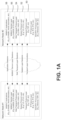
- communication connections/sessions may be established between network nodes at the transport protocol layer 50 (e.g. TCP connection), session protocol layer 52 (e.g. TLS and DTLS sessions), Web transport protocol layer 54 (e.g. HTTP and CoAP sessions), machine-to-machine (M2M)/Internet of Things (IoT) service layer 56, and at the application layer 58(e.g., application-specific sessions).
- the present application relates primarily to features targeting sessions at the M2M/IoT service layer 56.
- the ETSI M2M's service layer is referred to as the Service Capability Layer (SCL).
- the SCL may be implemented within an M2M device (where it is referred to as a device SCL (DSCL)), a gateway (where it is referred to as a gateway SCL (GSCL)) and/or a network node (where it is referred to as a network SCL (NSCL)).
- the oneM2M service layer supports a set of Common Service Functions (CSFs) (i.e. service capabilities).
- CSFs Common Service Functions
- An instantiation of a set of one or more particular types of CSFs is referred to as a Common Services Entity (CSE) which can be hosted on different types of network nodes (e.g.
- M2M service layers lack support for migrating or sharing M2M service layer session context from one service layer instance to another service layer instance. Similarly they also lack support for migrating or sharing M2M service layer session context between M2M application instances. This lack of functionality prevents a M2M service layer from supporting persistency of service layer sessions for use cases involving mobile session participants, changes in session participants addresses such as getting assigned new IP addresses, or use cases involving sharing service layer sessions with new session participants.
- Lack of support for migrating M2M service session context can also create limitations or overhead for M2M applications, lack of support for migrating M2M service session context can also prevent M2M service layers from providing value-added services such as migration/sharing of service layer data (e.g. resource representations) to service layer instances that are closer to the applications that are accessing and using the data.
- service layer data e.g. resource representations
- Disclosed herein are methods, devices, and systems for migration or sharing of an existing M2M service layer session with one or more session participants.
- E2E M2M service layer sessions are sessions that allow an M2M service layer to participate in end-to-end security services, end-to-end quality of service functionality, end-to-end negotiation of settings or configuration, among other value-added session functionality, such as data aggregation and data analytics.
- the methods and functional architectures discussed herein may be implemented by a combination of software and hardware.
- the functional architectures may be implemented on a single device or distributed among multiple devices.
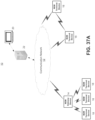
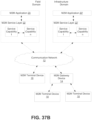
- the devices may be one or more of the devices as described below with regard to FIG. 37A through FIG. 37D .
- FIG. 1B illustrates exemplary E2E M2M service layer sessions that span multiple hops.
- an M2M device 110 may include an M2M application 111.
- M2M application 111 may be involved in an E2E M2M service layer session with M2M network application 115 (an endpoint M2M application that may be on a device such as a tablet, server, personal computer, or smartphone).
- M2M service layer session of M2M application 111 includes multiple hops (hop 130 and hop 131) and is facilitated by M2M service layer instance 123 located on M2M server 118.
- FIG. 1B also shows a service layer session that is involved in a session between two M2M gateways.
- M2M service layer instance 125 of M2M gateway 116 is in an M2M service layer session with M2M service layer instance 121 of M2M gateway 114.
- the M2M service layer session of M2M service layer instance 125 includes multiple hops (hop 136 and hop 135) and is facilitated by M2M service layer instance 123 of M2M server 118. Additional examples (not shown) are possible for E2E M2M service layer sessions.
- an E2E M2M service layer session may be between two M2M servers that are multiple service layer hops away from one another.
- Another example may involve a direct E2E session between two endpoint applications, which does not flow through the M2M service layer but is facilitated by the M2M service layer.
- the service layer may provide application discovery and E2E session credential establishment services that applications may use to discover each other and dynamically provision credentials.
- an M2M service layer session may be established directly between an M2M application on a device and an M2M service layer instance on an M2M gateway.
- an M2M service layer session may be established directly between an M2M service layer instance on an M2M gateway and the service layer instance on an M2M server.
- an M2M service layer session may be established between three or more M2M applications on multiple devices, which might span one, two or more M2M service layer instances on, for example, one or more M2M gateways or servers.
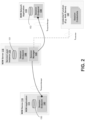
- FIG. 2 is an illustration of an M2M session in FIG. 1B , which includes the aforementioned M2M service layer architectural elements.
- M2M session endpoint functions such as session endpoint function 140, session endpoint function 149, and session endpoint function 148, may respectively reside with M2M device 110, M2M server 118, and M2M network application 115.
- a session endpoint function enables an M2M application or M2M service layer instance to participate in a service layer session.
- the session endpoint function interacts with a session manager.
- an E2E M2M service layer session manager (e.g., session manager 145) may reside within an M2M server (e.g., M2M server 118) or an M2M gateway. Although not shown in FIG. 2 , the E2E M2M service layer session manager could also reside on an M2M device if the device itself hosts a service layer. As discussed in more detail below, a session manager supports establishment, tear-down, and management of service layer sessions. The session manager may perform translations of session addresses or identifier address (e.g., translating between a public session identifier and private session identifier). In addition, the session manager supports the capability to route service layer messages to other session managers such that these messages may be delivered to session endpoints not directly connected to it.
- M2M service layer sessions may involve a session credential function, such as session credential function 147.
- Session credential function 147 may support provisioning or bootstrapping of service layer session related credentials and configuration information. Session managers or session endpoints may use these session credentials.
- the session credential function may reside on an AAA server and have a I Credential interface (e.g., I Credential 157) that uses the Diameter protocol.
- service layer sessions may include a session state, which any of the M2M devices may have, such as M2M device 110, M2M server 118, and M2M network 115. Session state is information that may be maintained by session managers or session endpoints and may be used for session management purposes.
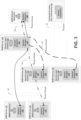
- FIG. 3 illustrates multiple examples of service layer sessions of FIG. 1B that include the aforementioned M2M service layer architectural elements.
- session manager 145 manages multiple M2M service layer sessions between multiple nodes.
- FIG. 3 below are more detailed methods and system descriptions with regard to some of the functions of FIG. 3 , such as a session credential function, a session manager, and session state information, among other things.
- a session credential function supports bootstrapping of session security credentials ("security credentials” or "session credentials”) to the individual session endpoints, as well as the session managers making up the service layer session that spans multiple service layer hops, where the service layer hop may be defined as a direct service layer communication link between two or more of the following: a service layer instance or application.
- session credentials and security credentials for securing the session are used synonymously.
- a method (not shown) of provisioning the session credentials may be a pre-provisioning step that is performed by the manager or owner of the session credential function. For example, per each service layer instance, a pool of session credentials may be pre-provisioned into the session credential function. Thereafter the session manager may make requests to the session credential function to allocate session credentials when required.
- a secure single-hop session may be established.
- the secure single-hop session is between session manager 145 and session credential function 147.
- the secure single-hop session is between session manager 145 and session endpoint 140.
- the secure single-hop session is between session manager 145 and session endpoint 148.
- the secure single-hop sessions of step 201, step 202, and step 203 may be established by conventional service layer bootstrap and registration procedures supported in architectures such as ETSI M2M and OMA LWM2M.
- session manager 145 may store the session credentials locally such that session manager 145 may also use the session credentials. For example, session manager 145 may encrypt or decrypt application data flowing through the service layer instance (e.g., service layer instance 123) and provide value-add data services.
- session manager 145 sends to session endpoint 148 an E2E session credentials configuration request, which may include the session credentials of step 208.
- the E2E session credentials configuration request may also include a request for the ability of session endpoint 148 to participate in service layer session with session endpoint 140. For example, the session endpoint 148 may have policies in place that may not allow for service layer session at that time.
- session endpoint 148 maintains session credential state for the proposed session.
- session endpoint 148 sends to session manager 145 an E2E session credentials configuration response, which may include confirmation of receiving and implementing the sent session credentials.
- session manager 145 may send to session endpoint 140 an E2E security credential bootstrap response.
- E2E security credential bootstrap response of step 213 may ultimately be in response to the request of step 204 and may include the session credentials, as well as a list of targeted session endpoints with the session credentials for a service layer session.
- session endpoint 140 may maintain the state information of the received credentials.
- the session endpoints may need to repeat the bootstrapping operation periodically in order to refresh the session credentials. This periodic refresh may be based on a lifetime associated with the session credential.
- Securely bootstrapping with the common session credentials may establish a secure chain of trust between the initiating session endpoint 140, local session manager 145 (directly registered session manager for session endpoint 140), any intermediate service layer session managers (not shown here, but at times may be applicable), and one or more targeted E2E M2M service layer session endpoints (e.g., session end point 148).
- This secure E2E chain of trust may be layered upon the secured underlying conventional single-hop M2M service layer sessions as well as the secured underlying transport layer and access network connections that may exist.
- the aforementioned secure E2E chain of trust may be established by having each session endpoint and session manager authenticate with the session credential function rather than with one another in a hop-by-hop fashion.
- This session state may include information such as the session security credentials, session routing information, session context, and session policies.
- Configuration of session state on each session endpoint and session manager may be managed by a designated session manager (e.g., the session manager closest to the session endpoint that initiates a service layer session establishment request).
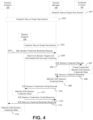
- FIG. 6 illustrates an example E2E M2M service layer session establishment call flow.
- session endpoint 140 initiates a service layer session with session endpoint 148 that is three service layer hops away (i.e., separated by two M2M service layer instances).
- session endpoint 140, session endpoint 148, and the session managers e.g., session manager 141 and session manager 145) have been bootstrapped or provisioned with E2E M2M service layer session credentials, as described herein (see example regarding FIG. 4 ).
- session endpoint 140 sends to session manager 141 a request to authenticate and establish a service layer session.
- the request of step 221 may include session credentials received at step 220.
- session endpoint 140 may send multiple requests to one or more session managers to establish an E2E M2M service layer session with multiple targeted session endpoints (e.g., a group session).
- session manager 141 authenticates session endpoint 140 based on the session credentials of session endpoint 140.
- session manager 141 determines the next hop to forward the request to authenticate and establish the service layer session.
- Session manager 141 determines the next hop based on information contained in the request, locally stored context and polices, and by collaborating with other session managers in a network. In this example, the next hop is another session manager (e.g., session manager 145).
- session manager 141 sends to session manager 145 a request to authenticate and establish the service layer session.
- the request of step 223 may include session credentials received at step 220.
- session manager 145 authenticates session manager 141 based on the session credentials of session manager 141 and determines the next hop to forward the request to authenticate and establish the service layer session.
- session manager 145 sends to session endpoint 148 a request to authenticate and establish the service layer session, as similarly done at step 221.
- session endpoint 148 authenticates session manager 145 based on the session credentials, determines that session endpoint 140 desires to communicate with it, and authenticates the session endpoint 140 based on the session credentials. Also at step 226, session endpoint 148 may store session state information, which is described in more detail below.
- session endpoint 148 sends to session manager 145 an E2E session response.
- the E2E session response of step 227 may include a response confirming the establishment of a service layer session with session endpoint 140, as well as other service layer session state information.
- the E2E session response of step 227 is continually forwarded to session endpoint 140 at step 229 and step 231.
- service layer session state information is stored by each session manager at step 228 and step 230, as well as the initiating session endpoint (session endpoint 140) at step 232. This service layer session state information is used to maintain the service layer session such that the service layer session may be used to exchange messages E2E between the session endpoints via the session managers.
- a session manager may dynamically change the routing path of service layer session messages. For example, if the single-hop session between session manager 141 and session manager 145 breaks down, then the upstream session manager, which is session manager 141 in this case, may recover by establishing a new single-hop service layer session with another neighboring session manager (if available) that happens to have an established single-hop session with the targeted session endpoint (e.g., session endpoint 148). See below for further details on E2E M2M service layer session routing. In addition, although not shown in FIG. 6 (see FIG.
- a trusted session credential function could be a central node in the network in which session endpoints and session managers can authenticate with. By doing this they can be authenticated by this function rather than by each other.
- Tear-down of a service layer session may work in a similar fashion by removing service layer session state information on the session endpoints and session managers.
- service layer session state information may be deleted starting at the target session endpoint towards the initiating session endpoint, which also removes service layer session state information on each session manager.
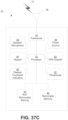
- the entities performing the steps illustrated in FIG. 6 are logical entities that may be implemented in the form of software (i.e., computer-executable instructions) stored in a memory of, and executing on a processor of, a network node or computer system such as those illustrated in FIG. 37C or FIG. 37D . That is, the method(s) illustrated in FIG.
- the session routing function may support context awareness as well as policy based routing. For example, the session routing function of session manager 255 may load balance a designated service layer session across different session paths by keeping a history of past messages and the routes chosen for these messages. The session routing function of session manager 255 may adapt service layer routes based on loading conditions or faults, which may provide better resiliency and QoS. The session routing function may support interfacing with underlying access networks to share information, such that the information may be taken into account for service layer routing decisions as well as underlying access network routing decisions.
- IMSI International Mobile Subscriber Identity
- MSISDN Mobile Subscriber Integrated Services Digital Network-Number
- MAC media access control Address
- IMSI International Mobile Subscriber Identity
- MSISDN Mobile Subscriber Integrated Services Digital Network-Number
- MAC media access control
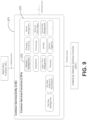
- FIG. 9 - FIG. 24 provide details with regards to E2E M2M service layer sessions that may apply to oneM2M and other architectures.
- CSFs capability service functions
- a resource is a uniquely addressable entity in the architecture.
- a resource has a representation that may be manipulated via RESTful methods such as Create, Retrieve, Update, and Delete and is addressed using a Universal Resource Identifier (URI).
- URI Universal Resource Identifier
- a resource may contain child resource(s) and attribute(s).
- a child resource is a resource that has a containment relationship with a parent resource.
- the parent resource representation contains references to its child resources(s). The lifetime of a child-resource is limited by the parent's resource lifetime.
- Each resource supports a set of "attributes" that store information of the resource.
- the response may include session information such as session ID and credentials, among other things.
- AE 308 sends a request to CSE 306 to create a session policy to support a desired level of QoS that it requires for the session (e.g., QoS may be that the message should not be store-and-forwarded).
- SMG CSF on CSE 306 forwards request to next hop SMG CSF on CSE 304.
- SMG CSF on CSE 304 creates ⁇ sessionPolicy> resource.
- SMG CSF on CSE 304 returns a positive response to SMG CSF on CSE 306.
- SMG CSF on CSE 306 creates ⁇ sessionPolicy> resource.
- SMG CSF on CSE 304 returns a positive response to AE 308.
- CSE 304 sends a response to CSE 306.
- SMG CSF on CSE 306 creates session context to keep track of session request/response history.
- SMG CSF on CSE 306 sends response to AE 308.
- SMG CSF on CSE 304 prepares a notification to session endpoint (AE 302) that container was updated.
- AE 302 sends notification to AE 302 that container1 resource was updated as part of the session.
- AE 302 responds with a positive response that it received the notification.
- AE 302 returns a positive response to the notification request indicating it has removed its local M2M session state.
- SMG CSF on CSE 304 deletes its locally hosted ⁇ session> resource and all child resources. The SMG CSF also deletes any local session state such as security credentials and identifiers allocated to the session.
- SMG CSF on CSE 304 returns a positive response to the session termination DELETE request to the SMG CSF on CSE 306.
- SMG CSF on CSE 306 deletes its locally hosted ⁇ session> resource and all child resources. The SMG CSF also deletes any local session state such as security credentials and identifiers allocated to the session.
- SMG CSF on CSE 306 returns a positive response to the M2M service session termination DELETE request to AE 308.
- AE 308 deletes stored M2M session state.
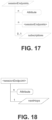
- the sessionContext resource can represent a collection of ⁇ sessionContextInstances> resources, as shown in FIG. 23 .
- This resource can contain the child resources according to their multiplicity in Table 15.
- This resource can contain the attributes according to their multiplicity in Table 16.
- Table 15 Child Resources of sessionContext Resource Child Resource Name Child Resource Type Multiplicity Description ⁇ sessionContextInstance> M2M service session policy resource n M2M service session context instance resource that supports context related attributes subscriptions Collection of subscription resources 0..1 Used to create subscriptions to sessionContext collection.
- Table 16 Attributes of sessionContext Resource Attribute Name Multiplicity Description creationTime 1 Time of creation of the resource accessRightID 0..n URI of an access rights resource. lastModifiedTime 1 Last modification time of a resource
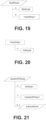
- the ⁇ sessionContextInstance> resource can contain attributes applicable to a particular type of M2M service session context, as shown in FIG. 24 .
- This resource can contain the attributes according to their multiplicity in Table 17.
- Table 17: Attributes of ⁇ sessionContextInstance> Resource Attribute Name Multiplicity Description contextType 1 The type of session information to be collected by the SMG CSF and stored within this session context instance (e.g. total number of transactions since session was established, rate of transactions, etc.).
- Session context Information can be stored within container's content instance resources.
- maxNrContentInstances 1 Maximum number of content instances of designated container resource used by SMG CSF to store session context information.
- a typical journey for the company's produce can vary drastically in distance and can consist of several legs aboard different forms of transportation including planes, trains (e.g., train 410), trucks (e.g., truck 414), and ships which it contracts. Each of these legs can have drastically different shipping times.
- the produce can make several stops at distribution centers, warehouses (e.g., warehouses 402 and 404), loading docks, etc. For these reasons, ensuring that properly ripe produces reaches its final destination can be quite challenging for the company.
- bananas increase their levels of ethylene gas emission as they ripen.
- the temperature within the box may also be closely monitored since the ripening of bananas can be slowed down by lowering their temperature and, vice versa, sped up by increasing their temperature.
- the rate at which each box of produce has been ripening may be more efficiently and accurately tracked and, in turn, the company may make more informed shipping decisions.
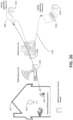
- FIG. 26 illustrates another example use case.
- a person 423 who may be suffering from a mild form of dementia and may be a type B diabetic.
- the person may live at home 427 alone, and may require some remote assistance from family and care providers.
- the home 427 has been equipped with various sensors (e.g. sensors for bed mattress, floor, bathroom, kitchen, etc.) to track the person's location in the home as well as the person's activity level.
- the person may be equipped with a smart glucometer device 422 that is worn to monitor the person's glucose levels.
- the sensors may be configured to report readings on a regular basis to an M2M enabled Web service platform managed by the person's health care provider.
- This M2M service layer platform may provide services which allow the person's family and care providers to remotely monitor the person using the information provided by the sensors in the home.
- the M2M service layer platform may allow each of the person's family members and care providers to establish a secure communication session via the M2M service layer platform to the sensors in the person's home and monitor the person's activity using a remote app hosted on one of their Web enabled devices (e.g. smart phone, tablet, laptop, etc.).
- the platform may coordinate secure communication between the person's sensors and each of the apps hosted on the person's family members and care providers devices.
- each family member and care provider may be able to access real-time information about the person, such as location in the home.
- the M2M service layer platform may be capable of also allowing the person's family members to subscribe and receive alerts based on the occurrence of specific events such as when a stove has been left on for over an hour or the glucometer readings have exceeded a certain threshold.
- the service platform may support certain additional features.
- One such feature is the ability of the service layer platform to allow the family members and care providers to split the person's care up into scheduled shifts.
- the service layer may support seamlessly switching the person's monitoring over from one family member or care provider to another. This may be achieved by the service layer platform dynamically migrating the service layer session connecting the sensors in the home from one designated family member or care provider to another.
- the service layer platform may facilitate the migration of the service layer session connecting the monitoring device 422 with the smart phone 428 from that smart phone 428 to a laptop 430 of another family member or care provider running its own instance of the eHealth application.
- This migration is illustrated by the dashed line 436.
- the migrated service layer session context 430' may be used to re-establish the existing session at the laptop 432, allowing the other family member or care taker to take over monitoring of the person.
- the service layer may automatically update the contact information where the person's alerts are sent to, such that at the start/stop of each shift a designated family member or care provider is configured to receive these alerts via the secure service layer session that connects their devices to the person's sensors.
- Another feature which the service platform may support is the ability to allow the person's family members and care providers to seamlessly migrate their service layer session connecting their device to the person's sensors to another designated device(s) - owned by the same family member or care provider. For example, if during that family member's or caretaker's shift they would like to transition from using their phone to using their tablet or PC to receive alerts, they can switch over on the fly and the service layer will ensure the service layer session is migrated such that none of the alerts are lost and also that any past context collected by the sensors is securely and fully accessible from the new device as well.
- M2M service layer session migration means the act of transferring M2M service layer session context between M2M service layer session participants.
- M2M service layer session sharing means the act of replicating M2M service layer session context between M2M service layer session participants and keeping these replicated versions of session context synchronized with one another such that participants can share the same single session.
- An “M2M application” refers to an application targeting a particular M2M use case (e.g. eHealth, smart energy, home automation, and the like).
- the disclosed methods include determining whether a service layer session is established and if it has session migration or sharing functionality enabled or not; allowing session participants (existing or prospective) to configure a session migration and sharing service and to explicitly trigger this service to start service layer session migration or sharing; allowing a session migration and sharing service to autonomously trigger the start of service layer session migration or sharing based on a session migration/sharing schedule and/or policies; collecting and maintaining service layer session context which can be used to migrate or share a service layer session; determining prospective session participants that will be targeted when performing session migration or sharing; determining whether a prospective session participant is capable of supporting service layer sessions or not; determining whether an existing session participant is interested/willing to migrate or share its service layer session; migrating a service layer session by transferring service layer session context from an existing session participant to a prospective session participant; sharing a service layer session by making service layer session context from an existing session participant(s) available to a prospective session participant(s); and coordinating migration and sharing of service layer sessions with underlying access network connections by sharing service layer session migration
- the methods may be performed by and/or implemented in the form of a Session Migration and Sharing Function (SMSF) that may be used to perform the migration or sharing of a M2M service layer session.
- SMSF Session Migration and Sharing Function
- Various forms of service layer session context are also described, which may be used to enable the migration and sharing of M2M service layer sessions. Additionally, a oneM2M embodiment of the SMSF is disclosed.
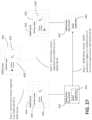
- the session may be migrated from the service layer instance 446 hosted on the first M2M gateway 444 to the service layer instance 452 hosted on the M2M server 450, and then to the service layer instance 456 hosted on the second M2M gateway 454.
- the service layer session context 448 resides on the second M2M gateway 454, but not the first M2M gateway 444 nor the M2M server 450.
- session context could be kept on the M2M server 450 to help with future migration requests from other potential session participants.
- service layer session migration can also involve migration of session context between M2M application instances as well.
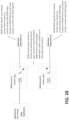
- sharing service layer sessions across service layer instances can allow applications to more efficiently participate in the same session with one another since the service layers can manage and synchronize service layer session context for the applications and allow them to communicate with their local service layer instances rather than having to communicate with remote service layer instances.
- Some examples of other potential M2M service layer session sharing embodiments include sharing service layer sessions between service layer instances hosted on M2M gateways and/or M2M devices.
- service layer session sharing can also involve sharing of session context between M2M application instances as well.
- SMSF Session Migration and Sharing Function
- a Session Migration and Sharing Function may be provided that supports, but is not limited to, the following types of functionality: (i) generating triggers or accepting triggers for when M2M service layer session migration or sharing is to be performed; (ii) evaluating triggers to determine if/when to initiate M2M service layer session migration or sharing and the applicable session participants to perform the migration or sharing on; (iii) performing service layer session migration by transferring session context between session participants; and (iv) performing service layer session sharing by replicating session context between session participants and keeping the replicated copies of context up to date with one another.
- SMSF Session Migration and Sharing Function
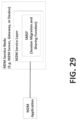
- this SMSF function may be hosted within a M2M service layer instance hosted by an M2M node, such as an M2M server, M2M gateway, or M2M device, as shown in FIG. 29 .
- the SMSF may comprise an individual service capability within the M2M service layer instance or as a sub-function within an existing service capability.
- service layer session migration and sharing context may be employed, including, but not limited to, one or more of the following types of context (i . e ., information) as defined in Table 18.
- This type of context can be used by an SMSF to make a determination (i.e. trigger decision) of whether to perform service layer session migration or sharing, when to perform it, which session to perform it on.
- Table 18 - M2M Service Layer Session Migration and Sharing Context M2M Service Layer Session Migration and Sharing Context Description M2M Service Layer Session Migration and Sharing Schedule
- This schedule may specify information such as set times when an SMSF is to perform session migration or sharing.
- the schedule can also include a list of session participants for which an SMSF is to target when performing session migration or sharing at the specified scheduled times.
- M2M Service Layer Session Migration and Sharing Policies may be policies that define rules for the migration or sharing of M2M service layer sessions between existing and prospective session participants. For example, these policies may specify rules such as what type of session context can be migrated or shared with certain session participants, which session participants are permitted to communicate with one another, and specific conditions which are to trigger an SMSF to perform session migration or sharing.
- M2M Service Layer Session Migration or Sharing Events These are events that may be used to trigger the migration or sharing of a M2M service layer session. An event may be autonomously generated and acted upon by an SMSF to initiate session migration or sharing. Alternatively, an event may be explicitly generated by a session participant and then detected by an SMSF to initiate session migration or sharing.
- M2M Service Layer Session Identifier This identifier can be allocated and assigned during session establishment and then used by session participants and SMSF to uniquely identify a M2M service layer session during the service layer session migration and sharing methods proposed in this disclosure.
- the identifier can also be used to tag context stored within service layer instances or applications such that the context can be associated with a corresponding service layer session. Tagging service layer context in this manner can enable the context to be more easily identified if/when the context is to be migrated or shared.
- M2M Service Layer Session participant Security Credentials Security credentials used by session participants to securely establish and use a M2M service layer session, control access to session based context, and communicate with one another via the session. Some examples can include, security certificates, public keys, access control lists, etc.
- M2M Service Layer Session Charging records Charging records that have been generated on behalf of M2M service layer session participants and that contain a history of prior session activity such as number of requests serviced, amount of bandwidth consumed, notifications generated, etc.
- M2M Service Layer Session participant Location Location information such as the current/prior locations of session participants
- M2M Service Layer Session participant Discovery Information Discovery information which a session participant publishes and makes available to help facilitate session migration and sharing. Information can include description of the service layer session that can be used by existing session participants or by prospective session participants to discover an existing session, its participants, the functionality supported by its participants, etc. For example, a description for each session participant (e.g.
- an SMSF can also coordinate with underlying access network nodes to migrate or share these underlying sessions as well. In doing so, the SMSF can coordinate not only service layer session migration and sharing but also underlying access network session migration and sharing in concert with one another.
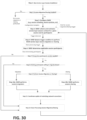
- FIG. 30 illustrates one embodiment of a method for migration or sharing of an existing M2M service layer session with one or more prospective session participants.
- this method may be used by an M2M application instance to request that the service layer session existing between itself and a specified service layer instance be migrated by the SMSF to another service layer instance, for example as shown in FIG. 27 .
- this method may be used by either an M2M application instance or a M2M service layer instance to request that an existing service layer session be shared by the SMSF with another service layer instance and one or more of the M2M applications registered to it, for example as shown in FIG. 28 .
- this method may be used by an M2M application instance to request that the SMSF share an existing M2M service layer session associated with another M2M application instance with it.
- this method may be used by an M2M service layer instance to request that the SMSF migrate an existing M2M service layer session existing between an M2M application instance and another M2M service layer instance with it.
- a M2M service layer session is established between two or more session participants.
- an M2M service layer session may be established in accordance with the exemplary mechanisms illustrated in FIGs. 1-24 and described above.
- a check may be performed to determine whether the session being established has session migration or sharing functionality enabled or not. In one embodiment, this check may be performed by a function within an M2M service layer responsible for the establishment of M2M service layer sessions. If the results of this check determine that session migration or sharing is enabled, then a transition to step 3 may occur, otherwise no further processing for session migration or sharing is performed for this service layer session.
- Step 3 is an enhancement to session establishment methods.
- an SMSF - which as discussed above functions as a service within an M2M service layer and may reside within the service layer instance of an M2M server, gateway, device or other node - may be configured with information which can include, but is not limited to one or more of the following:
- an SMSF may detect a trigger condition that it needs to perform M2M service layer session migration or sharing.
- This trigger condition may either be autonomously generated or may be the result of receiving an explicit request from an existing or prospective service layer session participant.
- An SMSF may detect service layer session migration or sharing triggers using methods that may include, but are not limited to, one or more of the following:
- an SMSF determines the session participant(s) that it will be targeting when it performs session migration or sharing. This may either be explicitly defined for the case where an SMSF is servicing an explicit request to initiate the migration/sharing, or it may be derived autonomously by an SMSF (e.g. based off of schedule, policy information, or information regarding session participants). For example, in one embodiment an existing session participant (e.g. an M2M application) may provide a new location that it is planning to move to and using this location information an SMSF may find an available and compatible service layer instance which it can migrate the application's service layer session to.
- an existing session participant e.g. an M2M application
- a session participant e.g. an M2M application
- an SMSF may check whether any existing session participant(s) are interested in participating in the specific service layer session which the SMSF is attempting to migrate or share with them. For the case where an existing session participant has requested that a session be migrated or shared with a new prospective session participant, the session identifier and/or session descriptor (defined in Table 19) may be shared with the new participant to give it the opportunity to decide whether or not it is interested. Similarly, for the case where a new prospective participant has requested that an existing session be migrated or shared with it, an SMSF may share the information about the new prospective participant with existing session participants to give them the opportunity to decide whether or not they are interested in sharing/migrating their sessions with it.
- an SMSF may determine whether to perform session migration or session sharing with prospective session participants. This may either be explicitly defined for the case where a requesting session participant is initiating the migration/sharing, or it may be derived autonomously by an SMSF based off of policy information and/or preferences of prospective session participants that the SMSF discovers when querying them.
- an SMSF may copy this context from the session participant which the session is being migrated away from to the session participant where the session is being migrated towards.
- an SMSF may also inspect and update certain pieces of session context such that it can be used once it is migrated. For example, a piece of session context that is dependent on session participant addresses or identifiers can be checked and potentially updated. If the address/identifier matches that of the session participant which the session is being migrated away from, this address can be updated with the address of the session participant which the session is being migrated towards.
- the service layer session context from the session participant which the session is being migrated away from may be deleted (if no other session participants are using it).
- This migration of service layer session context can include, but is not limited to, one or more of the following: (i) migration of service layer subscription information; (ii) migration of group membership information; (iii) migration of service layer point of contact information; (iv) migration of service layer policies (e.g. message delivery and handling policies); (v) migration of service layer security credentials; (vi) migration of service layer device/application management context; (vii) migration of discovery metadata; (viii) migration of location metadata; (ix) migration of charging and accounting metadata; (x) migration of data (e.g. application specified content within service layer container resources); and/or (xi) migration of underlying access network connections and/or sessions which a service layer session is overlaid on top of.
- an SMSF may differentiate session participants and their corresponding context. For example, when one session participant migrates to another service layer instance, its session context can be migrated to this new service layer instance. In addition, other session participants can also be updated by the SMSF accordingly such that they are aware of this migration. The SMSF may do this by updating the session context of each session participant. Similarly for session sharing, when a session is shared with a new session participant, other session participants can be notified of this by the SMSF updating their session context as well.
- FIG. 27 shows the case where service layer session context 448 is first migrated from the service layer instance 446 hosted on M2M gateway 444 to the service layer instance 452 hosted on the M2M server 450, followed by the service layer instance 452 on the M2M server 450 migrating it to the service layer instance 456 hosted on M2M gateway 454.
- this use case involves two hops.
- collaboration between SMSF instances hosted within each service layer instance may be used to properly migrate the service layer session. This collaboration may involve SMSF instances initiating communication with each other and passing service layer session context between themselves.
- the migration operations described above may be realized by the following SMSF operations:
- SMSF operations For SoA based service layer architectures, the migration operations described above may be realized by the following SMSF operations:
- an SMSF may perform service layer session sharing.
- a similar method as the one described in step 10a above for session migration may be used.
- the SMSF(s) can be used to keep the session context updated and synchronized between session participants.
- the SMSF(s) can perform inter-SMSF communication/collaboration to ensure that the copies of service layer session context hosted by session participants remains in sync with one another. In doing so, session participants can share a service layer session.
- an SMSF may coordinate with underlying access network nodes to manage underlying access network connections which service layer sessions are overlaid on top of. This can include:
- an SMSF may complete processing of a service layer session migration or sharing trigger/request. Upon completion, the SMSF may transition back to step 4 where it continues to collect and maintain session context and wait for the next trigger to occur.
- the functionality of the SMSF may be implemented in the form of software (i.e., computer-executable instructions) stored in a memory of, and executing on a processor of, a node of an M2M network (e.g., a server, gateway, device, or other computer system), such as one of those illustrated in FIGs. 37C or 37D described below. That is, the method illustrated in FIG. 30 may be implemented in the form of software (i.e., computer-executable instructions) stored in a memory of a network node, such as for example the node or computer system illustrated in FIGs. 37C or 37D , which computer executable instructions, when executed by a processor of the node, perform the steps illustrated in FIG. 30 . It is also understood that any transmitting and receiving steps illustrated in FIG. 30 may be performed by communication circuitry of the node under control of the processor of the node and the computer-executable instructions (e.g., software) that it executes.
- software i.e., computer-executable instructions
- oneM2M is defining capabilities supported by the oneM2M service layer. These capabilities are referred to as Capability Service Functions (CSFs).
- CSFs Capability Service Functions
- the oneM2M service layer is referred to as a Capability Services Entity (CSE).
- CSE Capability Services Entity
- a CSE 271' supports a set of CSFs 270'.
- the CSE 271' may be a modified version of the CSE 272 illustrated in FIG. 9 and described above, and the set of CSFs 271' likewise may be a modified version of the CSFs 271 in FIG. 9 and also described above.
- One version of the oneM2M specification for a CSE includes a preliminary definition of a Service Session Management (SSM) CSF.
- SSM Service Session Management
- This initial definition supports service layer session establishment between session participants (e.g. M2M applications and M2M service layer instances), however it does not support service layer session migration nor sharing.
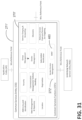
- the SMSF functionality described above and below may be incorporated within the current version of the oneM2M SSM CSF. This is illustrated in FIG. 31 , where an SMSF (as described above and below) is incorporated as part of a Service Session Management (SSM) CSF 272'.
- SSM CSF 272' may be a modified version of the SSM CSF 272 illustrated in FIG. 9 and described above.
- a resource has a representation that can be manipulated via RESTful methods such as Create, Retrieve, Update, and Delete and is addressed using a Universal Resource Identifier (URI).
- URI Universal Resource Identifier
- a resource may contain child resource(s) and attribute(s).
- a child resource is a resource that has a containment relationship with a parent resource.
- the parent resource representation contains references to its child resources(s). The lifetime of a child-resource is limited by the parent's resource lifetime.
- Each resource supports a set of "attributes" that store information of the resource.
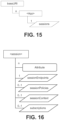
- oneM2M resource structure enhancements for supporting session migration and sharing functionality for the currently defined oneM2M SSM CSF.
- the oneM2M defined graphical representation for describing resource structures is the following: (i) square boxes are used for resources and child resources; (ii) square boxes with round corners are used for attribute; (iii) parallelograms are used for collection of resources; (iv) multiplicity of each attribute and child resource is defined; and (v) resource names delimited with " ⁇ " and ">” indicate names assigned during the creation of the resource.
- the schedule can also include a list of session participants for which an SMSF is to target when performing session migration or sharing at the specified scheduled times.
- SMSFtargets 1 Can be used to explicitly specify one or more prospective session participants to migrate or share the session with when the SMSF is explicitly triggered to do so.
- SMSFtrigger 1 Can be used to explicitly trigger migration or sharing of the session (e.g. by an existing session participant to a prospective session participant).
- the migrationOk and sharingOK attributes may be used to enable or disable the SMSF from performing session migration or sharing for a given session. Note that these attributes do not necessarily need to be mutually exclusive of one another. The same session may be shared and/or migrated.
- the SMSFschedule attribute may be used to schedule when the SMSF performs session migration or sharing.
- a session policy definition may be encoded by defining a data structure consisting of session migration and sharing rules that are made up of information such as trigger conditions, scheduling information, and session participants which the SMSF can use when performing session migration or sharing.
- This data structure may either contain this information embedded within it or it may include links to other resources containing this information (e.g. links to the ⁇ session> resource defined above which supports smsfSchedule, smsfTargets, and smsfTriggers attributes).
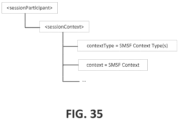
- Table 22 - ⁇ sessionContext> Attributes for Session Migration and Sharing Attribute Name Multiplicity Description contextType 1 the following context types may be used by the proposed SMSF to migrate and share a service layer session with one or more prospective session participants as described herein.
- FIGs. 36A-36C illustrate one example embodiment of a method for migrating a oneM2M service layer session and demonstrate how the oneM2M SMSF resource extensions discussed above may be used in the migration process.
- a M2M service layer session between an M2M application 472 hosted on an M2M device 470 and a service layer instance 474 of a first M2M gateway 476 (M2M GW #1) is being migrated from the service layer instance hosted on that first M2M gateway 476 to the service layer instance 486 hosted on a second M2M gateway 488 (M2M GW #2), via the service layer instance 480 hosted on an M2M server 482.
- a unique 'sessionID' (e.g., "XYZ123") is allocated and assigned to the session by the SSM/SMSF. This 'sessionID' is returned to the M2M application in step 002b.
- the processor 32 may receive power from the power source 48, and may be configured to distribute and/or control the power to the other components in the M2M node 30.
- the power source 48 may be any suitable device for powering the M2M node 30.
- the power source 48 may include one or more dry cell batteries (e . g ., nickel-cadmium (NiCd), nickel-zinc (NiZn), nickel metal hydride (NiMH), lithium-ion (Li-ion), etc.), solar cells, fuel cells, and the like.
- RAM random access memory
- ROM read only memory
- Such memories include circuitry that allows information to be stored and retrieved.
- ROMs 93 generally contain stored data that cannot easily be modified. Data stored in RAM 82 can be read or changed by CPU 91 or other hardware devices. Access to RAM 82 and/or ROM 93 may be controlled by memory controller 92.
- Memory controller 92 may provide an address translation function that translates virtual addresses into physical addresses as instructions are executed. Memory controller 92 may also provide a memory protection function that isolates processes within the system and isolates system processes from user processes. Thus, a program running in a first mode can access only memory mapped by its own process virtual address space; it cannot access memory within another process's virtual address space unless memory sharing between the processes has been set up.
Landscapes
- Engineering & Computer Science (AREA)
- Computer Networks & Wireless Communication (AREA)
- Signal Processing (AREA)
- Computer Security & Cryptography (AREA)
- Computer And Data Communications (AREA)
- Mobile Radio Communication Systems (AREA)
- Information Transfer Between Computers (AREA)
Applications Claiming Priority (3)
| Application Number | Priority Date | Filing Date | Title |
|---|---|---|---|
| US201462052535P | 2014-09-19 | 2014-09-19 | |
| PCT/US2015/050929 WO2016044718A1 (en) | 2014-09-19 | 2015-09-18 | Service layer session migration and sharing |
| EP15772160.6A EP3195571B1 (en) | 2014-09-19 | 2015-09-18 | Service layer session migration and sharing |
Related Parent Applications (1)
| Application Number | Title | Priority Date | Filing Date |
|---|---|---|---|
| EP15772160.6A Division EP3195571B1 (en) | 2014-09-19 | 2015-09-18 | Service layer session migration and sharing |
Publications (3)
| Publication Number | Publication Date |
|---|---|
| EP3913896A2 EP3913896A2 (en) | 2021-11-24 |
| EP3913896A3 EP3913896A3 (en) | 2022-02-09 |
| EP3913896B1 true EP3913896B1 (en) | 2024-07-03 |
Family
ID=54238615
Family Applications (2)
| Application Number | Title | Priority Date | Filing Date |
|---|---|---|---|
| EP21167473.4A Active EP3913896B1 (en) | 2014-09-19 | 2015-09-18 | Service layer session migration and sharing |
| EP15772160.6A Active EP3195571B1 (en) | 2014-09-19 | 2015-09-18 | Service layer session migration and sharing |
Family Applications After (1)
| Application Number | Title | Priority Date | Filing Date |
|---|---|---|---|
| EP15772160.6A Active EP3195571B1 (en) | 2014-09-19 | 2015-09-18 | Service layer session migration and sharing |
Country Status (6)
| Country | Link |
|---|---|
| US (5) | US10367896B2 (enExample) |
| EP (2) | EP3913896B1 (enExample) |
| JP (2) | JP6335388B2 (enExample) |
| KR (4) | KR102198229B1 (enExample) |
| CN (2) | CN112217905B (enExample) |
| WO (1) | WO2016044718A1 (enExample) |
Families Citing this family (37)
| Publication number | Priority date | Publication date | Assignee | Title |
|---|---|---|---|---|
| US10649424B2 (en) * | 2013-03-04 | 2020-05-12 | Fisher-Rosemount Systems, Inc. | Distributed industrial performance monitoring and analytics |
| EP3913896B1 (en) | 2014-09-19 | 2024-07-03 | Convida Wireless, LLC | Service layer session migration and sharing |
| US10122760B2 (en) * | 2015-04-30 | 2018-11-06 | Drawbridge Networks, Inc. | Computer network security system |
| US10419540B2 (en) * | 2015-10-05 | 2019-09-17 | Microsoft Technology Licensing, Llc | Architecture for internet of things |
| US10306016B2 (en) | 2016-02-01 | 2019-05-28 | General Electric Company | System and method for scoped attributes |
| US10534746B2 (en) * | 2016-05-09 | 2020-01-14 | Droplit, Inc. | System and method for defining machine-to-machine communicating devices and defining and distributing computational tasks among same |
| CN107787020B (zh) | 2016-08-26 | 2020-12-08 | 华为技术有限公司 | 一种sfc网络中同步拓扑信息的方法及路由网元 |
| EP3809674A1 (en) | 2016-09-29 | 2021-04-21 | Convida Wireless, LLC | Storing and retrieving the network context of a device |
| US11172000B2 (en) * | 2016-10-21 | 2021-11-09 | Telefonaktiebolaget Lm Ericsson (Publ) | Methods and apparatus for facilitating real time multimedia communications |
| US10942907B2 (en) | 2016-11-04 | 2021-03-09 | Oracle International Corporation | Safe release of database sessions for planned maintenance operations |
| EP3515031B1 (en) * | 2016-11-14 | 2021-04-07 | Huawei Technologies Co., Ltd. | Session processing method, apparatus and system |
| US20180139090A1 (en) * | 2016-11-15 | 2018-05-17 | John Geiger | Method for secure enrollment of devices in the industrial internet of things |
| CN108112007B (zh) | 2016-11-25 | 2020-08-11 | 京东方科技集团股份有限公司 | 信息通知方法、装置及系统 |
| JP2020031247A (ja) * | 2016-12-19 | 2020-02-27 | シャープ株式会社 | 通信システムおよび通信装置 |
| US12007941B2 (en) * | 2017-09-29 | 2024-06-11 | Oracle International Corporation | Session state tracking |
| KR102071315B1 (ko) * | 2017-12-05 | 2020-01-30 | 서울대학교산학협력단 | 서비스 지향 사물 인터넷 플랫폼 및 그 제어 방법 |
| CN110049070B (zh) * | 2018-01-15 | 2021-09-14 | 华为技术有限公司 | 事件通知方法及相关设备 |
| US11343332B2 (en) * | 2018-02-08 | 2022-05-24 | Telefonaktiebolaget Lm Ericsson (Publ) | Method for seamless migration of session authentication to a different stateful diameter authenticating peer |
| US10826941B2 (en) | 2018-05-10 | 2020-11-03 | Fortinet, Inc. | Systems and methods for centrally managed host and network firewall services |
| EP3811639A1 (en) * | 2018-06-20 | 2021-04-28 | Convida Wireless, Llc | Automated iot device configuration using user profile |
| CN113302899B (zh) * | 2019-01-16 | 2024-07-16 | 康维达无线有限责任公司 | 通信网络中的自动服务层消息流管理 |
| US20220124008A1 (en) * | 2019-01-16 | 2022-04-21 | Convida Wireless, Llc | Automated Service Layer Message Flow Management In A Communications Network |
| US11971896B2 (en) | 2019-08-15 | 2024-04-30 | Telepathy Labs, Inc. | System and method for querying multiple data sources |
| US11637745B2 (en) | 2019-09-11 | 2023-04-25 | Hand Held Products, Inc. | Configuring a remote electronic device by a peer electronic device in a networked environment |
| US11687507B2 (en) | 2019-09-12 | 2023-06-27 | Oracle International Corporation | Termination of database sessions for planned failover |
| US11936739B2 (en) | 2019-09-12 | 2024-03-19 | Oracle International Corporation | Automated reset of session state |
| EP4025012B1 (en) * | 2019-11-07 | 2024-10-23 | Samsung Electronics Co., Ltd. | Method and apparatus for providing service in wireless communication system |
| KR20210128096A (ko) * | 2020-04-16 | 2021-10-26 | 세종대학교산학협력단 | 사물인터넷 플랫폼 간 연동 방법 및 장치 |
| WO2022019816A1 (en) * | 2020-07-23 | 2022-01-27 | Telefonaktiebolaget Lm Ericsson (Publ) | Procedure for transferring an active group communication session between group communication servers |
| US12126723B2 (en) | 2021-04-23 | 2024-10-22 | Citrix Systems, Inc. | Computing system and related methods providing multiple endpoint connections based upon connection leases |
| WO2022226446A1 (en) * | 2021-04-23 | 2022-10-27 | Citrix Systems, Inc. | Computing system and related methods providing multiple endpoint connections based upon connection leases |
| US12367067B2 (en) * | 2021-10-04 | 2025-07-22 | UiPath, Inc. | Cloud migration |
| CN116032681A (zh) * | 2021-10-25 | 2023-04-28 | 厦门雅迅网络股份有限公司 | 一种电子地平线总线数据流量控制方法及系统 |
| US12470538B2 (en) | 2021-12-21 | 2025-11-11 | Cisco Technology, Inc. | IoT bootstrapping and certificate management using zero-touch deployment (ZTD) services |
| WO2023150721A1 (en) * | 2022-02-04 | 2023-08-10 | Intel Corporation | Sixth generation (6g) mutual transport layer security (mtls) based security architecture between user equipment (ue) and 6g network |
| US12204558B2 (en) | 2022-10-14 | 2025-01-21 | Oracle International Corporation | Failover of database sessions to a logical replica database |
| CN116319949B (zh) * | 2022-12-19 | 2023-11-14 | 北京开科唯识技术股份有限公司 | 会话迁移方法、装置、终端设备及存储介质 |
Citations (1)
| Publication number | Priority date | Publication date | Assignee | Title |
|---|---|---|---|---|
| US20120016977A1 (en) * | 2010-07-15 | 2012-01-19 | Cisco Technology, Inc. | Secure data transfer in a virtual environment |
Family Cites Families (43)
| Publication number | Priority date | Publication date | Assignee | Title |
|---|---|---|---|---|
| WO2000021075A1 (en) | 1998-10-02 | 2000-04-13 | International Business Machines Corporation | System and method for providing network coordinated conversational services |
| JP2001127772A (ja) * | 1999-10-28 | 2001-05-11 | Yrp Mobile Telecommunications Key Tech Res Lab Co Ltd | Atmネットワークシステム、その集中制御局およびatmスイッチ |
| US6714987B1 (en) * | 1999-11-05 | 2004-03-30 | Nortel Networks Limited | Architecture for an IP centric distributed network |
| US6684251B1 (en) * | 2000-05-25 | 2004-01-27 | Sprint Communications Company, L.P. | Dynamic connection set-up in a communication network |
| GB2368225B (en) * | 2000-10-17 | 2003-12-10 | Hewlett Packard Co | Inviting assistant entity into a network communication session |
| US8244864B1 (en) * | 2001-03-20 | 2012-08-14 | Microsoft Corporation | Transparent migration of TCP based connections within a network load balancing system |
| CN101453491B (zh) * | 2002-12-26 | 2012-07-18 | 捷讯研究有限公司 | 建立组件应用程序的方法和设备 |
| JP3939253B2 (ja) | 2003-01-29 | 2007-07-04 | 株式会社エヌ・ティ・ティ・ドコモ | ハンドオーバー方法、無線通信システム及び基地局 |
| US7441000B2 (en) * | 2003-12-22 | 2008-10-21 | International Business Machines Corporation | Method for session sharing |
| JP2006042001A (ja) * | 2004-07-28 | 2006-02-09 | Mitsubishi Electric Corp | 移動端末、アクセス集線装置およびサーバ |
| US7574510B2 (en) * | 2004-07-30 | 2009-08-11 | Nokia Corporation | Systems, nodes, and methods for dynamic end-to-end session-enhancing services for transport-level-based connections |
| JP2007324788A (ja) * | 2006-05-31 | 2007-12-13 | Softbank Bb Corp | 移動端末及び通信方法 |
| US8166176B2 (en) * | 2006-05-31 | 2012-04-24 | Alcatel Lucent | Context-aware migration of communication session |
| US7856226B2 (en) * | 2007-04-17 | 2010-12-21 | Aylus Networks, Inc. | Systems and methods for IMS user sessions with dynamic service selection |
| US8156179B2 (en) * | 2007-04-26 | 2012-04-10 | Platform Computing Corporation | Grid-enabled, service-oriented architecture for enabling high-speed computing applications |
| ATE517478T1 (de) | 2007-10-03 | 2011-08-15 | Accenture Global Services Ltd | Technologieagnostisches universell anwendbares datenmodell für eine telekommunikationsdienstanbieter-architektur |
| EP2232414A4 (en) * | 2007-12-19 | 2011-05-04 | Linda Seah | INLAYS WITHOUT CONTACT AND WITH DOUBLE INTERFACE AND METHOD OF MANUFACTURING THE SAME |
| US8401022B2 (en) * | 2008-02-08 | 2013-03-19 | Oracle International Corporation | Pragmatic approaches to IMS |
| JP2009212892A (ja) | 2008-03-05 | 2009-09-17 | Panasonic Corp | 移動端末及び接続局装置 |
| US9014137B2 (en) | 2008-06-13 | 2015-04-21 | Qualcomm Incorporated | Apparatus and method for personality modification during handoff |
| US20100080197A1 (en) | 2008-09-29 | 2010-04-01 | Nortel Networks Limited | Method and system for gigabit wireless transmission |
| JP5360195B2 (ja) * | 2009-03-27 | 2013-12-04 | 富士通株式会社 | マルチキャストデータ通信方法及び通信システム |
| US8804682B2 (en) | 2009-04-17 | 2014-08-12 | Panasonic Intellectual Property Corporation Of America | Apparatus for management of local IP access in a segmented mobile communication system |
| US20110029999A1 (en) * | 2009-07-29 | 2011-02-03 | Telefonaktiebolaget Lm Ericsson (Publ) | Policies transfer for session transfer |
| US9246953B2 (en) * | 2009-11-19 | 2016-01-26 | Oracle International Corporation | Protocol level communications for protocol level composition with session sharing |
| CN102668498A (zh) * | 2009-12-09 | 2012-09-12 | 交互数字专利控股公司 | 用于会话复制和会话共享的方法和装置 |
| EP2520069B1 (en) * | 2009-12-31 | 2017-05-31 | Telefonaktiebolaget LM Ericsson (publ) | Managing session data of a composite service session in a communication network |
| US8990413B2 (en) * | 2010-02-05 | 2015-03-24 | Oracle International Corporation | Service level cross network coordinated interaction |
| US8776011B2 (en) * | 2011-03-31 | 2014-07-08 | Alcatel Lucent | Method and apparatus for managing components of application enablement suite |
| US9699274B2 (en) * | 2011-07-25 | 2017-07-04 | Alcatel Lucent | Method and apparatus for reliable session migration |
| US9497102B2 (en) | 2011-12-06 | 2016-11-15 | Qualcomm Incorporated | Systems and methods for machine to machine device control and triggering |
| US20130219043A1 (en) * | 2012-02-20 | 2013-08-22 | Moritz M. Steiner | Method and apparatus for automatic migration of application service |
| JP5821686B2 (ja) | 2012-02-22 | 2015-11-24 | 富士通株式会社 | リソース管理装置およびリソース管理方法 |
| JP5680006B2 (ja) | 2012-02-24 | 2015-03-04 | 株式会社日立製作所 | 無線通信システム及び方法、ゲートウェイ |
| US9106481B2 (en) * | 2012-03-29 | 2015-08-11 | Intel Corporation | Device-to-device tapping service layer |
| US8948001B2 (en) * | 2012-06-26 | 2015-02-03 | Juniper Networks, Inc. | Service plane triggered fast reroute protection |
| US9100236B1 (en) * | 2012-09-30 | 2015-08-04 | Juniper Networks, Inc. | TCP proxying of network sessions mid-flow |
| CN103841142B (zh) * | 2012-11-23 | 2017-06-20 | 华为技术有限公司 | 一种会话迁移的方法、装置及系统 |
| CN105723334B (zh) * | 2013-12-03 | 2019-10-08 | 瑞典爱立信有限公司 | 第一服务网络节点、第二服务网络节点以及涉及服务会话的处理的方法 |
| US9661027B2 (en) * | 2014-09-11 | 2017-05-23 | At&T Intellectual Property I, L.P. | Informational enrichment for interactive systems |
| EP3913896B1 (en) * | 2014-09-19 | 2024-07-03 | Convida Wireless, LLC | Service layer session migration and sharing |
| US10681503B2 (en) * | 2018-09-06 | 2020-06-09 | Verizon Patent And Licensing Inc. | Systems and methods for caching and managing multicast content |
| US10813010B2 (en) * | 2018-12-17 | 2020-10-20 | Verizon Patent And Licensing Inc. | Method and system for edge computing handover service |
-
2015
- 2015-09-18 EP EP21167473.4A patent/EP3913896B1/en active Active
- 2015-09-18 CN CN202011175730.7A patent/CN112217905B/zh active Active
- 2015-09-18 KR KR1020197014947A patent/KR102198229B1/ko active Active
- 2015-09-18 KR KR1020217031956A patent/KR102360767B1/ko active Active
- 2015-09-18 KR KR1020177010525A patent/KR101984120B1/ko active Active
- 2015-09-18 US US15/512,092 patent/US10367896B2/en active Active
- 2015-09-18 EP EP15772160.6A patent/EP3195571B1/en active Active
- 2015-09-18 KR KR1020207037679A patent/KR102311627B1/ko active Active
- 2015-09-18 JP JP2017515070A patent/JP6335388B2/ja active Active
- 2015-09-18 CN CN201580056745.2A patent/CN107079050B/zh active Active
- 2015-09-18 WO PCT/US2015/050929 patent/WO2016044718A1/en not_active Ceased
-
2018
- 2018-04-27 JP JP2018086874A patent/JP6563555B2/ja active Active
-
2019
- 2019-06-12 US US16/438,686 patent/US11064033B2/en active Active
-
2021
- 2021-06-08 US US17/341,846 patent/US11418602B2/en active Active
-
2022
- 2022-06-29 US US17/852,502 patent/US11888942B2/en active Active
-
2023
- 2023-12-07 US US18/531,780 patent/US12278873B2/en active Active
Patent Citations (1)
| Publication number | Priority date | Publication date | Assignee | Title |
|---|---|---|---|---|
| US20120016977A1 (en) * | 2010-07-15 | 2012-01-19 | Cisco Technology, Inc. | Secure data transfer in a virtual environment |
Also Published As
| Publication number | Publication date |
|---|---|
| JP2017535838A (ja) | 2017-11-30 |
| JP6563555B2 (ja) | 2019-08-21 |
| US11418602B2 (en) | 2022-08-16 |
| CN112217905B (zh) | 2024-03-29 |
| KR102198229B1 (ko) | 2021-01-04 |
| KR102311627B1 (ko) | 2021-10-13 |
| EP3195571A1 (en) | 2017-07-26 |
| US11888942B2 (en) | 2024-01-30 |
| US20170289271A1 (en) | 2017-10-05 |
| KR20210124533A (ko) | 2021-10-14 |
| EP3913896A2 (en) | 2021-11-24 |
| KR20190060010A (ko) | 2019-05-31 |
| WO2016044718A1 (en) | 2016-03-24 |
| US20210297493A1 (en) | 2021-09-23 |
| US20220337667A1 (en) | 2022-10-20 |
| US20240121312A1 (en) | 2024-04-11 |
| US20190297149A1 (en) | 2019-09-26 |
| KR102360767B1 (ko) | 2022-02-14 |
| US11064033B2 (en) | 2021-07-13 |
| KR20210002132A (ko) | 2021-01-06 |
| EP3913896A3 (en) | 2022-02-09 |
| CN107079050B (zh) | 2020-11-03 |
| JP2018147507A (ja) | 2018-09-20 |
| EP3195571B1 (en) | 2021-05-05 |
| KR20170056013A (ko) | 2017-05-22 |
| US12278873B2 (en) | 2025-04-15 |
| CN107079050A (zh) | 2017-08-18 |
| US10367896B2 (en) | 2019-07-30 |
| JP6335388B2 (ja) | 2018-05-30 |
| KR101984120B1 (ko) | 2019-09-03 |
| CN112217905A (zh) | 2021-01-12 |
Similar Documents
| Publication | Publication Date | Title |
|---|---|---|
| US12278873B2 (en) | Systems and methods for service layer session migration and sharing | |
| US12500956B2 (en) | End-to-end M2M service layer sessions | |
| US11422864B2 (en) | Advanced resource link binding management |
Legal Events
| Date | Code | Title | Description |
|---|---|---|---|
| PUAI | Public reference made under article 153(3) epc to a published international application that has entered the european phase |
Free format text: ORIGINAL CODE: 0009012 |
|
| STAA | Information on the status of an ep patent application or granted ep patent |
Free format text: STATUS: REQUEST FOR EXAMINATION WAS MADE |
|
| 17P | Request for examination filed |
Effective date: 20210424 |
|
| AC | Divisional application: reference to earlier application |
Ref document number: 3195571 Country of ref document: EP Kind code of ref document: P |
|
| AK | Designated contracting states |
Kind code of ref document: A2 Designated state(s): AL AT BE BG CH CY CZ DE DK EE ES FI FR GB GR HR HU IE IS IT LI LT LU LV MC MK MT NL NO PL PT RO RS SE SI SK SM TR |
|
| PUAL | Search report despatched |
Free format text: ORIGINAL CODE: 0009013 |
|
| AK | Designated contracting states |
Kind code of ref document: A3 Designated state(s): AL AT BE BG CH CY CZ DE DK EE ES FI FR GB GR HR HU IE IS IT LI LT LU LV MC MK MT NL NO PL PT RO RS SE SI SK SM TR |
|
| RIC1 | Information provided on ipc code assigned before grant |
Ipc: H04L 20060101AFI20220106BHEP |
|
| STAA | Information on the status of an ep patent application or granted ep patent |
Free format text: STATUS: EXAMINATION IS IN PROGRESS |
|
| 17Q | First examination report despatched |
Effective date: 20230124 |
|
| P01 | Opt-out of the competence of the unified patent court (upc) registered |
Effective date: 20230517 |
|
| REG | Reference to a national code |
Ref country code: DE Ref legal event code: R079 Free format text: PREVIOUS MAIN CLASS: H04L0029080000 Ipc: H04L0067141000 Ref country code: DE Ref legal event code: R079 Ref document number: 602015089159 Country of ref document: DE Free format text: PREVIOUS MAIN CLASS: H04L0029080000 Ipc: H04L0067141000 |
|
| GRAP | Despatch of communication of intention to grant a patent |
Free format text: ORIGINAL CODE: EPIDOSNIGR1 |
|
| STAA | Information on the status of an ep patent application or granted ep patent |
Free format text: STATUS: GRANT OF PATENT IS INTENDED |
|
| RIC1 | Information provided on ipc code assigned before grant |
Ipc: H04L 67/141 20220101AFI20240124BHEP |
|
| INTG | Intention to grant announced |
Effective date: 20240212 |
|
| GRAS | Grant fee paid |
Free format text: ORIGINAL CODE: EPIDOSNIGR3 |
|
| GRAA | (expected) grant |
Free format text: ORIGINAL CODE: 0009210 |
|
| STAA | Information on the status of an ep patent application or granted ep patent |
Free format text: STATUS: THE PATENT HAS BEEN GRANTED |
|
| AC | Divisional application: reference to earlier application |
Ref document number: 3195571 Country of ref document: EP Kind code of ref document: P |
|
| AK | Designated contracting states |
Kind code of ref document: B1 Designated state(s): AL AT BE BG CH CY CZ DE DK EE ES FI FR GB GR HR HU IE IS IT LI LT LU LV MC MK MT NL NO PL PT RO RS SE SI SK SM TR |
|
| REG | Reference to a national code |
Ref country code: CH Ref legal event code: EP |
|
| REG | Reference to a national code |
Ref country code: DE Ref legal event code: R096 Ref document number: 602015089159 Country of ref document: DE |
|
| REG | Reference to a national code |
Ref country code: NL Ref legal event code: FP |
|
| REG | Reference to a national code |
Ref country code: LT Ref legal event code: MG9D |
|
| PG25 | Lapsed in a contracting state [announced via postgrant information from national office to epo] |
Ref country code: PT Free format text: LAPSE BECAUSE OF FAILURE TO SUBMIT A TRANSLATION OF THE DESCRIPTION OR TO PAY THE FEE WITHIN THE PRESCRIBED TIME-LIMIT Effective date: 20241104 |
|
| REG | Reference to a national code |
Ref country code: AT Ref legal event code: MK05 Ref document number: 1700964 Country of ref document: AT Kind code of ref document: T Effective date: 20240703 |
|
| PG25 | Lapsed in a contracting state [announced via postgrant information from national office to epo] |
Ref country code: PT Free format text: LAPSE BECAUSE OF FAILURE TO SUBMIT A TRANSLATION OF THE DESCRIPTION OR TO PAY THE FEE WITHIN THE PRESCRIBED TIME-LIMIT Effective date: 20241104 |
|
| PG25 | Lapsed in a contracting state [announced via postgrant information from national office to epo] |
Ref country code: NO Free format text: LAPSE BECAUSE OF FAILURE TO SUBMIT A TRANSLATION OF THE DESCRIPTION OR TO PAY THE FEE WITHIN THE PRESCRIBED TIME-LIMIT Effective date: 20241003 |
|
| PG25 | Lapsed in a contracting state [announced via postgrant information from national office to epo] |
Ref country code: FI Free format text: LAPSE BECAUSE OF FAILURE TO SUBMIT A TRANSLATION OF THE DESCRIPTION OR TO PAY THE FEE WITHIN THE PRESCRIBED TIME-LIMIT Effective date: 20240703 Ref country code: GR Free format text: LAPSE BECAUSE OF FAILURE TO SUBMIT A TRANSLATION OF THE DESCRIPTION OR TO PAY THE FEE WITHIN THE PRESCRIBED TIME-LIMIT Effective date: 20241004 Ref country code: PL Free format text: LAPSE BECAUSE OF FAILURE TO SUBMIT A TRANSLATION OF THE DESCRIPTION OR TO PAY THE FEE WITHIN THE PRESCRIBED TIME-LIMIT Effective date: 20240703 |
|
| PG25 | Lapsed in a contracting state [announced via postgrant information from national office to epo] |
Ref country code: BG Free format text: LAPSE BECAUSE OF FAILURE TO SUBMIT A TRANSLATION OF THE DESCRIPTION OR TO PAY THE FEE WITHIN THE PRESCRIBED TIME-LIMIT Effective date: 20240703 |
|
| PG25 | Lapsed in a contracting state [announced via postgrant information from national office to epo] |
Ref country code: LV Free format text: LAPSE BECAUSE OF FAILURE TO SUBMIT A TRANSLATION OF THE DESCRIPTION OR TO PAY THE FEE WITHIN THE PRESCRIBED TIME-LIMIT Effective date: 20240703 |
|
| PG25 | Lapsed in a contracting state [announced via postgrant information from national office to epo] |
Ref country code: IS Free format text: LAPSE BECAUSE OF FAILURE TO SUBMIT A TRANSLATION OF THE DESCRIPTION OR TO PAY THE FEE WITHIN THE PRESCRIBED TIME-LIMIT Effective date: 20241103 Ref country code: AT Free format text: LAPSE BECAUSE OF FAILURE TO SUBMIT A TRANSLATION OF THE DESCRIPTION OR TO PAY THE FEE WITHIN THE PRESCRIBED TIME-LIMIT Effective date: 20240703 |
|
| PG25 | Lapsed in a contracting state [announced via postgrant information from national office to epo] |
Ref country code: HR Free format text: LAPSE BECAUSE OF FAILURE TO SUBMIT A TRANSLATION OF THE DESCRIPTION OR TO PAY THE FEE WITHIN THE PRESCRIBED TIME-LIMIT Effective date: 20240703 Ref country code: CZ Free format text: LAPSE BECAUSE OF FAILURE TO SUBMIT A TRANSLATION OF THE DESCRIPTION OR TO PAY THE FEE WITHIN THE PRESCRIBED TIME-LIMIT Effective date: 20240703 |
|
| PG25 | Lapsed in a contracting state [announced via postgrant information from national office to epo] |
Ref country code: ES Free format text: LAPSE BECAUSE OF FAILURE TO SUBMIT A TRANSLATION OF THE DESCRIPTION OR TO PAY THE FEE WITHIN THE PRESCRIBED TIME-LIMIT Effective date: 20240703 Ref country code: RS Free format text: LAPSE BECAUSE OF FAILURE TO SUBMIT A TRANSLATION OF THE DESCRIPTION OR TO PAY THE FEE WITHIN THE PRESCRIBED TIME-LIMIT Effective date: 20241003 |
|
| PG25 | Lapsed in a contracting state [announced via postgrant information from national office to epo] |
Ref country code: RS Free format text: LAPSE BECAUSE OF FAILURE TO SUBMIT A TRANSLATION OF THE DESCRIPTION OR TO PAY THE FEE WITHIN THE PRESCRIBED TIME-LIMIT Effective date: 20241003 Ref country code: PL Free format text: LAPSE BECAUSE OF FAILURE TO SUBMIT A TRANSLATION OF THE DESCRIPTION OR TO PAY THE FEE WITHIN THE PRESCRIBED TIME-LIMIT Effective date: 20240703 Ref country code: NO Free format text: LAPSE BECAUSE OF FAILURE TO SUBMIT A TRANSLATION OF THE DESCRIPTION OR TO PAY THE FEE WITHIN THE PRESCRIBED TIME-LIMIT Effective date: 20241003 Ref country code: LV Free format text: LAPSE BECAUSE OF FAILURE TO SUBMIT A TRANSLATION OF THE DESCRIPTION OR TO PAY THE FEE WITHIN THE PRESCRIBED TIME-LIMIT Effective date: 20240703 Ref country code: IS Free format text: LAPSE BECAUSE OF FAILURE TO SUBMIT A TRANSLATION OF THE DESCRIPTION OR TO PAY THE FEE WITHIN THE PRESCRIBED TIME-LIMIT Effective date: 20241103 Ref country code: HR Free format text: LAPSE BECAUSE OF FAILURE TO SUBMIT A TRANSLATION OF THE DESCRIPTION OR TO PAY THE FEE WITHIN THE PRESCRIBED TIME-LIMIT Effective date: 20240703 Ref country code: GR Free format text: LAPSE BECAUSE OF FAILURE TO SUBMIT A TRANSLATION OF THE DESCRIPTION OR TO PAY THE FEE WITHIN THE PRESCRIBED TIME-LIMIT Effective date: 20241004 Ref country code: FI Free format text: LAPSE BECAUSE OF FAILURE TO SUBMIT A TRANSLATION OF THE DESCRIPTION OR TO PAY THE FEE WITHIN THE PRESCRIBED TIME-LIMIT Effective date: 20240703 Ref country code: ES Free format text: LAPSE BECAUSE OF FAILURE TO SUBMIT A TRANSLATION OF THE DESCRIPTION OR TO PAY THE FEE WITHIN THE PRESCRIBED TIME-LIMIT Effective date: 20240703 Ref country code: CZ Free format text: LAPSE BECAUSE OF FAILURE TO SUBMIT A TRANSLATION OF THE DESCRIPTION OR TO PAY THE FEE WITHIN THE PRESCRIBED TIME-LIMIT Effective date: 20240703 Ref country code: BG Free format text: LAPSE BECAUSE OF FAILURE TO SUBMIT A TRANSLATION OF THE DESCRIPTION OR TO PAY THE FEE WITHIN THE PRESCRIBED TIME-LIMIT Effective date: 20240703 Ref country code: AT Free format text: LAPSE BECAUSE OF FAILURE TO SUBMIT A TRANSLATION OF THE DESCRIPTION OR TO PAY THE FEE WITHIN THE PRESCRIBED TIME-LIMIT Effective date: 20240703 |
|
| REG | Reference to a national code |
Ref country code: DE Ref legal event code: R097 Ref document number: 602015089159 Country of ref document: DE |
|
| PG25 | Lapsed in a contracting state [announced via postgrant information from national office to epo] |
Ref country code: SM Free format text: LAPSE BECAUSE OF FAILURE TO SUBMIT A TRANSLATION OF THE DESCRIPTION OR TO PAY THE FEE WITHIN THE PRESCRIBED TIME-LIMIT Effective date: 20240703 Ref country code: DK Free format text: LAPSE BECAUSE OF FAILURE TO SUBMIT A TRANSLATION OF THE DESCRIPTION OR TO PAY THE FEE WITHIN THE PRESCRIBED TIME-LIMIT Effective date: 20240703 Ref country code: RO Free format text: LAPSE BECAUSE OF FAILURE TO SUBMIT A TRANSLATION OF THE DESCRIPTION OR TO PAY THE FEE WITHIN THE PRESCRIBED TIME-LIMIT Effective date: 20240703 |
|
| PG25 | Lapsed in a contracting state [announced via postgrant information from national office to epo] |
Ref country code: MC Free format text: LAPSE BECAUSE OF FAILURE TO SUBMIT A TRANSLATION OF THE DESCRIPTION OR TO PAY THE FEE WITHIN THE PRESCRIBED TIME-LIMIT Effective date: 20240703 Ref country code: EE Free format text: LAPSE BECAUSE OF FAILURE TO SUBMIT A TRANSLATION OF THE DESCRIPTION OR TO PAY THE FEE WITHIN THE PRESCRIBED TIME-LIMIT Effective date: 20240703 |
|
| PG25 | Lapsed in a contracting state [announced via postgrant information from national office to epo] |
Ref country code: IT Free format text: LAPSE BECAUSE OF FAILURE TO SUBMIT A TRANSLATION OF THE DESCRIPTION OR TO PAY THE FEE WITHIN THE PRESCRIBED TIME-LIMIT Effective date: 20240703 Ref country code: SK Free format text: LAPSE BECAUSE OF FAILURE TO SUBMIT A TRANSLATION OF THE DESCRIPTION OR TO PAY THE FEE WITHIN THE PRESCRIBED TIME-LIMIT Effective date: 20240703 |
|
| REG | Reference to a national code |
Ref country code: CH Ref legal event code: PL |
|
| PLBE | No opposition filed within time limit |
Free format text: ORIGINAL CODE: 0009261 |
|
| STAA | Information on the status of an ep patent application or granted ep patent |
Free format text: STATUS: NO OPPOSITION FILED WITHIN TIME LIMIT |
|
| PG25 | Lapsed in a contracting state [announced via postgrant information from national office to epo] |
Ref country code: LU Free format text: LAPSE BECAUSE OF NON-PAYMENT OF DUE FEES Effective date: 20240918 |
|
| 26N | No opposition filed |
Effective date: 20250404 |
|
| REG | Reference to a national code |
Ref country code: BE Ref legal event code: MM Effective date: 20240930 |
|
| PG25 | Lapsed in a contracting state [announced via postgrant information from national office to epo] |
Ref country code: BE Free format text: LAPSE BECAUSE OF NON-PAYMENT OF DUE FEES Effective date: 20240930 |
|
| PG25 | Lapsed in a contracting state [announced via postgrant information from national office to epo] |
Ref country code: FR Free format text: LAPSE BECAUSE OF NON-PAYMENT OF DUE FEES Effective date: 20240930 |
|
| PG25 | Lapsed in a contracting state [announced via postgrant information from national office to epo] |
Ref country code: CH Free format text: LAPSE BECAUSE OF NON-PAYMENT OF DUE FEES Effective date: 20240930 |
|
| PG25 | Lapsed in a contracting state [announced via postgrant information from national office to epo] |
Ref country code: IE Free format text: LAPSE BECAUSE OF NON-PAYMENT OF DUE FEES Effective date: 20240918 |
|
| PG25 | Lapsed in a contracting state [announced via postgrant information from national office to epo] |
Ref country code: SE Free format text: LAPSE BECAUSE OF FAILURE TO SUBMIT A TRANSLATION OF THE DESCRIPTION OR TO PAY THE FEE WITHIN THE PRESCRIBED TIME-LIMIT Effective date: 20240703 |
|
| PGFP | Annual fee paid to national office [announced via postgrant information from national office to epo] |
Ref country code: NL Payment date: 20250820 Year of fee payment: 11 |
|
| PGFP | Annual fee paid to national office [announced via postgrant information from national office to epo] |
Ref country code: DE Payment date: 20250820 Year of fee payment: 11 |
|
| PGFP | Annual fee paid to national office [announced via postgrant information from national office to epo] |
Ref country code: GB Payment date: 20250820 Year of fee payment: 11 |