EP3894768B1 - Verfahren zur kryohärtung - Google Patents
Verfahren zur kryohärtung Download PDFInfo
- Publication number
- EP3894768B1 EP3894768B1 EP19817505.1A EP19817505A EP3894768B1 EP 3894768 B1 EP3894768 B1 EP 3894768B1 EP 19817505 A EP19817505 A EP 19817505A EP 3894768 B1 EP3894768 B1 EP 3894768B1
- Authority
- EP
- European Patent Office
- Prior art keywords
- loq
- hours
- plant
- curing
- cryo
- Prior art date
- Legal status (The legal status is an assumption and is not a legal conclusion. Google has not performed a legal analysis and makes no representation as to the accuracy of the status listed.)
- Active
Links
Images


Classifications
-
- F—MECHANICAL ENGINEERING; LIGHTING; HEATING; WEAPONS; BLASTING
- F26—DRYING
- F26B—DRYING SOLID MATERIALS OR OBJECTS BY REMOVING LIQUID THEREFROM
- F26B5/00—Drying solid materials or objects by processes not involving the application of heat
- F26B5/04—Drying solid materials or objects by processes not involving the application of heat by evaporation or sublimation of moisture under reduced pressure, e.g. in a vacuum
- F26B5/06—Drying solid materials or objects by processes not involving the application of heat by evaporation or sublimation of moisture under reduced pressure, e.g. in a vacuum the process involving freezing
-
- A—HUMAN NECESSITIES
- A24—TOBACCO; CIGARS; CIGARETTES; SIMULATED SMOKING DEVICES; SMOKERS' REQUISITES
- A24B—MANUFACTURE OR PREPARATION OF TOBACCO FOR SMOKING OR CHEWING; TOBACCO; SNUFF
- A24B15/00—Chemical features or treatment of tobacco; Tobacco substitutes, e.g. in liquid form
- A24B15/10—Chemical features of tobacco products or tobacco substitutes
- A24B15/16—Chemical features of tobacco products or tobacco substitutes of tobacco substitutes
-
- A—HUMAN NECESSITIES
- A24—TOBACCO; CIGARS; CIGARETTES; SIMULATED SMOKING DEVICES; SMOKERS' REQUISITES
- A24B—MANUFACTURE OR PREPARATION OF TOBACCO FOR SMOKING OR CHEWING; TOBACCO; SNUFF
- A24B15/00—Chemical features or treatment of tobacco; Tobacco substitutes, e.g. in liquid form
- A24B15/18—Treatment of tobacco products or tobacco substitutes
-
- B—PERFORMING OPERATIONS; TRANSPORTING
- B01—PHYSICAL OR CHEMICAL PROCESSES OR APPARATUS IN GENERAL
- B01D—SEPARATION
- B01D11/00—Solvent extraction
- B01D11/02—Solvent extraction of solids
- B01D11/0203—Solvent extraction of solids with a supercritical fluid
Definitions
- This disclosure relates to processing plants by freezing, curing, sublimation, and/or freeze-drying. More particularly, the present disclosure relates to a method for processing plants, for example, cannabis.
- Fruits, vegetables, herbs, flowers, and other food items are dried and cured in a conventional manner, with temperature and humidity control, over a period of weeks, months, or even years for some teas.
- temperature and humidity control control
- significant amounts of the product are lost through mold, mildew, loss of terpenes (essential oils), and browning of the flower and darkening of the extract, among other variables, which directly lead to loss of profit to the producer.
- water interferes with extractions the botanical and food products are often thoroughly dried, causing additional loss of essential oils and darkening of the extract.
- CN 105 379 860 A , CN 105 166 133 B , CN 106 857 895 A are disclosing methods for processing plants by freezing.
- a method of cryo-curing a plant including the steps of: freezing the plant for a period of at least about 1 hour at a temperature less than about -10° F., or at least about 8 hours at a temperature of about -40° F. to about -20° F.; and curing the frozen plant for a period of at least about 8 hours at a temperature below 70° F. at a pressure between about 50 millibars and about 0.167 millibars.
- the plant according to the present invention is cannabis, hops, or berries.
- the cryo-cured plant may have a moisture content of about 5% to about 20%, or about 8% to about 12%.
- the cryo-cured plant may have a terpene content of about 0.2% to about 6% by weight. Freezing may be performed in at least about 10 hours, or about 10 hours to about 20 hours, and curing, under vacuum, may be performed in at least about 10 hours, about 10 hours to about 36 hours, or about 12 hours to about 24 hours.
- the plant may placed on one or more shelves and cured by: (i) heating the shelves containing the plant to a middle temperature of about 30° F. to about 65° F. for about 2 hours to about 4 hours; followed by, (ii) heating the shelves containing the plant to a high temperature of about 65° F. to less than about 70° F. for about 8 hours to about 32 hours.
- the plant may be placed on one or more shelves and cured by: (1) heating the shelves containing the plant to an initial temperature of about -5° F. to about 10° F. for about 0.5 hours to about 2 hours; (2) heating the shelves containing the plant to a second temperature of about 20° F. to about 40° F.
- cryo-cure machine for curing a plant, such as fruits, herbs, flowers, including a material chamber and shelves within the material chamber spaced at least about 2 inches apart. Such a machine is not part of the claimed invention.
- the systems and methods described herein may be used for cryo-curing plants, including but not limited to, vegetables, herbs, flowers, and other food items.
- the plant may be a whole or part (e.g., stem, root, leaf, flower, bud) of a flower, vegetable, herb, or fruit.
- the plant may be cannabis, hops, or berries.
- the plant may be cannabis.
- the cannabis processed herein may be any cannabis variety.
- the cannabis may contain 0.3% or less THC content by dry weight (also known as hemp), or it may contain more than 0.3% THC by dry weight.
- the cannabis may be the flowers (i.e., female plants produce large resin-secreting flowers that are trimmed down to round or pointed cannabinoid-rich buds) or trim material.
- the cannabis be cultivated for a particular end use, such as for medicated or non-medicated edibles or to be smoked.
- the cannabis may be intended for use in a CBD oil.
- the cannabis may be processed to be smoked or made into
- Cryo-curing may be understood as a process of freezing and drying out of a material, for example, to prolong the shelf-life of the product and/or transform and maintain certain select properties for the benefit of the intended end use of the product.
- cryo-curing process greatly reduces the amount of time it takes to cure freshly-picked cannabis to a preserved state in which the cannabis will not spoil and may be consumed (e.g., smoked) or optionally further processed (e.g., into an edible form, an oil form, etc.).
- cryo-cured cannabis may have little to no terpenes loss and have preserved trichome integrity.
- the amount of tetrahydrocannabinol (THC) and/or THCa in the cryo-cured cannabis may be higher than the levels found in cannabis that is processed or cured by other methods.
- the process disclosed herein may produce higher quality cannabis and with increased yields of desirable compounds (e.g. THC and/or THCa) during later extraction processes.
- cryo-cure machines and the methods of curing described herein can cure large quantities of cannabis in a short amount of time, which can reduce the amount of time and money required to process the same amount of cannabis using other methods. For example, other curing processes may require large square footages of climate controlled space and the cannabis may need to be cured over a longer period of time.
- Cryo-cure machines according to aspects of the present disclosure take up less space than warehouses or other large climate controlled spaces used for other curing methods.
- a method of cryo-curing a plant includes freezing the plant for a period of at least about 1 hour at a temperature of less than about -10° F., or at least about 8 hours at a temperature of about -40° F. to about -20° F., and curing the frozen plant for at least about 8 hours, or at least about 10 hours, at a temperature below 70° F. at a pressure between about 50 millibars and about 0.167 millibars.
- the plant may be frozen by any means known in the art to a temperature of less than -10° F., or about -40° F. to about -20° F., or any number therebetween.
- the plant may be placed in a freezer separate from the machine in which it will be cured, or in a freezer attached to and part of the machine.
- the temperature may be about -40° F. to about -30° F., about -30° F. to about -20° F., about -35° F. to about -25° F., or about -40° F. to about -35° F.
- the plant may be frozen for a period of time prior to curing.
- That period of time may be at least about 8 hours, at least about 10 hours, about 10 to about 20 hours, about 12 to about 20 hours, about 12 to about 15 hours, or about 12 hours. While the plant may be frozen for one hour at under about -10° F., when the plant is frozen for at least about 8 hours at about -40° F. to about -20° F., better ice crystals are formed which lead to a better cured product.
- the plant Before or after freezing, the plant may be positioned on shelves, or on trays placed on shelves within a material chamber of a machine. Each tray may have a lip around its perimeter that is about 2 inches to about 3 inches, or about 2.5 inches high.
- the material chamber may be placed under vacuum to achieve a pressure set to about 50 millibars to about 0.167 millibars, or 50 millibars. Once the material chamber has reached the desired pressure, the shelves are heated for a period of time to cure or dry out the plant to the desired moisture content.
- the plant may be cannabis which may be freshly picked and placed on a shelf, or it may be initially frozen at a temperature of between about -40 degrees Fahrenheit and about -20 degrees Fahrenheit, and then placed on a shelf within a material chamber of a cryo-cure machine.
- the material chamber may be closed and sealed and brought under vacuum to a desired starting pressure. That pressure may be about 60 millibars to about 0.167 millibars, about 50 millibars to about 0.167 millibars, about 50 millibars to about 40 millibars, about 50 millibars to about 30 millibars, about 50 millibars to about 20 millibars, about 50 millibars to about 5 millibars, about 50 millibars to about 1 millibars, about 40 millibars to about 1 millibars, or about 30 millibars to about 1 millibars.
- the pressure within the machine may remain between about 50 millibars and about 0.167 millibars, even though it may waver between these values as the processing continues.
- the shelves upon which plants are positioned may be raised to a temperature maintained below 70° F. for a period of about 10 hours to about 36 hours for curing the frozen plant.
- the temperature may be changed and maintained at certain desired temperature settings for a period of time, such that curing is conducted in a number of steps, e.g., from one to about 8 steps, wherein, in each step, the temperature is adjusted and maintained for a certain time period at that temperature before changing, e.g., elevating, the temperature further.
- Curing of the frozen plant may take at least about 8 hours, at least about 10 hours, or about 10 to about 36 hours at a temperature below 70° F. This may be conducted in one, two, three, four, five or more steps, wherein the temperature is adjusted between the steps.
- Curing may include: (i) heating the shelves containing the plant to a middle temperature of about 30° F. to about 65° F., about 40° F. to about 60° F., or about 50° F., for about 1 hours to about 4 hours, about 2 hours to about 4 hours, about 1 hour, about 2 hours, about 3 hours, or about 4 hours; followed by, (ii) heating the shelves containing the plant to a high temperature of about 60° F. to about 70° F. (according to the second aspect of the present invention), about 65° F. to less than about 70° F., about 66° F. to about 69° F., or about 68° F., or about 69° F.
- curing may involve the following four steps: (1) heating the shelves containing the plant to an initial temperature of about -10° F. to about 10° F., about - 5° F. to about 5° F., about 0° F. to about 5° F., or about 0° F., for about 0.5 hours to about 2 hours, about 30 minutes to about 80 minutes, about 60 minutes to about 70 minutes, about 1 hour, or about 0.5 hours; (2) heating the shelves to a second temperature of about 10° F. to about 40° F., about 20° F.
- the temperature of the shelves may be increased to about 0° F.
- the shelves may remain at this temperature for about 30 minutes to about 80 minutes, about 60 minutes to about 70 minutes, about 1 hour, or about 0.5 hours.
- the temperature of the shelves may then be increased, for example, to about 30° F.
- the shelves may remain at 30° F. for about 30 minutes to about 80 minutes, about 60 minutes to about 70 minutes, about 1 hour, or about 0.5 hours.
- the temperature of the shelves may then be increased again, for example, to about 50° F.
- the shelves may remain at about 50° F. for about 1 hour to about 2 hours.
- the shelves may remain at about 50° F. for about 2, 3, 4, or 5 hours.
- This third step may be performed for the duration needed to remove the chlorophyll from the plant.
- the temperature of the shelves may be increased to about 65° F. to less than about 70° F., or about 68.5° F.
- the shelves may remain at this temperature for about 7 hours to about 12 hours, or about 12 hours, about 11 hours, about 10 hours, about 9 hours, or about 8 hours.
- the plant may then be removed from the cryo-cure machine (after depressurization) and may be processed further for its desired use (e.g., edible, oil, etc.).
- the plant may be cannabis.
- the temperature of the shelves may be increased to about 0° F.
- the shelves may remain at this temperature for about 30 minutes.
- the temperature of the shelves may then be increased, for example, to about 30° F.
- the shelves may remain at 30° F. for about 30 minutes.
- the temperature of the shelves may then be increased again, for example, to about 50° F.
- the shelves may remain at about 50° F. for about 1 hour to about 2 hours.
- the temperature of the shelves may be increased to about 65° F. to less than about 70° F., for about 7 hours to about 12 hours, or about 9 hours.
- curing may be performed in two steps: heating the shelves containing the plant to about -10° F. to about 40° F., about 0° F. to about 30° F., for about 0.5 to about 6 hours, about 1 hour to about 5 hours, about 2 hours to about 4 hours, or about 4 hours; and heating the shelves to about 40° F. to about 70° F., about 45° F. to less than about 70° F., or about 50° F. to about 69° F., for about 5 hours to about 30 hours, about 8 hours to about 20 hours, or about 10 hours to about 15 hours.
- the ramp rate may be about one degree F. per 30 minutes to about ten degrees F. per second, or about one degree F. per 10 seconds to about 5 degrees F. per second, and the temperature elevation will increase until the desired temperature is reached.
- the ramp rate may be about 1 degree per second.
- the ramp rate may be the same or different for each heating step in the curing process.
- the incremental increase of the temperature of the shelves and/or the time period that the temperature is maintained may be altered according to features of the product and the desired final moisture content. For example, the time period for curing at the highest temperature (e.g., between about 60° F. and 70° F.) may be lengthened to further reduce moisture content.
- the temperature of the shelves after some amount of increases in temperature may thereafter remain at a temperature that is higher than the initial temperature for a longer period of time than the shelves remained at the lower temperatures.
- the temperature of the shelves within the material chamber may be gradually increased over a period of time and may be held for a longer time at the highest temperature.
- the heating of the shelves may have a ramp rate of about one degree F. per minute to about 10 degrees F. per second, or about one degree F. per second.
- the heating of the shelves may have a ramp rate of about one degree F. per second. For example, in step (2), it may take 30 seconds to go from 0° F. to 30° F., and in step (3), it may take 20 seconds to go from 30° F. to 50° F.
- the shelves may have a ramp rate such that the temperature increases over the full time period of the step. For example, when the shelves are heated to a high temperature of about 65° F. to about 69° F. for about 9 hours, the shelves may be heated stepwise gradually such that the temperature starts at 65° F. and is heated over the 9 hour period and reaches 69° F. at 9 hours (e.g., the temperature increases one degree every 2.25 hours).
- Curing may be performed in at least about 10 hours. In certain embodiments, the total curing time may not exceed about 36 hours, or total curing time may not exceed about 30 hours. Curing according to the present invention is performed in about 36 hours or less. Alternatively about 30 hours or less, about 10 hours to about 36 hours, about 12 hours to about 24 hours, about 12 hours to about 20 hours, or about 12 hours, about 13 hours, about 14 hours, about 15 hours, about 16 hours, about 17 hours, about 18 hours, about 19 hours, about 20 hours.
- the total time for processing, or cryo-curing, which includes both freezing and curing may be less than about 50 hours, less than about 46 hours, or less than about 36 hours. In certain embodiments, the total time for processing, or cryo-curing, may be about 20 hours to about 36 hours, or about 24 hours to about 36 hours.
- references to the temperature of the shelves described herein may correspond to a temperature applied to the plant (e.g., cannabis) on the shelves. Changes to configurations of the shelves (e.g. number, size, shape, surface features, materials, etc.) may require different temperature settings than those referenced herein. In some aspects, the temperature of the shelves and the time period at which the temperature of the shelves is maintained may be altered based on features of the product being cured, including but not limited to the density of the product.
- the water and/or essential oils in the plant may sublimate and then be transferred to and collected in an ice bank (or freeze trap) where the gaseous material condenses to form a solid.
- One method of cryo-curing includes freezing cannabis at less than about -10° F., about -40° F. to about -20° F. for a period of time prior to curing. Freezing may be performed for at least about 1 hour, at least about 8 hours, or at least about 10 hours. Freezing may be performed for about 8 hours to about 24 hours, about 10 hours to about 20 hours, or about 10 hours to about 12 hours.
- the cannabis may be frozen either in a freezer with a cryo-cure machine or in a stand alone freezer, and by any means known in the art, for example, on trays or in containers. Once frozen, the cannabis may be positioned, optionally on trays placed on shelves, in a material chamber of a cryo-cure machine, and placed under vacuum.
- the oxygen may be removed until the chamber reaches a pressure of about 50 millibars to about 0.167 millibars.
- the shelves holding the trays of frozen cannabis may then be heated to about zero degrees Fahrenheit.
- the shelves may remain at this temperature for about 30 minutes to about 1 hour.
- the temperature of the shelves may then increase to about 30° F. and may remain there for about 30 minutes to about 1 hour.
- the temperature of the shelves may be increased to about 50 degrees Fahrenheit and may remain there for about 2 hours. Thereafter the temperature of the shelves may be increased to a higher temperature between about 60 and about 70° F. and the shelves may remain at this higher temperature for longer than 1 hour, for examples about 8 hours or about 12 hours, until the plant has the desired moisture content.
- the curing of a product can result in a cured product that does not experience flower shrinkage.
- the cured product may more closely resemble the fresh cut cannabis than cannabis cured using other methods.
- Cannabis cured according to systems and methods of the present disclosure may have a higher amount of certain compounds (e.g., THC, THCa, THC ⁇ 9). Retention of these compounds can increase the potency, yields, quality, desirability, etc. of the resulting freeze dried cannabis.
- curing cannabis according to systems and methods described herein can result in cured cannabis having between about 1 % and 10% more THCa, for example between about 2% and about 7% more THCa, or about 2% and about 5% more THCa, about 3% and about 5% THCa.
- Plants cryo-cured according to the process disclosed herein may have a lower moisture content than the same plant cured according to traditional curing methods, such as hanging the trimmed plants on drying lines.
- the cryo-cured plants may have any moisture content desired by the user for the end product.
- the cryo-cured plants may have a moisture content of about 0% to about 20%, about 5% to about 20%, about 8% to about 12%, about 10% to about 12%.
- the time of the curing step may be adjusted (increased or decreased) to achieve the desired moisture content of the cryo-cured plant (or product).
- cryo-cured cannabis may result in a product having a lower moisture content than cannabis cured using other traditional curing methods.
- the cannabis cured using the methods described herein have a moisture content of about 5% to about 20% Alternatively it may have 8% to about 12%, about 10% to about 12%.
- Cryo-cured cannabis may have a moisture content of about 1%, about 2%, about 3%, about 4%, about 5%, about 6%, about 7%, about 8%, about 9%, about 10%, about 11%, or about 12%.
- Reducing the moisture content of cryo-cured cannabis, in particular hemp, can improve efficiency of CBD extraction because CBD is extracted from the hemp using ethanol. Having a lower moisture content can increase the amount of CBD extracted from the cryo-cured cannabis cannabis when using an ethanol extraction method.
- the moisture content of the cannabis can be determined via different methods, for example using a moisture meter.
- Cannabis and hemp processed as disclosed herein may also have little to no terpene loss from curing and may have better preserved trichome integrity.
- Trichomes are translucent, mushroom-shaped glands on the leaves, stems, and calyxes of the cannabis plant. Trichomes were developed to protect the plant against predators and the elements. These clear bulbous globes produce aromatic oils called terpenes as well as resins and therapeutic cannabinoids, such as THC and CBD.
- the cryo-cured cannabis may have a terpene content of at least about 0.2%, at least about 0.5%, at least about 0.8%, or at least about 1% by weight.
- the cryo-cured cannabis may have a terpene content of about 0.2% to about 6% by weight, about 0.5% to about 4% by weight, about 0.8% to about 3% by weight, or about 1% to about 2% by weight.
- the cryo-cured cannabis may have a higher terpene content than traditionally cured cannabis.
- the cryo-cured cannabis may have a terpene content about 0.1% to about 1.5%, about 0.5% to about 1.2%, or about 1% greater than traditionally cured cannabis.
- Cannabis cryo-cured according to the process disclosed herein may have leaves that flakes off easily (after curing) which can dramatically reduce trim time and labor costs, thereby reducing overall processing costs and increasing profitability.
- Cannabis cryo-cured according to the process disclosed herein may have improved quality, including about 2-5% more THCa which can provide higher yields when you process the cured cannabis.
- FIG. 1A is a cryo-cure machine with a 18" x 34" product chamber and 12 ft 2 of shelf space, with 4.6 kWh of power, and a built in material freezer.
- FIG. 1B is a cryo-cure machine with a 24" x 52" product chamber and 35 ft 2 of shelf space, and 6.9 kWh of power.
- FIG. 1A is a cryo-cure machine with a 18" x 34" product chamber and 12 ft 2 of shelf space, with 4.6 kWh of power, and a built in material freezer.
- FIG. 1B is a cryo-cure machine with a 24" x 52" product chamber and 35 ft 2 of shelf space, and 6.9 kWh of power.
- FIG. 1A is a cryo-cure machine with a 18" x 34" product chamber and 12 ft 2 of shelf space, with 4.6 kWh of power, and a built in material freezer.
- FIG. 1B is a cryo-
- FIG. 1C is a cryo-cure machine with a 36 x 80 product chamber and 144 ft 2 of shelf space, and 12.5 kWh of power.
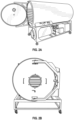
- FIGs. 2A and 2B are larger machines.
- FIG. 2A is a cryo-cure machine with a 48 x 104 product chamber and 300 ft 2 of shelf space, and 40 kWh of power.
- FIG. 2B is a cryo-cure machine with a 72 x 104 product chamber and 617 ft 2 of shelf space, and 75 kWh of power.
- Each of the machines is programmed to complete a cryo-cure cycle within 24-36 hours including defrost.
- the material chamber is container able to be pressurized and temperature-controlled readily known in the art.
- the size of the chamber and the number of shelves used in each particular cryo-cure machine may vary according to its desired use, e.g., what plant it is being used to process.
- the material chamber may be about 12 ft 2 to about 617 ft 2 , or larger to meet the specifications of an intended use.
- the material chamber may house 1 to 30 shelves, and any number in between, depending on its size and intended use.
- the shelves of the cryo-cure machine may be at least about 2 inches apart, or about 3 inches apart for providing sufficient space for receiving trays containing a product, including but not limited cannabis.
- the product may be positioned directly on the shelves of the machine.
- the size and shape of the shelves may be modified in some aspects, for example, according to the product being cured.
- a depth of the shelves may be increased to prevent flowers of a cannabis being cured from falling off the shelf.
- the shelves may support trays on which the plant is placed for curing.
- the shelves and trays may be of any material suitable for use in conventional freeze-drying machines and/or known in the art.
- Each shelf contains a heating element.
- the shelves may be heated by an electric current or by other suitable method.
- the tray may be made of a material suitable for conducting the heat emitted by the shelf.
- the shelves When the machine is in use, the shelves may be set to an initial desired temperature, which is then adjusted after a set period of time to one or more higher temperatures as the curing process continues.
- the plant (e.g., flower, vegetable, herb, fruit, etc. as a whole or a part thereof) to be processed may be positioned on one or more trays on shelves within the material chamber of the cryo-cure machine.
- the plant may have been freshly picked or may first be frozen for a period of time prior to insertion into the material chamber.
- a cannabis may have been frozen (e.g., at a temperature between about -40 degrees Fahrenheit and about -20 degrees Fahrenheit) for about 10 to about 48 hours, about 12 to about 24 hours, or about 12 hours, prior to being transferred to the material chamber.
- a vacuum may be applied on the machine and the material chamber can have a negative pressure environment.
- the vacuum pressure within the vacuum chamber during use of the machine may be between about 50 millibars and about 0.167 millibars.
- the cryo-cure machine may include an ice bank (which may also be referred to as a freeze trap), which is connected to but separate from the material chamber.
- the ice bank may have a separate and individual cooling system and is used to collect the sublimed material (e.g., water and terpenes) extracted out of a plant during curing in the cryo-cure machine.
- the ice bank may collect extracted essential oils, taste, or other features of the plant.
- the cryo-cure machine may include a freezer for freezing the plant.
- the cryo-cure machine includes a plurality of mechanical components, including, but not limited to one or more compressors, one or more refrigerant components, vacuum pump (oil or nonoil), open shut valves, and others known in the art for use in freeze-drying machines.
- the cryo-cure machine may be equipped with touch screen controllers, and may be PC compatible with data logging (embedded Ethernet and web enabled), electric defrost, customized pans.
- the machine may include one or more preset programs. Each present program may control the temperature of the shelves, the starting pressure within the vacuum chamber, and the time period at which the shelves are maintained at a temperature. Each program may correspond to a different product being cured, for example a type of fruit vegetable, herb, edible, etc.
- one or more programs for curing cannabis may be programmed on the machine. Each program may correspond to a type of cannabis being cured, a density of a cannabis being cured, or a use intended for the cannabis being cured (e.g. an edible, oil, smoking etc.).
- FIG. 3 shows an example of a screen on a cryo-cure machine showing preset programs available for the user.
- the cryo-cure machine may be used to cryo-cure medicated and non-medicated edibles, fruit, vegetables, herbs, flowers, and other food items.
- Example 1-5, 7, 9, 11, 13, 15 and 17 were cured according to a traditional curing process. This involved cutting down the plant whole and hang drying in a room for one week at 70 degrees with a room humidity of 55 percent. The dried plant was then taken down and trimmed. After being trimmed, the dried plant was "cured" for an additional week. This curing involved sealing the cannabis in airtight containers and opening the containers periodically for a few minutes to allow trapped moisture to be released. In the art, this may also be referred to as burping.
- Table 6 Total Cannabinoid Profile Cannabinoids Total THC 21.95% Total CBD ⁇ LOQ
- Table 7 Breakdown of Major Cannabinoid Profile Major Cannabinoids Concentration (% by weight ) Error (+/-10%) ⁇ 9-THC 0.379 +/- 0.04 THCa 24.60 +/- 2.46 Total THC 21.95 CBD ⁇ LOQ +/- 0.00 CBDa ⁇ LOQ +/- 0.00 Total CBD ⁇ LOQ CBN ⁇ LOQ +/- 0.00
- Table 8 Breakdown of Minor Cannabinoid Profile Minor Cannabinoids Concentration (% by weight ) Error (+/-10%) ⁇ 8-THC ⁇ LOQ +/- 0.00 CBG 0.14 +/- 0.01 CBGa 0.84 +/- 0.08
- Table 11 Total Cannabinoid Profile Cannabinoids Total THC 20.65% Total CBD ⁇ LOQ
- Table 12 Breakdown of Major Cannabinoid Profile Major Cannabinoids Concentration (% by weight ) Error (+/-10%) ⁇ 9-THC 0.29 +/- 0.03 THCa 23.21 +/- 2.32 Total THC 20.65 CBD ⁇ LOQ +/- 0.00 CBDa ⁇ LOQ +/- 0.00 Total CBD ⁇ LOQ CBN ⁇ LOQ +/- 0.00
- Table 13 Breakdown of Minor Cannabinoid Profile Minor Cannabinoids Concentration (% by weight ) Error (+/-10%) ⁇ 8-THC ⁇ LOQ +/- 0.00 CBG 0.13 +/- 0.01 CBGa 1.33 +/- 0.13
- Table 15 Total Cannabinoid Profile Cannabinoids Total THC 18.01% Total CBD ⁇ LOQ
- Table 16 Breakdown of Major Cannabinoid Profile Major Cannabinoids Concentration (% by weight ) Error (+/-10%) ⁇ 9-THC 1.03 +/- 0.10 THCa 19.36 +/- 1.94 Total THC 18.01 CBD ⁇ LOQ +/- 0.00 CBDa ⁇ LOQ +/- 0.00 Total CBD ⁇ LOQ CBN ⁇ LOQ +/- 0.00
- Table 17 Breakdown of Minor Cannabinoid Profile Minor Cannabinoids Concentration (% by weight ) Error (+/-10%) ⁇ 8-THC ⁇ LOQ +/- 0.00 CBG ⁇ LOQ +/- 0.00 CBGa 0.94 +/- 0.09
- Table 19 Total Cannabinoid Profile Cannabinoids Total THC 24.94% Total CBD ⁇ LOQ
- Table 20 Breakdown of Major Cannabinoid Profile Major Cannabinoids Concentration (% by weight ) Error (+/-10%) ⁇ 9-THC 0.59 +/- 0.06 THCa 27.77 +/- 2.78 Total THC 24.94 CBD ⁇ LOQ +/- 0.00 CBDa ⁇ LOQ +/- 0.00 Total CBD ⁇ LOQ CBN ⁇ LOQ +/- 0.00
- Table 21 Breakdown of Minor Cannabinoid Profile Minor Cannabinoids Concentration (% by weight ) Error (+/-10%) ⁇ 8-THC ⁇ LOQ +/- 0.00 CBG ⁇ LOQ +/- 0.00 CBGa 0.23 +/- 0.
- Table 23 Total Cannabinoid Profile Cannabinoids Total THC 29.17% Total CBD ⁇ LOQ
- Table 24 Breakdown of Major Cannabinoid Profile Major Cannabinoids Concentration (% by weight ) Error (+/-10%) ⁇ 9-THC 0.39 +/- 0.04 THCa 32.82 +/- 3.28 Total THC 29.17 CBD ⁇ LOQ +/- 0.00 CBDa ⁇ LOQ +/- 0.00 Total CBD ⁇ LOQ CBN ⁇ LOQ +/- 0.00
- Table 25 Breakdown of Minor Cannabinoid Profile Minor Cannabinoids Concentration ( % by weight ) Error (+/-10%) ⁇ 8-THC ⁇ LOQ +/- 0.00 CBG ⁇ LOQ +/- 0.00 CBGa 0.33 +
- Table 28 Total Cannabinoid Profile Cannabinoids Total THC 19.08% Total CBD ⁇ LOQ
- Table 29 Cannabinoid Profile Analyte LOQ Mass Mass % % mg/g THCa 0.10 21.24 212.4 ⁇ 9 - THC 0.10 0.45 4.5 ⁇ 8 - THC 0.10 ⁇ LOQ ⁇ LOQ THCV 0.10 ⁇ LOQ ⁇ LOQ CBDa 0.10 ⁇ LOQ ⁇ LOQ CBD 0.10 ⁇ LOQ ⁇ LOQ CBN 0.10 ⁇ LOQ ⁇ LOQ CBGa 0.10 0.46 4.6 CBG 0.10 ⁇ LOQ ⁇ LOQ CBC 0.10 ⁇ LOQ ⁇ LOQ Total 22.15 221.5
- Table 30 Terpene Profile Analyte LOQ Mass Mass Mass % %
- Table 32 Total Cannabinoid Profile Cannabinoids Total THC 17.35% Total CBD ⁇ LOQ
- Table 33 Cannabinoid Profile Analyte LOQ Mass Mass % % mg/g THCa 0.10 19.36 193.6 ⁇ 9 - THC 0.10 0.37 3.7 ⁇ 8 - THC 0.10 ⁇ LOQ ⁇ LOQ THCV 0.10 ⁇ LOQ ⁇ LOQ CBDa 0.10 ⁇ LOQ ⁇ LOQ CBD 0.10 ⁇ LOQ ⁇ LOQ CBN 0.10 ⁇ LOQ ⁇ LOQ CBGa 0.10 0.39 3.9 CBG 0.10 ⁇ LOQ ⁇ LOQ CBC 0.10 ⁇ LOQ ⁇ LOQ Total 20.13 201.3
- Table 34 Terpene Profile Analyte LOQ Mass Mass Mass %
- Sample ID No. 1901PSI0035.00129 of the cannabis strain Sorbetto was traditionally cured according to the procedure set forth above.
- the cannabinoid profile, terpene profile, and purity of the cured sample were tested and tested and the results are shown in Tables 36-39.
- Table 36 Total Cannabinoid Profile Cannabinoids Total THC 11.41% Total CBD ⁇ LOQ Table 37: Cannabinoid Profile Analyte LOQ Mass Mass % % mg/g THCa 0.10 13.01 130.1 ⁇ 9 - THC 0.10 ⁇ LOQ ⁇ LOQ ⁇ 8 - THC 0.10 ⁇ LOQ ⁇ LOQ THCV 0.10 ⁇ LOQ ⁇ LOQ CBDa 0.10 ⁇ LOQ ⁇ LOQ CBD 0.10 ⁇ LOQ ⁇ LOQ CBN 0.10 ⁇ LOQ ⁇ LOQ CBGa 0.10 0.60 6.0 CBG 0.10 ⁇ LOQ ⁇ LOQ CBC 0.10 ⁇ LOQ ⁇ LOQ Total 13.62 136.2
- Table 38 Terpene Profile Analyte LOQ Mass Mass Mass % % mg/g ⁇ -Caryophyllene 0.28 2.8 ⁇ -Limonene 0.21 2.1 ⁇ -Myrcene ND ND ⁇ -Humulene 0.
- Sample ID No. 1901PSI0035.00126 of the cannabis strain Sorbetto was cryo-cured according to the procedure set forth above.
- the cannabinoid profile, terpene profile, and purity of the cured sample were tested and tested and the results are shown in Tables 40-43.
- Table 40 Total Cannabinoid Profile Cannabinoids Total THC 11.10% Total CBD ⁇ LOQ Table 41: Cannabinoid Profile Analyte LOQ Mass Mass % % mg/g THCa 0.10 12.66 126.6 ⁇ 9 - THC 0.10 ⁇ LOQ ⁇ LOQ ⁇ 8 - THC 0.10 ⁇ LOQ ⁇ LOQ THCV 0.10 ⁇ LOQ ⁇ LOQ CBDa 0.10 ⁇ LOQ ⁇ LOQ CBD 0.10 ⁇ LOQ ⁇ LOQ CBN 0.10 ⁇ LOQ ⁇ LOQ CBGa 0.10 0.53 5.3 CBG 0.10 ⁇ LOQ ⁇ LOQ CBC 0.10 ⁇ LOQ ⁇ LOQ Total 13.19 131.9 Table 42: Terpene Profile Analyte LOQ Mass Mass Mass % % mg/g ⁇ -Caryophyllene 0.44 4.4 ⁇ -Limonene 0.18 1.8 ⁇ -Myrcene 0.11 1.1 ⁇ -Humulene 0.12
- Sample ID No. 1901PSI0035.00130 of the cannabis strain Purple Zkittlez was traditionally cured according to the procedure set forth above.
- the cannabinoid profile, terpene profile, and purity of the cured sample were tested and tested and the results are shown in Tables 44-47.
- Table 44 Total Cannabinoid Profile Cannabinoids Total THC 13.93% Total CBD ⁇ LOQ Table 45: Cannabinoid Profile Analyte LOQ Mass Mass % % mg/g THCa 0.10 15.60 156.0 ⁇ 9 - THC 0.10 0.25 2.5 ⁇ 8 - THC 0.10 ⁇ LOQ ⁇ LOQ THCV 0.10 ⁇ LOQ ⁇ LOQ CBDa 0.10 ⁇ LOQ ⁇ LOQ CBD 0.10 ⁇ LOQ ⁇ LOQ CBN 0.10 ⁇ LOQ ⁇ LOQ CBGa 0.10 0.86 8.6 CBG 0.10 ⁇ LOQ ⁇ LOQ CBC 0.10 ⁇ LOQ ⁇ LOQ Total 16.71 167.0
- Table 46 Terpene Profile Analyte LOQ Mass Mass Mass % % mg/g ⁇ -Caryophyllene 0.41 4.1 ⁇ -Limonene ND ND ⁇ -Myrcene 0.19 1.9 ⁇ -Humulene 0.10 1.0 ⁇
- Sample ID No. 1901PSI0035.00127 of the cannabis strain Purple Zkittlez was cryo-cured according to the procedure set forth above.
- the cannabinoid profile, terpene profile, and purity of the cured sample were tested and tested and the results are shown in Tables 48-51.
- Table 48 Total Cannabinoid Profile Cannabinoids Total THC 18.42% Total CBD ⁇ LOQ Table 49: Cannabinoid Profile Analyte LOQ Mass Mass % % mg/g THCa 0.10 20.02 200.2 ⁇ 9 - THC 0.10 0.86 8.6 ⁇ 8 - THC 0.10 ⁇ LOQ ⁇ LOQ THCV 0.10 ⁇ LOQ ⁇ LOQ CBDa 0.10 ⁇ LOQ ⁇ LOQ CBD 0.10 ⁇ LOQ ⁇ LOQ CBN 0.10 ⁇ LOQ ⁇ LOQ CBGa 0.10 0.43 4.3 CBG 0.10 ⁇ LOQ ⁇ LOQ CBC 0.10 ⁇ LOQ ⁇ LOQ Total 21.32 213.2
- Table 50 Terpene Profile Analyte LOQ Mass Mass Mass % % mg/g ⁇ -Caryophyllene 0.41 4.1 ⁇ -Myrcene 0.05 0.5 ⁇ -Humulene 0.12 1.2 ⁇ -Bisabolol 0.04
- Sample ID No. 1901PSI0228.00898 of the cannabis strain Orangeade was traditionally cured according to the procedure set forth above.
- the cannabinoid profile, terpene profile, and purity of the cured sample were tested and tested and the results are shown in Tables 52-55.
- Table 52 Total Cannabinoid Profile Cannabinoids Total THC 13.02% Total CBD ⁇ LOQ
- Table 53 Cannabinoid Profile Analyte LOQ Mass Mass % % mg/g THCa 0.10 14.59 149.9 ⁇ 9 - THC 0.10 0.22 2.2 ⁇ 8 - THC 0.10 ⁇ LOQ ⁇ LOQ THCV 0.10 ⁇ LOQ ⁇ LOQ CBDa 0.10 ⁇ LOQ ⁇ LOQ CBD 0.10 ⁇ LOQ ⁇ LOQ CBN 0.10 ⁇ LOQ ⁇ LOQ CBGa 0.10 0.77 7.7 CBG 0.10 ⁇ LOQ ⁇ LOQ CBC 0.10 ⁇ LOQ ⁇ LOQ Total 15.58 155.8
- Table 54 Terpene Profile Analyte LOQ Mass Mass Mass % % mg/g ⁇ -Caryophyllene ND ND ⁇ -Limonene 0.23 2.3 ⁇ -Myrcene ND ND ⁇ -Humulene
- Sample ID No. 1901PSI0228.00897 of the cannabis strain Orangeade was cryo-cured according to the procedure set forth above.
- the cannabinoid profile, terpene profile, and purity of the cured sample were tested and tested and the results are shown in Tables 56-59.
- Table 56 Total Cannabinoid Profile Cannabinoids Total THC 12.72% Total CBD ⁇ LOQ Table 57: Cannabinoid Profile Analyte LOQ Mass Mass Mass % % mg/g THCa 0.10 14.50 145.0 ⁇ 9 - THC 0.10 ⁇ LOQ ⁇ LOQ ⁇ 8 - THC 0.10 ⁇ LOQ ⁇ LOQ THCV 0.10 ⁇ LOQ ⁇ LOQ CBDa 0.10 ⁇ LOQ ⁇ LOQ CBD 0.10 ⁇ LOQ ⁇ LOQ CBN 0.10 ⁇ LOQ ⁇ LOQ CBGa 0.10 0.97 9.7 CBG 0.10 ⁇ LOQ ⁇ LOQ CBC 0.10 ⁇ LOQ ⁇ LOQ Total 15.48 154.8 Table 58: Terpene Profile Analyte LOQ Mass Mass Mass % % mg/g ⁇ -Caryophyllene 0.06 0.6 ⁇ -Limonene 0.41 4.1 ⁇ -Myrcene 0.13 1.3 ⁇ -Humulen
- Sample ID No. 1901PSI0228.00900 of the cannabis strain Dirty Dreds was traditionally cured according to the procedure set forth above.
- the cannabinoid profile, terpene profile, and purity of the cured sample were tested and tested and the results are shown in Tables 60-63.
- Table 60 Total Cannabinoid Profile Cannabinoids Total THC 18.54% Total CBD ⁇ LOQ Table 61: Cannabinoid Profile Analyte LOQ Mass Mass Mass % % mg/g THCa 0.10 20.66 206.6 ⁇ 9 - THC 0.10 0.43 4.3 ⁇ 8 - THC 0.10 ⁇ LOQ ⁇ LOQ THCV 0.10 ⁇ LOQ ⁇ LOQ CBDa 0.10 ⁇ LOQ ⁇ LOQ CBD 0.10 ⁇ LOQ ⁇ LOQ CBN 0.10 ⁇ LOQ ⁇ LOQ CBGa 0.10 1.86 18.6 CBG 0.10 0.14 1.4 CBC 0.10 ⁇ LOQ ⁇ LOQ Total 23.09 230.9 Table 62: Terpene Profile Analyte LOQ Mass Mass Mass % % mg/g ⁇ -Caryophyllene 0.11 1.1 ⁇ -Limonene 0.16 1.6 ⁇ -Myrcene 0.07 0.7 ⁇ -Humulene ND ND
- Sample ID No. 1901PSI0228.00899 of the cannabis strain Dirty Dreds was cryo-cured according to the procedure set forth above.
- the cannabinoid profile, terpene profile, and purity of the cured sample were tested and tested and the results are shown in Tables 64-67.
- Table 64 Total Cannabinoid Profile Cannabinoids Total THC 17.89% Total CBD ⁇ LOQ Table 65: Cannabinoid Profile Analyte LOQ Mass Mass Mass % % mg/g THCa 0.10 20.40 204.0 ⁇ 9 - THC 0.10 ⁇ LOQ ⁇ LOQ ⁇ 8 - THC 0.10 ⁇ LOQ ⁇ LOQ THCV 0.10 ⁇ LOQ ⁇ LOQ CBDa 0.10 ⁇ LOQ ⁇ LOQ CBD 0.10 ⁇ LOQ ⁇ LOQ CBN 0.10 ⁇ LOQ ⁇ LOQ CBGa 0.10 2.02 20.2 CBG 0.10 ⁇ LOQ ⁇ LOQ CBC 0.10 ⁇ LOQ ⁇ LOQ Total 22.42 224.2
- Table 66 Terpene Profile Analyte LOQ Mass Mass Mass % % mg/g ⁇ -Caryophyllene 0.14 1.4 ⁇ -Limonene 0.25 2.5 ⁇ -Myrcene 0.10 1.0 ⁇ -Humul
- Sample ID No. 1901PSI0228.00904 of the cannabis strain Malibu Pie was traditionally cured according to the procedure set forth above.
- the cannabinoid profile, terpene profile, and purity of the cured sample were tested and tested and the results are shown in Tables 68-71.
- Table 68 Total Cannabinoid Profile Cannabinoids Total THC 10.29% Total CBD ⁇ LOQ Table 69: Cannabinoid Profile Analyte LOQ Mass Mass Mass % % mg/g THCa 0.10 11.32 113.2 ⁇ 9 - THC 0.10 0.36 3.6 ⁇ 8 - THC 0.10 ⁇ LOQ ⁇ LOQ THCV 0.10 ⁇ LOQ ⁇ LOQ CBDa 0.10 ⁇ LOQ ⁇ LOQ CBD 0.10 ⁇ LOQ ⁇ LOQ CBN 0.10 ⁇ LOQ ⁇ LOQ CBGa 0.10 1.26 12.6 CBG 0.10 ⁇ LOQ ⁇ LOQ CBC 0.10 ⁇ LOQ ⁇ LOQ Total 12.94 129.4 Table 70: Terpene Profile Analyte LOQ Mass Mass Mass % % mg/g ⁇ -Caryophyllene ND ND ⁇ -Limonene 0.19 1.9 ⁇ -Myrcene 0.93 9.3 ⁇ -Humulene
- Sample ID No. 1901PSI0228.00903 of the cannabis strain Malibu Pie was cryo-cured according to the procedure set forth above.
- the cannabinoid profile, terpene profile, and purity of the cured sample were tested and tested and the results are shown in Tables 72-75.
- Table 72 Total Cannabinoid Profile Cannabinoids Total THC 10.82% Total CBD ⁇ LOQ Table 73: Cannabinoid Profile Analyte LOQ Mass Mass Mass % % mg/g THCa 0.10 11.60 116.0 ⁇ 9 - THC 0.10 0.64 6.4 ⁇ 8 - THC 0.10 ⁇ LOQ ⁇ LOQ THCV 0.10 ⁇ LOQ ⁇ LOQ CBDa 0.10 ⁇ LOQ ⁇ LOQ CBD 0.10 ⁇ LOQ ⁇ LOQ CBN 0.10 ⁇ LOQ ⁇ LOQ CBGa 0.10 0.83 8.3 CBG 0.10 ⁇ LOQ ⁇ LOQ CBC 0.10 ⁇ LOQ ⁇ LOQ Total 13.07 130.7 Table 74: Terpene Profile Analyte LOQ Mass Mass Mass % % mg/g ⁇ -Caryophyllene ND ND ⁇ -Limonene 0.11 1.1 ⁇ -Myrcene 0.72 7.2 ⁇ -Humulene ND
- Table 76 Comparison of THC and Terpene Concentrations Strain and Curing Total THC % Total Terpene % Original Sour Diesel (Ex. 5) 24.94 1.71 Original Sour Diesel CRYO (Ex. 6) 29.17 1.75 GG4 (Ex. 7) 19.08 1.31 GG4 CRYO (Ex. 8) 17.35 1.24 Sorbetto (Ex. 9) 11.41 0.79 Sorbetto CRYO (Ex. 10) 11.10 1.02 Purple Zkittlez (Ex. 11) 13.93 0.77 Purple Zkittlez CRYO (Ex. 12) 18.42 0.63 Orangeade (Ex.
Landscapes
- Engineering & Computer Science (AREA)
- Chemical & Material Sciences (AREA)
- Chemical Kinetics & Catalysis (AREA)
- General Chemical & Material Sciences (AREA)
- Molecular Biology (AREA)
- Life Sciences & Earth Sciences (AREA)
- Mechanical Engineering (AREA)
- General Engineering & Computer Science (AREA)
- Health & Medical Sciences (AREA)
- Agricultural Chemicals And Associated Chemicals (AREA)
- Solid-Sorbent Or Filter-Aiding Compositions (AREA)
- Compounds Of Alkaline-Earth Elements, Aluminum Or Rare-Earth Metals (AREA)
- Transition And Organic Metals Composition Catalysts For Addition Polymerization (AREA)
Claims (14)
- Verfahren zur Kryo-Härtung einer Pflanze, umfassend die folgenden Schritte:a. Einfrieren der Pflanze für einen Zeitraum von mindestens etwa 1 Stunde bei einer Temperatur von weniger als etwa -10°F (-23°C); undb. Aushärten der gefrorenen Pflanze für einen Zeitraum von mindestens etwa 8 Stunden bei einer Temperatur unter 70°F (21°C) unter Vakuum, um die Pflanze mit einem gewünschten Feuchtigkeitsgehalt von etwa 5 Gew.-% bis etwa 20 Gew.-% zu erhalten;wobei Aushärten in etwa 36 Stunden oder weniger durchgeführt wird; undwobei es sich bei der Pflanze um Cannabis, Hopfen oder Beeren handelt.
- Verfahren nach Anspruch 1, wobei Aushärten bei einem Druck zwischen etwa 50 Millibar (5000 Pa) und etwa 0,167 Millibar (16,7 Pa) durchgeführt wird.
- Verfahren nach einem der vorstehenden Ansprüche, wobei es sich bei der Pflanze um Blüten oder Schnittmaterial einer Cannabispflanze handelt.
- Verfahren nach einem der vorstehenden Ansprüche, wobei der gewünschte Feuchtigkeitsgehalt etwa 8 Gew.-% bis etwa 12 Gew.-% beträgt, vorzugsweise
wobei der gewünschte Feuchtigkeitsgehalt etwa 10 Gew.-% bis etwa 12 Gew.-% beträgt. - Verfahren nach einem der vorstehenden Ansprüche, wobei die kryogehärtete Pflanze einen Terpengehalt von etwa 0,2 Gew.-% bis etwa 6 Gew.-% aufweist, vorzugsweise
wobei die kryogehärtete Pflanze einen Terpengehalt von etwa 0,5 Gew.-% bis etwa 4 Gew.-% aufweist. - Verfahren nach einem der vorstehenden Ansprüche, wobei Einfrieren für mindestens etwa 8 Stunden durchgeführt wird, vorzugsweise
wobei Einfrieren für etwa 10 bis etwa 24 Stunden durchgeführt wird. - Verfahren nach einem der vorstehenden Ansprüche, das weiter Platzieren der Pflanze auf einem oder mehreren Regalen vor dem Aushärten umfasst.
- Verfahren nach Anspruch 7, wobei Aushärten umfasst: (i) Erhitzen der Regale, die die Pflanze enthalten, auf eine mittlere Temperatur von etwa 30°F (-1°C) bis etwa 65°F (18°C) für etwa zwei bis etwa 4 Stunden; gefolgt von (ii) Erhitzen der Regale, die die Pflanze enthalten, auf eine hohe Temperatur von etwa 65°F (18°C) bis weniger als etwa 70°F (21°C) für etwa 8 bis etwa 32 Stunden.
- Verfahren nach Anspruch 7, wobei Aushärten umfasst: Erhitzen der Regale, die die Pflanze enthalten, auf eine Anfangstemperatur von etwa -5°F (-21°C) bis etwa 10°F (-12°C) für etwa 30 Minuten bis etwa 2 Stunden; Erhitzen der Regale, die die Pflanze enthalten, auf eine zweite Temperatur von etwa 20°F (-7°C) bis etwa 40°F (4°C) für etwa 30 Minuten bis etwa 2 Stunden; Erhitzen der Regale, die die Pflanze enthalten, auf eine mittlere Temperatur von etwa 30°F (-1°C) bis etwa 65°F (18°C) für etwa zwei bis etwa 4 Stunden; und Erhitzen der Regale, die die Pflanze enthalten, auf eine hohe Temperatur von etwa 65°F (18°C) bis weniger als etwa 70°F (21°C) für etwa 8 bis etwa 32 Stunden.
- Verfahren nach einem der vorstehenden Ansprüche, wobei Aushärten in etwa 12 Stunden bis etwa 24 Stunden durchgeführt wird, vorzugsweise
wobei Aushärten in etwa 12 Stunden durchgeführt wird. - Verfahren nach einem der vorstehenden Ansprüche, wobei Einfrieren und Aushärten in etwa 46 Stunden oder weniger durchgeführt wird.
- Verfahren nach einem der vorstehenden Ansprüche, wobei Einfrieren und Aushärten in etwa 24 Stunden bis etwa 36 Stunden durchgeführt wird.
- Verfahren zur Kryo-Härtung einer Pflanze, umfassend die folgenden Schritte:a. Einfrieren der Pflanze für einen Zeitraum von mindestens etwa 8 Stunden bei einer Temperatur von etwa -40°F (-40°C) bis etwa -20°F (-29°C); undb. Aushärten der gefrorenen Pflanze unter Vakuum durch: (i) Erhitzen der Pflanze auf eine mittlere Temperatur von etwa 30°F (-1°C) bis etwa 65°F (18°C) für etwa 1 bis etwa 4 Stunden; und (ii) Erhitzen der Pflanze auf eine hohe Temperatur von etwa 60°F (16°C) bis etwa 70°F (21°C) für etwa 8 bis etwa 36 Stunden;wobei die kryogehärtete Pflanze einen Feuchtigkeitsgehalt von etwa 5% bis etwa 20% aufweist.
- Verfahren nach Anspruch 13, wobei es sich bei der Pflanze um Cannabis, Hopfen oder Beeren handelt.
Applications Claiming Priority (3)
| Application Number | Priority Date | Filing Date | Title |
|---|---|---|---|
| US201862780041P | 2018-12-14 | 2018-12-14 | |
| US201962880157P | 2019-07-30 | 2019-07-30 | |
| PCT/US2019/061412 WO2020123089A1 (en) | 2018-12-14 | 2019-11-14 | Systems and methods of cryo-curing |
Publications (3)
| Publication Number | Publication Date |
|---|---|
| EP3894768A1 EP3894768A1 (de) | 2021-10-20 |
| EP3894768B1 true EP3894768B1 (de) | 2023-07-12 |
| EP3894768C0 EP3894768C0 (de) | 2023-07-12 |
Family
ID=68835339
Family Applications (1)
| Application Number | Title | Priority Date | Filing Date |
|---|---|---|---|
| EP19817505.1A Active EP3894768B1 (de) | 2018-12-14 | 2019-11-14 | Verfahren zur kryohärtung |
Country Status (5)
| Country | Link |
|---|---|
| US (2) | US11243028B2 (de) |
| EP (1) | EP3894768B1 (de) |
| CA (1) | CA3121466A1 (de) |
| ES (1) | ES2952937T3 (de) |
| WO (1) | WO2020123089A1 (de) |
Families Citing this family (5)
| Publication number | Priority date | Publication date | Assignee | Title |
|---|---|---|---|---|
| US10639340B2 (en) | 2018-06-18 | 2020-05-05 | Eric Young | Method of drying botanicals |
| US11000856B2 (en) * | 2019-05-15 | 2021-05-11 | NextLeaf Solutions Ltd. | Cannabis trichome separation using a tumbler |
| US12036485B1 (en) * | 2019-07-16 | 2024-07-16 | Green Vault Systems, LLC | Continuous flow cold water extraction |
| CA3155452A1 (en) * | 2019-10-23 | 2021-04-29 | Randy Reed | Process and apparatus for multi-phase extraction of active substances from biomass |
| AT523983B1 (de) * | 2020-06-30 | 2023-05-15 | Urban Agriculture Meidlinger Roman E U | Verfahren zur Behandlung einer Cannabisblüte |
Citations (1)
| Publication number | Priority date | Publication date | Assignee | Title |
|---|---|---|---|---|
| US20170008870A1 (en) * | 2015-07-06 | 2017-01-12 | Clare J. Dibble | Methods for Obtaining Purified Cannabis Extracts and THCA Crystals |
Family Cites Families (57)
| Publication number | Priority date | Publication date | Assignee | Title |
|---|---|---|---|---|
| US2278472A (en) * | 1940-06-27 | 1942-04-07 | Musher Corp | Dehydrated prefrozen food product |
| US3078586A (en) * | 1959-06-11 | 1963-02-26 | Ct Nat De La Rech Schientifiqu | Preserving water-containing organic or inorganic substances |
| US3230633A (en) * | 1961-10-27 | 1966-01-25 | Pennsalt Chemicals Corp | Freeze drying apparatus and method |
| US3199217A (en) * | 1962-03-28 | 1965-08-10 | Fmc Corp | Freeze drying apparatus with inflatable platen contact heating |
| US3376652A (en) * | 1966-06-17 | 1968-04-09 | Luis A. Hernandez Jr. | Low temperature freeze drying process and apparatus therefor |
| US4312134A (en) * | 1980-08-04 | 1982-01-26 | Strausser Robert W | Method of freeze-drying flower arrangements |
| JPS6098939A (ja) * | 1983-11-04 | 1985-06-01 | Sutefuano Shokai:Kk | 生肉に復元可能な乾燥肉の製造装置 |
| US4780964A (en) * | 1987-11-30 | 1988-11-01 | Fts Systems, Inc. | Process and device for determining the end of a primary stage of freeze drying |
| CA2020360A1 (en) | 1990-07-04 | 1992-01-05 | Alex P. Korn | Preservation of flowers by lyophilization and vacuum deposition polymerization coating |
| US5656343A (en) * | 1995-04-11 | 1997-08-12 | Baker; Marion A. | Method of producing dried plants and other substrates and the product produced thereby |
| KR19990039467A (ko) | 1997-11-10 | 1999-06-05 | 이근희 | 약재의 동결 건조방법 |
| PE20021017A1 (es) * | 2001-04-03 | 2002-11-24 | Pharmacia Corp | Composicion parenteral reconstituible |
| US6935049B2 (en) * | 2003-12-24 | 2005-08-30 | Edward K. Alstat | Method and apparatus for reclaiming effluent from a freeze-drying process, and uses for effluent |
| US20060051731A1 (en) * | 2004-08-12 | 2006-03-09 | David Ho | Processes for preparing lyophilized platelets |
| EP1903291A1 (de) * | 2006-09-19 | 2008-03-26 | Ima-Telstar S.L. | Verfahren und System zur Steuerung eines Gefriertrocknungsverfahrens |
| EP2148923B1 (de) * | 2007-05-18 | 2012-08-22 | MedImmune, LLC | Konservierung bioaktiver materialien mit lyophilisiertem schaum |
| DE102007046086A1 (de) | 2007-09-26 | 2009-04-09 | Heinz Prof. Dr. Letzel | Pflanzenextrakt aus THC-armen Cannabis zur Behandlung von Erkrankungen |
| US20090324586A1 (en) * | 2008-06-26 | 2009-12-31 | Wyeth | Lyophilization cycle robustness strategy |
| EP2202472A1 (de) * | 2008-12-29 | 2010-06-30 | Ludwig-Maximilians-Universität München | Gefriertrockner-Überwachungsvorrichtung |
| JP2012200196A (ja) | 2011-03-25 | 2012-10-22 | En Otsuka Pharmaceutical Co Ltd | 復元可能な乾燥植物性素材の製造方法 |
| EP2745064B1 (de) * | 2011-09-06 | 2017-04-05 | Rheavita B.V. | Verfahren und system zur gefriertrocknung injizierbarer zusammensetzungen, insbesondere pharmazeutischer zusammensetzungen |
| US9459044B1 (en) * | 2013-03-15 | 2016-10-04 | Harvest Right, LLC | Freeze drying methods and apparatuses |
| US9199960B2 (en) | 2013-05-02 | 2015-12-01 | Frederick R. Ferri | Method and apparatus for processing herbaceous plant materials including the cannabis plant |
| US9801910B2 (en) * | 2014-03-17 | 2017-10-31 | Ethicon, Inc. | Decellularized pleural matrix |
| WO2016004121A1 (en) | 2014-07-01 | 2016-01-07 | MJAR Holdings, LLC | High cannabidiol cannabis strains |
| US9351953B2 (en) * | 2014-08-12 | 2016-05-31 | Kelly J. Stodola | Cannabis conversion process |
| CN104288227A (zh) | 2014-10-17 | 2015-01-21 | 王新华 | 一种中药鲜药材的新型干燥方法及其应用 |
| CA3135893C (en) | 2014-10-21 | 2023-11-14 | United Cannabis Corp. | Cannabis extracts and methods of preparing and using same |
| CA2974292C (en) | 2015-01-31 | 2024-04-16 | Constance Therapeutics, Inc. | Methods for preparation of cannabis oil extracts and compositions |
| US9739532B2 (en) | 2015-02-04 | 2017-08-22 | Steven F. Baugh | Botanical freeze drying system and method |
| DE202015100729U1 (de) | 2015-02-16 | 2015-03-13 | Wulf Niehus | Alkoholisches Getränk |
| WO2016171997A2 (en) | 2015-04-21 | 2016-10-27 | Viriyapanthu Paul | Composition of smokeless tobacco, method and apparatus for vaporization |
| CN105166133B (zh) | 2015-09-24 | 2018-09-04 | 乐昌市峰之源茶业有限公司 | 青茶加工方法 |
| CN105379860A (zh) | 2015-09-24 | 2016-03-09 | 惠州市杰普特电子技术有限公司 | 红茶加工方法 |
| US20170196923A1 (en) | 2016-01-12 | 2017-07-13 | David Harold Moore | Cannabis-Hemp Paste |
| US20170202895A1 (en) | 2016-01-18 | 2017-07-20 | Kevin Anthony Hugh | Cannabis Pellets |
| US10307447B2 (en) | 2016-03-07 | 2019-06-04 | Stephen Goldner | Freeze dry process |
| US20170274027A1 (en) | 2016-03-24 | 2017-09-28 | David Harold Moore | Cannabis-Hemp Animal Feed |
| US20170273349A1 (en) | 2016-03-28 | 2017-09-28 | David Harold Moore | Cannabis-Hemp Smoking Blend |
| FR3050262B1 (fr) * | 2016-04-14 | 2018-04-13 | Jean Delaveau | Dispositif et procede de lyophilisation |
| EP3445838B1 (de) | 2016-04-18 | 2023-05-10 | Gene Pool Technologies, Inc. | Isolierung von pflanzenextrakten |
| US10507223B2 (en) | 2016-07-06 | 2019-12-17 | The Original Resinator Llc | Horizontal axis rotary separation apparatus and process |
| CN106173079A (zh) * | 2016-08-04 | 2016-12-07 | 乐山愚翁原生态农业有限责任公司 | 玫瑰花微波冻干方法及由其制得的冻干玫瑰花 |
| CN107773540B (zh) * | 2016-08-31 | 2020-07-14 | 海南斯达制药有限公司 | 一种炎琥宁冻干粉剂及其制备方法 |
| US20180110816A1 (en) | 2016-10-23 | 2018-04-26 | Peter Q Bum Suh | Process For Producing A Fluid Soluble Cannabis Base Product |
| CN106857895B (zh) | 2017-01-13 | 2020-09-22 | 信阳农林学院 | 红茶加工工艺 |
| US10888595B2 (en) | 2017-04-18 | 2021-01-12 | Jose Rivas | Apparatus for preparation of pharmacologically-relevant compounds from botanical sources |
| US10828341B2 (en) | 2017-04-18 | 2020-11-10 | Jose Rivas | Method for preparation of pharmacologically-relevant compounds from botanical sources |
| WO2018194925A1 (en) * | 2017-04-21 | 2018-10-25 | Mks Instruments, Inc. | End point detection for lyophilization |
| US20180325972A1 (en) | 2017-05-10 | 2018-11-15 | David Harold Moore | Cannabis-hemp beverage infusions |
| US10864525B1 (en) | 2017-05-26 | 2020-12-15 | Cryocann USA Corporation | System and method for cryogenic separation of plant material |
| GB2559436B (en) | 2017-07-07 | 2019-08-28 | Frito Lay Trading Co Gmbh | Snack food manufacture |
| CN107751354A (zh) * | 2017-10-30 | 2018-03-06 | 张艳群 | 一种藕尖冷冻干燥方法 |
| CN107821699A (zh) * | 2017-12-07 | 2018-03-23 | 广东石油化工学院 | 一种化橘红花保健茶的加工方法 |
| WO2019210401A1 (en) * | 2018-05-01 | 2019-11-07 | Willinsky Michael | Novel anti-inflammatory, analgesic, anti-depressant cannabinoid and methods related to manufacture of same |
| US11351212B2 (en) | 2018-06-18 | 2022-06-07 | Eric Young | Method of drying botanicals |
| US10639340B2 (en) | 2018-06-18 | 2020-05-05 | Eric Young | Method of drying botanicals |
-
2019
- 2019-10-03 US US16/591,747 patent/US11243028B2/en active Active
- 2019-11-14 ES ES19817505T patent/ES2952937T3/es active Active
- 2019-11-14 EP EP19817505.1A patent/EP3894768B1/de active Active
- 2019-11-14 WO PCT/US2019/061412 patent/WO2020123089A1/en not_active Ceased
- 2019-11-14 CA CA3121466A patent/CA3121466A1/en active Pending
-
2022
- 2022-01-07 US US17/570,969 patent/US20220128302A1/en active Pending
Patent Citations (1)
| Publication number | Priority date | Publication date | Assignee | Title |
|---|---|---|---|---|
| US20170008870A1 (en) * | 2015-07-06 | 2017-01-12 | Clare J. Dibble | Methods for Obtaining Purified Cannabis Extracts and THCA Crystals |
Also Published As
| Publication number | Publication date |
|---|---|
| US20200191480A1 (en) | 2020-06-18 |
| EP3894768A1 (de) | 2021-10-20 |
| CA3121466A1 (en) | 2020-06-18 |
| US11243028B2 (en) | 2022-02-08 |
| ES2952937T3 (es) | 2023-11-07 |
| WO2020123089A1 (en) | 2020-06-18 |
| US20220128302A1 (en) | 2022-04-28 |
| EP3894768C0 (de) | 2023-07-12 |
Similar Documents
| Publication | Publication Date | Title |
|---|---|---|
| US20220128302A1 (en) | Systems and methods of cryo-curing | |
| US9739532B2 (en) | Botanical freeze drying system and method | |
| KR101727721B1 (ko) | 식물로부터 수액 성분을 증발 추출하는 방법 | |
| US20230076742A1 (en) | Method of dehydrating wine grapes and other foods | |
| Zudana et al. | Energy consumption and efficiency optimization in freeze drying of fruits and vegetables: A review | |
| CN101163407A (zh) | 获得鳄梨粉末的方法 | |
| CN104170945A (zh) | 一种红阳猕猴桃复合保鲜技术及其实施方法 | |
| CN104397145B (zh) | 一种冷冻干燥复水枸杞的方法 | |
| Parmar et al. | A comparative study on drying of basil leaves | |
| Droštinová et al. | Effect of drying methods on content of some natural pigments in Urtica Dioica L. and Melissa Officinalis L. | |
| KR20190071382A (ko) | 건강 기능성이 향상된 동결건조 식품의 제조방법 | |
| Mansour | Using vacuum drying system for drying some leafy medicinal plants | |
| EP4049536A1 (de) | Verfahren zur behandlung von cannabis sativa l | |
| Petropoulos et al. | Effect of freezing, drying and the duration of storage on the composition of essential oils of plain‐leafed parsley [Petroselinum crispum (Mill.) Nym. ssp. neapolitanum Danert] and turnip‐rooted parsley [Petroselinum crispum (Mill.) Nym. ssp. tuberosum (Bernh.) Crov.] | |
| Savo et al. | Specificities of fruit freeze drying and product prices | |
| Minh et al. | Investigation of Asparagus officinalis shoot size and drying affecting to herbal tea production | |
| KR101907680B1 (ko) | 생대추를 이용한 대추과자 제조방법 및 그 물품 | |
| RU2630702C2 (ru) | Способ производства фруктового продукта в виде пластинок из груш, яблок и виноградного сырья | |
| Muizniece-Brasava et al. | Optimization of freeze-drying process and packaging solutions for melon shelf life | |
| US11266703B2 (en) | Raw Cannabis sativa water soluble powder production process | |
| KR20160023461A (ko) | 자동온습도조절장치를 이용한 활성형 인삼류의 제조방법 | |
| Lakzaeyan Teymoor et al. | The effect of drying method on quality characteristics and microbial load of Berberis integerrima | |
| Selvakumar | Drying diverse temperatures alters the physico-chemical and phytochemical properties of moringa flowers | |
| CN106665817A (zh) | 一种能延长沙糖桔存储期的复合保鲜方法 | |
| Antonopoulos et al. | The effect of partial dehydration on the quality and composition of plain–leaf, curly–leaf and turnip–rooted parsley during storage |
Legal Events
| Date | Code | Title | Description |
|---|---|---|---|
| STAA | Information on the status of an ep patent application or granted ep patent |
Free format text: STATUS: UNKNOWN |
|
| STAA | Information on the status of an ep patent application or granted ep patent |
Free format text: STATUS: THE INTERNATIONAL PUBLICATION HAS BEEN MADE |
|
| PUAI | Public reference made under article 153(3) epc to a published international application that has entered the european phase |
Free format text: ORIGINAL CODE: 0009012 |
|
| STAA | Information on the status of an ep patent application or granted ep patent |
Free format text: STATUS: REQUEST FOR EXAMINATION WAS MADE |
|
| 17P | Request for examination filed |
Effective date: 20210713 |
|
| AK | Designated contracting states |
Kind code of ref document: A1 Designated state(s): AL AT BE BG CH CY CZ DE DK EE ES FI FR GB GR HR HU IE IS IT LI LT LU LV MC MK MT NL NO PL PT RO RS SE SI SK SM TR |
|
| DAV | Request for validation of the european patent (deleted) | ||
| DAX | Request for extension of the european patent (deleted) | ||
| GRAP | Despatch of communication of intention to grant a patent |
Free format text: ORIGINAL CODE: EPIDOSNIGR1 |
|
| STAA | Information on the status of an ep patent application or granted ep patent |
Free format text: STATUS: GRANT OF PATENT IS INTENDED |
|
| INTG | Intention to grant announced |
Effective date: 20230330 |
|
| GRAS | Grant fee paid |
Free format text: ORIGINAL CODE: EPIDOSNIGR3 |
|
| GRAA | (expected) grant |
Free format text: ORIGINAL CODE: 0009210 |
|
| STAA | Information on the status of an ep patent application or granted ep patent |
Free format text: STATUS: THE PATENT HAS BEEN GRANTED |
|
| AK | Designated contracting states |
Kind code of ref document: B1 Designated state(s): AL AT BE BG CH CY CZ DE DK EE ES FI FR GB GR HR HU IE IS IT LI LT LU LV MC MK MT NL NO PL PT RO RS SE SI SK SM TR |
|
| REG | Reference to a national code |
Ref country code: CH Ref legal event code: EP |
|
| REG | Reference to a national code |
Ref country code: IE Ref legal event code: FG4D |
|
| REG | Reference to a national code |
Ref country code: DE Ref legal event code: R096 Ref document number: 602019032733 Country of ref document: DE |
|
| U01 | Request for unitary effect filed |
Effective date: 20230811 |
|
| U07 | Unitary effect registered |
Designated state(s): AT BE BG DE DK EE FI FR IT LT LU LV MT NL PT SE SI Effective date: 20230818 |
|
| REG | Reference to a national code |
Ref country code: LT Ref legal event code: MG9D |
|
| U20 | Renewal fee for the european patent with unitary effect paid |
Year of fee payment: 5 Effective date: 20231121 |
|
| PG25 | Lapsed in a contracting state [announced via postgrant information from national office to epo] |
Ref country code: GR Free format text: LAPSE BECAUSE OF FAILURE TO SUBMIT A TRANSLATION OF THE DESCRIPTION OR TO PAY THE FEE WITHIN THE PRESCRIBED TIME-LIMIT Effective date: 20231013 |
|
| PG25 | Lapsed in a contracting state [announced via postgrant information from national office to epo] |
Ref country code: IS Free format text: LAPSE BECAUSE OF FAILURE TO SUBMIT A TRANSLATION OF THE DESCRIPTION OR TO PAY THE FEE WITHIN THE PRESCRIBED TIME-LIMIT Effective date: 20231112 |
|
| PG25 | Lapsed in a contracting state [announced via postgrant information from national office to epo] |
Ref country code: RS Free format text: LAPSE BECAUSE OF FAILURE TO SUBMIT A TRANSLATION OF THE DESCRIPTION OR TO PAY THE FEE WITHIN THE PRESCRIBED TIME-LIMIT Effective date: 20230712 Ref country code: NO Free format text: LAPSE BECAUSE OF FAILURE TO SUBMIT A TRANSLATION OF THE DESCRIPTION OR TO PAY THE FEE WITHIN THE PRESCRIBED TIME-LIMIT Effective date: 20231012 Ref country code: IS Free format text: LAPSE BECAUSE OF FAILURE TO SUBMIT A TRANSLATION OF THE DESCRIPTION OR TO PAY THE FEE WITHIN THE PRESCRIBED TIME-LIMIT Effective date: 20231112 Ref country code: HR Free format text: LAPSE BECAUSE OF FAILURE TO SUBMIT A TRANSLATION OF THE DESCRIPTION OR TO PAY THE FEE WITHIN THE PRESCRIBED TIME-LIMIT Effective date: 20230712 Ref country code: GR Free format text: LAPSE BECAUSE OF FAILURE TO SUBMIT A TRANSLATION OF THE DESCRIPTION OR TO PAY THE FEE WITHIN THE PRESCRIBED TIME-LIMIT Effective date: 20231013 |
|
| PG25 | Lapsed in a contracting state [announced via postgrant information from national office to epo] |
Ref country code: PL Free format text: LAPSE BECAUSE OF FAILURE TO SUBMIT A TRANSLATION OF THE DESCRIPTION OR TO PAY THE FEE WITHIN THE PRESCRIBED TIME-LIMIT Effective date: 20230712 |
|
| REG | Reference to a national code |
Ref country code: DE Ref legal event code: R097 Ref document number: 602019032733 Country of ref document: DE |
|
| PG25 | Lapsed in a contracting state [announced via postgrant information from national office to epo] |
Ref country code: SM Free format text: LAPSE BECAUSE OF FAILURE TO SUBMIT A TRANSLATION OF THE DESCRIPTION OR TO PAY THE FEE WITHIN THE PRESCRIBED TIME-LIMIT Effective date: 20230712 Ref country code: RO Free format text: LAPSE BECAUSE OF FAILURE TO SUBMIT A TRANSLATION OF THE DESCRIPTION OR TO PAY THE FEE WITHIN THE PRESCRIBED TIME-LIMIT Effective date: 20230712 Ref country code: CZ Free format text: LAPSE BECAUSE OF FAILURE TO SUBMIT A TRANSLATION OF THE DESCRIPTION OR TO PAY THE FEE WITHIN THE PRESCRIBED TIME-LIMIT Effective date: 20230712 Ref country code: SK Free format text: LAPSE BECAUSE OF FAILURE TO SUBMIT A TRANSLATION OF THE DESCRIPTION OR TO PAY THE FEE WITHIN THE PRESCRIBED TIME-LIMIT Effective date: 20230712 |
|
| PLBE | No opposition filed within time limit |
Free format text: ORIGINAL CODE: 0009261 |
|
| STAA | Information on the status of an ep patent application or granted ep patent |
Free format text: STATUS: NO OPPOSITION FILED WITHIN TIME LIMIT |
|
| 26N | No opposition filed |
Effective date: 20240415 |
|
| REG | Reference to a national code |
Ref country code: CH Ref legal event code: PL |
|
| PG25 | Lapsed in a contracting state [announced via postgrant information from national office to epo] |
Ref country code: MC Free format text: LAPSE BECAUSE OF FAILURE TO SUBMIT A TRANSLATION OF THE DESCRIPTION OR TO PAY THE FEE WITHIN THE PRESCRIBED TIME-LIMIT Effective date: 20230712 |
|
| PG25 | Lapsed in a contracting state [announced via postgrant information from national office to epo] |
Ref country code: CH Free format text: LAPSE BECAUSE OF NON-PAYMENT OF DUE FEES Effective date: 20231130 |
|
| PG25 | Lapsed in a contracting state [announced via postgrant information from national office to epo] |
Ref country code: MC Free format text: LAPSE BECAUSE OF FAILURE TO SUBMIT A TRANSLATION OF THE DESCRIPTION OR TO PAY THE FEE WITHIN THE PRESCRIBED TIME-LIMIT Effective date: 20230712 Ref country code: CH Free format text: LAPSE BECAUSE OF NON-PAYMENT OF DUE FEES Effective date: 20231130 |
|
| REG | Reference to a national code |
Ref country code: IE Ref legal event code: MM4A |
|
| PG25 | Lapsed in a contracting state [announced via postgrant information from national office to epo] |
Ref country code: IE Free format text: LAPSE BECAUSE OF NON-PAYMENT OF DUE FEES Effective date: 20231114 |
|
| PG25 | Lapsed in a contracting state [announced via postgrant information from national office to epo] |
Ref country code: IE Free format text: LAPSE BECAUSE OF NON-PAYMENT OF DUE FEES Effective date: 20231114 |
|
| U20 | Renewal fee for the european patent with unitary effect paid |
Year of fee payment: 6 Effective date: 20241126 |
|
| PG25 | Lapsed in a contracting state [announced via postgrant information from national office to epo] |
Ref country code: CY Free format text: LAPSE BECAUSE OF FAILURE TO SUBMIT A TRANSLATION OF THE DESCRIPTION OR TO PAY THE FEE WITHIN THE PRESCRIBED TIME-LIMIT; INVALID AB INITIO Effective date: 20191114 |
|
| PG25 | Lapsed in a contracting state [announced via postgrant information from national office to epo] |
Ref country code: HU Free format text: LAPSE BECAUSE OF FAILURE TO SUBMIT A TRANSLATION OF THE DESCRIPTION OR TO PAY THE FEE WITHIN THE PRESCRIBED TIME-LIMIT; INVALID AB INITIO Effective date: 20191114 |
|
| U20 | Renewal fee for the european patent with unitary effect paid |
Year of fee payment: 7 Effective date: 20251023 |
|
| PG25 | Lapsed in a contracting state [announced via postgrant information from national office to epo] |
Ref country code: TR Free format text: LAPSE BECAUSE OF FAILURE TO SUBMIT A TRANSLATION OF THE DESCRIPTION OR TO PAY THE FEE WITHIN THE PRESCRIBED TIME-LIMIT Effective date: 20230712 |
|
| PGFP | Annual fee paid to national office [announced via postgrant information from national office to epo] |
Ref country code: GB Payment date: 20251016 Year of fee payment: 7 |
|
| PGFP | Annual fee paid to national office [announced via postgrant information from national office to epo] |
Ref country code: ES Payment date: 20251212 Year of fee payment: 7 |