EP3894765B1 - Strahlvorrichtung zum konditionieren von gelverpackungen - Google Patents
Strahlvorrichtung zum konditionieren von gelverpackungen Download PDFInfo
- Publication number
- EP3894765B1 EP3894765B1 EP19863973.4A EP19863973A EP3894765B1 EP 3894765 B1 EP3894765 B1 EP 3894765B1 EP 19863973 A EP19863973 A EP 19863973A EP 3894765 B1 EP3894765 B1 EP 3894765B1
- Authority
- EP
- European Patent Office
- Prior art keywords
- temperature
- air
- gel
- temperature sensor
- tunnel structure
- Prior art date
- Legal status (The legal status is an assumption and is not a legal conclusion. Google has not performed a legal analysis and makes no representation as to the accuracy of the status listed.)
- Active
Links
Images



Classifications
-
- F—MECHANICAL ENGINEERING; LIGHTING; HEATING; WEAPONS; BLASTING
- F25—REFRIGERATION OR COOLING; COMBINED HEATING AND REFRIGERATION SYSTEMS; HEAT PUMP SYSTEMS; MANUFACTURE OR STORAGE OF ICE; LIQUEFACTION SOLIDIFICATION OF GASES
- F25D—REFRIGERATORS; COLD ROOMS; ICE-BOXES; COOLING OR FREEZING APPARATUS NOT OTHERWISE PROVIDED FOR
- F25D17/00—Arrangements for circulating cooling fluids; Arrangements for circulating gas, e.g. air, within refrigerated spaces
- F25D17/04—Arrangements for circulating cooling fluids; Arrangements for circulating gas, e.g. air, within refrigerated spaces for circulating air, e.g. by convection
- F25D17/06—Arrangements for circulating cooling fluids; Arrangements for circulating gas, e.g. air, within refrigerated spaces for circulating air, e.g. by convection by forced circulation
-
- F—MECHANICAL ENGINEERING; LIGHTING; HEATING; WEAPONS; BLASTING
- F25—REFRIGERATION OR COOLING; COMBINED HEATING AND REFRIGERATION SYSTEMS; HEAT PUMP SYSTEMS; MANUFACTURE OR STORAGE OF ICE; LIQUEFACTION SOLIDIFICATION OF GASES
- F25D—REFRIGERATORS; COLD ROOMS; ICE-BOXES; COOLING OR FREEZING APPARATUS NOT OTHERWISE PROVIDED FOR
- F25D13/00—Stationary devices, e.g. cold-rooms
- F25D13/06—Stationary devices, e.g. cold-rooms with conveyors carrying articles to be cooled through the cooling space
- F25D13/067—Stationary devices, e.g. cold-rooms with conveyors carrying articles to be cooled through the cooling space with circulation of gaseous cooling fluid
-
- F—MECHANICAL ENGINEERING; LIGHTING; HEATING; WEAPONS; BLASTING
- F25—REFRIGERATION OR COOLING; COMBINED HEATING AND REFRIGERATION SYSTEMS; HEAT PUMP SYSTEMS; MANUFACTURE OR STORAGE OF ICE; LIQUEFACTION SOLIDIFICATION OF GASES
- F25D—REFRIGERATORS; COLD ROOMS; ICE-BOXES; COOLING OR FREEZING APPARATUS NOT OTHERWISE PROVIDED FOR
- F25D13/00—Stationary devices, e.g. cold-rooms
-
- F—MECHANICAL ENGINEERING; LIGHTING; HEATING; WEAPONS; BLASTING
- F25—REFRIGERATION OR COOLING; COMBINED HEATING AND REFRIGERATION SYSTEMS; HEAT PUMP SYSTEMS; MANUFACTURE OR STORAGE OF ICE; LIQUEFACTION SOLIDIFICATION OF GASES
- F25D—REFRIGERATORS; COLD ROOMS; ICE-BOXES; COOLING OR FREEZING APPARATUS NOT OTHERWISE PROVIDED FOR
- F25D29/00—Arrangement or mounting of control or safety devices
-
- G—PHYSICS
- G01—MEASURING; TESTING
- G01K—MEASURING TEMPERATURE; MEASURING QUANTITY OF HEAT; THERMALLY-SENSITIVE ELEMENTS NOT OTHERWISE PROVIDED FOR
- G01K13/00—Thermometers specially adapted for specific purposes
-
- F—MECHANICAL ENGINEERING; LIGHTING; HEATING; WEAPONS; BLASTING
- F25—REFRIGERATION OR COOLING; COMBINED HEATING AND REFRIGERATION SYSTEMS; HEAT PUMP SYSTEMS; MANUFACTURE OR STORAGE OF ICE; LIQUEFACTION SOLIDIFICATION OF GASES
- F25D—REFRIGERATORS; COLD ROOMS; ICE-BOXES; COOLING OR FREEZING APPARATUS NOT OTHERWISE PROVIDED FOR
- F25D2303/00—Details of devices using other cold materials; Details of devices using cold-storage bodies
- F25D2303/08—Devices using cold storage material, i.e. ice or other freezable liquid
- F25D2303/085—Compositions of cold storage materials
-
- F—MECHANICAL ENGINEERING; LIGHTING; HEATING; WEAPONS; BLASTING
- F25—REFRIGERATION OR COOLING; COMBINED HEATING AND REFRIGERATION SYSTEMS; HEAT PUMP SYSTEMS; MANUFACTURE OR STORAGE OF ICE; LIQUEFACTION SOLIDIFICATION OF GASES
- F25D—REFRIGERATORS; COLD ROOMS; ICE-BOXES; COOLING OR FREEZING APPARATUS NOT OTHERWISE PROVIDED FOR
- F25D2400/00—General features of, or devices for refrigerators, cold rooms, ice-boxes, or for cooling or freezing apparatus not covered by any other subclass
- F25D2400/02—Refrigerators including a heater
-
- F—MECHANICAL ENGINEERING; LIGHTING; HEATING; WEAPONS; BLASTING
- F25—REFRIGERATION OR COOLING; COMBINED HEATING AND REFRIGERATION SYSTEMS; HEAT PUMP SYSTEMS; MANUFACTURE OR STORAGE OF ICE; LIQUEFACTION SOLIDIFICATION OF GASES
- F25D—REFRIGERATORS; COLD ROOMS; ICE-BOXES; COOLING OR FREEZING APPARATUS NOT OTHERWISE PROVIDED FOR
- F25D2700/00—Means for sensing or measuring; Sensors therefor
- F25D2700/12—Sensors measuring the inside temperature
-
- F—MECHANICAL ENGINEERING; LIGHTING; HEATING; WEAPONS; BLASTING
- F25—REFRIGERATION OR COOLING; COMBINED HEATING AND REFRIGERATION SYSTEMS; HEAT PUMP SYSTEMS; MANUFACTURE OR STORAGE OF ICE; LIQUEFACTION SOLIDIFICATION OF GASES
- F25D—REFRIGERATORS; COLD ROOMS; ICE-BOXES; COOLING OR FREEZING APPARATUS NOT OTHERWISE PROVIDED FOR
- F25D2700/00—Means for sensing or measuring; Sensors therefor
- F25D2700/12—Sensors measuring the inside temperature
- F25D2700/123—Sensors measuring the inside temperature more than one sensor measuring the inside temperature in a compartment
-
- F—MECHANICAL ENGINEERING; LIGHTING; HEATING; WEAPONS; BLASTING
- F25—REFRIGERATION OR COOLING; COMBINED HEATING AND REFRIGERATION SYSTEMS; HEAT PUMP SYSTEMS; MANUFACTURE OR STORAGE OF ICE; LIQUEFACTION SOLIDIFICATION OF GASES
- F25D—REFRIGERATORS; COLD ROOMS; ICE-BOXES; COOLING OR FREEZING APPARATUS NOT OTHERWISE PROVIDED FOR
- F25D2700/00—Means for sensing or measuring; Sensors therefor
- F25D2700/16—Sensors measuring the temperature of products
-
- G—PHYSICS
- G01—MEASURING; TESTING
- G01K—MEASURING TEMPERATURE; MEASURING QUANTITY OF HEAT; THERMALLY-SENSITIVE ELEMENTS NOT OTHERWISE PROVIDED FOR
- G01K7/00—Measuring temperature based on the use of electric or magnetic elements directly sensitive to heat ; Power supply therefor, e.g. using thermoelectric elements
- G01K7/42—Circuits effecting compensation of thermal inertia; Circuits for predicting the stationary value of a temperature
- G01K2007/422—Dummy objects used for estimating temperature of real objects
-
- Y—GENERAL TAGGING OF NEW TECHNOLOGICAL DEVELOPMENTS; GENERAL TAGGING OF CROSS-SECTIONAL TECHNOLOGIES SPANNING OVER SEVERAL SECTIONS OF THE IPC; TECHNICAL SUBJECTS COVERED BY FORMER USPC CROSS-REFERENCE ART COLLECTIONS [XRACs] AND DIGESTS
- Y02—TECHNOLOGIES OR APPLICATIONS FOR MITIGATION OR ADAPTATION AGAINST CLIMATE CHANGE
- Y02E—REDUCTION OF GREENHOUSE GAS [GHG] EMISSIONS, RELATED TO ENERGY GENERATION, TRANSMISSION OR DISTRIBUTION
- Y02E60/00—Enabling technologies; Technologies with a potential or indirect contribution to GHG emissions mitigation
- Y02E60/14—Thermal energy storage
Definitions
- gel packs are arranged about inner boxes or the like of the packaging.
- the gel packs provide a thermal battery to absorb or release heat during the transit of the packaging that otherwise may become exposed to ambient hot or cold temperatures depending on geographic region of the shipment and season thereof.
- Gel packs are typically filled with water, phase change material (PCM), or other fluids and may be conditioned (frozen, cooled, heated) to a pre-determined temperature and stabilized at the pre-determined temperature before use.
- PCM phase change material
- a phase change material (PCM) is a substance with a high heat of fusion which, melting and solidifying at a certain temperature, is capable of storing and releasing large amounts of energy.
- Packaging and shipment of different pharmaceutical products may require gel packs conditioned and stabilized at a variety of different temperatures.
- gel packs conditioned at different temperatures may be used within the same packaging at different locations within the packaging.
- packaging may require, for instance, the use of gel packs frozen at -20°C (-4°F) arranged at some locations within the packaging and gel packs refrigerated at +5°C (41°F) arranged at other locations within the packaging.
- the material within the gel packs For purposes of assuring proper performance of such packaging, it is imperative to prepare the material within the gel packs to be solid, liquid, or a mixture of part solid and part liquid and at a specific desired temperature to assure a range of internal enthalpy (internal energy related to sensible and latent heat) of the gel pack.
- the packaging must perform similar to tests performed during the qualification of the packaging and process of preparing and assembling the packaging with conditioned and stabilized gel packs.
- Standalone equipment or walk-in areas maintained at controlled temperatures may be used to condition gel packs.
- gel packs may be frozen in freezer units at very low temperatures (i.e., below 0°C (32°F)), cooled in refrigerator units at relatively cool temperatures (i.e., about +2 to +8°C (35.6 to 46.4°F), and/or warmed or heated in incubator units or ambient areas (i.e., for temperatures from +15 to +30°C (59 to 86°F)).
- the gel packs are permitted to remain at any of the above referenced areas for predetermined and extended periods of time to condition the gel packs and prepare the gel packs for use in shipment packaging.
- conditioning times required to stabilize the temperature of the gel packs can require, for instance, as many as five days.
- PCM gel packs needed for ambient shipments may be conditioned by being maintained at an ambient temperature for at least 24 hours to stabilize the temperature of the gel packs before use.
- PCM gel packs needed for refrigerated shipments may be conditioned by being frozen in a freezer for 24 hours and then placed in a refrigerator (at a temperature slightly below freezing) for at least 24 hours to stabilize the temperature of the gel packs before use (i.e., for 48 total hours of conditioning).
- PCM gel packs needed for frozen shipments and water-based gel packs needed for refrigerated shipments may be conditioned by being frozen in a freezer for 72 hours to stabilize the temperature of the gel packs before use.
- an additional 4 to 24 hours of pre-cooling in a freezer or blast freezer i.e., a freezer in which cold air is circulated by blowers
- Document DE 3032865 discloses a device for measuring the temperature of cooled frozen, or deep-frozen food in a conveying, storing or sales system, which device contains a thermally protected sensor enabling unambiguous monitoring of correct operation of the cooling device.
- the sensor is placed in a block made of material having a low thermal conductivity and a high thermal capacity and the sensor signal is used as the actual value input of a temperature control circuit, e.g. for a cooling system.
- Document DE 102005029907 discloses a cooling machine for eutectic plates (cold packs).
- the cooling machine comprises a fan for generating an air flow and is provided with its own cooling unit.
- the fan generates the air flow and the cooling unit, equipped with and evaporator, is arranged in the air flow; after flowing through the evaporator and being cooled, the speed of the air flow is increased and the air flow is recirculated through a shelving for the eutectic plates and back to the fan.
- Document JP 2012-021691 discloses a refrigerator including a low-pressure chamber arranged within a storage compartment and a decompression means decompressing the low-pressure chamber, a latent heat cool storage medium being included in the low-pressure chamber. An air blowing means circulating air to the low-pressure chamber is also provided in the low-pressure chamber.
- Document US 3 261 394 discloses an apparatus for reconstituting frozen foods comprising a cabinet which encloses a reconstituting space within which the frozen food may be positioned during the reconstituting operation, and a removable cart for frozen food positioned within said reconstituting space, said cart having shelves which provide spaced supporting surfaces upon which the frozen food is supported.
- the apparatus further comprises means to provide cool air to said reconstituting space in said cabinet, a plurality of radiant heater elements mounted upon a wall of said cabinet and projecting respectively between the shelves of said cart to radiate heat to each item of food, and control means to energize said heater elements in accordance with time-spaced heating cycles.
- Document US 2007/180849 discloses a refrigeration system comprising one or more drawers.
- the one or more drawers are independently operable of one another.
- a heating and cooling system is in thermal communication with the one or more drawers. The heating and cooling system generates even air-flow around all sides of the one or more drawers for heating and/or cooling thereof.
- an automated blast gel pack processing and conditioning system is provided as defined in claim 1.
- a method of automatically phase change processing (i.e., freezing or melting) and conditioning gel packs according to claim 17 is provided.
- the method includes the steps of phase change processing a set of gel packs within blast gel pack conditioning equipment and, immediately following the phase change processing step without removing the set of gel packs from the blast gel pack conditioning equipment, conditioning the set of gel packs to a pre-determined specific temperature in order to adjust the sensible heat.
- the blast gel pack conditioning equipment includes a housing with an evaporator and heater, at least one fan for circulating air within the housing such that a path of air flow extends through an air insufflation end to an air return end, at least one temperature sensor located within the housing, and a controller for automatically receiving temperature measurements from the at least one temperature sensor and for automatically controlling operation of the evaporator, heater, and fans within the housing during the phase change processing and conditioning steps,
- automated blast gel pack conditioning equipment providing relatively high-speed air-flow and low or high treatment temperatures is used for the purpose of reducing time during phase change processing of a set of gel packs.
- phase change processing refers to a process in which some or all of the phase change material of a gel pack changes from one state to another, such as, processes of freezing a liquid to a solid state and of melting a solid to a liquid state.
- the high-speed air-flow and/or a heating and/or cooling system in the blast gel pack conditioning equipment is used to reduce the time needed to condition and stabilize the temperature of the gel packs at a final desired temperature. Accordingly, embodiments disclosed herein are able to reduce an overall time of a conditioning process of a set of gel packs, such as PCM gel packs.
- the automated blast gel pack conditioning equipment may include a customized controller to run the complete process of gel pack phase change processing and/or conditioning within the same unit at reduced process times by taking advantage of high-speed airflow, a powerful refrigeration system, and a heating system within the same unit.
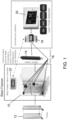
- FIG. 1 An example of an embodiment of blast gel pack conditioning equipment is shown in FIG. 1 and includes blast gel pack conditioning equipment 10 in which a separate trolley 12, or multiple separate trolleys (not shown), able to hold a large quantity of gel packs may be positioned.
- the blast gel pack conditioning equipment 10 may include an electric heater 14 and temperature sensors 16 at strategic locations within the blast gel pack conditioning equipment 10.
- the blast gel pack conditioning equipment 10 may include a controller 18 and interface 20.
- the controller 18 may be configured to receive temperature measurements from the sensors 16 and may communicate with a blast freezer native controller 22 of the blast gel pack conditioning equipment 10 and the heater 14 to adjust the temperature of the air within the blast gel pack conditioning equipment 10 and to determine when to switch between phase change processing, freezing, refrigeration, venting, warming, melting, conditioning, and like operations.
- the controller 18 may be configured to run software that stores specific details of various recipes (temperature, time, etc.) used to condition gel packs, such as PCM gel packs, and to control the capacity/amount of cooling and heating of the system in order to assure phase change of the PCM material of the gel packs and stabilized temperature across the entire trolley or trolleys 12.
- the electric heater 14 is used to the warm the air within the blast gel pack conditioning equipment 10, such as during conditioning, and sensors 16 are installed at points within the blast conditioner 10 identified as extremes for various of the phase change processing and conditioning to enable precise control of air temperature within the blast gel pack conditioning equipment 10.
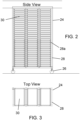
- FIGs. 2 and 3 disclose a trolley 24 according to an embodiment.
- the trolley 24 includes wheels 26 and a support structure 28 including shelves or spaces 30 for receiving and supporting individual gel packs.
- the brackets 28a for supporting the shelves 30 are spaced to assure appropriate spacing between gel packs to promote even air flow over all gel packs regardless of location throughout the trolley 24.
- the trolley 24 is of a size that can be located within a void or a trolley-receiving space of a gel pack conditioner as disclosed in greater detail below. Multiple trolleys may be used.
- Another problem with conventional equipment is that a section of gel packs located closer to fans or blowers within the conventional equipment may be exposed to higher air flow. Thus, one side of gel packs may freeze faster during a freezing process. However, during a stabilization process, these gel packs may melt before the remaining gel packs.
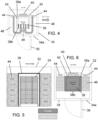
- FIG. 4 shows blast gel pack conditioning equipment 32 in accordance to an embodiment which is specifically designed to address the above referenced problems.
- One or more trolleys of gel packs may be located in the blast gel pack conditioning equipment 32, and the blast gel pack conditioning equipment 32 according to an embodiment is configured to increase the homogeneity of air flow and temperature within the volume of a trolley or trolleys, such as trolley 24 supporting gel packs located within the blast gel pack conditioning equipment 32.
- the blast gel pack conditioning equipment 32 shown in FIGs. 4-6 includes an outer housing 34 in which air flow is confined.
- the housing 34 may be insulated and may include a door 36 at a front 34a of the blast gel pack conditioning equipment 32 aligned with an internal tunnel structure 38 sized for receiving the trolley 24 (or trolleys).
- the door 36 may be opened to permit entrance or exit of the trolley 24 (or trolleys) and may be closed during a phase change and/or conditioning process.
- An evaporator 40 for chilling air and an electric heater 42 for heating air within the housing 34 are located adjacent a rear 38a of the tunnel 38 to cool or heat air being circulated through the housing.
- a set of fans or blowers 44 are located adjacent the rear of the tunnel 38 on opposite lateral sides thereof.
- High-speed air flow of cold, chilled, ambient, or heated air within the blast gel pack conditioning equipment 32 is circulated within the housing 34 by the fans 44 through side ducts or aisles 46 within the housing 34 in a direction toward a front of the blast gel pack conditioning equipment 32 external of closed sides of the tunnel 38 and is then directed by the front of the housing 34 into a front opening 38b of the tunnel 38 and through the tunnel 38 to return to the evaporator 40 and heater 42 at the rear 38a of the tunnel 38.
- the air flow through the trolley 24 is linear air flow 48 laterally across and through the trolley 24 from front to back.
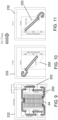
- FIGs. 7-11 show additional embodiments of blast gel pack conditioning equipment which are configured to ensure uniformity of temperature of the air flowing at the top and bottom of the tunnel.
- the set of fans 144 of blast gel pack conditioning equipment 132 include a lower fan 144a directing air flow toward a top front of the blast gel pack conditioning equipment 132 and an upper fan 144b directing air flow toward a bottom front of the blast gel pack conditioning equipment 132. This ensures that the air flow and temperature of the air flow is mixed within the ducts or aisles 146 before entering the tunnel 138.
- flanges or flaps, 250 and 252 may be located within the ducts or aisles 246 on different sides thereof to direct air flow up (see FIG. 10 ) or down (see FIG. 11 ) within the duct or aisle 246 of blast gel pack conditioning equipment 232.
- the homogeneity of the temperature of the air circulating within the conditioners, 132 and 232 is improved (i.e., by adjusting an angle of the top and bottom fans, 144a and 144b, to cause mixture of the air flows within a middle section of the duct or aisle 146, or to direct air flow with the use of flanges or flaps, 250 and 252, to cause mixture of the air flows within a middle section of the duct or aisle 246).
- At least some of the temperature sensors within blast gel pack conditioning equipment may be constructed in the form of small pots or pot-shaped containers 60 filled with paraffin 62 or other waxy substance having a melting temperature, for instance, of about +50°C (about 120°F). Consequently, the paraffin 62 remains solid at all times (during cooling and heating) as a maximum temperature of the gel pack conditioner may be limited to about +40°C (104°F).
- a temperature sensor 64 is located within the pot 60 at an outer edge of the paraffin for purposes of mimicking a temperature at the edge of PCM material within a gel pack. This permits the controller and software of the blast gel pack conditioning equipment to appropriately limit heating and cooling operations to within acceptable ranges within the blast gel pack conditioning equipment.
- the sensors with paraffin are located at positions within the blast gel pack conditioning equipment that would represent specifically-defined risks for gel pack conditioning in each step of a conditioning process.
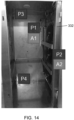
- these positions are shown in the blast gel pack conditioning equipment 332 in FIG. 14 and may include: P1 - Air Insufflation (hottest point when heating/front of the tunnel); P2 - Air return (represents the effect of the air after exchanging heat with the PCM gel packs/rear of the tunnel); P3 - Top (hottest point when heating/top of tunnel); and P4 - Bottom (lowest point of heat exchange when freezing/bottom of tunnel).
- the blast gel pack conditioning equipment 332 may include additional temperature sensors that are exposed directly to the air in the blast gel pack conditioning equipment (i.e., that are not located in pots or embedded within paraffin). These additional temperature sensors provide fast-response sensors for the purpose of avoiding excess heating or cooling during a stabilization process.
- the positions of these fast-response sensors may include: A1 - Air Insufflation (hottest point when heating/front of tunnel); and A2 - Air return (represents the effect of the air after exchanging heat with the PCM gel packs/rear of the tunnel).
- the software of the controller of the blast gel pack conditioning equipment 332 receives temperature measurements from the sensors and calculates an average temperature value from measurements taken by the sensor at P1 (i.e., air insufflation - hottest point when heating/front of tunnel) and the sensor at P2 (i.e., air return - the air after exchanging heat with the PCM gel packs/rear of tunnel) to enable cooling or heating during the stabilization process. For instance, provided the average value falls within a pre-set range or above or below pre-set thresholds, cooling or heating may be permitted to continue.
- the software of the controller of the blast gel pack conditioning equipment 332 may also calculate an average temperature value from measurements taken by the sensor at A1 (i.e., air insufflation - hottest point when heating/front of tunnel) and the sensor at A2 (i.e., air return - the air after exchanging heat with the PCM gel packs/rear of tunnel) to disable or discontinue heating or cooling to avoid excess of heating and cooling that would ultimately affect the temperatures at P1 and P2. For instance, if the average value reaches a pre-set threshold, cooling or heating may be discontinued or the temperature may be adjusted accordingly.
- the sensor at P3 (top) is used to limit the heating process as it may read temperature higher than the sensor at P1 (i.e., air insufflation - hottest point when heating) at some stages of conditioning. Thus, if the measurement at P3 reaches a pre-set threshold, the temperature during a heating process may be automatically reduced by a predetermined amount.
- the sensor at P4 (bottom) is used to assure phase change of the PCM material at a location with lowest heat exchange capacity. Thus, if the measurement at P4 falls to a pre-set threshold, the temperature during a heating or cooling phase change process may be automatically increased by a predetermined amount.
- the software of the controller of the blast gel pack conditioning equipment may also be configured to control the freezing phase change process of gel packs by integrating the delta or variation in temperature below phase change temperature of the PCM material using temperature readings from the paraffin sensors (P1, P2, P3 and P4) as considered extreme temperatures of the edges of the gel packs.
- the software may add to the accumulated integral of each paraffin sensor the delta temperature between paraffin temperature and the phase change point of the PCM material being conditioned.
- the freezing phase change process time is proportional to the delta temperature.
- the graph shown in FIG. 15 provides an example in which the integral of a paraffin sensor as discussed above reaches the value of 2,800 K*min in about 110 minutes.
- the graph shown in FIG. 16 provides a comparative example in which the value of 2,800 K*min would be achieved in 120 minutes when the temperature is simply fixed at -20°C.
- the controller for carrying out any of the above disclosed embodiments, methods, or arrangements may include software or the like provided on a circuit board or within another electronic device and can include various routers, modems, processors, microprocessors, modules, units, components, controllers, chips, disk drives, and the like. It will be apparent to one of ordinary skill in the art that systems, modules, components, units, processors, servers, and the like may be implemented as electronic components, software, hardware or a combination of hardware and software for purposes of providing a system.
Landscapes
- Engineering & Computer Science (AREA)
- Physics & Mathematics (AREA)
- Chemical & Material Sciences (AREA)
- Combustion & Propulsion (AREA)
- Mechanical Engineering (AREA)
- Thermal Sciences (AREA)
- General Engineering & Computer Science (AREA)
- General Physics & Mathematics (AREA)
- Accommodation For Nursing Or Treatment Tables (AREA)
- Air Conditioning Control Device (AREA)
- Devices That Are Associated With Refrigeration Equipment (AREA)
- Cold Air Circulating Systems And Constructional Details In Refrigerators (AREA)
Claims (22)
- Automatische Strahlvorrichtung (10, 32, 132, 232, 332) zum Konditionieren von Gelverpackungen zur Phasenumwandlungsverarbeitung (d.h., zum Gefrieren und/oder Schmelzen von einem Material in Gelverpackungen) und zum Konditionieren von Gelverpackungen, umfassend:ein Gehäuse (34), das einen Leerraum zur Aufnahme eines Satzes von Gelverpackungen definiert;mindestens ein Gebläse (44, 144) zur Luftzirkulation im Gehäuse (34) so dass sich ein Luftströmungsweg (48) durch ein Luftinsufflationsende (38b) bis zu einem Luftrückführungsende (38a) innerhalb des Gehäuses (34) erstreckt;wobei die Vorrichtung weiter umfasst:einen Verdampfer (40) zum Kühlen von Luft und ein Heizgerät (14, 42) zum Erwärmen von Luft, die im Gehäuse (34) angeordnet sind;mindestens einen im Gehäuse (34) angeordneten Temperatursensor (16); undein Steuergerät (18) zum Empfangen von Temperaturmessungen von dem mindestens einen Temperatursensor (16) und zum automatischen Steuern des Betriebs des Verdampfers (40), des Heizgeräts (14, 42) und des mindestens einen Gebläses (44, 144) innerhalb des Gehäuses (34) bei der Phasenumwandlungsverarbeitung und dem Konditionieren von Gelverpackungen,dadurch gekennzeichnet, dass der mindestens eine Temperatursensor (16) mindestens einen Temperatursensor (64) umfasst, der in einem mit Paraffin (62) gefüllten, topfförmigen Behälter (60) enthalten ist.
- Automatische Strahlvorrichtung (10, 32, 132, 232, 332) zum Konditionieren von Gelverpackungen nach Anspruch 1, wobei das Gehäuse (34) eine Tunnelstruktur (38, 138) umfasst zum Definieren des Leerraums zur Aufnahme eines Satzes von Gelverpackungen sowie zum Definieren des Luftinsufflations- und Luftrückführungsendes (38b, 38a), und wobei sich der Luftströmungsweg (48) durch eine Öffnung am Luftinsufflationsende (38b) der Tunnelstruktur (38, 138) bis zum dem Luftinsufflationsende (38b) gegenüberliegenden Luftrückführungsende (38a) der Tunnelstruktur (38, 138) erstreckt.
- Automatische Strahlvorrichtung (10, 32, 132, 232, 332) zum Konditionieren von Gelverpackungen nach Anspruch 2, weiter umfassend einen Wagen (12, 24), auf dem der Satz von Gelverpackungen an beabstandeten Positionen innerhalb des Wagens (12, 24) gehalten ist, wobei der Wagen (12, 24) in der Tunnelstruktur (38, 138) angeordnet ist und der Luftströmungsweg (48) durch den Wagen (12, 24) verläuft.
- Automatische Strahlvorrichtung (10, 32, 132, 232, 332) zum Konditionieren von Gelverpackungen nach Anspruch 2, wobei der Verdampfer (40) und das Heizgerät (14, 42) angrenzend an dem Luftrückführungsende (38a) der Tunnelstruktur (38, 138) angeordnet sind.
- Automatische Strahlvorrichtung (10, 32, 132, 232, 332) zum Konditionieren von Gelverpackungen nach Anspruch 4, wobei das mindestens eine Gebläse (44, 144) angrenzend an dem Luftrückführungsende (38a) der Tunnelstruktur (38, 138) angeordnet ist, um einen Luftstrom von dem Verdampfer (40) und dem Heizgerät (14, 42) entlang einer Außenseite der Tunnelstruktur (38, 138) bis zur Öffnung am Luftinsufflationsende (38b) der Tunnelstruktur (38, 138) zu drängen.
- Automatische Strahlvorrichtung (10, 32, 132, 332) zum Konditionieren von Gelverpackungen nach Anspruch 5, wobei das mindestens eine Gebläse (44, 144) ein einen Luftstrom nach abwärts leitendes Obergebläse (144b) und ein einen Luftstrom nach aufwärts leitendes Untergebläse (144a) umfasst, um eine Durchmischung des Luftstroms zu bewirken, bevor der Luftstrom in die Öffnung am Luftinsufflationsende (38b) der Tunnelstruktur (138) eintritt.
- Automatische Strahlvorrichtung (10, 32, 232, 332) zum Konditionieren von Gelverpackungen nach Anspruch 5, weiter umfassend an einer Außenseite der Tunnelstruktur (38) angrenzende Luftklappen (250, 252) zum Abwärts- und Aufwärtsleiten des Luftstroms, um eine Durchmischung des Luftstroms zu bewirken, bevor der Luftstrom in die Öffnung am Luftinsufflationsende (38b) der Tunnelstruktur (38) eintritt.
- Automatische Strahlvorrichtung (10, 32, 132, 232, 332) zum Konditionieren von Gelverpackungen nach Anspruch 1, wobei der mindestens eine in dem topfförmigen Behälter (60) enthaltene Temperatursensor (64) an einer Innenwand des topfförmigen Behälters an einem äußeren Umfang des Paraffins (62) angebracht ist.
- Automatische Strahlvorrichtung (10, 32, 132, 232, 332) zum Konditionieren von Gelverpackungen nach Anspruch 2, wobei der mindestens eine Temperatursensor (16) einen ersten in einem mit Paraffin gefüllten, topfförmigen Behälter enthaltenen und angrenzend an dem Luftinsufflationsende (38b) der Tunnelstruktur (38, 138) angeordneten Temperatursensor (P1), einen zweiten in einem mit Paraffin gefüllten, topfförmigen Behälter enthaltenen und angrenzend an dem Luftrückführungsende (38a) der Tunnelstruktur (38, 138) angeordneten Temperatursensor (P2), einen dritten in einem mit Paraffin gefüllten, topfförmigen Behälter enthaltenen und angrenzend an einem Oberteil der Tunnelstruktur (38, 138) angeordneten Temperatursensor (P3), und einen vierten in einem mit Paraffin gefüllten, topfförmigen Behälter enthaltenen und angrenzend an einem Unterteil der Tunnelstruktur (38, 138) angeordneten Temperatursensor (P4) umfasst.
- Automatische Strahlvorrichtung (10, 32, 132, 232, 332) zum Konditionieren von Gelverpackungen nach Anspruch 9, wobei der mindestens eine Temperatursensor (16) einen direkt dem Luftstrom ausgesetzten, an dem Luftinsufflationsende (38b) der Tunnelstruktur (38, 138) angrenzenden Temperatursensor (A1) und einen direkt dem Luftstrom ausgesetzten, an dem Luftrückführungsende (38a) der Tunnelstruktur (38, 138) angrenzenden Temperatursensor (A2) umfasst.
- Automatische Strahlvorrichtung (10, 32, 132, 232, 332) zum Konditionieren von Gelverpackungen nach Anspruch 10, wobei das Steuergerät (18) so konfiguriert ist, dass es einen durchschnittlichen Temperaturwert bestimmt, der aus den von den direkt dem Luftstrom ausgesetzten, an dem Luftinsufflationsende (38b) bzw. an dem Luftrückführungsende (38a) der Tunnelstruktur (38, 138) angrenzenden Temperatursensoren (Al, A2) vorgenommenen Messungen berechnet wird, und das Kühlen oder Heizen während eines Prozesses der Stabilisierung von Gelverpackungen innerhalb der Vorrichtung zum Konditionieren von Gelverpackungen unterbricht, wenn der durchschnittliche Temperaturwert einen vorbestimmten Schwellenwert erreicht.
- Automatische Strahlvorrichtung (10, 32, 132, 232, 332) zum Konditionieren von Gelverpackungen nach Anspruch 9, wobei das Steuergerät (18) so konfiguriert ist, dass es einen durchschnittlichen Temperaturwert bestimmt, der aus den von dem ersten und dem zweiten Temperatursensor (P1, P2) vorgenommenen Messungen berechnet wird, um das Kühlen oder Heizen während eines Prozesses der Stabilisierung von Gelverpackungen innerhalb der Vorrichtung zum Konditionieren von Gelverpackungen zu erlauben, wenn der durchschnittliche Temperaturmesswert innerhalb eines vorgegebenen Bereichs liegt.
- Automatische Strahlvorrichtung (10, 32, 132, 232, 332) zum Konditionieren von Gelverpackungen nach Anspruch 9, wobei das Steuergerät (18) so konfiguriert ist, dass es einen Temperaturmesswert des dritten Temperatursensors (P3) mit einem vorbestimmten Schwellenwert vergleicht und das Heizen reduziert, wenn der Temperaturmesswert den vorbestimmten Schwellenwert erreicht.
- Automatische Strahlvorrichtung (10, 32, 132, 232, 332) zum Konditionieren von Gelverpackungen nach Anspruch 9, wobei das Steuergerät (18) so konfiguriert ist, dass es einen Temperaturmesswert des vierten Temperatursensors (P4) mit einem vorbestimmten Schwellenwert vergleicht und das Heizen erhöht, wenn der Temperaturmesswert auf einen dem vorbestimmten Schwellenwert entsprechenden Wert fällt.
- Automatische Strahlvorrichtung (10, 32, 132, 232, 332) zum Konditionieren von Gelverpackungen nach Anspruch 9, wobei das Steuergerät (18) so konfiguriert ist, dass es das Gefrieren von Gelverpackungen steuert, indem es einen Wert berechnet durch Integration eines Temperaturdeltas unterhalb der Phasenumwandlungstemperatur des PCM-Materials der zu konditionierenden Gelverpackungen, durch Verwendung von Temperaturablesewerten von mindestens einem der ersten, zweiten, dritten oder vierten Temperatursensoren (P1, P2, P3, P4), und durch periodische Addition des Wertes zu einem akkumulierten Integral des Temperaturdeltas, so dass die Gefrierzeit proportional zum Temperaturdelta ist.
- Automatische Strahlvorrichtung (10, 32, 132, 232, 332) zum Konditionieren von Gelverpackungen nach Anspruch 1, wobei das Heizgerät (14, 42) ein elektrisches Heizgerät ist und die Gelverpackungen Phasenumwandlungsmaterial (PCM)-Gelverpackungen sind.
- Verfahren zur automatischen Phasenumwandlungsverarbeitung (d.h., zum Gefrieren und/oder Schmelzen) und zum Konditionieren von Gelverpackungen, umfassend die folgenden Schritte:Phasenumwandlungsverarbeitung eines Satzes von Gelverpackungen innerhalb einer Strahlvorrichtung (10, 32, 132, 232, 332) zum Konditionieren von Gelverpackungen; undunmittelbar nach dem Phasenumwandlungsverarbeitungsschritt, ohne den Satz von Gelverpackungen aus dem Strahlvorrichtung (10, 32, 132, 232, 332) zum Konditionieren von Gelverpackungen zu entfernen, Konditionieren des Satzes von Gelverpackungen auf eine vorbestimmte Temperatur;wobeidie Strahlvorrichtung (10, 32, 132, 232, 332) zum Konditionieren von Gelverpackungen ein Gehäuse (34) umfasst, das einen Verdampfer und ein Heizgerät hat und einen Leerraum zur Aufnahme des Satzes von Gelverpackungen definiert, mindestens ein Gebläse (44, 144) zur Luftzirkulation im Gehäuse (34) so dass sich ein Luftströmungsweg (48) durch ein Luftinsufflationsende (38b) bis zu einem Luftrückführungsende (38a) erstreckt, mindestens einen im Gehäuse (34) angeordneten Temperatursensor (16), und ein Steuergerät (18) zum automatischen Empfangen von Temperaturmessungen von dem mindestens einen Temperatursensor (16) und zum automatischen Steuern des Betriebs des Verdampfers (40), des Heizgeräts (14, 42) und des mindestens einen Gebläses (44, 144) innerhalb des Gehäuses (34) bei den Schritten der Phasenumwandlungsverarbeitung und des Konditionierens,dadurch gekennzeichnet, dass der mindestens eine Temperatursensor (16) mindestens einen Temperatursensor (64) umfasst, der in einem mit Paraffin (62) gefüllten, topfförmigen Behälter (60) enthalten ist.
- Verfahren nach Anspruch 17, wobei der Satz von Gelverpackungen Phasenumwandlungsmaterial (PCM)-Gelverpackungen umfasst, und wobei, bei dem Phasenumwandlungsverarbeitungsschritt, das Steuergerät (18) das Gefrieren der PCM-Gelverpackungen steuert, indem es einen Wert berechnet durch Integration eines Temperaturdeltas unterhalb der Phasenumwandlungstemperatur des PCM-Materials der zu konditionierenden Gelverpackungen, durch Verwendung von Temperaturablesewerten von mindestens einem der ersten, zweiten, dritten oder vierten Temperatursensoren (P1, P2, P3, P4), und durch periodische Addition des Wertes zu einem akkumulierten Integral des Temperaturdeltas, so dass die Gefrierzeit proportional zum Temperaturdeltas ist.
- Verfahren nach Anspruch 17, wobei, bei dem Konditionierungsschritt, das Steuergerät (18) so konfiguriert ist, dass es einen durchschnittlichen Temperaturwert bestimmt, der aus von einem direkt dem Luftstrom ausgesetzten, dem Luftinsufflationsende (38b) angrenzenden Temperatursensor (A1) und einem direkt dem Luftstrom ausgesetzten, an dem Luftrückführungsende (38a) angrenzenden Temperatursensor (A2) vorgenommenen Messungen berechnet wird, und das Kühlen oder Heizen des Satzes von Gelverpackungen unterbricht, wenn der durchschnittliche Temperaturwert einen vorbestimmten Schwellenwert erreicht.
- Verfahren nach Anspruch 17, wobei das Gehäuse (34) eine Tunnelstruktur (38, 138) umfasst, die das Luftinsufflations- und Luftrückführungsende (38b, 38a) definiert, wobei der mindestens eine Temperatursensor (16) einen ersten in einem mit Paraffin gefüllten, topfförmigen Behälter enthaltenen und angrenzend an dem Luftinsufflationsende (38b) der Tunnelstruktur (38, 138) angeordneten Temperatursensor (P1) und einen zweiten in einem mit Paraffin gefüllten, topfförmigen Behälter enthaltenen und angrenzend an dem Luftrückführungsende (38a) der Tunnelstruktur (38, 138) angeordneten Temperatursensor (P2) umfasst, und wobei das Steuergerät (18) so konfiguriert ist, dass es einen durchschnittlichen Temperaturwert bestimmt, der aus den von dem ersten und dem zweiten Temperatursensor (P1, P2) vorgenommenen Messungen berechnet wird, um die Fortsetzung des Kühlens oder Heizens bei diesem Stabilisierungsschritt nur zu erlauben, wenn der durchschnittliche Temperaturmesswert innerhalb eines vorgegebenen Bereichs liegt.
- Verfahren nach Anspruch 17, wobei das Gehäuse (34) eine das Luftinsufflations- und Luftrückführungsende (38b, 38a) definierende Tunnelstruktur (38, 138) umfasst, wobei der mindestens eine Temperatursensor (16) einen in einem mit Paraffin gefüllten, topfförmigen Behälter enthaltenen und angrenzend an dem Oberteil der Tunnelstruktur (38, 138) angeordneten Temperatursensor (P3) umfasst, und wobei, bei dem Stabilisierungsschritt, das Steuergerät (18) so konfiguriert ist, dass es den Temperaturmesswert des Temperatursensors mit einem vorbestimmten Schwellenwert vergleicht und die Heizungstemperatur automatisch reduziert, wenn der Temperaturmesswert den vorbestimmten Schwellenwert erreicht.
- Verfahren nach Anspruch 17, wobei das Gehäuse (34) eine das Luftinsufflations- und Luftrückführungsende (38b, 38a) definierende Tunnelstruktur (38, 138) umfasst, wobei der mindestens eine Temperatursensor (16) einen in einem mit Paraffin gefüllten, topfförmigen Behälter enthaltenen und angrenzend an dem Unterteil der Tunnelstruktur (38, 138) angeordneten Temperatursensor (P4) umfasst, und wobei, bei dem Stabilisierungsschritt, das Steuergerät (18) so konfiguriert ist, dass es einen Temperaturmesswert des Temperatursensors mit einem vorbestimmten Schwellenwert vergleicht und das Heizen erhöht, wenn der Temperaturmesswert auf einen dem vorbestimmten Schwellenwert entsprechenden Wert fällt.
Applications Claiming Priority (2)
| Application Number | Priority Date | Filing Date | Title |
|---|---|---|---|
| US201862779174P | 2018-12-13 | 2018-12-13 | |
| PCT/IB2019/001300 WO2020121055A1 (en) | 2018-12-13 | 2019-12-12 | Blast gel pack conditioning equipment |
Publications (3)
| Publication Number | Publication Date |
|---|---|
| EP3894765A1 EP3894765A1 (de) | 2021-10-20 |
| EP3894765C0 EP3894765C0 (de) | 2025-05-14 |
| EP3894765B1 true EP3894765B1 (de) | 2025-05-14 |
Family
ID=69846511
Family Applications (1)
| Application Number | Title | Priority Date | Filing Date |
|---|---|---|---|
| EP19863973.4A Active EP3894765B1 (de) | 2018-12-13 | 2019-12-12 | Strahlvorrichtung zum konditionieren von gelverpackungen |
Country Status (5)
| Country | Link |
|---|---|
| US (1) | US11326826B2 (de) |
| EP (1) | EP3894765B1 (de) |
| JP (1) | JP2022513230A (de) |
| CN (1) | CN113439191B (de) |
| WO (1) | WO2020121055A1 (de) |
Families Citing this family (3)
| Publication number | Priority date | Publication date | Assignee | Title |
|---|---|---|---|---|
| US11940198B2 (en) * | 2021-12-01 | 2024-03-26 | Lineage Logistics, LLC | Automated blast cell loading and unloading |
| DE102023104628A1 (de) * | 2023-02-24 | 2024-08-29 | Viessmann Refrigeration Solutions Gmbh | Regenerationsmagazin zur aktiven Regeneration von entladenen Temperierelementen |
| DE102024131584A1 (de) * | 2024-10-29 | 2026-04-30 | Kramer Gmbh | Kühlvhorrichtung für Kühlelemente und Verfahren zum Abkühlen von Kühlelementen |
Citations (6)
| Publication number | Priority date | Publication date | Assignee | Title |
|---|---|---|---|---|
| US3261394A (en) * | 1963-04-16 | 1966-07-19 | Foster Refrigerator Corp | Refrigeration system including means for reconstituting and preserving frozen foods and the like |
| US20070180849A1 (en) * | 2006-01-13 | 2007-08-09 | The Delfield Company, Llc | Refrigeration system capable of multi-faceted operation |
| DE102005029907B4 (de) * | 2005-06-26 | 2007-08-30 | Ehlert-Desinger, Sylvia | Umluftkühlmaschine für eutektische Platten |
| JP2012021691A (ja) * | 2010-07-14 | 2012-02-02 | Hitachi Appliances Inc | 冷蔵庫 |
| US20200245652A1 (en) * | 2015-11-24 | 2020-08-06 | Icefresh As | Temperature controlled thawing method and apparatus |
| US20220170694A1 (en) * | 2018-10-05 | 2022-06-02 | Sartorius Stedim North America | Rapid freezing, storage, transport, and thawing system for containers of biopharmaceutical products |
Family Cites Families (37)
| Publication number | Priority date | Publication date | Assignee | Title |
|---|---|---|---|---|
| JPS5085955A (de) * | 1973-12-03 | 1975-07-10 | ||
| DE3032865A1 (de) * | 1980-09-01 | 1982-04-15 | Küleg Kühlmöbelfabrik und Apparatebau GmbH, 6501 Heidenheim | Messgeraet zur bestimmung der temperatur in befoerderungs-, lager- oder verkaufseinrichtungen insbesondere fuer gekuehlte, gefrorene oder tiefgefrorene lebensmittel, sowie hiermit ausgeruestetes kuehlmoebel |
| US4508101A (en) * | 1982-04-09 | 1985-04-02 | Monsanto Company | Thermal energy storage system |
| US4637222A (en) * | 1984-06-08 | 1987-01-20 | Nippondenso Co., Ltd. | Refrigerator for vehicle |
| US5297234A (en) * | 1990-05-09 | 1994-03-22 | Lifesource Advanced Blood Bank Systems, Inc. | Method and apparatus for the rapid thermal processing of transfusion fluid |
| JPH07253265A (ja) * | 1994-03-16 | 1995-10-03 | Sanyo Electric Co Ltd | 冷凍食品の解凍方法及び装置 |
| US6347747B1 (en) * | 1998-05-01 | 2002-02-19 | Intellinet, Inc. | Stand-alone thermostat |
| KR100268502B1 (ko) * | 1998-07-30 | 2000-10-16 | 윤종용 | 냉장고의 균일냉각장치 및 그 제어방법 |
| JP2000130905A (ja) * | 1998-10-29 | 2000-05-12 | Sanyo Electric Co Ltd | 冷凍庫 |
| US6482332B1 (en) | 1999-03-12 | 2002-11-19 | Ted J. Malach | Phase change formulation |
| US6942944B2 (en) * | 2000-02-29 | 2005-09-13 | Illinois Institute Of Technology | Battery system thermal management |
| US20030131623A1 (en) * | 2001-09-05 | 2003-07-17 | Suppes Galen J. | Heat pump using phase change materials |
| US7104074B2 (en) * | 2001-11-01 | 2006-09-12 | Integrated Biosystems, Inc. | Systems and methods for freezing, storing, transporting and thawing biopharmaceutical material |
| CN1506434A (zh) * | 2002-12-07 | 2004-06-23 | 中国科学技术大学 | 定形相变贮能材料及其制备方法 |
| US7347266B2 (en) * | 2005-09-15 | 2008-03-25 | Baker Hughes Incorporated | Use of mineral oils, hydrogenated polyalphaolefin oils and saturated fatty acids for breaking ves-gelled fluids |
| US20070028642A1 (en) | 2005-05-17 | 2007-02-08 | American Thermal Wizards International, Inc. | Container for Transporting Temperature Controlled Items |
| JP4486579B2 (ja) * | 2005-10-24 | 2010-06-23 | 福島工業株式会社 | 冷却庫 |
| EP2142431A4 (de) | 2007-05-04 | 2014-06-18 | Entropy Solutions Inc | Paket mit phasenwechselmaterialien und verfahren zu seiner verwendung beim transport temperaturempfindlicher lasten |
| DE102008015782A1 (de) * | 2008-03-26 | 2009-10-01 | Rubitherm Technologies Gmbh | Verfahren zur Herstellung einer Phasenwechselmaterial-Zusammensetzung |
| GB2465019B (en) * | 2008-11-06 | 2015-08-12 | Universal Master Products Ltd | Food simulant material for temperature control sensor |
| CN101551595B (zh) * | 2009-04-30 | 2010-12-29 | 上海微电子装备有限公司 | 光刻机投影物镜温度控制方法 |
| US8272231B2 (en) * | 2009-07-28 | 2012-09-25 | Lingyu Dong | Direct expansion evaporator |
| WO2012034029A1 (en) * | 2010-09-09 | 2012-03-15 | Laitram, L.L.C. | System and method for measuring, mapping, and modifying the temperature of a conveyor |
| CN102095249B (zh) * | 2011-01-30 | 2013-06-19 | 上海渥泰环保科技有限公司 | 液体加热装置 |
| US9518943B2 (en) * | 2011-07-18 | 2016-12-13 | Lettuce Box, Llc | Temperature mimic probe for food products |
| US9957099B2 (en) | 2012-12-04 | 2018-05-01 | Nanopore, Inc. | Insulated container system for maintaining a controlled payload temperature |
| US10337784B2 (en) | 2013-02-20 | 2019-07-02 | Doubleday Acquisitions Llc | Phase change material (PCM) belts |
| GB2514622A (en) * | 2013-05-31 | 2014-12-03 | New Wave Innovation Ltd | Improvements to a refrigerator that uses a phase change material as a thermal store |
| JP2016211750A (ja) * | 2015-04-28 | 2016-12-15 | シャープ株式会社 | 蓄熱パックおよび熱交換ユニット |
| US20170071784A1 (en) | 2015-09-16 | 2017-03-16 | William I. Brobeck | High efficiency apparatus for selectively heating and/or cooling therapeutic gel packs by conduction |
| DE102016205005A1 (de) * | 2016-03-24 | 2017-09-28 | BSH Hausgeräte GmbH | Kochvorrichtung mit Kalibrierfunktion |
| CN105912746B (zh) * | 2016-03-25 | 2018-09-28 | 吉林大学 | 基于连续塑性加工生产条件下模具温升速率的力学模型建模方法及其应用 |
| CN205646549U (zh) * | 2016-04-11 | 2016-10-12 | 天津晟奥电气有限公司 | 一种可制冷制热的恒温变电箱 |
| JP6765062B2 (ja) * | 2016-09-26 | 2020-10-07 | パナソニックIpマネジメント株式会社 | 蓄冷装置 |
| KR102484878B1 (ko) * | 2016-11-16 | 2023-01-04 | 현대자동차주식회사 | 스위칭 소자 온도 추정 시스템 및 방법 |
| JP6795451B2 (ja) * | 2017-05-17 | 2020-12-02 | フクシマガリレイ株式会社 | 冷却貯蔵庫 |
| CN107699202B (zh) * | 2017-08-21 | 2020-05-26 | 浙江工业大学 | 一种铜/氧化亚铜包覆石蜡微胶囊光热转换相变储能复合材料的制备方法 |
-
2019
- 2019-12-12 WO PCT/IB2019/001300 patent/WO2020121055A1/en not_active Ceased
- 2019-12-12 US US16/711,477 patent/US11326826B2/en active Active
- 2019-12-12 JP JP2021534287A patent/JP2022513230A/ja active Pending
- 2019-12-12 EP EP19863973.4A patent/EP3894765B1/de active Active
- 2019-12-12 CN CN201980092099.3A patent/CN113439191B/zh active Active
Patent Citations (6)
| Publication number | Priority date | Publication date | Assignee | Title |
|---|---|---|---|---|
| US3261394A (en) * | 1963-04-16 | 1966-07-19 | Foster Refrigerator Corp | Refrigeration system including means for reconstituting and preserving frozen foods and the like |
| DE102005029907B4 (de) * | 2005-06-26 | 2007-08-30 | Ehlert-Desinger, Sylvia | Umluftkühlmaschine für eutektische Platten |
| US20070180849A1 (en) * | 2006-01-13 | 2007-08-09 | The Delfield Company, Llc | Refrigeration system capable of multi-faceted operation |
| JP2012021691A (ja) * | 2010-07-14 | 2012-02-02 | Hitachi Appliances Inc | 冷蔵庫 |
| US20200245652A1 (en) * | 2015-11-24 | 2020-08-06 | Icefresh As | Temperature controlled thawing method and apparatus |
| US20220170694A1 (en) * | 2018-10-05 | 2022-06-02 | Sartorius Stedim North America | Rapid freezing, storage, transport, and thawing system for containers of biopharmaceutical products |
Also Published As
| Publication number | Publication date |
|---|---|
| CN113439191B (zh) | 2023-07-04 |
| US11326826B2 (en) | 2022-05-10 |
| EP3894765C0 (de) | 2025-05-14 |
| WO2020121055A1 (en) | 2020-06-18 |
| BR112021011226A2 (pt) | 2021-08-24 |
| EP3894765A1 (de) | 2021-10-20 |
| US20200191463A1 (en) | 2020-06-18 |
| JP2022513230A (ja) | 2022-02-07 |
| CN113439191A (zh) | 2021-09-24 |
Similar Documents
| Publication | Publication Date | Title |
|---|---|---|
| US12071306B2 (en) | Tote handling for chilled or frozen goods | |
| EP3894765B1 (de) | Strahlvorrichtung zum konditionieren von gelverpackungen | |
| US5363670A (en) | Self-contained cooler/freezer apparatus | |
| US5598713A (en) | Portable self-contained cooler/freezer apparatus with nitrogen environment container | |
| CN104583694B (zh) | 用于冷藏集装箱的货物温度监测和控制 | |
| EP2545333B1 (de) | Kühlschrank | |
| US20150316309A1 (en) | Transport refrigeration system with air temperature control | |
| US6122918A (en) | Storage cabinet for cigars | |
| US20210293464A1 (en) | Cold storage container, cold storage container management system, and cold storage program | |
| JP6338222B2 (ja) | 潜熱貯蔵要素の予備調整の方法及び装置 | |
| CN112219077B (zh) | 冰箱 | |
| EP3547880A1 (de) | Kühler mit regalkammer | |
| KR101608057B1 (ko) | 저장 수송 용기의 온도 조절 방법 | |
| WO1994012836A1 (en) | Self-contained cooler/freezer apparatus | |
| CN203354377U (zh) | 一种自动售餐机恒温箱 | |
| CN114599924A (zh) | 用于冷板的除霜系统和对冷板进行除霜的方法 | |
| US11698216B2 (en) | Refrigeration system with enveloping air circulation around product chamber | |
| EP2901093B1 (de) | Gefrierschrank und betriebsverfahren dafür | |
| BR112021011226B1 (pt) | Equipamento de acondicionamento automatizado de embalagem de gel de sopro para processamento de mudança de fase e método de processamento de mudança automática de fase e de acondicionamento de embalagens de gel | |
| JP7581783B2 (ja) | 温湿度管理装置 | |
| JP5613871B1 (ja) | 温調庫 | |
| JP7581027B2 (ja) | 医薬品の輸送方法 | |
| WO2001018468A1 (en) | Device for storing and distributing foodstuffs | |
| WO2007042162A1 (en) | Refrigerator vehicle and process for distributing food products | |
| EP4124811B1 (de) | Thermokasten |
Legal Events
| Date | Code | Title | Description |
|---|---|---|---|
| STAA | Information on the status of an ep patent application or granted ep patent |
Free format text: STATUS: UNKNOWN |
|
| STAA | Information on the status of an ep patent application or granted ep patent |
Free format text: STATUS: THE INTERNATIONAL PUBLICATION HAS BEEN MADE |
|
| PUAI | Public reference made under article 153(3) epc to a published international application that has entered the european phase |
Free format text: ORIGINAL CODE: 0009012 |
|
| STAA | Information on the status of an ep patent application or granted ep patent |
Free format text: STATUS: REQUEST FOR EXAMINATION WAS MADE |
|
| 17P | Request for examination filed |
Effective date: 20210701 |
|
| AK | Designated contracting states |
Kind code of ref document: A1 Designated state(s): AL AT BE BG CH CY CZ DE DK EE ES FI FR GB GR HR HU IE IS IT LI LT LU LV MC MK MT NL NO PL PT RO RS SE SI SK SM TR |
|
| DAV | Request for validation of the european patent (deleted) | ||
| DAX | Request for extension of the european patent (deleted) | ||
| STAA | Information on the status of an ep patent application or granted ep patent |
Free format text: STATUS: EXAMINATION IS IN PROGRESS |
|
| 17Q | First examination report despatched |
Effective date: 20231009 |
|
| GRAP | Despatch of communication of intention to grant a patent |
Free format text: ORIGINAL CODE: EPIDOSNIGR1 |
|
| STAA | Information on the status of an ep patent application or granted ep patent |
Free format text: STATUS: GRANT OF PATENT IS INTENDED |
|
| INTG | Intention to grant announced |
Effective date: 20241206 |
|
| GRAS | Grant fee paid |
Free format text: ORIGINAL CODE: EPIDOSNIGR3 |
|
| GRAA | (expected) grant |
Free format text: ORIGINAL CODE: 0009210 |
|
| STAA | Information on the status of an ep patent application or granted ep patent |
Free format text: STATUS: THE PATENT HAS BEEN GRANTED |
|
| AK | Designated contracting states |
Kind code of ref document: B1 Designated state(s): AL AT BE BG CH CY CZ DE DK EE ES FI FR GB GR HR HU IE IS IT LI LT LU LV MC MK MT NL NO PL PT RO RS SE SI SK SM TR |
|
| REG | Reference to a national code |
Ref country code: GB Ref legal event code: FG4D |
|
| REG | Reference to a national code |
Ref country code: CH Ref legal event code: EP |
|
| REG | Reference to a national code |
Ref country code: IE Ref legal event code: FG4D |
|
| REG | Reference to a national code |
Ref country code: DE Ref legal event code: R096 Ref document number: 602019070065 Country of ref document: DE |
|
| U01 | Request for unitary effect filed |
Effective date: 20250612 |
|
| U07 | Unitary effect registered |
Designated state(s): AT BE BG DE DK EE FI FR IT LT LU LV MT NL PT RO SE SI Effective date: 20250623 |
|
| PG25 | Lapsed in a contracting state [announced via postgrant information from national office to epo] |
Ref country code: ES Free format text: LAPSE BECAUSE OF FAILURE TO SUBMIT A TRANSLATION OF THE DESCRIPTION OR TO PAY THE FEE WITHIN THE PRESCRIBED TIME-LIMIT Effective date: 20250514 |
|
| PG25 | Lapsed in a contracting state [announced via postgrant information from national office to epo] |
Ref country code: NO Free format text: LAPSE BECAUSE OF FAILURE TO SUBMIT A TRANSLATION OF THE DESCRIPTION OR TO PAY THE FEE WITHIN THE PRESCRIBED TIME-LIMIT Effective date: 20250814 Ref country code: GR Free format text: LAPSE BECAUSE OF FAILURE TO SUBMIT A TRANSLATION OF THE DESCRIPTION OR TO PAY THE FEE WITHIN THE PRESCRIBED TIME-LIMIT Effective date: 20250815 |
|
| PG25 | Lapsed in a contracting state [announced via postgrant information from national office to epo] |
Ref country code: PL Free format text: LAPSE BECAUSE OF FAILURE TO SUBMIT A TRANSLATION OF THE DESCRIPTION OR TO PAY THE FEE WITHIN THE PRESCRIBED TIME-LIMIT Effective date: 20250514 |
|
| PG25 | Lapsed in a contracting state [announced via postgrant information from national office to epo] |
Ref country code: HR Free format text: LAPSE BECAUSE OF FAILURE TO SUBMIT A TRANSLATION OF THE DESCRIPTION OR TO PAY THE FEE WITHIN THE PRESCRIBED TIME-LIMIT Effective date: 20250514 |
|
| PG25 | Lapsed in a contracting state [announced via postgrant information from national office to epo] |
Ref country code: RS Free format text: LAPSE BECAUSE OF FAILURE TO SUBMIT A TRANSLATION OF THE DESCRIPTION OR TO PAY THE FEE WITHIN THE PRESCRIBED TIME-LIMIT Effective date: 20250814 |
|
| PG25 | Lapsed in a contracting state [announced via postgrant information from national office to epo] |
Ref country code: IS Free format text: LAPSE BECAUSE OF FAILURE TO SUBMIT A TRANSLATION OF THE DESCRIPTION OR TO PAY THE FEE WITHIN THE PRESCRIBED TIME-LIMIT Effective date: 20250914 |
|
| U20 | Renewal fee for the european patent with unitary effect paid |
Year of fee payment: 7 Effective date: 20251118 |
|
| REG | Reference to a national code |
Ref country code: CH Ref legal event code: U11 Free format text: ST27 STATUS EVENT CODE: U-0-0-U10-U11 (AS PROVIDED BY THE NATIONAL OFFICE) Effective date: 20260101 |
|
| PGFP | Annual fee paid to national office [announced via postgrant information from national office to epo] |
Ref country code: GB Payment date: 20251120 Year of fee payment: 7 |
|
| PG25 | Lapsed in a contracting state [announced via postgrant information from national office to epo] |
Ref country code: SM Free format text: LAPSE BECAUSE OF FAILURE TO SUBMIT A TRANSLATION OF THE DESCRIPTION OR TO PAY THE FEE WITHIN THE PRESCRIBED TIME-LIMIT Effective date: 20250514 |
|
| PG25 | Lapsed in a contracting state [announced via postgrant information from national office to epo] |
Ref country code: CZ Free format text: LAPSE BECAUSE OF FAILURE TO SUBMIT A TRANSLATION OF THE DESCRIPTION OR TO PAY THE FEE WITHIN THE PRESCRIBED TIME-LIMIT Effective date: 20250514 |
|
| PG25 | Lapsed in a contracting state [announced via postgrant information from national office to epo] |
Ref country code: SK Free format text: LAPSE BECAUSE OF FAILURE TO SUBMIT A TRANSLATION OF THE DESCRIPTION OR TO PAY THE FEE WITHIN THE PRESCRIBED TIME-LIMIT Effective date: 20250514 |
|
| PLBE | No opposition filed within time limit |
Free format text: ORIGINAL CODE: 0009261 |
|
| STAA | Information on the status of an ep patent application or granted ep patent |
Free format text: STATUS: NO OPPOSITION FILED WITHIN TIME LIMIT |
|
| REG | Reference to a national code |
Ref country code: CH Ref legal event code: L10 Free format text: ST27 STATUS EVENT CODE: U-0-0-L10-L00 (AS PROVIDED BY THE NATIONAL OFFICE) Effective date: 20260325 |
|
| 26N | No opposition filed |
Effective date: 20260217 |
|
| PGFP | Annual fee paid to national office [announced via postgrant information from national office to epo] |
Ref country code: CH Payment date: 20260101 Year of fee payment: 7 |