EP3886847B1 - Helikase-primase-inhibitoren zur behandlung von krebs in einer kombinationstherapie mit onkolytische viren - Google Patents
Helikase-primase-inhibitoren zur behandlung von krebs in einer kombinationstherapie mit onkolytische viren Download PDFInfo
- Publication number
- EP3886847B1 EP3886847B1 EP19808606.8A EP19808606A EP3886847B1 EP 3886847 B1 EP3886847 B1 EP 3886847B1 EP 19808606 A EP19808606 A EP 19808606A EP 3886847 B1 EP3886847 B1 EP 3886847B1
- Authority
- EP
- European Patent Office
- Prior art keywords
- alkyl
- alkylene
- cycloalkyl
- halo
- heterocycloalkyl
- Prior art date
- Legal status (The legal status is an assumption and is not a legal conclusion. Google has not performed a legal analysis and makes no representation as to the accuracy of the status listed.)
- Active
Links
Images



Classifications
-
- A—HUMAN NECESSITIES
- A61—MEDICAL OR VETERINARY SCIENCE; HYGIENE
- A61K—PREPARATIONS FOR MEDICAL, DENTAL OR TOILETRY PURPOSES
- A61K31/00—Medicinal preparations containing organic active ingredients
- A61K31/33—Heterocyclic compounds
- A61K31/395—Heterocyclic compounds having nitrogen as a ring hetero atom, e.g. guanethidine or rifamycins
- A61K31/41—Heterocyclic compounds having nitrogen as a ring hetero atom, e.g. guanethidine or rifamycins having five-membered rings with two or more ring hetero atoms, at least one of which being nitrogen, e.g. tetrazole
- A61K31/4245—Oxadiazoles
-
- A—HUMAN NECESSITIES
- A61—MEDICAL OR VETERINARY SCIENCE; HYGIENE
- A61K—PREPARATIONS FOR MEDICAL, DENTAL OR TOILETRY PURPOSES
- A61K31/00—Medicinal preparations containing organic active ingredients
- A61K31/33—Heterocyclic compounds
- A61K31/395—Heterocyclic compounds having nitrogen as a ring hetero atom, e.g. guanethidine or rifamycins
- A61K31/41—Heterocyclic compounds having nitrogen as a ring hetero atom, e.g. guanethidine or rifamycins having five-membered rings with two or more ring hetero atoms, at least one of which being nitrogen, e.g. tetrazole
- A61K31/425—Thiazoles
- A61K31/426—1,3-Thiazoles
-
- A—HUMAN NECESSITIES
- A61—MEDICAL OR VETERINARY SCIENCE; HYGIENE
- A61K—PREPARATIONS FOR MEDICAL, DENTAL OR TOILETRY PURPOSES
- A61K31/00—Medicinal preparations containing organic active ingredients
- A61K31/33—Heterocyclic compounds
- A61K31/395—Heterocyclic compounds having nitrogen as a ring hetero atom, e.g. guanethidine or rifamycins
- A61K31/435—Heterocyclic compounds having nitrogen as a ring hetero atom, e.g. guanethidine or rifamycins having six-membered rings with one nitrogen as the only ring hetero atom
- A61K31/44—Non condensed pyridines; Hydrogenated derivatives thereof
- A61K31/4427—Non condensed pyridines; Hydrogenated derivatives thereof containing further heterocyclic ring systems
- A61K31/4439—Non condensed pyridines; Hydrogenated derivatives thereof containing further heterocyclic ring systems containing a five-membered ring with nitrogen as a ring hetero atom, e.g. omeprazole
-
- A—HUMAN NECESSITIES
- A61—MEDICAL OR VETERINARY SCIENCE; HYGIENE
- A61K—PREPARATIONS FOR MEDICAL, DENTAL OR TOILETRY PURPOSES
- A61K35/00—Medicinal preparations containing materials or reaction products thereof with undetermined constitution
- A61K35/66—Microorganisms or materials therefrom
- A61K35/76—Viruses; Subviral particles; Bacteriophages
- A61K35/763—Herpes virus
-
- A—HUMAN NECESSITIES
- A61—MEDICAL OR VETERINARY SCIENCE; HYGIENE
- A61K—PREPARATIONS FOR MEDICAL, DENTAL OR TOILETRY PURPOSES
- A61K39/00—Medicinal preparations containing antigens or antibodies
- A61K39/12—Viral antigens
-
- A—HUMAN NECESSITIES
- A61—MEDICAL OR VETERINARY SCIENCE; HYGIENE
- A61K—PREPARATIONS FOR MEDICAL, DENTAL OR TOILETRY PURPOSES
- A61K45/00—Medicinal preparations containing active ingredients not provided for in groups A61K31/00 - A61K41/00
- A61K45/06—Mixtures of active ingredients without chemical characterisation, e.g. antiphlogistics and cardiaca
-
- A—HUMAN NECESSITIES
- A61—MEDICAL OR VETERINARY SCIENCE; HYGIENE
- A61P—SPECIFIC THERAPEUTIC ACTIVITY OF CHEMICAL COMPOUNDS OR MEDICINAL PREPARATIONS
- A61P31/00—Antiinfectives, i.e. antibiotics, antiseptics, chemotherapeutics
- A61P31/12—Antivirals
- A61P31/20—Antivirals for DNA viruses
- A61P31/22—Antivirals for DNA viruses for herpes viruses
-
- A—HUMAN NECESSITIES
- A61—MEDICAL OR VETERINARY SCIENCE; HYGIENE
- A61P—SPECIFIC THERAPEUTIC ACTIVITY OF CHEMICAL COMPOUNDS OR MEDICINAL PREPARATIONS
- A61P35/00—Antineoplastic agents
-
- C—CHEMISTRY; METALLURGY
- C12—BIOCHEMISTRY; BEER; SPIRITS; WINE; VINEGAR; MICROBIOLOGY; ENZYMOLOGY; MUTATION OR GENETIC ENGINEERING
- C12N—MICROORGANISMS OR ENZYMES; COMPOSITIONS THEREOF; PROPAGATING, PRESERVING, OR MAINTAINING MICROORGANISMS; MUTATION OR GENETIC ENGINEERING; CULTURE MEDIA
- C12N7/00—Viruses; Bacteriophages; Compositions thereof; Preparation or purification thereof
-
- C—CHEMISTRY; METALLURGY
- C12—BIOCHEMISTRY; BEER; SPIRITS; WINE; VINEGAR; MICROBIOLOGY; ENZYMOLOGY; MUTATION OR GENETIC ENGINEERING
- C12N—MICROORGANISMS OR ENZYMES; COMPOSITIONS THEREOF; PROPAGATING, PRESERVING, OR MAINTAINING MICROORGANISMS; MUTATION OR GENETIC ENGINEERING; CULTURE MEDIA
- C12N2710/00—MICROORGANISMS OR ENZYMES; COMPOSITIONS THEREOF; PROPAGATING, PRESERVING, OR MAINTAINING MICROORGANISMS; MUTATION OR GENETIC ENGINEERING; CULTURE MEDIA dsDNA viruses
- C12N2710/00011—Details
- C12N2710/16011—Herpesviridae
- C12N2710/16611—Simplexvirus, e.g. human herpesvirus 1, 2
- C12N2710/16632—Use of virus as therapeutic agent, other than vaccine, e.g. as cytolytic agent
-
- C—CHEMISTRY; METALLURGY
- C12—BIOCHEMISTRY; BEER; SPIRITS; WINE; VINEGAR; MICROBIOLOGY; ENZYMOLOGY; MUTATION OR GENETIC ENGINEERING
- C12N—MICROORGANISMS OR ENZYMES; COMPOSITIONS THEREOF; PROPAGATING, PRESERVING, OR MAINTAINING MICROORGANISMS; MUTATION OR GENETIC ENGINEERING; CULTURE MEDIA
- C12N2710/00—MICROORGANISMS OR ENZYMES; COMPOSITIONS THEREOF; PROPAGATING, PRESERVING, OR MAINTAINING MICROORGANISMS; MUTATION OR GENETIC ENGINEERING; CULTURE MEDIA dsDNA viruses
- C12N2710/00011—Details
- C12N2710/16011—Herpesviridae
- C12N2710/16611—Simplexvirus, e.g. human herpesvirus 1, 2
- C12N2710/16634—Use of virus or viral component as vaccine, e.g. live-attenuated or inactivated virus, VLP, viral protein
Definitions
- the present invention relates to the antiviral compounds as defined in the claims, which act as helicase primase inhibitors in a combination therapy with oncolytic herpesviruses for treating tumors, cancer or neoplasia.
- the second most common cause of death in men and women is cancer.
- men prostate and lung cancer are most frequent, whereas women are most likely to develop breast cancer.
- the likelihood of developing cancer increases with age. The incidence is rare in youth, increases sharply from the age of 35 and reaches a prevalence of nearly 40% at the age of 75.
- Cancer is a malignant tissue that can emanate from all cell types and affect all organs.
- the cause of cancer has not been finally clarified, but in most cases there is a change in the genetic material, which leads to an imbalance of cell growth and cell proliferation and thus to a change in natural cell death or growth control by surrounding cells or tissue. Normally these aberrant cells are destroyed by the immune system (elimination).
- the escape from the immune surveillance (immunosurveillance) and tolerance of tumors is called immunoediting and is defined as three subsequent steps or stages called elimination, equilibrium, and escape.
- a malignant tumor occurs when abnormally growing cells (equilibrium) detach from a tissue structure and invade lymph and blood vessels and spread throughout the body (escape).
- the tumor is a mixture of different cell types, similar to an organ that communicates and interacts with the whole body. It forms a microenvironment of connective tissue, endothelial and muscle cells as well as cells of the immune system that enable it to survive, grow and spread throughout the body (metastasis).
- angiogenesis By an ingenious regulation of immune cells and formation of new blood vessels (angiogenesis), a tumor may go unnoticed by the immune system and spreads unhindered into surrounding layers of tissue ( Owyong et al., Front. Cell Dev. Biol. 2018:6,19 ; Christiansen et al., PNAS 2011:108,4141 ).
- Cancer is treated with numerous concepts and strategies such as surgery, radiotherapy, chemotherapy, immunotherapy, oncolytic viruses, immunovirotherapy etc. Sometimes the treatments and therapies listed are combined albeit in many cases the mono- or combination therapy is associated with significant side effects reducing the quality of life of the patients. Most therapies only extend life expectancy of cancer patients compared to untreated patients but recently cure in the range of 10-50% of the patients suffering from selected cancer types is reported in the field of checkpoint-inhibitors (a Nobel prize has been awarded in 2018 for discovery of the principle of immunotherapy with checkpoint inhibitors) and oncolytic viruses (oncolytic herpesviruses (oHSVes) have been approved in 2015 by the FDA). Oncolytic viruses are used to infect and kill the tumor cells and the immune system is controlling the viral infection and thereby also recognizing the tumor and subsequently destroying the primary infected tumor and also metastasis.
- Oncolytic viruses are used to infect and kill the tumor cells and the immune system is controlling the viral infection and thereby also recognizing the tumor and subsequently destroying the
- oncolytic viruses or pathogens The main concern of the use of oncolytic viruses or pathogens in general is safety. Hence, laboratory strains, genetically modified or attenuated viruses or pathogens are used to avoid significant disease, chronic infection or latency caused by the pathogen; wild type viruses or clinical isolates thereby leading to morbidity or potentially death of the patient.
- herpes infections The pandemic of herpes infections has plagued civilization since ancient times, causing mucocutaneous infection such as herpes labialis and herpes genitalis. Disease symptoms often interfere with everyday activities and occasionally HSV infections are the cause of life-threatening (encephalitis) or sight-impairing disease (keratitis), especially in neonates, elderly and the immunocompromised patient population such as transplant or cancer patients or patients with an inherited immunodeficiency syndrome or disease. After infection the alpha herpesviridae persist for life in neurons of the host in a latent form, periodically reactivating and often resulting in significant psychosocial distress for the patient. Currently no cure is available.
- vaccines interleukins, interferons, therapeutic proteins, antibodies, immunomodulators and small-molecule drugs with specific or non-specific modes of action lacked either efficacy or the required safety profile to replace the nucleosidic drugs acyclovir, valacyclovir and famciclovir as the first choice of treatment.
- TK thymidine kinase
- the known thiazolyl amides are the most potent anti-herpes drugs in development today. These antiviral agents act by a novel helicase primase mechanism of action and display low resistance rates in vitro and superior efficacy in animal models compared to nucleosidic drugs, however, development is hampered by off-target carbonic anhydrase activity and an unusual pharmacokinetic profile.
- the helicase primase inhibitor amenamevir is only launched for varicella zoster infections and displays low efficacy proabaly due to low brain exposure.
- This patent application discloses the antiviral compounds as defined in the claims acting as helicase primase inhibitors for treating cancer in a cancer therapy using oncolytic herpesviruses.
- the preferred antiviral compounds of the present invention lack (or at least show significantly reduced) carbonic anhydrase activity, showing an improved solubility and a suitable pharmacokinetic profile for the new use of the present invention.
- the preferred helicase primase inhibitors of the present invention show exposure in the nervous system where the neurotrophic alpha-herpesviruses hide and reside and establish a chronic infection or latency.
- helicase primase inhibitors of the present invention allow for precise control of the oHSVes at any time post infection (pi) and even during repeated use or in immunocompromised patients where the use of oncolytic viruses is limited due to safety concerns.
- oHSVes are licensed for topical use only such as treatment for melanoma due to safety concerns.
- the real potential lies in the systemic treatment of solid tumors inside the body such as pancreas and/or colon carcinoma or glioblastoma and not only on the surface of the patient in case of melanoma.
- an antidote to terminate viral replication of oncolytic viruses such as oHSV used to treat cancer in any part of the body including the brain is a solution to said problem, namely, to precisely control the effect of oHSVes and finally end the viral replication when the desired treatment outcome on cancer has been accomplished.
- the Herpes thymidine kinase converts ganciclovir to a toxic chemotherapeutic such as conventional chemotherapy and besides this it's antiviral activity is associated with hematotoxic side effects.
- This HSV-TK suicide gene strategy converting ganciclovir to a chemotherapeutic agent has also been employed to other viruses such as adeno- or Sindbis-viruses.
- the first attenuated and genetically engineered oHSV (T-Vec/imlygic) has been launched for topical treatment of human melanoma in 2015/2017. Due to safety concerns the oHSVes are limited to topical treatment. Wild-type and attenuated and/or genetically engineered oHSVes are extensively studied in clinical trials.
- oHSV have also been combined with chemotherapeutics (toxic or cytostatic drugs) to enhance the tumor cell killing properties of the individual components used by combination therapy.
- chemotherapeutics toxic or cytostatic drugs
- the oHSVes were also used in combination with nucleosides or nucleotides.
- nucleosides such as acyclovir, valacyclovir, penciclovir, famciclovir, brivudine are only moderately active at high doses and only marginal efficacious in treating herpes encephalitis due to insufficient or high IC 50 in oHSV infected cell culture and high ED 50 values in animal models demonstrating the need for more potent and efficacious antiviral therapy.
- Wildtype or genetically engineered oncolytic HSV vectors expressing proteins with immune system modulating activity, oHSV infected cells, oHSV treatment of cancer, diverse applications of oHSV such as topical application, infusions or intratumoral injections and combinations of the oHSV with checkpoint inhibitors or chemotherapeutic agents to enhance the tumor killing activity of either the immunotherapy, chemotherapy or the oHSV infection have been described in diverse patent applications: AU2014342465 , AU2007277703 , AU2003258060 , AU2002307795 , AU2001026947 , AU2001226951 , AU1999029051 , CA2928956 , CA2846372 , CA2634591 , CA2479763 , CA2398343 , CA2398335 , CN106068326 , CN106551939 , CN106974942 , CN104877969 , CN102206613 , CN1020513
- helicase primase inhibitors have not been applied in combination with oHSV to precisely control the replication of oHSV used for cancer therapy.
- the helicase primase inhibitors described herein such as in particular those of the Formulae ( I ), ( Ia ) and (Ib) turned out as a suitable antidote in the new use for treating cancer as described herein.
- the particularly used Example 7(-) further showed surprisingly new features such as the lowest ED 50 in animal models reported so far and due to its unique highest brain exposure reported to date can not only be used in combination with oHSV topically but also with oHSV injected systemically or intratumorally in any part of the body of the animal or human in need. Due to the high brain exposure even treatment of brain tumors such as the deadly glioblastoma may become treatable by precise control of the oHSV replication in the tumor with helicase primase inhibitors.
- the helicase primase inhibitors of the Formulae ( I ), ( Ia ) and (Ib) show high brain exposure compared to other conventional antiviral drugs and in particular anti-herpes compounds used to date.
- alpha-herpes therapy this is of most importance, since alpha-herpesviruses establish latency in the nervous system.
- these viruses hide an reside in nerve cells of the infected host treatment becomes feasible even in this hidden reservoir of herpesviruses due to high concentrations of the drug at this most relevant site.
- Nucleosidic drugs may be used - however, brain exposure is low and thus they show only low to moderate efficacy in an encephalitis model (at least one order of magnitude less potent than helicase primase inhibitors), high doses (gram amounts) have to be applied in patients and significant toxicity is observed in the case of treatment with ganciclovir.
- optimised pharmacokinetic profile of the helicase primase inhibitors leads to a profound antiviral activity in treated mammals suitable for clinical development in humans and application as an antidote to control oncolytic herpesviruses used to treat cancer and are thus particularly suitable in a combination therapy with oncolytic herpesviruses for treating cancer.
- the present invention relates to the helicase primase inhibitors according to the claims in a combination therapy with oncolytic herpesviruses for treating cancer.
- Helicase primase inhibitors of the present invention are represented by the structure of the Formula (I)
- C 1-10 -alkyl means a saturated alkyl chain having 1 to 10 carbon atoms which may be straight chained or branched. Examples thereof include methyl, ethyl, propyl, isopropyl, n-butyl, isobutyl, tert-butyl, n-pentyl, isopentyl, neopentyl, hexyl, heptyl, octyl, nonyl and decyl.
- Preferred is “C 1-6 -alkyl", more preferred is “C 1-4 -alkyl”, most preferred is "C 1-3 -alkyl”.
- halo-C 1-10 -alkyl or "halo-C 1-6 -alkyl”, respectively, means that one or more hydrogen atoms in the alkyl chain are replaced by a halogen, as defined below.
- a preferred example thereof is the formation of a -CF 3 group.
- hydroxy-C 1-6 -alkyl means that one or more hydrogen atoms in the alkyl chain, as defined above, are replaced by a hydroxyl group (-OH).
- hydroxyl group examples thereof include hydroxymethyl, 1-hydroxyethyl, 2-hydroxyethyl, 1,2-dihydroxyethyl, 3-hydroxypropyl, 2-hydroxypropyl, 1-hydroxypropyl, 1-hydroxypropan-2-yl, 2-hydroxypropan-2-yl, 2,3-dihydroxypropyl, 1,3-dihydroxypropan-2-yl, 3-hydroxy-2-methyl-propyl, 2-hydroxy-2-methyl-propyl, 1-hydroxy-2-methyl-propyl etc.
- a preferred example thereof is hydroxymethyl (-CH 2 OH).
- C 2-10 -alkenyl means an alkyl chain having 1 to 10 carbon atoms which may be straight chained or branched, containing at least one carbon to carbon double bond. Examples thereof include ethenyl, propenyl, decenyl, 2-methylenehexyl and (2 E ,4 E )-hexa-2,4-dienyl. Preferred is "C 2-6 -alkenyl”.
- C 2-10 -alkynyl means an alkyl chain having 1 to 10 carbon atoms which may be straight chained or branched, containing at least one carbon to carbon triple bond. Examples thereof include ethynyl, propynyl and decynyl. Preferred is "C 2-6 -alkynyl”.
- C 0-10 -alkylene means that the respective group is divalent and connects the attached residue with the remaining part of the molecule. Moreover, in the context of the present invention, “C 0 -alkylene” is meant to be represent a bond. Preferred is “C 0-6 -alkylene”.
- a C 3-10 -cycloalkyl group or C 3-10 -carbocycle means a saturated or partially unsaturated mono-, bi-, spiro- or multicyclic ring system comprising 3 to 10 carbon atoms.
- Examples include cyclopropyl, cyclobutyl, cyclopentyl, cyclohexyl, cyclohexenyl, bicyclo[2.2.2]octyl, bicyclo[2.2.1]heptyl, adamantyl and pentacyclo[4.2.0.0 2,5 .0 3,8 .0 4,7 ]octyl.
- Preferred is a C 3-6 -cycloalkyl group. More preferred is a cyclopropyl group.
- a C 3-10 -heterocycloalkyl group means a saturated or partially unsaturated 3- to 10-membered carbon mono-, bi-, spiro- or multicyclic ring wherein 1, 2 or 3 carbon atoms are replaced by 1, 2 or 3 heteroatoms, respectively, wherein the heteroatoms are independently selected from N, O, S, SO and SO 2 .
- Examples thereof include epoxidyl, oxetanyl, pyrrolidinyl, tetrahydrofuranyl, piperidinyl, piperazinyl tetrahydropyranyl, 1,4-dioxanyl, morpholinyl, 4-quinuclidinyl, 1,4-dihydropyridinyl and 3,6-dihydro-2/ 7 -thiopyranyl.
- the C 3-10 -heterocycloalkyl group can be connected via a carbon or nitrogen atom. Preferred is a C 3-6 -heterocycloalkyl group.
- a 5- to 10-membered mono- or bicyclic heteroaromatic ring system (within the application also referred to as heteroaryl) containing up to 5 heteroatoms means a monocyclic heteroaromatic ring such as pyrrolyl, imidazolyl, furanyl, thiophenyl, pyridinyl, pyrimidinyl, pyrazinyl, pyrazolyl, oxazolyl, isoxazolyl, triazolyl, oxadiazolyl and thiadiazolyl.
- heteroatom(s) may be present in one or both rings including the bridgehead atoms.
- heteroatom(s) may be present in one or both rings including the bridgehead atoms.
- examples thereof include quinolinyl, isoquinolinyl, quinoxalinyl, benzimidazolyl, benzisoxazolyl, benzodioxanyl, benzofuranyl, benzoxazolyl, indolyl, indolizinyl and pyrazolo[1,5-a]pyrimidinyl.
- the nitrogen or sulphur atom of the heteroaryl system may also be optionally oxidized to the corresponding N -oxide, S -oxide or S , S -dioxide. If not stated otherwise, the heteroaryl system can be connected via a carbon or nitrogen atom. Examples for N -linked heterocycles are
- a 6- to 10-membered mono- or bicyclic aromatic ring system (within the application also referred to as aryl) means an aromatic carbon cycle such as phenyl or naphthalenyl. Preferred are 5- to 6-membered aromatic rings (aryl), such as in particular phenyl.
- 5- to 8-membered heterocycle which may be formed when R 1 is connected to one residue selected from R 2 , R 3 , R 8 , R 9 or R 11 contains the elements from Formula (I) and forms an optionally substitued partially saturated ring system, e.g.
- N -oxide denotes compounds, where the nitrogen in the heteroaromatic system (preferably pyridinyl) is oxidized. Such compounds can be obtained in a known manner by reacting a compound of the present invention (such as in a pyridinyl group) with H 2 O 2 or a peracid in an inert solvent.
- Halogen is selected from fluorine, chlorine, bromine and iodine, preferred are fluorine and chlorine.
- the compounds of the present invention are partly subject to tautomerism.
- tautomerism For example, if a heteroaromatic group containing a nitrogen atom in the ring is substituted with a hydroxy group on the carbon atom adjacent to the nitrogen atom, the following tautomerism can appear:
- a C 3-10 -cycloalkyl or C 3-10 -heterocycloalkyl group can be connected straight or spirocyclic, e.g. when cyclohexane is substituted with the heterocycloalkyl group oxetane, the following structures are possible:
- optical rotation (depicted as (-) or (+) in the text) used in the compound name and Example number relates to the measured value at 365 nm, if not stated otherwise.
- helicase primase inhibitor known under the name "Pritelivir” has the following structure and several polymorphs or salt forms are described in WO2013/045491 , EP2573086 , EP2602258 , WO2013/045479 , WO2018/095576 , WO2018/096170 and WO2018/096177 :
- the mesylate monohydrate of pritelivir seems to be the most preferred salt.
- the helicase primase inhibitor known under the name "Amenamevir” has the following structure and is described in WO2002/038554 , WO2005/014559 , WO2006/082821 and WO2009/123169 :
- the compounds used or prepared in the present invention can be in the form of a pharmaceutically acceptable salt or a solvate.
- pharmaceutically acceptable salts refers to salts prepared from pharmaceutically acceptable non-toxic bases or acids, including inorganic bases or acids and organic bases or acids.
- the invention also comprises their corresponding pharmaceutically or toxicologically acceptable salts, in particular their pharmaceutically utilizable salts.
- the compounds of the present invention which contain acidic groups can be used according to the invention, for example, as alkali metal salts, alkaline earth metal salts or ammonium salts.
- salts include sodium salts, potassium salts, calcium salts, magnesium salts or salts with ammonia or organic amines such as, for example, ethylamine, ethanolamine, triethanolamine or amino acids.
- the compounds of the present invention which contain one or more basic groups, i.e. groups which can be protonated, can be used according to the invention in the form of their addition salts with inorganic or organic acids.
- acids include hydrogen chloride, hydrogen bromide, phosphoric acid, sulfuric acid, nitric acid, methane sulfonic acid, p-toluene sulfonic acid, naphthalene disulfonic acids, oxalic acid, acetic acid, tartaric acid, lactic acid, salicylic acid, benzoic acid, formic acid, propionic acid, pivalic acid, diethyl acetic acid, malonic acid, succinic acid, pimelic acid, fumaric acid, maleic acid, malic acid, sulfaminic acid, phenylpropionic acid, gluconic acid, ascorbic acid, isonicotinic acid, citric acid, adipic acid, and other acids known to the person skilled in the art.
- the invention also includes, in addition to the salt forms mentioned, inner salts or betaines (zwitterions).
- inner salts or betaines can be obtained by customary methods which are known to the person skilled in the art like, for example, by contacting these with an organic or inorganic acid or base in a solvent or dispersant, or by anion exchange or cation exchange with other salts.
- the present invention also includes all salts of the compounds of the present invention which, owing to low physiological compatibility, are not directly suitable for use in pharmaceuticals but which can be used, for example, as intermediates for chemical reactions or for the preparation of pharmaceutically acceptable salts.
- the specific compounds according to the invention can exist in stereoisomeric forms which either behave as image and mirror image (enantiomers), or which do not behave as image and mirror image (diastereomers).
- the invention relates both to the enantiomers or diastereomers and their respective mixtures.
- the racemic forms can be separated into the stereoisomerically uniform components in a known manner.
- the present disclosure includes those compounds which are only converted into the actual active compounds of the Formulae ( I ), ( Ia ) and (Ib) , once inside the body (so-called prodrugs).
- Preferred embodiments of the present invention relate to the following helicase primase inhibitors: In a particularly preferred embodiment of the invention the helicase primase inhibitors are represented by the Formula ( Ia ) and/or (Ib) :
- the helicase primase inhibitors are represented by the Formula ( Ia ) and/or (Ib), wherein in the Formula ( Ia ) X is and in the Formula (Ib) X is or a solvate, formulation or pharmaceutically acceptable salt thereof.
- n 0.
- helicase primase inhibitors are represented by the Formula wherein
- the helicase primase inhibitor is selected from the group consisting of or a solvate, formulation or pharmaceutically acceptable salt thereof.
- the helicase primase inhibitor is selected from or a solvate, formulation or pharmaceutically acceptable salt thereof.
- the helicase primase inhibitor is or a solvate, formulation or pharmaceutically acceptable salt thereof.
- the helicase primase inhibitor is or a solvate, formulation or pharmaceutically acceptable salt thereof.
- the helicase primase inhibitor is amenamevir.
- the helicase primase inhibitor is or a solvate, formulation or pharmaceutically acceptable salt thereof.
- the helicase primase inhibitor is pritelivir mesylate monohydrate.
- the present invention relates to the described helicase primase inhibitors for use in the treatment and prophylaxis of cancer therapy by oncolytic herpesviruses in combination with said compounds to precisely control the activity of the oncolytic herpesviruses.
- the invention relates to the described compounds of the present invention for use as an antidote for the oncolytic herpesviruses used in the treatment and prophylaxis of cancer by controlling the activity of oncolytic herpesviruses and/or by controlling, treating or preventing viral infections caused by the used oncolytic herpesviruses as an undesired side-effect of the cancer treatment.
- antidote refers to a compound having activity do control and in particular diminish and/or inactivate the oncolytic herpes virus used in the treatment or prophylaxis of cancer.
- a further aspect of the present invention relates to a pharmaceutical composition for the use in a combination therapy with oncolytic herpesviruses for the treatment or prophylaxis of cancer according to the present invention, wherein said pharmaceutical composition comprises at least one helicase primase inhibitor according to the formula (I) as defined anywhere herein.
- Said pharmaceutical composition may be used as an antidote in the combination therapy of the present invention, wherein said pharmaceutical composition and/or the helicase primase inhibitor comprised therein, acts to control, modulate, inhibit or shut off the activity of the oncolytic herpesviruses used in cancer therapy and which are sensitive to said inhibitors.
- compositions described supra may further comprise at least one pharmaceutically acceptable carrier and/or at least one excipient and/or at least one further active substance, such as in particular antiviral active or immune modulating compounds, including checkpoint inhibitors, being effective in treating a disease or disorder associated with oncolytic herpesviruses infections used in the treatment of cancer.
- at least one pharmaceutically acceptable carrier and/or at least one excipient and/or at least one further active substance such as in particular antiviral active or immune modulating compounds, including checkpoint inhibitors, being effective in treating a disease or disorder associated with oncolytic herpesviruses infections used in the treatment of cancer.
- the cancer to be treated in the combination therapy according to the present invention is preferably solid cancer.
- the cancer to be treated in the combination therapy according to the present invention may be a cancer disease selected from liver cancer, lung cancer, colon cancer, pancreas cancer, kidney cancer, brain cancer, melanoma and glioblastoma etc.
- the oncolytic viruses used in the combination therapy according to the present invention are oncolytic herpesviruses.
- the oncolytic herpesviruses used in the combination therapy according to the present invention comprise oncolytic herpesviruses and oncolytic herpesviruses infected cells, which are preferably selected from an oncolytic wildtype, a clinical isolate or a laboratory herpesvirus strain or a genetically engineered or multi-mutated optionally attenuated or boosted oncolytic herpesvirus.
- a further aspect of the present invention relates to a kit (kit-of-parts or combination preparation) comprising at least one of the helicase primase inhibitors according to formula (I) or the pharmaceutical composition comprising the same as described anywhere herein and at least one oncolytic herpesvirus.
- oncolytic herpesvirus is preferably one selected from a wildtype, a laboratory strain, a clinical isolate and a genetically engineered or multi-mutated oncolytic herpesvirus.
- the helicase primase inhibitor(s) or the pharmaceutical composition comprising the same are arranged (packed) separated from the at least one oncolytic herpesvirus.
- kit-of-parts arrangements are in principle well-known.
- such kit is for use in the treatment or prophylaxis of cancer as described anywhere herein.
- a further aspect of the present invention relates to the pharmaceutical composition and/or of the helicase primase inhibitors according to formula (I) described supra for the use in a combination therapy with oncolytic herpesviruses for the treatment and prophylaxis of oncolytic herpes infections in cancer patients potentially with a suppressed immune system, such as AIDS patients, patients having a genetic or inherited immunodeficiency, transplant patients; in new-born children and infants; in herpes-positive patients, in particular oncolytic herpes-simplex-positive patients, for suppressing recurrence or oncolytic viral shedding; patients, in particular in herpes-positive patients, in particular oncolytic herpes-simplex-positive patients, who are resistant to nucleosidic antiviral therapy such as acyclovir, penciclovir, famciclovir, ganciclovir, valacyclovir and/or foscarnet or cidofovir.
- Such oncolytic herpes infections
- helicase primase inhibitors or the pharmaceutical composition as described anywhere herein can be administered in the therapeutic use of the present invention by infusion, injection, intratumoral injection or topical or transdermal application of the oncolytic herpesviruses or oncolytic herpesvirus infected cells and/or of the helicase primase inhibitors or the pharmaceutical composition comprising the same.
- a compound being active as a helicase primase inhibitor is characterized by an IC 50 value (HSV-1/Vero) in an in vitro activity selectivity assay HSV-1 on Vero cells as described in the Examples of the present invention of preferably IC 50 below 100 ⁇ M, more preferably IC 50 below 10 ⁇ M and very particularly preferable IC 50 below 1 ⁇ M.
- a compound being active as a helicase primase inhibitor is characterized by an ED 50 value in an in vivo animal model as described in the Examples of the present invention preferably of ED 50 of less than 10 mg/kg for HSV-1 or HSV-2, more preferably of less than 5 mg/kg for HSV-1, and very particularly preferable of less than 2 mg/kg for HSV-1.
- the preferred helicase primase inhibitors of the present invention are preferably characterized by showing no or reduced carbonic anhydrase inhibition, such particularly inhibition of carbonic anhydrase I and/or carbonic anhydrase II.
- no or reduced carbonic anhydrase inhibition is particularly defined by IC 50 -values (inhibitory concentration) in a carbonic anhydrase II activity assay according to R. Iyer et al. J. Biomol. Screen. 2006:11,782 and/or in a carbonic anhydrase I activity assay according to A. R. Katritzky et al. J. Med. Chem.
- IC 50 >2.0 ⁇ M preferably >3.0 ⁇ M, more preferably >5.0 ⁇ M.
- no or reduced carbonic anhydrase inhibition in the sense of the present invention is particularly defined by IC 50 -values (inhibitory concentration) in a human carbonic anhydrase II activity assay of IC 50 >2.0 ⁇ M, preferably >3.0 ⁇ M, more preferably >5.0 ⁇ M and most preferably >10 ⁇ M.
- helicace primase inhibitors or pharmaceutical compositions of the present invention are considered for the use in the prophylaxis and treatment of cancer in humans as well as in animals.
- the oncolytic herpesviruses used in the combination therapy of the present invention are herpesviruses encoding a helicase and/or primase by inhibiting the helicase and/or primase enzymes.
- the oncolytic herpesviruses used in the combination therapy of the present invention are herpesviruses which nucleic acid encodes a helicase and/or primase and the related enzymes can be inhibited by the helicace primase inhibitors of the present invention, preferably at concentrations below 100 ⁇ M in vitro.
- oncolytic herpesviruses comprise herpes simplex viruses or more particular HHV1 also named HSV-1 and/or HHV2 also named HSV-2.
- Particular examples of the oncolytic herpesviruses are the wildtype stain such as HSV-1 KOS strain, a laboratory strain such as HSV-1 strain (F) or a clinical isolate obtained from patient herpetic vesicles such as HSV-1 strain 17, attenuated multi-mutated herpes simplex virus such as HSV-1 G207 and a genetically engineered oncolytic virus such as talimogen laherparepvec (T-Vec).
- the invention relates to a method of treating cancer with oncolytic herpesviruses in combination with the helicase primase inhibitor according to formula (I) as described anywhere herein or a disorder which is associated with oncolytic herpesviral infections (as a side effect of the cancer treatment) such as herpes disease, said methods comprising administering to a human or animal in need thereof an effective amount of a helicase primase inhibitor of the present invention or of a pharmaceutical composition comprising at least one of said helicase primase inhibitor as described anywhere herein.
- the helicace primase inhibitors used in the present invention can be combined as the active ingredient in intimate admixture with a pharmaceutical carrier according to conventional pharmaceutical compounding techniques.
- the carrier may take a wide variety of forms depending on the form of preparation desired for administration, e.g., oral, topical or parenteral (including intravenous).
- any of the usual pharmaceutical media may be employed, such as, for example, water, glycols, oils, alcohols, flavouring agents, preservatives, colouring agents and the like in the case of oral liquid preparations, such as, for example, suspensions, elixirs and solutions; or carriers such as starches, sugars, microcrystalline cellulose, diluents, granulating agents, lubricants, binders, disintegrating agents and the like in the case of oral solid preparations such as, for example, powders, hard and soft capsules and tablets, with the solid oral preparations being preferred over the liquid preparations.
- oral liquid preparations such as, for example, suspensions, elixirs and solutions
- carriers such as starches, sugars, microcrystalline cellulose, diluents, granulating agents, lubricants, binders, disintegrating agents and the like in the case of oral solid preparations such as, for example, powders, hard and soft capsules and tablets, with the solid oral preparations being preferred over the liquid
- tablets and capsules represent the most advantageous oral dosage unit form in which case solid pharmaceutical carriers are obviously employed. If desired, tablets may be coated by standard aqueous or non-aqueous techniques. Such compositions and preparations should contain at least 0.1 percent of the helicace primase inhibitor(s). The percentage of active helicace primase inhibitor in these compositions may, of course, be varied and may conveniently be between about 2 percent to about 60 percent of the weight of the unit. The amount of the helicace primase inhibitor(s) in such therapeutically useful compositions is such that an effective dosage will be obtained. The the helicace primase inhibitor(s) can also be administered intranasally as, for example, liquid drops or spray or as eye drops.
- the tablets, pills, capsules, and the like may also contain a binder such as gum tragacanth, acacia, corn starch or gelatin; excipients such as dicalcium phosphate; a disintegrating agent such as corn starch, potato starch, alginic acid; a lubricant such as magnesium stearate; and a sweetening agent such as sucrose, lactose or saccharin.
- a dosage unit form is a capsule, it may contain, in addition to materials of the above type, a liquid carrier such as a fatty oil.
- tablets may be coated with shellac, sugar or both.
- a syrup or elixir may contain, in addition to the active ingredient, sucrose as a sweetening agent, methyl and propylparabens as preservatives, a dye and a flavouring such as cherry or orange flavour.
- the helicace primase inhibitor(s) used in the present invention may also be administered parenterally.
- Solutions or suspensions of the helicace primase inhibitor(s) can be prepared in water suitably mixed with a surfactant such as hydroxy-propylcellulose.
- Dispersions can also be prepared in glycerol, liquid polyethylene glycols and mixtures thereof in oils. Under ordinary conditions of storage and use, these preparations contain a preservative to prevent the growth of microorganisms.
- the pharmaceutical forms suitable for injectable use include sterile aqueous solutions or dispersions and sterile powders for the extemporaneous preparation of sterile injectable solutions or dispersions.
- the form must be sterile and must be fluid to the extent that easy syringability exists. It must be stable under the conditions of manufacture and storage and must be preserved against the contaminating action of microorganisms such as bacteria and fungi.
- the carrier can be a solvent or dispersion medium containing, for example, water, ethanol, polyol (e.g., glycerol, propylene glycol and liquid polyethylene glycol), suitable mixtures thereof, and vegetable oils.
- any suitable route of administration may be employed for providing a mammal, especially a human, with an effective dose of the helicace primase inhibitor(s) of the present invention.
- oral, rectal, topical, parenteral (including intravenous), ocular, pulmonary, nasal, and the like may be employed.
- Dosage forms include tablets, troches, dispersions, suspensions, solutions, capsules, creams, ointments, aerosols, and the like.
- the helicace primase inhibitor(s) of the present invention are administered orally or as eye drops, more preferably the compounds of the present invention are administered orally.
- the effective dosage of the helicace primase inhibitor(s) employed may vary depending on the particular helicace primase inhibitor employed, the mode of administration, the condition being treated and the severity of the condition being treated. Such dosage may be ascertained readily by a person skilled in the art.
- the helicace primase inhibitor(s) of the present invention may also be present in combination with further active ingredients, in particular with one or more active ingredients exhibiting advantageous effects in the treatment of any of the disorders or diseases as described herein.
- the compounds of the present invention are present in a composition in combination with at least one further active substance being effective in treating a disease or disorder associated with viral infections (antiviral active compounds), preferably a disease or disorder being associated with viral infections caused by herpesviruses, such as in particular by herpes simplex viruses and/or with at least one further active substance being administered in the treatment or alleviation of the cancer disease and/or the treatment or alleviation of side-effects occurring in the cancer therapy.
- the at least one further active substance being effective in treating a disease or disorder associated with viral infections are preferably selected from the group consisting of nucleosidic drugs such as acyclovir, valacyclovir, penciclovir, ganciclovir, famciclovir and trifluridine, as well as compounds such as foscarnet and cidofovir or its ester cidofovir [(S)-HPMPC] bearing a hexaethyleneglycol moiety.
- the present invention further relates to a pharmaceutical composition
- a pharmaceutical composition comprising one or more of the helicace primase inhibitors of the present invention as described herein and at least one pharmaceutically acceptable carrier and/or excipient and/or at least one further active substance being effective in treating a disease or disorder associated with viral infections (antiviral active compounds) and/or being effective in the treatment or alleviation of the cancer disease and/or for treating or alleviating side-effects occurring in the cancer therapy.
- the helicase primase inhibitors of the present invention can be prepared by a combination of methods known in the artand/or by using the procedures described in WO2017/174640 and in WO2019/068817 .
- the procedures can be applied to structures described in WO2018/127207 :
- Example 2 and 3 (-)-5-(2,5-Difluorophenyl)- N -methyl- N -(4-methyl-5-sulfamoylthiazol-2-yl)-2,3-dihydro-1 H -indene-2-carboxamide (2) and (+)-5-(2,5-difluorophenyl)- N -methyl-N-(4-methyl-5-sulfamoylthiazol-2-yl)-2,3-dihydro-1 H -indene-2-carboxamide (3)
- the title compounds were prepared and further characterized by separation of the racemic mixture 1 by chiral SFC chromatography using the following conditions: Stationary phase: OD-H (4.6*100 ⁇ 5 ⁇ m); injection volume: 5; co-solvent: IPA; column temperature 40°C; CO 2 flow rate: 2.4; co-solvent flow rate: 1.6; co-solvent: 40%; total flow: 4; front pressure: 163; back pressure 120; PDA start/stop wavelength 214/359 nm.
- Step 1 5-(2,5-Difluorophenyl)- N -methyl- N -(4-methyl-5-(methylthio)thiazol-2-yl)-2,3-dihydro-1 H- indene-2-carboxamide (4a)
- Step 2 5-(2,5-Difluorophenyl)- N -methyl- N -(4-methyl-5-(methylsulfinyl)thiazol-2-yl)-2,3-dihydro-1 H -indene-2-carboxamide (4b)
- Step 3 tert -Butyl ((2-(5-(2,5-difluorophenyl)- N -methyl-2,3-dihydro-1 H -indene-2-carboxamido)-4-methylthiazol-5-yl)(methyl)(oxo)-I6-sulfaneylidene)carbamate (4c)
- Step 4 5-(2,5-Difluorophenyl)- N -methyl- N -(4-methyl-5-(S-methylsulfonimidoyl)thiazol-2-yl)-2,3-dihydro-1 H -indene-2-carboxamide (4)
- Example 5 to Example 9 5-(2,5-Difluorophenyl)- N -methyl- N -(4-methyl-5-(S-methylsulfon-imidoyl)thiazol-2-yl)-2,3-dihydro-1 H -indene-2-carboxamide (four possible stereoisomers)
- the title compounds were prepared and further characterized by separation of the racemic mixture 4 by chiral SFC chromatography using the following conditions: Stationary phase: AY-H (4.6*100 ⁇ 5 ⁇ m); injection volume: 5; co-solvent: EtOH/CH 3 CN; column temperature 39.9°C; CO 2 flow rate: 2.2; co-solvent flow rate: 1.8; co-solvent: 45%; total flow: 4; front pressure: 155; back pressure 117; PDA start/stop wavelength 214/359 nm.
- Compound 10 can be prepared as described in F. Carta et al. in J. Med. Chem. 2017:60,3154 .
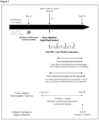
- CT26 tumor cells 500 000 cell in 100 ⁇ L were subcutaneously inoculated bilaterally into the right and left flanks of 9 week-old immuno-competent female Balbc/j mice after 20 days acclimation (Provider: Charles River Laboratories - BP 0109 - F 69592 L'Arbresle Cedex).
- Ventilation and air treatment were performed through frequent turnover (25 volumes/hour depending on the density of animals housed) and temperature controlled around 21-22°C. Humidity was maintained around 50%. Artificial lighting was maintained 12 hours a day. Quantity and access to food (pellets) and drink (tap water) were checked daily.
- mice were housed in collective cages, with 4 animals per cage (530 cm 2 cage). Cages were renewed once a week by animal care taker.
- Colorectal CT26 tumor cell line Cells were cultured in vitro according to provider's specifications, i.e. RPMI 1640 supplemented with FBS at the final concentration of 10%.
- Virus injection (with HSV-1 Herpes Simplex Virus or vehicle) was performed with a 29G gauge needle (0.5 mL) insulin syringe when tumors reached an average volume of 40 mm 3 (on day 7). At this time, virus was injected intratumorally (50 ⁇ L corresponding to 5 ⁇ 10 6 HSV-1 (experimental groups 3, 5, 6 and 8) or 100 ⁇ L corresponding to 1 ⁇ 10 8 HSV-1 (experimental groups 4 and 7)), into the tumor of the right flank.
- the HSV-1 virus was provided as a stock concentration (in 1 ⁇ 10 9 pfu/mL) vial.
- Virus vehicle either for virus stock solution dilution or for virus vehicle administration was DMEM medium 4.5 g/L glucose with glutamine (Lonza) + FBS 10% (Sigma Aldrich) + penicillin/streptomycin 1% (100 U) (Lonza) + HEPES 1 mM (Lonza) as indicated.
- 50 ⁇ L of virus vehicle was injected into the tumor of the right flank.
- tumor volume and body weight of the animals were measured and recorded three times per week.
- a tumor volume exceeding 2500 mm 3 for one tumor or 3500 mm 3 for both tumors, or a weight loss greater than 15% relative to the initial weight of the animal (done on day 6) were considered as an endpoint.
- the mouse was (i) prostrated, or (ii) no longer cleaned its coat (hair bristling and not glossy), (iii) was less mobile, this was also considered as an endpoint.
- the mice were sacrificed by cervical dislocation occurring in isolation from the other animals. All these behavioral and weight changes were recorded in a file that was accessible to staff of the animal facility (committee of animal welfare) and people directly involved in the study.
- mice were monitored 3 times per week over a period of ⁇ 2 weeks (from day 6 to day 19) for the following parameters:
- mice from experimental group 4 were processed for organ sampling and sacrificed.
- Mice were anesthetized using isoflurane gas anesthesia (4% induction and 2% maintain) and treated with an analgesic (buprenorphine, 0.1 mg/kg, subcutaneous injection) prior to cardiac puncture, for plasma sample collection.
- an analgesic buprenorphine, 0.1 mg/kg, subcutaneous injection
- liver, brain, right and left tumors were collected, snap-frozen, and stored at -80°C until further analysis.
- one mouse from experimental group 6 treated with HSV-1 virus - 5 ⁇ 10 6 pfu, Example 7(-) 72 h post-virus injection and anti-PD1/anti-CTLA-4 antibody combination
- a sample from this abscess was collected immediately after euthanasia by cervical dislocation, snap-frozen, and stored at -80°C until shipment to the sponsor for further analysis.
- mice were anesthetized using isoflurane gas anesthesia (4% induction and 2% maintain) prior to blood sampling on heparin-coated tubes by retro-orbital puncture, for plasma collection.
- tumors were collected, snap-frozen, and stored at -80°C until further analysis.
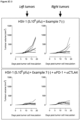
- Figure 2 The highest tumor volume is measured in the vehicle group as expected on day 19. Vehicle injection into the right tumors leads to delayed tumor growth compared to vehicle ( Figure 2 ).
- Figure 2A and 2B show median tumor volume (mm3) whereas Figure 2C monitors the tumor volume of individual mice over time.
- Intratumoral injection of HSV virus reduces tumor growth (was able to cytolytically affect tumor cells) dose dependently on right flank treated tumors ( Figure 2A ) and left flank non-treated tumors ( Figure 2B ).
- Example 7(-) the mice can be rescued and the reduction of tumor growth significantly prevails.
- higher viral doses can be applied and the oncolytic virus does not need to be attenuated for use as demonstrated with the clinical HSV isolate, since it can be controlled by the antiviral Example 7(-).
- the virus can not only be used topically but also systemically, since a general viraemia as described above can also be controlled by said antiviral compound due to its preferred pharmacokinetic profile and high brain exposure.
- Example 7(-) Inhibition or control of oncolytic herpesviruses with e.g. Example 7(-) was demonstrated by measuring the viral DNA within treated tumor samples.
- the tumors were collected as decribed above, snap frozen in liquid nitrogen and DNA of ⁇ 25 mg tumor samples was extracted with a QIAamp DNA Mini Kit (Cat. No. 51326) on a QlAcube machine. 10 ⁇ L of the 200 ⁇ L HSV DNA containing elution volumue was quantified with an Argene HSV R-gene kit (Ref.: 69-004B) and normalized to 1 gram tumor sample (see below).
- Group Group Group Total HSV-1 [copy/g tumor] mean Group 1 Vehicle 0 Group 2 Virus Vehicle 0 Group 3 low dose virus HSV-1 5 ⁇ 10 6 pfu 184678 Group 4 high dose virus HSV-1 1 ⁇ 10 8 pfu 789244 Group 5 low dose virus + drug HSV-1 5 ⁇ 10 6 pfu + 10 mg/kg Example 7(-) 72 pi 154493 Group 6 low dose virus + drug + checkpoint Antibody HSV-1 5 ⁇ 10 6 pfu + 10 mg/kg Example 7(-) 72 pi + ⁇ PD1 + ⁇ CTLA-4 51301 Group 7 high dose virus + drug HSV-1 1 ⁇ 10 8 pfu + 10 mg/kg Example 7(-) 72hpi 74312 Group 8 low dose virus + immediate drug treatment HSV 5 ⁇ 10 6 pfu + 10 mg/kg Example 7(-) 2h pi 10600
- the HSV-1 copy number per gram of tumor on day 19 is highest in the untreated high dose virus group 4 and lower in low dose virus group 3.
- the viral load can be reduced with compound in groups 5, 6, 7 and 8.
- Treatment with compound e.g. Example 7(-) 2 hours post infection (pi) leads to the highest reduction in viral DNA load as compared to 72 hours delayed treatment after infection.
- Tumors of untreated dying mice of high dose virus group 4 had a mean HSV-1 copy/g of tumor of ⁇ 6 ⁇ 10 9 . This is at least 3 orders of magnitude higher than in the surviving animals of this group or compound treated groups to control viral replication.
- a high viral dose is as efficacious as a low dose viral infection of the tumor, when the low dose oncolytic virus is combined with checkpoint inhibitors ( Figure 2 ).
- a combination of the optimal dose of the oncolytic virus can be controlled with the claimed compounds, may be combined with checkpoint inhibitors and used for tumors inside the experimental animal or patients in the clinic.
- the triggered immune response not only leads to a reduction in tumor size of the oHSV injected right flank tumors (Figue 2A) but also to a reduction in size of the untreated tumor on the left flank ( Figure 2B ).
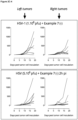
- the highest tumor volume is measured in the vehicle group as expected on day 19. Vehicle injection into the right tumors leads to delayed tumor growth compared to vehicle ( Figure 4A and 4B satellite animals).
- Intratumoral injection of HSV virus reduces tumor growth (i.e. intratumoral injection of HSV virus was able to cytolytically affect tumor cells) dose dependently on right flank treated tumors in the first experiment ( Figure 2A ) and left flank non-treated tumors ( Figure 2B ).
- Multiple intratumoral injections of HSV virus in the second experiment reduces tumors growth as efficiently as a single high dose virus injection in the first experiment ( Figure 2A and B ).
- mice can be rescued and the reduction of tumor growth significantly prevails.
- Example 7(-) a series of other helicase primase inhibitors
- the mice can be rescued and the reduction of tumor growth significantly prevails.
- higher or multiple viral does can be applied and the oncolytic virus does not need to be attenuated for use as demonstrated with the clinical HSV isolate, since it can be controlled by the antiviral Example 7(-) or helicase primase inhibitors in general.
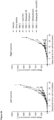
- Example 7(-) Inhibition or control of oncolytic herpesviruses with e.g. Example 7(-) was demonstrated by measuring the viral DNA within treated tumor samples. Survial of mice was analysed on day 21 in the second experiment. Treatment of mice with helicase primase inhibitors significantly rescue mice from death (see table below, number of dead animals by day) while the anti-tumor effect of the oncolytic virus prevails ( Figure 4 ).
Landscapes
- Health & Medical Sciences (AREA)
- Life Sciences & Earth Sciences (AREA)
- Chemical & Material Sciences (AREA)
- Medicinal Chemistry (AREA)
- General Health & Medical Sciences (AREA)
- Pharmacology & Pharmacy (AREA)
- Animal Behavior & Ethology (AREA)
- Public Health (AREA)
- Veterinary Medicine (AREA)
- Epidemiology (AREA)
- Virology (AREA)
- Organic Chemistry (AREA)
- General Chemical & Material Sciences (AREA)
- Nuclear Medicine, Radiotherapy & Molecular Imaging (AREA)
- Microbiology (AREA)
- Chemical Kinetics & Catalysis (AREA)
- Engineering & Computer Science (AREA)
- Mycology (AREA)
- Biotechnology (AREA)
- Bioinformatics & Cheminformatics (AREA)
- Immunology (AREA)
- Genetics & Genomics (AREA)
- Wood Science & Technology (AREA)
- Zoology (AREA)
- Biomedical Technology (AREA)
- Biochemistry (AREA)
- General Engineering & Computer Science (AREA)
- Molecular Biology (AREA)
- Communicable Diseases (AREA)
- Oncology (AREA)
- Pharmaceuticals Containing Other Organic And Inorganic Compounds (AREA)
Claims (13)
- Helicase-Primase-Inhibitoren zur Verwendung in einer Kombinationstherapie mit onkolytischen Herpesviren zur Behandlung von Krebs, wobei die Helicase-Primase-Inhibitoren ausgewählt sind aus Verbindungen mit einer Struktur der Formel (I)
 X ausgewählt ist aus
 R1 ausgewählt ist aus H, Halogen, C1-6-Alkyl, Halogen-C1-6-Alkyl, Hydroxy-C1-6-Alkyl, C3-6-Cycloalkyl, Halogen-C3-6-cycloalkyl, -O-C1-6-Alkyl, -O-Halogen-C1-6-Alkyl und -NH-C1-6-Alkyl;R2 ausgewählt ist aus H, -CN, -NO2 , C1-10-Alkyl, C2-10-Alkenyl, C2-10-Alkinyl, C0-10-Alkylen-C3-10-Cycloalkyl, C0-10-Alkylen-C3-10-Heterocycloalkyl, C0-10-Alkylen-(5- bis 10-gliedrigem Heteroaryl), C0-10-Alkylen-(6- bis 10-gliedrigem Aryl), C0-10-Alkylen-(6- bis 10-gliedrigem Heteroaryl), C0-10-Alkylen-OR11, C0-10-Alkylen-CO2R11, C0-10-Alkylen-C(=O)NR11R12, C0-10-Alkylen-C(=S)NR11R12, C0-10-Alkylen-C(=O)NR11SO2R13, C0-10-Alkylen-C(=S)NR11SO2R11, C0-10 -Alkylen-C(=O)R11, C0-10-Alkylen-C(=S)R11, C0-10-Alkylen-SR11, C0-10-Alkylen-SOxR13, C0-10-Alkylen-SO3R11, C0-10-Alkylen-SO2NR11R12, C0-10-Alkylen-NR11C(=O)R11, C0-10-Alkylen-NR11 C(=S)R11, C0-10-Alkylen-NR11SO2R13, C0-10-Alkylen-NR11C(=O)NR11R12, C0-10-Alkylen-NR11 C(=S)NR11R12, C0-10-Alkylen-NR11SO2NR11R12, C0-10-Alkylen-NR11R12, wobei Alkyl, Alkenyl, Alkynyl, Alkylen, Cycloalkyl, Heterocycloalkyl, Aryl und Heteroaryl unsubstituiert oder mit 1 bis 7 Substituenten substituiert ist, die unabhängig voneinander aus der Gruppe ausgewählt sind bestehend aus Oxo, CN, -NO2 , OR11 , O-C2-6-Alkylen-OR11, C1-6-Alkyl, Halogen-C1-6-Alkyl, Halogen, CO2R11, C(=O)NR11R12, C(=O)NR11SO2R11, C(=O)R11, SR11, SOxR11, SO3R11, P(=O)(OR11)2 , SO2NR11R12, NR11C(=O)R11, NR11SO2R13, NR11C(=O)NR11R12, NR11SO2NR11R12, C3-10-Cycloalkyl, O-C3-10-Cycloalkyl, C3-10-Heterocycloalkyl, O-C3-10-Heterocycloalkyl und NR11R12 ;R3 ausgewählt ist aus H, C1-6-Alkyl, Halo-C1-6-Alkyl, -O-C1-6-Alkyl, -O-Halo-C1-6-Alkyl, C3-6-Cycloalkyl und C3-6-Heterocycloalkyl, wobei Alkyl, Cycloalkyl und Heterocycloalkyl gegebenenfalls mit 1 bis 5 Substituenten substituiert sind, die unabhängig voneinander aus Halogen, -CN, OH, Oxo, C1-3-Alkyl, Halogen-C1-3-Alkyl, O-C1-3-Alkyl, O-Halogen-C1-3-Alkyl, SO2-C1-3-Alkyl und CO2H ausgewählt sind;oder R2 und R3 zusammen mit dem Stickstoff, an den sie gebunden sind, einen 3- bis 8-gliedrigen Ring vervollständigen, der Kohlenstoffatome und gegebenenfalls 1 oder 2 Heteroatome, ausgewählt aus O, S oder N, enthält, wobei der Ring unsubstituiert oder mit 1 bis 4 Substituenten substituiert ist, die unabhängig voneinander ausgewählt sind aus der Gruppe bestehend aus Halogen, -CN, -NO2, OH, Oxo, C1-3-Alkyl, Halogen-C1-3-Alkyl, O-C1-3-Alkyl, O-Halogen-C1-3-Alkyl, SO2-C1-3-Alkyl und CO2H;R4 ausgewählt ist aus H, C1-6-Alkyl, C1-6-Acyl, C2-6-Alkenyl, C3-8-Cycloalkyl und C3-8-Heterocycloalkyl, wobei Alkyl, Acyl, Alkenyl, Cycloalkyl und Heterocycloalkyl gegebenenfalls mit 1 bis 5 Substituenten substituiert sind, die unabhängig voneinander ausgewählt sind aus Halogen, -CN, OH, Oxo, C1-3-Alkyl, Halogen-C1-3-Alkyl, O-C1-3-Alkyl und O-Halogen-C1-3-Alkyl;R5 und R6 und R5' und R6' unabhängig voneinander ausgewählt sind aus H, Halogen, C1-6-Alkyl, NH2, NHC1-6-Alkyl, N(C1-6-Alkyl)2 und C0-6-Alkylen-C(=O)NH2;oder R5 und R6 und R5' und R6' unabhängig voneinander zusammen mit dem Kohlenstoff, an den sie gebunden sind, einen 3- bis 8-gliedrigen Ring vervollständigen, der Kohlenstoffatome und gegebenenfalls 1 oder 2 Heteroatome, ausgewählt aus O, S oder N, enthält, wobei der Ring unsubstituiert oder mit 1 bis 4 Substituenten substituiert ist, die unabhängig voneinander ausgewählt sind aus der Gruppe bestehend aus Halogen, -CN, -NO2 , OH, Oxo, C1-3-Alkyl, Halogen-C1-3-Alkyl, O-C1-3-Alkyl, O-Halogen-C1-3-Alkyl, SO2-C1-3-Alkyl und CO2H;oder R5 und R5 ' und R6 und R6 ' unabhängig voneinander zusammen mit den beiden benachbarten Kohlenstoffatomen, an die sie gebunden sind, einen 3- bis 8-gliedrigen Ring vervollständigen, der Kohlenstoffatome und gegebenenfalls 1 oder 2 Heteroatome, ausgewählt aus O, S oder N, enthält, wobei der Ring unsubstituiert oder mit 1 bis 4 Substituenten substituiert ist, die unabhängig voneinander ausgewählt sind aus der Gruppe bestehend aus Halogen, -CN, -NO2, OH, Oxo, C1-3-Alkyl, Halogen-C1-3-Alkyl, O-C1-3-Alkyl, O-Halogen-C1-3-Alkyl, SO2-C1-3-Alkyl und CO2H;oder einer der Reste R5, R5', R6 und R6' zusammen mit R7 einen 8- bis 11-gliedrigen bicyclischen Ring bilden kann, der gegebenenfalls mit 1 bis 4 Substituenten substituiert ist, die unabhängig voneinander ausgewählt sind aus der Gruppe bestehend aus Halogen, -CN, -NO2, OH, Oxo, C1-3-Alkyl, Halogen-C1-3-Alkyl, O-C1-3-Alkyl, O-Halogen-C1-3-Alkyl, SO2-C1-3-Alkyl und CO2H;R7 ausgewählt ist aus einem 6-gliedrigen Aryl und 5- oder 6-gliedrigen Heteroaryl, wobei Aryl und Heteroaryl gegebenenfalls mit 1 bis 4 Substituenten substituiert sind, die unabhängig voneinander ausgewählt sind aus Halogen, -CN, -NO2, OH, C1-6-Alkyl, O-C1-6-Alkyl, C3-6-Cycloalkyl, O-C3-6-Cycloalkyl, C3-6-Heterocycloalkyl, O-C3-6-Heterocycloalkyl, SOy-C1-6-Alkyl, CO2H, C(=O)O-C1-6-Alkyl, 6- bis 10-gliedrigem Aryl, 5- bis 10-gliedrigem Heteroaryl, O-(6- bis 10-gliedrigem Aryl) und O-(5- bis 10-gliedrigem Heteroaryl), wobei Alkyl, Cycloalkyl, Heterocycloalkyl, Aryl und Heteroaryl gegebenenfalls mit 1 bis 5 Substituenten substituiert sind, die unabhängig voneinander ausgewählt sind aus Halogen, -CN, -NO2, OH, R13, OR13, CO2R11, NR11R12, C(=O)R11, C(=S)R11, C(=O)NR11R12, NR11C(=O)NR11R12, NR11C(=O)OR13, OC(=O)NR11R12, C(=S)NR11R12, NR11C(=S)NR11R12, NR11C(=S)OR13, OC(=S)NR11R12, SOy-C1-6-Alkyl, SOy-Halogen-C1-6-Alkyl, SR11, SOxR13, SO3R11, SO2NR11R12, NR11SO2R13 und NR11SO2NR11R12;R8 ausgewählt ist aus H, -CN, -NO2, C1-10-Alkyl, C2-10-Alkenyl, C2-10-Alkinyl, C0-10-Alkylen-C3-10-Cycloalkyl, C0-10-Alkylen-C3-10-Heterocycloalkyl, C0-10-Alkylen-(5- bis 10-gliedrigem Heteroaryl), C0-10-Alkylen-(6- bis 10-gliedrigem Aryl), C0-10-Alkylen-(6- bis 10-gliedrigem Heteroaryl), C0-10-Alkylen-OR11, C0-10-Alkylen-CO2R11, C0-10-Alkylen-C(=O)NR11R12, C0-10-Alkylen-C(=S)NR11R12, C0-10-Alkylen-C(=O)NR11SO2R13, C0-10-Alkylen-C(=S)NR11SO2R11, C0-10 -Alkylen-C(=O)R11, C0-10-Alkylen-C(=S)R11, C0-10-Alkylen-SR11, C0-10-Alkylen-SOxR13, C0-10-Alkylen-SO3R11, C0-10-Alkylen-SO2NR11R12, C0-10-Alkylen-NR11C(=O)R11, C0-10-Alkylen-NR11C(=S)R11, C0-10-Alkylen-NR11SO2R11, C0-10-Alkylen-NR11C(=O)NR11R12, C0-10-Alkylen-NR11C(=S)NR11R12, C0-10-Alkylen-NR11-SO2-NR11R12, C0-10-Alkylen-NR11R12, wobei Alkyl, Alkenyl, Alkynyl, Alkylen, Cycloalkyl, Heterocycloalkyl, Aryl und Heteroaryl unsubstituiert oder mit 1 bis 7 Substituenten substituiert sind, die unabhängig voneinander ausgewählt sind aus der Gruppe Oxo, CN, -NO2, OR11, O-C2-6-Alkylen-OR11, C1-6-Alkyl, Halogen-C1-6-Alkyl, Halogen, CO2R11, CONR11R12, CONR11SO2R11, COR11, SOxR11, SO3H, PO(OH)2, SO2NR11R12, NR11COR11, NR11SO2R11, NR11-CO-NR11R12, NR11-SO2-NR11R12, C3-10-Cycloalkyl, O-C3-10-Cycloalkyl, C3-10-Heterocycloalkyl, O-C3-10-Heterocycloalkyl und NR11R12 ;R9 ausgewählt ist aus C1-10-Alkyl, C2-10-Alkenyl, C2-10-Alkinyl, C0-10-Alkylen-C3-10-Cycloalkyl, C0-10-Alkylen-C3-10-Heterocycloalkyl, C0-10-Alkylen-(5- bis 10-gliedrigem Heteroaryl), C0-10-Alkylen-(6- bis 10-gliedrigem Aryl), C0-10-Alkylen-(6- bis 10-gliedrigem Heteroaryl), C0-10-Alkylen-OR11, C0-10-Alkylen-CO2R11, C0-10-Alkylen-C(=O)NR11R12, C0-10-Alkylen-C(=S)NR11R12, C0-10-Alkylen-C(=O)NR11SO2R13, C0-10-Alkylen-C(=S)NR11SO2R11, C0-10-Alkylen-C(=O)R11, C0-10-Alkylen-C(=S)R11, C0-10-Alkylen-SR11, C0-10-Alkylen-SOxR13, C0-10-Alkylen-SO3R11, C0-10-Alkylen-SO2 NR11R12, C0-10-Alkylen-NR11C(=O)R11, C0-10-Alkylen-NR11C(=S)R11, C0-10-Alkylen-NR11SO2R13, C0-10-Alkylen-NR11C(=O)NR11R12, C0-10-Alkylen-NR11C(=S)NR11R12, C0-10-Alkylen-NR11SO2NR11R12, C0-10-Alkylen-NR11R12, wobei Alkyl, Alkenyl, Alkinyl, Alkylen, Cycloalkyl, Heterocycloalkyl, Aryl und Heteroaryl unsubstituiert oder mit 1 bis 7 Substituenten substituiert sind, die unabhängig voneinander ausgewählt sind aus der Gruppe bestehend aus Oxo, CN, -NO2, OR11, O-C2-6-Alkylen-OR11, C1-6-Alkyl, Halogen-C1-6-Alkyl, Halogen, CO2R11, C(=O)NR11 R12, C(=O)NR11SO2R11, C(=O)R11, SR11, SOxR11, SO3R11, P(=O)(OR11)2, SO2NR11R12, NR11C(=O)R11, NR11SO2R13, NR11C(=O)NR11R12, NR11SO2NR11R12, C3-10-Cycloalkyl, O-C3-10-Cycloalkyl, C3-10-Heterocycloalkyl, O-C3-10-Heterocycloalkyl und NR11R12 ;R11 unabhängig ausgewählt ist aus H, C1-6-Alkyl, C0-6-Alkylen-C3-10-Cycloalkyl und C0-6-Alkylen-C3-10-Heterocycloalkyl, wobei Alkyl, Alkylen, Cycloalkyl und Heterocycloalkyl unsubstituiert oder mit 1 bis 6 Substituenten substituiert sind, die unabhängig voneinander ausgewählt sind aus der Gruppe bestehend aus Halogen, -CN, OH, Oxo, C1-3-Alkyl, Halogen-C1-3-Alkyl, O-C1-3 -Alkyl, O-Halogen-C1-3-Alkyl, NH2, NH(C1-3-Alkyl), N(C1-3-Alkyl)2, C3-6-Heterocycloalkyl, C3-6-Cycloalkyl, SO2-NHC1-3-Alkyl, SO2-N(C1-3-Alkyl)2 und SO2-C1-3-Alkyl, wobei Cycloalkyl und Heterocycloalkyl unsubstituiert oder mit 1 bis 3 Substituenten substituiert sind, die unabhängig voneinander aus der Gruppe ausgewählt sind bestehend aus F, OH, Oxo, CH3, CHF2 und CF3;R12 unabhängig ausgewählt ist aus H, C1-6-Alkyl, Halogen-C1-6-Alkyl und C3-6-Cycloalkyl;oder R11 und R12 zusammen mit dem Stickstoff, an den sie gebunden sind, einen 3- bis 8-gliedrigen Ring vervollständigen, der Kohlenstoffatome und gegebenenfalls 1 oder 2 Heteroatome, ausgewählt aus O, S oder N, enthält, wobei der Ring unsubstituiert oder mit 1 bis 4 Substituenten substituiert ist, die unabhängig voneinander ausgewählt sind aus der Gruppe bestehend aus Halogen, -CN, -NO2, OH, Oxo, C1-3-Alkyl, Halogen-C1-3-Alkyl, O-C1-3-Alkyl, O-Halogen-C1-3-Alkyl, SO2-C1-3-Alkyl und CO2H;R13 unabhängig ausgewählt ist aus C1-6-Alkyl, C0-6-Alkylen-C3-10-Cycloalkyl und C0-6-Alkylen-C3-10 -Heterocycloalkyl, wobei Alkyl, Alkylen, Cycloalkyl und Heterocycloalkyl unsubstituiert oder mit 1 bis 6 Substituenten substituiert sind, die unabhängig ausgewählt sind aus der Gruppe bestehend aus Halogen, -CN, OH, Oxo, C1-3-Alkyl, Halogen-C1-3-Alkyl, O-C1-3-Alkyl, O-Halogen-C1-3-Alkyl, NH2, NH(C1-3-Alkyl), N(C1-3-Alkyl)2, C3-6-Heterocycloalkyl, C3-6-Cycloalkyl, SO2-NHC1-3-Alkyl, SO2-N(C1-3-Alkyl)2 und SO2-C1-3-Alkyl, wobei Cycloalkyl und Heterocycloalkyl unsubstituiert oder mit 1 bis 3 Substituenten substituiert ist, die unabhängig voneinander ausgewählt sind aus der Gruppe bestehend aus F, OH, Oxo, CH3, CHF2 und CF3;n wird aus 0 und 1 ausgewählt;x unabhängig ausgewählt ist aus 1 und 2;y unabhängig ausgewählt ist aus 0, 1 und 2;und wobei gegebenenfalls R1 mit einem Rest, ausgewählt aus R2, R3, R8, R9 oder R11, verbunden ist, um einen 5- bis 8-gliedrigen Heterocyclus zu bilden, der gegebenenfalls mit 1 bis 4 Substituenten substituiert ist, die unabhängig voneinander ausgewählt sind aus der Gruppe bestehend aus Halogen, -CN, -NO2, OH, Oxo, C1-3-Alkyl, Halogen-C1-3-Alkyl, O-C1-3-Alkyl, O-Halogen-C1-3-Alkyl, SO2-C1-3-Alkyl und CO2H;oder eine Struktur der folgenden Formel aufweist
 oder ein Solvat, eine Formulierung oder ein pharmazeutisch akzeptables Salz davon.
 - Helicase-Primase-Inhibitoren für die Verwendung nach Anspruch 1, mit einer Struktur der Formel (la) oder (Ib)

in der Formel (la) X

- Helicase-Primase-Inhibitoren für die Verwendung nach Anspruch 1 oder 2, die durch die folgende Formel dargestellt werden
 R20 ausgewählt ist aus C1-4-Alkyl und C3-6-Cycloalkyl, wobei Alkyl und Cycloalkyl unsubstituiert oder mit 1 bis 3 Substituenten substituiert ist, die unabhängig voneinander ausgewählt sind aus der Gruppe bestehend aus F und Me;R21 ausgewählt ist aus F, CI, OH, Me, OMe, CHF2, CF3, OCHF2, OCF3; undY ausgewählt ist aus Stickstoff oder Kohlenstoff,oder ein Solvat, eine Formulierung oder ein pharmazeutisch akzeptables Salz davon.
 - Helicase-Primase-Inhibitoren zur Verwendung nach einem der Ansprüche 1 bis 3, die ausgewählt sind aus der Gruppe bestehend aus


- Helicase-Primase-Inhibitoren für die Verwendung nach einem der Ansprüche 1 bis 4, mit einer Struktur ausgewählt aus


- Helicase-Primase-Inhibitor zur Verwendung nach einem der Ansprüche 1 bis 5, welcher folgender ist

- Pharmazeutische Zusammensetzung zur Verwendung als Antidot in einer Kombinationstherapie mit onkolytischen Herpesviren zur Behandlung von Krebs, enthaltend mindestens einen Helikase-Primase-Inhibitor, wie in einem der vorhergehenden Ansprüche definiert, der die Aktivität von onkolytischen Herpesviren, die empfindlich auf die in der Krebstherapie verwendeten Inhibitoren reagieren, kontrolliert, moduliert, hemmt oder abschaltet, und der außerdem mindestens einen pharmazeutisch akzeptablen Träger und/oder Hilfsstoff und/oder mindestens einen weiteren Wirkstoff, wie antiviral aktive oder immunmodulierende Verbindungen, einschließlich Checkpoint-Inhibitoren, enthalten kann, der bei der Behandlung einer Krankheit oder Störung wirksam ist, die mit onkolytischen Virusinfektionen verbunden ist, die bei der Behandlung von Krebs eingesetzt werden.
- Die Helikase-Primase-Inhibitoren oder die pharmazeutische Zusammensetzung für die Verwendung nach einem der vorhergehenden Ansprüche, wobei der zu behandelnde Krebs ein solider Krebs ist, vorzugsweise ist die Krebserkrankung ausgewählt aus Leberkrebs, Lungenkrebs, Dickdarmkrebs, Bauchspeicheldrüsenkrebs, Nierenkrebs, Hirnkrebs, Melanom und Glioblastom usw..
- Die Helikase-Primase-Inhibitoren oder die pharmazeutische Zusammensetzung für die Verwendung nach einem der vorhergehenden Ansprüche, wobei die Krebstherapie die Infusion, Injektion, intratumorale Injektion oder topische oder transdermale Applikation der onkolytischen Herpesviren oder der mit onkolytischen Herpesviren infizierten Zellen und/oder der Helikase-Primase-Inhibitoren oder der pharmazeutischen Zusammensetzung die diese enthält, umfasst.
- Die Helikase-Primase-Inhibitoren oder die pharmazeutische Zusammensetzung für die Verwendung nach einem der vorhergehenden Ansprüche, wobei die onkolytischen Herpesviren oder mit onkolytischen Herpesviren infizierten Zellen aus einem onkolytischen Wildtyp, einem klinischen Isolat oder einem Laborherpesvirusstamm oder einem gentechnisch veränderten oder mehrfach mutierten, gegebenenfalls abgeschwächten oder verstärkten onkolytischen Herpesvirus ausgewählt sind.
- Kit, umfassend mindestens einen der Helikase-Primase-Inhibitoren oder die pharmazeutische Zusammensetzung, wie in einem der vorhergehenden Ansprüche definiert, und mindestens ein onkolytisches Herpesvirus, ausgewählt aus einem Wildtyp, einem Laborstamm, einem klinischen Isolat und einem gentechnisch veränderten oder multimutierten onkolytischen Herpesvirus.
- Kit nach Anspruch 11 zur Verwendung bei der Behandlung von Krebs, wie in einem der vorhergehenden Ansprüche definiert.
- Die Helikase-Primase-Inhibitoren oder die pharmazeutische Zusammensetzung, wie in einem der vorhergehenden Ansprüche definiert, zur Verwendung in einer Kombinationstherapie mit onkolytischen Herpesviren zur Behandlung und Prophylaxe von onkolytischen Herpesinfektionen bei Krebspatienten mit potentiell unterdrücktem Immunsystem, wie AIDS-Patienten, Patienten mit einer genetischen oder vererbten Immunschwäche, Transplantationspatienten; bei neugeborenen Kindern und Säuglingen; bei Herpes-positiven Patienten, insbesondere bei onkolytischen Herpes-simplex-positiven Patienten, zur Unterdrückung des Wiederauftretens oder der onkolytischen Virusausscheidung; bei Patienten, insbesondere bei Herpes-positiven Patienten, insbesondere bei onkolytischen Herpes-simplex-positiven Patienten, die gegen eine nukleosidische antivirale Therapie wie Acyclovir, Penciclovir, Famciclovir, Ganciclovir, Valacyclovir und/oder Foscarnet oder Cidofovir resistent sind.
Applications Claiming Priority (2)
| Application Number | Priority Date | Filing Date | Title |
|---|---|---|---|
| EP18208756 | 2018-11-28 | ||
| PCT/EP2019/082751 WO2020109389A1 (en) | 2018-11-28 | 2019-11-27 | Helicase primase inhibitors for treating cancer in a combination therapy with oncolytic viruses |
Publications (4)
| Publication Number | Publication Date |
|---|---|
| EP3886847A1 EP3886847A1 (de) | 2021-10-06 |
| EP3886847B1 true EP3886847B1 (de) | 2024-08-21 |
| EP3886847C0 EP3886847C0 (de) | 2024-08-21 |
| EP3886847B8 EP3886847B8 (de) | 2024-10-02 |
Family
ID=64556701
Family Applications (1)
| Application Number | Title | Priority Date | Filing Date |
|---|---|---|---|
| EP19808606.8A Active EP3886847B8 (de) | 2018-11-28 | 2019-11-27 | Helikase-primase-inhibitoren zur behandlung von krebs in einer kombinationstherapie mit onkolytische viren |
Country Status (5)
| Country | Link |
|---|---|
| US (2) | US20210401810A1 (de) |
| EP (1) | EP3886847B8 (de) |
| ES (1) | ES2987798T3 (de) |
| TW (1) | TW202038947A (de) |
| WO (1) | WO2020109389A1 (de) |
Families Citing this family (6)
| Publication number | Priority date | Publication date | Assignee | Title |
|---|---|---|---|---|
| MX2023004955A (es) | 2020-10-29 | 2023-05-17 | Innovative Molecules Gmbh | Compuestos de aminotiazol deuterados como compuestos antiviricos. |
| IL314188A (en) | 2022-01-17 | 2024-09-01 | Innovative Molecules Gmbh | Solid crystalline forms of helicase-primase inhibitors and process of preparation thereof |
| CA3265860A1 (en) * | 2022-08-29 | 2024-03-07 | Assembly Biosciences, Inc. | Pharmaceutical compositions against the herpes virus |
| CN121532378A (zh) | 2023-07-17 | 2026-02-13 | 创新分子股份有限公司 | 抗病毒解旋酶-引发酶抑制剂化合物的微粉化结晶盐酸盐 |
| WO2025046456A1 (en) * | 2023-08-28 | 2025-03-06 | Assembly Biosciences, Inc. | A crystalline form of 2-(3-(2,,5'-difluoro-[1,1'-biphenyl]-4-yl)-2-oxotetrahydropyrimidin-1(2h)-yl)-4-methylthiazole-5-sulfonamide |
| WO2025046457A1 (en) * | 2023-08-28 | 2025-03-06 | Assembly Biosciences, Inc. | A crystalline form of 2-(3-(2,,5'-difluoro-[1,1'-biphenyl]-4-yl)-2-oxotetrahydropyrimidin-1(2h)-yl)-4-methylthiazole-5-sulfonamide |
Family Cites Families (57)
| Publication number | Priority date | Publication date | Assignee | Title |
|---|---|---|---|---|
| US6428968B1 (en) | 1999-03-15 | 2002-08-06 | The Trustees Of The University Of Pennsylvania | Combined therapy with a chemotherapeutic agent and an oncolytic virus for killing tumor cells in a subject |
| AU2905199A (en) | 1999-03-15 | 2000-10-04 | Trustees Of The University Of Pennsylvania, The | Combined therapy with a chemotherapeutic agent and an oncolytic virus for killing tumor cells in a subject |
| ATE312189T1 (de) | 2000-01-21 | 2005-12-15 | Biovex Ltd | Virusstämme für die onkolytische behandlung von krebs |
| GB0001475D0 (en) | 2000-01-21 | 2000-03-15 | Neurovex Ltd | Virus strains |
| CN1473157A (zh) | 2000-11-10 | 2004-02-04 | ֮����ҩ��ʽ���� | 酰胺衍生物 |
| EP1406668A1 (de) | 2001-05-02 | 2004-04-14 | Ramot at Tel-Aviv University Ltd. | Zusammengesetzte onkolytische herpesvirusvektoren |
| AU2003216502B2 (en) | 2002-03-01 | 2008-04-10 | Sloan-Kettering Institute For Cancer Research | Prevention of recurrence and metastasis of cancer |
| JP2005521398A (ja) | 2002-03-27 | 2005-07-21 | ベイラー カレッジ オブ メディスン | 癌治療用の強力な腫瘍溶解性単純ヘルペスウイルス |
| US8216564B2 (en) | 2002-05-02 | 2012-07-10 | Ramot At Tel-Aviv University Ltd. | Composite oncolytic herpes virus vectors |
| TW200505894A (en) | 2003-08-08 | 2005-02-16 | Yamanouchi Pharma Co Ltd | Tetrahydro-2H-thiopyran-4-carboxamide derivative |
| GB0326798D0 (en) | 2003-11-17 | 2003-12-24 | Crusade Lab Ltd | Methods for generating mutant virus |
| US7731952B2 (en) | 2004-06-24 | 2010-06-08 | New York University | Avirulent oncolytic herpes simplex virus strains engineered to counter the innate host response |
| CN101111247A (zh) | 2005-02-02 | 2008-01-23 | 安斯泰来制药有限公司 | 疱疹病毒相关疾病的预防或治疗剂 |
| GB0522476D0 (en) | 2005-11-03 | 2005-12-14 | Biovex Ltd | Oncolytic herpes virus vectors |
| WO2007075879A2 (en) | 2005-12-22 | 2007-07-05 | Memorial Sloan-Kettering Cancer Center | Method for detection of cancer cells using virus |
| US20080008686A1 (en) | 2006-07-10 | 2008-01-10 | The Brigham And Women's Hospital, Inc. | Tetracycline repressor regulated oncolytic viruses |
| JP5038309B2 (ja) | 2006-07-27 | 2012-10-03 | 独立行政法人科学技術振興機構 | 悪性中皮腫治療剤 |
| CA2728890C (en) | 2008-04-02 | 2016-05-03 | Astellas Pharma Inc. | Amide derivative-containing pharmaceutical composition |
| US8313896B2 (en) | 2008-04-04 | 2012-11-20 | The General Hospital Corporation | Oncolytic herpes simplex virus immunotherapy in the treatment of brain cancer |
| EP2307033A4 (de) | 2008-05-29 | 2012-06-13 | Gen Hospital Corp | Verwendung von onkolytischen herpesviren zur tötung von krebsstammzellen |
| CN101671656B (zh) | 2009-09-04 | 2012-04-25 | 罗益(无锡)生物制药有限公司 | 溶瘤ⅰ型单纯疱疹病毒靶向和杀伤前列腺肿瘤细胞的方法 |
| CN102051379A (zh) | 2009-11-10 | 2011-05-11 | 复旦大学 | 一种重组单纯疱疹病毒遗传操作系统及其应用 |
| CN101768576B (zh) | 2010-01-04 | 2012-06-20 | 中国人民解放军第三军医大学 | Hsv1-tk基因重组溶瘤腺病毒及其制备方法和应用 |
| WO2011119925A2 (en) | 2010-03-25 | 2011-09-29 | Board Of Supervisors Of Louisiana State University And Agricultural And Mechanical College | Synthetic herpes simplex viruses for treatment of cancers |
| US20120100109A1 (en) | 2010-10-26 | 2012-04-26 | Xiaoliu Zhang | Method for increasing the replication of oncolytic HSVs in highly resistant tumor cells using mTOR pathway and PI3K inhibitors |
| CN102206613A (zh) | 2010-12-26 | 2011-10-05 | 周剑峰 | 肿瘤选择性复制型腺病毒-胸苷激酶基因构建体的获得及用途 |
| HRP20182194T1 (hr) | 2011-09-08 | 2019-02-22 | New York University | Onkolitički herpes simpleks virus i njegova terapeutska uporaba |
| EP2573085A1 (de) | 2011-09-26 | 2013-03-27 | AiCuris GmbH & Co. KG | N-[5-(Aminosulfonyl)-4-methyl-1,3-thiazol-2-yl]-N-methyl-2-[4-(2-pyridinyl)phenyl]acetamidmesylat-Monohydrat mit einem spezifischen Teilchengrößenverteilungsbereich und einem spezifischen Oberflächenbereich |
| EP2573086A1 (de) | 2011-09-26 | 2013-03-27 | AiCuris GmbH & Co. KG | N-[5-(Aminosulfonyl)-4-methyl-1,3-thiazol-2-yl]-N-methyl-2-[4-(2-pyridinyl)phenyl]acetamidmesylat-Monohydrat |
| EP2662117A1 (de) | 2012-05-11 | 2013-11-13 | Virttu Biologics Limited | Herpes Simplex Virus zur Behandlung von Leberkrebs |
| GB2503236A (en) | 2012-06-20 | 2013-12-25 | Virttu Biolog Ltd | Treatment of Cancer with oncolytic virus |
| US20150250837A1 (en) | 2012-09-20 | 2015-09-10 | Morningside Technology Ventures Ltd. | Oncolytic virus encoding pd-1 binding agents and uses of the same |
| WO2014124978A2 (en) * | 2013-02-12 | 2014-08-21 | Aicuris Gmbh & Co. Kg | Helicase-primase inhibitors for use in a method of treating alzheimer's disease |
| GB201303184D0 (en) | 2013-02-22 | 2013-04-10 | Virttu Biolog Ltd | Treatment of cancer |
| KR102490462B1 (ko) | 2013-10-28 | 2023-01-19 | 유니버시티 오브 피츠버그-오브 더 커먼웰쓰 시스템 오브 하이어 에듀케이션 | 종양분해성 hsv 벡터 |
| EP3082834B1 (de) | 2013-12-11 | 2020-03-11 | The General Hospital Corporation DBA Massachusetts | Von stammzellen abgegebener onkolytischer herpes-simplex-virus und verfahren zur behandlung von hirntumoren |
| JP6025793B2 (ja) | 2014-09-11 | 2016-11-16 | アルマ マータ ステューディオラム — ユニバーシタ ディ ボローニャ | 親和性を改変した単純ヘルペスウイルス(hsv)、その使用および調製法 |
| CN104877969A (zh) | 2014-12-14 | 2015-09-02 | 刘滨磊 | 重组溶瘤性ii型单纯疱疹病毒及其药物组合物 |
| GB201504251D0 (en) | 2015-03-13 | 2015-04-29 | Virttu Biolog Ltd And University Of Sheffield The | Oncolytic herpes simplex virus infected cells |
| WO2017013421A1 (en) | 2015-07-20 | 2017-01-26 | Virttu Biologics Limited | Treatment of cancer by infusion of oncolytic herpes simplex virus to the blood |
| EP3163302A1 (de) | 2015-11-02 | 2017-05-03 | Johann Wolfgang Goethe-Universität Frankfurt am Main | Samhd1-modulation zur behandlung von resistenz gegen krebstherapie |
| ES2930046T3 (es) | 2016-02-19 | 2022-12-05 | Virogin Biotech Canada Ltd | Composiciones y métodos de uso de inhibidores de STAT1/3 con virus del herpes oncolíticos |
| GEP20207128B (en) * | 2016-04-06 | 2020-07-10 | Molecules Gm Innovative | Aminothiazole derivatives useful as antiviral agents |
| RU2751236C2 (ru) | 2016-04-22 | 2021-07-12 | Иммвира Ко., Лимитед | КОНСТРУИРОВАНИЕ ОБЛИГАТНОГО ВЕКТОРА НА ОСНОВЕ ОНКОЛИТИЧЕСКИХ ВИРУСОВ ПРОСТОГО ГЕРПЕСА (oHSV) И КОНСТРУКЦИИ ДЛЯ ТЕРАПИИ РАКА |
| WO2017189754A1 (en) | 2016-04-26 | 2017-11-02 | Salk Institute For Biological Studies | Hsv--1 oncolytic virus therapies that specificallyh kill alt dependent cancers |
| US20170319638A1 (en) | 2016-05-06 | 2017-11-09 | Virttu Biologics Limited | Treatment of cancer |
| WO2017218689A1 (en) | 2016-06-14 | 2017-12-21 | University Of Pittsburgh - Of The Commonwealth System Of Higher Education | Expression of nkg2d activating ligand proteins for sensitizing cancer cells to attack by cytotoxic immune cells |
| WO2018026872A1 (en) | 2016-08-01 | 2018-02-08 | Virogin Biotech Canada Ltd | Oncolytic herpes simplex virus vectors expressing immune system-stimulatory molecules |
| CN106551939B (zh) | 2016-10-18 | 2020-12-04 | 南京大学 | 一种促进单纯疱疹病毒复制的化合物及应用 |
| UY40935A (es) | 2016-11-28 | 2024-10-31 | Aicuris Gmbh & Co Kg | Composición tópica de hemihidrato de la base libre de n-[5(aminosulfonil)-4-metil-1,3-tiazol-2-il]-n-metil-2-[4-(2-piridinil)-fenil]acetamida |
| AR110251A1 (es) | 2016-11-28 | 2019-03-13 | Aicuris Anti Infective Cures Gmbh | Una sal maleato de la base libre de n-[5-(aminosulfonil)-4-metil-1,3-tiazol-2-il]-n-metil-2-[4-(2-piridinil)-fenil]-acetamida, formulaciones farmacéuticas, métodos de fabricación y usos de la misma |
| WO2018095576A1 (en) | 2016-11-28 | 2018-05-31 | Aicuris Anti-Infective Cures Gmbh | Topical pharmaceutical formulation comprising n-[5-(aminosulfonyl)-4-methyl-1,3-thiazol-2-yl]-n-methyl-2-[4-(2-pyridinyl)-phenyl]-acetamide |
| US11298420B2 (en) | 2016-12-21 | 2022-04-12 | Memgen, Llc | Armed oncolytic viruses |
| JP2020501589A (ja) | 2016-12-23 | 2020-01-23 | ウイルツ・バイオロジクス・リミテッド | がんの治療 |
| EP3566749A4 (de) | 2017-01-09 | 2020-09-23 | Medshine Discovery Inc. | Thiazolderivat und anwendungen davon |
| CN106974942A (zh) | 2017-05-03 | 2017-07-25 | 武汉滨会生物科技股份有限公司 | 重组溶瘤ii型单纯疱疹病毒在制备抗淋巴瘤、食道癌、乳腺癌、胰腺癌药物中的应用 |
| DK3692039T3 (da) | 2017-10-05 | 2023-03-13 | Innovative Molecules Gmbh | Enantiomerer af substituerede thiazoler som antivirale forbindelser |
-
2019
- 2019-11-19 TW TW108141994A patent/TW202038947A/zh unknown
- 2019-11-27 EP EP19808606.8A patent/EP3886847B8/de active Active
- 2019-11-27 ES ES19808606T patent/ES2987798T3/es active Active
- 2019-11-27 WO PCT/EP2019/082751 patent/WO2020109389A1/en not_active Ceased
- 2019-11-27 US US17/294,762 patent/US20210401810A1/en not_active Abandoned
-
2024
- 2024-07-17 US US18/775,488 patent/US20240408068A1/en active Pending
Also Published As
| Publication number | Publication date |
|---|---|
| ES2987798T3 (es) | 2024-11-18 |
| US20240408068A1 (en) | 2024-12-12 |
| US20210401810A1 (en) | 2021-12-30 |
| EP3886847B8 (de) | 2024-10-02 |
| TW202038947A (zh) | 2020-11-01 |
| EP3886847C0 (de) | 2024-08-21 |
| EP3886847A1 (de) | 2021-10-06 |
| WO2020109389A1 (en) | 2020-06-04 |
Similar Documents
| Publication | Publication Date | Title |
|---|---|---|
| US20240408068A1 (en) | Helicase Primase Inhibitors For Treating Cancer In A Combination Therapy With Oncolytic Viruses | |
| US8940756B2 (en) | Dihydronaphthyridines and related compounds useful as kinase inhibitors for the treatment of proliferative diseases | |
| DK2858646T3 (en) | DIHYDRONAPHTHYRIDINES AND RELATED COMPOUNDS AS KINASE INHIBITORS IN TREATMENT OF PROLIFERATIVE DISEASES | |
| US20220184090A1 (en) | Combination products with tyrosine kinase inhibitors and their use | |
| US12030896B2 (en) | PIKfyve inhibitors | |
| US20160101106A1 (en) | Methods for treating hcv infection | |
| KR20140096375A (ko) | 항종양제의 효과 증강제 | |
| US20210230141A1 (en) | Tetrahydroindazoles and medical uses thereof | |
| TW202033523A (zh) | 經取代的多環羧酸、其類似物及使用其之方法 | |
| JP2022501390A (ja) | 化合物及びその用途 | |
| JP7021405B2 (ja) | イソクエン酸脱水素酵素(idh)阻害剤 | |
| US20260049086A1 (en) | Cdk9 inhibitors | |
| US20250388602A1 (en) | Tetrahydropyranopyrazole Derivatives for the Treatment of Cancer and Viral Infections | |
| US20210261547A1 (en) | Pyridopyrimidine compounds and methods of their use | |
| US9796671B2 (en) | Aurora kinase inhibitors | |
| JP7637064B2 (ja) | 癌細胞成長抑制効果を示す新規なヘテロ環置換ピリミジン誘導体及びそれを含む薬剤学的組成物 | |
| US20250241916A1 (en) | Tyrosine kinase inhibitors | |
| US10058618B2 (en) | PAK1-blocking 1,2,3-triazolyl esters | |
| CN119661531A (zh) | 咪唑酮类化合物及其制备方法和应用 | |
| WO2022220227A1 (ja) | テトラヒドロピリドピリミジン化合物 | |
| CN121987627A (zh) | 化合物jqb-22或其药学上可接受的盐在制备抗结核药物中的应用 | |
| HK1245640B (zh) | 抗肿瘤剂的副作用减轻剂 |
Legal Events
| Date | Code | Title | Description |
|---|---|---|---|
| STAA | Information on the status of an ep patent application or granted ep patent |
Free format text: STATUS: UNKNOWN |
|
| STAA | Information on the status of an ep patent application or granted ep patent |
Free format text: STATUS: THE INTERNATIONAL PUBLICATION HAS BEEN MADE |
|
| PUAI | Public reference made under article 153(3) epc to a published international application that has entered the european phase |
Free format text: ORIGINAL CODE: 0009012 |
|
| STAA | Information on the status of an ep patent application or granted ep patent |
Free format text: STATUS: REQUEST FOR EXAMINATION WAS MADE |
|
| 17P | Request for examination filed |
Effective date: 20210623 |
|
| AK | Designated contracting states |
Kind code of ref document: A1 Designated state(s): AL AT BE BG CH CY CZ DE DK EE ES FI FR GB GR HR HU IE IS IT LI LT LU LV MC MK MT NL NO PL PT RO RS SE SI SK SM TR |
|
| DAV | Request for validation of the european patent (deleted) | ||
| DAX | Request for extension of the european patent (deleted) | ||
| STAA | Information on the status of an ep patent application or granted ep patent |
Free format text: STATUS: EXAMINATION IS IN PROGRESS |
|
| 17Q | First examination report despatched |
Effective date: 20231004 |
|
| GRAP | Despatch of communication of intention to grant a patent |
Free format text: ORIGINAL CODE: EPIDOSNIGR1 |
|
| STAA | Information on the status of an ep patent application or granted ep patent |
Free format text: STATUS: GRANT OF PATENT IS INTENDED |
|
| INTG | Intention to grant announced |
Effective date: 20240319 |
|
| GRAS | Grant fee paid |
Free format text: ORIGINAL CODE: EPIDOSNIGR3 |
|
| GRAA | (expected) grant |
Free format text: ORIGINAL CODE: 0009210 |
|
| STAA | Information on the status of an ep patent application or granted ep patent |
Free format text: STATUS: THE PATENT HAS BEEN GRANTED |
|
| AK | Designated contracting states |
Kind code of ref document: B1 Designated state(s): AL AT BE BG CH CY CZ DE DK EE ES FI FR GB GR HR HU IE IS IT LI LT LU LV MC MK MT NL NO PL PT RO RS SE SI SK SM TR |
|
| REG | Reference to a national code |
Ref country code: GB Ref legal event code: FG4D |
|
| REG | Reference to a national code |
Ref country code: DE Ref legal event code: R081 Ref document number: 602019057511 Country of ref document: DE Owner name: INNOVATIVE MOLECULES GMBH, DE Free format text: FORMER OWNER: INNOVATIVE MOLECULES GMBH, 80335 MUENCHEN, DE |
|
| REG | Reference to a national code |
Ref country code: CH Ref legal event code: EP |
|
| RAP4 | Party data changed (patent owner data changed or rights of a patent transferred) |
Owner name: INNOVATIVE MOLECULES GMBH |
|
| REG | Reference to a national code |
Ref country code: IE Ref legal event code: FG4D |
|
| REG | Reference to a national code |
Ref country code: DE Ref legal event code: R096 Ref document number: 602019057511 Country of ref document: DE |
|
| REG | Reference to a national code |
Ref country code: CH Ref legal event code: PK Free format text: BERICHTIGUNG B8 |
|
| U01 | Request for unitary effect filed |
Effective date: 20240910 |
|
| U07 | Unitary effect registered |
Designated state(s): AT BE BG DE DK EE FI FR IT LT LU LV MT NL PT RO SE SI Effective date: 20241001 |
|
| REG | Reference to a national code |
Ref country code: ES Ref legal event code: FG2A Ref document number: 2987798 Country of ref document: ES Kind code of ref document: T3 Effective date: 20241118 |
|
| U20 | Renewal fee for the european patent with unitary effect paid |
Year of fee payment: 6 Effective date: 20241126 |
|
| PG25 | Lapsed in a contracting state [announced via postgrant information from national office to epo] |
Ref country code: NO Free format text: LAPSE BECAUSE OF FAILURE TO SUBMIT A TRANSLATION OF THE DESCRIPTION OR TO PAY THE FEE WITHIN THE PRESCRIBED TIME-LIMIT Effective date: 20241121 |
|
| PG25 | Lapsed in a contracting state [announced via postgrant information from national office to epo] |
Ref country code: GR Free format text: LAPSE BECAUSE OF FAILURE TO SUBMIT A TRANSLATION OF THE DESCRIPTION OR TO PAY THE FEE WITHIN THE PRESCRIBED TIME-LIMIT Effective date: 20241122 Ref country code: PL Free format text: LAPSE BECAUSE OF FAILURE TO SUBMIT A TRANSLATION OF THE DESCRIPTION OR TO PAY THE FEE WITHIN THE PRESCRIBED TIME-LIMIT Effective date: 20240821 |
|
| PG25 | Lapsed in a contracting state [announced via postgrant information from national office to epo] |
Ref country code: IS Free format text: LAPSE BECAUSE OF FAILURE TO SUBMIT A TRANSLATION OF THE DESCRIPTION OR TO PAY THE FEE WITHIN THE PRESCRIBED TIME-LIMIT Effective date: 20241221 |
|
| PG25 | Lapsed in a contracting state [announced via postgrant information from national office to epo] |
Ref country code: HR Free format text: LAPSE BECAUSE OF FAILURE TO SUBMIT A TRANSLATION OF THE DESCRIPTION OR TO PAY THE FEE WITHIN THE PRESCRIBED TIME-LIMIT Effective date: 20240821 |
|
| PG25 | Lapsed in a contracting state [announced via postgrant information from national office to epo] |
Ref country code: RS Free format text: LAPSE BECAUSE OF FAILURE TO SUBMIT A TRANSLATION OF THE DESCRIPTION OR TO PAY THE FEE WITHIN THE PRESCRIBED TIME-LIMIT Effective date: 20241121 |
|
| PG25 | Lapsed in a contracting state [announced via postgrant information from national office to epo] |
Ref country code: RS Free format text: LAPSE BECAUSE OF FAILURE TO SUBMIT A TRANSLATION OF THE DESCRIPTION OR TO PAY THE FEE WITHIN THE PRESCRIBED TIME-LIMIT Effective date: 20241121 Ref country code: PL Free format text: LAPSE BECAUSE OF FAILURE TO SUBMIT A TRANSLATION OF THE DESCRIPTION OR TO PAY THE FEE WITHIN THE PRESCRIBED TIME-LIMIT Effective date: 20240821 Ref country code: NO Free format text: LAPSE BECAUSE OF FAILURE TO SUBMIT A TRANSLATION OF THE DESCRIPTION OR TO PAY THE FEE WITHIN THE PRESCRIBED TIME-LIMIT Effective date: 20241121 Ref country code: IS Free format text: LAPSE BECAUSE OF FAILURE TO SUBMIT A TRANSLATION OF THE DESCRIPTION OR TO PAY THE FEE WITHIN THE PRESCRIBED TIME-LIMIT Effective date: 20241221 Ref country code: HR Free format text: LAPSE BECAUSE OF FAILURE TO SUBMIT A TRANSLATION OF THE DESCRIPTION OR TO PAY THE FEE WITHIN THE PRESCRIBED TIME-LIMIT Effective date: 20240821 Ref country code: GR Free format text: LAPSE BECAUSE OF FAILURE TO SUBMIT A TRANSLATION OF THE DESCRIPTION OR TO PAY THE FEE WITHIN THE PRESCRIBED TIME-LIMIT Effective date: 20241122 |
|
| PG25 | Lapsed in a contracting state [announced via postgrant information from national office to epo] |
Ref country code: SM Free format text: LAPSE BECAUSE OF FAILURE TO SUBMIT A TRANSLATION OF THE DESCRIPTION OR TO PAY THE FEE WITHIN THE PRESCRIBED TIME-LIMIT Effective date: 20240821 |
|
| PG25 | Lapsed in a contracting state [announced via postgrant information from national office to epo] |
Ref country code: CZ Free format text: LAPSE BECAUSE OF FAILURE TO SUBMIT A TRANSLATION OF THE DESCRIPTION OR TO PAY THE FEE WITHIN THE PRESCRIBED TIME-LIMIT Effective date: 20240821 |
|
| PG25 | Lapsed in a contracting state [announced via postgrant information from national office to epo] |
Ref country code: SK Free format text: LAPSE BECAUSE OF FAILURE TO SUBMIT A TRANSLATION OF THE DESCRIPTION OR TO PAY THE FEE WITHIN THE PRESCRIBED TIME-LIMIT Effective date: 20240821 |
|
| PLBE | No opposition filed within time limit |
Free format text: ORIGINAL CODE: 0009261 |
|
| STAA | Information on the status of an ep patent application or granted ep patent |
Free format text: STATUS: NO OPPOSITION FILED WITHIN TIME LIMIT |
|
| PG25 | Lapsed in a contracting state [announced via postgrant information from national office to epo] |
Ref country code: MC Free format text: LAPSE BECAUSE OF FAILURE TO SUBMIT A TRANSLATION OF THE DESCRIPTION OR TO PAY THE FEE WITHIN THE PRESCRIBED TIME-LIMIT Effective date: 20240821 |
|
| 26N | No opposition filed |
Effective date: 20250522 |
|
| REG | Reference to a national code |
Ref country code: CH Ref legal event code: U11 Free format text: ST27 STATUS EVENT CODE: U-0-0-U10-U11 (AS PROVIDED BY THE NATIONAL OFFICE) Effective date: 20251201 |
|
| U20 | Renewal fee for the european patent with unitary effect paid |
Year of fee payment: 7 Effective date: 20251124 |
|
| PGFP | Annual fee paid to national office [announced via postgrant information from national office to epo] |
Ref country code: GB Payment date: 20251106 Year of fee payment: 7 |
|
| PGFP | Annual fee paid to national office [announced via postgrant information from national office to epo] |
Ref country code: CH Payment date: 20251201 Year of fee payment: 7 |
|
| PGFP | Annual fee paid to national office [announced via postgrant information from national office to epo] |
Ref country code: IE Payment date: 20251118 Year of fee payment: 7 |
|
| PGFP | Annual fee paid to national office [announced via postgrant information from national office to epo] |
Ref country code: ES Payment date: 20251209 Year of fee payment: 7 |
|
| PG25 | Lapsed in a contracting state [announced via postgrant information from national office to epo] |
Ref country code: HU Free format text: LAPSE BECAUSE OF FAILURE TO SUBMIT A TRANSLATION OF THE DESCRIPTION OR TO PAY THE FEE WITHIN THE PRESCRIBED TIME-LIMIT; INVALID AB INITIO Effective date: 20191127 |
|
| PG25 | Lapsed in a contracting state [announced via postgrant information from national office to epo] |
Ref country code: CY Free format text: LAPSE BECAUSE OF FAILURE TO SUBMIT A TRANSLATION OF THE DESCRIPTION OR TO PAY THE FEE WITHIN THE PRESCRIBED TIME-LIMIT; INVALID AB INITIO Effective date: 20191127 |