EP3846901B1 - Präbiotikum zur behandlung von erkrankungen im zusammenhang mit gestörter zusammensetzung oder funktionalität des intestinalen mikrobioms - Google Patents
Präbiotikum zur behandlung von erkrankungen im zusammenhang mit gestörter zusammensetzung oder funktionalität des intestinalen mikrobioms Download PDFInfo
- Publication number
- EP3846901B1 EP3846901B1 EP18762333.5A EP18762333A EP3846901B1 EP 3846901 B1 EP3846901 B1 EP 3846901B1 EP 18762333 A EP18762333 A EP 18762333A EP 3846901 B1 EP3846901 B1 EP 3846901B1
- Authority
- EP
- European Patent Office
- Prior art keywords
- polysaccharides
- composition
- residues
- use according
- rhamnose
- Prior art date
- Legal status (The legal status is an assumption and is not a legal conclusion. Google has not performed a legal analysis and makes no representation as to the accuracy of the status listed.)
- Active
Links
Images

Classifications
-
- A—HUMAN NECESSITIES
- A61—MEDICAL OR VETERINARY SCIENCE; HYGIENE
- A61K—PREPARATIONS FOR MEDICAL, DENTAL OR TOILETRY PURPOSES
- A61K31/00—Medicinal preparations containing organic active ingredients
- A61K31/70—Carbohydrates; Sugars; Derivatives thereof
- A61K31/715—Polysaccharides, i.e. having more than five saccharide radicals attached to each other by glycosidic linkages; Derivatives thereof, e.g. ethers, esters
-
- A—HUMAN NECESSITIES
- A61—MEDICAL OR VETERINARY SCIENCE; HYGIENE
- A61K—PREPARATIONS FOR MEDICAL, DENTAL OR TOILETRY PURPOSES
- A61K31/00—Medicinal preparations containing organic active ingredients
- A61K31/70—Carbohydrates; Sugars; Derivatives thereof
- A61K31/715—Polysaccharides, i.e. having more than five saccharide radicals attached to each other by glycosidic linkages; Derivatives thereof, e.g. ethers, esters
- A61K31/732—Pectin
-
- A—HUMAN NECESSITIES
- A23—FOODS OR FOODSTUFFS; TREATMENT THEREOF, NOT COVERED BY OTHER CLASSES
- A23L—FOODS, FOODSTUFFS OR NON-ALCOHOLIC BEVERAGES, NOT OTHERWISE PROVIDED FOR; PREPARATION OR TREATMENT THEREOF
- A23L29/00—Foods or foodstuffs containing additives; Preparation or treatment thereof
- A23L29/03—Organic compounds
- A23L29/035—Organic compounds containing oxygen as heteroatom
-
- A—HUMAN NECESSITIES
- A23—FOODS OR FOODSTUFFS; TREATMENT THEREOF, NOT COVERED BY OTHER CLASSES
- A23L—FOODS, FOODSTUFFS OR NON-ALCOHOLIC BEVERAGES, NOT OTHERWISE PROVIDED FOR; PREPARATION OR TREATMENT THEREOF
- A23L33/00—Modifying nutritive qualities of foods; Dietetic products; Preparation or treatment thereof
- A23L33/10—Modifying nutritive qualities of foods; Dietetic products; Preparation or treatment thereof using additives
- A23L33/105—Plant extracts, their artificial duplicates or their derivatives
-
- A—HUMAN NECESSITIES
- A61—MEDICAL OR VETERINARY SCIENCE; HYGIENE
- A61K—PREPARATIONS FOR MEDICAL, DENTAL OR TOILETRY PURPOSES
- A61K35/00—Medicinal preparations containing materials or reaction products thereof with undetermined constitution
- A61K35/66—Microorganisms or materials therefrom
- A61K35/74—Bacteria
- A61K35/741—Probiotics
-
- A—HUMAN NECESSITIES
- A61—MEDICAL OR VETERINARY SCIENCE; HYGIENE
- A61K—PREPARATIONS FOR MEDICAL, DENTAL OR TOILETRY PURPOSES
- A61K36/00—Medicinal preparations of undetermined constitution containing material from algae, lichens, fungi or plants, or derivatives thereof, e.g. traditional herbal medicines
-
- A—HUMAN NECESSITIES
- A61—MEDICAL OR VETERINARY SCIENCE; HYGIENE
- A61K—PREPARATIONS FOR MEDICAL, DENTAL OR TOILETRY PURPOSES
- A61K36/00—Medicinal preparations of undetermined constitution containing material from algae, lichens, fungi or plants, or derivatives thereof, e.g. traditional herbal medicines
- A61K36/18—Magnoliophyta (angiosperms)
- A61K36/185—Magnoliopsida (dicotyledons)
- A61K36/21—Amaranthaceae (Amaranth family), e.g. pigweed, rockwort or globe amaranth
-
- A—HUMAN NECESSITIES
- A61—MEDICAL OR VETERINARY SCIENCE; HYGIENE
- A61K—PREPARATIONS FOR MEDICAL, DENTAL OR TOILETRY PURPOSES
- A61K36/00—Medicinal preparations of undetermined constitution containing material from algae, lichens, fungi or plants, or derivatives thereof, e.g. traditional herbal medicines
- A61K36/18—Magnoliophyta (angiosperms)
- A61K36/185—Magnoliopsida (dicotyledons)
- A61K36/23—Apiaceae or Umbelliferae (Carrot family), e.g. dill, chervil, coriander or cumin
-
- A—HUMAN NECESSITIES
- A61—MEDICAL OR VETERINARY SCIENCE; HYGIENE
- A61K—PREPARATIONS FOR MEDICAL, DENTAL OR TOILETRY PURPOSES
- A61K36/00—Medicinal preparations of undetermined constitution containing material from algae, lichens, fungi or plants, or derivatives thereof, e.g. traditional herbal medicines
- A61K36/18—Magnoliophyta (angiosperms)
- A61K36/185—Magnoliopsida (dicotyledons)
- A61K36/28—Asteraceae or Compositae (Aster or Sunflower family), e.g. chamomile, feverfew, yarrow or echinacea
-
- A—HUMAN NECESSITIES
- A61—MEDICAL OR VETERINARY SCIENCE; HYGIENE
- A61K—PREPARATIONS FOR MEDICAL, DENTAL OR TOILETRY PURPOSES
- A61K36/00—Medicinal preparations of undetermined constitution containing material from algae, lichens, fungi or plants, or derivatives thereof, e.g. traditional herbal medicines
- A61K36/18—Magnoliophyta (angiosperms)
- A61K36/185—Magnoliopsida (dicotyledons)
- A61K36/48—Fabaceae or Leguminosae (Pea or Legume family); Caesalpiniaceae; Mimosaceae; Papilionaceae
-
- A—HUMAN NECESSITIES
- A61—MEDICAL OR VETERINARY SCIENCE; HYGIENE
- A61K—PREPARATIONS FOR MEDICAL, DENTAL OR TOILETRY PURPOSES
- A61K36/00—Medicinal preparations of undetermined constitution containing material from algae, lichens, fungi or plants, or derivatives thereof, e.g. traditional herbal medicines
- A61K36/18—Magnoliophyta (angiosperms)
- A61K36/185—Magnoliopsida (dicotyledons)
- A61K36/577—Malvaceae (Mallow family)
-
- A—HUMAN NECESSITIES
- A61—MEDICAL OR VETERINARY SCIENCE; HYGIENE
- A61K—PREPARATIONS FOR MEDICAL, DENTAL OR TOILETRY PURPOSES
- A61K9/00—Medicinal preparations characterised by special physical form
- A61K9/0012—Galenical forms characterised by the site of application
- A61K9/0053—Mouth and digestive tract, i.e. intraoral and peroral administration
-
- A—HUMAN NECESSITIES
- A61—MEDICAL OR VETERINARY SCIENCE; HYGIENE
- A61P—SPECIFIC THERAPEUTIC ACTIVITY OF CHEMICAL COMPOUNDS OR MEDICINAL PREPARATIONS
- A61P1/00—Drugs for disorders of the alimentary tract or the digestive system
-
- A—HUMAN NECESSITIES
- A61—MEDICAL OR VETERINARY SCIENCE; HYGIENE
- A61P—SPECIFIC THERAPEUTIC ACTIVITY OF CHEMICAL COMPOUNDS OR MEDICINAL PREPARATIONS
- A61P3/00—Drugs for disorders of the metabolism
Definitions
- the present invention relates to prebiotic compositions for use in a method of therapeutic or prophylactic treatment of disorders associated with disturbed composition or functionality of the intestinal microbiome in a subject, the disorder being selected from overweight, obesitas, insulin-resistance and intestinal barrier dysfunction, said method comprising oral administration of a prebiotic composition to the subject, said prebiotic composition containing rhamnogalacturonan I (RG-I) polysaccharides originating from fruit, carrot, pea, chicory or sugar beet.
- RG-I rhamnogalacturonan I
- the invention further relates to a prebiotic composition and a synbiotic composition suitable for use in the aforementioned method of treatment.
- the human host provides a habitat and nutrition to a large and diverse ecosystem of microbial communities that play a crucial role in digestion, metabolism and modulation of immune function, and that have a significant impact beyond the gastrointestinal tract. Changes in the diversity and function of those communities are associated with far reaching consequences on host health and have been linked with a number of disorders, including functional bowel disorders, inflammatory bowel diseases and other immune mediated diseases (coeliac disease, allergies) and metabolic conditions (type 2 diabetes, NASH). Dysbiosis (also called dysbacteriosis) is a term for a microbial imbalance or maladaptation on or inside the body, such as an impaired microbiota.
- bacterial communities occupying certain surface areas of a host such as the gut microbiota, skin microbiota or vaginal microbiota
- the collection of bacteria in such communities are collectively called the microbiota.
- Local microbiota together with other micro-organisms including yeast, fungus, viruses, and parasites residing in such niches are jointly called the microbiome.
- Dysbiosis is not limited to imbalances in the microbiota, but may involve other micro-organisms in the microbiome as well (e.g. viruses, archaea and fungi).
- normobiosis When a microbiome is well balanced, called normobiosis, the microorganisms occupying a specific niche form a more or less stable community that is well adapted to the local conditions, has the metabolic capabilities to live of the available substrate, effectively deals with stressors and modulation of substrate availability and has regulatory mechanisms in place that contribute to the meta-stability of the community and contributes to long-term health of its host.
- Dysbiosis is most commonly studied as a condition in the gastrointestinal tract, but it can affect any body cavity, mucosal and skin surfaces populated by a microbial community.
- Dysbiosis has been associated with illnesses of the host; intestinal dysbiosis has for instance been associated with inflammatory bowel disease, chronic fatigue syndrome, obesity, cancer, cardiometabolic conditions, insulin insensitivity, (pre) diabetes, bacterial vaginosis, and colitis.
- composition and stability of the microbiota are influenced by the genetic background of the host, by environmental conditions or stressors that include, for example, diet, lifestyle, use of medicaments - e.g. antibiotics -, and developmental stage (age) of the host. This translates into a permanent and complex interaction between the host and the main components of the local microbial ecosystem. These components include the microbiota, the host immune system, the local epithelial barrier and, in case of the gut, the enteric nervous system.
- the neonate microbiota is establishing itself since birth onwards and is notably fluctuating during the first weeks and months of life to become close to the core adult microbiota around 3-4 years of age. This progressive microbial colonization of the gut is key for the education and maturation of the host immune and enteric nervous systems, gut barrier and function, and metabolic programming of the host, which has an impact on the short term and later in life health status and risk of diseases.
- the neonatal microbiota is influenced by the maternal diet and microbiota, by the delivery mode, by the infant nutrition (breast feeding or infant formula) and the surrounding environmental conditions.
- the healthy adult core microbiota is more stable in the sense that when perturbed by various stressors (e.g. use of antibiotics or medicaments) it returns close to its original composition in healthy subjects, which is designated as resilience of the microbiota. Loss of variability, absence or low abundance of beneficial microorganisms, and loss of resilience are all associated with diseases.
- microbiota of ageing or elderly subjects is diverging from that in the healthy adult population by changes in composition leading to less bacterial diversity, reduction of beneficial microorganisms and reduced resilience. All of these changes are associated to changes in the health status.
- the microbiota is composed of a large variety of species that compete for space and resources/nutrients, but that can also feed each other with their respective fermentation products, thus leading to consortia of microorganisms that, in healthy status, live in symbiosis with the mammal host.
- a high microbial diversity within the intestinal microbiota is considered beneficial for the health of the host, as diversity renders the microbiota more resilient to factors that disturb the intestinal microbiota (e.g antibiotics, change in diet, invasion by new species).
- consortia of microbes i.e. metastable combinations of different microorganisms that feed of each other's fermentation products and jointly form a more or less stable ecosystem that thrives in a particular niche using available substrate (e.g. from mucus, cell shedding and the diet).
- Typical microbial species found on or in the body are mostly beneficial or harmless.
- Pathobionts or even pathogens are also part of a "normal" microbiota as long as they remain below a critical level.
- the mammal intestinal microbiota carries out a series of helpful and necessary functions, such as aiding in digestion, providing energy from food, providing specific (micro) nutrients to the host, producing key metabolites such as short chain fatty acids, and educating (neonates and infants) or maintaining (adults) the host's immune system. They also help protect the body from incoming pathogenic microbes or toxic compounds.
- Microbial species also excrete many different types of waste byproducts. Using different waste removal mechanisms, under normal circumstances the body effectively manages these byproducts with little or no trouble. Unfortunately, oversized microbial populations and inappropriate dominance of microbial species, due to their increased numbers, excrete increased amounts of these byproducts. As the amount of microbial byproducts increases, the higher waste byproducts levels can overburden the body's waste removal mechanisms. An example of this is the formation of ammonia from protein fermentation which can be further fermented into compounds that are detrimental to the host.
- Probiotics are "live micro-organisms which, when administered in adequate amounts, confer a health benefit on the host" (definition of World Health Organization).
- Prebiotics are nondigestible food ingredients that beneficially affect the host by selectively stimulating the growth and/or activity of one or a limited number of microbial species in a community.
- prebiotics are simple oligomers of identical sugars (such as fructose, galactose or arabinose) linked by glycosidic bonds. These stimulate the selective outgrowth of microbial species that have the metabolic capabilities to (rapidly) ferment these relatively simple substrates to produce beneficial metabolites such as short chain fatty acids.
- Typical side effects of the use of such easily fermentable substrates include intestinal discomfort, flatulence and regurgitation. These side effects are caused by the rapid fermentative production of gasses.
- Pectin is a structural hetero polysaccharide that is present in the primary cell walls of terrestrial plants.
- Pectic polysaccharides are a heterogeneous group of polysaccharides comprising varying amounts of the following polysaccharide components:
- Figure 1 provides a schematic representation of the structure of pectic polysaccharides, including the aforementioned 4 polysaccharide components. It is noted that the polysaccharide components HG, XG and RG-II typically represent only a minor fraction of pectic polysaccharides.
- the polysaccharide components HG, XG and RG-II each comprise a backbone that consists of a linear chain of ⁇ -(1-4)-linked D-galacturonic acid monosaccharide units.
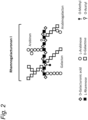
- RG-I comprises a backbone that consists of a linear chain of the repeating disaccharide units: 4)- ⁇ -D-galacturonic acid-(1,2)- ⁇ -L-rhamnose-(1.
- a schematic representation of the structure of RG-I is shown in Figure 2 .
- the oligosaccharide side chains may be linear or branched, and some of these side chains may be terminated with alpha-L-fucosides, beta-D-glucuronides, and 4-O-methyl beta-D-glucuronyl residues.
- Gómez et al. (Prebiotic potential of pectins and pectic oligosaccharides derived from lemon peel wastes and sugar beet pulp: A comparative evaluation, Journal of Functional Foods, Volume 20, January 2016, Pages 108-121 ) described the outcome of a study in which sugar beet pulp (SBP) and lemon peel wastes (LPW) were used to obtain two mixtures of pectic oligosaccharides (denoted as SBPOS and LPOS, respectively).
- SBP sugar beet pulp
- LPOS lemon peel wastes
- pectic oligosaccharides, pectins from SBP and LPW and commercial FOS were compared by in vitro fermentation and fluorescence in situ hybridization using human faecal inocula and eight different bacterial probes.
- the joint populations of bifidobacteria and lactobacilli increased from 19% up to 29%, 34% and 32% in cultures with LPOS, SBPOS and FOS, respectively. Faecalibacterium and Roseburia counts were also increased with all the substrates (especially with LPOS).
- the highest concentrations of organic acids were observed in media containing oligosaccharides. According to the authors, this work confirms that pectic oligosaccharides present better prebiotic properties than pectins, and similar or better than FOS.
- pectic oligosaccharides from agricultural by-products are potential sources of a new class of prebiotics known as pectic oligosaccharides (POS).
- POS pectic oligosaccharides
- Controlled hydrolysis of pectin containing agricultural by-products like sugar beet, apple, olive and citrus by chemical, enzymatic and hydrothermal treatment can be used to produce oligo-galacturonides, galactooligosaccharides, rhamnogalacturonan-oligosaccharides, etc..
- Hoon Kim et al. (Effect of arabinoxylan- and rhamnogalacturonan I-rich polysaccharides isolated from young barley leaf on intestinal immunostimulatory activity, Journal of Functional Foods, 2017; 35, 384-390 ) prepared four polysaccharide fractions from barley leaves and compared in vitro intestinal immunostimulatory activity. Among fractions, a high molecular weight fraction prepared by enzyme extraction (BLE-P), showed the potent in activating bone marrow cell proliferation through Peyer's patch (PP), and in stimulating cytokine production in in vitro.
- BLE-P enzyme extraction
- BLE-P was identified as a mixture of hemicellulosic glucuronoarabinoxylan and pectic rhamnogalacturonan I accounting for above 80%. Subsequently, BLE-P was orally administered to mice for 20 days to investigate the effect on the in vivo intestinal immunostimulatory activity. BLEP administration not only augmented the production of immunoglobulin A (IgA), but also increased the levels of IgA-related cytokines, such as transforming growth factor- ⁇ and interleukin-10.
- IgA immunoglobulin A
- US 2014/275233 describes a method for treating gastrointestinal dysbiosis in a subject, comprising orally administering to the subject an effective amount of a composition comprising isolated plant tissue having at least 0.25 mg glyceollin content per gram of plant tissue.
- a composition comprising isolated plant tissue having at least 0.25 mg glyceollin content per gram of plant tissue.
- Three very similar phytoalexins called glyceollin I, glyceollin II, and glyceolin III, are produced by soy when the plant is exposed to soil microorganisms, ultraviolet (UV) light or heavy metals.
- WO 2011/069781 describes a polysaccharide that is capable of modulating immune response, said polysaccharide being obtained from plants of the species Camellia sinensis, wherein the backbone of the polysaccharide comprises alternating rhamnogalacturonan-I domains and alpha(1,4)-linked polygalacturonic acid or alpha(1,4)-linked oligogalacturonic acid domains, wherein the molar ratio of galacturonic acid residues to rhamnosyl residues in the backbone of the polysaccharide ranges from 2.5:1 to 1 :1, and wherein the polysaccharide has a molecular weight of at least 70 kDa.
- rhamnogalacturonan I rhamnogalacturonan I
- RG-I rhamnogalacturonan I
- said RG-I polysaccharides having a molecular weight in excess of 15 kDa and having a backbone comprising rhamnogalacturonan-I domains and optionally alpha(I,4)-linked homo-galacturonic acid domains, wherein the molar ratio of galacturonic acid residues to rhamnose residues in said backbone is within the range of 20:1 to 1:1.
- the RG-I polysaccharides act as a prebiotic by promoting high microbial diversity within the intestinal microbiota, by stimulating growth or activity of beneficial bacteria (e.g. Akkermansia muciniphila and Bifidobacterium spp.) and/or by increasing the resilience of the intestinal microbiota against disturbances.
- beneficial bacteria e.g. Akkermansia muciniphila and Bifidobacterium spp.
- one aspect of the present invention relates to a prebiotic composition for use in a method of therapeutic or prophylactic treatment of disorders associated with disturbed composition or functionality of the intestinal microbiome in a subject, the disorder being selected from overweight, obesitas, insulin-resistance and intestinal barrier dysfunction said use comprising oral administration of the prebiotic composition to the subject, wherein the composition contains at least 0.1% by weight of dry matter of RG-I polysaccharides originating from fruit, carrot, pea, chicory or sugar beet, said RG-I polysaccharides having a molecular weight in excess of 15 kDa and having a backbone consisting of galacturonic acid residues and rhamnose residues, said rhamnose residues being contained in alpha(1 ⁇ 4)-galacturonic-alpha(1 ⁇ 2)-rhamnose residues, wherein the molar ratio of galacturonic acid residues to rhamnose residues in the RG-I polysaccharides is within the range of 20:
- RG-I polysaccharides that are employed in accordance with the present invention may be isolated from fruit, carrot, pea, chicory or sugar beet by aqueous extraction, optionally combined with enzymatic treatment (using e.g. polygalacturonase).
- a prebiotic composition comprising:
- Yet another aspect of the invention relates to a synbiotic composition
- a synbiotic composition comprising:
- One aspect of the invention relates to a prebiotic composition for use in a method of therapeutic or prophylactic treatment of disorders associated with disturbed composition or functionality of the intestinal microbiome in a subject, the disorder being selected from overweight, obesitas, insulin-resistance and intestinal barrier dysfunction said use comprising oral administration of the prebiotic composition to the subject, wherein the composition contains at least 0.1% by weight of dry matter of rhamnogalacturonan I (RG-I) polysaccharides originating from fruit, carrot, pea, chicory or sugar beet, said RG-I polysaccharides having a molecular weight in excess of 15 kDa and having a backbone consisting of galacturonic acid residues and rhamnose residues, said rhamnose residues being contained in alpha(1 ⁇ 4)-galacturonic-alpha(1 ⁇ 2)-rhamnose residues, wherein the molar ratio of galacturonic acid residues to rhamnose residues in the RG-I polysacc
- disorders associated with disturbed composition or functionality of the intestinal microbiome encompasses intestinal dysbiotic condition (disturbed composition) and disorders associated with insufficient fermentative production of essential metabolites by the intestinal microbiome (disturbed functionality).
- Short chain fatty acids acetate, propionate, and butyrate are an example of such essential metabolites.
- intestinal dysbiotic condition refers to a condition that adversely affects a subject's health and that is caused by a significant deviation from a balanced intestinal microbiome (normobiosis).
- branched polysaccharides refers to a polysaccharides comprising a linear backbone chain of monosaccharide units bound together by glycosidic linkages, wherein at least one of the monosaccharide units within the backbone chain carries a sidechain of one or more glycosidically linked monosaccharide units.
- backbone chain and “backbone” are synonyms.
- pectic polysaccharides refers to optionally branched polysaccharides having a molecular weight in excess of 15 kDa and comprising a backbone that consists of galacturonic acid residues and rhamnose residues, said rhamnose residues being contained in alpha(1 ⁇ 4)-galacturonic-alpha(1 ⁇ 2)-rhamnose residues.
- stretch refers to a sequence of two or more glycosidically linked monosaccharide within the backbone of a polysaccharide, excluding any sidechains that are attached thereto.
- rhamnogalacturonan-I stretch or "RG-I stretch” refers to a stretch consisting of galacturonic acid (GalA) and rhamnose (Rha) pairs, wherein the GalA residues are linked to the Rha residues via the 1 and 4 positions, while the Rha residues are linked to the GalA residue via the anomeric and 2-OH positions, i.e. alternating alpha(1 ⁇ 4)-galacturonic-alpha(1 ⁇ 2)-rhamnose residues.
- the carboxyl groups of the galacturonic acid residues within the RG-I stretches may be esterified. Esterified galacturonic acid may occur in the form of the methyl ester or acetyl ester.
- the RG-I domain can comprise side chains such as, for example galactan, arabinan and arabinogalactan side chains.
- rhamnogalacturonan-I polysaccharide or "RG-I polysaccharide” refers to an optionally branched pectic polysaccharide that comprises a backbone that contains one or more rhamnogalacturonan-I stretches.
- alpha(1,4)-linked galacturonic acid stretch refers to a stretch consisting of alpha(1 ⁇ 4)-galacturonic residues.
- the RG-I polysaccharides of the present invention may contain one or more of the following domains:
- the domains XG, AG and RG-II typically represent only a minor fraction of the RG-I polysaccharides.
- the HG domains, XG domains, AG and RG-II domains that are optionally present in the RG-I polysaccharides of the present invention comprise a backbone that consists of a linear chain of two or more ⁇ -(1-4)-linked D-galacturonic acids.
- the carboxyl groups of the galacturonic acid residues within the backbone of these domains may be esterified. Esterified galacturonic acid may occur in the form of the methyl ester or acetyl ester.
- HG domains do not contain any sidechains.
- the backbone of XG domains contains one or more sidechains in the form of D-xylose.
- the backbone of AG domains contains one or more sidechains that are composed of one or more D-apiose residues.
- the backbone of RG-II contains one or more side chains that are not exclusively composed of D-xylose or D-apiose.
- fruit refers to the seed-beering structure in flowering plants.
- prebiotic refers to substances that selectively induce the growth or activity of microorganisms that contribute to the well-being of their host.
- probiotic refers to micro-organisms which, when orally administered in adequate amounts, provide a health benefit. These micro-organisms are selected from viable micro-organisms, non-viable micro-organisms, fragments of micro-organisms and combinations thereof.
- the term “synbiotic” refers to a composition that contains a combination of (a) one or more prebiotics and (b) one or more probiotics.
- the concentration of different polysaccharides and their monosaccharide composition can be determined by analytical techniques known to the skilled person. After acid hydrolysis, the monosaccharide composition can suitably be determined by High Performance Anion Exchange Chromatography combined with Pulse Amperometric Detection (HPAEC-PAD).
- HPAEC-PAD High Performance Anion Exchange Chromatography combined with Pulse Amperometric Detection
- the molecular size distribution can be determined by High Performance Size-Exclusion Chromatography using refractive index (RI) detection (concentration), light scattering detection (molecular mass detection), UV detection (indicative for presence of proteins) and differential pressure detection (intrinsic viscosity detection).
- RI refractive index
- UV detection indicative for presence of proteins
- differential pressure detection intrinsic viscosity detection
- the subject to which the RG-I polysaccharides containing composition of the present invention is orally administered preferably is a mammal, more preferably a human subject.
- the human subject is an infant ( ⁇ 4 year) still developing its core adult microbiota or an ageing person (>50 years) at risk of loosing the diversity and resilience of its core adult microbiota.
- Oral administration within the context of the present method of treatment encompasses self-administration.
- the subject that receives the orally administered RG-I polysaccharides containing composition is suffering from or at risk of suffering from a metabolic disorder. Most preferably, the subject is suffering from a metabolic disorder.
- Metabolic disorders that can successfully be treated (therapeutically or prophylactically) by the present treatment include overweight, obesitas, or insulin-resistance.
- the present treatment is particularly suitable for the therapeutic or prophylactic treatment of overweight or obesitas and insulin-resistance.
- the subject is suffering from or at risk of suffering from intestinal barrier dysfunction. More preferably, the subject is suffering from intestinal barrier dysfunction.
- the intestinal barrier refers to the property of the intestinal mucosa that ensures adequate containment of undesirable luminal contents within the intestine while preserving the ability to absorb nutrients.
- the separation it provides between the body and the luminal content of the gut prevents the uncontrolled translocation of luminal contents into the body.
- Its role in protecting the mucosal tissues and circulatory system from exposure to pro-inflammatory pathogens, toxins, and antigens is vital for the maintenance of health and well-being.
- Intestinal barrier dysfunction has been implicated in numerous health conditions such as: food allergies, microbial infections, irritable bowel syndrome, inflammatory bowel disease, celiac disease, metabolic syndrome, non-alcoholic fatty liver disease, diabetes, and septic shock.
- the prebiotic composition is used to therapeutically or prophylactically treat intestinal dysbiotic condition.
- the subject receiving treatment of an intestinal dysbiotic condition in accordance with the present invention preferably is a subject suffering from or at risk of suffering from a pathogenic intestinal dysbiotic condition, most preferably a subject suffering from such a pathogenic intestinal dysbiotic condition.
- pathogenic means that the condition is capable of causing or aggravating a disease.
- the prebiotic composition is used to increase intestinal fermentative production of short chain fatty acids.
- the RG-I polysaccharides are preferably incorporated in the prebiotic composition in the form of an pectic polysaccharide isolate that is enriched in RG-I polysaccharides. Accordingly, in a particularly preferred embodiment the RG-I polysaccharides represent at least 20 wt.%, more preferably at least 40 wt.%, even more preferably at least 50 wt.% and most preferably at least 60 wt.% of the pectic polysaccharides present in the prebiotic composition.
- rhamnose residues represent 3-50%, more preferably 5-50% and most preferably 10-50% of the monosaccharide residues in the backbone of the RG-I polysaccharides.
- the average molecular weight of the RG-I polysaccharides that are contained in the present composition preferably exceeds 30 kDa, more preferably it exceeds 40 kDa and most preferably it exceeds 60 kDa.
- the prebiotic composition for use in the present method preferably contains at least 0.2%, more preferably 0.3-10% and most preferably 0.4-5% by weight of dry matter of the RG-I polysaccharides as defined herein.
- the prebiotic composition for use in the present method advantageously contains one or more other prebiotics besides the RG-I polysaccharides.
- the composition contains at least 1% by weight of dry matter, more preferably at least 3% by weight of dry matter of one or more prebiotics selected from lactulose, inuline, fructooligosaccharides, galactooligosaccharides, milk oligosaccharides, guar gum and gum Arabic.
- the RG-I polysaccharides are believed to be particularly effective in the present method of treatment if it is no longer entangled in the matrix of cell wall material. Accordingly, in a particularly preferred embodiment, the RG-I polysaccharides containing composition of the present invention contains at least 0.05% by weight of dry matter, more preferably at least 0.1% by weight of dry matter, even more preferably at least 0.2% by weight of dry matter and most preferably at least 0.3% by weight of dry matter of readily water-soluble RG-I polysaccharides.
- the concentration of readily water-soluble RG-I polysaccharides in the RG-I polysaccharides containing composition can be determined by combining 100 ml of demineralized water (20°C) with a sufficient amount of the RG-I polysaccharides containing composition to provide 2.5 grams of dry matter, followed by stirring for 5 minutes and filtration over a 100 ⁇ m filter.
- the RG-polysaccharides in the filtrate are readily water-soluble RG-I polysaccharides.
- the present composition is orally administered to the subject during a period of at least 2 days in an amount providing at least 1 mg RG-I polysaccharides per kg of bodyweight per day. More preferably, the amount of at least 4 mg RG-I polysaccharides per kg of bodyweight per day, even more preferred at least 15 mg/kg of bodyweight per day, most preferred at least 20-100 mg/kg RG-I polysaccharides per kg of bodyweight per day is provided during a period of at least 7 days, most preferably during a period of at least 14 days, by feeding the composition containing the RG-I polysaccharides.
- the RG-I polysaccharides containing composition is orally administered to the subject during a period of at least 21 days, to provide the RG-I polysaccharides in an amount of at least 4 mg RG-I polysaccharides per kg of bodyweight per day, more preferably 15-300 mg RG-I polysaccharides per kg of bodyweight per day.
- the prebiotic composition of the present invention was found to be capable of inducing the growth of intestinal micro-organisms that are believed to provide health benefits, notably of Akkermansia muciniphila and Bifidobacterium spp.
- the RG-I polysaccharides containing composition is capable of inducing growth or activity of Akkermansia muciniphila and/or Bifidobacterium spp. within the subject's intestinal microbiota.
- the composition is capable of inducing growth or activity of Akkermansia muciniphila within the subject's intestinal microbiota.
- the prebiotic composition of the present invention was found to be capable of inducing the production of short chain fatty acids by the intestinal microbiota, while this is accompanied with substantially less production of gas compared to classical prebiotics such as inulin. Accordingly, in another preferred embodiment, the RG-I polysaccharides containing composition is capable of enhancing the intestinal fermentative production of short chain fatty acids with reduced side effects, such as intestinal discomfort, flatulence and regurgitation, associated with rapid gas production.
- the composition is selected from a drink, a oral dosage unit, a powder, a bar and a spread.
- the drink typically is a liquid.
- the drink contains at 80 wt.%, more preferably at least 85 wt.% water.
- the drink preferably contains at least 1.5 g/l, more preferably at least 3 g/l and most preferably 5-200 g/l of the RG-I polysaccharides.
- the oral dosage unit preferably is a capsule or a tablet.
- the oral dosage unit preferably has weight in the range of 50 to 1500 milligrams, more preferably of 100 to 800 milligrams.
- the oral dosage unit typically contains at least 1 wt.%, more preferably at least 20 wt.% and most preferably 40-90 wt.% of the RG-I polysaccharides.
- the composition in the form of a powder preferably is a water-soluble powder that can be used to prepare a beverage.
- the powder contains at least 0.5 wt.%, more preferably at least 5 wt.% and most preferably 10-75 wt.% of the RG-I polysaccharides.
- the composition in the form of a bar preferably is a bar, preferably a bar having a weight in the range of 10 to 200 grams, more preferably of 25 to 100 grams.
- the bar typically contains at least 0.1 wt.%, more preferably at least 0.5 wt.% and most preferably 1- 20 wt.% of the RG-I polysaccharides.
- a prebiotic composition comprising:
- the product contains at least 1% by weight of dry matter, more preferably at least 3% by weight of dry matter of one or more prebiotics selected from lactulose, inuline, fructooligosaccharides, galactooligosaccharides and milk oligosaccharides.
- prebiotics selected from lactulose, inuline, fructooligosaccharides, galactooligosaccharides and milk oligosaccharides.
- Preferred embodiments of the prebiotic composition are the same as described herein before in relation to the prebiotic composition for use in the present method of treatment.
- Yet another aspect of the invention relates to a synbiotic composition
- a synbiotic composition comprising:
- the one or more probiotic microbial strains in the symbiotic composition preferably are live microbial strains, more preferably live bacterial strains.
- Akkermansia muciniphila is preferably contained in the probiotic composition in a concentration of 10 5 to 10 10 cfu/gram, more preferably 10 6 to 10 9 cfu/gram.
- Bifidobacterium spp. is preferably contained in the probiotic composition in a concentration of 10 6 to 10 10 cfu/gram, more preferably 10 7 to 10 9 cfu/gram .
- RG-I polysaccharide fraction was isolated from dry bell pepper powder (Paprika Mild 80-100 Atsa Steamtr- Felix Reverte S.A.) at pilot plant scale using the procedure described below.
- the bell pepper material (100 kg) was washed three times under gentle steering with 80% aqueous ethanol, i.e. twice at 80°C for 2 hours and then overnight at room temperature; each time using 12.5% (w/v), to remove ethanol soluble material.
- the ethanol insoluble residue was recovered every time by centrifugation (1000 G for 10 min).
- the ethanol insoluble residue obtained after the 3 wash cycles was dried and 90 kg was extracted twice with 1000 L hot water having a temperature of 95°C for 90 minutes. Each time, the supernatant was retained after centrifugation at 1000 G for 10 minutes.
- the collected supernatant was subsequently filtrated through cloth, and ultrafiltrated using 2 KDa molecular weight cut off membranes to remove small molecular weight material.
- a dry RG-I enriched extract was obtained by freeze drying the retentate, yielding approximately 5 kg of dry RG-I enriched polysaccharide extract.
- the molecular mass distribution of the polysaccharide samples was determined by High Performance Size-Exclusion Chromatography using refractive index (RI) detection (concentration), light scattering detection (molecular mass detection), UV detection (indicative for presence of proteins) and differential pressure detection (intrinsic viscosity detection). Pullulan molecular-mass standards were used for calibration.
- Tables 1a and 1b The molecular characteristics of the RG-I polysaccharide fraction is shown in Tables 1a and 1b.
- Table 1a Monosaccharides (%mol/mol) Red Bell Pepper Rha (Rhamnose) 5.0 GalA (Galacturonic acid) 70.0 Ara (Arabinose) 9.0 Gal (Galactose) 9.0 Glc (Glucose) 3.0 Xyl (Xylose) 2.0
- Table 1b Molecular Ratios Red Bell Pepper GalA/Rha 14 Ara/Rha 1.8 Gal/Rha 1.8 Degree of Methylation % 39 Degree of Acetylation % 9.0
- mice were randomly assigned to treatment groups and housed with 3 mice per cage for 2 weeks and then individually for another week.
- the composition of the AIN-93G diet is described by Reeves et al. (AIN-93 purified diets for laboratory rodents: final report of the American Institute of Nutrition ad hoc writing committee on the reformulation of the AIN-76A rodent diet. J Nutr (1993)123: 1939-1951 ).
- Genomic DNA was extracted from fecal samples following the manufacturer's protocol (Zymo research). Isolated gDNA was subjected to microbial identification by 16S rRNA gene sequencing. Specific primers were used to PCR amplify the genomic region of interest, like the V3-V4 or the V4 hyper variable regions of the 16S rRNA gene. Paired-end sequence reads were generated using the Illumina MiSeq system. FASTQ sequence files were generated using the Illumina Casava pipeline version 1.8.3. Initial quality assessment was based on the Illumina Chastity filtering.
- a biom file and phylogenetic tree file was generated using again the Silva 111 database. Further outputs were generated via QIIME, such as filtered reads per sample, PD whole tree diversity measurements and the level 1 to 6 taxonomic distributions with relative abundances.
- mice per group were subjected to Illumina 16S rRNA sequencing to get further insights in the microbial composition. Between 26x10 3 and 79x10 4 reads were obtained per sample. The results are shown in Tables 2, 3 and 4.
- RG-I enriched polysaccharide extract On genus level the redundancy analysis indicated that the addition of RG-I enriched polysaccharide extract in the diet had a significant impact on the microbial composition (P ⁇ 0.05; Monte Carlo permutation).
- the inclusion of RG-I enriched polysaccharide extract in the diet lead to higher abundances of the Bifidobacterium (Phylum Actinobacteria), Allobaculum (Phylum Firmicutes), Akkermansia (Phylum Verrucomicrobia) and the Unassigned bacteria group.
- Non-digestible polysaccharides are mainly digested in the human large intestine by the gut microbiota. This may lead to the growth of health beneficial bacteria, lower the pH, increase resistance to intestinal pathogens and modulate the metabolic activity of the microbiota.
- Beneficial (prebiotic) functional carbohydrates will promote the production of health beneficial metabolites such as short chain fatty acids (SCFA, i.e. acetate, propionate and butyrate) while reducing the production of unwanted metabolites of protein metabolism such as branched SCFA and ammonia.
- SCFA short chain fatty acids
- a sugar-depleted base colon medium containing nutrients that are present in the colon e.g. host-derived glycans such as mucin
- the bottles were sealed with rubber stoppers and anaerobiosis was obtained by flushing with N 2 .
- a human fecal inoculum was prepared by mixing a freshly collected fecal sample with anaerobic phosphate buffer. After homogenization and removal of particles via centrifugation (2 min, 500 g), the faecal inoculum was added to the different bottles.
- Sample B was produced using the same method from dried and milled sugar beet pulp ( ex Suiker Unie, Dinteloord, NL), omitting however the ⁇ -amylase pre-incubation step.
- Sample C was produced using the same method from dried and milled chicory pulp (ex Cosucra, Warcoing, Belgium), omitting however the ⁇ -amylase pre-incubation step.
- Table 11 A B C Medium Inulin Pea Sugar beet Chicory pH decrease 0.00 0.61 0.47 0.62 0.66 SCFA production mM 27.5 59.7 61.3 66.4 61.7 Gas production kPa 31.9 87.6 62.6 70.0 74.6 Branched SCFA mM 3.4 0.5 3.0 3.0 1.9 Ammonium mg/L 362 181 316 293 228
Landscapes
- Health & Medical Sciences (AREA)
- Life Sciences & Earth Sciences (AREA)
- Natural Medicines & Medicinal Plants (AREA)
- Chemical & Material Sciences (AREA)
- Veterinary Medicine (AREA)
- Public Health (AREA)
- General Health & Medical Sciences (AREA)
- Medicinal Chemistry (AREA)
- Animal Behavior & Ethology (AREA)
- Pharmacology & Pharmacy (AREA)
- Epidemiology (AREA)
- Engineering & Computer Science (AREA)
- Mycology (AREA)
- Microbiology (AREA)
- Botany (AREA)
- Medical Informatics (AREA)
- Biotechnology (AREA)
- Alternative & Traditional Medicine (AREA)
- Molecular Biology (AREA)
- Nutrition Science (AREA)
- Polymers & Plastics (AREA)
- Food Science & Technology (AREA)
- Bioinformatics & Cheminformatics (AREA)
- General Chemical & Material Sciences (AREA)
- Nuclear Medicine, Radiotherapy & Molecular Imaging (AREA)
- Organic Chemistry (AREA)
- Chemical Kinetics & Catalysis (AREA)
- Physiology (AREA)
- Obesity (AREA)
- Hematology (AREA)
- Diabetes (AREA)
- Pharmaceuticals Containing Other Organic And Inorganic Compounds (AREA)
- Medicines Containing Plant Substances (AREA)
- Coloring Foods And Improving Nutritive Qualities (AREA)
- Non-Alcoholic Beverages (AREA)
- Medicines Containing Material From Animals Or Micro-Organisms (AREA)
- General Preparation And Processing Of Foods (AREA)
- Dairy Products (AREA)
- Confectionery (AREA)
Claims (12)
- Präbiotische Zusammensetzung zur Verwendung in einem Verfahren zur therapeutischen oder prophylaktischen Behandlung von Erkrankungen im Zusammenhang mit einer gestörten Zusammensetzung oder Funktionalität des intestinalen Mikrobioms bei einem Subjekt, wobei die Erkrankung ausgewählt ist aus Übergewicht, Fettleibigkeit, Insulinresistenz und Dysfunktion der Darmbarriere, wobei die Verwendung die orale Verabreichung der präbiotischen Zusammensetzung an das Subjekt umfasst, wobei die Zusammensetzung mindestens 0,1 Gew.-% Trockenmasse an Rhamnogalacturonan-I(RG-I)-Polysacchariden aus Frucht, Karotte, Erbse, Zichorie oder Zuckerrübe enthält, wobei die RG-I-Polysaccharide ein Molekulargewicht von mehr als 15 kDa aufweisen und eine Hauptkette aufweisen, die aus Galacturonsäureresten und Rhamnoseresten besteht, wobei die Rhamnosereste in alpha(1→4)-Galacturonsäure-alpha(1→2)-Rhamnoseresten enthalten sind, wobei das Molverhältnis von Galacturonsäureresten zu Rhamnoseresten in den RG-I-Polysacchariden im Bereich von 20:1 bis 1:1 liegt.
- Präbiotische Zusammensetzung zur Verwendung nach Anspruch 1, wobei die Zusammensetzung durch das Subjekt während eines Zeitraums von mindestens 3 Tagen in einer Menge eingenommen wird, die mindestens 1 mg RG-I-Polysaccharide pro kg Körpergewicht pro Tag bereitstellt.
- Präbiotische Zusammensetzung zur Verwendung nach Anspruch 1 oder 2, wobei die RG-I-Polysaccharide mindestens 20 Gew.-% der pektischen Polysaccharide darstellen, die in der präbiotischen Zusammensetzung vorhanden sind.
- Präbiotische Zusammensetzung zur Verwendung nach einem der vorhergehenden Ansprüche, wobei das Molverhältnis von Galacturonsäureresten zu Rhamnoseresten in den RG-I-Polysacchariden 15:1 nicht übersteigt, vorzugsweise 12:1 nicht übersteigt, besonders bevorzugt 10:1 nicht übersteigt.
- Präbiotische Zusammensetzung zur Verwendung nach einem der vorhergehenden Ansprüche, wobei das Molverhältnis von Arabinoseresten zu Rhamnoseresten in dem RG-I-Polysaccharid 30:1 nicht übersteigt.
- Präbiotische Zusammensetzung zur Verwendung nach einem der vorhergehenden Ansprüche, wobei das Molverhältnis von Galactoseresten zu Rhamnoseresten in dem RG-I-Polysaccharid vorzugsweise 30:1 nicht übersteigt.
- Präbiotische Zusammensetzung zur Verwendung nach einem der vorhergehenden Ansprüche, wobei weniger als 85 % der Galacturonsäurereste in den RG-I-Polysacchariden in der Form von Methylestern verestert sind.
- Präbiotische Zusammensetzung zur Verwendung nach einem der vorhergehenden Ansprüche, wobei die RG-I-Polysaccharide aus einer Pflanzenquelle stammen, die aus Karotte, Apfel, Paprikaschote, Zitrusfrucht, Heidelbeere, Traube, Erbsen Zichorie, Zuckerrübe, Olive, Okra und Kombinationen davon ausgewählt ist.
- Präbiotische Zusammensetzung zur Verwendung nach einem der vorhergehenden Ansprüche, wobei das Subjekt an einer Stoffwechselerkrankung leidet oder gefährdet ist, daran zu leiden.
- Präbiotische Zusammensetzung zur Verwendung nach einem der Ansprüche 1-8, wobei das Subjekt an einer Dysfunktion der Darmbarriere leidet oder gefährdet ist, daran zu leiden.
- Synbiotische Zusammensetzung, umfassend:• mindestens 0,1 Gew.-% Trockenmasse an Rhamnogalacturonan-I(RG-I)-Polysacchariden aus Karotte oder Apfel, wobei die RG-I-Polysaccharide ein Molekulargewicht von mehr als 15 kDa aufweisen und eine Hauptkette aufweisen, die aus Galacturonsäureresten und Rhamnoseresten besteht, wobei die Rhamnosereste in alpha(1→4)-Galacturonsäure-alpha(1→2)-Rhamnoseresten enthalten sind, wobei das Molverhältnis von Galacturonsäureresten zu Rhamnoseresten in den RG-I-Polysacchariden im Bereich von 20:1 bis 1:1 liegt; und• 105 bis 1010 KBE/Gramm Akkermansia muciniphila und/oder 106 bis 1010 KBE/Gramm Bifidobacterium spp.
- Zusammensetzung nach Anspruch 11 oder Zusammensetzung zur Verwendung nach einem der Ansprüche 1-10, wobei die Zusammensetzung ausgewählt ist aus einem Getränk, einer Kapsel, einer Tablette, einem Pulver, einem Riegel und einem Aufstrich.
Priority Applications (1)
| Application Number | Priority Date | Filing Date | Title |
|---|---|---|---|
| PL18762333.5T PL3846901T3 (pl) | 2018-09-07 | 2018-09-07 | Prebiotyk do leczenia zaburzeń związanych z zaburzoną kompozycją lub funkcjonalnością mikrobiomu jelitowego |
Applications Claiming Priority (1)
| Application Number | Priority Date | Filing Date | Title |
|---|---|---|---|
| PCT/EP2018/074127 WO2020048609A1 (en) | 2018-09-07 | 2018-09-07 | Prebiotic for treating disorders associated with disturbed composition or functionality of the intestinal microbiome |
Publications (3)
| Publication Number | Publication Date |
|---|---|
| EP3846901A1 EP3846901A1 (de) | 2021-07-14 |
| EP3846901C0 EP3846901C0 (de) | 2025-07-09 |
| EP3846901B1 true EP3846901B1 (de) | 2025-07-09 |
Family
ID=69721546
Family Applications (1)
| Application Number | Title | Priority Date | Filing Date |
|---|---|---|---|
| EP18762333.5A Active EP3846901B1 (de) | 2018-09-07 | 2018-09-07 | Präbiotikum zur behandlung von erkrankungen im zusammenhang mit gestörter zusammensetzung oder funktionalität des intestinalen mikrobioms |
Country Status (11)
| Country | Link |
|---|---|
| US (2) | US20210177886A1 (de) |
| EP (1) | EP3846901B1 (de) |
| JP (2) | JP7306783B2 (de) |
| KR (1) | KR20210057748A (de) |
| CN (1) | CN112739417B (de) |
| AU (1) | AU2018440613B2 (de) |
| BR (1) | BR112021003637A2 (de) |
| ES (1) | ES3036044T3 (de) |
| MX (1) | MX2021002478A (de) |
| PL (1) | PL3846901T3 (de) |
| WO (1) | WO2020048609A1 (de) |
Families Citing this family (11)
| Publication number | Priority date | Publication date | Assignee | Title |
|---|---|---|---|---|
| CN111004731B (zh) * | 2019-03-13 | 2021-09-24 | 江南大学 | 一种调节Allobaculum菌的凝结芽孢杆菌 |
| US20240049761A1 (en) * | 2020-12-17 | 2024-02-15 | Alpina Productos Alimenticios S.A. Bic | Prebiotic composition of pectinoligosaccharides (pos) |
| CN113397127A (zh) * | 2021-06-21 | 2021-09-17 | 浙江大学山东(临沂)现代农业研究院 | 一种富含rg-i果胶的黄桃罐头及其制备方法 |
| CN113812511B (zh) * | 2021-09-22 | 2023-08-11 | 西北农林科技大学 | 一种提高豌豆蛋白功能性质的方法 |
| KR102740789B1 (ko) | 2021-10-26 | 2024-12-11 | 가톨릭대학교 산학협력단 | 장내 마이크로바이옴을 이용한 천식의 중증도 및 복부비만 위험도 예측 방법 |
| KR20230083423A (ko) | 2021-12-03 | 2023-06-12 | 롯데웰푸드 주식회사 | 장 내 염증 완화 및 마이크로바이옴 조절 효과가 우수한 모유올리고당 복합체 및 이의 용도 |
| KR102904396B1 (ko) * | 2021-12-27 | 2025-12-29 | 재단법인 제주테크노파크 | 당근 추출물 또는 그 발효물을 이용한 항염증용 조성물 |
| WO2024105131A1 (en) | 2022-11-15 | 2024-05-23 | Nutrileads B.V. | Prebiotic composition for stabilizing a healthy gut microbiota |
| CN118909318B (zh) * | 2024-07-16 | 2025-03-04 | 浙江大学 | 一种基于多糖互作的rg-i果胶促溶方法 |
| CN119770513B (zh) * | 2024-12-30 | 2026-05-26 | 广西爱生生命科技有限公司 | 一种广西阿克曼式菌胞外多糖在制备抗衰老的产品中的应用 |
| GB202501386D0 (en) * | 2025-01-30 | 2025-03-19 | Fuji Europe Africa B V | Prebiotic composition and uses thereof |
Citations (4)
| Publication number | Priority date | Publication date | Assignee | Title |
|---|---|---|---|---|
| US20040161422A1 (en) | 1999-04-30 | 2004-08-19 | Natarajan Ranganathan | Nutritional compositions comprising probiotics |
| WO2007054208A1 (en) | 2005-11-14 | 2007-05-18 | Unilever N.V. | Edible product containing ginseng polysaccharides and beneficial bacteria |
| WO2012148277A1 (en) | 2011-04-29 | 2012-11-01 | Unilever N.V. | Method for isolation of polysaccharides |
| WO2016132130A1 (en) | 2015-02-17 | 2016-08-25 | Glycomar Limited | Method for isolation of polysaccharides |
Family Cites Families (5)
| Publication number | Priority date | Publication date | Assignee | Title |
|---|---|---|---|---|
| EP2510014A1 (de) | 2009-12-11 | 2012-10-17 | Unilever NV | Polysaccharid zur modulierung der immunreaktion |
| WO2011136634A1 (en) * | 2010-04-26 | 2011-11-03 | N.V. Nutricia | Preventing salmonella infection induced weight loss |
| EP2983662A4 (de) | 2013-03-15 | 2016-09-21 | MicroBiome Therapeutics LLC | Faser aus aktivierten sojabohnenhülsen |
| US10537597B2 (en) * | 2015-10-05 | 2020-01-21 | Schweizerisches Forschungsinstitut Fur Hochgebrigsklima Und Medizin In Davos | Use of Akkermansia muciniphila for treating inflammatory conditions |
| KR20180093903A (ko) * | 2015-11-03 | 2018-08-22 | 더 브리검 앤드 우먼즈 하스피털, 인크. | 음식 알레르기의 치료 및/또는 예방을 위한 치료용 미생물총 |
-
2018
- 2018-09-07 ES ES18762333T patent/ES3036044T3/es active Active
- 2018-09-07 PL PL18762333.5T patent/PL3846901T3/pl unknown
- 2018-09-07 BR BR112021003637-7A patent/BR112021003637A2/pt unknown
- 2018-09-07 WO PCT/EP2018/074127 patent/WO2020048609A1/en not_active Ceased
- 2018-09-07 EP EP18762333.5A patent/EP3846901B1/de active Active
- 2018-09-07 AU AU2018440613A patent/AU2018440613B2/en active Active
- 2018-09-07 CN CN201880097231.5A patent/CN112739417B/zh active Active
- 2018-09-07 JP JP2021509965A patent/JP7306783B2/ja active Active
- 2018-09-07 MX MX2021002478A patent/MX2021002478A/es unknown
- 2018-09-07 KR KR1020217009089A patent/KR20210057748A/ko not_active Ceased
-
2021
- 2021-02-24 US US17/184,386 patent/US20210177886A1/en not_active Abandoned
-
2023
- 2023-03-14 JP JP2023039424A patent/JP7499905B2/ja active Active
- 2023-07-24 US US18/225,581 patent/US20240122961A1/en not_active Abandoned
Patent Citations (4)
| Publication number | Priority date | Publication date | Assignee | Title |
|---|---|---|---|---|
| US20040161422A1 (en) | 1999-04-30 | 2004-08-19 | Natarajan Ranganathan | Nutritional compositions comprising probiotics |
| WO2007054208A1 (en) | 2005-11-14 | 2007-05-18 | Unilever N.V. | Edible product containing ginseng polysaccharides and beneficial bacteria |
| WO2012148277A1 (en) | 2011-04-29 | 2012-11-01 | Unilever N.V. | Method for isolation of polysaccharides |
| WO2016132130A1 (en) | 2015-02-17 | 2016-08-25 | Glycomar Limited | Method for isolation of polysaccharides |
Non-Patent Citations (15)
| Title |
|---|
| ALPHONS G. J. VORAGEN ; GERD-JAN COENEN ; RENÉ P. VERHOEF ; HENK A. SCHOLS: "Pectin, a versatile polysaccharide present in plant cell walls", STRUCTURAL CHEMISTRY, KLUWER ACADEMIC PUBLISHERS-PLENUM PUBLISHERS, NE, vol. 20, no. 2, 1 April 2009 (2009-04-01), Ne , pages 263 - 275, XP019688893, ISSN: 1572-9001, DOI: 10.1007/s11224-009-9442-z |
| BARTOSCH S., WOODMANSEY E. J., PATERSON J. C. M., MCMURDO M. E. T., MACFARLANE G. T.: "Microbiological Effects of Consuming a Synbiotic Containing Bifidobacterium bifidum, Bifidobacterium lactis, and Oligofructose in Elderly Persons, Determined by Real-Time Polymerase Chain Reaction and Counting of Viable Bacteria", CLINICAL INFECTIOUS DISEASES, OXFORD UNIVERSITY PRESS (OUP), vol. 40, no. 1, 1 January 2005 (2005-01-01), pages 28 - 37, XP093390132, ISSN: 1058-4838, DOI: 10.1086/426027 |
| BELÉN GÓMEZ, BEATRIZ GULLÓN, REMEDIOS YÁÑEZ, HENK SCHOLS, JOSÉ L. ALONSO: "Prebiotic potential of pectins and pectic oligosaccharides derived from lemon peel wastes and sugar beet pulp: A comparative evaluation", JOURNAL OF FUNCTIONAL FOODS, ELSEVIER BV, NL, vol. 20, 10 November 2015 (2015-11-10), NL , pages 108 - 121, XP029360124, ISSN: 1756-4646, DOI: 10.1016/j.jff.2015.10.029 |
| CHELAKKOT CHAITHANYA, GHIM JAEWANG, RYU SUNG HO: "Mechanisms regulating intestinal barrier integrity and its pathological implications", EXPERIMENTAL AND MOLECULAR MEDICINE, SEOUL, KR, vol. 50, no. 8, 1 August 2018 (2018-08-01), KR , pages 1 - 9, XP093238842, ISSN: 1226-3613, DOI: 10.1038/s12276-018-0126-x |
| DESAI KRISHNA, VAN DEN ABBEELE PIETER, DUYSBURGH CINDY, ALBERS RUUD, WENNEKES TOM, SCHOLS HENK A., MERCENIER ANNICK: "Structure dependent fermentation kinetics of dietary carrot rhamnogalacturonan-I in an in vitro gut model", FOOD HYDROCOLLOIDS, ELSEVIER BV, NL, vol. 153, 1 August 2024 (2024-08-01), NL , pages 110036 - 15, XP093390178, ISSN: 0268-005X, DOI: 10.1016/j.foodhyd.2024.110036 |
| GUO QINGBIN, SHAN ZHENGXIN, SHAO YANHUI, WANG NIFEI, QIAN KEYING, GOFF H. DOUGLAS, WANG QI, CUI STEVE W., DING HUIHUANG H.: "Conformational Properties of Flaxseed Rhamnogalacturonan-I and Correlation between Primary Structure and Conformation", POLYMERS, MOLECULAR DIVERSITY PRESERVATION INTERNATIONAL (M DP I) AG., CH, vol. 14, no. 13, 1 July 2022 (2022-07-01), CH , pages 2667 - 19, XP093390180, ISSN: 2073-4360, DOI: 10.3390/polym14132667 |
| HOEVENAARS FEMKE P., SCHEITHAUER TORSTEN P. M., EVELEENS MAARSE BOUKJE C., DE OLIVEIRA ISABELA M., WARNKE INES, SYBESMA WILBERT, M: "Translating in vitro gut microbiota models to human context: compositional correlations under dietary fiber intervention", FRONTIERS IN MICROBIOLOGY, FRONTIERS MEDIA, LAUSANNE, vol. 16, 18 December 2025 (2025-12-18), Lausanne , pages 1708906 - 11, XP093390183, ISSN: 1664-302X, DOI: 10.3389/fmicb.2025.1708906 |
| KACZMARSKA ADRIANNA; PIECZYWEK PIOTR M.; CYBULSKA JUSTYNA; ZDUNEK ARTUR: "Structure and functionality of Rhamnogalacturonan I in the cell wall and in solution: A review", CARBOHYDRATE POLYMERS, APPLIED SCIENCE PUBLISHERS , LTD BARKING, GB, vol. 278, 18 November 2021 (2021-11-18), GB , XP086908751, ISSN: 0144-8617, DOI: 10.1016/j.carbpol.2021.118909 |
| KIM HOON; YU KWANG-WON; HONG HEE-DO; SHIN KWANG-SOON: "Effect of arabinoxylan- and rhamnogalacturonan I-rich polysaccharides isolated from young barley leaf on intestinal immunostimulatory activity", JOURNAL OF FUNCTIONAL FOODS, ELSEVIER BV, NL, vol. 35, 9 June 2017 (2017-06-09), NL , pages 384 - 390, XP085116425, ISSN: 1756-4646, DOI: 10.1016/j.jff.2017.05.052 |
| KIM KYU NAM, YAO YAO, JU SANG YHUN: "Short Chain Fatty Acids and Fecal Microbiota Abundance in Humans with Obesity: A Systematic Review and Meta-Analysis", NUTRIENTS, M D P I AG, CH, vol. 11, no. 10, 1 October 2019 (2019-10-01), CH , pages 2512 - 14, XP093390185, ISSN: 2072-6643, DOI: 10.3390/nu11102512 |
| LAUKOETTER MIKE G, NAVA PORFIRIO, NUSRAT ASMA: "Role of the intestinal barrier in inflammatory bowel disease", WORLD JOURNAL OF GASTROENTEROLOGY, WJG PRESS, CN, vol. 14, no. 3, 1 January 2008 (2008-01-01), CN , pages 401 - 407, XP093390127, ISSN: 1007-9327, DOI: 10.3748/wjg.14.401 |
| LEE MI-HYANG, KIM MINJOO, KIM MINKYUNG, KWAK JUNG HYUN, CHANG DONG HOON, YU WON KYU, LEE SANG-HYUN, LEE JONG HO: "Consumption of dairy yogurt with the polysaccharide rhamnogalacturonan from the peel of the Korean citrus hallabong enhances immune function and attenuates the inflammatory response", FOOD & FUNCTION, R S C PUBLICATIONS, GB, vol. 7, no. 6, 1 June 2016 (2016-06-01), GB , pages 2833 - 2839, XP093390123, ISSN: 2042-6496, DOI: 10.1039/c5fo01103e |
| NEHA BABBAR, WINNIE DEJONGHE, MONICA GATTI, STEFANO SFORZA, KATHY ELST: "Pectic oligosaccharides from agricultural by-products: production, characterization and health benefits", CRITICAL REVIEWS IN BIOTECHNOLOGY, TAYLOR & FRANCIS, pages 1 - 13, XP055455253, ISSN: 0738-8551, DOI: 10.3109/07388551.2014.996732 |
| RAHAT-ROZENBLOOM S, FERNANDES J, GLOOR G B, WOLEVER T M S: "Author manuscript: Evidence for greater production of colonic short-chain fatty acids in overweight than lean humans", INTERNATIONAL JOURNAL OF OBESITY, NATURE PUBLISHING GROUP UK, LONDON, vol. 38, no. 12, 1 June 2015 (2015-06-01), London, pages 1 - 18, XP093390193, ISSN: 0307-0565, DOI: 10.1038/ijo.2014.46 |
| WANG XUEPING; ZHAO CHENGYING; WANG JIRONG; LU XINGMIAO; BAO YUMING; ZHANG DELI; ZHENG JINKAI: "Structure characterization and gelling properties of RG-I-enriched pectins extracted from citrus peels using four different methods", CARBOHYDRATE POLYMERS, APPLIED SCIENCE PUBLISHERS , LTD BARKING, GB, vol. 342, 15 June 2024 (2024-06-15), GB , XP087568444, ISSN: 0144-8617, DOI: 10.1016/j.carbpol.2024.122410 |
Also Published As
| Publication number | Publication date |
|---|---|
| CN112739417B (zh) | 2025-07-01 |
| BR112021003637A2 (pt) | 2021-05-18 |
| PL3846901T3 (pl) | 2025-09-08 |
| EP3846901A1 (de) | 2021-07-14 |
| AU2018440613A1 (en) | 2021-03-18 |
| CA3110259A1 (en) | 2020-03-12 |
| KR20210057748A (ko) | 2021-05-21 |
| JP2023075270A (ja) | 2023-05-30 |
| US20240122961A1 (en) | 2024-04-18 |
| EP3846901C0 (de) | 2025-07-09 |
| WO2020048609A1 (en) | 2020-03-12 |
| ES3036044T3 (en) | 2025-09-12 |
| JP7306783B2 (ja) | 2023-07-11 |
| MX2021002478A (es) | 2021-05-12 |
| CN112739417A (zh) | 2021-04-30 |
| JP7499905B2 (ja) | 2024-06-14 |
| JP2022511268A (ja) | 2022-01-31 |
| AU2018440613B2 (en) | 2025-04-17 |
| US20210177886A1 (en) | 2021-06-17 |
Similar Documents
| Publication | Publication Date | Title |
|---|---|---|
| US20240122961A1 (en) | Prebiotic for treating disorders associated with disturbed composition or functionality of the intestinal microbiome | |
| Mao et al. | Depolymerized RG-I-enriched pectin from citrus segment membranes modulates gut microbiota, increases SCFA production, and promotes the growth of Bifidobacterium spp., Lactobacillus spp. and Faecalibaculum spp. | |
| Zeaiter et al. | Extraction and characterization of inulin‐type fructans from artichoke wastes and their effect on the growth of intestinal bacteria associated with health | |
| Tadayoni et al. | Isolation of bioactive polysaccharide from acorn and evaluation of its functional properties | |
| JP5249817B2 (ja) | フルクタン含有食品からの免疫賦活発酵食品 | |
| US11723915B2 (en) | Enzymatically hydrolysed pectic polysaccharides for treating or preventing infections | |
| Yang et al. | Functional carbohydrate polymers: prebiotics | |
| CN119947600A (zh) | 改善健康的合生元治疗方法 | |
| JP4054697B2 (ja) | 便秘改善剤 | |
| CA3110259C (en) | Prebiotic for treating disorders associated with disturbed composition or functionality of the intestinal microbiome | |
| RU2799081C2 (ru) | Пребиотик для лечения расстройств, ассоциированных с нарушенным составом или функциональностью кишечного микробиома | |
| Veljković et al. | Established and emerging prebiotics for gut microbiota | |
| Nie | Relationships between dietary fiber structural features and growth and utilization patterns of human gut bacteria | |
| WO2022130294A1 (es) | Composición prebiótica de pectinoligosacáridos (pos) | |
| JP2025540523A (ja) | 健康な腸内細菌叢を安定させるためのプレバイオティクス組成物 | |
| CA3079933C (en) | Enzymatically hydrolysed pectic polysaccharides for treating or preventing infections | |
| KR20260029626A (ko) | 둥근마 유래 점액 다당류를 포함하는 프리바이오틱스 조성물 | |
| Jin | Characteristics of High Exopolysaccharide-Producing Weissella confusa VP30 and Its Constipation-Ameliorating Efficacy | |
| Kansandee et al. | Characterization and in Vitro Prebiotic Activities of Polysaccharides Extracted from Ulva Rigida | |
| Laia et al. | Lactobacillus rhamnosus GG | |
| Sinnott et al. | Human colonic bacteria can utilize stabilized Aloe vera gel polysaccharides and a mixed saccharide-based glyconutritional dietary supplement, advanced Ambrotose™ | |
| de Araújo et al. | Food Bioscience | |
| Haskoylu et al. | Fructan rich diet to improve gut microbiota in disease and health | |
| Montenegro | Synthesis and Characterization of New Oligosaccharides with Prebiotic Activity |
Legal Events
| Date | Code | Title | Description |
|---|---|---|---|
| STAA | Information on the status of an ep patent application or granted ep patent |
Free format text: STATUS: UNKNOWN |
|
| STAA | Information on the status of an ep patent application or granted ep patent |
Free format text: STATUS: THE INTERNATIONAL PUBLICATION HAS BEEN MADE |
|
| PUAI | Public reference made under article 153(3) epc to a published international application that has entered the european phase |
Free format text: ORIGINAL CODE: 0009012 |
|
| STAA | Information on the status of an ep patent application or granted ep patent |
Free format text: STATUS: REQUEST FOR EXAMINATION WAS MADE |
|
| 17P | Request for examination filed |
Effective date: 20210326 |
|
| AK | Designated contracting states |
Kind code of ref document: A1 Designated state(s): AL AT BE BG CH CY CZ DE DK EE ES FI FR GB GR HR HU IE IS IT LI LT LU LV MC MK MT NL NO PL PT RO RS SE SI SK SM TR |
|
| DAV | Request for validation of the european patent (deleted) | ||
| DAX | Request for extension of the european patent (deleted) | ||
| STAA | Information on the status of an ep patent application or granted ep patent |
Free format text: STATUS: EXAMINATION IS IN PROGRESS |
|
| 17Q | First examination report despatched |
Effective date: 20230713 |
|
| GRAP | Despatch of communication of intention to grant a patent |
Free format text: ORIGINAL CODE: EPIDOSNIGR1 |
|
| STAA | Information on the status of an ep patent application or granted ep patent |
Free format text: STATUS: GRANT OF PATENT IS INTENDED |
|
| INTG | Intention to grant announced |
Effective date: 20250401 |
|
| GRAS | Grant fee paid |
Free format text: ORIGINAL CODE: EPIDOSNIGR3 |
|
| GRAA | (expected) grant |
Free format text: ORIGINAL CODE: 0009210 |
|
| STAA | Information on the status of an ep patent application or granted ep patent |
Free format text: STATUS: THE PATENT HAS BEEN GRANTED |
|
| AK | Designated contracting states |
Kind code of ref document: B1 Designated state(s): AL AT BE BG CH CY CZ DE DK EE ES FI FR GB GR HR HU IE IS IT LI LT LU LV MC MK MT NL NO PL PT RO RS SE SI SK SM TR |
|
| REG | Reference to a national code |
Ref country code: GB Ref legal event code: FG4D |
|
| REG | Reference to a national code |
Ref country code: CH Ref legal event code: EP |
|
| REG | Reference to a national code |
Ref country code: IE Ref legal event code: FG4D |
|
| U01 | Request for unitary effect filed |
Effective date: 20250709 |
|
| U07 | Unitary effect registered |
Designated state(s): AT BE BG DE DK EE FI FR IT LT LU LV MT NL PT RO SE SI Effective date: 20250715 |
|
| REG | Reference to a national code |
Ref country code: ES Ref legal event code: FG2A Ref document number: 3036044 Country of ref document: ES Kind code of ref document: T3 Effective date: 20250912 |
|
| REG | Reference to a national code |
Ref country code: CH Ref legal event code: U11 Free format text: ST27 STATUS EVENT CODE: U-0-0-U10-U11 (AS PROVIDED BY THE NATIONAL OFFICE) Effective date: 20251001 |
|
| U20 | Renewal fee for the european patent with unitary effect paid |
Year of fee payment: 8 Effective date: 20250826 |
|
| PGFP | Annual fee paid to national office [announced via postgrant information from national office to epo] |
Ref country code: NO Payment date: 20250917 Year of fee payment: 8 |
|
| PGFP | Annual fee paid to national office [announced via postgrant information from national office to epo] |
Ref country code: PL Payment date: 20250812 Year of fee payment: 8 |
|
| PGFP | Annual fee paid to national office [announced via postgrant information from national office to epo] |
Ref country code: GB Payment date: 20250807 Year of fee payment: 8 |
|
| PGFP | Annual fee paid to national office [announced via postgrant information from national office to epo] |
Ref country code: IE Payment date: 20250902 Year of fee payment: 8 |
|
| PG25 | Lapsed in a contracting state [announced via postgrant information from national office to epo] |
Ref country code: IS Free format text: LAPSE BECAUSE OF FAILURE TO SUBMIT A TRANSLATION OF THE DESCRIPTION OR TO PAY THE FEE WITHIN THE PRESCRIBED TIME-LIMIT Effective date: 20251109 |
|
| PG25 | Lapsed in a contracting state [announced via postgrant information from national office to epo] |
Ref country code: HR Free format text: LAPSE BECAUSE OF FAILURE TO SUBMIT A TRANSLATION OF THE DESCRIPTION OR TO PAY THE FEE WITHIN THE PRESCRIBED TIME-LIMIT Effective date: 20250709 |
|
| PG25 | Lapsed in a contracting state [announced via postgrant information from national office to epo] |
Ref country code: GR Free format text: LAPSE BECAUSE OF FAILURE TO SUBMIT A TRANSLATION OF THE DESCRIPTION OR TO PAY THE FEE WITHIN THE PRESCRIBED TIME-LIMIT Effective date: 20251010 |
|
| PGFP | Annual fee paid to national office [announced via postgrant information from national office to epo] |
Ref country code: CH Payment date: 20251001 Year of fee payment: 8 |
|
| PG25 | Lapsed in a contracting state [announced via postgrant information from national office to epo] |
Ref country code: RS Free format text: LAPSE BECAUSE OF FAILURE TO SUBMIT A TRANSLATION OF THE DESCRIPTION OR TO PAY THE FEE WITHIN THE PRESCRIBED TIME-LIMIT Effective date: 20251009 |
|
| PGFP | Annual fee paid to national office [announced via postgrant information from national office to epo] |
Ref country code: ES Payment date: 20251006 Year of fee payment: 8 |
|
| PG25 | Lapsed in a contracting state [announced via postgrant information from national office to epo] |
Ref country code: SM Free format text: LAPSE BECAUSE OF FAILURE TO SUBMIT A TRANSLATION OF THE DESCRIPTION OR TO PAY THE FEE WITHIN THE PRESCRIBED TIME-LIMIT Effective date: 20250709 |
|
| PLBI | Opposition filed |
Free format text: ORIGINAL CODE: 0009260 |
|
| REG | Reference to a national code |
Ref country code: CH Ref legal event code: L11 Free format text: ST27 STATUS EVENT CODE: U-0-0-L10-L11 (AS PROVIDED BY THE NATIONAL OFFICE) Effective date: 20260416 |
|
| PLAB | Opposition data, opponent's data or that of the opponent's representative modified |
Free format text: ORIGINAL CODE: 0009299OPPO |
|
| PLAX | Notice of opposition and request to file observation + time limit sent |
Free format text: ORIGINAL CODE: EPIDOSNOBS2 |
|
| PG25 | Lapsed in a contracting state [announced via postgrant information from national office to epo] |
Ref country code: CZ Free format text: LAPSE BECAUSE OF FAILURE TO SUBMIT A TRANSLATION OF THE DESCRIPTION OR TO PAY THE FEE WITHIN THE PRESCRIBED TIME-LIMIT Effective date: 20250709 |
|
| REG | Reference to a national code |
Ref country code: CH Ref legal event code: L10 Free format text: ST27 STATUS EVENT CODE: U-0-0-L10-L00 (AS PROVIDED BY THE NATIONAL OFFICE) Effective date: 20260423 |
|
| PG25 | Lapsed in a contracting state [announced via postgrant information from national office to epo] |
Ref country code: SK Free format text: LAPSE BECAUSE OF FAILURE TO SUBMIT A TRANSLATION OF THE DESCRIPTION OR TO PAY THE FEE WITHIN THE PRESCRIBED TIME-LIMIT Effective date: 20250709 |
|
| 26 | Opposition filed |
Opponent name: N.V. NUTRICIA Effective date: 20260409 |
|
| R26 | Opposition filed (corrected) |
Opponent name: N.V. NUTRICIA Effective date: 20260409 |
|
| PG25 | Lapsed in a contracting state [announced via postgrant information from national office to epo] |
Ref country code: MC Free format text: LAPSE BECAUSE OF FAILURE TO SUBMIT A TRANSLATION OF THE DESCRIPTION OR TO PAY THE FEE WITHIN THE PRESCRIBED TIME-LIMIT Effective date: 20250709 |