EP3826291A1 - Bildsensor, mobiles terminal, und bilderfassungsverfahren - Google Patents
Bildsensor, mobiles terminal, und bilderfassungsverfahren Download PDFInfo
- Publication number
- EP3826291A1 EP3826291A1 EP19838484.4A EP19838484A EP3826291A1 EP 3826291 A1 EP3826291 A1 EP 3826291A1 EP 19838484 A EP19838484 A EP 19838484A EP 3826291 A1 EP3826291 A1 EP 3826291A1
- Authority
- EP
- European Patent Office
- Prior art keywords
- subpixel
- pixel
- infrared
- image sensor
- green
- Prior art date
- Legal status (The legal status is an assumption and is not a legal conclusion. Google has not performed a legal analysis and makes no representation as to the accuracy of the status listed.)
- Pending
Links
Images



Classifications
-
- H—ELECTRICITY
- H04—ELECTRIC COMMUNICATION TECHNIQUE
- H04N—PICTORIAL COMMUNICATION, e.g. TELEVISION
- H04N23/00—Cameras or camera modules comprising electronic image sensors; Control thereof
- H04N23/60—Control of cameras or camera modules
- H04N23/67—Focus control based on electronic image sensor signals
-
- H—ELECTRICITY
- H04—ELECTRIC COMMUNICATION TECHNIQUE
- H04N—PICTORIAL COMMUNICATION, e.g. TELEVISION
- H04N23/00—Cameras or camera modules comprising electronic image sensors; Control thereof
- H04N23/20—Cameras or camera modules comprising electronic image sensors; Control thereof for generating image signals from infrared radiation only
-
- H—ELECTRICITY
- H04—ELECTRIC COMMUNICATION TECHNIQUE
- H04N—PICTORIAL COMMUNICATION, e.g. TELEVISION
- H04N25/00—Circuitry of solid-state image sensors [SSIS]; Control thereof
- H04N25/70—SSIS architectures; Circuits associated therewith
- H04N25/703—SSIS architectures incorporating pixels for producing signals other than image signals
- H04N25/705—Pixels for depth measurement, e.g. RGBZ
-
- G—PHYSICS
- G06—COMPUTING OR CALCULATING; COUNTING
- G06F—ELECTRIC DIGITAL DATA PROCESSING
- G06F1/00—Details not covered by groups G06F3/00 - G06F13/00 and G06F21/00
- G06F1/16—Constructional details or arrangements
- G06F1/1613—Constructional details or arrangements for portable computers
- G06F1/1633—Constructional details or arrangements of portable computers not specific to the type of enclosures covered by groups G06F1/1615 - G06F1/1626
- G06F1/1684—Constructional details or arrangements related to integrated I/O peripherals not covered by groups G06F1/1635 - G06F1/1675
- G06F1/1686—Constructional details or arrangements related to integrated I/O peripherals not covered by groups G06F1/1635 - G06F1/1675 the I/O peripheral being an integrated camera
-
- H—ELECTRICITY
- H04—ELECTRIC COMMUNICATION TECHNIQUE
- H04N—PICTORIAL COMMUNICATION, e.g. TELEVISION
- H04N23/00—Cameras or camera modules comprising electronic image sensors; Control thereof
- H04N23/50—Constructional details
- H04N23/54—Mounting of pick-up tubes, electronic image sensors, deviation or focusing coils
-
- H—ELECTRICITY
- H04—ELECTRIC COMMUNICATION TECHNIQUE
- H04N—PICTORIAL COMMUNICATION, e.g. TELEVISION
- H04N25/00—Circuitry of solid-state image sensors [SSIS]; Control thereof
- H04N25/10—Circuitry of solid-state image sensors [SSIS]; Control thereof for transforming different wavelengths into image signals
- H04N25/11—Arrangement of colour filter arrays [CFA]; Filter mosaics
- H04N25/13—Arrangement of colour filter arrays [CFA]; Filter mosaics characterised by the spectral characteristics of the filter elements
- H04N25/131—Arrangement of colour filter arrays [CFA]; Filter mosaics characterised by the spectral characteristics of the filter elements including elements passing infrared wavelengths
-
- H—ELECTRICITY
- H04—ELECTRIC COMMUNICATION TECHNIQUE
- H04N—PICTORIAL COMMUNICATION, e.g. TELEVISION
- H04N5/00—Details of television systems
- H04N5/30—Transforming light or analogous information into electric information
- H04N5/33—Transforming infrared radiation
-
- H—ELECTRICITY
- H10—SEMICONDUCTOR DEVICES; ELECTRIC SOLID-STATE DEVICES NOT OTHERWISE PROVIDED FOR
- H10F—INORGANIC SEMICONDUCTOR DEVICES SENSITIVE TO INFRARED RADIATION, LIGHT, ELECTROMAGNETIC RADIATION OF SHORTER WAVELENGTH OR CORPUSCULAR RADIATION
- H10F39/00—Integrated devices, or assemblies of multiple devices, comprising at least one element covered by group H10F30/00, e.g. radiation detectors comprising photodiode arrays
- H10F39/10—Integrated devices
- H10F39/12—Image sensors
- H10F39/18—Complementary metal-oxide-semiconductor [CMOS] image sensors; Photodiode array image sensors
- H10F39/182—Colour image sensors
-
- H—ELECTRICITY
- H10—SEMICONDUCTOR DEVICES; ELECTRIC SOLID-STATE DEVICES NOT OTHERWISE PROVIDED FOR
- H10F—INORGANIC SEMICONDUCTOR DEVICES SENSITIVE TO INFRARED RADIATION, LIGHT, ELECTROMAGNETIC RADIATION OF SHORTER WAVELENGTH OR CORPUSCULAR RADIATION
- H10F39/00—Integrated devices, or assemblies of multiple devices, comprising at least one element covered by group H10F30/00, e.g. radiation detectors comprising photodiode arrays
- H10F39/10—Integrated devices
- H10F39/12—Image sensors
- H10F39/18—Complementary metal-oxide-semiconductor [CMOS] image sensors; Photodiode array image sensors
- H10F39/184—Infrared image sensors
- H10F39/1843—Infrared image sensors of the hybrid type
-
- H—ELECTRICITY
- H10—SEMICONDUCTOR DEVICES; ELECTRIC SOLID-STATE DEVICES NOT OTHERWISE PROVIDED FOR
- H10F—INORGANIC SEMICONDUCTOR DEVICES SENSITIVE TO INFRARED RADIATION, LIGHT, ELECTROMAGNETIC RADIATION OF SHORTER WAVELENGTH OR CORPUSCULAR RADIATION
- H10F39/00—Integrated devices, or assemblies of multiple devices, comprising at least one element covered by group H10F30/00, e.g. radiation detectors comprising photodiode arrays
- H10F39/80—Constructional details of image sensors
- H10F39/802—Geometry or disposition of elements in pixels, e.g. address-lines or gate electrodes
- H10F39/8023—Disposition of the elements in pixels, e.g. smaller elements in the centre of the imager compared to larger elements at the periphery
-
- H—ELECTRICITY
- H10—SEMICONDUCTOR DEVICES; ELECTRIC SOLID-STATE DEVICES NOT OTHERWISE PROVIDED FOR
- H10F—INORGANIC SEMICONDUCTOR DEVICES SENSITIVE TO INFRARED RADIATION, LIGHT, ELECTROMAGNETIC RADIATION OF SHORTER WAVELENGTH OR CORPUSCULAR RADIATION
- H10F39/00—Integrated devices, or assemblies of multiple devices, comprising at least one element covered by group H10F30/00, e.g. radiation detectors comprising photodiode arrays
- H10F39/80—Constructional details of image sensors
- H10F39/806—Optical elements or arrangements associated with the image sensors
- H10F39/8067—Reflectors
-
- H—ELECTRICITY
- H10—SEMICONDUCTOR DEVICES; ELECTRIC SOLID-STATE DEVICES NOT OTHERWISE PROVIDED FOR
- H10F—INORGANIC SEMICONDUCTOR DEVICES SENSITIVE TO INFRARED RADIATION, LIGHT, ELECTROMAGNETIC RADIATION OF SHORTER WAVELENGTH OR CORPUSCULAR RADIATION
- H10F39/00—Integrated devices, or assemblies of multiple devices, comprising at least one element covered by group H10F30/00, e.g. radiation detectors comprising photodiode arrays
- H10F39/80—Constructional details of image sensors
- H10F39/809—Constructional details of image sensors of hybrid image sensors
-
- H—ELECTRICITY
- H04—ELECTRIC COMMUNICATION TECHNIQUE
- H04N—PICTORIAL COMMUNICATION, e.g. TELEVISION
- H04N23/00—Cameras or camera modules comprising electronic image sensors; Control thereof
- H04N23/50—Constructional details
- H04N23/55—Optical parts specially adapted for electronic image sensors; Mounting thereof
Definitions
- the present disclosure relates to the field of image processing technologies, and in particular, to an image sensor, a mobile terminal, and an image capturing method.
- CMOS complementary metal oxide semiconductor
- red Red
- Green Green
- Blue blue
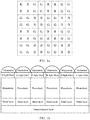
- FIG. 1a and FIG. 1b although this arrangement mode can be used to improve a dark-state photographing effect compared to the Bayer mode, a disadvantage is that an object distance cannot be detected, and this arrangement mode can only be used to receive natural light, for taking pictures and recording images during normal lighting.
- FIG. 1c and FIG. Id A pixel array arrangement mode of a dual pixel focusing 2PD technology is shown in FIG. 1c and FIG. Id. Such an arrangement mode can also only be used to accept natural light and used to take pictures and record images. Compared with a technical solution of a four-in-one RGB arrangement, such an arrangement mode may be used to detect an object distance and complete a focusing action more quickly, but has a non-ideal dark-state photographing effect.
- a principle of a 2PD phase detection technology is described as follows: As seen from FIG. 1c and FIG. Id, each of some R, G and B subpixels in a pixel array is divided into two, and obtains different light energy according to different incident directions, so that a left subpixel point and a right subpixel point form a phase detection pair. When a luminance value of the left subpixel point and a luminance value of the right subpixel point both reach a relative maximum peak value, an image is relatively the clearest at this moment, that is, in focus, and then an object distance is obtained through calculation by using an algorithm, to achieve fast focusing.
- the pixel array arrangement mode of the image sensor in the related technologies has the problem of slow focusing or inability to improve the dark-state capturing effect, thereby affecting capturing experience of users.
- Embodiments of the present disclosure provide an image sensor, a mobile terminal, and an image capturing method, to resolve a problem that slow focusing is performed or a dark-state capturing effect cannot be improved in a pixel array arrangement mode of the image sensor in related technologies, thereby affecting capturing experience of users.
- an image sensor including:
- an embodiment of the present disclosure provides a mobile terminal, including an imaging system and an infrared transmit module, where the imaging system includes:
- an embodiment of the present disclosure further provides an image capturing method, applied to a mobile terminal, where the mobile terminal includes an infrared transmit module and the image sensor, and the method includes:
- the image sensor is formed by using a 2PD pixel array combining an RGB subpixel and an infrared subpixel that are in a four-in-one arrangement. Capturing is performed by using the image sensor, and a distance between the to-be-captured object and the mobile terminal may be detected when an image is captured and recorded, thereby achieving fast focusing and bokeh. In addition, a dark-state imaging effect of the image can be improved, and a related application function of stereophotographing is implemented, thereby ensuring functional diversity of the mobile terminal while capturing experience of a user is ensured.
- An embodiment of the present disclosure provides an image sensor, including:
- the pixel array included in the image sensor provided in this embodiment of the present disclosure includes the preset quantity of pixel units, and the preset quantity of pixel units are arranged in the predetermined manner.
- Each of the preset quantity of pixel units includes the first pixel and the second pixel.
- the first pixel is different from the second pixel.
- the first pixel includes the red subpixel (R), the green subpixel (G), and the blue subpixel (B).
- the second pixel further includes the green subpixel and the infrared subpixel (IR).
- Each of the first pixel and the second pixel in this embodiment of the present disclosure is a dual pixel focusing (2PD) pixel, and an object distance may be detected by using the 2PD pixel, to complete a focusing action more quickly.
- both the first pixel and the second pixel are 2PD pixels, that is, the subpixels in the first pixel and the second pixel are all 2PD subpixels.
- all the subpixels in the first pixel and the second pixel are arranged in a four-in-one manner.
- one subpixel includes 4 corresponding units, and a structure of the 4 units is as follows: Two units are located at an upper layer, the other two units are located at a lower layer, and the two units at the lower layer are arranged in a manner corresponding to the two units at the upper layer. That is, the first unit and the second unit are sequentially arranged and adjacent to each other, a third unit is located below the first unit, and a fourth unit is located below the second unit.
- each unit is divided into two.
- the red subpixel includes four red units
- the green subpixel includes four green units
- the blue subpixel includes four blue units
- each unit is divided into two.
- the red subpixel, the green subpixel, and the blue subpixel that are in the first pixel are arranged in a certain way, and the first pixel includes one red subpixel, one blue subpixel, and two green subpixels.
- the two green subpixels are respectively referred to as a first green subpixel and a second green subpixel, where the first green subpixel is the same as the second green subpixel.
- the red subpixel is adjacent to the first green subpixel
- the second green subpixel is below the red subpixel
- the blue subpixel is below the first green subpixel
- the second green subpixel is adjacent to the blue subpixel.
- the second pixel further includes the green subpixel and the infrared subpixel. That is, the second pixel may include the red subpixel, the green subpixel, and the infrared subpixel, or may include the green subpixel, the blue subpixel, and the infrared subpixel, or may include the green subpixel, the red subpixel, the blue subpixel, and the infrared subpixel.
- the position of the infrared subpixel in the second pixel may be the same as a position of a subpixel in the first pixel, or a position of half of each of two different adjacent subpixels in the first pixel.
- the position of half the infrared subpixel in the second pixel may be further the same as a position of half of any subpixel in the first pixel.
- half of an infrared subpixel in two adjacent second pixels can be combined to form an entire infrared subpixel.
- the position of half the infrared subpixel in the second pixel is the same as the position of half the red subpixel in the first pixel.
- the position of half the infrared subpixel in the second pixel is the same as the position of half the green subpixel in the first pixel. So far, half an infrared subpixel in two adjacent second pixels may be combined to form an entire infrared subpixel.
- an RGB pixel array arrangement mode is improved to a four-in-one RGB-infrared (Infrared Radiation, IR) pixel array arrangement mode, so that the mobile terminal captures an image when receiving infrared light, thereby implementing dark-state imaging, and ensuring capturing experience of a user.
- IR Infrared Radiation
- the image sensor in this embodiment of the present disclosure may detect a distance between a to-be-captured object and the mobile terminal, thereby implementing rapid focusing and bokeh.
- an imaging effect of the image can be improved, and a related application function of stereophotographing is implemented, thereby enhancing functionality of the mobile terminal while capturing experience of a user is ensured.
- the position of the infrared subpixel in the second pixel is the same as the position of the red subpixel, the green subpixel, the blue subpixel, the first combination of subpixels, or the second combination of subpixels in the first pixel
- the first combination of subpixels is a combination of half a red subpixel and half a green subpixel that are adjacent to each other
- the second combination of subpixels is a combination of half a green subpixel and half a blue subpixel that are adjacent to each other.
- the infrared subpixel replaces the red subpixel in the first pixel.
- the position of the infrared subpixel in the second pixel is the same as the position of the red subpixel in the first pixel.
- the infrared subpixel replaces the blue subpixel in the first pixel.
- the position of the infrared subpixel in the second pixel is the same as the position of the blue subpixel in the first pixel.
- the infrared subpixel may replace one green subpixel in the first pixel.
- the position of the infrared subpixel in the second pixel is the same as the position of the one green subpixel in the first pixel.
- the second pixel includes the red subpixel, the green subpixel, the blue subpixel, and the infrared subpixel may be further that the second pixel includes one red subpixel, one green subpixel, half a blue subpixel, half a green subpixel, and one infrared subpixel.
- the infrared subpixel replaces half a green subpixel and half a blue subpixel in the first pixel, that is, the position of the infrared subpixel in the second pixel is the same as a position of half the green subpixel and half the blue subpixel that are adjacent in the first pixel.
- That the second pixel includes the red subpixel, the green subpixel, the blue subpixel, and the infrared subpixel may also be that the second pixel includes one blue subpixel, one green subpixel, half a red subpixel, half a green subpixel, and one infrared subpixel.
- the infrared subpixel replaces half a green subpixel and half a red subpixel in the first pixel, that is, the position of the infrared subpixel in the second pixel is the same as a position of half the green subpixel and half the red subpixel that are adjacent in the first pixel.
- the pixel unit when the position of the infrared subpixel in the second pixel is the same as the position of the red subpixel, the green subpixel, the blue subpixel, the first combination of subpixels, or the second combination of subpixels in the first pixel, the pixel unit includes one second pixel and at least one first pixel.
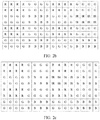
- the pixel unit includes one second pixel and one first pixel, referring to an example shown in FIG. 5a , the pixel unit includes one first pixel and one second pixel.
- the second pixel includes one red subpixel, two green subpixels, and one infrared subpixel
- the first pixel includes one red subpixel, two green subpixels, and one blue subpixel.
- the infrared subpixel accounts for 1/8 of the pixel unit.
- the subpixels herein are all arranged in a four-in-one manner, each subpixel includes four corresponding units, and each unit is divided into two.
- the second pixel may include one blue subpixel, two green subpixels, and one infrared subpixel
- the first pixel includes one red subpixel, two green subpixels, and one blue subpixel.
- the infrared subpixel accounts for 1/12 of the pixel unit.
- the subpixels herein are all arranged in a four-in-one manner, each subpixel includes four corresponding units, and each unit is divided into two.
- the pixel unit includes three first pixels and one second pixel, for example, as shown in FIG. 3a , the pixel unit includes three first pixels and one second pixel.
- the second pixel includes one blue subpixel, one green subpixel, half a red subpixel, half a green subpixel, and one infrared subpixel.
- Half a red subpixel and half a green subpixel among 2PD subpixels may be taken as the infrared subpixel based on the first pixel.
- the first pixel includes one red subpixel, two green subpixels, and one blue subpixel.
- the infrared subpixel accounts for 1/16 of the pixel unit.
- the subpixels herein are arranged in a four-in-one manner, each subpixel includes four corresponding units, and each unit is divided into two.
- a position of half an infrared subpixel in the second pixel is the same as a position of half a red subpixel, half a green subpixel, or half a blue subpixel in the first pixel, and half an infrared subpixel in each of two adjacent second pixels is combined to form an entire infrared subpixel.
- the second pixel may include only half an infrared subpixel, and an entire infrared subpixel may be obtained by combining two second pixels.
- the position of half the infrared subpixel in the second pixel may be the same as a position of half a red subpixel in the first pixel, or may be the same as a position of half a green subpixel in the first pixel, or may be the same as a position of half a blue subpixel in the first pixel.
- a position of half an infrared subpixel in one second pixel is the same as a position of half a red subpixel in the first pixel
- a position of half an infrared subpixel in another second pixel is the same as a position of half a green subpixel in the first pixel.
- a position of half an infrared subpixel in one second pixel is the same as a position of half a green subpixel in the first pixel
- a position of half an infrared subpixel in another second pixel is the same as a position of half a blue subpixel or half a red subpixel in the first pixel.
- the pixel unit when the position of half the infrared subpixel in the second pixel is the same as the position of half the red subpixel, half the green subpixel, or half the blue subpixel in the first pixel, and half an infrared subpixel in each of two adjacent second pixels is combined to form the entire infrared subpixel, the pixel unit includes two second pixels and the first pixel whose quantity is greater than or equal to zero.
- the pixel unit When a quantity of pixels in the pixel unit is at least two, the pixel unit includes two second pixels and the first pixel whose quantity is greater than or equal to zero. When the quantity of pixels in the pixel unit is two, two second pixels are included. For example, as shown in FIG. 5b , the pixel unit includes two second pixels. One second pixel includes one red subpixel, one green subpixel, one blue subpixel, half a green subpixel, and half an infrared subpixel. The other second pixel includes one red subpixel, two green subpixels, half a blue subpixel, and half an infrared subpixel.
- a position of half an infrared subpixel in one second pixel is the same as a position of half a green subpixel in the first pixel
- a position of half an infrared subpixel in the other second pixel is the same as a position of half a blue subpixel in the first pixel.
- the infrared subpixel accounts for 1/8 of the pixel unit.
- the pixel unit includes two second pixels and one first pixel.
- One second pixel includes one red subpixel, one green subpixel, one blue subpixel, half a green subpixel, and half an infrared subpixel.
- the other second pixel includes half a red subpixel, two green subpixels, one blue subpixel, and half an infrared subpixel.
- a position of half the infrared subpixel in the one second pixel is the same as a position of half a green subpixel in the first pixel
- a position of half the infrared subpixel in the other second pixel is the same as a position of half a red subpixel in the first pixel.
- the infrared subpixel accounts for 1/12 of the pixel unit.
- the pixel unit includes two second pixels and two first pixels.
- One second pixel includes one red subpixel, one green subpixel, one blue subpixel, half a green subpixel, and half an infrared subpixel.
- the other second pixel includes one blue subpixel, two green subpixels, half a red subpixel, and half an infrared subpixel.
- a position of half the infrared subpixel in the one second pixel is the same as a position of half a green subpixel in the first pixel
- a position of half the infrared subpixel in the other second pixel is the same as a position of half a red subpixel in the first pixel.
- the infrared subpixel accounts for 1/16 of the pixel unit.
- the subpixels herein are all arranged in a four-in-one manner, each subpixel includes four corresponding units, and each unit is divided into two.
- RGB+IR pixel unit with a proportion of 1/8, an RGB+IR pixel unit with a proportion of 1/12, or an RGB+IR pixel unit with a proportion of 1/16 may be used as a pixel unit array, and a periodic array arrangement is performed on the pixel unit array to form the pixel array.
- the pixel array may be in another form, which is not listed herein.
- Density of infrared subpixels in the pixel unit (that is, a proportion) is 1/4n, n is an integer greater than or equal to 2, and a size of the pixel array to which the infrared subpixel is applicable is not limited. Only a few corresponding point taking implementations of the infrared subpixel are described above, and other point taking manners may be further used. The other point taking manners in the embodiments of the present disclosure are not described one by one herein. A point taking position of the infrared subpixel in the pixel unit (the location of the second pixel) is not specifically limited in this embodiment of the present disclosure.
- a four-in-one red, green, or blue subpixel among the 2PD subpixels may be used as the infrared subpixel, to facilitate form diversification of the pixel unit; or half a four-in-one red subpixel and half a four-in-one green subpixel among the 2PD subpixels or half a four-in-one blue subpixel and half a four-in-one green subpixel may be used as the infrared subpixel, so that impact of IR dead pixels during RGB processing can be reduced.
- the red subpixel includes a semiconductor layer, a metal layer, a photodiode, a red light filter, and a micromirror that are sequentially stacked.
- the green subpixel includes a semiconductor layer, a metal layer, a photodiode, a green light filter, and a micromirror that are sequentially stacked.
- the blue subpixel includes a semiconductor layer, a metal layer, a photodiode, a blue light filter, and a micromirror that are sequentially stacked.
- the infrared subpixel includes a semiconductor layer, a metal layer, a photodiode, an infrared light filter, and a micromirror that are sequentially stacked.
- the semiconductor layer, the metal layer, the photodiode, the red light filter, and the micromirror that are included in the red subpixel are sequentially arranged from bottom to top.
- the semiconductor layer, the metal layer, the photodiode, the green light filter, and the micromirror that are included in the corresponding green subpixel are sequentially arranged from bottom to top.
- the semiconductor layer, the metal layer, the photodiode, the blue light filter, and the micromirror that are included in the blue subpixel are sequentially arranged from bottom to top.
- the semiconductor layer, the metal layer, the photodiode, the infrared filter, and the micromirror included in the infrared subpixel are sequentially arranged from bottom to top.
- the semiconductor layer herein may be a silicon substrate.
- the present disclosure is not limited thereto.
- structures of the red, green, blue, and infrared subpixels refer to FIG. 6 . Even though FIG. 6 shows only the green and infrared subpixels, the structures of the red and blue subpixels may be obtained on this basis.
- the green light filter may be replaced with the red or blue light filter, so that the structures of the red subpixel or the blue subpixel can be obtained.
- the red, green, and blue subpixels are used to obtain color information of pixels for synthesizing an image, and block infrared light from entering.
- visible light with a wavelength of only 380 mm to 700 nm is allowed to enter, and an image with full and vivid colors can be directly generated under high illumination.
- An infrared wavelength is 750 nm to 1100 nm, and a dark-state imaging effect can be improved by using an infrared band, thereby implementing an infrared distance measurement function.
- an RGB subpixel point is a light receiving element corresponding to wavelength light in each RGB color
- an IR subpixel point is a light receiving element corresponding to infrared light.
- the image sensor is a complementary metal oxide semiconductor CMOS image sensor, a charge-coupled device CCD image sensor, or a quantum film image sensor.
- the image sensor may be an image sensor based on a CMOS, an image sensor based on a charge-coupled device (Charge-coupled Device, CCD), or an image sensor based on a quantum film.
- CCD charge-coupled Device
- the image sensor may be further of another type.
- the image sensor in this embodiment of the present disclosure is applicable to any electronic product including a camera module.
- the mobile terminal 1 includes an imaging system 2 and an infrared transmit module 3.
- the imaging system 2 further includes: a lens module 22; a driver module 23 configured to drive the lens module 22 to move; a filtering module 24 disposed between the lens module 22 and the image sensor 21; an image data processing module 25 connected to the image sensor 21; and a display module 26 connected to the image data processing module 25, where the infrared transmit module 3 is disposed on a periphery of the lens module 22.
- the mobile terminal 1 in this embodiment of the present disclosure further includes the infrared transmit module 3.
- the imaging system 2 further includes the lens module 22 configured to focus light.
- the lens module 22 is connected to the driver module 23, and the driver module 23 is configured to adjust a position of the lens module 22 based on a distance to a to-be-captured obj ect.
- the filtering module 24 is disposed between the lens module 22 and the image sensor 21. After light is focused by using the lens module 22 and passes through the filtering module 24, the light may be focused on a pixel array of the image sensor 21.
- the image sensor 21 is connected to the image data processing module 25, and the image data processing module 25 is connected to the display module 26. After the light is focused on the pixel array of the image sensor 21, and the image sensor 21 performs photovoltaic conversion on the light, data is transmitted to the image data processing module 25. After the image data processing module 25 processes the data, the data is presented on the display module 26 in an image form.
- the driver module 23 may obtain a phase difference by using a 2PD pixel of the image sensor 21, to obtain a distance between an object and an imaging surface, thereby implementing fast focusing.
- the four-in-one RGB+IR pixel array arrangement mode based on the 2PD image sensor in the present disclosure can cooperate with the infrared transmit module 3 to achieve a stereo-related function, such as terminal application like face recognition and unlocking, secure payment, and stereo imaging, thereby improving functionality of the mobile terminal on the basis of ensuring imaging.
- a stereo-related function such as terminal application like face recognition and unlocking, secure payment, and stereo imaging
- the filtering module 24 in this embodiment of the present disclosure can pass through a light wavelength from 380 nm to 1100 nm. In this case, after the light is focused by using the lens module 22, the light can be filtered by using the filtering module 24. Natural light and infrared light can pass through the filtering module 24, and the filtering module 24 can be configured to ensure an imaging effect of the imaging system 2.
- the infrared transmit module 3 on the mobile terminal is disposed on a periphery of the lens module 22.
- the infrared transmit module 3 emits infrared light, and the infrared light is reflected after encountering an obstacle.
- the imaging system 2 captures the reflected infrared light, and photoelectric conversion is performed by using the infrared subpixel, a time difference from transmitting the infrared light to receiving the infrared light can be obtained. Due to a fixed light propagation speed, a distance between the obstacle and the mobile terminal may be obtained, and a distance from each minimum unit on the obstacle to the mobile terminal may be finally obtained, to implement a stereo imaging and recording function. Certainly, a distance between each infrared light reflection point on the obstacle and the mobile terminal may be further obtained by obtaining a phase difference of the infrared light.
- the image sensor is formed by using a 2PD pixel array combining an RGB subpixel and an infrared subpixel that are in a four-in-one arrangement. Capturing is performed by using the image sensor, and a distance between the to-be-captured object and the mobile terminal may be detected when an image is captured and recorded, thereby achieving fast focusing and bokeh. In addition, a dark-state imaging effect of the image can be improved, and a related application function of stereophotographing is implemented thereby ensuring functional diversity of the mobile terminal while capturing experience of a user is ensured.
- An embodiment of the present disclosure further provides an image capturing method, applied to a mobile terminal.
- the mobile terminal further includes an infrared transmit module. As shown in FIG. 8 , the method includes:
- Step 801. Transmit infrared light by using the infrared transmit module.
- the infrared transmit module on the mobile terminal can emit infrared light. After encountering a to-be-captured object, the infrared light is reflected, and the reflected infrared light is received by an imaging system of the mobile terminal.
- the image sensor of the mobile terminal forms a four-in-one RGB-IR pixel array. Therefore, photoelectric conversion can be performed by using an infrared subpixel.
- Step 802. Obtain a distance between each infrared light reflection point on a to-be-captured object and the mobile terminal based on the infrared light reflected by the to-be-captured object.
- a process of obtaining the distance between each infrared light reflection point on the to-be-captured object and the mobile terminal is as follows: receiving, by using a pixel array including a second pixel, the infrared light reflected by each infrared light reflection point on the to-be-captured object; and according to the time difference between sending and receiving the infrared light and a propagation speed of the infrared light or by obtaining the phase difference of the infrared light, obtaining the distance between each infrared light reflection point on the to-be-captured object and the mobile terminal.
- the time difference from transmitting the infrared light to receiving the infrared light can be obtained. Due to the fixed light propagation speed, the distance between the obstacle and the mobile terminal may be obtained based on 1/2 of a product of the time difference and the propagation speed. Time points at which the mobile terminal receives infrared light reflected by the infrared light reflection points are different. Therefore, a distance may be correspondingly calculated for each infrared light reflection point, so that the distance between each infrared light reflection point and the mobile terminal may be obtained. The distance between each infrared light reflection point and the mobile terminal may be further obtained by obtaining the phase difference of the infrared light. For details, refer to a time of flight (Time of Flight, TOF) technology. Details are not described herein.
- TOF Time of Flight
- the pixel array of the image sensor in this embodiment of the present disclosure includes a preset quantity of pixel units arranged in a predetermined manner, the pixel unit includes a first pixel and a second pixel, the first pixel includes a red subpixel, a green subpixel, and a blue subpixel, the second pixel includes the green subpixel, an infrared subpixel, and at least one of the red subpixel and the blue subpixel, both the first pixel and the second pixel are dual pixel focusing pixels, and each subpixel in the first pixel and the second pixel is arranged in a four-in-one manner.
- a position of the infrared subpixel in the second pixel is the same as a position of the red subpixel, the green subpixel, the blue subpixel, a first combination of subpixels, or a second combination of subpixels in the first pixel, the first combination of subpixels is a combination of half a red subpixel and half a green subpixel that are adjacent to each other, and the second combination of subpixels is a combination of half a green subpixel and half a blue subpixel that are adjacent to each other.
- a position of half the infrared subpixel in the second pixel is the same as a position of half the red subpixel, half the green subpixel, or half the blue subpixel in the first pixel, and half an infrared subpixel in each of two adjacent second pixels is combined to form an entire infrared subpixel.
- Step 803. Obtain three-dimensional information of the to-be-captured object based on the distance between each infrared light reflection point on the to-be-captured object and the mobile terminal.
- the image sensor is formed by using a 2PD pixel array combining an RGB subpixel and an infrared subpixel that are in a four-in-one arrangement. Capturing is performed by using the image sensor, and a distance between the to-be-captured object and the mobile terminal may be detected when an image is captured and recorded, thereby achieving fast focusing and bokeh. In addition, a dark-state imaging effect of the image can be improved, and a related application function of stereophotographing is implemented thereby ensuring functional diversity of the mobile terminal while capturing experience of a user is ensured.
- FIG. 9 is a schematic diagram of a hardware structure of a mobile terminal according to various embodiments of the present disclosure.
- the mobile terminal 900 includes, but is not limited to: a radio frequency unit 901, a network module 902, an audio output unit 903, an input unit 904, a sensor 905, a display unit 906, a user input unit 907, an interface unit 908, a memory 909, a processor 910, a power supply 911, and other components.
- the mobile terminal 900 further includes an imaging system and an infrared transmit module.
- the imaging system includes an image sensor and a lens module; a driver module configured to drive the lens module to move; a filtering module disposed between the lens module and the image sensor; an image data processing module connected to the image sensor; and a display module connected to the image data processing module, where the infrared transmit module is disposed on a periphery of the lens module.
- the filtering module can pass through an optical wavelength from 380 nm to 1100 nm.
- the image sensor includes: a pixel array, where the pixel array includes a preset quantity of pixel units arranged in a predetermined manner, the pixel unit includes a first pixel and a second pixel adjacent to the first pixel, the first pixel includes a red subpixel, a green subpixel, and a blue subpixel, the second pixel includes the green subpixel, an infrared subpixel, and at least one of the red subpixel and the blue subpixel, both the first pixel and the second pixel are dual pixel focusing pixels, and each subpixel in the first pixel and the second pixel is arranged in a four-in-one manner; and a position of the infrared subpixel in the second pixel is the same as a position of the red subpixel, the green subpixel, the blue subpixel, a first combination of subpixels, or a second combination of subpixels in the first pixel, the first combination of subpixels is a combination of half a red subpixel and half a green subpixel that are adjacent to each
- the pixel unit When the position of the infrared subpixel in the second pixel is the same as the position of the red subpixel, the green subpixel, the blue subpixel, the first combination of subpixels, or the second combination of subpixels in the first pixel, the pixel unit includes one second pixel and at least one first pixel.
- the pixel unit When the position of half the infrared subpixel in the second pixel is the same as the position of half the red subpixel, half the green subpixel, or half the blue subpixel in the first pixel, and half the infrared subpixel in each of two adjacent second pixels is combined to form the entire infrared subpixel, the pixel unit includes two second pixels and the first pixel whose quantity is greater than or equal to zero.
- the red subpixel includes a semiconductor layer, a metal layer, a photodiode, a red light filter, and a micromirror that are sequentially stacked;
- the green subpixel includes a semiconductor layer, a metal layer, a photodiode, a green light filter, and a micromirror that are sequentially stacked;
- the blue subpixel includes a semiconductor layer, a metal layer, a photodiode, a blue light filter, and a micromirror that are sequentially stacked;
- the infrared subpixel includes a semiconductor layer, a metal layer, a photodiode, an infrared light filter, and a micromirror that are sequentially stacked.
- the image sensor is a complementary metal oxide semiconductor CMOS image sensor, a charge-coupled device CCD image sensor, or a quantum film image sensor.
- the mobile terminal shown in FIG. 9 does not constitute a limitation on the mobile terminal, and the mobile terminal may include more or fewer components than those shown in the figure, or combine some components, or have different component arrangements.
- the mobile terminal includes, but is not limited to, a mobile phone, a tablet computer, a laptop computer, a palmtop computer, an in-vehicle terminal, a wearable device, a pedometer, and the like.
- the processor 910 is configured to: transmit infrared light by using the infrared transmit module; obtain a distance between each infrared light reflection point on a to-be-captured object and the mobile terminal based on the infrared light reflected by the to-be-captured object; and control, based on the distance between each infrared light reflection point on the to-be-captured object and the mobile terminal, the imaging system to obtain three-dimensional information of the to-be-captured object.
- the image sensor is formed by using a 2PD pixel array combining an RGB subpixel and an infrared subpixel that are in a four-in-one arrangement. Capturing is performed by using the image sensor, and a distance between the to-be-captured object and the mobile terminal may be detected when an image is captured and recorded, thereby achieving fast focusing and bokeh. In addition, a dark-state imaging effect of the image can be improved, and a related application function of stereophotographing is implemented thereby ensuring functional diversity of the mobile terminal while capturing experience of a user is ensured.
- the radio frequency unit 901 may be configured to receive and send signals in a process of receiving and sending information or calling. Specifically, after receiving downlink data from a base station, the radio frequency unit 901 sends the downlink data to the processor 910 for processing; and sends uplink data to the base station.
- the radio frequency unit 901 includes, but is not limited to, an antenna, at least one amplifier, a transceiver, a coupler, a low noise amplifier, a duplexer, and the like.
- the radio frequency unit 901 may further communicate with a network and another device by using a wireless communications system.
- the mobile terminal provides wireless broadband Internet access for a user by using a network module 902, for example, helping the user send and receive an email, browse a web page, and access streaming media.
- the audio output unit 903 may convert audio data received by the radio frequency unit 901 or the network module 902 or stored in the memory 909 into an audio signal and output the audio signal as sound. Moreover, the audio output unit 903 may further provide audio output (for example, call signal receiving sound and message receiving sound) related to a specific function executed by the mobile terminal 900.
- the audio output unit 903 includes a speaker, a buzzer, a telephone receiver, and the like.
- the input unit 904 is configured to receive an audio signal or a video signal.
- the input unit 904 may include a graphics processing unit (Graphics Processing Unit, GPU) 9041 and a microphone 9042.
- the graphics processing unit 9041 is configured to process image data of a static picture or a video obtained by an image capturing apparatus (for example, a camera) in video capturing mode or image capturing mode. An image frame obtained through processing may be displayed on the display unit 906.
- the display unit herein is the display module.
- the image frame obtained through processing by the graphics processing unit 9041 may be stored in the memory 909 (or another storage medium) or sent by using the radio frequency unit 901 or the network module 902.
- the graphics processing unit 9041 is the image data processing module.
- the microphone 9042 may receive sound and can process such sound into audio data.
- the audio data obtained through processing may be converted, in a telephone call mode, into a format that can be sent to a mobile communications base station via the radio frequency unit 901 for output.
- the mobile terminal 900 further includes at least one sensor 905, such as an optional sensor, a motion sensor, and another sensor.
- the optional sensor includes an ambient light sensor and a proximity sensor.
- the ambient light sensor may adjust luminance of the display panel 9061 based on brightness of ambient light
- the proximity sensor may disable the display panel 9061 and/or backlight when the mobile terminal 900 approaches an ear.
- an accelerometer sensor may detect magnitude of an acceleration in each direction (generally three axes), and may detect magnitude and a direction of gravity when being static.
- the accelerometer sensor may be used for recognizing a gesture of a mobile terminal (for example, horizontal and vertical screen switching, a related game, or magnetometer posture calibration), a function related to vibration recognition (for example, a pedometer or a strike), or the like.
- the sensor 905 may further include a fingerprint sensor, a pressure sensor, an iris sensor, a molecular sensor, a gyroscope, a barometer, a hygrometer, a thermometer, an infrared sensor, and the like. Details are not described herein.
- the display unit 906 is configured to display information entered by a user or information provided for the user.
- the display unit 906 may include a display panel 9061, and the display panel 9061 may be configured in a form of a liquid crystal display (Liquid Crystal Display, LCD), an organic light-emitting diode (Organic Light-Emitting Diode, OLED), or the like.
- LCD Liquid Crystal Display
- OLED Organic Light-Emitting Diode
- the user input unit 907 may be configured to receive input digit or character information and generate key signal input related to user setting and function control of the mobile terminal.
- the user input unit 907 includes a touch panel 9071 and another input device 9072.
- the touch panel 9071 also referred to as a touch screen, may collect a touch operation of a user on or near the touch panel 9071 (for example, the user uses any suitable object or accessory such as a finger or a stylus to operate on or near the touch panel 9071).
- the touch panel 9071 may include two parts: a touch detection apparatus and a touch controller.
- the touch detection apparatus detects a touch position of the user, detects a signal brought by the touch operation, and transmits the signal to the touch controller.
- the touch controller receives touch information from the touch detection apparatus, converts the touch information into contact coordinates, transmits the contact coordinates to the processor 910, receives a command sent by the processor 910, and executes the command.
- the touch panel 9071 may be implemented in various types such as resistive, capacitive, infrared, and surface acoustic wave.
- the user input unit 907 may further include the another input device 9072.
- the another input device 9072 may include, but is not limited to, a physical keyboard, function keys (such as a volume control key and a switch key), a trackball, a mouse, and a joystick. Details are not described herein.
- the touch panel 9071 can cover the display panel 9061.
- the touch panel 9071 transmits the touch operation to the processor 910 to determine a type of a touch event. Then the processor 910 provides corresponding visual output on the display panel 9061 based on the type of the touch event.
- the touch panel 9071 and the display panel 9061 are used as two independent components to implement input and output functions of the mobile terminal. However, in some embodiments, the touch panel 9071 and the display panel 9061 may be integrated to implement the input and output functions of the mobile terminal. This is not specifically limited herein.
- the interface unit 908 is an interface connecting an external apparatus to the mobile terminal 900.
- the external apparatus may include a wired or wireless headset port, an external power supply (or a battery charger) port, a wired or wireless data port, a memory card port, a port for connecting an apparatus having an identification module, an audio input/output (I/O) port, a video I/O port, a headset port, and the like.
- the interface unit 908 may be configured to receive input (such as data information and power) from the external apparatus and transmit the received input to one or more elements in the mobile terminal 900, or may be configured to transmit data between the mobile terminal 900 and the external apparatus.
- the memory 909 may be configured to store a software program and various data.
- the memory 909 may mainly include a program storage area and a data storage area.
- the program storage area may store an operating system, an application program required by at least one function (such as a sound play function or an image display function), and the like.
- the data storage area may store data (such as audio data or an address book) or the like created based on use of the mobile phone.
- the memory 909 may include a high-speed random access memory, and may further include a non-volatile memory, such as at least one magnetic disk storage device, a flash memory device, or another volatile solid-state storage device.
- the processor 910 is a control center of the mobile terminal, and is connected to all parts of the entire mobile terminal by using various interfaces and lines, and performs various functions of the mobile terminal and processes data by running or executing the software program and/or the module that are/is stored in the memory 909 and invoking the data stored in the memory 909, to implement overall monitoring on the mobile terminal.
- the processor 910 may include one or more processing units.
- the processor 910 may integrate an application processor with a modem processor.
- the application processor mainly processes the operating system, a user interface, the application program, and the like, and the modem processor mainly processes wireless communication. It may be understood that the foregoing modem processor may not be integrated into the processor 910.
- the mobile terminal 900 may further include a power supply 911 (such as a battery) that supplies power to each component.
- a power supply 911 (such as a battery) that supplies power to each component.
- the power supply 911 may be logically connected to the processor 910 by using a power management system, to implement functions such as charging, discharging, and power consumption management by using the power management system.
- the mobile terminal 900 includes some function modules not shown, and details are not described herein.
- the computer software product is stored in a storage medium (such as a read-only memory (Read-only Memory, ROM)/random access memory (Random Access Memory, RAM), a magnetic disk, or an optical disc) and includes several instructions for instructing user equipment (which may be a mobile phone, a computer, a server, an air conditioner, or a network device) to execute the methods described in the embodiments of the present disclosure.
- a storage medium such as a read-only memory (Read-only Memory, ROM)/random access memory (Random Access Memory, RAM), a magnetic disk, or an optical disc
- user equipment which may be a mobile phone, a computer, a server, an air conditioner, or a network device
Landscapes
- Engineering & Computer Science (AREA)
- Signal Processing (AREA)
- Multimedia (AREA)
- Physics & Mathematics (AREA)
- Theoretical Computer Science (AREA)
- Computer Hardware Design (AREA)
- Spectroscopy & Molecular Physics (AREA)
- General Physics & Mathematics (AREA)
- General Engineering & Computer Science (AREA)
- Human Computer Interaction (AREA)
- Color Television Image Signal Generators (AREA)
- Transforming Light Signals Into Electric Signals (AREA)
- Solid State Image Pick-Up Elements (AREA)
Applications Claiming Priority (2)
| Application Number | Priority Date | Filing Date | Title |
|---|---|---|---|
| CN201810798680.4A CN108965704B (zh) | 2018-07-19 | 2018-07-19 | 一种图像传感器、移动终端及图像拍摄方法 |
| PCT/CN2019/095367 WO2020015561A1 (zh) | 2018-07-19 | 2019-07-10 | 图像传感器、移动终端及图像拍摄方法 |
Publications (2)
| Publication Number | Publication Date |
|---|---|
| EP3826291A1 true EP3826291A1 (de) | 2021-05-26 |
| EP3826291A4 EP3826291A4 (de) | 2021-08-11 |
Family
ID=64481918
Family Applications (1)
| Application Number | Title | Priority Date | Filing Date |
|---|---|---|---|
| EP19838484.4A Pending EP3826291A4 (de) | 2018-07-19 | 2019-07-10 | Bildsensor, mobiles terminal, und bilderfassungsverfahren |
Country Status (5)
| Country | Link |
|---|---|
| US (1) | US11996421B2 (de) |
| EP (1) | EP3826291A4 (de) |
| KR (1) | KR102374428B1 (de) |
| CN (1) | CN108965704B (de) |
| WO (1) | WO2020015561A1 (de) |
Families Citing this family (3)
| Publication number | Priority date | Publication date | Assignee | Title |
|---|---|---|---|---|
| US12009379B2 (en) * | 2017-05-01 | 2024-06-11 | Visera Technologies Company Limited | Image sensor |
| CN108965704B (zh) * | 2018-07-19 | 2020-01-31 | 维沃移动通信有限公司 | 一种图像传感器、移动终端及图像拍摄方法 |
| CN120445402A (zh) * | 2024-02-06 | 2025-08-08 | 北京与光科技有限公司 | 光谱芯片 |
Family Cites Families (41)
| Publication number | Priority date | Publication date | Assignee | Title |
|---|---|---|---|---|
| US7196391B2 (en) * | 2002-02-05 | 2007-03-27 | E-Phocus, Inc. | MOS or CMOS sensor with micro-lens array |
| US8139141B2 (en) * | 2004-01-28 | 2012-03-20 | Microsoft Corporation | Single chip red, green, blue, distance (RGB-Z) sensor |
| JP2006237737A (ja) * | 2005-02-22 | 2006-09-07 | Sanyo Electric Co Ltd | カラーフィルタアレイ及び固体撮像素子 |
| KR20100018449A (ko) * | 2008-08-06 | 2010-02-17 | 삼성전자주식회사 | 입체 이미지 센서의 픽셀 어레이 |
| KR20110137700A (ko) * | 2010-06-17 | 2011-12-23 | 삼성전자주식회사 | 광학 장치 및 광학장치를 이용한 이미징 장치 |
| JP2013232694A (ja) * | 2010-08-31 | 2013-11-14 | Sanyo Electric Co Ltd | 素子搭載用基板および光学モジュール |
| JP5513326B2 (ja) * | 2010-09-07 | 2014-06-04 | キヤノン株式会社 | 撮像素子及び撮像装置 |
| WO2013046973A1 (ja) * | 2011-09-29 | 2013-04-04 | 富士フイルム株式会社 | 固体撮像素子、撮像装置、及び合焦制御方法 |
| KR102086509B1 (ko) * | 2012-11-23 | 2020-03-09 | 엘지전자 주식회사 | 3차원 영상 획득 방법 및 장치 |
| JP2014239290A (ja) * | 2013-06-06 | 2014-12-18 | ソニー株式会社 | 焦点検出装置、電子機器、製造装置、製造方法 |
| US9692992B2 (en) * | 2013-07-01 | 2017-06-27 | Omnivision Technologies, Inc. | Color and infrared filter array patterns to reduce color aliasing |
| JP6233188B2 (ja) | 2013-12-12 | 2017-11-22 | ソニー株式会社 | 固体撮像素子およびその製造方法、並びに電子機器 |
| US20160182846A1 (en) * | 2014-12-22 | 2016-06-23 | Google Inc. | Monolithically integrated rgb pixel array and z pixel array |
| CN107533210A (zh) * | 2015-01-14 | 2018-01-02 | 因维萨热技术公司 | 相位检测自动聚焦 |
| KR20160114474A (ko) * | 2015-03-24 | 2016-10-05 | (주)실리콘화일 | 4-컬러 이미지 센서, 4-컬러 이미지 센서의 제조방법 및 이에 따른 4-컬러 이미지 센서 |
| US9749556B2 (en) * | 2015-03-24 | 2017-08-29 | Semiconductor Components Industries, Llc | Imaging systems having image sensor pixel arrays with phase detection capabilities |
| CN105049829B (zh) * | 2015-07-10 | 2018-12-25 | 上海图漾信息科技有限公司 | 滤光片、图像传感器、成像装置以及三维成像系统 |
| JP2017022624A (ja) * | 2015-07-13 | 2017-01-26 | キヤノン株式会社 | 撮像素子及びその駆動方法、及び撮像装置 |
| JP2017038311A (ja) * | 2015-08-12 | 2017-02-16 | 株式会社東芝 | 固体撮像装置 |
| KR101733309B1 (ko) * | 2015-11-11 | 2017-05-08 | 재단법인 다차원 스마트 아이티 융합시스템 연구단 | 4 칼라 이미지 센서를 위해 듀얼 isp를 갖는 카메라 시스템 |
| CN106878690A (zh) * | 2015-12-14 | 2017-06-20 | 比亚迪股份有限公司 | 图像传感器的成像方法、成像装置和电子设备 |
| US10114465B2 (en) * | 2016-01-15 | 2018-10-30 | Google Llc | Virtual reality head-mounted devices having reduced numbers of cameras, and methods of operating the same |
| CN105611136B (zh) * | 2016-02-26 | 2019-04-23 | 联想(北京)有限公司 | 一种图像传感器以及电子设备 |
| JP6791243B2 (ja) * | 2016-03-31 | 2020-11-25 | 株式会社ニコン | 撮像素子、及び、撮像装置 |
| CN109478554B (zh) * | 2016-04-29 | 2023-09-12 | Lg伊诺特有限公司 | 相机模块及包括该相机模块的便携装置 |
| CN107360405A (zh) * | 2016-05-09 | 2017-11-17 | 比亚迪股份有限公司 | 图像传感器、成像方法和成像装置 |
| US10547829B2 (en) * | 2016-06-16 | 2020-01-28 | Samsung Electronics Co., Ltd. | Image detecting device and image detecting method using the same |
| KR102801934B1 (ko) * | 2016-12-05 | 2025-05-07 | 삼성디스플레이 주식회사 | 표시 장치 |
| JP6833597B2 (ja) * | 2017-04-11 | 2021-02-24 | ソニーセミコンダクタソリューションズ株式会社 | 固体撮像装置 |
| CN107040724B (zh) | 2017-04-28 | 2020-05-15 | Oppo广东移动通信有限公司 | 双核对焦图像传感器及其对焦控制方法和成像装置 |
| US10629105B2 (en) * | 2017-06-15 | 2020-04-21 | Google Llc | Near-eye display with frame rendering based on reflected wavefront analysis for eye characterization |
| WO2018235416A1 (ja) * | 2017-06-21 | 2018-12-27 | ソニーセミコンダクタソリューションズ株式会社 | 撮像素子及び固体撮像装置 |
| CN107205139A (zh) * | 2017-06-28 | 2017-09-26 | 重庆中科云丛科技有限公司 | 多通道采集的图像传感器及采集方法 |
| US10593712B2 (en) * | 2017-08-23 | 2020-03-17 | Semiconductor Components Industries, Llc | Image sensors with high dynamic range and infrared imaging toroidal pixels |
| CN107613210B (zh) * | 2017-09-30 | 2020-12-29 | 北京小米移动软件有限公司 | 图像显示方法及装置、终端、存储介质 |
| CN111164647B (zh) * | 2017-10-04 | 2024-05-03 | 谷歌有限责任公司 | 使用单个相机估算深度 |
| CN207543224U (zh) * | 2017-11-24 | 2018-06-26 | 深圳先牛信息技术有限公司 | 图像传感器 |
| CN207491128U (zh) * | 2017-11-30 | 2018-06-12 | 北京中科虹霸科技有限公司 | 一种rgb+ir图像采集设备 |
| CN108282644B (zh) * | 2018-02-14 | 2020-01-10 | 北京飞识科技有限公司 | 一种单摄像头成像方法及装置 |
| CN108965704B (zh) * | 2018-07-19 | 2020-01-31 | 维沃移动通信有限公司 | 一种图像传感器、移动终端及图像拍摄方法 |
| TWI754809B (zh) * | 2019-04-11 | 2022-02-11 | 大陸商廣州立景創新科技有限公司 | 影像感測裝置 |
-
2018
- 2018-07-19 CN CN201810798680.4A patent/CN108965704B/zh active Active
-
2019
- 2019-07-10 WO PCT/CN2019/095367 patent/WO2020015561A1/zh not_active Ceased
- 2019-07-10 KR KR1020217004094A patent/KR102374428B1/ko active Active
- 2019-07-10 EP EP19838484.4A patent/EP3826291A4/de active Pending
-
2021
- 2021-01-19 US US17/151,745 patent/US11996421B2/en active Active
Also Published As
| Publication number | Publication date |
|---|---|
| US11996421B2 (en) | 2024-05-28 |
| US20220367541A1 (en) | 2022-11-17 |
| CN108965704A (zh) | 2018-12-07 |
| US20230069816A9 (en) | 2023-03-02 |
| KR20210028254A (ko) | 2021-03-11 |
| WO2020015561A1 (zh) | 2020-01-23 |
| CN108965704B (zh) | 2020-01-31 |
| EP3826291A4 (de) | 2021-08-11 |
| KR102374428B1 (ko) | 2022-03-15 |
Similar Documents
| Publication | Publication Date | Title |
|---|---|---|
| US11962918B2 (en) | Image sensor, mobile terminal, and image photographing method | |
| CN108900750B (zh) | 一种图像传感器及移动终端 | |
| KR102826304B1 (ko) | 촬영 방법 및 단말 | |
| US11463641B2 (en) | Image sensor, mobile terminal, and photographing method | |
| US11463642B2 (en) | Image sensor including pixel array and mobile terminal | |
| CN109934137A (zh) | 一种光电指纹识别装置、终端及指纹识别方法 | |
| CN108965666B (zh) | 一种移动终端及图像拍摄方法 | |
| US20240014236A9 (en) | Mobile terminal and image photographing method | |
| US11996421B2 (en) | Image sensor, mobile terminal, and image capturing method | |
| WO2019144956A1 (zh) | 图像传感器、镜头模组、移动终端、人脸识别方法及装置 | |
| WO2020015538A1 (zh) | 图像数据处理方法及移动终端 | |
| CN107682637A (zh) | 一种拍摄方法、移动终端和计算机可读存储介质 | |
| CN107819983A (zh) | 一种采集光学图像的方法及移动终端 | |
| CN108965703A (zh) | 一种图像传感器、移动终端及图像拍摄方法 | |
| CN110248050B (zh) | 一种摄像头模组及移动终端 |
Legal Events
| Date | Code | Title | Description |
|---|---|---|---|
| STAA | Information on the status of an ep patent application or granted ep patent |
Free format text: STATUS: THE INTERNATIONAL PUBLICATION HAS BEEN MADE |
|
| PUAI | Public reference made under article 153(3) epc to a published international application that has entered the european phase |
Free format text: ORIGINAL CODE: 0009012 |
|
| STAA | Information on the status of an ep patent application or granted ep patent |
Free format text: STATUS: REQUEST FOR EXAMINATION WAS MADE |
|
| 17P | Request for examination filed |
Effective date: 20210210 |
|
| AK | Designated contracting states |
Kind code of ref document: A1 Designated state(s): AL AT BE BG CH CY CZ DE DK EE ES FI FR GB GR HR HU IE IS IT LI LT LU LV MC MK MT NL NO PL PT RO RS SE SI SK SM TR |
|
| A4 | Supplementary search report drawn up and despatched |
Effective date: 20210714 |
|
| RIC1 | Information provided on ipc code assigned before grant |
Ipc: H04N 5/232 20060101AFI20210708BHEP Ipc: H04N 5/33 20060101ALI20210708BHEP Ipc: H04N 5/225 20060101ALI20210708BHEP Ipc: H04N 13/239 20180101ALI20210708BHEP Ipc: H04N 5/369 20110101ALI20210708BHEP Ipc: H04N 9/04 20060101ALI20210708BHEP |
|
| DAV | Request for validation of the european patent (deleted) | ||
| DAX | Request for extension of the european patent (deleted) | ||
| STAA | Information on the status of an ep patent application or granted ep patent |
Free format text: STATUS: EXAMINATION IS IN PROGRESS |
|
| 17Q | First examination report despatched |
Effective date: 20250710 |